



The best medium haircuts for women with curly hair do something a flat, one-length trim rarely manages: they let curls move without turning the bottom edge into a heavy shelf. That shelf is the enemy. It shows up when the perimeter gets too blunt, the crown goes flat, and the whole shape starts shouting “triangle” from across the room.
Medium length is a sweet spot for curls because it keeps enough weight to calm frizz at the ends, but not so much that every ringlet gets dragged into the same droopy line. Shoulder-grazing curls can bounce, tuck behind an ear, and still look like a haircut instead of a compromise. And when the shape is right, you can get away with a wash-and-go that looks deliberate, not accidental.
The tricky part is that curly hair does not behave like straight hair with extra volume. Shrinkage changes everything. A cut that looks collarbone-length when wet can land two inches higher once it dries, and the difference between “softly layered” and “too chopped up” is often just one overenthusiastic snip too many. That’s why the medium curly cuts below lean on shape, balance, and density control rather than vague promises about “movement.”
Why These 22 Cuts Keep Curls Moving

-
Shape over length: Curly hair looks better when the outline is planned for the dry state, not guessed at while it’s wet and stretched.
-
Built-in flexibility: These cuts work with loose waves, springy ringlets, and tighter curls by changing where the weight sits.
-
Less triangle drama: A good medium cut takes bulk out of the bottom or the middle, so the crown doesn’t collapse while the ends puff out.
-
Easy grow-out: Medium curly hairstyles usually grow into something wearable instead of turning into a hard line that needs emergency fixes.
-
Styling with less fuss: The right cut can make a simple mousse-and-diffuse routine look finished, which is a small miracle on rushed mornings.
-
Room for personality: Bangs, side parts, internal layers, and face-framing pieces all show up better at medium length than they do when curls are too long and heavy.
1. The Soft Layered Lob
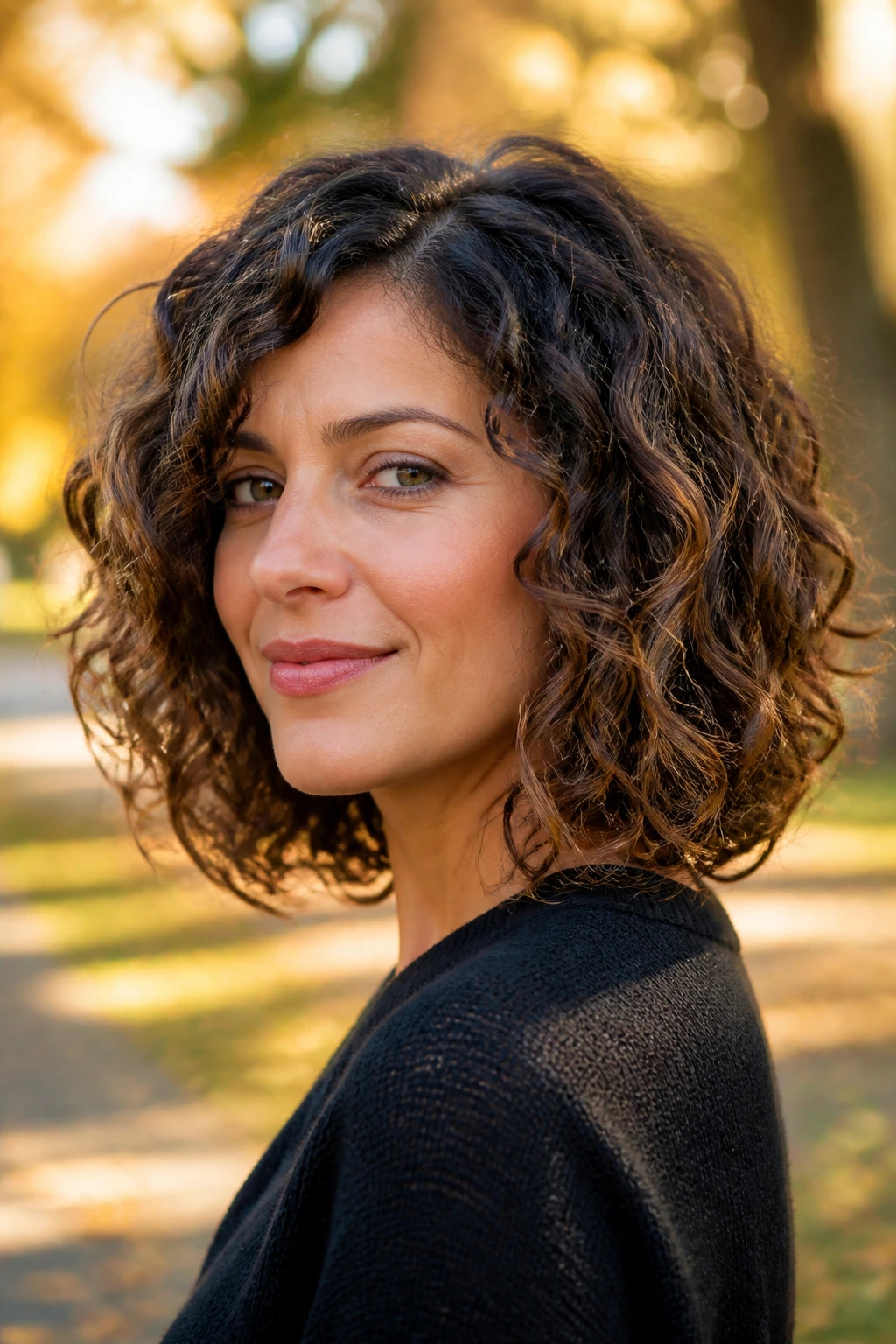
A soft layered lob is the curly haircut I reach for when someone wants shape without a lot of attitude. The length usually sits somewhere between the chin and the collarbone, and the layers are kept light enough that the ends don’t thin out into stringy little wisps. On curls, that matters more than people think.
Why It Works for Curly Hair
The lob keeps enough weight to make loose curls and medium coils settle, but the soft layers stop the whole shape from looking boxy. You get a clean perimeter with just enough lift around the face to keep the cut from falling flat at the sides. It is especially kind to thick hair that wants to stack itself outward.
- Best for oval, heart, and square faces
- Works well on curls with medium to high density
- Needs a trim every 8 to 10 weeks to keep the outline tidy
If you want one cut that can go from polished to messy in a good way, this is a strong first stop. It dries with a round, relaxed finish and usually does not need much more than a little gel at the crown and scrunching at the ends.
2. The Curly Shag With Airy Fringe
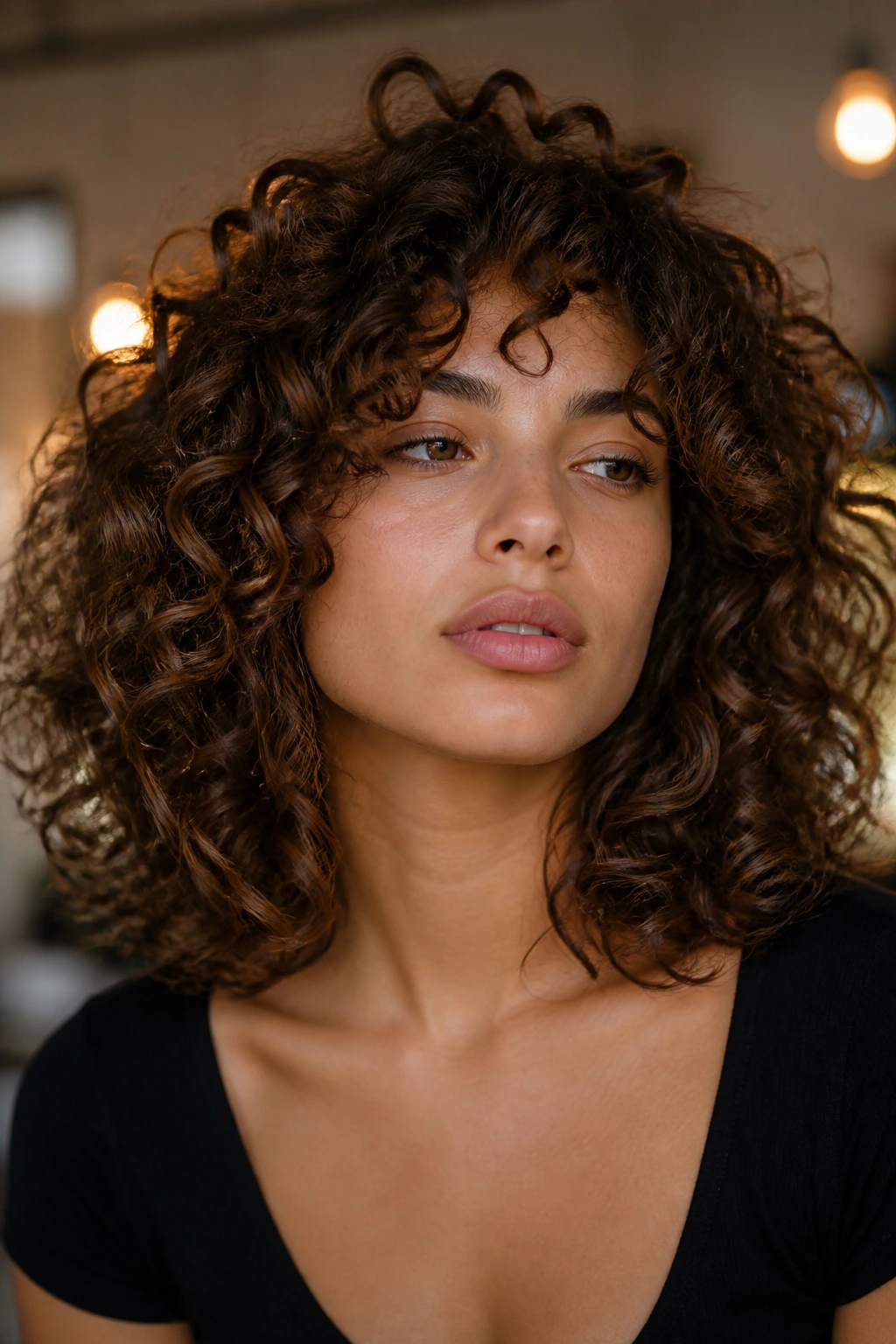
The shag is where curly hair gets to stop pretending it wants to be neat. This version keeps the length around the shoulders or slightly below, then breaks the shape up with layers that start high enough to create lift at the crown. The fringe stays soft, never heavy and helmet-like.
The reason it works is simple: the shag takes density out of the middle while leaving the ends with enough length to curl properly. That balance makes looser curls spring up and tighter curls separate instead of clumping into one solid mass. It also hides a grow-out better than most cuts, which is a relief if you do not live at the salon.
What to Ask For
Ask for a curly shag with visible crown layers, soft face-framing pieces, and a fringe that can be worn swept aside if you change your mind. If your curls are fine, keep the layers less aggressive; if they are thick, let the stylist carve more movement through the interior.
3. The Rounded Shoulder-Length Cut
What happens when you want width at the top and softness at the bottom? You get a rounded shoulder-length cut. This shape follows the curve of the head instead of fighting it, which is why it flatters curls that naturally spring outward.
The perimeter sits around the shoulders, but the magic is in the rounding. Instead of leaving the sides bulky and the ends blunt, the stylist keeps the silhouette curved so the curls stack in a clean arc. It looks especially good on dense hair that tends to puff wider near the jawline.
Best For
- Curls that naturally form a halo when left alone
- People who want volume without the shaggy layers
- Hair that needs the bottom edge softened, not thinned out
This is one of those cuts that looks expensive because it looks deliberate. Not fussy. Just balanced.
4. The Butterfly Cut for Curls
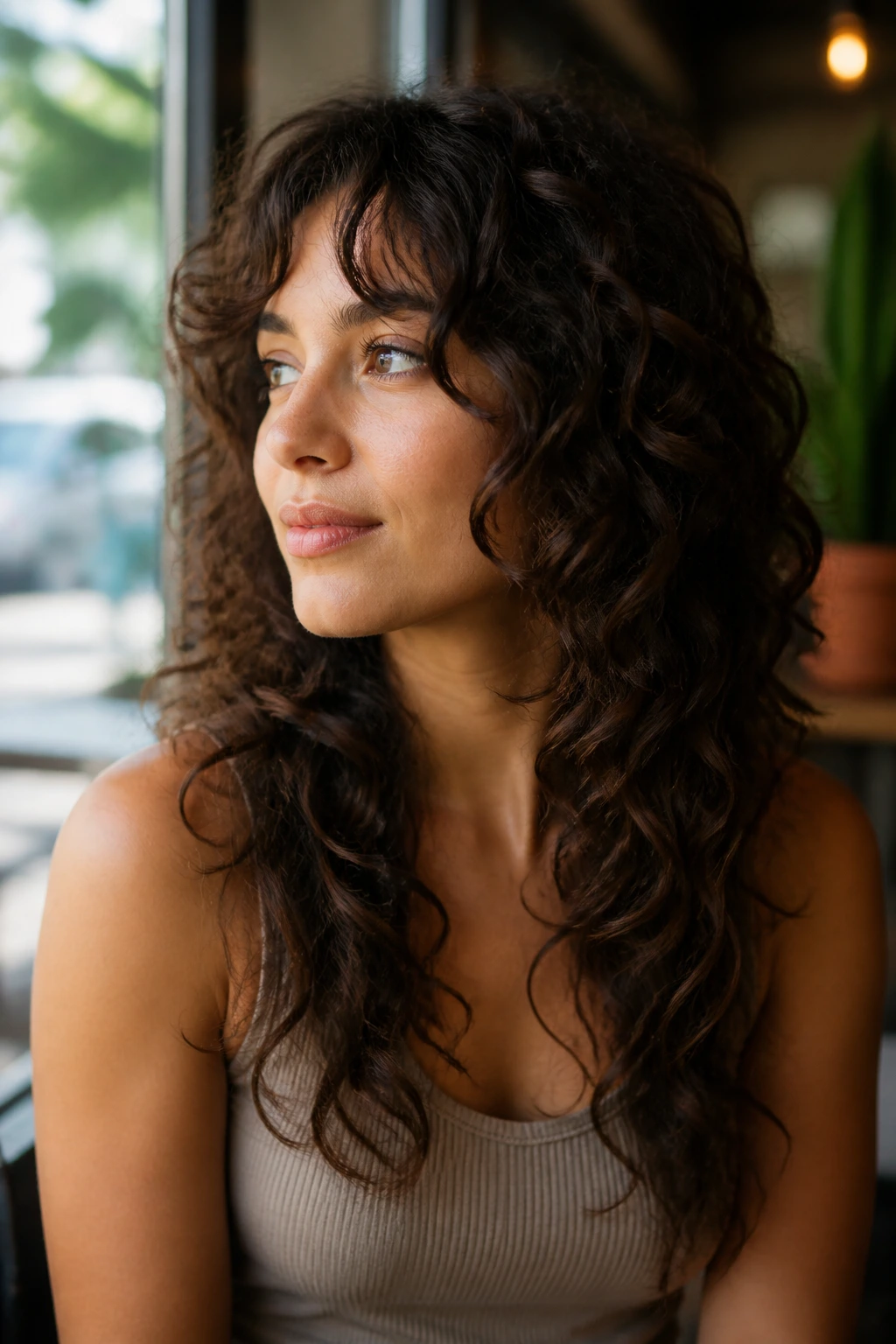
Picture curls that start light near the face, then fall into a longer, fuller section underneath. That is the butterfly cut, and on medium curly hair it can be a smart way to get lift without sacrificing the feeling of length. The shorter front pieces open the face, while the lower layers keep enough weight for the curl pattern to stay defined.
The trick is not to overdo the shortest layer. Too much separation and the cut starts to look disconnected when the curls dry and shrink. Keep the “top wings” soft, and let them blend into the longer section rather than sitting on top of it like two different haircuts fighting in the mirror.
This shape is a good fit if your curls fall flat at the crown but still need a little substance around the shoulders. It’s airy, but not flimsy. There’s a difference.
5. The Curly Wolf Cut
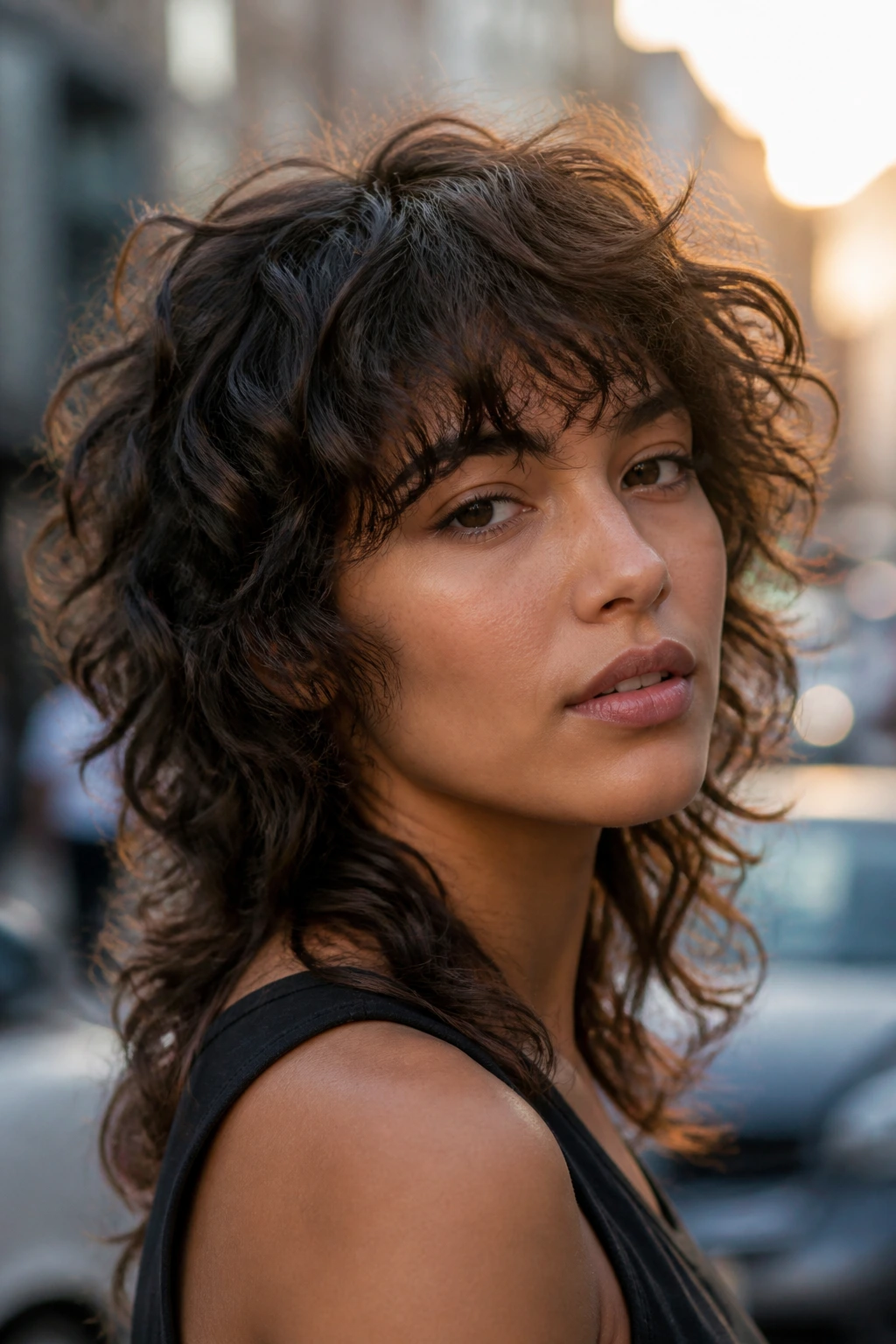
The curly wolf cut is the shag’s louder cousin. It keeps the messy, piecey feel, but pushes the volume higher and the outline a little wilder. Medium curly hair can handle that energy because the curls themselves do half the styling work.
The cut usually has shorter layers around the crown, longer pieces through the back, and a fringe or face-framing section that stops the shape from looking like a mullet with better marketing. On curly hair, it lands somewhere between rebellious and practical. Strange combination, but it works.
If you have thick curls and you are tired of them sitting like a triangle, the wolf cut can carve out a better profile fast. It also behaves nicely with air-drying, which makes it a favorite for people who prefer a looser, more lived-in finish.
6. The Collarbone C-Cut
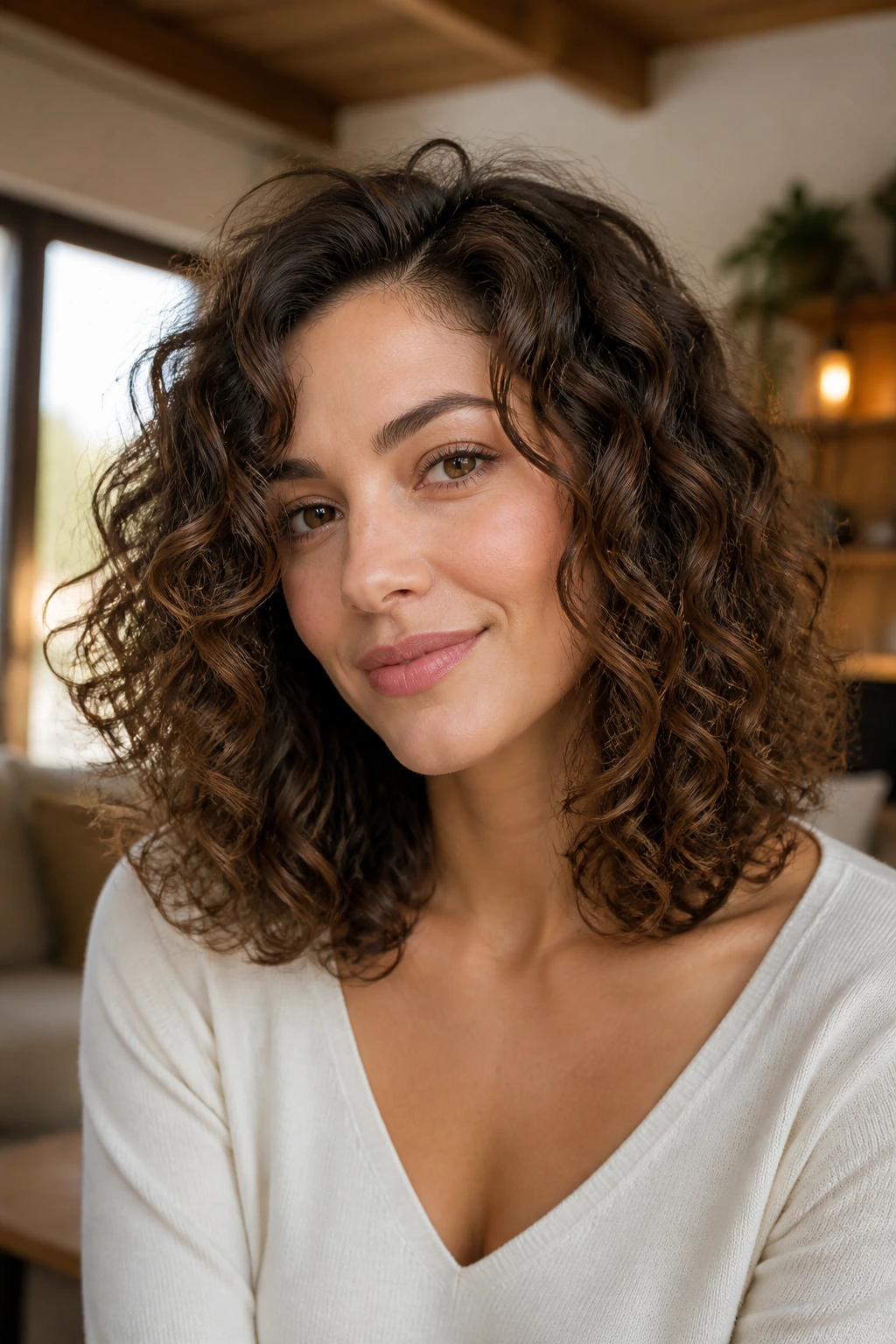
A collarbone C-cut gives the front a gentle curve that starts near the face and swings back toward the shoulders. It is less layered than a shag, but more shaped than a blunt cut, which makes it a good middle ground for women who want medium haircuts for curly hair without too much texture noise.
The “C” comes from the way the front pieces frame the cheeks and then taper into the rest of the hair. That shape softens strong jawlines and gives wider faces a little vertical line to follow. It also keeps the back from feeling too heavy, which can happen when curls all land at the same length.
This is a quieter cut than the wolf or shag. I like it for people who want movement that shows up only when the hair swings, not a lot of obvious layering when the hair is still.
7. Face-Framing Layers With Curtain Bangs
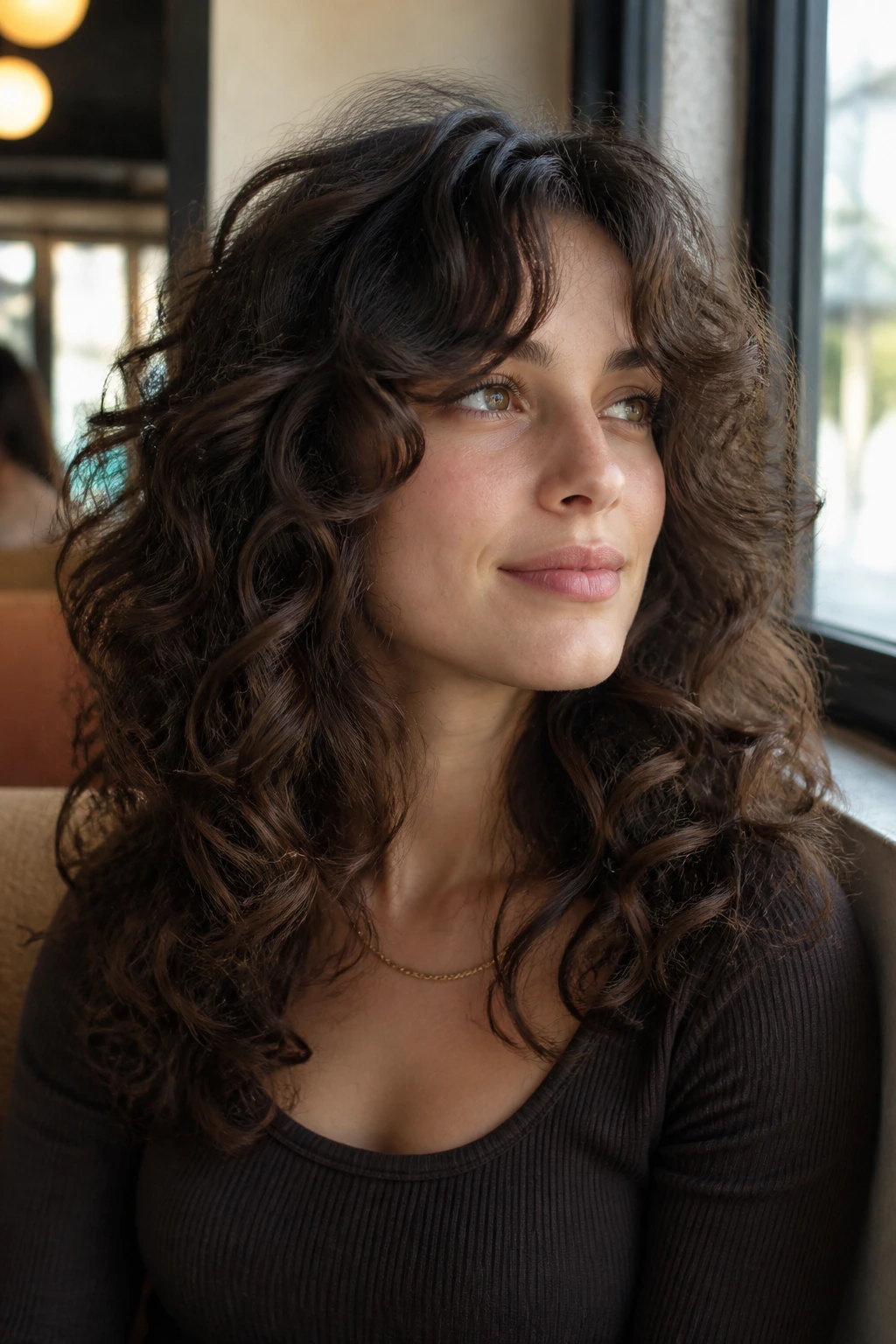
Curtain bangs can either make curls look chic or turn into a puffball that eats the forehead. The difference is the layering. The front pieces need enough length to bend away from the face, and the bangs need room to separate once they dry.
When the cut is done well, the front curls fall in two soft curtains that open at the brow and taper into the cheekbones. That makes the whole haircut feel lighter without removing bulk everywhere else. It is a good move for anyone who wants to keep most of the medium length but still change the shape in front.
Why It Flatters
- Pulls attention upward toward the eyes
- Softens high foreheads and sharper jawlines
- Gives curls a focal point, which can make the rest of the cut feel more intentional
Curtain bangs do need a little styling help. A diffuser and a dab of lightweight cream at the front usually keep them from splitting in odd directions.
8. The Blunt Shoulder-Length Cut
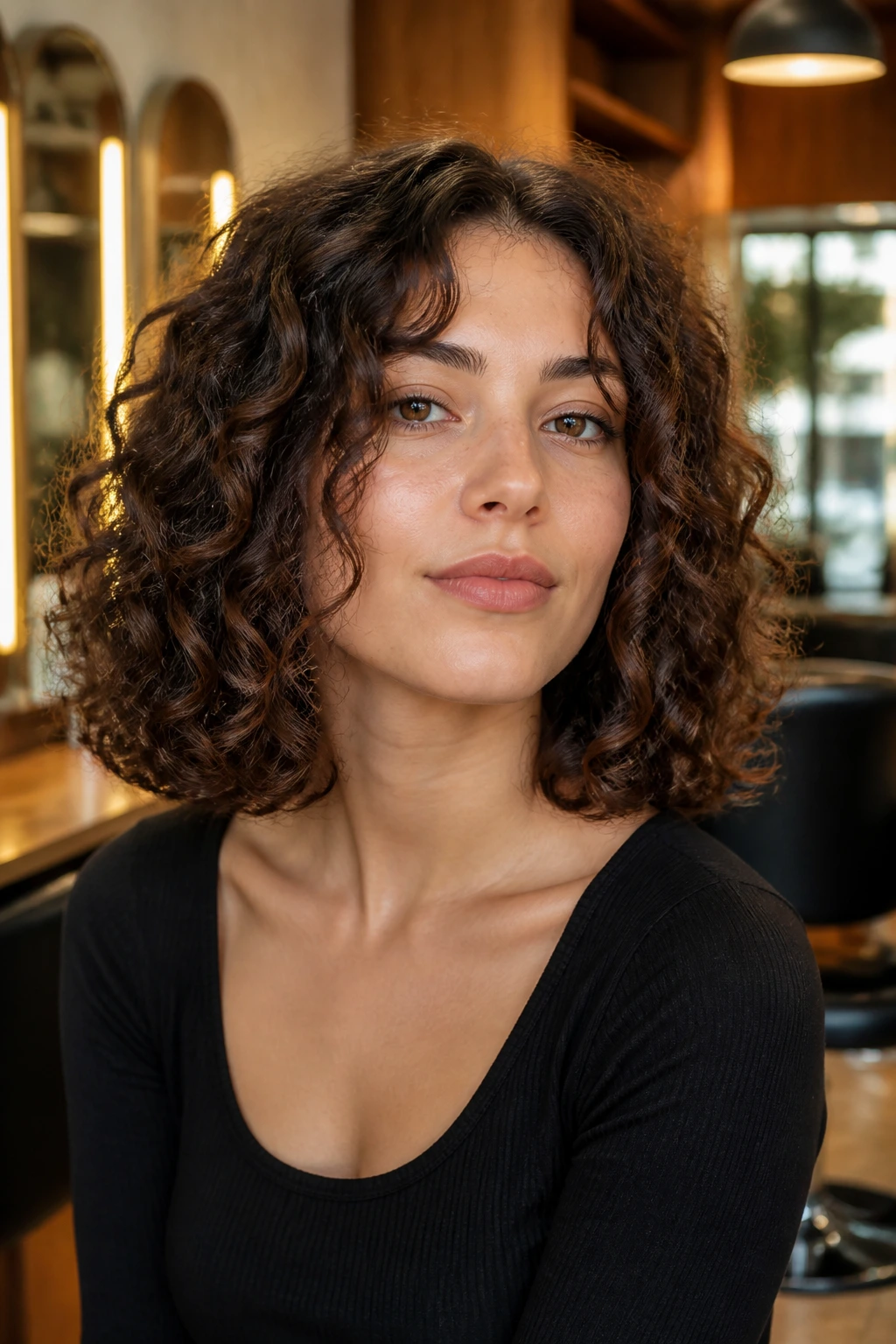
The blunt shoulder-length cut sounds boring on paper. On curls, it can be sharp in a good way. The key is that “blunt” does not mean lifeless; it means the ends are left clean and dense instead of heavily layered.
This shape works when you want the hair to look full at the bottom and the curl pattern is strong enough to keep the line from looking harsh. Thick curls and strong waves usually handle it well. Fine curls can wear it too, but only if the perimeter is not cut too wide.
A blunt edge gives medium curly hair a strong finish, especially when the rest of the styling is simple. If your clothes lean crisp and minimal, this haircut often makes more sense than a shag that wants to steal the spotlight.
9. The U-Shaped Midi Cut
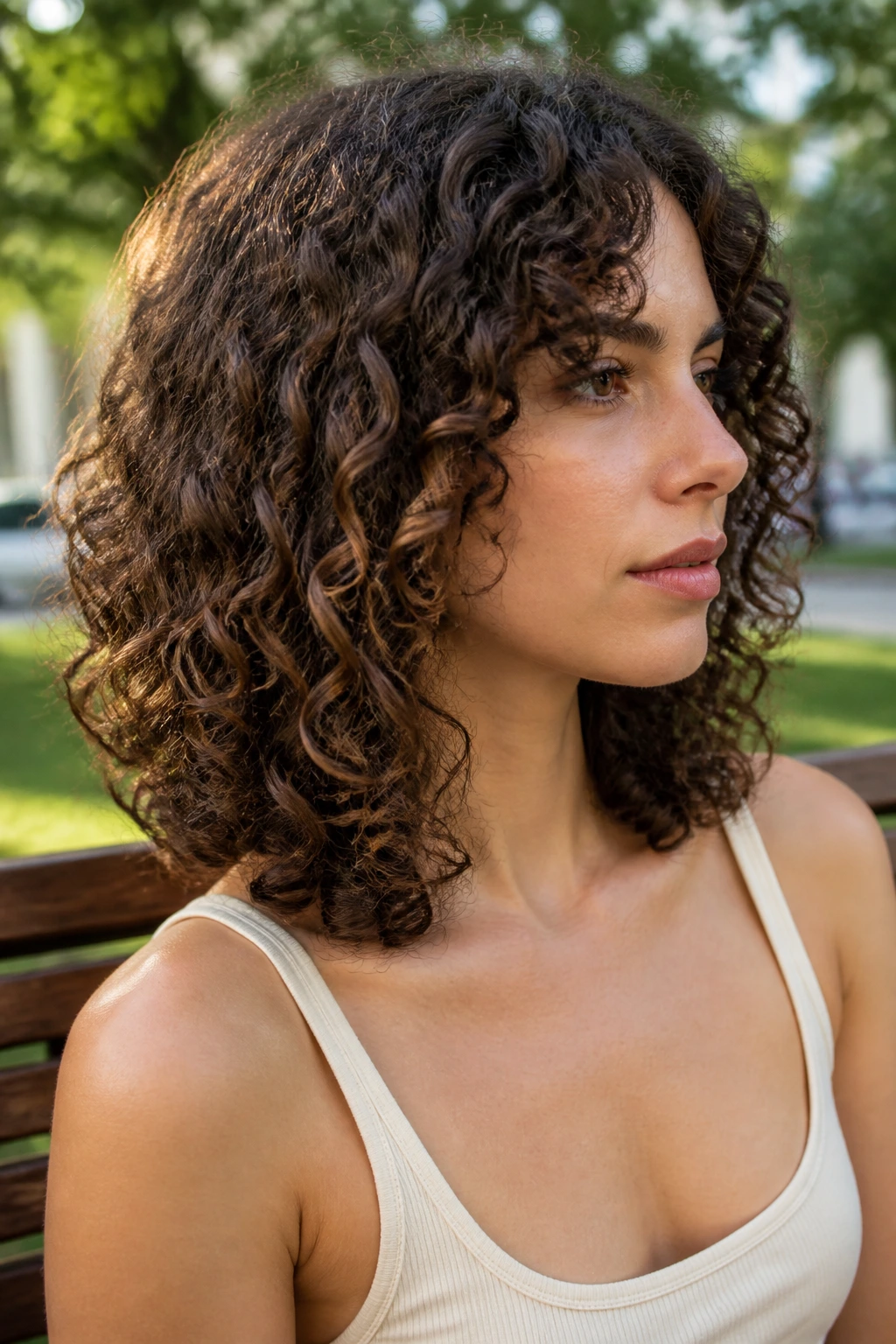
The U-shape is the easiest way to keep weight off the sides without making the ends look sparse. From the back, the line curves gently upward toward the front, which gives curly hair a softer drape than a straight-across cut.
That curved perimeter helps curls fall in a way that feels natural. The front pieces are a little shorter than the center back, so the hair moves around the face instead of hanging like a curtain. It is especially useful if your curls get frizzy near the widest part of the silhouette, because the shape draws the eye downward.
The U-cut doesn’t shout. That’s its charm. It is one of the best medium curly haircuts for women who want the hair to look good with minimal fuss and no dramatic texturizing.
10. The Dry-Cut Deva Shape
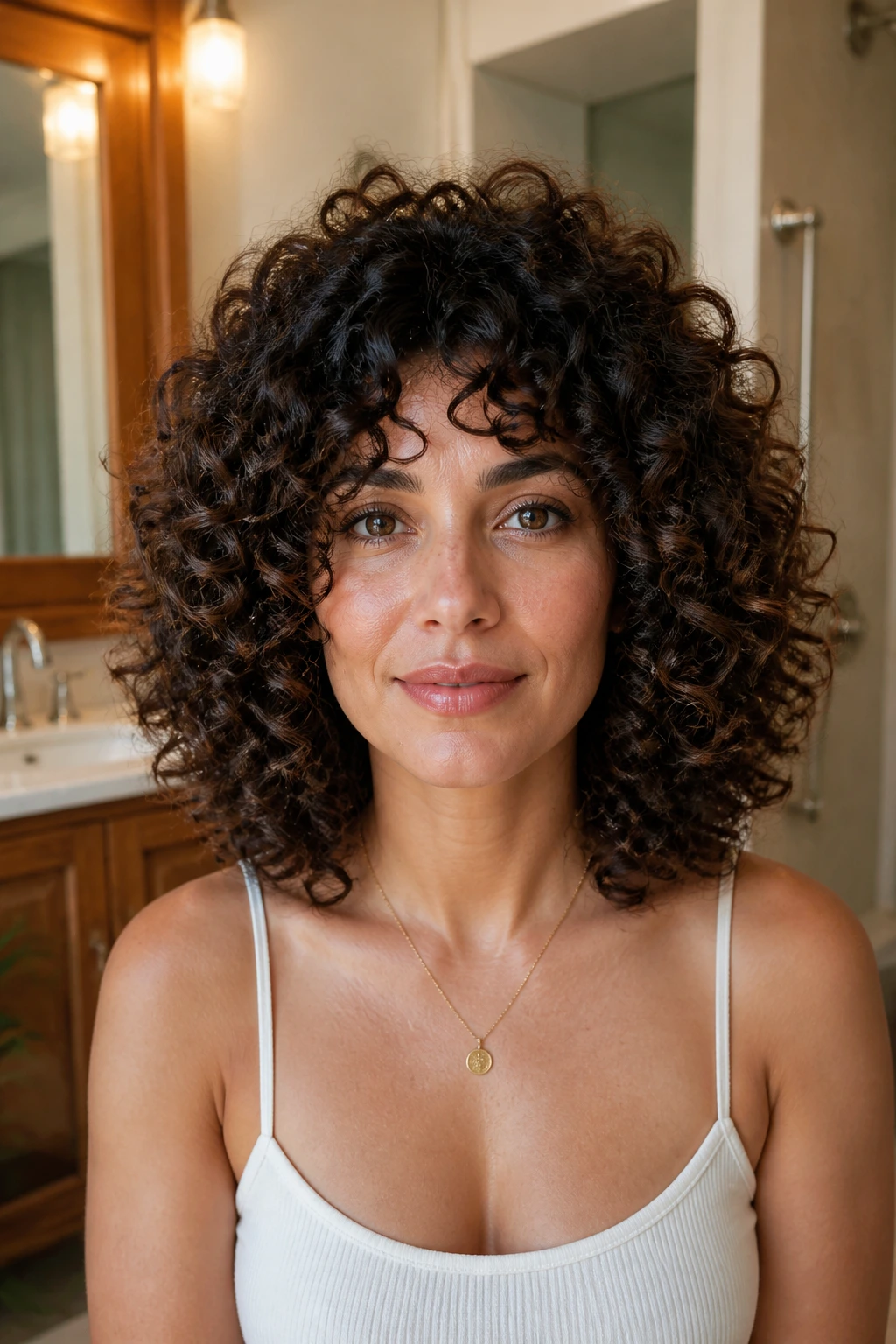
Dry cutting is less about trendy terminology and more about not lying to yourself about shrinkage. When curls are cut dry, the stylist sees the real shape, the real spring, and the way one side behaves differently from the other. That alone can save a lot of regret.
The Deva-inspired shape is usually built curl by curl, with the stylist snipping around the natural fall of each section. The result can be beautifully tailored, especially if you have uneven curl patterns or areas that need weight removed more carefully. It is not the fastest appointment, and that’s fine. Precision takes time.
This cut works especially well if your curls change from loose near the nape to tighter around the temples. Wet cutting can blur that difference. Dry cutting shows it, then works with it.
11. The Asymmetrical Curly Lob
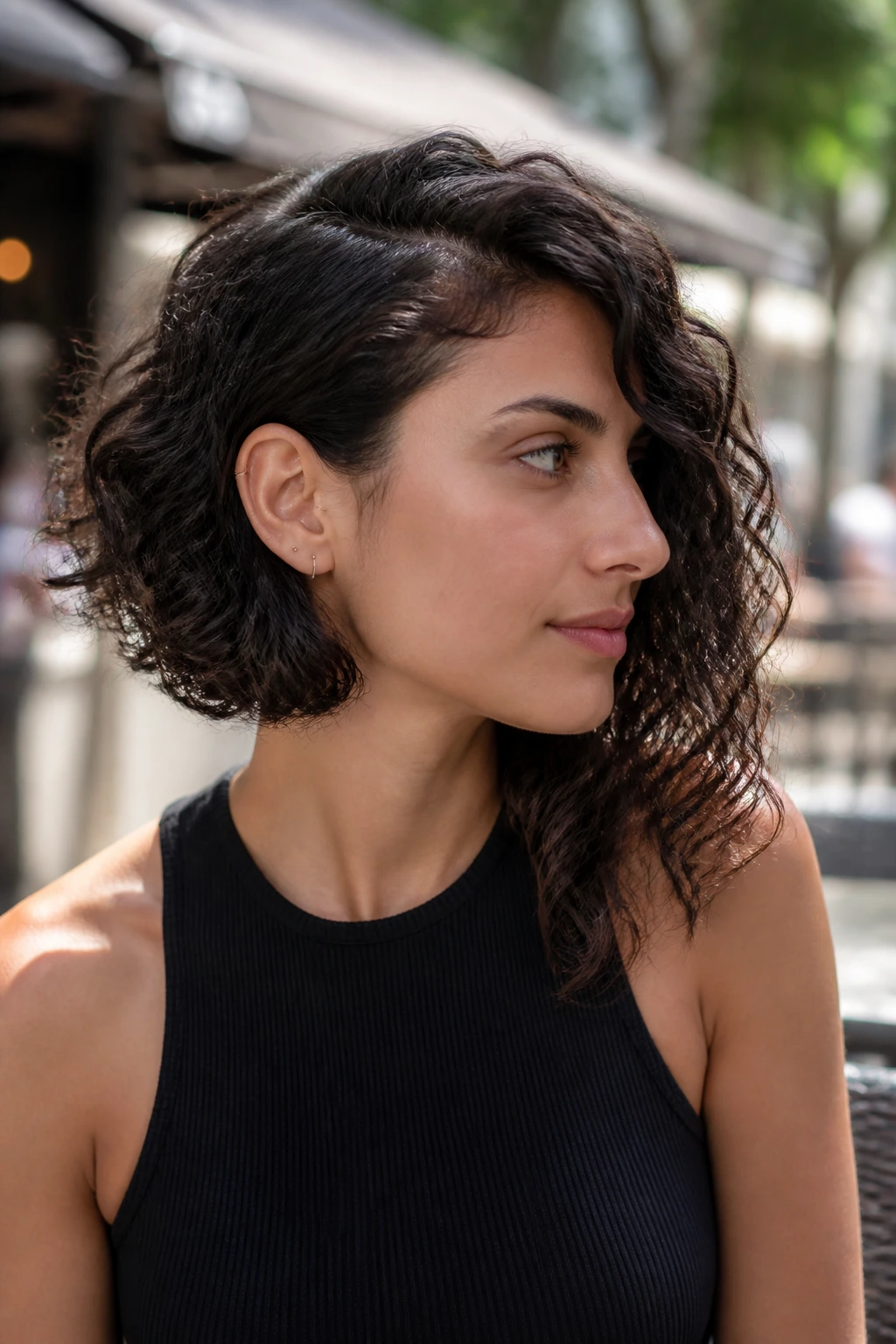
An asymmetrical lob works when one side needs to take up more space than the other. Maybe your hair parts off-center. Maybe one side curls tighter. Maybe you just want the haircut to feel a little more angular. Whatever the reason, the shape can be striking without trying too hard.
The longer side gives the eye a line to follow, while the shorter side keeps the cut from feeling heavy around the jaw. On curls, the difference does not have to be dramatic. Even a subtle half-inch to inch-and-a-half variation can change how the whole head sits.
If you like structure but hate stiffness, this is a good place to land. It pairs well with side parts and side-swept styling, and it tends to look modern even when the curls are a little imperfect. Which they will be. That’s normal.
12. The Internal Layer Cut for Dense Curls
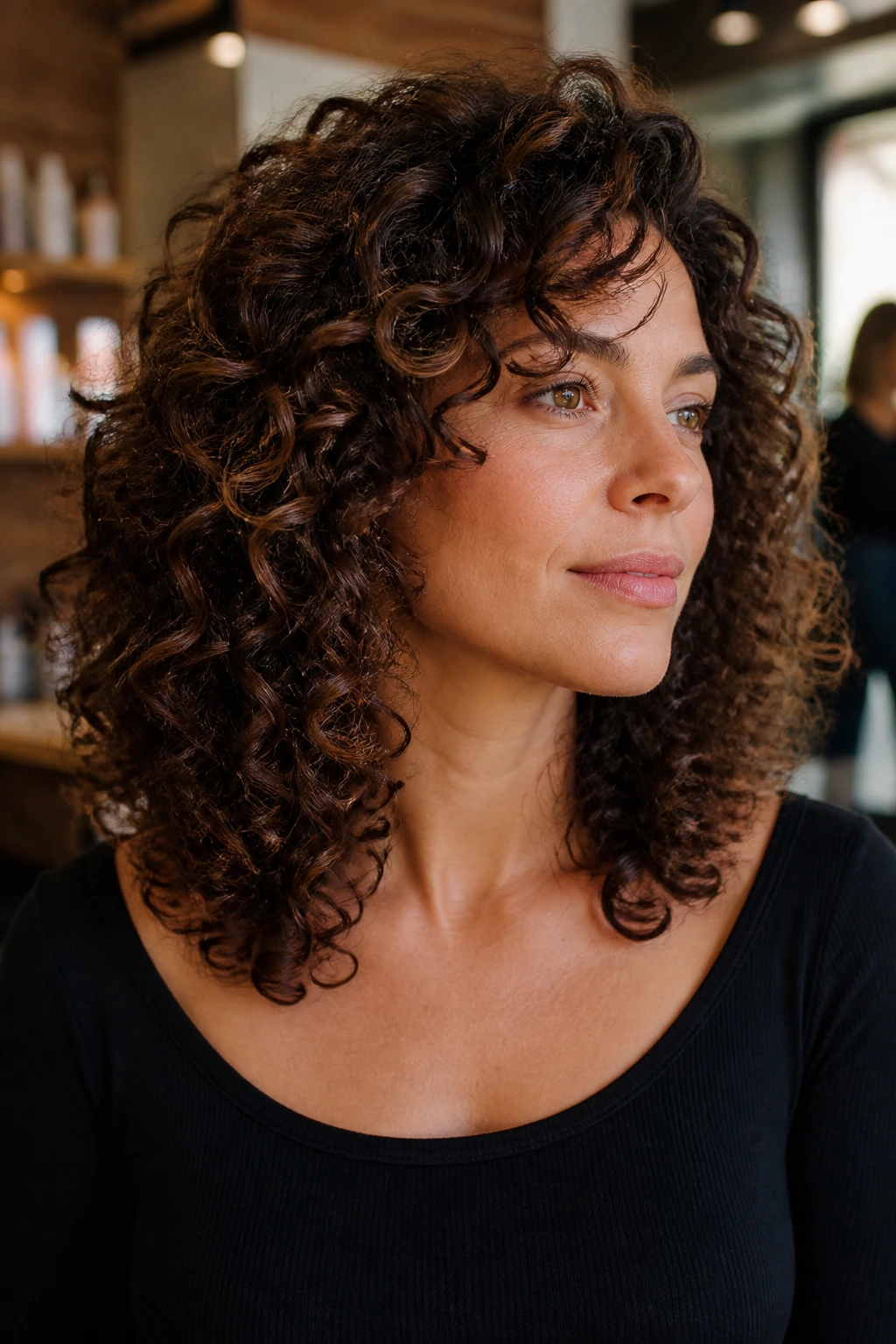
Dense curls often need weight removed from the inside, not hacked off the outside. That’s the whole idea behind internal layers. The top shape stays fairly intact, but the bulk inside the haircut gets lifted out so the curls can separate and breathe.
You see the benefit most clearly when the hair dries. Instead of expanding into one giant block, the curls stack with space between them, and the outline keeps its curve. This is a strong choice for women whose hair feels heavy by noon or who get that stubborn triangle at the bottom.
It is a quiet cut, which is partly why it works. The effect shows in the movement, not in obvious choppy pieces. If you like your curls full but not puffy, internal layers are worth asking about.
13. The Side-Swept Bang Midi
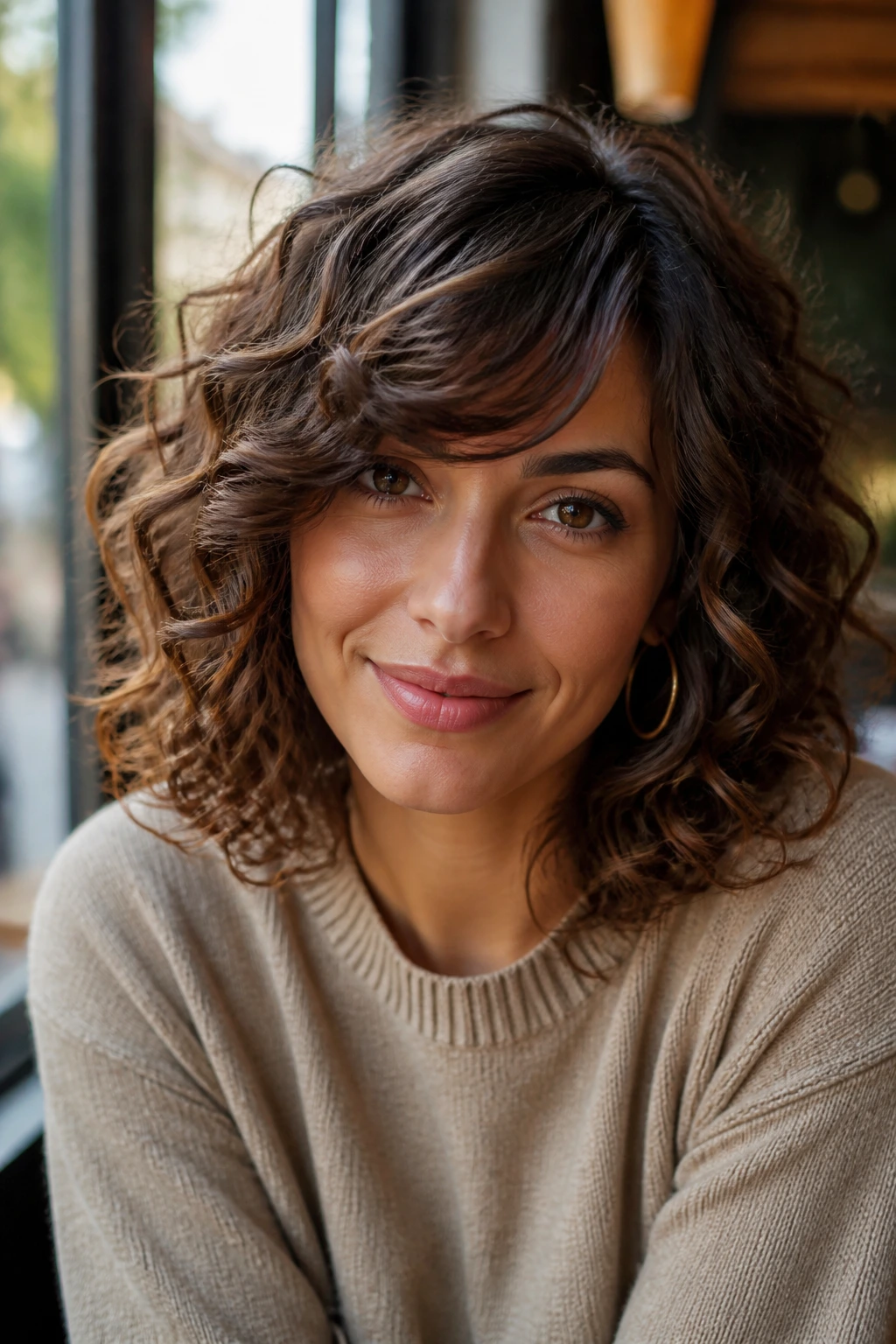
Side-swept bangs shift the eye line away from a heavy cheek line. That sounds small, but on curly hair it can change the whole mood of the cut. The bang section needs enough length to fall across the forehead without springing straight up, so medium length gives it room to behave.
This cut is especially useful if you want some face framing but do not want a full fringe. The bangs can blend into the front layers, and the rest of the hair stays at shoulder to collarbone length. It’s one of the easier ways to test whether bangs and curls get along in your life.
Best For
- Round and square faces that benefit from diagonal movement
- Curls that need a soft entrance, not a hard line at the brow
- Anyone who wants a little styling freedom on days when bangs feel annoying
The side part does a lot of the work here. Keep it soft, not severe.
14. The Thick-Curl Shape With Long Layers
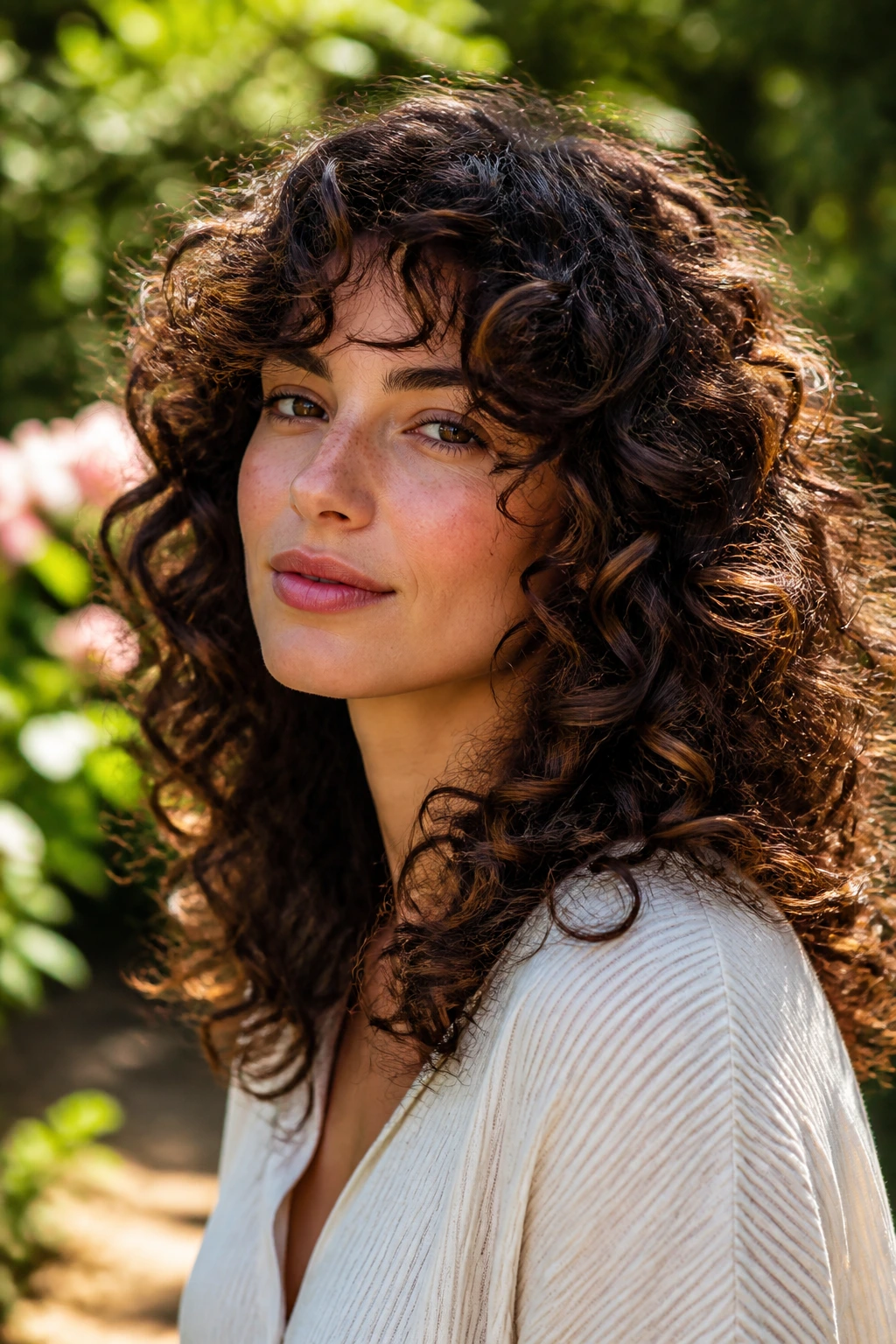
Thick curls love a shape that does not ask the ends to do all the work. Long layers spread the weight out, so the hair can keep its body without turning into a triangle. The layers are usually placed more sparingly than in a shag, which helps the haircut keep a polished outline.
This is the cut I’d pick for someone with dense ringlets who wants movement but still likes a full look. The hair keeps its richness, but the layers stop it from sitting like one heavy mass on the shoulders. If you like to wear your curls half-up, this shape also gives the crown a little lift.
A blunt cut can be too much weight on thick hair. A shag can sometimes go too far the other way. Long layers sit in the middle and usually behave the best over time.
15. The Razor-Softened Midi Cut
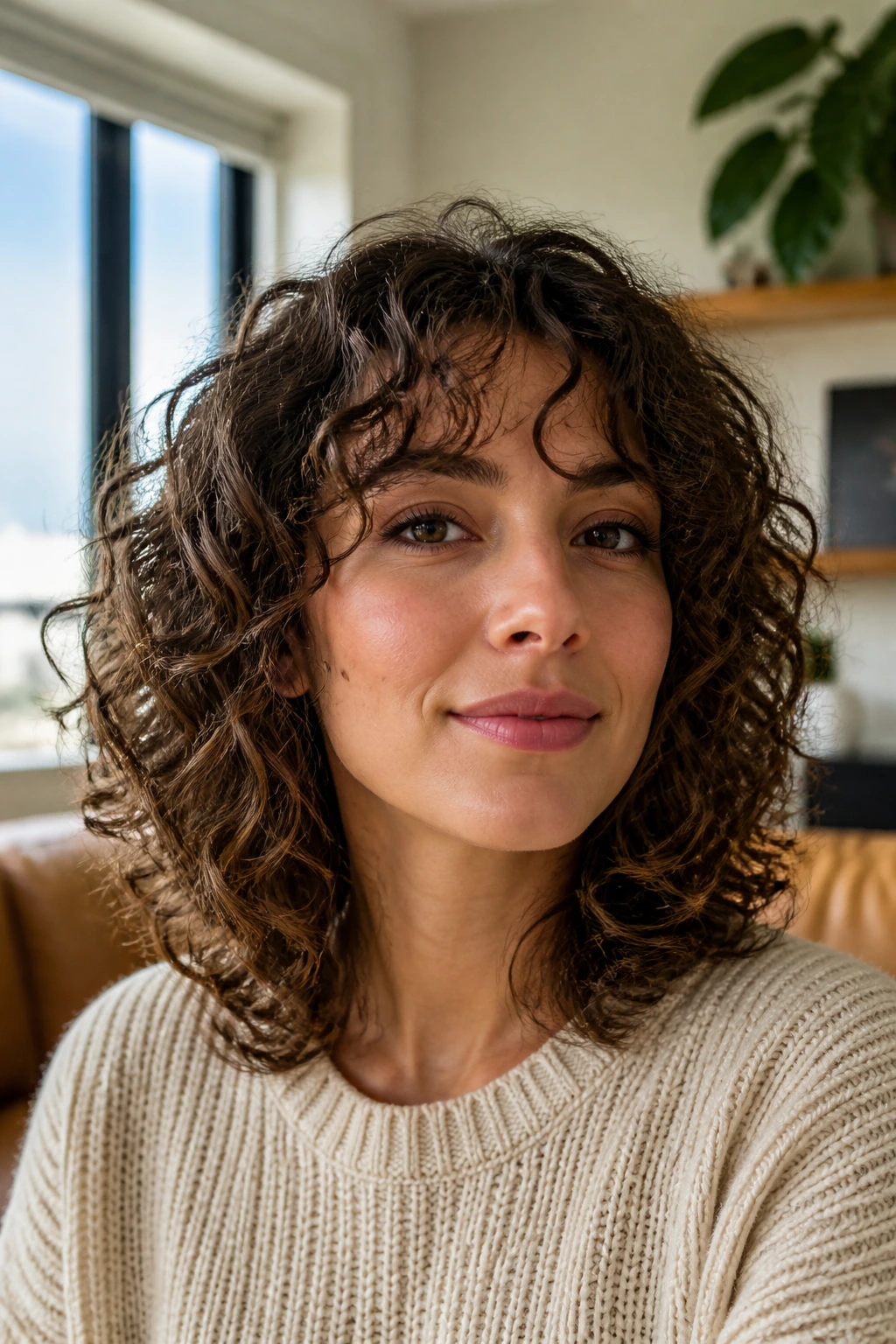
A razor can help, but it can also turn a curl into frizz if the hand is sloppy. That’s why this cut only works when the stylist knows how curls react to a blade. Used carefully, the razor softens the perimeter and removes that hard, heavy edge that some medium curly hair develops.
The best version of this cut feels airy around the ends, with pieces that separate instead of sticking together in a block. It’s especially pretty on looser curls and strong waves. Tight coils can wear it too, but the approach needs more restraint.
If your hair looks too solid when it dries, a razor-softened edge can make it easier to shape with your hands. Not every curl needs that kind of texture, though. If your hair already frizzes at the slightest provocation, scissors may be kinder.
16. The Halo Round Cut
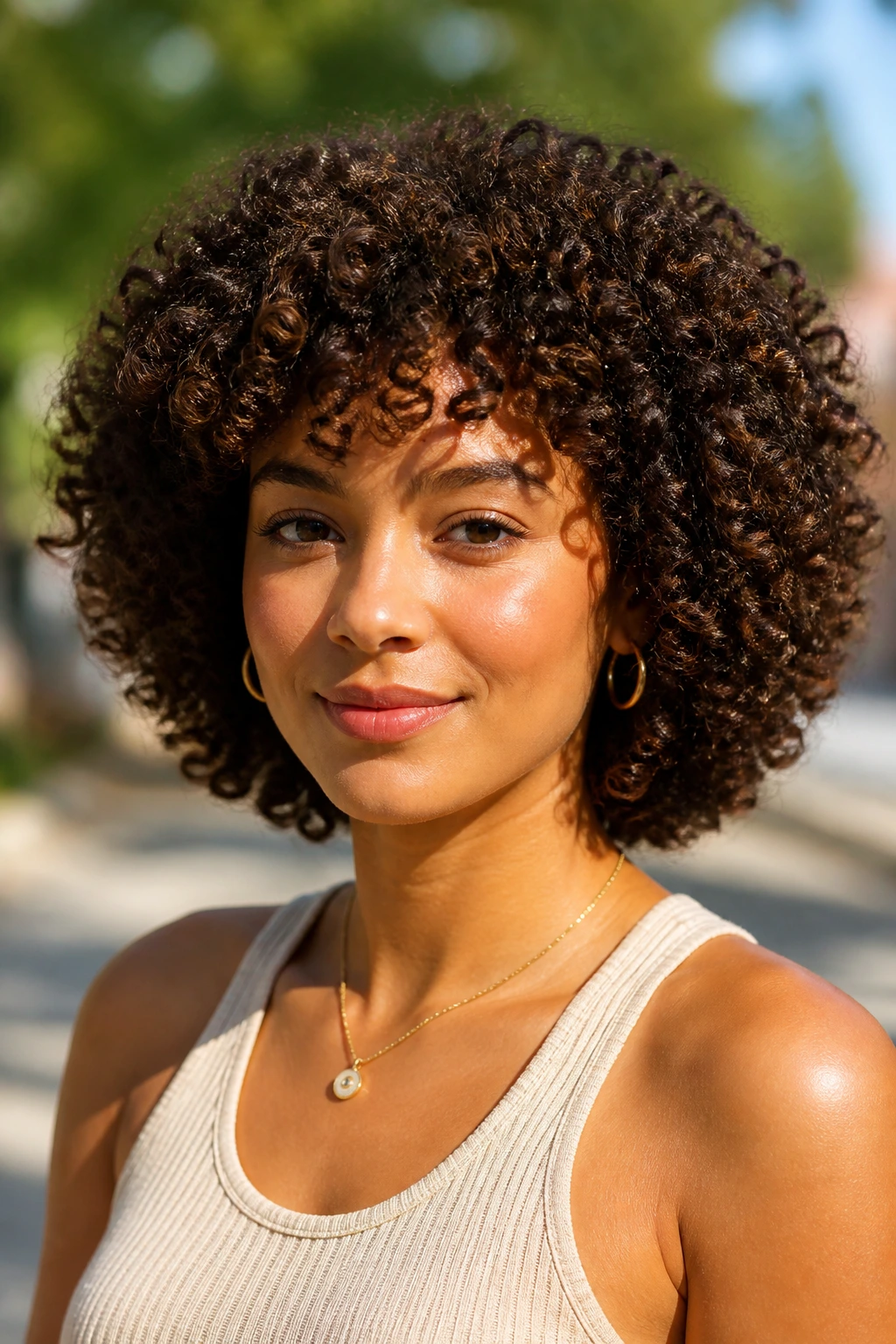
The halo cut is for curls that want roundness at every angle. The silhouette is shaped to echo the curve of the head, so the hair sits full and balanced rather than flat on top with a wide bottom. That roundness is especially flattering on tighter curls and coils.
This cut keeps the sides from flaring out too far and the crown from collapsing. It is not the same thing as a mushroom shape, which can happen when the bottom is too heavy. A good halo cut keeps lift near the top and a clean curve through the sides.
If you like your curls to look plush and sculpted, this is a lovely option. It is not edgy. It is not shaggy. It just makes the curl pattern read cleanly from every side, which is a little harder to get than people expect.
17. The Curly Mullet Lite
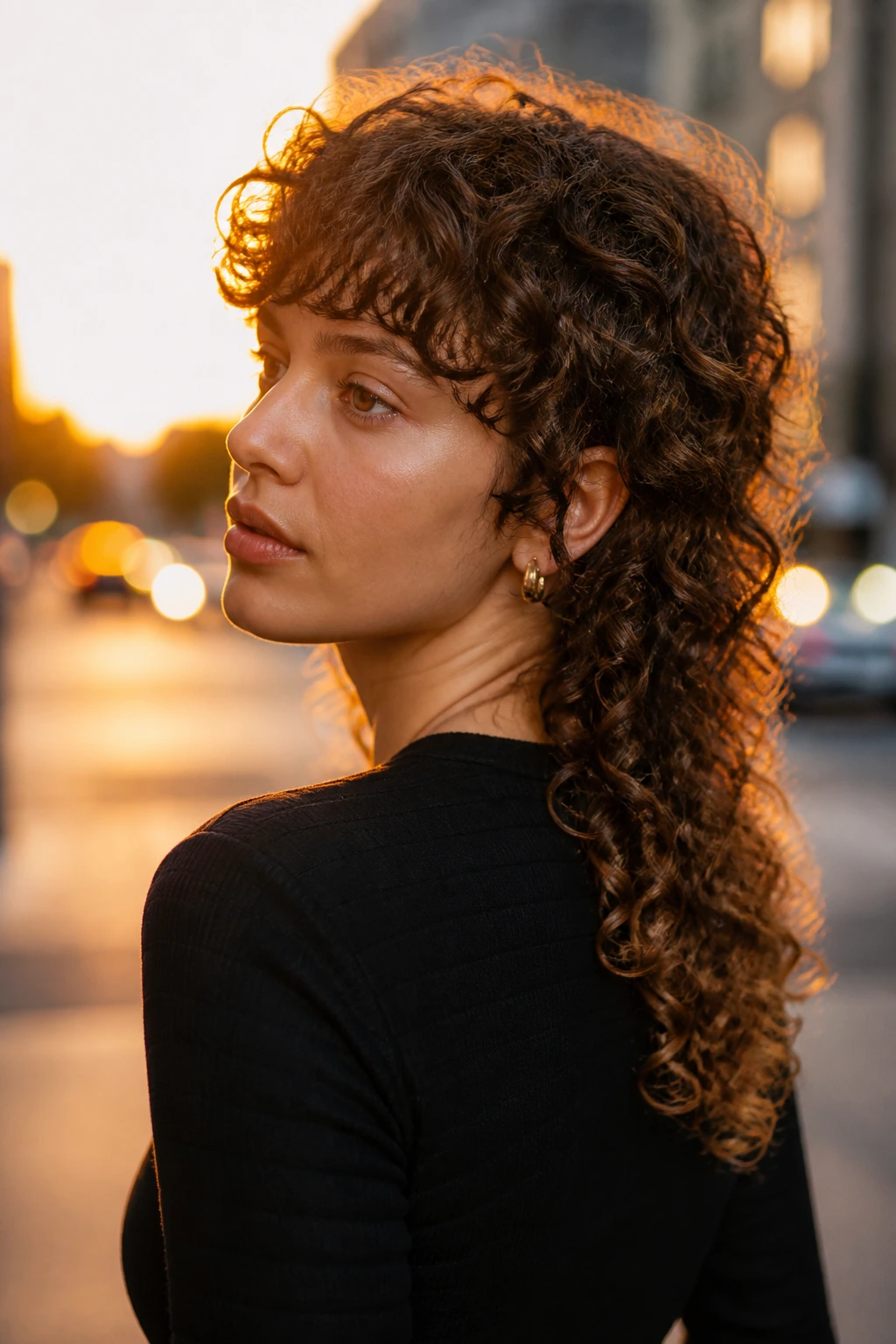
A mini mullet is not for everybody. That’s the point.
This softer version keeps the front and sides around medium length, then leaves a little extra length in the back for movement. On curls, that can look playful instead of costume-y, especially if the top is kept light and the back stays blended. The shape works best when the transition is smooth, not abrupt.
It’s a good pick if you want personality in the haircut itself. You do not need a dramatic wardrobe to carry it. The curls provide enough texture, and the slightly longer back lets the hair swing without feeling static.
18. The Deep Side-Part Cut
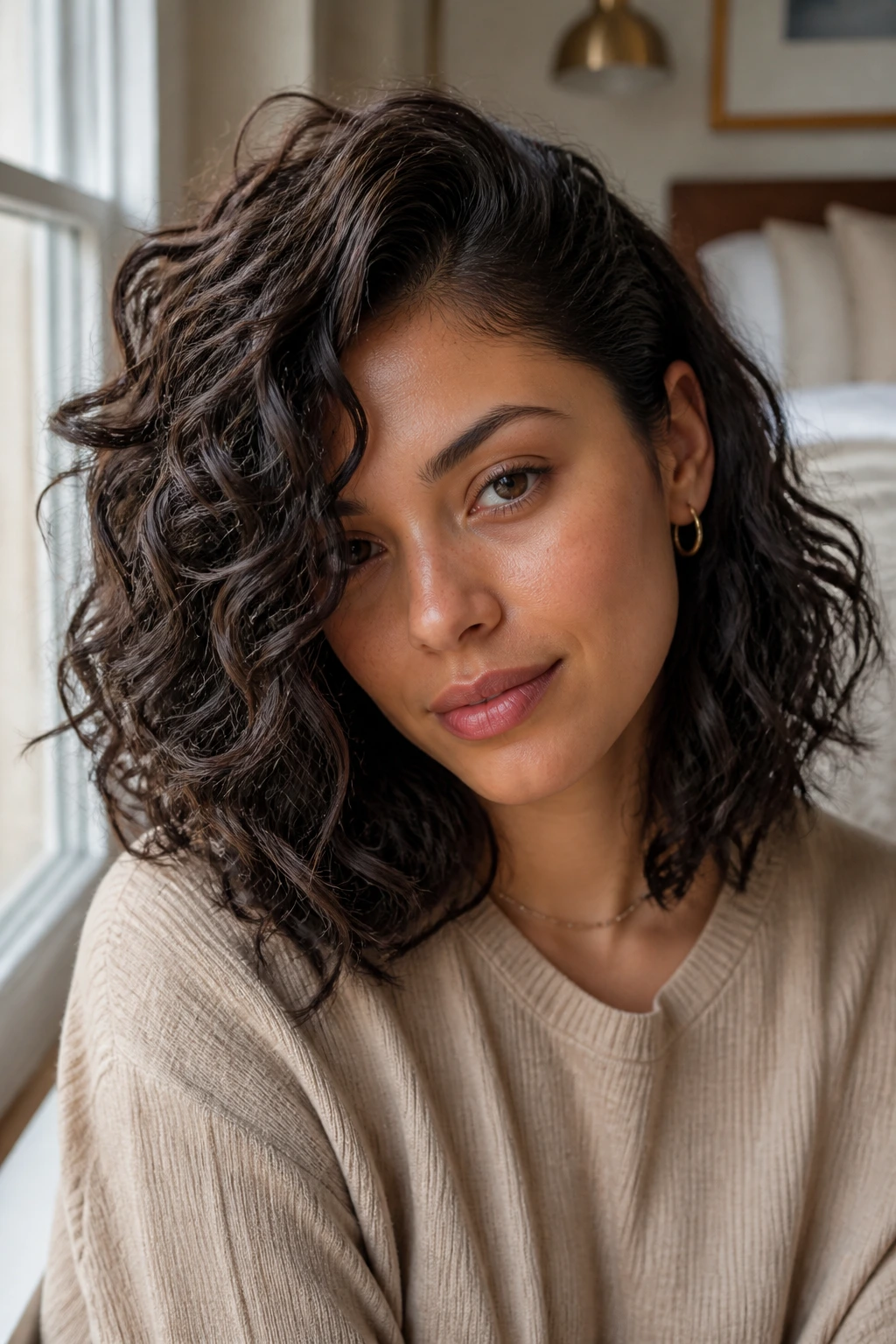
A deep side part changes the whole cut, not just the styling. When curls are moved off-center, the volume shifts, the face framing changes, and the silhouette becomes less symmetrical in a way that often looks sharper. Medium length gives the part room to matter.
This is one of the easiest ways to freshen up a cut without taking off much hair. It can make a simple layered lob look more dramatic, or it can soften a strong jaw by sending the bulk across the forehead. If your curls tend to separate awkwardly in the middle, a side part can make peace with them.
There is a practical upside too: side parts often camouflage one flatter side or a cowlick at the crown. Small change. Big payoff.
19. The Invisible-Layer Cut for Fine Curls
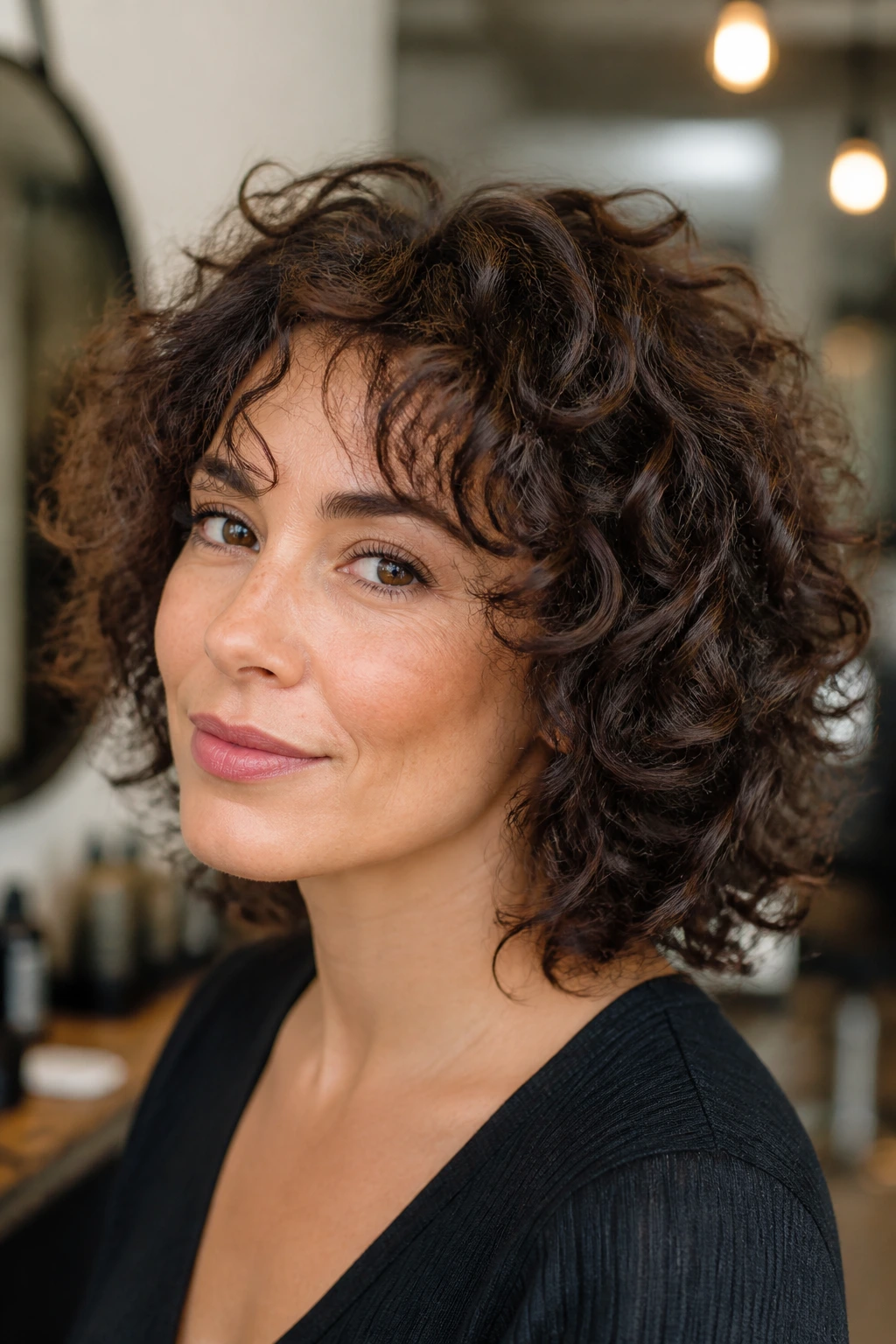
Fine curls and loose waves can disappear inside too many visible layers. The invisible-layer cut solves that by removing weight from underneath while leaving the outside line intact. From the top, the haircut still looks full. Underneath, it moves much better.
This is a smart choice if your curls need help with bounce but not with obvious texture. It keeps the ends from looking see-through and helps the crown avoid that limp, separated look fine curls can get when they’re overcut. Medium length gives the style enough substance to hold.
What to Ask For
Tell the stylist you want soft internal movement, minimal visible layering, and enough perimeter weight to keep the ends dense. That phrasing matters. Fine curls can get over-layered fast, and then you’re stuck with a shape that looks airy in the chair and thin at home.
20. The Curly Bang Midi
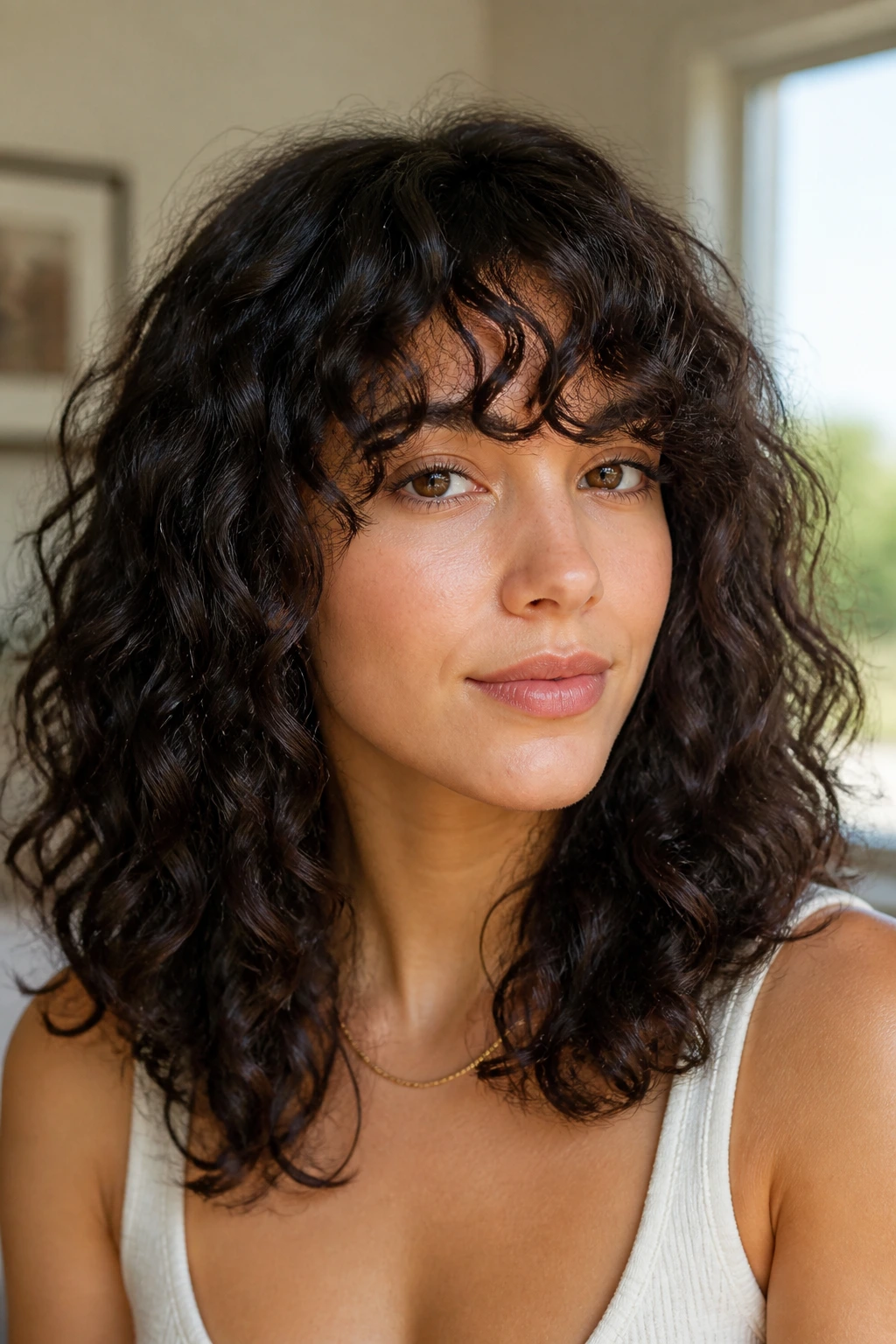
Curly bangs are the first thing people notice, which is why the rest of the cut has to behave. A midi length keeps the hair from overwhelming the fringe, and the fringe gives the haircut a little attitude without changing the whole head shape.
The best curly bangs are usually cut longer than straight bangs. They need that extra length to account for shrinkage and spring. Once they dry, they should land somewhere around the brow or just below it, depending on curl tightness. Shorter than that gets risky fast.
This cut is best when you want a visible style choice up front and a fairly simple body of hair everywhere else. It reads modern without being severe. It also gives you an easy styling decision on days when the rest of the hair just wants to be left alone.
21. The Triangle-Fixing Shape-Up
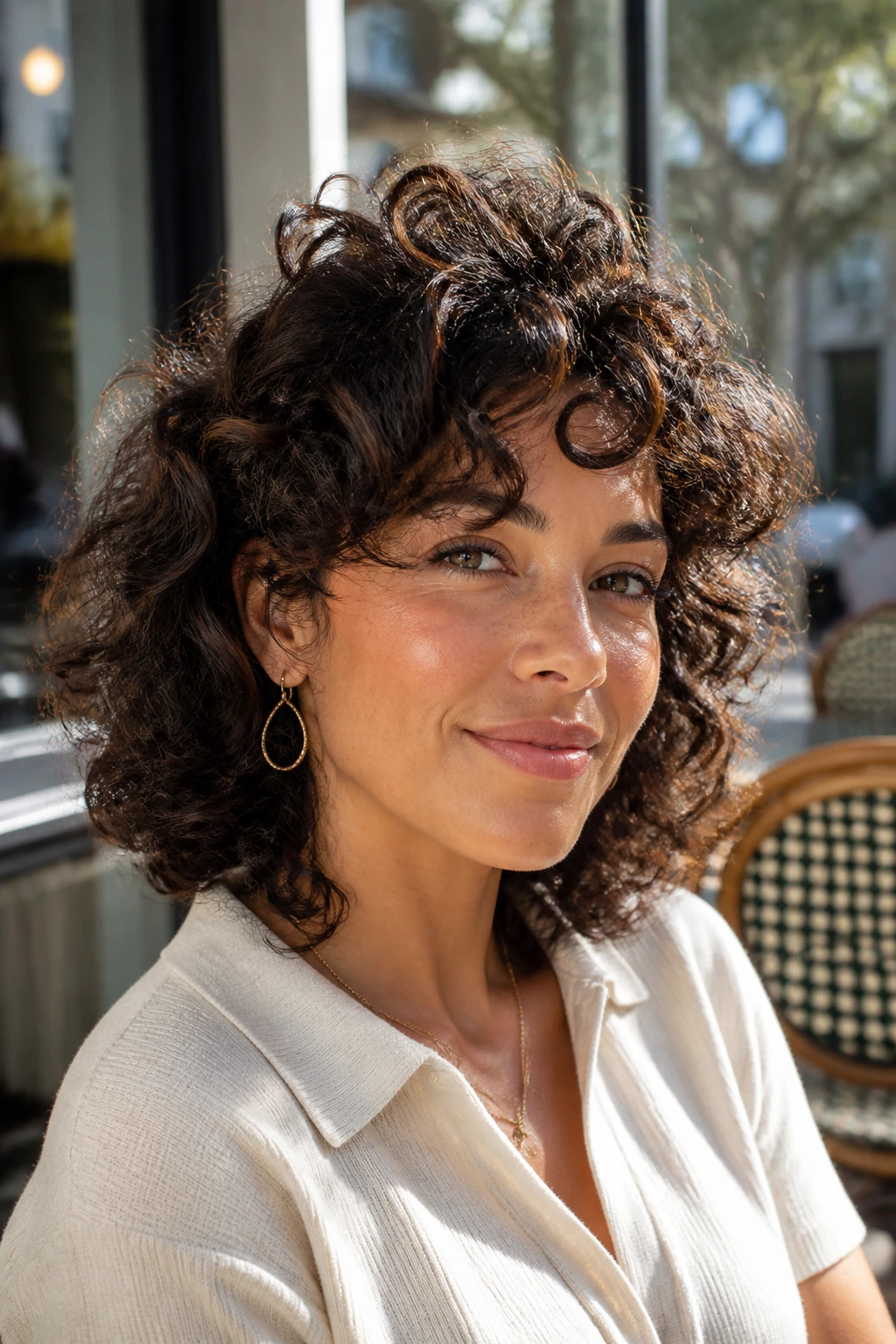
Triangle hair—the kind that grows wide at the bottom and flat near the top—needs correction, not just a trim. A shape-up cut aims to bring the top back into the conversation by removing some weight where it piles up and adding structure where the crown needs help.
The result is usually a better balance between the head and the curls. The sides don’t flare as much, the top looks fuller, and the whole shape feels less bottom-heavy. It is not about making hair smaller. It is about moving the weight so the cut sits in a better place.
If your curls start strong near the ears but collapse at the roots, this is one of the most useful medium haircut approaches you can ask for. It tackles the silhouette first, which is where the real problem usually lives.
22. The Air-Dry Shoulder Cut

Some curls need a shape that survives air-drying, desk chairs, and day-three sleep. The air-dry shoulder cut is built for that life. It keeps the length around the shoulders, uses moderate layers, and avoids any dramatic features that only look right after a perfect diffuser session.
The cut should dry into something usable with very little help. That means enough structure to keep the ends from ballooning, but not so much layering that the top goes limp. It is the practical option in the bunch, and I mean that as a compliment. Not every haircut needs to perform on command.
If your routine is low-effort, this is the one to keep in mind. It gives curls a shape that still looks like a haircut when you’ve done the bare minimum, which is usually the whole point.
Why Medium Length Gives Curls Room to Work

Medium curly hair has a small but useful advantage: it can hold shape without getting buried under its own weight. Once curls get much longer, the pattern at the bottom starts to stretch, and the crown can lose all sense of lift. Shorter than medium, and the shape can swing too wide or too round too fast.
That middle zone — collarbone, shoulder, just past the shoulders — is where curls still bounce but can also be controlled. A stylist has room to carve in shape, and you have room to change the part, add a clip, or let the hair dry with a little texture. Those things matter. Medium length gives you options without making the ends feel fragile.
There’s another reason this length works so well: shrinkage is easier to manage. With a medium cut, you can account for curl spring without gambling on a drastic finish that lands nowhere near the plan. That makes the haircut look better on wash day and on the fourth day, which is where many cuts fall apart.
How to Pick the Right Shape for Your Curl Pattern
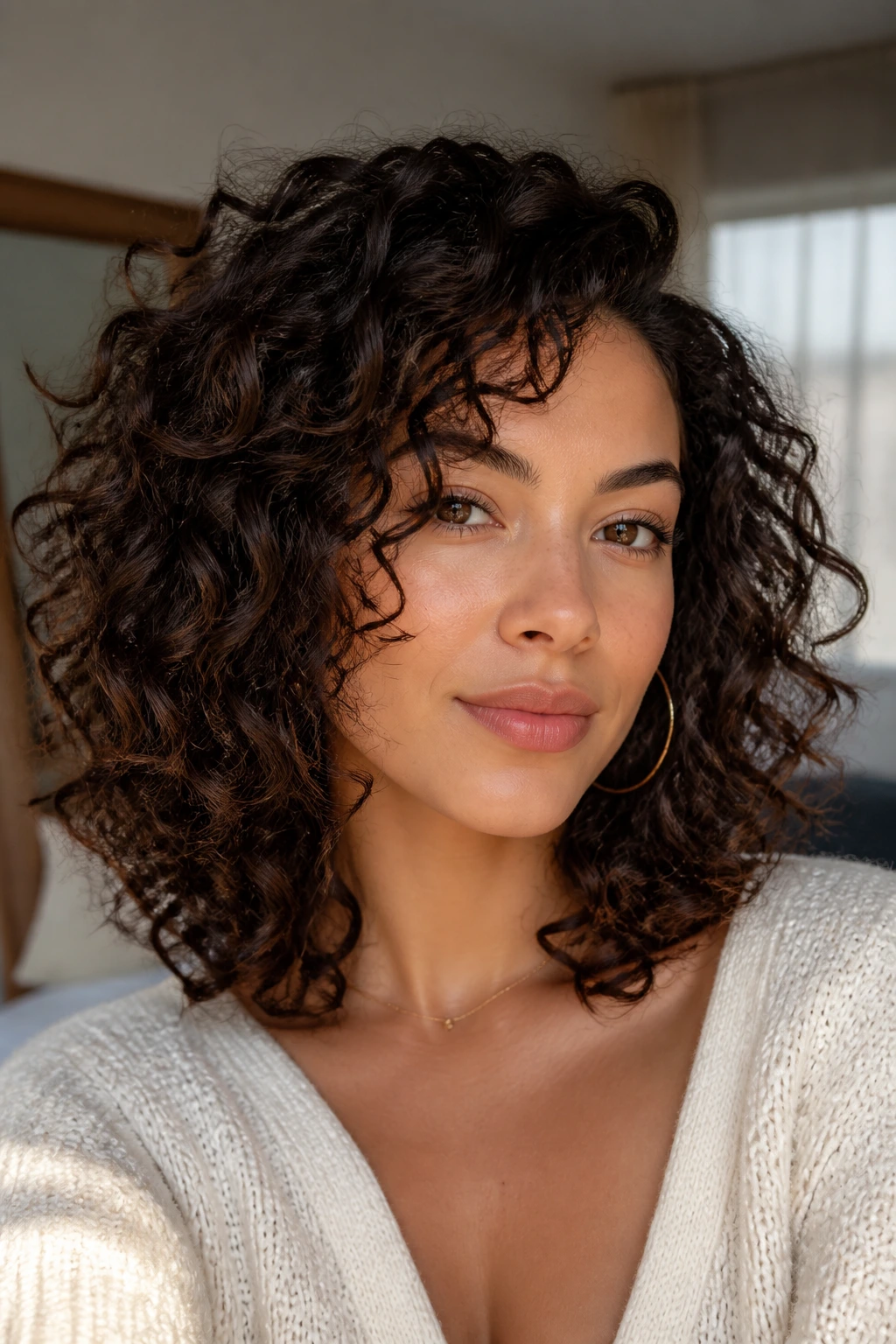
Curl pattern is only half the story. Density, porosity, and how much your hair shrinks all change the final result. A loose wave can wear a blunt shoulder cut and stay elegant. A springy ringlet may need more internal layering so it doesn’t feel heavy. Tighter curls often need the perimeter lifted and rounded, not thinned to pieces.
Face shape matters, too, but not in the rigid way salon posters pretend. Round faces usually like a little height and diagonal movement. Square faces often benefit from soft layers that break up a hard jaw. Heart-shaped faces can look balanced with width lower down, near the cheekbones and shoulders. None of that is a law. It is just a useful starting point.
Bring photos, but bring the right photos. Show one image of the overall shape, one of the bangs or layers, and one of a texture that actually resembles your own. A cut that looks perfect on loose 2C waves may need a different approach to work on 3B curls. That’s not a problem. It’s the job.
Essential Tools for Styling and Maintaining These Cuts
-
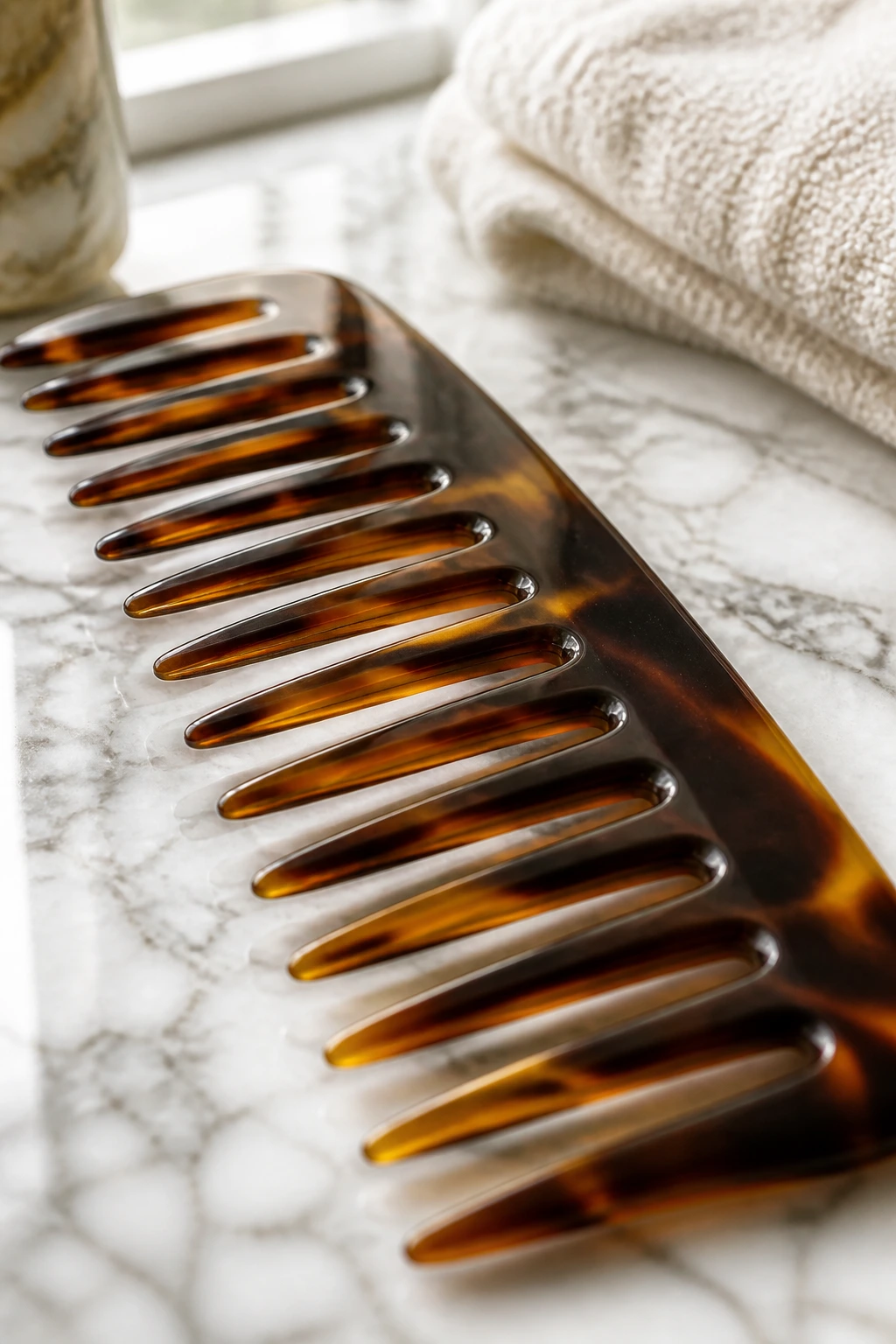
Wide-tooth comb: Good for detangling in the shower without ripping apart curl clumps.
-
Microfiber towel or cotton T-shirt: Helps dry curls without roughing up the cuticle the way a terry towel does.
-
Spray bottle: Useful for rewetting the top layers or refreshing the front pieces before diffusing.
-
Diffuser attachment: Keeps curls from being blasted flat and helps medium cuts hold their shape at the crown.
-
Curl clips or duckbill clips: Handy for lifting roots while the hair dries, especially on lob and shag shapes.
-
Salon shears: If you trim at home, use proper hair shears; kitchen scissors chew the ends and make the line look fuzzy.
-
Lightweight mousse or gel: Gives the haircut a cleaner finish without coating the curls so heavily that they go limp.
-
Sectioning clips: Useful when you want to dry sections separately or keep face-framing layers out of the way.
Practical Styling Moves That Keep the Shape Visible
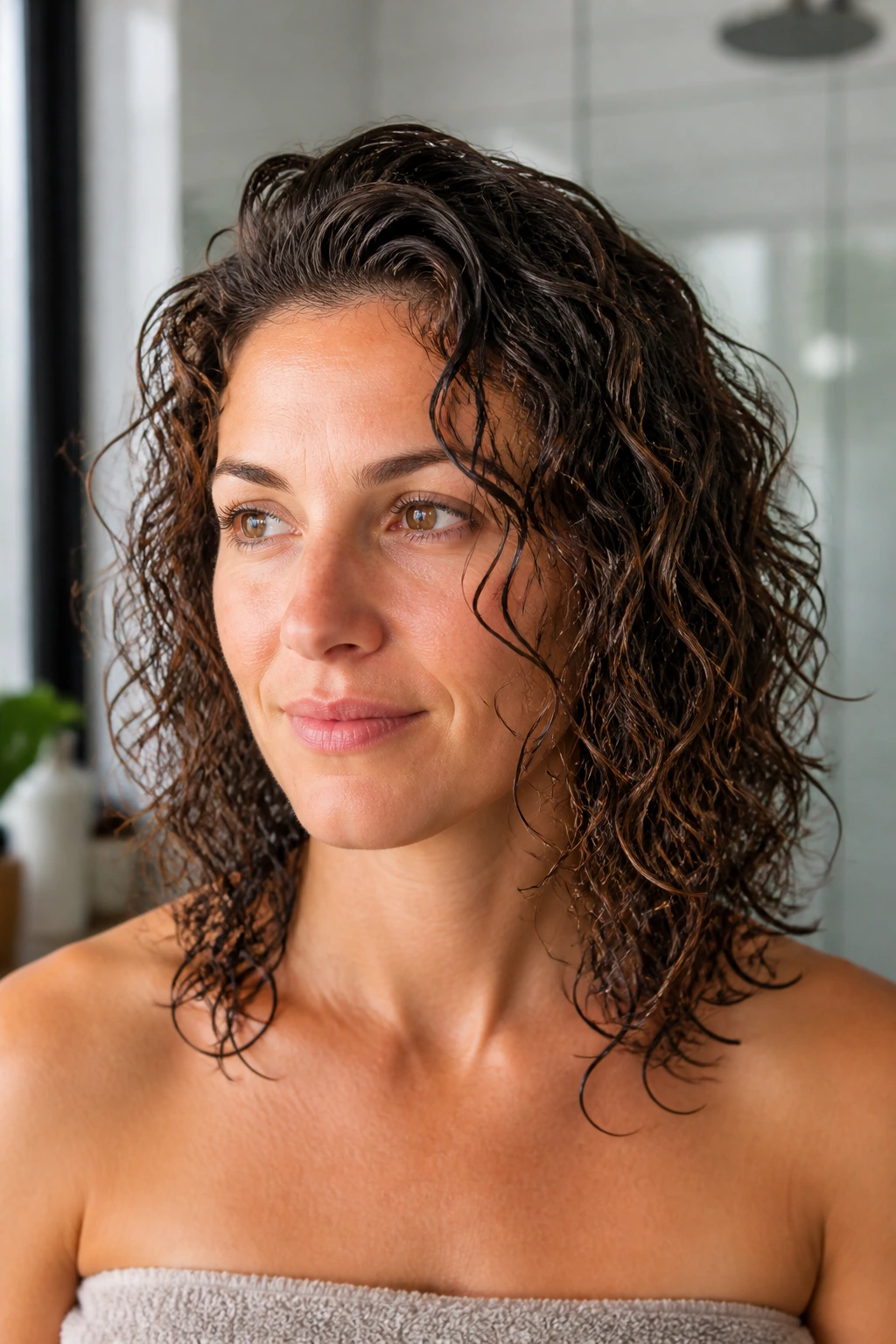
Start with water, not product panic. Medium curly hair usually looks better when it is evenly wet before styling, because that gives the layers a chance to clump in the right places. Scrunch in mousse or gel while the hair is still damp enough to spread the product, then leave the curls alone longer than feels comfortable.
Diffusing: Keep the heat low and the airflow gentle. Cup the curls in the diffuser for 20 to 30 seconds at a time, then let them rest. If you shake the diffuser around like a vacuum hose, the layers puff and the curl pattern gets fuzzy.
Root lift: Clip the crown or the side part while drying if the top tends to collapse. Two or three small clips placed near the root can change the whole outline.
Refresh days: Mist the front pieces and the top layer, then smooth a pea-sized amount of leave-in or cream over the rough spots. Don’t soak the whole head again unless the cut really needs a full reset.
Common Mistakes That Flatten a Curly Medium Cut
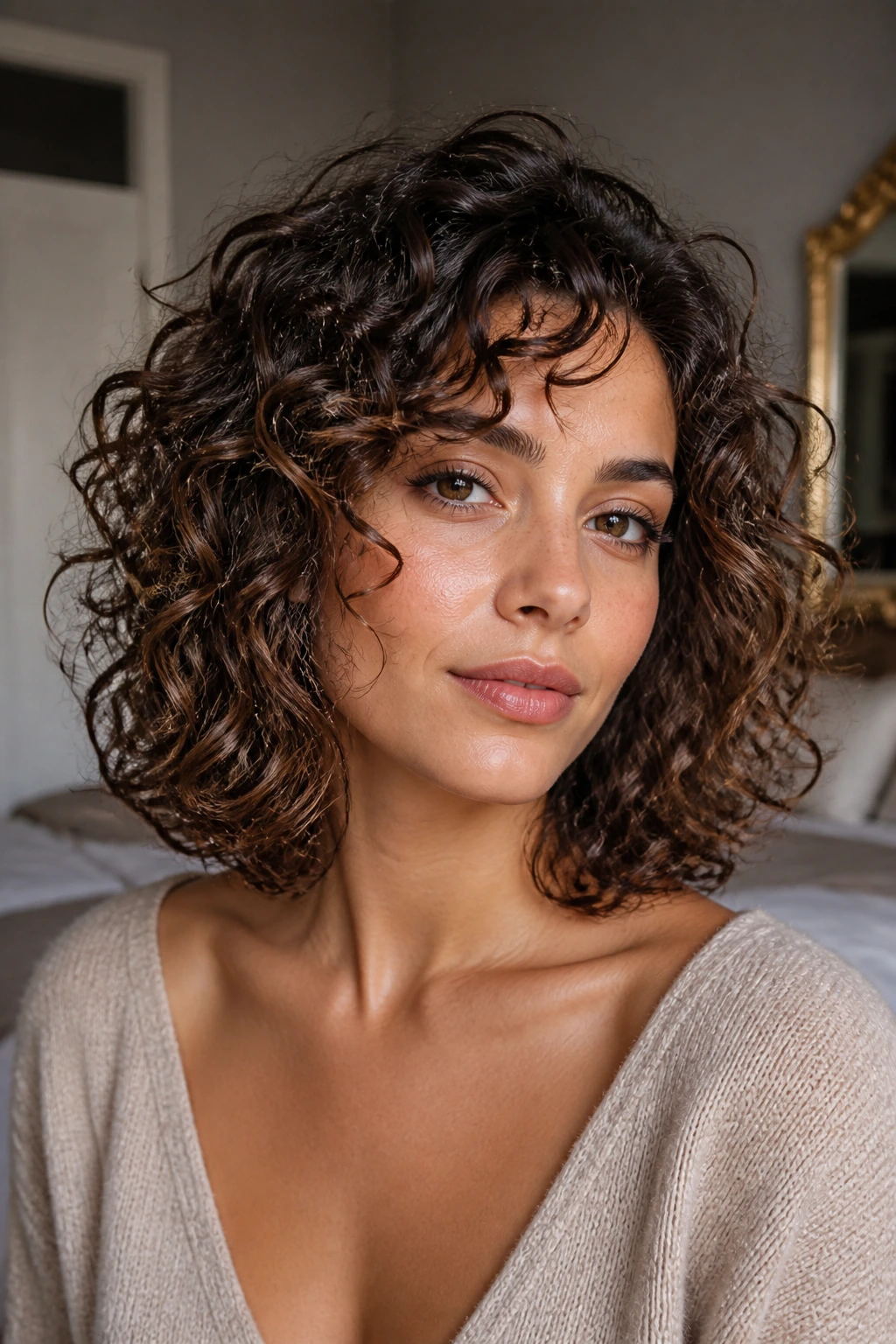
Cutting too much into the ends: If the perimeter gets too thin, the haircut looks wispy instead of full once it dries. The fix is to keep enough weight at the bottom so the curls have something to land on.
Ignoring shrinkage: A wet collarbone cut can turn into a chin-length surprise. Always ask how the cut will behave dry, especially if your curls spring up more than two inches.
Over-layering fine curls: Fine curls can lose their shape fast when the stylist removes too much bulk. The hair ends up looking airy in the chair and sparse at home. Better to keep the layers softer and let styling create the lift.
Leaving the crown too heavy: Heavy roots flatten the whole head, no matter how good the ends are. If the top collapses, the haircut needs weight removed higher up or a little root clipping during styling.
Using too much cream: Heavy cream can drag a medium curl cut down and blur the layers. If your hair feels sticky or stringy before it dries, you probably used too much.
Variations and Alternatives to Try
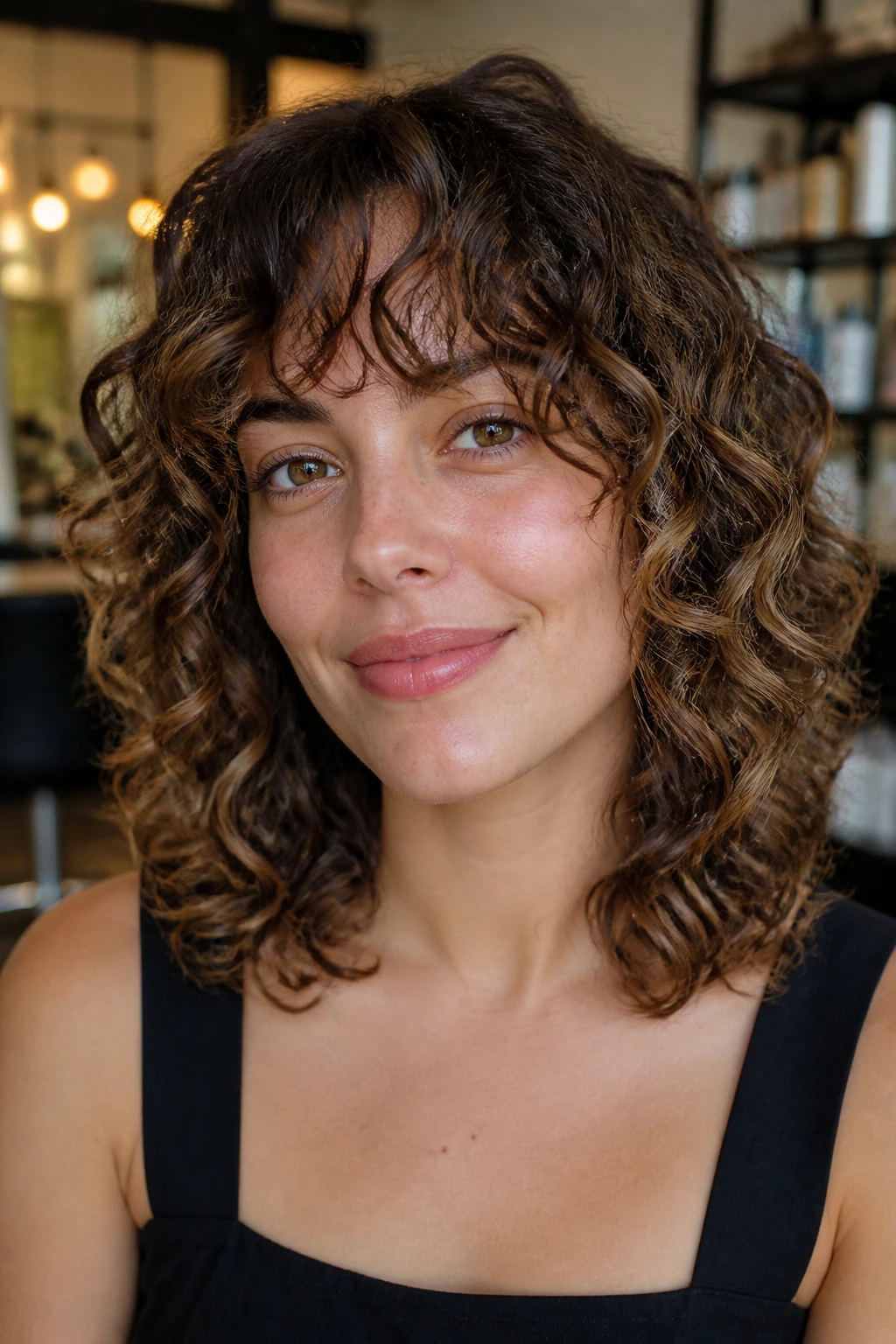
The Low-Maintenance Air-Dry Version: Keep the same medium shape, but ask for softer layers and fewer face-framing pieces. This version lets the haircut settle on its own with less diffusing and fewer product touch-ups.
The High-Volume Salon Finish: Add more crown layers and a stronger side part if you want height and drama. It suits thick curls that can handle a little extra lift without turning fuzzy.
The Fringe-Forward Version: Keep the length steady and make the bangs the main feature. Curtain bangs, side-swept bangs, or a curly fringe can change the whole mood without changing the body of the haircut much.
The Grow-Out Friendly Version: Favor a rounded lob or U-shape with soft internal layers. This keeps the cut looking intentional for longer between trims, which matters if you do not want to think about your hair every six weeks.
The Shape-Correcting Version: If your curls go wide at the bottom, use a triangle-fixing shape-up with lifted crown layers and a narrower perimeter. The goal is balance, not taking off more hair for the sake of it.
Keeping the Cut Fresh Between Washes and Salon Visits
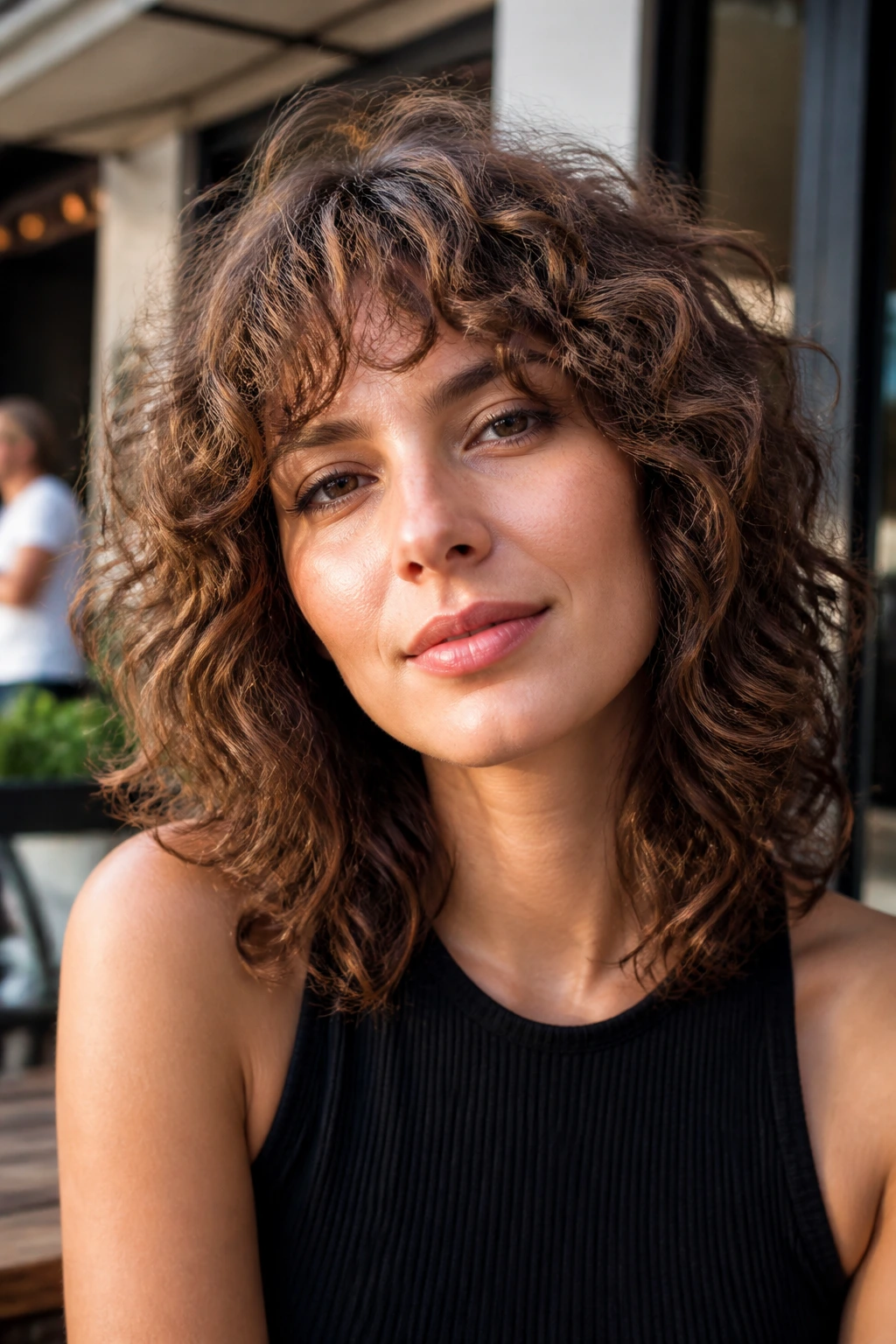
Curly medium hair usually stays in shape longer than people expect if you treat the first 24 hours well. Don’t sleep on a damp cut. Let it dry fully before bed, or the shape can get compressed into a weird bend that lasts for two more days than it should. A silk pillowcase helps, but a loose pineapple or bonnet helps even more.
For most medium curly haircuts, a trim every 8 to 12 weeks keeps the outline from drifting. Thicker, denser hair may need shaping a little sooner if the sides start to widen. Fine curls can often go a touch longer, but only if the ends still feel full. If the haircut starts looking tired from the back before it looks bad in the mirror, that’s your clue.
Refreshing the cut is mostly about roots and front pieces. Water, a tiny bit of product, and a few clips at the crown can buy you another day or two of decent shape. If you keep chasing every frizz with more cream, the cut gets dull. Less product, better placement. That’s usually the cleaner answer.
Frequently Asked Questions
What medium haircut is best for curly hair?
There isn’t one universal winner, but the soft layered lob and the curly shag are the safest starting points for most curl patterns. The lob gives balance and polish, while the shag gives more lift and separation. If you’re unsure, pick the shape that matches how much volume you actually like to wear.
Should curly hair be cut wet or dry?
Dry cutting shows shrinkage and curl pattern more honestly, which is why many curly specialists prefer it. Wet cutting can still work, especially for blunt shapes or when the stylist understands how much your curls spring up. The key is not the method alone — it’s whether the cut is planned for the way your hair behaves after it dries.
Do layers make curly hair frizzy?
Not when they’re placed well. Layers only look frizzy when they’re too short, too choppy, or thinned out with the wrong tool. Good layers should separate the curls so they move; bad layers just make the hair look broken.
How often should medium curly hair be trimmed?
Most medium curly cuts benefit from a shape-up every 8 to 12 weeks. Very dense curls may need a bit more frequent cleanup, while looser textures can sometimes stretch longer. Watch the outline, not the calendar. If the bottom starts puffing wide or the crown collapses, it’s time.
What if my curls are different on each side?
That’s common, and a smart cut should account for it. Ask the stylist to shape the tighter or flatter side separately instead of forcing both sides into a mirror image. A little asymmetry often looks more natural than pretending both halves behave the same.
Can I get bangs with medium curly hair?
Yes, but the bang type matters. Curtain bangs and side-swept bangs are easier to wear than short blunt bangs because they have more room for shrinkage. If your curls are tight or springy, keep the fringe longer than you think you need.
Which cut works best for thick curly hair that gets bulky at the bottom?
The internal layer cut, the rounded shoulder-length cut, and the triangle-fixing shape-up are all strong choices. They move weight away from the bottom edge without making the ends look thin. Avoid a heavy blunt line unless your curl pattern is loose enough to handle it.
How do I ask for a curly haircut at the salon?
Bring photos of the shape, not just the vibe. Then say how much shrinkage you get, whether you wear your hair air-dried or diffused, and where it tends to puff or flatten. That gives the stylist more useful information than “I want layers.”
The Shape That Does the Work for You
The nicest thing about a good medium curly haircut is that it does not ask for perfection. It gives your curls a place to land, even on the days when you diffuse for six minutes, run out the door, and call that a styling routine.
Pick the shape that matches the way your hair actually behaves. Not the way it behaves in a salon chair. Not the way it looks pinned on a mood board. The cut that keeps its outline when you sleep on it, drive with the windows down, and skip a wash day is the one worth keeping. And when curls hit that balance of movement, weight, and shape, the whole head suddenly makes sense.