



Short hair has a reputation problem. People treat it like the backup plan for formal dressing, which is odd, because a clean crop or a chin-length bob can look sharper than waist-length waves ever will.
When formal hairstyles for short hair are done well, the shape does the talking first: a hard side part, a wave parked against the temple, a tucked nape, a barrette placed exactly where the cheekbone starts. The eye catches those lines fast. There’s no long curtain of hair to hide behind, so every decision shows.
That’s the part I like most. Short hair forces clarity. You can’t bury a bad part or a sloppy pin job under layers, which sounds harsh until you realize the payoff: once the shape is right, the look feels polished in a way that reads deliberate, not overworked. A little hold. A little shine. A little restraint. That’s usually enough.
Why These Looks Work on Short Hair
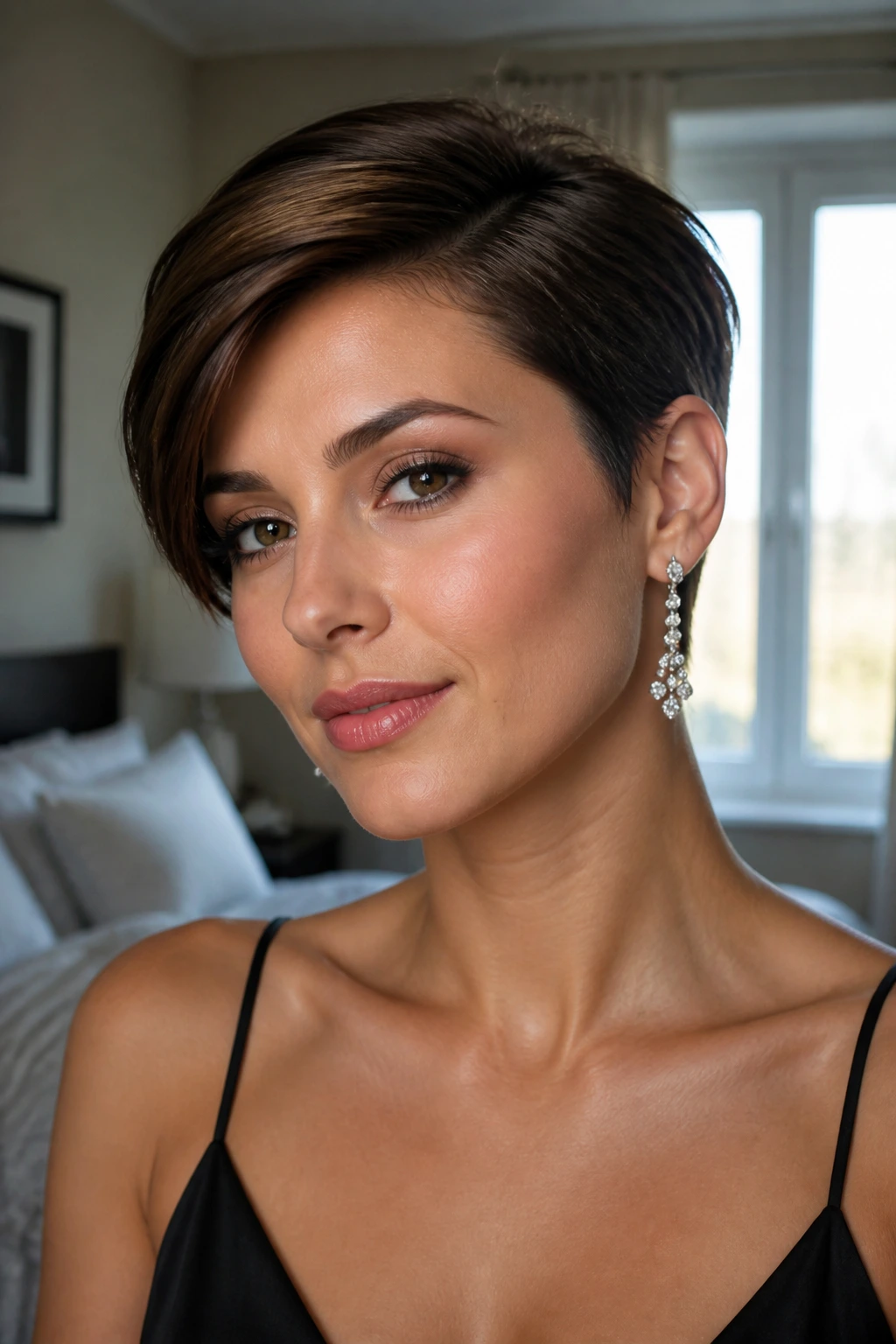
-
The outline stays clean: Short hair keeps the neck, jaw, and ear line visible, so a side sweep or tucked finish looks crisp instead of heavy.
-
Accessories do more work: A pearl clip, crystal comb, or metal barrette has room to show up when there isn’t a lot of length competing with it.
-
Pinned hair holds better: Shorter sections are easier to anchor, and hidden pins disappear more cleanly under a wave or twist.
-
Texture can carry the whole style: A few well-placed bends from a 1-inch iron can give enough formality without turning the hair stiff.
-
Day-two hair helps: Slightly lived-in roots grip better than freshly washed silk, which is why many formal short-hair styles behave better after a little dry shampoo.
-
The finish looks intentional fast: You do not need a dozen steps to make short hair look dressed up. One strong shape is often enough.
1. Sleek Side-Part Pixie
A side-part pixie is the cleanest answer when you want short hair to look dressed for a formal night without much fuss. The part creates a built-in line, and that line is doing a lot of the work. One side lies smooth against the head. The other gets just enough lift to keep the cut from looking flat.
I prefer this look with a light smoothing cream on damp hair, then a blow-dry using a narrow nozzle and a tail comb. If one section keeps flipping or puffing, tap it with a flat iron at a low-to-medium heat setting, around 300°F to 330°F. Finish with shine spray, not heavy oil. Oil on a pixie can go greasy fast.
This style is at its best when you tuck one side behind the ear and let a strong earring do its job. Clean. Sharp. Very little wasted motion.
2. Sculpted Finger Waves
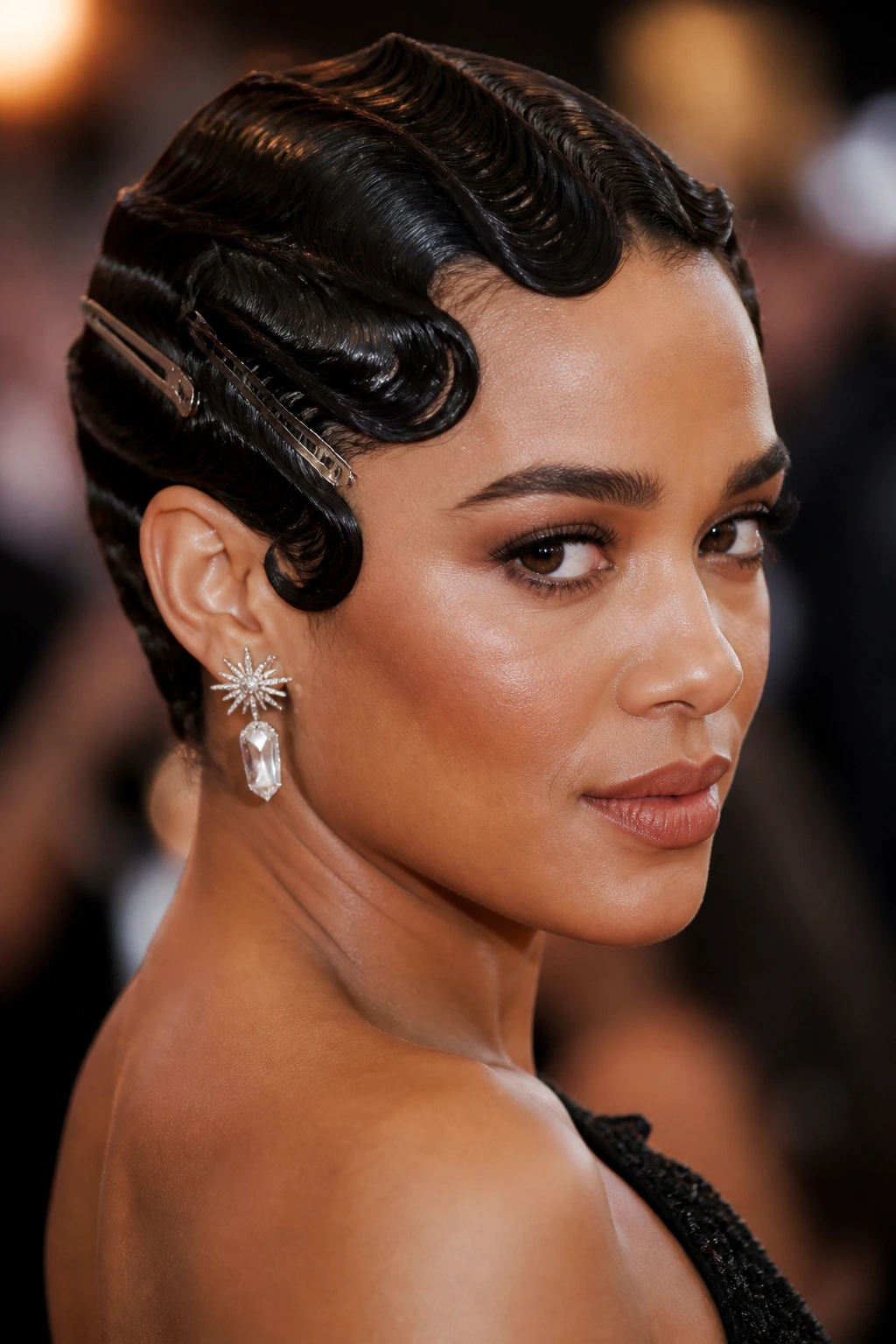
Finger waves turn short hair into something older and cooler, in the best sense of the word. They sit close to the head, but they never look lazy. The curved pattern gives structure right away, which makes this one of the strongest formal styles for a pixie or short bob.
Why it reads formal
The wave pattern is the whole point. You are not trying to create bounce; you are creating shape that sits almost like fabric folded by hand. Gel or setting lotion, duckbill clips, and a fine comb are the real tools here. Let the hair set completely before you touch it.
I like finger waves for black-tie events because they stay put once they’re dried properly. If your hair is thick, work in small sections no wider than your index finger. If your hair is fine, use less product than you think you need; too much makes the wave collapse into a slick sheet.
Add a glossy lip, a strong brow, and one simple earring. That’s enough.
3. Deep Side-Swept Bob
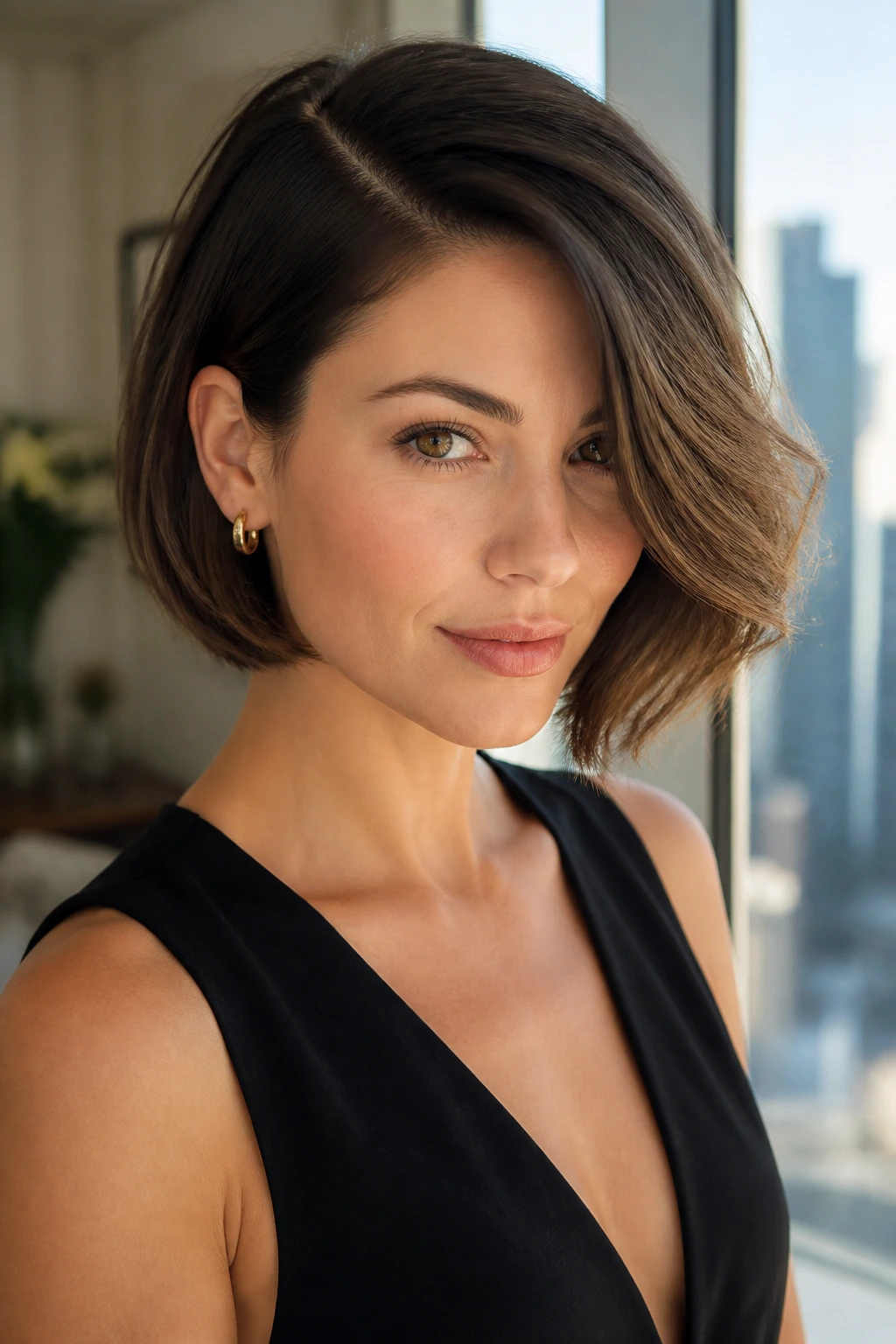
A deep side-swept bob gives you the softness of a wave with the control of a tucked finish. The trick is the part. Push it far enough over that one side becomes the visual anchor, then shape the lengths so they curve across the cheek instead of hanging straight down.
A 1-inch curling iron or wand works well here. Wrap sections away from the face, leave the ends a little straighter, and brush the curls out once they cool. The result should look like a soft bend, not a ringlet. If you want the bob to feel extra formal, clip the heavier side behind the ear with a narrow barrette or a pin that nearly disappears into the hair.
This style works especially well on chin-length cuts that need a little drama without a full updo.
4. Faux Bob with Hidden Pins
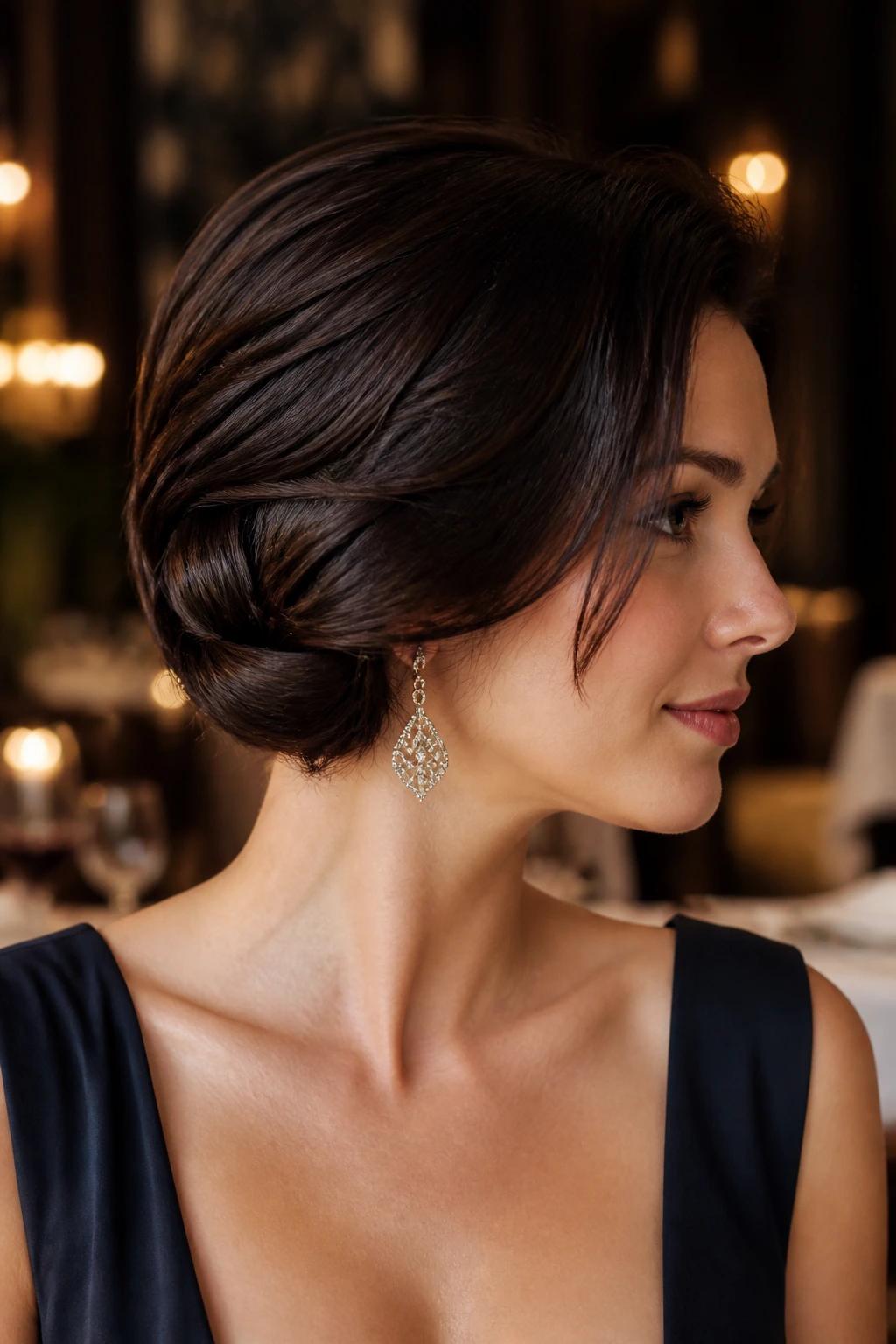
If your hair is just long enough to cheat, a faux bob is a smart cheat. It gives the feel of a shorter, polished silhouette while keeping the ends tucked out of sight. That means you get the clean neckline of a cropped style without actually cutting anything.
The key is to curl the ends under first, then fold them up and pin them at the nape in two layers. Cross the bobby pins so they lock, and use hair that has cooled after curling; warm hair slips. I like to leave the top smooth and let the interior do the work. If the hairline looks too perfect, the style can feel fake. If a few face-framing pieces soften the front, it looks intentional.
This one is strong for formal dinners and weddings because it photographs like an updo, but it stays comfortable for hours.
5. Half-Up Twist with a Jewel Clip
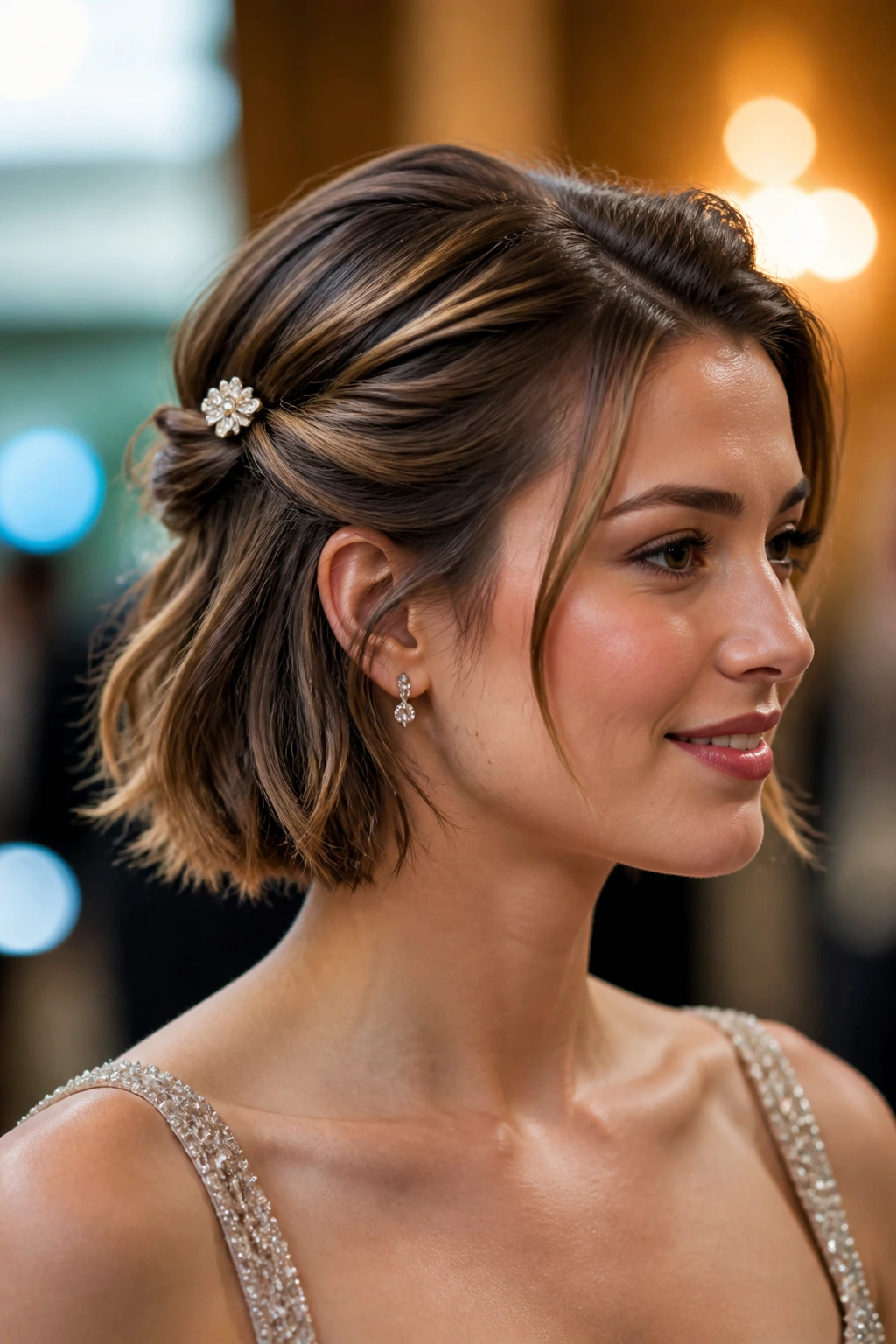
A half-up twist is one of those styles that sounds simple until you see how much polish it can carry. On short hair, the twist starts near the temples, meets at the crown, and opens the face without stripping away all the texture. A jewel clip or small barrette gives it the formal finish.
The twist should feel snug, not tight. If the hair is too slippery, mist the roots with texture spray before you start. I usually twist each side back with my fingers first, then tighten with a comb only at the very end. That keeps the shape soft. The clip belongs slightly off-center if you want the look to feel less stiff.
This is a good choice when the outfit already has detail at the neckline and you want the hair to support it, not compete.
6. Braided Crown on a Bob
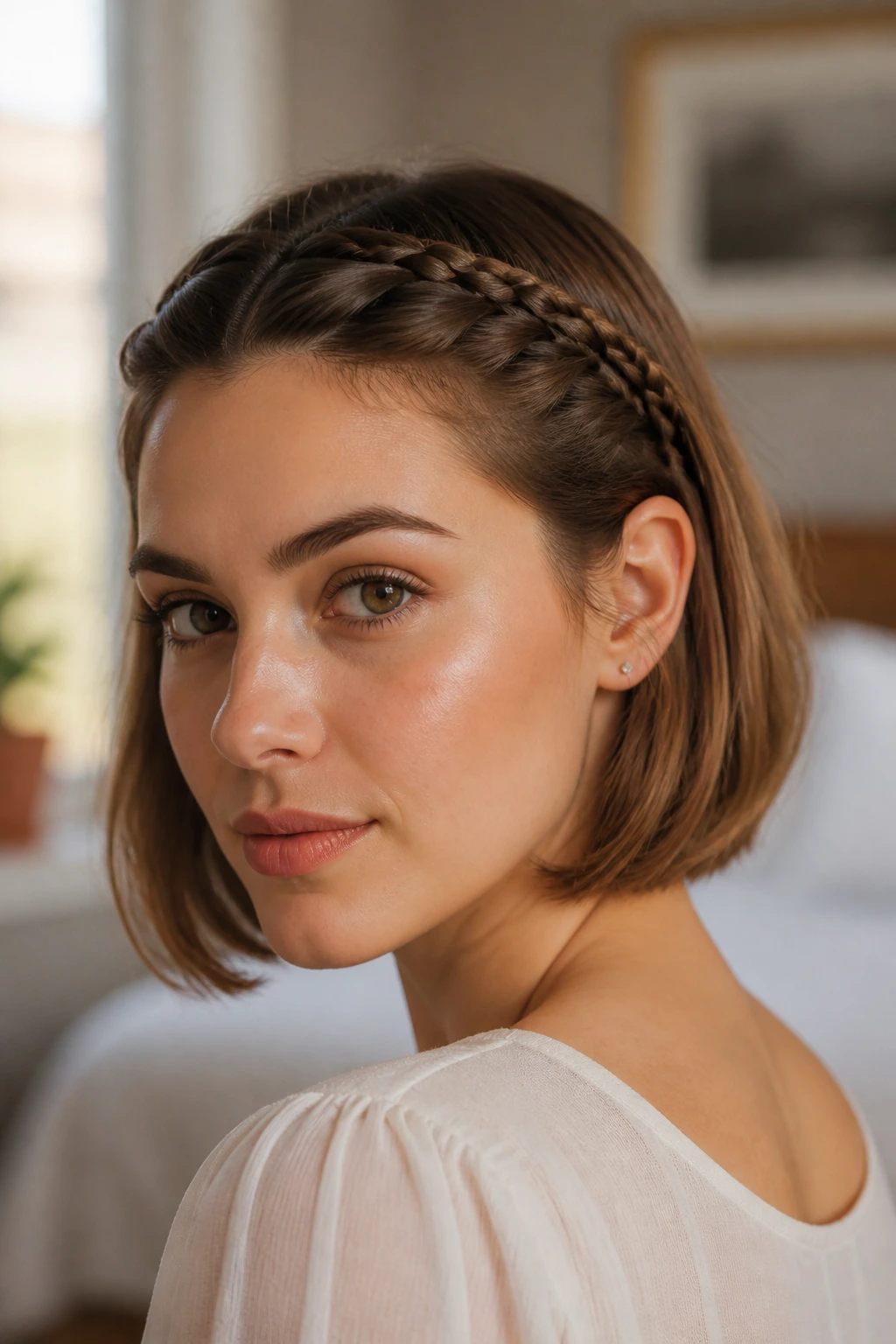
A braided crown on short hair works best when the braid is slim and disciplined. Huge braids on a short bob can puff out and look bulky, which is the opposite of formal. Tiny braids along the hairline, pinned under at the back, give you structure without the bulk.
You can work with a Dutch braid, a French braid, or even a rope braid if your hands prefer twists to weaving. The goal is to sweep the front sections back and keep the crown neat. If your bob is fine, a little dry shampoo at the roots helps the braid grip. If the ends refuse to cooperate, tuck them under the back layer and pin them flat.
This style has a quiet elegance to it, but I’m not going to say that phrase twice. It’s clean, secure, and it stays in place when the night gets long.
7. Low Rolled Chignon for Lob-Length Hair
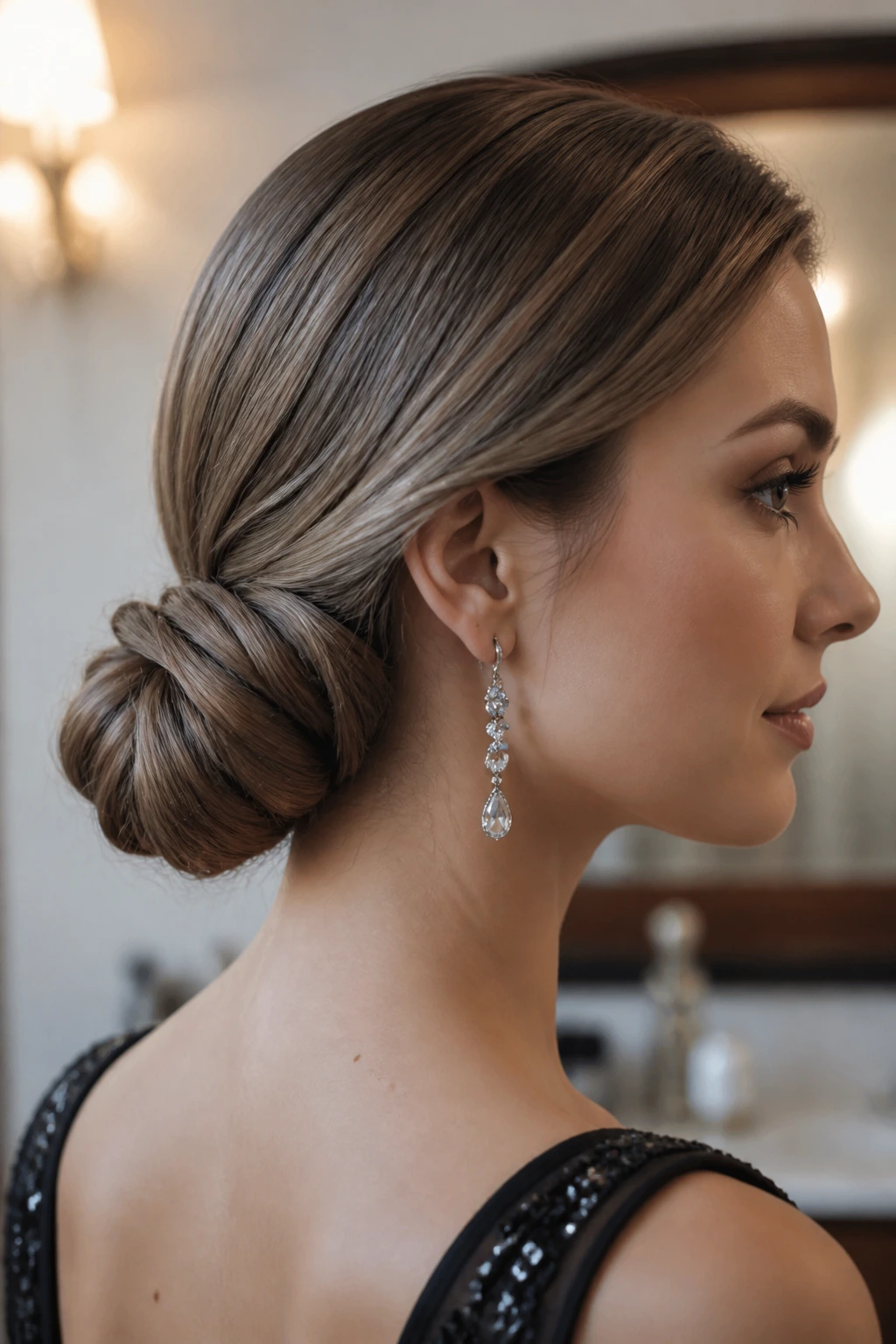
A lob gives you enough length to fake a chignon without making the style bulky. That’s the sweet spot. Roll the ends inward, fold them into a low knot at the nape, and pin the roll in small pieces so the shape stays narrow. If the knot starts to widen, the style loses that neat formal line.
The top should be smooth. Not tight. Smooth. There’s a difference. A soft side part or gentle center part both work, but I lean side part for more face shape and better movement at the front. A few spritzes of strong-hold spray on the pinned base will keep the style from sagging by the second hour.
This is one of the best options for dresses with open backs, because the silhouette at the neck stays clean and the hair doesn’t fight the neckline.
8. Sculpted Pompadour Pixie
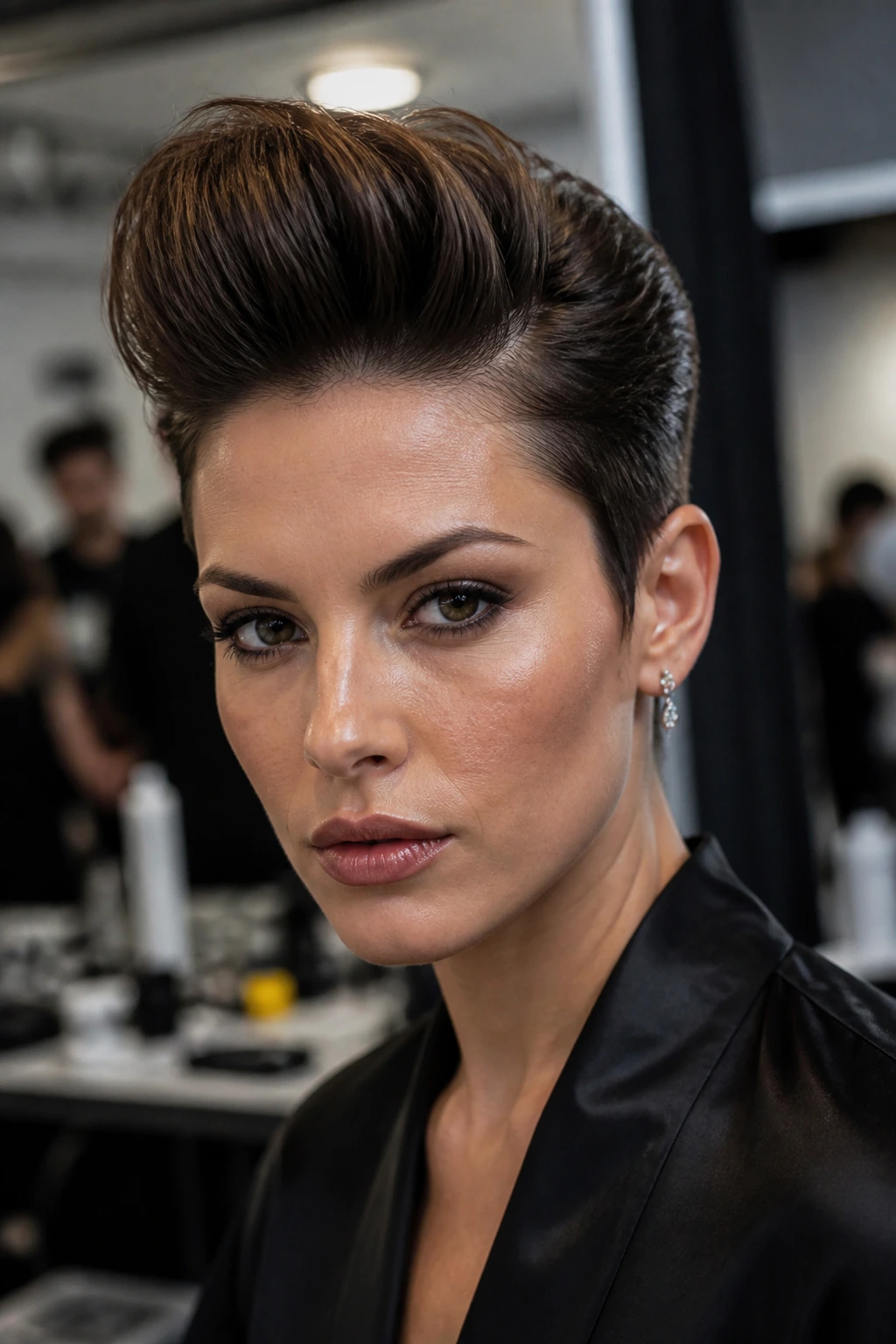
If you want short hair to look bold at a formal event, a sculpted pompadour pixie does it fast. The front rises just enough to create height, while the sides stay close and smooth. That contrast makes the cut feel deliberate and a little glamorous, especially under strong lighting.
Start with mousse at the roots and blow-dry the front section upward with a round brush or your fingers. Once it’s shaped, pin the lift in place for a few minutes while it cools. The top should have structure without looking frozen in place. A touch of wax at the ends helps keep the shape separated and clean.
I’d choose this one for a cocktail dress, a tux, or any outfit that already has clean lines. It has bite. Good bite.
9. Twisted Half-Up with Loose Ends
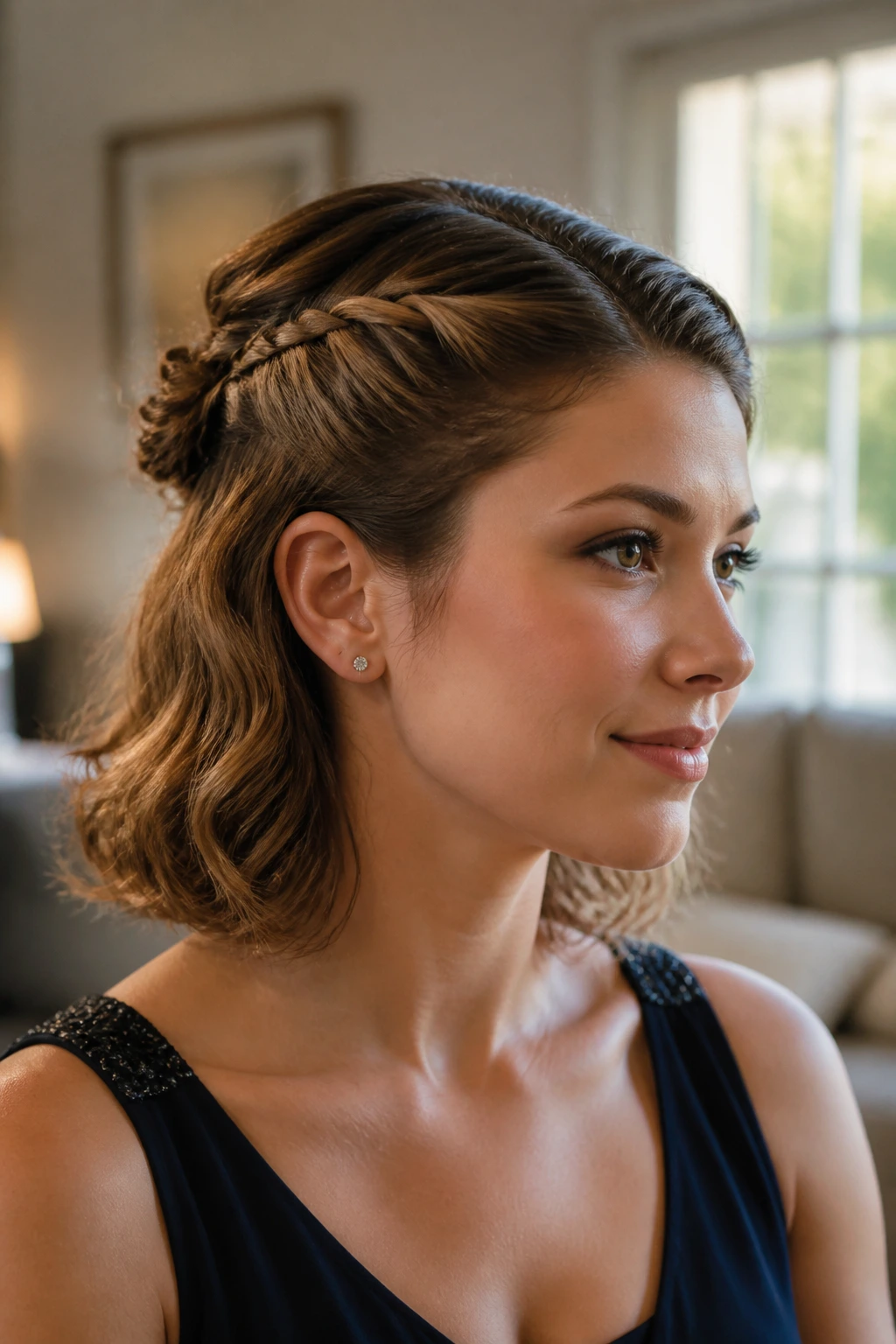
A twisted half-up style is a good middle ground when you want formality but not too much stiffness. The front sections are twisted back from the temples and pinned near the crown, while the lower lengths stay loose and softly shaped. On short hair, that loose bottom section keeps the cut from looking overhandled.
This works especially well if the ends are curled with a small iron and brushed just enough to soften them. If the twists are slipping, try clipping each twist for 5 to 10 minutes before pinning. That little pause helps the shape hold. I also like this version when the dress has a high slit or a strong shoulder line. The hair stays quiet, but not boring.
One pearl pin can do the job. Two can start to feel crowded.
10. Soft Curled Bob with a Deep Part
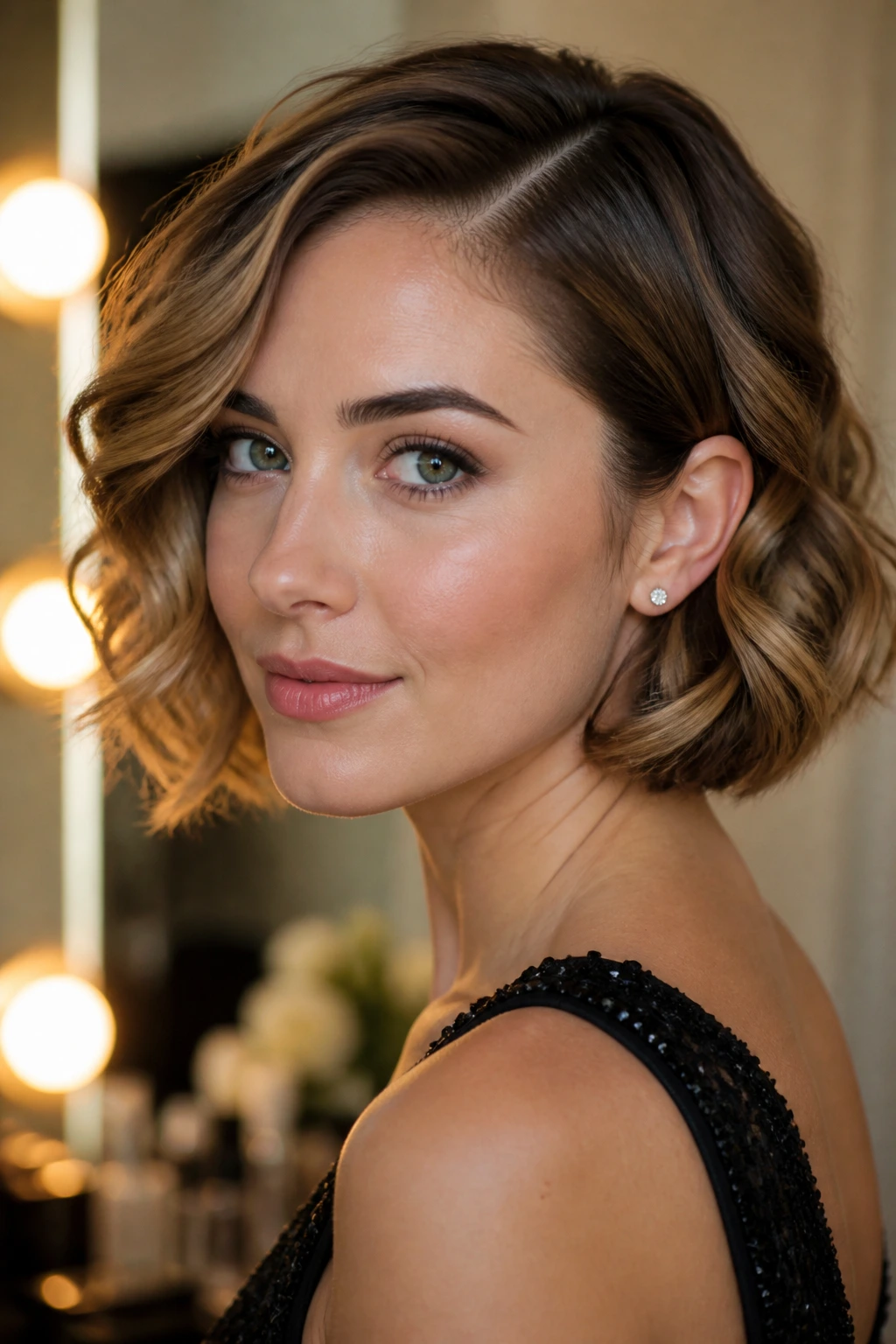
A deep part and soft curls are a classic pair because they never fight each other. The part gives the bob direction. The curl gives it movement. Together, they make short hair look dressed for an event without needing a single pin.
Use a 1-inch curling iron, wrap sections away from the face, and let the curls cool in your hand before releasing them. Then brush them gently, not aggressively. You want a bend through the mid-lengths and a smoother finish near the ends. A clipped front section on the heavier side can keep the hair from falling across the eye all night.
This style is especially good if your bob hits the jawline. It softens that edge and turns it into something more fluid.
11. French Roll-Inspired Tuck
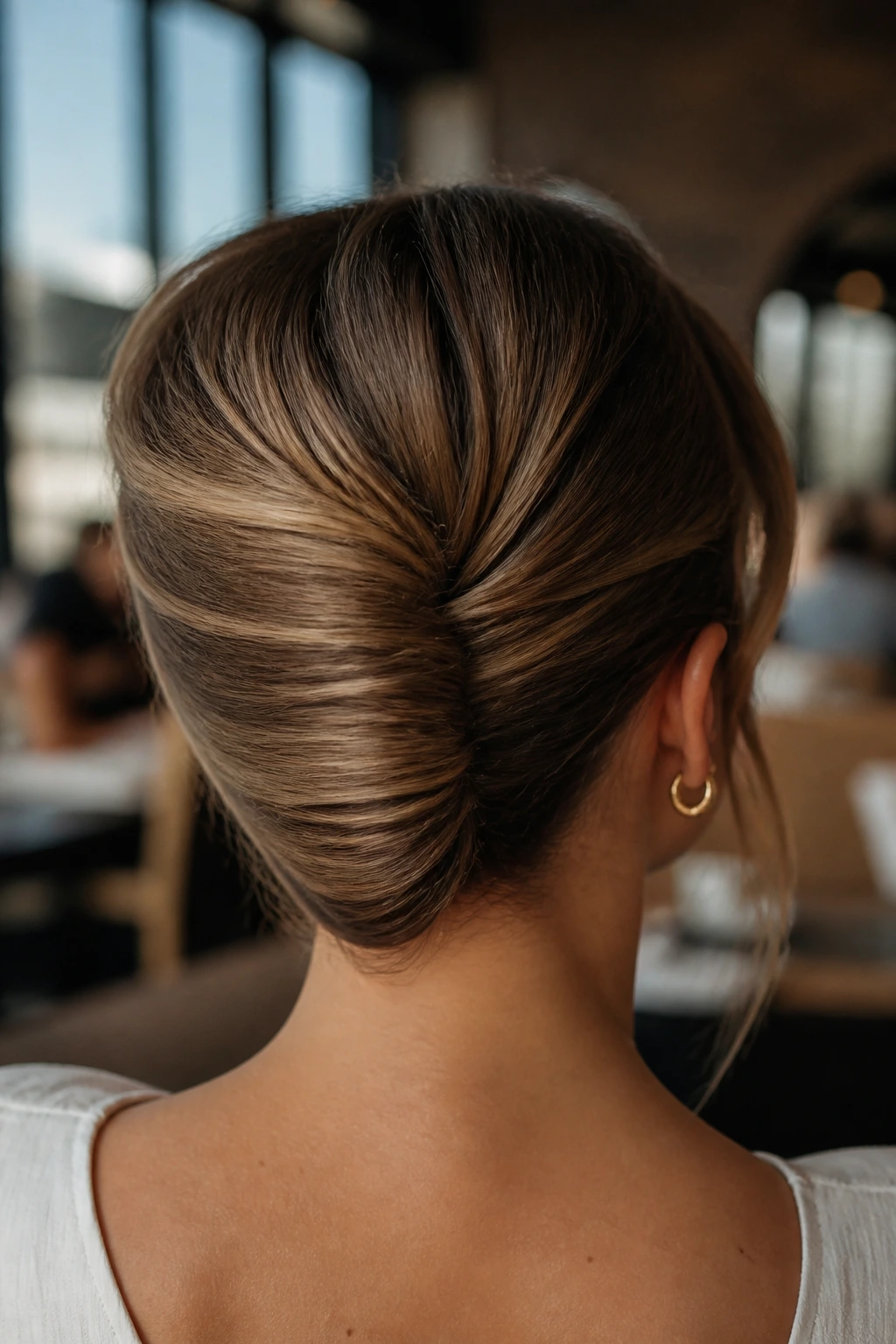
A real French roll needs more length than many short cuts can offer, but a French roll-inspired tuck gives you the visual without the bulk. Sweep the hair diagonally toward the center back, fold the ends inward, and pin the seam vertically so it stays narrow. The result looks polished and compact.
This style is strongest on bobs and grown-out pixies that have enough length at the crown and nape to meet in the middle. Use a smoothing brush to flatten the top first; if the top is puffy, the roll loses shape. I like a little shine spray across the surface, then nothing else. Too much product at the ends makes the tuck feel sticky and hard to adjust.
It’s the kind of style that says you planned ahead, even if you only had twenty minutes.
12. Rope-Braid Headband Style
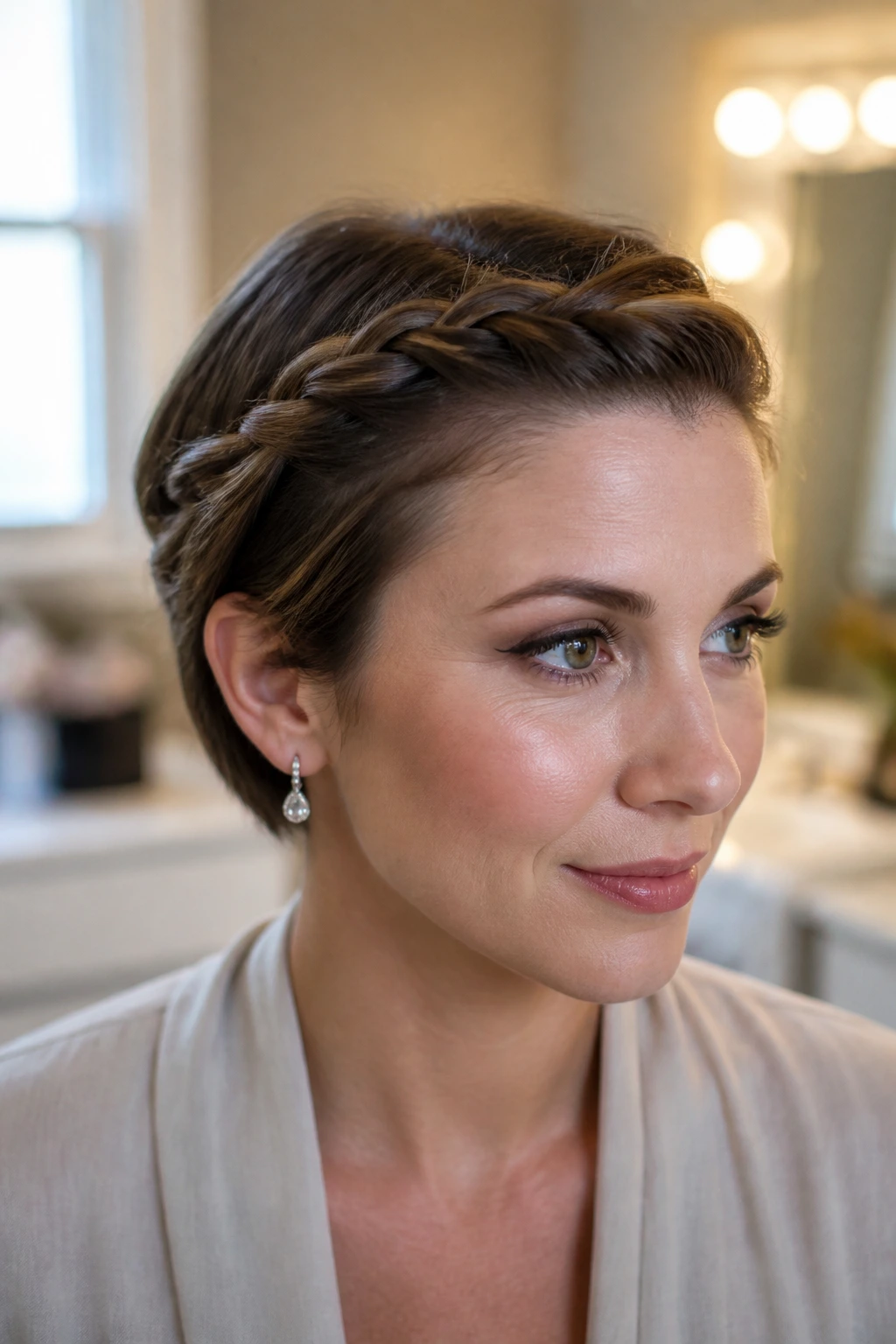
A rope-braid headband is a smart fix for short hair that needs more shape around the face. Two front sections twist back like a soft crown and are pinned behind the ears or under the back layers. The effect is decorative, but it also solves the annoying problem of bangs or shorter face-framing pieces slipping loose.
This one works beautifully on fine hair because rope braids don’t need much length to look finished. Twist each section tightly before crossing it over, and keep the tension even. If one side is tighter than the other, the style sits crooked, and you can see it in photos.
I like this for dresses with simple necklines. The braid becomes the detail. No extra fuss needed.
13. Wet-Look Pixie Sweep
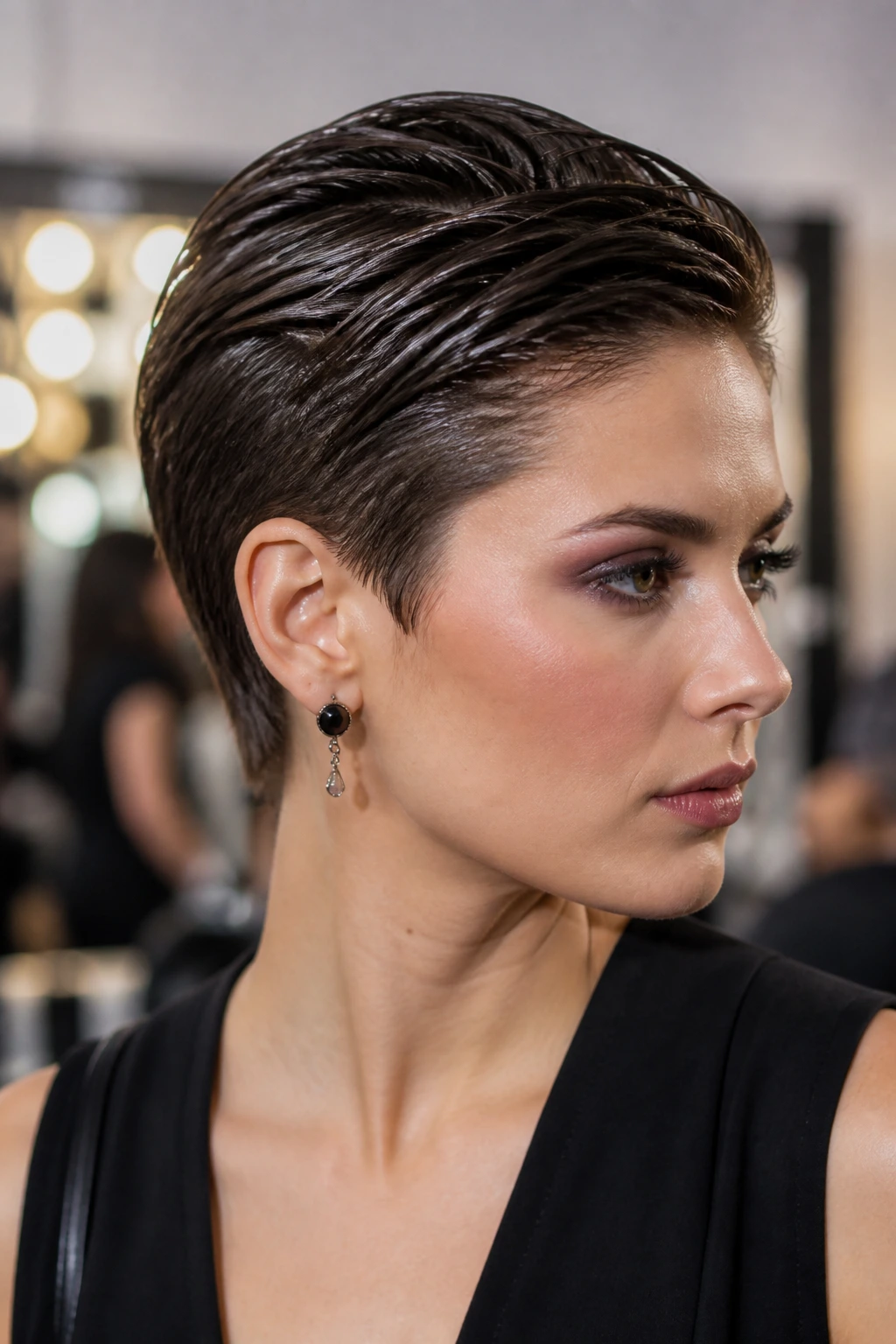
A wet-look sweep on a pixie is not subtle. That’s the point. The hair is combed back or diagonally across the head with gel or pomade, then shaped into a smooth, glossy surface that feels modern and formal at the same time. It pairs especially well with bold earrings and strong makeup because the hair itself stays quiet.
Use less product than you think, then add in tiny amounts only where needed. Too much gel turns the style into a helmet. A fine-tooth comb helps separate the surface into clean lines, and a little finger work at the front keeps it from looking too severe. If the hair is short and stubborn around the crown, press it flat with the comb and hold it for a few seconds before releasing.
I wouldn’t do this style if you want soft romance. I would do it if you want edge.
14. Vintage Pin Curls
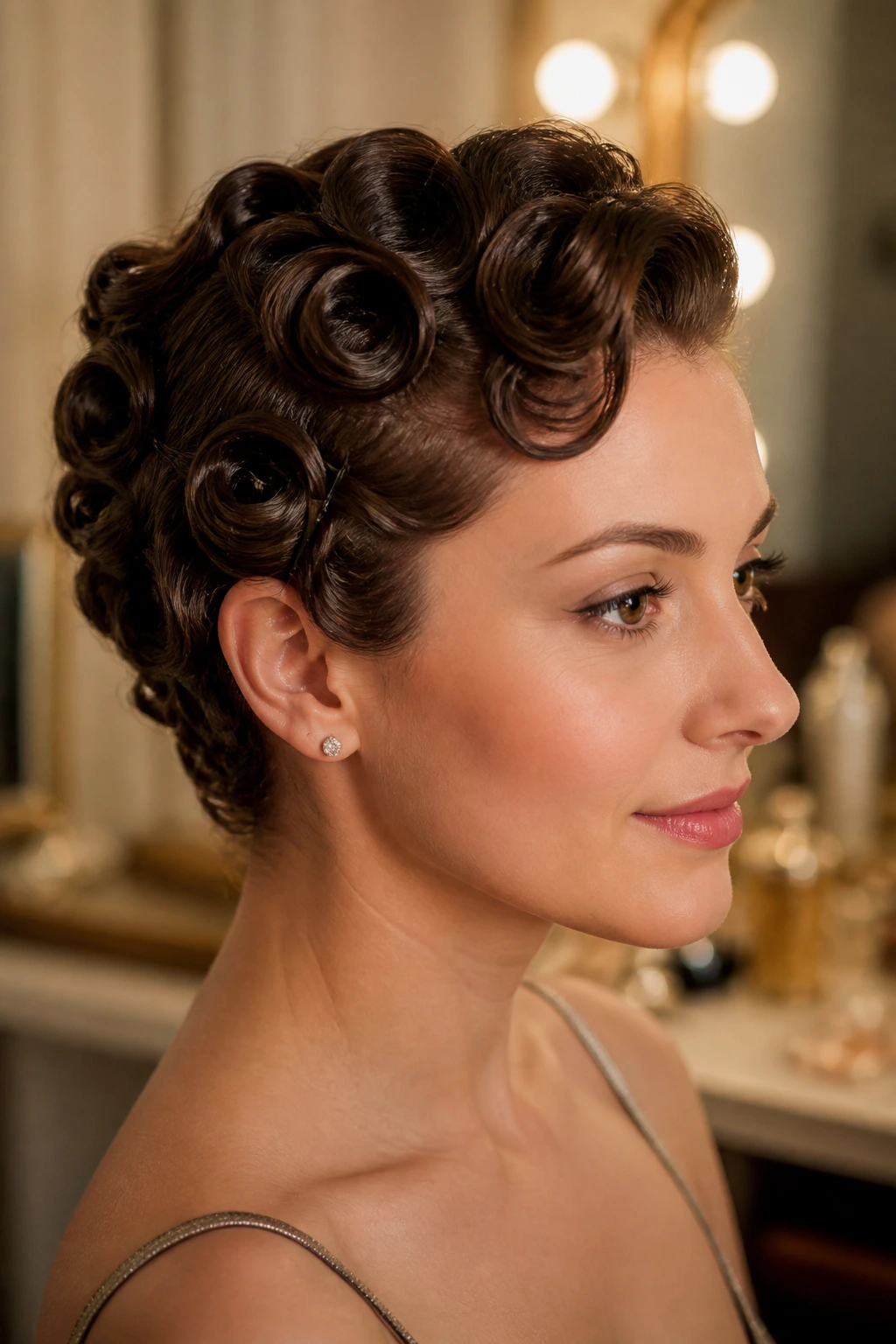
Pin curls give short hair a formal shape with staying power. They also look good while they’re setting, which is a nice bonus if you’re getting ready in front of people and don’t want the in-between stage to be ugly. Set small curls with your fingers or a narrow iron, clip them flat against the head, and let them cool fully before brushing.
The brush-out is where the magic happens. Lightly loosen the curls, then shape the front into soft rolls or waves. Do not pull the curls apart too much, or the style collapses into fluff. A tiny amount of setting lotion helps if your hair is naturally slippery, but keep the product light on fine strands.
This is one of the best formal hairstyles for short hair when you want the look to last from pre-dinner to the last photo.
15. Asymmetrical Side Sweep
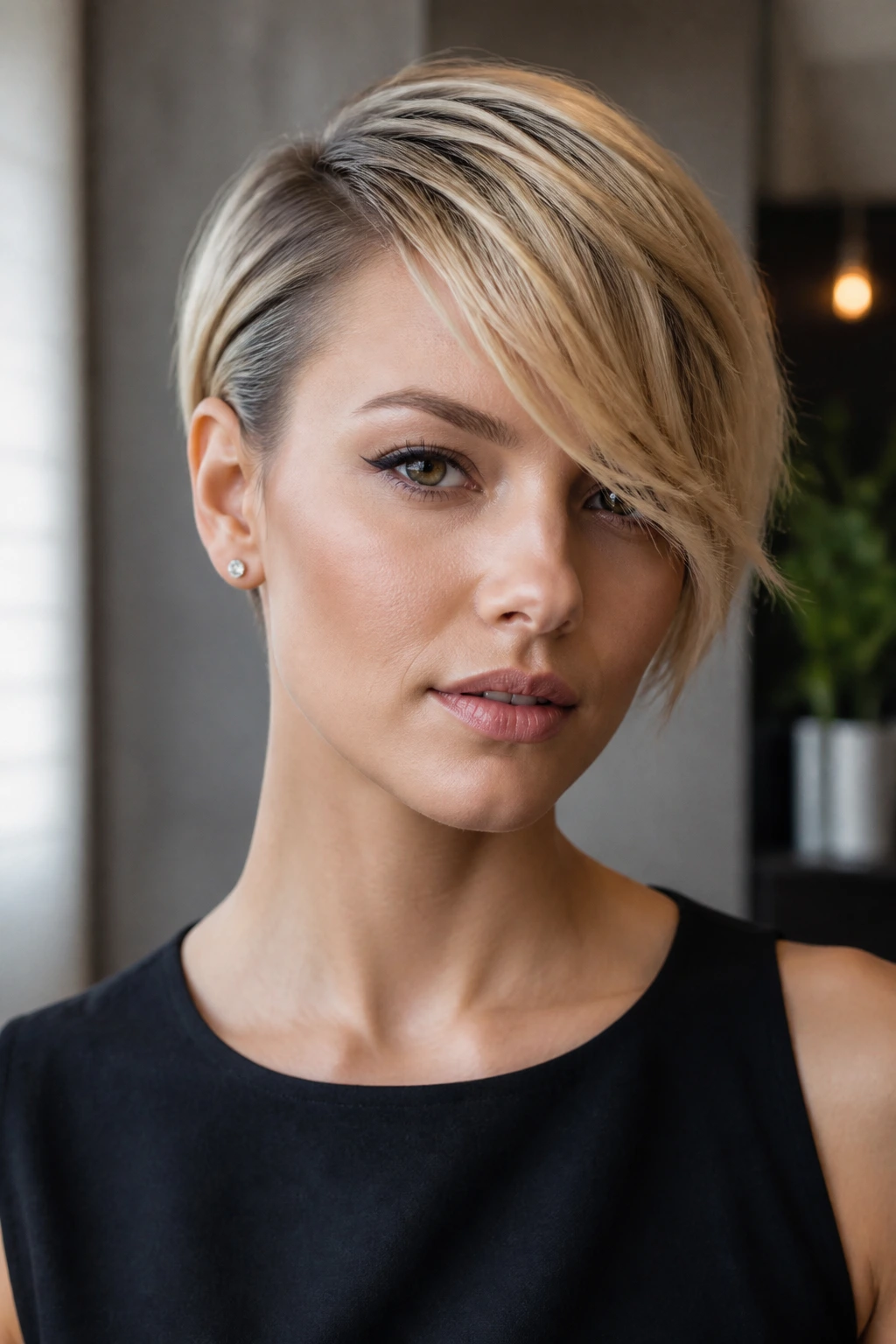
An asymmetrical side sweep gives short hair a strong line and a little attitude. One side stays close to the head. The other side carries the shape across the forehead or cheek in a controlled curve. The contrast makes the cut look tailored, which is exactly what formal hair often needs.
I like this on angular bobs and pixies with some natural bend. The hair on the heavy side should be brushed, not fluffed. If it keeps splitting or puffing, a flat iron pass on the outer layer usually fixes it. Tuck the shorter side behind the ear or pin it flat near the temple so the asymmetry is obvious on purpose.
The whole look depends on balance. Too much volume on both sides and you lose the shape. Too little and it just looks unfinished.
16. Mini Knotted Bun
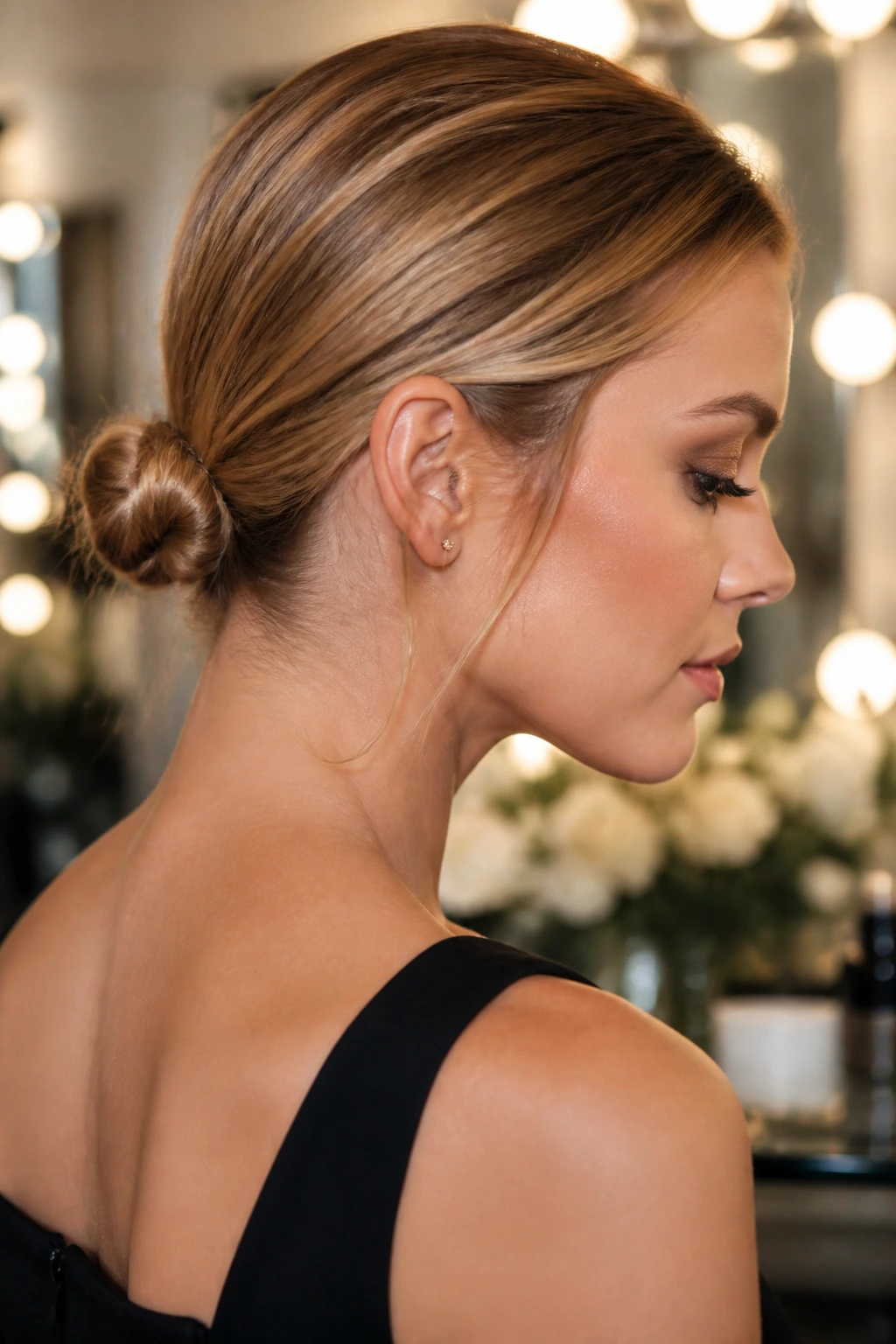
A mini knotted bun is one of those styles that sounds too small to matter, then ends up looking surprisingly elegant. Shorter lengths are twisted or folded into a compact knot at the nape, with the ends pinned inward so nothing sticks out. It’s not a full bun in the long-hair sense. It’s tighter, tidier, and better suited to short cuts.
This style needs pins with grip. Good bobby pins, not the flimsy kind that bend after one use. If the hair is too smooth, rough up the roots with dry shampoo or a little texture spray before you start. The bun should sit low and close to the head; if it floats out, the style loses its clean line.
It’s one of my favorites for events where you’ll be sitting, standing, and moving a lot. It stays put.
17. Crown Volume with Tucked Sides
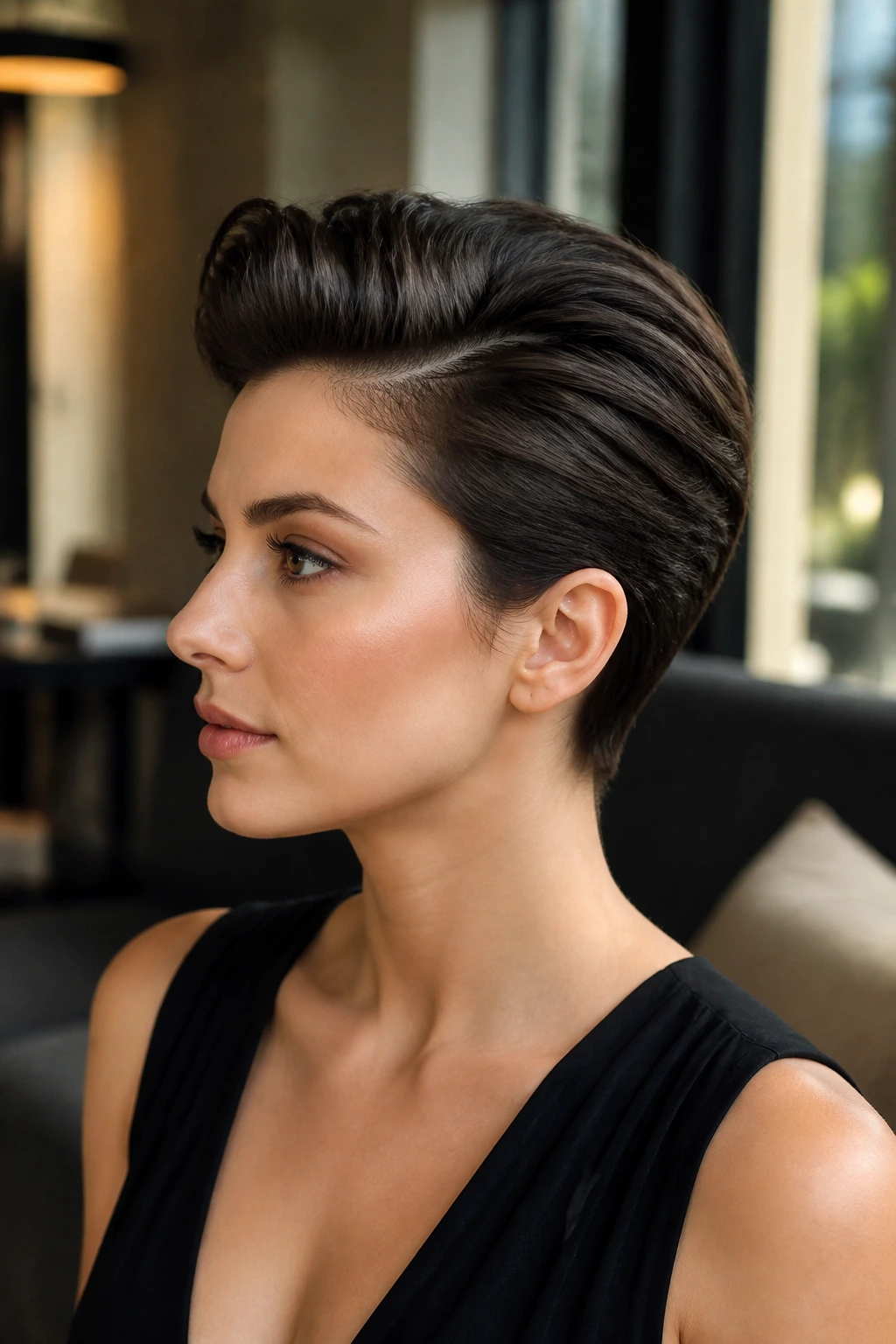
A little height at the crown changes everything. Crown volume makes short hair look dressed without making it look fussy, and the tucked sides keep the shape refined. Backcomb only the root area at the crown, smooth the top layer over it, then pin the sides low and flat.
This is a good pick if your face needs a bit more length or if your outfit has a strong neckline that benefits from height near the top of the head. The lift should be soft, not teased into a cloud. A small round brush and a light spray at the roots are usually enough. If you can see the backcombing from the outside, you’ve gone too far.
It’s formal in a very wearable way. That matters more than people admit.
18. Side Braid into Nape Pin
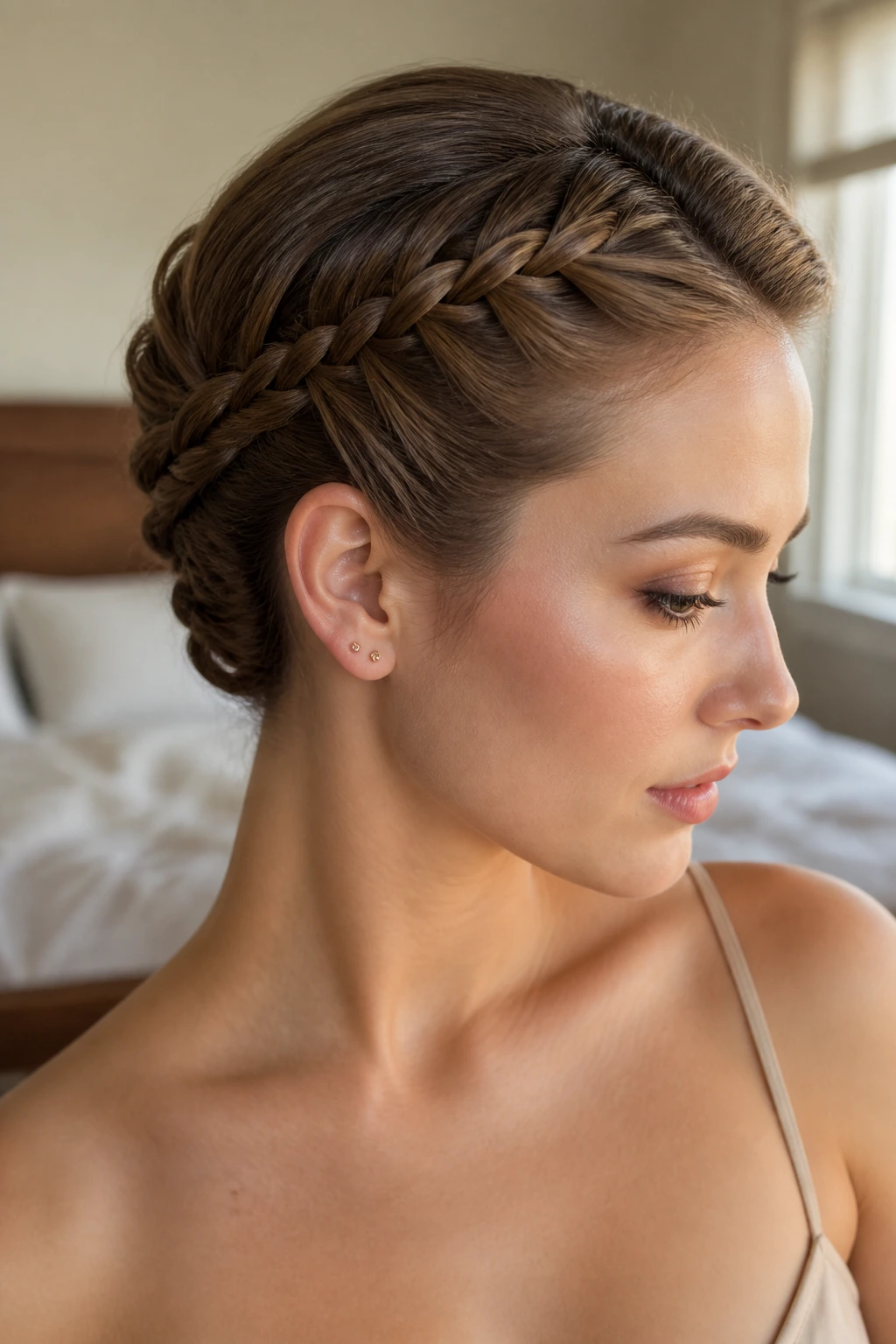
A side braid into a nape pin gives short hair a little detail without asking for length it doesn’t have. Start the braid near the part, follow the hairline, and pin it flat at the nape where the rest of the hair can cover the end. On short cuts, tiny braids are better than big ones. Big braids swallow the cut.
This style looks especially good when the braid is clean and narrow. A little smoothing cream at the roots will keep flyaways down, and a tail comb helps section the start line evenly. If your hair is layered, pin each stray end as you go instead of trying to fix everything at the end. That’s where most people lose the shape.
It’s a quiet detail style. The good kind.
19. Bubble-Twist Pony for Short Hair
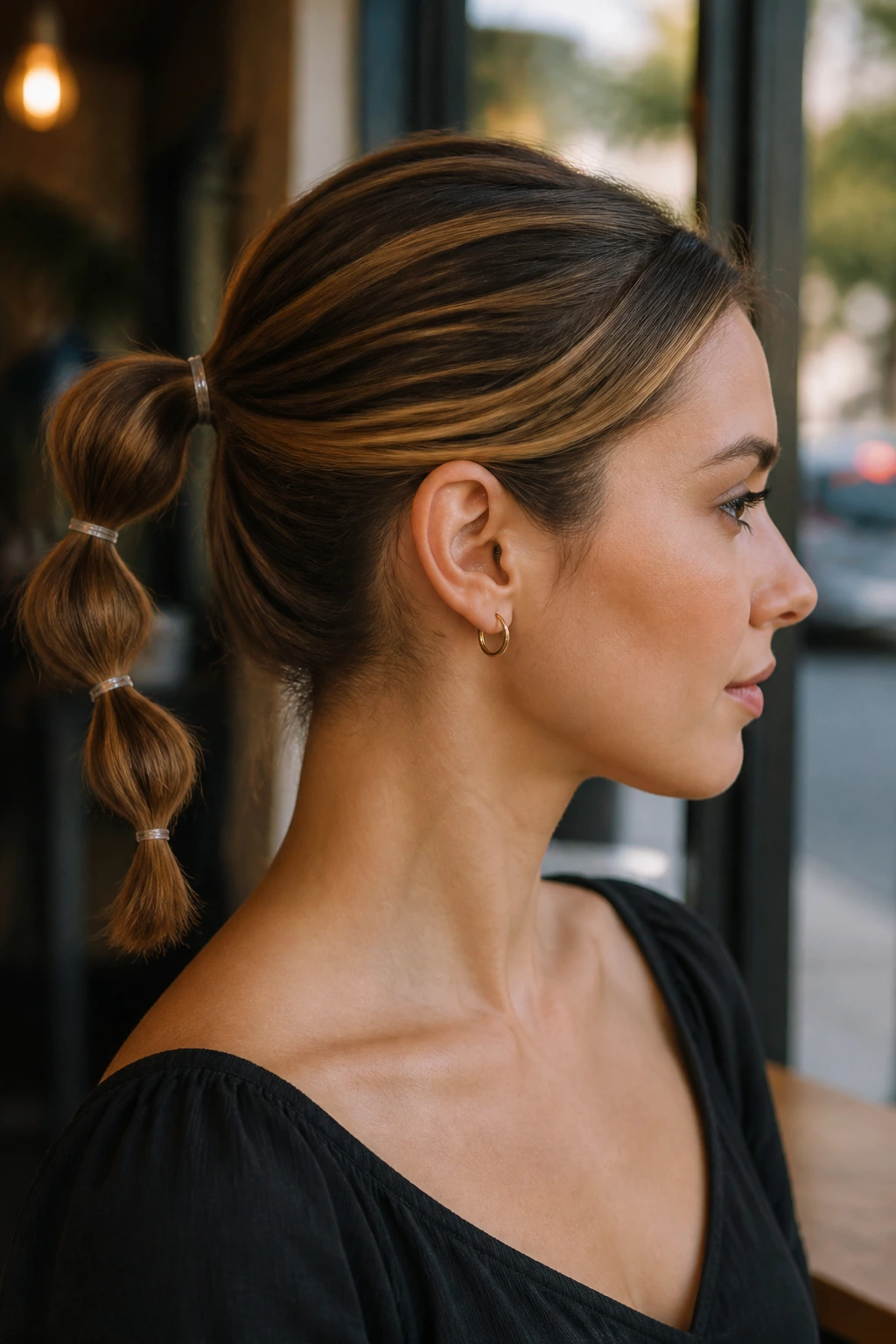
Short hair can do a ponytail look if you stop chasing the long version and work with the cut you have. A bubble-twist pony uses small elastics or discreet pins to create segmented sections, giving the illusion of a styled pony without needing real length. The effect is modern, neat, and a little unexpected.
This works best on bobs and longer pixies that can gather at the back. Use a small elastic first, then place a second one a couple of inches down if the length allows. Gently pull each section outward so it rounds into a bubble shape. If the hair is too short for full bubbles, make one tight twist and let the ends stay tucked.
I like this for cocktail events or less traditional dress codes. It has enough polish to belong, but it doesn’t look trapped in a formal rulebook.
20. Glossy Textured Crop with a Barrette Stack
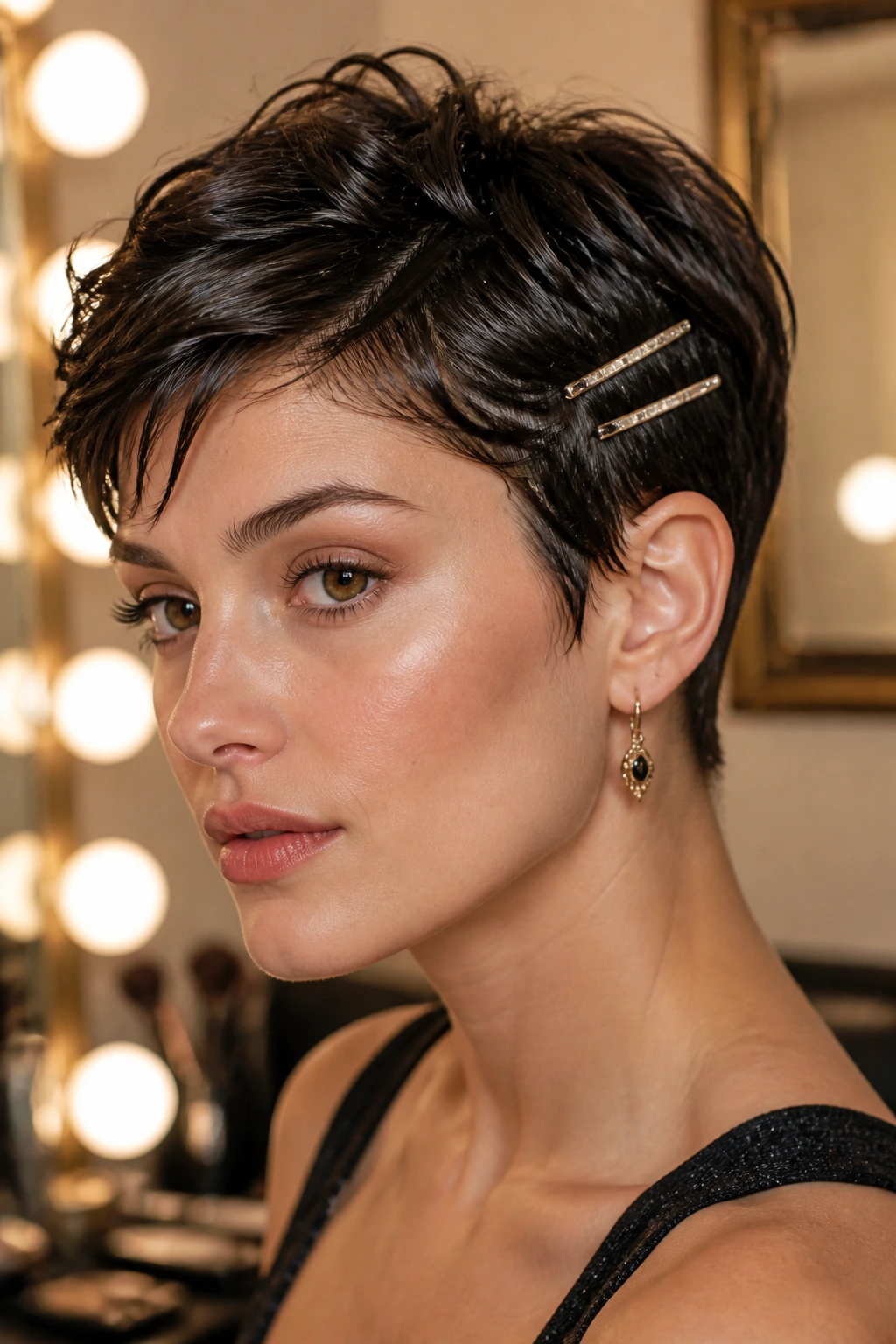
A textured crop doesn’t have to look messy to feel modern. Piece the hair lightly with a wax or paste, then place two or three slim barrettes in a neat stack on one side. The styling stays short and sharp, but the accessories bring in the formal note.
The trick is to keep the texture controlled. You want separation, not crunch. Work a tiny amount of product through dry hair, pinch the pieces you want to show, and leave the rest smooth. If the barrettes are too far apart, the style can look accidental. When they sit in a tight line, they look designed.
This is a strong option if you’re wearing a tailored suit, a sleek dress, or anything with strong shoulders. It holds its own.
21. Veil-Pin Waves
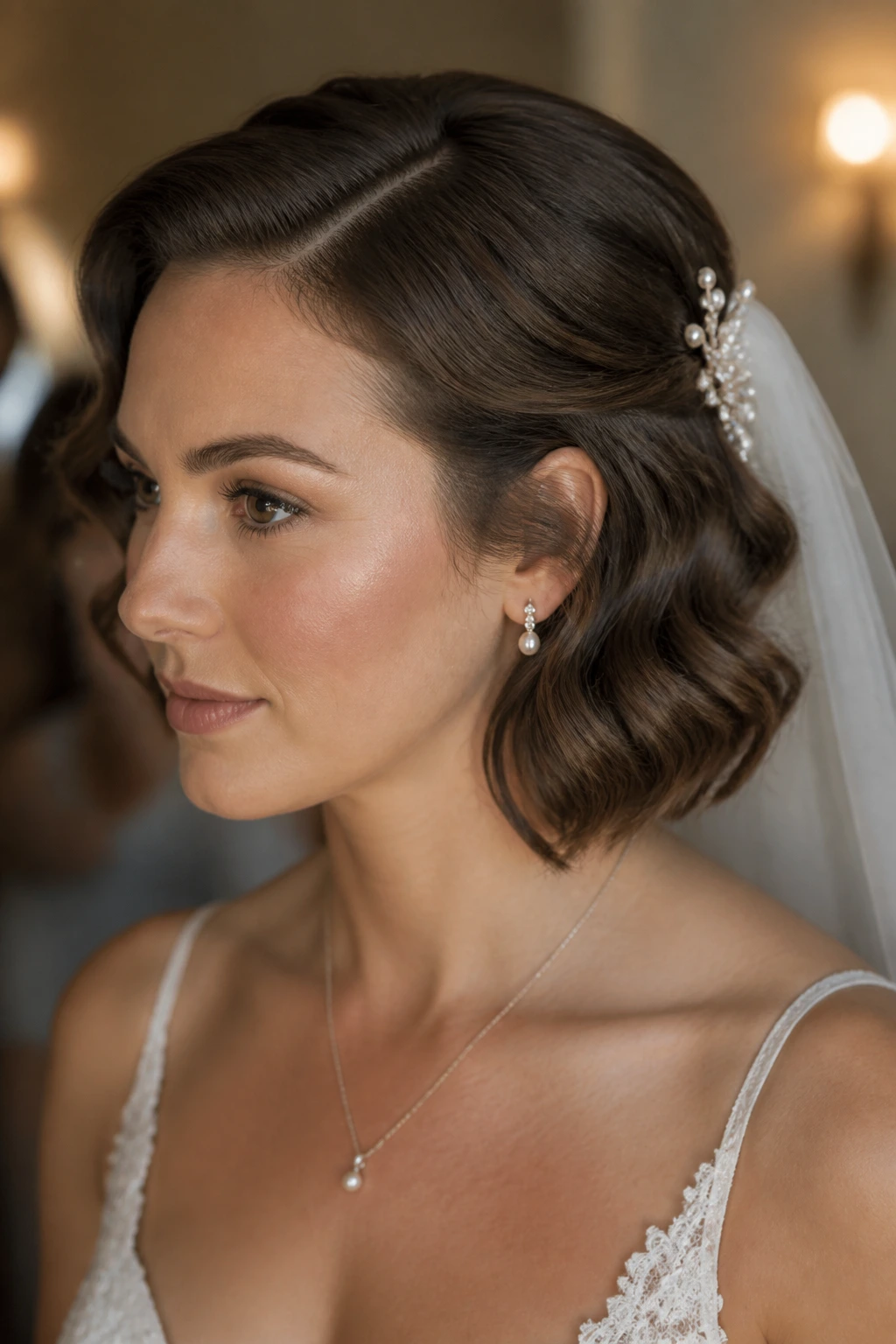
Veil-pin waves are for weddings, receptions, and formal events where one decorative piece can carry the whole look. Soft waves are shaped close to the head, then a comb, pin, or veil base is anchored in a spot that doesn’t break the wave pattern. The hair stays polished while the accessory gets room to shine.
I like this for short bobs that can support a little movement at the front and a secure anchor at the back. The wave should be set before the veil or pin goes in. If you attach the accessory too early, you flatten the shape underneath and end up fighting the style all night. Test the placement with the exact accessory you plan to wear, not a stand-in clip.
This is one of those styles where a rehearsal pays off.
22. Polished Mini Updo
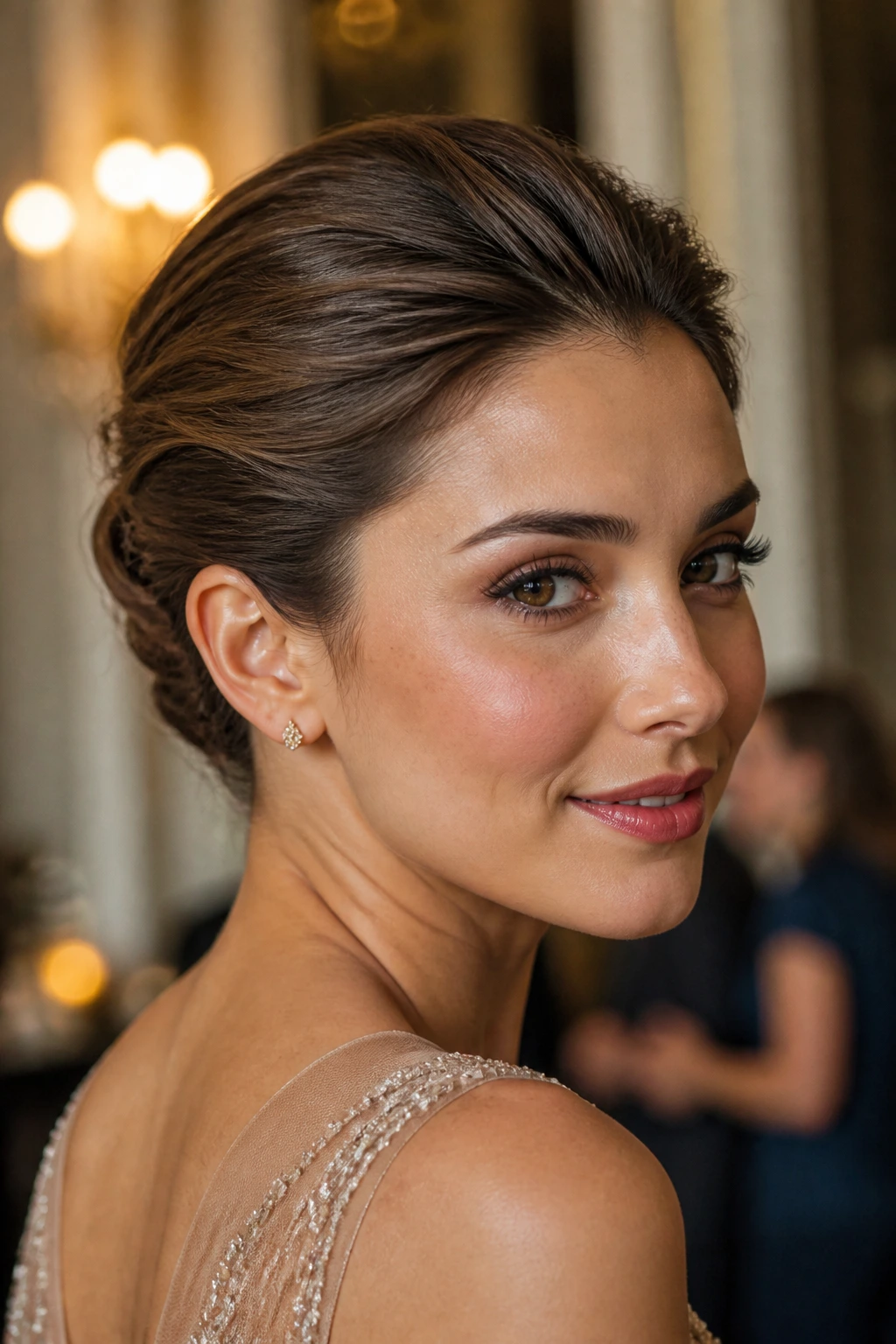
A polished mini updo pulls together everything short hair does well: smoothness at the crown, tucked ends, and a compact shape that sits low and tidy. It is not meant to imitate long hair. It is meant to look finished on its own terms.
Use whatever length you have at the back to fold inward and pin in small sections. Keep the sides close, and don’t chase perfect symmetry if your cut naturally leans one way. Short hair often looks better when the updo respects the cut’s natural line. A little shine at the top and a snug pin at the nape are enough.
If you want one formal short-hair style that feels safe for almost any dress code, this is it. It doesn’t shout. It lands.
What Makes Short Hair Read Formal Instead of Fussy
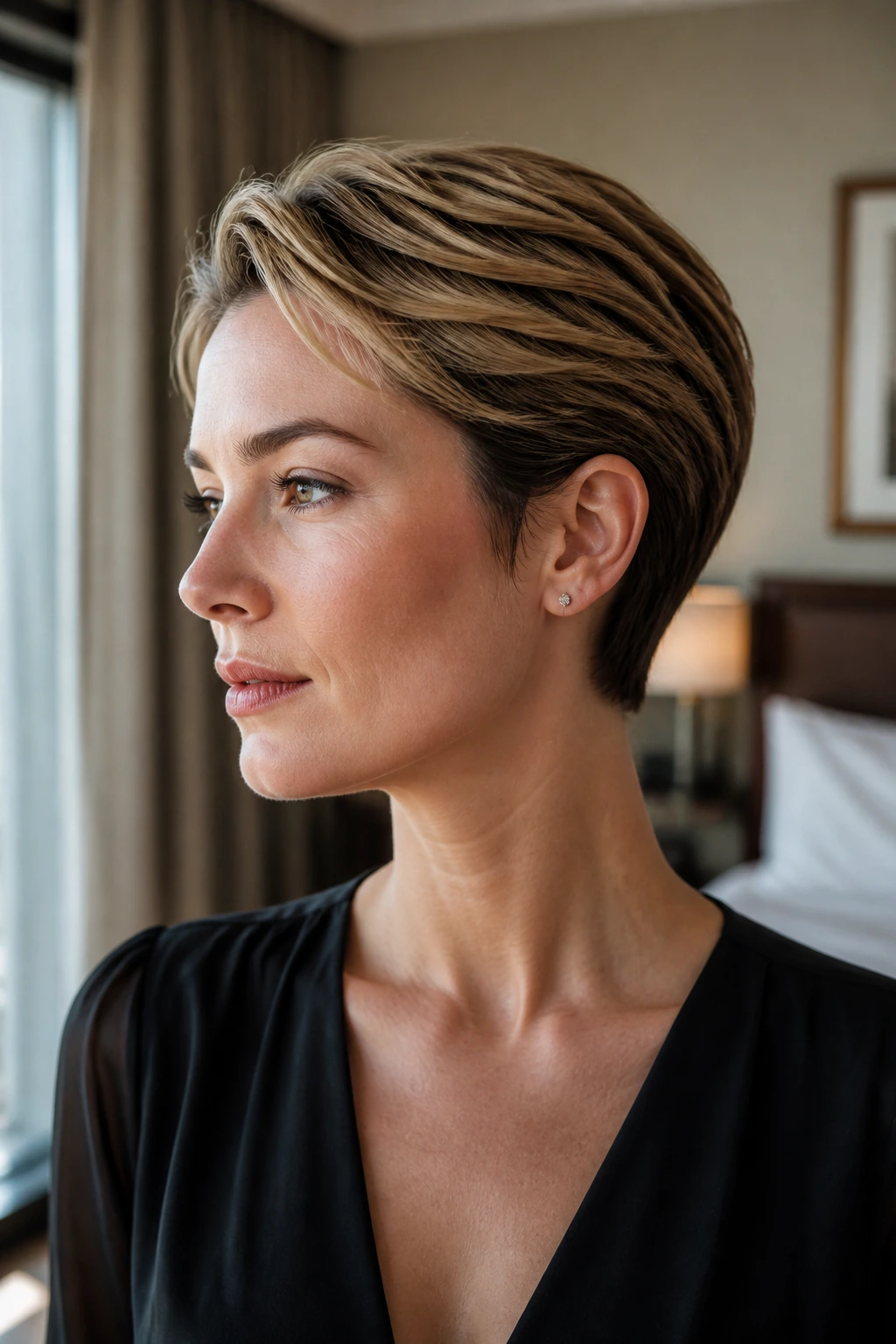
The difference is usually control, not complexity. Short hair looks formal when one part of the style is sleek, one part has shape, and nothing sticks out by accident. That can mean a hard side part, a smooth crown, or a tucked nape. It does not mean forcing every strand into the same direction.
I’m a fan of styles that respect the cut you already have. If your bob naturally flips under, let it. If your pixie wants height at the front, build around that. Fighting the cut tends to make the result look stiff. Working with it makes the style look expensive, even if the tools were basic.
Short hair also benefits from contrast. Gloss next to matte. Smooth next to textured. Tight next to soft. That push and pull is what keeps formal hairstyles for short hair from feeling flat.
Essential Tools for These Styles
-
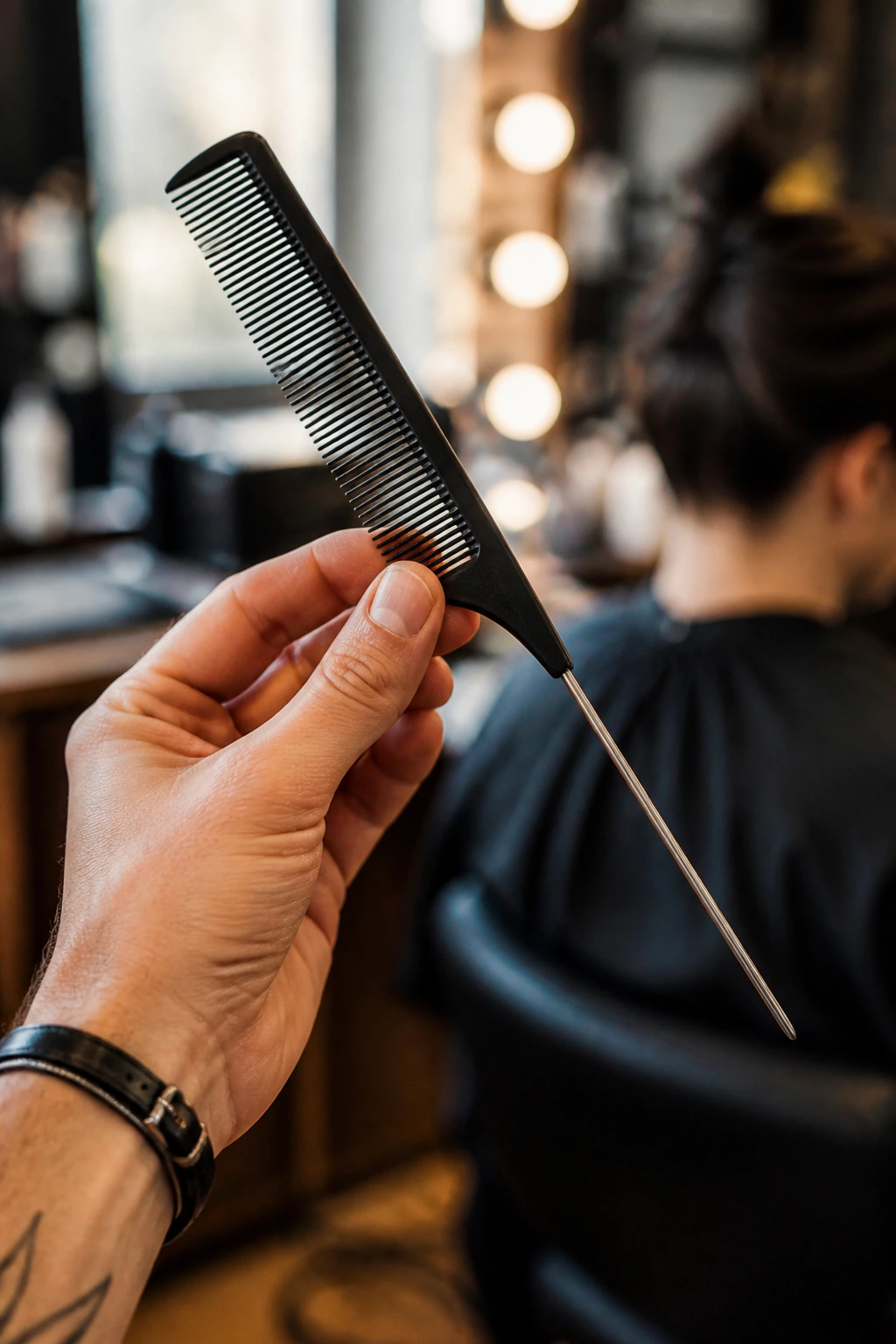
Fine-tooth tail comb: Best for clean parts, wave shaping, and neat sectioning.
-
Duckbill clips: Useful for holding finger waves, twists, and pinned sections while they cool.
-
Bobby pins in two sizes: Small pins disappear better in pixies; longer pins hold rolled bobs and tucks.
-
U-pins: Handy for mini buns, French-roll-inspired tucks, and low twists.
-
1-inch curling iron or wand: The safest all-around size for short formal waves and soft bends.
-
Mini flat iron: Good for detailing side parts, smoothing cowlicks, and sharpening edges.
-
Boar-bristle or smoothing brush: Helps flatten the surface without wrecking the shape.
-
Strong-hold hairspray: Needed for waves, rolls, and anything meant to survive a long evening.
-
Texture spray or dry shampoo: Gives grip to fine hair and keeps short sections from sliding.
-
Heat protectant: Non-negotiable if you’re using hot tools. Short hair sits close to the face, so the surface matters.
-
Pearl clips, crystal combs, slim barrettes: Decorative pieces that can carry a formal look without adding bulk.
How to Choose the Right Products and Add-Ons
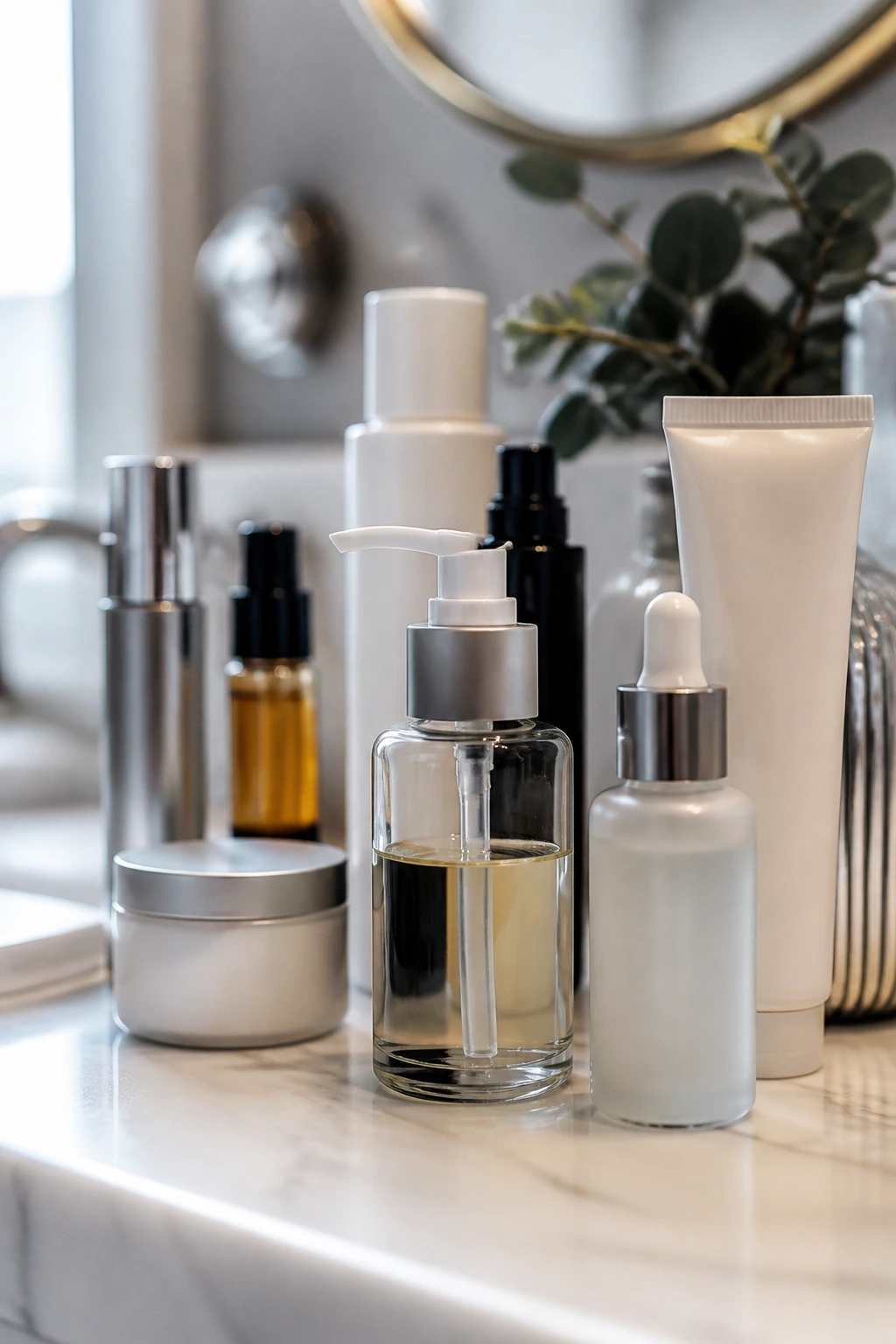
Product choice matters more on short hair because there’s less length to absorb mistakes. A heavy serum on a pixie can go from glossy to greasy in two minutes. A weak spray on a bob can leave every piece drifting apart by dessert. Pick the product for the finish you actually want, not the one that sounds nice on the bottle.
For smooth styles, I like a lightweight cream or lotion before drying, then a flexible or strong-hold spray once the shape is set. For waves and curls, use a heat protectant first, then a setting spray or texture spray after the iron. For slick pixies or wet looks, a pomade or gel with a clean finish is better than anything oily. If your hair is fine, the product should disappear. If your hair is coarse, it should help soften the surface and keep the style from puffing out.
Pins and clips should match the job, too. Bobby pins that are close to your hair color vanish better. Metal barrettes with a flat back sit closer to the head than chunky claws. If you’re wearing a formal piece with stones or pearls, place it where it has room to show — usually just above the ear, at the temple, or near the crown. Don’t bury the accessory under too much hair. Let it breathe.
How to Match These Styles to Necklines, Earrings, and Dress Codes
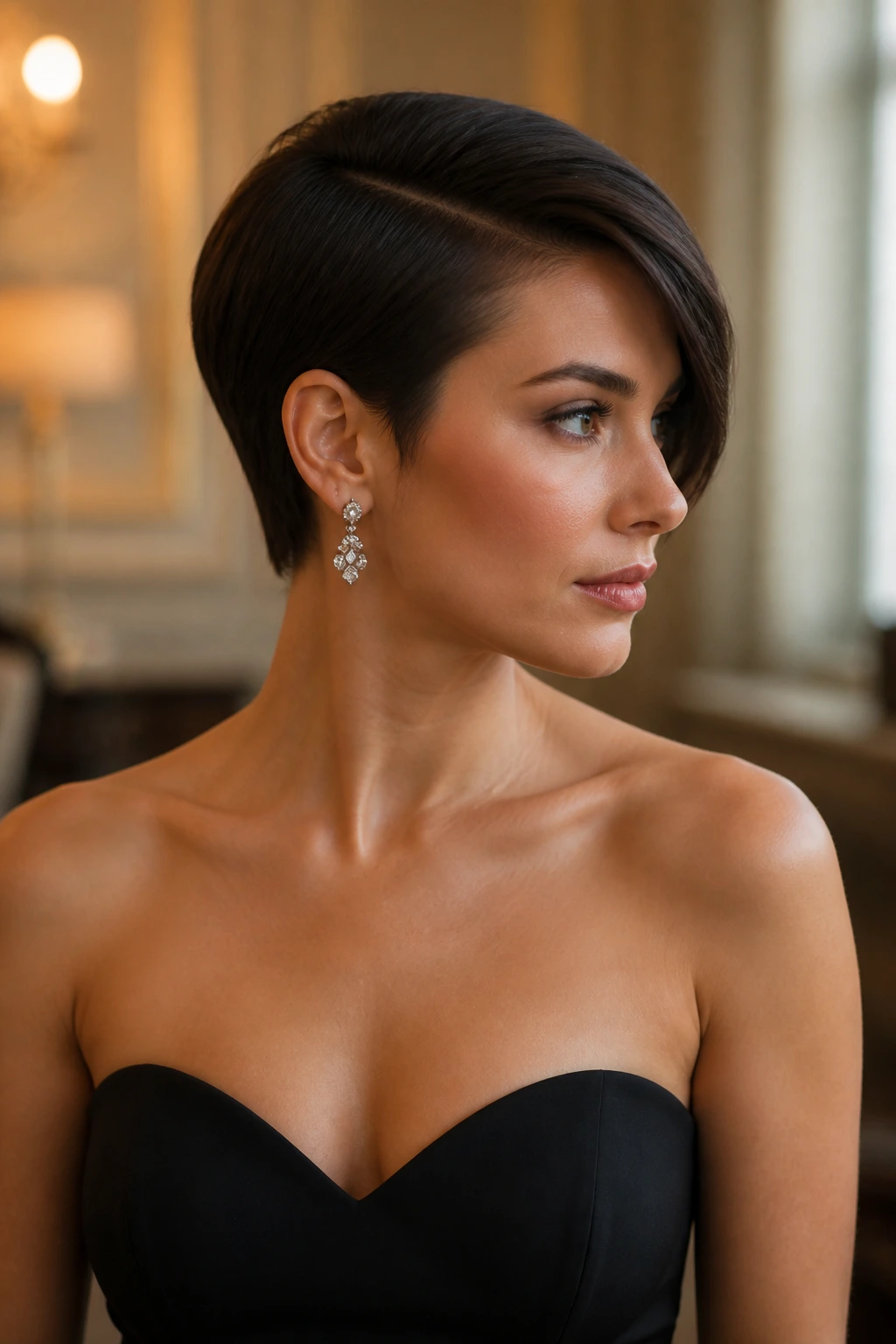
Presentation: If your outfit has a high neck or a lot happening at the shoulders, keep the hair close to the head — a wet-look pixie, finger waves, or a tucked French-roll-inspired style will keep the neckline visible. For strapless or off-the-shoulder pieces, a deep side sweep or soft curled bob gives the face more movement.
Accessories: One statement piece is enough. A side-swept bob can handle a crystal comb. A slick pixie can take a dramatic earring. A half-up twist with a jewel clip already has its own focal point, so keep the earrings simple or the look gets crowded fast.
Dress-Code Fit: Black-tie usually wants the cleanest silhouettes: finger waves, French rolls, mini chignons, and polished tucked styles. Cocktail dress codes can handle more texture, a little asymmetry, or a barrette stack. If the event sits somewhere in the middle, choose one structured element and one softer element so the look doesn’t feel too stiff.
Balance: Short hair and strong clothes need to share the stage. A sharp suit asks for a sleeker crop. A soft chiffon neckline can take more wave or volume. If the outfit is architectural, keep the hair controlled. If the outfit is plain, let the hairstyle carry more of the visual work.
Additional Tips and Finishers
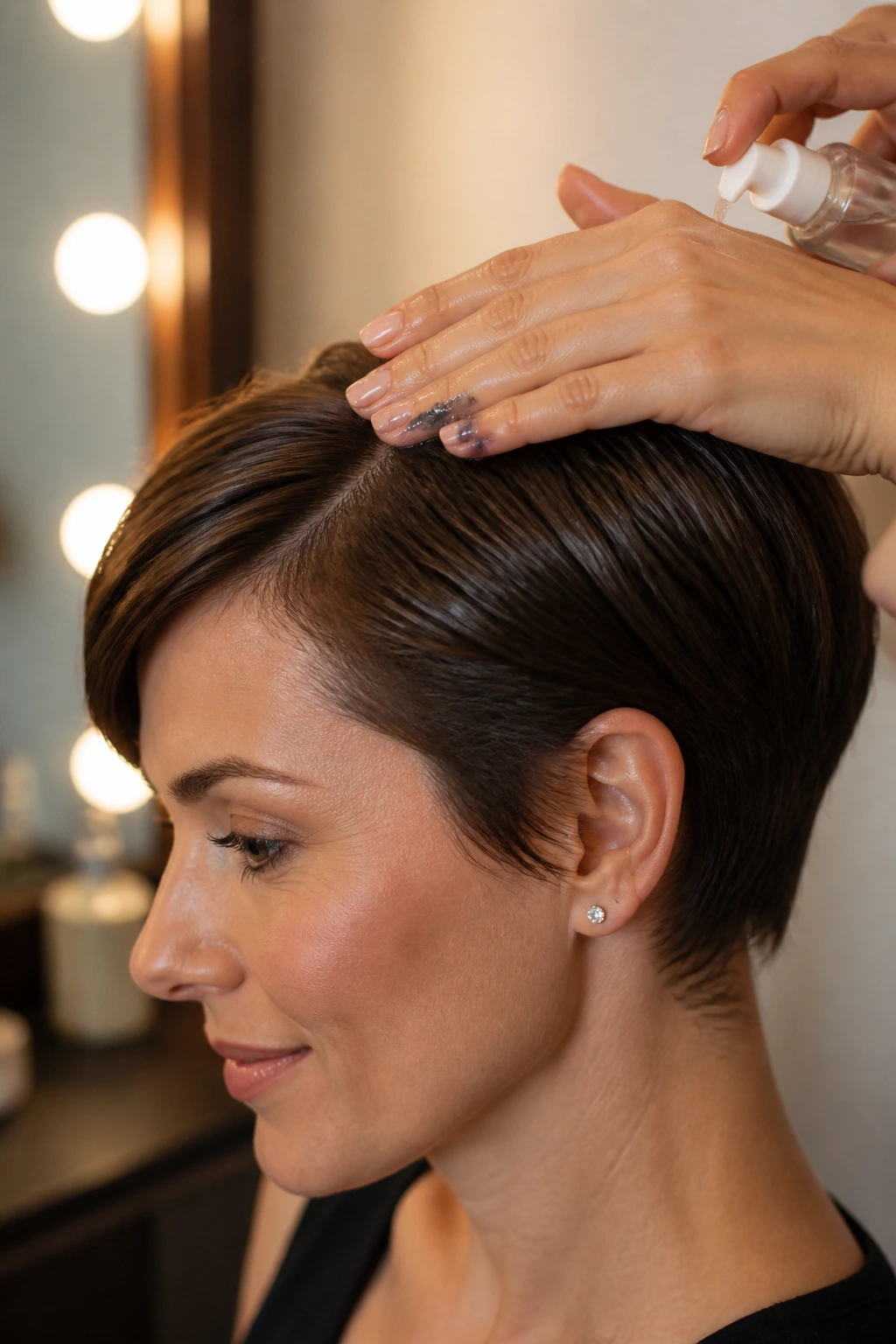
Humidity Shield: Work a tiny amount of anti-humidity spray over the crown and hairline before you leave the house. Short hair can swell fast in damp air, and the first place it shows is usually the fringe or temple area.
Root Lift: If a pixie or bob keeps lying too flat, lift the roots at the crown with a tail comb and a quick blast from the dryer on low heat. Hold the section up for 5 to 10 seconds, then let it cool before touching it again.
Pin Strategy: Cross two bobby pins in an X when you need a twist or tuck to stay put. One pin holds the shape. The second keeps the first one from sliding. That trick saves more styles than most fancy sprays.
Gloss Finish: Use a pea-size amount of serum on your palms and smooth it only over the surface, not the roots. That gives you shine where people see it without crushing the shape underneath.
Fast Fix: Keep a travel-size hairspray, two spare pins, and a tiny comb in your bag. If one side starts to lift, you do not need to rebuild the whole style. Flatten, pin, spray, leave it alone.
Common Short-Hair Mistakes That Make Formal Styles Fall Flat
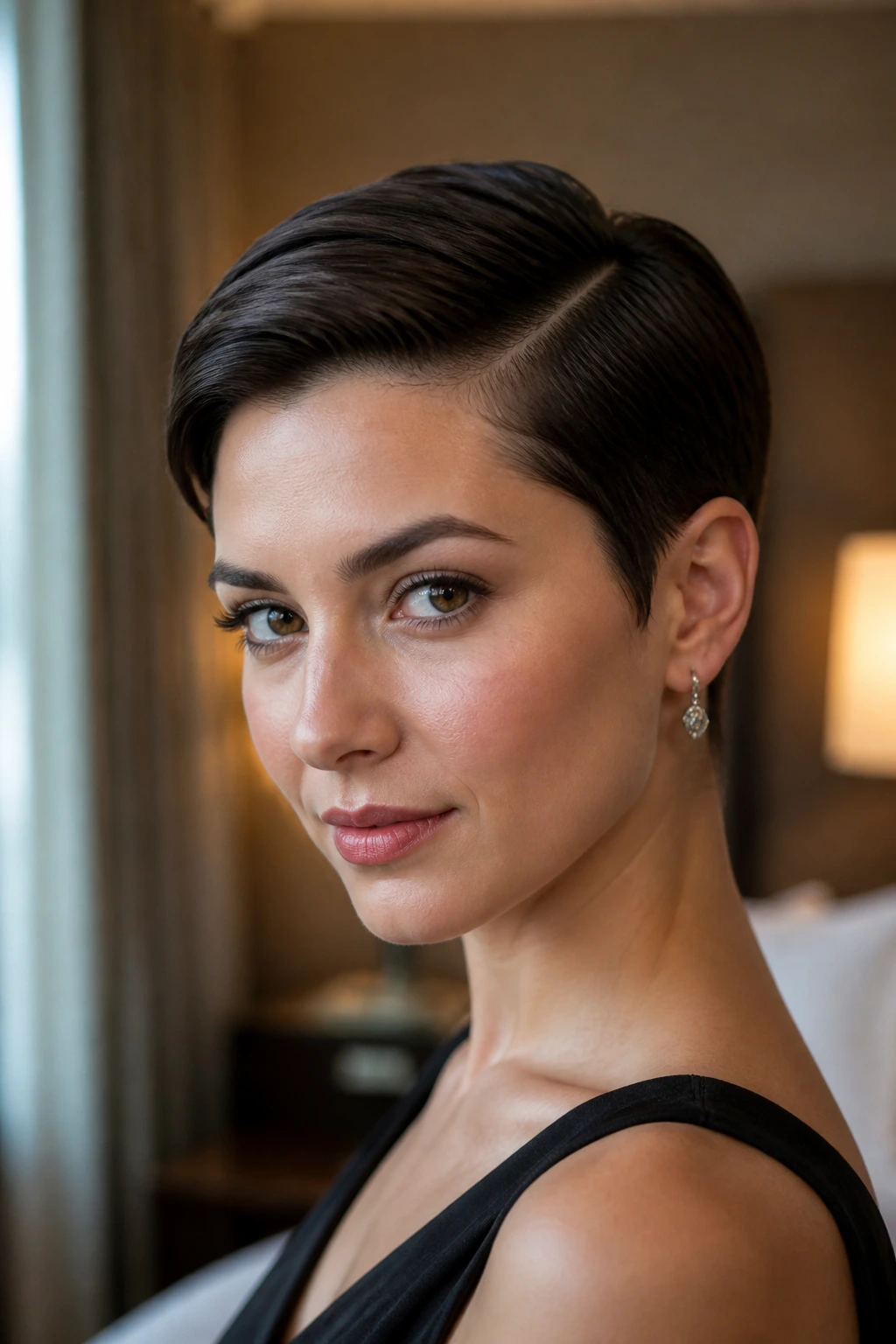
The biggest mistake is starting with hair that’s too clean and too soft. Freshly washed hair often slips, especially if it’s fine. The fix is simple: add a little texture spray, dry shampoo, or mousse at the roots before you start. You want grip, not squeak.
Another problem is overloading the hair with product. Short hair shows buildup fast. If the style looks greasy at the roots and dry at the ends, you’ve used too much. Start with less than you think you need, then add only where the style refuses to hold.
People also pin too loosely. A pin that sits on top of the hair instead of catching a firm section will slide out halfway through the event. Push pins in against the grain and use more than one when the style has weight. Hidden pins should be anchored under a layer, not floating in open air.
Too much volume in the wrong place is another one. If the crown is huge but the sides are flat, the style can look dated or accidental. Balance matters. So does the shape of the face and neckline.
Finally, a lot of people ignore the hairline. That’s where frizz shows first, and it’s also the part that photographs most clearly. Smooth the edges with a brush, a little cream, or a light spray before you walk out the door.
Variations and Alternatives to Try
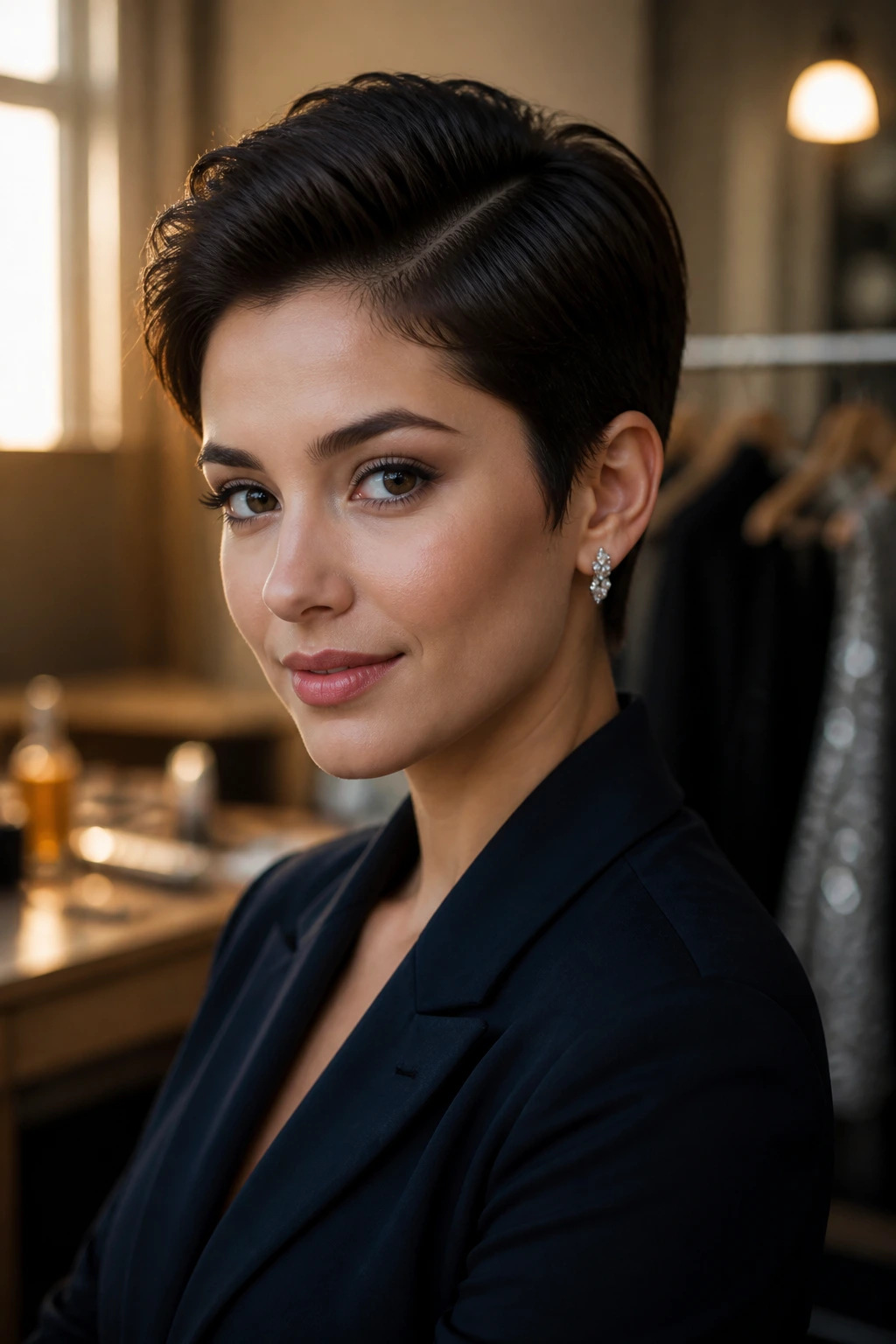
Fine-Hair Lift-Up: If your hair is thin or slippery, swap heavy creams for mousse and texture spray. Build styles like the deep side sweep, half-up twist, or crown-volume look, because they create body without asking the hair to carry too much weight.
Curly-Texture Respect: If your hair is naturally curly, skip the straightening battle and work with the curl pattern. A pinned-back side sweep, a braided crown, or a soft mini updo usually looks better than forcing every curl flat.
Ultra-Short Pixie Version: For very short cuts, focus on shape rather than gathering. Sleek side parts, pompadours, wet looks, and finger-wave fronts can all read formal without needing real length at the back.
Humidity-Proof Finish: In damp weather, keep the style tight and smooth. A tucked roll, slick pixie, or polished bob will survive better than loose curls or a heavily brushed wave.
Statement-Accessory Swap: If the hair itself is simple, add one strong piece — a pearl comb, crystal barrette, or slim metallic headband. It can turn a basic side part into something that feels event-ready in seconds.
Soft-Romantic Version: Want less edge? Loosen the wave pattern, leave one face-framing piece out, and use matte accessories instead of bright metal. The shape stays formal, but the finish feels gentler.
How to Keep the Style in Place Through the Event
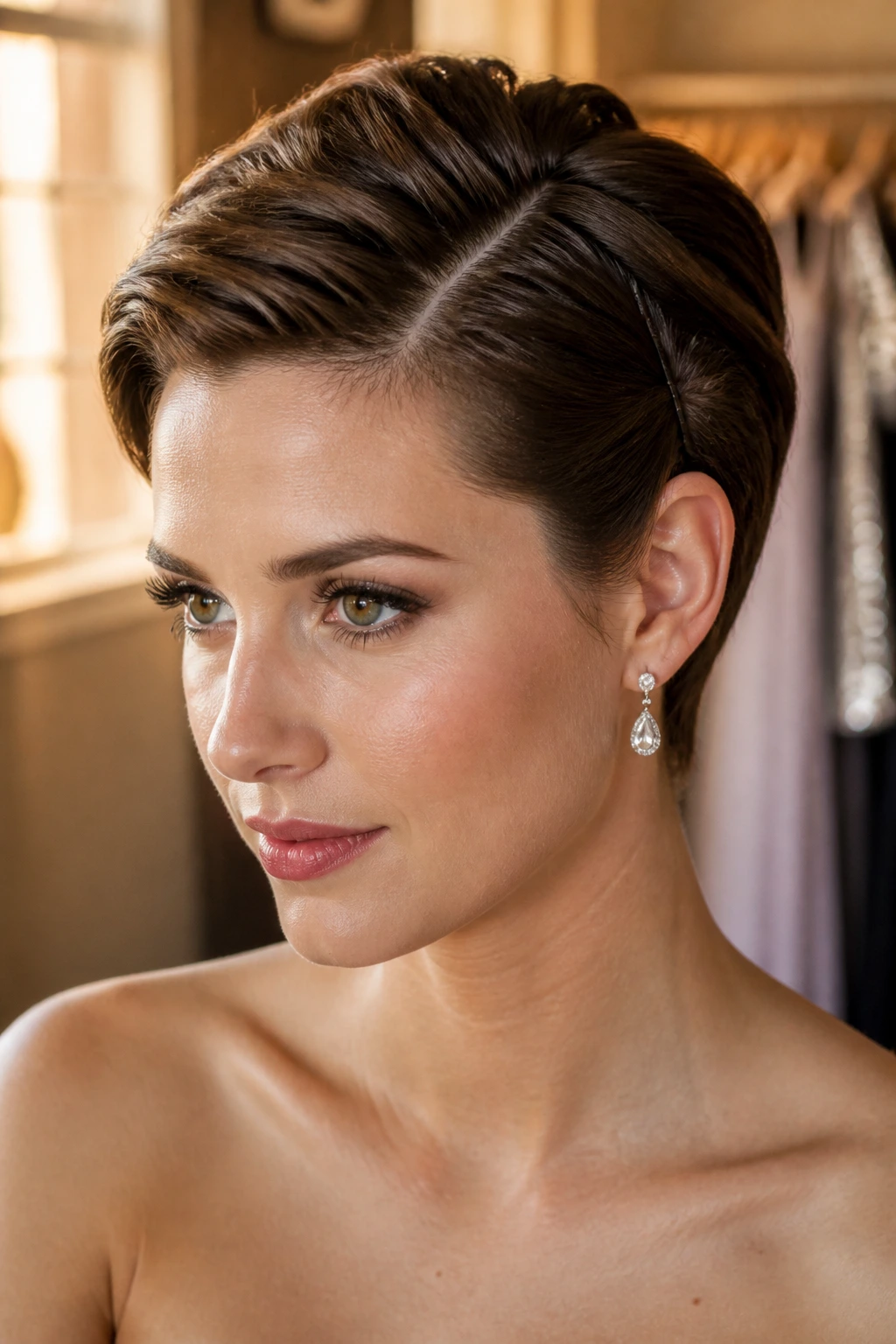
Set the shape before you spray it into submission. That sounds obvious, but it gets skipped all the time. Curl, tuck, or twist the hair first, let it cool for a few minutes, then lock it down. Hot hair forgets shape; cooled hair remembers.
Carry a tiny touch-up kit if the event matters. Two or three pins, a small comb, and a travel spray weigh almost nothing. If a wave loosens or a side tuck starts to slip, you can fix it in a bathroom mirror in under two minutes. Don’t keep touching the style with your hands. That’s how smooth hair turns fuzzy at the crown.
For sleep after an event, short formal styles are usually easier than long ones. Brush out the pins, shake out the roots, and sleep on a silk pillowcase if you can. If the hair is packed with gel or heavy spray, wash it twice the next morning. One shampoo pass often leaves a film behind, especially near the nape and hairline.
If you’re rehearsing a wedding or gala look, test it with the same earrings and the same neckline you’ll wear later. The way a side sweep lands against a collar matters more than people think.
Frequently Asked Questions
Can very short hair still look formal without extensions?
Yes. A pixie or cropped bob can look formal with a strong part, a smooth surface, and one controlled detail like a wave, tuck, or clip. You do not need long length to look dressed up; you need shape.
What short hair length is easiest for these styles?
Chin-length bobs and grown-out pixies are the most flexible, because they can do tucks, half-up twists, and soft rolls. Very short crops still have options, but they lean more on slick parts, waves, and accessory placement.
What works best if my hair is fine and slides out of pins?
Use dry shampoo or texture spray at the roots, then pin sections that are fully cooled after styling. Cross your pins when possible, and avoid heavy oils near the scalp because they make the hair too slippery.
Can curly short hair do these formal looks too?
Absolutely. Curly hair often looks better when it is shaped rather than forced flat. Braided crowns, pinned sides, mini updos, and defined curls with a side part all work well on natural texture.
How far ahead can I style my hair before an event?
Most polished short-hair styles are best done the same day, but you can prep the base the night before. Blow-dry, section, or loosely set the hair ahead of time, then finish with heat, pins, and spray right before you leave.
What if my bob keeps flipping out at the ends?
Flip-outs usually mean the ends need more control, not more product everywhere. Curl the ends under with a flat iron or 1-inch iron, let them cool, and pin or spray only where the bend keeps breaking.
Do these styles need expensive accessories to look formal?
No. The shape matters more than the price tag. A clean metal barrette, a pearl pin, or even a narrow black clip can look formal if it’s placed carefully and the rest of the hair is tidy.
Which style is safest for a long night of dancing?
The low rolled chignon, mini knotted bun, and polished tucked styles tend to hold best because the ends are secured close to the head. Loose waves can work too, but they’ll need a little more touch-up.
Short Hair, Finished Right
Short hair does not need fake length to look dressed up. It needs a line, a little control, and one detail that catches the eye at the right moment. That can be a wave, a tuck, a jewel clip, or a clean side part that lands exactly where it should.
The nice part is that once you learn which shapes suit your cut, the rest gets easier fast. You stop fighting the hair and start using it. That is where formal hairstyles for short hair stop feeling like a workaround and start feeling like a choice worth repeating.