



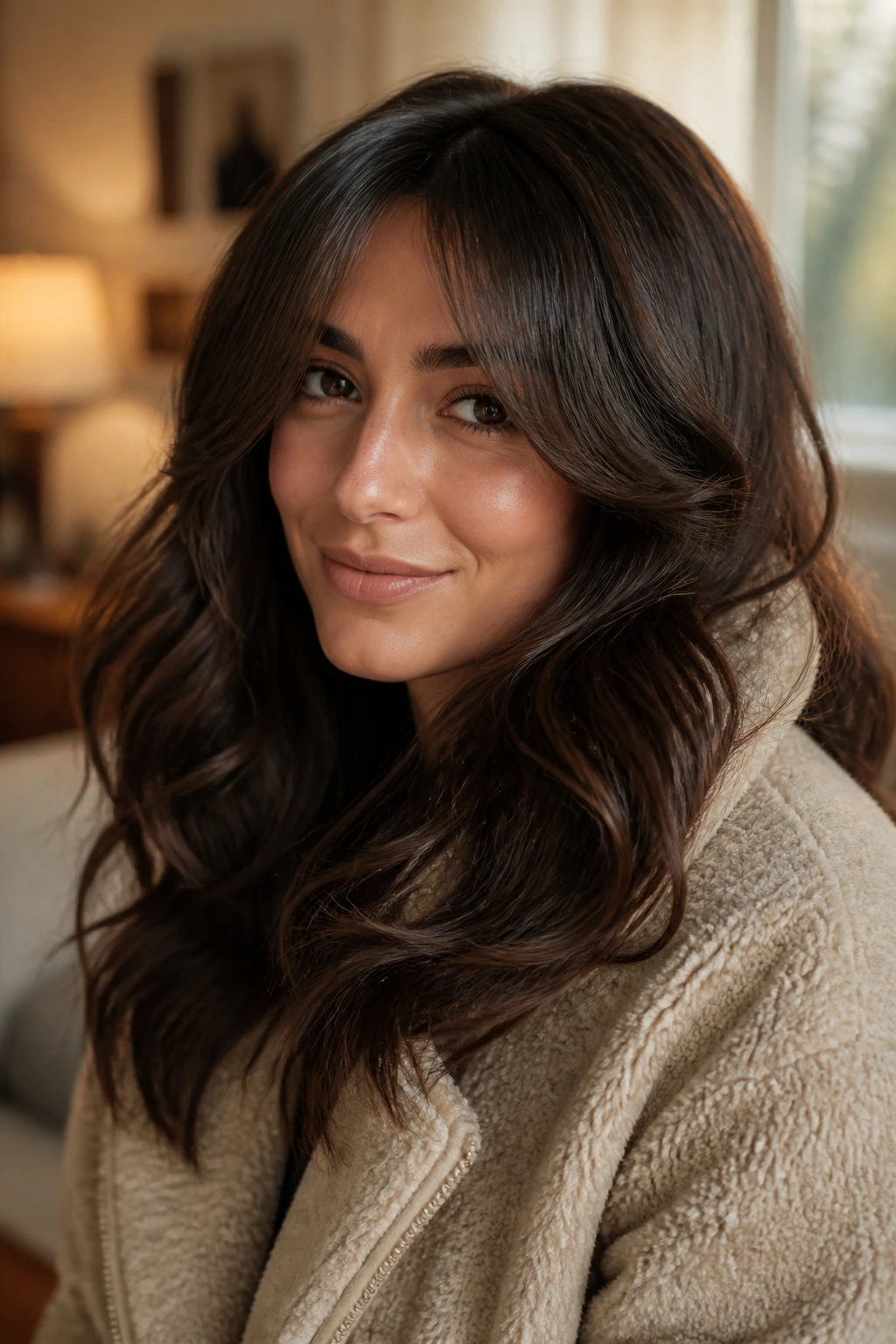
Thick hair has a funny way of refusing to cooperate with winter. It gets flattened by coat collars, puffed up by dry air, and then somehow manages to look both heavy and flyaway in the same afternoon. Curtain bangs can save the whole situation, but only if they’re paired with styles that understand the shape and weight of thick hair instead of trying to bully it into submission. Winter hairstyles for thick hair with curtain bangs work best when they give the front pieces room to move, keep the bulk where it belongs, and survive the daily scrape of scarves, beanies, and static.
That’s the real trick here. Not every winter look needs to be polished to the millimeter. Some of the best ones are a little looser, a little softer, and a lot smarter about where the volume sits. A low knot tucked under a wool coat collar. A blowout that bends away from the cheekbones. A braid that keeps the ends from snarling inside a scarf. Curtain bangs do the face-framing work so the rest of the style can stay practical.
I keep coming back to this combo because it solves a problem thick-haired people know well: the hair itself is not the issue. The issue is usually the weather around it. Cold air dries out the outside layer, indoor heat makes static worse, and heavy outerwear smashes anything too delicate at the root. These 18 looks lean into the density instead of fighting it, which is why they hold up so much better once you step outside.
Why These 18 Looks Earn Their Keep
-
They survive coat season: Low shapes, braids, and lifted crowns keep thick hair from getting trapped under scarves and jacket collars.
-
They make curtain bangs useful, not fussy: The fringe stays soft around the face instead of turning into a blunt strip that needs constant fixing.
-
They work with day-two hair: Several of these styles are better once the roots have a little grip and the ends are no longer freshly washed.
-
They use thickness as an asset: Big hair can make a braid fuller, a ponytail richer, and a knot more secure without extra padding.
-
They leave room for quick resets: A round brush on the bangs, a little dry shampoo at the crown, or a finger-twist at the temples is usually enough.
-
They fit real winter life: Beanies, hoods, knit scarves, and indoor heating all show up here, because that’s the part most hairstyle lists skip.
Why Thick Hair and Curtain Bangs Cooperate in Cold Weather
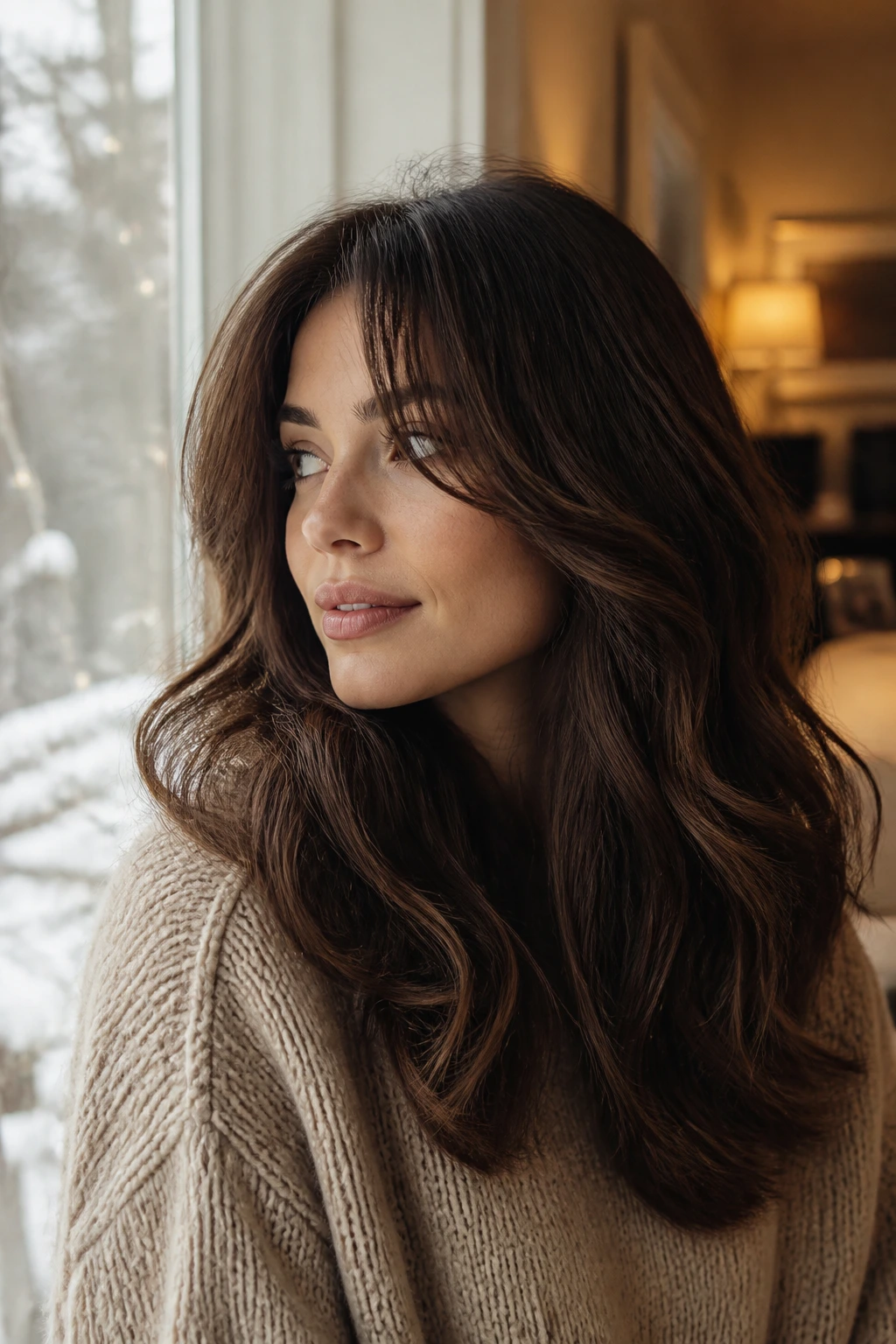
The combination makes more sense than people give it credit for. Thick hair has weight, so it tends to hold shape better than fine hair once you’ve bent it into place. Curtain bangs also have a built-in advantage: they’re split in the middle and longer at the sides, which means they don’t behave like a blunt, heavy fringe that gets crushed under a hat brim.
Cold weather changes the rules, though. The air outside dries the surface of the hair, and indoor heat strips it even more. That’s why thick hair can go from smooth to frizzy at the ends while the roots stay flat and stubborn. Curtain bangs solve part of that equation because they can be refreshed fast, usually with a round brush, a cool blast from the dryer, or a quick pass of a flat iron at the very front.
The styles that work best are the ones that accept movement. A little bend at the ends. A low twist that doesn’t fight the collar. A braid that can loosen a touch and still look good. If you try to force thick hair into a stiff, over-smoothed shape, it usually rebels by puffing at the sides or collapsing at the crown. Let it have a little body. That’s the point.
One more thing: curtain bangs are friendlier to winter hats than most fringe shapes, but they still need a reset. I like to think of them as a front porch, not a curtain wall. They frame the face, then get out of the way when the scarf starts doing its damage.
1. Sleek Low Knot with Soft Curtain Bangs
A low knot at the nape is one of those styles that makes thick hair feel calm for once. The shape sits below most coat collars, so it doesn’t get crushed the second you step outside, and the curtain bangs keep the front from looking severe. The result is neat, but not stiff. That matters.
How it works: Smooth the outer layer of the hair with a light cream or serum, gather everything at the nape, and twist it into a compact knot or coil. Leave the curtain bangs loose, then bend them away from the face with a round brush or a wide flat iron curve. The whole style feels controlled without looking shellacked.
What to notice
- Keep the knot low enough that a scarf won’t rub it all day.
- Leave a little softness around the temples so the face frame doesn’t look pasted on.
- If your hair is extra dense, pin the knot in two directions so it doesn’t sag.
This is the style I’d pick for a day when you need your hair to behave under a turtleneck. It’s also one of the few polished looks that still makes thick hair look like thick hair instead of trying to hide it.
2. Big Round-Brush Blowout with a Center Part
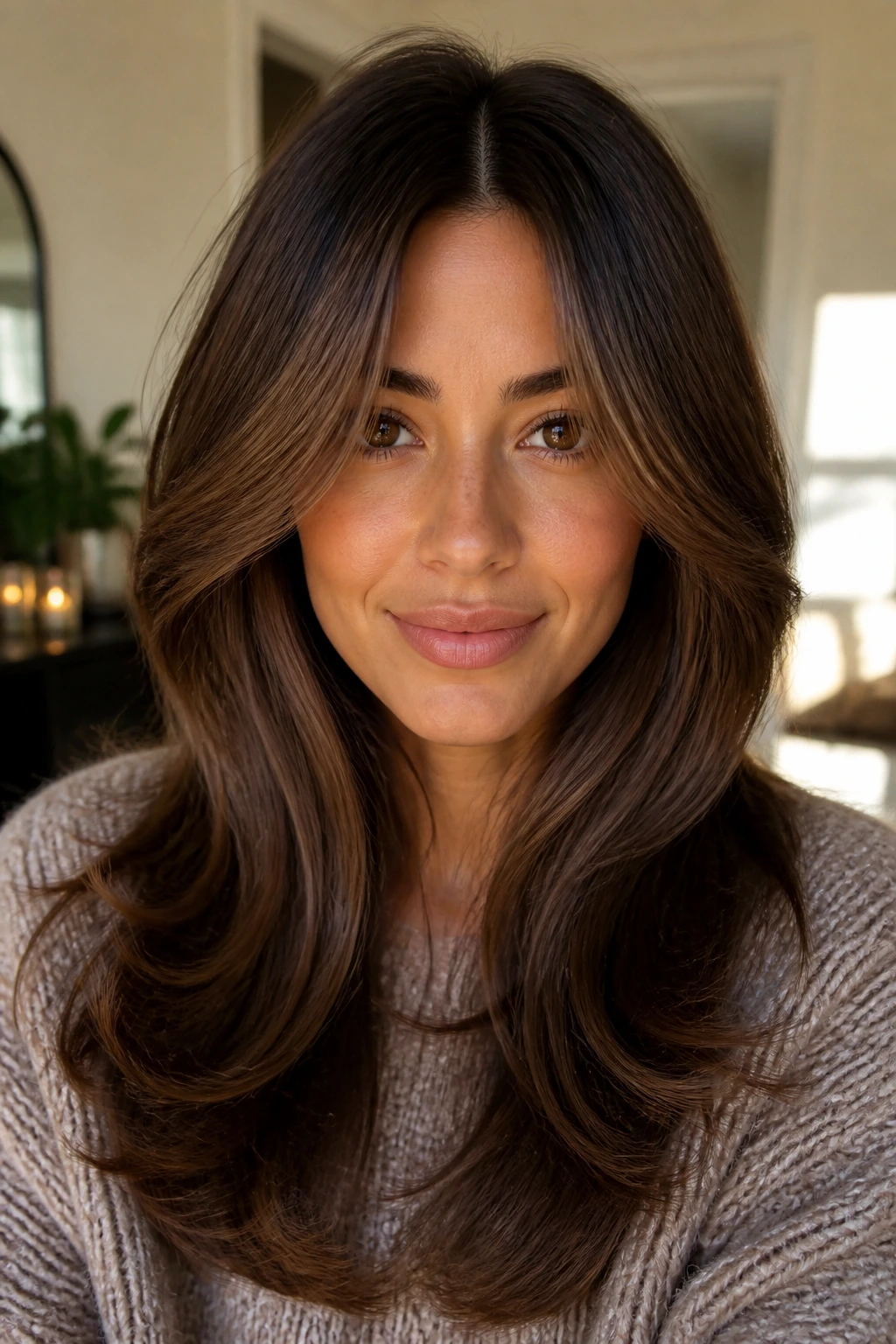
A real blowout is almost cheating with thick hair, because the density gives the finish a kind of lift that finer hair has to fake. The curtain bangs sit at the center of it all, flipping away from the cheeks just enough to soften the line. Nothing about this look is small. Good.
The trick is to dry the bangs first. Clip the rest of the hair away, hit the fringe with a round brush, and direct the front pieces away from the face before curling them back in at the ends. Then work through the lengths in sections, using a large round brush or blow-dry brush to smooth the cuticle and create that soft bend.
What saves this style in winter is the balance. The crown stays lifted, which helps under hats, and the ends stay rounded instead of puffing out in dry air. If you let the bangs dry on their own, they’ll split in weird directions. Don’t.
3. Half-Up Claw Clip Twist
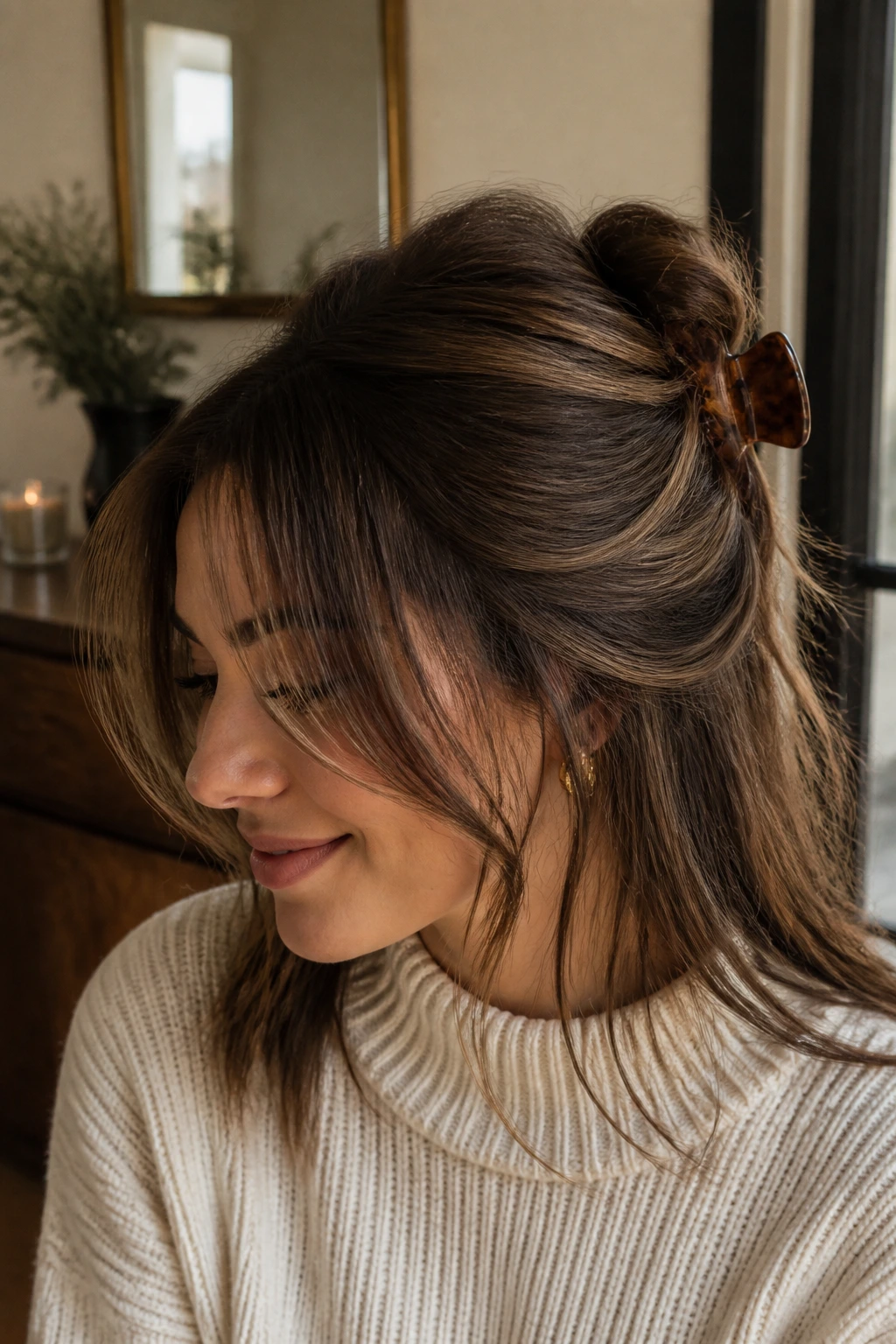
Want your hair off your neck without giving up the drama of thick length? A half-up claw clip twist is the answer most people forget to use. It works especially well with curtain bangs because the fringe stays out front while the crown gets some lift.
How to keep it from slipping
- Twist the hair from the temples back toward the crown, not straight up.
- Use a medium or large claw clip with teeth that actually grab thick strands.
- Tug the top a little after clipping so the style doesn’t look too flat.
The beauty of this one is that it doesn’t demand perfection. Slightly messy is better. Thick hair gives the twist enough body to stay full, and the loose lengths underneath keep the style from feeling too severe. On second-day hair, it’s even better, because the clip has more grip and the ends look less freshly washed.
If your hair gets bulky at the back, leave the twist a little lower and smaller. That keeps the shape from ballooning under your coat.
4. Crown Braid with Loose Curtain Bangs
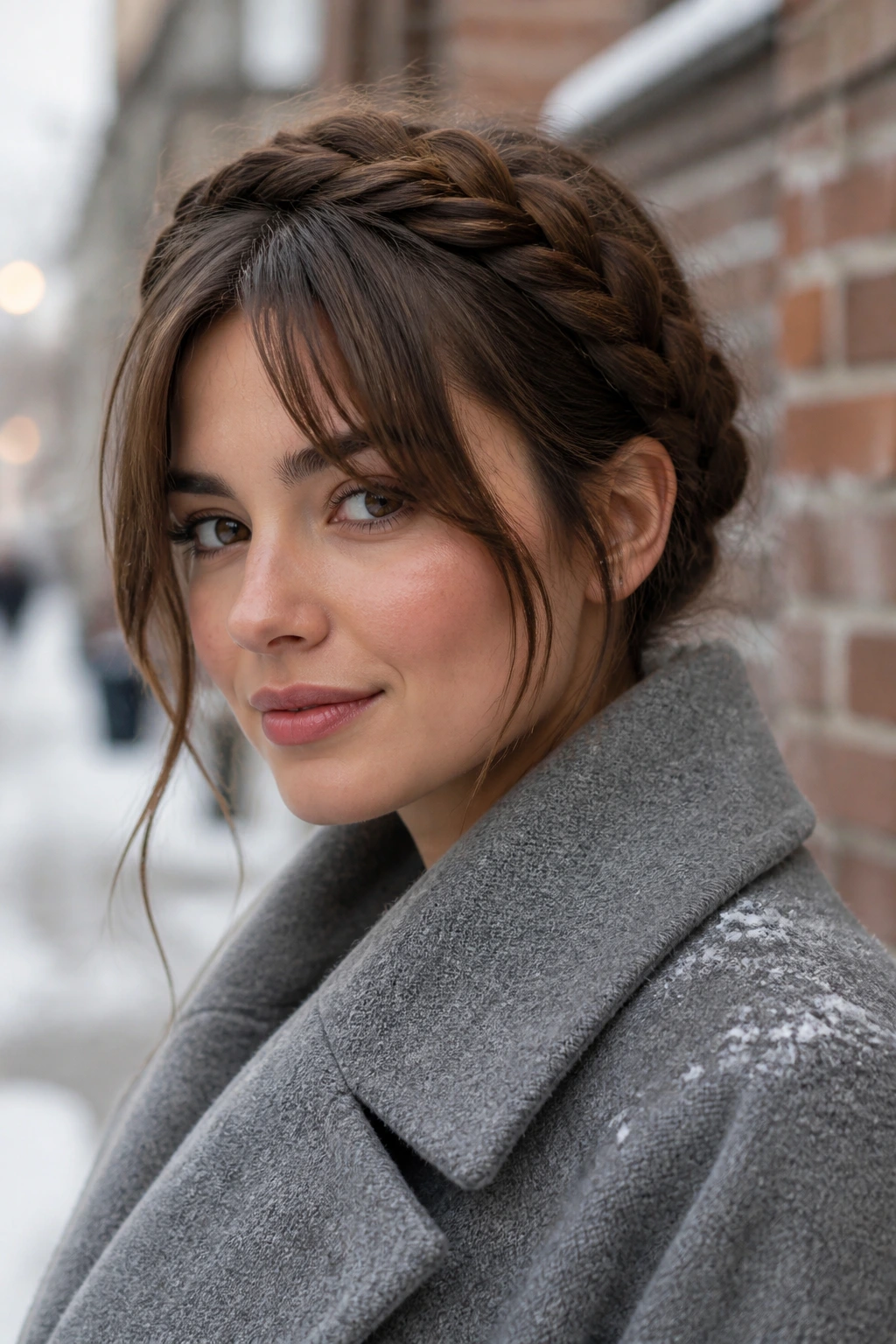
A crown braid can look overly precious if the rest of the styling is too neat. On thick hair, though, it becomes fuller, sturdier, and much easier to wear in cold weather. The curtain bangs keep it from reading as costume-y. That’s the whole difference.
Start the braid above one temple, work it across the hairline, and keep the tension relaxed. You do not want a tight braid hugging the scalp like a cable. A looser braid gives the crown some lift and leaves room for the bangs to curve around the face in their own shape. That softness matters when winter clothes already add structure everywhere else.
A good crown braid also behaves under scarves better than most people expect. The braid sits above the nape, so it avoids the worst friction. If you want a softer finish, pull a few strands free at the temples and let the curtain bangs blend into them. The style ends up looking intentional without being stiff.
5. Bubble Ponytail with Face-Framing Curtain Bangs
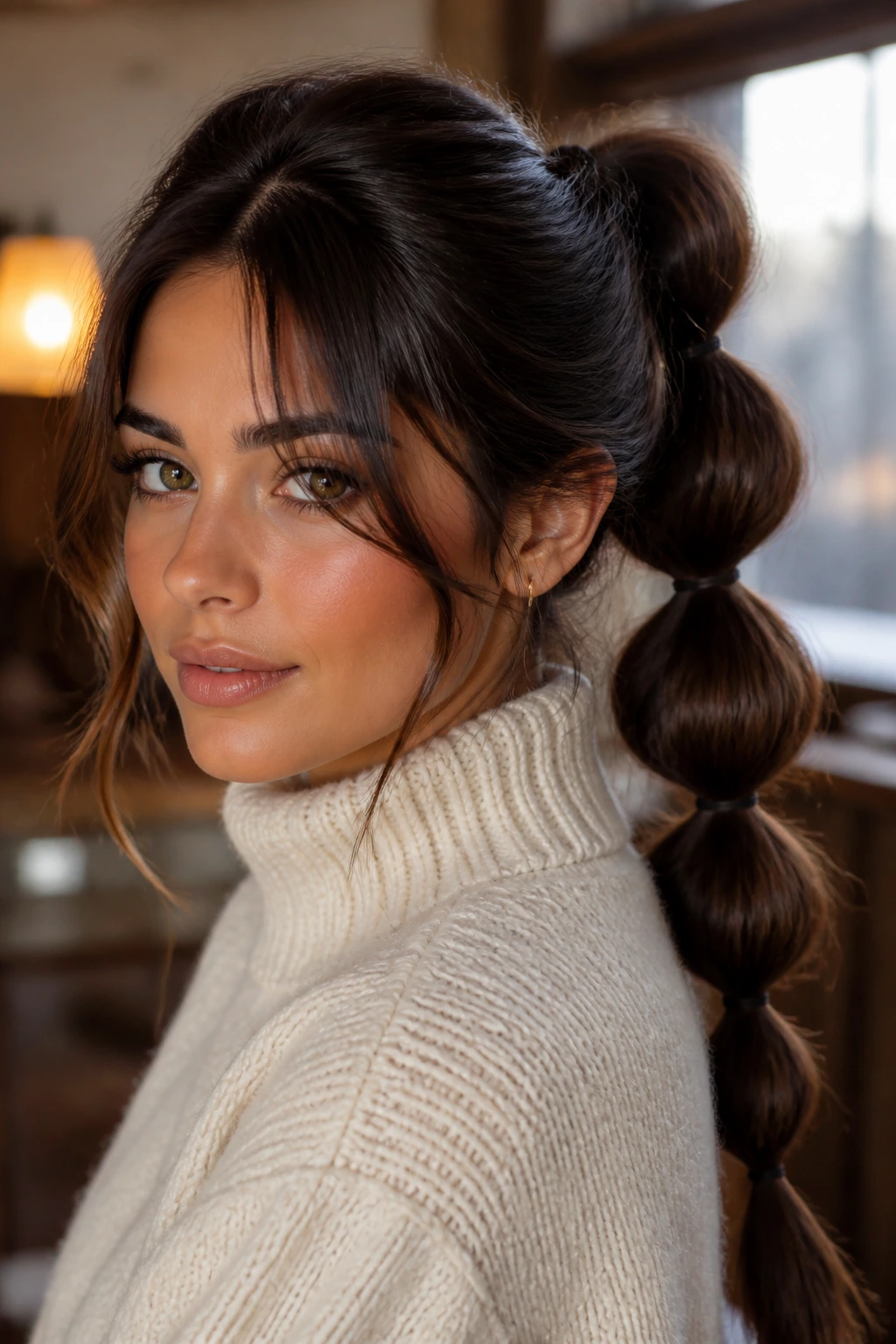
This one is pure thick-hair logic. Bubble ponytails need volume to look good, and thick hair gives you that volume without padding, teasing, or nonsense. The bubbles look round instead of sad and thin, which is half the battle.
Pull the hair into a mid or high ponytail, secure it tightly, then add elastics every 2 to 3 inches down the length. Gently tug each section outward until it balloons into a bubble. The curtain bangs soften the front and keep the ponytail from looking too sporty unless that’s the mood you want.
A few things make it winter-friendly. First, the style keeps the bulk controlled, so it doesn’t fight a scarf. Second, the sectioned ponytail can be refreshed with almost no effort after a hat. Third, thick hair makes each bubble full enough to show shape from the side, which is where this style usually looks best.
6. French Twist with Wispy Ends
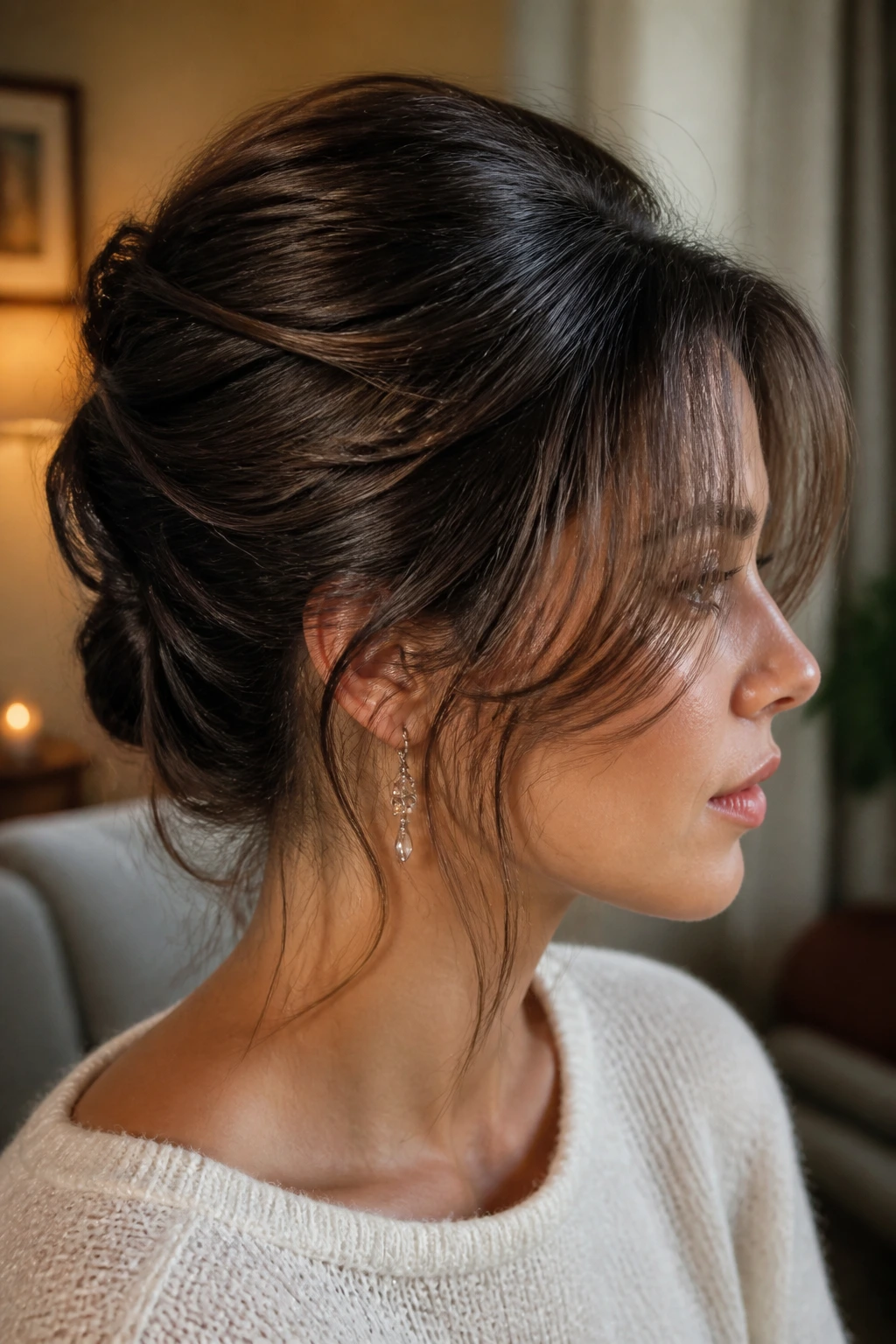
A French twist is the kind of style that seems formal until you do it on thick hair and let the curtain bangs loosen the front. Then it becomes something else: structured, yes, but not stiff. The density of the hair helps the twist look rich instead of thin and scraped back.
Gather the hair low, twist it upward along the back of the head, and tuck the ends into the seam. Use U-pins or long hairpins rather than one giant clip; thick hair holds better when the support points are spread out. The bangs should curve away from the face in a soft, brushed line, not sit flat against the forehead.
This is one of the stronger winter evening looks on the list. Coats, boots, a heavy scarf, and a French twist make sense together because the hairstyle keeps the neck clear and doesn’t get wrecked when you pull outerwear on and off. It’s polished, but it doesn’t feel fragile. That’s rare.
7. Shoulder-Length Layered Lob with Curtain Bangs
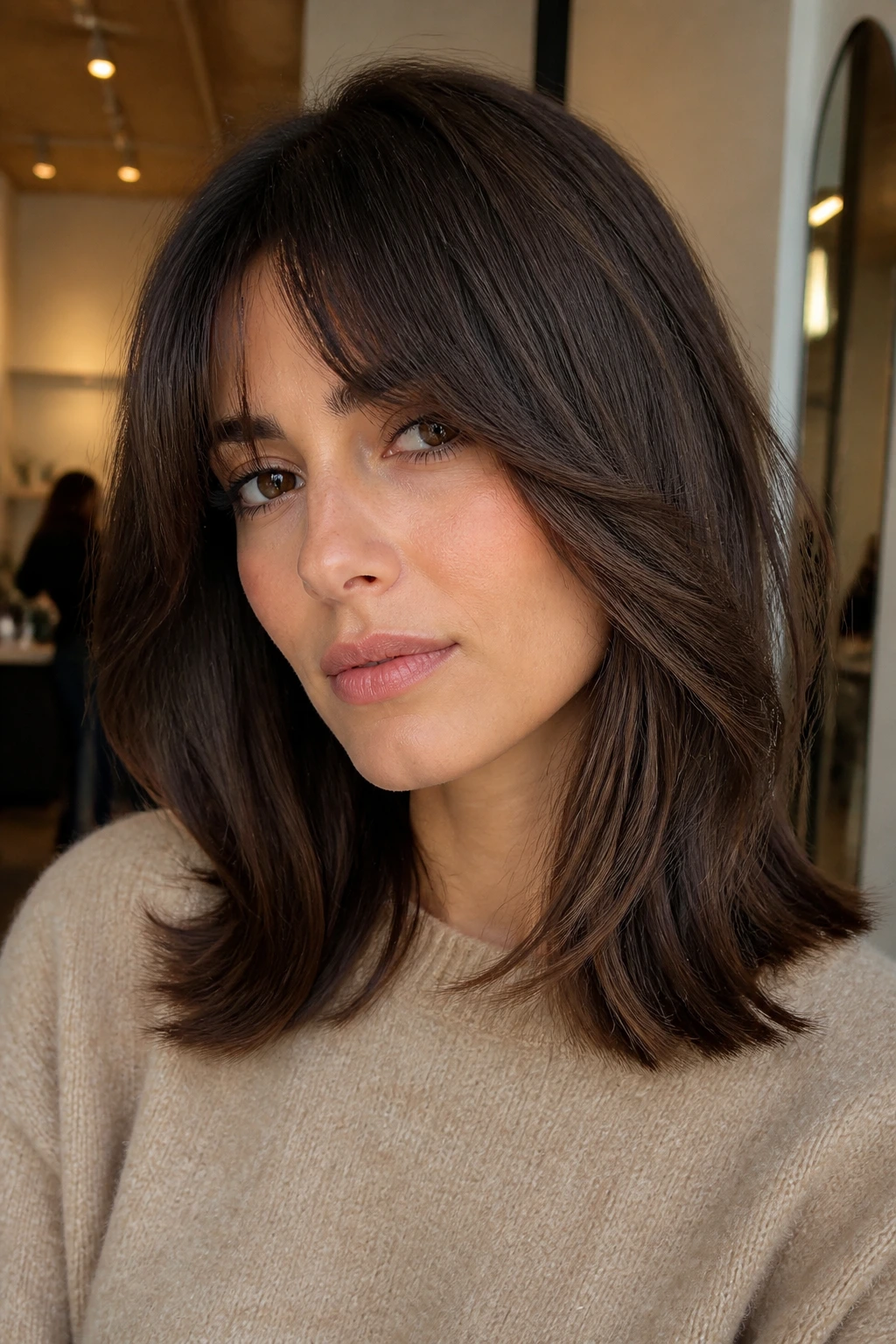
Sometimes the best hairstyle is the one that starts with the cut. A shoulder-length lob with long layers gives thick hair room to move, and curtain bangs stop the front from feeling boxy. If your hair has ever sat there like a block in winter, you already know why this matters.
The ends should be beveled or softly textured, not chopped bluntly straight across. Blunt ends on thick hair can feel heavy under sweaters and puff at the sides once the air dries them out. Long layers remove enough weight to keep the shape swingy, but not so much that the hair goes wispy. That middle ground is the sweet spot.
Ask for this at the salon
- Long, face-framing curtain bangs that start around the cheekbones.
- Internal layering to remove bulk without creating frizz.
- Soft, beveled ends instead of a hard line.
- Enough length to tuck behind the ear or clip half up.
Style it with loose bends, not tight ringlets. Thick hair looks cleaner when the movement is broad and soft, especially in winter.
8. High Wrapped Ponytail with Curtain Bangs
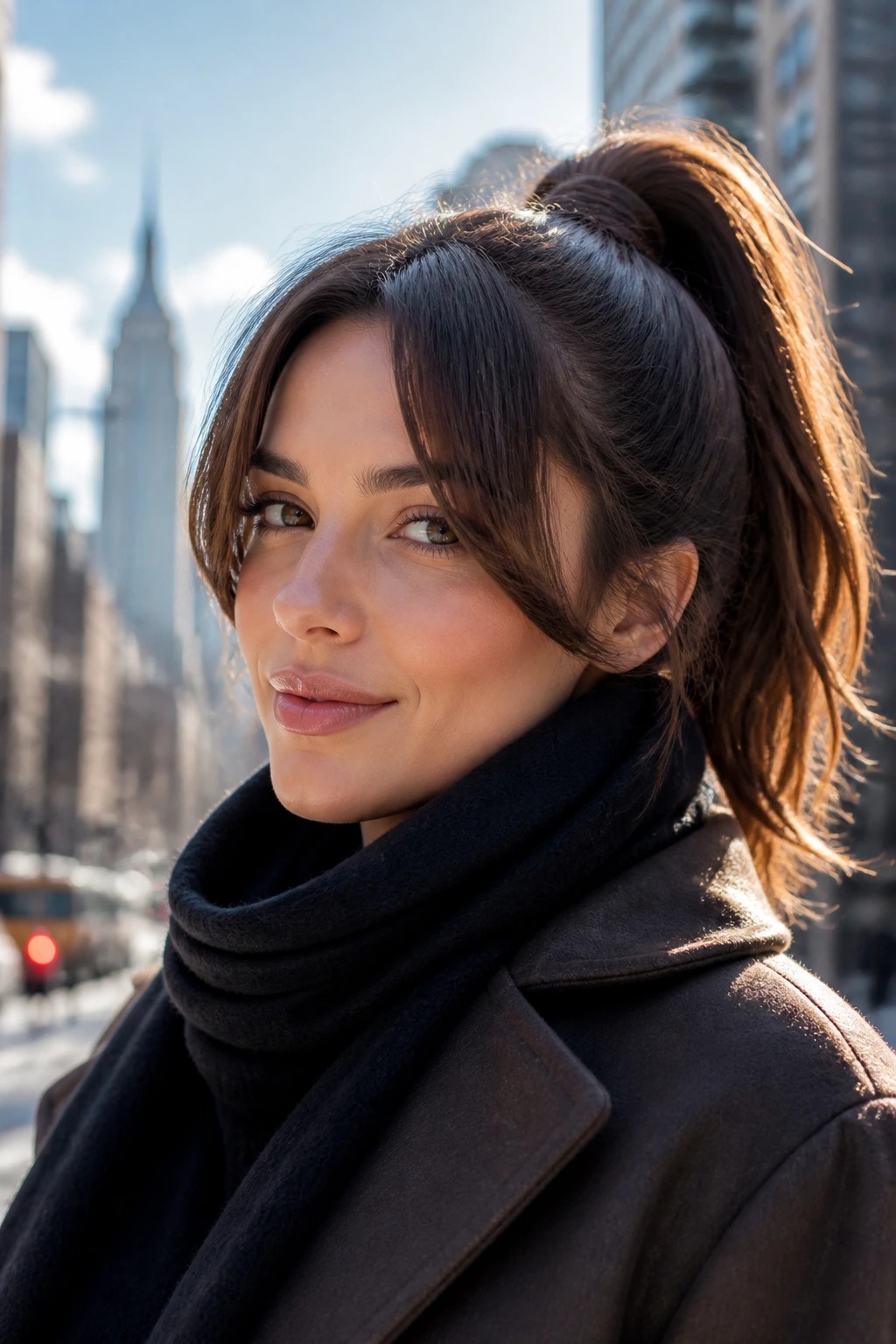
A high ponytail can look sharp on thick hair, but only if the base is wrapped and the front is softened. Otherwise it turns into a gym pony, which is not what we’re after here. The curtain bangs do a lot of work in this style. They take the edge off the height.
Brush the hair straight up to the crown, secure it tightly, then wrap a small piece around the elastic and pin it underneath. The ponytail itself can stay sleek or a little textured, depending on how much shine you want. The bangs should be curved away from the center part and lightly separated at the ends so they don’t stick to your cheeks.
This style earns its place because it keeps the hair away from collars and scarf edges. You can walk into wind, slide on a coat, and not spend the next hour detangling the back of your head. Thick hair also makes the tail look full instead of skinny. That alone changes the whole silhouette.
9. Heatless Rope-Curl Waves with a Soft Fringe
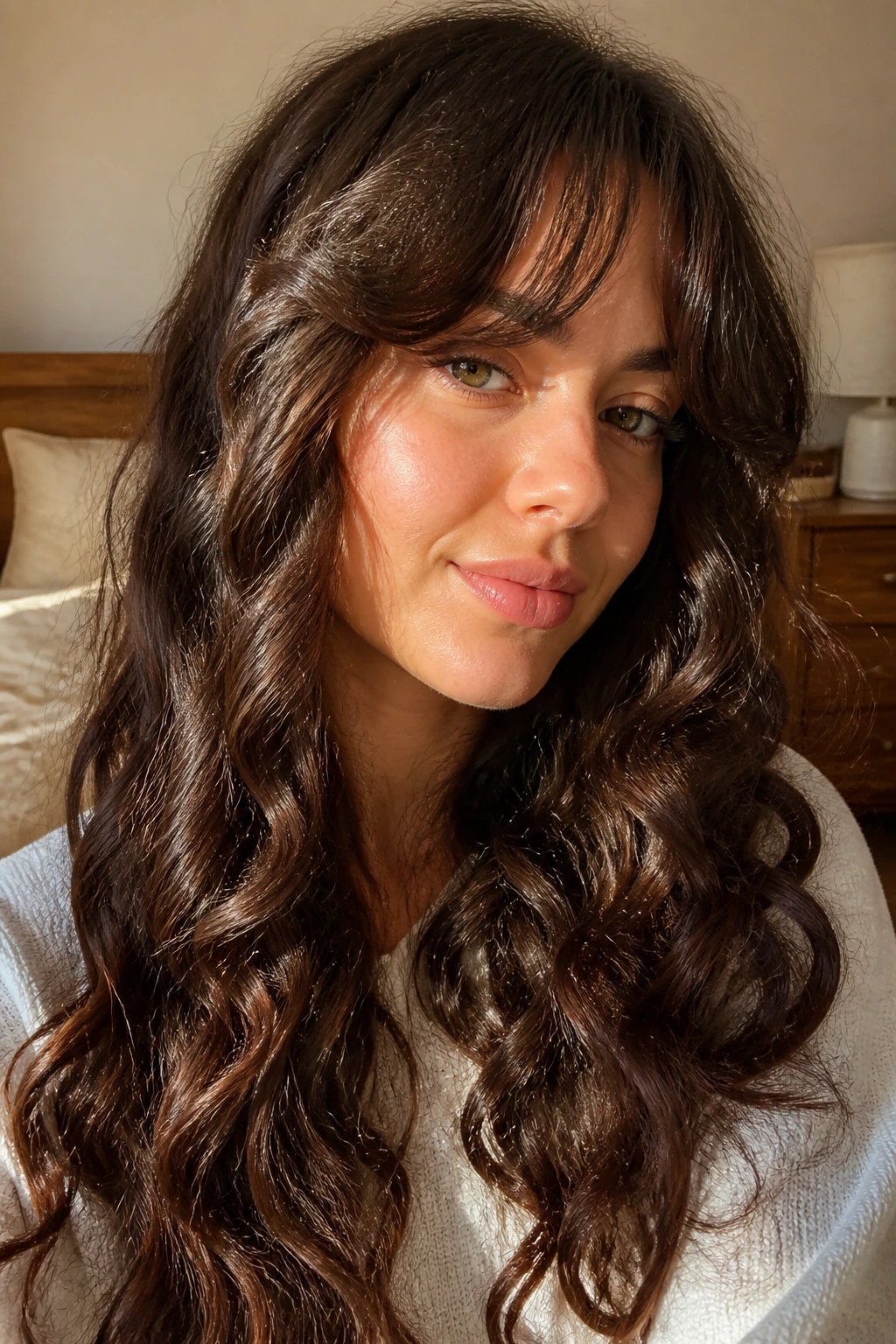
If your ends feel cooked by the middle of winter, a heatless rope-curl set gives you shape without another round of hot tools. Thick hair holds the pattern surprisingly well, especially when it’s twisted while damp and left to dry fully overnight.
How to use it with thick hair
- Split the hair into 2 to 4 large sections, not tiny ones.
- Twist each section tightly into a rope before coiling it.
- Secure with scrunchies or silk ties that won’t dent the lengths.
- Dry the curtain bangs separately with a brush so they don’t collapse into the face.
The look is soft and a little undone, which is exactly what makes it useful in winter. You wake up with bend and body instead of flat, static-prone lengths. When you break the twists apart, run your fingers through the waves rather than brushing them out hard. That keeps the shape from puffing.
If your hair is very dense, the waves may look better on the second day, after the pattern loosens slightly. That’s not a flaw. It’s the point.
10. Side-Twist Half-Up with Curtain Bangs
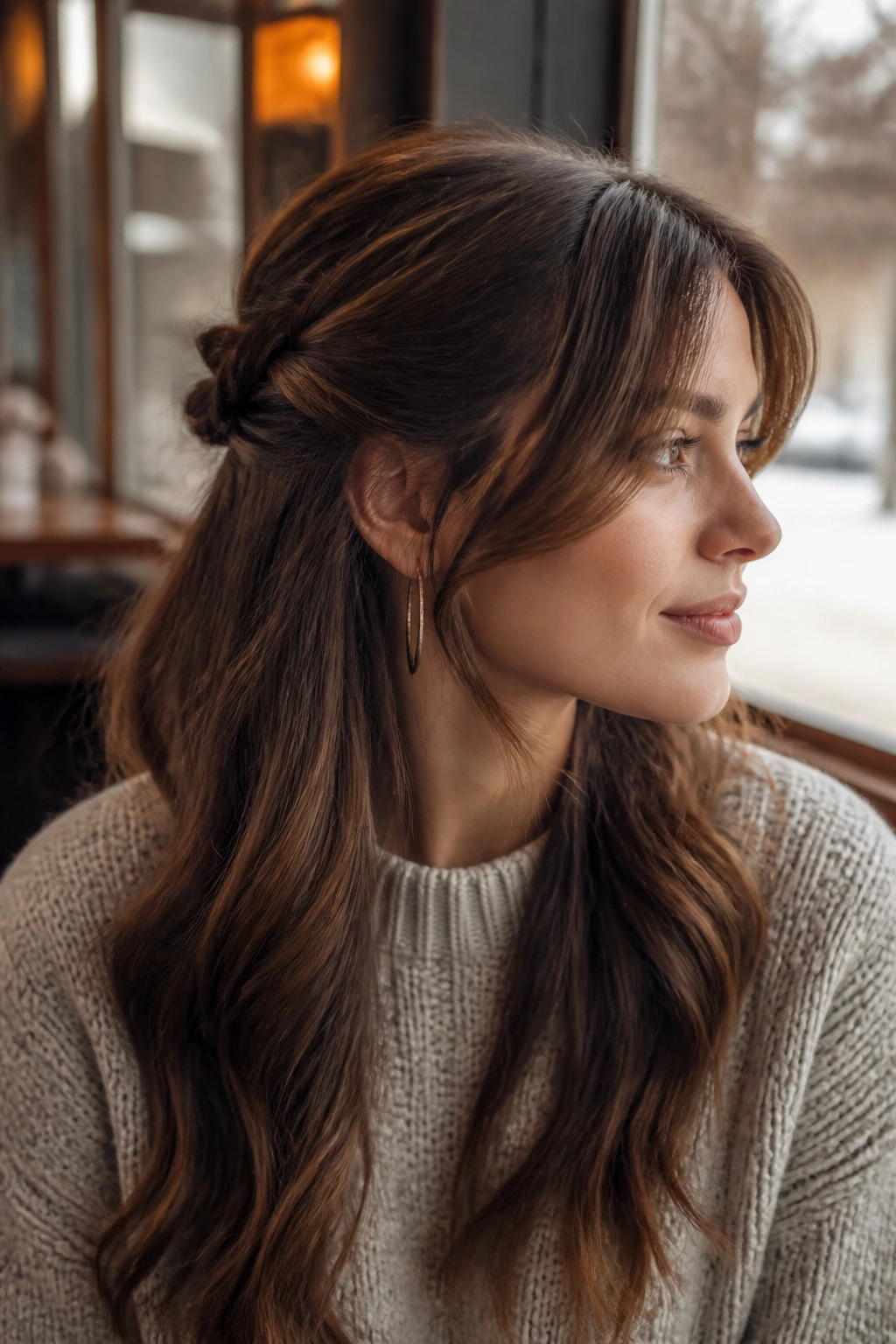
A side-twist half-up style is for the days when you want softness without a lot of fuss. Twist a section from each temple back toward the crown, pin them together, and leave the rest down. Curtain bangs naturally blend into the twisted sections, which keeps the front from feeling overworked.
The style is especially good on thick hair that tends to overwhelm a full half-up look. Taking just the upper section back reduces bulk at the crown while letting the length stay visible and polished. It also leaves enough hair around the neck to warm the shoulders without creating a giant knot under a scarf.
I like this one for days with heavy sweaters. It sits nicely with a collar because the pinning happens above the friction line. And unlike a tight ponytail, it doesn’t stretch the roots so much that the style looks tired by lunch.
11. Low Braided Bun That Stays Put
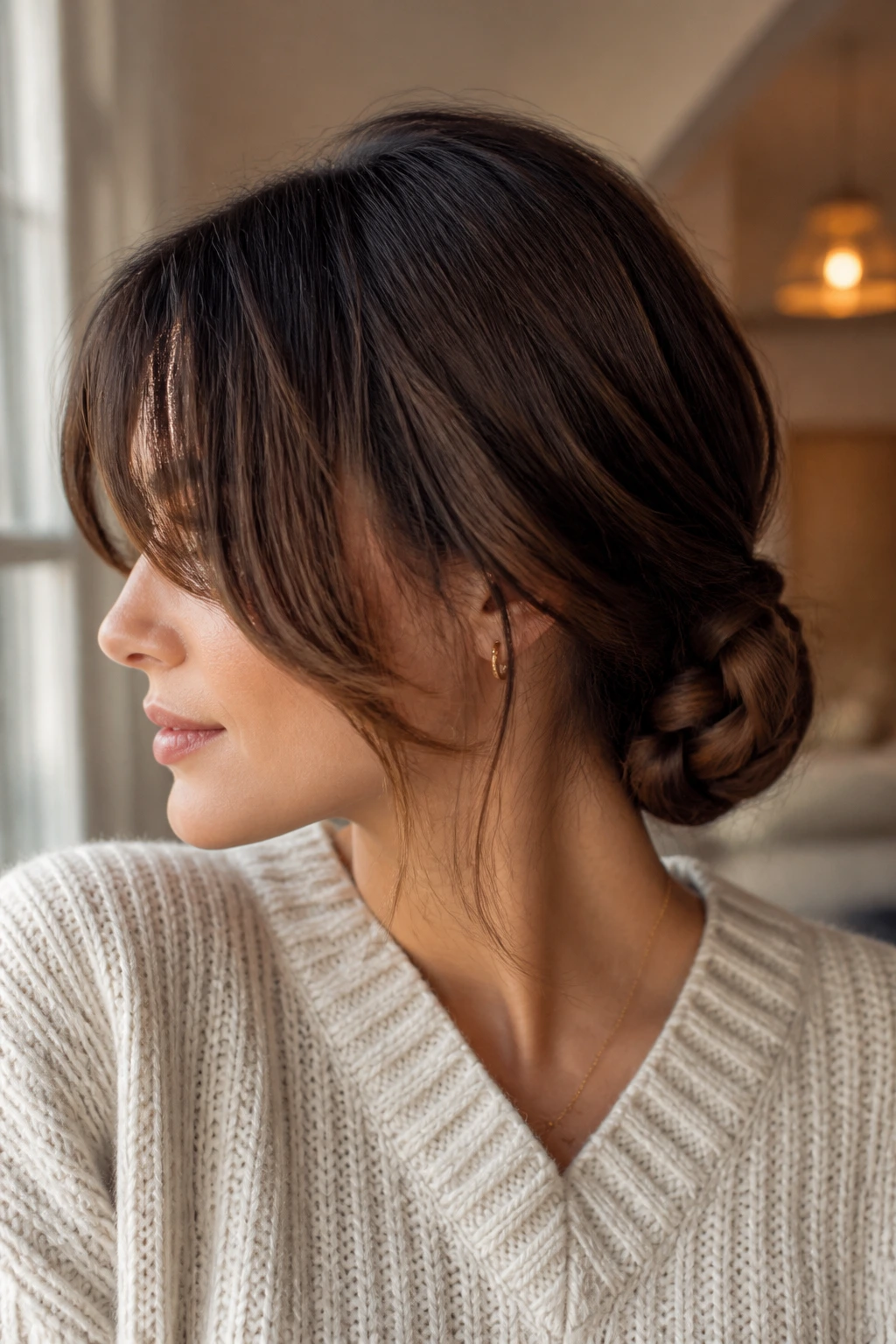
A low braided bun is the style I’d hand to anyone who wants their hair secure and still wants it to look like hair, not a helmet. Thick strands make the braid full, then the bun dense enough to stay in place without half a dozen pins.
Start with a low ponytail, braid the length, then coil it around the base and pin it flat. You can keep it smooth or pull out a few pieces for a softer finish. Curtain bangs should stay loose and rounded at the cheekbones so the face doesn’t disappear behind the bun.
Why it holds up
- The braid gives the bun structure before you even start pinning.
- The bun sits below most scarf lines, which cuts down on friction.
- Thick hair fills the shape so the bun doesn’t collapse after an hour.
It’s a little more formal than a knot, but not fussy. That makes it one of the strongest winter options for work, dinner, or any day when you need your hair to stop being the headline.
12. Dutch Braids Into a Low Tail
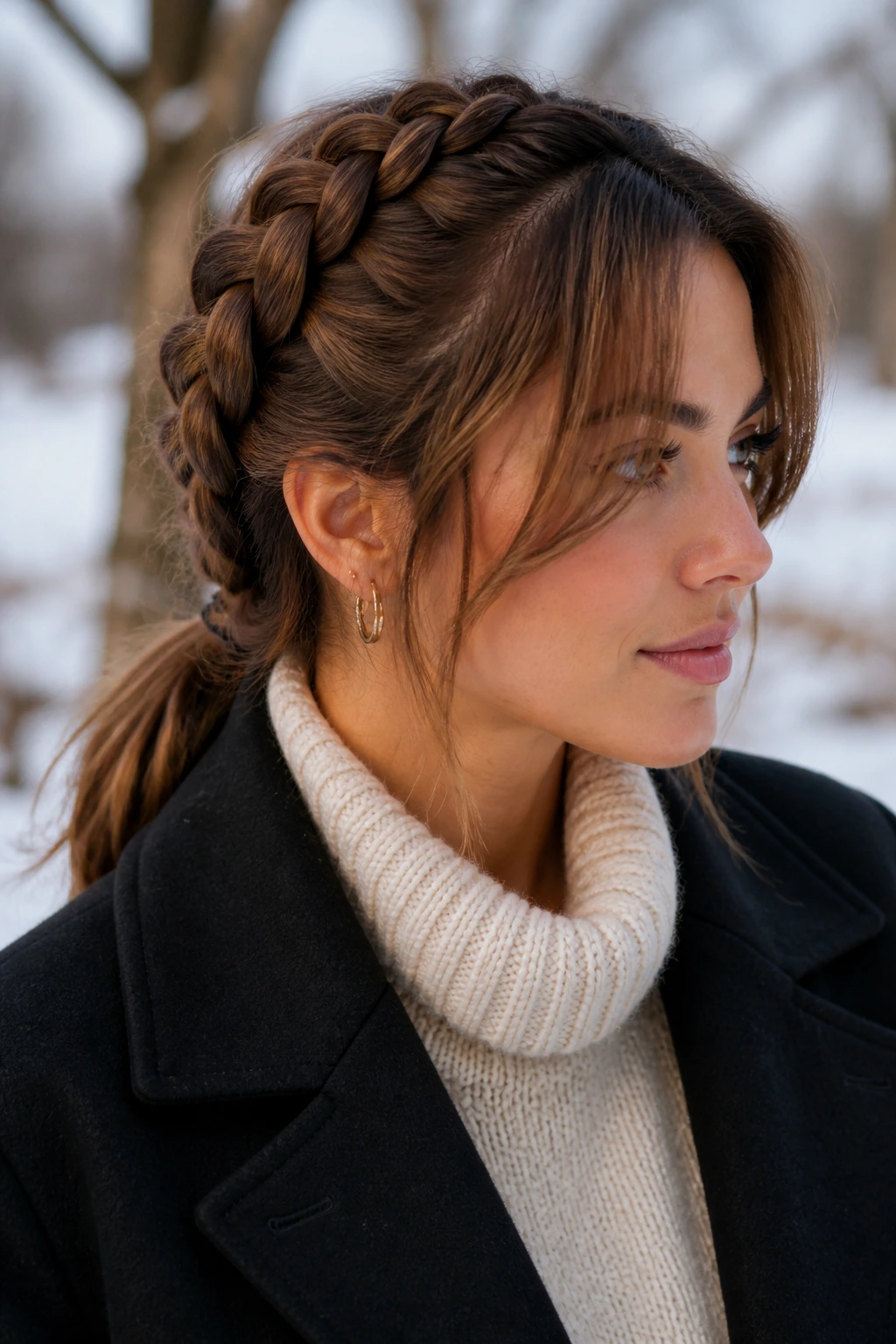
Dutch braids bring texture right up to the scalp, which makes them a smart choice when winter air wants to mess with every loose strand. On thick hair, they look especially substantial. The curtain bangs keep the front soft so the style doesn’t go too sporty unless you want it to.
Braid from the front hairline back toward the nape on both sides, then secure the ends into a low ponytail or leave them as twin braids. I prefer the low ponytail version for everyday wear because it gives you a more relaxed finish. If you want it a little more rugged, stop at the braids and let the ends hang.
This style is useful for days outdoors. It keeps the hair contained under a hood, and the braids don’t unravel as fast as a loose ponytail. If your hair is layered, leave the shortest pieces around the face out to blend with the curtain bangs. That keeps the front from looking too chopped.
13. Velcro Roller Volume Set with Curtain Bangs
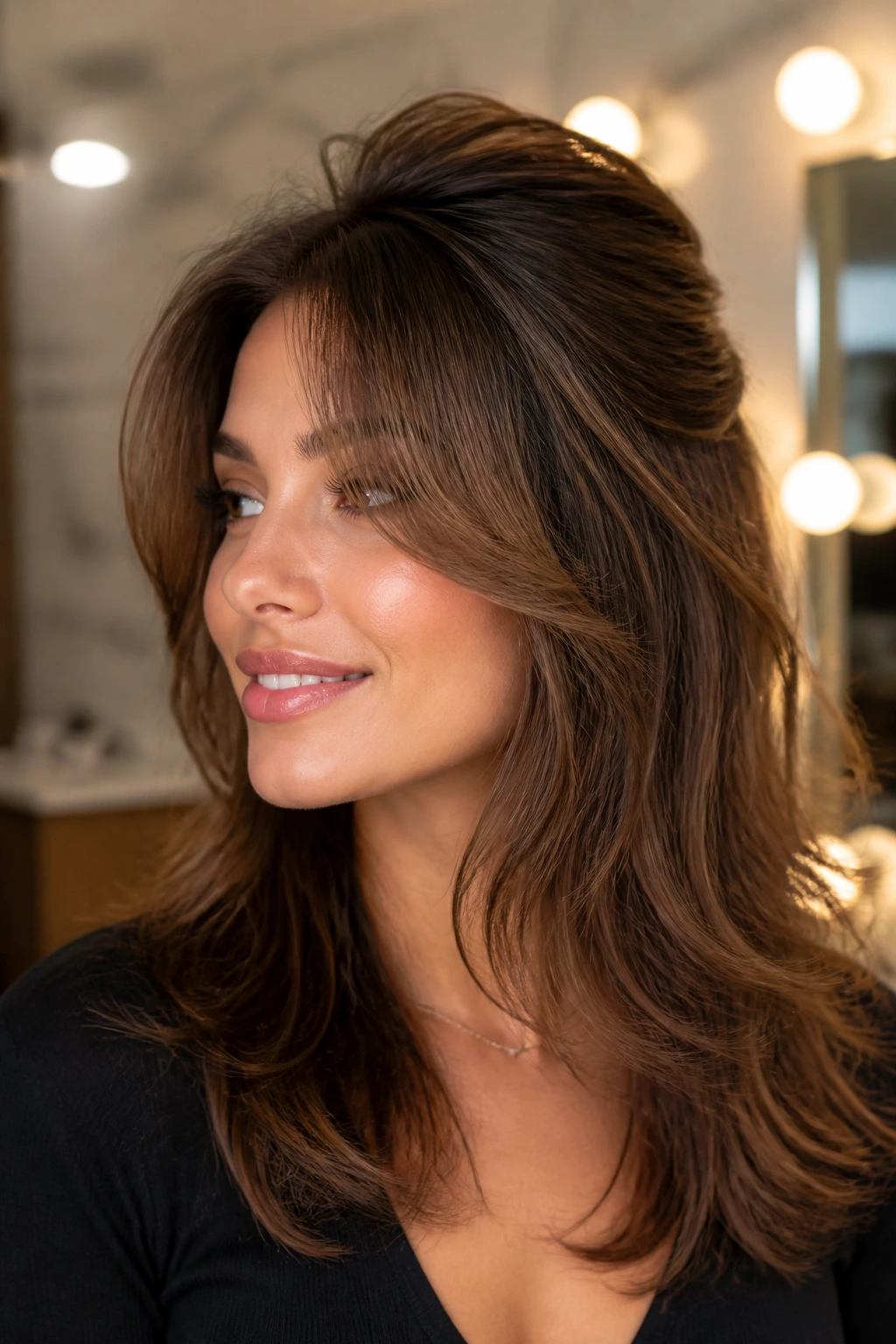
Sometimes the hairstyle is the set, not the finished shape. Velcro rollers are still one of the simplest ways to give thick hair a winter lift that lasts longer than five minutes. The crown gets height. The bangs get a curve. The rest gets a cleaner fall.
Put in the rollers after blow-drying or on hair that’s nearly dry, not soaking wet. Work the crown, the side sections, and the curtain bangs first, because those are the parts that flatten most under hats and scarves. Leave the rollers in while you do makeup or get dressed. Ten to fifteen minutes can make a real difference.
This is the style I’d use when I want thick hair to look intentional without spending forever on it. The rollers don’t make the hair smaller; they make it shaped. That’s a better trade in winter, when the goal is usually to keep the top from going limp while the ends stay soft.
14. Pinned-Back Retro Flip
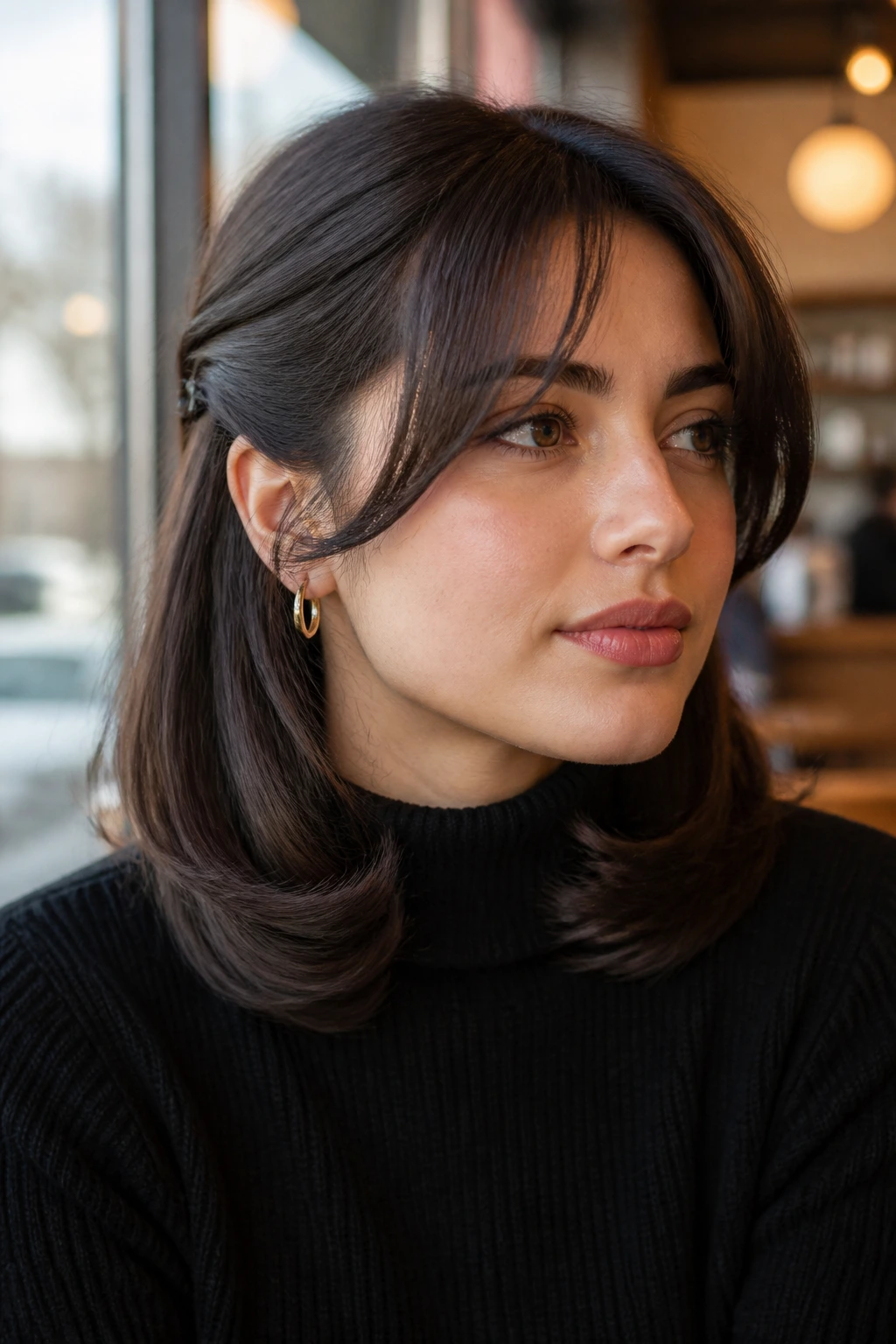
A pinned-back retro flip gives thick hair a little drama without making it hard to wear. The ends curve under or outward depending on your preference, and one side gets tucked or pinned back so the face frame stays open. Curtain bangs keep the whole thing from feeling too rigid.
The shape works because thick hair holds a bend well. You don’t need to curl every strand. A smooth blow-dry with a round brush, followed by a touch of flip at the ends, is enough. Then pin one side behind the ear or both sides back with small clips if you want the earrings to show.
It’s a nice winter dinner look, especially with a collar that frames the face. The style stays visible under indoor lighting, which sounds small, but matters when most winter hair disappears into coats and dark fabrics. A little curve around the ends gives the silhouette life.
15. Messy Top Knot with Soft Tendrils
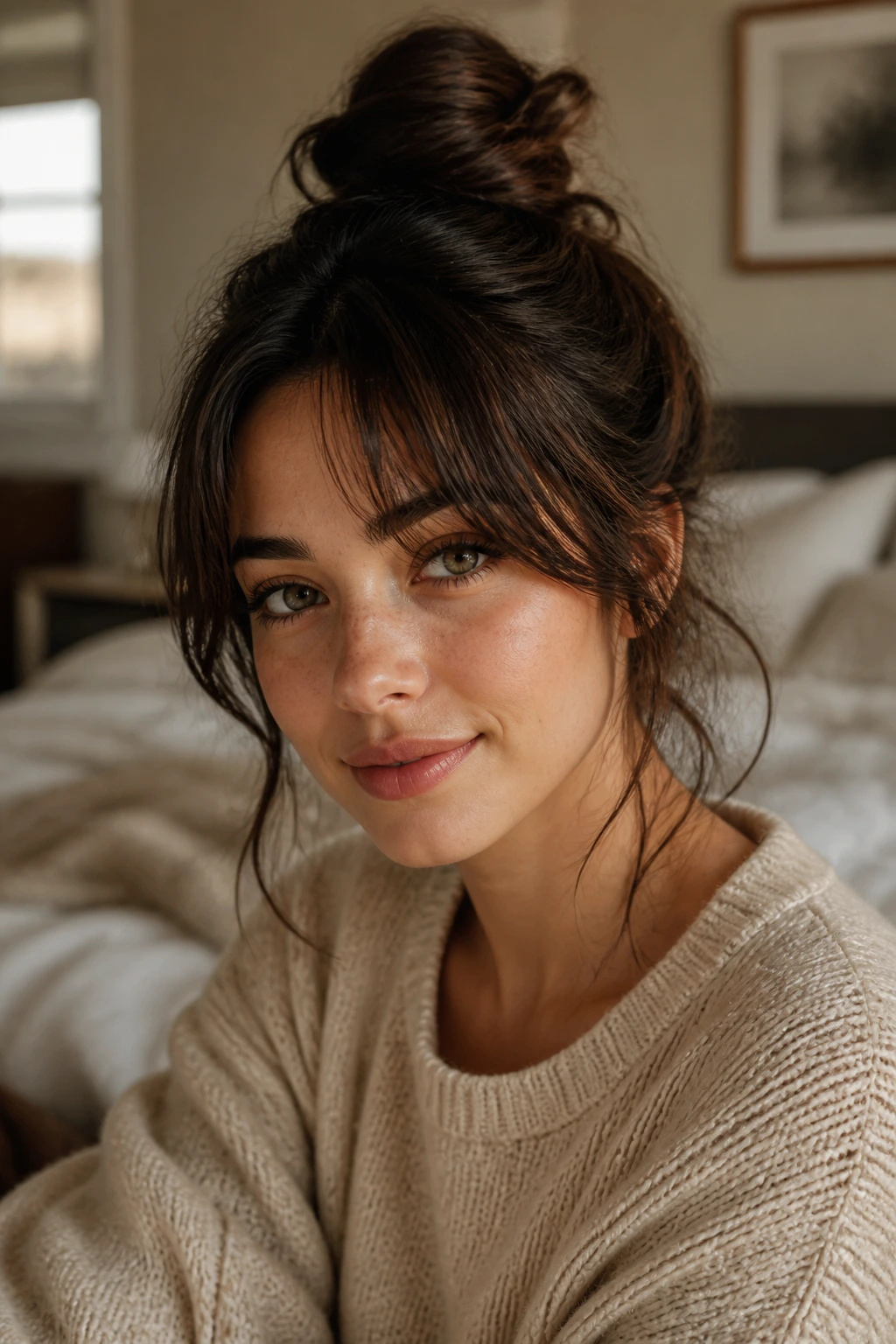
A top knot can look lazy on thick hair if you rush it. Give it a little thought, though, and it becomes one of the easiest winter looks to wear. The knot should sit high but not tight, with enough slack that the bun feels full instead of strained.
Leave out a couple of curtain-bang pieces and a few tendrils around the cheekbones. That softness keeps the style from reading as a gym bun. Thick hair gives the knot its own body, so you don’t need to make it tiny to make it hold. In fact, a too-small bun is where this look goes wrong.
Use a matte scrunchie or a strong coil tie if your hair slips. A glossy elastic usually isn’t enough. And if your hair is freshly washed, add a touch of texture spray first. That extra grip makes the knot stay up longer and keeps the loose pieces from separating too much.
16. Sleek Straight Style with Curved-Under Ends
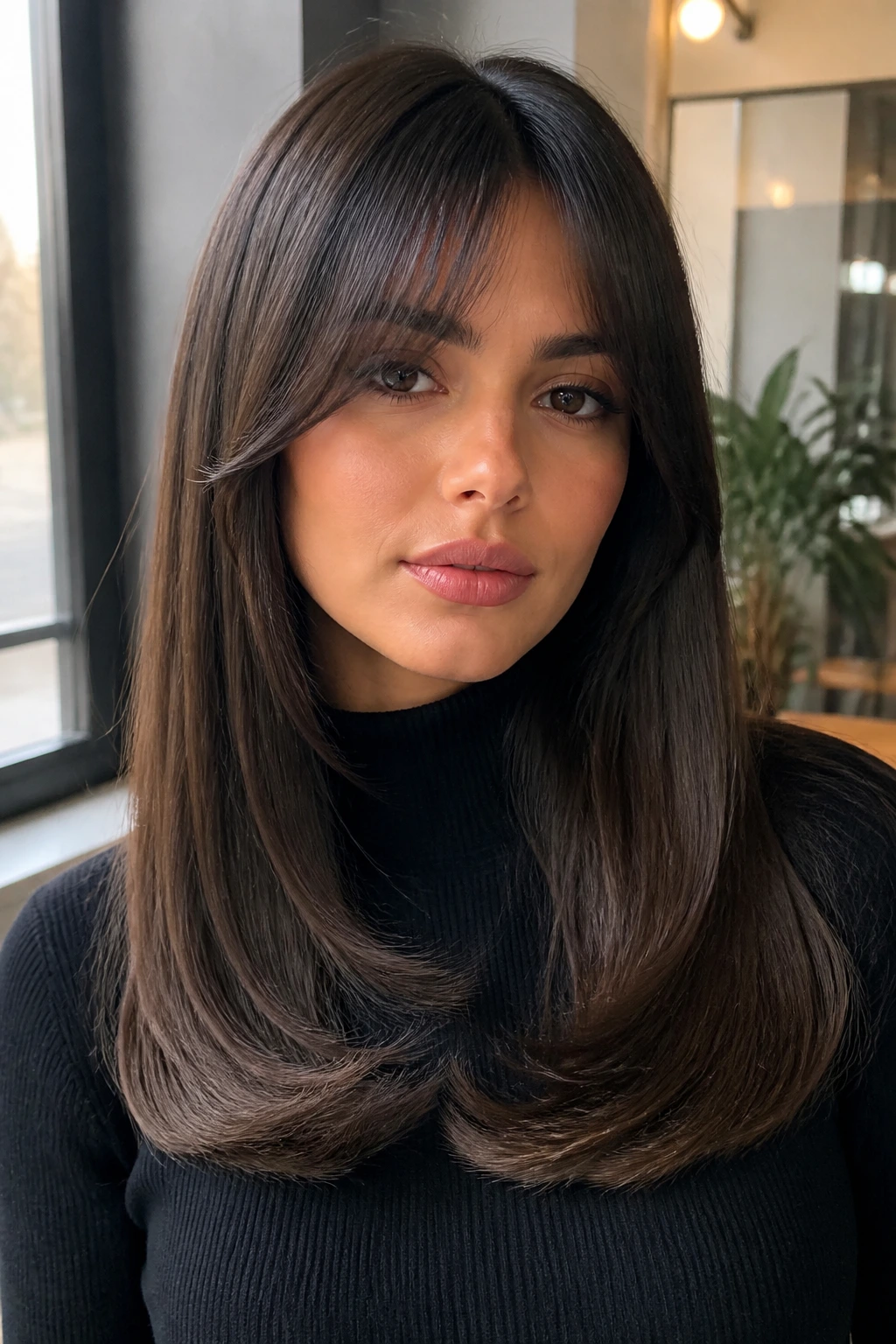
Straight hair in winter can look sharp, but only if it isn’t flat and dried out at the same time. On thick hair, sleek doesn’t have to mean limp. You want a smooth surface, curved ends, and curtain bangs that swing away from the center instead of hanging in two stiff slabs.
Use a heat protectant first. Then work with a flat iron in medium sections, bending the ends under slightly as you go. The bangs need a lighter touch—just enough curve to keep them off the eyes and prevent the split from going jagged. A tiny amount of smoothing serum on the surface helps with static, but keep it away from the roots.
This style shines when your outfit has texture: wool coats, chunky scarves, ribbed knits. The clean hair balances all that fabric. It also shows off the thickness in a more controlled way, which is useful when you want your hair to feel neat without losing its body.
17. Fishtail Braid Over One Shoulder
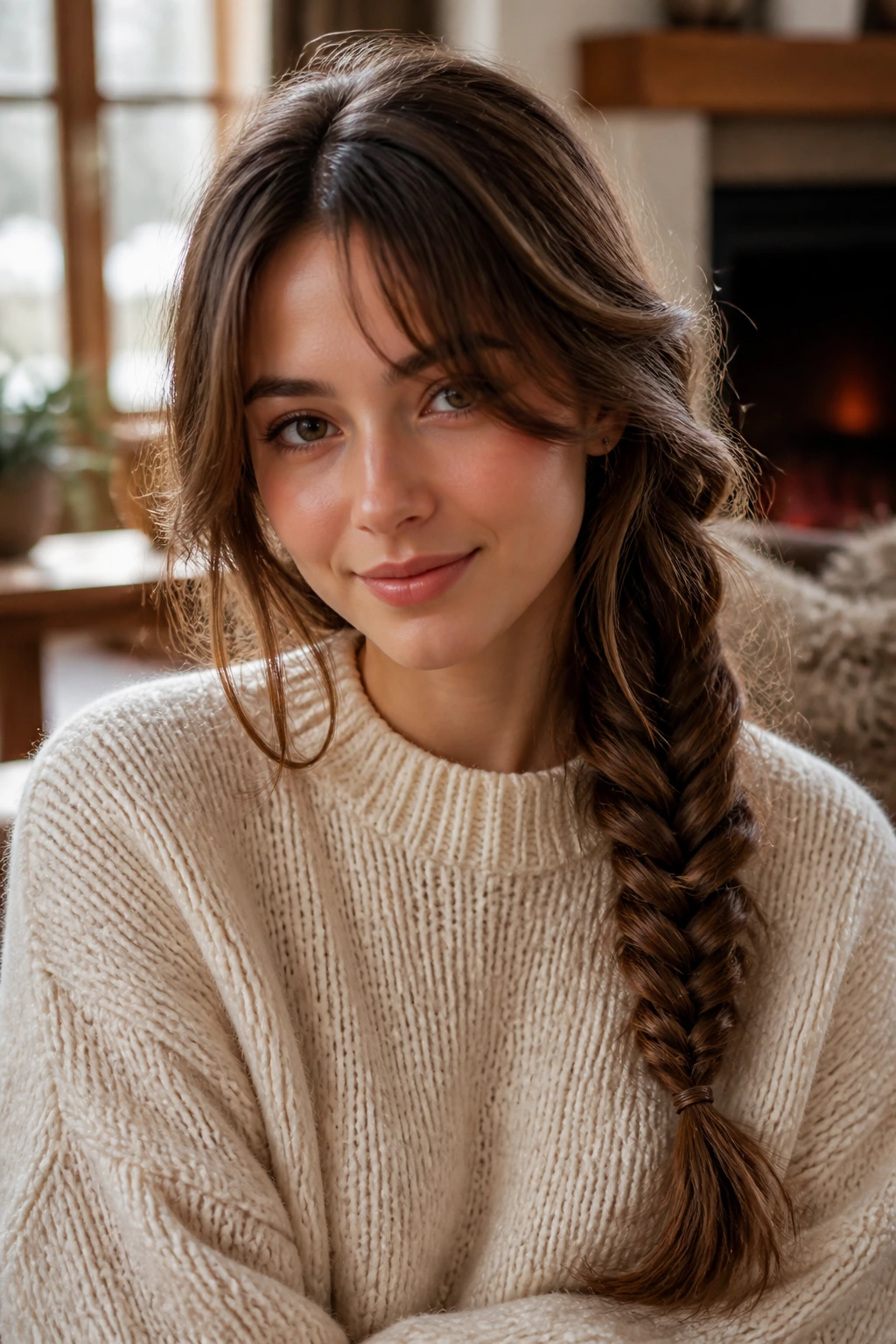
A fishtail braid looks intricate, but on thick hair it has a lot of room to be relaxed. That’s the version I like. Not perfect. Not tight. A little wide, with the curtain bangs left loose and maybe a few shorter layers blending into the front.
Pull the braid over one shoulder so it sits on top of a sweater instead of underneath it. Thick hair gives the fishtail enough mass that the pattern still reads even when the braid loosens during the day. Tug the braid gently after finishing to widen it. The looseness adds texture and keeps the style from looking hard-edged.
This is one of the better winter commuting styles because it stays put and doesn’t tangle into a scarf as badly as loose hair. If your layers are short, start the braid lower, below the cheekbones, so the face frame has room to do its job without sticking out in odd places.
18. Beanie-Friendly Loose Waves
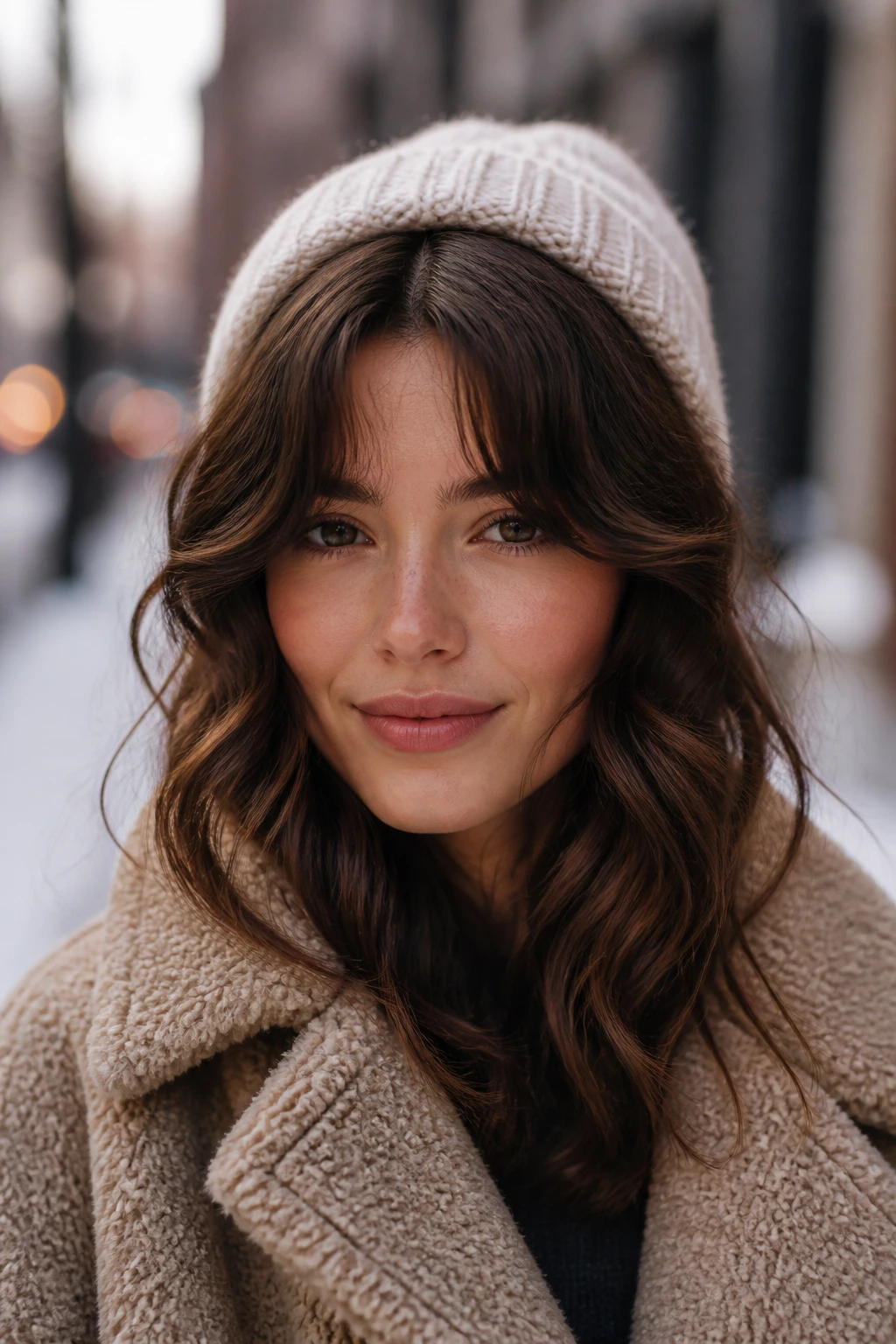
Beanie hair is its own category, and not all styles survive it. Loose waves with a soft curtain fringe handle it better than most because the shape can be reset quickly once the hat comes off. The goal isn’t perfect curl. It’s shape that can be revived in under a minute.
Create broad bends with a large iron, a braid-out, or a heatless set, then keep the crown slightly flatter than usual so the beanie doesn’t fight the top of the head. When you remove the hat, lift the roots with your fingers and redirect the curtain bangs with a round brush or even a quick finger roll. Thick hair usually bounces back faster than people expect.
The reason this works is simple: the style starts loose enough to survive compression. If you begin with tight curls, a beanie turns them into a frizzy mess. Start with soft movement instead, and the hair can recover instead of needing a full redo.
Why Thick Hair and Curtain Bangs Hold Up Better Than Most Winter Styles
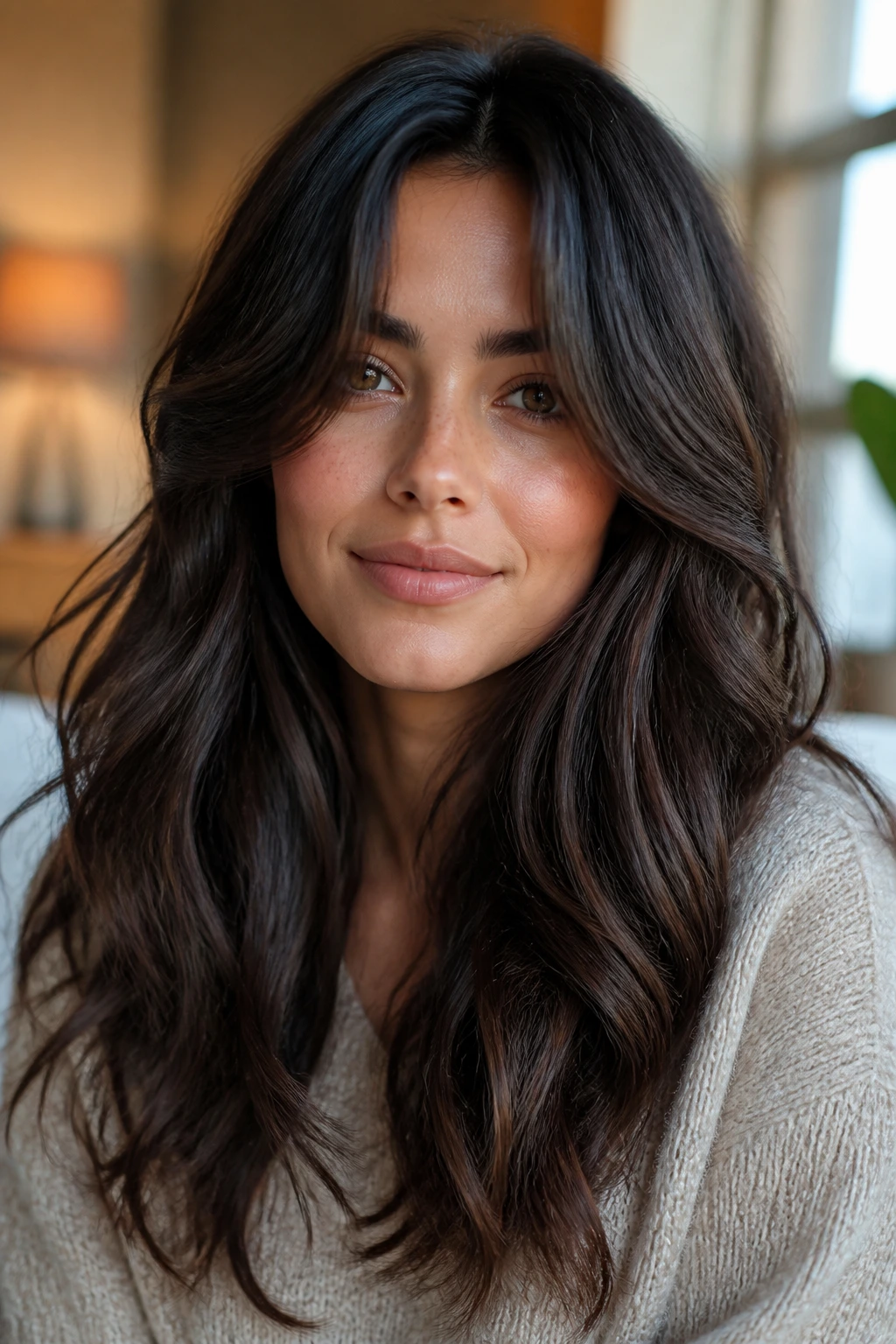
There’s a reason this pairing keeps showing up in salons and real life. Thick hair brings weight, which helps styles keep their shape. Curtain bangs bring softness, which keeps that shape from looking bulky around the face. Together, they make winter hair look deliberate even when the weather is doing its best to flatten, frizz, or mash everything sideways.
The styles that work best are the ones that respect the push and pull of cold weather. You want enough structure to survive a coat, but enough softness to recover when the hat comes off. That’s why low knots, braids, lifted blowouts, and loose waves all show up here. They bend without breaking the overall look.
And honestly, that’s the part most people miss. Winter hair doesn’t need to be perfect. It needs to be resettable.
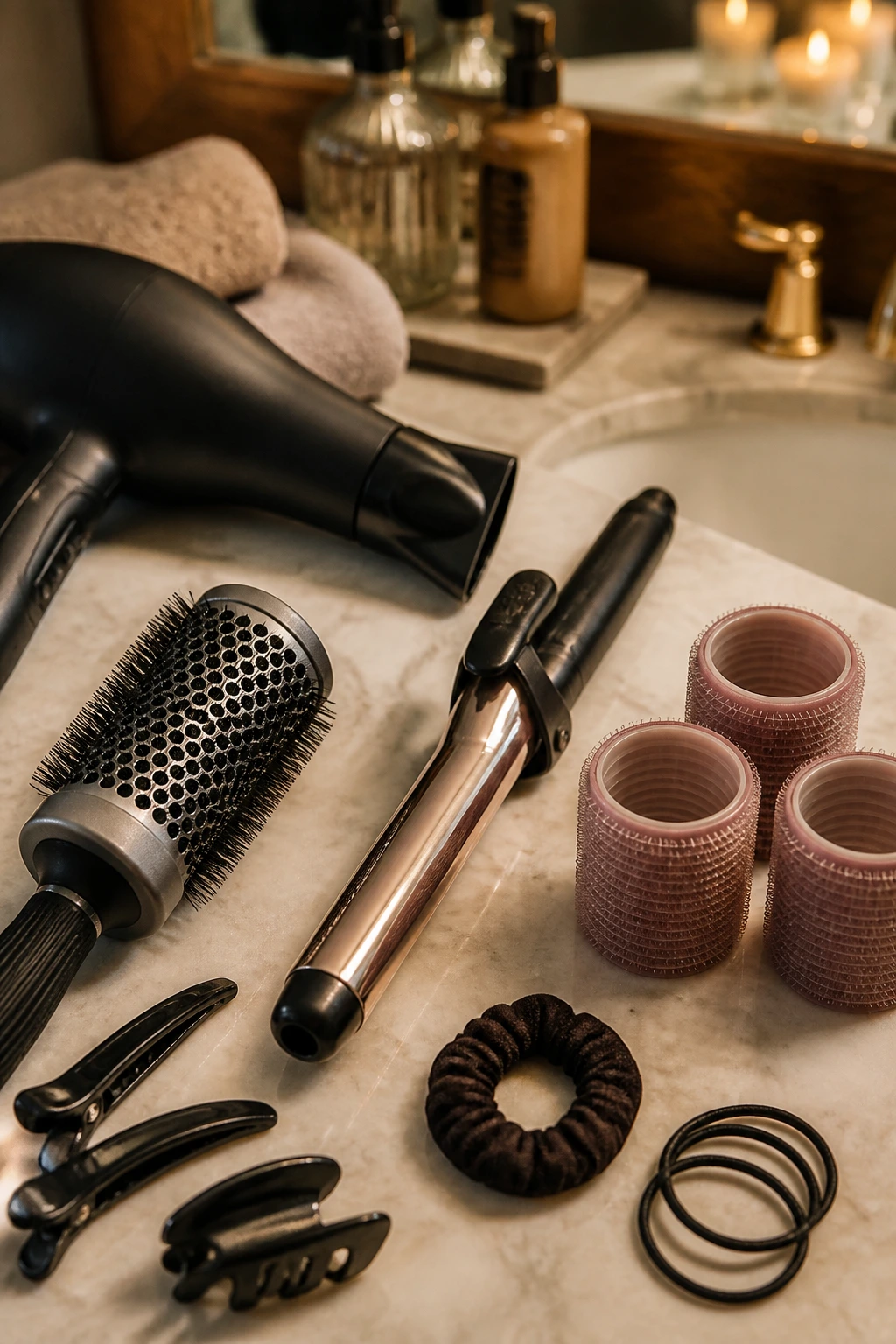
Essential Tools for These Styles
-
A good hair dryer with a nozzle attachment: The nozzle directs airflow at the curtain bangs and crown so you can control shape instead of blasting everything apart.
-
A large round brush: This is the fastest way to bend curtain bangs away from the face and create the soft flip that thick hair wears well.
-
A 1 to 1.25-inch curling iron or wand: Use it for loose bends, not tight curls. Thick hair takes shape better in bigger sections.
-
Velcro rollers: They’re still one of the easiest ways to give the bangs and crown lift without piling on more heat.
-
Duckbill clips or sectioning clips: Thick hair needs to be clipped away in pieces, or the front turns messy before you’re done.
-
A strong claw clip: Choose one with enough spring and teeth to hold dense hair. Tiny clips slide out fast.
-
Coated elastics or coil ties: They grip without chewing up thick strands, which matters when you’re redoing styles all week.
-
A tail comb: Useful for clean parting, sectioning the curtain bangs, and separating the top layer without grabbing too much hair.
-
Heat protectant spray or cream: If you’re using heat, don’t skip it. Thick hair still gets dry at the ends.
-
Lightweight smoothing serum: A tiny amount helps with static and flyaways. Tiny. Not a puddle.
-
Dry shampoo: Great for root grip, especially on day-two hair or if your bangs get oily faster than the rest.
-
A soft bristle brush: Helpful for smoothing the surface without making the style look over-brushed.
Smart Product Picks for Thick Hair and Curtain Bangs
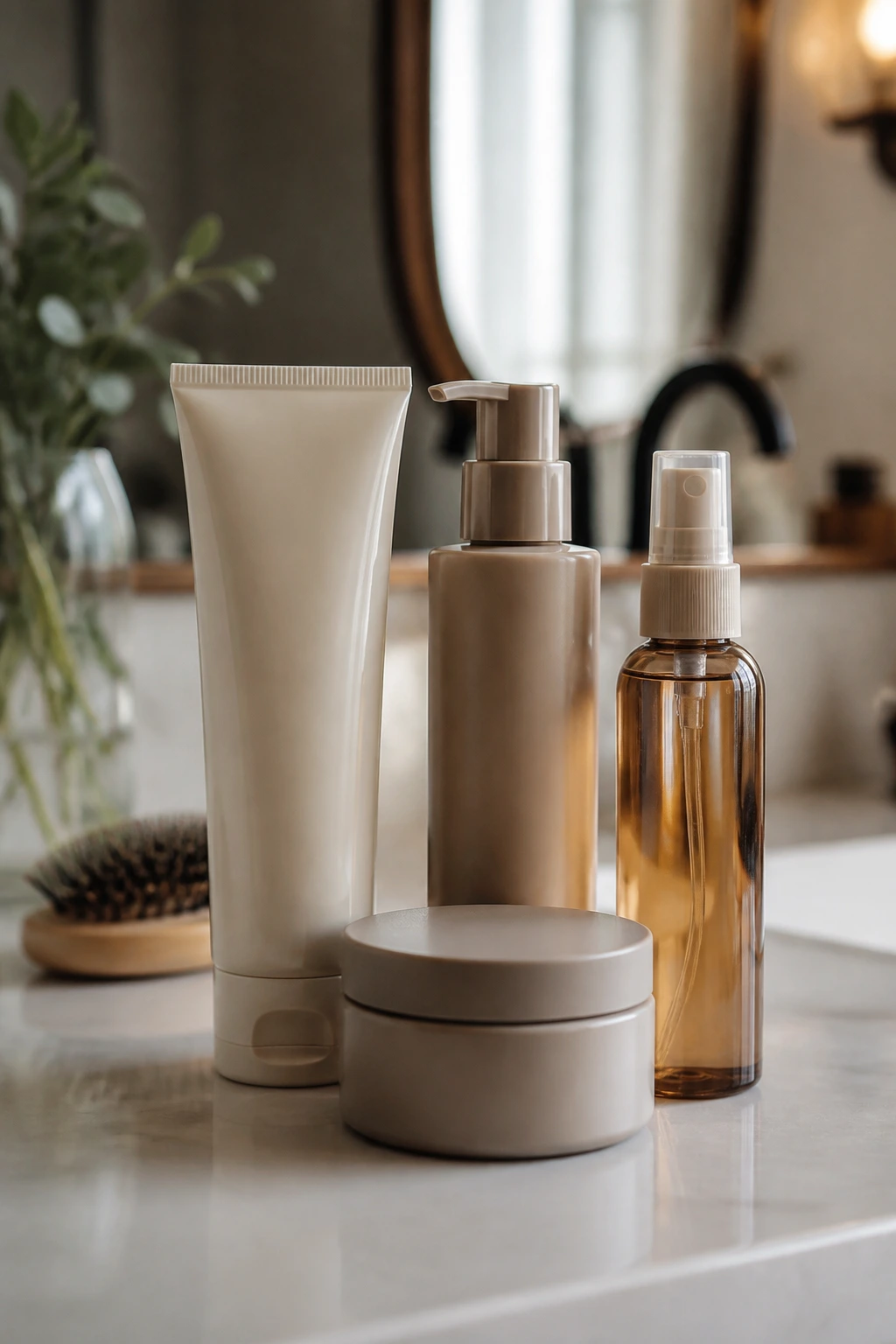
Product choice matters more in winter than most people admit. Thick hair can swallow light products and laugh at weak hold, but it can also go greasy or limp fast if you load on too much cream. The sweet spot is usually a mix of flexible hold, light moisture, and a little texture where it helps.
For blowouts and straight styles, look for a heat protectant that says it smooths or controls frizz without leaving a sticky shell. A light mousse at the roots can give curtain bangs and crown volume, especially if your hair tends to drop by lunchtime. On the other end of the scale, a smoothing balm should live mostly on the mids and ends, not near the scalp.
Dry shampoo is useful, but choose one that fits your hair color and texture. Some formulas leave a chalky cast that shows up fast on dark hair, and thick hair tends to show product buildup in the part line. If your hair is coarse or very dry, a tiny amount of leave-in conditioner on the last few inches can stop the ends from looking like straw while the bangs stay lighter.
A final note: flexible hairspray beats the crunchy kind for most of these looks. You want hold you can brush through, not a cap of stiffness. Curtain bangs, especially, need movement or they start to look chopped off instead of framed.
How to Wear These Styles With Coats, Scarves, and Hats

Presentation: Go for silhouettes that make sense under winter layers. Low knots, braids, and side-twist styles sit well under coat collars, while blowouts and loose waves look better when you can keep the crown from getting crushed.
Accompaniments: Chunky scarves, turtlenecks, wool coats, and small earrings all change the way these styles read. A high ponytail or retro flip shows off earrings, while a braid or bun balances a thick knit sweater that already adds volume up top.
Portions: With thick hair, the big decision is usually where to keep the weight. Too much volume everywhere can look bulky; too little makes the style go flat. Leave one area soft—the curtain bangs, the ends, or a face-framing tendril—and keep the rest contained.
Beverage Pairing: If you want the mood to match, these styles pair neatly with a coffee cup in your hand, a paper cup of tea on the commute, or a glass of something cold at dinner. Slightly ridiculous label, useful idea. The point is that the hair should still look finished while you’re carrying the rest of winter around with you.
Styling Upgrades and Finishers That Make a Difference
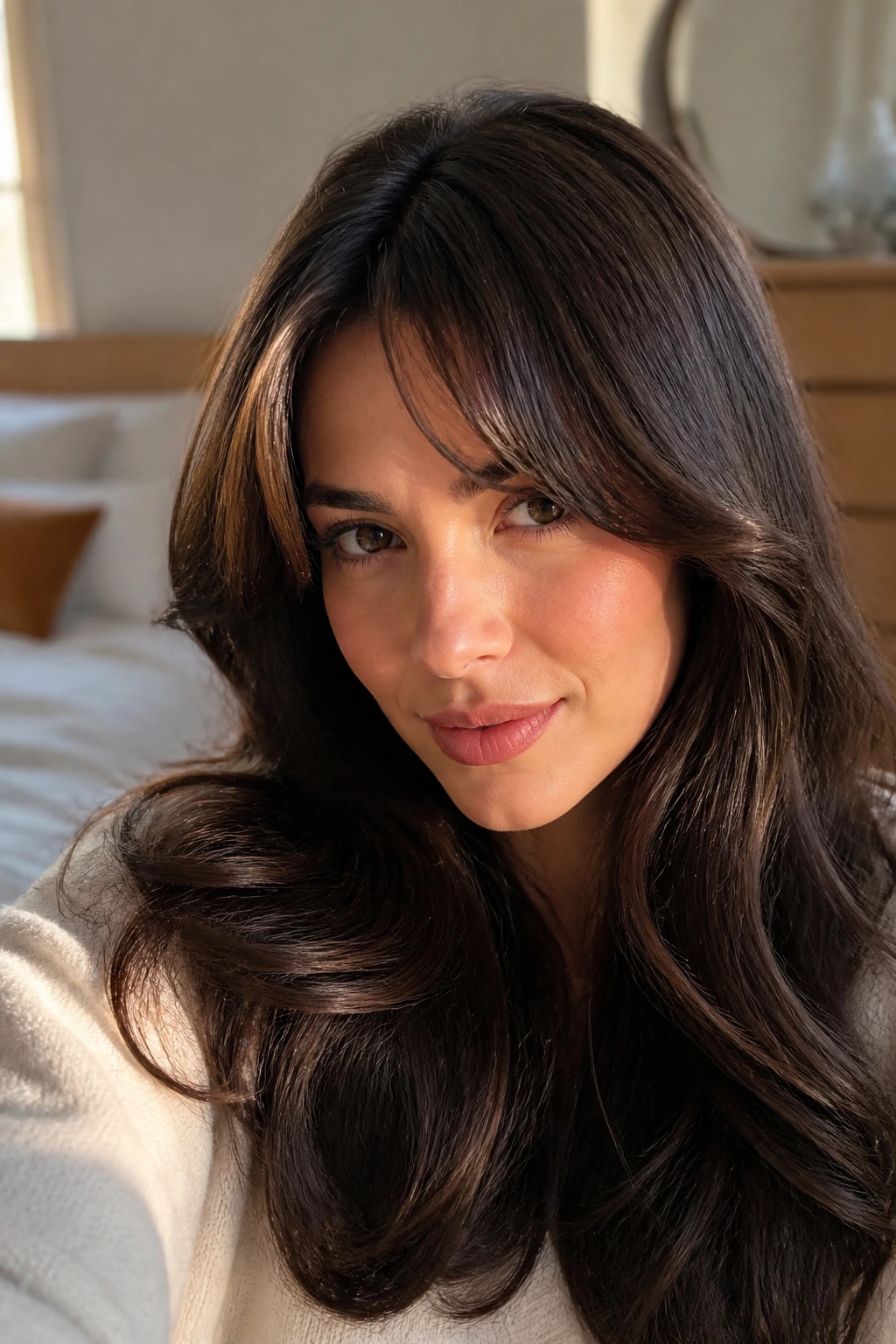
Frizz Control: Use a pea-sized amount of smoothing serum on the outer layer only. Thick hair doesn’t need much, and if you put it near the roots, the whole style can collapse fast.
Volume Boost: Set the curtain bangs in rollers or clip them at the crown while they cool. That extra few minutes does more than another round of spraying ever will.
Hat Recovery: After you take off a beanie, flip the bangs back into place with your fingers, then use a cool shot from the dryer for five to ten seconds. That’s usually enough to reset the front without starting over.
Time Saver: Dry the bangs first, every time. If the fringe is right, the rest of the style can be looser and still look deliberate.
Make-It-Yours: For straighter hair, go sleeker and lean into clean edges. For wavier hair, work with bends and braids. For very coarse hair, use a little more cream on the lengths and less on the top so the surface doesn’t puff out.
One more upgrade I swear by: a small metal or boar-bristle brush kept near the front door. It sounds fussy. It isn’t. You’ll use it after coats, after scarves, and after those inevitable moments when the bangs need to remember their job.
How to Keep the Style Fresh Between Washes
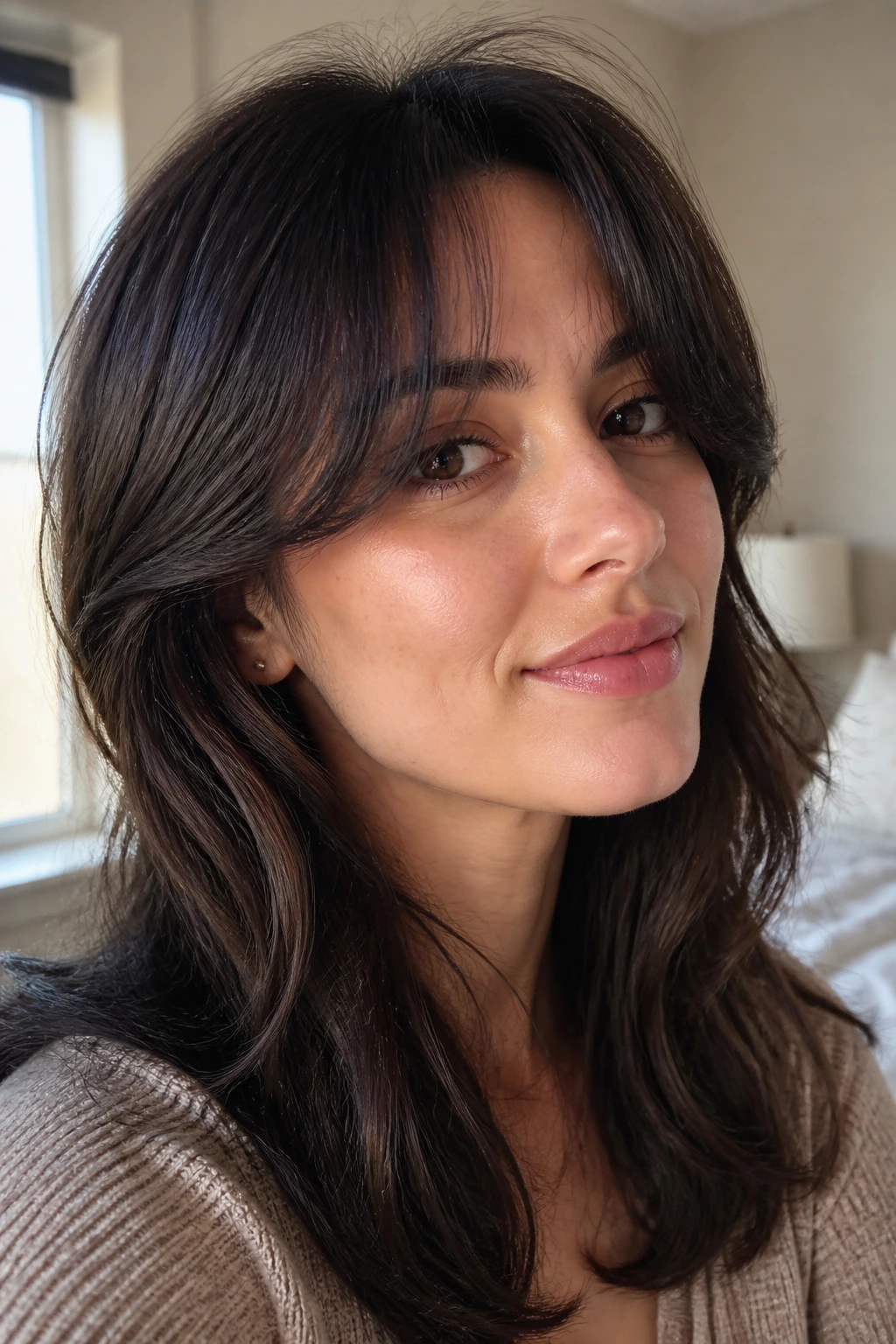
Winter styling lives or dies by what happens on day two. Thick hair usually tolerates a little more time between washes, which is nice, but curtain bangs tend to show oil and bend first. That means you need a split strategy: refresh the front more often than the back.
Blowouts and straight styles usually hold for one to two days if you sleep on a silk or satin pillowcase and pin the bangs loosely out of the way before bed. Braids and buns can last two to four days, especially if you keep them low-friction and don’t wrap them too tightly. Loose waves often look best on day one and day two, then need a touch-up at the front.
If you wear a hat, don’t drag it on and off by the crown. That rough motion sets the bangs crooked and smashes the top. Lift the hat straight off, shake out the roots, and reset the face frame with a brush or a quick bend from a heat tool. For bangs that get oily first, use dry shampoo at the roots and let it sit for a minute before brushing it through.
At night, the easiest move is a loose twist or two low clips at the front. Nothing fancy. The goal is to keep the curtain bangs from folding weirdly while you sleep. If a style gets a little wild by morning, fix only what the eye sees first: the front, the crown, the top layer. The rest can wait.
Variations and Adaptations to Try
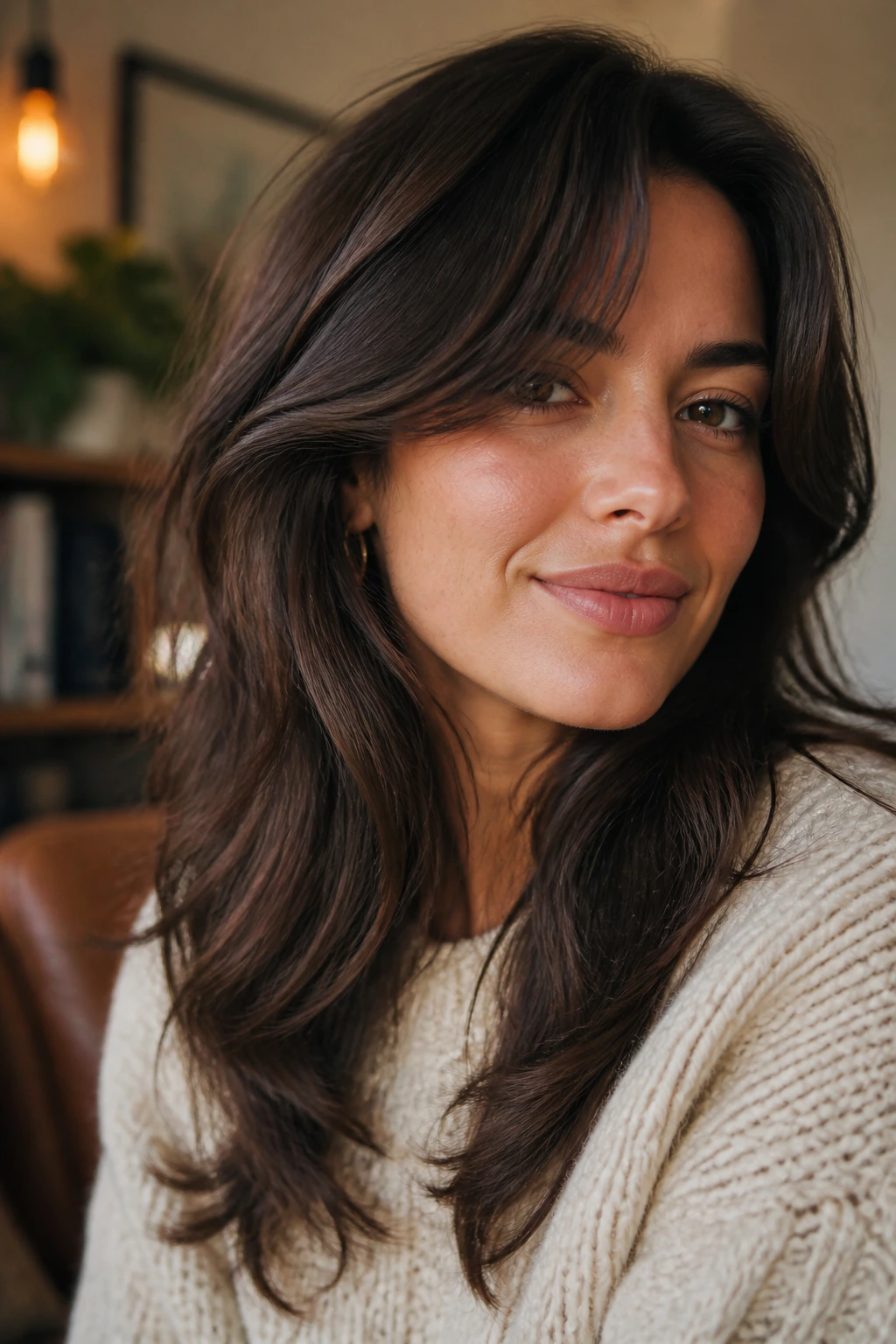
Beanie-First Version: Keep the crown flatter, the part cleaner, and the bangs long enough to split and recover fast. This works when you know a hat is part of the day, not an accident.
Heatless-Only Version: Swap blowouts and irons for rope curls, braids, and overnight twists. Curtain bangs can still be shaped with a round brush for a minute or two, which keeps the front from going flat.
Extra-Polished Office Version: Use a low knot, a French twist, or a sleek straight style with curved ends. The key is a smoother finish near the face and less loose texture around the collar.
Soft Romantic Version: Lean into loose waves, a crown braid, or a side-twist half-up. Leave a few pieces out around the temples so the curtain bangs blend instead of sitting apart.
Sporty Commute Version: Dutch braids, a bubble ponytail, or a low braided bun all work when you need your hair contained under outerwear. These are the styles that don’t mind wind, friction, or a rushed subway platform.
Low-Heat Recovery Version: If your ends feel dry, cut down on hot tools and use more rollers, air-drying, and setting clips. Thick hair often looks better with less daily heat than people expect.
Common Mistakes That Flatten the Whole Look
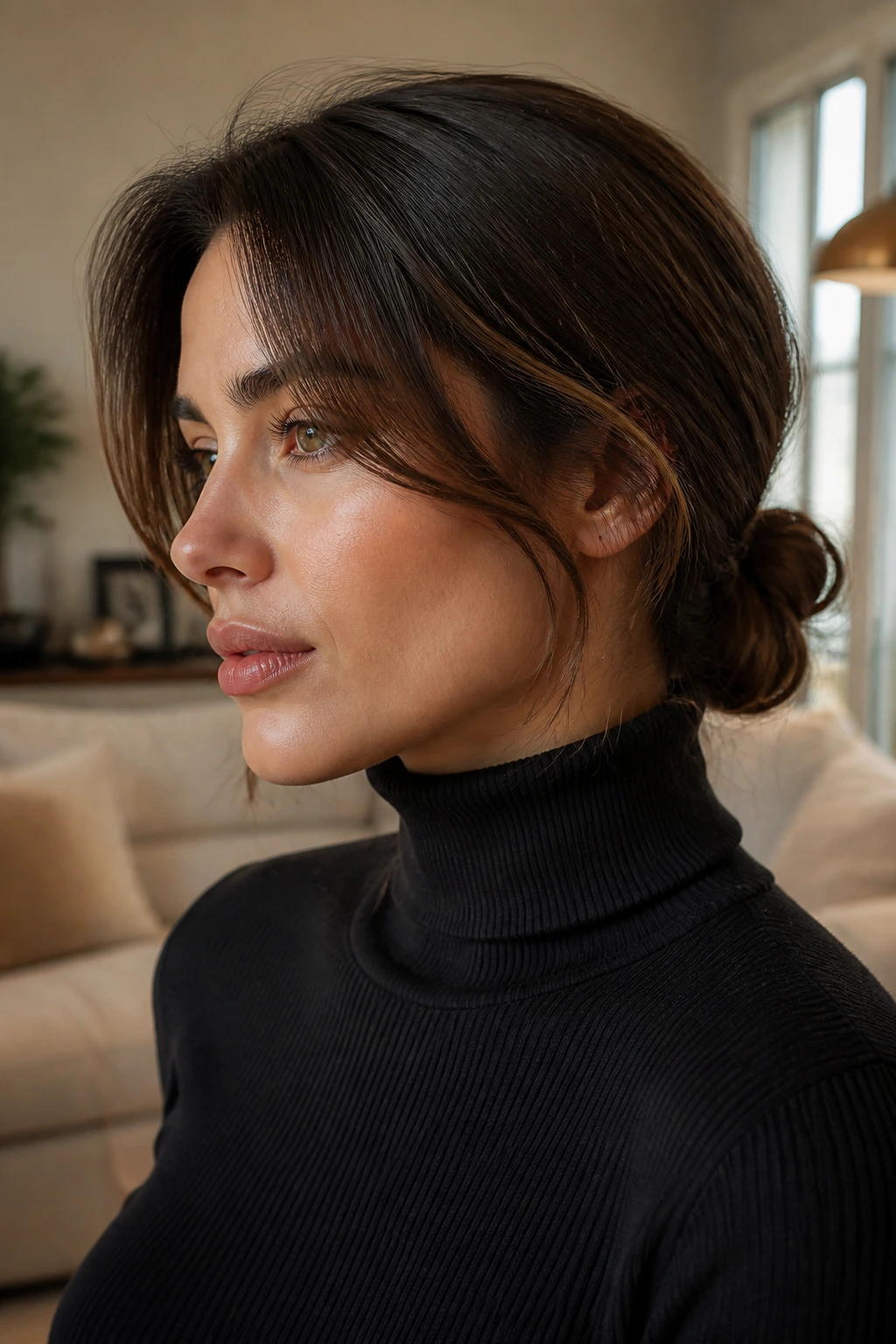
The first mistake is over-thinning the curtain bangs. Thick hair often needs weight removed, but not stripped out. If the bangs are too wispy, they split into see-through pieces the second winter air touches them. Ask for long face-framing layers and soft internal removal instead of aggressive thinning.
Another one: loading oil or cream onto the roots. Thick hair tempts people into thinking more product means more control. Usually it means flatter bangs and a greasy crown by lunch. Keep heavier product on the mids and ends, and use only a trace near the face.
A third problem is drying the bangs last. By then the rest of the hair is already set, and the front gets whatever shape is left over. Dry the fringe first while it’s still wet and easy to direct. That alone fixes a surprising number of bad hair days.
Tight elastics are a sneaky issue too. They dent thick strands, make buns feel smaller than they should, and can pull the style out of shape by midday. Coated ties, coil bands, and good claw clips do a better job because they spread tension out instead of pinching one spot.
Finally, people forget about static. Wool scarves and synthetic linings can turn thick hair into a halo of flyaways. A little smoothing serum, a soft brush, and a habit of touching up the front after removing outerwear makes a bigger difference than another round of spray.
Questions People Ask About Winter Hairstyles for Thick Hair with Curtain Bangs

Are curtain bangs actually easier to wear in winter than blunt bangs?
Usually, yes. Curtain bangs have more length at the sides and less hard structure at the center, so they recover better after a hat and don’t look as chopped up when the weather turns dry. They still need shaping, but the maintenance is gentler.
Which of these styles lasts the longest under a scarf or coat?
Low knots, braids, and French twists hold up best because they sit below the collar line or stay contained. Loose blowouts and waves look lovely, but they need more quick touch-ups after the outerwear comes off.
How do I stop curtain bangs from splitting in the middle?
Dry them with direction. Use a round brush, blow the roots forward and then out to each side, and let them cool in place for a few seconds. If they split after you leave the house, a tiny bit of water or dry styling cream on the front pieces can reset them.
Can I do these looks without heat?
Absolutely. The rope-curl waves, crown braid, Dutch braids, low braided bun, and bubble ponytail all work without hot tools. Even the curtain bangs can be set with Velcro rollers or a large brush if you want to keep heat low.
What if my thick hair gets puffy at the ends in winter?
That usually means the hair needs either a little more moisture on the ends or a cleaner bevel in the cut. Use a lightweight serum on the last few inches, not the roots, and favor styles with a soft bend rather than tight curls that can frizz out.
Do I need layers for these styles to work?
Layers help, but they do not need to be aggressive. Long layers or internal weight removal are enough for most of these looks. If the hair is one heavy block, the styles still work, but they take a little more effort to keep from looking bulky.
How often should curtain bangs be trimmed?
Enough to keep them sitting at the cheekbones or jawline in a way that still curves. For a lot of people, that means a trim every few weeks to keep the shape from falling into the eyes. The exact timing depends on how fast your hair grows and how much length you like in the front.
What’s the fastest fix when a hat ruins the front?
Pull the bangs forward, mist them lightly if needed, and use a round brush or your fingers with a cool blast to redirect the bend. Don’t overdo it. The goal is to restore shape, not rebuild the whole style from scratch.
A Winter Routine That Gives Thick Hair Room to Breathe
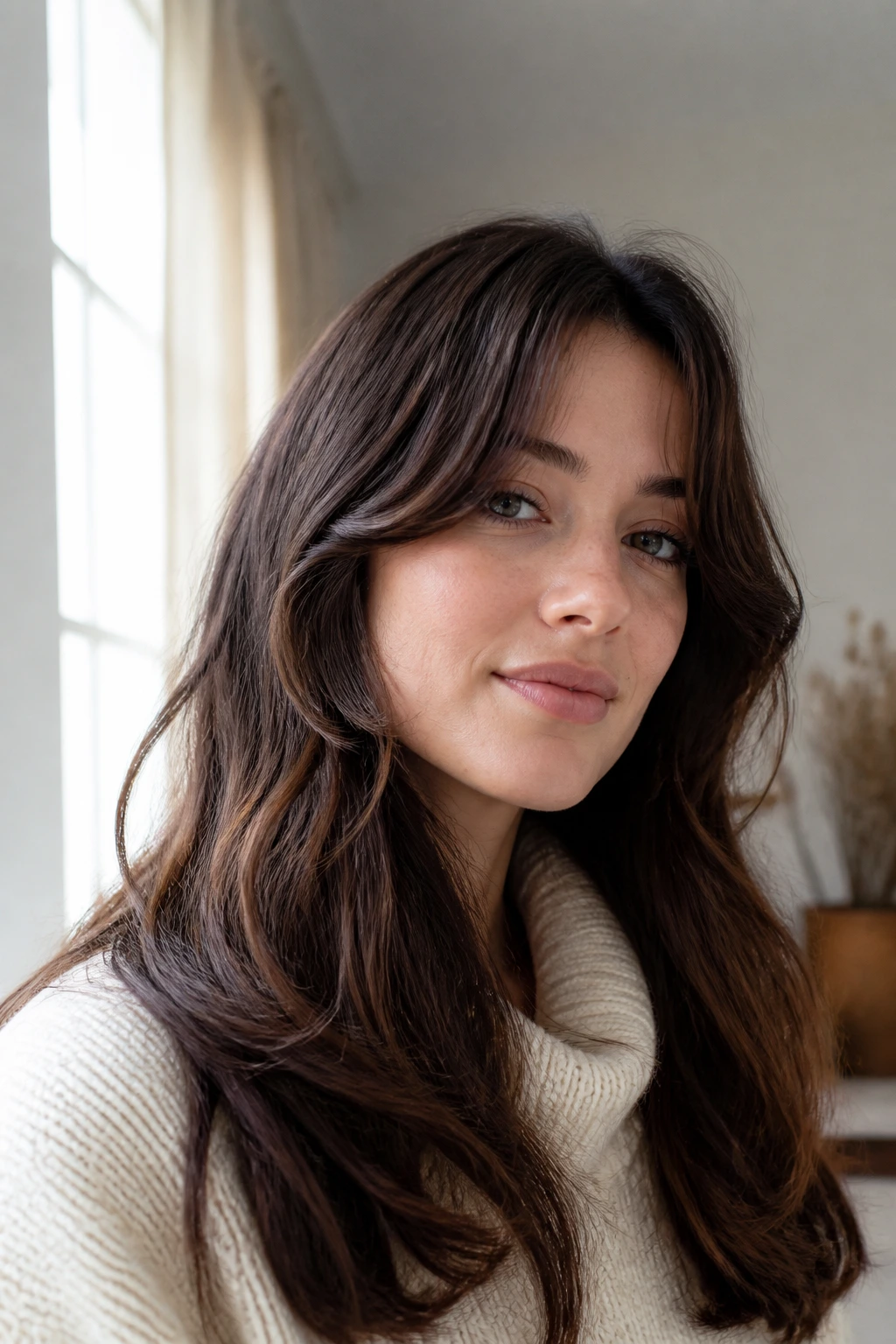
The best thing about this set of styles is that none of them asks thick hair to pretend it’s something else. That’s usually where winter hair goes wrong: too much smoothing, too much control, too much hope that a scarf won’t ruin the front. These looks work because they plan for the scarf, the hat, the static, and the collar.
Curtain bangs help because they soften whatever the rest of the style is doing. A bun feels less hard. A braid feels less sporty. A blowout feels less like a pageant and more like an actual day. That’s the sweet spot.
Pick one style for rushed mornings, one for proper days, and one for the kind of weather that makes everything feel static and annoying. Thick hair behaves better when you stop fighting the weight and start using it, and curtain bangs make that shift look easy.