



Warm skin tones do not need icy blonde to look bright. Honey, caramel, butter, apricot, beige-gold, and soft champagne can do far more interesting work: they pull the warmth already in the face forward, so the complexion looks richer instead of flatter. The wrong blonde can make peach undertones look tired. The right one makes skin, eyes, and even lipstick play together without much effort.
The trick is shape as much as shade. A blunt bob in honey blonde reads very differently from long caramel waves or a shag with ribbon highlights, even when the color family is nearly the same. One catches shine at the jaw. Another moves through the mids. Another makes curls look expensive because the lighter pieces land where the light naturally hits.
There’s a reason these warmer blondes stay wearable on golden and peach skin: they echo the undertone instead of fighting it. That does not mean one-note hair, and it definitely does not mean flat yellow. It means dimension, gloss, and a little restraint where the ends meet the face. The looks below lean into that balance, one shape at a time.
Why These Blonde Looks Feel Right on Warm Skin
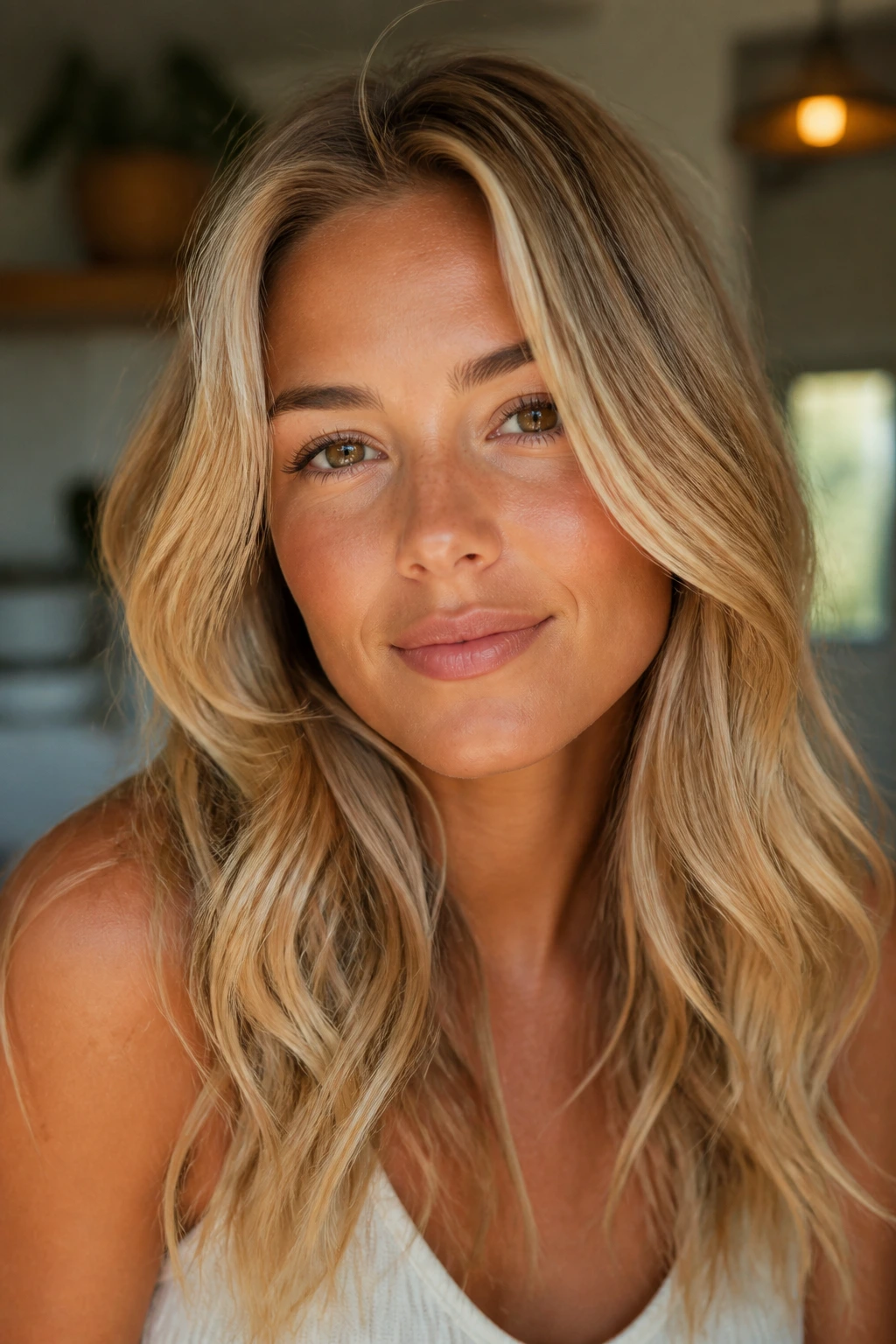
-
Honey mirrors the undertone already in the skin: When your complexion already carries gold or peach, a honey base makes the face look lit from within instead of washed out by a cool, chalky blonde.
-
Dimension matters more than a single pale shade: Caramel ribbons, beige midlights, and soft lowlights stop blonde hair from turning into one flat block of color in indoor light.
-
Placement changes everything: Brightness around the cheeks, temple, and crown gives warm skin a cleaner frame than all-over platinum, which can look harsh next to gold undertones.
-
Warm blondes grow out with softer edges: Root shadow, balayage, and lived-in highlights leave less of a hard line at the scalp, so the color stays pretty for longer between appointments.
-
Texture helps the warmth show up: Waves, curls, braids, and blowouts catch honey and butterscotch pieces in a way straight, glossy hair sometimes hides.
-
A glossy finish beats a dry, over-toned blonde every time: A warm glaze, a touch of serum, or a smooth blow-dry lets the color read rich rather than brassy.
1. Honey Blonde Blunt Bob
A blunt bob in honey blonde does a very specific thing: it makes warm skin look clean and awake without trying too hard. The cut gives you a sharp line at the jaw, and the color softens that line just enough so it never feels severe. It’s one of those styles that looks polished even when the hair has been air-dried and tucked behind one ear.
Why it works: Honey blonde lives in that sweet spot between gold and beige, which means it flatters peach, golden, and lightly olive undertones without pulling the face gray. On a blunt cut, the shine sits on the ends, so the shape reads crisp rather than heavy. If your hair is fine, this is one of the easiest ways to make it look denser.
A center part keeps the bob modern. A side part gives it a little more softness around the cheekbones. Either way, this style likes smoothness, not too much volume at the crown.
2. Caramel Balayage Lob with Soft Waves
Caramel balayage on a lob is the reliable workhorse of warm-blonde hair. It gives you brightness without the commitment of a full blonde overhaul, and the longer length keeps the color from looking too choppy.
The waves matter here. Loose bends around the middle and ends make the caramel ribbons show up in motion, which is where this shade really earns its keep. On warm skin tones, those ribbons look like they belong there. They echo the same toasted, sun-warmed feeling the complexion already has.
This is a good choice if you want something forgiving between salon visits. The regrowth blends into the balayage, and the lob length keeps the ends from feeling thin or over-lightened. If you wear a lot of neutral makeup, this look gives the face a little more color without needing anything loud.
3. Buttercream Curtain Layers
Buttercream blonde has a softer, creamier feel than icy platinum, and curtain layers let that softness fall right where warm skin needs it most. The longest face-framing pieces brush the cheekbones and collarbone, so the color doesn’t just sit on the surface. It moves.
What makes it flatter warm undertones
The trick is keeping the blonde beige-gold, not pale yellow. When the front sections are a shade lighter than the rest, they open the face without stealing all the attention. Curtain bangs or curtain layers also create a nice transition from the forehead down into the body of the hair, which matters if your features already lean soft and warm.
This style looks especially good on medium to thick hair. The layers remove bulk, and the buttery color keeps the cut from feeling too airy. If you want blonde that looks expensive in daylight and soft under indoor bulbs, this is one of the better bets.
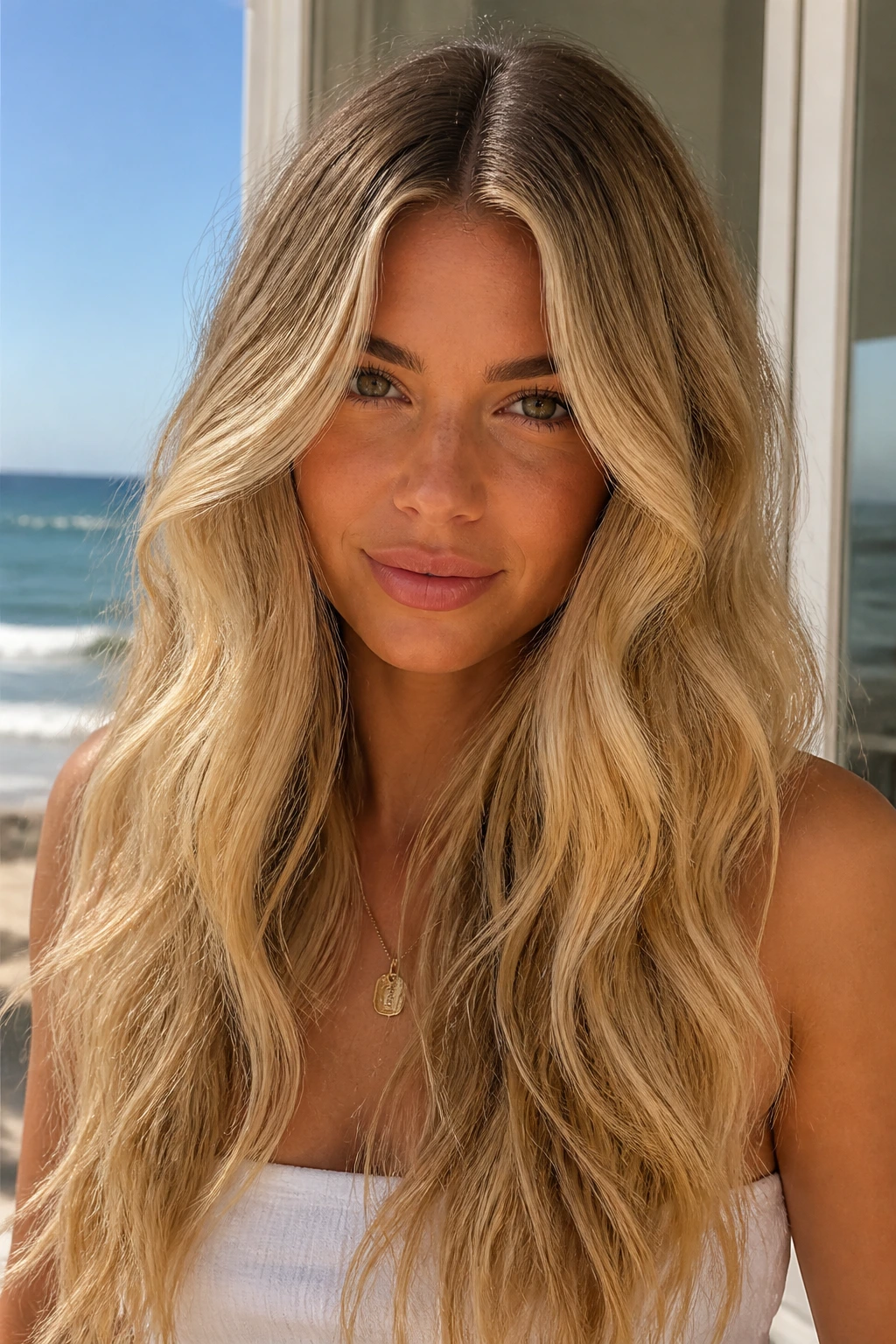
4. Golden Beach Waves with Center Part
Golden beach waves are what happens when warmth and texture stop arguing. The color can be simple—golden blonde with a little beige through the mids—or more detailed with ribbons of light throughout. Either way, the center part gives the waves a clean frame, and warm skin benefits from that symmetry.
A light mist of salt spray or texture spray is enough. You do not want crunchy curls here. The whole point is movement that looks a little undone, as if the hair caught light after a day outside. On warm undertones, gold reads like glow, not glare.
Best use case
- Long or mid-length hair that already takes a wave well
- Medium-density hair that needs shape without losing softness
- Anyone who likes a casual finish that still looks styled
This is one of those styles that can be dressy or lazy depending on how neatly you wave the front pieces. Keep the ends brushed out a little, and the whole thing reads softer.
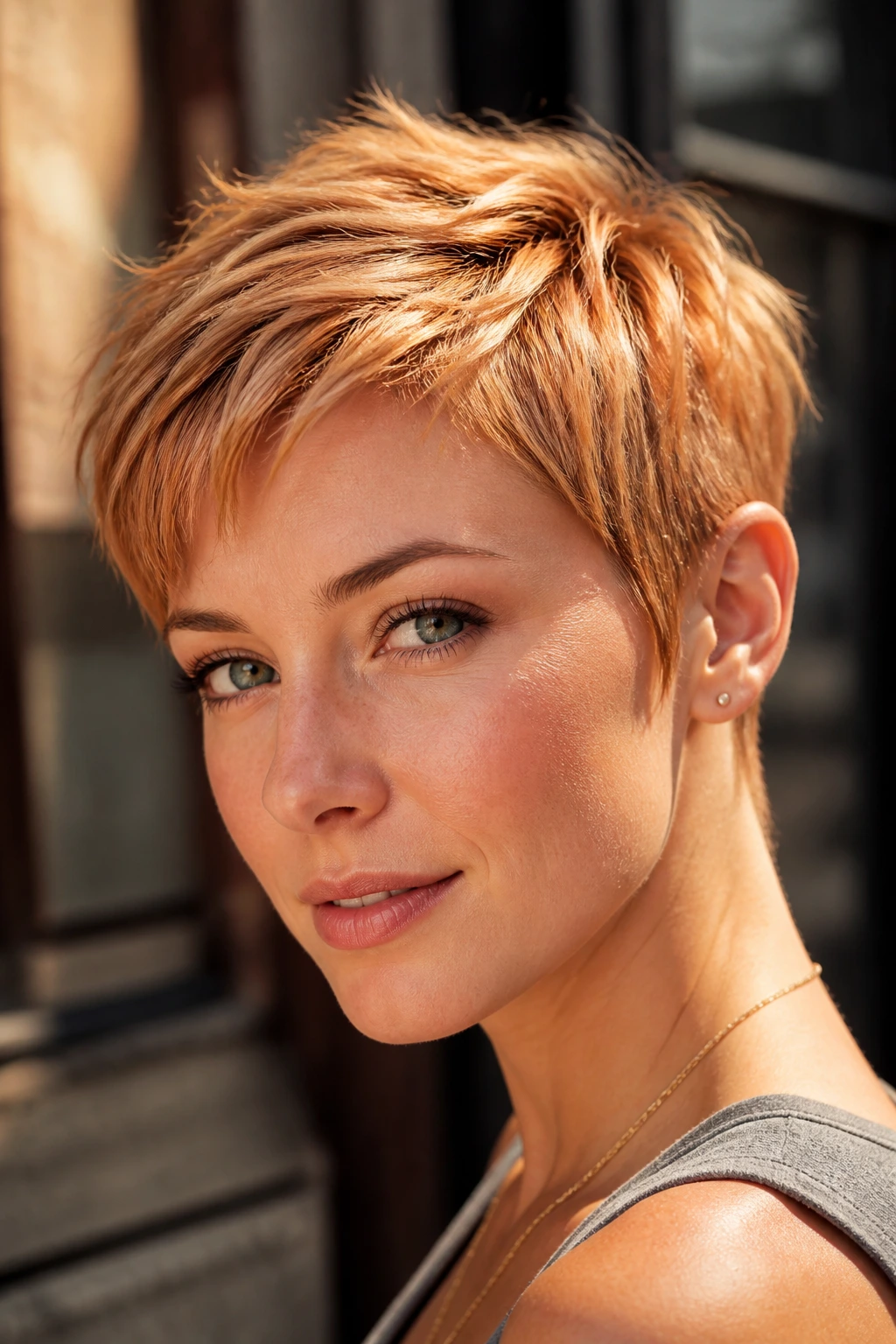
5. Strawberry Blonde Pixie
A strawberry blonde pixie is tiny in length and big on personality. The copper-gold notes are what make it work on warm skin; they keep the short cut from looking flat or too severe.
There’s a useful tension here. The haircut is neat and cropped, but the color has warmth and movement. That keeps the style from feeling too formal or too boyish, which is where short cuts can go wrong fast. Add a little paste or cream through the top, and the pieces around the crown catch light in a way that makes the face look brighter.
This is a strong choice if you have freckles, rosy-gold undertones, or naturally warm brows. It also suits people who like low-fuss styling. A pixie does not give you much room to hide, so the shade has to carry part of the look. Strawberry blonde does that better than a cool beige ever could.
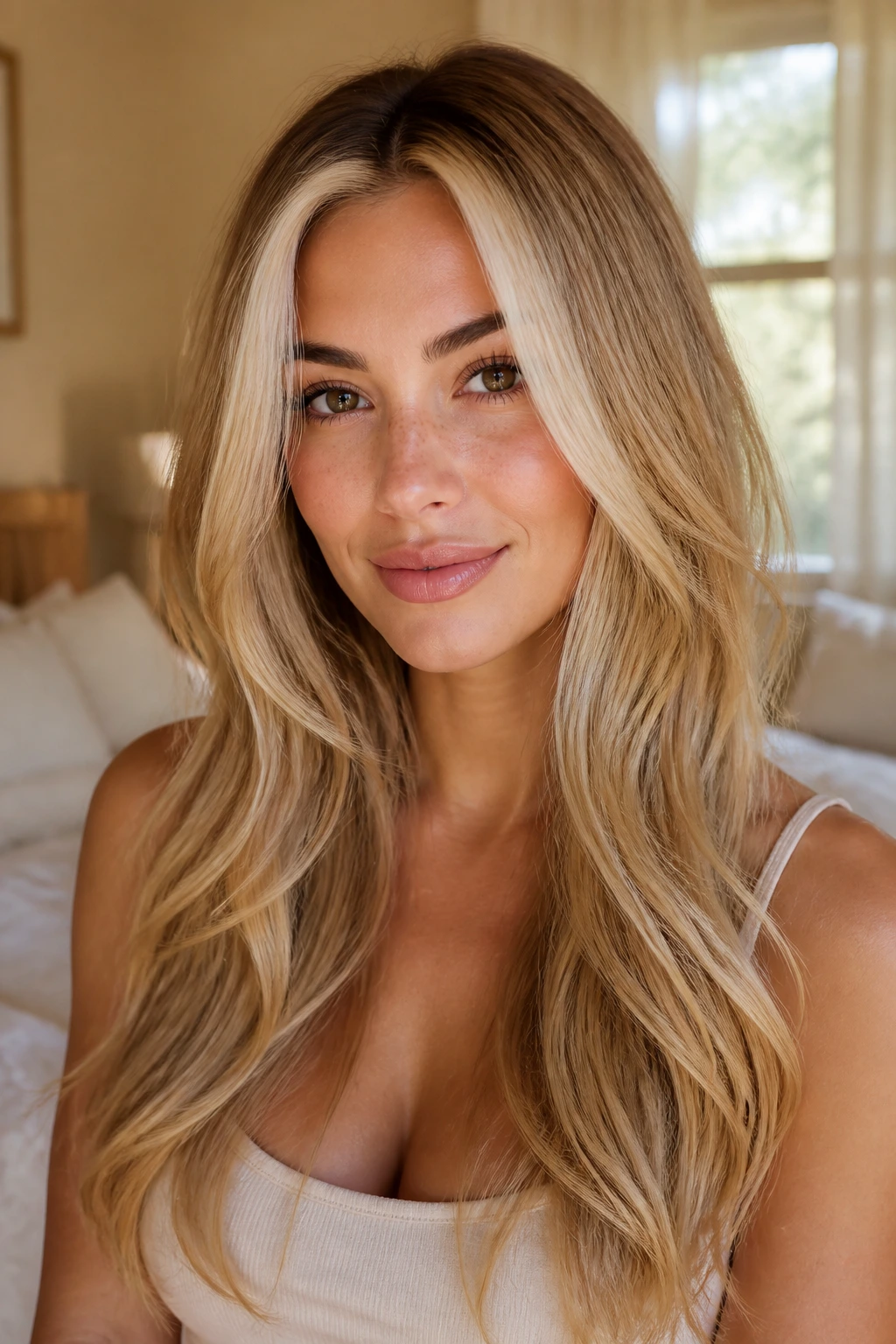
6. Buttery Money Piece on Long Layers
If your length is the thing you love most, a buttery money piece can do a lot without changing the whole head of hair. The front pieces are the first thing people notice, and on warm skin they can make the face look more defined even when the rest of the blonde stays soft.
The best version of this look keeps the money piece a shade brighter than the mids, not a neon stripe. Think butter, not bleach. The long layers help the lighter front sections blend into the rest of the hair, so the effect feels expensive rather than obvious.
This is the style I’d point to for someone who wants a blonde refresh without a major color overhaul. You can keep the ends warmer, the crown darker, and still get that face-lifting brightness. It’s practical. Also flattering in selfies, which people pretend not to care about and absolutely do.
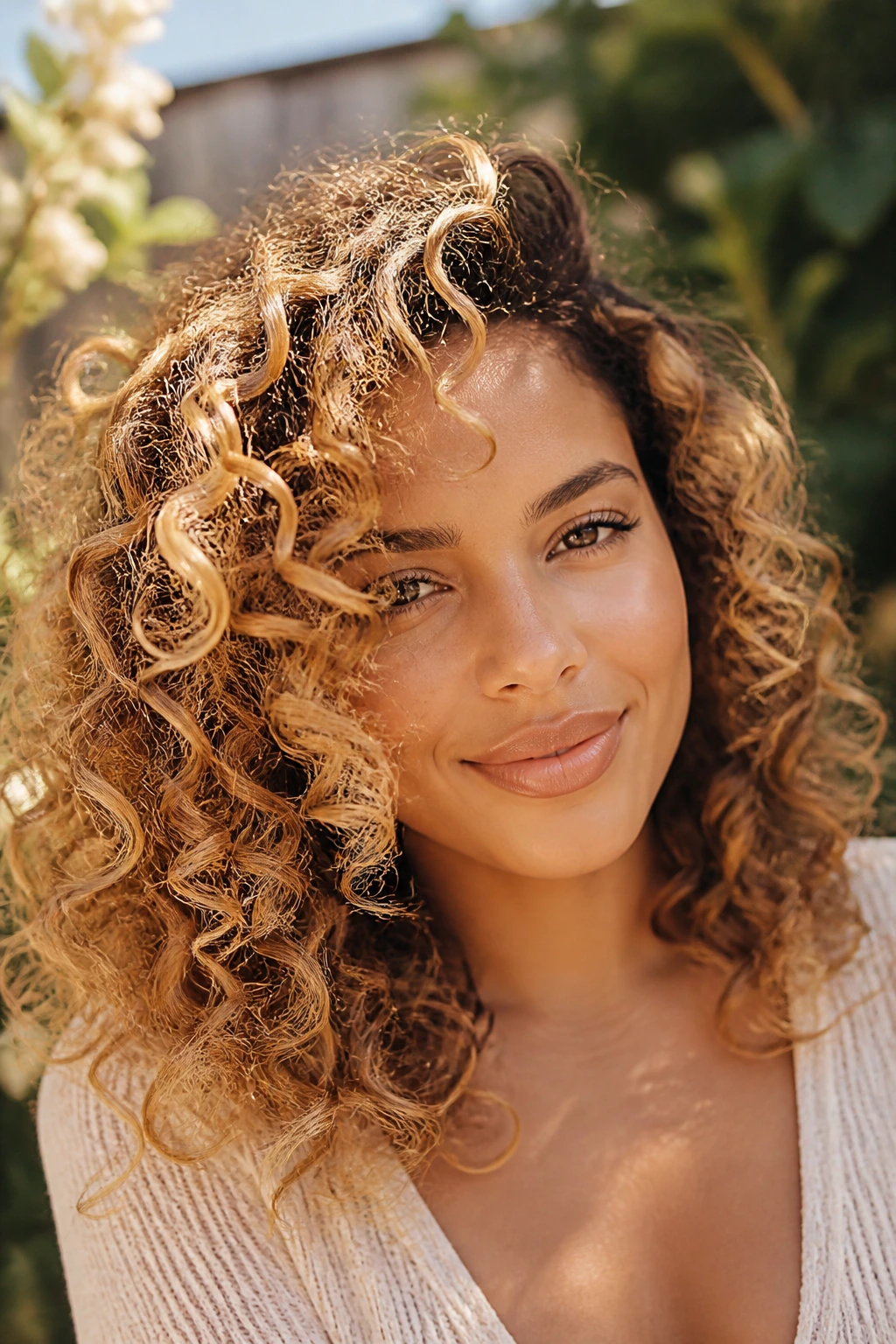
7. Toffee Blonde Curls
Toffee blonde curls have depth, shine, and a little softness around the edges. The shade sits warmer and deeper than a standard honey blonde, which makes it especially good for medium and deep warm skin tones.
Curl pattern matters here. Loose ringlets or defined waves show the color in layers, so the lighter pieces pop as the hair moves. If the curls are brushed out a little, the whole look turns plush and dimensional. That’s the part that makes it feel richer than plain light blonde.
How to wear it
- Use a curl cream or light mousse for shape
- Keep the roots a touch darker for contrast
- Finish with a glossing serum on the ends only
Toffee blonde is a smart option if you want warmth without going too yellow or too copper. It sits in that middle zone that makes the face glow, especially when the curls fall around the jaw and collarbone.
8. Sunlit Shag with Fringe
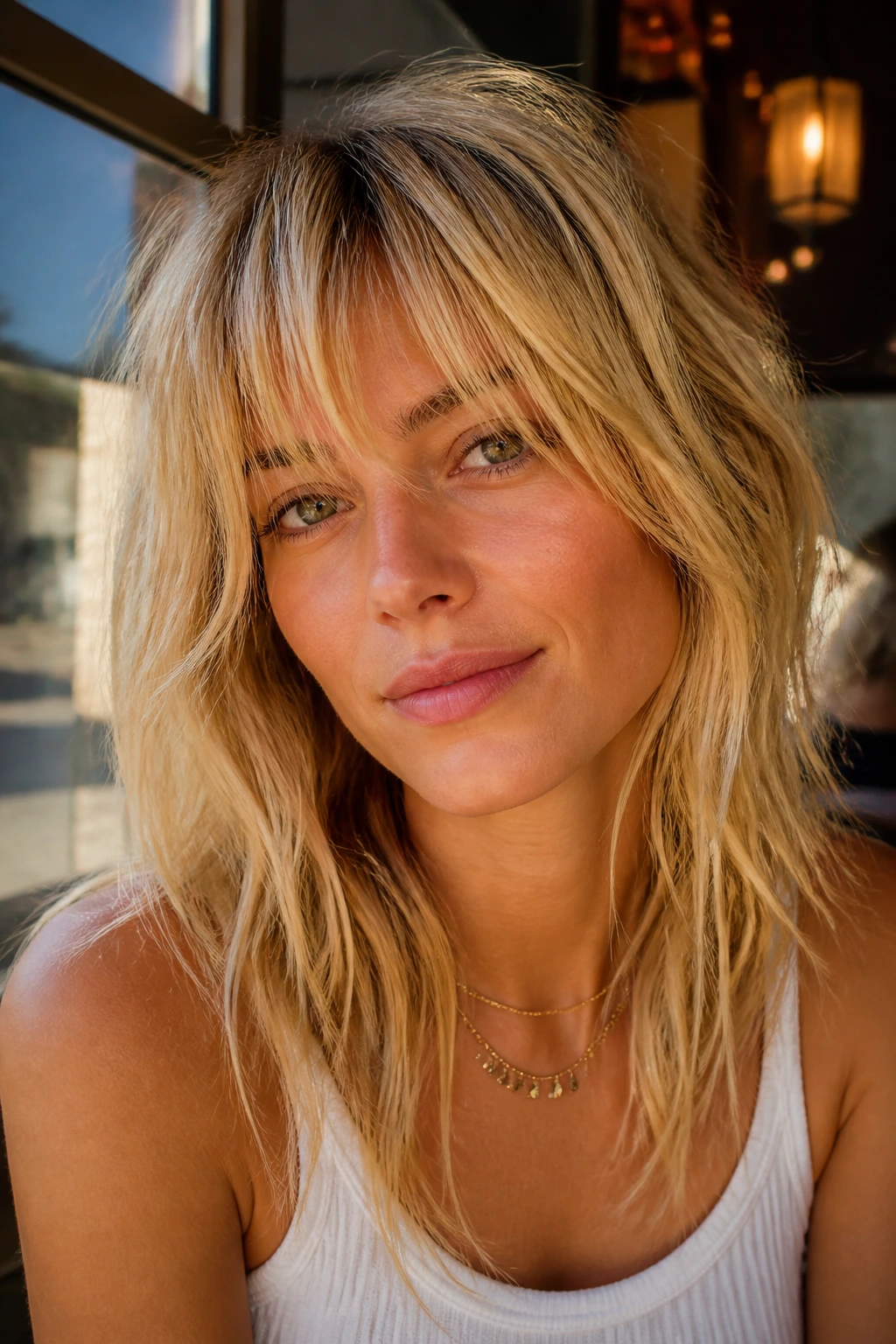
A shag cut already brings energy. Put it in sunlit blonde, and the whole thing wakes up. The fringe gives the eyes a frame, while the layered body of the cut lets the lighter pieces scatter through the hair instead of sitting in one obvious strip.
This style is especially kind to warm skin because the uneven layers keep the color from looking blocky. The blonde can be golden at the top, beige through the mids, and a shade warmer at the ends. That mix helps the hair look lived-in rather than freshly processed.
It also has a little edge. If you like styles that look better a bit messy than perfectly smooth, the shag delivers. A round brush at the fringe and a bit of texture spray through the layers is enough. Anything too polished kills the point.
9. Champagne Blonde Blowout
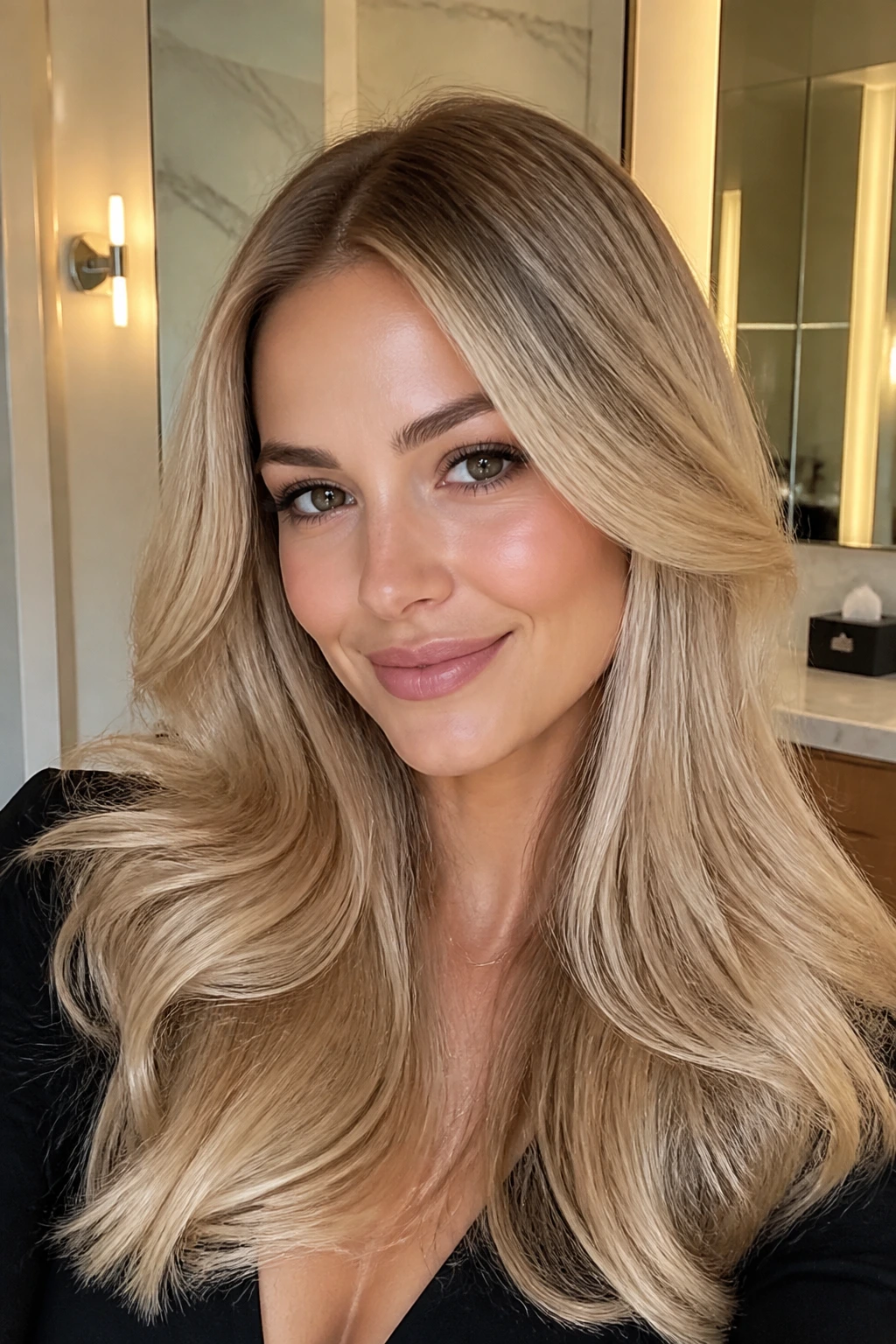
Champagne blonde sounds cool, but the best version for warm skin keeps a soft gold base underneath the sparkle. That little warmth is what keeps the face from looking pale or drawn out.
A blowout makes this shade do more work. The smooth, bouncy finish reflects light off the top layer, and that reflection gives warm skin a fresh, awake look. It’s a good choice if you want something dressier than beach waves but less severe than pin-straight hair.
What to ask for
Ask for a beige-gold blonde with a soft root shadow. The root keeps the grow-out softer, and the beige-gold tone prevents the color from drifting icy. If your hair tends to grab toner fast, this is one of those styles that benefits from a quick gloss rather than heavy processing.
The result should look creamy, not chalky. That line matters.
10. Vanilla Blonde Sleek Layers
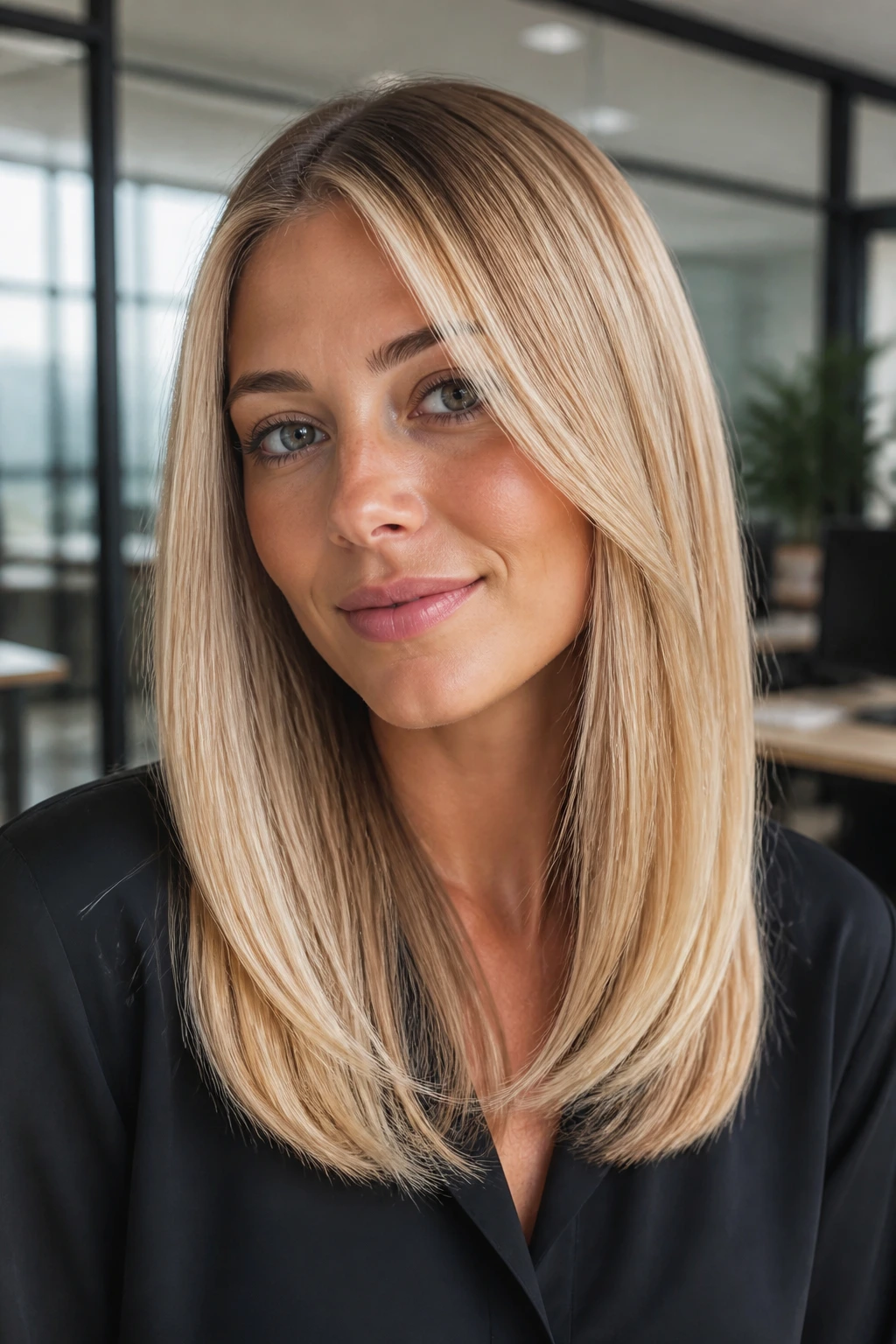
Vanilla blonde gets misunderstood because people hear the word and picture something cold. The version that suits warm skin is softer than that—more cream, less snow. On sleek layers, it feels clean and modern.
The straight shape shows off the shade. Every highlight and lowlight sits in plain view, which is useful if you want dimension without curls or waves doing the heavy lifting. Warm undertones look especially good when the layers skim the face and the ends stay blunt enough to hold shine.
This style rewards healthy hair. Dry ends show up immediately on sleek blonde, so a trim and a good smoothing cream matter. If you want a look that can move from office to dinner without changing much, this is a strong pick.
11. Bronze-Blonde Bob
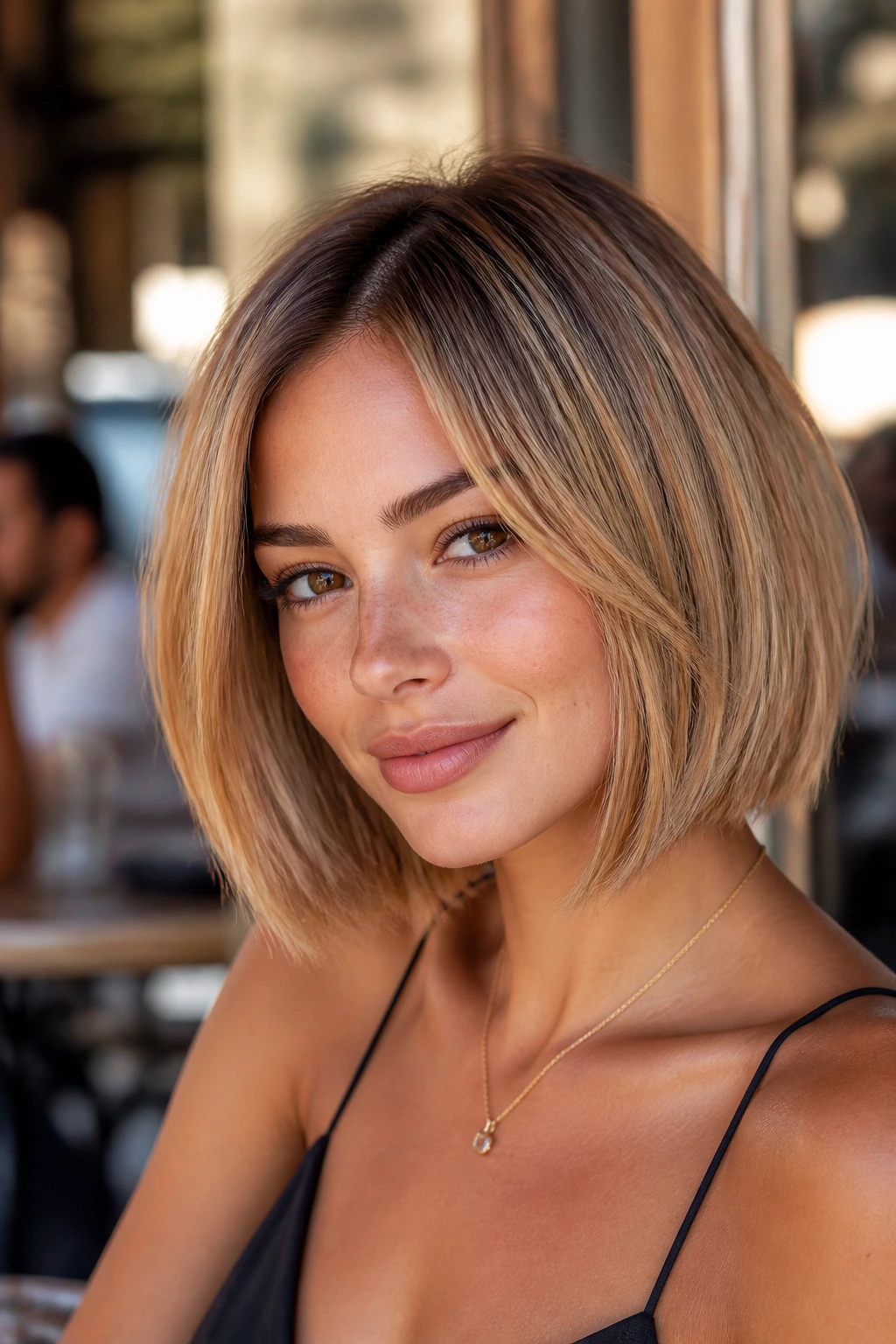
Bronze-blonde sounds unusual until you see it on warm skin. Then it makes a lot of sense. The deeper bronze base gives the blonde a toasted feel, almost like sunlight hitting dark honey.
This bob works because it sits between brunette and blonde. That middle ground is often where warm undertones look best. A blunt edge keeps the shape tidy, while subtle highlights through the top add lift so the color doesn’t go flat. The effect is understated, but not dull.
It’s a good cut if you’ve gone blonde before and hated how pale it made your face look. Bronze-blonde gives you brightness without losing depth. And depth is flattering. People forget that part.
12. Copper-Infused Blonde Waves
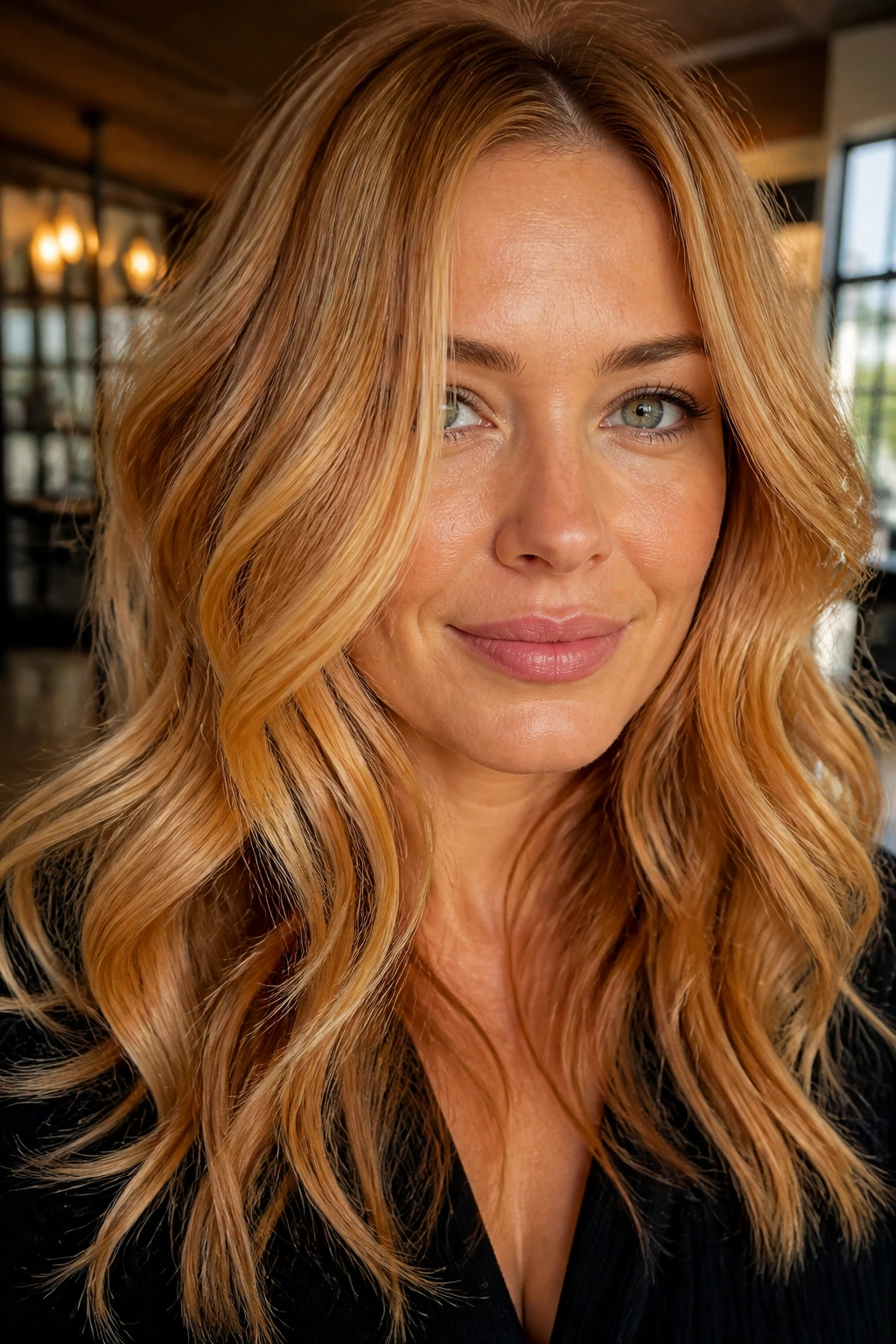
Copper-infused blonde waves are for anyone who wants warmth turned up a notch. The copper doesn’t have to be loud; even a soft glaze over a golden base can make the whole style feel richer.
Waves are the right partner here because they let the copper notes flash in and out. In straight hair, the tone can read more uniform. In movement, it looks layered and alive. Warm skin loves that kind of color because it can handle the extra heat in the shade without looking washed out.
If your complexion already has peach, apricot, or gold in it, this look can be a real shortcut. It ties hair and skin together in a way that feels almost effortless. The trick is keeping the copper gentle enough that it reads like warmth, not orange dye.
13. Honey Braided Crown
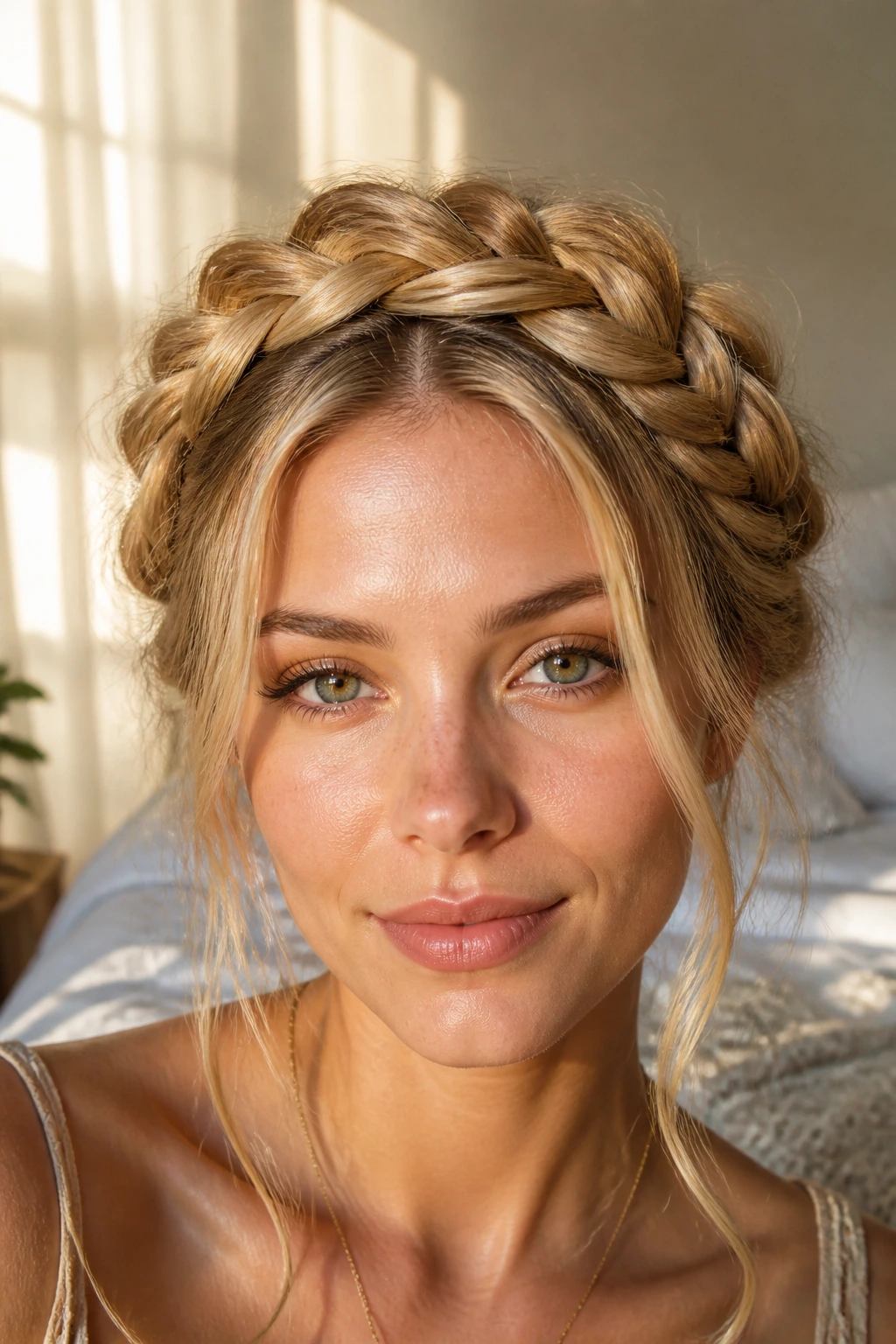
A honey braided crown is the kind of style that makes warm blonde look deliberate. The braid exposes both lighter and darker pieces as it wraps around the head, which means the color gets to show off from more than one angle.
Braids can flatten color if the hair is too one-note. Honey blonde avoids that problem because the shade shifts in the plait. The crown shape also keeps the style soft around the hairline, which matters if you want something romantic without looking sugary.
A little shine cream on the surface helps, but don’t overdo it. Too much product turns the braid heavy and greasy at the edges. Keep the braid a touch loose, let a few face-framing pieces fall out, and the warmth of the blonde will do the rest.
14. Gold-Toned High Ponytail
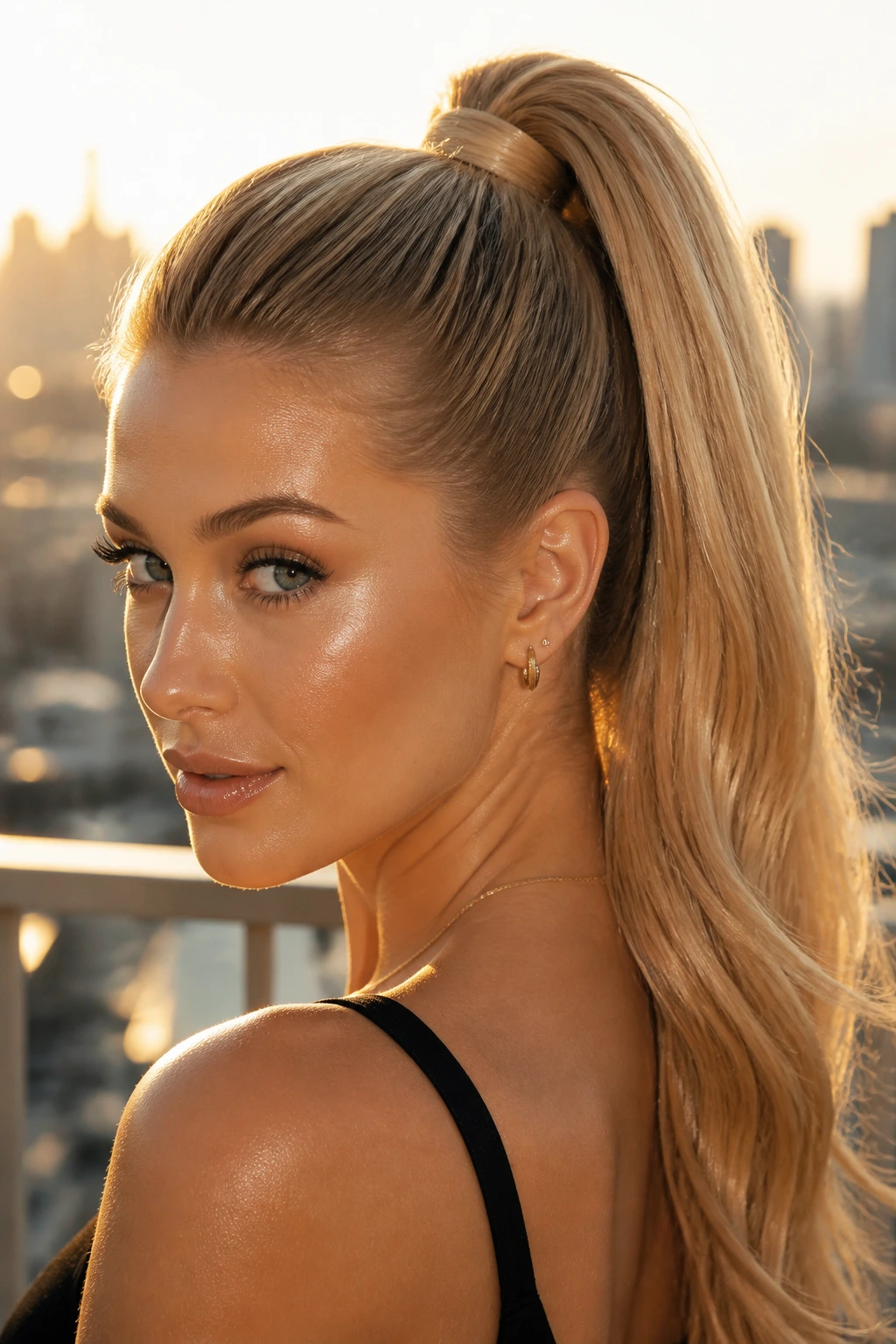
A high ponytail in gold-toned blonde is cleaner than people expect. It pulls the face up, shows off the jawline, and puts the warm color right where light hits hardest.
The best version has a smooth crown and a wrapped base so the ponytail feels finished. Keep the tail sleek or softly waved depending on your mood. Sleek reads sharper; a waved tail feels softer and a little more playful. Warm skin gets a boost from both because the blonde sits close to the face without competing with it.
This is the style to choose when you want your hair out of the way but still visible. A high pony shows off gloss, texture, and color placement in a single move. No mystery. No fuss.
15. Warm Blonde Wolf Cut
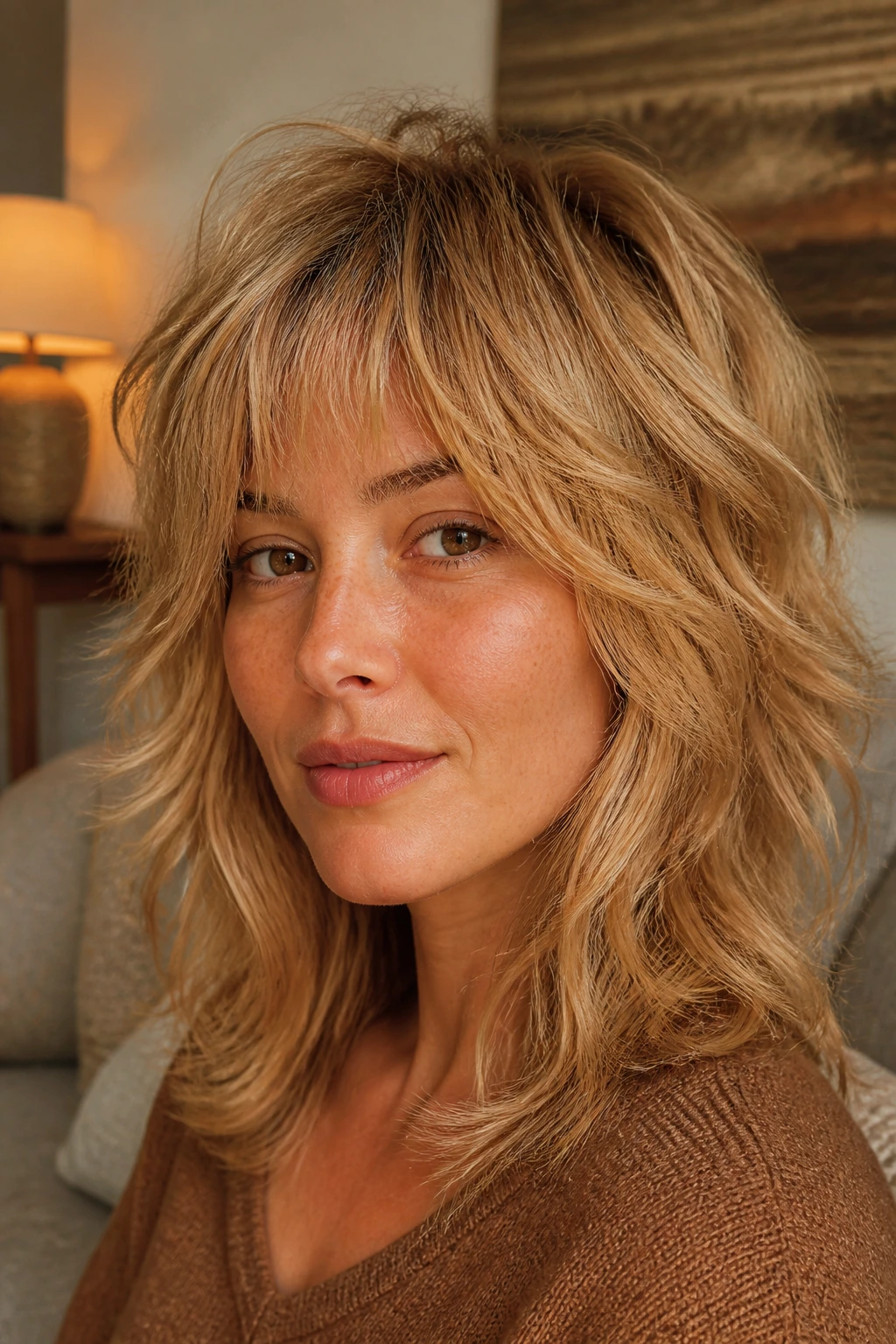
The wolf cut can get messy fast, but in warm blonde it becomes much easier to wear. The shaggy crown, tapered length, and face-framing layers break up the shape, while the golden or caramel tone keeps the whole thing from looking too harsh.
This is one of the better modern cuts for warm skin because it gives the hair motion at the roots and through the ends. That movement lets highlights catch in different places, which makes the blonde seem richer than it is on the color chart. A cooler blonde would fight the cut. A warm one slides into it.
If you want edge without losing softness, this is a smart place to land. It likes texture paste, a diffuser, or a quick bend with a flat iron. Perfectly smooth hair makes the wolf cut look less intentional. Messy is the point.
16. Sandy Blonde Mid-Length Flip
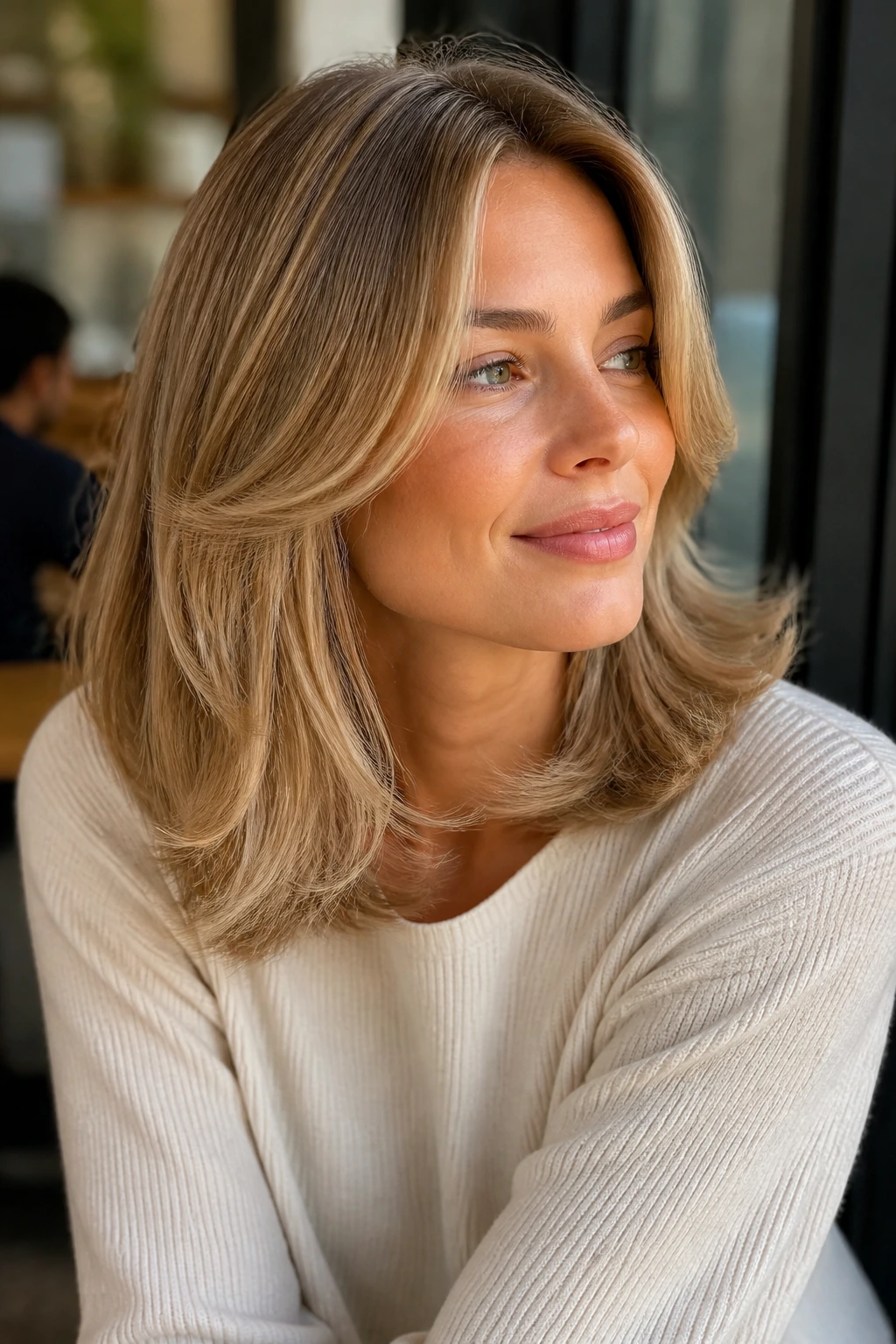
Sandy blonde sounds neutral, but on the right base it can lean warm in a way that feels easy. The mid-length flip gives the ends some movement, which stops the cut from feeling stiff.
A flipped finish at the ends gives old-school polish without locking the style into one era. That matters because warm blonde can sometimes look too sweet if the styling is overly soft. A little bend at the bottom keeps it interesting. The color itself should stay more beige-gold than ash, with a soft root so the style doesn’t grow out in a hard line.
This is a nice in-between look for someone who wants blonde that behaves well in daily life. It works with sweaters, blazers, and plain T-shirts. Good hair doesn’t need a costume.
17. Butterscotch Blowout Layers
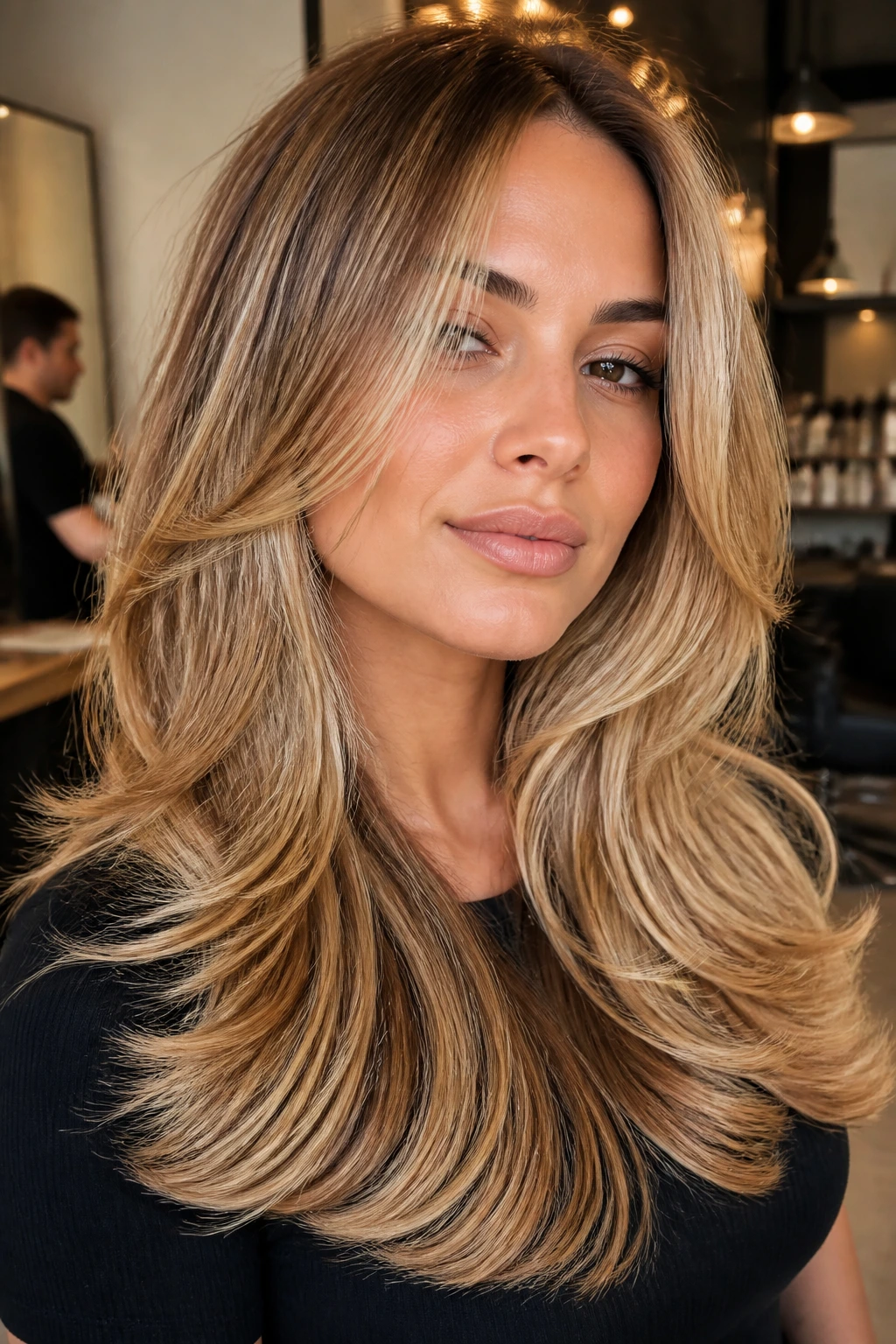
Butterscotch blonde is rich, glossy, and a little indulgent in the best way. On blowout layers, the color has room to catch light through the mid-lengths and ends, which makes the hair look thick and smooth at the same time.
This is especially good for medium to long hair with some natural body. The layers prevent the weight from dragging the color down, while the warmer tone keeps warm skin looking fresh. It’s a shade that can handle a root shadow and still read bright.
A practical note
If your hair tends to pull orange when lightened, this is not the shade to chase with a heavy toner. Ask for butterscotch depth, not pale lift. That distinction saves you a lot of disappointment.
18. Cinnamon Blonde Waves
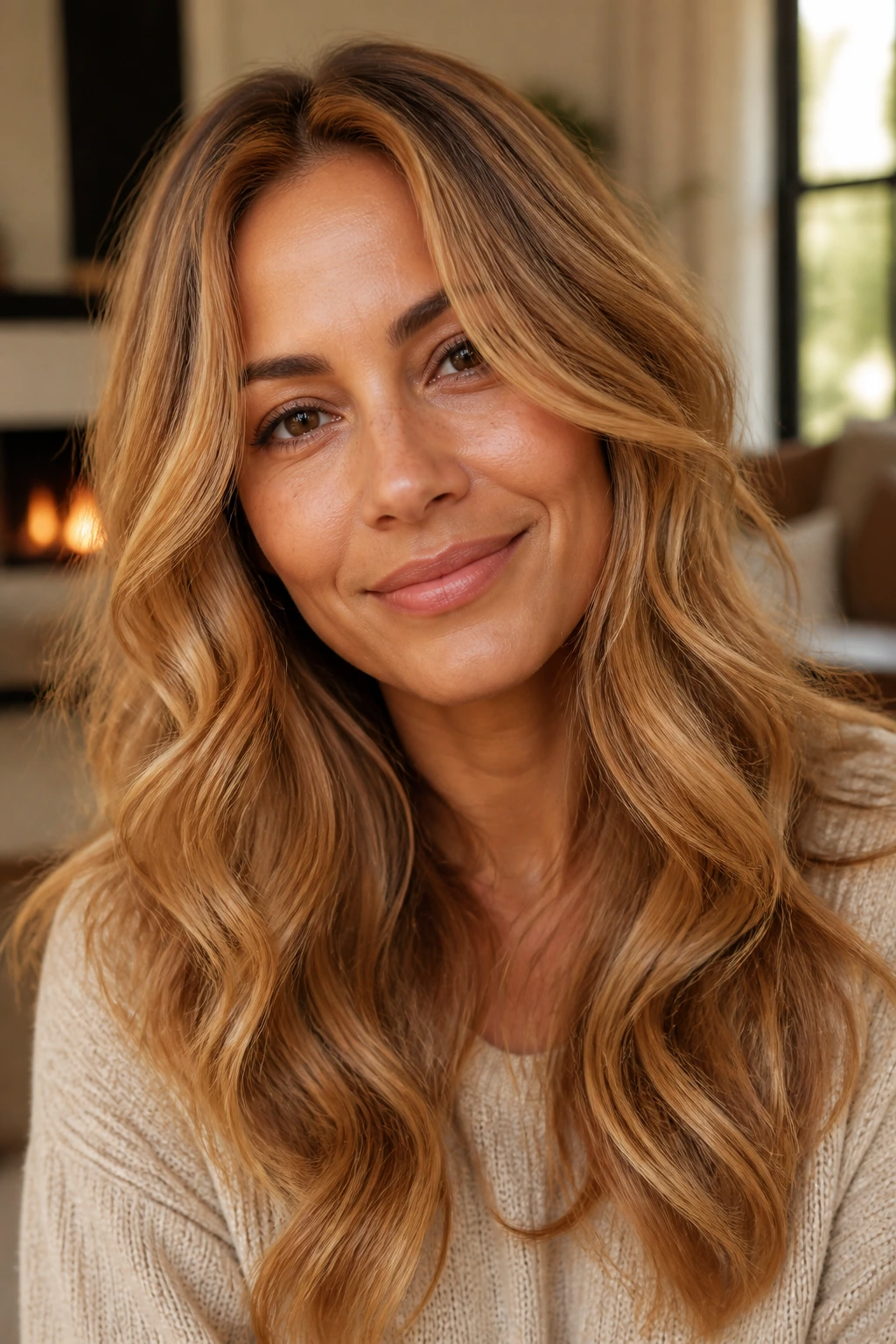
Cinnamon blonde sits between strawberry and caramel, which is why it flatters warm undertones so well. It has enough red-gold to feel lively, but not so much that it turns into copper overload.
Waves help the shade read as multi-tonal. The darker lowlights keep the style grounded, and the lighter ribbons stop it from looking too dark for blonde. That balance is what makes it flattering rather than costume-like.
This style is a good answer if you want something more distinctive than honey blonde. It has personality. Still wearable, though. That’s the useful part.
19. Creamy Beige Layers
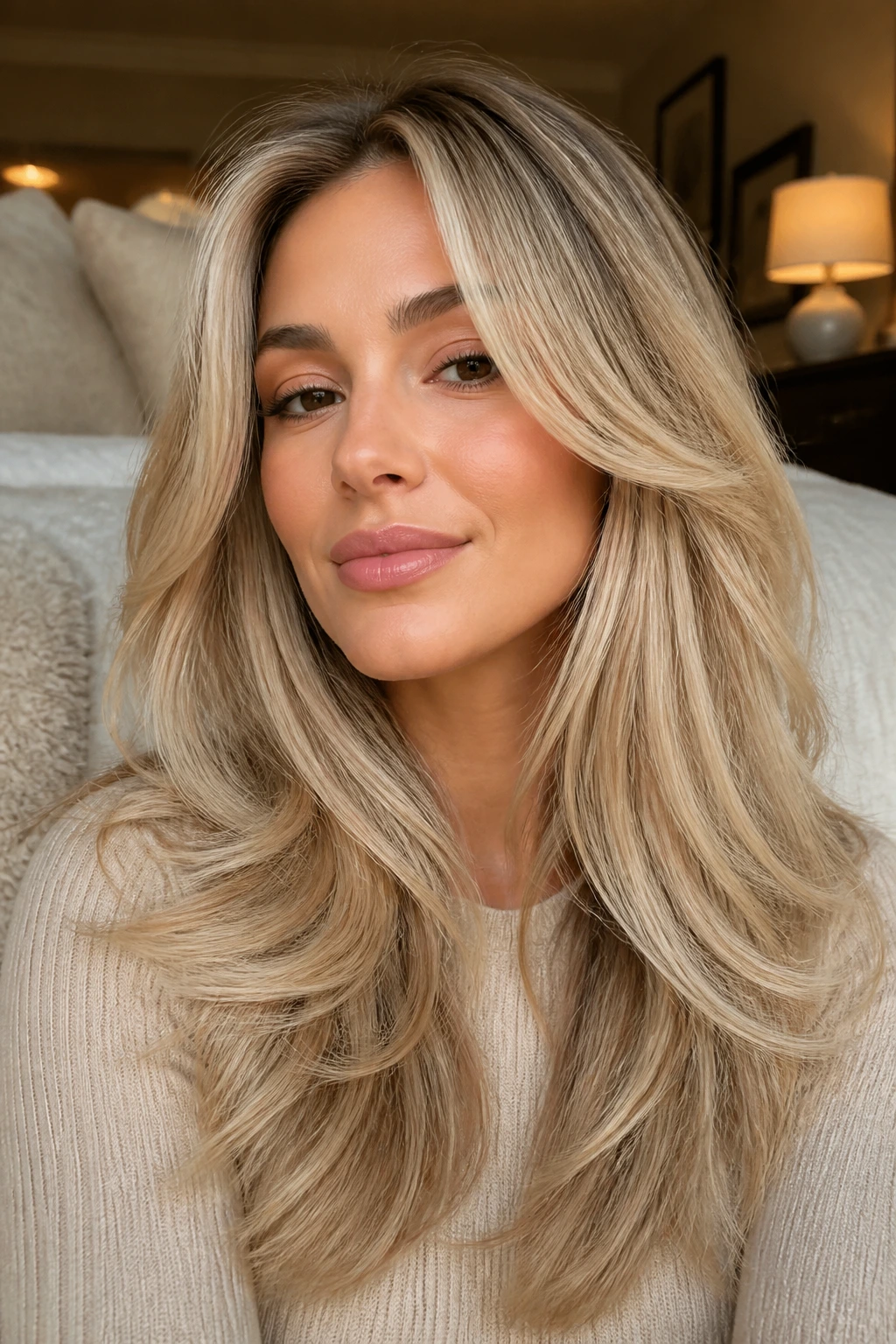
Creamy beige is one of those shades that sounds subtle until you see it moving. On layered hair, it creates a soft, blended blonde that looks especially good on warm skin because it doesn’t drag the face toward coolness.
The layers matter because they keep the beige from sitting as one flat sheet. A few brighter ribbons around the face give the style lift, while the mids stay soft and creamy. That keeps the blonde from feeling over-processed.
Why it’s flattering
- It softens strong features without hiding them
- It works well with minimal makeup
- It grows out more quietly than a high-contrast blonde
If you want blonde that whispers instead of shouts, this is one of the most usable choices on the list.
20. Sunkissed Face-Framing Layers
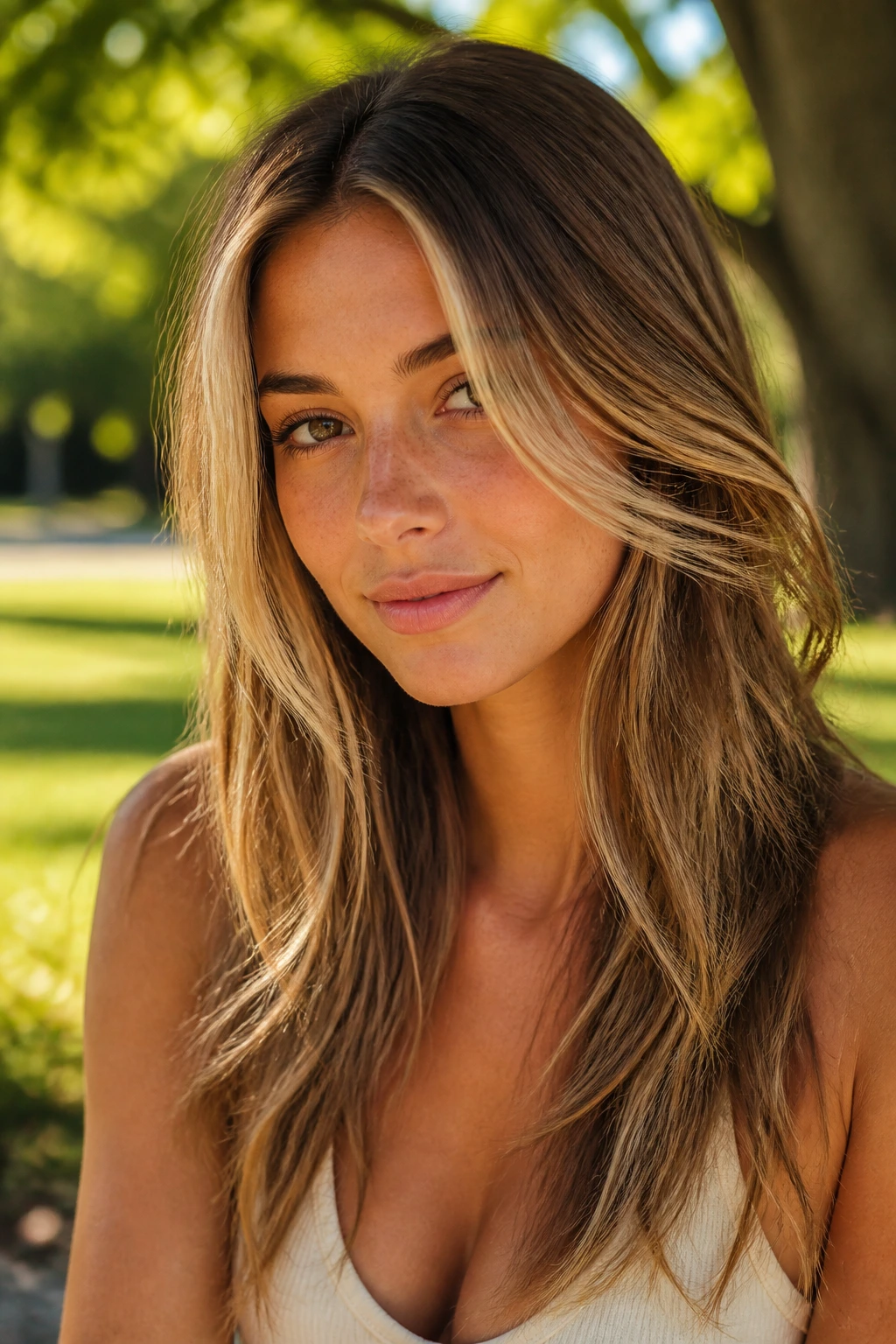
Sunkissed face-framing layers do a very specific job: they brighten the part of the hair that lives closest to the skin. That is where warm undertones show up most clearly, so the effect is immediate.
The face-framing pieces should be lighter than the rest, but not so light that they look pasted on. A couple of levels of lift is enough. The longer layers behind them keep the brightness from feeling isolated, and that makes the entire style read more natural.
This is the look for someone who wants the face to look rested without a heavy color change. It’s also a strong choice if you wear your hair down a lot. When the front sections are done right, they do most of the visual work for you.
21. Rustic Blonde Crop
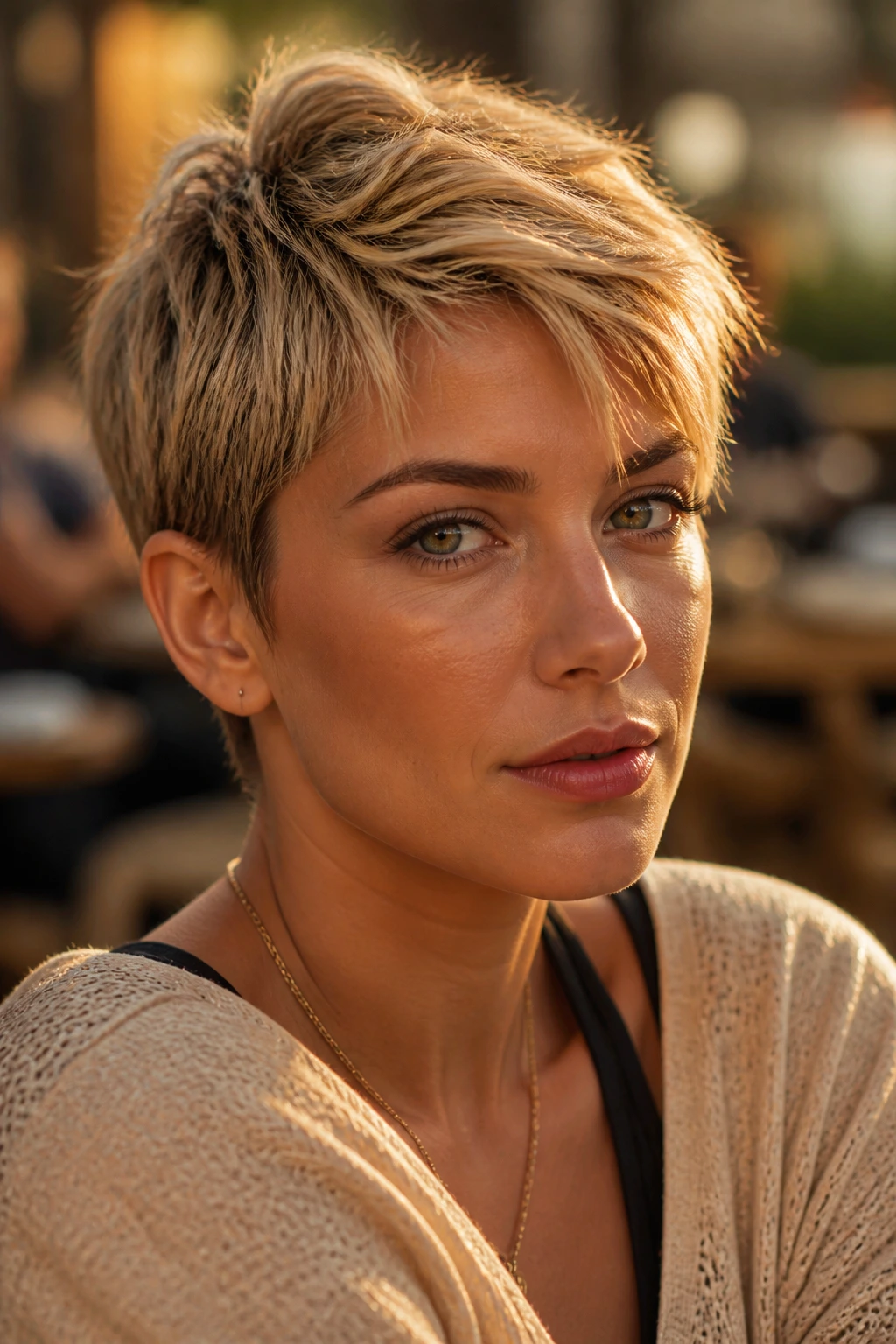
A rustic blonde crop has texture, edge, and a slightly earthy tone that warm skin tends to like. It’s not precious. That’s part of the charm.
The crop can be soft around the ears or a little choppier through the top, depending on your face shape. The blonde itself should stay in the golden-beige family with maybe a whisper of dark lowlight at the roots. That keeps the short cut from looking too bleached or too uniform.
This style suits people who want something lower maintenance but still intentional. Short hair shows every choice, so the color has to support the cut. Rustic blonde does that by keeping the tone grounded.
22. Apricot Blonde Soft Curls
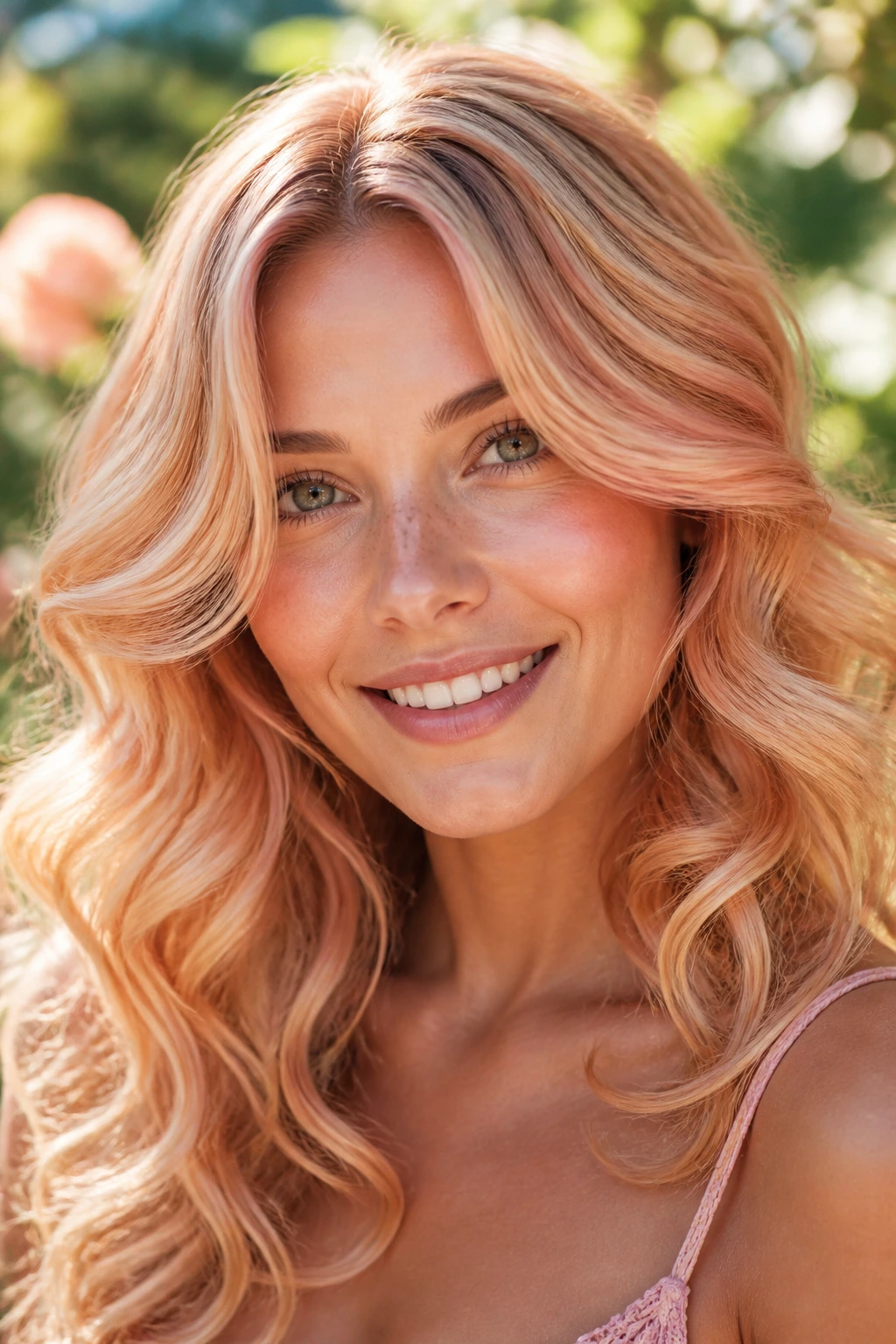
Apricot blonde has a peachy sweetness that can look very fresh on warm skin. Soft curls let that sweetness spread through the hair without turning syrupy or overdone.
The shade works best when the apricot tone shows up as a glaze or ribbon through a golden base. That way the curls have some depth underneath the lighter surface. If you keep the curl pattern loose, the whole look stays airy and touchable.
This is a good match for springy curls, vintage waves, or a soft set with a barrel iron. The color does not need much else. A bit of shine spray, and it’s done.
23. Maple Blonde Long Layers
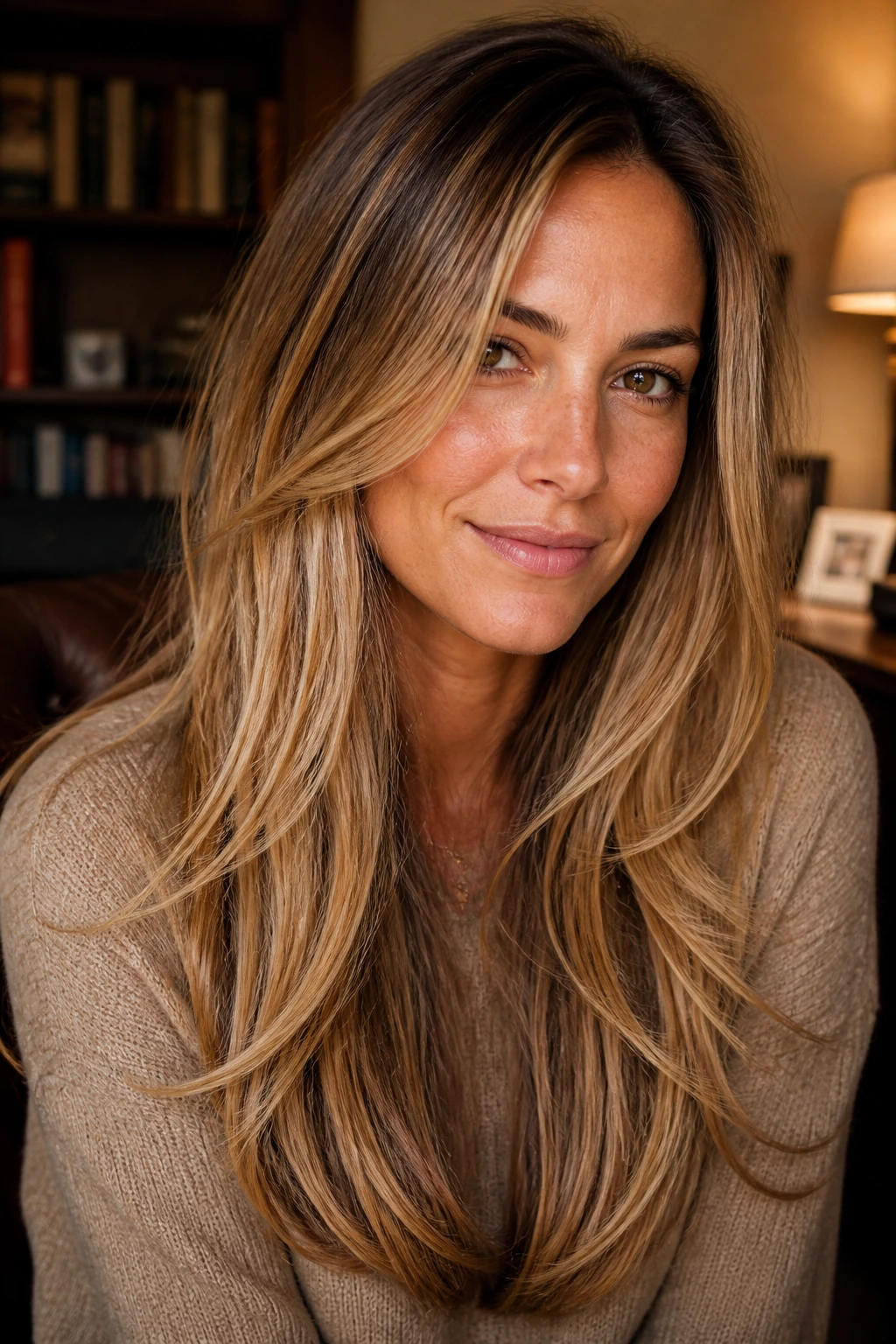
Maple blonde is deeper and richer than a standard honey blonde. On long layers, it feels especially good for warm skin because the color has enough depth to frame the face without fading into the background.
Long layers keep the ends from feeling too heavy, and the color shifts through the lengths instead of stopping at one flat shade. You get warmth at the top, brightness in the mid-lengths, and a softer finish at the ends. That kind of movement is what makes maple blonde feel expensive.
It’s also one of the easier blondes to live with if you do not want constant salon visits. The darker base at the roots blends well, and the color stays soft as it grows. Quietly practical. I like that.
24. Warm Balayage French Bob
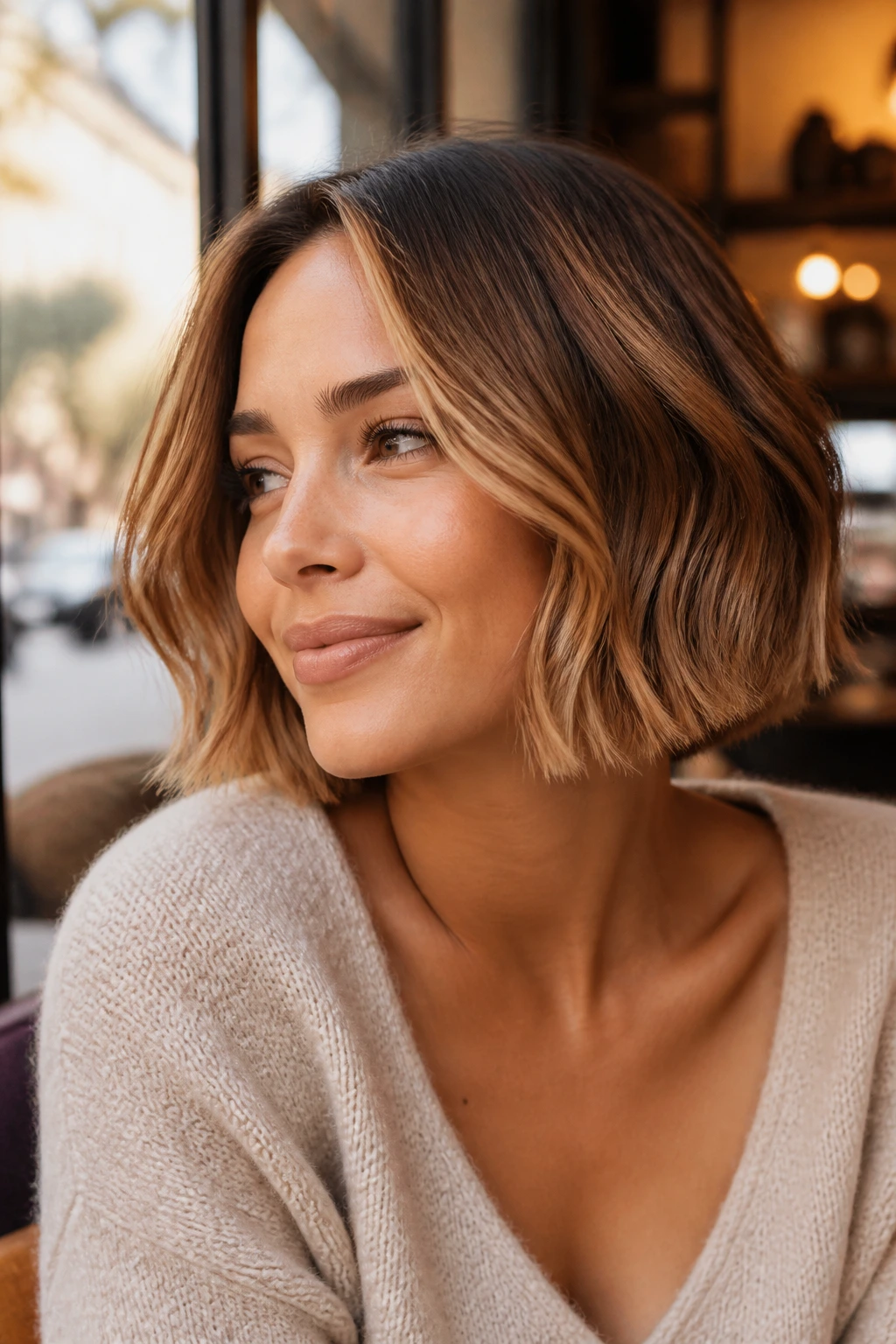
The French bob can turn severe fast, but warm balayage softens it just enough. The chin-length cut gives you shape, while the hand-painted blonde pieces keep the style from looking blocky.
This works especially well if your skin has golden or peach undertones and you like a strong lip or a neat collar line. The bob frames the face; the warmth in the balayage keeps the whole thing from feeling too sharp. A little bend through the ends helps, but the cut should still look clean.
If you want chic without ice-cold brightness, this is a smart compromise. The French bob is already stylish on its own. Warm blonde just makes it easier to wear.
25. Golden Coils
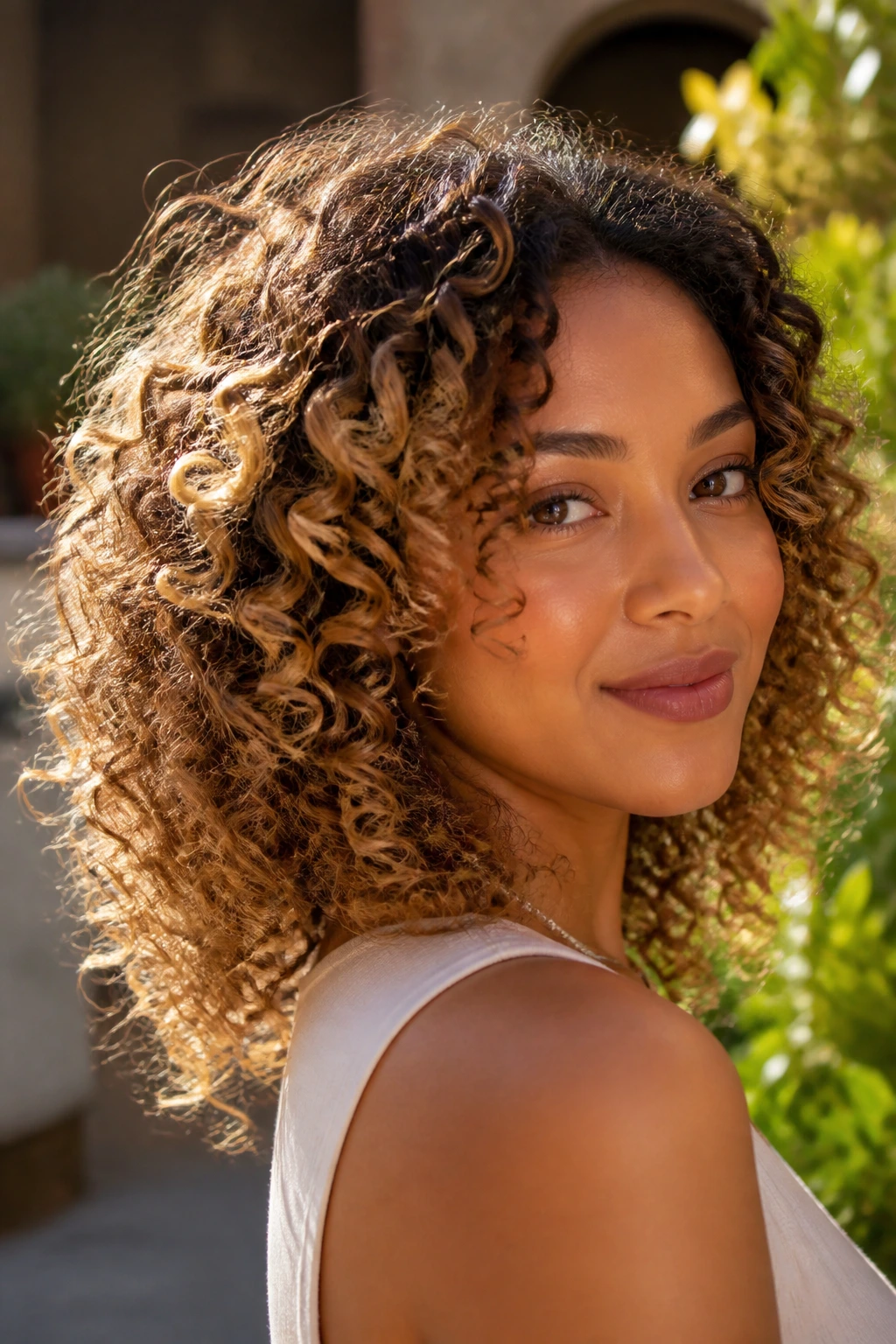
Golden coils are one of the best examples of color and texture working together. The coils catch the light in tiny shifts, so even a subtle golden highlight can look layered and full.
The important thing is placement. Bright pieces around the outer coil pattern show up beautifully, while softer lowlights inside the shape add depth. Warm skin tones look especially good here because the gold in the hair echoes the gold in the complexion instead of competing with it.
A small styling note
Use products that define without coating the curls in too much shine. Heavy creams can mute the color. A lighter leave-in and a diffuser usually give a cleaner finish.
This style is proof that blonde does not need to be straight to be striking. Coils make it more interesting.
26. Toasted Almond Updo
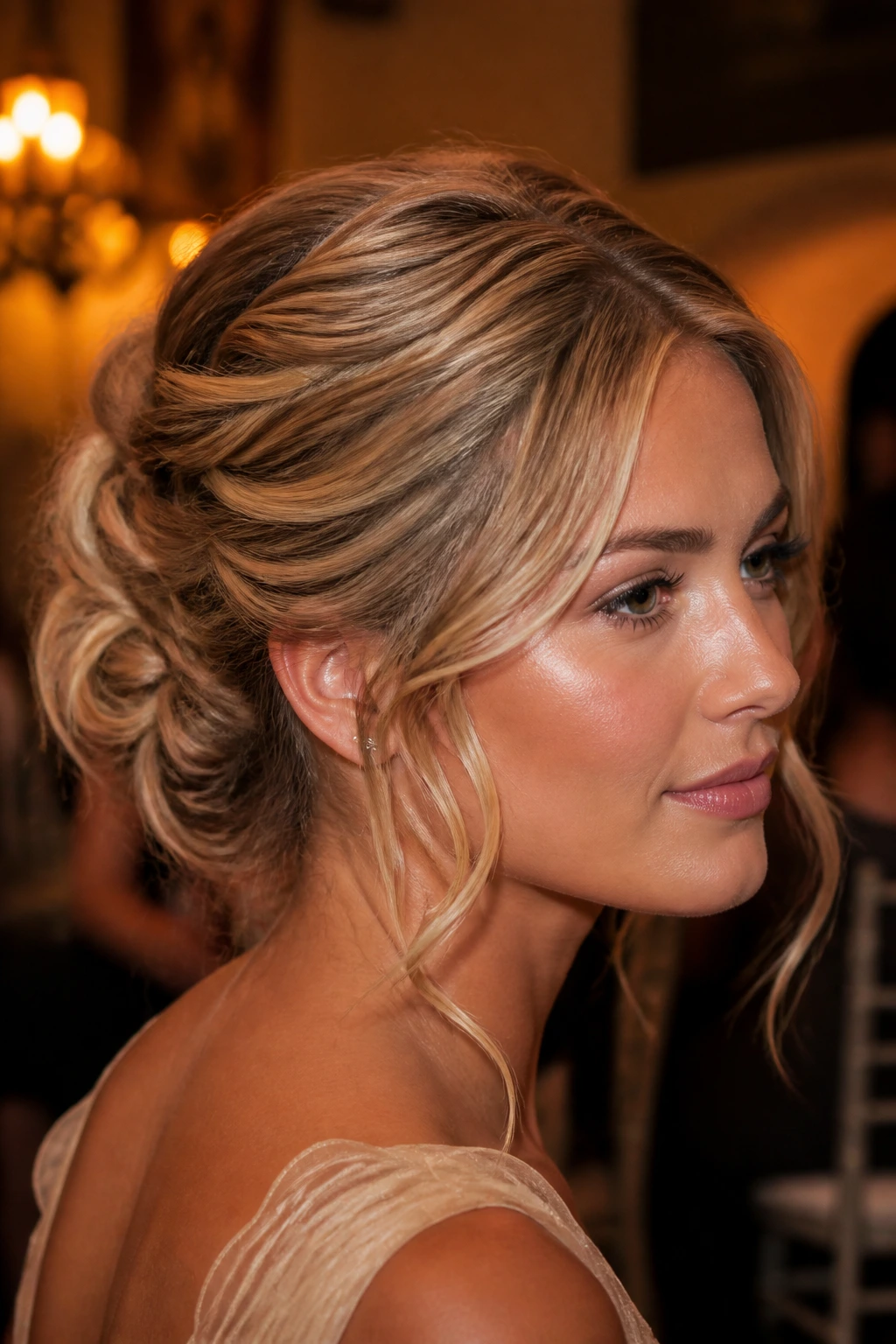
A toasted almond updo feels formal without turning stiff. The warm blonde color is what stops the style from looking plain once the hair is pinned up.
Updos can swallow dimension, so a toasted almond base with a few lighter ends peeking out keeps the shape alive. It’s especially flattering when you leave a few soft pieces around the face and neck. Warm skin tones tend to look better when the hairline stays gentle, not slicked back to the point of harshness.
This is the kind of style that works for weddings, dinners, or any event where you want the hair to look done but not frozen. A little texture at the crown, a soft twist, and a warm gloss are usually enough. Simple. Better that way.
27. Honey Blonde Half-Up Twist
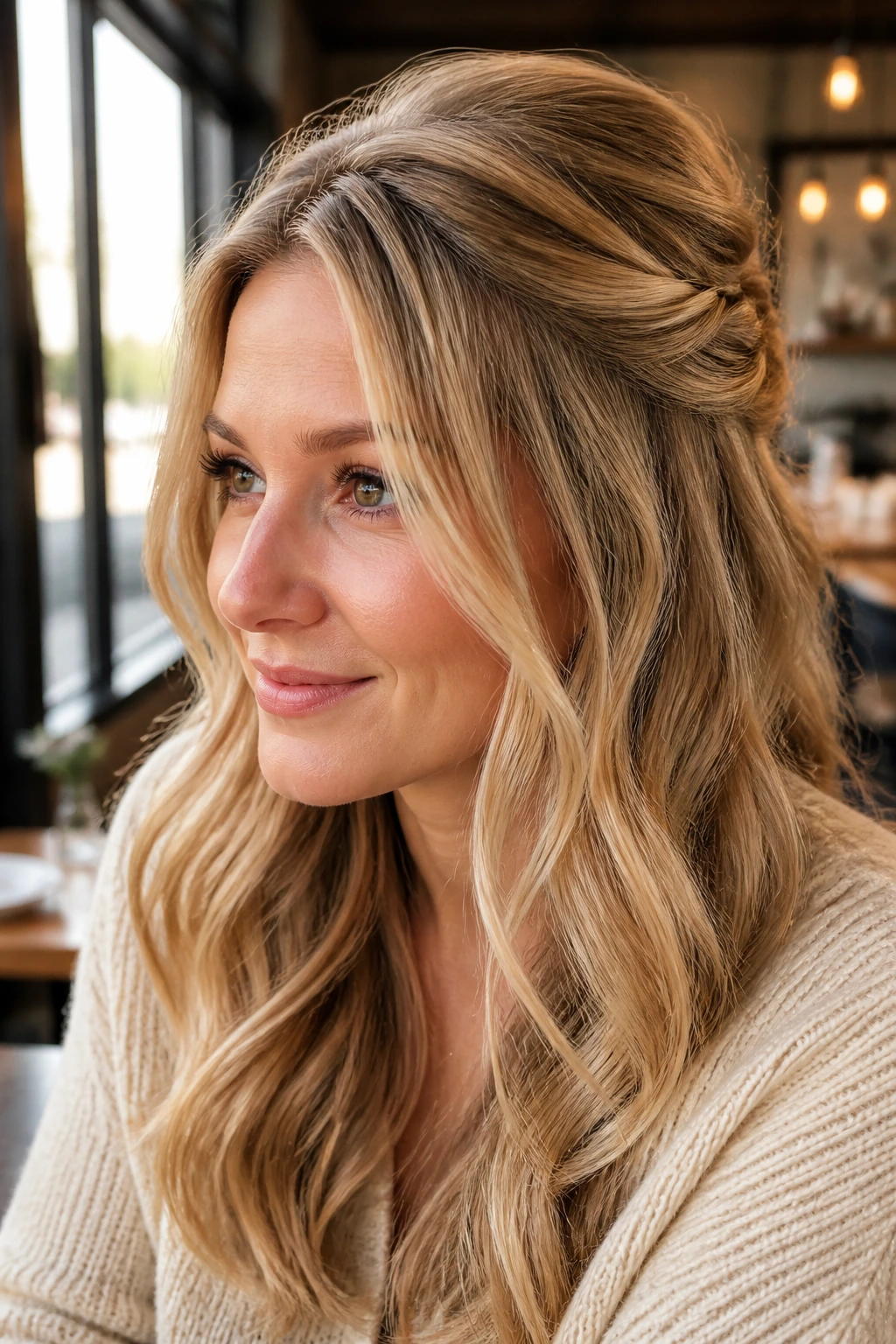
The half-up twist sits nicely between casual and polished, which is useful when the blonde itself is already doing visual work. Honey blonde makes the twist look brighter at the top and softer through the lengths.
This style is good for medium or long hair because it keeps some movement down the back while lifting the face. That lift matters on warm skin. It gives the jaw and cheek area a cleaner frame, and the warm blonde tone keeps everything soft. If the ends are lightly waved, even better.
A small twist, knot, or clip at the back is enough. You do not need a full braid or an elaborate finish. The charm is in the simple shape and the warmth of the color.
28. Peach Blonde Lob
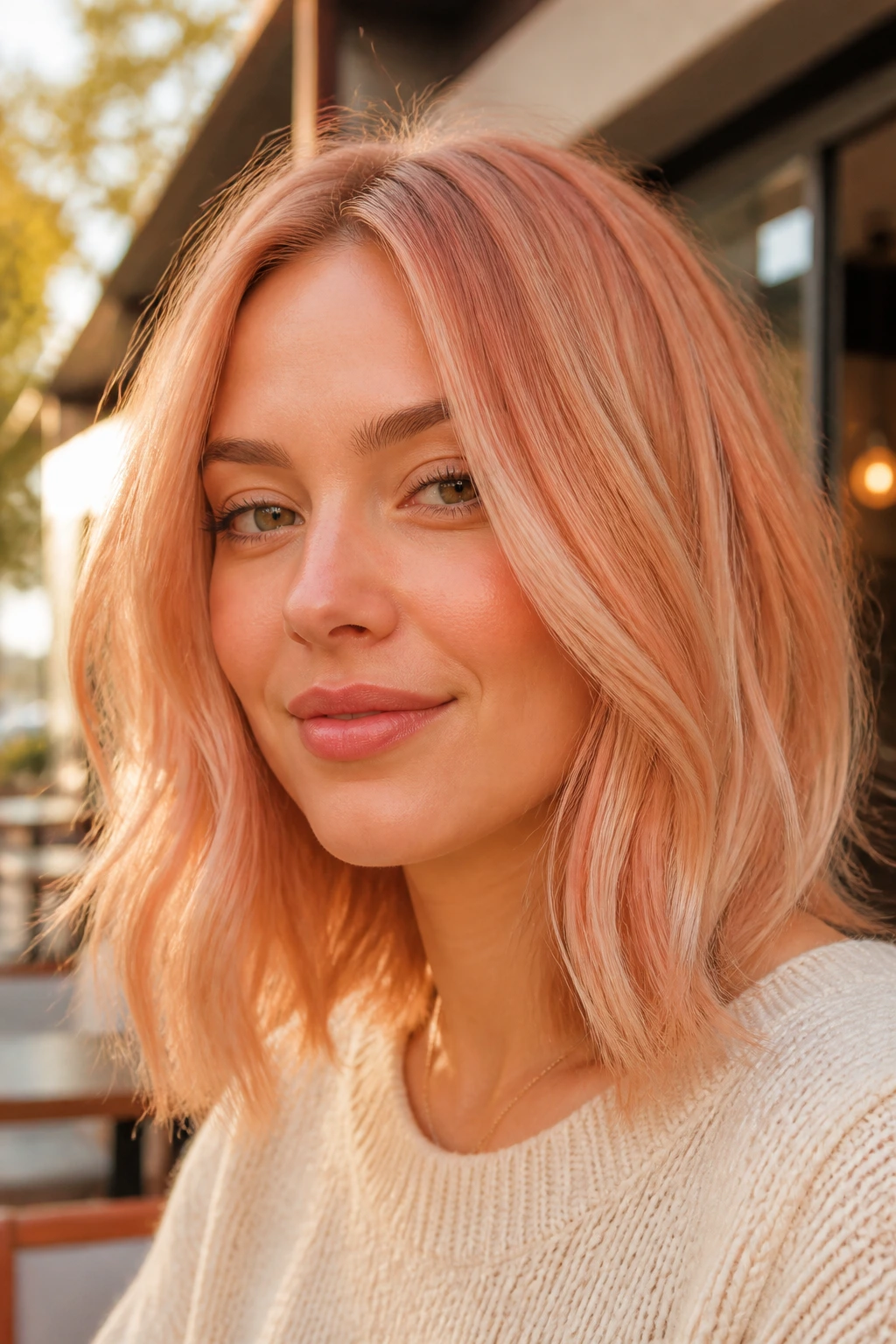
Peach blonde is not for people who want to blend in, and I mean that as a compliment. On a lob, the shade feels playful but still wearable because the length keeps it grounded.
The peach note should sit on top of a beige or honey base, not replace it. That keeps the look flattering instead of costume-y. Warm skin tones can carry this kind of color well because the undertone echo is strong, especially around the face and collarbone.
This style works best with soft bends or a smooth finish with tucked ends. It doesn’t need a lot of fuss. The color is the conversation.
29. Brushed-Out Glam Waves
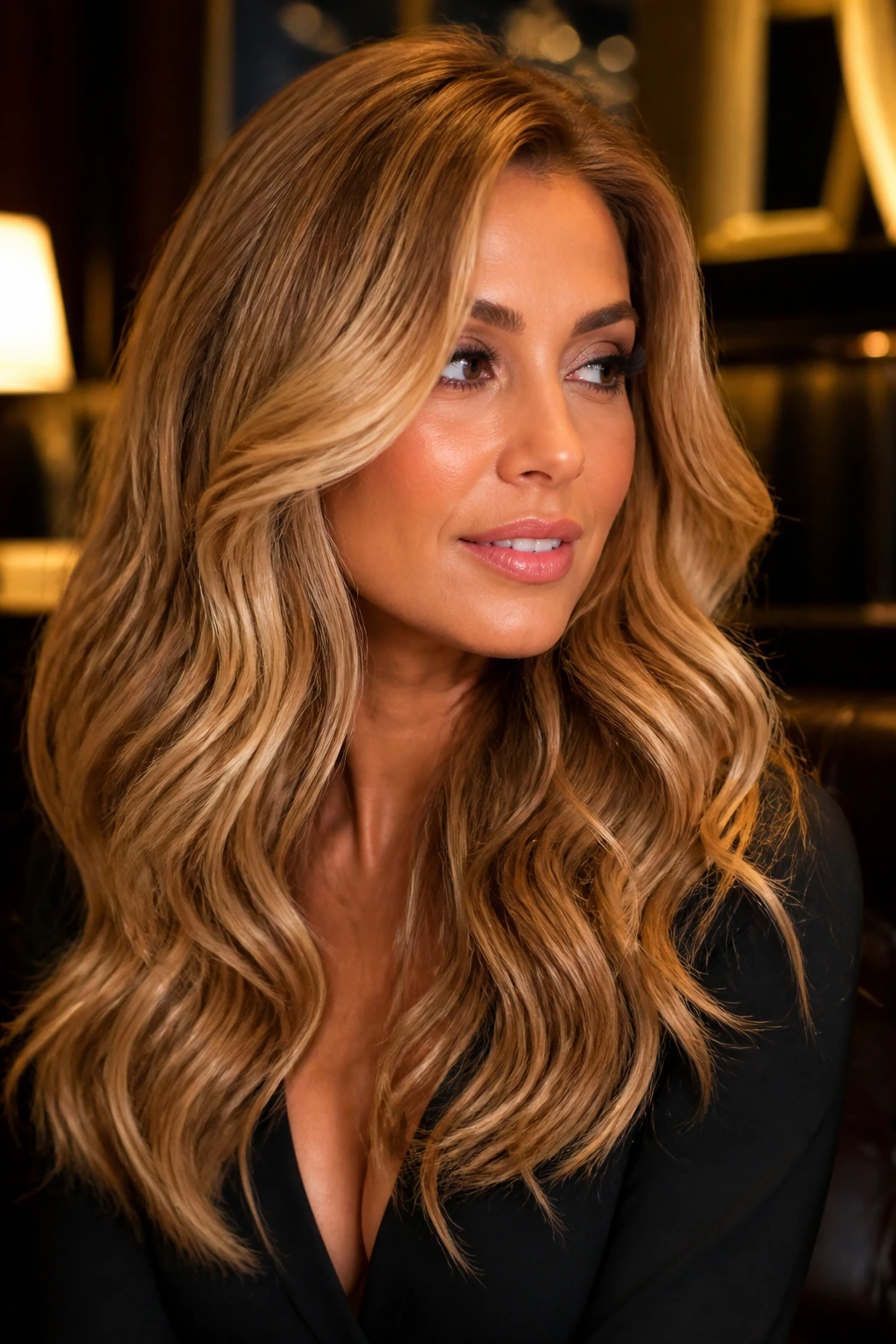
Brushed-out glam waves give warm blonde a smoother, richer look than tight curls ever will. Once the wave is softened, the highlights spread across the hair in long reflective lines, and that reads beautifully on warm skin.
This is a strong option for evenings, photos, or any time you want the blonde to feel plush. The key is a glossy finish and a wave pattern that starts a little lower, around mid-length, so the roots stay calm. Too much curl at the top can look dated. Brushed out, it feels modern and soft.
A side part can make this style more dramatic, while a center part keeps it cleaner. Either way, the warm tone should stay in the honey-caramel family so the shine looks rich, not yellow.
30. Warm Platinum with Root Shadow
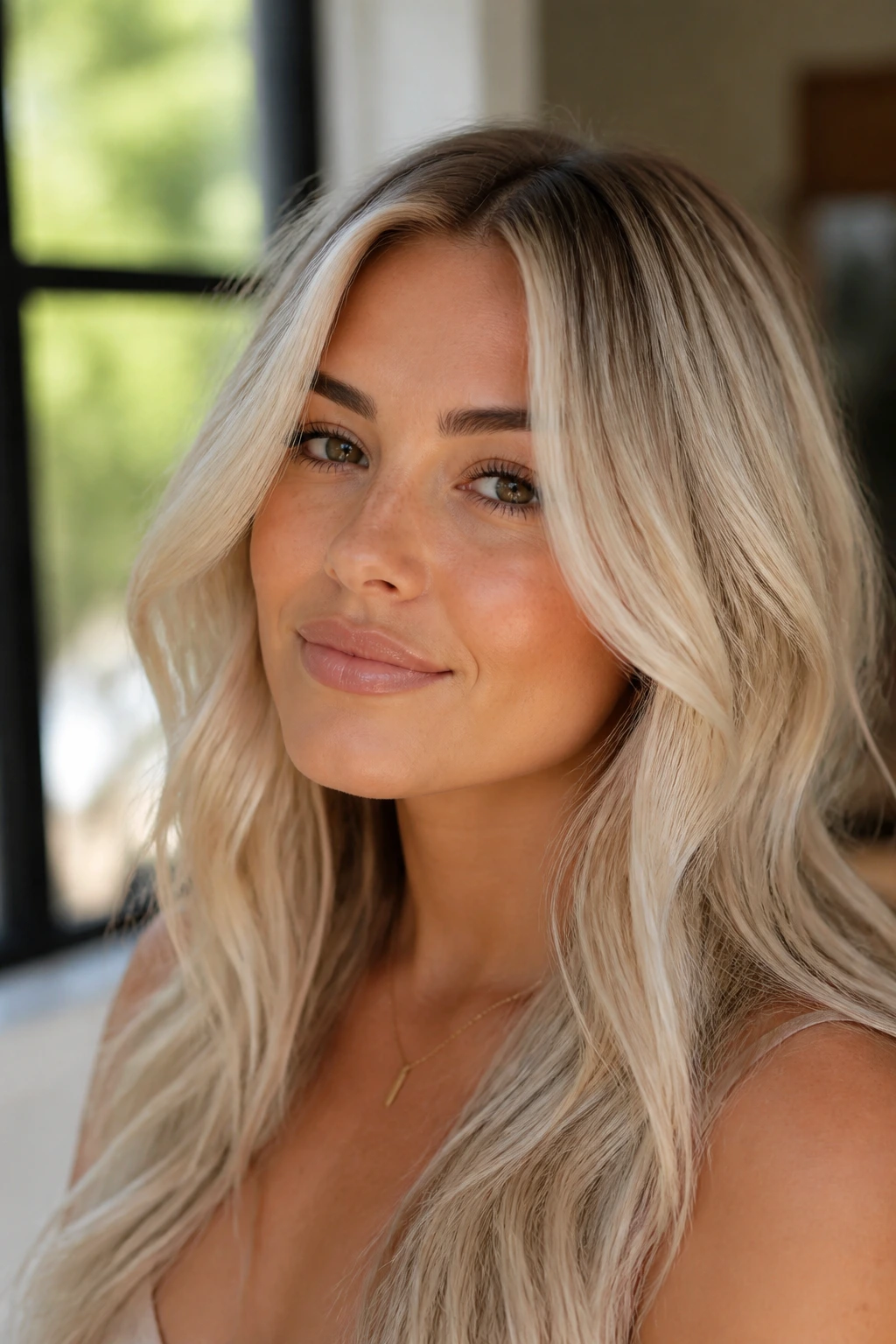
Warm platinum is the blonde for people who want lightness without the cold, metallic bite that often comes with it. The root shadow is what makes it work on warm skin. It gives the color a softer entry point and keeps the scalp from looking stark.
The trick is tone. You want a platinum that has cream, vanilla, or soft gold in it—not a blue-white finish. That subtle warmth makes a huge difference. When the hair is very light, warm skin can start to look greener or more flushed if the blonde turns icy. The shadow root solves part of that problem by softening the transition.
This is the boldest look in the set, and it does ask for more upkeep than honey or caramel. Still, if you love a lighter blonde, this is the version I’d choose before any frosty, flat platinum. It’s kinder to the face.
Why Blonde Shades Look Richer When They Echo Warm Undertones
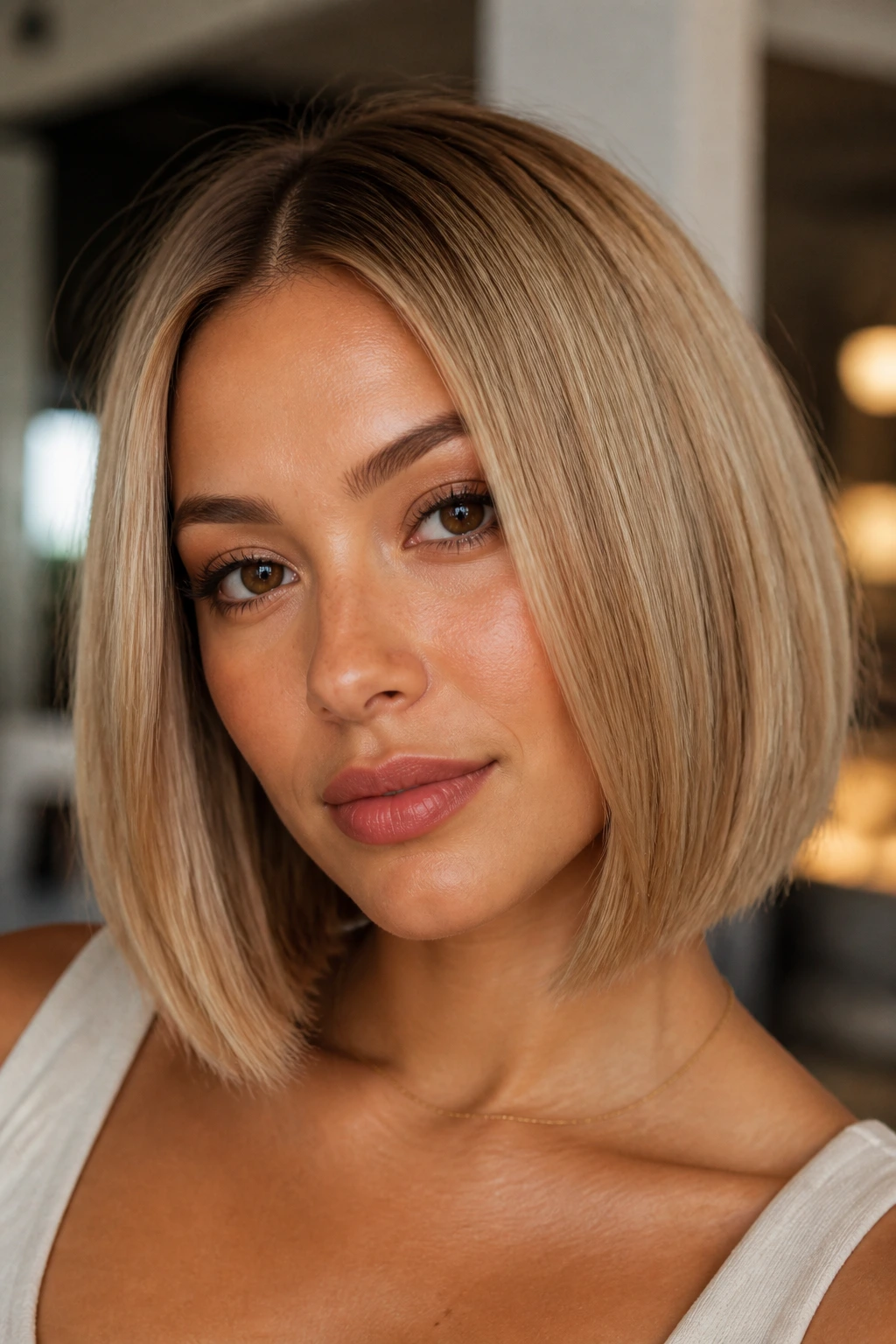
Warm blonde works because it behaves like part of the face, not a separate object attached to it. That sounds simple, but it’s the whole game. A honey base can make skin look calmer. A caramel ribbon can sharpen the eyes. A beige-gold gloss can stop the hair from going flat under indoor lighting.
There’s also a practical side people miss. Warm blondes tend to look softer as they grow out because the root line doesn’t shout the same way a cool platinum line does. That matters if you do not want your hair to look freshly colored every ten days. A little depth at the root gives the style room to breathe.
I also think warm blonde photographs better in real life than many people expect, not because it’s flashy, but because it catches ordinary light well. Window light. Store light. Morning mirror light. The shade still has shape when the sun is not cooperating, and that is half the battle.
How to Ask for the Right Blonde for Warm Skin Tones
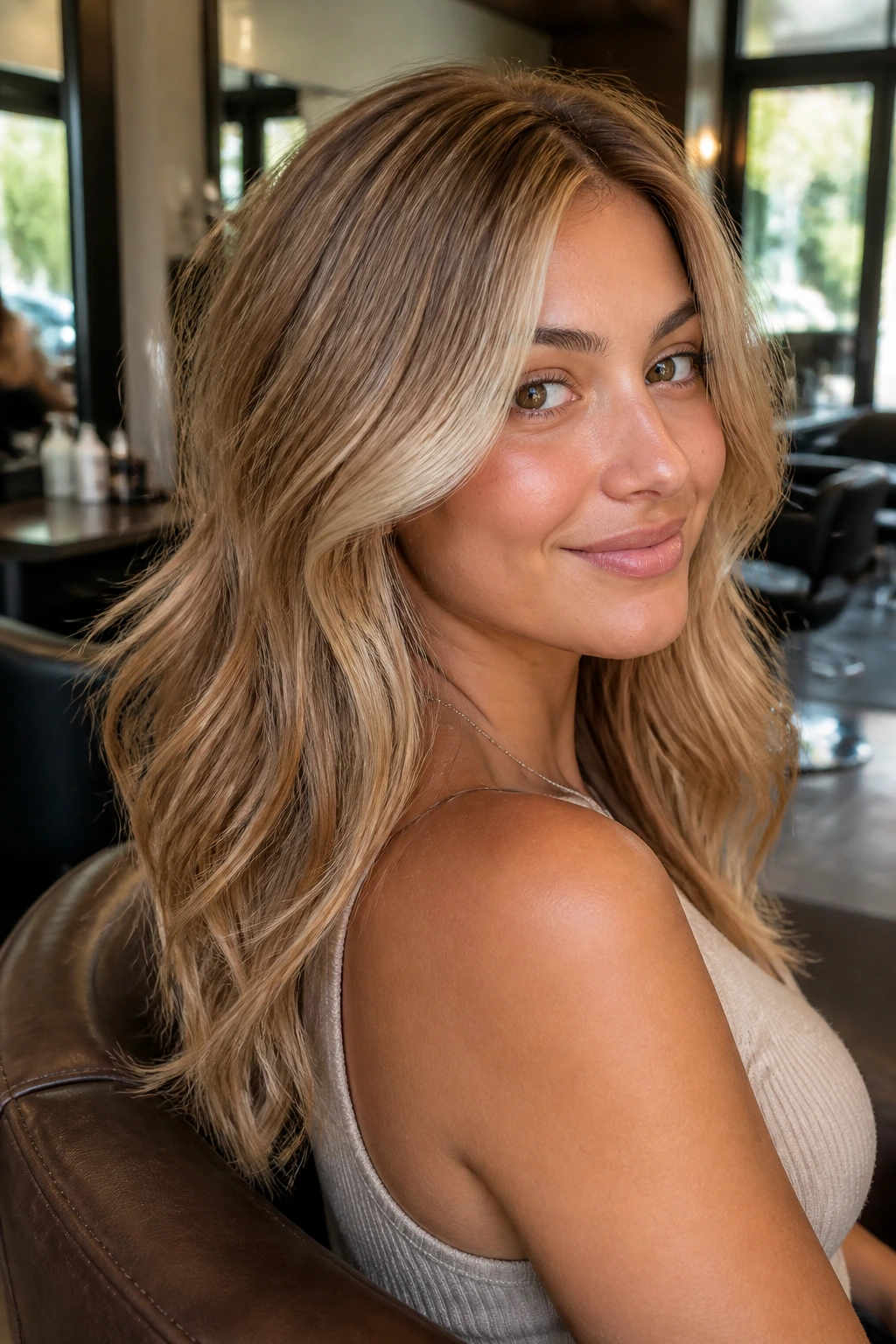
Walk into the chair with a color family, not just a photo. Tell the colorist you want honey, caramel, butter, beige-gold, or strawberry warmth, and be direct about what you do not want: ash, blue-violet coolness, or a flat beige that drains the face. Those words help more than saying “blonde” and hoping for the best.
Ask where the brightness should sit. That part matters. Face-framing pieces near the cheekbones, lighter ends, and a softer root shadow give a different result than all-over lift. If you have warm skin and darker natural hair, a little contrast near the front can do more than pushing every strand pale.
Bring at least one reference that shows the finish you want in natural light. Salon lighting lies. A photo taken by a window is usually more useful than a glossy studio image because it shows whether the blonde has honey, beige, or gold in it. If your hair tends to turn orange, say that before the formula starts. That detail changes everything.
Tools and Products That Keep Warm Blonde Looking Smooth
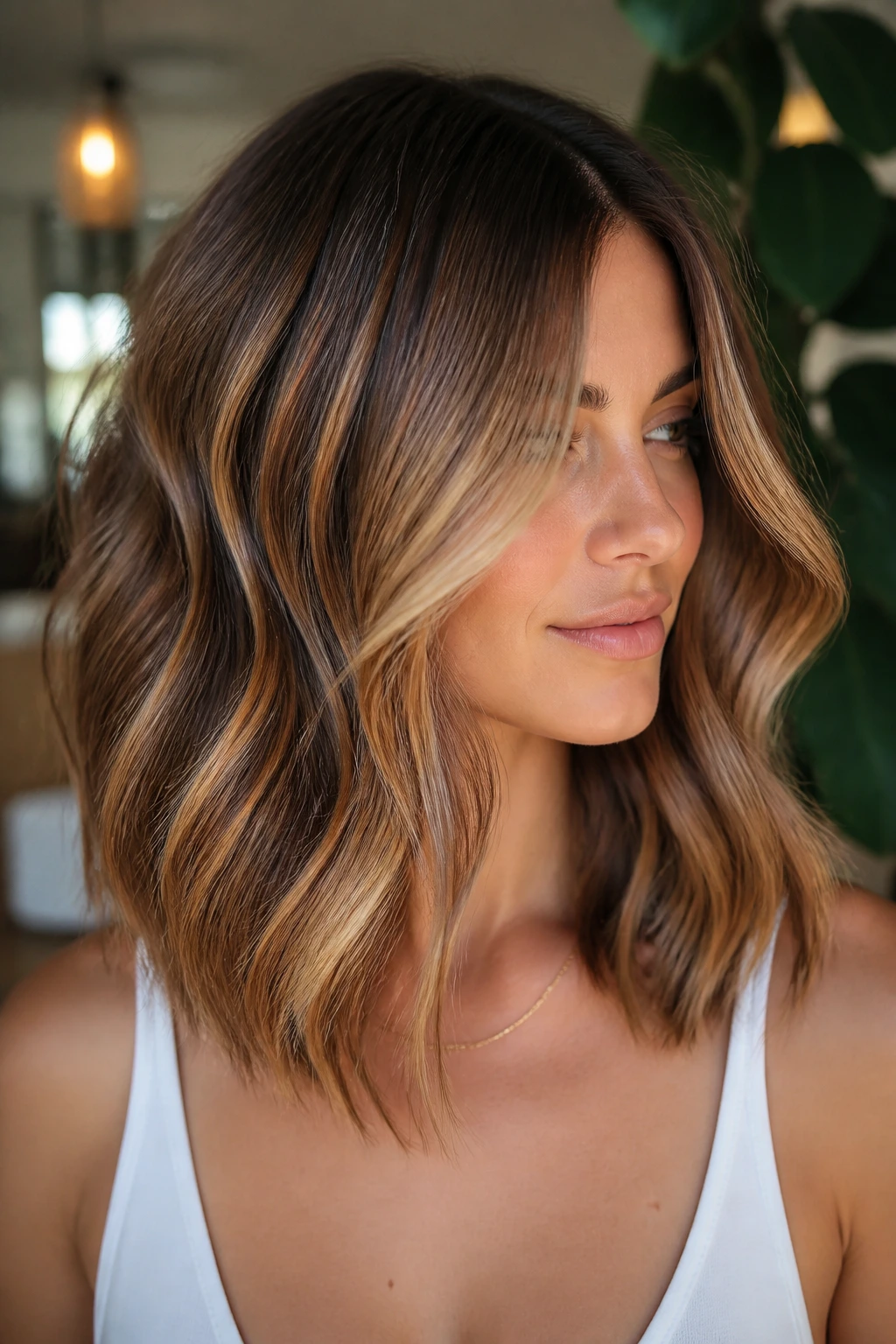
- Color-safe shampoo: A sulfate-free formula helps keep warm blonde from fading fast or feeling stripped at the ends.
- Moisturizing conditioner: Blonde hair gets dry quickly, especially when it’s lightened more than a couple of levels.
- Purple shampoo used sparingly: Use it only when brass starts to creep in; too much can mute the honey and make the blonde look flat.
- Leave-in conditioner: A light leave-in keeps the ends smooth without leaving the hair greasy.
- Heat protectant spray: Needed before blow-drying, curling, or flat-ironing. Warm blonde shows heat damage early.
- Round brush: Useful for blowouts, face-framing lift, and smooth volume at the crown.
- 1-inch curling iron or wand: Good for soft waves, brushed-out glam, and adding motion to layered cuts.
- Wide-tooth comb: Better than a fine brush on damp blonde hair, especially if it’s curly or highlighted.
- Glossing serum or shine spray: A small amount brings out honey and caramel tones without making the hair look oily.
- Microfiber towel or old cotton T-shirt: Cuts down on frizz and roughness after washing.
Small Styling Moves That Make the Color Read Richer
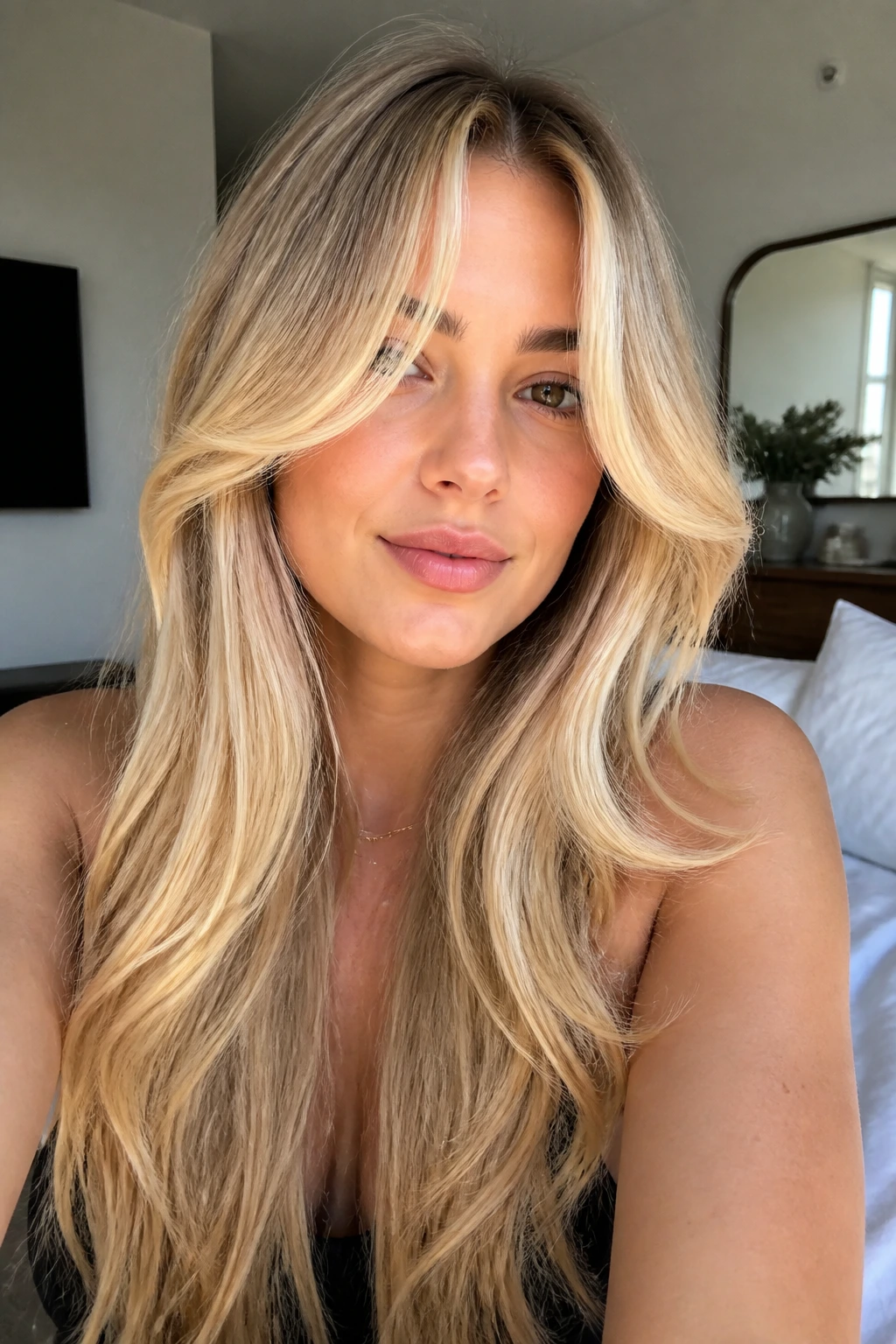
Parting: A center part tends to show off symmetry and shine, while a deep side part can make warm blonde look richer near the face. Try both. The difference can be bigger than a toning appointment.
Heat shape: A blow-dry with a round brush gives honey and caramel more reflection than air-drying does. Straight hair can look sleek, but it needs gloss and movement at the ends or the blonde loses depth.
Finish: Stop short of overloading the hair with shine cream. One or two pumps rubbed between the palms is enough for most lengths. If the hair looks wet, the color will lose its dimension.
Accessories: Gold clips, tortoiseshell pins, and cream-colored scrunchies tend to suit warm blonde better than stark silver hardware. The accessory should echo the warmth, not compete with it.
Lift at the crown: A little root volume helps blonde look fuller and softer. Flat roots can make even the nicest color feel dull.
Common Mistakes That Drain the Warmth
The first mistake is chasing blonde that is too cool. Ashy shades can make warm skin look tired or slightly sallow, especially around the mouth and jaw. If that keeps happening, ask for more gold or beige in the toner and less violet.
The second mistake is lifting everything to the same level. One-flat blonde is rarely the prettiest answer. It often looks stiff instead of dimensional. A root shadow or a few lowlights usually solve that fast.
The third mistake is overusing purple shampoo. It helps with orange brass, yes, but too much can strip the honey right out of the hair and leave it looking gray-beige. Use it once a week at most unless your colorist tells you otherwise.
The fourth mistake is ignoring the haircut. Warm blonde looks richest when the cut gives the color a shape to live in. A blunt bob, layered shag, or soft lob can make the same blonde look completely different. Bad shape ruins good tone. Annoying, but true.
The fifth mistake is skipping shine. Blonde hair needs a smooth surface to show its warmth. Dry ends eat the color.
Warm Blonde Variations to Try When You Want More or Less Contrast
Honey-Heavy Version: Keep the base deeper and let the highlights stay soft and golden. This works well if you want warmth without a big salon commitment.
Caramel-Dimension Version: Add a few darker lowlights through the mids and ends. The result is richer and a little more grounded, which helps longer styles and curls.
Copper-Flush Version: Fold a faint copper glaze into the blonde for more peach and apricot reflection. This is best when you want a little personality without going full red.
Soft Beige Version: Pull the tone toward creamy beige and keep the highlights more blended. Good for sleek bobs, French cuts, and people who want calm, quiet blonde.
Bright Face-Frame Version: Keep the front pieces lighter and the rest softer. It’s a good choice when you want the face to pop but don’t want to sit in the salon for hours.
Low-Maintenance Rooted Version: Ask for a deeper root and a looser highlight pattern. The grow-out is gentler, and the style keeps its shape longer.
Keeping Warm Blonde Soft Between Appointments
Warm blonde stays pretty longer when you treat it like light hair, not indestructible hair. Wash it two or three times a week if you can manage that, and use cooler water at the rinse stage so the cuticle lies flatter. Hot water roughs up the ends fast, and rough ends make blonde look dull.
A gloss or toner refresh every 4 to 8 weeks keeps honey, caramel, and beige shades from drifting brassy or muddy. If your hair is highly lightened, the refresh needs to happen closer to the shorter end of that range. If you’re living in a rooted balayage or darker blonde, you can usually stretch it.
Trim the ends every 6 to 10 weeks if the style depends on blunt lines or soft layers. Skip trims too long, and the lower half of the hair starts to look thirsty. That’s when the color loses its polish first. Heat protectant should go on before every hot tool, not only on “styling days.” Those are the days that count.
If you use dry shampoo, apply it at the roots only and brush it out well. Powder sitting on warm blonde lengths can make the shine disappear. Small habit. Big effect.
Questions People Ask Before Going Honey Blonde
How do I know whether honey blonde or caramel blonde suits me better?
Honey blonde is lighter and brighter, so it works well if you want the face to look open and fresh. Caramel blonde has more depth, which suits warmer or deeper skin tones and people who want richer contrast. If you wear a lot of gold jewelry or peach makeup, honey often feels easier; if your features are stronger or your hair is naturally darker, caramel can look more grounded.
Can warm skin tones wear platinum blonde?
Yes, but it usually needs a softening step. A warm platinum with vanilla or beige tones and a root shadow tends to flatter warm undertones much better than a stark icy white. Pure blue-white platinum can make the skin look flat unless the makeup and wardrobe are doing a lot of heavy lifting.
Is highlight placement more important than the exact shade?
Most of the time, yes. Bright pieces around the face and through the top layers can change the whole look, even if the blonde is modest. A well-placed honey ribbon near the cheekbone often flatters warm skin more than an all-over pale blonde that sits nowhere in particular.
What haircut makes warm blonde look thickest?
Blunt bobs, strong lobs, and layered cuts with visible ends tend to make warm blonde look fuller. The color reflects off the cleaner edge, and the shape gives the hair a more solid outline. Very wispy cuts can still work, but they usually need more styling to show the color well.
How often should I tone warm blonde hair?
A gloss or toner refresh every 4 to 8 weeks is a good range, depending on how light the hair is and how fast it drifts brassy. If the blonde is more caramel or honey, you may not need toning as often. If it’s very light, the tone can shift faster and need more care.
What if my blonde turns orange instead of gold?
That usually means the hair was lifted to a level that still has underlying warmth showing through, or the toner faded faster than expected. Ask for a beige-gold gloss rather than heavy ash, because ash over orange can turn muddy. If the orange is strong, a color correction appointment is better than trying to fix it at home with purple shampoo alone.
Does warm blonde work on curly and coily hair?
Absolutely. In fact, curls and coils often show warm dimension better than straight hair because the light hits each bend differently. A golden highlight placement around the outer layers and a deeper base inside the shape usually looks richer than one all-over shade.
Can I keep warmth if I use purple shampoo?
Yes, if you use it sparingly. Once a week is enough for many people, and some only need it every other week. Leave it on for a short time, rinse well, and follow with a moisture-heavy conditioner so the blonde stays honeyed rather than dull.
A Blonde That Looks Like It Belongs
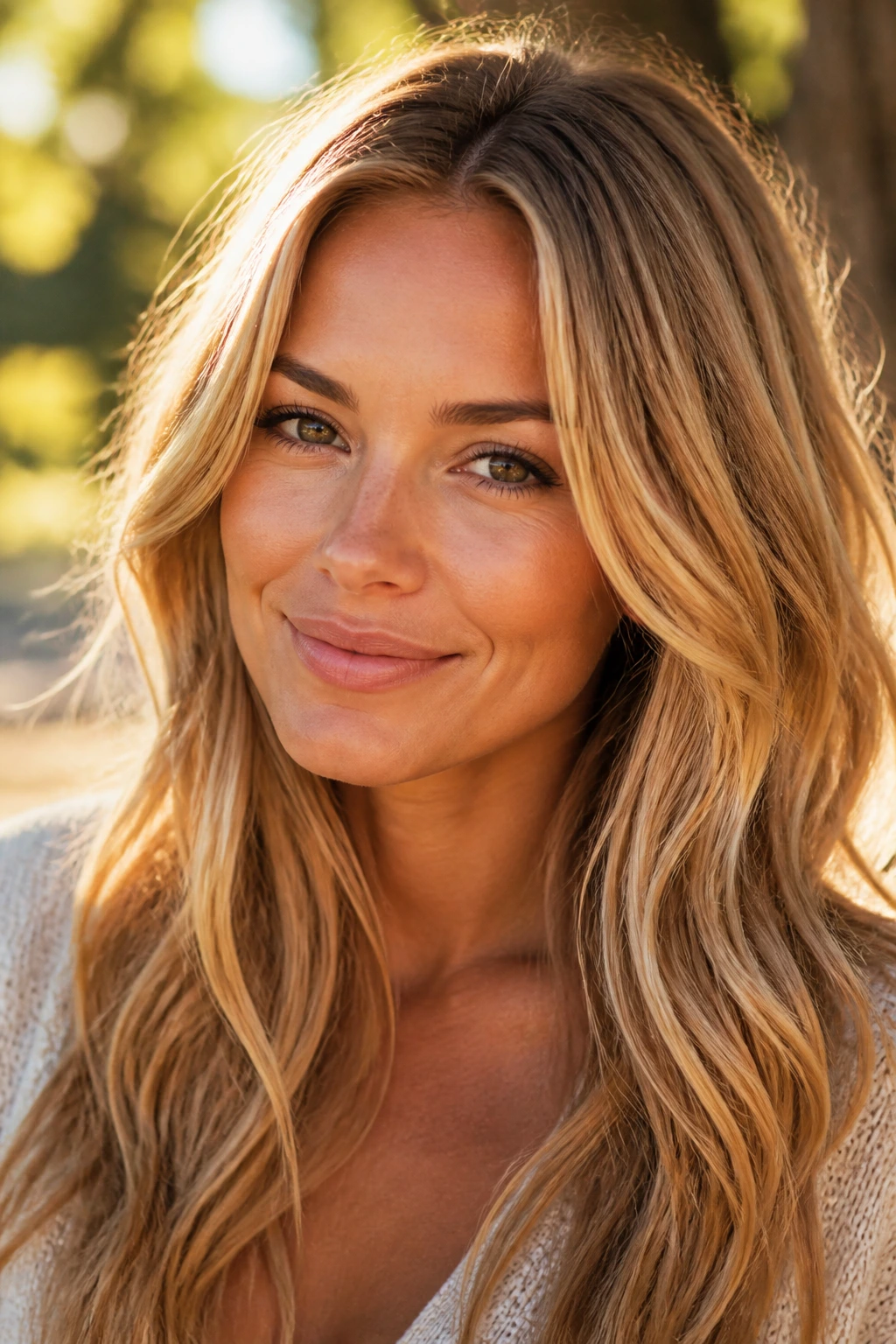
The prettiest blonde on warm skin usually is not the palest one in the room. It is the one that looks as if the sun had a hand in it—honey at the front, caramel through the ends, maybe a little butter or apricot when the light hits it sideways. That kind of blonde feels believable. It belongs to the face instead of sitting on top of it.
If you keep one thing in mind, let it be this: choose warmth first, shape second, brightness third. That order saves a lot of bad salon appointments and a fair amount of toner-related regret. The good blonde is rarely the loud one. It is the one that makes the skin look better before you even notice the hair.