



A textured lob for round faces and wavy hair has a nice trick up its sleeve: it can make the face look longer without making the haircut feel строг or overworked. That balance is harder to hit than most salon photos would have you believe. Cut the hair too blunt at the wrong spot and the width lands right at the cheeks. Add too much layering and the wave balloons outward like a triangle with opinions.
The sweet spot sits a little below the chin, often around the collarbone, with enough movement to let the natural bend show up and enough weight left in the outline to keep the shape calm. That’s the part I always come back to. Round faces usually do well with a little vertical line, and wavy hair wants structure that doesn’t crush the bend. Put those two things together and the lob starts making sense in a way a plain one-length bob often doesn’t.
I also like how forgiving this length is. One day it air-dries with a soft bend and a bit of frizz at the ends. The next day you tuck one side behind the ear, clip the front, and it looks intentional instead of “I gave up.” That matters. Haircuts should earn their place in your life, not require a special ceremony every morning.
Why These Lobs Earn Their Keep
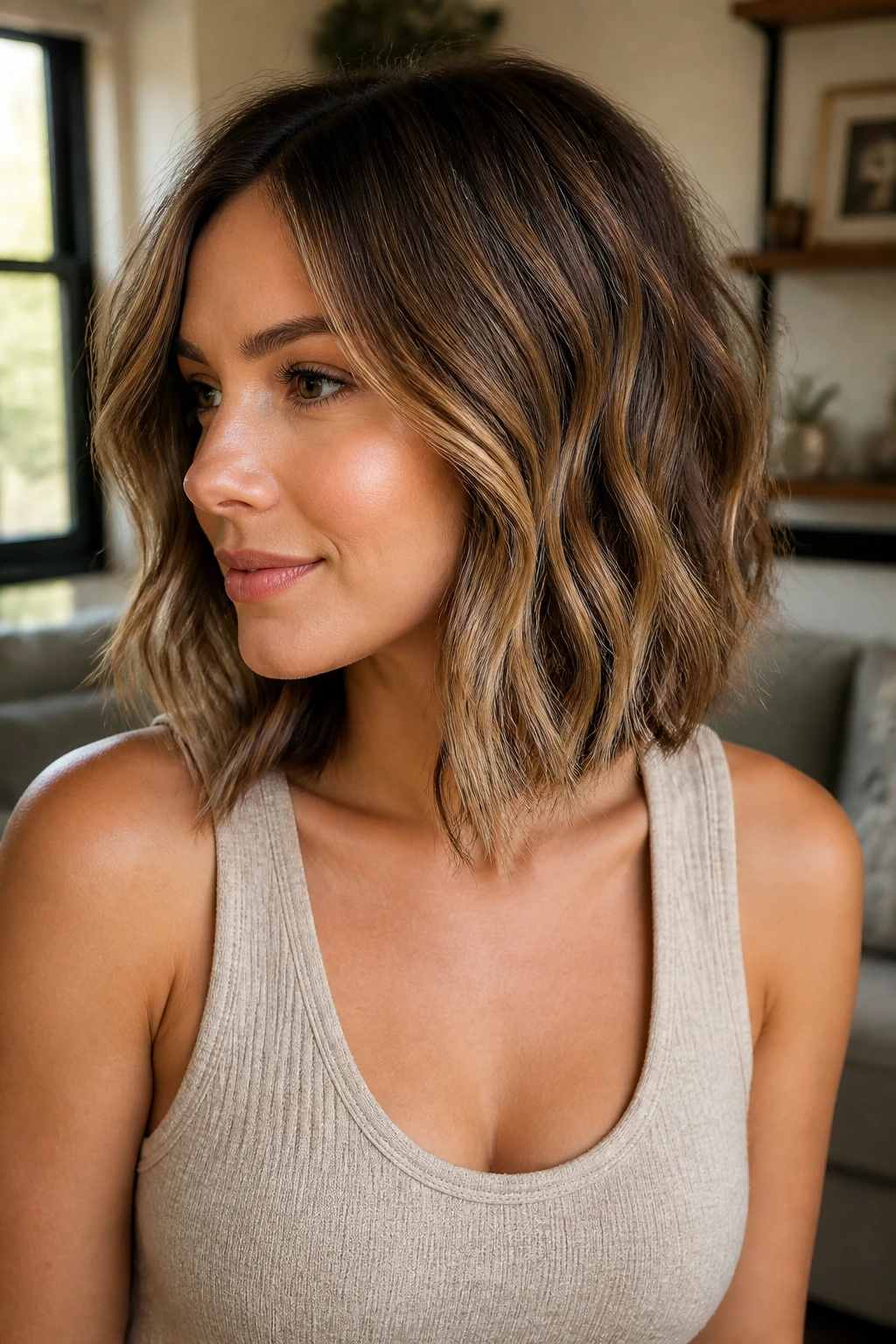
- Face-Lengthening Shape: A lob that lands below the chin pulls the eye downward, which softens the width that round faces naturally carry through the cheeks.
- Wave-Friendly Structure: The right amount of texture lets 2A to 2C waves bend without collapsing into a stiff, polished sheet.
- Easy Styling Range: These cuts can look good air-dried, diffused, curled at the front only, or blown out with a subtle bend.
- Better Grow-Out: A textured lob keeps its shape longer than a sharp chin-length bob, so the in-between stage is less awkward.
- Bang Flexibility: Curtain bangs, bottleneck bangs, and side-swept fringe all pair well with a lob when the rest of the cut stays loose and mobile.
- Low-Frustration Maintenance: Most of these shapes need trims every 8 to 12 weeks, not constant rescue missions.
1. Collarbone Lob with Curtain Bangs
A collarbone lob with curtain bangs is the kind of haircut that does a lot of quiet work. The length skims the collarbone instead of stopping at the jaw, which keeps the cut from widening the face where it’s already fullest. The curtain fringe opens in the middle and drops along the cheeks, which gives you that little vertical pull round faces tend to benefit from.
Why It Flatters the Shape
Curtain bangs work best here when they start around the cheekbone or just below it. That placement matters more than people think. If they start too high, the width sits too close to the center of the face. If they start too low, they lose that framing effect and just hang there like a forgotten curtain.
The wave pattern helps this cut a lot. Wavy hair makes the bangs look soft instead of helmet-like, and the rest of the lob keeps the overall silhouette light. I like this version on medium-density hair because it has movement without turning into a puffball at the sides.
Style Notes
- Ask for the bang shortest point to graze the bridge of the nose or upper lip.
- Keep the perimeter just below the collarbone.
- Use a round brush only on the bangs; let the rest air-dry or diffuse.
- A pea-sized amount of cream through the mids keeps the fringe from splitting too much.
Best for: anyone who wants a round-face-friendly shape that still feels feminine and loose.
2. Deep Side-Part Textured Lob
A deep side-part textured lob is bluntly effective. The part line shifts the bulk of the hair off the center of the face, which changes the whole mood of the cut. Instead of sitting symmetrically and adding width where you don’t want it, the hair sweeps across one side and creates a longer, leaner line.
The texture is what keeps this from feeling too severe. On wavy hair, the side part gives the bend a place to fall, and the front pieces can drop past the cheekbone instead of ending right at the widest point of the face. That one detail does a lot of the visual work.
I especially like this shape when the crown needs a little lift. Clip the heavier side at the root while it cools after drying, and the whole look gains height without teasing. It’s a small move, but it changes the silhouette in a real way.
If you hate center parts because they expose too much cheek width, this is the easy answer. It looks polished enough for work, but it never feels flat or overcontrolled.
3. Choppy Lob with Soft Ends
Why does a choppy lob look better on wavy hair than a perfectly clean line? Because waves want somewhere to move. A soft, broken perimeter gives the hair a little room, and that keeps the style from sitting like a shelf across the face.
The trick is to keep the ends choppy, not shredded. There’s a difference. Shredded ends can look thin and ragged, especially if the hair is fine. Soft choppiness means point-cutting the ends so they separate a little, while the main line still feels solid. That’s the version I’d ask for if you want texture without losing shape.
How to Wear It
- Use a lightweight mousse on damp hair.
- Scrunch with a microfiber towel, not a rough bath towel.
- Diffuse on low until the roots are about 80% dry.
- Break up the finish with one drop of serum on the palms.
This cut is a sweet spot for people who want movement but don’t want the maintenance of a shag. It still grows out neatly, and on round faces the irregular ends keep the eye moving instead of creating one wide horizontal band.
4. A-Line Lob with Face-Framing Pieces
Walk out of the salon with a slightly A-line lob and the whole cut starts working in your favor. The back sits a touch shorter, the front drapes a touch longer, and that front drop gives round faces an easy bit of length. Not an extreme wedge. Just enough angle to matter.
The face-framing pieces should begin around the cheekbone or just below it. That placement is the difference between “soft framing” and “hair parked on the cheeks.” On wavy hair, the front pieces usually bend in a way that softens the angle, which keeps the line from looking sharp or dated.
What I like most here is the way it behaves when you move. Turn your head, tuck one side, let the front fall forward again — the haircut keeps changing shape in a good way. It never feels frozen.
Quick Details to Ask For
- Keep the front 1 to 2 inches longer than the back.
- Ask for face-framing layers that stop below the cheekbone.
- Keep the layer work subtle if your waves are fine.
- Leave enough weight in the ends so the hair doesn’t flare out.
5. French-Inspired Airy Lob

A French-inspired airy lob is softer than a classic polished bob and less shaggy than a full-on layered cut. That’s the appeal. It feels lived-in, not messy, and the shape usually sits around the collarbone with a little bend through the mids and ends. For round faces, the loose vertical flow keeps the sides from getting too wide.
This cut works especially well if your waves have a natural S-shape. You do not need to force them into curl. A little cream, a little scrunching, and a touch of air drying often do the job. If the wave pattern is inconsistent, the haircut should still look good because the outline is calm.
The best version of this lob has a slightly broken fringe or a tiny face-framing split near the front. That breaks up the width in a subtle way. Nothing dramatic. Just enough to keep the eye moving.
It’s a beautiful choice for people who want their hair to look like hair, not a styling project. And that’s a sensible goal.
6. Razored Lob with Piecey Layers
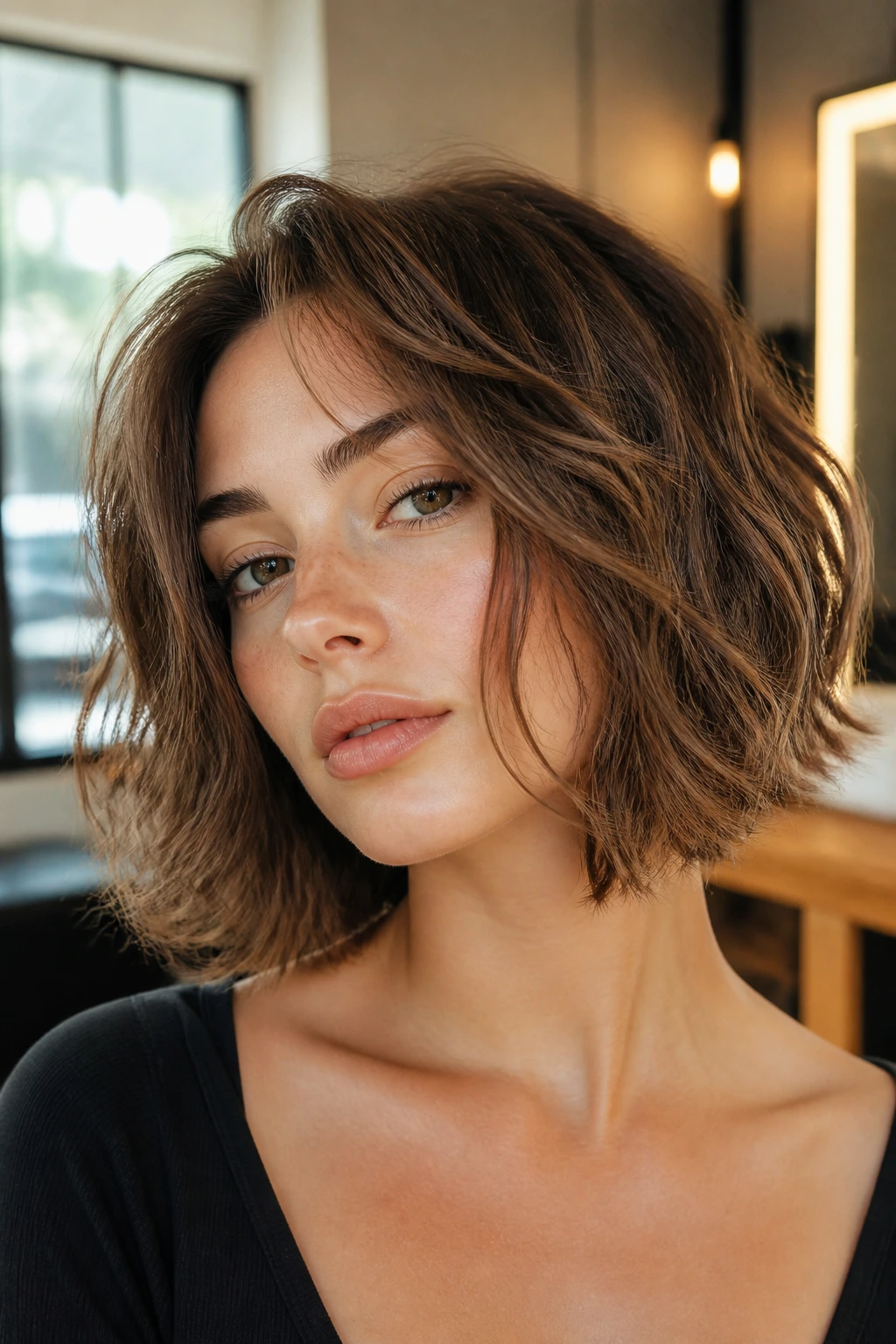
A razored lob can go bad in a hurry if it’s overdone, but the right version looks airy and sharp without feeling choppy for the sake of it. On wavy hair, razor work at the ends can reduce that dense, bulky edge that sometimes sits heavy on round faces. The result is a softer outline with visible movement between the strands.
Here’s the catch: the razor should be used with restraint. Too much slicing through the middle of the hair and the ends start to fray, which is a nightmare if your waves already lean frizzy. I prefer razor texture concentrated at the perimeter and around the front pieces, where it can lighten the shape without stealing the body.
This cut loves a rough-dry finish. Flip the hair side to side while it dries, then define a few sections with a 1-inch iron only if the wave pattern needs help. You want separation, not ringlets. A tiny bit of pieceiness at the ends is the whole point.
If your hair is thick and tends to sit like a solid block, this version can free it up fast.
7. Beachy Lob with Long Internal Layers
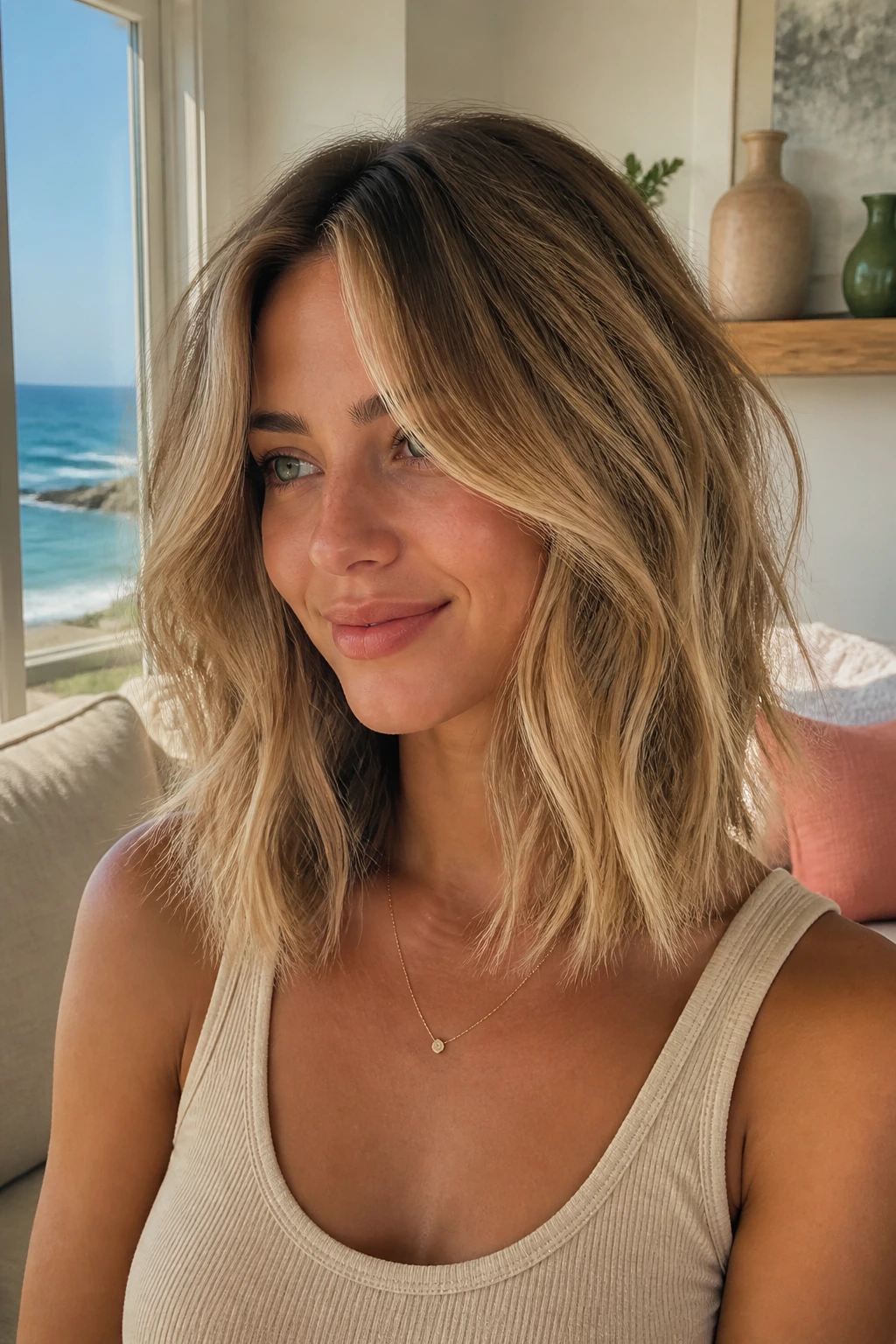
A beachy lob with long internal layers is one of the safest choices for wavy hair on a round face because the weight stays where it should. The layers live inside the haircut, not as obvious steps on the outside. That means you get movement, but the perimeter still reads as full and smooth.
I like this one for medium to thick hair because it keeps the shape from puffing out around the cheeks. The waves break up the silhouette naturally, and the long internal layers help the hair fall in soft ribbons instead of one heavy slab. That’s the good part. The less glamorous part is that you still need a trim before the ends start flipping into weird directions.
Good Styling Pairings
- Sea salt spray for grip.
- A light mousse at the roots.
- A diffuser on low heat.
- A wide-tooth comb only before product goes in.
This is a strong option if you want that “I spent no time on this” look without the haircut actually being careless. It’s beachy, yes, but not sloppy.
8. Bottleneck Bang Lob

Why do bottleneck bangs work so well on round faces? Because they narrow at the center and open through the temples, which gives the face shape a little lift without boxing it in. They’re friendlier than blunt bangs, and they feel less heavy than a full curtain fringe.
On a lob, bottleneck bangs keep the eye moving upward and outward in a nice, soft way. Wavy hair helps because the fringe doesn’t need to be perfectly neat to read well. A little bend makes the shape feel modern instead of fussy.
How to Style It
Start with damp bangs and a small round brush or even your fingers plus a blow-dryer nozzle. Dry the center pieces down and slightly forward, then bend the outer pieces away from the face. That little bend is what creates the bottle-neck shape.
The rest of the lob should stay loose. If you over-style the mids and ends, the fringe gets lost. If you keep the texture relaxed, the bangs do the heavy lifting.
9. Curved Lob with a Gentle Underbend

A curved lob is what I recommend when someone wants polish but doesn’t want the haircut to look stiff. The ends bend under just a little, usually with the help of a round brush or a quick pass from a blow-dryer brush. On a round face, that soft inward curve keeps the cut close to the head instead of expanding at the cheeks.
The beauty of this style is that it still leaves room for wave. You’re not ironing it flat. You’re smoothing the outline so the texture looks intentional. If the wave pattern is strong, the underbend can be very loose. If the wave is softer, a little more shaping at the front keeps the cut from falling limp.
This one feels especially good on people who wear a lot of simple clothes. White shirt, jeans, this haircut — done. It has enough shape to hold its own, and enough softness to avoid looking rigid.
10. Shaggy Lob with Full Wavy Texture

A shaggy lob can be a little dangerous on round faces if the crown gets too wide, but when it’s cut with restraint, it’s one of the best ways to work with natural wave. The layers create lift and air, and the lob length keeps the haircut from turning into a full shag that expands too much around the face.
What makes it work is balance. The top should have movement, yes, but the widest part of the style should not sit right at cheek level. Ask for the layers to start a bit lower and keep the front pieces longer. That way the texture has room to breathe without turning into a halo of volume.
Watch the Shape
- Keep the perimeter below the jaw.
- Ask for soft layering around the crown, not aggressive removal.
- Let the front pieces stay longer than the back layers.
- Use a curl cream if the wave pattern wants definition.
This is the lob for people who like a little edge, a little looseness, and a haircut that does not mind a second-day mess.
11. Blunt Lob with Hidden Weight Removal
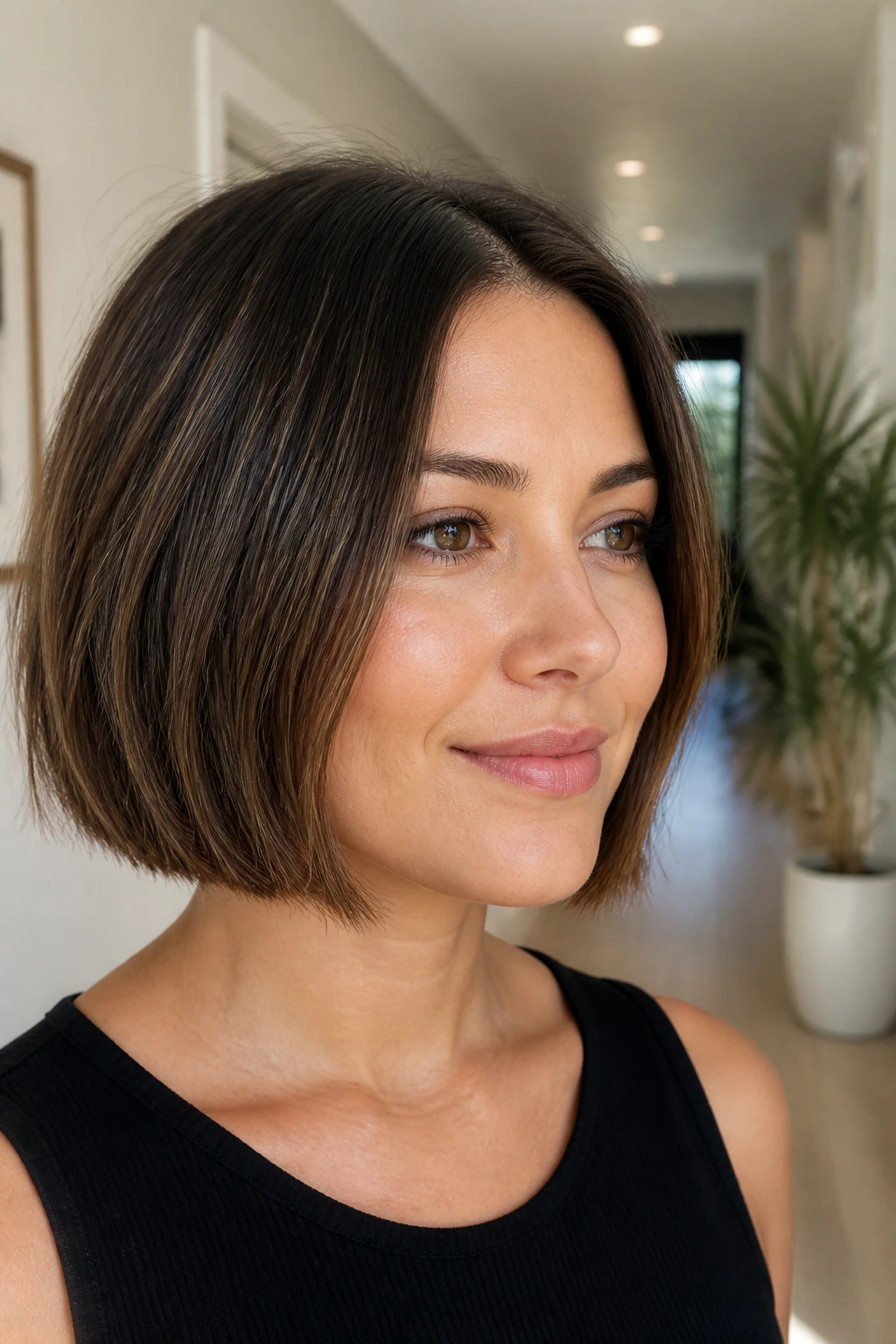
A blunt lob can work on wavy hair and round faces, but only if the inside of the cut is handled with care. The outside line stays clean, which gives the style a crisp edge, while hidden weight removal keeps the body from swelling out at the sides. That hidden part matters more than the blunt line itself.
I actually think this cut gets misunderstood. People hear “blunt” and assume boxy. Not true. A smart blunt lob can look expensive and easy at the same time, especially if the wave pattern is loose and the ends sit below the chin. The key is keeping the thickness under control so the hair doesn’t kick out at the sides.
This cut suits anyone who wants a more polished shape but still wants some natural wave movement. It’s not the most casual option in the bunch, but it can look very clean with minimal styling. A quick bend through the front and you’re done.
12. Grown-Out Lob with Cheekbone Pieces
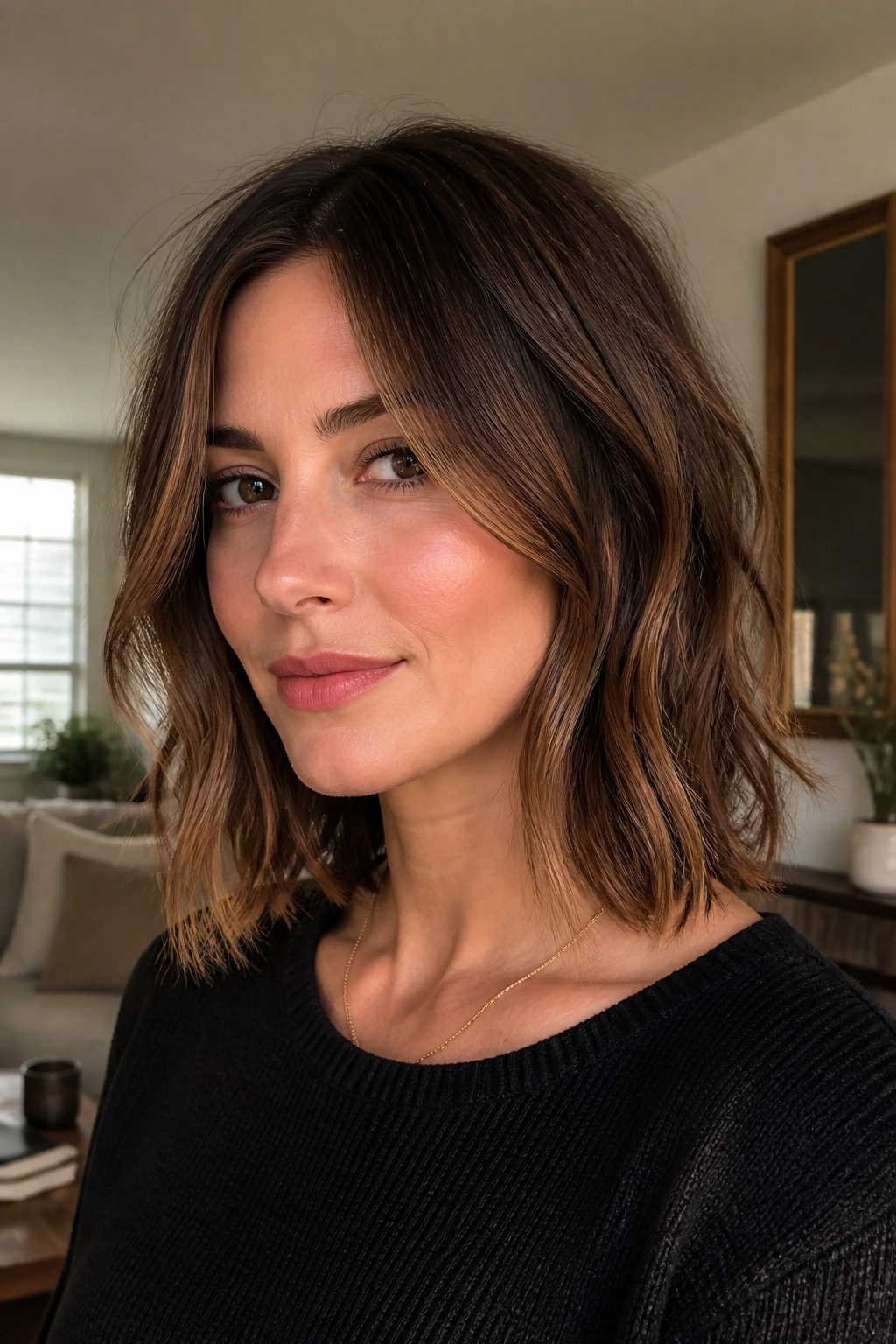
A grown-out lob with cheekbone pieces has a casual, almost accidental kind of charm. It’s the cut that looks like it’s been living well for a few weeks, not one that needs perfect styling every morning. For round faces, the cheekbone pieces are the whole story. They break up the width, pull attention upward, and keep the silhouette from reading as one big rounded shape.
The haircut itself should be long enough to move into a shoulder-skimming zone without collapsing. That extra length buys you time between trims. The soft pieces in front can be tucked, curled, or left alone, which makes the cut practical rather than precious.
If your waves get a little frizzy, this is forgiving. The shape does not depend on high gloss. It depends on placement. That’s a relief, honestly. Not every haircut needs a sleek finish to look right.
13. Collarbone Flip Lob

A collarbone flip lob leans into the way wavy hair naturally turns at the ends. Instead of fighting that outward flip, the cut welcomes it. The line lands at the collarbone, the front stays a touch longer, and the result feels lively without getting big at the cheeks.
This works because the flip draws attention down and out rather than straight across the face. Round faces need that little bit of direction. A blunt flip at jaw level would be a mess. A flip that lands lower, with the front pieces feathered a bit, reads as playful and flattering.
What to Ask For
Ask your stylist to keep the front slightly longer and the layers soft enough that the ends can turn naturally. If your hair always flips out no matter what you do, stop fighting it. Build the haircut around it. That’s usually the faster route to a good result.
I like this shape in warm, dry weather because it has movement even when the air is dry and flat. It doesn’t need perfect humidity to feel alive.
14. Soft Wolf Lob
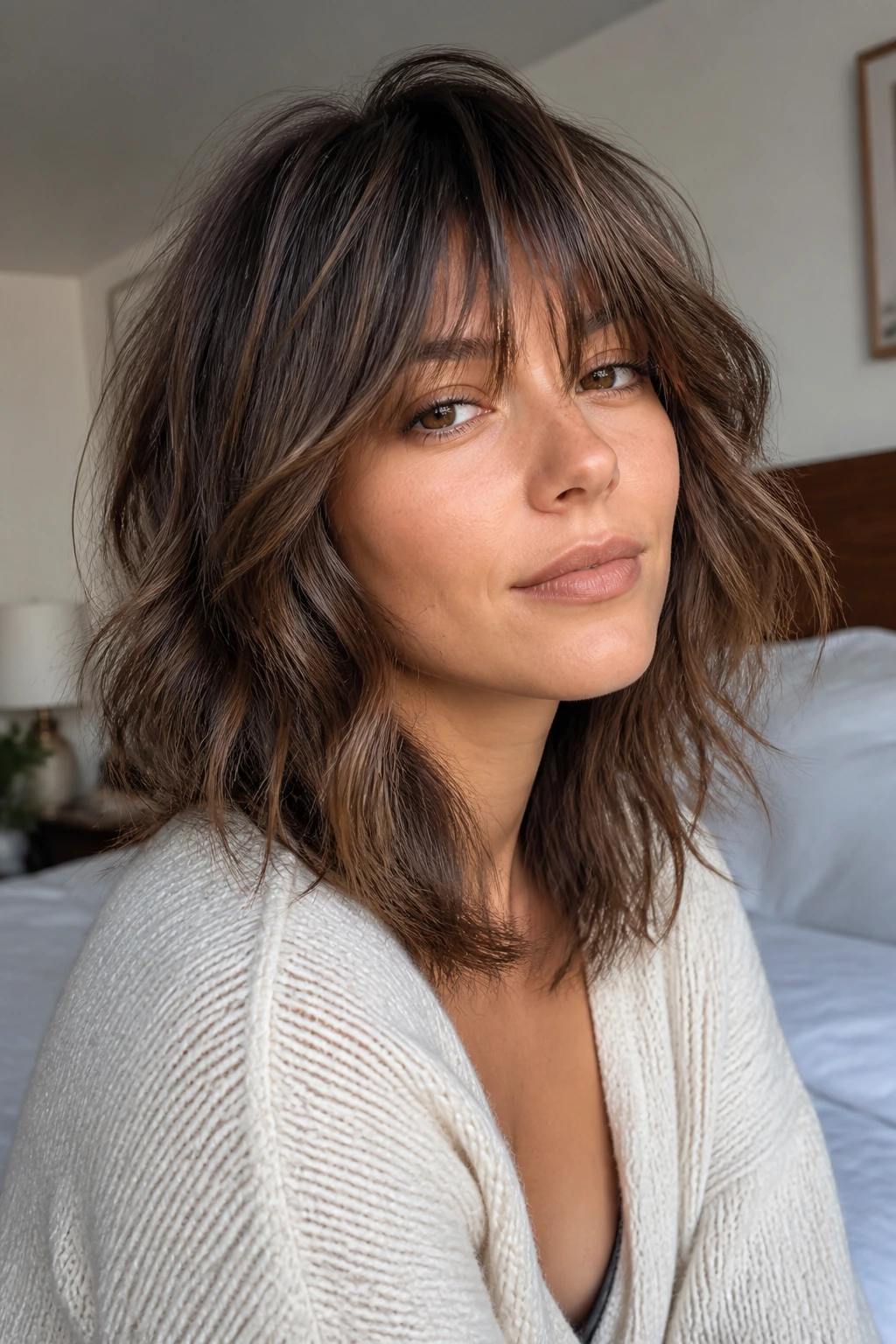
A soft wolf lob is the answer for someone who wants a little attitude but does not want to commit to a full wolf cut. The top has movement, the ends stay longer, and the overall shape still reads as a lob rather than a layered explosion. On round faces, that longer outline is what keeps the style from getting too wide.
Wavy hair works well here because the natural bend gives the layers life. The crown should be lifted lightly, not puffed up. The ends should stay thin enough to move but not so thin that they disappear. That line is easy to miss, and once it’s gone, the haircut can look too fractured.
This is a strong choice if you like texture with a bit of bite. It’s less sweet than a French bob and less tidy than a blunt lob. Somewhere in the middle. Which is often where the better cuts live anyway.
15. Center-Part Lob with Long Curtain Fringe

Does a center part work on a round face? Yes, if the rest of the cut is doing its job. A center-part lob with a long curtain fringe can look clean and balanced as long as the fringe opens at the cheeks and the overall length sits low enough to keep the face from spreading out.
The trick is the fringe length. If the shortest point is too short, the face can look broader. If it starts around the cheekbone and falls toward the jaw, it creates a narrow opening down the middle with softness on both sides. That vertical line is the part you want.
Wavy hair helps because the fringe doesn’t need to lie perfectly flat. A little bend gives the center part shape and prevents it from looking severe. The whole cut should feel like it has room to breathe.
This version is for people who like symmetry but do not want symmetry to flatten the face.
16. Tousled Lob with Mid-Length Layers

A tousled lob with mid-length layers gives the wave room to show up in the middle of the haircut, not just at the ends. That matters on wavy hair because texture that sits only at the bottom can make the cut feel bottom-heavy. Mid-length layers move the bend upward and keep the shape from turning into a single wide block.
For round faces, this is useful because the movement breaks the horizontal line. The eye moves through the middle of the cut instead of stopping at the cheeks. If you’ve got thicker wave, this can be a very nice way to remove weight without stripping the perimeter bare.
I’d style this with a diffuser and a little scrunching cream, then stop before it gets fully perfect. The charm is in the looseness. Too much polish kills it.
17. Root-Lift Lob with Lightweight Layers
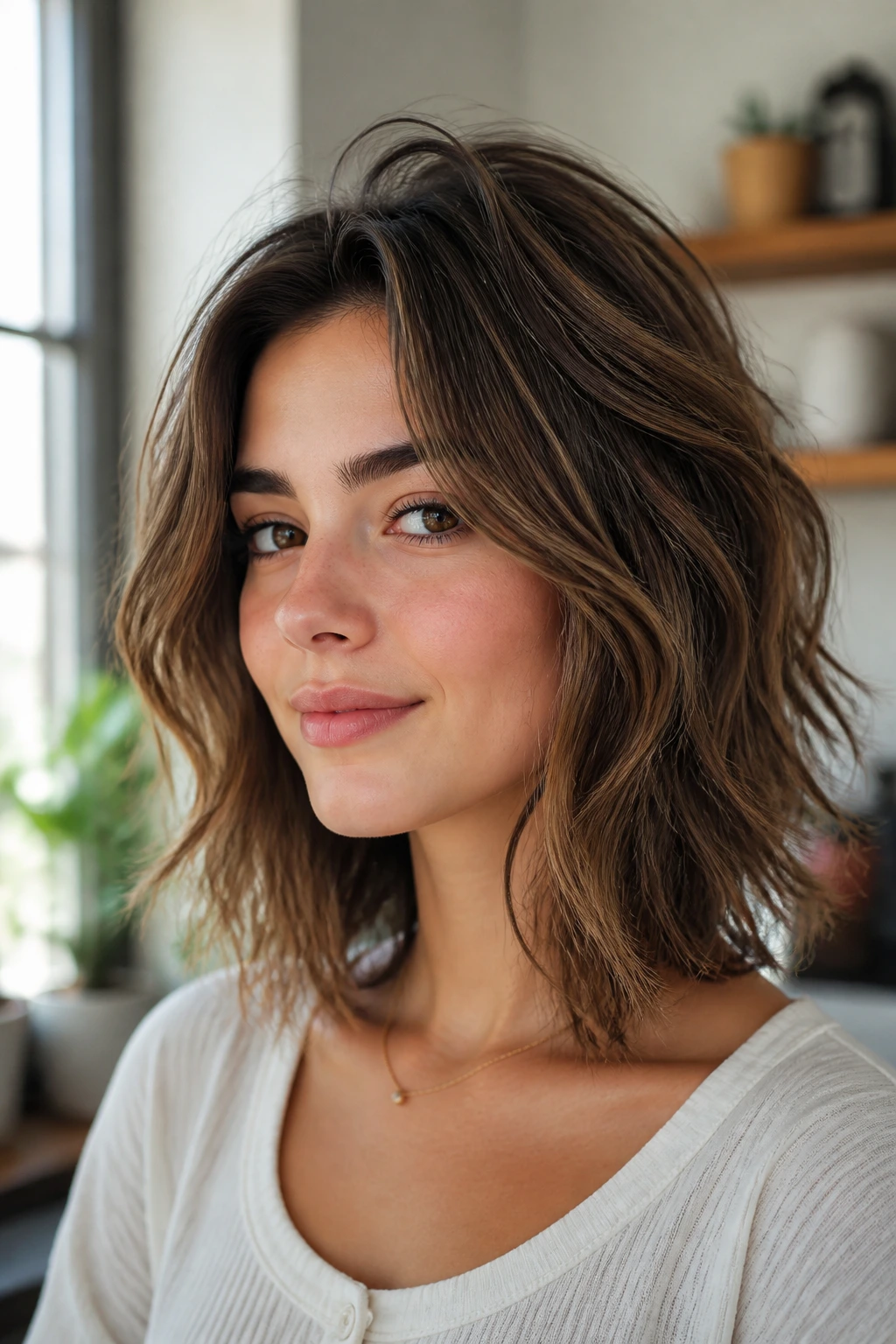
A root-lift lob is one of the smartest options for fine wavy hair on a round face because it creates height where you need it most: at the top, not around the sides. The layers stay light so the hair can move, but the root lift keeps the silhouette from sinking into the face.
This is not about teasing. Please don’t. A clean blow-dry at the crown, a clip while the roots cool, and a touch of volumizing mousse do more than people expect. The rest of the cut should stay relatively calm so the hair doesn’t puff at cheek level.
The best thing about this shape is that it looks deliberate even when it’s slightly messy. That’s hard to fake. If your waves are soft and your hair tends to lie flat by noon, this lob gives you a bit of architecture back.
18. Tucked-Back Lob with Face-Grazing Layers
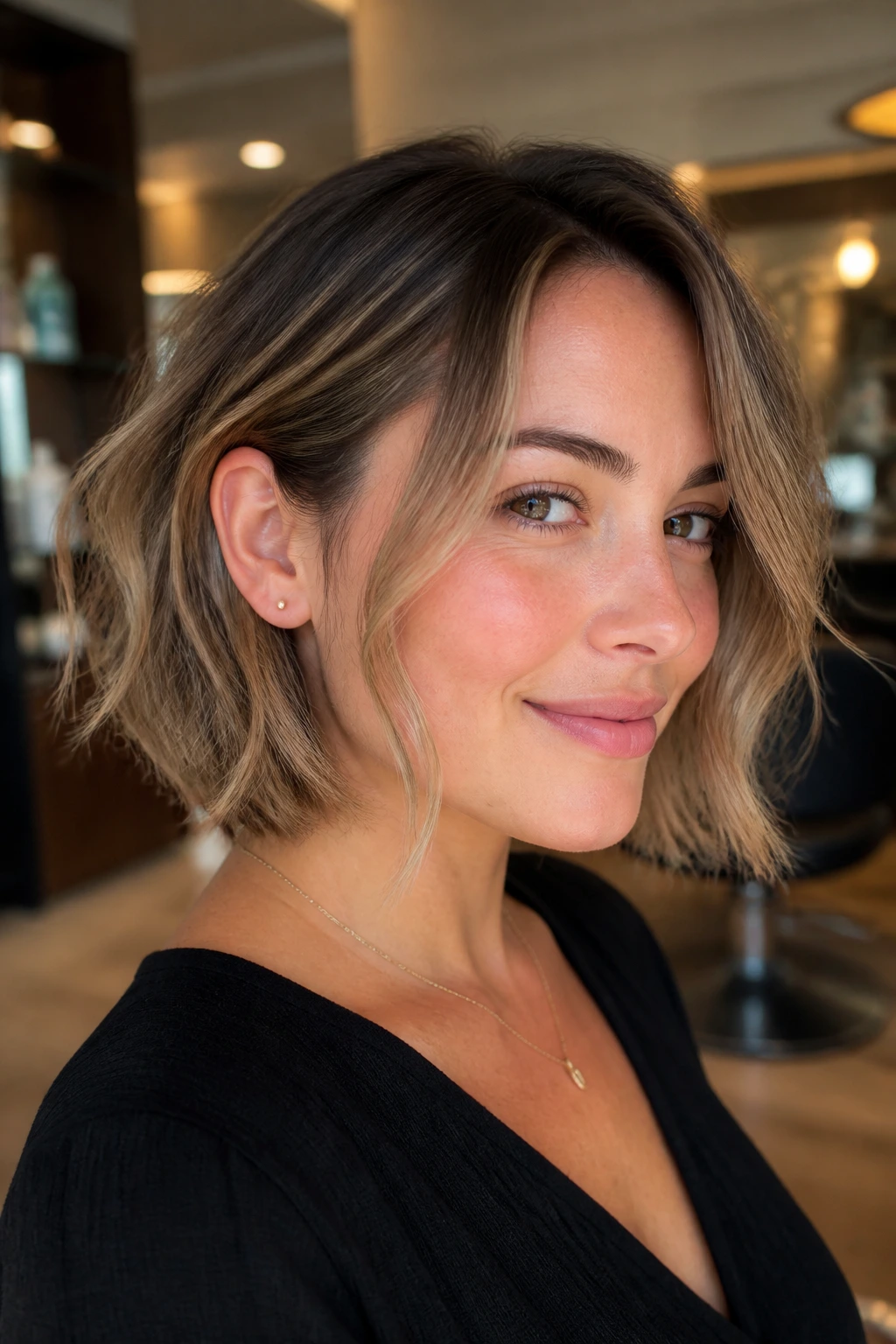
A tucked-back lob is a small styling trick that deserves a haircut built for it. The face-grazing layers are what make the tuck look intentional instead of like you shoved hair behind your ear and hoped for the best. On round faces, that asymmetry can be flattering in a very easy, low-key way.
The length needs to sit long enough to tuck without springing straight out again. Wavy hair usually helps because the bend creates soft movement around the ear. If the front pieces are cut to skim the cheekbone and jaw, the exposed side opens the face nicely.
I like this option when you want a cut that plays well with clips, sunglasses, or a blunt barrette. It’s the sort of lob that looks better as the day goes on. A little imperfect. A little tossed. That can be a feature.
19. Shoulder-Skimming Lob with Broken Ends
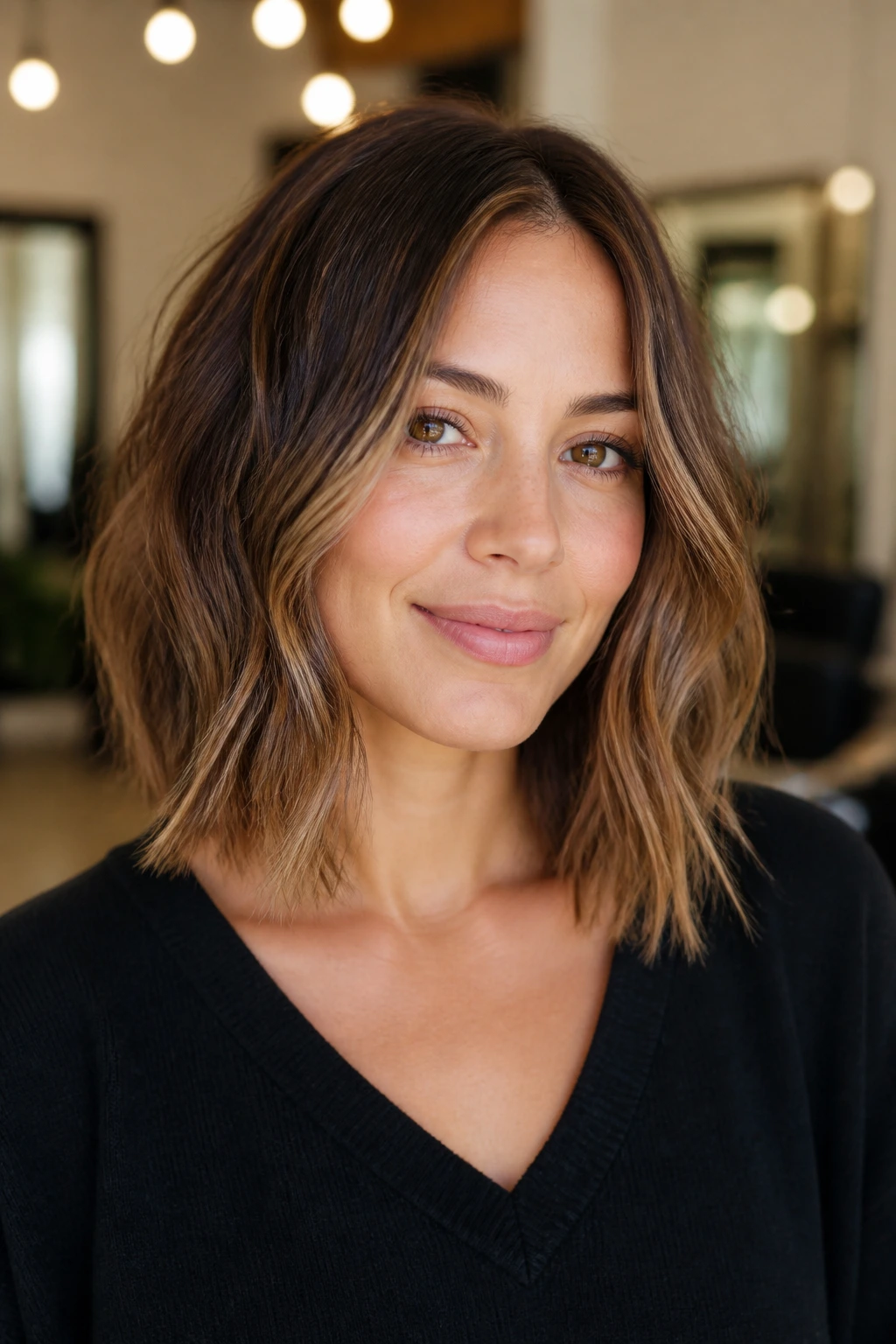
A shoulder-skimming lob with broken ends has a practical advantage: it escapes the chin altogether. That alone makes it friendlier to round faces, because the widest part of the haircut sits lower, away from the cheeks. The broken ends keep the line from feeling too heavy or too deliberate.
This is one of my favorite options for thicker wavy hair. The length gives the hair enough weight to hang properly, while the broken ends stop it from looking like a block. You still want the shape to be full. Just not bulky.
If your hair flips out at the shoulders, this cut can work with that instead of against it. The bend becomes part of the style. That’s a lot less annoying than spending every morning trying to fight gravity with a brush.
20. Tapered Lob with Side-Swept Fringe
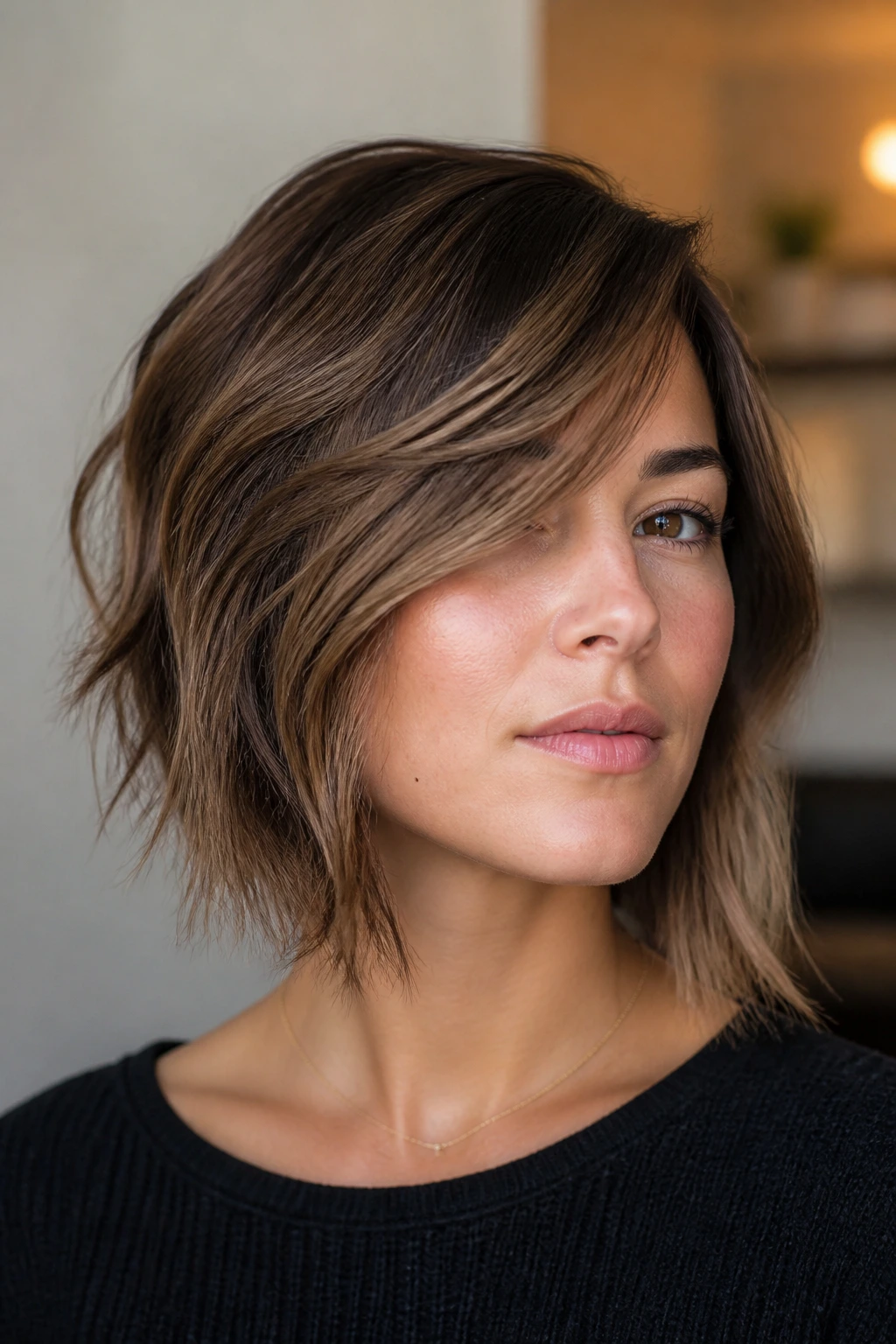
A tapered lob with a side-swept fringe is a nice middle ground between softness and structure. The back stays a touch tighter, the front lengthens a bit, and the fringe sweeps across the forehead in a way that nudges the eye diagonally. Diagonal lines are useful on round faces. They interrupt all that soft width.
The tapered shape also helps wavy hair sit closer to the head through the back while leaving the front with enough movement to frame the face. That contrast keeps the style from spreading out evenly all around, which is what you want to avoid when the face is already full through the cheeks.
This one feels a little more tailored than a shaggy lob, a little less blunt than a classic bob. I’d call it a calm haircut with good instincts.
21. Wavy Lob with Money Pieces
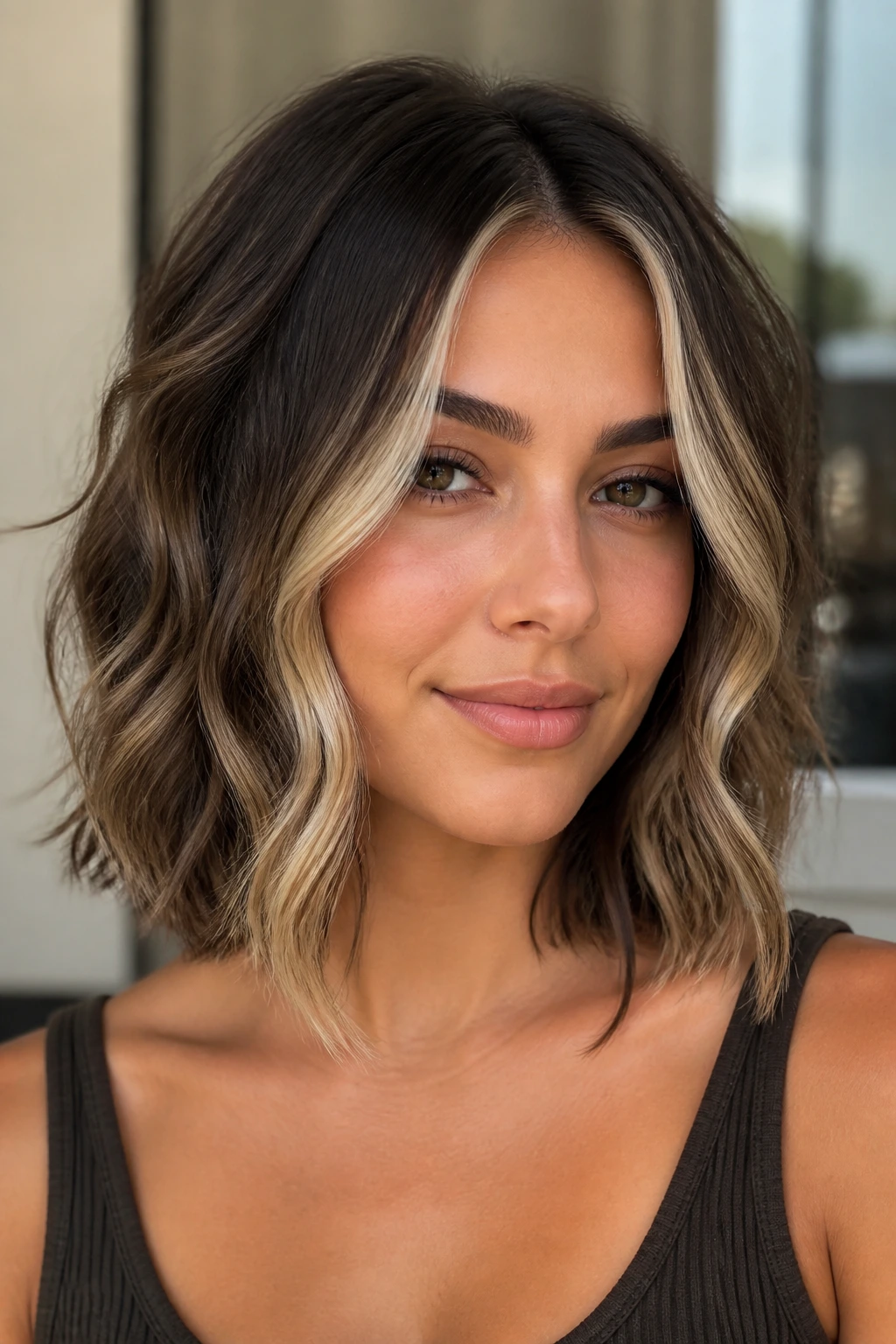
Bright money pieces around the face can make a wavy lob look more dimensional, and on a round face they do something useful: they pull attention upward and toward the center of the face instead of across the cheeks. The cut itself doesn’t have to change much. The color does part of the shaping.
The front pieces should still be cut long enough to graze the cheekbone or jawline. Color alone won’t save a bad shape. But when the length is right, those lighter pieces catch the eye and create a cleaner vertical line. They also make waves look more defined in photos and in real life, which is worth noting.
This is a good choice if your haircut needs a little extra personality without going shorter. A couple of bright ribbons near the front can do more than a big chop.
22. Air-Dried Lob with Soft, Piecey Ends

An air-dried lob with soft, piecey ends is the one I’d put at the end of the list because it may be the most realistic for daily life. Not everyone wants to heat-style a cut every morning. This version leans into what wavy hair already wants to do, then shapes the ends so the finish looks separated instead of fluffy.
The key is restraint. Use a light cream or mousse, scrunch gently, and let the hair dry without overhandling it. Once it’s dry, break up any crunchy bits with your hands. You want the ends to look softly divided, not stringy. That little bit of separation keeps the lob from reading as one heavy mass around the face.
For round faces, this works because the softness sits low and the movement stays irregular. Nothing is too symmetrical, which makes the cut feel relaxed in a good way. It’s the kind of lob that looks even better when you stop fussing with it.
Why Textured Lobs Work on Round Faces and Wavy Hair
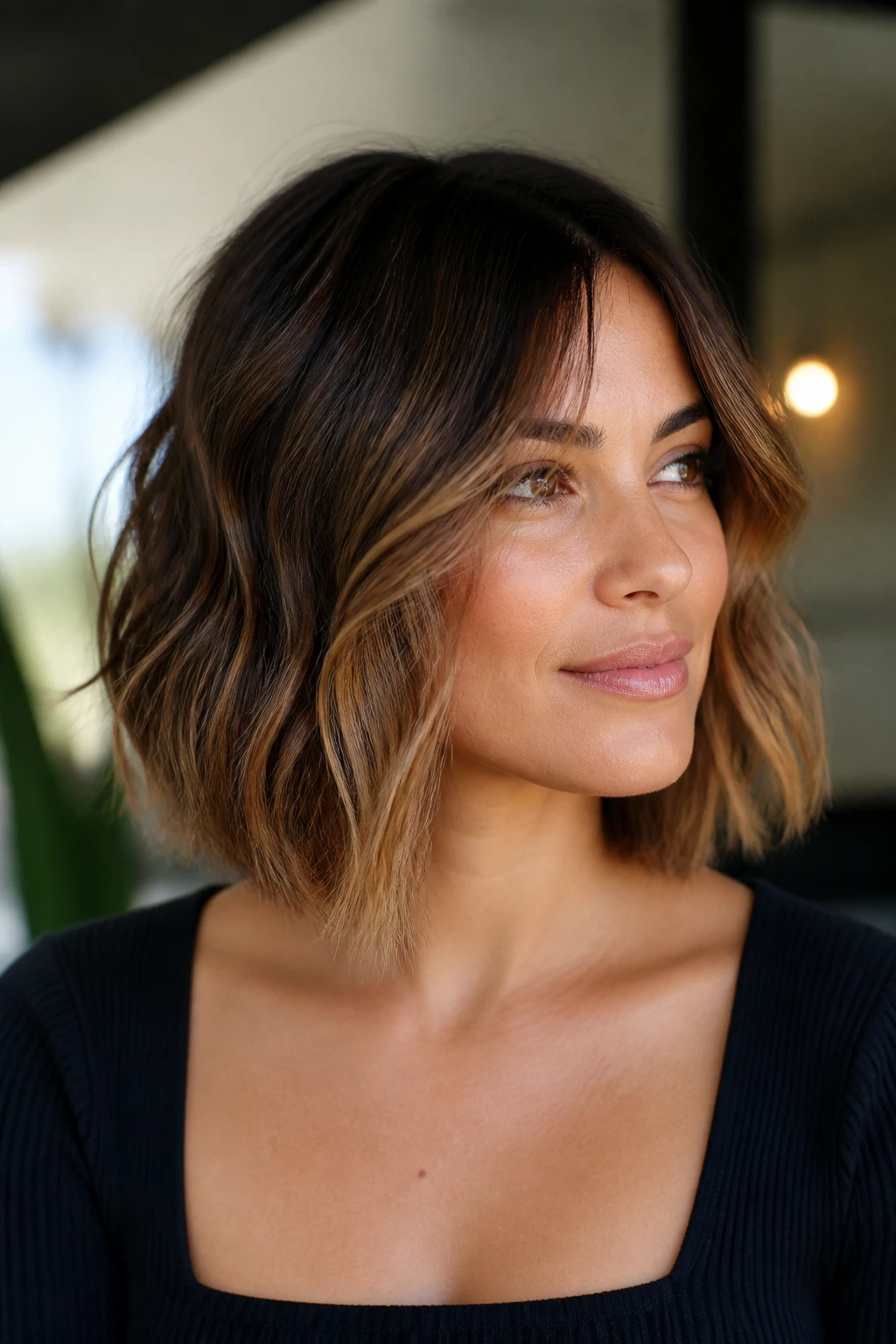
A textured lob works here because the geometry is doing real work, not just sitting there looking pretty. Round faces usually benefit from a bit of vertical length and from shapes that don’t widen at the cheeks. Wavy hair brings movement on its own, so the cut only has to guide that movement instead of manufacturing it from scratch.
The collarbone-to-shoulder zone is the useful territory. Cut above the chin and the hair can end up emphasizing the widest part of the face. Cut a little lower and the eye reads the face as longer. That extra inch or two matters more than most people expect. It’s not magic. It’s placement.
Texture changes the math too. A little broken edge, a soft layer, a face-framing piece starting below the cheekbone — those details prevent the haircut from becoming one big horizontal shape. I like haircuts that look like they know where to stop. This is one of them.
How to Ask for the Cut Without Losing the Shape
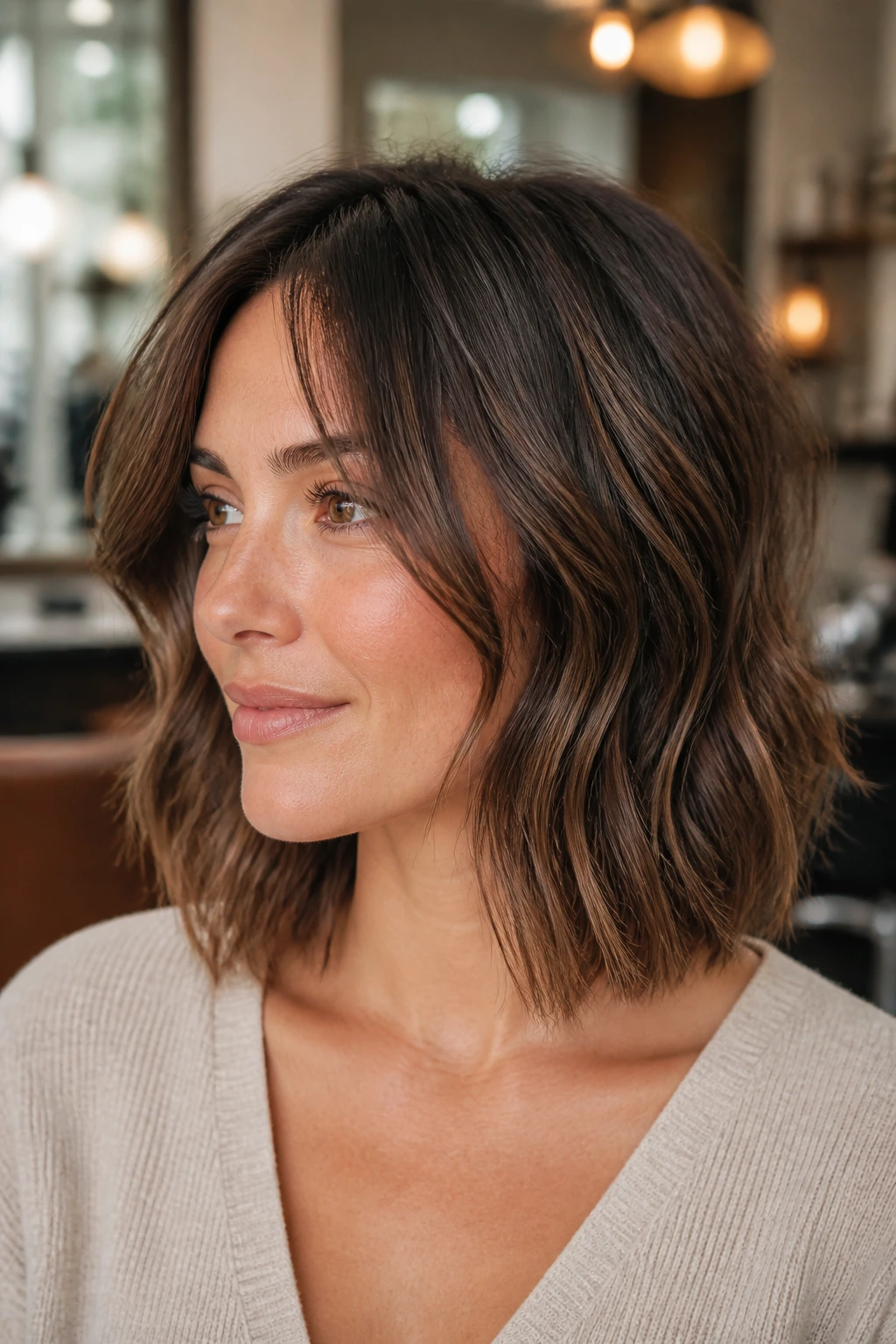
The easiest way to get the right result is to give your stylist length markers, not vague adjectives. Say you want the lob to hit around the collarbone or just below it, with face-framing pieces that start near the cheekbone or slightly under it. That gives the cut enough length to slim the face without dragging the whole shape down.
If your hair is thick, ask for internal weight removal rather than aggressive thinning on the surface. If your hair is fine, say you want the perimeter kept fuller so it doesn’t look wispy by week two. Both details matter. A cut that looks balanced on dense hair can look stringy on fine hair, and the reverse is just as true.
Bring photos, but bring good ones. Look for people with a similar wave pattern and density. A photo of a straight-haired model with a lob that grazes the jaw is not going to teach your stylist much about how your wave behaves. Hair has memory. Hair also lies in photos.
The Tools That Make Styling Easier
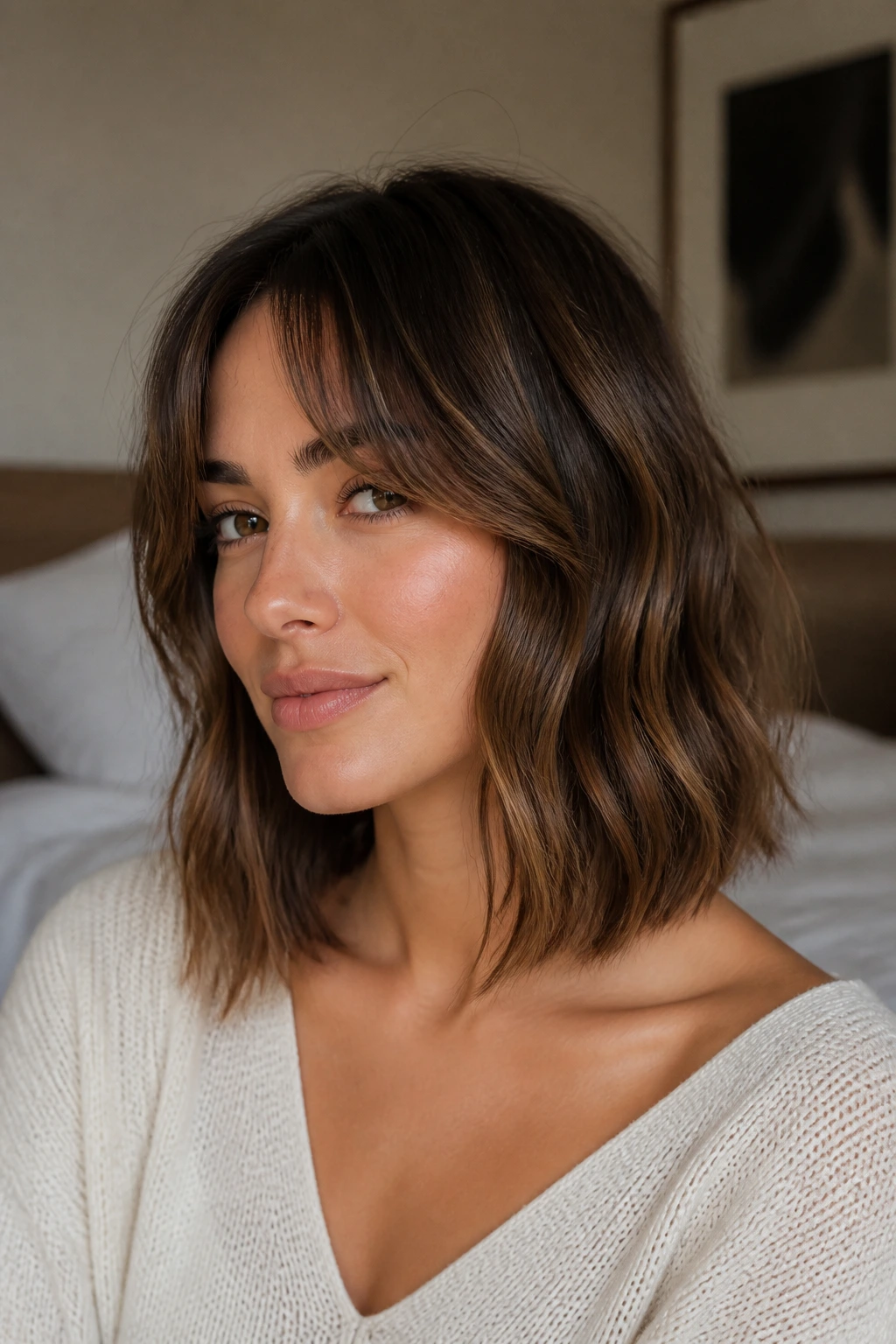
You do not need a bag full of gadgets to wear a textured lob well. You need a few reliable tools and the discipline not to overuse them.
- Diffuser attachment: Helps waves dry with shape instead of collapsing or frizzing out.
- 1-inch curling iron or wand: Good for bending the front pieces or fixing a stubborn side.
- Microfiber towel or soft T-shirt: Cuts down on roughing up the wave pattern after washing.
- Wide-tooth comb: Useful for distributing product without breaking up the wave too much.
- Duckbill clips: Great for lifting roots at the crown while hair cools.
- Heat protectant spray: Non-negotiable if you use a dryer, wand, or flat iron.
- Light mousse: Gives wave structure and some grip without heavy buildup.
- Sea salt spray: Nice for rough texture, especially on finer hair.
- Flexible-hold hairspray: Keeps the style movable instead of helmet-hard.
- Dry shampoo: Helps the roots keep a little lift on day two or three.
Product Choices That Help, Not Fight, the Hair
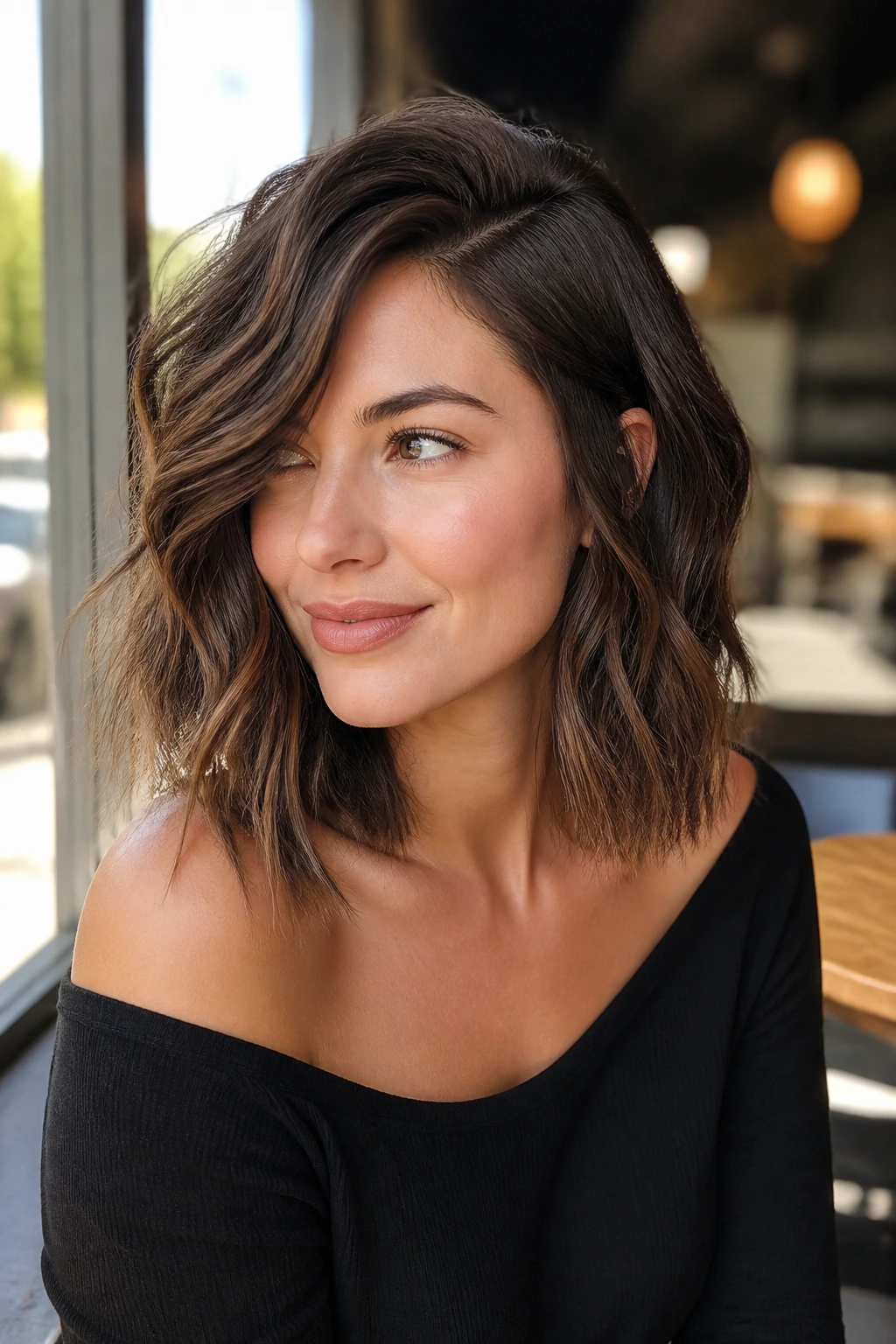
Pick products based on how your waves behave, not on how shiny the bottle looks. Fine waves usually like mousse, spray, and light cream. Thick or coarse waves often need a little more slip, which can come from a curl cream or a lightweight leave-in conditioner before the mousse goes on.
If your hair gets poofy when it dries, a product with a bit of hold before drying usually helps more than a richer cream. If your ends feel dry and rough, use the cream on the mids and ends only. Keep it off the roots unless your hair is very dry and very coarse. Roots weighted down by heavy product kill the shape fast.
I’m not a fan of loading textured lobs with heavy oils. They can make the hair collapse at the roots and turn the ends stringy. A small amount can work on the very ends, but you want control, not slickness. The haircut is doing enough already.
The Styling Routine That Keeps the Shape
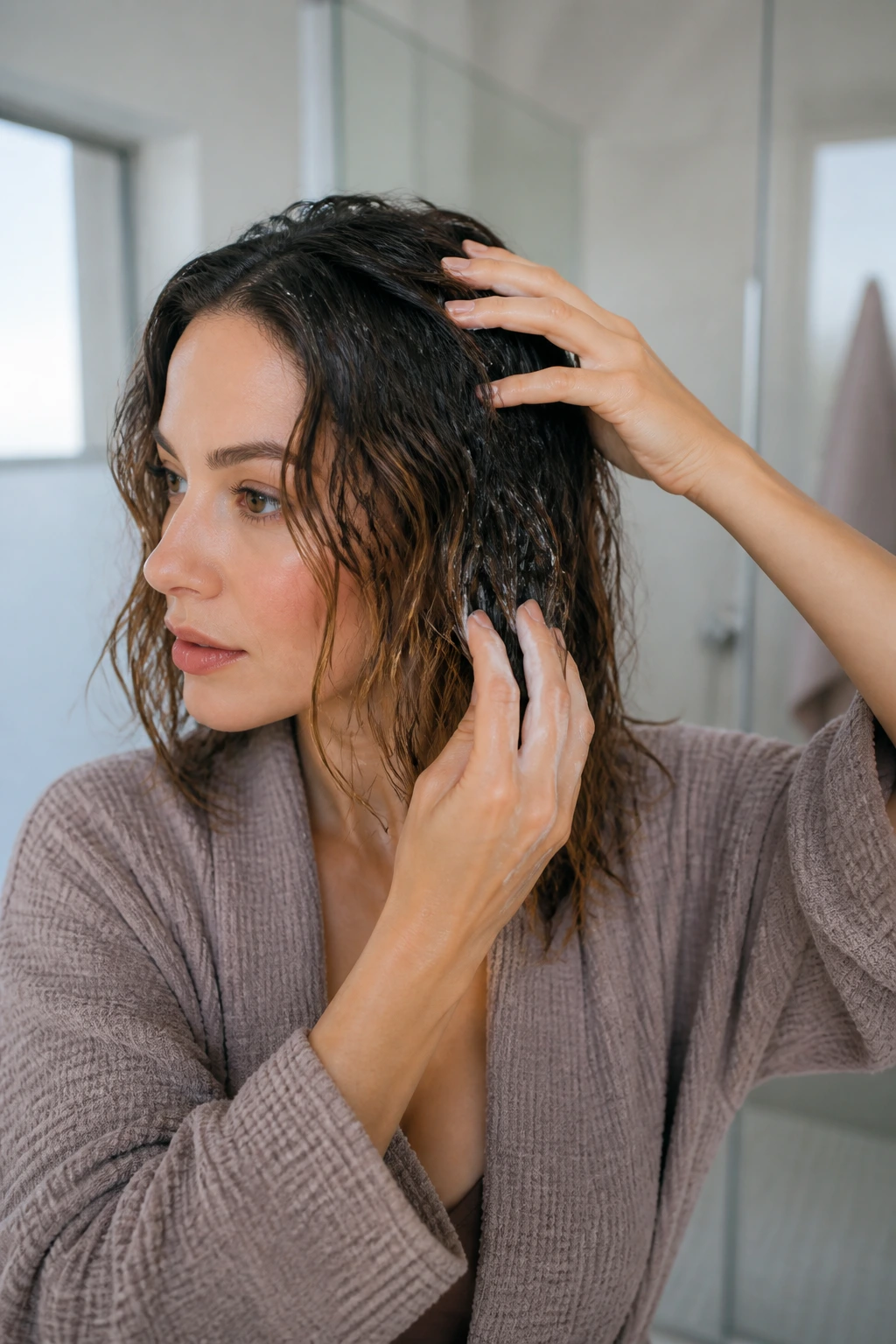
A good textured lob on wavy hair starts while the hair is still damp. Work a light mousse through the roots and mids, then add a touch of cream to the ends if they feel dry. Scrunch once or twice, not ten times. Then stop touching it.
If you diffuse, keep the heat low and the airflow gentle. Hover-drying near the roots first gives you lift, and then you can cup the ends in the diffuser to encourage the wave pattern. I usually tell people to stop when the hair is about 80 to 90 percent dry. Let the rest finish on its own. Overdrying tends to make the texture frizzier than it needs to be.
For a more polished finish, bend just the front sections with a wand or curling iron and leave the back alone. That gives the lob shape where it matters most around the face. You do not need to curl every strand. In fact, that often makes the haircut look too styled and a little dated.
How to Keep the Cut Looking Good Between Trims
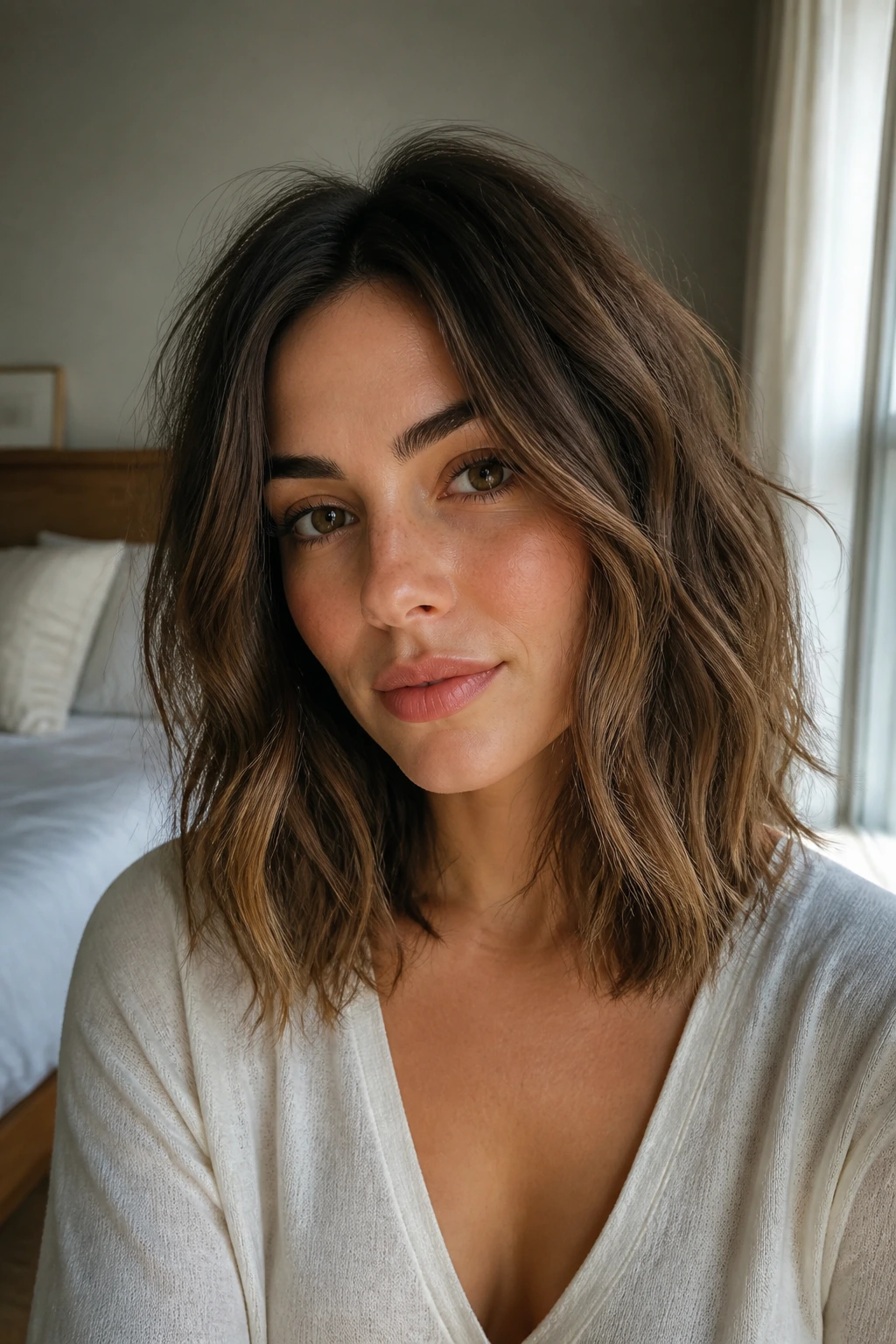
Textured lobs are generous, but they are not immortal. Most of these shapes need a trim every 8 to 12 weeks if you want the length and the movement to stay in balance. If you have curtain bangs or bottleneck bangs, those may need a cleanup every 4 to 6 weeks because fringe changes the whole mood of the cut when it gets heavy.
At home, sleep with the hair loosely tied in a soft scrunchie or clipped up so the front pieces don’t get bent into weird angles. A silk pillowcase helps with friction, especially if your waves are dry or frizz-prone. In the morning, revive the shape with a light mist of water, a dab of leave-in, and a few scrunches. No need to soak it.
If the ends start flipping weirdly or the perimeter gets too bulky, that’s a sign the cut has grown past its best length. Don’t wait until it feels impossible. A small trim now saves you from having to lose more length later.
Practical Tips for Getting the Best Result
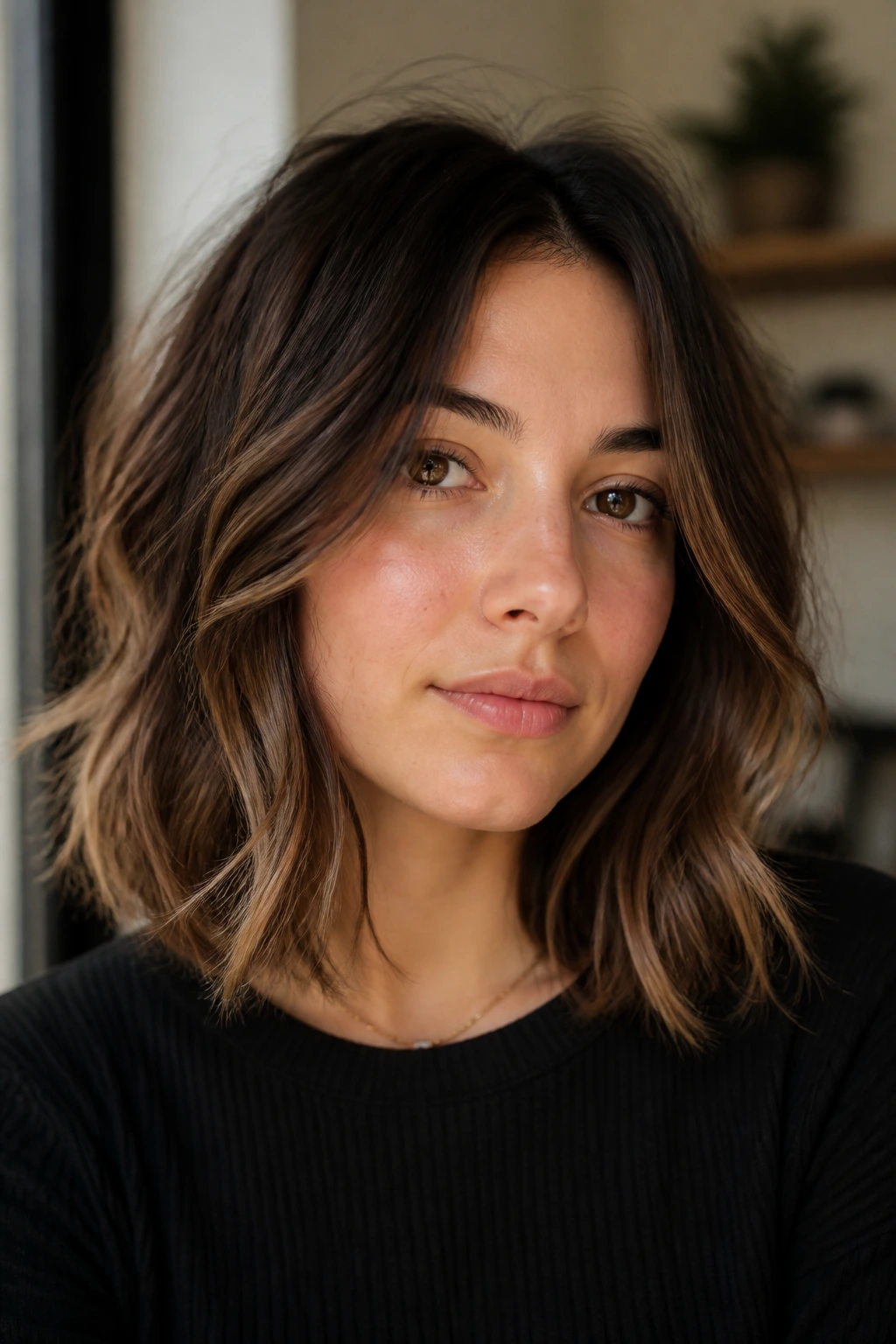
Shape Boost: Ask for face-framing pieces that begin below the cheekbone if you want the cut to visually lengthen a round face. That one detail can do more than an extra inch of length.
Texture Control: If your waves are dense or coarse, keep the shortest layers farther from the cheeks. You want movement, not a puff of width sitting at the side of the face.
Time-Saver: Dry only the roots and fringe with heat, then let the mids and ends air-dry. That hybrid approach keeps the cut from looking too done while still giving you some lift.
Pro Move: Clip the crown while it cools after diffusing. It helps the top stay up and keeps the lob from sinking into the face by lunchtime.
Finishing Touch: Warm a tiny bit of serum between your palms and press it only into the ends. Don’t rake it through the roots. That’s how textured lobs go from piecey to greasy.
Common Mistakes That Flatten the Shape
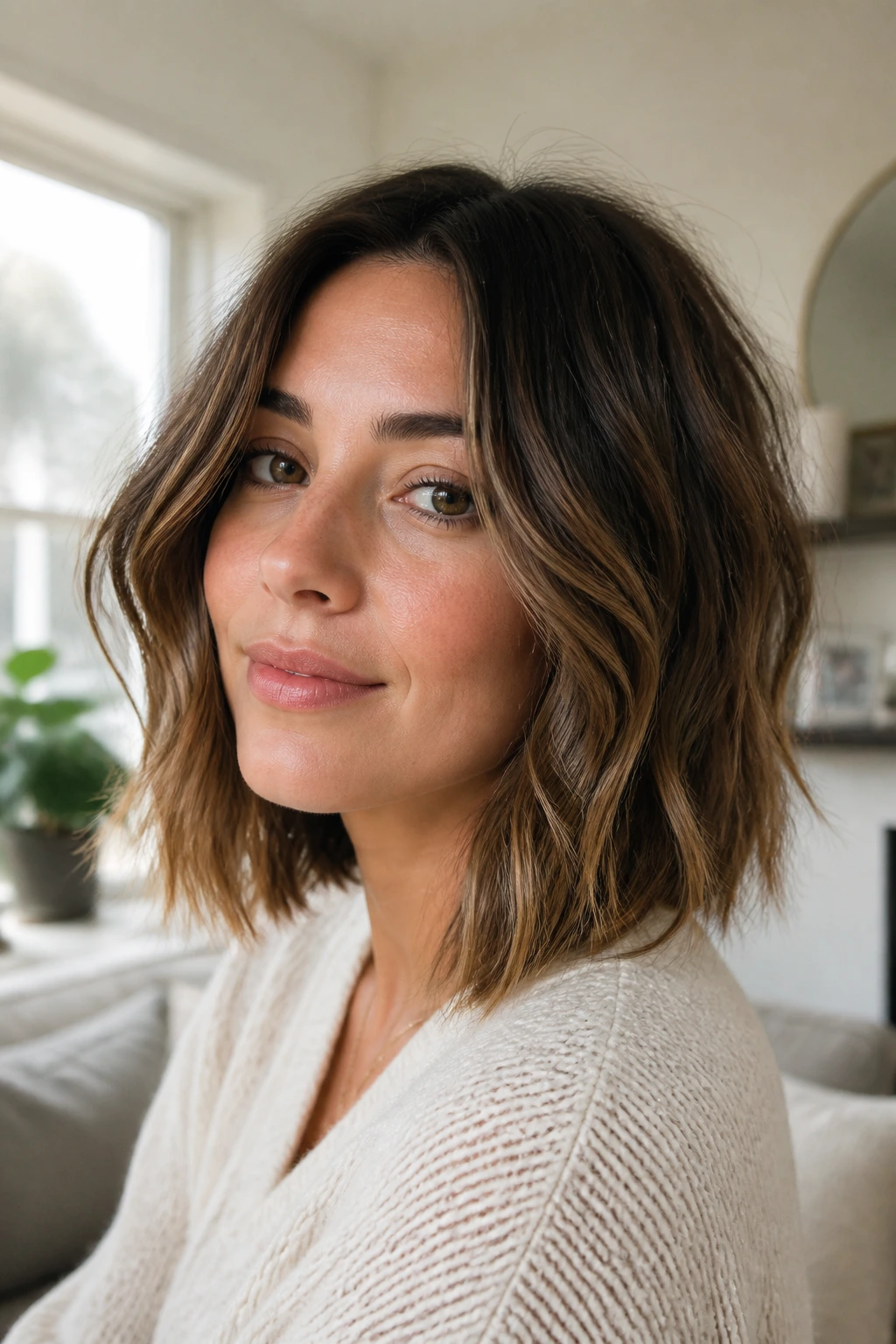
The biggest mistake is stopping the haircut at the chin. On a round face, that tends to widen the cheeks instead of lengthening the silhouette. If the lob lands right at the jaw, especially with a blunt edge, it can make the face read fuller than it is. Move the length lower. That simple fix changes everything.
Another problem is over-thinning the sides. If too much weight gets removed around the temples and cheeks, the hair can balloon out or look see-through. You want controlled movement, not stripped-out ends. Ask for weight removal in the interior if the hair is thick, and keep the outline solid.
A third issue: too much curl uniformity. If every section is wound the same direction with the same size iron, the haircut loses its relaxed texture and starts looking overstyled. Mix the bend. Leave some pieces alone. Let the wave do some of the work.
And then there’s the old friend, heavy product. Too much cream or oil can flatten the roots and separate the ends in a greasy way. Start small. You can always add a little more.
Variations and Alternatives Worth Trying

The Fine-Hair Float: Keep the layers light and the perimeter fuller. This version gives fine waves movement without removing so much weight that the ends vanish.
The Thick-Hair Control Cut: Ask for a strong outer line with internal debulking. It keeps dense waves from puffing outward at the cheeks.
The Fringe-Forward Version: Curtain bangs or bottleneck bangs take the focus upward and soften the width through the face.
The Low-Maintenance Air-Dry Shape: Keep the cut long enough to air-dry well with mousse and a little scrunching cream. It’s the easiest version to live with.
The Sleeker Lob: For people who like polish, keep the top smooth and let just the ends bend. It works well for work settings or anyone who dislikes too much separation.
The Messier Weekend Cut: Leave more texture in the mids, rough it up with spray, and make the haircut look a little lived-in. Good for casual wardrobes and thicker waves.
Essential Tools for These Cuts
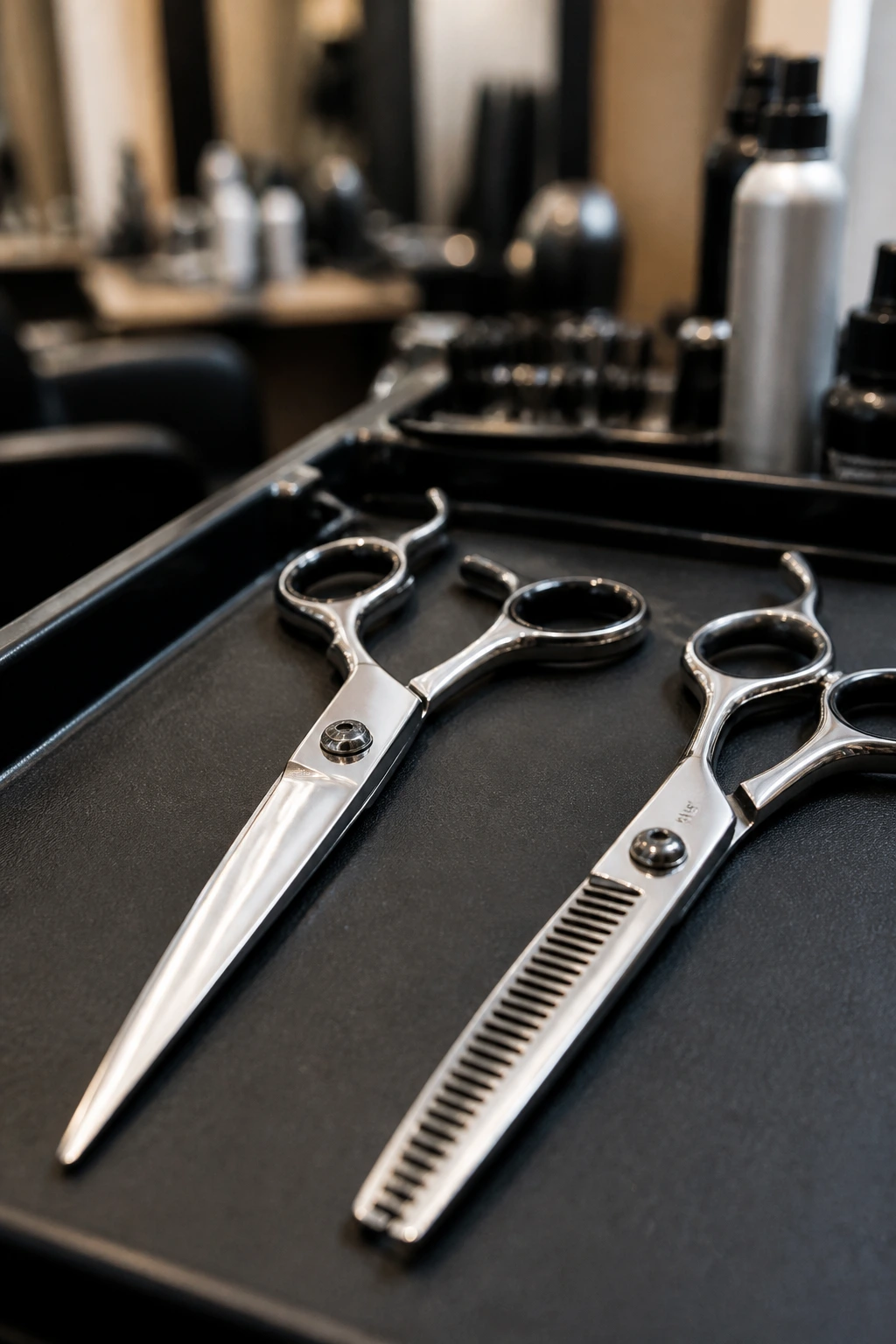
- Salon scissors and texturizing shears: The stylist needs both; the goal is shape control, not random thinning.
- Blow-dryer with nozzle: A nozzle gives direction and keeps the root lift cleaner.
- Diffuser: Useful for wavy hair that needs a softer dry with less frizz.
- 1-inch wand or curling iron: Best for bending front pieces or refreshing day-two hair.
- Round brush: Good for curtain bangs, underbends, and a smoother crown.
- Clips: Keep the top lifted while it cools or set the fringe separately.
- Microfiber towel: Helps preserve wave definition after washing.
- Wide-tooth comb: Gentle detangling before product goes in.
- Heat protectant: Protects the ends, which are the part that gets abused first.
- Flexible hairspray and mousse: The two most useful styling products for this length.
- Dry shampoo: Keeps the roots from collapsing.
Frequently Asked Questions
What length is best for a round face?
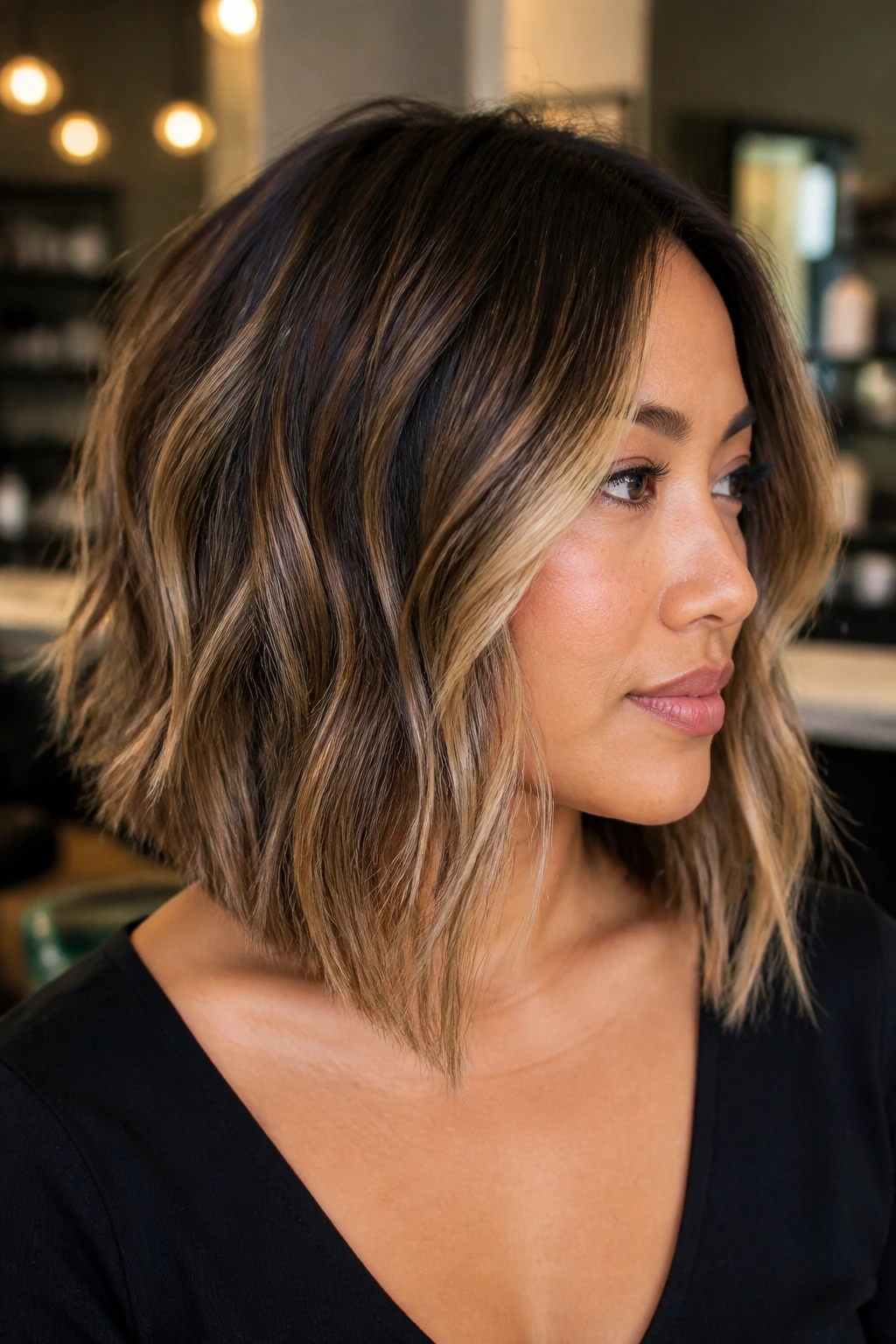
The safest zone is usually below the chin and often around the collarbone. That gives the face more vertical line and keeps the widest part of the haircut from sitting right on the cheeks.
Can a blunt lob work on wavy hair?
Yes, if the inside of the cut is handled carefully. A blunt outline with hidden weight removal can look clean without turning boxy, especially when the length is long enough to avoid the jawline.
Should I avoid a center part with a round face?
Not necessarily. A center part can work when the front pieces are long, the crown has some lift, and the rest of the cut creates movement below the cheekbones. Without those details, it can feel too wide.
Do curtain bangs make a round face look wider?
They can, if they start too high or too short. When curtain bangs open at the cheekbone and fall softly around the face, they tend to slim the shape instead of widening it.
How much layering does wavy hair need in a lob?
Less than people expect. Too many short layers can make the hair puff out. Long internal layers or soft face-framing pieces often do the job better than aggressive layering.
How often should I trim a textured lob?
Most people do well with trims every 8 to 12 weeks. If you have bangs, clean those up more often so they don’t swallow the rest of the cut.
What if my waves get frizzy in humidity?
Use less product, not more, at the roots and keep heavier cream off the crown. A lightweight mousse plus a flexible spray usually holds the shape better than rich creams in damp air.
Can I air-dry this haircut?
Absolutely. Many of these lobs look better with air-drying than with too much heat styling. The trick is to apply product evenly, scrunch lightly, and avoid touching the hair until it’s mostly dry.
What if my hair is thick and triangular?
Ask for internal weight removal and a perimeter that stays below the chin. That combo keeps the shape from widening at the sides while still letting the waves move.
Why This Collection Keeps Working
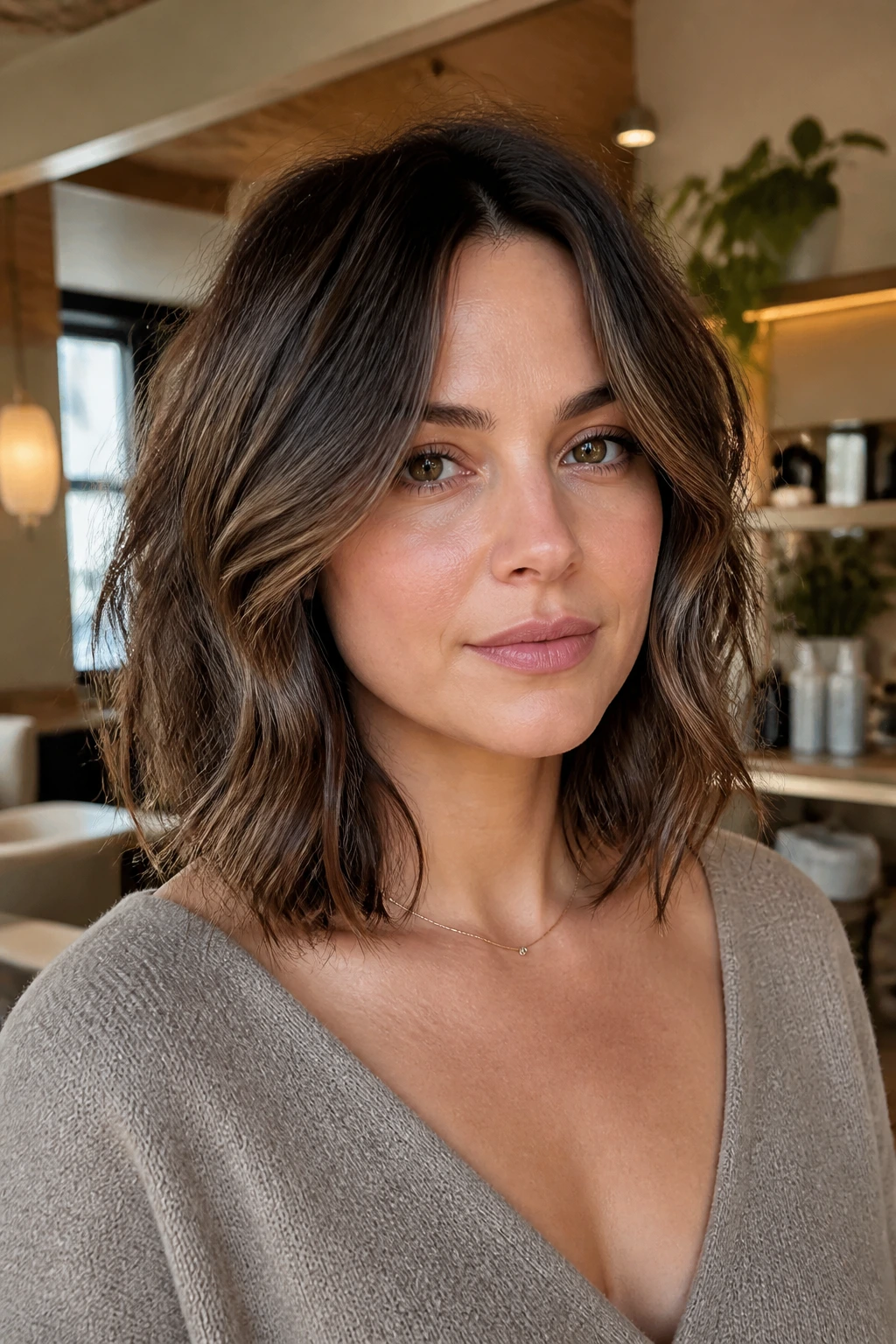
The nice thing about a textured lob is that it doesn’t ask your hair to become something else. It works with bend, with softness, with the little irregularities that make wavy hair look alive instead of staged. On a round face, that matters even more, because the cut has to shape the silhouette without crowding it.
If you take one thing from all of these options, let it be this: length placement matters as much as texture. A great lob can be ruined by stopping too high, and a simple lob can look expensive when the front pieces are cut with a little thought. That’s the whole game.
Pick the version that matches how much effort you want to give it on a Tuesday morning, not just how it looks in a photo. That’s usually the haircut you’ll keep reaching for.