



Fine hair after 50 does not need to be hidden. It needs shape, a little lift, and a front section that does some work without stealing density from the ends. That’s why long fine hairstyles for women over 50 with curtain bangs keep showing up as a smart answer: they let the length stay graceful while the fringe softens the face, breaks up flatness, and gives the whole cut a bit of air.
Too many long cuts go wrong for one boring reason: the layers start too high, the ends get thinned out, and the hair ends up looking see-through from midshaft to the bottom. You can see the problem before you even comb it. The ponytail looks skinny, the sides collapse by lunchtime, and the face-framing pieces fall like they’ve given up. Curtain bangs change that equation because they create movement right where the eye lands first.
And there’s a bonus people overlook. Curtain bangs are forgiving. They grow out into cheekbone layers instead of turning into a blunt little shelf, which makes them far less fussy than classic fringe. That matters when the hair is fine, because fine hair already asks for enough attention without adding a bang that demands daily negotiation.
Why These Styles Work So Well on Fine Hair
- They create width at the cheekbones: A split fringe opens the face and gives the illusion of fuller sides, which keeps fine hair from hanging in a narrow line.
- They protect the ends from looking wispy: The best long cuts keep weight in the perimeter, so the bottom line still looks deliberate instead of shredded.
- They soften the face without heavy bangs: Curtain bangs brush away from the forehead and sit better with glasses, strong brows, and changing face shapes.
- They make styling easier, not harder: A quick round-brush bend at the front can do more for the whole cut than adding another layer everywhere else.
- They grow out with less drama: The front section blends into face-framing layers, so you can stretch the time between trims without looking like you’ve abandoned the cut.
- They play well with texture: Straight, wavy, silver, highlighted, or softly curled hair can all carry curtain bangs if the cut keeps enough length in the front.
1. Butterfly Layers That Lift the Crown
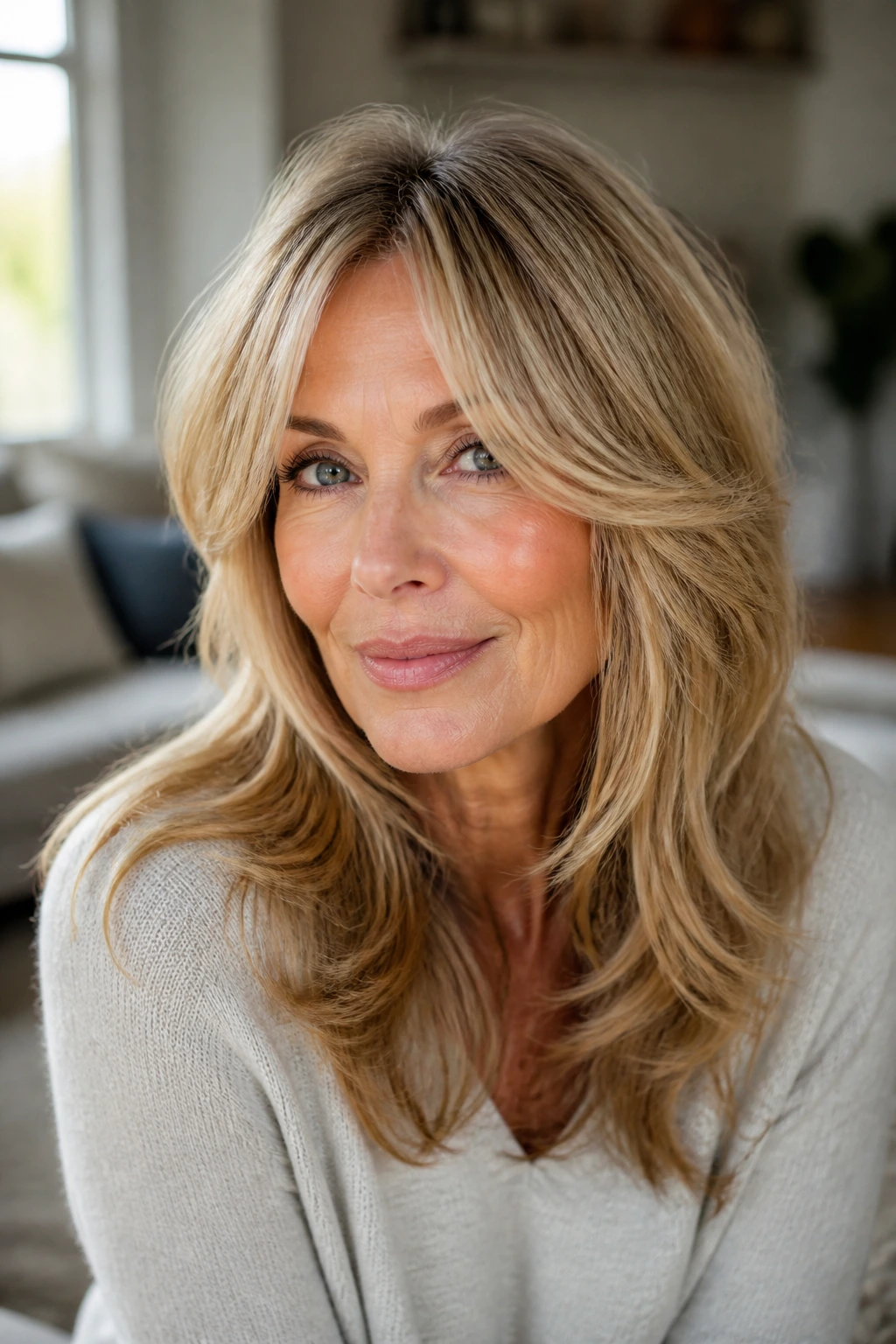
Butterfly layers are the cut that proves long hair doesn’t need to be heavy to look full. The magic is in the contrast: shorter, face-framing pieces float around the cheekbones while the rest of the length keeps its shape below the shoulders. On fine hair, that split of responsibility matters. The front gets movement. The back keeps weight.
Why It Flatters Fine Hair
The crown needs a little help when hair is fine, especially after 50, when density tends to soften around the part line. Butterfly layers create that help without chopping the whole head into short pieces. Ask for the shortest face-framing layer to hit somewhere around the cheekbone or just below it, then let the curtain bangs open softly through the center.
The best version is not over-layered. If the stylist takes too much from the interior, you’ll lose the plush swing that makes this cut look expensive in motion. Keep the perimeter long and let the top layers do the lifting.
- Shortest face-framing layer: cheekbone to lip length
- Curtain bangs: soft split, not a heavy blunt fringe
- Ends: left thick enough to skim the shoulders with weight
- Styling: round brush at the crown, then a soft bend through the front
Pro tip: ask for the layers to begin lower than you think. On fine hair, one inch too high can make the whole cut look airy in the wrong way.
2. A Long U-Shape That Keeps the Ends Thick
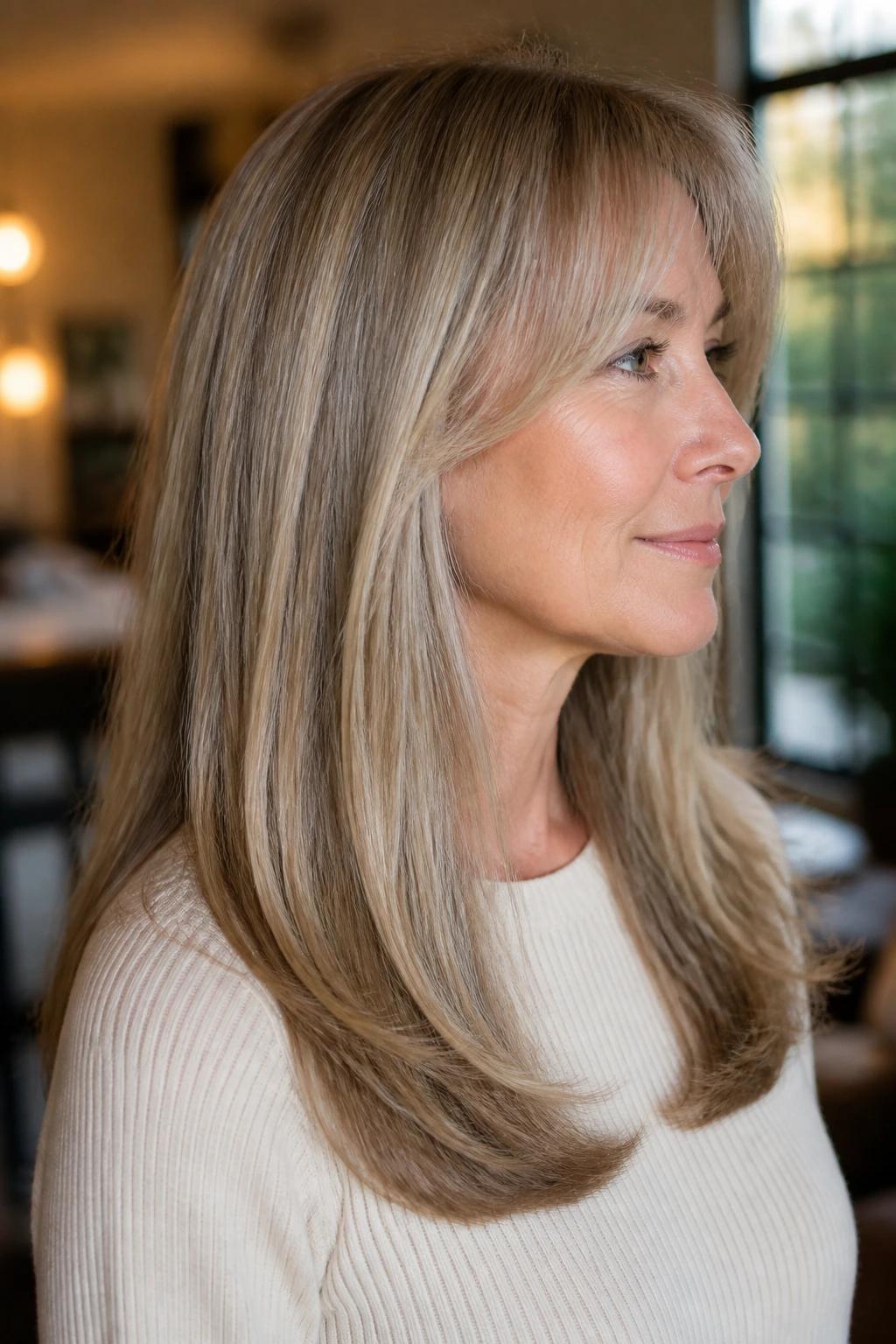
Why does a U-shape usually look fuller than a straight-across cut on fine hair? Because the sides taper gently while the center keeps length, which gives the illusion of a denser curtain of hair without making the perimeter look blocky. That shape is especially useful if your hair is straight or slightly wavy and you want movement without a lot of daily styling.
The U-shape is one of those cuts that reads calm. No sharp corners. No heavy shelf at the bottom. The line curves just enough to keep the eye moving, and curtain bangs soften the front so the whole thing feels connected instead of split into separate pieces.
What I like about this shape is how little it asks for on a busy morning. A quick blow-dry around the face, a small round brush for the bang, and the rest can air-dry if your texture is cooperative. If your hair tends to puff at the ends, ask for the curve to be subtle. Too much taper can make the sides look thin.
The sweet spot is a shoulder-to-mid-back length with enough weight at the bottom to keep the style from floating away.
3. Face-Framing Feathers at the Cheekbones
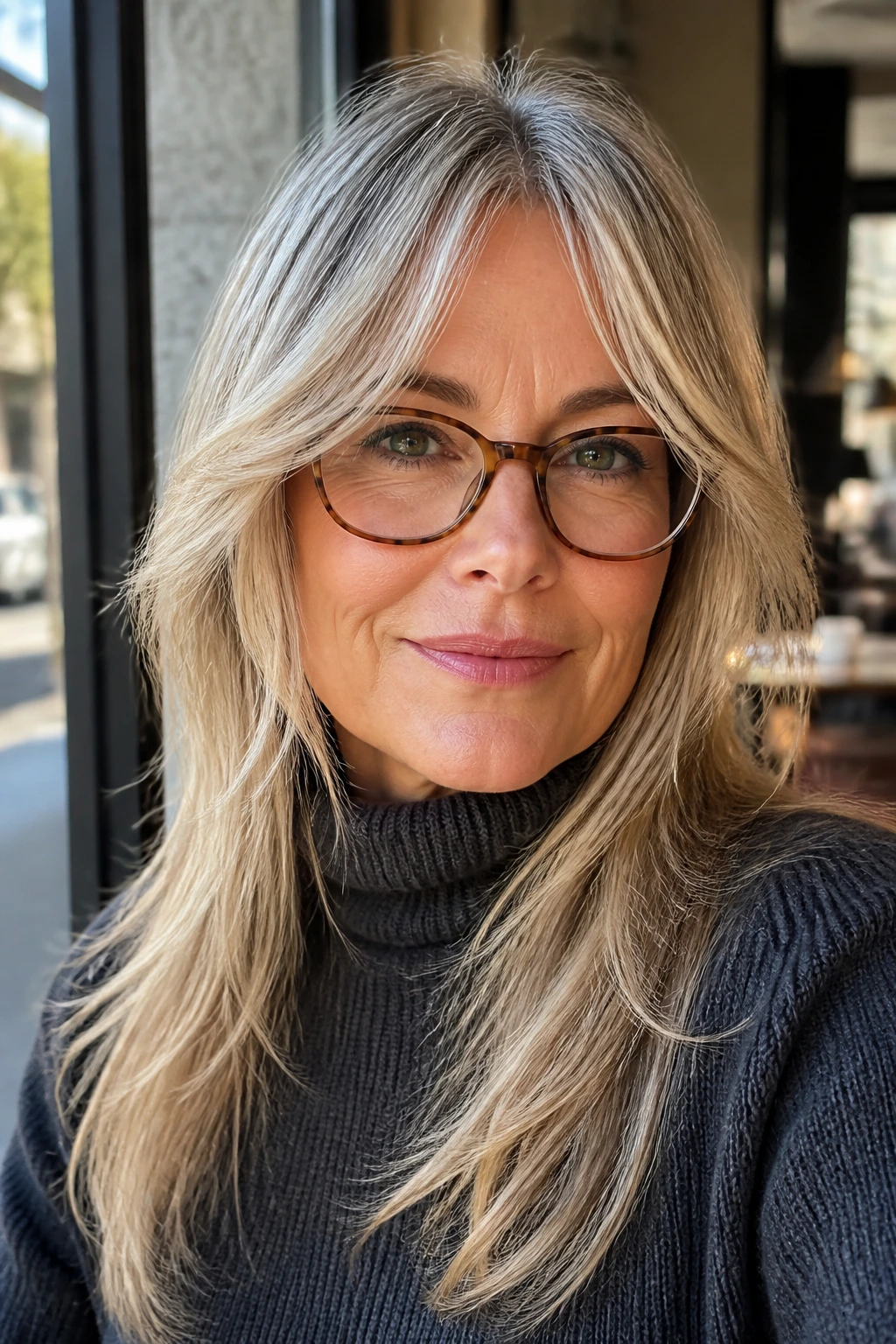
Picture the way a good feathered cut moves when you turn your head. That’s the whole point here. The front pieces sweep away from the face in light layers, and the curtain bangs break at the middle so the shape feels lifted rather than crowded. It’s a lovely choice when you wear glasses or want your cheekbones to do some visible work.
Where the Layers Should Start
Keep the first layers at or below the cheekbone. If they start at the jaw, the shape can get draggy; if they start too high, the front loses substance. Fine hair likes precision more than drama.
A feathered front also behaves well when the hair is tucked behind one ear. That’s a small thing, but small things matter. You get asymmetry without committing to a side part, and the fringe still falls back into place when you shake it out.
- Best for: medium-fine hair with a little natural bend
- Avoid: over-thinning the ends with razors or thinning shears
- Works well with: round brushes, blow-dryer brushes, soft rollers
- Good finish: a light shine spray, not a heavy oil
If your hair goes flat at the temples, this cut can help because the front pieces create a soft frame without needing bulk all over the head.
4. Center-Part Length With Soft Curtain Bangs
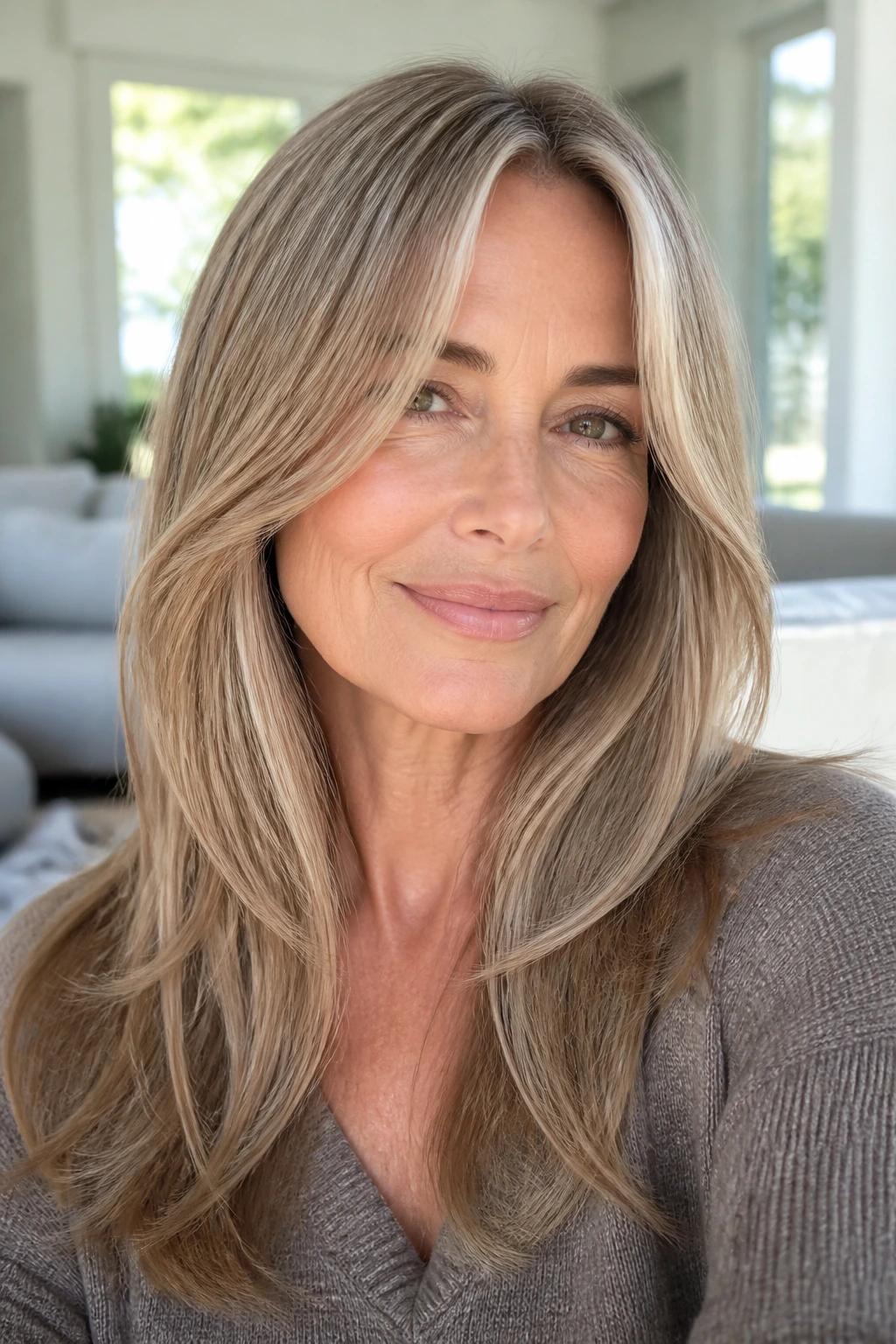
A center part isn’t the enemy on fine hair. A bad cut is. When the perimeter has enough weight and the fringe is cut to bend outward instead of dropping straight down, a center-part long style can look polished and clean rather than sparse. The curtain bangs become the anchor; they keep the middle from reading too severe.
This look leans sleek. Not limp. There’s a difference. The hair should fall with a smooth surface, but the ends still need a little life so they don’t look like they were ironed into submission. Use a lightweight smoothing cream only from the ears down, then a root spray at the crown. That keeps the top from collapsing.
It’s a nice option if your hair is naturally straight and you hate spending half an hour fighting it into a curl. The bang only needs a slight bend away from the face. A 1.25-inch round brush or hot brush is enough.
And if you wear a strong lipstick or bold glasses, this cut gives those details a clean stage. Nothing fights for attention.
5. The Long Shag That Adds Movement Without Losing Length
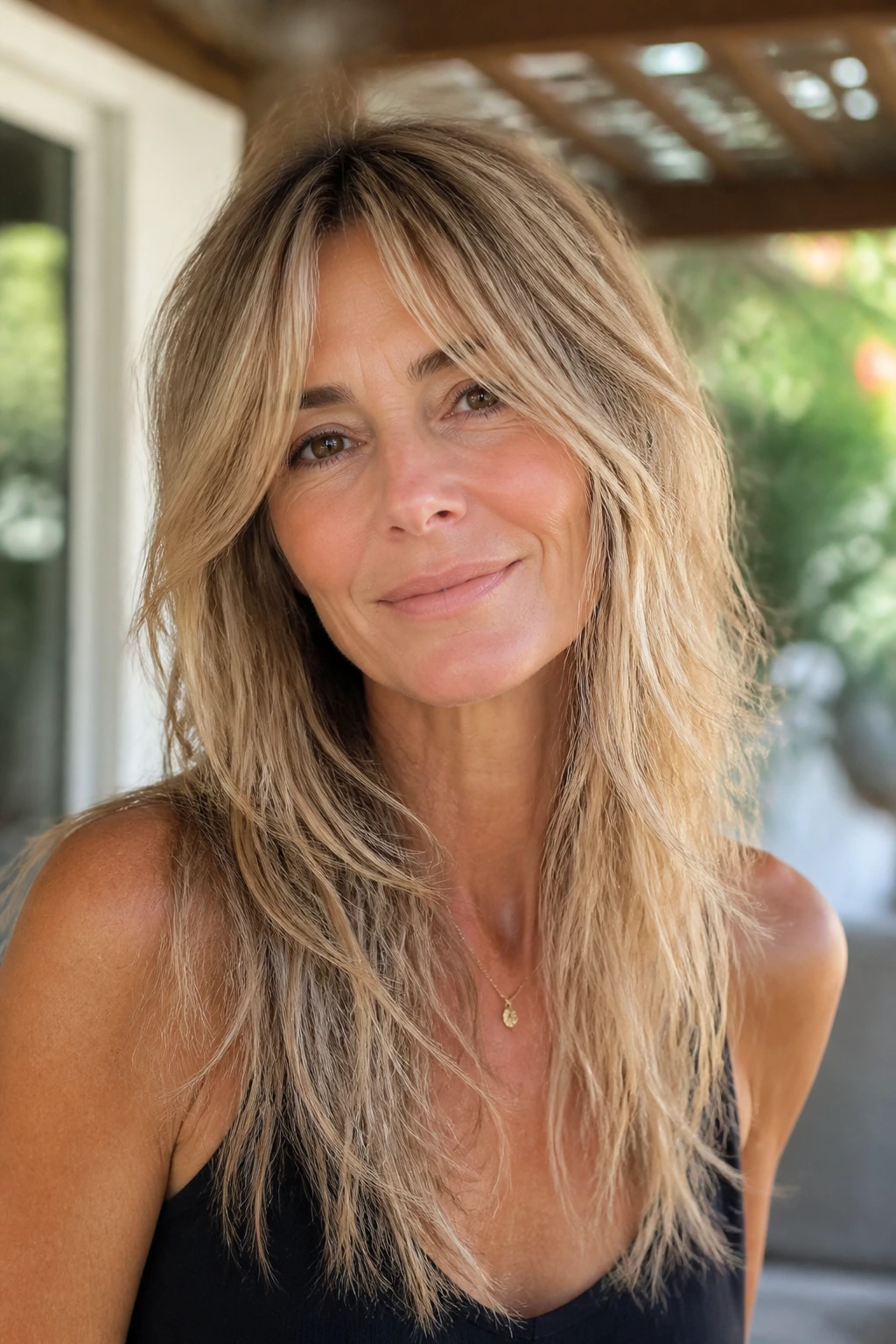
People hear “shag” and picture something choppy and wild, but that’s not the version that works best for fine hair after 50. The good version keeps the layers long, soft, and directional. The fringe splits in the middle like curtain bangs should, and the rest of the cut moves in loose pieces rather than in disconnected chunks.
What to Keep Long, What to Remove
Keep the bottom line solid. That’s the rule. Remove bulk from the interior, not from the perimeter, and don’t let the layers climb too high up the head. Fine hair can handle texture, but it cannot afford to have every ounce of weight stripped away.
This cut suits hair that has a little bend or wave because the movement shows up naturally. Straight hair can wear it too, but it needs some styling help at the roots. A quick mist of volumizing spray before blow-drying gives the crown the lift that the layers are trying to suggest.
- Best if your hair already has some natural swing
- Ask for long, blended layers instead of short choppy ones
- Keep the bang split wide so the forehead stays open
- Use a diffuser only if your wave pattern is soft, not frizzy
There’s a reason this shape keeps coming back: it gives fine hair something to do without making it look busy.
6. A C-Cut That Bends In at the Jawline
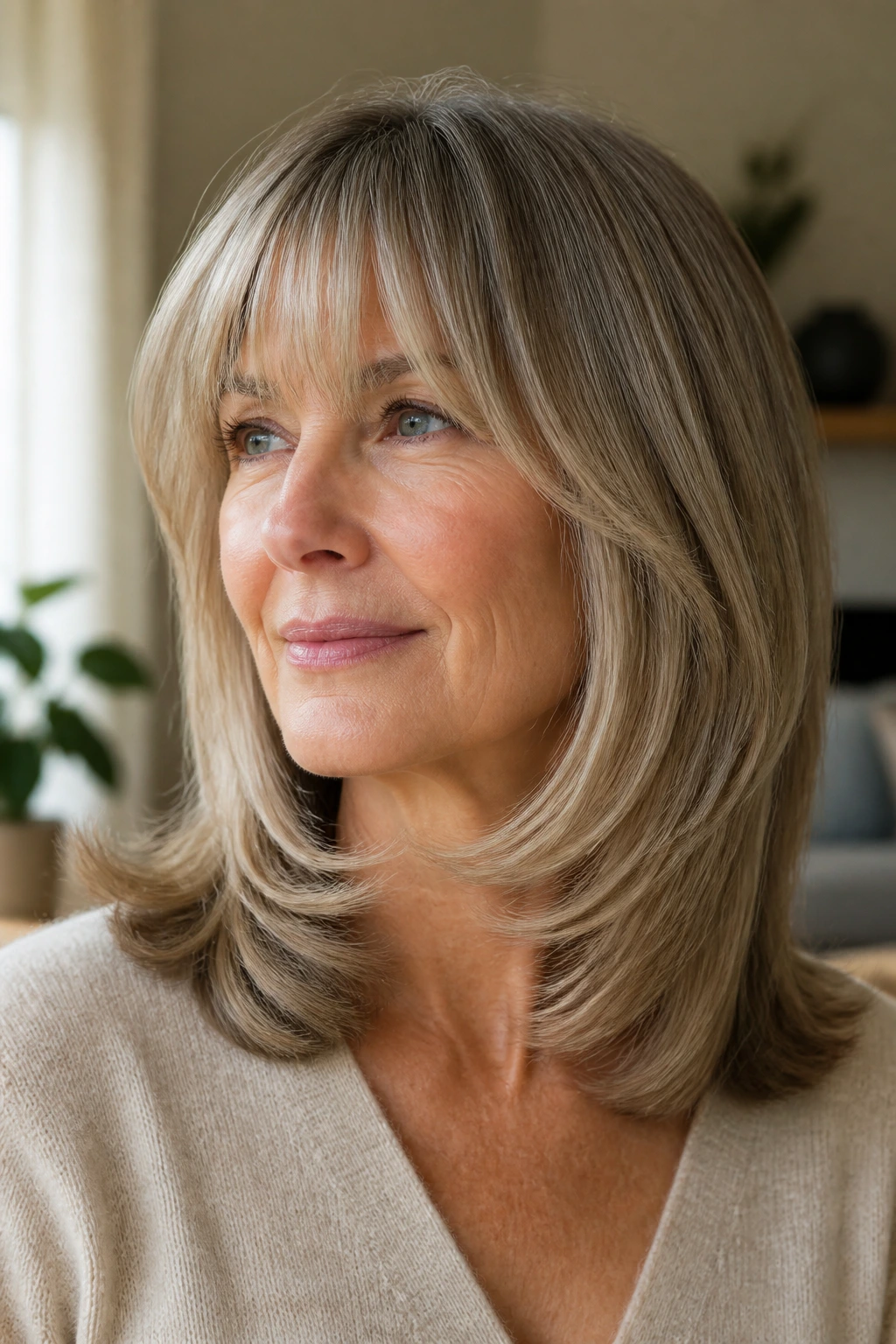
A good C-cut has a quiet, almost tailored feel. The ends curve inward slightly, the front pieces sweep around the jaw, and the curtain bangs meet the rest of the shape like they were planned from the start. On fine hair, that inward bend keeps the length from looking stringy at the bottom.
The shape works because it guides the eye inward. Straight, long, fine hair can sometimes look like a sheet if the cut is too plain. The C-cut gives the outline enough motion to stop that. It’s one of my favorite choices for women who want softness but do not want obvious layering.
This cut looks especially nice when the hair is blown under just a touch. Not curled under. Not flipped under. Just a small, clean bend that makes the ends look intentional.
If you want your hair to look thicker at the sides, this is one of the easiest ways to get there. The face-framing curve creates width where fine hair usually needs it most.
7. Glossy Straight Length With Barely-There Fringe
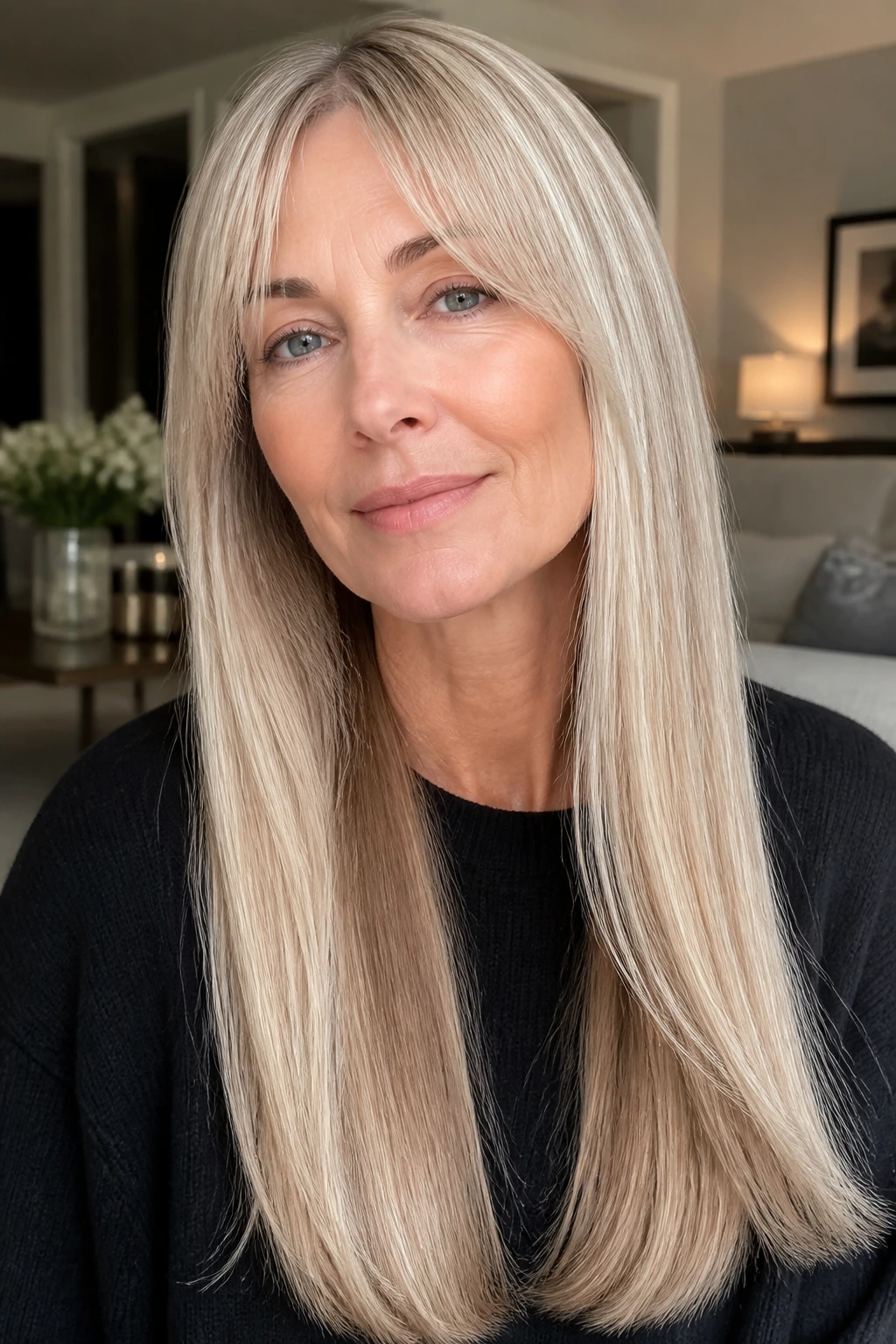
Not every long style has to shout for volume. Sometimes the smartest move is to lean into shine, clean lines, and a fringe that barely grazes the sides of the face. This is the cut for someone who likes elegance with a low noise level.
The fringe stays soft, split, and feather-light, almost like two thin ribbons that sweep away from the forehead. The rest of the hair stays long and straight, but the perimeter needs enough weight to hold the line. If the ends are too thinned out, this style turns fragile fast.
I like this one for gray or silver hair with a smooth finish. The light catches the surface beautifully when the cut is even and the conditioner is kept off the roots. A center part helps, but a slight off-center part works too if your cowlick pushes that way.
A flat iron can polish the look, but don’t press the life out of it. A little bend at the front keeps it from looking rigid.
8. The Grown-Out Lob With Curtain Bangs
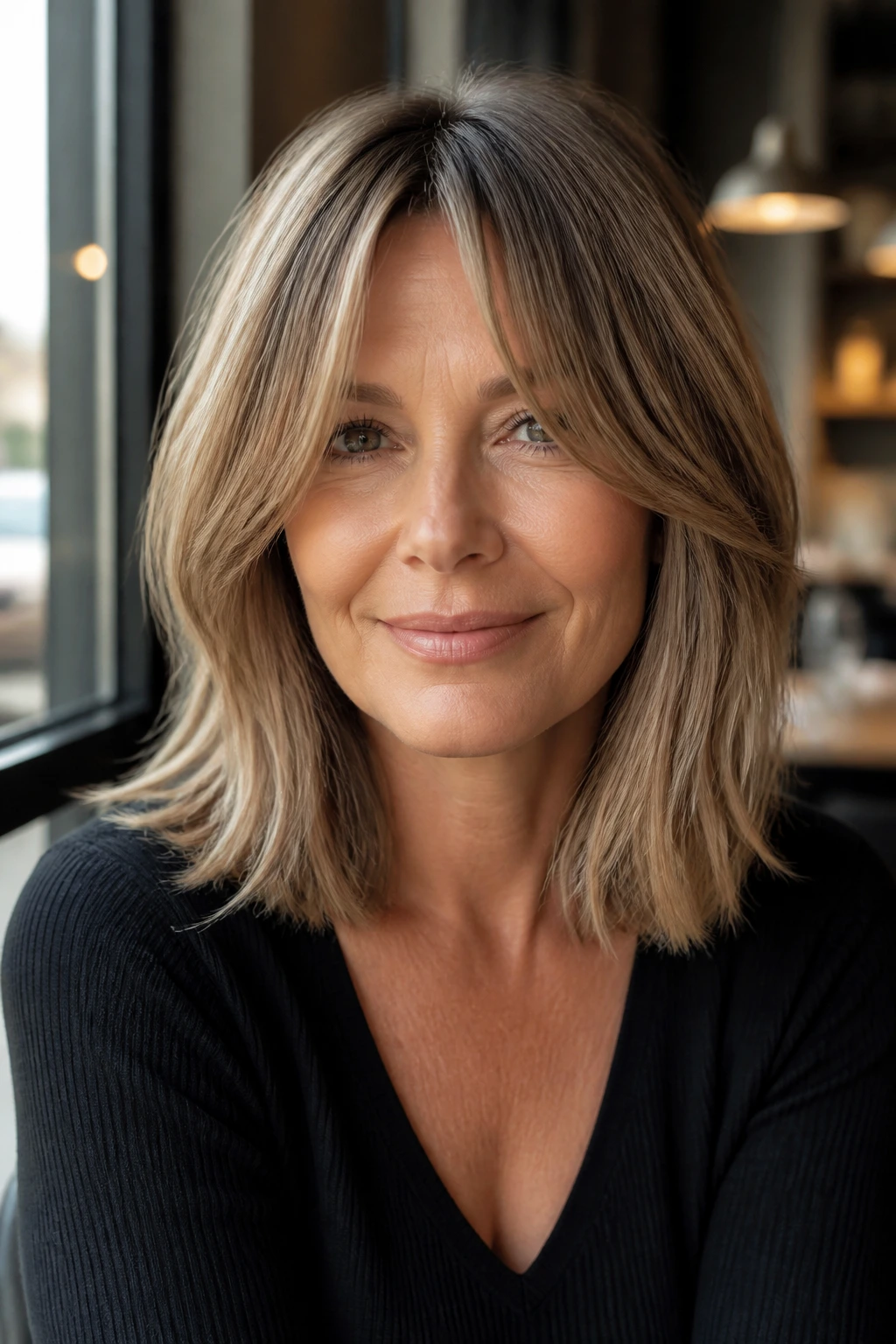
Can a lob still count as “long” if it sits around the collarbone? For this topic, yes, because the real goal is not measuring tape perfection. It’s density, movement, and a shape that doesn’t drag the face down. A grown-out lob with curtain bangs is one of the easiest ways to get that balance without going dramatically short.
The collarbone length gives the cut a little bounce, and the bangs pull focus upward. That matters when the hair on top has started to feel thinner than it used to. The lob also gives you more styling options than you’d think. A loose wave looks fuller. A smooth blowout looks sharper. Even a tucked-behind-the-ear finish feels deliberate.
This is a good choice if you’re in the middle of a haircut transition and want to keep length while changing the silhouette. It’s also one of the least fussy cuts in this whole list, which I say with affection. Not every good hairstyle needs a daily ritual.
The key is to keep the ends blunt enough to hold weight.
9. Cascading Layers and Cheekbone Bangs
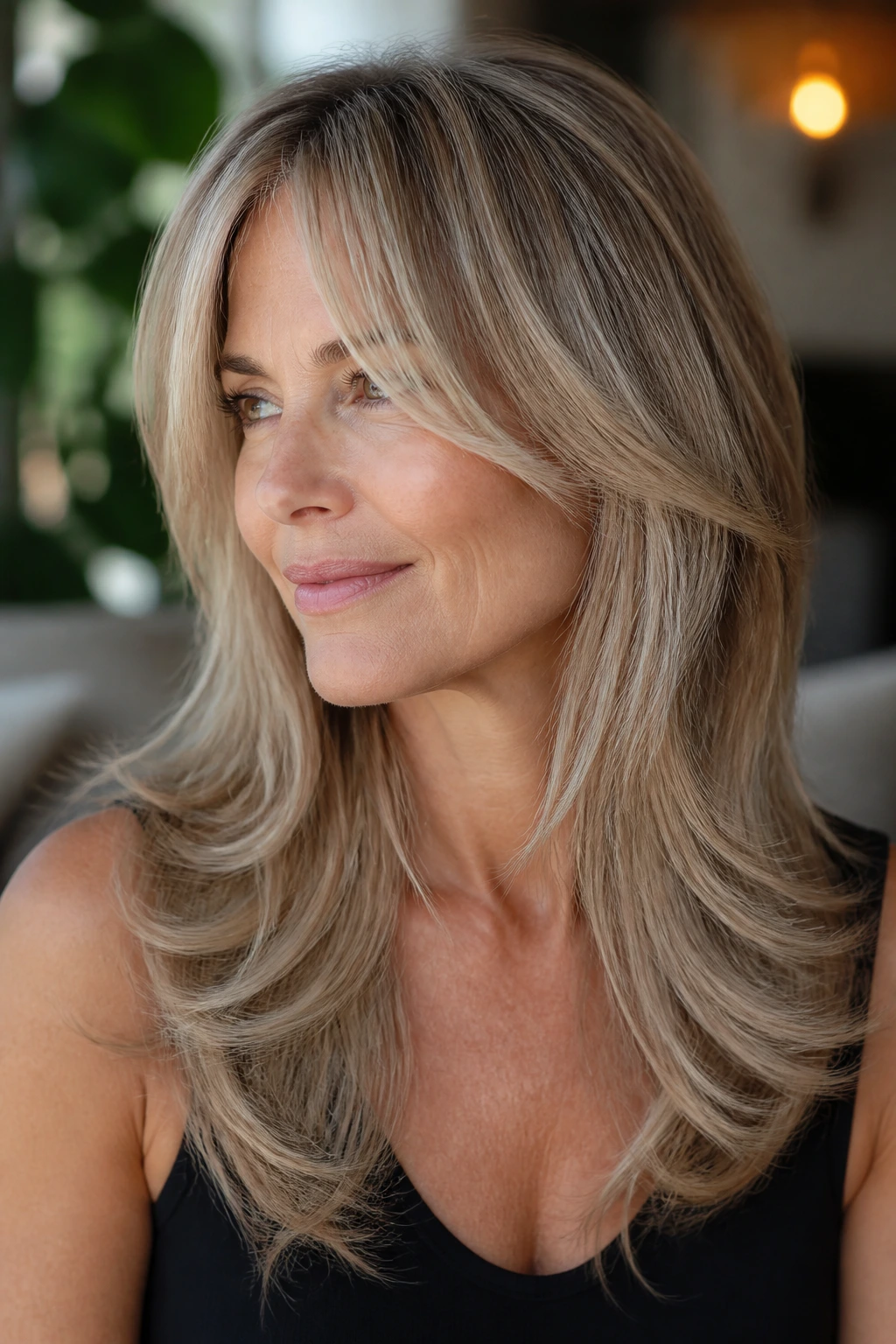
A cascading cut works when each layer lands a little lower than the one before it, creating a soft spill of movement down the head. With curtain bangs cut to the cheekbone, the front section connects to the rest of the style instead of feeling pasted on. That connection is what keeps the shape from falling flat.
The Secret Is in the Weight Line
If the weight line disappears, the ends start to look thin and nervous. You want the layers to travel, not vanish. Fine hair does better when the cut shows a clear direction from the front to the back.
This is one of the better choices for a woman who likes a bit of romance in the shape. It can be styled into loose bends or left straighter, and the layers still show. If you have a face that benefits from softness around the temples, this cut gives you that without hiding your features.
- Ask for long, sliding layers rather than short steps
- Keep the curtain bang blended into the side lengths
- Use a large barrel iron for loose bends, not tight curls
- Finish with a light mist of flexible hold spray
The look is airy, but not fragile. That distinction matters.
10. Air-Dried Waves With Hidden Support Layers
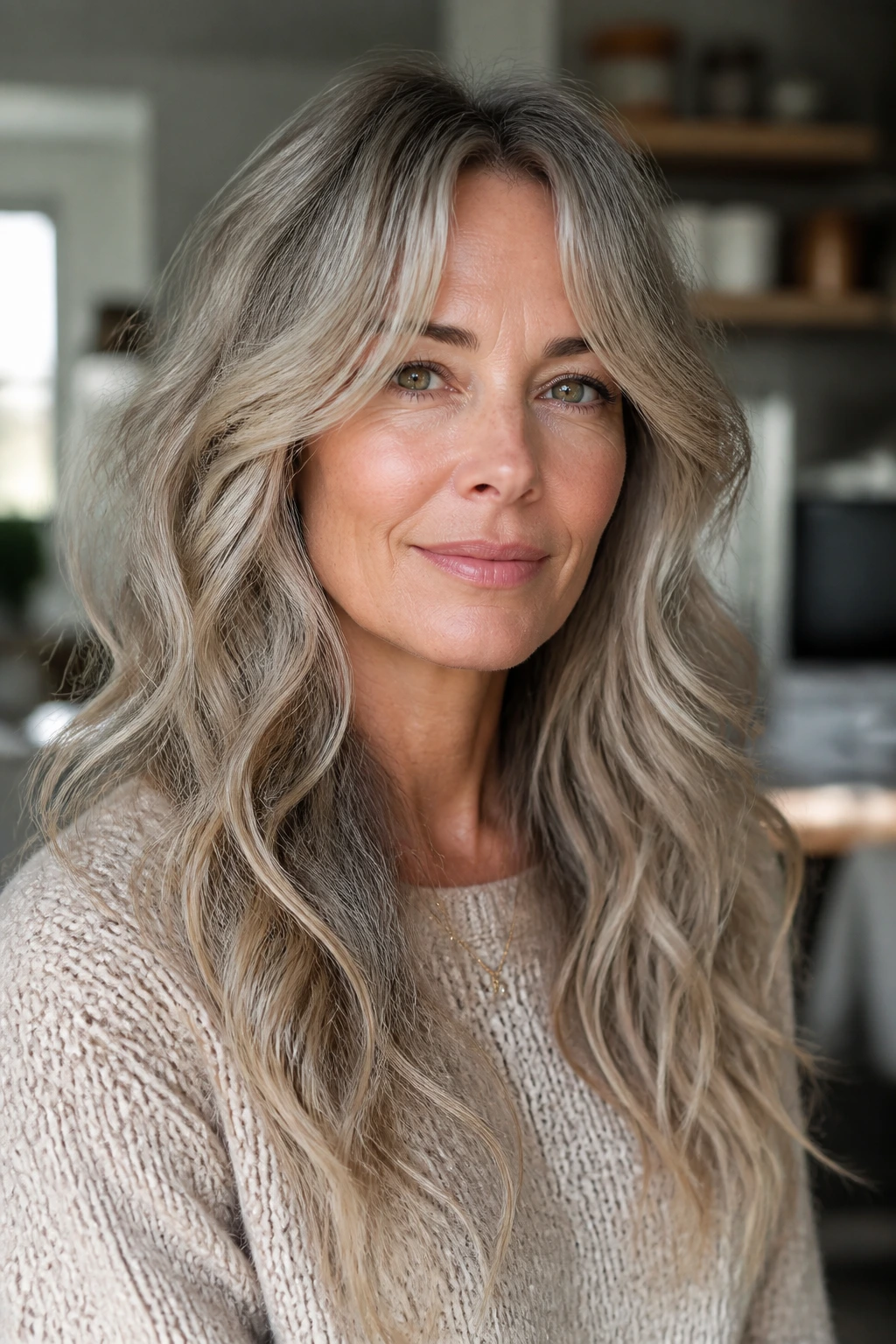
Some haircuts live or die by the blowout. This one doesn’t. Hidden support layers are tucked inside the shape, so the waves have room to move without exposing a bunch of choppy ends. Curtain bangs give the face definition while the rest of the hair dries into a soft, natural bend.
The best part is the way this style behaves on a real morning. You do not need a perfect round-brush blowout. A little mousse at the roots, a quick scrunch through the mid-lengths, and a gentle twist of the fringe away from the face can be enough. If your hair dries too straight, braid it loosely while damp for an hour, then open it up and let it settle.
Fine hair likes this because it avoids the heavy-product trap. Too much cream can make the wave drop out. Too much oil can make the crown go limp. Keep the products light and place them where the texture actually needs them.
It’s a relaxed cut, but not a sloppy one. That’s the charm.
11. Rounded Curtain Bangs Over Straight Mid-Back Hair
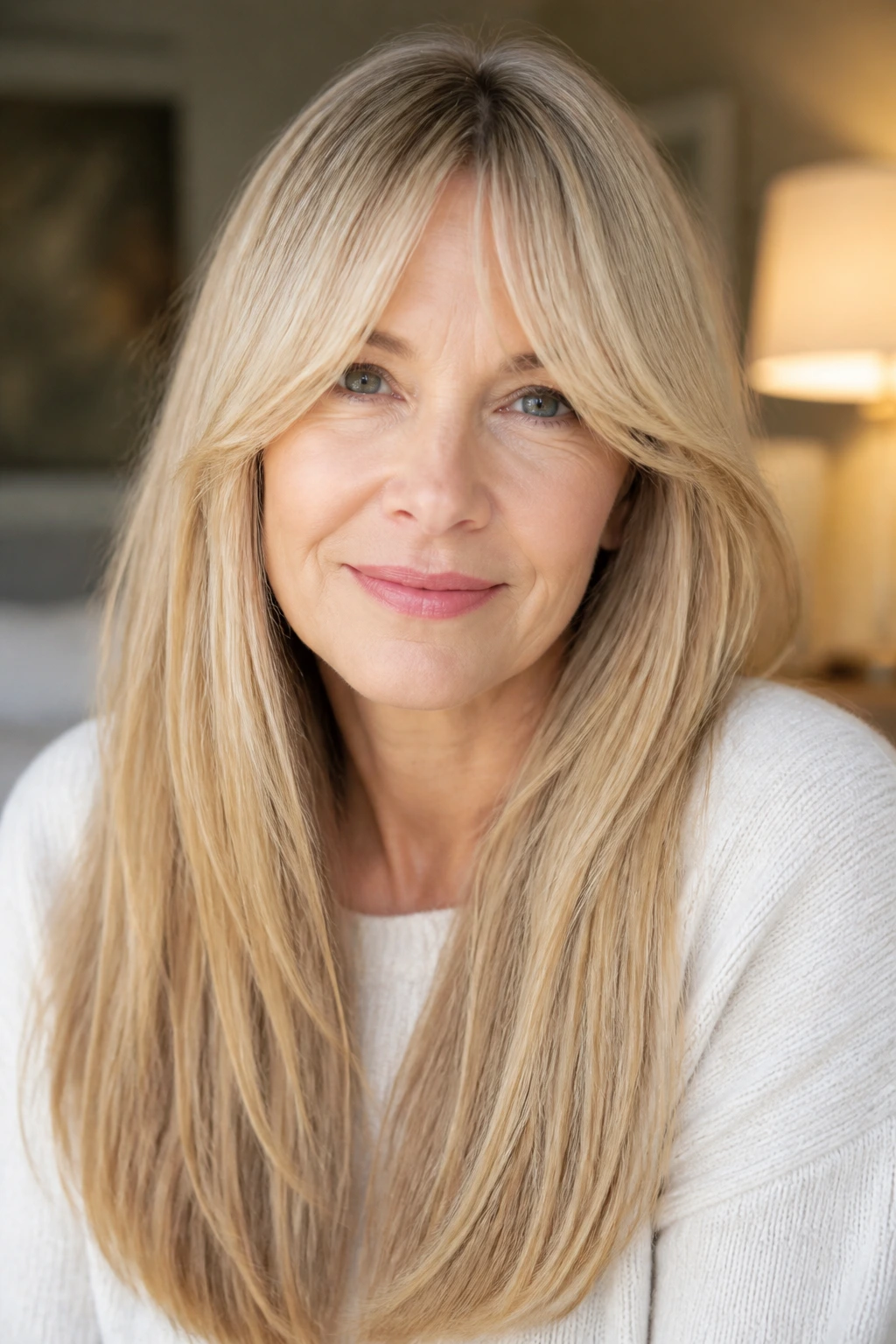
Why do rounded curtain bangs work so well with straight hair? Because they break the straightness before it turns severe. The bang curves outward at the cheekbones, and that small arc gives the face some softness without forcing the rest of the length into layers it may not want.
How to Keep the Fringe Soft
Use a medium round brush and dry the bang section forward first, then back and away from the face. That little back-and-forth motion keeps the split open and avoids a flat center line. A cool shot at the end locks in the bend.
The rest of the hair should stay sleek, but not plastered. If the ends are blunt and healthy, the style looks far richer than a heavily layered version. This is one of my favorite choices for someone who wants to look put together with very little fuss.
It also plays nicely with a deep side tuck. Pulling one side behind the ear while leaving the front pieces loose gives the cut a little swing. Quiet detail. Big payoff.
12. A Tapered V-Shape for Slimmer Ends
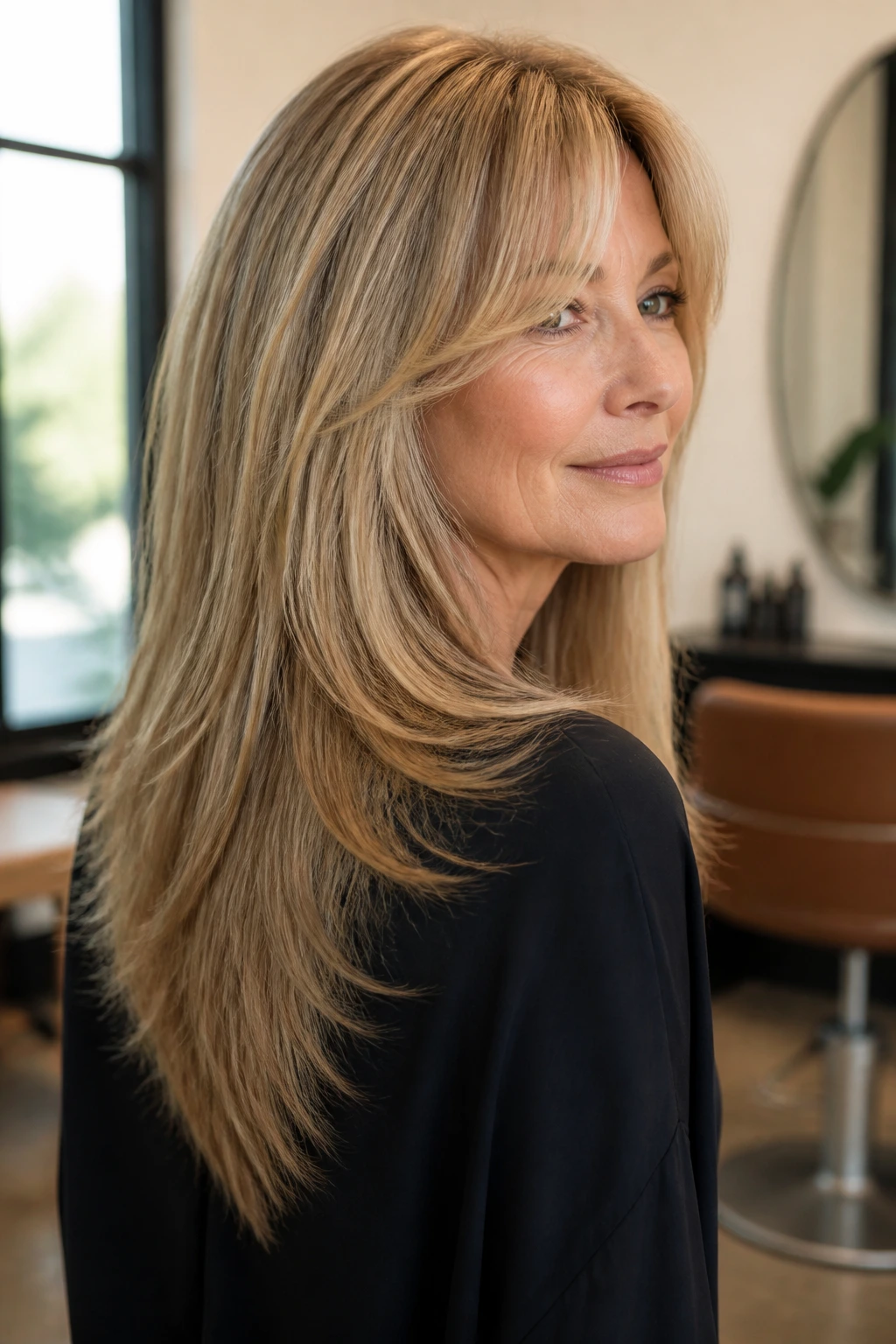
A V-shape is for someone who likes a little drama in the silhouette. The center falls longer than the sides, creating a point at the back that can make long hair feel lighter and more dynamic. Curtain bangs soften the front so the shape doesn’t look too sharp.
Compared with a U-shape, the V reads sleeker and a touch more modern. It can be a smart choice if your hair is fine but plentiful enough to hold the point at the back without looking stringy. If the density is very low, though, the V can expose thin ends too much.
That’s the tradeoff. And it’s a real one.
If you choose this style, keep the layers soft around the front and avoid too much face-framing at once. The whole point is to give the bottom a little length and direction. Add a bend with a large iron or hot rollers, and the point at the back looks more elegant than severe.
13. Piecey Fringe and Bendy Tips
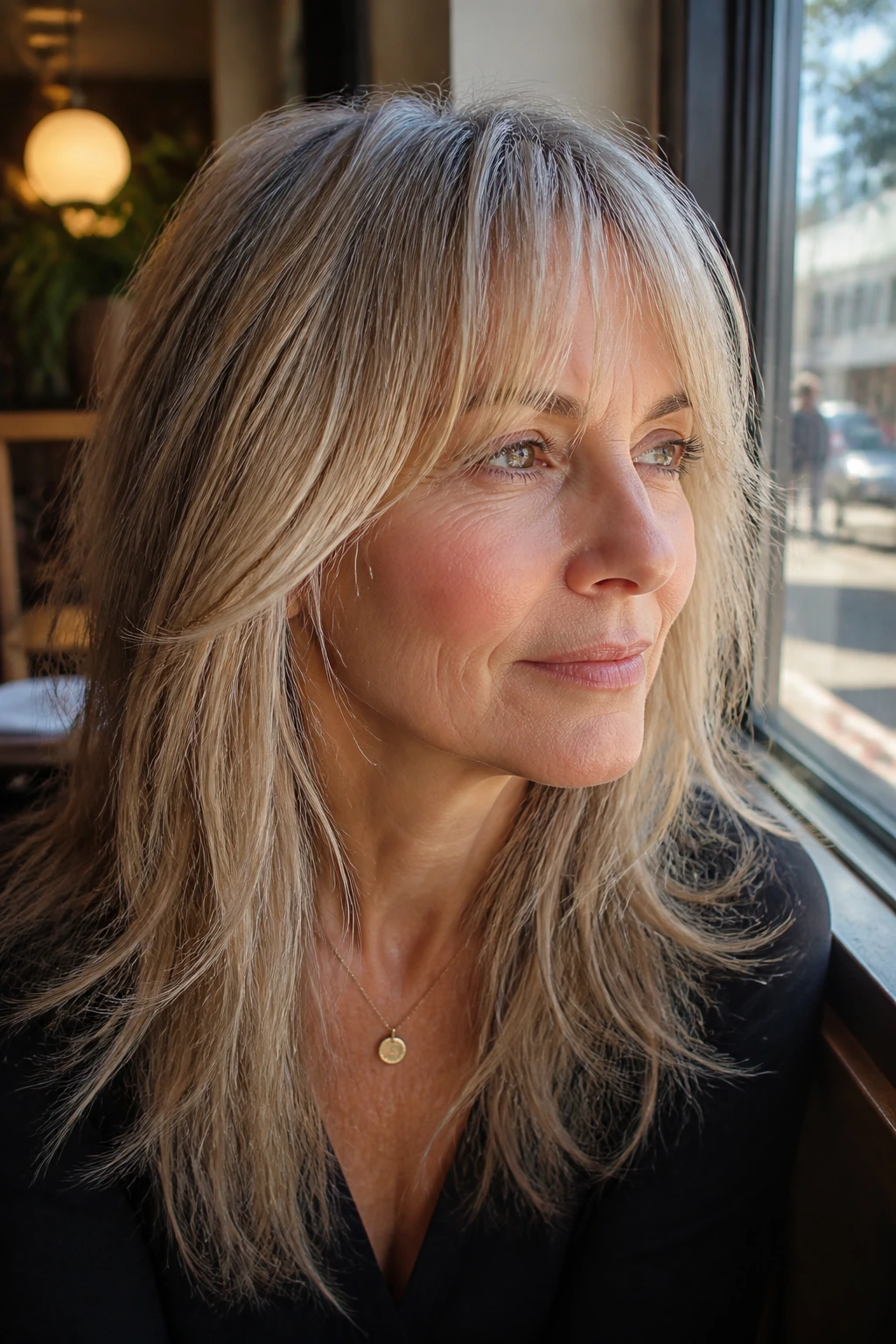
Piecey, not wispy. That’s the distinction. A piecey finish means the strands separate on purpose, giving the hair a little texture and lightness without making it look sparse. On fine hair, the trick is to keep the pieces soft and controlled, especially through the curtain bangs.
A light mousse before blow-drying helps here, then a small amount of texturizing spray at the ends. Don’t soak the hair. A fine mist is enough. You want the tips to bend and move, not stick together like they’ve been sprayed into place.
This style works well if your hair naturally clumps in small sections after washing. Rather than fighting that, shape it. The fringe can fall open at the center, and the rest can separate into soft pieces around the collarbone.
It’s a good everyday cut for someone who likes a little edge without going full shag. Easy enough for errands. Polished enough for dinner.
14. Root-Lifted Blowout Layers
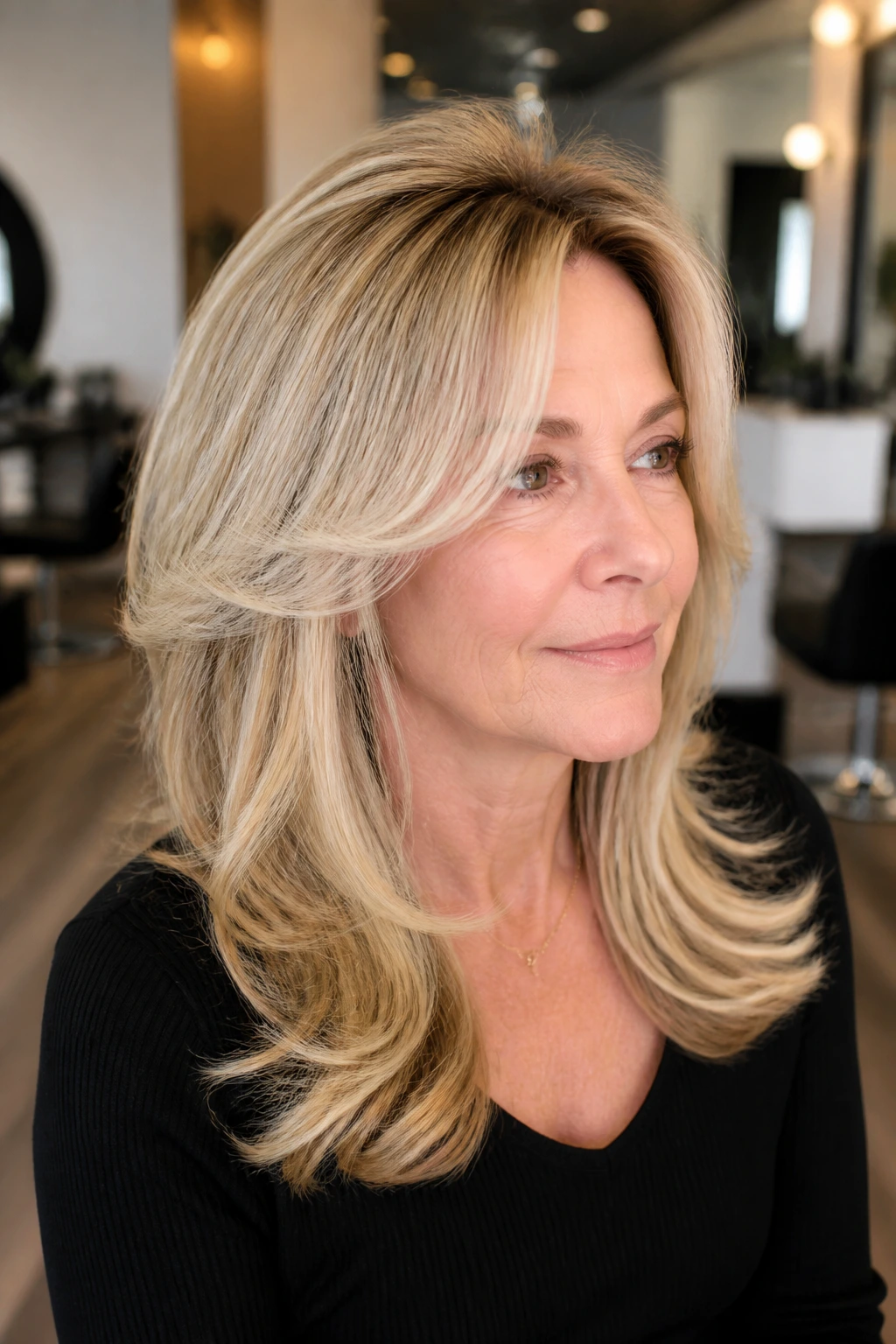
If you love the look of fresh salon hair, this is the lane to stay in. The crown gets lift, the mid-lengths curve gently, and the curtain bangs swing away from the face in a soft arc. Fine hair often looks its best when it has root support first and movement second. This cut is built for that order.
A root-lift spray or mousse at the base does most of the heavy lifting. Then the round brush comes in. Dry the roots upward, not sideways, or you’ll flatten the whole shape before it has a chance. Once the roots are set, bend the ends under just enough to keep the line smooth.
This cut can be surprisingly forgiving between washes. The blowout may relax, but the shape remains readable because the layers are long and the front section does the face-framing work. If your hair is prone to cowlicks at the front, a clip while the fringe cools can make a huge difference.
No need to overcomplicate it. Lift at the root. Bend at the end. Done.
15. Mid-Back Length With Internal Layers
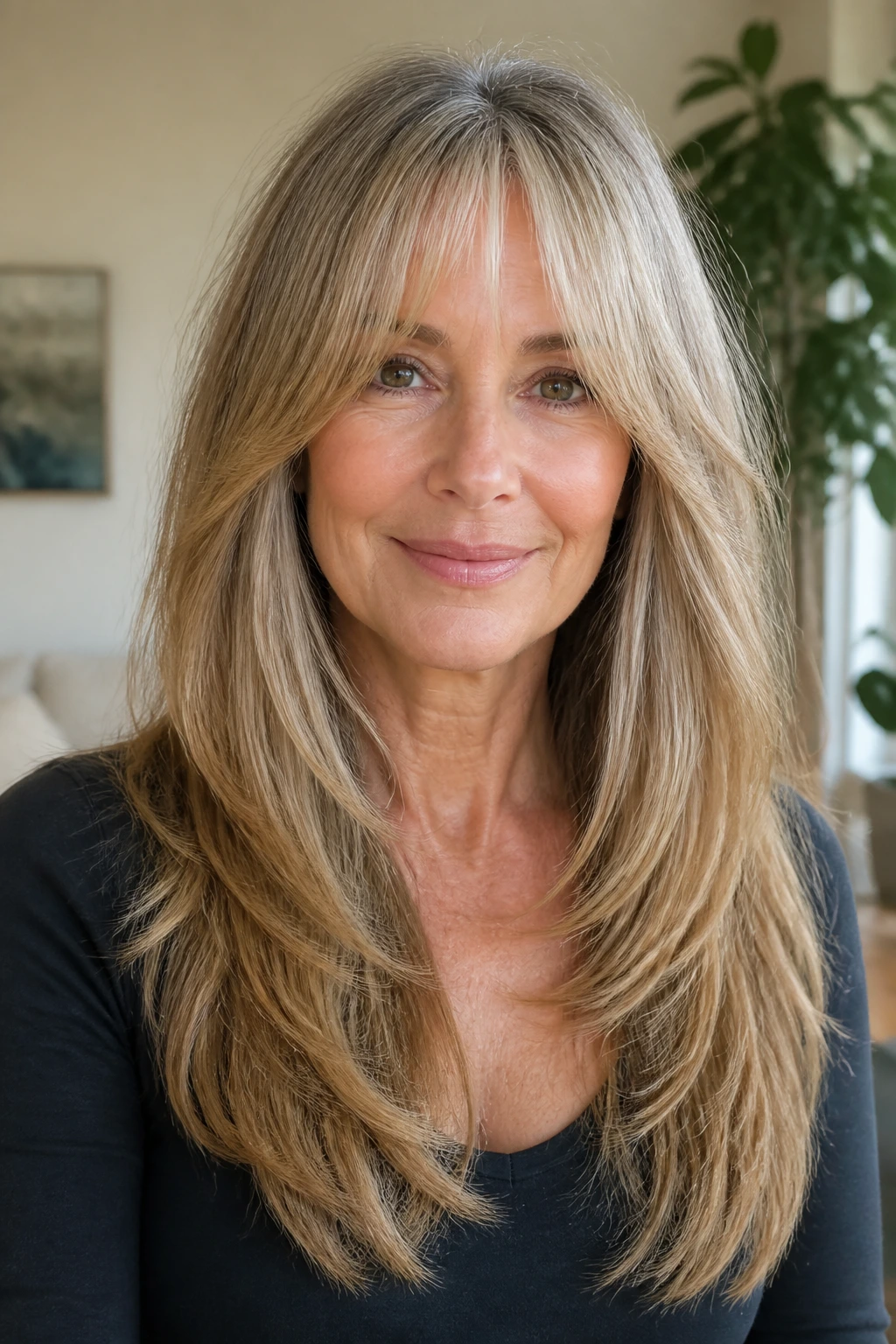
A long style doesn’t have to mean visible layers everywhere. Internal layers sit inside the body of the hair, giving it movement from within while leaving the outside line cleaner. That’s a smart approach when fine hair needs fullness more than it needs texture.
The Trick Is Inside the Shape
The outer layer stays long enough to read as thick, while the interior pieces prevent that heavy curtain effect that can drag fine hair down. Curtain bangs complete the shape by opening the face before the length begins.
I like this option for hair that’s naturally straight or only lightly wavy. It keeps the hair looking smooth from a distance but less flat when you move. And movement matters more than most people think. Hair that sways when you turn your head always looks healthier than hair that hangs in one stiff panel.
Ask for the internal layers to be kept soft, not chunked. The point is lift, not separation.
16. Long Feathers and Tucked-In Ends
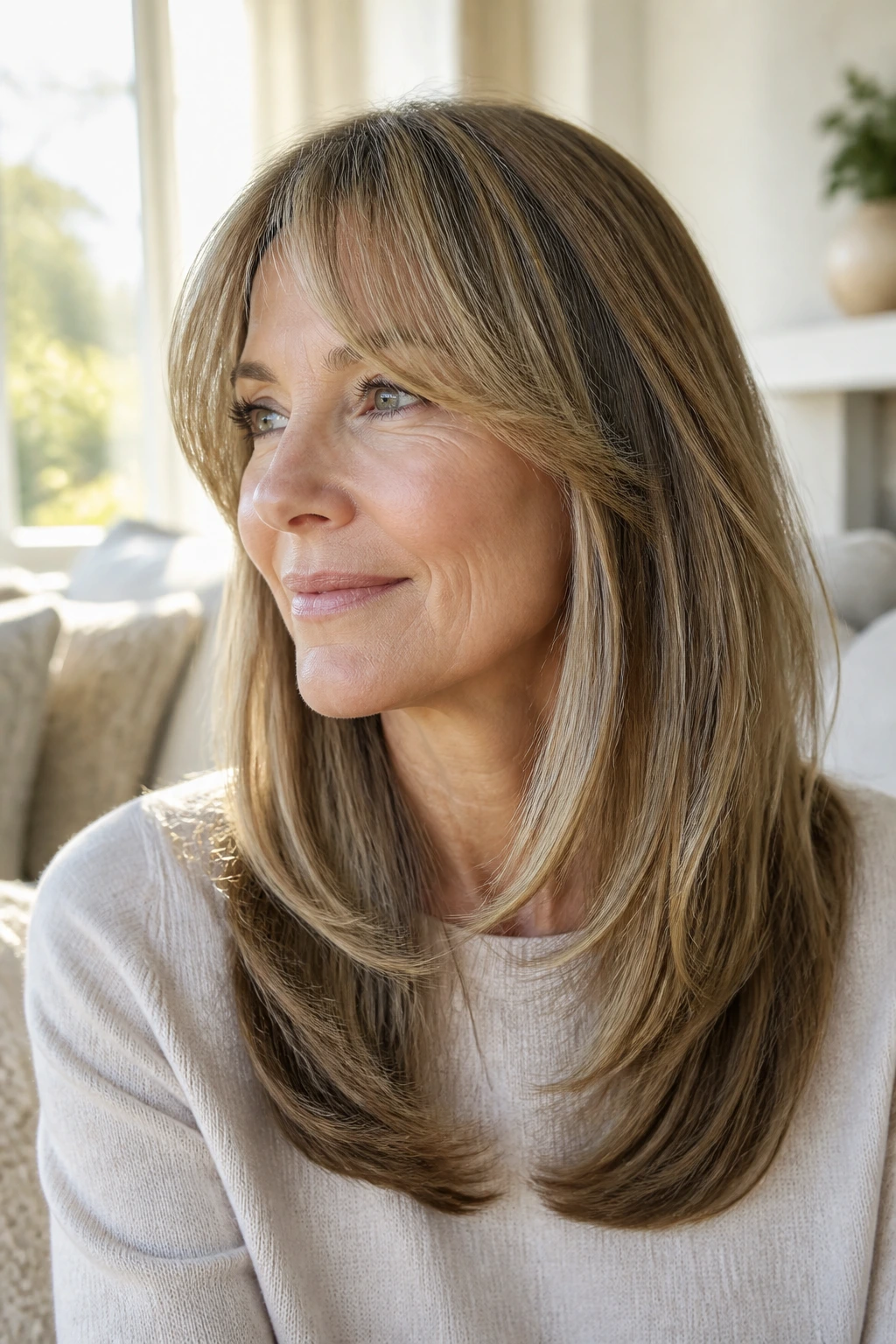
There’s a softness to feathered hair that feels almost old-school in the best way. The strands slip around the face, the ends curve inward, and the curtain bangs break the forehead into a gentle frame. It’s an easy shape to wear because nothing sits too hard or too sharp.
This style is especially nice if your hair has some natural movement but not enough volume for big curls. Tucked-in ends give the cut a controlled finish, which keeps the long length from looking stringy. Use a medium brush and dry the sides inward, then let the front pieces open away from the face.
If your hair is very fine, keep the feathers long. Short feathers can look airy in a weak way. Long ones give you the softness without sacrificing the look of density.
The result is tidy, but not stiff. That’s a useful combination.
17. A Side-Part Curtain Bang Hybrid
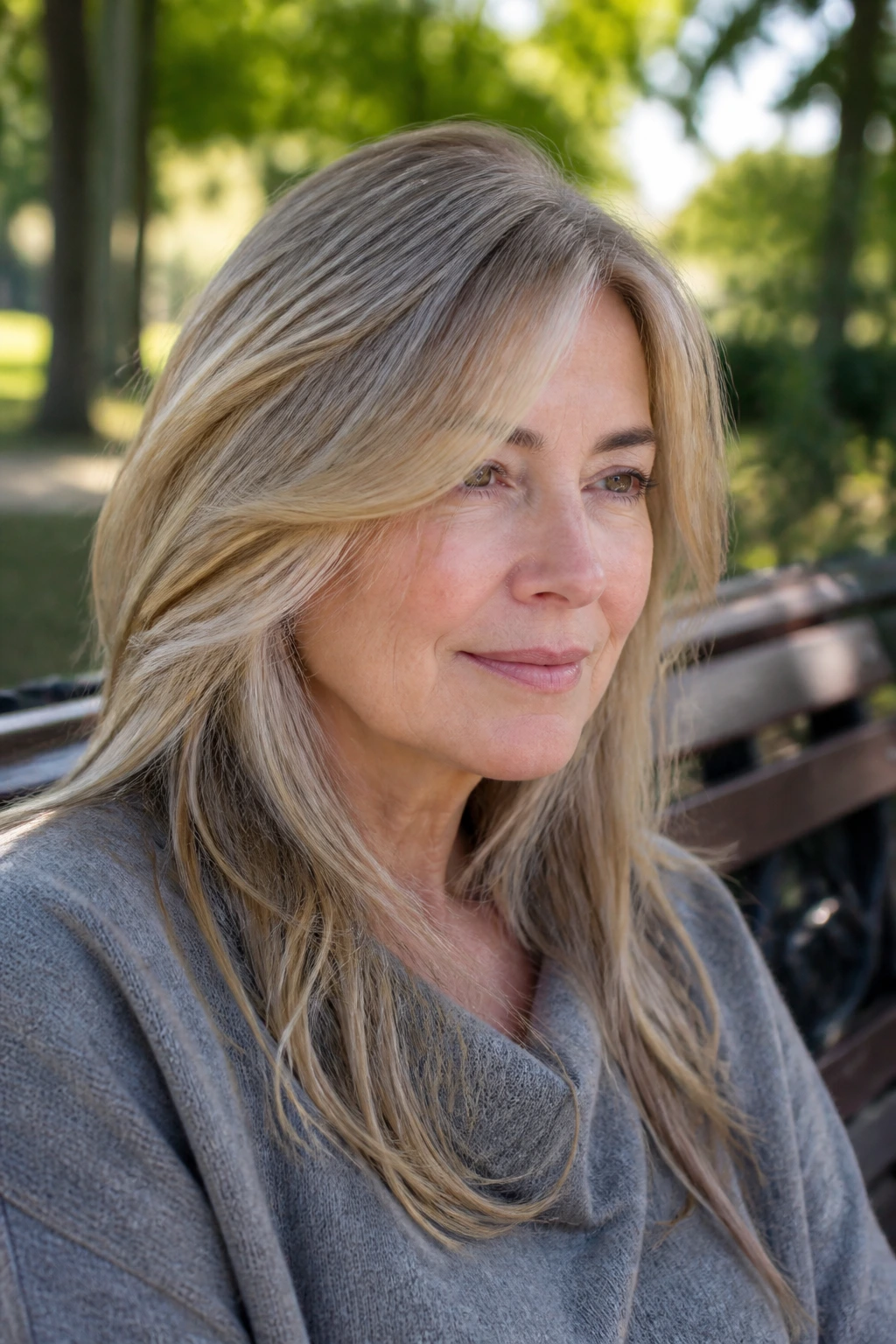
Can curtain bangs live happily with a side part? Absolutely. In fact, this hybrid can be easier on cowlicks and flatter a face that prefers a little asymmetry. The bang still opens in the middle or just off-center, but the part drifts slightly to one side so the front never feels too perfect.
When It Works Best
This shape shines when the hairline needs camouflage or when the forehead is a little wider on one side than the other. It also plays nicely with glasses because the fringe doesn’t sit directly on the frames. A soft side part keeps the whole look relaxed.
- Better for: hair that resists a strict center part
- Best styling tool: a small round brush or hot brush
- Avoid: pushing the bang too far over, which turns it into a plain side fringe
- Finish: a light spray, then finger-comb the pieces apart
It’s a small adjustment, but small adjustments are often what make a cut feel wearable every day instead of only looking good in the mirror right after styling.
18. Razor-Soft Ends for Fine, Straight Hair
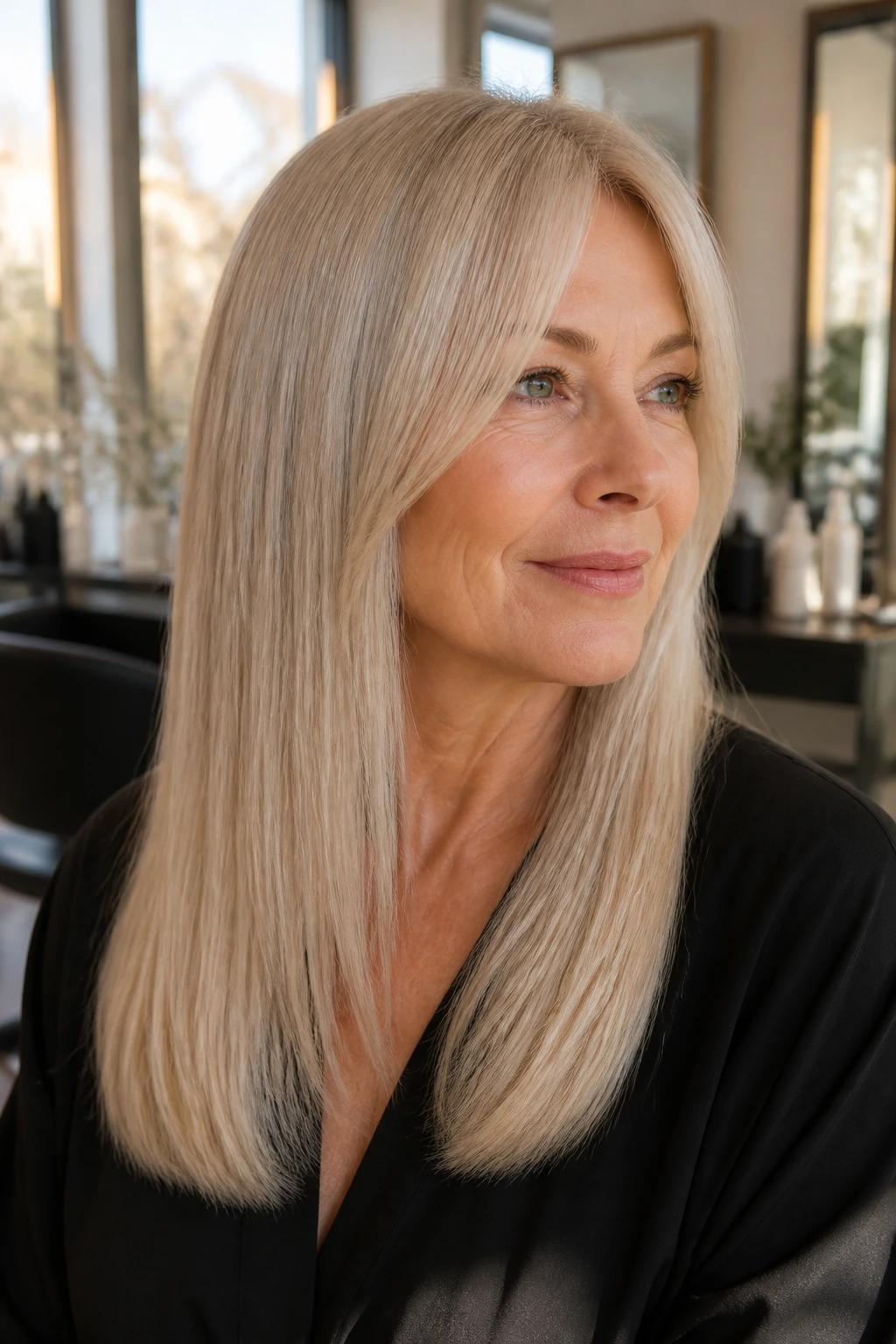
A razor-cut can be risky on fine hair, and I’m not going to pretend otherwise. Too much razor work can leave the ends wispy and fragile. But a very light razor-softening on straight hair that is dense enough through the mid-lengths can give the finish a clean, floaty edge.
The key is restraint. The ends should still look full. You want a touch of softness, not a shredded outline. Curtain bangs help balance the cut by bringing shape back to the front, which is useful when the bottom has been softened a little.
This is a better choice for someone who wears her hair sleek and doesn’t mind a bit of product control. A smoothing cream, a flat brush, and a low-pass with the dryer can make the shape look deliberate. If your hair already feels fragile, skip this one. There are safer cuts on the list.
It’s a refined look, but it needs a steady hand.
19. Long Layers With Bright Face-Framing Highlights
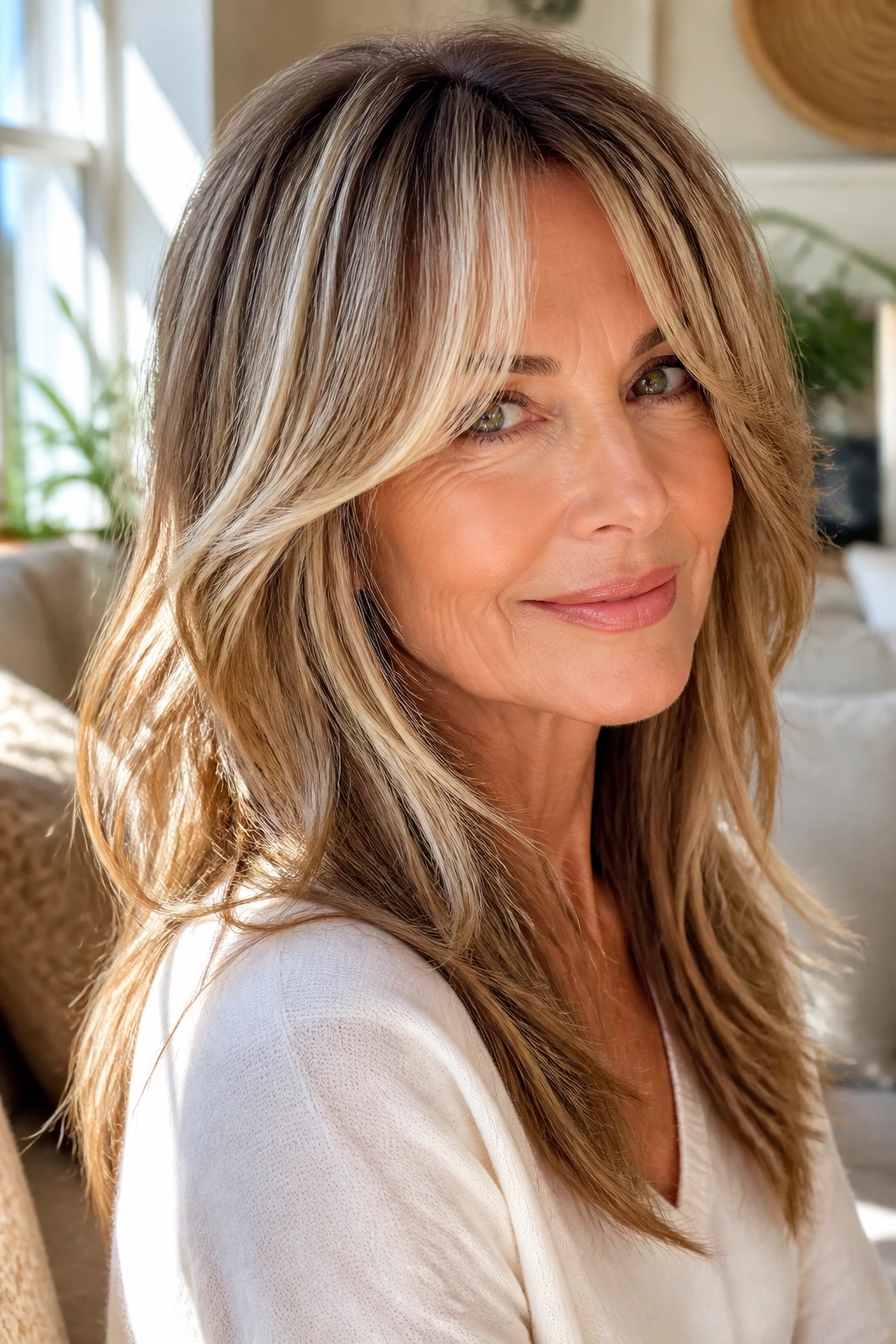
Sometimes the cut is only half the story. A face-framing highlight around the curtain bangs and front layers can make long fine hair look far more dimensional, especially if the base color is close to your skin tone. The eye reads the brighter pieces first, and the hair suddenly looks like it has more movement than it actually does.
Color Placement Matters
Keep the brightest pieces near the cheeks and slightly into the bang area, not streaked all over the head. That keeps the contrast focused where the shape lives. On fine hair, scattered highlights everywhere can make the surface look busy; targeted brightness looks cleaner.
This style is useful if you like your length but want more visual lift without adding more layers. It’s also one of the best ways to make silver strands look intentional instead of accidental. The lighter front pieces catch the light and help the curtain bang stand apart from the rest of the hair.
A gloss treatment can make the whole look feel fresher too. Shine matters. Fine hair loves it.
20. Center-Split Volume With Fuller Ends
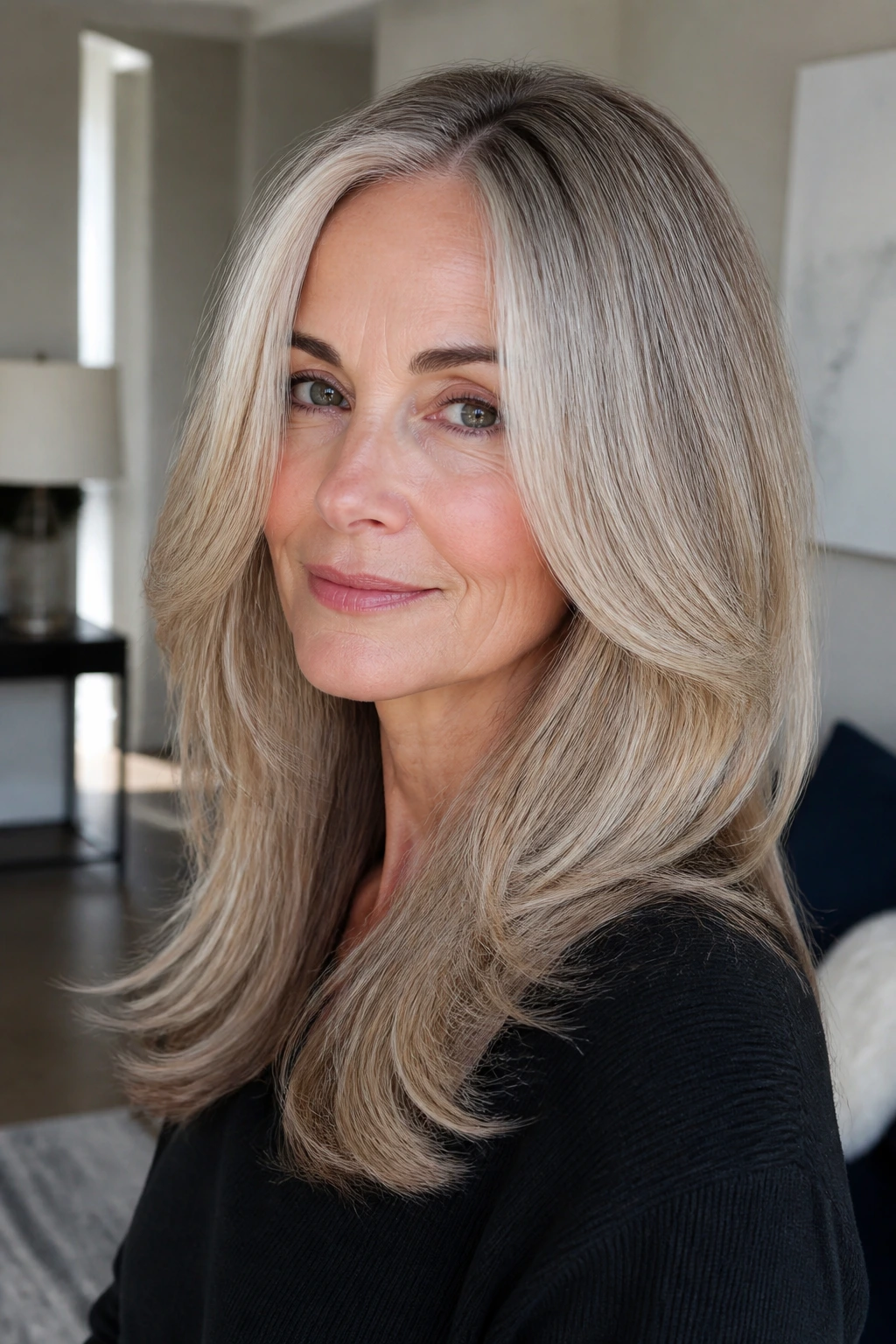
A center split can look almost architectural when the cut below it has enough weight. The curtain bangs open softly, the crown gets a lift, and the ends stay full enough to anchor the shape. That contrast is the whole reason this style works.
The mistake people make is trying to build volume by taking too much out of the bottom. Don’t. Keep the ends solid, then create lift where the hair parts and at the root. A little root clip while the hair cools can help the center stay open instead of collapsing flat.
This is a nice option if you prefer a precise, balanced look. It feels clean, not fussy. And because the weight sits low, the style tends to look more expensive than it is to create. You don’t need a dozen tools. You need the right cut and a little discipline with the brush.
Simple. Strong. Reliable.
21. Loose Curls and a Floating Fringe
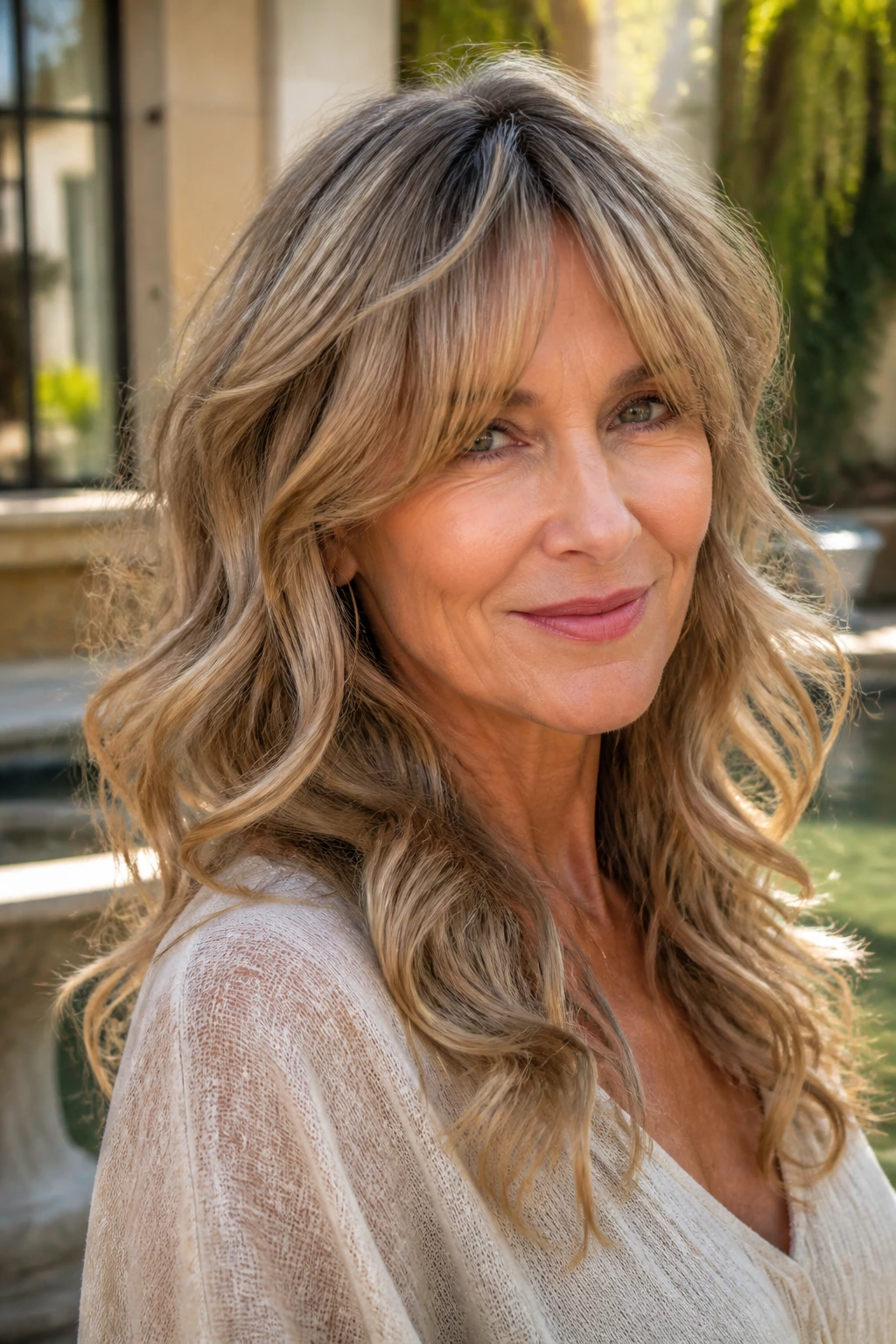
Loose curls give fine hair the kind of softness that big, tight curls usually swallow. The trick is to keep the curl pattern broad and the curtain bangs light enough to float around the face instead of sitting like a solid block. A large barrel iron or hot rollers can make that happen.
This style works because the curls create body while the fringe keeps the front open. Without the bang, loose curls on fine hair can sometimes make the whole head look round in a flat way. The curtain split fixes that by giving the eye a place to rest.
A curl cream is fine here, but keep it light. A heavy cream can drag the pattern down before lunch. Use fingers to loosen the curls after they cool, then shape the fringe with a small brush and a touch of spray.
It’s a softer, more romantic look, but not sugary. That distinction matters too.
22. A Minimal One-Length Cut With Wispy Front Pieces
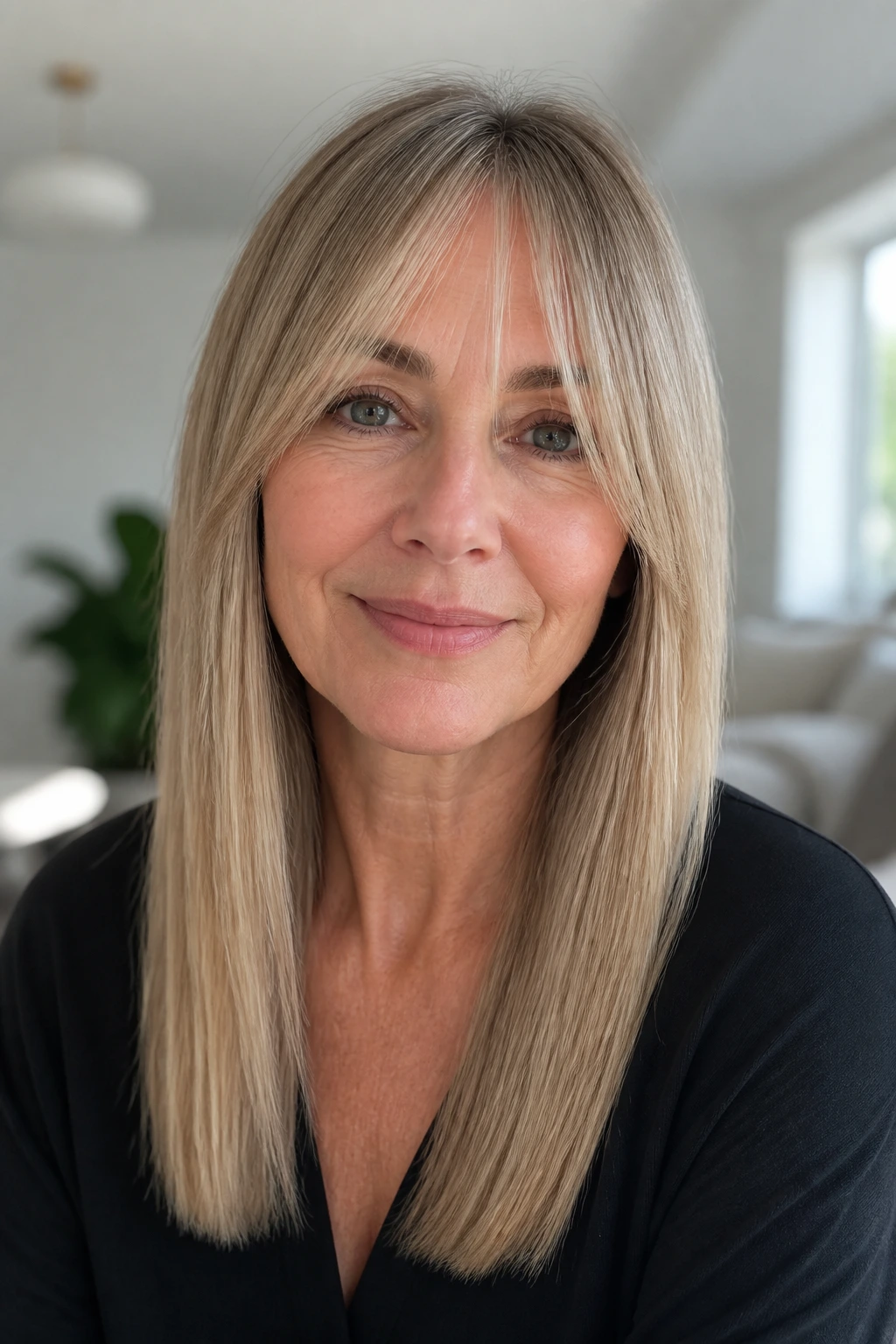
If you’re tired of layers that never seem to settle, a clean one-length shape with just a little softness at the front can be the answer. The length stays full all the way around, which is useful when fine hair needs every bit of visual density it can get. Curtain bangs bring the shape back to the face without taking the whole haircut apart.
This is the least fussy option in the group, and that’s not a weakness. Some heads of hair look best when the perimeter is clean and the styling is simple. The front pieces can be cut to sweep away from the face, then blended into the sides just enough to avoid a hard line.
It’s a sharp look when the ends are healthy. If the cut line starts to fray, though, it loses its edge fast. So this one asks for regular trims and decent conditioning at the ends, not at the roots. A little maintenance keeps it crisp.
For someone who likes order and a low-stress morning, it’s a quietly strong choice.
What Makes Curtain Bangs So Useful on Long Fine Hair
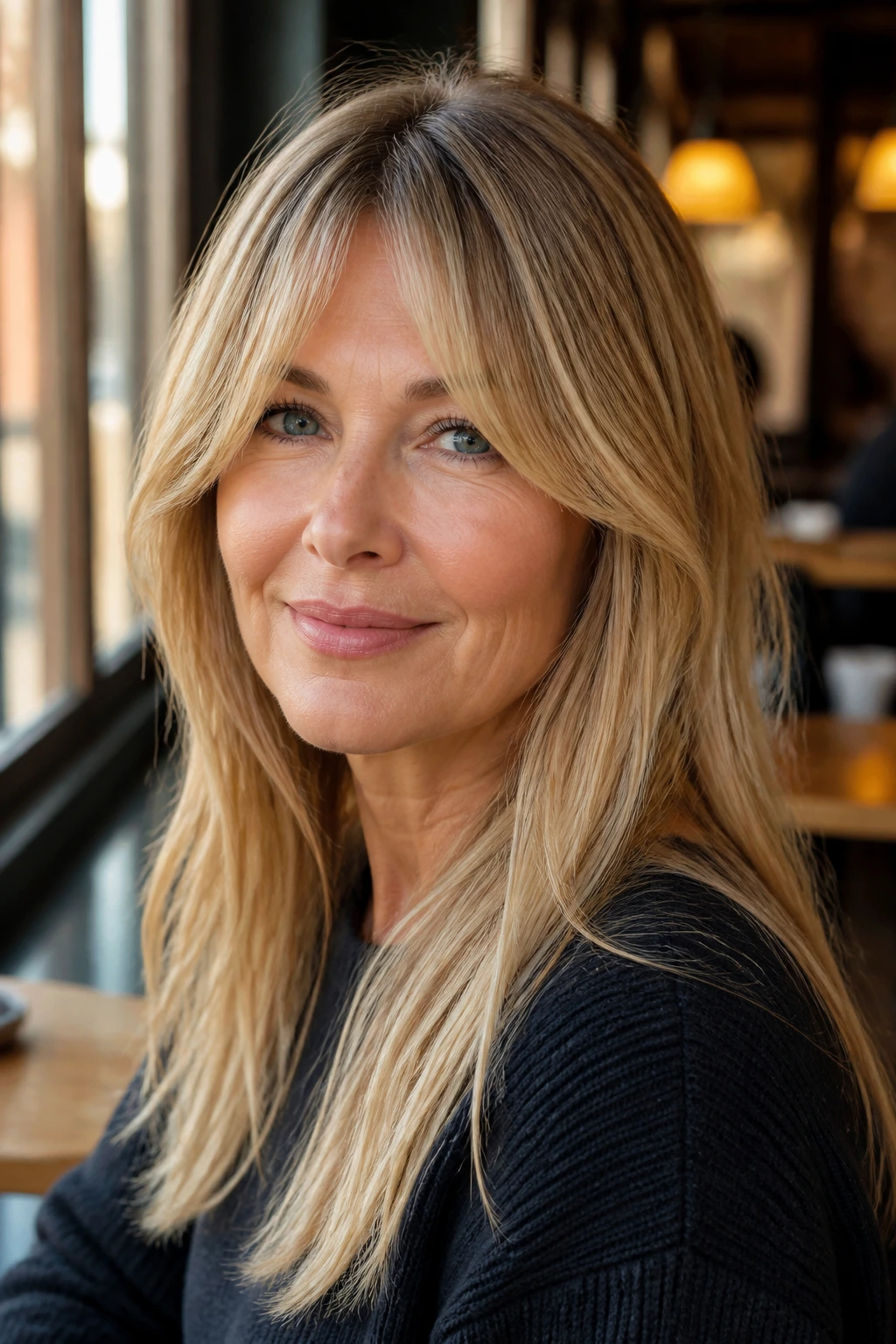
Curtain bangs are not magic. They’re geometry. They split the forehead, open the face, and create the kind of soft diagonal movement that makes fine hair look more alive. On long hair, that matters because the overall silhouette can easily get too straight, too flat, or too heavy at the bottom.
The biggest win is versatility. You can blow them out for a polished look, let them air-dry for something softer, or pin them back on the days you want more forehead exposure. They also slide into the rest of the haircut as they grow, which is a relief if you dislike getting trapped by a blunt fringe that needs constant trimming.
They help with glasses too. That sounds minor until you’ve lived with fringe that constantly bumps the frames or lands in your lenses. Curtain bangs split away from the center and leave room around the eyes, which makes the whole face look more open.
On fine hair, the goal is rarely “more hair.” It’s better placement of the hair you already have. Curtain bangs are good at that job.
Tools That Earn Their Counter Space
You do not need a drawer full of gadgets, but the right few tools make these styles easier to wear.
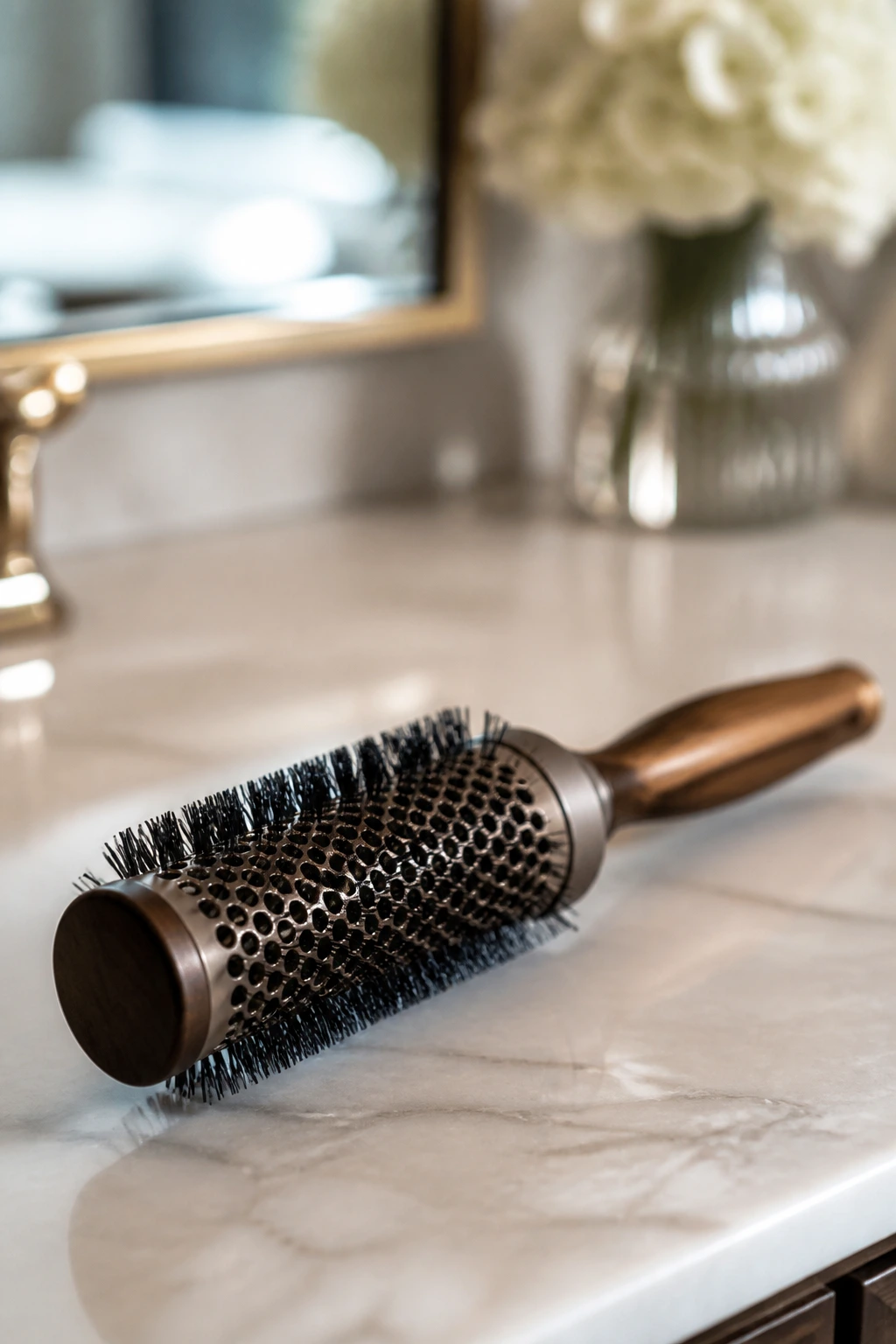
- A 1-inch or 1.25-inch round brush: Best for shaping curtain bangs and bending the front layers away from the face.
- A blow dryer with a nozzle: Directs air so the roots lift instead of fluffing in every direction.
- Velcro rollers or clips: Useful for cooling the bang section after a blow-dry so the split stays open.
- Lightweight volumizing mousse: Gives fine hair support without the crunch that heavy creams leave behind.
- Root-lift spray: Useful at the crown and part line, especially if your hair falls flat by midday.
- Heat protectant spray: Non-negotiable if you use a brush dryer, flat iron, or curling iron.
- Wide-tooth comb: Good for detangling damp hair without roughing up the cuticle.
- Texturizing spray: Best used sparingly on the mid-lengths and ends, not near the scalp.
- Small salon clips: Handy for setting the curtain bang while it cools.
If you only buy two things, buy a good round brush and a root spray. The rest helps, but those two make the biggest difference.
How to Ask for the Cut and What to Buy
If you walk into the salon and say, “I want long hair with curtain bangs,” that’s not enough. You’ll get a generic version of the idea, and generic is where fine hair starts to look tired. Bring specifics: where you want the layers to start, how full you want the ends, and whether you style with a brush or mostly air-dry.
Ask for long, blended layers, not short choppy ones. Say that you want the perimeter to keep weight. If you wear glasses, tell the stylist where the frames sit, because the bang length should be chosen around that detail. For fine hair, the front pieces usually work best when they hit somewhere between the cheekbone and lip, not up at the brow where they can fall flat and look sparse.
When you’re shopping for products, keep the texture light. A volumizing mousse or root spray is usually better than a rich cream. Conditioner should go from mid-lengths down, and a little goes a long way. Heavy oils near the scalp are a fast route to collapse.
One more thing: ask if the cut will look good with your natural part. If your hair insists on parting one way, fight it and lose, or work with it and win. I know which option I’d choose.
How to Wear These Styles Day to Day
Presentation: Let the curtain bangs open slightly away from the center and curve them with a round brush so the front reads soft, not blocky. If the style is sleeker, keep the part clean and the ends smooth; if it’s more textured, let the front pieces fall with a little bend instead of forcing them into place.
Pairing: Glasses, earrings, and necklines all change how these cuts read. Thin frames pair well with feathered bangs, while stronger frames can handle a smoother fringe. V-necks and open collars tend to flatter longer layers because they keep the whole look from feeling crowded at the chin.
Balance: If the hair is very fine, keep the crown lift modest and the ends full. Too much volume at the top with skinny ends is a familiar mistake, and it never looks as good in motion as it does in the salon chair.
Finish: Use polish when you want structure, or let the texture stay a little loose when you want softness. The same haircut can do both.
Common Mistakes That Flatten the Shape
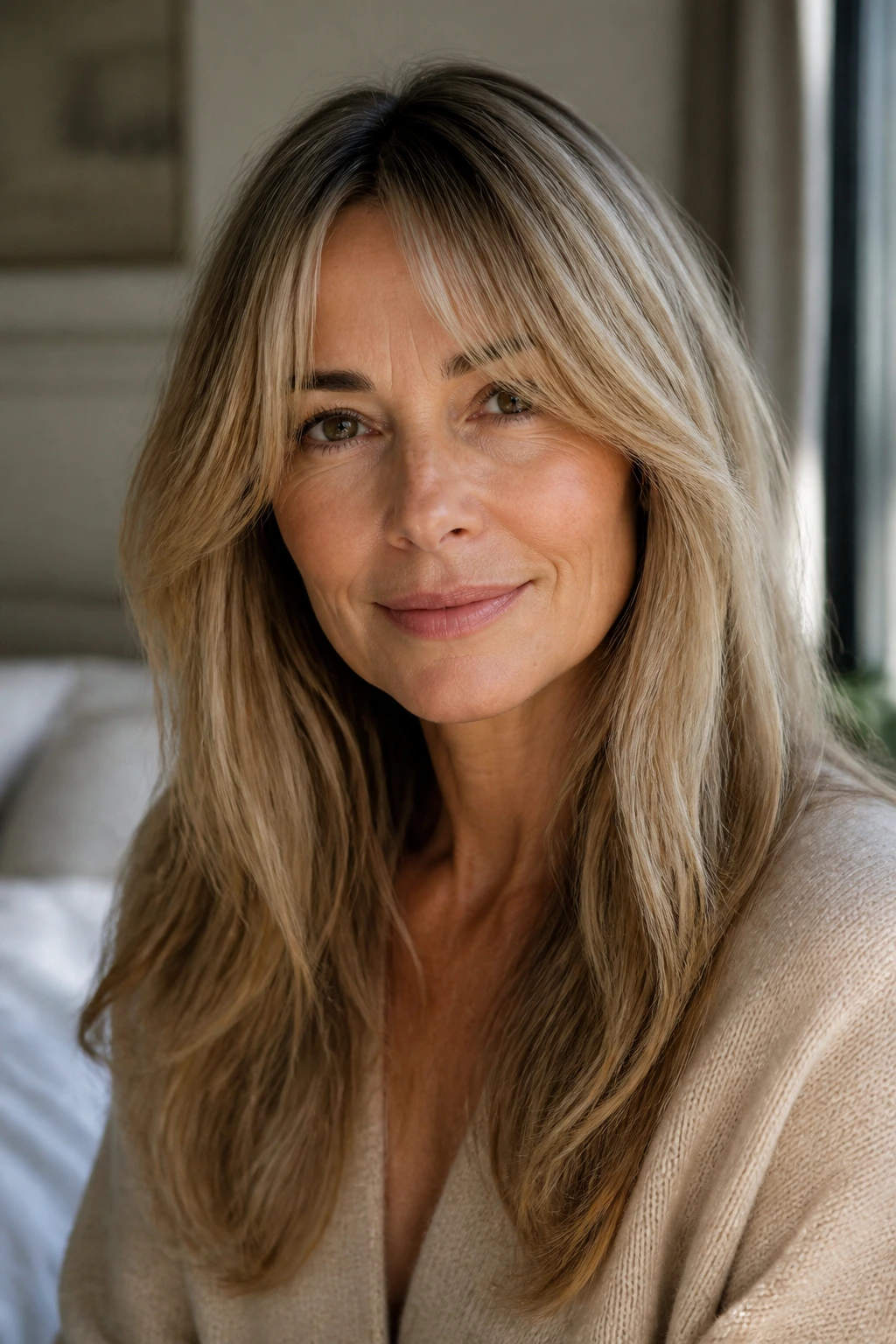
The first mistake is starting the layers too high. When the shortest layer begins near the top of the ear or above the cheekbone, the ends lose density fast. The fix is simple: keep the shortest face frame lower and leave the perimeter heavier.
Another common problem is overusing thinning shears. Fine hair does not need to be aggressively thinned. It needs controlled shape. If the ends feel feathery but look see-through in daylight, too much hair has been removed.
A third one: letting curtain bangs grow past the point where they still open the face. Once the front pieces start hanging into the eyes or folding into the cheeks with no curve, the shape goes muddy. Trim the bang area more often than the rest of the cut.
Then there’s too much product at the roots. Heavy cream, thick oil, or a dense leave-in can flatten the crown in ten minutes. Keep rich product off the top quarter of the head. That area needs air, not weight.
Last, straightening the fringe until it loses bend. Curtain bangs need a little curve or they turn into two flat strips. That tiny bend is the whole point.
Ways to Adapt These Looks
- Glasses-Friendly Fringe: Keep the curtain bang a touch shorter in the center and longer at the sides so it clears the frames without sitting on them.
- Gray-Forward Softness: Let silver or white strands mix naturally into the front pieces, then keep the cut clean so the color variation looks intentional rather than patchy.
- Low-Heat Air-Dry Version: Swap the round brush for clips and a light mousse, then let the bangs dry open in the center while the rest of the hair falls naturally.
- Extra Lift at the Crown: Ask for a small amount of internal layering and set the roots with clips while the hair cools after blow-drying.
- More Polish, Less Texture: Use a smoothing serum only from the mid-lengths down and blow the curtain bangs inward just enough to keep the edges tidy.
- Softer Face Frame: If you do not want a strong bang line, ask for the front to blend into cheekbone-length layers rather than stopping in one obvious place.
These tweaks matter because one cut can live several different lives. That’s useful. Hair should work for your routine, not fight it.
Keeping the Shape Between Salon Visits
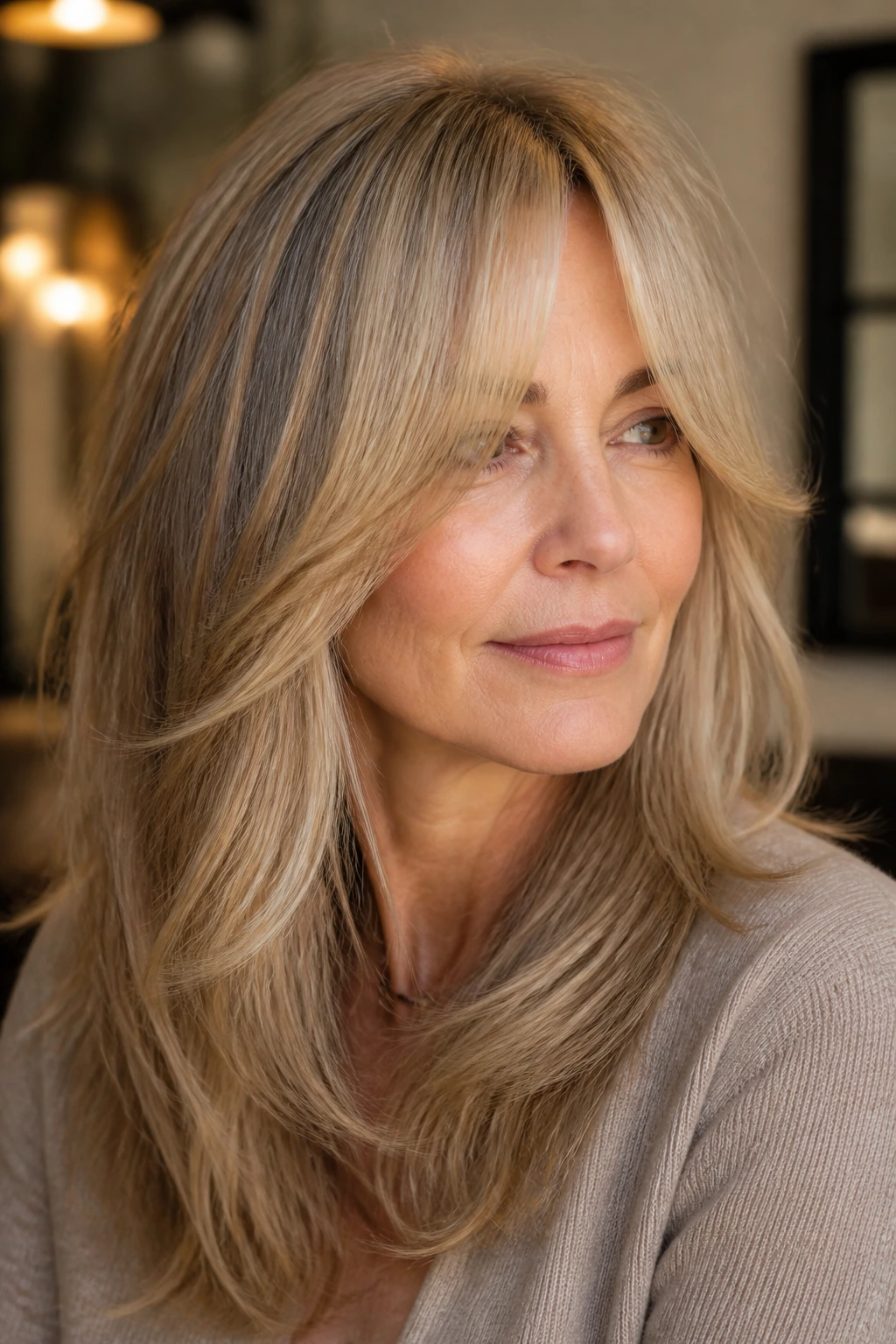
Long fine hair tends to show its mood the next day, so upkeep is less about fuss and more about rhythm. A light brush-through, a bit of dry shampoo at the roots, and a quick reset of the curtain bangs are often enough. If the front pieces go flat overnight, clip them up loosely before bed or sleep on a silk pillowcase to keep the bend from collapsing.
Bang trims usually need attention sooner than the rest of the cut. Plan on every 3 to 5 weeks for the fringe if you want it to keep that soft open shape. The main length can usually go longer, around 8 to 10 weeks, depending on how fast your hair grows and how crisp you like the ends.
On wash day, don’t soak the crown in conditioner. That’s a fast track to limp roots. Put conditioner on the ends, rinse well, and give the roots a blast of cool air while lifting the hair with your fingers or brush. If the style starts to droop by day two, mist the roots lightly, blow-dry for 1 to 2 minutes, and re-curve the curtain bang with a brush or roller.
Fine hair rewards small, regular care. It does not love heroics.
Frequently Asked Questions
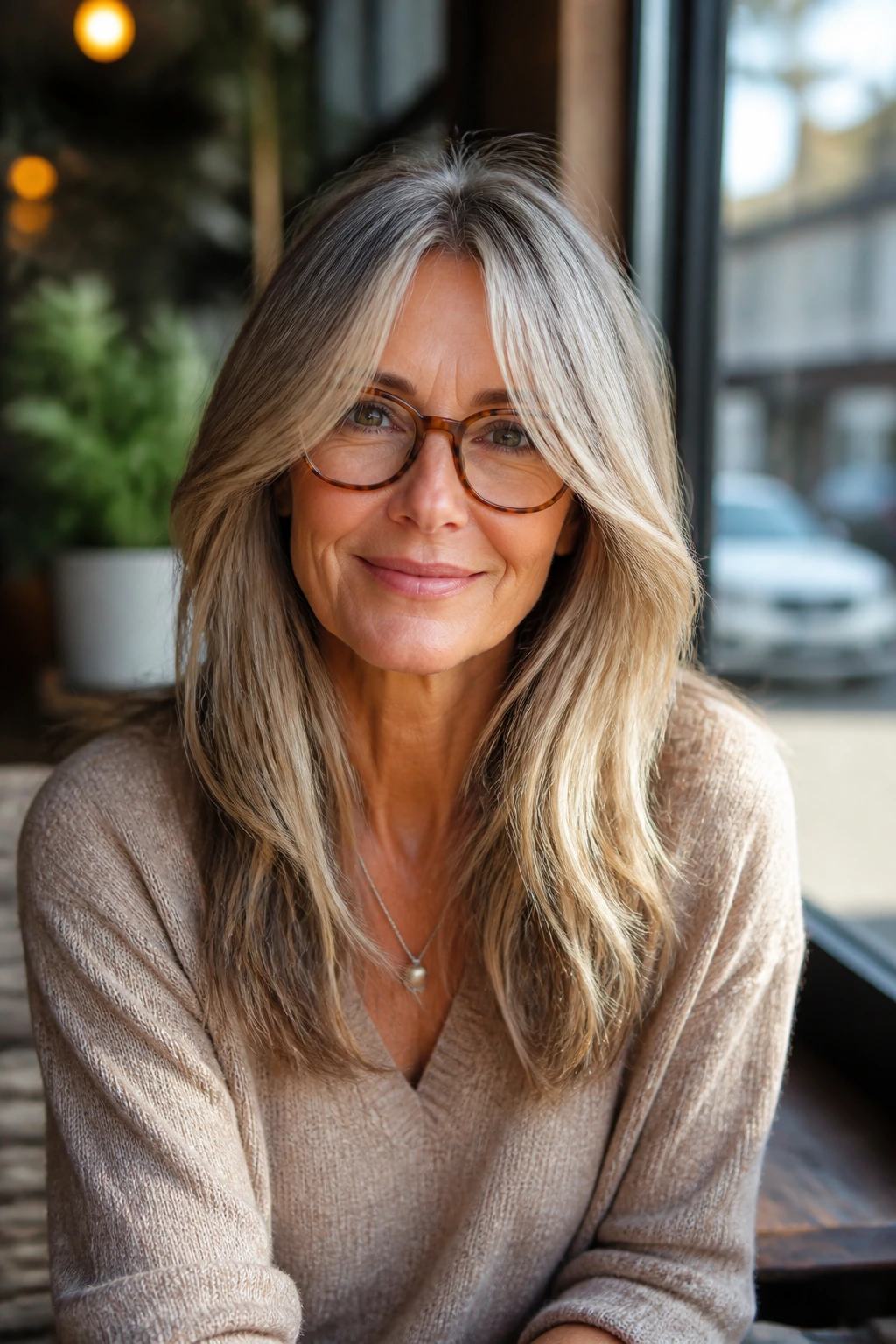
Will curtain bangs make fine hair look thinner?
Not if they’re cut with enough softness and the rest of the haircut keeps weight. The problem usually comes from bangs that are too sparse or too short, not from the curtain shape itself.
Can women over 50 wear hair this long without it looking heavy?
Yes, if the cut has a clear shape and the ends are healthy. Length reads as polished when the perimeter is intentional, not stringy.
Are curtain bangs hard to style every morning?
They take less work than blunt bangs. A quick round brush pass, a roller, or even a clip while the front cools can set the shape in a few minutes.
What if my hair is pin-straight and won’t hold a bend?
Ask for a slightly shorter front piece and use a small round brush or hot brush at the roots. Straight hair often needs root direction more than curl.
Do these styles work with gray hair?
Very well. Gray and silver strands show movement beautifully when the cut has clean layers and the front frame is soft, not heavy.
How often should I trim the curtain bangs?
Usually every 3 to 5 weeks, depending on how fast your hair grows and how precise you want the shape to stay. If they start touching your eyes or sitting like a wall, it’s time.
Is a shag too much for thin hair?
It can be if the layers are short and the ends are stripped bare. A long shag with controlled layering is a different animal and can work nicely.
What’s the best style if I wear glasses?
A cheekbone-length curtain bang or a side-part hybrid tends to work best. Those shapes leave room around the lenses and keep the front from crowding the face.
A Shape That Keeps Paying Off
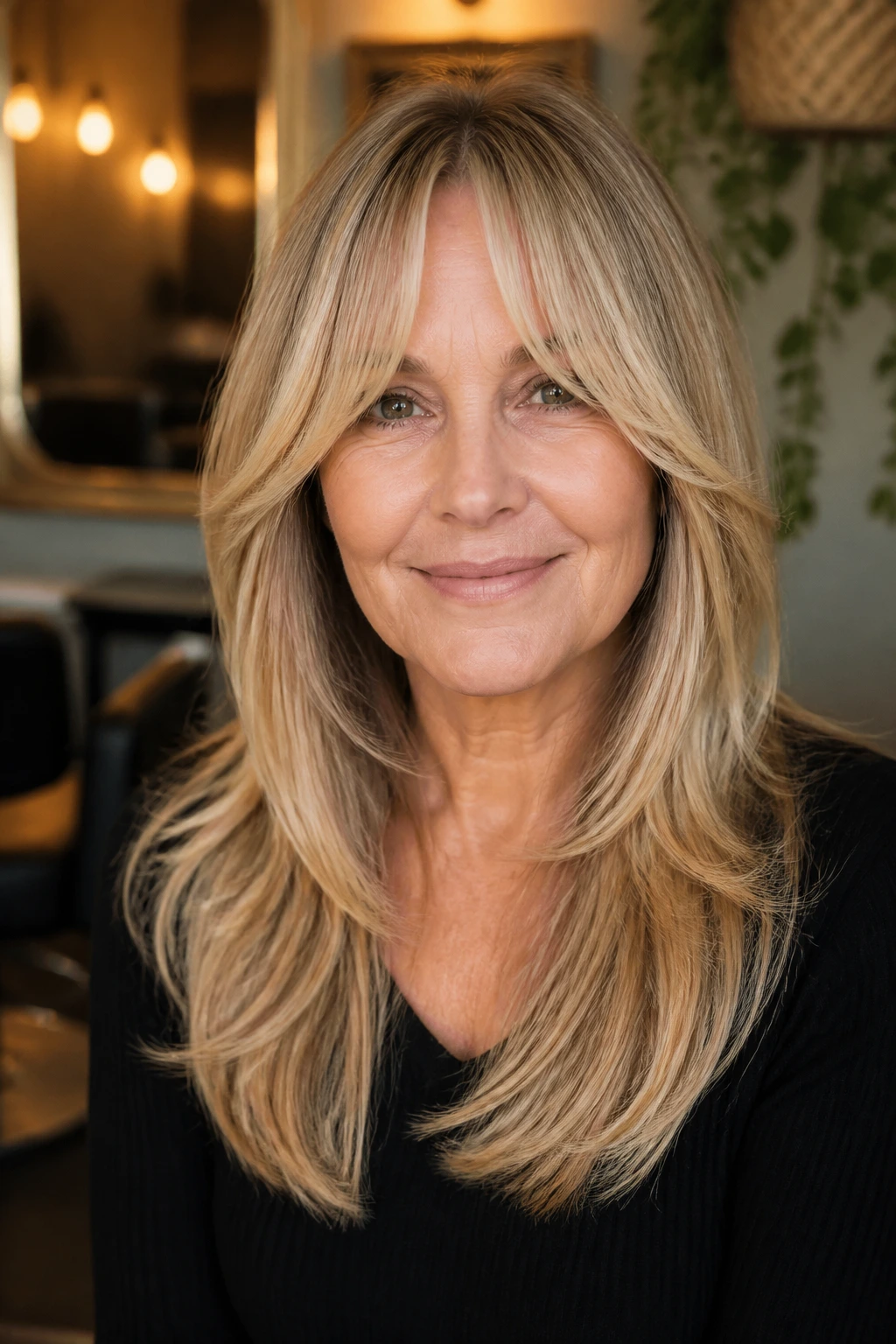
The nice thing about these long fine hairstyles is that they solve more than one problem at once. They keep the length you like, they add movement where fine hair usually needs it, and they let curtain bangs do their softening work without turning the front into a maintenance headache. That combination is why the right cut can make a person look fresher without looking “done.”
If I had to choose one rule from all of this, it would be simple: protect the ends, and make the front do the talking. That’s where fine hair gets its best chance to look full, balanced, and easy to wear.
Bring a photo, yes. Bring three if you like. But also bring the details: how much time you want to spend styling, whether you wear glasses, and how often you’re willing to trim the fringe. That conversation is what turns a pretty haircut into a good one, and good hair is the kind that keeps showing up for you on ordinary mornings.