



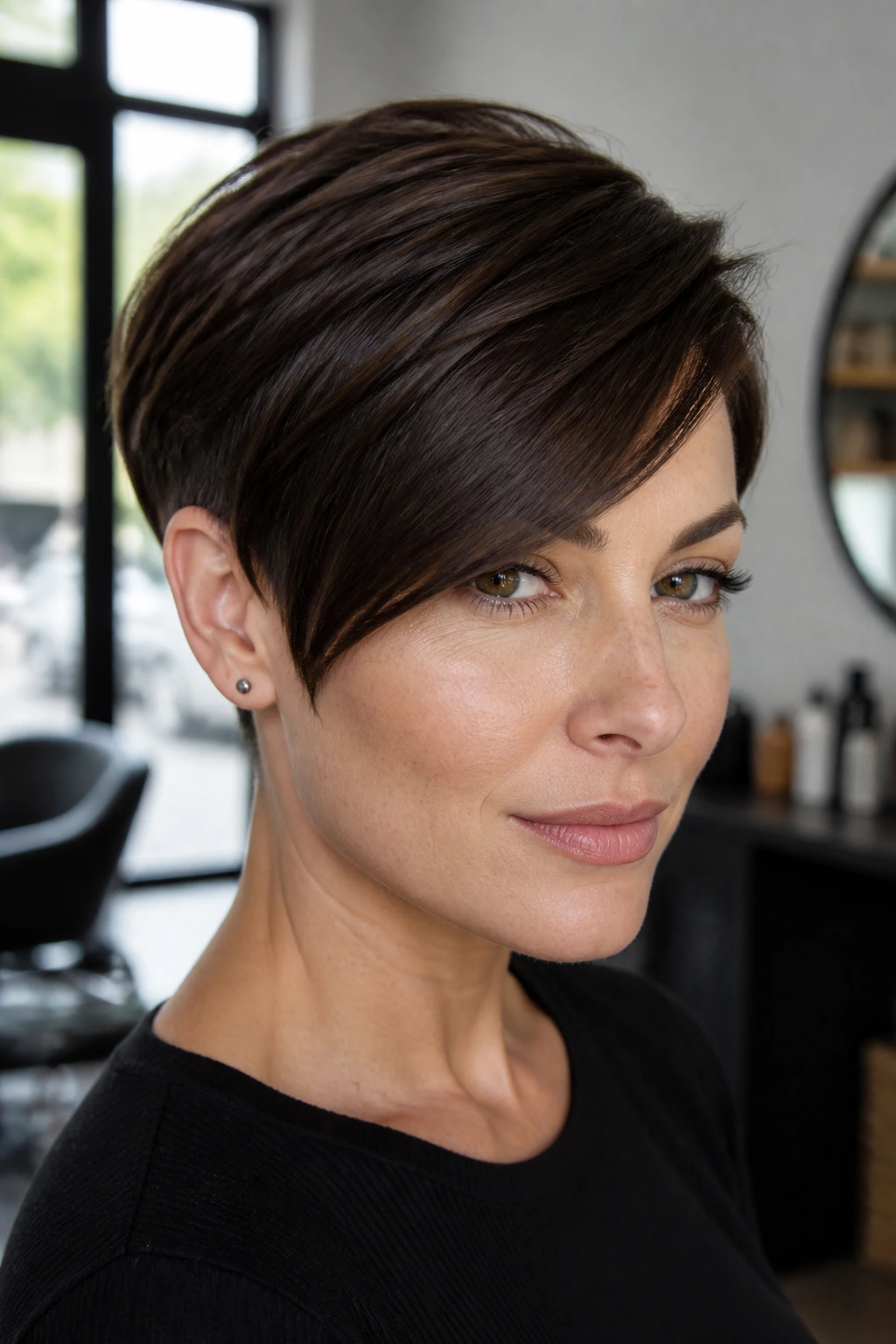
A short haircut can turn fussy in a hurry. Add long layered side-swept bangs for short hair, and the whole shape gets a diagonal line to follow, a little movement around the eyes, and enough softness to keep it from reading boxy or severe.
I’ve always liked this fringe on short cuts for one simple reason: it does useful work. It can skim the cheekbone, split around glasses, tuck behind one ear, or fall across the forehead when you want less face. That kind of flexibility matters when your haircut doesn’t have much length to hide mistakes.
The sweet spot is length and lightness working together. Too short, and you lose the sweep. Too heavy, and the bang sits like a curtain you have to wrestle every morning. The best versions land somewhere between the brow and the cheekbone, with layers that break up the front edge so the hair can move instead of sitting in one flat sheet.
Why These Bangs Keep Short Hair From Looking Boxy
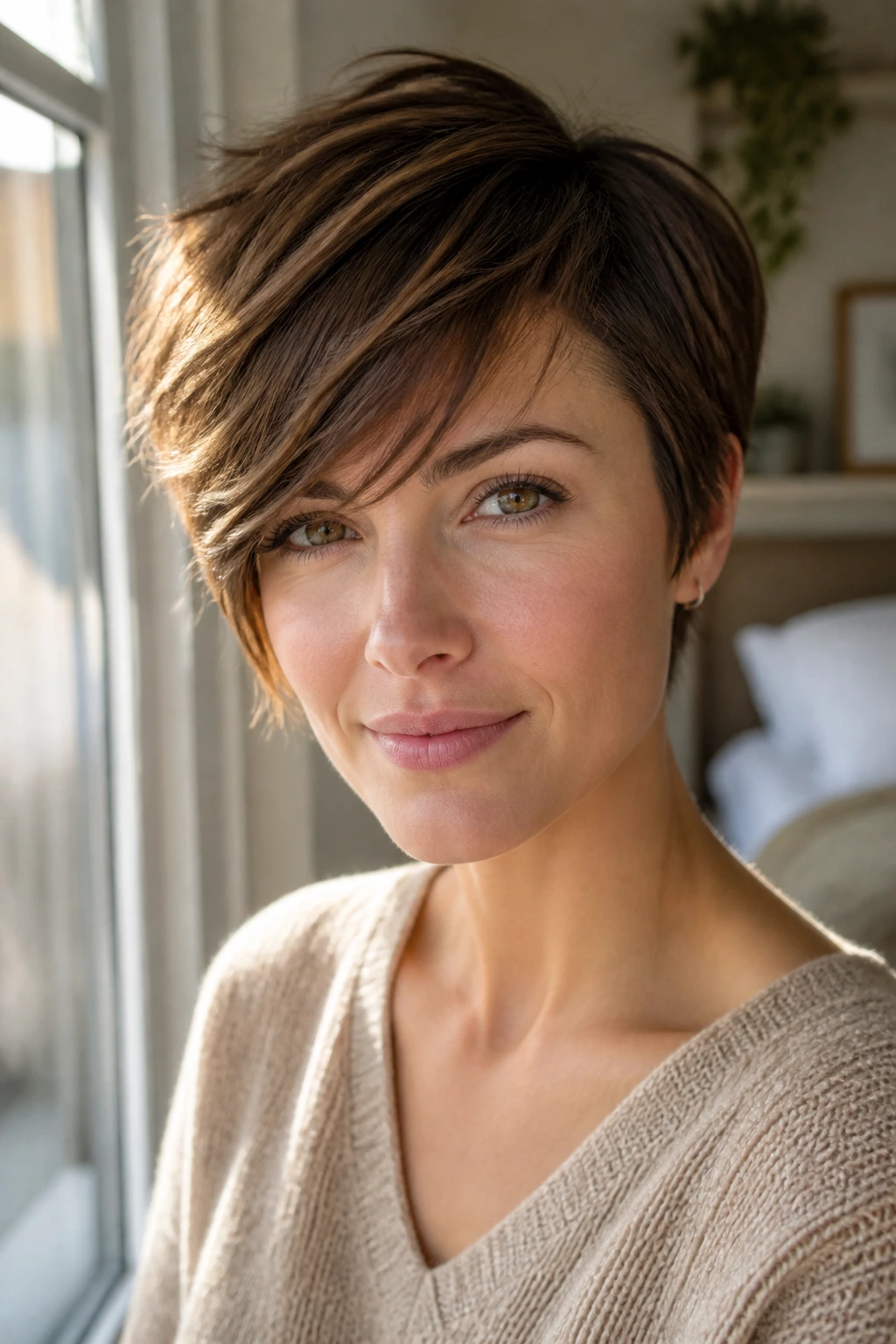
- The diagonal line softens a blunt edge: Short hair can look squared-off fast, especially around the jaw and temples, and a side-swept fringe breaks that line in the cleanest way.
- The layers buy you control: When the bang is cut with internal movement, you can push it open, sweep it across, or let it fall in a looser curve without fighting the cut.
- They work with more face shapes than a straight fringe: A side part and a longer front section are kinder to round, square, and heart-shaped faces because the eye travels sideways instead of stopping at one heavy line.
- They make grow-out less annoying: A fringe that starts at the brow and skims toward the cheekbone can stretch a little longer between trims before it turns into that awkward, overgrown curtain.
- They play nicely with glasses and earrings: A swept front leaves space around the eyes, which matters more than people admit; frames, lashes, and a heavy bang all compete for the same real estate.
- They can look polished or undone: Blow them smooth and they read neat. Rough-dry them with a bend and they look lived-in. That range is half the appeal.
1. Feathered Pixie With a Cheekbone Sweep
A feathered pixie with long layered side-swept bangs has one job: keep a very short cut from feeling harsh. The front section glides across the forehead, but the feathered ends keep it from looking helmet-like. I like this version on hair that has a little natural lift at the crown, because the whole cut needs that tiny bit of movement to stay airy.
Why It Works
The shortest layer can sit just above the brow, while the longest piece drops toward the upper cheekbone. That slope makes the eye move diagonally, which softens the sharpness that some pixies get after a fresh cut. It also gives you options on days when the fringe wants to split; a quick side push and a bit of styling cream usually fixes it.
Quick Shape Notes
- Best for fine to medium hair that needs shape without bulk.
- Looks sharp with a low arch brow and a small side part.
- Needs a trim every 4 to 5 weeks if you want the fringe to stay visible.
Pro tip: Ask for the bang to be cut dry or nearly dry. On a pixie, a half-inch matters. Wet hair hides how far the fringe will spring once it dries.
2. French Bob With a Temple-Soft Fringe
This is the cut that makes people stare a second longer. The bob sits at the jaw or just below it, and the long side-swept bang melts into the temple instead of landing as one blunt front piece. The result is neat, but not stiff. There’s a little flirt to it.
The best part is how it frames the face without boxing it in. A French bob can look severe if the front is too straight, but a layered sweep changes the whole mood. I’d choose this on straight or slightly wavy hair, especially if the front tends to fall into your eyes by lunchtime.
What Makes It Different
The front layers are cut to blend, not to hang. That matters. When the bang is too dense, the bob loses its crisp shape. When it’s too wispy, it starts to look thin at the edges. This version keeps a clean line at the base while letting the fringe do the softening work.
If you like earrings, this cut is a dream. The ear stays visible when you tuck the front, and the bang gives the face a little movement without swallowing your features.
3. Chin-Length Bob With a Deep Side Part
Why does this version feel easier than a blunt chin bob with a center part? Because the deep side part breaks the symmetry before the cut even starts moving. The long fringe can sweep across the forehead, then drop into the front of the cheekbone, which gives a chin-length bob a bit of slope and a bit of attitude.
That diagonal line does a nice job on round faces and fuller cheeks. It pulls the eye upward and outward, which makes the jawline look a touch longer. Not dramatic. Just enough.
How to Wear It
Smooth and tucked
Blow the fringe down and around a round brush, then tuck the heavier side behind the ear. This is the neatest version, and it works well if you wear frames.
Soft and bendy
Dry the bang first, then twist the ends around your fingers while it’s still warm. You get a looser curve, and the bob feels less formal.
The danger here is overloading the front with product. A drop of styling cream is enough. More than that, and the sweep loses the airy movement that makes the cut work in the first place.
4. Asymmetrical Bixie With a Layered Front Panel
Picture a bixie that leans a little braver on one side. The back stays short, the sides stay close, and the front drifts into long layered side-swept bangs for short hair that actually have room to swing. It’s a strong cut, but the fringe keeps it from getting too hard.
The asymmetry is doing most of the visual work here. One side can skim the temple, the other can graze the outer brow, and that difference keeps the eye moving. I like this best on hair with a little grit — fine hair with texture spray, or thicker hair thinned just enough at the ends.
A bixie can go wrong when it’s cut too neat. This version shouldn’t be neat. The bang should look like it was meant to fall that way, not like it was forced into place with a clip and a prayer.
- Works well for oval and square faces.
- Looks best with a light side part rather than a hard deep one.
- Gives you a built-in grow-out path into a softer bob.
5. Sleek Crop With a Polished Side Bang
A sleek crop with a long side bang is for people who want short hair to look deliberate. No shaggy ends, no accidental pieceiness, no trying-too-hard texture. The front section slides across the forehead in one clean line, but because it’s layered internally, it still moves instead of lying flat like a pasted-on strip.
I’m partial to this on straight hair, especially if the strands are glossy and the haircut has a little internal weight removed near the temples. The shape lets the face stay open while keeping some length in front, which is a nice balance when you don’t want a full fringe.
The real trick is the finish. You want the bang smooth, not stiff. A small flat iron bend at the ends is enough. If you iron the whole thing pin-straight, it can look like a ruler. That’s the wrong mood entirely.
6. Tousled Shag Bob With Razored Ends
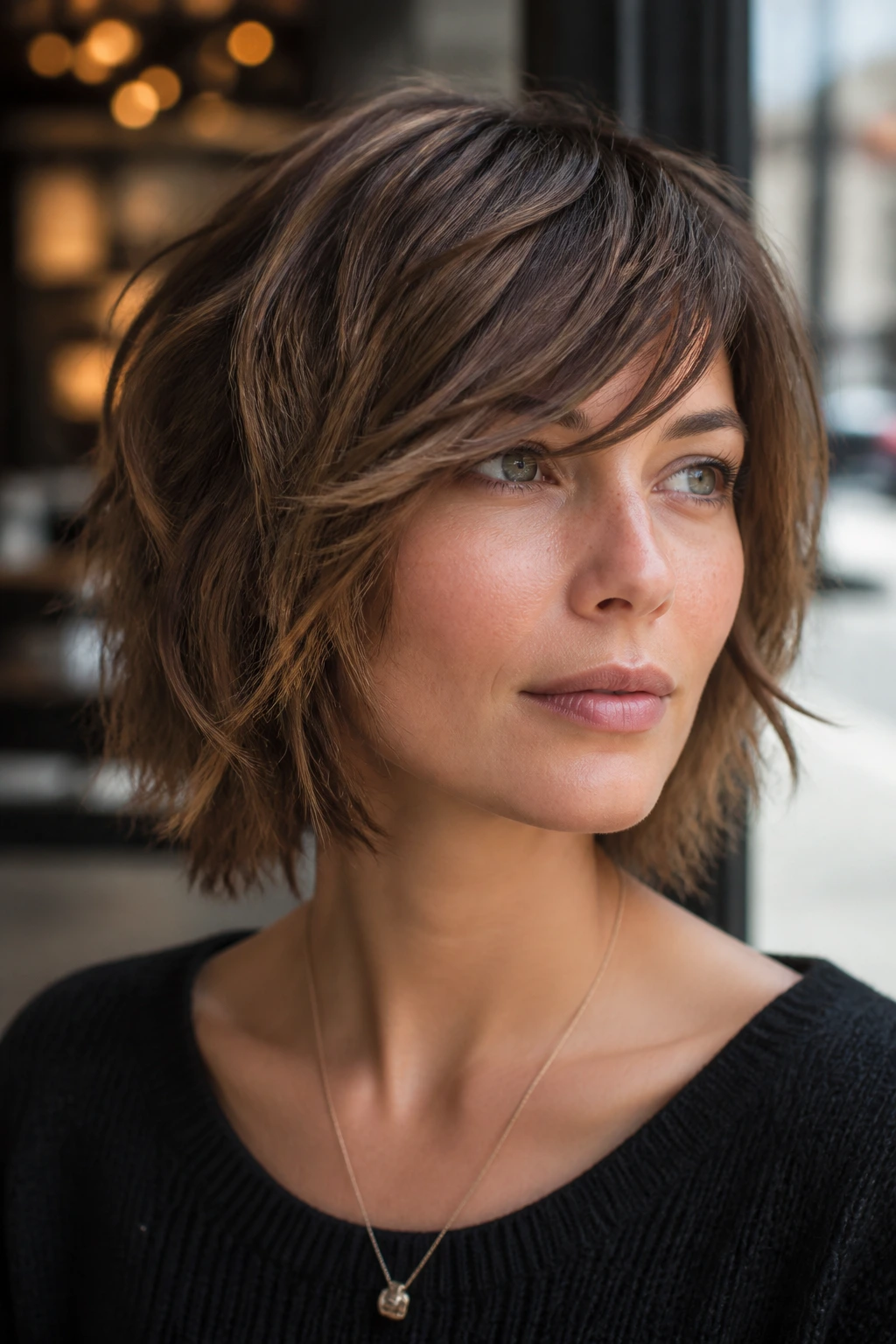
This one has a little swing, a little mess, and zero interest in behaving like a salon-polished helmet. The shag bob works because the layers around the crown and temple feed directly into the long side-swept fringe. Nothing sits in one clean plane, which is exactly the point.
Compared with a tidy bob, this version gives you air. The fringe can be pushed off the face and still leave a bit of texture behind, so it looks intentional even after you touch it three times on the way out the door. That makes it a smart choice for wavy hair or thick hair that wants movement more than smoothness.
Best If You Want
- A cut that looks better with a little bend than with a perfect blowout.
- A front section that can soften a strong jaw.
- A shape that grows into a cooler shag instead of a weird triangle.
I’d avoid heavy oil here. A shag needs separation, not slickness.
7. Stacked Bob With a Soft Swing
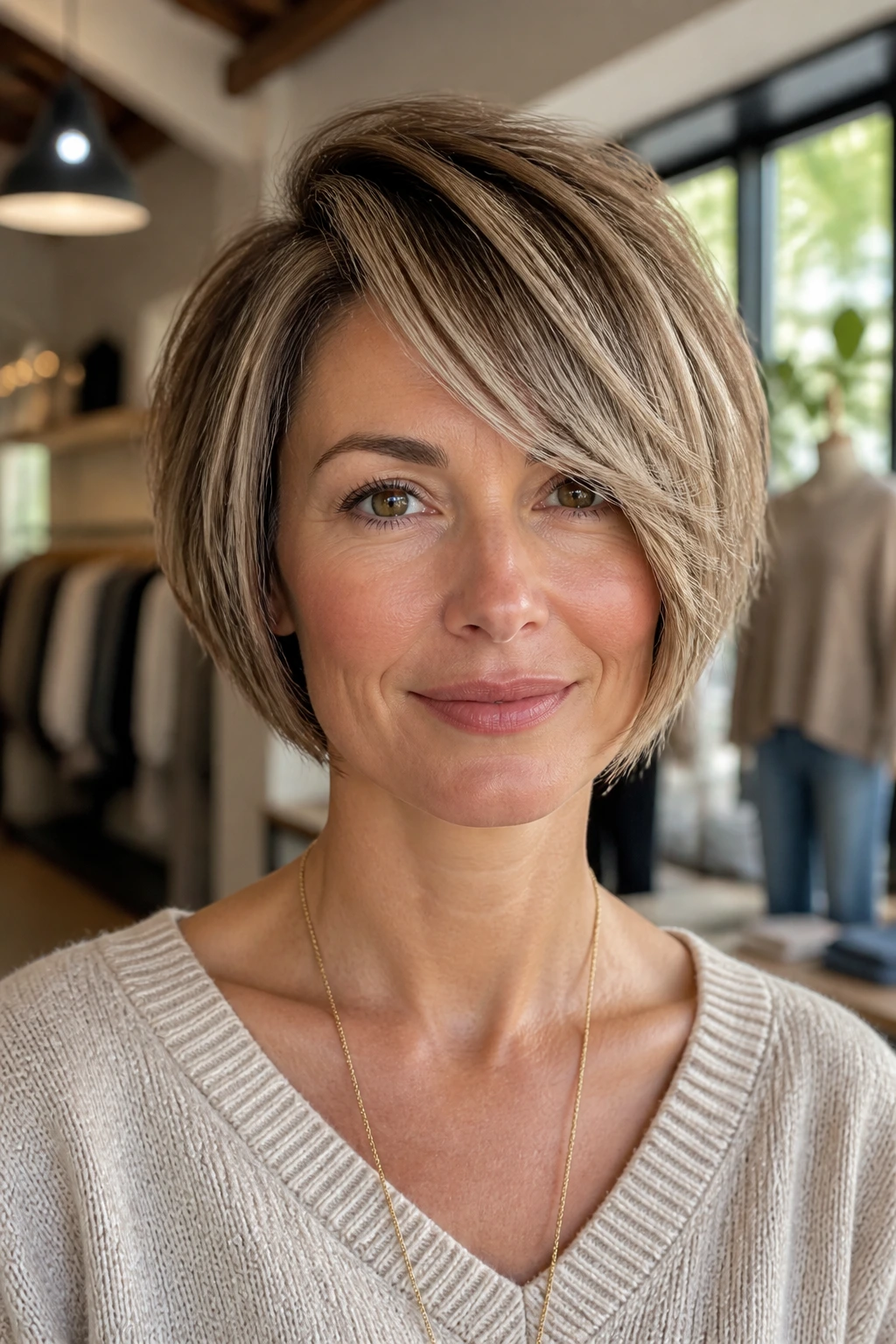
Stacked bobs can turn blocky in a hurry, which is why the bang matters so much here. A long layered side-swept fringe pulls the front of the cut forward and downward just enough to keep the stacked back from feeling too rigid. It’s a small visual trick, but it changes the whole haircut.
The swing should start near the brow and finish closer to the cheekbone. If the bang ends too soon, the stack looks even more obvious. If it’s too long, the shape loses energy. That middle stretch is where this cut lives.
I like this on denser hair because the back can carry weight while the front stays light. If your hair is fine, the stack can still work, but ask for softer graduation so the back doesn’t look sliced.
8. Tapered Crop With Airy Layers
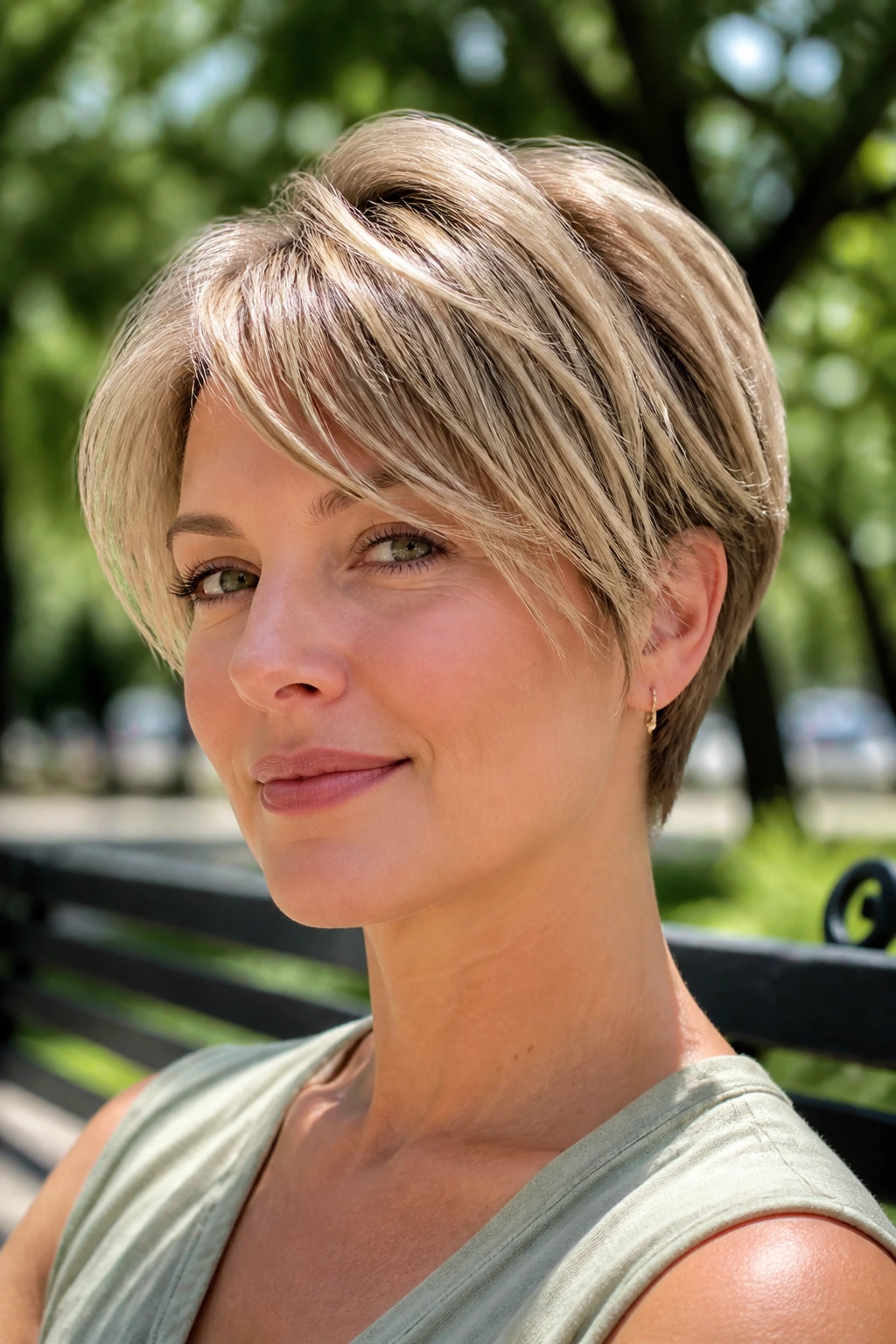
A tapered crop with side-swept bangs feels light on the neck and soft around the face, which is a useful combination when you want short hair but not a hard edge. The taper keeps the back close. The long front layers keep the cut from looking overly masculine or severe.
This version flatters people who like easy styling. The fringe can be blown forward, then nudged across with fingers and a touch of mousse. It does not need a perfect round-brush blowout every morning. Thank goodness.
How to Read the Shape
If the front lies flat
The cut probably needs a little more internal layering, or the roots need lift at the side part.
If the front puffs out
There’s either too much bulk in the bang or too much heat being thrown at it. Lower the dryer setting and stop roughing it up so hard.
A tapered crop with a soft sweep feels especially good on hair that grows fast at the nape. The back stays clean while the front gives you a little styling room.
9. Layered Lob Cut Short Enough to Clip Back
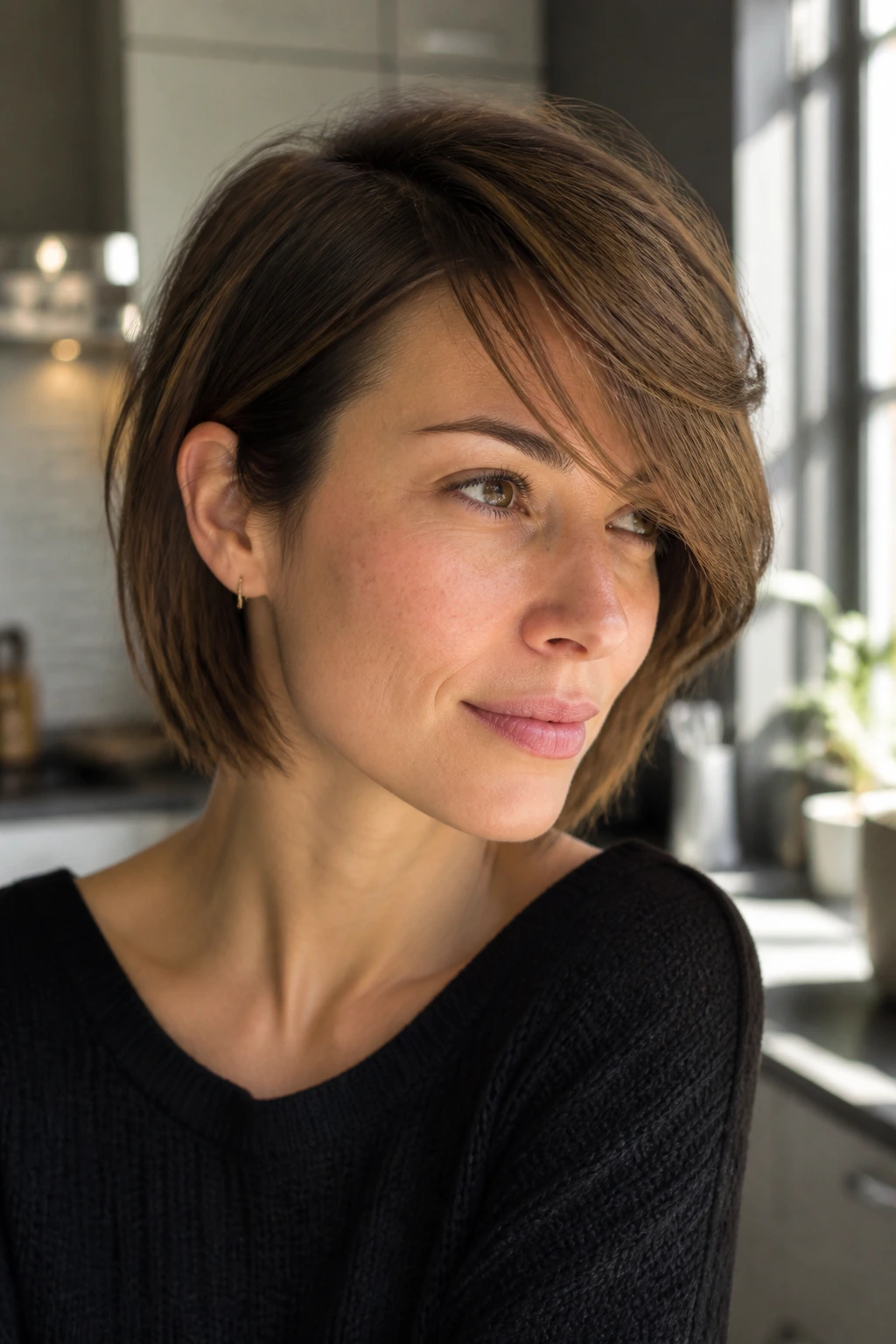
A lob is technically longer than most people think of as short hair, but when it’s cut with strong layering and a sweeping fringe, it behaves like a short style. The front can fall across the face, then clip neatly behind one ear when you want it out of the way. That flexibility is why this cut keeps showing up.
The long bangs matter here because a lob can lose personality fast if the front is one flat length. Layers around the temples create movement and keep the shape from hanging like a rectangle. If your hair is thick, ask for internal removal rather than aggressive thinning at the ends. Those are not the same thing.
It’s a good one for anyone who wants a soft grow-out path. A lob with side-swept fringe can move toward curtain bangs or a longer bob without looking awkward in the middle.
10. Curly Crop With an Elongated Front Curl
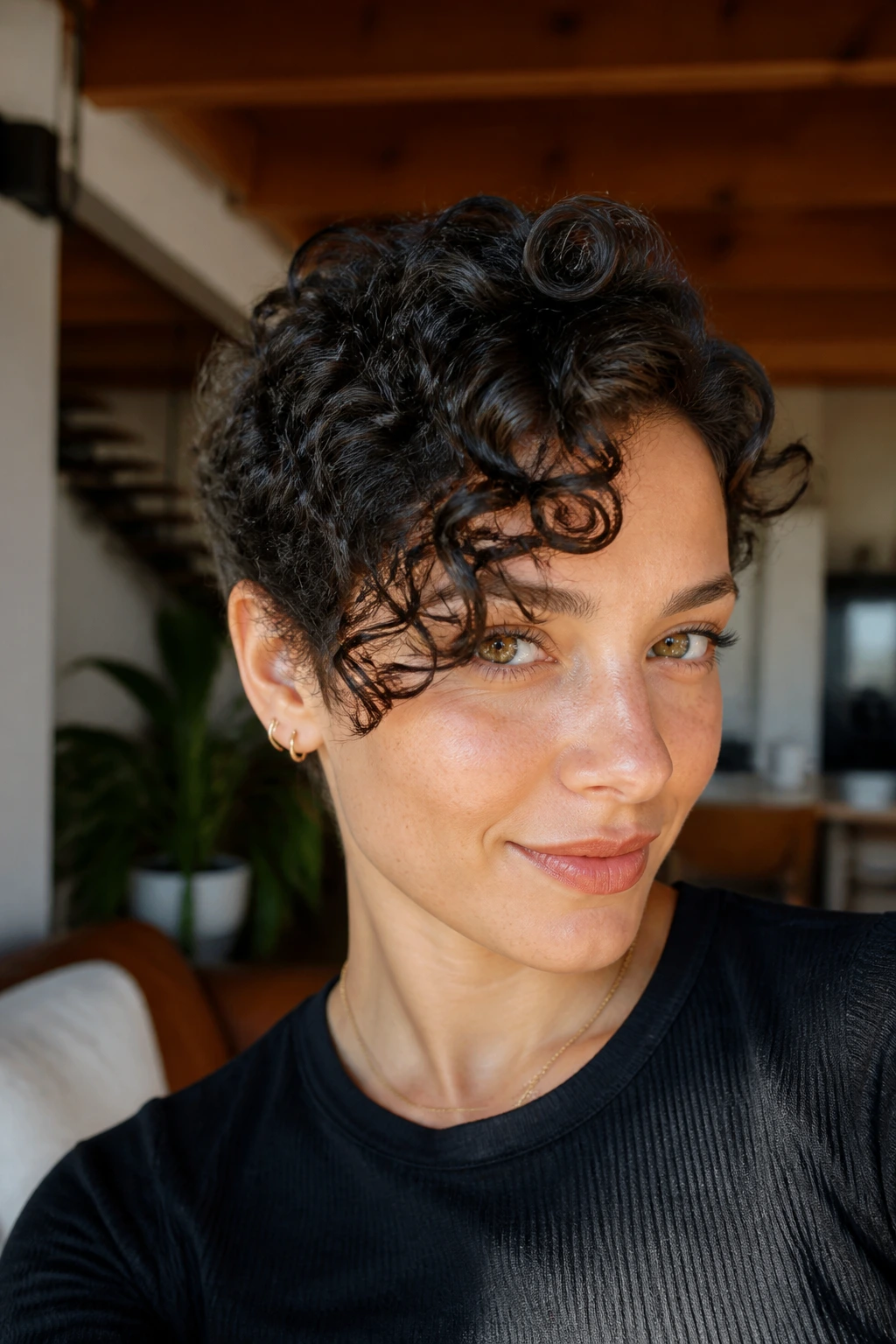
Curly hair and side-swept bangs get along better than people think, as long as the cut respects shrinkage. The front pieces need to be left longer than you would on straight hair, because curls bounce up once they dry. A layered sweep lets the curl fall across the forehead without turning into a mushroom fringe.
The best version doesn’t fight the curl pattern. It follows it. One side can frame the cheek, the other can split around the brow, and the whole thing looks like it belongs there. If the curls are tight, this may mean cutting the fringe dry or at least mostly dry so the final length makes sense.
What to Ask For
- Keep the longest front curl at cheekbone level when dry.
- Remove bulk around the temple so the fringe can slide sideways.
- Shape the ends with curl-friendly layers, not straight razor slicing.
A diffuser helps, but not enough to fix a bad cut. That’s the blunt truth.
11. Blunt Bob Softened by Side-Swept Layers
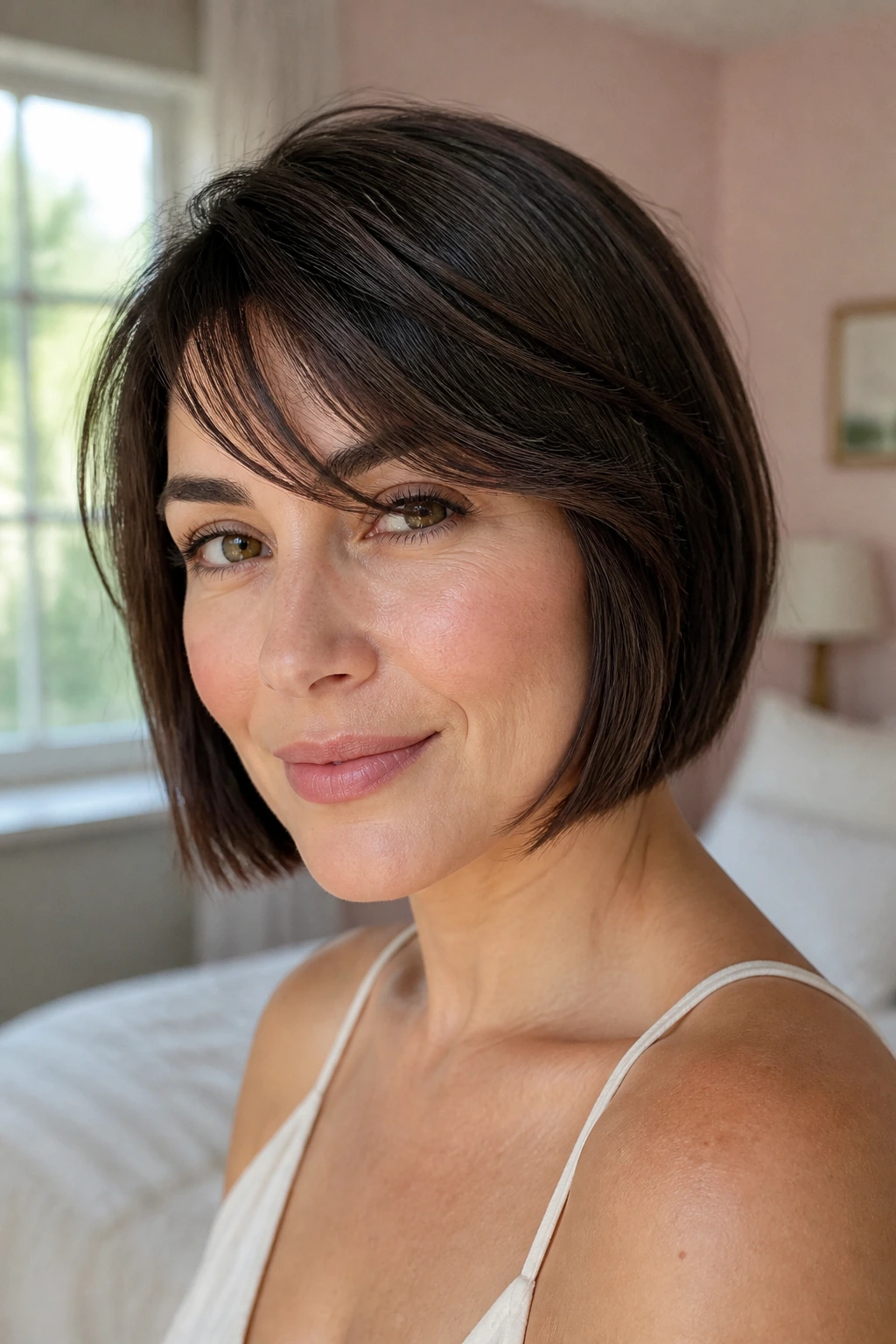
A blunt bob with side-swept layers sounds contradictory. That’s why it works. The base stays strong and clean, but the front gets a layered sweep that keeps the whole cut from feeling boxy or too stern.
This is one of my favorites for people who like structure but hate looking severe. The blunt edge gives the bob weight. The bang gives it movement. Put together, you get a haircut that can wear lipstick, a hoodie, or a sharp blazer and still make sense.
The key is restraint. Don’t over-layer the front or the bob loses the crispness that makes it interesting. Just soften the bang enough so it can move away from the face and skim the brow. That little bit of give matters.
12. Wolfy Mini Shag With Broken-Up Fringe
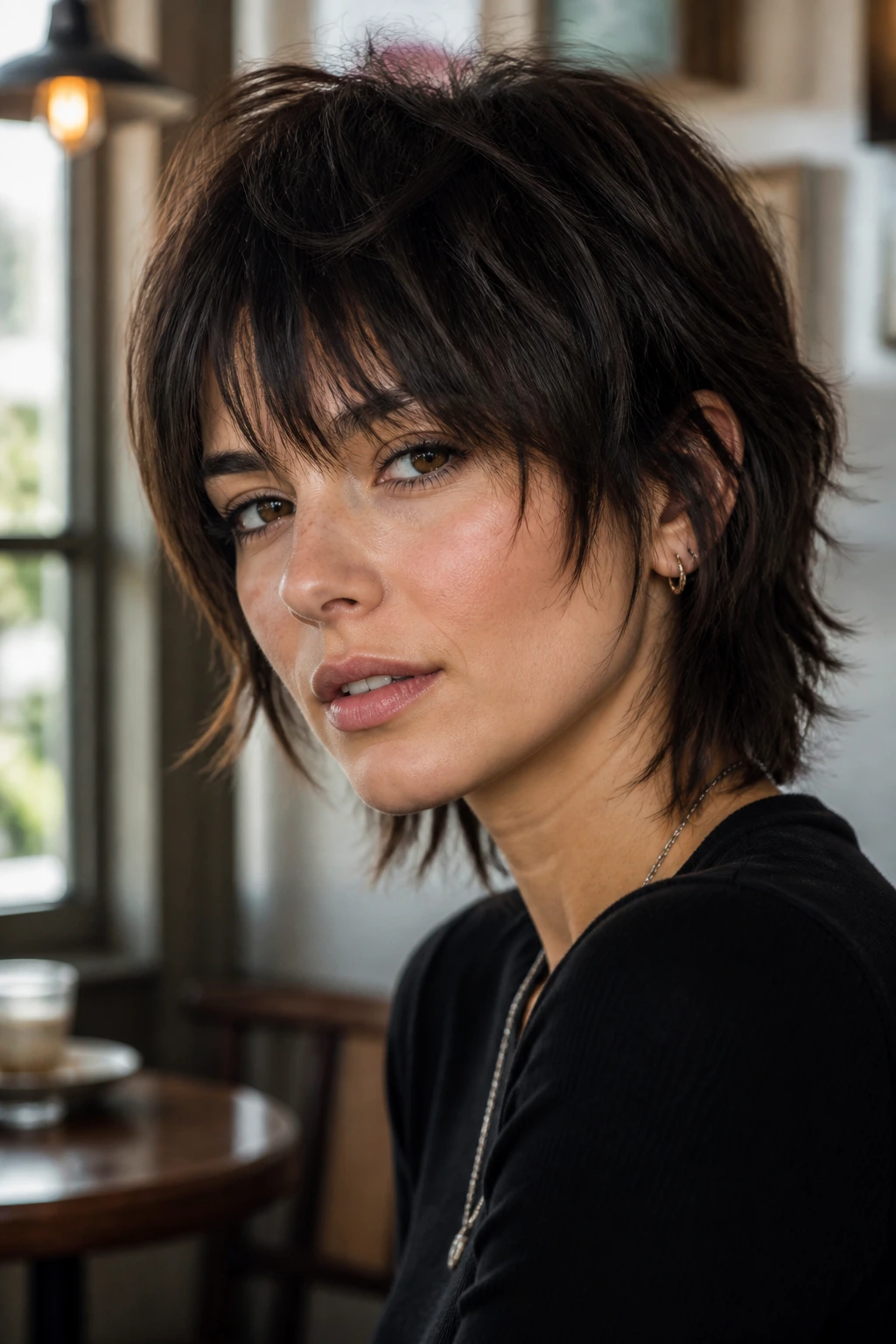
A mini shag with wolf-cut energy needs bangs that are long enough to break apart, not sit in one solid sheet. The side-swept fringe here is chopped with movement, so the front looks lived in, not preciously arranged. Good. That’s the whole point.
This cut shines when your hair has texture and a little attitude. It likes dry shampoo, texture spray, and a bit of air-dried grit. It does not like heavy cream or a super smooth finish unless you’re deliberately chasing a softer look.
Why It Feels Different
Unlike a neat bob, this cut thrives on unevenness. The front pieces can fall at slightly different lengths, and the side sweep still looks intentional because the whole haircut has a broken-up edge. If you want a bit of edge without going full mullet, this is one of the easier places to land.
13. A-Line Bob With a Long Front Panel
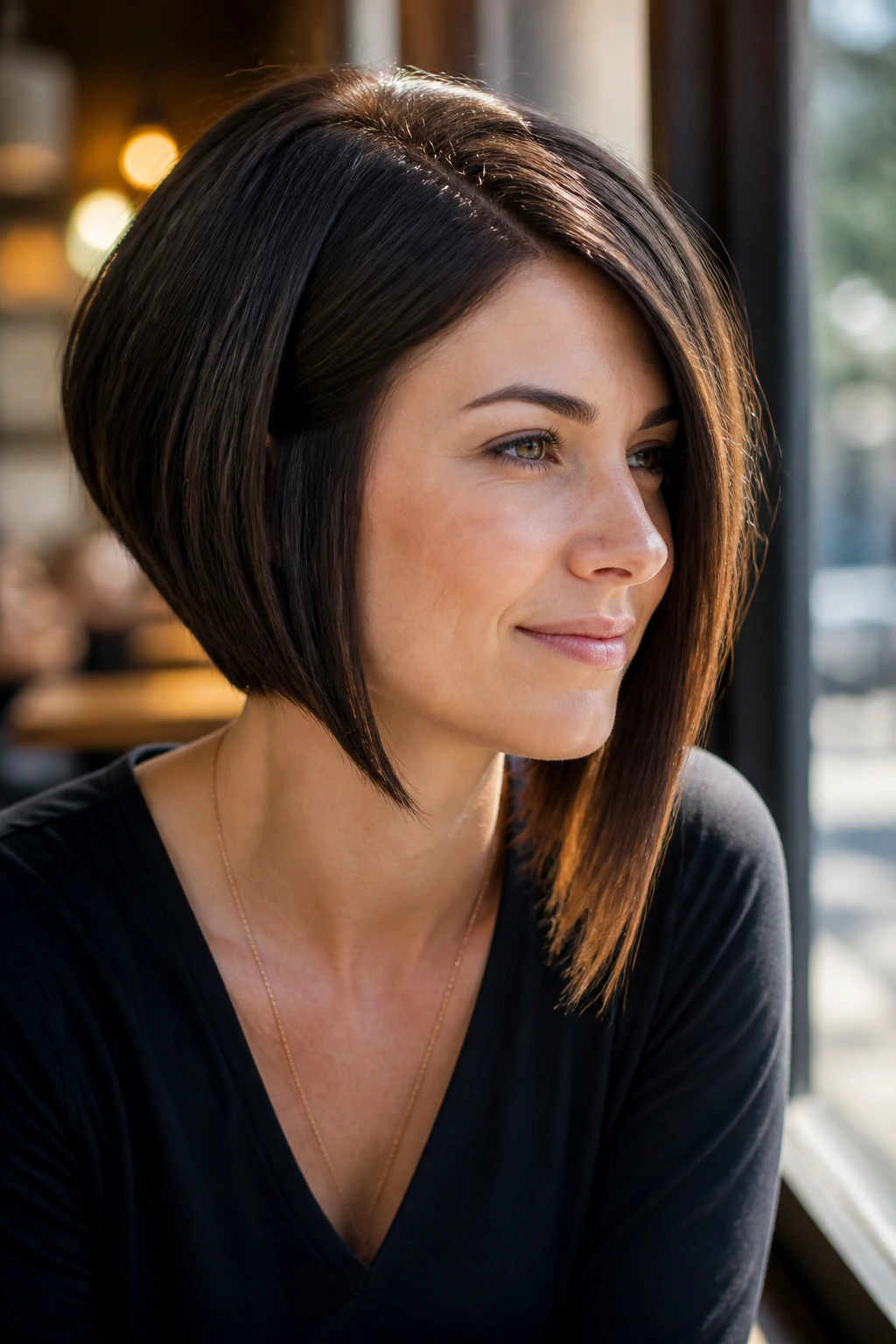
An A-line bob already gives you motion, because the front hangs longer than the back. Add long layered side-swept bangs, and the whole cut starts to lean forward in a flattering way. The front panel and the fringe work together, so the face gets framed twice without looking crowded.
This one suits people who want a visible shape from the side. The profile is the selling point. A line that drops toward the chin can make the neck look longer, while the sweeping bang keeps the top from feeling too heavy.
I’d keep the bang light at the temple and a little longer at the outer corner of the eye. That keeps it from looking blunt against the angled bob line. Little details. Big difference.
14. Side-Parted Pixie Mullet With Piecey Bangs
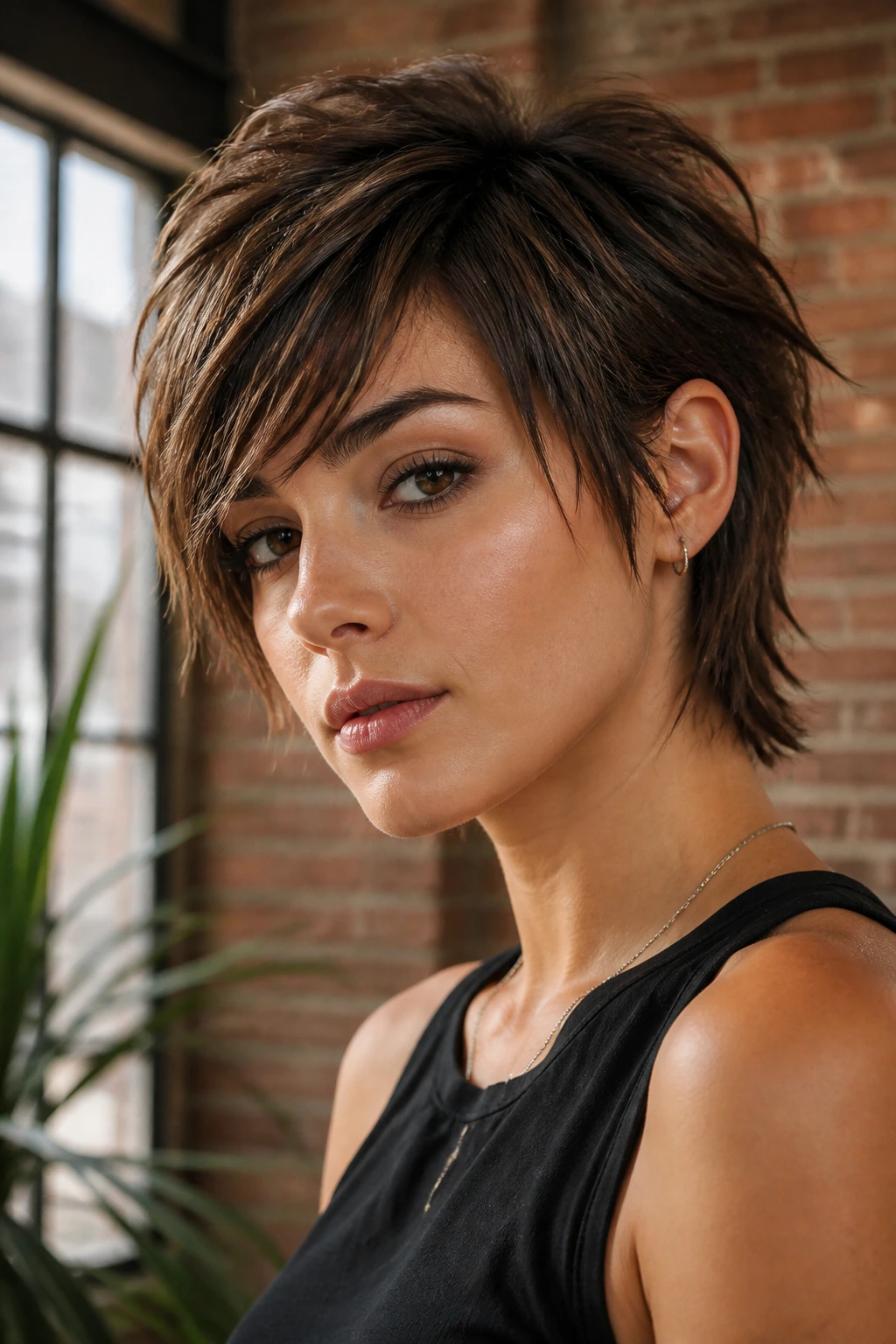
Yes, this is bolder. And yes, it can be good. A pixie mullet with side-swept bangs keeps the front soft while the back and sides stay shorter and more disconnected. The long fringe is what makes the cut wearable rather than costume-y.
If you’re worried about the mullet part, the bang is your safety net. Sweep it across the forehead, keep the ends broken up, and the shape reads modern instead of retro-for-retro’s-sake. It works best with a little texture and a willingness to style the front with your fingers instead of chasing perfect symmetry.
Quick Reality Check
- This cut needs confidence more than length.
- It’s better on hair with some natural bend.
- The fringe should look piecey, not feathered into nothing.
If you like your hair with a little mischief, this one earns its keep.
15. Jaw-Length Layered Cut With Bendy Fringe
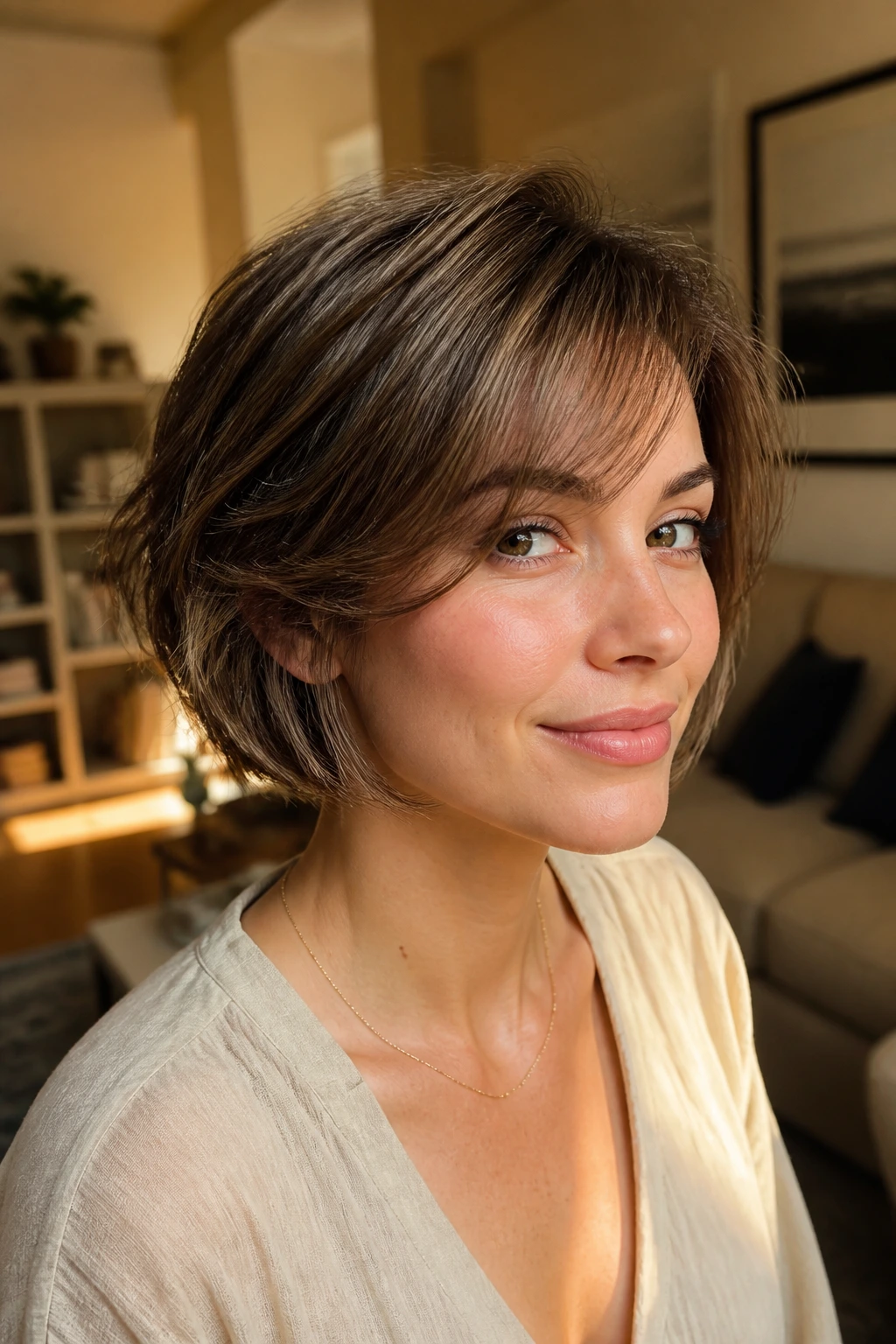
A jaw-length layered cut is one of the best homes for side-swept bangs because the front and the fringe meet in the same visual zone. That means the haircut feels coherent. Nothing is floating around with no purpose.
The bang should be bendy, not rigid. When it curves slightly at the end, it can blend into the layers near the cheek and jaw. That softens any sharpness around the lower face, which is handy if you want the cut to slim rather than widen.
This version works nicely on medium-density hair. Thin hair can still wear it, but I’d avoid over-thinning the front. You need enough substance for the side sweep to hold its shape once it’s dry.
16. Rounded Bob With a Curtain-Style Sweep

A rounded bob sits beautifully when the fringe opens away from the center and drapes toward the sides. That curtain-style sweep gives the bob a little softness at the forehead, which keeps the round shape from feeling too neat or too old-fashioned.
What I like most here is the balance. The silhouette is rounded, but the front isn’t heavy. The bang lifts the eye and gives the face a little room to breathe. On a good cut, you can almost see the layers folding into each other.
How It Differs From a Straight Bob
The straight bob draws a hard line. This one breaks it.
That difference matters if you have a stronger jaw or a broader forehead. The sweep lets the haircut move with your features instead of arguing with them. If you want a round shape that still feels light, this is a strong choice.
17. Undercut Pixie With Extra Length in Front
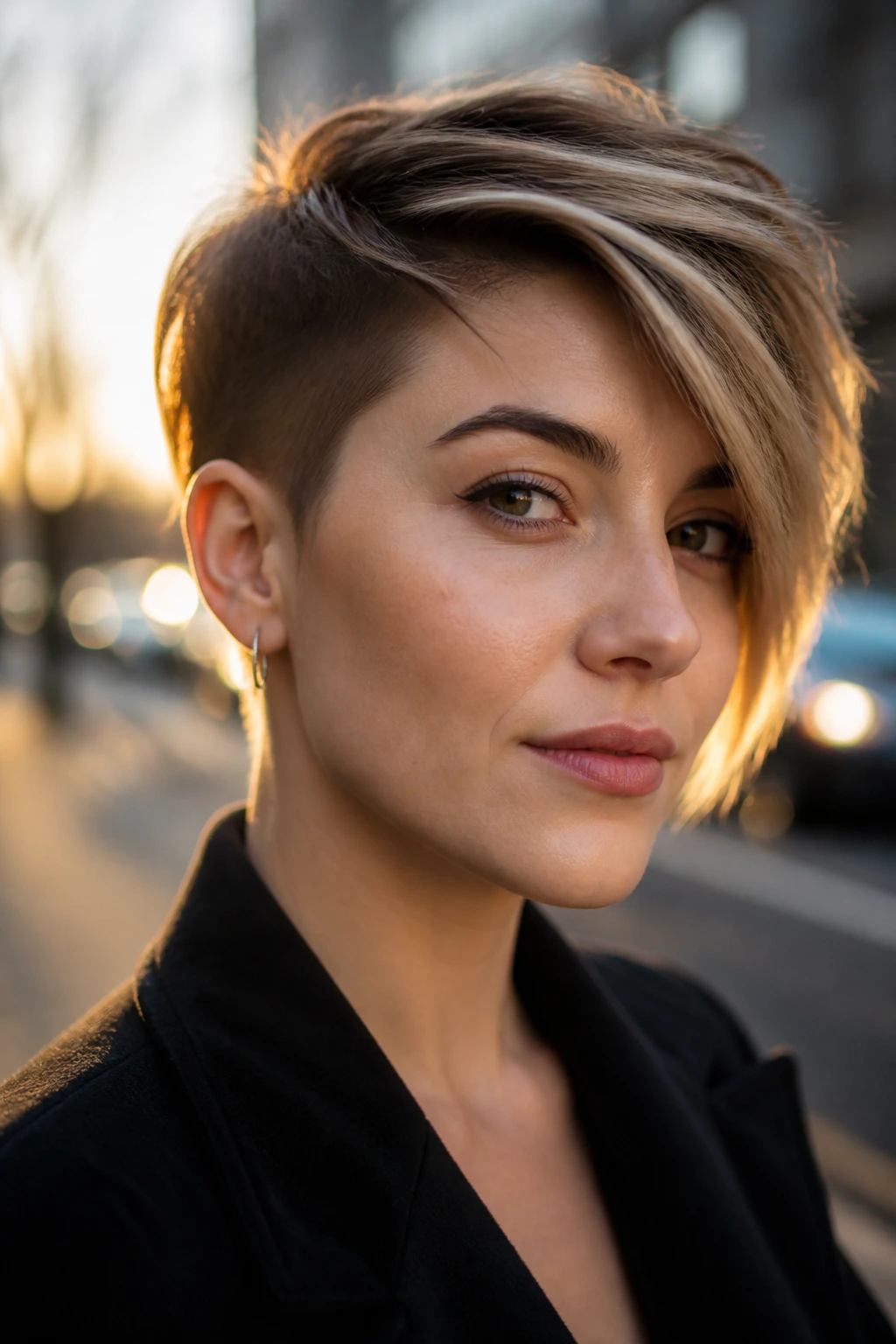
An undercut pixie is already a statement. Keep the front longer and layered, and suddenly the whole thing has shape instead of just edge. The side-swept bang softens the undercut so it doesn’t read too severe around the temples.
This is a good cut if you want low bulk at the back and sides, but you still want hair to play with in front. The long fringe can flip across the forehead, sit in a deep side part, or be tucked with a tiny clip. That versatility is the quiet advantage here.
The undercut also helps thick hair behave. Removing weight below the surface lets the bang move instead of puffing up. If your hair is dense, ask for controlled debulking, not a random thinning job.
18. Shattered Crop With Airy Texture
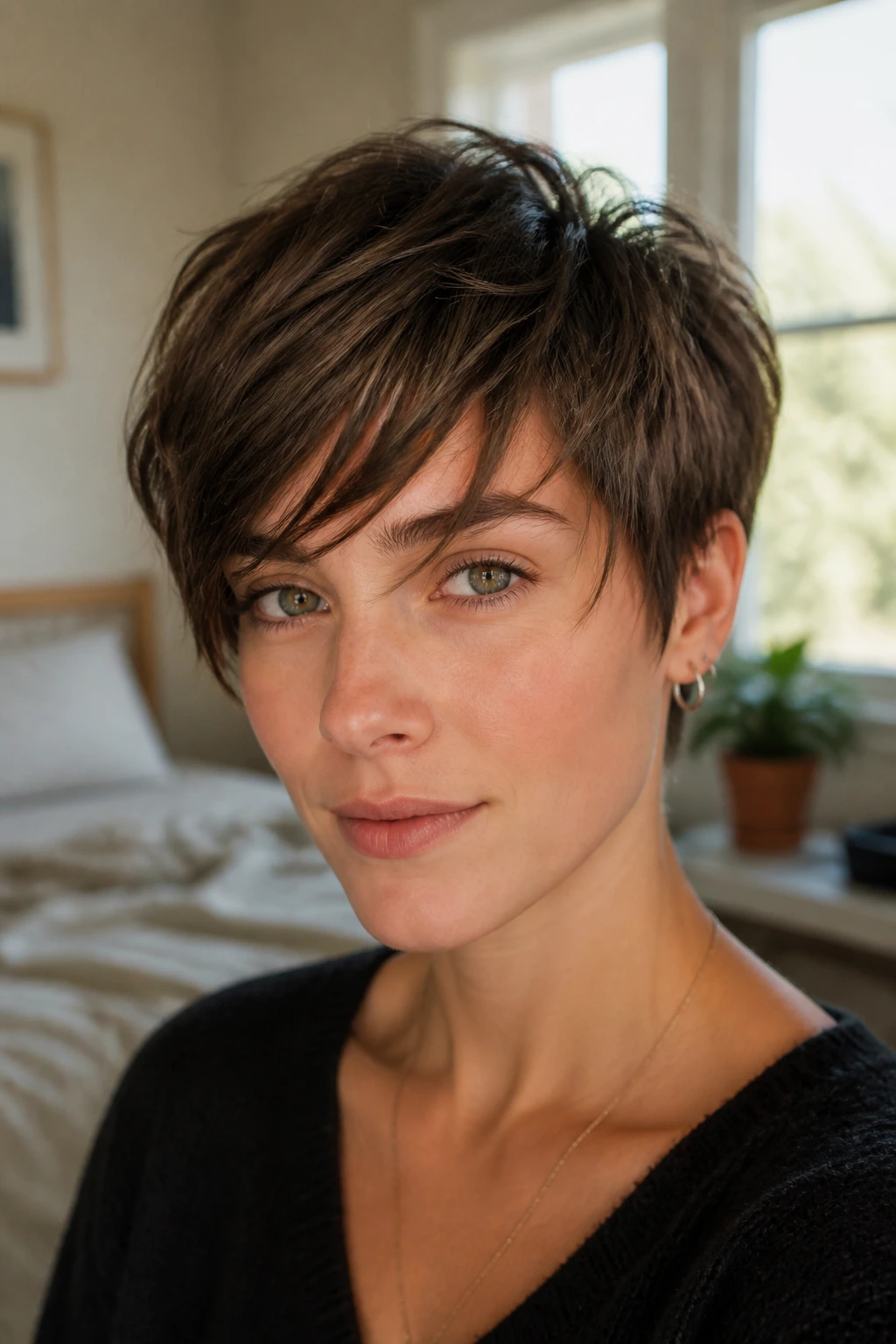
A shattered crop is all about small broken pieces, not a smooth sheet of hair. The side-swept fringe should feel airier than feathered, with short internal layers that let the front move in separate directions. It sounds messy. It can be, in the best way.
This cut is useful when you want short hair to feel modern without looking styled to death. The bang can fall across the face in a soft zigzag, which sounds odd until you see how nicely it frames the eyes. No hard line. No stiff shell.
I’d keep the finish matte or lightly satin, not shiny. Shine tends to make shattered texture look sparse, and this cut needs a little grit to tell its story.
19. Retro Flip Bob With a Sculpted Fringe
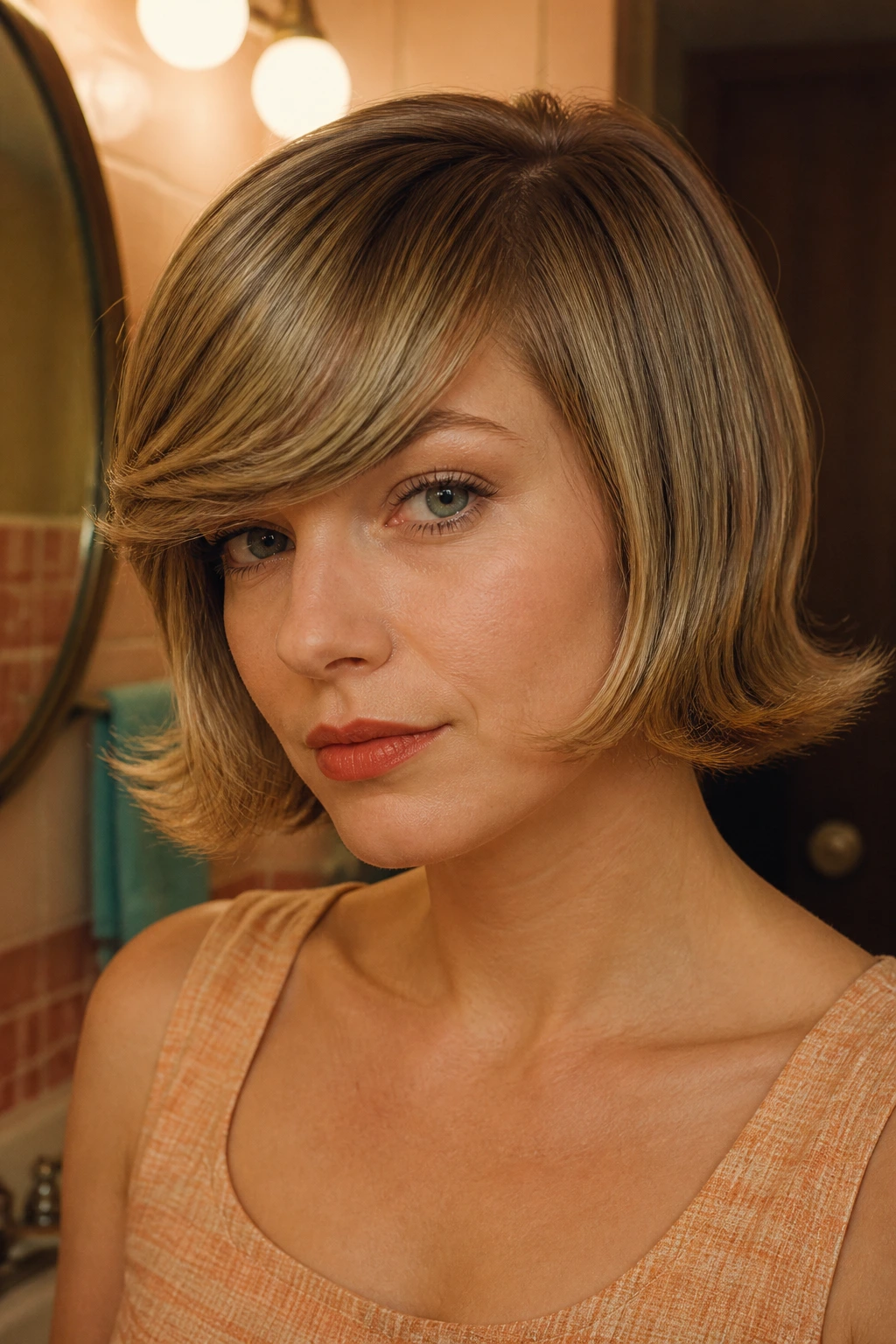
A retro flip bob brings some lift back to short hair, and the side-swept fringe keeps it from feeling costume-like. The ends can flip out at the jaw while the bang curves across the forehead in a smooth arc. It has a little drama, but it still wears easily.
This one is fun on straight or slightly wavy hair that holds a bend. A round brush and a quick cool shot from the dryer are usually enough to set the shape. I’d keep the fringe longer than you think; the flip in the back already gives you enough attitude.
If you wear bold makeup, this cut makes sense. If you don’t, it still works. The fringe softens the retro shape so it doesn’t look like it’s auditioning for a costume party.
20. Messy Textured Bob With a Long Diagonal Fall

A messy textured bob can lean lazy if the front is too short or too flat. A long diagonal bang fixes that. It gives the cut a clear direction, so the mess reads as style instead of neglect.
The diagonal fall is the detail that keeps this from becoming generic. One side can hit the brow, the other can graze the cheek. That length difference creates motion even before you touch the hair. Add a little spray, scrunch once, and leave it alone.
This is one of the easiest looks to live with if you hate precision. It doesn’t demand symmetry. It rewards natural bend. And if a piece falls wrong, the whole point is that it still looks like it belongs there.
21. Glossy Brunette Crop With a Clean Side Sweep
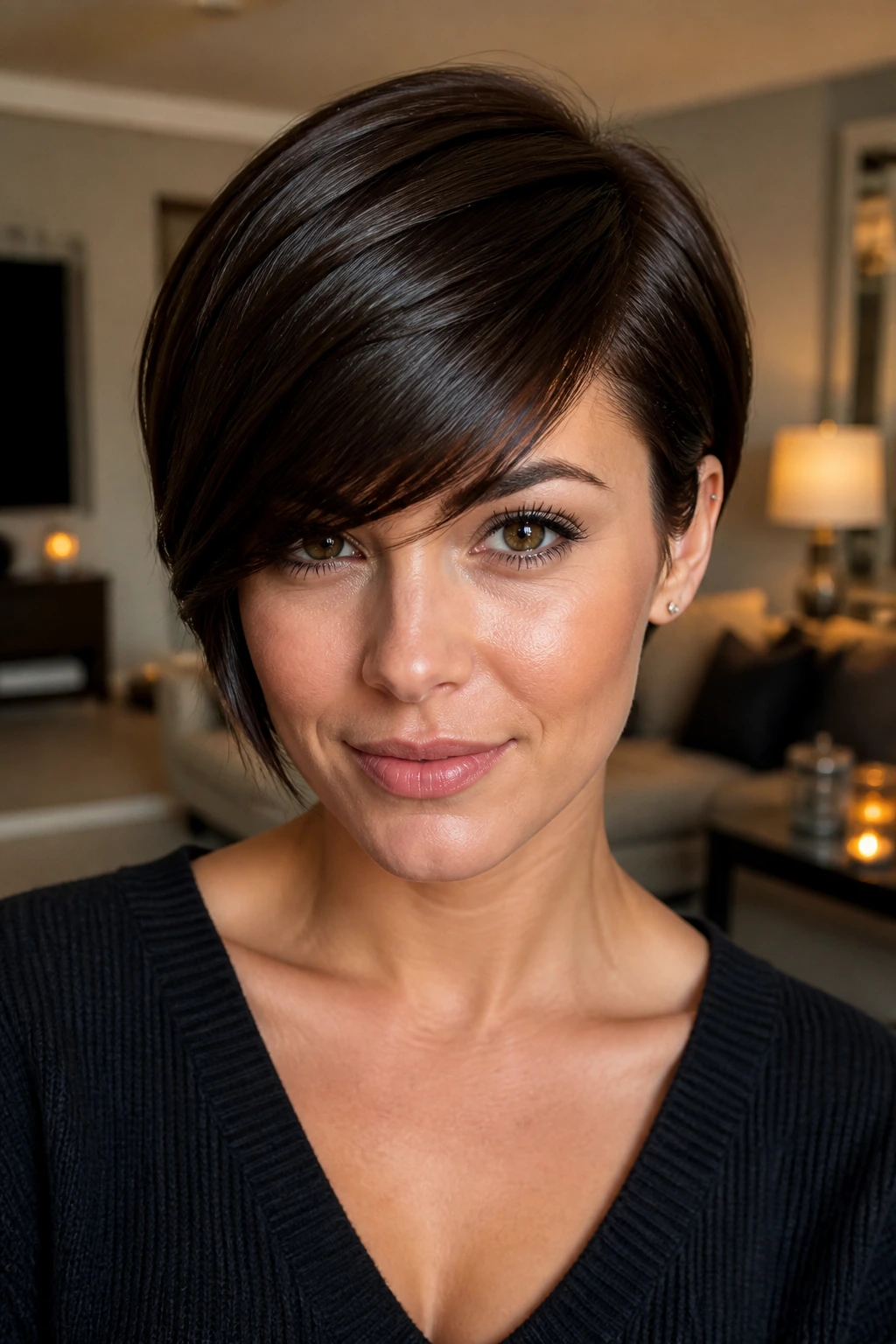
A glossy crop with a clean side sweep is all about finish. The haircut itself can be simple, but the fringe carries a polished diagonal line that sharpens the whole look. When the hair has shine, the side sweep looks intentional from every angle.
I like this on dark hair because the shape shows up clearly. A glossy surface catches the outline of the bang, which makes the layering more visible without making the haircut look busy. Keep the ends soft and the root lift modest. Too much volume kills the clean line.
A Small Styling Habit That Helps
Dry the fringe in the direction you want it to fall, then pin it for a minute while it cools. That tiny pause can keep the side sweep from springing back the wrong way. It’s a boring step. It works.
22. Soft Mushroom Bob With a Swingy Bang

A mushroom bob sounds old-school until you soften the edges and let the fringe sweep sideways instead of sitting straight across. Then it becomes something else entirely: rounded, sleek, and a little playful. The side-swept bang breaks the cap-like shape that can make this cut feel dated.
What saves the look is the movement at the front. The bang should graze the forehead, then open toward the outer eye. That gives the round silhouette a place to breathe. If the back is too dense, ask for internal weight removal underneath rather than taking length off the surface.
This cut flatters people who want a strong outline without harsh lines. It also looks especially good with earrings that sit close to the ear, because the shape around the face stays open.
How Long Side Bangs Change the Whole Short-Cut Silhouette
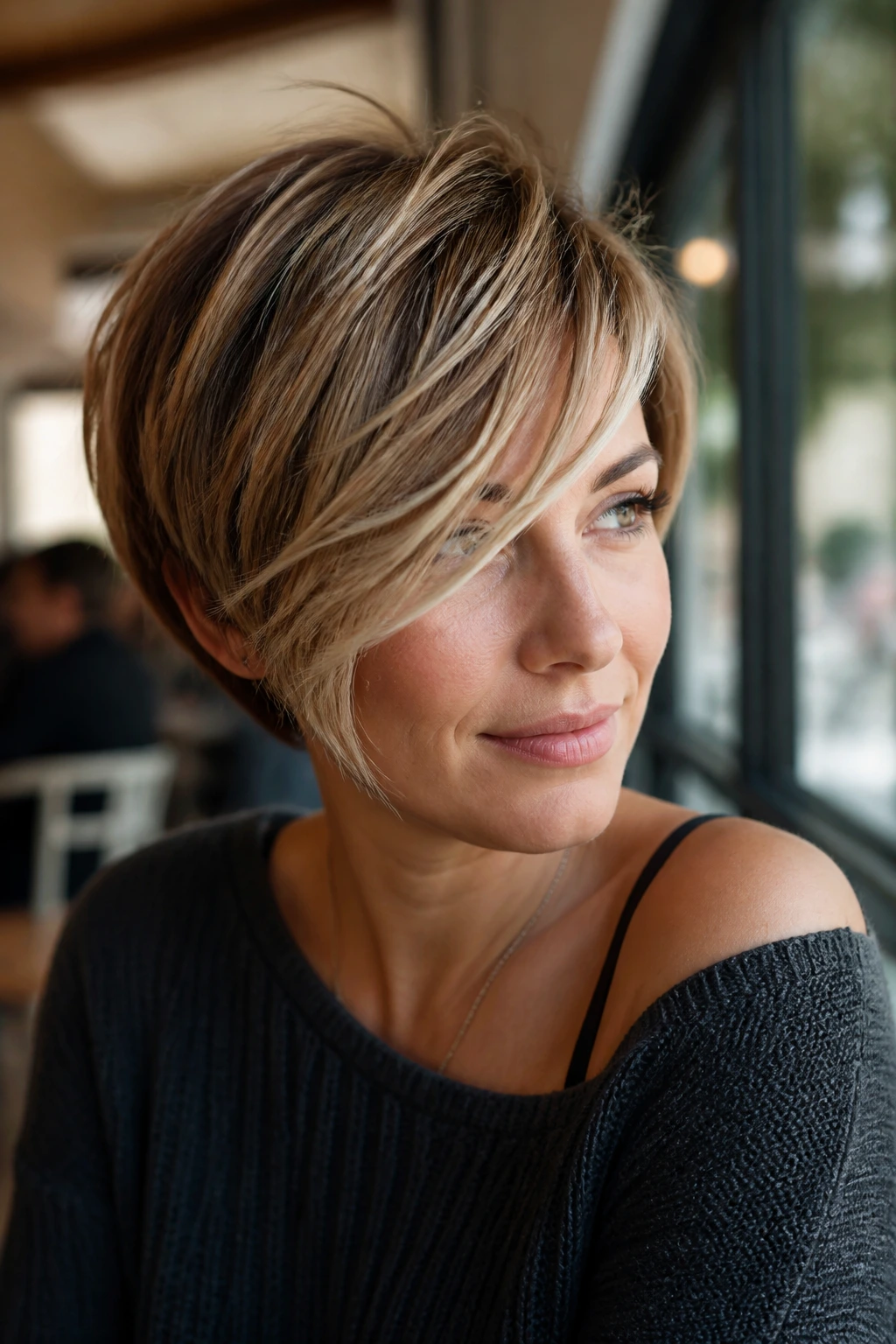
The fringe is not an accessory here. It’s the part that decides whether the cut feels soft, severe, vintage, or messy. Short hair shows every line, and a side-swept bang redraws the front of the haircut in a way that’s hard to fake with styling alone.
The best thing about long layered side-swept bangs for short hair is that they don’t trap you. You can sweep them across, tuck them back, clip them, bend them with a flat iron, or wear them looser on a humid day when perfection has already left the building. That flexibility is what makes them worth the upkeep.
They also solve a common short-hair problem: the front can look too busy while the back looks too simple. A layered fringe balances that. It gives the eye a place to land and makes even a plain bob feel more finished.
What to Tell Your Stylist Before the Scissors Come Out
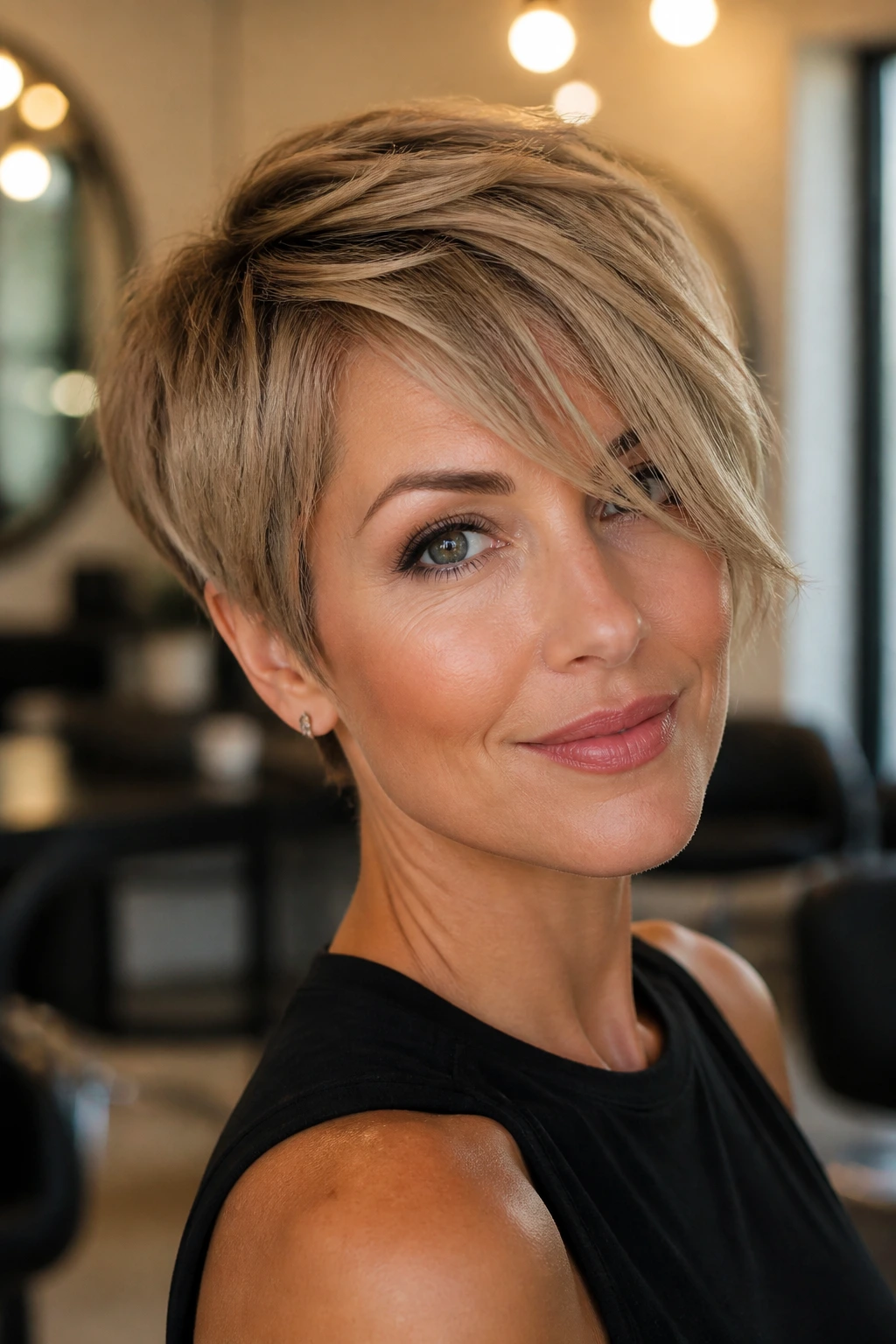
Ask for the bang to start somewhere around the brow and fall toward the cheekbone, but leave room for your hair texture to do its thing. That sounds obvious, yet it saves a lot of regret. Straight hair shrinks less than wavy hair. Curly hair shrinks a lot more. A good stylist will account for that, and if yours is cutting the front as if every head behaves the same, speak up.
Tell them whether you want the sweep to open from a deep side part or a softer off-center part. Those are not cosmetic details; they change how much forehead is exposed and where the weight sits. If your hair is thick, ask for internal removal rather than heavy texturizing at the ends. If your hair is fine, ask for light layering with enough density left in the bang to avoid see-through pieces.
Dry-cutting the front is worth asking about, especially if your hair waves, curls, or puffs at the root. Wet hair lies. Dry hair tells the truth. I’d trust the second one.
Tools That Make the Fringe Behave
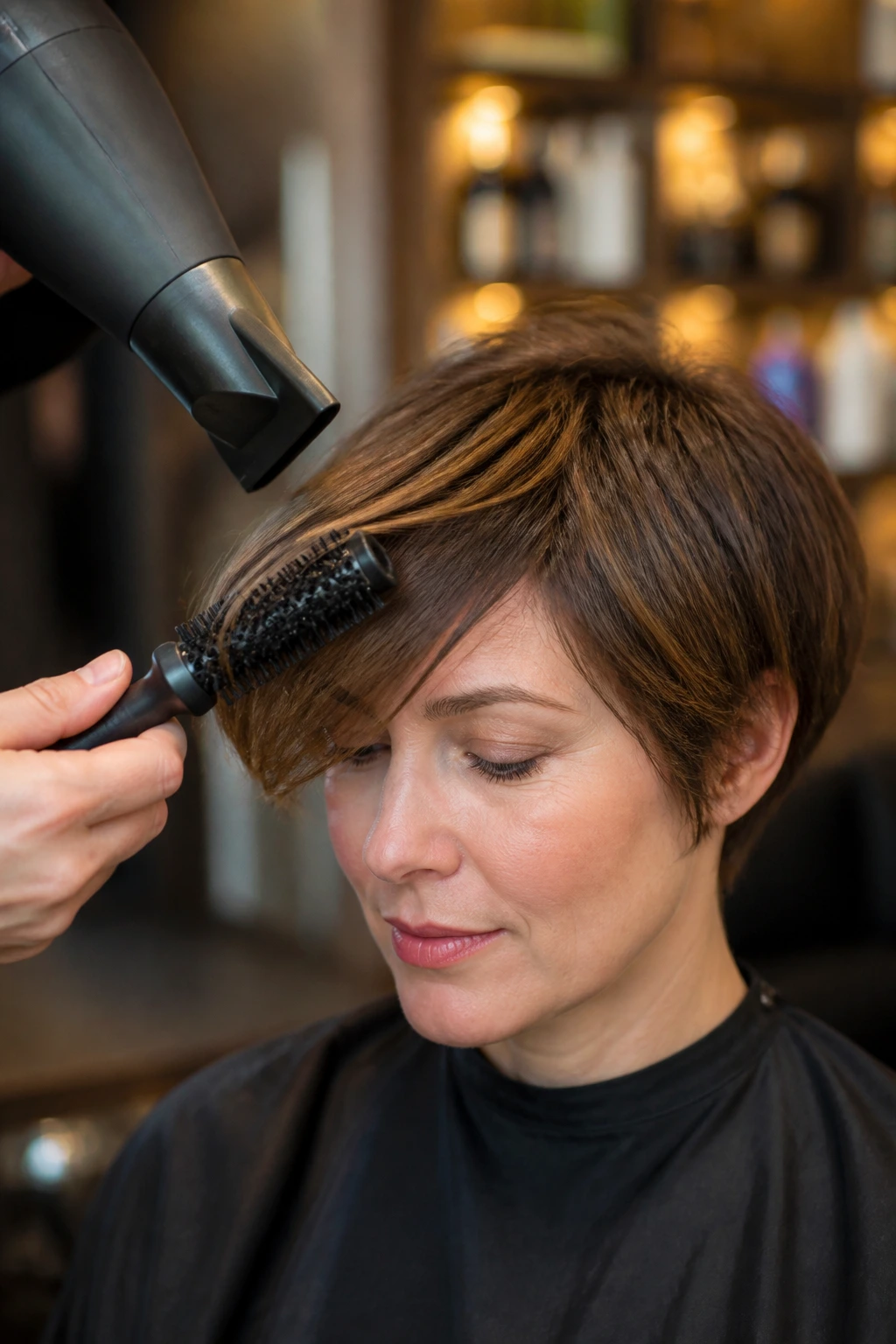
- Blow dryer with a concentrator nozzle: A narrow nozzle helps aim the air along the fringe instead of blasting it everywhere.
- Round brush, 1 to 1.5 inches: Small enough to bend a bang, not so big that it just smooths the front flat.
- Mini flat iron: Best for a quick bend at the ends or a subtle swoop near the cheek.
- Heat protectant spray: Use this before any blow-drying or iron work; the front gets hit with heat more often than the rest of the head.
- Lightweight mousse: Useful for fine hair that needs root lift without crunch.
- Texturizing spray: Good for shaggy, piecey, or messy finishes where the bang should separate a little.
- Dry shampoo: Helpful on day two when the fringe starts to clump from forehead oil.
- Duckbill clips: Great for setting the bang in place while it cools after styling.
- Wide-tooth comb or vent brush: Better than yanking through damp fringe with a dense paddle brush.
- Smoothing cream: Use the smallest amount possible if your hair frizzes at the temples.
Salon Notes and Product Picks That Make the Cut Easier
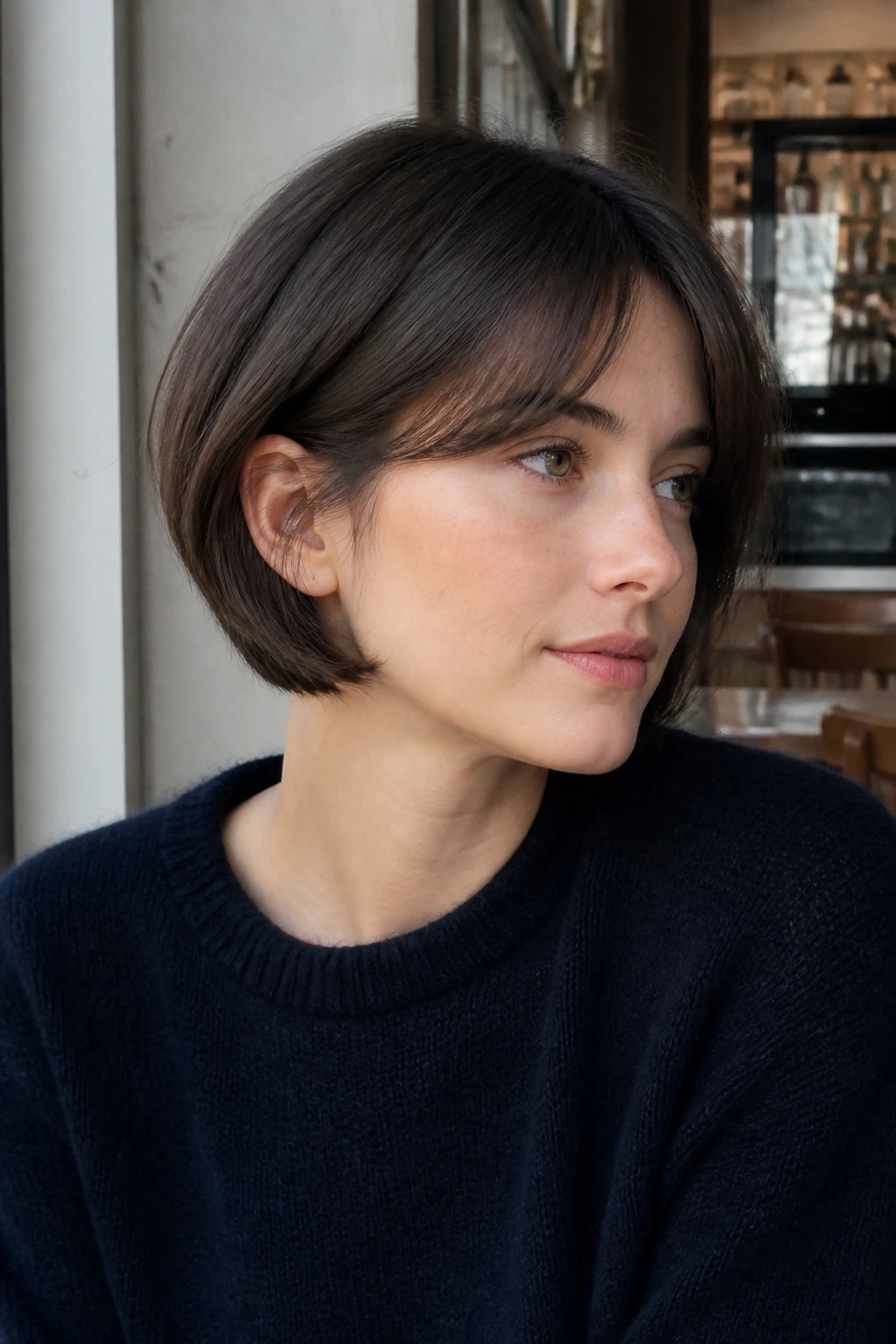
Texture Match: Fine hair wants lighter products and a cut that keeps some density in the bang. Thick hair usually needs weight removed from the interior so the side sweep doesn’t puff at the cheek. Curly hair needs enough length left in front for shrinkage, which means the stylist should cut the fringe based on how your curls dry, not how they look wet.
Part Placement: If you always wear a side part, say so. A fringe cut to the wrong part can fight you every morning. The same applies to glasses. Frames take up space, and a bang that lands too low on the bridge will start living in your eyes.
Product Rule: Choose flexible hold over stiff hold. You want a fringe that moves with the face, not one that freezes into a helmet. Mousse, light cream, and a soft finishing spray usually beat heavy waxes and sticky gels on this kind of cut.
Trim Timing: Bangs need their own schedule. The fringe may need a quick reshape every 4 to 6 weeks even if the rest of the cut can wait longer. If your hair grows fast at the temples, plan for the shorter end of that window.
How to Style Long Side-Swept Bangs Without Losing Your Mind
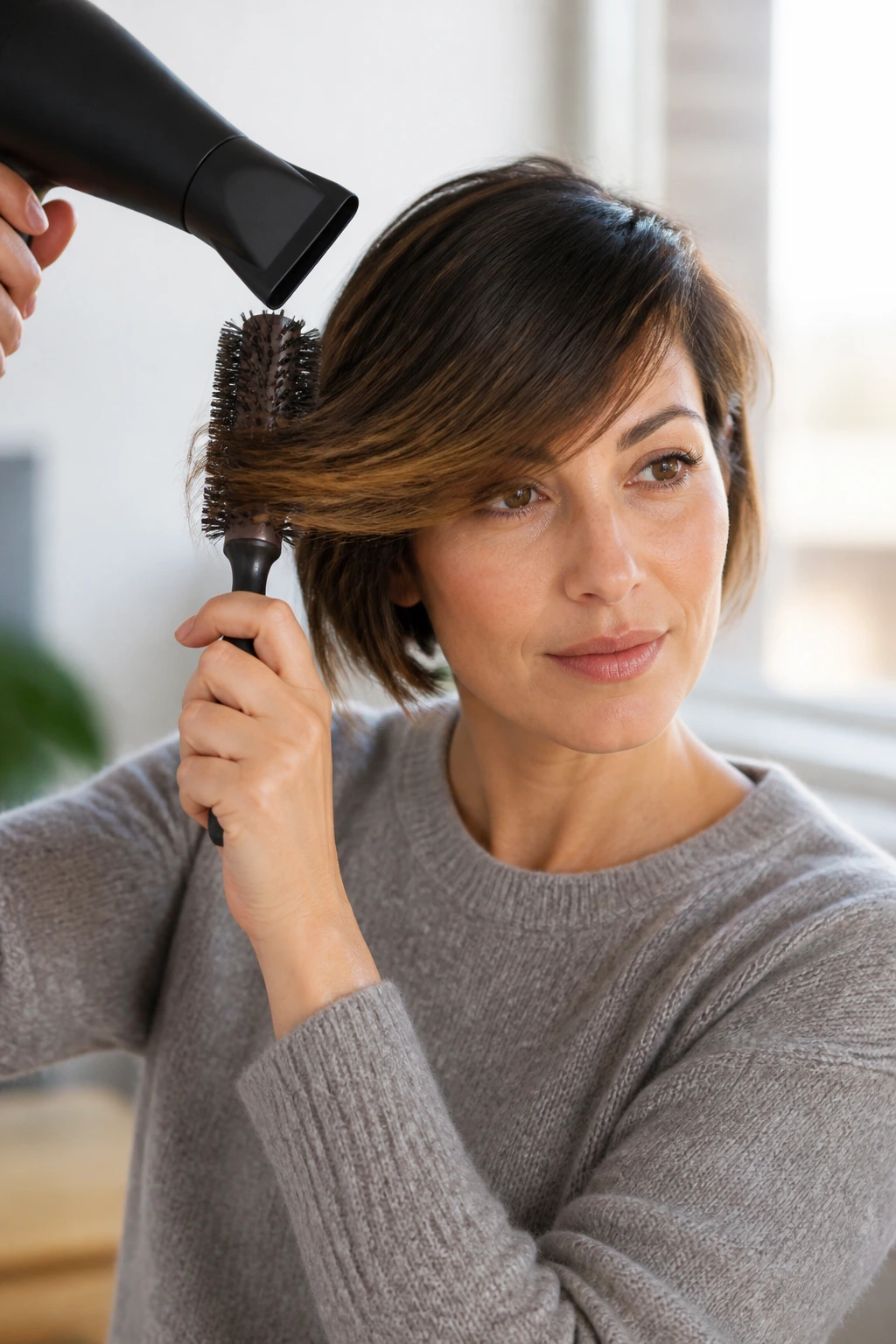
Blow-Dry Direction: Start by drying the fringe in the opposite direction from where it will land. That builds a little root lift. Then sweep it back across with a round brush or fingers and set the bend as it cools.
Heat Settings: Keep the dryer on medium, not scorching hot. Bangs are short, so they overheat fast. A mini flat iron should glide through once, maybe twice, and stop. If you’re going over the same section five times, the tool is too hot or the cut needs reshaping.
Texture Control: If the bang falls too flat, mist a little texturizing spray at the roots and pinch the ends. If it gets fluffy, use a pea-sized amount of smoothing cream on damp hair and keep it off the roots. The difference between “soft sweep” and “greasy clump” is usually product size, not talent.
Quick Refresh: Dampen only the fringe with water or a setting mist, then re-dry it for 20 to 30 seconds. You do not need to wash the whole head because one bang went sideways after lunch.
Small Tweaks That Make the Fringe Easier to Live With
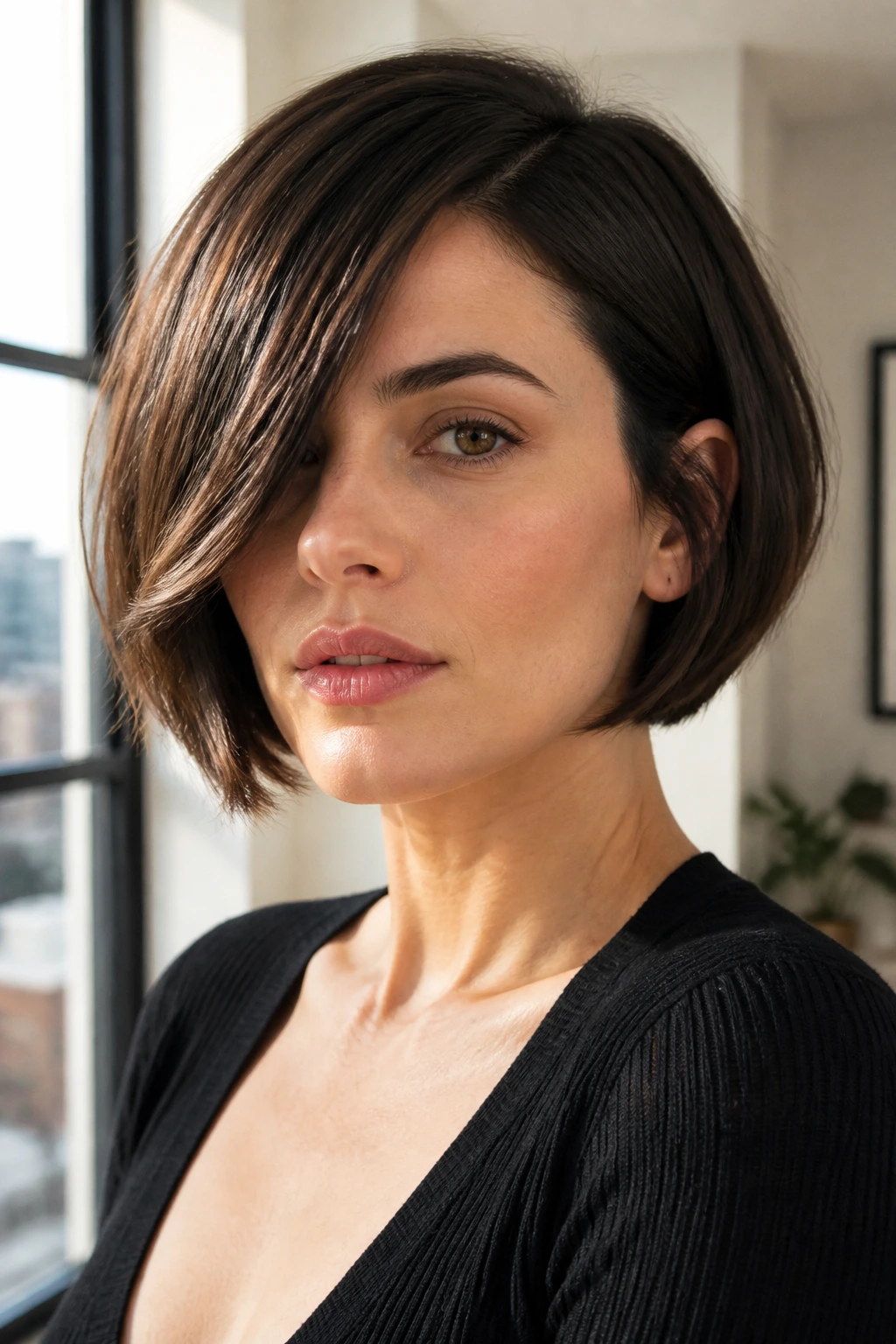
Flavor Enhancement: A tiny bit of shine spray on the ends can make a dark or brunette fringe look sharper, but keep it away from the roots. Oily roots and a swept bang are not friends.
Customization: If you like a softer look, ask for point-cutting at the ends. If you want more edge, ask for a slightly razored finish with enough weight left to keep the bang from turning wispy.
Serving Suggestions: Yes, I mean styling here. Tuck one side behind the ear and leave the other side loose when you want the haircut to show off the jawline. A small barrette at the temple also works better than people expect.
For Fine Hair: Use mousse at the root and dry the bang with a round brush lifted away from the forehead. That keeps the front from collapsing by noon.
For Thick Hair: Ask for internal layering around the temple and a lighter perimeter, not aggressive thinning all through the bang. Over-thinning can make the front frizz and separate in odd places.
The Mistakes That Make Side-Swept Bangs Misbehave
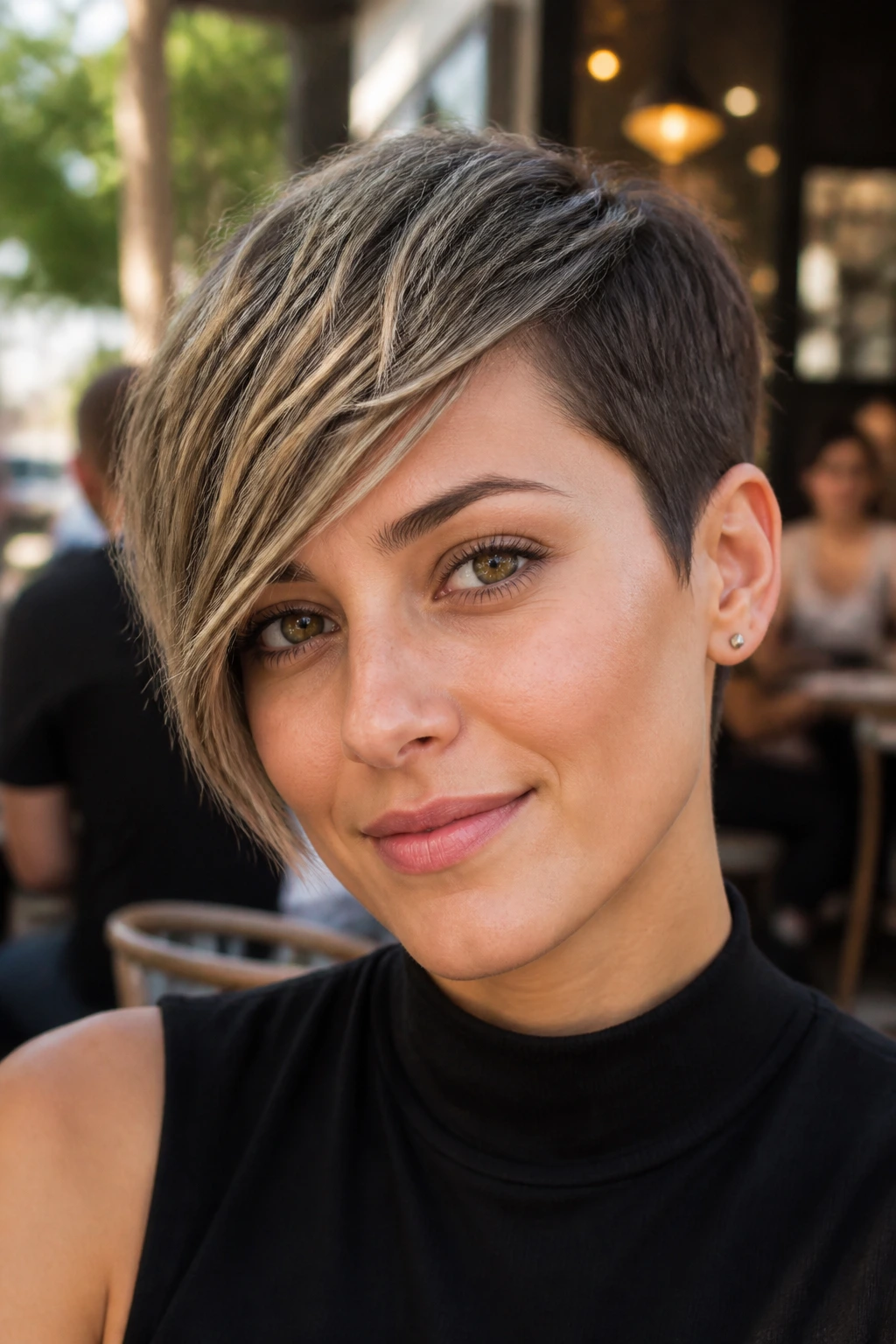
Cutting the fringe too short: The bang stops sweeping and starts standing up or splitting. The fix is simple: leave the longest point near the cheekbone or just above it, especially if your hair has any bend.
Removing too much weight from the front: This is the fastest way to make the bang look stringy, especially on fine hair. Keep enough density for the sweep to read as a shape, not as three sad pieces.
Styling only one side of the root: If the top is flat and the ends are bent, the bang will collapse halfway through the day. Dry the root first, then shape the curve.
Using heavy oils or waxes near the forehead: The fringe turns limp, sticky, and separated in the wrong way. Use lighter products and keep them mid-length to end.
Ignoring the part line: A bad part makes a good bang work harder than it should. Spend thirty seconds finding where the hair naturally wants to fall, then cut and style around that.
Variations Worth Trying When You Want a Different Mood
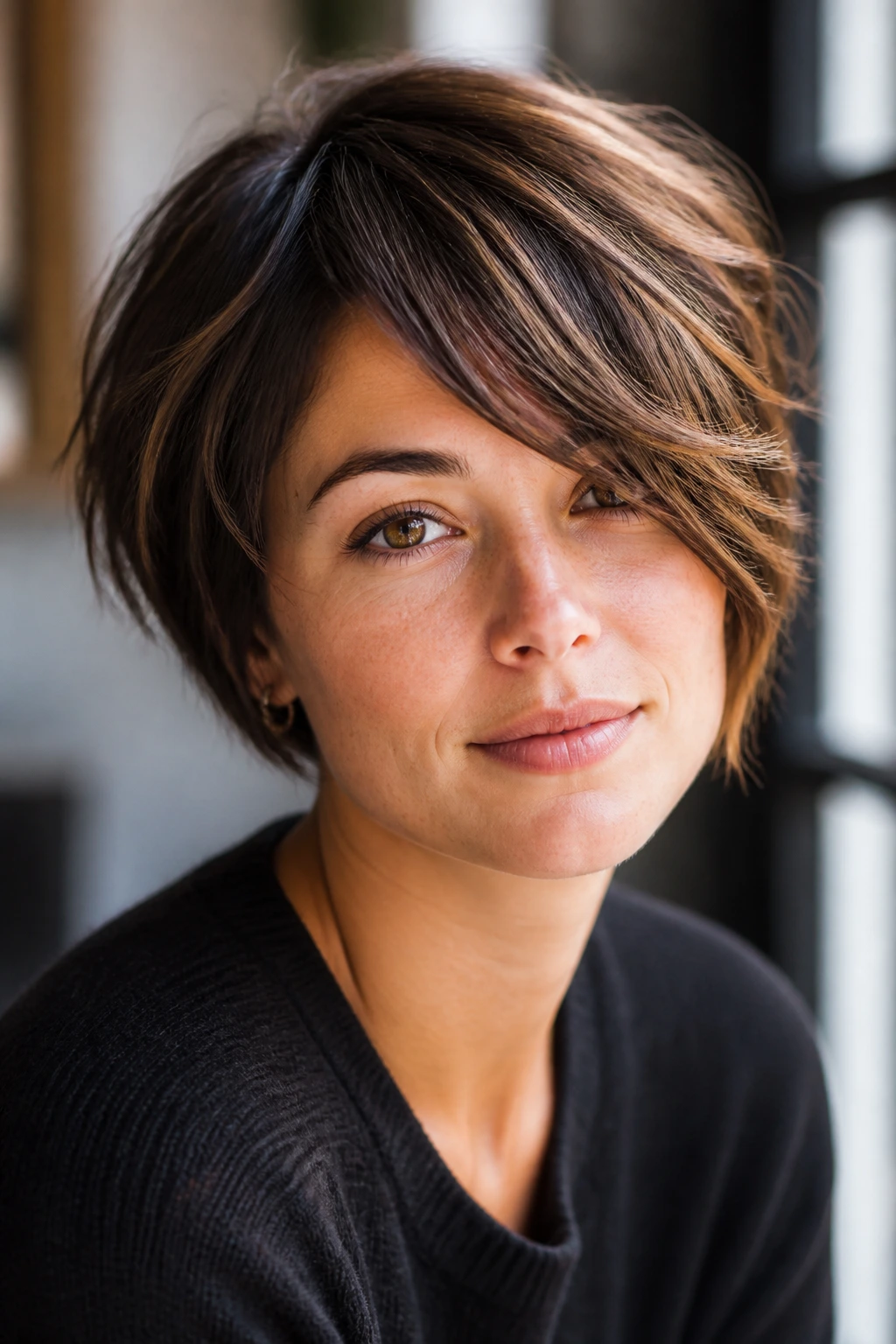
The Air-Dry Sweep: Leave the bang slightly longer and softer, then let it dry with a curl cream or light mousse. This works well for waves and loose curls that hate round brushes.
The Glasses-Friendly Fringe: Keep the shortest point high enough to clear the frame line and open the sweep a touch wider at the temple. That keeps the front from fighting your lenses.
The Thick-Hair Thinner Cut: Ask for controlled internal removal around the front and sides so the bang can move instead of puffing out. Great for dense hair that gets bulky fast.
The Fine-Hair Lift Version: Keep more density in the bang and add root lift with mousse or a volumizing spray. The whole point is to make the hair look fuller without turning the front heavy.
The Grow-Out Plan: Start with the longest point a little past the brow so the fringe can become curtain-like later. If you know you hate frequent trims, this is the sane choice.
Keeping the Shape Between Cuts
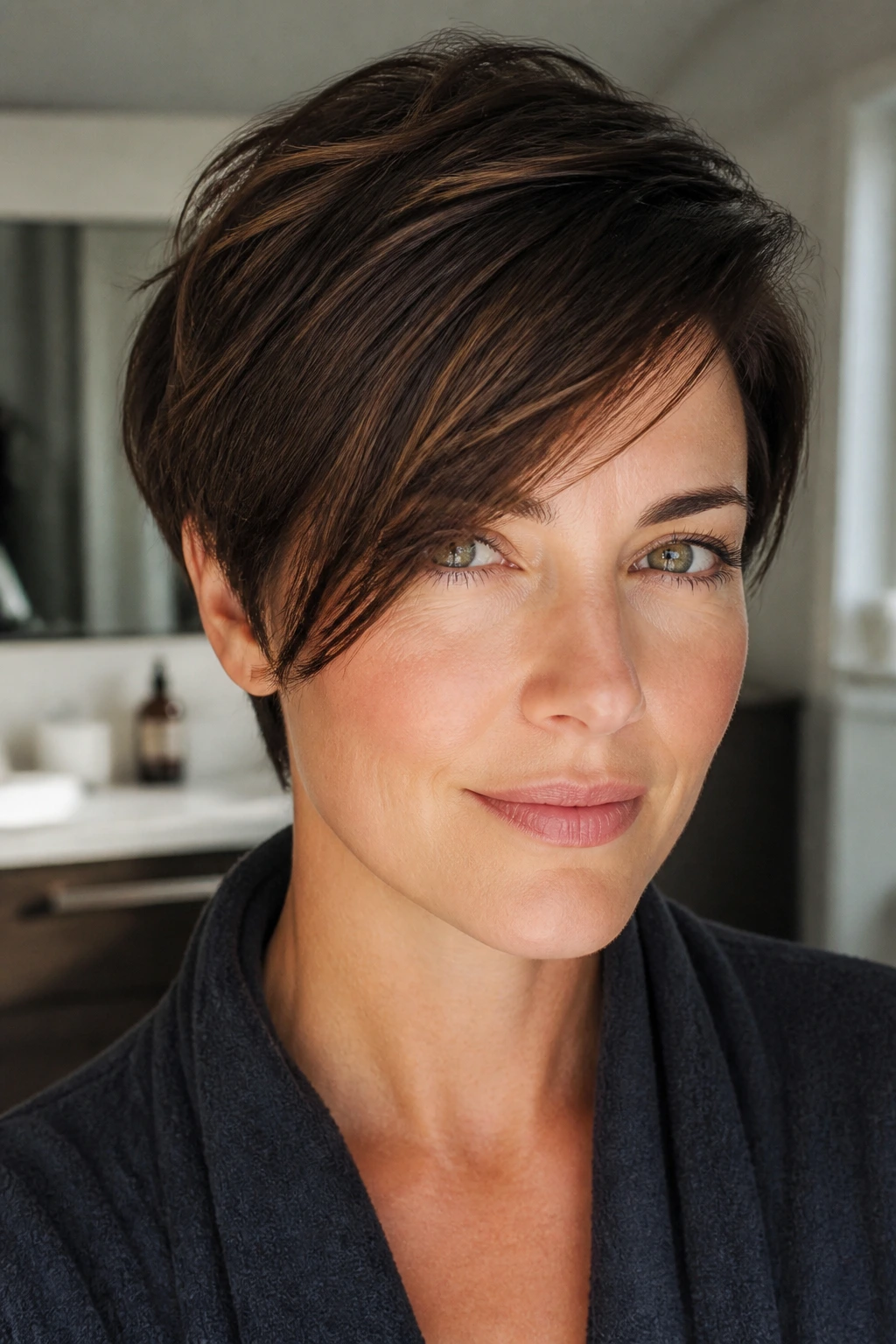
Short hair with a sweeping fringe has a shorter fuse than longer cuts. Bangs usually need a refresh every 4 to 6 weeks, and some hair types need it sooner if the front grows fast or splits at the cowlick. If the bang starts falling into your eyes or losing its diagonal line, that’s your sign. Don’t wait until the shape has already gone mushy.
At home, the safest maintenance move is a quick wet-restyle of the fringe, not a full wash every time the front misbehaves. Mist the bang, blow-dry the roots in the opposite direction for a few seconds, then set the sweep across the forehead. That routine is boring in the best possible way.
Sleep helps, too. If your fringe bends badly overnight, pin it loosely to the side or use a soft wrap so it doesn’t wake up with a crater in the middle. A silk pillowcase can help with friction, but the real win is not smashing the front flat against the mattress.
Bang Questions People Ask Before They Commit
Can long layered side-swept bangs work on very short hair?
Yes, and they often work better there than on longer cuts because the fringe gives the whole style a softer front edge. The main thing is length management; if the cut is too short at the front, the sweep disappears and you lose the effect.
Do they suit round faces?
They usually do, especially if the longest point falls toward the cheekbone instead of stopping at the brow. The diagonal line pulls the eye sideways and slightly down, which can make the face look less wide.
What if my hair is curly?
Keep the fringe longer than you think, and ask for the shape to be cut with your curl pattern in mind. Curly bangs shrink more than straight ones, so the styling step matters just as much as the cut.
Will they work with glasses?
Usually, yes. In fact, a swept bang often works better with glasses than a heavy straight fringe because it leaves room at the bridge and avoids crowding the eyes.
How often do I need trims?
Most short styles with this kind of fringe want a bang refresh every 4 to 6 weeks. Thick, fast-growing, or cowlick-prone hair may need a quicker touch-up.
What if the bang splits in the middle?
Blow-dry the roots in the opposite direction first, then sweep the hair across while it’s still warm. If it keeps splitting, the part may be too low or the bang may be too heavy.
Can I air-dry them?
Yes, if the cut is designed for it. Wavy and curly hair often does better with a little leave-in cream and air-drying, while straighter hair may need a quick brush or bend to keep the sweep visible.
Can they grow into curtain bangs?
Absolutely. That’s one of the nicest things about this fringe shape. If the longest point is cut with enough length from the start, the grow-out phase can move into a softer, more open front without an awkward in-between stage.
The Shape That Keeps the Cut Soft
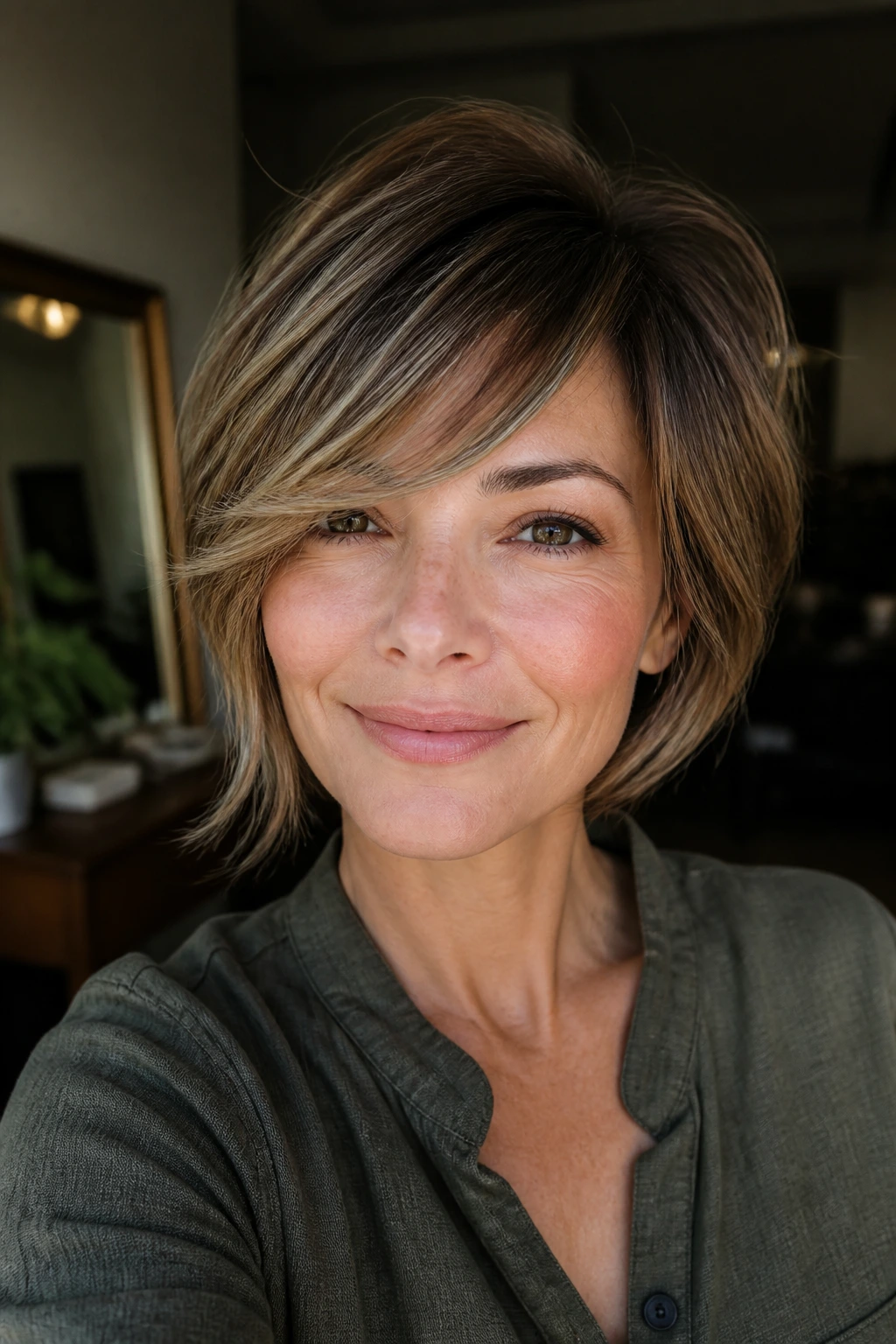
Short hair does not need to feel severe. That’s the part people forget when they reach for a bob or a crop and then wonder why the result looks harsher than they wanted. A long, layered side-swept fringe changes the front of the haircut without asking the rest of it to do too much.
What makes these bangs worth keeping around is the range. They can look neat on a Monday, a little broken up by Friday, and still hold their shape when the weather turns damp or the part shifts a quarter inch. That kind of flexibility is rare in short hair, which is why I keep coming back to it.
If you want short hair that still has movement at the face, this is the shape to ask for next. Get the length right, keep the layers light enough to move, and let the sweep do its quiet work.