



A chin-skimming cut can do something long hair often can’t: it can narrow the face without asking fine strands to carry a lot of weight. That’s why chin length hairstyles for round faces with fine hair keep getting picked by people who want shape first and fuss second. The length lands where the jaw starts to angle, the line is short enough to look deliberate, and the whole thing still moves when you turn your head.
The trick is not “short hair” in the abstract. It’s where the ends sit, how much lift lives at the crown, and whether the cut fights the natural fall of your hair. Fine hair can go limp fast, and round faces can look wider when a bob ends at the wrong point — usually right across the cheek. Get the balance right, though, and the cut does a lot of work with very little product.
What I like about this group of cuts is that they don’t all solve the same problem in the same way. Some lean on a crisp outline. Some use side parts or fringe to break up width. Some make fine hair look denser by keeping the perimeter blunt. A few depend on texture, but not the overdone kind that turns into frizz by noon. The point is shape, not volume for volume’s sake.
Why These Chin-Length Styles Earn Their Keep
-
Jawline Control: A cut that ends at or just below the chin pulls the eye downward, which helps a round face look a little longer and a little less wide across the cheeks.
-
Fine-Hair Density: A clean perimeter makes thin ends read as fuller, especially when the cut is blunt or only lightly textured at the bottom.
-
Fast Styling: Most of these looks need one round-brush pass, a quick bend with a flat iron, or a few minutes of rough-drying — not a long salon routine at home.
-
Parting Power: A side part, off-center part, or soft curtain fringe changes the whole silhouette without changing the haircut itself.
-
Low-Drama Grow-Out: Chin-length hair grows in a way that still looks intentional for a while, which matters if you don’t want to live at the salon.
-
Accessory Friendly: Earrings, glasses, collars, and scarves all sit better when the hair doesn’t pile around the jaw.
1. Glassy Blunt Chin Bob
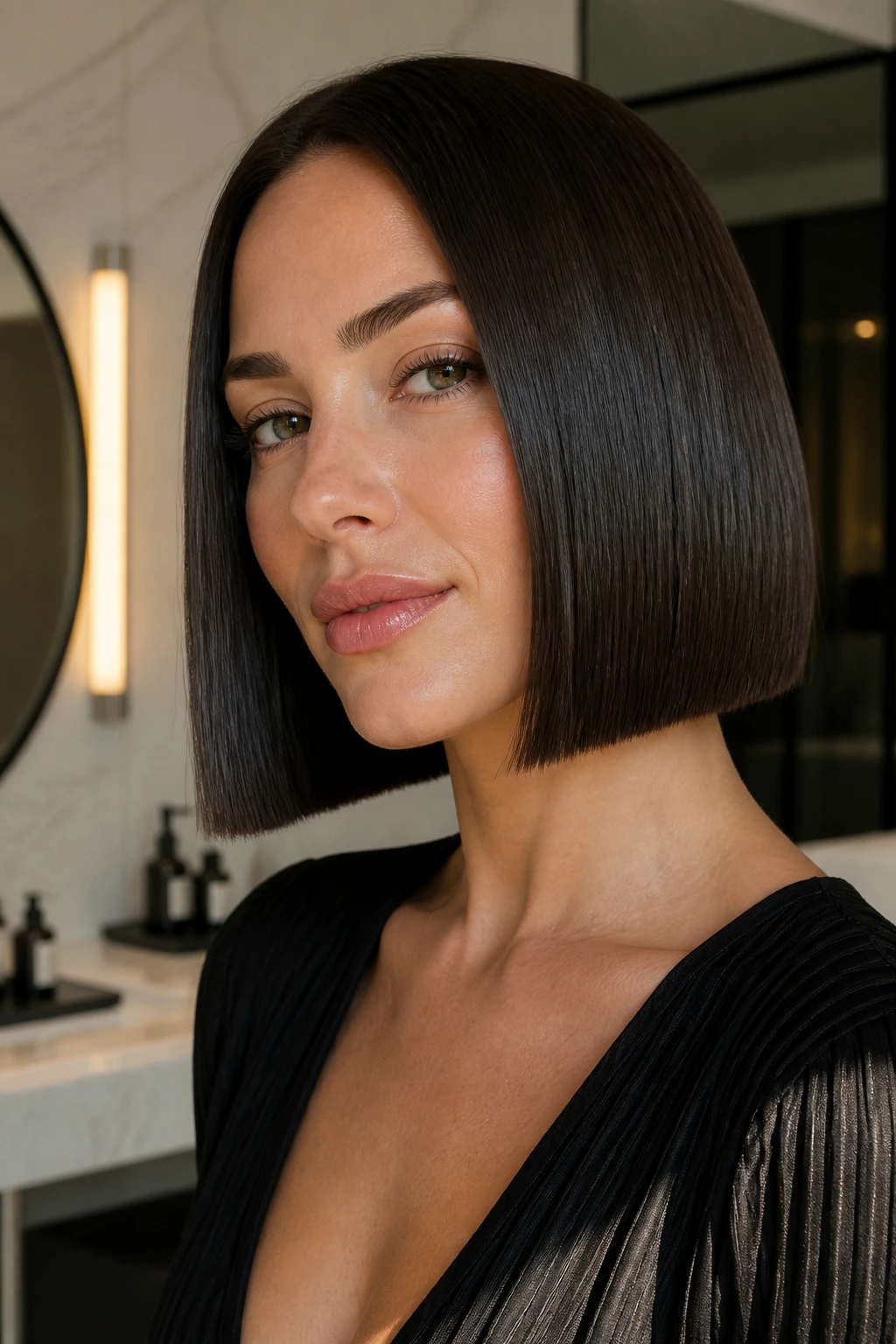
A blunt bob at the chin is the cleanest answer when fine hair needs a firmer edge. The line does the heavy lifting here. Instead of feathering the ends away, the cut gives them a solid bottom shelf, and that shelf makes the hair look thicker than it is.
What keeps this from feeling severe is the finish. Blow-dry with a nozzle, use a medium round brush only at the root, and leave the ends almost straight. A single pass with a flat iron can polish the last inch, but don’t curl it inward too much. That soft bend is enough.
This cut is especially good if your round face tends to look widest right at the cheeks. The blunt edge below that point shifts the focus lower, and the whole shape feels sharper. If your hair is very fine, this is one of the rare times where less layering is the right call.
2. Deep Side-Part Tuck Bob
A deep side part changes the geometry before you even touch the ends. One side falls across the forehead, the other side gets tucked neatly behind the ear, and that asymmetry breaks the circular feel round faces can have. Simple. Effective.
Why It Works
The side part adds a diagonal line, and diagonals are your friend when you want more length in the face. Fine hair also likes the tuck because it creates a small lift at the roots where the hair was lifted into place, then held there with a dab of mousse or dry shampoo.
If you want this cut to hold, keep the front long enough to skim the cheekbone. Too short, and the tuck turns into a puff. Too long, and the face can get buried. Ask for a chin-length bob with the front pieces left a touch longer on the heavier side.
Styling Note
Use a paddle brush to dry the part flat, then flip the front section over a large round brush for a soft bend. Tuck one side only. The point is contrast, not symmetry.
3. Airy French Bob
The French bob has attitude, but on fine hair it works best when it stays airy rather than clipped too short and too blunt around the cheeks. Think chin length, soft fringe, and movement that looks accidental even when it isn’t.
This shape helps a round face because it opens the center of the face while keeping bulk away from the widest point. The fringe matters here. A soft, eyebrow-grazing fringe or a broken mini-bang can give the front of the haircut some lift without boxing the forehead in.
I like this version on hair that falls flat by lunchtime. A little root-lifting mousse at the crown, then a rough dry with fingers, gives it that loose Paris-street feel without the stiffness that comes from too much brush work. Keep the ends blunt enough to look full. If they get too wispy, the whole thing loses its line.
4. Curved-Under Chin Bob
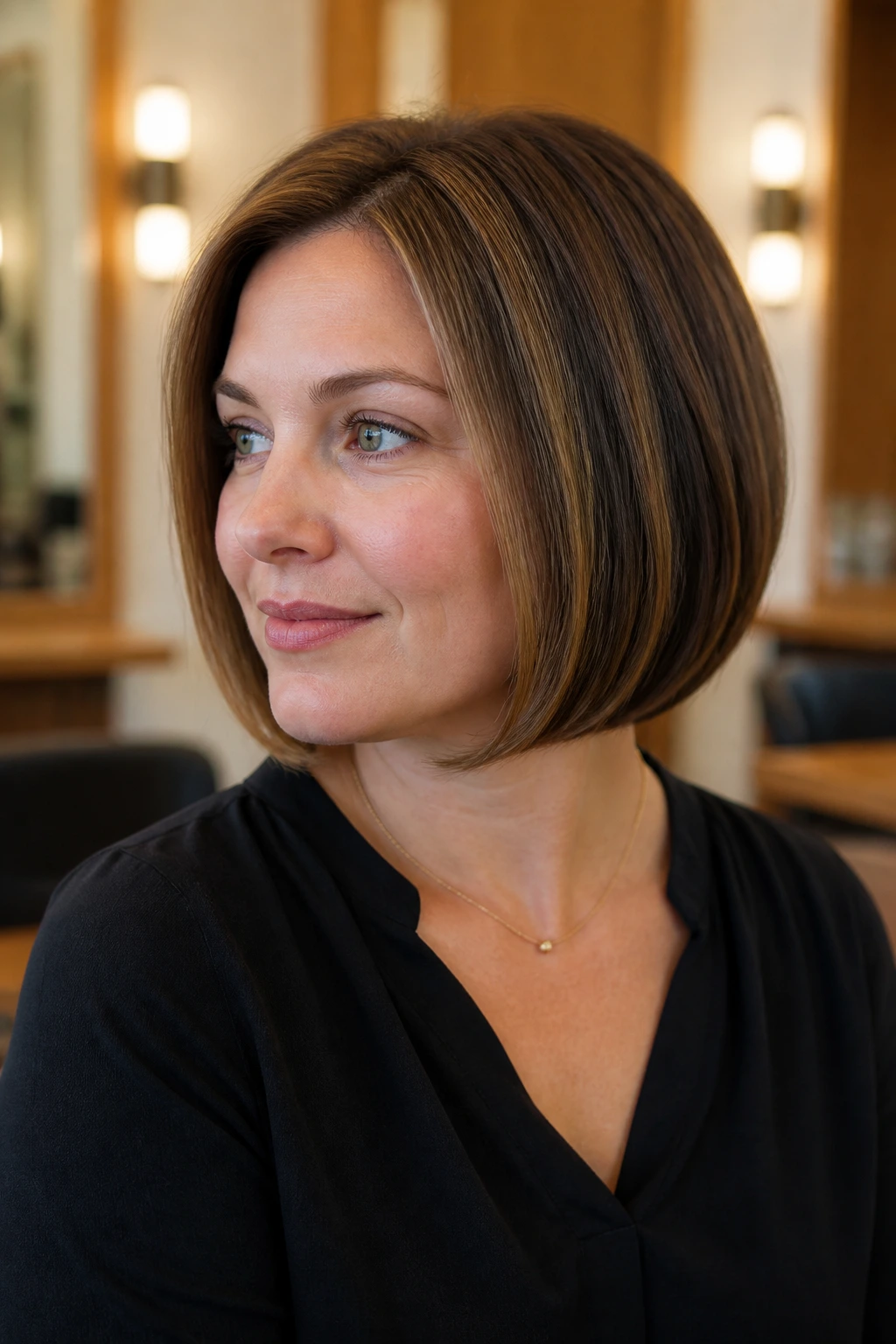
A curved-under bob is quiet, but it’s doing a lot. The ends sweep inward just enough to hug the jawline, which gives the face a neater frame and helps fine strands look cared for instead of sparse. This is one of those cuts that looks expensive even when it’s styled in ten minutes.
The Shape That Matters
The curve should happen at the last inch of hair, not halfway up the head. If the bend starts too high, the sides balloon out around the cheeks — not what you want on a round face. Keep the interior smooth and let the perimeter do the talking.
Best Styling Move
Use a round brush and point the dryer nozzle downward as you finish each side. Then let the hair cool completely before touching it. Cooling is what sets the bend. Skip that, and the curve drops out fast, especially in fine hair.
This cut works best when you want something neat without looking stiff. It’s polished. It’s controlled. And it doesn’t ask for much beyond a decent blow-dry.
5. Feathered Chin Bob
Feathering gets a bad rap because people remember the over-thinned, fluffy cuts from old photos. Done lightly, though, feathering at chin length can save fine hair from looking like one solid sheet.
The trick is to keep the weight at the outline while softening just the interior. That gives movement without chewing up density. For round faces, feathered pieces should start below the cheekbone, not right beside the nose. That’s the difference between frame and puff.
Ask for this version if your hair is fine but not pin-straight. A little bend in the ends makes the layers blend better. A smoothing cream on the mid-lengths and a light texture spray at the bottom keep the pieces separated just enough to show shape.
No heavy serum. That weighs the whole thing down in about ten minutes flat.
6. Inverted Chin-Length Bob
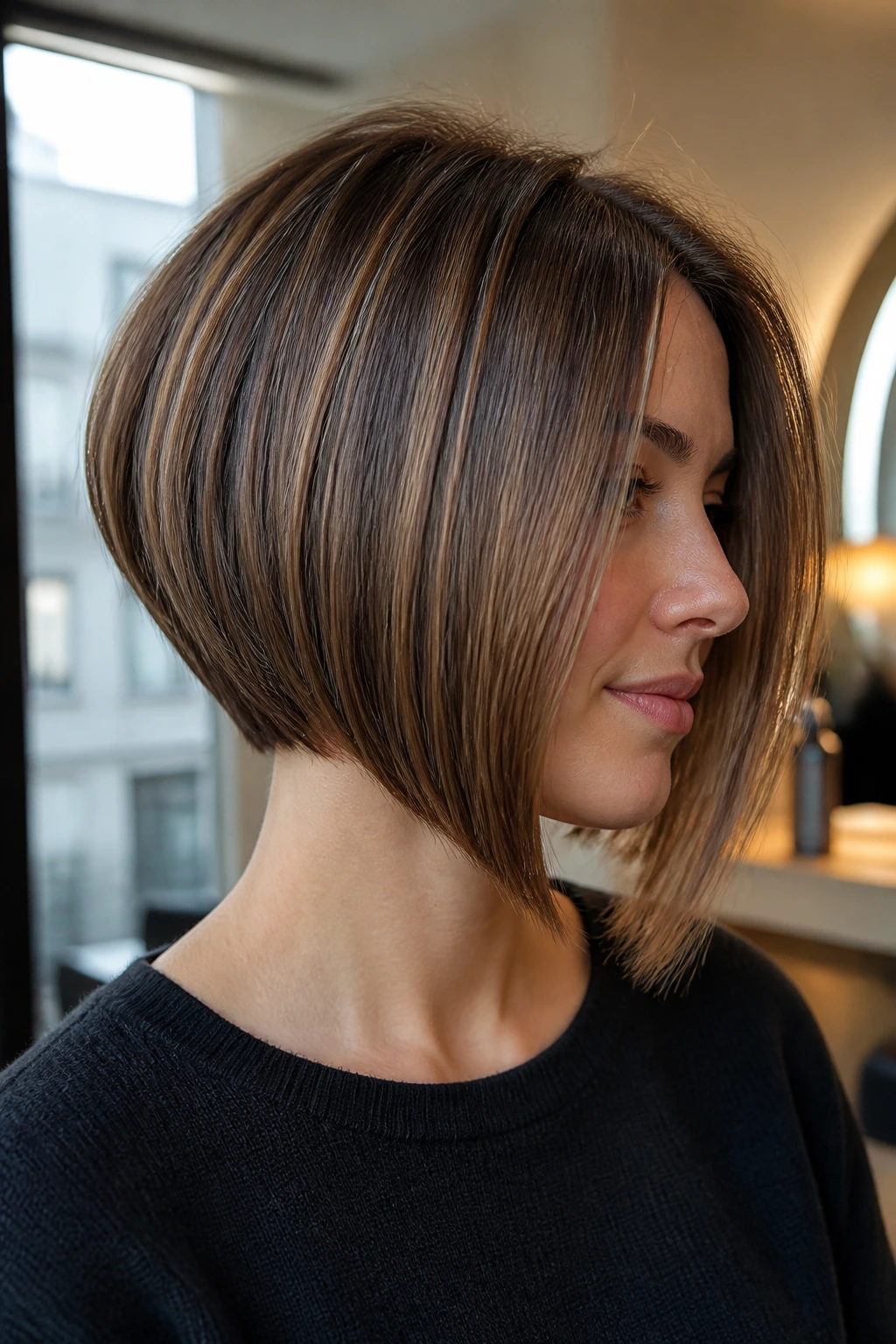
If you want shape from the back and a little drama from the side, the inverted bob has a lot to offer. It’s shorter at the nape and longer toward the front, which gives the neck room and creates a clean diagonal line around a round face.
The angle is the point. It pulls the eye from the back of the head toward the jaw, and that movement keeps the silhouette from feeling broad. Fine hair also benefits from the stacked shape at the back, because those shorter layers create the look of fullness where the hair usually collapses.
Keep the angle subtle. Too steep, and it starts to feel dated. A gentle slope is better here. Ask for the front to land at the chin while the back stays tucked in close to the neck. That balance gives lift without making the cut look helmet-like.
7. Textured Piecey Bob

A piecey bob can work beautifully on fine hair, but only when the texture is controlled. You want separation, not fuzz. Think of it as a cut with a little grit in the ends and a clean shape underneath.
This version helps round faces because the tiny breaks in the line stop the eye from following one perfect circle around the cheeks. It also gives the hair more visual movement, which can make fine strands look less delicate. The danger is overdoing it. Too much texturizing and you end up with thin, scraggly ends that feel older than they should.
Use a pea-sized amount of paste or cream wax on dry hair, then pinch the ends in a few places. Don’t rub the product all over. That’s how the shape disappears. This is the kind of cut that looks best when it has a bit of lived-in edge.
8. Chin-Length Bob with Curtain Bangs

Curtain bangs are the kind of front detail that can change a face shape fast. They open in the middle, sweep to the sides, and add a vertical line that round faces usually need. On a chin-length cut, they also keep the whole look from feeling boxy.
The bangs should start around the cheekbone, not the eyebrow. That length lets them fold back instead of hanging straight across the face. With fine hair, shorter bangs can go flat and separate in odd ways, so a softer, longer curtain fringe tends to behave better.
Use a round brush to lift the front section up and away from the forehead, then direct the ends outward. The rest of the bob can stay smooth or lightly waved. If the bangs sit too heavy, trim them. If they’re too thin, they’ll just disappear into the rest of the hair — and that defeats the whole point.
9. Side-Swept Fringe Bob

A side-swept fringe does one job especially well: it interrupts width. Instead of letting the forehead and cheeks read as one broad shape, the fringe cuts across the face at an angle and gives the eye somewhere else to go.
This is a smart pick if you like a chin-length cut but do not want a center part. Some faces look softer with a side sweep, and some fine hair types actually hold this better because the fringe can be pinned or tucked when it gets greasy. Practical counts.
Keep the fringe long enough to move. If it’s chopped too short, it balloons. If it’s left long enough to graze the cheek, you get a clean line that hides and reveals the face at the same time. That’s the sweet spot.
10. Soft Shag Bob

A soft shag at chin length can be a lifesaver for flat hair, but it has to stay soft. The minute the layers get too choppy, the ends start splintering and the face can look wider. Keep the layers long, keep the crown light, and keep the perimeter visible.
Best For
This version suits people who want texture without a lot of daily styling. A little mousse at the roots, a diffused dry, and a finger-combed finish are usually enough. Fine hair likes this because it can look fuller from the inside out, not just at the top layer.
What to Avoid
Don’t let the layers stop at the cheek. That creates a shelf right where a round face already carries width. Ask for the shortest layers to live higher up, around the crown, and let the bottom edge stay clean at the chin.
It’s a good cut if you like hair that moves when you walk. It’s not a good cut if you want a super tidy line every day.
11. Asymmetrical Chin Bob

A little imbalance goes a long way. A chin-length asymmetrical bob, with one side a touch longer than the other, gives round faces a diagonal edge that makes the whole face read slimmer. You do not need a dramatic angle to get the effect.
The longer side should fall past the chin by maybe half an inch to an inch. That’s enough to shift the line without turning the haircut into a statement piece that takes over the room. On fine hair, a small asymmetry often works better than a huge one because the shape still feels light.
This cut looks sharp with a side part and a clean ear tuck on the shorter side. If you wear glasses, even better. The asymmetry plays nicely with frames and keeps the hair from crowding the face.
12. Tapered Bob with Crown Volume
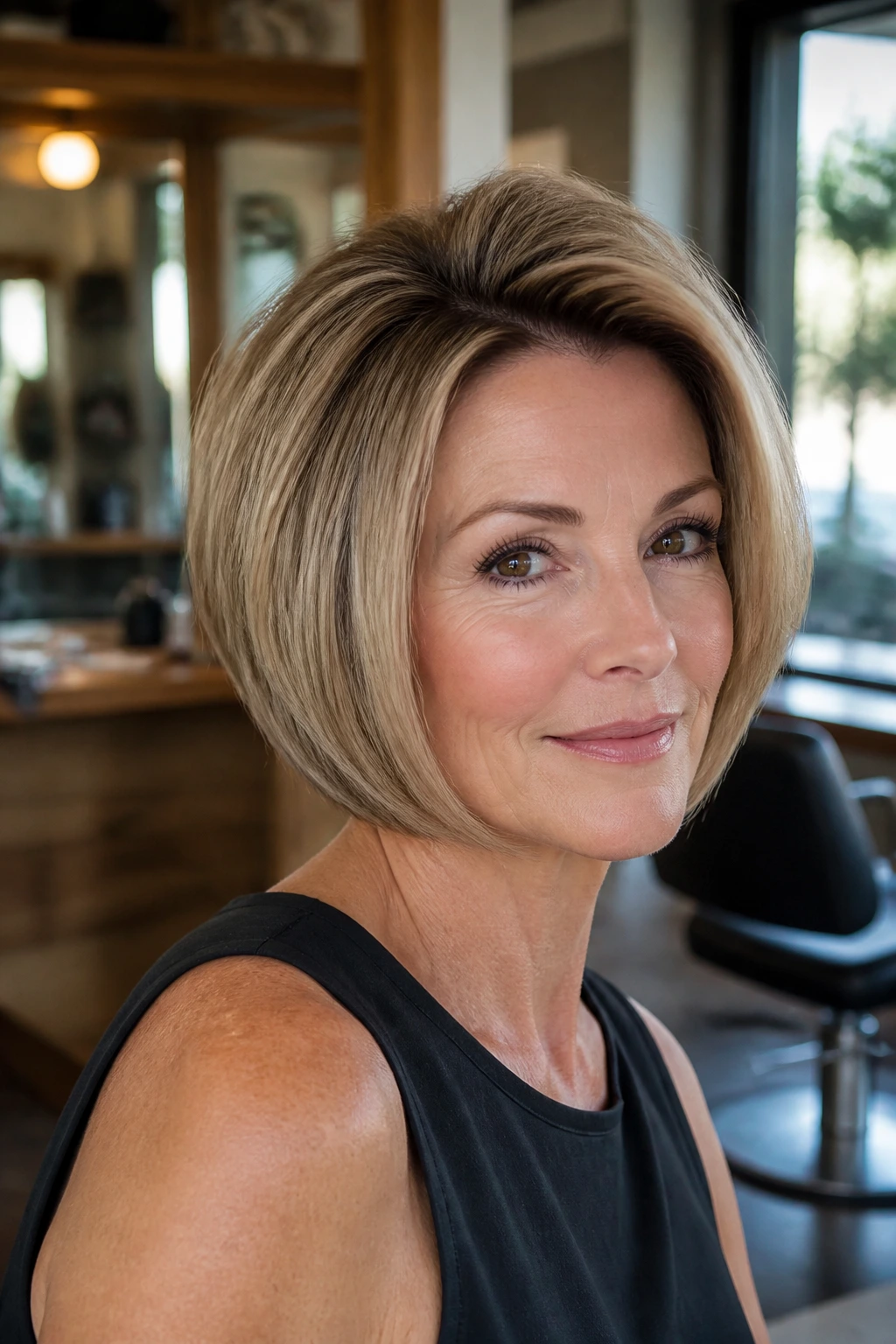
If your hair goes flat at the top first, this is the cut to pay attention to. A tapered bob keeps the neck and nape neat while leaving a little extra lift through the crown, which changes the profile in a way round faces usually appreciate.
Where the volume lives matters. You want it at the top and back of the head, not around the cheeks. That lifts the face visually without making the sides puffy. Fine hair often needs that slight engineering, because otherwise the head shape can disappear into the haircut.
Styling Moves That Help
- Use a root-lifting mousse on damp hair before drying.
- Clip the crown in two or three small sections while it cools.
- Finish with a light spray at the roots, not a heavy cream.
- Keep the front pieces smooth so the volume stays concentrated.
This one can look overworked if you pile on product. Keep it light, and the shape will do the rest.
13. Razor-Cut Bob

A razor-cut bob has a softer edge than a blunt cut, which can be useful when fine hair needs movement without looking stripped. The razor removes some of the weight from the ends, and that airiness can stop the haircut from sitting too heavy around the jaw.
That said, this is not the cut for every fine head of hair. If your strands are fragile, frizzy, or prone to split ends, a razor can rough them up. But on silky fine hair that tends to lie too flat, it can give the ends a little lift and a less rigid feel.
The best version still keeps the overall shape at the chin. Ask for softness in the perimeter, not a lot of interior slicing. That way the face stays framed, the ends stay mobile, and the cut doesn’t break apart after two washes.
14. Tucked-Behind-Ears Bob
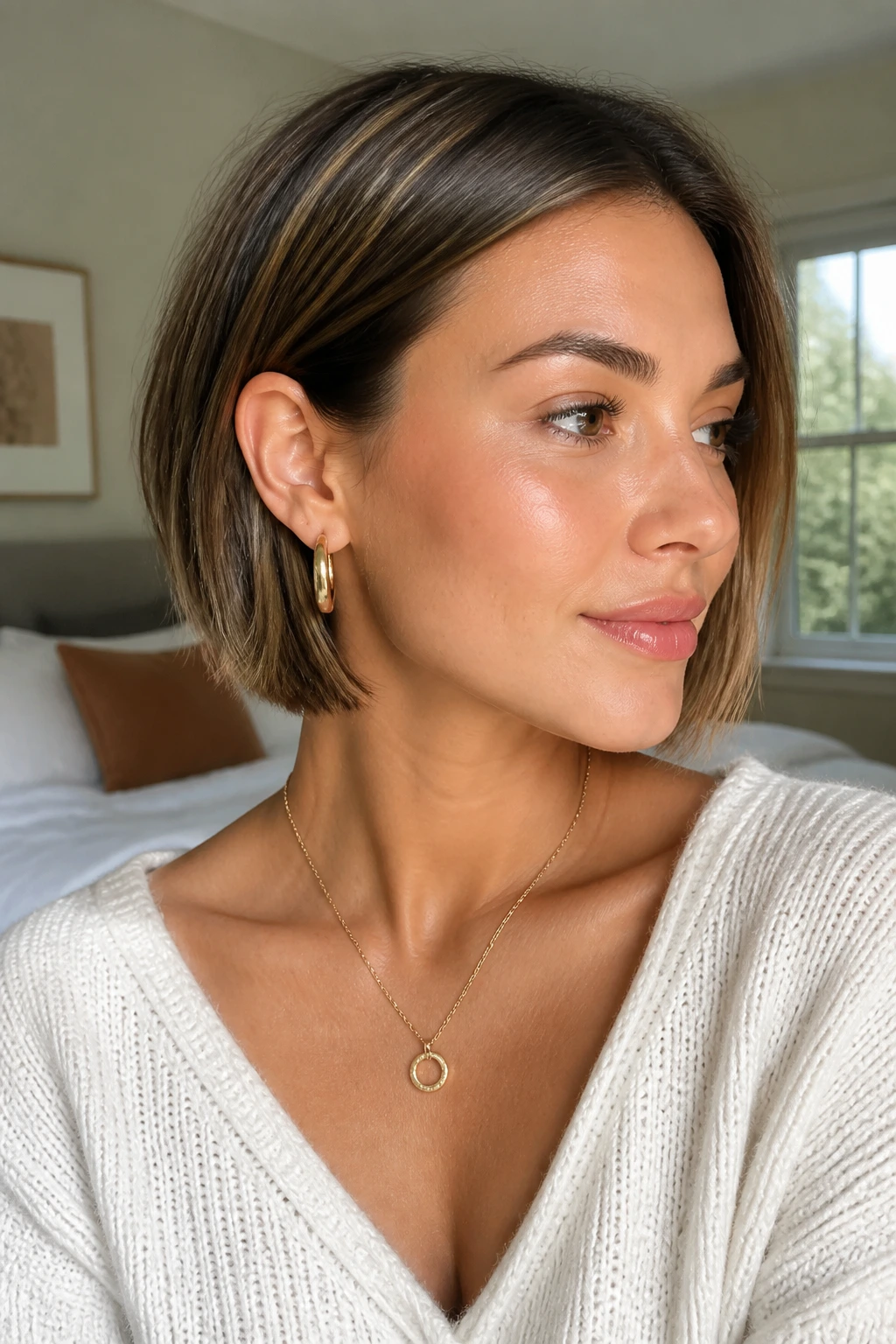
Can a simple tuck count as a hairstyle? Absolutely. On a chin-length cut, tucking both sides behind the ears opens the face, exposes the jawline, and lets a round face breathe a little more. It also makes fine hair look neater because the outline stays close to the head.
This style works best when the front pieces are long enough to rest just below the chin before they get tucked. If the hair is shorter, the tuck can poke out awkwardly. If it’s too long, the face can get swallowed by the sides. The middle ground is what matters.
A tiny bit of styling cream at the temples helps the tuck hold without a greasy shine. If you wear earrings, this is one of the easiest cuts to show them off. And yes, that matters. Hair and accessories are part of the same picture.
15. Wavy Chin-Length Bob

A loose wave at chin length adds width at the bottom without making the cheeks look bigger, which sounds subtle until you see it in a mirror. The wave should start below the cheekbone and bend gently outward or inward in alternating directions. Too much uniform curl, and the shape gets round again.
This is a strong option for fine hair because waves create the illusion of body in the body of the haircut, not just at the roots. The key is restraint. Use a 1-inch wand or flat iron, twist each section once, and leave the ends slightly undone. That keeps the motion casual instead of pageant-polished.
A few drops of texture spray at the very end help the wave separate. Don’t overbrush it afterward. You want movement, not a cloud.
16. Curly Chin-Length Bob

Curly fine hair can absolutely live at chin length, but the cut needs to respect the curl pattern. If the shape is cut wet and ignored, the curls can spring up unevenly and build a triangle. Nobody wants that.
What to Ask For
Ask for a dry or curl-by-curl cut if your curl pattern is loose to medium. If your curls are tighter, ask the stylist to keep the perimeter at the chin and layer with a light hand inside the shape. The goal is bounce, not bulk.
How to Style It
Use a lightweight curl cream, not a heavy butter. Then diffuse on low heat or air-dry with the roots clipped up for a bit of lift. Fine curls need support, but they drown fast if the product is too rich.
This cut is lovely when the curls are healthy and springy. It is not lovely when the ends are dry and frayed, because the chin line starts to look uneven fast.
17. Bouncy Layered Bob

A bouncy layered bob is all about hidden lift. The top layer stays smooth enough to keep the outline intact, while the lower layers create movement underneath. That gives fine hair the feeling of fullness without the obvious choppy look.
On a round face, this works because the shape doesn’t balloon out at the sides. The volume sits lower and moves with the head, which makes the haircut feel more alive. Ask for layers that begin under the jawline, not directly at the cheeks. That small detail makes a big difference.
This is a nice cut if your hair tends to collapse after brushing. A small round brush at the crown and a quick bend at the ends are usually enough to wake it up again.
18. Bottleneck Bang Bob

Bottleneck bangs are one of the smartest fringe shapes for a round face. They’re narrow in the center, open as they move out, and then blend into the sides. That creates a gentle vertical line down the middle of the face without closing off the forehead.
With a chin-length bob, the effect is clean and balanced. The bangs bring attention upward, the chin length anchors the lower half, and fine hair gets enough front detail to feel intentional. Ask for the center of the fringe to sit slightly shorter than the side pieces, then let the sides taper toward the cheekbone.
The biggest mistake here is cutting the bangs too blunt. They need that soft opening. If they’re cut heavy, the whole look turns boxed-in.
19. Flipped-End Bob
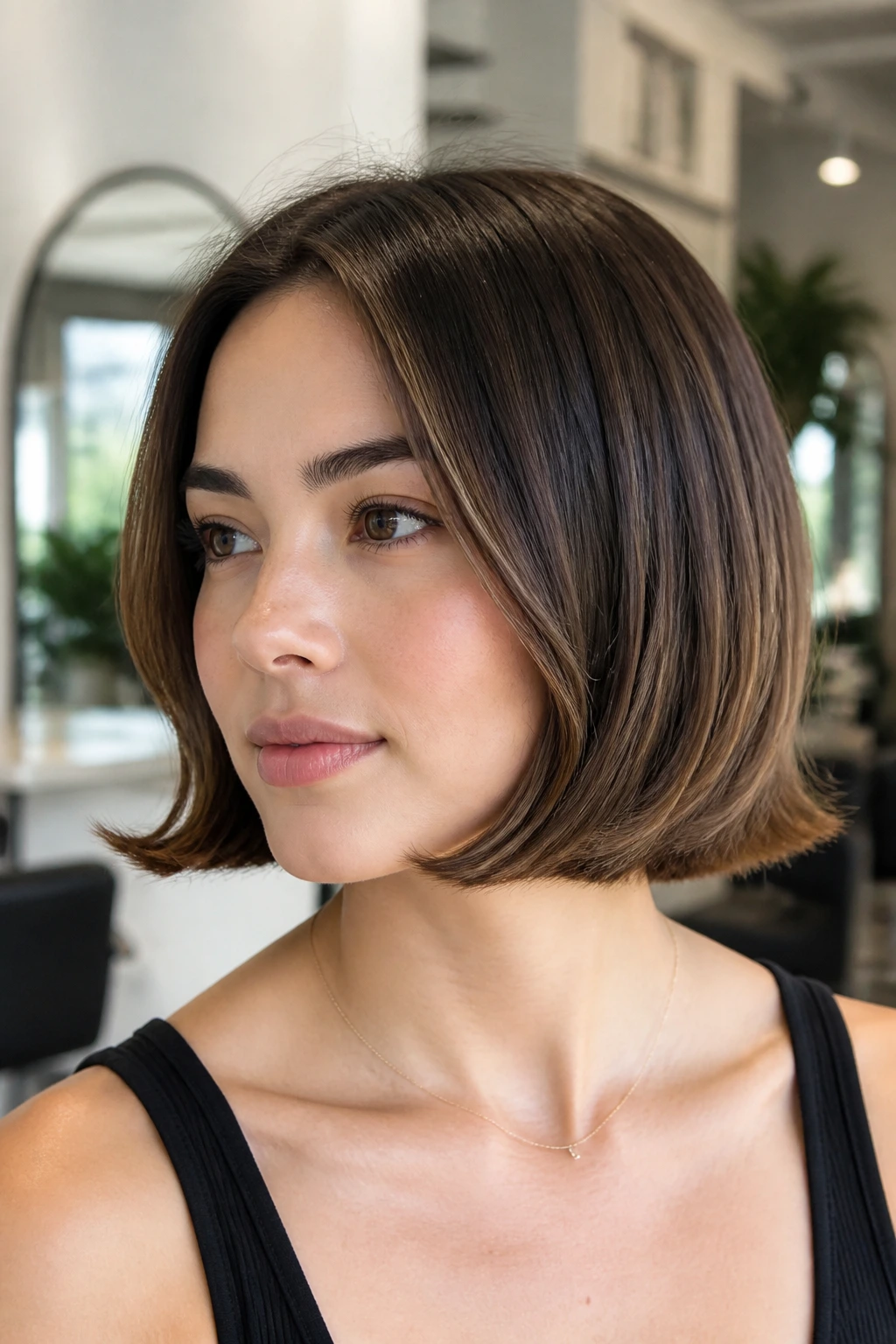
A little flip at the ends can add lift where fine hair needs it most. The flip should happen only in the last inch or so of the cut, usually with a flat iron bend or a round brush flick. That gives the hairstyle movement without turning the whole silhouette round.
This cut works because the flip lives below the chin, not at the cheek. The face stays open, and the ends create a light visual finish instead of a solid block. If you like a touch of retro energy, this is the version to try.
Keep the top smooth. The flip is there to finish the line, not to compete with the crown. Too much volume on top and too much bend at the bottom can start to feel busy fast.
20. Graduated Bob
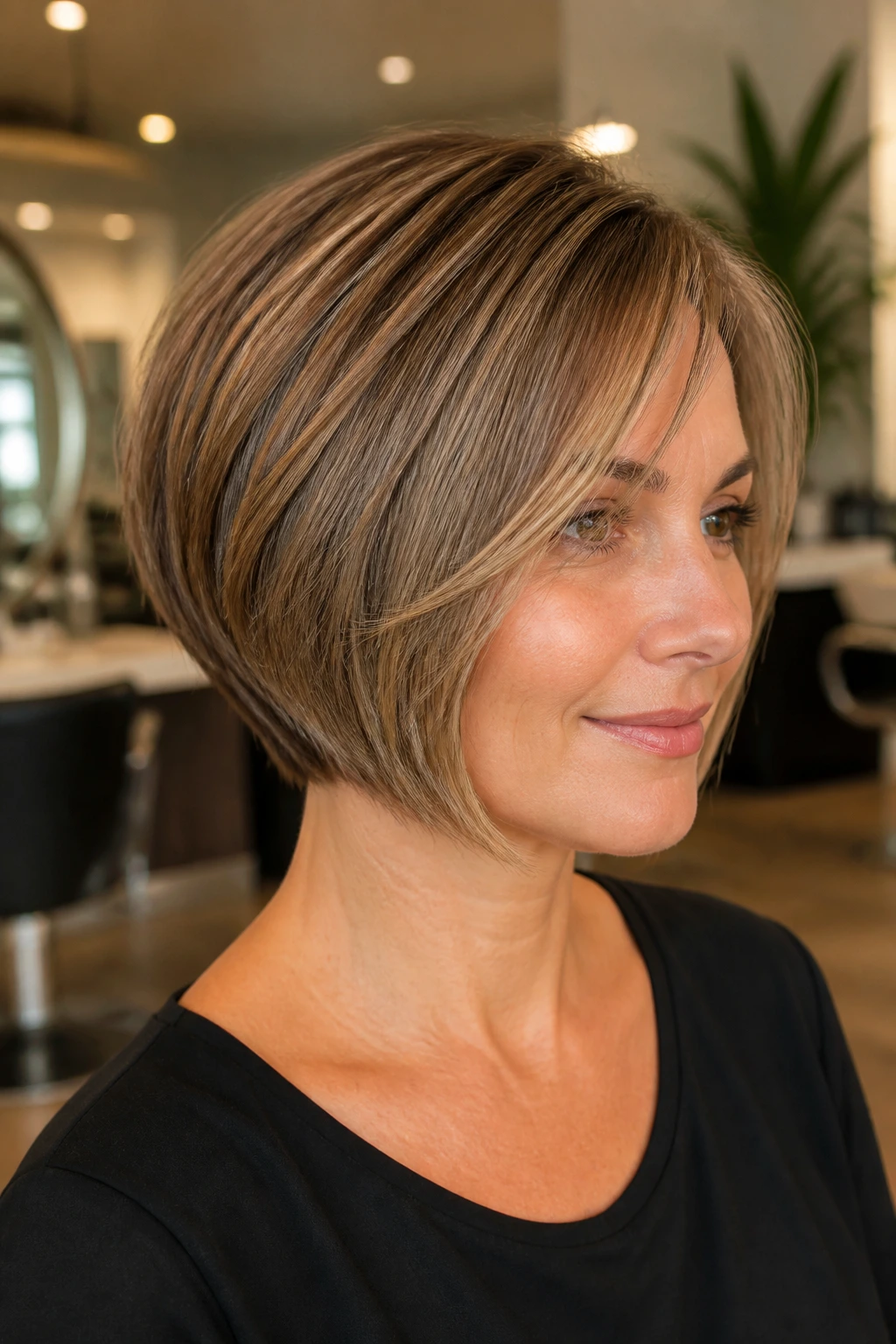
A graduated bob has a shorter back and a slightly longer front, but the graduation is softer than a sharp inverted cut. That makes it useful for fine hair, because the stacked back builds structure while the front keeps the face framed and lengthened.
Compared with a straight one-length bob, this cut gives the hair more internal support. Compared with a dramatic angle, it feels easier to wear every day. That’s the appeal. It’s shaped, not loud.
If your hair falls limp at the nape, ask for the graduation to be concentrated there. You want the cut to lift the back of the head and skim the chin, not flare out at the sides. Clean neckline. Slight front length. That’s the formula.
21. Minimalist One-Length Bob

Not every fine-hair cut needs layers, movement, or a soft fringe to work. A one-length chin bob can look strong and dense because the perimeter is uninterrupted. On round faces, the clean line helps define the lower half of the face and keeps the silhouette tidy.
This cut is especially good if you prefer a neat shape and do not want to spend time fussing with sections. The styling can be as simple as blow-drying smooth and tucking one side behind the ear. That’s part of the appeal — the cut already knows what it is.
The only catch is maintenance. One-length bobs show split ends fast, and fine hair can look wispy if the line gets ragged. Keep it trimmed, and it pays you back in shape every morning.
22. Micro-Layered Air Bob
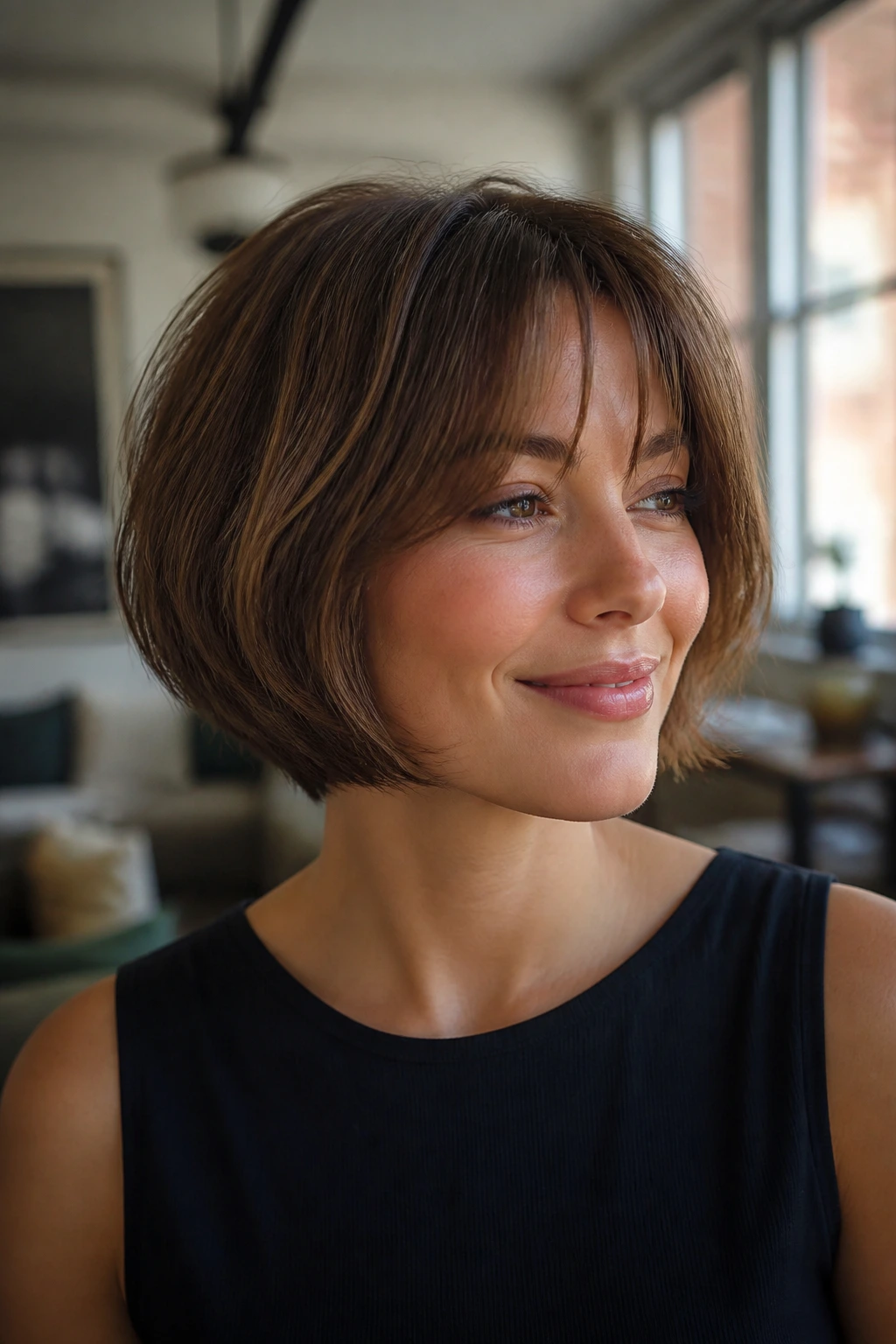
A micro-layered air bob is for someone who wants movement but hates obvious layers. The layers are tiny, tucked into the interior of the cut, so the outside line stays crisp while the inside gets a little lift. On fine hair, that can be the difference between flat and buoyant.
This is one of the easiest chin-length hairstyles for round faces with fine hair to wear if you want softness without losing structure. The perimeter still frames the jaw. The interior just stops it from collapsing. That matters more than people think.
Ask your stylist to keep the outer edge solid and place the shortest internal layers high enough to avoid the cheeks. Then style with a light mousse and a loose brush-out. You’ll get movement without the cut turning fuzzy.
How to Ask for the Right Chin-Length Cut at the Salon
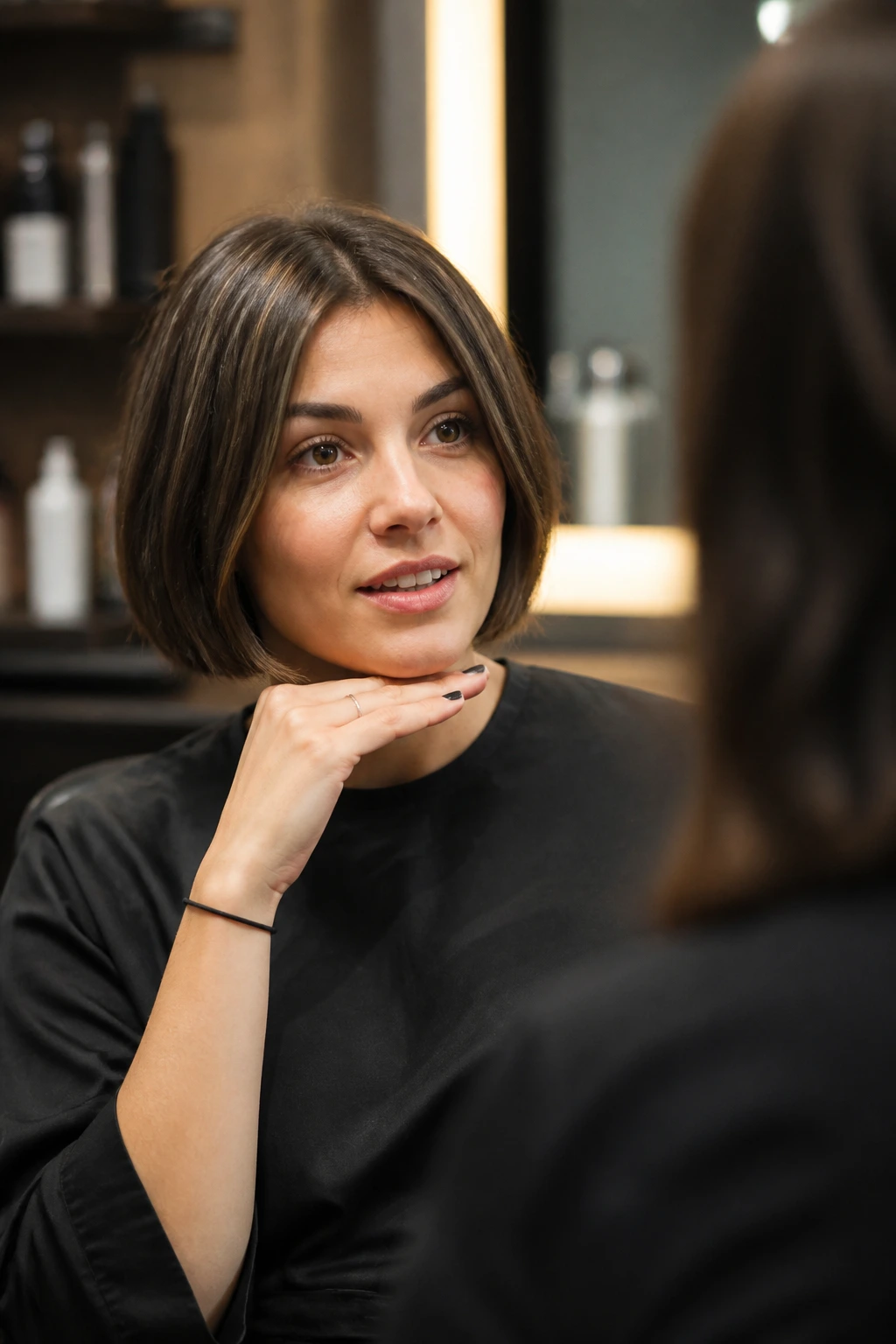
The shortest way to ruin a good bob is to be vague in the chair. “Chin length” sounds precise, but every jaw is different, and a face that looks balanced from the front can behave very differently in profile. Bring two photos if you can: one from the front and one from the side. That saves a lot of hand-waving.
Say where you part your hair. Say whether you wear glasses. Say if one side grows faster, if your crown is flat, or if your hair flips out at the ends every time it hits your shoulders. Those details are not small. They decide whether the cut sits at the chin or ends up floating at the wrong point.
A useful script is this: “I want a chin-length shape that lands just below the widest part of my cheeks, with enough weight at the perimeter to make my fine hair look fuller. Keep the crown light, but don’t shred the ends.” That’s clearer than asking for “more volume,” which usually gets interpreted too loosely.
If your hair is wavy or curly, ask whether the cut should be done dry or mostly dry. If it’s pin-straight and very fine, ask for the perimeter to stay blunt. And if you love a side part, say so before the scissors come out. Your part changes the haircut more than most people realize.
Essential Tools and Products for Styling These Looks
-
Blow dryer with a nozzle attachment: A directed stream of air keeps the cut smoother at the root and helps the ends sit where you want them.
-
Medium round brush: The safest all-purpose brush for chin-length hair; it gives lift without making the ends curl into a tight ring.
-
1-inch curling iron or wand: Best for soft bends and loose waves that stop below the cheekbone.
-
Flat iron with narrow plates: Useful for flipping the ends, smoothing a blunt bob, or creating a tiny bend around the jaw.
-
Root-lifting mousse: A light foam on damp roots gives fine hair some backbone before drying.
-
Volumizing spray: Misted near the crown, it helps the hair hold lift without getting sticky.
-
Texturizing spray: Adds separation to piecey or shaggy versions, especially on day two.
-
Lightweight heat protectant: Non-negotiable if you use hot tools. Fine hair burns faster than people expect.
-
Dry shampoo: Good for absorbing oil at the part and keeping the crown from collapsing.
-
Duckbill clips or small section clips: Handy for setting crown lift while the hair cools.
How to Wear These Cuts When You Want More Polish or More Texture

Workday Polish: Go with a smooth blowout, a center or soft side part, and a clean tuck behind one ear. That keeps the line of the cut visible and makes the jaw look neater. A tiny amount of serum only on the ends keeps flyaways down without flattening the crown.
Weekend Texture: Rough-dry the roots, twist a few face-framing pieces around your fingers, and stop before the hair gets overworked. The goal is separation, not stiffness. A mist of dry texturizing spray at the mid-lengths is enough for most fine hair.
Quick Exit-from-the-House Fix: If the crown has gone limp, lift the top section with your fingers, spray dry shampoo at the roots, and blow air for 20 seconds on cool. Then tuck one side. That small imbalance makes the whole look feel intentional again.
Dressed-Up Version: Flip the ends under or slightly out, add a clean side part, and choose earrings that show just below the jaw. Chin-length hair looks sharper when it has something crisp around it — a collar, a neckline, or a bit of shine on the finish.
Additional Tips and Texture Boosters

Root Lift: Clip the crown in two sections while your hair cools, then remove the clips last. That tiny step can keep fine hair from falling flat before lunch.
Weight Control: Keep the heaviest line at the perimeter and avoid too much thinning through the sides. Fine hair needs a strong edge more than it needs lots of layers.
Color Placement: A few lighter pieces around the front can make the cut read as lighter and more dimensional. Don’t flood the whole head. Two or three ribbons near the face are enough.
Glasses Trick: If you wear frames, keep the front longer so the hair doesn’t fight the arms of the glasses. A side tuck usually solves the rest.
Frizz Management: Use serum only on dry ends. Putting it near the root is a fast way to lose lift, especially on day one.
Common Mistakes That Flatten the Shape
Cutting it too short at the cheekbone. That’s the classic mistake. The hair sits right at the widest part of the face and makes the roundness louder. Ask for the perimeter to hit the chin or just below it.
Over-layering fine hair. Too many short layers turn the ends thin and see-through. The fix is simple: keep the internal layers long and let the outline stay solid.
Using too much cream or oil. Fine hair drinks in product fast, then goes limp. Use the smallest amount you can get away with, and keep the heavy stuff off the roots.
Forgetting the part. A middle part can work, but on some round faces it makes the face read wider. Try an off-center part before you decide the cut “doesn’t suit you.”
Curling the hair inward all the way around. That creates a bubble. Leave the ends a bit straighter or alternate the bend direction so the sides don’t puff out at the cheeks.
Letting the grow-out go too long. Once chin length slips to the neck, the shape can lose its point. A trim a little earlier is usually better than waiting until it feels shapeless.
Variations and Adaptations to Try
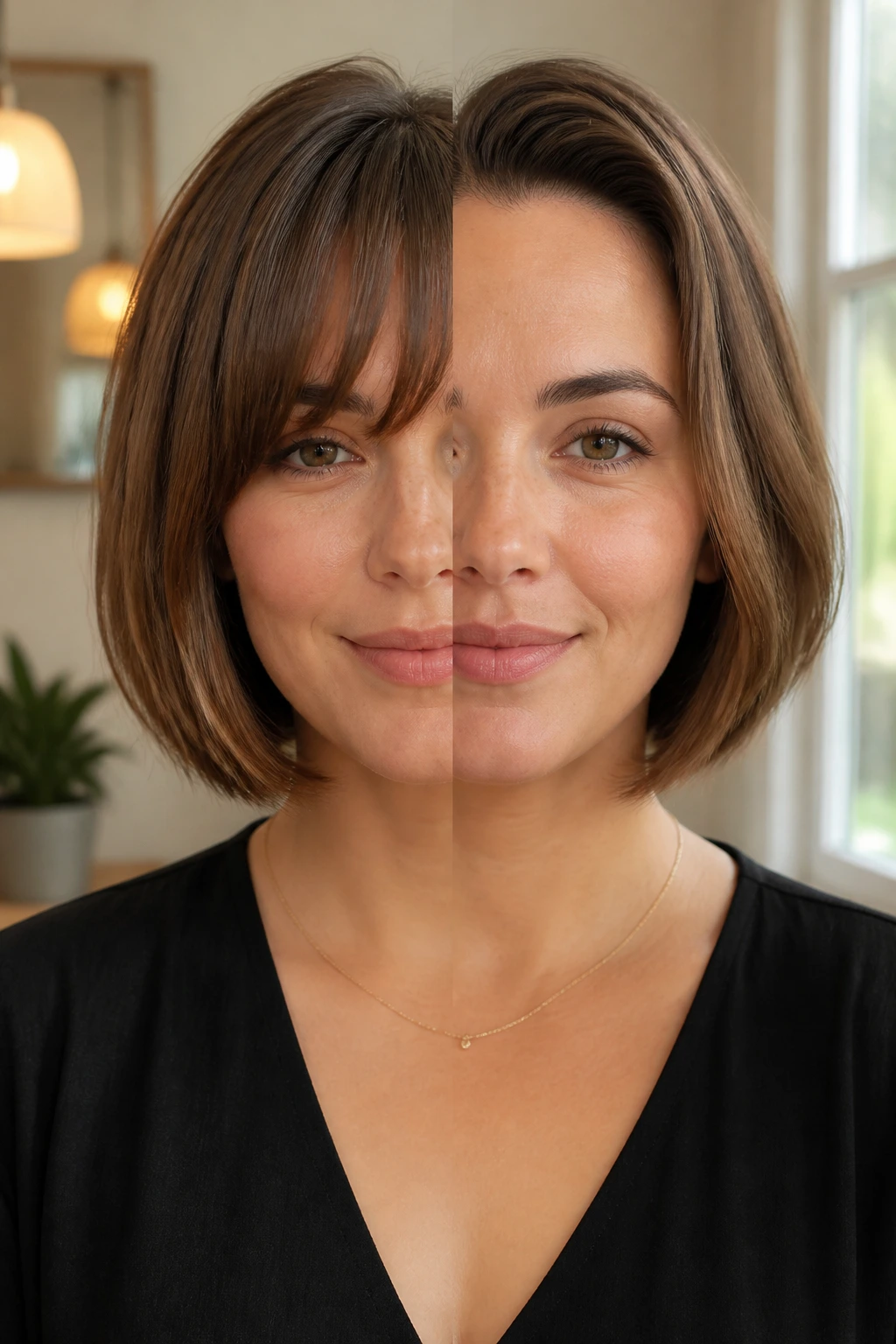
The Soft-Bang Version: Add curtain bangs or bottleneck bangs if you want more forehead control and a stronger vertical line. This works especially well when the cheeks are the fullest part of the face.
The No-Bang Version: If you hate fringe, keep the front pieces long enough to tuck or sweep. A deep side part gives enough movement that you won’t miss the bangs.
The Air-Dry Version: Ask for a cut that behaves without hot tools — minimal internal layering, a clean perimeter, and slightly longer front pieces. Add mousse, scrunch once, and let it go.
The Sleek Finish Version: Choose a blunt or lightly curved bob, then style it with a flat iron and a side part. This gives the haircut a sharper outline and works well for fine hair that likes to separate.
The Grow-Out Version: If you’re moving from a shorter cut, ask for a chin-length shape with soft graduation so the grow-out doesn’t jump awkwardly into shoulder length. It stays wearable longer between trims.
Keeping the Shape Between Salon Visits
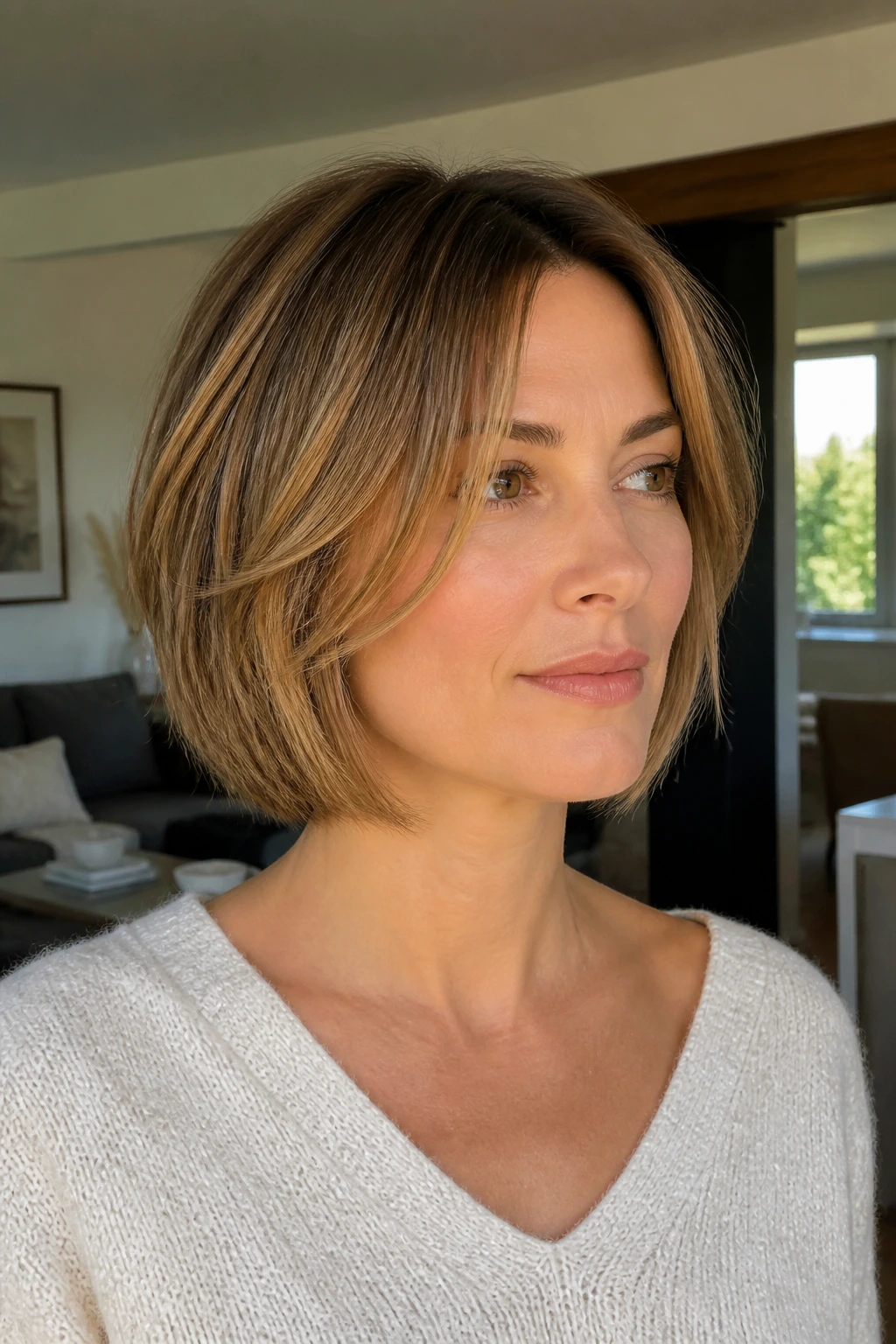
Chin-length cuts look best when they’re trimmed on a schedule, not rescued at the last second. For most fine hair, 6 to 8 weeks keeps the line clean. If you wear bangs, those may need a touch-up every 3 to 4 weeks, because fringe loses its shape faster than the rest of the cut.
On wash days, don’t scrub the crown flat with conditioner. Keep conditioner from the ears down, rinse well, and dry the roots first so they don’t sit damp and droopy. If the hair starts to separate at the ends, a tiny bit of texturizing spray or dry shampoo can bring it back without a full restyle.
At night, a loose clip or a silk pillowcase helps preserve the bend and reduces the little dents that show up in fine hair. If you wake up with the front collapsed, use a round brush or a quick bend from a flat iron only on the pieces around the face. You usually do not need to redo the whole head.
If the cut is growing out and starting to sit on the neck instead of at the chin, get it shaped sooner rather than later. That’s when the silhouette starts to lose the sharpness that made it flattering in the first place.
Frequently Asked Questions
Which chin-length haircut is most flattering for a round face with fine hair?
A blunt chin bob with a side part is the safest place to start. The blunt edge gives fine hair more visual density, and the side part breaks up the roundness without needing heavy layering.
Are bangs a bad idea on a round face?
Not at all, but the shape matters. Curtain bangs and bottleneck bangs usually work better than a short blunt fringe because they open the face instead of closing it in.
Should fine hair be layered at chin length?
Lightly, yes. Heavy layers can make the ends look thin, but tiny interior layers or soft graduation can add movement without taking away the perimeter that makes the haircut look full.
Will chin-length hair make my face look wider?
It can if the cut ends at the cheek or if the sides puff outward. Keep the length at the chin, add a side part or face-framing angle, and avoid bulky volume at the cheeks.
Can I air-dry these styles?
Yes, especially the textured bob, soft shag bob, or micro-layered air bob. Fine hair usually needs a little mousse or root clip support if you want the shape to hold while it dries.
What if my hair flips out at the ends?
Then build that into the cut instead of fighting it. A curved-under bob, flipped-end bob, or lightly graduated bob can make that movement look deliberate rather than messy.
How often should I trim a chin-length bob?
Every 6 to 8 weeks is the sweet spot for keeping the line where it belongs. If you have bangs, trim the fringe more often so the whole cut doesn’t lose balance.
Does this length work with curly or wavy fine hair?
Yes, but the cut should be adjusted to the texture. Curly fine hair usually needs a dry cut or curl-by-curl shaping, while wavy fine hair tends to do well with soft layers and a perimeter that stays clear.
The Shape Worth Keeping

The reason chin-length hairstyles for round faces with fine hair keep showing up in good salons is simple: they do shape work without asking the hair to do too much. The cut can sharpen the jaw, lift the crown, and make slim strands look more substantial — if the line lands in the right place.
What matters most is not chasing the most dramatic version. It’s choosing the version that matches your hair’s actual habits. A clean blunt bob, a soft side part, a light fringe, a gentle angle — those details are small on paper and loud on a head of fine hair.
Pick the silhouette that keeps its shape on day three, not just the first hour after the blow-dry. That’s the version you’ll keep reaching for.