



Square faces can handle drama in a haircut, but they punish the wrong kind of drama. Put a blunt, boxy line at jaw level and the whole face can read wider than it is. Add a little bend in the right place, though, and long hair suddenly starts doing the work people usually want from contour makeup: softening the edges, drawing the eye up, and making the jaw look deliberate instead of heavy.
The best hairstyles for long hair and square faces don’t fight the shape. They bend around it. That usually means movement below the cheekbones, softness near the front of the face, and some kind of break in the symmetry — a side part, curtain fringe, long layers, a sweep, a twist, a wave that starts low instead of puffing out at the sides.
I keep coming back to the same rule with this face shape: remove width where the face is widest, then add interest somewhere else. That one idea explains why some long styles look effortless on a square jaw while others feel stiff or boxy no matter how polished they are. The styles below lean into that idea from every angle, from sleek and minimal to textured, braided, and softly undone.
Why These Styles Work on Square Faces
-
They move the eye vertically: Long lines from the crown to the ends make the face feel longer, which helps balance a strong jaw and broad forehead.
-
They soften the corners: Waves, bends, and curved layers interrupt the straight side lines that can make a square face feel extra angular.
-
They keep volume in the right place: Lift at the roots or crown helps more than side puffiness, which tends to widen the face at cheek and jaw level.
-
They let the front pieces do the talking: Face-framing strands around the cheekbones and collarbone create shape without chopping the face into a box.
-
They work with, not against, the jaw: The best long styles skim past the jawline or break around it. That tiny detail changes the whole read of the haircut.
1. Soft Face-Framing Layers with a Center Part
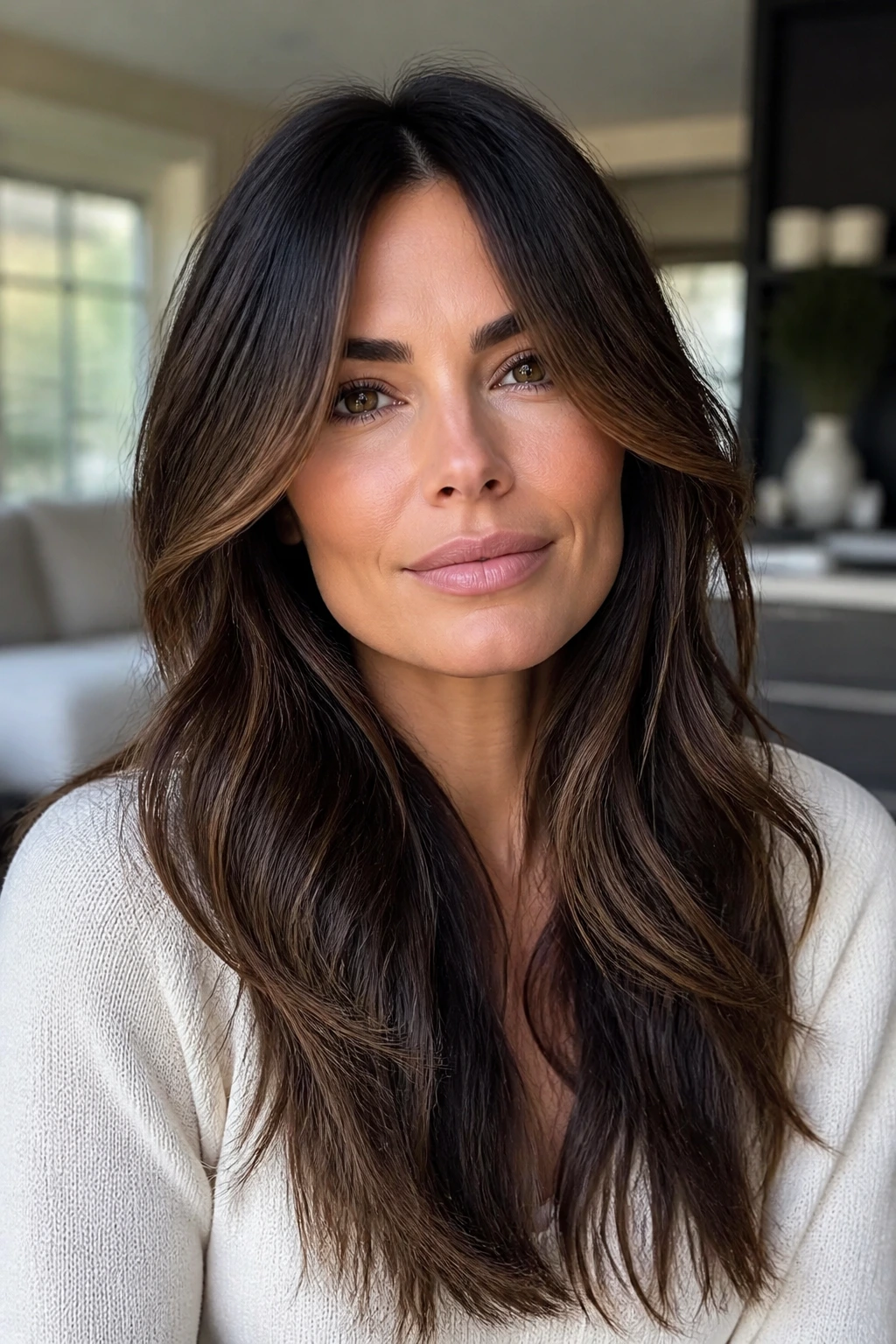
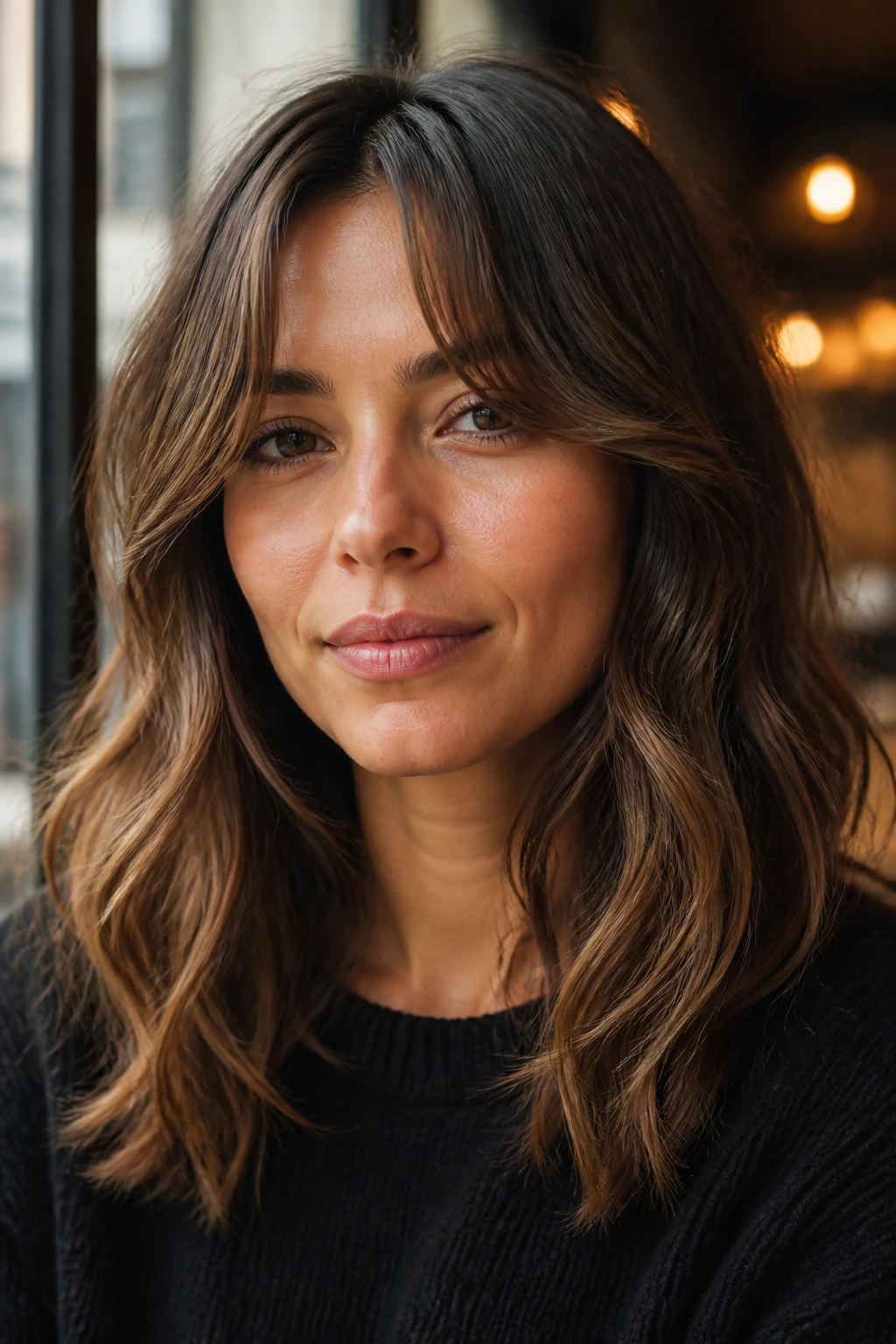
This is the cleanest starting point if you want long hair to flatter a square face without looking overstyled. The center part gives balance, but the real work comes from the front layers, which should start around the cheekbone and drop past the jaw instead of ending right at it. That keeps the face open without drawing a hard horizontal line.
I like this cut on medium to thick hair because the shape stays visible even when the hair is worn down. Blow-dry the front pieces away from the face with a round brush, then let the ends swing back in slightly. That gentle bend makes the cut feel softer and more expensive than a poker-straight finish ever will.
If your hair is fine, keep the layers long and light. Too many short pieces at the front can make the bottom look thin, and that’s the one thing this style doesn’t need.
2. Curtain Bangs and Loose Waves
Why do curtain bangs keep showing up on square faces? Because they break up the forehead and cheekbone line before the eye ever lands on the jaw. The split in the middle creates a vertical path, while the longer outer pieces slide down the sides of the face like soft brackets.
The waves matter as much as the bangs. Start the bend below the cheekbone, not right at it, or the width lands exactly where you do not want it. A 1.25-inch iron or a large wand works well; wrap the hair away from the face, leave the last inch out, then shake it loose with your fingers.
This look suits people who want movement but don’t want their hair to look done in a precious way. It’s a little messy. That’s part of the charm.
3. Deep Side Part with Sweeping Layers
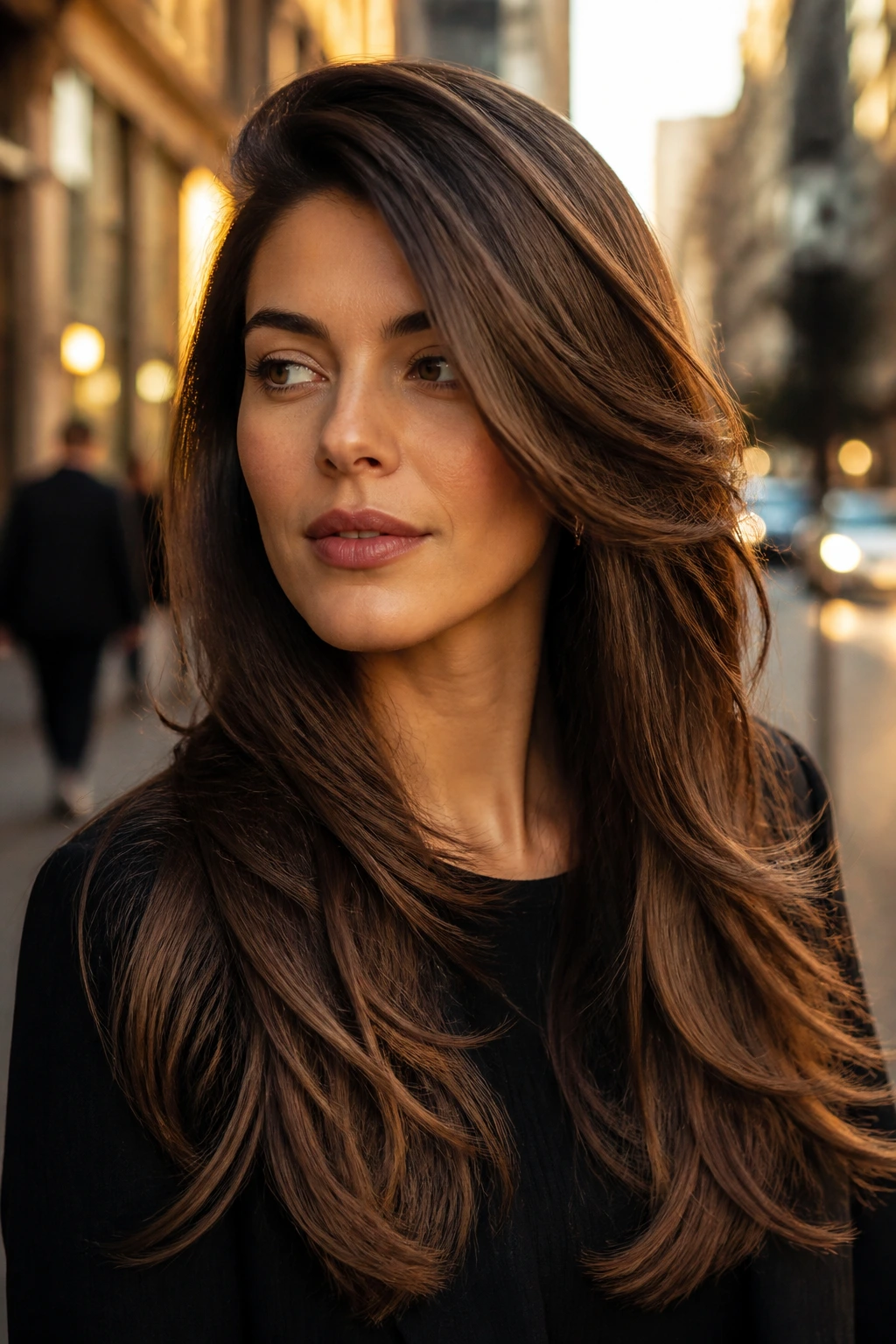
A deep side part is one of the fastest ways to interrupt the symmetry of a square face. It pulls attention diagonally instead of straight across, which takes pressure off the jawline and gives the whole style a more lifted feel. Add long sweeping layers, and the shape starts looking softer immediately.
This works especially well if your hair is naturally straight or only slightly wavy. The part creates the drama; the layers keep the length from feeling heavy. If you tuck the smaller side behind one ear, even better — that little asymmetry makes the face read longer.
Use this when you want a look that feels polished but not severe. It’s sharp in a good way. Not boxy, not flat, not fussy.
4. Butterfly Cut with Long Cascading Ends
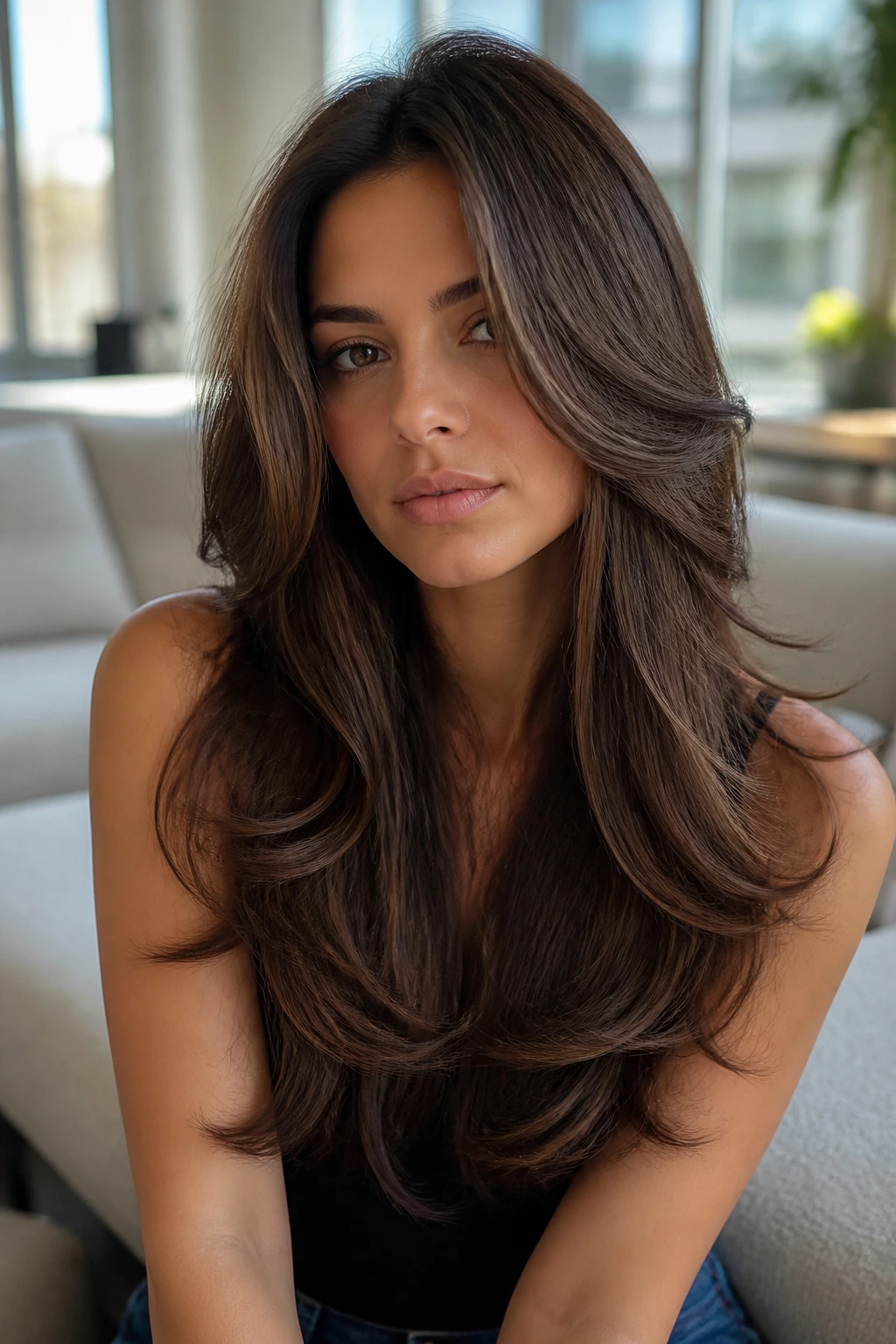
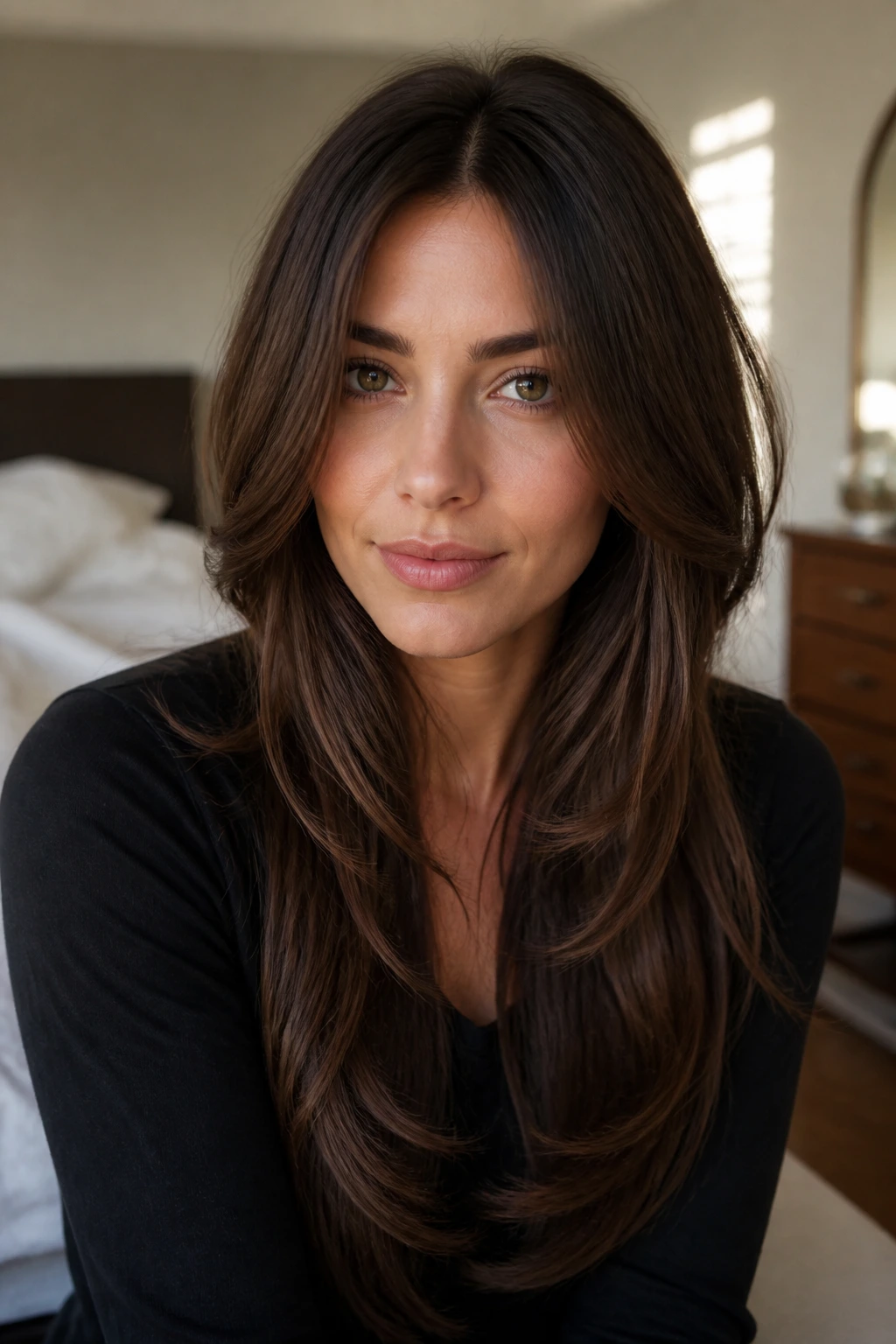
The butterfly cut is useful here because it gives you the illusion of shorter layers without sacrificing length. The crown gets lift, the face gets movement, and the ends stay long enough to keep the silhouette vertical. On a square face, that vertical line is gold.
What I like most is the way the top layers separate the face from the hair mass. Instead of hanging as one heavy curtain, the hair falls in two clear zones: soft, airy shape around the shoulders and longer length below. That gap in the middle keeps the jaw from getting boxed in.
If you blow it out, round-brush the top layers up and away from the head. If you air-dry, scrunch a little mousse into the mid-lengths so the upper layers don’t collapse and sit flat against the face.
5. Long Shag with Wispy Fringe
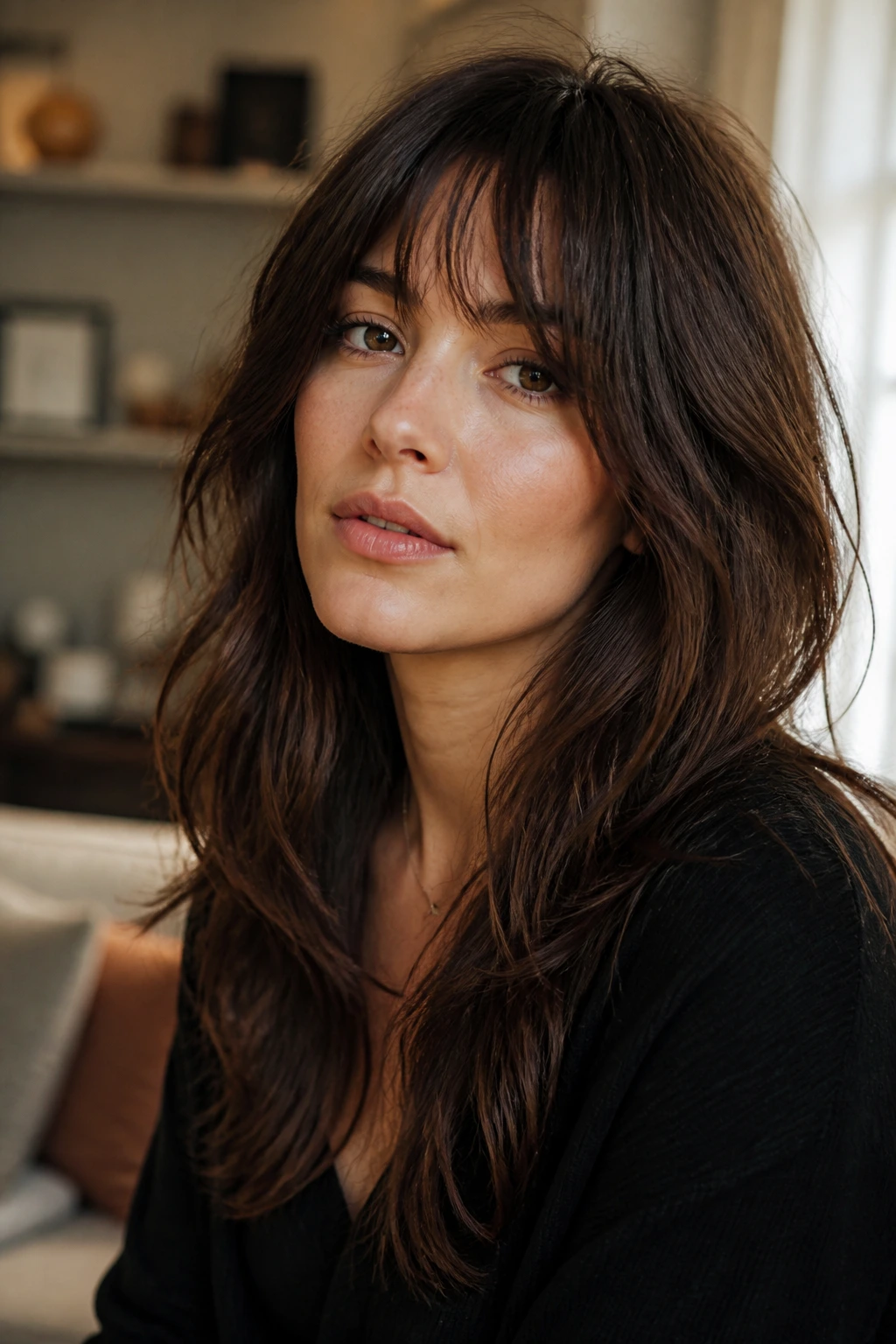
A long shag can work beautifully on a square face, but only if the texture is controlled. The shape gives you movement, and the wispy fringe keeps the front from looking blunt or dense. The result feels relaxed rather than carved.
The danger with shag cuts is width. If the shortest layers hit right at the jaw, they can make the face look broader. Keep the shortest pieces soft and slightly longer, and let the texture live around the cheekbones and collarbone instead.
This is the style for someone who wants hair with a bit of attitude. It looks good a little imperfect. Actually, it looks better a little imperfect.
6. Sleek Length with an Off-Center Part
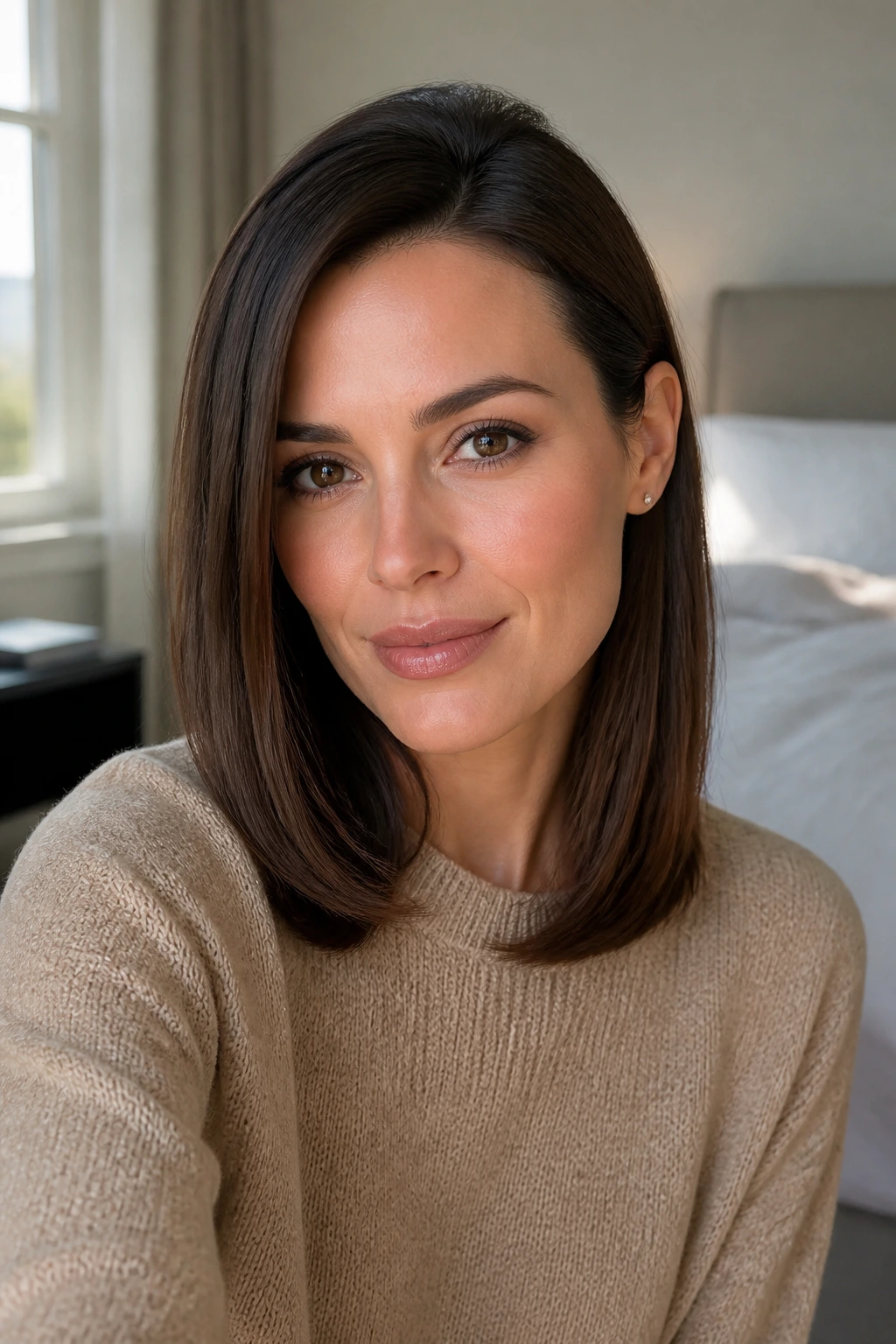
Straight hair on a square face gets a bad reputation, and I think that’s unfair. The problem is not straight hair itself; it’s straight hair with a hard center line and no front movement. Shift the part off-center, soften the ends, and the style stops feeling severe.
The key is polish without stiffness. A tiny bend at the ends — even one pass with a flat iron just to curve them inward or outward — keeps the line from looking ruler-straight. If your face is especially angular, tuck the heavier side behind your ear and let the other side skim the cheek.
This is one of the best looks for people who like clean hair but don’t want the face to look boxed in. Simple. Sharp. A little easier than it sounds.
7. Rounded Hollywood Waves Starting Below the Cheekbone
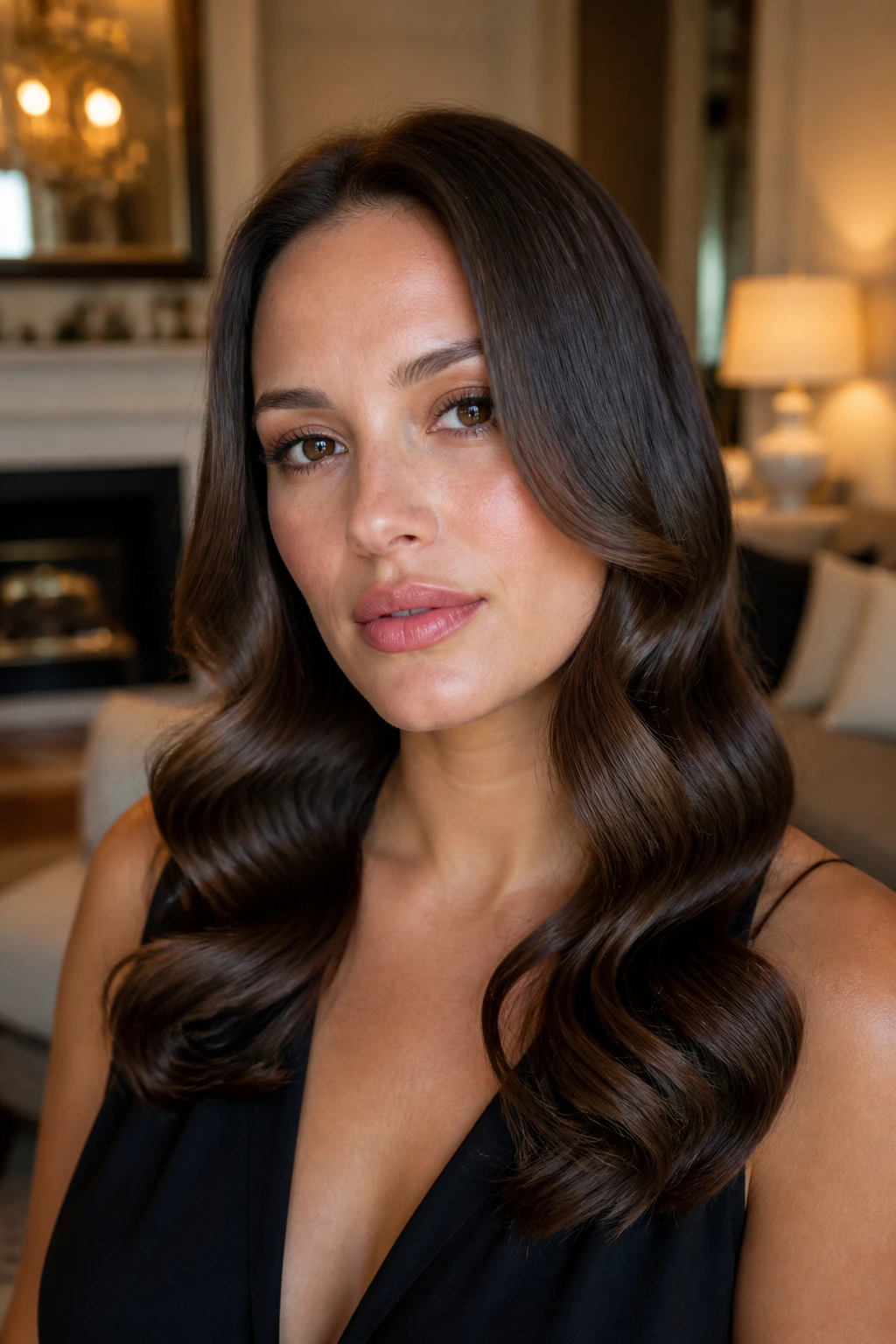
Big waves can be tricky on square faces, but the placement makes all the difference. When the wave starts below the cheekbone, the width lands lower and the upper face stays open. That’s what keeps the style glamorous instead of bulky.
The shape should be rounded, not crimped-looking or too tight. Brush the waves out gently once they cool so they flow into one another. If the front pieces are too springy, the style gets puffier at the sides than I’d like, and that adds width where you don’t want it.
This is a strong option for events, dinners, or any day you want hair with some presence. It feels dressed up without needing a full updo.
8. Half-Up Crown Volume with Loose Ends
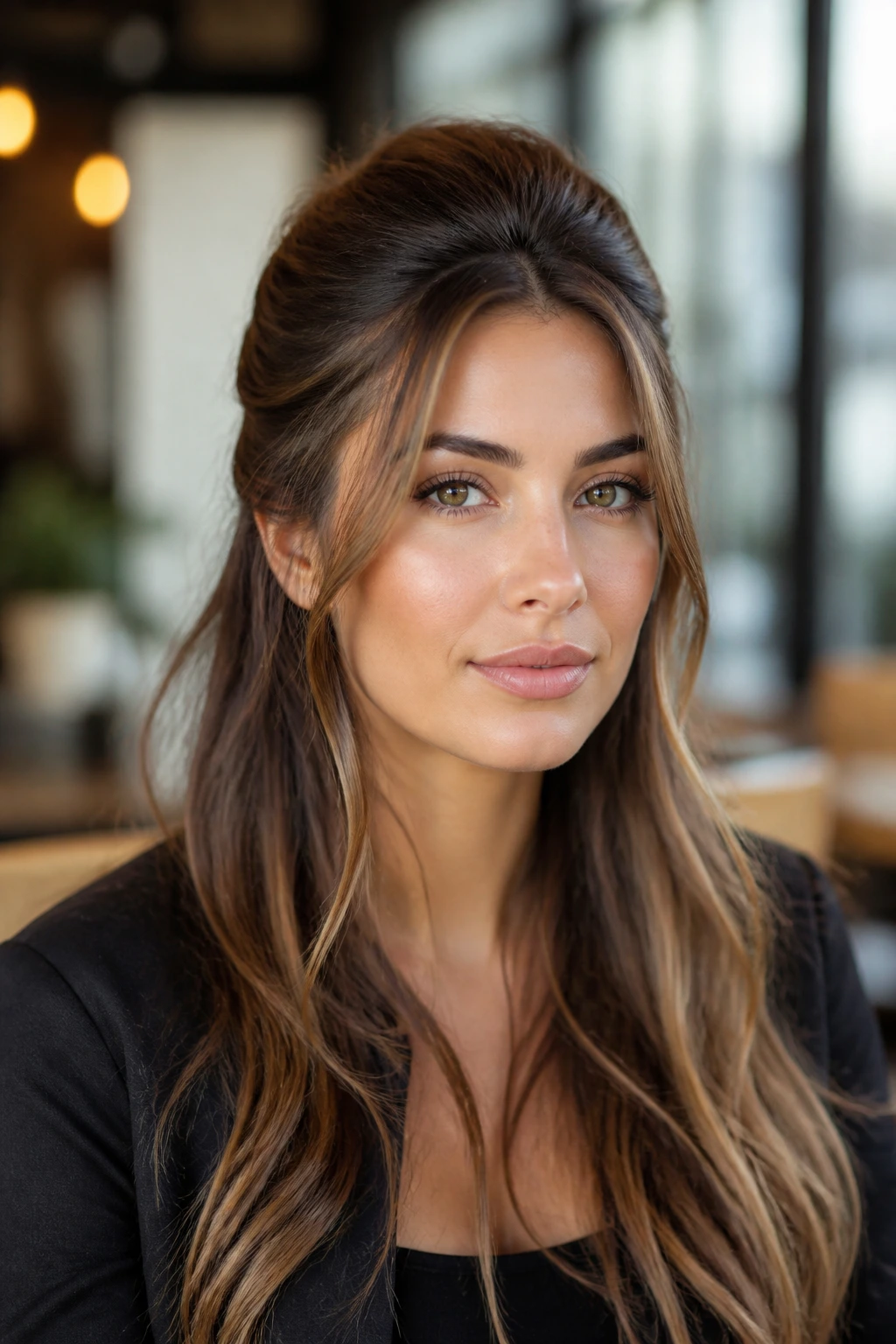
Pulling part of the hair up at the crown does something square faces usually love: it raises the eye line. That bit of lift makes the face look a touch longer, and the loose lengths below keep the shape from turning harsh. The trick is not to over-pull the top section.
Leave a little softness around the temples and a few thin pieces near the front. If everything goes straight back, the face can look very exposed. A little looseness around the hairline is the difference between elegant and severe.
I prefer this style when the hair has some natural wave, but it works on straight hair too. Tease the crown lightly, smooth the top layer, and pin it in place without flattening the whole head.
9. Low Loose Ponytail with Face-Framing Pieces
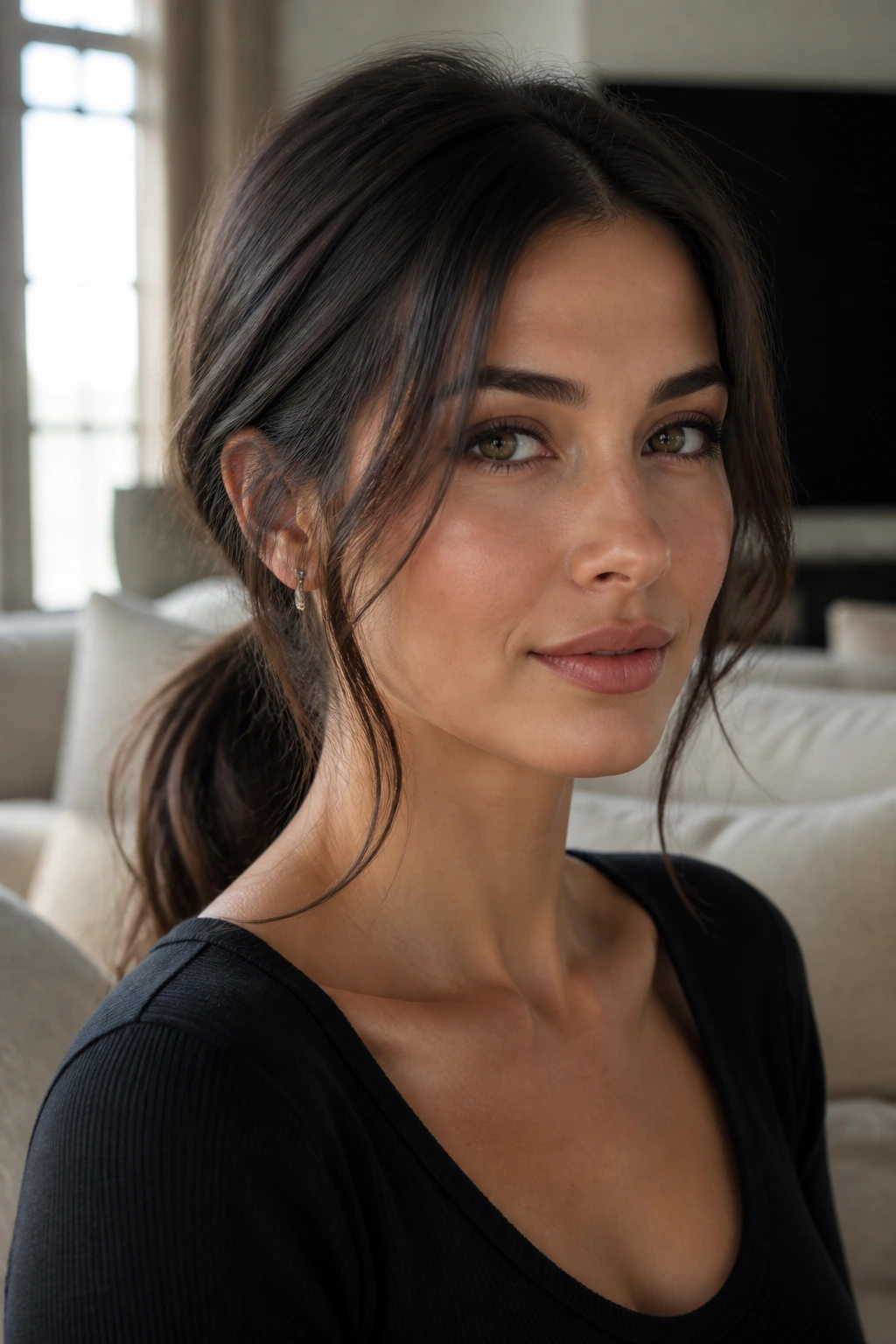
A low ponytail sounds plain until you see how well it can balance a square face. By keeping the ponytail low and loose, you avoid adding width at the widest part of the jaw. The face-framing pieces do the softening, and the length in the ponytail keeps the look from feeling clipped.
The mistake here is pulling everything too tight. That draws a hard line across the cheeks and makes the jaw stand out more. Leave the top slightly airy, then pull out two slim pieces at the front and let them fall below the cheekbone.
This is the style I reach for when hair needs to look neat but not formal. It also works well with second-day texture, which is always a small victory.
10. Side Braid with Soft Tendrils
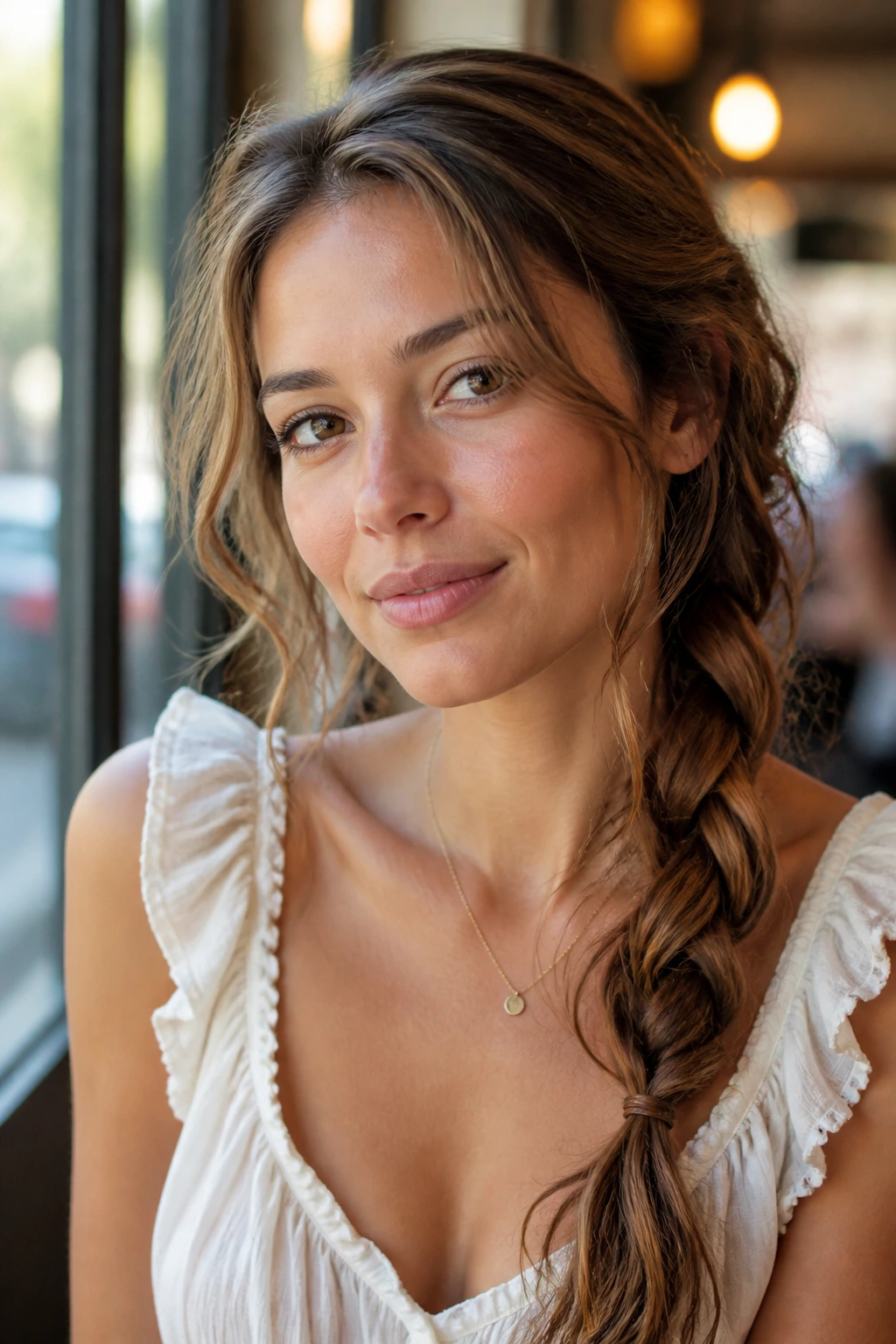
A side braid shifts the bulk of the hair away from the center of the face, which can be very flattering on a square jaw. It creates a diagonal line, and diagonals are your friend when the face has strong straight edges. The braid itself can be loose, fishtail, three-strand, or even rope-twisted.
Keep it soft. That’s the whole point. Tight braids sit close to the face and can make the jawline look more pronounced, while a slightly loosened braid with a few tendrils keeps the look romantic and easy.
This one works especially well on long hair because the braid has room to hang and show detail. On shorter lengths, side braids can feel cramped. On long hair, they breathe.
11. U-Cut with Soft Bends
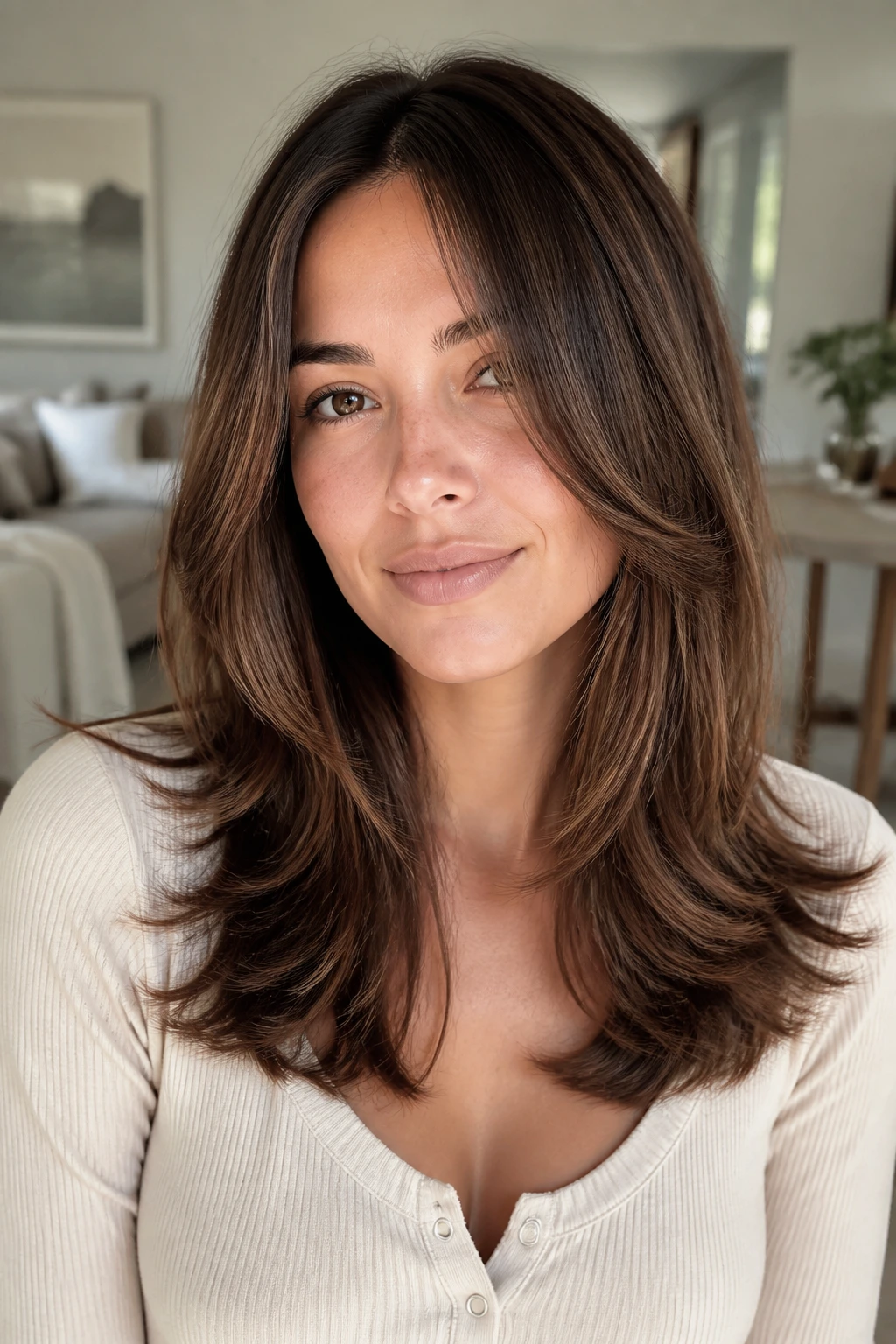
A U-shaped cut is quieter than a V-cut, and I think that makes it a better choice for many square faces. The rounded perimeter echoes the curve you want around the jaw without creating a pointed bottom that can pull the eye down too hard. It’s subtle, but subtle is often the smarter move.
Add soft bends through the mid-lengths and ends, and the shape becomes even gentler. The cut gives structure; the styling gives softness. That combination is better than forcing the hair into one dramatic shape and hoping it flatters.
If your hair is thick, the U-cut can help it fall more cleanly. If it’s fine, keep the curve delicate so the ends don’t look stringy.
12. Long V-Cut with Minimal Frizz
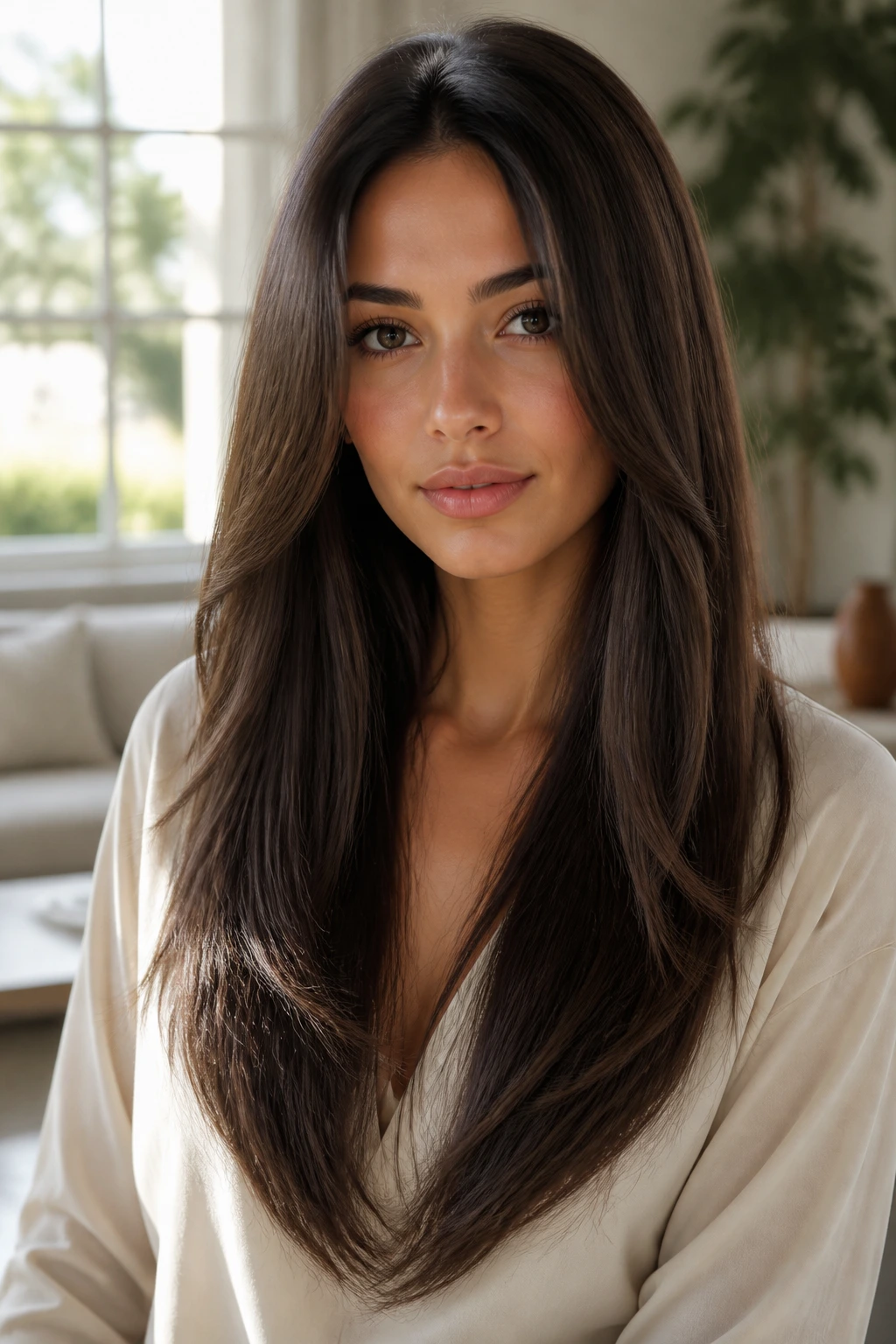
A V-cut can work if you want drama and length, especially on thick hair that needs movement through the ends. The point of the V pulls the eye down, which helps lengthen the face visually. The longer outer sections also avoid the blunt shelf effect that can be rough on a square jaw.
The catch is frizz. A V-cut looks best when the ends are smooth enough to show the shape clearly. If the hair poofs out, the point gets lost and the whole style can feel bigger than intended.
Use a smoothing cream or light oil through the ends, not the roots. The lower half of the hair is doing the styling job here, and it should look intentional rather than fuzzy.
13. Bottleneck Bangs with Airy Layers
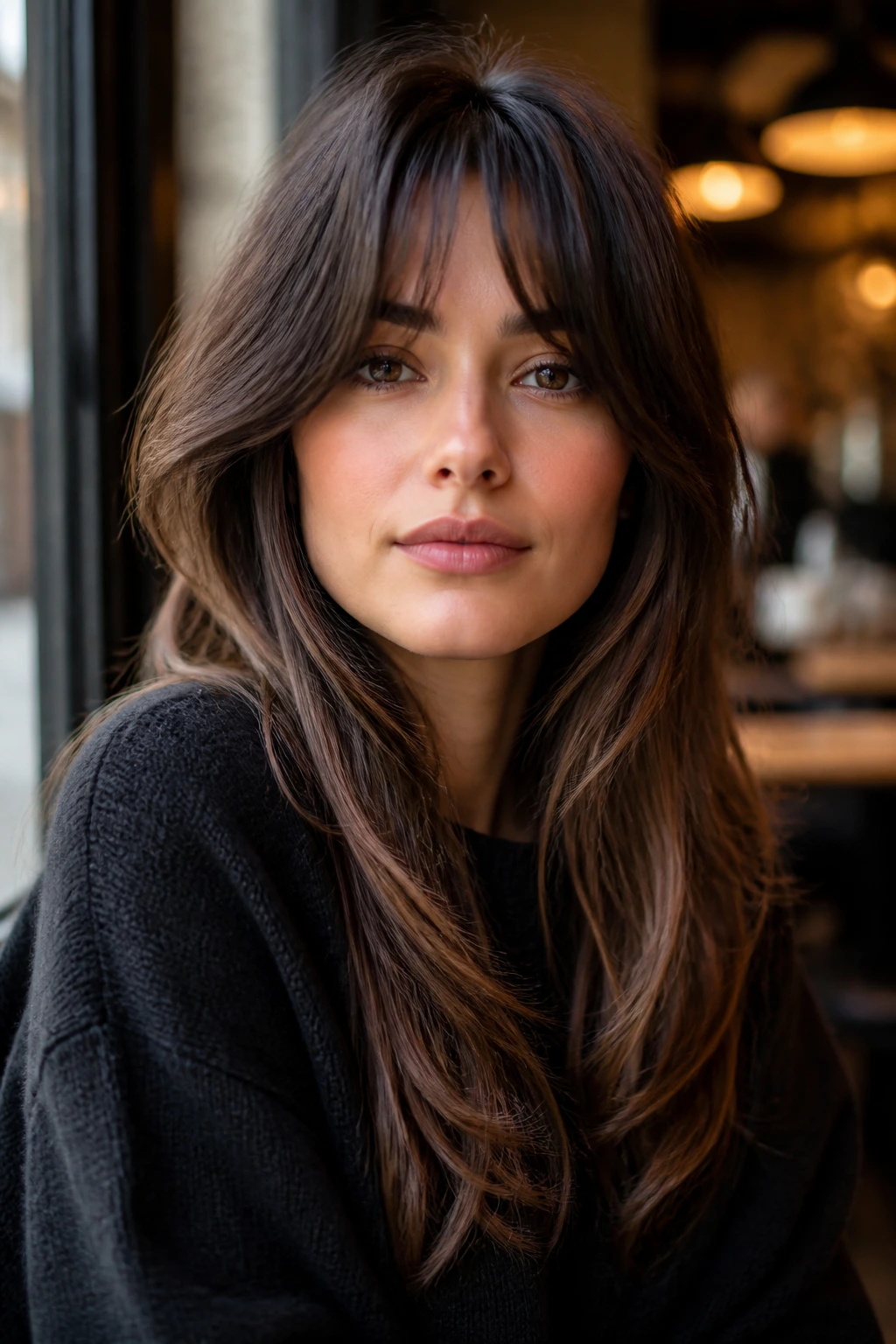
Bottleneck bangs are useful because they narrow at the center and open out softly at the sides. That shape keeps the forehead from looking too broad while still letting air and movement stay around the eyes and cheeks. On a square face, that balance matters more than a heavy fringe ever would.
Pair them with airy long layers, not dense lengths. The bangs add interest up top, and the layers stop the style from feeling bottom-heavy. If the ends are too blunt, the whole look gets stiff fast.
This is a nice middle ground for people who want bangs but don’t want to commit to a hard line. They grow out gracefully, which is a relief because not every fringe ages well.
14. Glossy Straight Hair with Tucked Sides
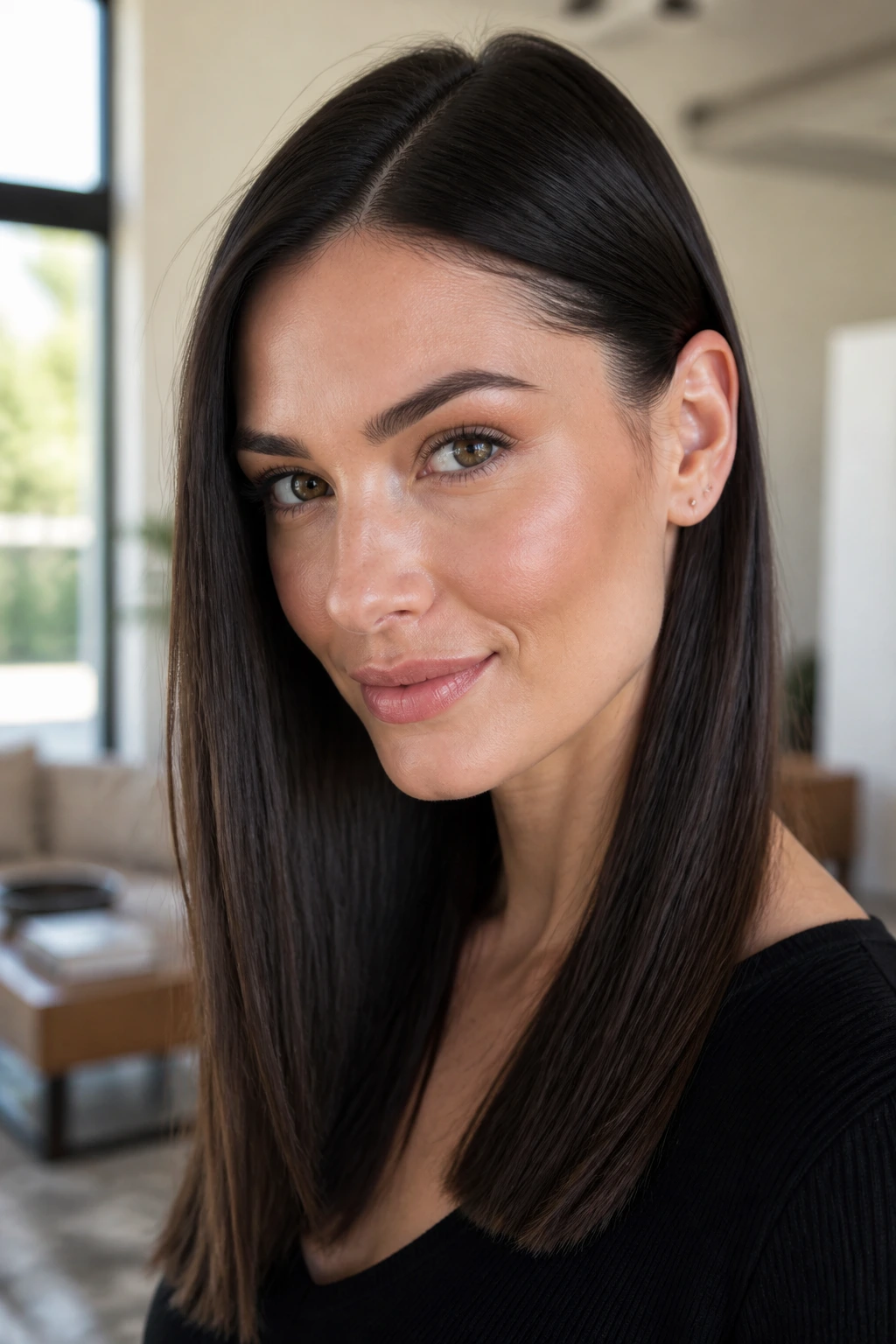
There’s something strong about glossy straight hair on an angular face, but it needs a little editing. Tuck one side behind the ear, keep the opposite side loose, and you break the symmetry enough to soften the jaw. The shine then becomes the point, not the shape of the face.
I like this style with long, blunt-ish ends that are softened ever so slightly by point-cutting. Too much layering can make straight hair feather out in a way that looks thin. Too little movement can make it read like a curtain.
This look is especially good if you like minimalist hair. Clean. Controlled. Not boring, which is a harder line to walk than it sounds.
15. Waterfall Braid Over Soft Curls
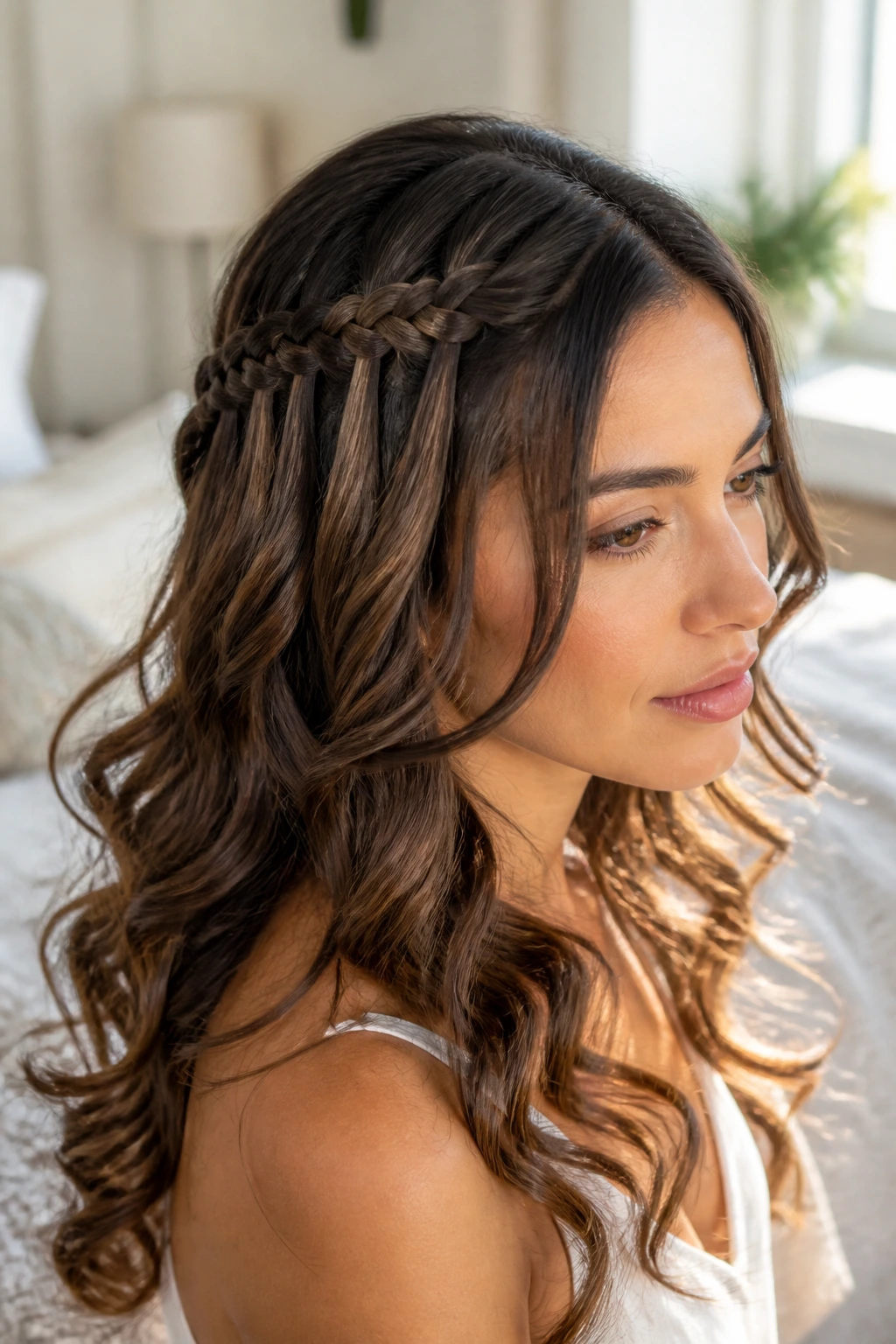
A waterfall braid works because it keeps part of the hair off the face while still leaving movement around it. The braid itself creates a soft diagonal across the head, and the loose curls underneath keep the silhouette from going flat. That combination is flattering on a square face because it lifts the eye without adding side bulk.
The braid should stay loose enough that it looks woven, not pulled tight. If you braid too firmly, the detail gets stiff and the face shape can feel more pronounced. Soft curls below the braid help break that line.
This is one of those styles that looks more complicated than it is. The payoff comes from the contrast: structure on top, softness below.
16. Messy Low Bun with Long Front Pieces
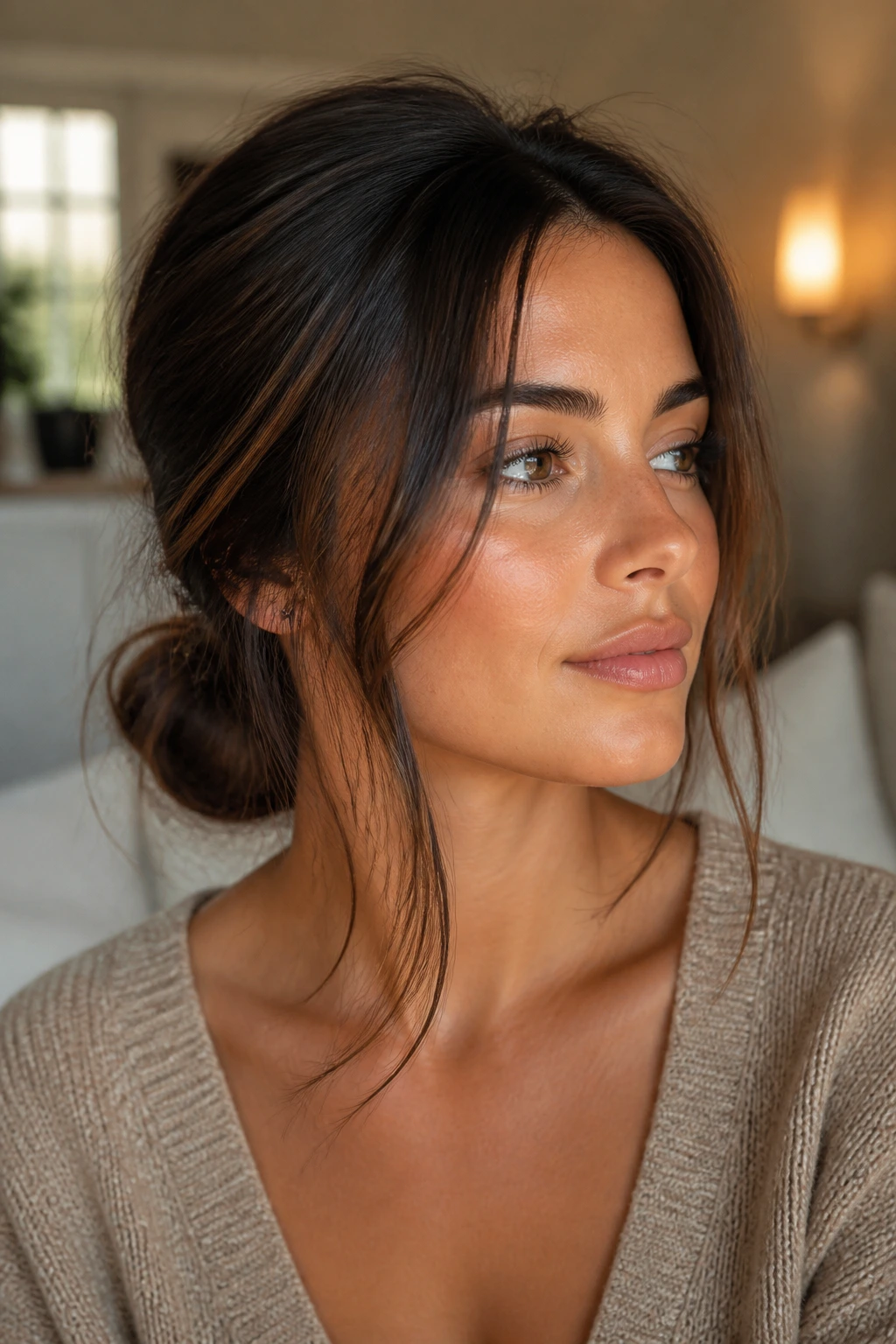
A low bun can be square-face friendly if you stop trying to make it perfect. Pull the bun low and loose, then leave two longer front pieces out to frame the cheeks and jaw. That keeps the style from sitting too high or too rigid.
The low placement matters. A bun perched at the sides of the head can widen the face, while a bun sitting low at the nape keeps the shape streamlined. If you want extra softness, twist a few pieces around the hairline before pinning them back.
I like this for days when the hair needs to stay up, but you still want some length visible. It feels relaxed, not sloppy, if the front pieces are handled well.
17. Loose Spiral Curls with a Side Sweep
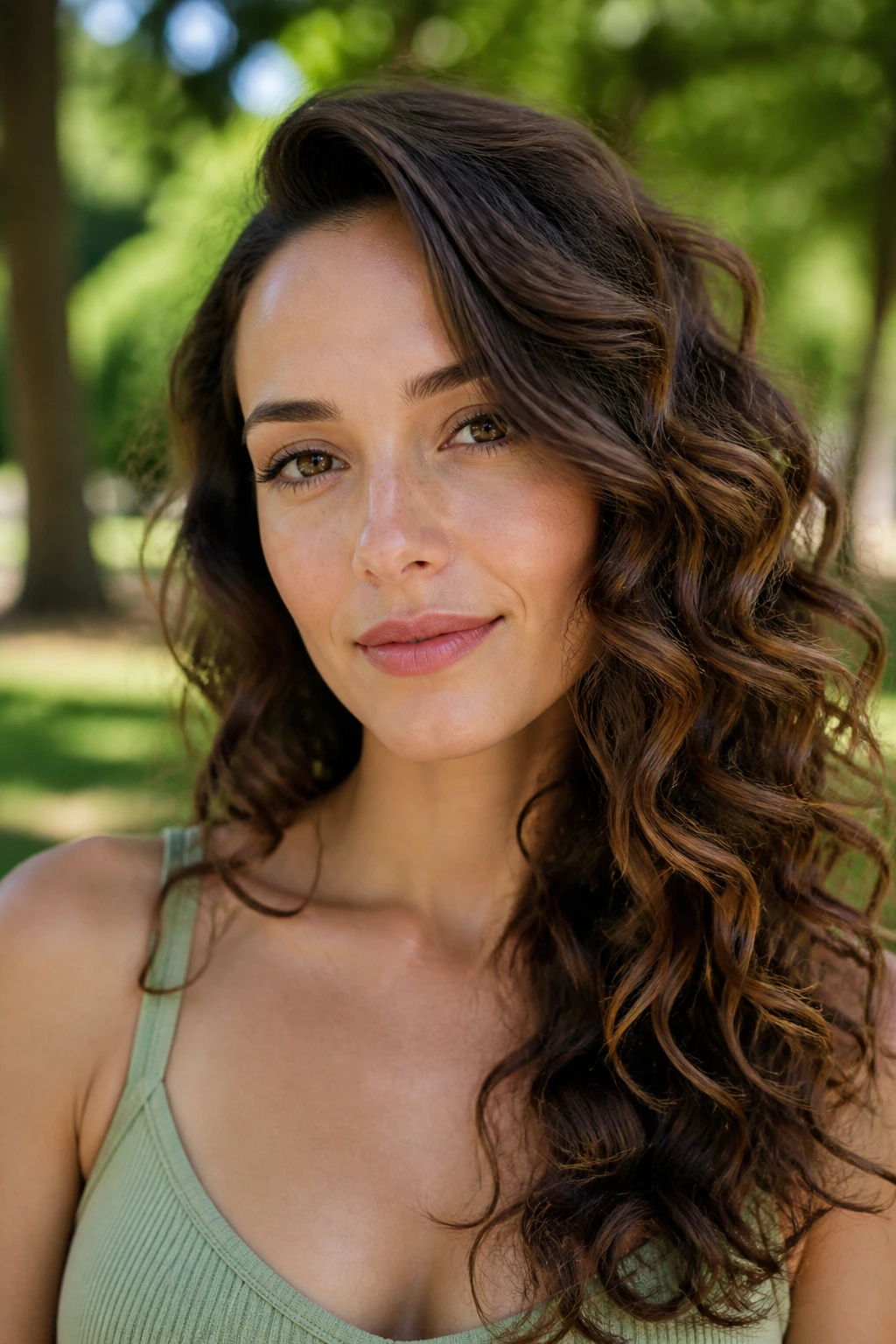
Loose spiral curls can be gorgeous on a square face when they’re not all sitting at the same height. Sweep some of the front hair to one side, let the curls fall lower than the cheekbones, and the face gets a longer, gentler frame. The side sweep stops the style from becoming symmetrical and boxy.
Do not over-curl the top section. Tight volume near the temples adds width fast, and square faces rarely need that. Let the curls live lower and wider toward the ends instead.
This style is especially nice on naturally textured hair that holds a curl without much fighting. It looks full, but the fullness is in the right place.
18. Blowout with Feathered Ends
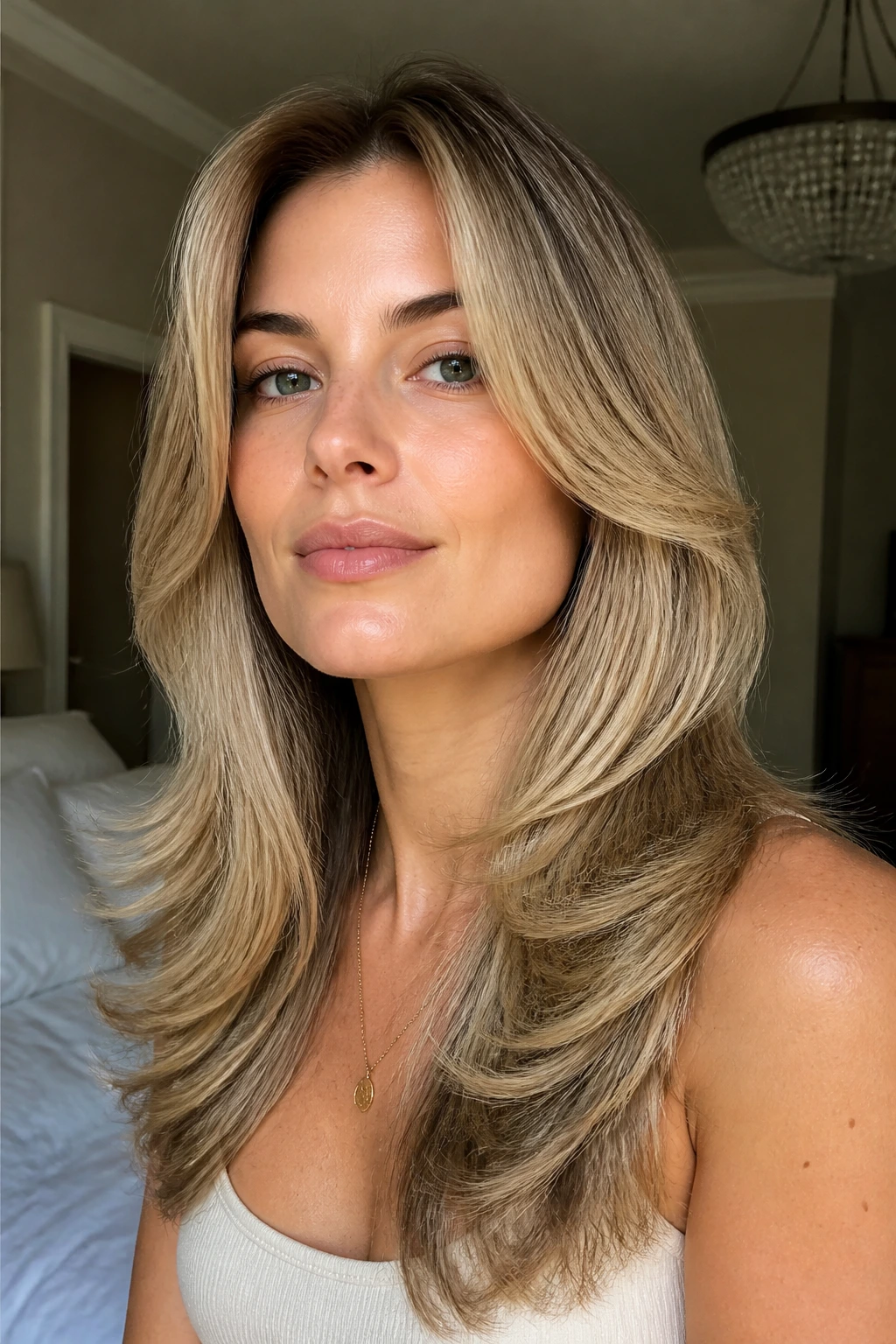
A good blowout can flatter a square face better than a thousand complicated styles. The secret is in the ends: feather them lightly away from the jaw so the line stays soft. When the front sections flick back from the face, the whole shape looks lifted.
This style also gives you control over volume. Keep the crown smooth enough to stay elegant, then build the body through the mid-lengths. Too much puff around the ears is a mistake here; it widens the face without adding anything useful.
If your hair tends to fall flat, this is a strong option. It has polish, but it doesn’t need curls or accessories to feel finished.
19. Twist-Back Half-Up Style
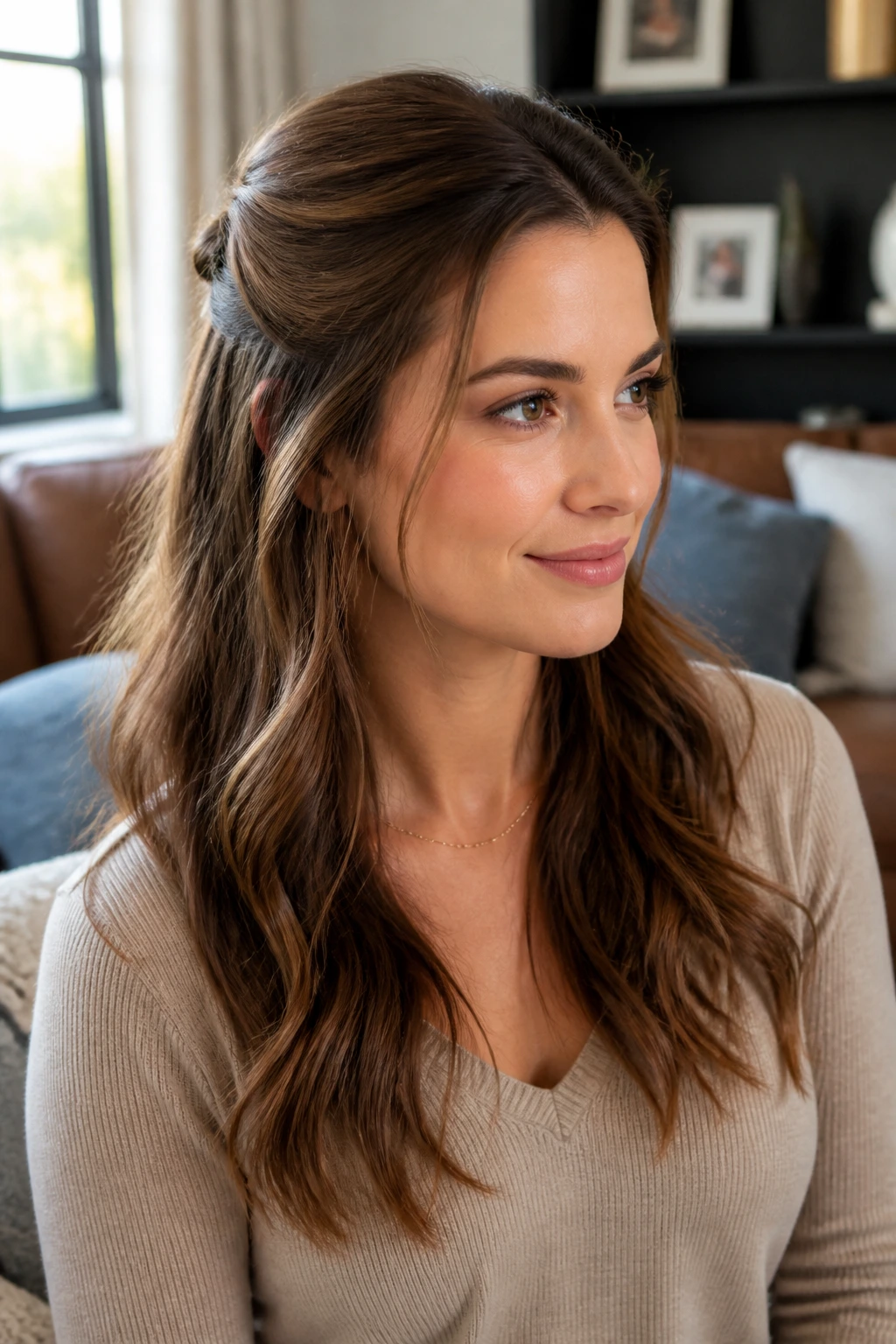
The twist-back half-up is one of those styles that quietly fixes a square face. By twisting the front sections back, you open the face and reduce width at the temples. The rest of the hair stays long and soft, which keeps the overall look balanced.
I like this more than a very tight half-up because it leaves room around the hairline. Pulling hair straight back can make the face feel exposed; twisting it back gives you shape without the hard line. A little volume at the crown helps too, though you do not need much.
This is an easy choice for days when you want your hair out of your eyes but still want the length to show. Low effort. Good result.
20. Long Coils with a Middle Part and Rounded Shape
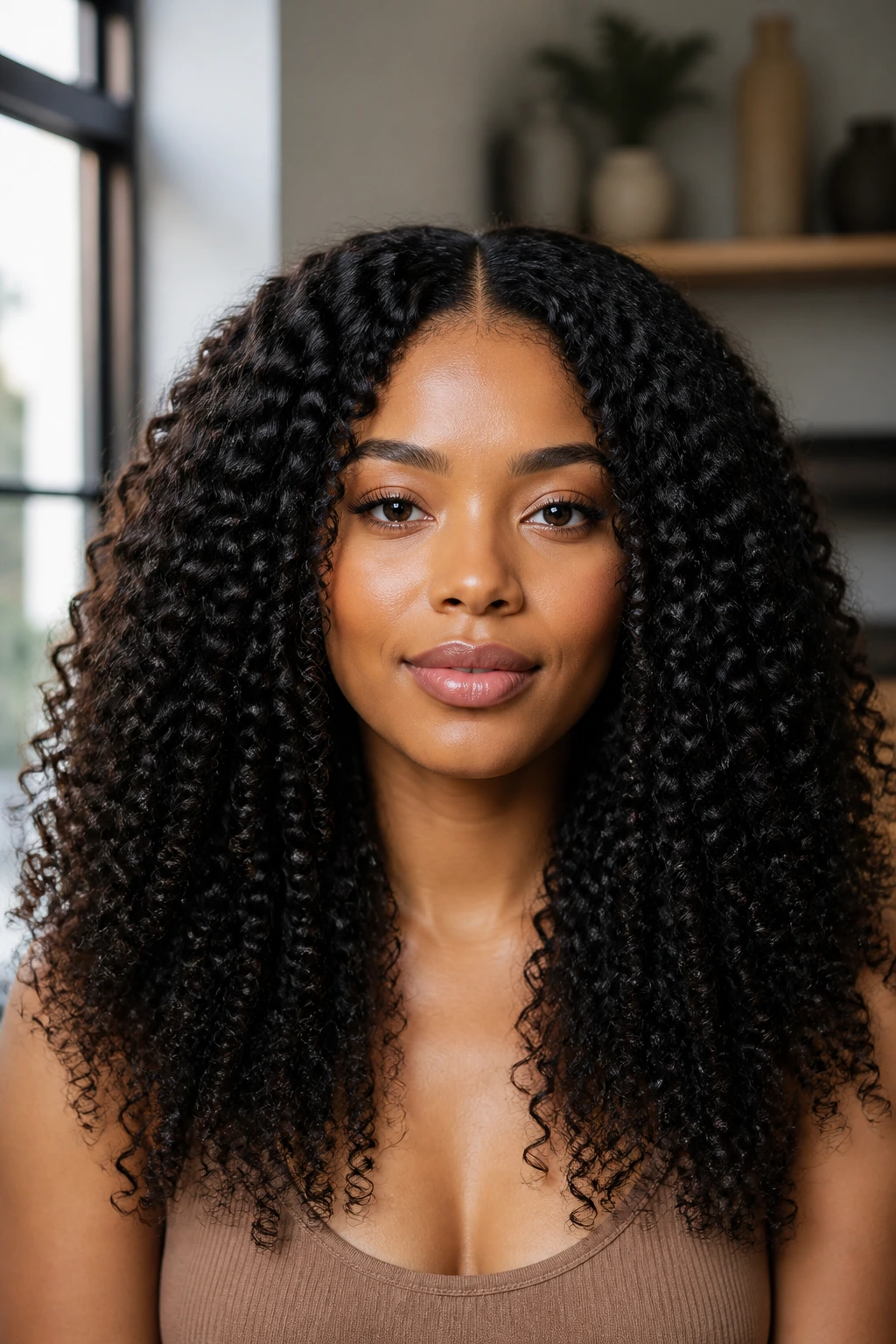
Natural coils can be stunning on square faces when the shape is rounded rather than square. A middle part can work here because the curl pattern already brings softness and movement, especially if the volume is distributed evenly instead of puffing out at the sides. The goal is a halo, not a box.
Ask for shaping that respects the curl pattern. Cutting coils dry, or at least in their natural state, helps keep the silhouette from getting too heavy at the jaw. A rounded outline around the shoulders usually flatters better than a straight one.
This style is one of the easiest ways to let texture do the face-framing for you. No extra drama needed.
21. Ribbon or Clip Accent Styles
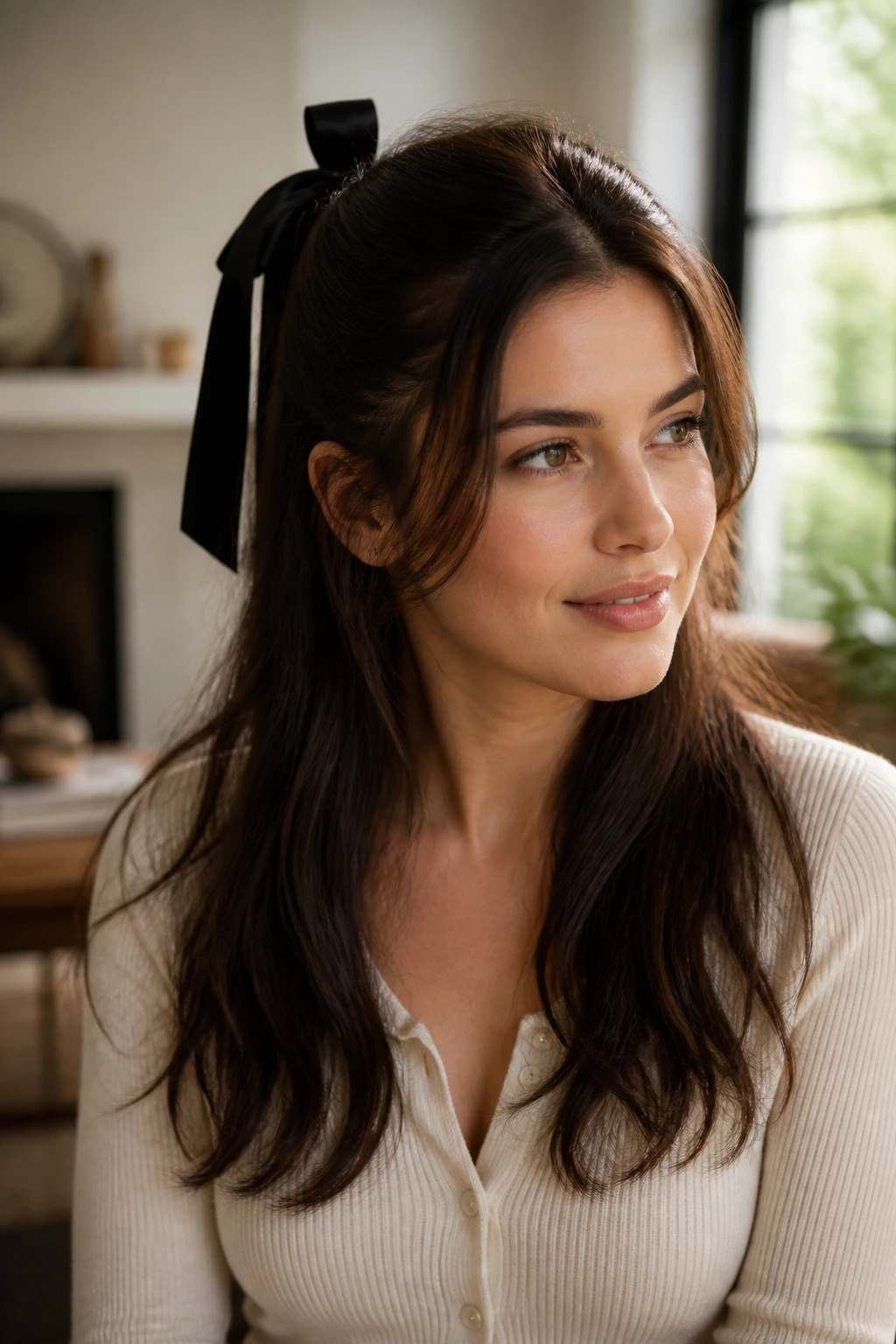
Accessories can do more for a square face than people expect. A ribbon tied into a half-up section or a single clip placed off-center can break up the symmetry and move attention away from the jaw. The trick is to keep the base hairstyle soft so the accessory doesn’t have to do all the work.
A wide barrette placed too low can widen the face, while a higher placement at the crown tends to lift it. Ribbons are especially nice because they add a vertical tail, which helps elongate the silhouette a bit.
This is the quick-fix option. Good when you need polish and do not want to heat-style anything.
22. Polished Low Half Pony with Volume at the Crown
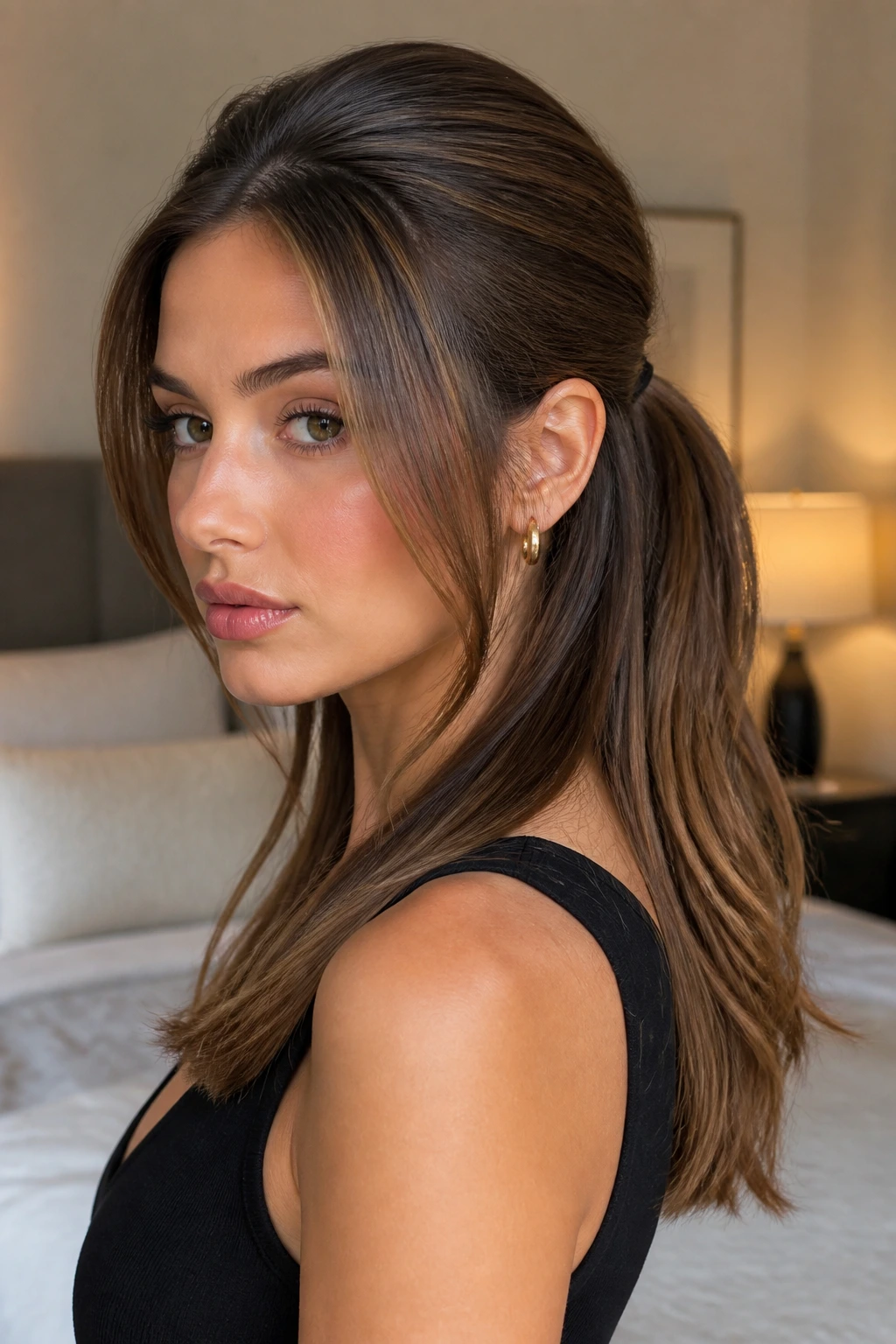
A low half pony gives you the best of both worlds: some hair up, some hair down, and just enough crown height to lengthen the face. On a square face, that crown lift is doing real work. The loose lower section keeps the jaw from feeling boxed in.
Keep the pony section smooth but not tight. A tiny bit of lift at the roots and a soft bend through the ends make the style feel deliberate instead of childish. If the front pieces are long enough, let them fall naturally rather than forcing them behind the ears.
This one feels especially good for long hair because you still see the length. It’s tidy, flattering, and easy to adjust when the day runs long.
The Cut Details That Matter Before You Style
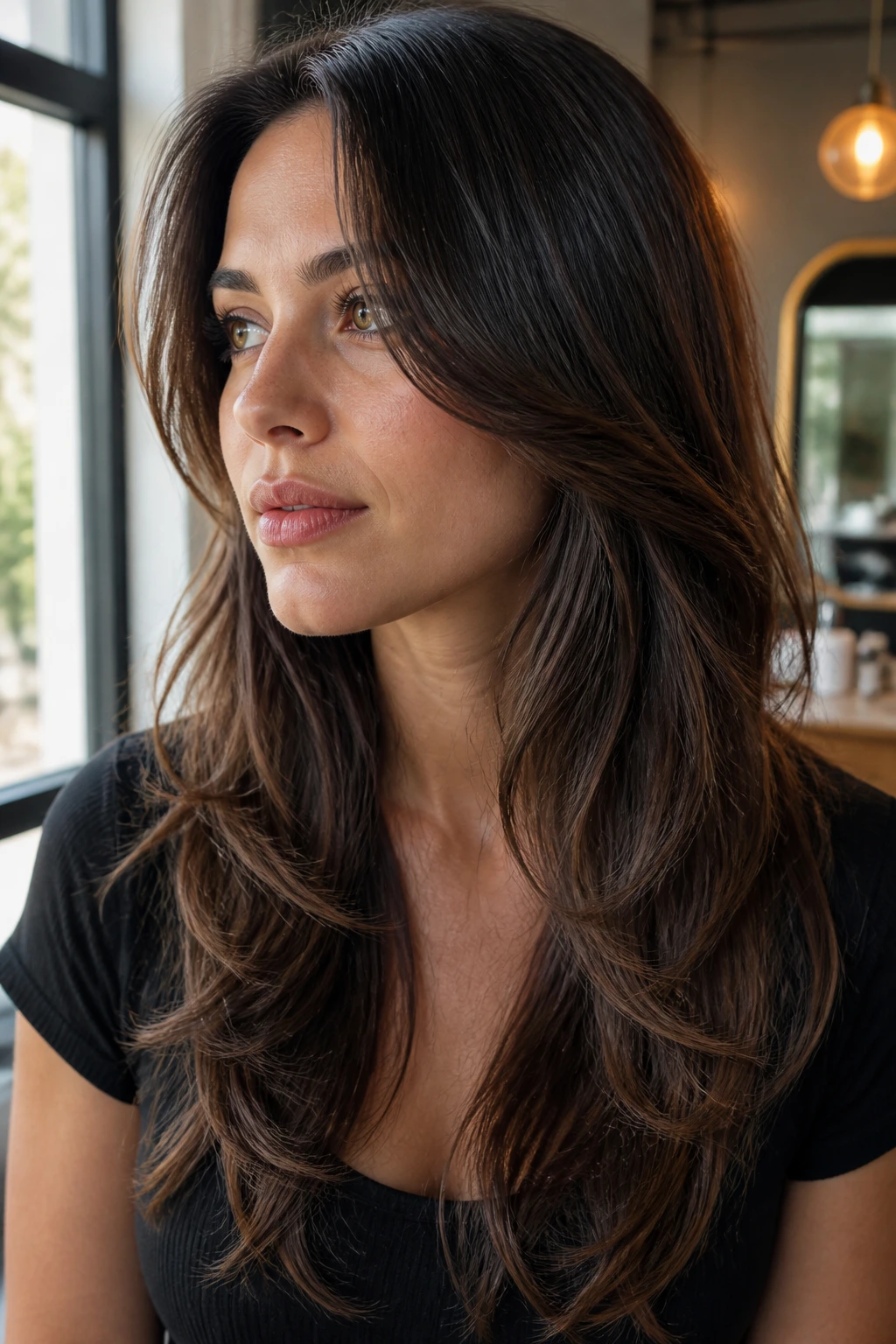
The styling matters, but the cut decides how much work you have to do. If you have a square face, ask for long layers that begin below the jaw, not at it. That one adjustment keeps the widest part of the hair from sitting exactly where the face is strongest.
A rounded perimeter also helps. U-shaped or softly layered finishes tend to feel friendlier than blunt edges, especially when the hair is thick. Blunt cuts are not forbidden, but they need some softness around the front or they can look like a shelf against the jaw.
Bang choice matters more than people think. Curtain bangs, bottleneck bangs, and longer side-sweeping fringe usually play nicer with a square face than a short, straight line that stops hard across the forehead. If you love blunt bangs, keep them textured and slightly airy so they don’t slam the face shut.
The Tools and Products Worth Having Nearby
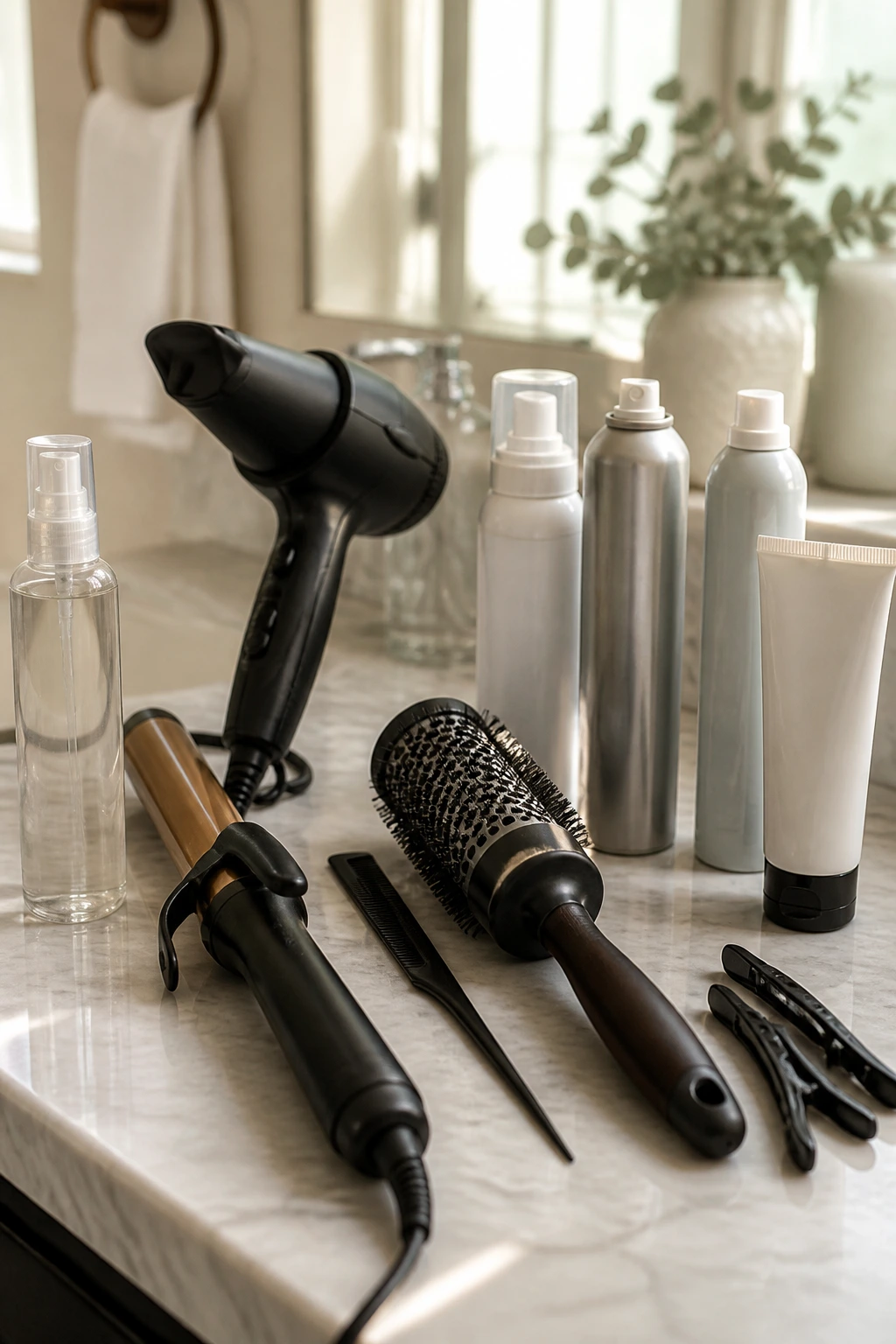
-
Heat protectant spray: Use it before any blow-dry or hot-tool work; long hair shows heat damage fast at the ends.
-
1.25-inch curling iron or wand: This size makes loose waves and soft bends that flatter square faces better than tiny, tight spirals.
-
Blow-dryer with a nozzle attachment: The nozzle helps direct the front pieces away from the face and keeps the shape smoother.
-
Large round brush: Good for lifting the crown and curving the ends inward or outward without making them too round.
-
Tail comb: Useful for clean parts, sectioning bangs, and lifting crown sections without dragging through the hair.
-
Sectioning clips: Long hair tangles fast when you’re trying to shape it in pieces, and clips keep the whole process sane.
-
Lightweight mousse or volumizing foam: Best for styles that need lift at the roots without making the hair stiff.
-
Flexible-hold hairspray: Strong enough to hold a bend or twist, but not so sticky that long hair turns crunchy.
-
Dry shampoo: Helps keep crown volume alive on day two or three, especially with blowouts and half-up styles.
-
Smoothing cream or serum: Use a small amount on the ends when the haircut needs more shine and less frizz.
How to Wear These Styles in Real Life
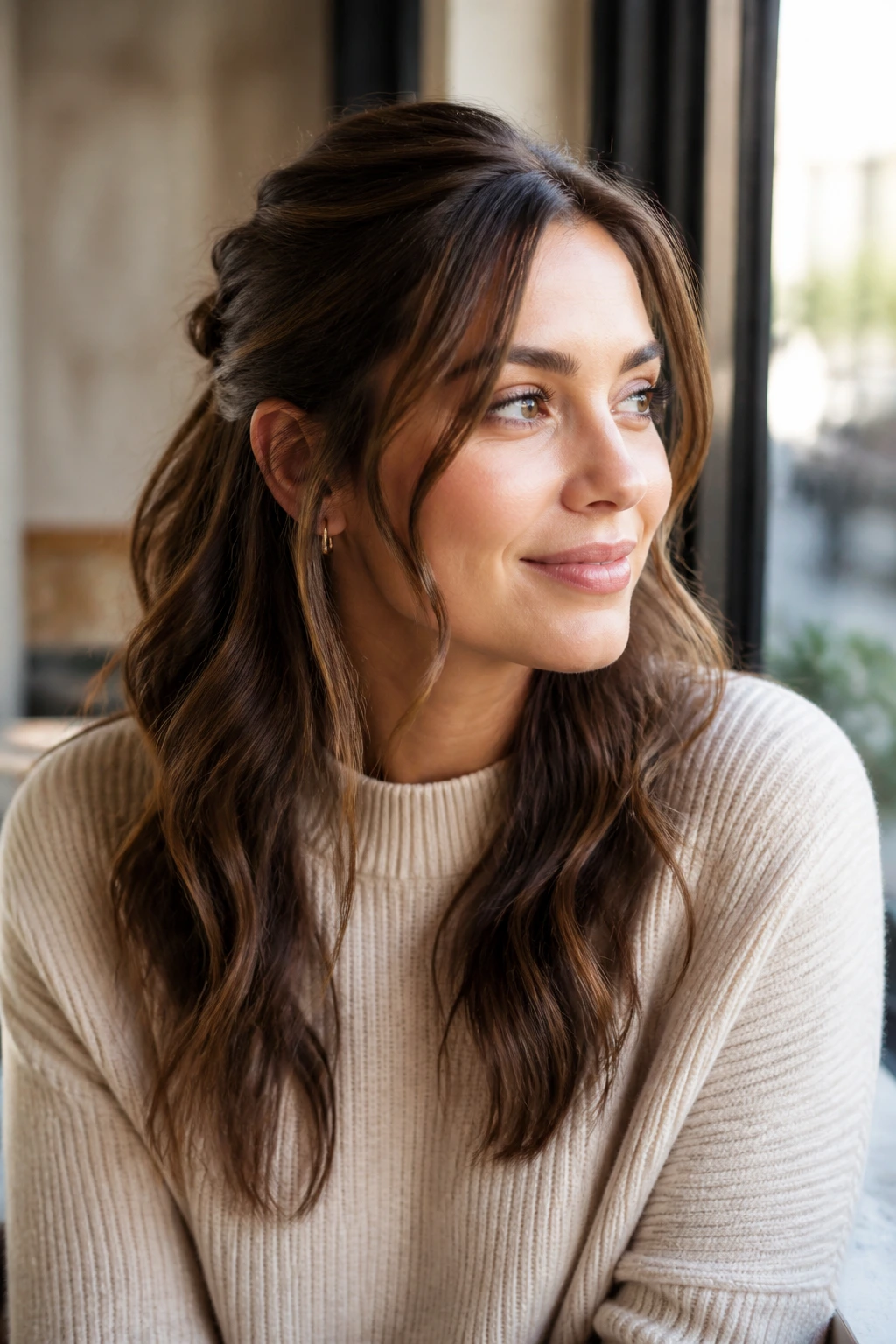
Workday: The safest bet is anything with controlled shape — a low pony, polished blowout, off-center straight hair, or a soft half-up. These keep the face open without looking like you spent half the morning pinning hair in place.
Weekend: This is where loose waves, side braids, and curtain bangs get to breathe. A little mess is fine here. Actually, it often helps the style look better because square faces benefit from shape that moves instead of sitting in one rigid line.
Events: Hollywood waves, waterfall braids, glossy blowouts, and twist-back half-up styles all read clean and intentional in photos without hardening the jaw. Keep the front pieces soft and let one side do a little more work than the other.
When your hair fights you: Use the styles that need the least correction — low buns, side parts, loose braids, and half-up crowns. If the weather is humid or your hair is flat, stop aiming for perfect symmetry. That’s usually the moment the face shape gets overemphasized.
Small Tweaks That Make the Styles Feel More Like You
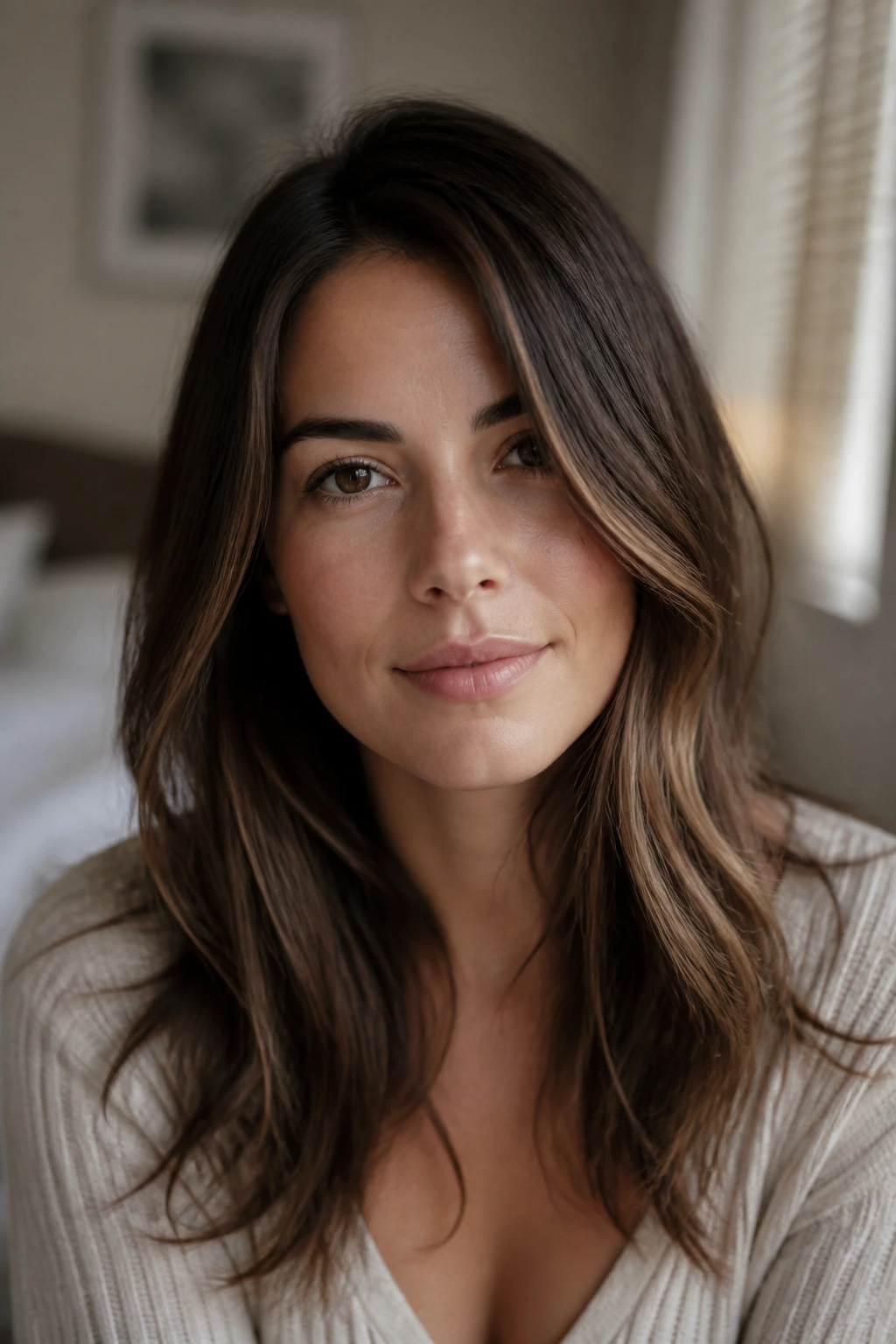
Texture: If your hair is naturally straight, add bend in the mid-lengths instead of curling every inch. If it’s wavy or curly, keep the front pieces light and let the natural pattern do the face-framing.
Parting: A perfect center part is not mandatory, and a deep side part is not a moral failure. Shift the part a little until the style stops making the face feel broader than it needs to.
Accessories: Clips, ribbons, pins, and combs work best when they support the shape instead of sitting dead center. Off-center placement almost always flatters a square face better than a perfectly symmetrical one.
Finish: Shine looks good, but too much stiffness does not. A soft finish with movement at the ends beats a shellacked look every time.
Common Mistakes That Add Width Instead of Softness
-
Starting the shortest front layer at the jaw: That creates a shelf right where the face is already strongest. Ask for the first layer to start lower, usually around the cheekbone or just below.
-
Curling all the volume at cheek level: Big curls around the middle of the face add width. Move the bend lower, or keep the upper section smoother.
-
Going too tight with updos: Slick hair pulled hard back can make the jaw look sharper and the face wider. Leave softness at the temples and crown.
-
Over-thinning thick hair with a razor: That can leave the ends frizzy and piecey in a way that makes the silhouette look uneven. Point-cutting or internal layering usually behaves better.
-
Keeping every style dead symmetrical: Symmetry sounds neat, but square faces often look better with a little shift — a side part, one tucked side, or a diagonal braid line.
Variations for Fine, Thick, Curly, and Coily Hair
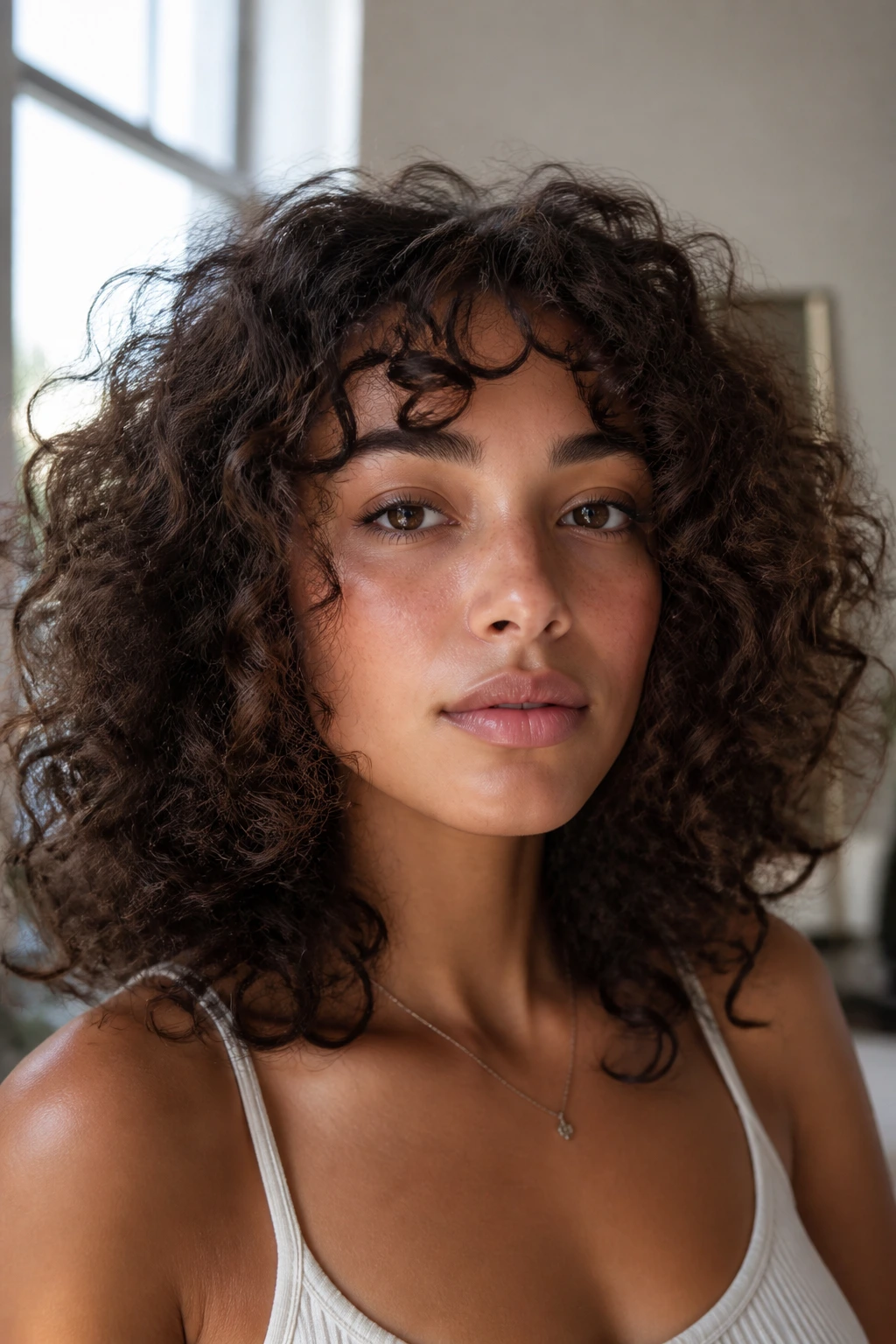
Fine-Hair Version: Keep the layers longer and lighter, and rely on root lift rather than a lot of slicing around the face. A collarbone landing gives the hair more body than a cut that gets too wispy at the ends.
Thick-Hair Version: Ask for internal layering or a soft U-shape to remove bulk without making the ends look thin. Thick hair can carry waves, braids, and blowouts beautifully, but it needs a shape that keeps it from ballooning out at the sides.
Curly-Hair Version: Let the curls set the silhouette, then shape the front pieces so they fall below the cheekbone. A middle part can work if the curl pattern is rounded; a side part can help if one side tends to puff more than the other.
Coily-Hair Version: Shape the hair dry or in its natural state when possible, and keep the outline rounded instead of square. The best look usually comes from a soft halo shape with some height at the crown and controlled width at the sides.
Low-Maintenance Version: Choose styles that hold shape for at least two days: low ponytails, loose braids, twist-backs, and blowouts with feathered ends. These are the styles that behave when your schedule doesn’t.
Keeping the Shape Between Washes
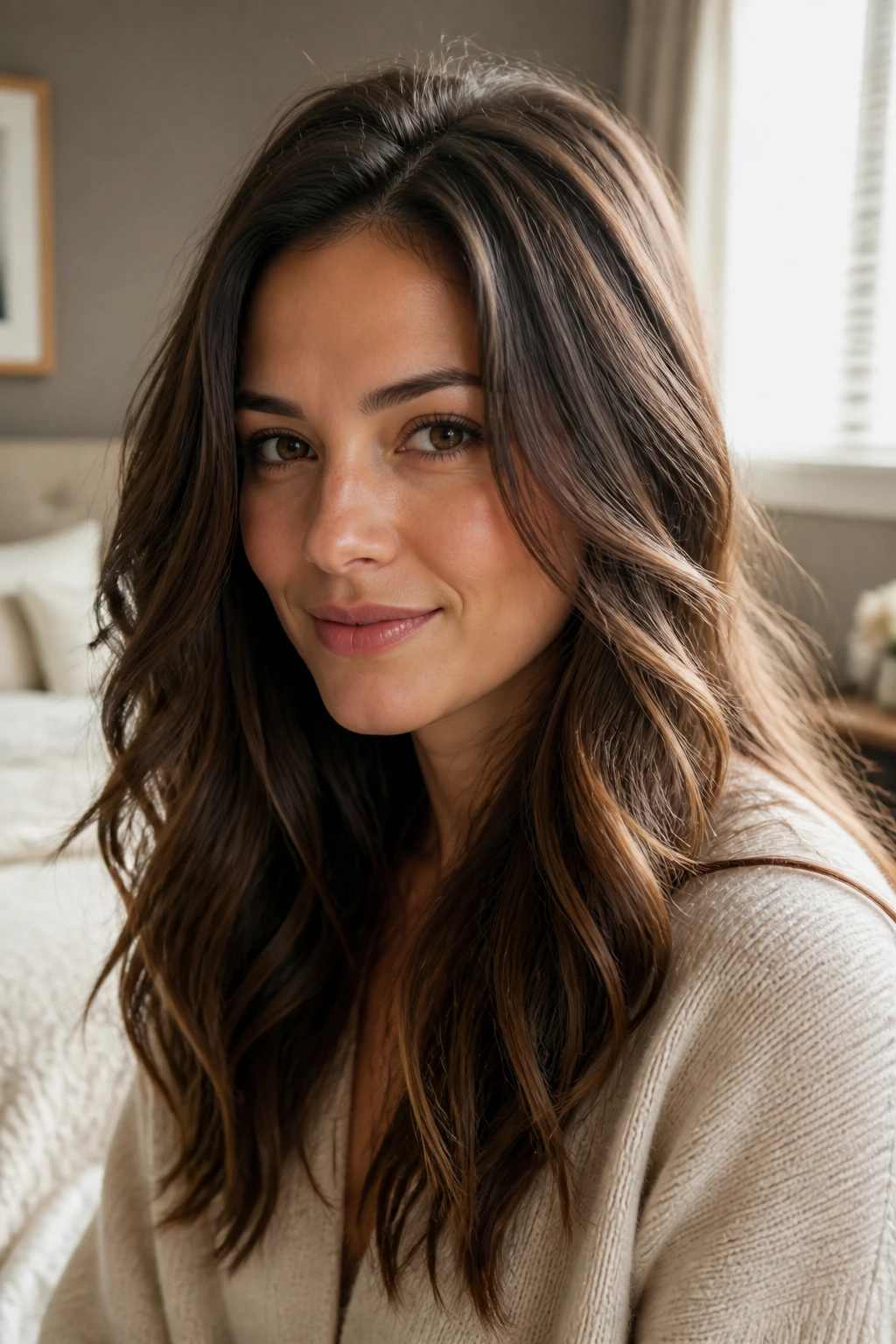
Loose waves and blowouts usually look best on day one and day two, then need a little help from dry shampoo or a quick bend with a hot tool. Braids, twist-backs, and low buns tend to last longer — often two to four days if you sleep with them protected and don’t fuss too much.
Use a silk or satin pillowcase if you can. If not, a loose braid or a low twist before bed helps keep the front sections from crumpling into odd bends. That matters more on square faces than people think, because one flattened front piece can shift the whole balance of the cut.
For refreshes, work in small sections. Hit the crown with a little dry shampoo, re-bend only the front pieces that matter, and leave the rest alone. Over-refreshing is how long hair turns puffy and exhausted.
Frequently Asked Questions
Can square faces wear a center part?
Yes, if the cut has enough softness around the face. A center part works best with curtain bangs, cheekbone-length layers, or waves that begin below the jaw, because those details keep the face from looking too boxed in.
Are blunt bangs bad for square faces?
Not automatically, but they’re harder to get right than softer fringe. If you like blunt bangs, keep them a little textured and avoid pairing them with a straight, heavy perimeter that lands right at the jaw.
What long hair length is most flattering for a square face?
Collarbone to chest length is usually the sweet spot, because the hair has room to move without sitting in one thick block. Very long hair can still work, but it needs layers or soft waves so it doesn’t hang like a single curtain.
Do layers make a square face look wider?
Badly placed layers can, yes. Layers that start at the jaw or puff outward at the sides add width; layers that begin below the jaw and curve inward or downward do the opposite.
What if my hair is very fine?
Keep the layering long and focus on root lift, not a lot of broken-up ends. Fine hair on a square face looks best when it has shape and body near the crown, not a thin halo of short pieces around the cheeks.
Can curly hair flatter a square face without heat styling?
Absolutely. The key is shaping the curls so the widest part of the style does not sit right at the jawline. A rounded outline and a little height at the crown usually work far better than flattening the top.
Is a side part always better than a middle part?
No. A side part helps when you want asymmetry or extra softness, but a middle part can look great if the front pieces are long and the style has movement. The part is one tool, not the whole answer.
How often should long hair be trimmed to keep these shapes?
About every 8 to 12 weeks is a good rhythm for most long cuts, a little sooner if the ends fray fast or the face-framing layers lose their shape. If the front pieces stop falling where they should, the whole haircut starts to feel less intentional.
The Face-Framing Difference
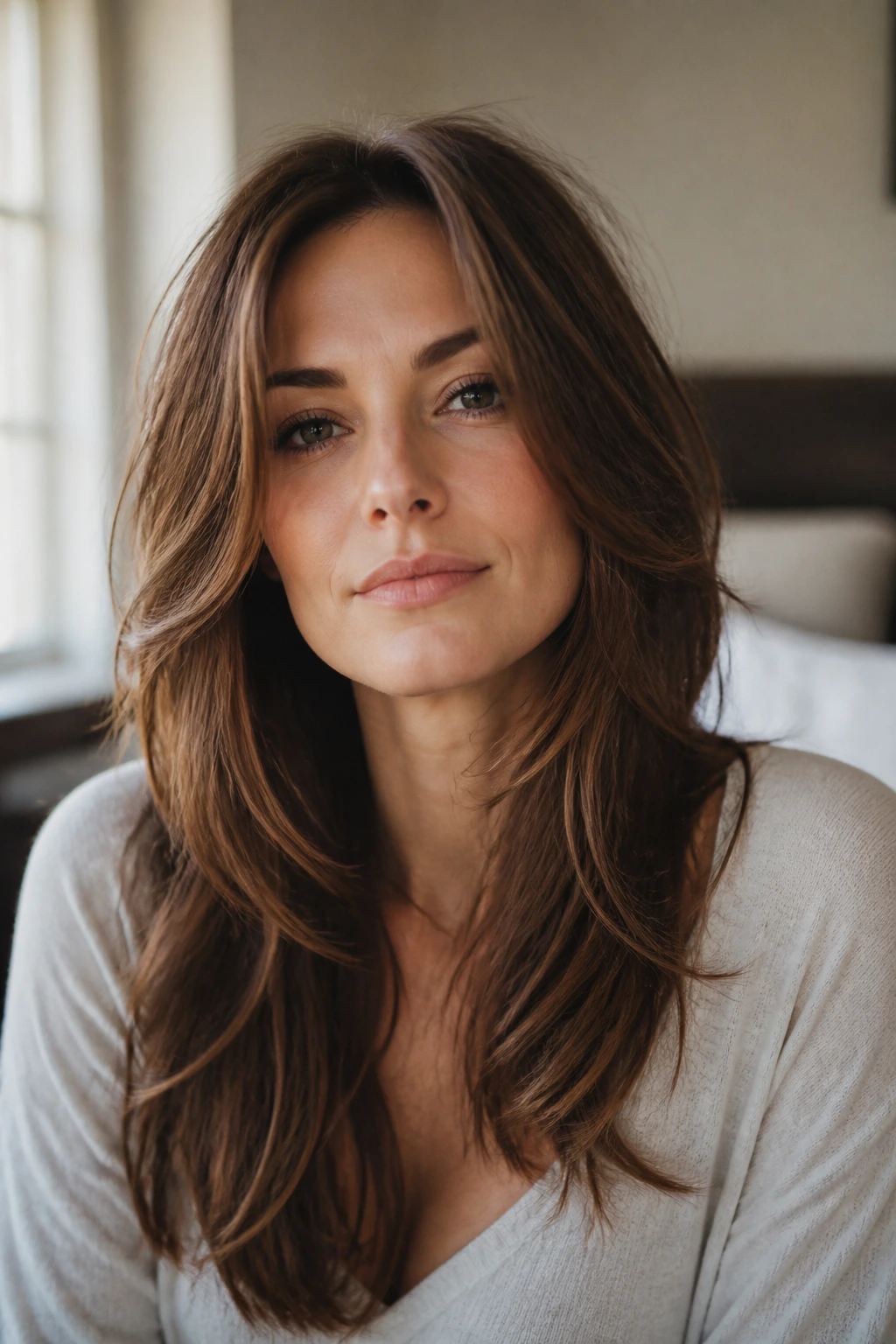
Long hair and a square face can be a beautiful match when the shape is handled with a little care. The goal is not to hide the jaw or erase the angles. It’s to make the angles look like part of the design.
A good cut or style gives the face room to breathe. A better one gives it movement, lift, and a few soft edges where they matter most. Start there, and the rest gets much easier to judge — in the mirror, in photos, and in all the small real-life moments when your hair either helps or gets in the way.