



Fine hair can look fussy in a hurry. One wrong layer and it goes from airy to see-through; one heavy fringe and the whole front of the face feels crowded. Oval faces have the opposite problem: they can wear a lot, but they also make a weak haircut look even more obviously weak because the face shape is so open and balanced.
That is exactly why Korean haircuts for fine hair and oval faces work so well when they’re handled with a light hand. The best versions do not chase bulk for its own sake. They build shape with clean lines, soft movement, and just enough face-framing to make the hair look fuller without turning it into a fluffy helmet. The trick is placement. Not volume everywhere. Placement.
Korean salon cuts also tend to respect the way fine hair actually behaves: flat at the roots, softer at the ends, a little reluctant to hold a heavy bend, and often much prettier when the perimeter is kept honest instead of shredded to bits. If you’ve ever watched a gorgeous layered cut collapse after one wash, you already know the problem. The better cuts keep a little weight where it matters and let the movement happen around the face, through the fringe, or in the last two inches of the length.
Why These Cuts Work Better Than Heavy Layers
Built for hair that needs structure: fine hair usually looks fuller when the outline stays clean, so these cuts lean on shape instead of over-layering the whole head.
Oval faces can take softness near the cheeks: that means you can wear see-through bangs, curtain bangs, or face-framing pieces without choking the face.
Most of these styles survive a lazy morning: a quick blow-dry, a round brush, or a small bend at the ends is usually enough.
They keep the crown from going flat too fast: the lift comes from where the layers sit, not from aggressive teasing or too much product.
They look good grown out: that matters more than people admit. A haircut that turns weird after three weeks is a bad haircut, no matter how nice it looks on day one.
1. See-Through Bangs and a Chin-Length Bob
A chin-length bob is one of the cleanest fixes for fine hair because it stops the ends before they start looking stringy. Add see-through bangs, and the whole haircut gets a softer front edge without burying the forehead. On an oval face, that little bit of fringe keeps the proportions gentle and makes the eyes do more of the talking.
What I like here is the restraint. The bob should not be over-texturized. Ask for a crisp perimeter with only a little point-cutting at the bangs and cheek line. If the ends are hacked into too many tiny pieces, the bob loses that neat little full shape that makes fine hair look denser.
What to ask for at the salon
- A bob that lands right at the chin or just below it.
- Fringe pieces that are thin enough to show forehead through them.
- Soft face framing that starts around the cheekbone, not the jaw.
- Minimal thinning through the ends.
A 1-inch round brush and a quick under-bend at the tips make this cut look polished fast. If you wear glasses, keep the bangs a touch longer so they don’t snag on the frames every time you blink.
2. The Soft Hush Cut
The hush cut works because it gives movement without chewing up the perimeter. Fine hair usually hates aggressive layers; it loses its sense of body and starts fluttering around like a bad curtain. The hush cut keeps the edges soft, the front pieces a little lighter, and the overall shape calm. On an oval face, that calmness matters. The face already has balance, so the haircut just needs to frame it, not fight it.
This is the cut I’d pick for someone who wants “Korean salon hair” without obvious styling effort. Air-dried with a touch of leave-in cream, it tends to fall in gentle, loose arcs instead of sharp bends. If your hair takes a wave on its own, even better. If not, a big-barrel curling iron on only the front sections is enough to sell the shape.
3. Collarbone Lob with Face-Framing Layers
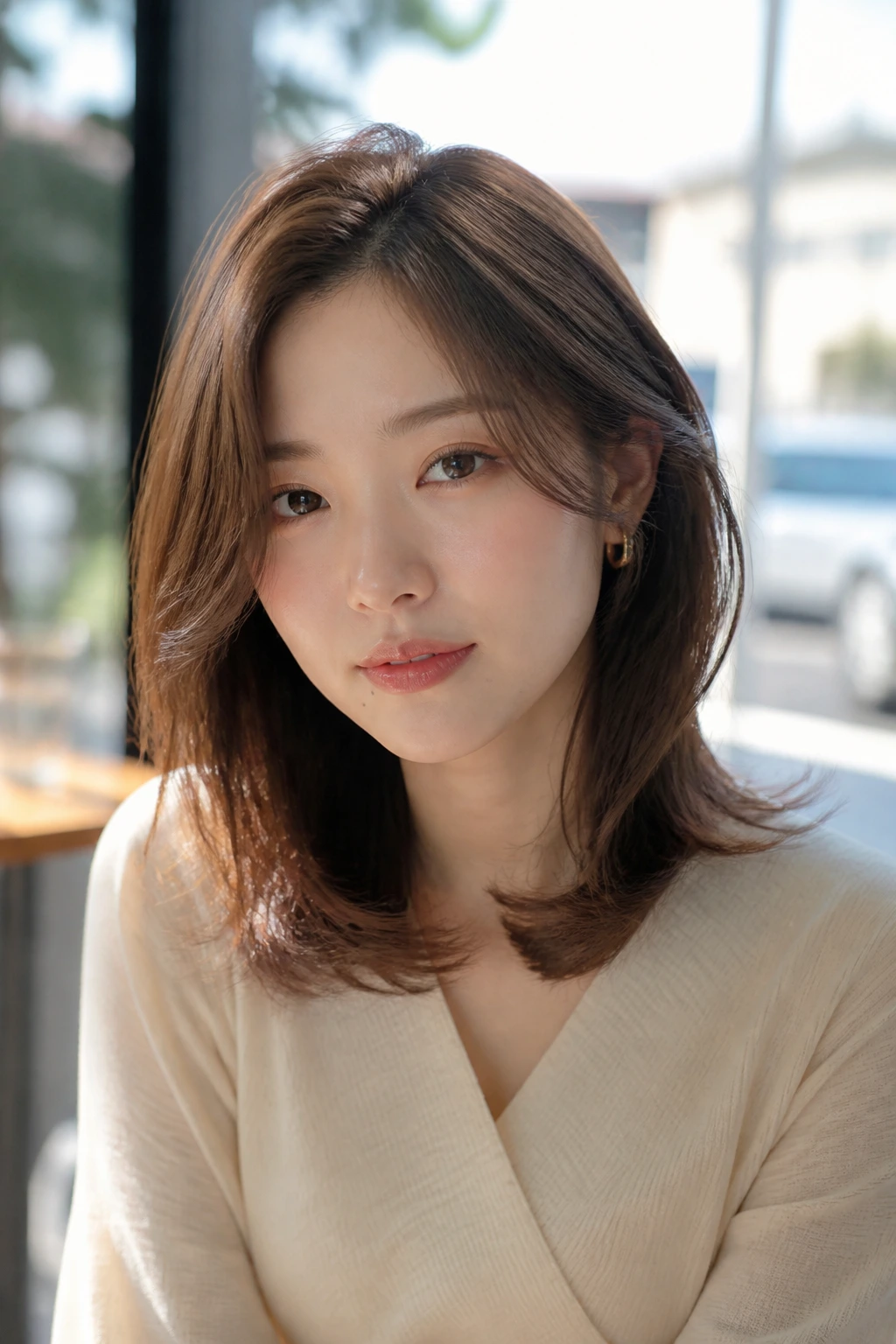
A collarbone lob is one of the safest lengths for fine hair because it sits in that sweet spot where the ends still look thick. Go much longer, and the hair can taper into nothing at the bottom. Go much shorter, and some people lose the styling room they want. The collarbone length gives you both density and flexibility.
For oval faces, this cut works because the front pieces can skim the cheekbones and soften the edges without covering them. Keep the layers long and controlled. I’m talking about face-framing, not a full haircut full of chopped-up pieces. The best version has movement when you turn your head, but from the front it still reads as a tidy, full lob.
A middle part is the obvious choice, but a slight off-center part can give the roots a little lift and stop the whole look from flattening against the scalp.
4. C-Curl Bob with Rounded Ends
If you like your hair to look finished even when you’ve barely tried, the C-curl bob is hard to beat. The ends turn inward in a soft curve, which gives the illusion of fullness at the bottom edge. Fine hair loves this because the bend makes the perimeter look thicker than it really is. Oval faces love it because the rounded line follows the shape of the jaw without making it harsh.
The key is keeping the bob smooth through the mid-lengths and only bending the last inch or so. If you curl too much of the section, the style starts looking too “done” and loses that quiet Korean salon feel. A 32mm iron or a round brush can both do the job; I slightly prefer the round brush here because it gives a softer finish and less clamp mark.
5. Curtain Bangs and a Long U-Cut
Curtain bangs can be magic on an oval face, but they need the right base. Pair them with a long U-cut, and the whole style gets depth without the bluntness that can make fine hair fall flat. The U-shape keeps length in the center while allowing the sides to taper a little around the face, which makes the hair look like it has more shape than a plain straight cut.
This cut is especially good if you like to tie your hair back half the time. The front pieces still do the work when the rest is clipped up. Ask for the curtain bangs to start high enough that they sweep open instead of hanging dead straight. If the bangs are too dense, they can swallow the forehead on an oval face, and that defeats the point.
6. The Soft Korean Wolf Cut
A wolf cut on fine hair can go wrong fast. Too much shredding, and the hair looks broken instead of light. But a soft Korean wolf cut is a different animal. It keeps the shaggy idea, but the layers are more controlled, the crown isn’t over-thin, and the nape still has enough substance to keep the shape from collapsing.
This version suits oval faces because the broken fringe and side pieces create a little edge without making the face look longer than it is. The cut works best when the stylist leaves the ends with some weight. That is the whole point. You want movement around the surface, not a bunch of disconnected wisps that vanish the minute humidity shows up.
7. The Bixie with a Tapered Nape
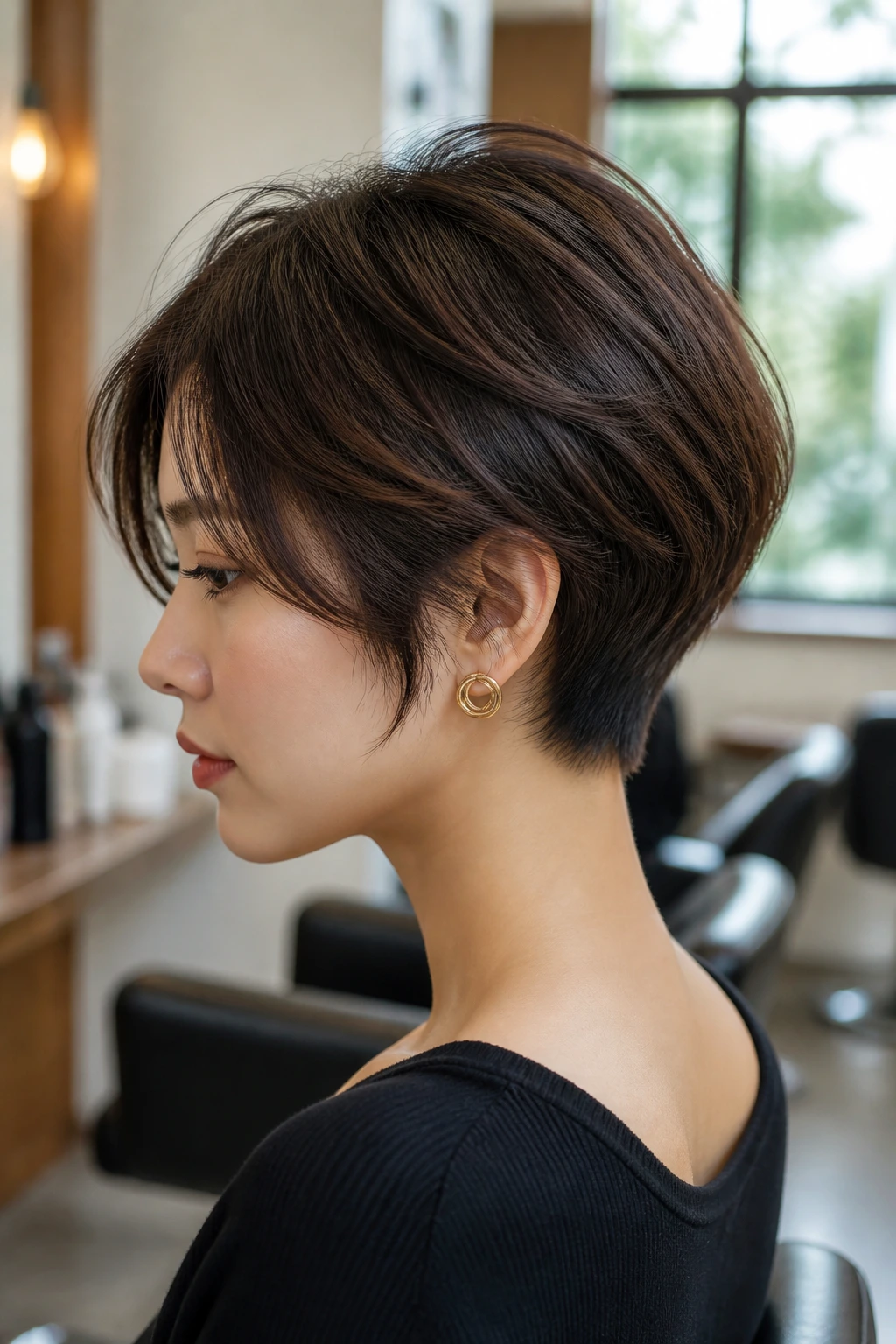
Short hair can be a gift for fine strands, and the bixie — that halfway point between a bob and a pixie — is one of the smarter Korean-inspired choices. It exposes the neck, keeps the crown light, and leaves enough length on top to style into a soft bend. On oval faces, it’s flattering because it doesn’t fight the face’s natural balance.
The tapered nape is what makes this version feel polished. If the back is left too blunt, the cut can look boxy. If the top is over-layered, it can puff in the wrong places. Ask for texture only where it helps the shape, usually around the ears and the upper crown. I’d avoid heavy razor work here unless your stylist knows exactly how your hair behaves when it dries.
8. Airy Shoulder-Length Layers
Shoulder length sounds safe, and mostly it is. The problem is that a lot of shoulder-length cuts are cut like homework: technically correct, emotionally dead. An airy shoulder-length cut has just enough internal layering to make the hair move when you turn your head. Fine hair needs that, but it needs it in a controlled way so the ends don’t fray.
Oval faces can wear this length almost anywhere, which is why the styling details matter more than the shape itself. A side part gives the crown lift. A soft bend through the front pieces keeps the face from getting too open. A small amount of mousse at the roots before blow-drying does more than a pile of heavy cream ever will.
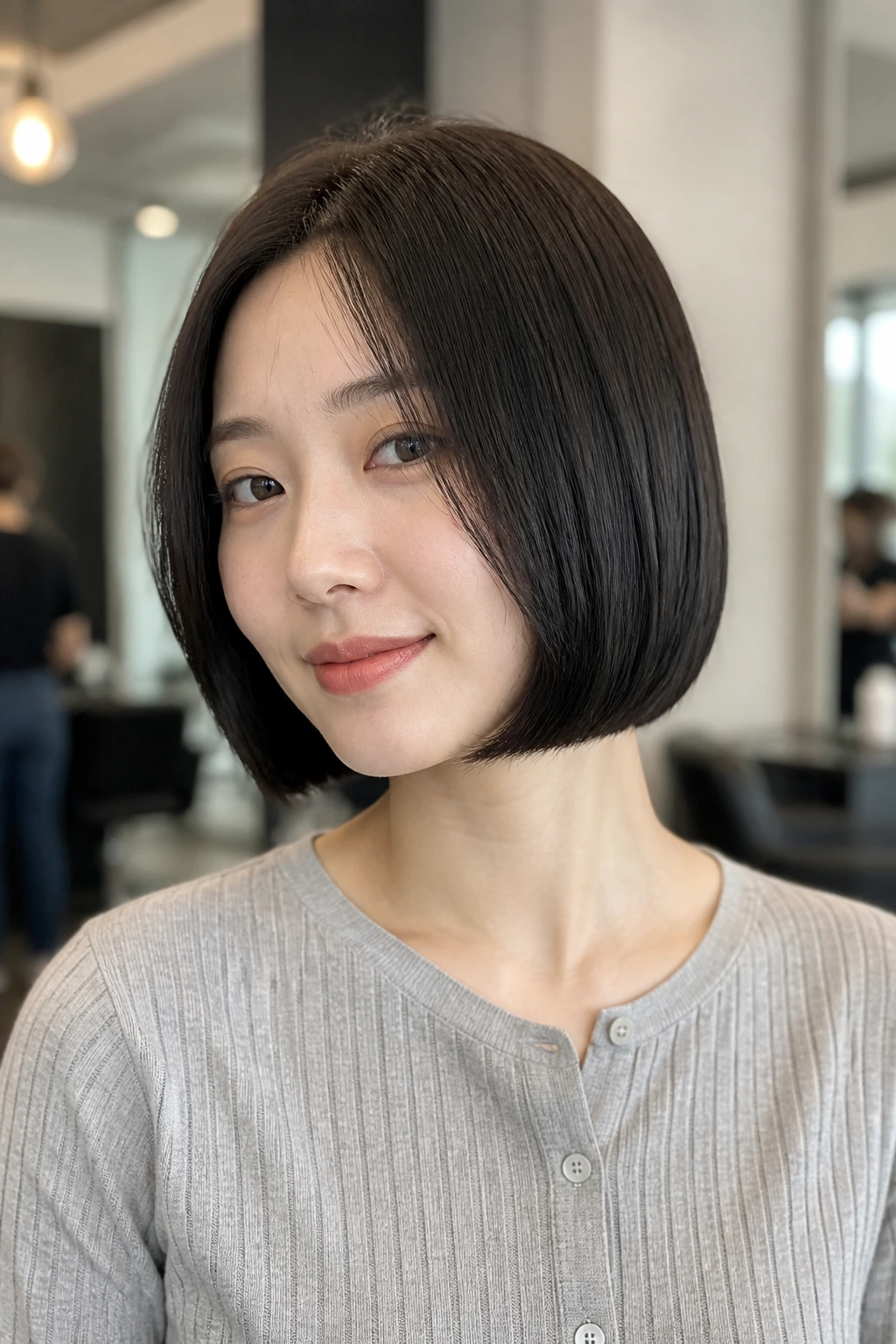
9. Glass Bob with Blunt Ends
A glass bob looks sleek, but on fine hair the secret is not the shine alone. It’s the blunt edge. A straight, clean bottom line makes the hair appear denser, almost like the ends were doubled up. That’s gold when your hair strand count is modest and you want the cut to look deliberate instead of wispy.
Oval faces can handle this style because the shape is simple and doesn’t crowd the cheeks. If you wear it with a center part, the whole thing reads modern and calm. If you add a slight bend under at the ends, it softens a little. I prefer the blunt version with just a whisper of inward curve at the front. Too much flip and the bob starts looking cartoonish.
10. Layered Midi Cut with S-Curl Styling
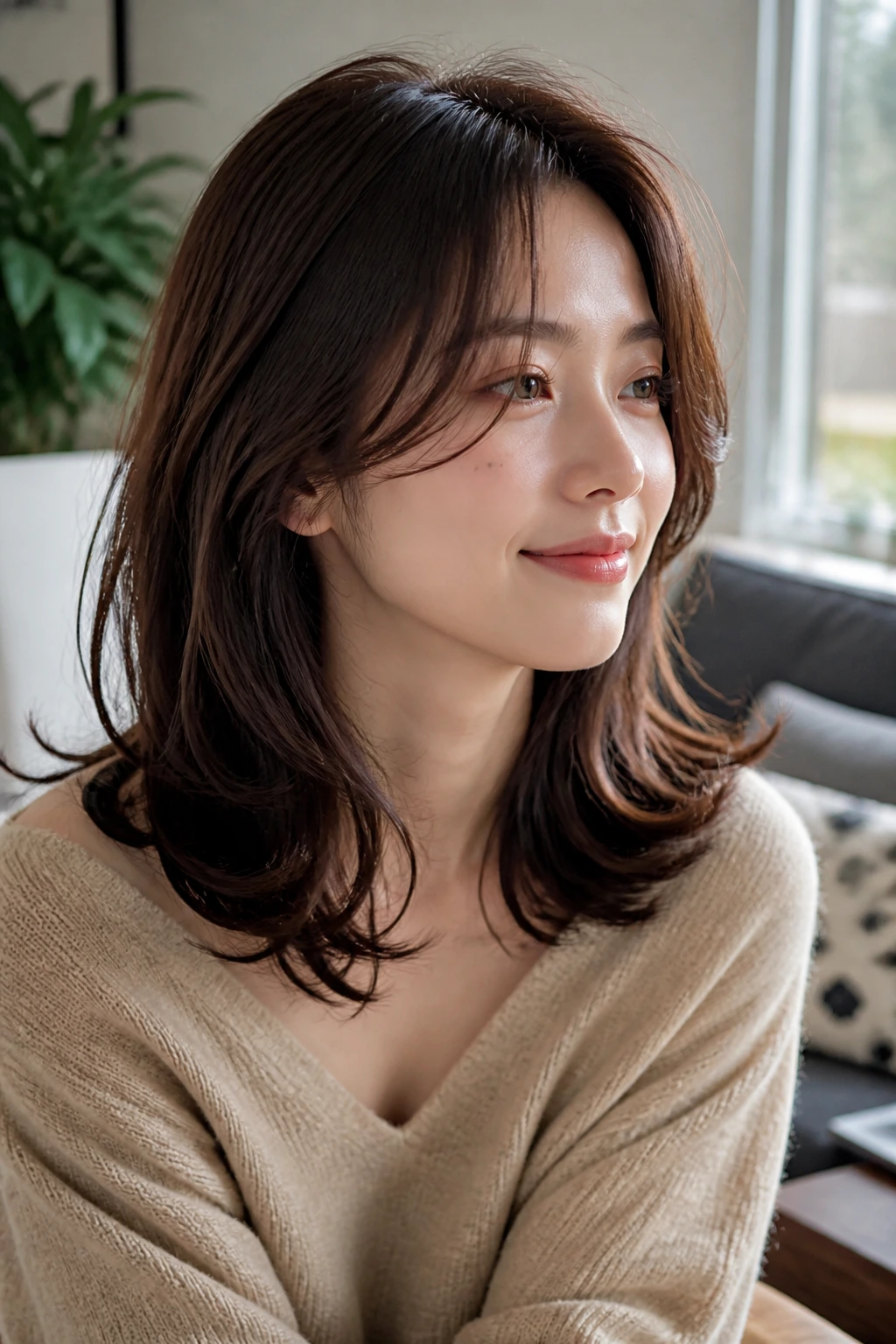
The midi cut sits between the collarbone and the chest, and that middle ground is useful for fine hair that still wants some length. The problem with a long, one-note cut is that it can hang there like wet ribbon. Add soft internal layers, then finish with an S-curl, and suddenly the hair has a rhythm to it.
This style suits oval faces because the movement stays around the lower half of the face and the upper neck, which keeps the proportions light. The styling trick is to alternate the bend direction slightly as you work through the sections. You don’t want ringlets. You want a gentle wave that breaks up the line enough to make the hair look fuller from a distance.
11. Side-Swept Fringe and a Rounded Lob
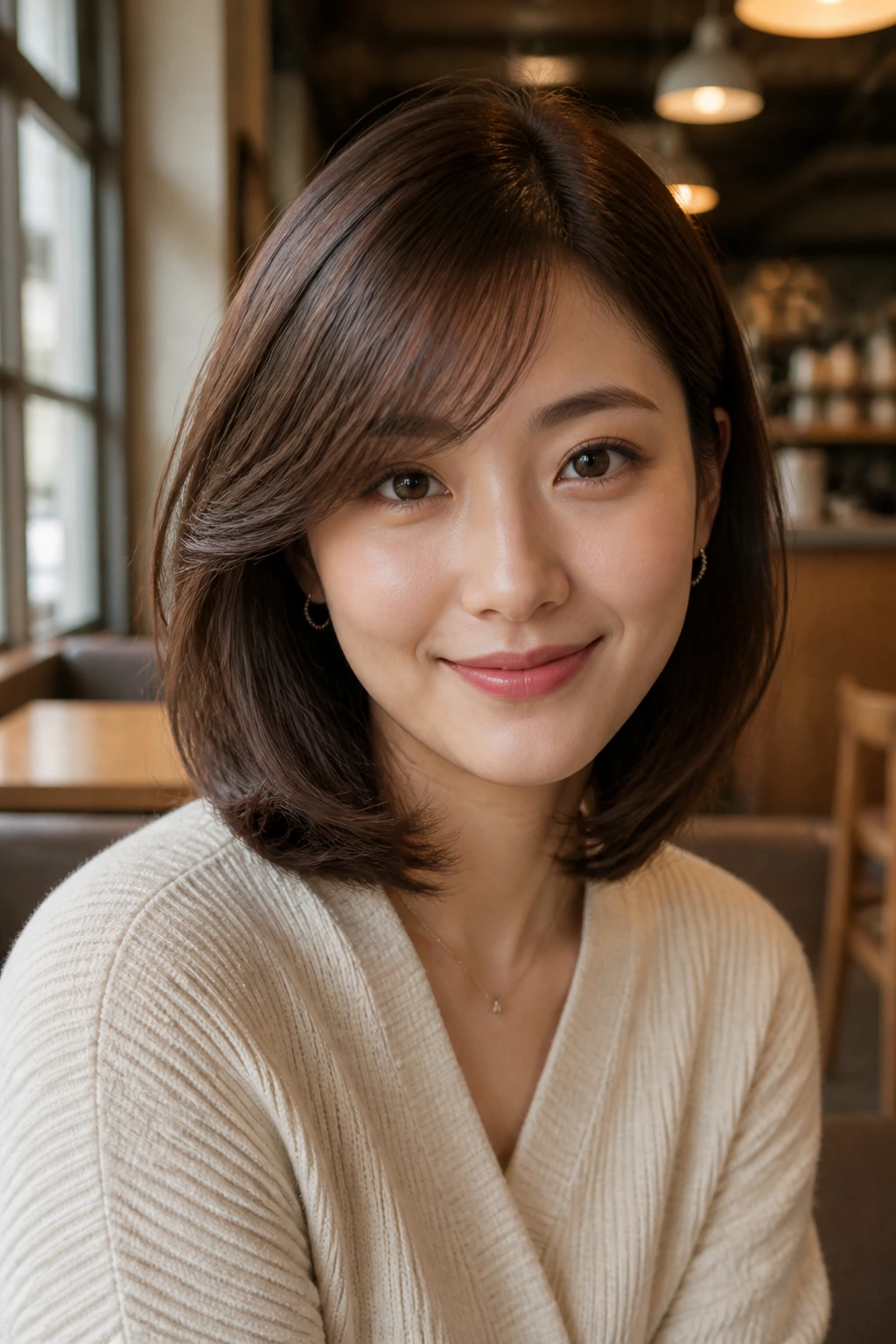
If your forehead feels a little wide for your taste, a side-swept fringe can be more forgiving than a blunt bang. Pair it with a rounded lob, and the shape softens without getting fluffy. Fine hair often benefits from asymmetry because a little diagonal line gives the eye somewhere to move.
This is a useful cut for people who don’t want the maintenance of full bangs. A side-swept fringe grows out more gracefully, and on an oval face it adds interest without making the features look crowded. Keep the lob rounded rather than chopped straight across. That rounded finish keeps the silhouette smooth, which is exactly what fine hair needs.
12. Hime-Inspired Soft Face Framing
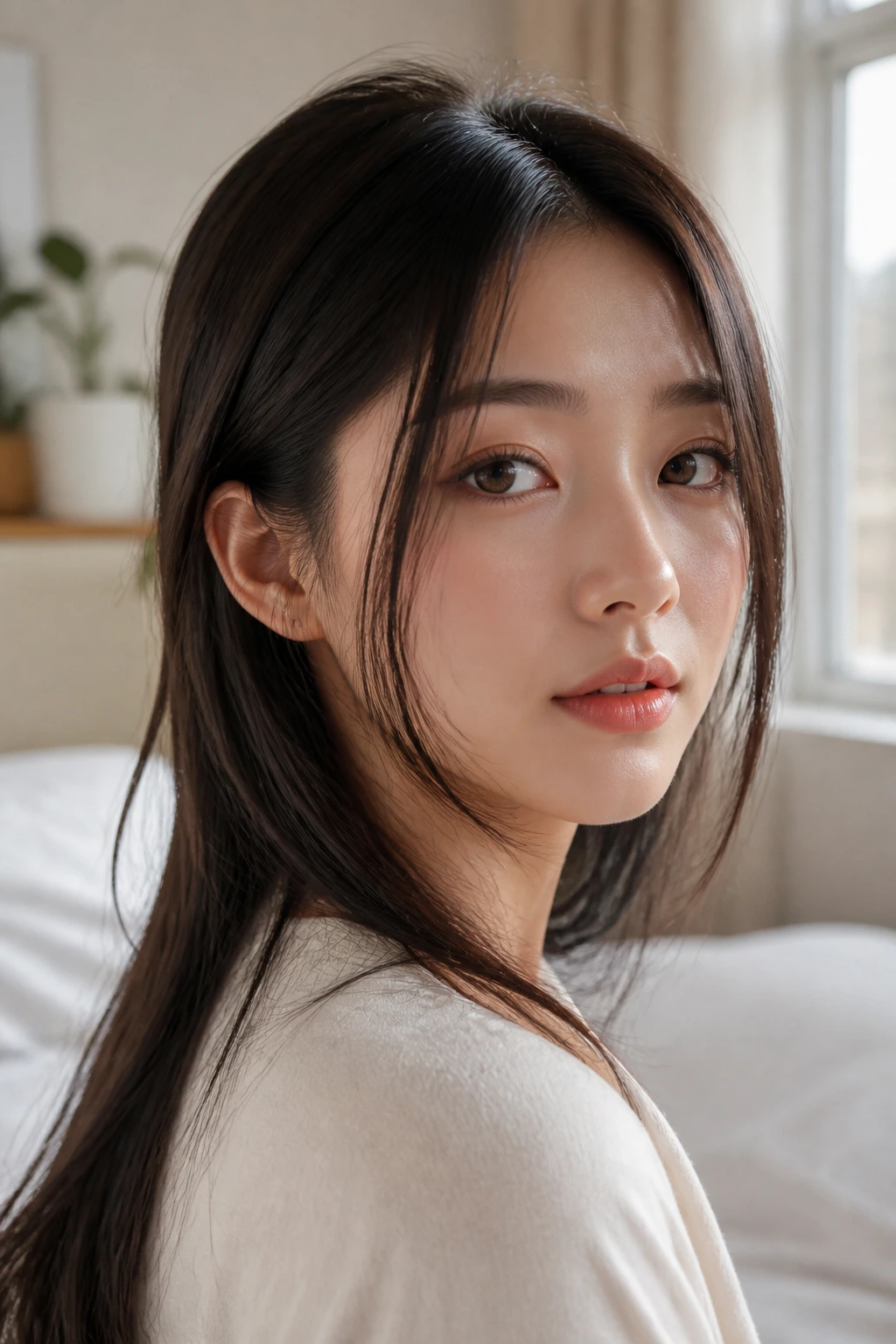
The classic hime cut can be dramatic, almost severe. Fine hair and an oval face usually need the softer cousin. The trick is to borrow the face-framing concept — those separated front sections — without committing to a hard, blocky look. Done right, it creates a pretty little frame around the face and leaves the rest of the hair free to stay light.
This cut is best when the front pieces are long enough to tuck behind the ear. That way they don’t keep falling into the eyes every five minutes. If your hair is very fine, keep the shorter front sections narrow. Too much width in the front can make the cut look heavy and strange, especially if the rest of the hair doesn’t have the density to support it.
13. Feathered Long Layers with Invisible Weight
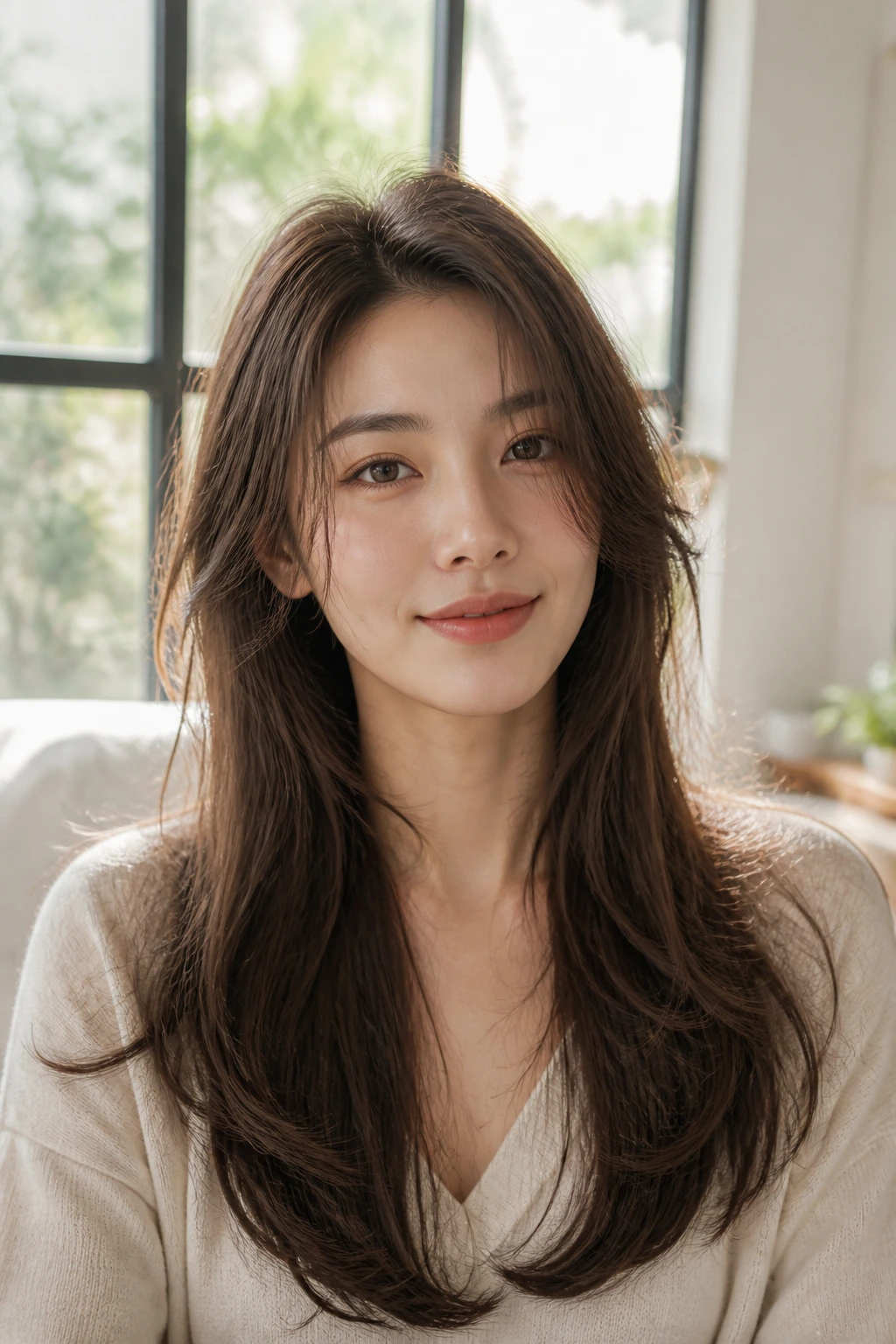
Long hair can work on fine strands, but only if the layers are handled carefully. The worst version is a pile of disconnected pieces that look handsome in motion and pathetic in a ponytail. A feathered long cut with invisible internal weight keeps the length while letting the top layers breathe.
Oval faces benefit from this because the hair can skim the sides of the face instead of flattening everything into one curtain. Ask for soft feathering through the mid-lengths and leave the last few inches strong. If the stylist over-thins the bottom, the whole thing loses its body and starts looking delicate in the wrong way.
14. Tucked-In Bob with a Slight Undercut
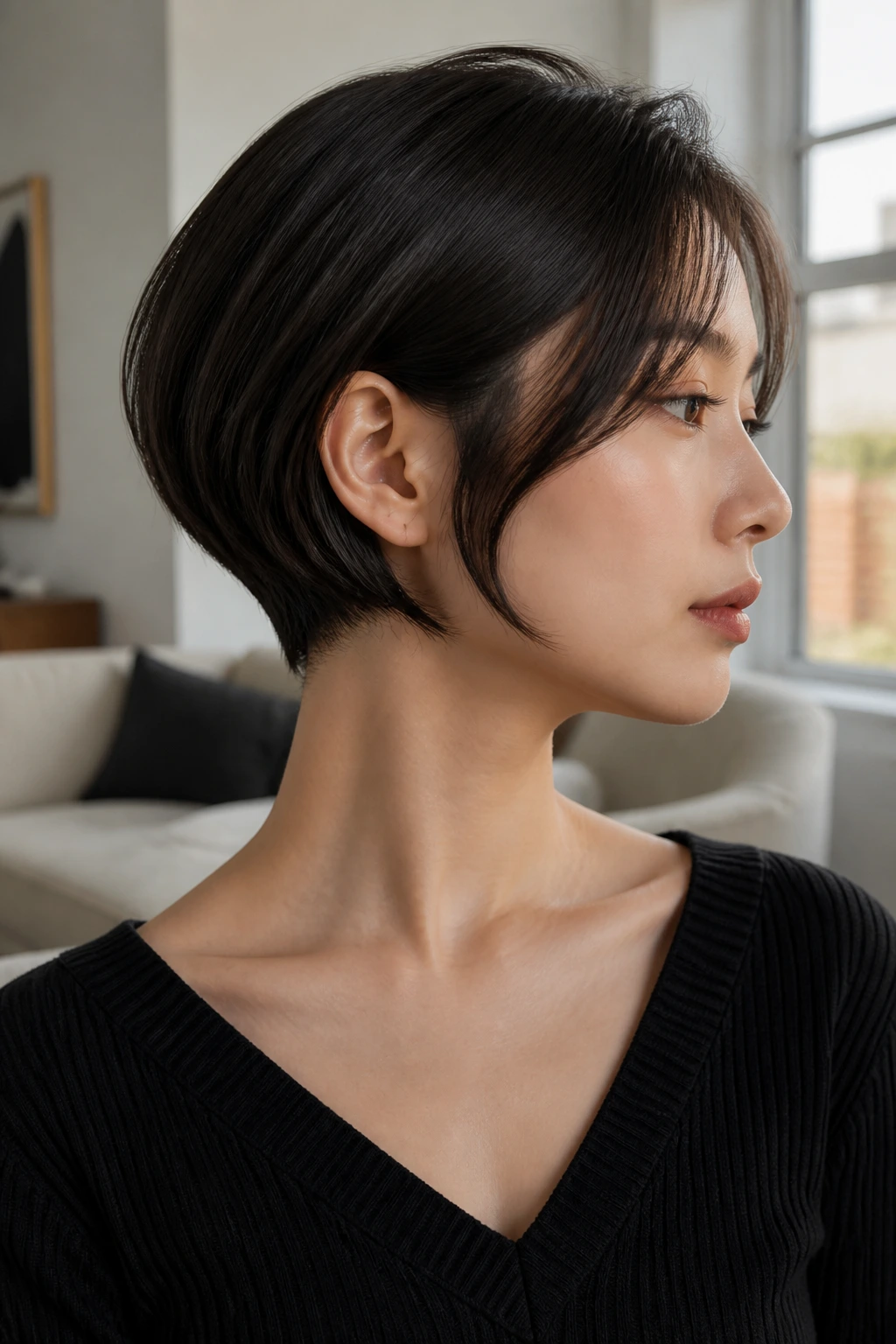
The tucked-in bob has a neat little secret: it can look denser than it is because the ends curve inward and the neckline stays clean. A slight undercut at the nape can reduce bulk where fine hair doesn’t need it, which helps the bob sit better against the head.
This is one of those cuts that seems simple until you see it move. On an oval face, the clean neckline and tucked shape create a tidy frame that doesn’t overwhelm the features. I’d keep the undercut modest. You want a little hidden reduction, not a dramatic shave that changes the way the whole cut falls. If you’ve got a cowlick at the nape, this cut can be a lifesaver.
15. Soft Shag with Wispy Crown Texture
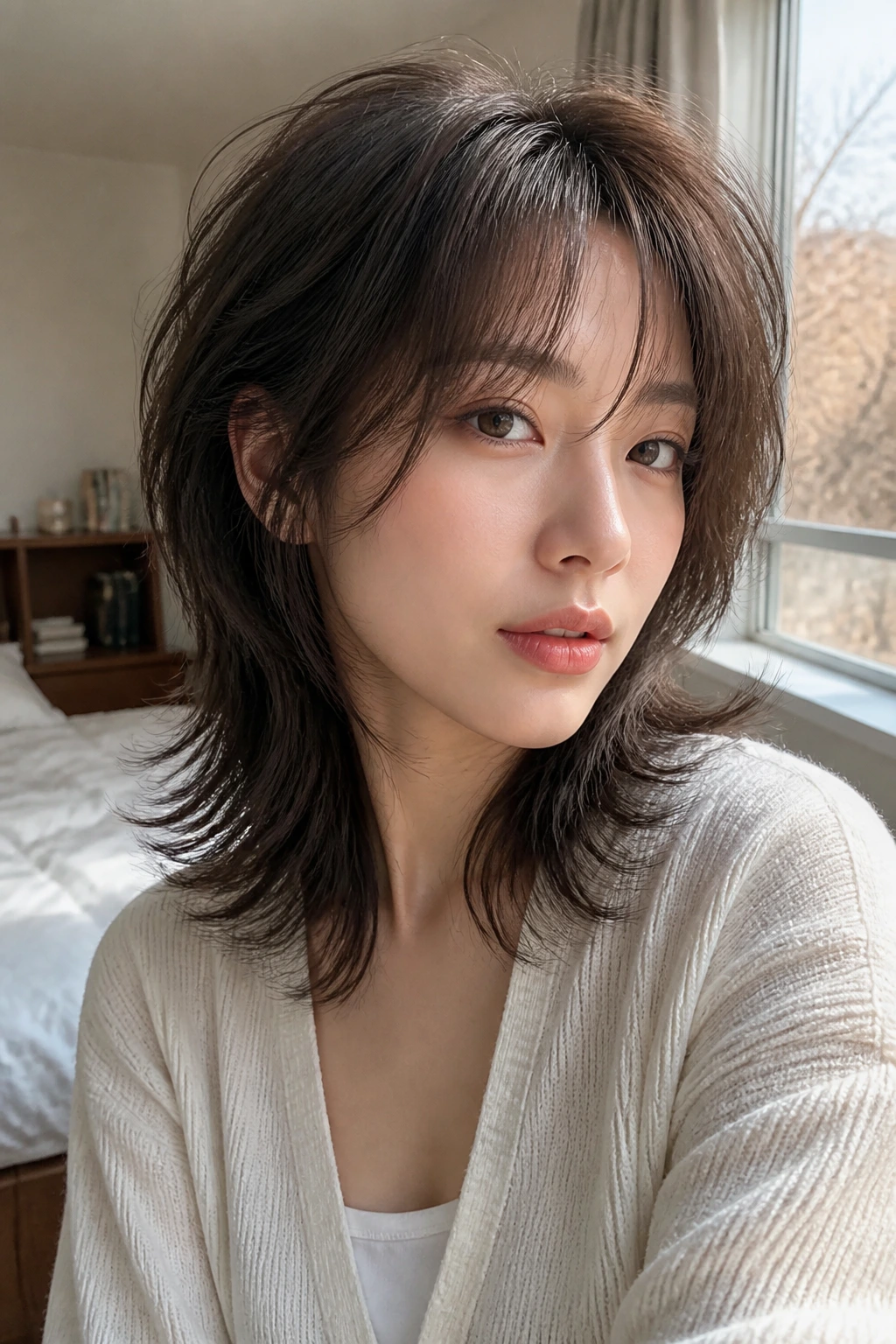
A shag only works on fine hair if the stylist remembers that less is more. The crown texture should be wispy, not chopped into confetti. A soft shag gives you movement at the top and around the face, which is handy if the roots go flat as soon as you leave the house.
Oval faces can wear a shag because the shape already gives the hair room to move. The face-framing layers should start around the cheekbone and sweep down gently. If the pieces are too short, the head starts looking narrow. If the crown is over-layered, the cut loses its body and the silhouette becomes a little too airy for its own good.
16. One-Length Lob with Micro-Bends
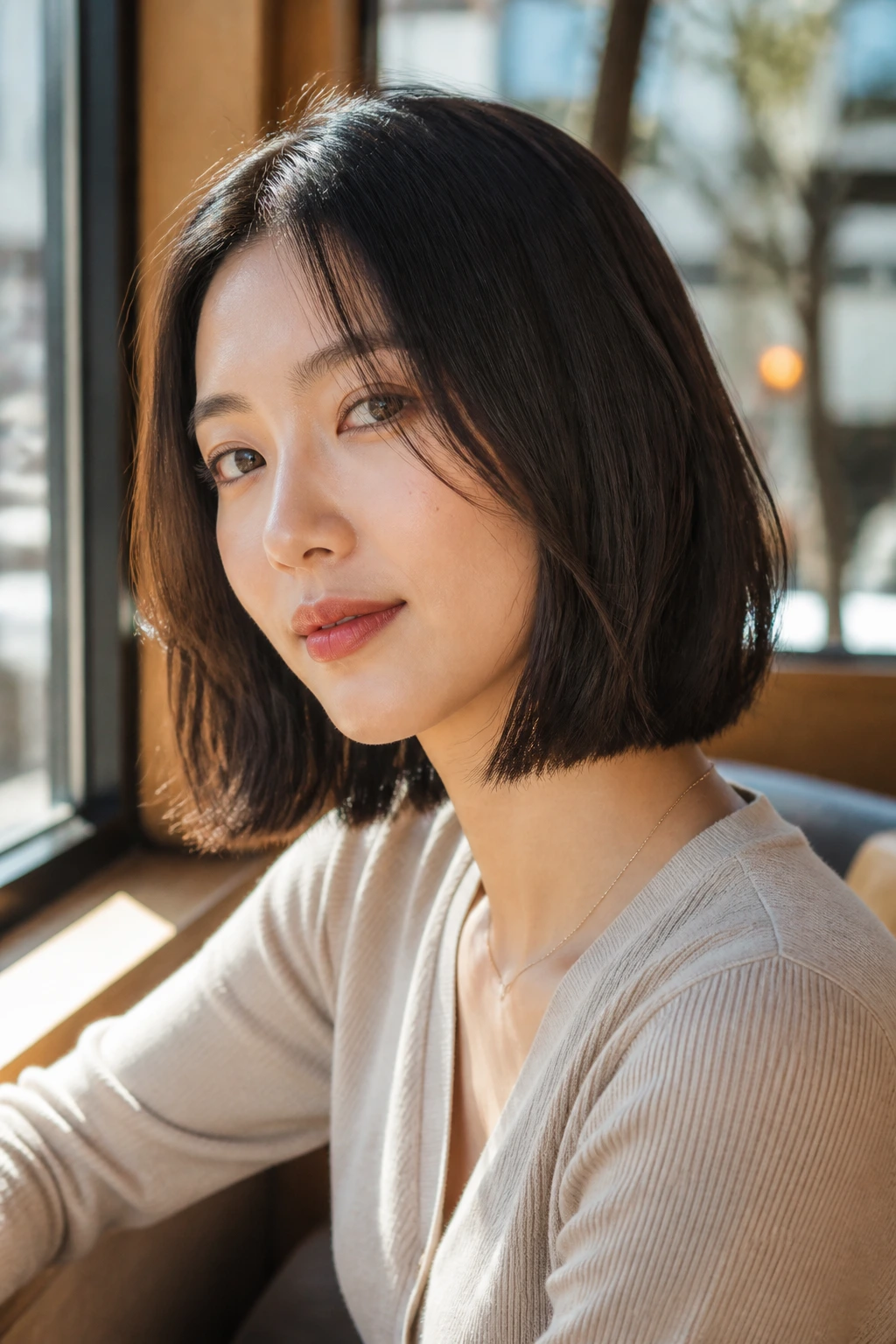
Sometimes the smartest answer is the plainest one. A one-length lob can look thicker than almost any heavily layered cut on fine hair, because a clean line makes the ends look solid. The micro-bends are only there to stop the hair from looking too flat and straight-down-the-middle.
I like this for oval faces because the simplicity lets the face stay open while the hair does its quiet little work. It’s also easier to maintain than a lot of the more stylized Korean cuts. If you want a shape that can move from air-dried to polished without needing three different products, this is one of the best bets.
17. Perm-Ready Long Bob with C-Curl Ends
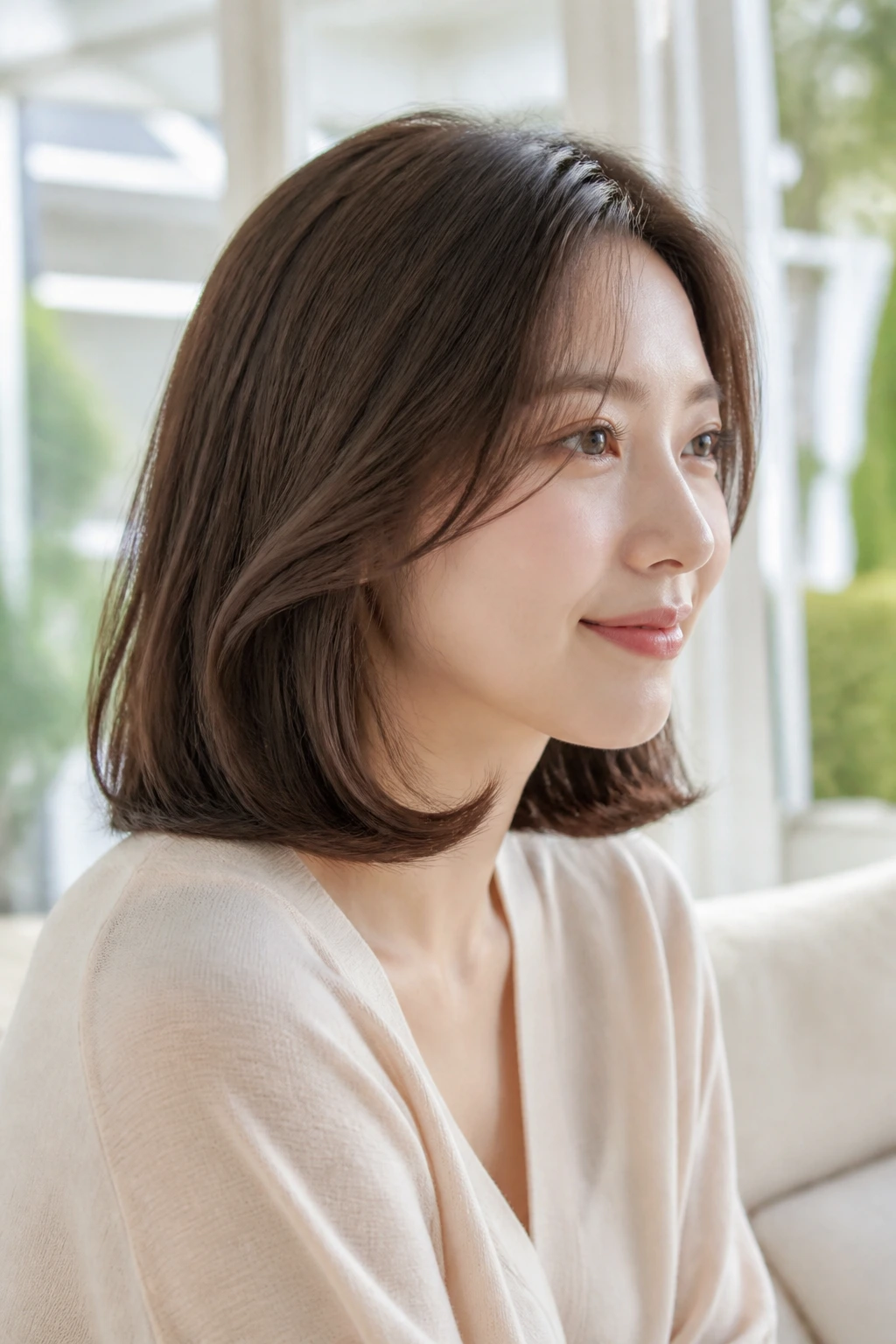
Not every fine-hair haircut needs a perm, but some really benefit from one. A perm-ready long bob with C-curl ends is built for that kind of soft bend that gives shape without daily heat styling. The length should hit somewhere between the chin and collarbone so the curl has enough hair to live in.
Oval faces can take the rounded ends easily because the shape keeps the line gentle around the jaw. If you do go this route, ask for a loose, modern bend rather than a tight curl set. The goal is movement, not poodle energy. The best versions look like the hair has a natural inward memory.
18. Rounded Crop with Mini Fringe
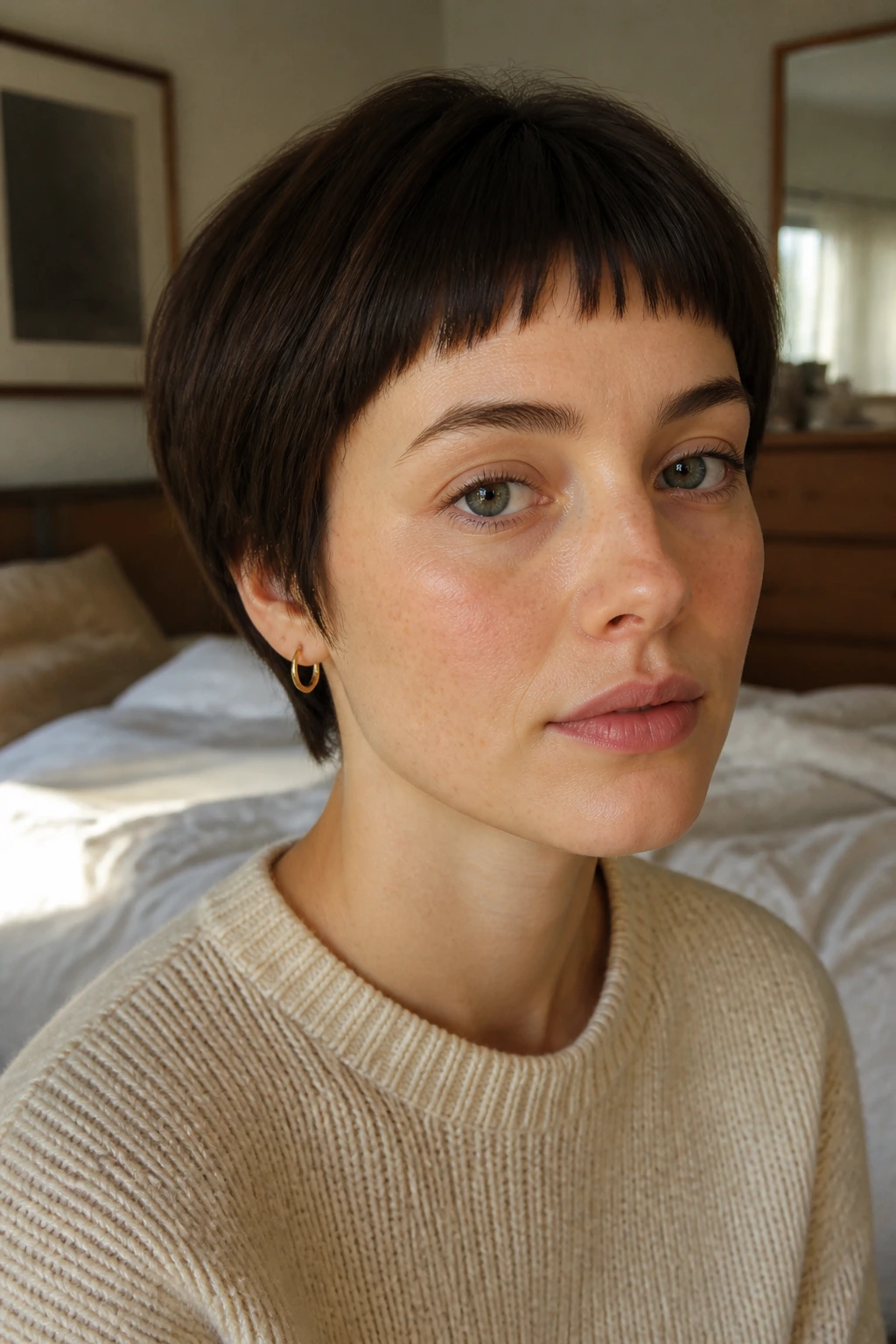
A rounded crop is a bold answer, but it can be excellent on fine hair when the shape is controlled. The mini fringe gives the forehead a little frame without dragging the whole cut downward. Oval faces can wear this because the balance stays soft and the short length keeps the hair looking fuller than it would at a longer, thinner point.
The trick is to preserve a round silhouette through the crown and sides. If the top is too flat, the crop looks severe. If the fringe is too dense, the face disappears behind it. Keep the bangs narrow and airy, and let the sides curve in gently toward the jawline or ear. It’s a strong little cut. Not shy.
19. Long Bob with Peekaboo Layers
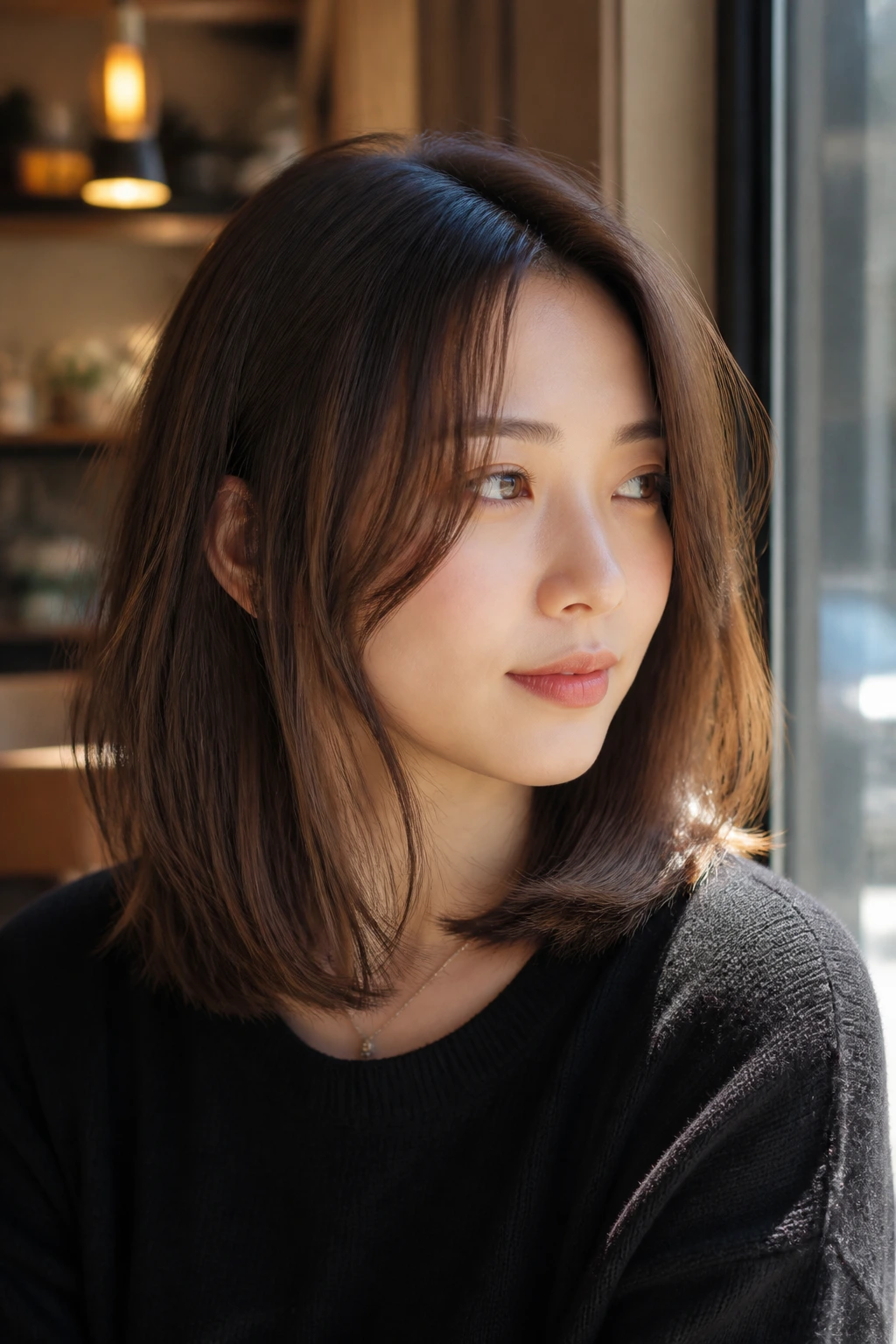
Peekaboo layers are the kind of detail you notice only after the hair moves. That is why they work on fine hair. They create internal life without leaving the surface shredded. A long bob with peekaboo layers keeps enough perimeter weight to look full from the front, but hidden layers underneath help the hair swing a little instead of lying there like a sheet.
Oval faces benefit because the front stays smooth and open. If you want to style it quickly, blow-dry the roots upward at the crown, then bend just the front half-inch of the ends inward. That little bend is doing more visual work than most people realize.
20. Shoulder-Grazing Cut with a Deep Side Part
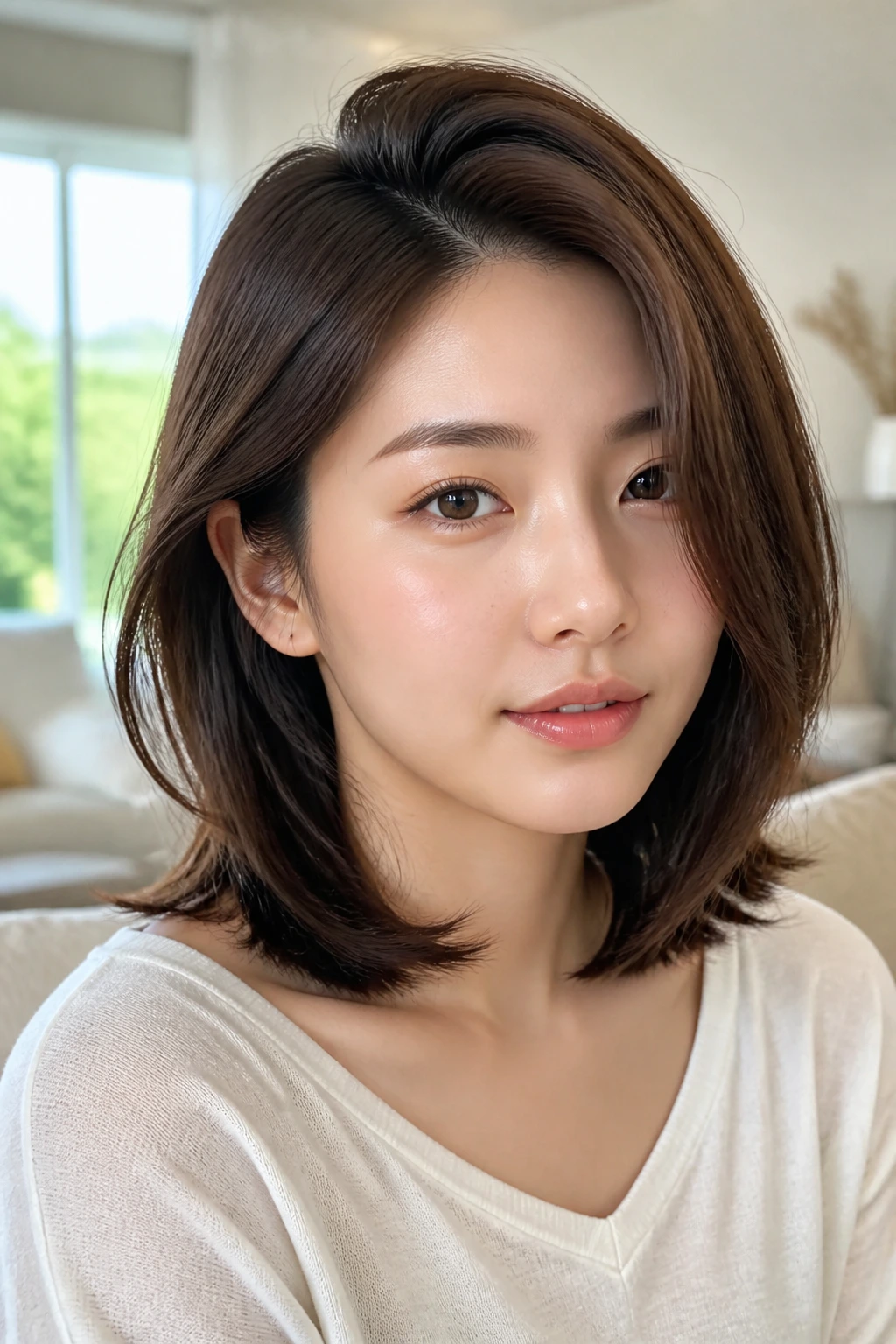
A deep side part can rescue flat roots faster than almost anything else. Pair it with a shoulder-grazing cut, and you get instant lift at the crown without having to tease the hair to death. Fine hair often looks better when the part is moved off center because the root area stops lying in the same place every day.
Oval faces handle this well because the sweep of hair across the forehead creates a little asymmetry. The cut itself should stay clean through the ends. Too much layering, and the side part just exposes the thinness. Keep the shape easy and the part dramatic. That contrast is doing the job.
21. Soft Mullet with Airy Tail
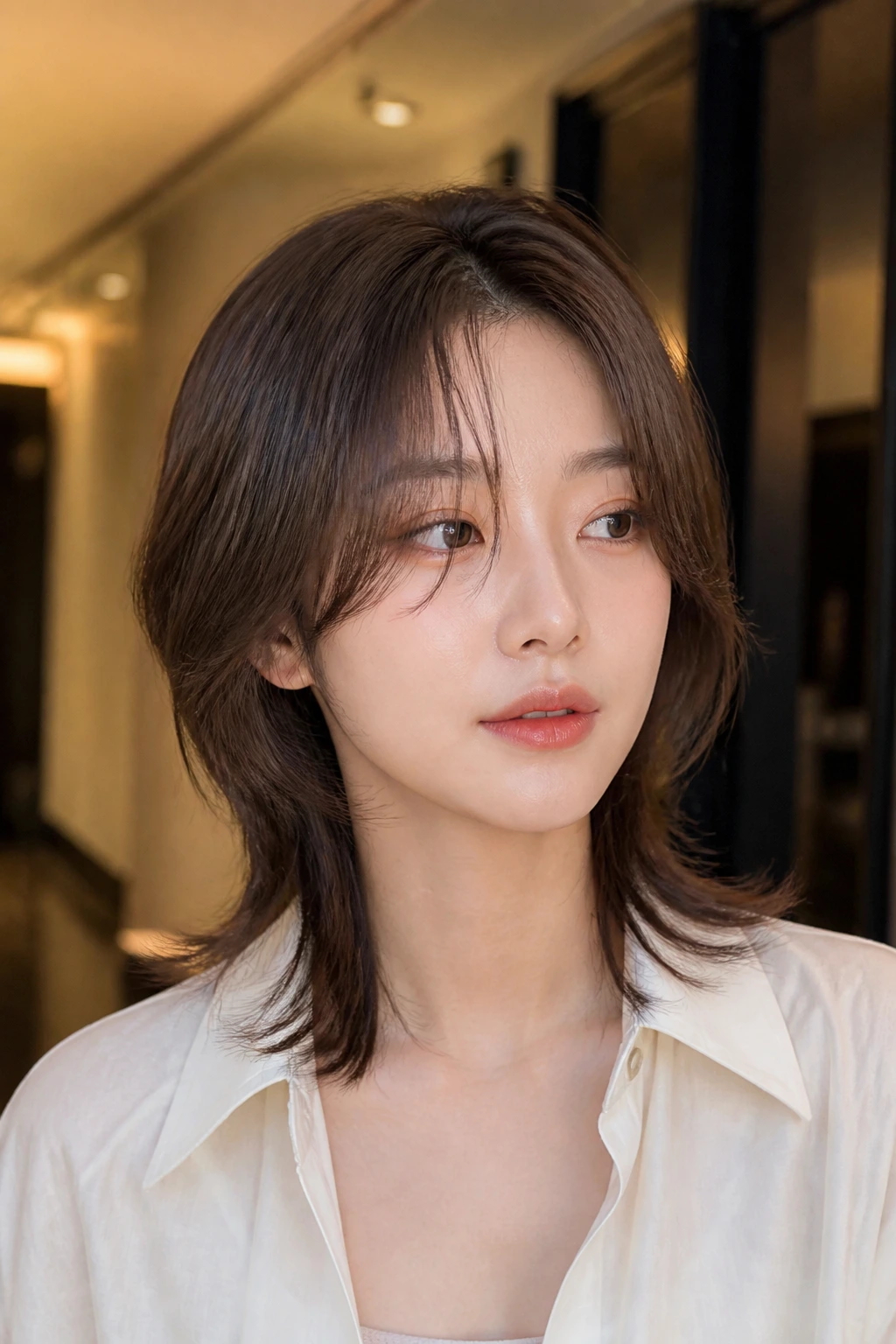
Yes, a mullet can be wearable. The soft Korean version is not the jagged, aggressive shape people picture from old photos. On fine hair, it works when the top stays movable, the sides stay light, and the tail is airy rather than stripped bare. Oval faces can wear this shape because the face-framing pieces keep the front balanced.
I’d only choose this if you like a little edge and you’re comfortable with styling. The payoff is shape. The cost is that you can’t be sloppy with the cut. If the tail is thinned too much, it becomes a sad little string. If the crown is cut too short, the whole thing sticks up in ways you didn’t ask for.
22. Long Airy Cut with Low-Density Ends
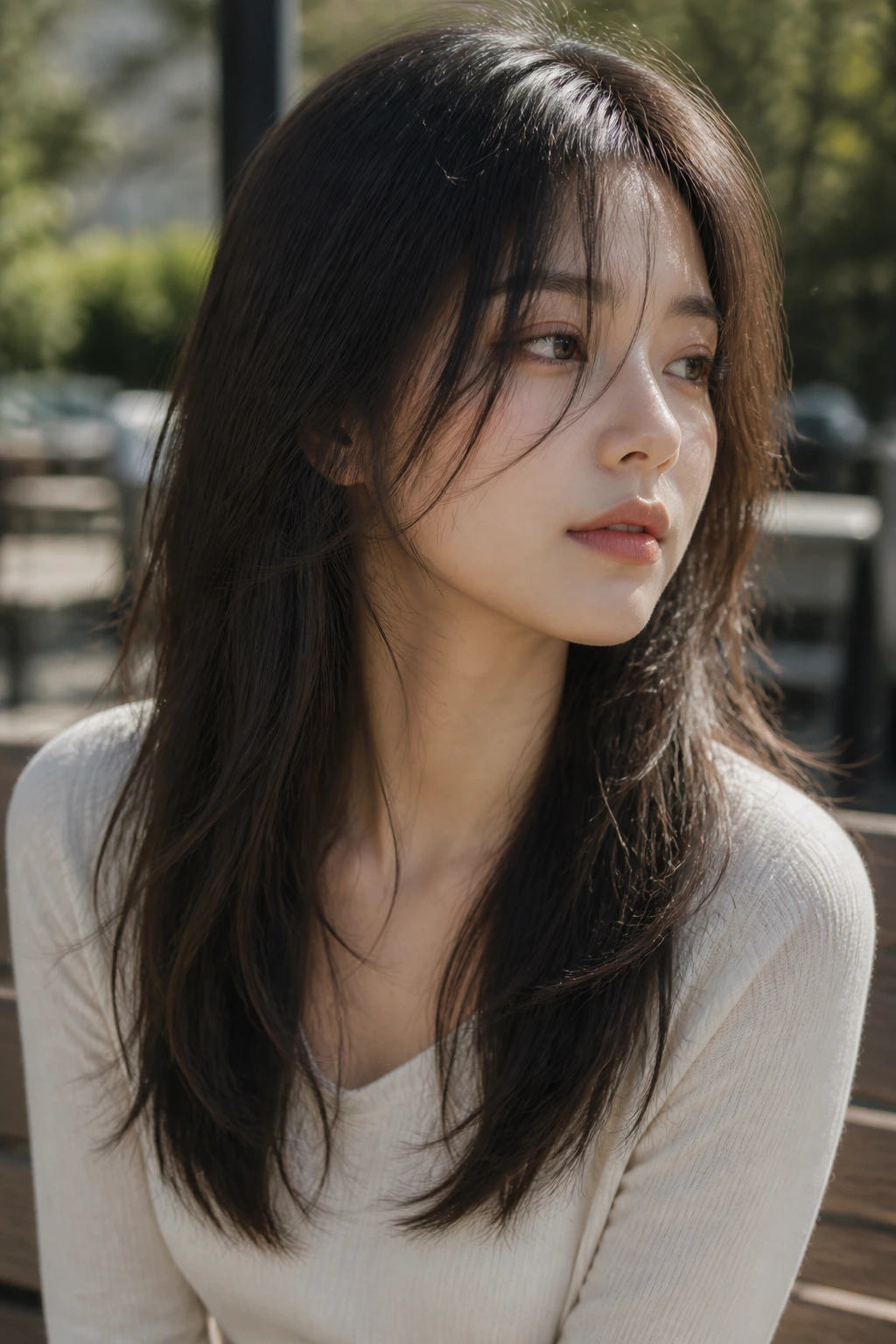
Some people want to keep the length, and fair enough. The challenge is that fine hair at the bottom can look thin fast. A long airy cut with low-density ends solves that by keeping the hair light in the middle and face-framing area while preserving enough substance at the perimeter to avoid the broom-tail effect.
Oval faces make this cut easy to wear because the front pieces can start at the cheekbone and taper down without crowding the features. If your hair is naturally straight, a subtle bend through the ends keeps the length from going limp. If it’s already wavy, the cut will show off the movement better than a blunt straight line ever could.
The Best Way to Wear These Shapes Without Fighting Your Hair
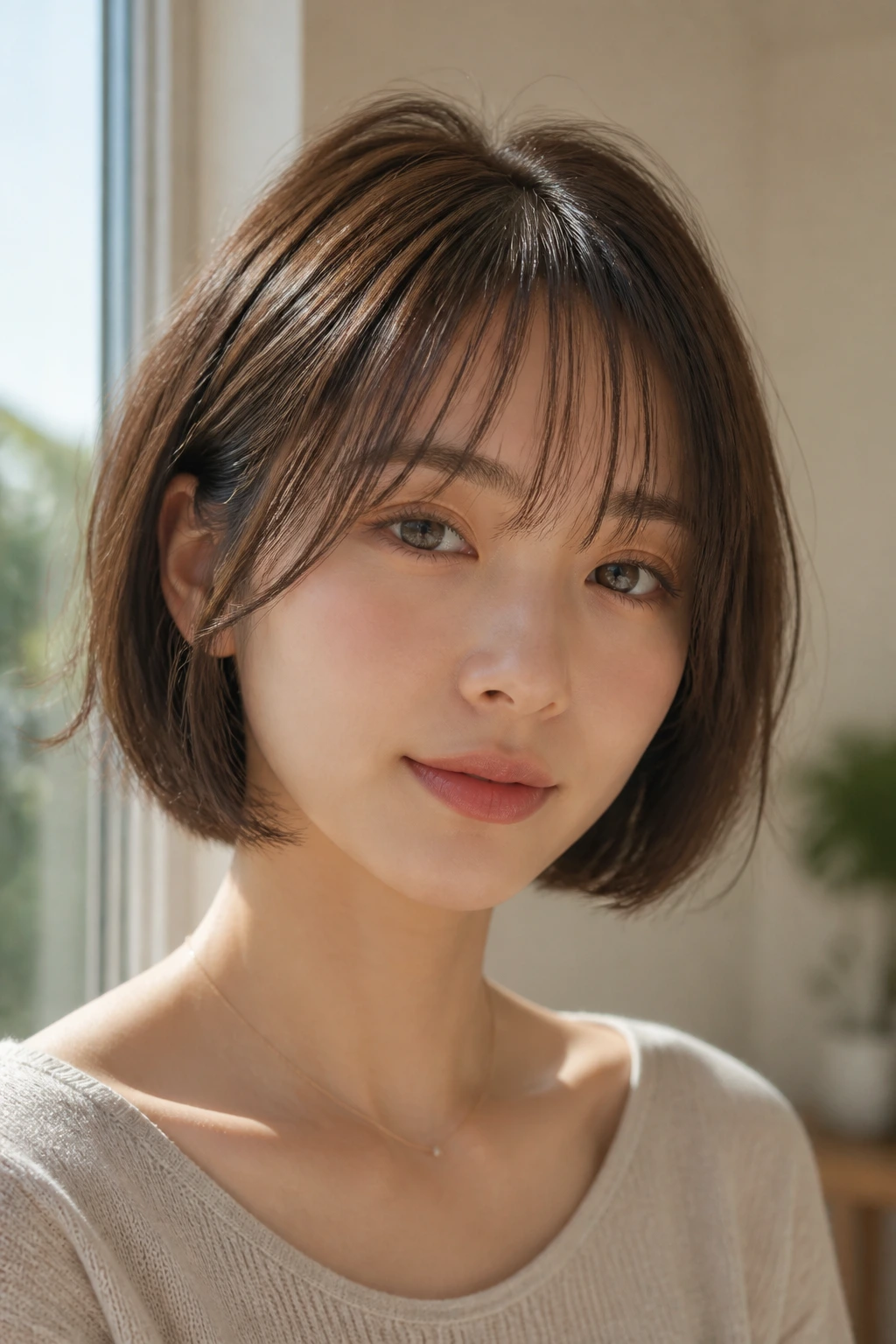
The right Korean haircut is only half the game. The other half is how you dry it on a Tuesday morning when the coffee is still cooling and you are not in the mood for a 20-minute styling ritual.
Root lift first: blow-dry the roots in the opposite direction of your part for the first few minutes, then flip them back. That little trick gives fine hair a better base than piling product at the ends.
Ends second: on bobs and lobs, bend only the bottom inch or two. You’re trying to suggest shape, not create a full curl pattern that will collapse by lunch.
Fringe care matters: see-through bangs and curtain pieces should be dried side to side, then directed where you want them with a cool shot. If you let them air-dry in one direction every day, they start obeying that habit.
Second-day rescue: dry shampoo at the roots, a tiny bend on the front pieces with a small iron, and no heavy oil near the crown. Oil on fine hair is slippery business.
Small Styling Moves That Make the Cut Look Fuller
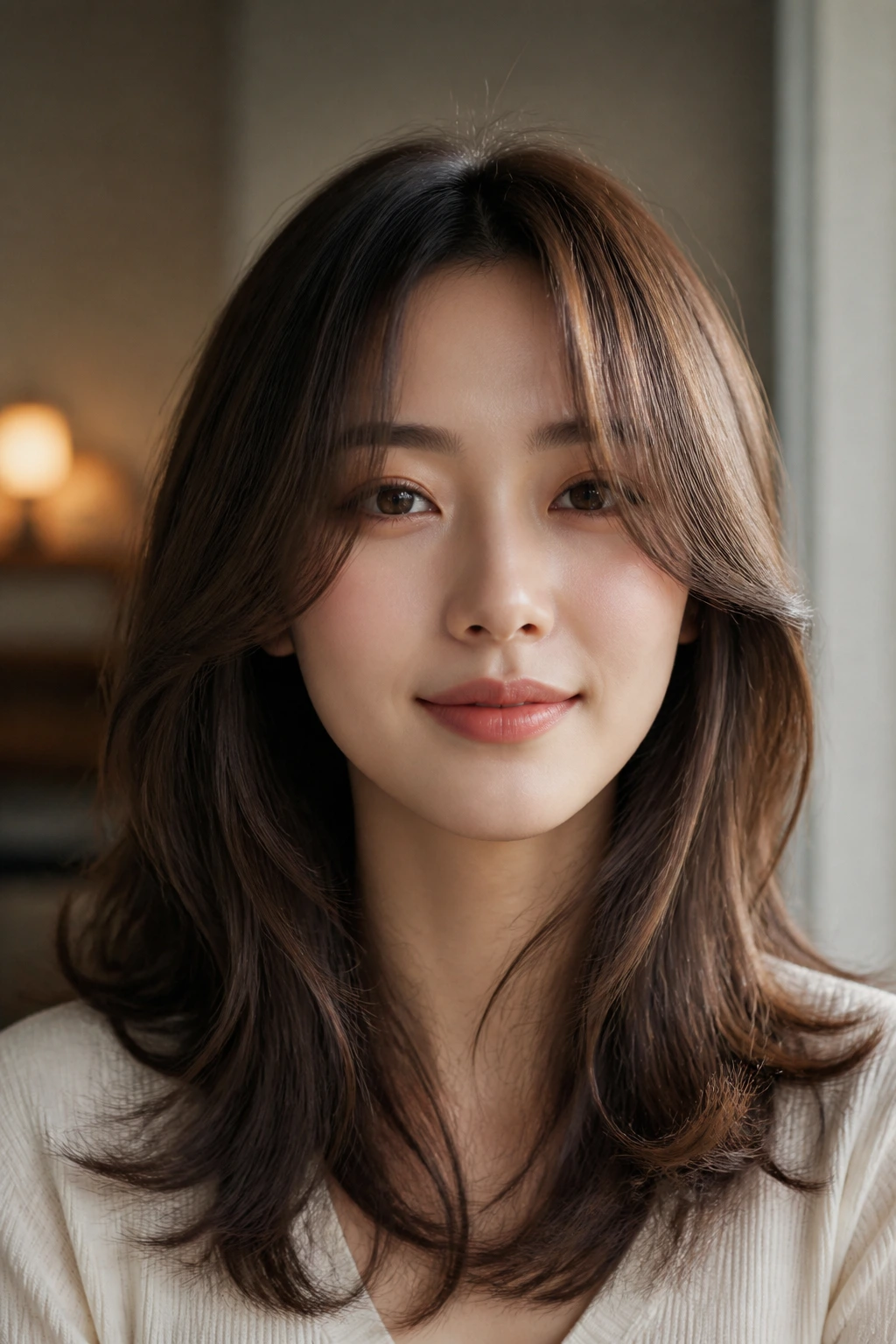
A haircut can be good and still look flat if the finishing is lazy. That part annoys me, because the fix is usually simple.
Root Lift: use a mousse or foam on damp roots, then dry with the nozzle pointing upward at the crown. You do not need a golf-ball amount; a walnut-sized mound is usually enough for fine hair.
Shine Without Collapse: put serum only on the last third of the hair. A drop or two. If you touch the crown with too much product, the roots will lie down like they’ve given up on life.
Texture With Control: if you want a little piecey movement, spray texture mist onto your hands first, then work it into the mid-lengths. Spraying straight onto the whole head can make fine hair feel dusty.
Make the Part Work: shifting the part by even half an inch can change the whole silhouette. On oval faces, a slightly off-center part often looks softer and fuller than a perfectly perfect middle part.
Common Mistakes That Make Fine Hair Look Thinner
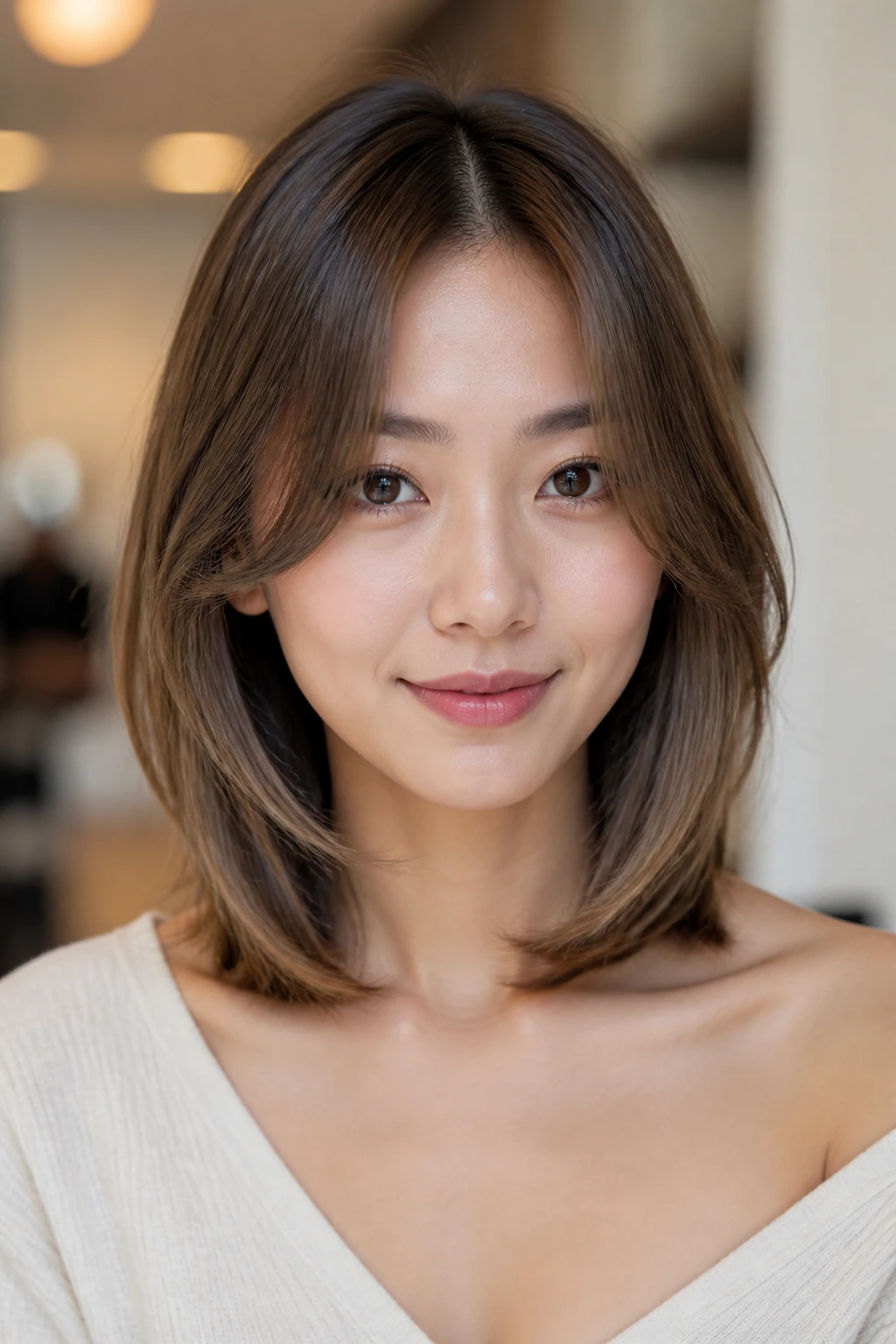
Over-layering the crown: this is the one I see most. The hair looks full in the salon chair, then two shampoos later the top goes sparse. Keep the crown layers controlled and leave enough length to cover the scalp.
Thinning the ends too much: if your stylist uses thinning shears on already-fine hair, the bottom can lose its shape fast. Ask for point-cutting instead, and only where softness is needed.
Choosing bangs that are too dense: heavy bangs can bury an oval face and pull attention to the wrong place. See-through or side-swept fringe usually behaves better.
Using too much cream or oil: the hair clumps, the roots droop, and the whole style loses lift. Fine hair needs light hands.
Ignoring natural parting and cowlicks: a cut can be gorgeous on paper and still fight your cowlick every morning. Mention your parting habits before the first snip.
Variations and Adaptations to Try
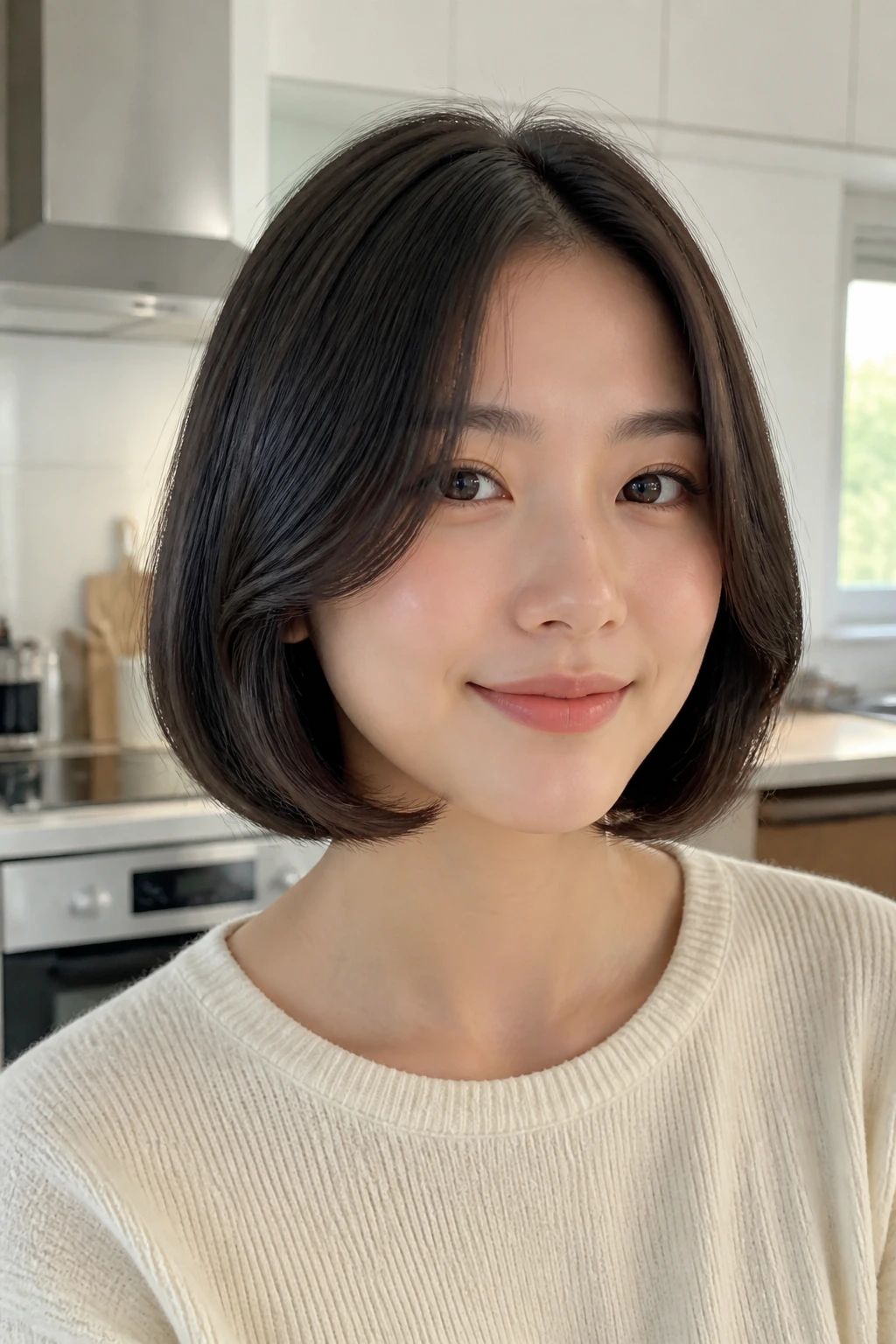
No-Bangs Version: If you do not want fringe, keep the face-framing layers starting at the cheekbone or chin. This keeps the face open while still giving the haircut some movement.
More Lift, Less Length: Swap a long lob for a chin-length bob or bixie if your hair collapses under its own weight. Shorter cuts often look denser on fine hair, which is the whole point.
No-Heat Version: Choose a hush cut, U-cut, or long airy layers and let the hair dry with a tiny amount of mousse and a scrunch at the ends. These styles can look polished without curling irons.
Perm-Assisted Version: If you like the C-curl shape but hate daily styling, ask about a loose digital perm or a soft bend at the ends. The curl should be subtle enough to look like shape, not a curl set.
Glasses-Friendly Version: Keep bangs longer and lighter, and avoid front pieces that stop right at the bridge of the nose. That’s where they snag, split, and become annoying by day three.
What to Ask for Before the First Snip
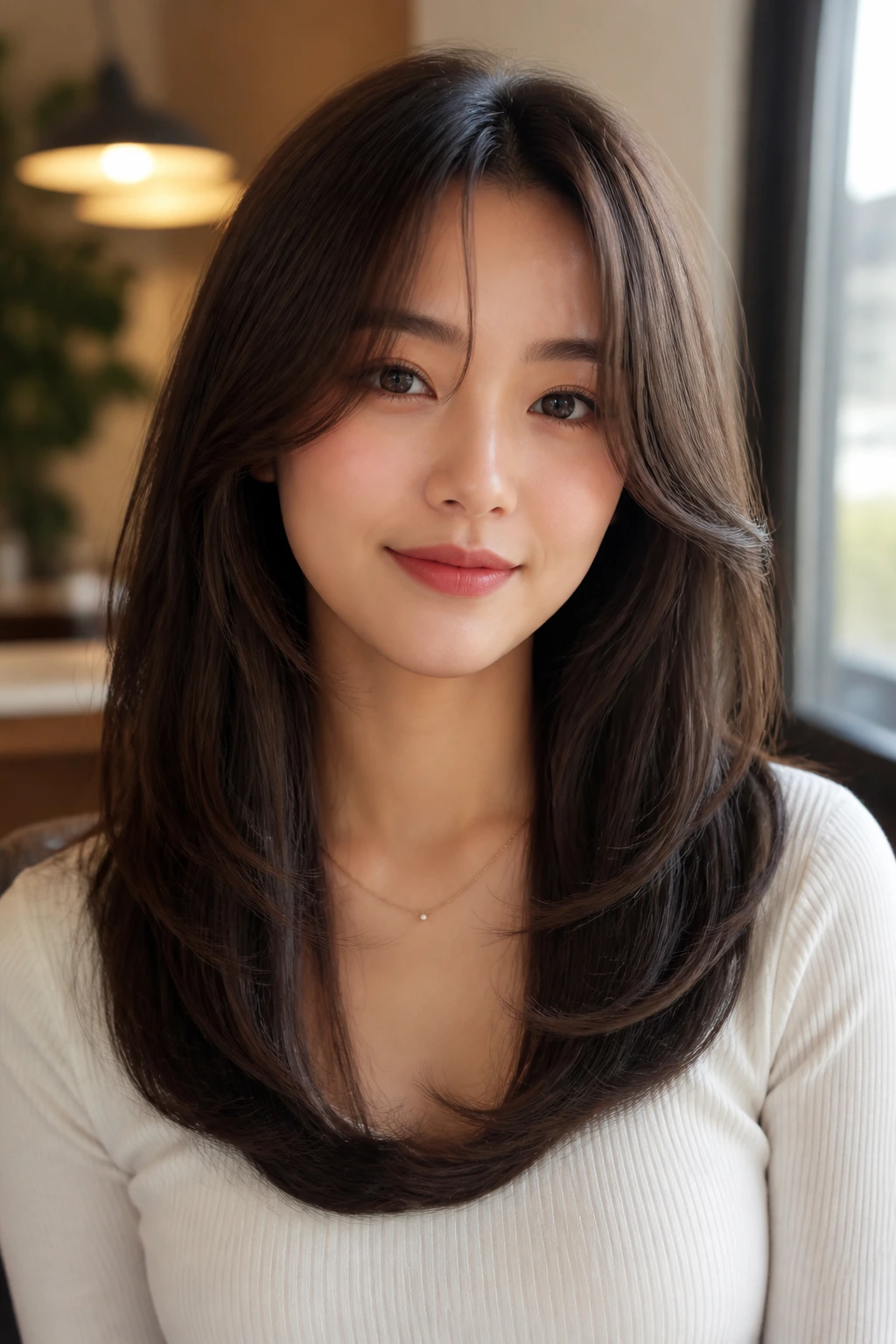
Bring photos. Not one photo. Three or four, ideally from different angles.
The best reference images for fine hair are the ones that show the perimeter, the front pieces, and the way the cut sits on the shoulders. A front-only shot can be misleading, especially if the model has thicker hair than you. Say the words fine hair, oval face, keep the perimeter full, and soft movement instead of heavy layering. That vocabulary gets you closer to the right result than vague requests like “something Korean.”
Ask your stylist whether the shape will still look good if you air-dry it. Ask what happens when it grows out for six weeks. Ask where the weight line sits. That one question matters more than people think. On fine hair, a haircut that feels lightweight at the salon can become limp if the weight is removed from the wrong places.
Essential Tools for Styling These Haircuts
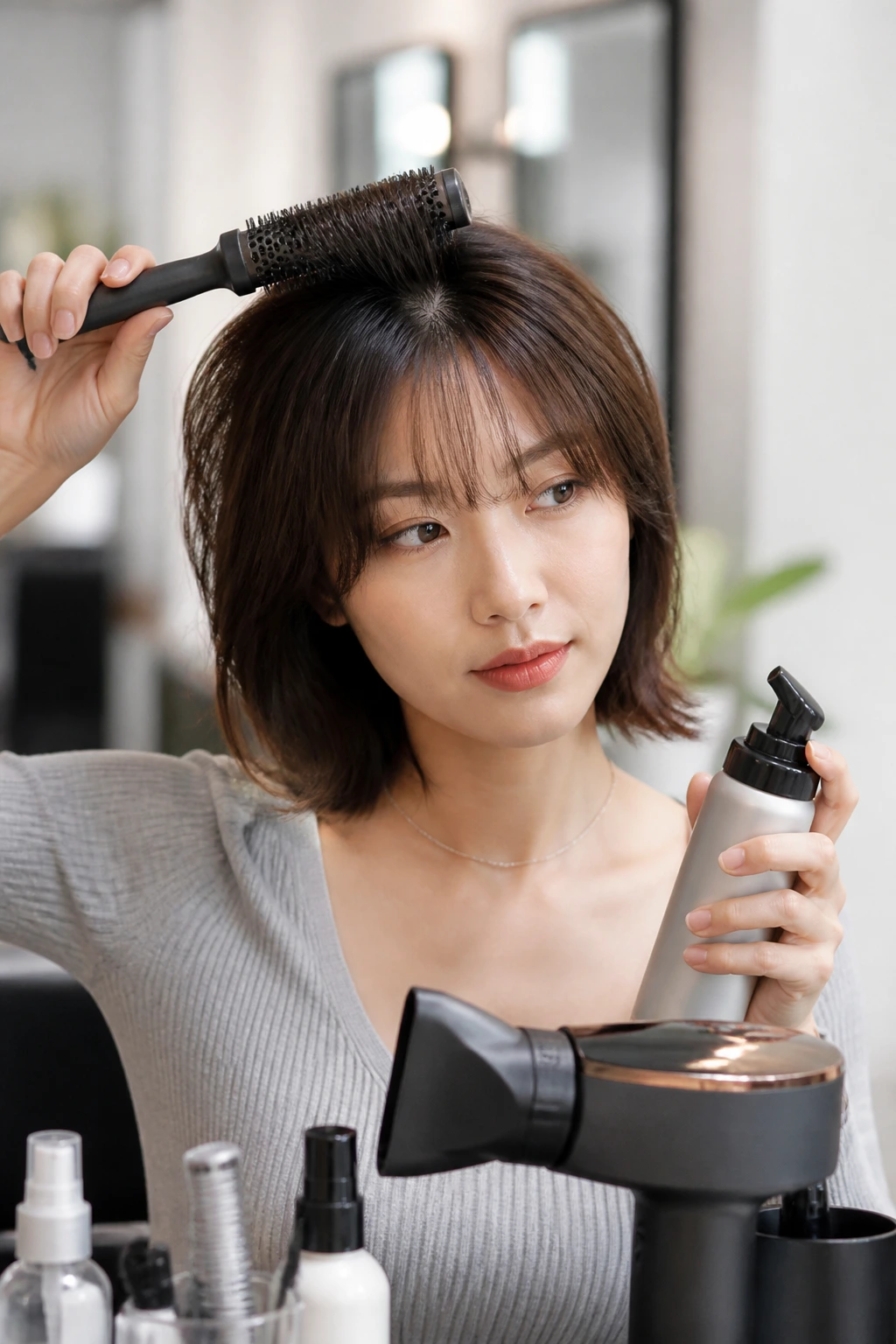
- Haircut reference photos — Bring front, side, and back views so the stylist can see the full silhouette.
- Blow dryer with a nozzle — Directs airflow where you want lift instead of blasting the hair into chaos.
- 1-inch to 1.25-inch round brush — Best for C-curls, fringe shaping, and a small bend at the ends.
- Lightweight mousse or root foam — Adds grip at the scalp without turning fine hair sticky.
- Heat protectant spray — Necessary if you use a flat iron or curling iron on the fringe or ends.
- Velcro rollers or setting clips — Handy for bangs and crown lift while the hair cools.
- Small flat iron or narrow curling iron — Great for a quick bend on bobs, lobs, and face-framing pieces.
- Dry shampoo — Gives day-two roots a little life and absorbs the oil that fine hair collects fast.
- Silk pillowcase — Helps the cut keep its shape overnight and cuts down on friction.
- Tail comb — Good for clean parts and for sectioning fringe without making a mess of the crown.
How to Style These Haircuts So They Don’t Fall Flat
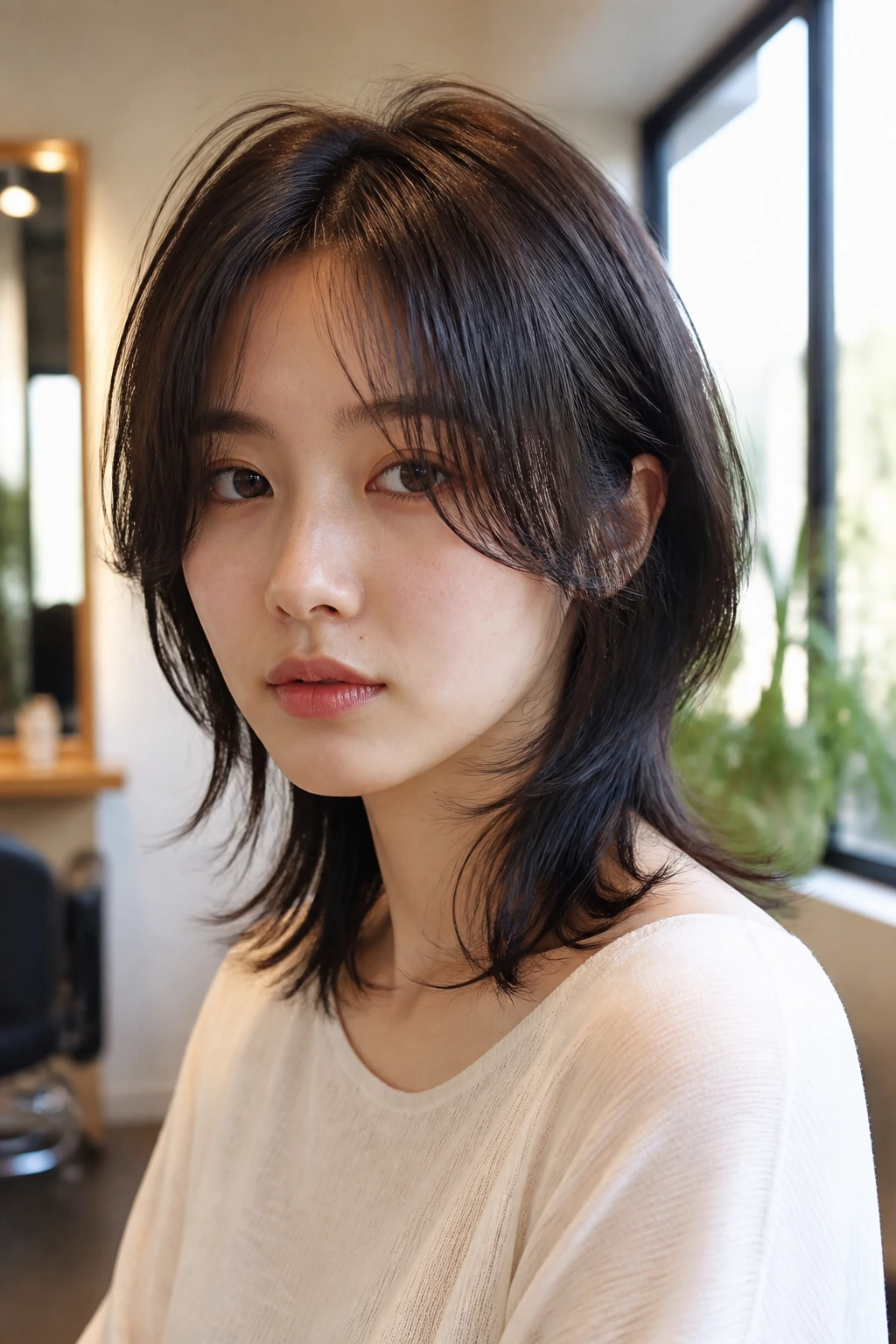
Presentation: On a bob or lob, aim for a soft outline with a visible bend at the ends. On longer cuts, keep the front pieces smooth and let the movement happen lower down, near the cheeks and collarbone.
Accompaniments: Dry shampoo, a round brush, and a light mousse are the common trio. For days when you need more hold, a tiny amount of styling cream only on the mid-lengths can calm flyaways without crushing the crown.
Portions: If your hair is very fine, use less product than you think you need. Start with a pea-sized amount of cream or mousse, then add a little more only if the hair still feels slippery or unstructured.
Beverage Pairing: A cup of patience helps, honestly. But if you want the practical version, the best styling “pairing” is a low-heat blow-dry plus a cool shot at the end. That locks in the shape better than chasing perfection with hot tools for too long.
Keeping the Shape Fresh Between Salon Visits
Fine hair tells on you when a cut grows out badly. Bangs get too long first. Then the face-framing pieces lose their angle. Then the ends start looking thin, and suddenly the whole style feels tired.
Trim fringe every 3 to 4 weeks if you wear see-through bangs or curtain pieces. Full shape trims usually land around 6 to 8 weeks for shorter bobs and 8 to 10 weeks for longer lobs and layers. If you wear a soft wolf cut or shag, watch the crown and face frame; those are the parts that lose their shape first.
At night, keep the hair loose or in a very soft clip, not a tight elastic that dents the front. A silk pillowcase helps, but the bigger win is not smashing the fringe flat for eight hours. If you wash often, focus shampoo on the scalp and keep conditioner off the roots. That one habit makes fine hair look cleaner and fuller after drying.
Questions People Ask Before Choosing One of These Cuts
Will Korean haircuts work if my hair is pin-straight and very fine?
Yes, but the right version matters. A blunt bob, hush cut, or collarbone lob usually behaves better than a heavily shredded shag because it keeps enough weight to look full.
Are curtain bangs a bad idea for fine hair?
Not if they’re kept soft and a little longer. Dense curtain bangs can overwhelm the face, but a lighter version adds shape without hiding the forehead.
What length looks thickest on fine hair?
Usually chin-length to collarbone. That range gives the ends enough density to read fuller, while still leaving room for movement around the face.
Should I avoid layers completely?
No, but you should avoid too many short layers stacked on top of one another. Fine hair looks better with long, controlled layers or hidden internal movement.
Can I get a wolf cut if my hair is fine?
You can, but ask for a soft Korean version with restrained layering. The aggressive version can leave fine hair looking broken and sparse.
Do I need a perm to get these shapes?
No. A perm helps only if you want lasting bend at the ends or around the face. Many of these cuts look good with a round brush and a five-minute blow-dry.
How do I keep bangs from sticking to my forehead?
Dry them side to side, not straight down. A little dry shampoo at the root and a cool shot at the end usually helps more than piling on extra product.
The Shape That Stays Soft
The nicest thing about these cuts is that they do not try to bully fine hair into becoming something it isn’t. They work with what the hair already wants to do. That is why the best Korean haircuts for fine hair and oval faces feel so believable in real life: soft, tidy, a little airy, and much more full than they first appear.
If you take one thing from the whole list, take this: keep the outline honest, keep the fringe light, and let the movement happen in the right places. The haircut will do more work for you than a drawer full of products ever will.