



Square faces don’t need hiding. They need interruption.
That’s the part most haircut advice gets backwards. A square face usually has a strong jaw, a broad forehead, and cheekbones that sit close to the same width as the jaw. When a short cut lands in a hard line right at the jaw and the fringe runs straight across the forehead, the whole shape can feel boxy. Shift the weight line, bend the front, and leave some air around the temples, and suddenly the bone structure looks clean instead of blunt.
These fall haircuts for short hair and square faces work because they play with movement where the face is strongest. They also behave better when sweaters, scarves, and coat collars start brushing at the neck. Nothing ruins a crisp bob faster than a bulky collar flipping the ends out in weird directions. Ask any stylist who has had to rescue a blunt chin-length cut in dry weather — the trouble usually starts at the perimeter.
Why These Cuts Earn Their Spot
Jawline softening: Every cut here breaks up the straight edge of a square jaw with sweep, bend, or texture instead of sitting flat against it.
Short hair, less fuss: A lot of these shapes dry well with a quick rough-dry and a small round brush, which matters when you do not want a 25-minute blowout before breakfast.
Better under collars and scarves: The nape and side lengths are chosen to move instead of folding into awkward angles under coats.
Grow-out grace: Soft layers, side parts, and broken lines buy you extra weeks before the shape turns stiff.
Works with more than one texture: Straight hair, loose waves, and curls all have a place here. The trick is choosing the version that respects your natural bend.
Easy salon language: You can ask for these cuts in plain terms — length at the jaw, softness around the temples, and a fringe that does not chop the face in half.
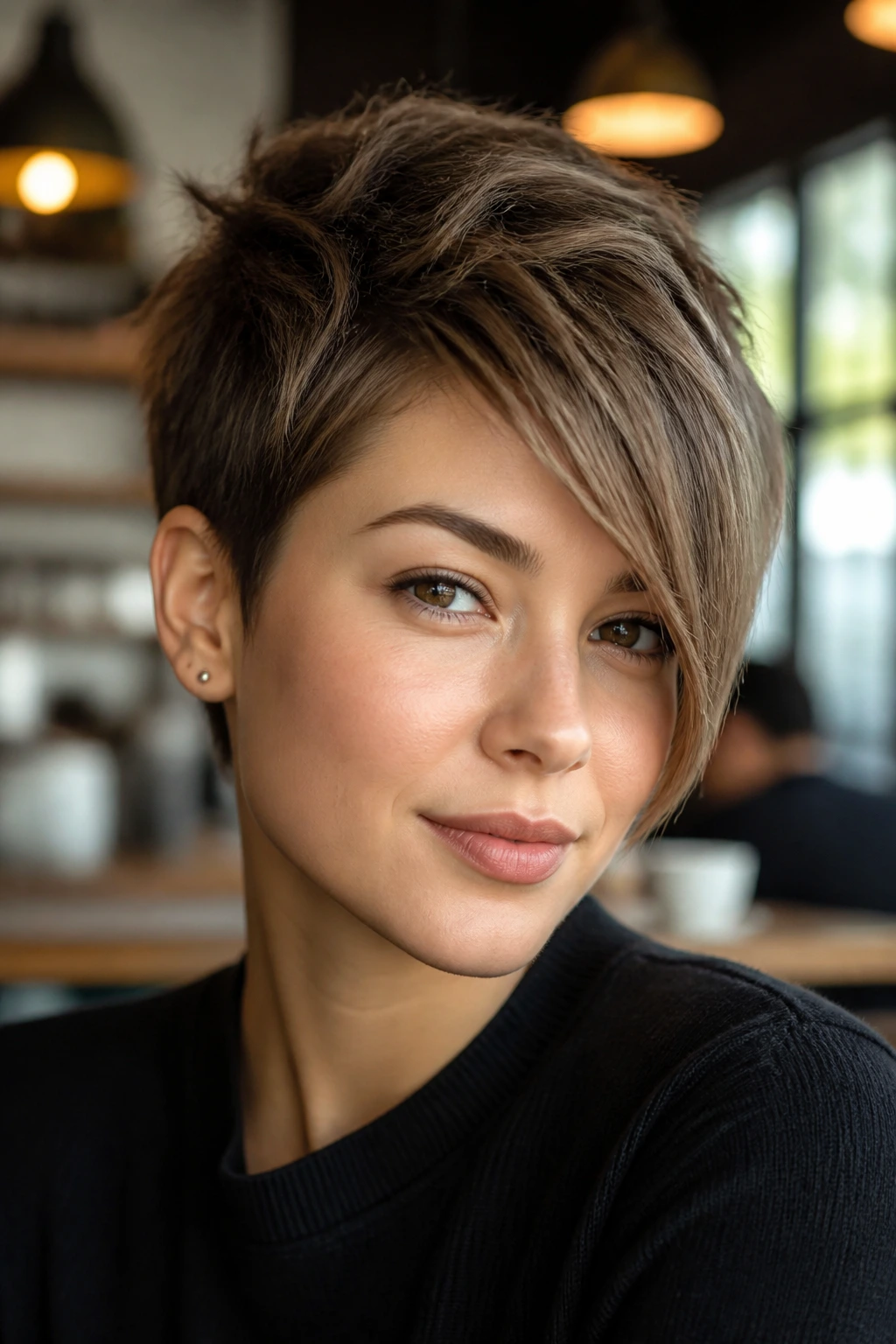
1. The Soft Side-Swept Pixie
This is the shortest cut on the list that still knows how to soften a square face. The top stays long enough to sweep diagonally across the forehead, while the sides and nape are tapered close so the whole shape feels light instead of blocky. The diagonal fringe does most of the heavy lifting here. It draws the eye across the face instead of straight down the center.
Why it flatters square faces
A square face looks strongest when the haircut adds a little asymmetry. The side sweep does that instantly, and the extra height at the crown keeps the top from feeling flat or helmet-like. I like this cut best when the fringe starts near the high point of the brow and slides toward one cheekbone.
- Best on straight, wavy, or fine hair with some natural body.
- Ask for the top to stay long enough to tuck behind one ear.
- Keep the sides soft, not shaved tight against the skin.
- Trim every 4 to 5 weeks if you want the shape to stay crisp.
Tip: If your hair grows forward at the crown, let the stylist work with that movement instead of fighting it. The cut looks better when the part follows the natural bend.
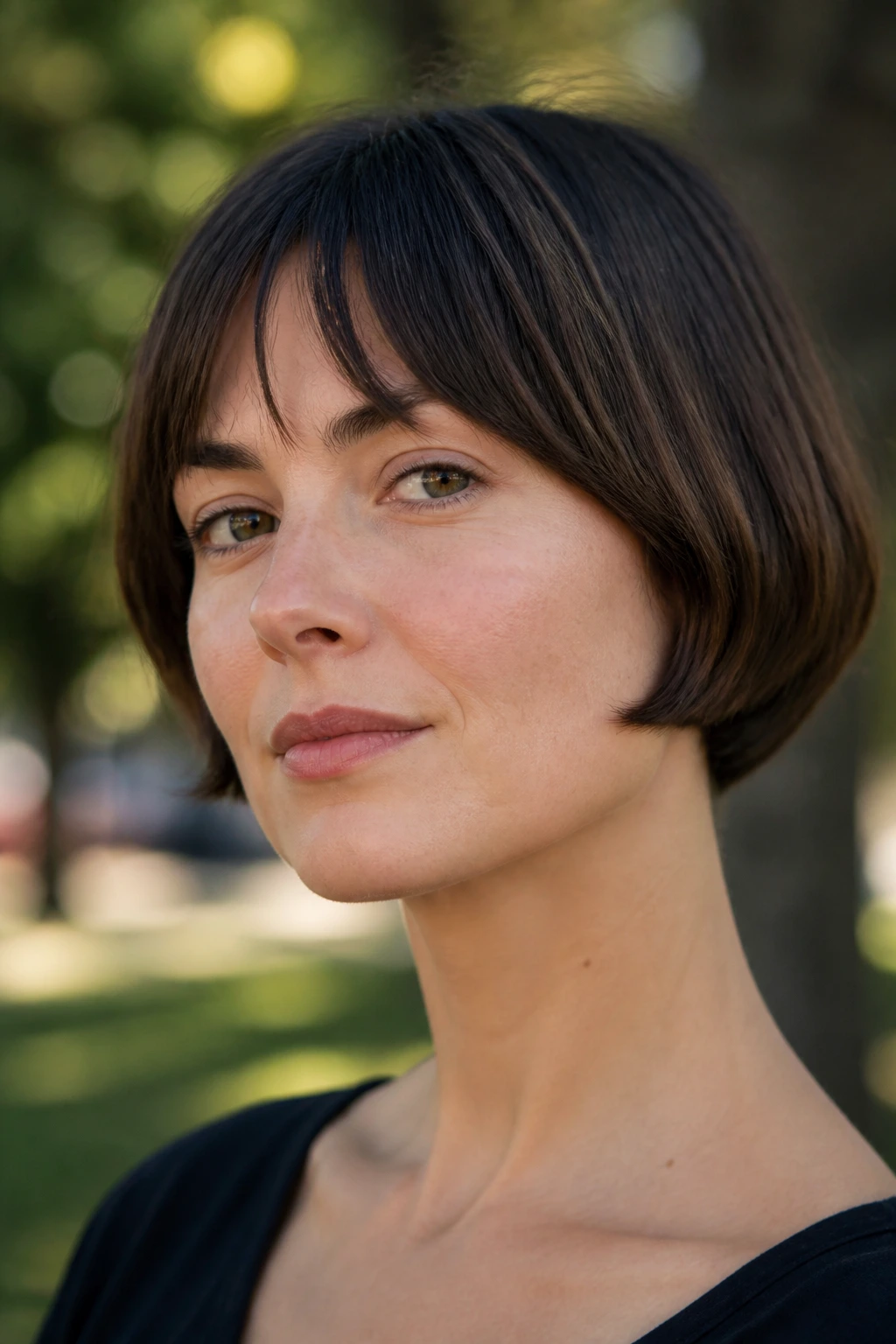
2. The Textured French Bob
A blunt French bob can be harsh on a square face if it ends in one hard, clean line. A textured one is a different animal. The perimeter still reads as neat, but the ends are point-cut and the movement sits just below the jaw, where it breaks up the widest part of the face without sitting directly on it.
The best version feels chic without being severe. Think cheek-skimming movement, a little bend at the ends, and enough softness around the front so the jaw does not become the only thing people notice. Dry air actually helps this cut, because a touch of texture keeps the shape from collapsing into a flat sheet.
What makes it different
The old-school French bob can turn boxy fast. Texture fixes that by softening the line at the cheeks and giving the haircut a little swing when you turn your head. If your hair is naturally straight, ask for the ends to be cut with scissors instead of razored too heavily. Too much razor work can make the bob puff at the bottom.
Best for: straight to slightly wavy hair that holds a bend well.
Avoid if: your hair is extremely fine and prone to frizzing at the ends.
3. The Collarbone Bob with Curtain Bangs
Can a slightly longer cut count as short hair? Absolutely, if it clears the shoulders and stays easy to style. The collarbone bob gives square faces a useful bit of length without dragging the whole look down, and the curtain bangs split the forehead into two softer panels instead of one blunt wall.
The sweet spot is the length. Let it skim the collarbone or sit just above it. That keeps the jawline from becoming the only focal point. The curtain fringe should open near the cheekbones, not the center of the forehead, and the front pieces need enough slope to fold back into the rest of the cut.
How to style it
A round brush is enough for most mornings. Bend the fringe away from the face, give the ends a slight undercurve, and stop before the whole thing gets too polished. A little looseness works better here than a lacquered blowout.
- Best with medium-density hair.
- Ask for face-framing pieces that start around the cheekbones.
- Keep the front longer than the back by a small margin.
- A side part can make the whole cut feel softer if the middle part feels too exact.
4. The Feathered Bixie
The bixie sits between a bob and a pixie, and that in-between space is where square faces often do best. You get the crown lift of a pixie, the nape length of a bob, and feathered layers that blur the sides instead of boxing them in. It’s a smart cut for anyone who wants short hair but does not want the outline to go rigid.
If you have a strong jaw, this cut keeps the eye moving. The feathering around the temples matters more than people think. It stops the face from reading as a rectangle and gives the style a little air around the widest points.
A good bixie should feel light when you run your fingers through it. If it feels too dense on the sides, the cut is probably not finished right.
5. The Shaggy Crop with Airy Fringe
This is the cut for people who like hair that looks a little lived-in, but not sloppy. The layers are short enough to keep the neck open, while the fringe lands in broken pieces instead of one straight line. On a square face, that broken fringe is doing a lot of face-softening work without asking for a dramatic change.
A shaggy crop works especially well if your hair has some bend. The layers wake up faster on their own, and the haircut can be styled with a bit of mousse and finger-drying instead of a full blowout. The shape should feel relaxed around the cheekbones and a touch fuller at the crown.
The key is restraint. Too many short layers at the sides can widen the face. You want movement, not fuzz.
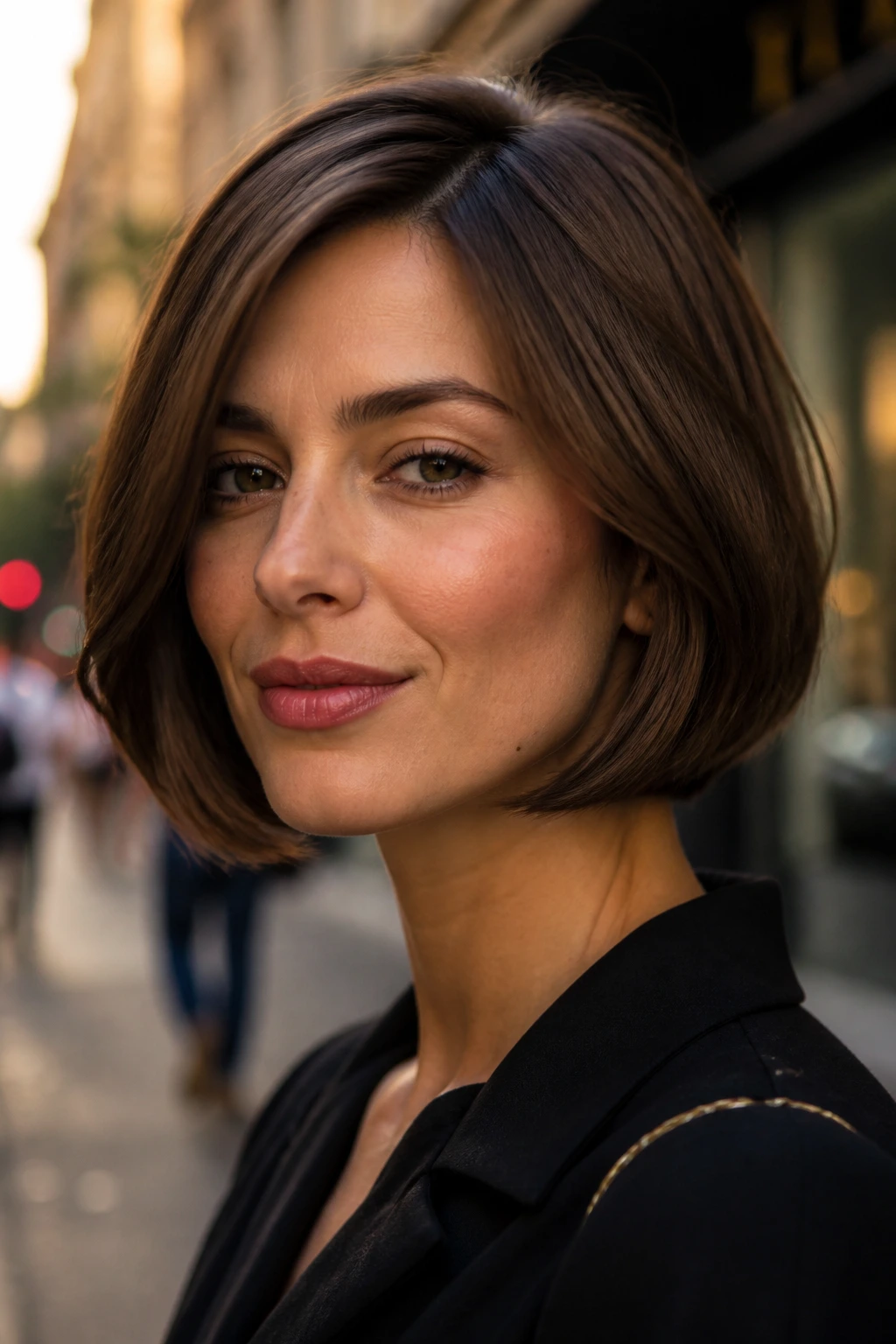
6. The Asymmetrical Jaw-Length Bob
A square face and a symmetrical bob can be tricky together. An asymmetrical version fixes that by shifting one side slightly longer than the other, often by just an inch or so. That small difference changes the whole line of the face. It pulls the eye diagonally instead of letting it sit on the jaw.
I like this cut when the longer side sits just past the jaw and the shorter side clears it. The uneven line keeps the haircut from feeling too tidy, which is exactly the problem with many jaw-length bobs on square faces. It also gives you a little drama without going full edgy.
Who it suits
- People who want a clean shape with some movement.
- Straight or wavy hair that can hold a neat line.
- Square faces that feel overwhelmed by center-part symmetry.
Keep the ends soft, not glassy. A tiny bend at the front makes the asymmetry feel intentional rather than sharp.
7. The Rounded Micro-Bob
Can a micro-bob be flattering on a square face? Yes — if the shape is rounded, not boxy. The trick is to keep the length around the ear or just grazing the upper jaw, then round the outline so the silhouette curves instead of cutting hard across the face. That little curve matters more than the length itself.
This cut is bold. No pretending otherwise. It shows the jaw, the neck, and the line of the cheekbone, so the softness has to come from the shape, not from hiding. A rounded crown and slightly tucked sides do the job.
What to watch for
A micro-bob can go helmet-like if it’s cut too blunt or too wide at the sides. Ask for the silhouette to be curved in toward the neck, with some lift at the crown and a soft finish at the ends. If your hair is very thick, this cut needs careful debulking or it can puff out at the sides.
8. The Textured Crop with Long Side Fringe
The long side fringe is the whole trick here. It gives the forehead a diagonal line and breaks up the width of a square face without forcing the cut to become longer than it needs to be. The rest of the crop stays close and tidy, which makes this one great for anyone who wants short hair that still feels sharp.
This is a good cut for fine hair, because the side fringe creates the illusion of more movement without requiring a lot of bulk. Keep the top piecey and let the fringe travel across the brow rather than stopping at it. A hard stop at the brow tends to square things off again.
- Works well with lightweight pomade or texture cream.
- Best if the fringe starts high enough to sweep, not droop.
- Use a blow-dryer nozzle to direct the front across the forehead.
- If your part keeps splitting in the wrong place, train it with a clip while the hair cools.
9. The Chin-Skimming Bob with Tucked Ends
A chin-length bob sounds risky for a square face, and sometimes it is. But when the ends are tucked under or softly curved inward, the cut can actually slim the jaw by creating a gentle frame instead of a straight ledge. The line should hover around the chin, not slam into it.
This style works best when the front pieces are a little longer than the back. That slight angle keeps the haircut from turning into a block. A side part helps too, especially if your jawline is very defined.
Picture it this way: blunt chin-length hair says “look at the edge.” Tucked ends say “look at the curve.” The second one wins more often than people expect.
10. The Curly Rounded Bob
Curly hair changes the rules in a good way. A rounded bob built around the curl pattern can soften a square face fast, because the silhouette itself does the shaping. Instead of a hard perimeter, you get a halo of movement around the cheeks and jaw.
The most flattering version usually sits somewhere between the jaw and the neck, with longer layers that let the curls stack without exploding sideways. If the cut is too short at the sides, the curl spring can make the face look wider. Keep a little length at the front and let the curls fall in a soft curve.
A diffuser helps, but shape matters more than tools. If the cut is right, the curls will do half the styling for you.
11. The Bottleneck Fringe Crop
A bottleneck fringe is one of the smartest bangs choices for square faces. It starts narrower near the center of the forehead and opens wider as it reaches the cheekbones, which means it frames the face where the angles need softening most. A straight-across fringe, by contrast, can make the upper face feel boxed in.
The crop underneath can stay neat and short. The fringe is the feature. If you want something fashion-forward without being severe, this is a strong place to start. It also grows out well, which matters when you do not want to visit the salon every few weeks.
Why it works
The shape mimics a gentle hourglass. Narrow at the top, wider at the sides. That’s the opposite of the boxy outline a square face is trying to avoid, and it gives you a softer frame without adding too much hair around the jaw.
12. The Sleek Bob with a Soft Bend
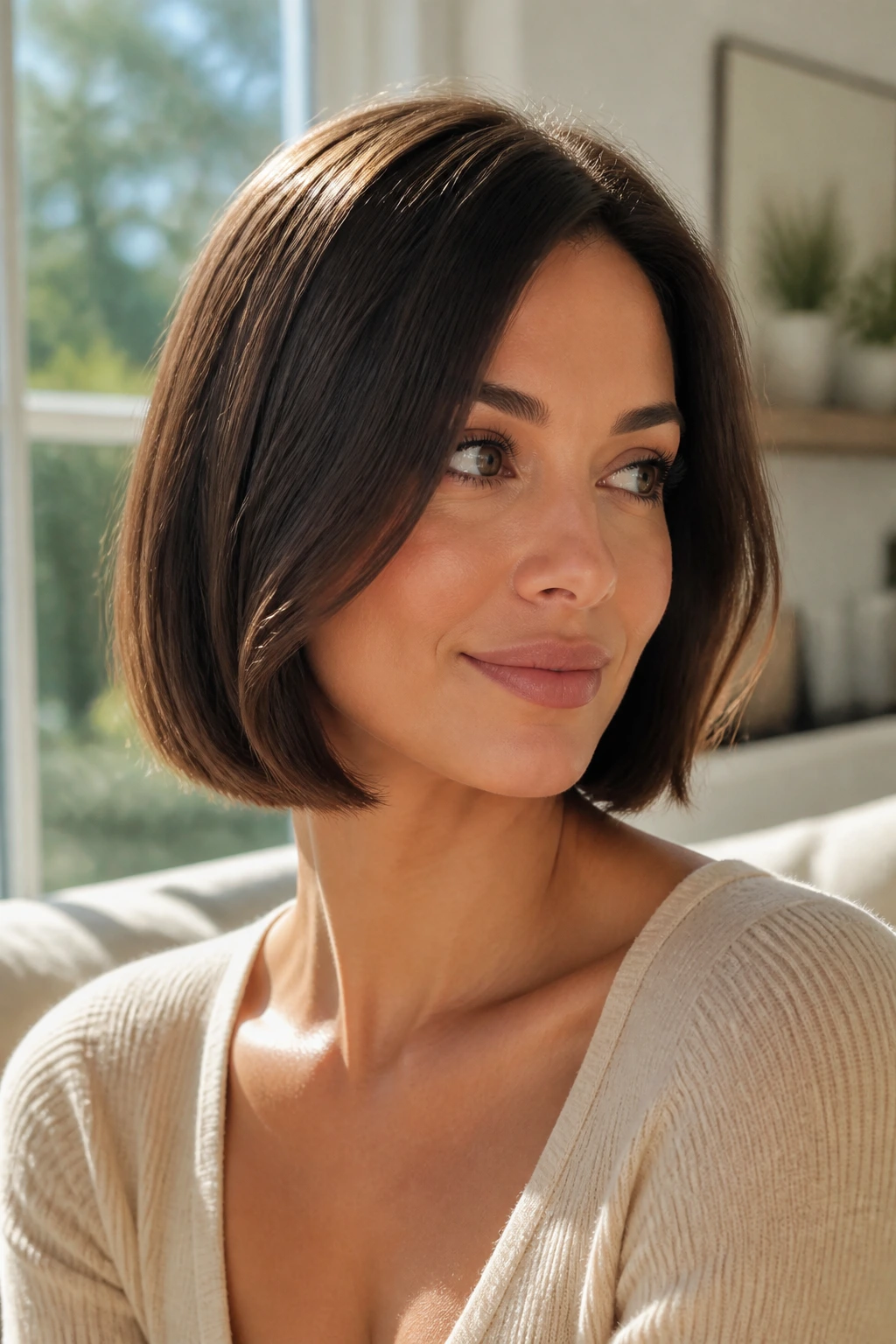
Some people hear “sleek bob” and picture a stiff, flat sheet of hair. That’s not what belongs here. On a square face, the sleeker cuts need one small bend at the ends, usually under or away from the face, so the jawline doesn’t get pinned under a hard edge.
This cut is great if your hair is naturally straight and you like a cleaner finish. The bend can be done with a brush, a flat iron, or even a large round brush on the last two inches of the ends. Keep the part slightly off-center if you want the face to feel less severe.
Unlike a pin-straight bob, this one leaves a little air in the shape. That’s the difference between polished and boxy.
13. The Short Wolf Cut
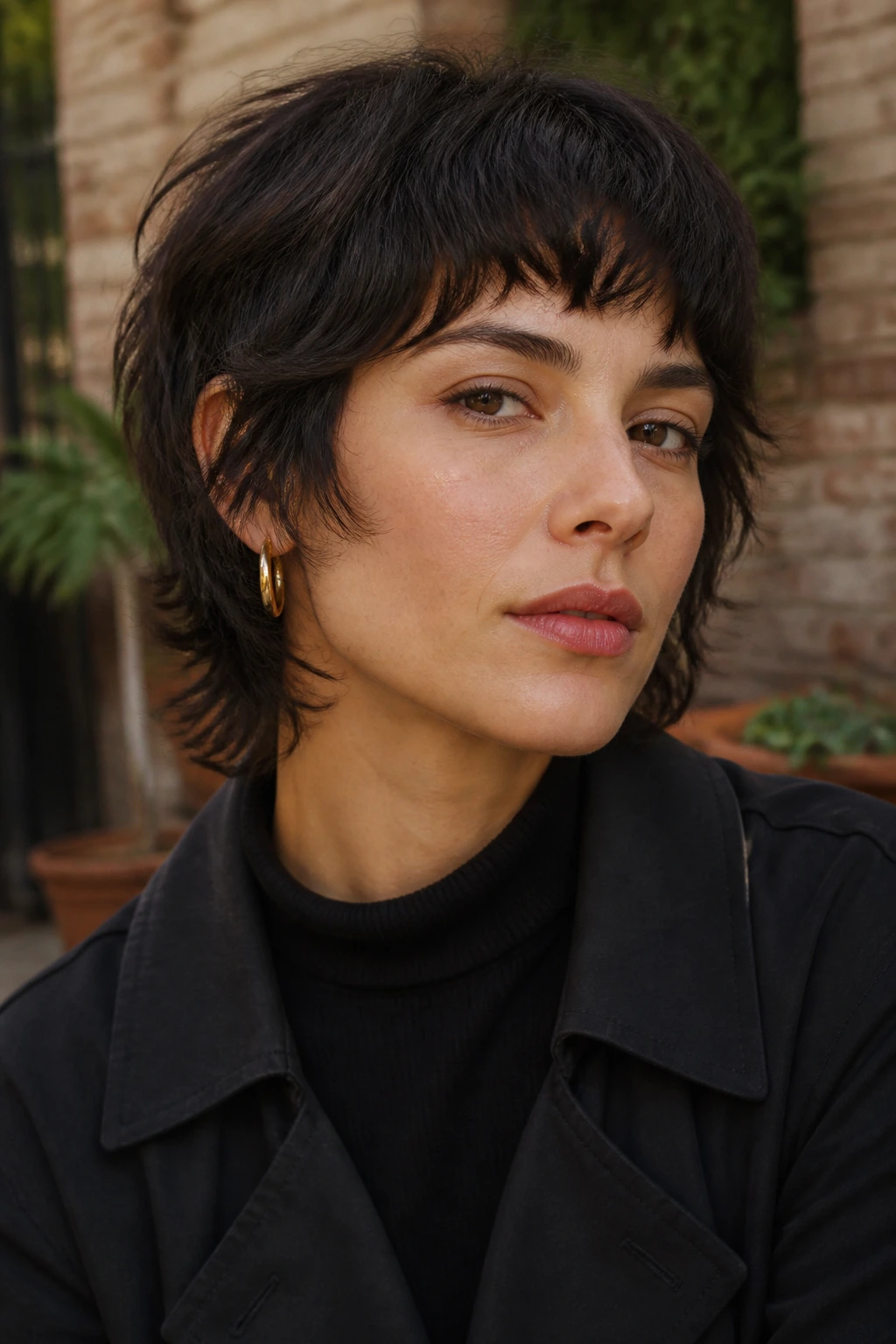
Can a wolf cut look polished on a square face? Yes, if it is short, controlled, and not over-layered at the sides. The shorter crown and face-framing pieces are what matter most here. They break up the jawline and keep the silhouette from sitting in one heavy block.
The best short wolf cut has a softer nape and longer pieces around the cheekbones. That keeps the cut from feeling mullet-heavy. You want texture, not chaos. If the stylist shaves too much off the sides, the face can end up wider; if they keep too much bulk at the crown, the whole cut starts to look top-heavy.
This is one of those styles that looks better with a little grit. A bit of texture spray gives it life. Too much shine can flatten the whole point.
14. The Side-Parted Undercut Pixie
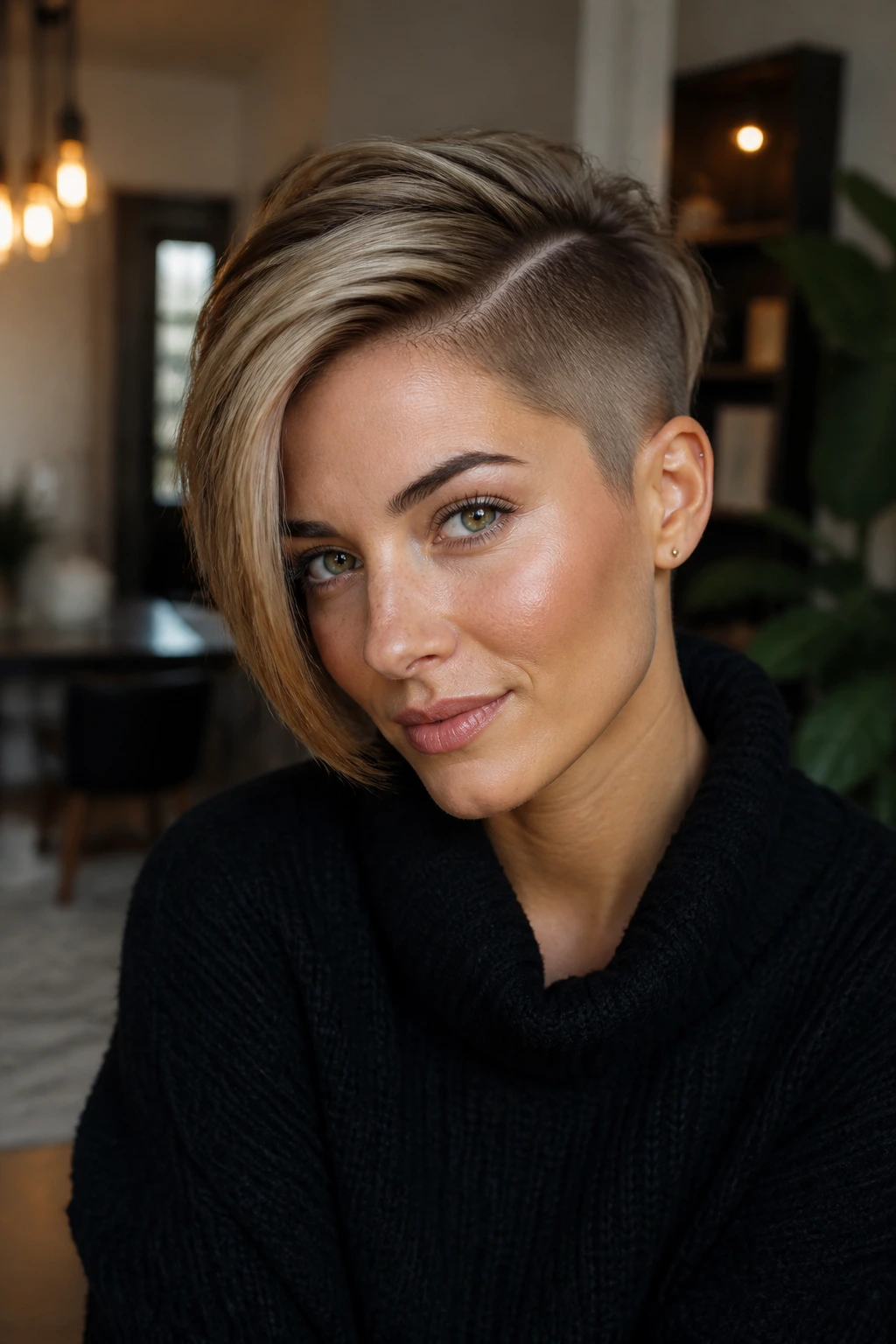
This cut is for thick hair that needs room to breathe. The undercut removes bulk at the sides and nape, while the longer top falls across the forehead and toward one cheek. On a square face, that side movement is a gift. It pulls the eye away from the strongest angles and gives the haircut a little swing.
I like this one when the top is left long enough to flip, brush back, or tuck behind the ear. The undercut does the hidden work; the visible part stays soft. That combination keeps the cut from feeling too severe, which can happen fast with very short styles.
Best use case
If your hair grows out bulky around the ears, this shape can save you a lot of daily annoyance. It also works with scarves and turtlenecks better than a heavy bob, because the neck stays cleaner.
15. The Airy Italian Bob
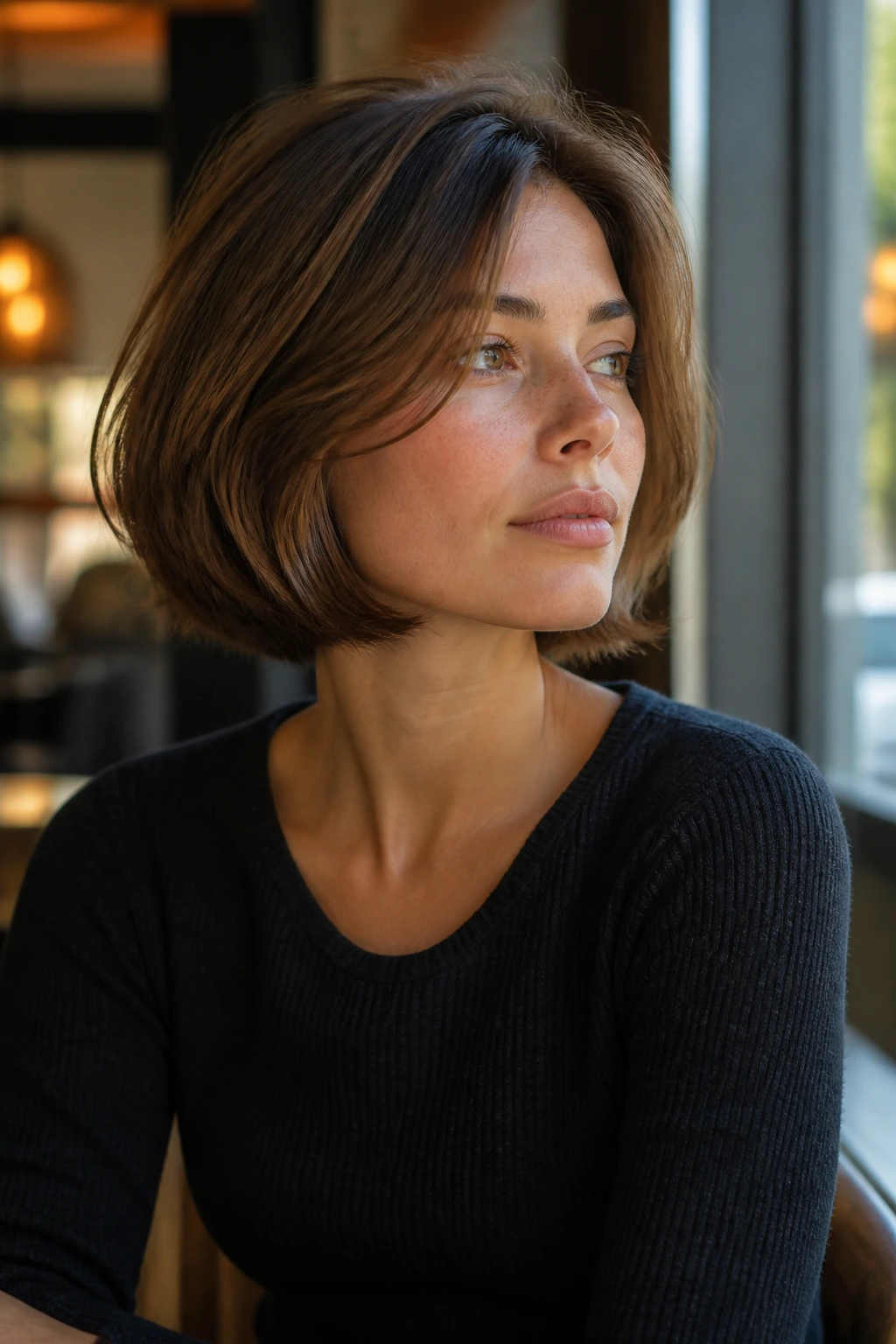
The Italian bob has volume, but not the stiff kind. It sits in that sweet spot where the ends have bounce, the crown lifts a little, and the face-framing pieces move instead of hanging flat. On a square face, the airy shape softens the outline without making the haircut look overly layered.
This cut works especially well if your hair is medium-density and holds a round brush shape. The goal is body, not bulk. Keep the sides loose enough that they don’t widen the face, and let the ends flip slightly under or out depending on your texture.
It’s a bob with manners. There’s polish here, but not a hard edge in sight.
16. The Piecey Mushroom Crop
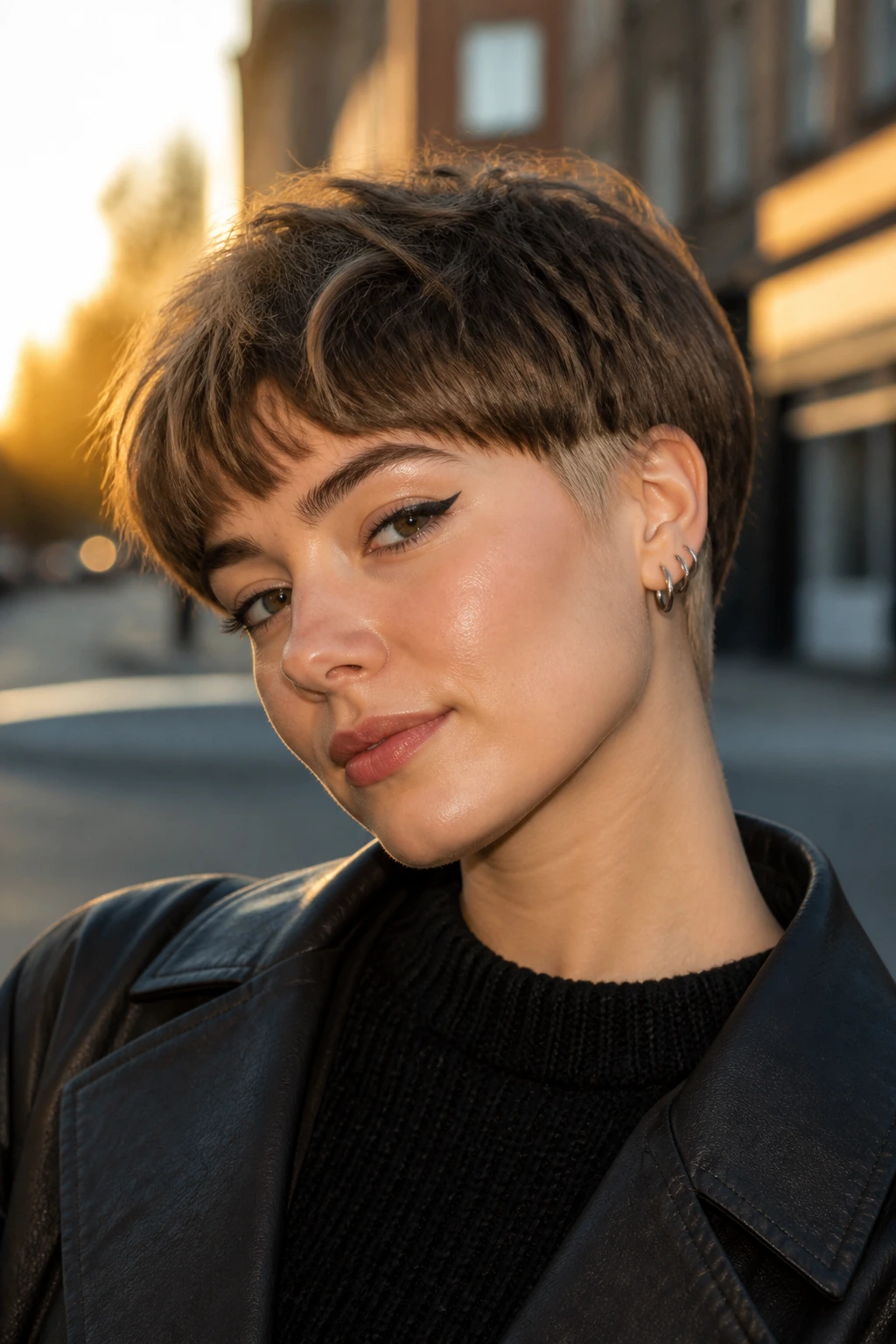
A mushroom crop can go wrong fast. Done badly, it looks like a bowl. Done well, with piecey separation and a tapered underlayer, it becomes one of the most interesting short cuts for square faces. The rounded top helps soften the jaw, and the broken ends keep the style from turning into a cap.
This one leans fashion-forward. It suits straight hair especially well, because the separation in the layers shows up cleanly. Ask for the underside to be lighter and the top to stay mobile. If the outline is too dense, the head starts to look wider than the face, which is the opposite of what you want.
A little wax at the ends can keep the pieces defined. Not too much. Just enough to show the cut.
17. The Feathered Pixie-Bob
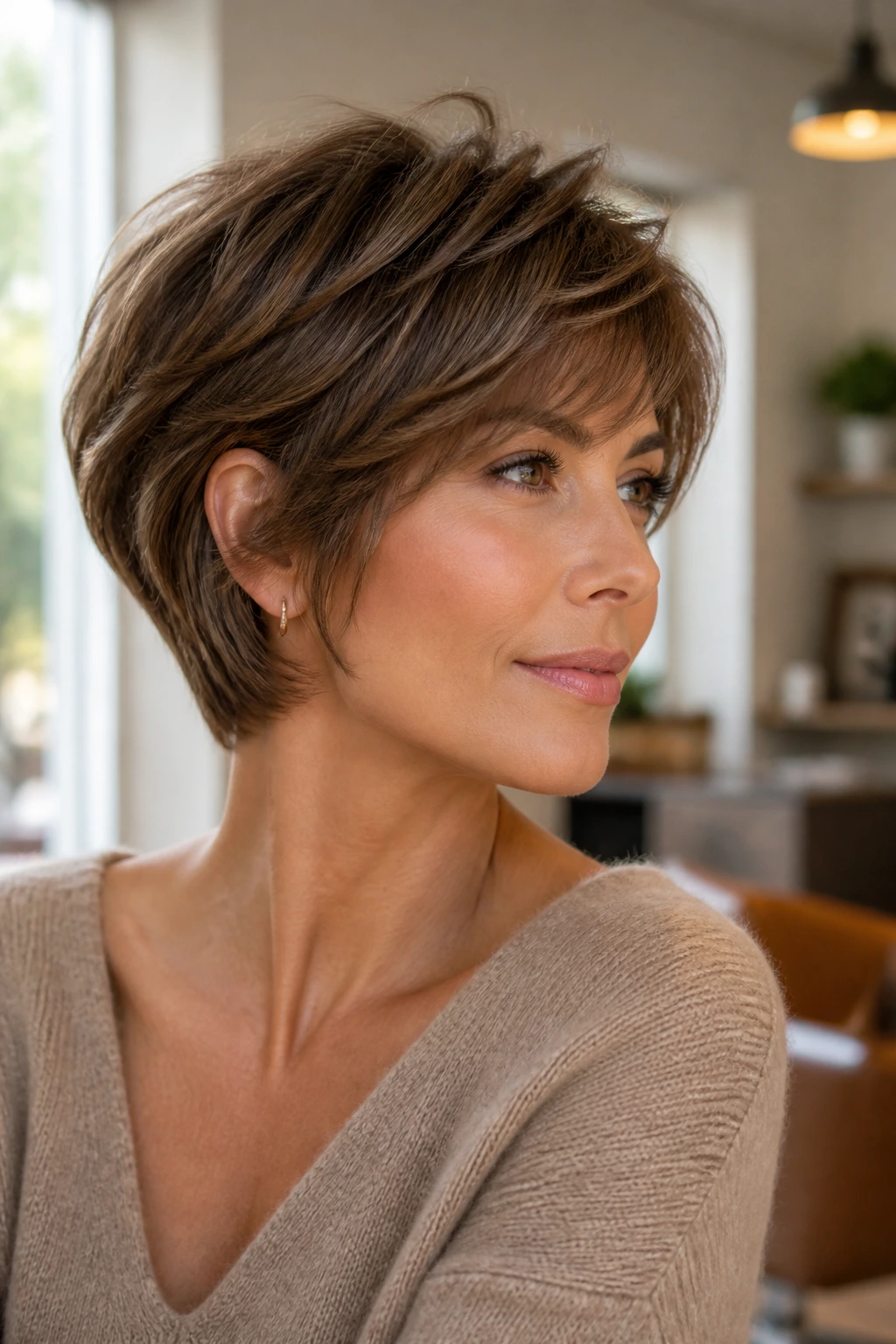
The feathered pixie-bob is what you get when a pixie starts to grow out and someone smart decides not to fight it. The layers stay light and tapered, with enough length around the temples and ears to soften a square face. It has a softer, more wearable shape than a strict pixie, and more lift than a bob.
This is one of my favorite bridge cuts. It’s easy to style, and it does not punish you if you miss a trim by a week or two. The feathers around the front blur the jawline, while the slightly longer top keeps the face from feeling compressed.
If you want short hair that still looks a little undone in a good way, this is a strong pick.
18. The Soft Graduated Bob
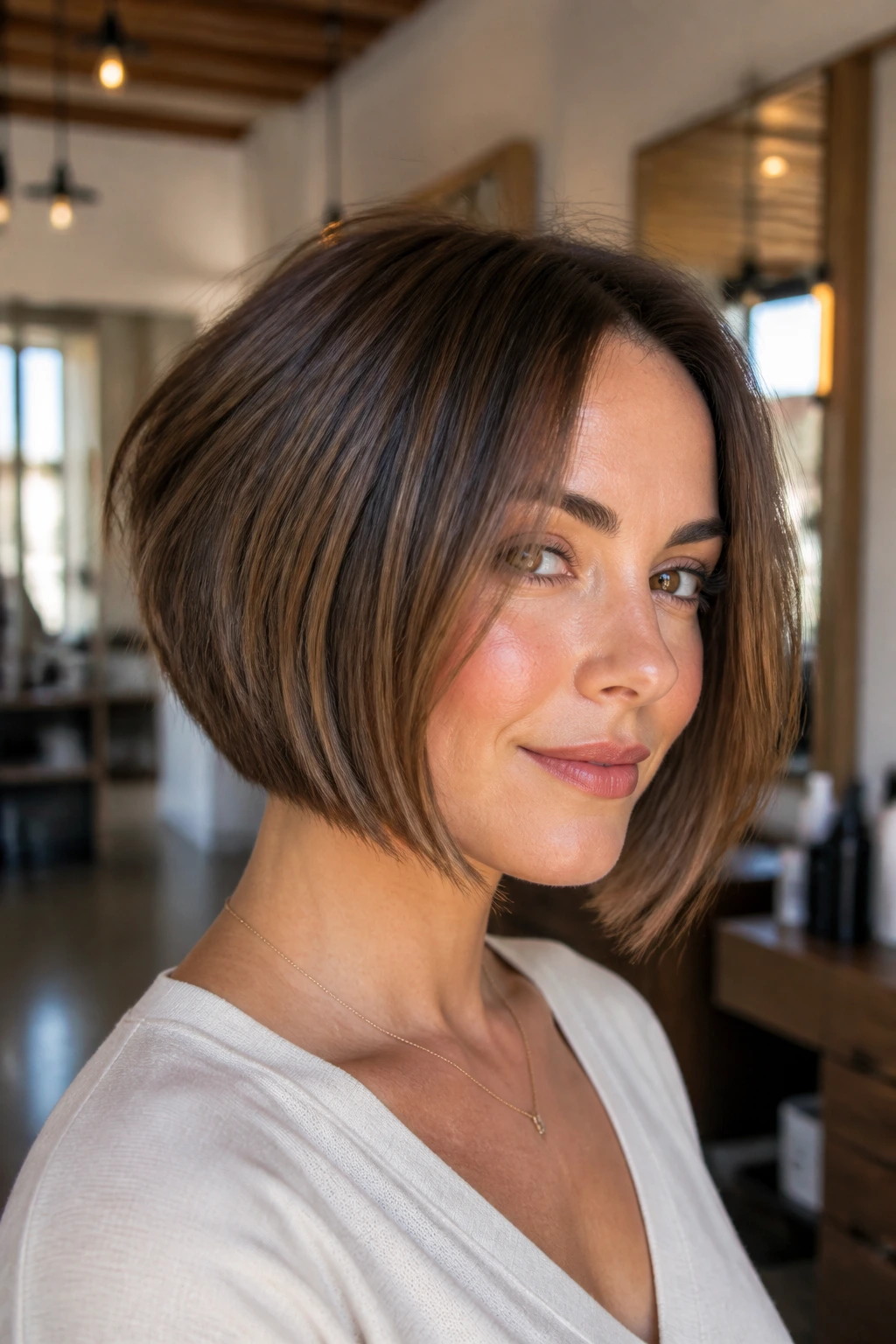
A graduated bob has a built-in shape at the back, but on a square face the graduation has to stay soft. Too much stacking at the nape can make the head look wider, and too much bluntness at the front can square off the jaw. The version that works here keeps the back tidy and the front slightly longer and beveled.
This cut is good if you want a neat outline that still moves. It gives the hair structure without turning it into a hard box. Ask the stylist to keep the transition from back to front smooth, with no sudden shelf behind the ears.
It’s a clean cut. Just not a rigid one.
Why Short Hair Needs Soft Angles on a Square Face
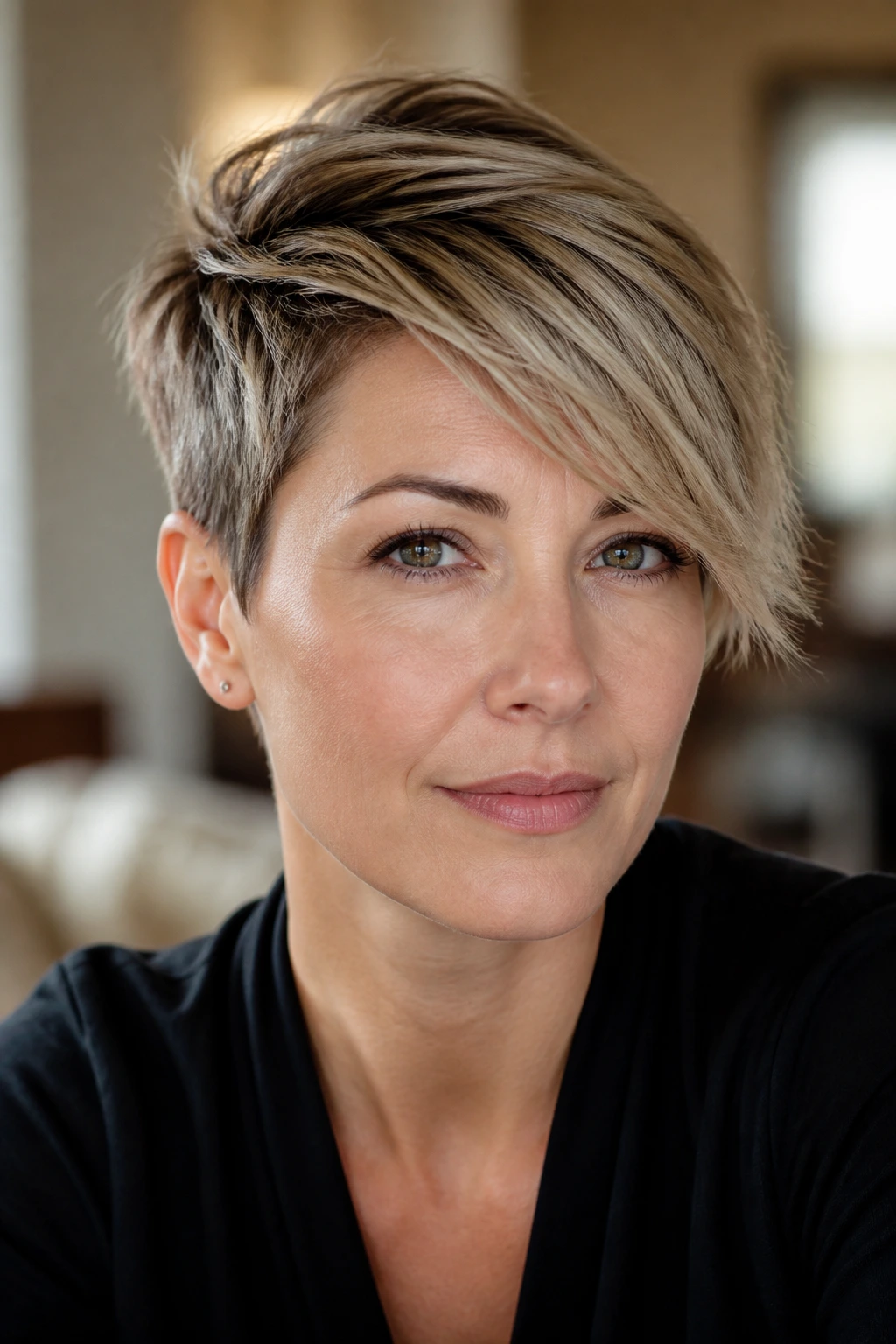
A square face has strong geometry, and that is not a flaw. It just means the haircut has to be smarter about where it puts weight, where it leaves air, and where it interrupts a line. Straight lines stacked on top of straight lines can make the face look broader than it is. Bent lines, broken fringes, and off-center parts do the opposite.
Where the angles sit
The widest spots are usually the forehead, cheekbones, and jaw. When a short haircut ends right on one of those points, the eye stops there. That’s why so many square faces look better with hair that lands just above or just below the jaw instead of directly on it.
What softens the outline
- Side parts shift the visual center.
- Curtain bangs split the forehead into softer pieces.
- Feathered ends keep the jaw from reading as the widest point.
- Crown lift makes the face feel longer, not wider.
What tends to fight the face
A rigid center part with blunt bangs. A thick bob that ends square on the jaw. Overly carved sideburns. They all draw cleaner boxes around the face, and square faces do not need more boxes.
How to Pick the Right Version for Your Hair Texture

Texture changes the whole conversation. The same cut can look airy on one head and bulky on another, and this is where a lot of salon disappointment starts. A good stylist looks at how your hair falls dry, not just how it behaves under a blow-dryer.
Fine hair usually needs cleaner lines and fewer internal layers. Too much thinning can make the ends look sparse. Thick hair needs bulk removed from inside the shape so the sides do not puff out and widen the face. Wavy hair can handle more broken edges, which is why shaggy crops and French bobs often look better on waves than on dead-straight hair.
Curly hair is its own category. The cut should follow the curl pattern, not fight it, and the perimeter should usually stay a little longer than you think. Curly hair springs up. A lot. If the stylist cuts it too short while wet, you may end up with shape in places you never asked for.
What to Tell Your Stylist Before the Cape Comes On
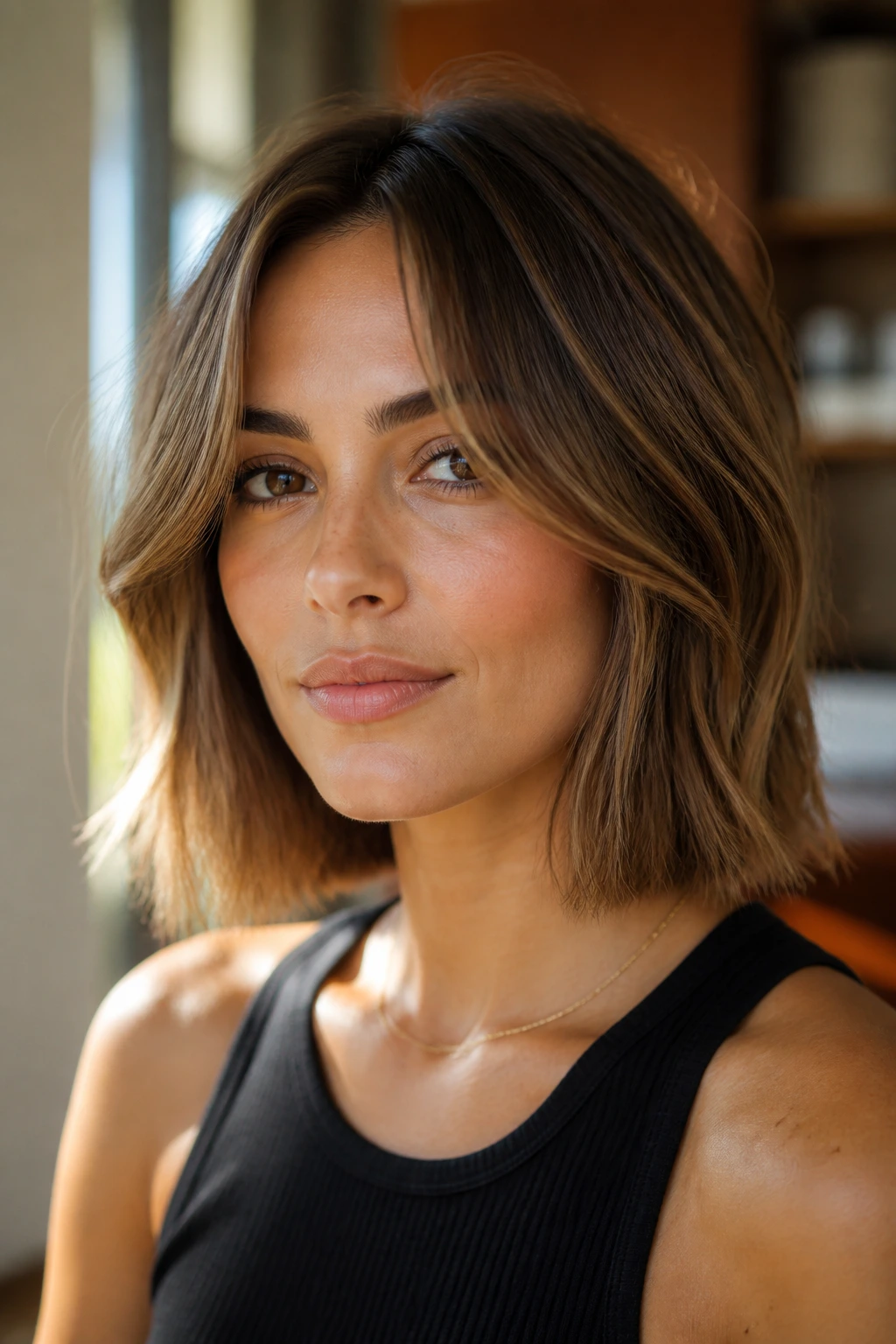
Bring pictures, yes. But bring the right kind of pictures. One front view is not enough. A side view matters, and a back view helps too, because square-face-friendly cuts often depend on the way the nape and temple pieces land when you turn your head.
Say things like “keep the line soft around the jaw” and “I want movement across the forehead, not a hard fringe.” Those sentences are more useful than asking for a trendy name and hoping the other person reads your mind. If you hate volume at the sides, say that. If your crown goes flat, say that too.
A few useful salon notes:
- “Keep the front a little longer than the jaw.”
- “Avoid a blunt line that hits the widest part of my face.”
- “I want softness around the temples and cheekbones.”
- “Please don’t over-thin the ends.”
That last one matters more than people think. Over-thinning can make short hair fray out and look tired fast.
Essential Tools for Styling Short Hair at Home
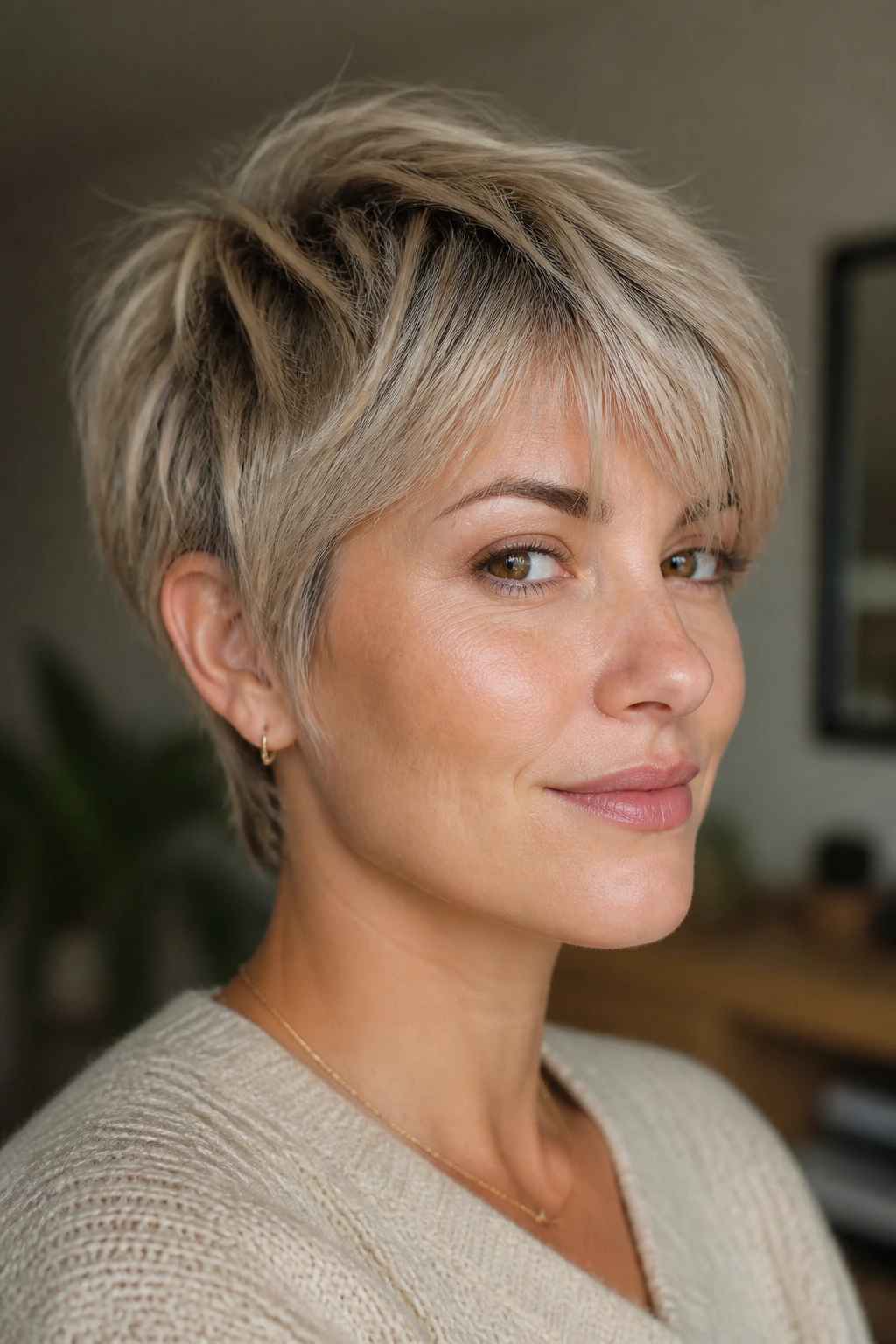
Short hair looks easy until you try to make the shape hold for more than three hours. A small set of tools makes a big difference.
- Blow dryer with a nozzle: Directs air where you want it, which matters when you’re shaping a fringe or crown.
- 1-inch curling iron or wand: Gives short cuts a soft bend without making the ends look over-curled.
- Small round brush: The best tool for bobs, pixies, and fringe sections that need lift.
- Paddle brush: Useful for smoothing the base of the cut without killing volume on top.
- Tail comb: Helps with clean parts and sectioning, especially around bangs and crown.
- Duckbill clips: Keep the top separated while you work through the sides.
- Light mousse or root lift spray: Adds structure without making short hair stiff.
- Texture spray: Good for piecey ends, shags, and French bobs.
- Matte paste or soft wax: Best for pixies and crops that need definition.
- Dry shampoo: More than a grease fix. It adds grip to short hair that slips flat.
How to Style These Cuts Without Flattening the Crown
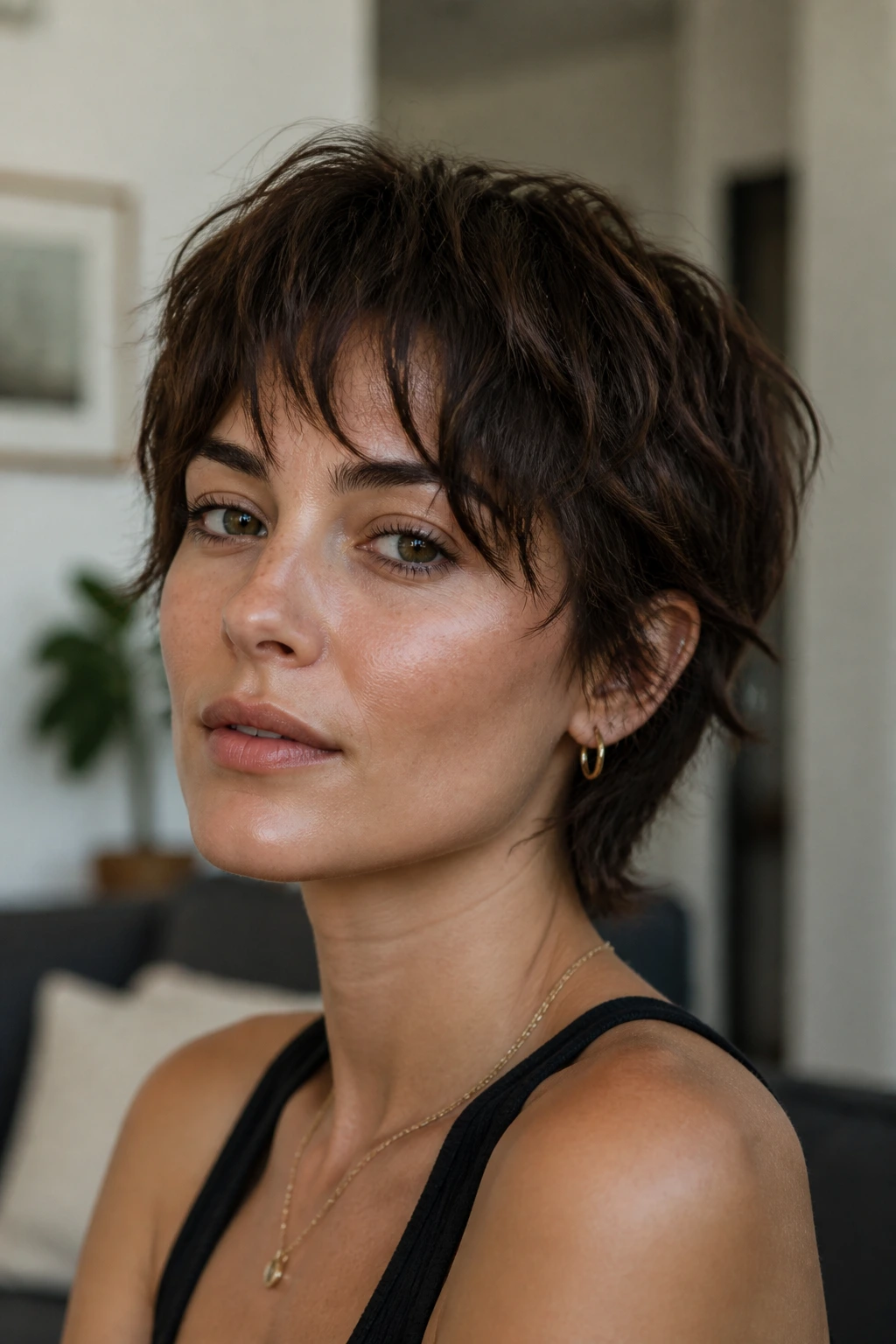
The crown is where short hair either comes alive or falls apart. If the roots sit flat there, square faces can look wider because the hair clings to the sides instead of lifting up and away. A little root lift changes the silhouette fast.
For straight hair
Start with a light mousse at the roots, then rough-dry until the hair is about 80 percent dry. Use the nozzle and brush the crown up and back, not straight down. The goal is lift, not volume all over. Too much side puff is the wrong kind of big.
For wavy hair
Scrunch in a little cream, then let the hair air-dry until the shape forms. After that, you can touch only the front pieces with a curling iron if they need direction. Wavy short hair usually looks better with a bit of separation than with a perfect, rounded finish.
For curly hair
Diffusing works, but so does simply cupping the curls at the crown and letting them dry with space. Do not rake through them too much once they start setting. That can make the sides widen, which is exactly the opposite of what a square face wants.
For day-two refreshes
Use dry shampoo at the roots, then warm a pea-sized amount of paste between your palms and pinch the ends back into shape. Fast. Clean. Done.
Small Adjustments That Make the Cut Feel Personal
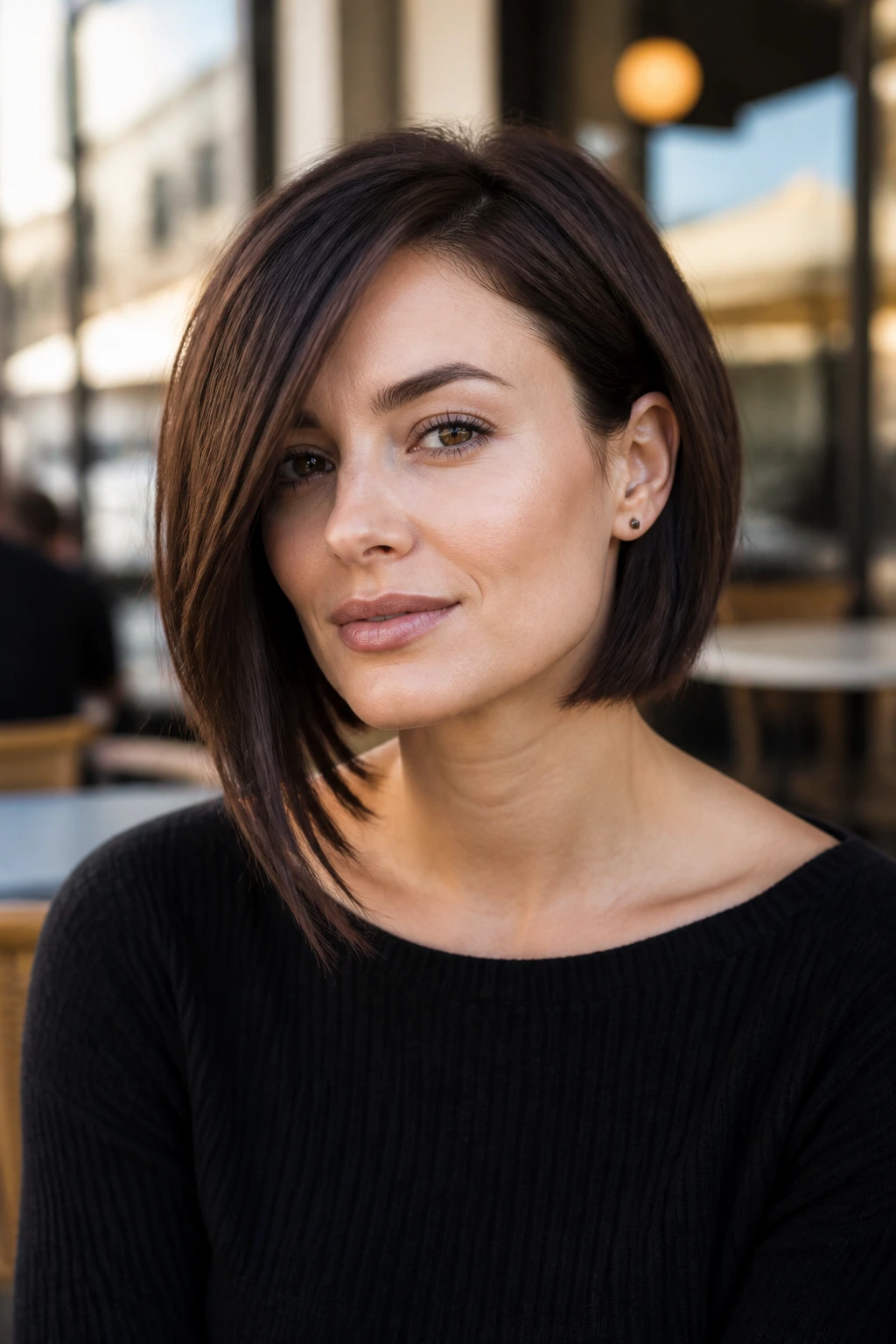
A haircut only works if it fits the hair you actually have. Not the hair on the inspiration photo. Not the hair after a salon blowout. Your hair.
For fine hair: Keep the perimeter clean and avoid too many short layers at the sides. A little crown lift helps more than aggressive texturizing.
For thick hair: Ask for internal debulking so the sides do not flare out around the jaw. Heavy hair can widen a square face if it sits like a shelf.
For curly hair: Let the length run a little longer than you think it should. Curly shapes shrink, and that shrinkage can expose the jaw too much if the cut is too short.
For a more polished finish: Choose a bob or pixie with a bevel at the ends and a side part. It reads neat without looking hard.
For a rougher, cooler feel: Go for broken fringe, piecey ends, and a little asymmetry. The face gets the softness; the haircut gets some attitude.
Color can help too. A few lighter pieces around the front soften the outline even more, especially on darker hair where the silhouette reads strongly.
Common Mistakes That Make Square Faces Look Wider
The cut is only half the story. The rest is in the execution.
Blunt ends hitting the jaw: This is the big one. The symptom is a haircut that seems to stop the eye right at the widest point of the face. The fix is simple: move the length a little above or below the jaw, or break the line with texture.
Too much width at the sides: If the hair puffed out around the ears, the face can look broader. Ask for internal shaping, not bulk at the sides.
Heavy bangs that stop straight across the forehead: They can make the upper face look boxed in. Curtain bangs, bottleneck fringe, or a side sweep usually work better.
Ignoring the crown: Flat roots make the whole cut collapse downward and outward. A little root lift spray and round-brush work changes the balance.
Over-thinning fine hair: This can leave wispy ends that fray instead of soften. The fix is to keep the cut cleaner and use less aggressive texturizing.
Choosing a cut that only works blown out: If you do not plan to style your hair every morning, the cut has to behave on its own. Ask for a version that still looks good when air-dried.
Variations and Alternatives by Hair Type and Lifestyle
The Fine-Hair Edit: Choose the soft side-swept pixie, textured crop, or feathered pixie-bob. These keep the shape light without forcing the hair to carry too much volume.
The Thick-Hair Edit: Go for the side-parted undercut pixie, soft graduated bob, or asymmetrical bob. They remove bulk where it matters and keep the jaw from getting crowded.
The Curly-Hair Edit: The rounded curly bob and the shaggy crop are the easiest wins. Let the cut follow your curl pattern, and keep the perimeter a touch longer than a straight-haired person would.
The Low-Styling Edit: The French bob, soft graduated bob, and collarbone bob with curtain bangs are the most forgiving. They look intentional with a quick bend and a little texture spray.
The Edgier Edit: The short wolf cut, piecey mushroom crop, and undercut pixie bring a sharper mood. Just keep the sides soft enough that the face still gets breathing room.
The Grow-Out Edit: The collarbone bob with curtain bangs and feathered bixie are the best if you do not want a salon trim every month. They slide into the next stage without looking awkward halfway through.
Keep the Shape Sharp Between Salon Visits
Short hair grows fast in all the wrong places. The nape starts to blur, the fringe creeps into the eyes, and the sides puff out around the ears. That’s normal. The fix is maintenance, not panic.
Pixies usually want a trim every 4 to 5 weeks if you care about the shape. Bobs can stretch to 6 to 8 weeks, but the fringe may need a small tidy-up sooner. If you have a strong cowlick at the crown or a stubborn split in the fringe, a mini cleanup around the front can keep the cut from getting annoying.
Use a clarifying shampoo once every week or two if you rely on texture spray or dry shampoo. Product build-up can make short hair sag. On the flip side, if your hair is very dry, skip harsh clarifiers and use a light conditioner only on the ends.
Sleep helps too. A silk or satin pillowcase keeps short layers from snapping up into strange directions overnight, especially around the fringe and ears.
Frequently Asked Questions

Can a blunt bob work on a square face?
Yes, but only if the line is softened somewhere. That can mean a side part, a beveled end, or a length that sits below the jaw instead of right on it. A perfectly blunt jaw-length bob is the version most likely to make the face look boxier.
Are bangs a bad idea for square faces?
Not at all. Straight-across bangs can be tricky, but side-swept bangs, curtain bangs, and bottleneck fringe often look excellent because they break up the forehead width and add movement.
What short haircut makes a square face look softer fast?
The soft side-swept pixie and the textured French bob are two of the quickest wins. Both interrupt the jawline and keep the face from reading as a hard frame.
Should I avoid a middle part?
Not always. A middle part can work if the cut has softness in the fringe or movement at the ends. If the haircut is blunt and the hair is very flat, a slight off-center part usually looks gentler.
Does curly hair change the rules?
Yes. Curly hair already creates texture and roundness, so the cut can be simpler in shape. The main thing is to leave enough length that the curl shrinkage does not expose the jaw too much.
How short is too short for a square face?
There’s no fixed number, but ultra-short cuts with hard edges can make the jaw more dominant. If you go very short, ask for softness at the temples, lift at the crown, and some asymmetry around the fringe.
What if my hair is fine and goes flat by lunchtime?
Choose a cut with built-in texture, then style the roots first. A little mousse, a round brush at the crown, and a touch of dry shampoo can keep the shape standing longer than a heavy cream ever will.
How do I keep short hair from looking puffy at the sides?
Ask for internal shaping, not bulk removal all over. Then use a directional blow-dry to push the sides in slightly and keep the crown lifted. The side volume should be soft, not wide.
The Cut That Lets Your Angles Do the Talking

A square face does not need a haircut that apologizes for the jaw. It needs one that knows where to bend, where to feather, and where to leave a little space. That’s what these short styles do best. They keep the face looking strong, but they stop it from looking squared off by accident.
Bring a photo, yes. Bring a few, if you can. Then tell the stylist where you want softness, where you want lift, and where you do not want a hard line sitting on your jaw. The right cut will not hide your face. It will make the angles look deliberate, and that’s a better outcome anyway.