



Wavy hair and oval faces have a nice thing going on together. The hair brings movement, the face shape gives you room, and the result can look deliberate even when the styling took ten minutes and a diffuser that was running hot. The trick is not to flatten the wave into obedience. It’s to place the shape where the wave already wants to bend.
The wrong cut can still make a mess of it. Too much thinning at the wrong spot, a blunt line cut in the wrong length, or fringe that lands an inch too high can turn soft texture into puffed-out sides and a forehead that looks wider than it is. Small changes matter here. A half inch at the cheekbone, a longer face frame, a better parting choice — those are the details that decide whether a haircut feels tailored or accidental.
That’s why this set of 18 hairstyles for wavy hair and oval faces leans hard on proportion. Some looks are cuts, some are styling patterns, and a few are the kind of in-between ideas that save a bad hair day without pretending your hair is something it isn’t. A good wave wants to move. An oval face can carry a lot of shapes. The sweet spot is where those two facts stop fighting and start helping each other.
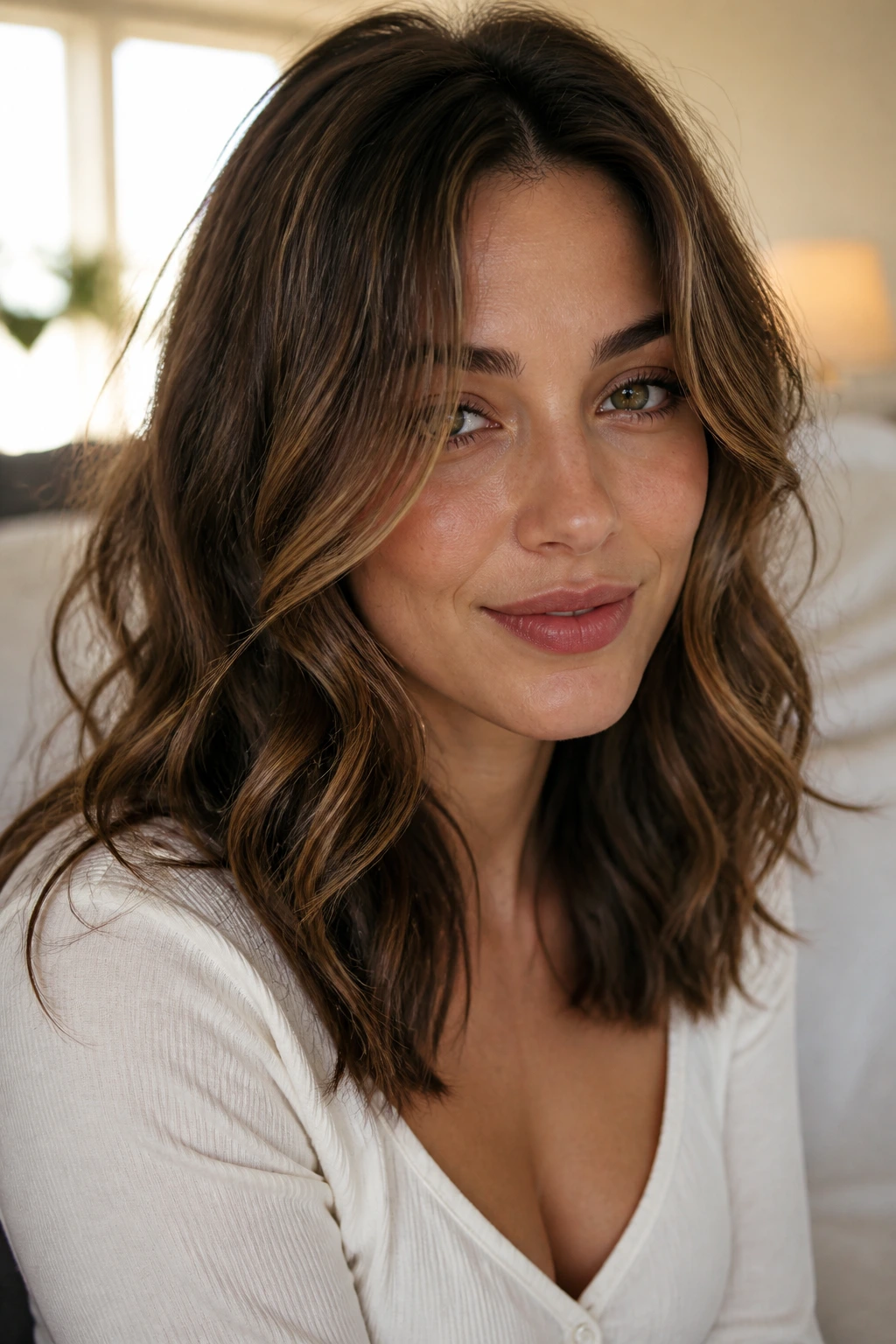
Why These 18 Styles Work So Well Together
-
Cheekbone Placement: The strongest looks here let the front pieces land near the cheekbone or jawline, which keeps wavy hair from puffing out at the widest point of the face.
-
Parting Freedom: Oval faces can handle a center part, a soft off-center part, or a deep side part, so the real question is which one gives your crown the most lift.
-
Texture First: These styles respect the wave pattern instead of ironing it smooth and asking it to remember its personality later.
-
Bulk Control: Dense waves need weight removed from the inside, not hacked off the perimeter, or the ends turn boxy and wide.
-
Low-Fuss Shape: A lot of these looks work with air-drying, a diffuser, a clip, or one small iron touch-up around the front.
-
Day-Two Behavior: Wavy hair often looks better after it settles overnight, and several of these styles are built to keep their shape when that happens.
Keep one thing in mind as you scroll: the right cut is not just about “looking good on an oval face.” It’s about where the hair lands when it bends, flips, or collapses a little by the end of the day. That’s the whole game.
1. Long, Soft Layers With a Center Part
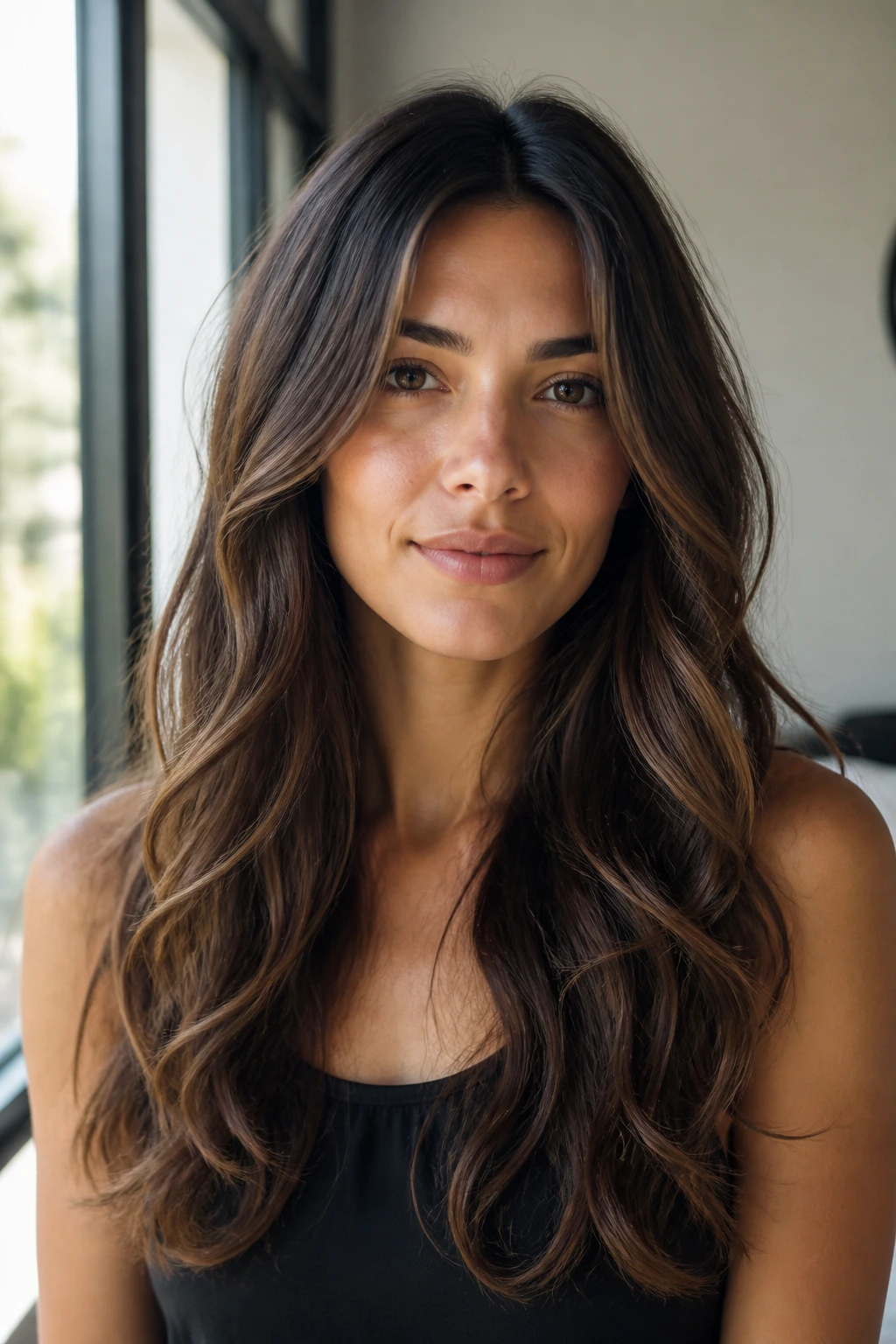
Long, soft layers are the easiest way to keep wavy hair moving without losing the clean outline that an oval face can wear so well. The cut lets the wave show up through the lengths, but it stops the ends from hanging like one heavy curtain.
Ask for the shortest layer to start below the chin if your waves are loose, or closer to the lip if your hair is dense and needs more release. The front should stay a touch longer than the sides. That little detail matters more than people think. It keeps the wave from puffing outward at the temples.
A center part works especially well here because it gives the face symmetry without making the hair feel severe. If your part drifts a little, leave it alone. Wavy hair rarely sits like a ruler, and that’s part of the charm.
- Best when you want length past the shoulders.
- Works with air-drying or a low-heat diffuser.
- Ask for internal layers, not heavy thinning at the ends.
- A pea-size cream on the mids and ends is usually enough.
2. Collarbone Lob With Bent Ends
Why do collarbone lobs keep showing up on wavy hair? Because that length lands right in the zone where the bend in the hair looks intentional instead of accidental. On an oval face, the collarbone length keeps the vertical line long enough to feel balanced, but it still gives the ends a place to flip and move.
The best version isn’t poker-straight. It has a soft bend through the middle and a little curl or kick at the bottom, almost like the hair changed its mind halfway down. If your hair is thick, ask for weight removal under the top layer only. If it’s fine, keep the perimeter a little blunt so the ends don’t disappear.
How to style it
A 1.25-inch iron on just the front two inches can do more for this cut than a full head of heat styling. Wrap the front away from the face for five to eight seconds, then let the wave fall loose. The result is tidy without looking stiff.
This cut is also one of the best choices if you want to tuck one side behind the ear and let the other side stay loose. That tiny asymmetry gives an oval face some angle.
3. Curtain Bangs and Shoulder-Length Waves
Curtain bangs and wavy hair have a real relationship, not just a passing flirtation. The split fringe pulls attention to the eyes and cheekbones, and an oval face can carry the shape without the bangs competing with the rest of the cut.
Why they frame the face so well
The longest part of the fringe should graze the cheekbone or land just below it. Anything much shorter can bounce too high when the wave dries, which turns soft bangs into a little shelf. The middle should open enough that you can wear the bangs with a center part or slightly off-center, depending on what your roots are doing that day.
Shoulder-length waves keep the whole style from feeling heavy. The shoulders give the waves a place to stop, and the bangs keep the front from looking plain. There’s a nice tension in that combination. It doesn’t need much extra styling.
What to ask for
- Face-framing pieces that start near the cheekbone
- Bangs cut with your wave pattern in mind, ideally not straight across
- A soft blend into the side layers so the fringe doesn’t look pasted on
- Enough length to tuck the bangs behind the ear if they start misbehaving
If you like a style that can look polished with almost no effort, this one earns its keep.
4. Chin-Length French Bob
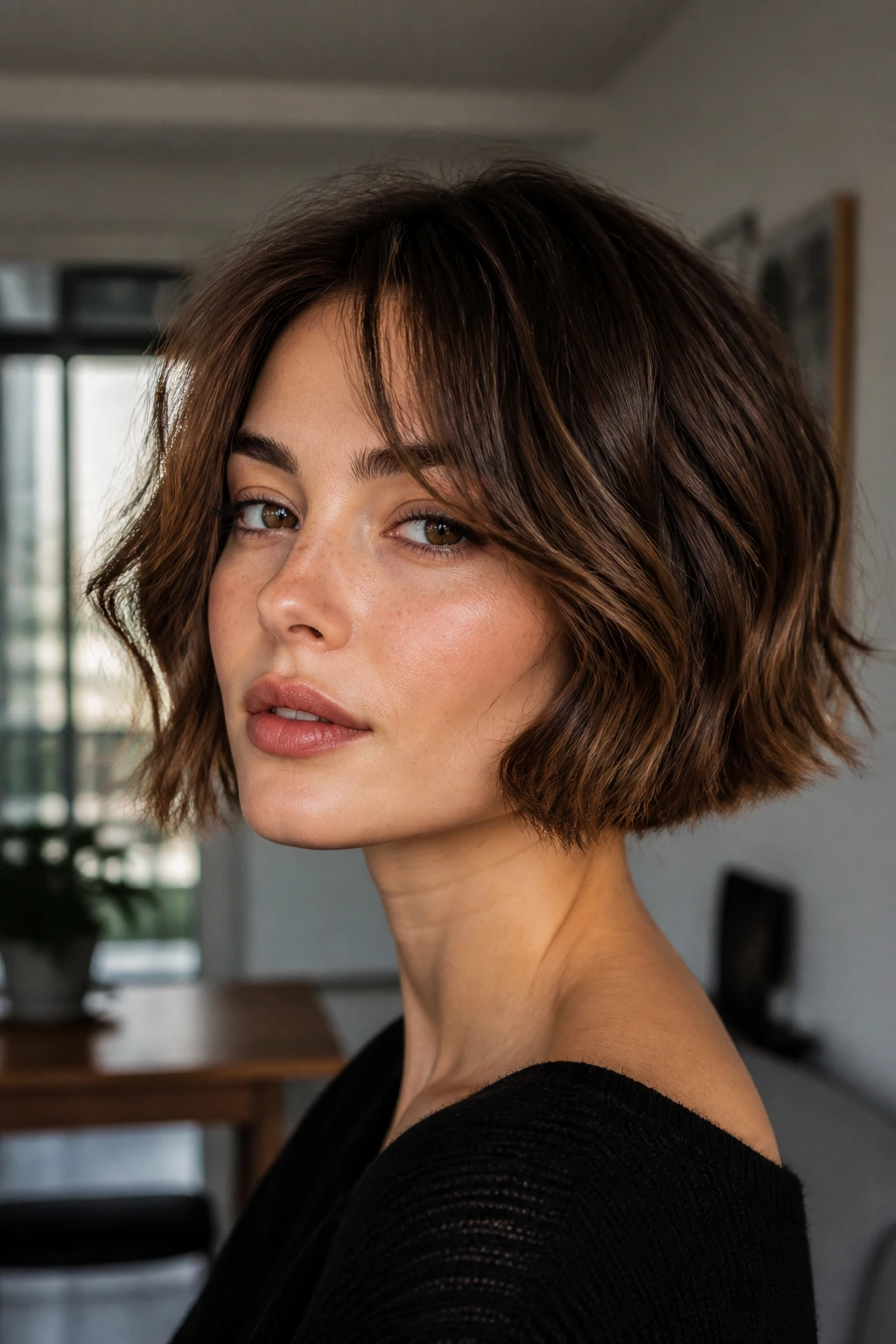
A chin-length French bob on wavy hair sounds sharper than it actually looks. The wave softens the edge, and the oval face keeps the cut from feeling too round or too boxy. Done well, it has that neat, slightly undone shape that makes people look twice.
The key is not making the bob too exact. A tiny bit of softness around the perimeter keeps the wave from springing outward like a bell. Ask for the front to be just a hair longer than the back, especially if your waves are dense. That keeps the jawline visible instead of buried under a bubble of hair.
If your hairline gets frizzy, a bob this short can either look chic or look exploded by noon. The difference is product choice and how much weight the ends carry. A light cream and a diffuser on low heat are usually enough. Heavy oil at the roots is not your friend here.
This cut works best when the neck is open and the hair moves as a single shape, not a bunch of separate pieces fighting each other. Clean. Soft. A little cheeky.
5. Butterfly Layers Around the Cheekbones
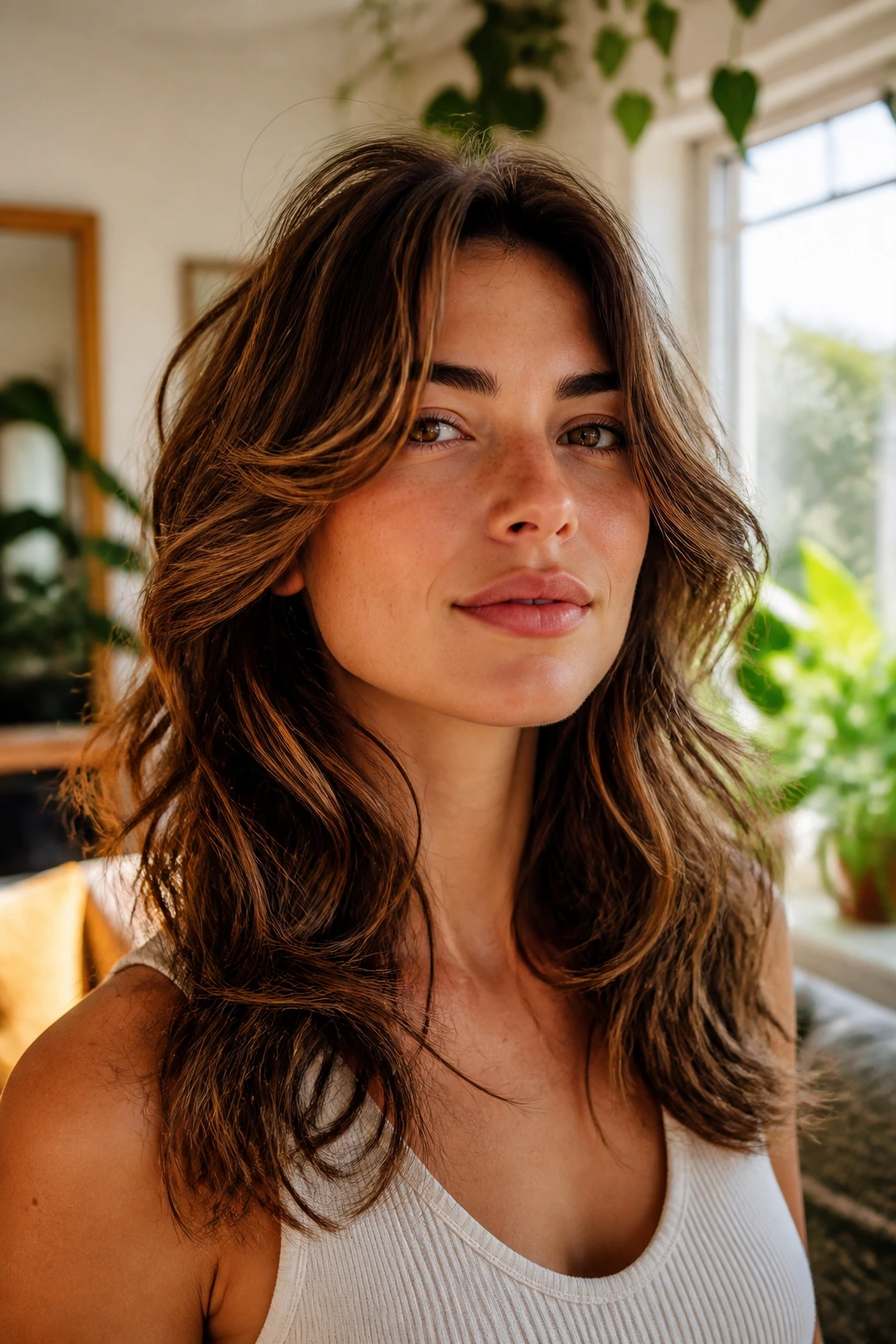
If your waves go flat at the crown and puffy at the bottom, butterfly layers are one of the smarter fixes. The short top layers give lift near the head, while the longer bottom layers keep the face lengthened and the overall shape from getting choppy.
The placement is the whole point. The shortest pieces should start around the cheekbone or just below it, where they can land as a soft frame instead of a random chop. Oval faces make room for that shape because they don’t need the cut to do all the balancing work.
This is one of those styles that looks expensive when the blowout is good, but it also survives a casual air-dry surprisingly well. The top layers catch air. The lower layers keep movement. The two lengths talk to each other, which sounds dramatic, but that’s really what’s happening.
If your hair is thick, ask for the interior to be sculpted rather than aggressively thinned. If it’s fine, keep the top layers a little longer so they don’t vanish once the waves settle.
6. Deep Side Part With Tucked-Behind-Ear Waves
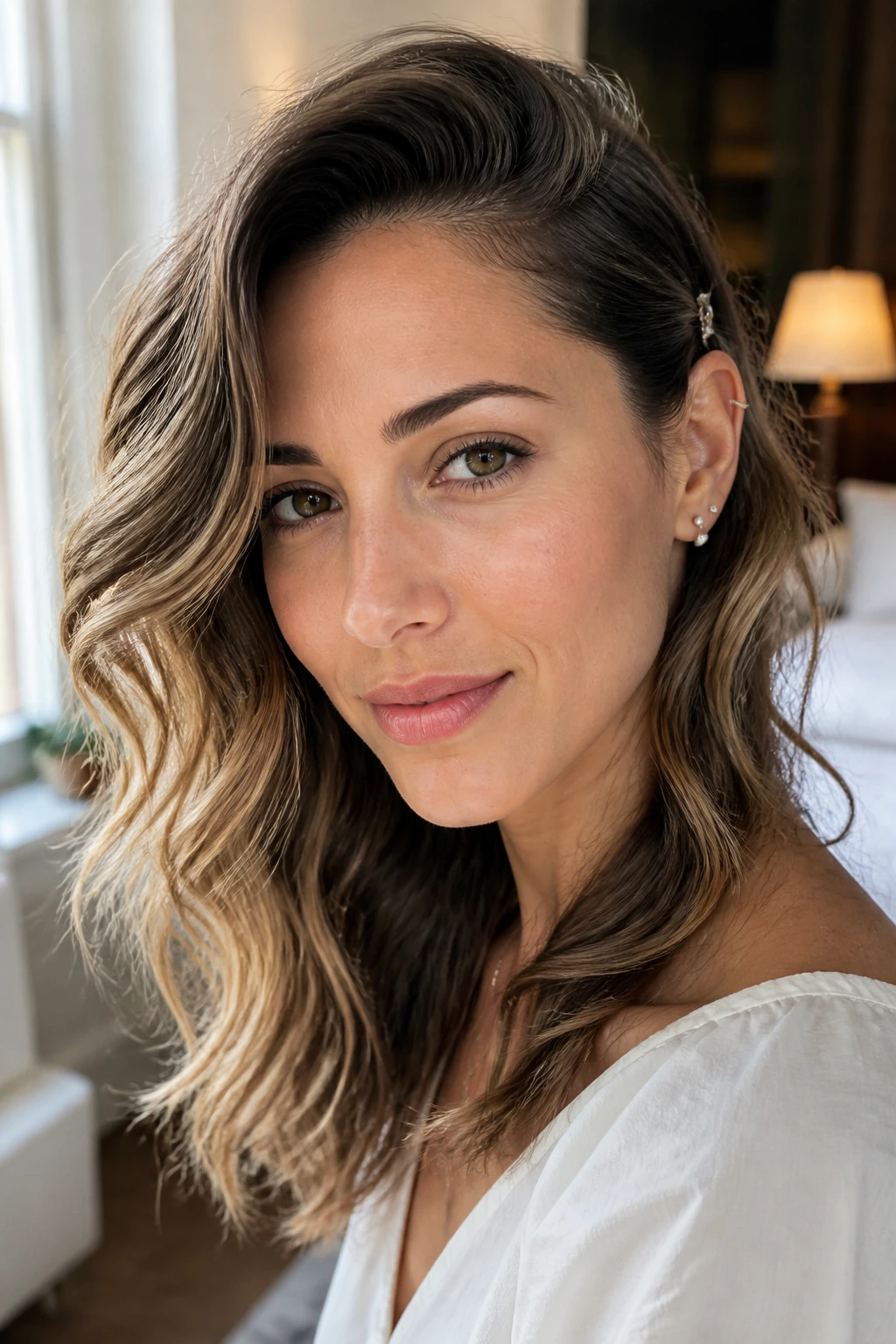
A deep side part changes the whole mood of wavy hair. Instead of symmetrical softness, you get a diagonal line that lifts the crown and makes the cheekbone on the heavier side stand out more. On an oval face, that angle adds interest without throwing off balance.
Why the side part helps
The root at the part gets a little lift, which is useful if your waves tend to lie flat on top and puff at the ends. The heavier side can skim the cheek while the tucked side shows off the jawline and ear. That contrast is the reason this style keeps getting worn in real life, not just in photos.
The cut itself can stay simple: collarbone length, long layers, or a lob with soft ends. The part does the heavy lifting. That’s good news if you don’t want to commit to a full haircut every time you want a different effect.
How to wear it
- Blow-dry or diffuse the roots opposite the part for extra height.
- Tuck the lighter side behind the ear and secure it with a small clip if needed.
- Keep the ends soft, not iron-flat.
- Finish with a touch of shine spray on the tucked side only.
It’s a small move. It changes a lot.
7. Piecey Shag With a Light Fringe
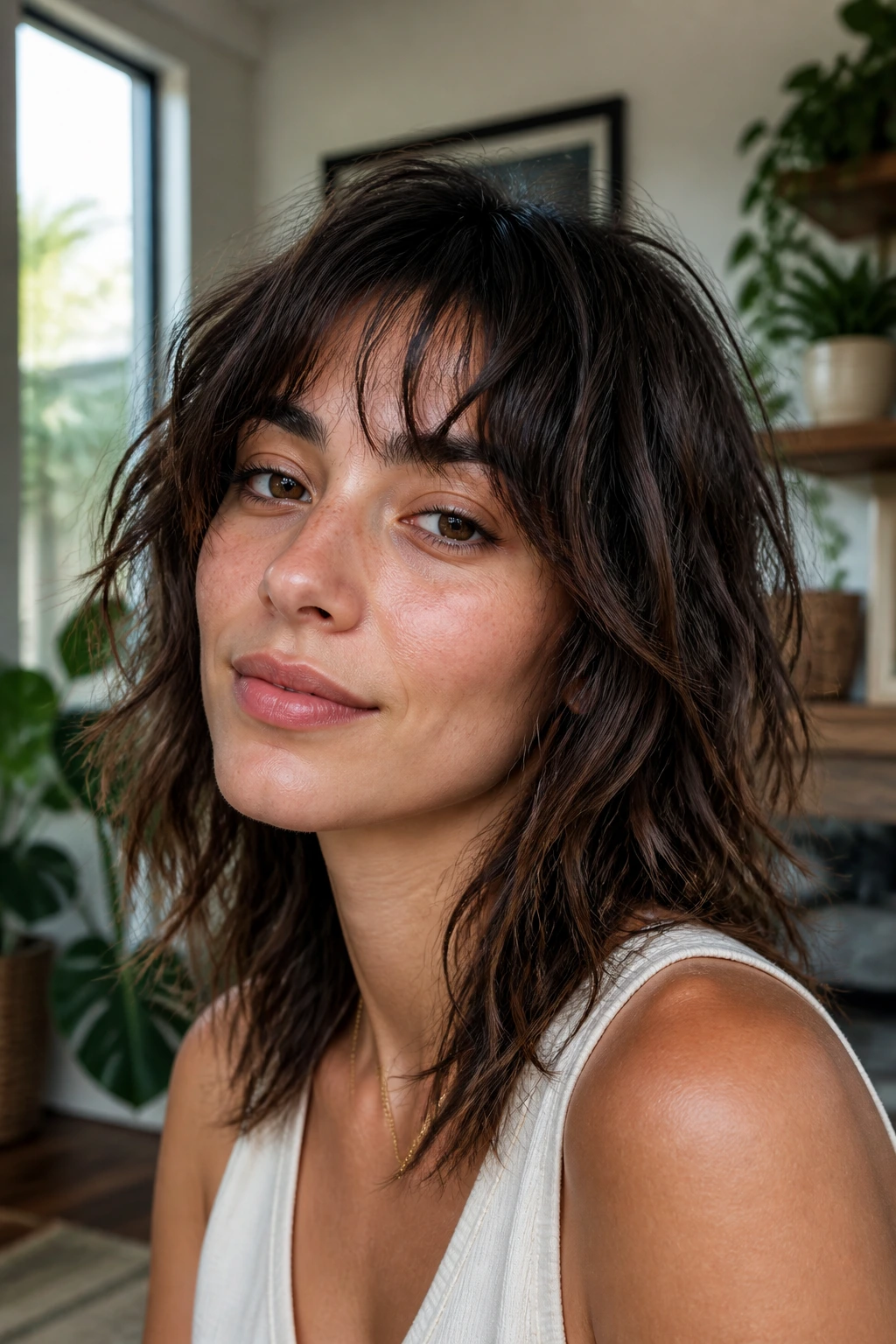
The shag gives wavy hair permission to look a little wild, and that can be a relief. Instead of trying to keep every strand lined up, it uses choppy layers and a light fringe to create shape where the wave naturally breaks.
Oval faces can wear this especially well because the cut brings focus to the eyes and cheekbones without needing a heavy structural edge. The fringe should stay soft and separated, never so thinned that it frizzes out after lunch. A good shag has pieces. It does not have fluff.
This cut comes alive with a bit of texture spray or mousse scrunched into damp hair, then a rough dry or a diffuse until about 80% dry. Once it’s mostly set, use your fingers to break up any clumps that formed too tightly. Don’t brush it out. That’s how you get triangle hair with opinions.
The best shag for wavy hair usually keeps the sides from getting too short. You want movement, not a mushroom. There’s a difference, and it matters.
8. Blunt Mid-Length Cut With Loose Texture
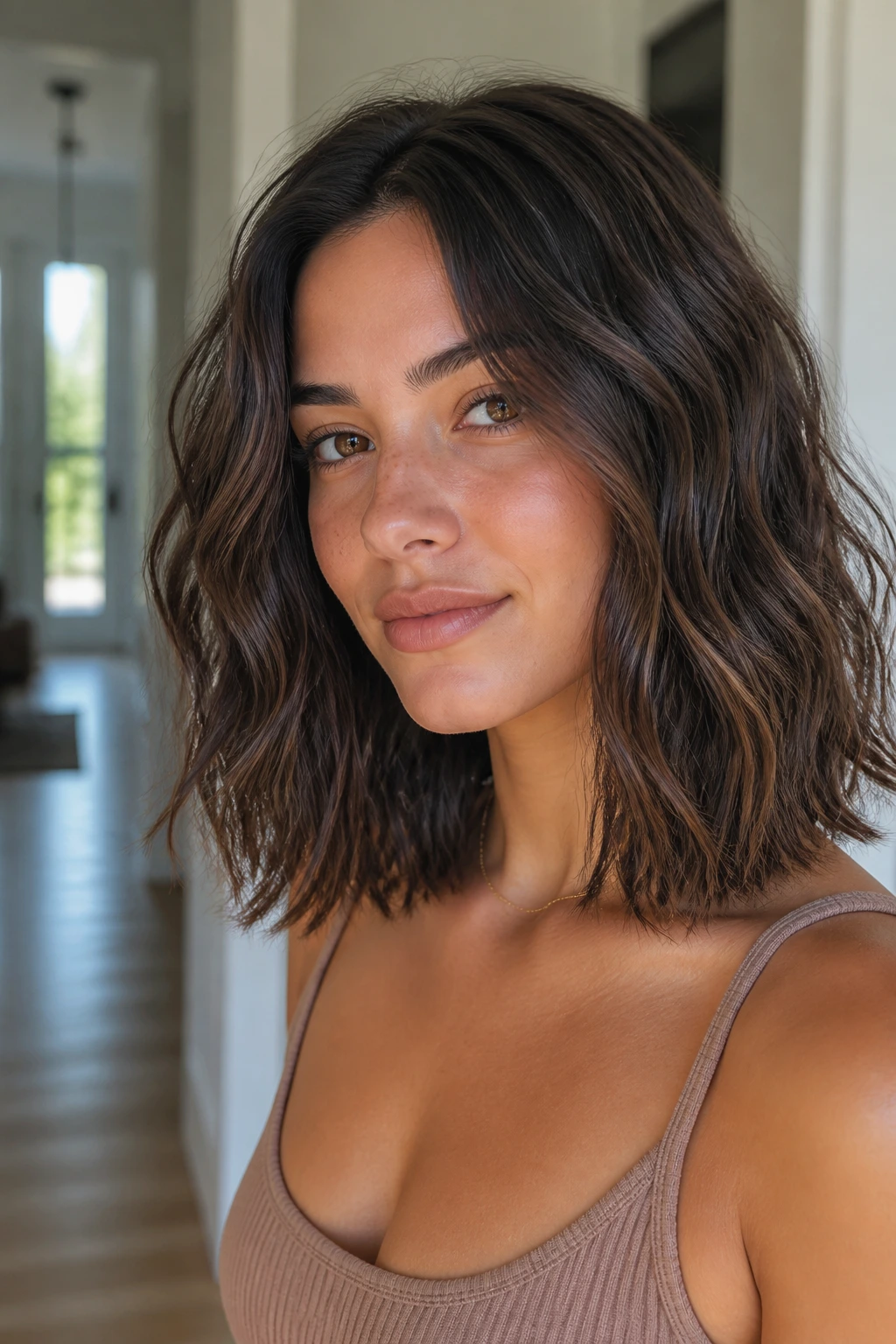
A blunt mid-length cut sounds like the opposite of what wavy hair should want. In practice, it can be one of the smartest shapes in the room. The weight of the perimeter keeps waves from exploding sideways, and an oval face gives that solid line enough softness to stay flattering.
The magic is in not over-layering it. Keep the bottom mostly blunt around the collarbone or a little below, then let the wave bend through the interior. If the hair is thick, a tiny bit of internal debulking helps. If it’s fine, don’t let anyone go wild with thinning shears. You’ll lose the line, and then the whole point disappears.
This style is especially good if you like a cleaner look on workdays but still want the wave to show up once the hair air-dries. It looks tidy when it’s smooth and interesting when it’s imperfect. That’s a rare quality.
A middle part is the simplest choice, but a soft off-center part can add lift if your roots flatten fast.
9. Half-Up Twist With Loose Waves
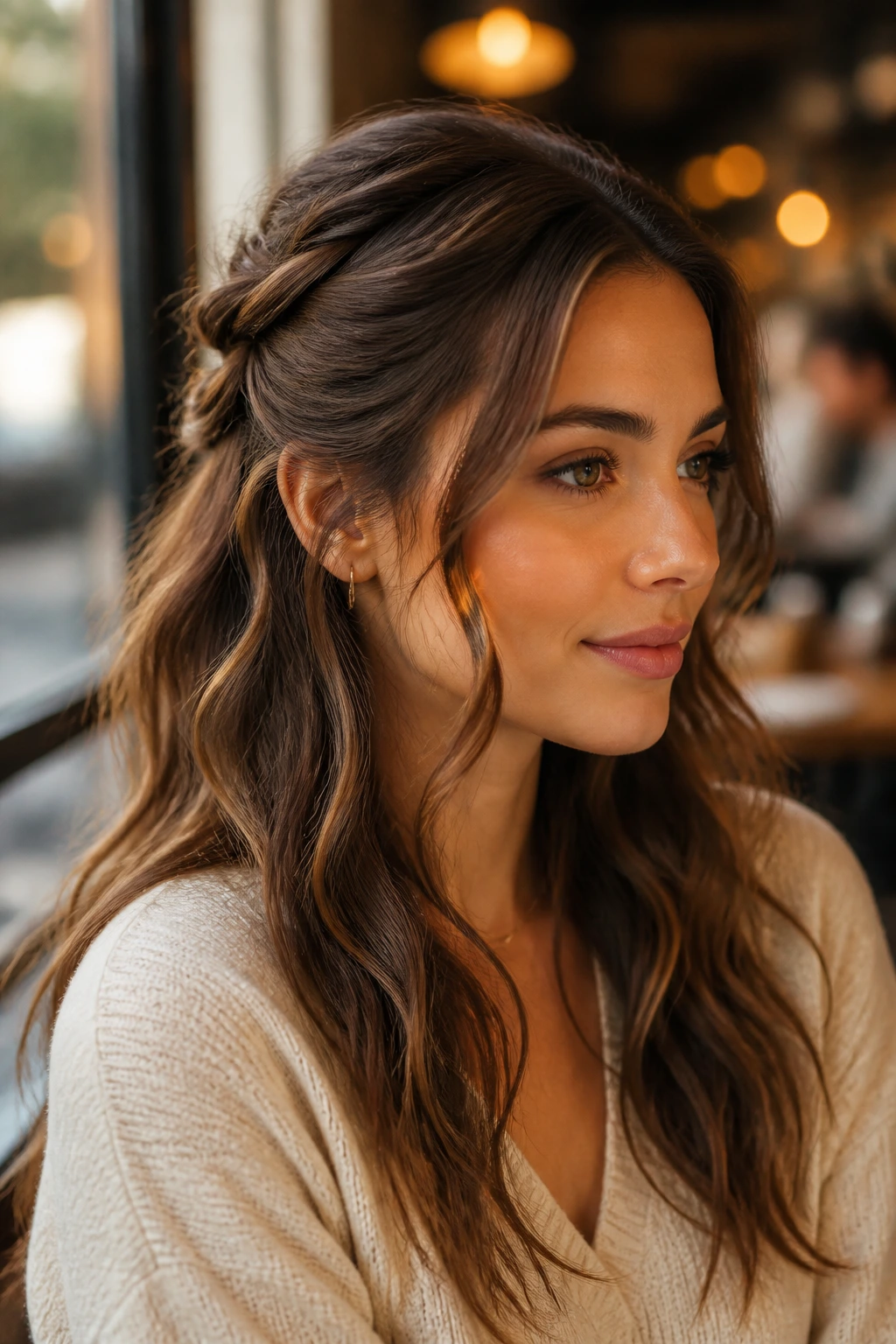
When you need hair off your face but don’t want a tight ponytail stamping a line across the crown, the half-up twist is the move. It keeps the top section controlled and leaves the wave pattern visible through the lengths, which matters on oval faces because you can keep the vertical line intact.
Pull back the front sections from the temples, twist them once or twice, and pin them at the back of the head just above the occipital bone. The twist should feel loose. If you cinch it tight, the style loses its softness and the top can look pulled too flat.
A few face-framing pieces left out on purpose help a lot here. Let them hit around the cheek or jaw, then bend them lightly with your fingers if they fall too straight. The style works for errands, dinners, and the kind of day when your hair is only cooperating in the first half.
A small claw clip can replace pins if your hair is thick. Just keep the twist low enough that the clip doesn’t poke out like a handle.
10. Low Loose Bun With Face-Framing Pieces
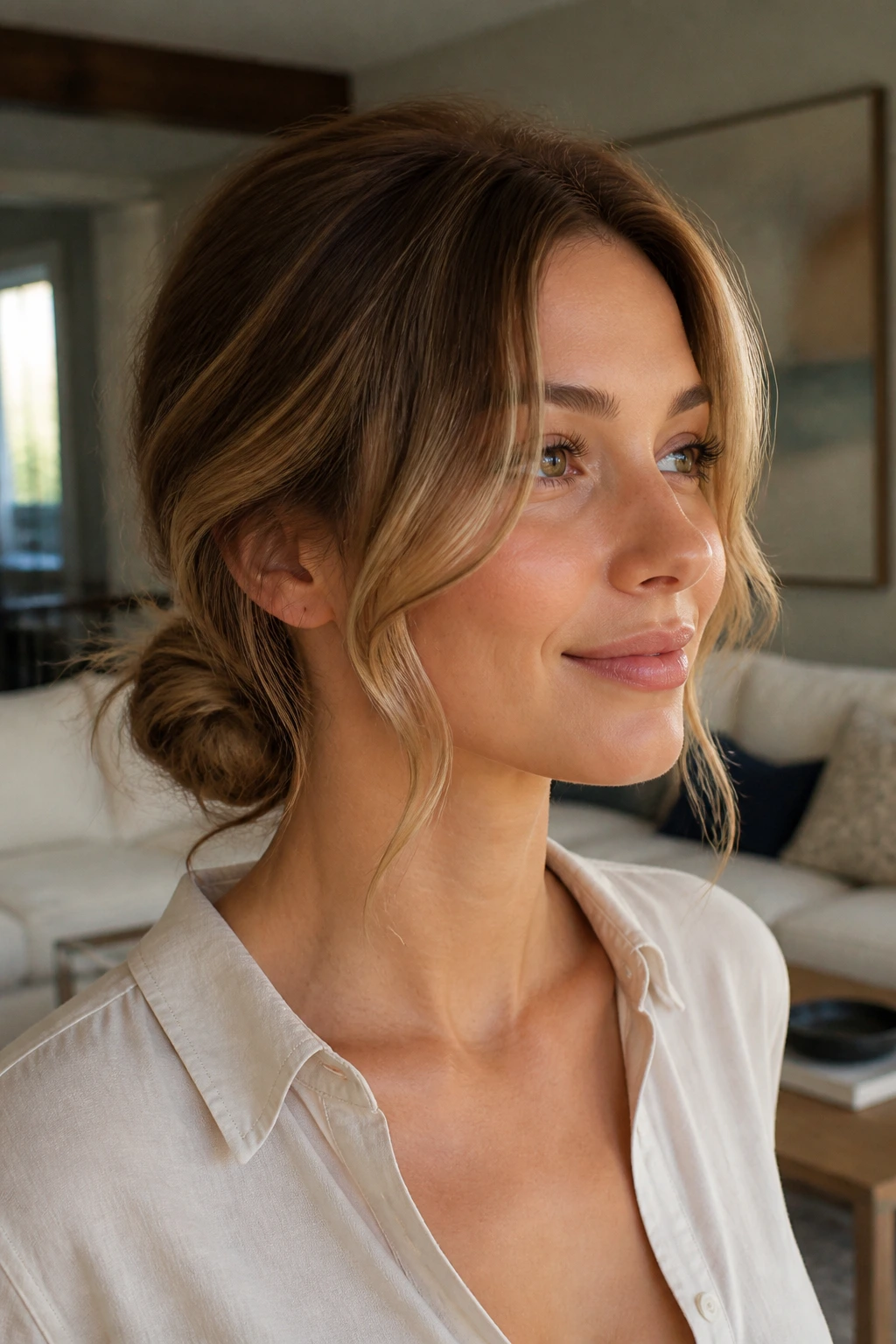
The low loose bun is one of those styles that people call casual, but it can look polished if the texture is in the right place. Wavy hair makes a bun better because the strands hold onto each other without needing a lot of product. An oval face benefits from the nape placement and the soft pieces around the cheeks.
When it beats a ponytail
A ponytail can pull the face back. A bun sits lower and steadier, which keeps the proportions calm. If your waves are thick, the bun also removes bulk from the neck area, which feels good on hot or busy days. If your hair is fine, the looseness makes the bun look fuller than it really is.
Keep the knot soft
- Twist the hair once, then coil it instead of wrapping it tight.
- Leave the ends a little loose so the bun doesn’t look glued down.
- Pull out two slim face-framing pieces after the bun is secured.
- Mist the front pieces with water and scrunch if they come out too straight.
This is not the place for perfection. A bun that shifts a little during the day usually looks better than one that looks shellacked into place.
11. Claw-Clip Sweep With Soft Tendrils
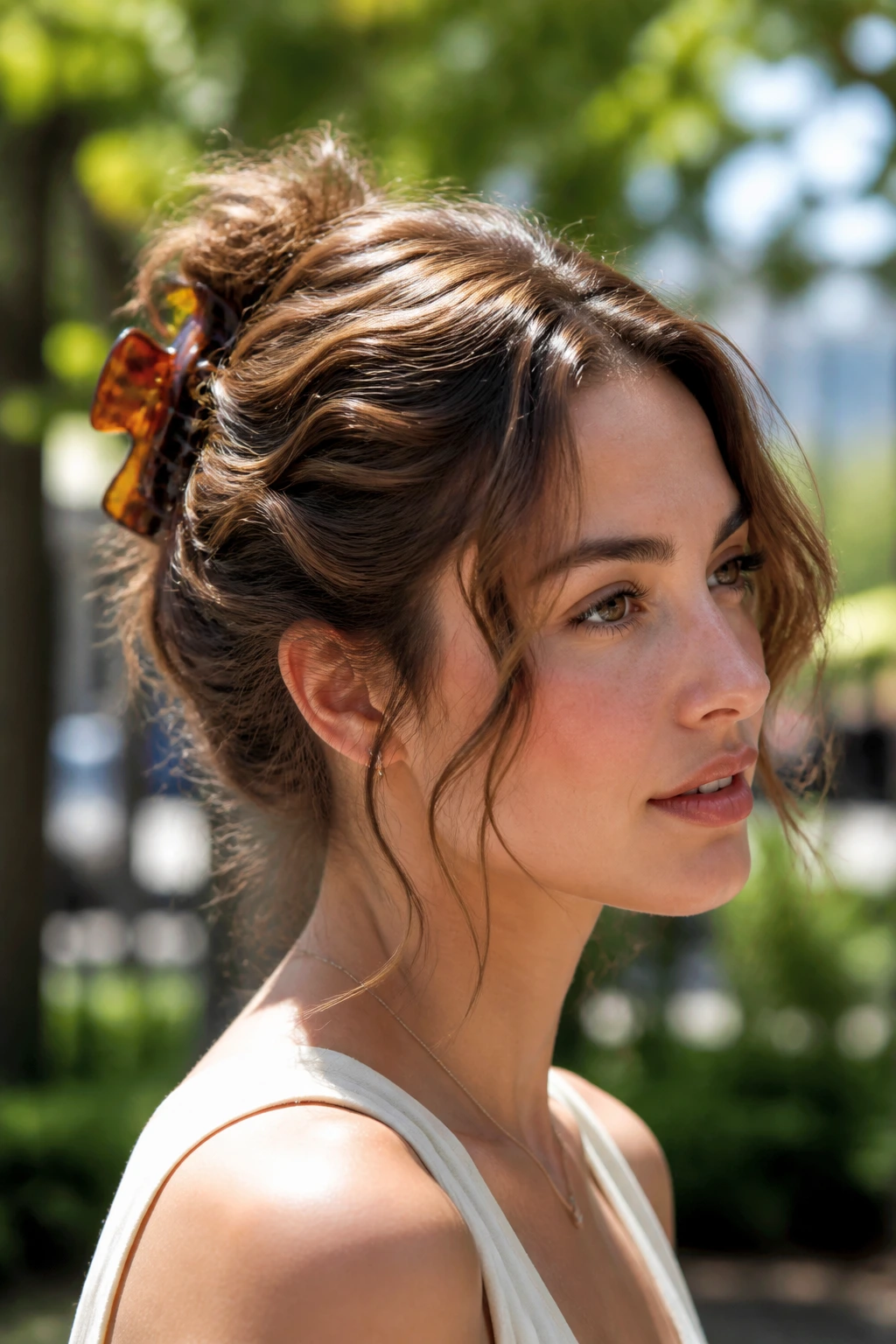
The claw clip saves wavy hair from needing a full styling session, and on an oval face it gives you a clean lift through the crown without flattening the sides into nothing. It’s the laziest-looking style here, which is exactly why it often ends up looking the most effortless.
Twist the hair upward once, fold it, and let the clip catch the middle rather than the very ends. If the clip sits too high, the shape turns rigid. If it sits too low, the hair slips out. There’s a sweet spot around mid-back of the head where the wave can still show at the bottom.
Soft tendrils around the temples make the whole thing look less severe. Keep them thin. Thick face pieces can swallow an oval face and make the style feel heavy, especially if the waves are strong.
This is a good one for second-day hair, because a little oil through the mids actually helps the clip grip. Clean hair can be too slippery.
12. Braided Crown With Undone Ends
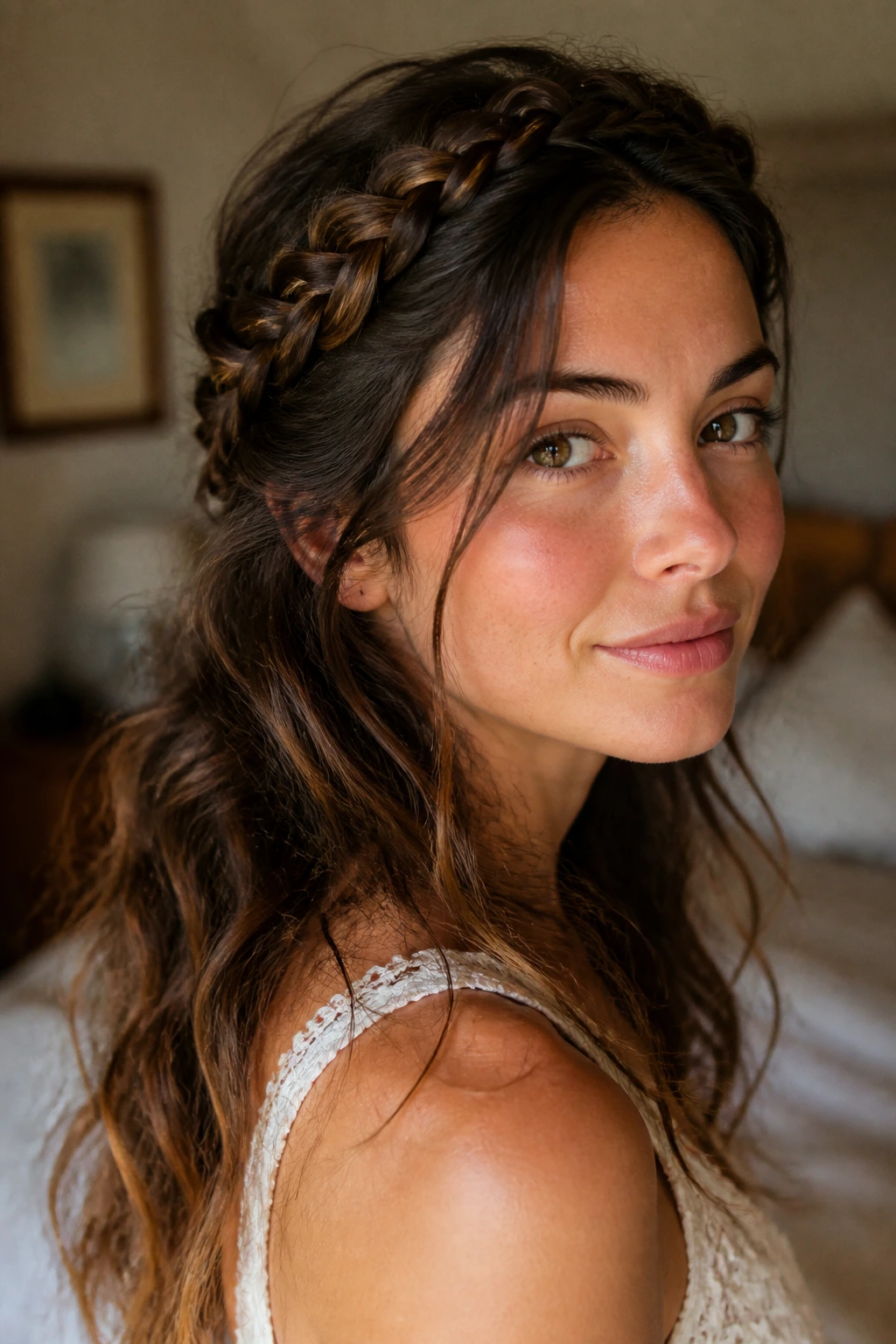
Want something that keeps the front under control without flattening the wave pattern? A braided crown does that job cleanly. The braid acts like a frame, the undone ends keep the hair from looking precious, and an oval face gets enough exposure to stay balanced.
Why this shape works
The braid should start near one temple, skim just above the hairline, and stop before it circles too low around the face. Too much braid sitting near the forehead can make the face feel boxed in. Keep it loose enough that you can see the texture of the weave. Tight braids on wavy hair can look stiff.
The ends don’t have to be polished. In fact, a little unravel at the bottom makes sense here. You want the contrast between the controlled top and the loose waves below.
Best way to wear it
- Mist the roots lightly before braiding so the hair has grip.
- Secure the braid with a small clear elastic or a pin hidden under the hair.
- Leave the lower half of the hair wavy, not curled into uniform loops.
- Pull a few strands free around the ears if the braid sits too firmly.
This is one of the better styles for second-day waves that need shape but not a full wash.
13. Long V-Cut Layers
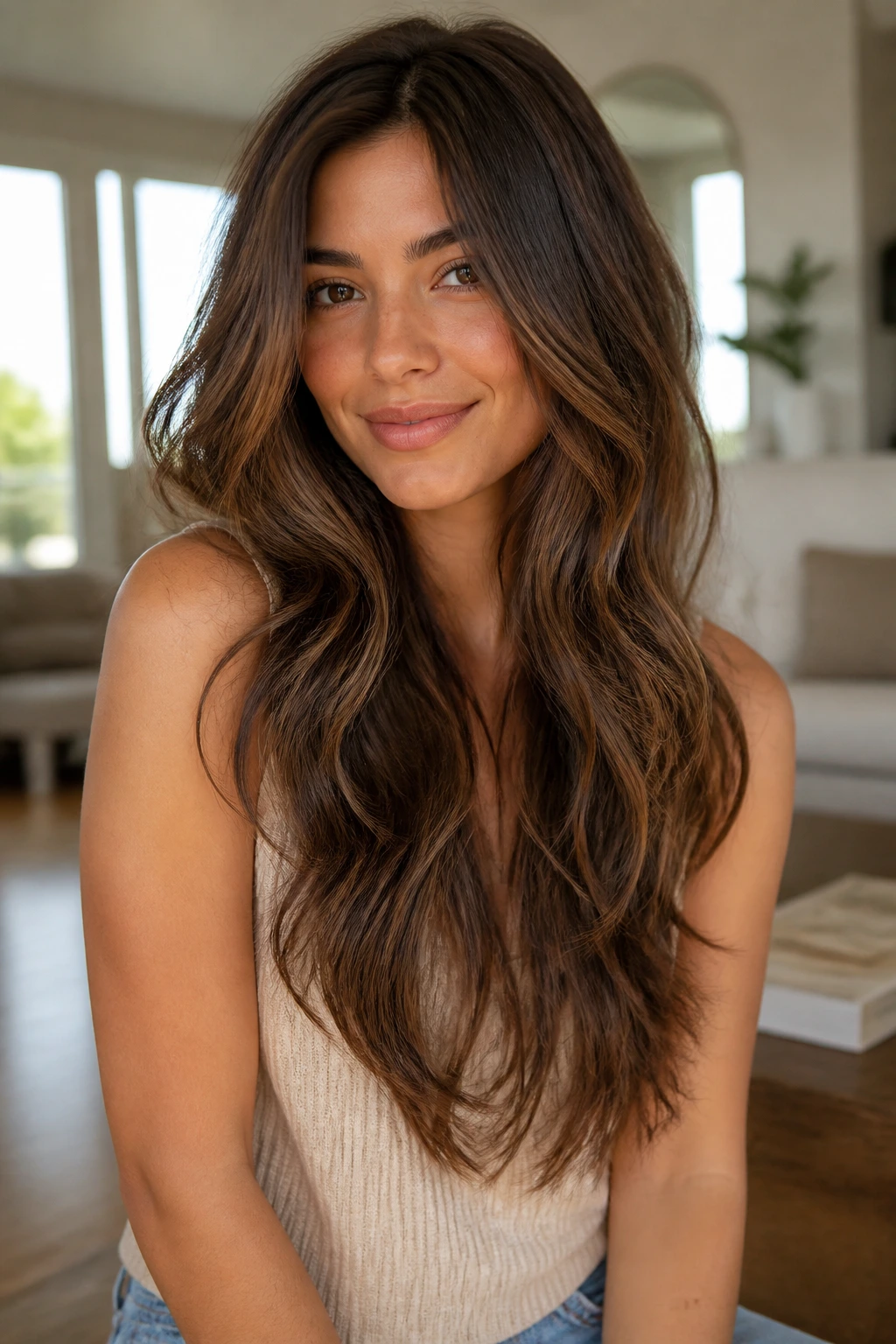
A long V-cut is a good answer when you want to keep length but still need movement. The back tapers into a soft point, which gives wavy hair a little direction, and an oval face wears that downward line easily.
The point of the V is not drama. It’s weight distribution. By keeping the center slightly longer, the hair drops in a smoother line and the sides don’t widen out so much. Thick waves benefit from this because the bulk can stay below the shoulders instead of sitting like a shelf.
This cut works best when the layers are subtle, not razor-chopped. A strong V with aggressive layers can look stringy once the waves dry. A softer V holds its shape better and feels more expensive in everyday life.
If you wear your hair down a lot, this is one of the most reliable ways to keep long wavy hair from looking shapeless by the middle of the day.
14. Soft Wolf Cut
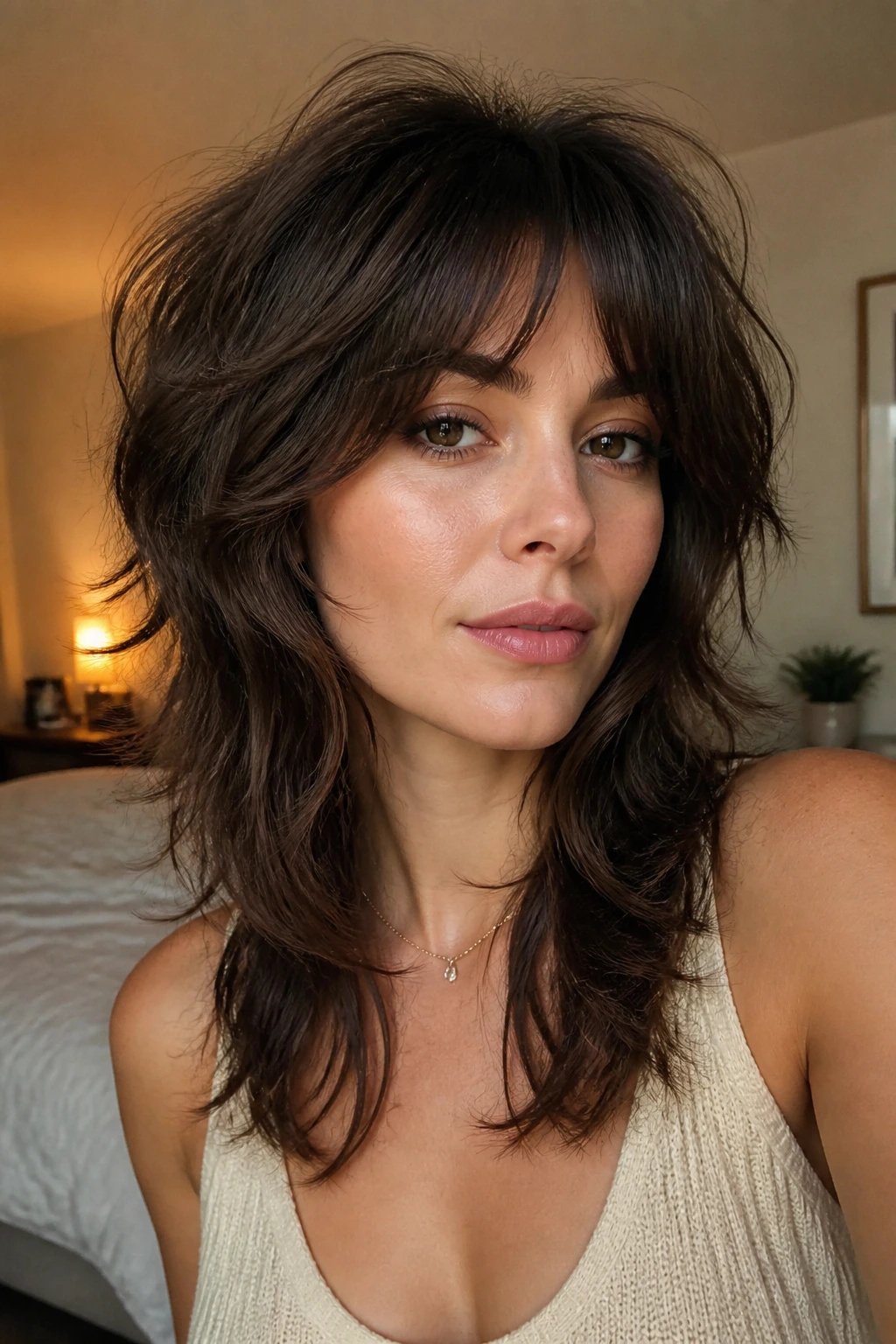
The soft wolf cut is a shag’s less reckless cousin. It still gives you volume at the crown and movement through the sides, but the transition from short to long stays gentler. Oval faces can wear the extra texture well because the shape adds energy without overwhelming the natural balance of the face.
Unlike a heavy shag, the soft wolf cut usually keeps more length in the back and around the sides. That makes it easier to wear if you don’t want the haircut screaming for attention every time you walk by a mirror. The front can be broken into piecey layers, or it can stay a little cleaner if you prefer less edge around the face.
This cut likes a bit of grit. A mousse at the roots, a drop of cream in the mids, and some scrunching usually beats a long blowout. If your waves are fine, keep the top layers longer so the crown doesn’t go sparse. If they’re dense, ask for internal shaping so the silhouette doesn’t balloon.
It’s a strong choice when you want motion with some attitude. Not too neat. Not too wild.
15. Wavy Pixie With Extra Length on Top
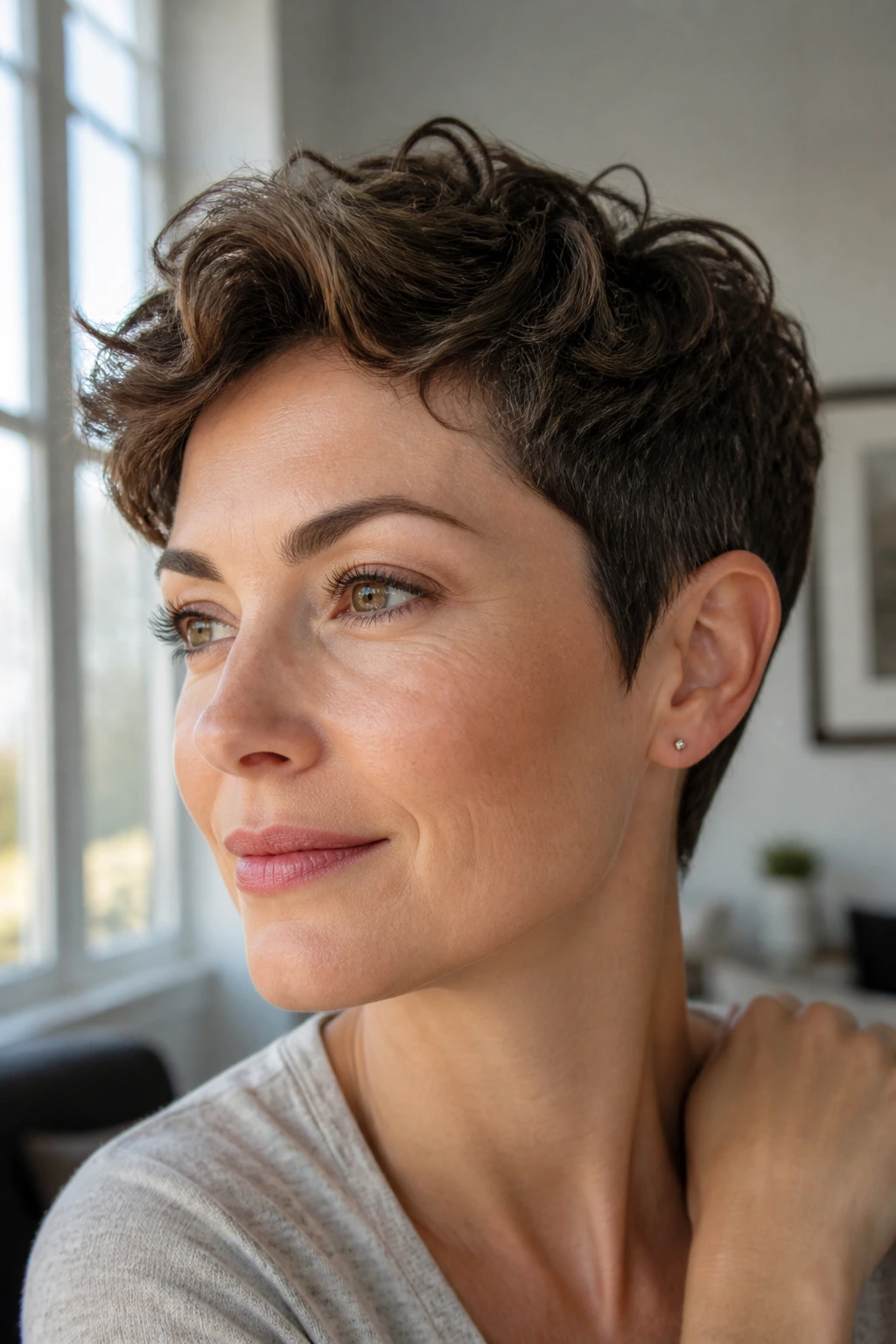
A wavy pixie only works when the top has enough length to bend. Short all over can get too puffy or too helmet-like on wavy hair. Keep the top long enough — usually around 2.5 to 4 inches — and let the sides and nape stay tighter.
What makes it flattering on an oval face
The oval face can handle short hair around the ears and nape without losing balance, which is why this cut doesn’t feel harsh the way it can on some other face shapes. The longer top gives you a small wave crest that draws the eye upward. That’s the whole point. Short hair, but not flat hair.
Styling note
Use a light mousse or matte paste, then push the top into the direction your wave already wants to fall. Don’t force it upward if the hair wants to lean right or left. That fight never ends well. If you want a little edge, pinch the ends with your fingers after the product goes in and let them dry that way.
This cut also grows out nicely if the neck and temples stay tidy. That matters, because a pixie can go from sharp to shapeless fast when the trim schedule slips.
16. Slicked-Back Wet Look Waves
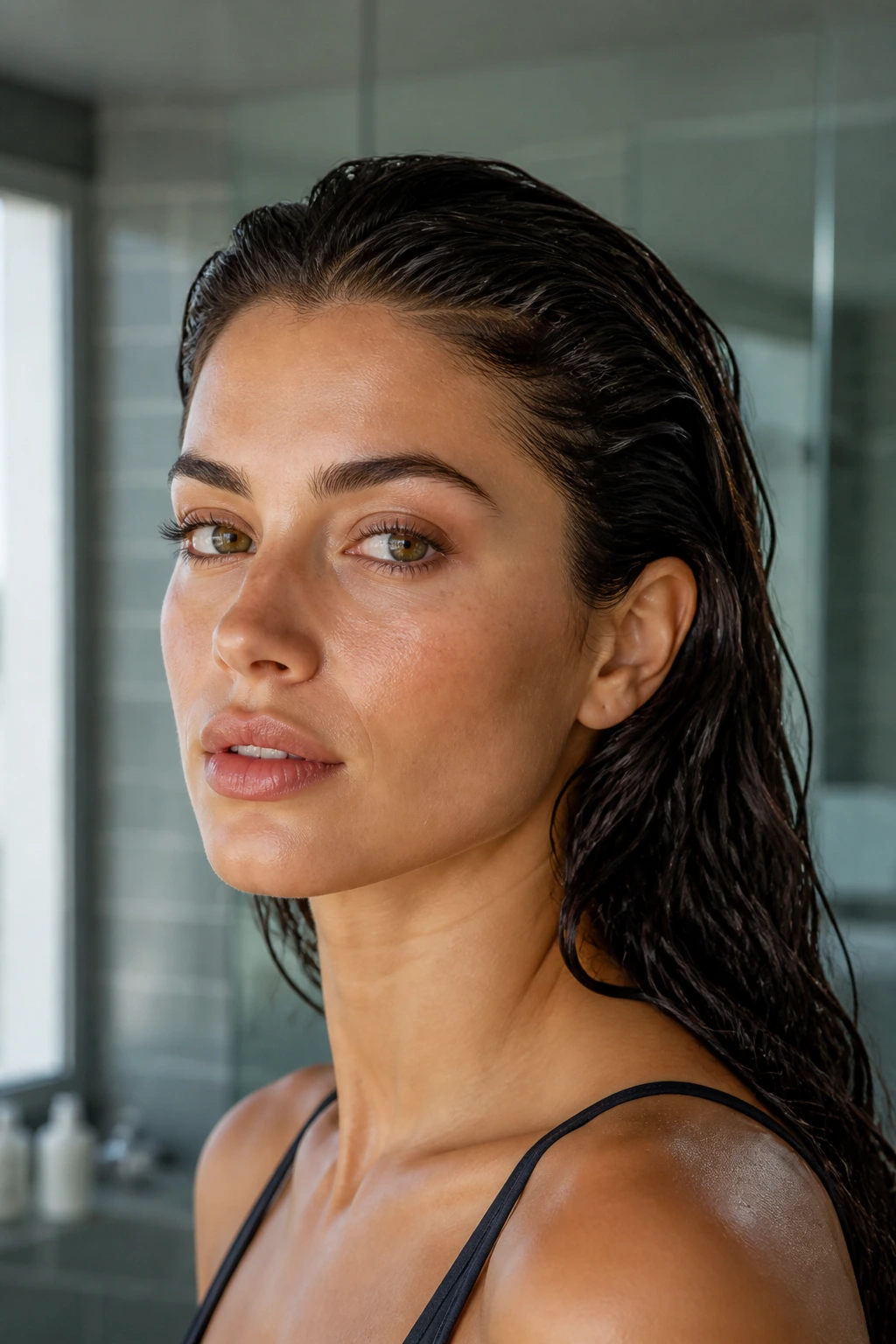
The slicked-back wet look sounds dramatic, but on wavy hair it can be surprisingly easy to control. The wave keeps a little texture under the gel, and an oval face gives the style enough symmetry to feel clean rather than severe.
The trick is not using too much product at once. Start with a leave-in, then add gel from roots to mid-lengths while the hair is damp. Comb it back with a fine-tooth comb or your fingers, depending on how smooth you want the finish. If the hair is very dense, clip the sides back for ten minutes while it sets.
This style works especially well with tucked ears and a low neckline, because the face stays open and the wet texture becomes the point. A center part gives it a sleek, modern line. A deep side part makes it more dramatic. Both work.
It’s one of the few styles here that can handle a bit of shine without looking overdone. Wavy hair gives it texture. The finish keeps it from feeling messy.
17. Side-Bang Flip With Rounded Ends
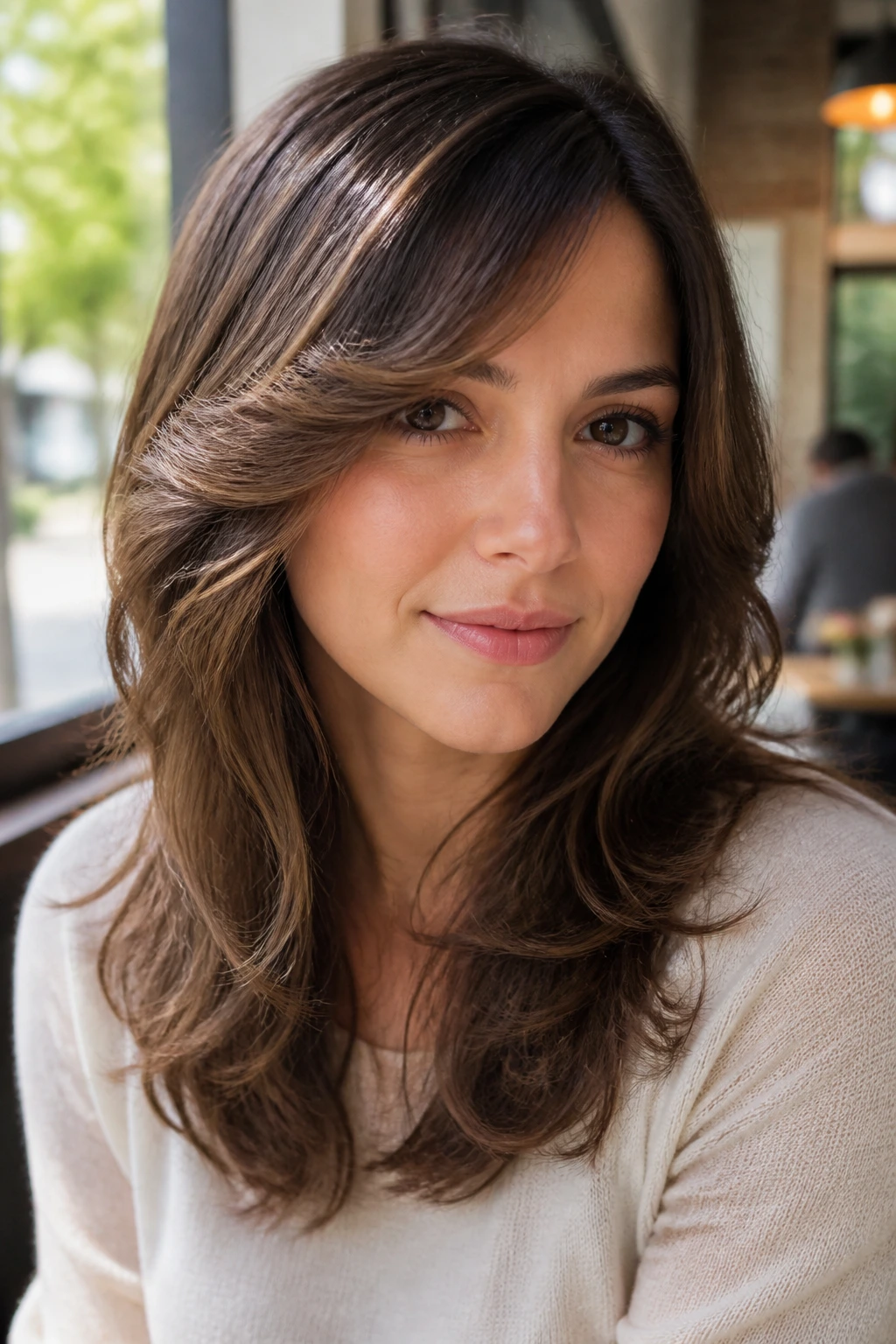
Why do side bangs still hang around? Because they solve a very specific problem: you want softness around the face, but you don’t want the full commitment of curtain bangs. On wavy hair, a side bang can bend toward the cheekbone and then flip away just enough to keep the oval face open.
The bang should start around the brow arch and angle down toward the cheekbone. If it’s cut too short, it springs up and hangs in the wrong place. If it’s cut too long, it disappears into the rest of the hair. The sweet spot is where it can brush the eye line without sitting in it.
Rounded ends in the rest of the cut help keep the shape from looking blocky. That means the perimeter should have a soft bevel, not a hard shelf. This is a good option if you want a bit of retro shape without going full vintage.
A small round brush at the front only — not the whole head — can help the bang sit with a soft flip. Keep the rest of the wave pattern intact.
18. Bixie With Airy Side Fringe
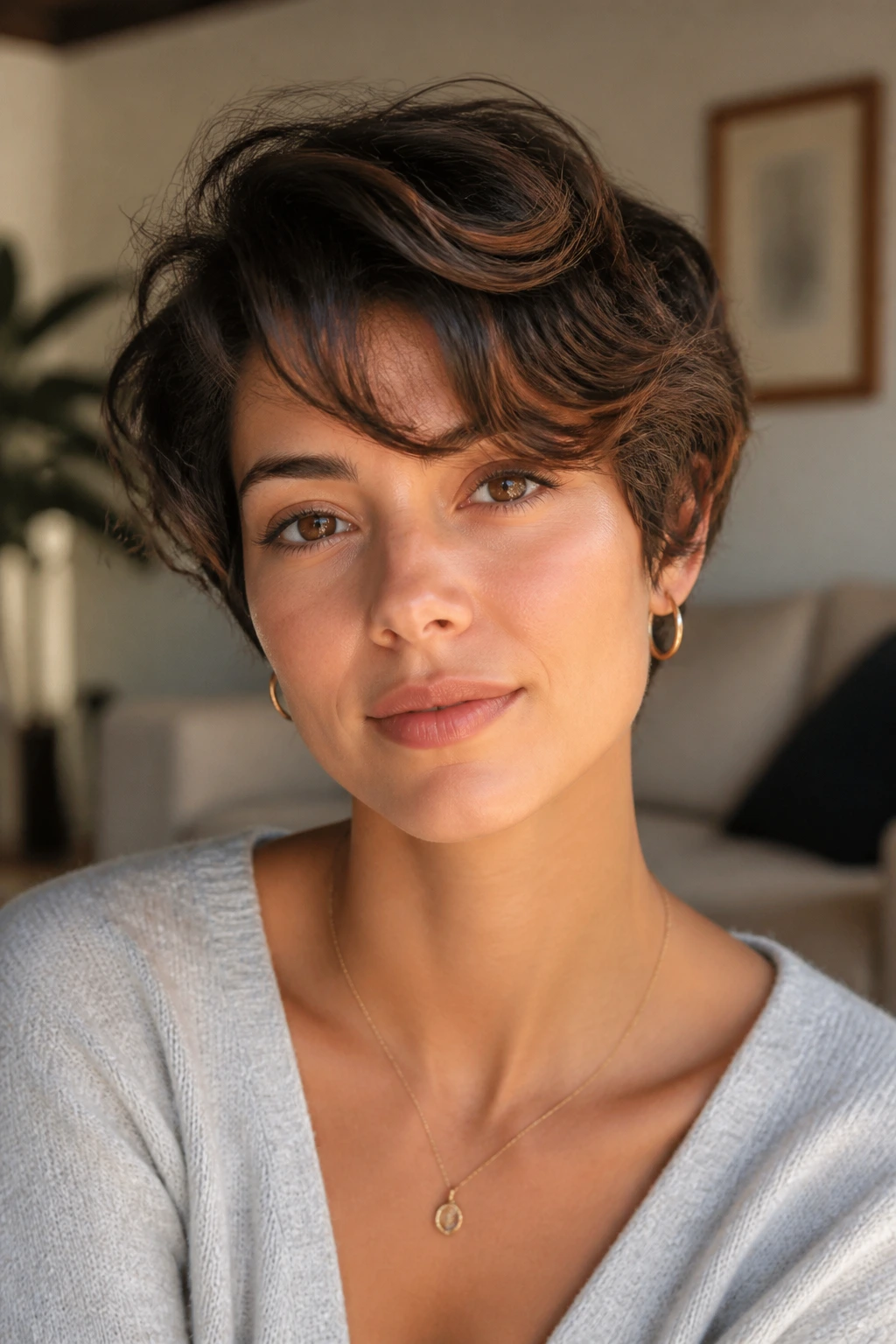
A bixie sits between a bob and a pixie, and that middle ground makes sense for wavy hair. You get shortness around the neck and ears, but enough top length to let the wave show. An oval face can carry the shape without needing extra cheekbone camouflage.
The airy side fringe keeps the cut from feeling too close-cropped. It also lets the front move diagonally, which is useful when the wave wants to split in a certain direction anyway. Ask for the top to stay a little longer than the sides, with the fringe feathered just enough to bend rather than stick out.
This is a smart choice if you want something lighter than a bob but not as dramatic as a full pixie. It dries quickly. It needs less product. It can still look styled even when you barely touched it.
The only catch is maintenance. The shape is clean when it’s trimmed often enough to keep the side fringe from swallowing your eyes. Short hair tells on you fast.
Why Wavy Hair and Oval Faces Give You More Room to Play
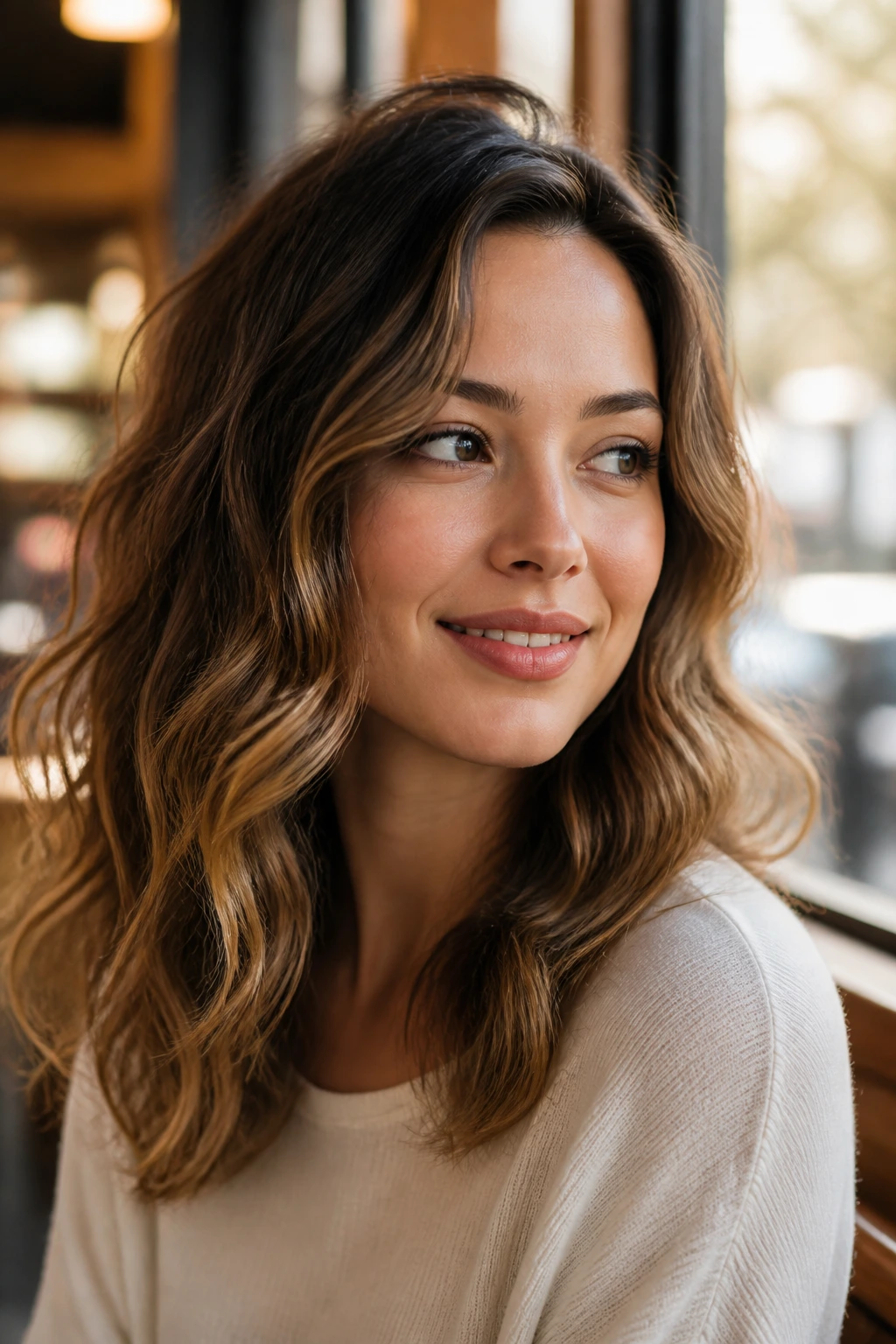
An oval face is forgiving in a good way. The forehead, cheekbones, and jawline already sit in a balanced relationship, so the haircut does not have to perform rescue work the way it sometimes does on round or square shapes. That gives you room to choose the mood instead of chasing symmetry.
Wavy hair adds another layer of flexibility. It can sit flat and sleek, flare out and airy, or break into more defined bends depending on the product and the weather. The styles above lean into that range instead of pretending every wave should behave the same way. A collarbone lob and a bixie are not trying to do the same job. That’s the point.
The main thing to watch is where the volume lands. Keep it near the crown if you need lift, near the cheekbone if you want softness, and lower at the ends if you want the face to stay open. Once you start thinking in those terms, the whole category gets easier to work with.
How to Brief Your Stylist Without Guessing
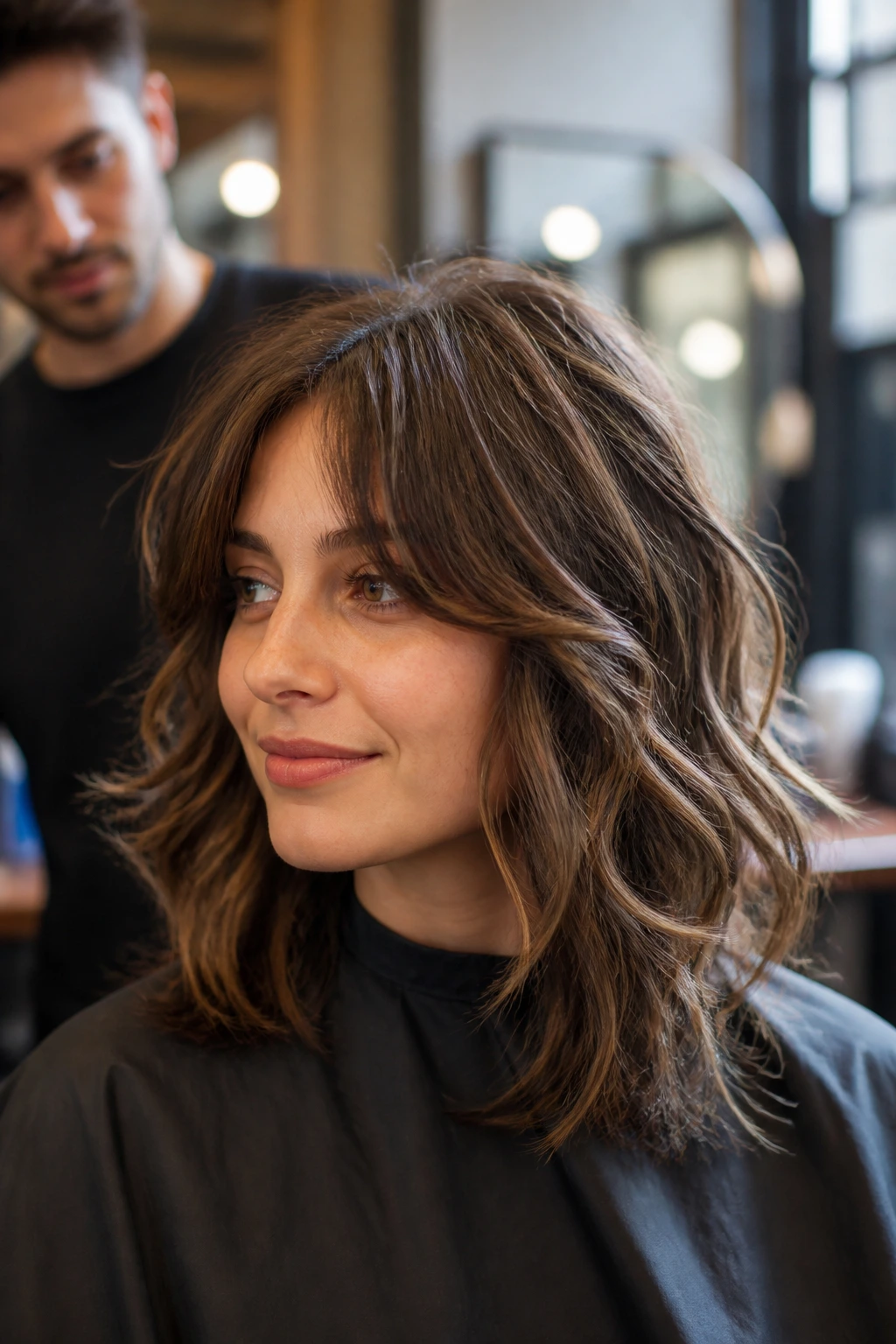
A vague request like “just add layers” is how people end up with a haircut they keep fighting for six months. Wavy hair needs landmarks. Your stylist needs to know where the wave bends, where it puffs, and where you want the eye to stop.
- Name the length landmark: Say whether you want the front to live at the cheekbone, lip, jaw, collarbone, or shoulder.
- Describe the wave behavior: Tell them if your hair springs up, droops, or expands when it dries.
- Show the part you wear most: A center-part photo and a side-part photo are not interchangeable.
- Ask about weight removal: Dense waves usually need internal shaping. Fine waves usually need less thinning and more structure.
- Mention your styling tolerance: If you air-dry most days, say so. A cut that only behaves with a round brush is the wrong cut.
Bring two photos if you can. One for the shape. One for the texture. That split matters because a cute cut can look nothing like the picture if the wave pattern gets ignored.
Tools That Keep Waves From Going Puffy
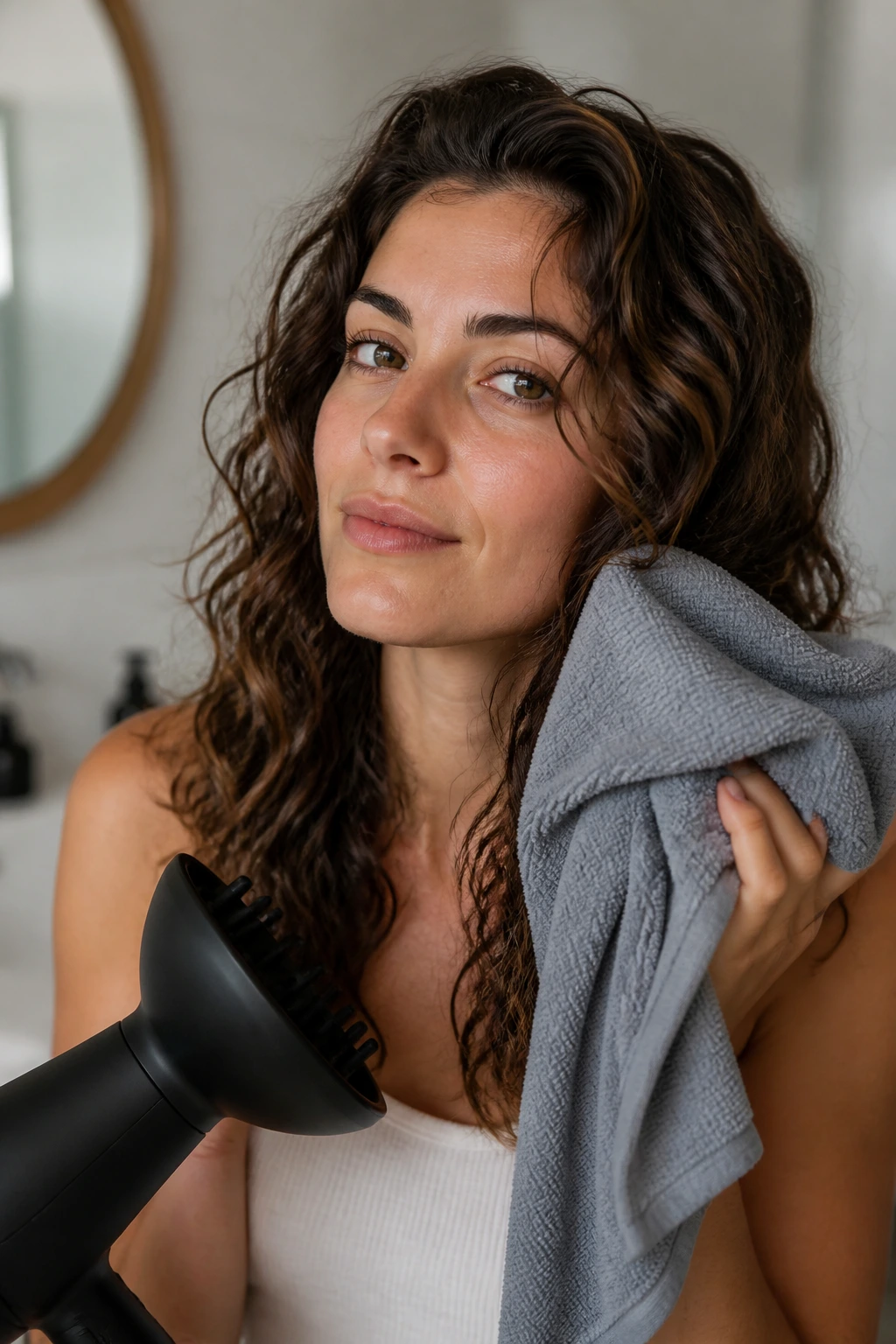
You do not need a crowded shelf. You need the right handful of tools that help wave pattern, not fight it.
- Microfiber towel or cotton T-shirt: Cuts down friction while the hair is damp, which helps the wave clump instead of frizzing apart.
- Wide-tooth comb: Good for detangling in the shower or after conditioner. A brush used too early can break up the wave.
- Duckbill clips: Useful for setting root lift while the hair dries, especially at the crown and part line.
- Diffuser attachment: The best friend of wavy hair when you want volume without blasting the bend apart.
- Tail comb: Handy for clean parts and for lifting a few root sections before drying.
- 1-inch to 1.25-inch curling iron or wand: Good for touching up the front pieces or refining a few face-framing bends.
- Heat protectant spray: Worth using any time you bring heat near the hair, even if it’s only the front half.
- Satin pillowcase or bonnet: Helps the wave keep its shape overnight instead of getting crushed flat.
If you only buy two things, make them the diffuser and the microfiber towel. Those two solve more wavy-hair problems than people like to admit.
Products That Help Waves Hold Their Shape
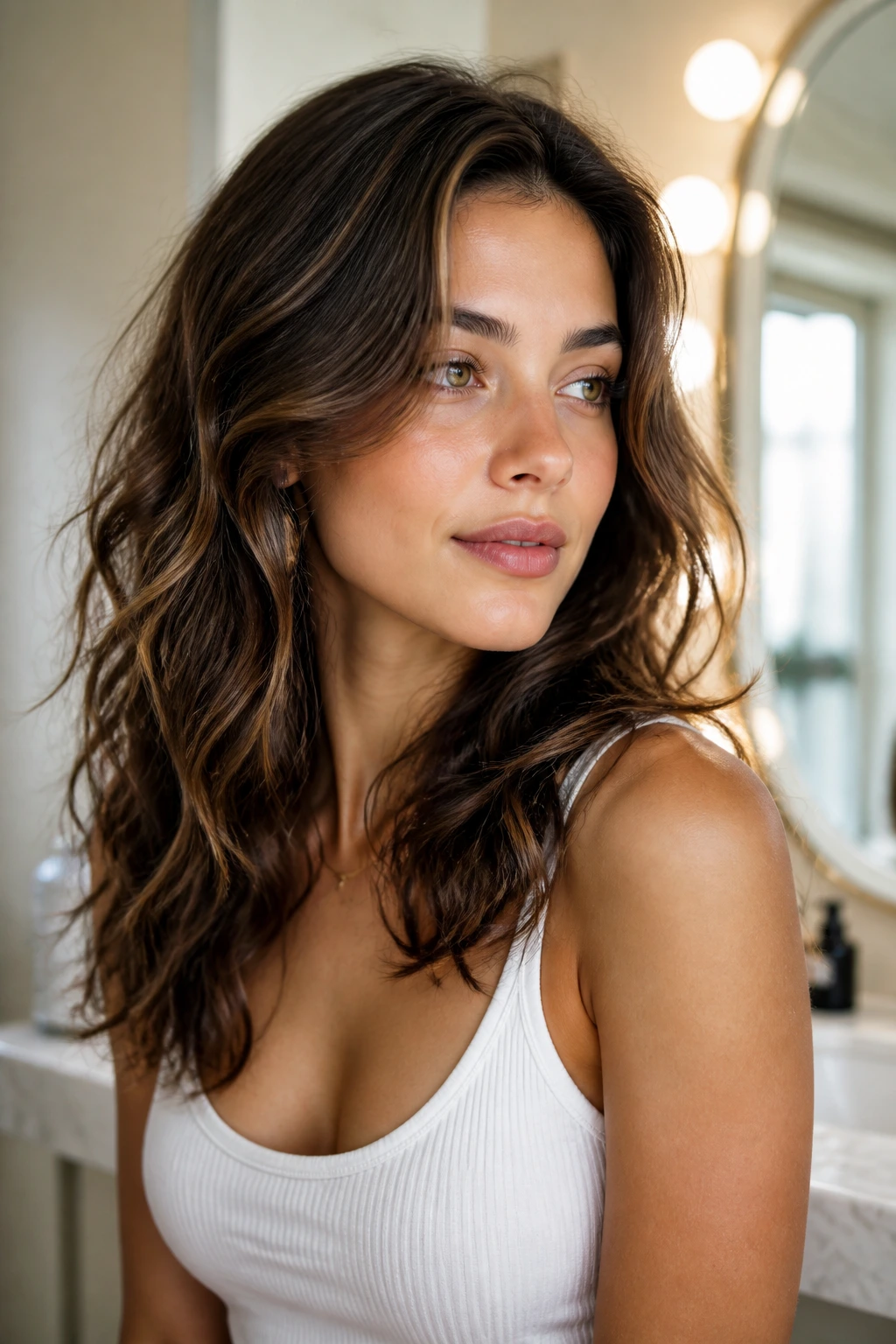
Wavy hair usually needs less product than curly hair, but it needs the right kind. Heavy creams can make the wave collapse. Light hold can leave it puffed out and vague.
- Light mousse: Good at the roots and mid-lengths when you want volume that doesn’t feel sticky.
- Curl cream: Best for soft definition and frizz control on looser waves.
- Flexible gel: Useful when you want the hair to set with a little more memory, especially on shags, bobs, and slicked-back looks.
- Texture spray: Helpful for short cuts like the shag, wolf cut, or bixie when you want separation at the ends.
- Shine serum: Use a tiny amount, usually on the ends only, if the hair looks dry after styling.
- Dry shampoo: Good for roots that get oily fast, but don’t overuse it or the wave can get dusty and stiff.
A lot of people use too much cream and too little hold. That’s backwards. If the hair is soft but collapses by noon, you probably need more support, not more moisture.
Daily Styling Moves That Make These Looks Last
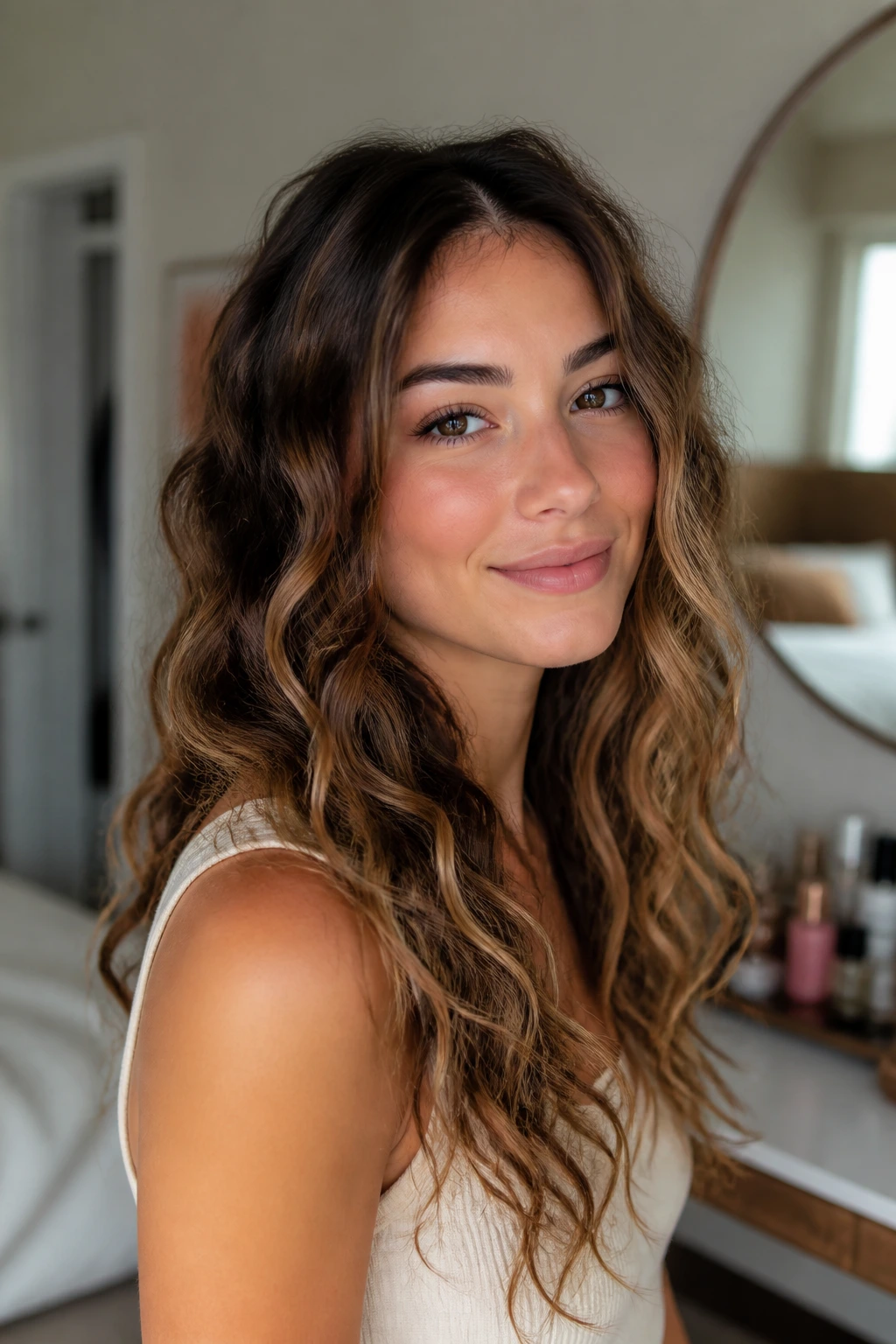
Wavy hair looks best when it’s handled in the same direction every day. Not complicated. Just consistent.
- Start damp, not soaked. Hair that is dripping holds product unevenly, and you end up with wet roots and frizzy ends.
- Apply product from mids to ends first. If the roots need lift, add mousse there separately. Don’t smear everything everywhere.
- Scrunch the wave once, then leave it alone. Constant touching breaks the clumps before they set.
- Diffuse on low heat or air-dry with clips at the root. High heat can make the top puff while the bottom falls flat.
- Touch up only the front pieces. A few seconds with a curling iron near the face is usually enough to make the whole cut look finished.
If a style needs to survive a full day, finish with a light flexible hairspray from arm’s length. Not a helmet spray. Just enough to keep the front pieces from falling into your mouth the second you move.
Between-Wash Care for Waves That Still Need to Look Good

Wavy hair often looks better on day two than it does fresh out of the shower. The wave settles, the roots calm down, and the shape gets a little easier to control. Keeping that second-day texture intact is the trick.
Sleep on a satin pillowcase if you can. If the hair is long enough, a loose pineapple at the crown works well. For short cuts like a bixie or pixie, a little side-sweeping before bed helps preserve direction without crushing the top.
In the morning, mist the hair lightly with water and scrunch a pea-size amount of leave-in or curl cream through the mids. If the roots are flat, clip them up for 10 to 15 minutes while you get dressed. That small lift changes the whole silhouette.
Short shapes need trims more often. A pixie or bixie starts to lose its edge after about 4 to 6 weeks. Bobs and shags usually hold shape for 6 to 8 weeks. Longer layered cuts can stretch to 10 to 12 weeks if the perimeter stays healthy. The cut is the architecture. Maintenance keeps it standing.
Common Mistakes That Flatten Waves or Throw Off Proportion
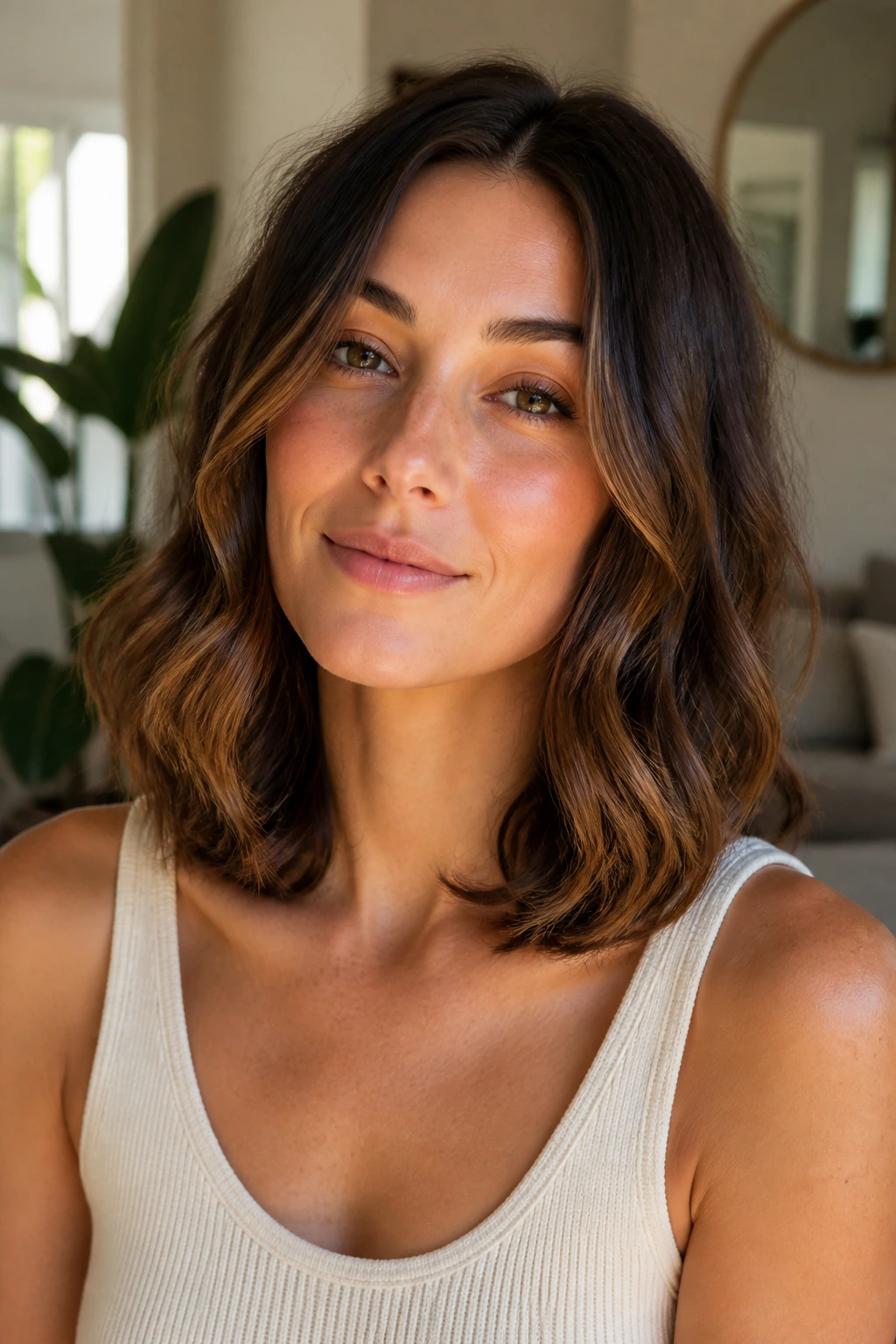
-
Taking the bulk out of the wrong place: If layers are carved too high around the sides, wavy hair can flare outward and make an oval face look wider through the middle. Fix it by keeping more weight at the perimeter and removing interior bulk only where needed.
-
Cutting bangs too short while the hair is wet: Wavy fringe can spring up hard once it dries. The symptom is baby bangs where you wanted cheekbone length. The fix is to leave extra length or have the fringe refined after it dries.
-
Overusing heavy creams and oils: The hair looks shiny for ten minutes, then the wave drops and the crown goes limp. Use a lighter mousse or gel base first, then add a tiny bit of serum only to the ends.
-
Brushing waves into submission: A brush can make the surface smooth, but it also breaks the clump pattern that gives waves their shape. Use a wide-tooth comb when wet and fingers once the hair starts to set.
-
Ignoring density: Fine waves need lift and restraint. Thick waves need more internal shaping and a cleaner perimeter. Treating both the same is how you end up with hair that looks too sparse or too bulky.
-
Choosing a part only because it’s trendy: A center part can be lovely on an oval face, but if your roots fight it every morning, that’s a sign. Work with the pattern your hair already wants. It saves time and looks better.
Easy Variations If Your Hair Is Finer, Thicker, or Shorter

-
Fine-Wave Lift: Keep the layers longer and start with mousse at the roots before any cream touches the ends. A slight side part and a few duckbill clips at the crown add lift without making the hair look teased.
-
Thick-Wave Control: Ask for internal layering and a solid perimeter. That combination keeps the hair from ballooning while still letting the bend show. Avoid over-thinning; it often backfires.
-
Heat-Free Finish: Skip the iron and use a leave-in plus a flexible gel on damp hair. Scrunch, clip the roots, and let it dry without touching it too much. The result is looser, softer, and easier on the hair.
-
Polished Workday Version: Straighten only the front one to two inches with a small iron, then leave the rest wavy. That trick sharpens the face frame while keeping the body of the hair natural.
-
Shorter Fringe Swap: If curtain bangs feel like too much upkeep, shift to a side bang or a wispy fringe. You still get softness around the eyes, but you spend less time managing the split.
-
Long-Length Reset: If you love length but your waves look dragged down, ask for a V-cut or long invisible layers. You keep the length you want while the shape gets a little more breath.
Questions People Ask Before They Cut or Style
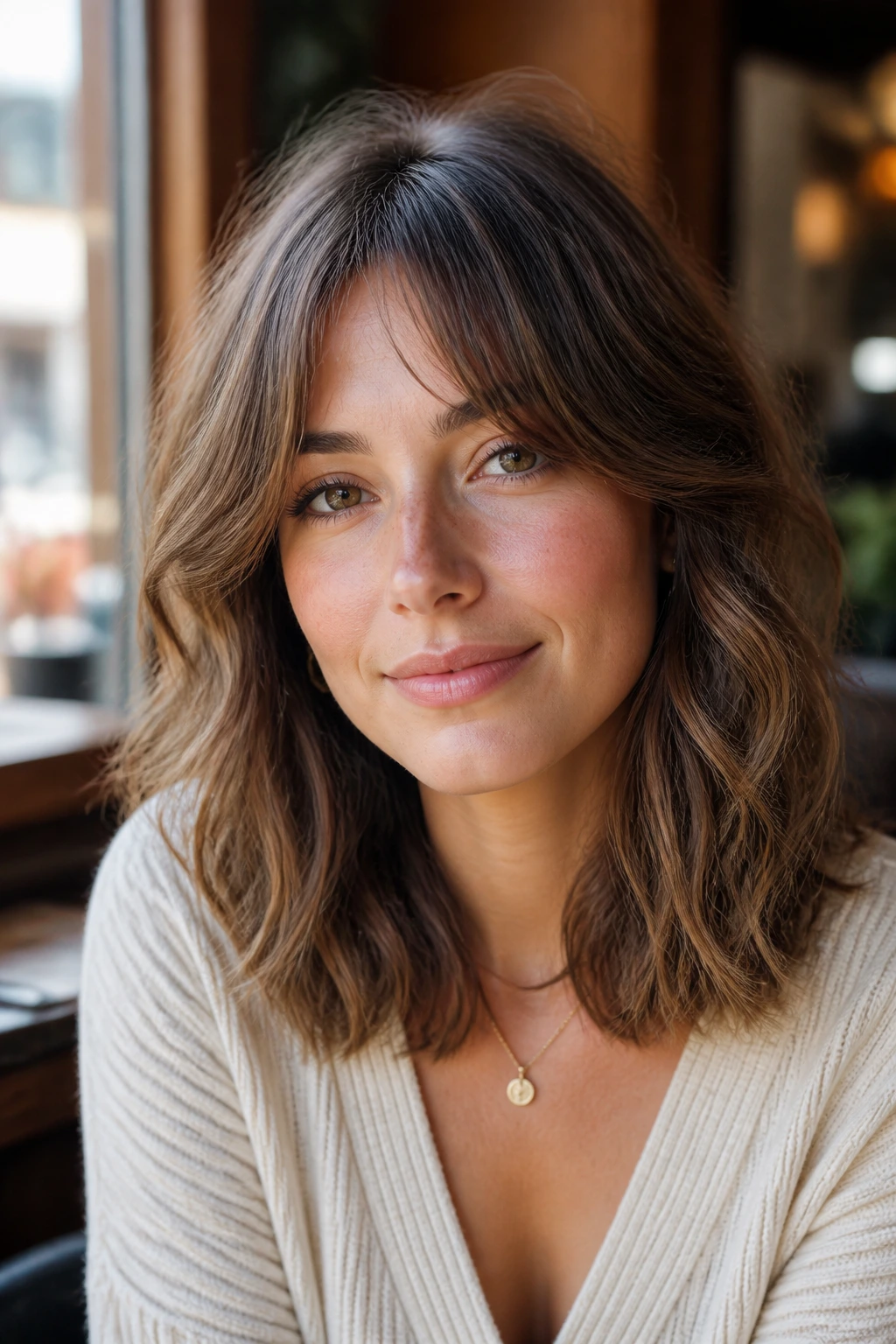
Can oval faces wear bangs with wavy hair?
Yes, and they usually can wear more than one type. Curtain bangs, side bangs, and soft fringes all work well because the face shape already has balance. The real question is how much time you want to spend pushing them into place each morning.
Is a center part always best for oval faces?
No. A center part can look clean and balanced, but a deep side part can add lift and break up heavy volume. If your waves flatten at the crown, a side part may give you more life with less effort.
What if my waves frizz before noon?
Use less brushing and more hold. A light gel or mousse on damp hair will usually do more than a heavy cream. Finish with a microfiber towel squeeze, not a rough rub, or the top layer will bloom out.
Do layers make wavy hair look thinner?
They can, if the cut is too aggressive. Fine waves need gentle layers and a stronger perimeter. Thick waves often need more interior shaping so the hair does not turn wide at the bottom.
Which styles work best if I air-dry only?
Long layers, a lob, a shag, and a soft wolf cut are usually easy to air-dry. The key is to keep touching to a minimum while the wave sets. A little root clipping helps too.
How often should I trim a short wavy cut?
Pixies, bixies, and French bobs usually need shape touch-ups every 4 to 8 weeks. If you wait too long, the sides spread and the neckline loses definition fast. Short hair is honest like that.
Can I still pull these off if my hair is very thick?
Yes, but the cut has to respect the weight. Ask for interior shaping, not a bunch of short choppy layers everywhere. Thick waves need control first, movement second.
What if my face is oval but long?
Then you may want to avoid cuts that add too much vertical length at the center, like very long straight layers with no face frame. A lob, curtain bang, or chin-length shape can bring the eyes outward a bit and soften the length.
The Styles I’d Keep on Repeat
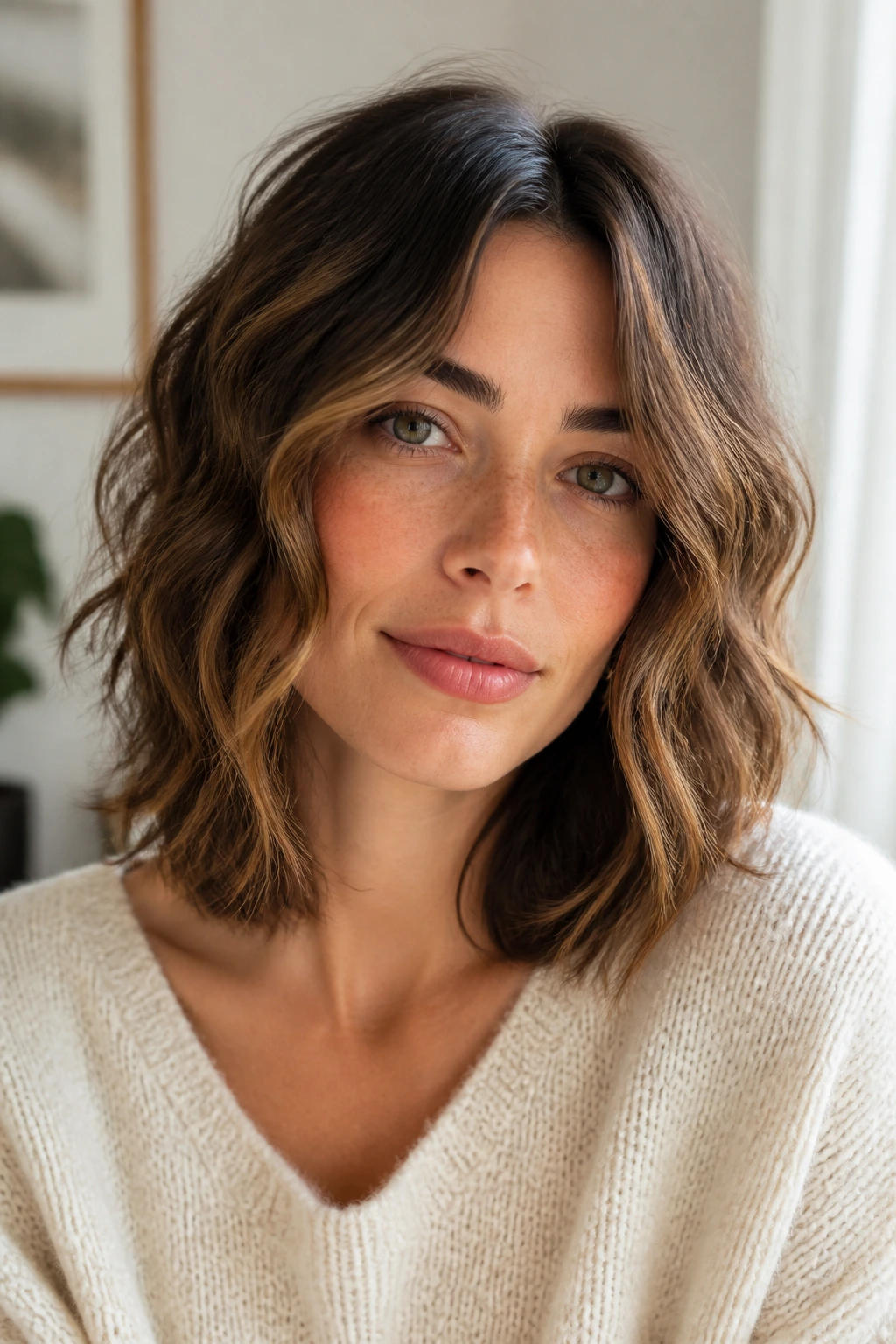
The best hairstyles for wavy hair and oval faces do not try to erase anything. They work with the bend, keep the proportions honest, and let the face stay open where it matters. That’s why a collarbone lob can feel as smart as a shag, and why a tiny side bang sometimes changes more than a dramatic chop.
If you’re choosing where to start, pick the style that matches your patience first and your hair density second. A great cut that takes half an hour every morning usually gets abandoned. A good one that dries well on its own becomes part of your life. That’s the one worth keeping.
Wavy hair has a way of looking better once the shape settles in. Oval faces already give you room. Put those two things together, and the haircut should feel less like a compromise and more like a very good habit.