



Fine hair can be fussy in a way that feels almost personal. Leave it too long and the ends look see-through; cut it too short in the wrong spot and the shape can widen the forehead or make the chin feel even narrower. An angled bob gets around that problem by doing two jobs at once: it gives the hair a stronger outline, and it redirects attention downward, where a heart-shaped face usually wants a little more visual weight.
That diagonal line is the whole trick. A clean front corner at the chin or collarbone makes the ends look denser than they really are, while a slightly shorter back keeps the silhouette lifted instead of drooping. Done well, it doesn’t read as “trying hard.” It reads as neat, balanced, and oddly expensive-looking even when the hair itself is soft, fine, and not especially cooperative.
I also like angled bobs because they leave room for personality. Some versions are sleek and sharp. Some are airy and brushed out. Some have curtain bangs, some have a side fringe, and some rely on nothing more than a strong perimeter and a good round brush. The good ones flatter a heart-shaped face without making the haircut feel like a math problem. The better ones keep fine hair looking thicker at the edge, which is where the eye lands first.
Why These Angled Bobs Work So Well
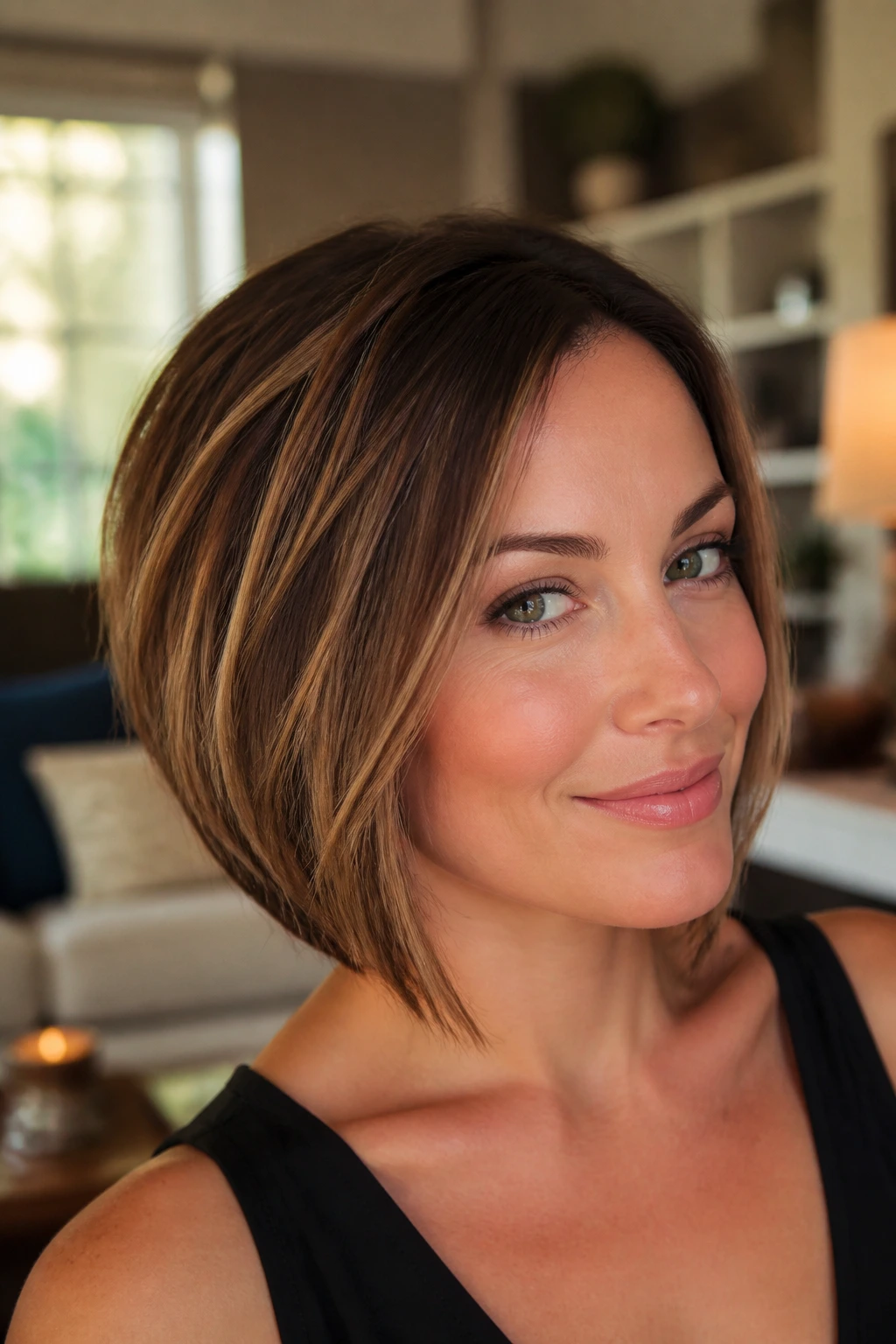
- A stronger edge means fuller-looking ends: Fine hair looks denser when the perimeter is kept blunt or softly blunt, because a crisp line hides the wispy see-through bits that happen at the very bottom.
- The front corners do the balancing: On a heart-shaped face, front length at the chin or just below it helps offset a broader forehead and brings more visual weight to the lower half of the face.
- You can choose your effort level: Some of these cuts air-dry with mousse and a shake of the head. Others want a quick round-brush bend. That range matters when you don’t want a haircut that demands a full styling session every morning.
- The angle creates lift without big teasing: A good diagonal shape already has movement built in, so you don’t need a stacked crown that goes soft and flat by noon.
- Grow-out is easier than people expect: If the front length is chosen well, the shape still looks intentional as it gets a little longer. That’s a rare and useful trait.
1. Chin-Skimming A-Line Bob
This is the cleanest starting point. The back sits a touch shorter, the front lands right at the chin, and the whole cut follows a diagonal line that makes fine hair look more deliberate and less fragile. On a heart-shaped face, that chin-level front corner matters because it pulls attention away from the forehead and gives the lower half of the face something solid to work with.
I like this version best when the hair is straight or only slightly wavy. Ask for a perimeter that stays full, not shredded, and keep the layers minimal. If the stylist starts slicing too much out of the ends, the whole effect can turn airy in a bad way. A side part helps, too. It nudges the front line across the face instead of splitting everything right down the middle.
2. Collarbone Angle with Side-Swept Fringe
Want something a little softer? This one has more length, which makes it easier to wear up, tuck, or rough-dry without losing the shape. The side-swept fringe is the useful part here. It softens the upper face without crowding the forehead, and on a narrow chin it keeps the whole haircut from feeling top-heavy.
I tend to think this is one of the easiest angled bobs for fine hair because the longer front corners keep the ends looking thicker. Shorter cuts can be sharp and chic, but they can also expose how little density there is at the bottom. This version gives you breathing room. It also grows out in a forgiving way, which is a relief if you are not one of those people who sees a salon every six weeks without fail.
3. Deep Side-Part Sleek Bob
A deep side part changes the entire mood of the haircut. It draws the eye diagonally across the face, which is useful when the forehead feels like the widest point. The cut itself can stay simple: a blunt diagonal line, a smooth blow-dry, and not much else. Fine hair often looks better when the shape is clean enough to stand on its own.
The nice thing about this one is how little clutter it needs. A light root spray, a round brush, and a flat iron pass on the front corners can be enough. No heavy layering. No overtexturing. The sleek finish works because the line is doing the heavy lifting, and the side part gives it some drama without making the crown puff up like it has opinions.
4. Soft Inverted Bob with a Gentle Stack
This is the version for someone who wants a little lift at the back but does not want a full blown stacked bob. The nape is tucked in just enough to give the cut a small boost, while the front keeps stretching toward the jaw. That small change makes a big difference on fine hair, because the back gets some support instead of collapsing flat against the neck.
For heart-shaped faces, I like this cut when the front is still long enough to skim the chin. Too much stacking and too much height at the crown can drag attention upward, which is the opposite of what you want. Keep the graduation subtle. You want structure, not a wedge. The difference is easy to see in motion, and even easier to feel when you run your fingers through it.
5. Feathered Bob with an Airy Fringe
Feathering can go wrong fast on fine hair if it’s taken too far. But used lightly, it gives the haircut a softer edge around the temples and cheekbones. That matters on a heart-shaped face because the upper half of the face already carries a lot of width. A little softness near the fringe keeps the cut from feeling severe.
The fringe itself should stay light, almost broken up, not thick and heavy. I like this version for people whose hair lies flat at the temples and refuses to hold volume there. A feathered edge can create movement without stealing density from the perimeter. It’s a small adjustment, but it changes how the whole bob reads from the front.
6. Blunt Diagonal Bob with a Glass Finish
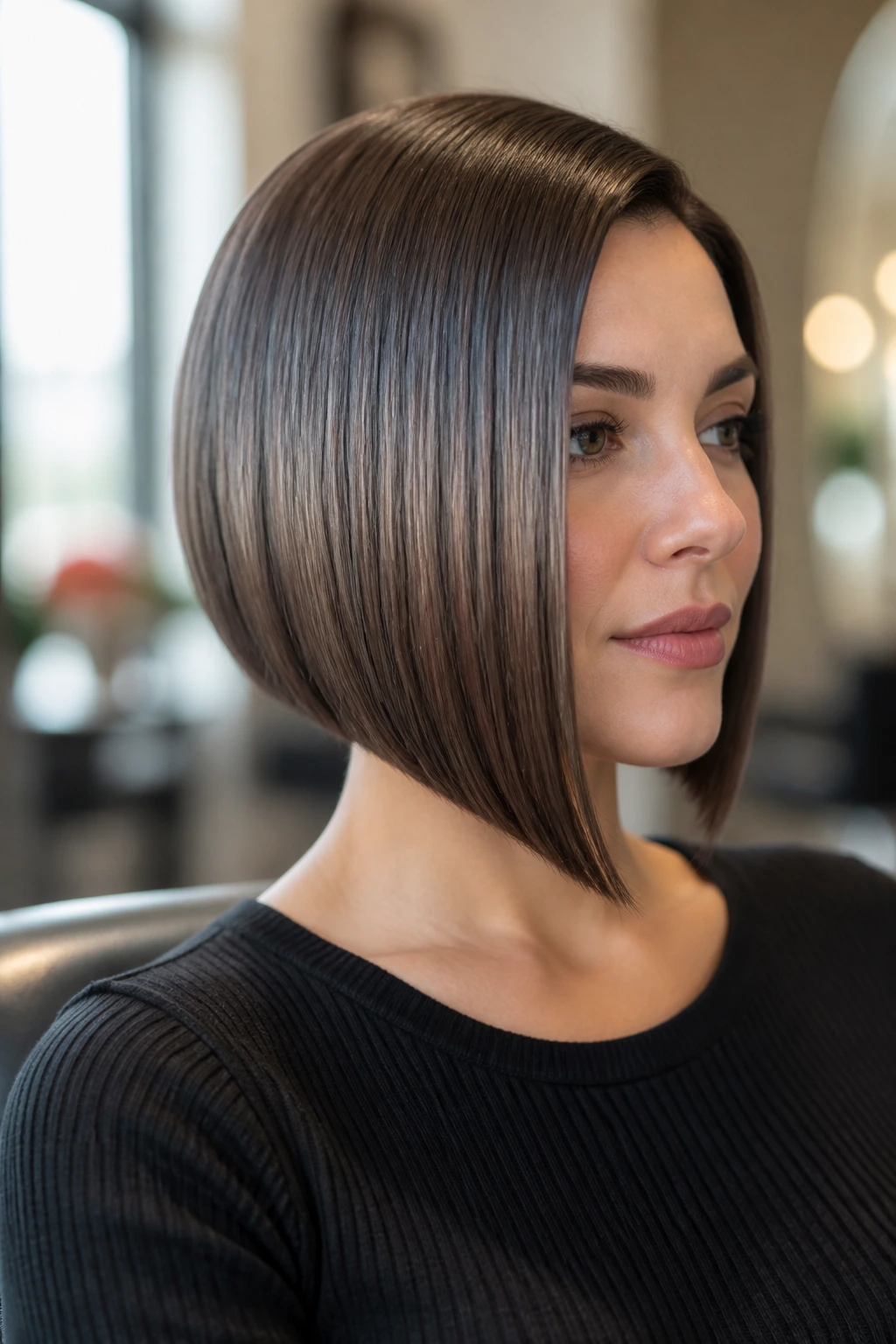
Some cuts need texture. This one does not. The power of a blunt diagonal bob is that it makes fine hair look more substantial simply by keeping the edge clean. When the front corners are precise and the finish is smooth, the haircut looks full even if the actual strand count is modest.
It suits heart-shaped faces because the diagonal line points down toward the jaw. That breaks up forehead width without resorting to heavy bangs. If your hair is straight enough to lay flat after a blow-dry, this can be one of the most flattering options in the whole group. A shine spray on the perimeter helps, but keep it off the roots. You want glossy, not greasy.
7. Wavy Angled Lob with Grown-Out Bangs
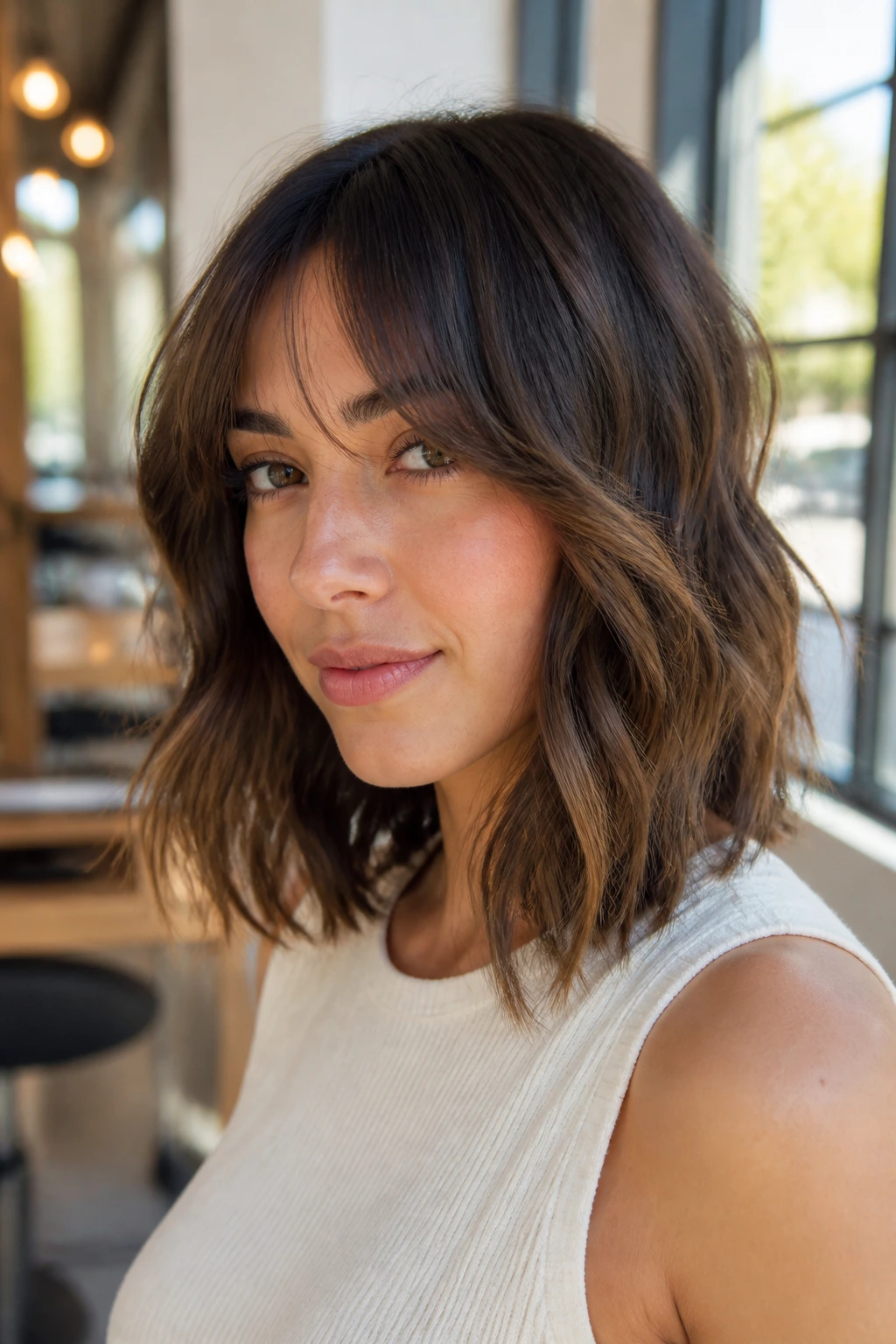
If your hair has a little bend in it already, use it. This longer angled lob sits closer to the collarbone, which gives fine hair more swing and helps the ends stay visible. The grown-out bangs are the useful part for heart-shaped faces; they soften the forehead area without building a hard fringe line across the top of the face.
This cut looks best when the wave is loose, not crunchy. A bit of mousse and a diffuse dry is usually enough. I’d avoid heavy curl creams here because they can make fine hair feel soggy at the roots. The longer shape also gives you the option to tuck one side behind the ear, which turns the whole cut a little more elegant without any extra effort.
8. Razor-Textured Bob with Piecey Ends
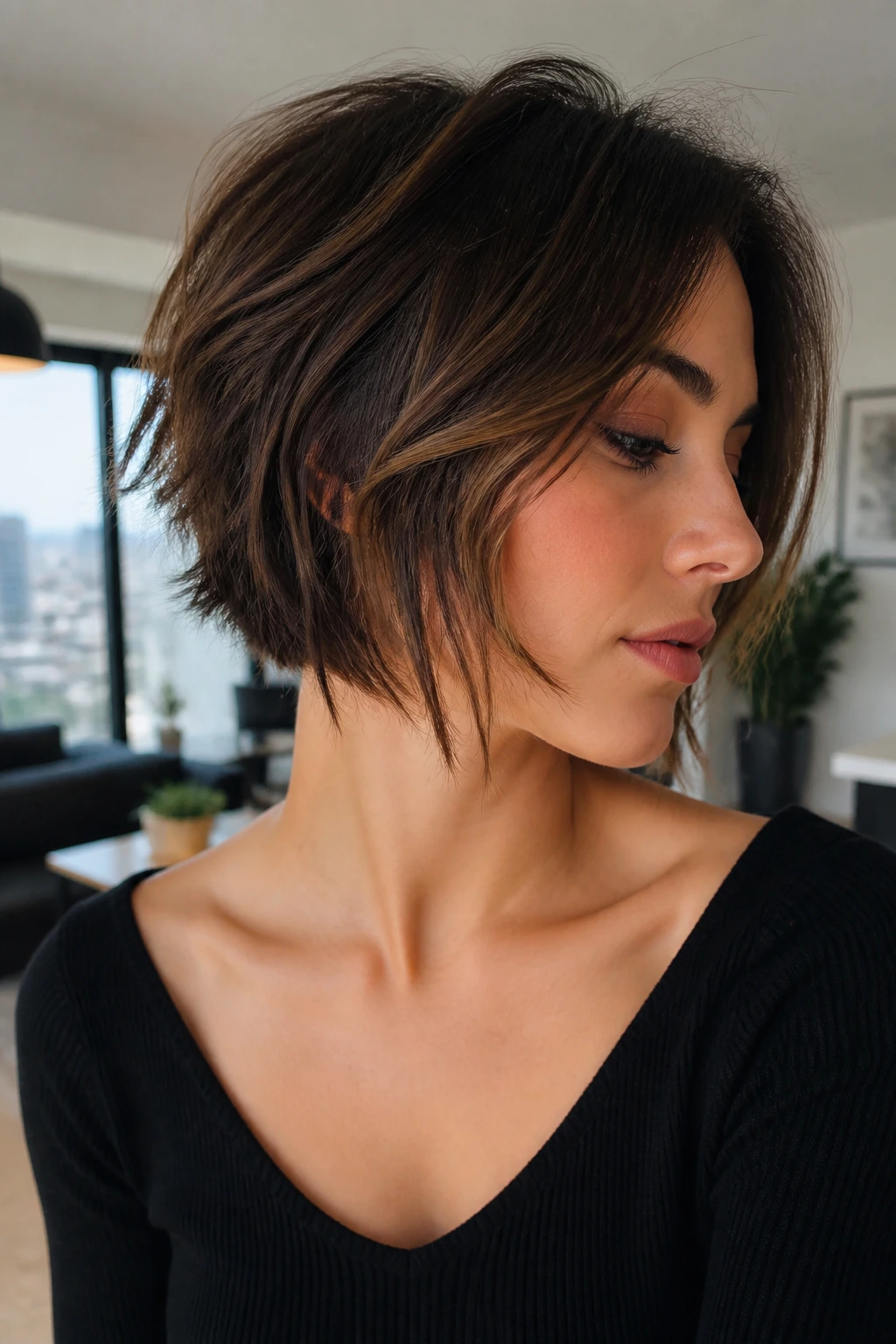
This one needs a careful hand. A razor can add movement, but on ultra-fine hair it can also make the ends look frayed if the stylist gets too enthusiastic. When the density is low but the hair itself is smooth and resilient, a small amount of razor texture can keep the bob from looking helmet-like.
The piecey finish works well on heart-shaped faces because it breaks up the front line and keeps the cheeks from looking boxed in. I would not choose this version if your hair is already weak at the ends or prone to split quickly. If you do go for it, ask for texture mostly through the mid-lengths, not the very bottom. That keeps the perimeter from losing its shape by week two.
9. Rounded-Front Bob That Hugs the Jaw
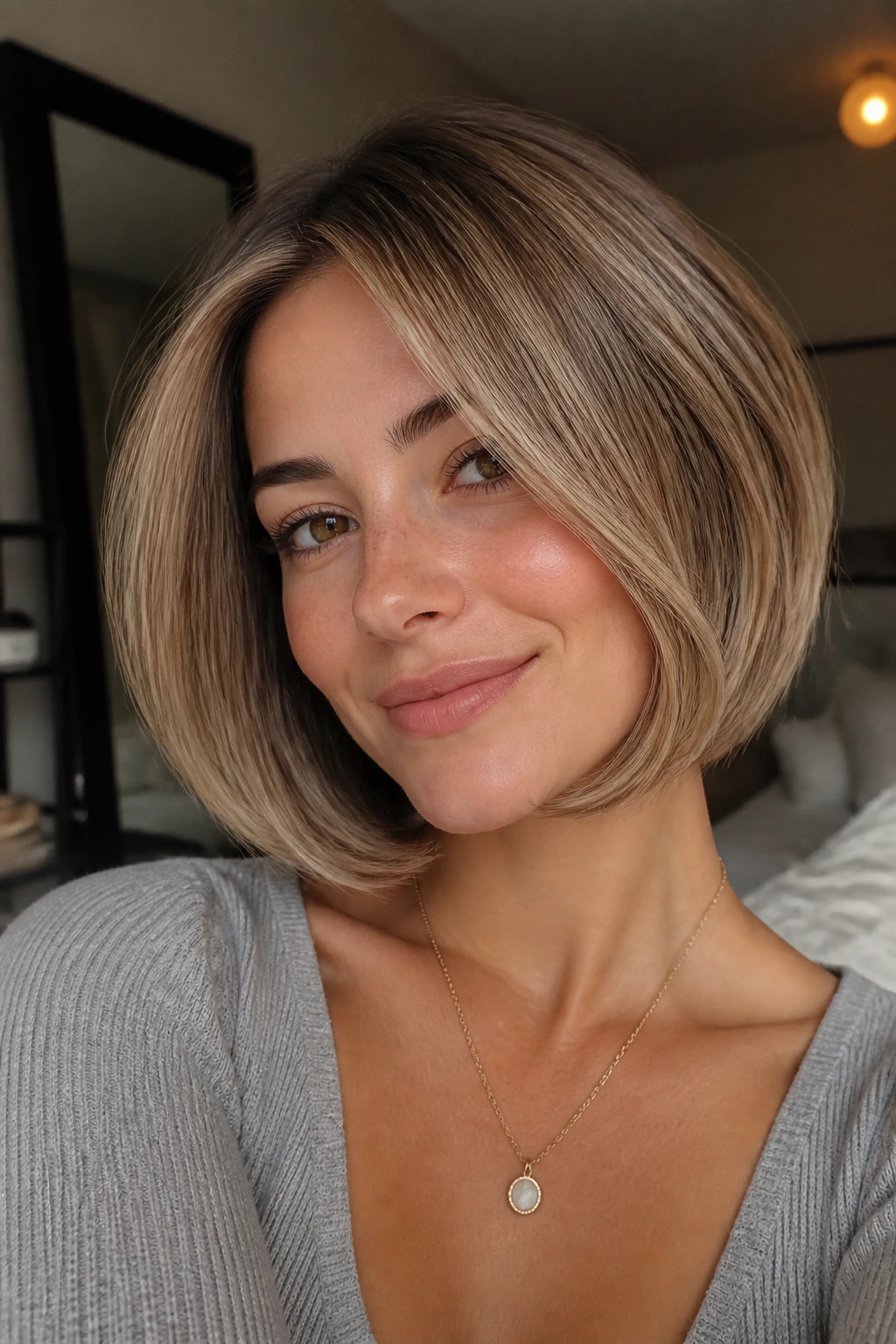
Here the angle is gentler, almost curved. The front pieces turn inward so the bob follows the jawline instead of stopping above it. That matters on a heart-shaped face because the lower face gets a little extra visual presence, which helps balance the wider upper half.
This shape is good if you want something softer than a sharp A-line. It still gives fine hair a fuller outline, but it feels less graphic. Ask for the front to land at the jaw or a hair below it. If it stops too high, the whole cut can widen the cheeks in a way that does nobody any favors. The beauty of this version is in the restraint. Keep it neat, not fluffy.
10. Face-Framing Bob with Curtain Bangs

Curtain bangs are popular for a reason: they break up the forehead without turning the front of the haircut into a heavy wall. On a heart-shaped face, that softness is useful. The part opens in the middle, the fringe drifts outward, and the eye gets pulled down toward the cheekbones and jaw.
For fine hair, the trick is to keep the curtain pieces light and the overall bob full at the edge. Too much face-framing layer and the cut starts to thin out in the wrong places. A round brush helps here, but so does a quick bend with a flat iron at the ends. The look should feel airy, not overly styled. I like this one when the hair is fine but not limp — there’s a difference, and it matters.
11. Asymmetrical Bob with One Longer Side
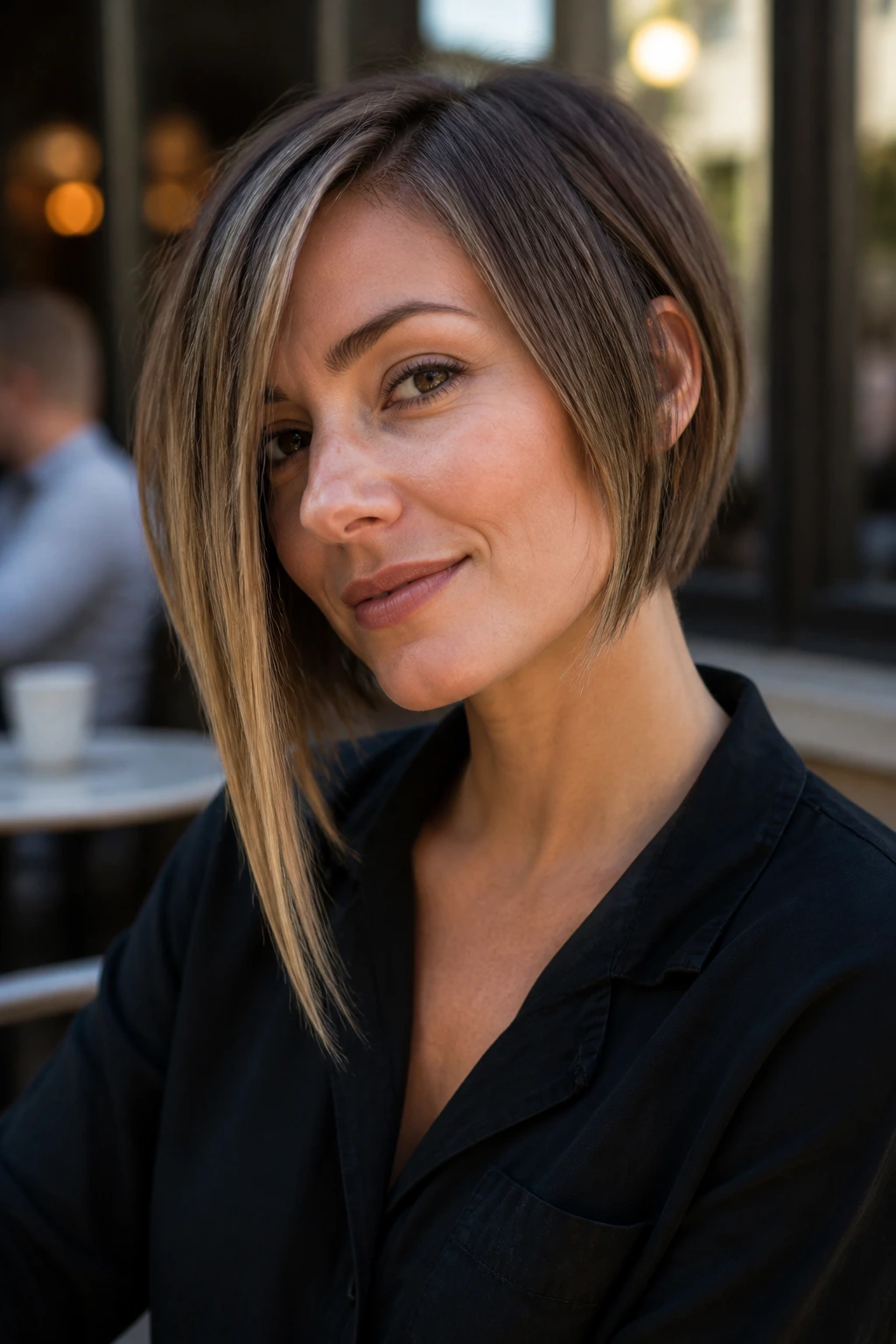
A little asymmetry goes a long way. One side longer than the other gives the haircut a diagonal pull that naturally flatters a heart-shaped face, because the eye moves away from the widest point and settles lower. Fine hair also tends to look a bit richer in an asymmetrical cut, because the difference in length creates the illusion of more shape.
This is one of the bobs that reads modern without needing a lot of product. Keep the shorter side close to the jaw and let the longer side brush the neck or collarbone. I especially like it with a deep side part and a tucked side. It gives the haircut movement, and movement is what keeps fine hair from looking sleepy.
12. Graduated Bob with Hidden Lift
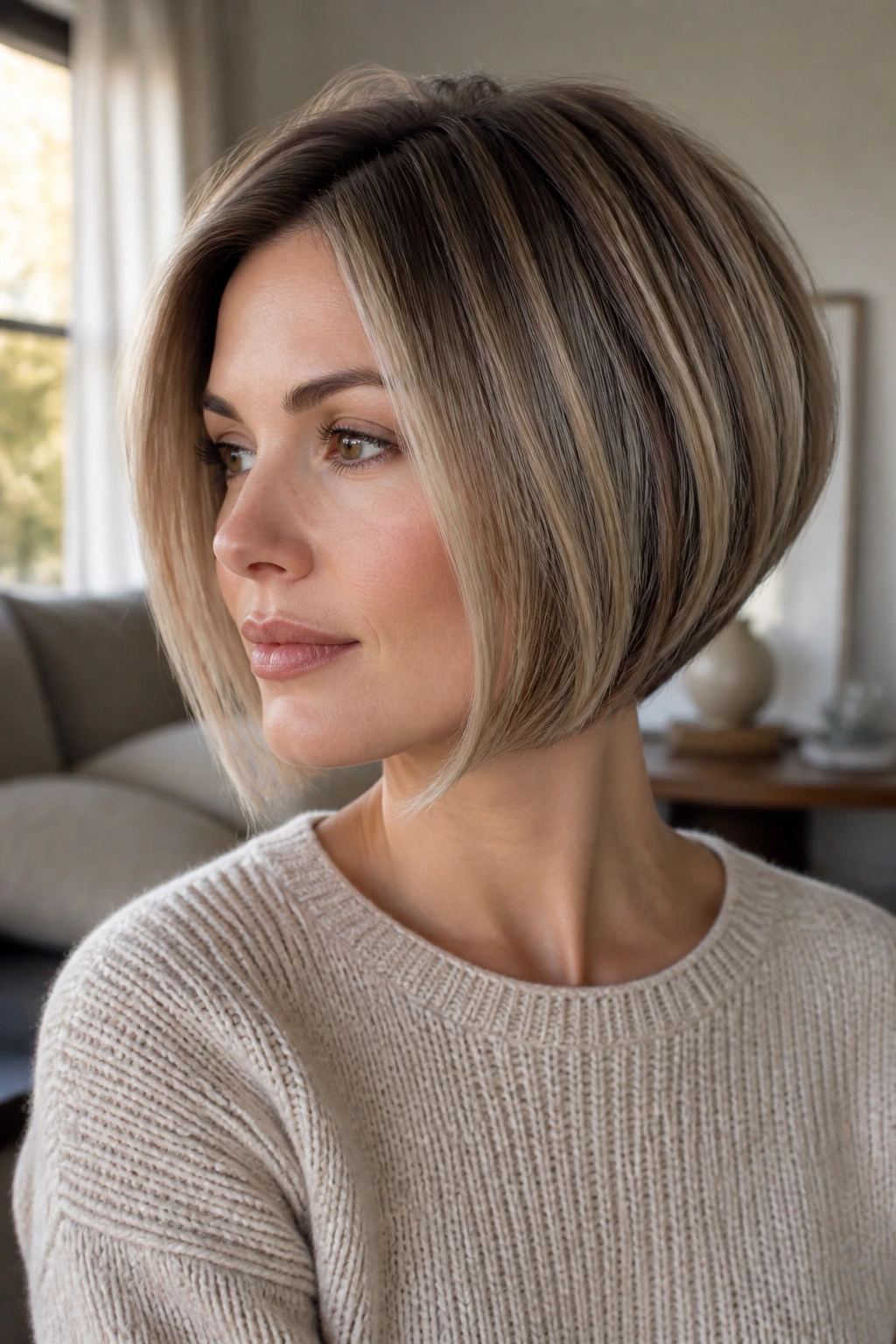
This version is sneaky in the best way. The graduation lives underneath, so the surface still looks smooth and controlled, but the back has enough support to keep the haircut from sagging. For fine hair, that hidden lift can be a lifesaver. You get shape without exposing every layer to the air.
The key is subtlety. If the stack becomes too obvious, the nape can look thin and the front can feel disconnected. Ask for the shortest point at the back to stay compact, then have the front angles sweep forward just enough to graze the chin. On a heart-shaped face, this creates a nice shift downward without adding bulk at the temples. It’s a practical cut with a little polish. No drama needed.
13. Curled-Under Bob for Full Ends
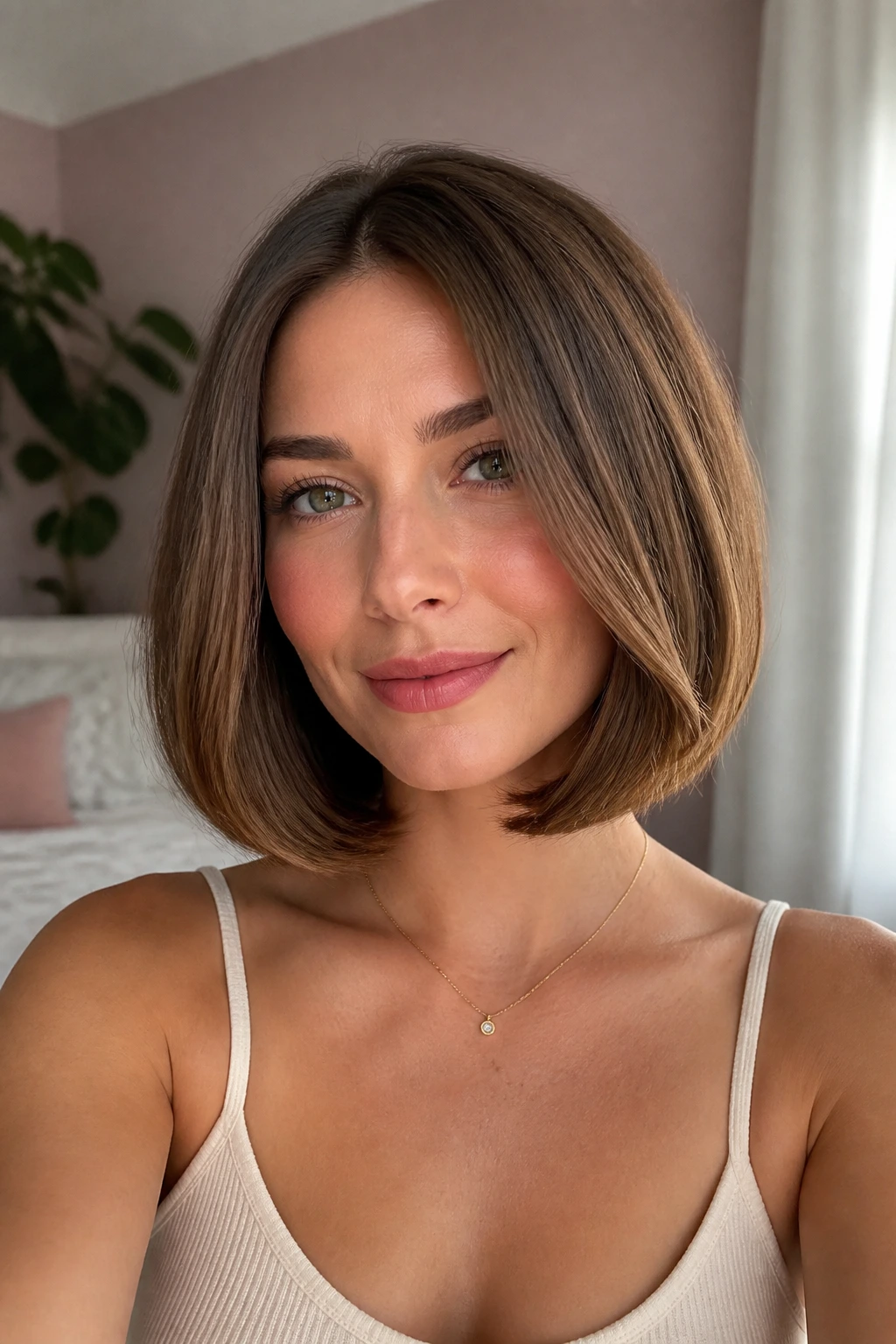
A curled-under finish is old-school in the best sense. The ends bend inward and look thicker because the eye sees a rounded edge instead of a raw line. On fine hair, that trick matters. The bob reads fuller at the bottom, which is where thin hair most often gives itself away.
It also flatters a heart-shaped face by keeping the lower edge soft and compact. I like this version when the haircut lands at the jaw or just below it. A round brush and a quick pass of a blow dryer are usually enough, though a low-heat flat iron can help seal the bend on stubborn pieces. It’s not flashy. It just works.
14. Choppy Bob with Invisible Layers
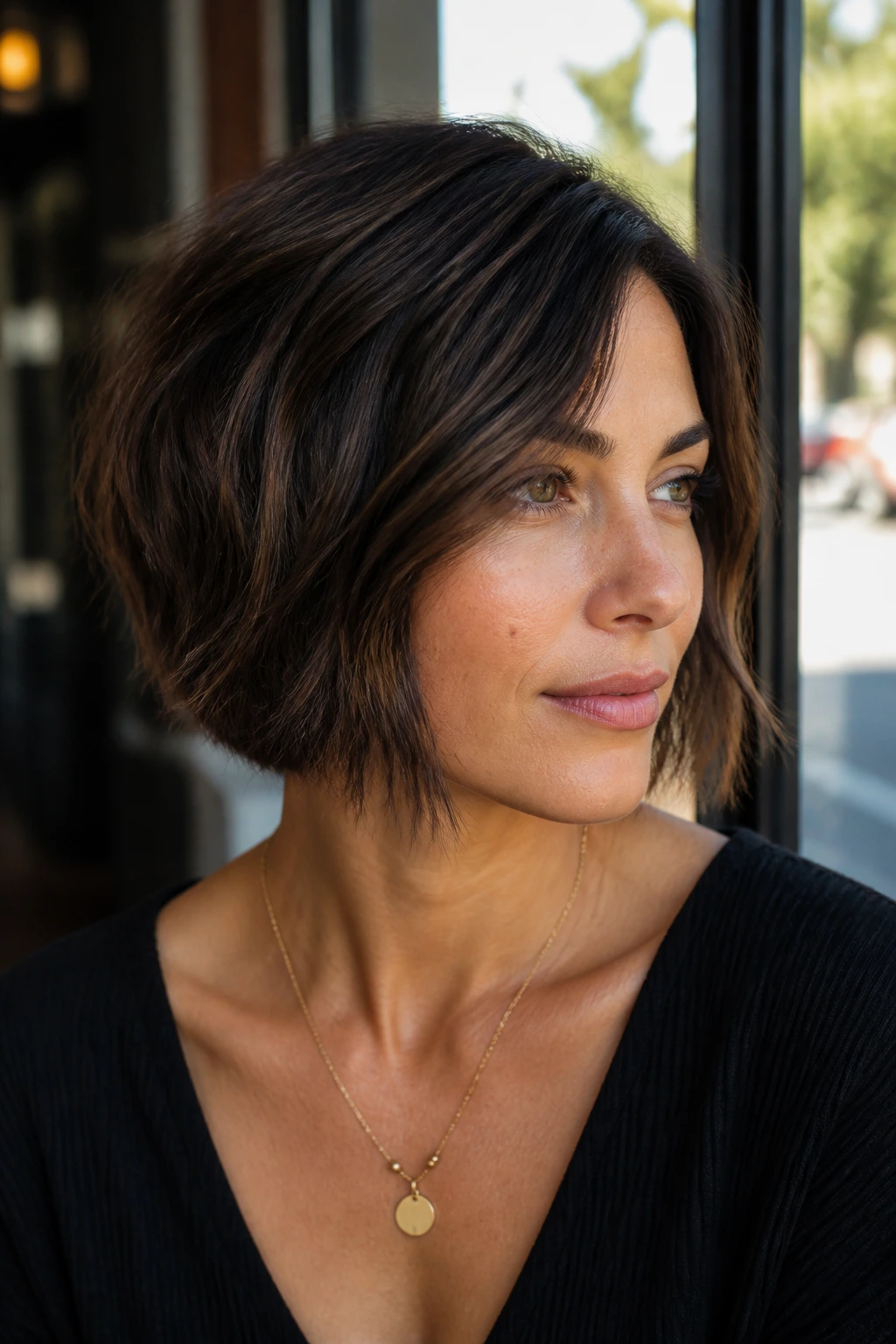
The phrase “choppy” can scare people with fine hair, and honestly, sometimes it should. But invisible layers are a different animal. They live inside the cut, not on the outside edge, so the perimeter still looks thick while the interior gets a little air and movement.
That’s useful on a heart-shaped face because you can keep the front pieces soft without sacrificing the jawline. The result is a bob that moves when you turn your head but doesn’t look sparse from the front. I’d ask for this version if your hair is fine but not fragile and you want a cut that doesn’t look too polished all the time. It has enough looseness to feel current, but not so much that the shape disappears.
15. Long Side-Bang Bob

A side bang is one of the easiest ways to balance a wider forehead without committing to a full fringe. It slides across the face, softens the top half, and leaves the rest of the bob free to do its job. On fine hair, that matters because you are not taking too much density out of the front.
The length should stay somewhere between the eyebrow and cheekbone, then drift into the angled front pieces. That way the cut feels joined up instead of chopped into separate parts. This one is especially good if you don’t love styling curtain bangs every morning. You can blow the fringe forward and off to the side, and it will still look intentional. Sometimes that is the whole game.
16. Tousled Air-Dry Bob

This is the easiest-looking version, which is not the same thing as the easiest to cut. The shape needs to be good first. Once the cut is right, a little mousse, a scrunch, and a rough dry can make the bob look relaxed without collapsing into nothing. Fine hair benefits from that kind of controlled looseness, because it keeps the ends from sitting limp against the neck.
Heart-shaped faces usually do well with the softness around the cheeks and jaw. The texture keeps the look from becoming severe, and the diagonal line stays visible even when the hair is not perfectly smooth. Skip heavy creams. Use a light foam or mousse at the roots and mid-lengths, then leave the ends a bit freer. That’s what gives it movement.
17. Tucked-Behind-the-Ear Bob
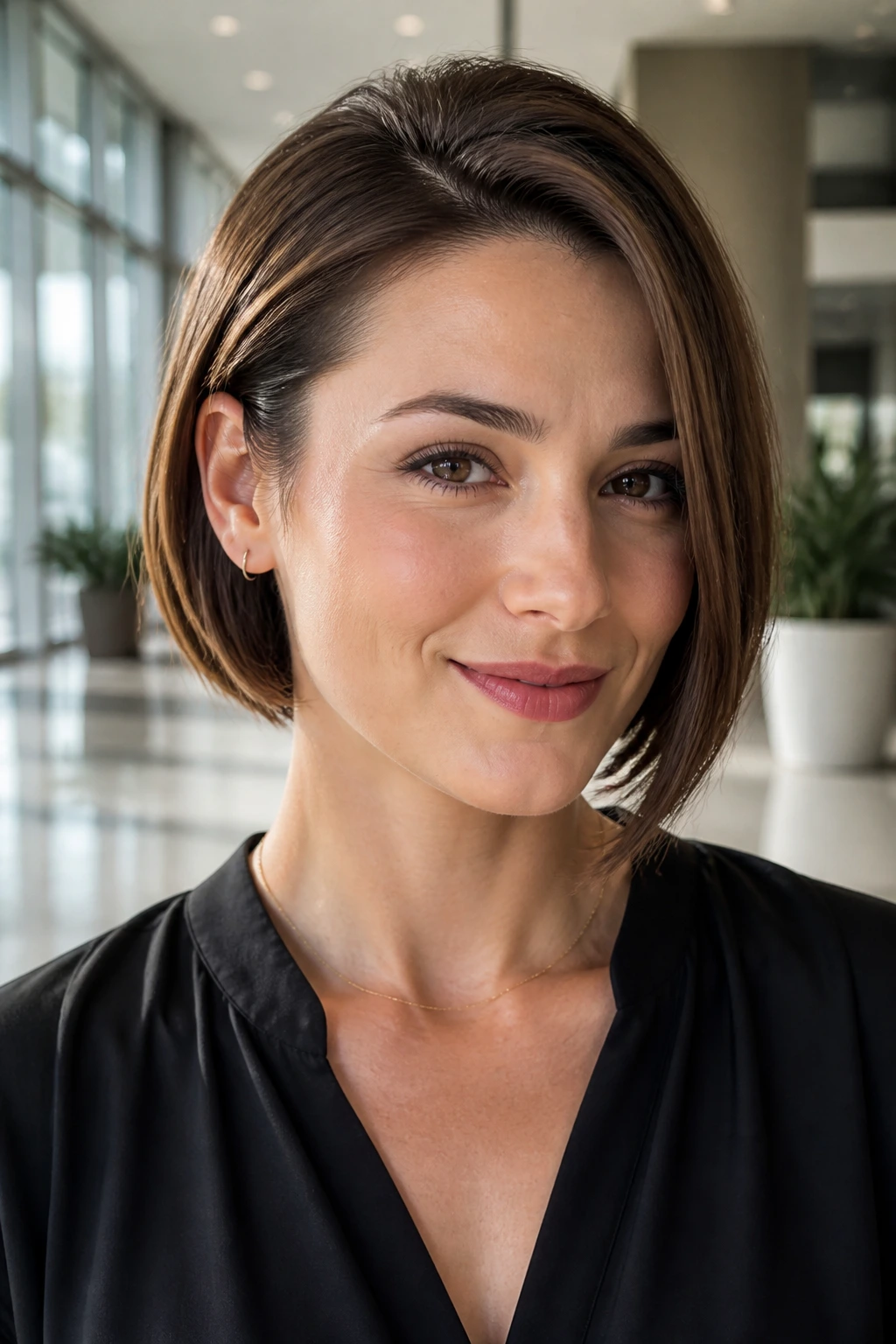
There’s something tidy about a bob that can be tucked behind one ear without falling apart. It creates a little asymmetry on purpose, and on a heart-shaped face that shift can be flattering because it lets one side of the jaw show while the other side stays softly framed. Fine hair usually behaves well with this kind of styling because it doesn’t need a lot of force to stay in place.
The cut itself should leave the front slightly longer so the tuck doesn’t pull the whole shape too far back. I like this on straight hair, especially when you want the angle to read clearly from the side. It’s a small styling move, but it changes the mood of the cut. Suddenly it feels sharper. Cleaner. Less fussy.
18. Flipped-End Bob

A flipped-end bob has a little lift at the bottom, and that lift keeps fine hair from going flat against the shoulders. The ends turn out instead of under, which gives the cut a lighter, more playful feel than the curled-under version. On a heart-shaped face, that movement helps widen the visual base near the jaw.
This is a good choice if your hair naturally wants to curve outward anyway. Fighting that tendency can be a waste of time. Better to shape it on purpose and make the flip look styled rather than accidental. A flat iron with rounded edges can coax the turn, but don’t overdo the heat. Fine hair gets tired fast when it’s cooked every morning. Once the flip starts looking fried, the whole point is gone.
19. Micro-Angled Bob at the Jaw
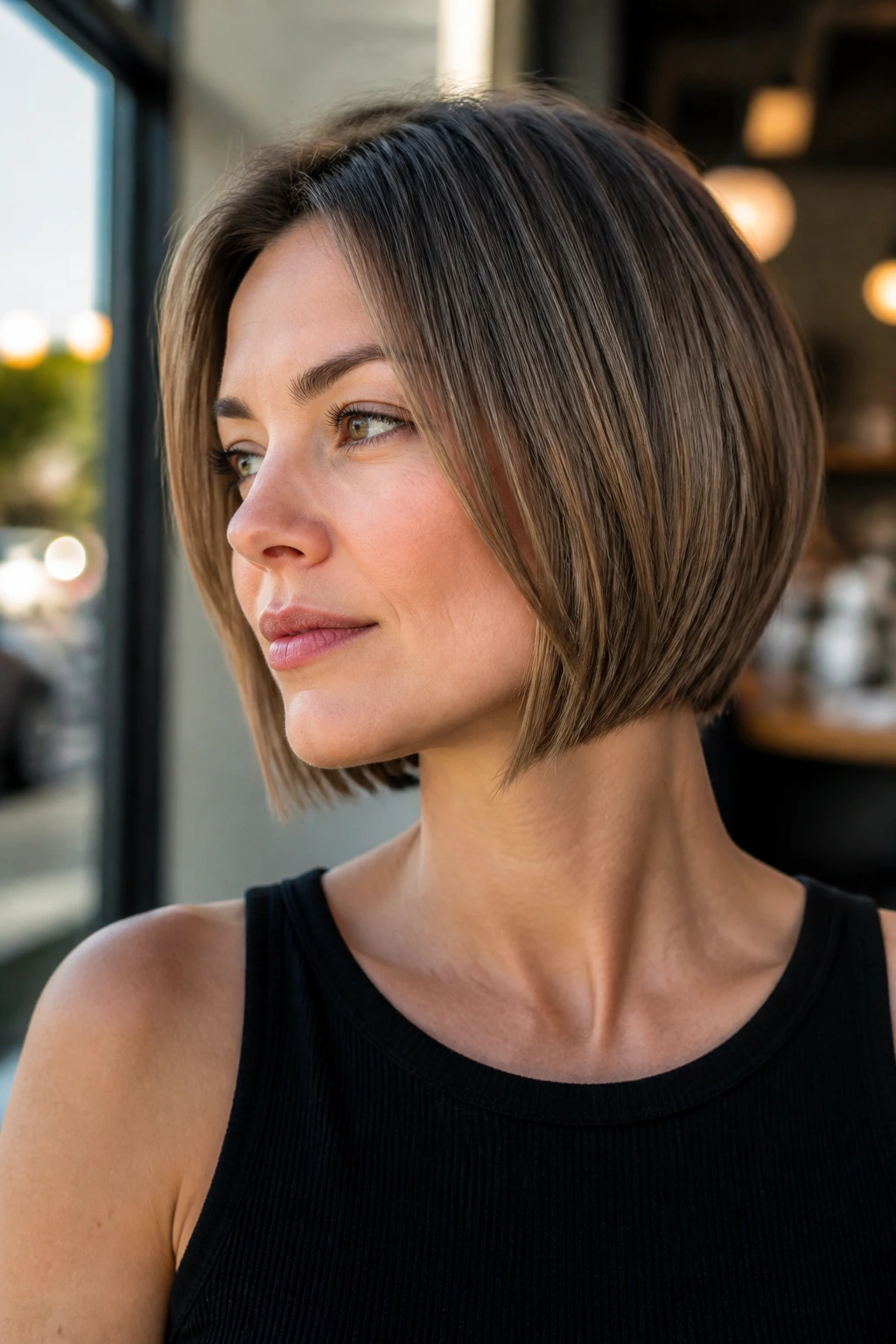
Short bobs are not for everyone, but when fine hair has enough density and the jawline is worth showing off, a micro-angle can be sharp in a good way. The back stays compact, the front lands right at the jaw, and the diagonal is just enough to keep the cut from looking boxy. It feels confident without being loud.
For heart-shaped faces, the lower length is the key. Too short at the front and the forehead can feel dominant. Keep the sides clean and the line precise. If you wear glasses or like a strong side part, this cut can sit beautifully with both. It does not need waves or texture to make sense. In fact, too much texture can spoil the crispness that makes it work.
20. Polished Lob with Invisible Layers
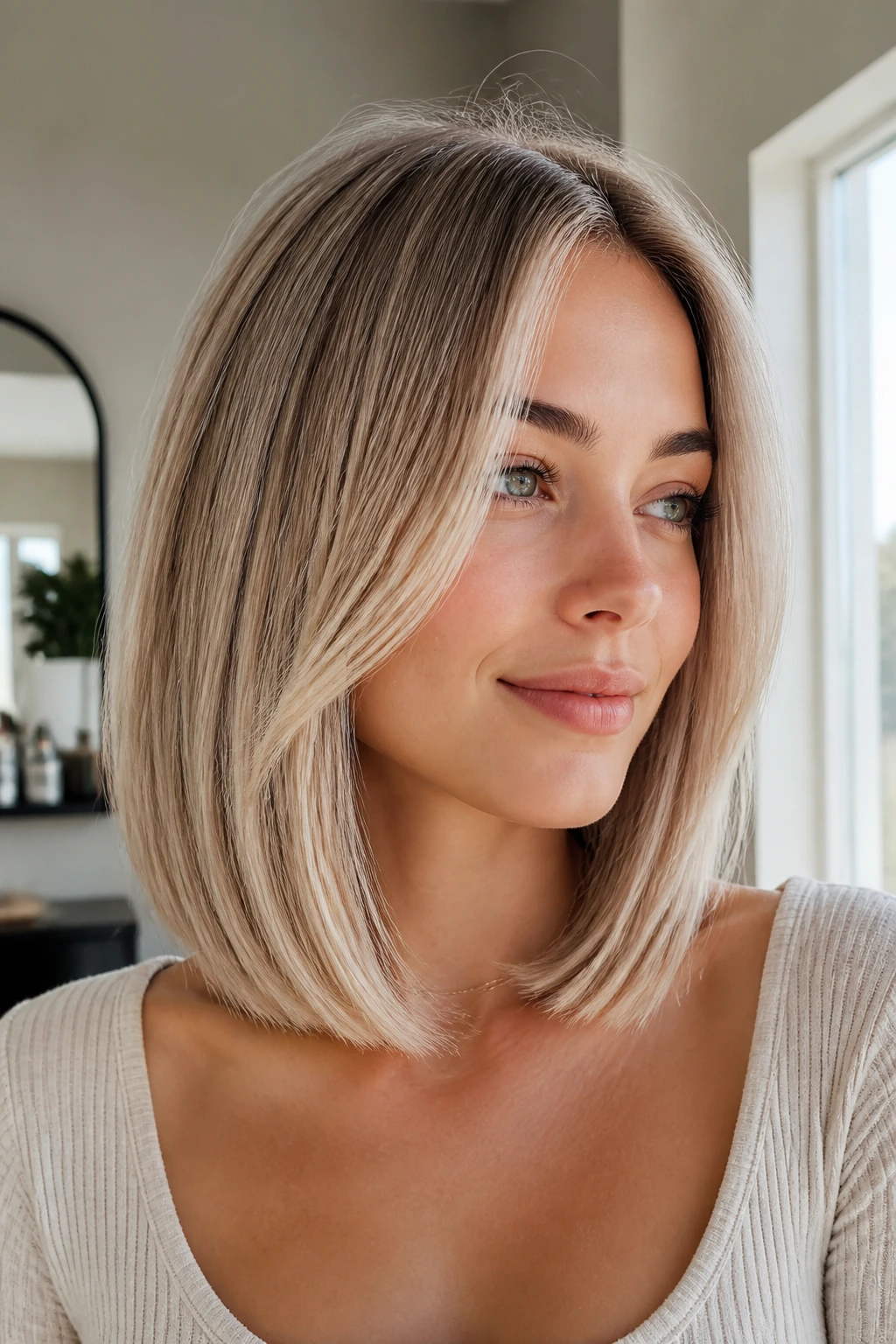
This is the safer long version, and safe is not a dirty word when the shape is good. A polished lob gives you collarbone length, which is generous for fine hair because it adds swing and keeps the ends from looking sparse. Invisible layers inside the cut stop it from turning into a single heavy curtain.
On a heart-shaped face, the longer front corners give the lower half of the face more room. That can be especially useful if you are growing out a shorter bob and don’t want the in-between stage to look awkward. A sleek blow-dry or a gentle bend at the ends keeps the line visible. If you like a haircut that can go from tucked to loose without complaint, this one is hard to beat.
21. Side-Swept Fringe Bob with Soft Corners
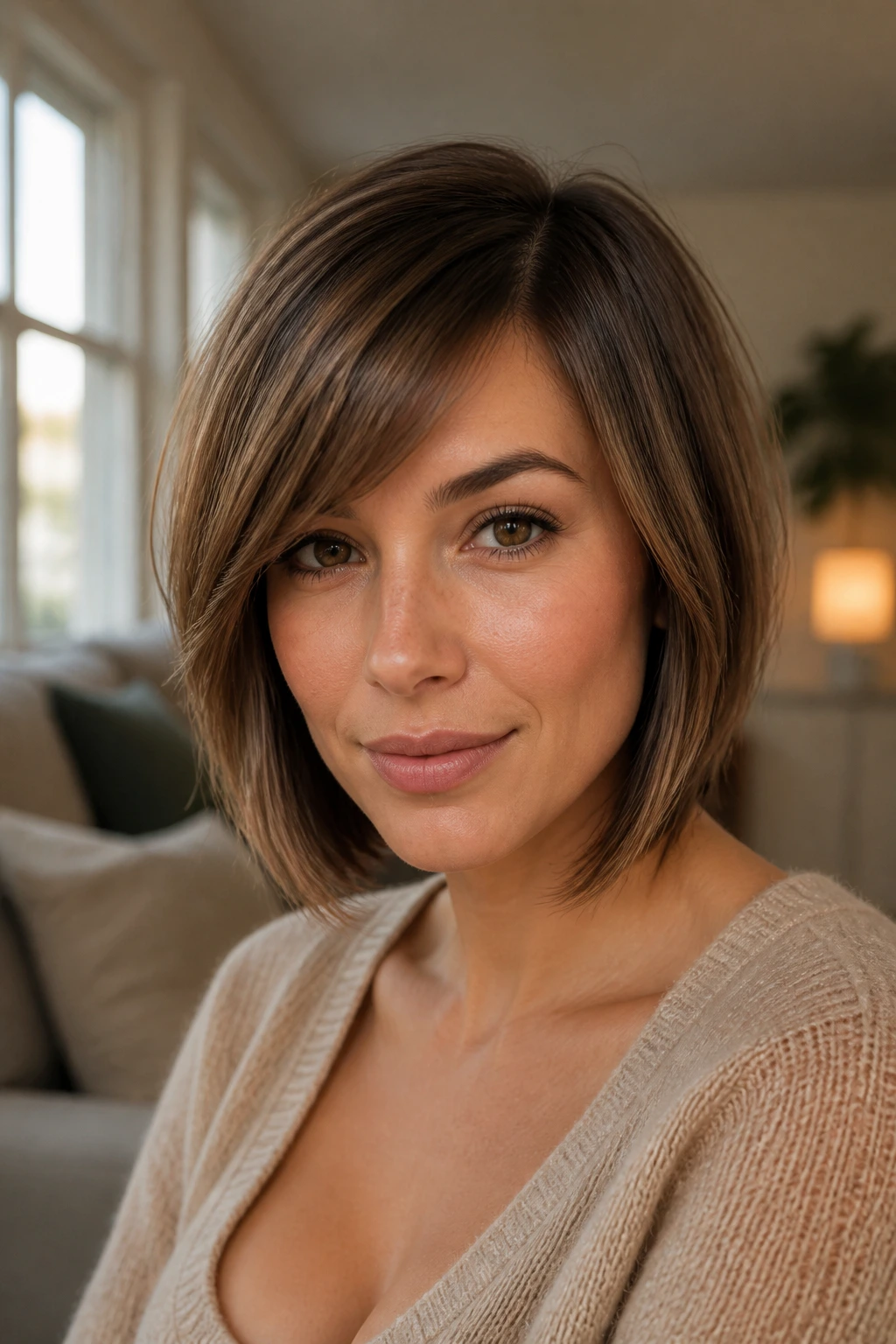
This version is all about easing the transition from forehead to jaw. The side-swept fringe softens the upper face, and the soft corners at the front keep the bob from feeling too hard or too square. For fine hair, those soft corners still need enough weight to hold a shape. Ask for them to be blunted slightly, not thinned out.
It works especially well if you wear your hair with a side part most days. The fringe can sit across the forehead, then blend into the longer front pieces instead of stopping abruptly. That blend is what makes the haircut feel calm. No harsh lines. No overbuilt layers. Just a shape that knows where to rest.
22. Root-Lifted Bob with a Compact Nape
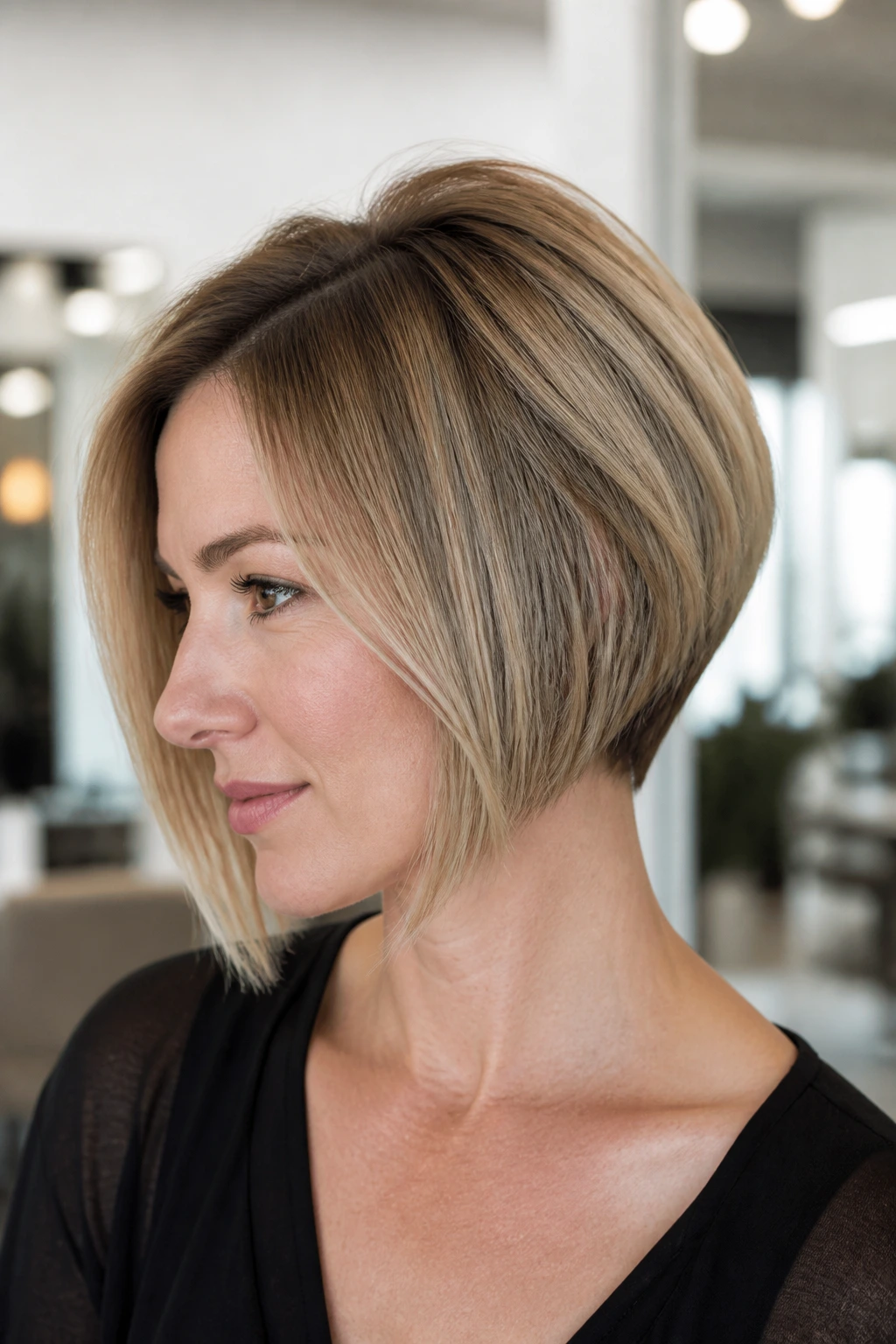
Some angled bobs are about the front. This one is about the back. Fine hair often collapses at the crown and nape faster than anyone wants, so a compact nape keeps the silhouette from sagging while a little root lift gives the top enough air to avoid looking pasted down.
That balance helps heart-shaped faces because it keeps the volume controlled where it should be and away from the forehead, where too much lift can make the face feel wider. A root mousse and a round brush at the crown are enough. Don’t chase giant volume. Chase shape. Those are not the same thing, and this cut knows the difference.
23. Soft Razor Bob with Light Texture
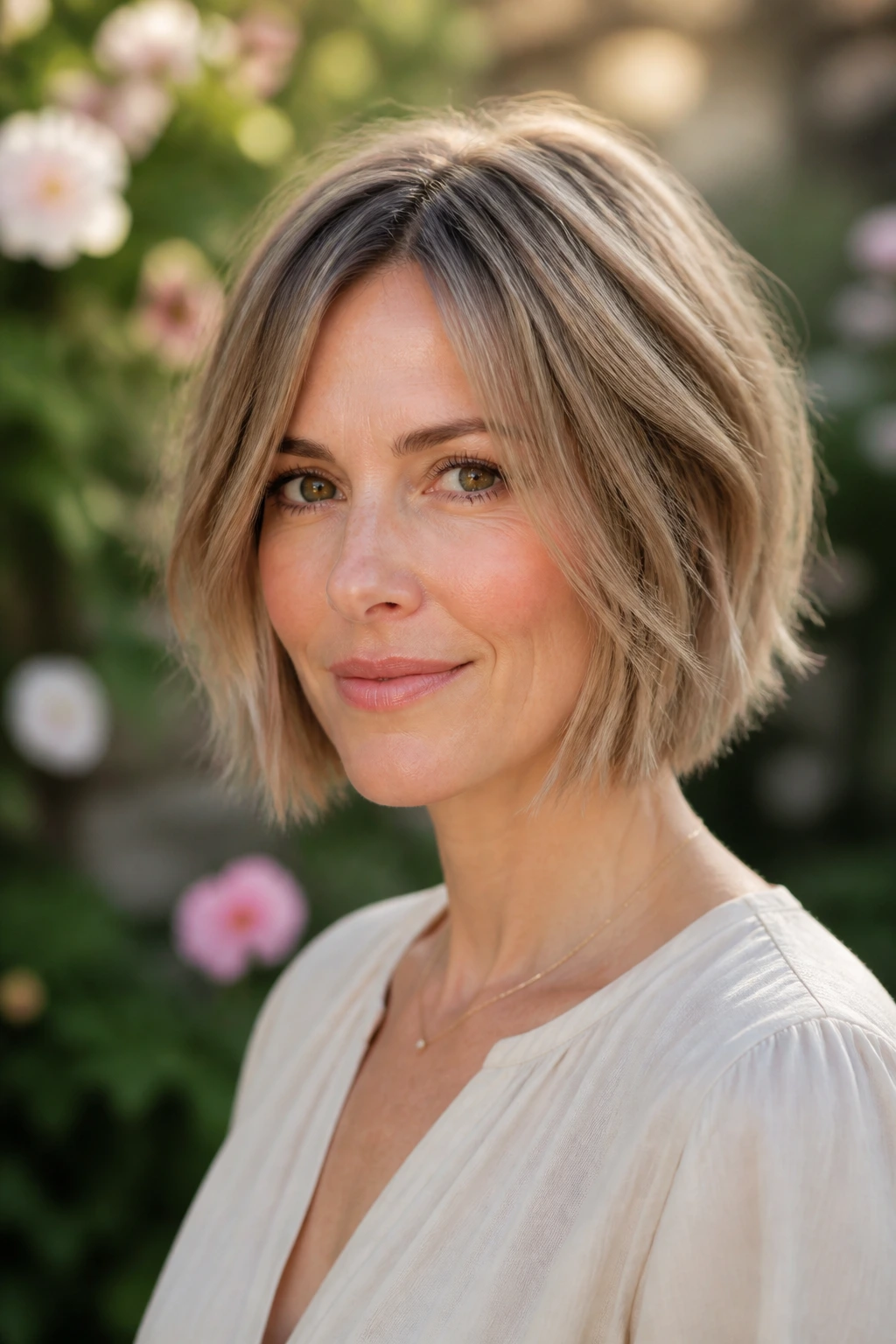
A gentle razor finish can be useful when the hair is fine but plentiful enough to handle some internal movement. The word here is gentle. You want the texture to soften the line, not shred it. The perimeter should still look full; the texture belongs in the mid-lengths and just at the edges.
This bob works well on heart-shaped faces because the slight texture near the cheeks keeps the cut from looking too severe. It also photographs in a more relaxed way, which people either love or hate depending on how much effort they want to give their hair. I would not choose this if the ends are already fragile. If they are healthy, though, it gives the angle a little life.
24. Long-Front Tapered Bob
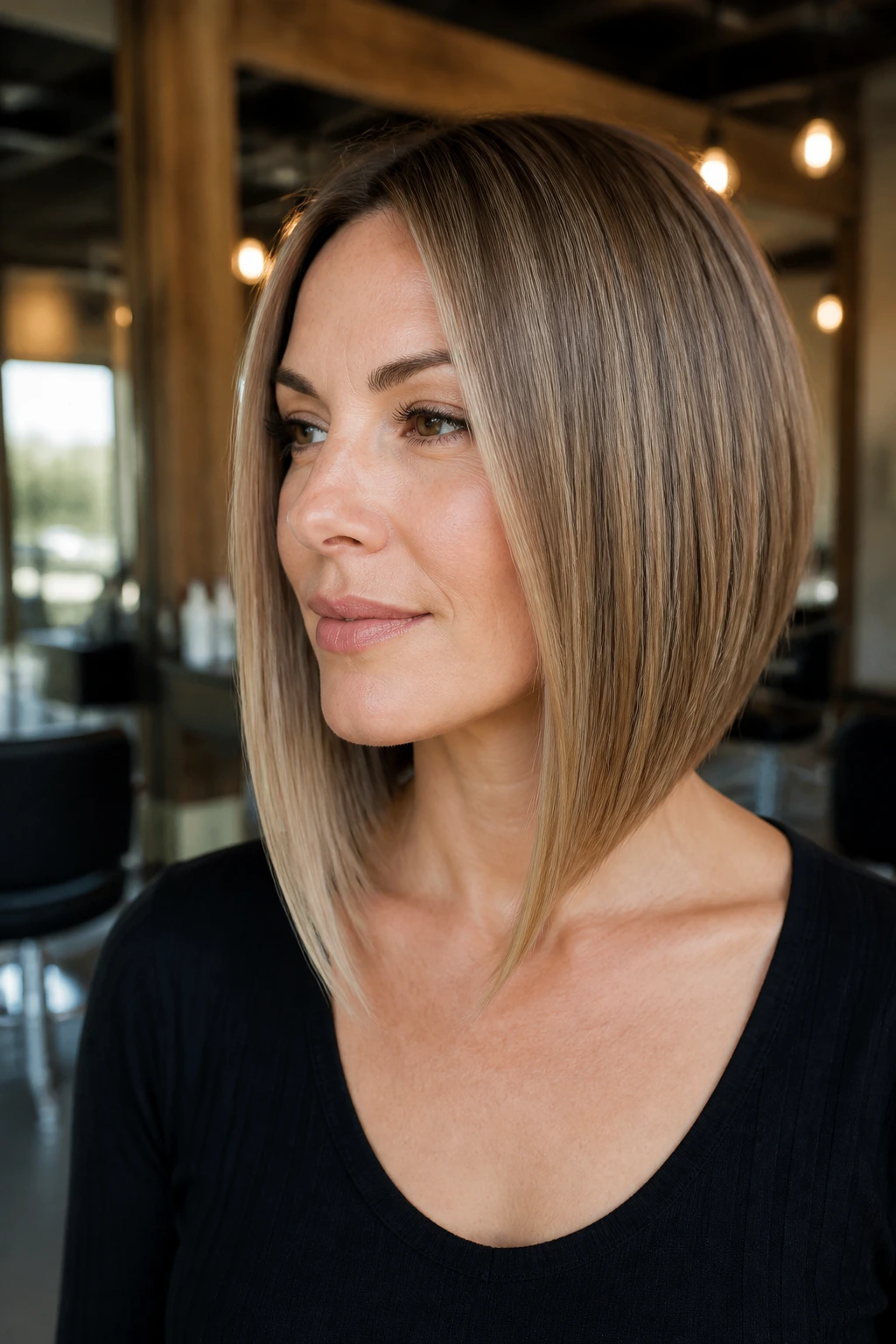
This is the grown-up version of the angled bob. The front pieces taper longer, sometimes brushing close to the collarbone, while the back stays neatly shorter. Fine hair gets extra help from the long front because the weight keeps the ends from scattering. The taper also lets the haircut move without losing its line.
Heart-shaped faces tend to do well with this because the longest point sits low enough to balance the forehead and cheekbones. It’s also one of the easiest versions to grow out. That matters. Not every haircut needs to be reborn every six weeks. Some just need to keep working while life happens around them.
25. Chin-to-Collarbone Grow-Out Bob
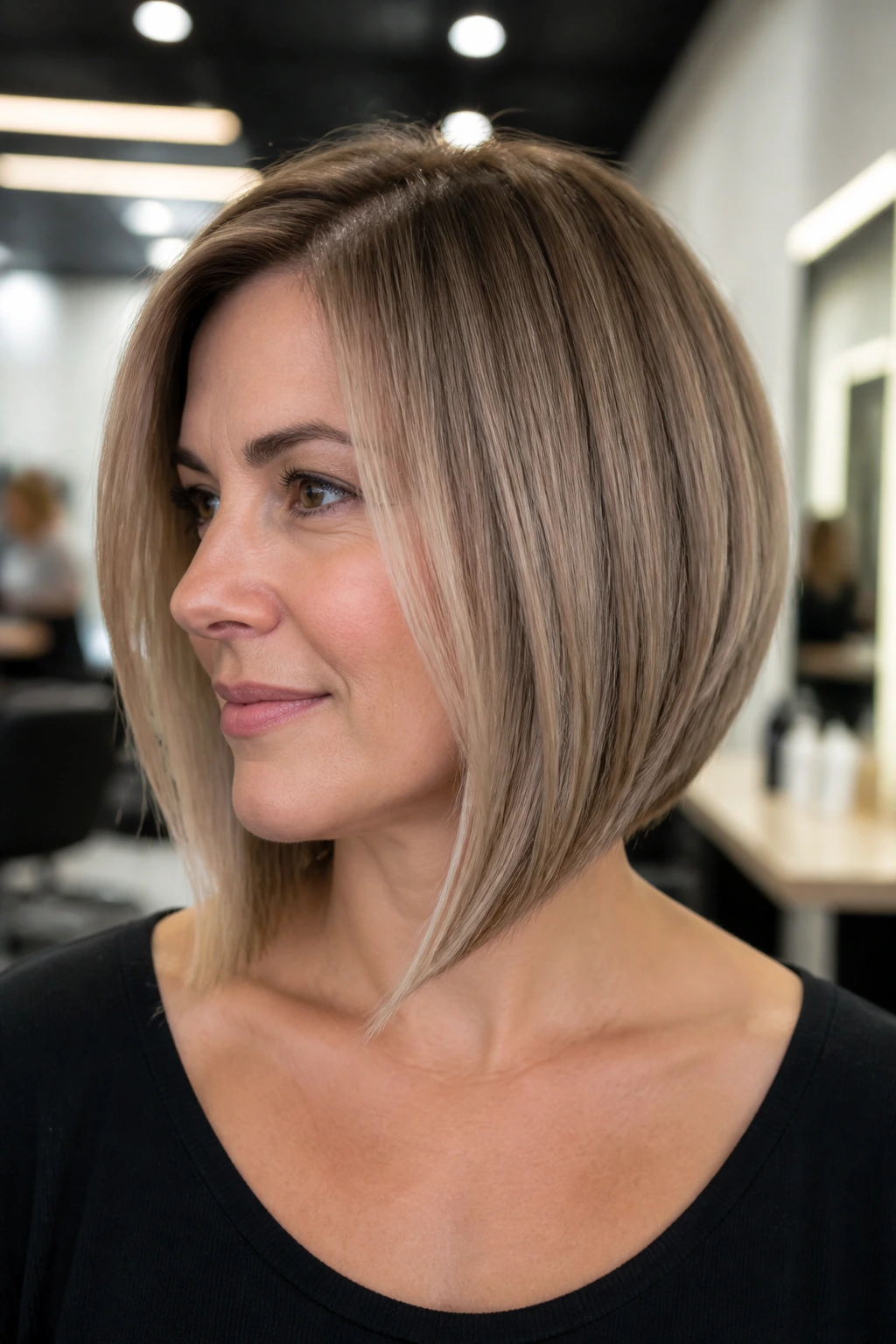
This is the most forgiving version in the group, and maybe the smartest if you know you’ll want to change your mind later. The front starts around the chin and stretches toward the collarbone, so the shape still makes sense even as it gets a little longer. Fine hair likes that kind of flexibility because the cut stays full enough to look deliberate through the grow-out stage.
For a heart-shaped face, this length gives you room to choose where the visual weight sits. Wear it smooth and tucked. Wear it with a side part. Add a bend at the ends and let the diagonal line do its job. This is the version I’d point to if someone said, “I want the angled bob idea, but I’m not ready for a dramatic haircut.” That is a very reasonable place to start.
Why the Angle Works Better Than Extra Layering
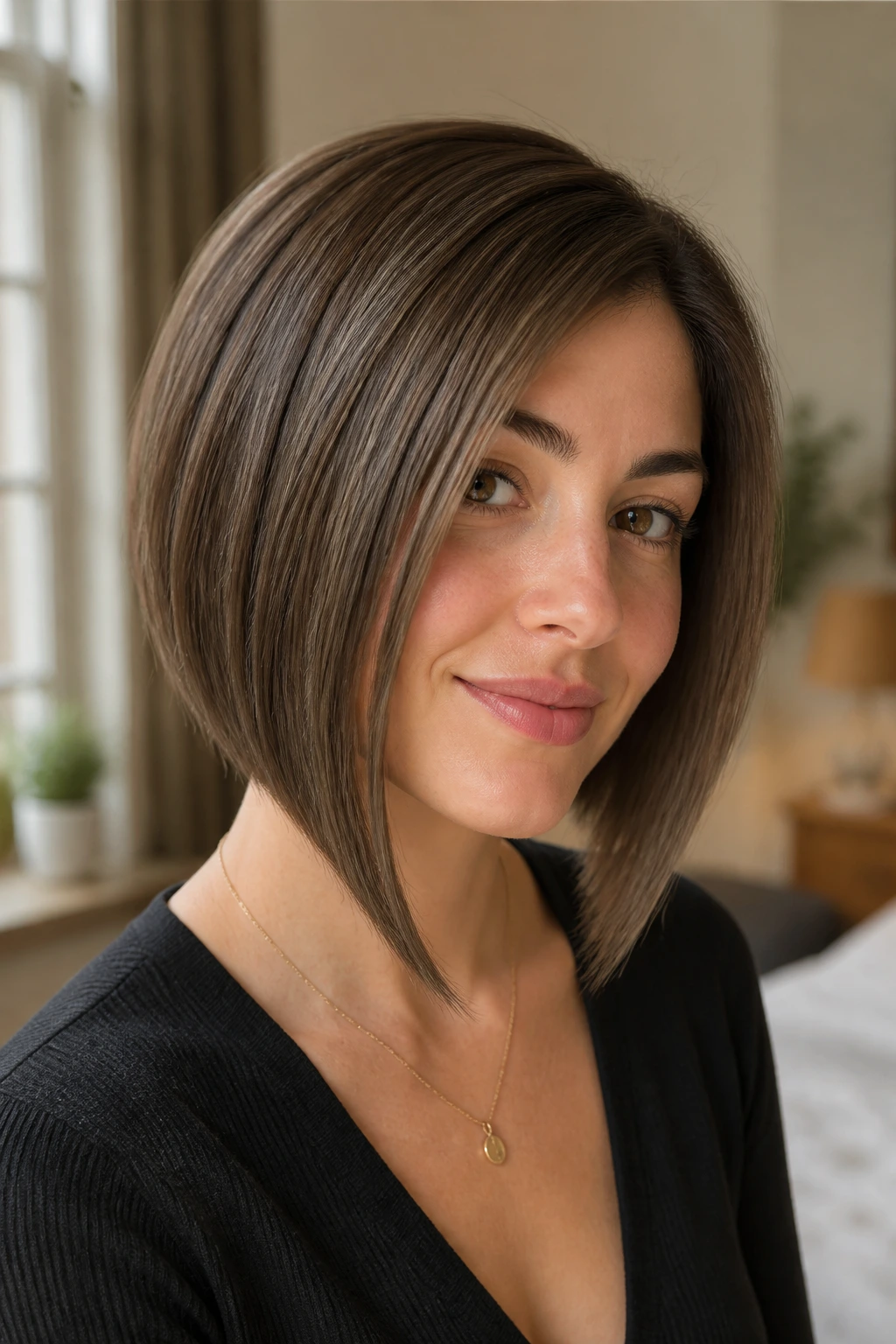
Fine hair has a cruel little habit of separating into obvious strands when it’s over-layered. That’s why the angle matters more than a pile of texture. A clean diagonal line keeps the eye focused on the shape of the haircut, not on the amount of hair you do or don’t have. The edge looks deliberate. The ends look thicker. The whole cut has a clearer outline.
Heart-shaped faces benefit from that, too. The wider forehead and narrower chin create a shape that looks best when the lower face gets a bit more presence. A bob that lands at the jaw or collarbone does that without dragging the face downward. It balances instead of competing. That is the useful part.
Fine hair wants weight where the eye lands
A perimeter that stays full at the front makes the haircut look denser than a heavily thinned one. The back can be slightly shorter, but the line needs to stay strong.
Heart-shaped faces want softness near the forehead, not bulk
Curtain pieces, side fringes, and side parts all work because they redirect attention. A blunt fringe can work too, but only when it is cut with enough density to avoid looking patchy.
How to Ask a Stylist for the Right Version
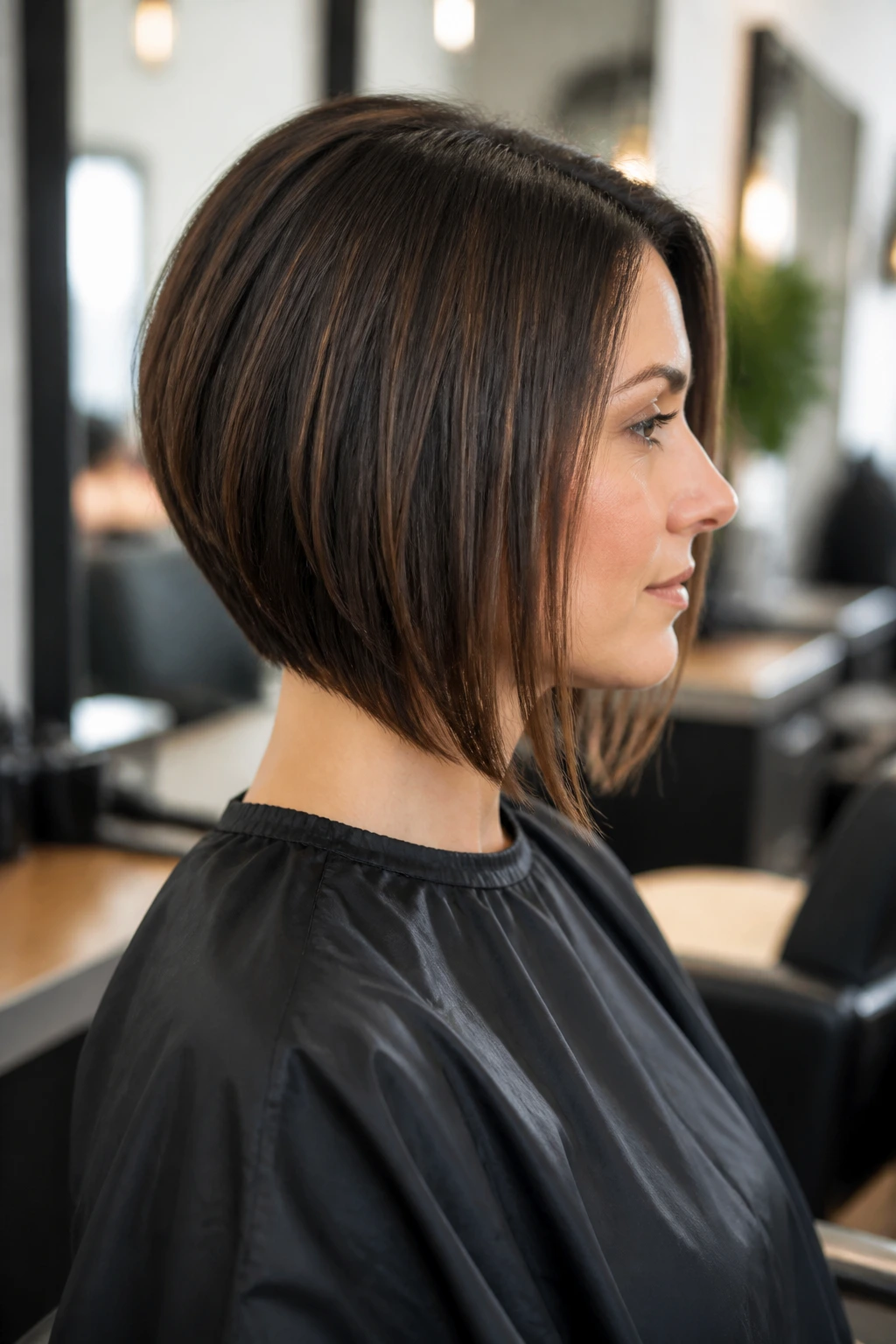
Bring more than one photo. A front view is useful, but the side view is where this haircut lives. The angle matters from the profile, and that’s the part people often forget to show. If you can, bring a picture of a bob that shows the nape as well as the front corners.
Then say what your hair actually does. Does it collapse at the crown? Does it puff at the sides? Does it dry straight or with a bend? Those details matter more than vague words like “piecey” or “soft.” If your hair is fine, I’d be direct about wanting the perimeter to stay full. If your face is heart-shaped, say that you want the front to balance the forehead and sit low enough to flatter the jaw.
A good stylist will know what that means. A great one will ask where you part your hair, how often you use heat, and whether you want to tuck one side behind your ear. Those are the questions that keep the cut from looking pretty only in the salon mirror.
- Say where you want the front to land: chin, jaw, or collarbone all create different effects.
- Ask for bluntness at the edge: too much texturizing can make fine hair look scraggly.
- Mention your part line: a center part and a side part do not need the same geometry.
- Be honest about styling time: a cut that needs round-brush work every morning is a different haircut from one that air-dries well.
- Bring up your cowlicks or flat crown: the angle can be adjusted to work with them instead of against them.
Essential Tools for Styling and Touch-Ups
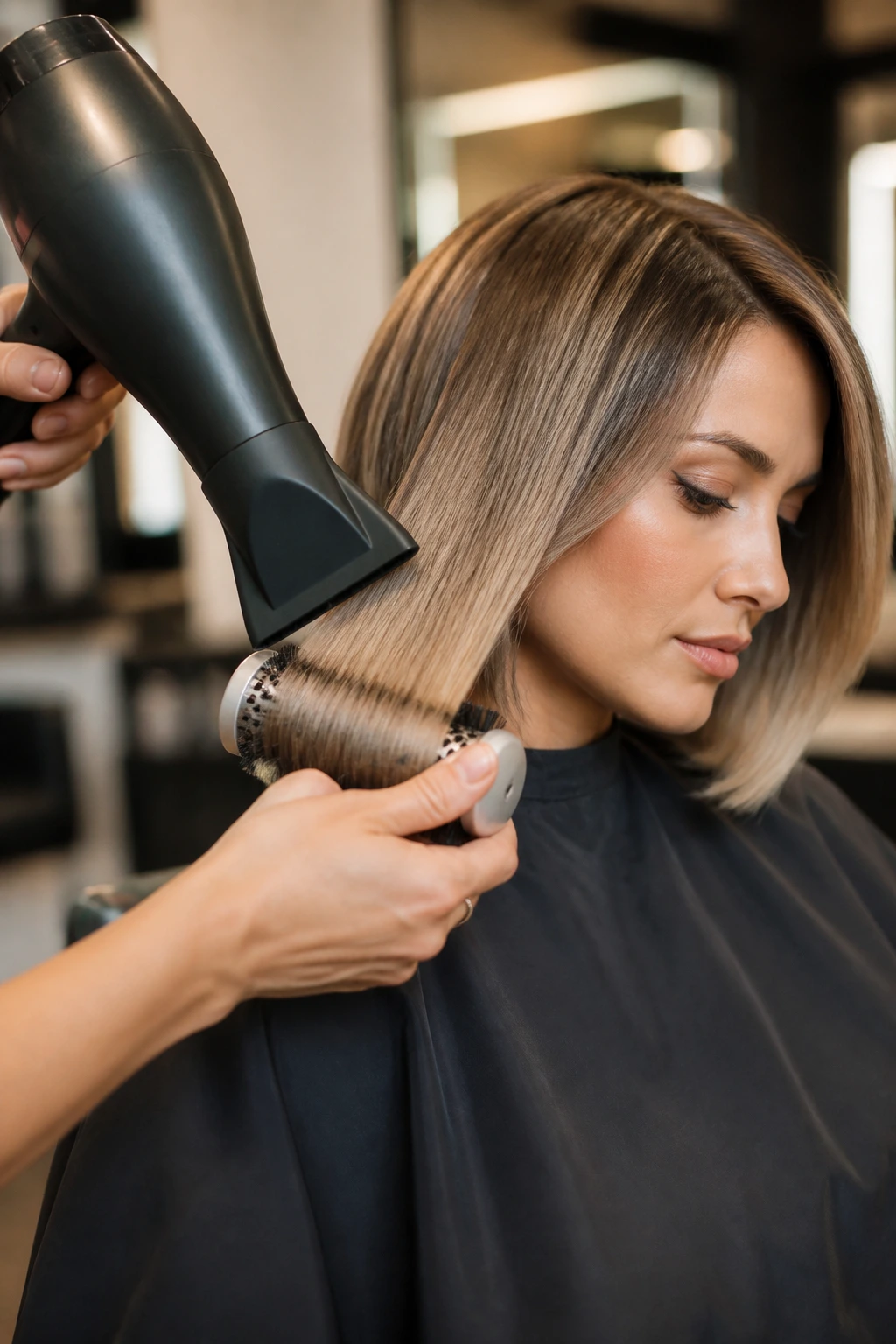
- Blow dryer with a narrow nozzle: Directs the air along the bob’s diagonal line and helps the ends stay smooth instead of puffing out.
- 1- to 1.5-inch round brush: Small enough to bend the front corners and lift the roots without making the ends too fluffy.
- Flat iron with rounded plates: Useful for polishing the front pieces, especially if your hair dries a little too flat or flips in odd directions.
- Lightweight mousse: Gives fine hair some body at the root and mid-lengths without leaving the ends gummy.
- Heat protectant spray: Fine hair shows heat damage fast, so this is not optional if you style with hot tools.
- Dry shampoo: Useful on day two when the crown goes limp but the ends still look fine.
- Texturizing spray: Best in light doses on the mid-lengths, not sprayed all over like hairspray.
- Tail comb: Handy for clean parts and for lifting small sections at the crown.
- Duckbill clips: Keep the front sections separated while you blow-dry.
- Microfiber towel: Cuts down on frizz and helps fine hair dry faster without roughing up the cuticle.
- Light serum or shine spray: Use on the perimeter only; too much will flatten the shape.
Smart Daily Styling Moves for Fine Hair
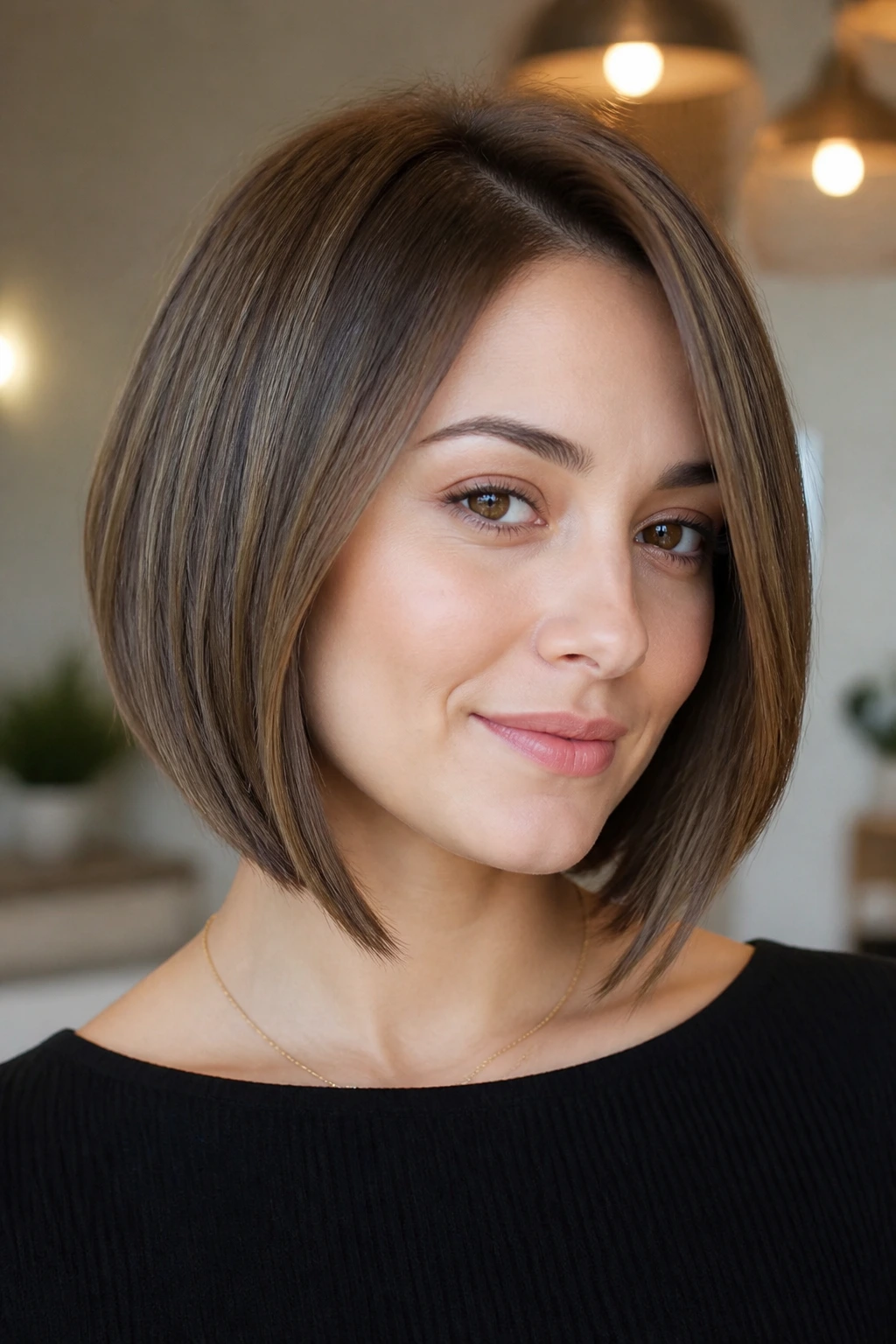
Blow-dry the front first. The front corners make or break an angled bob, and they set faster than you think. If you spend time on anything, spend it there. Use the brush to bend the ends under or out depending on the version you picked.
Use product where the support is needed, not everywhere. A pea-sized amount of mousse at the roots and a tiny touch of texture spray at the mid-lengths can do more than a thick cream spread from roots to ends. Fine hair gets weighed down fast. Fast.
Flip the part when the crown goes flat. A side part on one day and a softer off-center part on another can wake the shape up without changing the cut. I like this trick because it costs nothing and it works almost instantly.
Keep heavy oil away from the top. If the ends are dry, put a drop on the bottom inch only. The crown should stay light enough to hold the angle. That one habit saves a lot of bobby-pin desperation later.
Use a quick bend, not a full curl. A soft turn at the front corners is enough. Fine hair rarely needs a full barrel curl to look styled; it usually just needs a bit of direction.
Common Mistakes That Flatten the Shape

The first mistake is going too short at the front. On a heart-shaped face, a bob that stops above the jaw can make the forehead feel wider and the chin even smaller. The fix is simple: keep the front corners at the jaw or lower unless the whole cut is intentionally micro and very precise.
The second mistake is over-layering fine hair. Too many internal cuts leave the perimeter thin and patchy, which defeats the whole point of an angled bob. Ask for bluntness at the edge, then a light touch inside if movement is needed. That keeps the shape full enough to hold up between washes.
Another one: loading the roots with heavy products. Creams, oils, and dense masks can flatten the crown and make the angle disappear by lunch. Fine hair usually needs lighter support — mousse, spray, or a small amount of dry shampoo. If the hair feels tacky before styling, it’s probably already carrying too much.
And please, do not let the nape grow out until the back turns into a shelf. That’s when the bob loses its line and starts looking accidental. A trim every 6 to 8 weeks keeps the shape honest.
Variations and Adaptations to Try
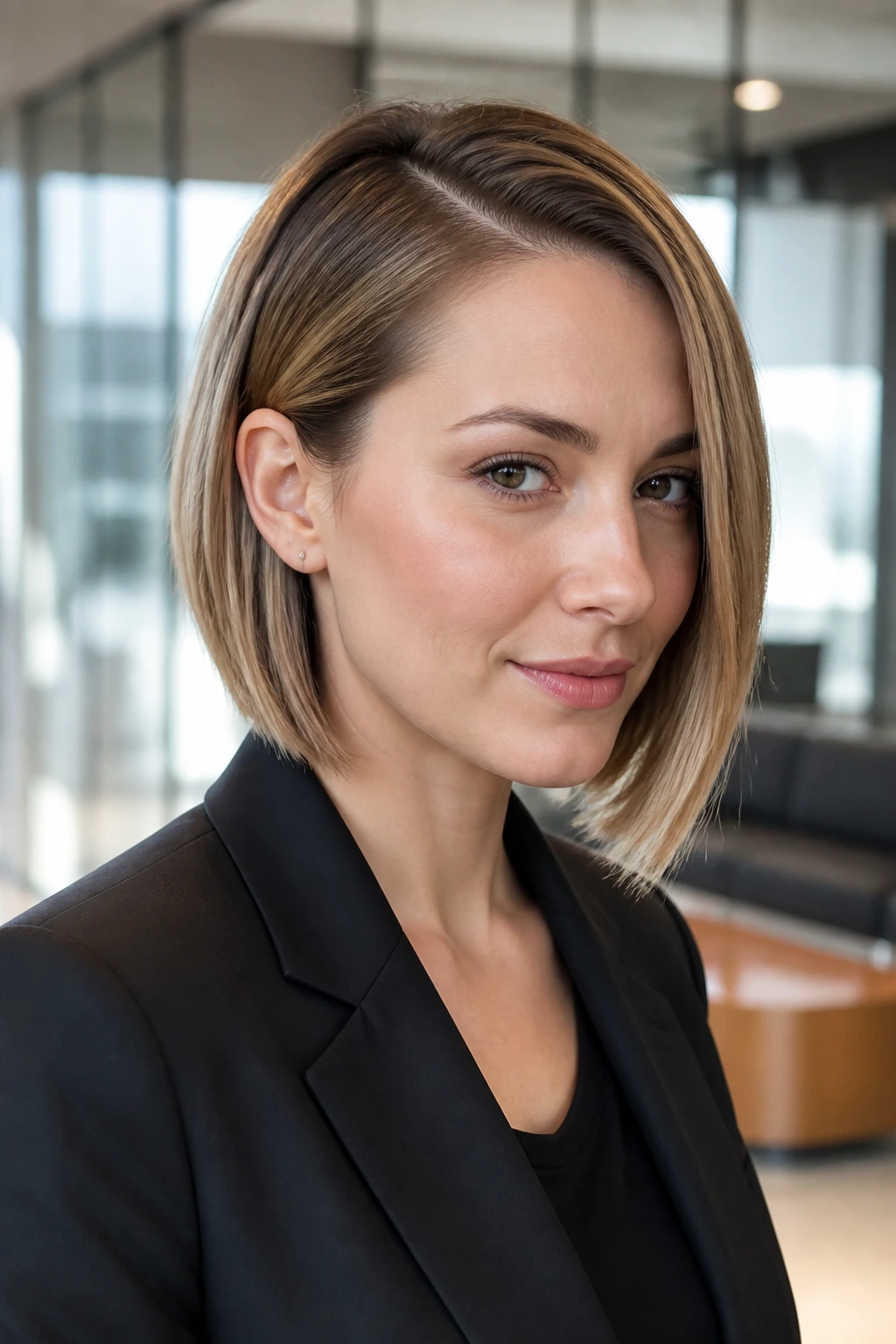
The Sleek Office Bob: Keep the angle clean, the part deep, and the finish smooth. This version is for anyone who wants the haircut to look sharp with very little fuss.
The Soft Weekend Lob: Add a loose bend through the mid-lengths and keep the front a little longer. It’s a good fit if you want movement without losing the structure that helps fine hair look fuller.
The Fringe-Forward Version: Swap a side sweep for curtain bangs or a light fringe that drifts across the forehead. This softens a heart-shaped face fast, but only if the fringe stays airy and doesn’t swallow the front of the haircut.
The Grow-Out Friendly Cut: Leave the front closer to the collarbone and keep the back just short enough to show a line. That gives you room to skip a salon visit without the bob turning messy.
The Little-Texture Version: If your hair has a little natural grit, ask for soft internal texture and keep the edge blunt. You get movement without sacrificing the fuller outline that fine hair needs.
Keeping the Cut Sharp Between Appointments
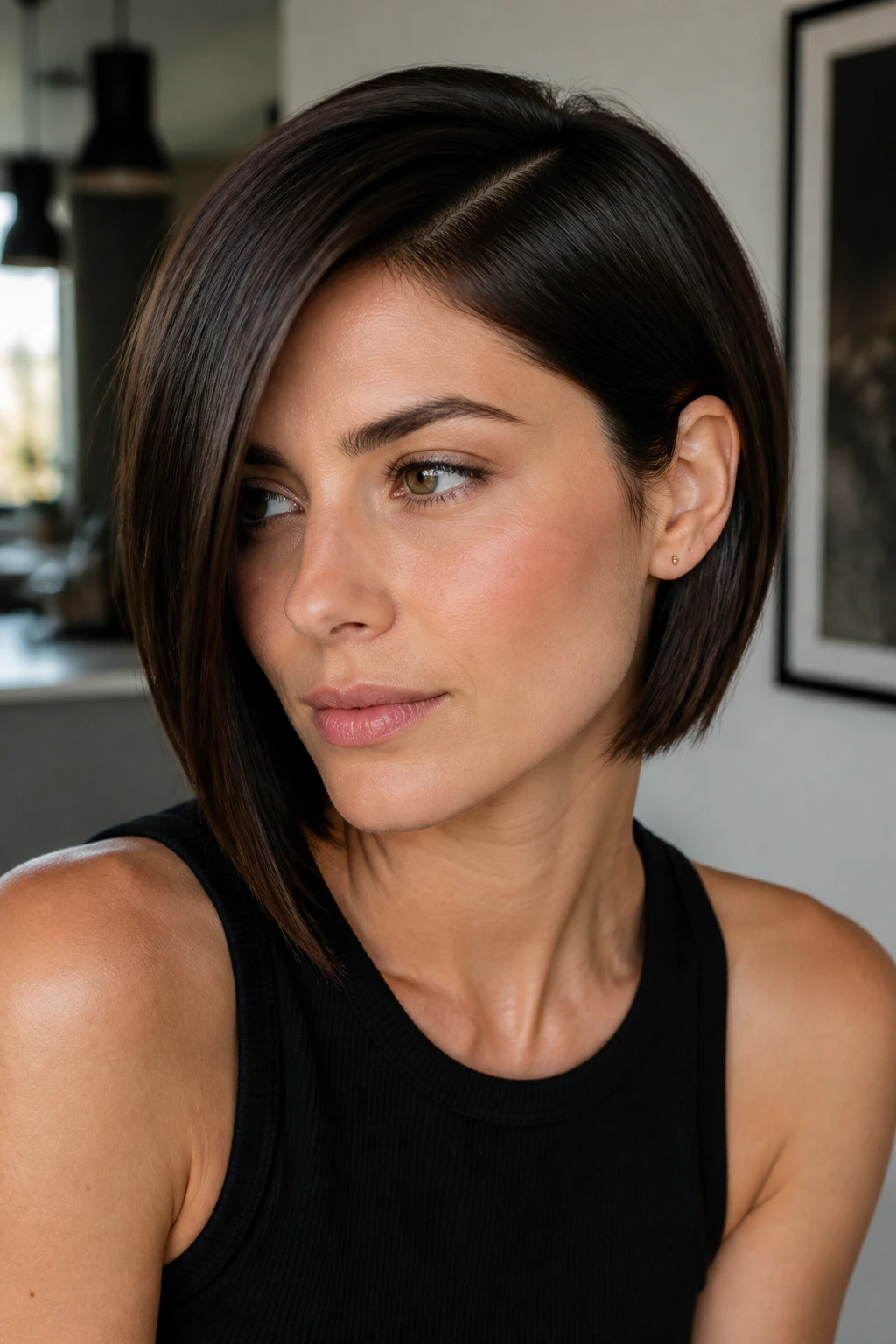
Fine hair grows out in a way that looks fast even when the actual length change is modest. The angle softens first at the front corners, then the nape starts losing its neat line. If you love a crisp bob, a trim every 6 to 8 weeks is the sweet spot. A lob can stretch a bit longer, but once the ends start looking narrow, the shape needs help.
Fringe or face-framing pieces usually want attention sooner, around every 3 to 4 weeks if they’re sitting right in the eyes. Don’t wait until they become a curtain you have to keep pushing aside. A tiny trim keeps the whole haircut looking intentional.
If you style with heat, use a light clarifying shampoo every 2 to 4 weeks to remove product buildup. Fine hair shows buildup quickly because there isn’t much density to hide it. On the other hand, don’t scrub the lengths every day with harsh shampoo if your ends are dry. Clean scalp, light conditioner, and a careful hand at the roots usually work better.
Sleep on a smooth pillowcase, tuck the front pieces behind the ears loosely if they kink overnight, and refresh the ends with a quick pass of heat if they start flipping in a bad way. Small habits. Big difference.
Frequently Asked Questions
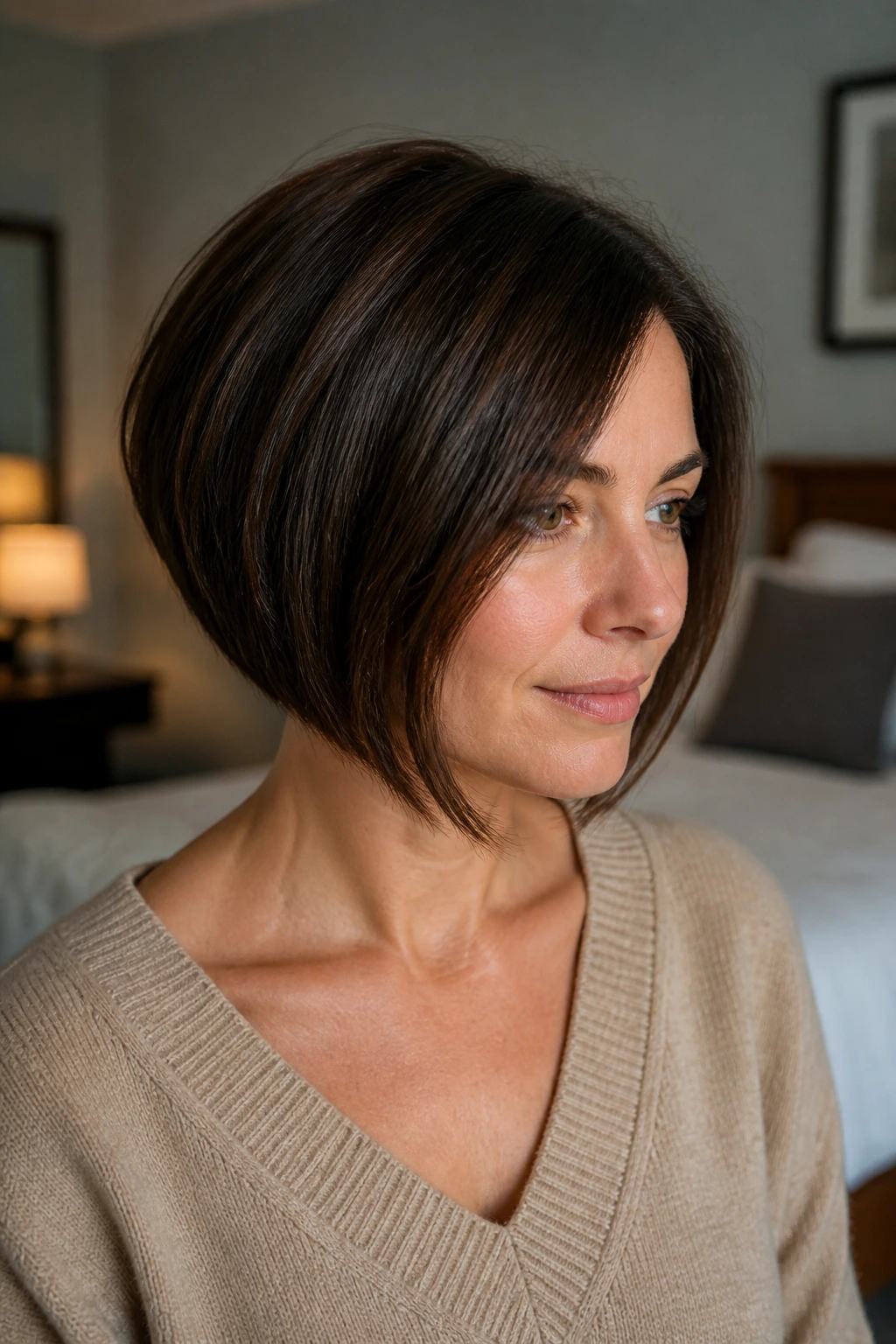
Will an angled bob make fine hair look thinner?
Not if it’s cut with enough weight at the edge. Fine hair looks thinner when the perimeter is shredded or over-layered; a clean angle usually does the opposite.
What length is most flattering for a heart-shaped face?
Chin to collarbone is the safest range because it gives the lower face more presence. If the front ends stop too high, the forehead can take over the whole silhouette.
Should I get layers with fine hair?
Yes, but quietly. Internal layers can help movement, while too many exterior layers will expose the ends and make the bob feel see-through.
Do curtain bangs work with an angled bob?
They do, especially when the fringe stays soft and the bob keeps a strong perimeter. Just avoid heavy, dense curtain bangs if your hair is very fine at the front.
Can I wear this cut air-dried?
Absolutely, if the haircut is shaped for it. The best air-dry versions use a little mousse and a strong line at the front corners so the hair has somewhere to fall.
What if my crown is flat all the time?
Choose a version with a subtle stack or a root-lifted finish. Then style the crown first with a round brush or a quick upside-down blow-dry before the rest of the hair dries completely.
How often will I need a trim?
Most short angled bobs need one every 6 to 8 weeks. Longer lob versions can go a bit longer, but the front corners should still be checked before they lose their angle.
Is this cut hard to grow out?
Not if the front is left a little longer. The collarbone and grow-out versions stay neat longer than the sharper chin-length ones, which is why I keep coming back to them.
The Shape That Keeps Pulling Its Weight

The nicest thing about these bobs is that they do not rely on tricks. They use line, balance, and a little restraint. Fine hair gets a fuller edge. A heart-shaped face gets weight where it helps most. The haircut does the work so you do not have to build your morning around it.
Pick the version that matches how your hair behaves on a normal Tuesday, not the one that only looks good under salon lights. Bring side-view photos, keep the perimeter strong, and let the angle stay honest. That’s usually where the good haircuts live — in the simple shapes that keep making sense after the first wash.