



Thick hair can go from sleek to puffed-up in a single humid walk to the car. Easy fix haircuts for women with thick hair are the ones that make that energy work for you instead of against you. They don’t fight the density. They give it a shape, a weight line, and somewhere sensible to land.
A lot of people get told to “just add layers,” which is lazy advice if your hair is dense, coarse, or both. Layers can help, sure. Too many of them, too high up the head, and you end up with a halo at the crown and a blunt, heavy bottom that kicks out at the shoulders. That’s not a haircut problem. That’s a placement problem.
The best cuts for thick hair know where the bulk lives. They move weight away from the spots that swell first, keep enough perimeter to look polished on a rough day, and still leave you with hair that swings instead of sitting there like a wool blanket. That’s the sweet spot. And once you see it, the bad old “thinning” advice starts looking a little absurd.
Why These Easy Fix Cuts Earn Their Place
-
They remove bulk where thick hair actually bulges: The best shapes take weight off the sides, nape, or interior, not just the outer shell, so the cut settles instead of expanding.
-
They grow out in a sane way: A clean perimeter at the chin, collarbone, or shoulder keeps the shape readable for weeks, even when the layers soften.
-
They don’t demand a full salon blowout every morning: Most of these cuts look better with a quick rough-dry, a round-brush bend, or one pass of a flat iron.
-
They work with the hair you already have: Straight, wavy, curly, coarse, dense — the cut changes how the hair sits, not whether your texture is “allowed” to behave.
-
They give thick hair a job: Instead of trying to make your hair smaller, these cuts channel the volume into swing, softness, and a cleaner outline.
Why Thick Hair Needs Shape, Not Just More Layers
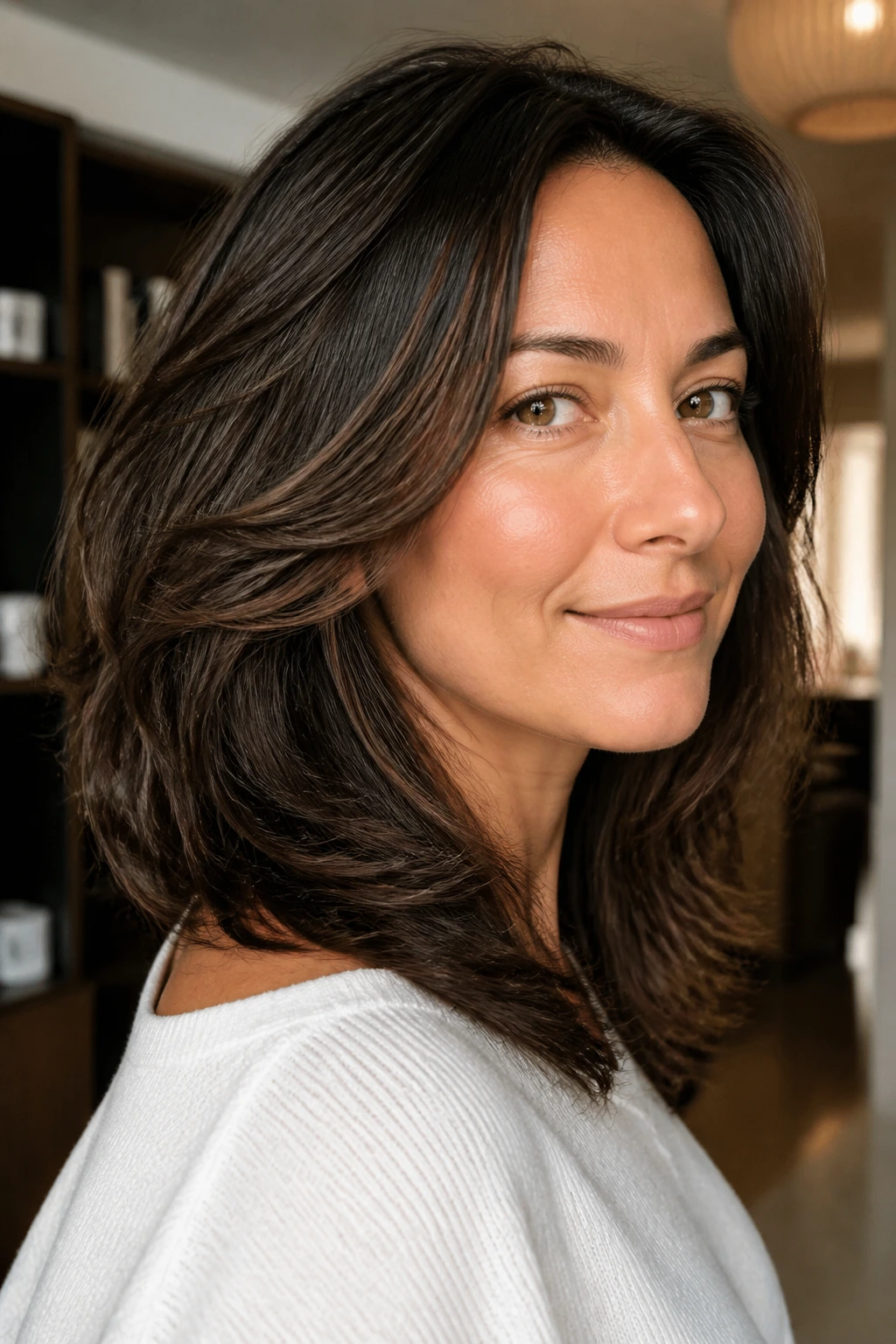
Thick hair is not one thing. Sometimes it means more strands per square inch. Sometimes it means the strands themselves are coarse and stubborn, which is a different animal altogether. The result can look similar in the mirror — lots of hair, lots of body — but the cut has to solve a different problem depending on which version you’re dealing with.
The mistake most people make is treating thick hair like it needs to be “taken down.” That’s how you end up with over-thinned ends that frizz at the first sign of weather and a top section that goes flat while the lower half still carries all the weight. Better cuts don’t erase density. They redistribute it. They let the perimeter keep some authority while the interior does the quiet work.
Where the weight line matters most
A blunt line at the collarbone behaves differently from a blunt line at the jaw. So does a layer that begins under the cheekbone versus one that starts at the temple. Thick hair reacts to those tiny shifts more than finer hair does. That’s why an apparently small change — an inch here, a half inch there — can decide whether the cut hangs beautifully or flips out at the shoulders like it’s annoyed with you.
The real trick: bulk control without fraying the ends
Texturizing has its place. Razor-heavy chopping, less so. On thick hair, the outer edge has to stay strong enough to hold its shape. If the ends get too wispy, the cut starts looking fuzzy instead of soft. A good stylist will leave the line clean, then remove weight inside the shape where it won’t show up as split-looking ends by week two.
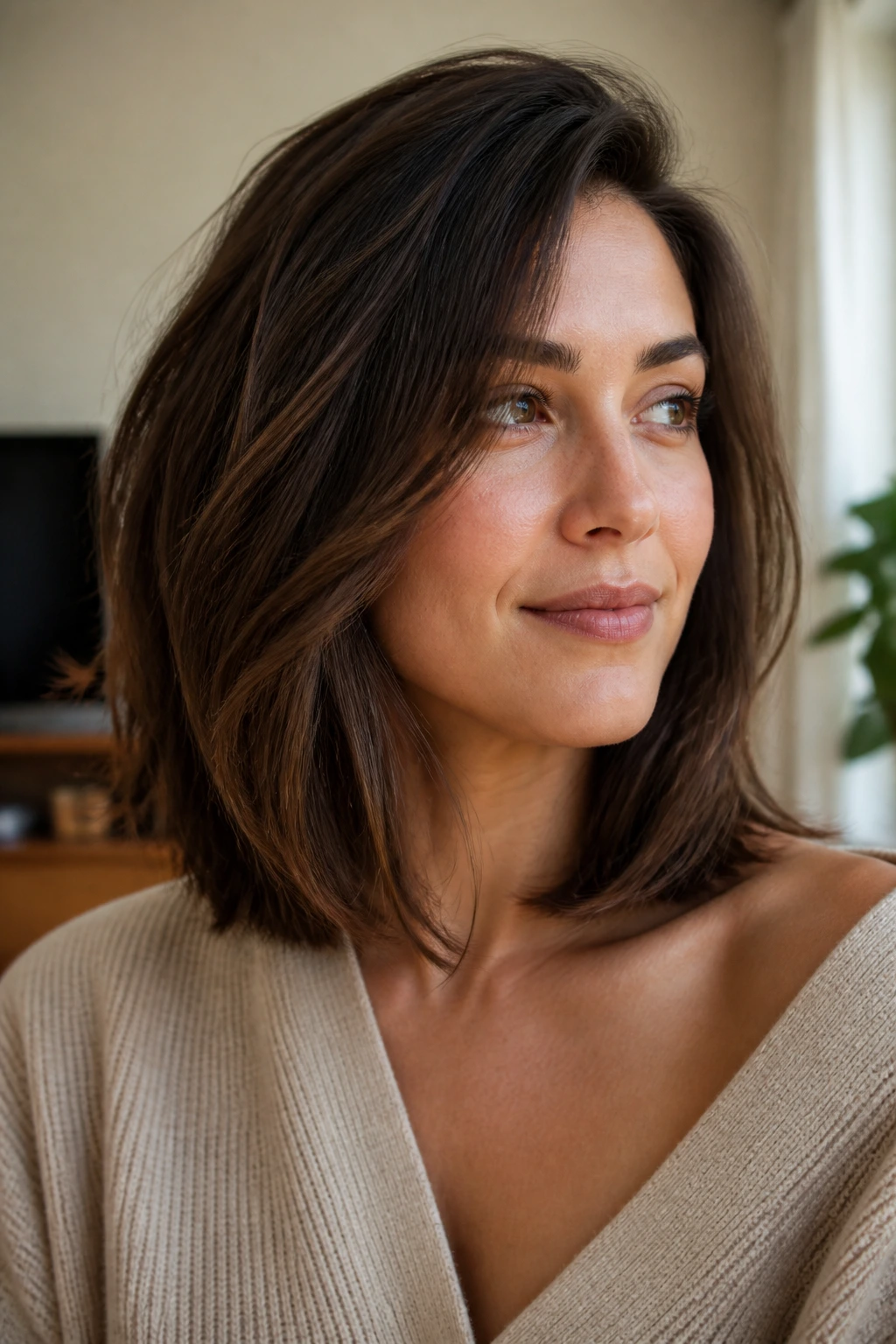
1. The Collarbone Lob That Lets Thick Hair Swing
At collarbone length, thick hair finally gets a little room to move. The ends don’t sit dead on the shoulder, and that alone solves half the battle. This cut has a nice, honest shape to it — long enough to tuck behind the ears, short enough to avoid the waist-length drag that can make thick hair feel like a backpack.
Why it works on thick hair
The collarbone is a forgiving spot because the hair falls just past the widest part of the shoulder line. That keeps the ends from kicking out as much. Ask for a blunt-ish base with only light softening at the very bottom, then keep the interior weight under control instead of carving layers all the way up the head.
- Best for: Thick straight or wavy hair that feels heavy at the ends.
- Ask for: Collarbone length, minimal interior layering, and point-cut ends rather than deep thinning.
- Style note: A quick bend with a flat iron on the front pieces makes the whole cut look deliberate.
Small truth: this is one of the easiest thick-hair cuts to live with because it still looks decent when you’ve only half-dried it.
2. The Blunt Shoulder Cut That Stops the Puff
A blunt shoulder-length cut is the strong, plainspoken answer for thick hair that wants to swell into a triangle. No fluff. No fuss. Just a clean line that tells the hair where to end.
On dense hair, bluntness can look expensive in the best way. It gives the perimeter enough weight to fall instead of floating outward. I’d take a solid shoulder line over a nervous, over-layered shape any day, especially if the hair is coarse and tends to fray when it’s been overworked with thinning shears. Keep the line even, then ask for only the lightest internal debulking if the ends feel too bulky when dry.
This cut is especially good if you wear hair down a lot and don’t want to think about it. It makes a round brush do less work, and that matters on mornings when you have maybe eight minutes and a bad attitude. If you want the simplest possible haircut that still looks intentional on thick hair, this is near the top of the pile.
3. Long Layers That Start Below the Chin
Want movement without losing the ponytail? Start the layers lower. Thick hair often behaves better when the first real layer lives below the chin, not around the cheekbones where every short piece instantly goes big.
What to ask your stylist for
Tell them you want length-preserving layers that begin around the chin or a little lower, with the longest pieces staying full enough to keep the outline strong. The goal is to shift weight without breaking the whole shape apart. If your hair is wavy, those lower layers will collapse into a softer bend. If it’s straight, they’ll keep the ends from looking like one heavy board.
A cut like this is honest about thick hair. It doesn’t pretend the density isn’t there. It just spreads it out in a way that makes blow-drying faster and the silhouette less blocky. I like this one for women who keep hearing “you need layers,” but don’t want to look like they were attacked by a craft knife.
4. The Butterfly Cut with a Lifted Top Layer
A butterfly cut is a little theatrical, but in a good way. The top layer sits shorter, usually around the cheekbone or collarbone area, while the bottom length stays long and full. On thick hair, that split creates movement without forcing you to lose all the weight at the bottom.
The best part is the face effect. The shorter top pieces lift the crown and bend around the face, while the long underlayer keeps the cut from feeling thin or stripped out. If your thick hair has a habit of hanging heavy at the sides, this shape pulls it upward without making you look like you lost half your hair in the process.
It does ask for some styling. A round brush or a large curling brush helps the top layer fall away from the face in that airy way this cut likes. But even when you air-dry it, the structure is still there. It just reads a little more relaxed. That’s not a flaw. That’s how thick hair should work when the cut is doing its job.
5. Curtain Bangs That Break Up Heavy Hair Around the Face
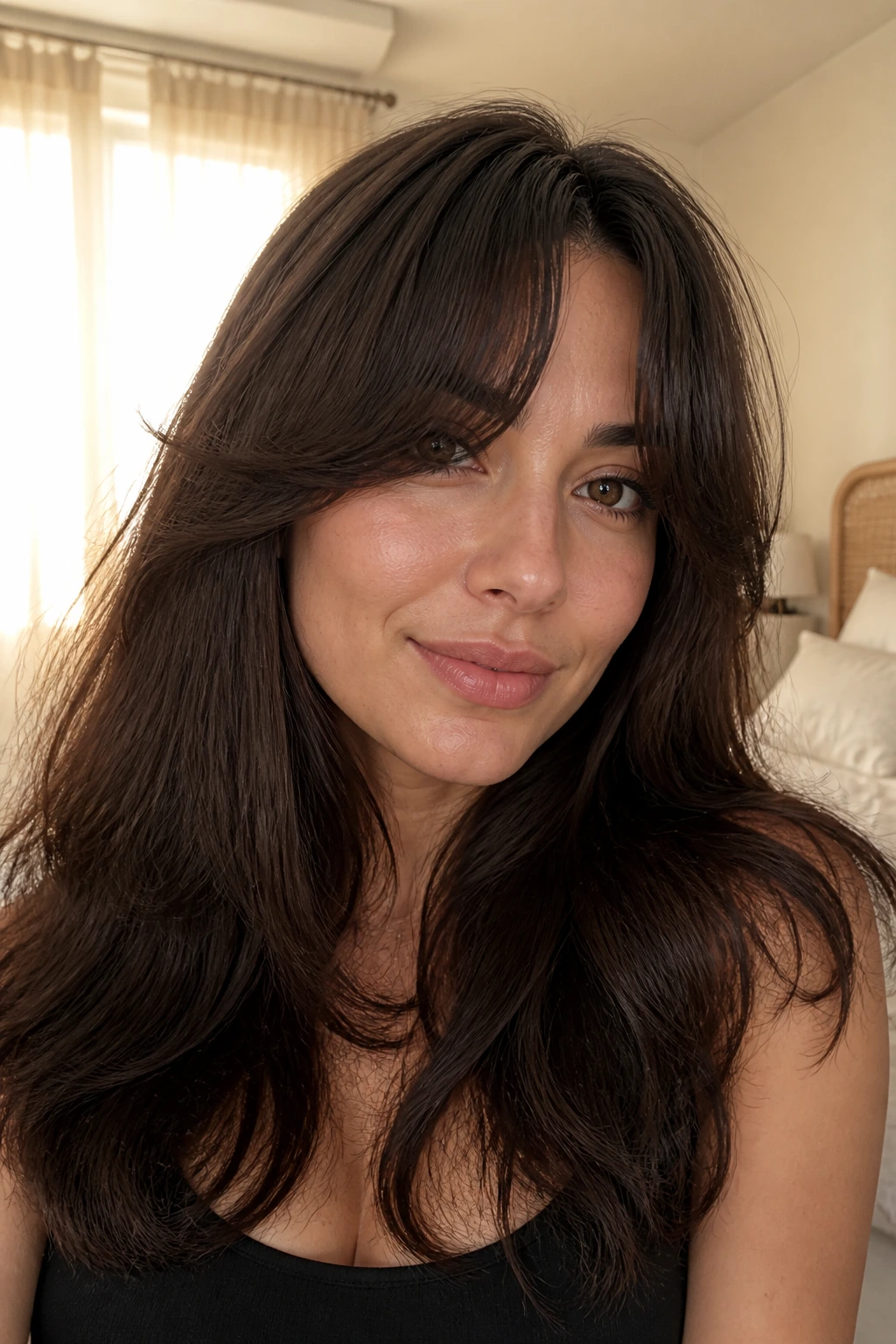
Curtain bangs are the rare fringe that helps thick hair instead of starting a fight with it. They split open at the center, skim the sides of the face, and keep the front from feeling like one solid curtain of density. Done well, they soften the whole haircut without chopping off much length.
Why they work when blunt bangs don’t
Blunt bangs on thick hair can get hot fast. They sit heavy on the forehead, puff up when they dry, and need more attention than most people want to give them. Curtain bangs give you movement without that constant trim-and-pray relationship. Ask for the shortest pieces to land somewhere between the brow and cheekbone when dry, then let the sides taper into the rest of the cut.
- Best for: Thick hair with a bit of natural bend or wave.
- Ask for: A longer starting length than you think you need; thick hair bounces up once it dries.
- Styling note: Blow the fringe away from the face with a round brush or set it with Velcro rollers for five minutes if you want lift.
If your hairline has cowlicks, don’t go too short. That’s where curtain bangs can go from chic to annoying in one wash.
6. The Soft Shag That Adds Movement Without Chaos

Not every shag is a mess. The soft shag trims the bulk, but it keeps enough structure that thick hair doesn’t explode into pieces. This is the version I like for women who want texture without the full rock-and-roll commitment.
The trick is restraint. Layers should still connect. The crown gets some lift, the sides get broken up, and the ends stay soft enough to fall rather than stick out like little shelves. On wavy thick hair, this can be one of the most forgiving cuts around because the texture looks like part of the design, not a side effect. On straight thick hair, it needs a little styling cream or spray, but not much.
If your hair always looks too “one shape” when it’s long, the soft shag fixes that by giving the hair more than one landing point. It’s a haircut with rhythm. And thick hair, when cut well, loves rhythm.
7. The Rounded U-Cut That Keeps Length Looking Polished
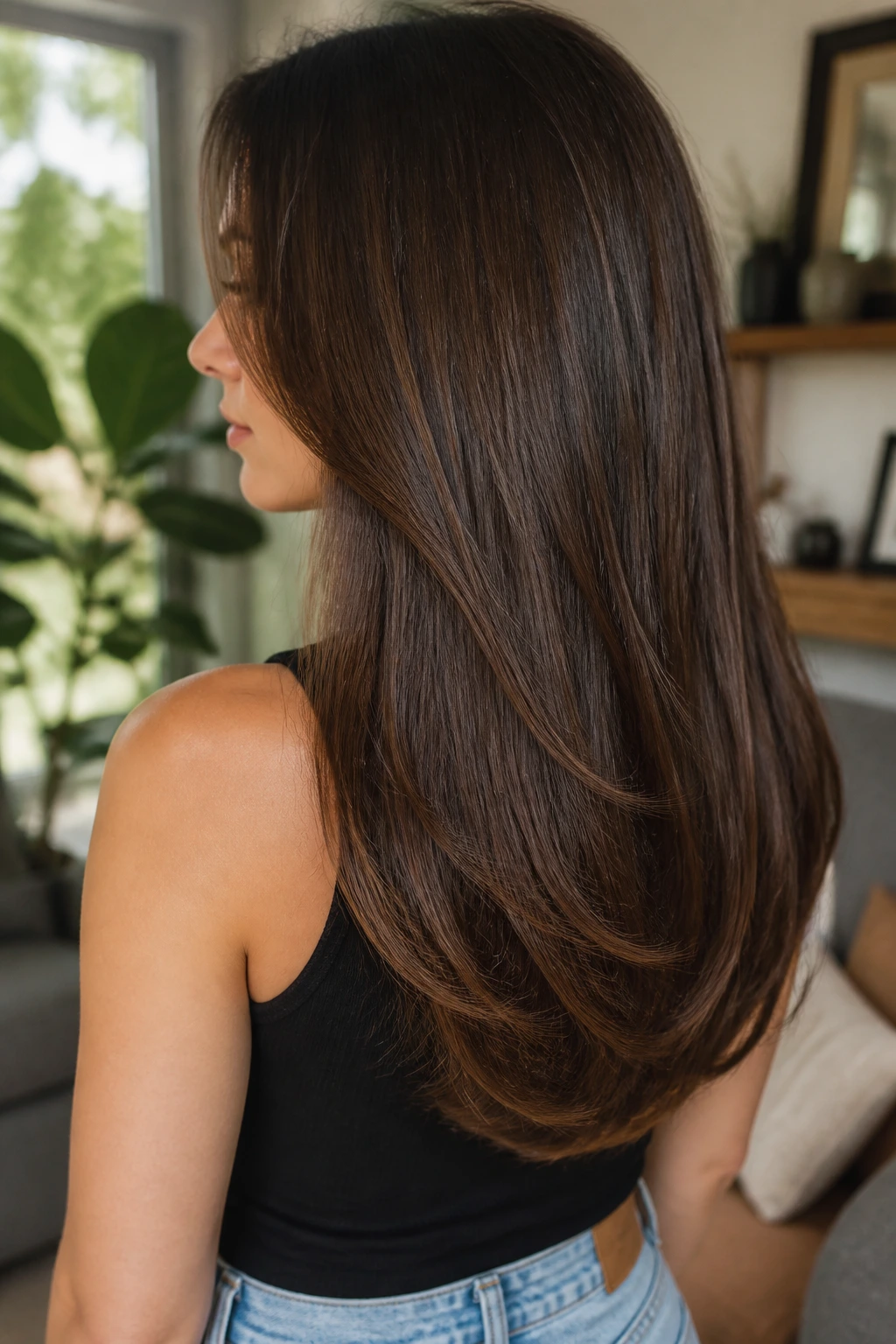
A rounded U-cut keeps the center back a little longer than the sides, which stops thick hair from looking like a flat wall. The curve softens the outline and makes the length feel deliberate instead of bulky. It’s especially good if you wear your hair long but hate that blunt, boxy finish that can happen when thick hair is cut straight across.
How it behaves in real life
The U shape helps the hair fall over the back in a way that looks cleaner from every angle. You get the sensation of length, but not all the weight hanging in one line. That makes ponytails sit better, braids look fuller, and air-dried hair land with less bulk at the edges.
Ask for the outer perimeter to stay rounded, with only gentle internal shaping. Too much layering defeats the point. This cut is for women who want their long hair to look expensive with minimal daily effort, and who don’t want to give up that heavy, satisfying curtain of length.
8. Face-Framing Layers for Women Who Want to Keep the Length
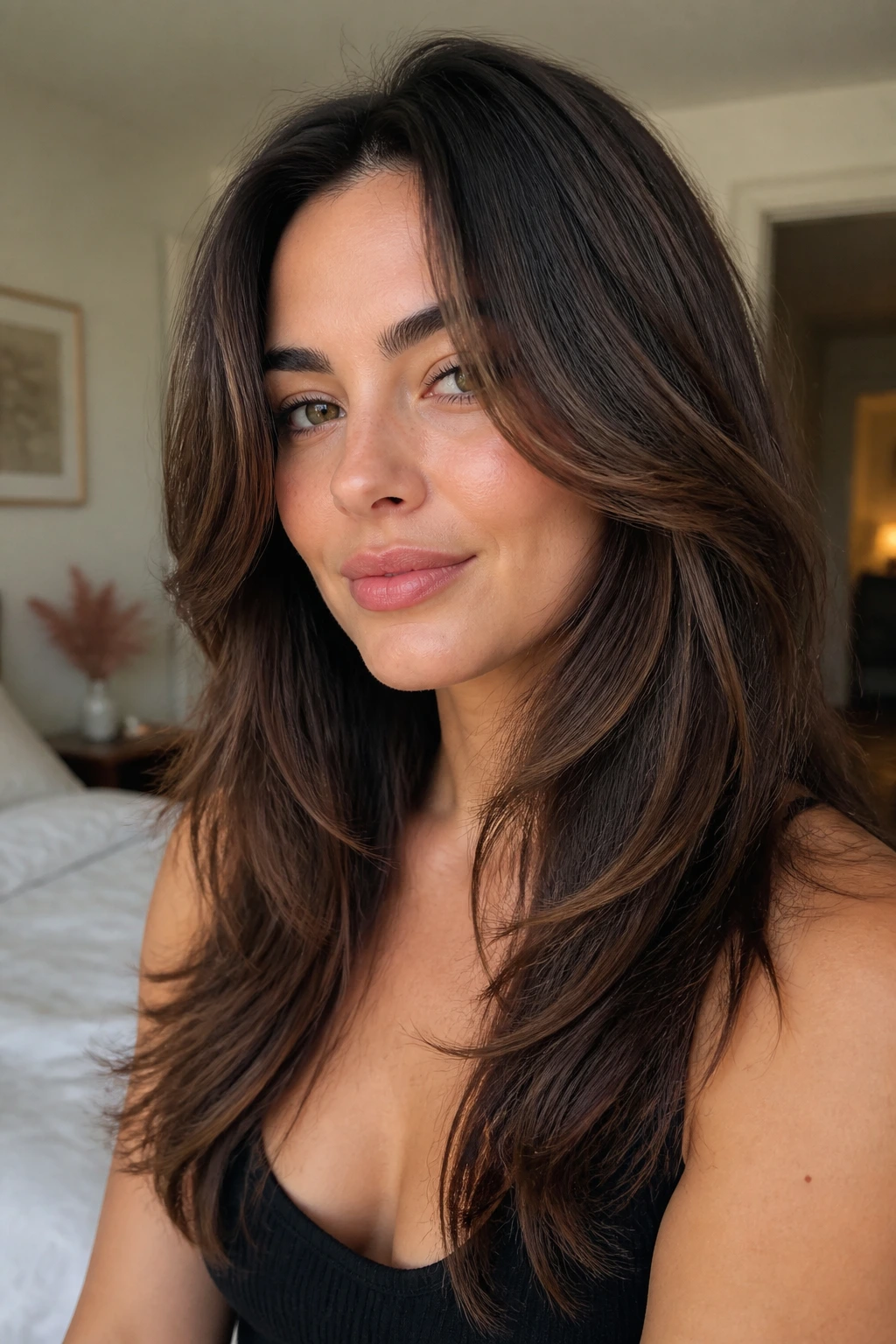
If you’re nervous about losing hair, this is the smallest cut that still changes the whole silhouette. Face-framing layers leave the back length intact and spend their energy where the hair hits the cheeks, jaw, and collarbone. Thick hair gets the benefit of movement without the panic of a big chop.
The short pieces should start where your face actually needs break-up, not where a style chart says they should. For some women that means chin length. For others it’s closer to the mouth or collarbone. A good stylist will adjust the placement to your face and your density, because thick hair can take a heavier frame than fine hair can.
I like this cut for women who wear hair up half the week. The front pieces make a bun or ponytail look intentional instead of accidental, and you still keep the length that thick hair is so good at showing off when it’s healthy. Small change. Big visual payoff.
9. The Italian Bob That Works When Your Hair Has Plenty of Body
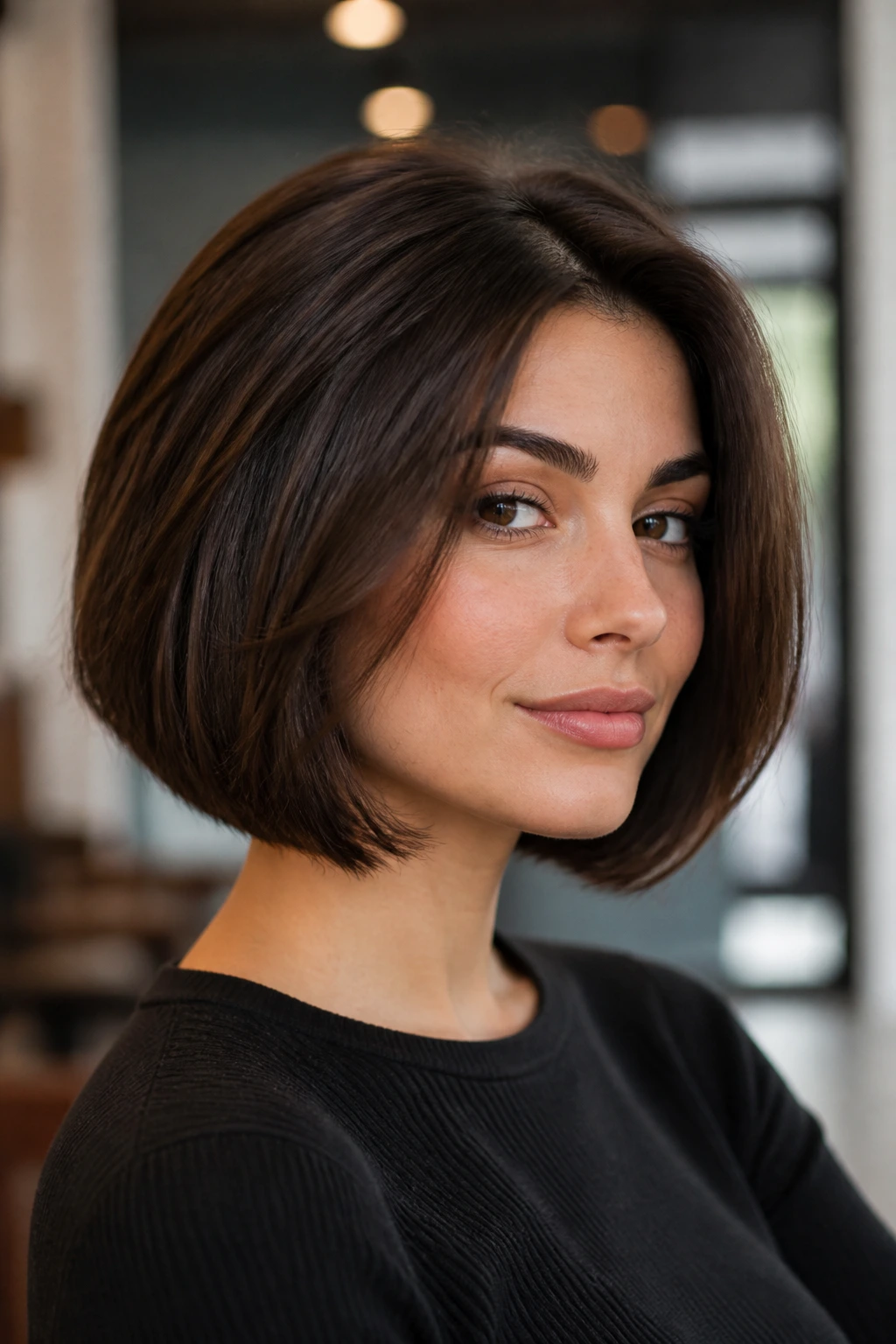
A bob on thick hair only works if the line is clean. The Italian bob gets that right. It usually sits around the chin or just below it, with enough fullness to look plush but not so much bulk that the sides stick out. There’s a little polish here, a little swing, and not a lot of wasted effort.
If your hair is straight or softly wavy, this cut can look downright sharp. The shape sits close to the head at the crown, then fills out near the ends, which gives thick hair a nice, sculpted feel. Ask for a blunt base with a subtle bevel instead of a razor-sharp edge. That small bit of curve helps the bob hug the jaw instead of making your face look wider.
This is the cut I’d choose for someone who wants a shorter look that still feels grown-up and full. It needs trims more often than a long cut, yes. But when the line is fresh, it’s hard to beat.
10. The Bixie That Cuts the Bulk and Keeps the Edge
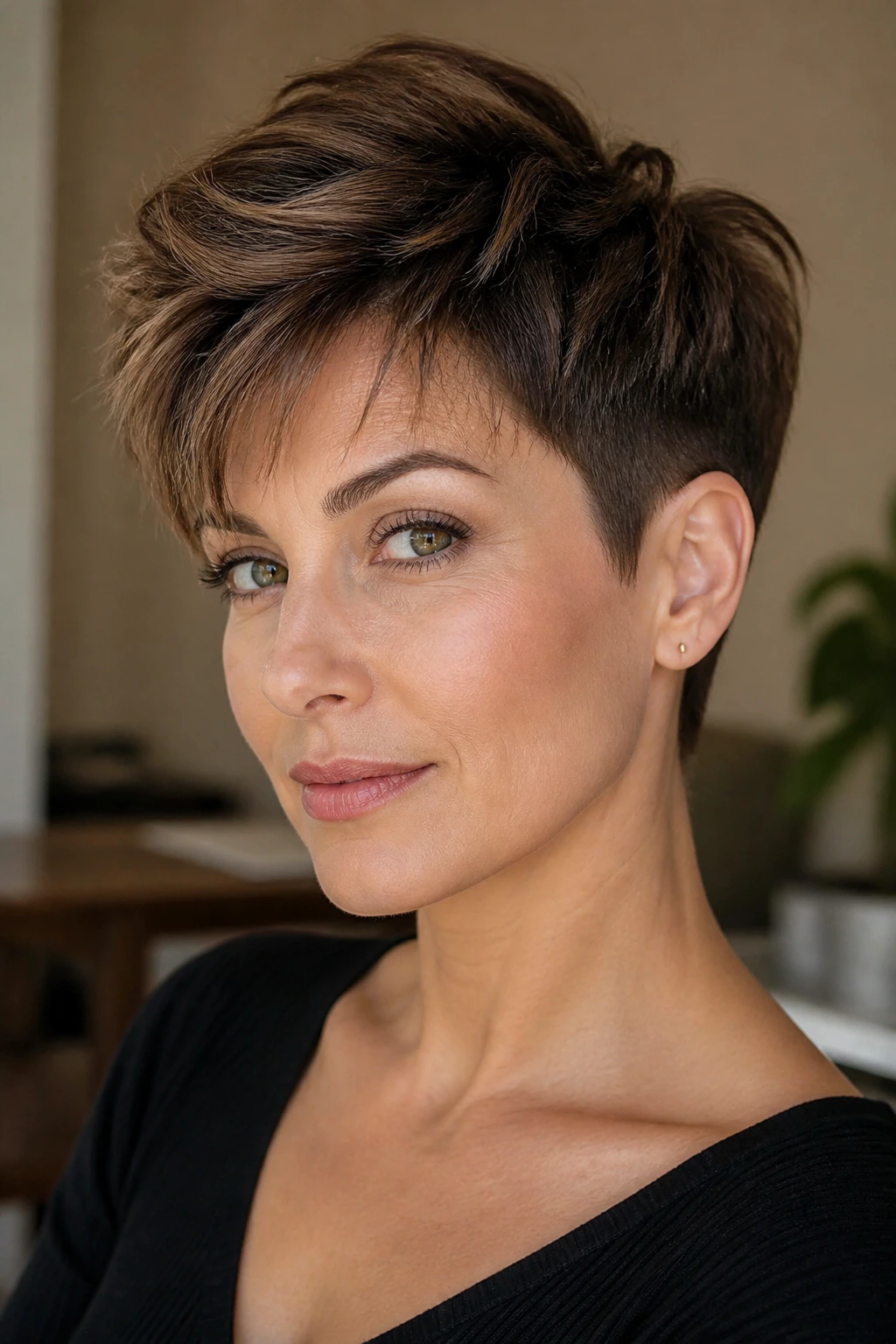
Between a bob and a pixie sits the bixie, and thick hair loves this middle ground. You get the nape and side relief of a short cut without the full exposure of a pixie that leaves every cowlick on display. The shape is airy, quick to dry, and a little bit cool without trying too hard.
This works especially well when thick hair feels too heavy around the ears and neck. A bixie takes that weight away and keeps the top a little longer so you still have styling room. Ask for tapered sides, a soft nape, and a bit of length through the crown. Too much chipping away with the scissors can make thick hair stick up instead of move, so the balance matters.
If you like the idea of shorter hair but you’re not ready for an obvious pixie, start here. It’s one of the few short cuts that makes thick hair feel lighter without flattening its personality.
11. The Clavicut with a Quiet Taper
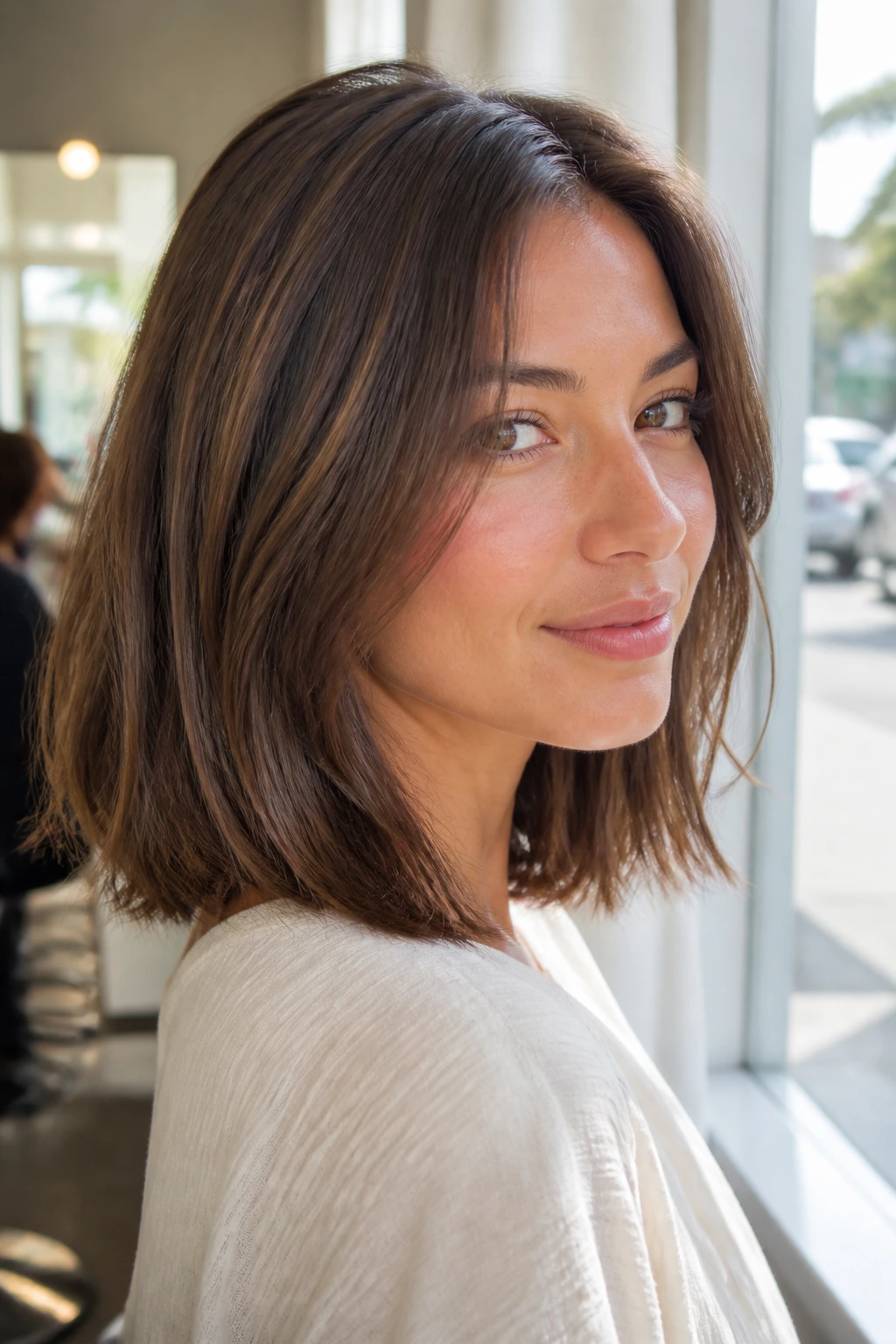
If a lob feels too blunt and layers feel too busy, the clavicut sits right in the middle lane. It falls at the collarbone, but the ends are softly tapered so the cut doesn’t read as one hard block. Thick hair gets shape without losing that useful medium length that can still tie back easily.
The taper makes a real difference around the shoulders. Instead of hitting the same width all at once, the hair narrows subtly toward the ends, which keeps the whole shape from puffing outward. This is a strong choice for people who want a grown-out, modern feel without obvious chunkiness or obvious layering.
It also behaves nicely with natural texture. Wavy hair gets a bit of bounce. Straight hair gets a small bend. Curly hair can sit into the shape if the taper is handled gently. The beauty of this cut is that it doesn’t shout. It just fixes the silhouette.
12. Invisible Layers for Long Thick Hair
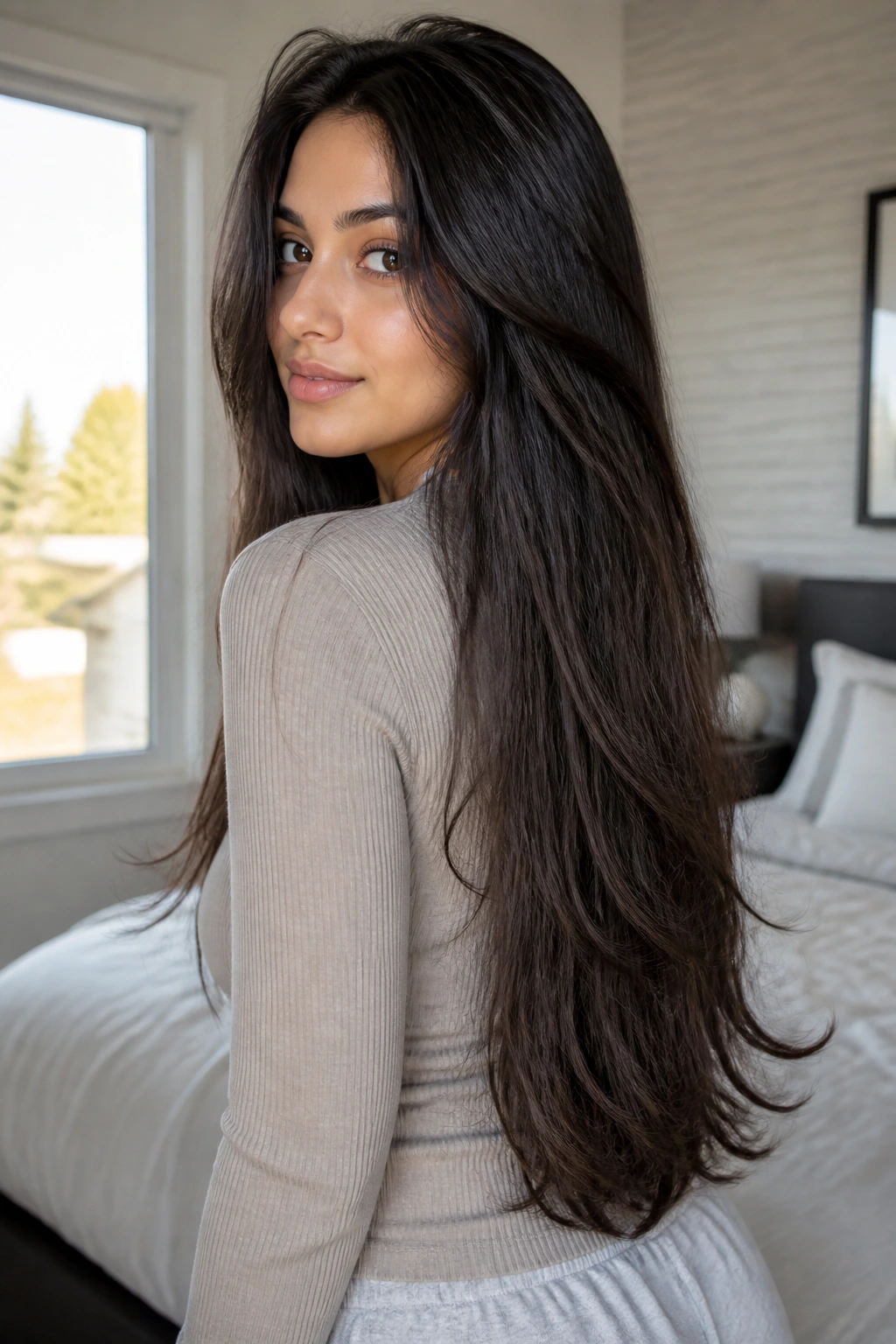
Invisible layers are the answer for anyone who hates seeing obvious steps in the haircut. The weight comes out from inside the shape, so the outer line stays full. That makes long thick hair feel lighter without advertising every snip.
Why the method matters
On dense hair, visible layers can sometimes make the hair look choppy in a bad way, especially if the strands are coarse. Invisible layers remove some of the internal bulk while preserving the glossy outer curtain people actually see. That means less frizz at the ends and less mushrooming around the middle of the head.
- Best for: Long thick hair that feels heavy but still needs a strong outline.
- Ask for: Internal layering only, with the perimeter kept solid.
- Watch for: A stylist who reaches for the thinning shears too quickly. That’s not the same thing.
This is one of those cuts that looks simple until you try to explain why it works. Then the answer is easy: the haircut does the hidden work, and your hair gets to look like itself, only better behaved.
13. The A-Line Lob That Lifts the Back
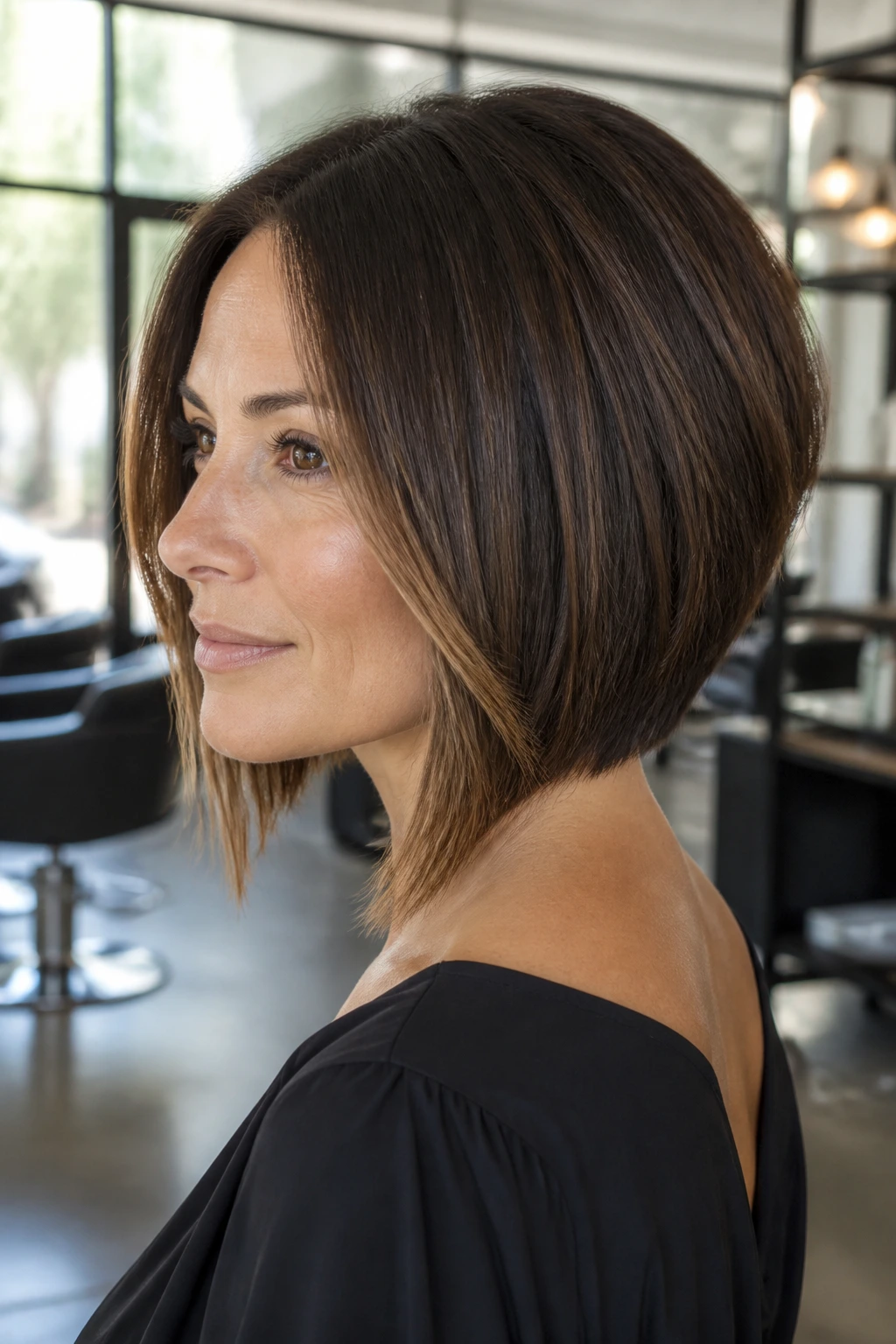
Unlike a classic bob, an A-line lob keeps the front a touch longer than the back. That small tilt changes everything on thick hair. It removes some of the weight where it tends to collect behind the jaw, while the longer front pieces keep the shape from feeling too abrupt.
The real payoff is from the profile view. Thick hair can look bulky at the nape if the back is cut too square. An A-line shape opens that up and makes the head look a little sleeker without losing fullness. It’s a nice choice if you like the feel of a lob but want something sharper than a straight shoulder cut.
Ask for the back to stay controlled, not stacked into a mini-shag. The front should still connect smoothly to the rest of the hair. If the angle is too severe, thick hair can start to look triangular in a different way. A gentle A-line is the sweet spot.
14. The Wolf Cut Lite for Controlled Texture
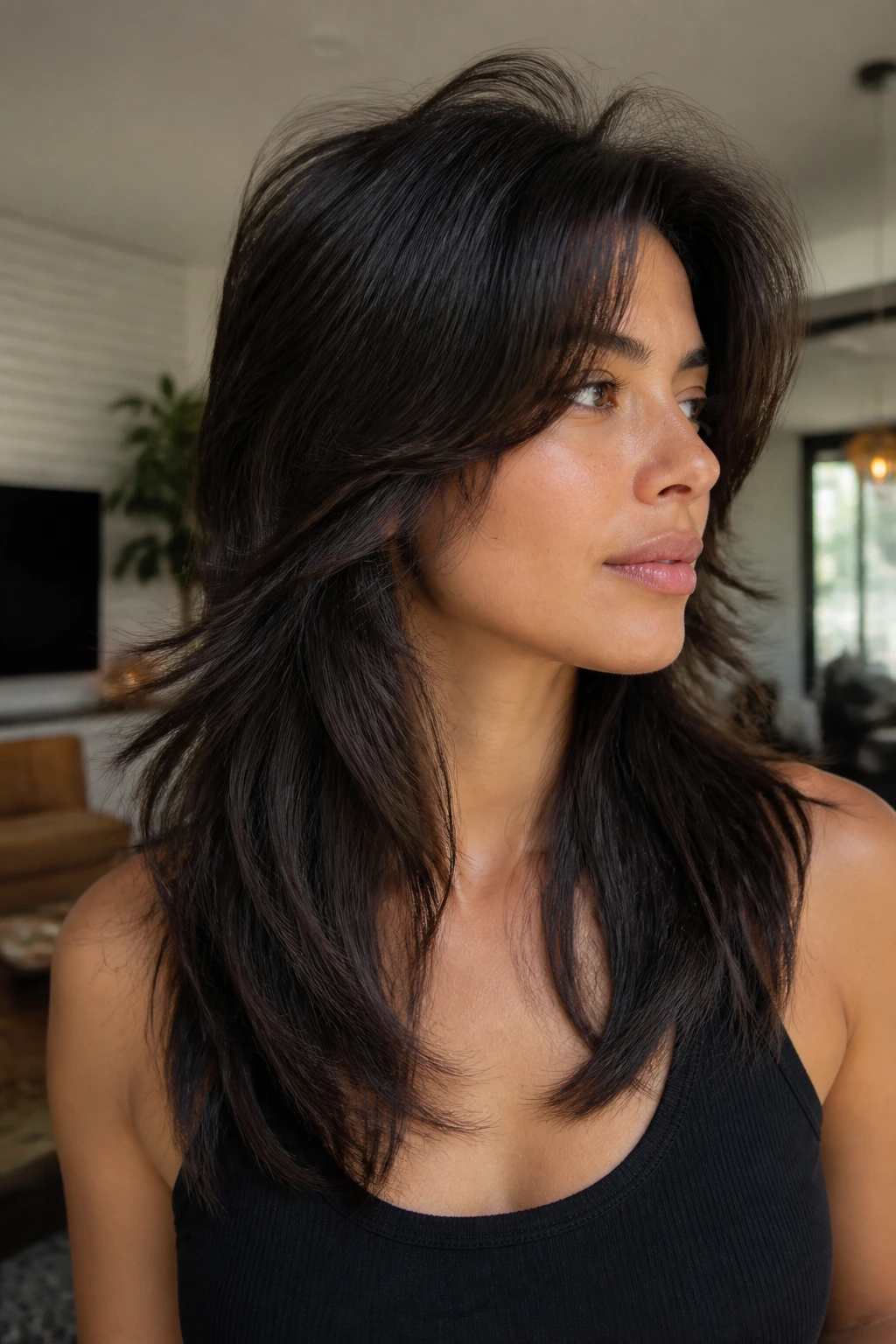
A full wolf cut can get wild fast. The lite version is easier to live with. It keeps the crown and top layers lifted, but it doesn’t shred the perimeter into pieces. Thick hair benefits from that restraint because it gets movement without losing the strong edge that keeps the whole thing from floating apart.
This cut suits wavy and slightly curly thick hair especially well. The texture helps carry the shape, and the layers don’t need to be perfect to look intentional. A little mousse or cream at the roots and mids is usually enough. If you air-dry, the pieces separate naturally. If you blow-dry, the crown gets a nice bit of lift.
I’d avoid the extreme version if you’re not into regular styling. But the softer wolf cut? That has a place. It gives thick hair some attitude without making every morning feel like a styling project.
15. The Midi Cut with a Deep Side Part

Sometimes the fix is not more cutting. It’s moving the part. A midi cut worn with a deep side part can take thick hair from boxy to elegant without touching the length very much. The side part changes where the volume sits, which matters more than most people think.
With thick hair, the center part can sometimes split the head into two heavy curtains. A side part breaks that symmetry and gives the roots on one side a little lift while letting the other side fall in a softer sweep. The cut itself can be fairly simple — one length or lightly layered — because the part does some of the shaping work.
This is a quiet haircut, not a loud one. It’s good for office days, dinner days, and “I don’t want to think about my hair” days. If your face likes a bit of asymmetry, the side part helps there too.
16. The Hidden Nape Undercut That Lightens Everything
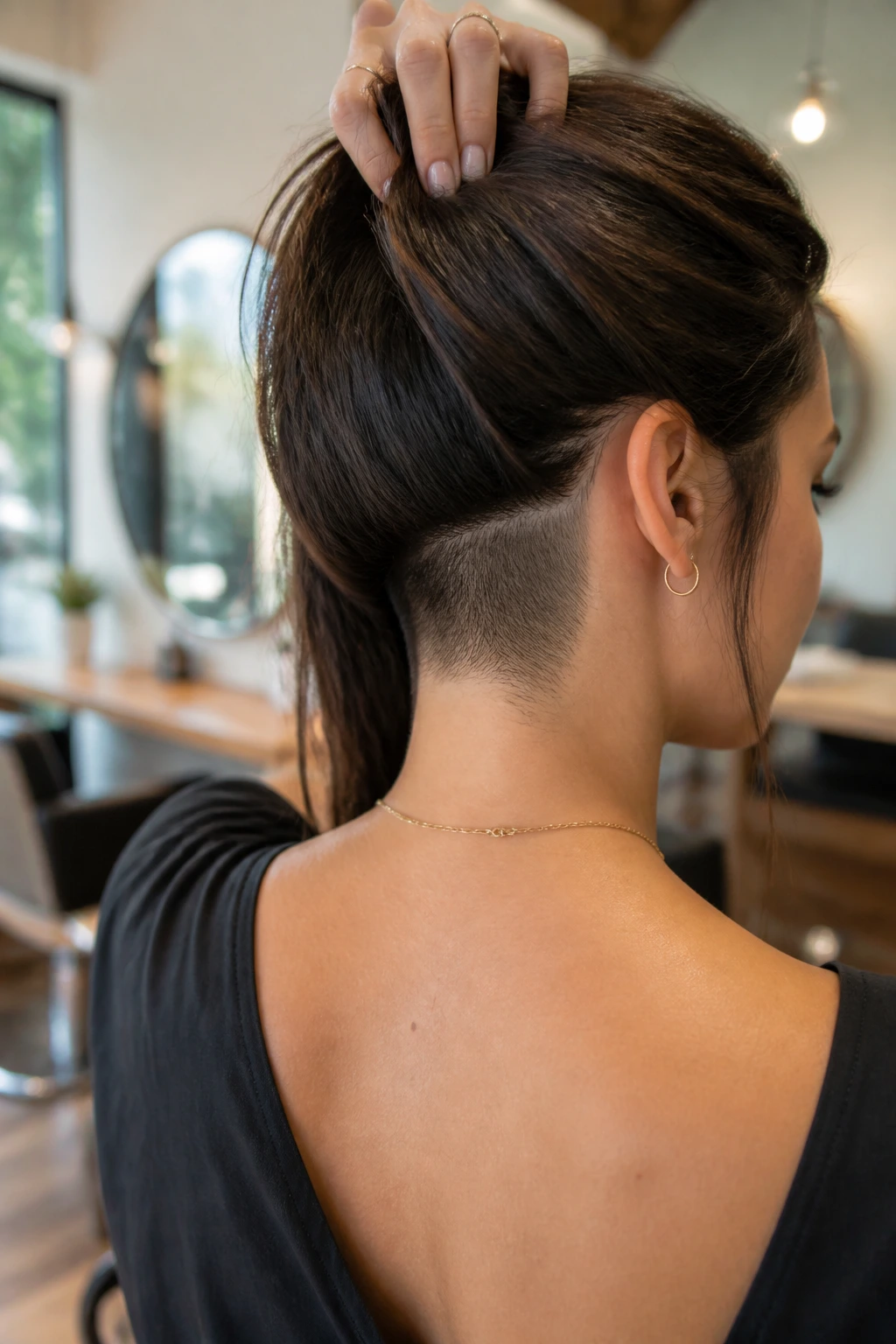
If your hair feels like a cape on your neck, the hidden nape undercut is one of the most practical fixes in the book. It removes bulk from underneath the top layer, so your hair can still look full from the outside while feeling lighter where it counts.
The best part is that it disappears when the hair is down. You don’t have to commit to an obviously shaved look. Ask for a narrow undercut at the nape — usually just enough to remove the densest patch under the crown and around the neckline. It can make buns sit flatter, reduce that sweaty helmet feeling, and shorten drying time in a real way.
It does need upkeep. Let it grow too far and the whole point gets fuzzy. But if you’re willing to keep it trimmed, this is one of the smartest thick-hair solutions around. It’s not glamorous. It’s useful. Sometimes that’s the better deal.
17. A Curly Layered Shape That Follows the Curl Pattern
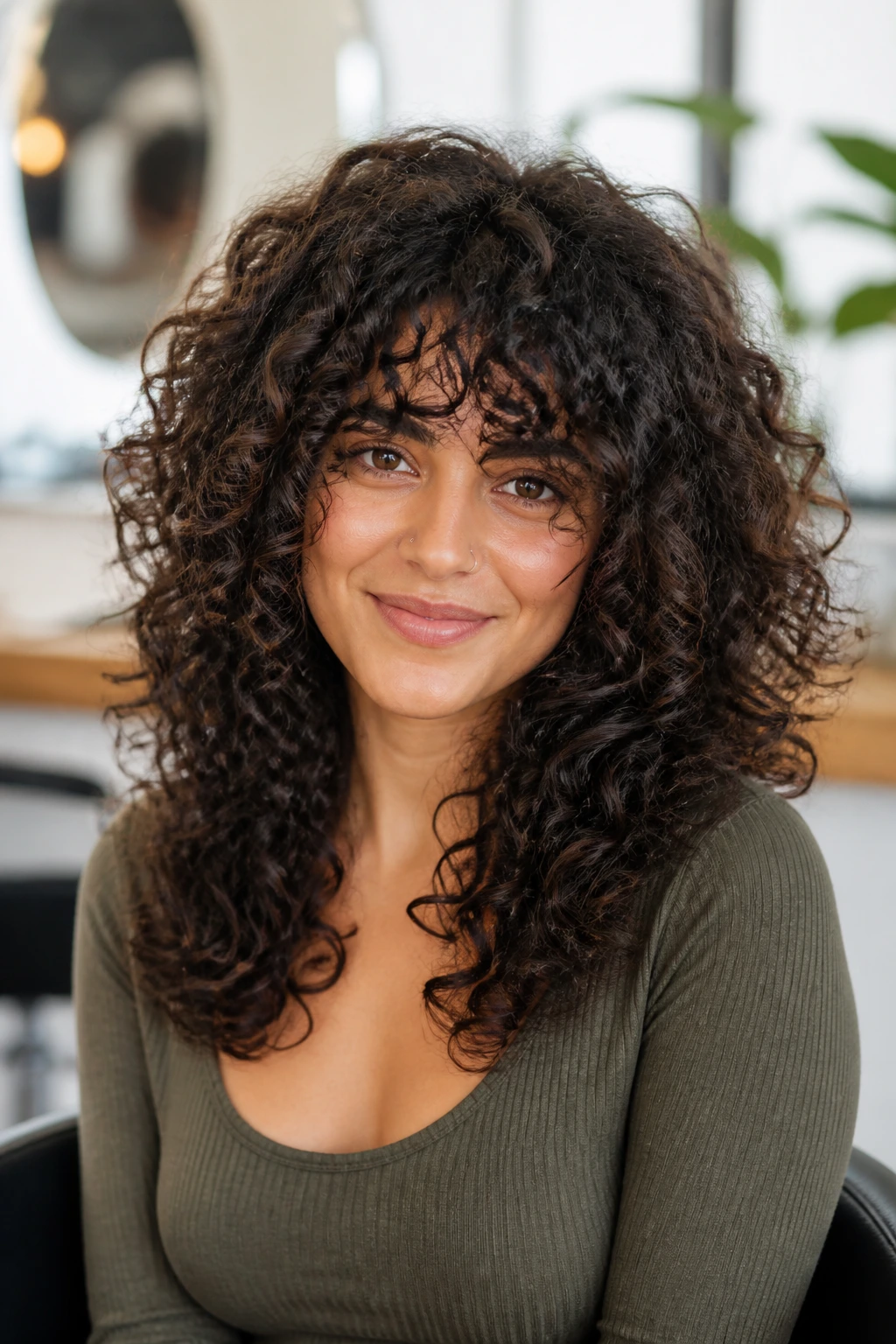
Curly thick hair needs a different eye. Cutting it the same way you’d cut straight dense hair is how you end up with a pyramid or a shelf. A layered curly shape works best when the curl pattern leads the design. Dry cutting or curl-by-curl shaping often gives the cleanest result because the stylist sees where the curls actually land.
Why dry cutting helps
Wet curls lie. They stretch, collapse, and pretend they’ll settle somewhere they rarely settle in real life. Cutting them dry lets the stylist place layers where the curl truly sits. That matters because thick curls have spring, and spring changes the length by more than people expect.
- Best for: Thick curls or coils that need shape without frizzing out.
- Ask for: Layers that follow your natural curl family, not a straight-line cut.
- Avoid: Heavy thinning that strips the curl’s body and makes the ends look airy in the wrong way.
This is the cut that keeps curls looking full instead of triangular. And if you’ve lived through a bad curly haircut, you already know how rare that is.
18. Feathered Mid-Length Hair with Soft Ends
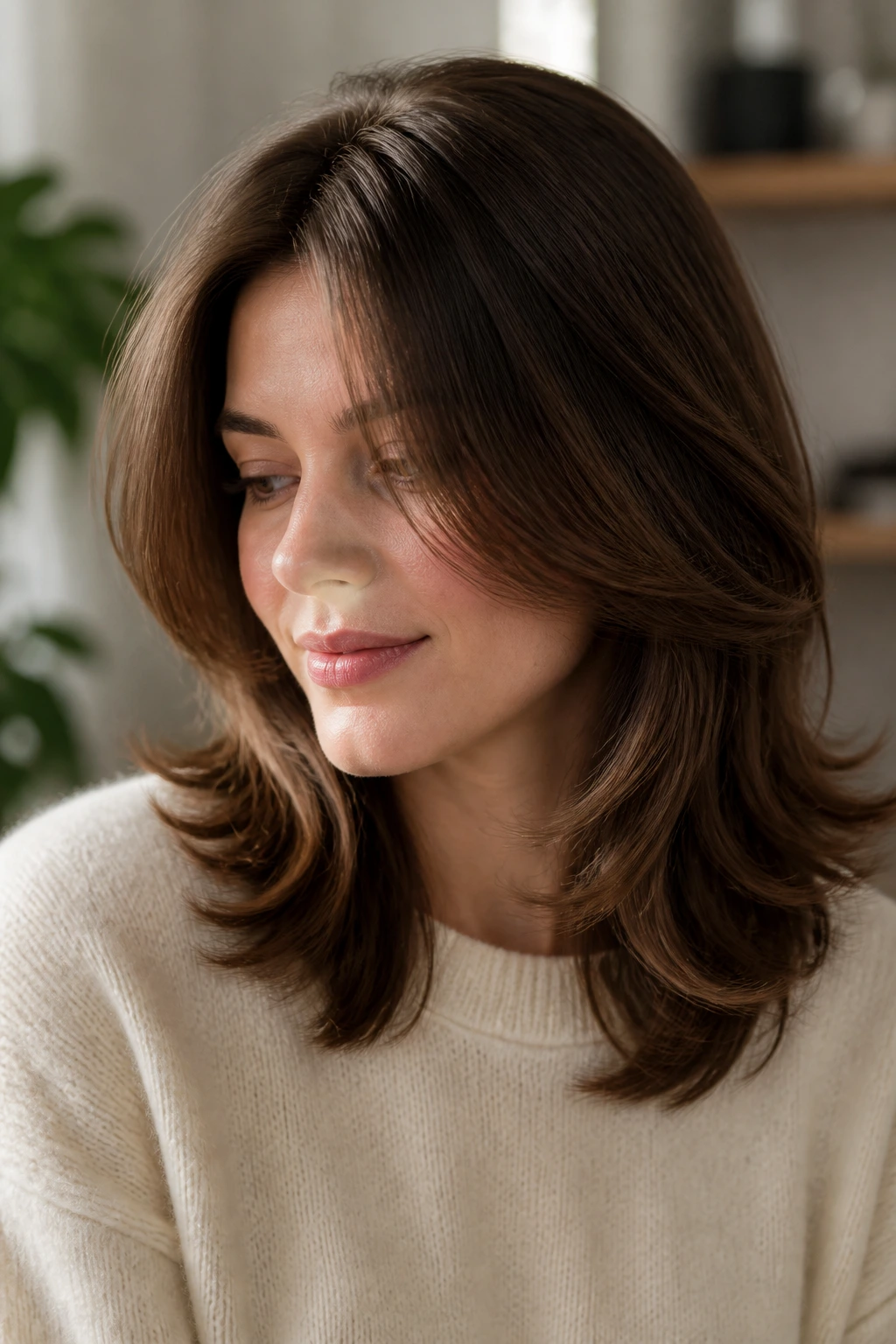
Feathering is not the same as shredding the hair. Done right, it softens the ends and gives thick hair a little movement around the face and shoulders without creating choppy layers everywhere. Mid-length hair is the sweet spot for this because the cut has enough room to taper without collapsing into a box.
The feathered version works well when you want a softer, more polished feel. Think movement, not mess. The outer outline stays readable, but the ends lose that hard, heavy shelf that thick hair can develop if it’s cut too bluntly at this length. It’s a good option if you wear hair straight or do a quick blow-dry and want the ends to curve instead of sit there.
Ask for the feathering to stay gentle. On coarse thick hair, over-feathering can make the ends fray. A careful hand gives you softness without the fuzzy look.
19. Sliced Ends on Long Hair for Barely-There Movement
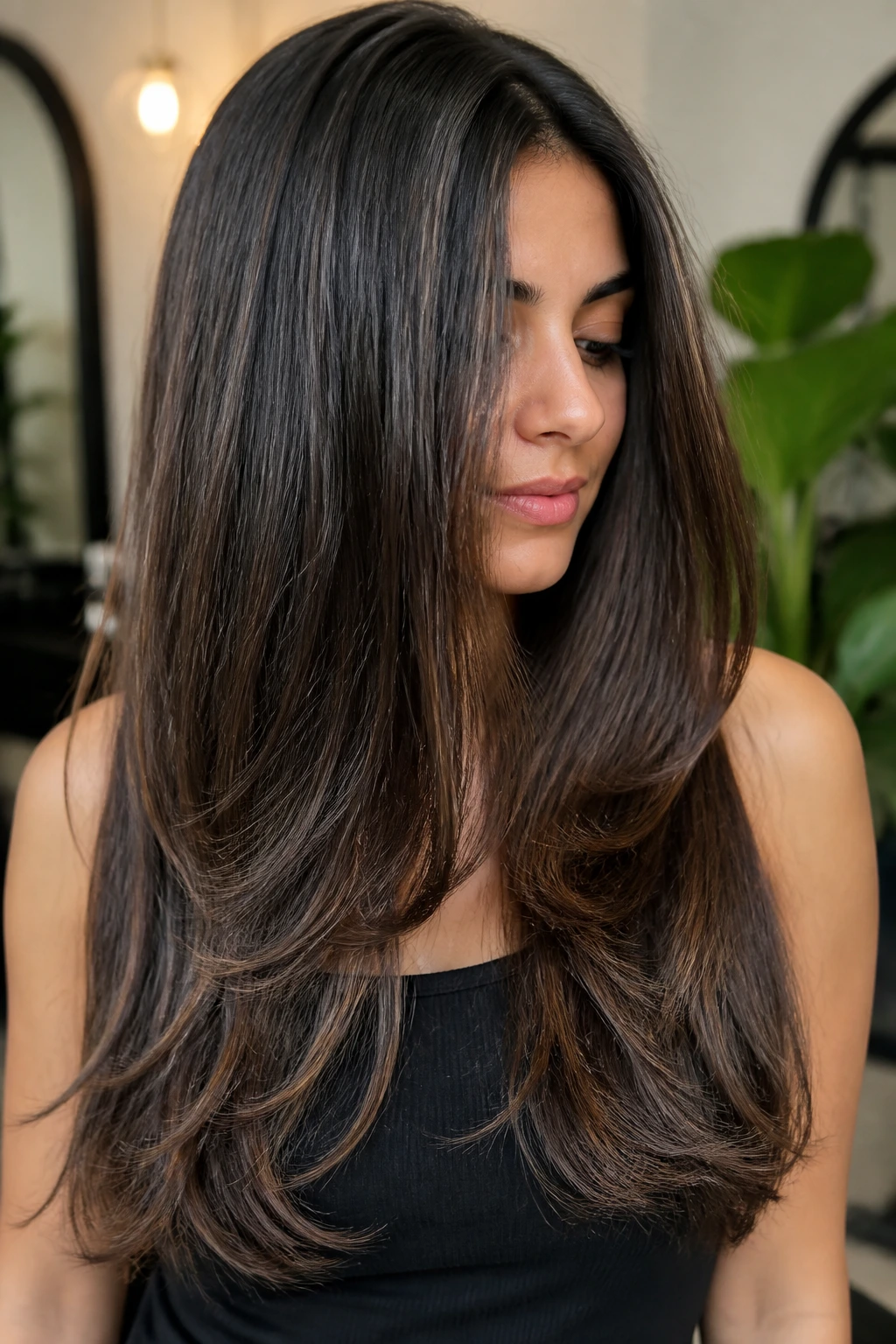
If you love long hair and don’t want obvious layers, sliced ends can be the compromise. The stylist removes a little weight from the last inch or two, which helps thick hair move more freely without changing the whole shape. It’s subtle. Very subtle. That’s the point.
This works best when the overall cut stays long and the interior shape remains mostly intact. The ends stop looking like one big block, but the rest of the hair still feels full. It’s a nice answer for women who have spent years growing their hair and want a small fix, not a dramatic change.
One caution: slicing too much into coarse thick hair can make the ends feel rough. A light hand is everything. If your hair has a strong natural wave, this can be especially pretty because the ends fall into a softer line instead of a blunt sheet.
20. The Tapered Pixie with Crown Volume
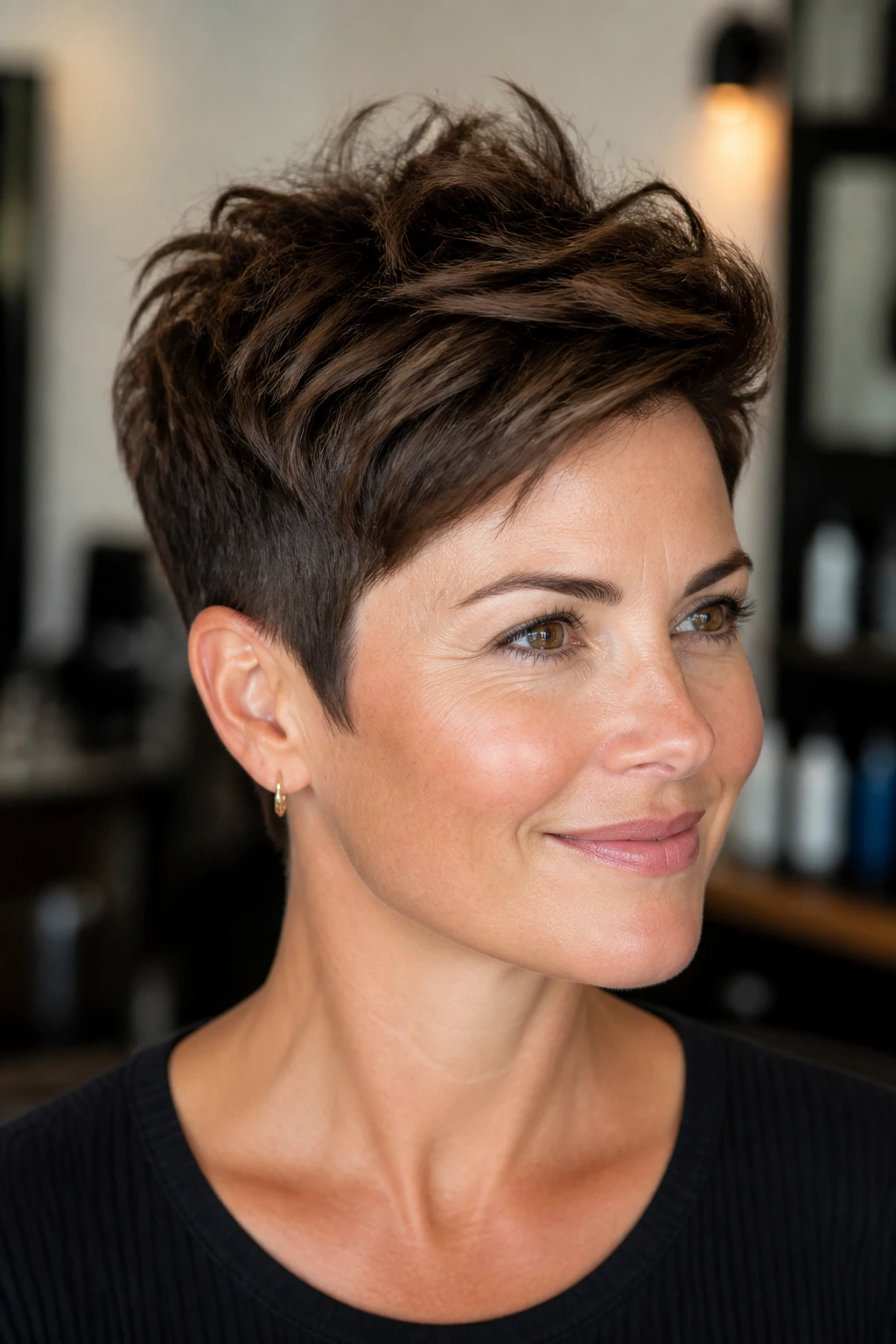
Short hair can be easier than long hair if the shape is right. A tapered pixie with crown volume takes the weight off the sides and nape, then leaves enough length on top to keep the cut from flattening into the head. Thick hair loves this kind of structure because the density becomes lift instead of bulk.
This cut is for women who want low drying time and fewer arguments with the brush. The sides stay neat, the top has room to move, and the nape stops feeling hot and heavy. Ask for the crown to stay longer than the sides, with texture added where the hair naturally wants to stand up. If the top is cut too short, thick hair can go spiky fast.
It does need product — a little paste, cream, or matte pomade goes a long way. But the daily routine is still lighter than with most longer cuts. If you’re ready to go short, this is a smart place to land.
How to Ask for a Cut That Won’t Expand by Noon
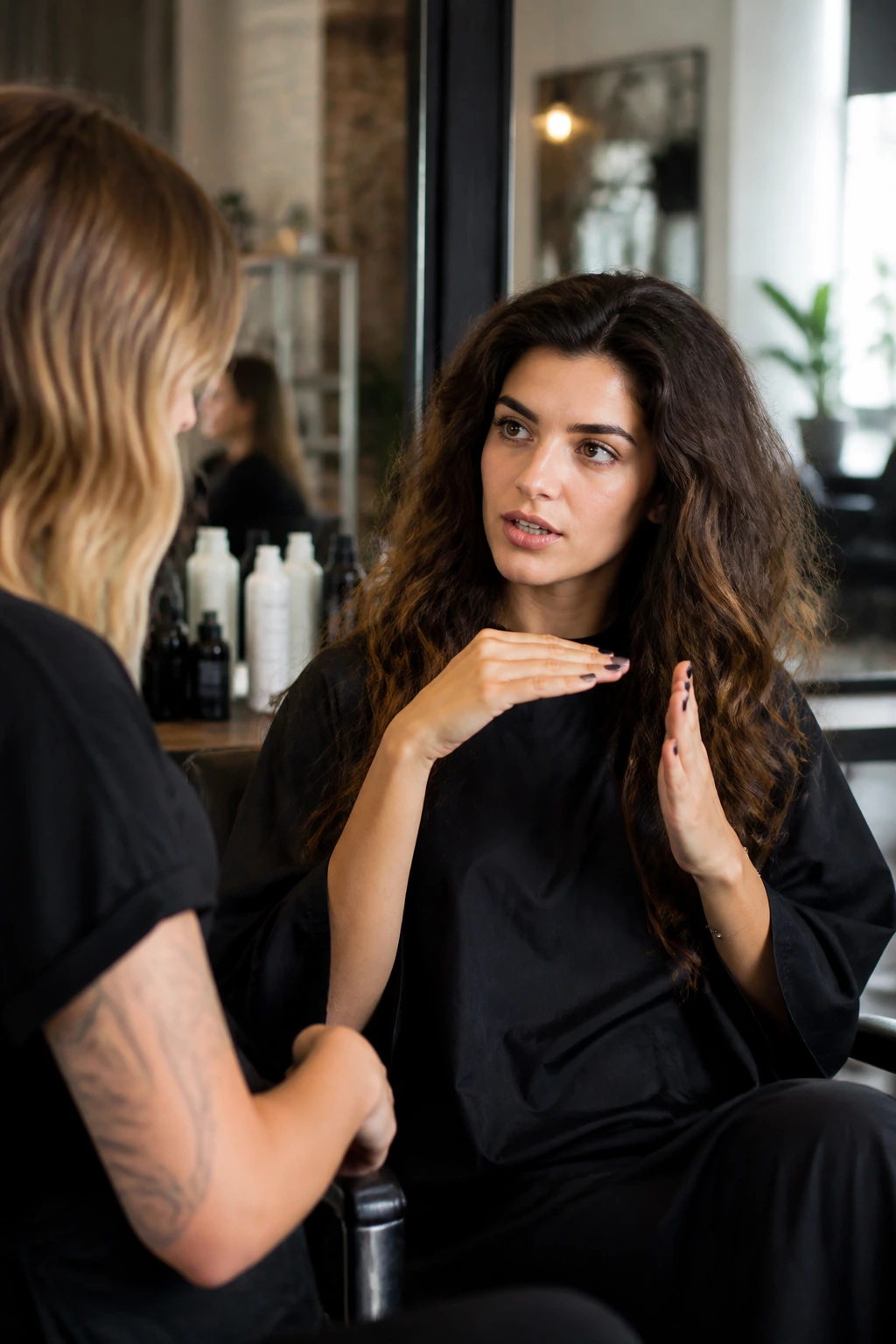
Bring two photos, not one. Show the haircut you want and the haircut you absolutely do not want. That second photo matters more than people think, because thick hair can look charming in one version and like a puffy accident in another, and your stylist needs to see the line you’re trying to avoid.
Say how you actually live with your hair. If you air-dry five days a week, say that. If you blow-dry only the front and let the rest do its thing, say that too. A cut that looks gorgeous with a full round-brush finish can fall apart if your real routine is towel-dry and go.
Ask where the weight will sit. That one sentence changes the conversation. You want to know whether the bulk is being removed from the interior, the sides, the crown, or the nape. Thick hair can be made to look smaller in all the wrong places, and then you end up with a shape that feels thin on top and heavy on the bottom.
One more thing: agree on the dry length before the scissors come out. Thick hair often springs up as it dries, and the difference between “chin length” and “too short” can be a half inch. That half inch matters.
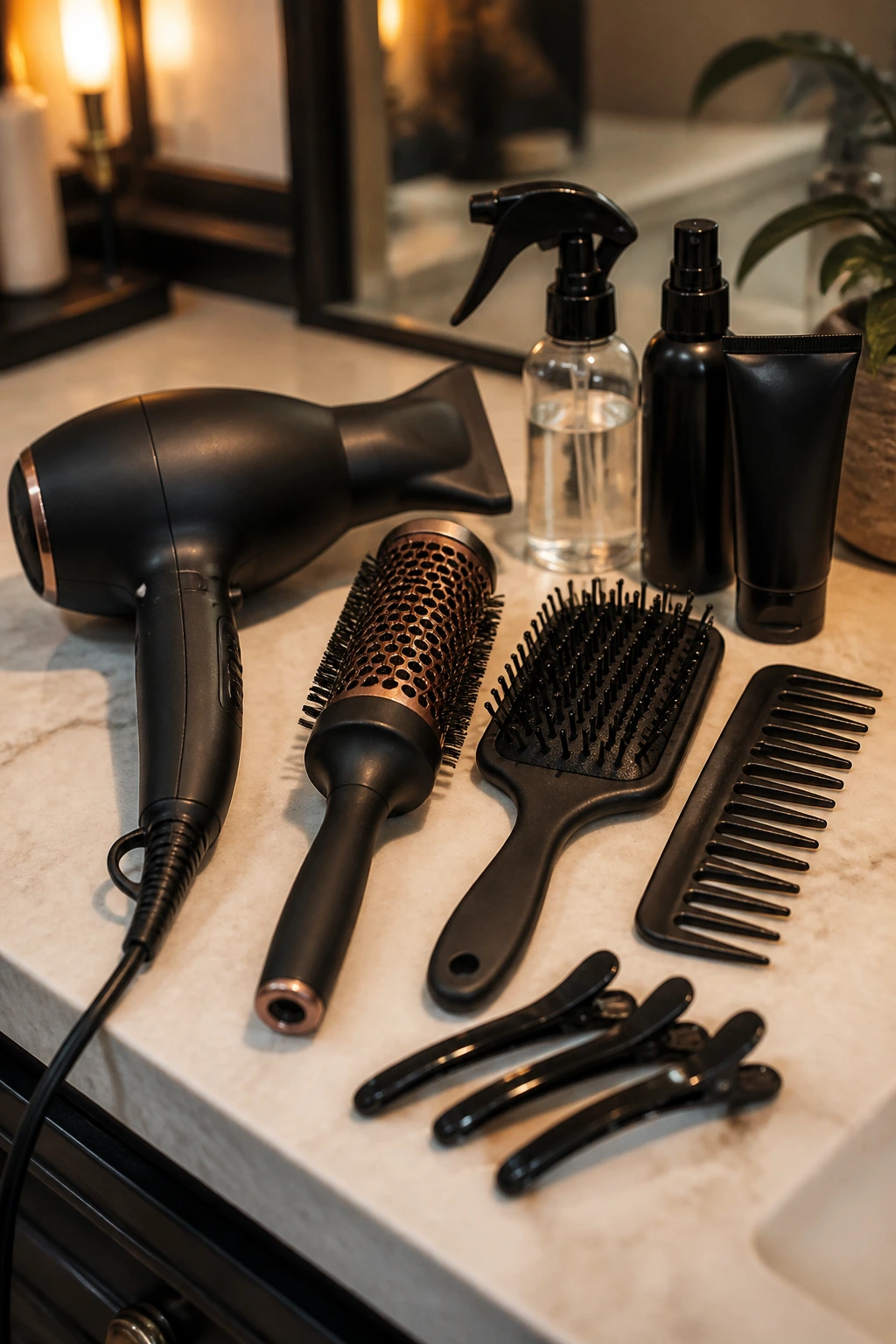
Essential Tools for Styling Thick Hair at Home
-
Blow dryer with a nozzle attachment: The nozzle directs air so the cuticle lays flatter and the shape doesn’t explode while drying.
-
Round brush, medium size: Best for bending the ends under on bobs, lobs, and clavicut shapes without overvoluming the whole head.
-
Paddle brush: Useful for rough-drying thick hair faster and smoothing long layers without too much lift.
-
Wide-tooth comb: Safer than a fine brush on wet thick hair, especially if the hair tangles easily.
-
Sectioning clips: Thick hair dries better in zones; clips keep the underneath from staying damp while the top gets polished.
-
Heat protectant spray or cream: Not optional if you use hot tools regularly; thick hair can hide damage for a while, then suddenly show it at the ends.
-
Lightweight styling cream or mousse: Pick one, not five. Cream calms frizz on straight or wavy hair, while mousse helps curls and lift.
-
Texturizing spray: Handy for shag, wolf cut, and bixie shapes when you want separation without stiffness.
-
Microfiber towel or soft T-shirt: Cuts down on roughing up the cuticle when you blot hair after washing.
Smart Styling Habits That Make Thick Hair Easier to Live With
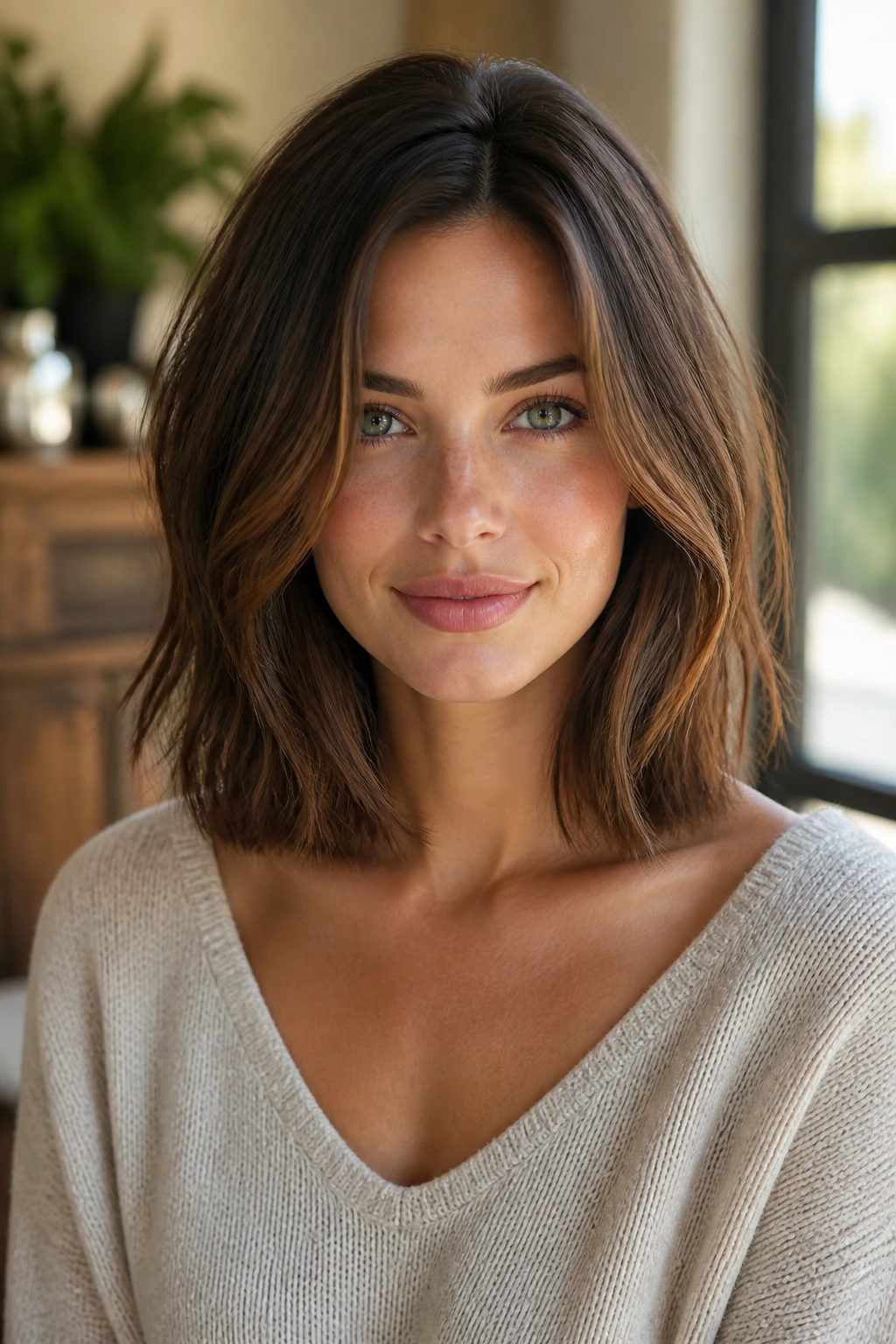
Start drying at the roots. Thick hair can look dry on the outside and still be damp underneath, which is why a cut sometimes seems to “change” after lunch. Work in sections, and don’t leave the underlayers forgotten at the neck. That’s how the shape turns into a cave.
Use less product than your instinct tells you. Thick hair can take a little more moisture, but too much cream or oil at the crown flattens the roots and makes the ends droop. Put heavy products only where the hair feels rough, usually from mid-length down. Leave the top cleaner.
If you use heat, keep the nozzle moving. Thick hair can tolerate more time under the dryer than finer hair, but one hot spot can still scorch the ends. Medium heat is usually enough if you’re patient. A cool shot at the end helps lock the shape in place, especially on blunt cuts and bobs.
And if you’re air-drying, do not just pile the hair on top of your head and hope for the best. Scrunch curls, tuck the part where you want it, and leave the shape alone while it sets. Thick hair often takes longer to settle, not because it’s difficult, but because it has more actual hair to arrange.
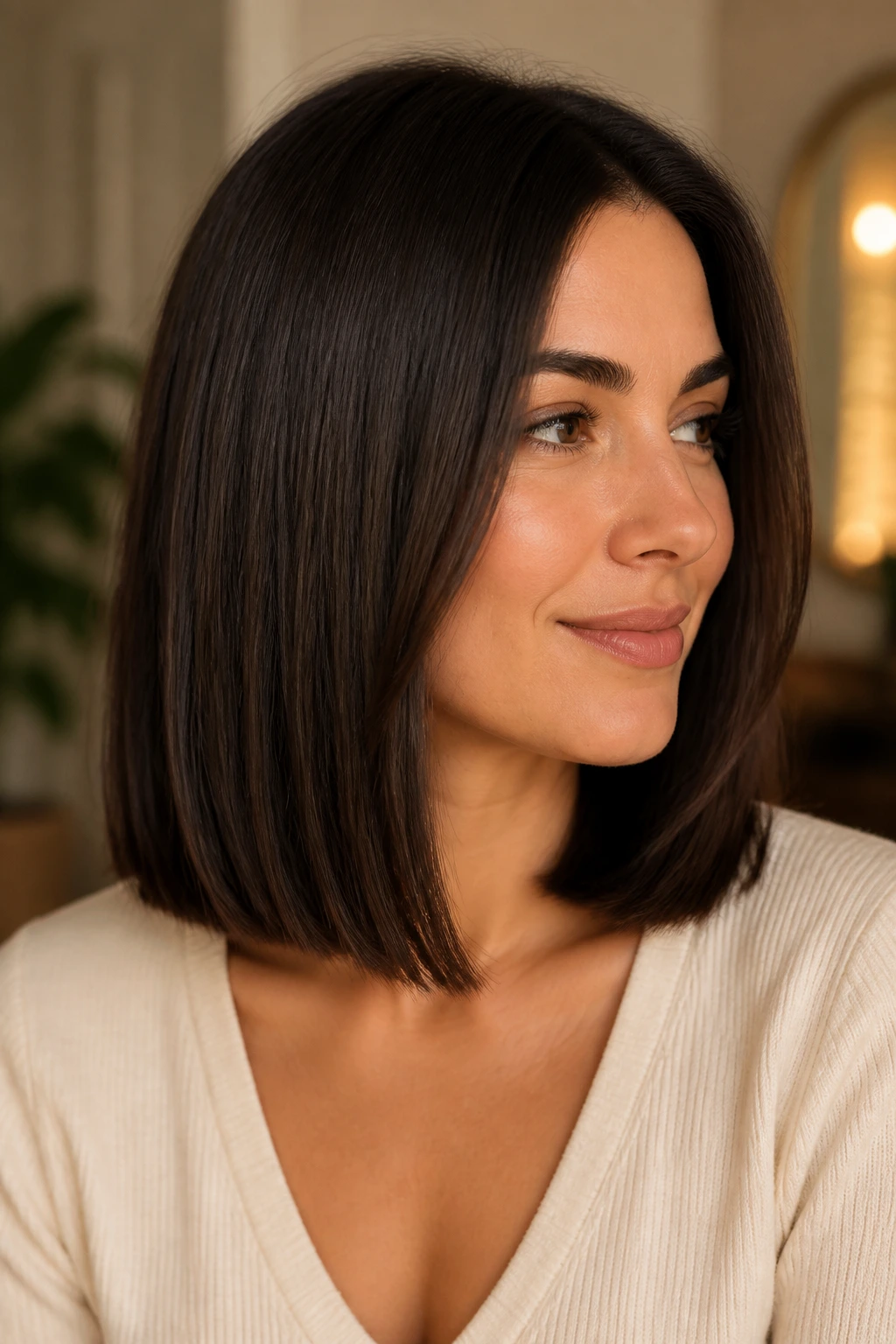
Common Mistakes That Make Thick Hair Harder to Cut and Style
-
Over-thinning the whole head: The symptom is frizzy, see-through ends with a flat crown. The fix is to remove weight internally or at the perimeter, not shred the whole shape.
-
Starting layers too high: If the first layer begins near the temples, thick hair can balloon around the ears and look wider than before. Ask for the first real layer lower down unless your texture truly needs lift.
-
Ignoring shoulder contact: Hair that sits right on the shoulders often flips out if the line is wrong. Move the cut slightly above or below that point, or round the perimeter so it falls cleanly.
-
Cutting bangs too short on thick hair: Short fringe on dense hair can spring up and separate into little chunks. Leave more length at the start and trim in stages.
-
Using a razor where a clean edge would work better: Razor cuts can be lovely on the right texture, but coarse thick hair can fray fast. If your ends look fuzzy after a cut, this is often why.
-
Letting the stylist guess your routine: If you never use a round brush, don’t leave the salon with a cut that needs one every morning. Be honest. It saves everyone time.
Variations and Adaptations to Try
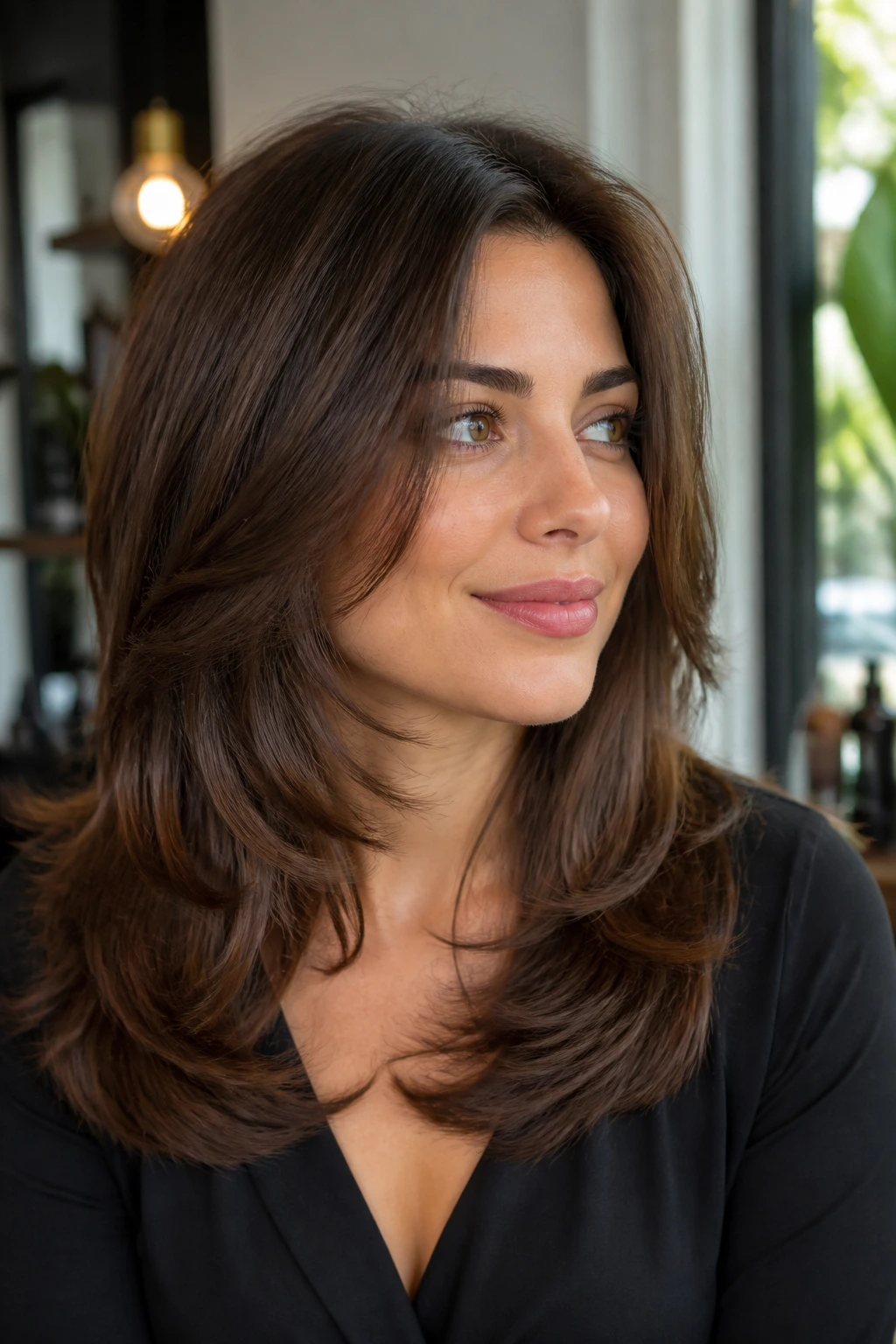
The Air-Dry Friendly Version
Keep the perimeter stronger and ask for softer internal movement instead of sharp disconnection. This works well for wavy thick hair that looks best when it can dry on its own without too much coaxing.
The Blowout Lover’s Version
Choose blunt lines, curtain bangs, or a butterfly shape with enough face framing to bend under a round brush. These cuts look their best with a little styling, and they repay that effort with smooth movement and shine.
The Curl-First Version
Ask for dry cutting, curl-by-curl shaping, and less thinning through the ends. Thick curls need room to spring, so the cut should respect the curl pattern rather than flattening it into a straight-line blueprint.
The Low-Maintenance Grow-Out Version
A clavicut, rounded U-cut, or collarbone lob will hold its shape longer than a sharper bob. These cuts soften on the way out instead of collapsing into a mess after six weeks.
The Short-and-Light Version
If the neck weight drives you mad, the bixie, tapered pixie, or hidden nape undercut will do more than another long layer ever will. These are the cuts that take the heat off — literally, in some cases.
Keeping the Shape Between Appointments
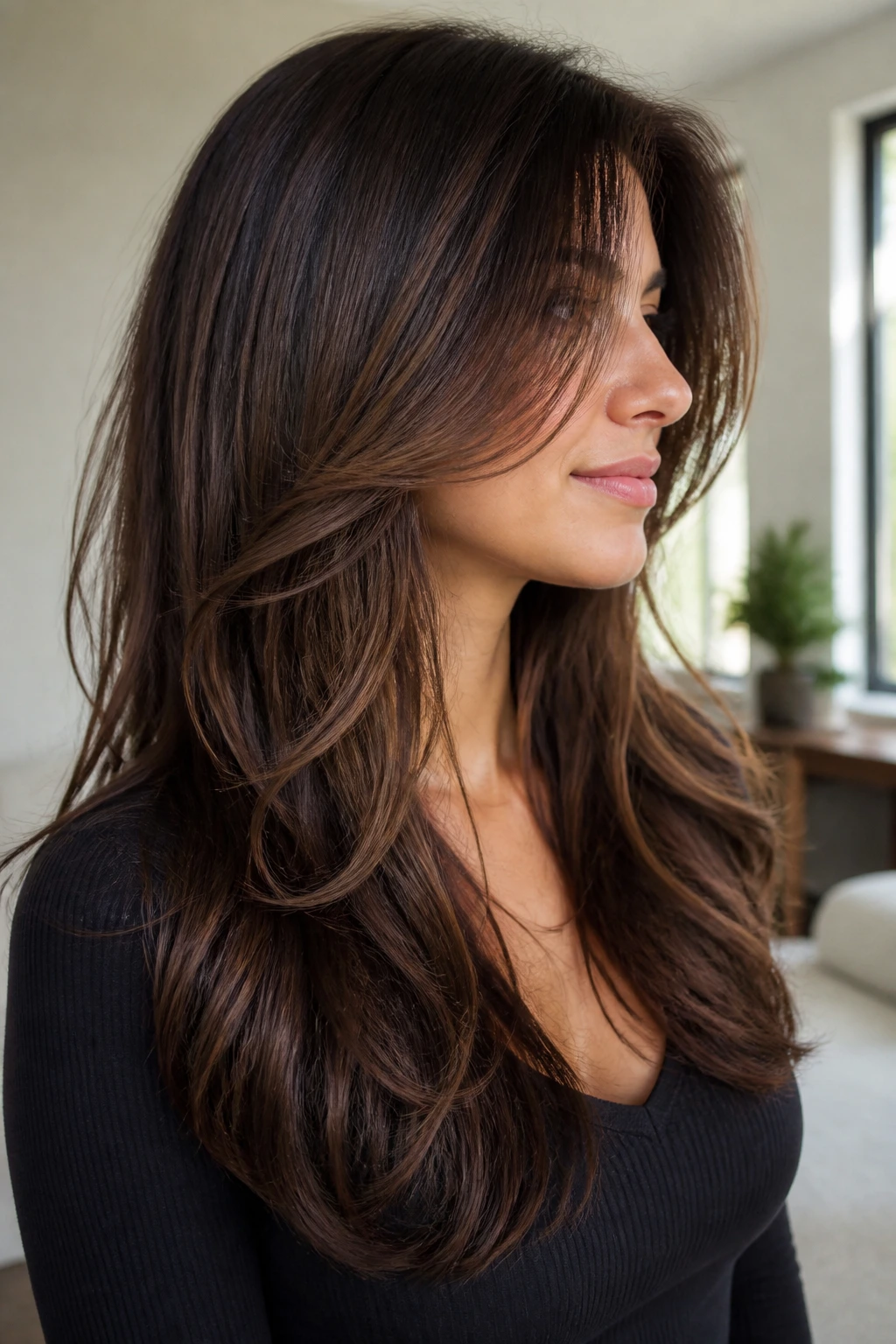
Thick hair usually needs a little more structure maintenance than fine hair, but not in a fussy way. Blunt bobs and Italian bobs tend to need trims every 6 to 8 weeks if you want the line to stay crisp. Longer layered cuts can go 8 to 12 weeks before the shape starts looking soft in a bad way. Hidden undercuts need attention more often, usually around every 4 to 6 weeks, because the grow-out shows up fast under the top layer.
Bangs are their own little schedule. Curtain bangs and longer fringe can often stretch to 4 or 6 weeks with careful styling, but if they hit your lashes and start splitting in odd places, they’ll feel annoying sooner than the rest of the cut does. Some people learn to trim the tiniest bit at home. That can work, but only if you’re patient and use sharp hair shears, not kitchen scissors.
At home, the goal is to preserve the shape, not fight it into submission every day. If the ends start to puff, try a tiny amount of cream on damp hair and a quick bend under with a brush. If the roots collapse, clip them up while the hair cools. Thick hair remembers what it was cut to do. Sometimes it just needs a reminder.
Frequently Asked Questions
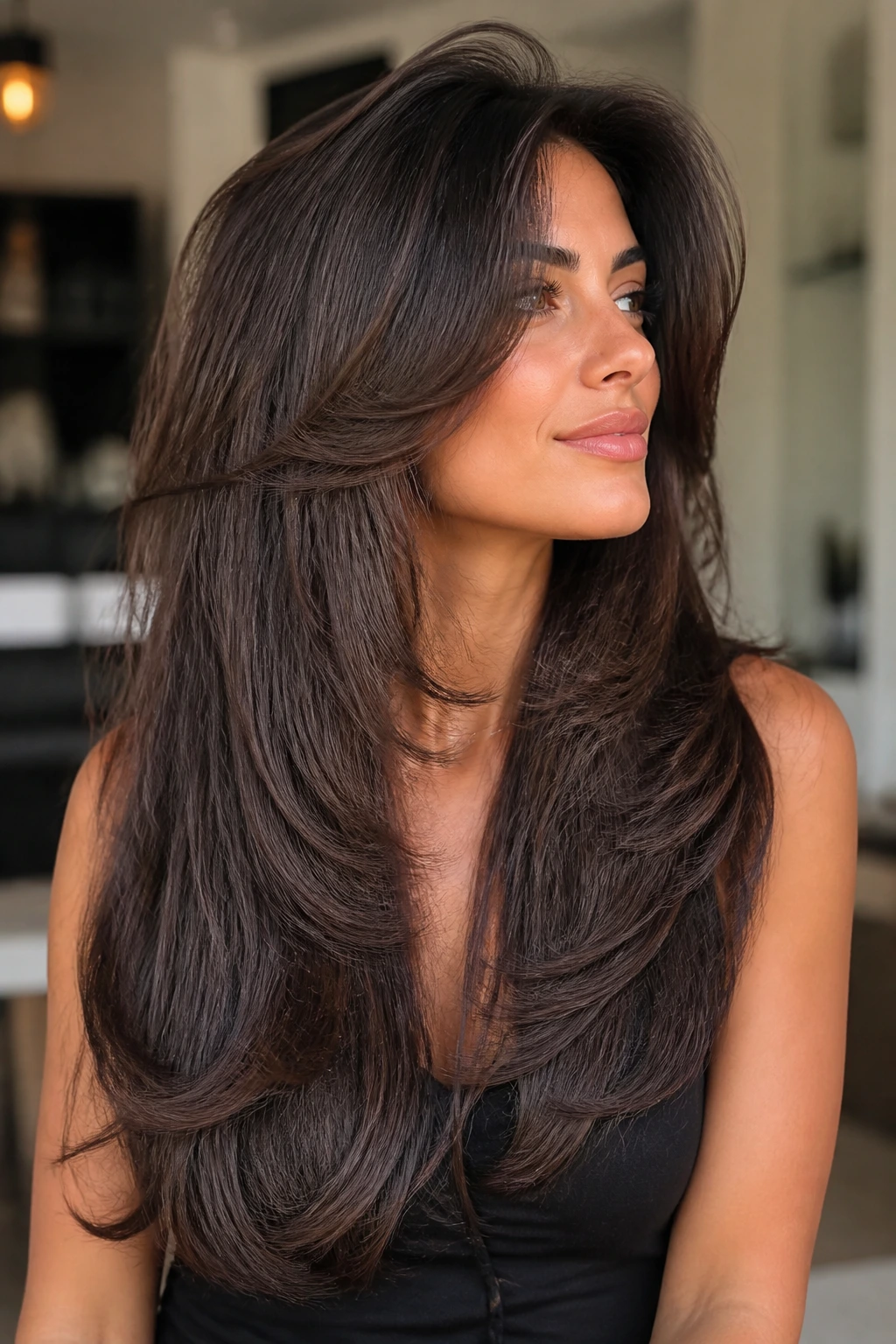
Are layers or blunt cuts better for thick hair?
Blunt cuts are better when your hair spreads wide at the bottom or flips out at the shoulders. Layers help when the hair feels too heavy or too triangular. Most thick hair does best with a blunt perimeter and some controlled internal weight removal, not one or the other in extreme form.
Can thick hair wear curtain bangs without looking bulky?
Yes, if the bangs are cut longer and blended well. The trick is to start with more length than you think you need, because thick hair shrinks up as it dries and can sit heavier than expected on the forehead.
Should thick hair be thinned with shears?
Sometimes, but not as a default move. Over-thinning often leaves the ends rough and the crown flat. Ask whether your stylist can remove bulk through shape, layering, or interior texturizing instead.
What if my thick hair is also curly?
Then dry cutting or curl-by-curl shaping matters a lot more. Curly thick hair needs layers placed where the curls actually sit, not where they look like they sit when wet. That’s how you avoid the pyramid effect.
How often should I trim a thick-hair haircut?
Shorter, blunt cuts need more frequent trims, often every 6 to 8 weeks. Longer layered cuts can stretch longer, but once the ends start feeling heavy or the shape loses its movement, it’s time.
Which cut is easiest if I barely style my hair?
A collarbone lob, rounded U-cut, or long layer shape below the chin usually asks for the least daily work. They keep enough structure to look decent with a rough dry and don’t depend on perfect styling every morning.
Can I keep my length and still make thick hair look lighter?
Absolutely. Invisible layers, face-framing pieces, and a quiet taper at the ends can change the way the hair falls without removing much length at all. The cut just needs to be planned with your density in mind.
What should I do if the cut looks too big after the first wash?
Do not panic and start hacking at it yourself. Thick hair often settles differently once it’s fully dry and worn for a day or two. If it still feels too wide, go back and ask for weight to be removed from the right area, not all over.
The Cuts That Keep Thick Hair in Line
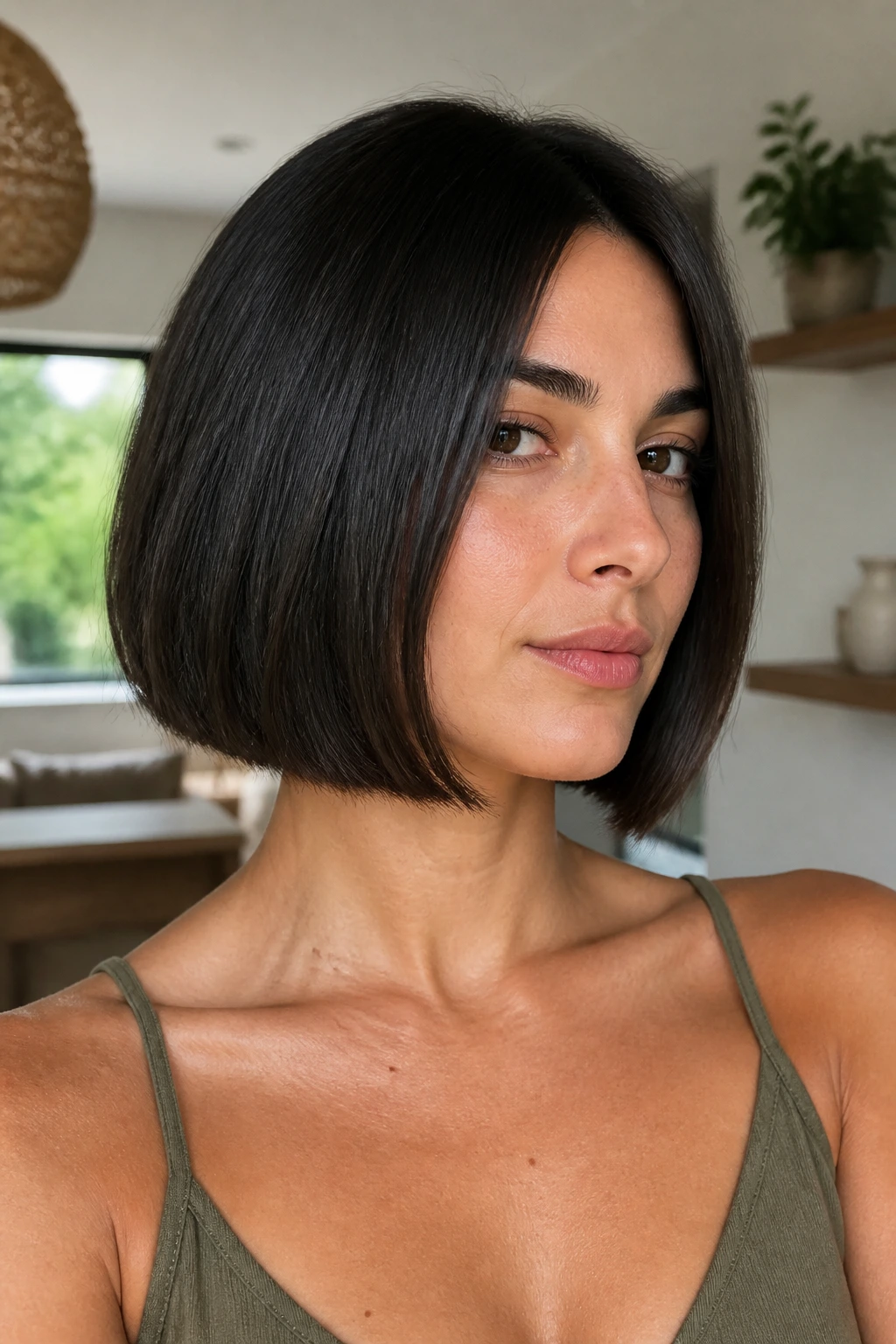
Thick hair doesn’t need to be toned down into submission. It needs a shape that understands how it moves, where it bulges, and which edges need to stay strong. That’s why the best cuts here aren’t about hiding the volume. They’re about steering it.
Pick the style that matches your routine, not the one that only looks good in the salon chair. A good haircut should make your mornings easier, your ponytail neater, and your ends look like they belong to the rest of the head. If it does that, you’ve found the right fix.