



Korean hairstyles for busy mornings with thin hair work best when they stop trying to fake a huge amount of volume and start using shape instead. That’s the part most people miss. Thin hair does not need to be bullied into puffiness; it needs clean lines, a little lift in the right place, and one or two details that make the whole thing read as deliberate.
My bias is obvious. I’d rather see a low bun with a neat ribbon, or a half-up twist with a soft bend at the ends, than a head full of over-teased fluff that collapses before lunch. Fine strands have a nice sheen when they’re handled well, and Korean-inspired styling leans into that sheen instead of hiding it under a helmet of spray.
The good news is that these looks are not fussy. Most can be done with a comb, a clip, a few pins, and hair that’s slightly lived-in rather than freshly washed and slippery. If your roots go flat fast, that’s not a failure. It just means the style needs to start where your hair still has grip.
Why These Looks Work When Thin Hair Wants to Lie Flat
- They rely on placement, not bulk: A low bun at the nape or a side tuck near the temple can look fuller than a high ponytail because the shape sits where the eye naturally reads width.
- They make small sections do more work: A single face-framing curl, a tiny braid, or one wrapped strand around an elastic can change the whole feel of the style without adding weight.
- They leave the crown controlled: Thin hair looks its best when the top is smooth but not crushed. A gentle lift at the roots is enough. No need to build a nest.
- They handle second-day hair well: Slight grit from dry shampoo or texturizing spray gives clips, pins, and elastics something to hold onto.
- They look tidy fast: Most of these Korean hairstyles use one strong idea — a clean part, a low twist, a bent end, a ribbon — so you can finish them in minutes, not thirty.
- They still move: The best versions are polished without looking stiff. Thin hair can be soft and light and still look intentional.
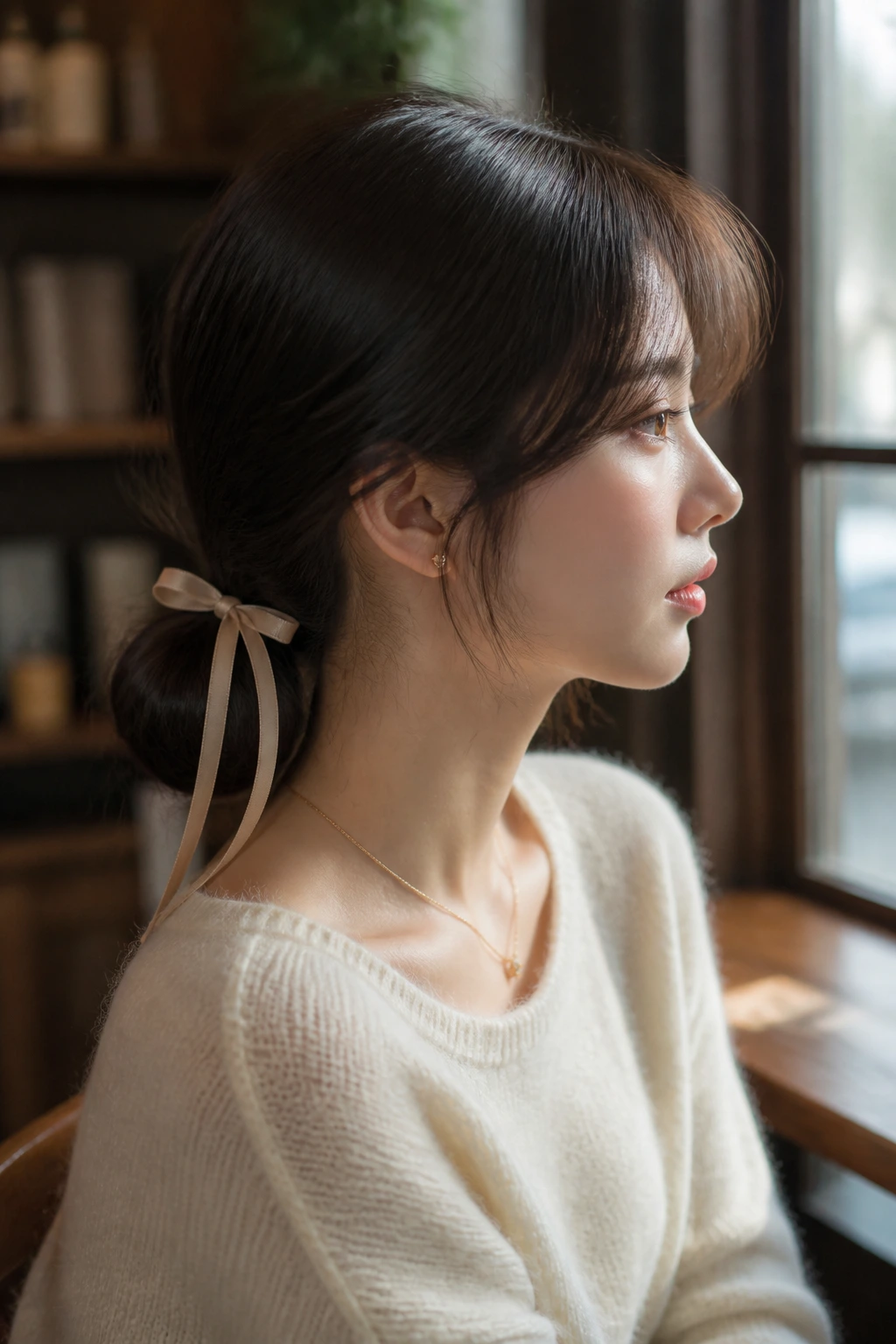
1. Low Ribbon Bun at the Nape
A low ribbon bun is the style I reach for when I want thin hair to look calm, neat, and a little dressed up without pretending it’s thicker than it is. The bun sits at the nape, where the hair naturally gathers into a compact shape, and the ribbon gives it presence. Small bun. Big payoff.
Why it works
A low bun keeps the silhouette close to the head, which is flattering when the hair density is modest. The ribbon draws the eye to the finish instead of the amount of hair. That matters. Thin hair can look sparse when it’s forced upward, but at the nape it looks tidy and complete.
How to do it fast
- Part the hair slightly off-center or straight down the middle.
- Brush it back into a low ponytail and secure with a small elastic.
- Twist the ponytail once or twice, coil it into a bun, and pin the ends under with 2 or 3 bobby pins.
- Tie a ½-inch to 1-inch ribbon around the base, leaving the bow small and neat.
Leave two slim face-framing pieces if your hairline feels too severe. If your hair is extra slippery, mist the roots with dry shampoo first. That tiny bit of texture helps the bun stay put through a commute, a hoodie, and whatever else the day throws at it.
2. C-Curl Ends on a Center Part
C-curl ends are one of those Korean salon tricks that make thin hair look finished instead of forgotten. The whole point is simple: keep the top smooth, then bend just the last inch or so under or out with a gentle curve. That small detail changes the entire mood of a cut.
A flat iron or round brush can create the bend in under five minutes once you get the hang of it. Don’t curl the whole head. That’s too much work for a weekday and often looks too puffy on fine strands. Just give the ends that soft inward hook, like the letter C.
This style works especially well on lobs and shoulder-length cuts with a center part. If your face tends to look sharper with straight hair, add one thin side piece near each cheek. The curl should look controlled, not cute in a childish way. Clean. Soft. Quick.
3. Half-Up Claw Clip Twist
Need your hair off your neck in three minutes? This is the one. A half-up claw clip twist gives thin hair height at the crown without pulling all of it into a sad, skinny bun.
Start by taking the top half of your hair — not the whole thing — and twisting it loosely at the back of your head. Lift the twist a little before clipping it so the crown doesn’t collapse. A medium claw clip usually holds better than an oversized one because it grips the twist instead of sliding on air.
Why I like it on fine hair
It leaves enough hair down to keep the style from looking sparse. And the clip becomes part of the look. Choose matte if your hair is very sleek; choose a pearly or neutral clip if you want the style to feel more polished. A tiny tug on the twist after clipping opens the shape just enough.
4. Bubble Ponytail with Mini Elastics
A normal ponytail on thin hair can look like a rope. A bubble ponytail fixes that by breaking the length into little sections that puff out on purpose. It’s one of the easiest ways to fake density without heat or teasing.
Secure a low or mid ponytail, then add clear elastics every 2 to 3 inches down the length. After each elastic goes on, gently pull the section between elastics outward with your fingers until it rounds out. Do not yank. A soft expansion is enough.
The style works because each bubble creates a visual pocket of volume. Thin hair gets to look fuller in pieces rather than all at once, which is easier on the eye and easier on the scalp. A satin ribbon at the base can soften the finish if you don’t want the elastic line to show.
5. See-Through Bangs with Loose Side Pieces
See-through bangs are the opposite of heavy, dense fringe. That’s why they suit fine hair so well. They let a little forehead show through, which keeps the front from looking blocky or thick in the wrong way.
These bangs usually sit wispy and light, brushed down with a quick pass of a round brush or the side of a flat iron. Around them, leave two soft side pieces to skim the cheekbones. That frame matters more than people think. Thin hair needs a little architecture in front so the rest of the style doesn’t drift too far back.
If your bangs separate too much, a dab of dry shampoo at the roots gives them grip. If they stick to the forehead, your styling product is probably too heavy. Use less. Much less. See-through bangs look best when they move a little instead of sitting like a curtain.
6. Mini Braided Crown into Low Pony
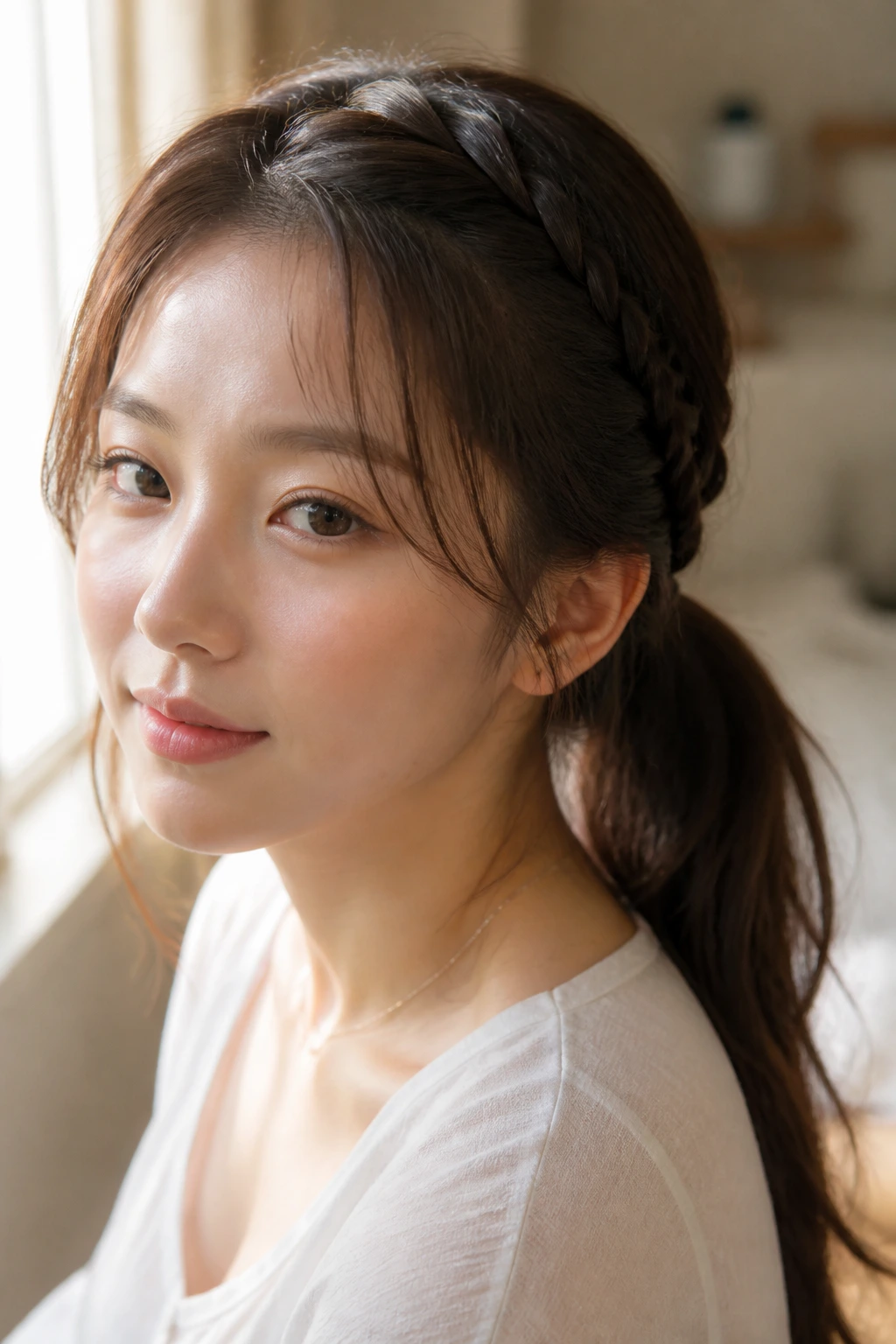
A full crown braid can swallow thin hair whole. A mini braided crown does not. That’s the difference. You braid just a narrow slice along the hairline, then bring it into a low ponytail, letting the rest of the hair stay loose and visible.
This style works because it adds detail where the eye lands first. The braid gives the front of the hairstyle texture, while the ponytail keeps the rest quick and practical. On fine hair, that split is useful. You get decoration without sacrificing the length you actually have.
Keep the braid loose enough to pull slightly wider after you secure it. A braid that’s too tight looks tiny, and tiny is not the goal here. A low ponytail with a wrapped strand around the elastic keeps the base clean.
7. Wrapped Low Ponytail with Face-Framing Pieces
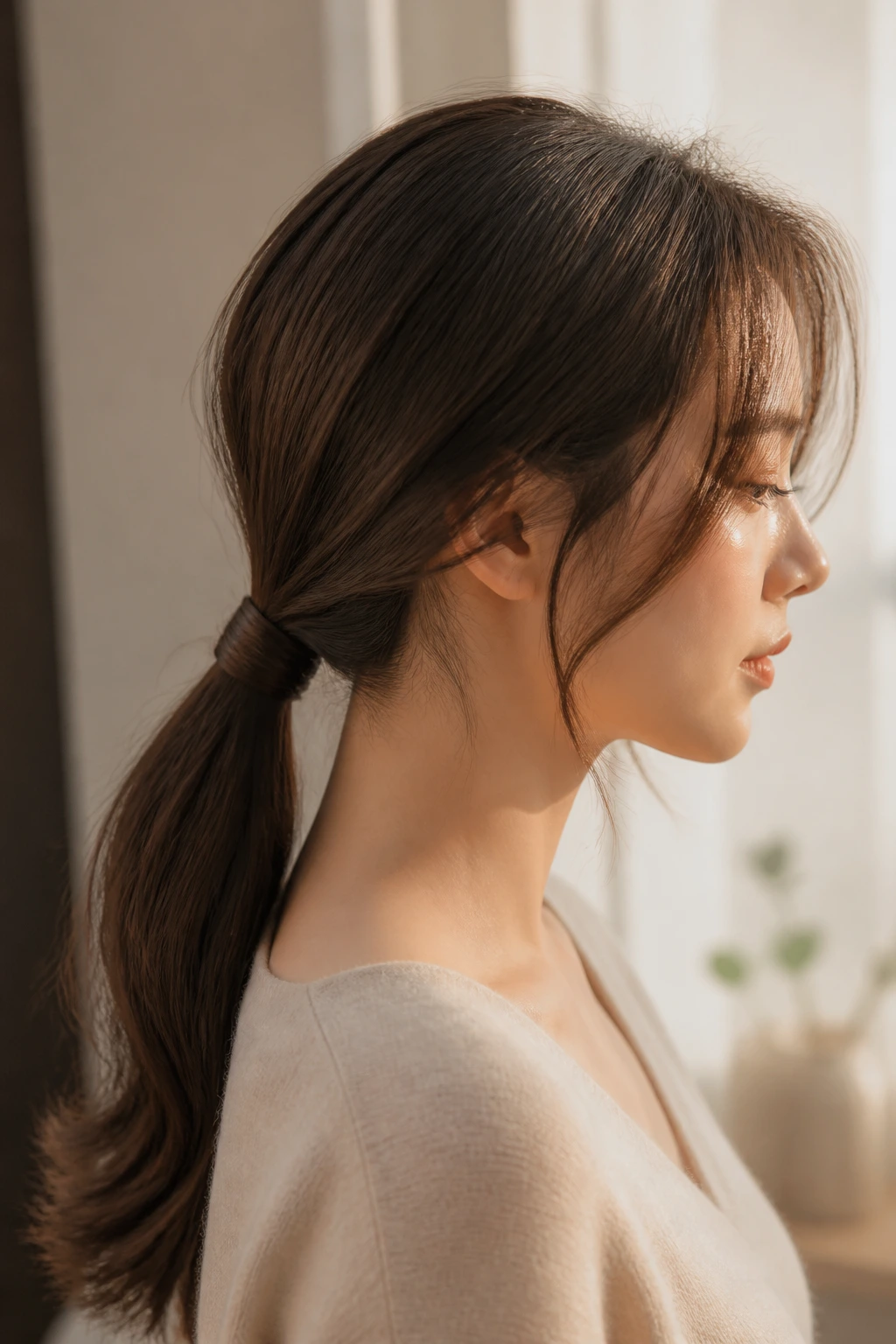
A wrapped ponytail is the kind of style that quietly upgrades thin hair. You gather the hair low, hide the elastic under one small wrapped strand, and leave a couple of face-framing pieces loose. That’s it. No drama.
The wrapped strand matters because it erases the visual line of the elastic, which can make a ponytail look abrupt when there isn’t much hair. Thin hair looks more finished when the base is concealed. It’s one of those small fixes that makes people assume you spent longer than you did.
If the ends look a little flat, bend just the bottom 1 to 2 inches with a flat iron or curling iron. The ponytail should sit smooth at the base and soft at the ends. That contrast is the whole trick.
8. Half-Up Knot with Crown Lift
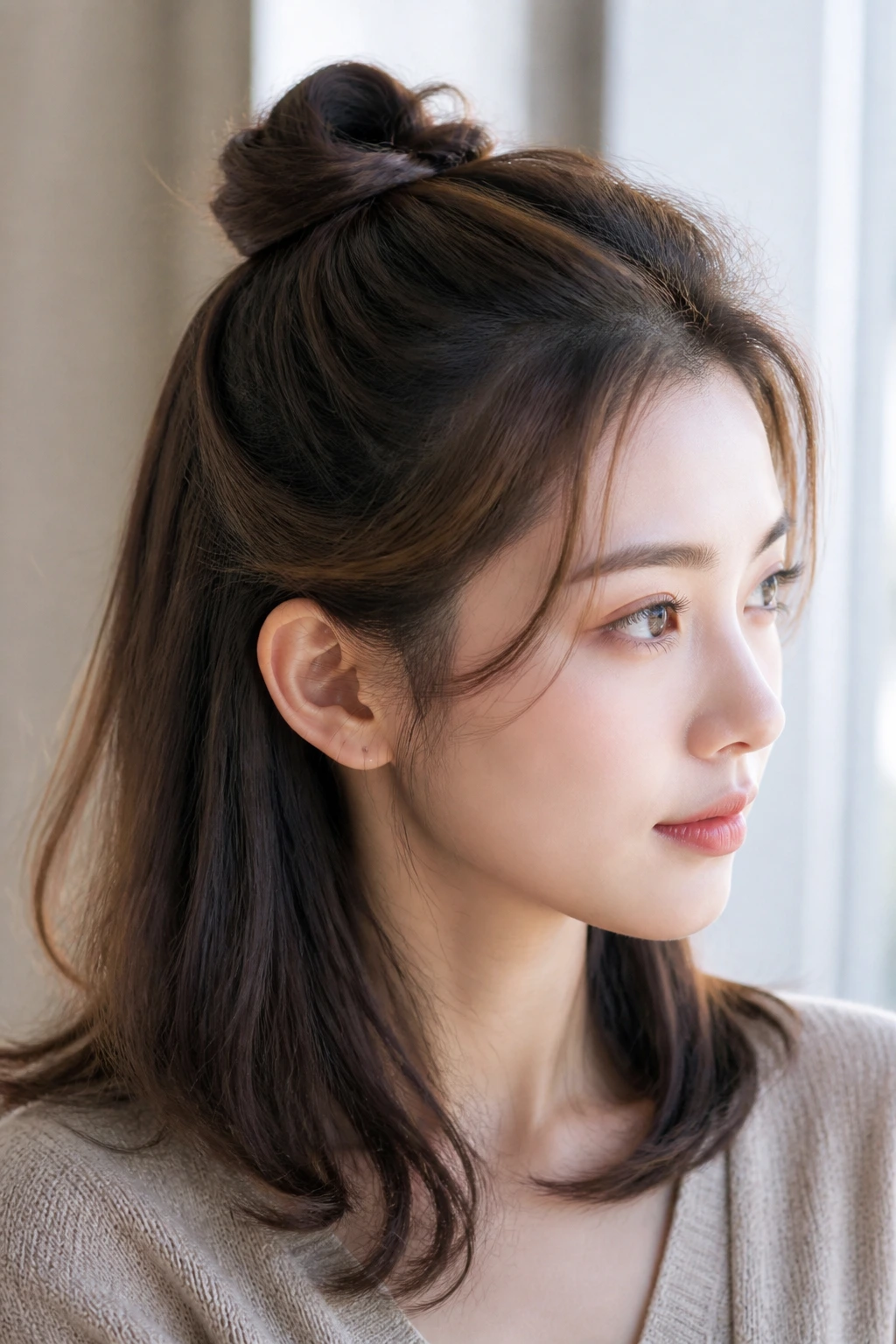
A half-up knot is the fastest way to make the top of thin hair look a touch fuller without touching the rest of it. You take the crown section, lift it slightly, twist it once or twice, and knot or coil it into a small bun. The lower hair stays down, so the look keeps some body.
This is the style I’d pick for layered hair that keeps slipping out of clips. The knot gives the crown something to do. It also creates a little bump where the head is widest, which reads as more hair than there really is.
A pinch of texturizing spray at the roots helps. So does not over-smoothing the section before you twist it. Thin hair needs a bit of looseness to avoid looking like a tight knot stuck on top of the head.
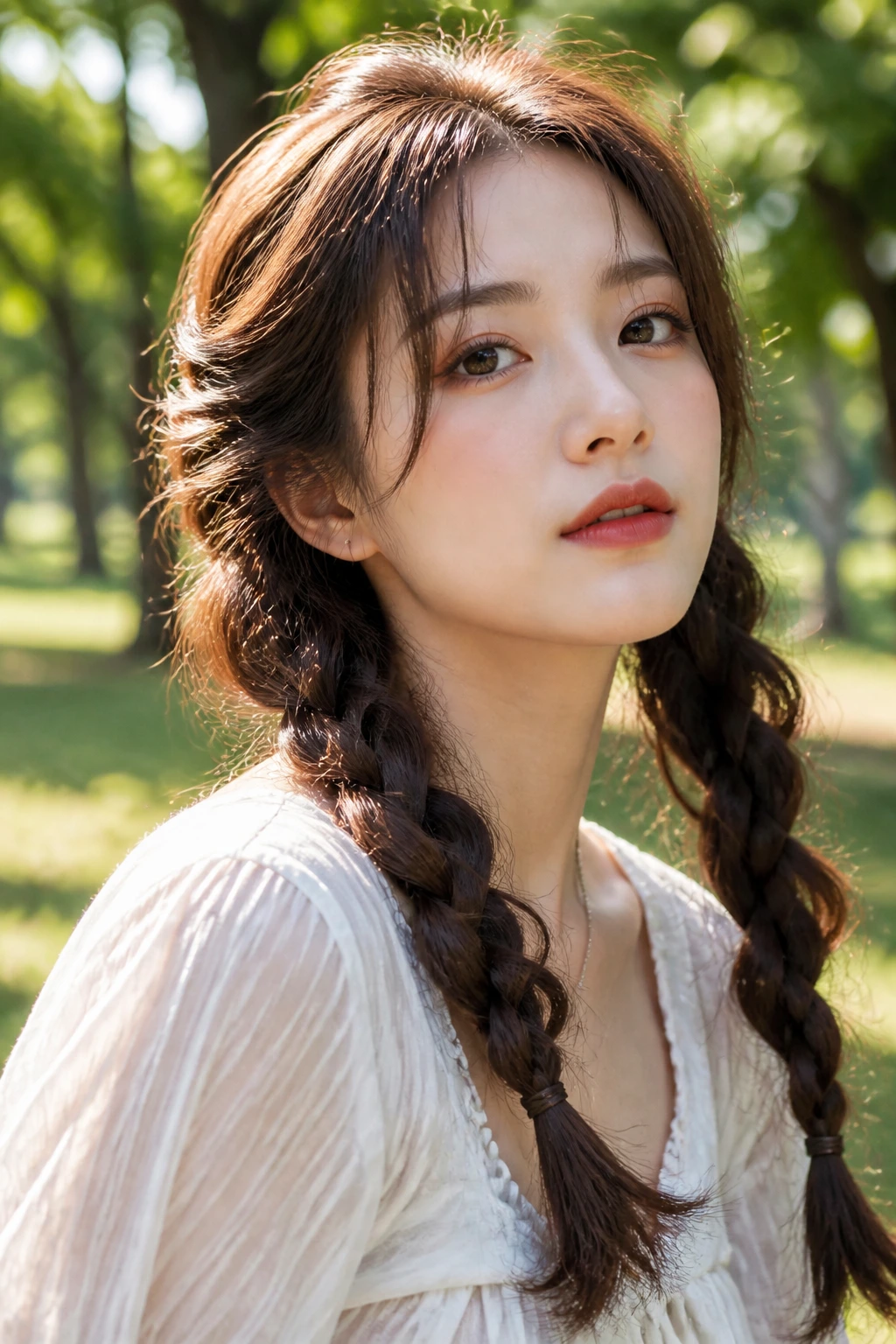
9. Twin Braids with Pulled Loops
Twin braids are not childish when they’re loose and soft. On thin hair, they’re practical. They keep the hair controlled, show off texture, and hold better than a single heavy braid that can slide downward all day.
After braiding, pull the loops outward a little at each side to widen the braid. That’s the part that changes the look. Tight braids on fine hair can look stringy; gently widened braids look fuller and more relaxed.
This style survives wind, a long walk, and a lot of movement. It’s also good for second-day hair because the slight roughness helps the braid grip itself. If you want a softer finish, leave one thin strand on each side of the face and curl the ends just a bit.
10. Velcro Roller Root Lift and Straight Ends
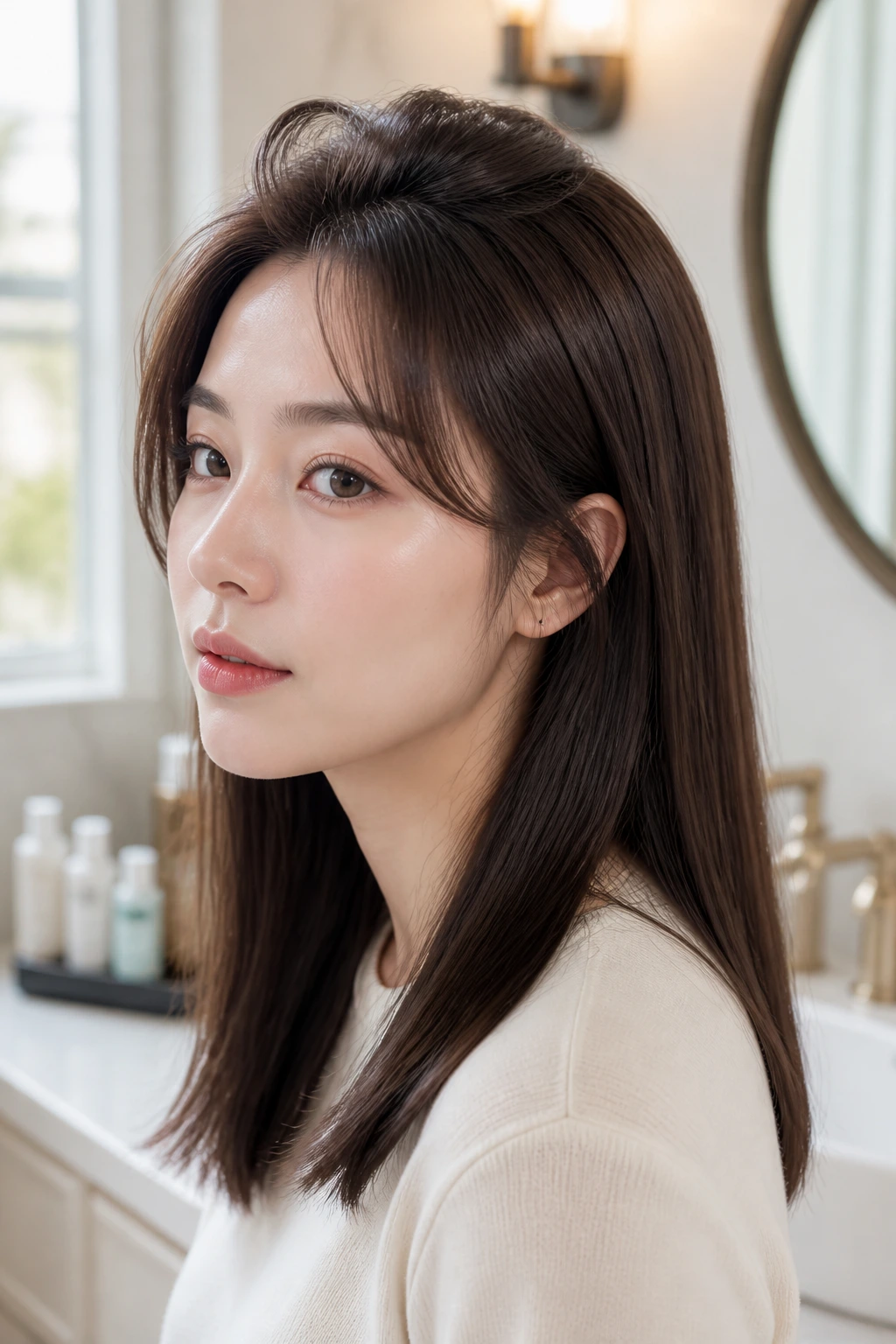
If you want that airy salon bump without setting your whole head on hot tools, Velcro rollers are the quiet answer. Put two or three rollers at the crown while you do makeup, answer messages, or make coffee. Ten minutes later, the roots have a little lift, and that lift changes everything.
The lengths can stay straight or get a very mild bend at the ends. That contrast is what makes the style look intentional rather than overdone. Thin hair tends to look best when the top has body and the ends stay orderly.
How to use it
Roll the front sections back from the face, not forward. Let the rollers cool completely before removing them. If you brush them out too fast, the lift disappears. A tiny mist of light hairspray at the roots is enough to hold the shape through a morning commute.
11. Sleek Topknot with Wispy Tendrils
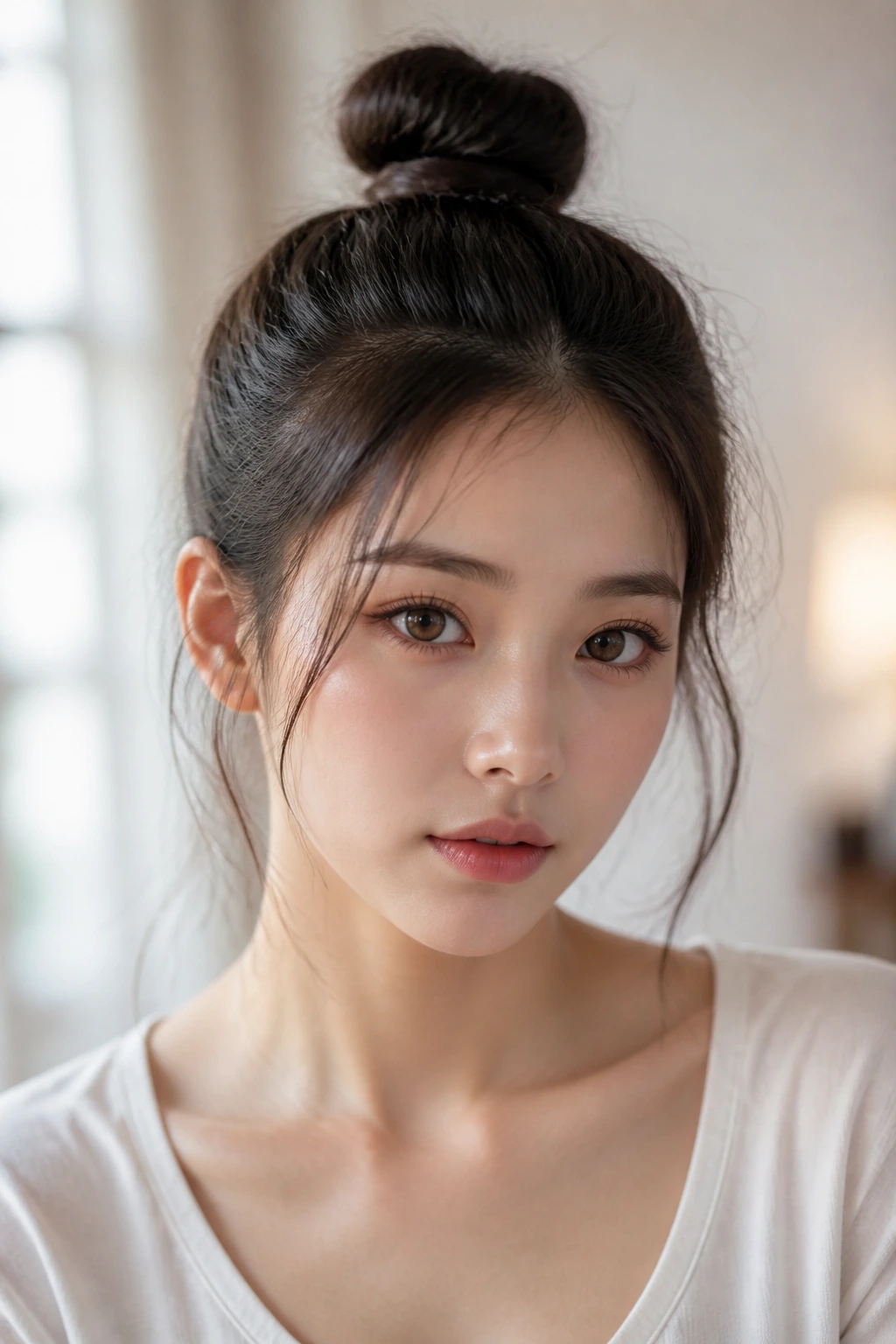
A sleek topknot can be a sharp move for fine hair, but only if you keep it compact. A giant bun tends to expose the scalp and the elastic underneath. A smaller knot near the crown looks cleaner and often fuller because it reads as dense.
Pull the hair up with enough tension to smooth the sides, then stop. Do not drag every strand tight like you’re tying a package. Leave two slim tendrils near the temples or ears, and let them fall naturally. Those pieces soften the face and keep the style from looking severe.
A tiny bit of pomade or styling cream along the hairline helps tame flyaways. Use it sparingly. Thin hair does not forgive heavy product near the roots. The topknot should look neat, not greasy.
12. Side Tuck with Pearl Pins
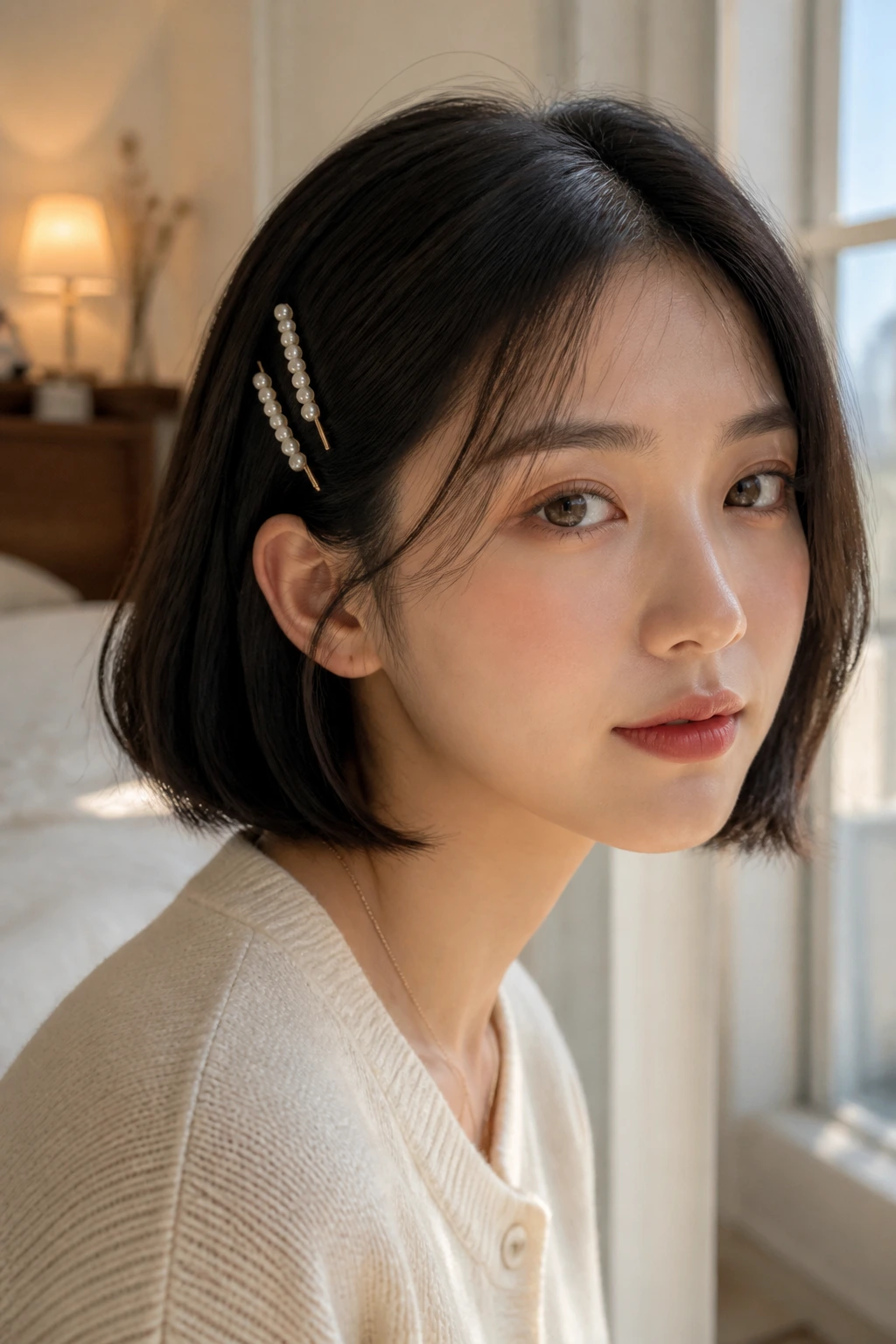
A side tuck is one of the best styles for bob-length or lob-length thin hair because it works with the hair you actually have instead of chasing length you don’t. You part the hair to one side, tuck the heavier side behind the ear, and secure it with one or two pearl pins.
Unlike a full updo, this keeps most of the density visible. That matters. Thin hair often looks better when it’s allowed to hang in one clean line, with just enough interruption to feel styled. The pearl pins add detail near the face, where the eye looks first.
This is a nice choice for earrings, glasses, and sharp collars. It feels polished without asking the hair to do a lot. If your bob flips out at the ends, a quick bend inward with a flat iron keeps the tuck tidy.
13. Low Pigtails with Bent Ends
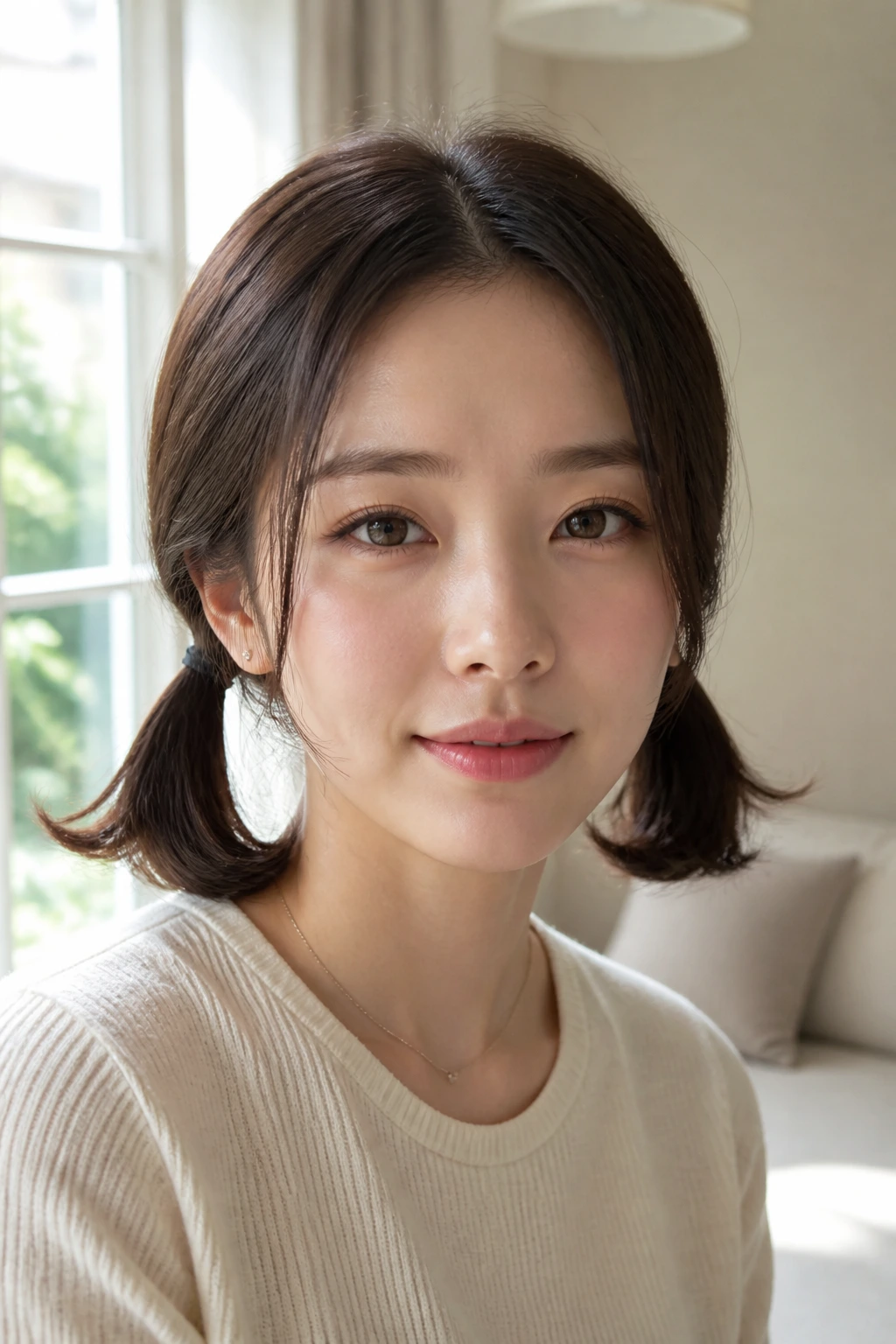
Low pigtails have a reputation they don’t deserve. On thin hair, they can look sweet and modern if the part is clean and the ends are bent instead of left stick-straight. Think soft, not school-uniform.
The reason this works is that two smaller sections often look fuller than one skinny ponytail. Your eyes read balance. A center part, two low elastics, and a slight bend at the ends create a neat shape that doesn’t flatten the head.
Keep the pigtails low enough that they sit near the jawline or nape. If they sit too high, they can look juvenile fast. A satin scrunchie or tiny ribbon at each base keeps the look from feeling bare.
14. Soft S-Waves on Shoulder-Length Hair
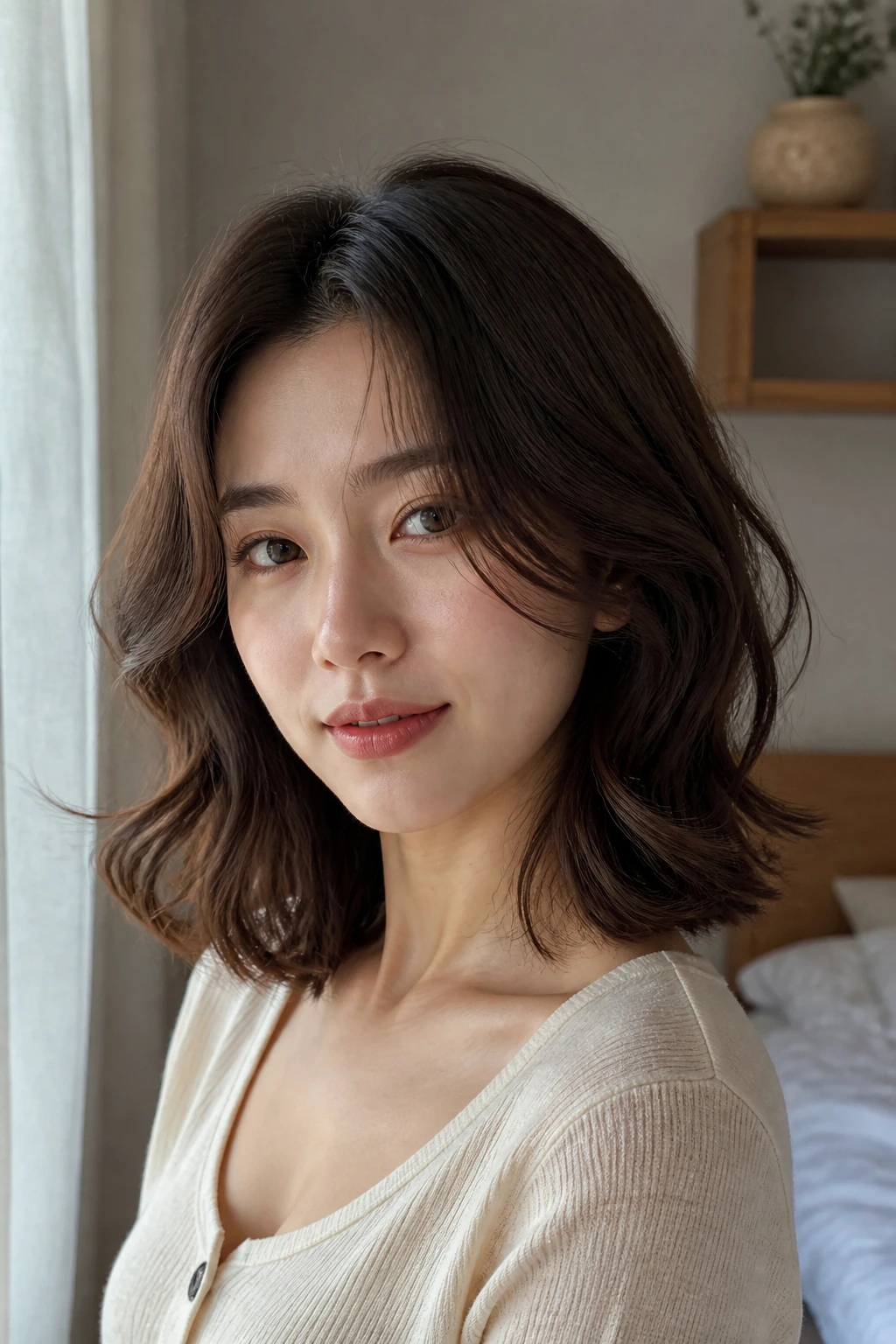
Shoulder-length hair loves S-waves because the wave pattern adds body without swallowing the cut. Instead of curling the whole head into bouncy spirals, create a gentle wave that bends in and out like an S. It’s quieter. Better, too, for thin strands that can get overwhelmed fast.
A 1-inch or 1.25-inch iron is usually enough. Alternate directions on the mid-lengths, then brush the waves lightly once they cool so they loosen into a softer pattern. The roots should stay flatter than the ends. That keeps the style from puffing out in an odd way.
This is a style for people who want movement more than volume. It works well when the hair is freshly blown dry and needs one last pass to feel finished. A few drops of serum on the ends only — not the crown — keep the wave from looking dry.
15. Scarf-Tied Low Chignon
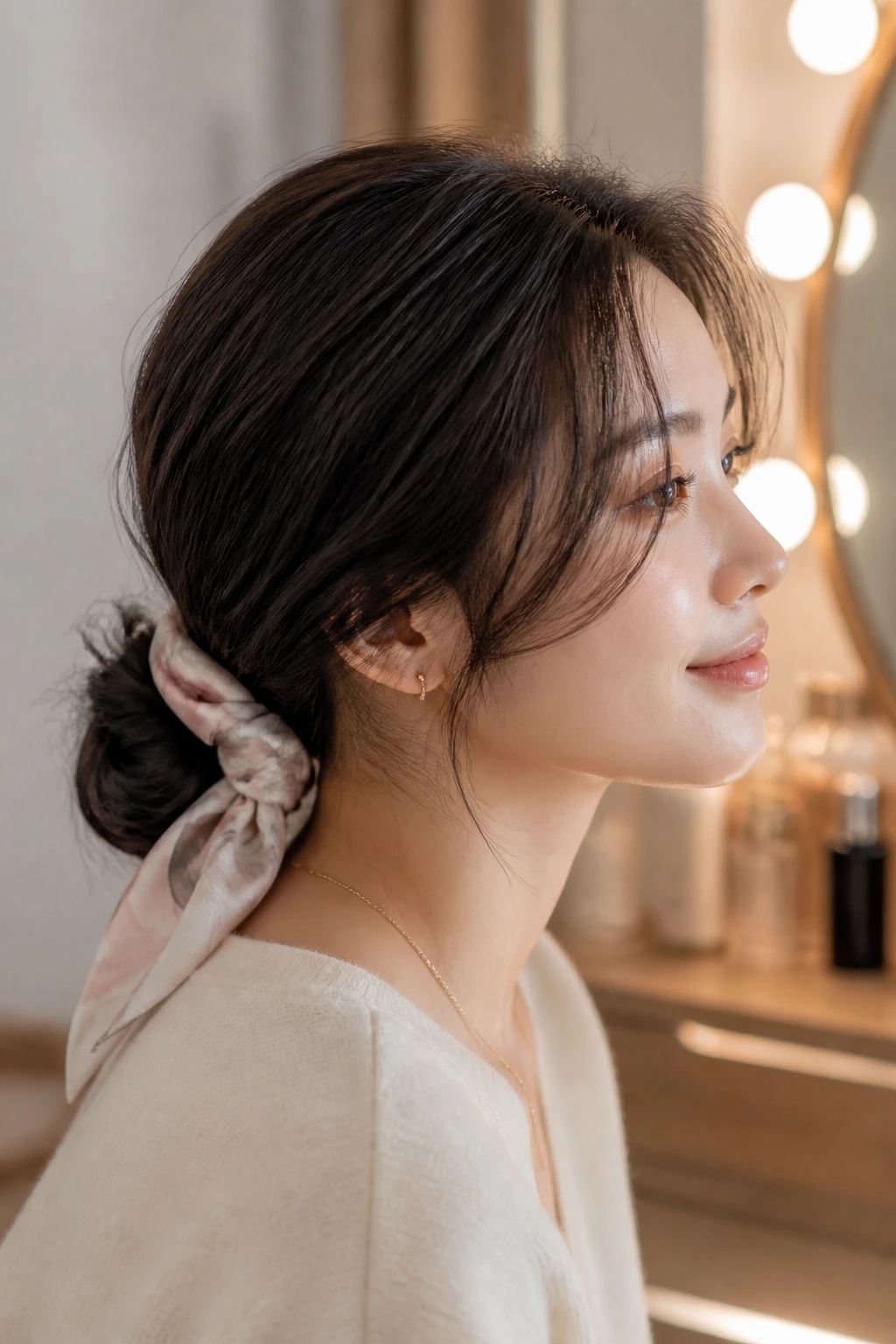
A silk scarf can do something a plain elastic cannot: it makes a small bun feel like a styled choice. On thin hair, that’s useful. The bun itself can stay compact, and the scarf carries the visual weight.
Twist the hair into a low chignon, pin it securely, then tie a narrow scarf around the base or weave it through the knot. Keep the knot small and the scarf soft, not bulky. If the scarf is too thick, it can swallow fine hair. A lightweight square scarf works better than a heavy winter wrap.
This style is handy when the ends are a little frayed or when you want your hair to look dressed up without heat. The scarf hides a lot and adds texture where the bun would otherwise feel tiny. That’s the whole point.
16. Faux Bob with Hidden Pins
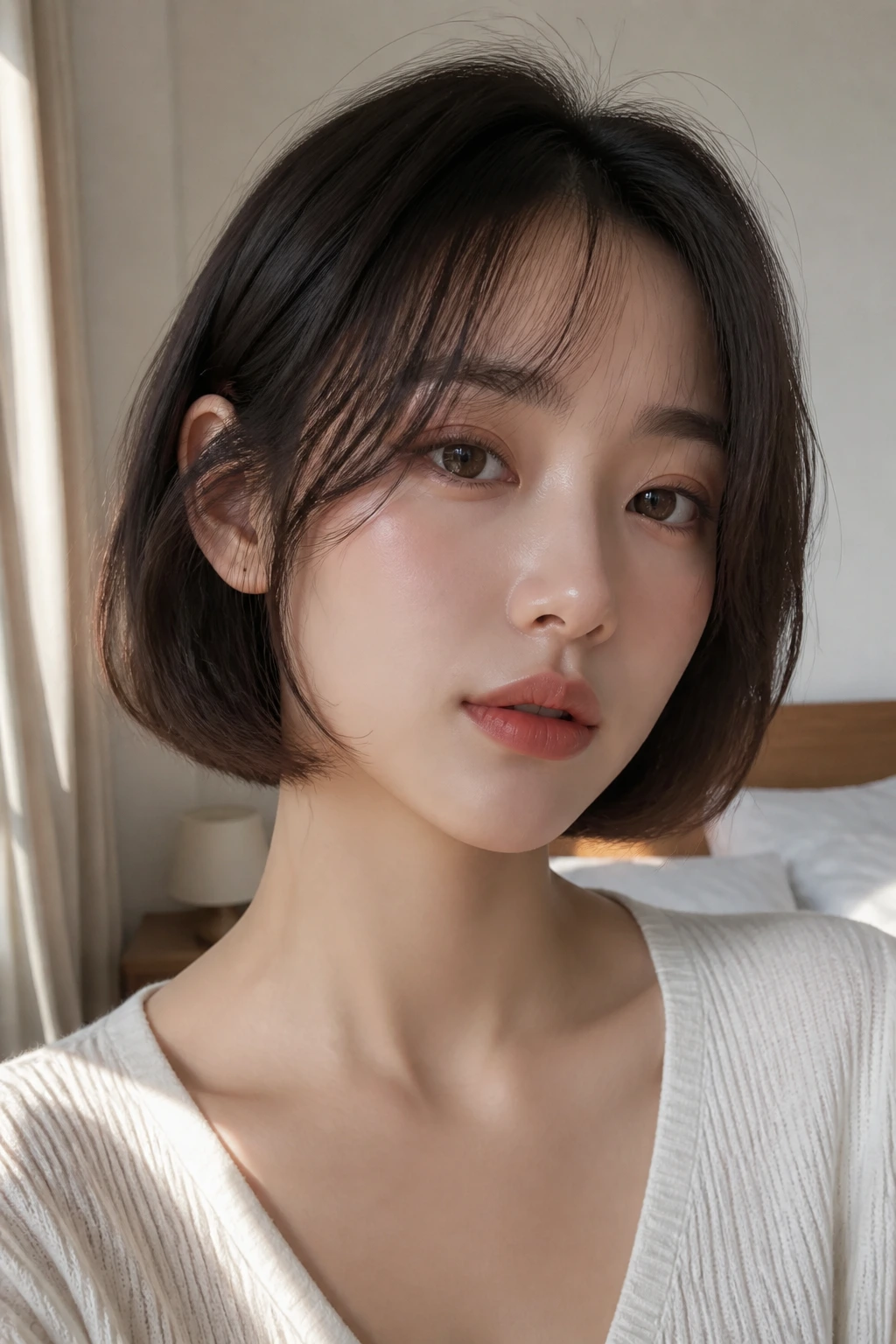
A faux bob is a neat trick for days when you want the softness of shorter hair without cutting anything. You curl or bend the ends under, fold the length up at the nape, and pin it underneath so it looks like a short bob from the front.
Thin hair is a good candidate because there’s less hair to hide. The shape can sit close to the neck, and the hidden pins stay flatter than they would in thicker hair. A light side part helps the style read as deliberate rather than staged.
This one is best when you have at least shoulder-length hair to work with. If the ends poke out, tuck them under a second time and pin from the inside out. A little extra patience there saves the whole look.
17. Double-Clip Half-Up with Curtain Bangs
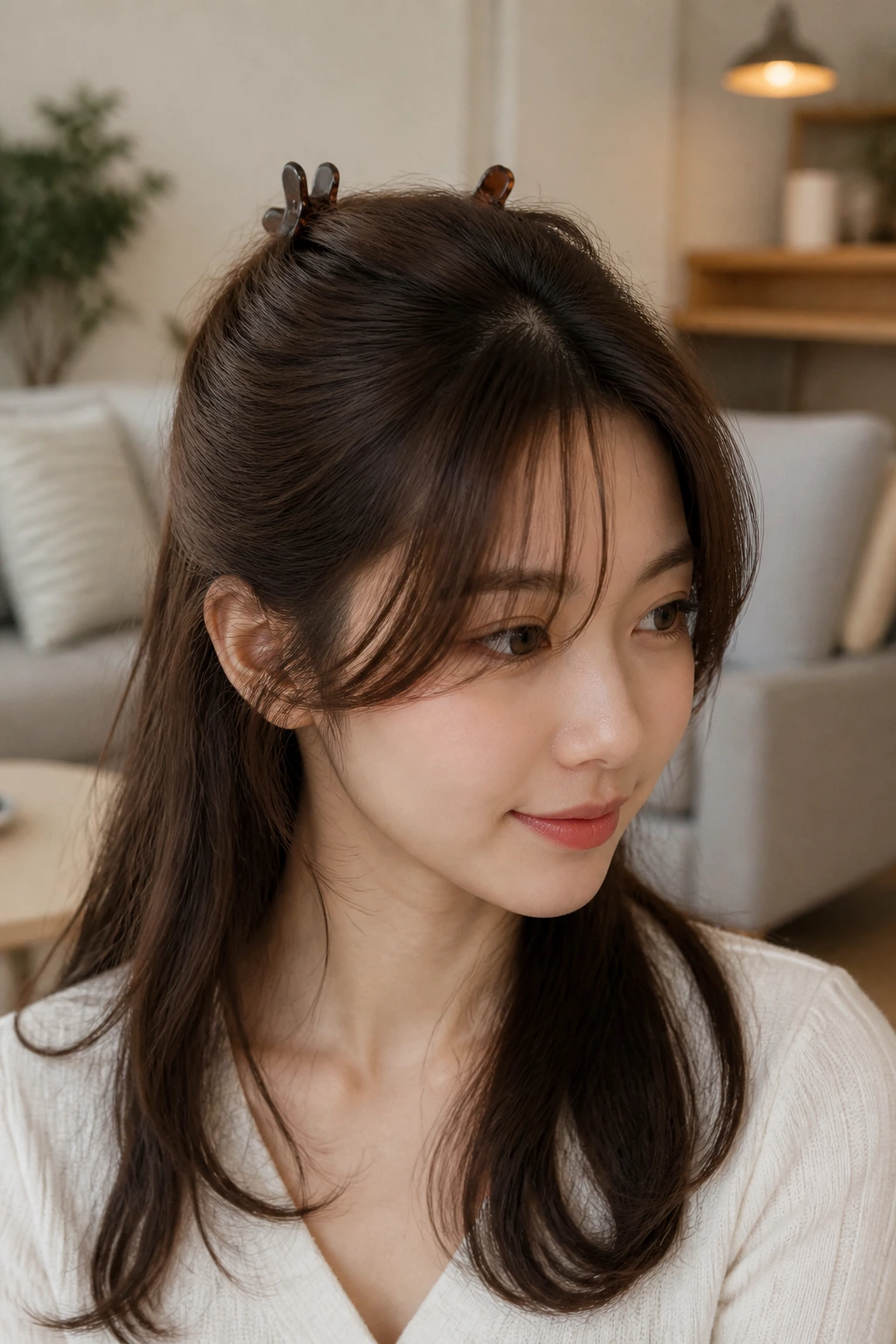
Need something that looks styled with almost no effort? Two small clips at the back of the crown do the job. Pull the top section back gently, clip one side first, then add the second clip beside it. The result is half-up, but less stiff than a single clip.
Curtain bangs make this style especially good on thin hair because they create softness at the front while the clips keep the crown from lying flat. The two-clip setup also spreads the visual weight, which helps fine hair look more balanced.
I prefer matte or resin clips here. They hold better than slippery polished ones, and they don’t fight the softness of the bangs. If your hair is extremely fine, mist the crown with dry shampoo before clipping. One light pass. Enough.
18. Twisted Side Sweep with a Matte Clip
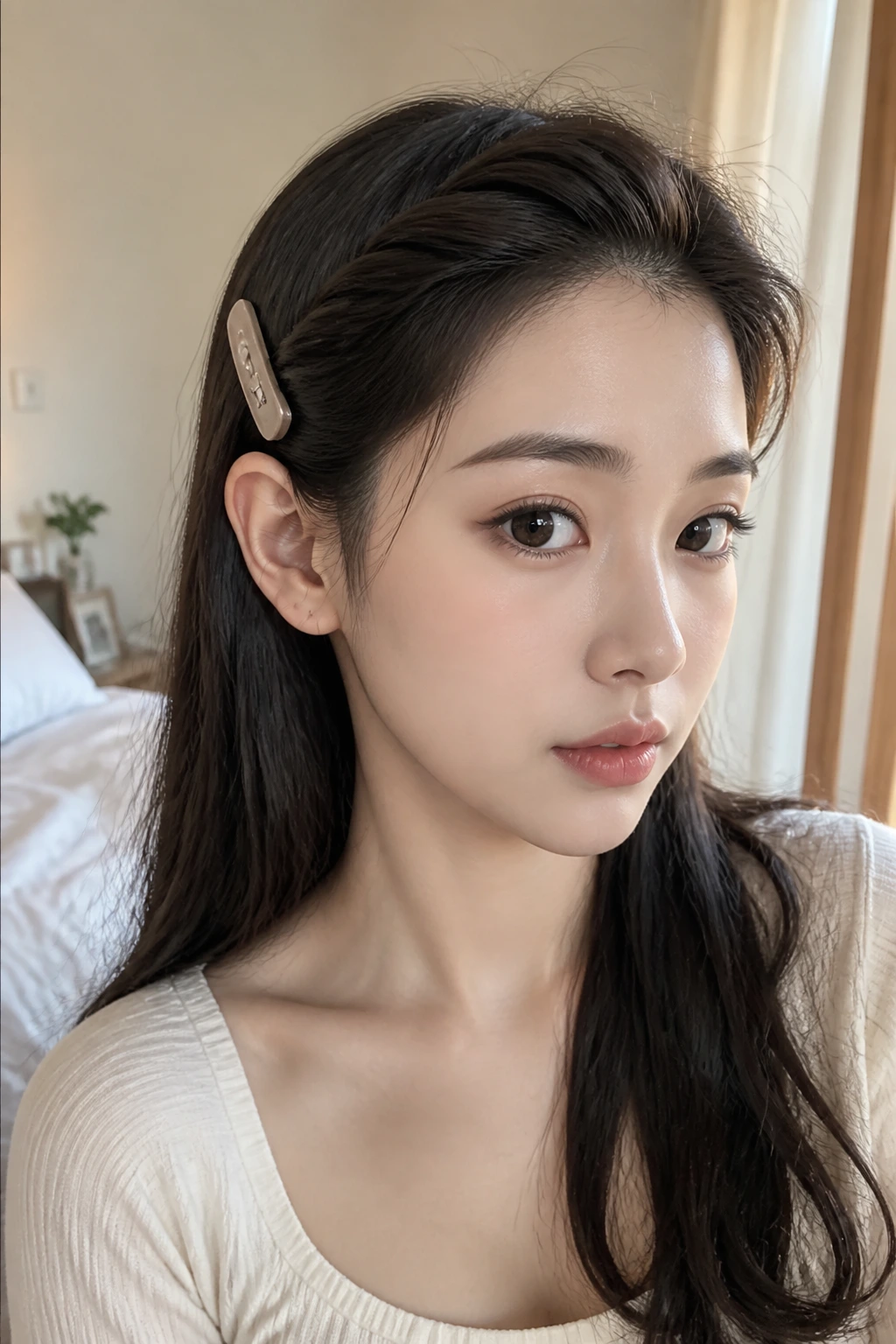
A side sweep is different from a straight-back style in a way that matters for thin hair: it creates a diagonal line. Diagonals feel fuller than straight lines. Your eye reads them as movement.
Twist the front section from one side back toward the opposite ear, then pin or clip it with a matte accessory. Leave the rest of the hair loose or tucked behind the opposite shoulder. That asymmetry keeps the style interesting and gives the illusion of more shape at the front.
This is a good choice when one side of your hair behaves better than the other. We all have that side. It also works well with layered cuts because the shorter front pieces can fall softly around the twist instead of slipping out. A matte clip holds the whole thing together without shouting.
19. Tiny Accent Braids Along the Part
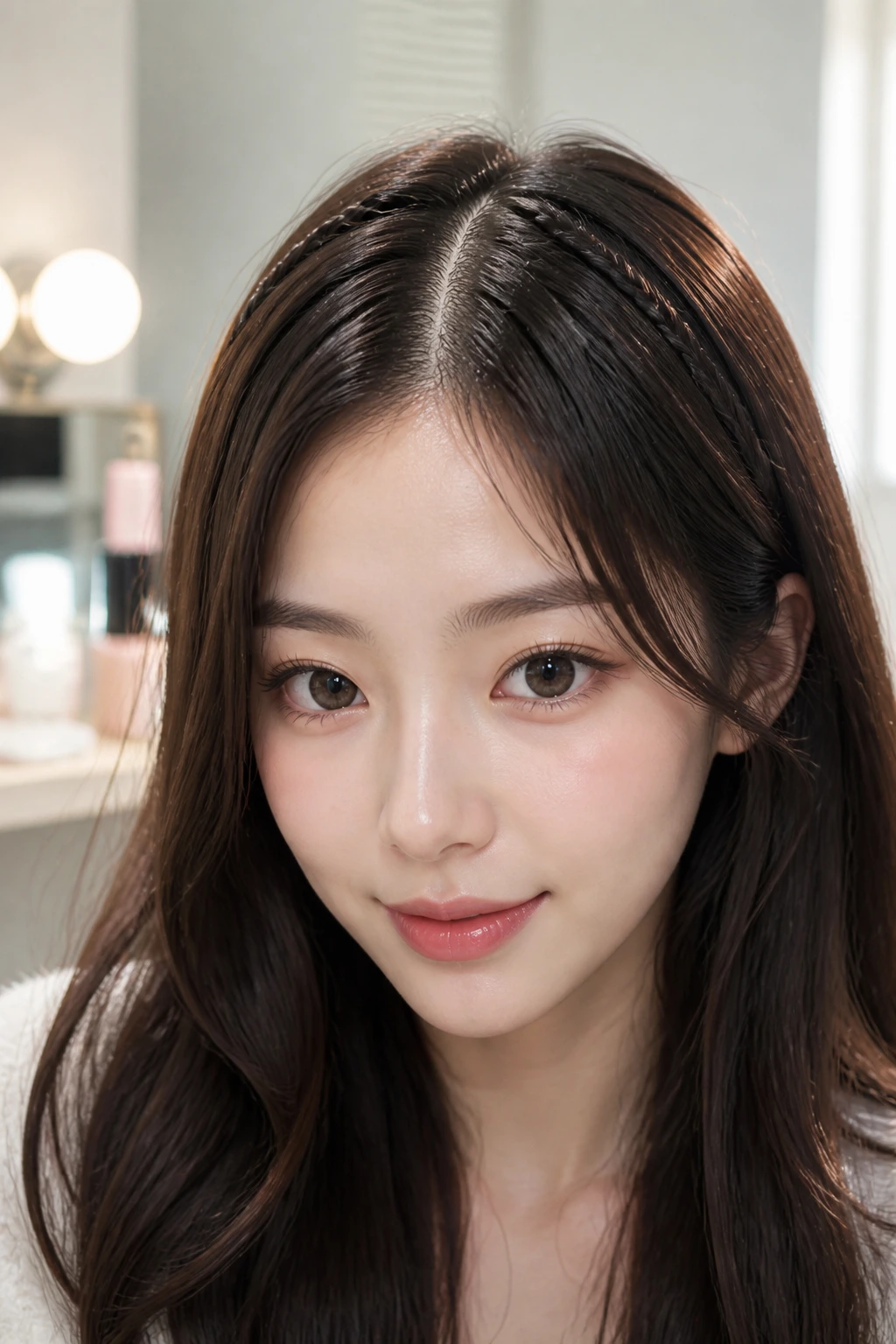
Tiny accent braids are the detail move. They do not replace the hairstyle. They decorate it. On thin hair, that’s a smart use of effort because you can keep the main length loose and still look styled.
Take two narrow sections near the part, braid them tightly, and secure them invisibly under the top layer or leave them visible as a fine line of texture. The rest of the hair can stay straight, bent, or softly waved. That contrast makes the braids stand out more than their size suggests.
This style is quick enough for a weekday and still feels a little playful. If your hair is slippery, use a tiny amount of styling cream on the section before braiding. Tiny amount. Seriously. Too much product and the braid starts to slide apart.
20. Clean Center-Part Ponytail with a Satin Scrunchie
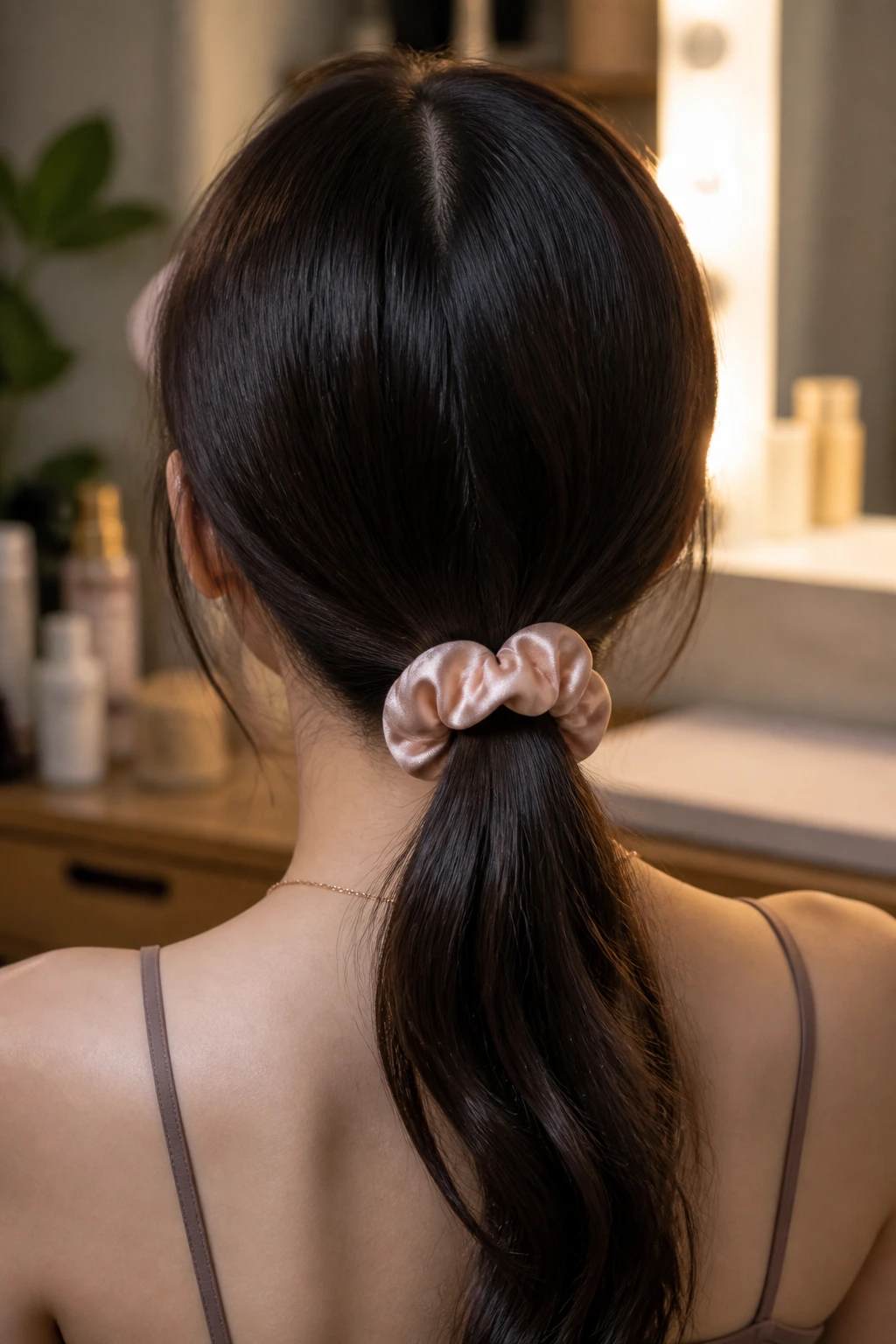
If you’re going to wear a ponytail on thin hair, make the elastic part of the outfit. A satin scrunchie or ribbon turns a plain center-part ponytail into something finished. The center part keeps the front neat, and the soft accessory keeps the base from looking harsh.
Pull the ponytail low or mid-height, depending on your length. Keep the crown smooth but not pulled tight enough to flatten the scalp. Thin hair does not need a wrestling match. It needs a clean line, a secure base, and one visual detail that carries the whole thing.
This is the emergency style that still looks considered when you’re late. It’s fast, reliable, and a lot better than a desperate messy bun that keeps falling apart. If you have five extra seconds, wrap a small strand around the elastic before adding the scrunchie. That tiny move makes the whole ponytail feel more intentional.
Why Shape Beats Bulk on Fine Hair
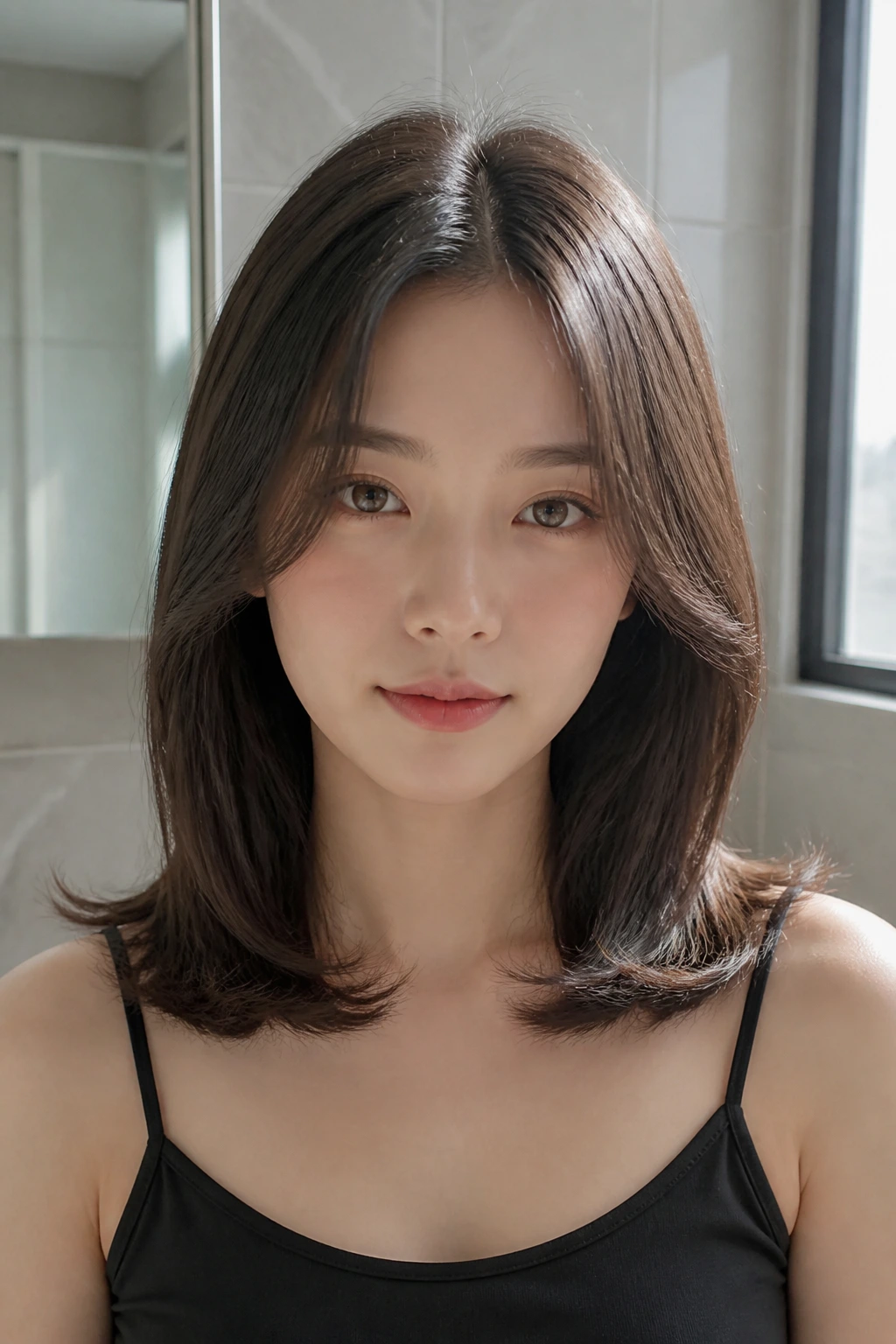
Korean-inspired styling tends to work so well on thin hair because it respects the hair’s natural behavior. It doesn’t ask for giant volume at the crown and a stiff, sprayed-out finish. It asks for line, bend, and a little softness around the face. That is a much kinder deal.
A lot of the best looks use the same quiet logic: keep the roots controlled, let the ends do a small bit of work, and use accessories as part of the structure. A ribbon, clip, or pearl pin is not an afterthought here. It’s the thing that keeps a small amount of hair from reading as “not enough.”
There’s also a practical side. Thin hair often slips, flattens, or shows every rough pin job, so styles with lower tension usually behave better over the day. The result isn’t volume for the sake of volume. It’s a hairstyle that still looks like a hairstyle after a commute, a lunch break, and one bad breeze.
The Tiny Kit That Makes These Styles Faster
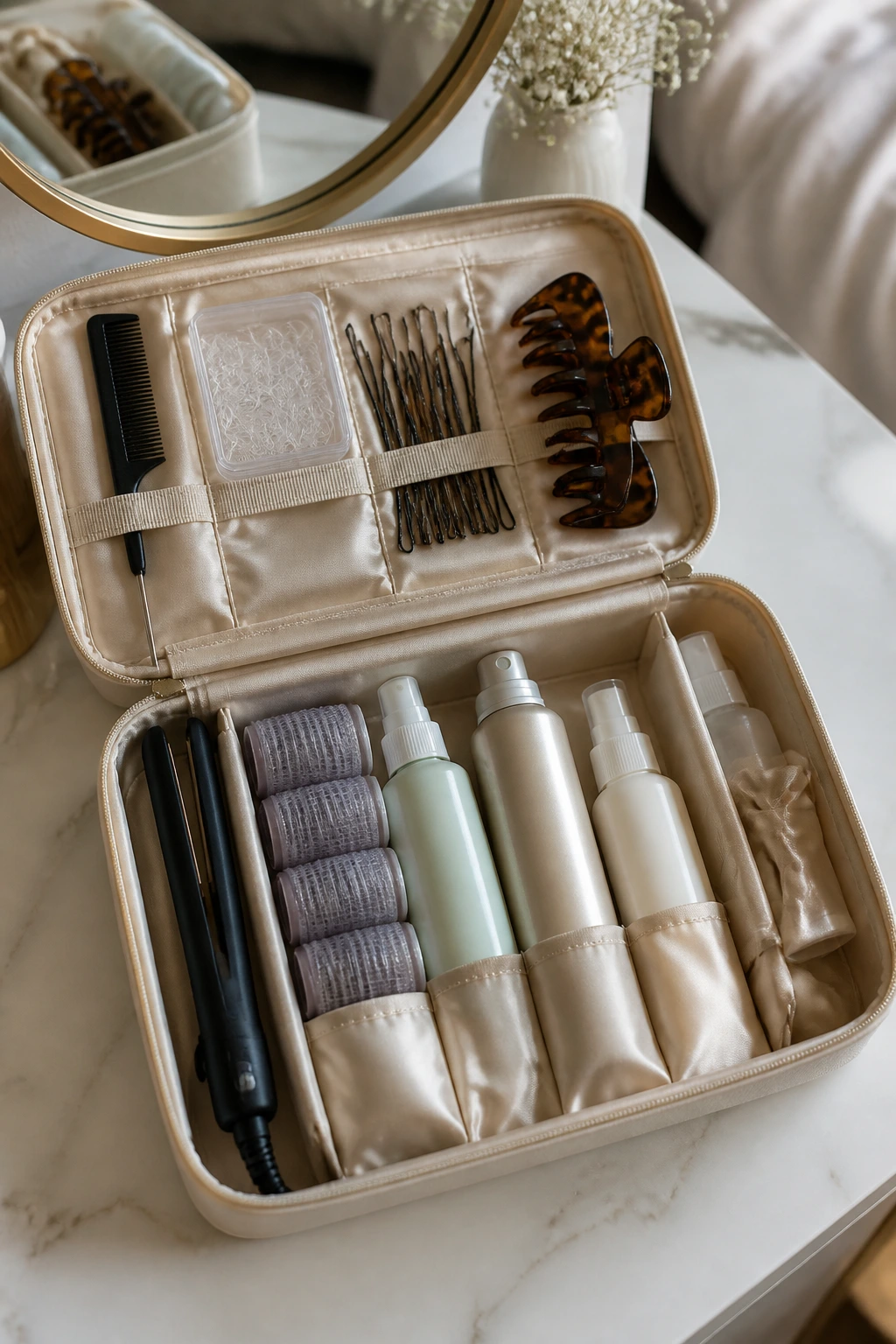
- Rat-tail comb: Useful for clean parts, especially center parts and narrow braids. A sharp part makes thin hair look more deliberate.
- Small clear elastics: Better than thick bands for bubble ponytails, low ponytails, and accent braids because they disappear into fine hair.
- 6 to 10 bobby pins: Choose pins with a little grip on the inside. Slippery pins slide out of fine hair too fast.
- Medium claw clip: The sweet spot for half-up twists. Giant clips often overwhelm thin hair and slip.
- 1-inch curling iron or flat iron: Enough to make C-curls, S-waves, and bent ends without turning the whole head into a curl demo.
- Velcro rollers: Handy for root lift while you get dressed or do makeup. Two or three at the crown can change the whole silhouette.
- Dry shampoo or texture spray: Gives clean hair some grip and saves the styles that would otherwise collapse by midmorning.
- Light-hold hairspray: Enough to keep pieces in place without freezing them into a helmet.
- Satin ribbon or scarf: Useful for low buns, ponytails, and chignons when you want the style to look finished with almost no extra work.
- Heat protectant: Non-negotiable if you’re using a flat iron or curling iron, even on the ends only.
Choosing Products That Help Thin Hair Instead of Dragging It Down
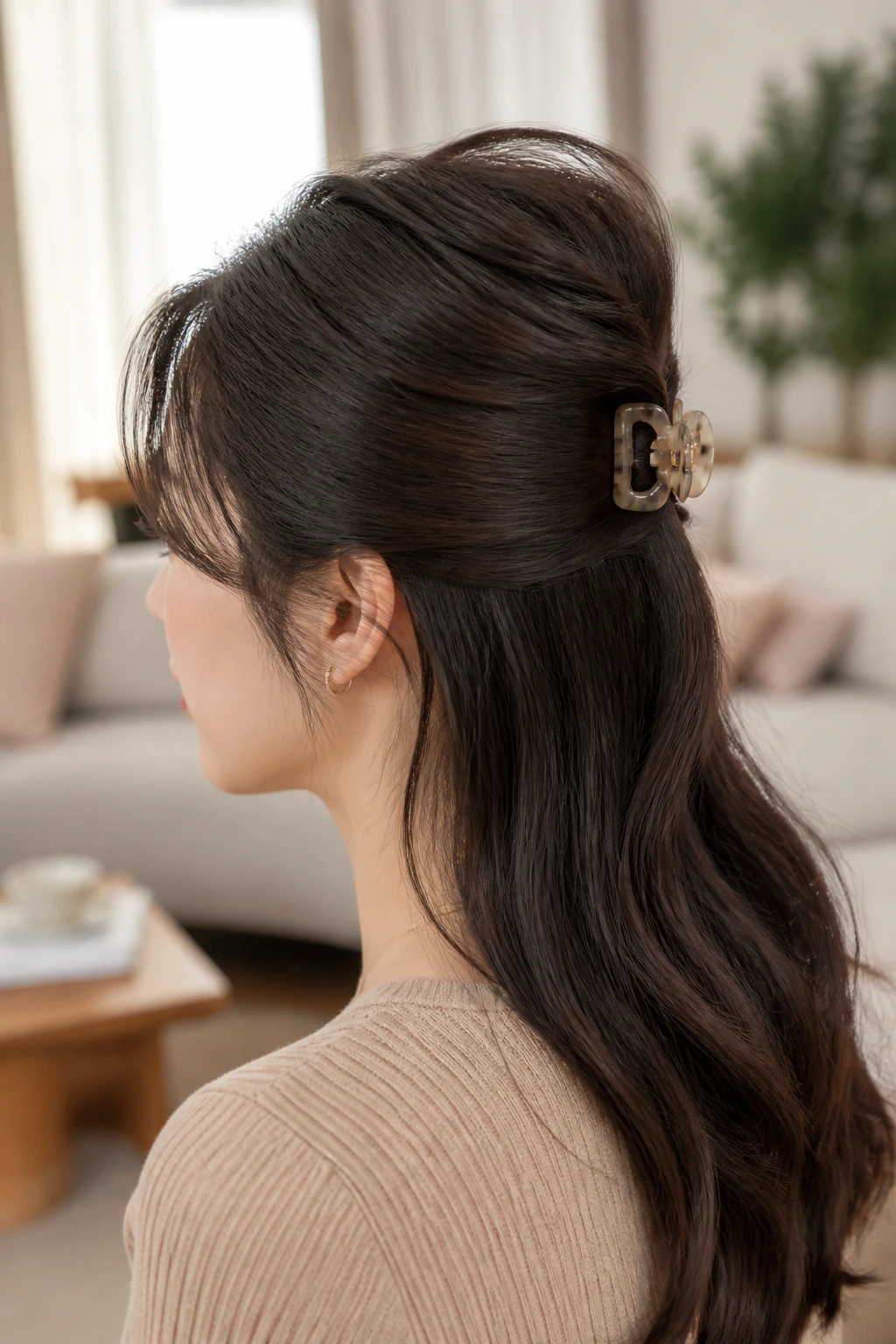
Thin hair usually hates heavy products at the root. Thick creams, rich oils, and dense masks can make it collapse before you finish brushing. Start with lighter formulas: mousse at the roots, a featherweight leave-in from mid-length to ends, and a dry texture spray when you need grip.
If you only buy one styling product, make it a light texture spray or a root-lift spray. It gives pins and elastics something to hold onto without making the hair feel sticky. That small difference matters on clean hair, which can be too slippery for half-up styles and braid details.
The cut matters too. Long layers, soft face-framing pieces, and curtain bangs make almost every style in this collection easier. A blunt cut can look sleek, but on very thin hair it sometimes behaves like a flat sheet. If that sounds familiar, a few softer layers around the face usually help.
Skip heavy silicone serum near the crown. Use it only on dry ends if the hair feels rough. And if your roots get oily fast, try a lightweight volumizing shampoo rather than a rich moisturizing formula that leaves residue behind.
How to Wear These Looks With Glasses, Collars, and Earrings
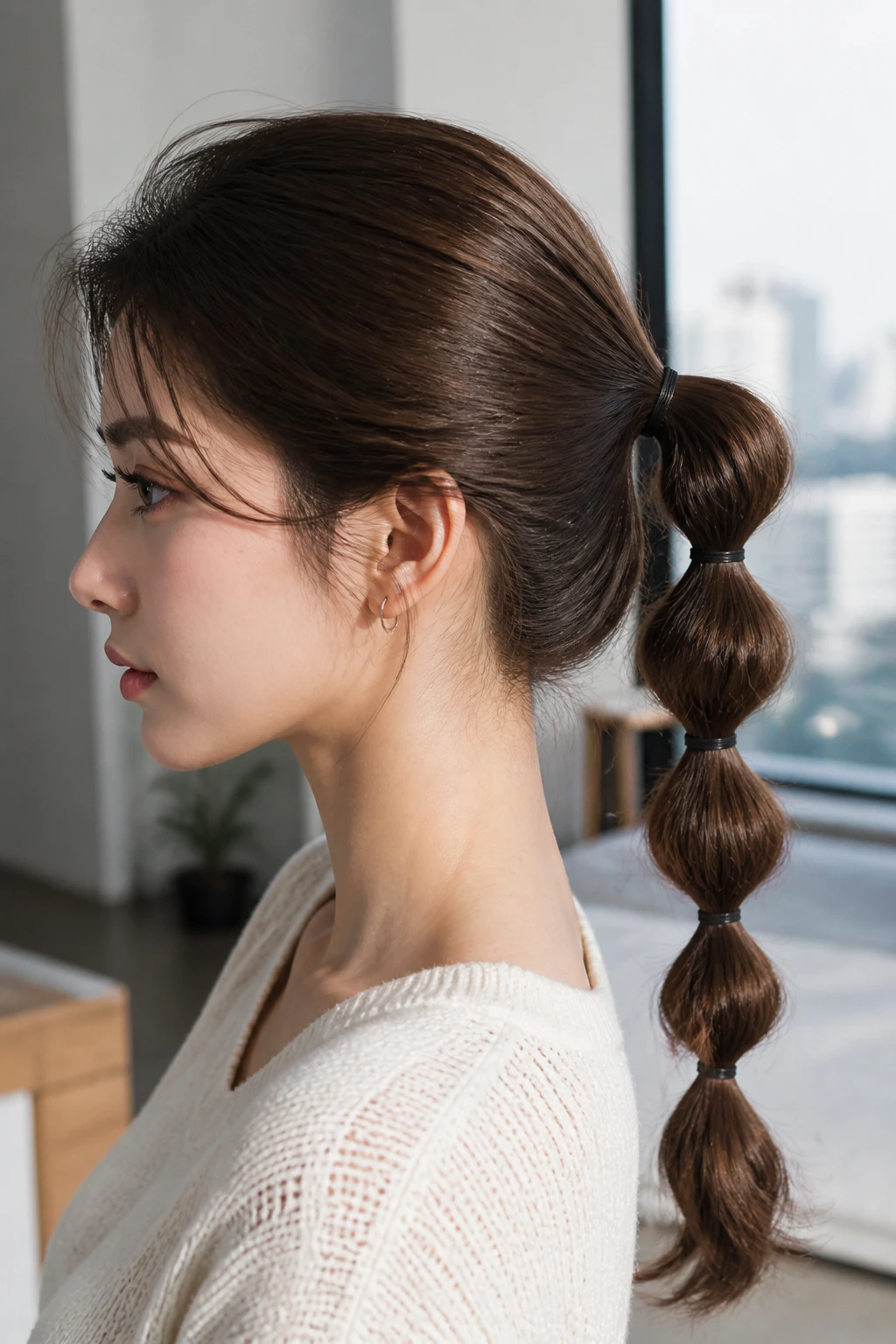
Frame: Keep one or two face-framing pieces loose if your features need softness. Thin hair can look stronger when the front has a small curve instead of being pulled straight back.
Add-Ons: Pearl pins, matte clips, ribbons, and satin scrunchies all change the mood fast. Small hoops and studs tend to work well with low buns and side tucks; chunkier earrings can fight with a very detailed braid or scarf.
Length: Bobs and lobs usually look best with side tucks, half-up clips, faux bobs, and C-curl ends. Longer thin hair can handle bubble ponytails, low chignons, and wrapped ponytails without losing its shape.
Weather: Wind likes loose tendrils. Humidity likes to puff the crown. If the day looks damp or blustery, keep the top smooth, use a little more grip spray, and let the ends keep the movement. The style stays cleaner that way.
Small Fixes That Add Lift Without Teasing
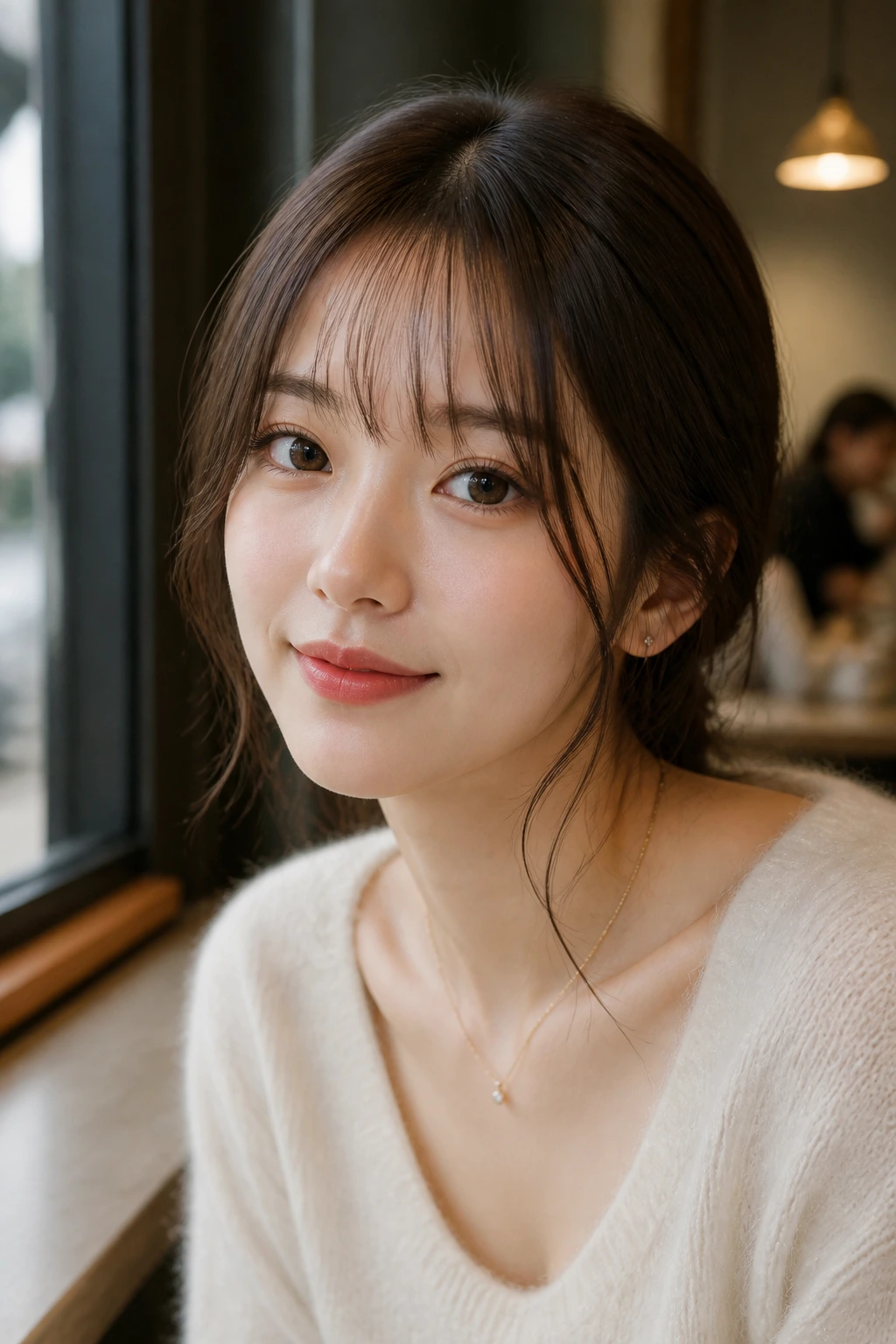
Root Lift: Clip the crown sections up for 5 to 10 minutes while you do something else. That tiny break from gravity can help thin hair keep a little bend at the top.
Texture Boost: Dry shampoo works best on roots that are already clean or nearly clean. Put it in early, not after the hair has gone limp. Texture spray is stronger if you mist from underneath the section.
Time Saver: Prep your part, clips, and elastics the night before. That sounds small. It isn’t. Five seconds saved in three different places feels bigger than one dramatic shortcut.
Accessory Trick: Choose a matte clip or soft ribbon when the hair is slippery. Choose a smooth pearl pin or satin scrunchie when the hair is already holding. The accessory should answer the problem, not repeat it.
Humidity Fix: Bend the ends, don’t overcurl them. Thin hair frizzes out faster when it’s given too much shape to defend. A softer finish usually survives better.
Mistakes That Flatten Thin Hair Fast
- Starting with too much conditioner near the scalp: Hair looks shiny in the shower, then flat and slippery by the time you style it. Keep rich conditioner from the roots and use only a small amount on the ends.
- Pulling everything too tight: A tight ponytail or bun can make the crown look smaller and the ends look thinner. Leave a little air in the shape.
- Using giant accessories for tiny amounts of hair: Oversized clips and scrunchies can swallow fine hair. Medium or small versions usually sit better.
- Adding oil too early: Serum at the roots is a fast route to collapse. Save it for dry ends, and use only a drop or two.
- Skipping texture on clean hair: Freshly washed hair can be too slick to hold pins, braids, or twists. Dry shampoo or texture spray gives it the grip it needs.
- Forcing the same style on every length: A bob doesn’t behave like long layers, and a lob doesn’t behave like waist-length hair. Adjust the placement instead of pretending the hair is something else.
Easy Variations and Adaptations to Try
The Office-Quiet Version: Swap shiny accessories for matte clips, plain elastics, and smaller buns. The shapes stay the same, but the finish reads more restrained and work-friendly.
The No-Heat Version: Use overnight braids, Velcro rollers, or a twist-and-dry method instead of irons. The next morning, loosen the hair with fingers and finish with dry shampoo at the roots.
The Bob-Friendly Version: Focus on side tucks, double clips, faux bobs, and C-curl ends. Shorter hair rarely needs the full ponytail or bun treatment to look styled.
The Humidity-Proof Version: Use mousse at the root, a light texturizer through the mid-lengths, and a stronger hold spray only where pins and clips sit. Keep the top smoother and the ends softer.
The Soft-Dressy Version: Add a ribbon, pearl pin, or silk scarf to one of the low styles. One accessory is enough. More than that starts to feel crowded on thin hair.
Keeping the Style Fresh Between Washes
Thin hair often behaves better on day two or day three, once the roots have a little natural oil and the strands have some grip. That’s why many of these styles are so easy to repeat. You do not need a full reset every morning.
If the crown has gone flat, use dry shampoo at the roots and wait a minute before brushing. That pause matters. It gives the powder time to absorb instead of disappearing into the hair. Then lift the roots with your fingers, not a hard brush.
At night, a loose braid, low bun, or silk scrunchie can keep the length from tangling. A satin pillowcase helps too. It reduces the friction that roughs up fine hair and makes the morning re-style harder than it needs to be.
If you use a lot of product, wash sooner rather than later. Product build-up on thin hair shows fast. Once the hair feels coated or the roots stop taking shape, the style fight gets harder. A clean restart is often the smarter move.
Questions People Ask Before Trying These Looks
Can thin hair really hold Korean-style waves and clips?
Yes, as long as you use the right amount of product and the right size accessory. Thin hair usually needs a little texture at the root and a medium clip or small elastic, not oversized hardware.
What’s the best style if my hair is flat by lunch?
A low ribbon bun, side tuck, or half-up claw clip twist usually holds up well because they rely on placement more than lift. If your roots collapse easily, start with dry shampoo or a root-lift spray.
Do I need bangs to pull off these looks?
No. Curtain bangs and see-through bangs help, but they are not required. Face-framing pieces or a soft side part can do the same job if your cut is longer or more layered.
How do I keep pins from slipping out?
Use them on slightly dirty hair, mist them with texture spray, and slide them in with the wavy side facing the scalp. If the hair is very fine and slippery, cross two pins in an X.
Are these styles safe for damaged hair?
Most of them are. The heatless options — ribbons, clips, braids, scarves, low buns — are the gentlest. If you do use heat, keep it on the ends or the front pieces only and always use heat protectant.
Will these work on shoulder-length hair?
Absolutely. Shoulder-length hair is one of the best lengths for C-curls, half-up knots, side tucks, faux bobs, and soft S-waves. You may need a few extra pins, but the shape holds well.
What if my hair is both thin and very silky?
Choose styles that build grip first: bubble ponytails, braids, root-lift rollers, and clipped half-up looks. Silky hair slides, so texture spray and a medium-hold product matter more than they do on rougher hair.
Can I do these without curling my hair every morning?
Yes. Many of the styles depend more on shape than curl. A clean part, a well-placed clip, and a bent end are often enough.
The Styles That Save the First Ten Minutes
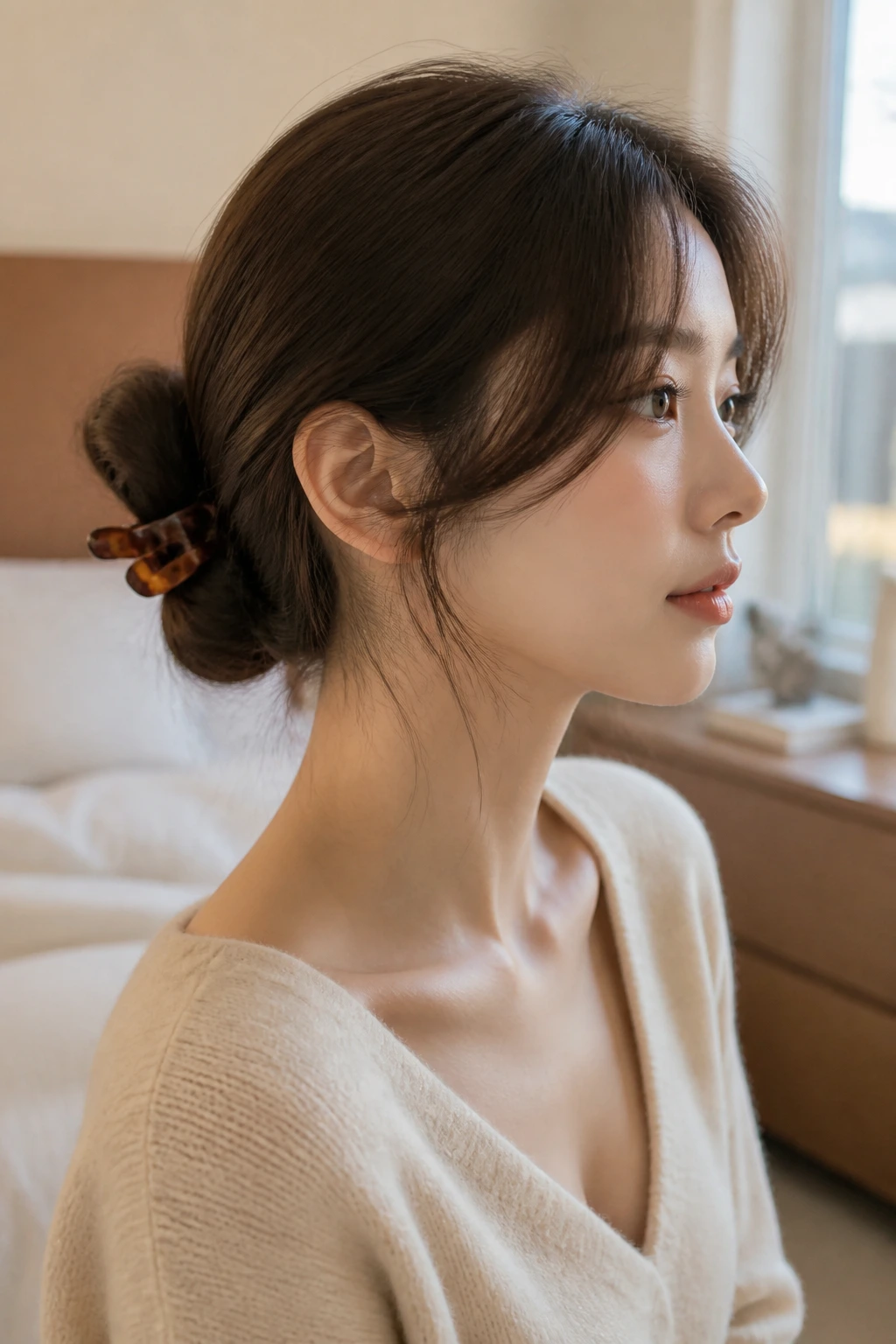
The nicest thing about Korean-inspired styling on thin hair is how calm it feels. No wrestling. No trying to force volume into places where your hair would rather not go. Just a few good decisions: a low placement, a soft bend, one ribbon, one clip, one braid where it actually helps.
That’s the part I keep coming back to. Thin hair looks best when you stop asking it to be thick and start letting it be precise. The result is cleaner, faster, and easier to live with before coffee.
Pick one style and repeat it until your hands know the moves. That’s where the real shortcut lives.