



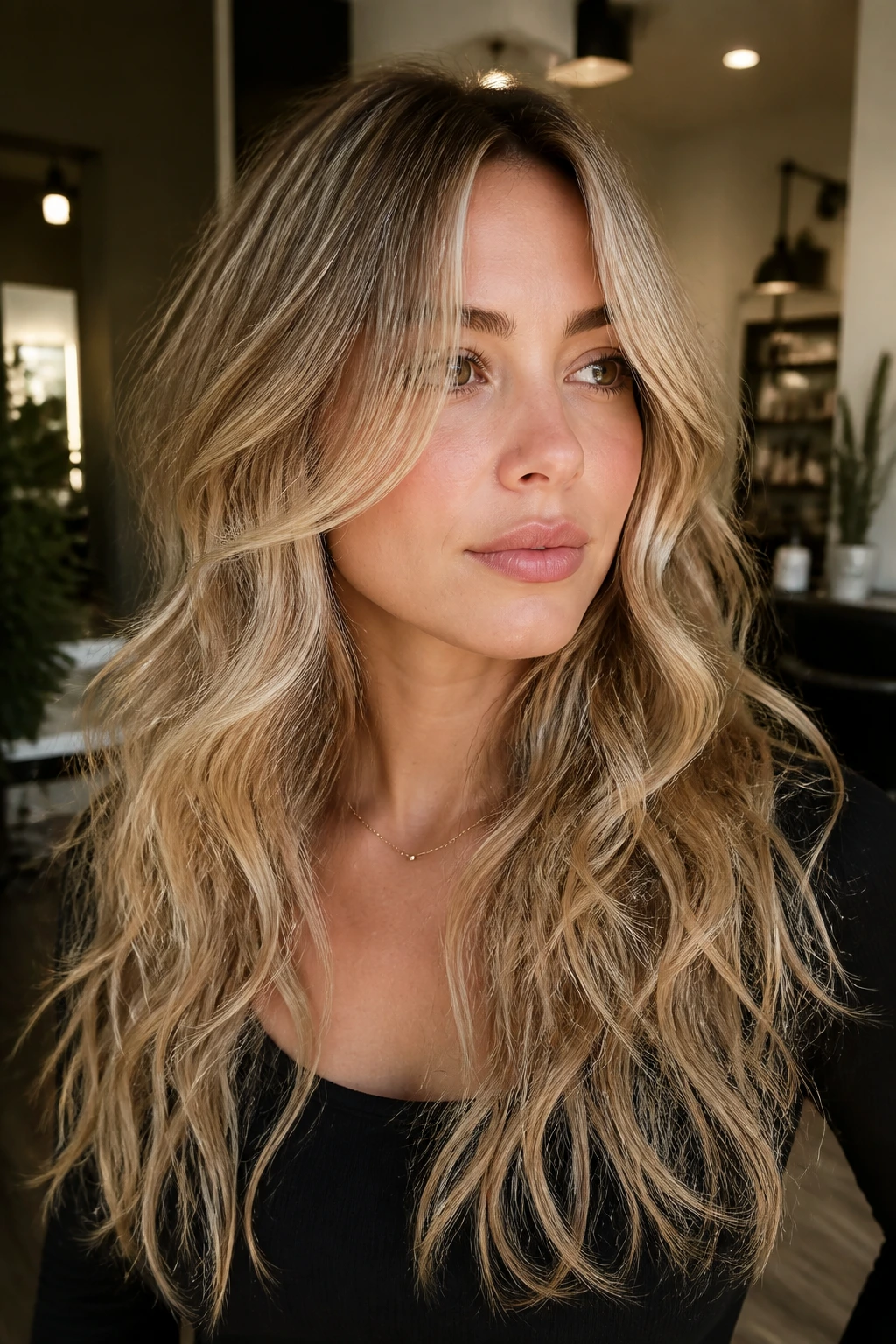
Fine hair can do beachy waves, but not every layered cut deserves the job. The wrong shape chews through the ends and leaves you with a pretty curl pattern at the front and a limp, see-through back half an hour later. The right one keeps enough length to hold a bend, enough shape to make the hair look thicker, and enough softness around the face that you don’t feel like you’re wearing a helmet of layers.
That’s the whole trick here. With fine strands, the cut matters more than the tool. A 1¼-inch iron can help, sure, but if the perimeter is too shredded or the layers start too high, the waves collapse fast and the hair starts to look airy in the wrong places. I’m much more interested in the cuts that leave a solid outline, then build movement where the eye actually wants it: cheekbones, collarbone, and the soft frame around the jaw.
Beachy waves also ask for a bit of judgment. Not tight spirals. Not mermaid-ringlet perfection. The best versions look like you slept in them once and then did the tiniest bit of correction in the mirror. That means the haircut has to work with the bend, the brush-out, and the fact that fine hair loses enthusiasm if you pile on too many layers too early.
Why These Cuts Work So Well on Fine Hair
-
They keep the outline full: The perimeter stays strong, so the hair doesn’t vanish at the ends after one pass with a curling iron.
-
They add movement where it shows most: Long layers around the face and mid-lengths create shape without sacrificing the heavier bottom line.
-
They make waves hold their shape longer: Fine hair usually needs a little structure in the cut, not more product, to keep beachy bends from dropping flat.
-
They grow out better than blunt over-thinning: The best versions still look like a haircut six weeks later, not a grow-out emergency.
-
They work with air-drying and heat styling: A smart layered shape gives you options, which matters on days when you want texture without a full styling session.
-
They flatter a middle part and a side part: Some cuts lean one way, but the better long layers can move between both without losing the face frame.
The Shape Fine Hair Wants Before the Waves Go In
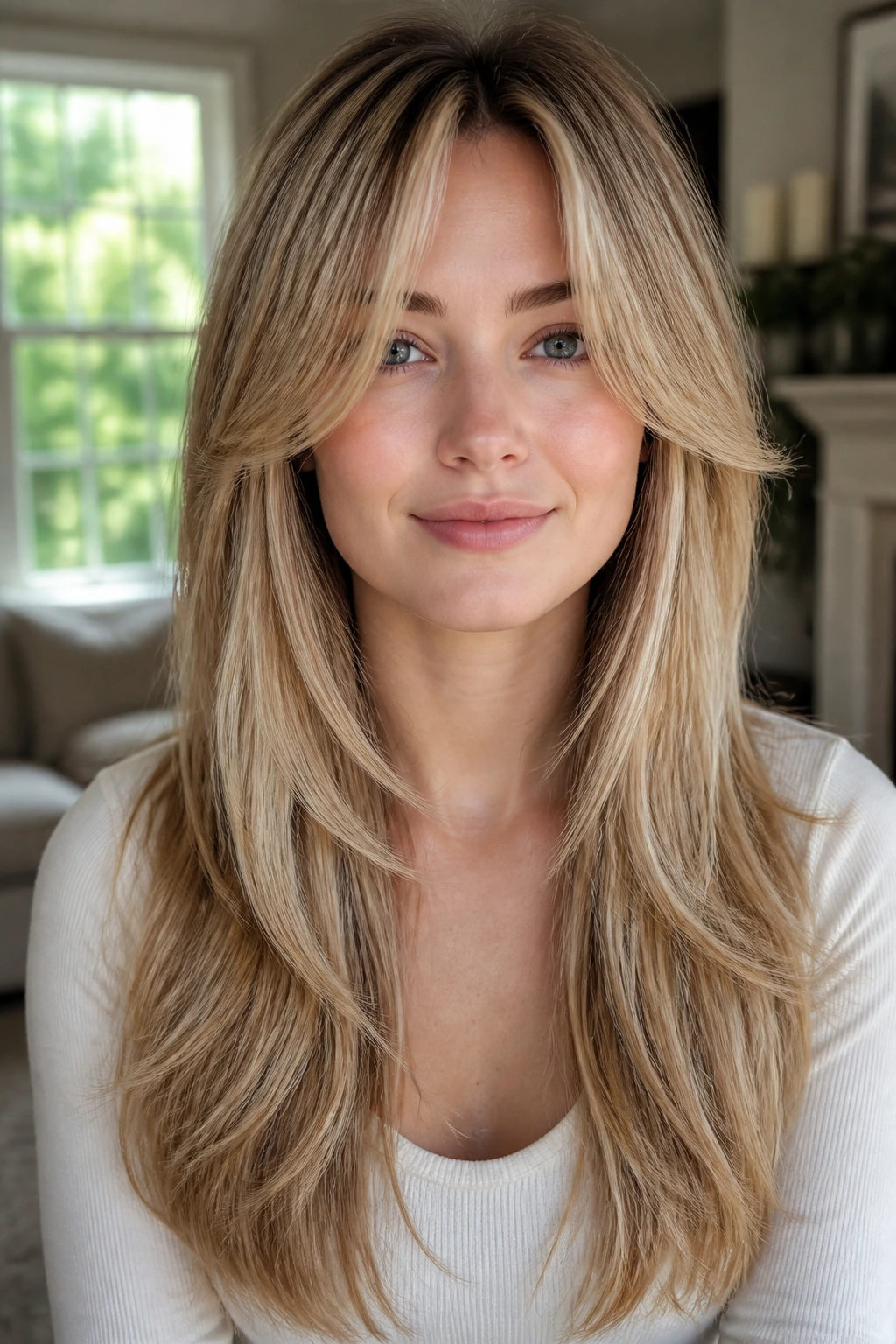
Fine hair has a strange little personality. It can look sleek and expensive in a straight line, then go flat the second you ask it for volume in the wrong place. That’s why the best layered long haircuts for fine hair with beachy waves don’t start with the idea of “more layers.” They start with where the layers live.
If the hair is very fine but dense, you can usually handle a bit more internal movement. If it’s fine and sparse, you need to be more careful with the top half and keep more weight at the ends. Those two situations get treated like they’re the same in bad salon consultations. They’re not.
What to protect
Keep the bottom outline honest. A blunt-ish line, even if it’s softly textured, makes the whole head of hair look thicker from the back and gives the waves something to sit on.
What to soften
Focus softness around the cheekbones, chin, and collarbone. That’s where the eye reads shape first. A few well-placed face-framing layers beat a dozen random short pieces every time.
What to avoid
Too much thinning at the ends. Too much elevation at the crown. Too much “piecey” texture before the hair has enough body to carry it. That’s how fine hair ends up looking patchy instead of light.
1. Soft Long Layers with a Center Part
This is the safest place to start, and I mean that in the best way. Soft long layers keep the length intact, which matters when the hair is fine enough to go wispy if you get greedy with the scissors. The center part lets the waves fall in mirrored bends that look clean, not overworked.
The cut works because the shortest pieces don’t live too high on the head. They sit low enough to add lift at the mid-lengths without stripping the ends bare. When you curl this shape, the waves land in those long, smooth arcs that brush out well with your fingers or a wide-tooth comb.
If you want one cut that can live through a casual air-dry and still look decent with a curling iron, this is it. Ask for layers that begin below the cheekbone and keep the bottom line softly blunt. That’s the part people skip. Then they wonder why the whole style feels thin.
2. Butterfly Layers That Float Around the Face
Does your hair need volume up top without losing its long length? Butterfly layers are the answer when fine hair wants a bit of lift but not a full chop. The trick is the contrast: shorter face-framing pieces that break away from the rest of the length, with long layers hanging underneath.
That separation gives the illusion of fullness because the eye sees two layers of movement at once. The front pieces catch the wave pattern first, so the style looks alive even when the back is behaving itself. It’s a clever cut, honestly. Slightly theatrical, but not fussy.
Best for
- Hair that sits flat at the crown
- Middle parts that need a little more shape
- People who like their waves to start around the cheekbones
Ask for this
Tell your stylist you want the shortest pieces to skim the cheekbone and blend into a long perimeter. If they start those pieces too high, the cut turns choppy. Keep the ends weighted.
3. Curtain Bangs with Cascading Lengths
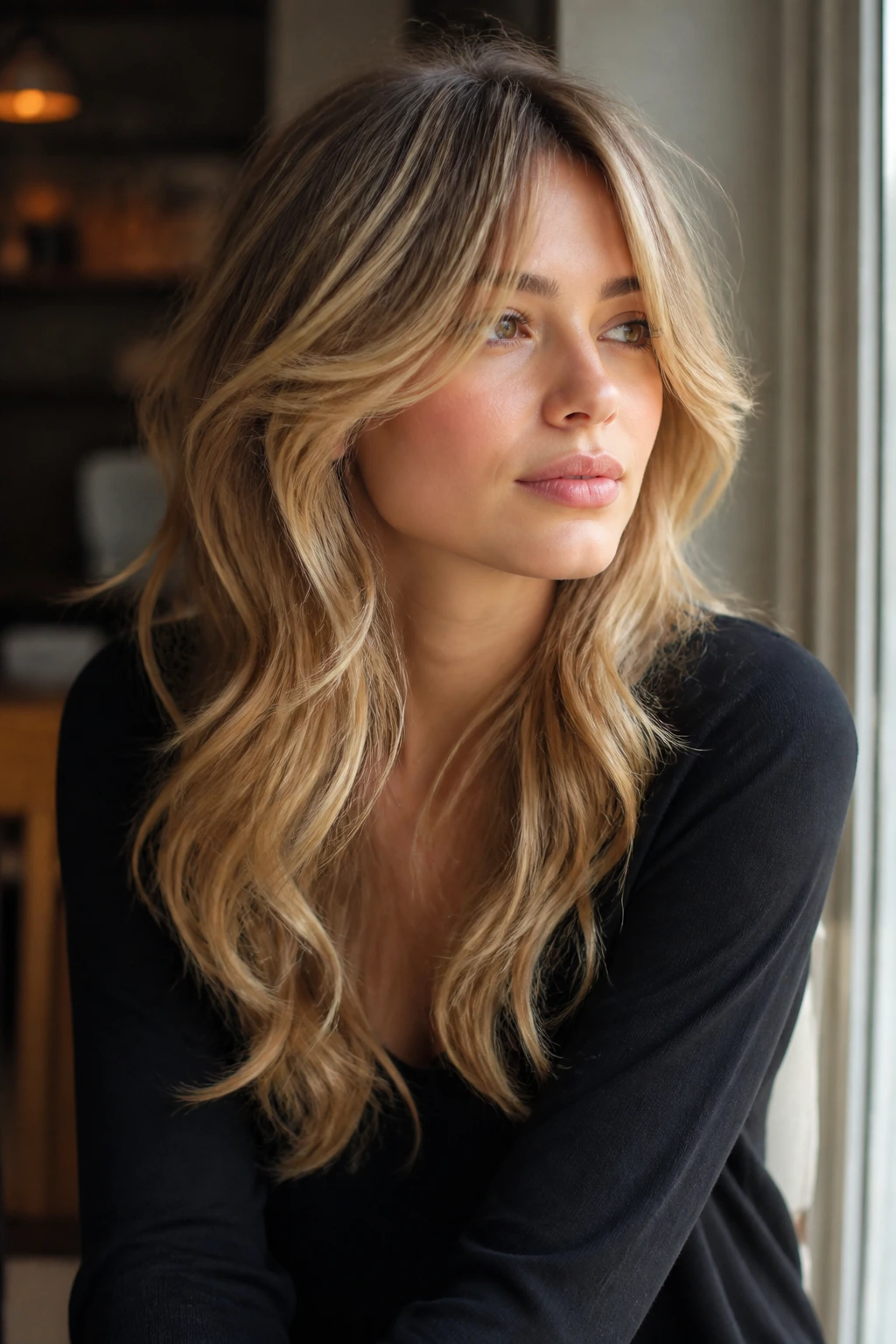
Curtain bangs are the move when you want face-framing layers that do real work without looking like obvious bangs. On fine hair, they’re useful because they create a soft curtain of movement at the front and keep the eye from going straight to the ends.
Here’s the thing: curtain bangs look best when they aren’t too short or too polished. Let them land around the cheekbone or just below it, then let the longer layers behind them fall naturally. That overlap is what makes the cut feel full. Without it, you just have two lonely front pieces and the rest of the hair doing its own thing.
I like this shape on hair that gets beachy waves because the front curve helps hide the fact that the waves are looser than a curl. You can bend the bangs away from the face, give the ends a slight turn inward, and stop there. That’s enough. Anything more starts to read as too styled for the cut.
4. U-Shaped Layers That Keep the Ends Full
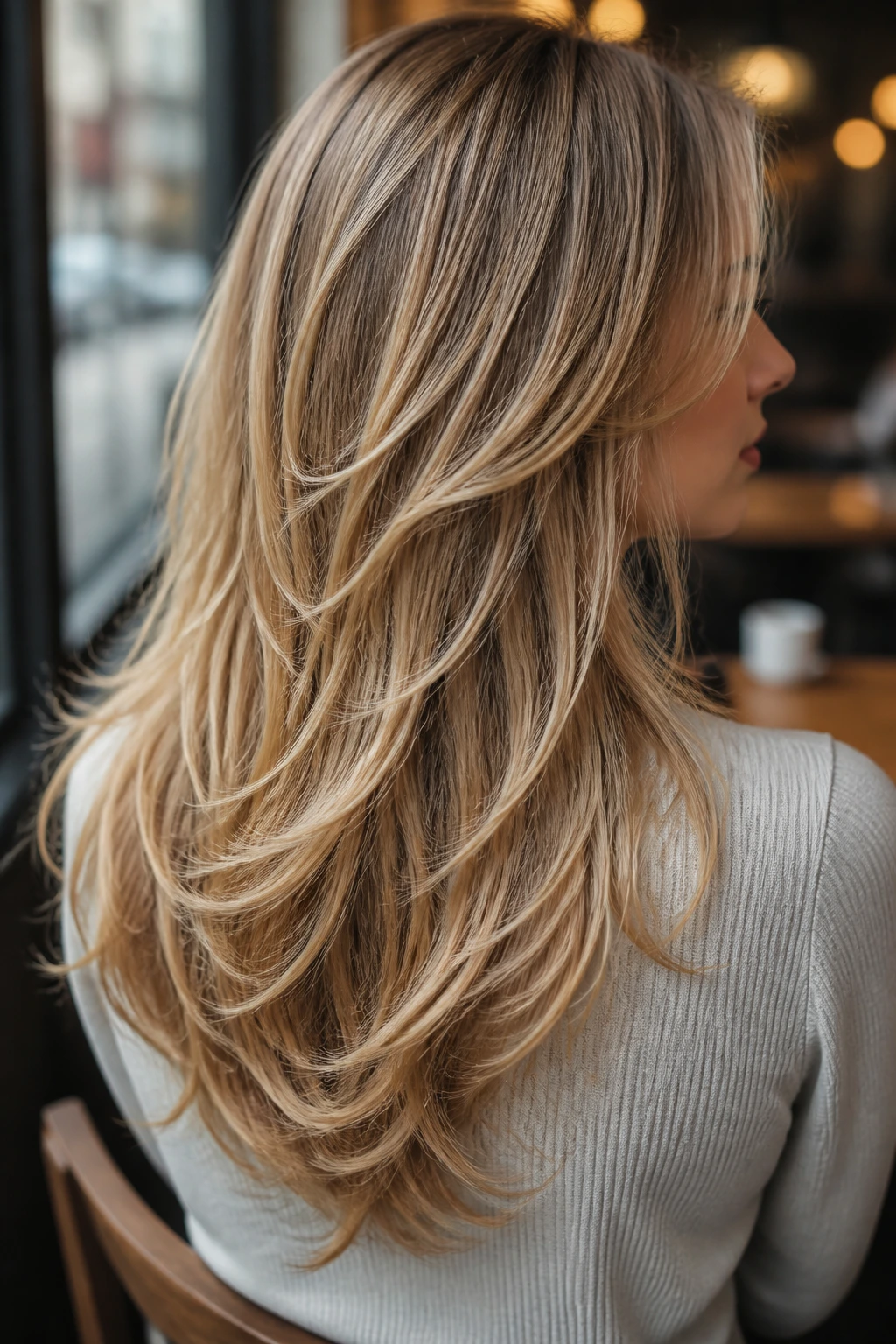
A U-shaped cut is one of those quietly smart shapes that doesn’t get enough credit. From the back, the hair falls in a soft arc instead of a hard line, which makes the length feel richer and less blunt. On fine hair, that soft curve can be the difference between “nice hair” and “why does the bottom look see-through?”
The reason it works is simple: the center back stays a little longer, and the sides taper gradually. That keeps the perimeter from looking chopped off, especially once beachy waves loosen the outline. The style has movement, but the ends still look like they belong to the same head of hair. That sounds obvious until you’ve seen a badly layered long cut from behind. Then it feels like an act of mercy.
This shape also plays nicely with a loose wave pattern because the curls don’t pile on top of each other. They fall along the curve. Less chaos. Better shape.
5. Invisible Ghost Layers
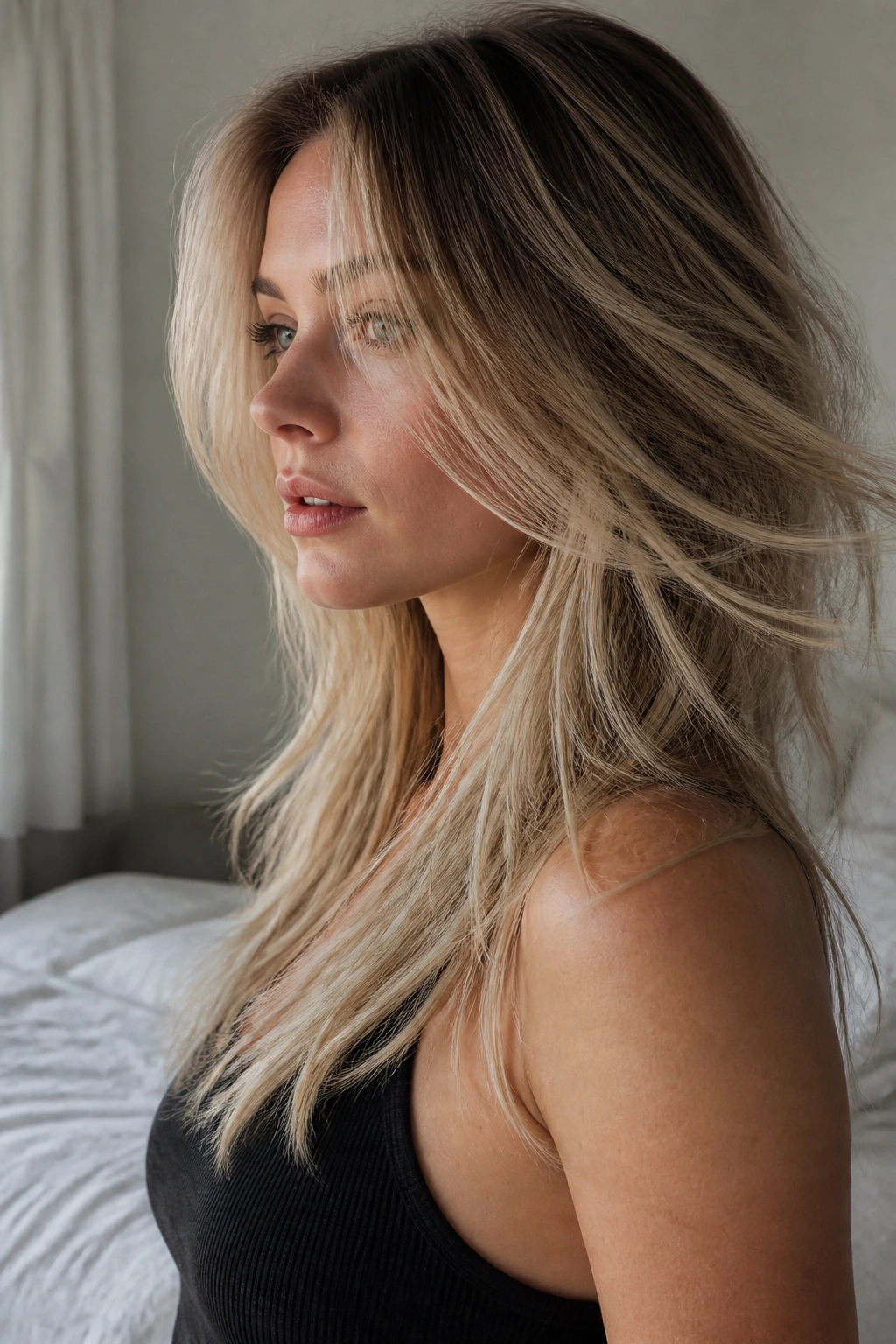
Ghost layers are for the person who wants movement but hates seeing obvious steps. They’re cut so subtly that the top layer hides most of the structure, and the movement appears only when the hair moves or bends. On fine hair, that’s a gift.
Compared with a shag or a heavy butterfly cut, ghost layers keep the silhouette cleaner. The haircut looks almost one-length when straight, then wakes up when you add beachy waves. That makes them a smart choice if you want versatility without committing to a very layered look every single day.
Why they’re different
The layers sit inside the haircut, not on top of it. That means the perimeter stays thick, which is the part fine hair needs most. You’ll still get bend and lift, but the overall shape stays smooth.
Best use case
If your hair tangles easily, if your ends feel fragile, or if you want your waves to look soft rather than piecey, this is the one to ask about.
6. Feathered Ends with a Soft Bend
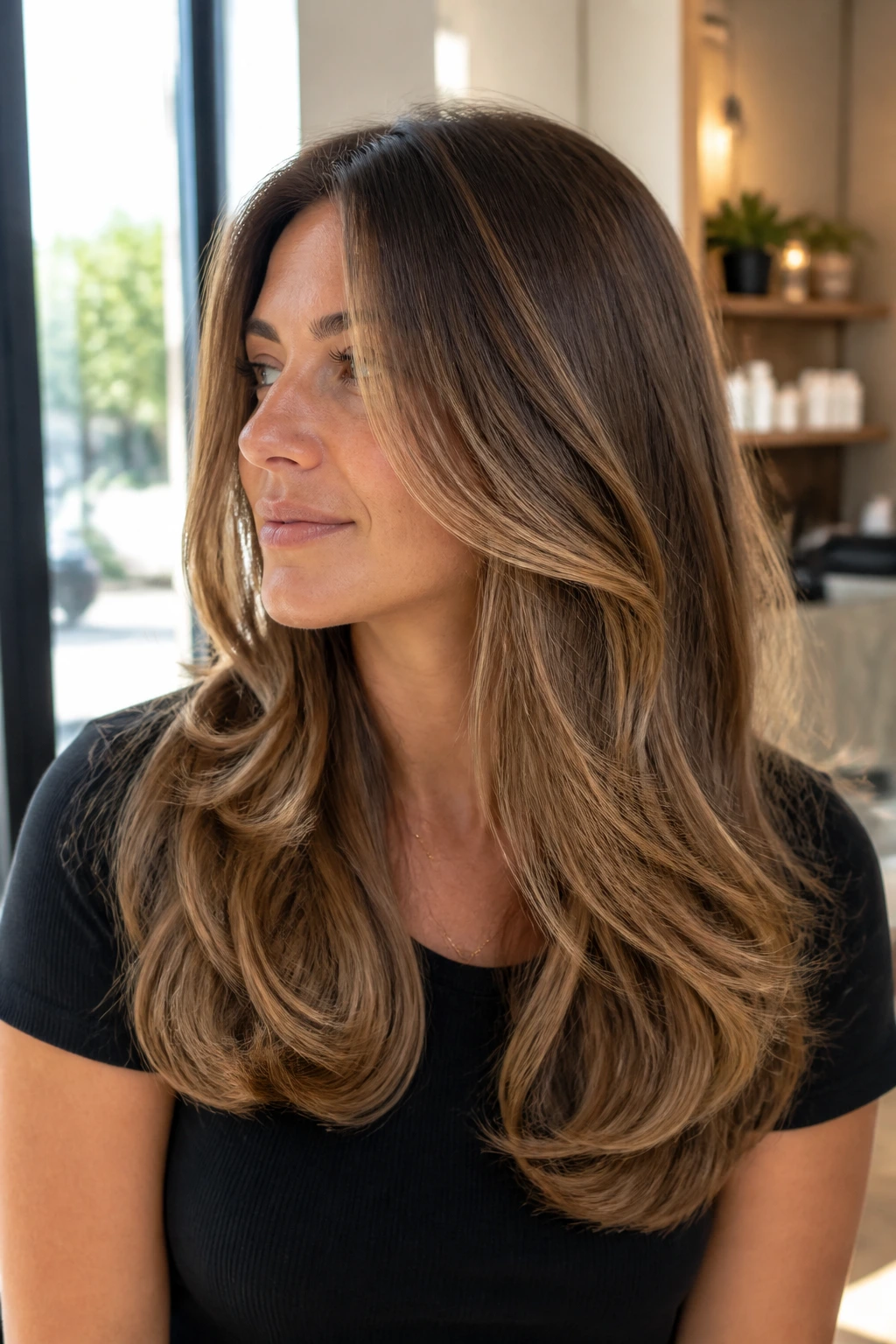
Feathering gets a bad reputation when it’s done too aggressively, but a light feather through the ends can give fine hair a lot of life. The trick is restraint. You want the ends to move, not disappear.
A feathered cut works especially well when you like to use a round brush or a large curling wand. The hair catches that curve and falls in soft, airy ribbons. It doesn’t have to be super uniform. In fact, the slight irregularity is what makes the style feel relaxed instead of salon-stiff.
A few details that matter
- Ask for the feathering to stay below the collarbone
- Keep the ends dense enough to read as a line
- Pair it with a loose wave pattern rather than a tight curl
My opinion: this is a better choice than choppy layers if your hair is both fine and straight. It gives you movement without that sliced-up look at the bottom.
7. Long Shag with a Soft Fringe
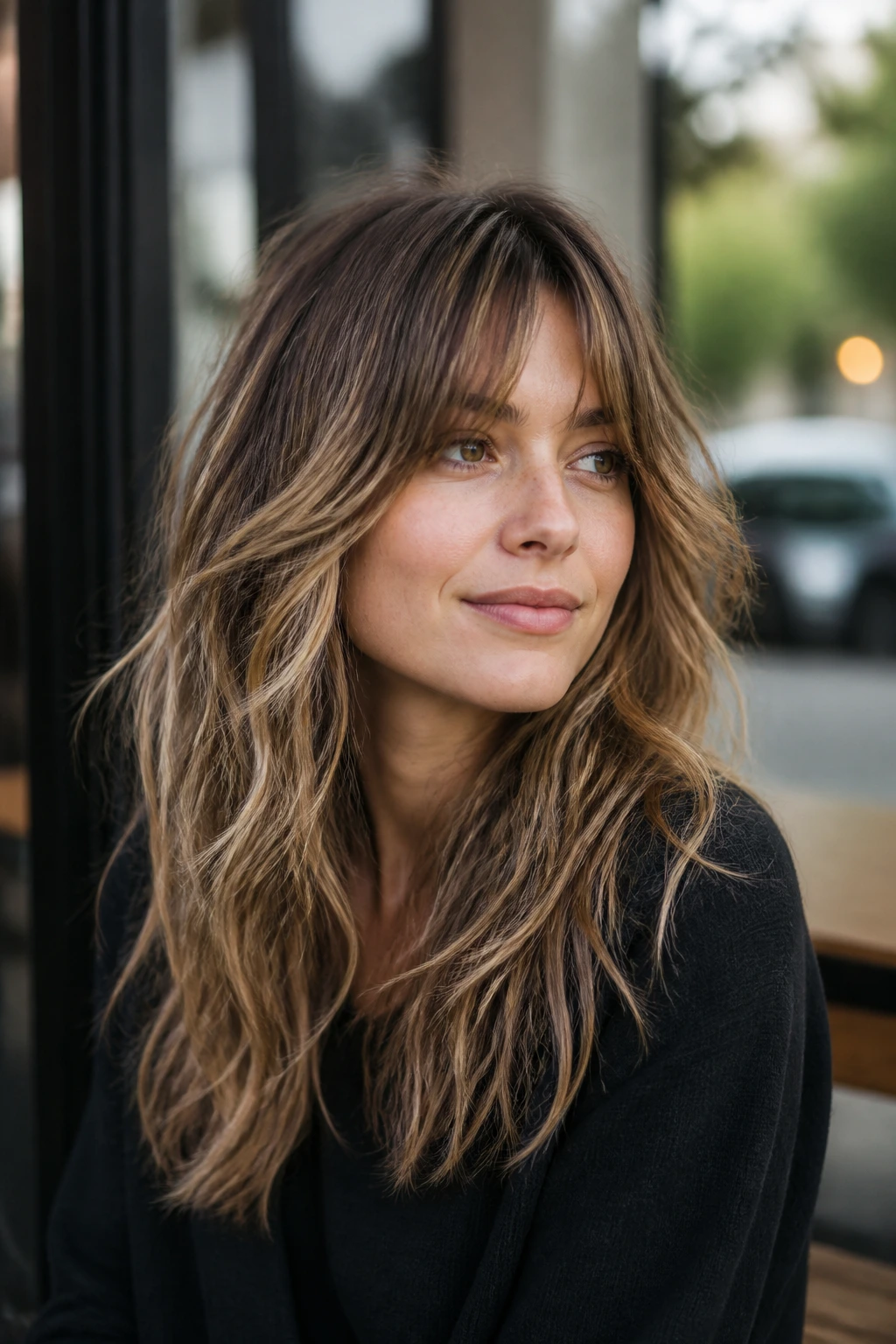
A long shag can work on fine hair, but only if the stylist understands the assignment. You want texture, not a pile of short broken pieces. The right version gives you a little attitude at the crown and around the face, while the lengths stay long enough to hold beachy waves.
The fringe matters here. A soft fringe keeps the cut from feeling too serious and helps the top of the head look a touch fuller. If your hair lies flat against the scalp, this cut can wake it up fast. If your hair is already coarse or puffy, I’d be more cautious.
What I like about a long shag on fine hair is the way it makes waves look lived-in without making the ends disappear. The hair still has a shape. It just doesn’t look precious about it.
8. C-Shape Layers Around the Cheeks
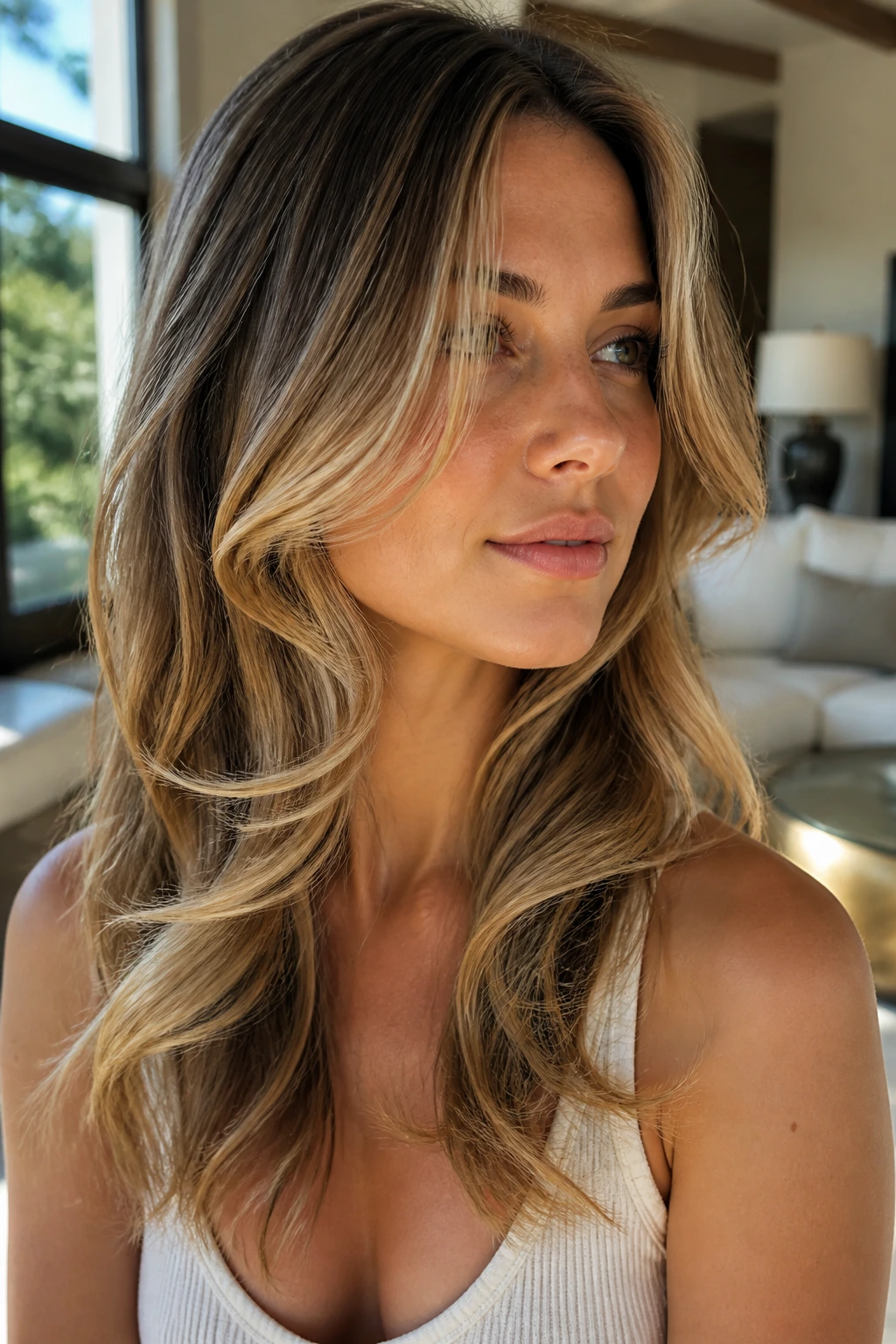
What makes a C-shape layer different from a basic face frame? The curve. The front pieces swing out and then tuck back in, usually around the cheeks and jaw, so the line of the hair looks soft and rounded rather than blunt.
That curve is flattering on fine hair because it adds the illusion of width where the face needs it and keeps the rest of the length long. When the waves fall through it, the style looks gentle and expensive without trying too hard. I know that phrase gets abused, but here it’s earned. The shape does the work.
How to wear it
Use a middle part if you want the cheekbone curve to show. Use a soft side part if you want a little more lift at the front. Either way, the layers should land in a way that makes the cheek area feel framed, not cut up.
9. V-Cut Layers for Swing and Length
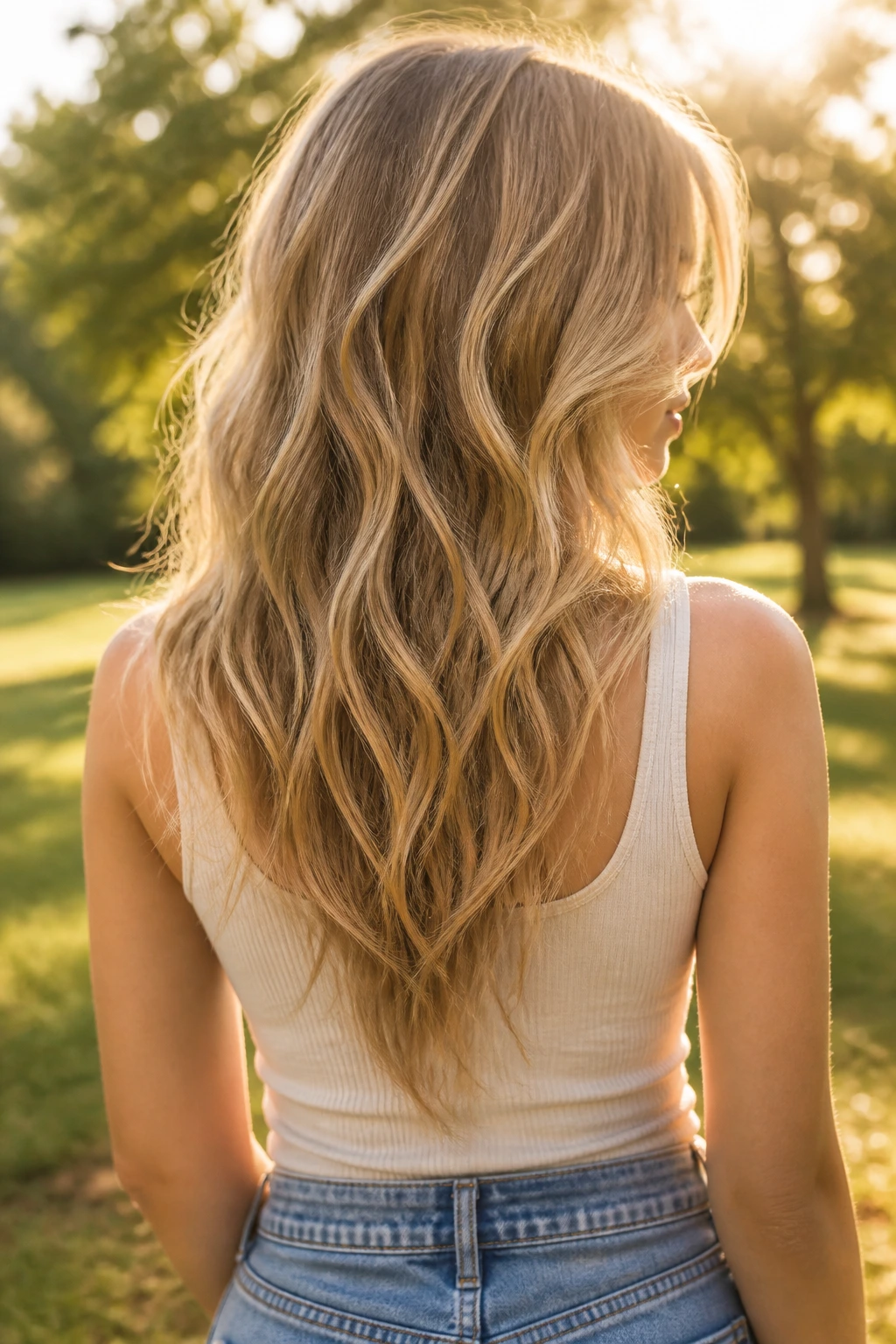
A V-cut gives the back of the hair a tapered point instead of a rounded edge. On fine hair, that can be a smart move if you want drama without sacrificing too much length. The waves fall in a way that shows the taper, so the cut feels longer and lighter at the same time.
The danger is overdoing it. If the point gets too sharp or the layers climb too high, the ends start to look stringy. Keep the point soft. The best V-cuts are more suggestion than declaration.
This is a cut I’d recommend to someone who loves hair that swings when they move. Beachy waves really show off the shape because the bends catch the different lengths and make the back look full from top to bottom.
10. Razored Long Layers for Airy Separation

Razor cutting can be lovely on fine hair, but only when it’s handled with a light hand. Used well, it creates soft separation at the ends and makes the waves look a little more relaxed. Used badly, it can shred the perimeter and leave the hair looking thin and frayed.
That’s why I tend to like razor work at the very ends, not through the whole head. You want movement, yes. You do not want a cloud of broken-looking tips. There’s a fine line there, and it matters more on beachy waves than on sleek hair because the wave pattern exposes every mistake.
If your hair is dense but fine, a little razor texture can help. If your hair is sparse, I’d probably keep the scissors in play and ask for softness through layering instead.
11. Side-Part Layers That Lift at the Root
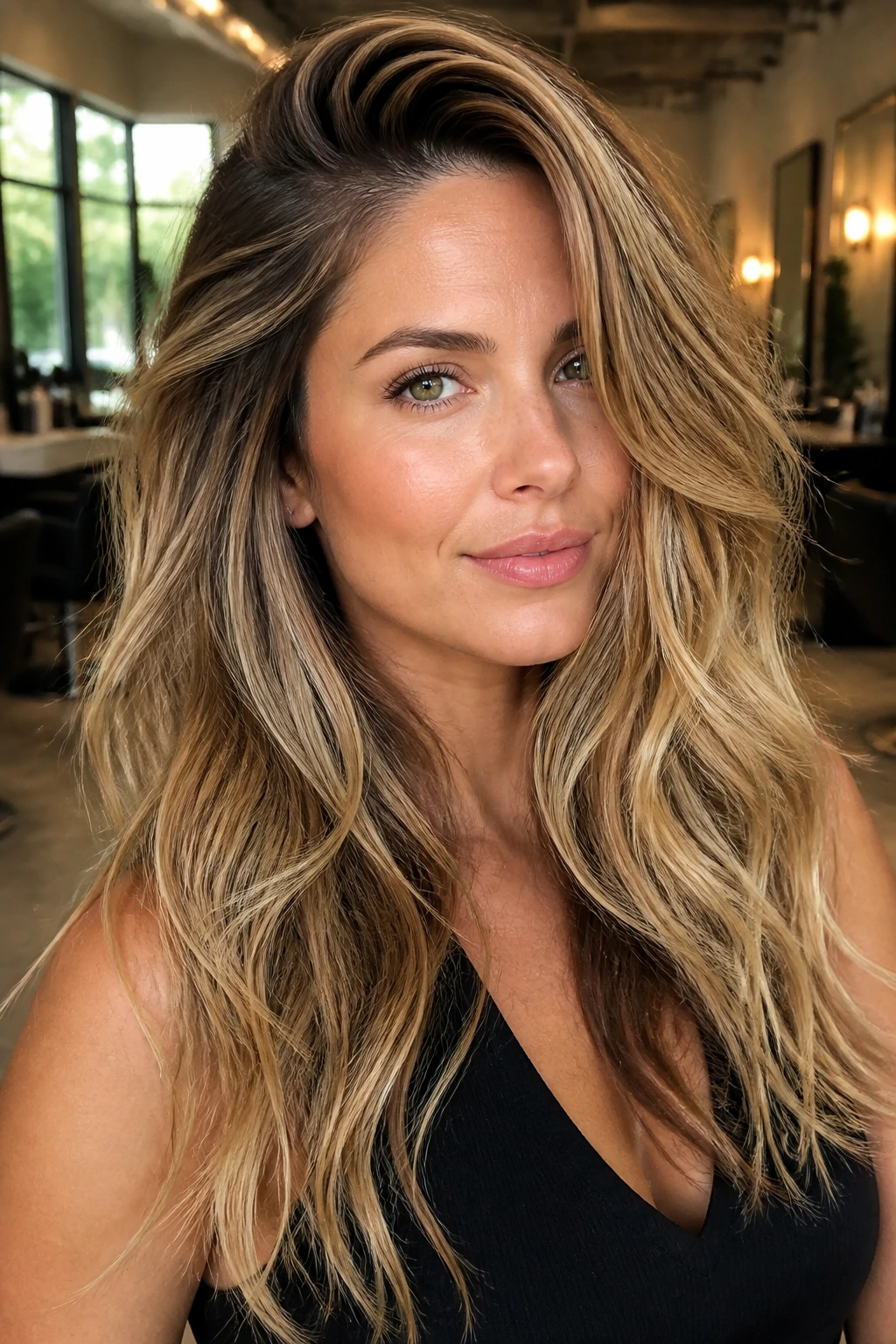
A side part can change the whole mood of fine hair. It gives instant lift at the crown, which is useful when the strands are too soft to stay up on their own. Add long layers to that and you get a haircut that looks fuller with almost no extra styling.
The best side-part layers don’t scream “side part haircut.” They just make the root area look less flat. That’s the point. Once beachy waves go in, the deeper side starts to make the face frame fall in an appealing, slightly off-center way. It feels a little more relaxed than a strict middle part.
Why I like it
The side part gives the illusion of density at the top, while the layers keep the mid-lengths from feeling heavy. Fine hair often needs that kind of deception. A good one.
12. Bottleneck Bangs with Long Wave Lengths
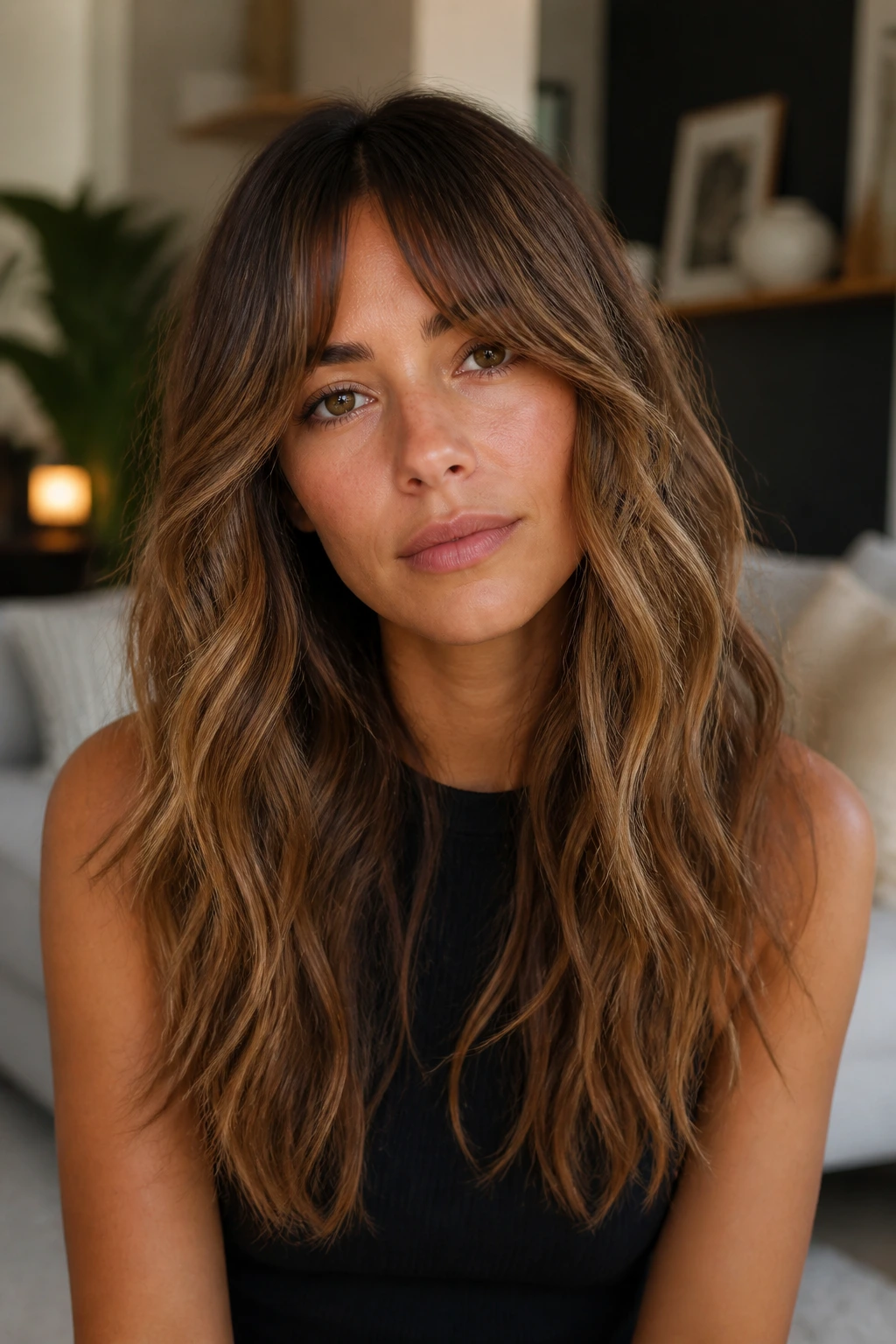
Bottleneck bangs are a clever compromise between full bangs and curtain bangs. They start narrow near the center and open wider as they hit the cheekbones, which means the hair around the face gets shape without a hard line across the forehead.
On fine hair, that matters because heavy bangs can steal too much density from the rest of the head. Bottleneck bangs keep the front soft and airy, then blend into long layers that move when you wave the hair. The result is a cut that looks modern without getting fussy.
Ask your stylist for
- A narrow center fringe
- Longer side pieces that meet the cheekbone
- A blend into the face-framing layers instead of a separate bang line
This cut likes soft beach waves. Tight curls make it feel too busy. Loose bends keep the whole look calm.
13. Minimal Layers with a Blunt Perimeter
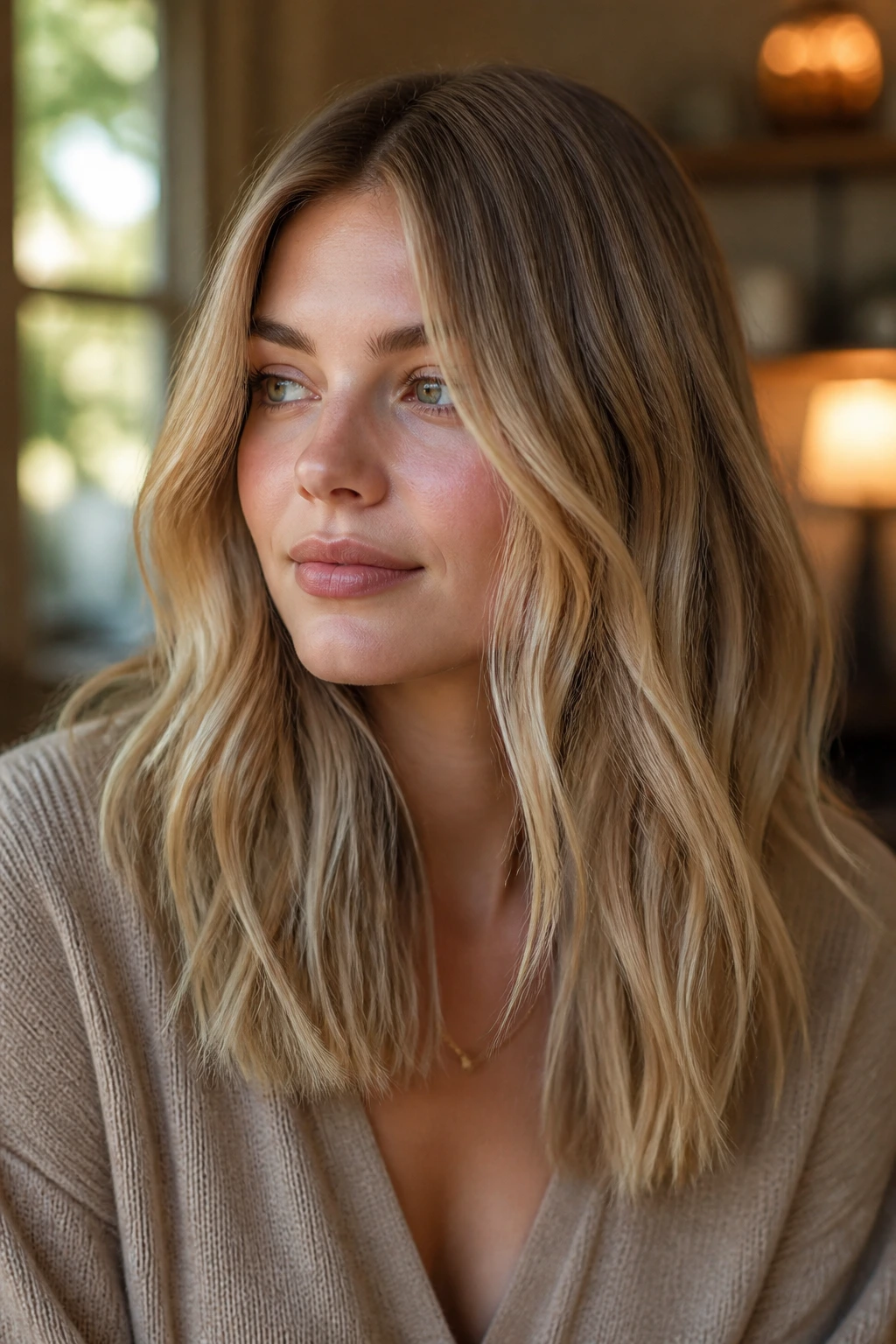
Not every layered haircut needs a lot of slicing. Sometimes the smartest move for fine hair is to keep the layers minimal and preserve a blunt perimeter that makes the ends look dense. Then you add just enough movement inside the shape to keep beachy waves from falling flat.
This is the cut I’d choose for someone who hates obvious layers but still wants the hair to bend. The waves sit on top of the strong line instead of breaking it apart. It’s tidy, grown-up, and much harder to ruin than a heavily textured cut.
A lot of stylists want to keep adding more. Resist that impulse unless the hair is truly thick enough to handle it. Fine hair often looks best when the haircut leaves some mystery alone.
14. Round Layers That Follow the Head Shape
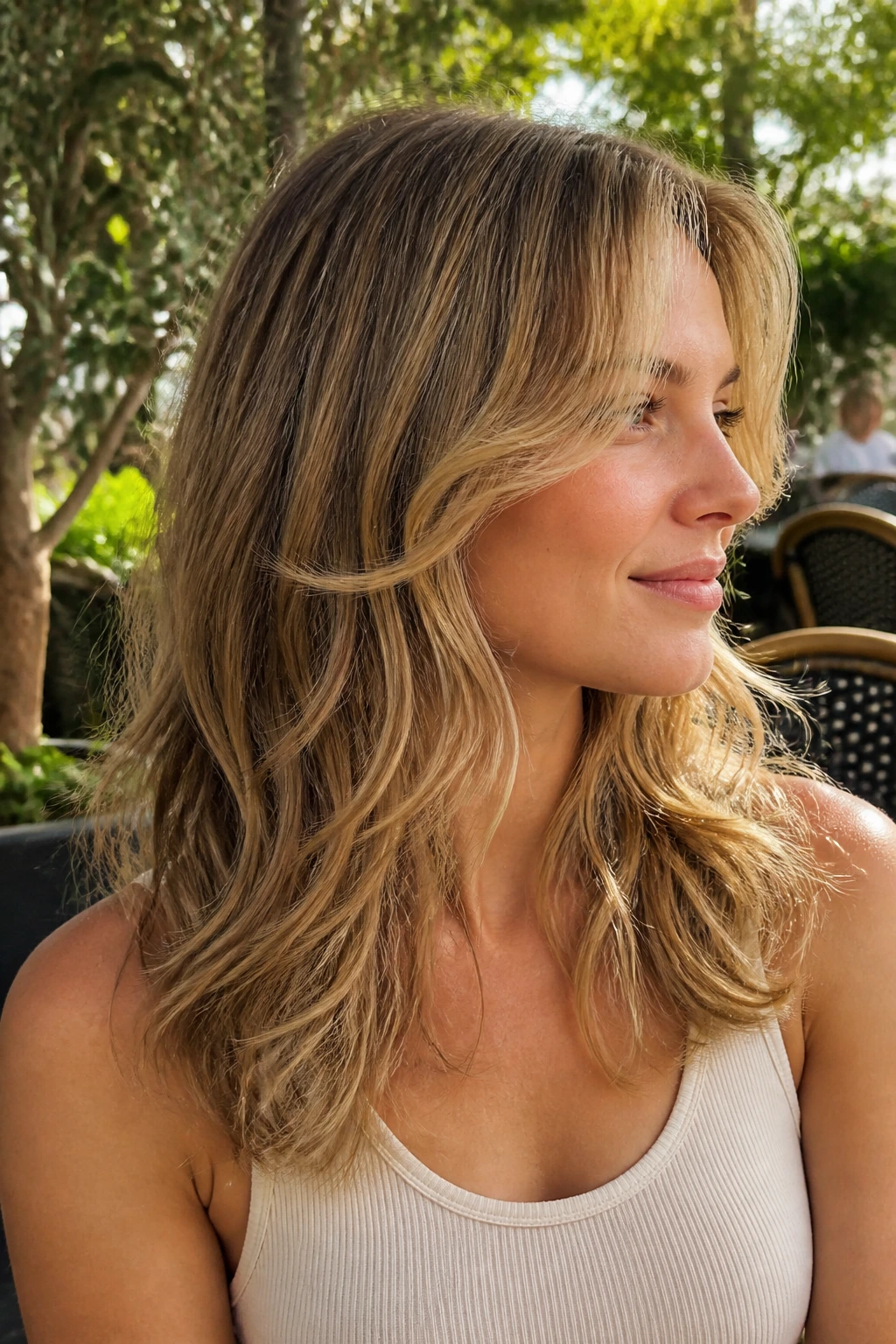
Round layers curve around the head in a way that makes the hair feel soft from every angle. They’re not harsh, and they don’t create a pointed silhouette. For fine hair, that can be a relief because the shape stays full even when the waves loosen up.
This cut suits people who like a little volume at the sides and crown without a dramatic shag effect. The waves fall into the roundness and the haircut keeps its shape longer than a super-choppy style. It also photographs well from the side, which matters more than people admit.
A small but useful note
Ask the stylist not to over-thin the crown. Round layers work because they preserve a cloud of hair shape around the head. Remove too much, and you lose the point.
15. Airy Mermaid Layers with Long Tapered Ends
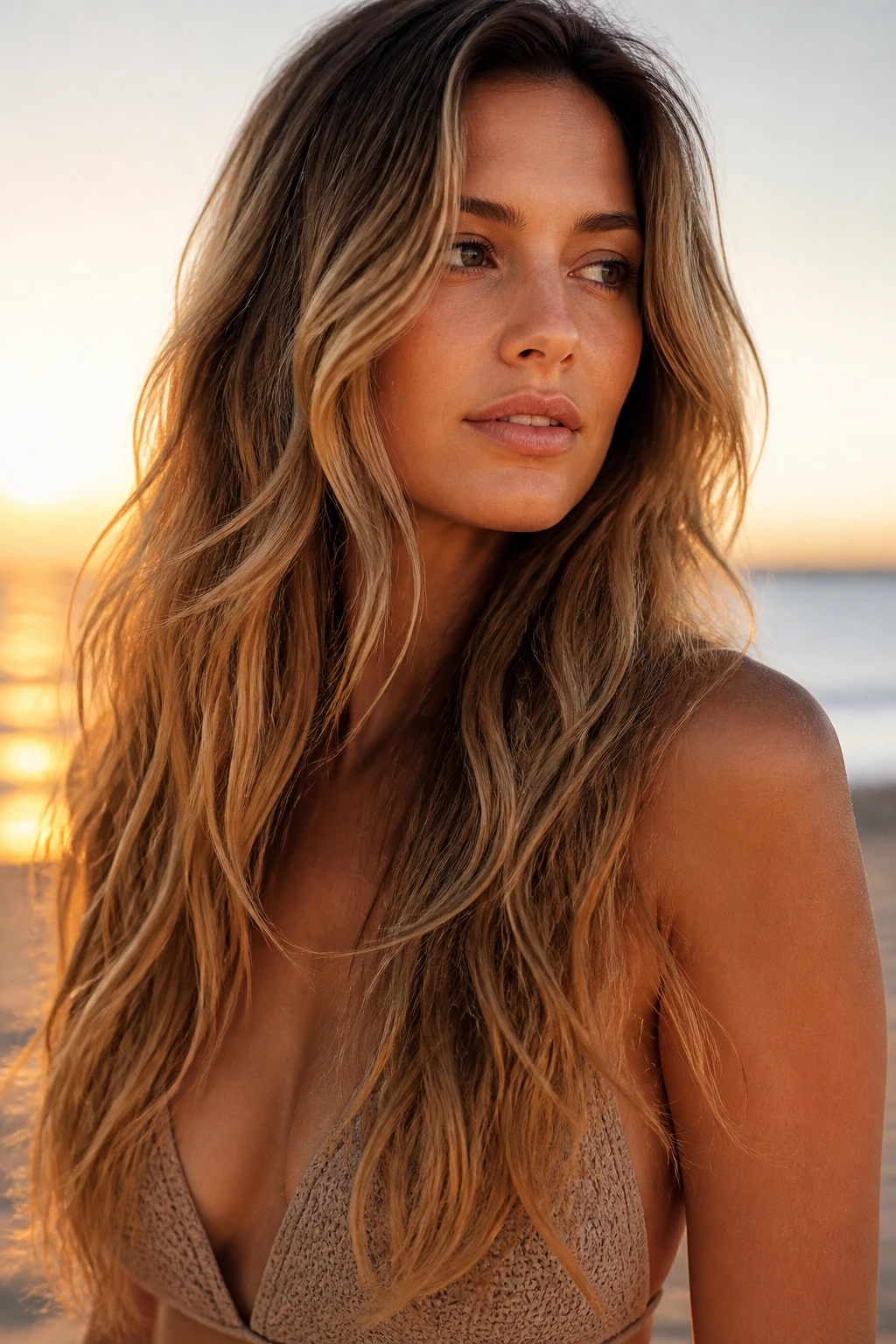
“Mermaid hair” can sound silly until you see the right version. On fine hair, it means long, flowing layers that taper gently through the ends so the hair moves like fabric. The cut is glamorous, yes, but it has to be handled with care or it turns stringy fast.
The beachy wave finish is what sells this one. You want loose, brushed-out bends with a few straighter ends left in. That combination gives the hair the kind of movement that feels expensive in person, not overdone in photos. And yes, I’m being picky about that because the wrong finishing touch can make this shape look like costume hair.
This cut suits long hair that already reaches well past the shoulders. If the length is only barely there, the taper loses the effect.
16. A Soft Wolf Cut for Fine Hair
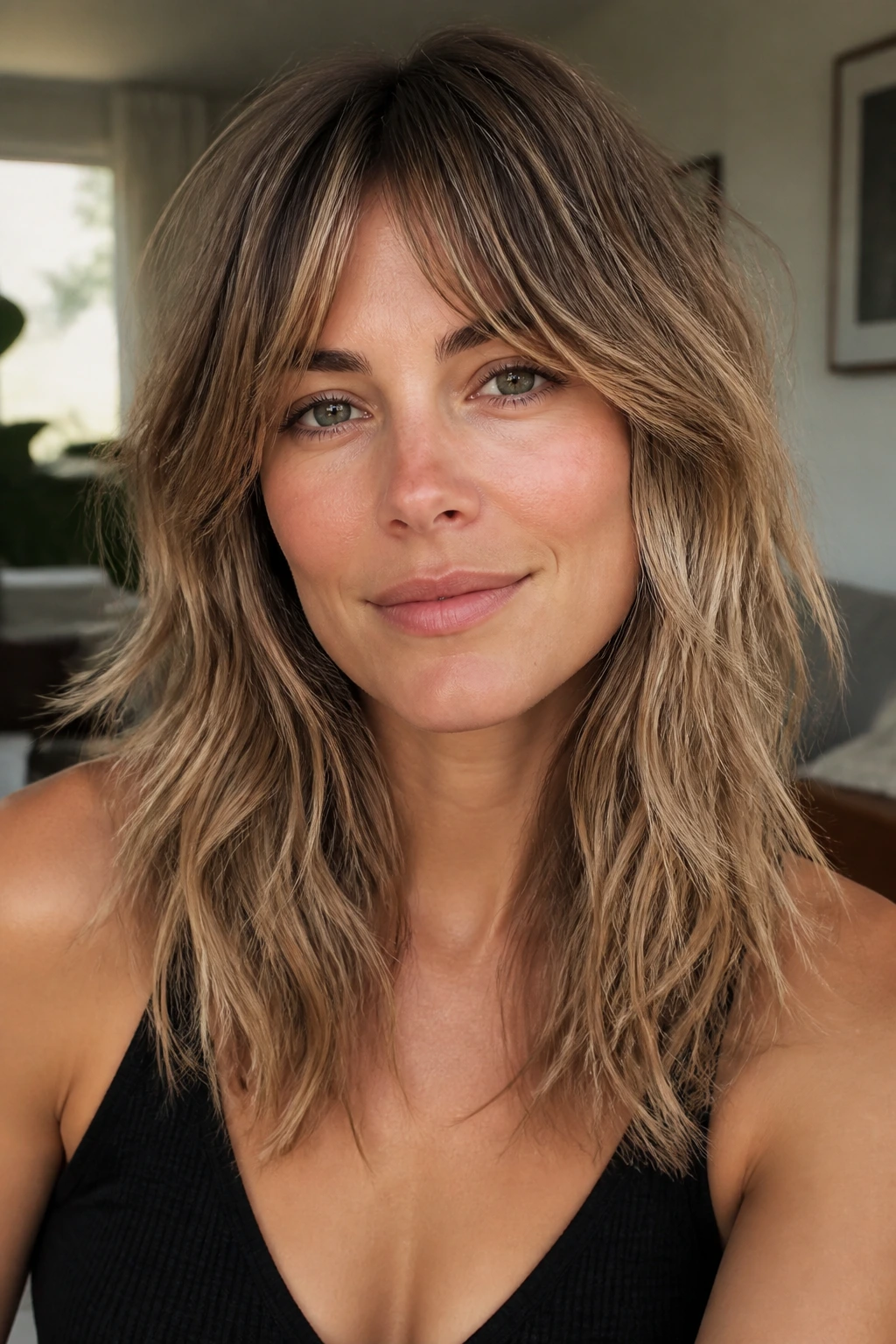
A wolf cut on fine hair needs to be softened. If you keep the heavy choppiness people sometimes associate with the trend, the hair can end up looking thin at the ends and too shattered at the top. The better version keeps the shaggy shape but tones down the aggression.
What you get instead is a cool, slightly undone cut with wave-friendly layers and a face frame that doesn’t sit flat. It has attitude without punishing the hair. That’s rare.
Where this cut shines
- Natural wave textures that already have some bend
- Hair that needs crown lift
- People who don’t mind a more casual finish
If you want a low-maintenance version, keep the longest layers long and ask for softness around the face instead of a lot of broken texture through the sides.
17. Face-Framing Layers That Start at the Chin
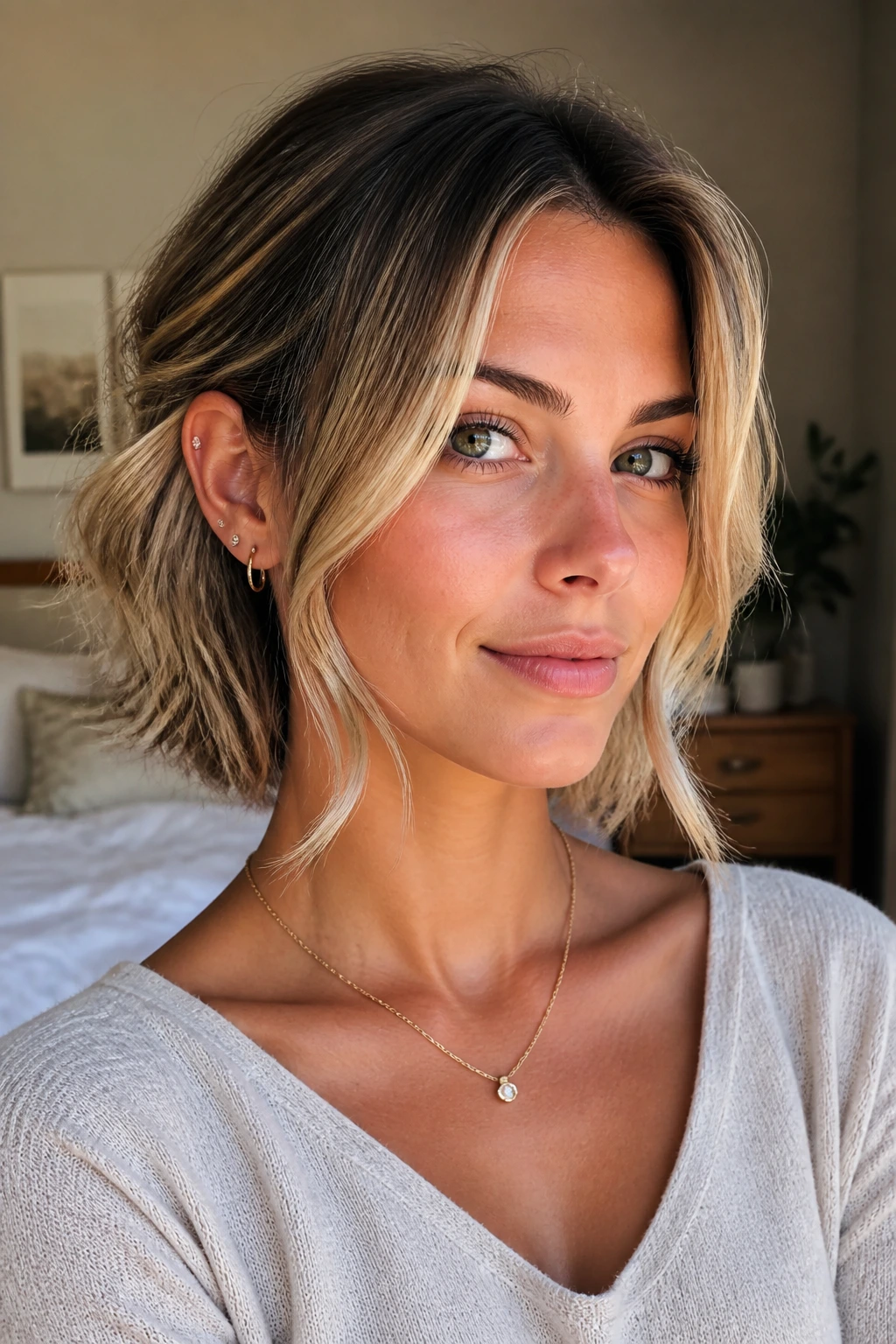
Where should face-framing layers begin on fine hair? Chin level is often the sweet spot. It gives shape around the lower half of the face without chewing into the density at the sides. Anything much higher starts to remove too much bulk from the front.
This is one of the most wearable long haircuts on the list because it changes the haircut without changing the whole identity of the hair. You keep the length, keep the weight, and just bring the front pieces into focus. When you add beachy waves, the chin-starting layers curve inward in a way that makes the style look soft and intentional.
I’d choose this for someone who wants a visible change but still wants to pull the hair back easily. That’s the practical bit people forget.
18. Layered Length with Peekaboo Interior Pieces
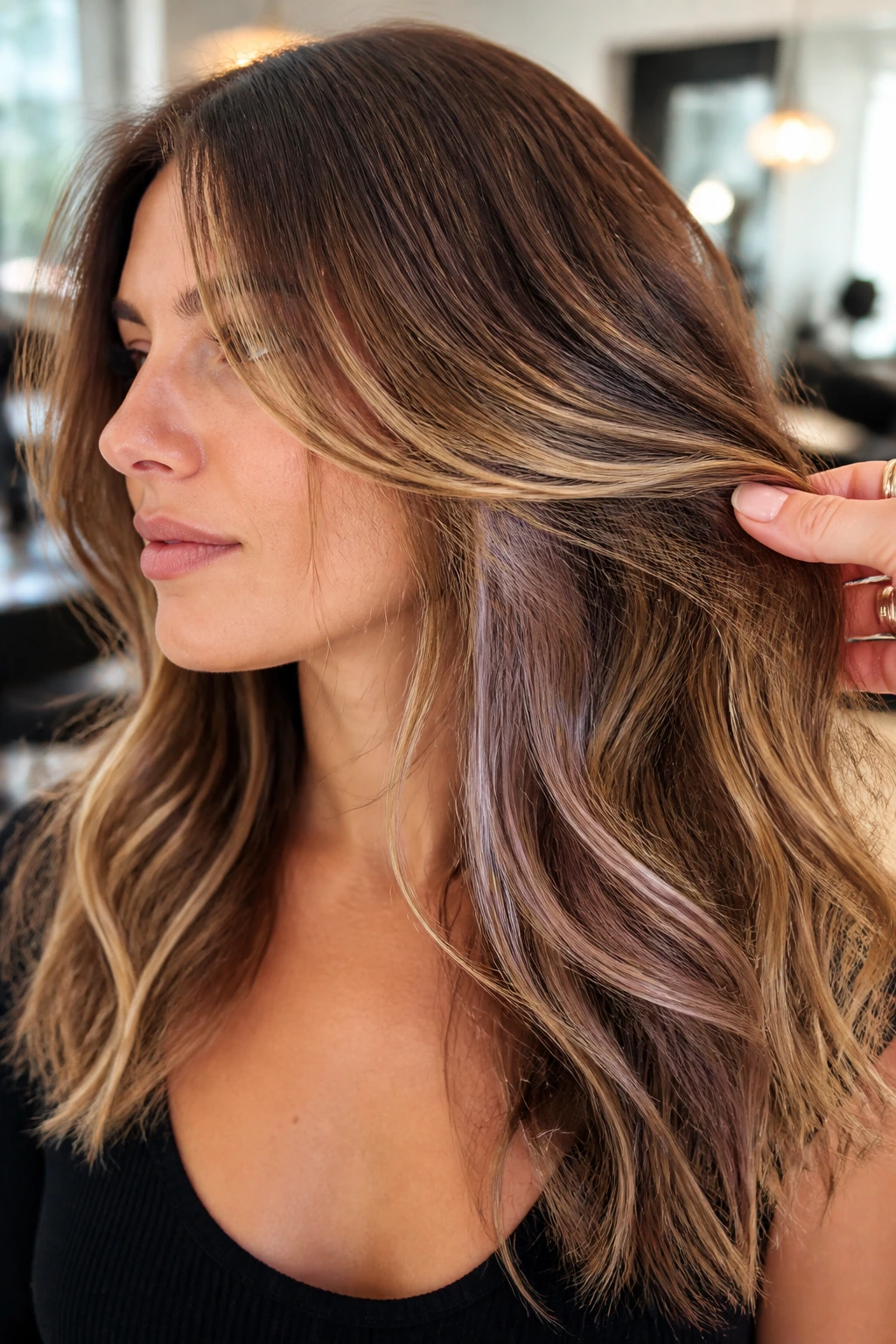
Peekaboo interior layers are my favorite compromise when someone says, “I want movement, but I do not want my hair to look thinner.” The outer sheet stays mostly intact. The movement lives inside the haircut, where the waves can bounce around without exposing too much scalp or too many short ends.
It’s a smart shape for fine hair because the top layer protects the outline. From the outside, the hair still looks full. Once you move it or wave it, the hidden layers give it lift and swing. That’s the haircut equivalent of a hidden pocket in a good coat. Small detail. Big usefulness.
Good for
- Hair that feels heavy at the nape
- People who like a smoother top surface
- Anyone nervous about over-layering
19. Swoopy Layers with a Collarbone Sweep
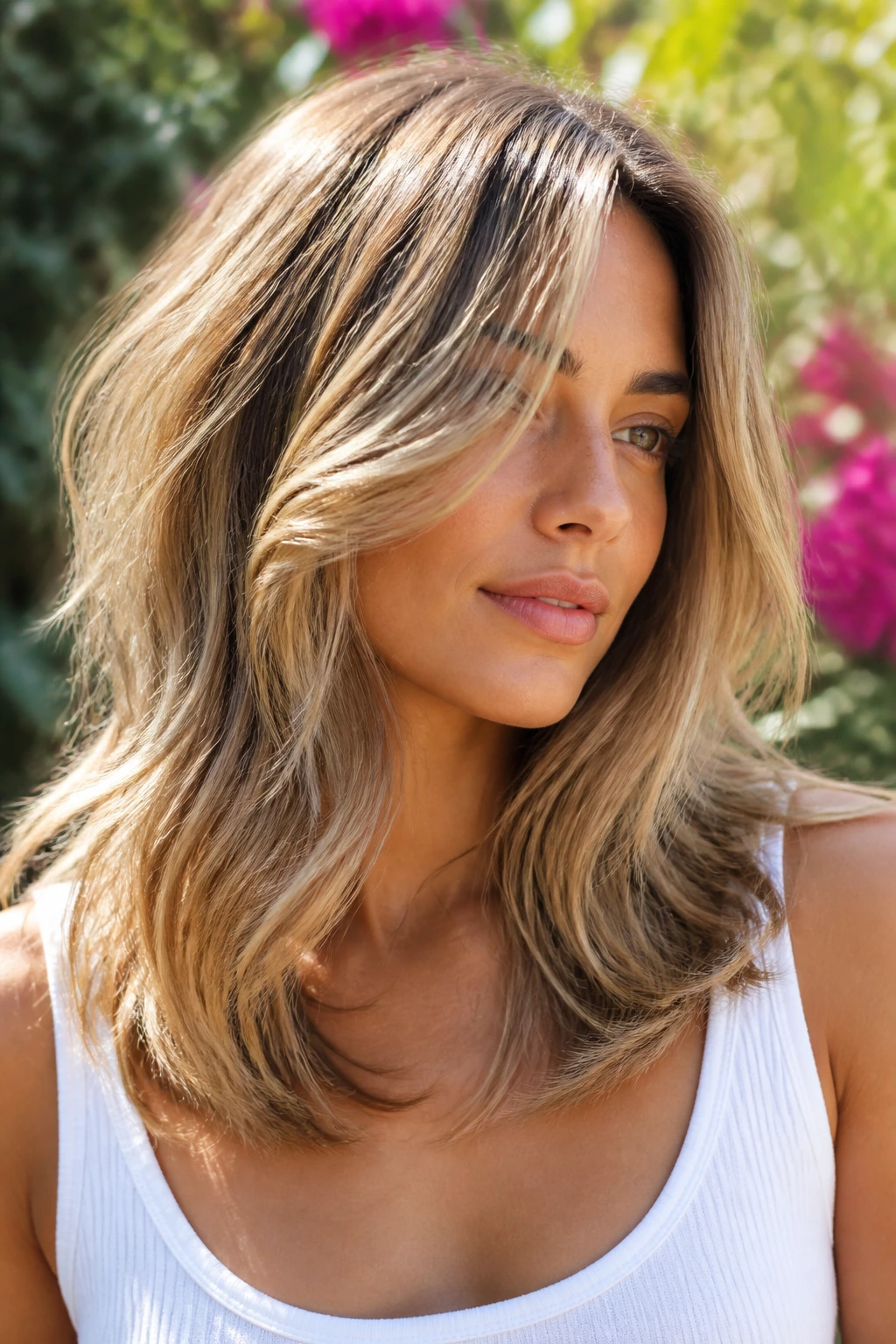
Swoopy layers are all about movement that seems to slide across the face and then settle near the collarbone. That sweep is flattering because it gives the hair a direction, which beachy waves sometimes need. Without that direction, fine hair can drift into a shapeless middle ground.
This cut works especially well on medium-to-long lengths where the collarbone becomes the visual anchor. The wave pattern bends over that point and softens the whole silhouette. It’s one of those cuts that looks calm, even if the hair itself is not particularly cooperative.
A good collarbone sweep also makes it easy to tuck one side behind the ear without the haircut collapsing. That sounds small. It isn’t. Small things matter with fine hair.
20. Long Layers with Wispy Bangs
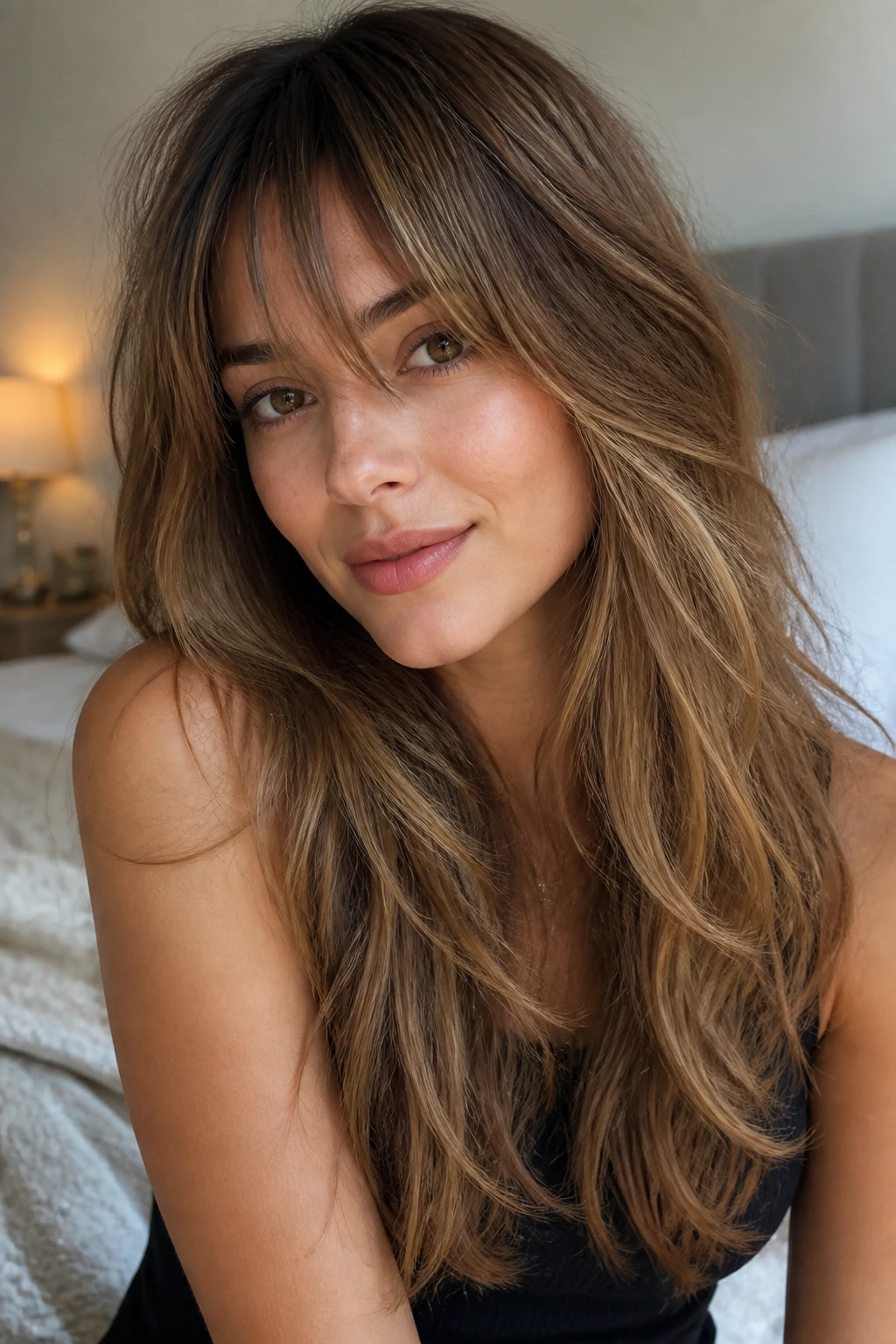
Wispy bangs are for the person who wants fringe but doesn’t want the commitment of a dense bang line. On fine hair, they can be a smart choice because they don’t steal much density from the rest of the cut. They just soften the forehead and give the style a lighter feel.
The important part is keeping the bangs airy, not sparse. There’s a difference. Wispy bangs should still look like a deliberate part of the haircut, not like a few leftover strands someone forgot to cut. Blend them into the long layers so the whole shape feels connected.
Beachy waves help here because they give the bangs a little movement without forcing them into a severe line. A quick bend away from the face is enough.
21. A Half-Up Friendly Layered Cut
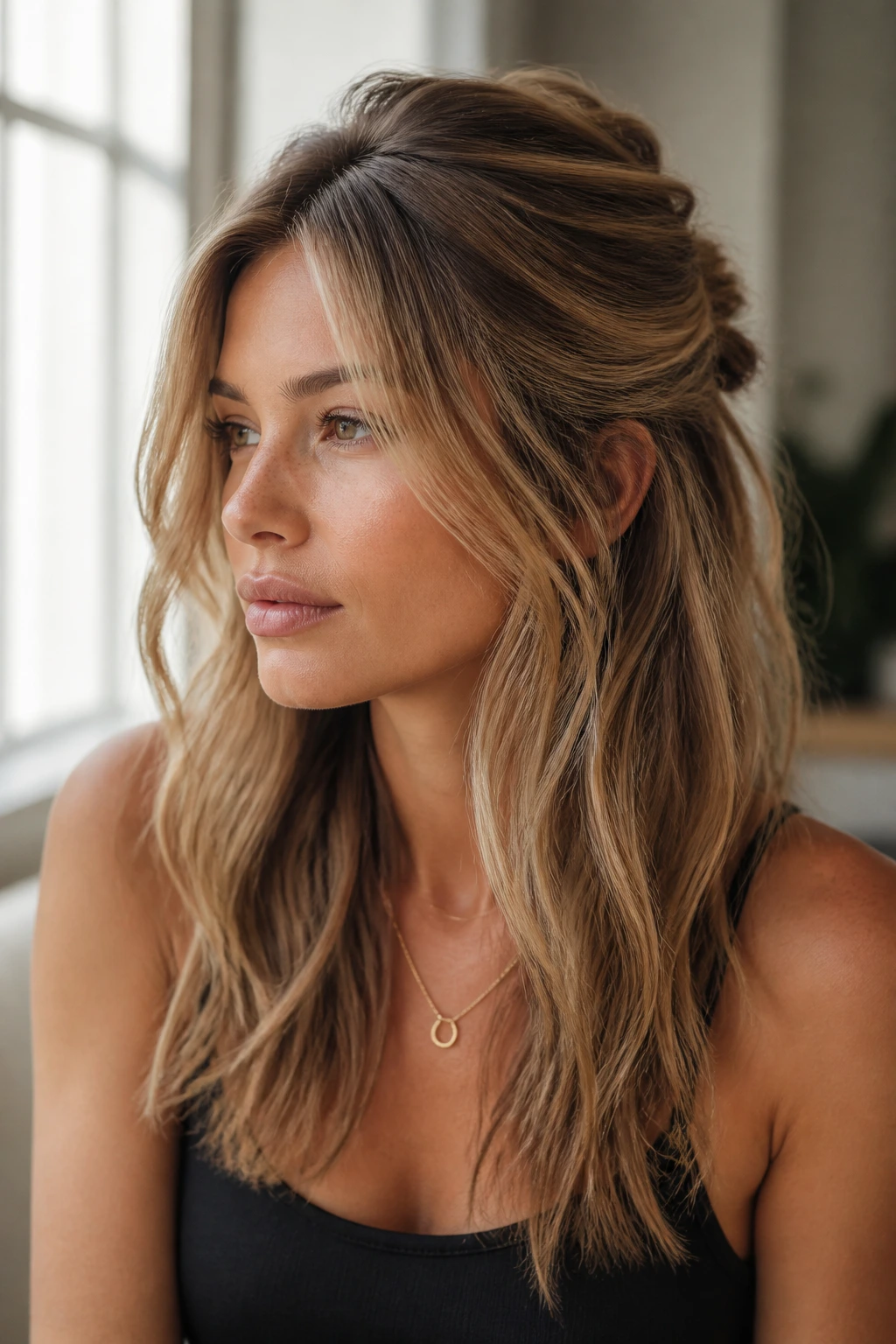
Some layered cuts look good down and awkward in a clip. This one isn’t that. A half-up friendly shape keeps enough face-framing pieces around the front while leaving the crown and mid-lengths clean enough to twist, clip, or pin without lumps.
That matters more than people admit. Fine hair often lives in clips, loose buns, and half-up knots. If the layers are too short, the style sheds pieces everywhere. If they’re too long and one-length, the half-up version feels heavy and flat. The sweet spot is a long layered cut with a little softness around the cheekbones and enough weight at the back to hold shape.
I like this cut for everyday wear because it doesn’t fight real life. It cooperates.
22. Luxury Blowout Layers with Beachy Ends
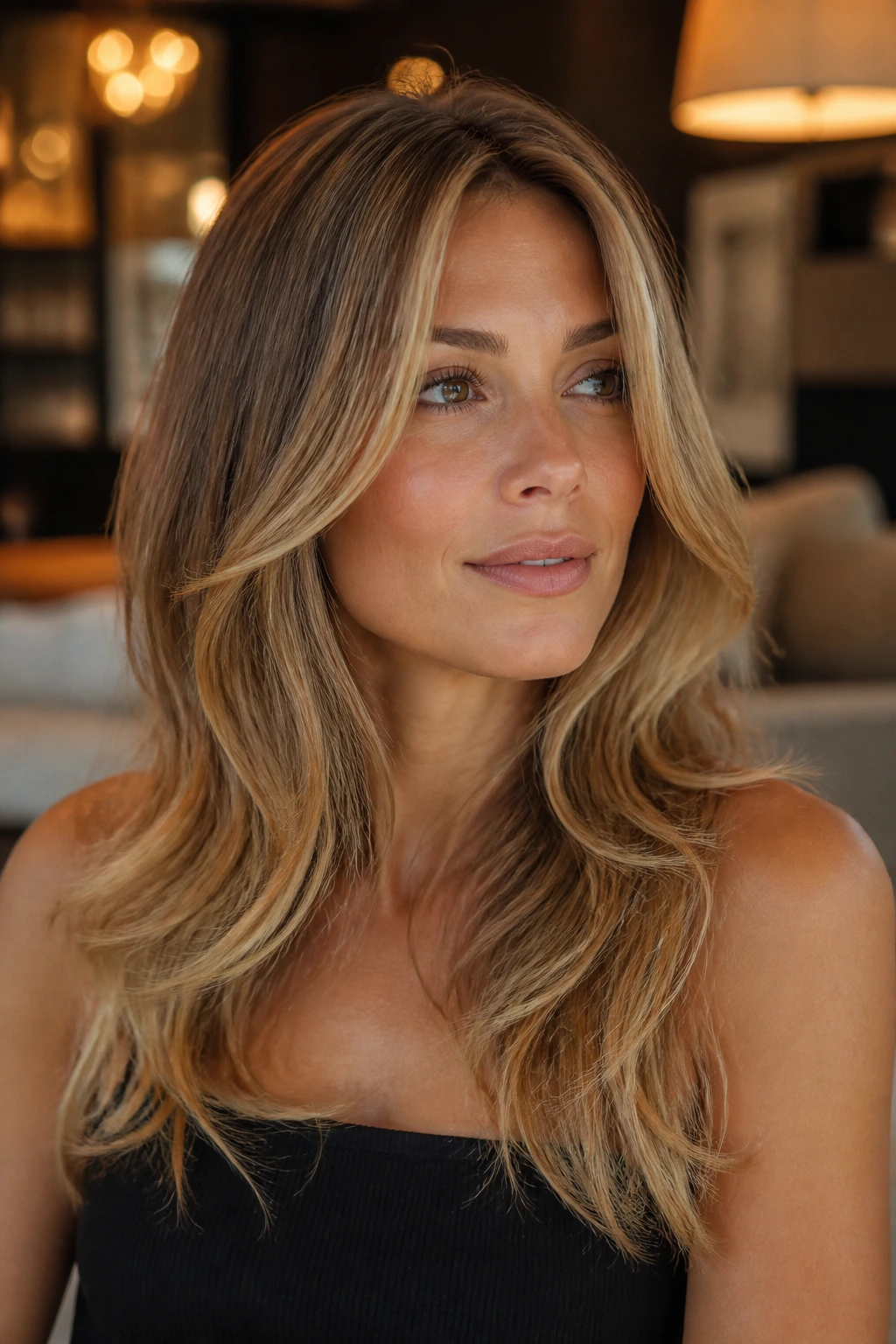
If you like the polished root-and-soft-end look, this is the version to ask for. The top half gets a smoother blowout shape, while the lengths are left with relaxed, beachy bends. On fine hair, that contrast can look fantastic because it creates the illusion of body without needing a ton of product.
The layers are usually long and blended, with enough face framing to keep the style from falling flat around the jaw. The ends shouldn’t be too thin. The whole point is to make the hair feel finished, not airy to the edge of collapse.
This is my pick for people who want a haircut that can go from day to evening without a full restyle. Brush it out softly, add a touch of shine spray to the mid-lengths, and leave the ends a little undone. That little imbalance is what keeps it from looking too neat.
What Fine Hair Needs From Long Layers and Beachy Waves
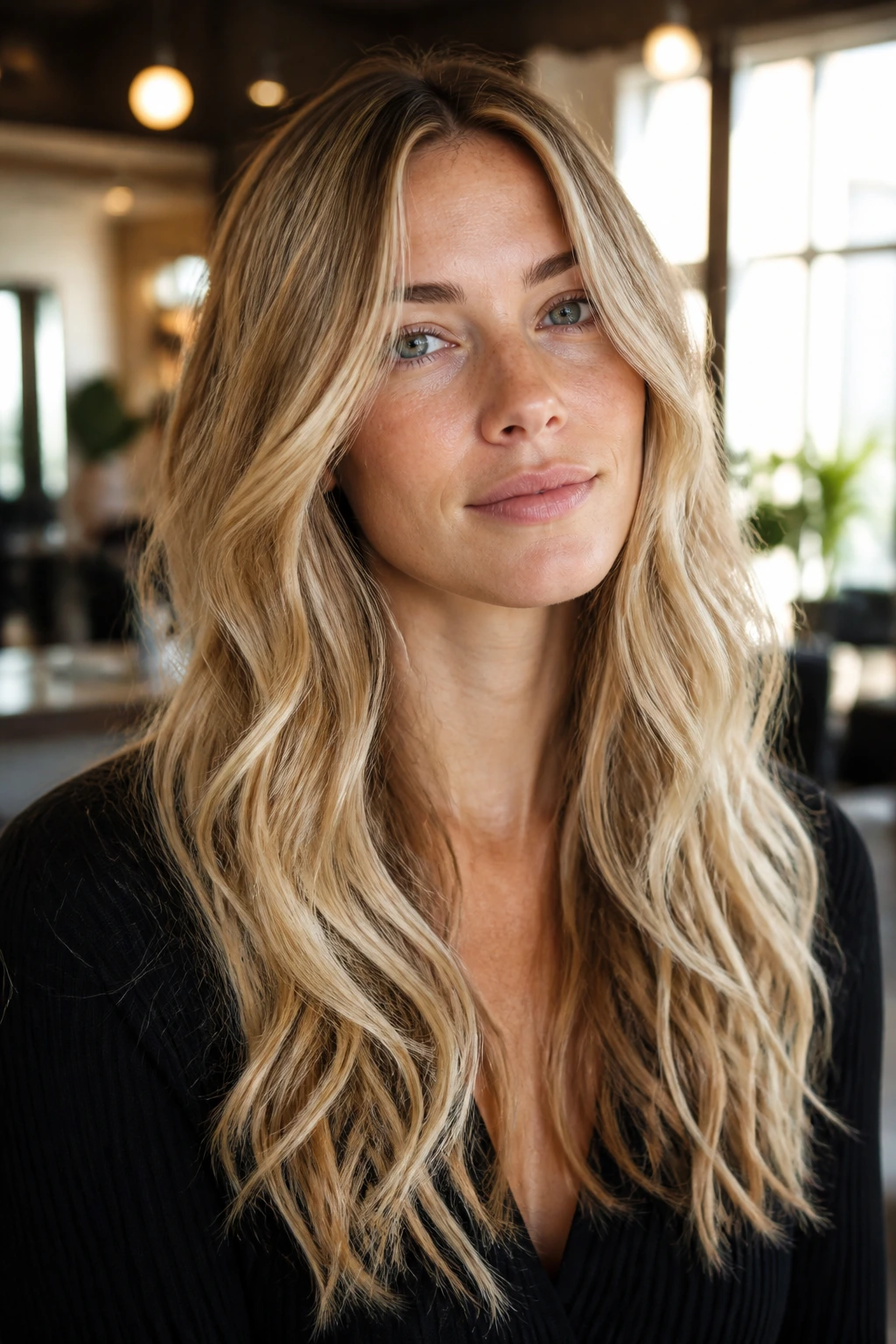
Fine hair is unforgiving about shape. If the haircut is off by even a little, the waves expose it. That sounds harsh, but it’s also useful because it tells you where to put your attention: not on random texture, but on the outline, the face frame, and the point where the layers start.
The big mistake is assuming all fine hair needs more layers. Some fine hair needs fewer layers and a stronger bottom edge. Some needs weight removed only around the front. A good cut reads the density first and the trend second. That’s the part so many salon photos skip.
Beachy waves also change the math. A cut that looks perfect when straight may look too thin once it’s waved and brushed out. That’s why I’m picky about keeping some bluntness in the ends. The wave pattern opens the hair up. The cut has to account for that before the first iron ever touches it.
How to Ask Your Stylist for the Right Version
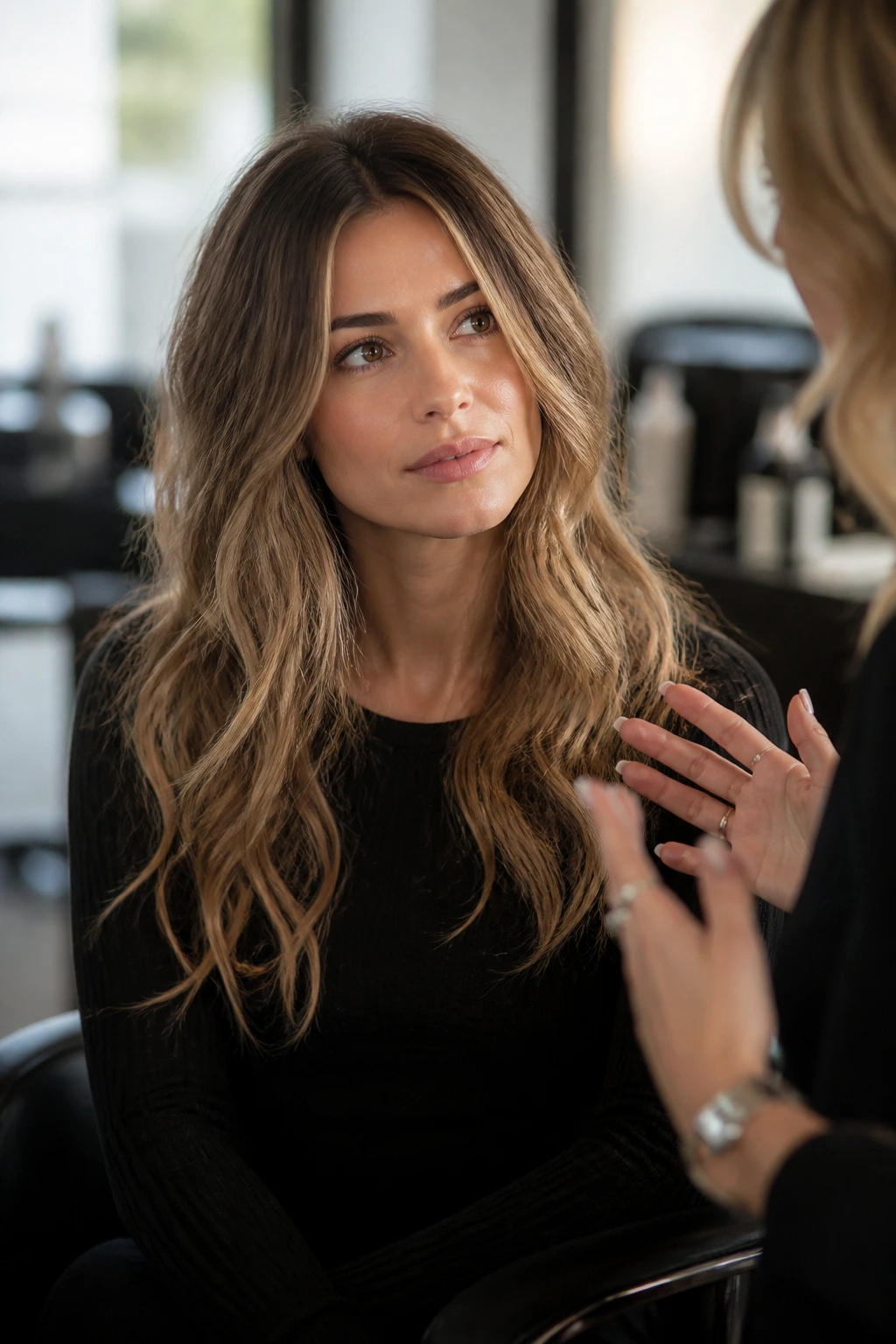
Bring photos, but bring the right kind. One photo of the front and one of the back is more useful than three heavily filtered selfies. You want the stylist to see the length, the face frame, and the weight line. If the photos all have different colors, different finishes, and different lighting, they’re less helpful than a single cut with clear shape.
Say what you want in plain English: “I want movement, but I need the ends to stay full.” That sentence does more work than asking for “soft layers” and hoping for the best. If you want the face frame to start at a certain point, name it. Cheekbone. Chin. Collarbone. Those are the landmarks that matter.
If your hair is fine and fragile, ask whether the stylist plans to thin the ends or use a razor. Sometimes that’s fine. Sometimes it’s exactly the wrong move. A blunt scissor cut with carefully placed layering often beats a heavily textured finish on this hair type. Be a little annoying about it if you need to be. Haircuts are not the place to stay polite to your own detriment.
Tools and Products That Actually Help
-
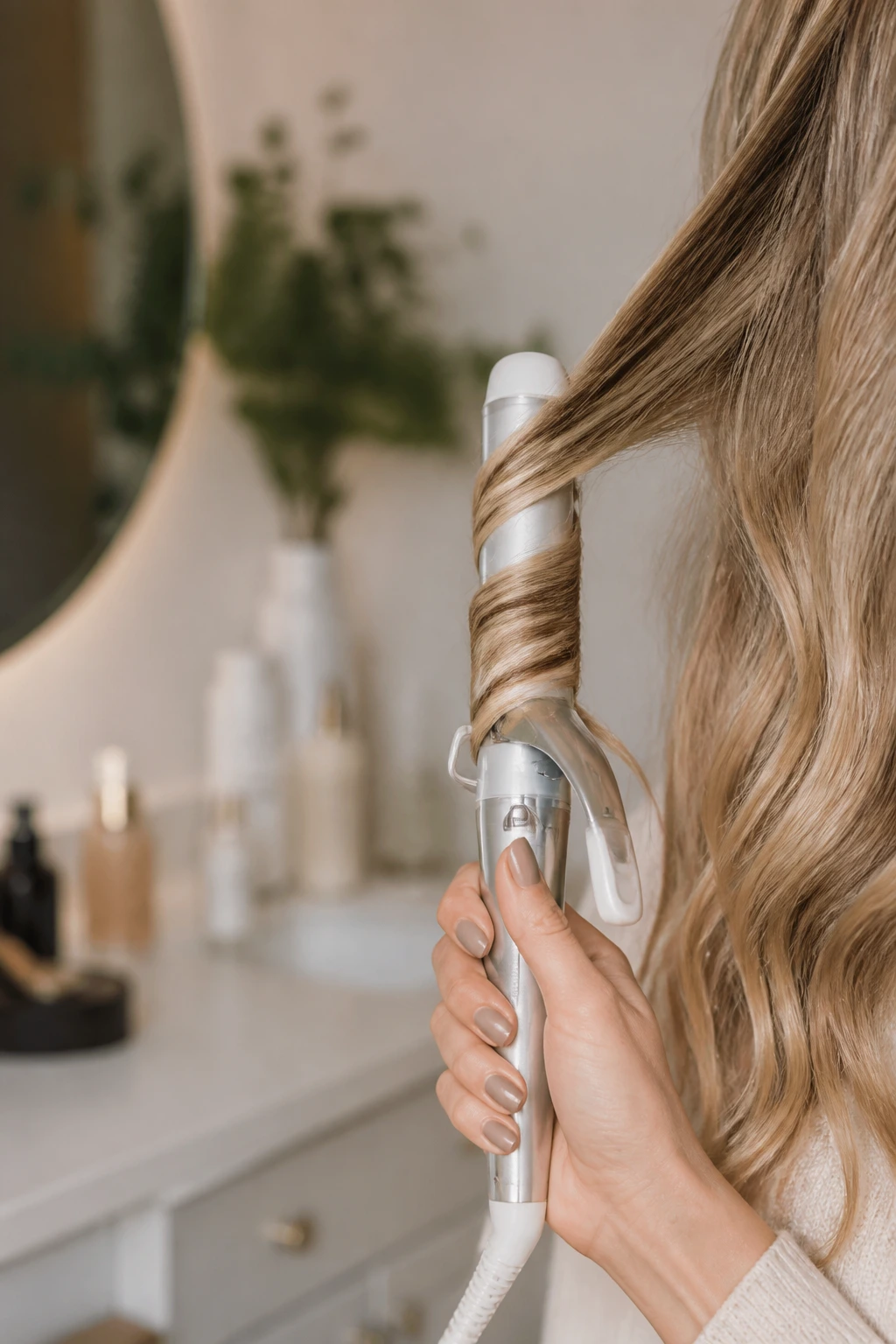
1-inch or 1¼-inch curling iron: A larger barrel gives the soft bend that beachy waves need; tiny curls read too tight on fine hair.
-
Heat protectant spray: Fine strands scorch faster than people think, and once the ends get dry, they stop holding shape.
-
Lightweight volumizing mousse: Use it at the roots on damp hair. Heavy creams usually drag fine hair down.
-
Texturizing spray: A light mist through the mid-lengths helps waves hold after brushing out, but don’t flood the ends.
-
Root clips: Handy for lifting the crown while the hair cools, especially if your hair collapses fast.
-
Round brush: Useful if you want the blowout version of these cuts rather than a fully undone wave.
-
Wide-tooth comb or soft brush: Better than a stiff brush for breaking up curls without making the hair frizzy.
-
Microfiber towel or T-shirt: Dries the hair with less roughing-up at the cuticle, which helps fine hair keep its shine.
How to Style the Waves Without Crushing the Cut
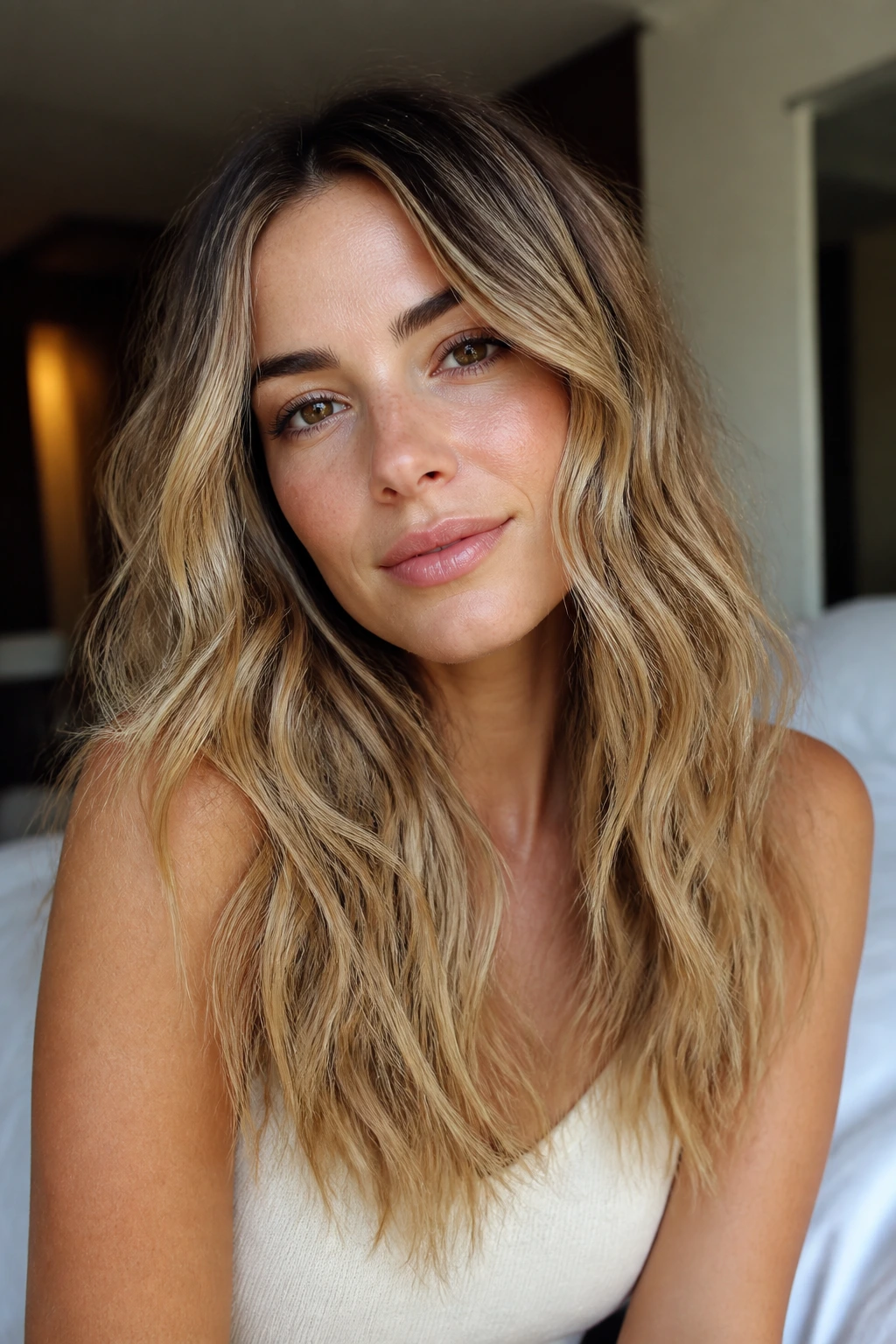
The styling trick for fine hair is not to overfeed it. Heavy cream, oily serums, thick curl balms — they all have a way of swallowing the shape you paid for. Start with a lightweight mousse at the roots, then a heat protectant through the lengths. That’s enough for most people.
Curl or wave in sections that are not too neat. Alternate directions, leave the last inch or so of the ends out on a few pieces, and don’t clamp every section the same way. Uniform waves look tidy for about twelve minutes. Then they start to feel stiff. Beachy waves should look brushed-through, not frozen.
Let the hair cool before you touch it. Seriously. That part matters more on fine hair because the bend sets as it loses heat. If you run your fingers through it too soon, you can erase the wave before it hardens. After that, use a wide-tooth comb or just your hands to separate the curls. A mist of texturizing spray at the roots, not the ends, helps the style stay upright.
How to Keep the Shape Between Salon Visits
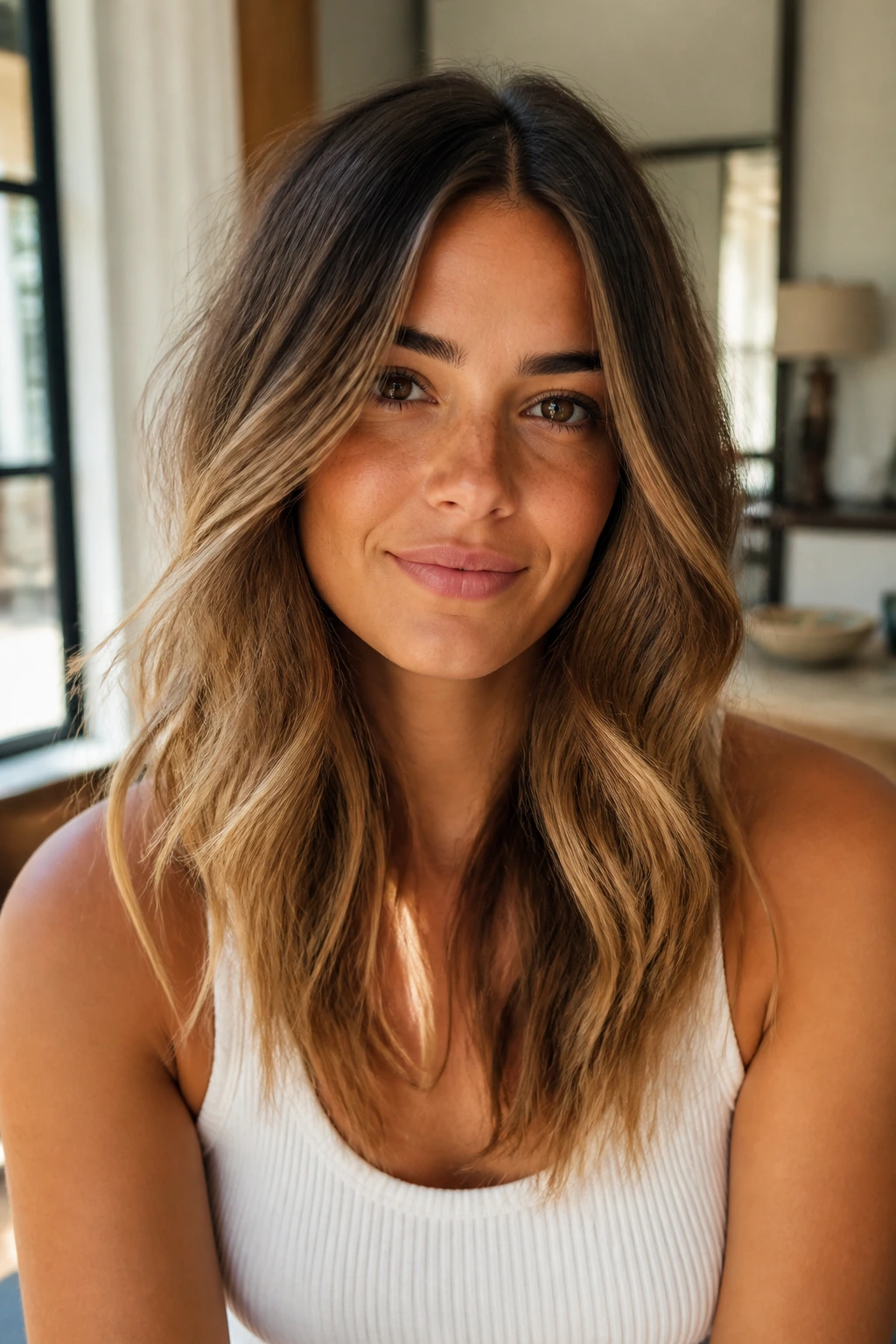
Fine hair shows growth fast, but it also shows bad habits fast. If the ends start to thin out, don’t wait forever to trim them. For most of these cuts, a light dusting every 8 to 10 weeks keeps the outline from going fuzzy. The face-framing pieces may need attention a little sooner if they’re the ones doing most of the work.
Wash frequency matters too. If your scalp runs oily, going too long between washes can flatten the crown and make the layers look tired. Dry shampoo can help, but keep it off the ends. The minute dry shampoo gets down the length of fine hair, it starts to feel dusty and rough.
Sleep helps more than people expect. A loose braid or a silk pillowcase can keep the wave pattern from getting mangled overnight, especially if the cut has longer face-framing pieces. If you wake up with weird bends near the front, mist the section lightly with water, twist it once or twice, and let it reset for a few minutes. That’s usually enough. No drama required.
Common Mistakes That Flatten Fine Hair
-
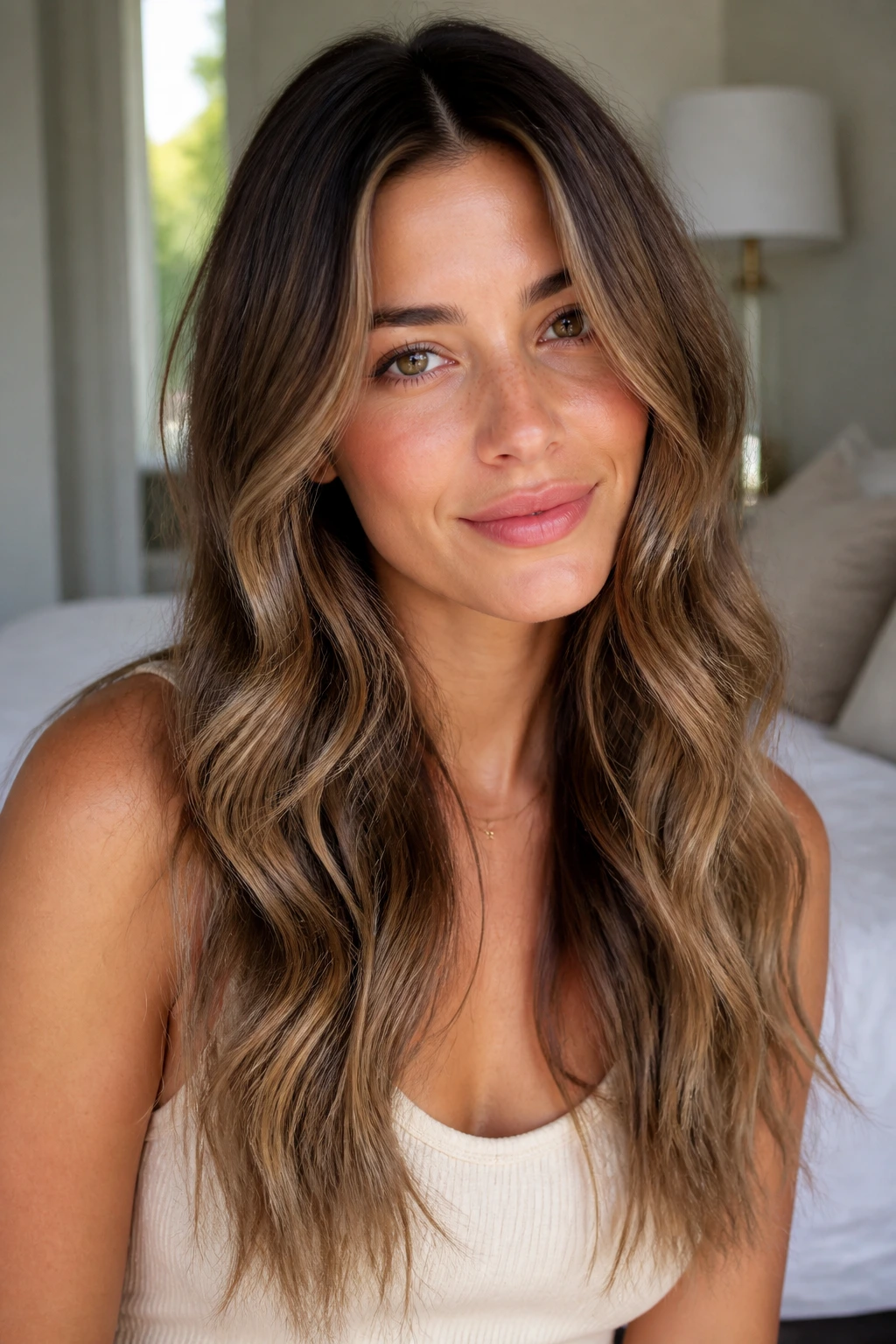
Starting the layers too high: The hair looks thinner through the middle and the ends lose density. Ask for lower layers and keep the perimeter strong.
-
Over-thinning the ends: This is the fastest way to make fine hair look threadbare once you add waves. The fix is simple: keep more weight on the bottom.
-
Using too much product: Thick creams and heavy oils flatten fine strands. Use lightweight mousse, then add texture spray only where you need grip.
-
Cutting the fringe too short: Short bangs on fine hair can look sparse and be hard to grow out. Leave the face frame a little longer unless you’re committed to regular trims.
-
Curling every piece the same way: Uniform waves can make the haircut feel stiff and dated. Alternate direction and leave a few ends straighter so the texture breathes.
-
Ignoring the back view: A cut can look lovely from the front and flimsy from behind. If the perimeter is too shredded, the waves expose it.
Variations and Alternatives to Try
The Air-Dry Version
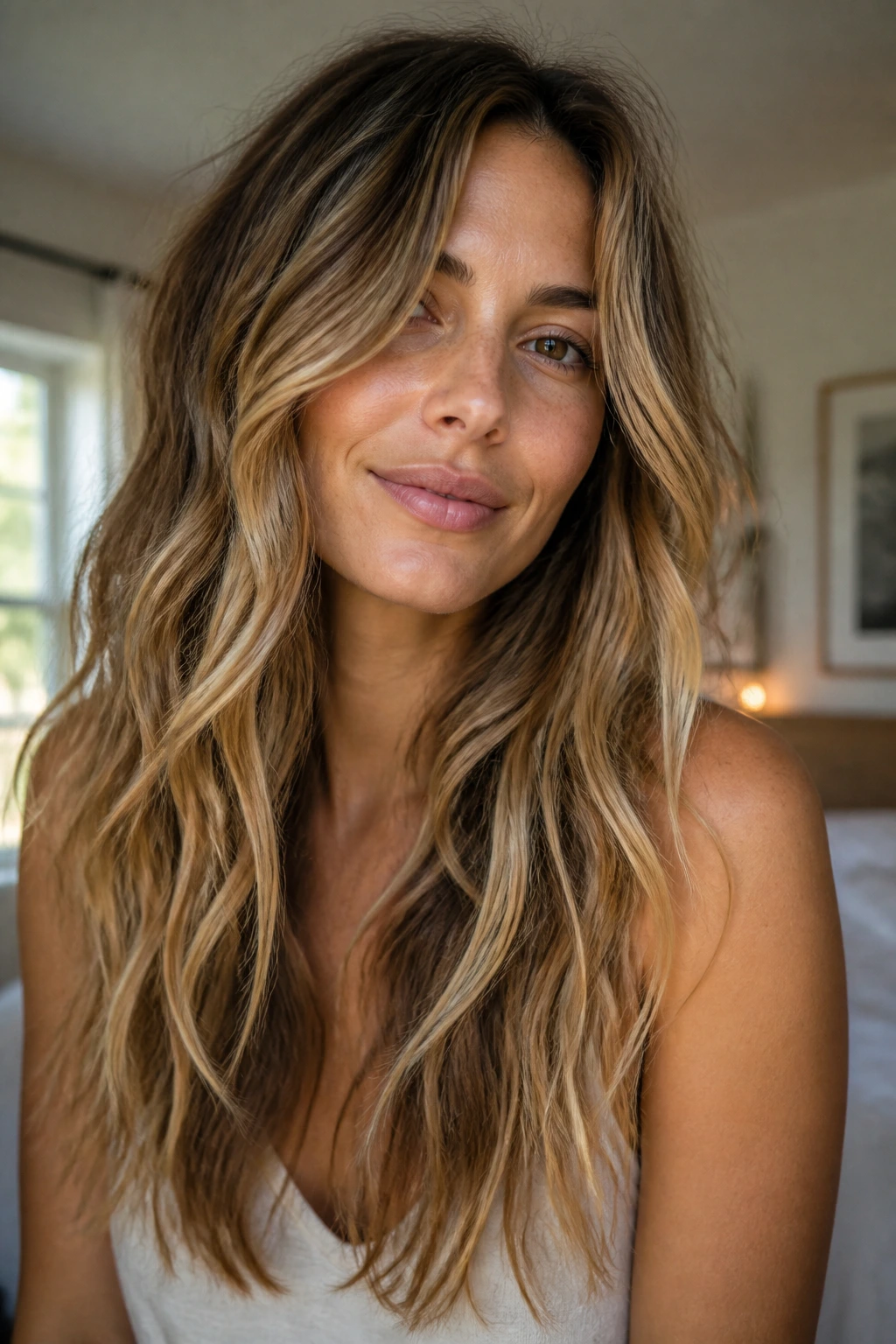
Keep the layers low and the face frame soft, then style with mousse and a little root clip action while the hair dries. This works for people who want movement without daily heat. It’s not the fullest version, but it’s honest and low-fuss.
The Glossy Blowout Version
Use a round brush or large roller brush to smooth the crown and bend the ends under slightly before adding loose waves through the lengths. This version suits finer hair that gets frizzy at the top but still wants beachy movement below.
The Fringe-Forward Version
Swap curtain bangs for wispy bangs or bottleneck bangs if you want the face to open up around the eyes. The length should stay long enough to blend, or the fringe starts feeling like a separate haircut glued on top.
The Grow-Out-Friendly Version
Ask for face-framing layers that begin at the chin and avoid hard internal chopping. This is the best choice if you only want to cut your hair a few times a year and still keep the shape looking deliberate.
The Slightly Edgy Version
Choose a softened wolf cut or long shag with restrained texture through the crown. This gives the hair attitude without wrecking the outline, which is the line I keep coming back to for fine hair.
Frequently Asked Questions
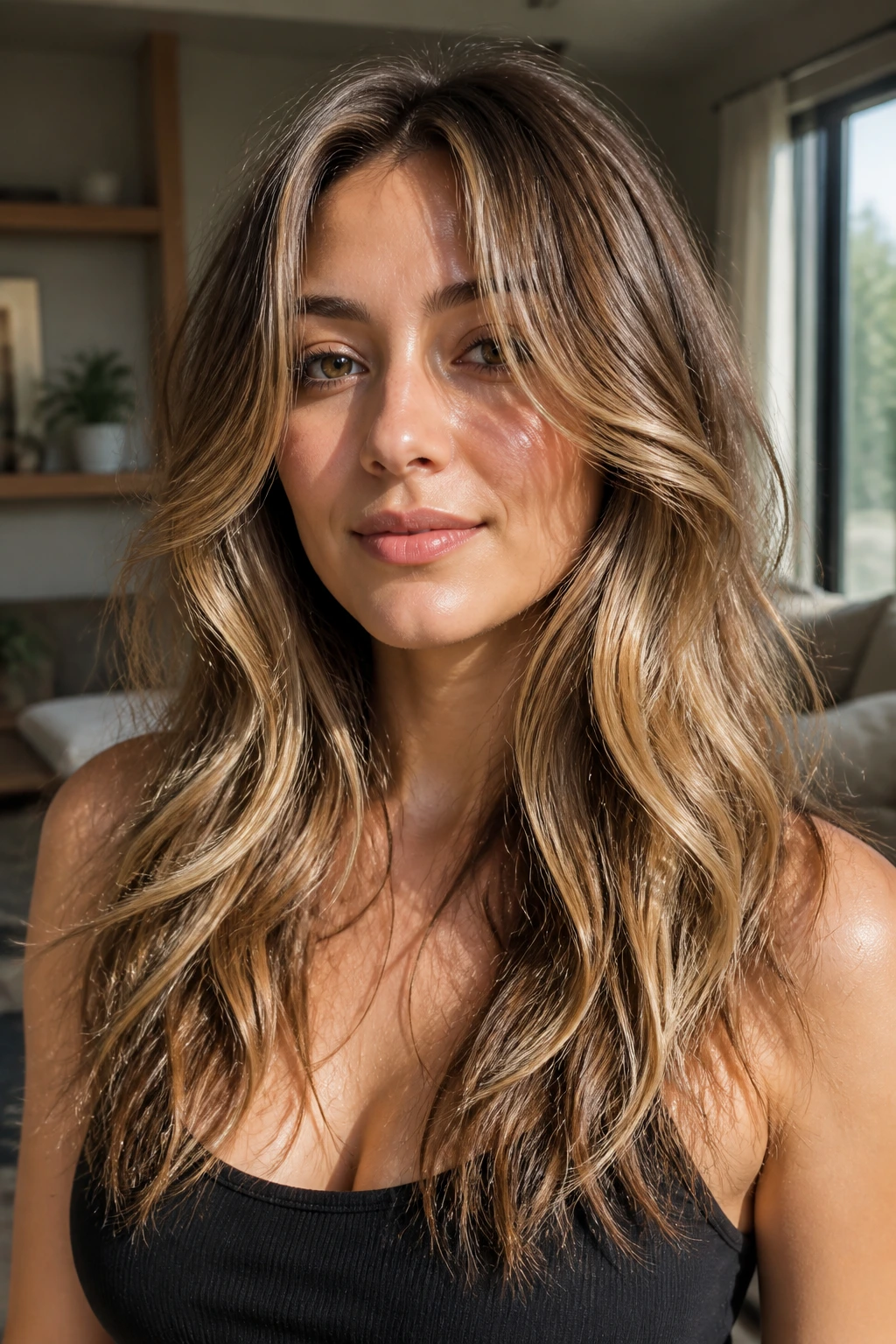
Will layers make my fine hair look thinner?
They can, if the layers start too high or the ends are thinned too much. The safer approach is long layers with a full perimeter, so the hair keeps its density while still moving.
Are curtain bangs a good idea for fine hair?
Yes, if they’re cut with enough length to blend into the side pieces. Short, dense bangs can look sparse on fine hair, but curtain bangs or bottleneck bangs usually soften the face without stealing too much volume.
How often should I trim a layered long haircut like this?
Most of these cuts keep their shape best with a trim every 8 to 10 weeks. If the face-framing layers are the main feature, you may want a small cleanup sooner so they don’t drift into your eyes.
Can I get beachy waves if my hair is pin-straight?
You can, but the cut should help you. Ask for a shape with a strong base and layers that begin lower on the head, then use a curling iron or flat iron bend with a light hold spray. Straight hair usually needs a little more set time.
Is a razor cut bad for fine hair?
Not always. A razor can create soft separation, but if your ends are fragile or sparse, scissor cutting is often safer. The goal is movement without shredding the perimeter.
What’s better for fine hair: face-framing layers or all-over layers?
Face-framing layers are the gentler choice if you want to keep the hair looking full. All-over layers can work, but they need to be placed carefully and usually lower, not scattered through the top half.
How do I stop my waves from falling flat by lunchtime?
Use mousse at the roots, let the curls cool completely, and don’t brush them out too early. If the crown still collapses, lift the roots with clips while the hair sets, then finish with a light mist of texturizing spray.
Should I show my stylist photos of wavy or straight hair?
Show both if you can. Straight photos reveal the actual weight line and density, while waved photos show how the cut behaves in motion. One without the other only tells half the story.
The Cuts That Let Fine Hair Keep Its Shape
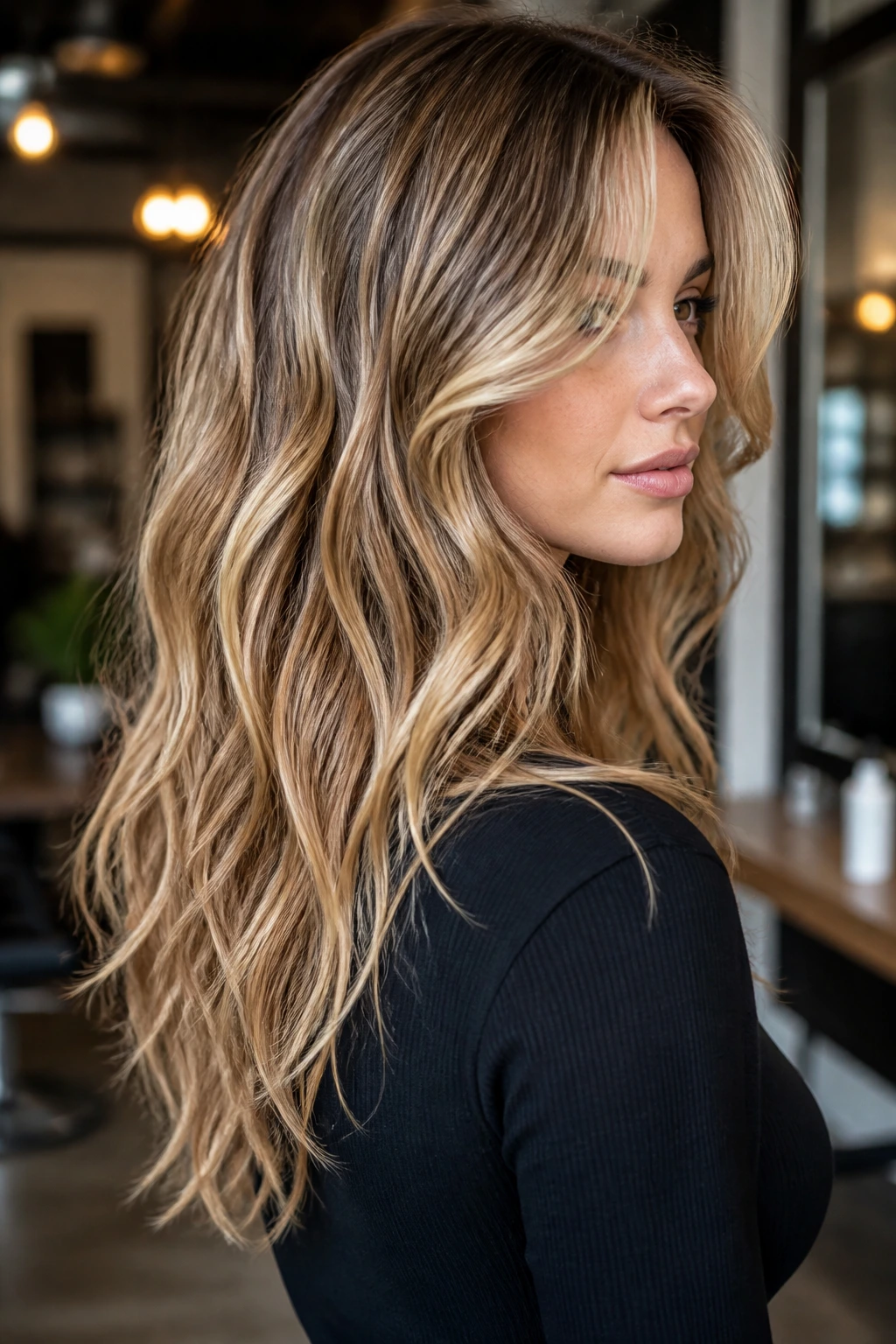
The best layered long haircuts for fine hair with beachy waves don’t chase volume in a cartoonish way. They give the hair a structure that can survive brushing, bending, sleeping, and the strange little collapse that happens when fine strands get too much product or too many short layers.
That’s why I keep coming back to the same idea: protect the outline, then place the movement where it matters. A good face frame. A strong bottom line. Long layers that know when to stop. That combination does more for fine hair than the kind of over-cutting people sometimes mistake for style.
Bring the right photo, ask for the perimeter to stay full, and let the wave pattern do the rest. When the shape is right, the hair stops fighting you.