



Fine hair does not need more layers. It needs a cleaner shape. That is why pageboy haircuts for women over 50 with fine hair keep earning a place in the salon chair: the line is controlled, the ends tuck in instead of fraying out, and the whole cut gives the eye a place to land.
Once hair gets finer, the usual tricks can backfire fast. Too many choppy layers make the perimeter look see-through. Too much length drags the shape down. A pageboy does the opposite, especially when the cut stops around the jaw, skims the neck, or builds a little lift at the nape. It can make thin-looking hair appear steadier without turning it into a helmet. That balance is the whole point.
And yes, pageboy haircuts have range. Some are crisp and sculpted. Some bend softly under the jaw. Some lean sleek and polished, while others use a bit of movement around the fringe to soften a forehead or tuck a pair of glasses into the conversation. The trick is knowing which version flatters your hair texture, your face shape, and the amount of time you’re willing to spend with a round brush in the morning.
Why These Pageboy Cuts Hold Up Better on Fine Hair
- The blunt edge does real work: A clean perimeter makes fine strands look denser because the eye sees one solid line instead of separated ends.
- The shape stays contained: Pageboys keep the weight where it matters, so the cut doesn’t puff out at the wrong spots or collapse into a limp half-bob by lunch.
- Shorter lengths support lift: Jaw length and neck-grazing cuts give fine hair a chance to bend under without getting dragged flat by gravity.
- Soft fringe can hide thinning at the hairline: A side-swept or curtain fringe takes attention away from a sparse front hairline and gives the style more movement.
- The styling is manageable: A pageboy usually needs one good blow-dry or a tidy air-dry routine, not a dozen products and a half-hour of rescue work.
- It plays well with age changes: Hair can get drier, finer, or a little more fragile over time, and a pageboy shape keeps those changes from looking sloppy.
1. Classic Chin-Length Pageboy
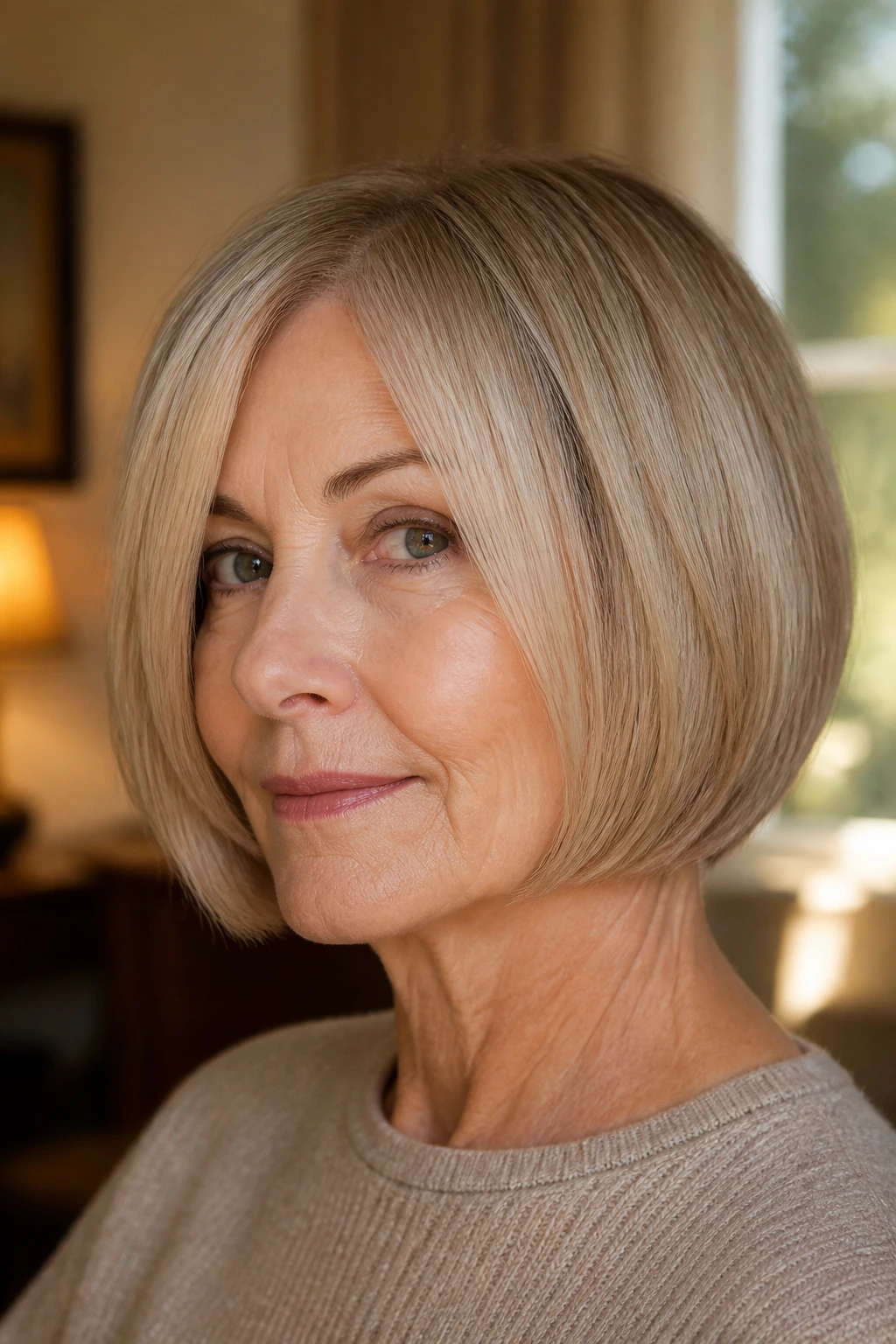
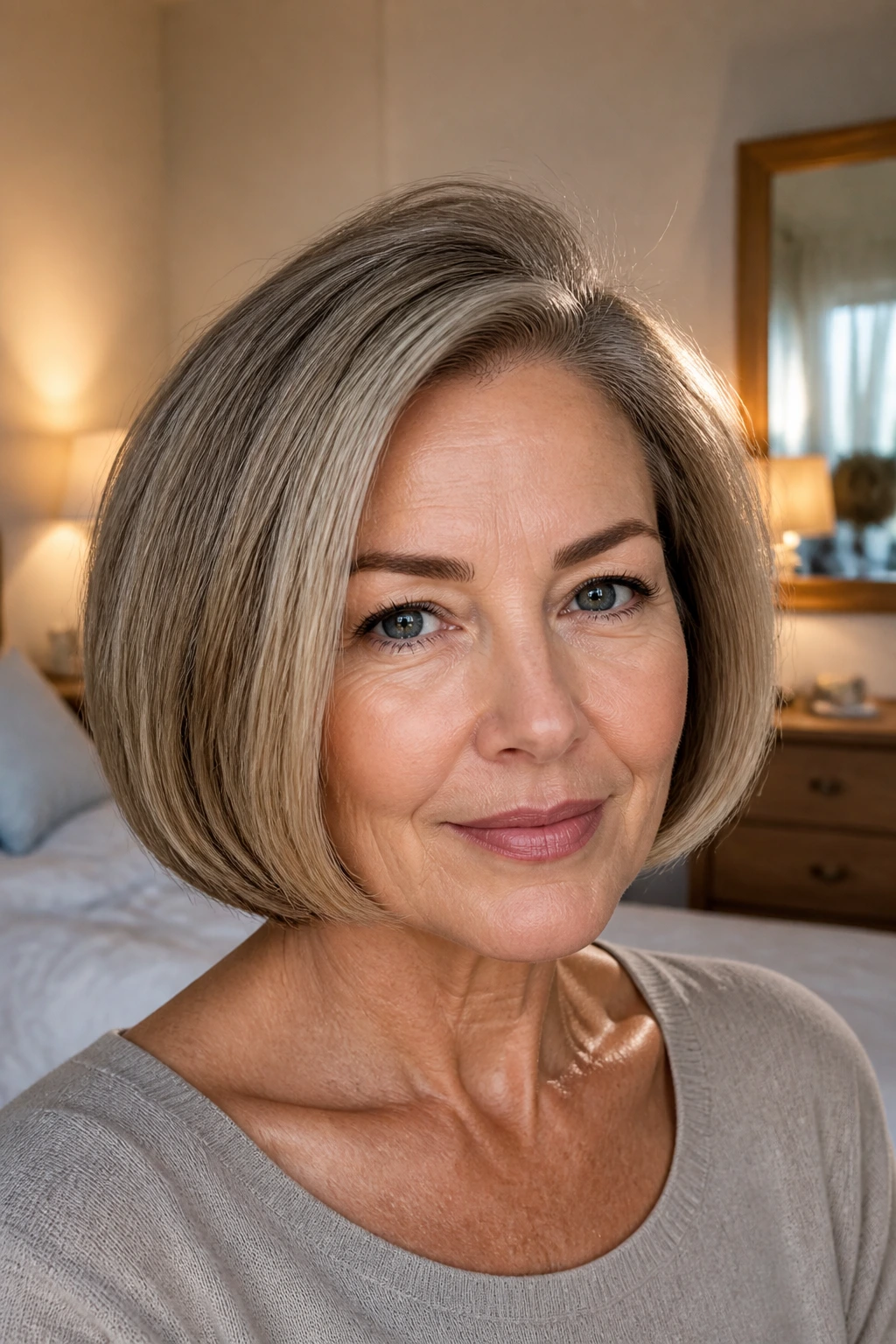
This is the version most people picture first: a clean line that lands around the jaw, with the ends turned under just enough to show that tidy pageboy curve. On fine hair, that blunt finish is doing the heavy lifting. It gives the cut a firmer edge, which matters when each individual strand is lightweight and prone to separating.
Ask for a solid perimeter with minimal internal layering. That last part matters. Too much layering around the sides and the cut starts to lose its body, which is exactly what fine hair cannot afford. The ideal version feels compact, not heavy. It sits close to the head, but it never looks squashed.
A quick round-brush bend at the ends is usually enough. Use a 1¼-inch brush, direct the dryer nozzle downward, and roll the brush under at the last inch of the hair. The finish should look smooth and slightly curved, not overly curled. That little inward sweep is what keeps the style from reading as a plain chin-length bob.
2. Soft Side-Swept Bang Pageboy
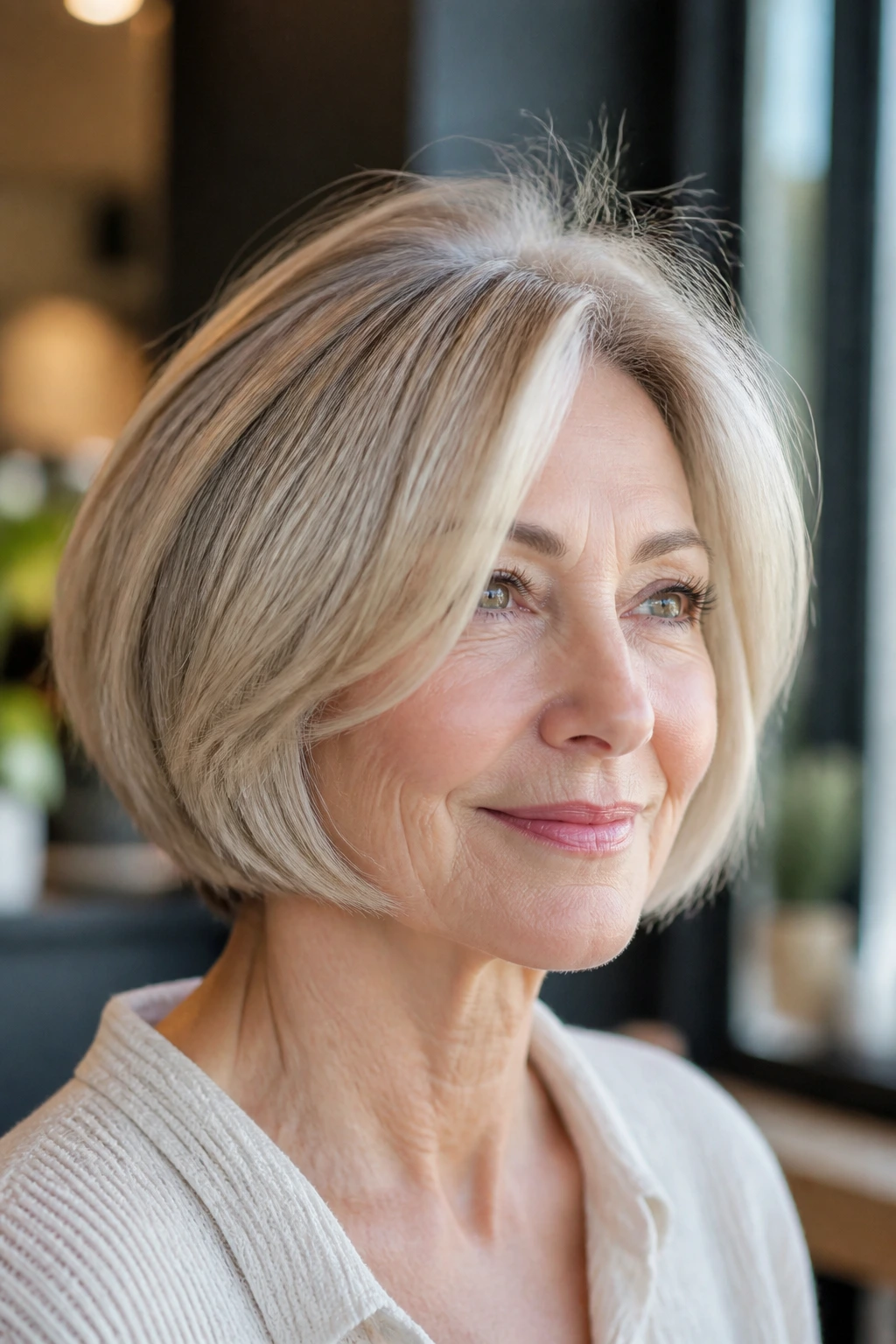
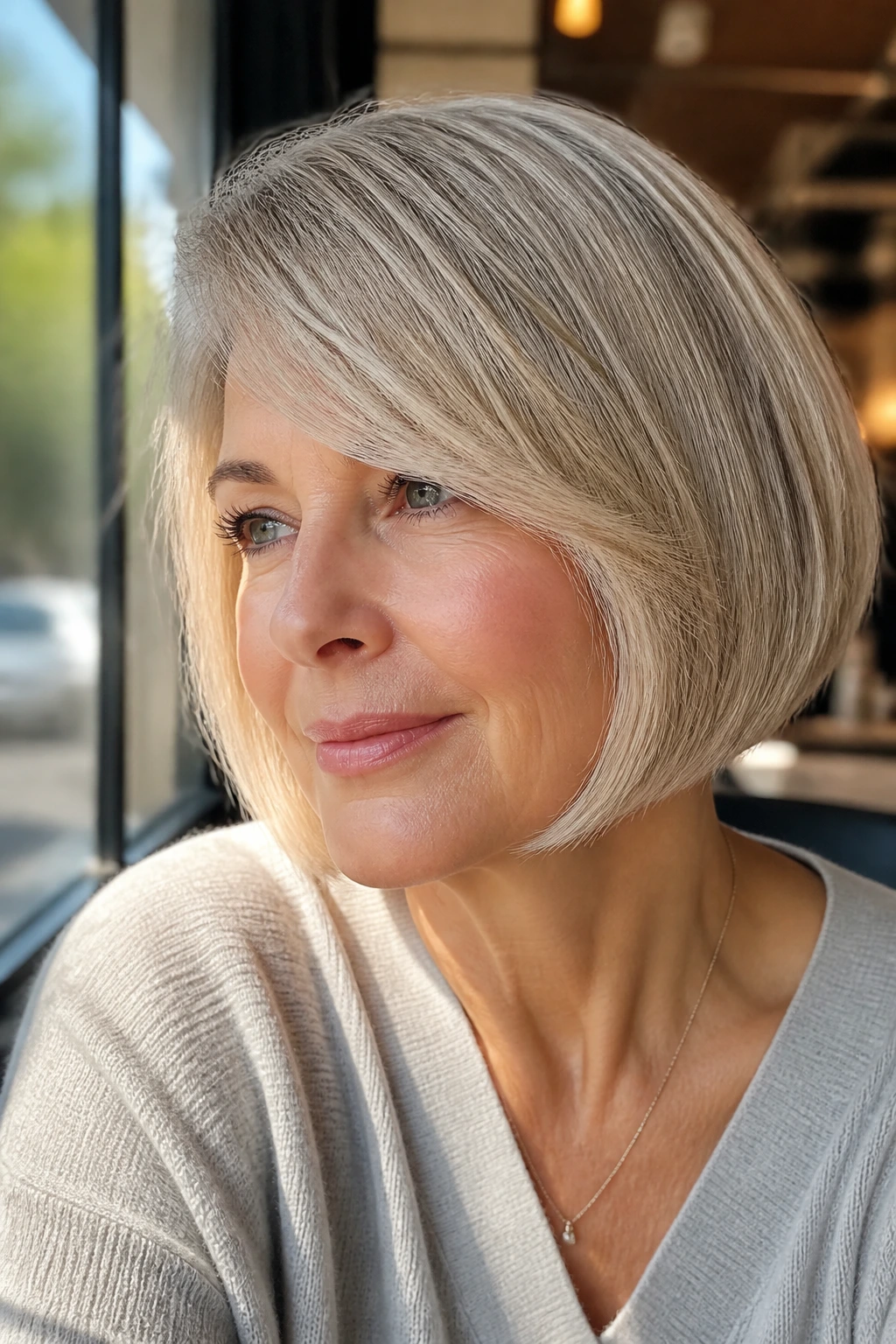
A side-swept fringe changes the whole mood of a pageboy. Instead of a straight line across the forehead, you get a diagonal sweep that softens the top of the face and makes fine hair look a bit fuller at the front. That’s useful if your hairline has become lighter or if you simply do not want a blunt fringe sitting heavy on the forehead.
The best part is how forgiving this version is. It works with glasses. It works with softer jawlines. It even works when the bang area grows out a little between salon visits, because the sweep blends into the front corners instead of turning ragged. I like this one for women who want shape without the feeling of a strict, geometric haircut.
Keep the bang long enough to tuck behind the ear if needed. Short side bangs can flip weirdly on fine hair, especially if the cowlick at the front is stubborn. A longer sweep gives you more control, and more control is usually what makes the difference between polished and fussy.
3. Stacked Nape Pageboy
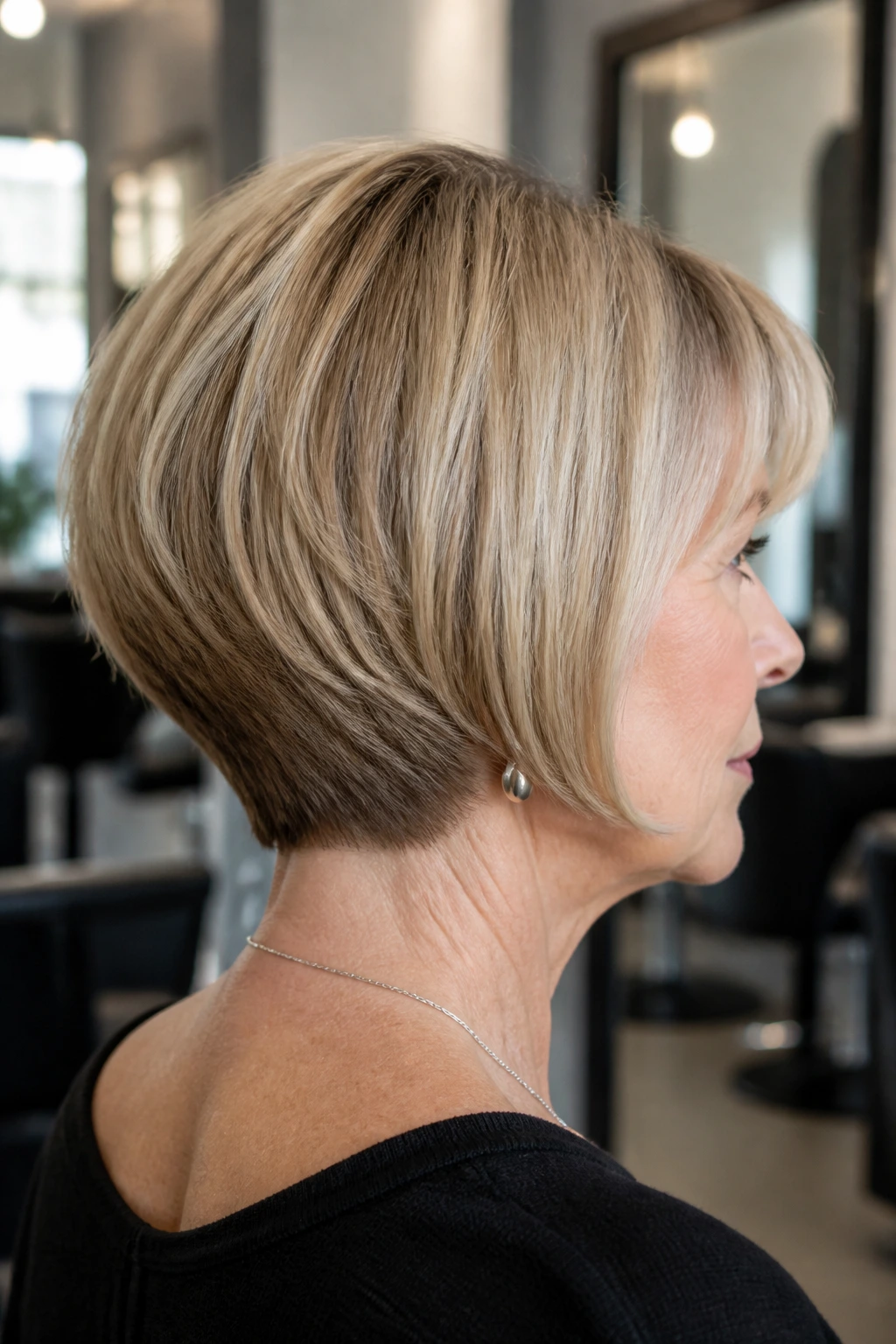
If your crown is flat and your hair falls close to the scalp, the stacked nape pageboy earns its keep fast. The back is graduated a little shorter, so the hair lifts where it meets the neck instead of lying like a wet napkin. That small bit of stacking can change how the whole head looks from the side.
This cut is especially good when you want the front to stay soft but the back to carry more shape. It gives the pageboy that rounded, tucked-under posture without forcing the sides to do all the work. On fine hair, that matters. Weight at the back creates the illusion of density, and the curve keeps the cut from feeling blunt in a bad way.
Do not over-stack it. That’s the trap. Too much graduation and the nape starts looking pinched while the crown flares out. A subtle stack, cut into the natural growth pattern at the nape, looks better and grows out more gracefully.
4. Feathered Pageboy With Airy Ends

This version is for the person who likes movement but hates scraggly ends. The perimeter still keeps its pageboy outline, but the very tips are feathered just enough to soften the edge. On fine hair, that can be a smart compromise because it avoids the rigid feel of a hard blunt cut without stripping away all the weight.
The feathering should stay light. I mean light. If a stylist thins the ends too aggressively, fine hair turns see-through at the bottom and the whole shape loses its anchor. A good feathered pageboy looks breezy, not shredded. The line is still visible when you look at it from across the room.
Style this one with a small amount of mousse at the roots and a brush that gives the ends a gentle curve. If you use too much wax or cream, the feathered finish can separate in a clumpy way. That’s not the goal. The goal is soft movement with a firm edge underneath.
5. Rounded Pageboy With a Full Fringe
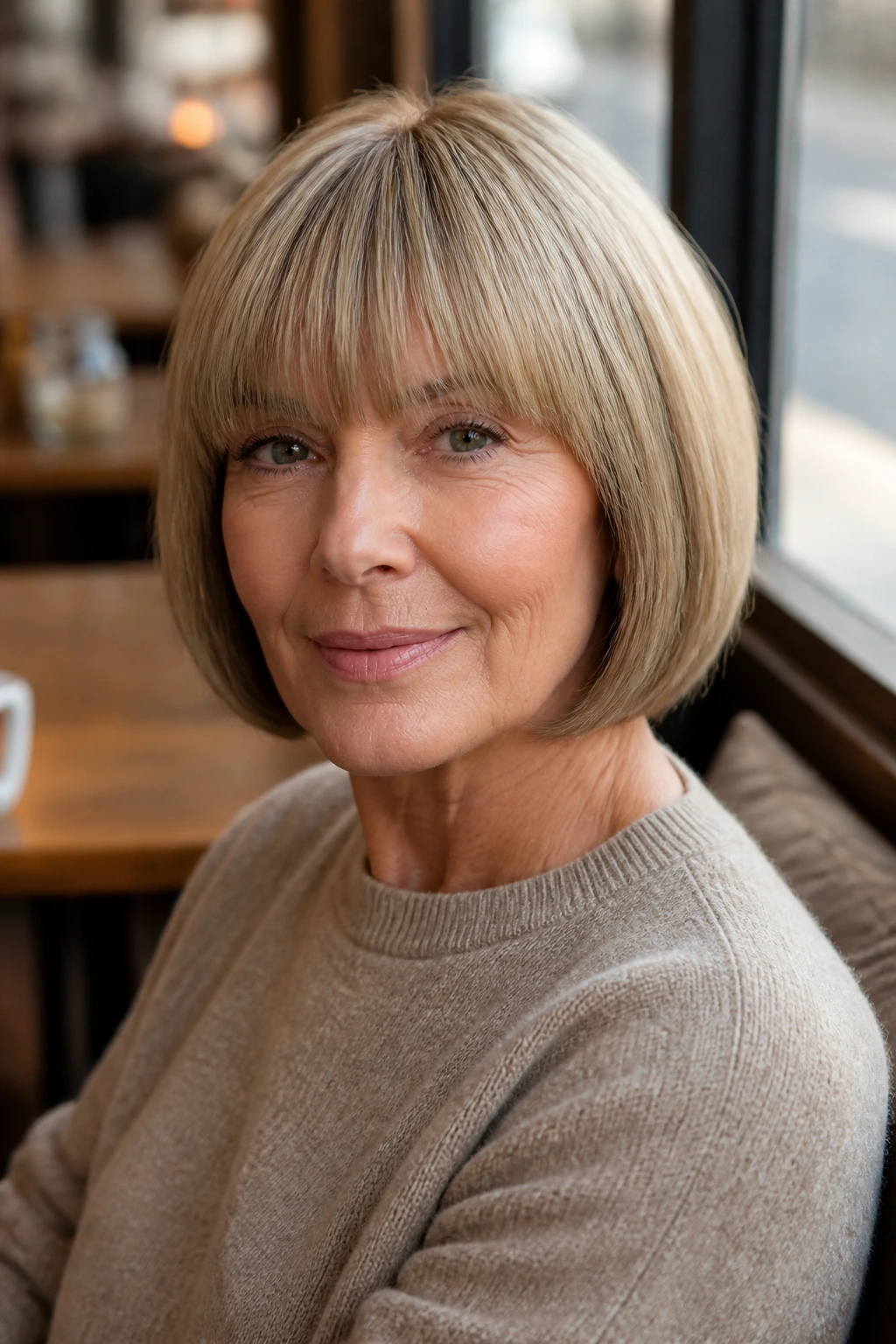
A full fringe can be a smart move when the forehead feels wider or the top third of the face needs more balance. Combined with a rounded pageboy shape, it creates a compact silhouette that looks deliberate and tidy, especially on hair that is fine but not sparse in the front.
The fringe should be dense enough to read as a fringe, but not so heavy that it sits like a shelf. Fine hair around the bangs needs careful handling. A stylist who cuts the fringe slightly longer in the middle and softens the corners usually gets a better result than one who chops straight across and calls it done.
This version suits a stronger brow line and a face that can handle some structure near the eyes. If the hair is very wispy at the front, a full fringe may need too much daily work. In that case, a side-swept or curtain version is easier to live with. Still, when it works, it frames the face with a clean, almost vintage kind of neatness.
6. Sleek Center-Part Pageboy
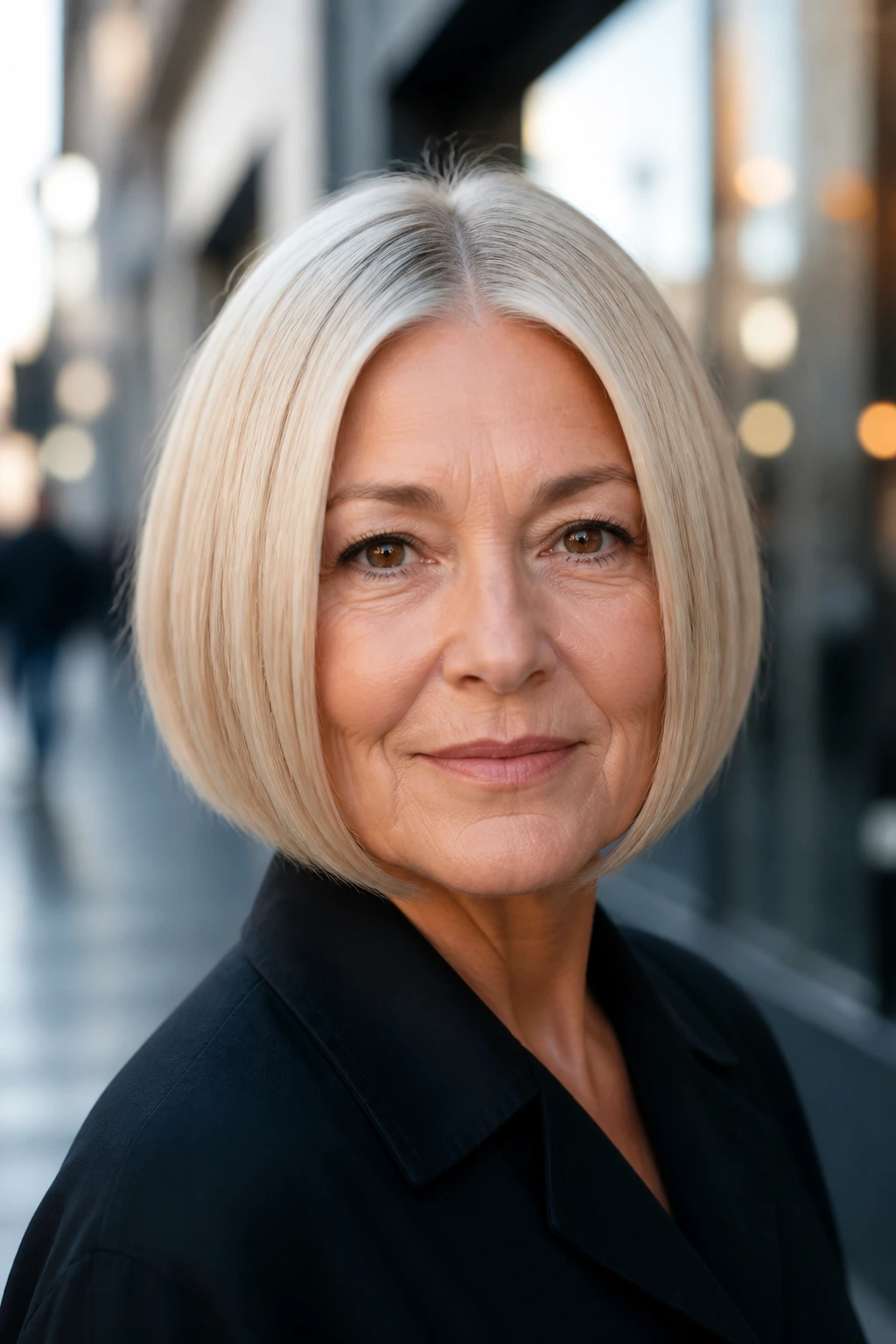
A center part gives a pageboy symmetry, and symmetry can be a very good thing when fine hair has gotten uneven over time. The style falls in two even panels, which makes the perimeter look denser and the whole cut feel more settled. On naturally straight hair, this can look crisp with very little fuss.
The danger is flatness. If the roots lie too close to the scalp, the center part can expose the top of the head in a way that feels stark. The fix is not more product. It is smarter product: a light root lift spray before blow-drying, then a quick sweep of the brush away from the part to give the roots some bend.
This one is especially nice if your features are balanced and you like a clean line near the face. It has a calm, unfussy feel. No drama. No softness hiding every edge. Just a neat shape that lets the hair’s shine and the cut’s precision do the work.
7. Layered Bob-Pageboy Hybrid
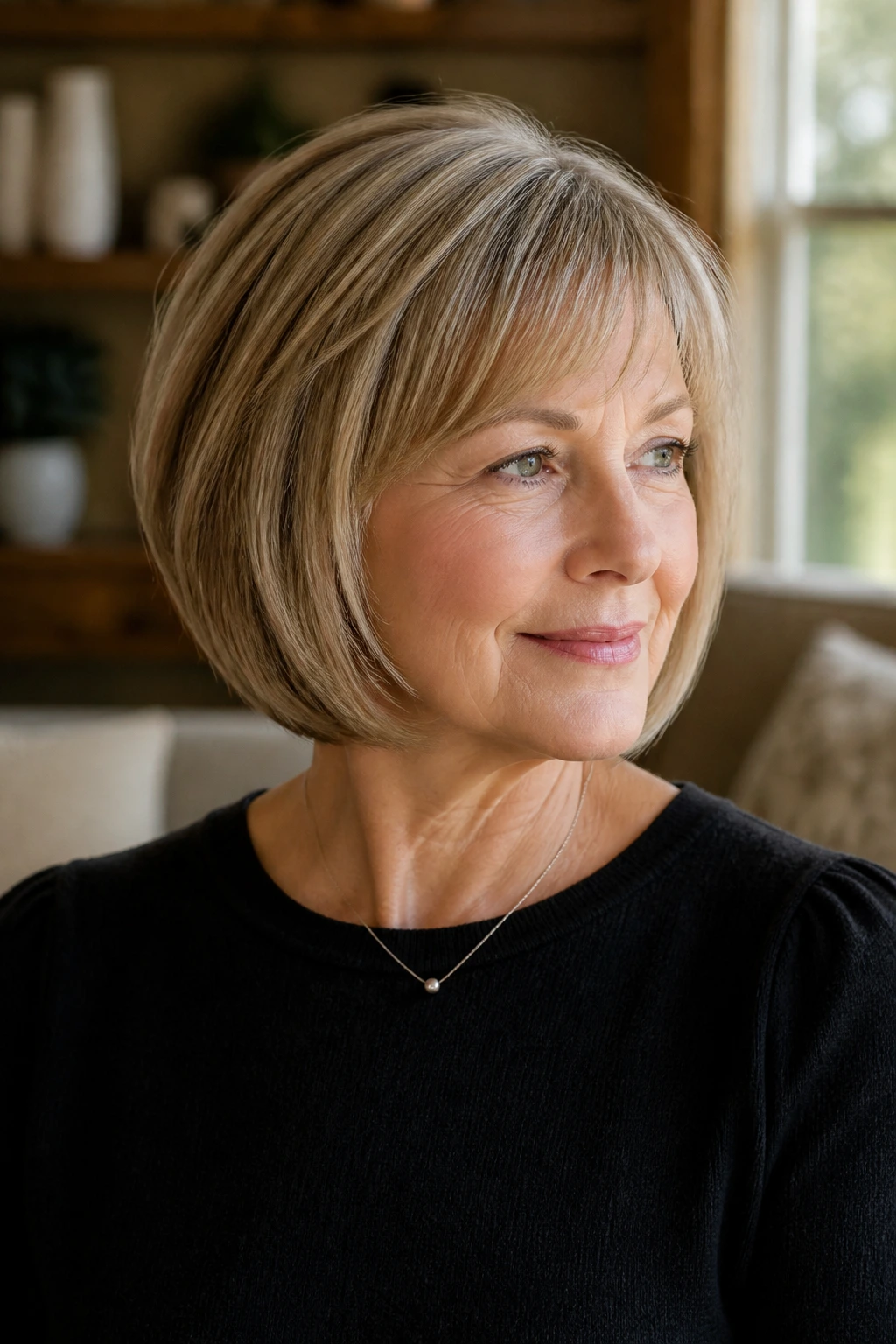
This is what I suggest to women who like the pageboy idea but don’t want the cut to feel too rigid. The hybrid keeps the pageboy perimeter while adding a small amount of internal layering under the top section. The result is a little more swing through the sides and a softer fall around the jaw.
The key word is small. Fine hair cannot take a deep layer stack and still hold its shape well. You want enough internal movement to prevent the style from looking blocky, but not so much that the ends separate into thin, uneven pieces. A good stylist will cut the layers where they can help the shape and stop before they start stealing density.
This cut works well for someone who wears a pageboy most days but wants a little less “set” feeling. It moves more when you turn your head. It also grows out in a forgiving way, which is useful if you are not keen on monthly trims.
8. Collarbone Pageboy

A collarbone-length pageboy is the long-lens version of the cut. It keeps the rounded, tucked-under feel, but the added length gives fine hair a little more swing and keeps the ends from looking too abrupt. That can be a good middle ground if you’re not ready to go short again.
This shape is especially useful when the hair is fine but the density is decent through the ends. The collarbone acts like a visual stop line. The hair can rest there instead of hanging down past a point where it starts to lose its shape. I find this length flattering on women who want something softer than a strict chin-length cut but still want a style that reads as intentional.
A large round brush or a flat brush with a quick under-turn at the ends usually does the trick. The bend should be subtle. If the curl gets too tight, the length starts to feel fussy rather than elegant. Keep the curve loose and the part clean.
9. Curved Under Pageboy With Tucked Ends
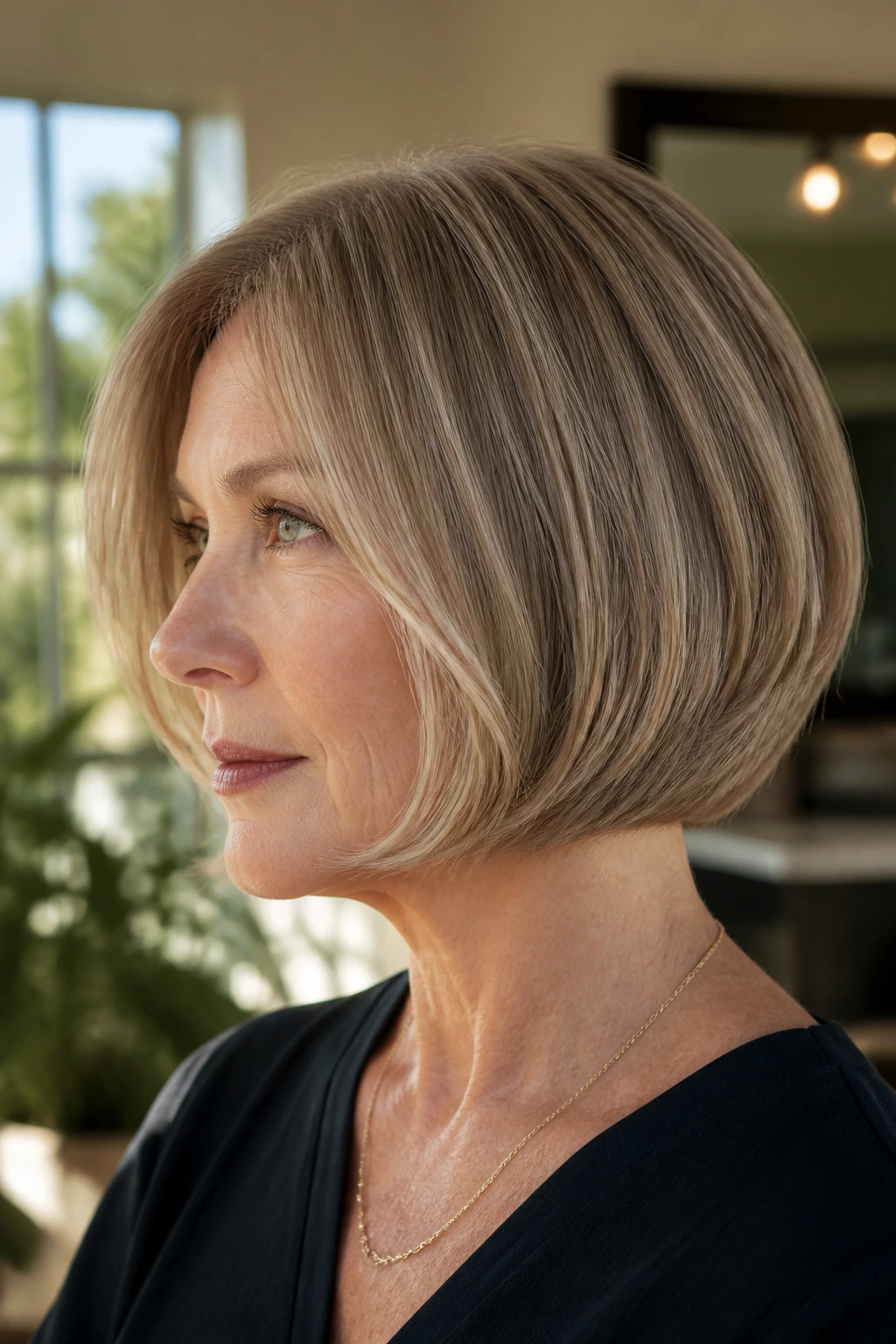
Some pageboys sit on the face. This one hugs it. The curved-under version rounds gently along the jawline and tucks in at the ends, which can soften a square face or bring a little quiet structure to a softer one. The curve is the point; it is not there for decoration.
This cut looks best when the stylist shapes the sides with a smooth, steady line rather than chopping at random. Fine hair can get choppy-looking fast if the line breaks. You want a continuous curve from the front panels down to the nape. That curve gives the hair a fuller appearance, especially if the ends naturally want to flip out.
The styling is simple, but the direction matters. Blow-dry the front panels forward first, then guide them inward as they cool. That cooling step is what helps the tucked shape last longer. Skip it, and the ends will poke out by dinner.
10. Wispy Bangs and Soft Crown Lift
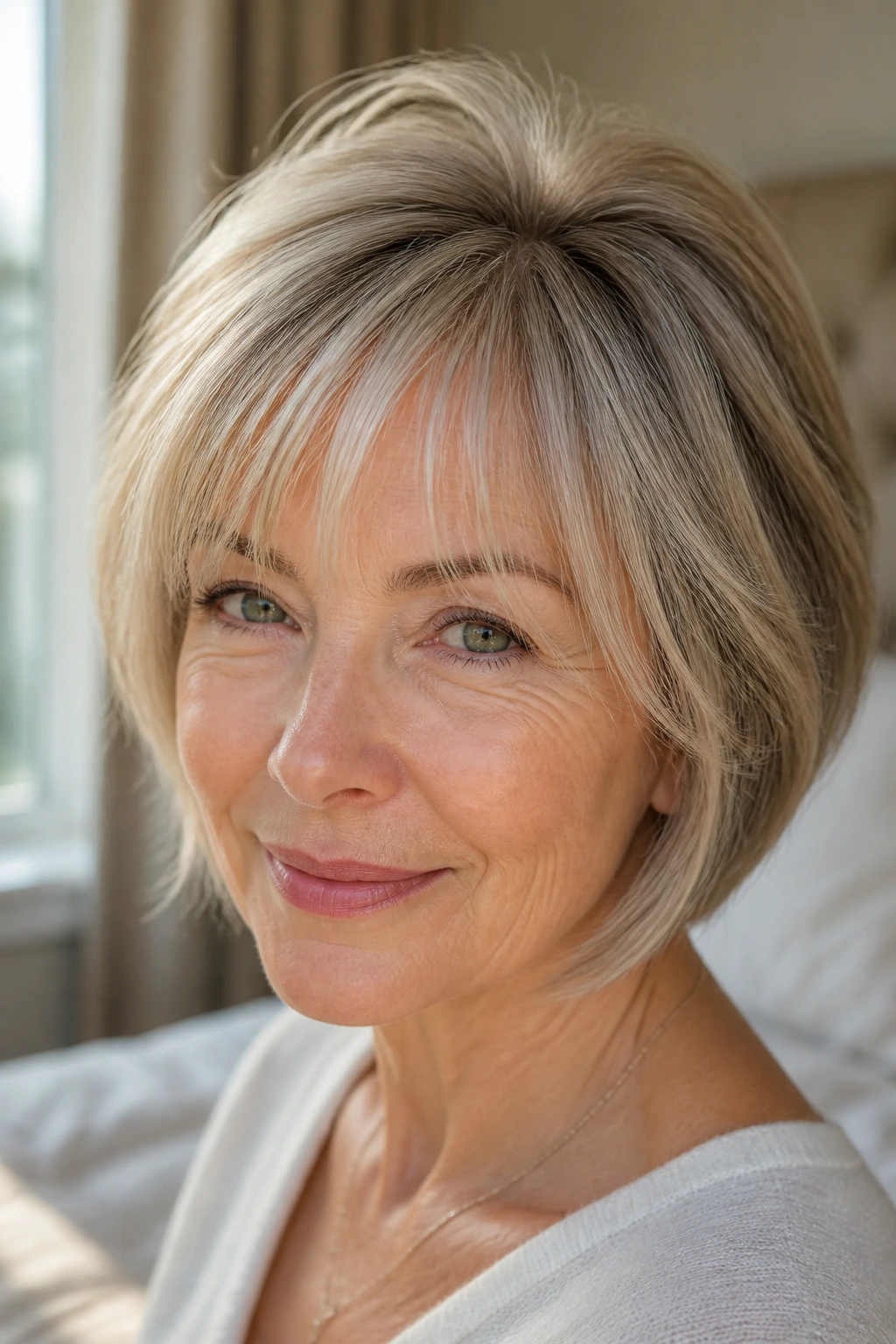
When the crown starts to look a little sparse, the answer is not always a shorter cut. Sometimes it is a smarter one. Wispy bangs paired with gentle crown lift give the pageboy a lighter top section and draw the eye toward the face instead of the scalp.
These bangs should be airy, not thin in a sad way. There’s a difference. Good wispy bangs still have enough hair to move and settle across the forehead, but they don’t sit in a thick block. A bit of texture at the roots helps, especially if the crown lies flat no matter what you do.
I like this style for women who want movement without losing the pageboy’s shape. The crown lift makes the haircut feel less heavy on top, and the fringe gives the front some softness. It can also disguise a shorter forehead or a receding hairline without making the cut look overly styled.
11. Angled Pageboy With Longer Front
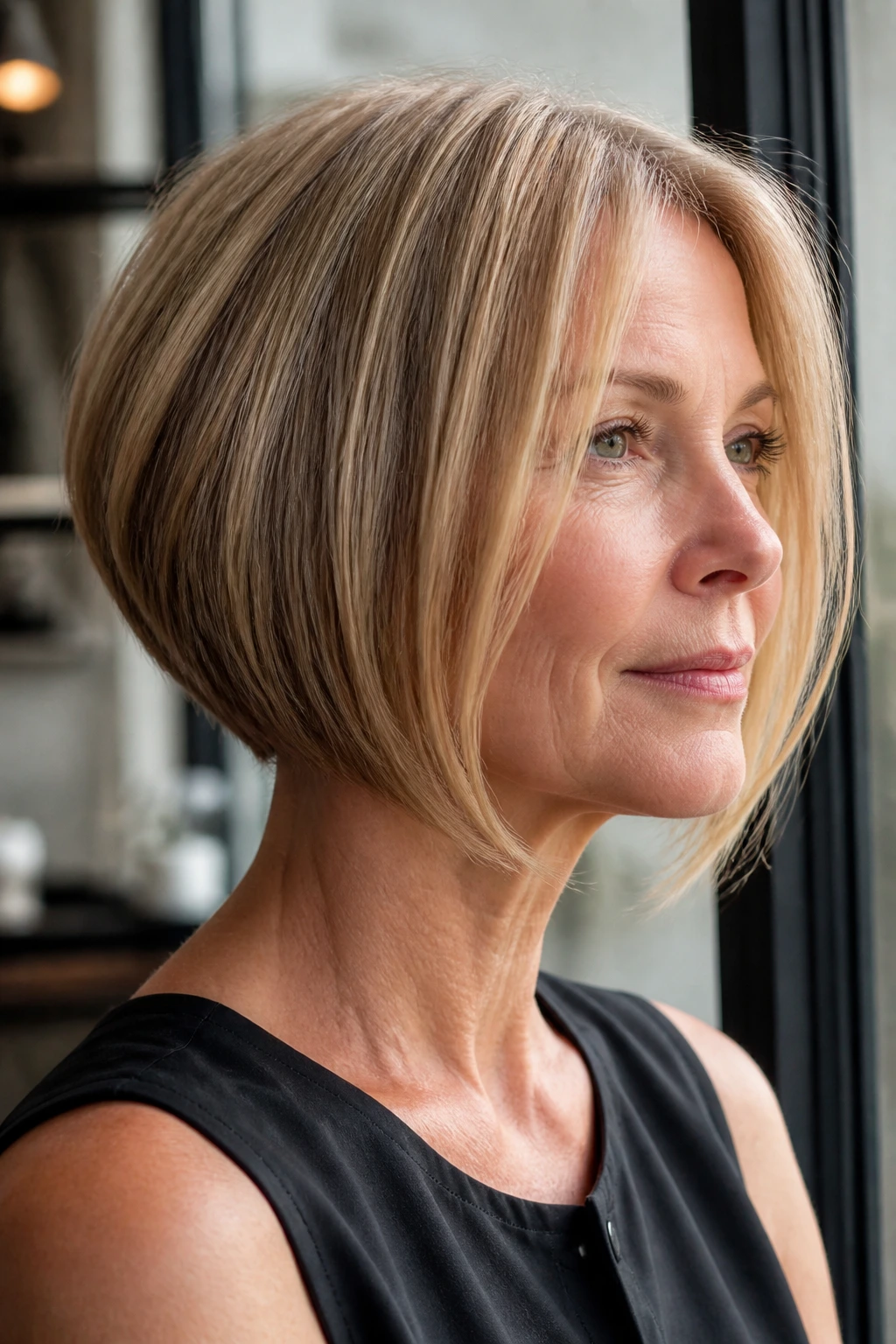
An angled pageboy gives the cut a sharper line from back to front. The nape sits shorter, while the front pieces fall a little longer and brush the jaw or even the cheekbone. That angle creates lift without needing a lot of volume products, which is handy when fine hair tends to collapse under product weight.
This shape can be flattering if you want the face to look a little longer or leaner. The forward angle pulls the eye down and away from the widest point of the cheek. It also adds motion when you tuck one side behind the ear, which is a small trick that changes the whole cut without changing the haircut.
Be careful with the angle. Too steep, and the style starts looking like a bob that forgot what it was doing. A modest angle — enough to see, not enough to shout — usually looks cleaner on fine hair and holds up better between trims.
12. French-Inspired Pageboy
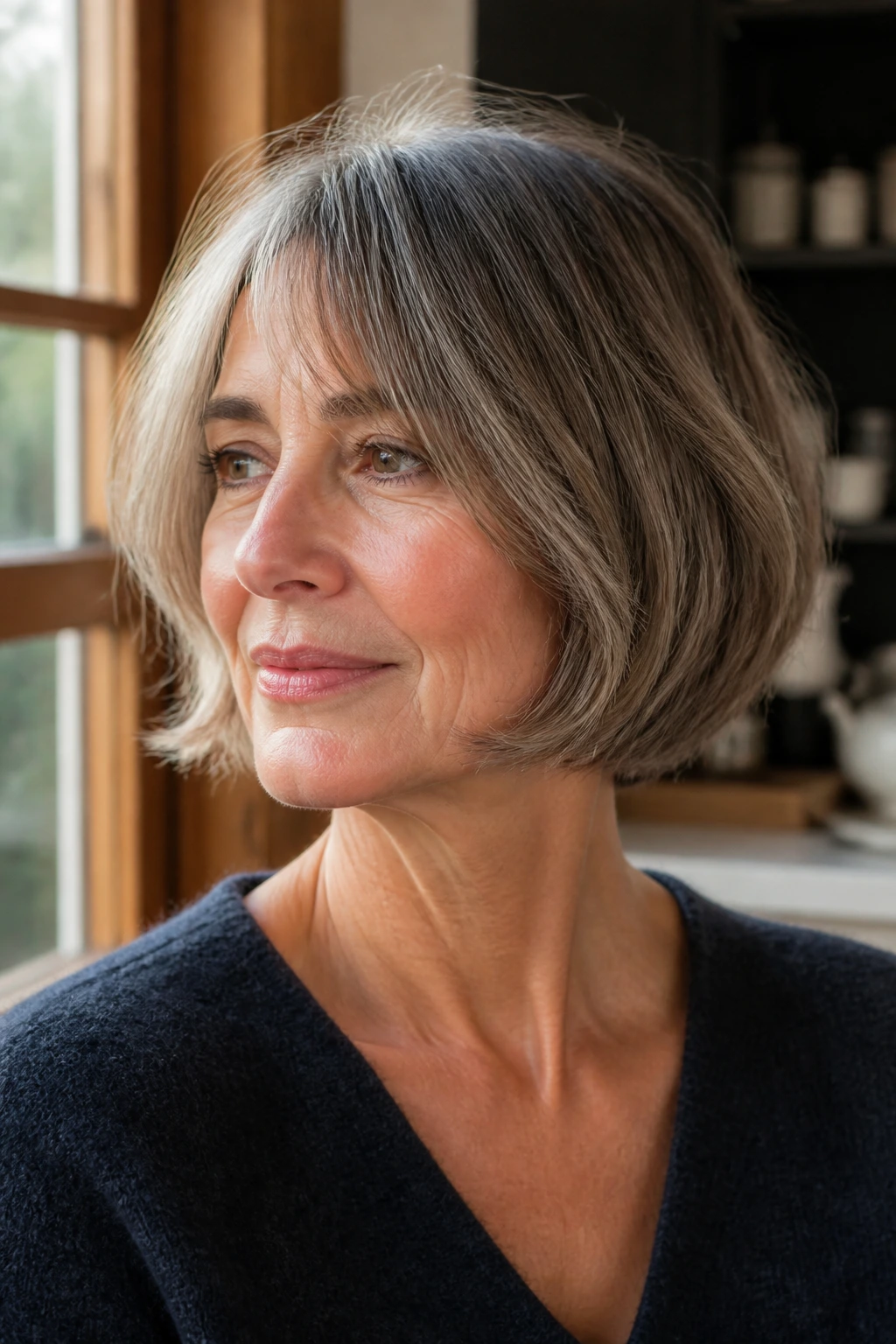
This one has a softer attitude. It keeps the pageboy outline, but the finish is a little looser and more lived-in, with a fringe or front piece that falls in an easy sweep rather than a hard line. Fine hair often likes that approach because it avoids the “overdone” problem that can happen when every strand is pushed into place.
The French-inspired version is best when the cut is slightly imperfect on purpose. Not messy. Just relaxed. The ends still turn under, but not with a forced curl. The fringe can part on its own, and the sides can fall just a touch uneven if that suits your face. That little bit of softness keeps the haircut from reading stiff.
Use a light mousse or a bit of root spray, then rough-dry the hair to about 80 percent before finishing with the brush. The idea is to let the shape settle rather than pin it into place. Fine hair often looks better when it moves a little.
13. Textured Pageboy With Piecey Ends
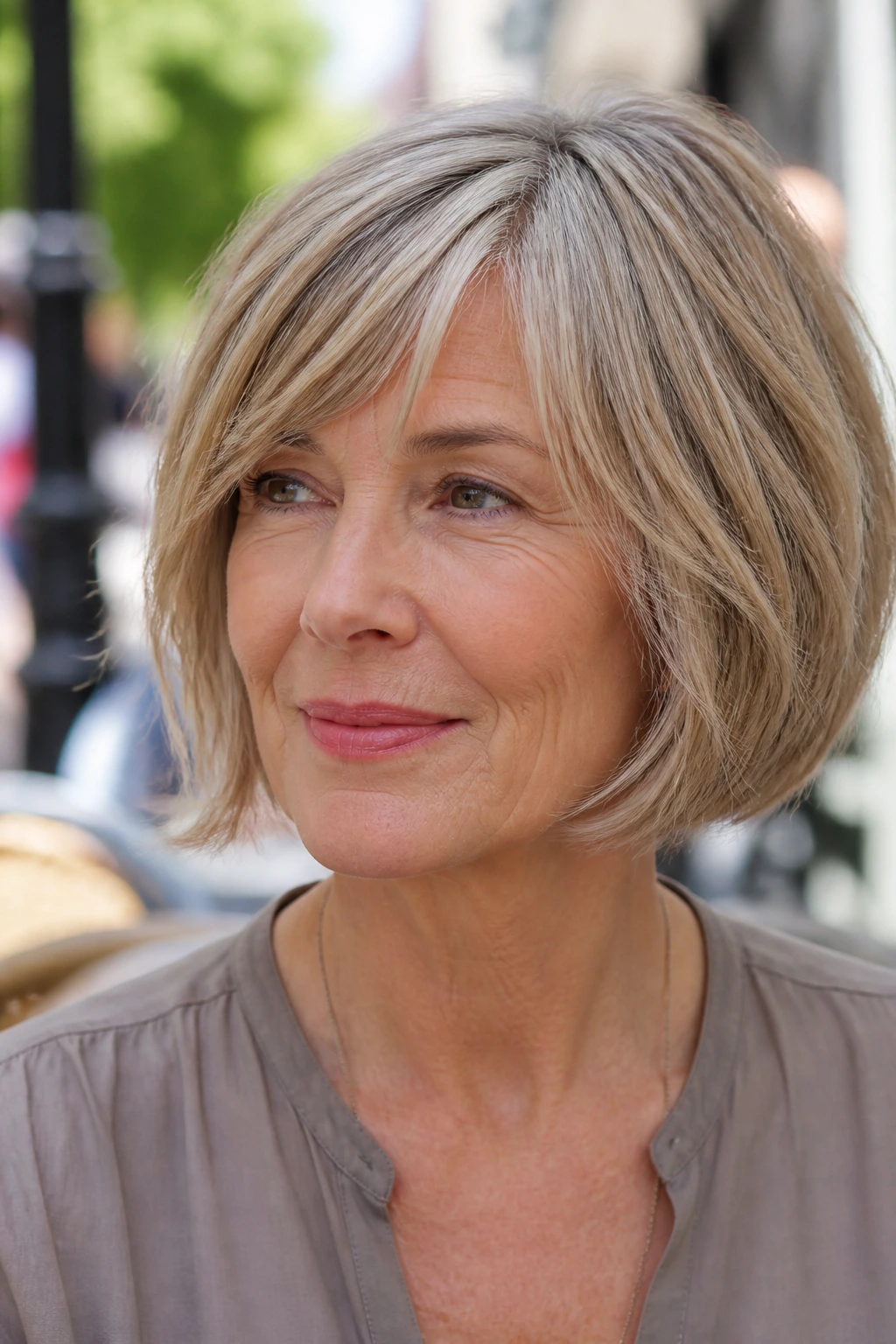
Textured ends can be useful when your fine hair is straight enough to show every blunt edge but soft enough to collapse if you remove too much weight. The piecey pageboy walks that line. It keeps the overall structure, then uses light point cutting at the tips to create separation.
The shape works because the texture is controlled. You still want the perimeter to feel solid. You just don’t want a hard, blocky outline that makes the haircut look helmet-like. A few piecey edges around the jaw and nape can keep the style modern without stripping out the density.
A tiny amount of styling cream or a pea-sized touch of paste on the ends is enough. More than that and the pieces turn stringy. Fine hair needs restraint here. A little texture gives it life; too much turns it limp and sticky.
14. Grey-Blend Pageboy
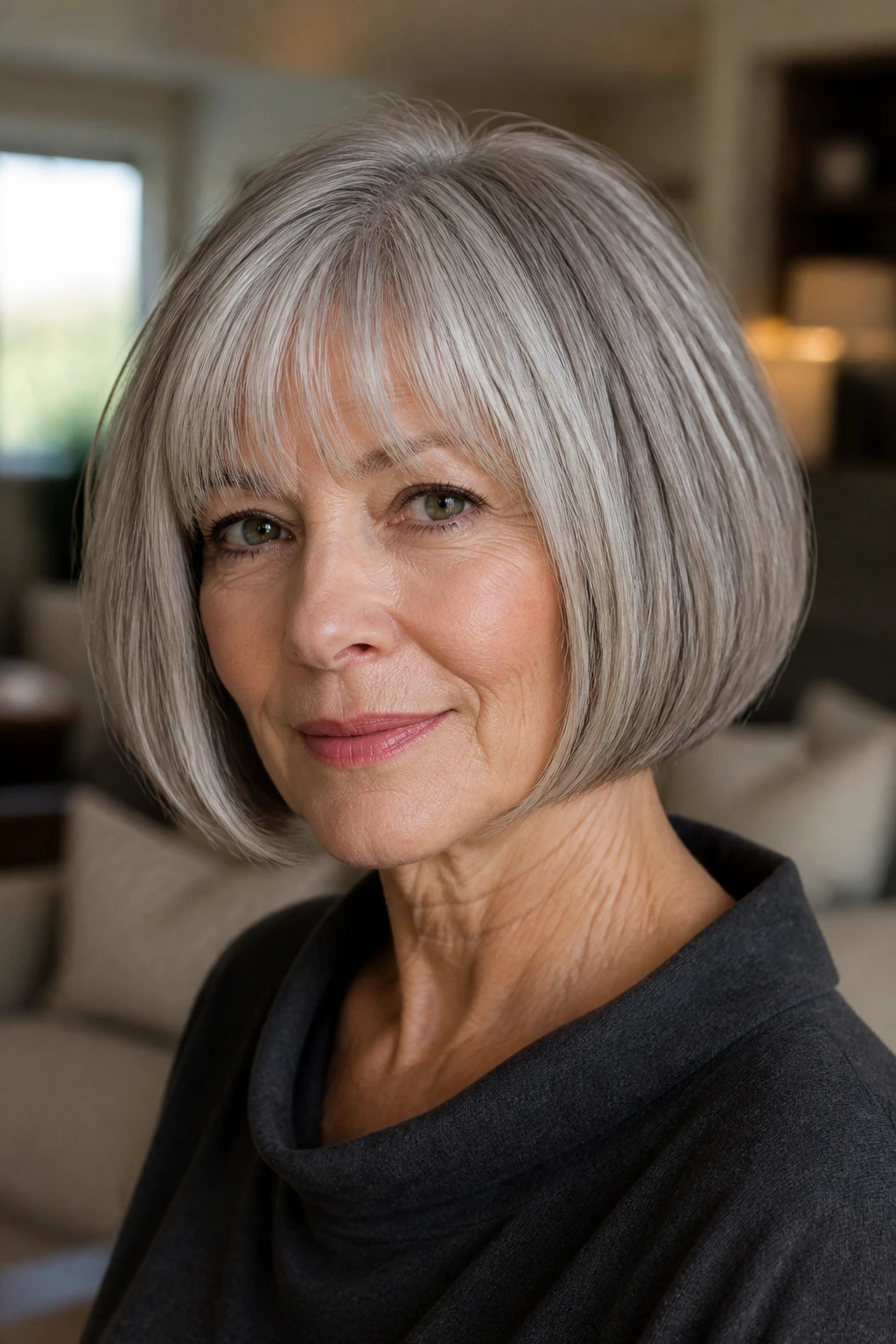
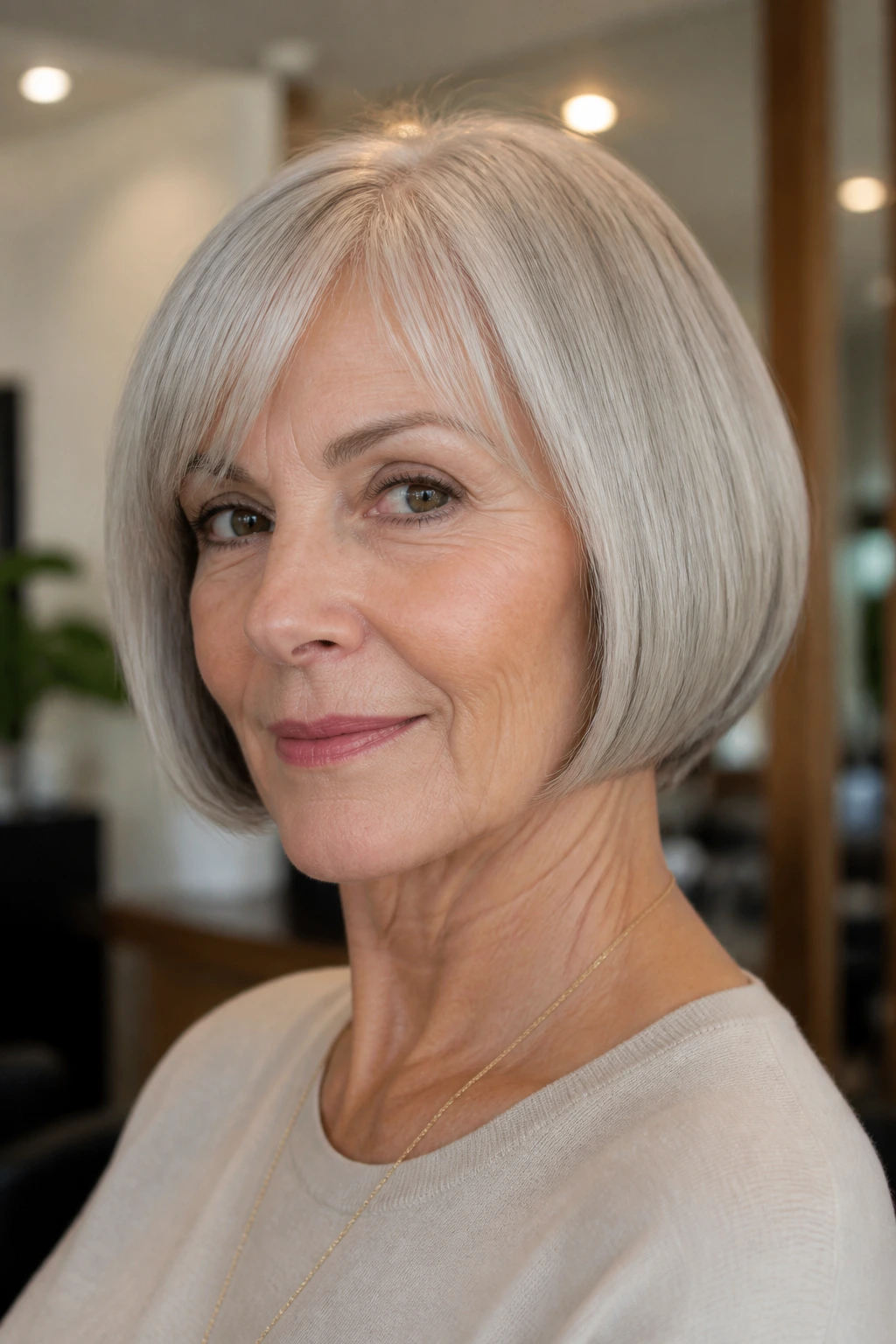
Gray hair can be fine, coarse, wiry, or a strange mix of all three. When it is fine, the pageboy shape can be a gift because the clean line makes the silver look intentional rather than fuzzy. The cut gives the color a frame, and that frame matters more than people think.
A grey-blend pageboy usually looks best when the fringe or face frame is softened a little. That keeps the silver from looking harsh around the eyes, where gray often comes in patchy first. If you use a gloss or a soft toning shampoo, keep the formula gentle. Over-toning can make silver hair look flat and matte, which is the last thing you want with a cut that depends on light reflection.
I like this version because it doesn’t fight the reality of gray hair. It works with it. The shape stays crisp, the tone catches light, and the haircut stops asking the hair to be something it isn’t.
15. Glassy Straight Pageboy
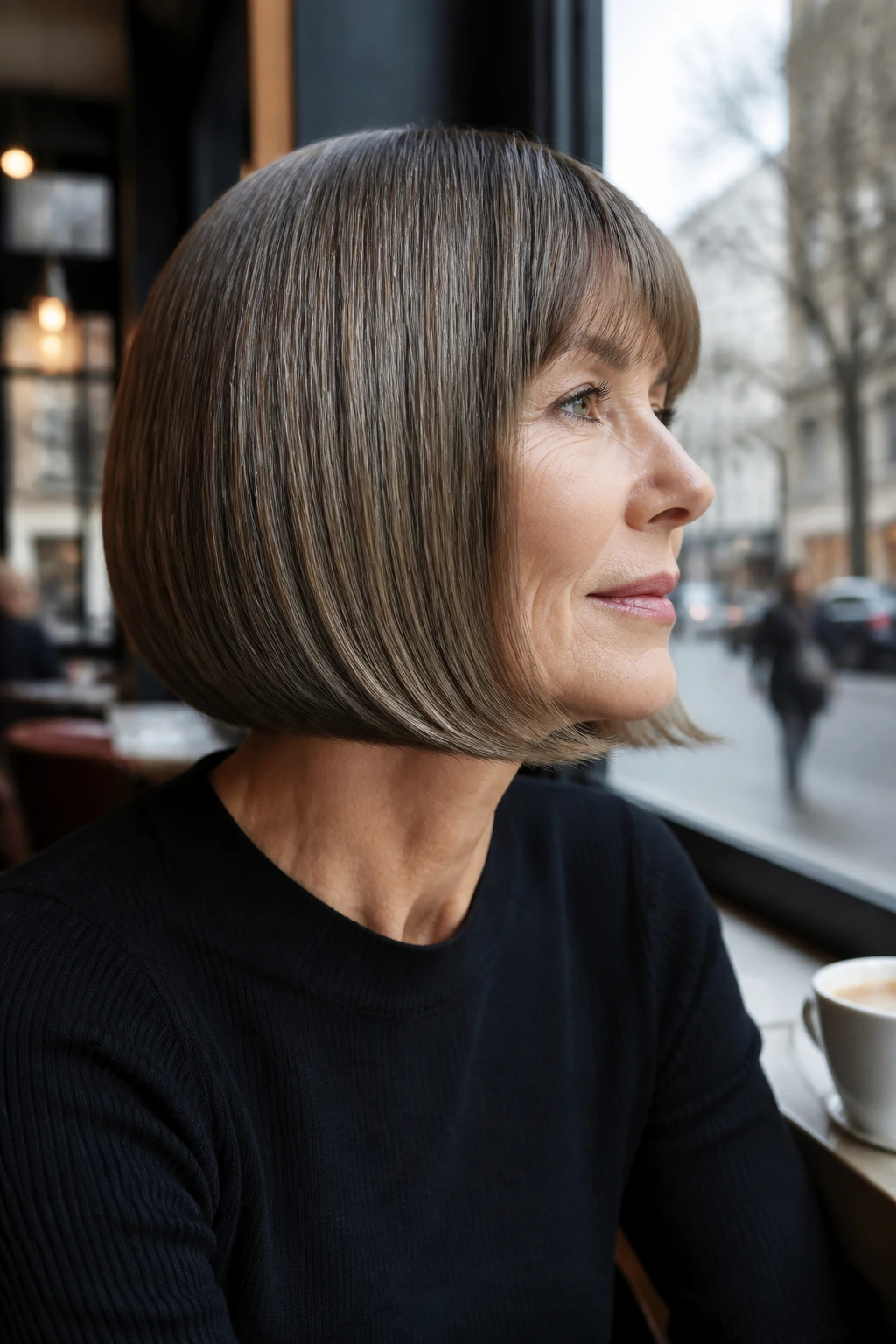
This is the sleekest version in the bunch. Think smooth, reflective, and precise, with the ends turned just enough to keep the pageboy identity intact. On naturally straight fine hair, this can be one of the easiest shapes to wear because the hair already wants to lie flat and even.
The catch is over-flattening. A glassy pageboy should look polished, not pressed to the scalp. Keep a little lift at the roots and let the shine do the visual work. A heat protectant, a good blow-dry, and maybe a flat iron passed over the top section once or twice is usually enough.
This cut is best for women who like clean lines and do not mind a more disciplined finish. It pairs well with strong earrings, bold glasses, or a sharp collar because the haircut itself is calm and tidy. That quiet shape can carry a lot.
16. Curly or Wavy Pageboy
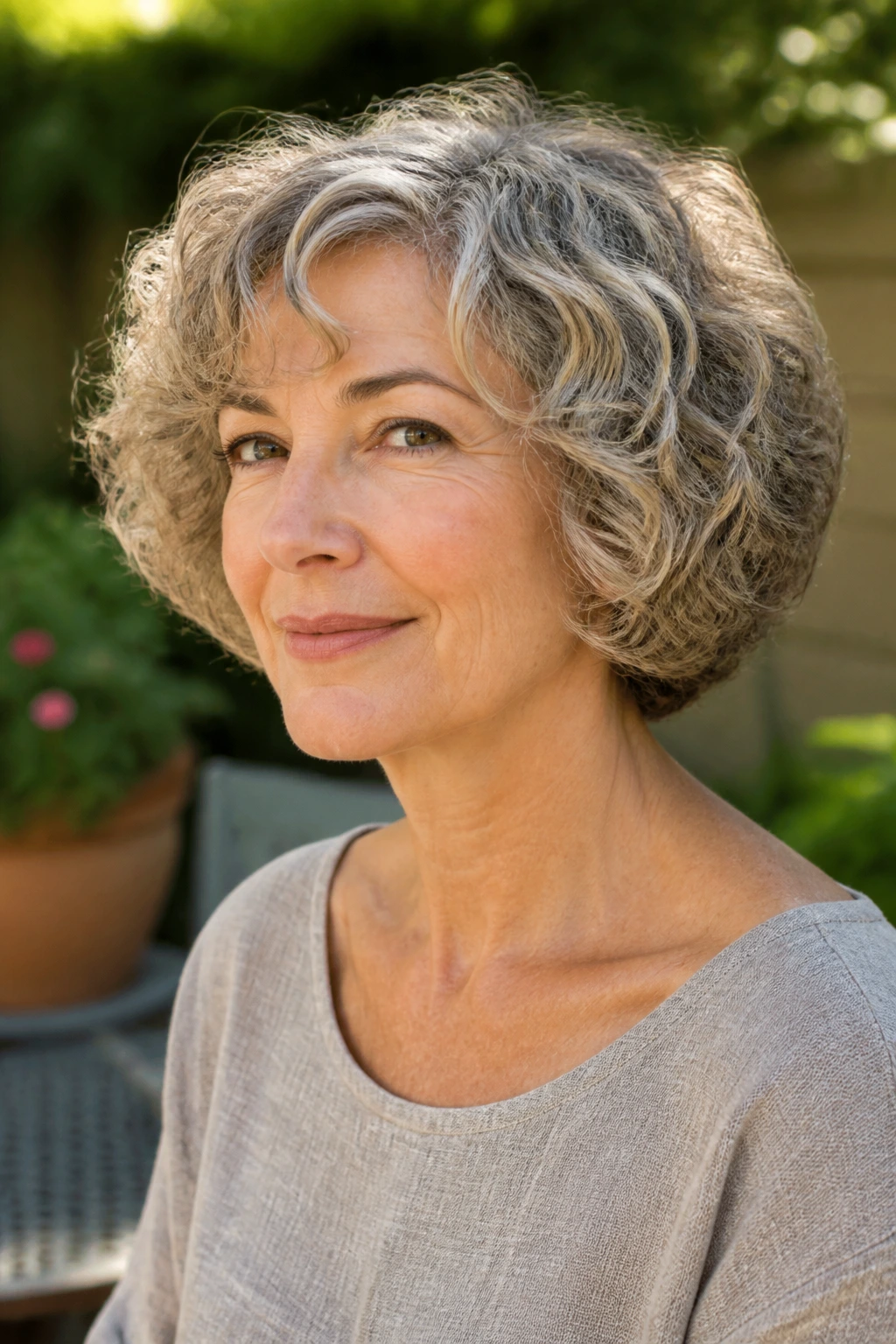
Fine hair with curl or wave needs special handling. The pageboy can still work, but the cut has to respect shrinkage. That means leaving enough length for the curl to bounce without turning the whole shape into a puffball. A dry cut or curl-by-curl approach usually gives a better result than cutting the hair wet and hoping for the best.
The outline should stay rounded, but the interior usually needs less stacking than a straight-haired pageboy. Curls already bring their own body. Add too much structure and the hair can look bulky at the sides while staying thin at the ends. The smarter move is a controlled perimeter with enough room for the curl pattern to settle.
Use a diffuser on low heat, or let the hair air-dry with a curl cream that is light enough not to weigh the hair down. That last part matters. Heavy creams can make fine curls droop before they ever dry.
17. Asymmetrical Pageboy

A slight asymmetry gives the pageboy a sharper personality. One side sits a touch longer, often by just half an inch to an inch, and that tiny difference can make fine hair look more deliberate and less “same everywhere.” It’s subtle, but the eye notices.
This style is useful when your face has one side that photographs or frames a little better than the other, or when you want a haircut that feels less conventional without losing the pageboy outline. The asymmetry should be obvious enough to matter, not so dramatic that it steals the whole show. A small shift in length is usually enough.
Wear the longer side tucked behind the ear occasionally. That gives you an instant shape change without a new cut, and it helps the asymmetry feel useful rather than fussy.
18. Softly Graduated Pageboy
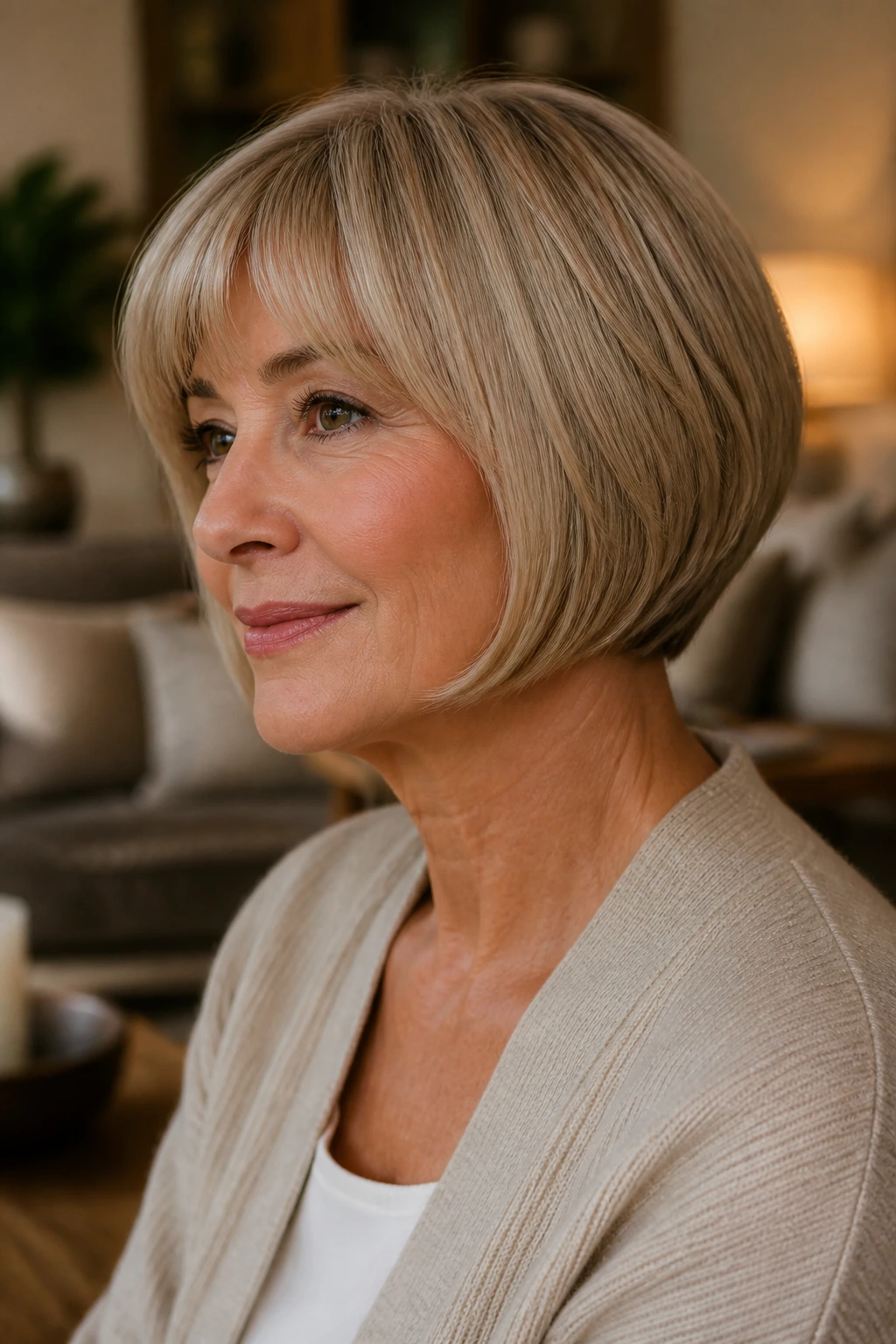
This is probably the most forgiving pageboy for everyday life. The graduation from nape to jaw is gentle, the outline stays smooth, and the haircut does not depend on a perfect blow-dry to look decent. Fine hair often behaves better in a softly graduated shape because the weight distribution stays balanced.
The difference between this and a stacked cut is the mood. A stacked nape can look crisp and architectural. A softly graduated pageboy looks quieter. It still has lift at the back, but it grows out with less of that “I need a trim yesterday” look that sharper cuts can develop.
If you want a pageboy that sits well on most faces, this is the safe bet. Safe, though, does not mean boring. It means useful. And useful haircuts earn their keep.
19. Pageboy With Curtain Bangs
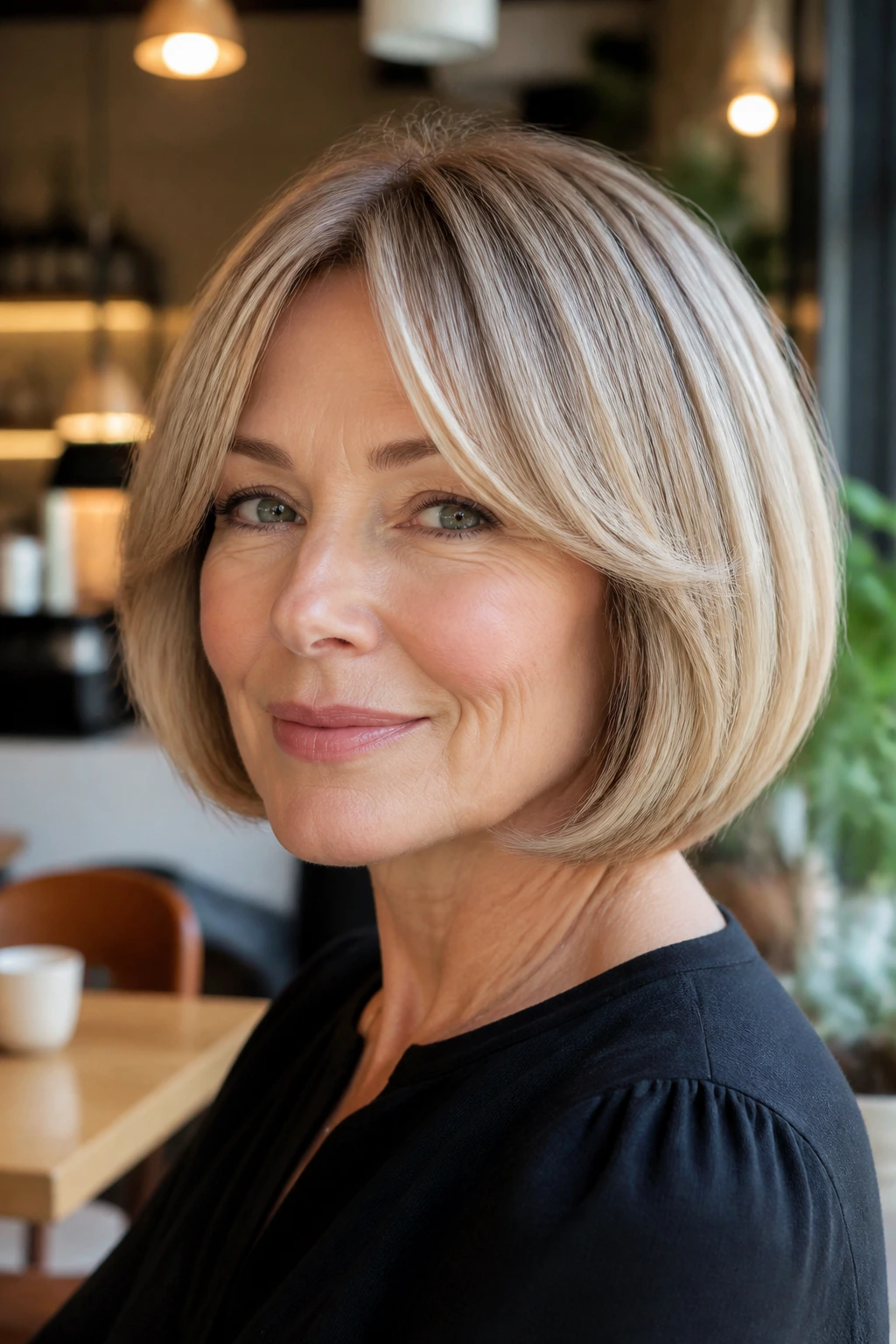
Curtain bangs can soften a pageboy in a way that feels gentle instead of fussy. They open at the center, sweep toward the temples, and let the front pieces blend into the sides without a hard break. On fine hair, that can be a nice way to frame the face while keeping the forehead from looking too bare.
The bangs should be long enough to move. If they are cut too short, they can kick up and split in the wrong places. A curtain fringe that hits around the cheekbone usually has enough length to behave. It also works well with glasses because it doesn’t sit directly on the frames.
This version is especially nice for a woman who wants a little softness around the eyes without giving up the pageboy’s structure. The fringe takes the edge off. The rest of the cut keeps the shape honest.
20. Neck-Grazing Pageboy

A neck-grazing pageboy gives you a touch more length while keeping the rounded tuck that makes the cut recognizable. It works well if you’re growing out a shorter style or if you do not want chin length on your face every day. Fine hair benefits from the extra perimeter weight, which helps the ends stay together.
The line should still feel contained. If it gets too long and too layered, the shape starts to drift toward a plain bob and loses the pageboy personality. Keep the front just long enough to skim the base of the neck and the sides soft enough to bend inward.
I like this one for women who want the look but not the maintenance of a very short cut. It gives a little more shoulder clearance, a little less barber-shop precision, and enough structure to still look intentional.
21. Razor-Textured Pageboy
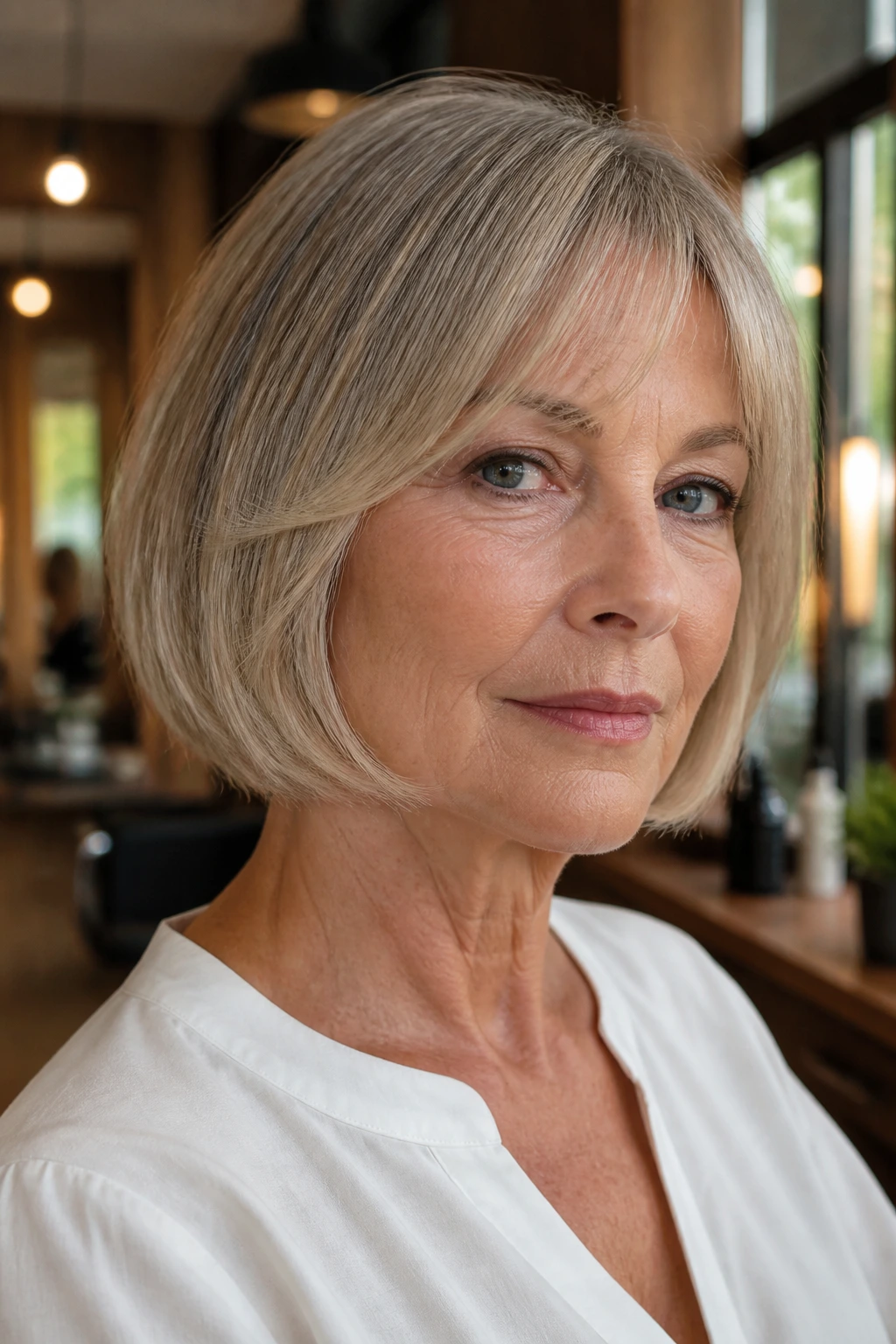
A razor cut can be gorgeous on the right hair, and on the wrong hair it can turn ends fuzzy fast. Fine hair falls somewhere in the middle, which means the razor needs a careful hand. Used lightly, it can create soft movement and keep the pageboy from feeling too stiff. Used too hard, it shreds the perimeter.
The trick is to texture the ends just enough to break up a hard line while leaving the bulk in place. That is a narrow window. You want air, not fray. A razor-textured pageboy often looks best on straight hair that needs a little life at the ends and can handle a lighter finish.
This is a stylist-dependent cut. I would not hand it over to someone who razors everything the same way. Fine hair asks for control, and control is the difference between airy and ragged.
22. The Wash-and-Wear Pageboy
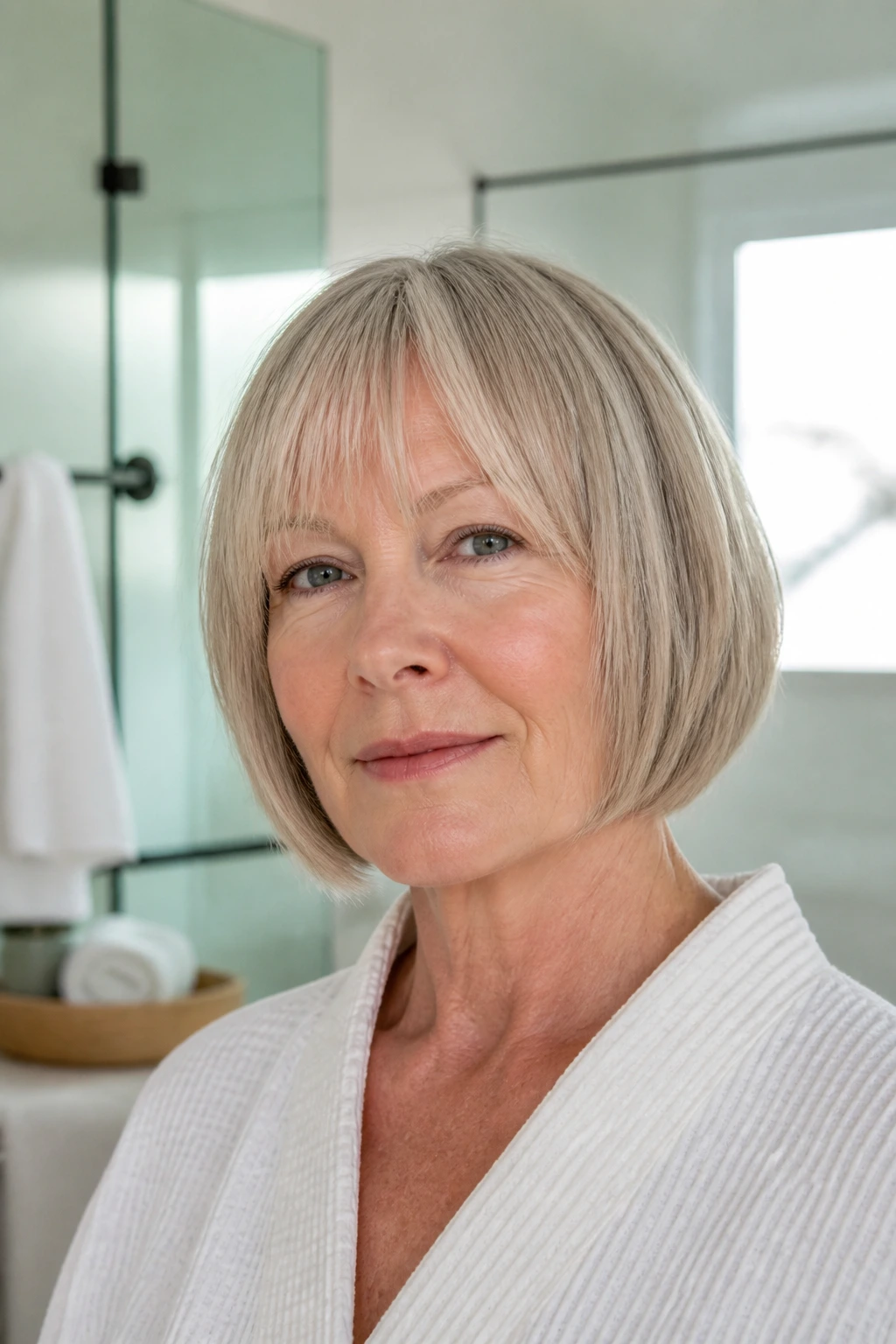
This is the one for people who do not want to wrestle with their hair every morning. The wash-and-wear pageboy keeps the outline simple, the bangs soft or side-swept, and the nape neatly controlled so the haircut still looks finished when air-dried. On fine hair, that kind of ease is not a luxury. It is the whole point.
The cut usually lands around the jaw or slightly below, with just enough graduation to stop the ends from hanging flat. No big internal layering. No fussy texture. The style works because the shape is disciplined enough to hold itself together without a lot of help.
If you want a pageboy that can survive a quick blow-dry, a bit of dry shampoo, and a day spent moving around, this is the one I’d keep at the top of the list. Clean, calm, and hard to mess up.
Why the Pageboy Shape Keeps Fine Hair Looking Intentional
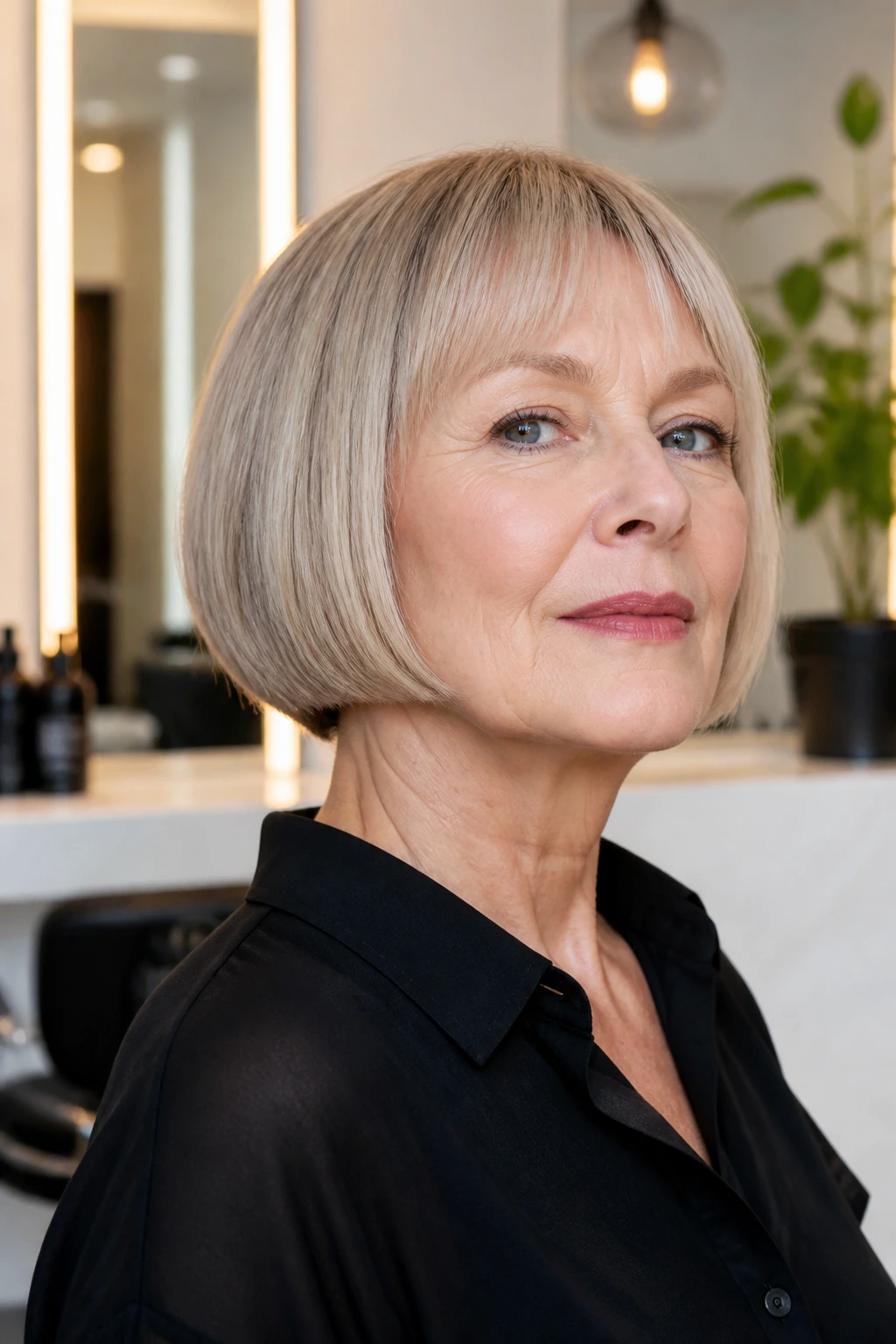
The pageboy works because it gives fine hair a perimeter. That sounds simple, but it’s the whole story. When hair is light, every extra layer removes a little more visual mass. A clean line puts that mass back where the eye needs it, along the jaw, at the nape, and around the sides where hair tends to collapse first.
There’s also the age factor, which matters more than people say out loud. Hair can thin at the temples, flatten at the crown, or get dry enough to frizz at the ends while still looking limp at the roots. The pageboy contains those changes. It doesn’t hide them like a trick haircut. It organizes them.
The perimeter does the heavy lifting
A blunt or softly beveled edge makes the haircut feel fuller even when the actual density is modest. That’s why a good pageboy often looks better than a heavily layered cut on the same head of hair. The line gives the hair a destination.
The shape can be tuned instead of overhauled
Need more lift? Stack the nape a little. Need softness? Add a side fringe. Want less maintenance? Keep the length at the neck. The pageboy is flexible in a very practical way, not in the vague salon-poster way people like to say. It changes shape while keeping its backbone.
Tools That Make Styling Easier
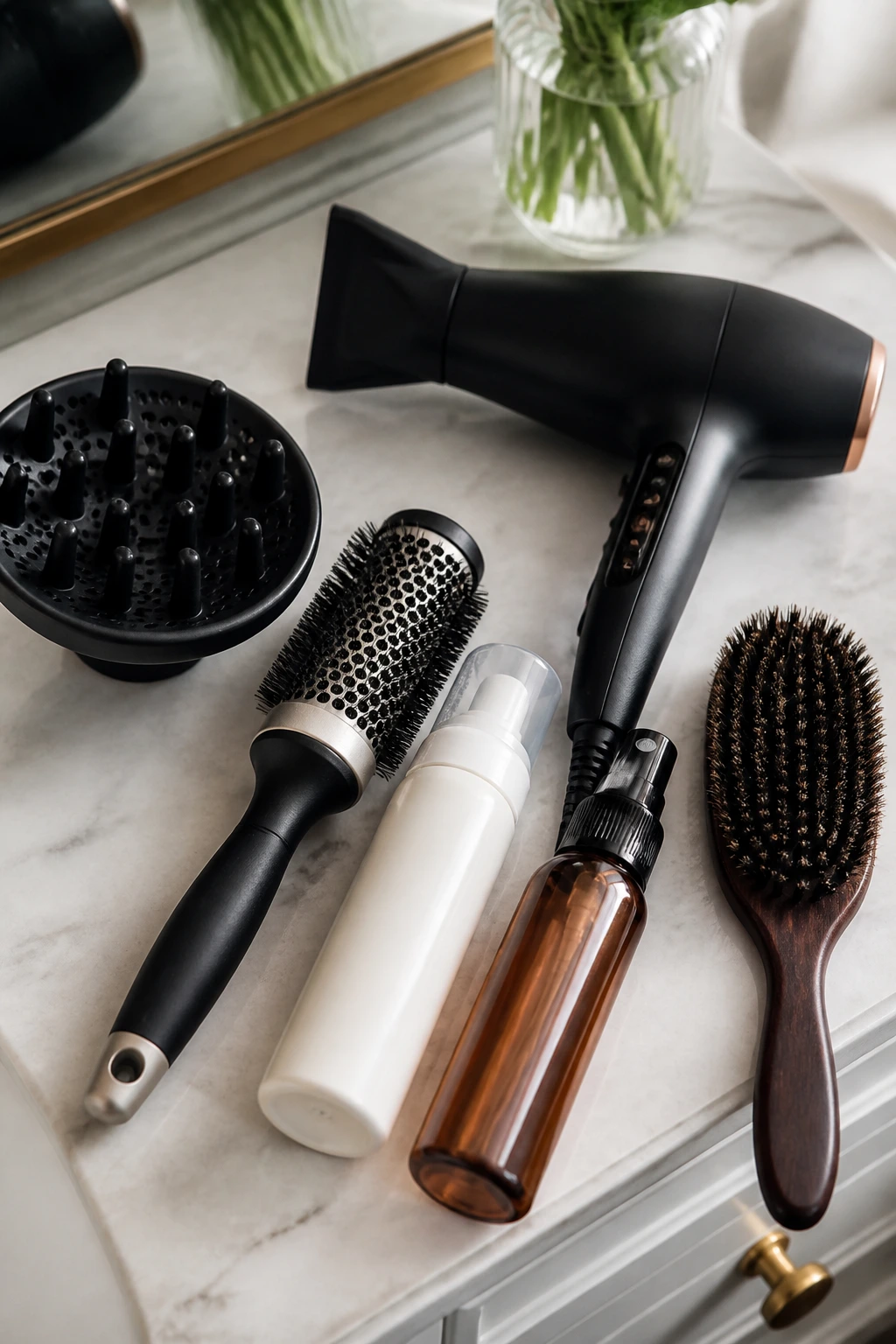
- 1 to 1¼-inch round brush: Small enough to turn the ends under without making the cut look curled.
- Blow dryer with a narrow nozzle: Direct airflow keeps fine hair smoother and helps the line stay neat.
- Light mousse or root-lift spray: Use a small amount at the roots before drying so the crown does not collapse.
- Heat protectant spray: Fine hair burns and frays faster than thicker hair when heat tools are overused.
- A boar-bristle or mixed-bristle brush: Helpful for polishing the surface on straight or lightly wavy hair.
- Small flat iron: Useful for the glassy or curved-under versions, but only on low to medium heat.
- Dry shampoo: Great on day two when the roots start to separate and the shape needs a little reset.
- Wide-tooth comb: Handy for wavy or curly pageboys that need gentle detangling without puffing up.
What to Tell Your Stylist Before the First Snip
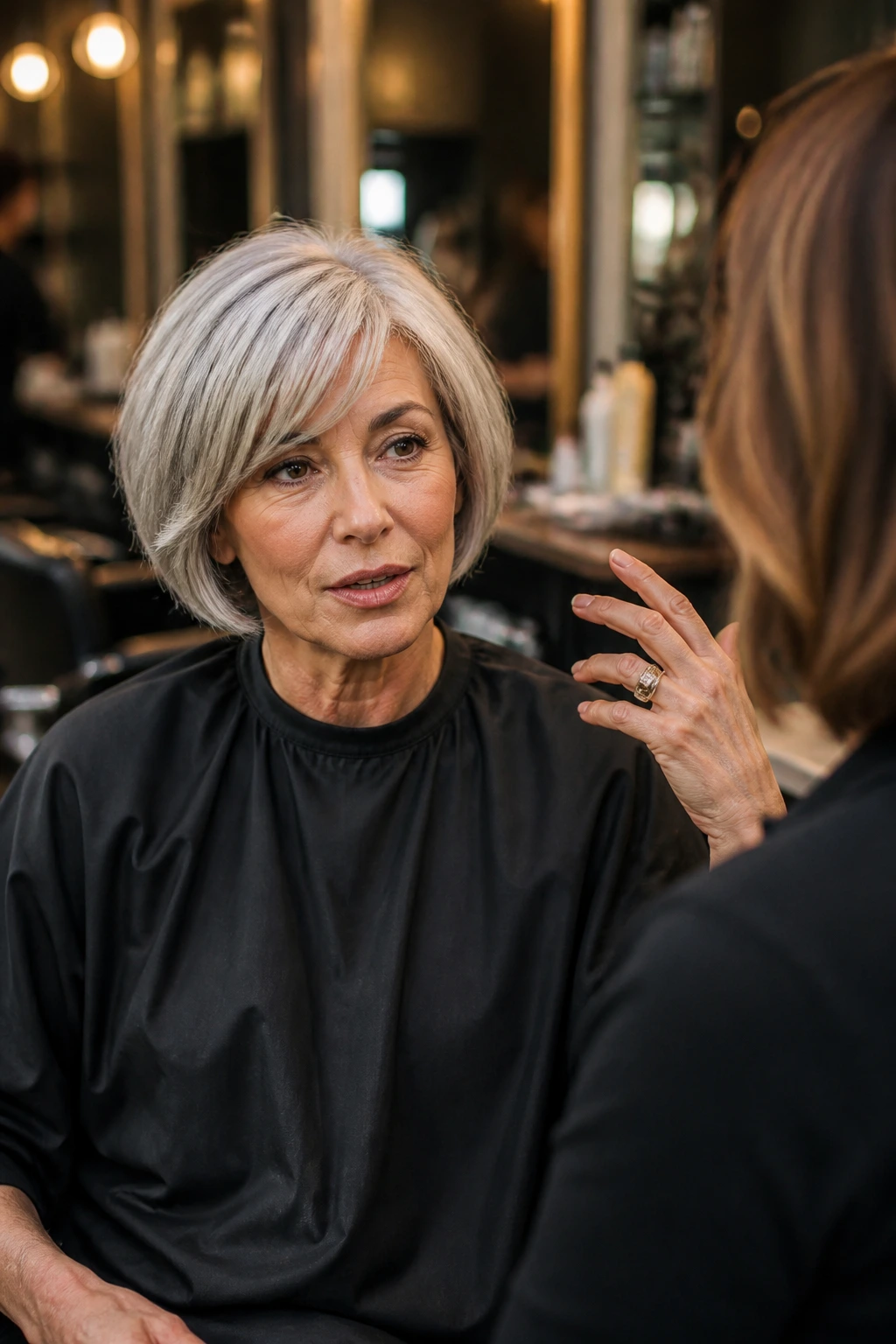
Start with the part that matters most: keep the weight line. That phrase tells your stylist you want the outline to stay strong, not be shredded into a wispy mess. On fine hair, that line is the backbone of the haircut.
Bring photos, but bring the right ones. Look for styles with hair that matches your texture, not just the cut shape. A thick-haired pageboy that looks full and swoopy in a photo may not behave the same way on your head. Ask where the length will sit when dry, because fine hair often shrinks or falls differently than people expect.
Say whether you wear glasses, tuck hair behind one ear, or prefer a side part. Those details change where the fringe lands and how the sides need to be cut. A good stylist can work with all of it, but only if you give them the real-life details. Salon language helps, sure. Daily life helps more.
Styling a Pageboy So It Looks Full, Not Flat
Parting: Start where your hair naturally wants to split. For many fine-haired heads, that means a slight side part is easier than forcing a dead-center line. If you wear a center part, give the roots a lift with a clip while they cool.
Root Lift: Work a small amount of mousse or root spray into damp hair at the crown and around the temples. Lift the roots with your fingers or a brush as you dry. Do not drench the hair. Fine strands go stringy fast.
Ends: Turn the last inch under with a round brush, or smooth them with a flat brush and a quick bend from a small iron. The point is a controlled curve, not a curl that screams for attention.
Finish: Use a pea-sized amount of serum only on the very ends if they look dry. Too much product at the top makes the whole cut sink. If the style needs extra hold, a light mist of flexible hairspray is enough. Heavy spray usually makes fine hair look tired by noon.
Extra Lift, Shine, and Softness Without Overdoing It
Root Boost: A tiny root-lift spray at the crown gives the pageboy more shape than piling on volumizing foam. Spray at the scalp line, then blow-dry while lifting the roots with the brush or your fingers.
Softness Around the Face: If the cut feels too severe, ask for a few face-framing pieces around the cheekbone or jaw. That keeps the line intact but gives the front a gentler fall. It is a small move, and it helps a lot.
Shine Without Grease: Fine hair looks better with a light-reflecting finish, not a slick one. A drop of serum warmed in your hands and pressed only through the last inch can make the ends look healthy without flattening the roots.
Gray Hair Bonus: Silver and salt-and-pepper hair can take a clean pageboy line beautifully, especially if you keep the surface smooth. A gloss treatment from the salon every so often can help the color look richer, but do not chase every yellow tone into oblivion. Some warmth makes gray look natural.
Common Mistakes That Make a Pageboy Fall Flat
Too many short layers: The symptom is easy to spot. The sides start to look thin and broken, and the bottom edge loses its line. The fix is a firmer perimeter with only the lightest internal shaping.
Over-thinning the ends: Fine hair can’t afford to be stripped down with razors or thinning shears everywhere. If the ends look fuzzy or see-through, the shape has been cut too hard. Ask for softer point cutting instead.
Letting it grow too long: Once a pageboy drifts far past the collarbone, it starts behaving like ordinary long hair and loses the tucked-under shape that gives it character. Regular trims keep the line where it belongs.
Blow-drying straight down: That is the fastest route to flat roots and sad temples. Lift at the scalp, then smooth the length. The roots need direction before the ends do.
Heavy bangs on weak front density: Thick fringe can expose sparse spots or separate in a way that looks choppy. If the hairline is fine, side-swept or curtain bangs are usually easier to manage.
Skipping the cool-down: If you set the ends under with heat and walk away too soon, they often flip out again. Let the hair cool in place for a minute or two. Annoying? A little. Worth it? Absolutely.
Variations and Adaptations to Try

The Soft-Stated Pageboy: This version keeps the perimeter but adds softer face-framing at the front, which is handy if the classic cut feels too sharp. It works well for women who want the pageboy shape without a strong geometric edge.
The Silver Frame: Built for gray or white hair, this version uses a clean outline and a bright fringe area to make the color look intentional. It is especially good when the natural shade is shiny and slightly coarse.
The Low-Maintenance Curve: A little longer in the front, a little softer at the nape, and easier to air-dry than a stricter pageboy. This one suits people who do not want to reach for hot tools every morning.
The Curl-Friendly Pageboy: Cut longer and drier to respect shrinkage, with less stack and more room for waves or curls to settle. It is a good answer for fine hair that has texture but not a lot of bulk.
The Sharp Glass Finish: This adaptation leans polished, smooth, and clean, with a crisp line and a near-sleek surface. It suits straight hair that can hold a neat shape with a little heat and very little product.
Keeping the Shape Sharp Between Salon Visits

Shorter pageboys usually want a trim every 5 to 7 weeks if you want the line to stay crisp. Longer collarbone versions can stretch to 7 to 9 weeks, but only if the ends still bend inward and don’t start hanging straight. Fine hair shows growth changes fast because the whole shape is built on its outline.
Wash frequency depends on scalp oil, but fine hair often looks best on day one or day two, not day five. Dry shampoo can help at the roots, though it should not replace washing forever; too much buildup makes the hair feel dusty and dull. Use it sparingly, then brush it through well.
At night, a satin pillowcase or a loose clip can keep the ends from kicking out in odd directions. If the pageboy starts to flip outward, a quick pass with a brush and the dryer on low heat usually resets it. The point is not perfection. The point is keeping the curve where it belongs until the next trim.
Questions People Ask Before Choosing a Pageboy
Will a pageboy make fine hair look thicker?
Usually, yes, because the blunt perimeter creates more visual density than a heavily layered cut. The effect is strongest when the ends are kept tidy and the hair is not thinned too much.
Can I wear a pageboy if I have glasses?
Yes, and a lot of women should. Side-swept bangs, curtain bangs, and slightly longer fronts sit well with frames because they do not crowd the face.
Does this cut work on a round face?
It can, if the front is angled slightly longer or the side panels skim the cheek rather than stopping right at the widest point. A very round pageboy can make a round face look fuller, so the angle matters.
What if my crown is flat?
Ask for some lift or gentle stacking at the nape and use a root spray at the crown when you dry it. The cut alone can help, but the drying direction matters just as much.
Is a pageboy too old-fashioned?
Not if it is cut well. The shape has history, yes, but the modern versions are clean, soft, and very wearable. The trick is keeping the line fresh and the fringe light enough for your face.
Can I air-dry it?
You can, especially with a softly graduated or neck-grazing version. A pageboy usually looks best with at least a little directional drying at the roots and ends, though, or the shape can slump.
How short should I go if my hair is very fine?
Most fine hair looks strongest when the perimeter sits around the jaw, neck, or collarbone. Past that, the ends can start to look stringy unless there is enough density to support the length.
What if it flips out at the ends?
That usually means the cut or the drying pattern is pushing the hair away from the curve. A round brush, a little tension while drying, and a brief cool-down on the brush usually fix it.
A Shape That Knows Its Job
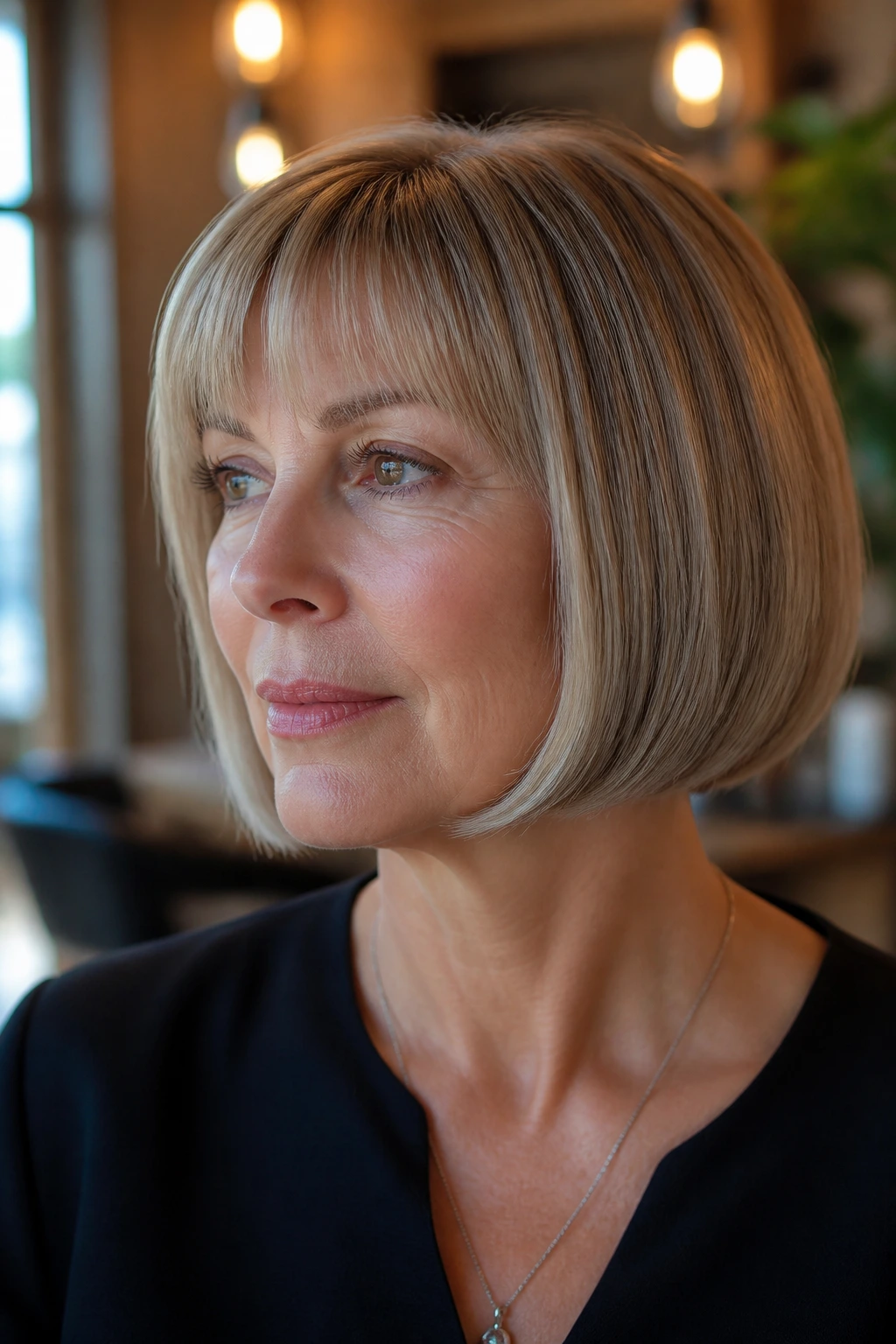
A good pageboy does not try to do everything. It gives fine hair a clean edge, a little bend, and enough structure to look like the haircut was chosen on purpose. That is a bigger deal than people think, especially when hair has gotten softer or lighter over the years.
If you like the idea of a style that looks tidy without feeling stiff, this is one of the smarter cuts to ask for. Keep the perimeter honest, keep the layers under control, and let the line carry the shape. The rest is just a brush, a dryer, and a few minutes of attention.