



The first thing thick hair does in a short cut is show off every bad decision. Leave too much weight at the sides, and the shape balloons out like a bell. Cut it too bluntly in the wrong place, and the whole thing sits there looking stiff, heavy, and slightly angry.
That is why undercut bobs for little boys with thick hair are worth a serious look. They solve the part most parents fight with every morning: the puff at the ears, the bulk at the nape, the fringe that drops into the eyes by lunchtime, the outline that turns boxy the minute the hair dries. A good undercut bob doesn’t just shorten hair. It edits it.
Thick hair can be a gift, but it needs a smarter shape than a basic clipper cut. The whole trick is keeping enough length to look intentional while removing the hidden bulk that makes the style fight back. Get that balance right, and the haircut holds its line, grows out with some dignity, and doesn’t demand a full styling session before school.
Why Undercut Bobs Feel So Good on Thick Hair
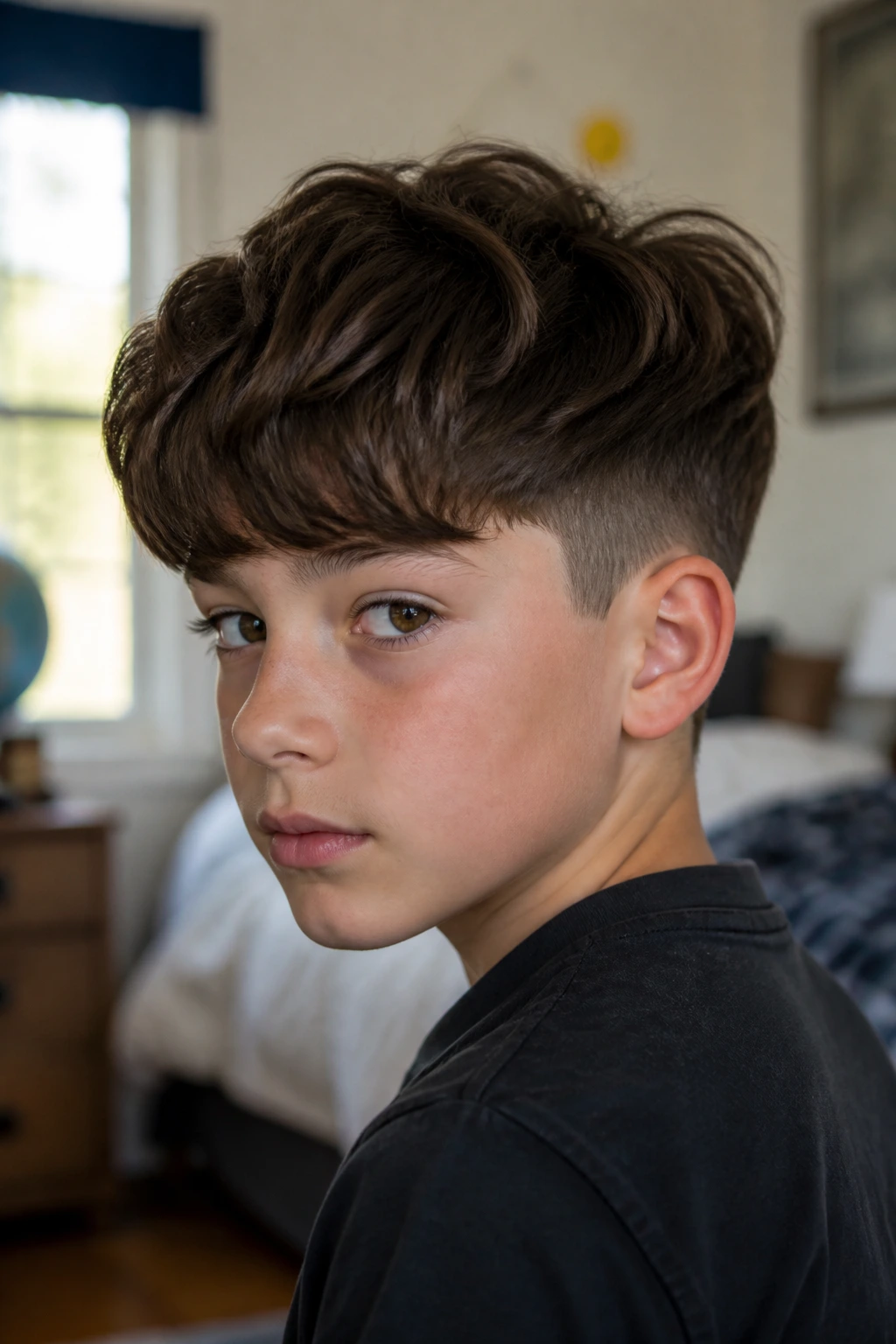
Bulk disappears where you do not want it. The undercut takes weight out from underneath the bob, so the outline can sit closer to the head instead of kicking out at the sides.
The shape stays cleaner between trims. Thick hair grows with attitude. A hidden nape cleanup or a low undercut buys you extra days before the haircut starts looking fuzzy.
The top still has room to move. You keep enough length on top for side-sweeping, a soft fringe, or a neat center part, which matters a lot when a boy refuses to sit still for styling.
Cowlicks become manageable instead of dramatic. When the bulk around the crown and nape is reduced, a strong swirl at the back doesn’t throw the whole style off balance.
The haircut looks deliberate, not accidentally short. That’s the big one. A thick-haired bob can look like a mushroom if it’s cut carelessly. An undercut gives the perimeter a reason to exist.
It works in stages. Some versions are tidy enough for school photos; others lean messy and textured for weekends. The same haircut can live a few different lives without turning into a maintenance headache.
1. Chin-Length Undercut Bob with Soft Ends
This is the version I point parents toward when they want the haircut to still look like a bob, not a shortcut. The length lands around the chin, the nape is cleared out underneath, and the ends are softened just enough that the whole shape moves instead of sitting in one heavy block.
Why It Works for Thick Hair
Thick hair likes this cut because it keeps the outline long enough to feel balanced. The undercut removes the part you never see anyway — the hidden bulk at the base of the neck and around the lower side panels — while the chin-length perimeter keeps the style from turning too round.
A little point cutting at the last half inch of the ends helps too. Don’t chop the line to pieces. Just break up the blunt edge so the hair bends instead of sticking straight out.
What to Tell the Barber
- Leave the top and perimeter at chin length.
- Clean out the nape with a low undercut, usually a #1 or #2 guard.
- Soften the ends with light point cutting, not aggressive thinning.
- Keep the side shape tucked close enough that it won’t flare over the ears.
How It Wears
This cut looks tidy when brushed down with a damp comb, but it still has enough length to tuck behind the ears on hotter days. It’s one of the easiest undercut bobs to live with because the shape reads clearly even when it air-dries a little imperfectly.
2. Blunt Ear-Line Bob with a Hidden Nape Undercut
A blunt ear-line bob is for the parent who wants clean edges without a lot of fuss. The front and sides sit right around ear level, the outline stays sharp, and the undercut hides in the nape where it can do the heavy lifting without advertising itself.
The blunt line is the point. Thick hair can look muddy when it’s over-layered. Here, the clean edge gives the cut structure, and the hidden undercut keeps the back from puffing out after a day in a car seat, a hoodie, or a game of tag.
That said, the bluntness needs a little discipline. If the barber takes too much weight from the sides, the cut loses its crispness and starts to look airy in a bad way. You want a firm line, not a wispy one. This version is especially good if the hair is straight and dense, because straight thick hair shows the perimeter beautifully.
One small thing I like here: ask for the nape cleanup to be tucked in low enough that it does not peek out when the hair swings. That keeps the style from reading like a disconnected fade. It should look like one haircut, not two fighting each other.
3. Side-Swept Undercut Bob with a Long Top
What if he refuses a center part and keeps pushing the hair back with his hands? Then the side-swept version is the one to try. It gives thick hair a direction, which sounds minor until you’ve watched a dense fringe split, puff, and fall into the eyes all day.
The top stays longer, usually long enough to sweep from one temple across the forehead without folding. The undercut removes the bulk at the bottom so the side sweep does not end up sitting on a shelf of heavy hair. That shelf is the enemy. Once you see it, you cannot unsee it.
How to Style It
- Mist the hair lightly with water.
- Blow-dry in the direction of the sweep for 30 to 60 seconds.
- Use a pea-sized dab of matte cream or light styling paste.
- Push the front over with your fingers, not a fine comb, unless you want it to look too polished.
This cut suits boys with a strong cowlick at the front because the sweep works with the swirl instead of arguing with it. If the part keeps opening up, a deep side sweep can hide that stubborn split better than a centered style ever will.
4. Feathered Bob That Lifts Off Thick Hair
Feathering is one of those words that gets abused in salons, so let’s keep it real. Here, it means softening the interior of the bob so the hair doesn’t sit like a single block. The perimeter still exists. It just doesn’t feel like a helmet.
This version is a good fit for thick straight hair that lies flat at the crown but bulks out at the ends. A barber can use point cutting or light texturizing shears through the mid-lengths, then leave the outline intact. That distinction matters. If the ends are shredded too much, the haircut frays.
A Few Details Worth Asking For
- Keep the bob line visible from the front.
- Reduce the interior weight at the back and sides.
- Use texturizing only where the bulk lives.
- Avoid razor work if the hair is coarse and frizzy.
The feathered bob has a softer swing when the child moves, which sounds like a small thing until you see it in motion. It stops that stiff, blocky bounce thick hair can get. On the right head shape, it looks easy without being messy.
5. Curved Pageboy Bob with Clean Sides
A curved pageboy bob is one of the neatest answers to thick hair, and I mean that in the practical sense, not the polished-magazine sense. It wraps the hair gently around the head, keeps the front controlled, and uses the undercut to stop the sides from jutting out like little shelves.
The curve works because thick hair naturally wants width. The rounded line redirects that width downward. Instead of a square shape sitting off the ears, you get a softer silhouette that follows the head more closely. Boys who brush their hair forward usually wear this one well, because it falls into place fast.
The one thing to avoid is over-softening the shape. If the barber layers it too much, the pageboy loses its identity and starts looking like a shag that missed the appointment. Keep the perimeter clean. Let the interior do the quiet work.
This cut is especially useful when you want a style that stays neat with minimal product. A little water, a comb, and maybe a touch of cream are usually enough.
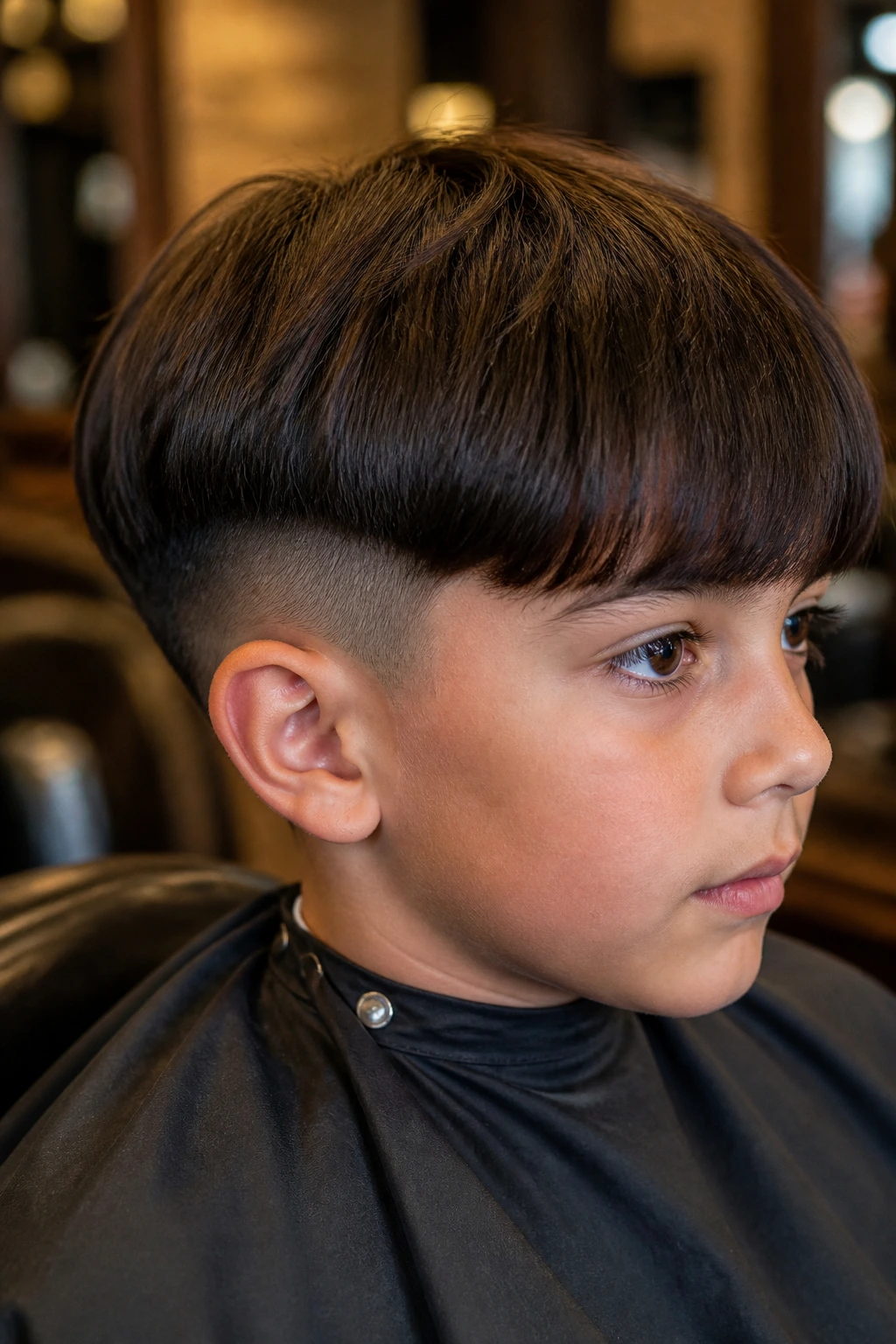
6. Bowl-Inspired Bob with a Tight Undercut
A bowl-inspired bob gets a bad reputation because people remember the old heavy version: all mass, no shape, and a fringe that looked like it had been trimmed with a ruler. The undercut changes the whole equation.
Here, the top keeps its rounded outline, but the sides and nape are clipped tight underneath so the volume doesn’t stack up where it hurts most. On thick hair, that means the style can keep its bold curve without turning into a mushroom. It’s a cleaner, sharper idea than the old-school bowl cut, and it needs that undercut to stay wearable.
This one suits straight, very dense hair best. If the hair has a wave pattern, the curve can get a little unpredictable at the edges. That isn’t a dealbreaker, but it does mean the barber should leave enough length to prevent the ends from springing up.
My honest take: this is the most style-forward choice in the whole group. It looks best when the line is intentional and the undercut is tidy. If the cleanup at the sides is sloppy, the cut loses its shape fast.
7. Stacked Back Bob for Extra Shape
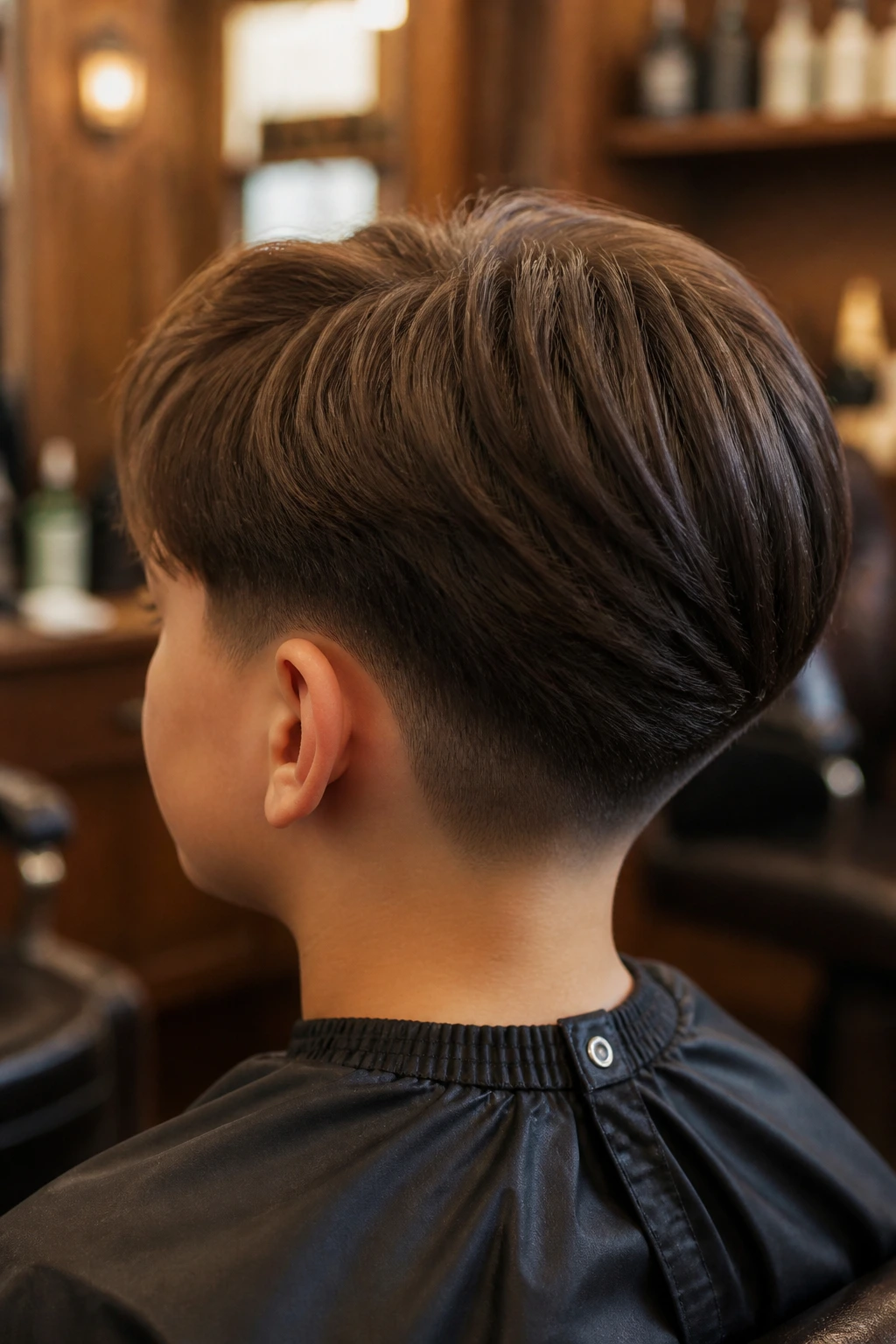
Some thick-haired boys collect weight at the back like it’s a hobby. The hair at the nape puffs out, the crown area pushes backward, and suddenly the head looks wider than it is. A stacked back bob handles that beautifully.
The stacking happens by cutting the back in a way that removes length gradually toward the nape, so the back lifts instead of sitting flat and heavy. Pair that with a low undercut underneath, and the whole lower back of the head becomes lighter and more sculpted. It sounds technical because it is. It also works.
Best If You Notice This
- The back sticks out after drying.
- Hair at the nape forms a thick shelf.
- The crown looks bulky when brushed down.
- A regular bob turns into a triangle by day two.
This cut needs a barber who understands shape, not just length. Ask for a stack that stays subtle. Too much graduation can make the back look overly tapered and the front look disconnected. A little stacking goes a long way when the hair is dense.
8. Center-Part Bob with Tucked Temples
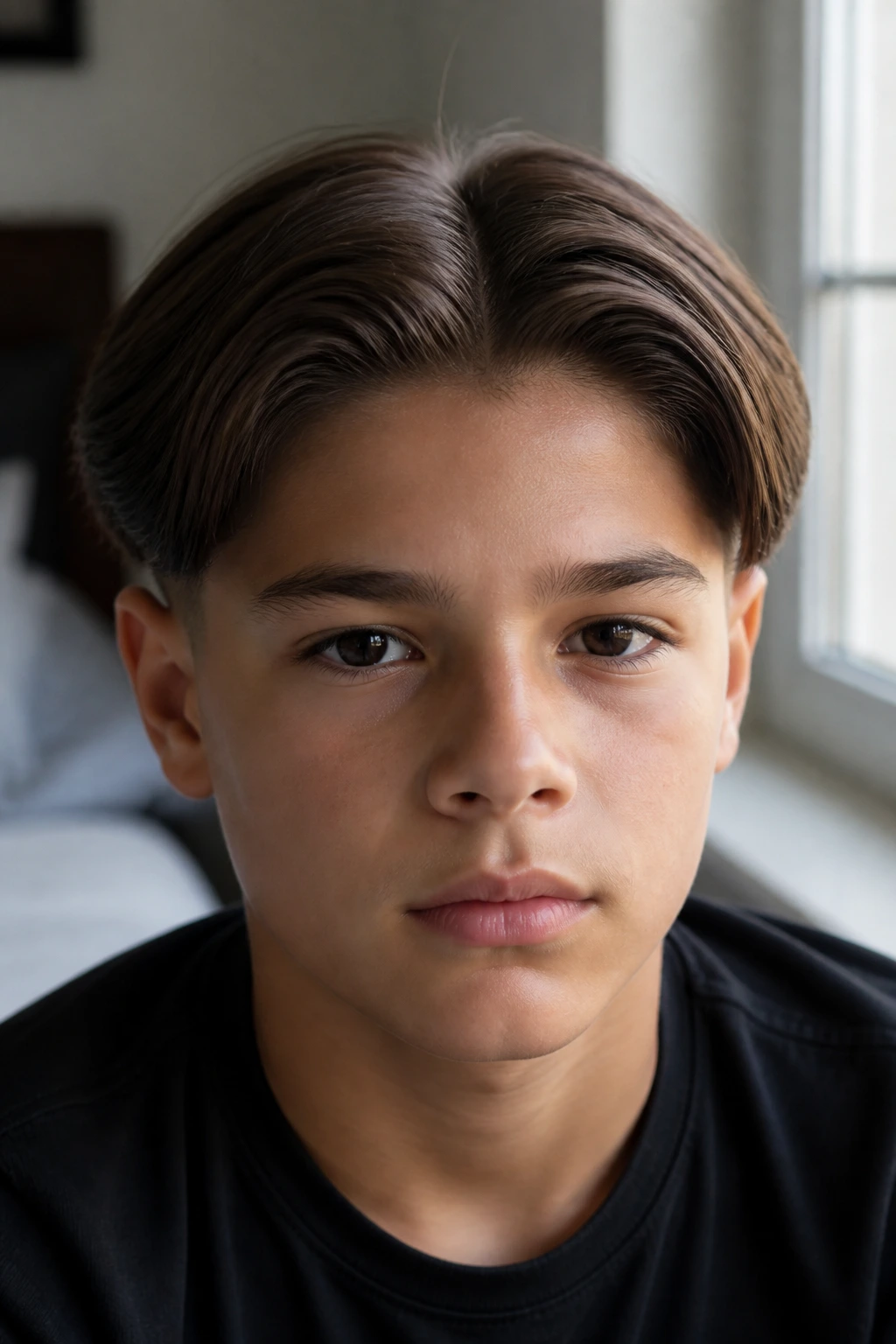
A center part on thick hair is a gamble unless the cut is built for it. The undercut bob version makes it easier because the weight is already reduced underneath, so the two sides can fall in a controlled way instead of fighting for space.
The appeal here is symmetry. It gives a neat, balanced look that sits well on boys with oval or longer faces. The tucked temples matter more than people think. If the sides bulk up around the ears, the part loses its clean line and the whole style starts looking clumsy.
A fine-tooth comb can help on school mornings, but don’t force a razor-straight part if the hair naturally wants to split a little off-center. Slight imperfections often look better than a part drawn like a ruler line. Seriously. Thick hair rarely behaves like fine hair, and pretending otherwise is a waste of time.
If the hair is dense at the crown, keep the length there slightly longer than the front. That stops the part from collapsing upward in a weird ridge.
9. Eyebrow Fringe Bob with a Low Undercut
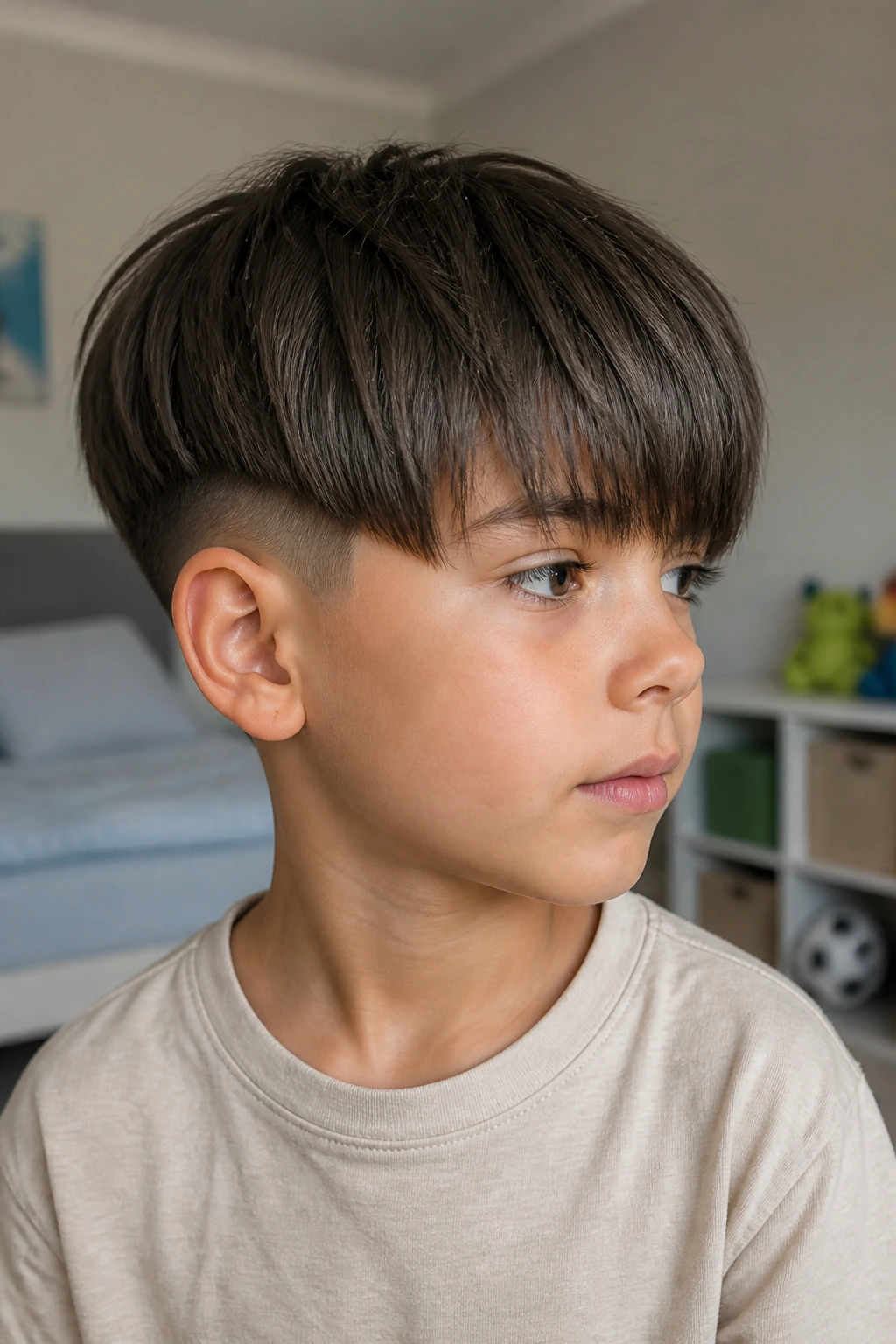
Fringes on thick hair can go from cute to annoying in about eleven minutes. The eyebrow-grazing version gives you the charm without the constant poking, and the low undercut keeps the sides from flaring when the fringe gets the spotlight.
This style is good for boys whose hair wants to fall forward anyway. Instead of fighting the forehead growth pattern, you lean into it. The fringe sits just above the eyes, the sides stay close, and the bob shape keeps enough length around the jaw to balance the front-heavy look.
What Helps This Cut Behave
- Keep the fringe a touch longer in the center than at the temples.
- Trim every 2 to 3 weeks if the hair grows quickly.
- Use fingers to dry the fringe forward, then sweep it slightly off-center if needed.
- Don’t overload it with gel. A stiff fringe on a little boy looks awkward fast.
The low undercut is the quiet part of this haircut, and that’s exactly why it matters. It keeps the front from looking too bulky in profile.
10. Messy Texture Bob for Natural Cowlicks
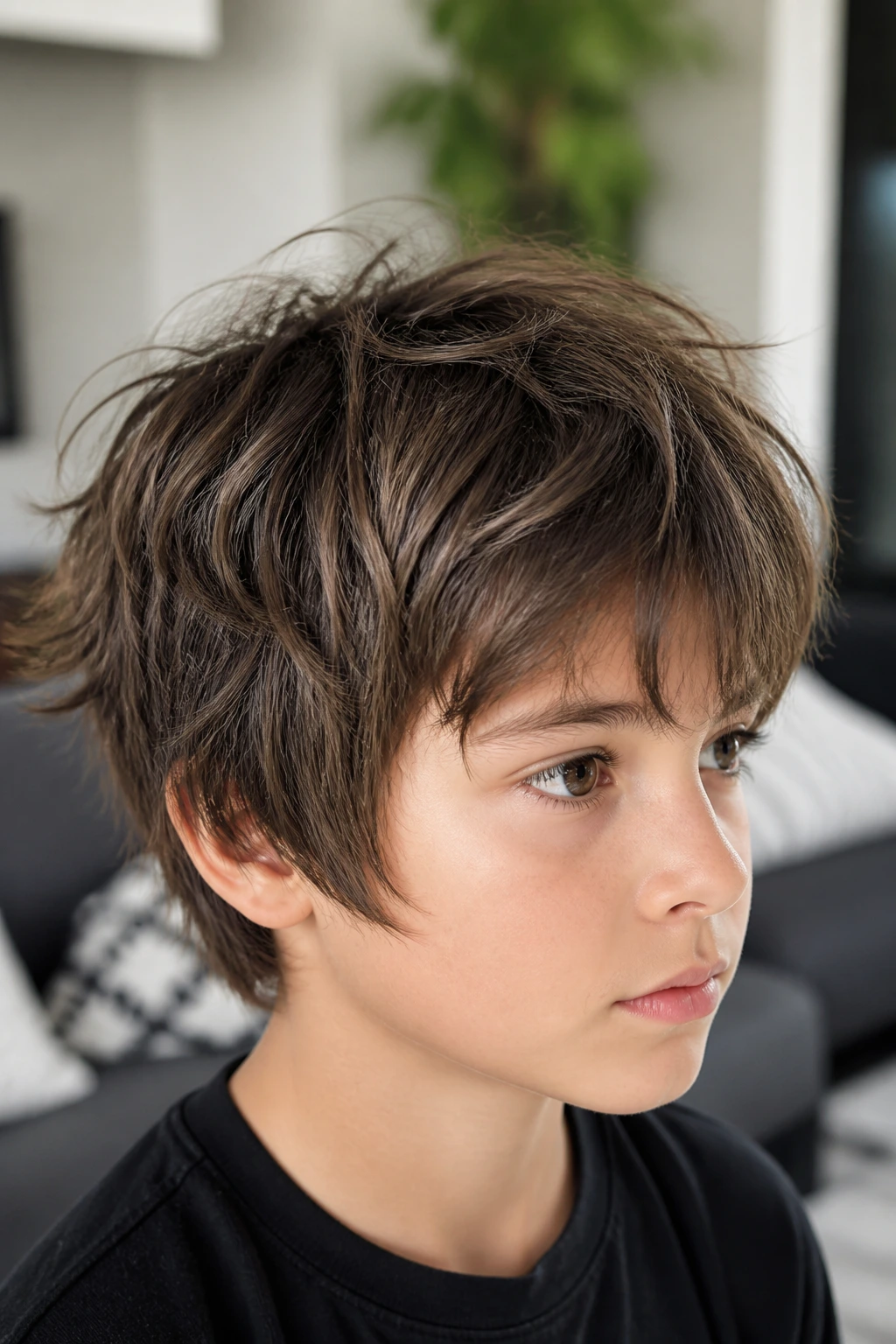
This is the one for boys who will not sit through a polished blow-dry and probably shouldn’t have to. Thick hair with cowlicks usually looks best when the cut works with the movement instead of pinning it down like a science project.
The messy texture bob keeps the perimeter there, but the inside has enough lightness for the hair to separate naturally. That means you can scrunch a little leave-in product through damp hair, finger-comb it, and let the cowlicks do some of the styling for you. A good barber will remove bulk around the crown without over-thinning the ends.
There’s a fine line here. If you cut too much texture into thick hair, it can puff in weird directions. If you leave too much weight, it turns into a helmet. The sweet spot lives in the middle. Point cutting, not razoring, usually gives the most control.
This style suits wavy hair especially well, because the movement looks deliberate rather than unruly. And if the fringe flips a bit on one side? Fine. That’s part of the charm.
11. Asymmetrical Bob with a Longer Front Corner
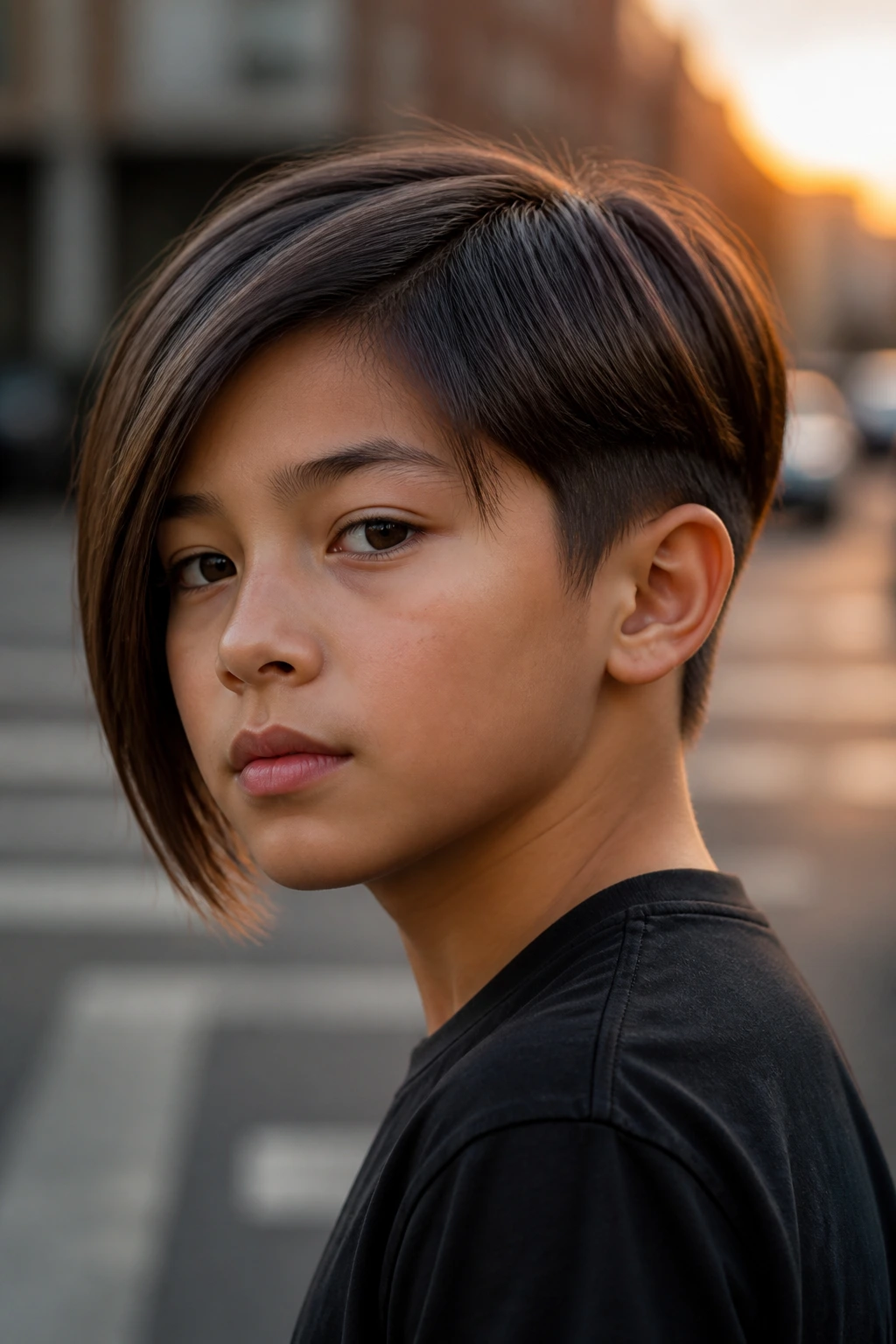
A little asymmetry can be a mercy for thick hair. A perfectly even bob sometimes makes dense hair look heavier than it is, while a slightly longer front corner gives the cut motion and a better line across the face.
The difference does not have to be dramatic. Even a one-inch shift from one side to the other can change how the hair falls. Keep one front corner longer, shorten the opposite side a touch, and let the back stay tucked in with the undercut. Suddenly the whole shape feels lighter and more modern without looking fussy.
Who Should Try It
- Boys with one side that grows faster or lays flatter.
- Hair that parts naturally to one direction.
- Faces that benefit from a little diagonal framing.
- Parents who want something less rigid than a blunt bob.
The key is restraint. If the asymmetry gets too obvious, the haircut turns into a statement piece whether you wanted that or not. Subtle works better on little boys. It reads as intentional without stealing the whole show.
12. Shaggy Bob with Removed Bulk
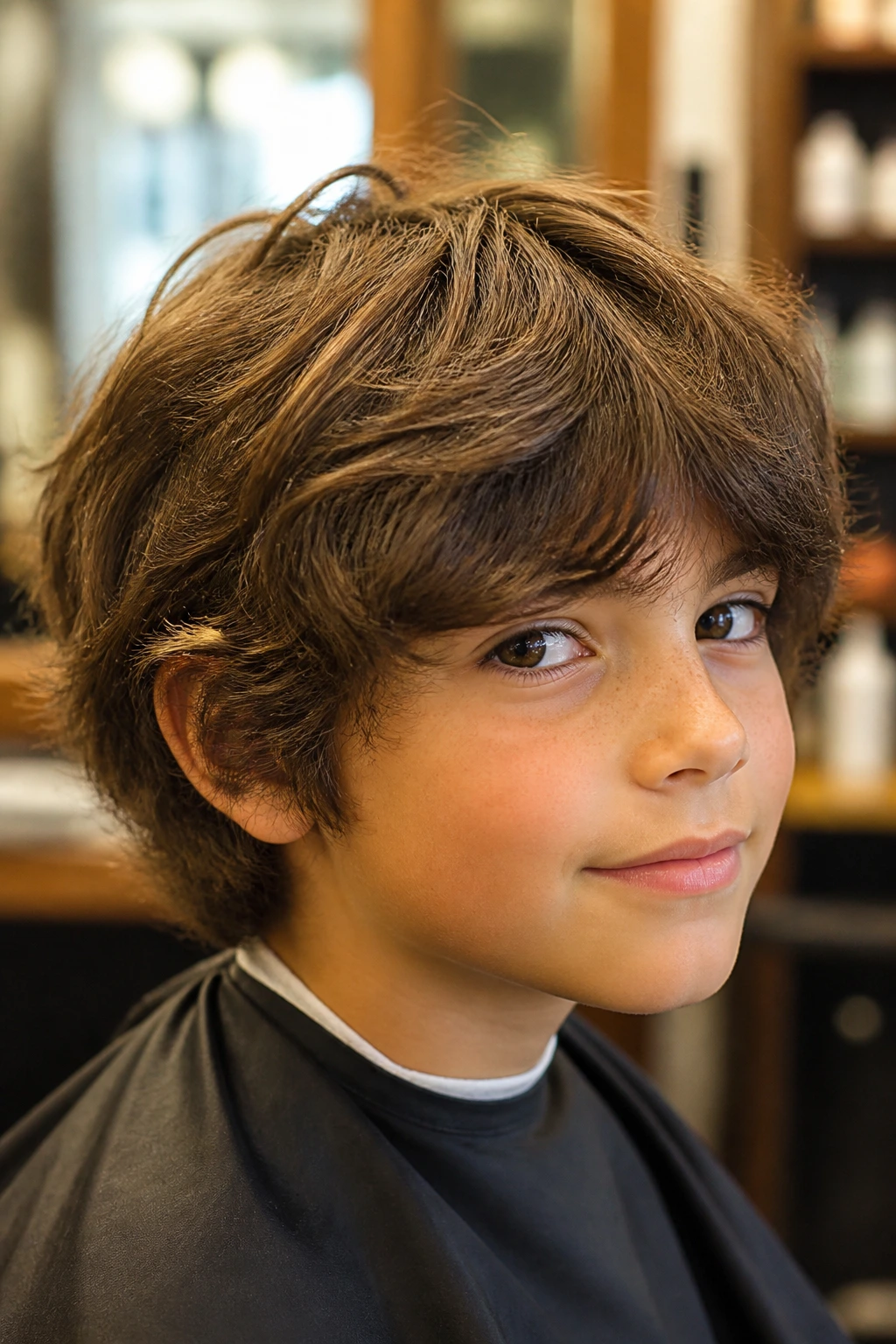
Here’s the contradiction I like most: a shaggy bob can still be neat if the perimeter is controlled. Thick hair often wants to puff into a triangle when it grows, and a shaggy version with an undercut underneath keeps that from happening too fast.
This cut has a softer interior, a looser outline, and more movement around the crown and sides. It’s not shaggy in the “left unfinished” sense. It’s shaggy in the “the hair has room to breathe” sense. If the child’s hair is dense and a little wavy, this shape makes the texture look intentional instead of wild.
The best version uses scissors, not a heavy razor, because coarse thick hair can fray when it’s over-thinned. Keep the bob line visible around the jaw or ear, then let the inside layers create the airy feel.
This is probably the easiest style to grow out from a shorter cut. That matters more than people think. Kids do not always keep the same haircut on schedule, and a cut that still looks fine two weeks late is worth its weight in gold.
13. Slick School-Ready Bob with a Neat Finish
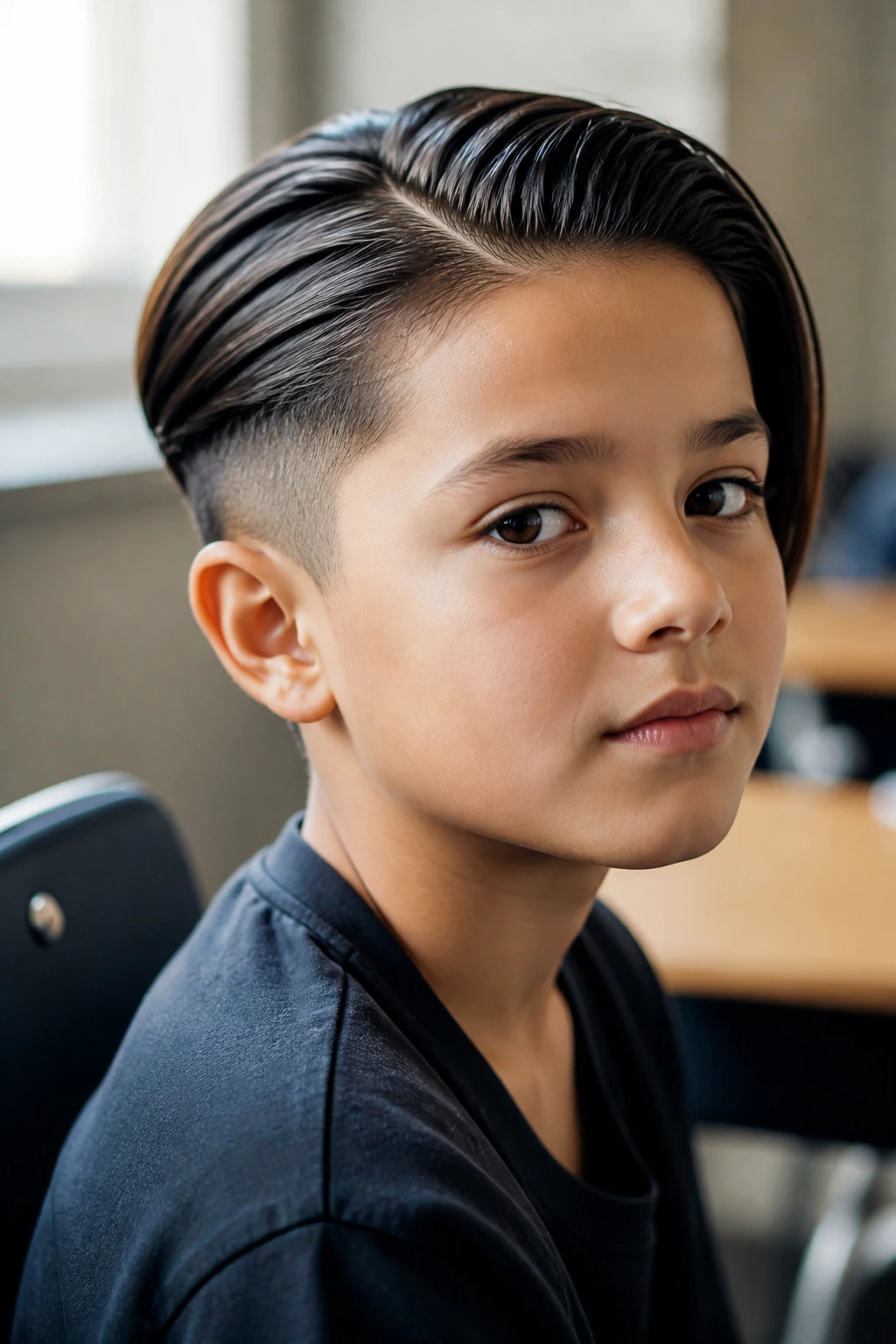
A slick finish changes the whole personality of a thick-haired bob. Instead of texture and movement, you get control, shine, and a line that stays where you put it for most of the day.
Damp hair works better than dry hair here. Smooth a tiny amount of lightweight cream through the top, comb it straight or slightly to the side, and keep the undercut clean so the sides don’t swell up underneath the polished surface. That’s the mistake people make: they slick the top but forget the bulk below, then wonder why the haircut still looks wide.
Quick Notes
- Use a wide-tooth comb first if the hair tangles.
- Follow with a fine comb only where you need a clean part.
- Keep product light. A pea-sized amount is plenty for little-boy hair.
- Finish with a cool blow-dry if you need the shape to last.
This is the version I’d pick for family photos, school events, or any day you want the haircut to read tidy without looking stiff. The best part is the contrast: smooth on top, clean underneath, no excess puff at the edges.
14. Mini French Bob with Rounded Weight
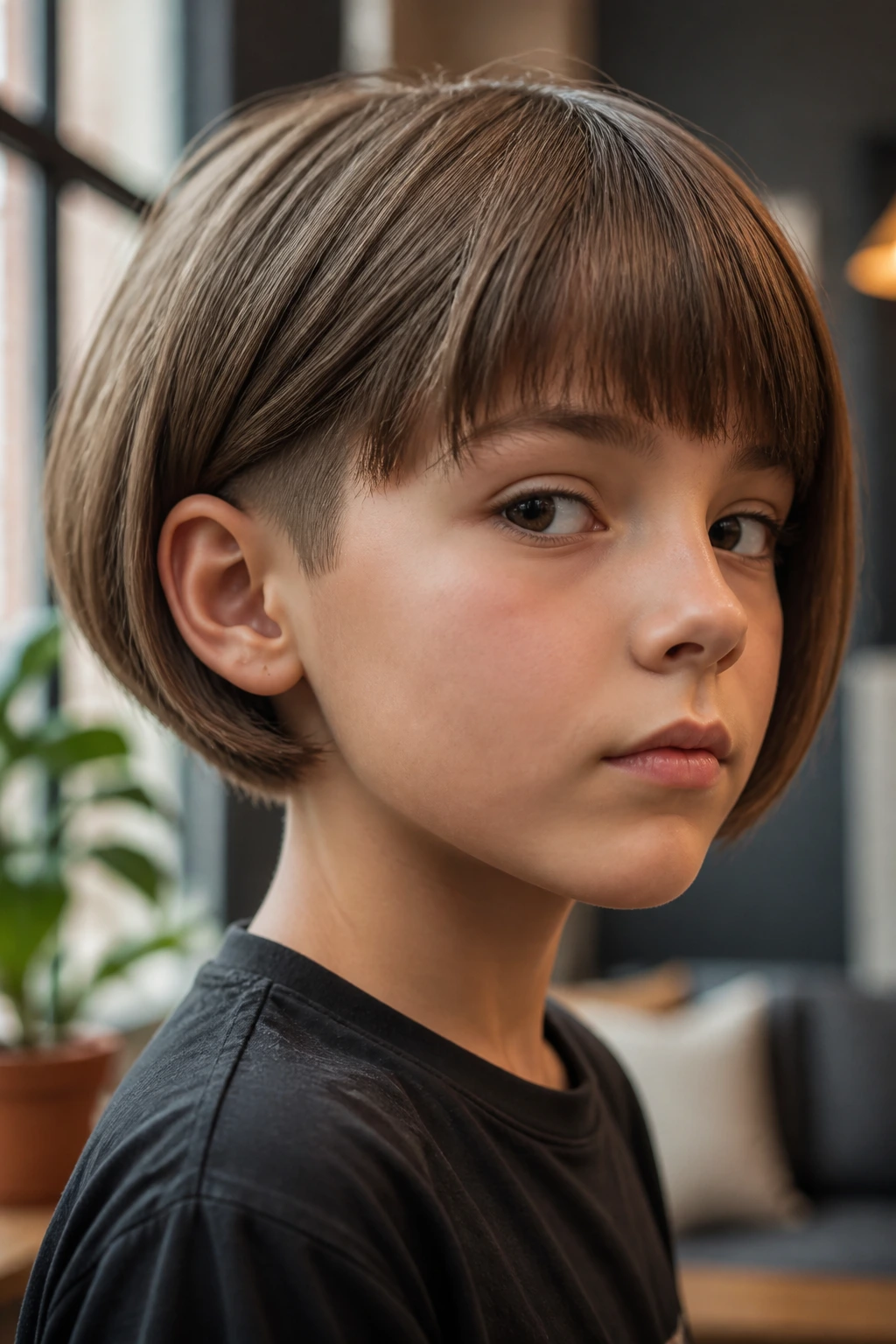
Shorter than the classic bob, the mini French bob sits around cheekbone to jaw level and uses rounded weight to keep thick hair from turning into a box. It feels neat, a little artsy, and more controlled than a longer bob that keeps swinging into the mouth.
The undercut is doing quiet work again here. Because the length is shorter, thick hair can seem even fuller. Clearing the nape and lower sides prevents the cut from ballooning outward. A slight curve around the face softens the look, which helps if the child has a rounder face or full cheeks.
I like this one for boys who keep pushing their hair back with both hands. The shape holds better than you’d think. Just do not take the top too short at the crown, or the rounded line gets lost and the haircut starts to look chopped up.
It’s a sharp little cut. Not harsh. Sharp. There’s a difference.
15. Grow-Out Bob with a Soft Perimeter
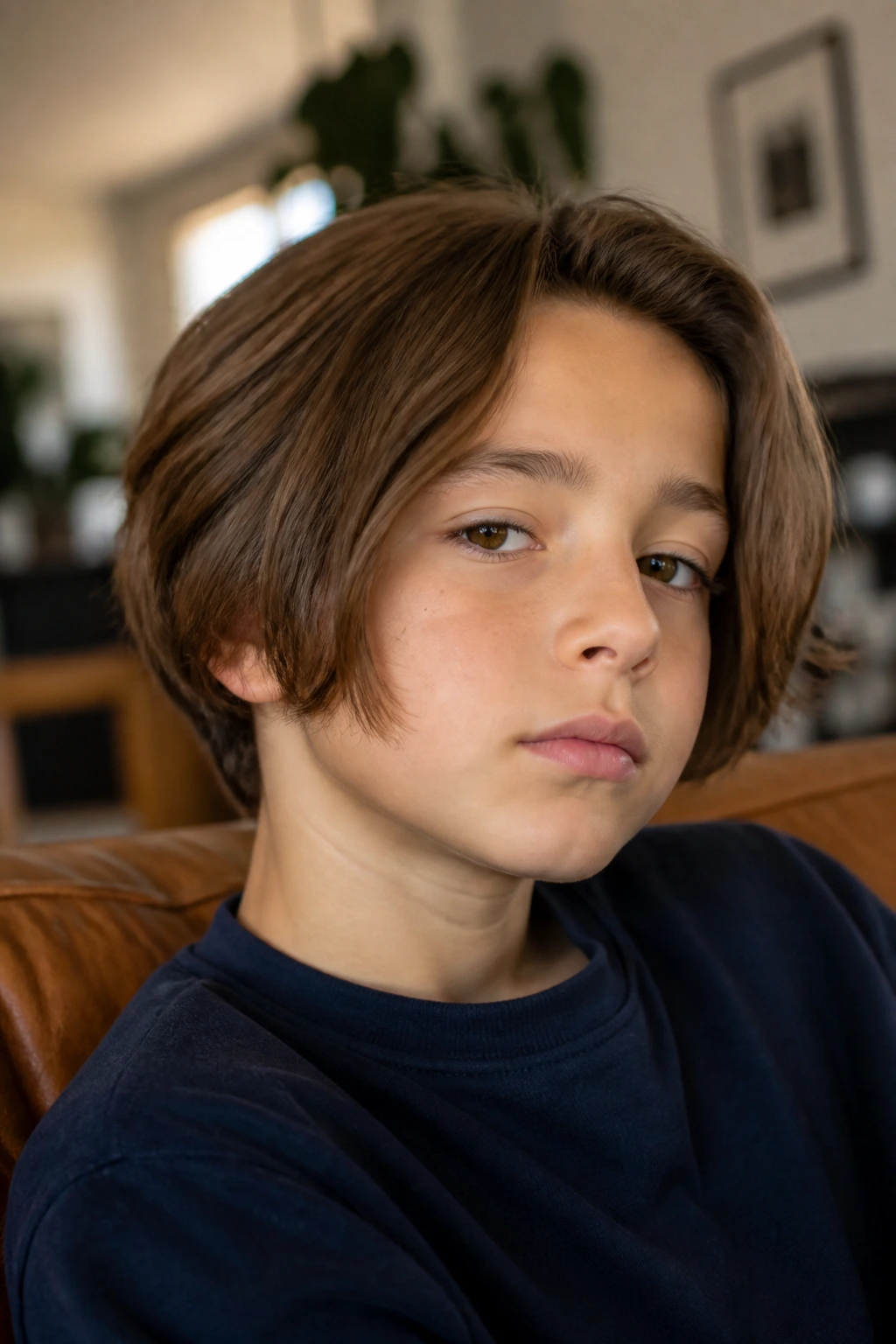
Some cuts are designed to look good for exactly one week. This is not one of them. A grow-out bob with a soft perimeter is built for thick hair that needs a little mercy between barber visits.
The point is to keep the outline soft enough that when the hair gains half an inch, it still falls into a readable shape. The undercut stays low so the nape does not swell, and the edges around the ears are trimmed to sit close without looking overcleaned. That balance helps the haircut survive real life: sleep, sports, hats, rain, and the occasional refusal to be brushed.
This is the version to choose if the family does not want a strict trim schedule. It still needs upkeep, but it doesn’t punish you when life gets busy. The trick is a softer line and a controlled interior, not a dramatic shape that depends on constant maintenance.
If the hair grows very fast, ask the barber to keep the fringe slightly longer than the eyebrows. That buys a few extra days before the style starts hanging in the face.
16. Swept-Back Bob with Tapered Edges
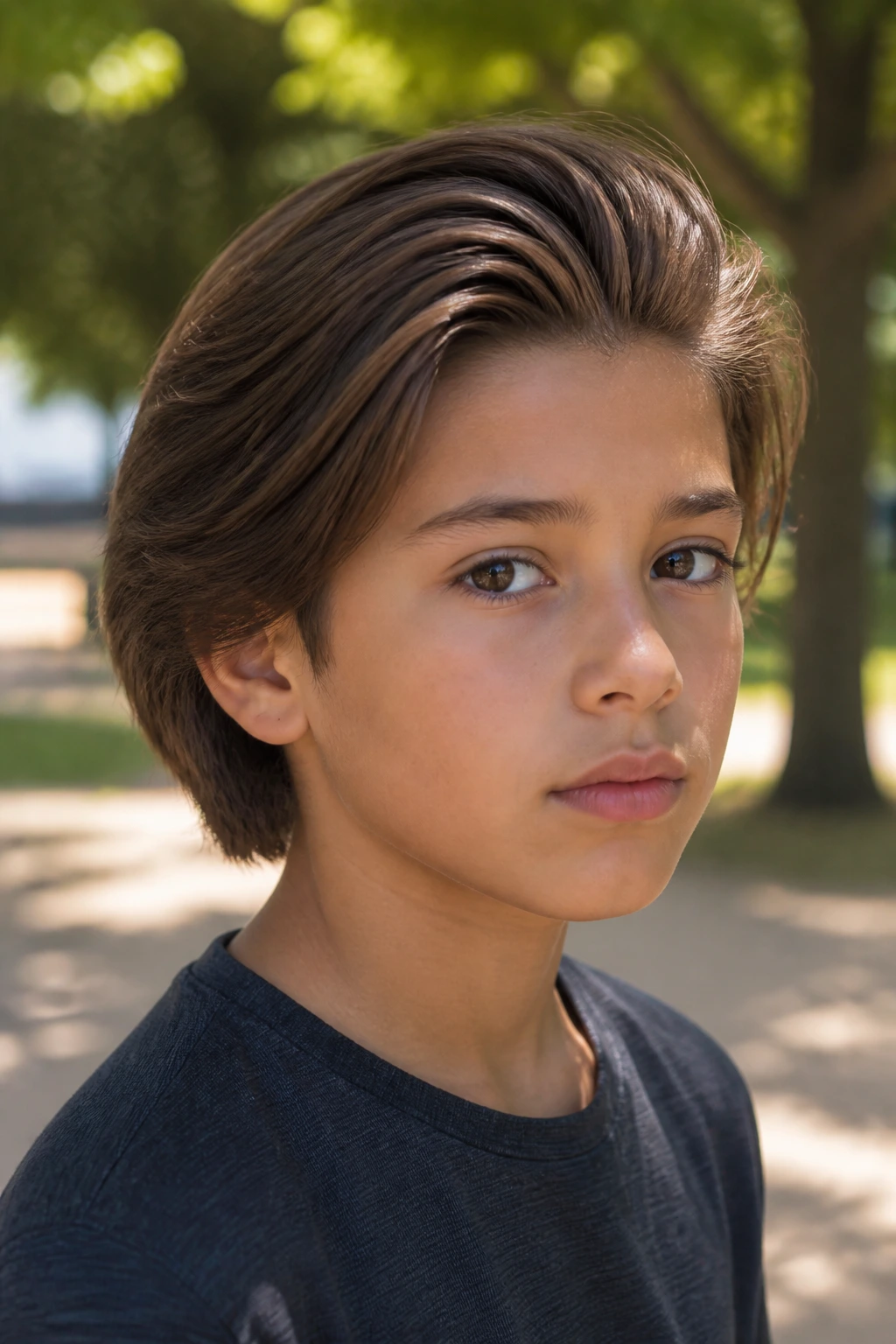
A swept-back bob gives thick hair a sense of lift without turning it into a spiky mess. The front is brushed back just enough to clear the eyes, while the tapered edges at the temples and nape keep the outline clean.
This cut is useful for active boys. Hair that stays off the forehead is easier to live with during sports, school, or any day that involves a lot of movement. The tapered edges make the bob feel lighter than a blunt version, but it still reads as a bob because the length stays there.
The styling part is simple. A damp brush-back with a tiny amount of cream, then air-dry or quick-blow-dry the front away from the face. Don’t try to make it stand up. That turns into a different haircut entirely.
What I like here is the compromise. It keeps the charm of longer hair without making the child look like he’s been wrestling with it all morning.
17. Ear-Exposing Bob with a Deep Side Cleanout
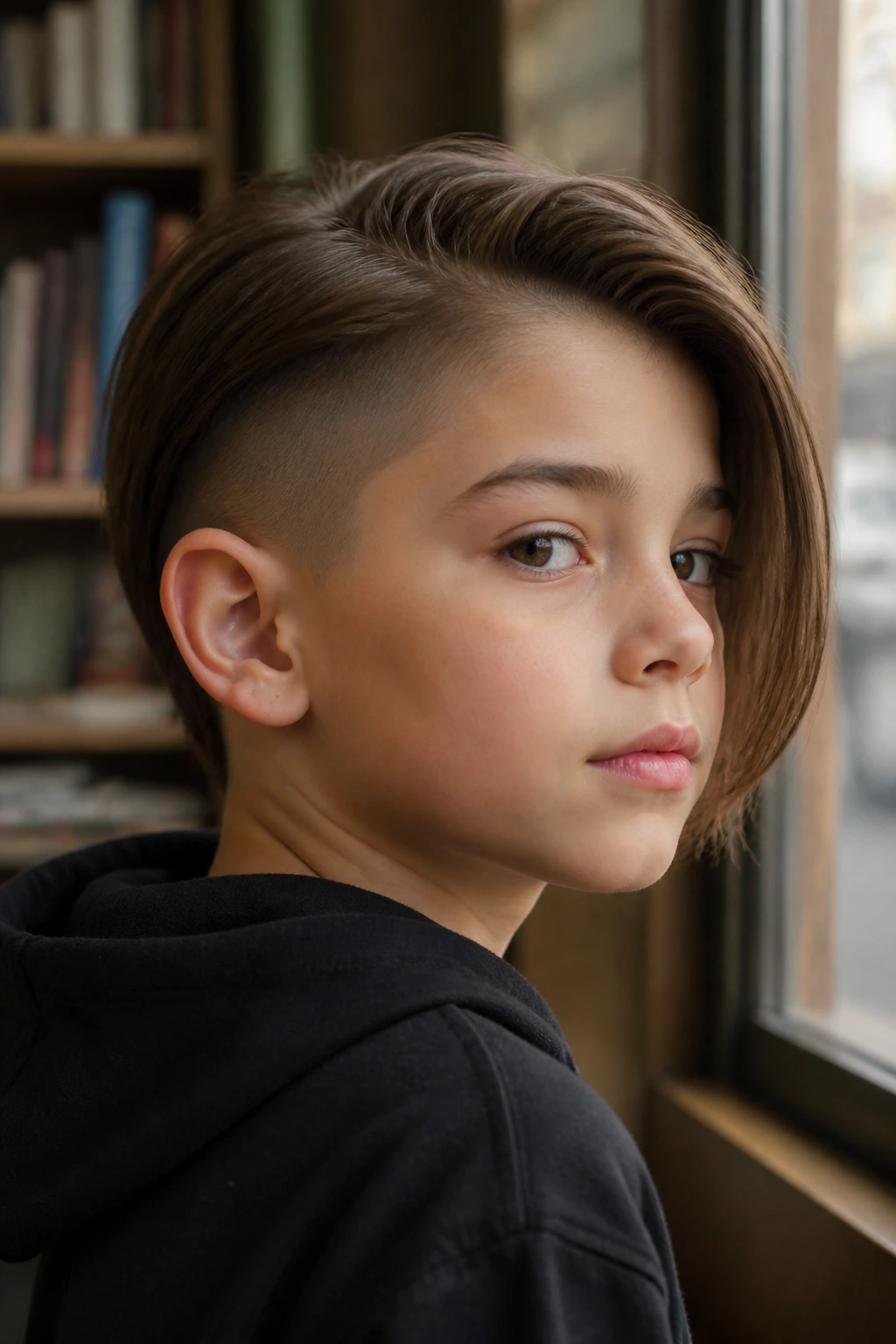
If hair touching the ears is a problem, say so with the haircut. The ear-exposing version leaves the bob length on top and through the front, but it opens the side panel enough that the ear stays visible and the haircut stops brushing the skin all day.
This one is a little more precise than it sounds. The deep side cleanout happens underneath the visible top layer, so the boy still has the bob silhouette from the front. The sides just sit tighter to the head. That makes it useful for boys who wear glasses, because there’s less hair competing with the frames.
A deep side cleanout can look sharp on thick hair, but it needs balance. If the barber clears too much away, the top floats and the cut loses its grounded shape. Keep the top connected enough that the haircut still feels like one style, not a top layer pasted over a short cut.
18. Classic Pageboy Bob with Thick-Hair Control
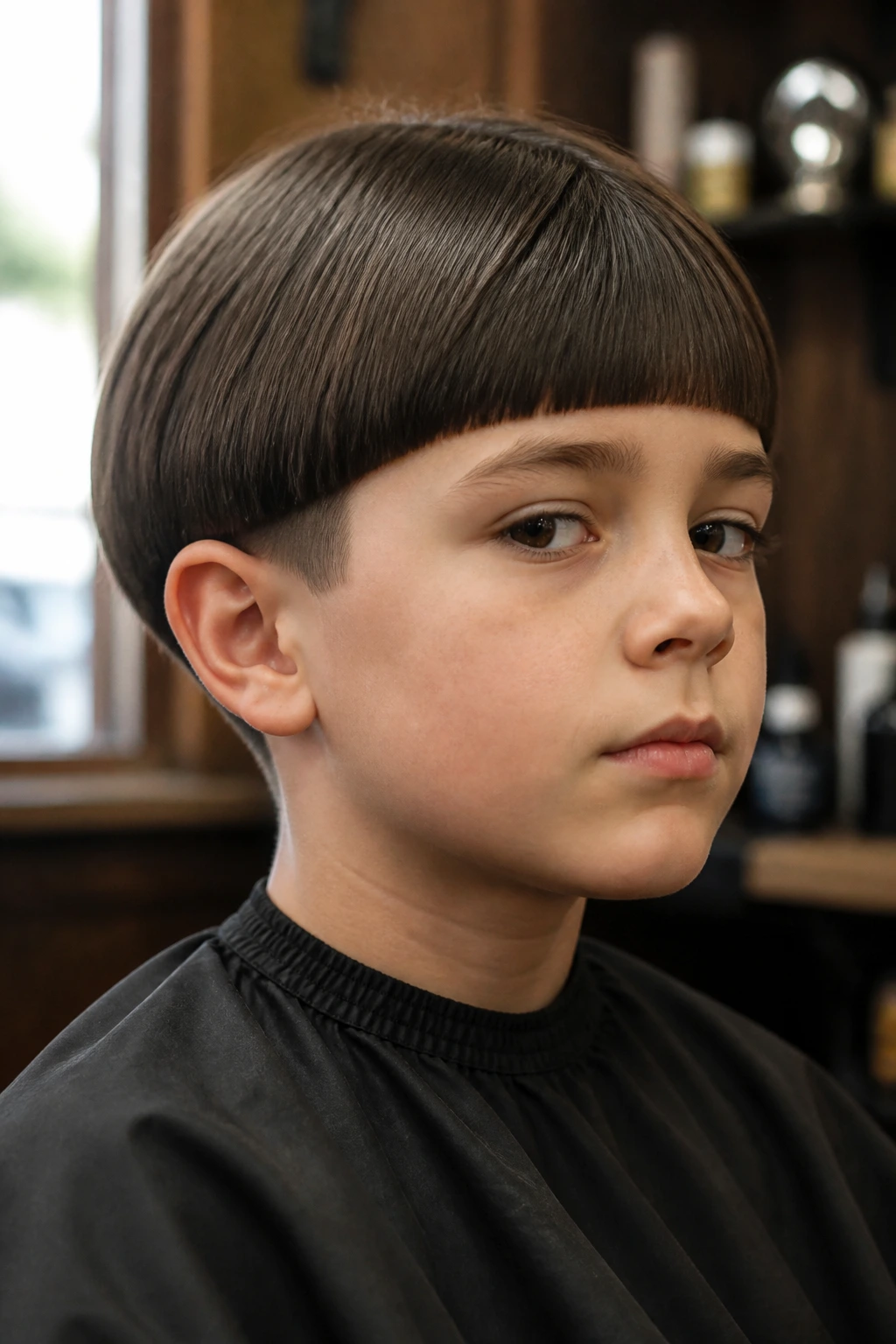
The classic pageboy bob never really left. It just became the kind of haircut people forget until they see it done well. On thick hair, it can be excellent, because the rounded shape and blunt perimeter give the density somewhere to go instead of letting it flare.
This version usually sits around the jaw or a little above, with the undercut tucked low enough to remove the bulky base. The fringe can be blunt or gently side-swept. Either way, the shape should stay smooth around the head, not expanded out from it.
If you want a bob that reads tidy even after a rough morning, this is a smart pick. It has enough structure to stay recognizable, but it does not rely on a lot of styling product. A quick comb-down or a light finger finish is usually enough.
The old version of this cut looked heavy because all the weight stayed where it grew. The modern version works because the barber respects the density and edits it from underneath. That’s the whole game, really.
How to Choose the Right Length and Undercut Height
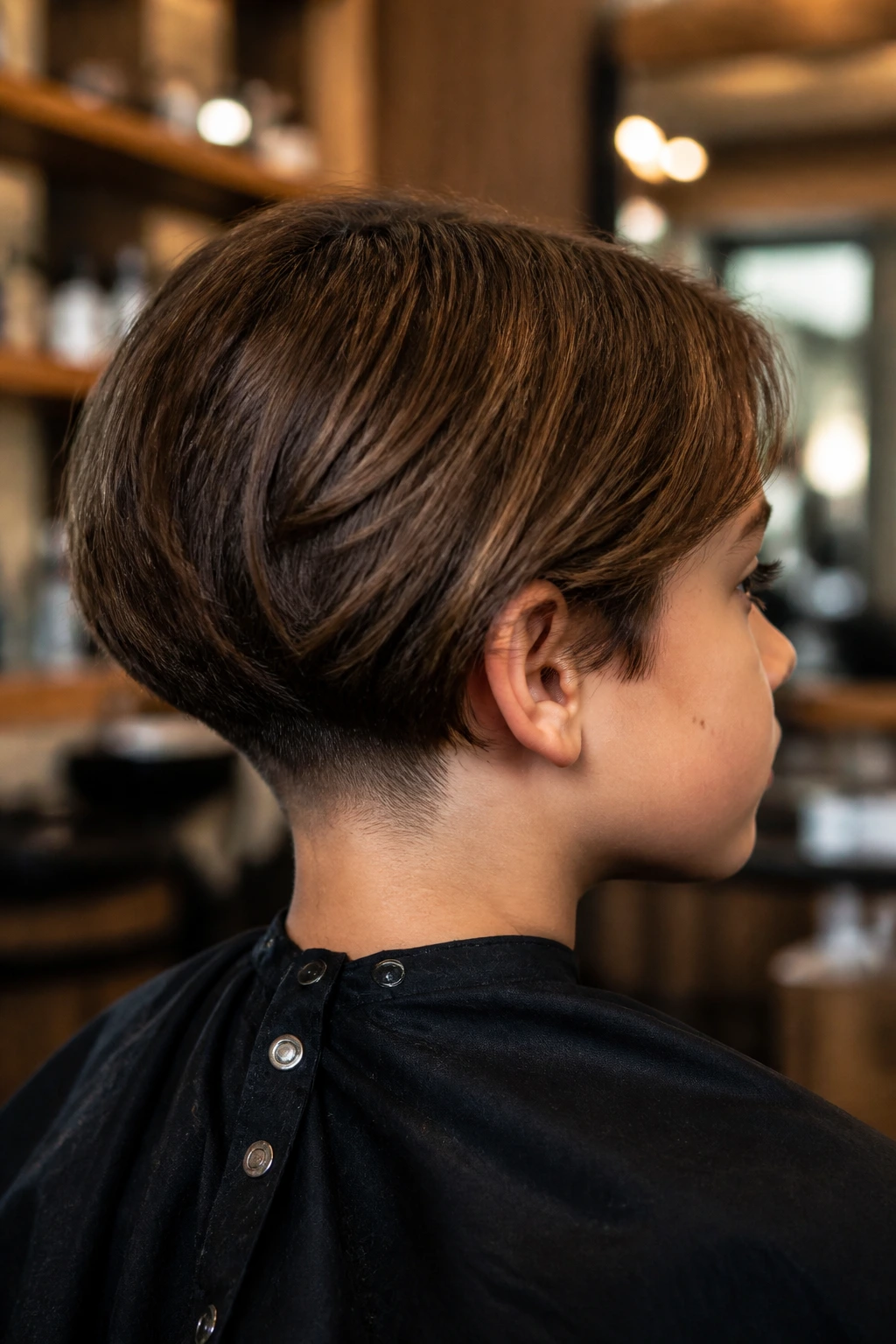
The mistake most people make is talking about “a bob” as if it were one haircut. It isn’t. On a thick-haired boy, a bob can sit at the cheek, the jaw, the chin, or just under the ears, and the undercut can be barely there or quite visible depending on how much bulk you need to remove.
Start with the hair itself. Straight thick hair usually needs a cleaner perimeter and a little more undercut to keep the outline from sticking out. Wavy thick hair often needs less aggression underneath and more shaping through the ends so the wave pattern doesn’t explode into frizz. Curly hair is its own thing, and I’d keep the undercut lower in that case so the curls still have somewhere to live.
Face shape matters, but not in the cartoonish way some haircut advice tries to sell. Round faces usually do well with a bit more length in front or a side sweep. Longer faces often look balanced with a chin-length or ear-length bob that adds width without piling too much volume on top. Square faces can wear a blunt line nicely, especially if the edges are softened a little.
Bring a photo. Always. Then point to the part you like: the fringe, the ear line, the nape, the amount of undercut. A picture plus a sentence is much more useful than a vague request for “something like a bob, but not too much.” Barbers hear that last part and sigh internally.
Tools That Make Thick-Hair Bob Maintenance Easier
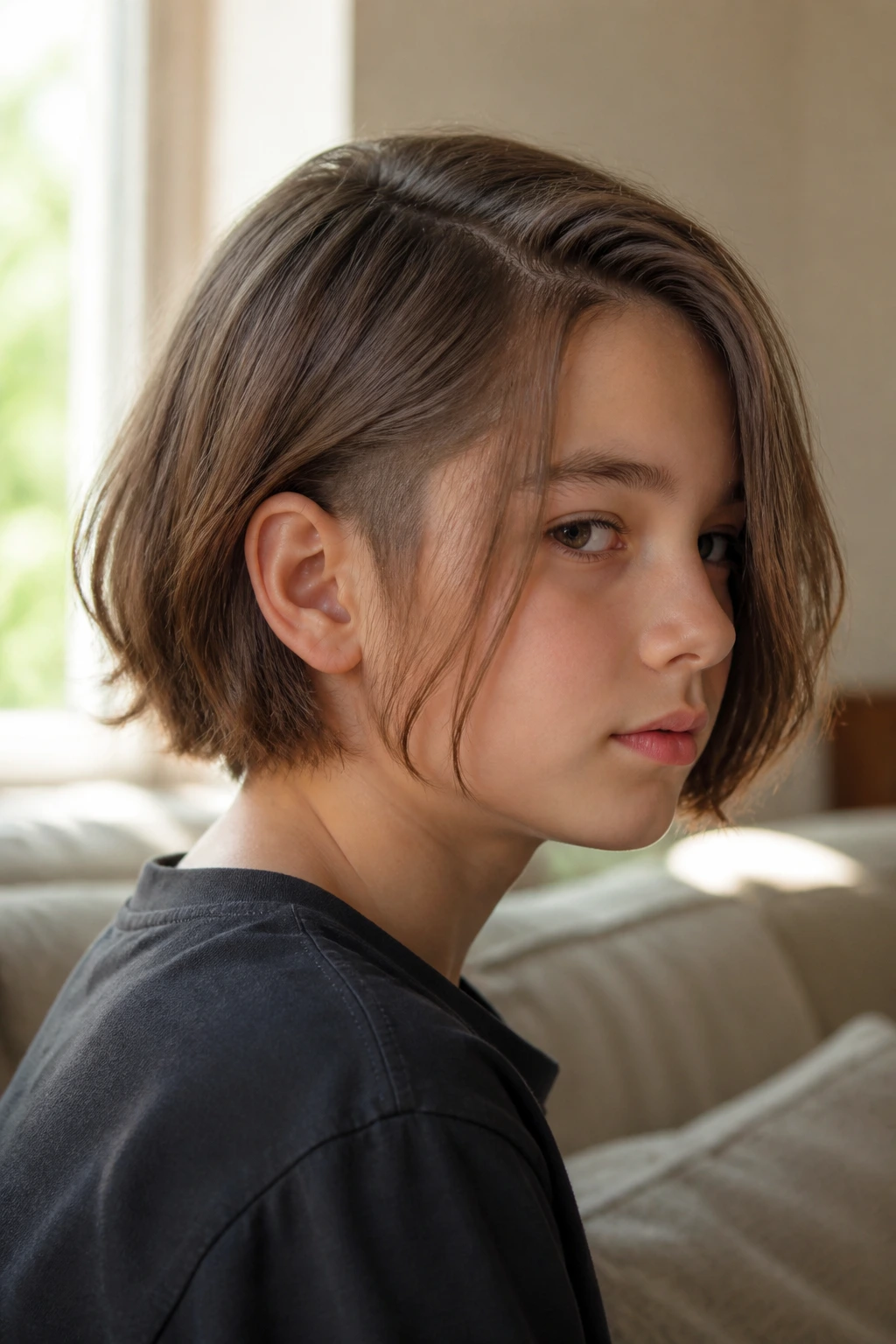
You do not need a drawer full of products. You need a few things that make thick hair behave in the morning and stay tidy between trims.
- Spray bottle with water: A few misted passes wake up thick hair fast, especially if it slept in a bent shape.
- Wide-tooth comb: This helps detangle without ballooning the hair before school.
- Small fine comb: Useful for sharpening a part or smoothing the fringe when you want a cleaner finish.
- Light styling cream or matte paste: A pea-sized amount is usually enough for little-boy hair; too much turns the cut greasy.
- Detangling brush: Better than a stiff brush when the hair is dense and slightly wavy.
- Hand mirror: Handy for checking the nape and side lines after the barber cleans them up.
- Hair clips or small sectioning clips: Not glamorous, but useful if you’re trimming bangs or drying in sections.
- Clipper with guards #1, #2, and #3: If you clean up around the neck at home, these are the guards that matter most.
- Soft towel or microfiber towel: Thick hair frizzes when it’s rubbed hard. Pat it dry.
If you only buy two styling products, make them a light cream and a matte paste. One smooths, the other adds separation. That covers most of the looks in this collection.
What to Tell the Barber Before the Clippers Start
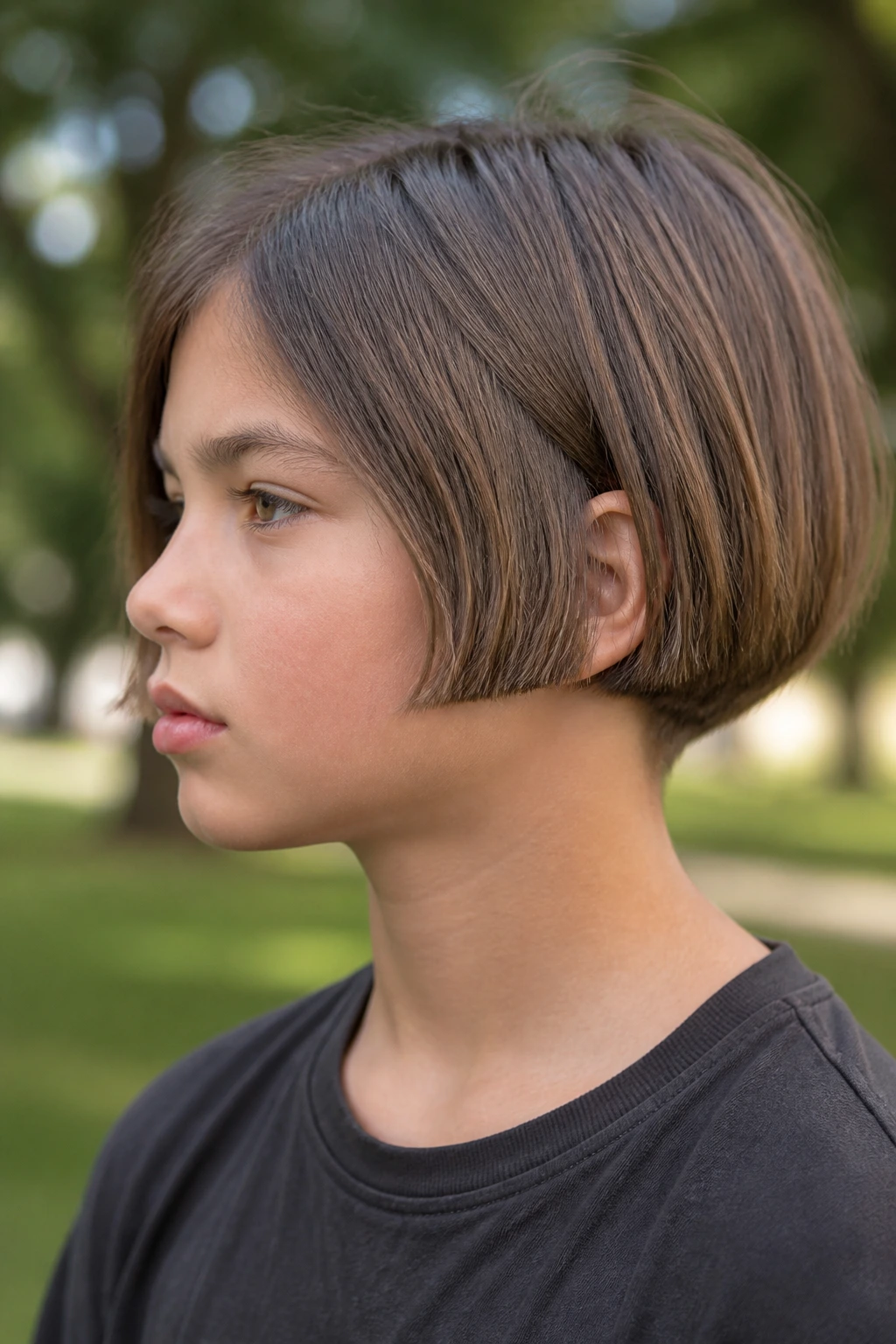
Bring the photo, but do not stop there. Thick hair needs instructions that say where the bulk lives and where you want the shape to sit.
Start with the perimeter. Say whether you want the bob at ear level, jaw level, or chin level. Then point out the undercut height. Low undercut means a cleaner nape and hidden sides. Higher undercut means more contrast and less bulk, but it can also make the top sit too floaty if the hair is fine at the roots.
Next, talk about texture. If the hair is coarse and straight, ask for light point cutting and avoid razor work unless the barber knows exactly what they’re doing. Coarse hair can fray when it’s shredded. If the hair is dense and wavy, a bit of internal weight removal helps the shape lay flatter without killing the movement.
Cowlicks deserve a sentence of their own. Tell the barber where the front swirls, where the crown kicks up, and whether the nape grows straight down or outward. That one detail can change the whole cut. A good barber will adjust the length in those spots instead of fighting the growth pattern.
How to Style These Cuts on Busy Mornings
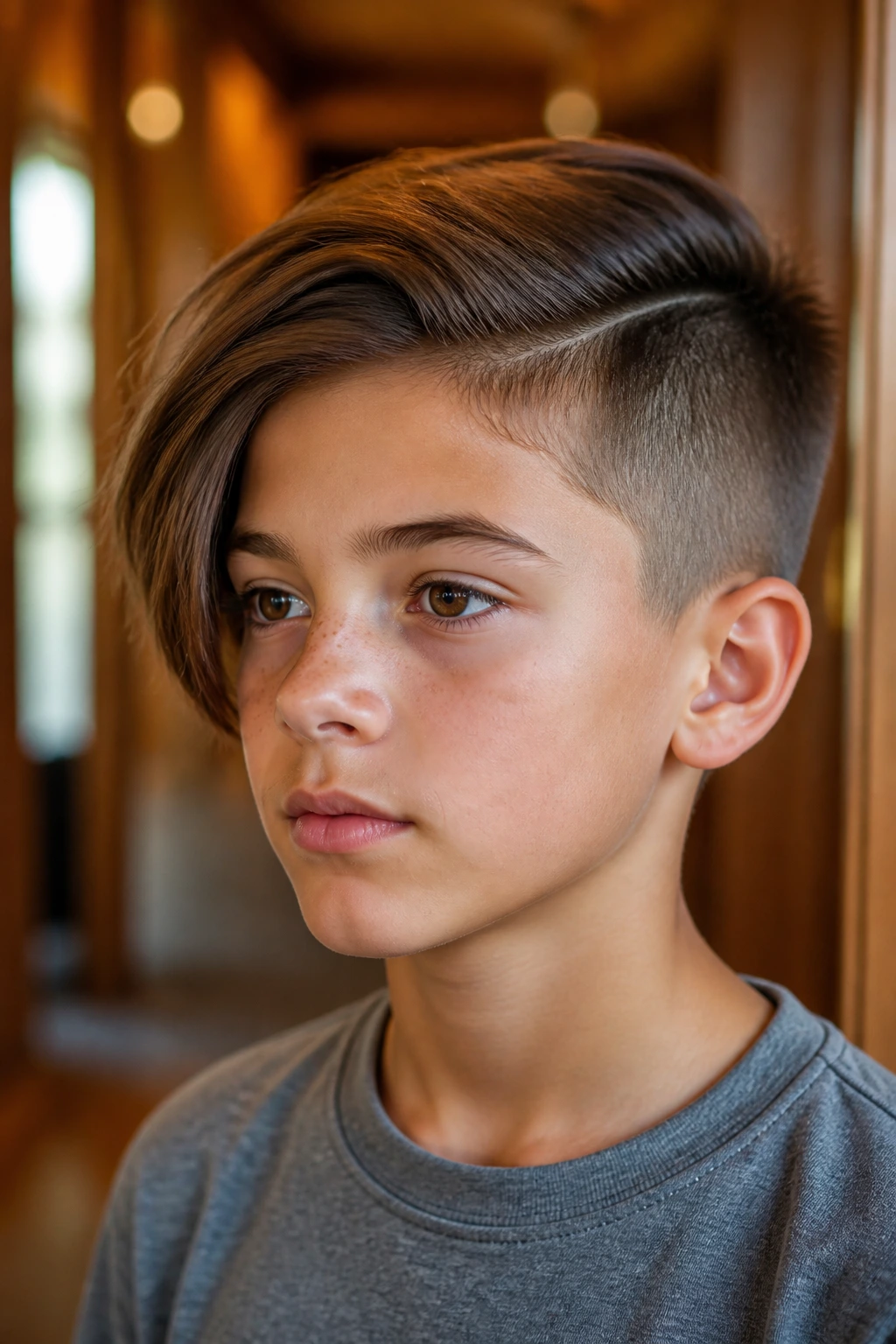
The trick with a thick-haired bob is not making it look “done.” It’s making it sit where it should with the least amount of fuss. Three minutes is enough if the cut is right.
For a smooth finish: Mist the hair until it’s damp, comb it into place, and use a tiny amount of cream on the mid-lengths. Focus on the fringe and the side panels, not the roots. If you slather product at the scalp, the hair goes flat up top and puffs somewhere else.
For natural texture: Skip the comb. Use your fingers, a little leave-in conditioner, and a quick scrunch at the ends. This works well on the shaggy, feathered, and messy versions. Let the haircut keep some of its movement.
For cowlick control: Dry the swirl in the direction you want it to go, even if that means holding the hair down for 10 to 20 seconds longer than feels necessary. Cowlicks are stubborn mostly because people give up too early.
For hat days: Push the hair back with water first, not a heavy gel. Thick hair compresses under a cap and then stands up at the ears when the hat comes off. A light reset with damp fingers is usually enough to fix it.
Common Mistakes That Make Thick Hair Look Bulky
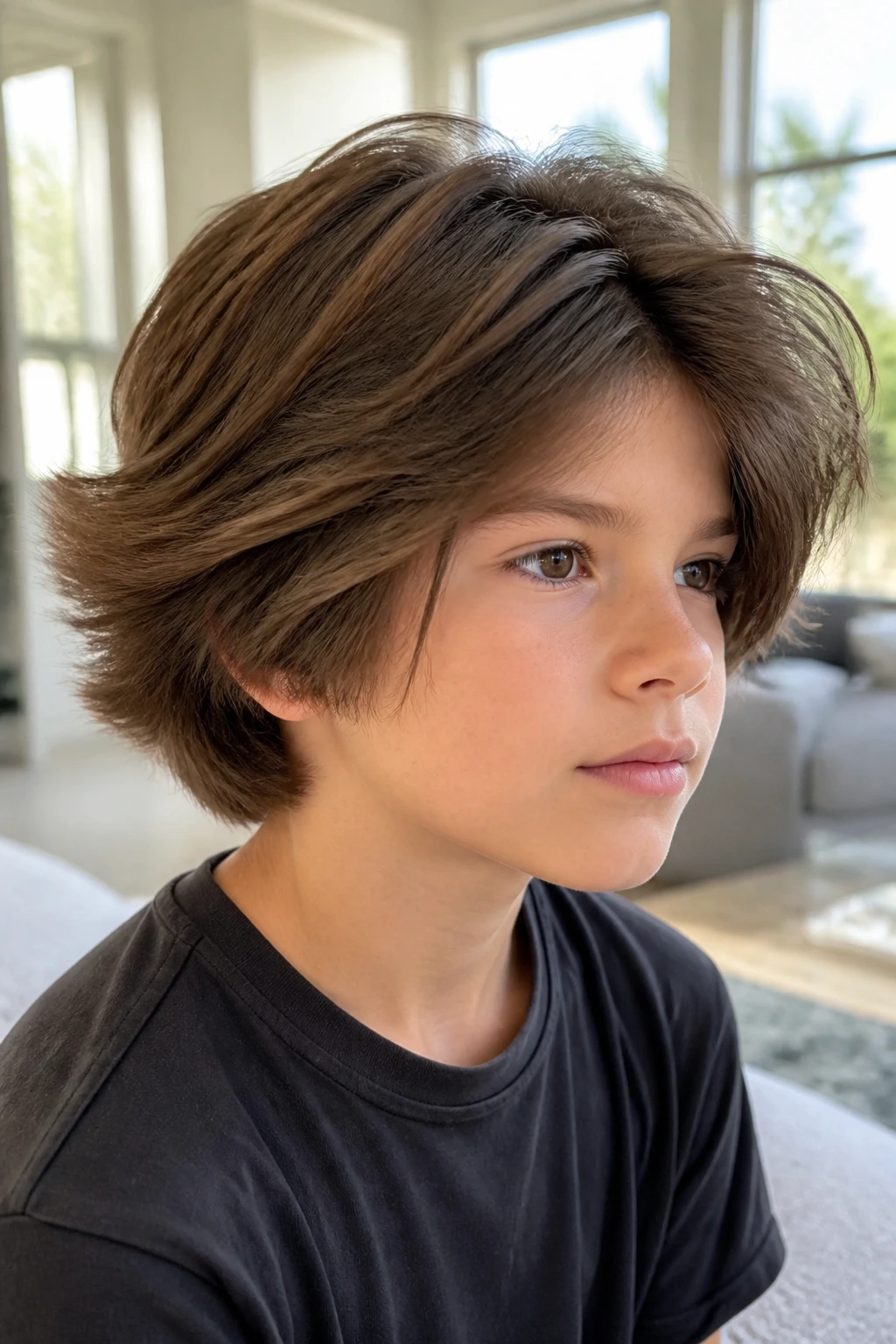
The first mistake is leaving too much weight at the nape. Thick hair will gladly build a shelf there, and once it does, the haircut starts looking wider than the head. The fix is a low undercut or a cleaner cleanup under the perimeter.
Another one: over-thinning the top. People get nervous about density and take too much out with texturizing shears. The result is frizz, uneven pieces, and a cut that feels hollow. Use internal weight removal sparingly, then check the hair dry before taking more off.
The third problem is cutting the fringe too short because it gets in the eyes during the appointment. Big error. Thick hair springs up as it dries, and a fringe that seemed fine wet can ride high and look odd once it settles. Leave a little extra length, then trim again only if needed.
A lot of home trims go wrong because the clippers are pushed too high on the sides. That makes the top look like it’s floating. Keep the undercut low unless you truly want a stronger contrast.
And finally, too much product. Thick hair does not need a handful of paste. It needs control in the right spots. A little goes a long way.
Variations and Alternatives to Try

The Low-Contrast Version: Keep the undercut very low and let the bob perimeter do most of the work. This is the easiest choice if you want the haircut to look soft from the outside but still lighter underneath.
The Sharp Contrast Version: Go a bit tighter on the sides and nape, then keep the top longer and blunter. This gives a more modern shape and works well on straight, heavy hair that tends to puff.
The Wavy-Air Version: Leave the top a touch longer, skip the stiff styling products, and let the wave pattern form naturally. Best for boys whose hair gets frizzy when brushed too much.
The School-Photo Version: Use a smoother fringe, clean temples, and a tidy nape. This is the polite version of the undercut bob — still stylish, just quieter.
The Grow-Out Version: Ask for a soft perimeter and a low undercut so the shape still looks intentional several weeks later. This is the least fussy option for families who cannot be in the barber chair all the time.
Trim Timing, Wash Days, and Grow-Out Planning

Thick hair grows into shape fast, and then it grows out of shape almost as fast. That means timing matters more than people expect.
The undercut itself usually needs a cleanup every 3 to 4 weeks if you want the shape to stay crisp. If you are fine with a softer, more lived-in look, you can stretch that a little. The fringe, if it sits near the eyebrows, may need a quick touch-up every 2 to 3 weeks because it is the first thing to start bothering a child.
Wash days are another place where people overdo it. Thick hair does not need heavy shampooing every single day unless the child is genuinely sweaty or the scalp gets oily quickly. Rinse with water, use a small amount of gentle shampoo when needed, and keep conditioner on the mid-lengths and ends rather than the scalp. That stops the hair from getting flat where you want lift.
For grow-out, the softest-looking cuts are the ones with a clean nape and controlled side bulk. When the undercut is low and the perimeter is balanced, the haircut can go a little longer before it starts looking shaggy. If you know you’ll miss a trim, ask the barber to plan for that from the start.
Frequently Asked Questions
Which undercut bob works best for very thick straight hair?
The blunt ear-line bob and the chin-length version usually handle dense straight hair best because they keep a clear outline. Straight thick hair shows weight fast, so you want a strong perimeter and enough undercut to keep the sides from flaring.
Will an undercut bob make thick hair look thinner?
It will make it look lighter, which is not the same thing. The point is to remove hidden bulk so the shape sits better, not to strip away so much hair that it looks sparse. Done well, the haircut still looks full.
How short should the undercut be?
A low undercut often sits around a #1 to #2 guard, but the right choice depends on how dense the hair is and how much contrast you want. If you go too high too quickly, the top can look disconnected.
Can this style work if my child has cowlicks?
Yes, especially the side-swept, messy, and grow-out versions. The cut should follow the swirl instead of fighting it. A barber who watches the growth pattern before cutting will usually get a much better result.
What product should I use for thick hair on a little boy?
Start with a light cream or a matte paste. Heavy gels and sticky waxes tend to clump thick hair instead of guiding it. You want just enough hold to keep the fringe in place and enough flexibility for the rest of the day.
How often will it need trimming?
Most of these cuts look their cleanest with a trim every 3 to 5 weeks. Fringe-heavy versions may need a touch-up sooner, especially if the hair falls into the eyes when dry.
Can I cut the undercut at home?
You can clean up a low nape line at home if you’re careful, but I would not try to reshape the whole bob with clippers unless you have a steady hand and a clear plan. The perimeter is what makes the haircut work, and that’s easy to wreck with one sloppy pass.
What if the haircut puffs out again after sleep?
Mist the hair lightly with water, press the sides down with your palms, and dry the shape into place for a minute or two. Thick hair usually resets fast once it has a little moisture and direction.
A Clean Shape That Holds Its Own
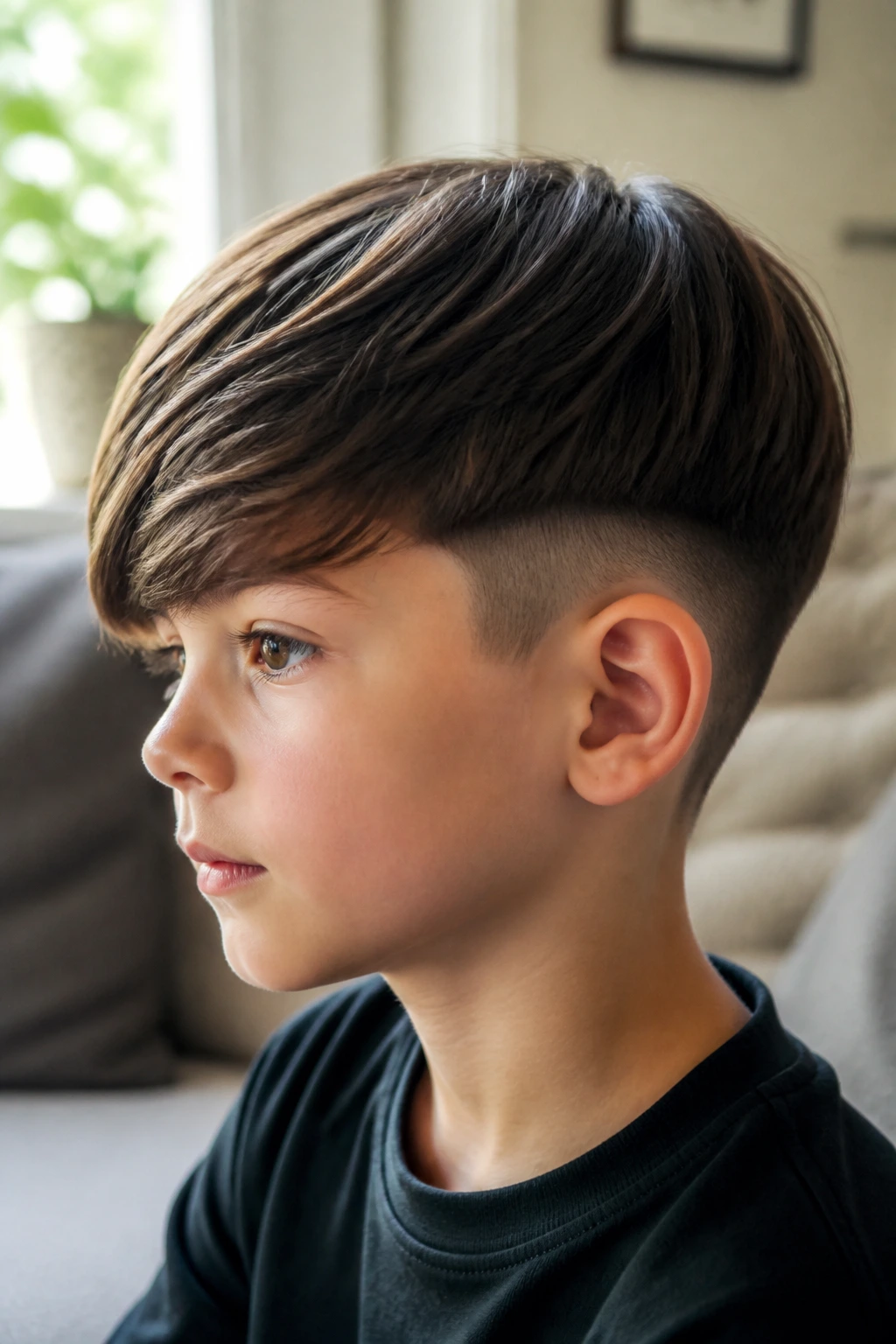
The best undercut bobs for little boys with thick hair do one thing that matters more than all the styling chatter: they make dense hair easier to live with. Not thinner. Easier. That’s the real win. The shape sits cleaner, the nape stays calmer, and the haircut keeps its line long enough to survive a real week, not just a perfect morning.
When thick hair is cut with that much care, it stops acting like a problem to be managed. It starts acting like a feature. And that is a better place to be.