



Short hair with curtain bangs has a very particular kind of charm. It can look soft and expensive in one light, a little rebellious in another, and it never needs the kind of fussy precision long hair sometimes demands. The trick is getting the fringe to split in the right place and letting the rest of the cut do something interesting instead of sitting there like a helmet.
That’s why this pairing keeps showing up in real life, not just on mood boards. Curtain bangs give short hair a built-in frame, and short hair gives curtain bangs room to breathe. The cheekbone gets a little lift. The jawline gets a little edge. The whole shape starts reading as deliberate even when you’ve only spent ten minutes in front of the mirror.
The best versions live in that sweet spot where the shortest pieces graze the cheekbones or skim the lips, and the sides fall away instead of hanging straight down. Too short and the fringe turns blunt. Too heavy and it swallows the face. The hairstyles below use that balance in different ways, from airy blowouts to clipped-up twists to a few looks that are just plain fun.
Why These Pairings Work So Well
-
Face-framing without stiffness: Curtain bangs break up the blocky outline short hair can get when it sits too evenly around the jaw.
-
Easy style changes: The same cut can look sleek, shaggy, pinned back, or softly waved with almost no haircut changes at all.
-
More forgiving grow-out: A longer fringe can slide into side pieces or a shaggy layer instead of hitting the awkward “what am I supposed to do with this?” stage.
-
Texture-friendly by design: A bit of bend, wave, or natural puff usually helps these styles, which is nice when your hair does not want to cooperate perfectly.
-
Accessory-friendly: Short lengths leave room for earrings, clips, scarves, and headbands, and the bangs keep the look from feeling bare.
-
Lower styling pressure: You are not fighting ten inches of length to get one shape. A good split and a clean bend at the front do most of the work.
1. The Soft Blowout Bob
A chin-length bob with curtain bangs and a round-brush bend is one of those styles that looks more polished than it really is. The ends curve in just enough to sit neatly against the jaw, while the fringe opens at the center and sweeps toward the cheekbones. Clean. Soft. Not fussy.
Why It Flatters
The shape works because the bob gives structure and the bangs break it up. That little lift at the roots keeps the haircut from collapsing into a flat line, which happens fast with short hair if you skip the blow-dryer. I like this look best when the bangs are split slightly off the exact center; it feels looser, and the face reads longer.
Quick Styling Notes
- Best brush size: a 1 to 1.25-inch round brush gives enough bend without making the bob curl under too tightly.
- Best hair type: fine to medium hair that wants volume at the crown.
- Best product: a light mousse at the roots and a pea-size smoothing cream on the ends.
- Best finish: a mist of flexible hairspray, then a cool shot from the dryer to lock in the curve.
Tiny tip: keep the brush under the bangs for the last 8 to 10 seconds of heat. That sets the split so the fringe does not fall flat by lunch.
2. Bendy S-Waves at Chin Length
This is the style for when you want movement without a full curl. The waves bend in a loose S-shape, so the hair looks touched, not curled into submission. Curtain bangs work here because they echo the same soft line at the front.
The trick is alternating direction with a 1-inch curling iron or wand, then leaving the ends a little imperfect. Don’t overthink the symmetry. A little difference from one wave to the next makes the whole thing read as casual instead of pageant-ready.
Use this on second-day hair when the roots have a bit of grit. Freshly washed strands can be too slippery, and the bend falls out faster than you’d like. A dry texturizing spray at the roots helps the bangs separate instead of clumping into one heavy piece.
3. The Half-Up Knot That Still Lets the Bangs Fall
Need a style that keeps hair off your neck but still lets the curtain bangs do their thing? This is the one. Pull the top third of the hair into a tiny knot or twist at the crown, leave the lower section loose, and let the bangs hang soft on both sides.
How to Wear It
Start by misting the roots with a little dry shampoo so the top section has grip. Gather hair from temple to temple, twist it once, and pin or tie it into a small knot. Leave the front pieces alone. If the curtain bangs are long enough to hit the cheekbones, they’ll blend right into the half-up shape instead of fighting it.
This is the kind of look that hides a greasy root line and still looks intentional. It’s also useful when your bob is growing out and feels a little shapeless. One small knot can fix that. Strange but true.
4. A Deep Side Part with Lift at the Roots
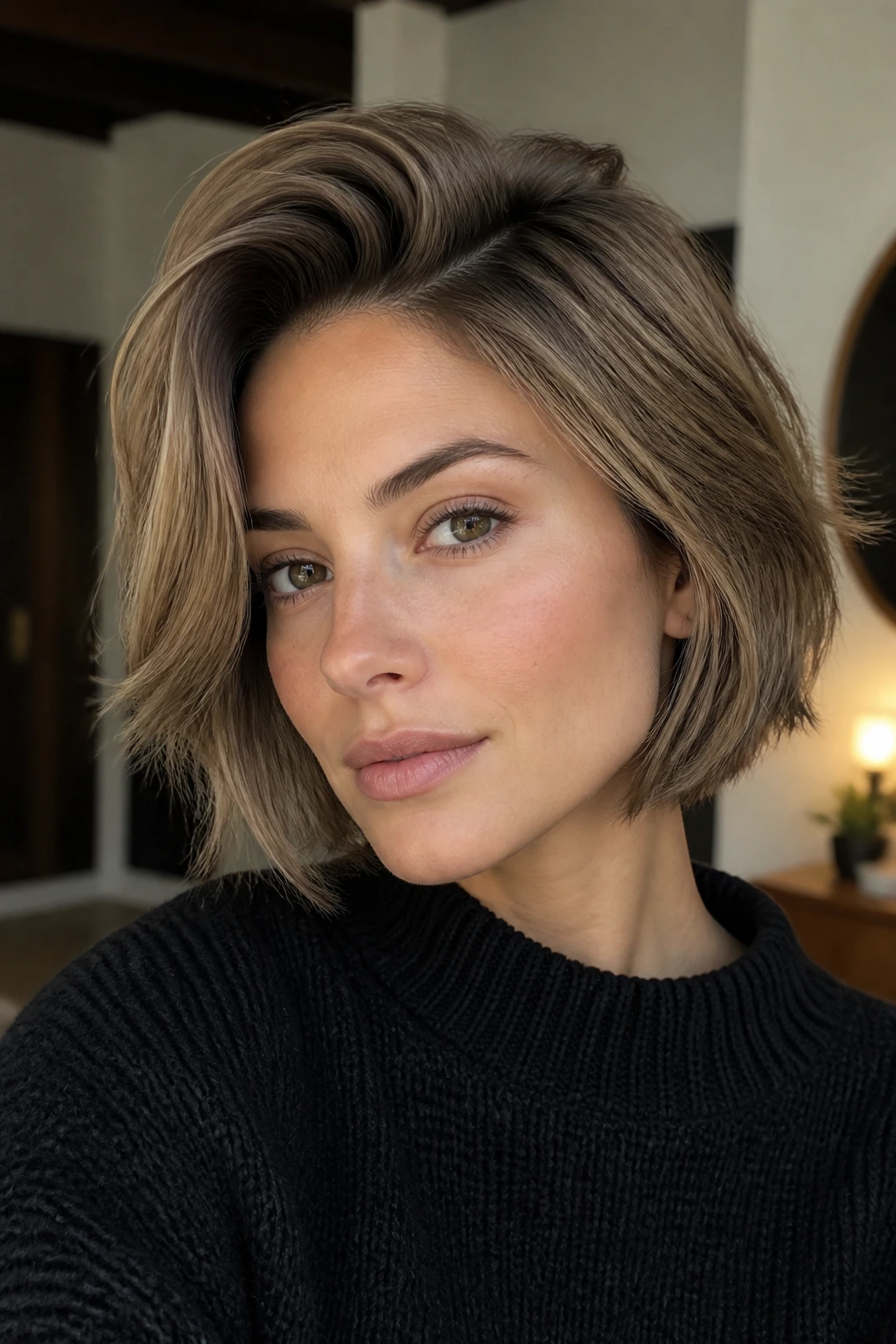
Sometimes the easiest way to make short hair with curtain bangs feel fresh is to stop parting it down the middle. A deep side part gives the bangs a stronger sweep and gives the roots a chance to stand up instead of lying flat in the usual place.
The style is especially good on round or square faces because the diagonal line pulls the eye upward. That tiny shift changes the whole mood of the haircut. It looks a little more dramatic, a little less expected.
What Helps It Hold
- Blow-dry the part first, while the hair is still damp.
- Clip the heavier side up for 5 to 10 minutes while it cools.
- Use a root-lifting spray at the front hairline, not just the crown.
- Finish with a light mist of hairspray under the bangs, not on top of them.
The bangs should sweep away from the face, not sit like a curtain rod. That’s the difference between chic and stiff.
5. The Slicked-Back Bob with Loose Curtain Bangs
This look has a little attitude. The crown and sides are smoothed back with gel or styling cream, but the bangs stay loose enough to frame the face. The contrast is what makes it interesting. Sleek here, soft there. No confusion.
It works especially well for evenings or days when you want the outfit to do part of the talking. A clean tuck behind the ears, a glossy root line, and those bangs left slightly undone can be enough. I prefer this on short hair that’s just long enough to tuck the sides back without sticking out in odd little points.
Be careful with product. Too much gel and the whole head turns hard. You want the roots controlled, not frozen. Use a fine-tooth comb to smooth the top, then separate the bangs with your fingers while the product is still movable. That keeps the fringe from looking pasted on.
6. The French Bob with Tucked Ends
Compared with a blunt bob, the French bob with curtain bangs feels softer at the edges and a bit more playful around the face. The ends curl under slightly, usually right at the jaw or just above it, and the bangs fall in a loose center split that does not demand constant correction.
It suits straight or slightly wavy hair because the shape depends on movement at the tips, not giant waves through the whole head. The cut itself does a lot of the work. You only need a quick bend with a round brush or flat iron at the ends, plus a little lift in the fringe.
If you like a haircut that looks polished even when the rest of your styling is minimal, this one is a strong bet. It’s neat without feeling formal, and the curtain bangs stop it from looking too severe.
7. The Shaggy Bob with Piecey Texture
The shaggy bob and curtain bangs make sense together because both pieces of the cut like a little looseness. Layers at the crown keep the hair from puffing into a triangle, and the fringe blends into the sides instead of sitting like a separate feature.
What Makes It Different
This is not a “perfect” style. If every piece is smoothed and tucked and sprayed into place, the charm disappears. The magic comes from separation: ends that fall a little unevenly, bangs that split into two or three soft ribbons, and texture spray worked through the mid-lengths.
Best tools? A diffuser, a pea-size dab of curl cream or lightweight mousse, and your fingers. A brush can flatten the shape if you go at it too hard. The result should look airy, not stiff. Like your hair had a good nap and woke up with opinions.
8. The Twisted Crown Half-Up

This is the style I reach for when the fringe is starting to grow out and needs a little help behaving. Twist the pieces from each temple back toward the crown, pin them in place, and leave the lower half loose. The curtain bangs can stay free, or you can tuck the shortest center pieces into the twist if they keep falling into your eyes.
A small twist at the crown gives short hair a little lift without needing a full ponytail, which short lengths do not always support well. It also buys you a day or two between washes. That alone makes it worth knowing.
If your hair is layered, anchor the twist with two crossed bobby pins instead of one. It holds better and does not slide out the first time you turn your head.
9. The Mini Halo Braid
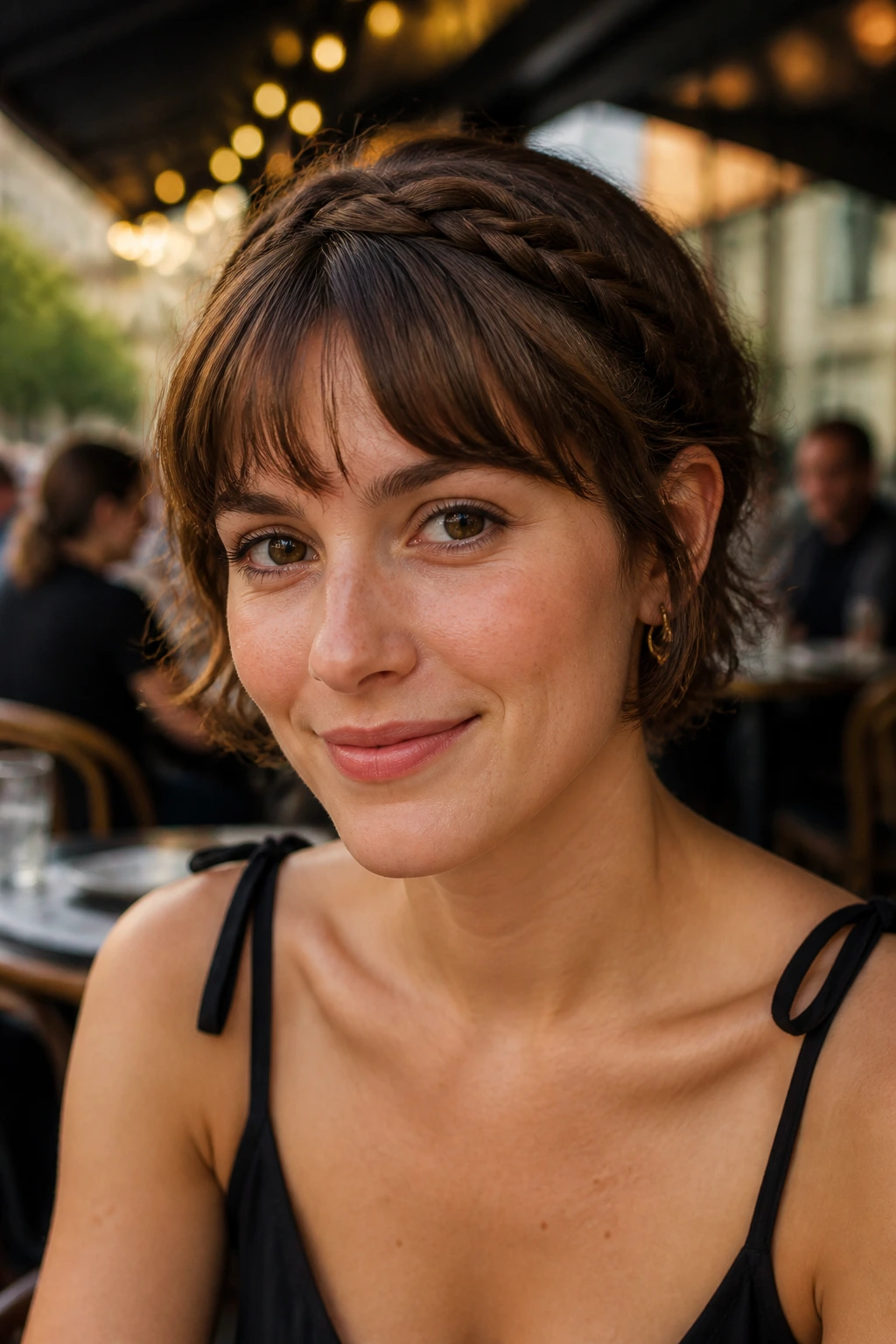
Can you braid short hair with curtain bangs? Yes, but keep the braid narrow and stay close to the hairline. A mini halo braid uses just enough length to create a soft frame around the forehead and temples without hiding the bangs entirely.
How to Style It
Start on one side with a small section above the ear and braid along the hairline toward the other side. Keep the braid loose so it does not pull the fringe up too tightly. A little texture spray before you start gives the strands enough grip to stay together.
This works especially well on short hair that reaches the chin or lower. Anything shorter than that can still do a partial braid, but the shape gets fragile fast. And honestly, a loose braid looks better than one that’s squeezed tight just to prove a point.
10. Pin-Curl Waves with a Vintage Edge
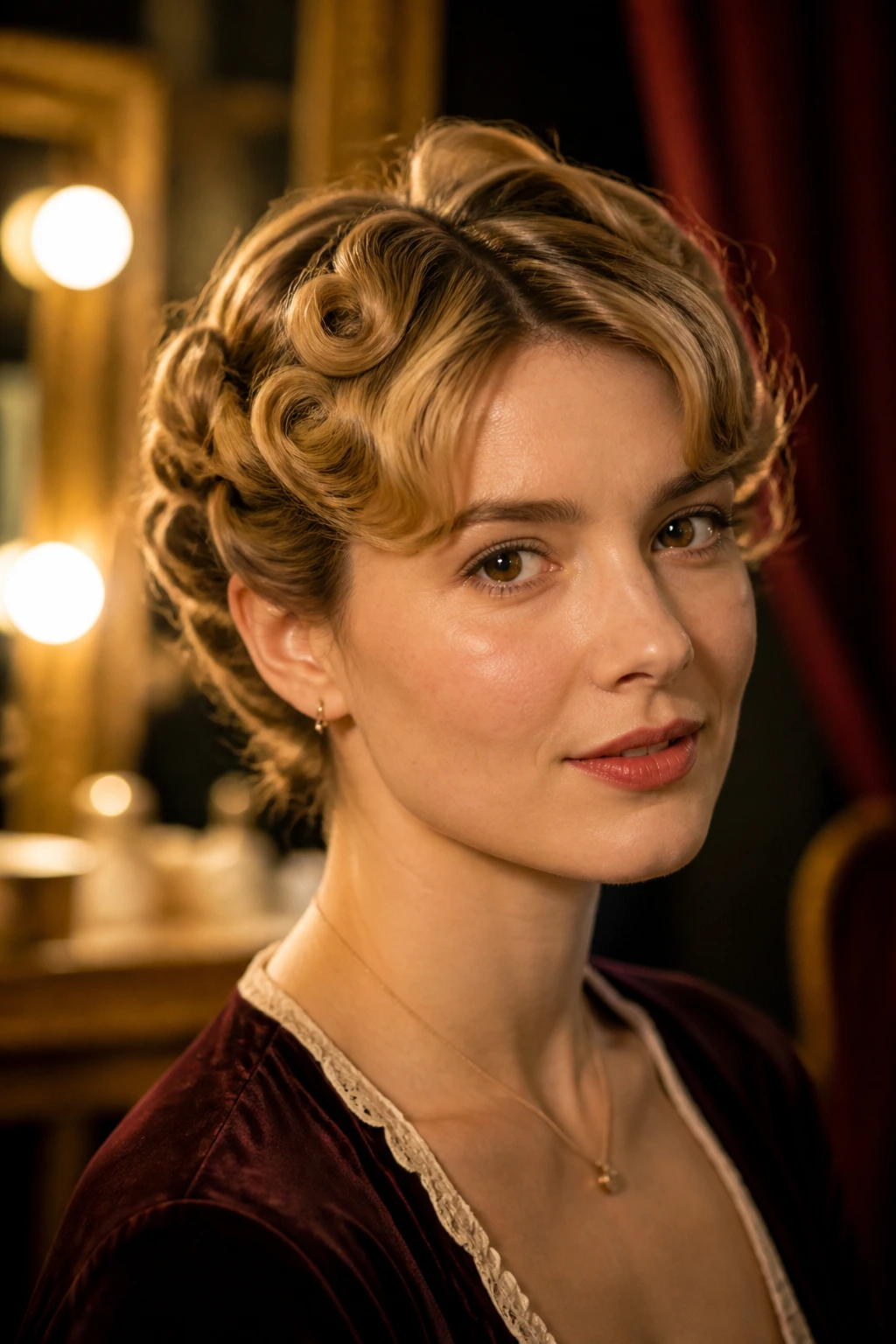
This style feels like it belongs on a dance floor or at dinner with candles. Set small sections around a 1-inch iron, clip each curl flat to cool, then brush them out lightly so the wave turns soft and round. The curtain bangs should curve away from the face, not collapse straight down the middle.
The nice thing about pin-curl waves on short hair is how much polish you get from very little length. The cut looks richer, and the bangs give the whole thing a kind of old-school softness that reads well in photos and in person. Brush too hard and you lose the shape; brush too little and it stays too ringlet-y.
Use this when you want the haircut to feel dressed up without adding accessories. It does not need much else.
11. The Claw-Clip Twist
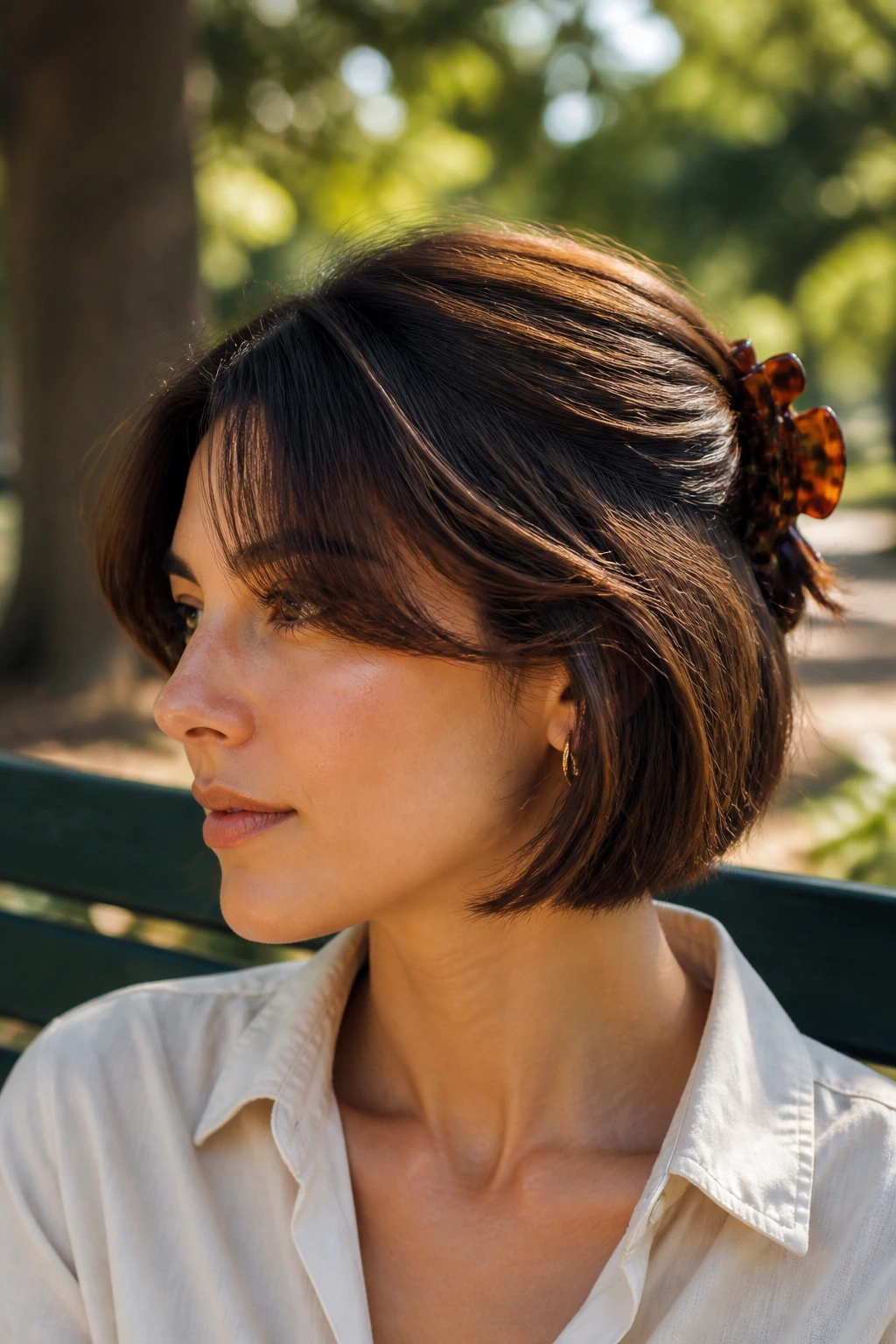
A claw clip on short hair can be annoying if the hair is too short or too slippery, but when it works, it looks casual in the best way. Twist the back section up, let the ends fold under the clip, and leave the curtain bangs loose around the face.
This style depends on the clip size. Medium claws tend to work better than giant ones because they grip short layers without swallowing the whole head. If your hair is fine, rough up the roots with dry shampoo first. If it’s thick, twist the back section tighter before clipping.
The bangs soften the shape so the clip doesn’t feel like a lazy afterthought. They turn the whole thing into a deliberate half-up style instead of “I gave up.” Small difference. Huge payoff.
12. Flipped-Out Feathered Ends
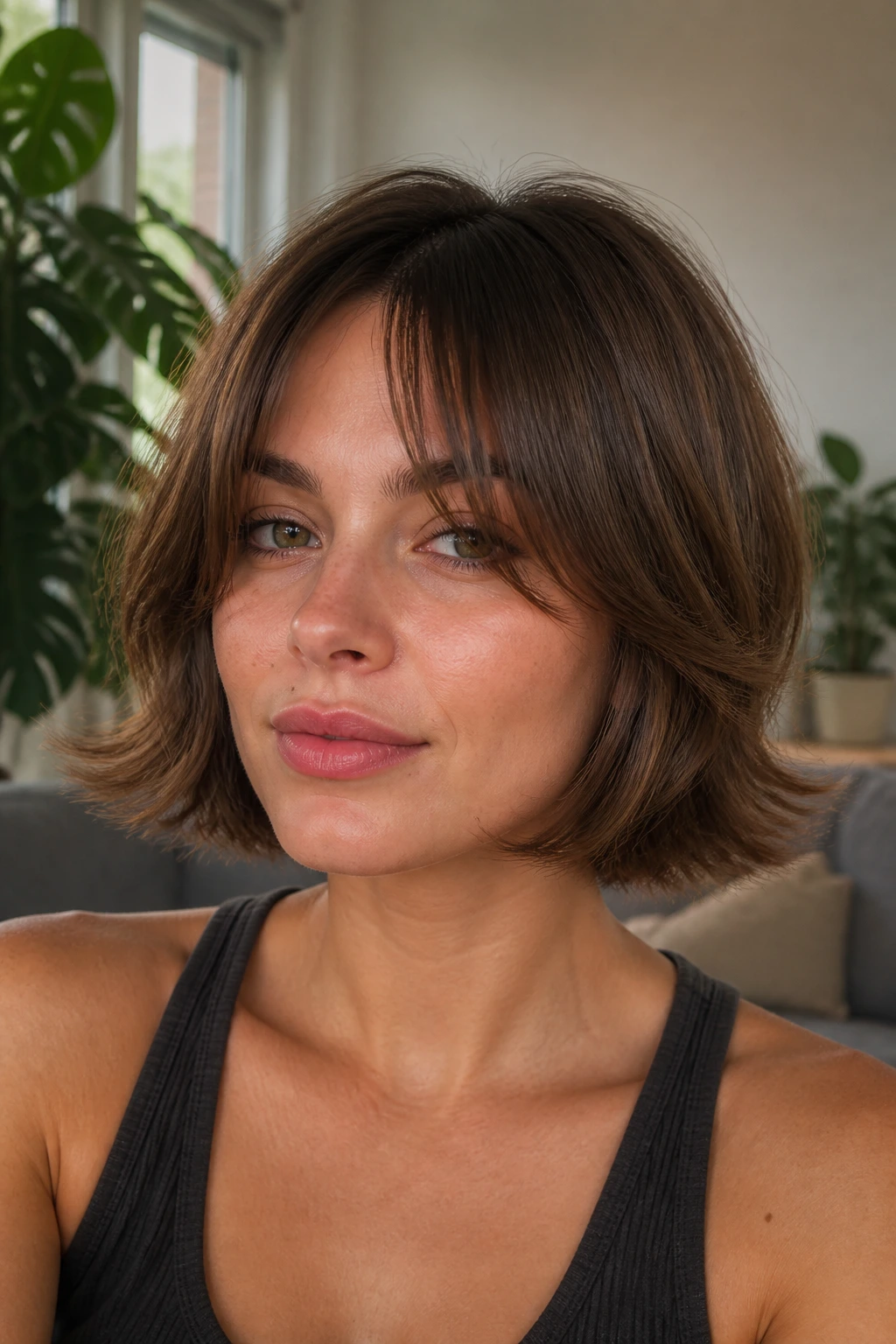
Unlike inward-curved bobs, this version throws the ends out with a flat iron or blow-dryer brush. The result has a little swing and a little retro edge, and curtain bangs help balance that outward movement at the jaw. Without the bangs, the look can get too geometric.
This style is especially good if your hair has a bit of natural body or if the cut is layered. Heavy, one-length ends resist the flip and can look bulky. Feathered ends want movement, so the more the hair already bends, the easier this gets.
I’d wear this when the outfit is simple and the hair needs to carry the shape. It reads instantly, which is half the fun.
13. The Low Mini Ponytail
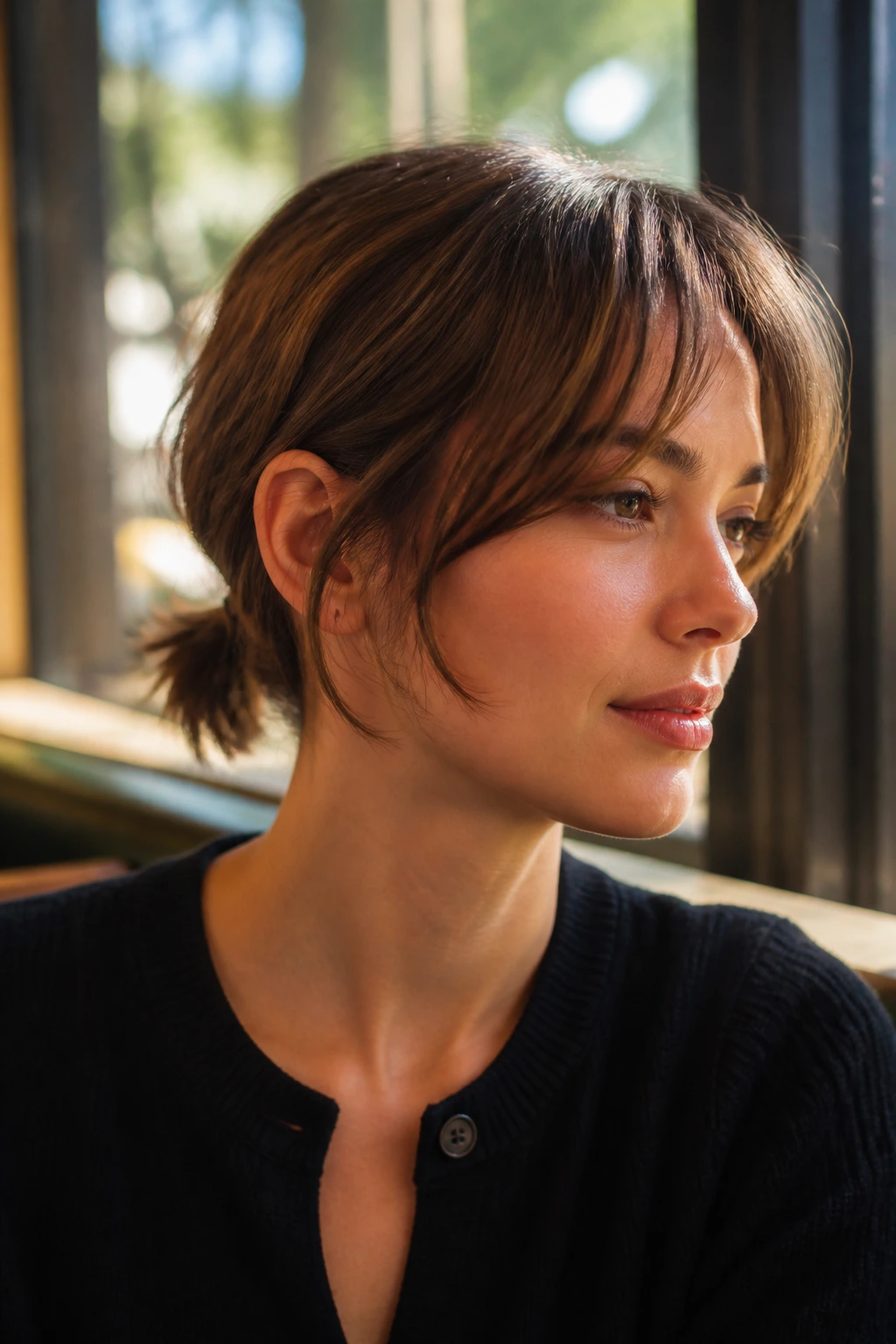
Short hair does not always make a full ponytail, but it can make a tidy low mini pony if the length reaches the nape. Pull the hair back just enough to gather it low, leave the curtain bangs loose, and wrap a small section around the elastic if you want it cleaner.
Why It Works
The pony gives the back some order while the bangs keep the front soft. That balance matters. If everything gets pulled away from the face, short hair can look harsh, especially around the temples.
Use a snag-free elastic and stop pulling before the sides start sticking out in odd little bumps. A few bobby pins at the nape can help the pony sit flat. If the ends are too short to gather neatly, let them break free on purpose. It looks better that way than pretending they are not there.
14. Bubble Half-Pigtails
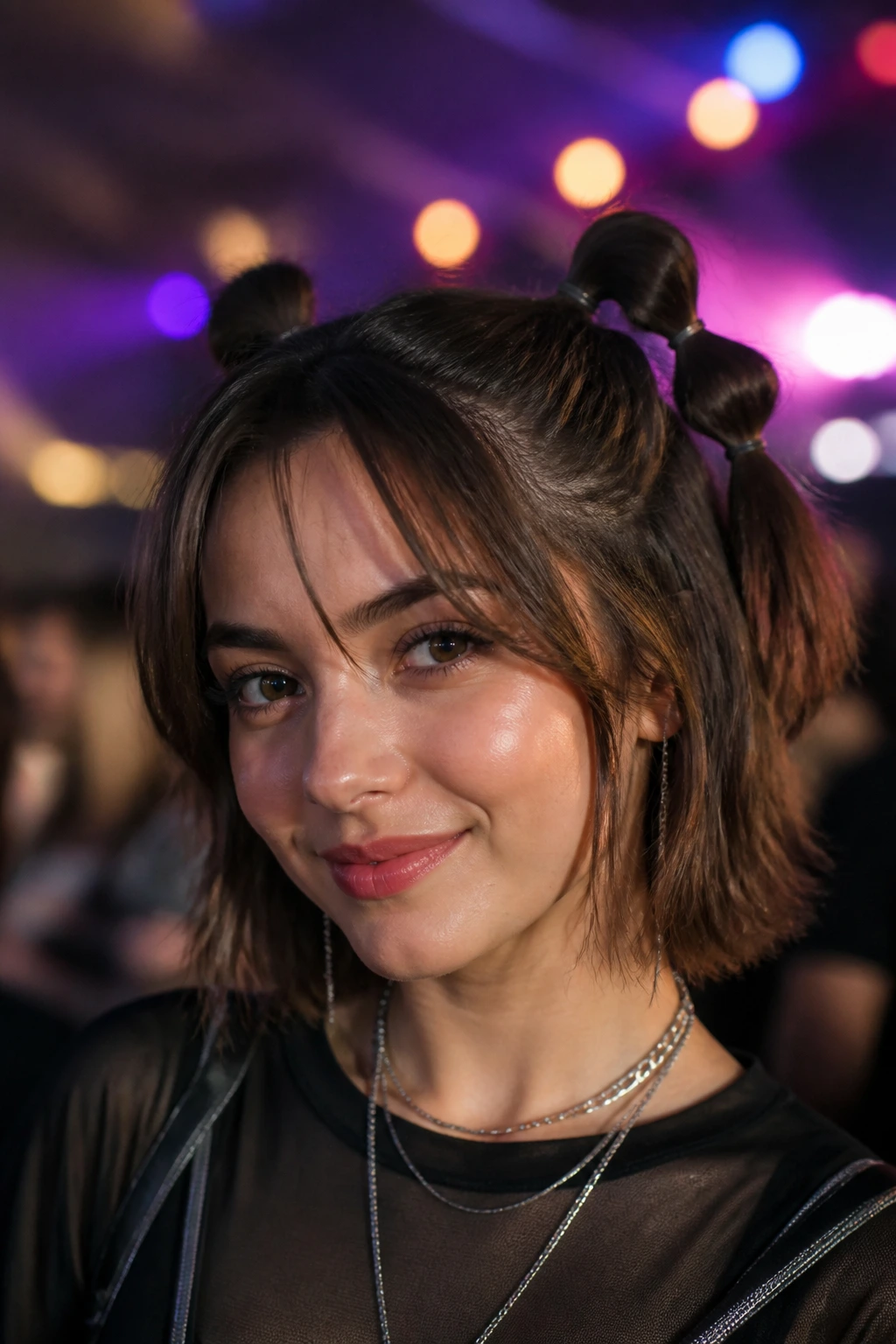
This one is playful, and yes, it can look grown-up if the sections are clean. Pull the top half of the hair into two small pigtails, then add a tiny elastic every couple of inches to create the bubble effect. Keep the curtain bangs loose and a little bent so the front does not feel too juvenile.
The bubbles work best when the hair has some texture. Freshly washed hair can slip out of the elastics. A touch of mousse or texturizing spray at the roots makes the sections stay put, and the bangs should be shaped first so they do not get crushed while you’re tying everything else.
This is a good choice for concerts, weekends, or any day when you want to be a little less serious. Not childish. Just lighter.
15. Space Buns on Short Hair
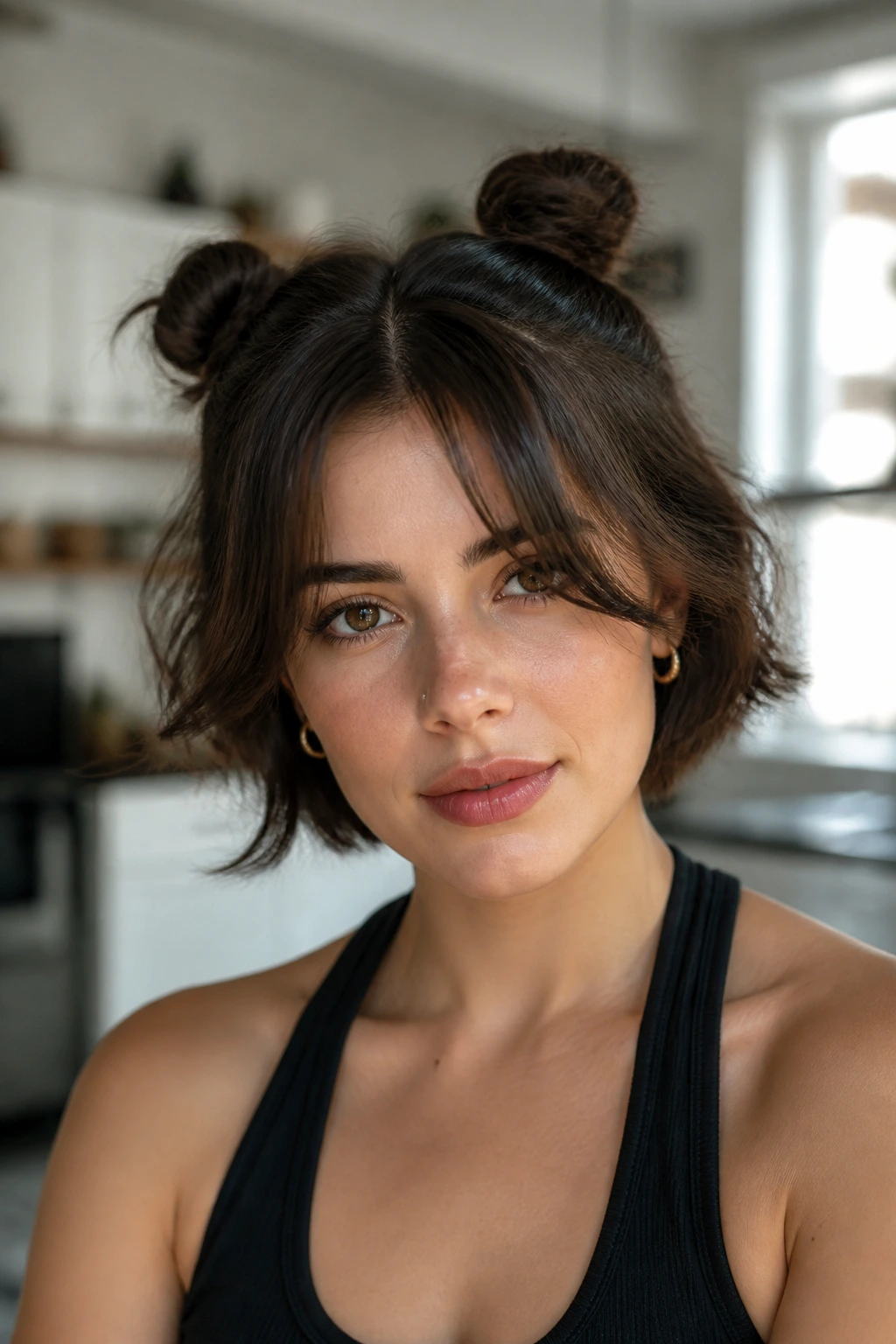
Two small buns at the crown can look adorable or chaotic, depending on how carefully you handle the bangs. The trick is to keep the buns tiny and the curtain fringe soft. If the bangs are too slick, the look turns severe. If they’re too poofy, the whole style starts floating away.
How to Make It Work
Leave the front section out first. Then divide the back and crown into two high sections, twist each one into a compact bun, and pin them tightly. Let the curtain bangs split and fall naturally, or give them a quick bend with a dryer if they need direction.
This is a style that benefits from imperfect pieces. A few wisps around the ears are fine. They keep the look from feeling costume-like. I would not wear it with a full face of heavy hairspray. That defeats the point.
16. The Headband Sweep
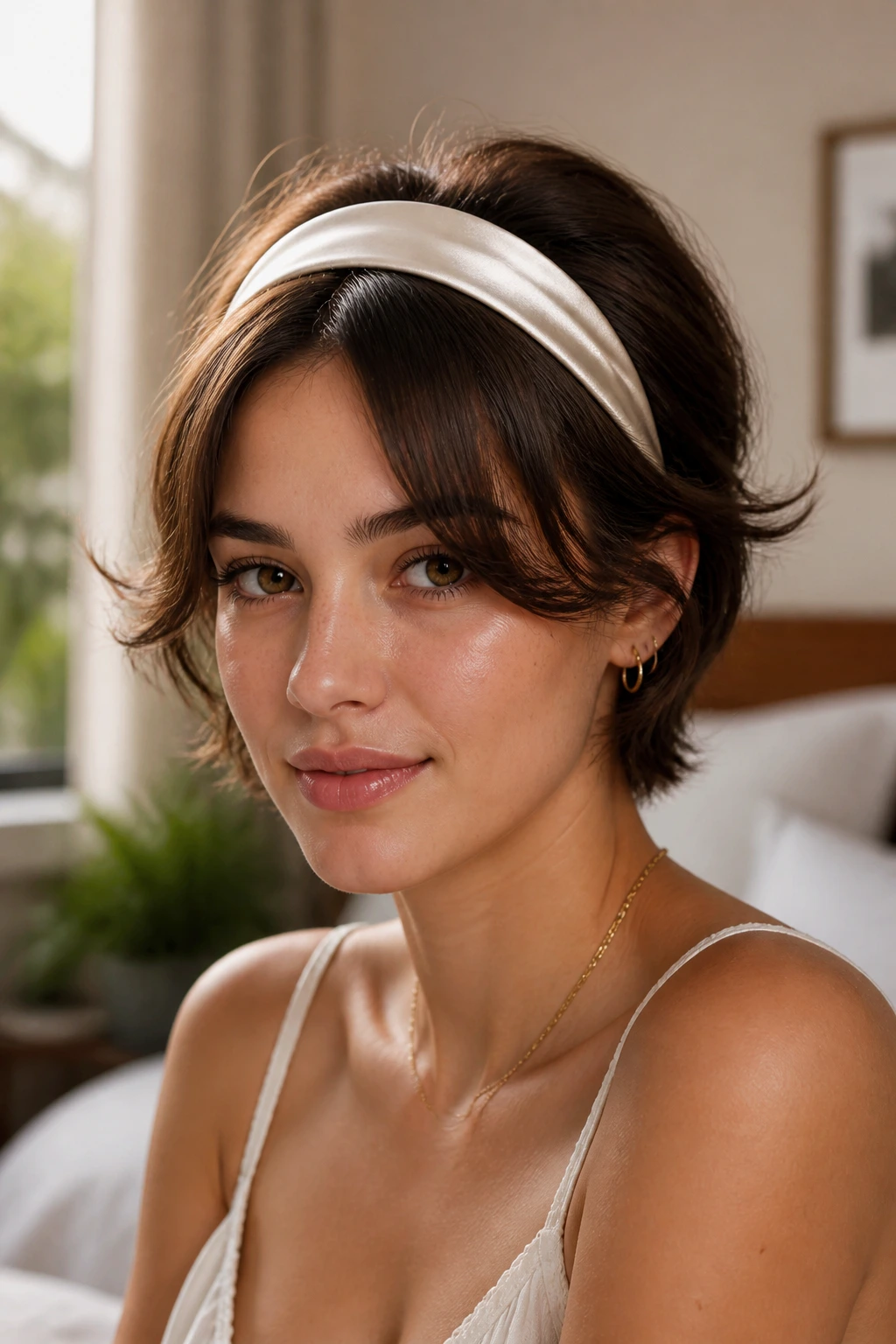
A headband can save short hair on the days when the fringe refuses to settle. Slide on a padded or fabric headband, push the hair slightly back at the crown, and let the curtain bangs feather out around the sides of it. The effect is neat but not severe.
A Few Details Matter
- Best headband width: about 1 to 1.5 inches keeps the style balanced on short hair.
- Best finish: satin or fabric if you want less slip and less pressure on the roots.
- Best match: air-dried texture, soft blowouts, or second-day hair.
- Best trick: tease a tiny bit at the crown before you place the band.
The style is useful because it looks intentional even when the bangs are misbehaving. And when the band is slightly behind the hairline, the curtain pieces still frame the face instead of disappearing.
17. The Sleek Ear Tuck
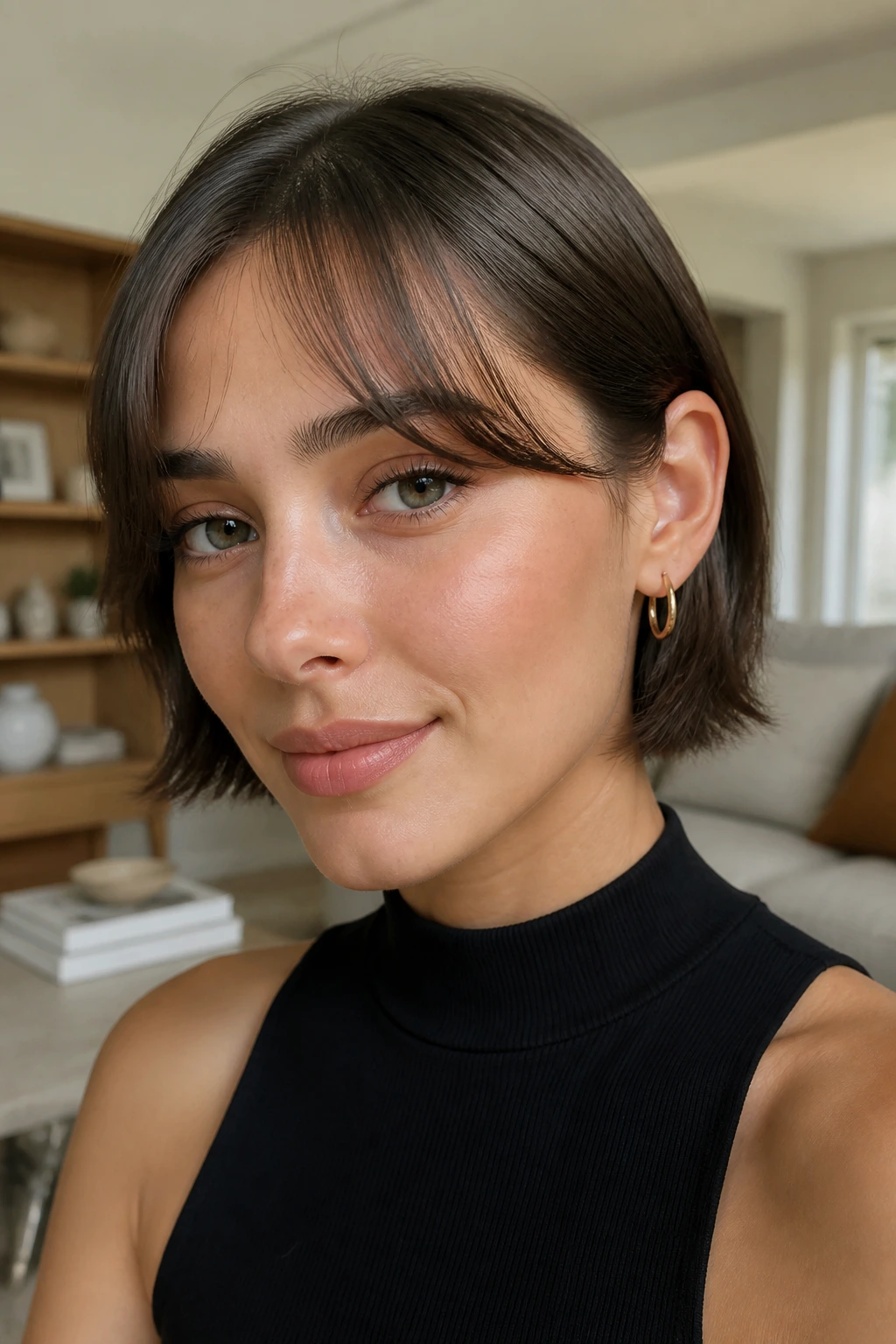
A neat ear tuck is one of the simplest short-hair styles, which is probably why people underestimate it. Smooth the hair behind the ears, keep the curtain bangs loose at the front, and finish with a dab of serum on the ends. The result is clean, sharp, and a little bit grown-up.
This works especially well with earrings. The exposed cheek and jaw make a small pair of hoops or a longer drop earring do more visual work. It also suits straight hair that tends to puff at the sides; the tuck controls that without flattening everything else.
One warning: do not overdo the oil. Too much product around the ears makes the whole style look greasy by noon. A drop is enough.
18. The Rope-Braided Side Sweep
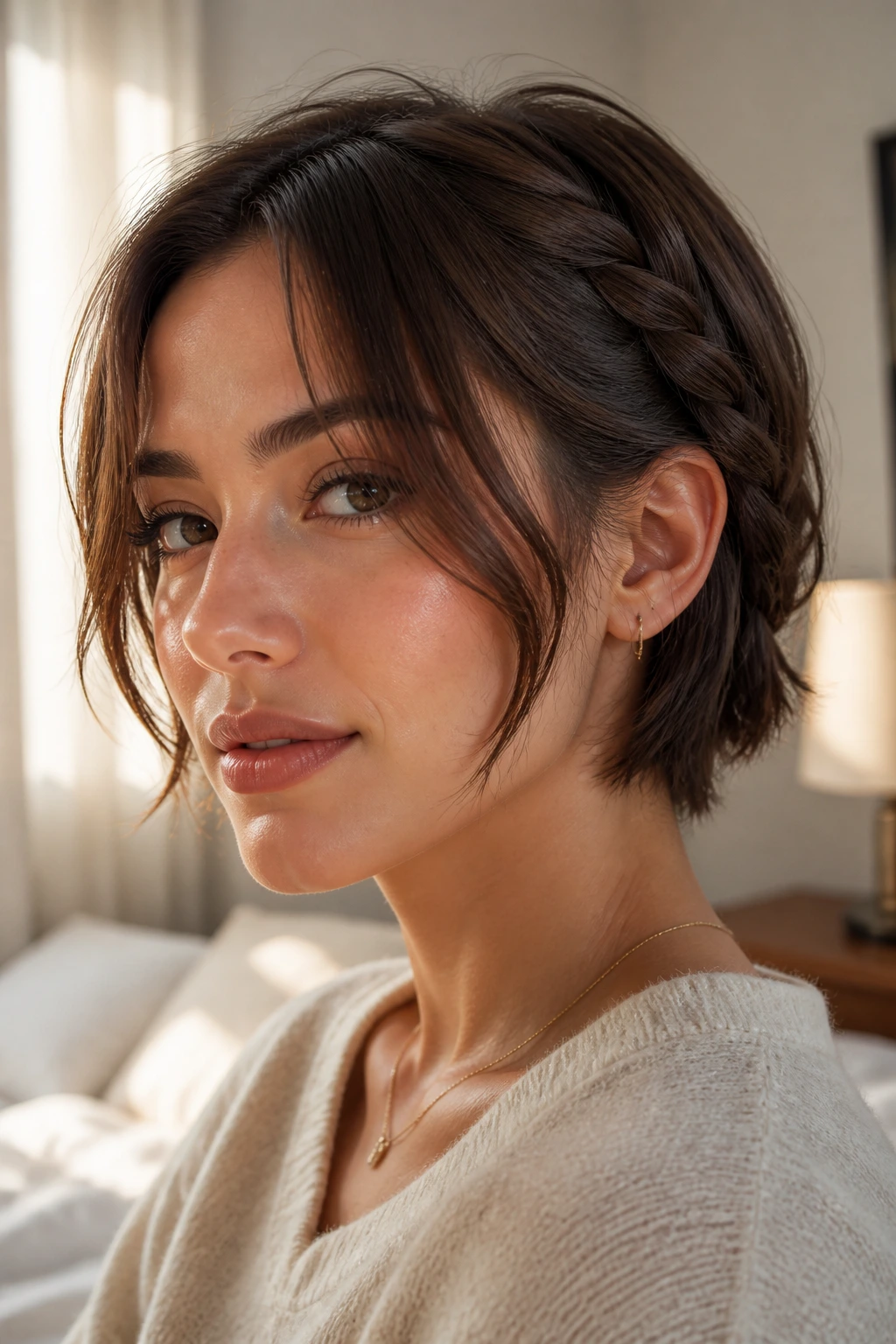
Compared with a standard three-strand braid, a rope braid feels a little faster and visually cleaner on short hair. Twist two sections around each other along one side, pin them across the temple or just behind the ear, and leave the curtain bangs free to break up the front.
This is a smart style for growing bangs because it pulls one side away while the other side stays soft. It also plays well with layered bobs, where a regular braid can start to fray before it reaches the ear. Rope braids hold better because there are fewer moving parts.
Best used with a little texture in the hair. If it’s too silky, the twist slips. Give it some grip first and it behaves.
19. The Defined Air-Dry Shag
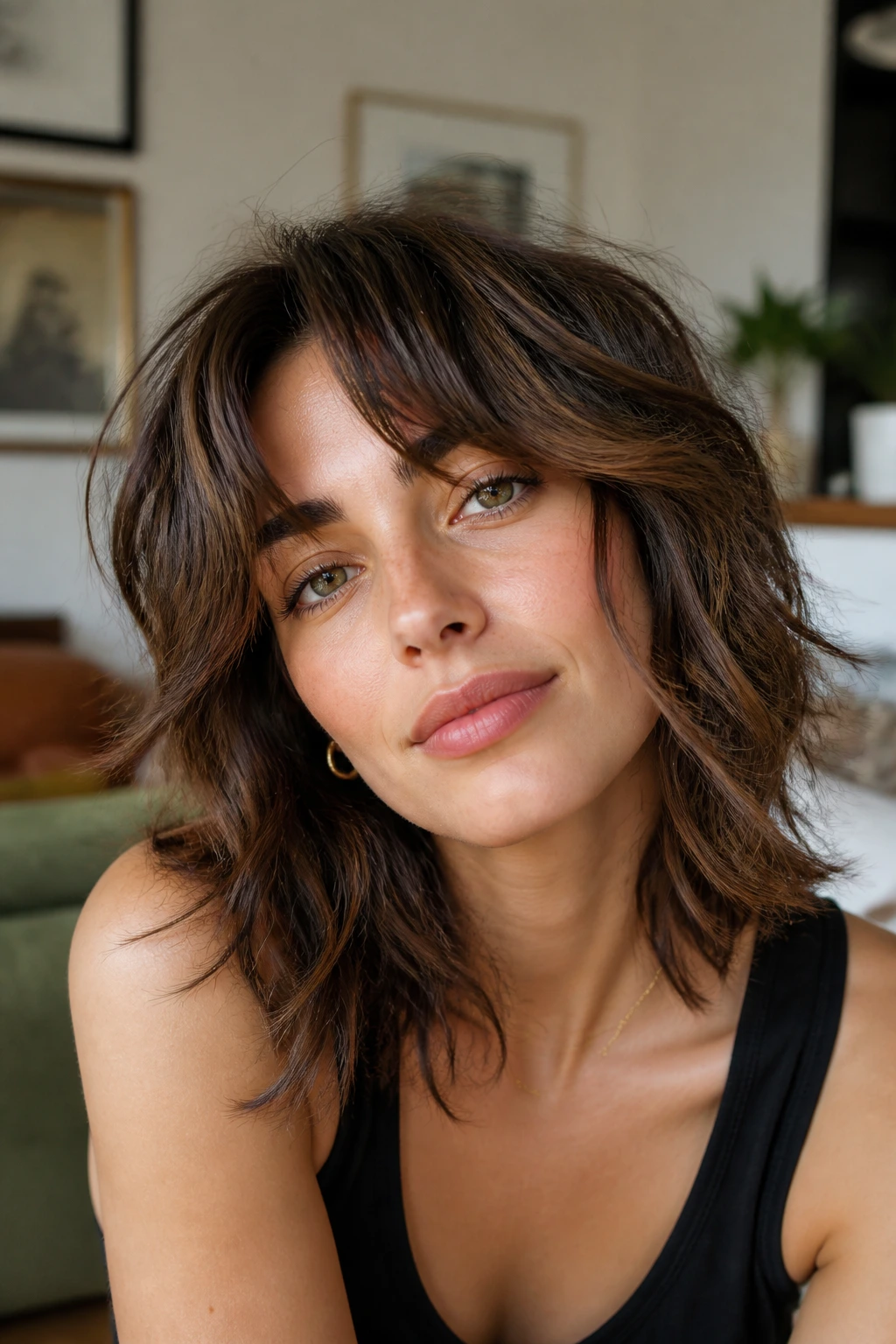
If your hair naturally waves, this one may already be halfway there. Scrunch in a light gel or mousse, encourage the curtain bangs to split while damp, and let the hair dry with a diffuser or just on its own if the texture is cooperative. The end result should feel piecey and soft, not crunchy.
Why It Feels So Good
The shag shape takes pressure off every strand having to fall in one neat direction. That matters on short hair because short lengths can go puffy fast if they’re left unsupported. The curtain bangs become part of the movement instead of a separate section you have to fight every morning.
I like this with a little wave pattern near the face and more texture through the crown. Flat roots can make the whole thing look tired. A few seconds of lift at the front fixes that fast.
20. The Mini Faux Hawk
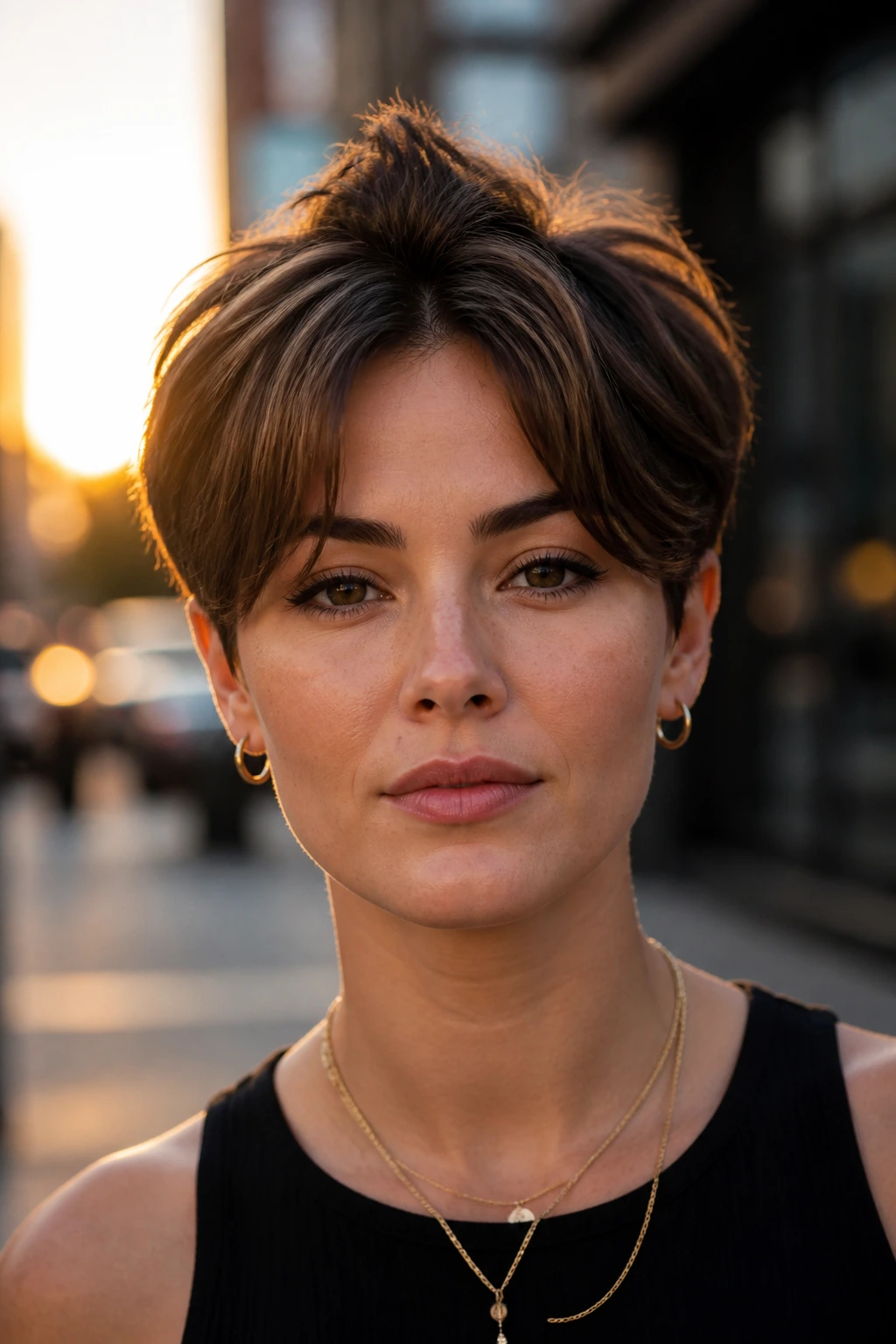
This is the boldest look in the group, and that’s the point. Pin the sides up or back, keep the center section lifted, and let the curtain bangs fall around the front in a softer split. The contrast between the raised middle and the loose fringe is what makes it interesting.
It works on short hair because you are not trying to create a full mohawk. You only need enough height to suggest one. A little root spray and a few pins are usually enough. Fine hair gets extra help from a texturizing powder at the crown; thick hair may need smoothing on the sides so the shape does not puff too wide.
Wear it when you want the haircut to have attitude. No apology needed.
21. The Scarf-Wrapped Bob
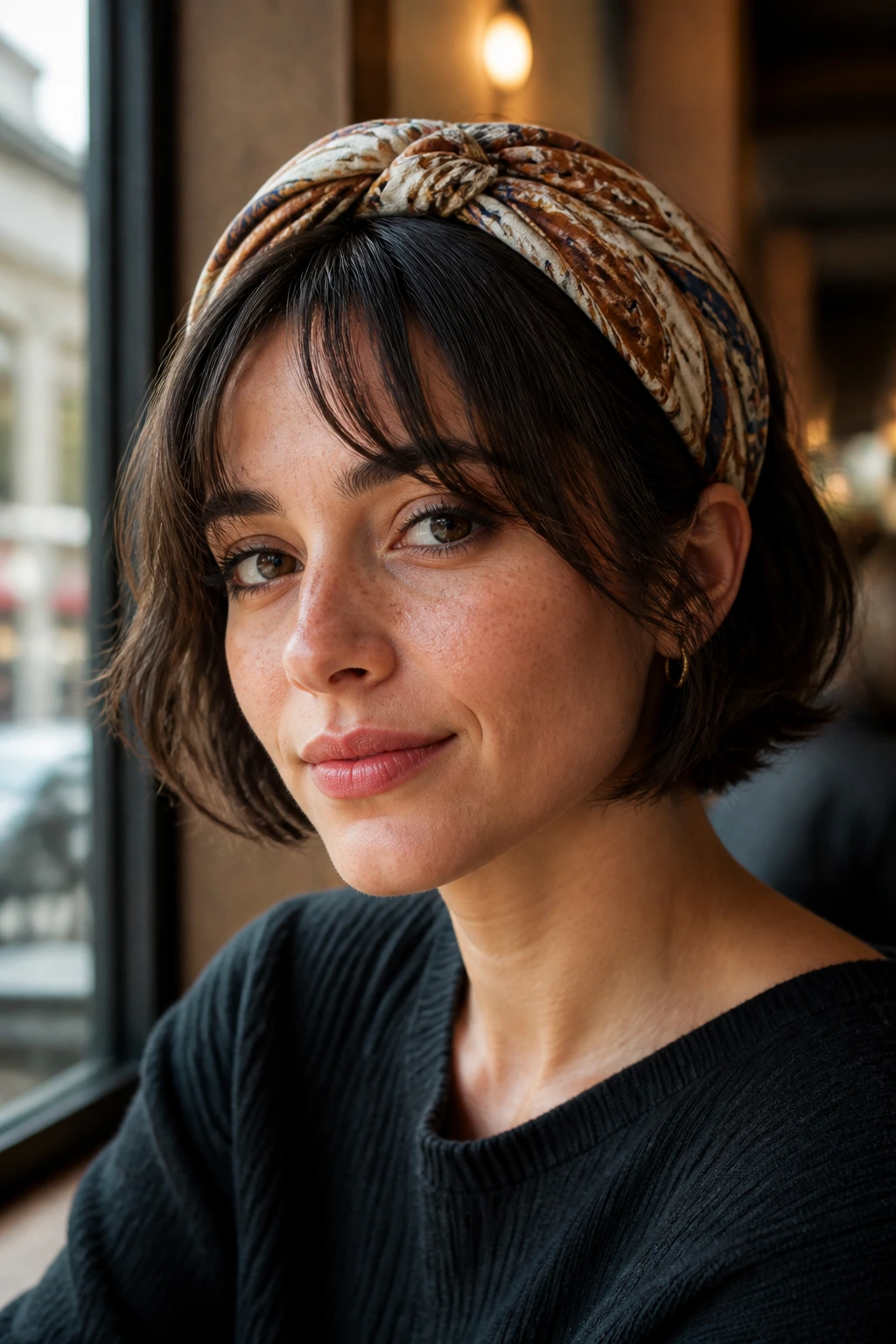
A scarf changes short hair fast. Fold a silk or cotton scarf into a band, tie it around the crown or just behind the bangs, and let the ends of the bob fall loose underneath. The curtain bangs can spill over the scarf edge or tuck under it, depending on how much forehead you want to show.
How to Use It
Pick a scarf that is not too thick. Bulky fabric can make short hair look crowded around the head. A smoother scarf sits better, especially if the hair is already layered or textured. Keep the knot low if you want the fringe to stay visible, and higher if you want more of a retro pin-up feel.
This is one of the easiest ways to make day-two hair look styled. It also hides a root line in a way that feels purposeful, which is always a nice little cheat.
22. Tiny Pigtails with Soft Face-Framing Pieces
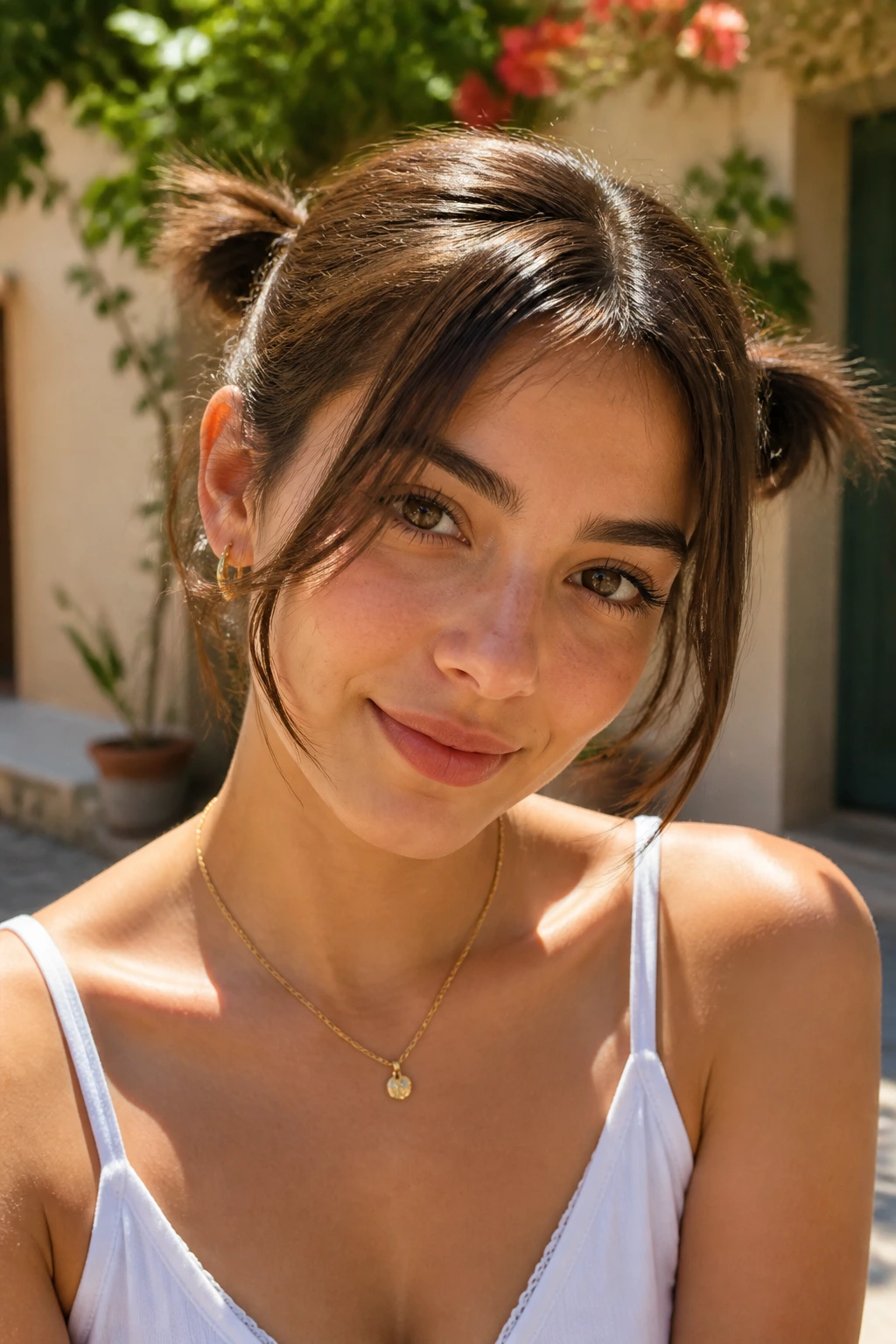
Two small pigtails on short hair can look playful, edgy, or even polished, depending on how clean the parts are. The key is to keep a few curtain-bang pieces loose at the front so the style does not read too young. The face frame softens the whole thing and gives it shape.
I like this on hair that reaches the jaw or just below. If the pigtails are too short, they can stick up awkwardly. If they’re long enough to sit low and neat, the result feels deliberate. Use small elastics, smooth the parts with a tail comb, and pull the pigtails tight enough that they do not sag.
It’s a small style, but it has personality. Sometimes that is enough.
Why Short Hair with Curtain Bangs Keeps Working
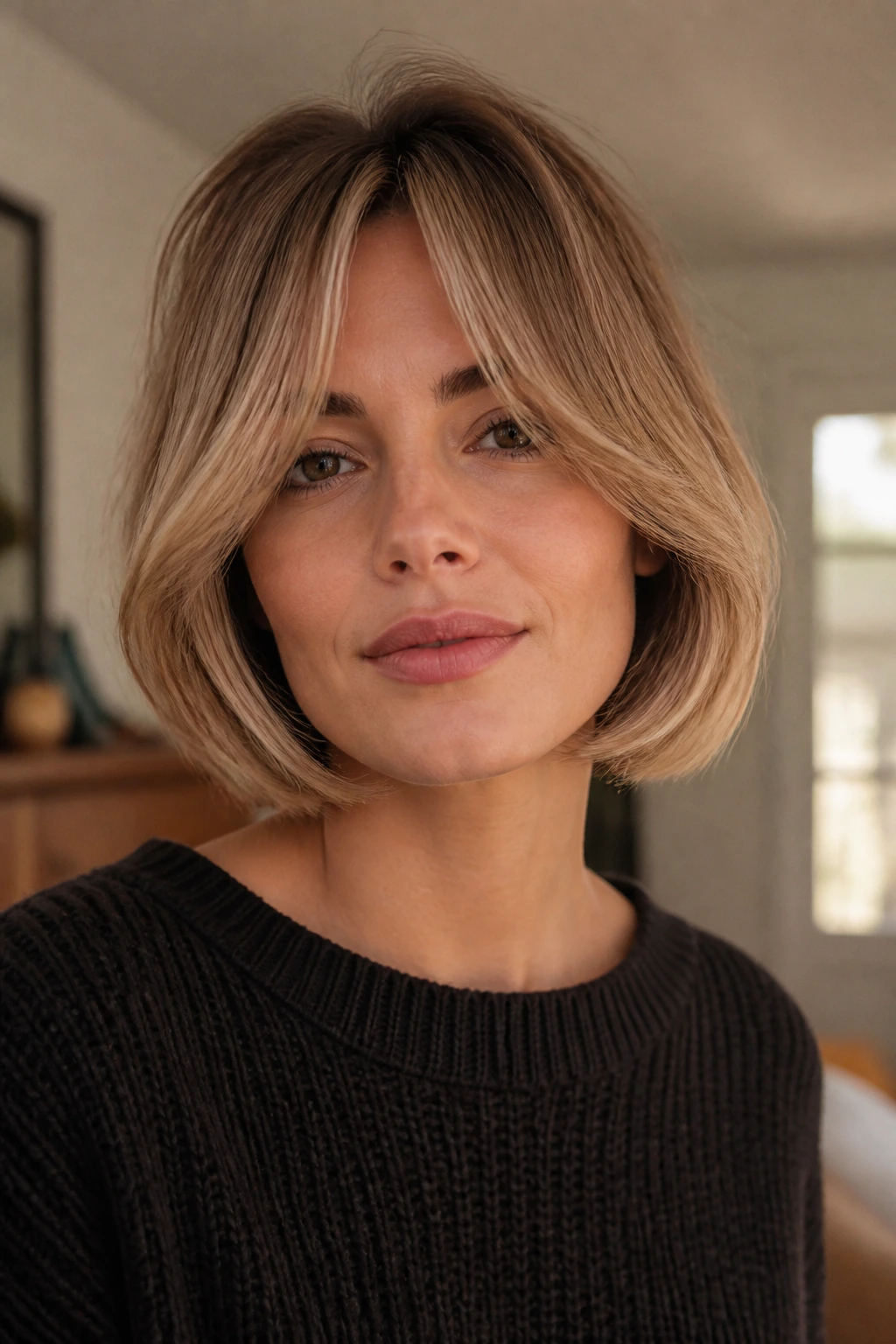
What makes this pairing so good is the way it gives you shape without locking you into one fixed look. Short hair can go boxy fast. Curtain bangs cut that box up before it settles in. That’s why the same haircut can look sleek one day, piecey the next, and a little undone on purpose the day after that.
The other thing I like is how the fringe buys you time. A blunt bang demands commitment. Curtain bangs let you part, sweep, tuck, clip, or ignore them for a while and still look like the cut was designed that way. That flexibility matters more than people admit.
And yes, the split has to be right. Too centered, too heavy, too short at the cheek, and the whole thing goes stubborn. Get the length right once, though, and everything else gets easier.
Styling Products That Help Short Hair with Curtain Bangs Behave
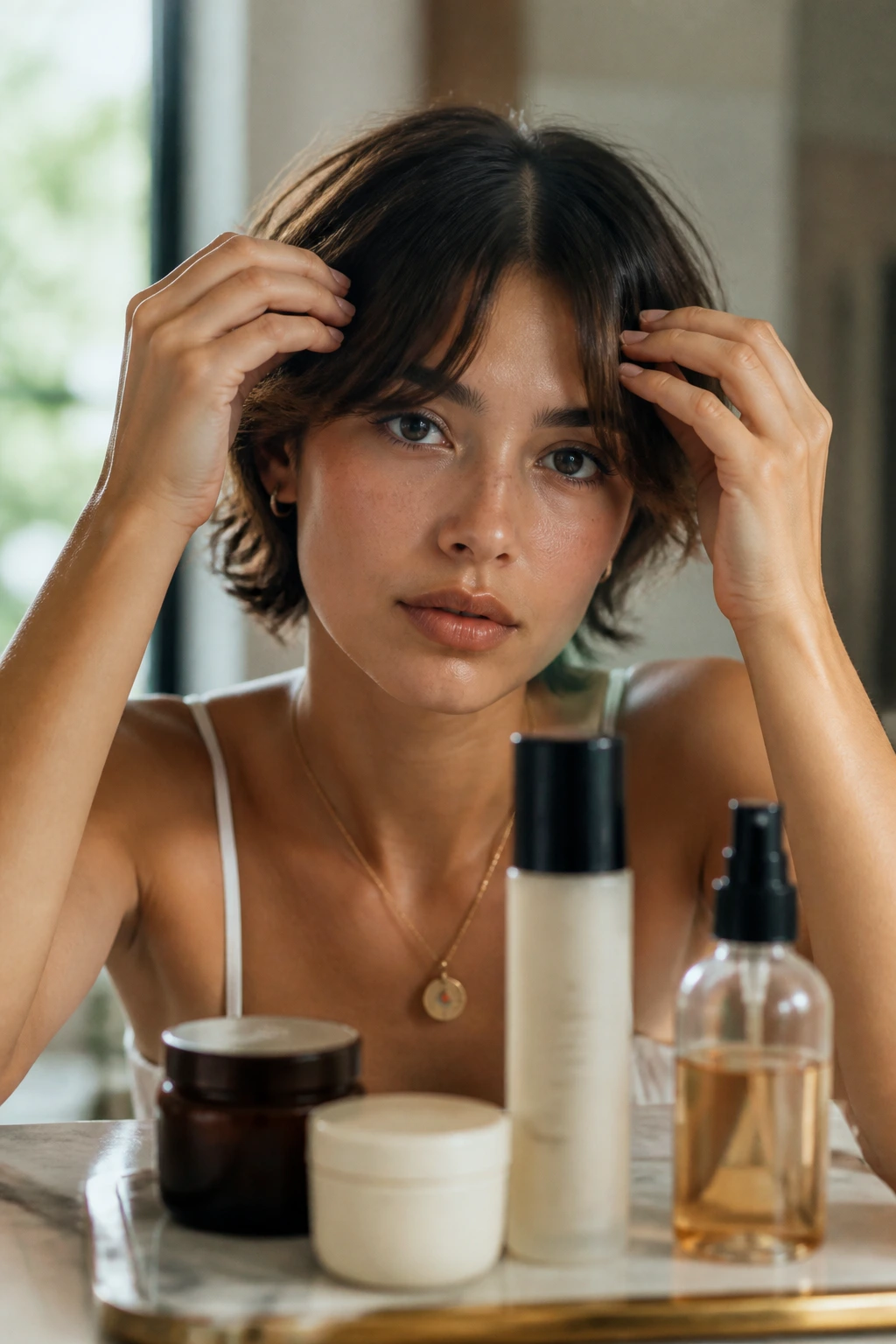
Short hair with curtain bangs does not need a bathroom shelf full of stuff, but it does need the right stuff. I’d rather have four good products than ten random ones that all do the same greasy thing.
- Heat protectant spray: Use this before any round-brush blow-dry, flat iron bend, or curling iron wave. Short hair gets damaged fast because the ends are close to your face and get styled often.
- Light mousse: Best for fine or straight hair that needs lift at the roots without weight through the lengths.
- Texturizing spray: Good for second-day waves, shaggy layers, and any fringe that needs separation instead of smoothness.
- Dry shampoo: A tiny amount at the roots keeps the bangs from sticking together and helps the crown hold shape.
- Flexible hairspray: This is better than hard-shell spray for curtain bangs. You want movement, not a helmet.
- Light serum or cream: Use the smallest amount on the ends only. A pea-size is usually enough for a bob.
The brush matters too. A round brush with a barrel that matches your hair length is easier to use than one that’s too huge. On chin-length hair, a massive brush can make the ends look forced. A smaller brush gives you a cleaner bend and less fighting.
Choosing the Right Length for Short Hair with Curtain Bangs
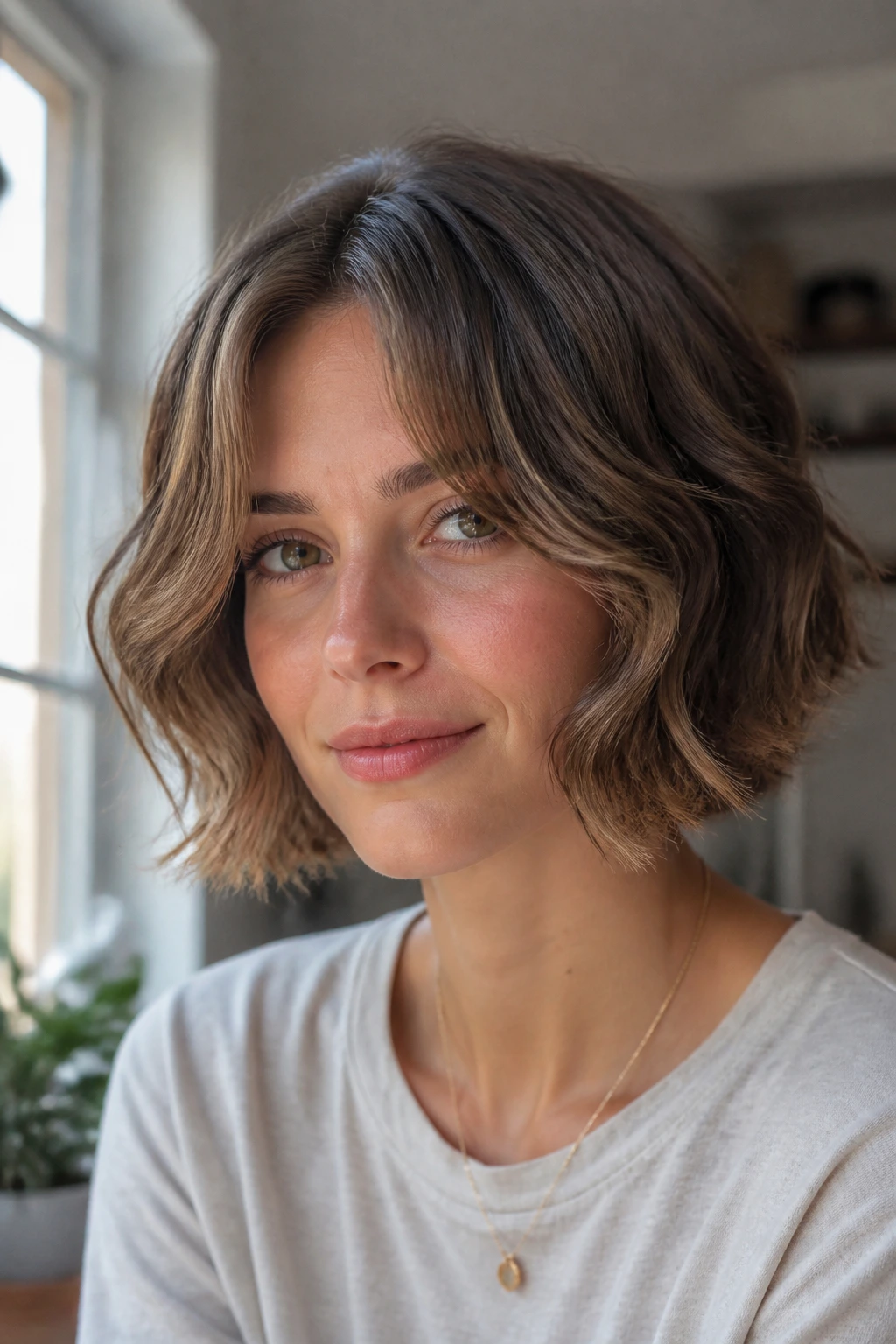
A lot depends on where the shortest pieces fall. If they hit around the cheekbone, the fringe usually opens the face in a soft, flattering way. If they stop too high, the bangs can look chopped. If they go past the lips without shaping, they can start hiding everything instead of framing it.
Hair Texture Changes the Rules
Fine hair often needs slightly shorter face-framing pieces so the shape does not disappear. Thick hair usually behaves better with a little more length and some internal layering to remove bulk. Wavy hair tends to be the easiest because the natural bend helps the curtain shape settle without much coaxing.
Face Shape Matters Too
Round faces usually like more vertical movement in the bangs and a little lift at the crown. Square faces often benefit from softer, longer side pieces that bend away from the jaw. Heart-shaped faces can carry a fuller fringe without the face looking crowded. Oval faces get the easiest ride of the bunch, but even there, the bang split has to land in a good spot.
A good stylist will look at your cowlicks, your part, and how your hair dries on its own. That part matters more than the photo you bring in.
How to Wear These Looks With Different Textures
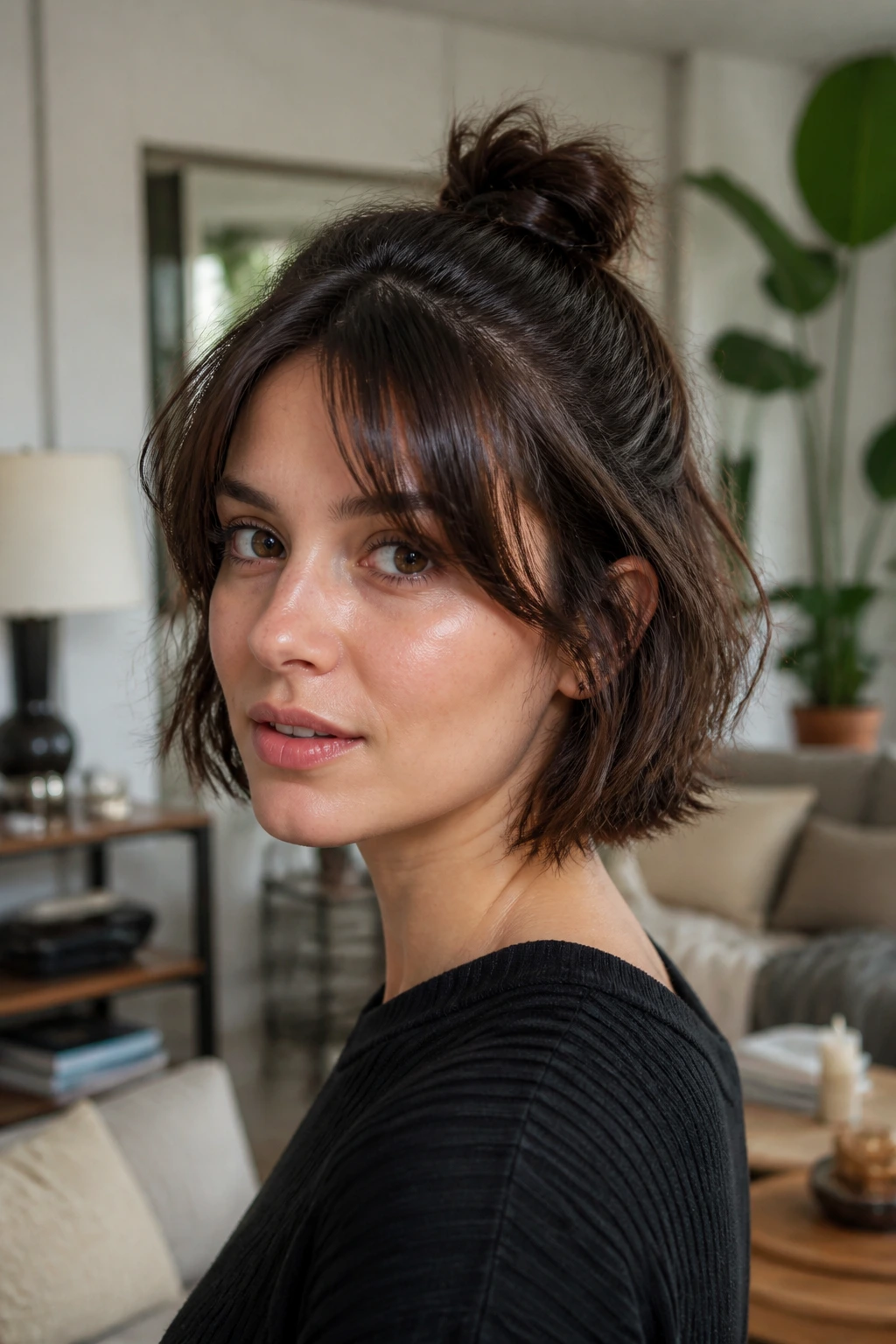
Fine hair: choose styles with root lift, like the blowout bob, side part, or ear tuck. Fine hair looks best when the bangs are airy and the product stays light. Heavy cream will sink it.
Thick hair: go for structure and control, such as the French bob, slicked-back bob, or low mini ponytail. Thick hair needs a bit more shaping at the ends so the fringe doesn’t get swallowed by the rest of the cut.
Wavy hair: the shaggy bob, air-dry shag, and pin-curl waves are the sweet spot. Wavy hair gives the curtain bangs enough movement that you do not have to force every strand into place.
Curly hair: keep the bangs longer than you think you need. Curly curtain bangs shrink, and they shrink differently on each side if the cut is rushed. Set the split while the hair is damp, then leave it alone while it dries.
Busy morning hair: claw clip twist, headband sweep, low mini ponytail, and the twisted crown all get you out the door fast.
Evening hair: slicked-back bob, mini faux hawk, pin curls, and scarf-wrapped bob carry more drama with almost no extra length.
Small Styling Moves That Change the Finish
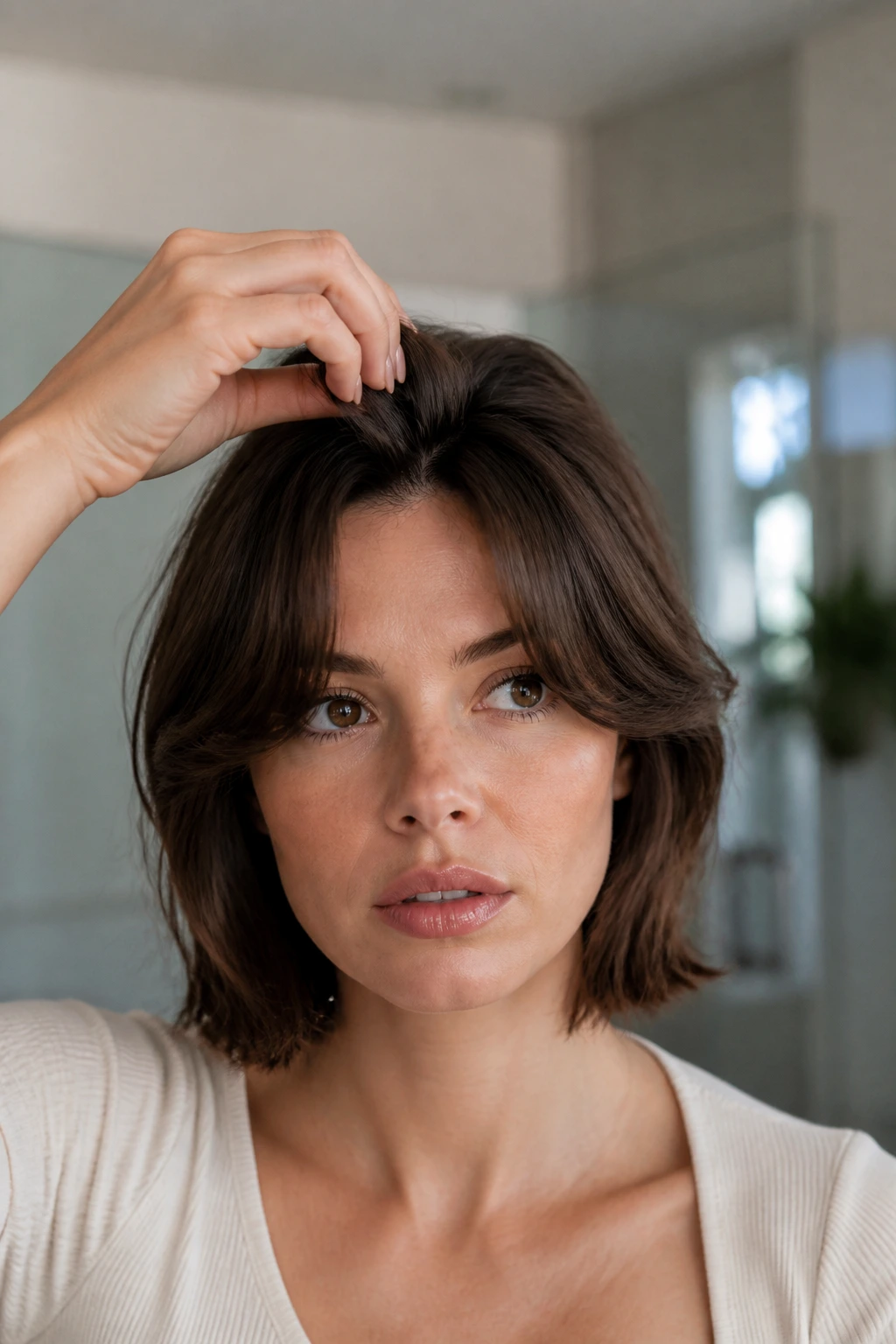
The little stuff matters more here than in a lot of haircuts. A cool shot at the roots can save a fringe that wants to fall flat. A single root clip at the crown can create enough lift that the whole bob looks fuller. A tail comb can make the part cleaner, which changes how the bangs split.
I also like to set the curtain pieces first, before I touch the rest of the hair. Dry the front forward and then sweep it back with a brush or fingers. If you wait until the end, the bangs often lose the shape you built into them. Ten extra seconds up front saves five minutes of correction later.
And don’t keep touching the bangs. Seriously. Every pass of the hand adds oil and breaks the bend.
Common Mistakes That Make the Shape Fall Flat
-
Cutting the bangs too short: If the shortest pieces sit above the cheekbone, they can read blunt instead of soft. Ask for a little extra length and trim later if needed.
-
Using too much product: Heavy cream, thick oil, and hard-hold hairspray all make the front pieces separate in ugly clumps. Start small. Add more only if the hair really needs it.
-
Forcing a perfect center part: Some faces and some cowlicks hate a dead-center split. Nudge the part a little off-center and the bangs usually settle better.
-
Ignoring the crown: Short hair needs lift at the roots, or the shape sinks into the head. A clip, mousse, or quick round-brush pass can fix that.
-
Trying to make every style fully smooth: Curtain bangs look best when they move. If the whole head is frozen, the softness disappears and the haircut gets harsh.
-
Using the wrong brush size: A giant round brush on chin-length hair can overbend the ends and make them kick out in odd ways. Match the brush to the length.
Variations and Adaptations to Try
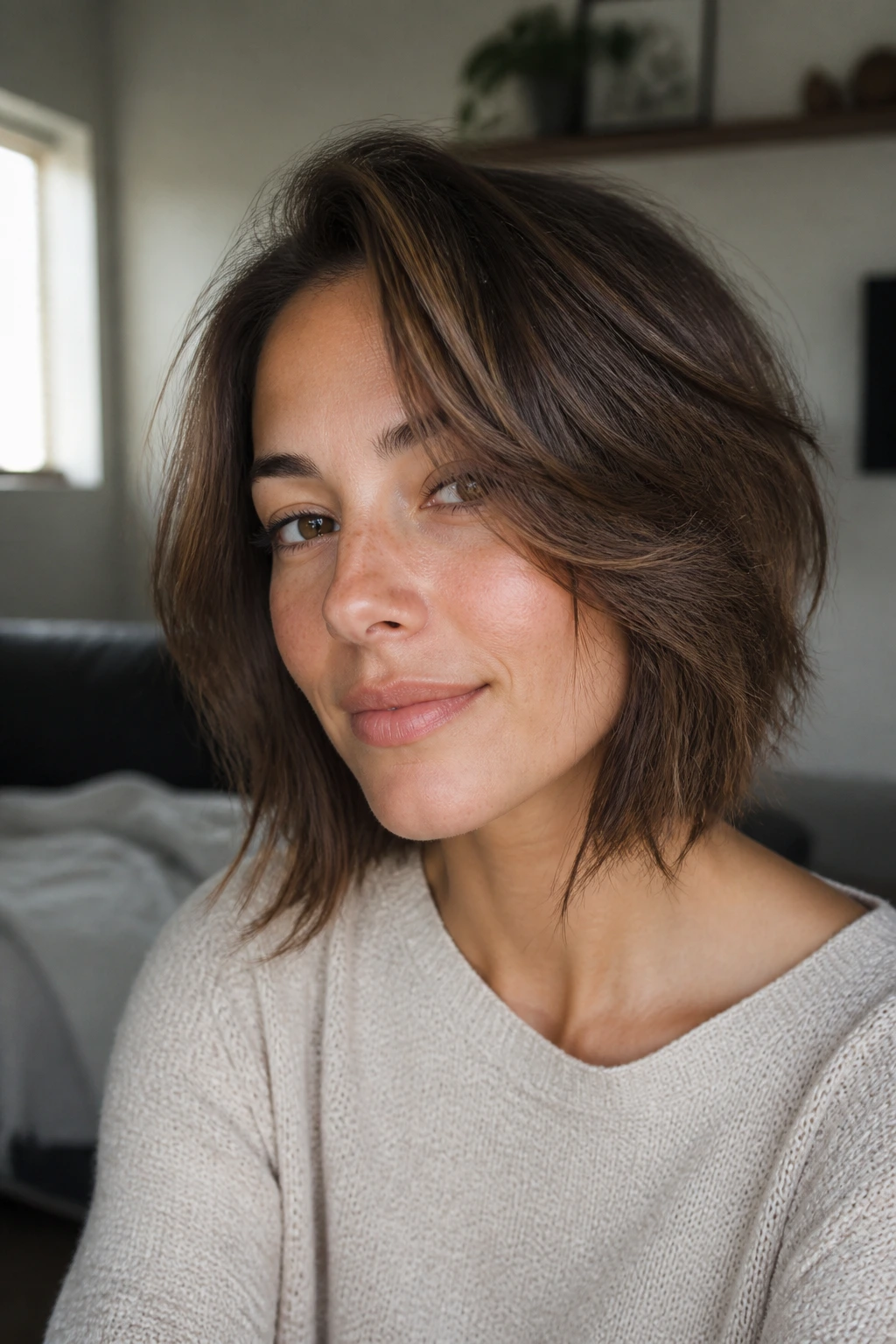
Heatless Morning Version: Set the bangs with a loose twist while damp and clip the ends of the bob under with a few rollers or bent clips. It takes more drying time, but it saves your hair from daily heat.
Curly-Hair Version: Leave the curtain bangs longer, cut the face-framing layers on a curl-by-curl basis, and stop brushing once the hair is dry. A curl cream and diffuser will do more good than a round brush ever could.
Fine-Hair Lift Version: Use mousse at the roots, then dry the hair upside down for the first minute or two before switching to a round brush. That extra lift keeps the fringe from collapsing into the face.
Humidity Shield Version: Swap heavy creams for anti-frizz spray and flexible hold products. The goal is controlled softness, not a glassy finish that explodes the second the air turns damp.
Grown-Out Bang Version: Push the curtain pieces longer and lean into side sweeps, twisted crowns, and headbands. This is the easiest way to stretch the shape between trims without pretending the hair is shorter than it is.
Thick-Hair Clean-Up Version: Ask for internal layering and a slightly lighter fringe at the ends. That keeps the bangs from feeling dense and stops the bob from ballooning out at the sides.
Keeping the Cut Fresh Between Washes
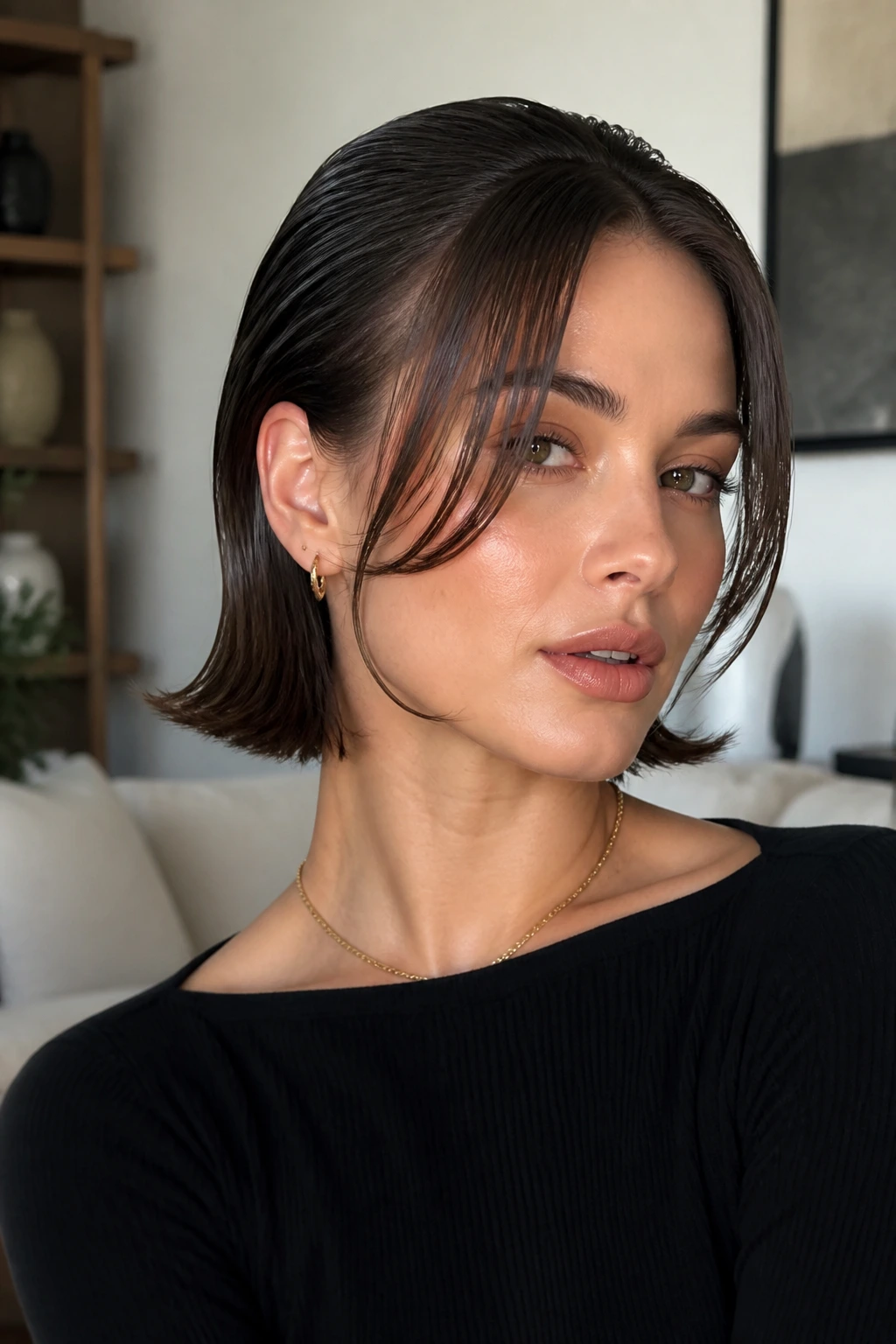
Curtain bangs need more attention than the rest of the haircut, but not in a dramatic way. A tiny bit of dry shampoo at the roots on day two or three usually revives the split and keeps the fringe from turning oily. If the front pieces start separating oddly, a quick mist of water and a few seconds with a round brush can reset them.
For trimming, bangs usually want cleanup more often than the bob itself. I’d rather trim a fringe lightly and often than wait until it starts leaning into my eyes and dragging the whole look down. The rest of the short cut can stretch farther between appointments, but the bang line is the part that shows wear first.
At night, a satin pillowcase helps more than people think. So does clipping the bangs up loosely before bed if they flatten easily. Small habits. Big difference.
Frequently Asked Questions
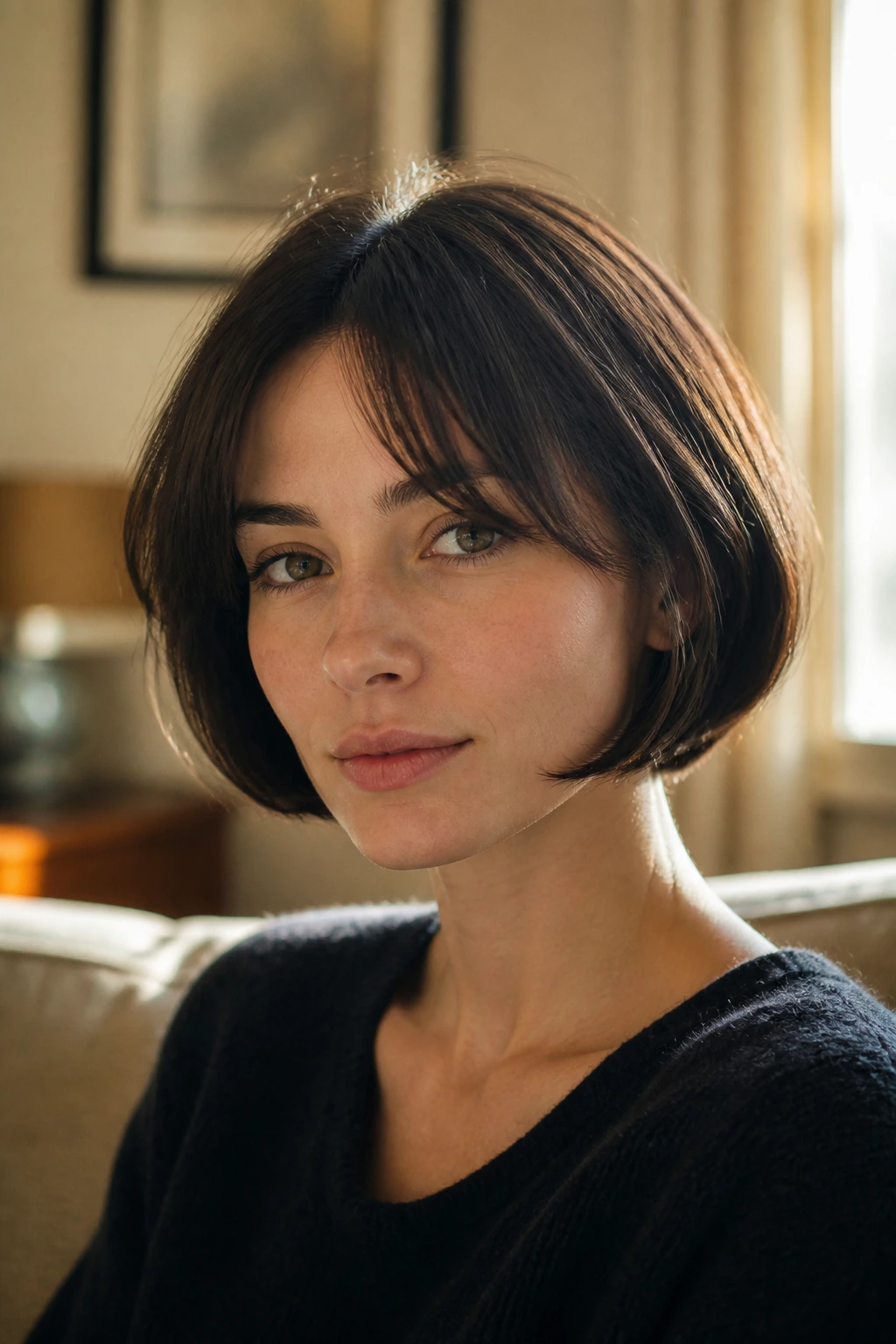
How short can hair be and still work with curtain bangs?
Hair can be pretty short and still carry curtain bangs, but the shortest face-framing pieces need enough length to bend, usually around the cheekbone or lip. If the cut is closer to a pixie, the fringe has to be tailored more carefully so it does not stick out or collapse.
Do curtain bangs suit round faces on short hair?
Yes, especially when the bangs start a little lower and sweep diagonally instead of sitting straight across the forehead. A bit of root lift at the crown helps the face look longer and keeps the shape from feeling wide.
Can curly hair wear these styles?
Absolutely, but the bangs need extra length and a gentler cut. Curly curtain bangs shrink, and they often dry in a different pattern than the rest of the hair, so it helps to cut them longer and let them settle before trimming again.
What if my curtain bangs separate in the wrong place?
That usually means the part is fighting your cowlick or the bangs are too short to settle naturally. Try shifting the part a half inch off center and dry the fringe in the direction you want it to fall, then let it cool before touching it.
Which products keep short hair from puffing out?
A light mousse at the roots, a touch of smoothing cream on the ends, and flexible hairspray usually do the job. Heavy serums can make the shape look greasy before lunch, especially if the hair is fine.
How do I grow out curtain bangs without a weird stage?
Let the front pieces get a little longer and use side parts, twists, headbands, and soft blowouts while they transition. The style already has a built-in grow-out path, which is one reason people keep coming back to it.
Can I style these looks without heat?
Yes. Air-drying with mousse, using clips or rollers at the roots, and leaning on twists, braids, and accessories can carry a lot of the load. The finish will be softer and less polished, but that’s not a problem unless you want it to be.
Should the ends of the haircut be blunt or layered?
Both work, but they read differently. Blunt ends make the haircut look cleaner and stronger, while soft layers give the bangs and movement more room to blend into the rest of the style.
The Shape That Never Feels Stiff
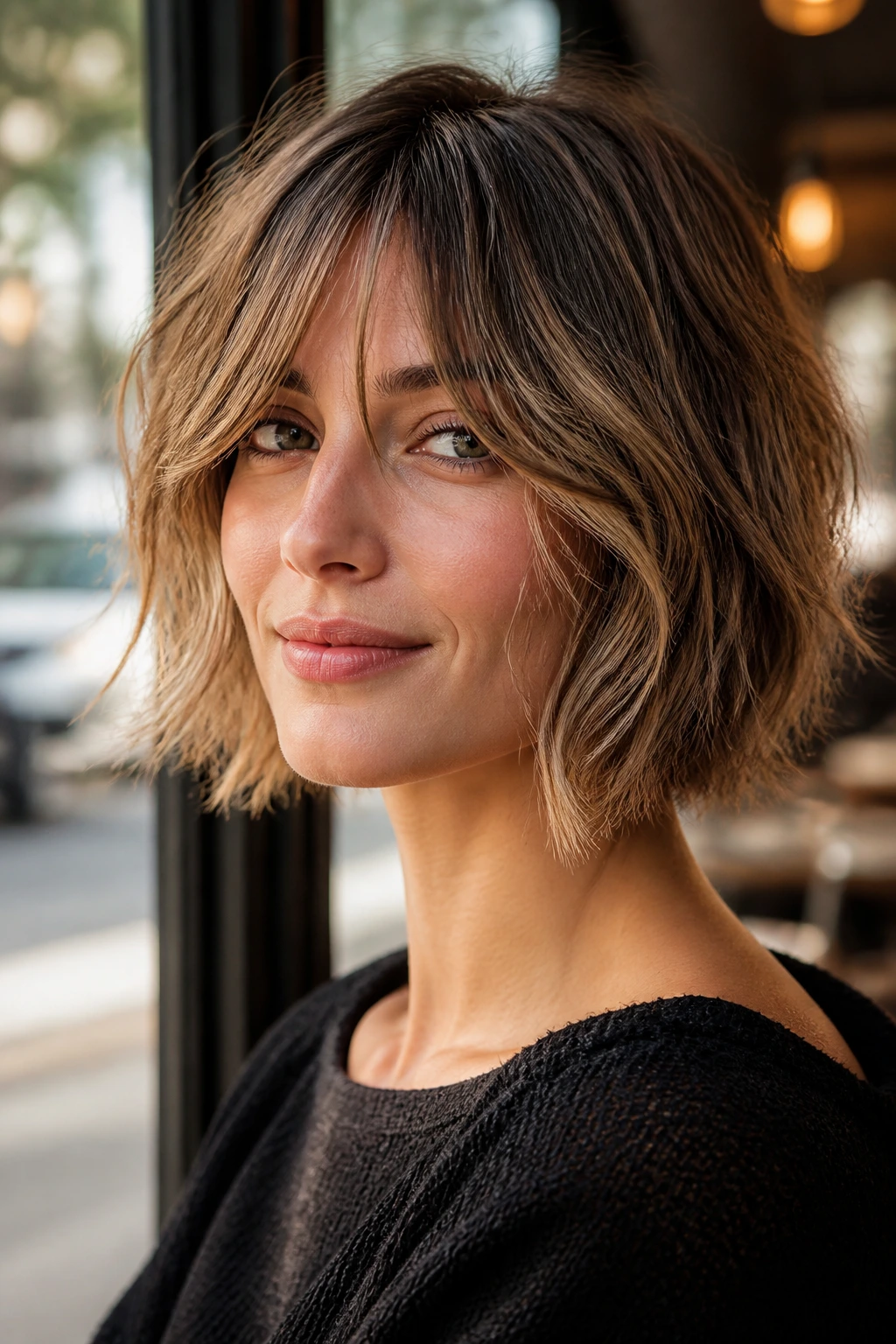
What keeps short hair with curtain bangs interesting is that it never asks to be one thing only. It can be neat, messy, retro, playful, sharp, or almost bare, and the fringe keeps tying all of those moods back to the face. That kind of flexibility is rare in a cut this short.
Start with the version that matches your hair texture, not the prettiest photo you saved. Once the split, the length, and the root lift are right, the rest becomes easier than it looks. And that’s the real appeal here: a haircut that leaves room to change your mind.