



Thick hair with loose curls can look easy from a distance and feel like a small weather system up close. Healthy hairstyles for thick hair with loose curls are the ones that keep the curl pattern intact, spread tension away from the hairline, and avoid the heavy, stretched-out look that shows up when a style is pulled too tight. That balance matters. A style can be neat, polished, and still kind to the hair.
The problem with thick curls is rarely lack of volume. It’s usually too much of it in the wrong place. A skinny elastic cuts a sharp line into dense hair. A flimsy clip slips. A braid pulled too tight gives you a flat crown and frizz at the temples by lunch. You want support, not punishment.
The good news is that loose curls have shape on their side. They already bring movement, texture, and a little built-in softness, so the best styles don’t fight that. They work with it. A well-placed twist, a loose braid, or a clip that actually fits the amount of hair you have can make the whole head feel lighter without flattening the curl pattern.
Why These Styles Are Worth Trying
-
Less root strain: These looks spread the weight across a wider section of hair, which matters when thick curls can pull hard on the crown and nape.
-
Curl pattern stays visible: The styles keep the loose bends and clumps intact instead of pressing them flat under tight bands or dense teasing.
-
They’re easier to refresh: A braid, twist, or clipped section can be loosened and reset in minutes, which is a lifesaver on day-two hair.
-
They work with bulk instead of against it: Thick hair needs room. These styles make room for the volume instead of trying to compress it into something smaller.
-
They’re gentle on the hairline: Soft ties, wide clips, and loose pinning reduce the sharp pulling that shows up as tenderness or breakage near the temples.
Why Thick Hair and Loose Curls Need a Softer Grip
Thick loose curls do not usually need more control. They need better distribution. A style that feels fine for a fine-haired head can turn into a headache when the same shape is built on denser hair. The issue is weight. Once the curls stack up, that weight settles at the roots, and the first place you feel it is usually the front hairline or the nape.
Weight gathers fast at the crown
A high ponytail or a tight top knot can look harmless at first, then start tugging after a few hours. Thick hair has enough mass to do that. The fix is not “hold tighter.” It is to move the support point, spread the load, or split the hair into smaller sections before you gather it.
Friction is the part people forget
Loose curls don’t just need to be held. They need to be protected from rubbing. Coat collars, car seats, backpack straps, and rough elastics all rough up the outer curl layer. Once that happens, the style still sits there, but the surface goes fuzzy. That’s why silk, satin, and smooth clips show up so often in good curl routines.
Structure should sit where the hair is strongest
The strongest part of thick hair is not always the front edges. It’s usually the denser midsection. Put the main support there, and the style lasts longer with less pulling. That’s why a loose braid, a low chignon, or a claw clip that catches most of the bulk often feels better than a tiny tie gripping the same section all day.
1. Soft Half-Up Twist
This is the style I reach for when the curls still look fresh but need to get out of the face. Take a section from each temple, twist them back loosely, and pin them where the crown starts to round. The rest of the hair stays free, so the curl clumps keep moving and the hairline gets a break.
Use two bobby pins in an X if your hair is heavy. One pin often slides in thick curls, especially if the twist sits on smooth day-one hair. A soft half-up twist is small, but it does a lot of work.
2. Low Claw-Clip French Twist
Can a claw clip hold thick curls without slipping? Yes, if the twist starts low and the clip catches more hair than you think. Gather the hair at the nape, fold it upward once, and place a large clip right where the hair bends. The ends can tuck in or spill out a little.
This is one of the cleanest styles for dense curls because it takes the weight off the neck without forcing the hair into a tight knot. If the bundle feels too bulky, split it into two folds before clipping. That extra step keeps the clip from popping open.
3. High Pineapple Ponytail
The pineapple is not just a bedtime move. On thick loose curls, a high scrunchie at the crown keeps the curls lifted and stops the back from being crushed against a chair or jacket. The shape looks relaxed, but it is doing quiet protective work.
Leave a few face-framing pieces loose if you want the style to feel softer. I like that little bit of mess at the front. It keeps the look from turning into a tight gym ponytail, which is not the same thing at all.
4. Silk-Scrunchie Nape Ponytail
This is the ponytail I’d call civilized. A silk or satin scrunchie spreads tension better than a skinny elastic, and placing it low at the nape keeps the crown from getting yanked upward. Thick loose curls fall into a single clean line here, which is a nice change from the usual puff.
Keep a little volume at the top. If you flatten the crown too hard, the style starts to look severe, and the curls lose the easy movement that makes them work in the first place.
5. Loose Braided Crown
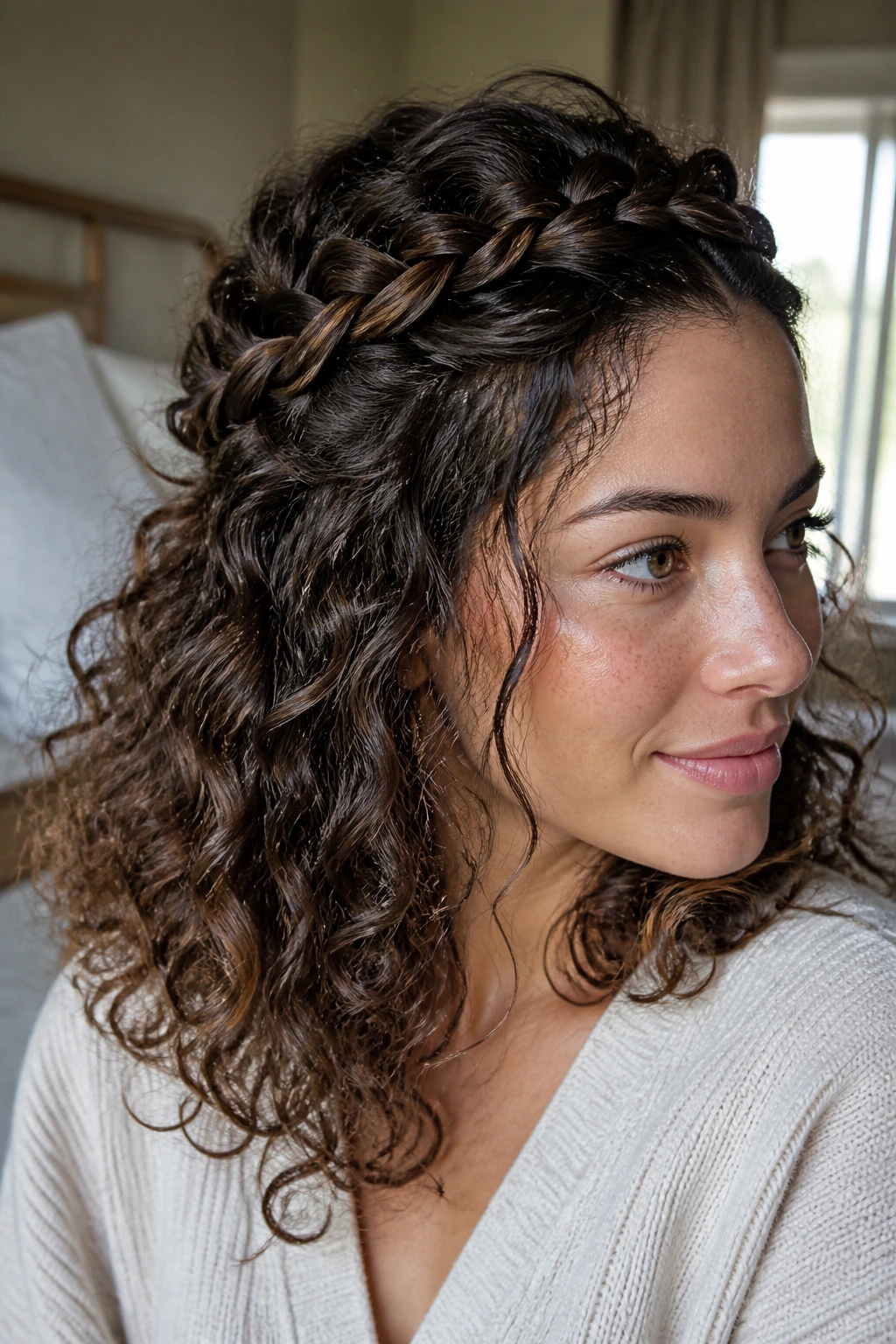
A braided crown gives thick hair a job to do. Braid from each temple, bring the sections around the back, and pin them where they meet. The front line stays controlled, but the length remains loose and full.
This is one of the better styles for day-two hair because a little texture helps the braid hold. Freshly washed curls can be too slippery. If your roots are extra soft, mist them lightly and let them sit for a few minutes before braiding.
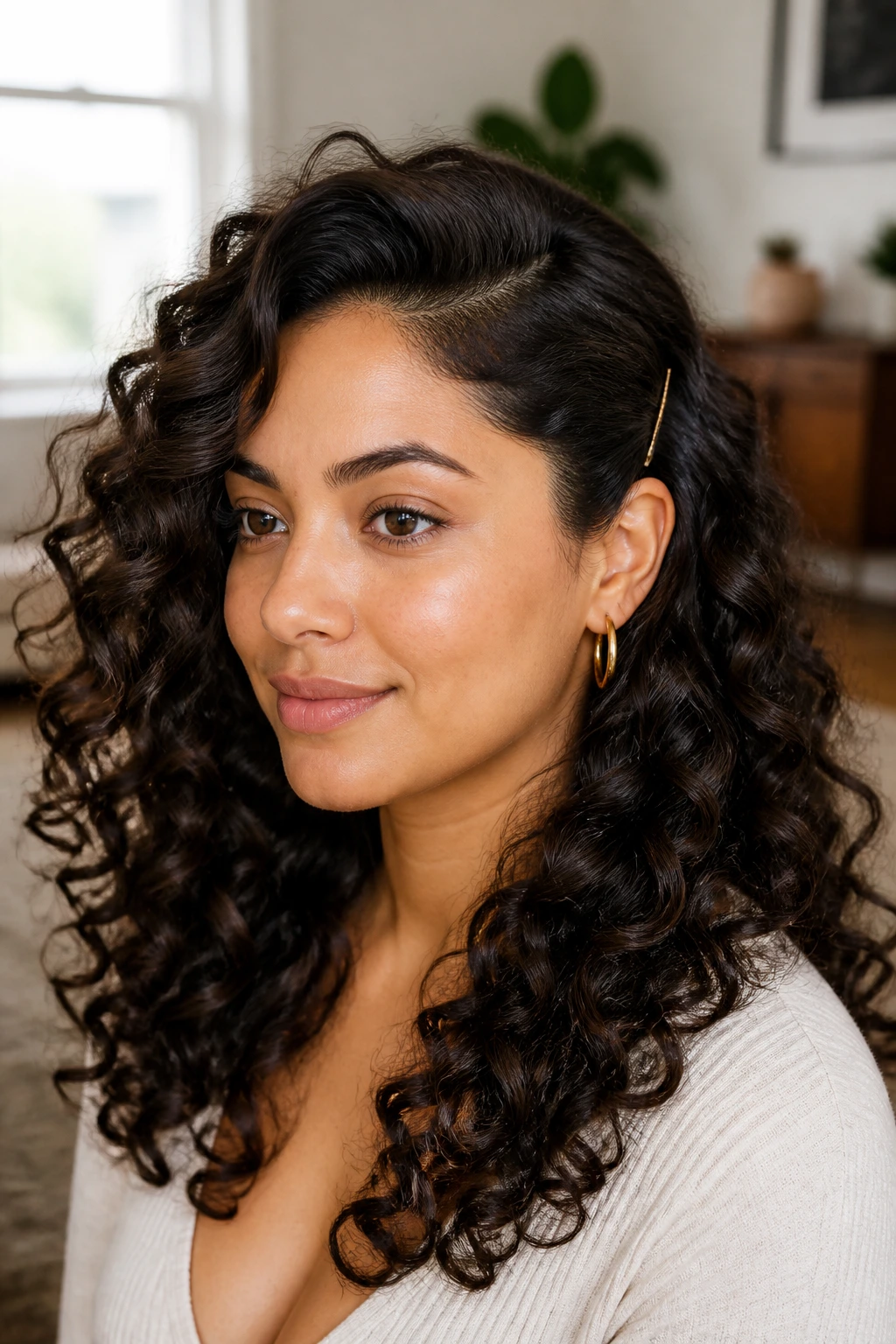
6. Side Pin-Back Sweep
Need something that takes two minutes and doesn’t flatten the curl pattern? Sweep one front section across the forehead, twist it once, and pin it behind the ear with two small bobby pins. The shape is simple, but on thick loose curls it reads as deliberate, not lazy.
A small barrette can work here too, especially if your texture laughs at standard pins. The whole point is to keep one side open and the other side under control. That asymmetry gives the curls room to stay big.
7. Soft Top Knot
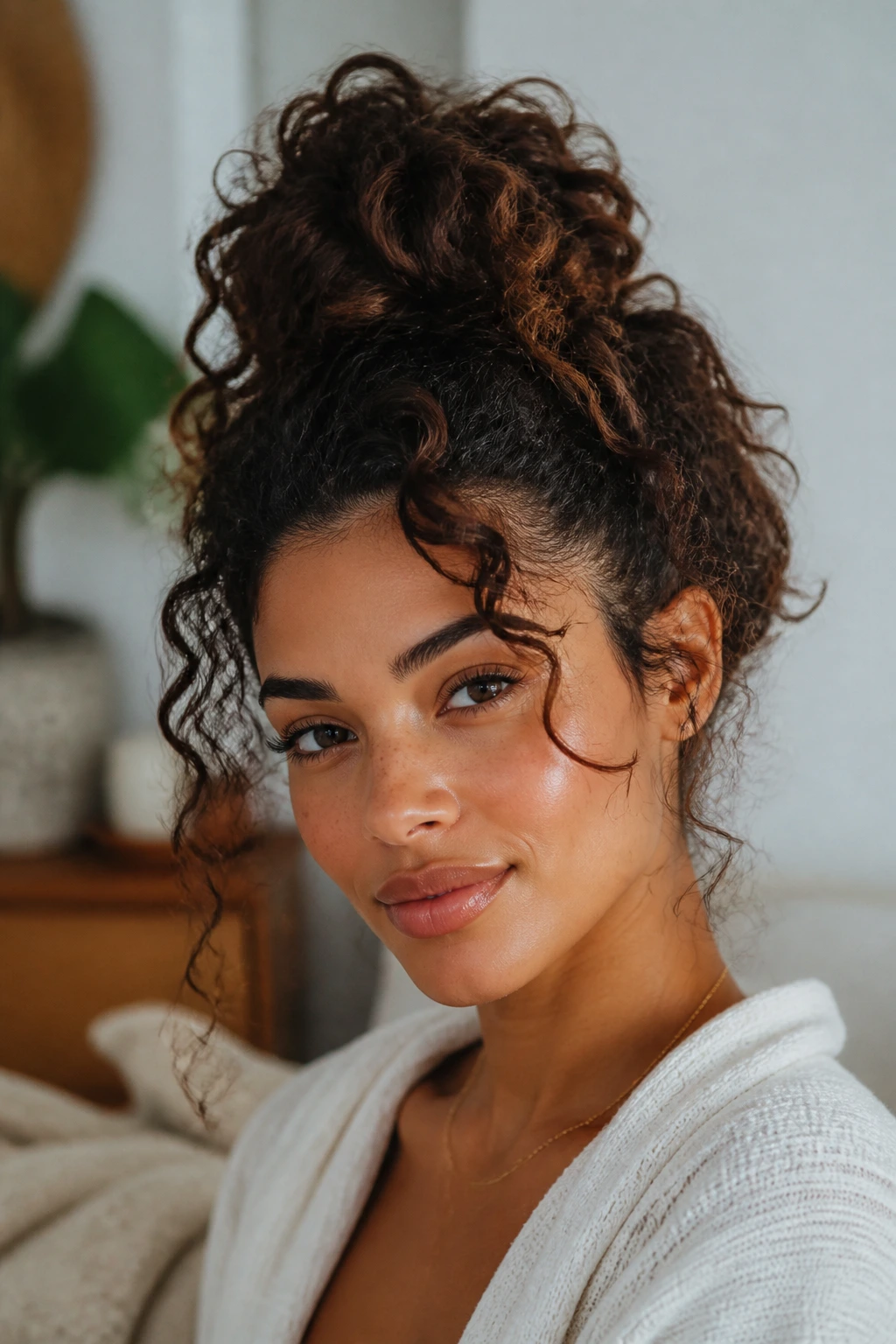
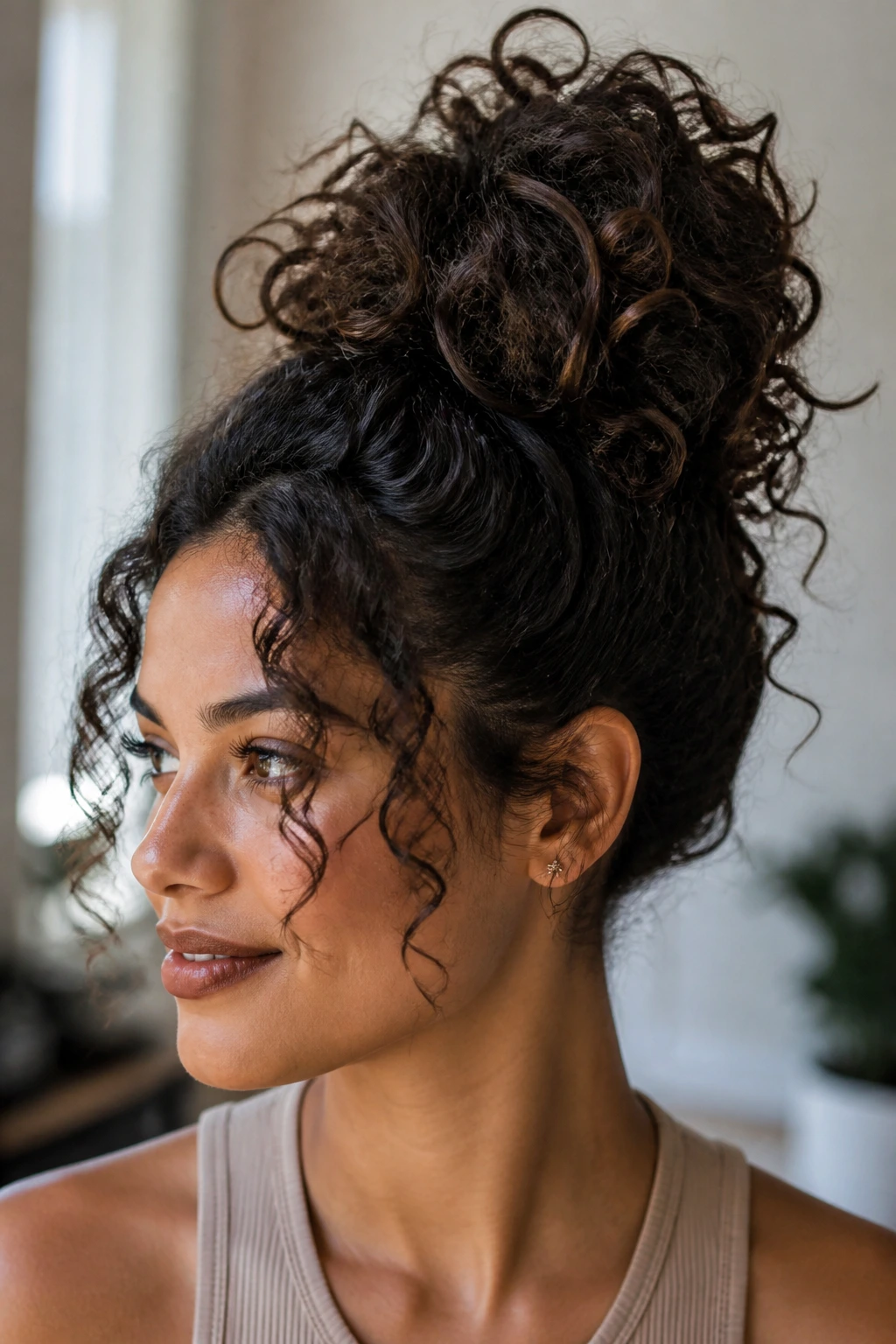
The best top knot for thick loose curls is the one that never gets fully tightened. Gather the hair high, twist once, and stop before you make a hard, round bun. Let the ends spill a little. That little softness keeps the curl clumps from getting crushed into a flat dome.
If the knot has to be redone twice, it’s too tight. I’d rather see a knot that sits a little loose and needs one extra pin than a tight one that hurts by afternoon. Comfort matters more than neatness here.
8. Rope-Braid Half-Up
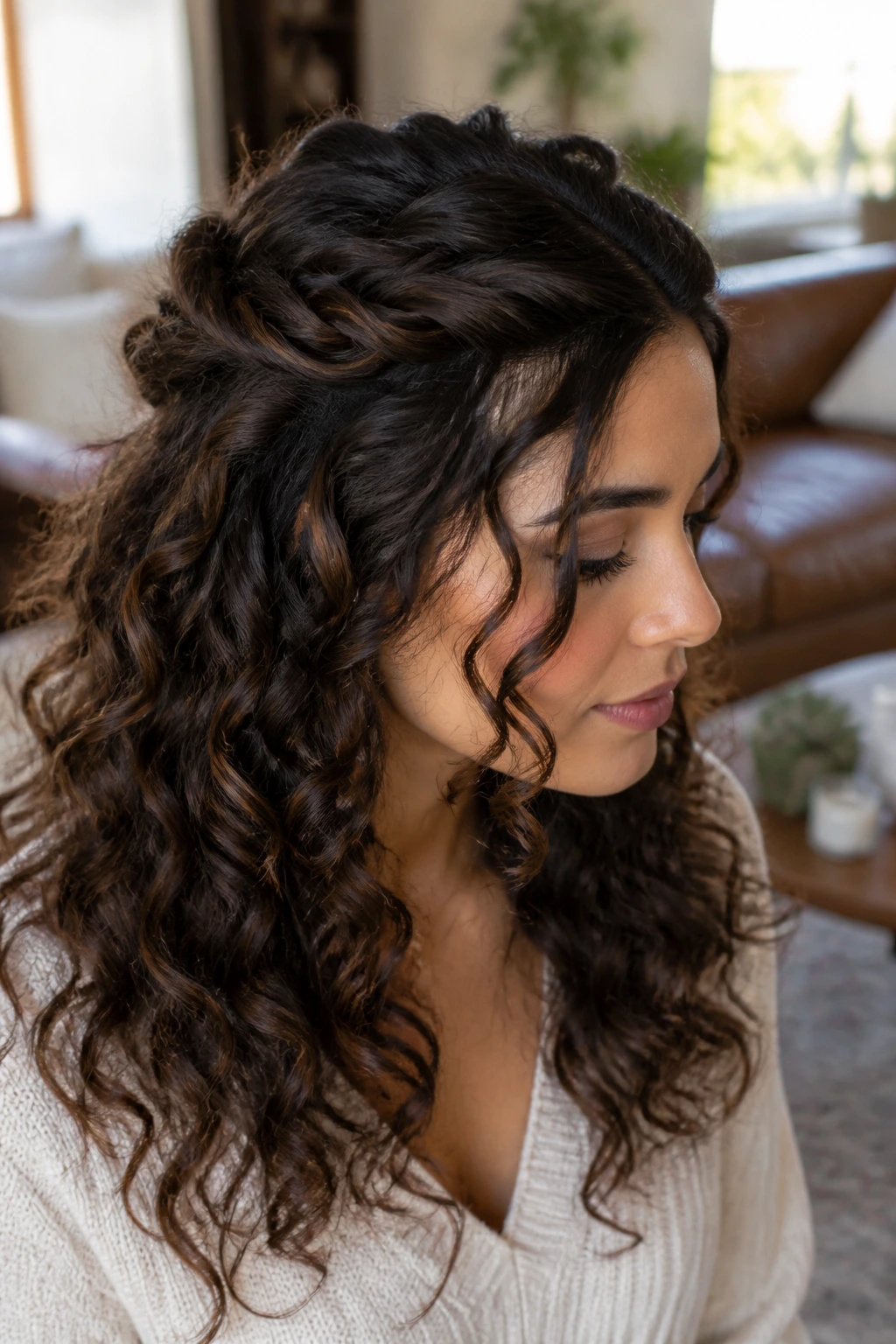
A rope braid takes less fuss than a three-strand braid and looks cleaner on chunky curls. Split the half-up section in two, twist each side in the same direction, then wrap them around each other in the opposite direction. That motion helps the braid hold its shape instead of slumping by lunch.
It works especially well when the front layers are shorter and like to escape. A rope braid catches them without forcing everything into a flat, tight strip. That’s the sweet spot.
9. Low Braided Bun
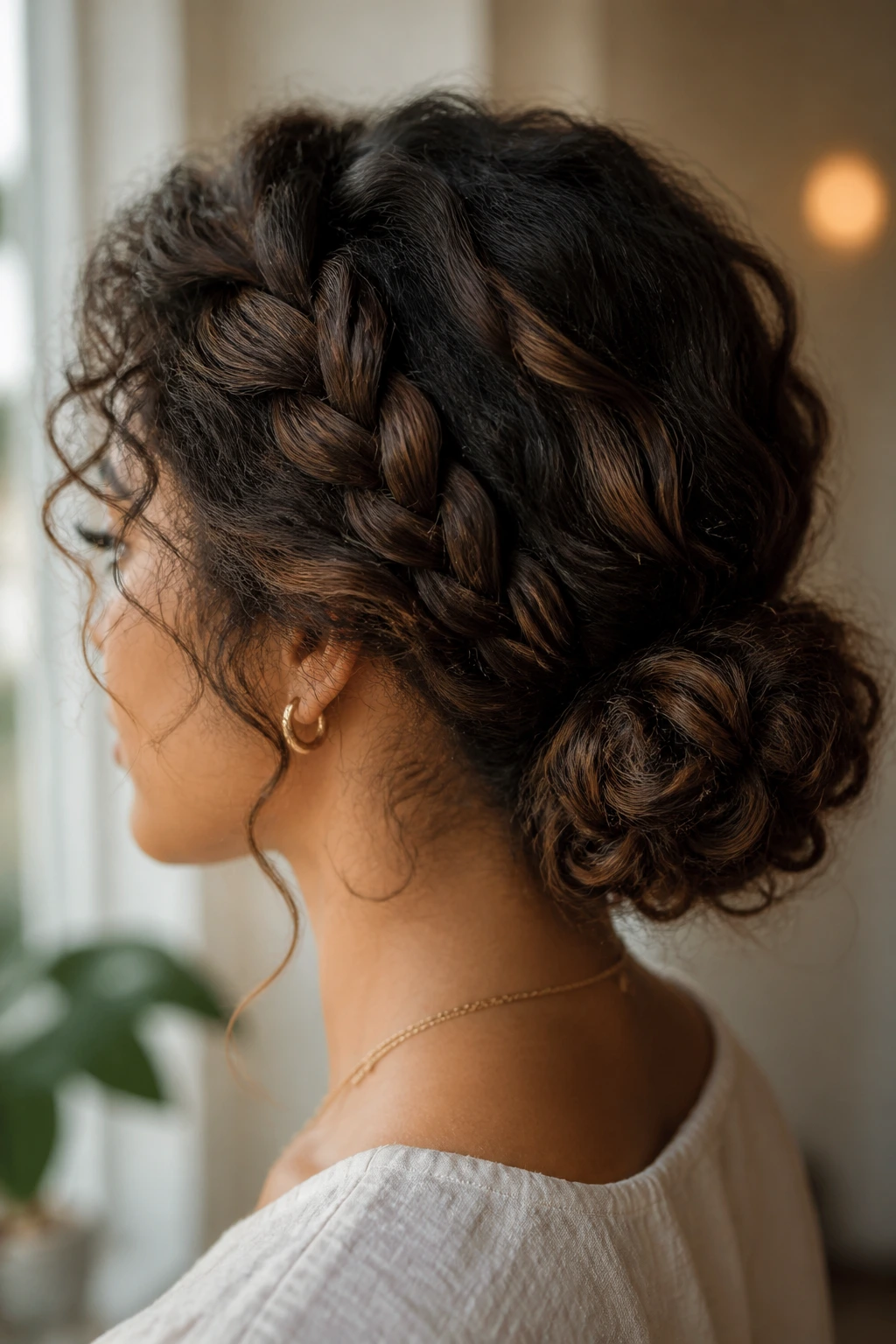
Start with a low ponytail, braid the length, then coil the braid into a bun and pin only where it wants to open. The braid keeps the bulk organized. The bun keeps the ends from rubbing against collars, scarf fabric, or coat seams.
A loose braid here is better than a tight one. Overbraiding can make the bun stiff and boxy. Thick curls already have enough texture, so let the shape stay a little soft around the edges.
10. Fabric Headband Tuck
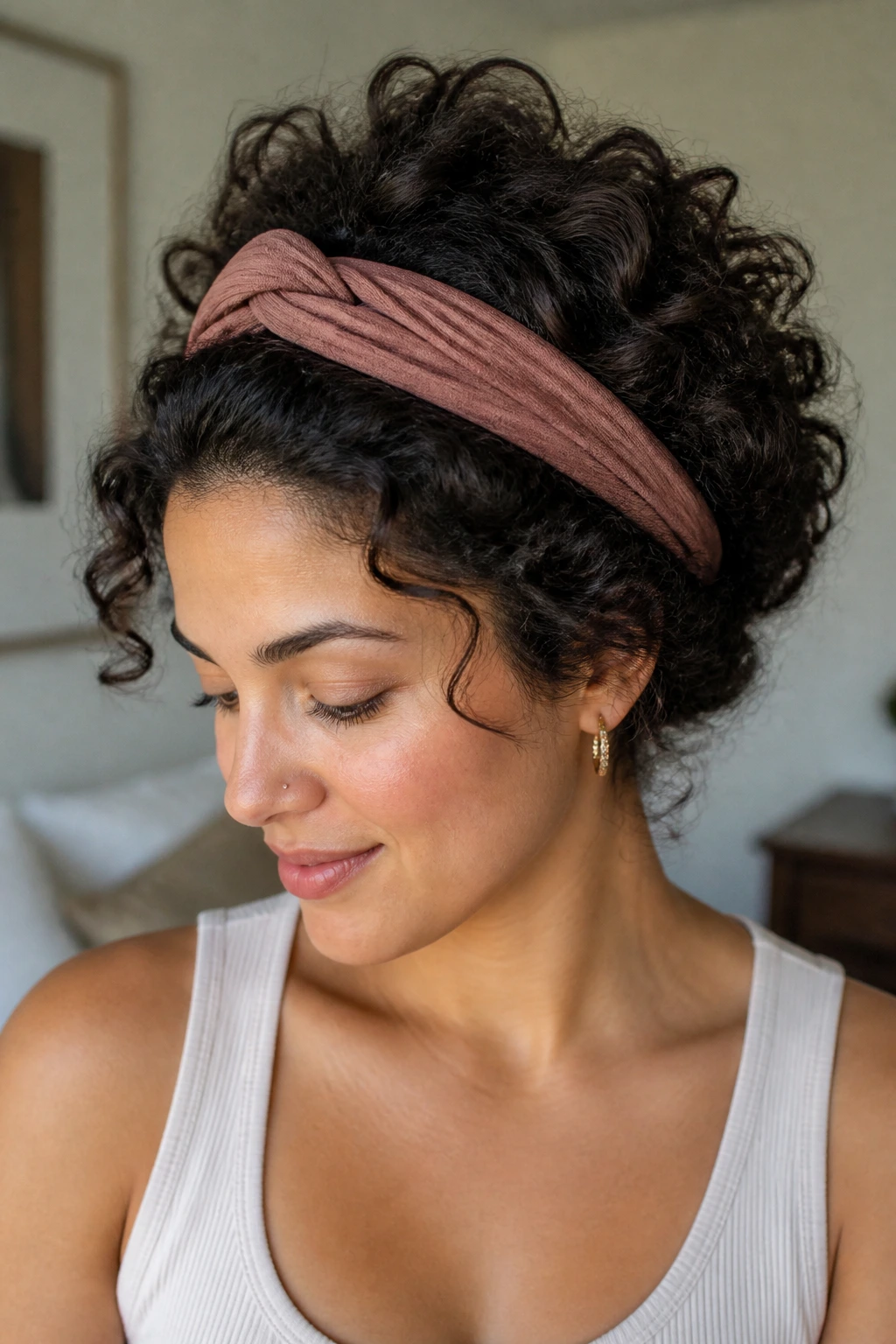
If your curls are medium length, the headband tuck is the one that surprises people. Slide on a stretchy fabric band, then tuck the lengths up and under until the back feels secure. You get a soft roll shape without heat, teasing, or a bunch of pins.
Choose a headband that grips well but doesn’t dig into the scalp. A band that slips halfway through the day is not saving you any time. It’s creating one more thing to fix.
11. Deep Side Braid
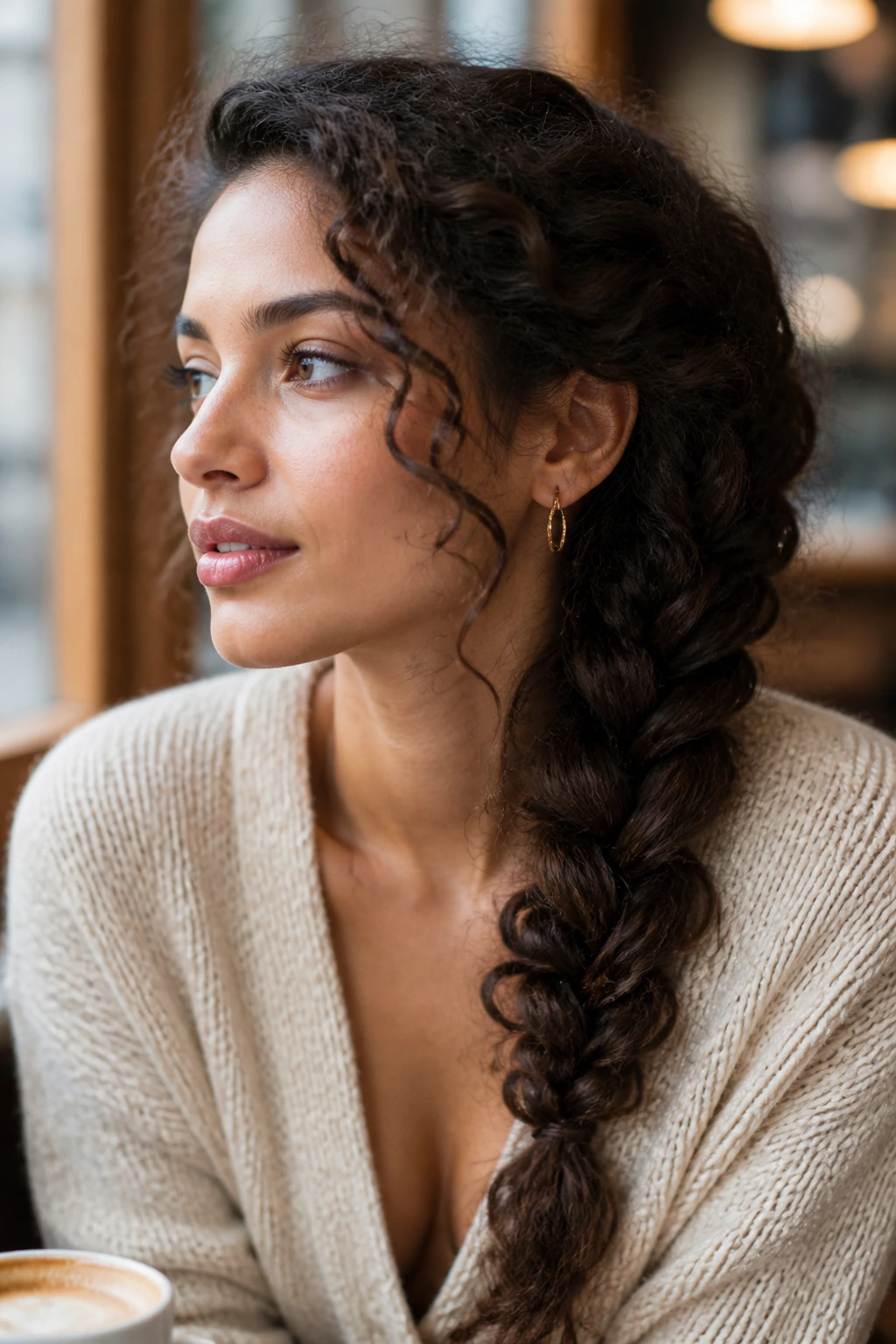
The side braid wins because it moves the weight off center. Gather the hair low behind one ear, braid it loosely, and pinch the edges a little if you want more width. Thick hair gives the braid texture on its own, so there’s no need to pull it tight to make it “look like” a braid.
Good on long errands, better on windy days. Also useful on any day you know your coat collar is going to rub the back of your hair. That’s the kind of small thing that ruins a good curl day.
12. Two-Strand Twist Pinback
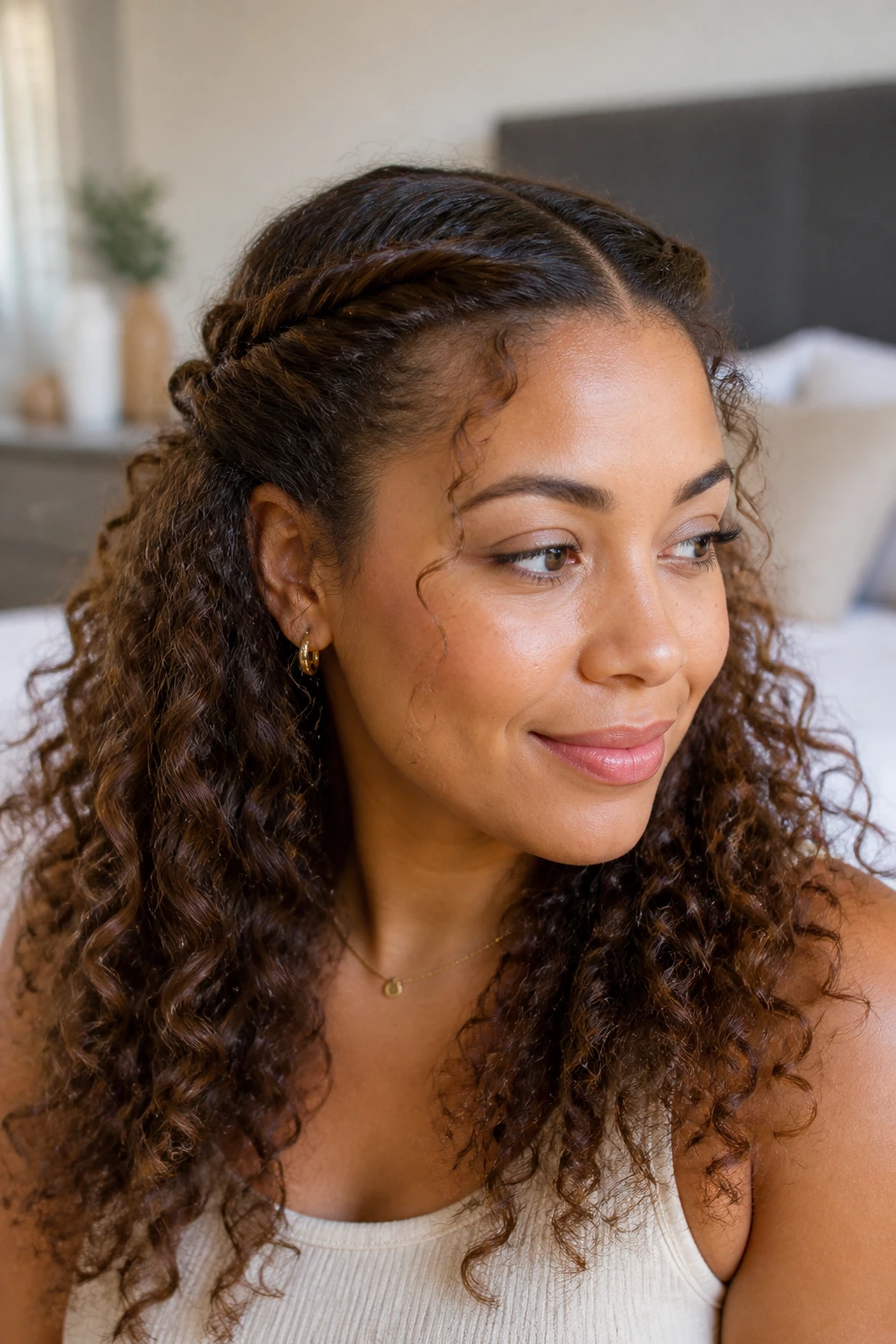
Take a front section on each side, twist back toward the ear, and pin the ends flat. Because the twist sits close to the scalp, it holds the front without dragging on the rest of the hair. The lengths stay loose, so the curls keep their shape.
Where the pins should land
The pins work best when they sit just behind the ear or slightly above it, not right at the temple. That placement keeps the style from pulling on the tender edge of the hairline. I like this one for mornings when the crown needs help but I want the rest of the hair to stay free.
13. Long Loose Braid
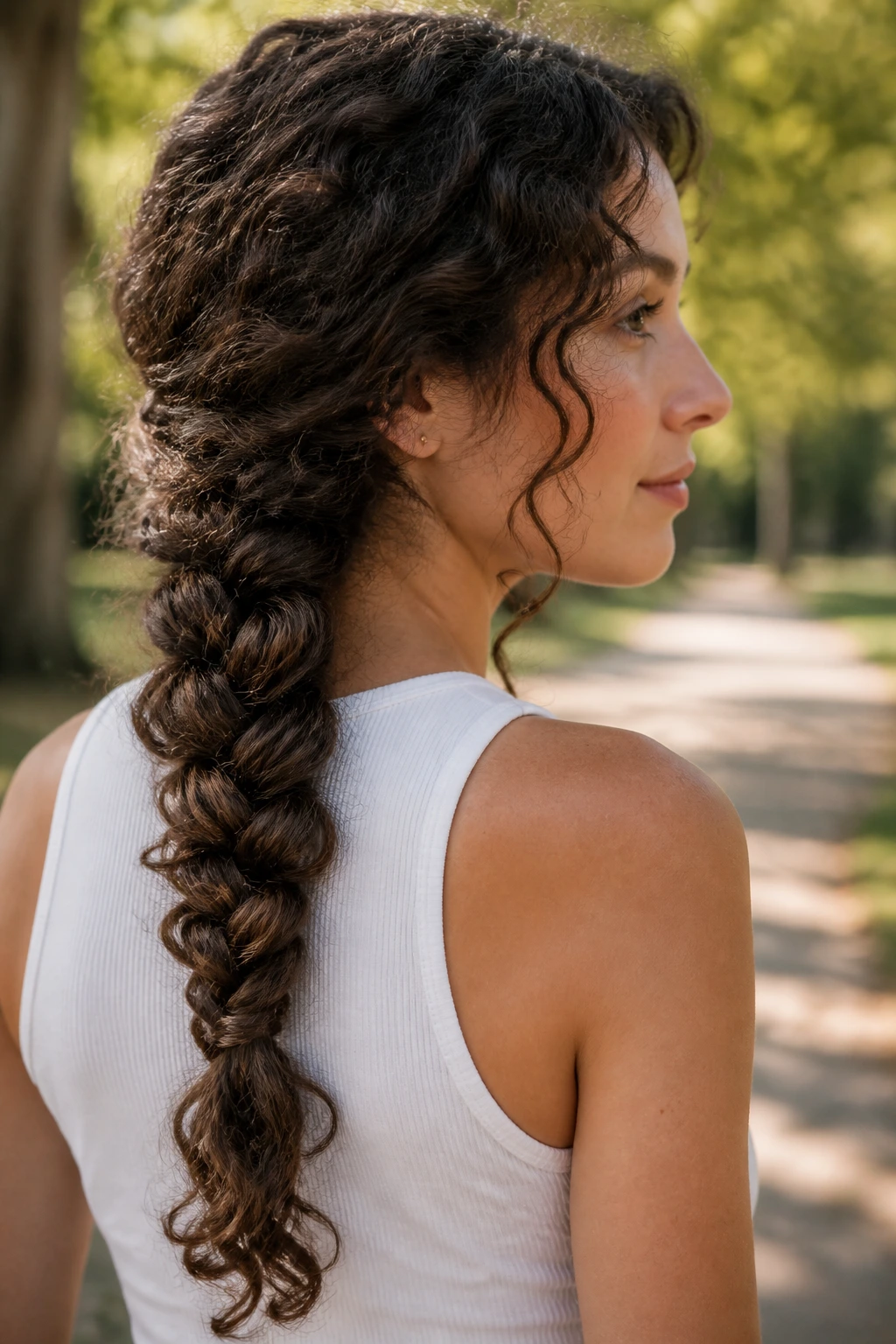
This one looks plain, and that’s exactly why it works. A loose braid from the nape to the ends keeps curls from tangling against chairs and scarves. When you take it out, the hair usually has a softer wave instead of a hard kink, especially if you use a fabric tie and leave a little room at the ends.
Best for long days, travel, or any time you know the hair needs to stay out of the way without being pinned. It is not flashy. It is dependable. That counts.
14. Silk Scarf Crown Wrap
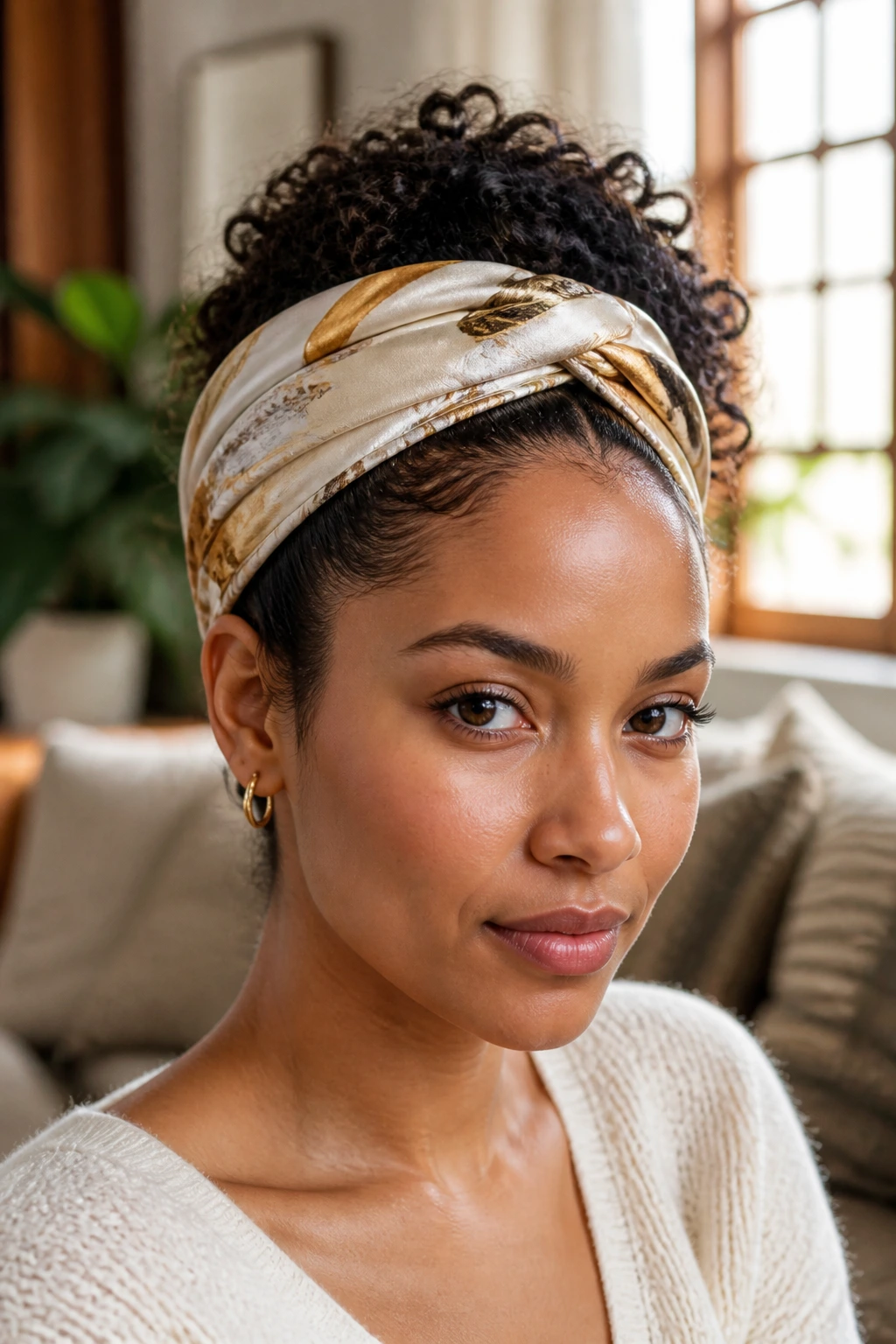
A silk scarf adds control where thick loose curls need it most: around the hairline. Tie it as a band, fold it into a head wrap, or tuck it around a pineapple to keep friction down. It’s one of the easiest ways to make a hairstyle last without piling on extra product.
Pick a scarf with enough width to stay put. Skinny strips slide. A wider wrap spreads pressure more evenly and looks cleaner once it settles.
15. Low Chignon
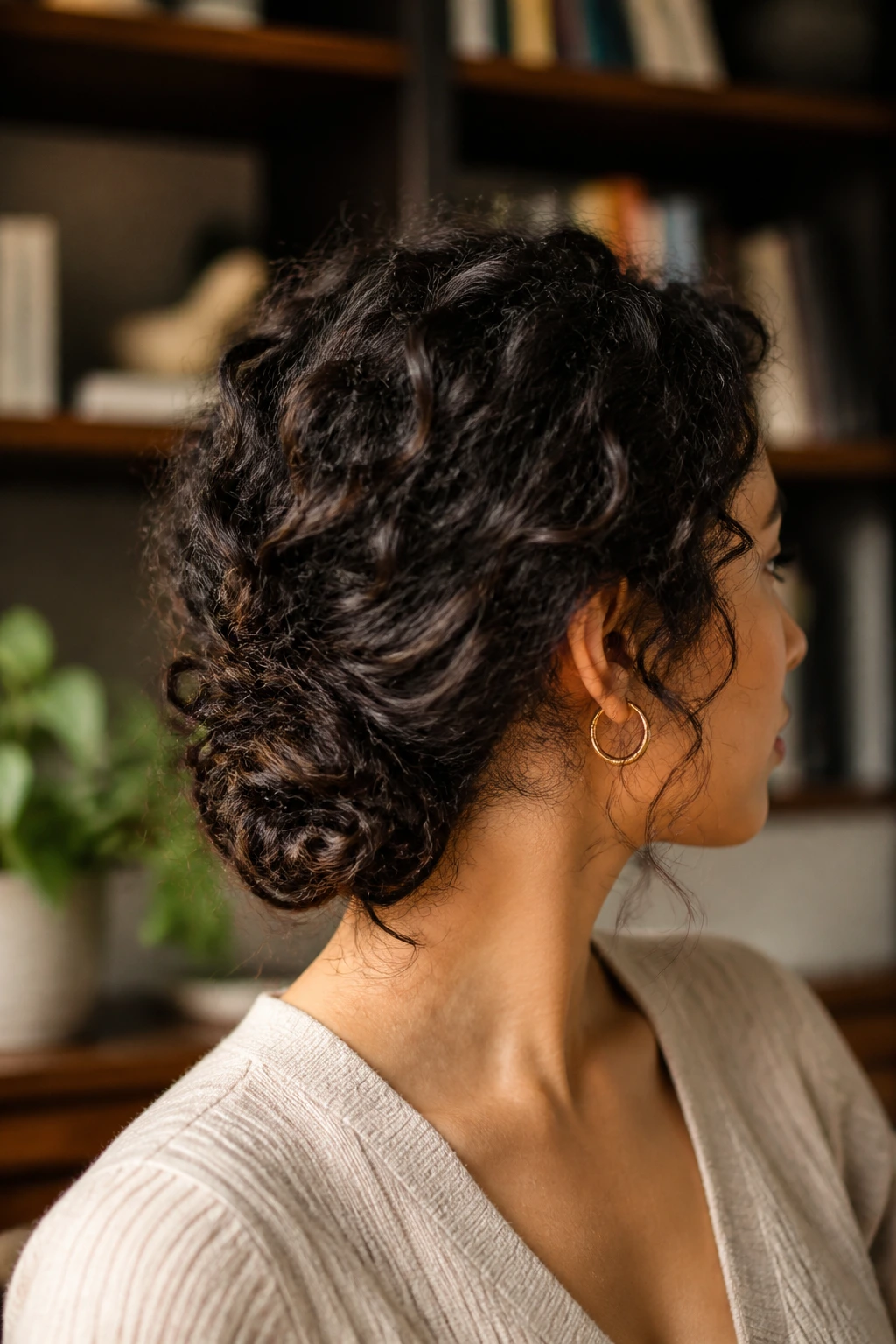
A low chignon feels calmer than a high bun. Gather the hair at the nape, twist once, wrap it into a soft coil, and pin the center where the knot wants to open. Thick curls give the shape more body, so you do not need to force it into a tiny polished ball.
Leave one curl or two loose near the face if the style starts feeling too formal. That little bit of movement keeps the whole thing from looking stiff. It also makes the style easier to wear for long stretches.
16. Bubble Ponytail With Wide Spacing
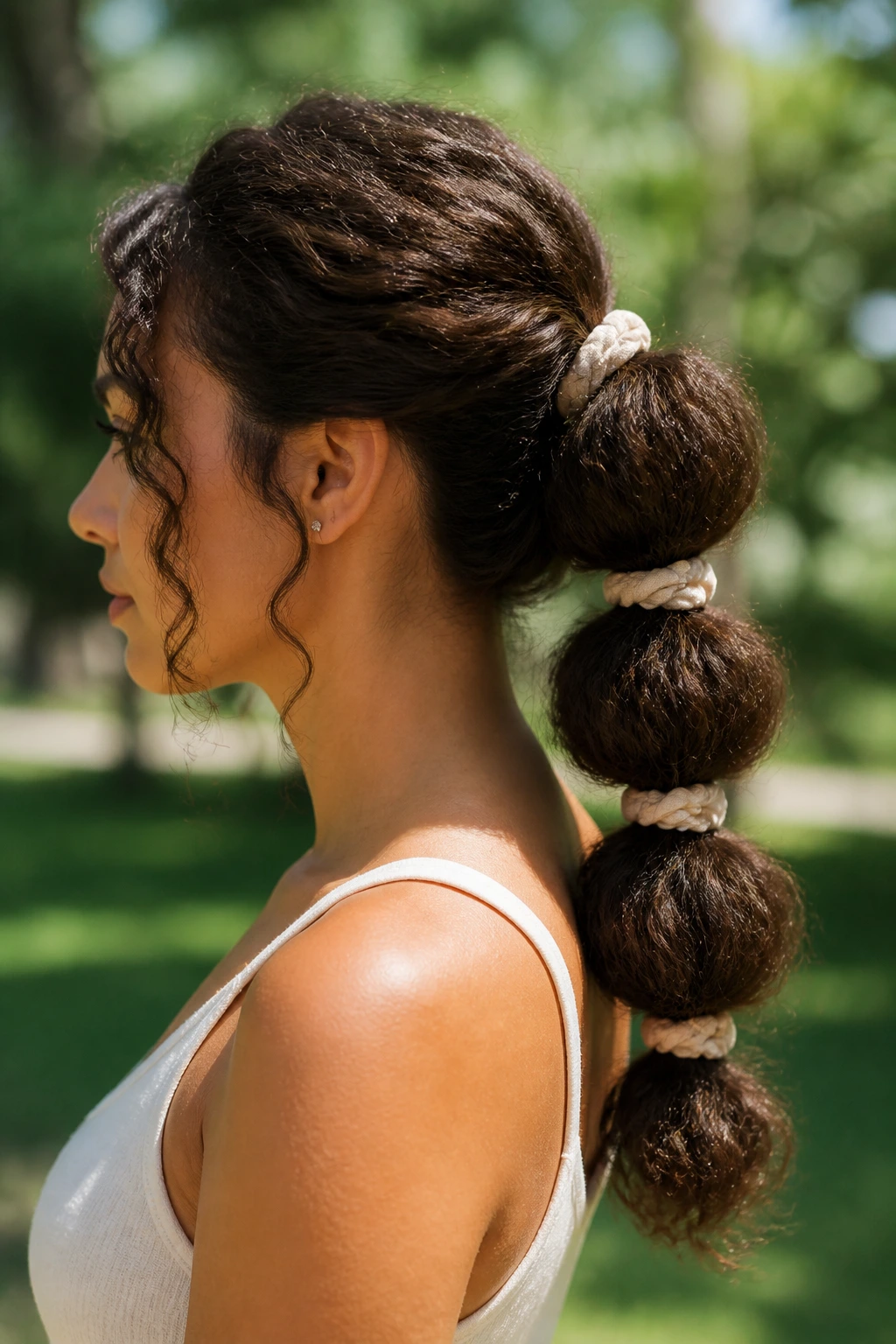
Tie a low or mid ponytail, then add fabric ties every 2 to 3 inches and puff each section gently. The whole point is spacing. If the bubbles are too close together, the style gets stiff fast and starts fighting the thickness of the hair.
- Use soft ties, not hard elastics.
- Stop after 4 or 5 bubbles if the hair feels heavy.
- Pull each section out with your fingers, not a brush.
That’s enough to get the shape without turning the hair into a series of tight dents.
17. Half-Up Space Buns
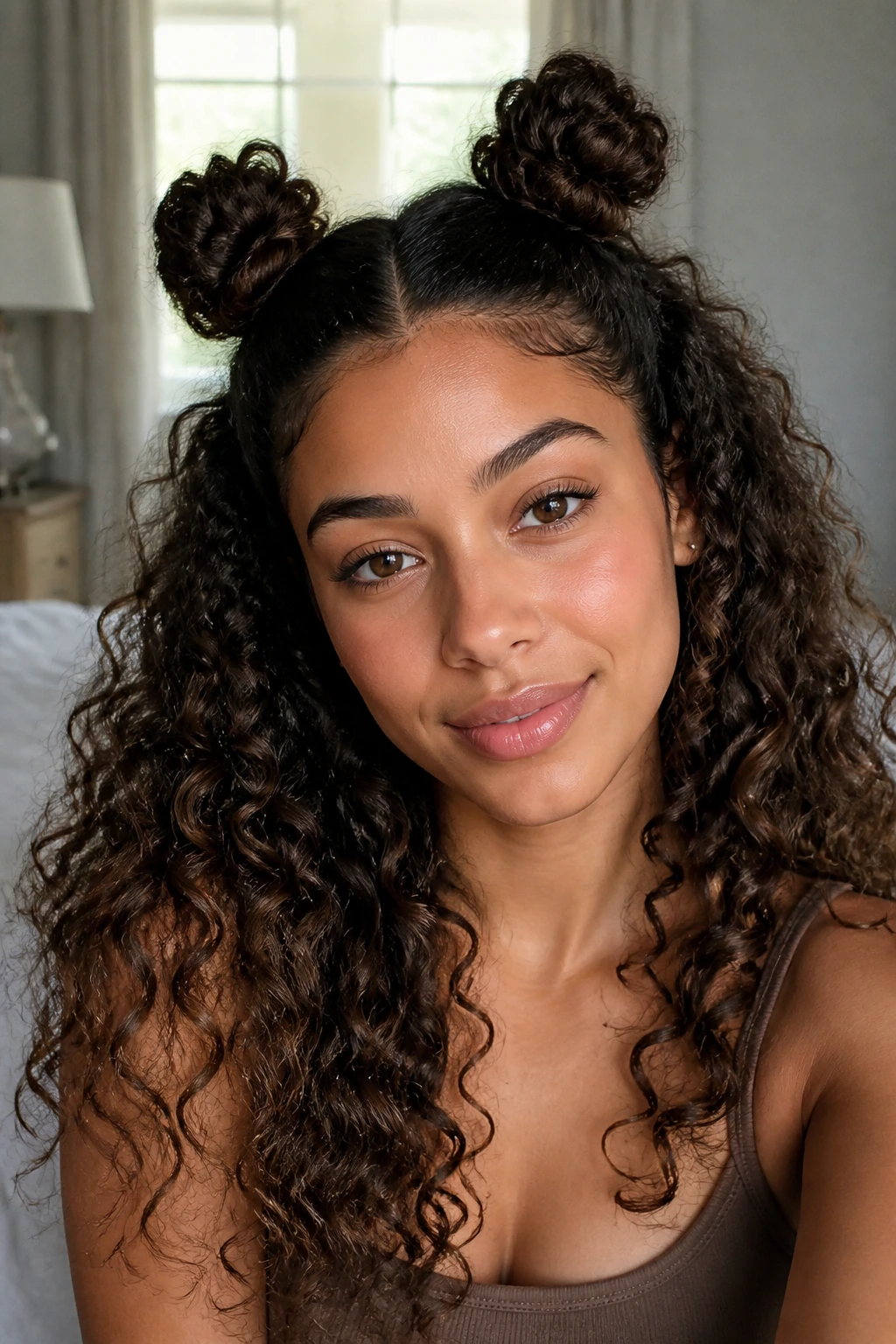
These are friendlier than they sound. Keep the buns small, high, and loose, then leave the rest of the curls down. Thick hair gives the buns enough body even when each one is barely more than a twist, and the loose length keeps the style from reading too childish.
It’s a fun shape without the full-head tension that true mini buns can create. The trick is to stop before the buns become hard little knots. Soft and lifted is the goal.
18. Crown Twist
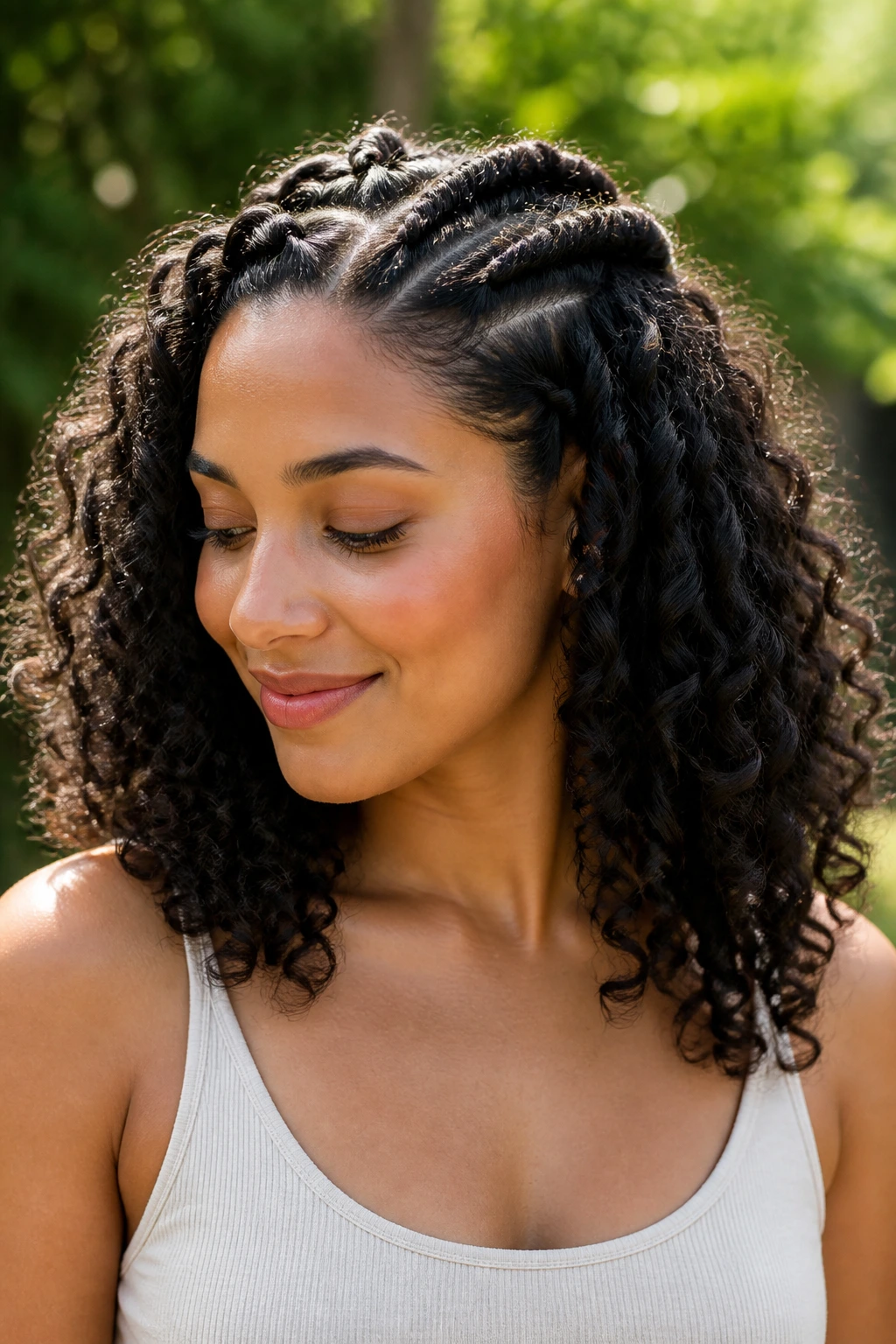
A crown twist sits between a braid and a pinback. Twist sections from each side and pin them across the top, following the curve of the head. You get that wrapped-around effect without weaving three strands the whole way.
I like it for layered cuts because the twists catch shorter pieces better than a braid does. The result is neat around the face and still full at the ends. That mix matters on thick loose curls, which can look overworked if every strand is forced to behave the same way.
19. Loop-Through Low Ponytail
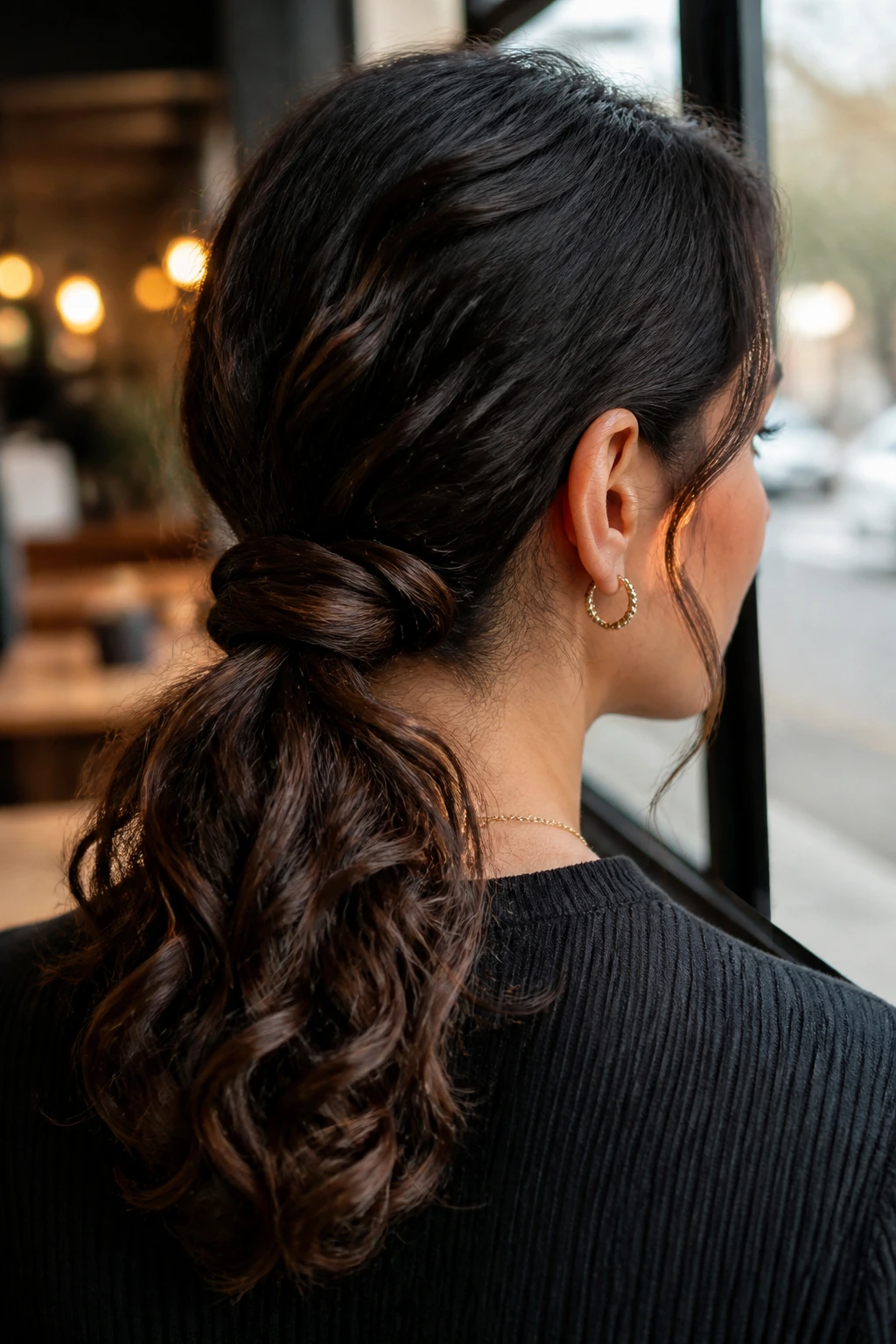
If you want polish with almost no effort, the loop-through ponytail is the move. Make a low ponytail, split the hair above the tie, and flip the tail through once. Stop halfway for a soft roll instead of dragging the ends through completely.
That one detail keeps the style from looking too tight. It also helps the ponytail sit flatter at the nape, which is nicer on thick hair than a knot that sticks straight out.
20. Dutch Halo Braid
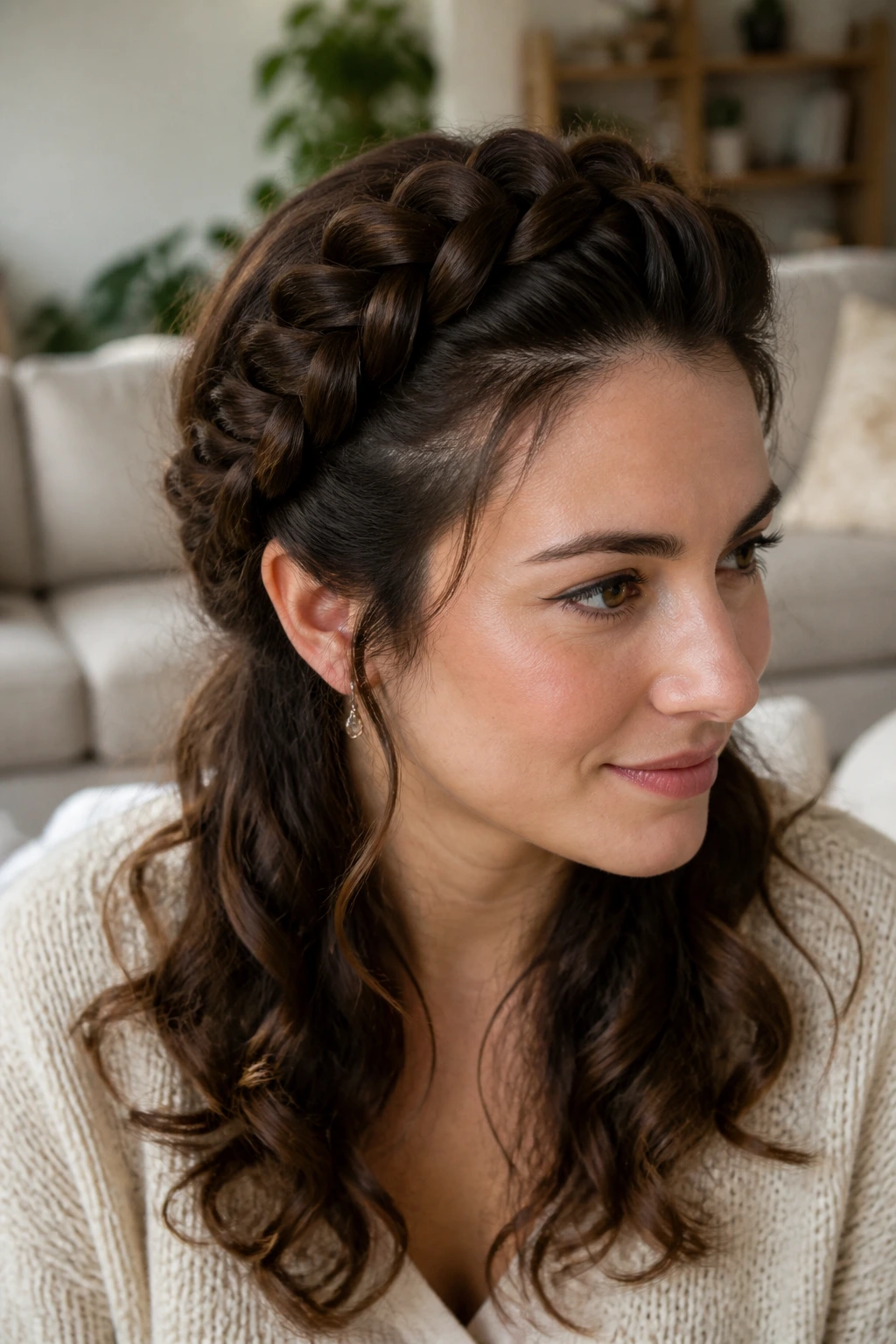
Why choose Dutch instead of French? Because the braid lifts off the scalp a little more, which helps thick hair show the pattern instead of disappearing into it. Braid around the perimeter with large sections and low tension, then pin the finish at the back.
Why this braid holds so well
A Dutch braid sits a touch higher, so it gives the hair more shape and a little more air around the face. It also stays put longer on slippery curls. If your hair is heavy, anchor the braid with pins every few inches at the back instead of hoping one pin will do everything.
21. Clip-and-Go Stacked Claw Clip Style
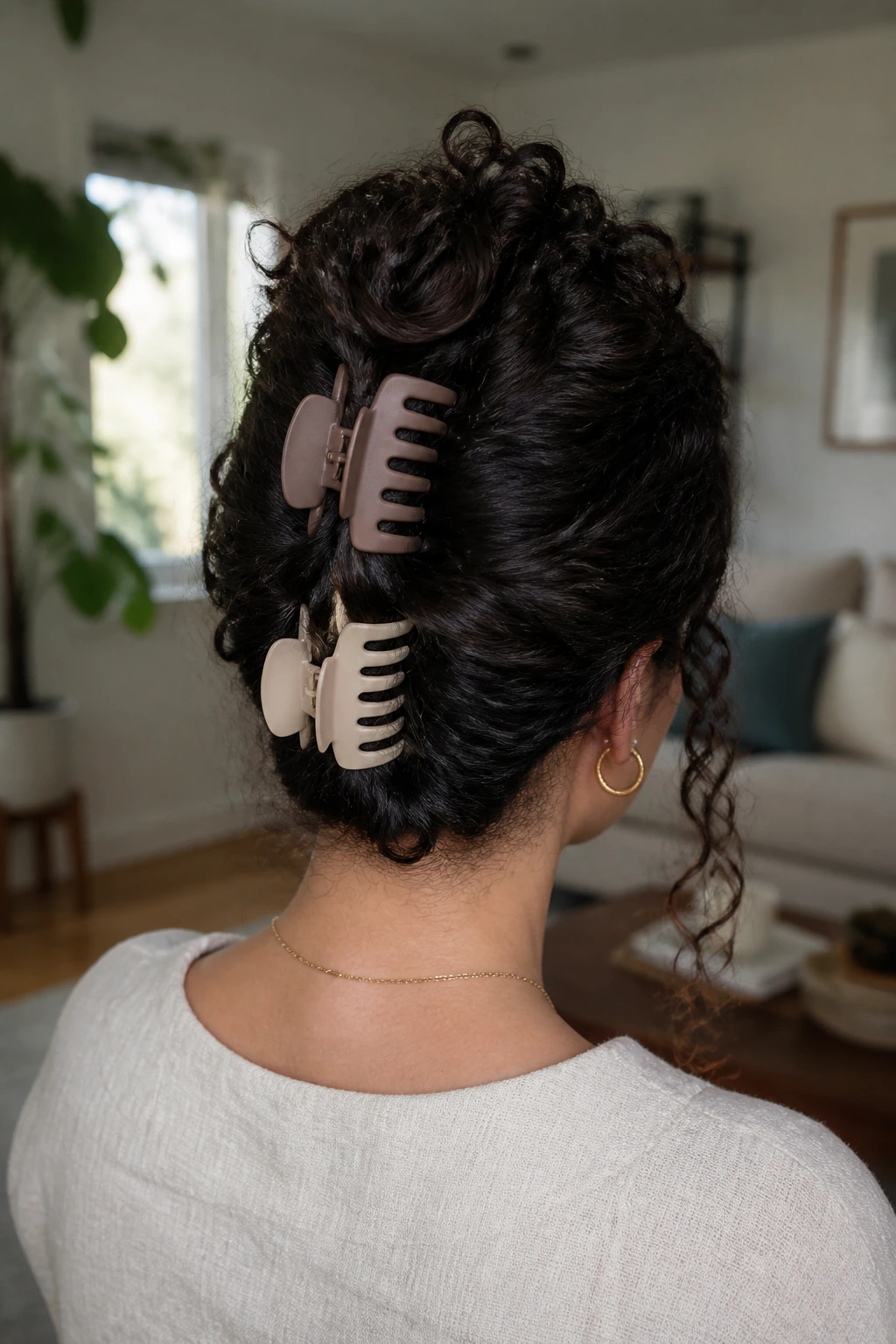
This is the style I trust when the hair is too full for one clip and too stubborn for a ponytail. Twist the back section upward, clip the first layer, then catch the lower layer with a second smaller clip or a couple of pins. The stacking trick spreads weight instead of making one clip do all the work.
It is fast, but it looks like you had a plan. That’s the appeal. Thick loose curls often need exactly that kind of quiet engineering.
22. Soft Faux Hawk
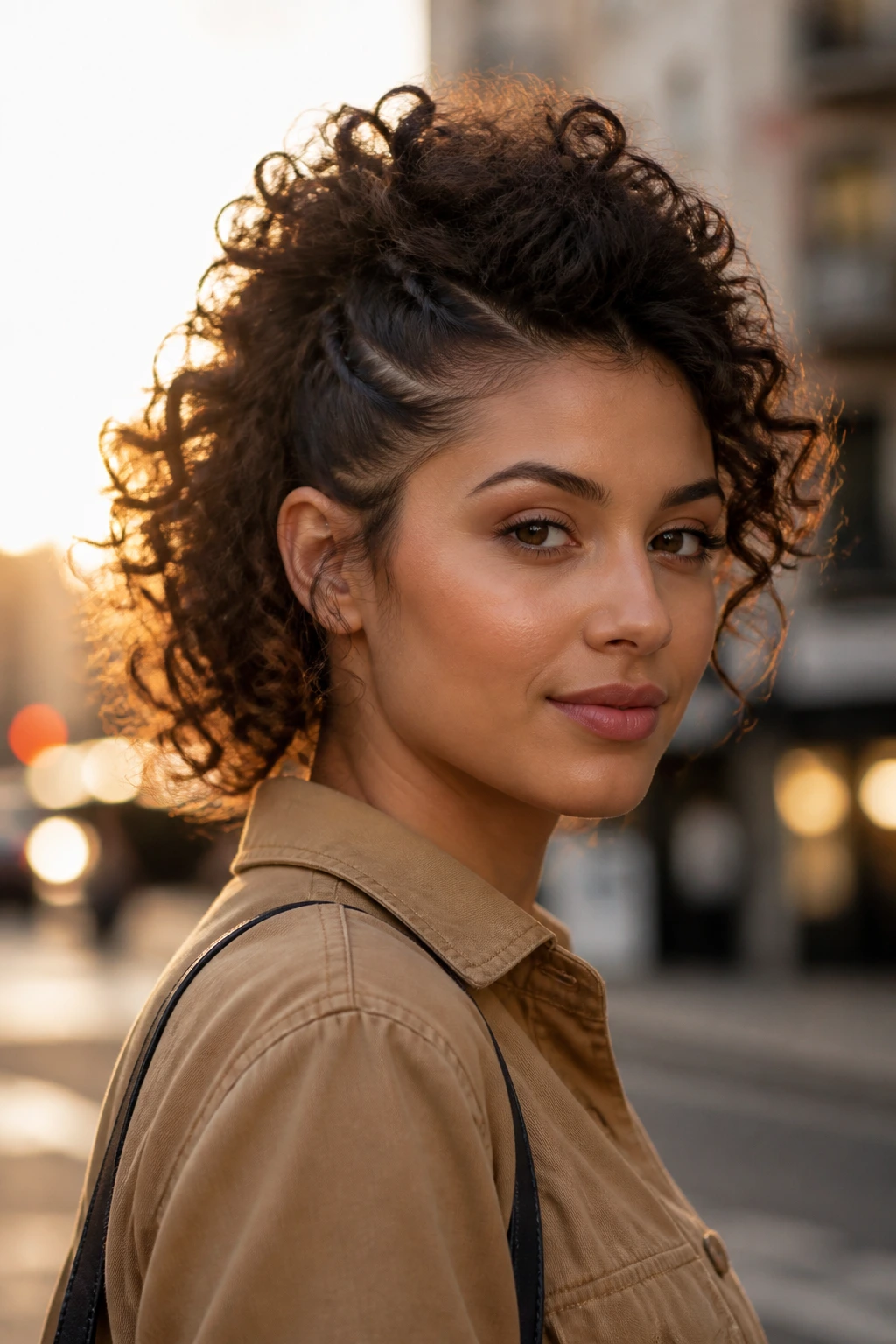
A soft faux hawk is the boldest look here, but it is still gentle if you keep the sides pinned loosely. Pin the temple sections back and let the center line stay high. Thick loose curls build their own shape, so you do not need much teasing — just enough support to make the ridge stand up.
It’s the style I reach for when I want volume without a full updo. The center stays lively, the sides stay off the face, and the curl pattern gets to keep its texture instead of being ironed flat by styling.
How Thick Loose Curls Decide the Right Style
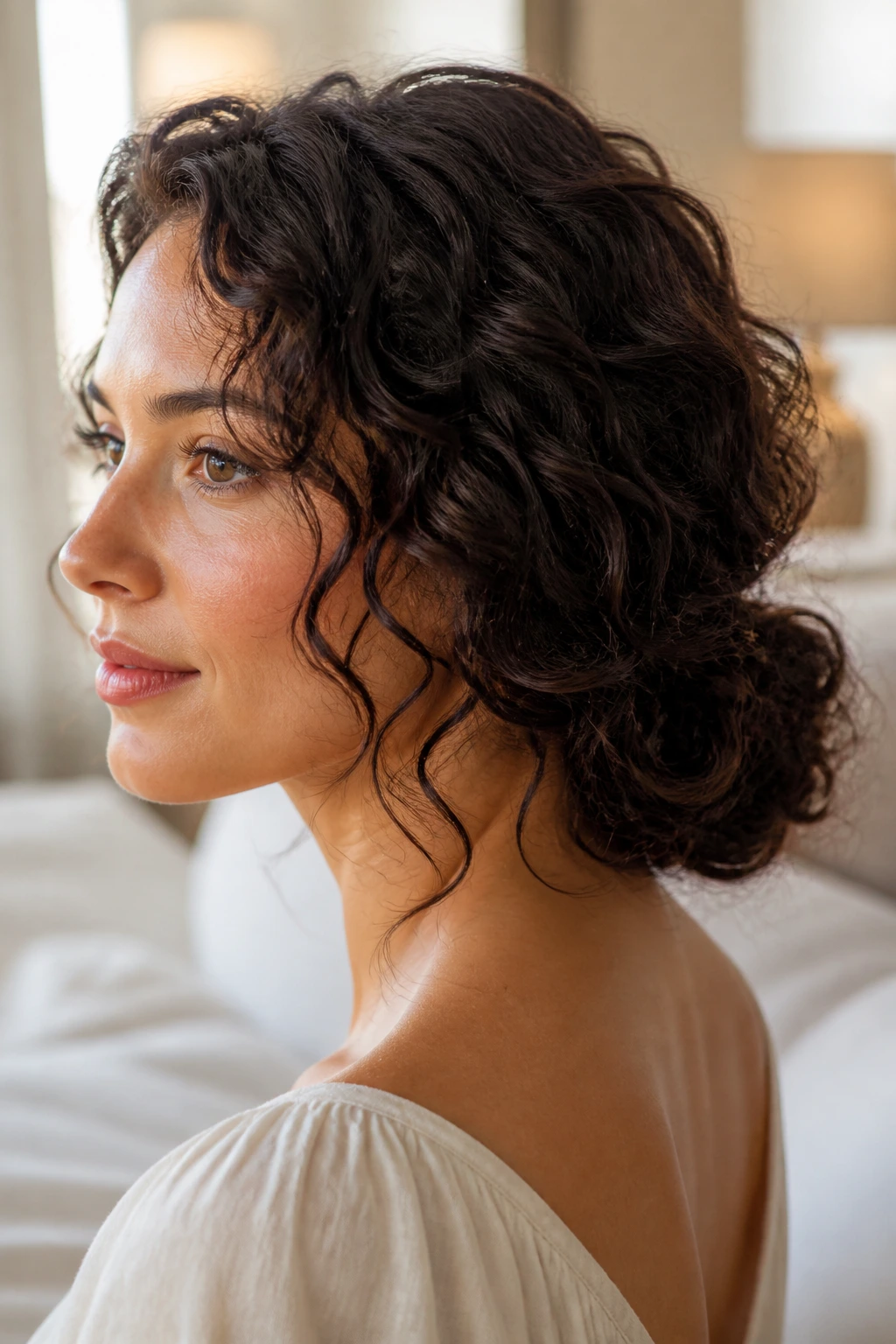
The best style for thick loose curls depends on two things people often ignore: density and stretch. Density tells you how much hair is packed into each section. Stretch tells you how easily the curls elongate when you gather them. A very dense head can look like it wants a simple ponytail, but the weight says otherwise.
If your hair is dense and heavy
Look for styles that split the load: claw clips, low braids, crown twists, and low chignons. These keep the weight near the middle of the head instead of hanging all on one elastic. If a style gives you a headache by hour two, it is not a good match, no matter how neat it looks.
If your curls are loose and long
You can get away with a little more movement, but the ends still need protection. Loose braids, loop-through ponies, and scarf wraps work well because they control swing without crushing the curl shape. Long loose curls tend to flatten at the back first, so styles that leave the crown open and protect the lengths are usually the best bet.
If your hair sits between lengths
Medium-length thick curls often need the most adjustment. They’re long enough to pull, but not always long enough to wrap cleanly into a bun. Half-up twists, side pinbacks, and soft headband styles usually make more sense here than trying to force a high knot that keeps sliding apart.
Essential Tools for Gentle Styling
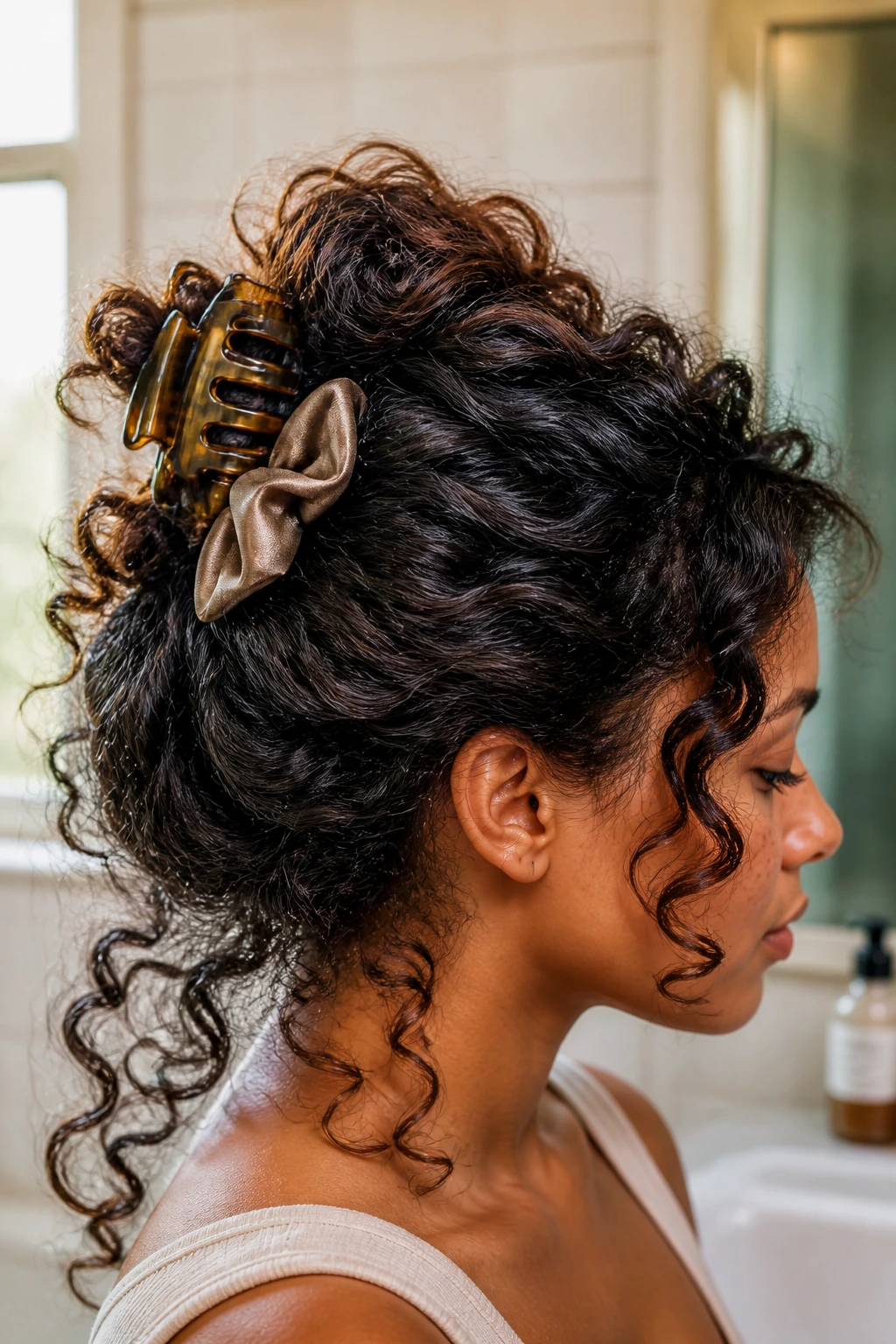
-
4- to 5-inch claw clip — Look for wide teeth and a strong spring; small clips tend to pop open on dense hair.
-
Satin or silk scrunchies — They spread tension across a wider band and leave fewer dents than skinny elastics.
-
Seamless hair ties — Useful for braids and low ponytails when you need firmer hold without a rough seam.
-
Bobby pins with coated tips — They grip flyaways without scraping the scalp. Keep extra pins handy; thick hair eats them.
-
Wide-tooth comb — Best for detangling after a mist of water or leave-in, before you shape the style.
-
Duckbill clips — Handy for sectioning thick hair while you work, especially around the crown and temples.
-
Fabric headband — Helpful for tucks and face-framing styles; choose one that grips instead of sliding.
-
Silk scarf or bonnet — Protects the style overnight and cuts down on friction against pillows.
-
Microfiber towel or T-shirt — Better than a rough bath towel for drying the outer layer before styling.
-
Spray bottle — A light mist helps reshape curls without soaking them.
What to Buy If You Want Less Snagging and More Hold
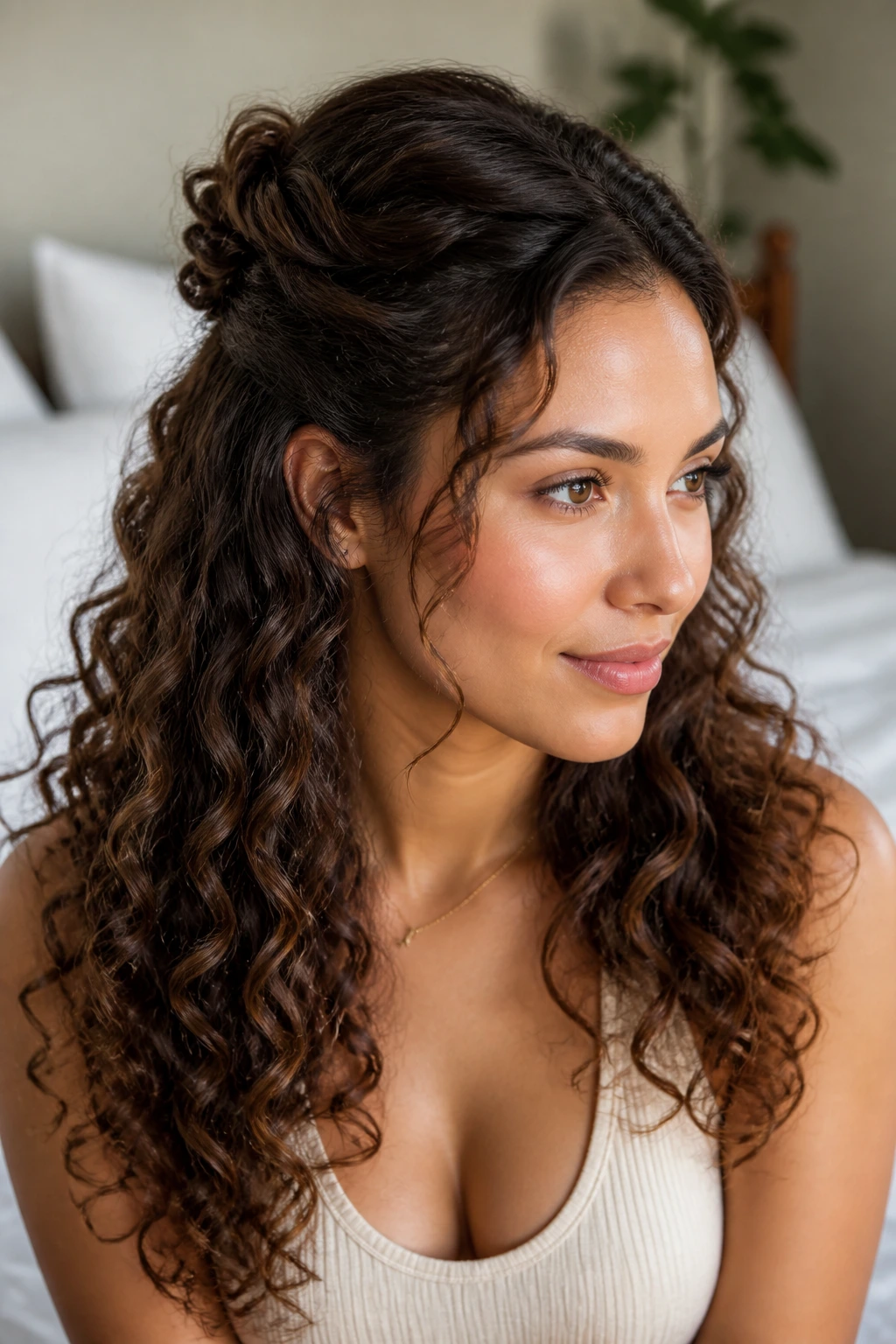
A lot of styling problems start at the store, not in the mirror. The wrong clip is usually too short, too glossy, or too narrow in the teeth. For thick loose curls, look for a claw clip with a wide spine and teeth that wrap around the bundle instead of pinching the outside edge. A matte finish often grips better than slick plastic.
The same thing goes for ties. A satin scrunchie spreads tension nicely, but if the band inside is thin and cheap, it can still dig. Seamless elastics are fine for braids, though I would not use them for every day at the same spot. Rotate them. Your hairline will thank you.
Products matter too, but not in the heavy, overbuilt way people assume. A small amount of leave-in conditioner on mids and ends helps the hair slide into twists and braids without snagging. If your hair is slippery, a light mousse or flexible gel at the crown gives the style something to hold onto. Too much oil at the root, though, and you get collapse instead of control.
How to Match These Styles to Your Day
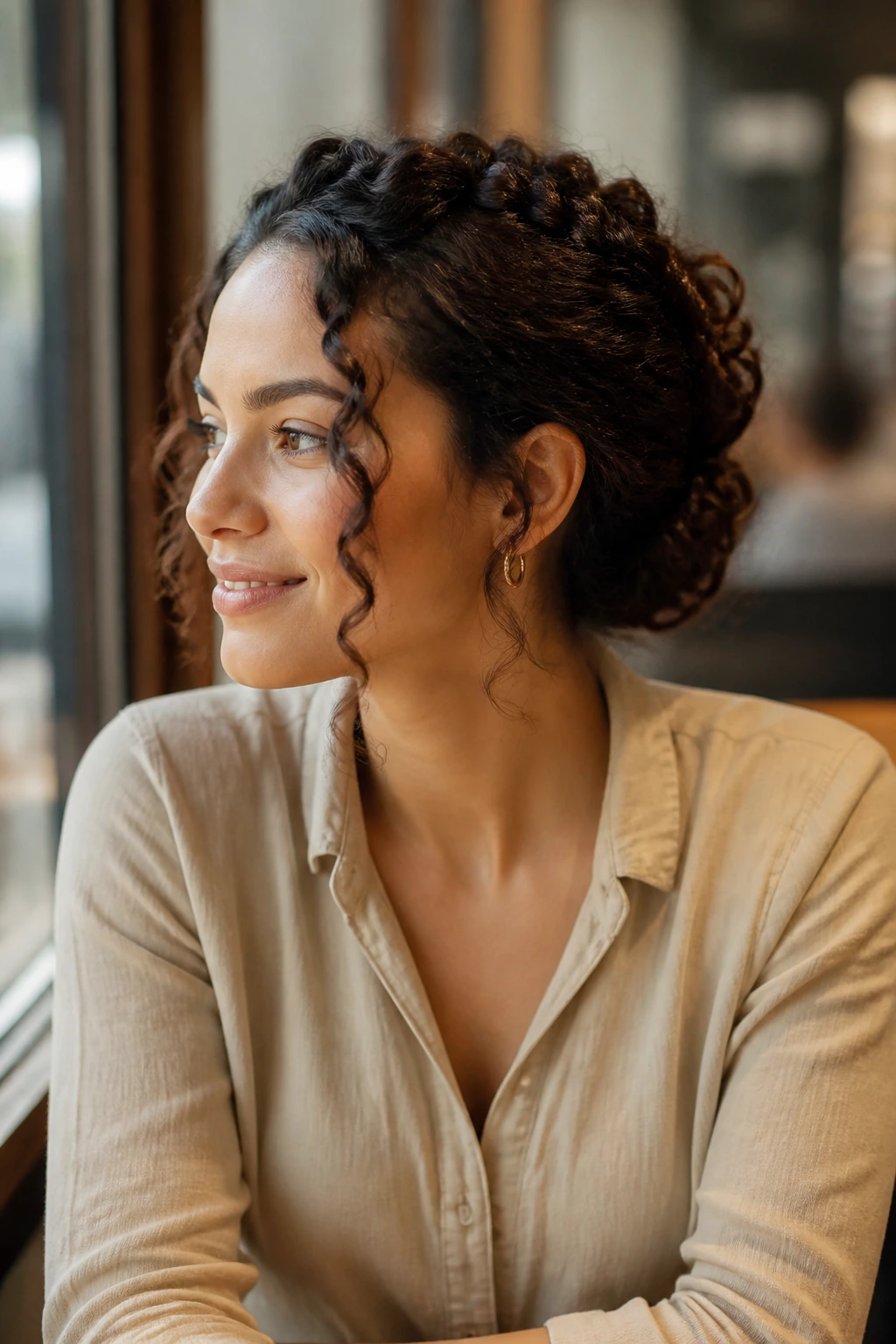
Workdays: Low chignons, side pinbacks, loop-through ponies, and crown twists tend to look polished without pulling hard. They also survive sitting, typing, and the usual head-turning that wrecks looser styles.
Errands and travel: Claw clip twists, side braids, and low braided buns are the safest bets. They keep the hair contained without asking you to stand in front of a mirror for ten minutes before leaving.
Workouts and active days: Pineapple ponytails, long loose braids, and low braids work well because they keep the lengths from tangling and let the scalp breathe. Avoid tight high ties if you already know your crown gets sore.
Events and evenings out: Dutch halo braids, soft faux hawks, silk scarf wraps, and braided crowns give shape without looking stiff. A few pinned curls around the face can do more than a full can of spray ever will.
Small Tweaks That Make the Styles Last Longer
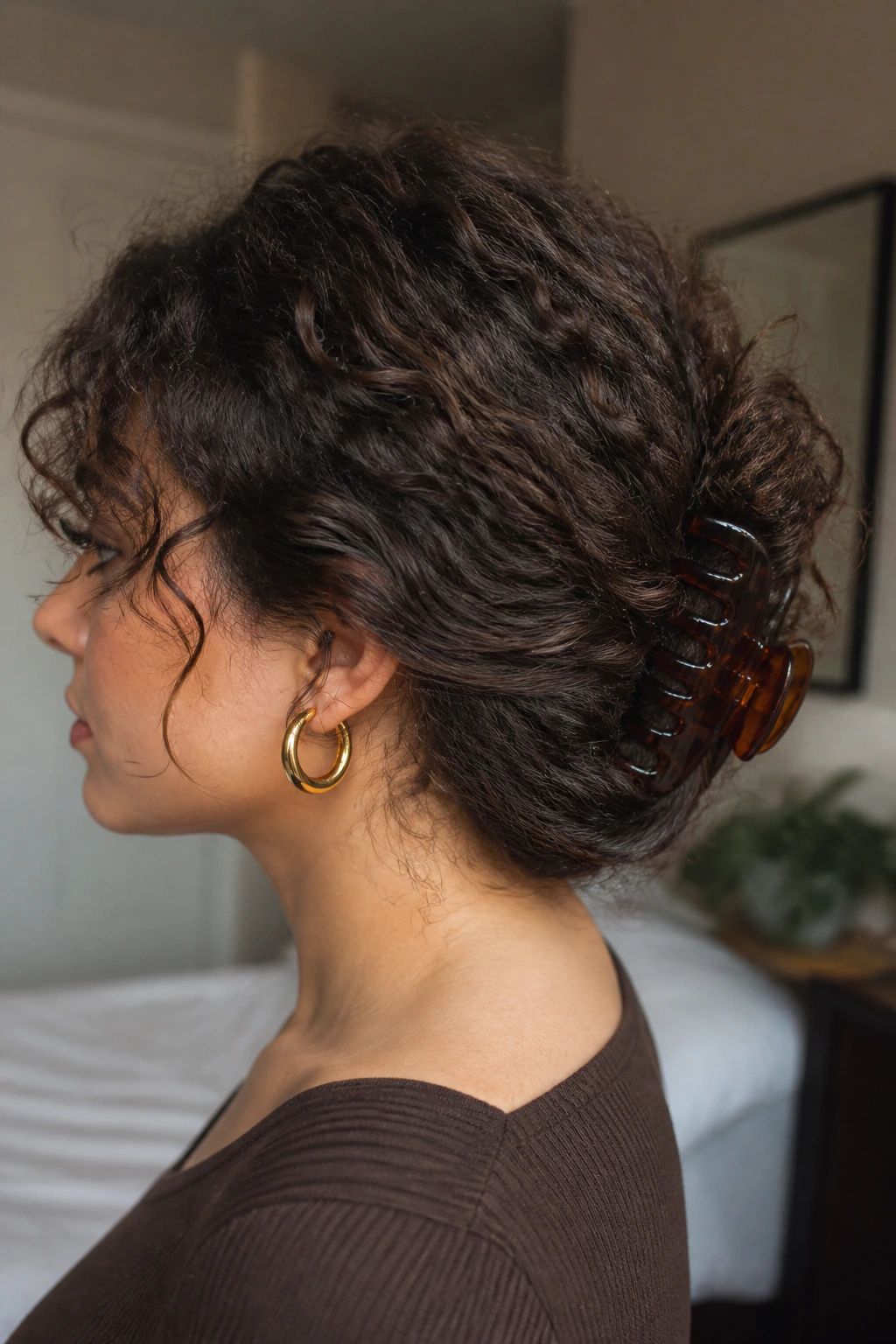
Start with a little grip: Day-two hair often styles better than freshly washed hair because it has a little natural texture. If the hair is too clean, mist the top layer and let it sit for a few minutes before you start.
Place support where the weight is: Thick curls want to drop. Put your clip, tie, or pins where the hair is densest, not at the most fragile edge of the hairline. That one change often fixes the style faster than adding more product.
Keep the crown soft: If you smooth the top too hard, the style can look flat by noon and puffy by dinner. Leave a touch of movement at the roots. It looks more natural and lasts longer.
Use fingers, not brushes, after the style is set: Once the shape is there, brushing it apart is a fast way to get frizz. Fingers separate curls more gently and keep the clumps visible.
Finish with restraint: A pea-sized bit of serum on the outer layer or a light mist of spray is enough for most styles. Heavy layers of product weigh down loose curls and make clips slip.
Common Mistakes That Flatten or Fray Loose Curls
-
Cinch the tie too hard at the crown: The symptom is a sore scalp and a hard dent where the elastic sits. Fix it by making the first wrap loose and tightening only the last quarter-turn.
-
Use a clip that is too small: If the clip slides open or leaves half the hair hanging loose, it is undersized. Go bigger, or split the style into two clips instead of forcing one clip to carry the whole load.
-
Style soaking-wet hair and leave it there: Wet curls stretched into a tight shape can dry with weak, wonky tension. Work on damp or dry hair depending on the style, and do not leave the hair wet under a knot for hours.
-
Pile on cream or oil near the roots: That makes thick hair heavy, slippery, and more likely to collapse. Keep the richer products on mids and ends, where they help the curl pattern instead of fighting it.
-
Sleep on the style bare: Cotton pillowcases rough up loose curls fast. Use a silk scarf, bonnet, or pillowcase if you want the style to survive the night without turning fuzzy.
Easy Variations and Adaptations to Try
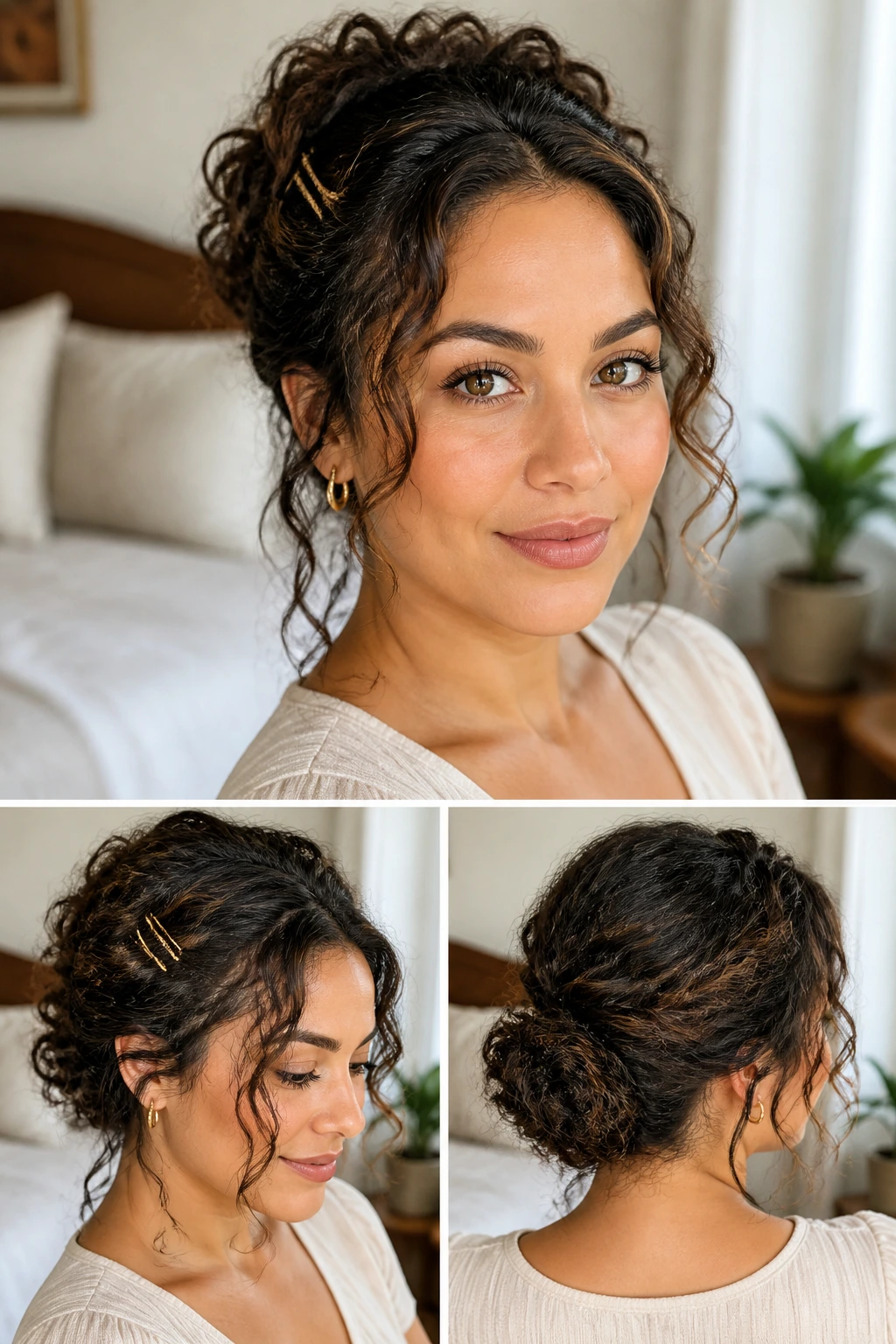
Gym-Proof Braids: Swap any low ponytail or loose braid for a tighter anchor at the nape, then use a seamless elastic and one bobby pin to lock the tail. This works when sweat is part of the plan and you need the style to stay put without constant fixing.
Office-Sleek Twists: Take the side pinback, crown twist, or low chignon and smooth the outer layer with a tiny bit of gel or serum. Keep the inner curl clumps untouched. The result reads tidy without looking pressed flat.
Humidity Shield Styles: Choose halo braids, stacked claw clips, or a silk scarf wrap when the air feels heavy. These styles keep the hairline protected and leave fewer loose ends out in the air to frizz.
Event-Night Edits: Add pearl pins, a ribbon, or a slim metallic clip to a braid or faux hawk. One small accent is enough. You do not need to decorate every inch of thick hair for it to feel dressed up.
Shorter-Length Tweaks: If your curls sit around the shoulders, lean on half-up twists, side pinbacks, and crown twists instead of full buns. Shorter thick curls usually need more pinning and less wrapping.
Night Care, Make-Ahead, and Next-Day Refreshing
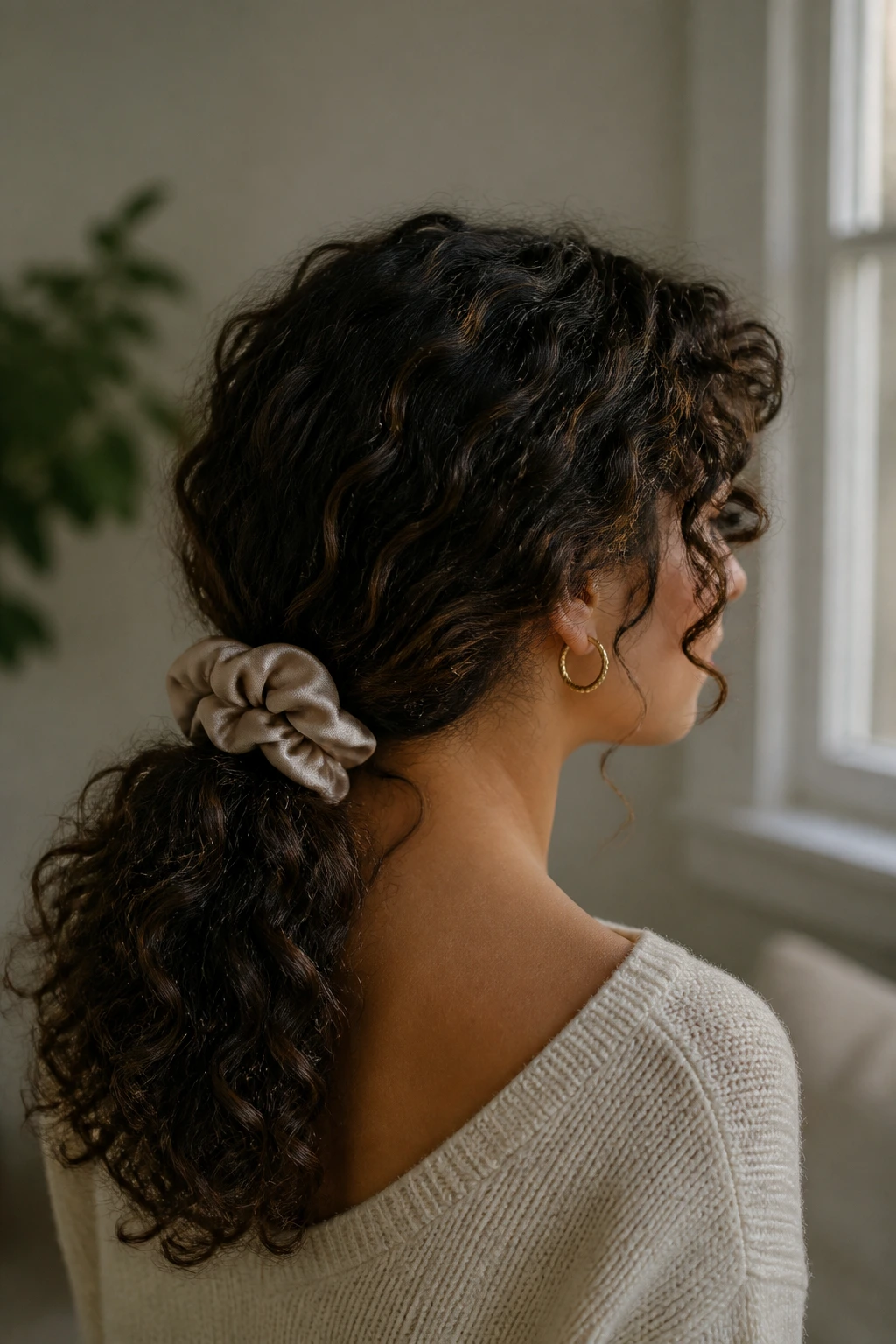
Most of these styles do not need a full reset every morning. A loose braid can often be worn overnight and undone the next day with only a light mist of water. A claw clip style is different; I’d remove the clip before bed so the crown can rest, then rebuild it in the morning in under two minutes.
If you know you want the style to last, prep it with sleep in mind. A pineapple secured with a silk scrunchie, a low loose braid, or a scarf wrap can hold up through one night with less friction than leaving the hair loose on a cotton pillowcase. Braids usually last the longest, often 2 to 4 days if the ends stay protected and the scalp isn’t overloaded with product.
Refresh gently. Mist the outer layer only, smooth with your hands, and re-pin the sections that have opened. If the style has gone flat at the crown, do not keep piling clips on top of one another. Start over with a cleaner section and less tension. That usually fixes the shape faster than trying to patch it.
Frequently Asked Questions
Which style is gentlest on thick loose curls?
Low chignons, side pinbacks, and loose braids are usually the easiest on the hairline because they spread tension out and keep the weight lower. If your scalp gets sore fast, skip high ties and anything that pulls from one small point.
Can I do these styles on wet hair?
Some, yes, but not all. Braids and twists can work on damp hair if you want the shape to set, while clips and buns usually behave better on dry or nearly dry hair. Wet hair under a tight tie can stretch too much and dry in a weird shape.
What if my claw clip keeps slipping out?
You probably need a larger clip or a different placement. Thick loose curls usually do better when the clip catches the hair at a bend, not on a flat surface. Matte clips with wider teeth often grip better than shiny, narrow ones.
Will braids make my curls frizzy when I take them out?
Only if they’re braided too tight or pulled apart aggressively. Use a soft tie, braid loosely, and undo the braid with your fingers instead of yanking through with a brush. A little separation at the end is fine; rough handling is what causes the puff.
How do I keep the crown from puffing up by noon?
Use a light mist of water or leave-in at the roots, then place the support exactly where the hair wants to lift. A small amount of mousse or flexible gel can help, but heavy product at the crown usually makes things worse, not better.
Can I sleep in these styles?
Yes, some of them. Loose braids, pineapples, and scarf wraps are the easiest overnight choices. I would not sleep in a tight bun or anything that presses hard into one spot on the scalp.
What should I do if my hair is layered?
Choose styles that catch shorter pieces without forcing them flat, like crown twists, half-up twists, and side pinbacks. Layers usually escape from full updos first, so a style with several anchor points works better than one giant wrap.
Do I need a lot of product for these looks?
No. Thick loose curls usually do better with a little support and a little grip, not a heavy coat of product. A small amount of leave-in, mousse, or gel on the outside layer is often enough.
The Styles Worth Reaching For Again
The best healthy hairstyles for thick hair with loose curls are not the ones that tame every inch into obedience. They are the ones that let the curls stay themselves while removing the pressure points that cause soreness, dents, and frizz. That usually means wider ties, smarter pin placement, and shapes that support the hair instead of trying to shrink it.
A good style for this hair type should feel stable by hour three, not just look neat in the mirror for sixty seconds. If you keep that standard in mind, the whole process gets easier. Start with the half-up twists, the low braid, or the claw clip twist, then build from there. The curls will tell you pretty fast which shapes they like.