



Soft waves for thick hair and round faces can go wrong in two predictable ways: they puff out at the sides, or they curl into a round halo that makes the face look wider than it is. Neither problem is mysterious. The fix is usually boring in the best possible way — a bigger barrel, cleaner sectioning, and a front shape that starts lower than the cheekbone.
Thick hair has a lot going for it, but it also has opinions. It wants to hold shape, and it wants to hold volume. On a round face, that means the wrong wave pattern can add width right where you do not want it. The right one does the opposite: it drapes, it lengthens, and it keeps the eye moving down instead of stopping at the sides.
That’s why the best soft waves on thick hair are rarely the tight, springy kind you see in salon chair selfies. They’re looser. Longer. Often brushed out. And they depend on where the bend begins just as much as how the bend looks. The looks below cover the cuts, parts, lengths, and finishes that play nicest with round faces without flattening all the good density thick hair gives you.
Why These Waves Work on Thick Hair and Round Faces
- Shape Control: Soft waves interrupt the width of thick hair without turning it into a full curl pattern, so the hair moves instead of sitting as one heavy block.
- Face Length: Waves that start below the cheekbone pull the eye downward, which is the whole trick when you want a round face to read a little longer.
- Better Balance: A small lift at the crown and softer sides keep the widest part of the style away from the cheeks.
- Longer Wear: Thick hair usually holds a loose bend longer than fine hair, especially when you let it cool before brushing it out.
- More Styling Range: The same basic wave can lean polished, casual, or undone depending on barrel size, parting, and how much you brush it.
- Lower Risk of Puff: Tighter curls on thick hair can turn puffy fast. A wider wave pattern usually looks calmer and more expensive.
1. Long Barrel Waves With Cheekbone-Low Layers
Long barrel waves are the cleanest answer when thick hair feels too wide. A 1.25- to 1.5-inch curling iron makes a bend that relaxes nicely once brushed, and the longer layers keep the shape from ballooning at the sides. If you’ve got a round face, the key is simple: keep the front pieces long enough to skim below the cheekbone.
Why It Works
The wave starts soft, not springy, so the hair keeps its length and weight. That matters. Thick hair needs enough structure to move, but not so much curl that it stacks outward.
Ask your stylist for cheekbone-low face-framing layers and long internal layers through the back. Then curl away from the face in 2-inch sections, pin the front pieces while they cool, and brush everything out once it’s fully set.
Best detail: leave the final inch of each section out of the iron so the ends stay airy instead of curling under like a helmet.
2. Deep Side-Part Waves
A deep side part does more for a round face than people give it credit for. The line itself adds asymmetry, and asymmetry is useful when you want to break up a face that reads soft and even all the way around. On thick hair, it also helps stop the style from spreading equally on both sides.
The trick is not to make the part dramatic just for drama’s sake. Shift it about 2 inches off center, then use a root clip or a big roller at the heavier side while the hair cools. That little bit of crown lift changes the whole shape.
Finish with a light mist of flexible hold spray and tuck one side behind the ear. The exposed cheekbone and the longer diagonal line help the wave feel slimmer and cleaner, not wider.
3. Collarbone Lob Waves
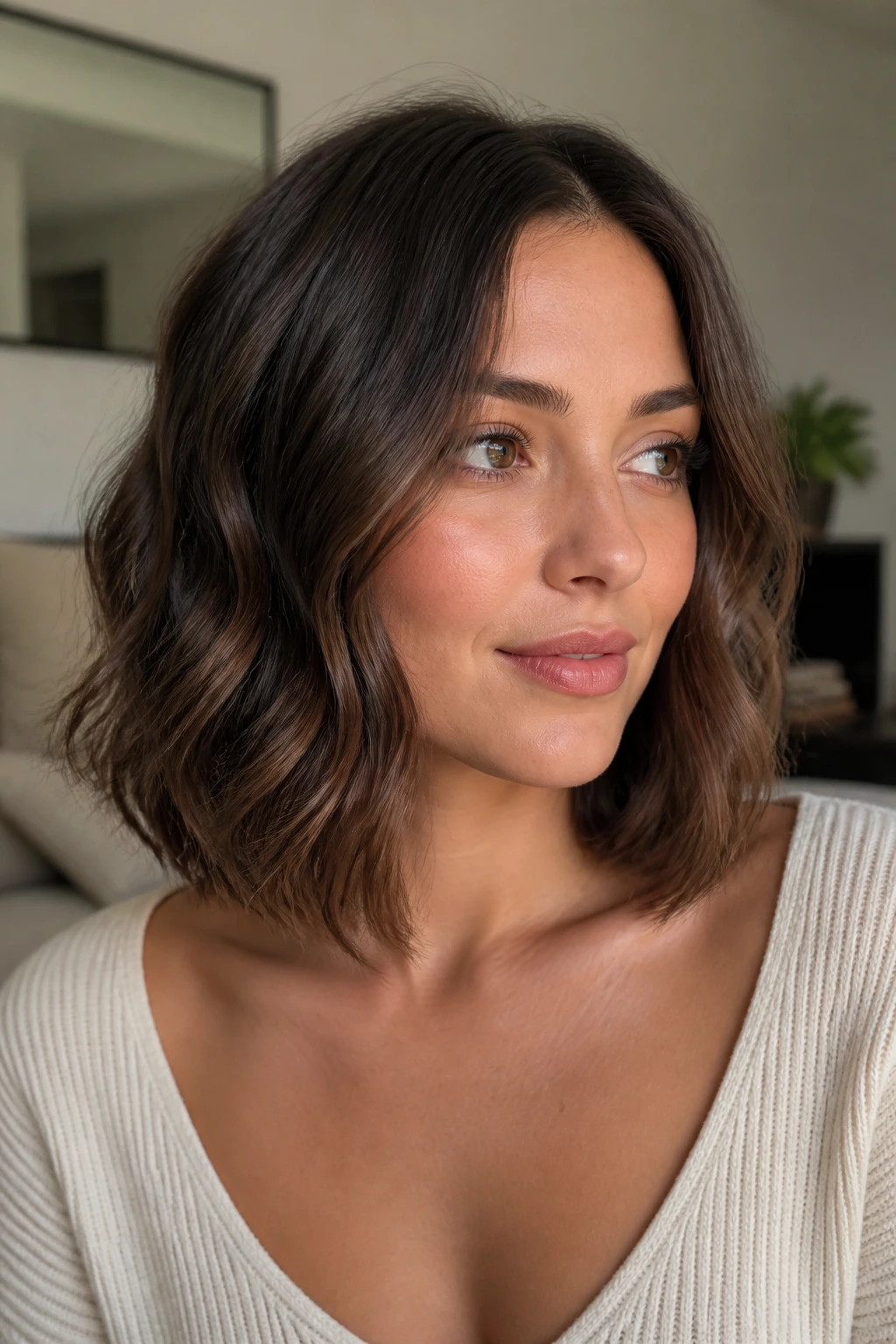
Why does a collarbone lob work so well on thick hair? Because it takes weight off the length without making the style short enough to puff out at the cheeks. The collarbone gives the hair a natural stopping point, and soft waves sit on top of that line instead of fighting it.
How to Wear It
Use a 1-inch iron for the bend, then brush it out with a paddle brush or wide-tooth comb. Thick hair can handle a bit of product here — a mousse at the roots and a tiny bit of cream through the mids keep the ends from looking dry.
The shortest face-framing piece should hit between the mouth and collarbone, not at the cheek. That one detail matters more than most people think. It keeps the eye moving down, which is exactly what a round face usually wants.
4. Soft Hollywood Waves
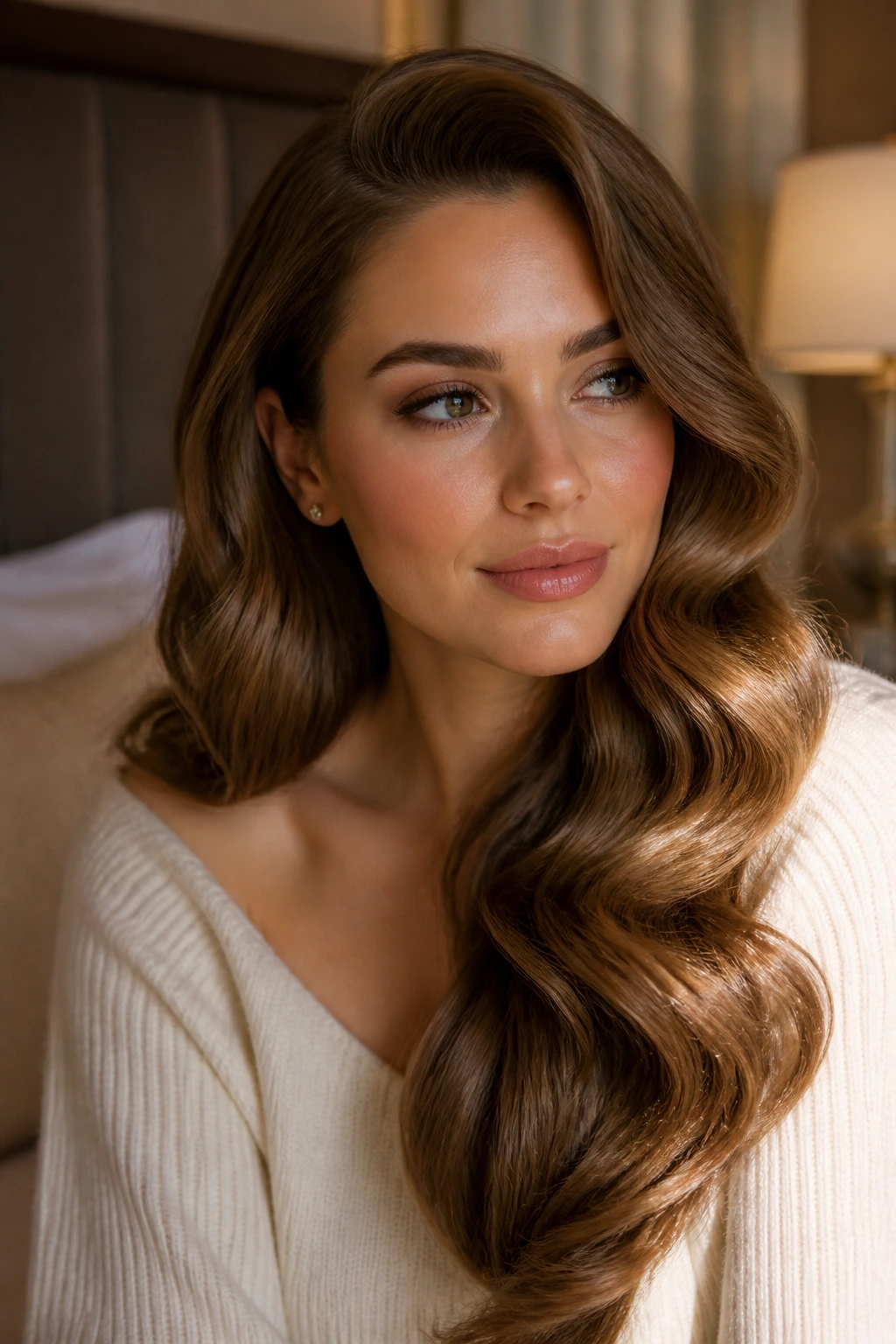
Soft Hollywood waves are the polished cousin in this group. They’re neat, glossy, and intentionally swept in one direction before being brushed into a uniform curve. On thick hair, that uniformity is useful because it stops the style from looking busy.
The side part matters here, too. A center part can work if the length is long enough, but a deep side part gives the wave line more movement and keeps the face from reading too circular. Set each section in the same direction, clip it to cool, then brush with a soft bristle brush.
Use a finishing spray with flexible hold, not a crunchy lacquer. These waves should move when you turn your head. If they don’t, they’ve gone too stiff, and stiff is the enemy of soft.
5. Air-Dried Mousse Waves
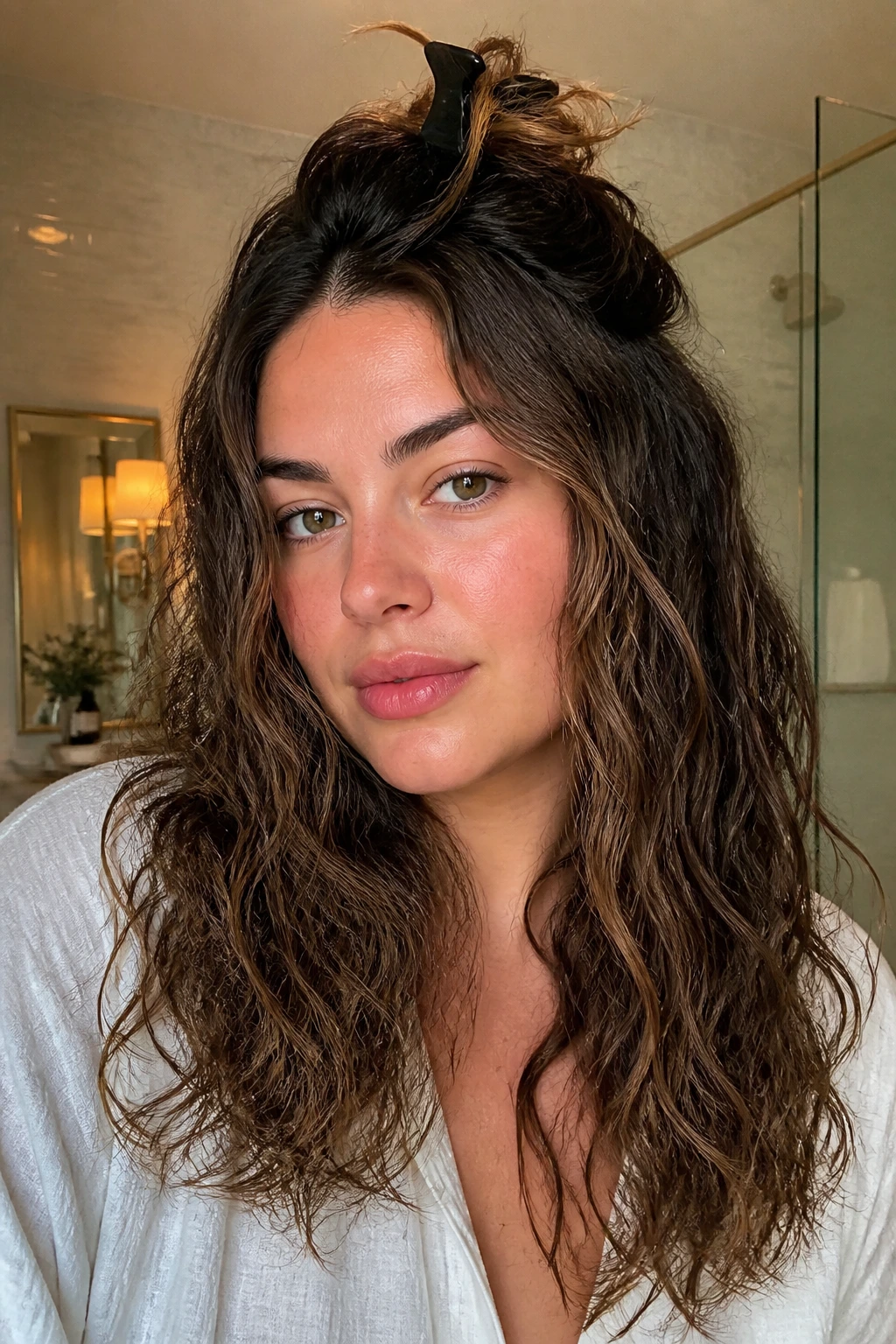
If your thick hair already has a little bend, this is the low-effort option that still looks intentional. A palmful of mousse, scrunched through damp hair, can bring out soft waves without making the style feel overworked or flat from too much heat.
The important part is section size. Twist 1- to 2-inch pieces away from the face, clip a few pieces at the crown, and let the hair dry without touching it every ten minutes. Thick hair usually needs more patience than fine hair here. Rush it, and you get frizz at the surface while the inside stays damp.
I like this on round faces because it keeps the wave pattern loose and vertical. The shape is less about curl and more about movement. That difference matters when your goal is to soften width, not pile up texture.
6. Brush-Out Waves
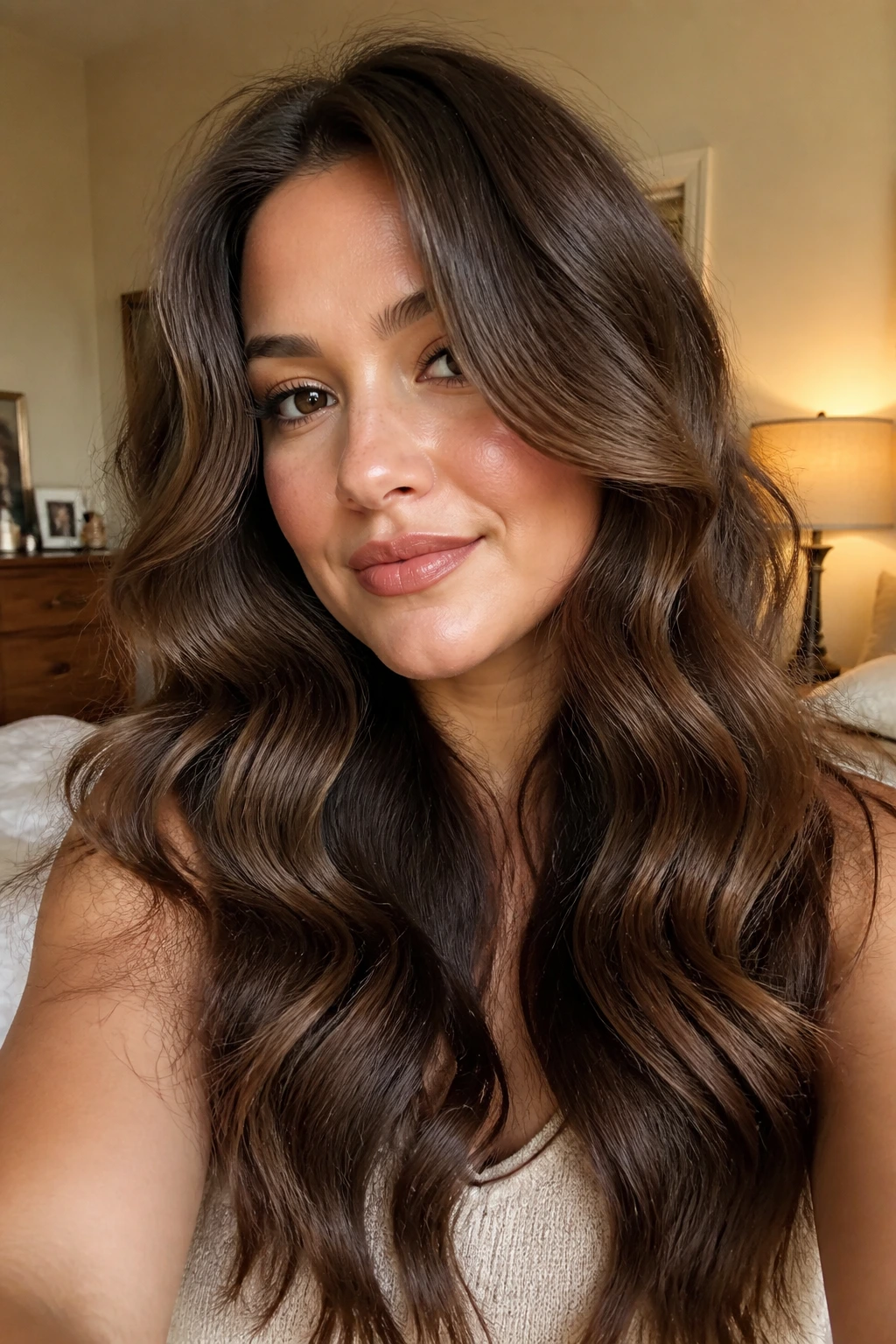
Brush-out waves are my favorite version when thick hair needs to look full but not bulky. You create a wave with a larger iron, let it cool completely, and then break it up with a paddle brush or boar-bristle brush until the curve is wide and soft.
That brushing step is the whole point. It makes the wave line longer and more relaxed, which plays nicely with round faces because it doesn’t stop and start too abruptly at the cheeks. The shape drifts.
What to Watch For
- Use a 1.25-inch barrel or larger so the bend stays open.
- Cool every section before brushing, or the wave will collapse.
- Add texture spray only at the mids and ends.
- Skip heavy oil near the roots; thick hair gets greasy fast there.
Best when: you want movement that still looks deliberate, not messy.
7. Curtain Bang Waves

Curtain bangs change the math. They create a vertical frame right at the face, which helps a round face look longer without needing heavy side volume. On thick hair, they also keep the front from feeling like one solid sheet.
The bang length matters. Short curtain bangs can bounce outward and widen the face, which is not the move here. Keep the shortest pieces around brow to cheekbone length, then let the wave begin below that point. That creates separation instead of a single round outline.
Styling Notes
Blow-dry the bangs with a medium round brush and a quick side-to-side motion at the root. Then wave the rest of the hair with a larger iron and finish with a light spray. The front should look soft and open, not curled into little horns at the temples.
8. Mermaid Waves on Mid-Length Hair
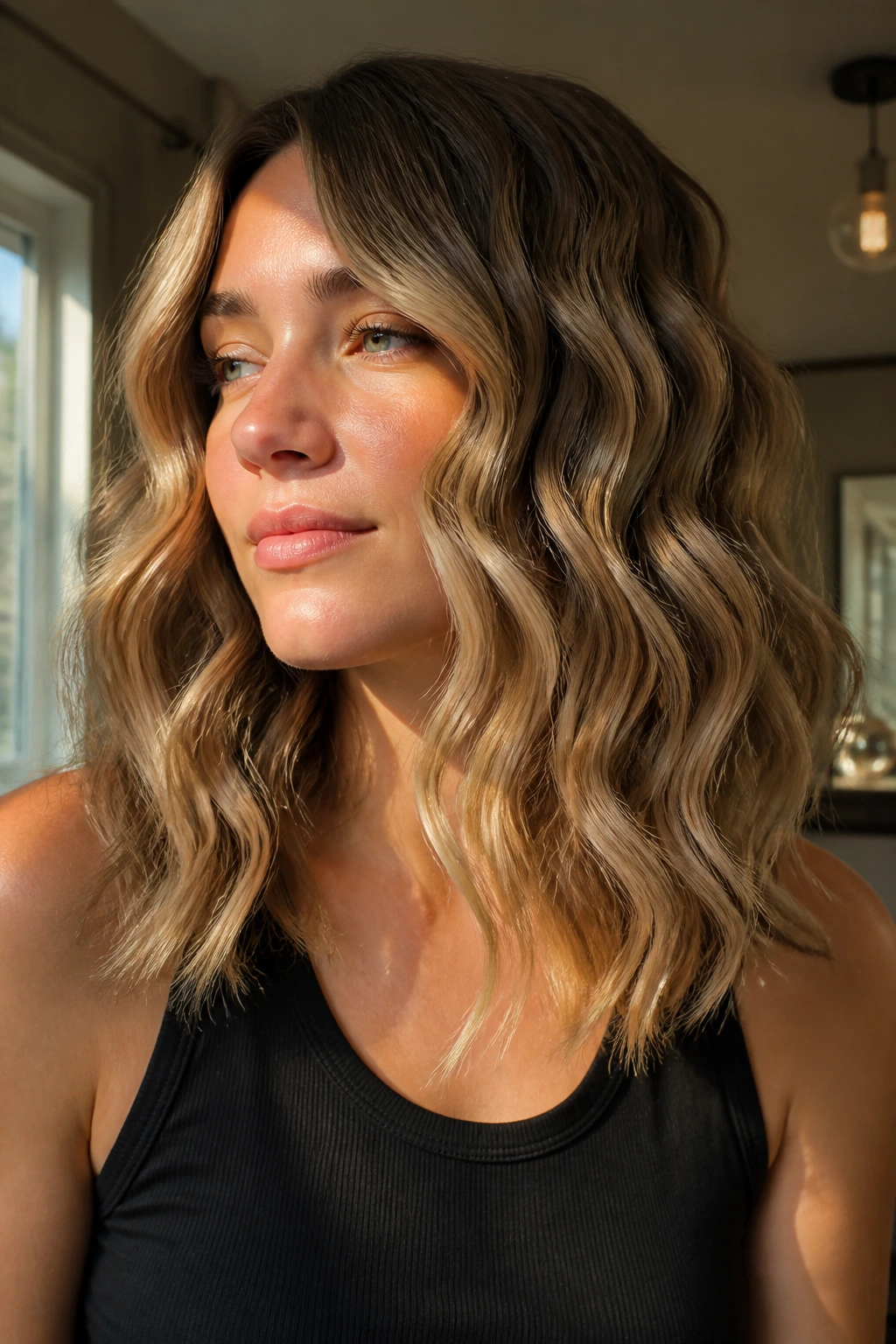
Mermaid waves sound dramatic, but on thick mid-length hair they can actually feel calmer than a normal curl pattern. The secret is the longer S-shape. It spreads the hair out visually instead of bunching it into tight loops.
This works especially well if your hair hits around the shoulders or just below them. Too short, and the wave can spring up. Too long, and the pattern can start to sag. Mid-length gives you a sweet spot where the bend reads clearly without eating up all the length.
Use alternating directions through the back, then keep the front pieces curled away from the face. That small shift makes the whole look feel more open around the cheeks. The result is soft, but not flimsy.
9. Soft S-Waves
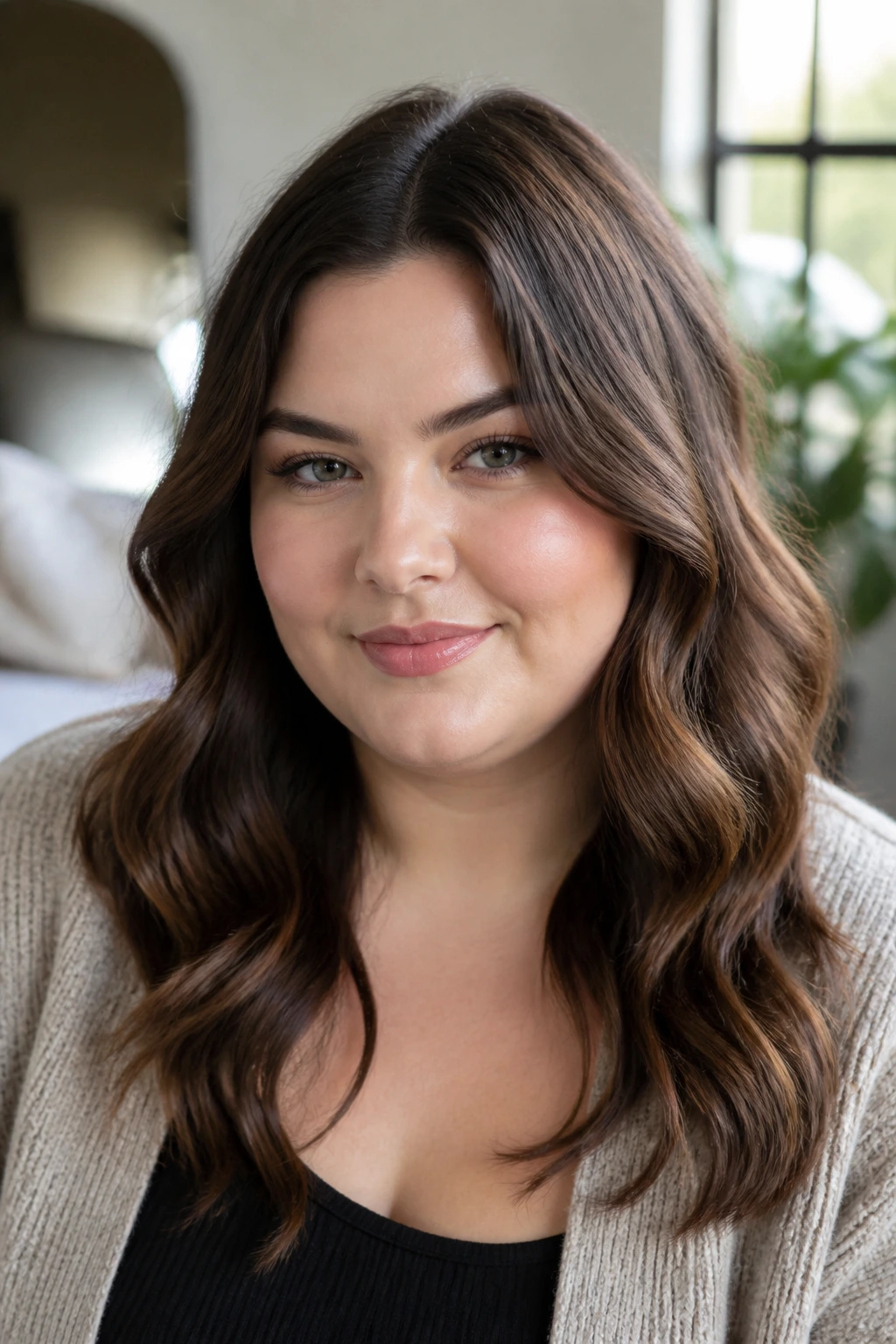
Soft S-waves are the answer when you want less curl and more line. They’re flatter against the head and usually start lower on the strand, which helps thick hair look sleek instead of puffy. On round faces, the S-shape adds length because the movement falls vertically.
How to Keep It Soft
Use a flat iron or a 1-inch curling iron and bend the hair in alternating directions, but only through the mid-lengths. Leave the roots smoother and the ends slightly loose. That keeps the wave from puffing out near the face.
A tiny amount of lightweight serum on the ends helps. Not much. Thick hair can absorb more product than fine hair, but too much still kills the shape and makes the wave collapse into a shiny sheet.
10. Root-Lift Waves
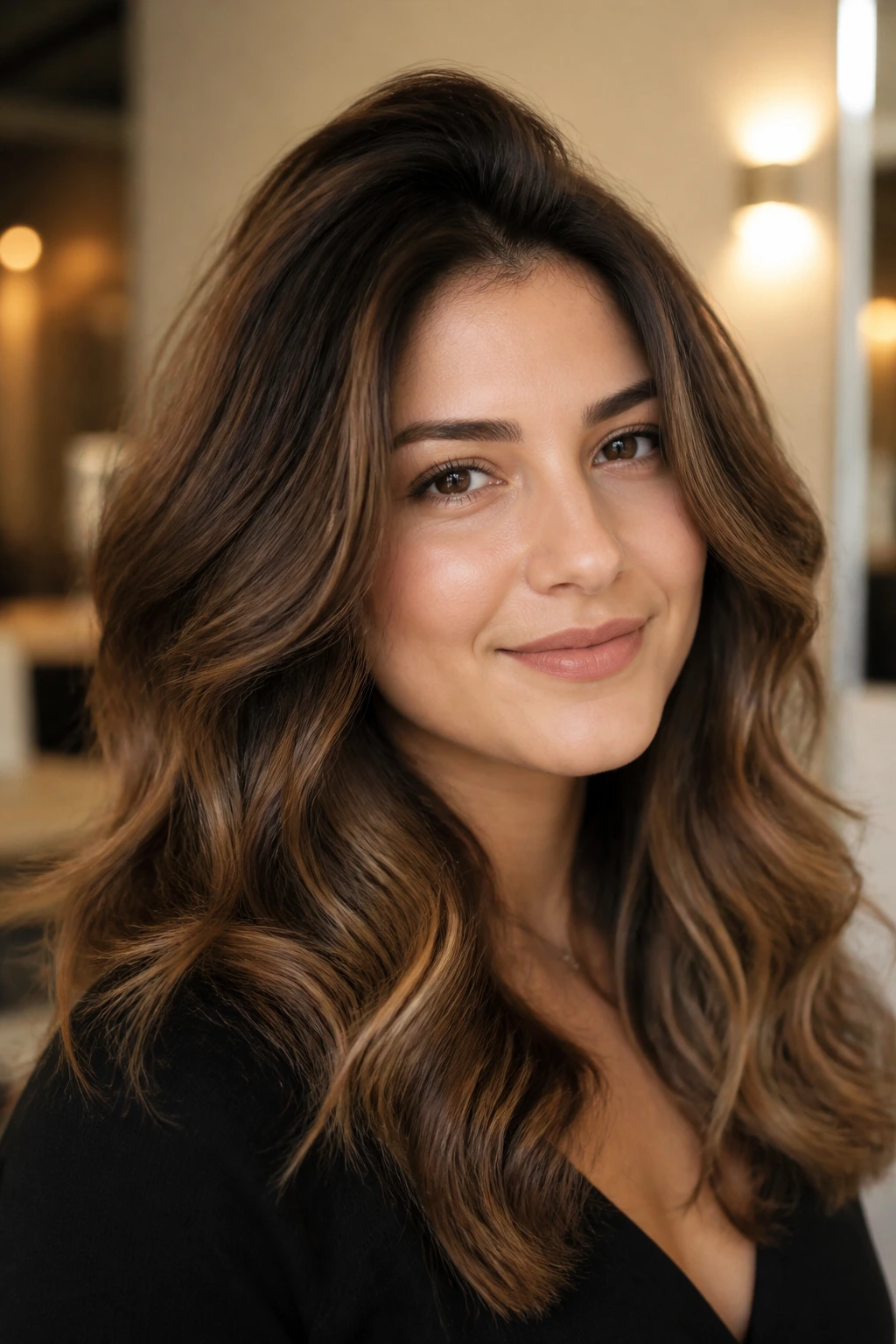
A little lift at the crown can change a round face more than a lot of curl ever will. Root-lift waves keep the sides soft while building height where the style needs it most, which is usually the top third of the head.
Use a volumizing mousse at the roots, then clip the crown while the hair cools. If you’re blow-drying, lift the hair straight up at the root with a nozzle and a round brush. Once the wave is set, don’t overbrush the crown. That’s where people accidentally flatten the shape and drag everything sideways.
This style is especially good if thick hair tends to expand outward at the temples. The extra height above the face gives the length a chance to do its job.
11. Flat-Iron Bends
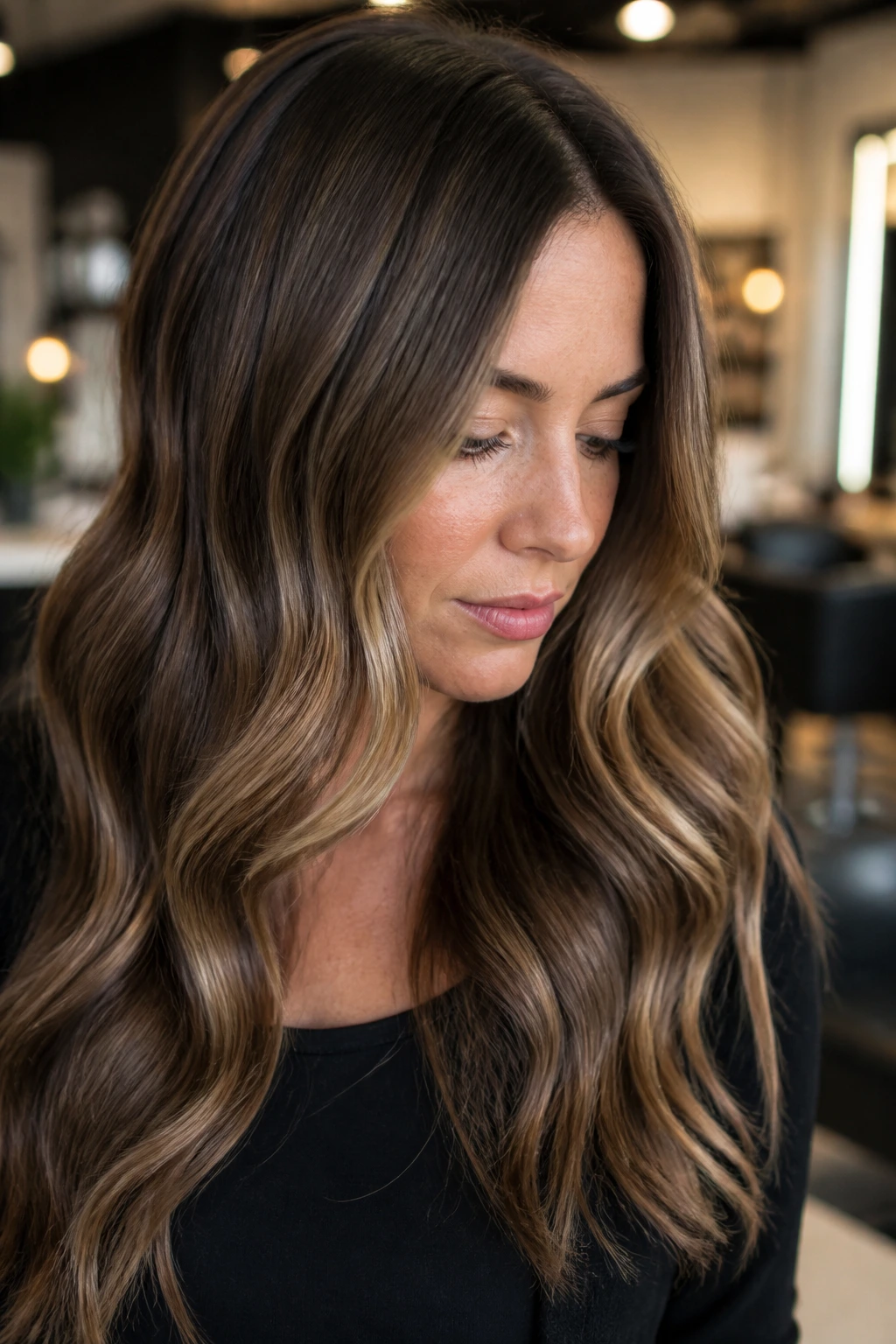
Flat-iron bends are fast, controlled, and better than they sound when your hair is thick. The straightener creates a wave that is smoother at the root and less bulky through the body, which can be a relief if curling irons make your hair feel too round.
The key is wrist control. Clamp, turn halfway, glide a few inches, then turn the other way. Don’t rush the movement. Thick hair needs a slower pass so the wave forms evenly and doesn’t get sharp kinks.
This look suits round faces because it stays elongated. The bends read as movement, not curl volume, which keeps the face from getting boxed in by a wall of hair.
12. Tousled Layered Waves
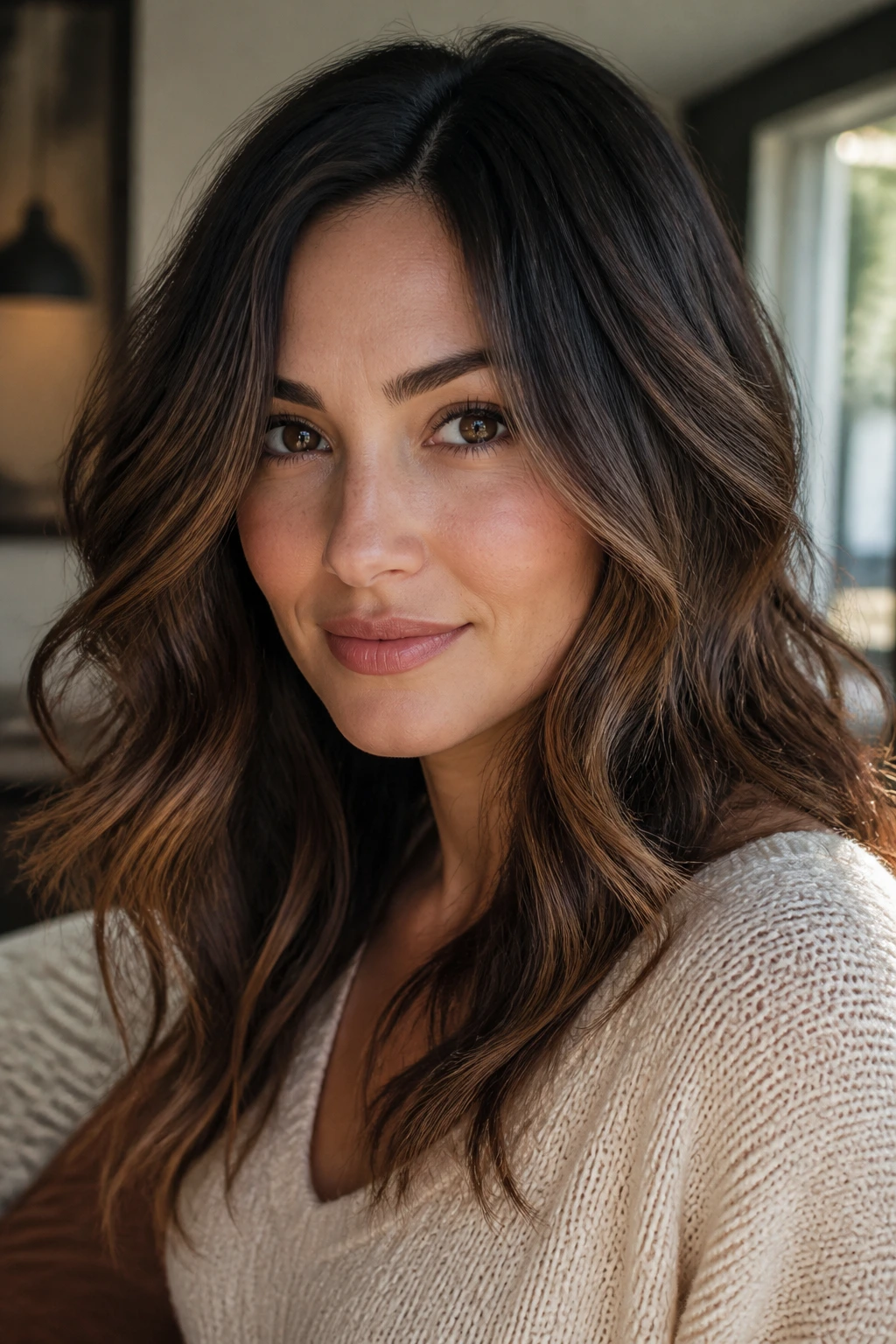
Tousled layered waves work when you want the hair to look lived-in without looking heavy. Layers take the edge off thick density, and the soft wave gives the cut a little bounce. The result feels lighter than the actual hair count.
A good layered wave has separation. Not frizz — separation. The pieces should move independently, especially around the face and through the ends. That’s why a texture spray at the mid-lengths is useful here. It gives the layers a bit of grip without making them sticky.
If your face is round, ask for layers that do not stop at the widest part of the cheek. Push them lower. Let the movement happen from the mouth line downward, and the whole style reads longer.
13. Half-Up Waves
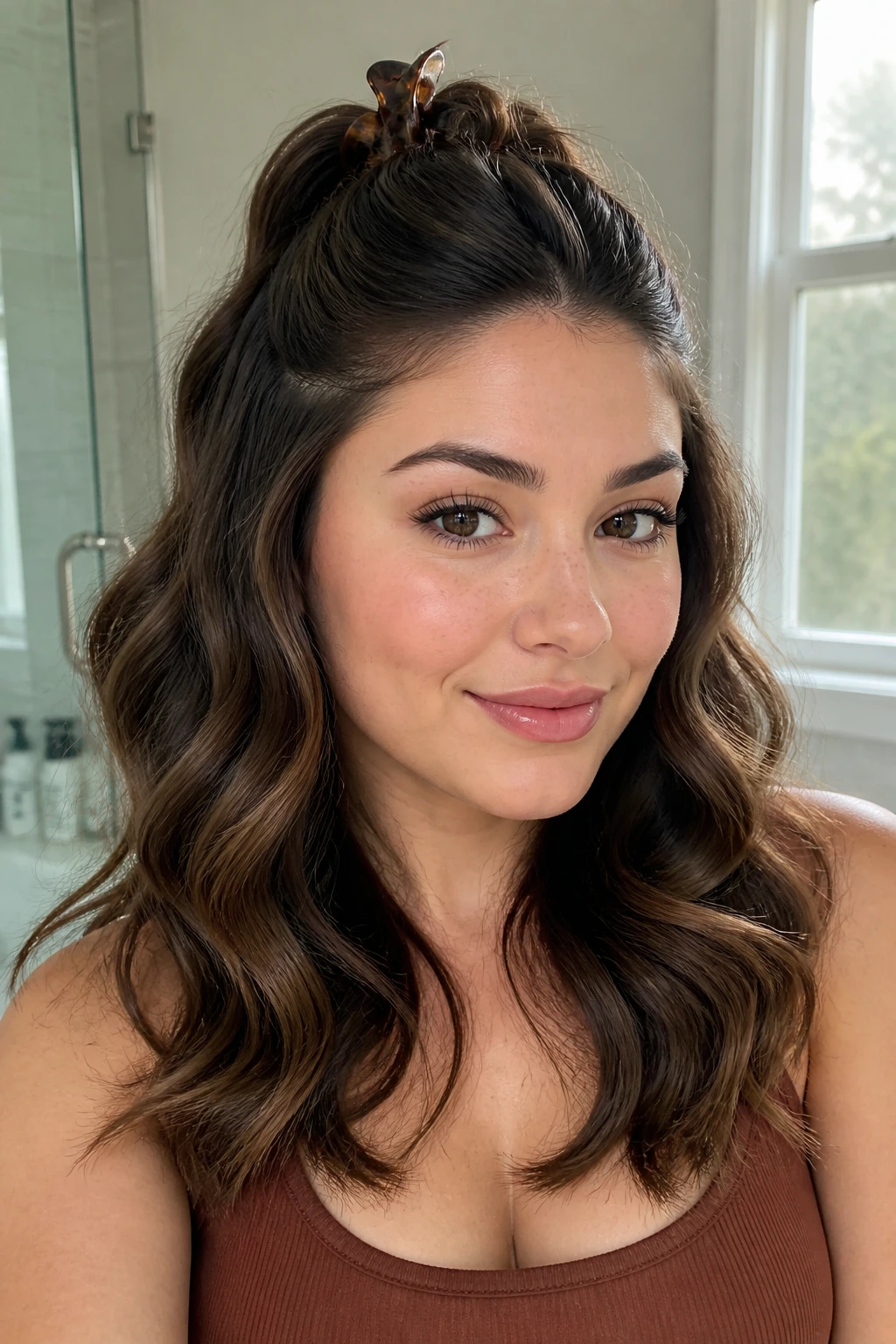
Half-up waves are a smart move when thick hair needs a little control at the crown. Pulling the top section back opens the face, shows the cheekbones, and keeps the wave pattern from feeling too wide near the temples.
Styling Notes
Use a small claw clip or a hidden elastic, then let the lower half stay loose and waved. The contrast between the pinned top and soft bottom half creates a vertical line, which round faces tend to wear well.
This is also one of the few styles that can make very dense hair feel lighter without losing the texture people want to see. The top is tidy. The bottom keeps the movement. Nice and clean.
14. Side-Tucked Glam Waves
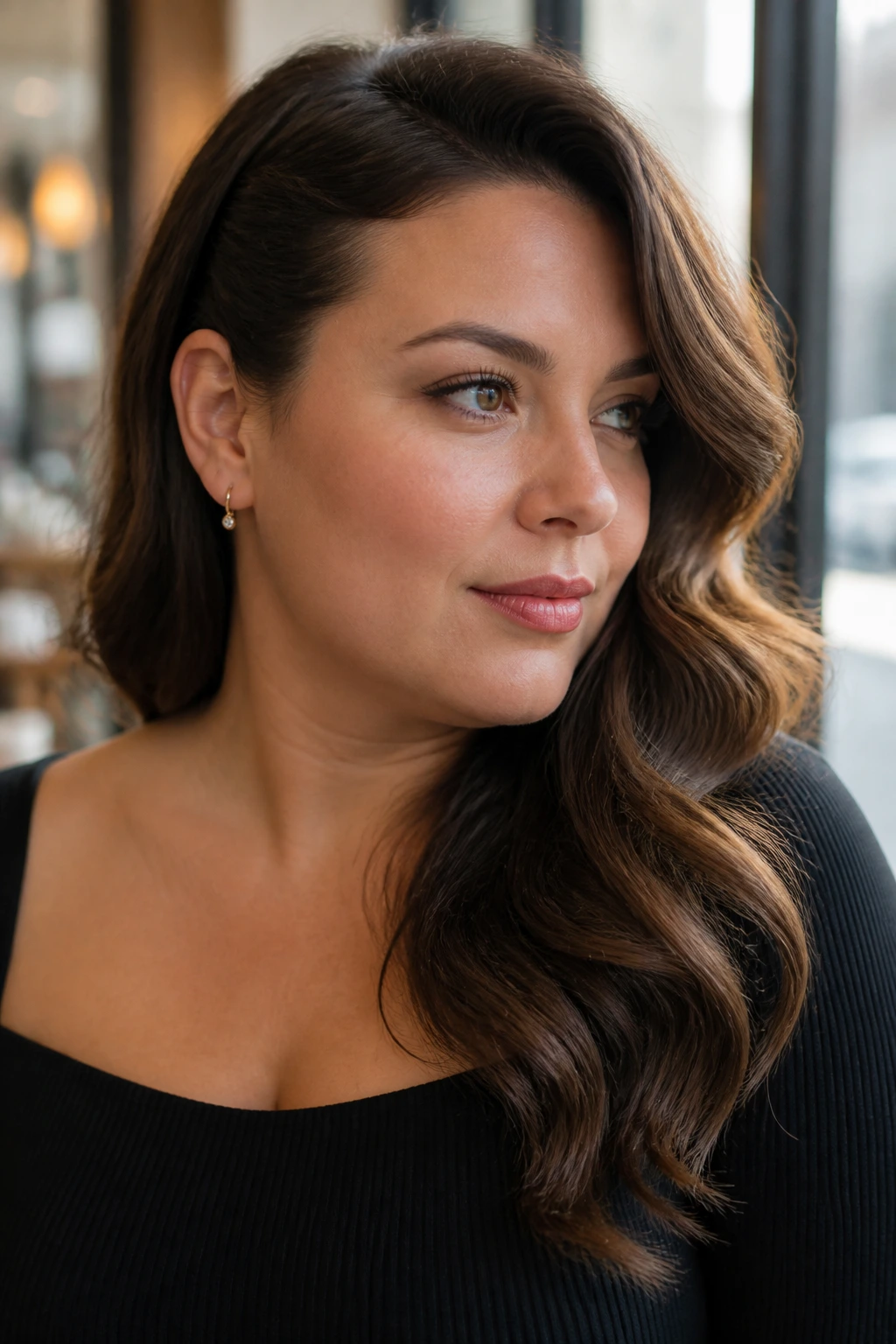
A side tuck is one of those small styling moves that does more than it looks like it should. Tucking one side behind the ear exposes one jawline, which makes the face read less even and therefore less round. That asymmetry is doing real work.
This version looks especially good when the front wave is brushed soft and the tucked side sits close to the head. Add an earring if you want, but the hair itself already creates the shape. Keep the wave loose through the cheek area and fuller below the chin.
Thick hair holds this style well because it has enough body to stay tucked without going limp. Use a flat clip or a strong pin if the hair is slippery. Otherwise it drifts.
15. Blunt-Cut Waves
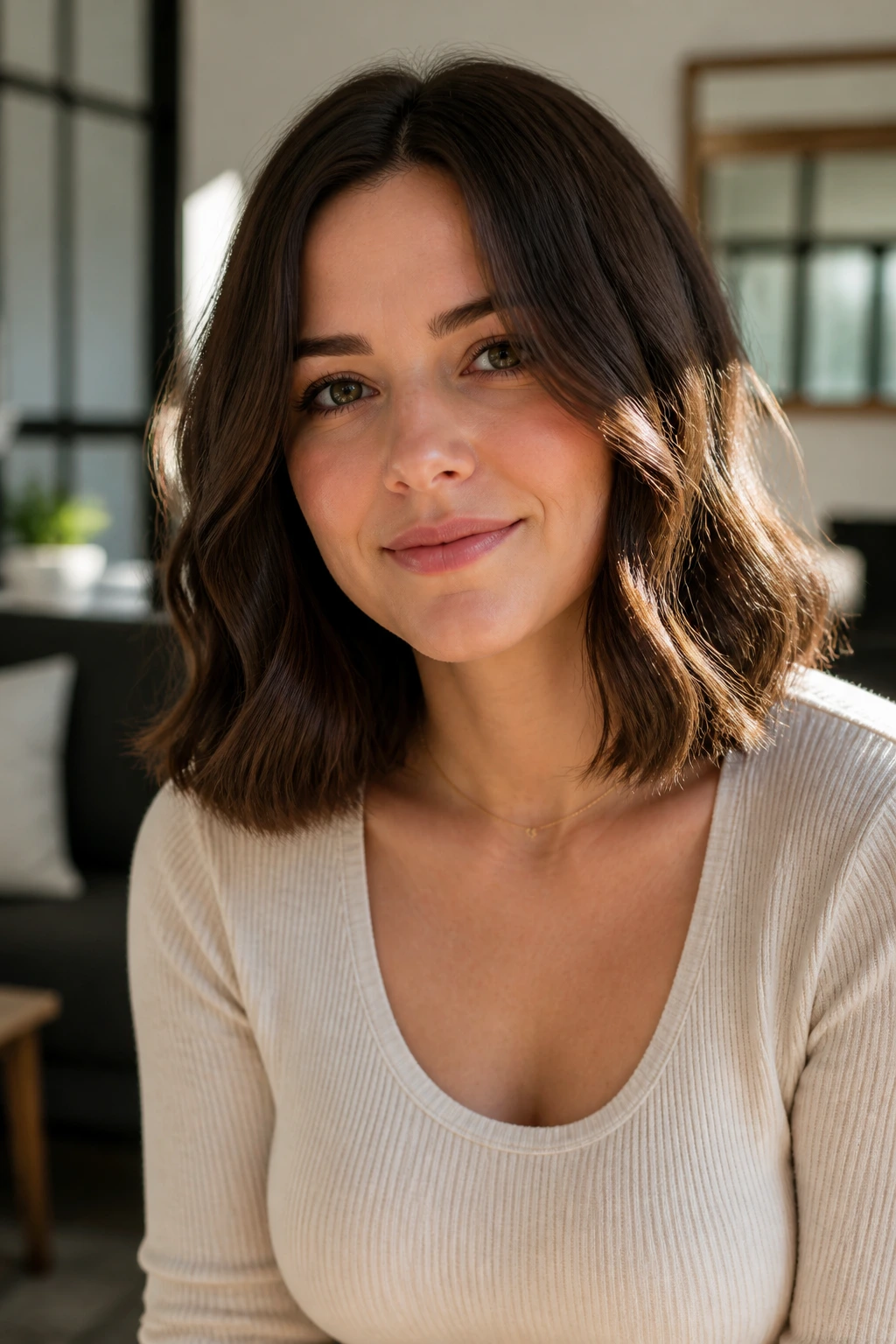
A blunt cut with soft waves sounds contradictory, but that’s exactly why it works. Thick hair often benefits from a strong edge, and the wave keeps that edge from looking boxy or severe. You get weight, but not a triangle.
The danger is width. If the blunt cut sits exactly at cheek level, it can widen the face fast. So keep the length a little longer — collarbone to upper chest is safer — and let the wave start lower than the cheeks. The blunt ends will still look full, just not bulky.
I prefer this with a center or soft off-center part. A deep side part can fight the crisp cut line. The result should feel clean, not aggressive.
16. Crown-Volume Waves
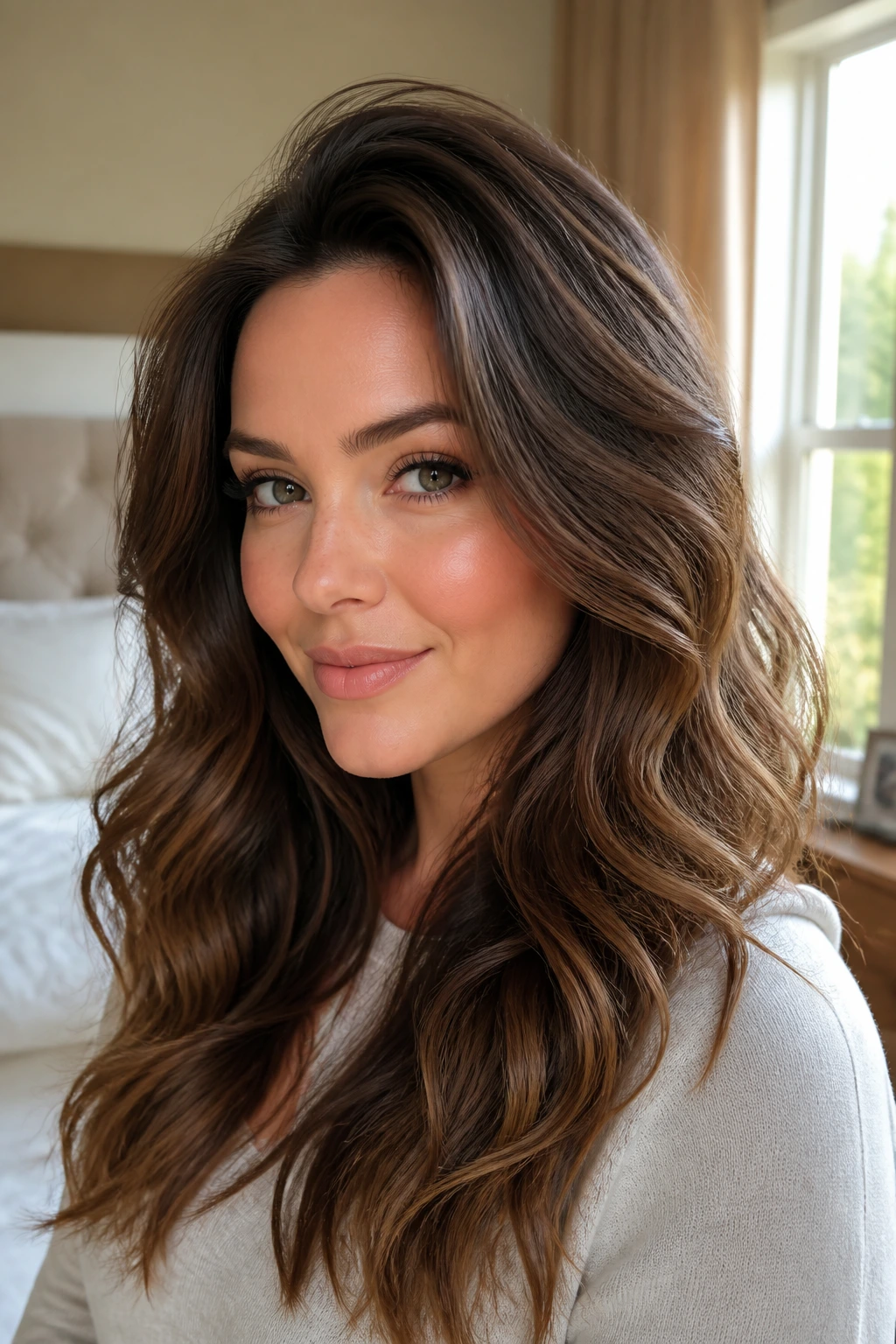
Crown-volume waves are for the days when the sides of thick hair need to stay calm. You build lift at the top, smooth the sides, and let the wave fall in a long, easy line. That combo can make a round face look noticeably longer.
Clip the top section at the roots while the hair cools, or roll it loosely under a Velcro roller. Then wave the lower sections with a larger barrel and brush them out just enough to soften the shape. The crown should rise; the sides should fall.
A lot of people add volume everywhere and wonder why the face looks wider. Everywhere is the problem. Put it at the top instead.
17. A-Line Lob Waves
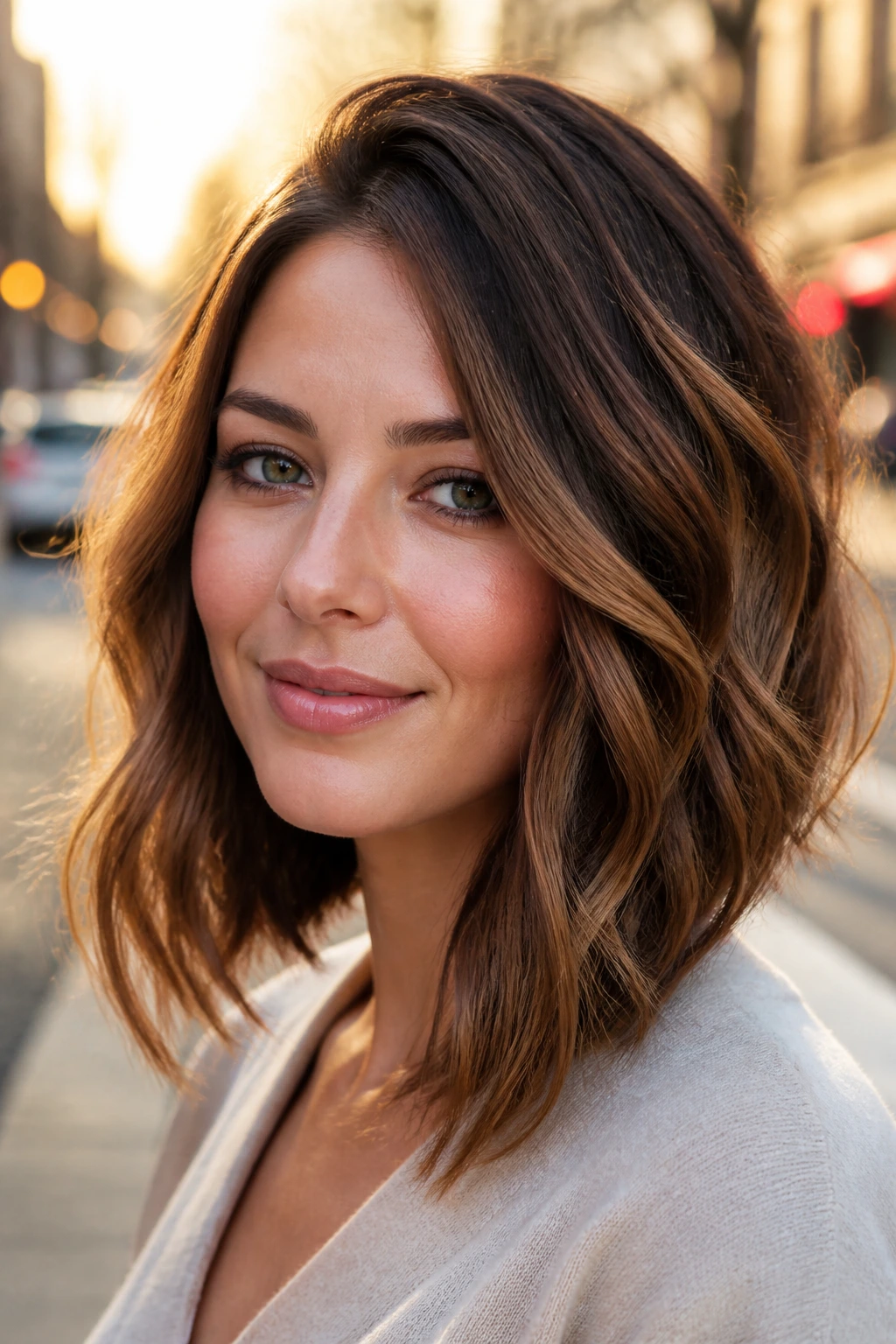
An A-line lob is longer in the front and a bit shorter in the back, which is a very useful shape for round faces. It creates a natural diagonal line, and diagonal lines do the face-lengthening work for you without shouting about it.
The wave should follow the cut, not fight it. Keep the front bends softer and longer, and don’t overcurl the back. Thick hair often tries to stack at the nape in an A-line cut; loose waves stop that from feeling heavy.
This is one of my favorite salon asks if you want movement with some structure. It looks intentional even when it’s relaxed.
18. Flipped-End Waves
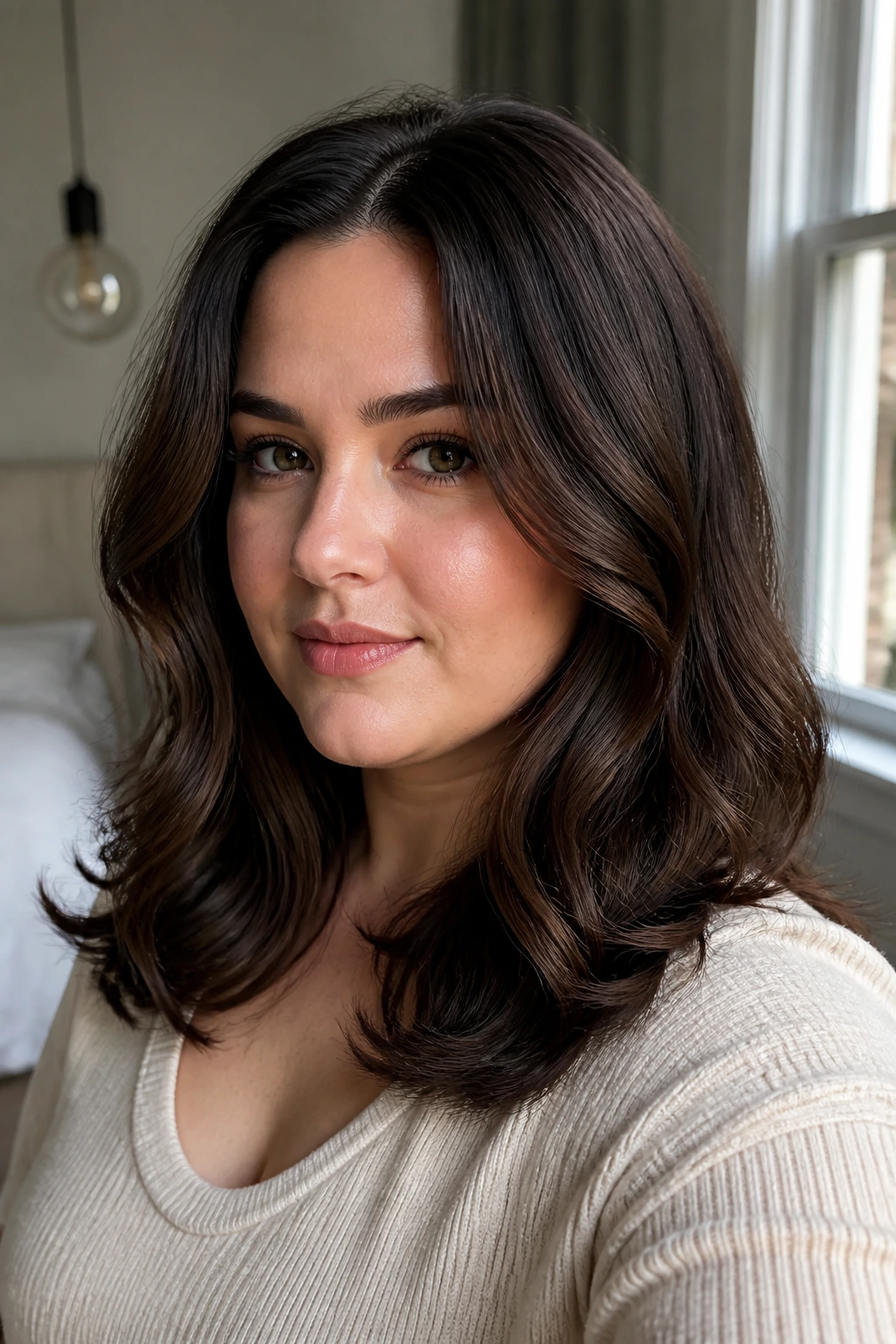
Flipped-end waves bring a little old-school movement without going full retro set. The ends turn slightly outward, which keeps the style from curling inward toward the cheeks. That matters on a round face because inward bends can make the face feel more circular.
Use a round brush or a flat iron to flick the last inch of the hair away from the face. Keep the rest of the wave soft and loose. You want a whisper of flip, not a hard kick at the bottom.
This style is nice on thick hair because the ends keep some lightness. The weight stays in the middle of the strand, where it helps the wave hold shape.
19. Formal Soft Waves
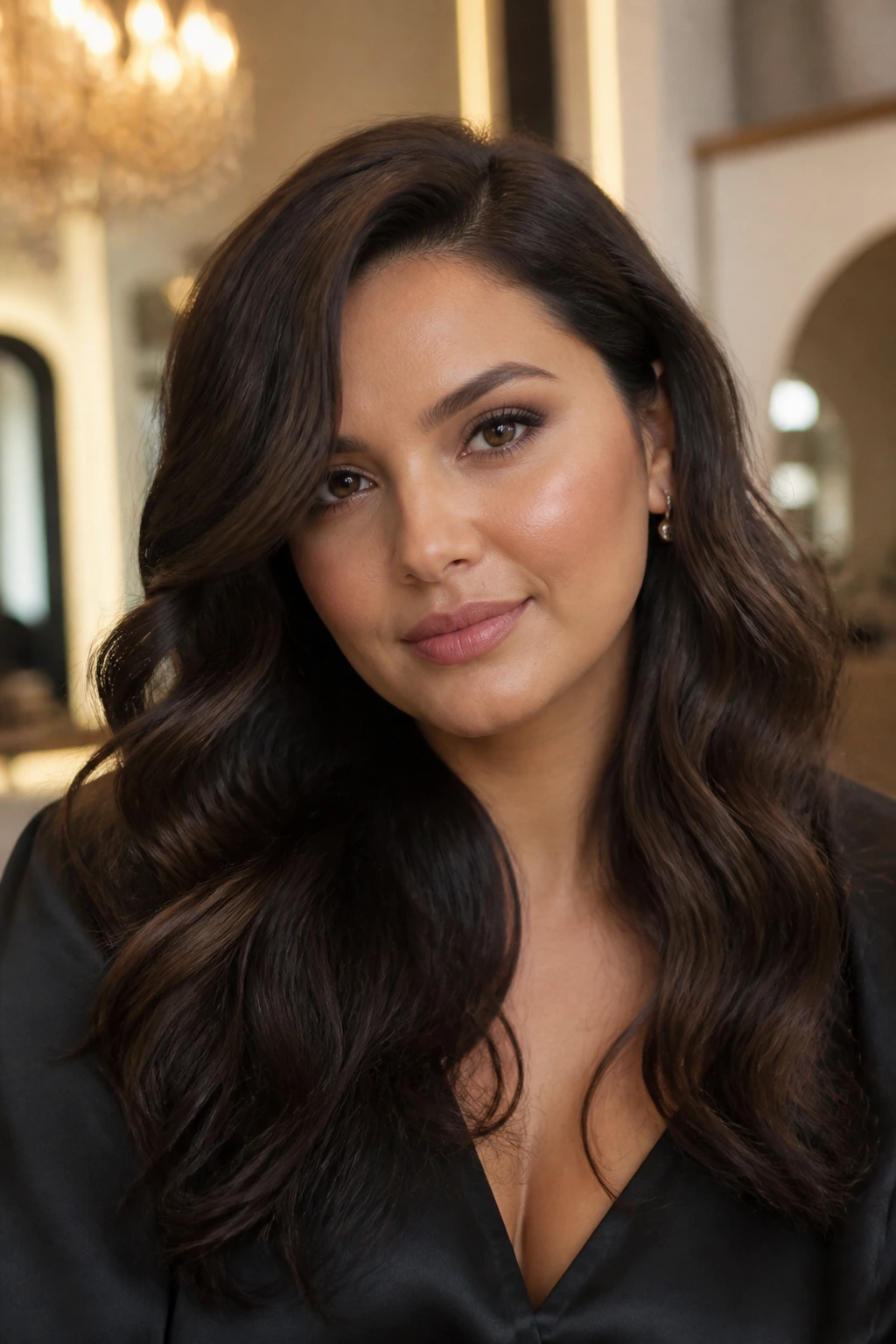
Formal soft waves are the polished option when you want the hair to lie smooth but still move. They’re brushed, controlled, and usually set with a side part or an elegant off-center part that breaks up facial roundness.
The finish is the tell. Use a shine spray very lightly over the surface and a flexible spray underneath for hold. Thick hair can take this beautifully, but too much product makes the wave heavy and sticky. That ruins the clean line.
For round faces, keep one side slightly fuller than the other. A perfectly symmetrical formal wave can read too circular. A slight shift fixes that.
20. Matte Beach Waves
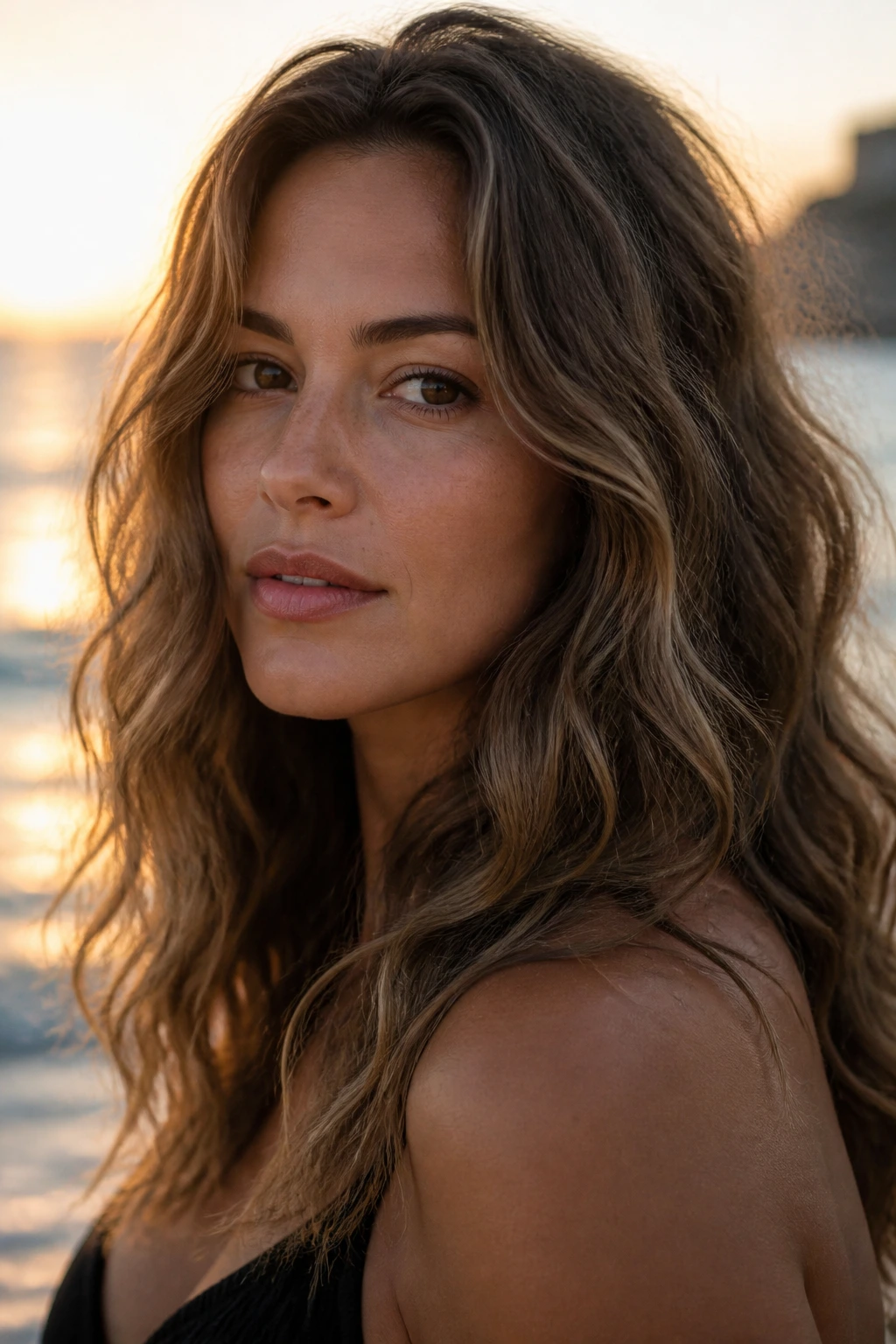
Matte beach waves are looser and drier in finish than polished waves, which makes them a good option when thick hair gets too shiny and heavy-looking. The texture spray gives the hair some grip, and the softer finish helps the wave sit away from the cheeks instead of clinging to them.
The best version here is not choppy. It’s airy. The wave should move, not frizz. Start with a salt-free texturizer or a dry texture spray and use it mostly at the mid-lengths. The roots can stay smoother.
H3: How to Keep Them Balanced
If the wave starts to puff, you’ve gone too high or too small with the barrel. Keep the bend lower and wider. Round faces do better when the widest part of the style sits below the jaw, not across the cheeks.
21. V-Cut Layers and Waves
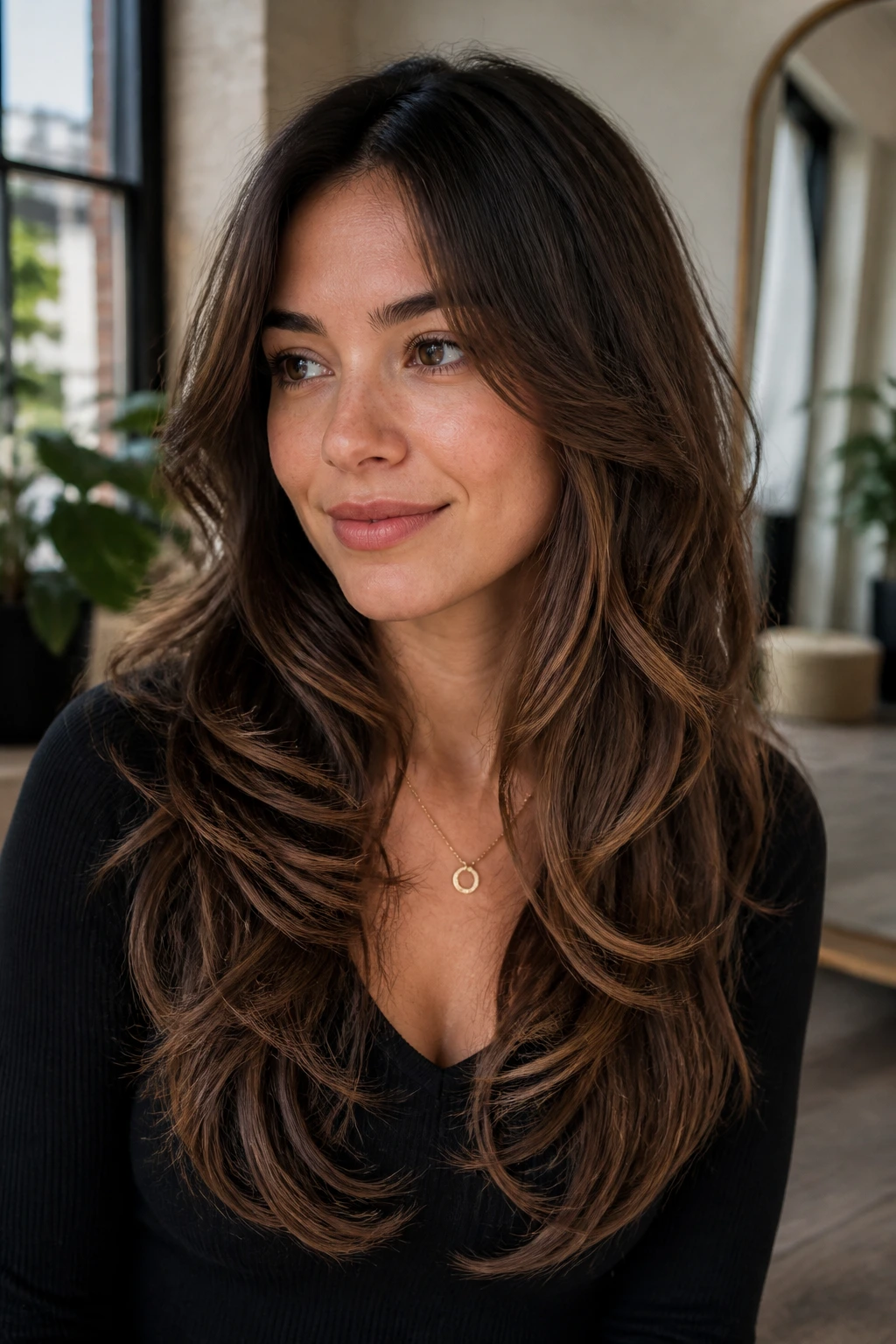
V-cut layers remove weight from thick hair in a way that still keeps the length looking rich. The back falls into a soft point, and waves move down the shape instead of stopping in a blunt line. It’s a strong choice if your hair feels heavy but you don’t want a lot of visible choppiness.
The V shape is especially useful on round faces because it creates a downward visual line. The eye follows the length. That’s what you want.
Keep the front layers longer and softer so the cut doesn’t turn into a dramatic wedge. A loose bend and a little brush-through are enough. No need to fuss.
22. Blowout Waves
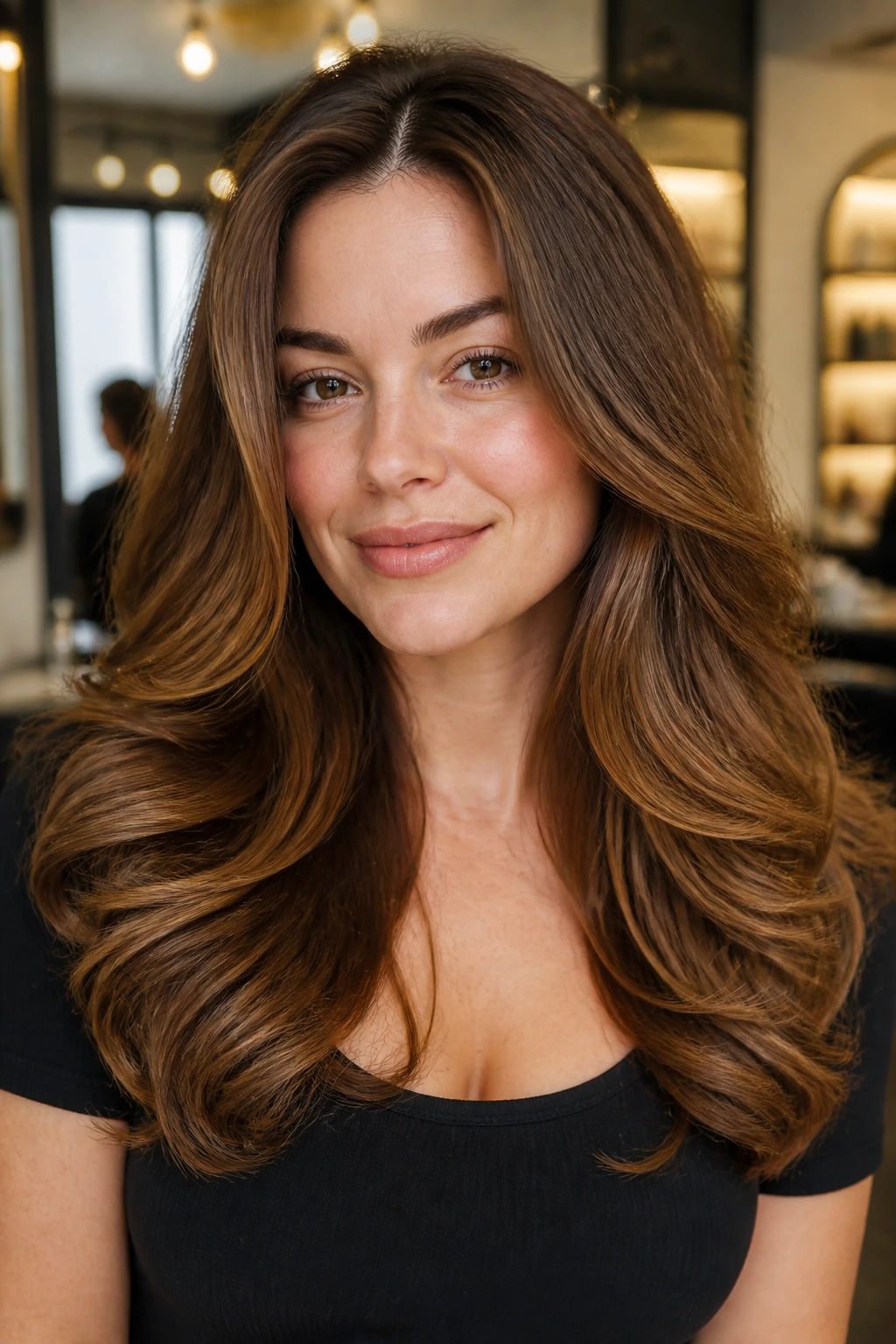
Blowout waves give thick hair that smooth-root, bouncy-end look that sits somewhere between a salon blow-dry and a soft wave. A round brush does the work at the root, and a larger iron or brush-set motion finishes the curve through the ends.
This style shines when you want movement without texture spray. The hair stays touchable, and the wave has a bit of lift without getting fuzzy. On a round face, the smooth root keeps the top from widening, while the softer end shape adds length.
Work in sections no wider than the brush. Thick hair punishes sloppy sectioning. It always does.
23. Jumbo Roller Waves
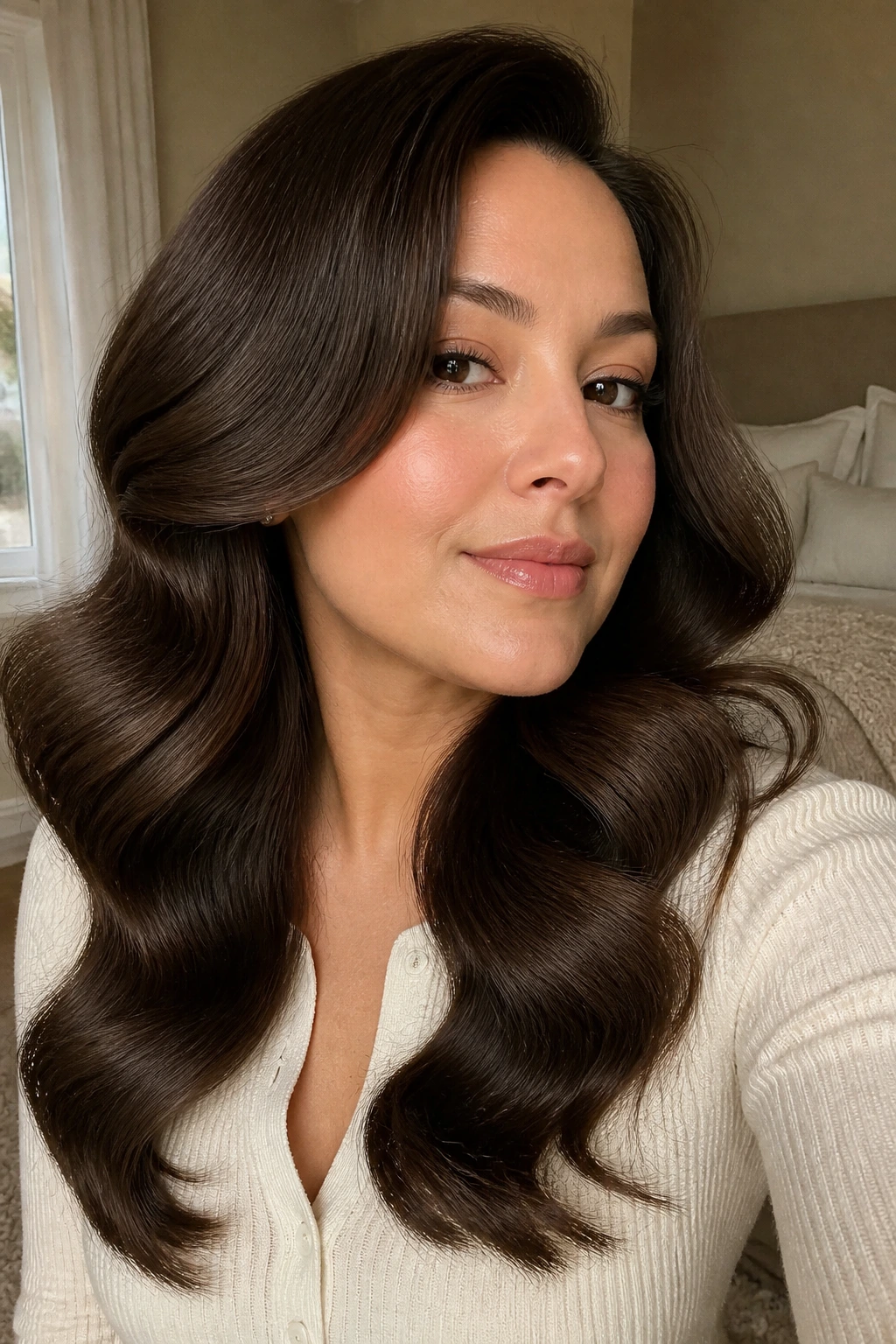
Jumbo roller waves are old-fashioned in the best way. Big rollers create a broad bend, which thick hair can hold without springing into a tight curl. The result is soft, clean volume that doesn’t explode at the cheeks.
Set the rollers away from the face, especially at the front. Let the hair cool completely before removing them. That cooling time is not optional. Warm hair drops too fast, and thick hair loves to take the path of least resistance.
This look is especially good when you want polished movement without heat damage from repeated curling. One good set can do a lot of work.
24. Wavy Shag
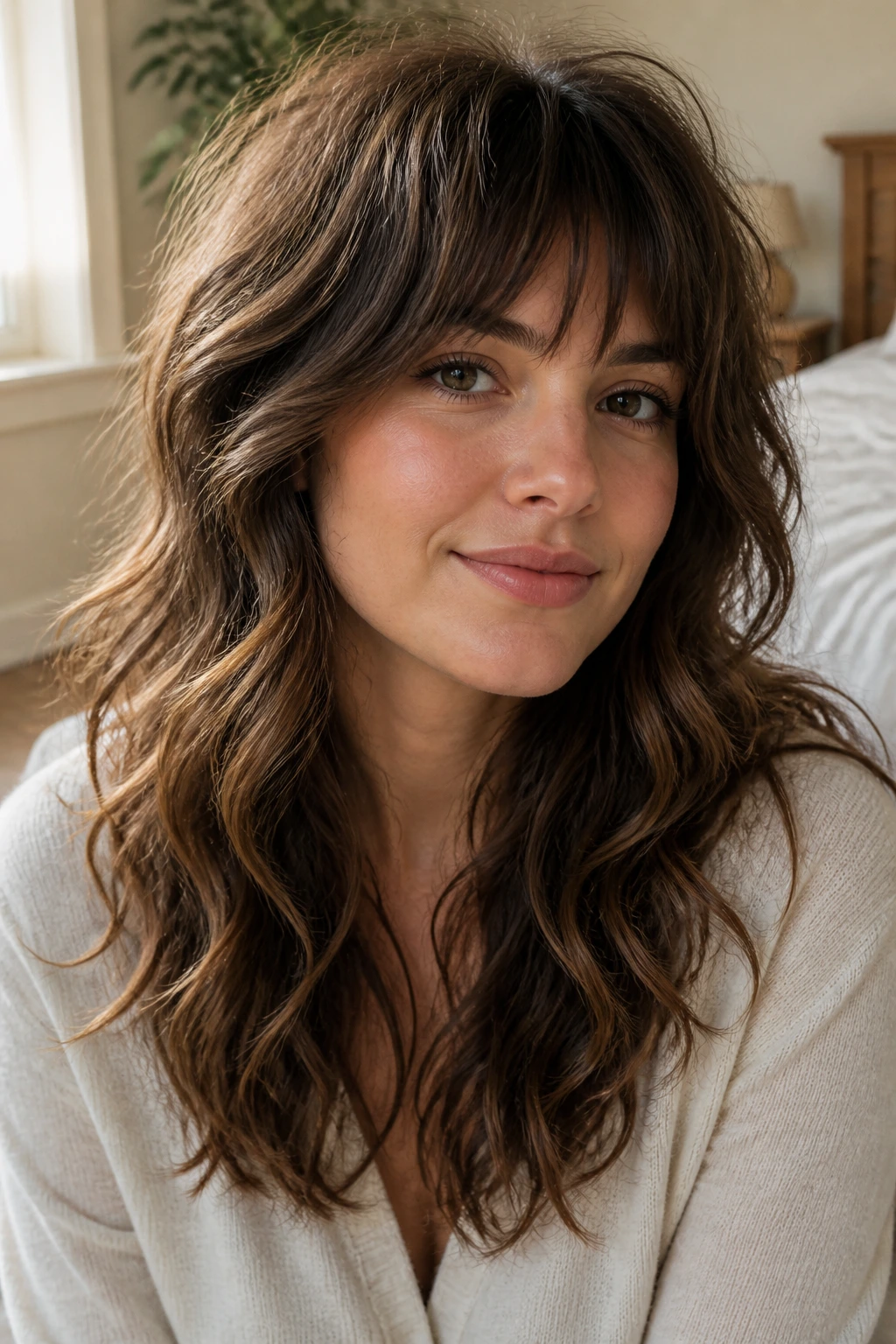
A wavy shag is a little edgier, but it can still read soft when the layers are kept long enough and the fringe stays controlled. The point here is movement, not chaos. Thick hair gets some much-needed release through the layers, and the wave stops the cut from looking too chopped up.
Round faces need restraint in the fringe area. Keep the shortest pieces longer, or let the bangs break open at the center like a soft curtain. Too much width at the cheek can make the shag feel boxy, and boxy is not the goal.
A diffuser and a small amount of mousse can bring this to life without overthinking it.
25. Sleek-Root, Airy-Length Waves
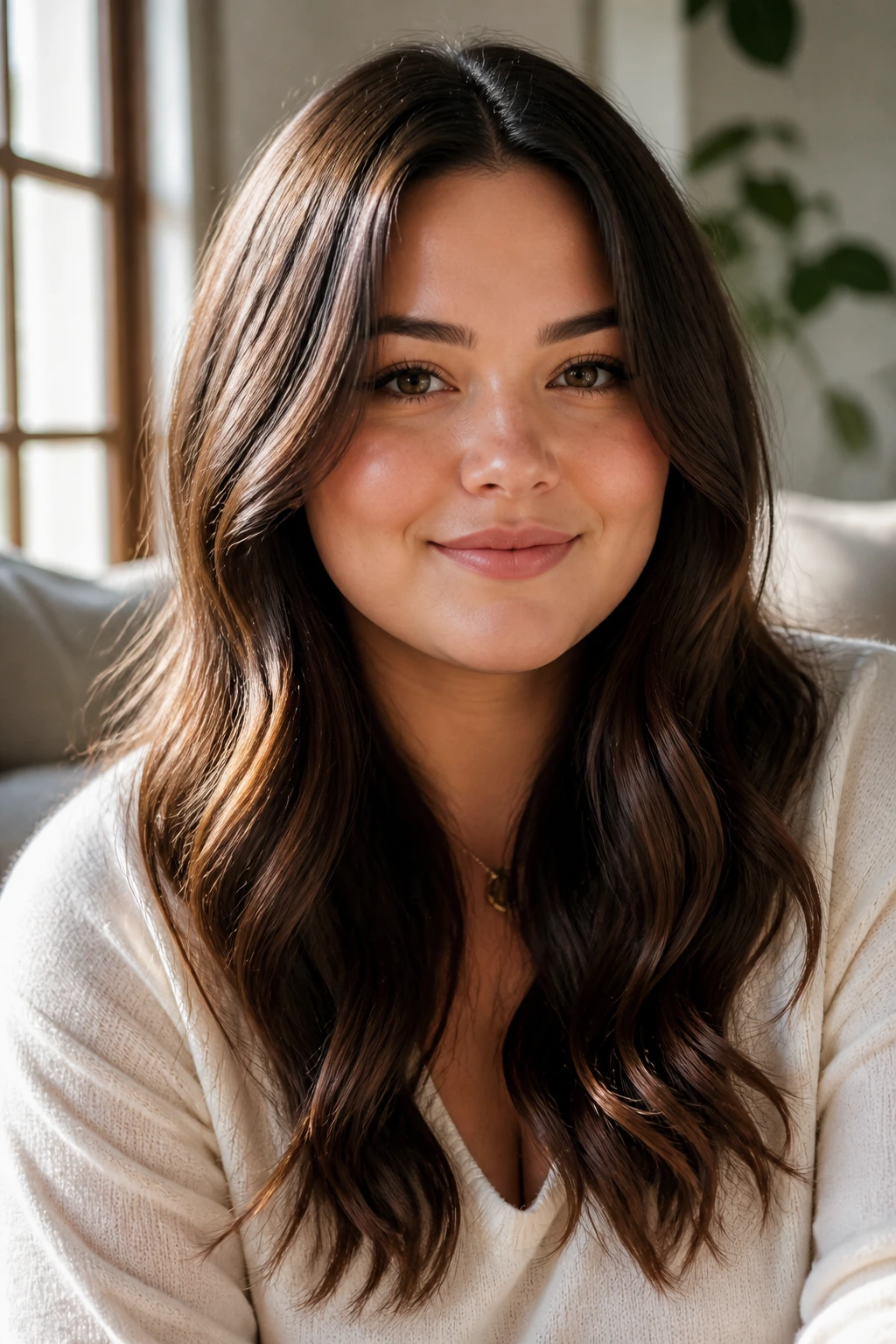
Sleek-root, airy-length waves are the cleanest finish when you want thick hair to look controlled from the top and soft through the ends. The roots lie flat, the mids stay smooth, and the wave opens up only where it helps the face.
That shape is especially kind to round faces because it keeps the bulk out of the temples. The eye sees length first. Then it sees movement. That order matters.
If I had to pick one rule for this style, it would be this: do not rough up the crown. Leave it smooth, give the wave room below the jaw, and let the ends do the talking.
Why Thick Hair Needs a Different Wave Strategy
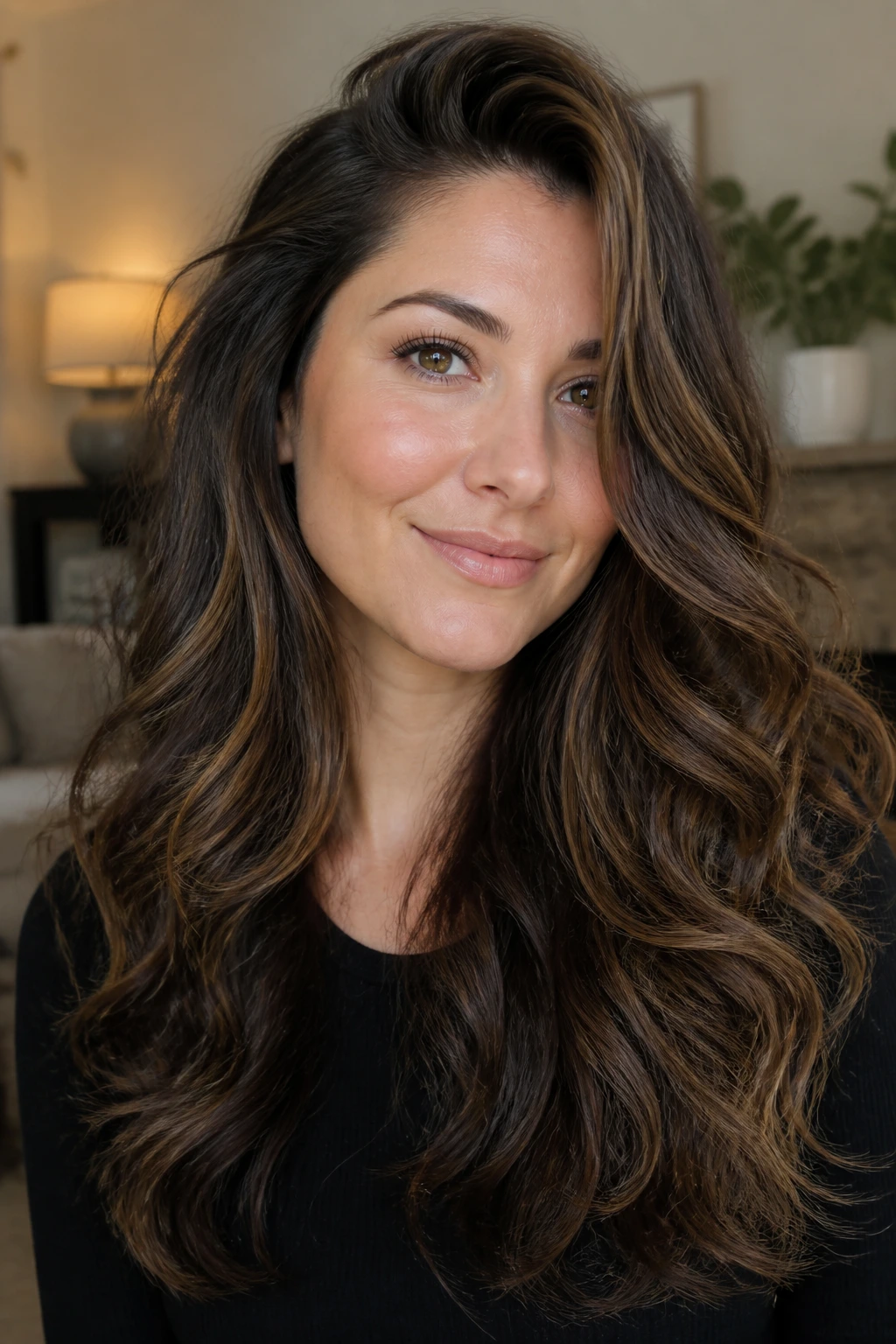
Thick hair can hold a wave all day, but it can also turn a good idea into a triangle if the shape is too wide or too short. That’s why the best styling choices are less about “more volume” and more about where the volume lives. Put it at the crown, through the lower lengths, or in one side of the part. Leave the cheek area quieter.
Round faces need the same kind of restraint. The soft curve of the face is not a flaw; it just asks for a different map. Long lines, low bends, and off-center movement usually do more than a lot of curling ever will. If a style makes the hair sit exactly at cheek level, I’d look for a longer version. If a style adds height at the top and looseness below, that’s usually the right lane.
The good news is thick hair is forgiving once you give it the right shape. It holds a set, it takes brushing well, and it can carry polish without looking limp. The work is in the setup.
Essential Tools for These Looks
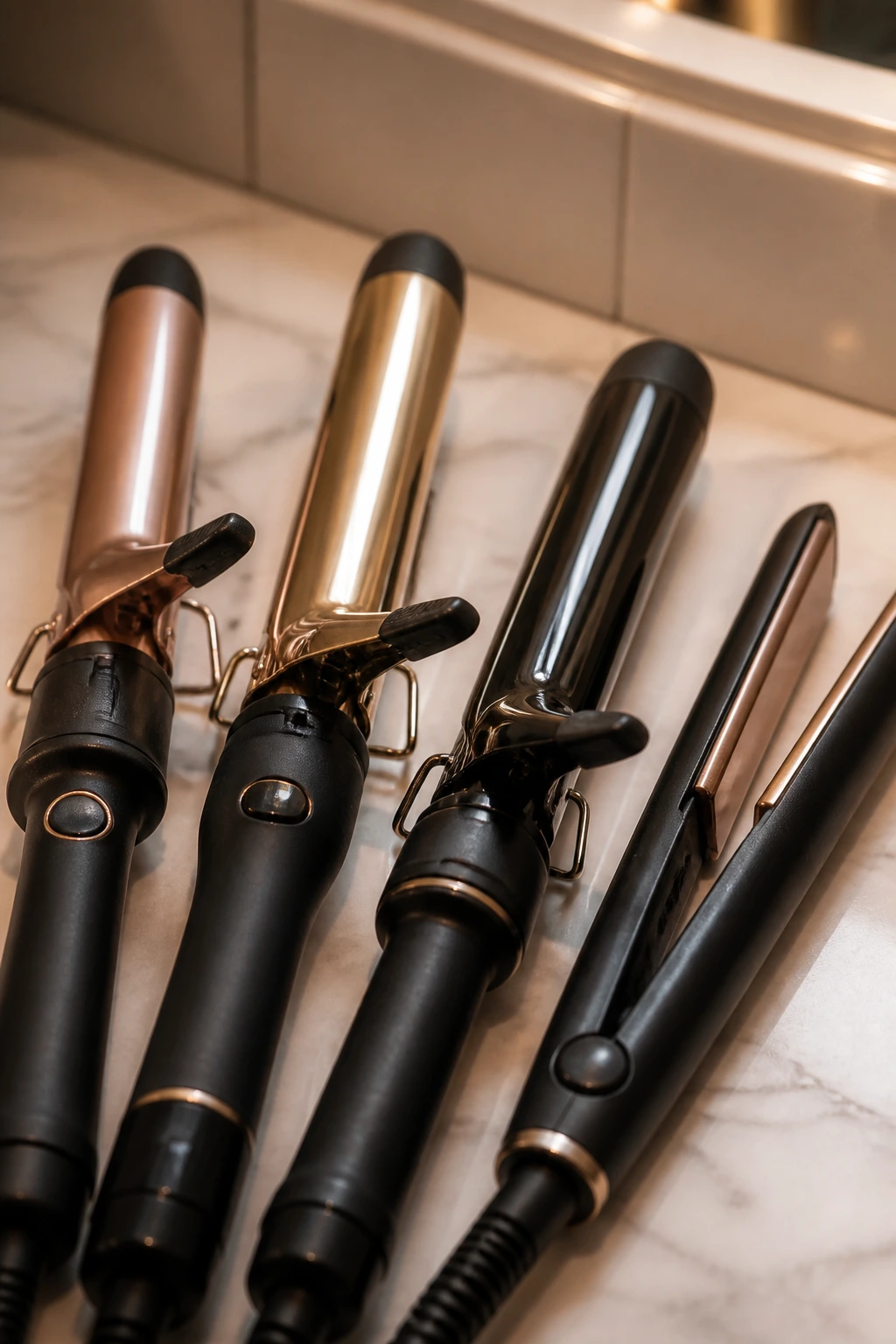
- 1.25-inch curling iron: The safest all-purpose barrel for soft waves that need to stay loose on thick hair.
- 1.5-inch curling iron: Best for long hair or when you want the bend to look brushed-out and wide.
- 1-inch flat iron: Useful for S-waves, flat-iron bends, and flipped ends.
- Heat protectant spray: Non-negotiable if you use hot tools; mist it on every section before styling.
- Volumizing mousse: Helps the roots hold lift without making the mids crunchy.
- Flexible-hold hairspray: Holds the wave without turning it stiff.
- Texture spray: Adds grip to thick hair and helps brushed-out waves stay separated.
- Clips or duckbill pins: Great for cooling sections and setting crown lift.
- Paddle brush and boar-bristle brush: Paddle brush softens the wave; boar-bristle brush smooths the surface.
- Blow dryer with concentrator nozzle: Helps shape the roots and smooth the cuticle before waving.
Smart Product Choices for Thick Hair That Needs Soft Waves
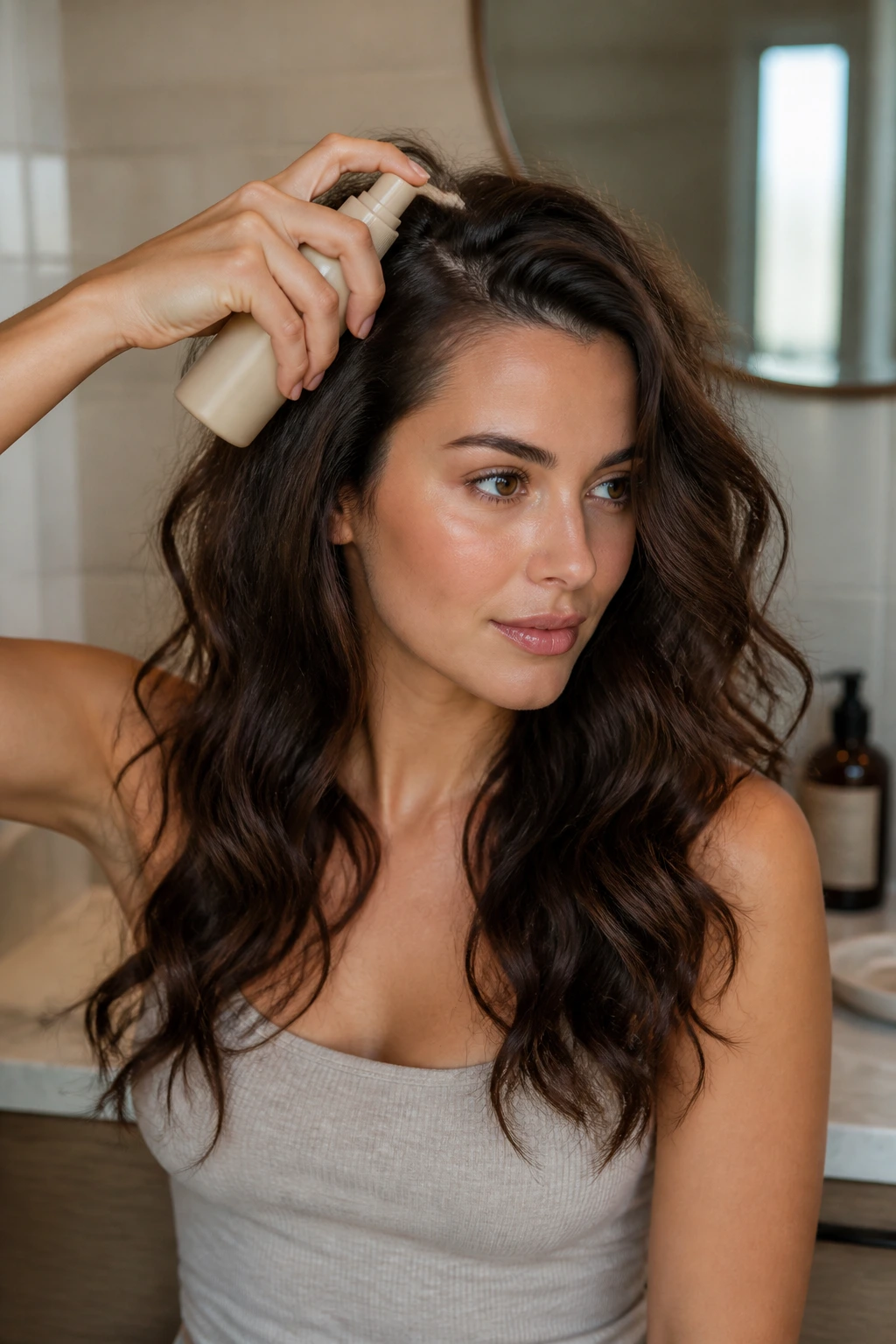
Thick hair is greedy in the worst and best ways. It needs enough product to stay controlled, but not so much that the wave gets greasy or dull. The sweet spot is usually a light base at the roots, a touch of smoothing through the mids, and almost nothing on the ends unless they’re dry.
A mousse with flexible hold is better than a heavy cream if your hair is already dense. Heavy creams can make thick hair collapse at the root, which kills the lift that helps round faces. I’d rather see a clean root and a slightly softer end than the other way around. If you want shine, use a tiny mist of oil only after the waves are set and brushed out.
For humid conditions, choose a spray that fights frizz without freezing the hair in place. You want control, not shellac. And if your hair is coarse, a smoothing leave-in before blow-drying can keep the cuticle calmer so the wave looks smoother once it’s set.
How to Wear These Waves So They Flatter Your Face
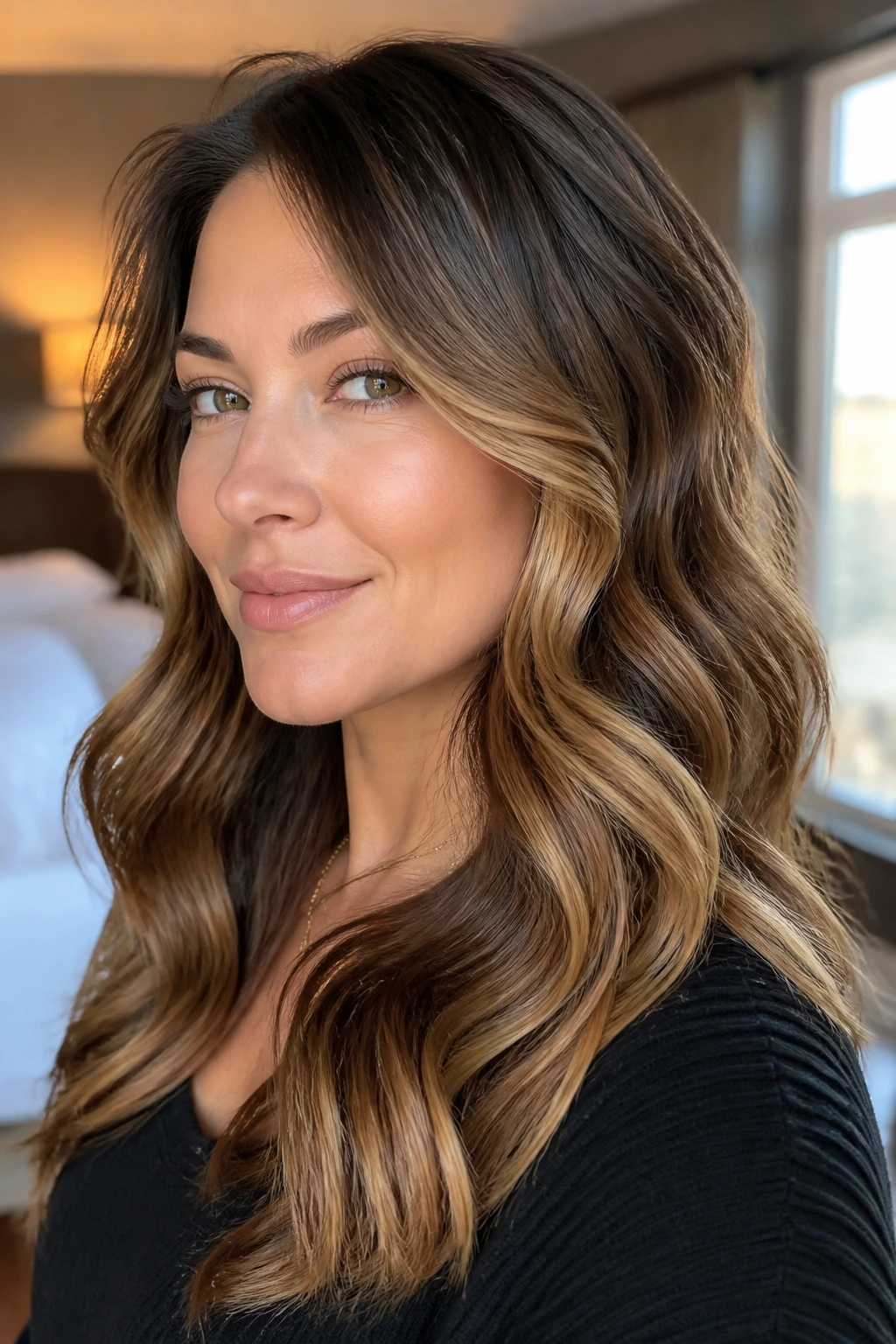
Presentation: Keep the front pieces below the cheekbone whenever possible. That one move stops the style from sitting right on the widest part of the face. If your cut is shorter, push the wave a little lower and softer at the front.
Accessories: Slim clips, small barrettes, and one tucked side usually work better than wide headbands. Big bands can widen the face line and fight the wave shape. Earrings help, too, especially when one side is tucked back.
Balance: If the hair is fuller on one side, let it be. Symmetry can make a round face look even rounder. A slight side part or a small crown lift creates the kind of irregular line that flatters.
Occasion: A brushed finish leans polished. A more separated finish leans casual. Same wave, different mood. That flexibility is one reason thick hair is such a good canvas once the shape is right.
Extra Tips and Styling Boosters
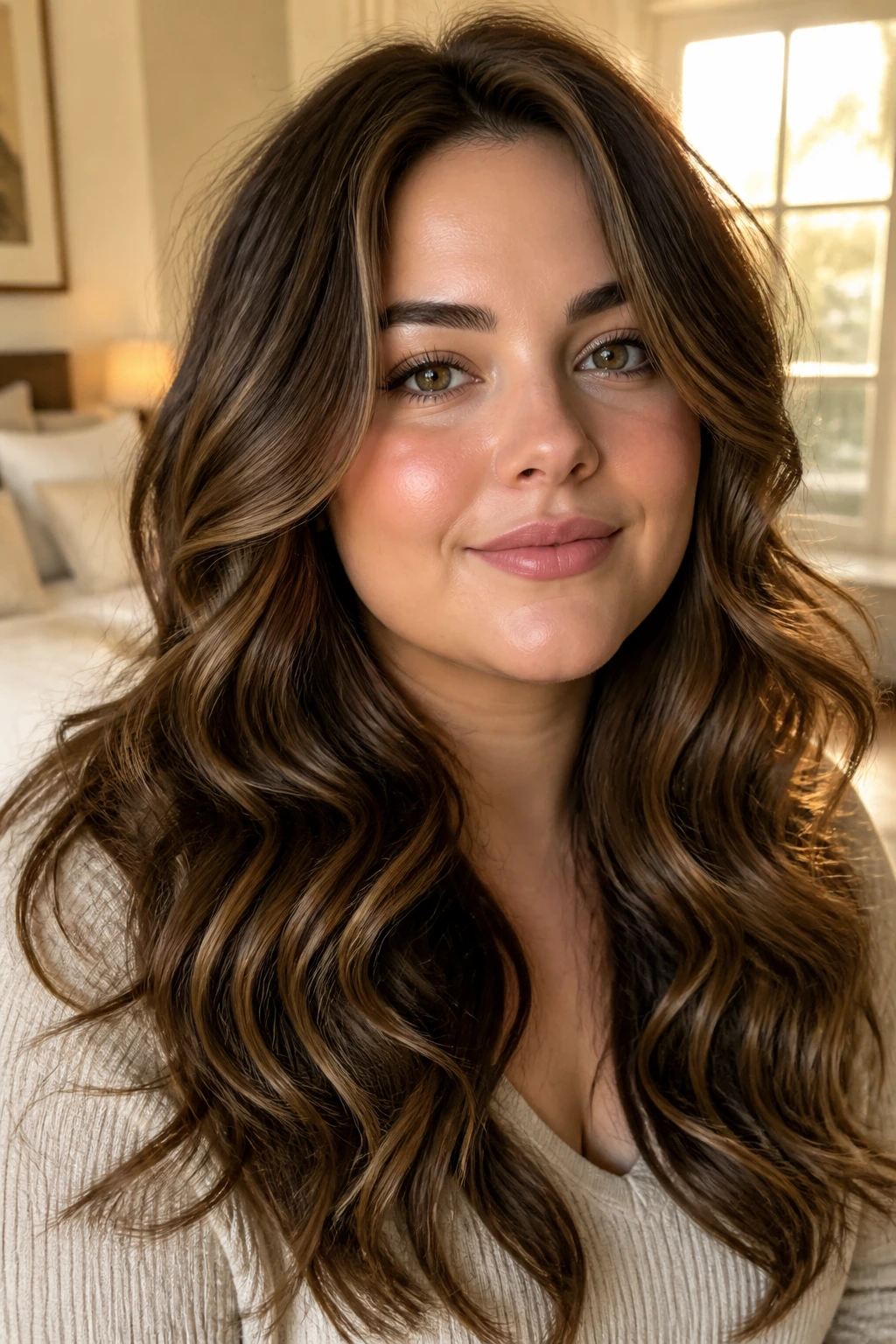
Texture Boost: If the wave slips too fast, mist a little texturizing spray on the underside of the mids before brushing. It gives the hair grip without making the surface feel sandy.
Customization: If your round face needs more length, add curtain bangs or a deep side part. If your hair feels too heavy, ask for long internal layers instead of shorter face-framing pieces that stop at the cheek.
Finish: For a polished look, brush the waves once and stop. For a softer look, brush them twice and separate the ends with your fingers. Don’t keep fiddling. That’s how the shape gets fuzzy.
Make-It-Yours: If you prefer low heat, use jumbo rollers or an air-dry mousse set. If you like stronger hold, set each wave with a pin until it cools, then finish with flexible spray. Thick hair usually gives you room to choose.
Common Mistakes to Avoid With Soft Waves on Thick Hair
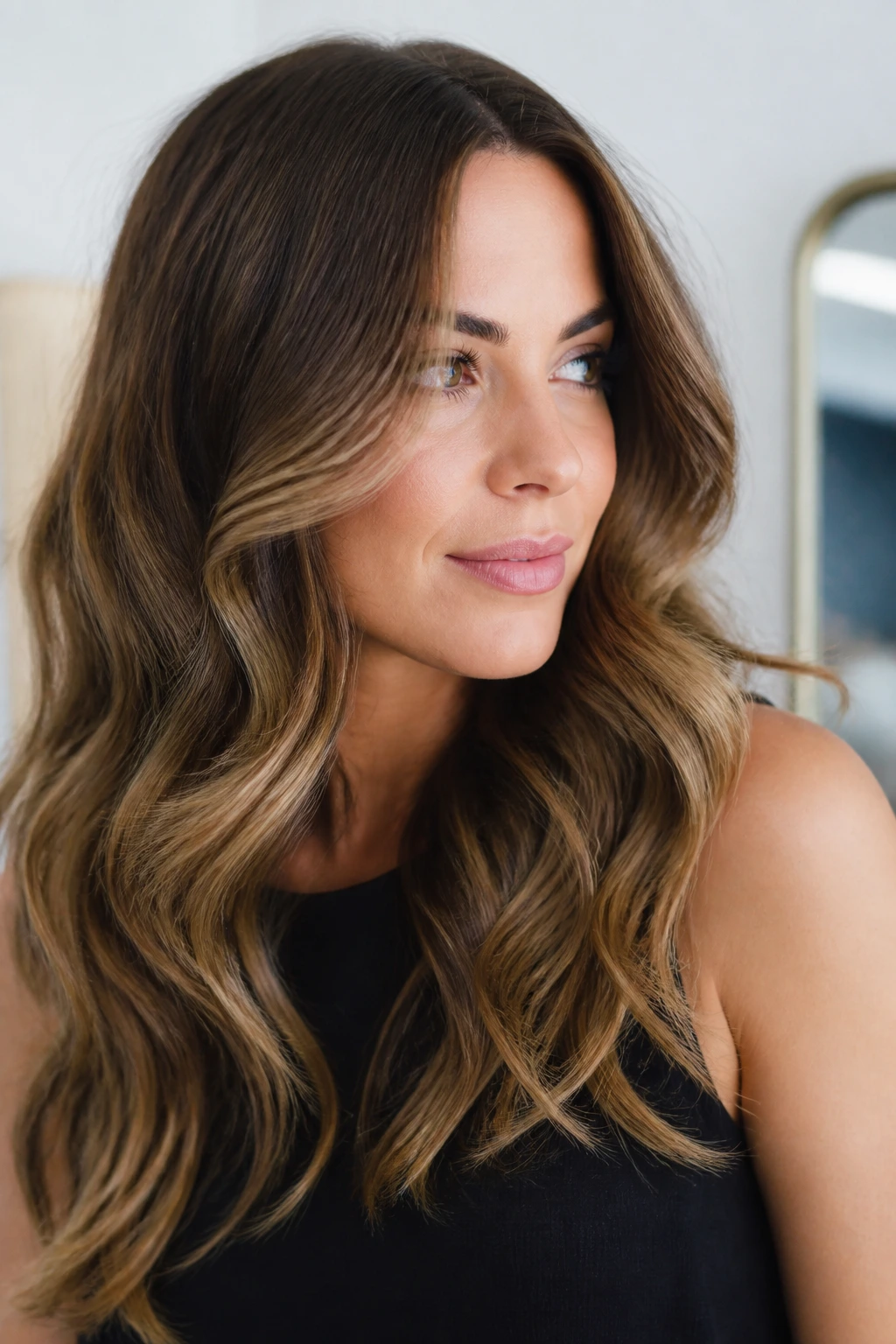
The biggest mistake is starting the wave too high on the head. When the bend begins near the temples or cheekbones, thick hair fans outward and makes the face look wider. Start lower. Let the front frame the face, not surround it.
Another common problem is using a barrel that’s too small. Tiny curls on thick hair almost always look busier than expected, and they shrink the length. A 1.25-inch barrel is usually the safer floor, with 1.5 inches working well on long lengths.
Skipping sectioning is a mess waiting to happen. Thick hair needs control in clean panels, or the waves become uneven — tight in one spot, flat in another. Clip the hair into manageable sections and keep them consistent.
The last trap is brushing too soon. Hot hair is soft hair. If you brush before the wave cools, you erase the bend and invite frizz. Let it set. Then brush. That little wait is the difference between shape and puff.
Variations and Adaptations to Try
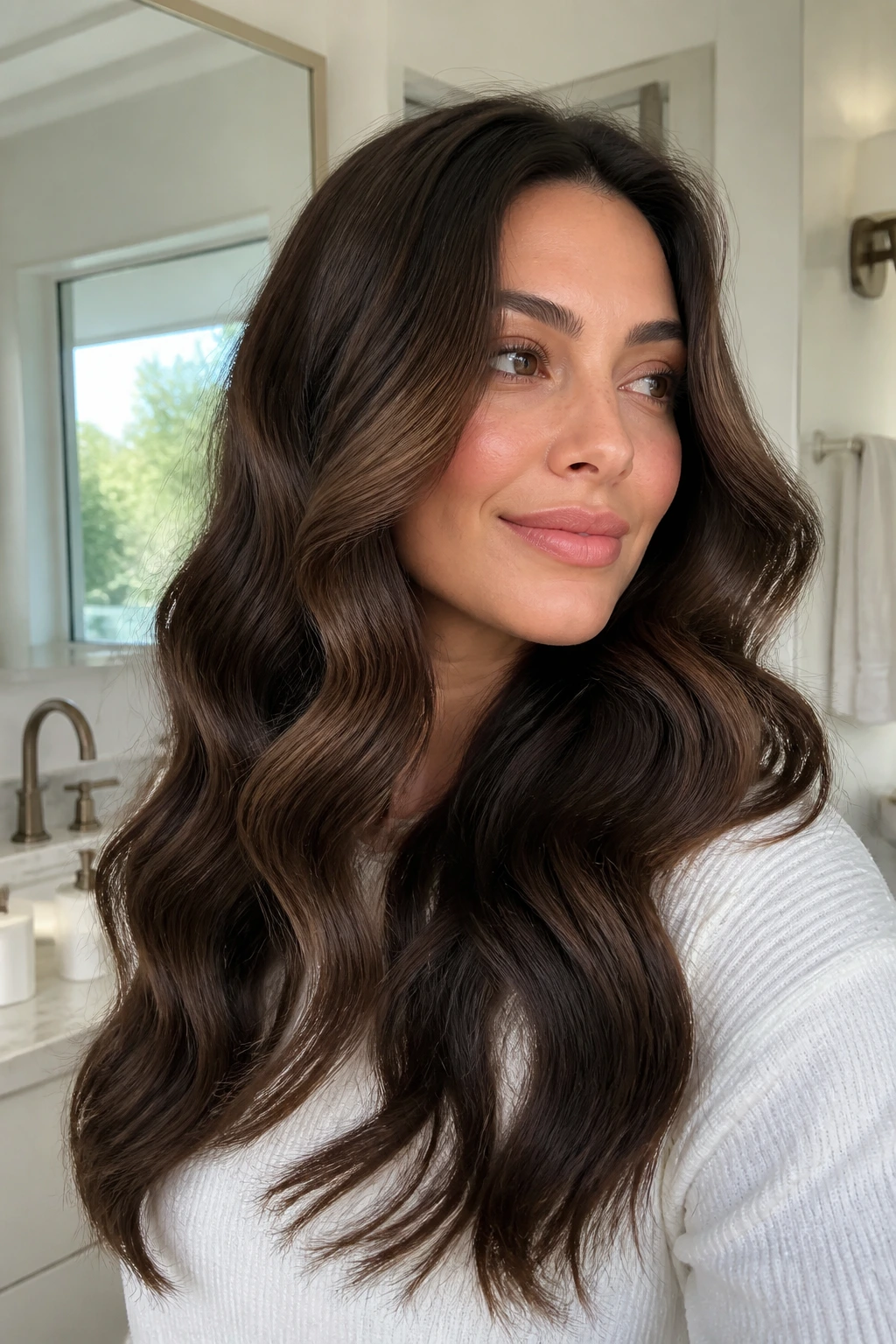
Humidity-Proof Waves: Use a smoothing leave-in, then set the waves with a flexible anti-frizz spray. Keep the bend wider and lower so the style doesn’t balloon when the air gets damp.
Heatless Overnight Waves: Twist damp hair into loose braids or use large bendy rollers before bed. Keep the braids low and loose so the wave comes out soft, not crimped. This works best on thick hair that already has some texture.
Shorter-Length Soft Waves: If your hair sits around the jaw or just above the shoulders, choose a blunt lob or A-line lob and keep the wave very loose. Small curls on shorter thick hair can get wide fast.
Glass-Sheen Waves: For a more formal finish, use a light smoothing serum after styling and brush once with a boar-bristle brush. The wave stays soft, but the surface reads clean and polished.
Low-Maintenance Second-Day Waves: Refresh only the front pieces and crown with a curl touch-up, then mist the mids with water and a little texturizer. That keeps the wave from getting overdone on day two.
Keeping the Shape Fresh Between Washes
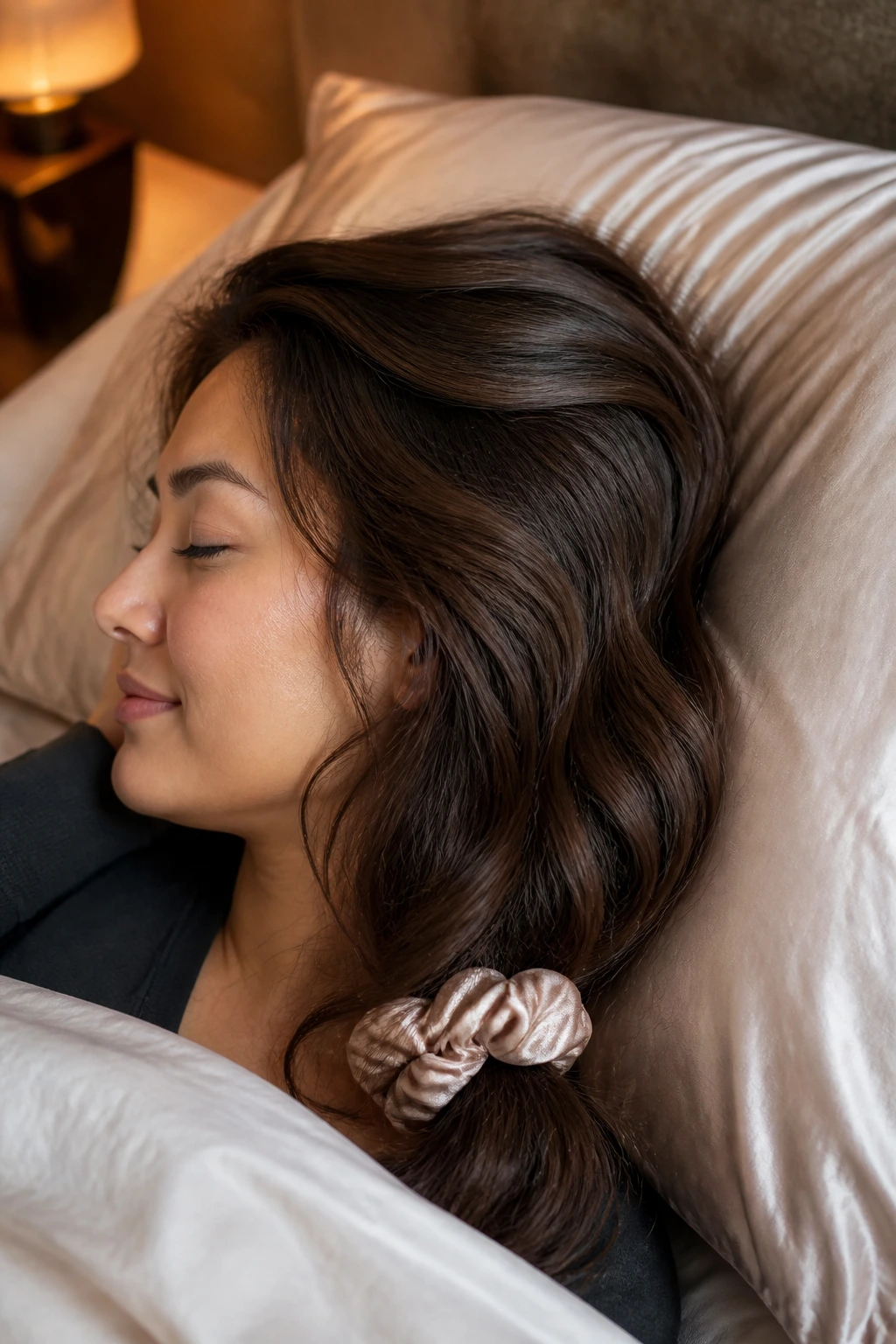
Soft waves on thick hair usually hold for 2 to 4 days, depending on how much heat, spray, and humidity they meet. Day one is usually the fullest; day two is often the nicest because the wave settles into itself; day three can still look good if the roots stay calm and the ends don’t frizz.
Sleep helps or hurts the style more than most people think. A loose silk scrunchie, a soft topknot, or a pineapple-style wrap can keep the wave from getting flattened overnight. If you sleep hard on one side, pinning the flatter side loosely before bed can save the shape. It sounds fussy. It’s not. It’s the difference between a decent refresh and a full restyle.
For morning touch-ups, work only where the hair has collapsed. Usually that means the face-framing pieces, the crown, and the front layer near the part. A quick pass with a large barrel or flat iron is enough. Don’t rewave the whole head unless you enjoy turning a soft style into a freshly styled one that looks overworked. On day three, dry shampoo at the roots and a tiny bit of texture spray through the mids usually bring the shape back without needing more heat.
Frequently Asked Questions
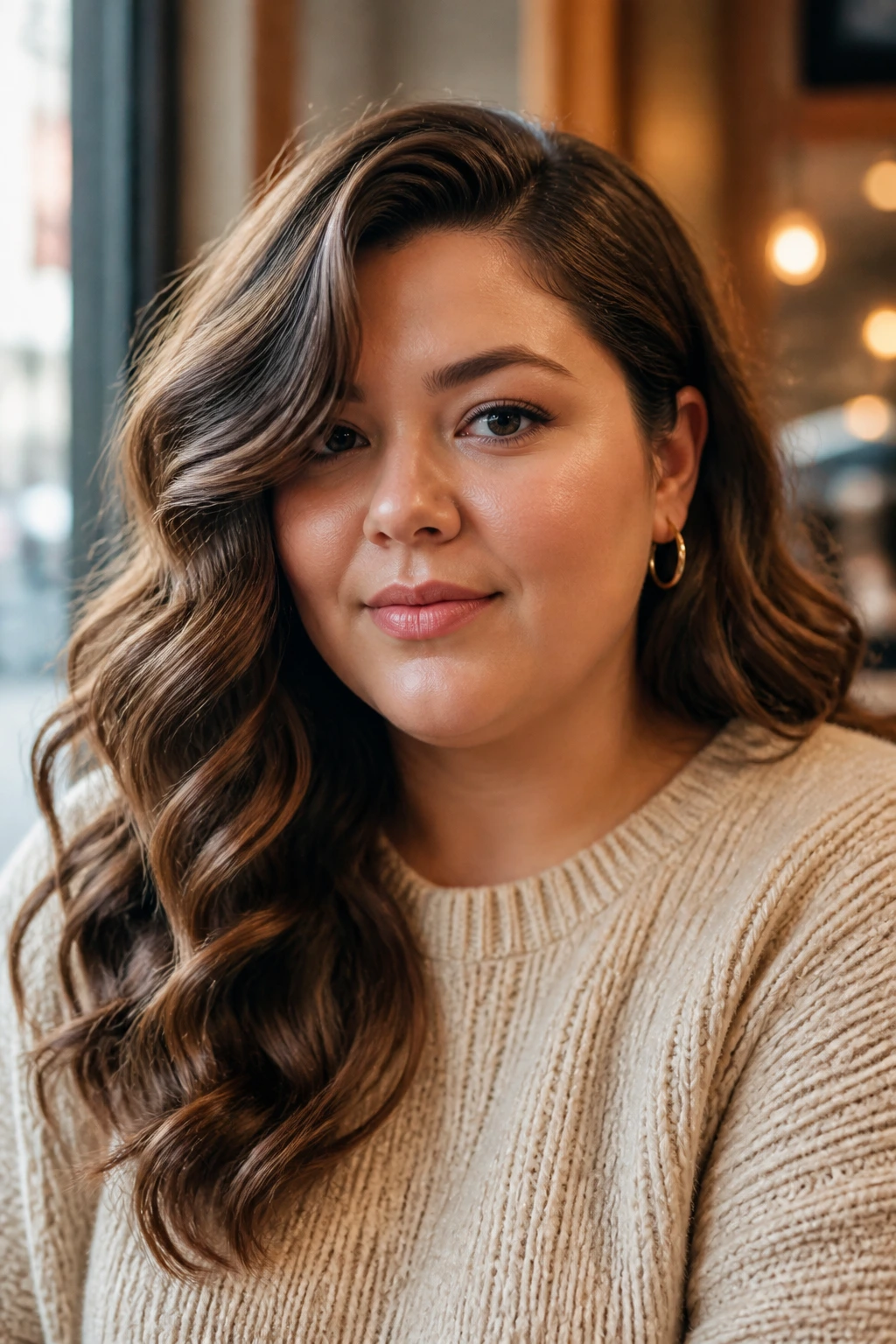
What barrel size is best for soft waves on thick hair?
A 1.25-inch curling iron is the safest starting point, and a 1.5-inch barrel works well if your hair is long. Smaller barrels usually make the wave too tight, which can widen the face and puff out thick hair.
Should round faces avoid center parts?
Not always. A center part can work if the waves start low and the length is past the cheekbone. A soft off-center or deep side part is usually easier, though, because it adds diagonal movement right away.
How do I keep thick hair from looking puffy after I wave it?
Use a bigger barrel, let the hair cool completely, and brush the waves only after they’ve set. Keep heavier product away from the root area, because too much cream or oil can make the style collapse into a bulky shape.
Are layers necessary for soft waves on thick hair?
They’re not mandatory, but they help a lot. Long internal layers remove weight and let the wave move without turning into a triangle. If you hate obvious choppiness, ask for invisible layers instead of short, obvious steps.
Can I do this look on shoulder-length hair?
Yes, but keep the wave loose and the ends soft. Collarbone-length and slightly longer hair usually give the cleanest shape on thick textures because the wave has room to fall instead of springing up.
What if my waves fall flat by lunchtime?
That usually means the sections were too large, the heat was too low, or the hair was brushed before it cooled. Set smaller sections, let each one cool fully, and use a light mousse or texture spray for grip.
Which style in this list is best for a formal event?
Soft Hollywood waves or formal soft waves are the strongest choices. They look smooth, hold their shape well in thick hair, and frame a round face without adding width at the cheeks.
Can I air-dry thick hair and still get soft waves?
Yes, especially if your hair already has a bend. Use mousse, twist the sections loosely, and don’t disturb the hair while it dries. If your hair is very straight, an air-dry set may need a little help from rollers or a diffuser.
The Shape That Sits Right
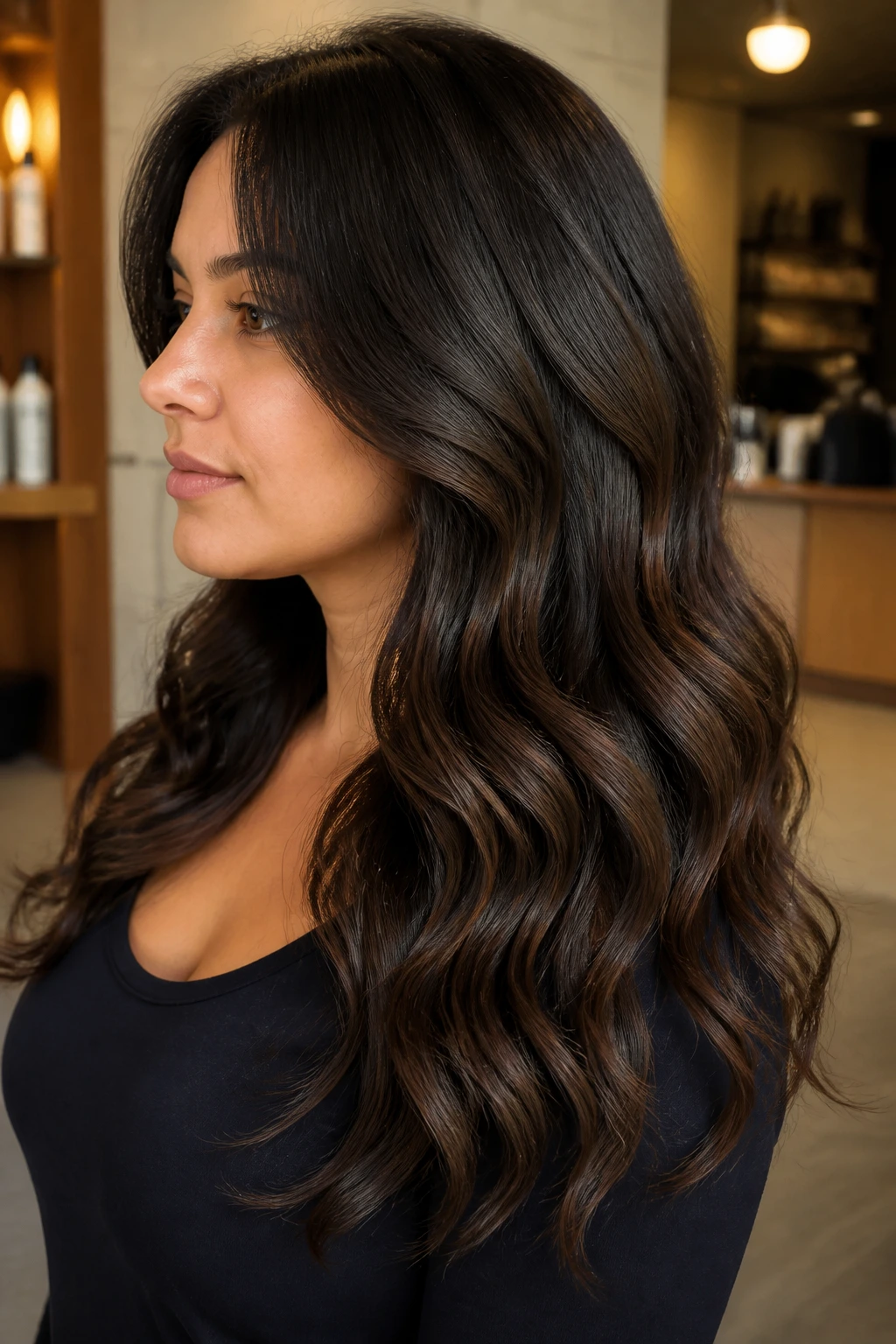
The nicest thing about soft waves on thick hair is that they don’t ask you to fight the hair’s natural strength. They just ask you to point it in a better direction. Once the wave starts low enough, the part shifts a little, and the sides stop crowding the cheeks, the whole style feels easier to wear.
Round faces do not need to be hidden. They need a shape that adds a little length, a little asymmetry, and a little quiet control. That’s where these waves earn their keep. They soften the bulk, keep the movement alive, and leave you with hair that looks full without looking wide.
Pick the version that matches your length and your patience, then keep the bend wide and the root calm. That’s the formula that tends to stay flattering long after the first mirror check.