



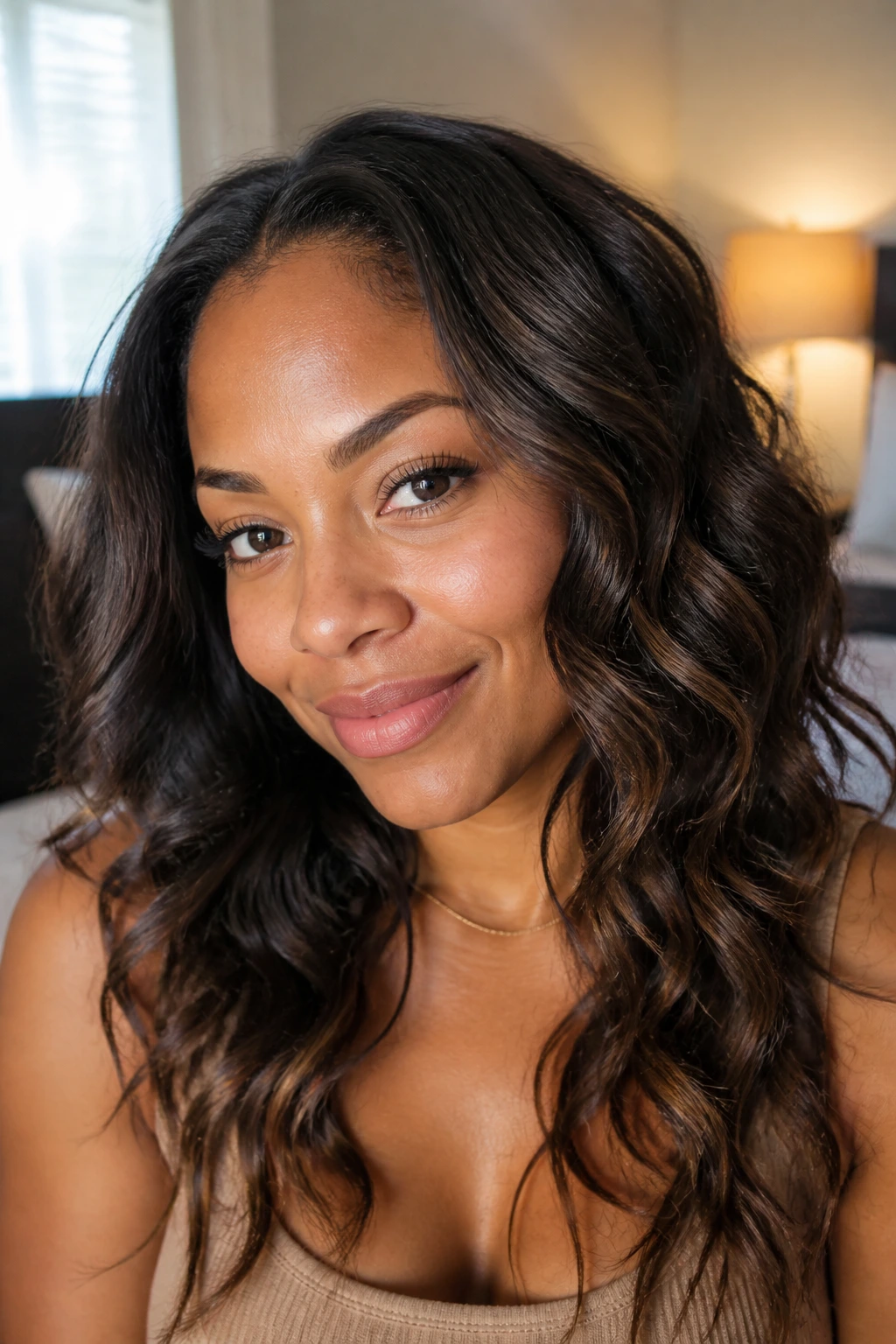
Loose curls for Black hair and oval faces work best when the shape is doing part of the styling for you. A curl that falls in the wrong place can make the whole look feel heavy, even when the hair itself is beautiful. Put the bend in the right spot, though, and the face opens up fast — cheekbones look cleaner, jawlines look softer, and the style moves instead of sitting there like a helmet.
Oval faces are lucky, but they’re not a free-for-all. Center parts show symmetry. Side parts add a diagonal line that keeps the eyes moving. Face-framing pieces can turn a simple curl set into something that looks thought-out instead of accidental. And on Black hair, the details get even more specific: blown-out coils, silk-pressed lengths, stretched twist-outs, and installed hair all hold loose curls in different ways, so barrel size, section size, and cooling time matter more than most people think.
That’s the part people skip. They chase the curl pattern and ignore placement. Placement is the real trick.
Why You’ll Love This Collection
-
Oval-face balance: These looks use parting, layering, and curl direction to keep the face open instead of burying it under one big wall of hair.
-
Texture-flexible styling: You’ll find ideas that work on silk-pressed hair, blown-out natural hair, stretched twist-outs, and installed styles.
-
Loose, not limp: Every style here keeps movement in the hair without turning the ends into tight ringlets that fight the shape.
-
Day-to-night range: A soft curl can look calm at noon and polished by evening with a side tuck, a pin, or a little more root lift.
-
Low-manipulation options: Rod sets, twist-outs, wigs, and sew-ins show up here too, because not every good curl needs a hot tool.
-
Length-friendly choices: Short cuts, lobs, shoulder-length layers, and waist-length hair all get a lane here, because the same curl size does not flatter every length.
Why Loose Curls and Oval Faces Click So Well
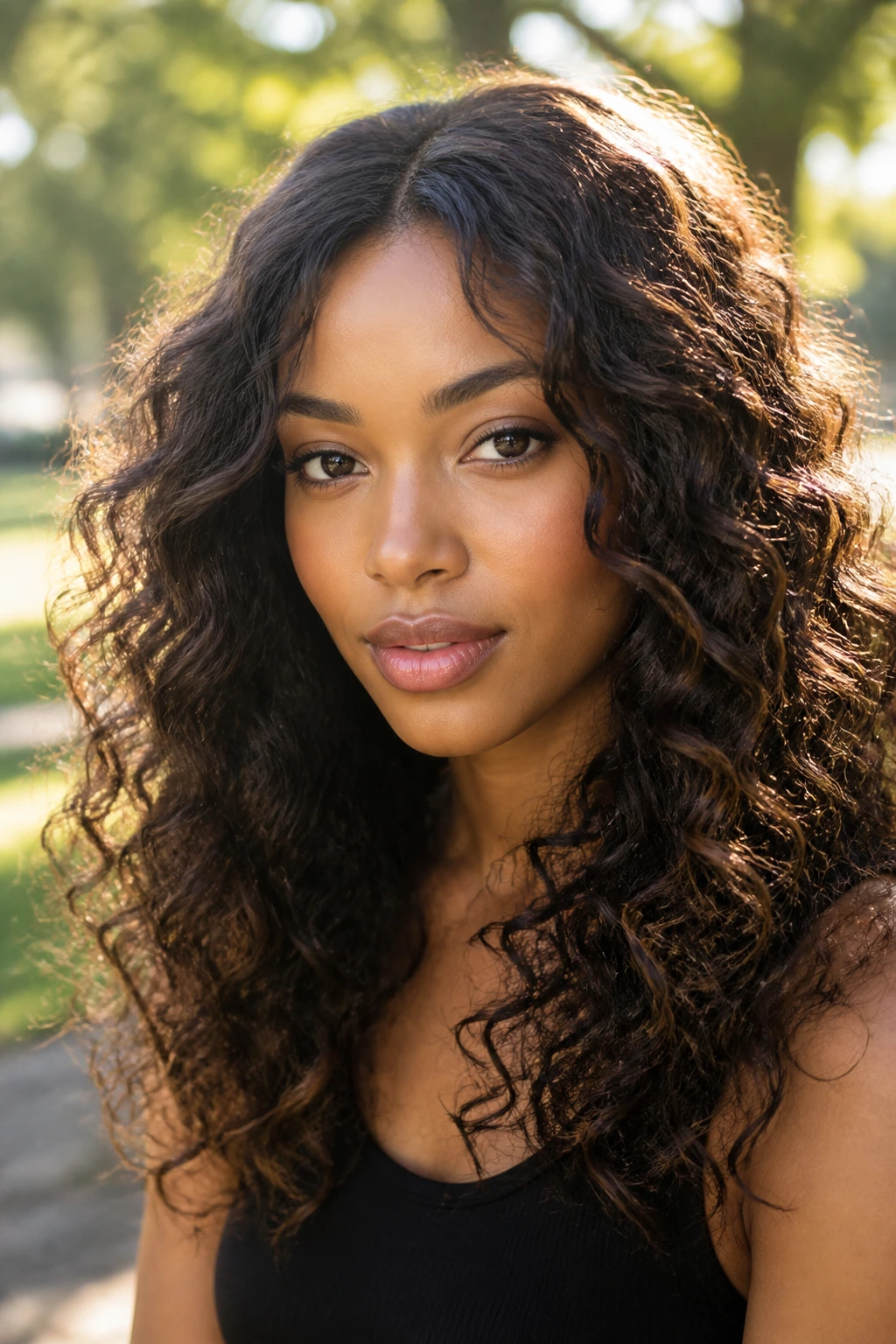
Oval faces have a built-in head start. The forehead, cheekbones, and jawline usually sit in a balanced proportion, which means you do not need hair to “fix” the shape. You need hair to frame it. That’s a different job.
Where the Volume Should Sit
The sweet spot is usually below the cheekbone, not right at it. If all the width lands around the temples, the face can start looking boxed in. If the curve starts just under the cheekbone and rolls toward the collarbone, the eye keeps moving down the length of the face, which looks cleaner and softer.
What Black Hair Changes
Black hair rarely behaves like a straight-hair tutorial assumes. It holds curl differently after a blowout than it does after a silk press. It also reacts to product weight in a more dramatic way, especially near the roots.
That’s why a 1-inch wand can create a curl that reads too tight, while a 1.25-inch barrel often lands in that loose, airy zone people are actually after. On stretched natural hair, the same curl can look fuller and softer because the texture underneath adds body. On installed hair, the ends may need a little less heat and a little more set time.
Parting Matters More Than People Admit
Center parts are elegant on oval faces because they show the symmetry. Side parts are smarter when you want movement or a little drama. A deep side part can change the whole mood of loose curls without changing the curl pattern at all.
That tiny shift is not tiny in the mirror.
1. Center-Part Silk-Pressed Loose Curls
A clean center part and a silk press give loose curls a smooth, glossy fall that shows off an oval face without crowding it. The style looks simple from the front, but the real work is in the sectioning and the size of the curl. If the barrel is too small, the ends start looking busy. If it’s too large, the bend disappears after an hour.
Why It Flatters the Shape
The center part makes oval features feel intentional instead of just “there.” It draws a straight line down the face, then lets the curls fan out below the cheekbone where they can do the flattering work. That keeps the crown neat and the ends soft.
- Best barrel: 1.25-inch curling iron or wand
- Heat range: around 320–350°F on pressed hair
- Section size: 1 to 1.5 inches wide
- Finish: light serum only on the ends
One good move: curl the pieces closest to the face away from the face, then alternate directions in the back so the style has movement instead of one stiff wave pattern.
2. Deep Side-Part Hollywood Waves
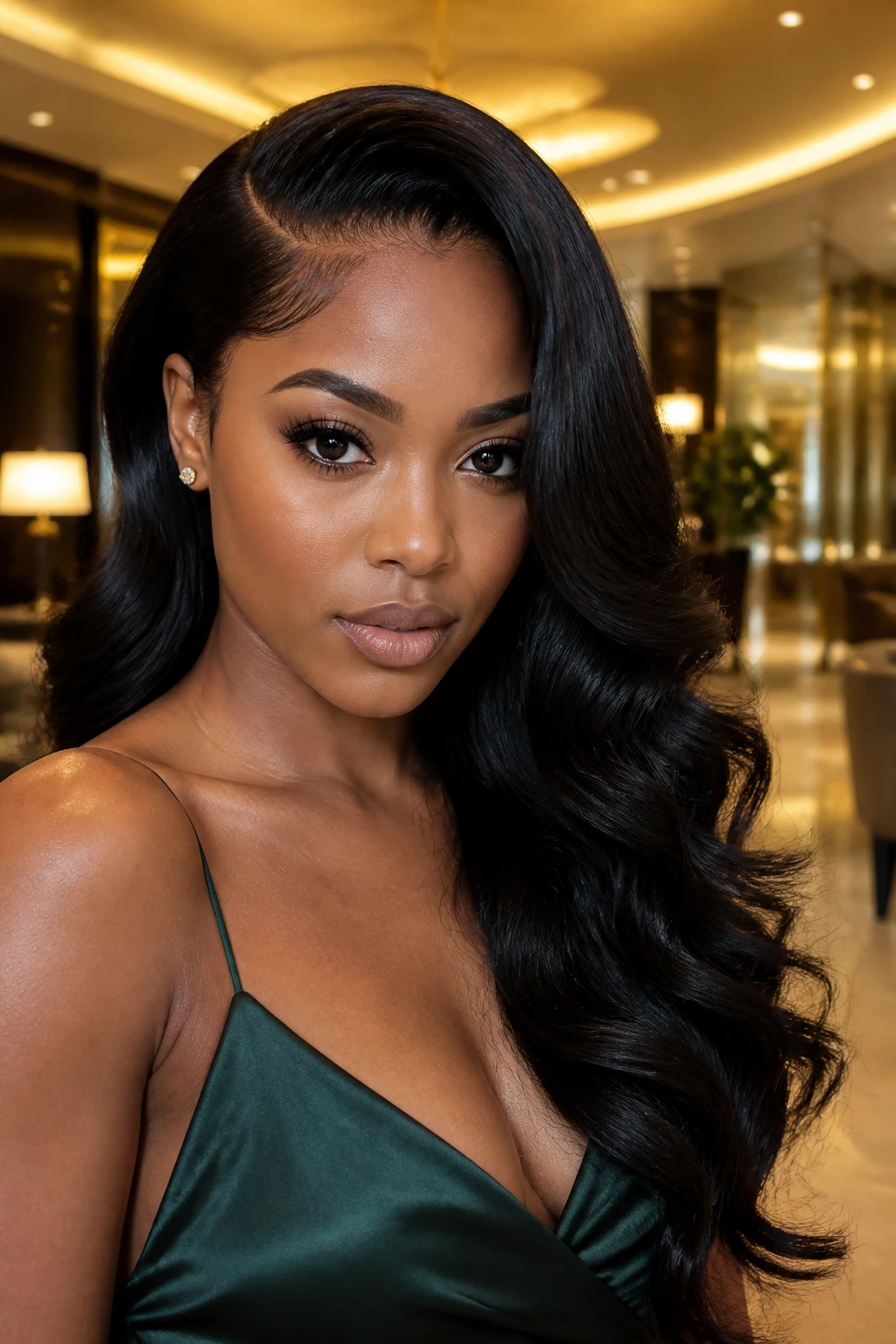
A deep side part changes everything. That’s the part people underestimate. The same curls that look polite in the middle suddenly feel more expensive-looking when the part drops low over one brow and the waves sweep across one shoulder.
The style works especially well on oval faces because the diagonal line breaks up the symmetry just enough. You still keep the balance, but you get shape and attitude too. On Black hair, this version usually looks best after a silk press or a very smooth blowout, because the wave pattern needs a clean surface to lay against.
Brush the curls out only after they’re fully cool. Then pin the front section for ten minutes if you want that polished, camera-ready curve. Don’t brush it into oblivion. You want those soft bends to stay visible, not disappear into one giant ripple.
3. Collarbone Lob with Bouncy Loose Ends
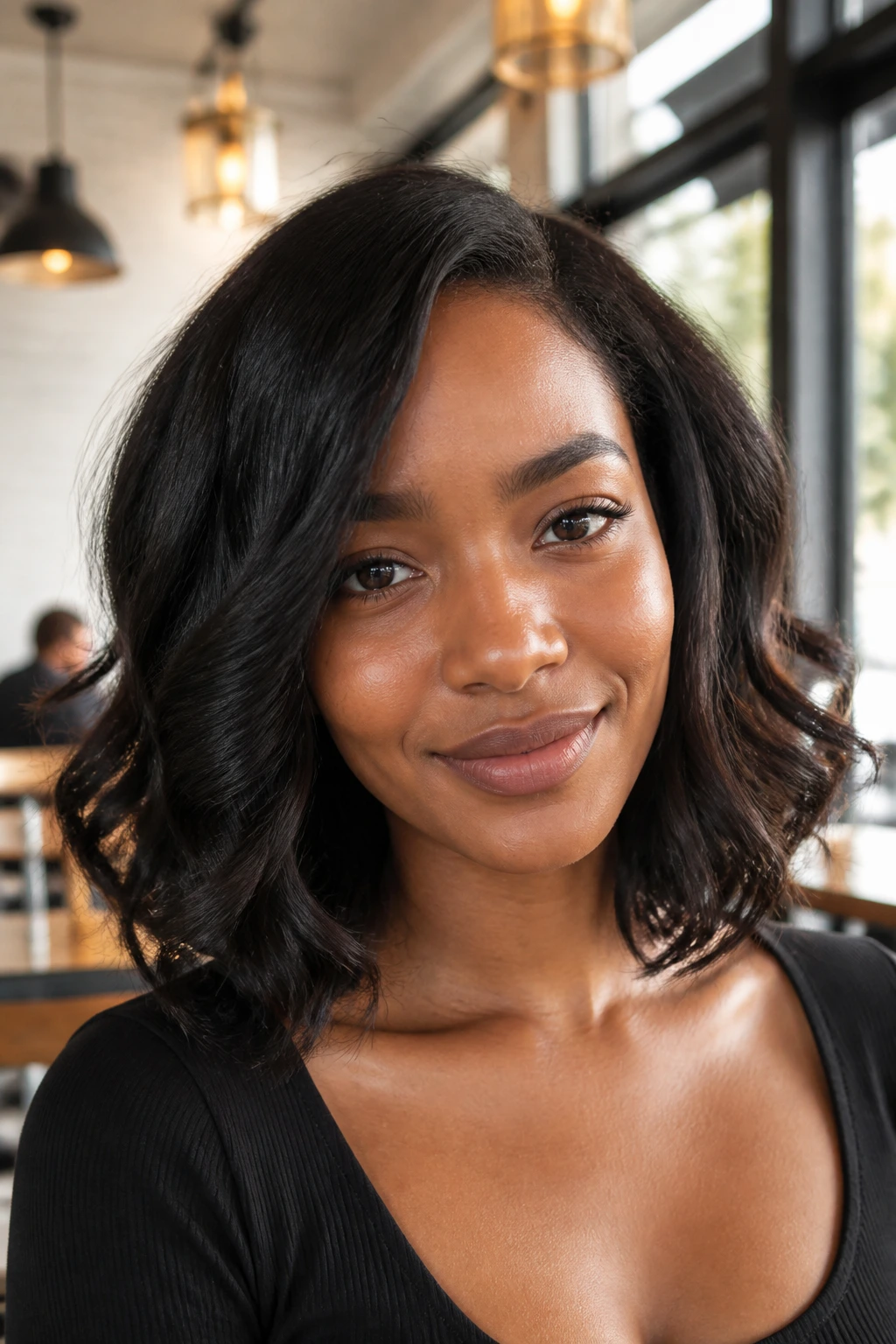
Why does a collarbone lob look so crisp on oval faces? Because the length stops at the exact place where hair can support a soft bend without swallowing the neck. It’s one of those cuts that makes loose curls look deliberate instead of accidental.
The key is keeping the finish airy. On a lob, the last inch of the hair matters more than the root. If the ends are curled too tightly, the whole cut starts to look compact. A loose bend at the bottom keeps the shape fresh and keeps the neckline visible, which is the whole point of this length.
How to Wear It
Ask for a lob that sits just below the collarbone and carries a little internal layering. That keeps the hair from turning into a triangle when the curls are brushed out. A 1-inch wand works well here, but stop the wrap halfway through the ends if you want a softer finish.
This one looks best with a side part or a slightly off-center part. Dead center can work, but a tiny shift gives the haircut more life.
4. Face-Framing Layers and Bend
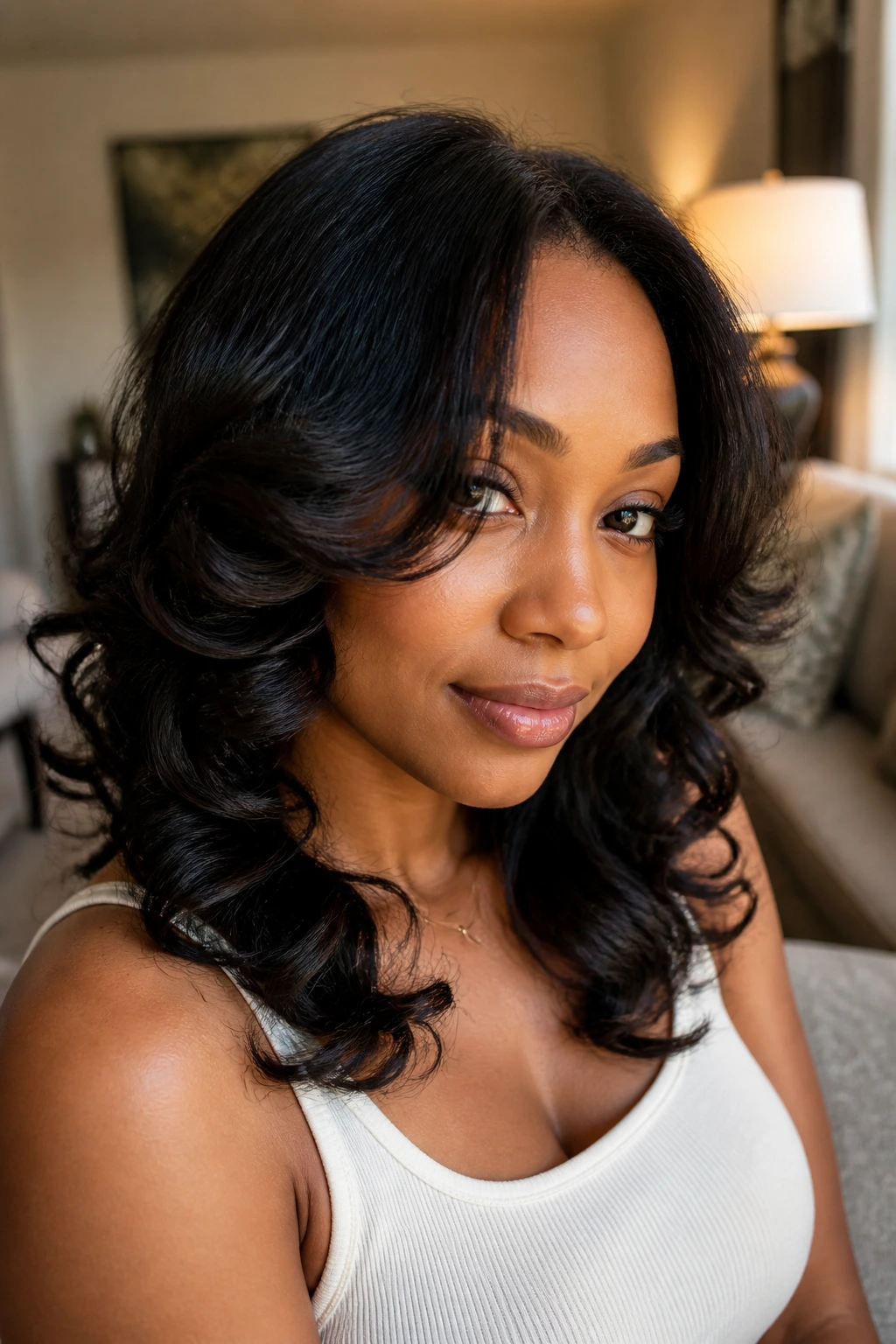
Picture soft curls starting around the cheekbone and falling away from the jaw. That’s the whole appeal of face-framing layers on Black hair with an oval face. The layers do half the styling before you even touch the iron.
The danger with layered curls is over-layering. If the shortest face-framing pieces land too high, the hair can puff out at the temples and throw off the balance. The sweet spot is usually near the cheekbone or just below it, where the curl can graze the face instead of hiding it.
- Keep the shortest front pieces long enough to tuck behind the ear.
- Use a 1.25-inch tool on the longer lengths.
- Pull the front pieces a little straighter for a softer frame.
- Let the layers cool in your hand before letting them drop.
That last part matters more than it sounds. Cool curls hold shape. Warm curls fall into whatever shape gravity feels like giving them.
5. Waist-Length Wand Curls
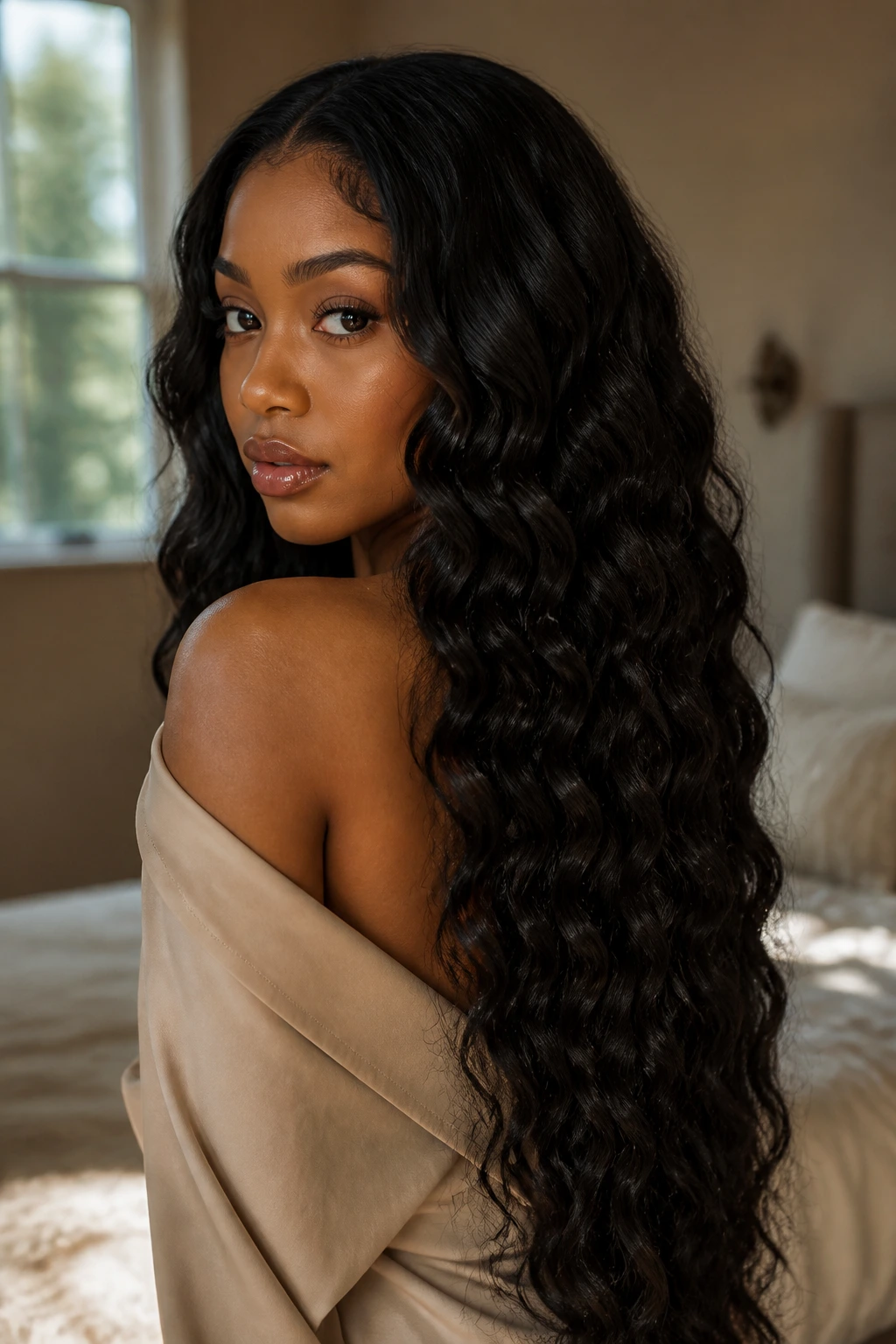
Long hair needs room to move. Waist-length loose curls can look gorgeous on oval faces, but only when the curl size matches the length. Too small, and you get a mass of ringlets that reads heavy. Too large, and the curl disappears into a soft bend with no presence at all.
A 1.5-inch wand or a large barrel iron usually gives the best balance on long Black hair that’s been blown out or silk pressed. Smaller sections help the curl hold, especially if the hair is dense. And yes, the sections need to be smaller than people expect. Long hair eats curl pattern faster than short hair does.
Wear this look with a center part if you want symmetry, or flip it to a side part if you want the curls to drape across one shoulder. Either way, keep the ends soft. The long length already supplies the drama.
6. Side-Swept Feather Curls
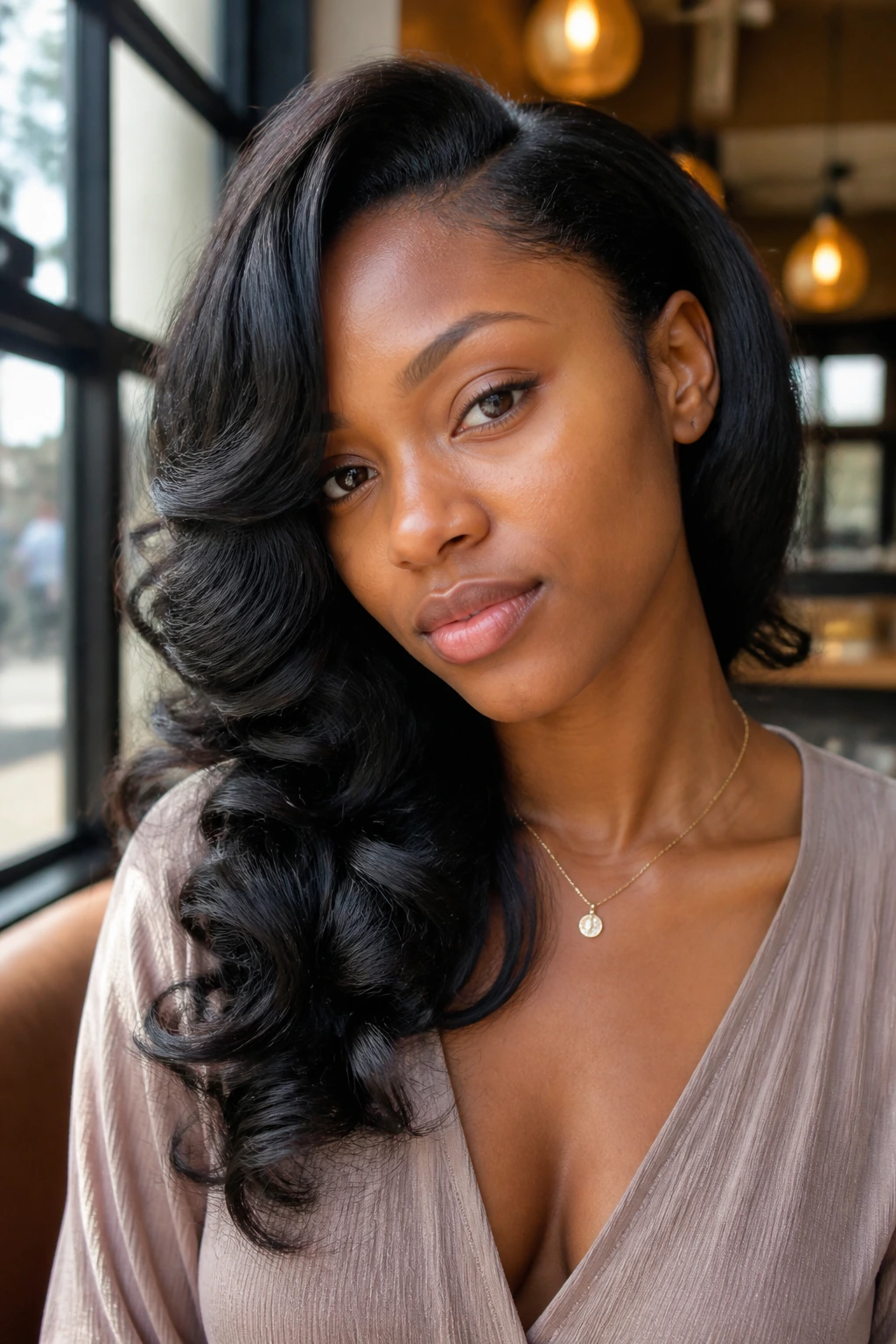
Unlike a straight side part, this style leans all the way into one side and uses the curl mass like a sweep of fabric. That makes it one of the easiest ways to give oval faces a more editorial feel without going full formal.
It’s especially good when you want to show earrings, shoulders, or a neckline that would disappear under a center part. The curls sit softly on one side, but they still move. They don’t have to be pinned into submission; a couple of hidden bobby pins and a little root lift are enough.
This version works best on medium to long hair, including installed hair. The trick is not over-combing the front. A gentle brush-through and a light mist of flexible hold spray is enough. If the hair starts to spread too wide across the cheekbones, tuck the upper layer closer to the ear and let the rest fall.
7. Blown-Out Flexi Rod Set
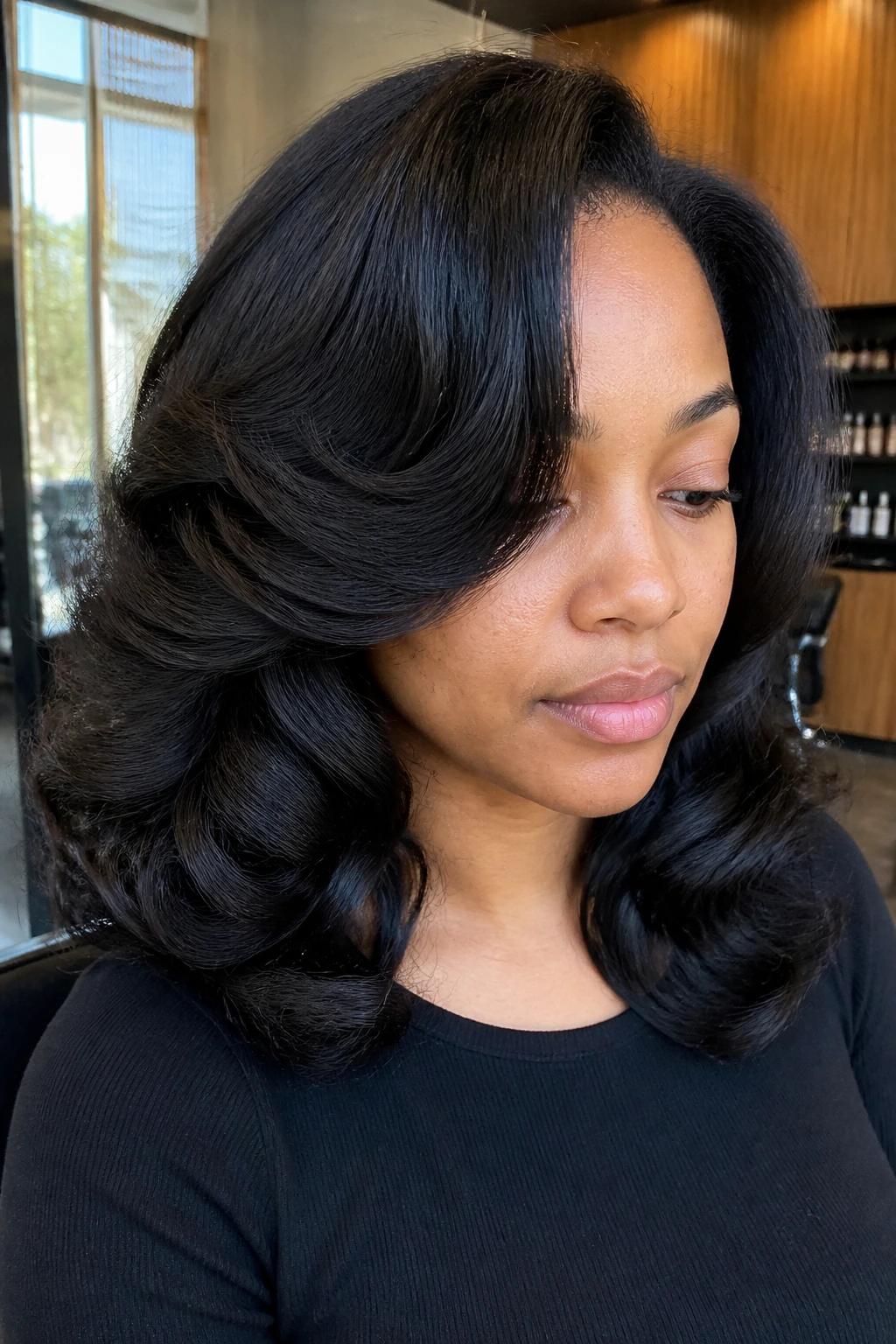
A flexi rod set on blown-out hair gives loose curls a smoother, rounder finish than a curling iron sometimes does. It also keeps the style from looking too uniform, which is useful if your hair tends to hold the same bend from root to tip.
The set usually starts with damp-to-dry stretched hair, a light mousse or setting foam, and rods in the 7/8-inch to 1-inch range. Smaller rods get tighter curls, and that is not the goal here. You want a soft bend with enough body to hold the face shape open.
Drying time matters. Fully matters. If the rods come down too early, the curl falls flat at the root and puffs at the ends. Hooded dryers give the cleanest finish, but overnight drying works if the sections are clean and the hair wasn’t overloaded with product.
8. Heatless Satin Rod Curls
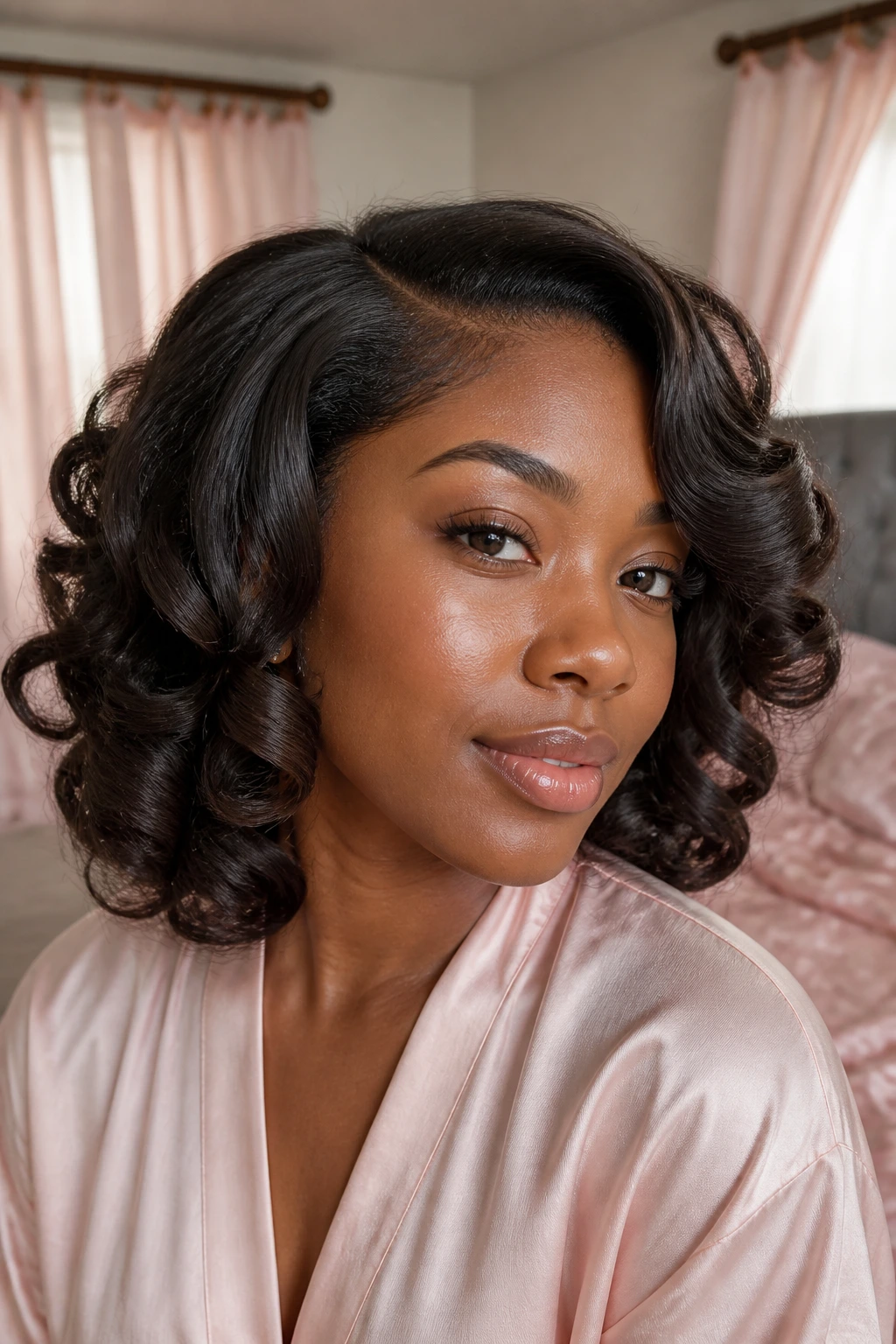
If heat is not on the menu, satin rods are the softest-looking option in the mix. They give Black hair a curl that feels gentle and wearable, not stiff or crunchy, and they work especially well when you want movement without heat damage.
The catch is patience. Satin rods need dry hair — not “mostly dry,” not “I think it’s close.” Fully dry. Otherwise the curl set can collapse at the crown and turn frizzy at the ends. A mousse with light hold works better than a heavy cream here, because weight kills the bounce before it starts.
This style suits oval faces because it lets the curls sit around the perimeter without crowding the face. If you want more lift, place the front rods a little higher and keep the middle part loose. If you want a softer, more relaxed look, shift the part slightly off center and let one side fall forward.
9. Half-Up Crown Puff with Loose Curls
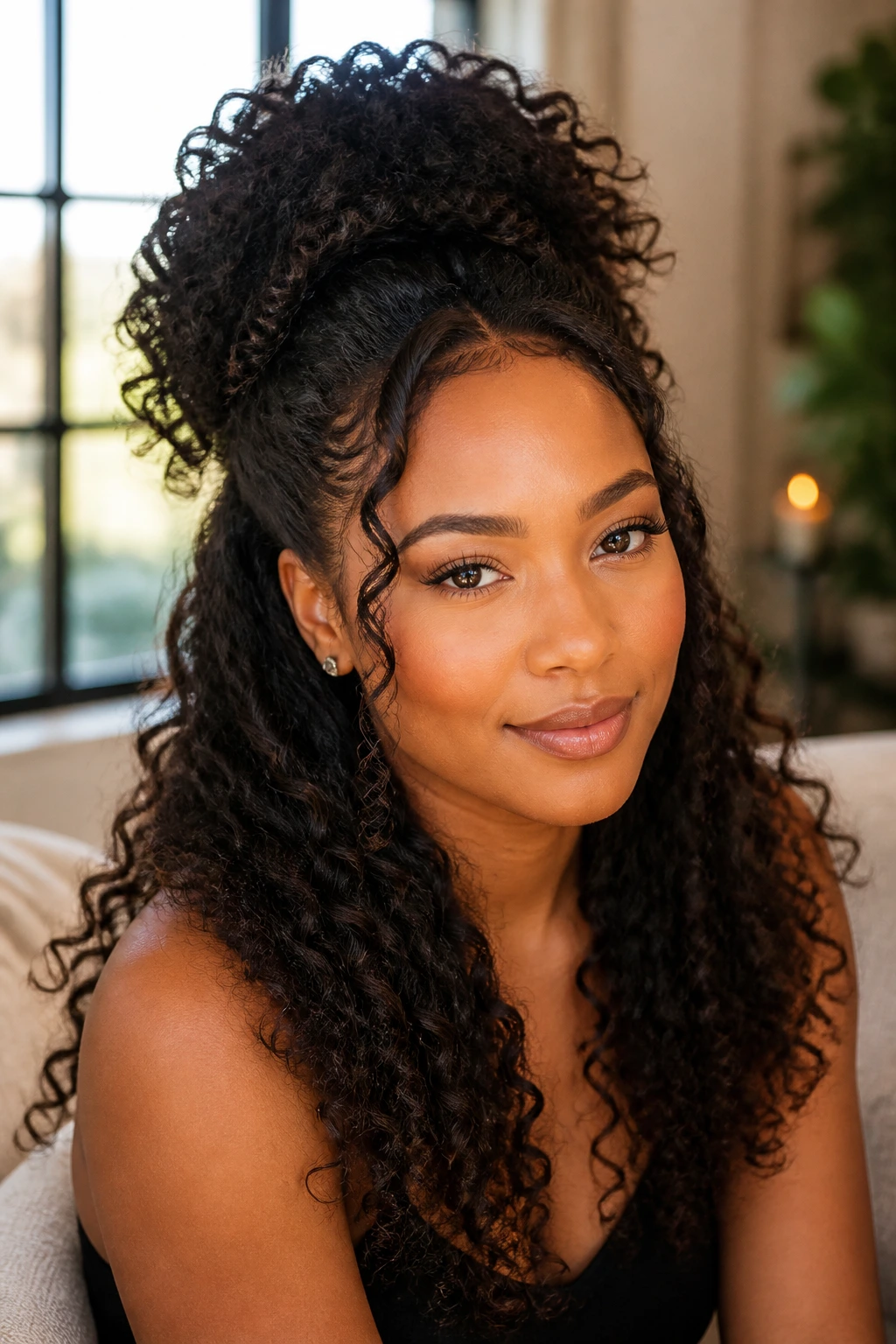
A half-up crown puff keeps the face open while still giving you the volume Black hair does so well. Pull the top section back just enough to lift the crown, then leave the lower curls loose so they can move at the shoulders and chest.
That balance is the whole trick. Too much height on top and the style starts to feel top-heavy. Too little and the curl set looks flat from the front. For oval faces, the sweet spot is a puff that sits high enough to open the eyes but not so high that it drags all the focus upward.
How High to Place It
Aim for the top section to sit just behind the hairline, not all the way to the crown. Use a satin scrunchie or small claw clip if you want less tension. Leave two narrow face pieces out in front if the hair is long enough. They stop the style from feeling too pulled back.
This is a good one for second- or third-day curls, too. A little root lift makes it feel fresh again.
10. Sleek Ponytail with Curled Ends
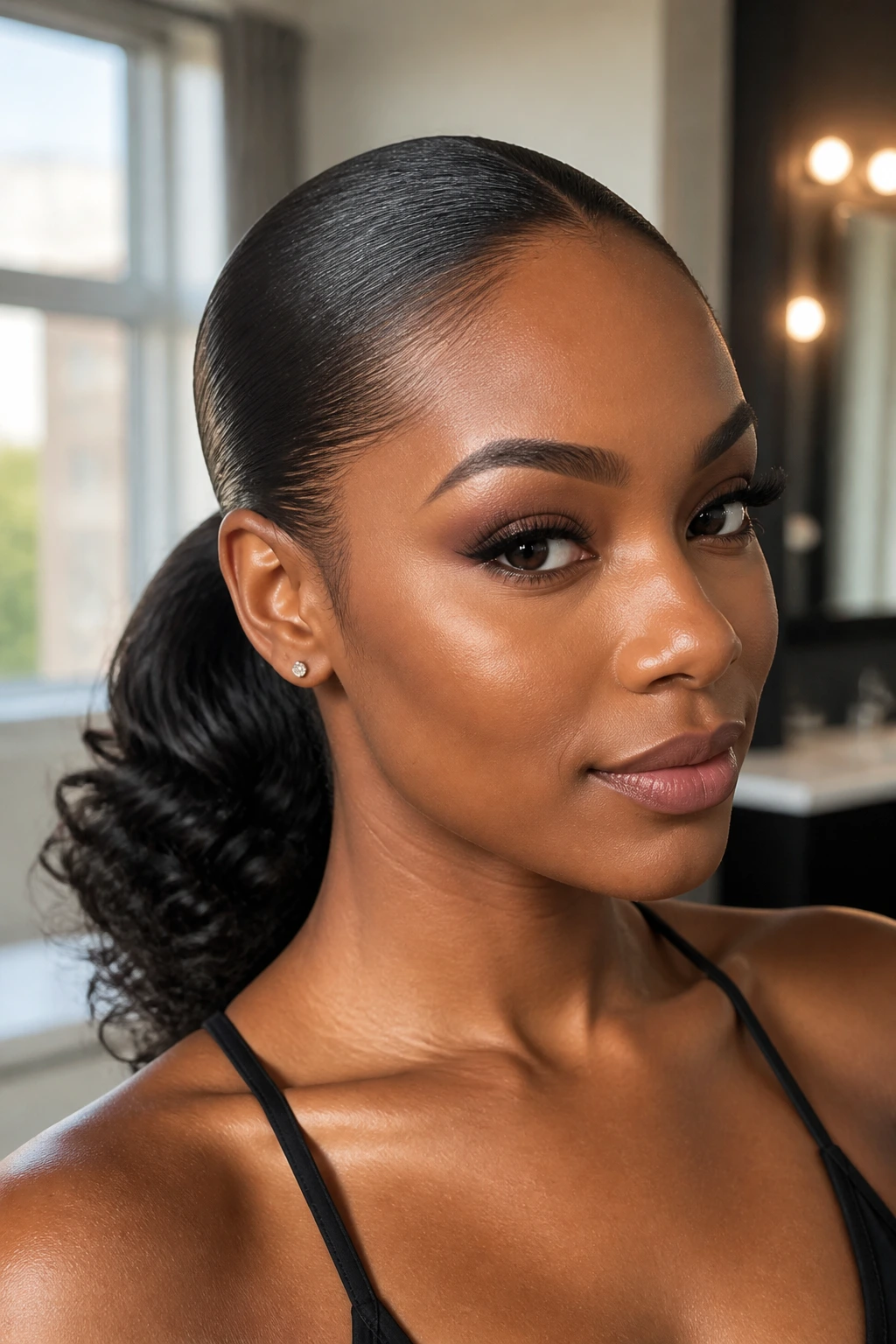
When the roots are glassy and the ends are soft, a ponytail stops looking sporty and starts looking finished. On oval faces, this works because the face already has balance; you can pull the hair back without losing the frame.
The sleek base is what changes the mood. Use a light gel or edge control around the hairline, then smooth the hair back with a boar-bristle brush. Keep the ponytail low or mid-height for the cleanest line. High ponytails can work, but they change the proportions fast and tend to pull the face upward more than you might want.
Curl the ponytail ends after the base is secured. That keeps the length from looking flat or stiff. If you’re using extensions, wrap a small section around the hair tie so the base looks clean, not wrapped in a hurry. It’s a small detail, and it matters.
11. One-Ear-Tucked Waves
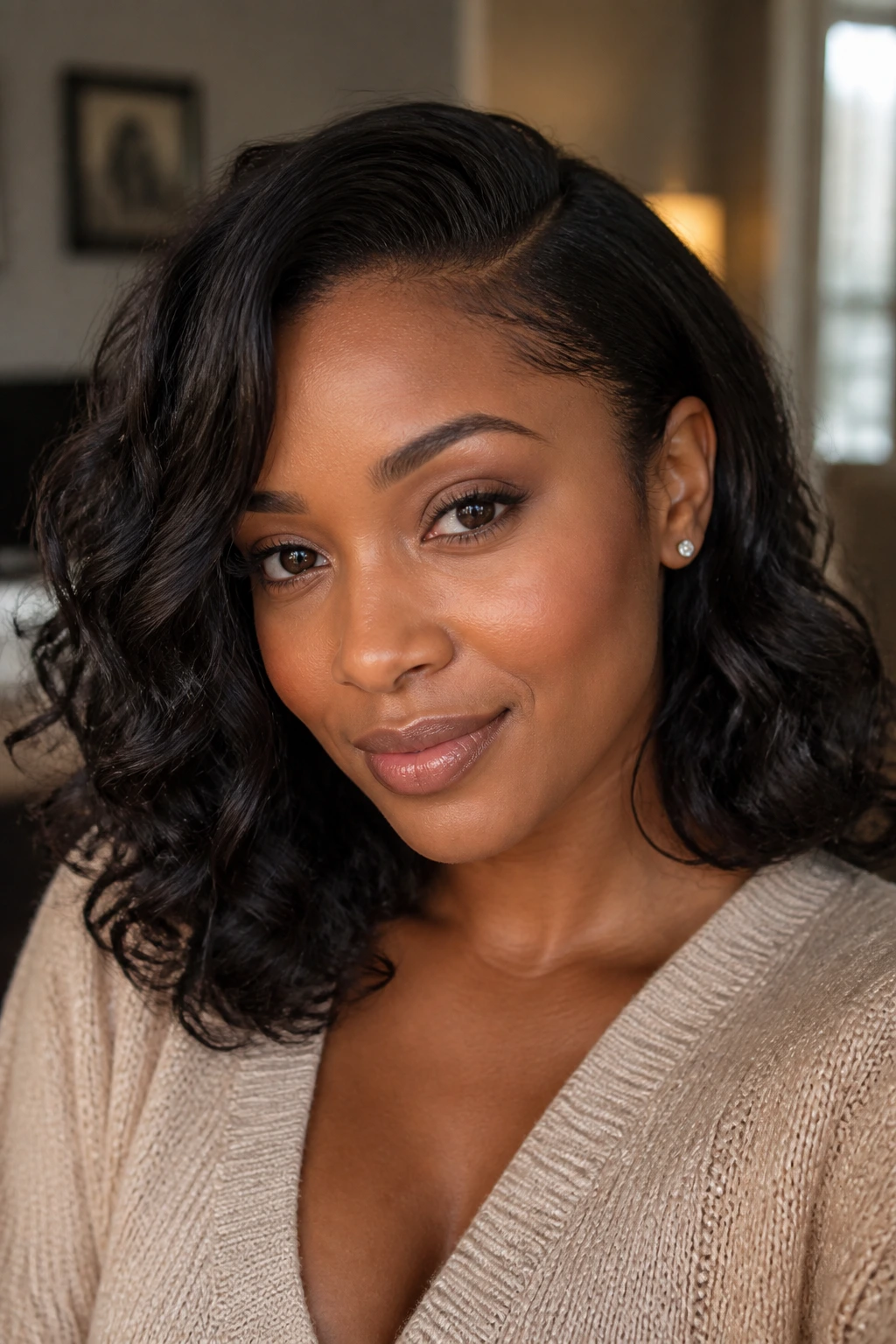
This is the quickest edit you can make to loose curls, and it changes the whole face. Tucking one side behind the ear opens up the cheekbone, exposes the jawline, and lets the curls keep their softness on the other side.
On oval faces, that asymmetry is useful because it breaks the symmetry just enough. The style does not need to be dramatic. A hidden bobby pin placed under the top layer is often enough to hold the side in place, especially if the curls have cooled and set properly.
It works best on shoulder-length or longer hair, though shorter cuts can pull it off too if the front pieces are long enough to tuck. If the tucked side keeps slipping, the problem is usually product weight near the roots. Use less serum there, not more.
One ear out. That’s the whole shift.
12. Curly Bob with Blunt Ends
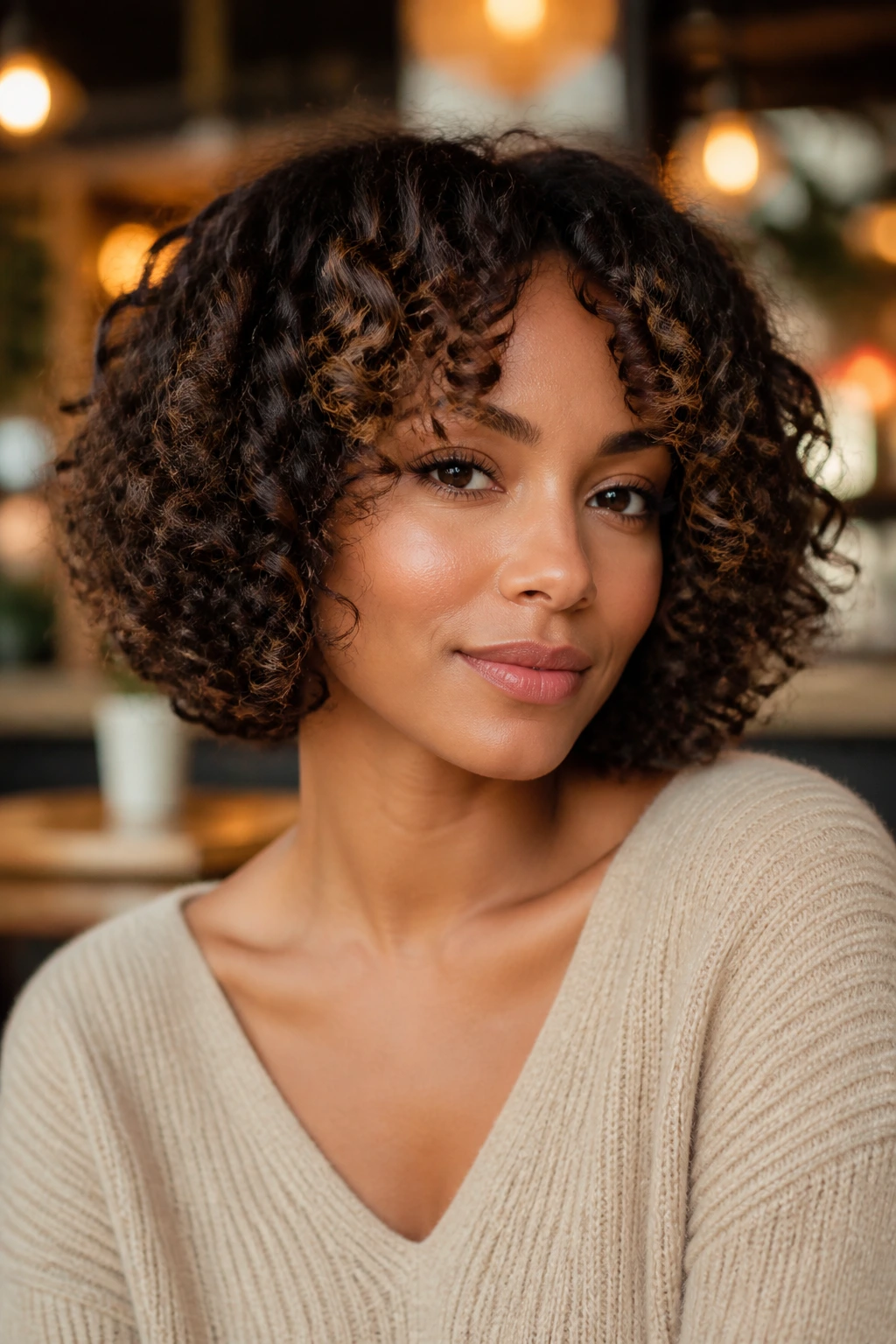
A curly bob can be sharp or soft, and on oval faces it gets the nicest result when the cut lands just below the jaw rather than exactly on it. That little difference keeps the line from hitting the widest part of the face and makes the curls feel breezy instead of boxed in.
A blunt outer line with a few hidden interior layers is the smartest version. The blunt edge gives the bob shape; the internal layers keep it from puffing outward like a triangle. If the hair is naturally dense, that inside layering matters even more.
A 1-inch iron or medium rods can set the curl without making the bob look overdone. Let the curls fall, then separate them only once. Over-handling a bob is how you get frizz at the ends and a puffier silhouette than you wanted.
13. Loose Sew-In Curls
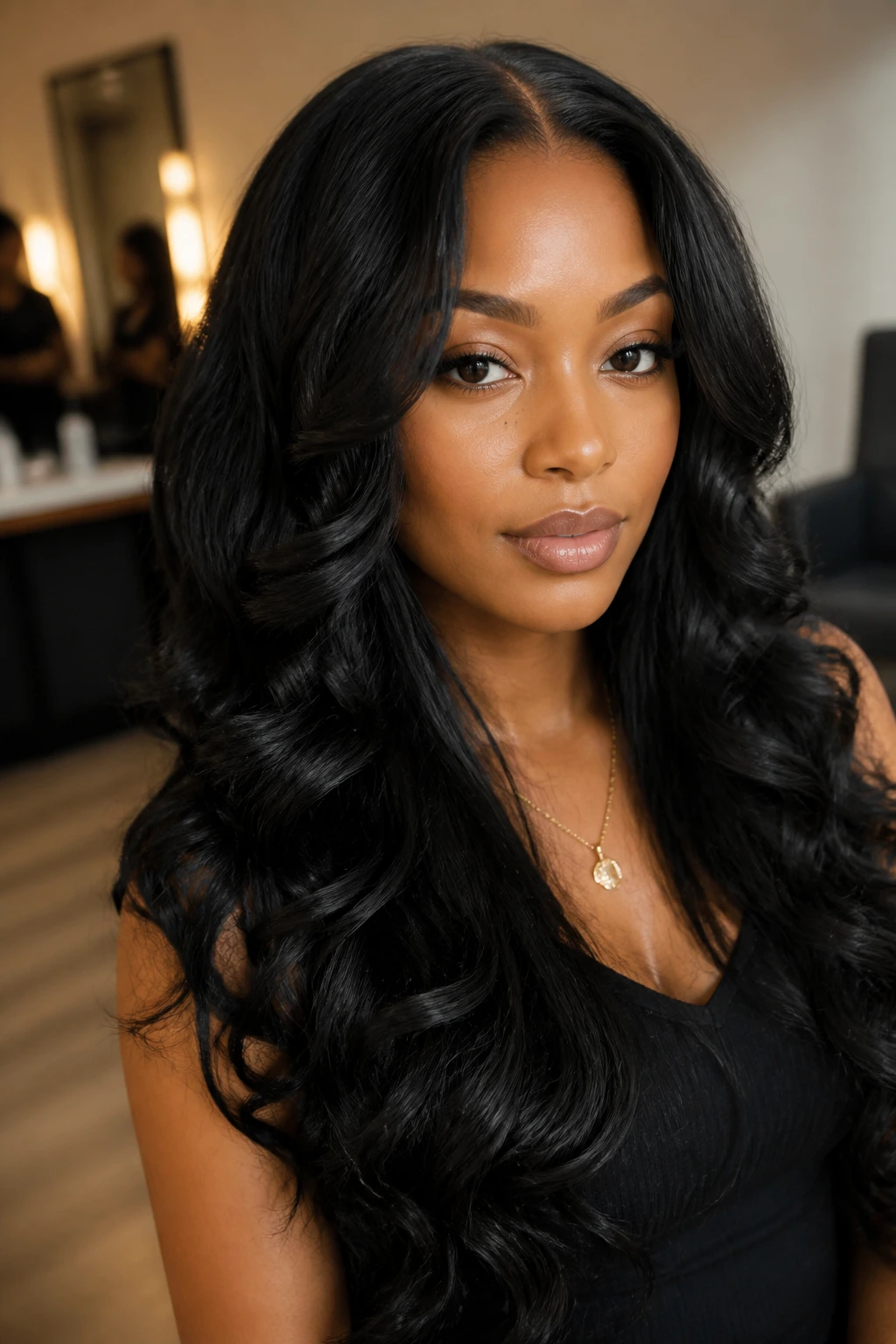
A loose sew-in is the low-daily-effort answer for people who want the curl pattern without touching hot tools every morning. It works especially well when the stylist leaves enough room around the face to keep the shape open instead of stacking all the hair at the temples.
Ask for long layers around the front and a part that suits your face, not just the install. That detail gets missed all the time. If the hair is too full at the sides, oval features can disappear under the volume. A slight side part or a soft center part usually solves it.
The good part is longevity. The not-so-glamorous part is upkeep. The scalp and leave-out need attention, and the curls themselves need light re-setting every few days if you want them to stay soft. Still, when done well, this is one of the easiest ways to keep loose curls looking full without re-curling your whole head every other morning.
14. U-Part Wig with Leave-Out and Loose Curls
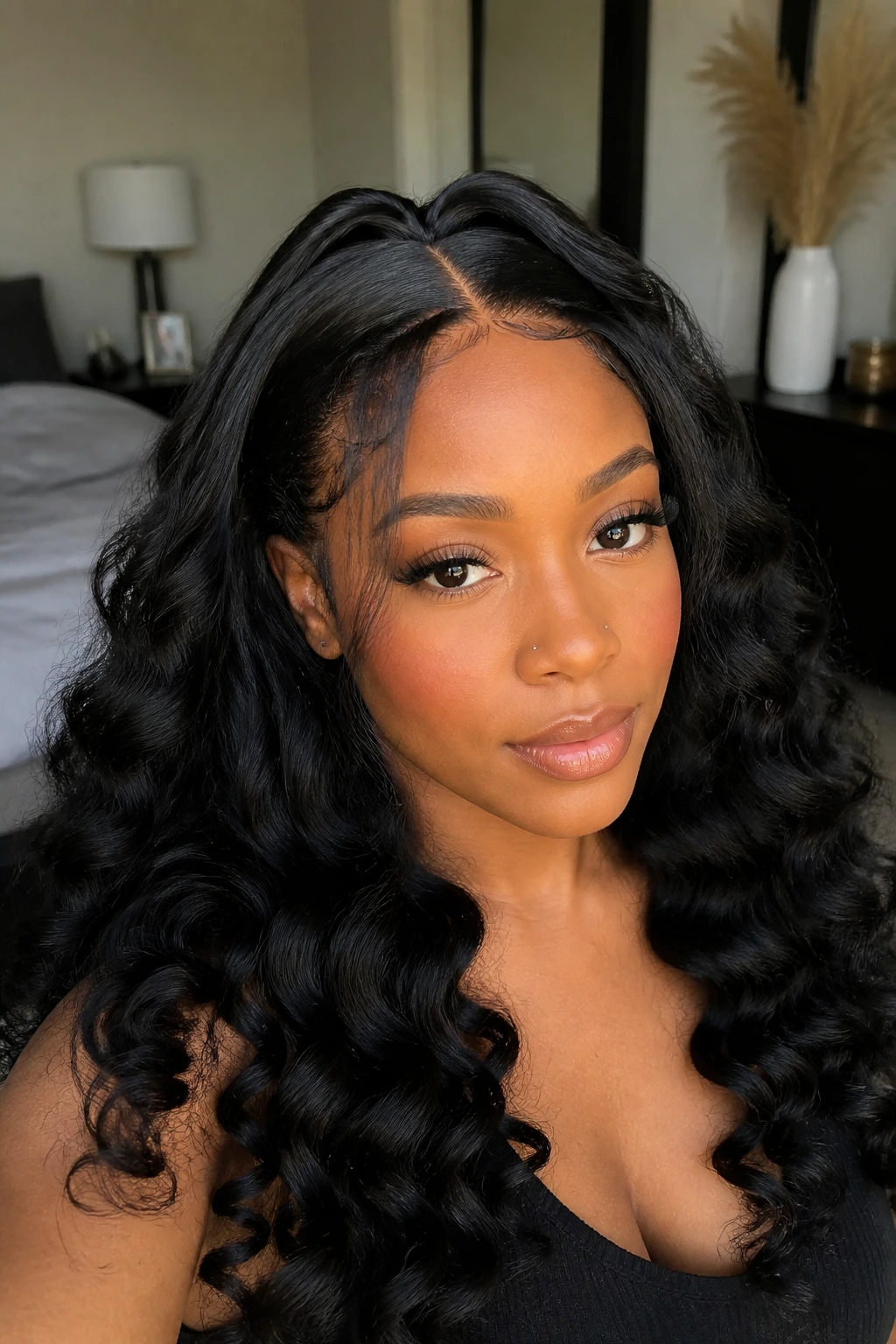
A U-part wig gives you more control than a sew-in because you can change the part, shift the volume, and take the unit off when you need a break. That flexibility makes it a smart pick for oval faces, which can handle different part directions without the style looking off.
The leave-out is the part that has to match. If your natural hair is textured, a light blowout or careful stretching helps it blend into the wig hair instead of sitting like a separate layer. Don’t over-smooth it. You want the blend to look like one shape, not a flat patch sitting on top of curls.
This style is also good when you want loose curls to stay consistent. The wig hair holds the pattern, and your own hair stays protected underneath. Keep the leave-out moisturized, wrap it nightly, and avoid pulling the part too tight. A harsh part line is a dead giveaway, and there is no reason to invite that problem.
15. Twist-Out Stretched Into Loose Curls
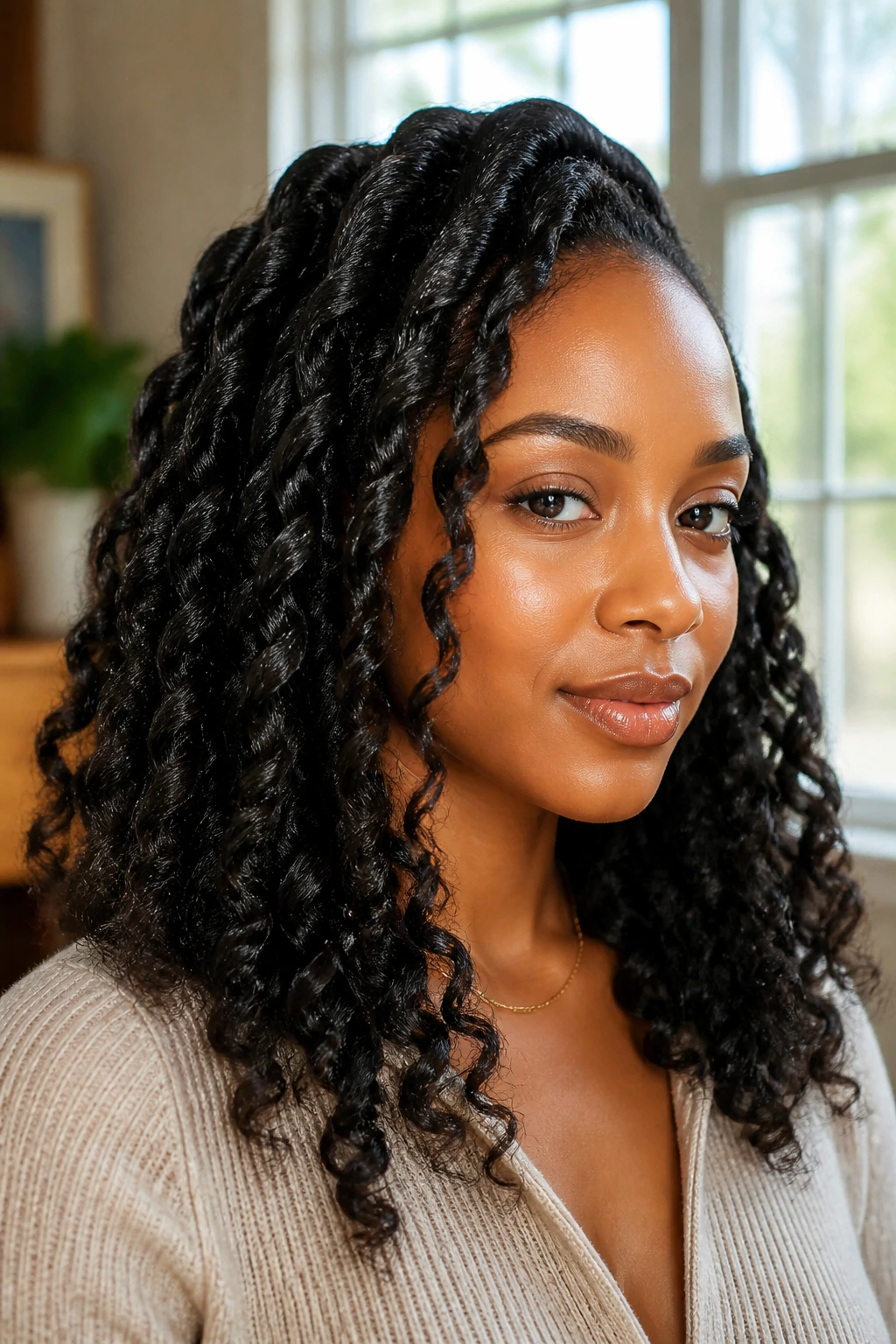
Can a twist-out look loose instead of chunky? Absolutely, if the twists are large, fully dry, and separated with a light hand. On Black hair, this is one of the best heatless ways to get a curl that still feels soft around an oval face.
Start with stretched hair and bigger two-strand twists, not tiny ones. Tiny twists usually create too much definition for this look. A setting foam or lightweight cream gives hold without the waxy feel. Once dry, unravel each twist slowly and stop before the hair starts frizzing out at the ends.
The face shape part is easy here: keep the front twists a little looser or bring them back off the face on one side. That softens the forehead and keeps the curls from overwhelming the cheekbones. This style is forgiving, but only if you separate with restraint. The more you pick at it, the less loose it looks.
16. Wand Curls on a Silk Press with Deep Layers
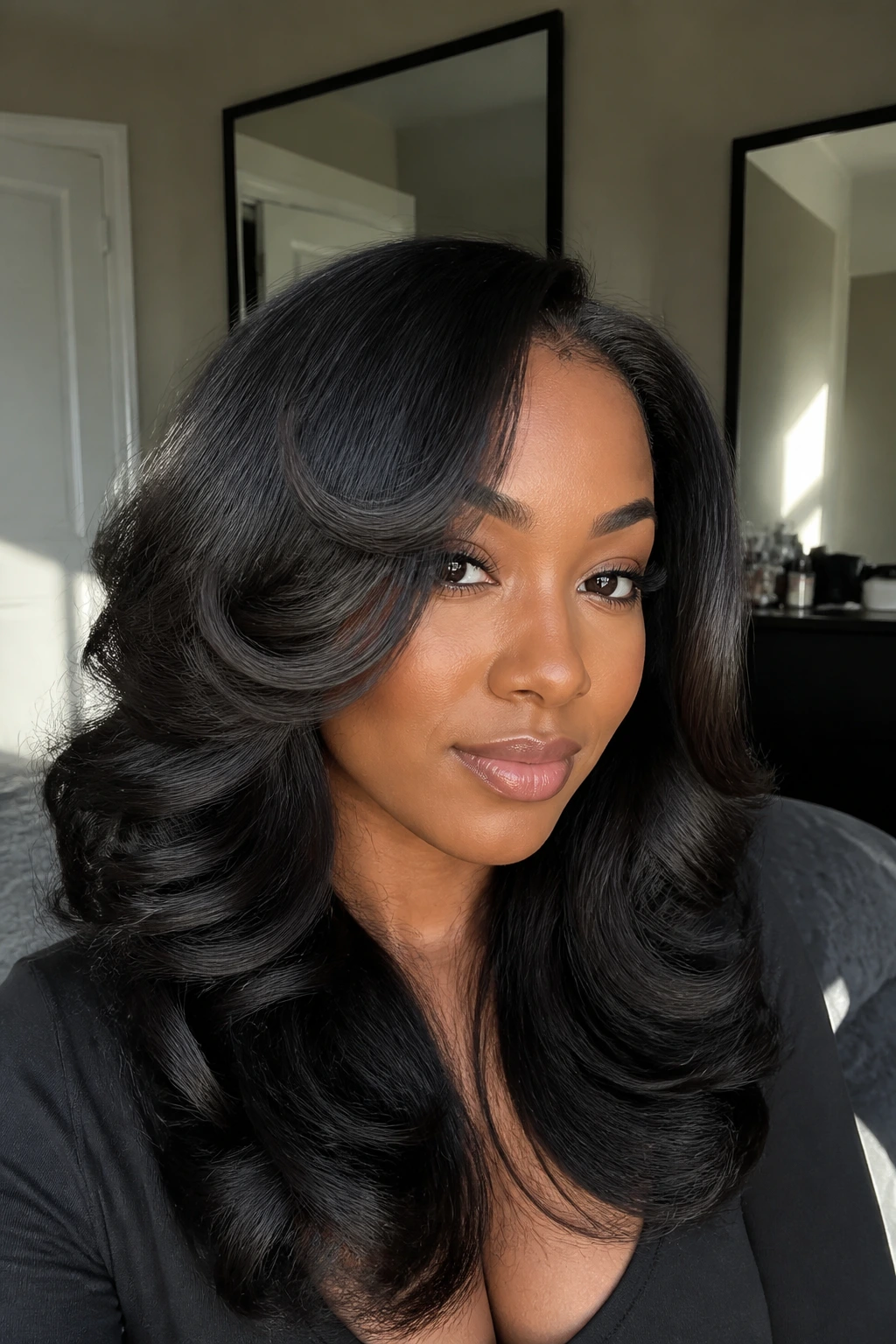
Silk-pressed hair can hold loose curls better than people expect — if the layers are doing some of the work. Deep layers keep the style from turning into one heavy sheet of hair, which matters a lot on oval faces because too much uniform length can drag the eyes straight down.
Use a heat protectant first. Always. Then wrap medium sections around a 1.25-inch wand at around 325–350°F, depending on the condition of the hair. Hold each curl for a few seconds, release it into your palm, and let it cool before dropping it. That cooling step is what gives the curl memory.
This version looks cleanest when the layers around the face are left a touch softer than the back. It creates movement without making the front pieces jump out too much. If the hair feels too silky to hold, pin the curls while they cool. It’s a boring extra step, and it works.
17. Curtain Bang Curls
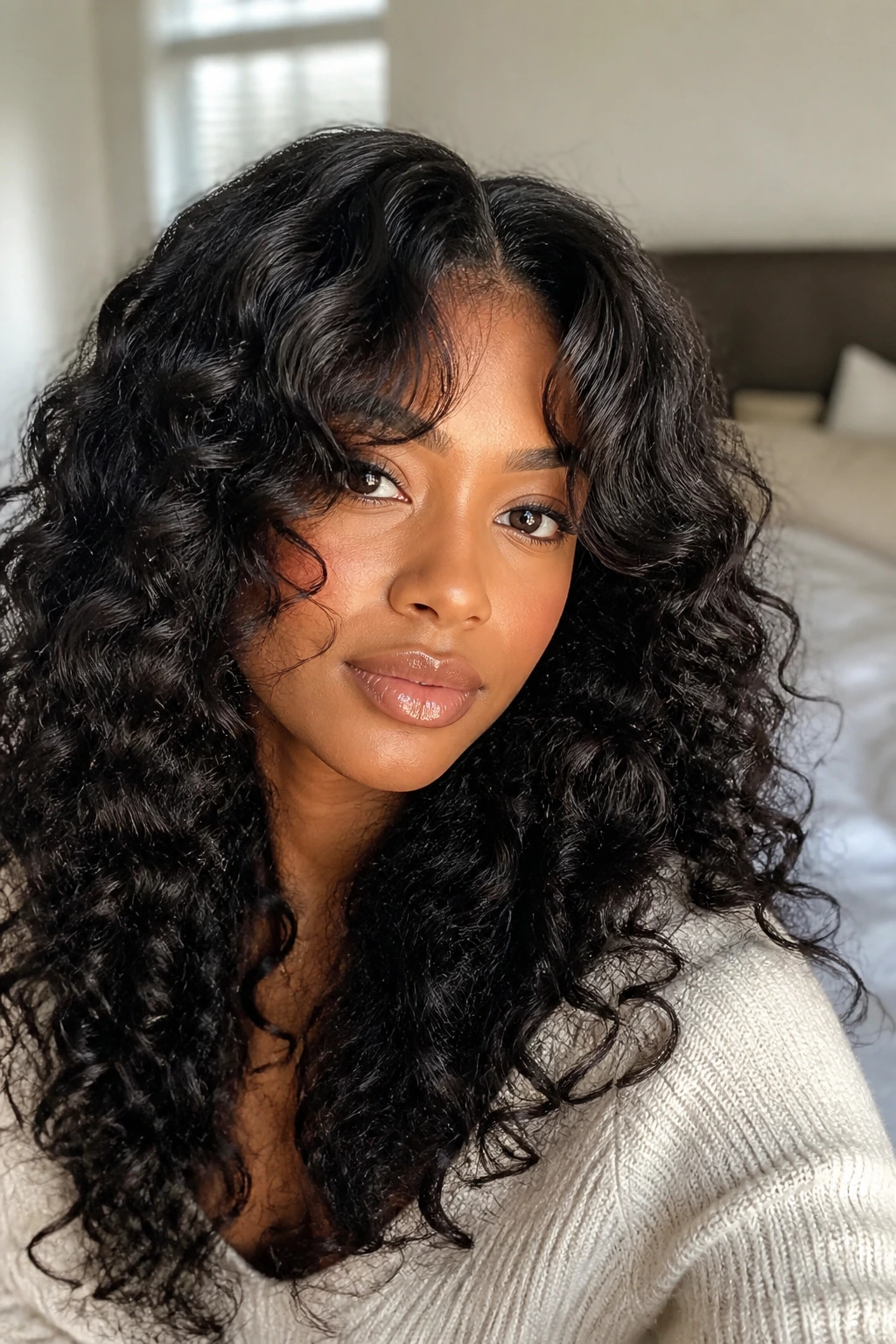
Curtain bangs are one of the easiest ways to make loose curls feel softer around an oval face. The parted fringe breaks up the forehead area, then eases into the rest of the curls so the whole style feels connected instead of chopped up.
The length matters more than the word “bangs” suggests. On Black hair, curtain bangs usually work better when they land around the cheekbone or lip, not up at the brows. That gives the curl enough room to bend without flipping awkwardly. If the fringe is too short, it can spring up and sit in the air like it’s trying to escape.
Keep the bangs airy. Not heavy. A light curl pattern and a gentle sweep away from the center make the face look open, and that matters more than getting a perfect curtain shape. On a textured blowout or silk press, this look can be a lot of fun without feeling costume-like.
18. Romantic Waterfall Half-Up
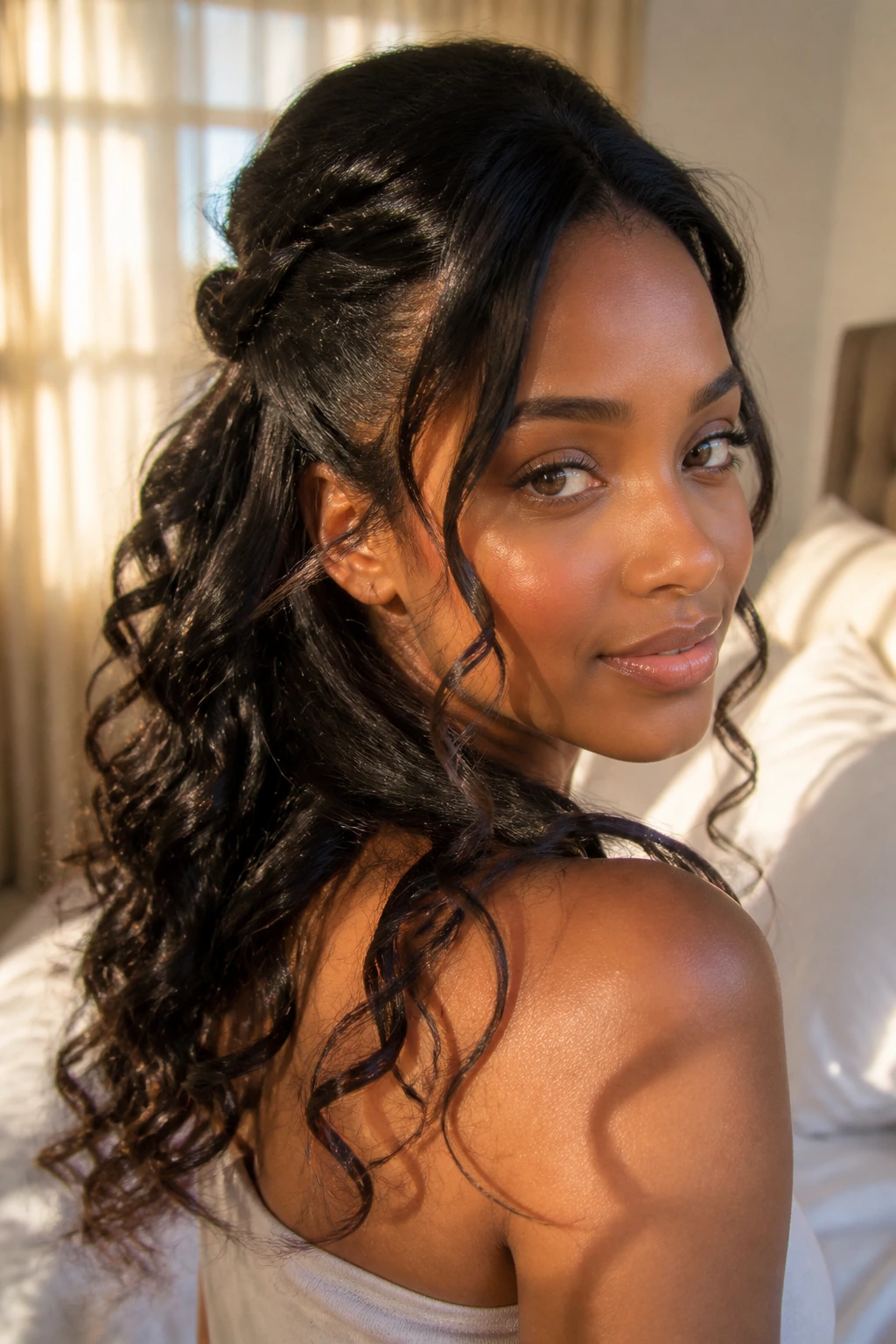
A waterfall half-up keeps the front controlled and lets the lower curls do the soft work. It’s a good fit for oval faces because it adds lift at the crown while leaving enough hair down to keep the face framed.
Twist or pin the top section back loosely. Don’t over-tighten it. If the top is too slick, the style starts to look severe. Let a few face pieces fall free, especially near the temples, and leave the back curls full and touchable. That contrast is what gives the style its shape.
This one is especially nice with pearl pins, small combs, or a single decorative clip, but it does not need them. A clean half-up on its own already gives enough structure. If the lower curls need a little more life, refresh them with a light mist of water and mousse, then scrunch lightly and let them air-dry.
19. Flip-Over Part Curls
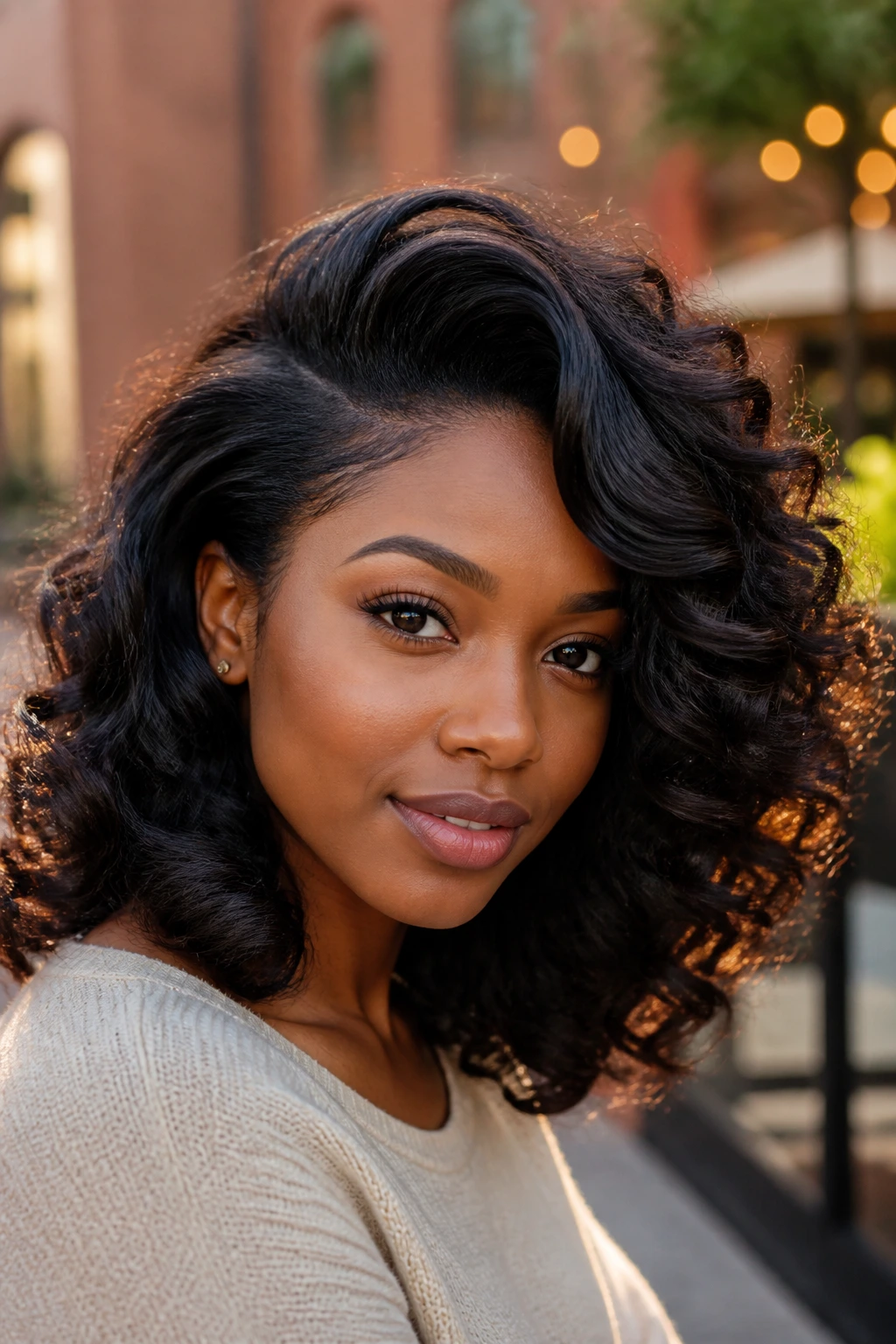
No part can be the point. That’s the whole charm of a flip-over style. Instead of drawing a line through the scalp, you let the curls sweep from one side to the other and build volume right at the roots.
On an oval face, that casual asymmetry works because it breaks up the symmetry without hiding anything. It also gives the crown a lift that center parts sometimes flatten. If your hair is dense, this style can look full and airy at the same time, which is a harder trick than it sounds.
The secret is not over-brushing the top. Lift with your fingers or a wide-tooth pick, then stop. Too much combing and the style loses the easy shape that makes it look good in the first place. This is a second-day-curl favorite for a reason: a little frizz at the root can actually help it look better.
20. Shoulder-Grazing Lob with Beachy Bend
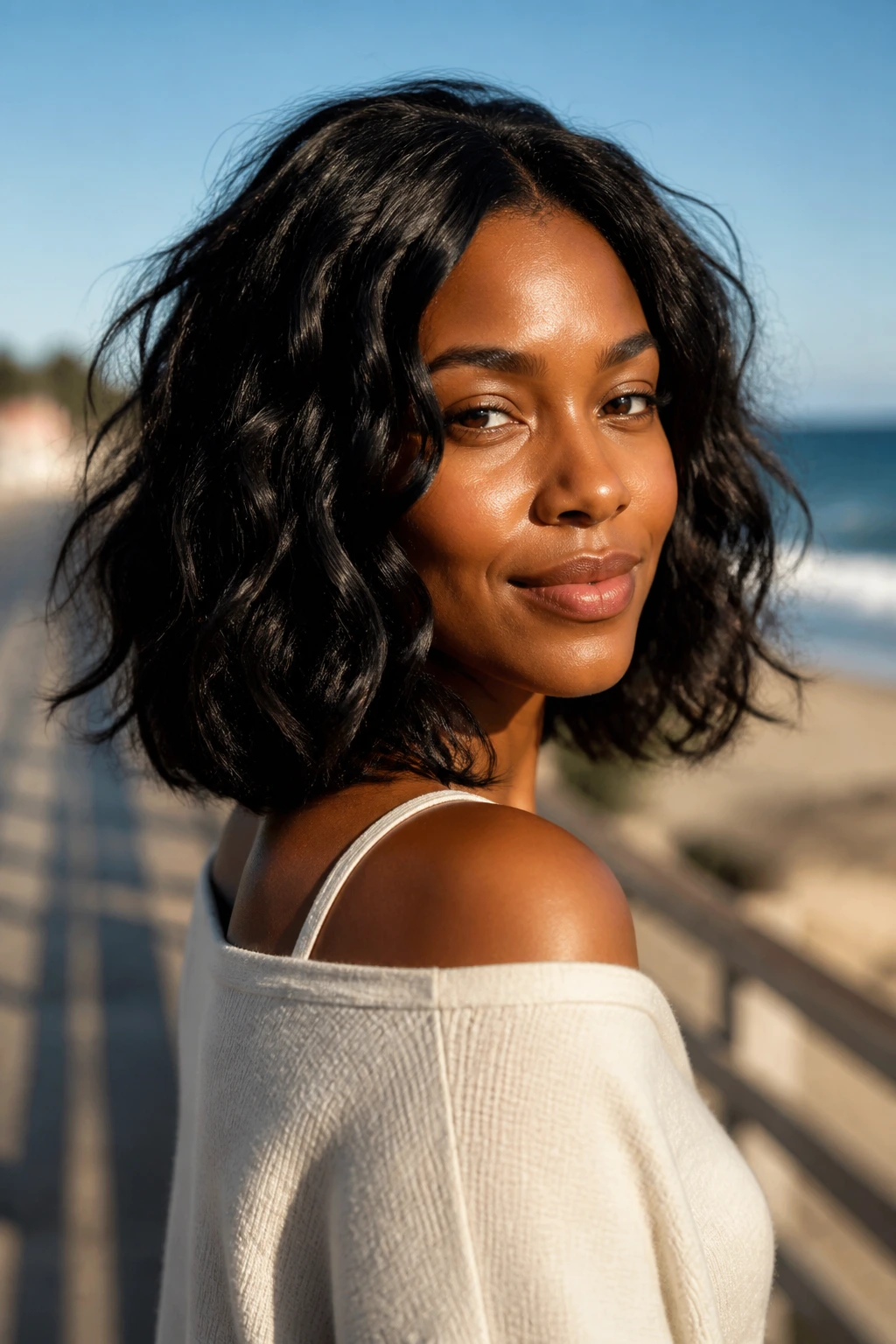
A shoulder-grazing lob gives loose curls enough room to land without dragging the face down. On oval faces, that length is especially nice because it keeps the neck visible and gives the cheekbones a clean frame.
The bend should feel casual, not stiff. Alternate the curl direction in the middle sections and leave the last inch looser so the ends don’t bunch up. If the hair is naturally thick, a few hidden layers make a huge difference. Without them, the lob can puff outward at the sides, and that is not the shape you want.
This style is the easiest one to wear every day. It doesn’t ask for ceremony. It just needs decent sectioning, a medium barrel, and enough cooling time to keep the bends intact. If you want it to feel less polished, rake the roots with your fingertips and leave the part a little imperfect. That small mess gives it life.
21. Low Chignon with Curled Face Pieces
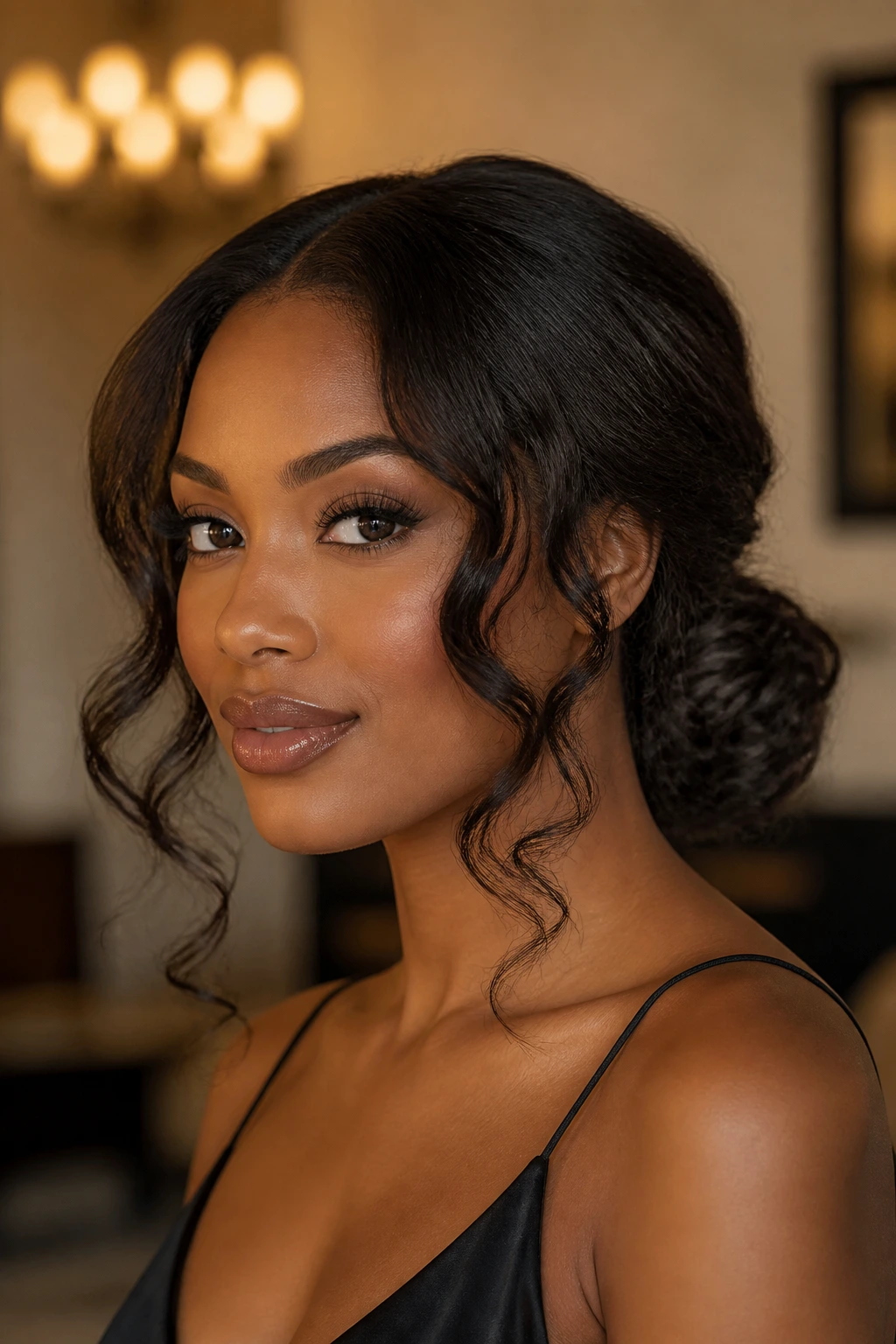
How do you keep an updo from swallowing an oval face? Leave hair out on purpose. A low chignon with loose curls around the temples and cheeks keeps the face visible while still giving you the shape and polish of an updo.
The chignon itself should sit low, not high and tight. If it sits too far up the back of the head, the style starts to pull attention away from the face. Keep the bun soft and slightly undone, then let two or three curled pieces fall forward. That gives the whole look a gentler line.
This is one of the best options for weddings, dinners, and formal events because it looks finished without being severe. A little shine spray on the curled face pieces is enough. Don’t drown the whole head in gloss. You want movement, not grease.
22. Side-Swept Fringe Curls
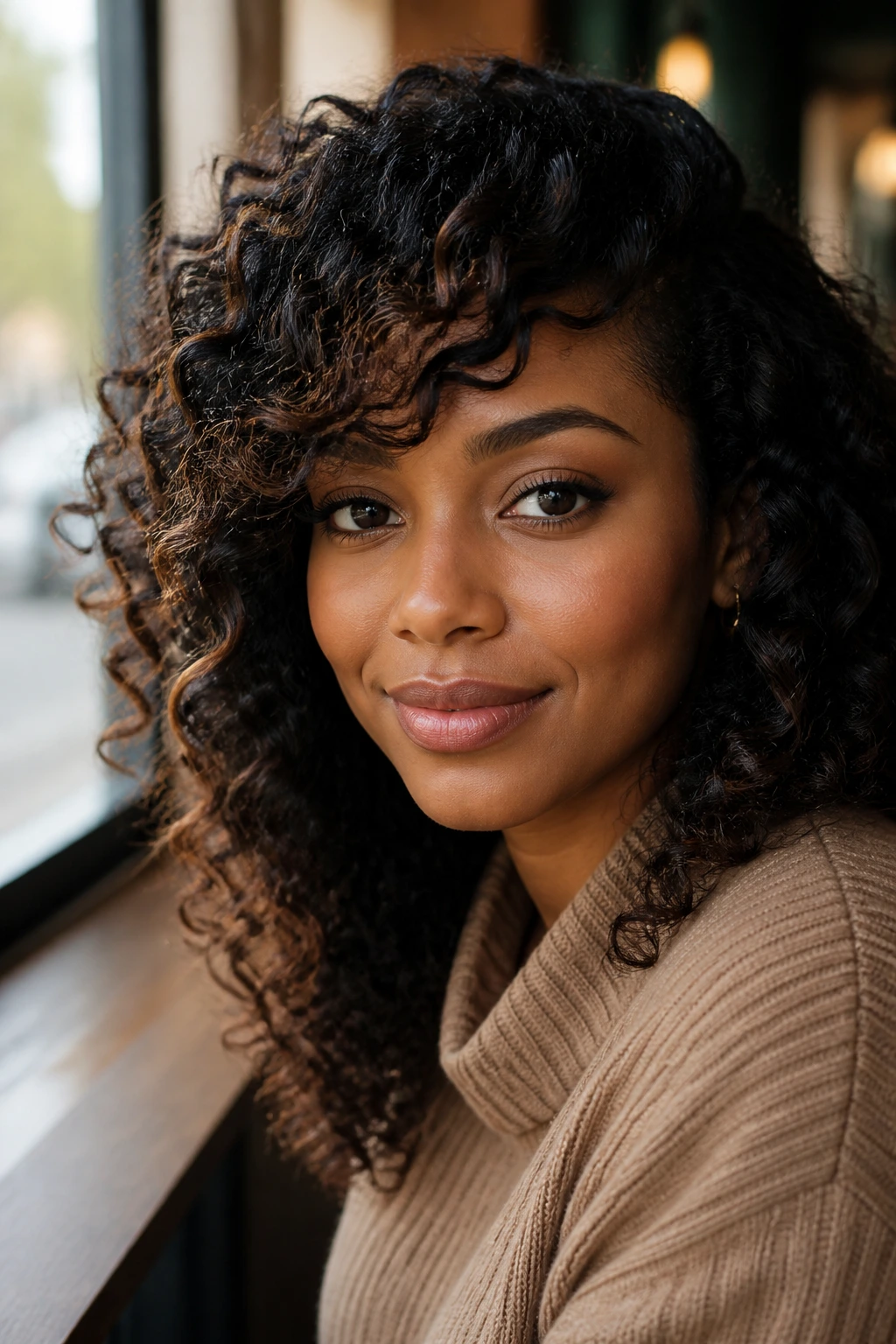
A side-swept fringe can change the mood of loose curls faster than almost any other move. It softens the forehead, adds movement across the front, and gives oval faces a little extra character without hiding the structure underneath.
The fringe works best when it stays light and airy. If it gets too dense, the front of the hair starts to dominate the whole look. Keep the shortest pieces long enough to sweep, not stab straight down. On Black hair, that usually means cutting or shaping the fringe with the curl pattern in mind, not against it.
This style is a good compromise if you want bangs but do not want the commitment of a full fringe. The side sweep also makes it easier to tuck one side behind the ear or pin it back if the weather turns humid. Tiny adjustments matter here. A half-inch in the front can change the whole balance of the face.
How to Choose the Right Curl Size for Your Hair Length
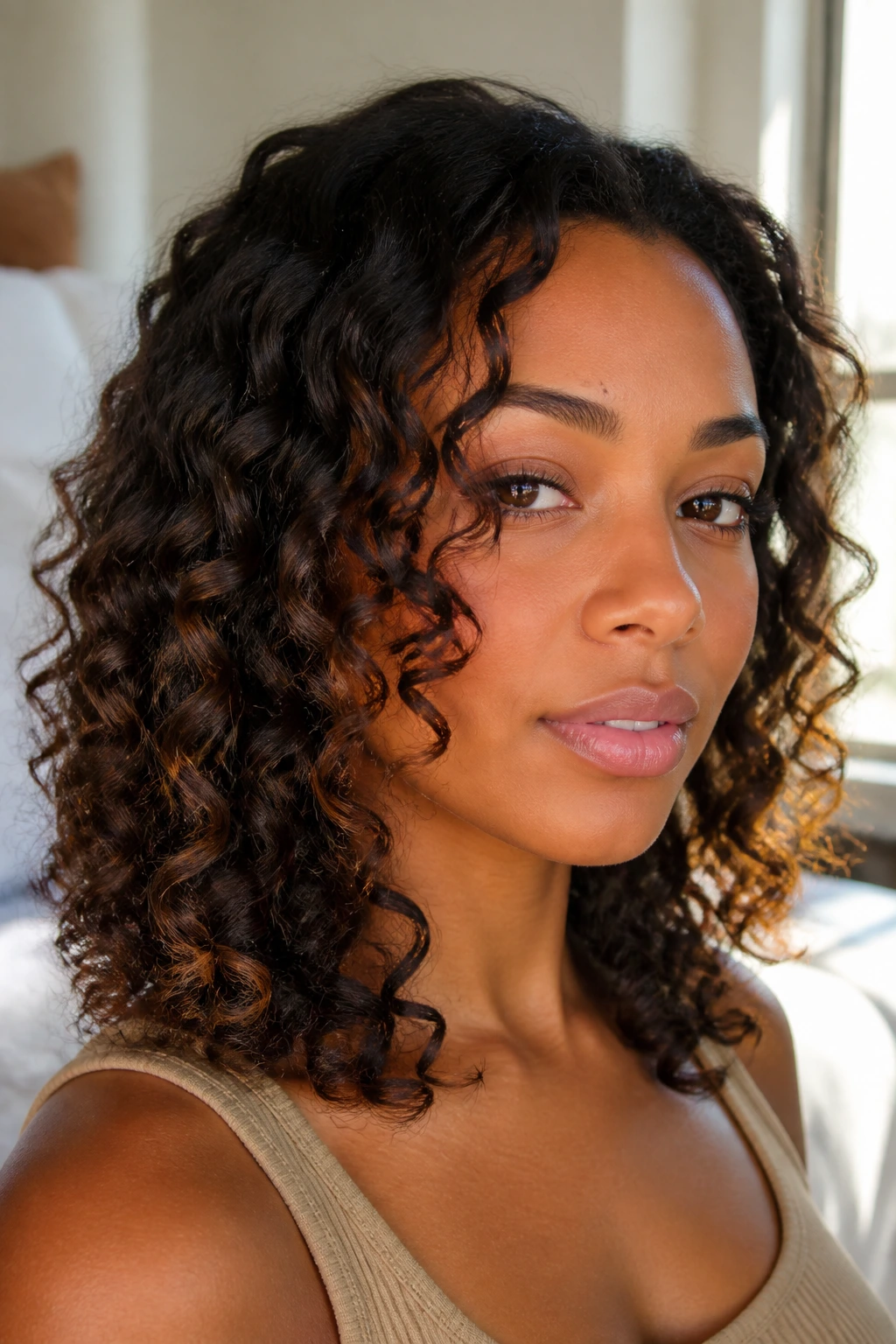
Curl size has to match the length, or the style starts fighting itself. Shorter cuts need smaller tools because big barrels tend to fall flat before they set. Longer hair can handle larger barrels, but only if the curl has enough time to cool and enough product to hold without getting stiff.
Short Hair
For bobs and lobs, a 1-inch wand or flexi rods in a similar size usually makes the most sense. The hair has less weight, so the curl reads faster. Keep the sections neat and don’t over-separate them, or the style will puff wider than the cut.
Medium Lengths
Shoulder-length hair is the easiest length for loose curls. You can use a 1.25-inch barrel, satin rods, or a flexi-rod set depending on whether you want more shine or more softness. Medium lengths also give you room for side sweeps, half-up styles, and tucked styles.
Long Hair
Long hair needs a larger barrel if you want the curl to stay loose instead of becoming a coil. A 1.5-inch tool, especially on stretched hair, can create movement without over-tightening the ends. If the hair is very dense, work in smaller sections than you think you need. Dense hair hides curl pattern fast.
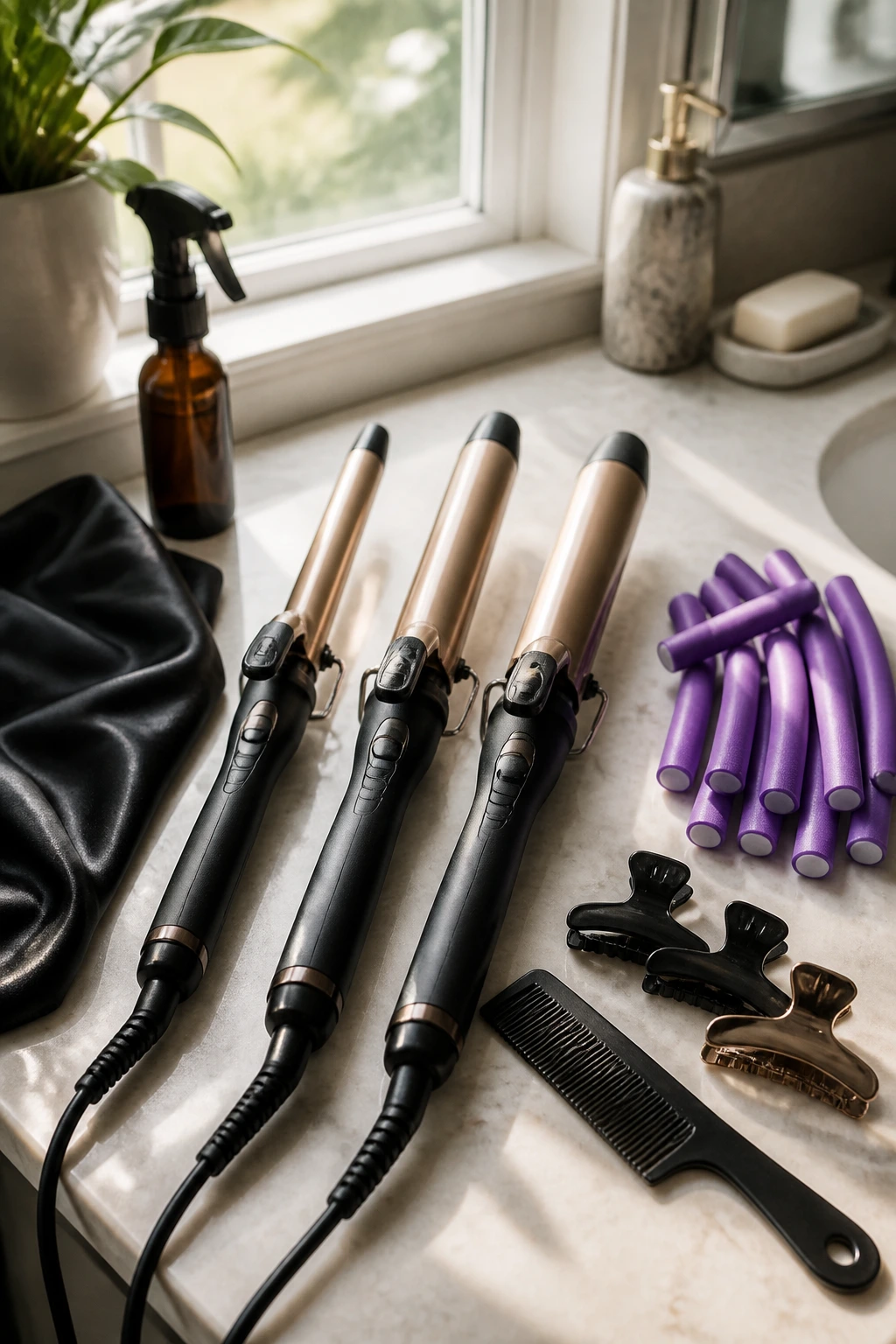
Tools That Make These Styles Easier
-
1-inch curling iron or wand: Best for bobs, face-framing pieces, and shorter lobs that need a curl with a little grip.
-
1.25-inch curling iron or wand: The safest all-around barrel for loose curls on medium to long Black hair.
-
1.5-inch wand: Useful for long hair when you want a softer bend and less spiral.
-
Heat protectant spray: The one product you should not skip on silk-pressed, relaxed, or blow-dried hair before hot tools.
-
Flexi rods or satin rods: Good for heatless sets, stretched natural hair, and overnight styling.
-
Duckbill or section clips: Keep the hair organized so the curl pattern stays even.
-
Rat-tail comb: Helpful for clean parts and neat sectioning around the crown and hairline.
-
Boar-bristle brush or paddle brush: Smooths roots for ponytails, half-up styles, and sleek front sections.
-
Satin scarf or bonnet: Protects the set overnight and keeps the curls from rubbing out.
Prep That Keeps Black Hair Smooth and Springy
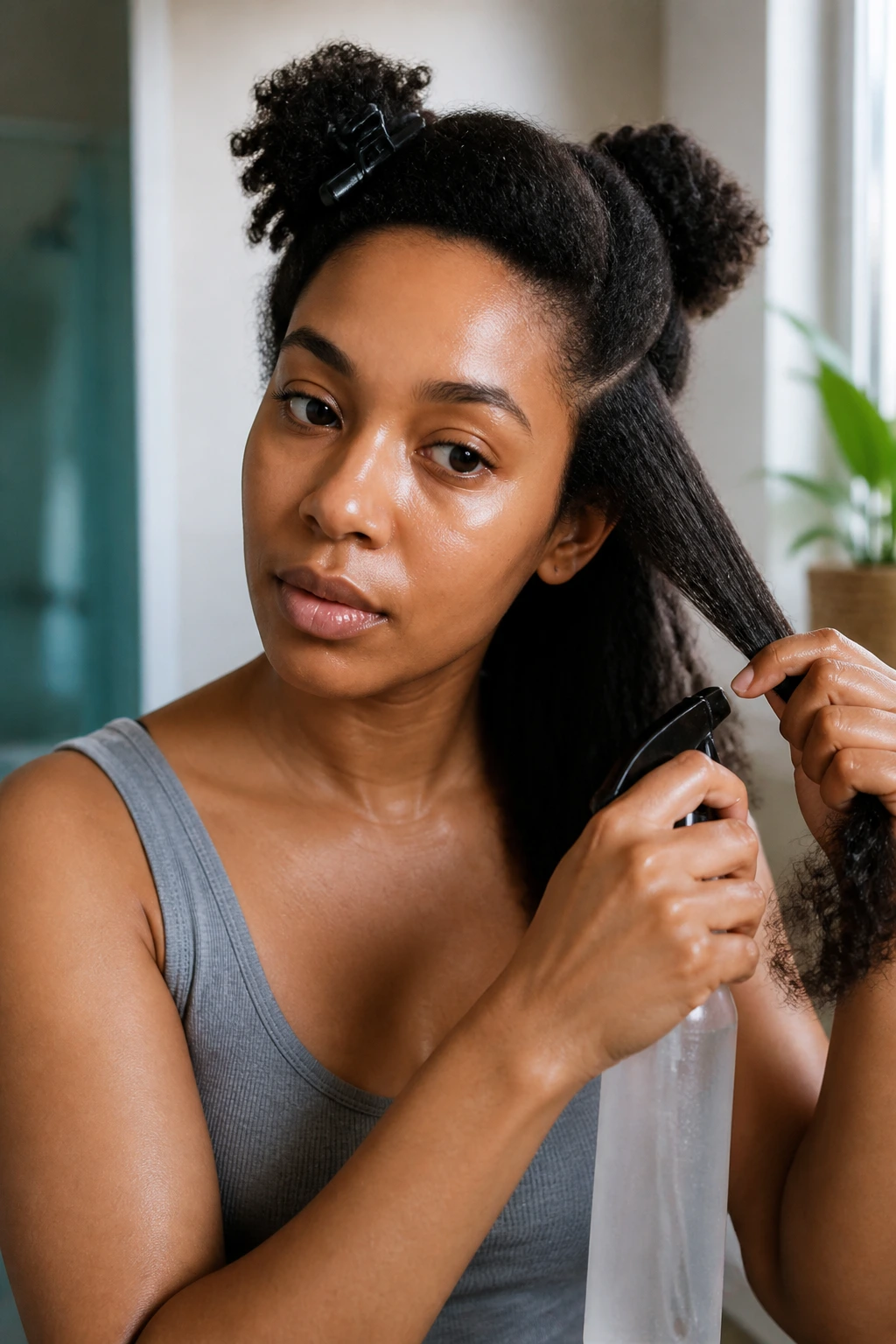
Loose curls look best on hair that has been stretched and prepped with intention. That does not mean pin-straight. It means the hair is detangled, sectioned, and handled in a way that lets the curl pattern sit instead of fighting friction from the start.
If you’re using heat, start with a clean blowout or silk press and keep heavy oils off the shaft before curling. Too much product at the root drags the style down, and Black hair already fights moisture loss in the middle and ends. A lightweight heat protectant, a clean sectioning pattern, and a cool-down period after curling matter more than piling on shine serum.
For rod sets and twist-outs, the prep shifts. Use a setting foam or lightweight cream, keep the sections uniform, and make sure each one is dry before you take it down. Wet or damp hair at the center of a set is one of the easiest ways to end up with frizz at the crown and soft ends that collapse by lunch.
Practical Ways to Make the Curls Last
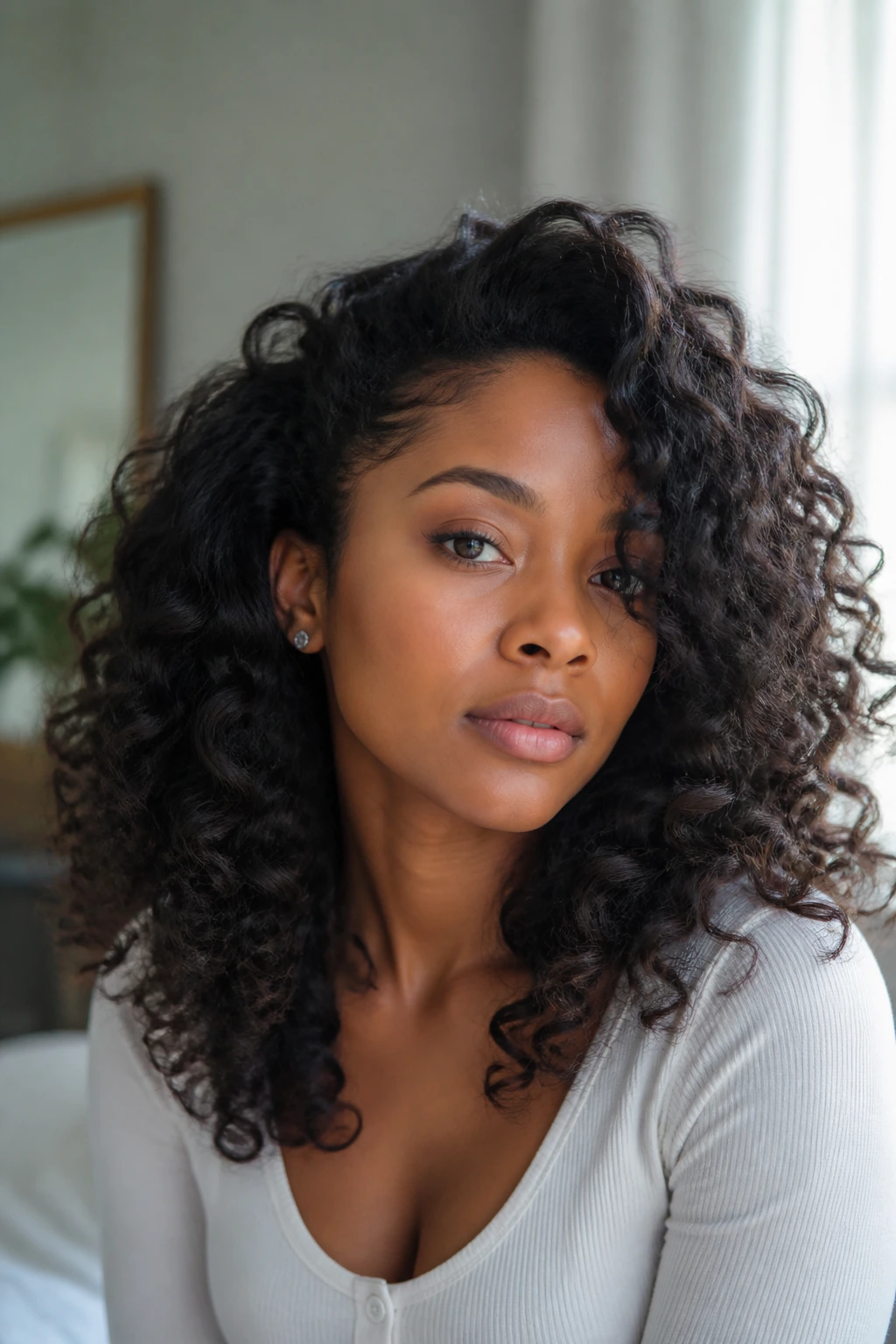
Root Lift: Clip the crown while curls cool, especially if your hair tends to fall flat at the top. A little lift there makes the whole style look fresher.
Touch Control: Stop touching the curls once they’ve been set. Fingers break the shape faster than humidity does.
Light Refresh: Use a water-and-mousse mist on the front pieces only, then smooth and air-dry. Don’t soak the whole head.
Night Reset: Pin-curl the front sections, wrap the lengths with a satin scarf, and sleep on a satin pillowcase. That combination keeps the shape cleaner than one layer of protection alone.
End Protection: A pea-sized amount of serum on the ends is enough. More than that and the curl starts sliding out.
Extra Ways to Change the Mood
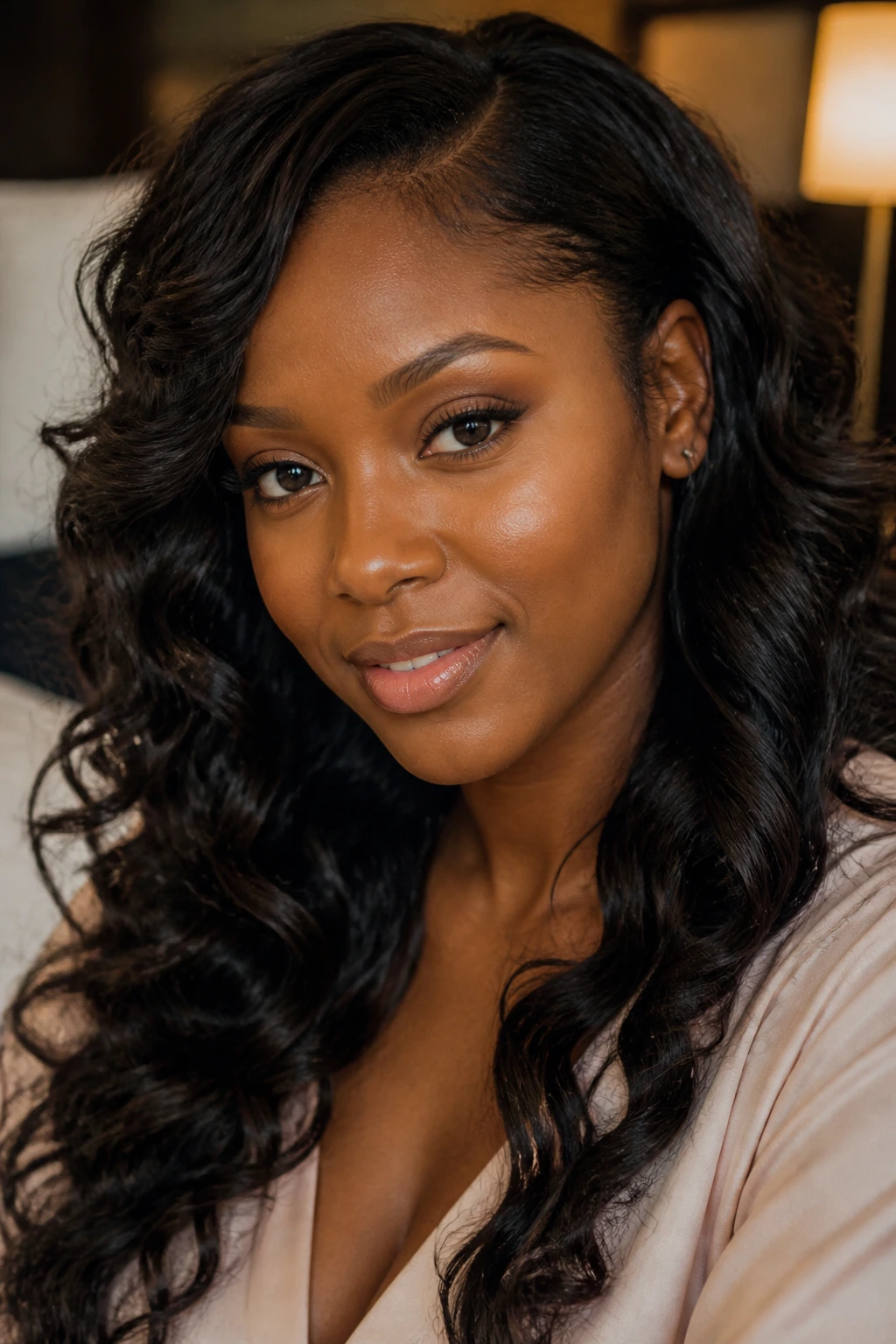
Soft Glam Finish: Brush the curls out just enough to create an S-wave pattern, then pin one front section behind the ear. It reads polished without becoming stiff.
More Lift at the Crown: Shift the part by half an inch and clip the top section while the curls cool. That tiny change gives oval faces more height without changing the curl pattern.
Heatless Swap: Choose rods or twist-outs when you want the same shape with less direct heat. The finish is softer and a little more matte, which can be a nice break from silk-pressed shine.
Protective Version: Use a sew-in or U-part wig when you want to keep manipulation down. Keep the leave-out minimal and the part neat.
Textured Finish: If the curls look too smooth, separate only the outer layer and leave the underlayer intact. That gives movement without puffing the whole style out.
Common Mistakes That Flatten the Style
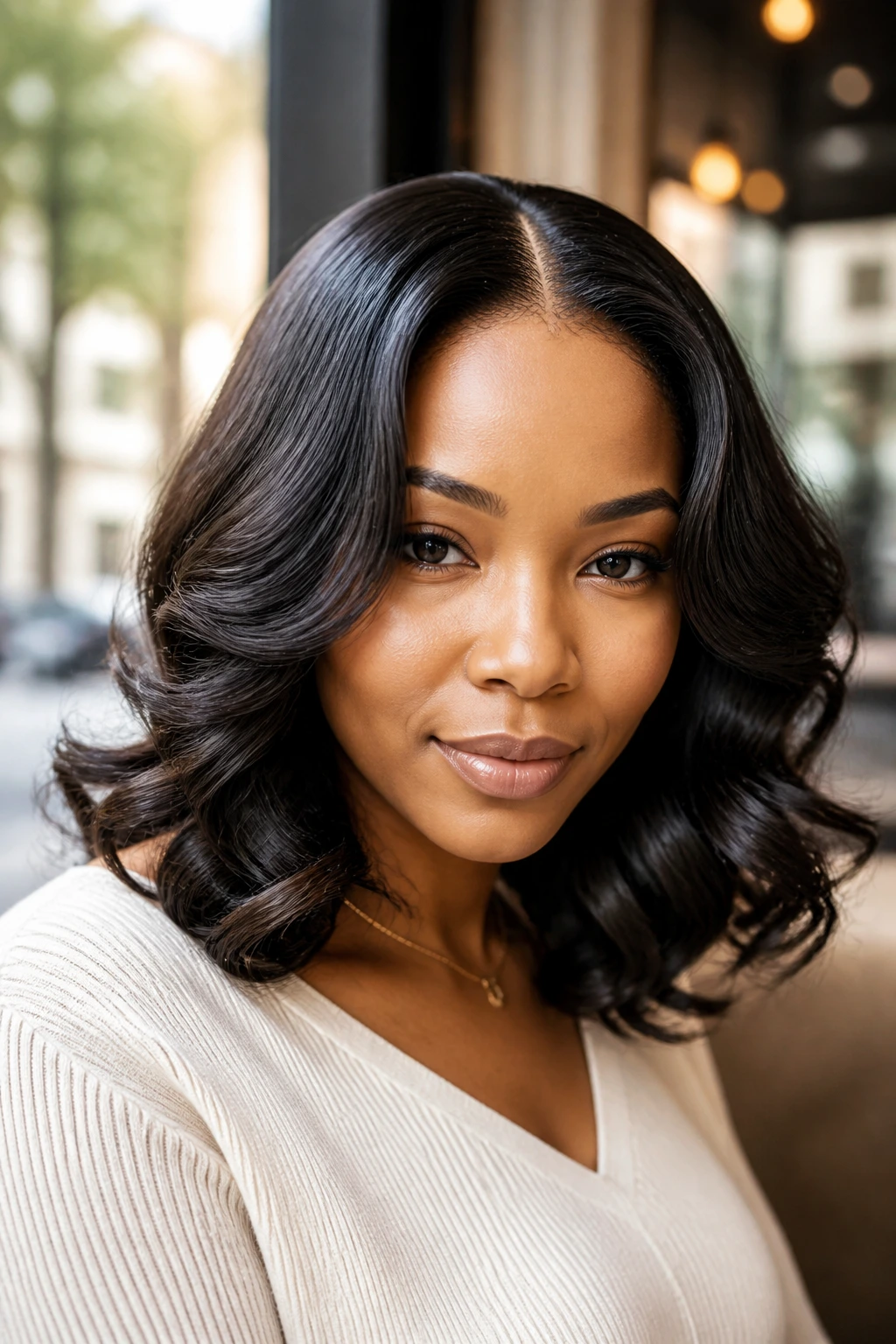
Using a barrel that’s too small: The curls look busy instead of loose, and the style can read dated fast. Go up a size unless the haircut is very short.
Touching the curls before they cool: Warm hair has no memory yet. Let it sit, pinned or cupped in your hand, before you separate it.
Loading on heavy creams or oil: The roots go limp and the curls lose spring. Use lighter products and save the richer ones for the ends, if at all.
Putting all the volume at the temples: That makes oval faces look wider than they are. Shift the lift to the crown or let the movement drop below the cheekbones.
Sleeping on the set without wrapping it: Even one rough night can flatten the front and widen the frizz halo. Satin is not optional if you want the shape to last.
Variations and Alternatives for Different Lifestyles
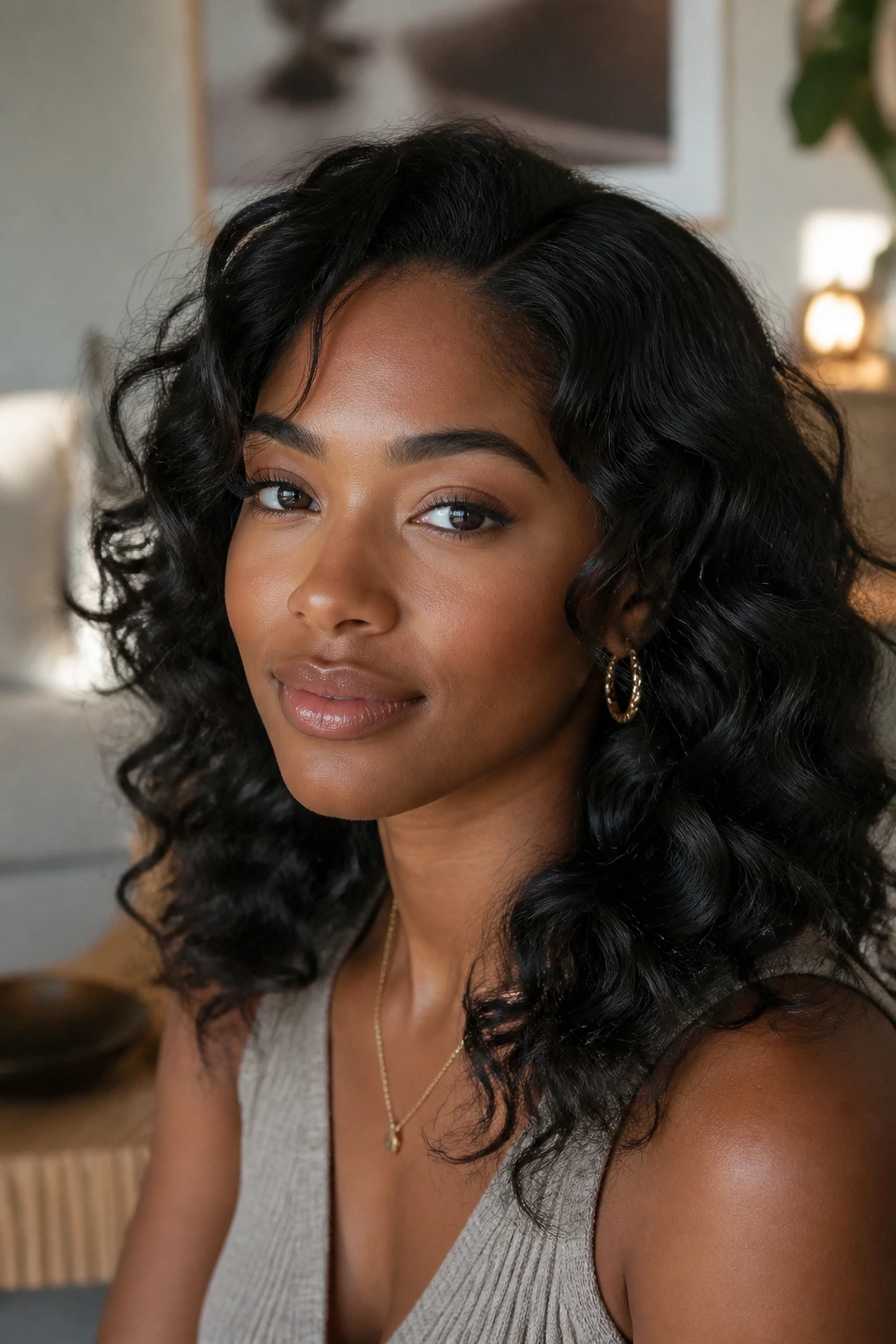
Heatless Weekend Set: Go with satin rods or large flexi rods on stretched hair and let the curls dry fully overnight or under a hooded dryer. The result is softer and less glossy than a silk-press curl, but the shape holds nicely with the right wrap.
Protective Install Version: Choose a sew-in or U-part wig with loose curls already set into the hair. This cuts down on daily manipulation and gives you a clean way to keep the style going for more than a few days.
Short-Hair Rewrite: For chin-length cuts, use a smaller barrel and keep the curl looser at the ends. Tuck one side behind the ear or shift the part slightly to avoid the hair sitting too boxy around the jaw.
High-Drama Event Finish: Pick a deep side part, brush the waves into one smooth curve, and finish with a little shine spray on the mid-lengths only. That version leans formal without needing an updo.
Low-Manipulation Workweek Version: Use a twist-out or flexi-rod set and keep the front sections pinned back at night. This gives you a soft curl pattern that doesn’t ask for daily heat.
Nighttime Care and Ongoing Maintenance
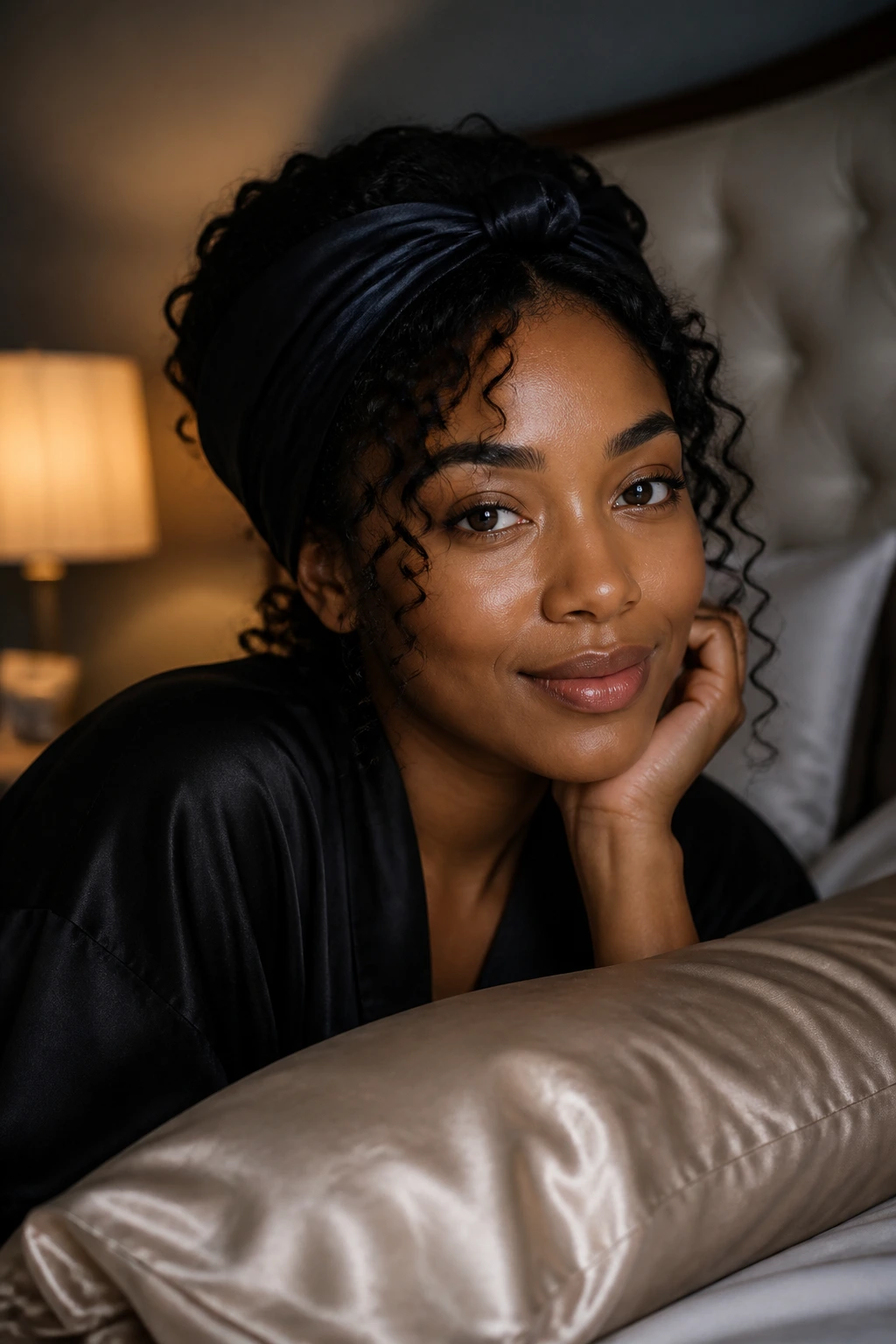
Loose curls on Black hair usually stay in shape for 3 to 5 days on silk-pressed or wand-curled hair if you wrap them well and keep them dry. Flexi-rod sets and twist-outs can last 4 to 7 days, sometimes longer if the hair is dense and the weather is kind. Sew-ins and U-part wigs can keep the overall style for 2 to 4 weeks before the curls need a real refresh.
The front is usually the first thing to go. That’s normal. Re-curl just the front two pieces or the top layer instead of redoing the entire head. It saves time and keeps the ends from getting fried by repeated heat.
At night, choose the protection that matches the style. Pineapple the curls loosely if the hair is long enough. Pin-curl the shorter pieces. Wrap the crown with a satin scarf and sleep on a satin pillowcase if you can. If the hair feels dry in the morning, mist the ends lightly and smooth them with your hands before you reach for a brush.
Frequently Asked Questions
What curl size looks best on an oval face?
A 1.25-inch barrel is usually the safest starting point because it creates a soft bend without making the curls look too tight. If the hair is shorter, move down to 1 inch; if it’s very long, a 1.5-inch barrel can keep the style loose.
Do loose curls work better on silk-pressed hair or blown-out hair?
Silk-pressed hair gives a smoother, glossier finish, while blown-out hair adds a little more body and grip. If you want a sleek event look, go silk press. If you want softer fullness, the blown-out base often holds shape better.
Can natural hair hold loose curls without heat?
Yes. Flexi rods, satin rods, and large twist-outs can create soft curls on stretched natural hair without direct heat. The hair needs to be fully dry before you take it down, or the curl will puff and frizz.
How do you stop curls from flattening at the crown?
Clip the crown while the hair cools, then wrap it at night. If the root still falls flat, use less oil near the scalp and add a little lift by changing the part half an inch off center.
Are center parts or side parts better for oval faces?
Both work. Center parts show symmetry and feel clean, while side parts add movement and are often better when you want more drama or a softer front. The better choice depends on what you want the curls to emphasize.
Can these styles work on short Black hair?
Yes, but the curl size needs to shrink with the length. A chin-length bob, a tapered cut, or a short layered style usually looks best with a smaller wand or tiny flexi rods so the bend shows up instead of disappearing.
What if my curls frizz as soon as I separate them?
You probably touched them too early or used too much product. Let the curls cool fully, separate with oiled fingertips only once, and stop brushing the lengths repeatedly. A little frizz at the root is fine; frizz everywhere is a sign the set needed more drying time.
How often should I refresh a curl set?
Front pieces can be refreshed every 2 or 3 days, while the whole style may only need a reset once a week. For installed styles, refresh the leave-out and crown more often than the curls themselves. That keeps the shape cleaner without starting over from scratch.
A Soft Finish With Real Shape
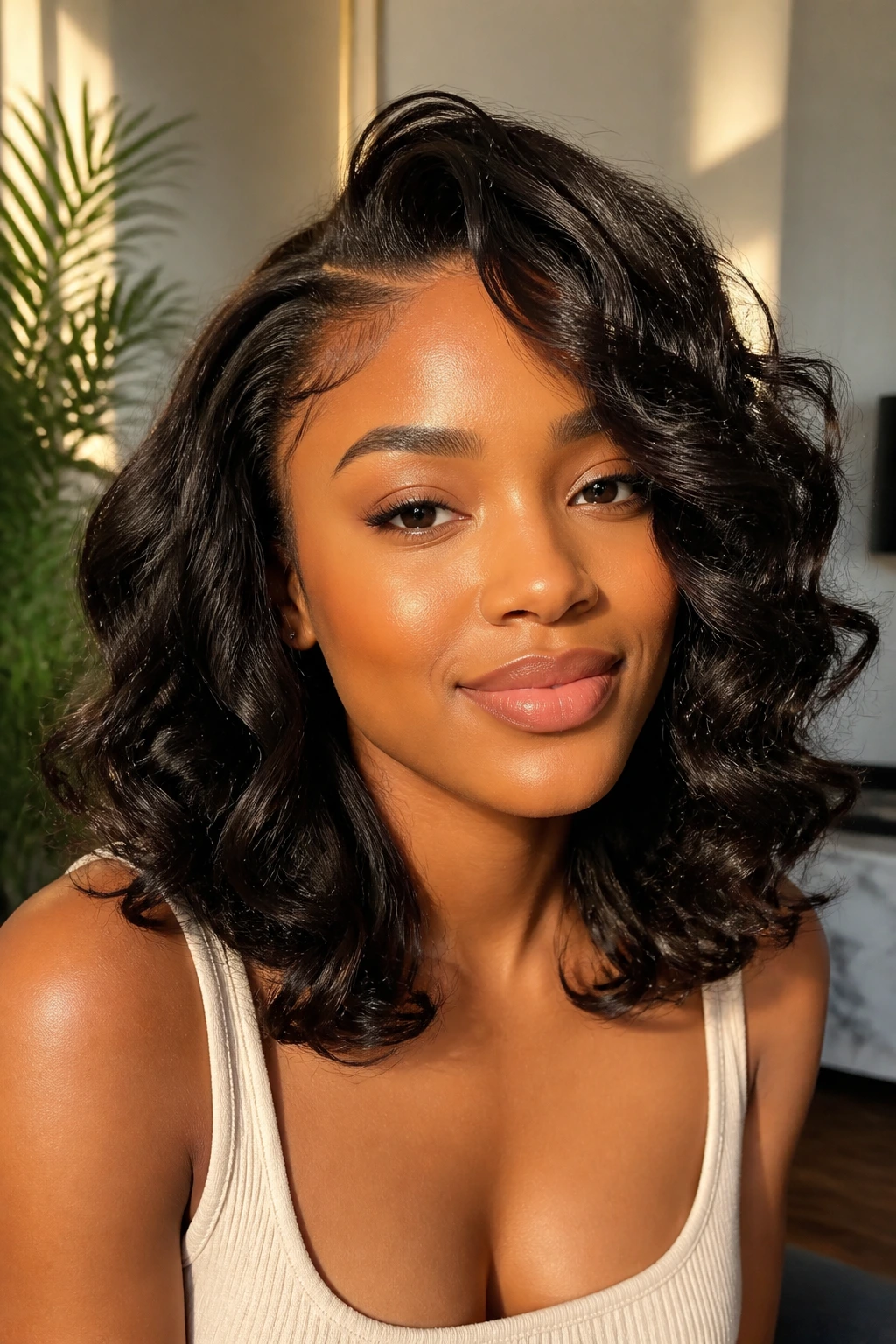
Loose curls on Black hair and oval faces work best when the hair knows where to stop. Not every section needs to be equally full. Not every curl needs to be equally tight. The prettiest versions leave enough openness around the face to show the bone structure, then use movement at the shoulders, jawline, or collarbone to keep the style alive.
That’s why the part, the barrel size, and the length all matter. They’re not background details. They are the whole thing.
Pick the version that matches your length and your routine, then tweak one small thing — the part, the curl size, or the amount of face-framing hair — until the shape sits exactly where you want it. That’s where the good hair day starts.