



Round faces and fine hair can be a stubborn pairing, but the trouble is usually the cut, not the face. The best hairstyles for round faces and fine hair do two jobs at once: they add a little height where your hair wants to go flat, and they steer the eye vertically instead of letting everything spread side to side at cheek level.
That’s why some styles make fine hair look limp even when the hair itself is clean and healthy. A blunt little bob that ends right at the widest part of the face can feel like a hard stop. A cut with a bit of lift at the crown, a side part, or a longer front edge changes the whole read of the face. Small details. Big difference.
The good news is that you do not need a mountain of layers or a full hour with a curling iron to make this work. Some of the smartest options are surprisingly simple: a collarbone lob, a side-parted bob, a pixie with a longer top, even a low bun that sits low and loose instead of slick and tight. The trick is knowing which shapes help fine strands look fuller and which shapes make a round face look a touch longer. That’s the sweet spot we’re after.
Why These Styles Keep the Face Long and the Hair Full
- Built-In Height: These cuts and styles add lift near the part or crown, which fine hair can usually hold better than heavy volume at the sides.
- Cleaner Edges: A blunt or softly angled perimeter makes sparse ends look denser than a heavily thinned finish.
- Face-Slimming Angles: Side parts, asymmetry, and longer front pieces pull the eye down instead of straight across the cheeks.
- Less Product, Better Shape: The styles here work with mousse, root spray, or a small amount of texture spray, not a sticky pile of products that crush fine hair.
- Salon-Friendly Photos: Every option can be explained in plain language to a stylist, which matters more than saving a screenshot and hoping for the best.
- Better Grow-Out: Most of these looks still hold their shape when the cut grows an inch or two. That’s a real advantage if you hate constant trims.
1. Soft Angled Bob with a Side Part
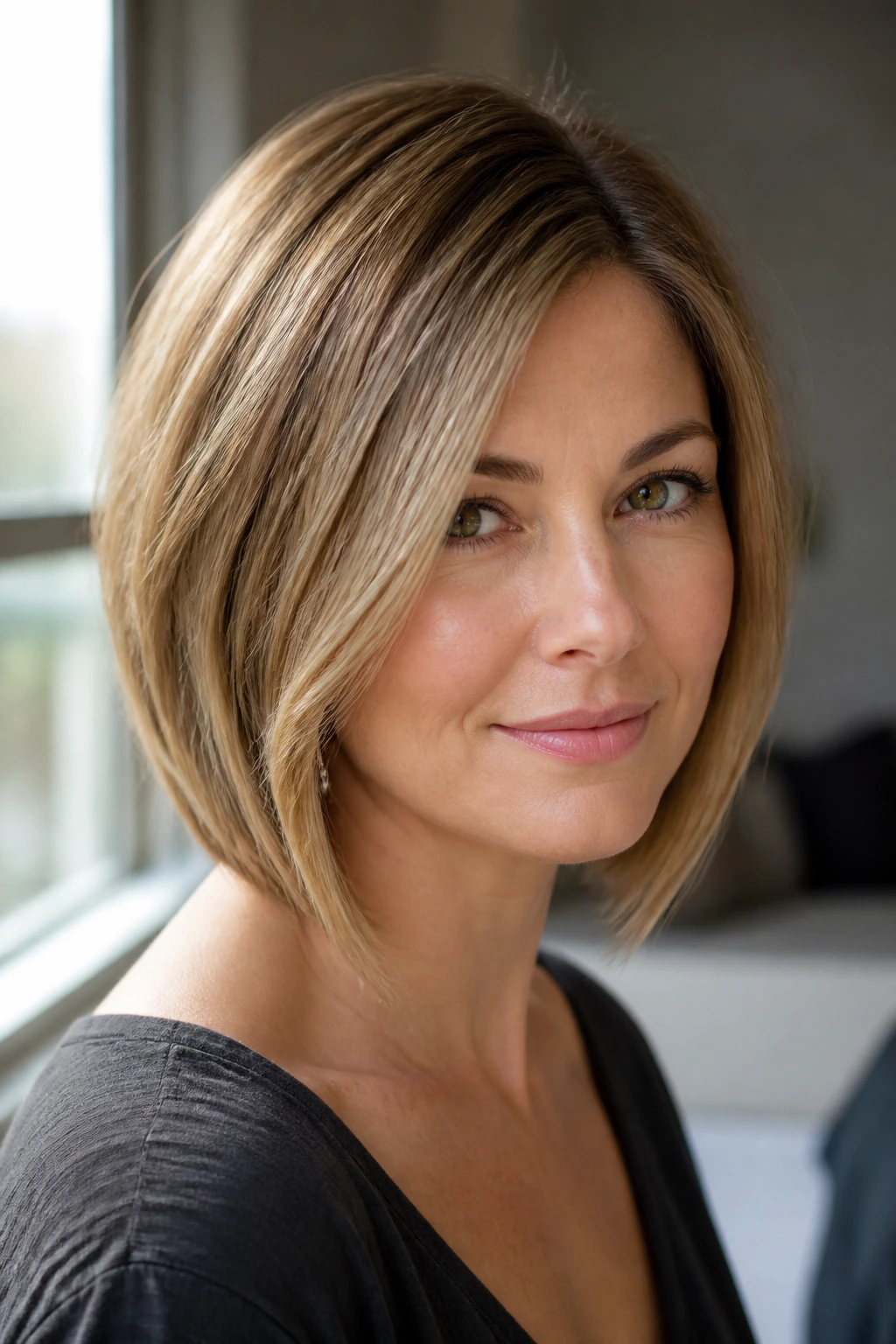
A soft angled bob is one of the cleanest answers for round faces and fine hair because it does not fight the face shape. It works with it. The front pieces sit a little longer than the back, usually landing somewhere between the jaw and the top of the neck, and that gentle slope gives the face a longer line without looking severe.
Why It Flatters So Well
The side part is doing half the work here. It breaks up symmetry, which keeps the face from reading wider, and it gives fine hair a little lift right where the roots are most likely to collapse. Keep the angle subtle, though. If the back gets too short and the front gets too dramatic, the cut can start to feel dated fast.
Ask for a bob that grazes just below the jawline with a clean perimeter. If your stylist wants to texture the ends heavily, push back a little. On fine hair, the edge is what gives the cut its density.
For styling, blow-dry with a nozzle attachment and a medium round brush. Bend the ends inward just enough to skim the cheek, not curl under like a page-boy from a school photo.
2. Collarbone Lob with Invisible Layers
The collarbone lob is one of those styles that looks plain in theory and flattering in real life. It gives fine hair enough length to move, but it stops before the ends get stringy. On a round face, that length is gold. It creates a vertical line from shoulder to jaw that keeps the whole shape from feeling boxed in.
The Layer Trick That Matters
Invisible layers are the reason this cut works. You want the stylist to remove a little bulk under the top layer, not shred the ends to pieces. That way the hair still looks thick when it falls, but it doesn’t collapse into a flat curtain.
A center part can work here if the cut has enough movement, but I like a slightly off-center part better. It gives the face a little lift on one side and keeps the style from feeling too even. A quick bend with a flat iron or a 1.25-inch curling iron is enough. You’re after a loose curve, not a full wave set.
If your hair tangles easily, keep the front pieces longer than the collarbone. That little bit of extra length keeps the ends from flipping into a puff at the wrong angle.
3. Chin-Length Bob with Cheekbone-Skimming Ends
A chin-length bob can be brilliant on a round face, but only if the cut is placed with care. Too short, and the hair lands exactly where the face is widest. Too blunt and too boxy, and the whole thing gets blunt in the wrong way. The sweet spot is a bob that sits just under the chin, with the front pieces grazing the cheekbones.
Where This Cut Succeeds
Fine hair often looks thicker in a cut like this because the shape is clean. There’s no extra length dragging the ends thin, and no heavy layering to make the bottom look sparse. The trick is keeping the outline crisp.
Use a side part or a deep off-center part. That tiny shift changes the whole silhouette. It gives the crown more lift and keeps the face from feeling too circular. If you want a little softness, curve the ends under with a round brush while the hair is still warm from the dryer. That shape frames the jaw without sitting on it.
This is a sharp little haircut, so it does ask for regular trims. About every 6 weeks keeps the edge looking deliberate instead of grown out and awkward.
4. Long Layers with Face-Framing Pieces
If short hair is not your thing, long layers can still work beautifully. The key is restraint. The shortest layers should start below the chin, not at the cheek, or you’ll end up adding width right where you don’t want it. Long layers keep the length, keep the movement, and let fine hair swing instead of hanging there like a wet ribbon.
How to Ask for It
Tell your stylist you want face-framing pieces that begin around the chin or just below it, then blend into the rest of the cut. That’s the part people often mess up. Too-high face framing can puff out at the temples, which does a round face no favors.
I like this cut with a soft side part and a few bends through the lower half of the hair. The front pieces should slide along the sides of the face, not curl back toward the cheeks. That difference matters more than most people think.
A light mousse at the roots and a touch of heat protectant through the mids is enough. Don’t load up the ends. Fine hair shows product quickly, and a greasy finish kills the whole effect.
5. Curtain Bangs and Loose Waves
Curtain bangs can be a mess on round faces if they’re too thick or too short. But when they’re cut light and blended into loose waves, they open the face in a way that feels soft instead of fussy. The middle part pulls the eye down the center, then the longer bang pieces sweep away at the temples.
What matters here is weight. Fine hair cannot carry a heavy curtain fringe without looking flat at the roots and bulky in front. Ask for wispy, blended bangs that hit around the cheekbone or slightly lower. If they stop too high, they widen the face.
Loose waves work better than tight curls. Use a 1-inch iron or a flat iron bend, then brush the waves out once they cool. You want movement, not ringlets. Ringlets can bunch at the widest part of the face and create a little more roundness than you bargained for.
This style is also one of the easiest to refresh on day two. A mist of water, a little leave-in, and two or three twist-dry sections around the bangs will bring it back fast.
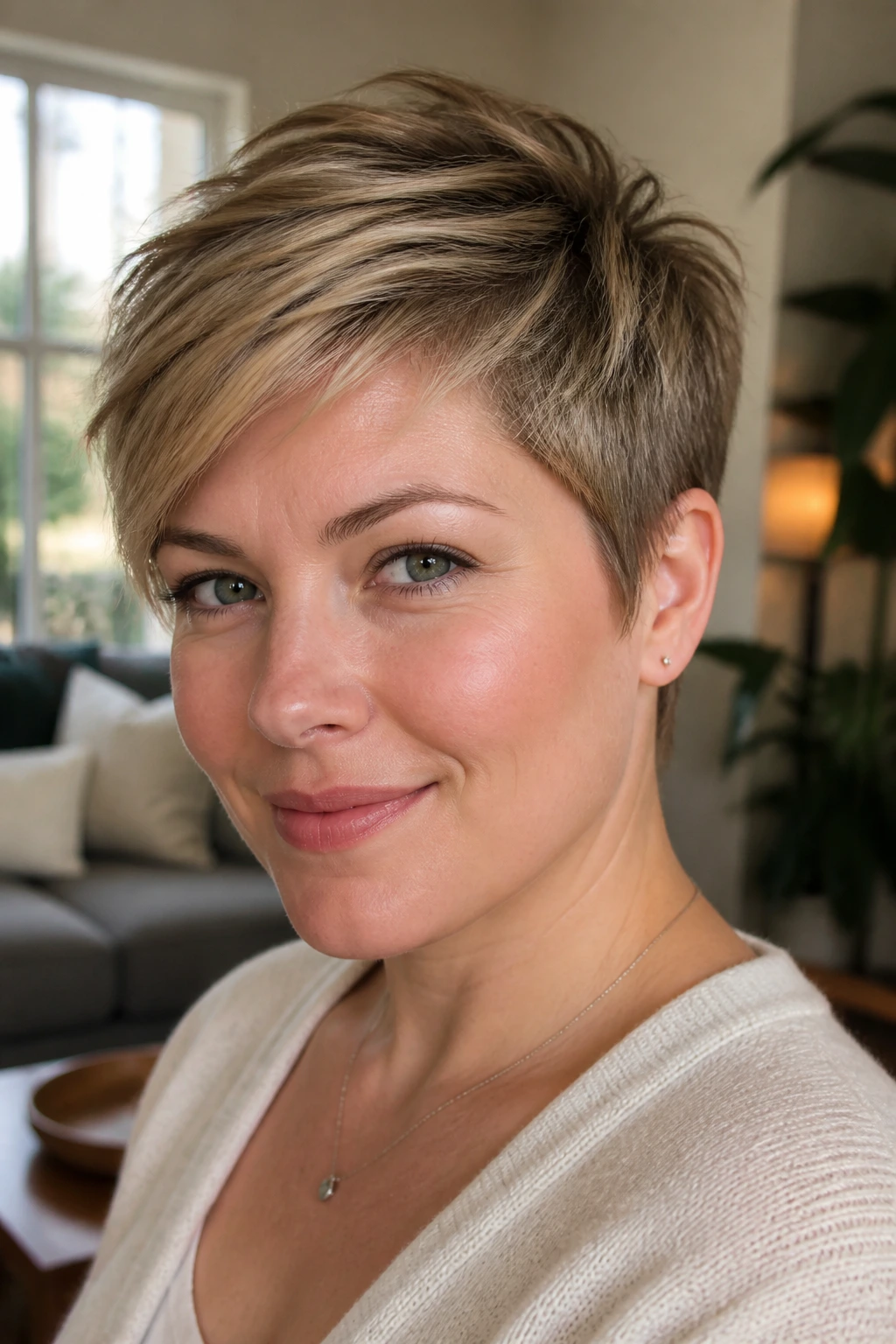
6. Pixie Cut with a Longer Top
A pixie cut is not the enemy of a round face. The wrong pixie is. If the top is too flat and the sides are too full, the head reads wider. If the top is slightly longer and textured, the whole shape gets lifted upward, which is exactly what fine hair needs.
The Shape That Works
Keep the sides tapered close, especially around the ears and nape. Then leave enough length on top to sweep upward or to one side. Think about 2 to 3 inches on the crown, maybe a bit more if your hair grows in a strong cowlick. That little bit of height gives the face a longer line.
Styling takes less time than people expect. A pea-sized amount of paste or cream, worked through damp hair, is usually enough. Blow-dry with your fingers, then pinch the top section up and forward to create texture. Don’t smooth it too much. A polished pixie on fine hair can go limp by lunch.
If your face is very round, a side-swept fringe is smarter than a straight, heavy bang. It breaks the circle and keeps the front from closing in the face.
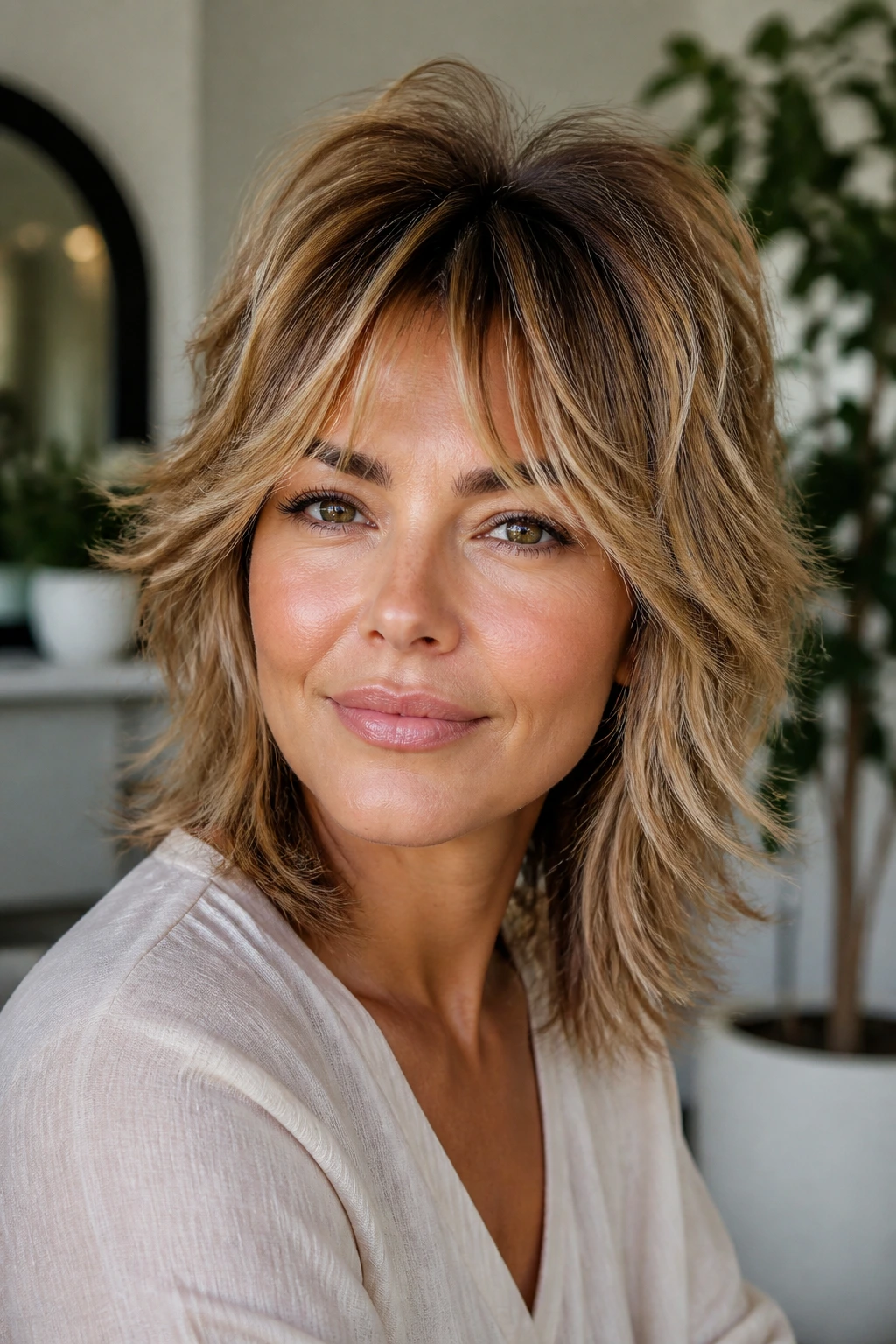
7. Airy Shag with Crown Lift
The modern shag is a little softer than the old, choppy version that looked like it had been cut with garden shears. On fine hair, that softer version is the one to choose. The layers should create movement around the crown and through the mids, but the ends should still have enough weight to look full.
What I like about this cut is the built-in lift. The crown layers keep the top from lying like a sheet, and the face-framing pieces pull the eye down past the cheeks. That’s a helpful combination for a round face.
Ask for airy layers, not aggressive thinning. Fine hair can look even finer if the stylist gets too enthusiastic with the texturizing razor. A few well-placed layers are enough. The styling should be loose too. A blowout with a diffuser or a round brush, then a light mist of texturizing spray, gives the cut a bit of separation without turning it frizzy.
This is one of the best choices if your hair has a little natural wave. The texture does half the work for you.
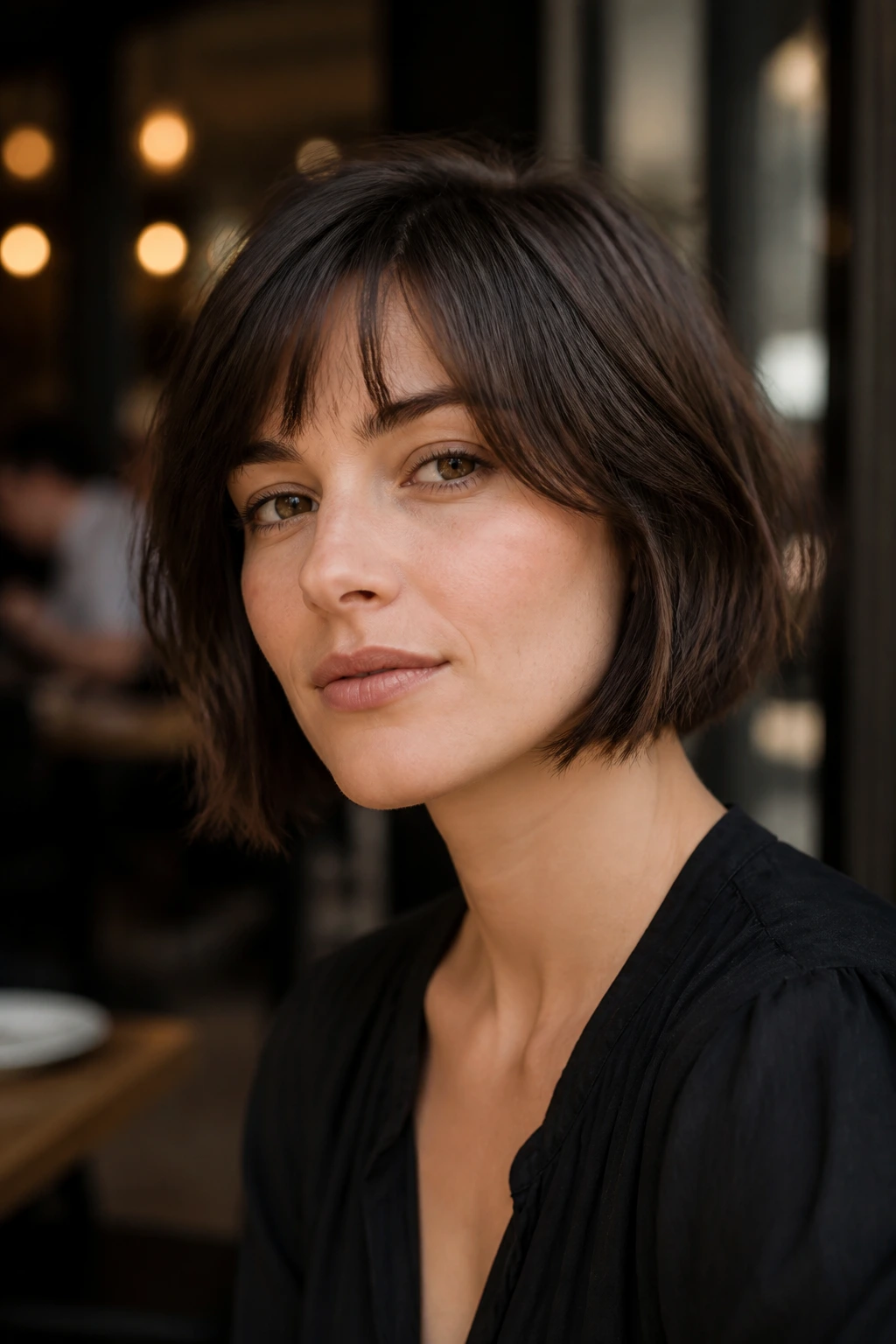
8. French Bob with Textured Ends
A French bob can be charming on a round face, but it needs a small adjustment for fine hair: keep it slightly softer at the bottom. A dead-straight blunt line at the chin can look too severe, and if the fringe is thick, the face loses its open shape.
A Better Version of the Classic
The version I prefer sits at or just below the jaw, with textured ends and a fringe that can be brushed to the side or worn a touch piecey. The goal is not strict geometry. It’s movement with enough structure to keep fine strands from looking wispy.
If you want bangs, keep them airy. If you want no bangs, even better—let the side part do the work. Add a tiny bend through the ends with a flat iron or let the hair air-dry with a small amount of mousse scrunched in. That soft edge makes the bob look more expensive than it has any right to look.
On a round face, the French bob works best when the neck is visible. That little gap between jaw and collarbone makes the face seem longer. Don’t hide it under scarves or chunky collars unless you’re fine with shortening the line.
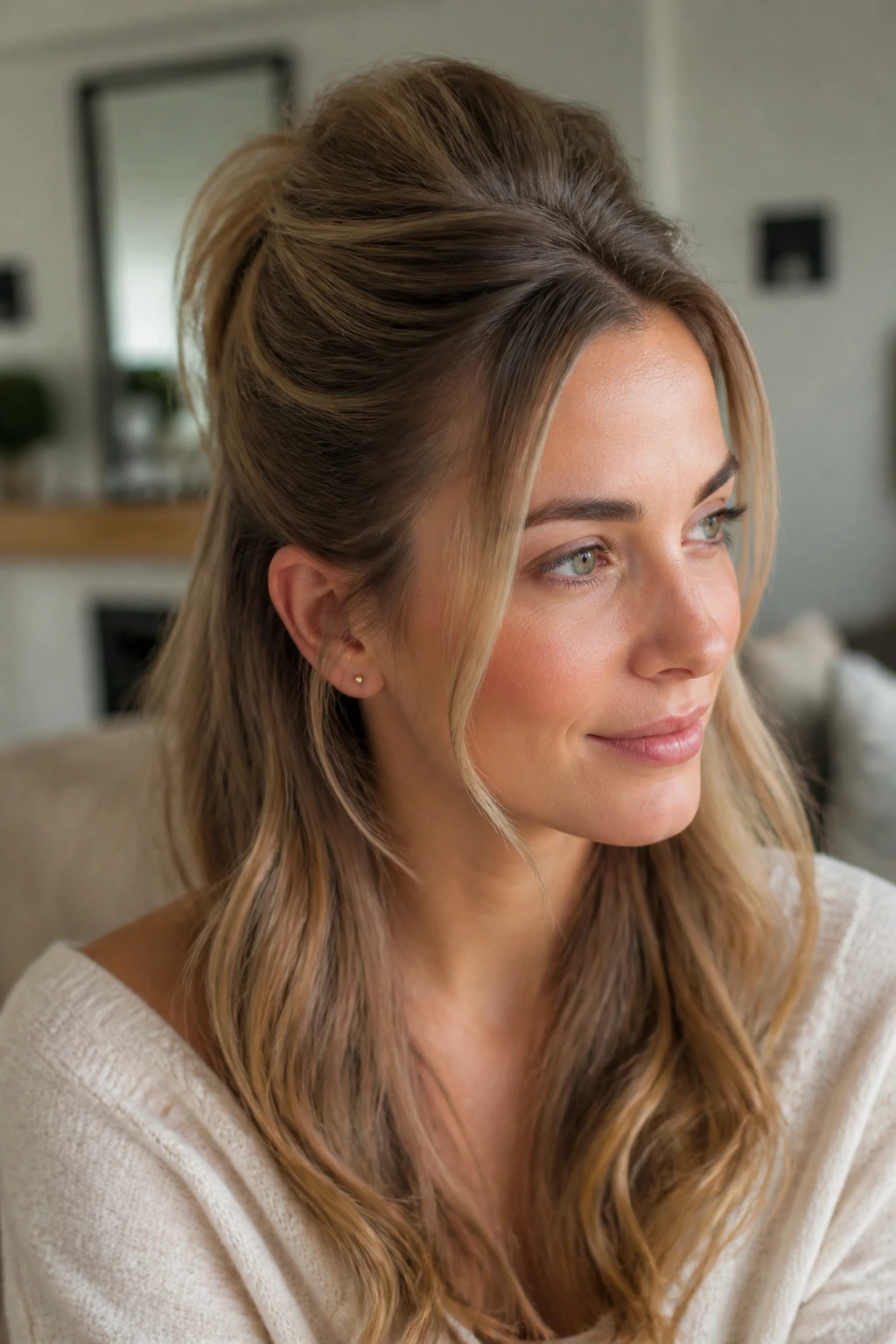
9. Half-Up Style with a High Crown
A half-up style is a cheat code for fine hair on flat days. The top section gets lifted, the sides stay soft, and the face gets a little vertical boost without needing a full blowout. For round faces, that height at the crown is the point.
Pull the top half back loosely, then lift it slightly before pinning or tying. If you flatten it against the head, you’ve lost the whole benefit. A little teasing at the crown can help, but go easy. Fine hair does not need a rat’s nest. Two or three gentle backcombs and a light mist of hairspray usually do the job.
Leave a few face-framing pieces out around the temples and jaw. Those loose bits keep the style from looking harsh and they soften the roundness without stealing length from the face.
I like this most with collarbone-length hair, but it works on longer lengths too. It’s especially good when your roots are clean but the mids need a lift and the ends still look decent.
10. Sleek Low Bun with a Deep Side Part
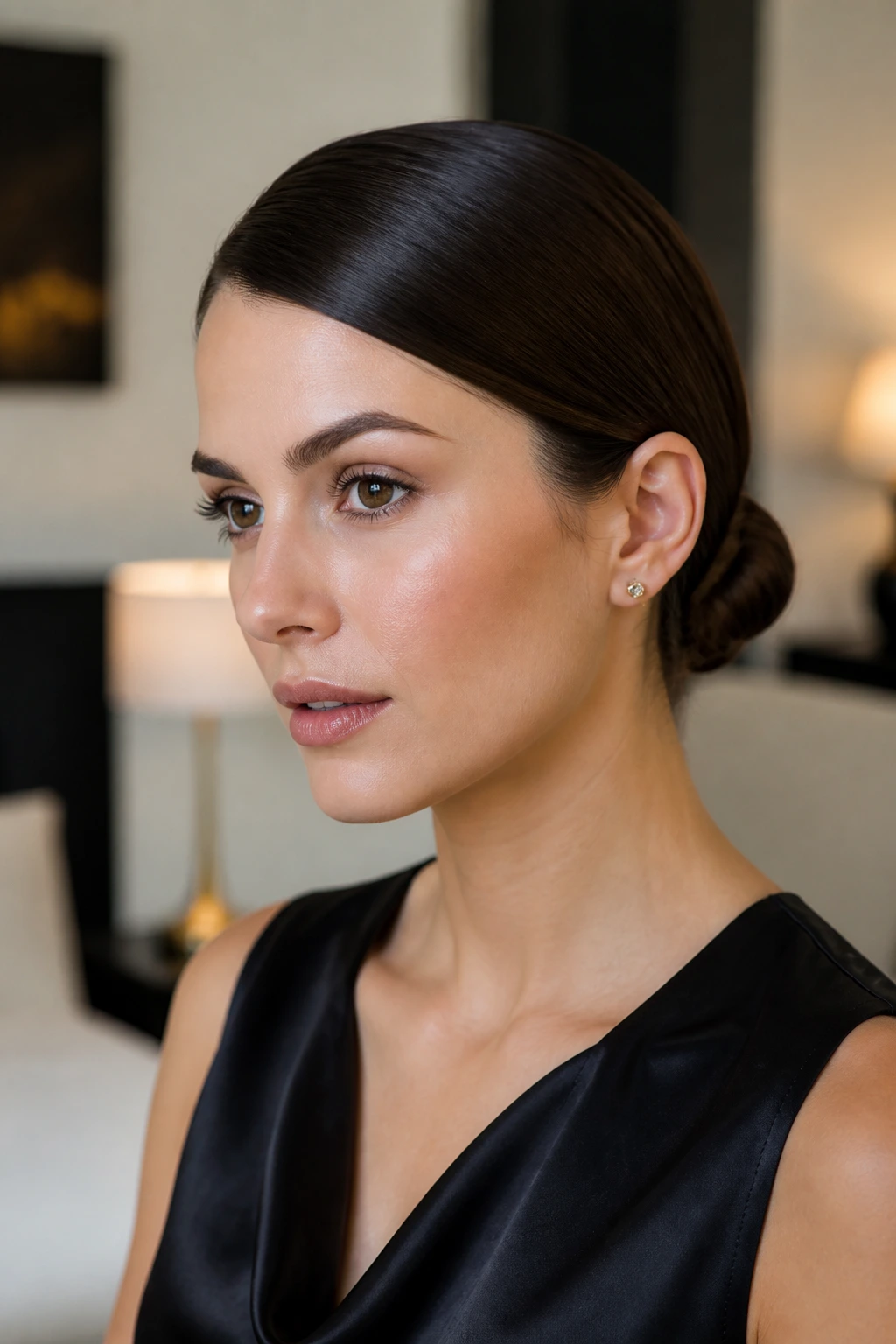
A low bun can either flatten the face or sharpen it. The difference is the part and the volume at the crown. A deep side part gives a round face a longer line, while a low bun keeps the neck open and the profile clean.
The bun itself should sit low, near the nape, and not be wound so tight that it pulls every strand back. That kind of sleekness can make fine hair look thinner than it is. Leave a little softness at the temples, and if you want, pull out two slim pieces near the cheekbones.
This style works for weddings, interviews, dinner out—anything where you want the hair controlled without looking stiff. Use a boar-bristle brush to smooth the surface, a light gel or cream for flyaways, then finish with hairspray. One warning: don’t use too much oil at the front. Fine hair shows greasiness fast, especially around a side part.
A slightly imperfect low bun is better than a shellacked one. Every time.
11. Shoulder-Length Blowout with Soft Bend
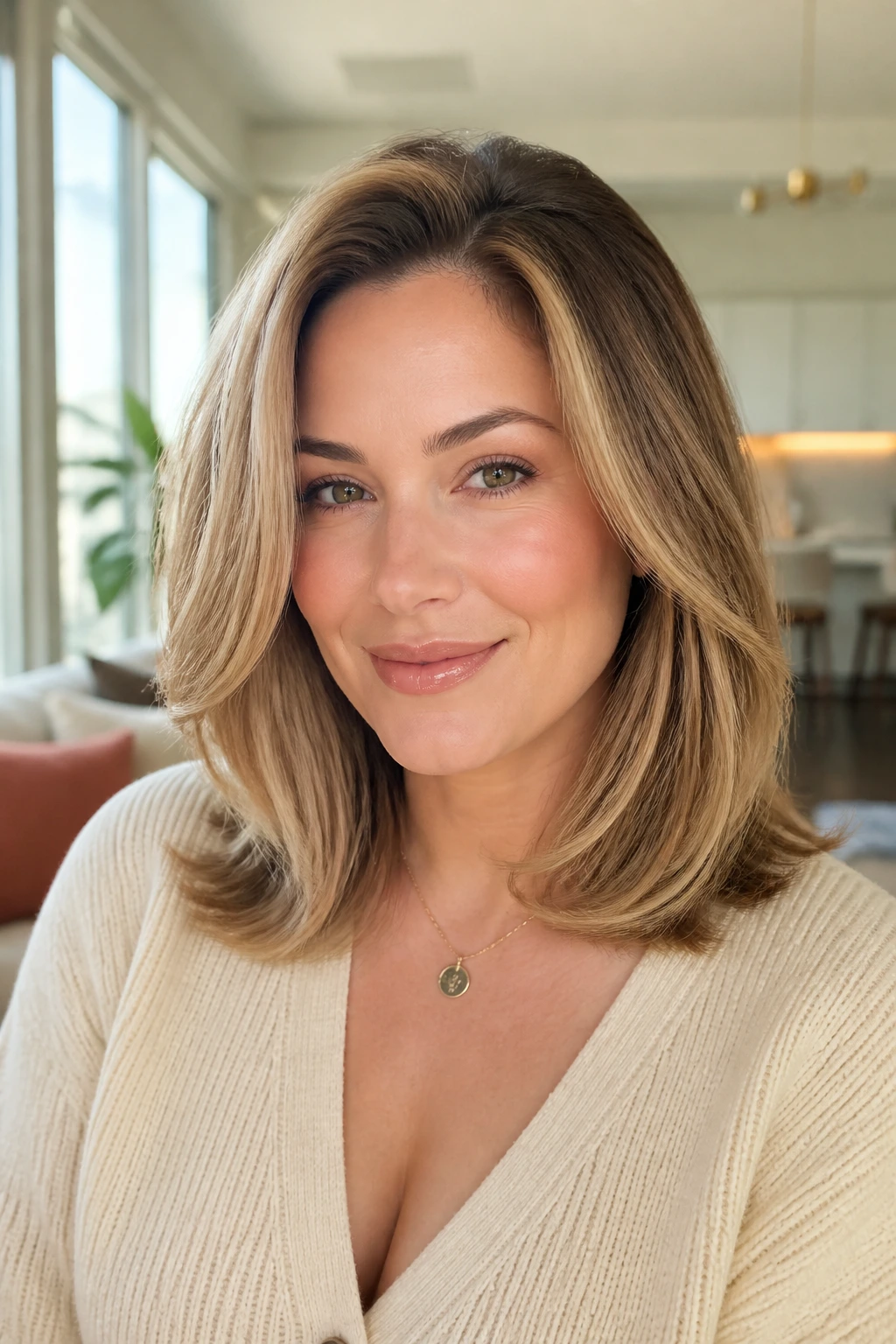
Shoulder length can be a tricky place for fine hair, because it’s long enough to lose fullness but short enough to flip in awkward ways. A blowout with a soft bend fixes a lot of that. The shoulder length keeps the line elongated for a round face, and the bend at the ends makes the hair look deliberate instead of limp.
The Blowout Shape That Helps
Focus on lift at the roots and shape through the middle, not a giant curl at the bottom. A 1.5-inch round brush is usually the sweet spot. Roll the hair under slightly at the ends, then turn the brush out just a bit near the front so the pieces skim the face.
The result should feel airy, not bulky. Fine hair gets overwhelmed when the blowout is too round. A little movement near the collarbone is enough.
If your hair tends to collapse by midday, cool each section on the brush before releasing it. That tiny pause helps the shape hold. It’s a boring step. It matters.
12. Blunt Cut with Subtle Internal Layers
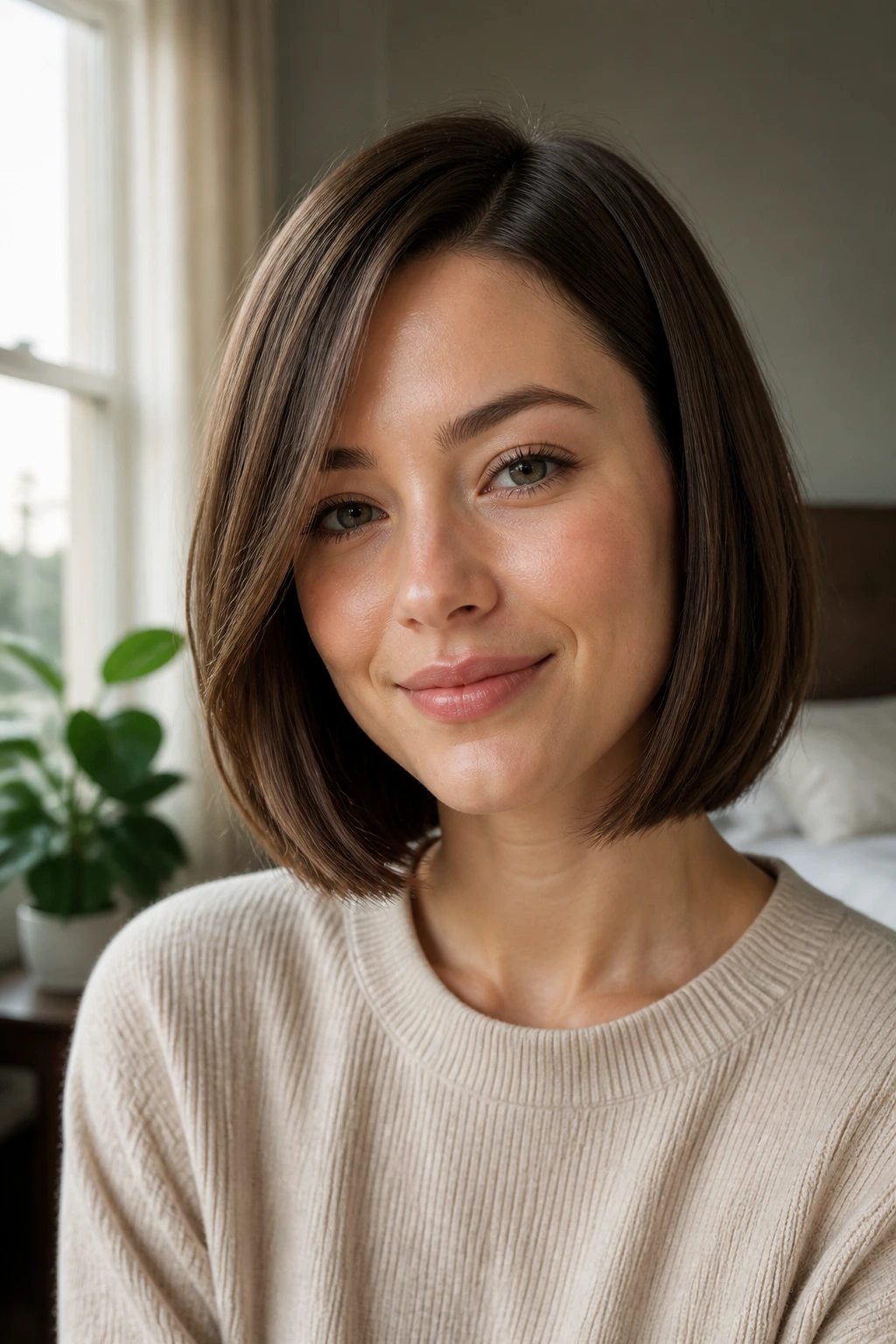
There’s a reason blunt cuts keep showing up for fine hair. A straight perimeter makes the ends look thicker. That matters. On a round face, the cut needs a little help from the parting or styling, but it can be one of the strongest options if you want the hair to look denser.
The trick is subtle internal layers. You want just enough movement to keep the hair from feeling blocky, but not so much that the ends go see-through. Ask for internal weight removal, not heavy texturizing. Those are not the same thing.
I like this best at the bob or lob length with an off-center part. That keeps the outline strong while still shifting the eye away from the widest part of the face. If you straighten it, keep the ends dead simple. If you wave it, use bends only through the mids.
This is a good cut for people who do not want to fuss. It looks polished with almost nothing done to it, and that is rare.
13. Asymmetrical Bob for Extra Angle
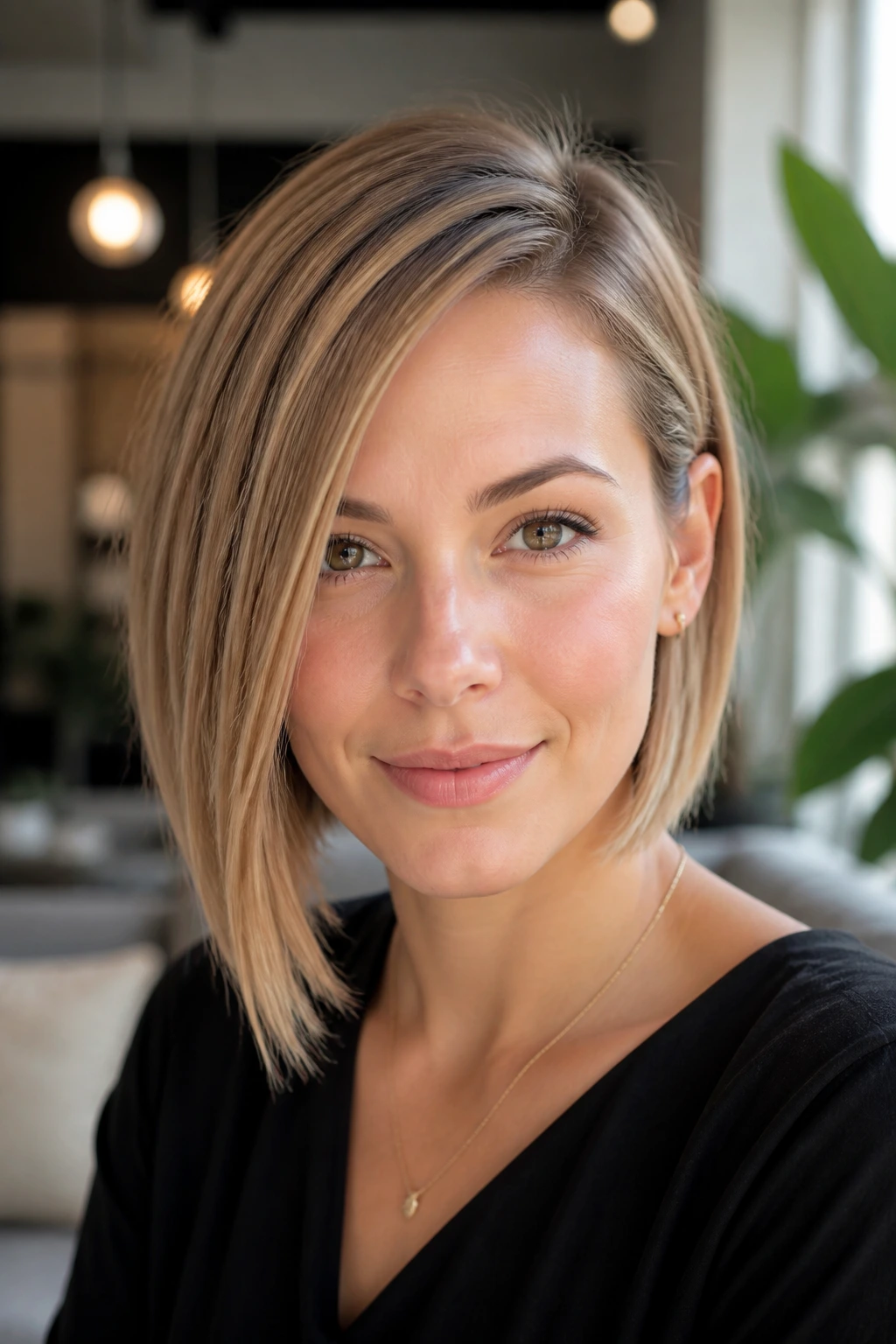
A small asymmetry can do a lot. One side a half-inch to an inch longer than the other creates a diagonal line, and diagonal lines are your friend when a face is round and the hair is fine. They break up symmetry and make the whole shape look a little longer.
Don’t go dramatic unless you want the cut to be the whole conversation. The best version is subtle enough that it reads as intentional only when the hair moves. Keep the back clean and the perimeter sharp so the hair still looks thick.
This bob looks especially good with a tuck behind one ear on the shorter side. It exposes the cheekbone and adds a little air around the face. A side part also helps. You can even bend the longer side outward very slightly so it falls across the jaw rather than curling under it.
If your hair is pin-straight and slippery, use a root spray before blow-drying. The asymmetry looks much better when the top has a little lift.
14. Wispy Bangs with a Shoulder-Length Cut

Wispy bangs can be lovely on round faces, but only if they stay light. Heavy bangs push the face shorter. Wispy ones break up the forehead without stealing space. On fine hair, they also avoid the helmet effect that thick fringe can create.
What the Bangs Should Actually Look Like
The bangs should be piecey and a touch longer at the temples, not cut into one solid line. If your stylist cuts them dry, even better. That lets the true length show, which matters because fine hair can spring up more than expected.
Pair the bangs with shoulder-length hair and a soft bend through the rest of the cut. That keeps the whole shape from reading too round. I especially like this with a slight off-center part because it softens the front while still keeping the face open.
Styling is easy but fussy if you use too much product. A tiny bit of round-brush work at the root is enough. Then let the ends stay soft. Bangs that are too shaped can look stiff by noon, and fine hair does not forgive that.
15. Mid-Length Cut with an Off-Center Part

Not every flattering cut needs layers or bangs. A mid-length cut with a clean edge and an off-center part can be one of the easiest shapes for round faces and fine hair. The length brings the eye down, and the off-center part creates a line that breaks the face in a good way.
The cut should fall somewhere between the collarbone and upper chest. That range gives fine strands enough length to move without dragging them into limpness. If the ends are too shattered, the whole thing can look thin. If the perimeter is too hard and the top too flat, it can feel a little plain. So keep the line neat and let the part do the talking.
This works beautifully with a hair tuck on one side, or with a gentle bend at the ends if you want more shape. It’s a low-drama style, which is part of its appeal. Not every haircut needs to look like a big decision.
16. Soft Waves with Lift at the Roots
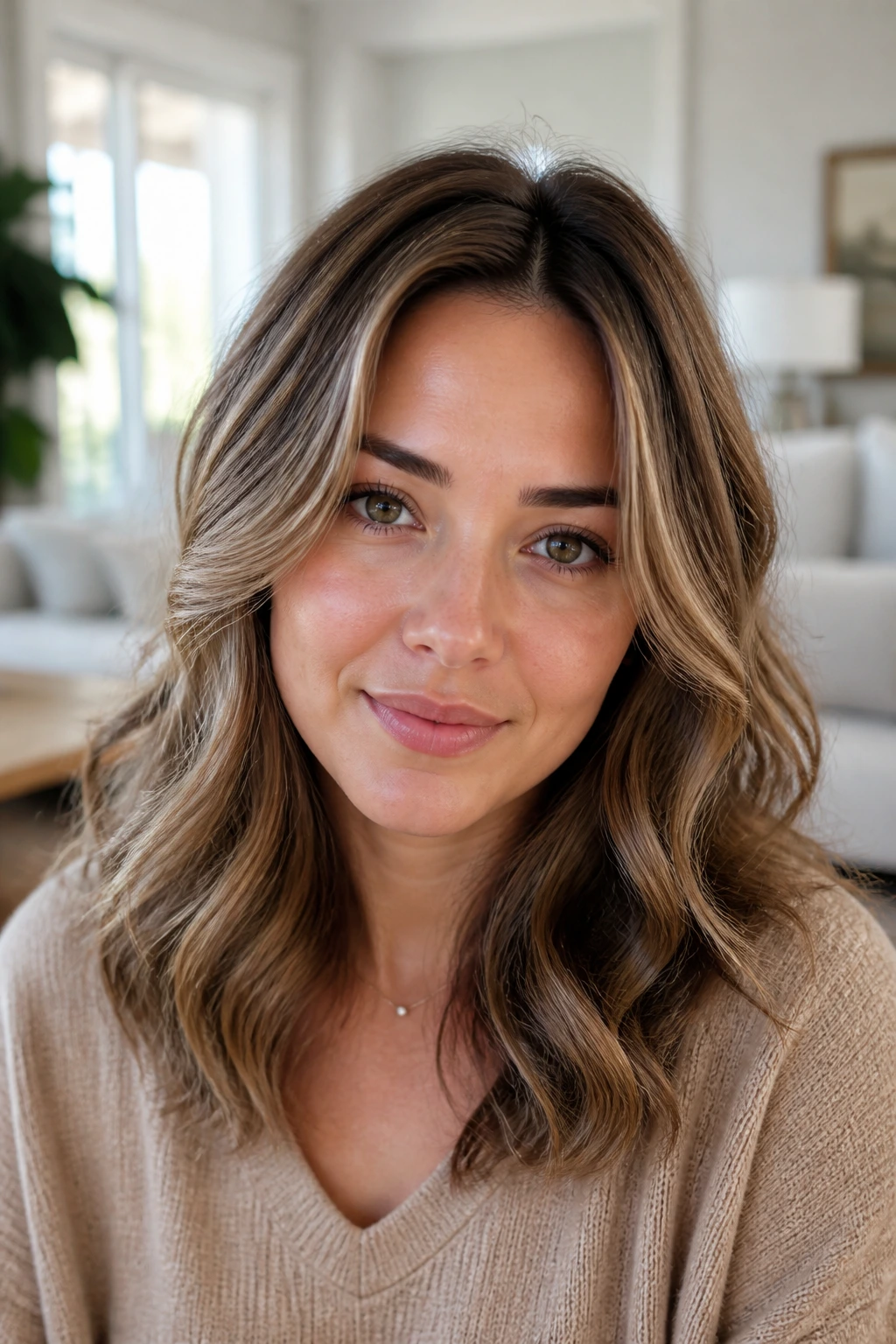
Soft waves can make fine hair look fuller without making it feel bigger at the sides. That balance matters on a round face. The lift belongs at the roots and crown, not around the cheeks.
Start with a heat protectant and a light mousse at the roots. Then curl away from the face using a 1-inch or 1.25-inch iron, leaving the last inch or so out. That keeps the wave from getting too tight. After the curls cool, brush them out with your fingers or a wide-tooth comb. The result should be loose bends, not polished ringlets.
Root Lift Is the Whole Trick
Clip the crown up while it cools, or use a couple of velcro rollers at the top for 10 to 15 minutes. That small step gives fine hair a memory it usually lacks. Without it, the waves can sag toward the widest part of the face and that’s exactly what we’re avoiding.
If your hair is very fine, skip heavy oil at the ends. Use a small drop only if the cuticle looks dry. Too much shine product will flatten the wave pattern.
17. Textured Ponytail with a Little Pouf
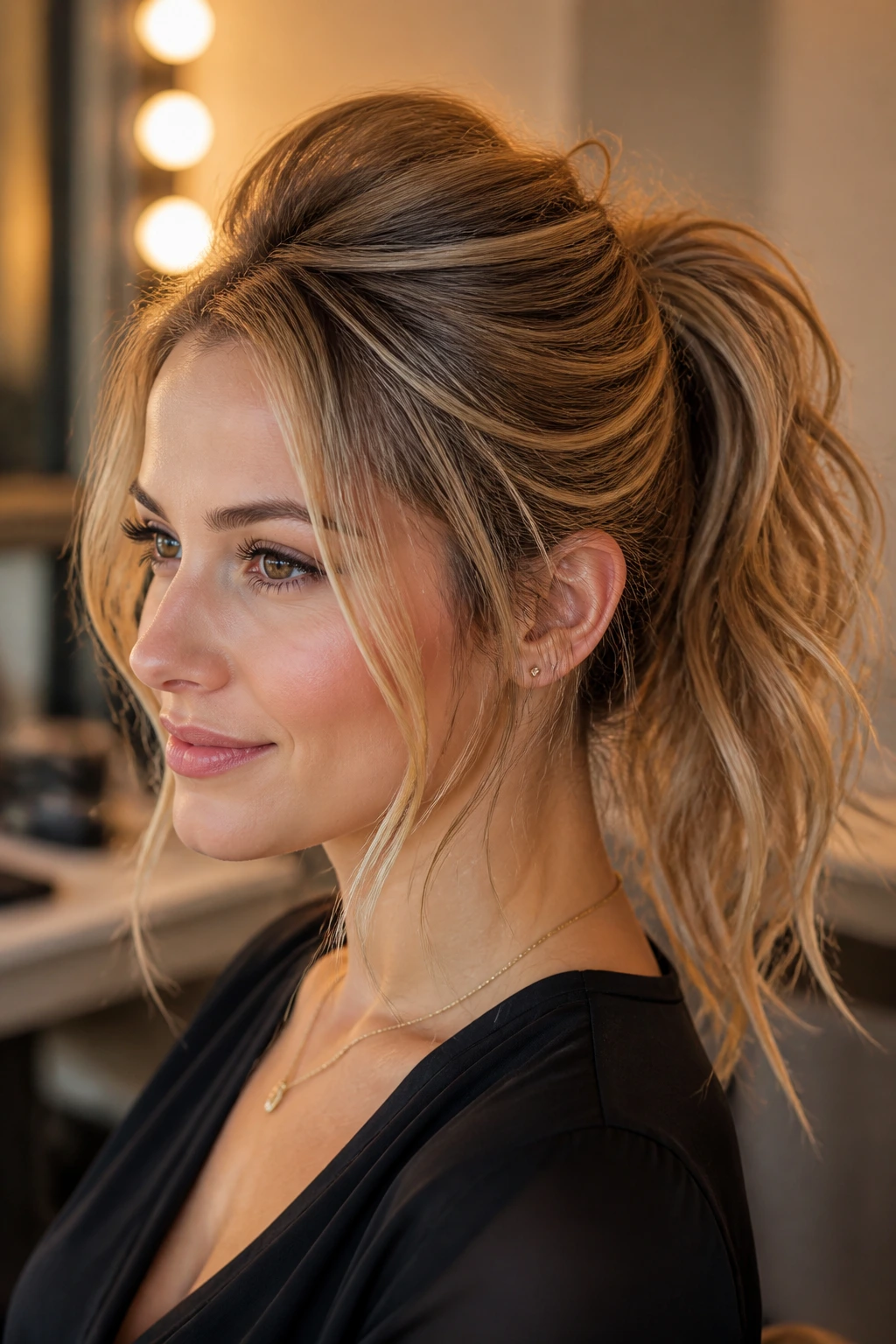
A ponytail does not have to be flat, severe, or gym-only. On round faces and fine hair, a textured pony with a little pouf at the crown can look polished and still keep the face open. The added height lengthens the face, and the loose texture keeps thin strands from looking too tight.
Tease the crown gently, then smooth the top layer over it. Use a soft brush, not a hard one, so the lift stays natural. Pull the ponytail a touch lower than you might expect—mid-back of the head usually works better than high and tight. That position avoids emphasizing the widest part of the face.
Wrap a small section of hair around the elastic to make the whole thing look cleaner. Then tug a few face-framing strands loose. Not too many. If you pull out half the head, the style loses the point and starts looking unfinished.
This is one of the easiest second-day styles in the group. The little bit of texture you already have makes it better.
18. Twisted Crown Half-Up Style
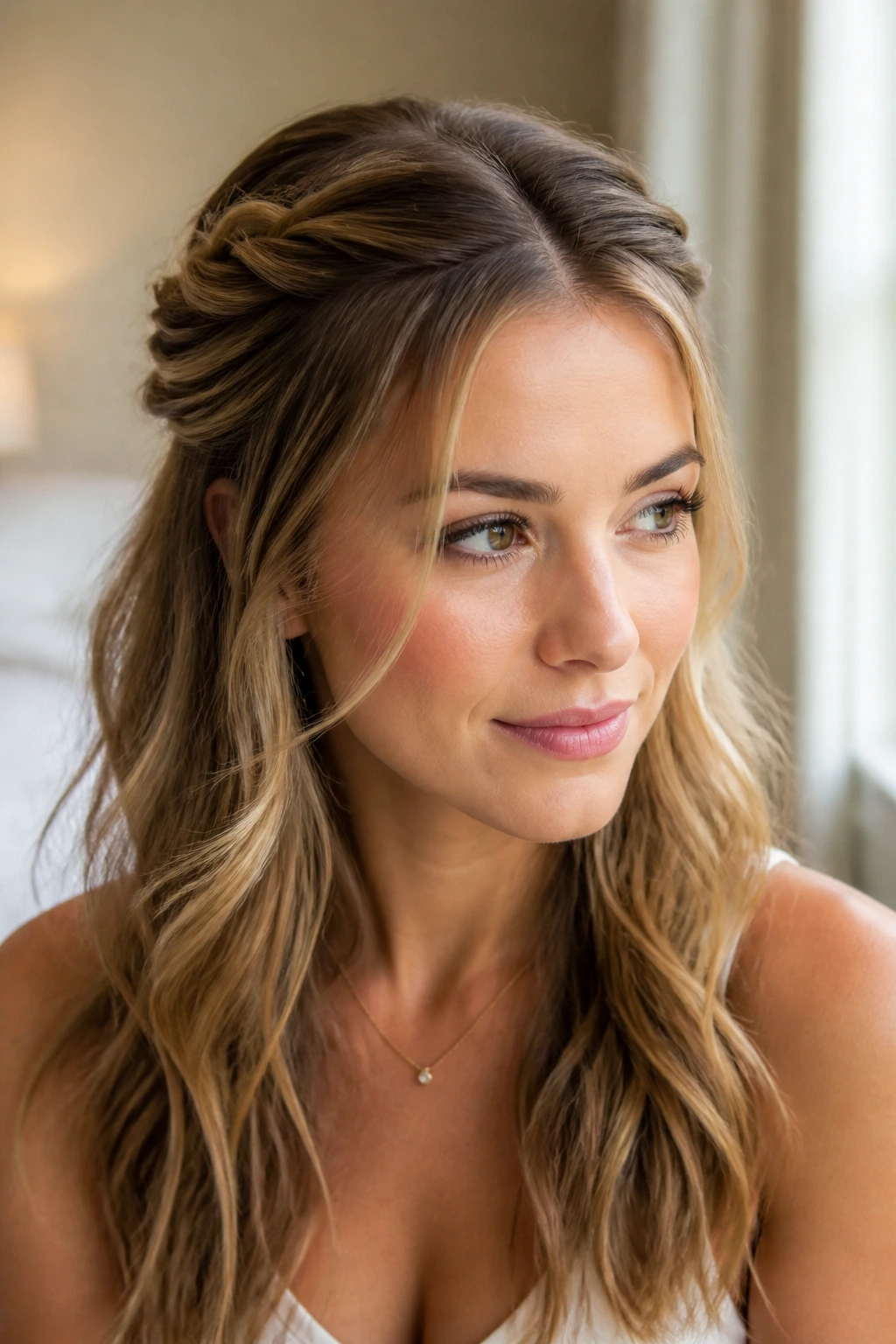
The twisted crown half-up is one of those styles that looks more complicated than it is. Twist a section from each temple back toward the crown, pin or tie them together, and let the rest fall. That creates height at the top and keeps hair off the cheeks.
Fine hair benefits from the twist because it gathers just enough hair to look intentional without needing a ton of length or density. If the strands are slippery, rough them up first with dry shampoo or texture spray. You do not need much—just enough grip so the twists hold.
Small Details That Make It Better
Leave the twists slightly loose. Tight twists can pull the face open in a harsh way and make the hair around the face look thinner. A loose twist feels softer and gives the face more space.
This style works with straight hair, waves, or a light bend. It also handles grow-out well, which is useful if your layers are between cuts and acting a little rebellious.
19. Modern Wolf Cut with Soft Edges

The wolf cut has been around long enough that everyone knows the bad version: too many choppy layers, too much hair lost at the ends, and a shape that looks cool only in one mirror. The modern version is softer. It keeps the shaggy energy but removes the harsh edges.
For fine hair, that softer approach is the smart one. Start the layers below the cheekbone, keep the crown airy, and don’t over-thin the bottom. The goal is movement, not a stringy finish. On a round face, the top layers give height while the face-framing pieces stretch the line down.
This cut does best with a little texture. Air-drying with mousse, diffusing gently, or using a quick bend with a curling iron all work. Just avoid polishing it into a smooth helmet. That kills the shape.
If you like a slightly undone look, this is one of the few cuts that can give it without making fine hair look underfed.
20. Face-Framing Updo with Loose Tendrils
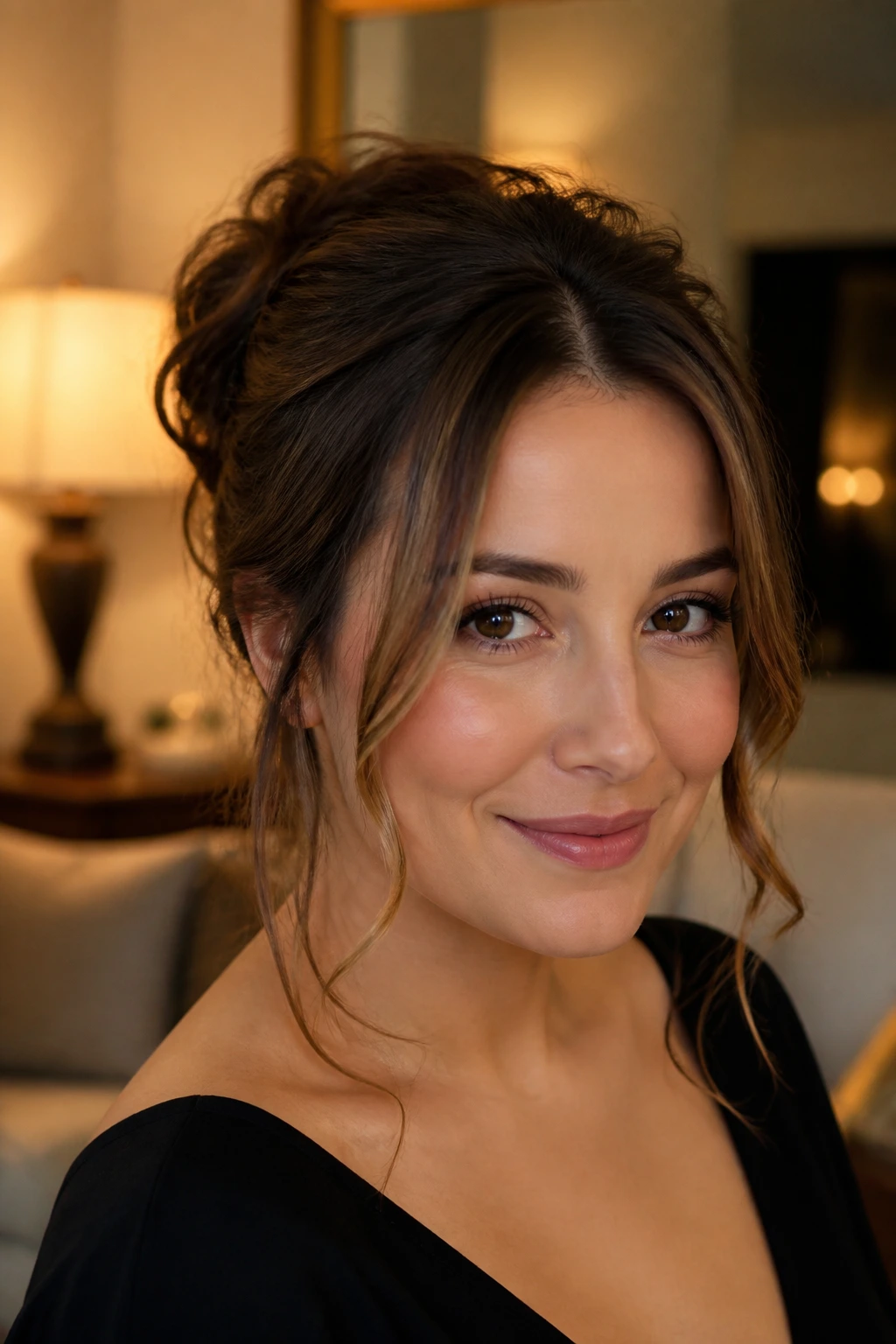
A face-framing updo can be far kinder to a round face than a tight, pulled-back knot. The trick is to leave a few slim tendrils around the cheekbones and jaw, then build a little lift at the crown before pinning the rest up. That keeps the face open and gives the hair some visible shape.
Fine hair usually needs support here, so don’t be shy with pins. Use a base ponytail if the hair is slippery, then tuck and pin the bun or twist on top of that. U-pins or crossed bobby pins hold better than a single loose pin. And if the front pieces are too straight, give them a quick bend with a small iron before styling. Straight tendrils can look accidental.
This is a good special-occasion style because it stays soft even when it’s neat. You get structure without losing the line of the face. Very few updos do that well on round faces. This one does.
21. Side-Swept Style with Tucked Ends

A side-swept style sounds simple because it is simple. That’s part of the appeal. Sweep the front section across one side, tuck the opposite side behind the ear, and let the ends fall in a soft curve. The diagonal line does a lot of work on a round face.
For fine hair, the side sweep creates a sense of fullness at the front without needing a lot of teasing. The tucked side exposes the cheekbone and jaw in a way that makes the face look slightly longer. If your hair is shorter than collarbone length, this works especially well because it keeps the ends from spreading outward.
The One Thing to Watch
Don’t make the tuck too neat. A little looseness keeps the style from looking flat. Pin the tucked side underneath if your hair slips, and leave the crown with a hint of lift. That’s the difference between polished and pressed down.
This style is useful on days when your roots are fine but your ends still look okay. A quick blow-dry and one tuck can change the whole mood.
22. Tucked-Behind-Ear Lob with Root Lift
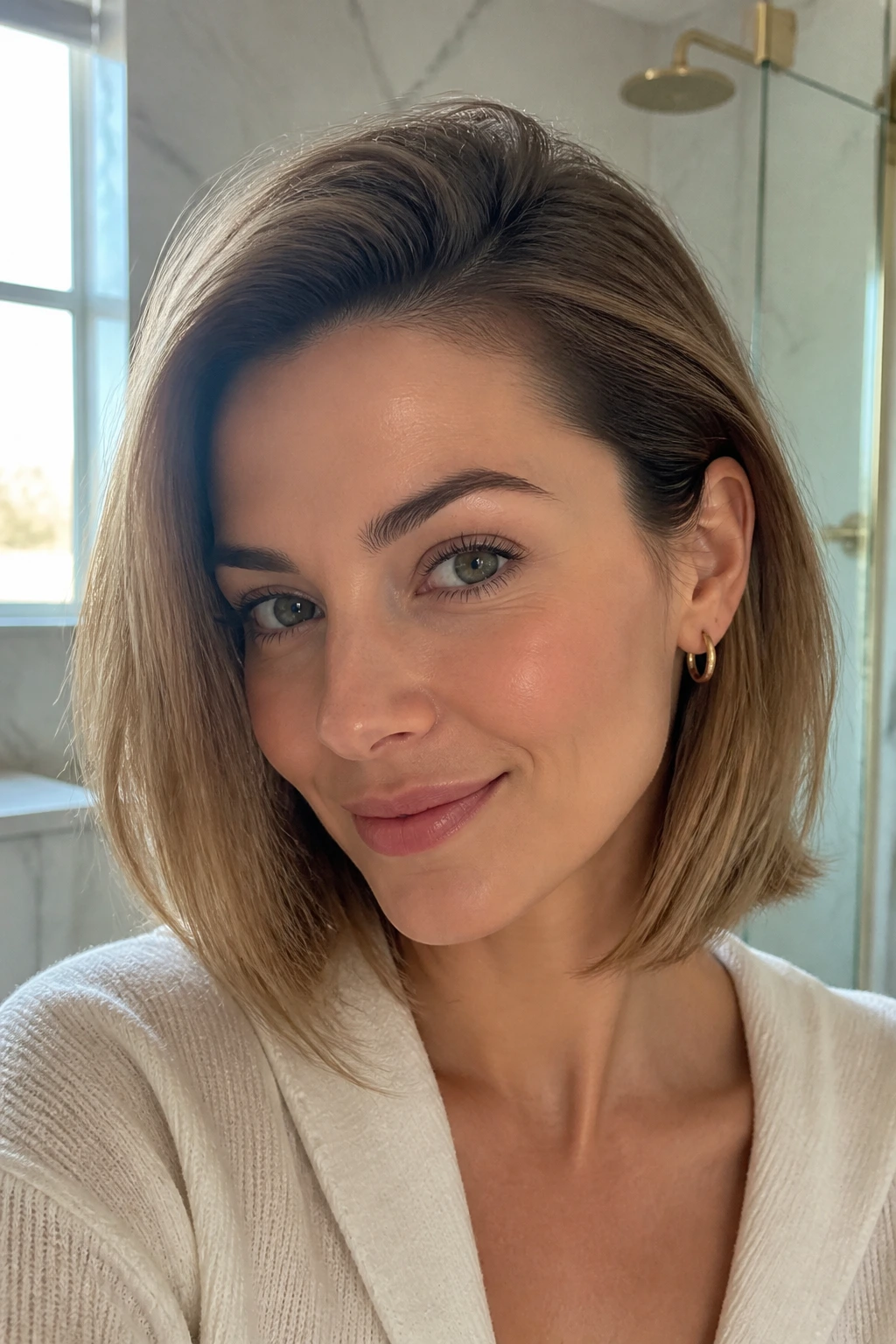
A tucked-behind-ear lob is the sort of haircut that seems almost too easy to count, but easy is the point. On round faces, the exposed side creates a line that opens the face. On fine hair, the tucked shape keeps the ends from fanning out and looking thin.
The lob should sit between the collarbone and the top of the shoulder. Add root lift at the crown, either with mousse, a round brush, or a couple of clips while the hair cools. Then tuck one side—or both if the cut is long enough—behind the ears. That small move shows the jawline and shifts the balance of the face.
I like this best with a very slight bend through the mids, not full curls. The style should feel relaxed and controlled at the same time. If the ends are too straight, the whole look can turn a little severe. If they’re too curled, the lob can balloon at the sides. The middle ground is the one that works.
Why These Shapes Work on Round Faces and Fine Hair
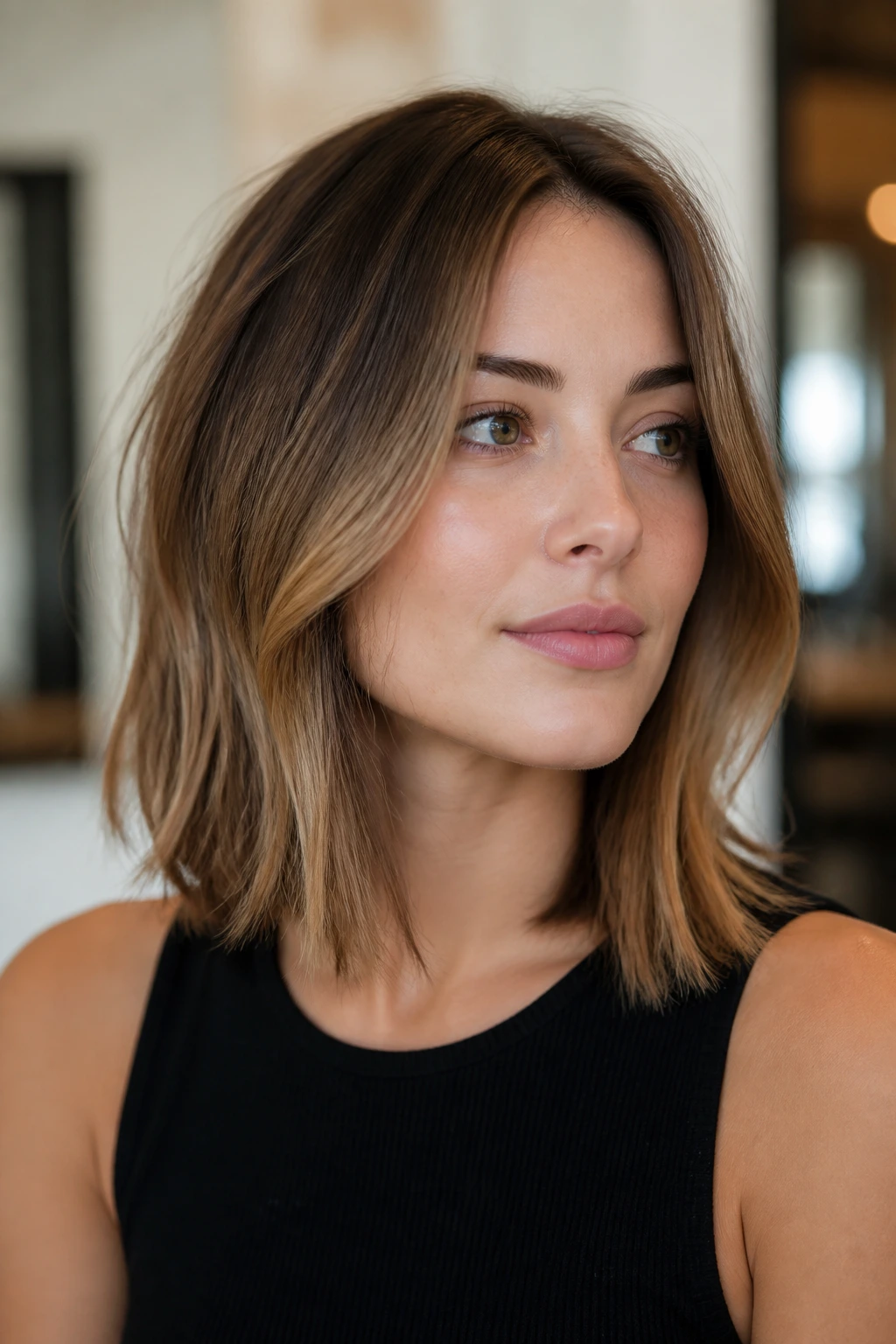
Round faces usually look best with a little vertical line, a little asymmetry, and enough softness around the cheeks to avoid adding width right where the face is fullest. Fine hair has a different problem: it needs shape without so much layering that the ends disappear. That’s why so many of these styles keep the perimeter clean and the volume on top.
The best hairstyles for round faces and fine hair tend to share the same quiet tricks. Side parts break symmetry. Longer front pieces pull the eye down. Crown lift creates height without puffing the sides. And blunt or softly angled ends make the hair look thicker than a heavily shredded cut ever will.
There’s a trap people fall into with fine hair. They think more layers automatically means more volume. Sometimes it does, for about ten minutes. Then the ends thin out, the shape collapses, and the head starts looking wider because the sides have gone soft while the top has gone flat. Better to use fewer, smarter layers and keep the outline intentional.
Essential Tools and Products That Make These Styles Easier
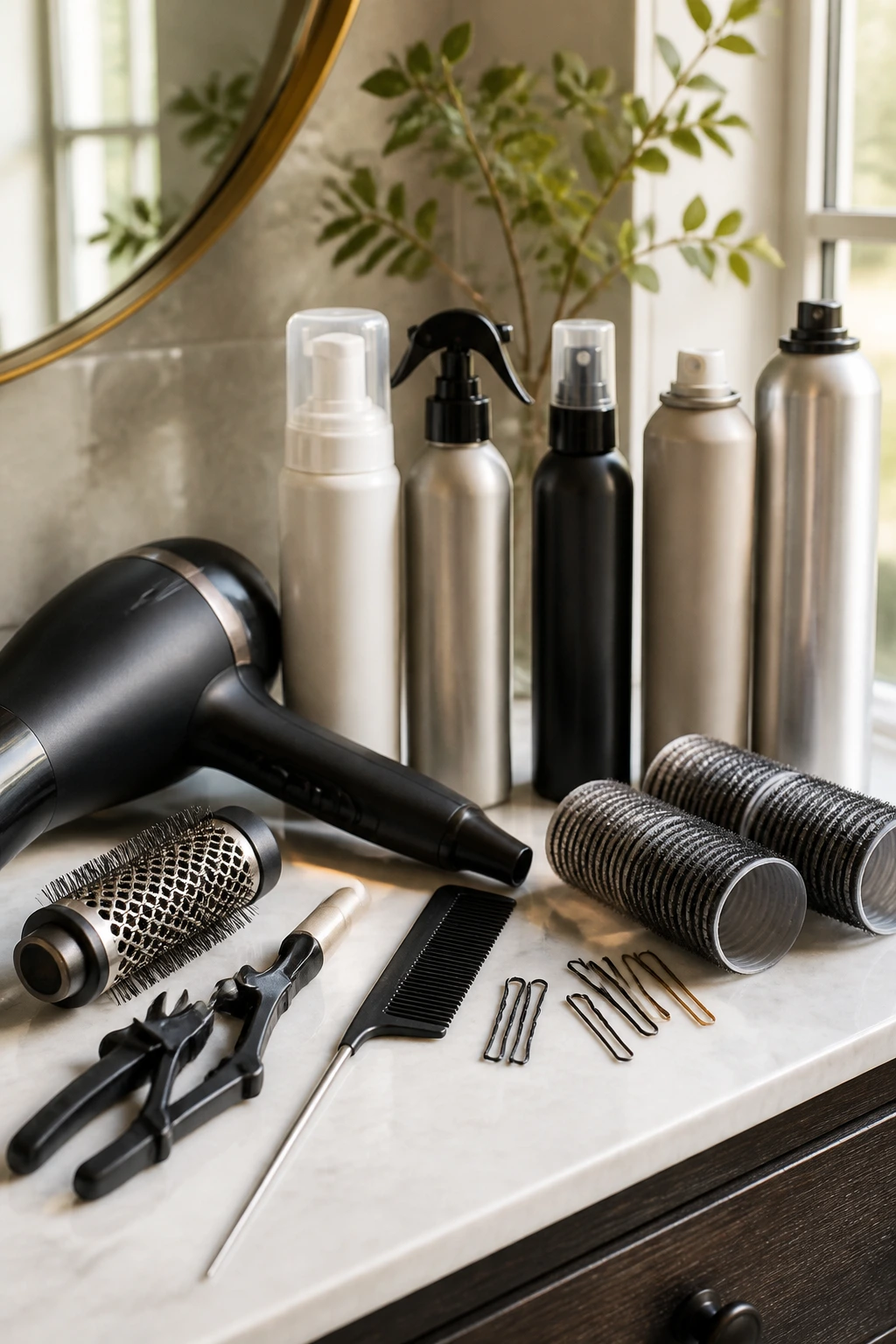
- A blow dryer with a nozzle attachment: The nozzle keeps air focused so the roots lift instead of blasting the hair sideways.
- A 1.25-inch round brush: This size gives a soft bend without creating a giant curl that can widen the face.
- A tail comb: Useful for clean side parts, crown sections, and tiny adjustments at the roots.
- Sectioning clips: They keep fine hair out of the way while you blow-dry or curl in pieces.
- Lightweight mousse: Best applied at the roots and mids before drying so the hair has some memory.
- Heat protectant spray: Fine hair burns fast when tools are too hot, and damage shows quickly.
- Texturizing spray: A light mist adds grip and separation; don’t soak the hair.
- Dry shampoo: Handy for root lift on day two, especially around the crown.
- Small bobby pins and U-pins: Better than bulky clips for half-up styles and low buns.
- Velcro rollers: Optional, but excellent for lifting the crown while the hair cools.
- A flexible-hold hairspray: Keeps shape without turning fine strands into cardboard.
How to Choose the Right Cut Before You Leave the Salon
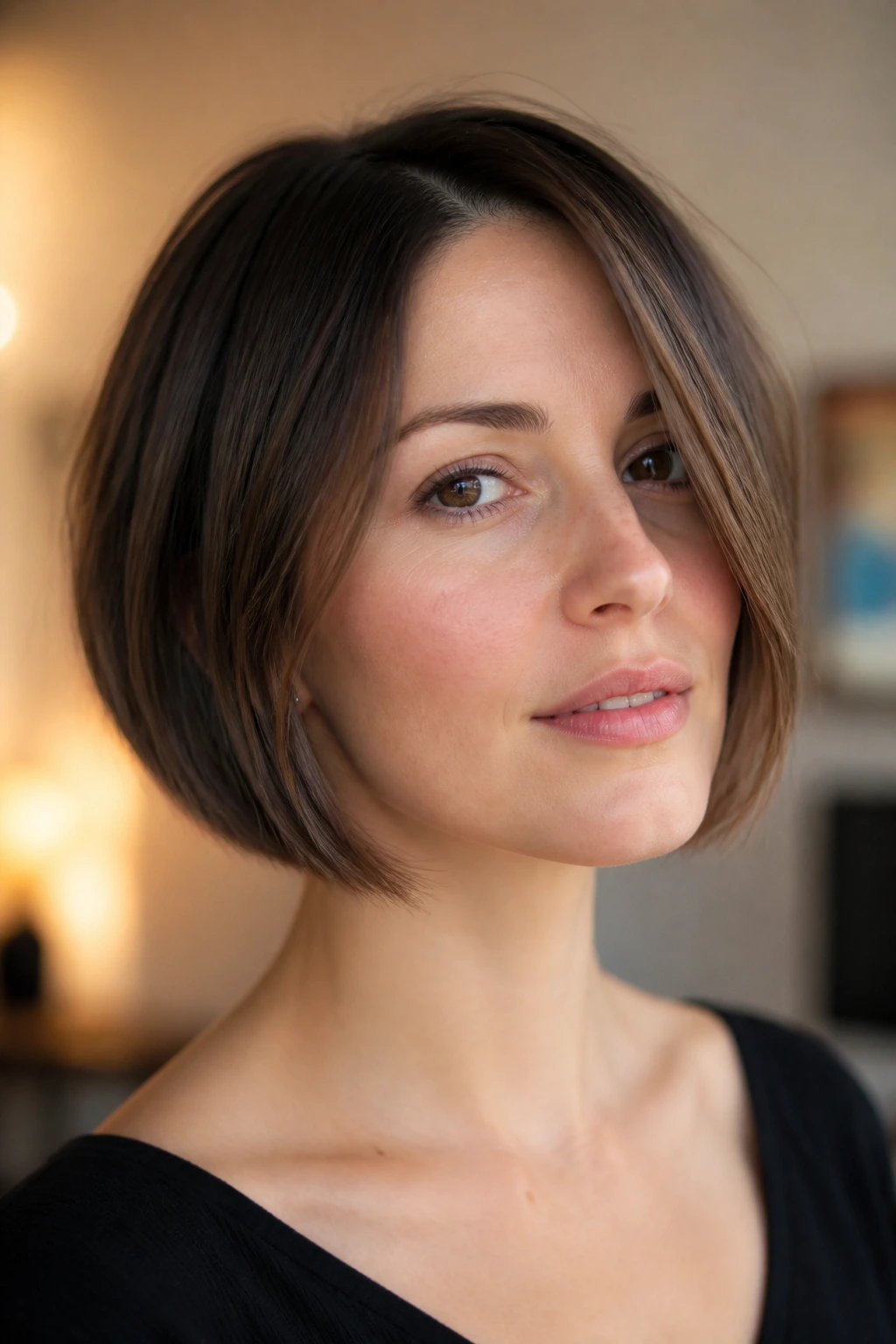
A flattering cut starts with the right conversation, not the right photo. Bring pictures if they help, but tell the stylist what you want the hair to do: lift at the crown, skim the cheekbones, keep the ends full. That language is more useful than asking for a vague “face-framing” shape and hoping for the best.
The Three Things to Ask For
First, ask where the shortest front piece will fall. On round faces, that point matters. If it ends exactly at the widest part of the cheek, you may get more width than you want. Second, ask how much weight will stay in the ends. Fine hair usually looks better with a stronger perimeter. Third, ask how the style will look after a month of grow-out. If the answer sounds shaky, keep looking.
Product Rules That Save Fine Hair
Use the least heavy product that gets the job done. Root lift first. Heat protectant second. Texture spray only where you need separation. Oils and creams belong mostly on the mids and ends, never on the crown unless your hair is extremely dry. Fine hair shows buildup fast, and once the roots go heavy, the whole style loses shape.
And yes, tools matter. A good round brush and a decent blow dryer can change a cut more than another layer ever will. That’s not marketing talk. It’s what actually happens when the roots hold.
How to Wear These Styles in Real Life
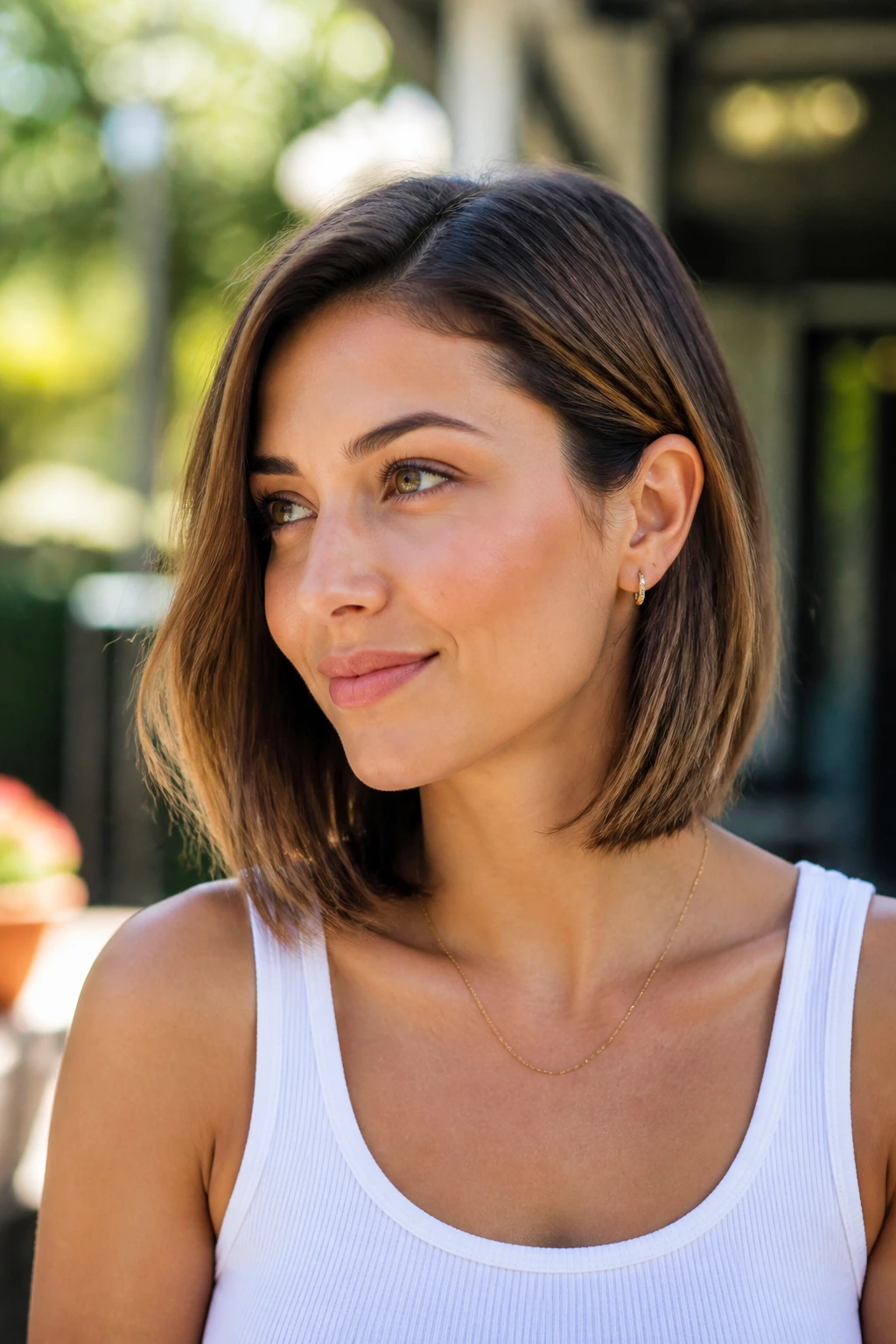
Everyday errands: The tucked-behind-ear lob, the collarbone lob, and the soft angled bob are easy because they keep shape even when you’re moving around, bending over, or throwing on sunglasses. A quick pass of dry shampoo at the roots is usually enough.
Office polish: The blunt cut, the shoulder-length blowout, and the sleek low bun look finished without being stiff. They hold up well under lamps, window light, and long stretches at a desk, which matters more than people admit.
Dinner or events: The face-framing updo, the twisted crown half-up, and the deep side-part bun give you shape without pulling every strand off the face. That balance is useful if you want the style to stay soft in photos and in person.
Second-day hair: The textured ponytail, the half-up style, and the soft waves with root lift are best when the hair has a little lived-in grip. Clean hair is not always the best hair for these looks. Sometimes day two has the right amount of give.
Extra Volume Moves That Don’t Look Puffed Up
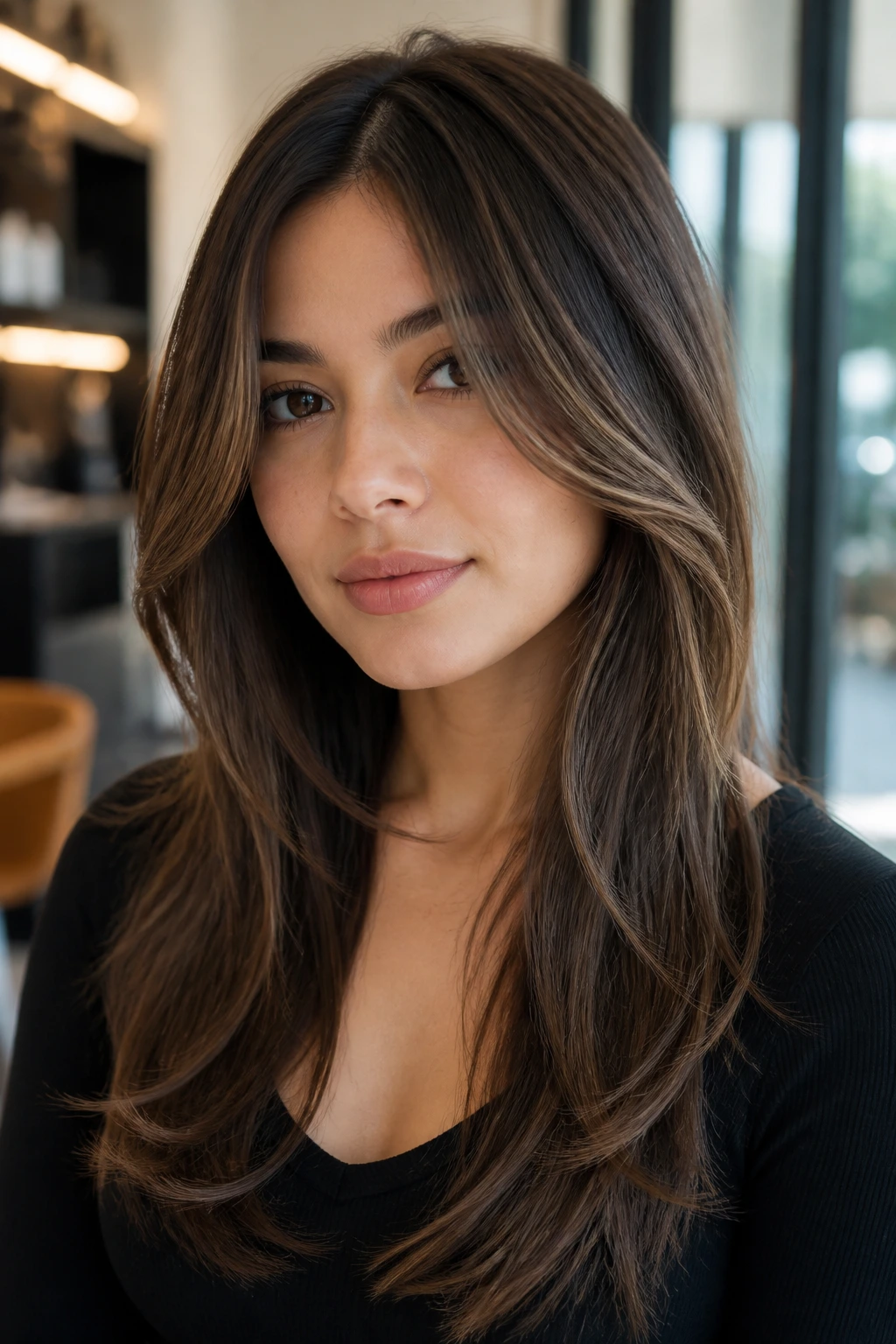
Root Lift: Clip the crown up while the hair cools, even for 10 minutes. That tiny habit makes a bigger difference than dumping more product at the roots. Fine hair keeps the shape better when the lift happens during cooling, not after.
Texture: Use texture spray on the mids and ends only. A mist from about 8 inches away is enough. If the hair starts looking dry or crunchy, you’ve gone too far.
Face Balance: Keep the widest part of the style away from the widest part of the face. That means no giant curls sitting at the cheeks and no blunt fringe that cuts the face in half.
Make-It-Yours: If your hair is straight and slippery, lean on mousse and a side part. If it’s wavy, let the natural texture do more of the work. If it’s very fine but dense, you can handle a little more layering than someone with sparse density, but not much. The difference sounds small. It isn’t.
Common Mistakes That Flatten the Whole Look
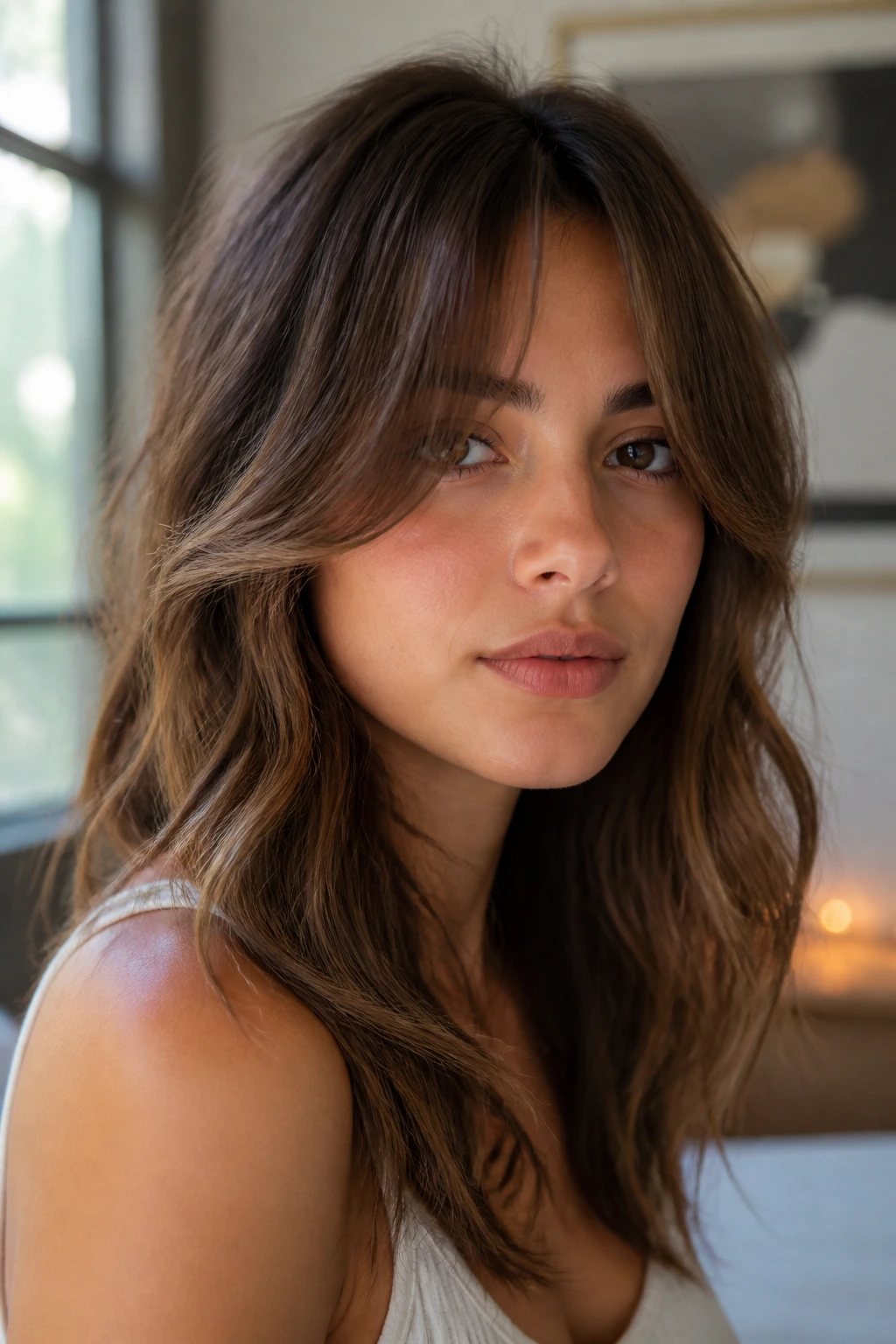
Cutting too much weight out of the ends: Fine hair needs some shape left in the perimeter. If the bottom gets too see-through, the whole cut looks thin even when the top has volume.
Stopping the haircut at the cheek: That’s the widest part of a round face for many people, and a blunt line there can widen the look. Ask for length just above or below that point instead.
Overloading product at the roots: Mousse, spray, oil, dry shampoo—used carelessly, they all pile up. The symptom is roots that look dirty by noon. The fix is to use lighter layers of product and brush them through well before drying.
Over-thinning bangs or face-framing pieces: Wispy is good. See-through is not. If the front pieces disappear into the rest of the hair, the face loses its frame and the cut feels unfinished.
Wearing everything center-parted by default: Some round faces can handle a center part, but many look better with a slight off-center shift or a deep side part. If your hair falls flat in the middle, stop making it do that.
Skipping trims for too long: Fine hair shows split ends fast. Once the perimeter frays, the cut loses the very thickness you were trying to keep.
Variations and Adaptations to Try
Heatless Wave Version: If heat styling makes your hair too soft or fragile, try loose overnight braids or a robe-belt wrap. The shape will be gentler and the face-framing movement easier to keep without hot tools.
Curly-Hair Adjustment: The same ideas still work if your fine hair has curl or coil in it. Keep the length a little longer than you think, avoid short layers at the temples, and use the crown for lift rather than puffing the sides.
Glass-Sleek Version: If your hair is naturally straight and shiny, lean into blunt bobs, tucked lobs, and side parts. These look best when the surface is smooth and the ends are clean, not frizzy.
Grow-Out Friendly Version: Collarbone lengths, airy shags, and soft long layers are the safest if you hate maintenance. They stay shaped even when the cut grows for a few weeks past its trim date.
Short-and-Sassy Version: If you want to go shorter, pick a pixie or chin-length bob with height at the top. Keep the sides neat and the crown lifted. Short cuts on round faces fail when they go flat, not when they go short.
Low-Effort Version: A tucked lob, a low bun with a side part, or a half-up crown twist gives you shape in under 5 minutes. Good for busy mornings. Good for second-day hair. Good for the days when you can’t be bothered.
How to Keep the Shape Between Washes
Fine hair can lose its shape faster than thicker hair, so a little maintenance goes a long way. Bobs and pixies usually need trims every 4 to 6 weeks if you want the line to stay crisp. Lobs and layered mid-length cuts can usually stretch to 6 to 8 weeks. Letting them go longer is not a disaster, but the ends will start to look lighter and the face-framing pieces can drift into the wrong place.
At night, a silk or satin pillowcase helps cut down on the roughness that flattens fine hair. If you want to keep crown lift, clip the top section loosely up before bed or sleep with the part slightly lifted at the root. Sounds fussy. It saves time in the morning.
Dry shampoo works best before the hair looks dirty. A small amount at the roots, left for a minute or two, then brushed through, gives more lift than trying to rescue flat hair after the fact. For curls or waves, refresh with a mist of water and a tiny bit of leave-in, then scrunch only the ends. Do not rub the whole head. That turns soft texture into fuzz.
Questions People Ask Before They Cut Their Hair
Can a center part work on a round face with fine hair?
Yes, if the cut has enough length and movement. A middle part with collarbone length or longer pieces can look balanced, but if the hair is flat at the roots, a slight off-center part usually gives a cleaner line.
Do layers make fine hair look thinner?
They can, if the layers are too short or too heavy. Fine hair usually does better with long layers, internal shaping, or a blunt perimeter that keeps the ends fuller.
Is a bob too risky for a round face?
Not if the bob is placed well. A bob that ends at the jaw and has a little angle, lift, or side part can be one of the strongest shapes for this face type.
Can I wear bangs if my hair is fine?
Absolutely, but keep them light. Wispy bangs, curtain bangs, or a soft side fringe are easier to manage than a thick block of hair across the forehead.
What if my hair falls flat no matter what I do?
Start the style at the roots. Mousse before drying, lift while cooling, and use less conditioner near the crown. If the roots stay soft and the ends stay clean, the style has a better chance.
Which styles are easiest on day two?
Textured ponytails, half-up looks, soft waves, and tucked lobs usually hold up well. They work with a little bend and don’t need perfect smoothness to look finished.
Should fine hair avoid short cuts altogether?
No. Short cuts can look fuller than long, thin lengths if the perimeter is kept dense and the crown has some lift. The wrong short cut is flat. The right one has shape.
How do I stop my cheeks from being the focus?
Keep the volume above the cheek line or below the jaw, not right on it. Side parts, longer front pieces, and height at the crown all help shift the eye.
The Cuts That Keep Their Shape
The nicest thing about hairstyles for round faces and fine hair is that they do not have to be dramatic to work. A small shift in parting, a cleaner edge, or a little lift at the crown can change the whole balance of the face. That’s the part I trust most: not gimmicks, not over-thinned layers, just shape that respects where the face is widest and where the hair needs help.
Pick the cut that fits your life, not the one that looks best only in a salon mirror. The styles above can be polished, loose, short, long, or pinned up, but they all share the same core idea: keep the line thoughtful and let fine hair look fuller where it naturally wants support. The next good haircut is probably less complicated than you think.