



Fine hair can look crisp and deliberate when the cut does the heavy lifting. An oval face helps, too — it’s one of the easiest face shapes to work with — but that also means there’s nowhere for a bad haircut to hide. Too many wispy layers, too much thinning, or a length that hangs like wet laundry, and the whole thing goes soft in the wrong way.
The trick is not more hair. It’s better shape. A blunt edge can make strands look denser at the ends. A lifted crown can do more than another round of mousse. A side part, a soft fringe, or a jaw-skimming bob can change the whole read of the face without asking your hair to become something it isn’t.
That’s the sweet spot here: hairstyles that respect fine texture and flatter oval proportions at the same time. Clean lines. Smart volume. A little strategic mess where it helps, and none where it doesn’t. The right cut or style should make the hair look like it has purpose the second it moves.
Why These Hairstyles Earn Their Keep
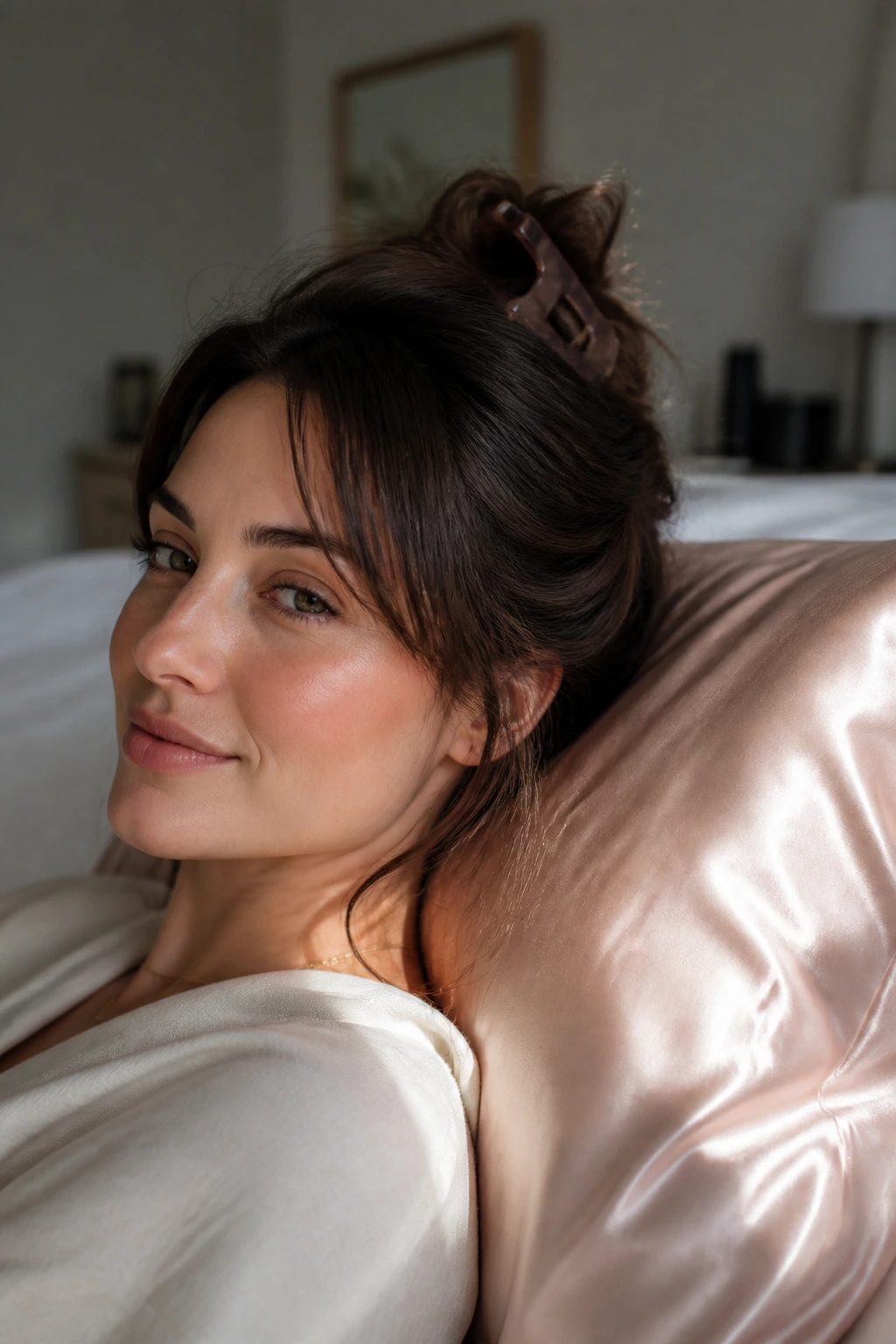
- Blunt edges do real work: A solid perimeter makes fine hair look thicker because the eye reads one clean line instead of see-through ends.
- Oval faces can take shape in almost any direction: Center parts, side parts, fringe, and tucked styles all work if the balance stays intentional.
- Lift at the crown matters more than extra length: A style that gains height at the roots usually looks fuller than one that simply grows longer.
- These looks stay decent between washes: The better shapes here don’t fall apart the moment the roots soften.
- You do not need heavy products: Mousse, dry shampoo, a round brush, and a 1-inch iron go a long way when the cut is doing its job.
- Short, medium, and pinned styles all have a place: Fine hair doesn’t force you into one length; it asks for smarter structure.
1. Blunt Chin-Length Bob
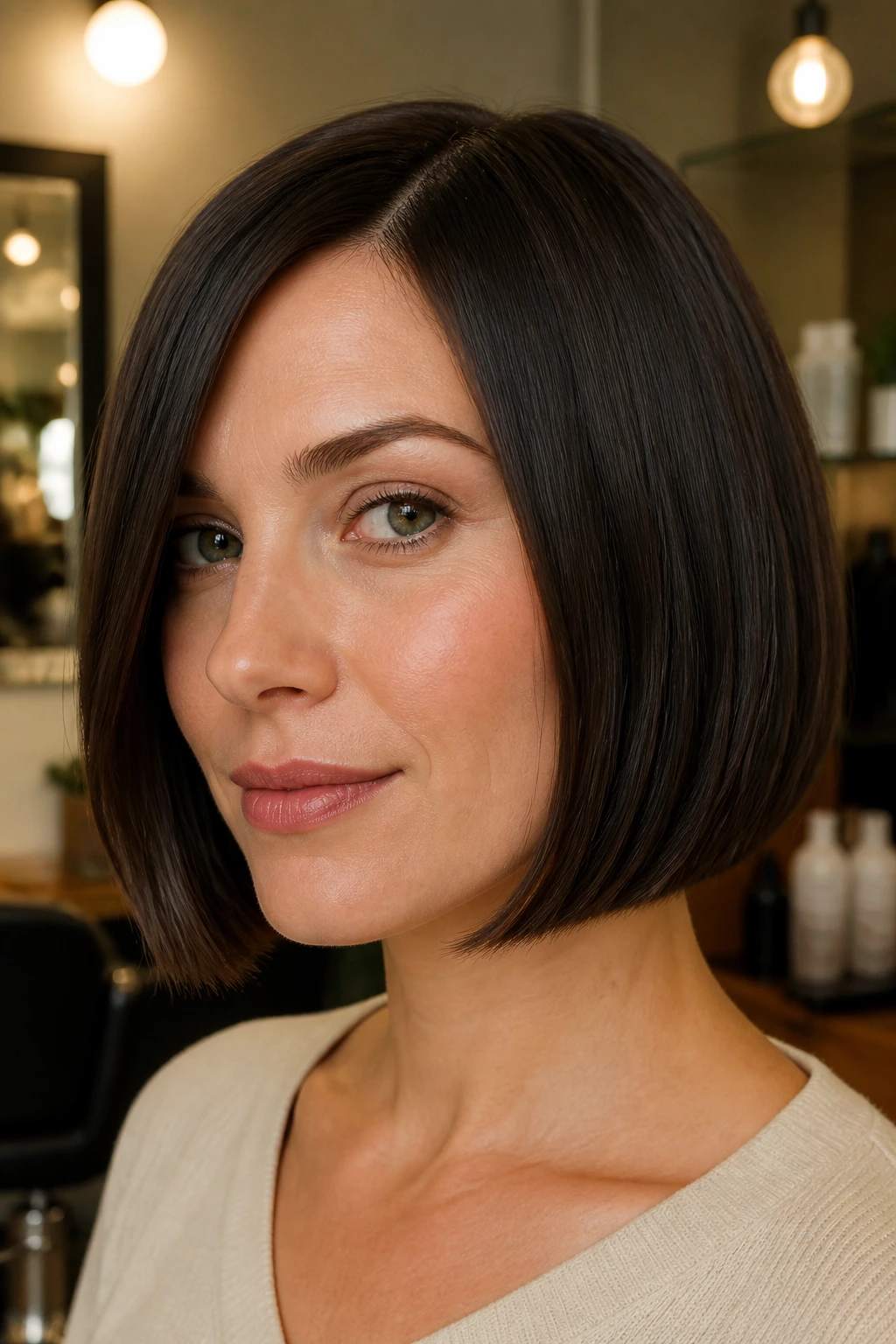
A chin-length bob is one of the few cuts that can make fine hair look denser without asking it to perform acrobatics. The edge sits close to the jaw, so the eye gets a clear finish line instead of a wispy taper. On an oval face, that line lands in a flattering spot and keeps the whole look neat without feeling severe.
Why the Edge Matters
The magic is in the perimeter. Ask for a blunt line with only a whisper of bevel at the ends, because too much slicing turns the bottom soft and see-through. A tiny bend under the chin gives the hair body where it counts.
- Best on straight or slightly wavy fine hair
- Ask for one length with minimal internal layering
- Works well with a side part or a soft center part
- Style with a paddle brush or a 1-inch round brush
Pro tip: If your hair flips outward at the ends, hit just the last inch with a flat iron and curve it under once. That tiny move changes the whole mood.
2. Collarbone Lob with Soft Ends
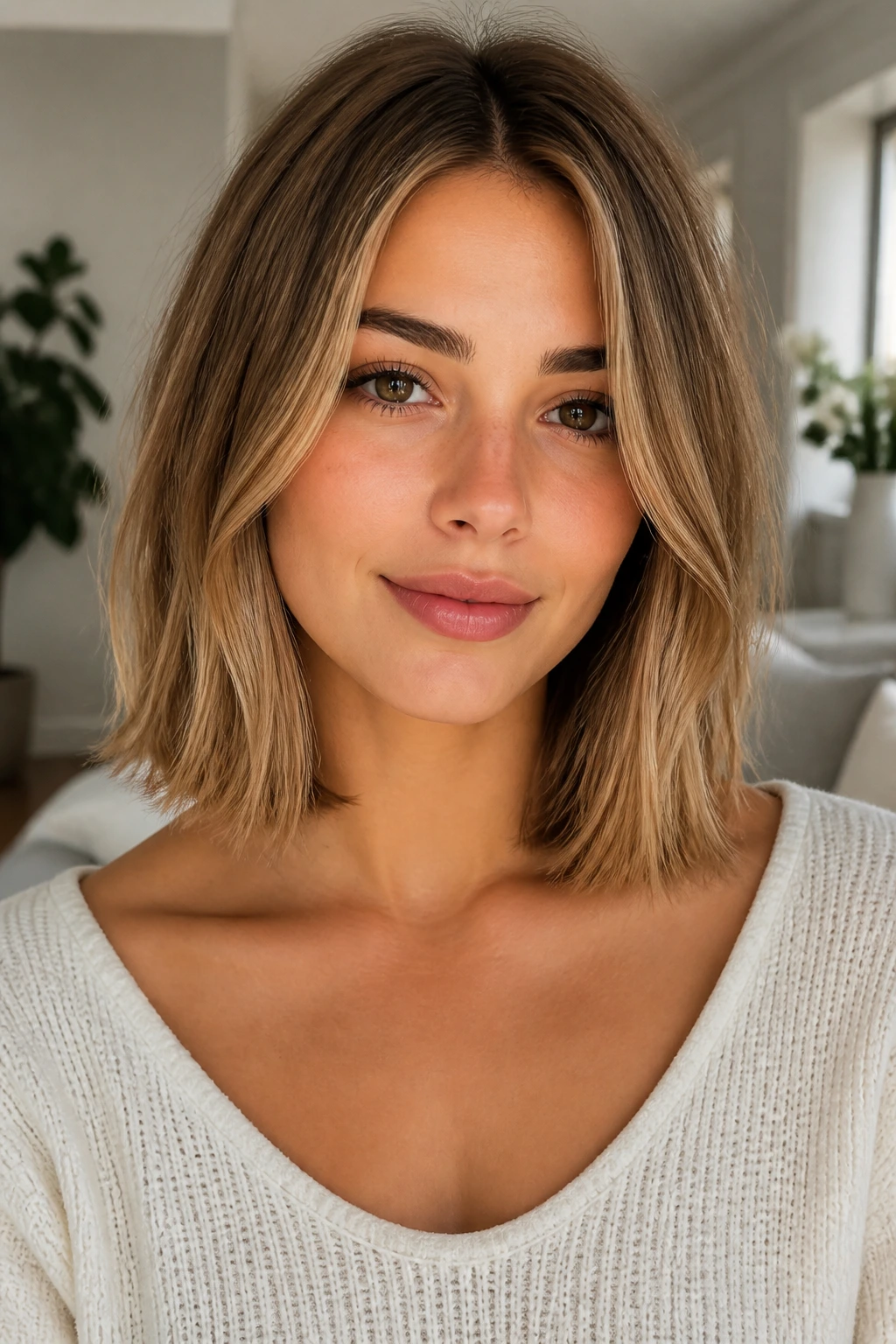
The collarbone lob is the safest bet when you want length without losing the feeling of fullness. It skims the collarbone, so the hair moves when you walk, but it does not drag the face down the way longer fine hair often does. On oval faces, the length sits cleanly and keeps the proportions easy.
This cut works best when the ends stay soft, not shredded. I’d take a blunt-ish lob with a gentle bend over a heavily layered version almost every time. Fine hair needs weight at the bottom. Strip that away and you get motion, yes, but you also get air where you did not ask for it.
A quick blowout with a round brush gives this shape its best version. If you like a little polish, wrap the front pieces away from the face and leave the mid-lengths loose. It looks deliberate, not stiff.
3. Curtain Bangs with Long, Airy Layers
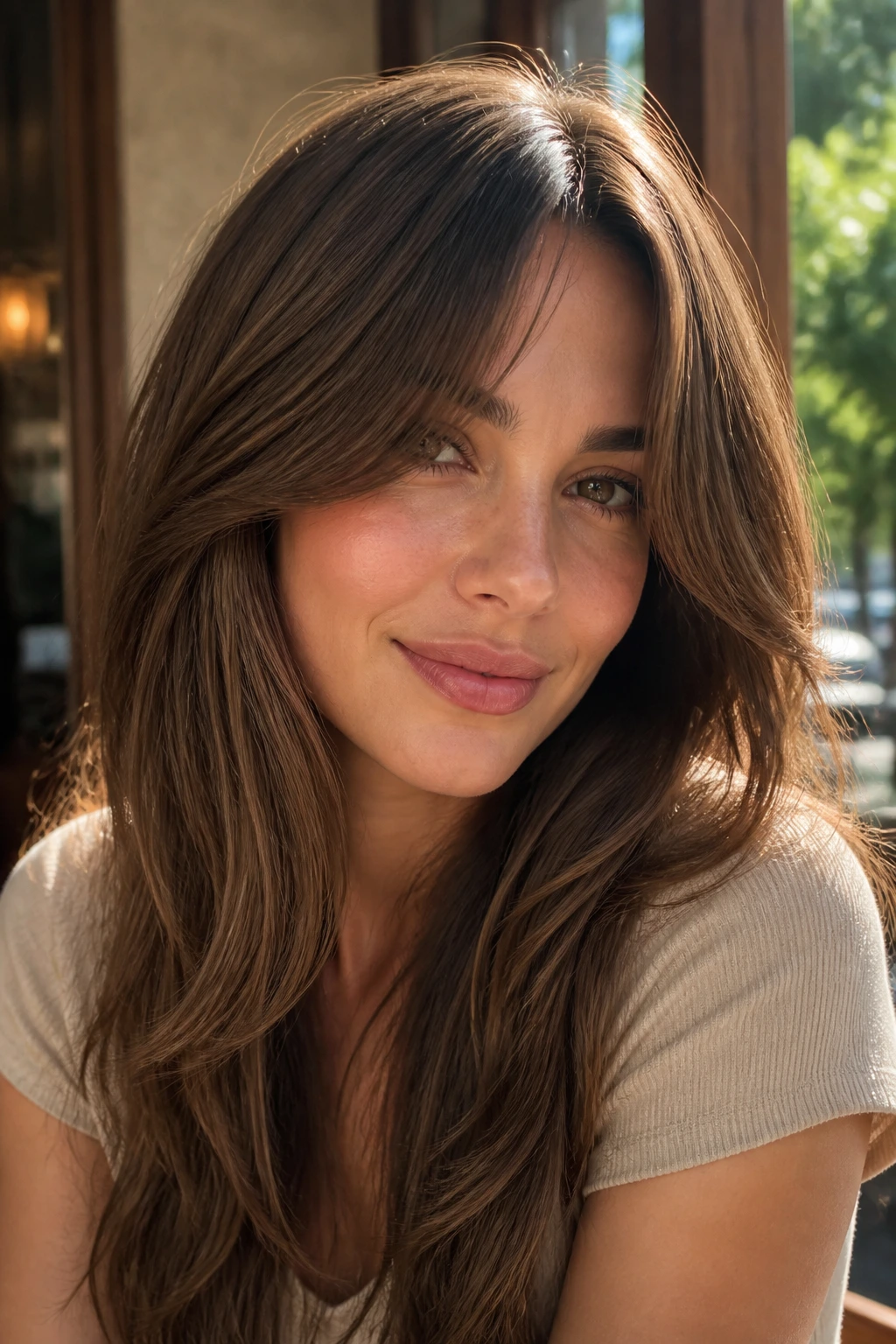
What if you want a face frame without committing to a full fringe? Curtain bangs are the clean answer. They split softly at the center, open up the forehead, and give fine hair a little lift right where it tends to sag.
How to Keep Them from Collapsing
The trick is to keep the bang zone light and movable. Ask for bangs that start around the cheekbone or just below the brow, then blend them into long layers that fall past the chin. Heavy bangs eat up too much density. Wispy, split bangs do not.
A small round brush and a quick blast of heat are enough to shape them. Dry each side away from the face, then let them cool in that position for a minute before touching them. That cooling step matters more than people think.
Fine hair around the forehead can go flat in a hurry, so avoid oil near the roots. A touch of dry shampoo at the bang line keeps the piece from separating into two limp strings by lunchtime.
4. Deep Side-Part Blowout
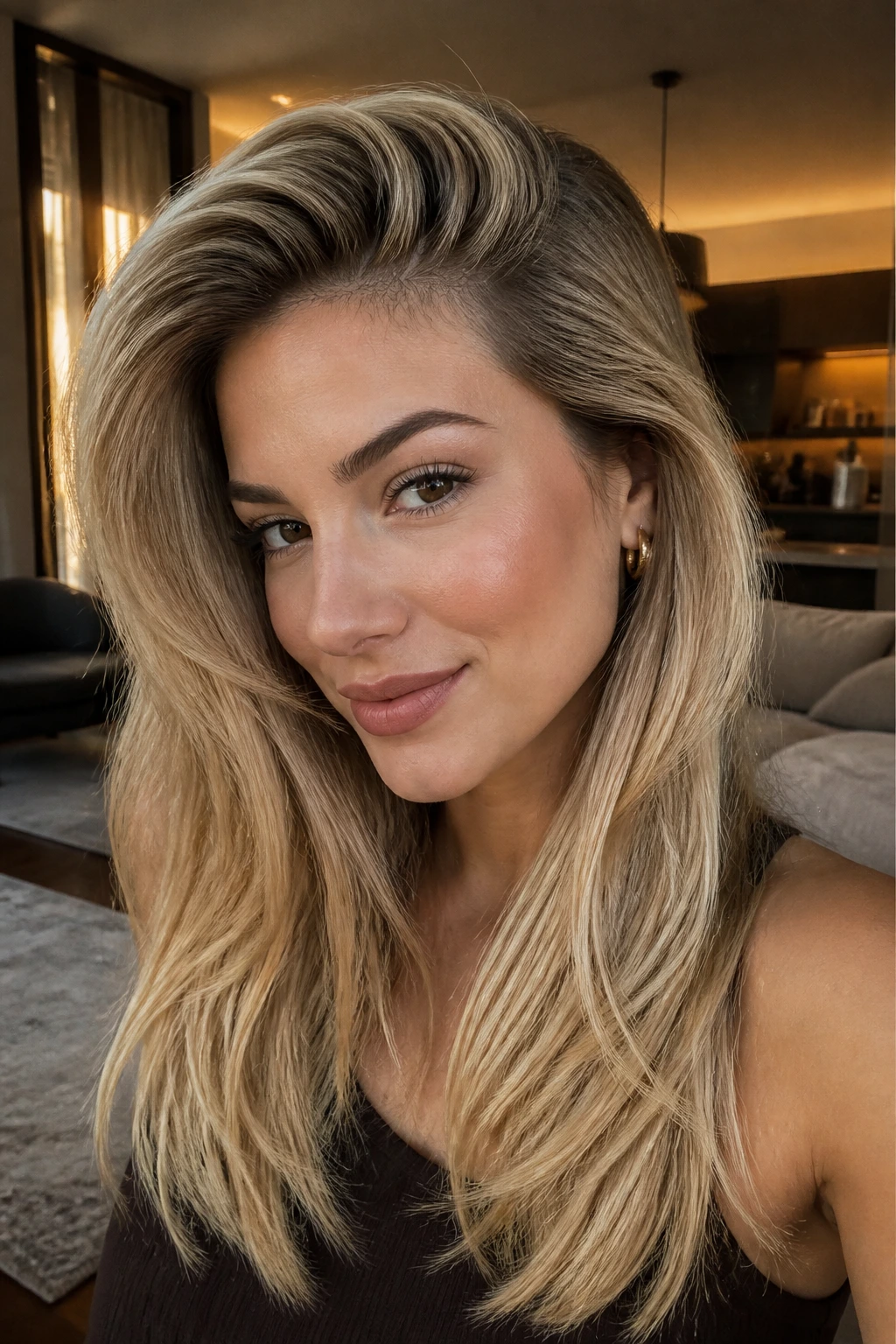
A deep side part is the fastest way to fake lift without changing your haircut at all. It pushes more hair over one side, creates height at the root, and makes fine hair look like it has more body than it started with. On an oval face, the asymmetry feels clean rather than awkward.
The best version starts on damp hair. Flip the part opposite the direction you want it to sit, rough-dry the roots, then switch it over once the base is warm and half-dry. That little trick gives the front a lift that lasts longer than a straight-down blow-dry.
- Use a root-lift spray before drying
- Clip the heavy side up while the roots cool
- Finish with a light-hold hairspray, not a helmet
- Best for second-day hair that needs a reset
One-line tip: If your crown lies flat, pin a small section at the root with a metal clip for 10 minutes while the rest dries.
5. French Bob with a Soft Fringe
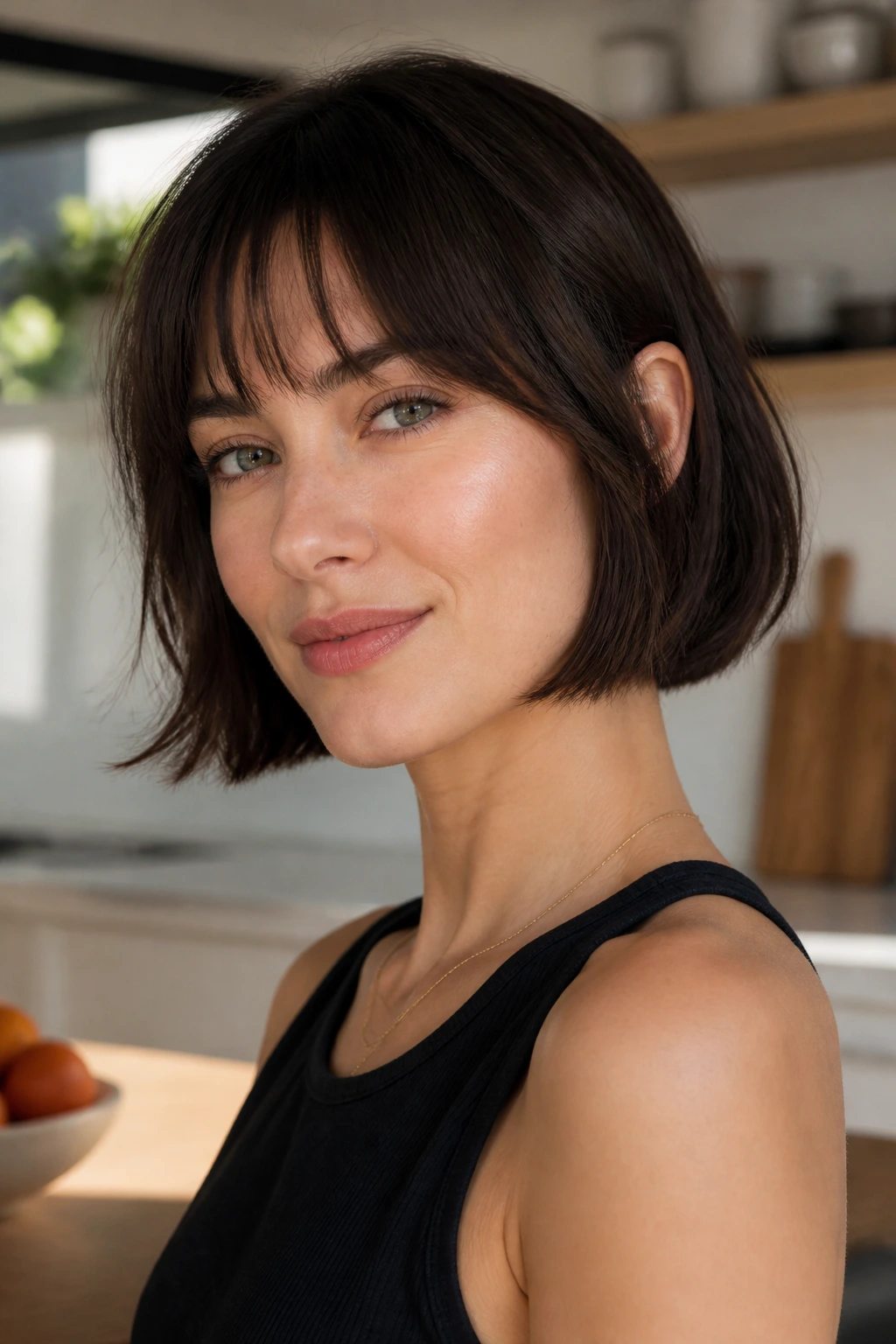
The French bob sits shorter than a lob and softer than a sharp pixie, which is exactly why it flatters fine hair. It usually lands around the jawline with a little movement at the ends and a fringe that feels airy rather than blunt. On oval faces, it frames the features without boxing them in.
This cut is best when the perimeter stays clean. Too much texturizing turns a French bob into a fuzzy triangle, and fine hair does not need that kind of help. A soft fringe gives enough interest on top, so the rest of the shape can stay simple.
I like this cut on hair that dries with a slight bend. It looks effortless, but there is a difference between effortless and undercut. The line still has to be there.
6. Piecey Pixie with Tapered Sides
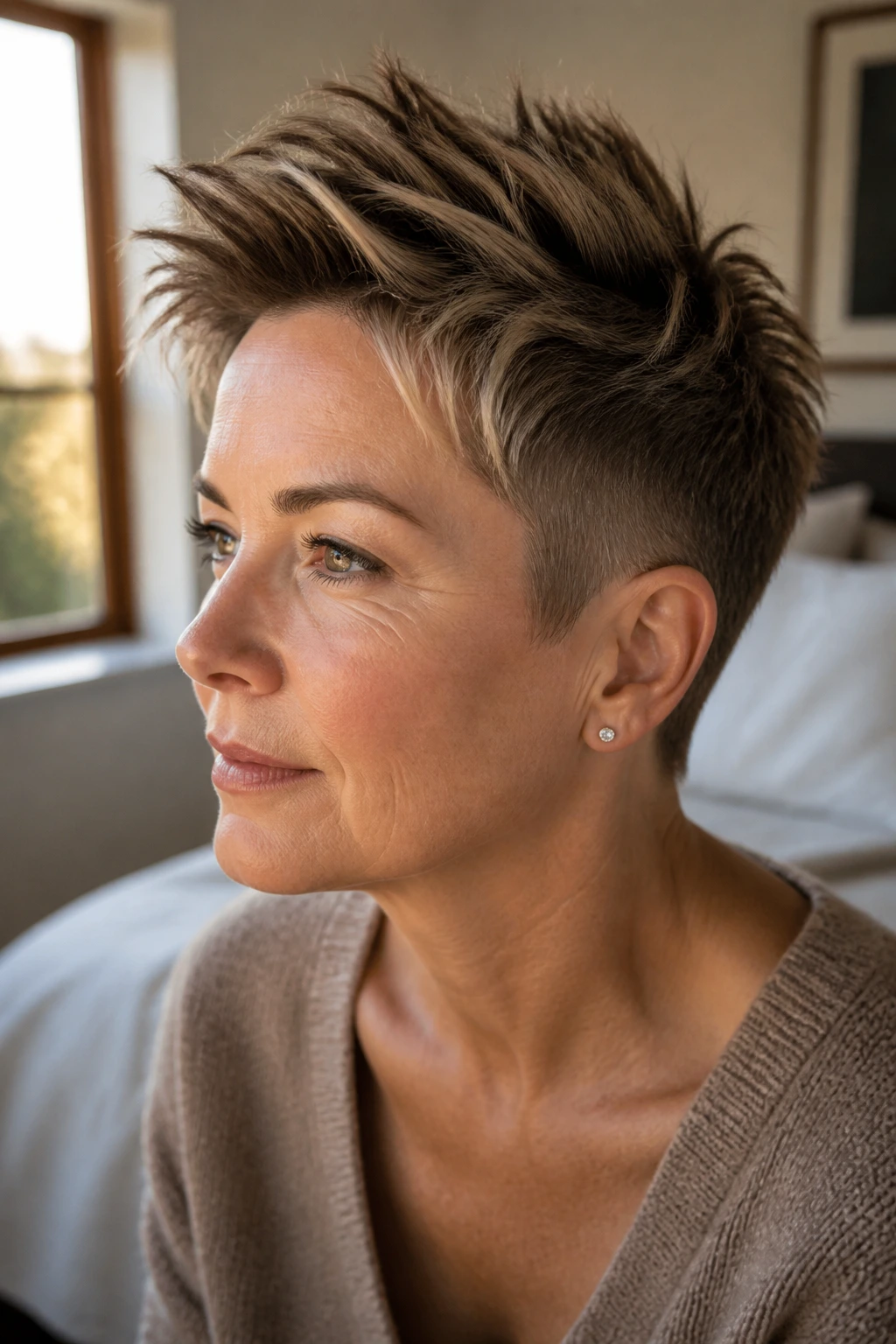
A pixie works on fine hair because there is less length for the hair to fight against. The tapered sides keep the profile neat, while the top stays piecey enough to show movement. On an oval face, the short shape draws attention to the eyes and cheekbones without crowding the jaw.
Unlike a soft, fluffy crop, this version depends on separation. A pea-sized amount of matte paste or styling cream is usually enough. Work it through the top with your fingers, then pinch a few sections forward so the cut looks lived-in, not shellacked.
The biggest mistake with a pixie is overloading the top with product. Fine hair goes greasy fast. Keep the product off the roots and use only enough to define the pieces.
7. Shoulder-Length Cut with Invisible Layers
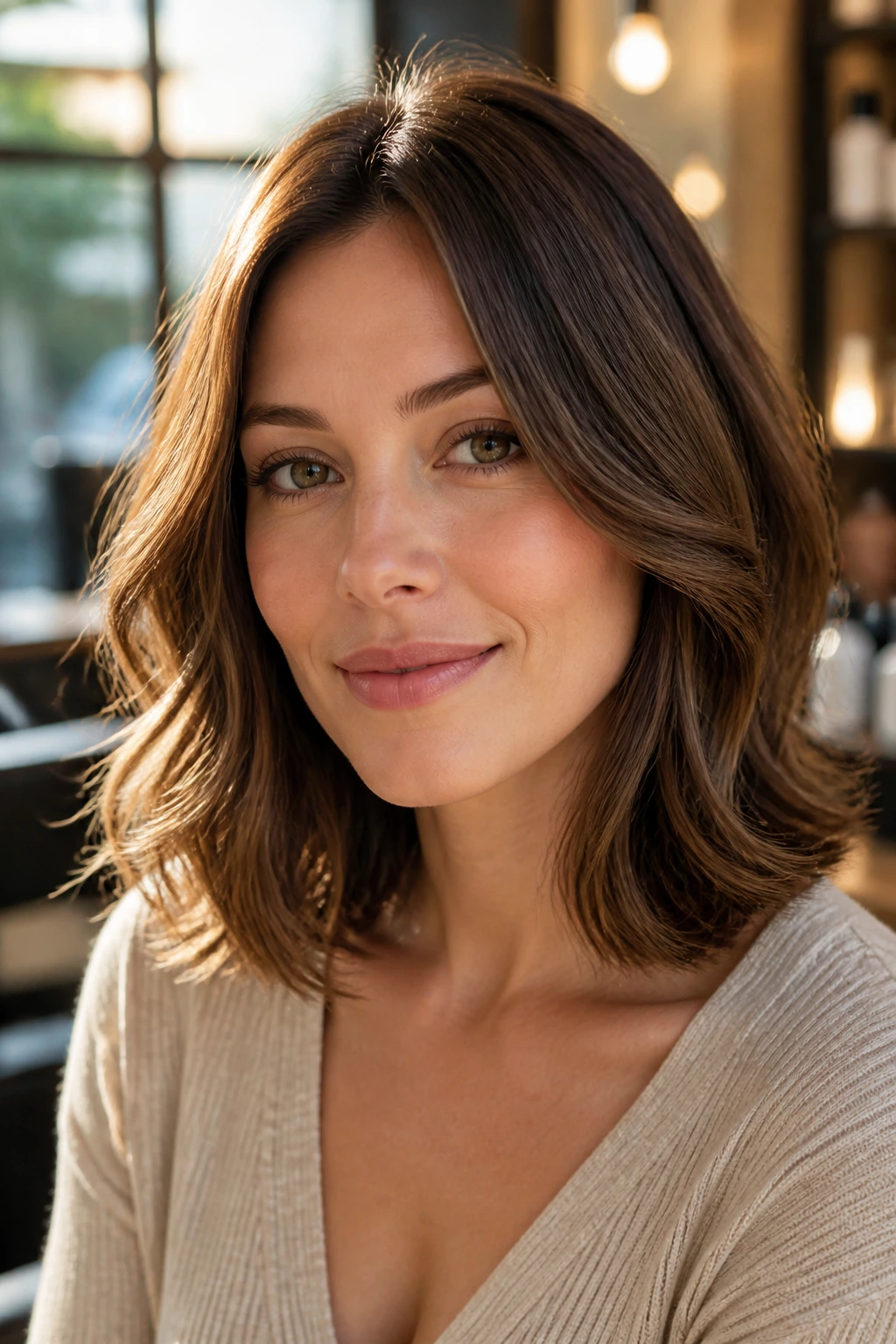
This is the cut for anyone who wants to keep enough length for a ponytail but hates the see-through ends that fine hair can get at shoulder length. The outer line stays solid, while the layers hide inside the shape. That gives movement without advertising every piece of texture.
The Trick Is in the Inside
Ask for invisible layers, not choppy ones. The stylist should remove bulk from the interior while leaving the perimeter mostly intact. That keeps the hair from collapsing at the shoulders.
A round brush makes this cut behave. Pull the front sections forward and under, then let the ends curl just enough to sit on the collarbone. It gives the hair a softer, fuller read than a perfectly straight finish.
If your hair has a slight wave, this length is forgiving. If it is poker-straight, a tiny bend at the ends keeps it from looking flat and unfinished.
8. Textured Shag with Wispy Fringe
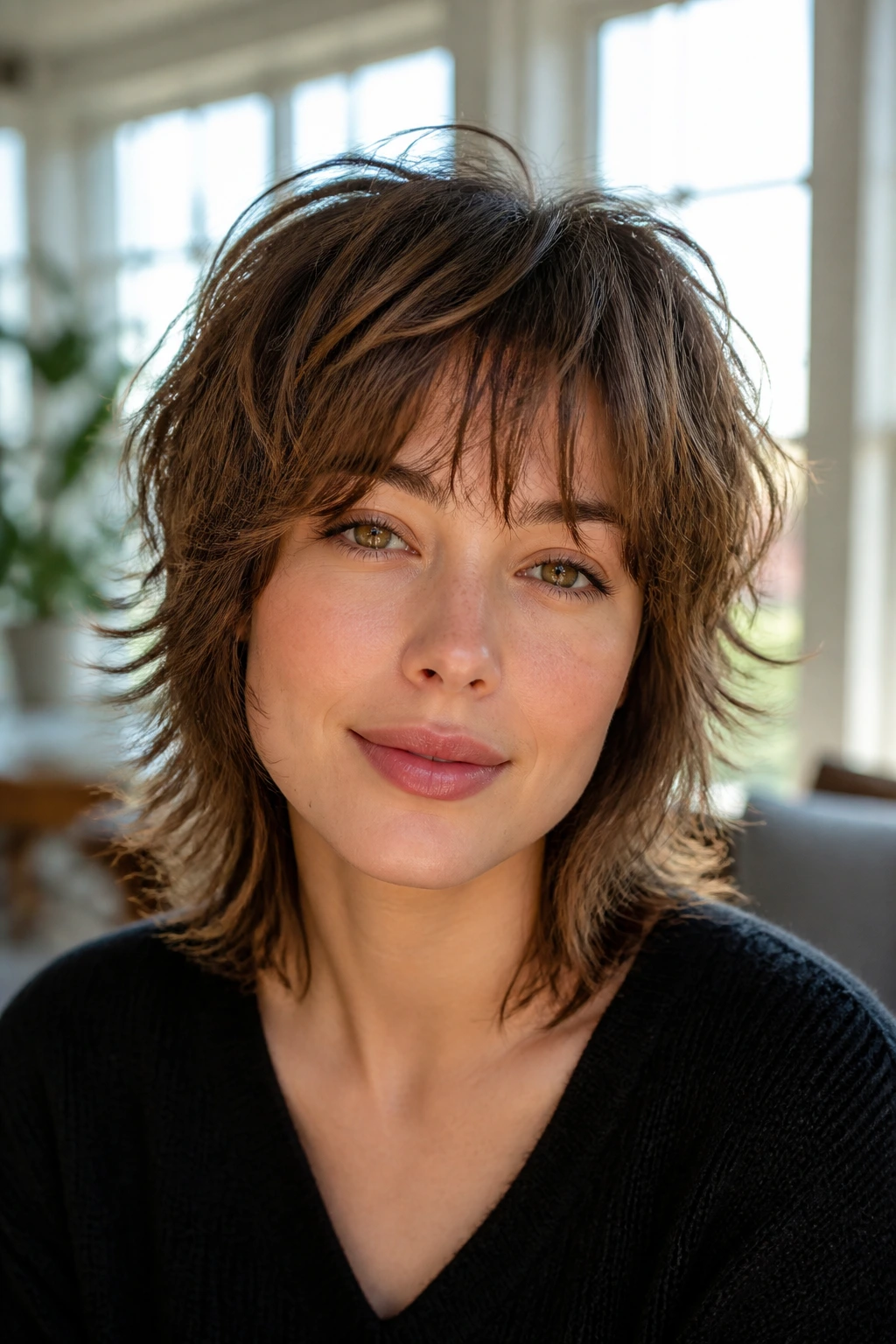
A shag only helps fine hair when it’s cut with restraint. Too many layers make the bottom thin out and the whole shape lose its backbone. A good fine-hair shag uses airy layers to create movement, not a wall of wispy ends that disappear in sunlight.
This version usually works best on hair with a little natural bend. The wispy fringe softens the forehead, while the crown stays light enough to lift. Oval faces can wear this shape because the fringe and layers keep the face open without stretching the hair too far downward.
Use mousse on damp hair and either diffuse gently or air-dry with a few clips at the crown. The point is texture with shape. Not fluff.
9. Sleek Low Bun with Face-Framing Pieces
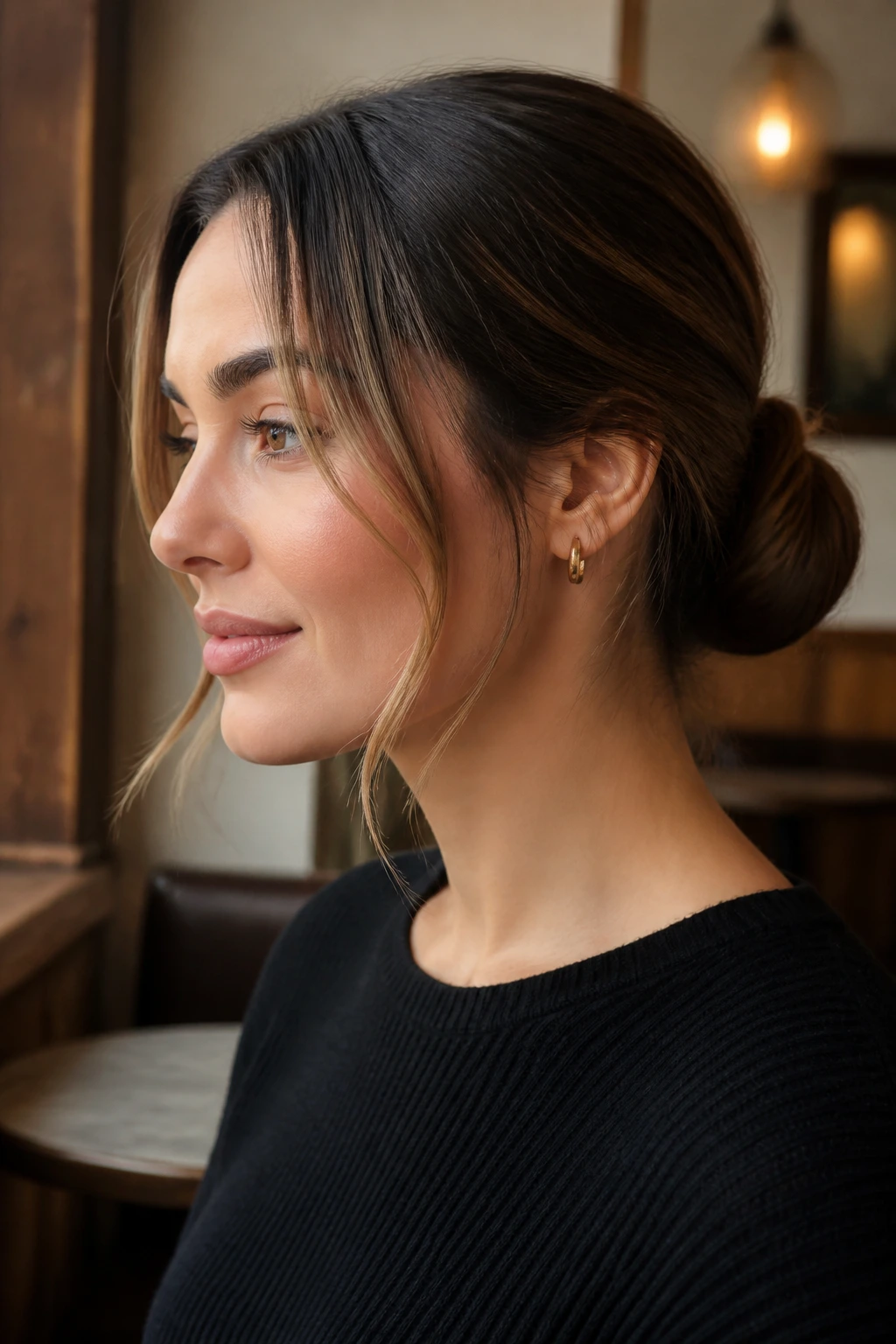
Fine hair can do a polished low bun better than a bulky one because the smaller amount of hair keeps the shape tidy. A low bun at the nape feels deliberate on an oval face, and a few loose face-framing pieces stop it from looking too tight.
The best version starts with a slight lift at the crown. Tease the roots lightly or use a root powder, then smooth the top surface without crushing that height. Pull the bun low and secure it with pins instead of one oversized elastic if your hair is slippery.
Keep the front pieces soft. If they are too straight and too thin, the style reads severe. A quick bend with a flat iron or curling iron gives them the right amount of softness.
10. Half-Up Crown Lift
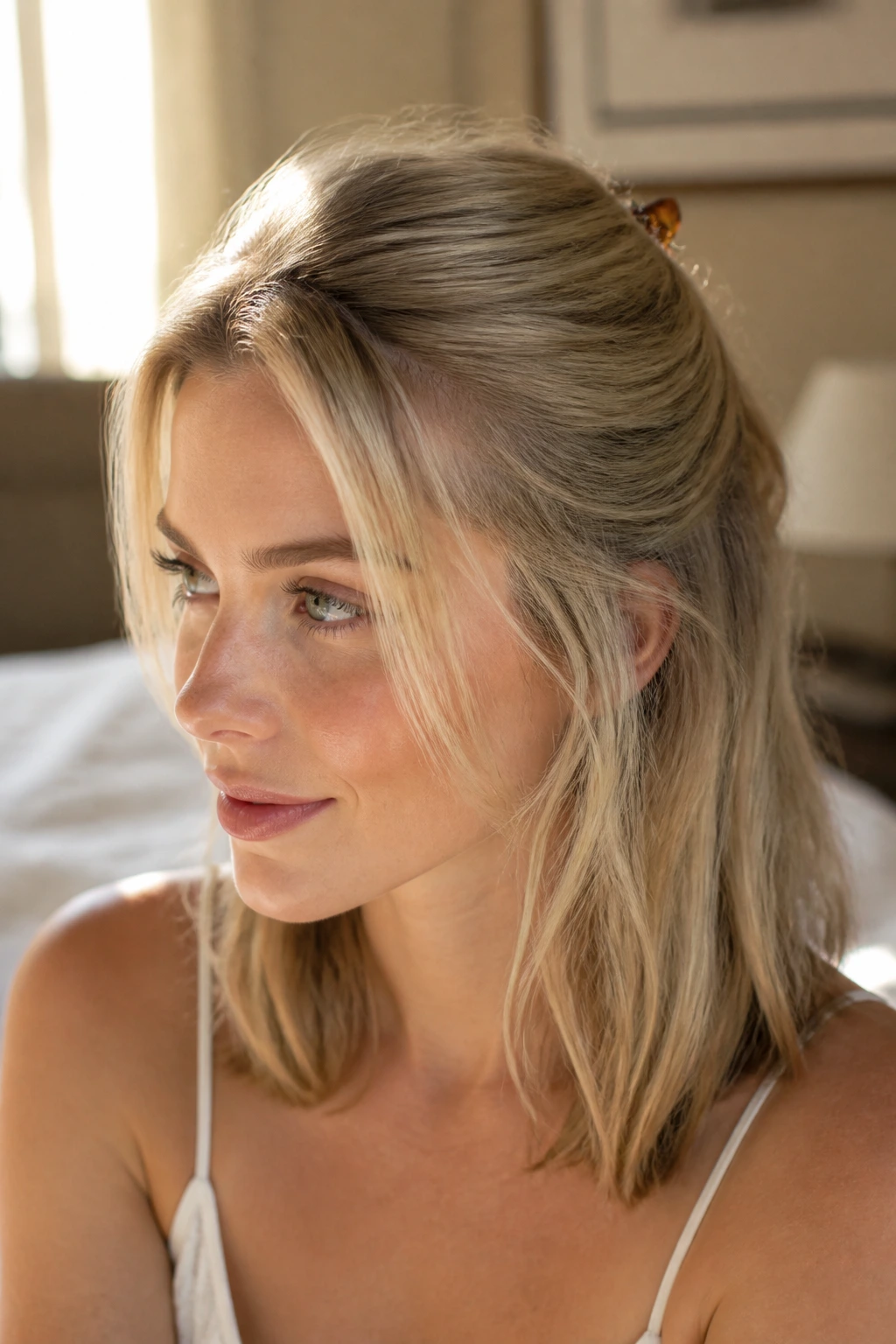
This is the style you reach for when the roots are flat but the lengths still behave. Pulling the top half back shifts the eye upward and makes fine hair look fuller at the crown, which is where volume tends to disappear first. Oval faces handle the lift well because the extra height balances the face instead of overwhelming it.
How to Use It on Second-Day Hair
Start by misting the crown with dry shampoo, then rough up the roots with your fingertips. Gather the top section from temple to temple, but do not stretch it tight. A little looseness gives the lift room to breathe.
- Tease the base once before clipping
- Use a small claw clip or two crossed bobby pins
- Leave the ends loose and slightly bent
- Finish with a light mist of flexible hairspray
Quick take: This style looks better a little imperfect. A perfectly smooth half-up can flatten the very volume you’re trying to keep.
11. A-Line Bob with a Clean Edge
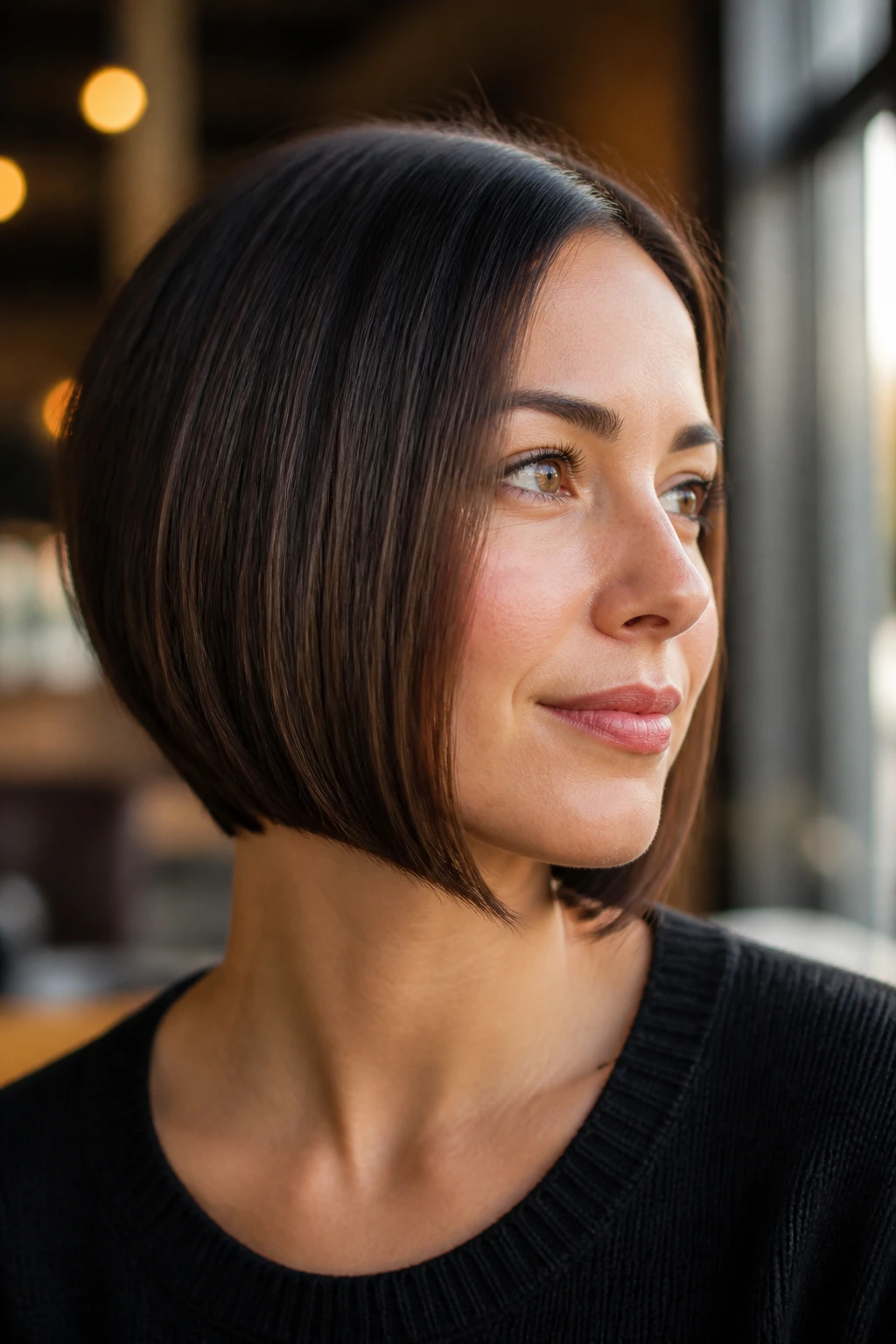
The A-line bob is a smart cut when you want structure without heaviness. It sits shorter in the back and longer in the front, which creates a clean angle that fine hair can actually hold. Oval faces wear this shape well because the front pieces skim the jaw and soften the transition into the neck.
What I like here is the illusion. The back stays compact, so the hair looks fuller where it needs it, while the longer front gives a bit of swing. That front angle can be subtle or stronger, depending on how bold you want the cut to feel.
Ask your stylist to keep the line crisp. If the front gets too thin, the whole point is lost.
12. Soft Wavy Lob with a Center Part
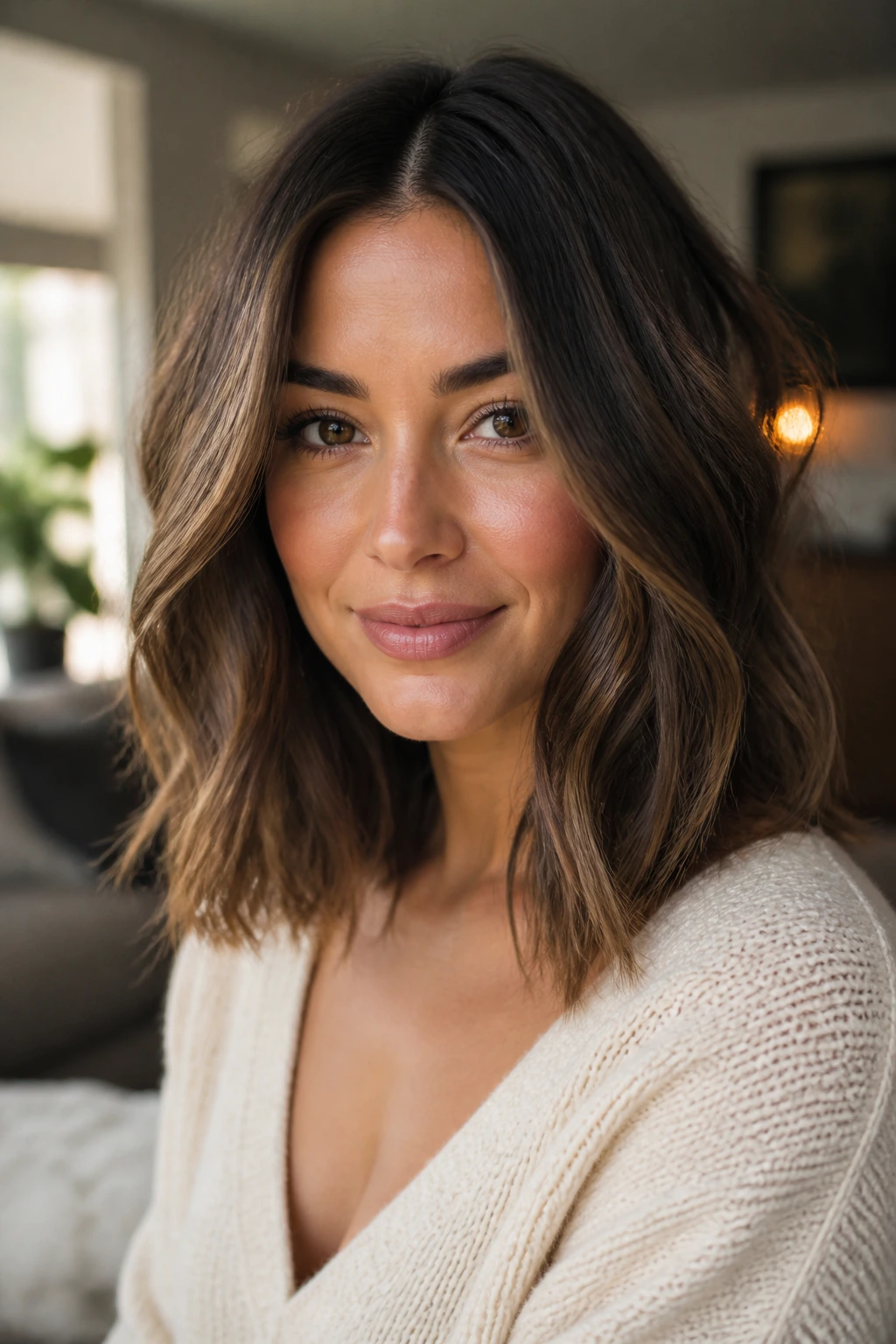
A center part does not automatically flatten fine hair. The problem is usually the wave pattern, not the part itself. Keep the bend from the cheekbones down, and a center part on an oval face can look clean, balanced, and fuller than expected.
The key is not to curl the root area too much. Start the wave lower, brush it out with your fingers, and let the lengths move rather than stand in perfect ringlets. That keeps the top of the head from puffing while the middle and ends still have body.
This style works best with a 1-inch iron or wand. Bigger barrels often make fine hair slide right out of the bend before the day is over.
13. Feathered Shoulder Flip
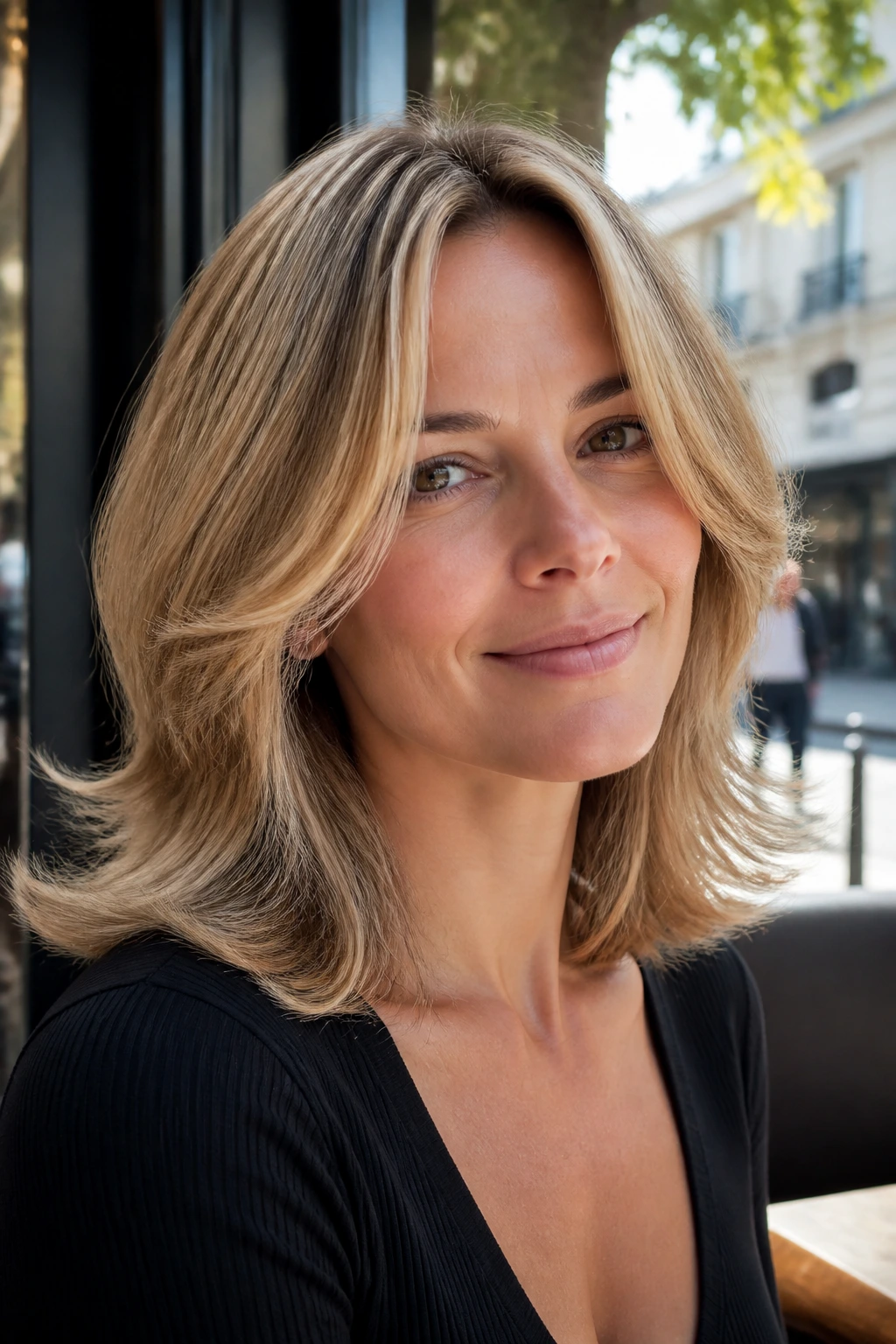
The feathered flip has a retro feel, but it only works when the ends stay soft and controlled. The hair sits around the shoulders and turns outward just enough to open the neckline and add movement. On an oval face, the flip gives the lower half of the hair some presence without crowding the cheeks.
The best part is how easy it is to read. You can see the shape from across the room. That matters with fine hair, because styles that depend on texture alone often vanish after a few hours.
Use a round brush to bend the ends away from the neck, then set them with a light spray. No crunchy finish. The shape should move when you turn your head.
14. Grown-Out Pixie with a Side Sweep
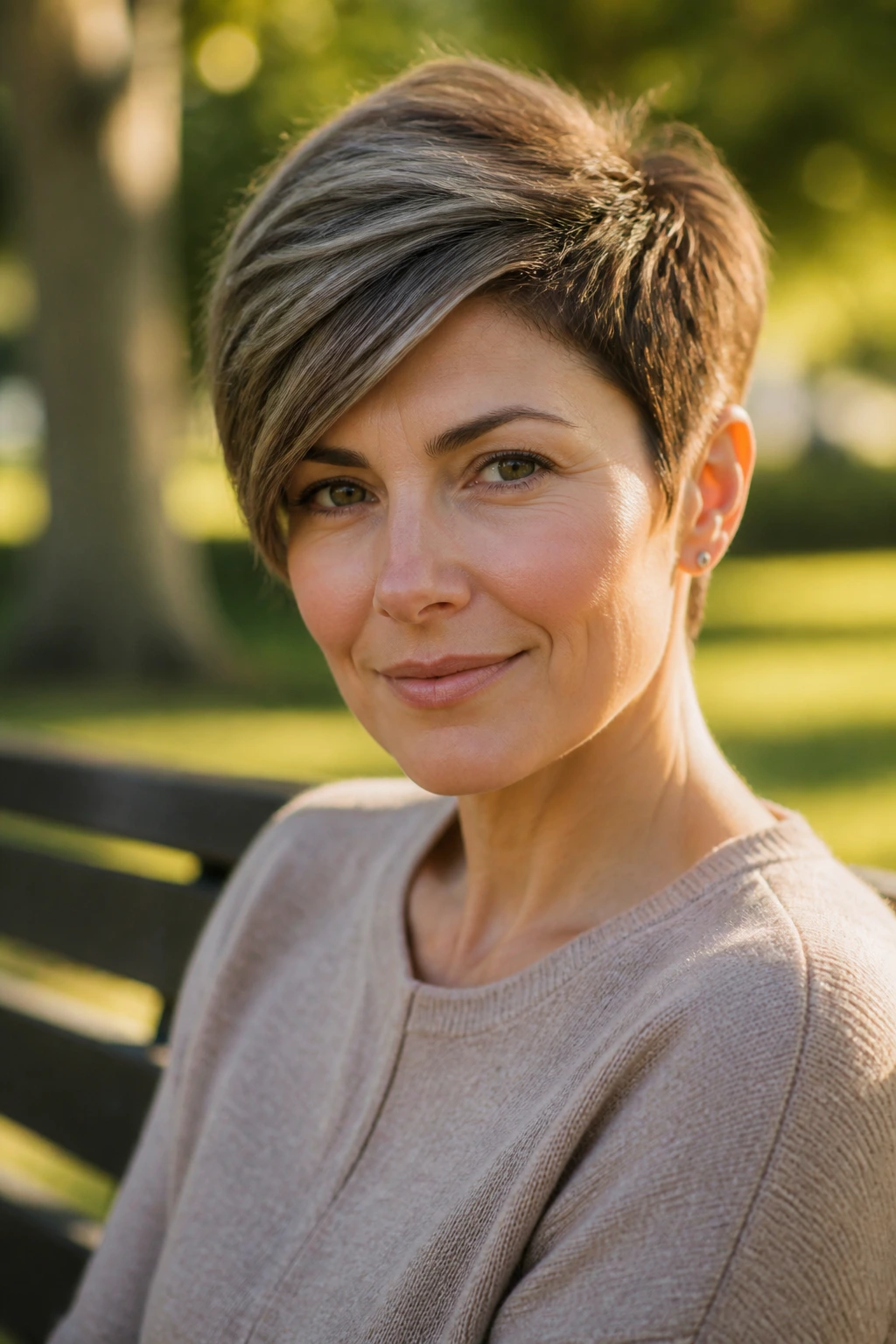
A grown-out pixie is the easiest short cut to live with if you do not want a hard reset every four weeks. The sides stay neat, the top stays long enough to sweep, and the overall shape keeps a little softness around the face. Oval faces can wear this without losing balance.
The side sweep matters more than people think. It gives fine hair something to fall over, which creates fullness on top and a little diagonal line across the forehead. That line keeps the style from reading too harsh or too bare.
Use a small blow dryer and a dab of paste or cream. Push the top up and over, then separate the front pieces with your fingers. It should look like hair, not a helmet.
15. Bubble Ponytail with Root Lift
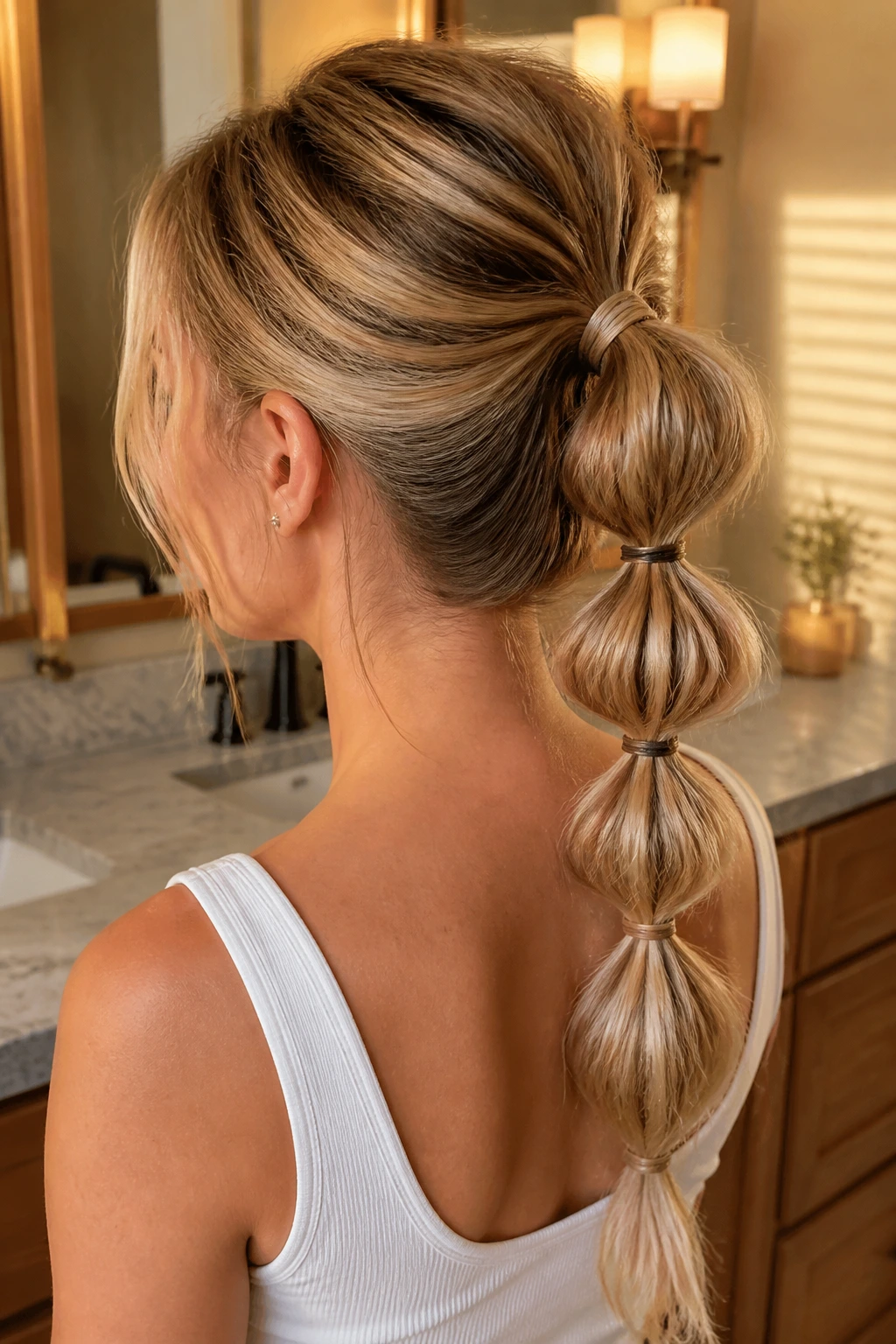
Can a ponytail make fine hair look fuller? Yes, if you break the shape into sections. The bubble ponytail adds visual width by putting little spaces between elastics, so the hair reads as thicker than a single flat tail would.
A Clean Trick for Flat Hair
Start with a little lift at the crown and secure the ponytail where your head naturally wants to carry volume — usually a touch higher than the nape. Then add clear elastics every 2 to 3 inches down the tail and gently tug each section outward. Not hard. Just enough to round it out.
- Best on medium-length fine hair
- Works with straight, wavy, or lightly curled texture
- Use small elastics that do not snag
- Finish with a wrap of hair around the base if you want it polished
A bubble ponytail looks better with a little imperfection. If every bubble is identical, it can feel stiff.
16. Claw-Clip Twist with Loose Volume
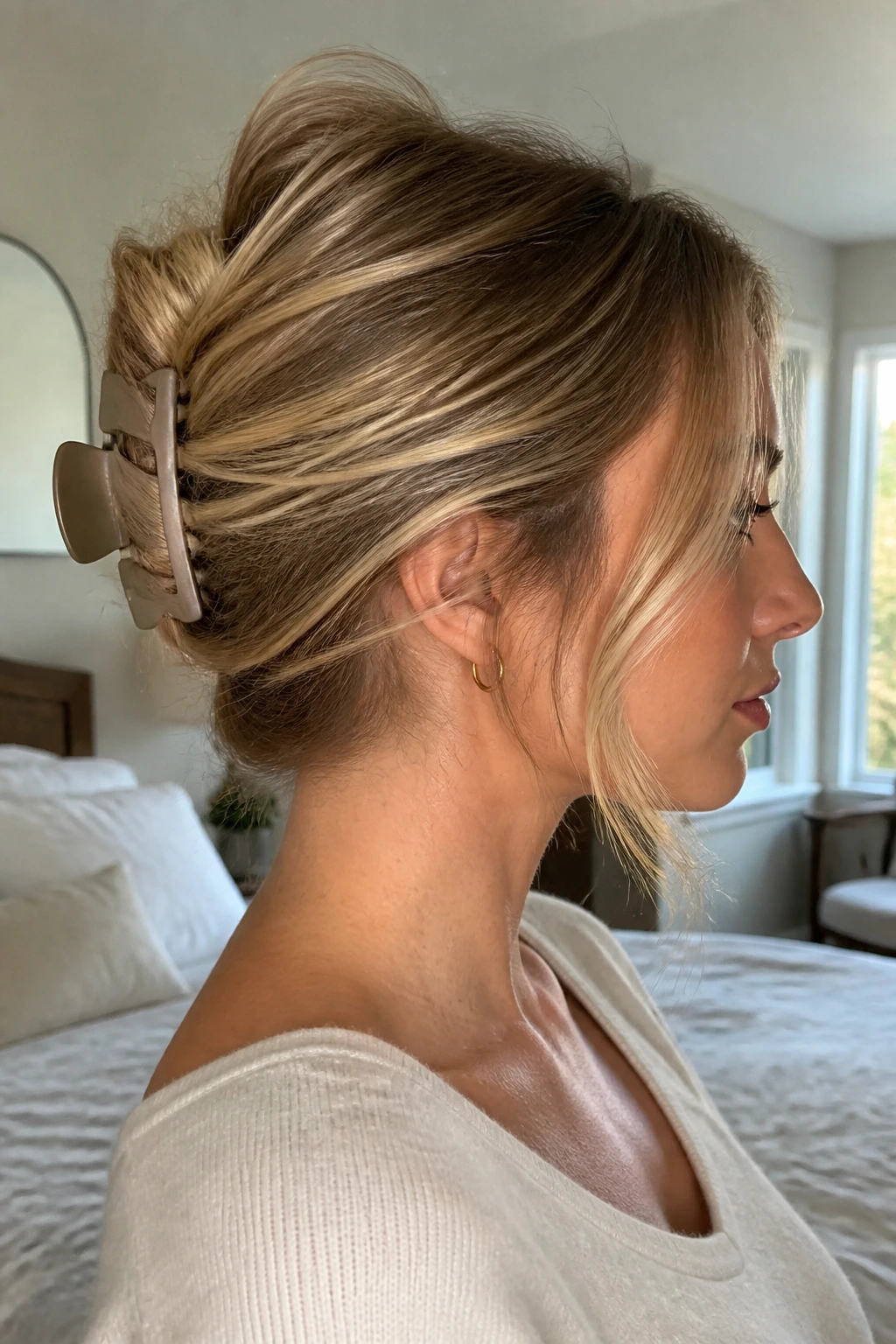
There are days when your hair refuses to cooperate and a claw-clip twist saves the whole situation. Pulling the hair into a loose twist keeps fine strands from looking stringy, while the clip lifts the shape away from the neck and adds a bit of height at the back of the head.
This works best when you do not overtwist. Fine hair can get ropey fast if you keep winding it tighter and tighter. Leave a few pieces free around the face and let the crown stay a little puffy before clipping.
A large matte clip usually holds better than a slippery one. If the clip slides, use one bobby pin under the twist as a backup. Tiny fix. Big difference.
17. Loose Braided Crown
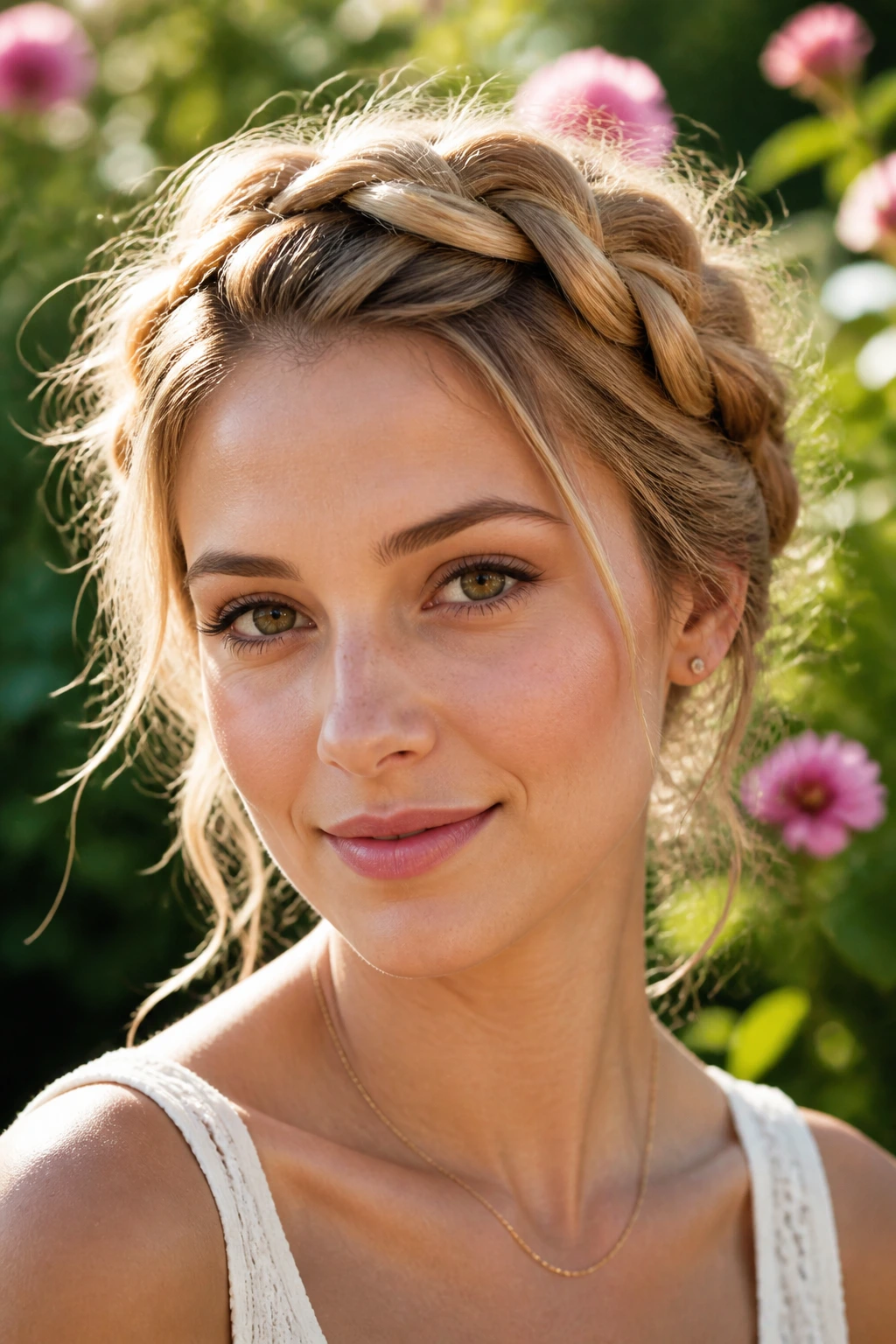
A braided crown adds width and texture right where fine hair tends to look sparse. The braid frames the top of the face, which is useful on oval shapes because it gives the hair some visual structure without needing a lot of length. The trick is to braid loosely and then pull the braid wider with your fingers.
You do not want a tight schoolgirl braid here. That style can make the hairline look thinner. A soft crown braid, pinned low and slightly messy, looks fuller because it creates a broader silhouette.
A little texturizing spray or dry shampoo at the roots helps the braid grip. If the hair is freshly washed and too slippery, the braid will fight you the whole way.
18. Wrapped Low Ponytail
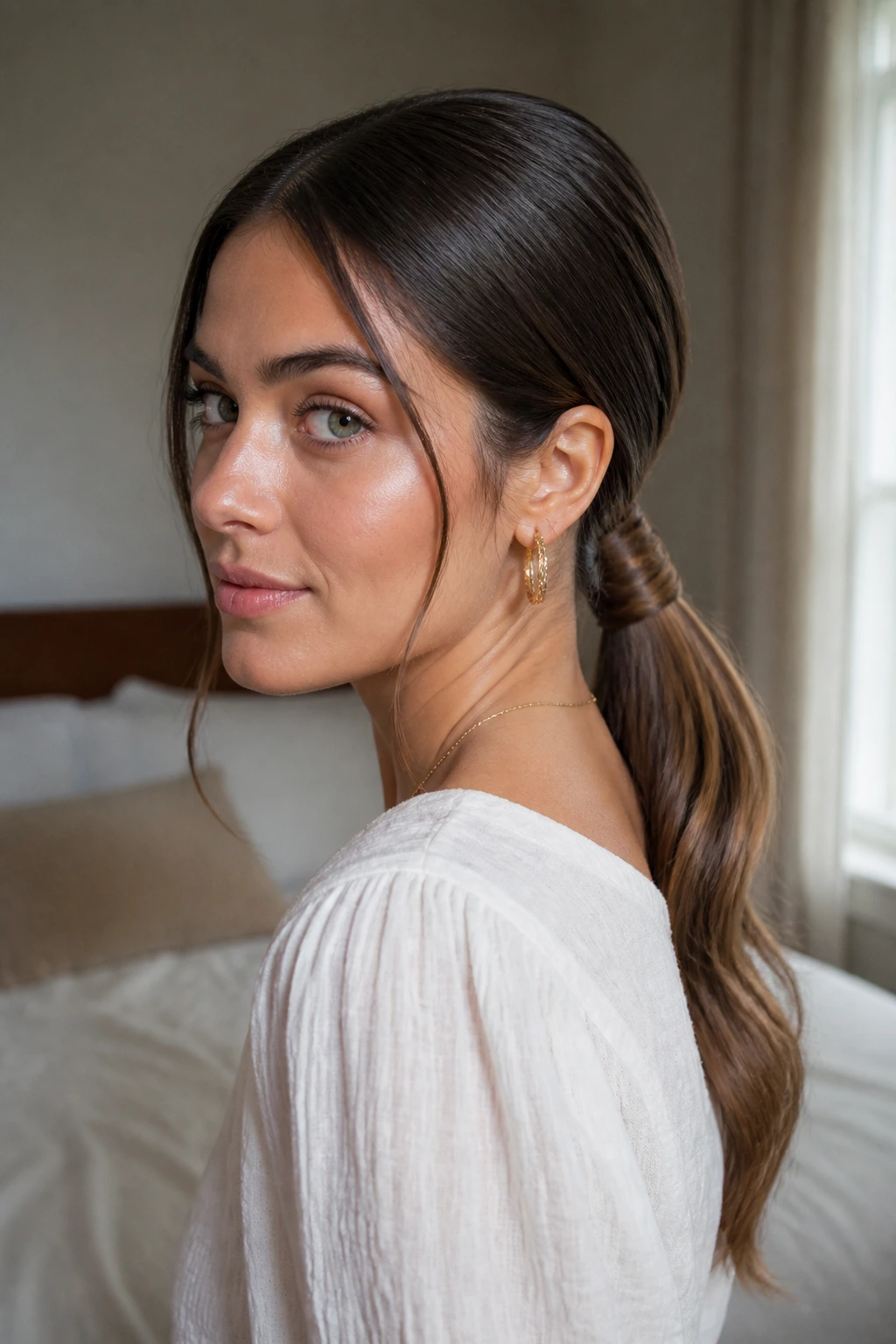
A wrapped low ponytail is one of those styles that looks more finished than it is. The pony sits low, the base is hidden with a strand of hair, and the top stays smooth without needing much bulk. Fine hair benefits because the sleekness makes the style look intentional instead of sparse.
Compared with a high ponytail, this one is kinder to a flat crown. The lower placement does not expose as much scalp, and the wrapped base adds a little visual weight. Oval faces can wear it cleanly because the shape follows the head rather than widening it.
Leave the tail slightly bent or softly waved if you want more movement. A dead-straight tail on fine hair can look thin fast.
19. Rounded Bob with a Subtle Underbevel
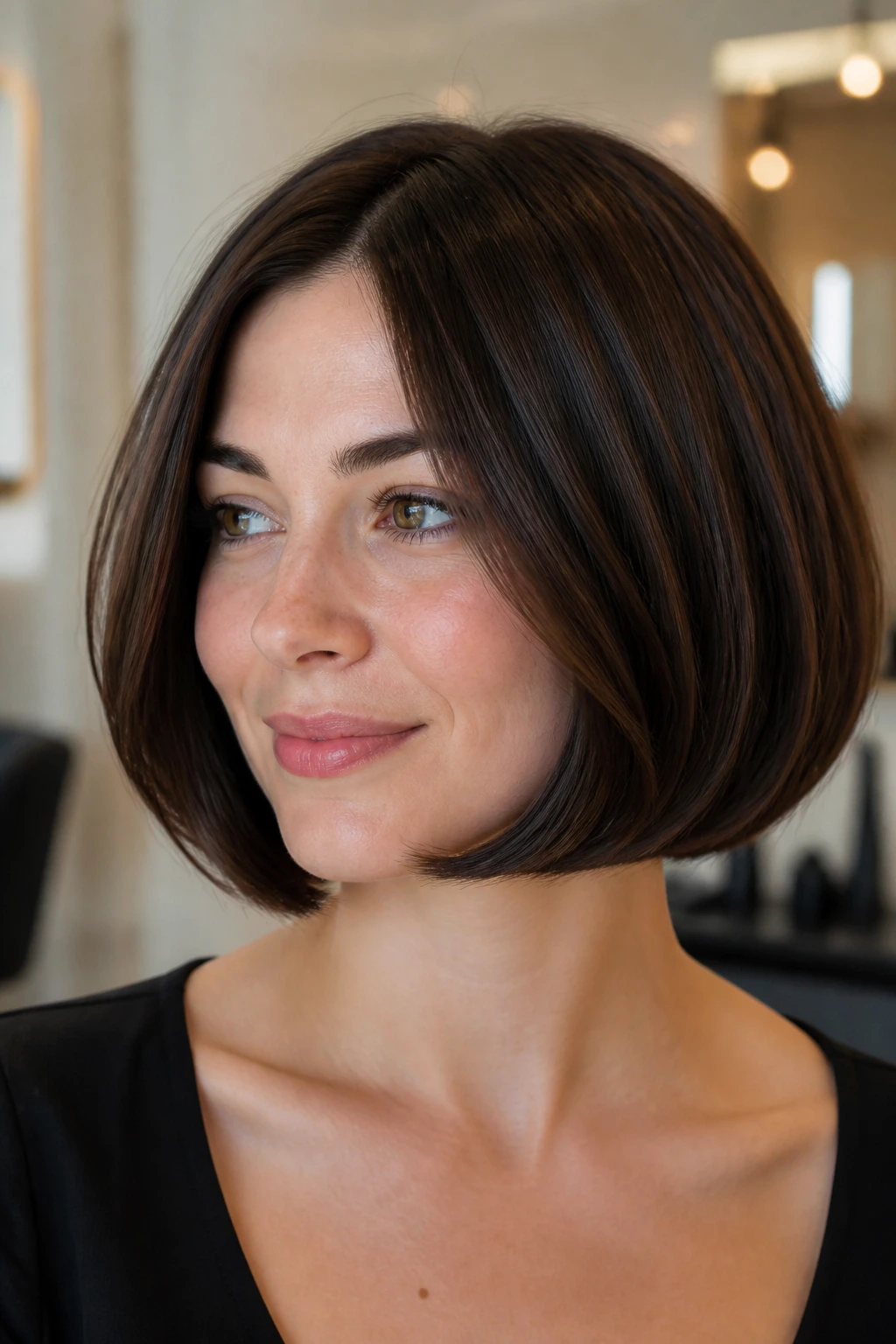
A rounded bob with an underbevel is one of the best ways to make fine hair feel fuller at the ends. The cut curves inward a little, which helps the bob sit close to the face and neck instead of flipping out in random directions. Oval faces like the roundness because it softens the jaw without hiding it.
The underbevel should be subtle. You are not after a stacked helmet or a dramatic old-school shape. Just enough bend to keep the line neat and dense-looking.
This is the kind of cut that benefits from a quick brush blowout after washing. Five minutes can rescue the shape if the ends start going limp. Less if you set it with a small round brush while the hair is still warm.
20. Air-Dried Beach Wave Cut
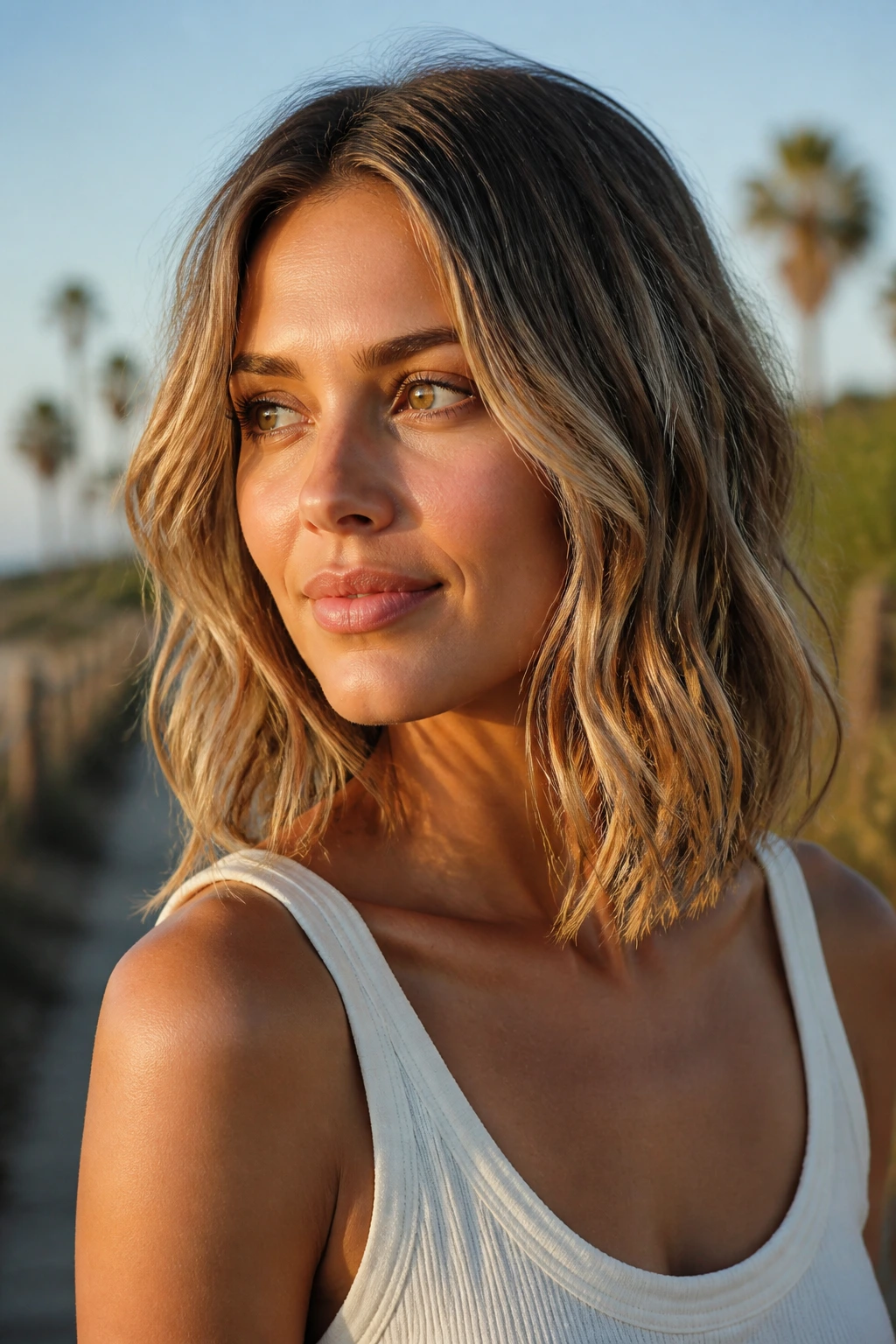
What if you hate hot tools? Then the cut has to do more of the work. An air-dried beach wave style relies on shoulder-length or slightly shorter hair with soft layers that encourage bend, not break up the shape so much that the ends disappear.
This is not magic for pin-straight hair. Fine hair with a natural wave or a slight S-pattern does best here. Use a light mousse or wave cream, scrunch gently, and let the hair dry without touching it too much. The more you fuss, the flatter the roots usually get.
Oval faces can wear this cut easily because the softness around the cheekbones keeps the shape open. If the wave starts too high, though, it can puff out. Keep the texture lower and looser.
21. Side-Swept Midi Cut with Long Bangs
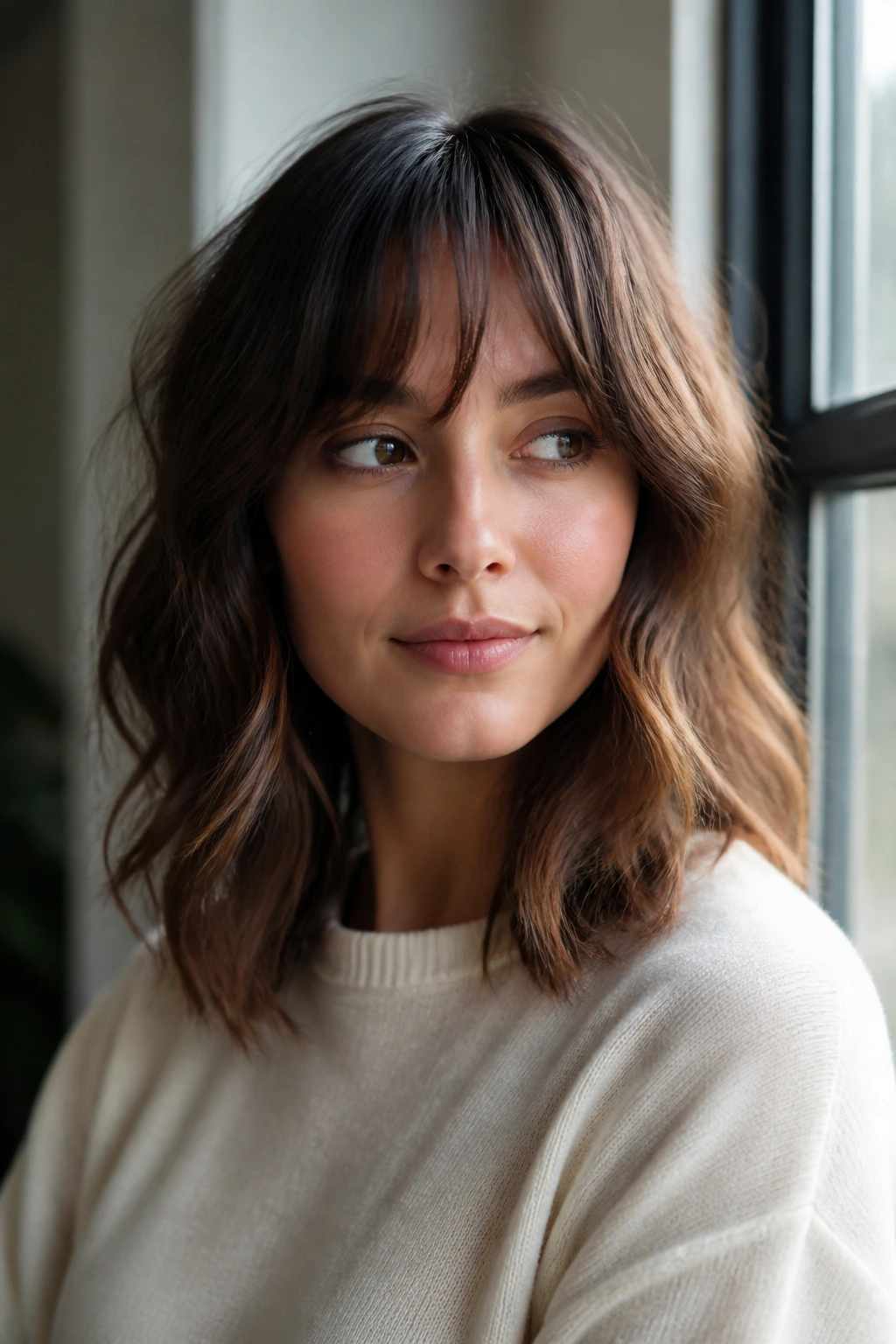
A midi cut gives you length, but the side-swept bangs keep it from reading flat and heavy. The diagonal line is doing a lot of visual work here. It breaks up the front, lifts the eye, and keeps fine hair from hanging in one long straight sheet.
This is a good choice if you want to keep hair long enough for clips and ponytails but still want shape around the face. The long bangs can blend into the rest of the cut or stay separate, depending on how much drama you want. Oval faces usually handle the sweep well because it softens the symmetry without hiding it.
A little root lift at the front makes this cut far better. If the front falls flat, the whole style feels sleepy.
22. Volumized Top Knot with Face-Framing Pieces
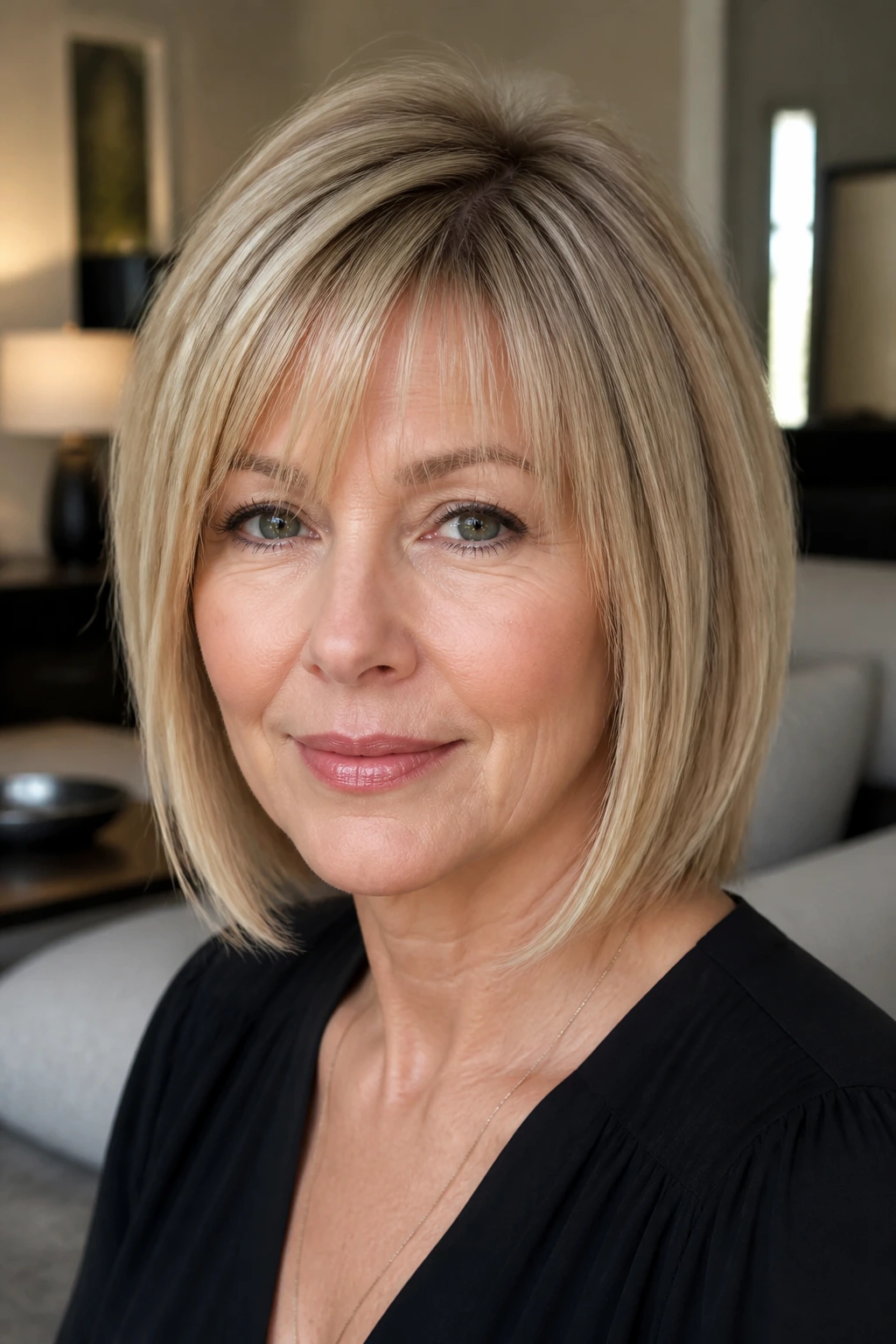
A top knot can make fine hair look fuller than wearing it down if you build the knot with enough lift. The head shape shows through less, the hair sits higher, and the face-framing pieces keep the style from feeling severe. Oval faces can handle the height without looking top-heavy.
The easiest version starts with a loose ponytail placed at the crown. Twist the length once or twice, wrap it into a knot, and pin it so it stays soft rather than smashed flat. Pull a few pieces forward around the temples and cheekbones. That softness matters more than the knot itself.
If your hair is slippery, a little dry shampoo before styling helps. Fine hair needs grip. Without it, the knot slowly sinks, and nobody wants that.
What Fine Hair and Oval Faces Need From a Hairstyle
Fine hair needs shape more than bulk. That sounds simple, but a lot of bad haircut advice tries to solve thin-looking hair by taking out more hair, and that usually backfires. Once the ends get too feathered, the silhouette starts to fray. The hair may still move nicely, but it stops looking dense.
Oval faces are easier, but not lazy. They can wear center parts, side parts, bangs, and tucked styles because the proportions are balanced. Still, even an oval face looks better when the hair has one clear idea. A strong bob. A lifted crown. A fringe that opens the eyes instead of hiding them.
The best fine-hair styles use a few repeatable tricks: a blunt perimeter, hidden internal layers, root lift, and face-framing that starts where the cheekbones need it most. Not every look needs all four. Some need one. Some need two.
And this is the part people miss: the style should suit the way your hair falls when you stop touching it. If it only looks good for six minutes after the mirror session, it is not a good cut. It is a temporary argument with gravity.
Essential Tools for Styling Fine Hair at Home
- Blow dryer with a nozzle: The nozzle directs air at the roots so you can build lift instead of blasting the hair every direction.
- 1-inch curling iron or wand: This size gives fine hair a bend that lasts; larger barrels often fall flat too fast.
- Small or medium round brush: Use this for bangs, lobs, and bob edges where you want a clean curve.
- Tail comb: Clean parts and neat sectioning make a bigger difference than most people think.
- Sectioning clips: They keep the top and crown out of the way while you dry or set the lower layers.
- Dry shampoo: The unsung hero for fine hair on day two or three; it gives grip and kills shine at the root.
- Volumizing mousse or root spray: These build body without weighing the hair down the way heavy creams do.
- Texturizing spray: Good for piecey pixies, shags, braids, and updos that need a little grit.
- Light-hold hairspray: Enough to hold the shape, not enough to freeze it.
- Bobby pins and small elastics: Essential for buns, ponytails, crown lifts, and half-up styles.
- Silk scrunchie or soft hair tie: Better for fine hair than hard elastics that leave dents or snag the cuticle.
- Root clips or Velcro rollers: Optional, but they can give a blunt bob or lob a quick lift while the hair cools.
Smart Product Choices and Salon Language
Fine hair gets weighed down fast, so product choice matters more than most people expect. Thick creams, heavy oils, and butter-rich curl products can make clean roots collapse before lunch. Start with a light mousse at the roots, then use a small amount of serum only on the last inch or two if the ends need smoothing.
At the salon, ask for words that sound specific because they are. Blunt perimeter, internal layers only, soft face-framing, and keep the weight at the bottom are useful phrases. So is “I want movement, but I do not want the ends thinned out.” That tells the stylist exactly what to leave alone.
Bring photos from the front and the side. The side view matters a lot with fine hair, because the silhouette is where the fullness shows up or disappears. A beautiful front shot can hide a cut that goes flat in profile.
If your hair oils quickly, a cleanser with a lighter feel often works better than a rich, creamy formula. And if you color your hair, a bit of dimension through highlights or lowlights can make fine strands look more separated and textured. It’s not magic. It’s contrast.
How to Style These Looks Without Flattening Them
Prep: Start with towel-dried hair, not dripping hair. Too much water pushes product off the root and onto the ends, where fine hair does not need extra help. A golf-ball sized amount of mousse is usually enough for shoulder-length hair; less for short cuts, a touch more for longer lobs.
Drying: Aim the dryer at the roots first. Lift sections with your fingers or a brush and dry them in the direction you want them to sit, then let them cool there. That cooling step is the part people skip, and it’s the part that helps the shape stay put.
Finishing: Use the iron only where the shape needs support. Bangs, front pieces, the last inch of a bob, or the bend on a lob are usually enough. If every strand gets curled, fine hair can go flat again from the weight of all that movement.
Day-two refresh: Mist the roots lightly with water, add dry shampoo, and flip or reset the part. Then re-bend the front pieces for two minutes. That is often enough to wake up the whole style without starting over.
Extra Ways to Add Lift, Texture, and Polish
Volume Enhancement: Root clips on damp hair can buy you 10 to 15 minutes of lift while the roots cool. A quick blast of heat at the crown before the clips come out makes the volume hold longer.
Texture Boost: A little texturizing spray at mid-lengths and ends gives fine hair grip without turning it rough. Spray from 8 to 10 inches away so you do not get one sticky patch.
Face-Framing: A few cheekbone-level pieces can make an oval face look softer and keep a bob or lob from feeling too plain. They should move, not hang like curtains.
Accessory Pairing: Small claw clips, slim barrettes, and satin scrunchies work better than heavy, oversized accessories on fine hair. A giant clip can swallow the whole style.
Color Note: Subtle highlights or lowlights can make strands read as thicker because they separate visually. Keep the tone natural enough that the hair still looks like hair, not stripes.
Keeping the Shape Between Cuts and Wash Days
Fine hair usually needs regular trims if you want the outline to stay clean. Pixies and short bobs often need a tidy-up every 4 to 6 weeks. Lobs and shoulder-length cuts can stretch to 8 to 10 weeks if the ends stay blunt and healthy. Once the perimeter starts getting see-through, the style loses its edge fast.
Wash frequency depends on how fast your scalp gets oily, but fine hair often does better with frequent, lighter cleansing rather than trying to stretch seven days and hoping for the best. Day two is where dry shampoo earns its keep. Day three may need a quick root refresh with a blow dryer and a round brush for the front.
At night, a silk pillowcase helps more than people want to admit. So does a loose clip or soft ponytail that keeps the hair from creasing. If you wear bangs, pin them back loosely before bed or let them sit to the side so they don’t wake up bent in a weird direction.
If a style collapses, do not drown it in oil. That just makes the roots greasier and the ends stringier. A quick mist of water, a little lift at the crown, and a few minutes with a brush usually fix more than a full restyle.
Variations and Adaptations to Try
The No-Heat Route: Choose the shoulder-length invisible-layer cut or the air-dried wave style and lean on mousse plus clips instead of hot tools. This works best when your hair has a small natural bend. If it is straight as wire, you will still get shape, but it will be softer than wavy.
The Short-and-Sharp Edit: Pick the blunt bob, French bob, piecey pixie, or grown-out pixie if you want a cut that wakes up fast. These shapes give fine hair the strongest outline and need the least daily effort. They also hold their structure better between trims than heavily layered cuts.
The Soft-Fringe Route: Curtain bangs, side-swept bangs, and wispy fringe all work well on oval faces because they frame without boxing in. Keep the fringe light enough that it doesn’t eat the crown volume.
The Polished Finish: The wrapped low ponytail, sleek bun, and deep side-part blowout all lean cleaner and more refined. They suit days when you want shine and control more than movement.
The Big-Texture Route: Go with the shag, bubble ponytail, loose braid, or top knot if you want the hair to read fuller through shape and separation. These styles depend on grip, so dry shampoo and texturizing spray are part of the deal.
Common Mistakes That Make Fine Hair Look Flatter
- Over-layering the ends: Fine hair turns stringy fast when too much weight is removed from the bottom. The fix is a blunt perimeter with only internal layering where needed.
- Using heavy creams or oils at the root: The hair looks glossy for ten minutes, then the crown goes limp. Keep rich products on the ends only, or skip them entirely if your hair is already soft.
- Choosing a length with no shape: Long fine hair can slide into a flat curtain if the cut has no line. A collarbone lob, A-line bob, or shoulder-length cut with a clear edge usually behaves better.
- Wearing the same part every day: The root starts to lie in one direction and the flatness gets worse. Switch sides, go a little off-center, or use a deep part when you want lift.
- Curling too large of a section: The wave falls out before you leave the house. A 1-inch barrel and smaller sections hold far better on fine strands.
- Pulling updos too tight: Tight ponytails and buns expose the scalp and can break the hairline over time. Keep the tension soft and use pins to hold the shape instead.
Frequently Asked Questions
What haircut makes fine hair look thickest on an oval face?
A blunt bob at chin length or collarbone length usually gives the strongest illusion of thickness. The solid edge makes the ends read fuller, and an oval face can carry that shape without needing extra face-framing to balance it.
Are layers bad for fine hair?
Not always, but too many layers are a problem. Fine hair usually looks better with hidden internal layers or soft face-framing than with a heavily layered cut that thins out the ends.
Should oval faces wear bangs?
Yes, if the bangs are matched to the hair density. Curtain bangs, wispy fringe, and side-swept bangs tend to work better than a dense, heavy fringe that eats up too much volume.
Is a center part or side part better for fine hair?
Both can work. A center part looks clean on oval faces, but a slight off-center or deep side part usually gives more lift at the roots and a bit more fullness around the crown.
Can I keep my hair long if it’s fine?
You can, but long fine hair needs shape or it starts to look stringy. A midi cut with long bangs, invisible layers, or a clean underbevel tends to behave better than one long, soft sheet of hair.
How often should I trim these styles?
Short styles like pixies and bobs usually need trimming every 4 to 6 weeks. Lobs and shoulder-length cuts can go longer, often 8 to 10 weeks, if the perimeter stays crisp.
What if my hair goes flat halfway through the day?
Start with less product, not more. A quick root refresh with dry shampoo, a light tease at the crown, or a few minutes with a blow dryer can bring the lift back without rebuilding the whole style.
Can I do these styles without heat?
Some of them, yes. The air-dried wave cut, claw-clip twist, loose braid, and top knot can all work with minimal heat if your hair has a little natural texture or you’re willing to add product for grip.
The Shape That Does the Heavy Lifting
The best hairstyles for fine hair and oval faces do not try to fake density everywhere. They pick their battles. A blunt line here, a lifted crown there, a fringe that opens the face instead of swallowing it — that’s what keeps the hair looking deliberate.
That’s why this collection leans on structure, not wishful thinking. Fine hair needs a perimeter that holds, and oval faces give you room to choose where the eye should go. Pick the shape that fits how your hair naturally falls, not the one that looks prettiest for one afternoon in the mirror.
And if one cut still feels too safe, try the one that adds either more edge or more lift — not more of both. That’s usually where the good stuff happens.