



The best long hairstyles for short hair and square faces do one thing very well: they change the shape of the face before your eye even notices the hair. A square face usually has a broad forehead, a strong jaw, and corners that show up fast in a blunt cut. So the trick is not to hide the face. It’s to bend the lines a little — a side part, a wave, a soft bend at the cheekbone, a bit of lift at the crown.
Short hair complicates that in the most interesting way. You do not have endless length to drag things down or hide behind. Every inch has to earn its keep. That’s why the smartest styles here are the ones that create length through direction: diagonal parts, pieces that skim the jaw instead of landing on it, and texture that breaks up hard edges without turning into a frizzy mess.
And yes, a few of these are actual styles you can wear on a bob or pixie-bob. A few are styling tricks. A few use clip-ins when you want drama for dinner, photos, or a day when you’re tired of your own haircut. All of them work for the same reason: they keep a square face from looking boxed in, and they give short hair the feeling of movement that makes it read longer.
Why These Longer Looks Earn Their Keep
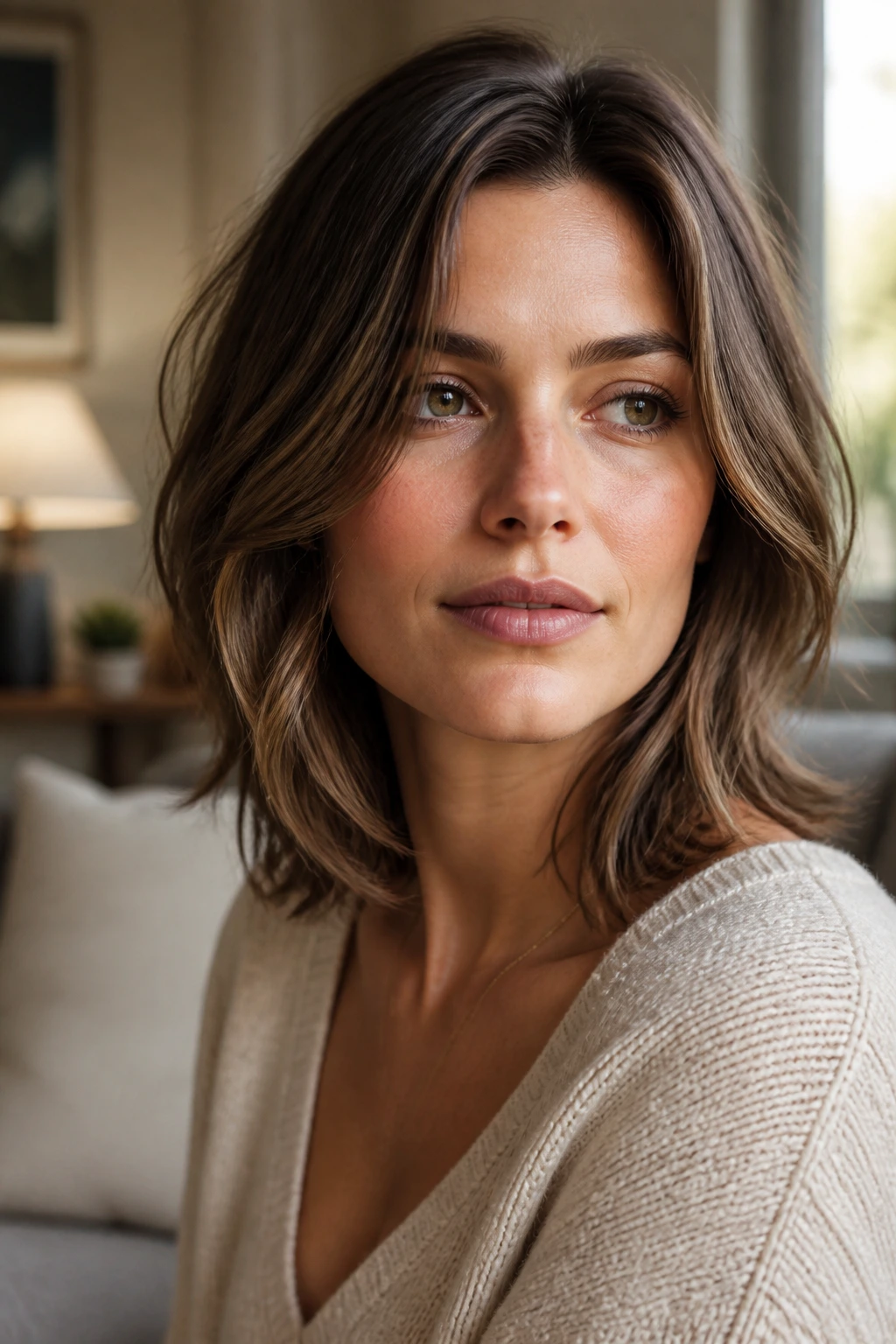
Jawline Softening: The fastest way to soften a square face is to move the line away from the jaw. Pieces that start at the cheekbone or fall below the chin do that better than blunt ends sitting exactly at the widest point.
Length Illusion: A deep side part, a bit of crown lift, or a diagonal wave can make short hair read longer than it actually is. Your eye follows the line. That’s the whole trick.
Short-Hair Friendly: These styles don’t ask for waist-length hair or even shoulder-length hair. Most of them work on a grown-out pixie, a chin-length bob, or that awkward in-between stage that usually looks like a problem.
Grow-Out Rescue: If your haircut is between appointments, these looks turn the grow-out phase into something on purpose. Odd lengths around the ears and nape stop looking accidental once you add texture or direction.
Better in Real Life: A square face can look harsher in flat, centered styles than it does in photos. These cuts and styles hold up in motion, which matters when you’re not standing still under perfect lighting.
1. Deep Side Part Waves for Square Faces
A deep side part is the easiest cheat in the book, and I mean that in the best way. On square faces, it breaks the symmetry that makes the jaw look wider, while the soft wave line pulls the eye diagonally instead of straight across. On short hair, that diagonal is gold.
Why It Works
The part should sit well off center — not a tiny nudge, but enough that one side has more weight than the other. That shift gives the face a longer reading from hairline to chin. Add waves that start below the cheekbone and you get even more of that vertical pull.
For this style, I like a 1-inch curling iron on bob-length hair and a 1¼-inch iron if the hair already brushes the collarbone. Curl away from the face on the heavier side, then alternate directions on the lighter side so it doesn’t look like one giant helmet of bends. Leave the ends out by about half an inch. The straighter tips keep the style from turning too round.
- Best for: straight, wavy, or lightly textured hair
- Short-hair sweet spot: chin to collarbone
- Product that helps: a light texturizing spray, not a sticky one
- Face-shape effect: breaks the square outline and softens the jaw corners
Quick tip: keep the heavier side falling near the brow or temple, not tucked all the way behind the ear. That little bit of front weight matters.
2. Collarbone Lob With Cheekbone Layers
If you want one cut that can do a lot of heavy lifting, this is it. A collarbone lob gives short hair enough length to swing, and cheekbone layers stop the whole thing from sitting like a slab.
The cut itself should feel clean at the bottom and airy through the middle. I prefer layers that begin near the cheekbone or just under it, because that keeps the widest part of the face from being framed by blunt volume. Blow-dry with a round brush and bend the front pieces slightly inward. Not a curl. Just enough shape to suggest length.
This one is especially good if your hair is thick and tends to puff out at the sides. The collarbone length drops the visual weight lower, and the layers keep the ends from hanging there like a curtain. A center part can work here if the crown has lift, but a soft off-center part is easier and usually more forgiving on a square face.
3. Curtain Bangs on a Short Grow-Out Cut
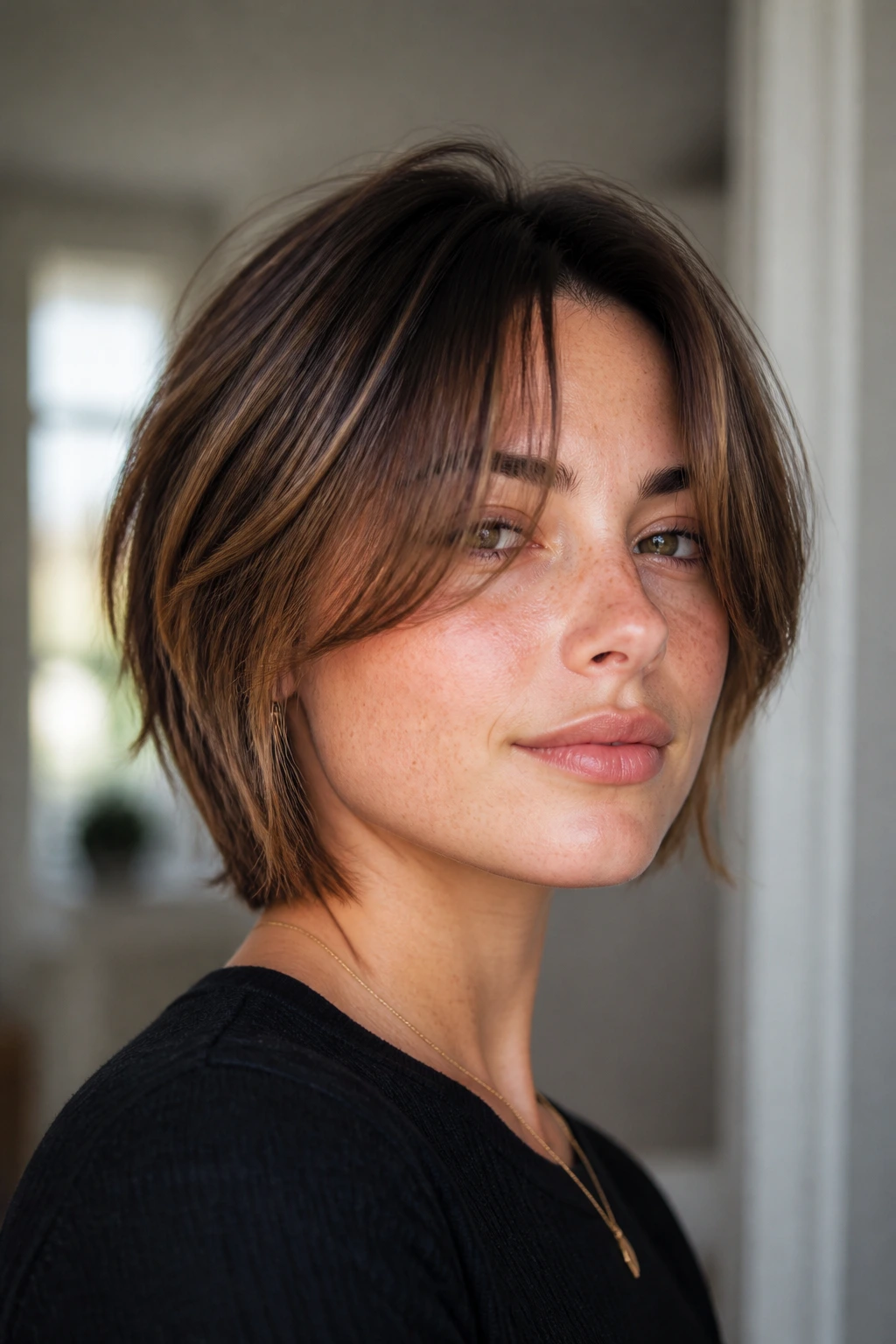
Why do curtain bangs work so well on square faces? Because they split the face up without chopping it into hard sections. The center opening creates a vertical line, and the longer outer edges of the bang sweep across the cheekbones instead of stopping at the jaw.
The best version on short hair is not a blunt fringe. It’s a curtain bang that lands somewhere between the outer brow and the cheekbone, then blends into the sides of the cut. That little sweep matters. If the bang ends too short, the face looks wider. If it hits the cheekbone and softens there, the whole haircut feels longer.
How to Wear Them
Dry the bangs first with a small round brush, aiming the roots up and away from the face. Then curve the ends out just a touch so they don’t cling to the cheeks. You want movement, not a mushroom shape.
This works well on a pixie-bob, a layered bob, or any short style that is growing out around the temples. It also buys you time between trims. A good curtain bang can make six awkward weeks look intentional.
4. Asymmetrical Bob With One Longer Side
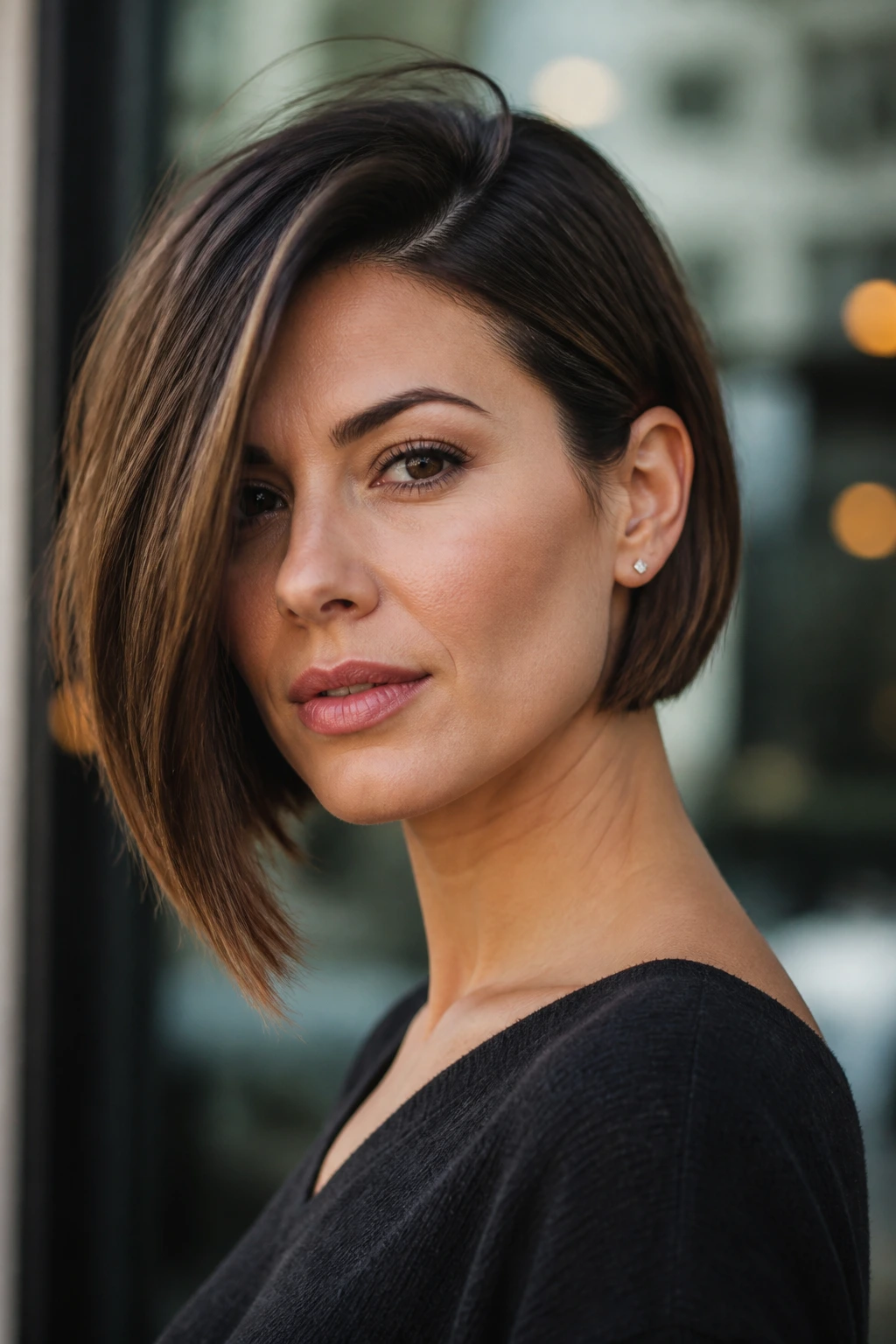
A square face can take a blunt cut, but it usually needs an angle to keep it from looking too boxy. An asymmetrical bob does exactly that. One side sits slightly longer — often by an inch or two — and that small difference changes the whole silhouette.
The longer side should fall below the jaw or just graze the upper neck. That’s the magic zone. Shorter than that, and the cut can cling to the jaw in a way that feels heavy. Longer than that, and you start getting the length illusion people want from long hairstyles for short hair and square faces, without actually needing long hair.
A deep side part makes the asymmetry stronger, but even a soft side break helps. Tuck the shorter side behind the ear and let the longer side swing forward. It’s clean, sharp, and a little dramatic without being fussy.
Key details:
- Best on straight to slightly wavy hair
- Works well at chin or jaw length
- Needs a crisp trim every 6 to 8 weeks
- Looks best when the ends are beveled, not chopped bluntly
My take: this is one of the strongest options if you like structure but don’t want your face shape mirrored back at you.
5. Tousled Pixie-Bob With Crown Volume
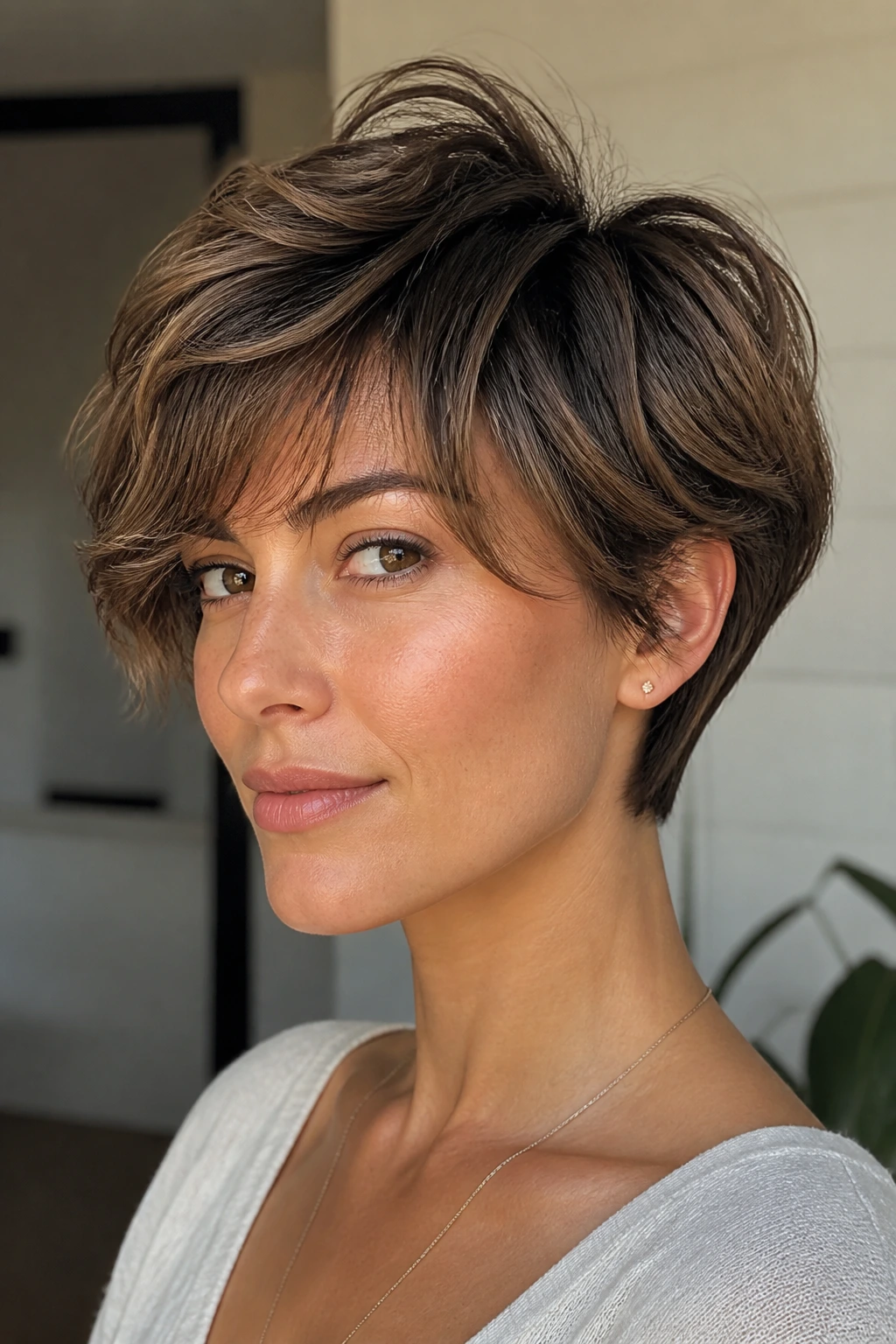
A pixie-bob sounds short on paper. In practice, it can give you a lot of length where you want it most: at the front, at the crown, and around the temples. That’s why it’s so good on square faces.
The crown lift is the main event here. When the top sits a little higher, the eye moves upward instead of locking onto the jaw. Then the front pieces can fall forward in soft wisps, which keeps the sides from looking too blunt. If your hair is fine, a mousse at the roots and a quick blast with the dryer can make this shape hold without turning crunchy.
This style has one other advantage that people don’t talk about enough: it makes grow-out look deliberate. A grown-out pixie that’s shaped well can look more modern than a tidy bob that sits too flat. That sounds harsh. It isn’t. It’s just true.
Use your fingers for the finish, not a brush. The point is a little piecey, a little lifted, and a little imperfect.
6. Slick Tuck-Behind-Ear Style With Front Length
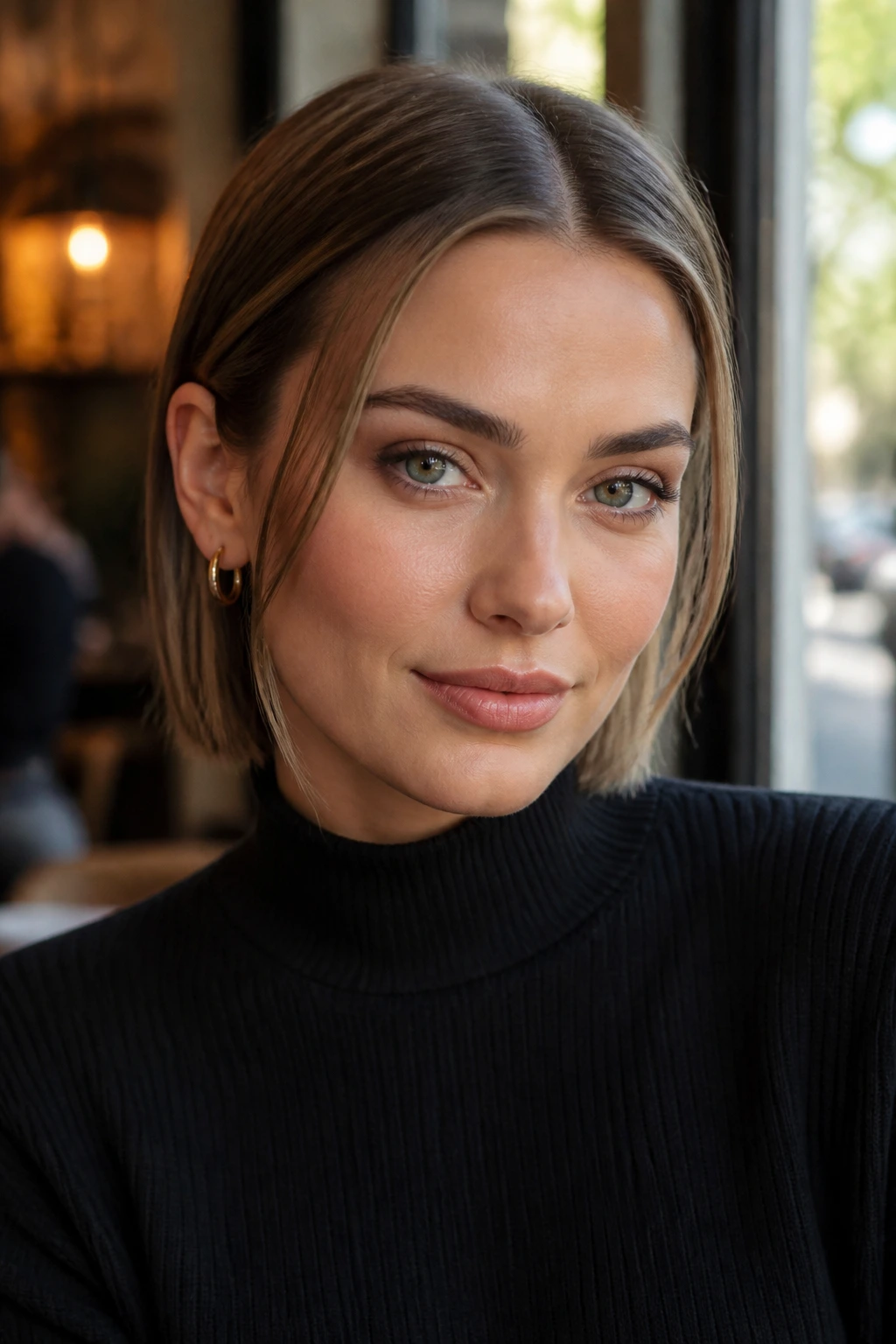
Here’s the deal: a slick style can be a gift or a disaster on a square face. If you pull everything straight back, you show every angle. If you keep the front pieces long and tuck only the sides, the face opens up in a much softer way.
The front should still fall forward a bit, usually at cheekbone or jaw level, while the sides stay controlled behind the ears. That contrast keeps the face from looking too wide. A touch of serum on the outer layer gives shine, but don’t spread heavy oil near the roots. That’s how the style collapses.
This one is best when you want a clean finish without losing all movement. I’d pick it for a dinner, a work meeting, or any day when your hair needs to look calm but not severe.
If your hair is thick, pin the tuck from underneath with small bobby pins that match your color. If it’s fine, one side tuck can be enough. A full bilateral tuck often feels too neat for this face shape.
7. Soft Shag With Wispy Ends
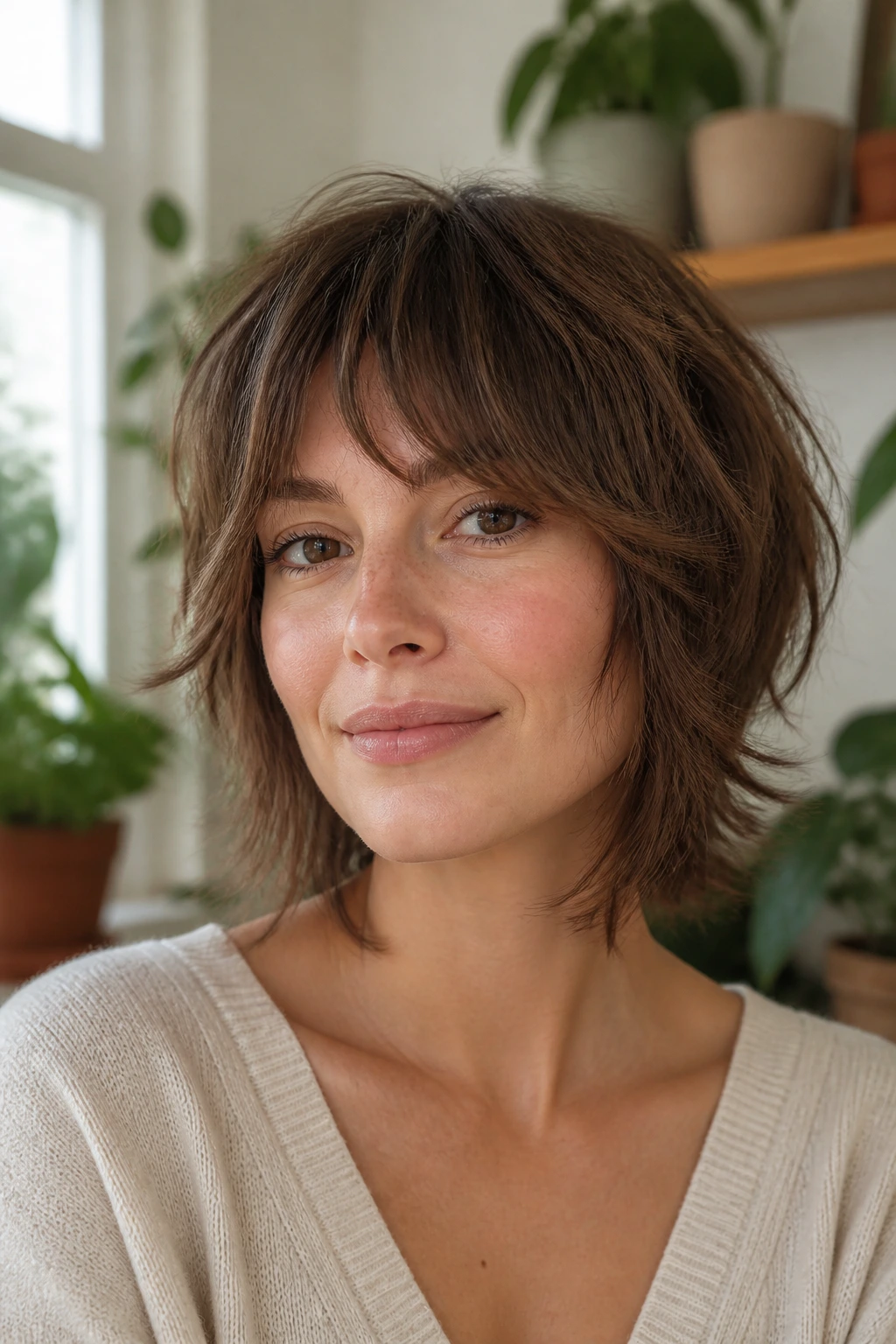
A shag is the haircut that keeps square faces from looking too engineered. The layers break the outline, the wispy ends take the weight off the jaw, and the whole shape feels looser from the start.
What matters here is where the layers land. You want some movement at the cheekbone, some through the sides of the head, and some softness around the neck. If the shortest pieces are cut too high, the haircut gets too top-heavy. If they’re too low, you lose the airy lift that makes the style work on short hair.
This cut is especially kind to thicker hair. It removes bulk without making the ends look thin. On straight hair, a little bend with a flat iron creates the shag shape. On wavy hair, a curl cream and a rough dry may be enough.
What Makes It Different
A shag doesn’t rely on one perfect part or one polished finish. It survives a messy morning.
That’s why it’s one of the easiest long-looking styles for a square face if you’re not the sort of person who wants to wrestle with your own hair for twenty minutes before coffee.
8. Mini French Braid Crown With Loose Face Framing
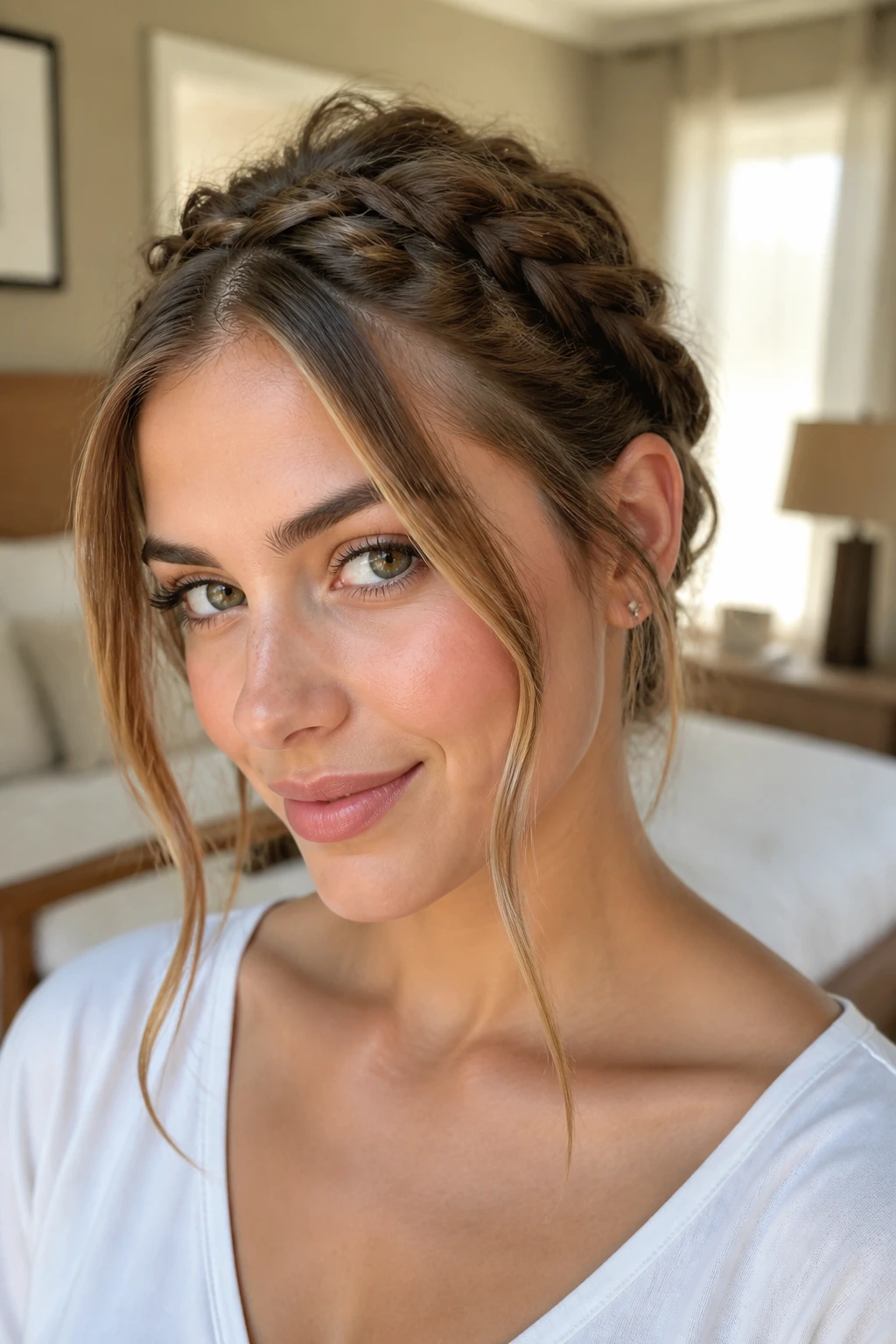
Braids can go wrong on square faces when they get too tight and too symmetrical. A mini French braid crown avoids that by keeping the braid high, soft, and a little undone. The braid gives structure, but the loose front pieces do the softening.
The braid should start near the temple and travel across the top of the head, not sit low like a headband. That higher line adds lift. Leave out two thin pieces near the cheekbones, and let them fall naturally. Those loose bits matter more than people think. They keep the face from looking boxed in.
This is a smart day-two style for short hair that’s too fluffy to wear down but not long enough for a real updo. A bit of dry shampoo at the roots helps the braid hold. If your hair slips, use a matte paste on the first inch of the braid and pin the end underneath.
It reads polished, but not stiff. That’s the sweet spot.
9. Beach Waves With Flipped Ends
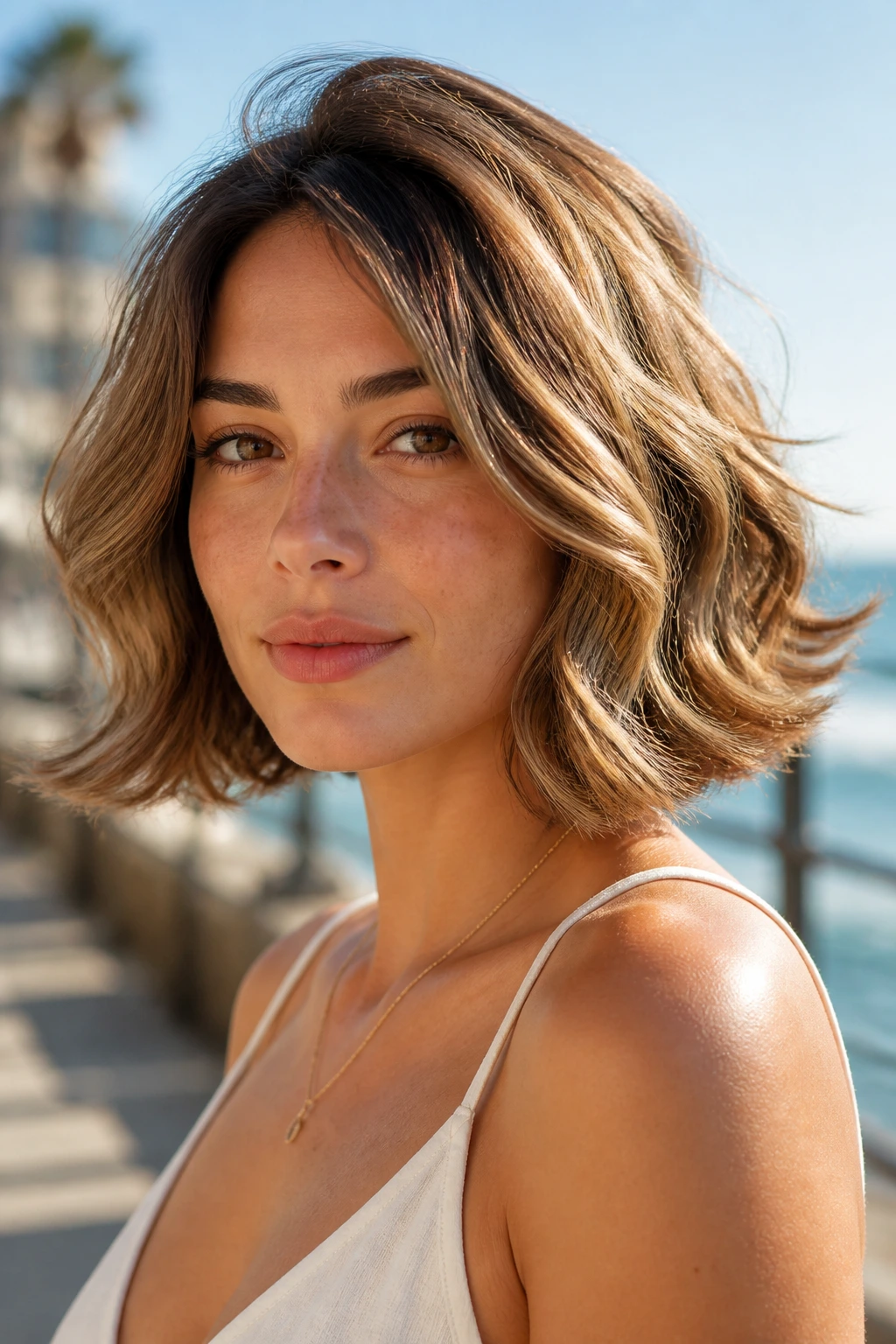
Beach waves on short hair are not about big curls. They’re about irregular bends and ends that kick away from the jaw. On square faces, that movement keeps the lower half of the face from looking heavier than it is.
I prefer waves that are looser through the mid-lengths and just a touch flipped at the ends. If the curl pattern is too uniform, the haircut starts to look round. If the ends are straight and heavy, the jawline gets all the attention. A soft bend and a slight outward flick split the difference.
Use a curling wand around 1 inch wide, wrap sections away from the face, then brush the waves out once they’re cool. That last part is where the style really comes alive. The brush turns ringlets into soft movement. A pea-sized dab of cream on the ends keeps the flip from fraying.
This is the style I reach for when I want hair that looks lived-in, not posed.
10. Low Side Bun With Loose Tendrils
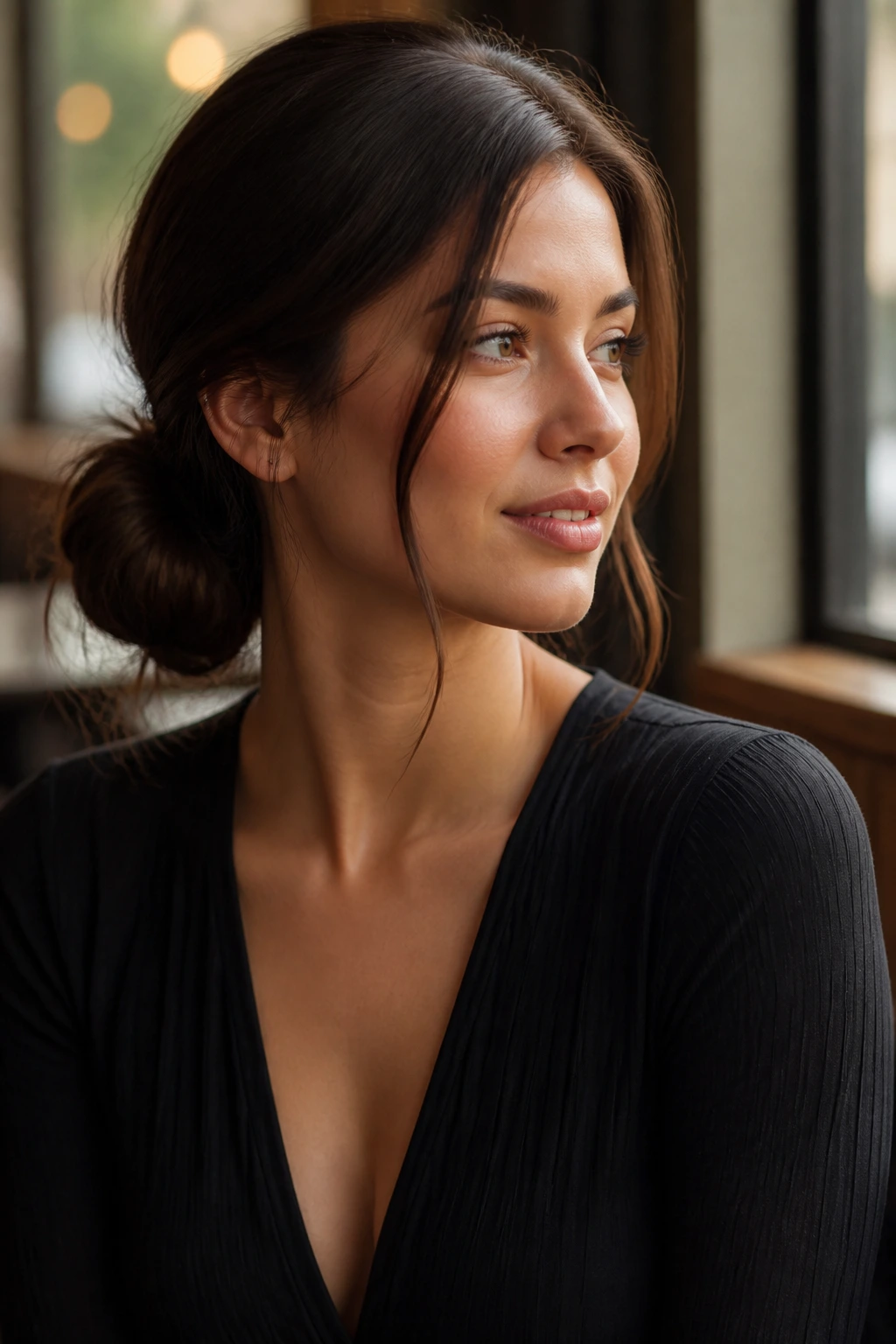
A low side bun sounds old-fashioned until you see how good it is on a square face. The diagonal placement shifts attention away from the jaw, and the loose tendrils at the front soften the width of the face without making the style messy.
The bun should sit below the ear or just behind it, not centered at the nape. That off-balance placement creates a longer line from forehead to bun. For short hair, you may need a few bobby pins to gather the shorter layers under. That’s fine. The finished shape matters more than whether the process felt elegant.
Pull out two face-framing pieces: one near the temple, one closer to the cheekbone. Keep them thin. Thick chunks can make the face look wider. A few wisps are enough.
Best for: formal events, humid days, or hair that won’t behave loose
Not great for: super layered pixies unless you use pins and a little patience
What it gives you: height through the crown, softness at the jaw, and a little grace without a lot of volume
11. Old Hollywood Waves on Short Hair
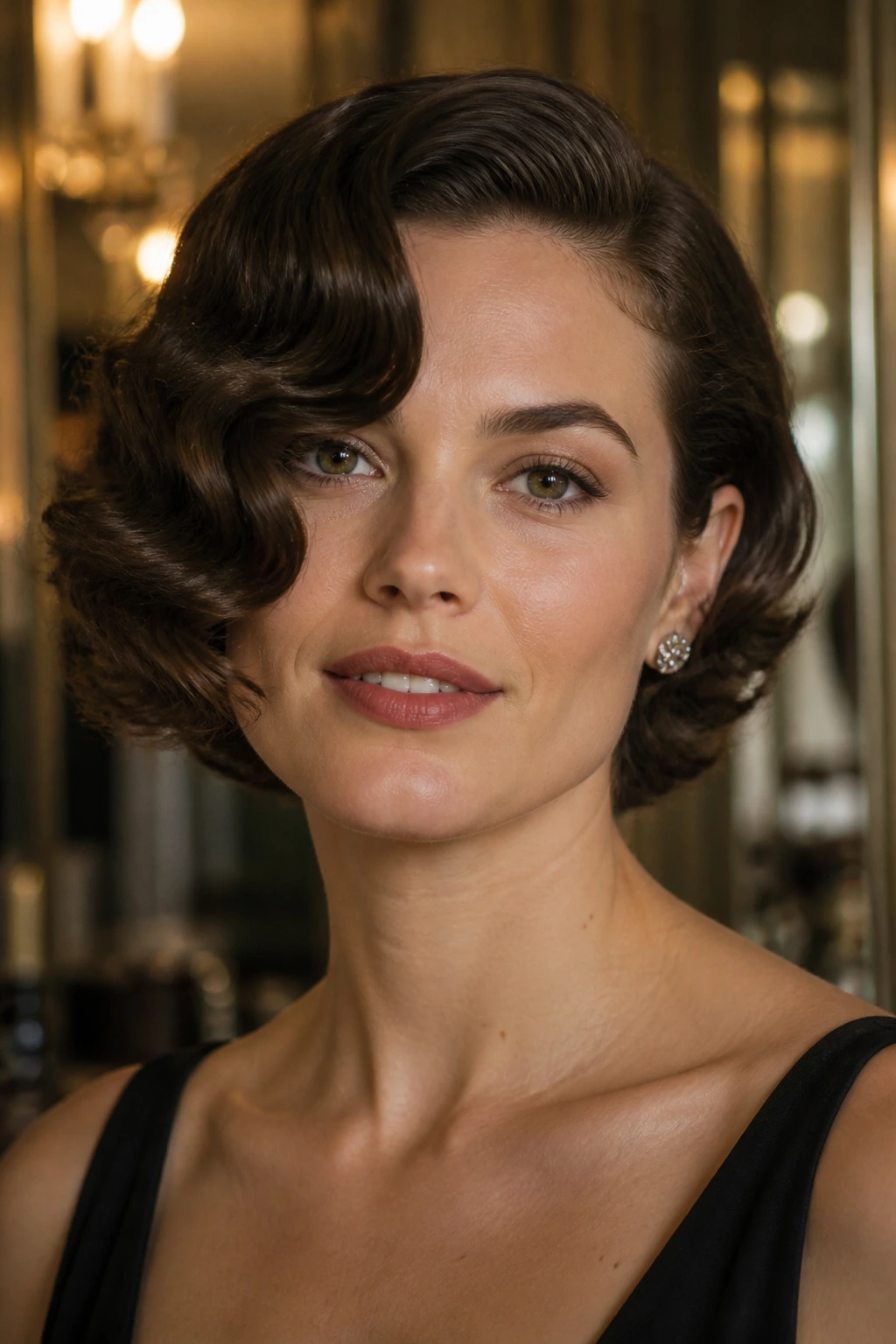
Old Hollywood waves are a little fussy. I like them anyway. On square faces, the smooth S-shape breaks up hard angles better than almost any other finish, and on short hair the look can feel surprisingly clean rather than overdone.
The key is direction. The wave should move down and around the face, then soften toward the ends. If every wave bends the same way, you lose that sculpted line and just get heat-styled curls. Pin each wave while it cools if you want the shape to last. That part is boring. It also works.
Use a shine spray lightly at the end, not near the roots. A square face with glossy waves and a soft side part looks intentional in a way that flat, center-parted hair usually doesn’t. The style is formal, yes, but the real appeal is geometry. It turns angles into curves.
12. Rope-Twist Half-Up Style
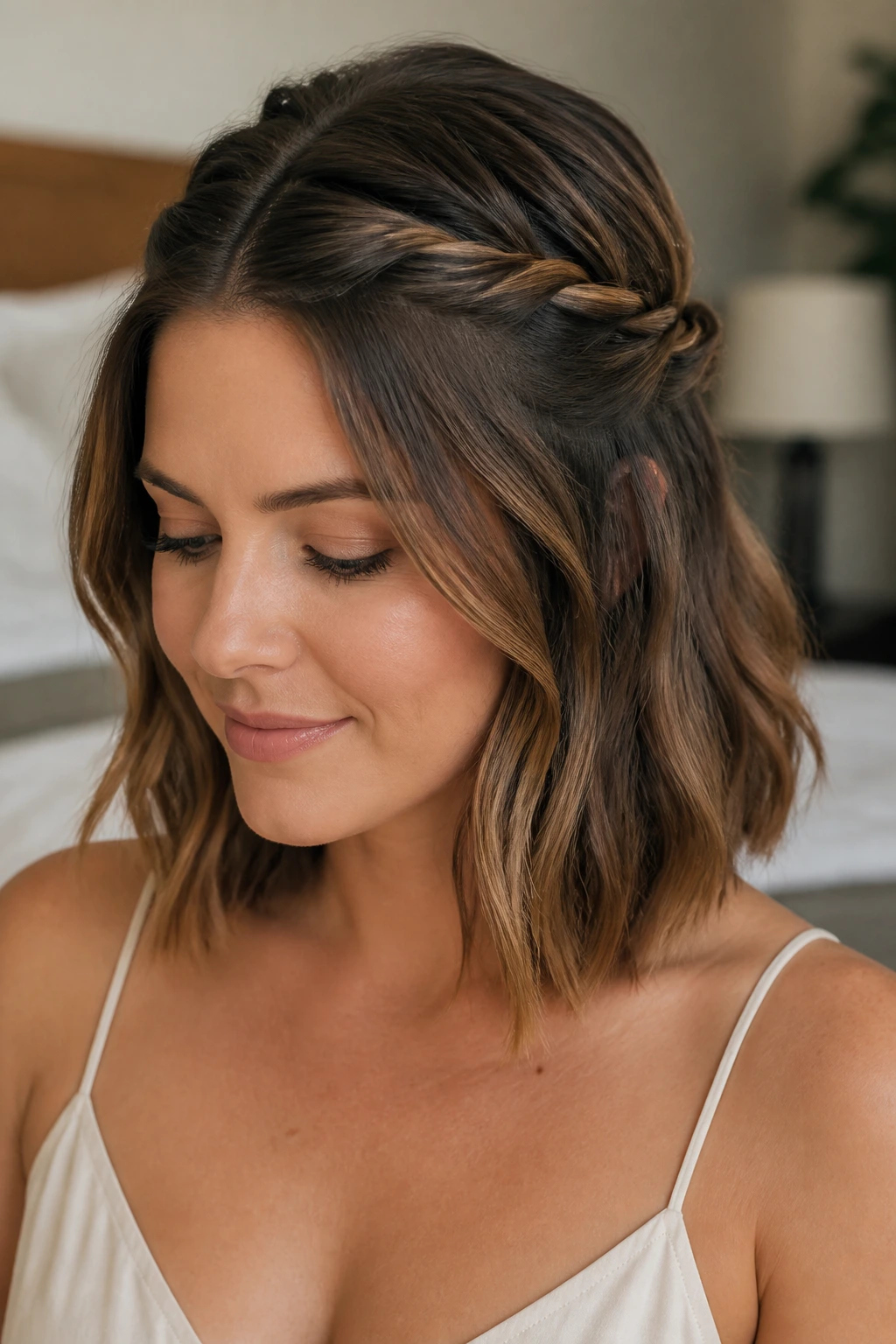
Need height without giving up the length around your face? A rope-twist half-up style does the job without making short hair look overworked.
Take a section from each side, twist them back tightly enough to hold, then join them at the back of the crown with a small pin or clear elastic. The twist lifts the top of the head, which lengthens the face, while the rest of the hair stays down and soft around the jaw. That mix is the whole point.
This works especially well on shoulder-skimming bobs and long pixies that have some grip. Fine hair may need a little texturizing spray first. Thick hair usually needs fewer pins but more control around the front.
The result is neat without feeling severe. It’s one of those styles that looks more complicated than it is, which I consider a fair trade.
13. Blunt Bob With Internal Layers
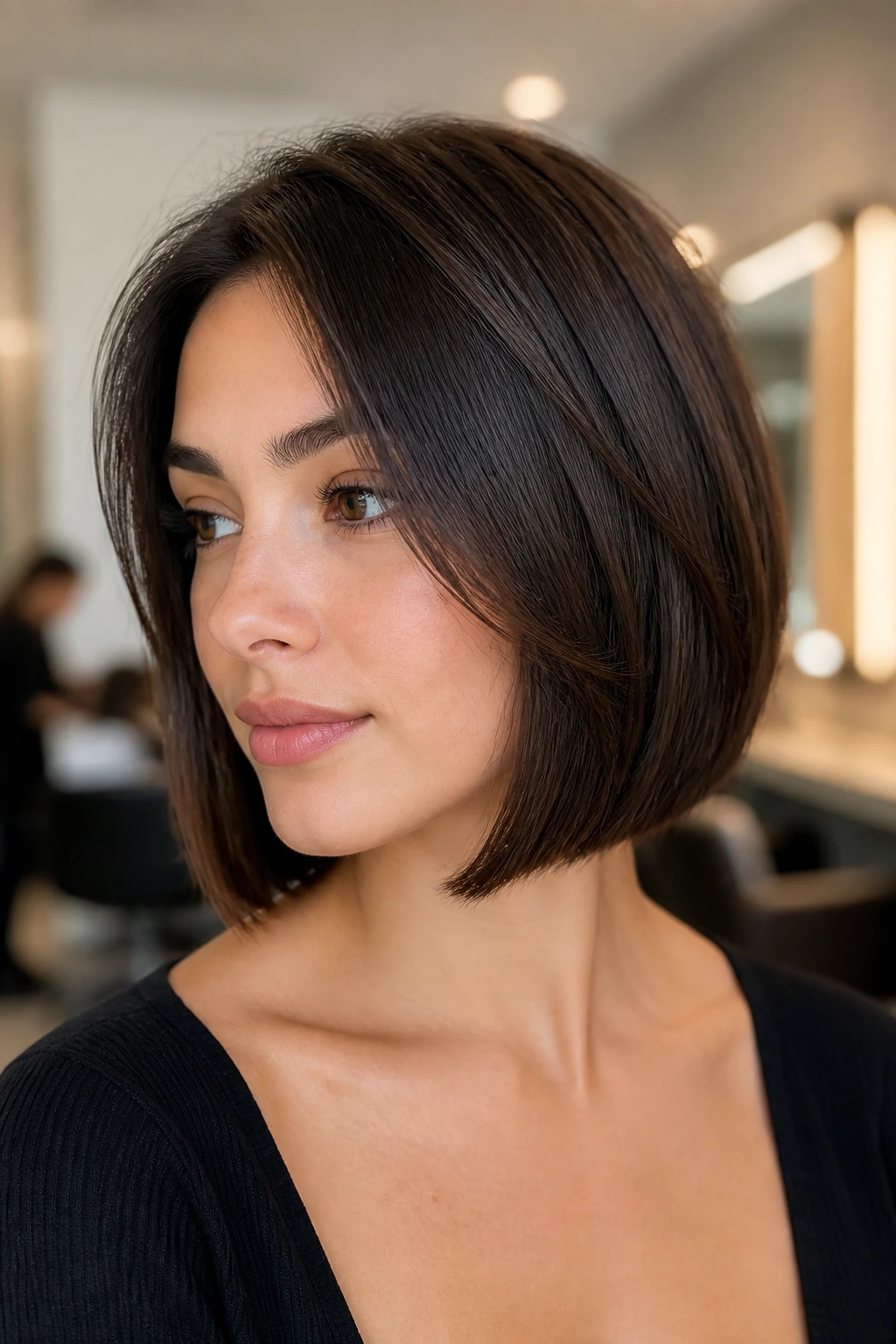
A blunt bob can be tricky on a square face, but the cut is not the problem. The problem is when the shape ends exactly at the jaw and sits there like a ruler. Add internal layers and a side break, and suddenly the same blunt line looks sleeker and longer.
The inside layers remove weight without changing the outline too much. That means the hair still has a clean edge, but it doesn’t puff out at the sides. A side part or even a half-inch shift off center stops the face from reading too rectangular.
This is the best choice if you like tidy hair and hate anything shaggy. It can look sharp, glossy, and expensive-looking in the plainest sense of the word — not flashy, just deliberate. Keep the ends healthy and trimmed. Split ends make a blunt cut look tired fast.
The blunt bob is proof that square faces don’t need to hide from structure. They just need the right structure.
14. Clip-In Lengths for Short Hair
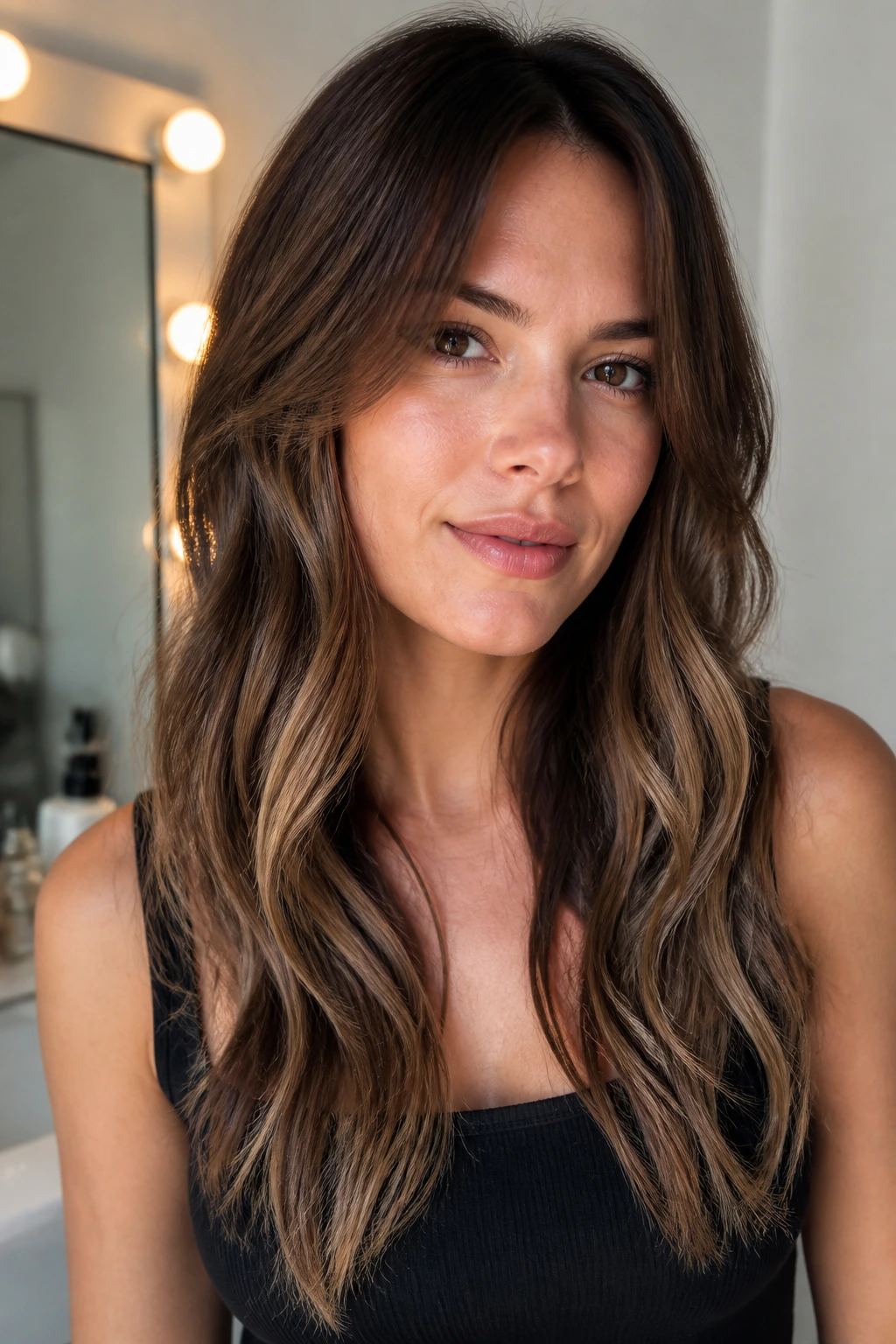
Sometimes the cleanest answer is temporary length. Clip-ins let you create the long lines that short hair can’t give you on its own, and for square faces, that extra drop can shift the balance fast.
The trick is placement. Don’t stack the extensions too high at the temples, where they can widen the face. Put the lower wefts where your hair already has a little length, then blend the front with soft bends or waves. A few strategic pieces are often better than a full head of heavy extensions.
What to Watch For
- Length match: choose pieces that sit close to your current cut, not a dramatic mismatch
- Weight: too much bulk on short hair makes the roots look stressed
- Blend line: curl your own hair and the clips together for a softer join
- Face framing: leave some front hair out so the square jaw doesn’t get boxed in
This is the style for weddings, photos, and any day when you want the long silhouette without waiting months for it.
15. Top Knot With Pinned-Under Ends
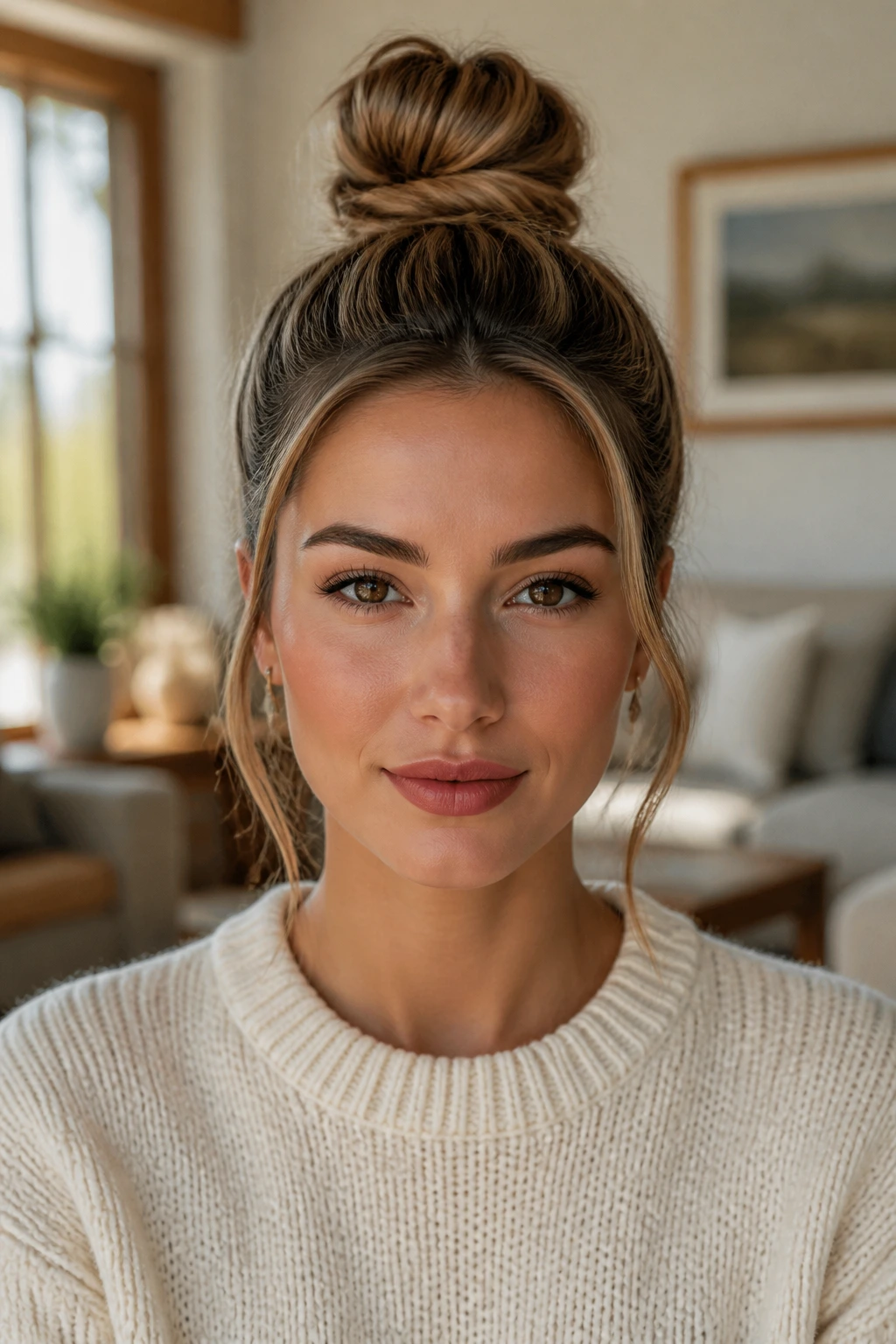
A top knot can either make a square face look taller or make the head look boxy. The difference is where the knot sits and how much softness you leave around it.
Put the knot slightly high, not dead center on the crown. That lift lengthens the face. Then pin the shorter ends under instead of wrapping them into a giant bun that sits wide across the head. A few loose strands at the temples keep the style from looking severe.
Short hair usually needs more pins than people expect. Use them. The point is not to build a perfect knot. The point is to create a vertical line that lifts the eye upward and keeps the jaw from becoming the main event.
This style is especially useful on second- or third-day hair. When the roots have a little grip, the pins hold better and the whole shape stays put longer.
16. Side-Swept Pixie-Bob
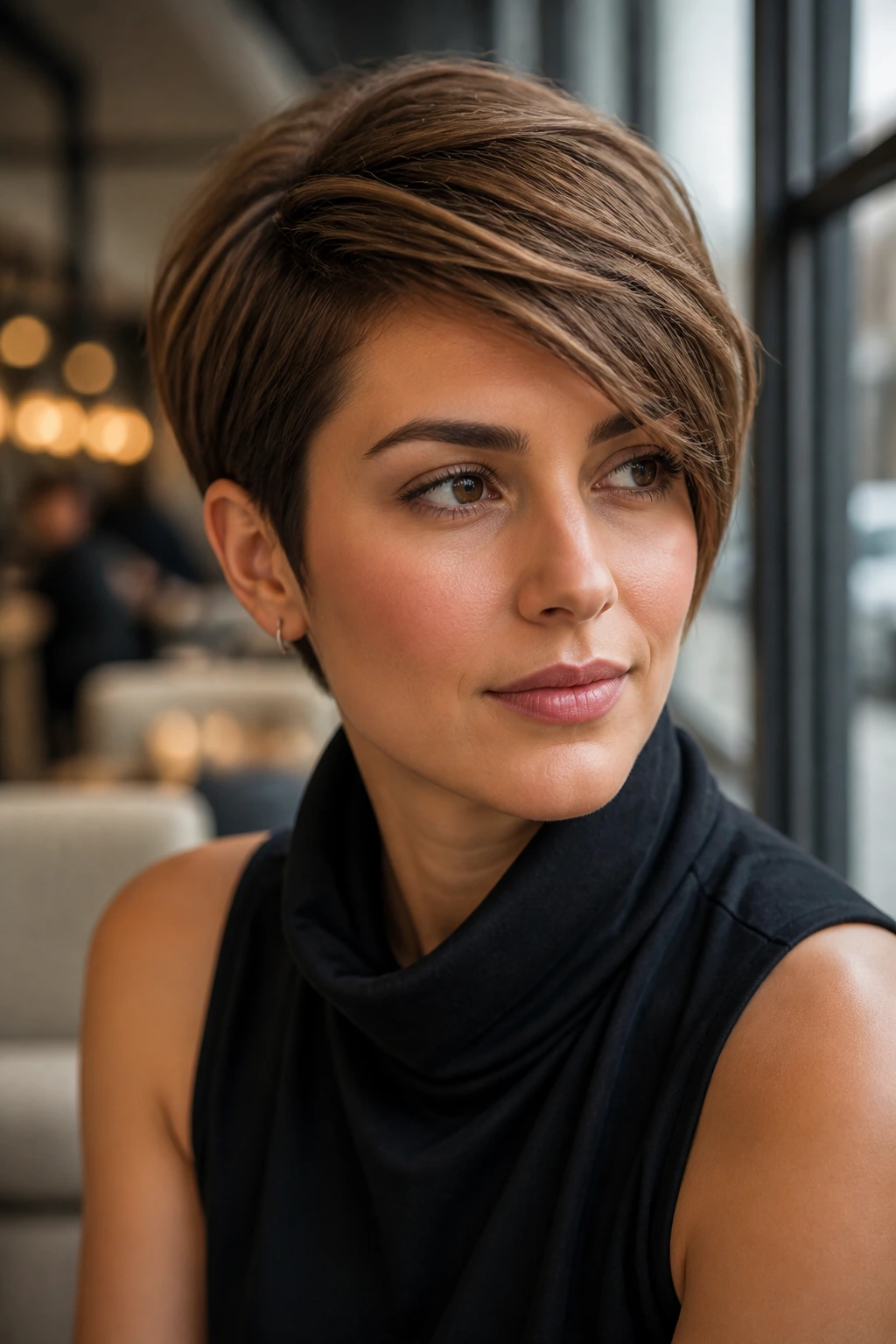
A side-swept pixie-bob is one of the smartest cuts for square faces because it creates movement without requiring length you don’t have. The sweep draws attention across the face, and the fuller side gives the haircut a longer read from front to back.
The front should be long enough to brush the brow or cheekbone. That’s where the softness lands. The back can stay tight enough to keep the shape clean. I like this especially on fine hair, since the side sweep creates the illusion of density without adding weight around the jaw.
Use a small round brush or your fingers and a dryer nozzle to direct the front to one side. A little root spray at the front can keep the shape from drooping. It’s a short cut, yes, but it gives the face more length than many longer cuts with the wrong part.
It’s the haircut version of a good angle in a photo.
17. Headband Tuck That Stretches the Silhouette
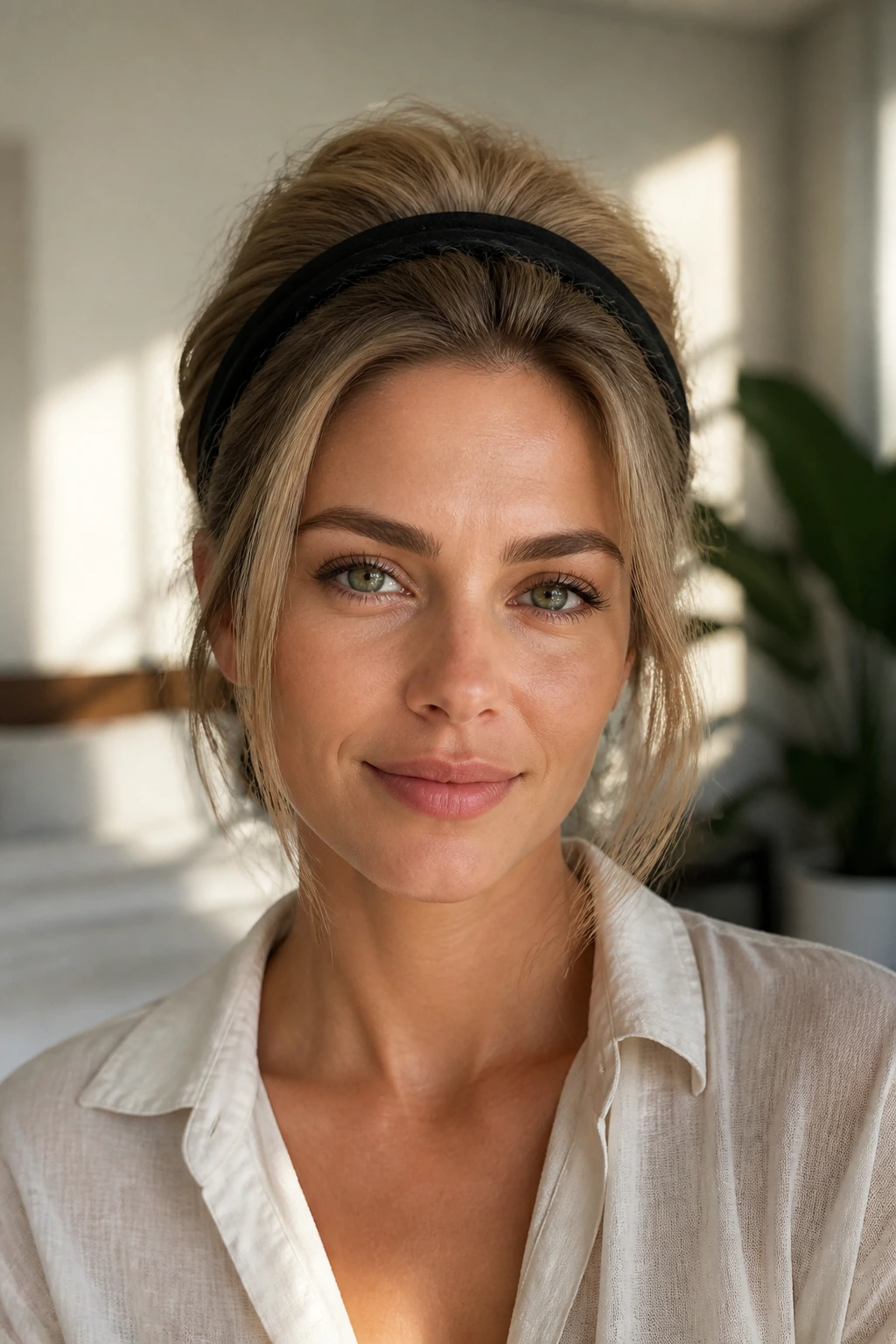
The headband tuck is one of those styles that feels older than it should and better than it gets credit for. On short hair and square faces, it creates a neat vertical line while keeping the sides soft.
Place the headband a little behind the hairline so the front lifts slightly. Then tuck the ends underneath at the nape, or only tuck partway if your hair is too short. The crown should stay a bit loose. That lift is what keeps the face from looking wide.
I like this when the hair is somewhere between a bob and a lob and refuses to cooperate. It works with straight hair, wavy hair, and even curly hair if the tuck is loose enough to let texture breathe. Add a couple of face-framing pieces if you want more softness around the jaw.
The whole style takes about five minutes once your hands know the pattern.
18. Grown-Out Pixie With Sculpted Front Pieces
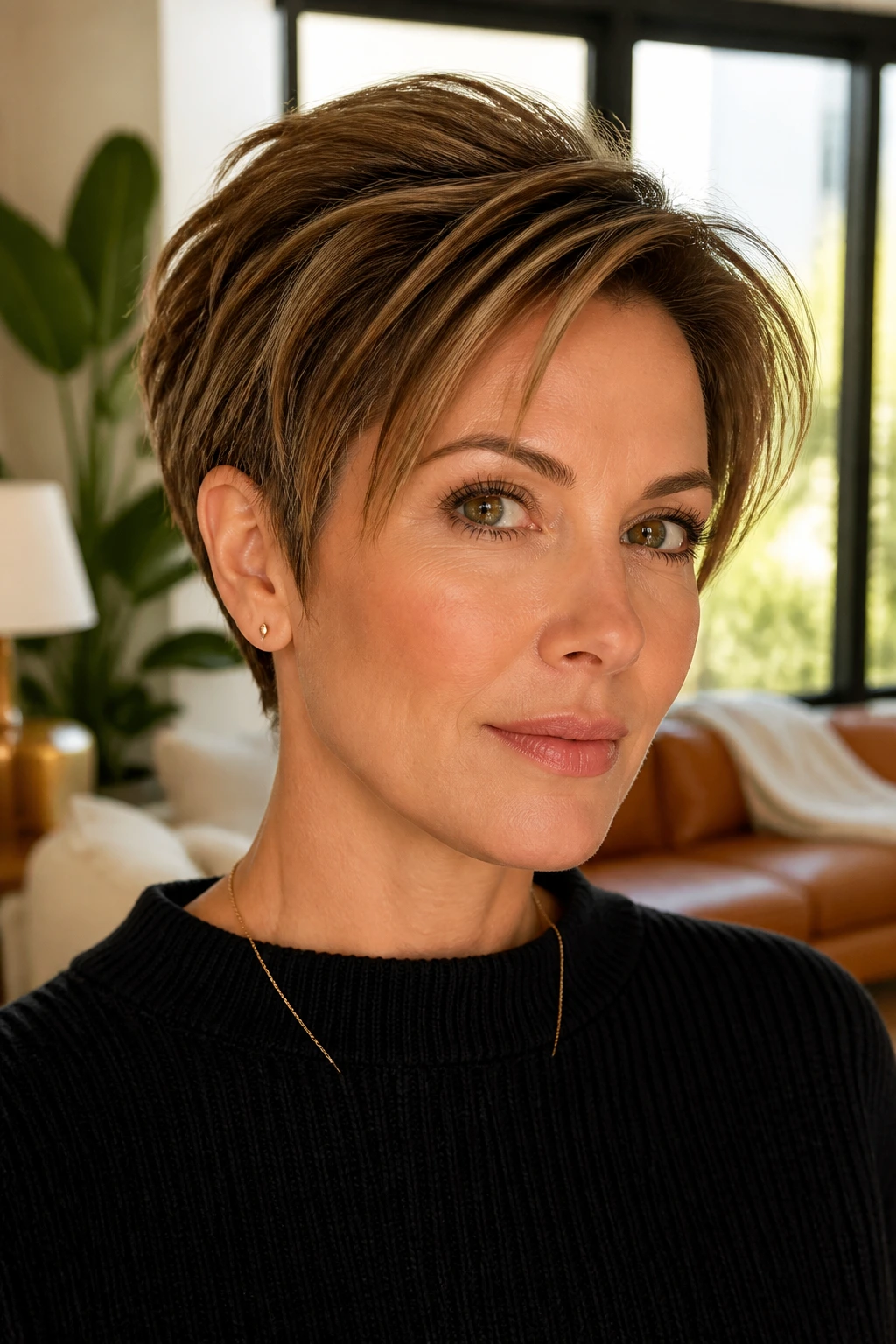
A grow-out is usually treated like a waiting room. That’s a mistake. A grown-out pixie with sculpted front pieces can be one of the most flattering looks for a square face because it keeps the sides controlled and gives the top enough motion to read longer.
The front pieces should be directed forward or slightly to the side, not brushed straight back. That forward motion creates a longer line across the face. Keep the ends a little piecey, and don’t over-polish the top. If it’s too slick, the haircut loses its shape. If it’s too messy, the jaw starts to dominate again.
This style also buys you time between cuts. Instead of fighting the awkward stage, you shape it. A small amount of paste through the front and a puff of dry shampoo at the roots usually does the job.
It’s not trying to look like long hair. It’s trying to look intentional, and that’s often better.
The Shape Behind the Style
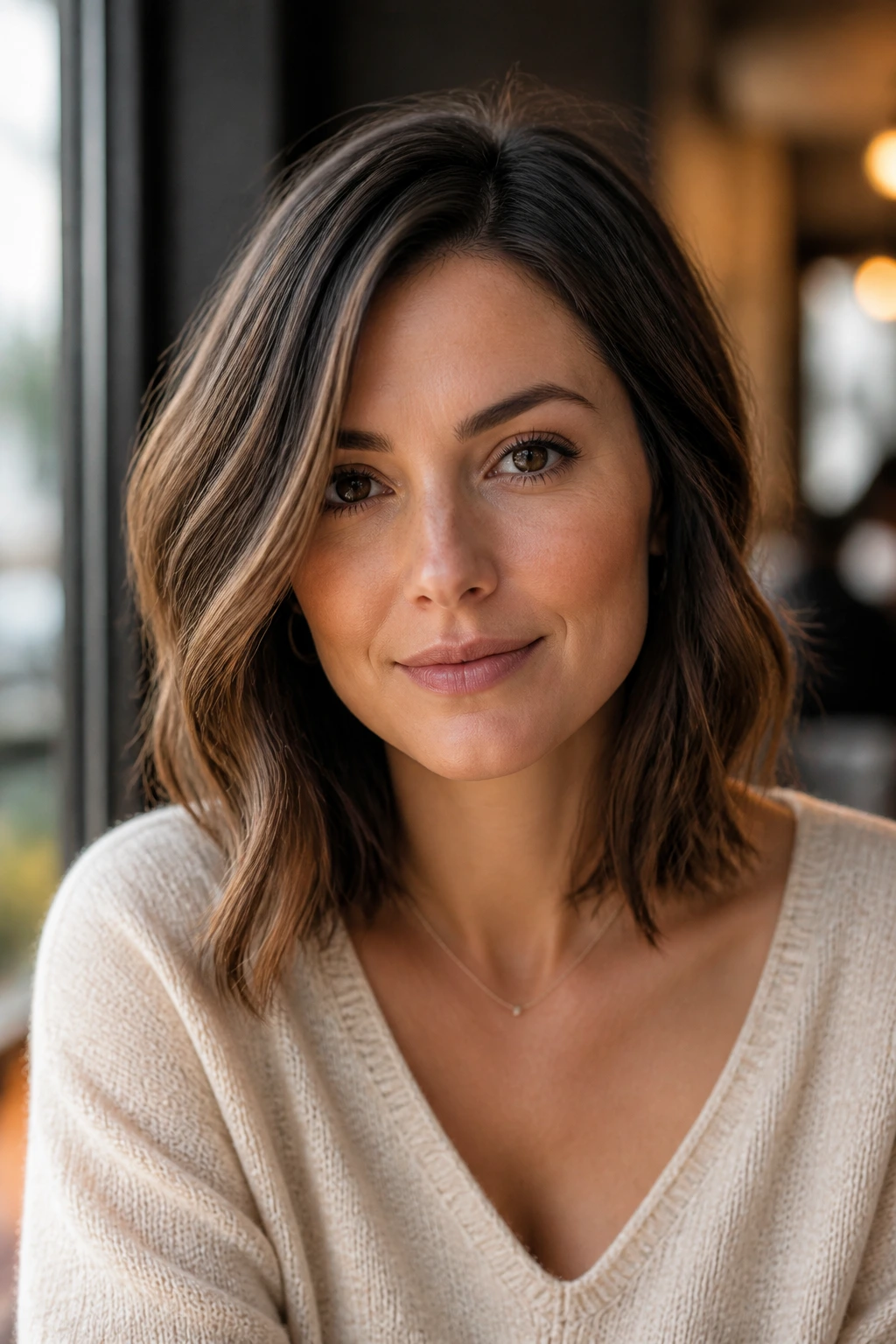
Square faces do not need to be hidden, softened into nothing, or forced into the same haircut over and over. What they need is movement that breaks the straight lines at the forehead and jaw. That can come from a part, a bend, a braid, or a cut that lands a little lower than expected.
Short hair is useful here because it doesn’t give you many places to hide mistakes. Which is annoying, sure, but also helpful. If the part is wrong, you’ll see it. If the crown is flat, you’ll see that too. Once you start watching the silhouette instead of just the ends, the whole process gets easier.
Essential Tools for These Hairstyles
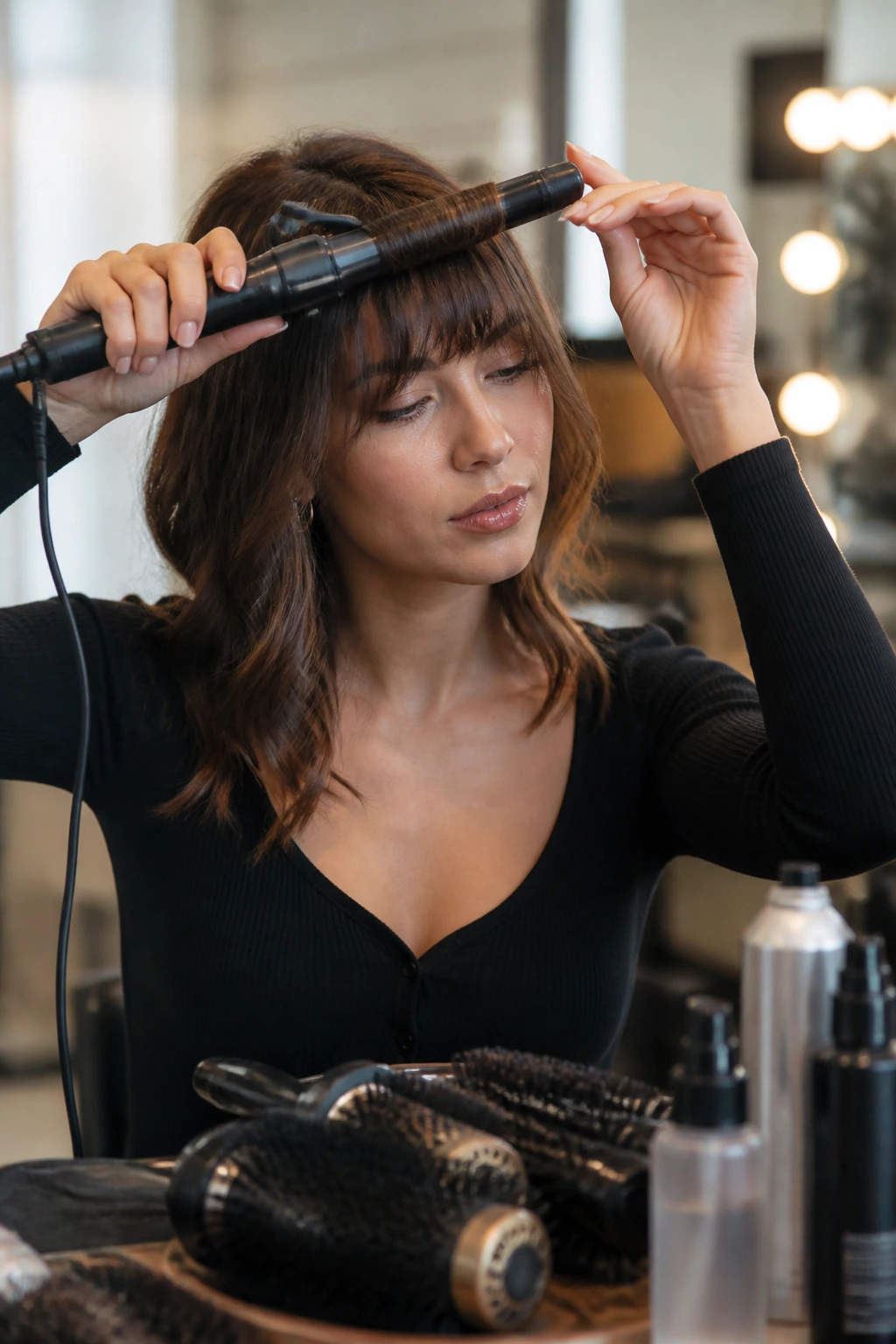
- 1-inch curling iron or wand: Best for bob-length waves, soft bends, and flipped ends without adding too much curl.
- Small round brush: Handy for curtain bangs, crown lift, and smoothing front pieces away from the jaw.
- Tail comb: Useful for clean side parts and sectioning clip-ins or braids.
- Bobby pins in your hair color: Essential for tucks, half-up styles, and pinning shorter layers out of sight.
- Texturizing spray: Gives grip to braids, twists, and undone waves without making hair sticky.
- Mousse or root-lifting spray: Keeps the top from falling flat, which matters a lot on square faces.
- Heat protectant: Non-negotiable if you’re using an iron or flat iron more than once a week.
- Small elastics: Better than thick bands for half-up styles, rope twists, and hidden ponytails.
- Smoothing cream or light serum: Good for sleek styles, but use it sparingly so the hair doesn’t collapse.
- Clip-in extensions, optional: A smart extra for weddings, photos, or any event where you want more length than your cut gives you.
What to Ask for at the Salon
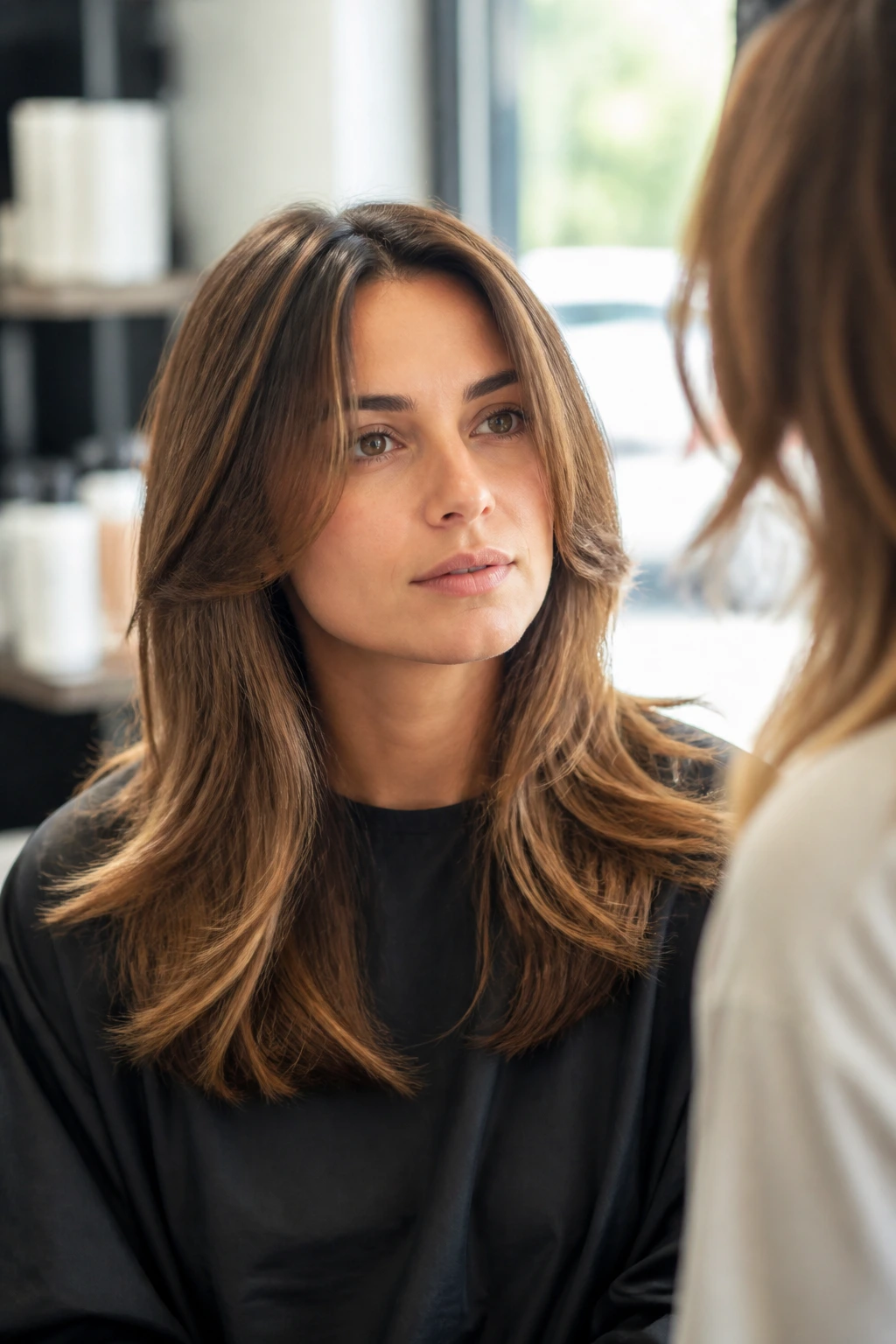
The phrase “long hairstyles” can mean two different things on short hair: a cut that gives long lines, or styling that creates the illusion of length. When you sit in the chair, be clear about which one you want.
Ask for face-framing pieces that start near the cheekbone, not the jaw, if you want softness. Ask for internal layers if your hair is thick and your short cut keeps puffing out at the sides. If your face reads especially wide at the jaw, say you want more movement at the crown and front, less width at the sides. That sentence is plain English, and stylists understand it fast.
Bring photos where the model has a similar face shape, not just similar hair length. That part matters more than people think. A chin-length bob on a narrow oval face can look totally different on a square face.
One more thing: if your hair sits between short and medium, ask where the style will land when it grows out three weeks later. A good cut should still make sense then. Bad cuts only look good on day one.
How to Wear These Styles So They Read Longer
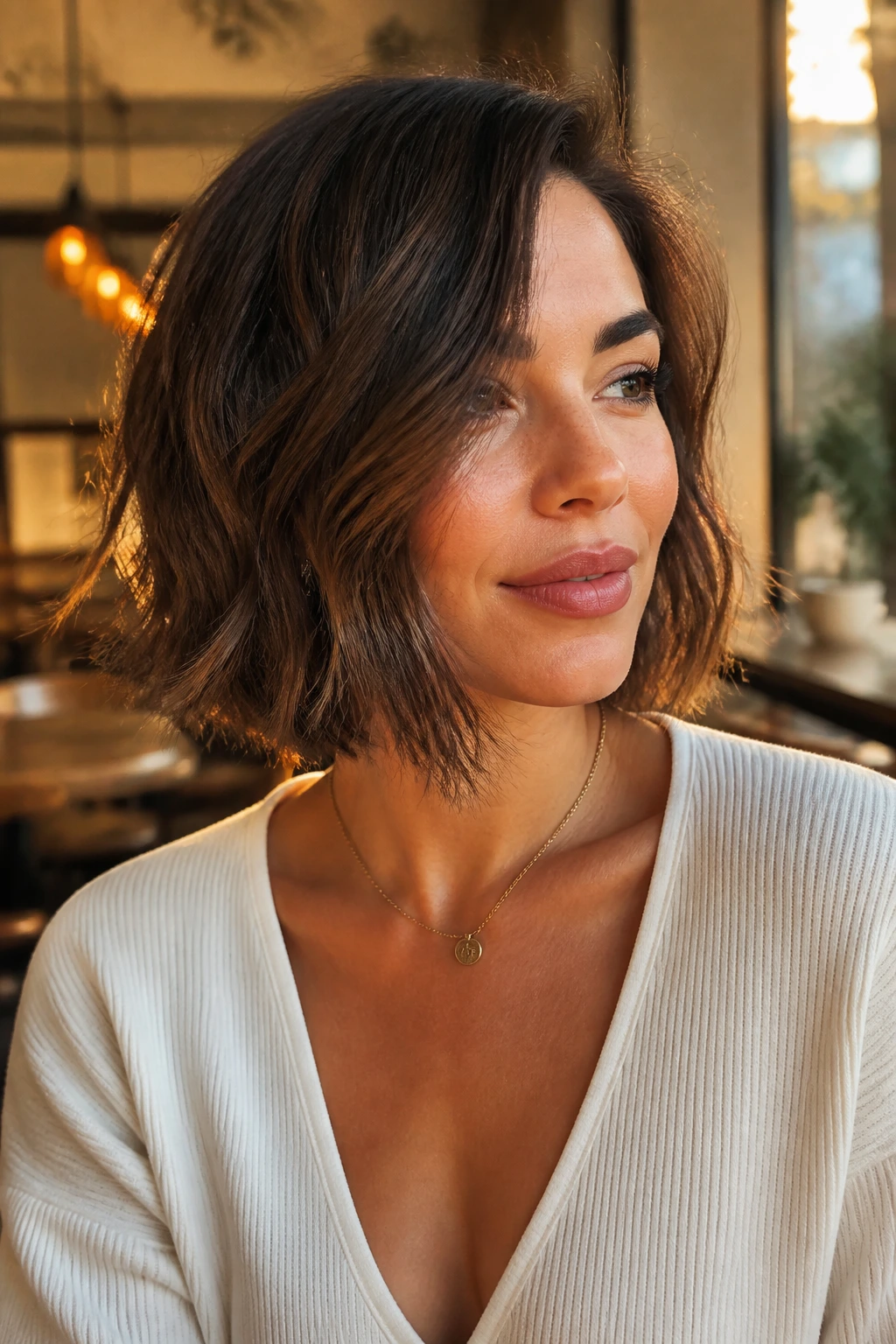
Presentation: Keep the silhouette diagonal, lifted, or softly broken up. Hair that falls in a straight box around the face will usually make a square face look wider, so the styling should create some bend near the cheekbone or lift at the crown.
Outfit Pairings: Open necklines, V-necks, and earrings that drop a little lower than the jawline can all help the face look longer. High necks can work too, but they’re less forgiving if the hair is flat or centered.
Length Sweet Spot: For most of these styles, the most useful lengths land between the jaw and collarbone. That’s enough room for movement without forcing the jaw to carry the whole shape.
Finish: Go glossy for smooth cuts, piecey for shags and pixies, and softly undone for braids or twists. A finish that matches the cut makes the whole style look cleaner.
Additional Tips and Finishers
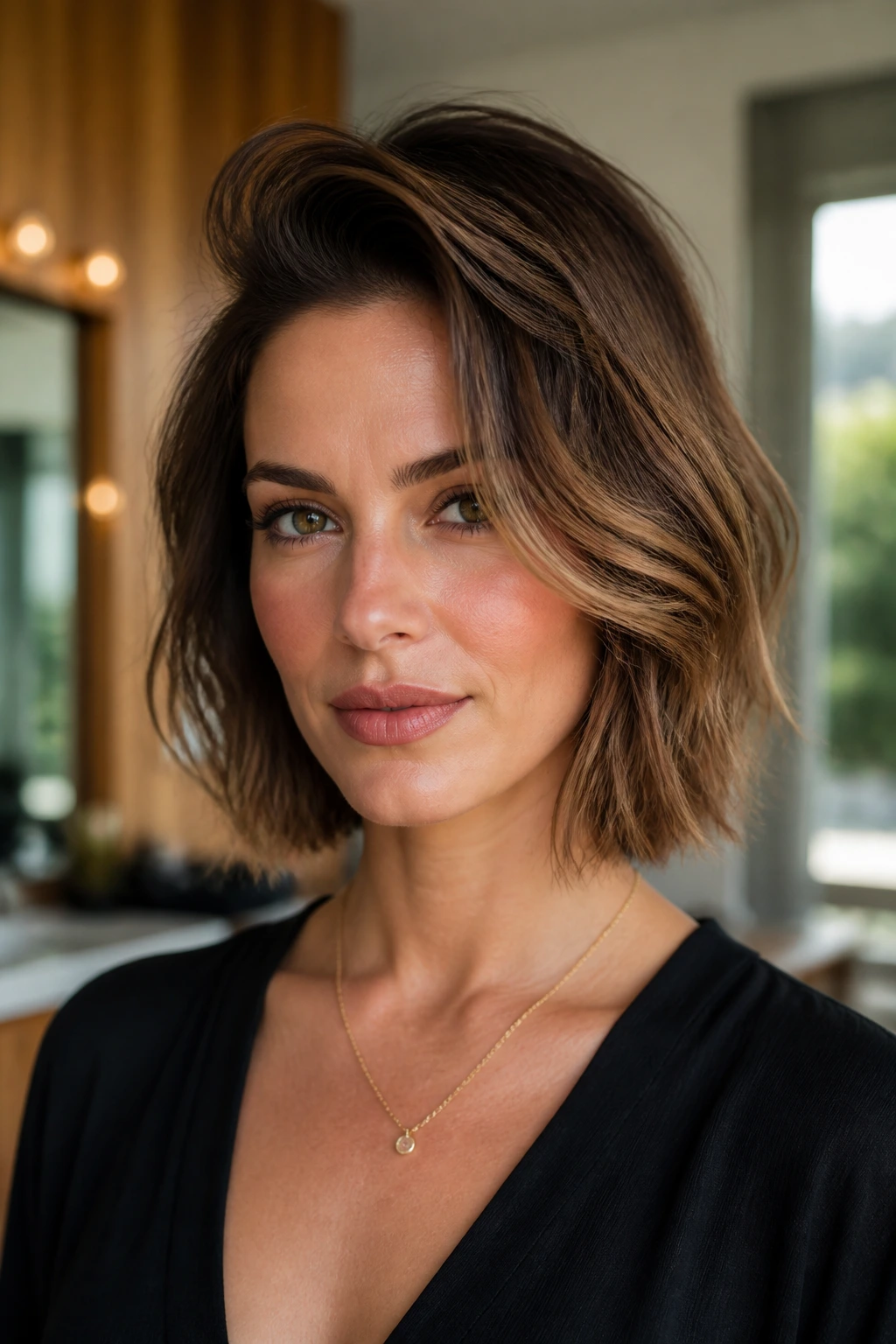
Root Lift: A small amount of mousse or root spray at the crown does more for square faces than heavy volume at the sides. Lift the roots, then let the rest stay soft.
Texture: If your hair is straight, bend the middle of the strands and leave the ends a bit straighter. That keeps the style from turning too round. On wavy hair, scrunch only enough to wake up the pattern.
Face-Framing: Aim for pieces that hit the cheekbone or just below it. Pieces that stop right at the jaw can make the face look wider than it is.
Accessory Swap: Thin clips, narrow headbands, and small pins keep the shape streamlined. Large claw clips can widen the sides of the head and fight the whole point.
Shine vs Grip: Fine hair usually needs texture more than shine. Thick hair often needs shine on the ends and grip at the roots. Use the least product that gets the job done.
Keeping the Shape Between Washes
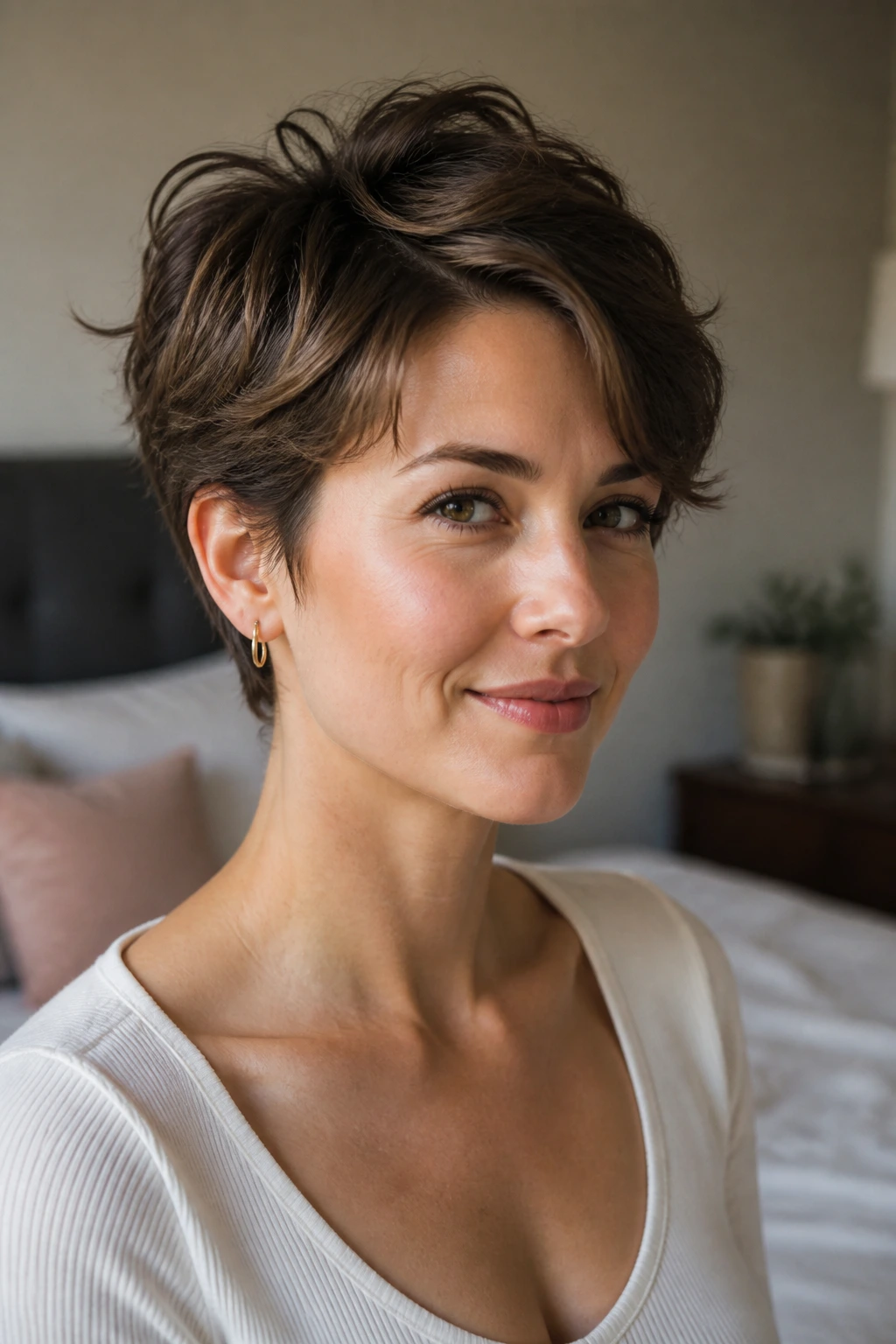
A good short style does not need a full reset every morning. That’s the nice part. Most soft waves and braids can be revived for 1 to 3 days if you sleep on a silk pillowcase or loosely pin the hair up before bed. Sleek styles are fussier; they usually look best the day you wear them and maybe one more day if humidity stays kind.
Dry shampoo works best before the hair looks oily. Put a light mist at the roots the evening before you need volume, then brush it through in the morning. That gives the powder time to absorb oil instead of sitting on top like chalk.
For wave styles, use a curling iron only on the pieces that went flat overnight. Don’t re-curl everything. That’s how hair starts looking fried and stiff. A fast touch-up on the front and crown is usually enough.
Trim every 6 to 8 weeks if you want the shape to stay sharp. If you’re growing it out, you can stretch that longer, but the side pieces and nape usually need attention before the front does. Short hair tells on itself fast.
Variations and Adaptations to Try
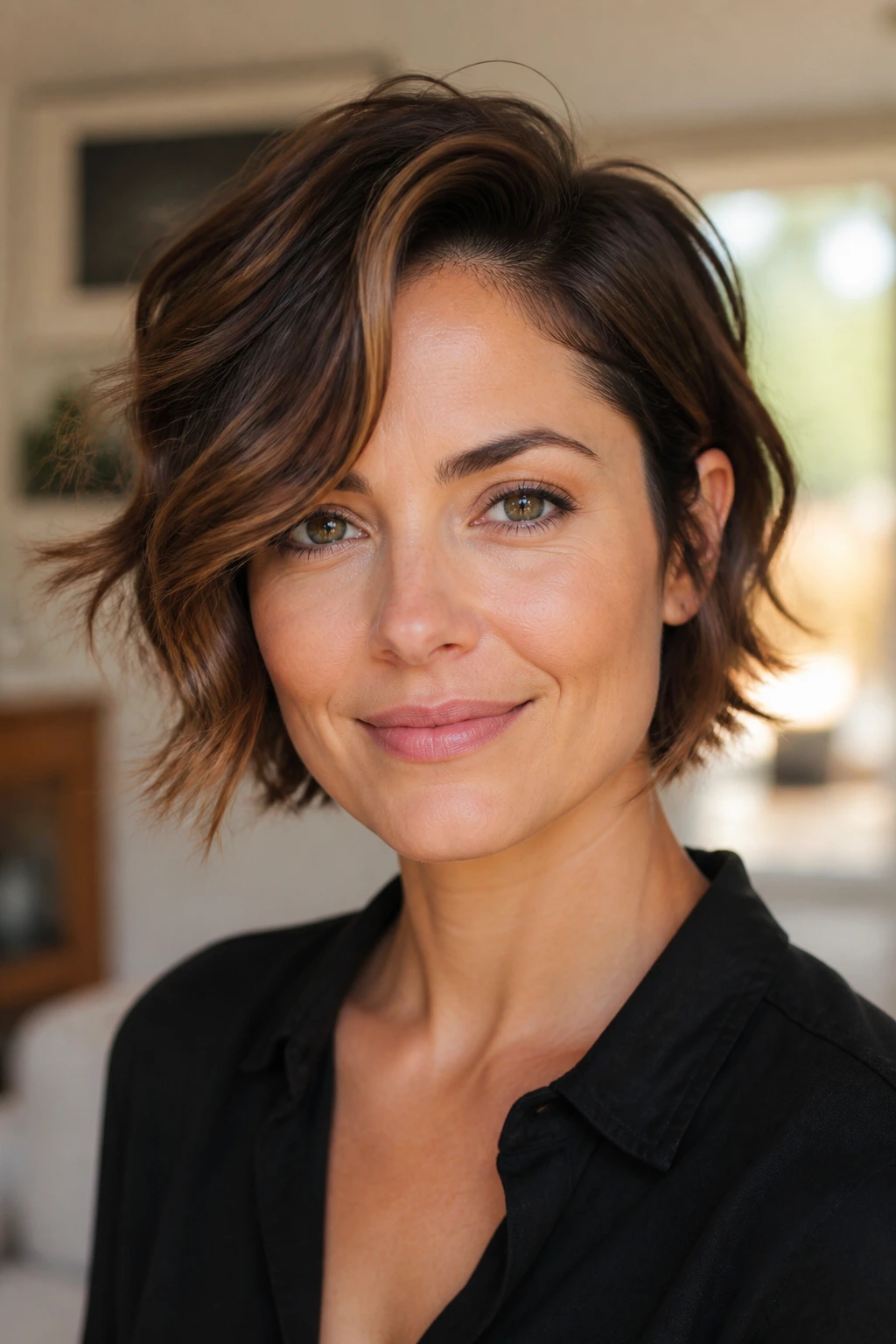
Fine-Hair Lift Plan: If your hair is thin and slips flat by noon, use a mousse at the roots, blow-dry upside down for a minute, then finish with a side part and soft waves. The goal is not big hair. The goal is hair that holds a line.
Thick-Hair Softener: For dense hair that makes a square face look heavier, ask for internal layers and keep the ends beveled. Texture sprays and airy braids work better than sleek styles, because they remove bulk visually.
Curly-Texture Version: Curly short hair on a square face looks best when the curl is shaped away from the jaw. Use a diffuser, pinch the crown for lift, and leave a few front pieces to fall naturally near the cheekbone.
Heatless Evening Style: Braid damp hair into two loose twists or a soft rope crown before bed, then release it in the morning. You’ll get bend and body without the hot-tool damage.
Office-Safe Sleek Version: Choose a deep side part, tuck one side behind the ear, and smooth only the top layer. It reads polished without flattening the whole head.
Photo-Day Extension Blend: Add a few clip-ins under the top layer, then curl your own hair with them so the finish matches. That blend keeps the extensions from looking separate at the ends.
Common Mistakes to Avoid
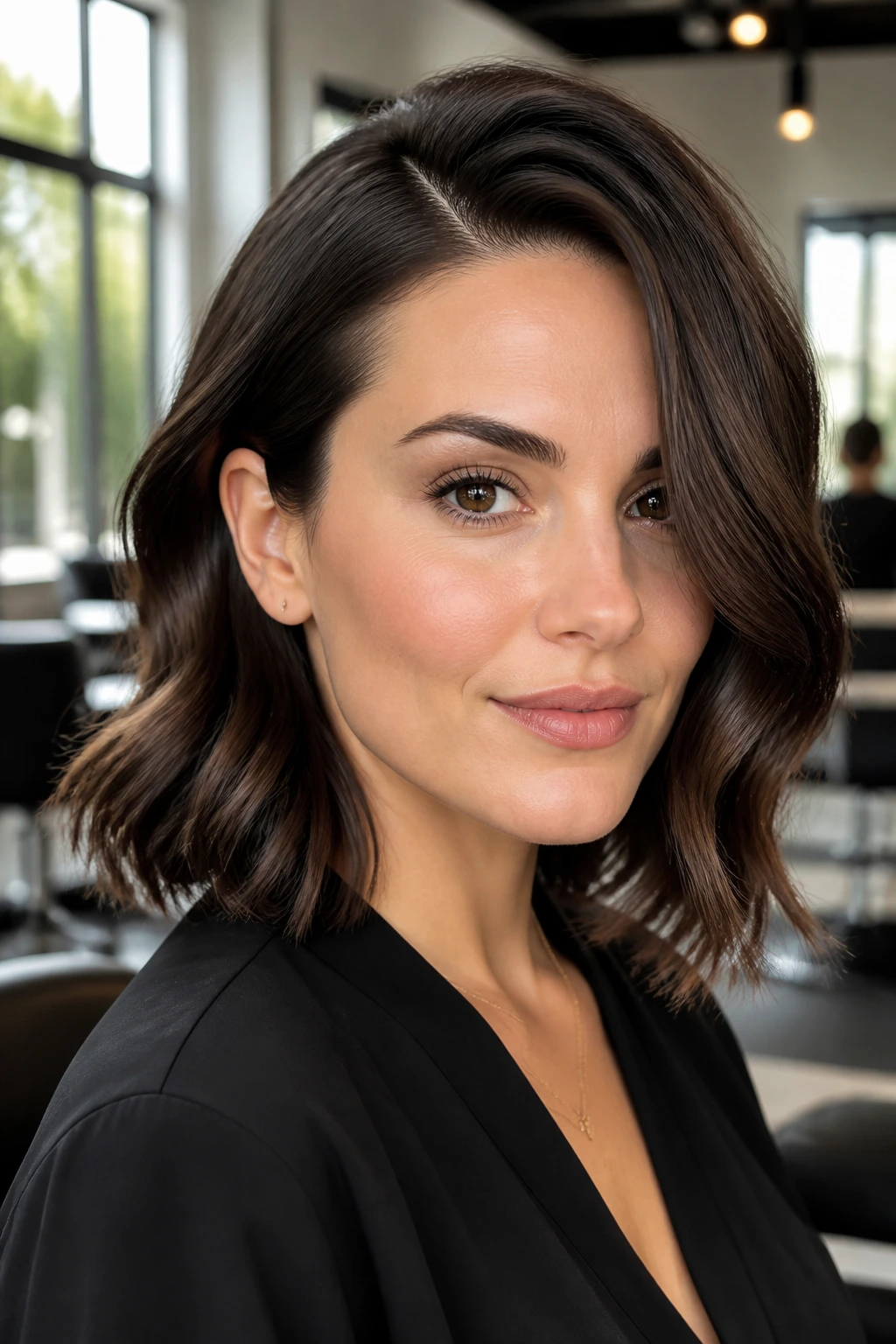
Ending the hair exactly at the jaw: That’s the one that bites people. A blunt edge landing on the widest part of a square face can make the whole outline feel boxier. Move the length slightly above or below that line, or soften it with layers.
Putting all the volume at the sides: Side width does not help here. It can make the face look broader. Put lift at the crown or movement around the cheekbones instead.
Using a dead-center part with flat roots: A center part can work, but only if the top has some life. Flat roots plus a centered part tends to make the face look wider and the hair shorter.
Curling every section the same direction: That creates a rigid, circular shape. Alternate directions or brush the waves out so the hair falls in a softer line.
Overloading on product: Too much cream, oil, or spray can collapse short hair fast. Start with less than you think you need. You can always add a touch more to the ends.
Frequently Asked Questions
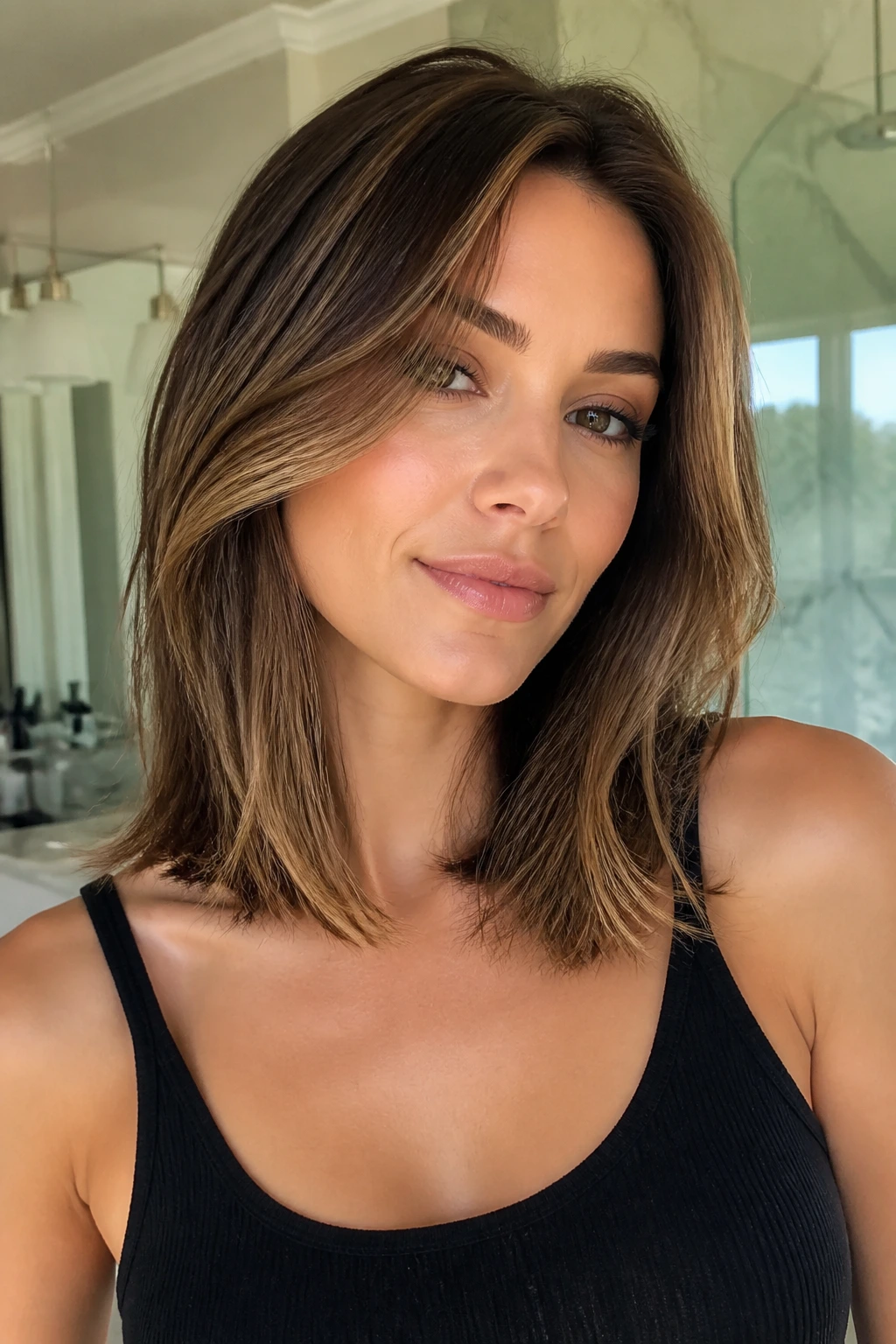
Can short hair really look long on a square face?
Yes, if the style creates vertical or diagonal lines. Crown lift, side parts, cheekbone pieces, and longer front sections all help the hair read longer than it is.
Should square faces always avoid blunt cuts?
No. A blunt cut can look great if the line is placed below the jaw or softened with internal layers and the right part. The problem is usually placement, not the blunt edge itself.
What if my hair is too short for waves?
Use bends instead of full curls. Even a few softly flipped ends, a tucked side, or a mini braid crown can add length to the silhouette without needing shoulder-length hair.
Do curtain bangs work on very short hair?
They do if there’s enough front length to sweep into the cheekbone area. If the bangs are too short, they can widen the forehead. Ask for them to grow into the sides rather than sit like a hard line.
Can I use extensions with a bob or pixie-bob?
Yes, but they have to be placed carefully. Add only the amount of hair your cut can hide, and blend the ends with waves or bends so the join doesn’t show.
What’s the easiest style for busy mornings?
A deep side part with a quick bend at the front is probably the fastest. A headband tuck or a low side bun also works when the hair is behaving badly and you don’t feel like negotiating with it.
How do I keep volume at the crown without teasing it into a knot?
Lift the roots with mousse or spray while drying, then clip the top section up while it cools. That gives you shape without the rough, backcombed texture that can look dry.
What if my hair flips out in the wrong places?
That usually means the ends are too heavy or the cut is sitting at an awkward point on the neck. A tiny trim, a bevel at the ends, or a stronger bend in the opposite direction usually fixes it faster than more product.
Length Without the Waiting
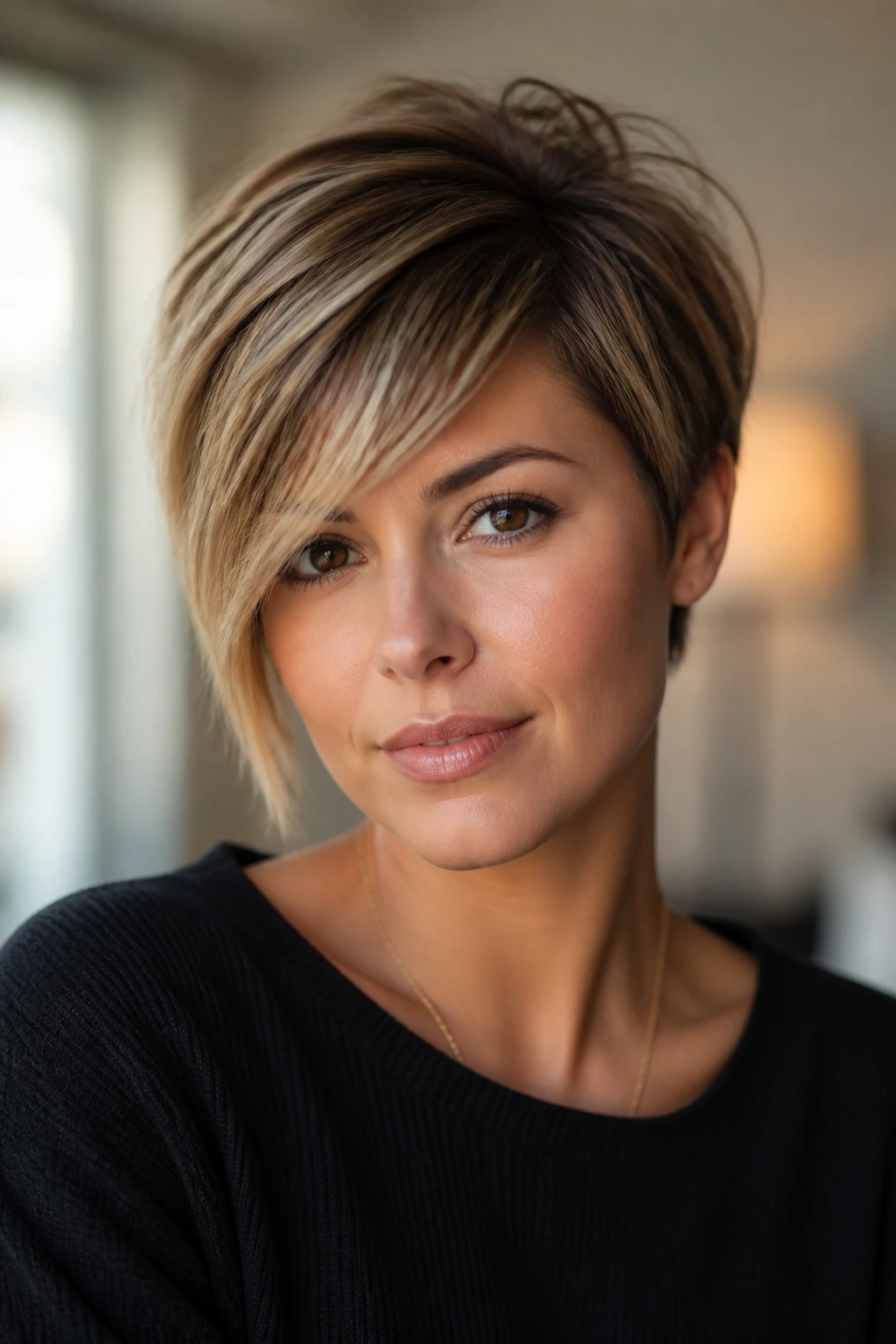
Short hair does not have to mean short-looking hair. That’s the part people miss. The right part line, the right bend, and the right place for the eye to land can make a square face look softer and a short cut look much longer than its actual length.
A good style here is never just about decoration. It changes the shape. And once you start choosing cuts and finishes that work with the jaw instead of against it, the whole category opens up in a satisfying way.
If you’re growing out a crop, working with a bob, or trying to make a strong face shape feel a little softer around the edges, these are the styles worth keeping on repeat.