



Haircuts for thick hair and square faces work best when the cut steals a little weight from the sides and leaves some softness near the cheekbones. Miss that balance, and thick hair can puff out at the jaw like it has a point to make. Hit it, and the whole face looks calmer, longer, and more deliberate.
Square faces have strong lines. Thick hair has its own opinions. Put those two together without a plan, and you get a shape that feels boxy around the temples or heavy right where the jaw already does the most work. The right haircut doesn’t hide the face. It gives the face better architecture.
That’s why the best cuts here are rarely blunt all the way through. They bend, feather, angle, or layer in ways that keep the silhouette moving. Some sit just below the jaw. Some keep length and build softness through the front. A few go short, but only if they’re cut with enough curve and internal removal to stop that helmet effect thick hair can create.
Why These Cuts Earn Their Keep
-
Weight comes off the right places: These cuts remove bulk inside the shape, not just at the ends, so thick hair stops flaring out near the jaw.
-
The jawline gets room to breathe: Soft layers, side-swept pieces, and curved fringes break up the hard edges that can make a square face look wider.
-
There’s real room for texture: Whether your hair is straight, wavy, or curly, these shapes work with bend and movement instead of fighting it flat.
-
Short and long options both make sense: You do not have to grow your hair past your back to flatter a square face. A sharp bob can work. So can a shoulder-skimming cut.
-
Styling gets easier when the cut is right: Thick hair usually looks best when the haircut does half the work, which means fewer rounds with the brush and less effort trying to force shape into it.
-
These cuts grow out better than blunt ones: Soft layers and angled lengths usually keep their shape longer, which matters when your hair grows fast and full.
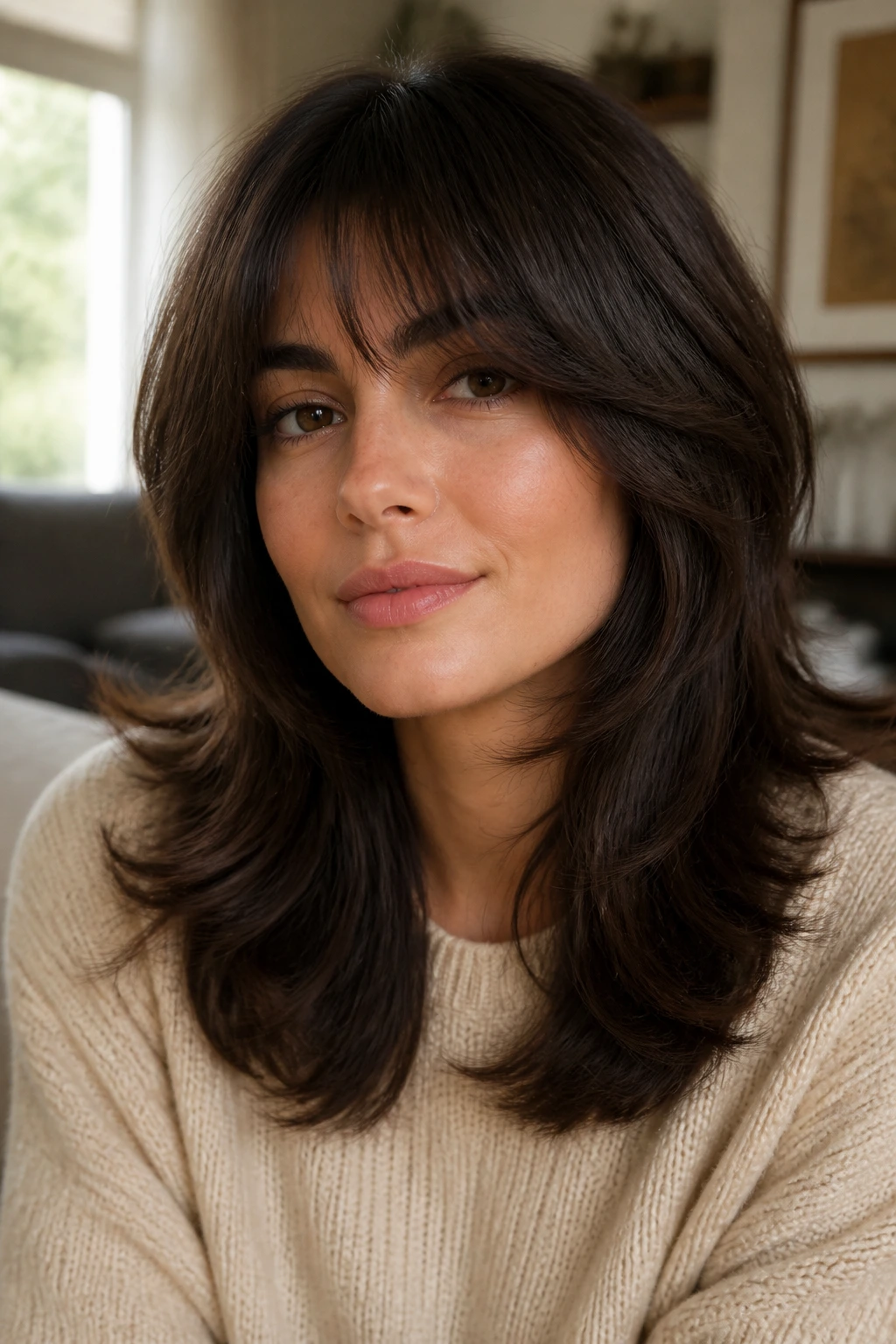
1. Long Layers with Curtain Bangs

Long hair can go flat on top and bulky at the bottom, which is a strange kind of triangle. Long layers with curtain bangs solve that with one clean move: they open the face at the center and let the rest of the hair fall in softer, narrower lines.
Why It Works on Thick Hair and Square Faces
Curtain bangs break up the width of the forehead and draw attention toward the eyes instead of the jaw. The long layers start below the chin, which matters. If the layers begin too high, thick hair can spring out around the cheeks and make the face look wider.
What to Ask For
- Layers that start below the chin
- Curtain bangs that hit around the cheekbone or just under it
- Soft point cutting through the ends, not a blunt bottom edge
- A center part with the option to shift slightly off-center if the bangs feel heavy
A good version of this cut should move when you walk. It should not sit there like a curtain rod.
If you blow-dry the bangs with a medium round brush and bend them away from the face, the whole cut gets lighter without losing its fullness. That little sweep at the front is doing a lot of the work.
2. Collarbone Lob with Soft Ends

A collarbone lob is one of my favorite answers for thick hair because it lands in that sweet spot where the hair still feels substantial, but it does not balloon at the jaw. The collarbone is doing the flattering here. Not the chin. Not the cheek. The collarbone.
Soft ends matter. Hard, blunt ends on thick hair can turn the lob into a shelf. Softening the perimeter with point cutting or subtle texturizing keeps the line clean but not rigid.
Ask for a lob that hits just above or right at the collarbone, then keep the front pieces a touch longer so the shape angles down gently. If your hair is coarse, this cut looks better with a little bend than with pin-straight perfection. A flat iron set on low heat and a single pass through the ends usually does more than a full blown-out curl.
Best of all, the lob can be tucked behind one ear, flipped to one side, or worn with a loose wave. It gives you options without turning your head into a project.
3. Textured Shag with Cheekbone Fringe

Why does the shag keep showing up in thick-hair conversations? Because it knows how to steal bulk without stealing personality. On a square face, a textured shag with cheekbone fringe adds movement right where the face needs it most, and it does it with a little attitude.
The fringe is the key. It should land around the cheekbone, not cut straight across the forehead. That diagonal line softens the face in a way a blunt fringe never will. The rest of the layers should be airy, not shredded into oblivion. Thick hair can carry texture beautifully, but it needs shape, not chaos.
How to Wear It
This cut looks best when it’s a little undone. Air-dry it with a light curl cream if your hair bends naturally, or rough-dry the roots and leave the ends slightly piecey.
What to Watch For
- Too much thinning at the ends can make thick hair frizz out.
- Layers that start too high can widen the sides.
- A fringe that sits exactly at the brows can feel boxy on a square face.
If you want something that looks lived-in but not messy, this is one of the strongest options on the list.
4. Angled Bob with Face-Framing Pieces
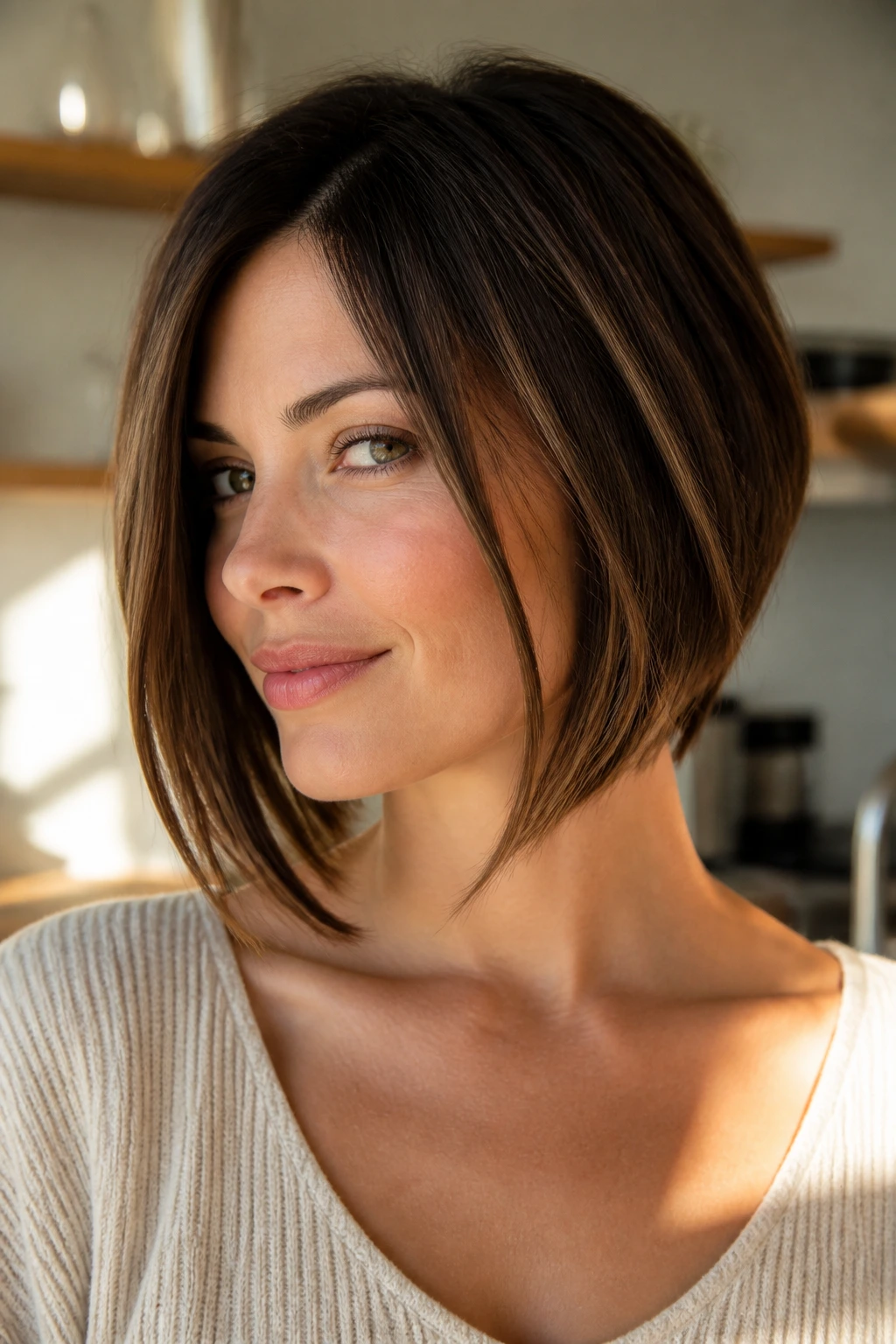
Picture a bob that sits shorter in back, longer in front, and falls just below the jaw at the front pieces. That angle is doing the face a favor. It pulls the eye downward, which is useful when the jaw already draws a lot of attention.
Thick hair loves an angled bob when the interior has been softened. Without that, the shape can look too dense in the back and too heavy at the corners. The face-framing pieces should start near the cheekbone and angle toward the collarbone, never ending right on the jaw itself.
A salon note helps here: ask for a bob with a clear front-to-back angle, but ask the stylist not to create a hard shelf at the bottom. You want a clean line, not a shelf that looks like it could hold a mug.
This is the kind of cut that can look polished with almost no styling, especially if your hair has a little natural bend. If it’s very straight, a quick pass with a round brush under the ends keeps the line curved instead of sharp.
5. Butterfly Cut with Floating Layers
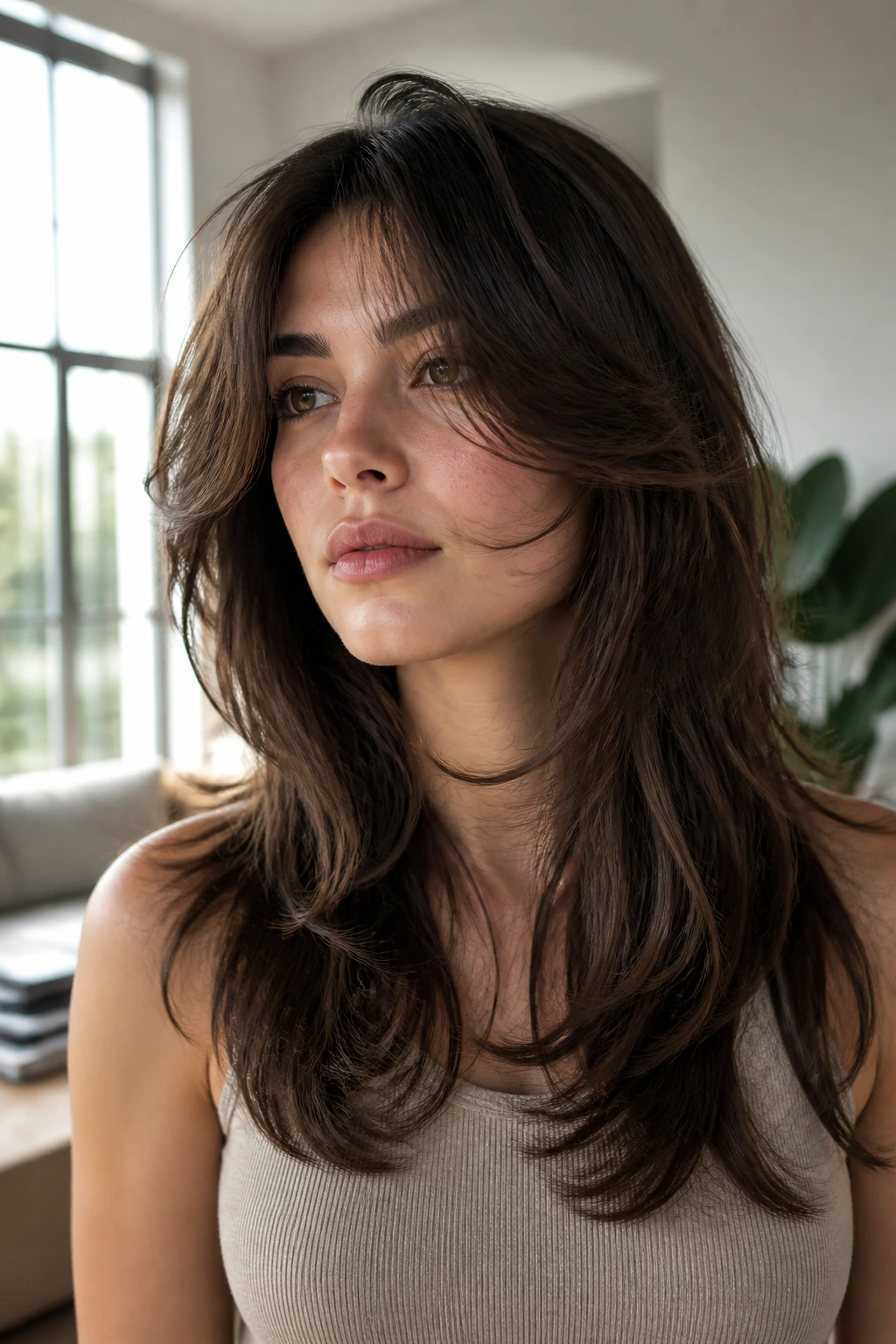
The butterfly cut looks dramatic on paper and surprisingly practical in real life. You keep the length, but the upper layers are cut to create movement around the face and crown. On thick hair, that’s a gift. The cut removes some of the visual heaviness without making the ends look sparse.
Square faces usually benefit from anything that adds lift above the jaw and softness around the temples. The butterfly cut does both. The shorter top layers float when you blow-dry them, and the longer bottom section keeps the hair from losing its presence.
The best version of this cut avoids blunt layers at the widest part of the face. The shortest face-framing pieces should land around the cheekbone or just below it. If they hit the jaw, the shape can widen the face in a way that feels stubborn.
This cut likes a round brush, but not a tiny one. A 1.5-inch brush gives the top layers enough bend to sit away from the face instead of clinging to it. And if you’re the type who likes hair that looks full when you move, this cut has that little swing people notice in motion.
6. Side-Swept Pixie with Tapered Sides
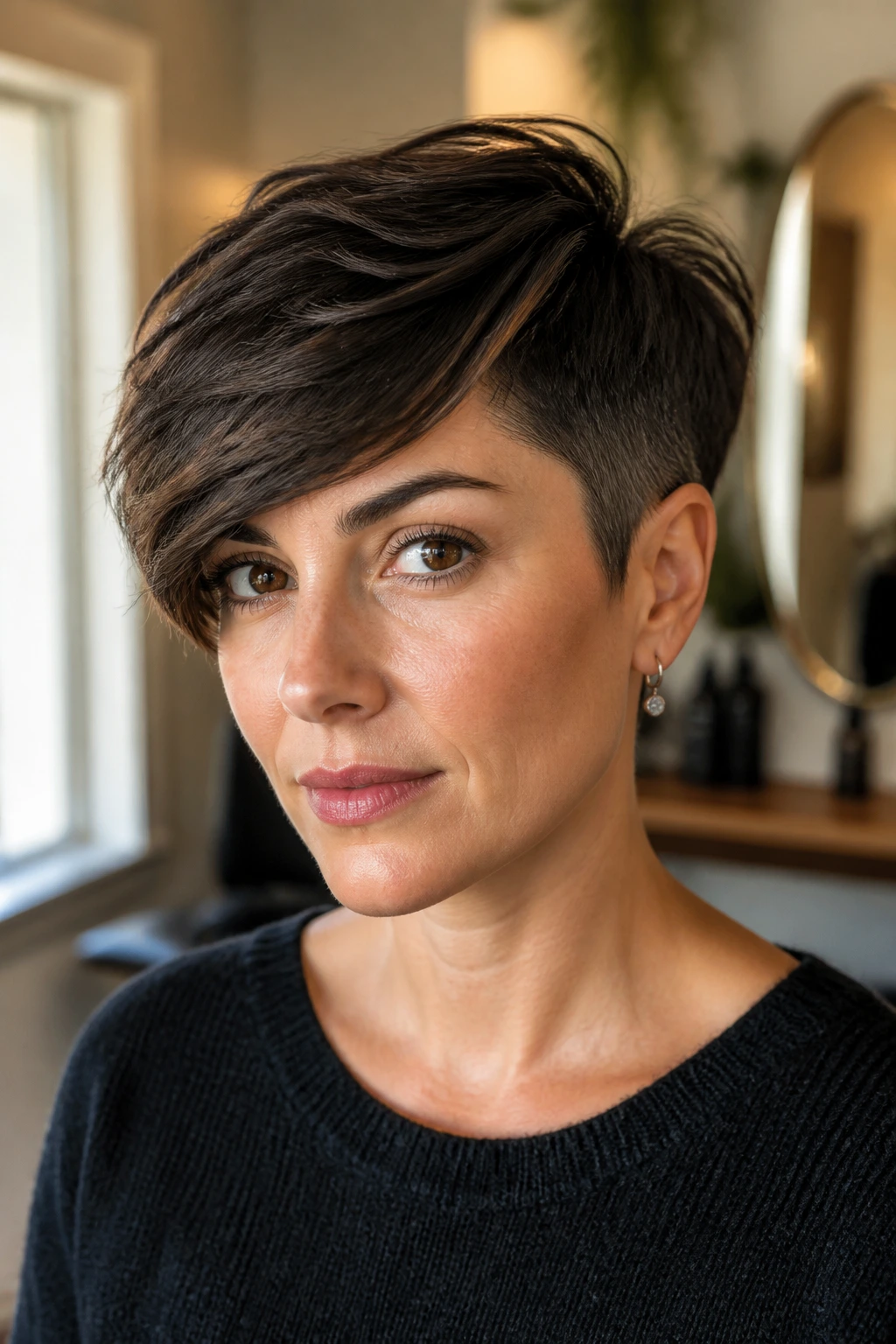
Short hair can work on a square face. It just has to know where to soften. A side-swept pixie with tapered sides does that by keeping the top longer and the sides cleaner, which draws the eye diagonally across the face instead of straight out to the jaw.
The side-swept fringe is doing the heavy lifting. It breaks up the forehead and pulls attention to one side, which makes the whole face feel less symmetrical in a useful way. Thick hair gives a pixie nice shape, but it also means the cut needs real tapering around the ears and neck or it can look too puffy.
This is not the pixie for someone who wants to air-dry and leave. You’ll need a little mousse or styling cream at the root, plus either finger-drying or a quick brush-through with a vent brush. But the tradeoff is a cut that looks sharp, modern, and easy to wear once it’s set.
If your thick hair has a little wave, even better. The top gets texture almost for free.
7. Soft Wolf Cut
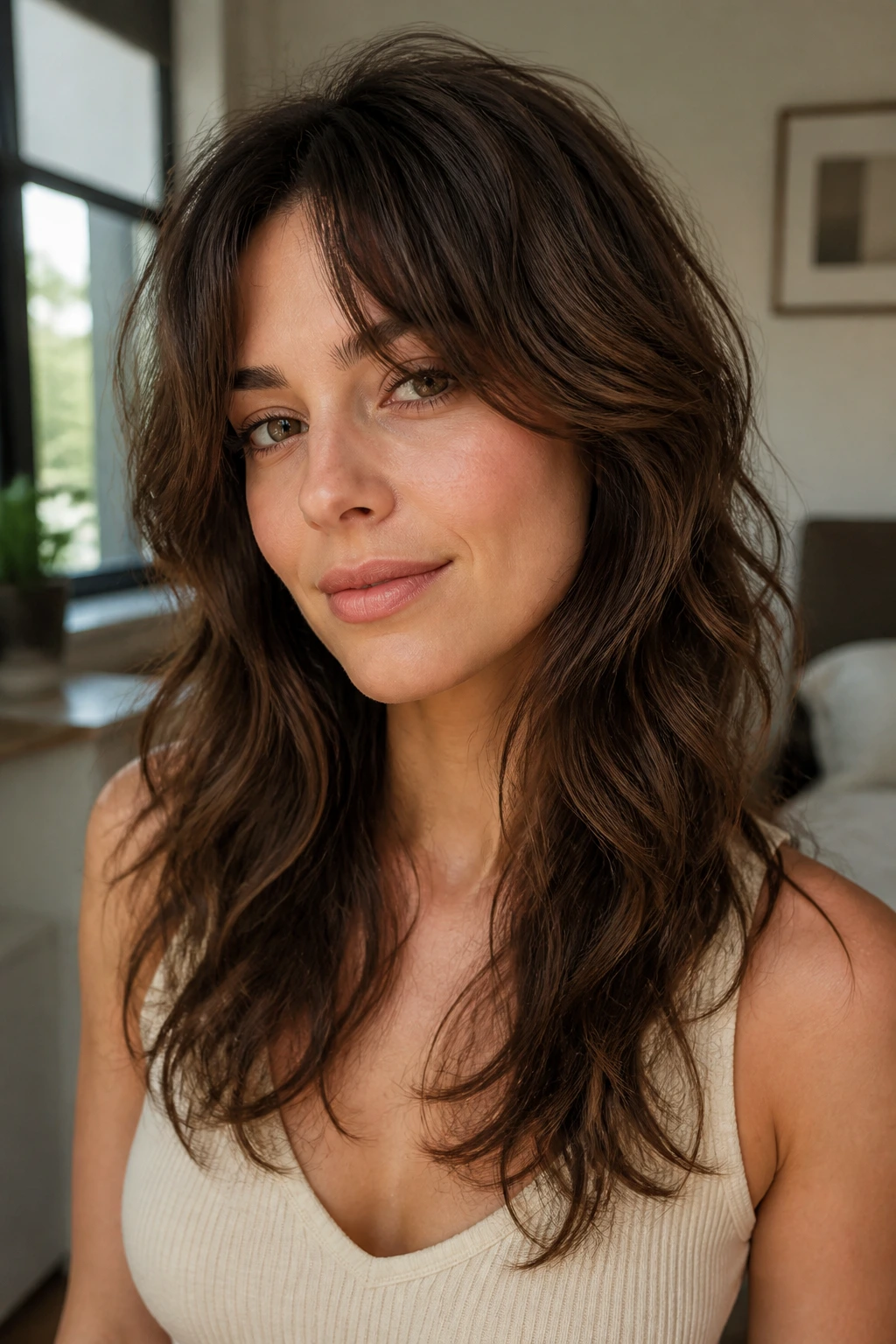
The wolf cut can go too wild on thick hair if it’s overdone. But a soft wolf cut—yes, that’s the good version—gives you movement at the crown, looseness through the mids, and enough length to keep the whole thing from feeling choppy.
For square faces, the trick is to keep the side pieces soft and the edges irregular. A hard, aggressive wolf cut can make the face feel more angular. A softer one, with long layers and a little feathering around the cheekbones, does the opposite. It makes the face read as longer and the hair as lighter.
This cut works especially well if your hair already has bend. Let it dry with a diffuser on low heat or rough-dry it until it’s about 80 percent dry, then twist a few pieces around your fingers with a light cream. You do not want every strand to behave the same way. That’s the whole point.
A lot of people think the wolf cut is all about volume. It isn’t. It’s about controlled messiness. There’s a difference.
8. U-Shaped Long Cut with Invisible Layers
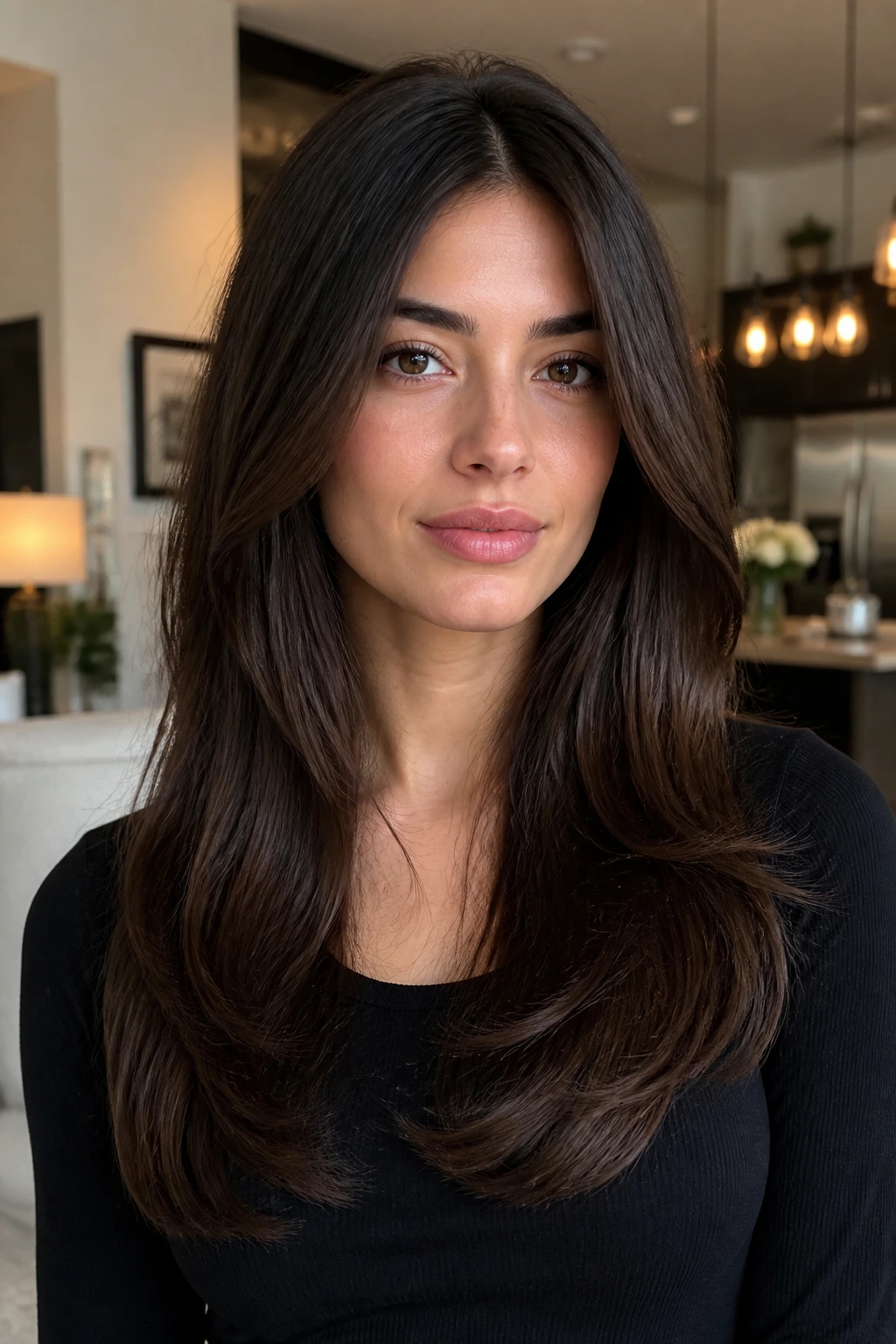
Some thick-haired people want length, not drama. Fair enough. A U-shaped long cut with invisible layers is one of the smartest ways to keep length while softening a square face, because the shape stays full without turning into a heavy curtain.
The U shape keeps the bottom line rounded instead of blunt. That matters more than people think. A straight-across bottom edge on thick hair can make the whole head read wider, especially when the hair is worn down. A rounded perimeter feels gentler and moves better.
Invisible layers live inside the haircut, not on the outside. They remove weight where the hair would otherwise shove outward, but they do not create obvious steps. That makes this a great cut if you want your hair to look polished and substantial, not shaggy.
It’s also an easy haircut to live with. You can braid it, clip it back, or wear it smooth. The shape doesn’t demand a lot. It just needs a stylist who understands where thick hair creates bulk and where it needs to stay full.
9. Graduated Midi Cut
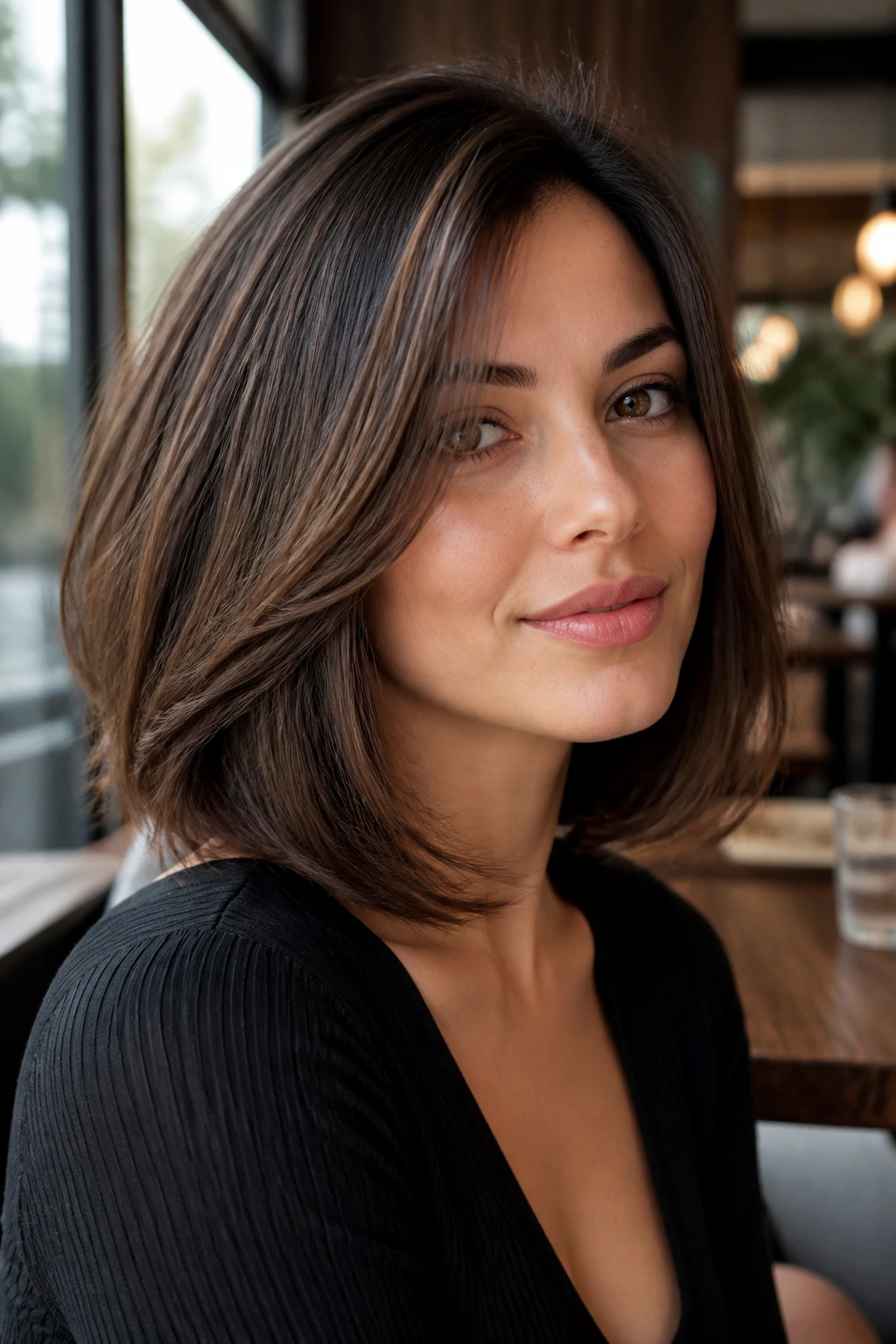
A graduated midi cut sits in that between-length space that so many people ignore. It’s shorter and lighter than a long cut, but it still gives enough weight to keep thick hair from flying apart. On a square face, the graduation helps the hair lift at the back and skim past the jaw instead of stopping on it.
Think of this as a softer cousin to the stacked bob. The back is shorter, the front is longer, and the whole shape slopes gently rather than snapping into a sharp angle. That slope is what keeps the face looking elongated.
This cut looks especially good if your hair has a little body at the root. Blow-dry the crown with a round brush and tuck the front under slightly. The ends should curve, not stick out like a triangle. Small difference. Big payoff.
If you wear glasses, this shape can be a nice one because it keeps volume away from the temples and lets the frames sit without competition. That matters more than people admit.
10. Chin-Length French Bob with Bend
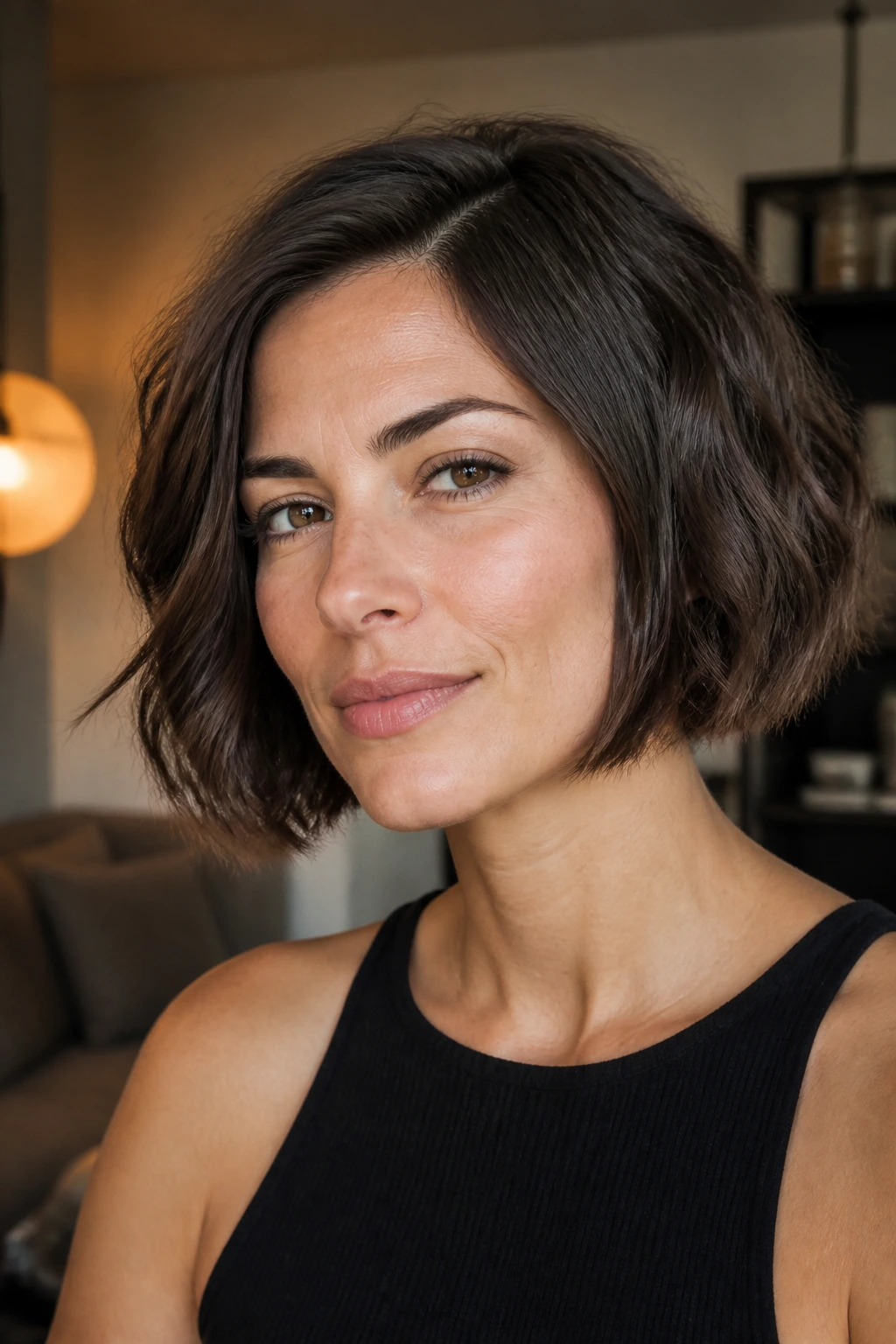
A chin-length bob sounds risky on a square face, and sometimes it is. But the French bob works when it’s softened, bent, and cut with enough texture that it doesn’t sit like a hard line right at the jaw.
The safe version is usually just below chin length, not exactly on it. That extra half inch gives the face room. A little bend in the ends also changes everything. Instead of a flat block, you get a curve that follows the face and stops it from feeling square on square.
This cut is best when styled with a side part or a loose, off-center part. A dead-center part on a blunt chin-length bob can feel severe fast. The side movement creates a diagonal line, and diagonals are your friend here.
It’s a chic cut, yes, but it’s also practical if you like washing and going. Thick hair holds this shape well, and a quick run with a dryer brush or a round brush around the ends is enough to keep it from looking stiff.
11. Shoulder-Grazing Cut with Internal Layers
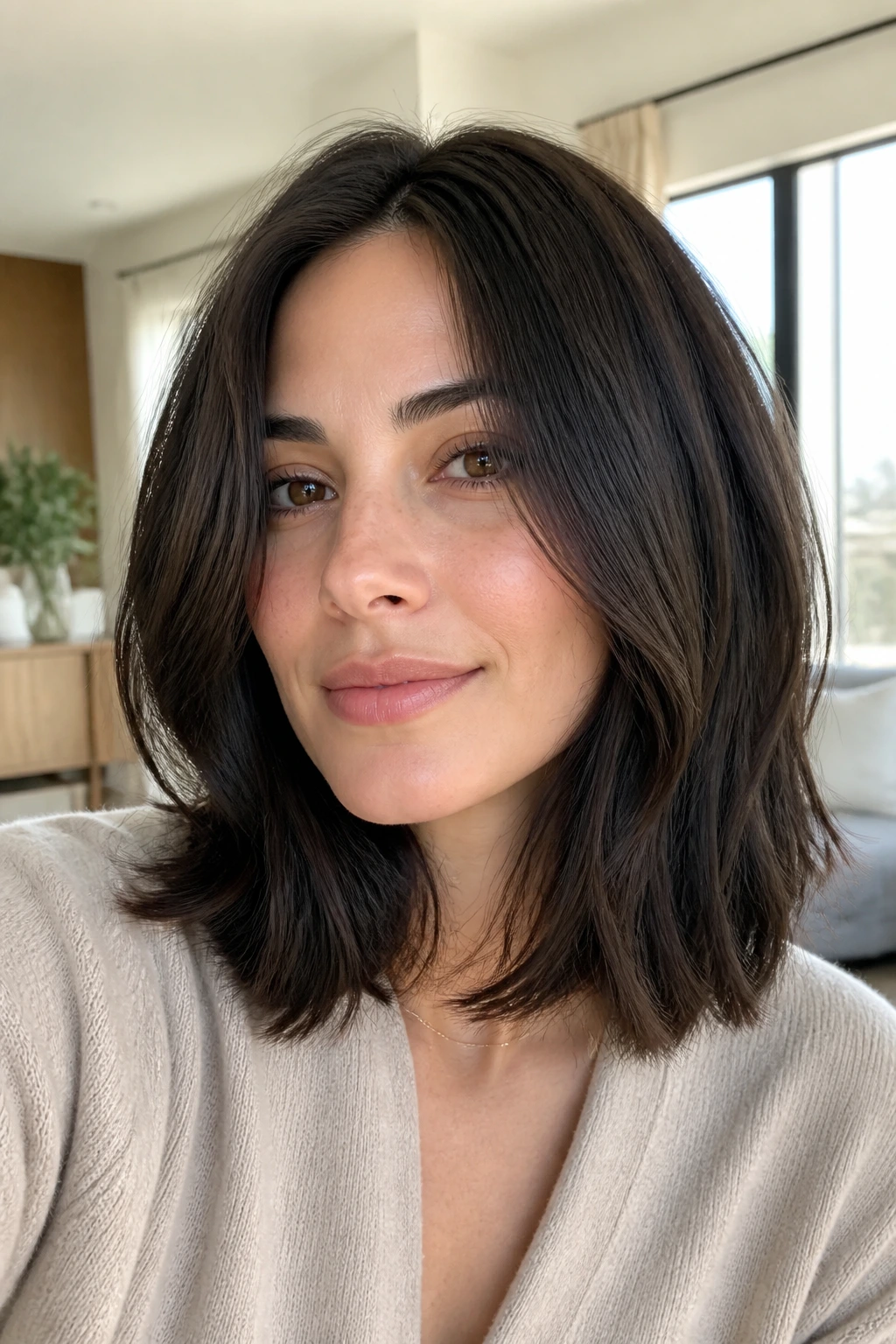
Shoulder length can be tricky on thick hair. Too blunt, and it gets boxy. Too layered, and it can lose all its weight and puff out. The shoulder-grazing cut with internal layers sits neatly in the middle and avoids both problems.
Internal layers are the whole point. They take bulk out from inside the shape, which lets the hair fall closer to the head without losing fullness at the ends. For square faces, that means less side width and more movement around the chin and collarbone.
The cut should just graze the shoulders or land a hair above them. If it stops exactly on the broadest part of your shoulders, it can feel bulky. If it drops a little lower, the eye keeps moving and the shape feels longer.
This is a good option for people who style their hair sometimes but not every day. It can be worn straight, waved, clipped, or half-up. The shape does not collapse if you skip a styling day, which is more than I can say for some trendy cuts that need a blowout to make sense.
12. Bixie with Piecey Top
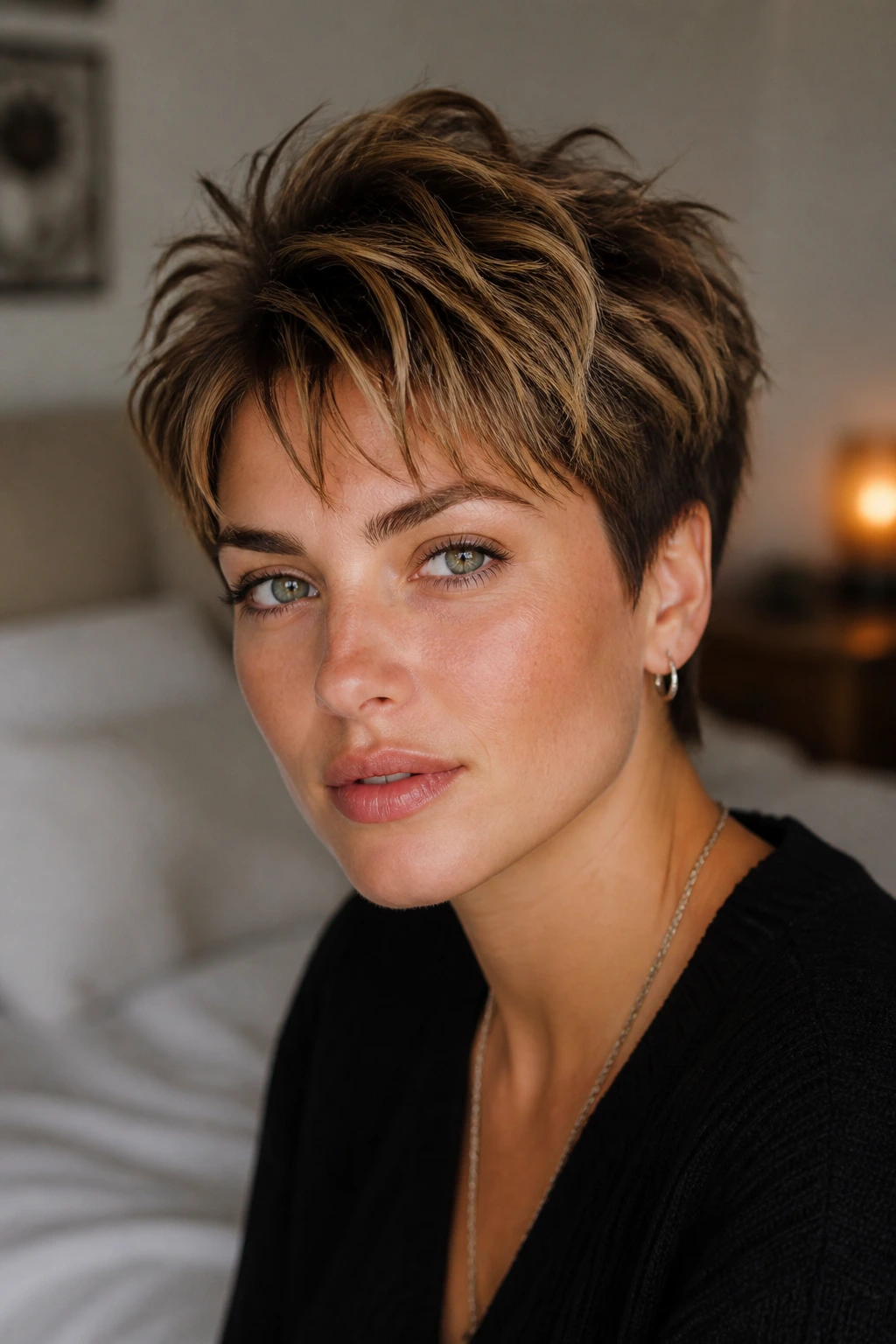
The bixie—part bob, part pixie—can be fantastic on thick hair if it’s cut with enough lift on top and enough taper around the ears and nape. On a square face, the piecey top gives you height, which helps the face look longer, and the shorter sides keep the shape from widening at the jaw.
This cut lives or dies on texture. A solid, helmet-like bixie is a miss. A piecey one, where the top is separated into visible sections and the fringe is slightly broken up, has energy. Thick hair naturally helps with this because it gives the cut body. The trick is keeping that body from turning into bulk.
A little matte paste through the top layers can make the difference between “cute” and “why does this look like a mushroom?” Use less than you think. Really. Half a pea-sized amount can do the job if your hair is dense.
This is one of those cuts that looks especially good when the neck is visible. Earrings help, too, though that’s hardly the point. The shape frames the face on its own.
13. Deep Side-Parted Layered Cut
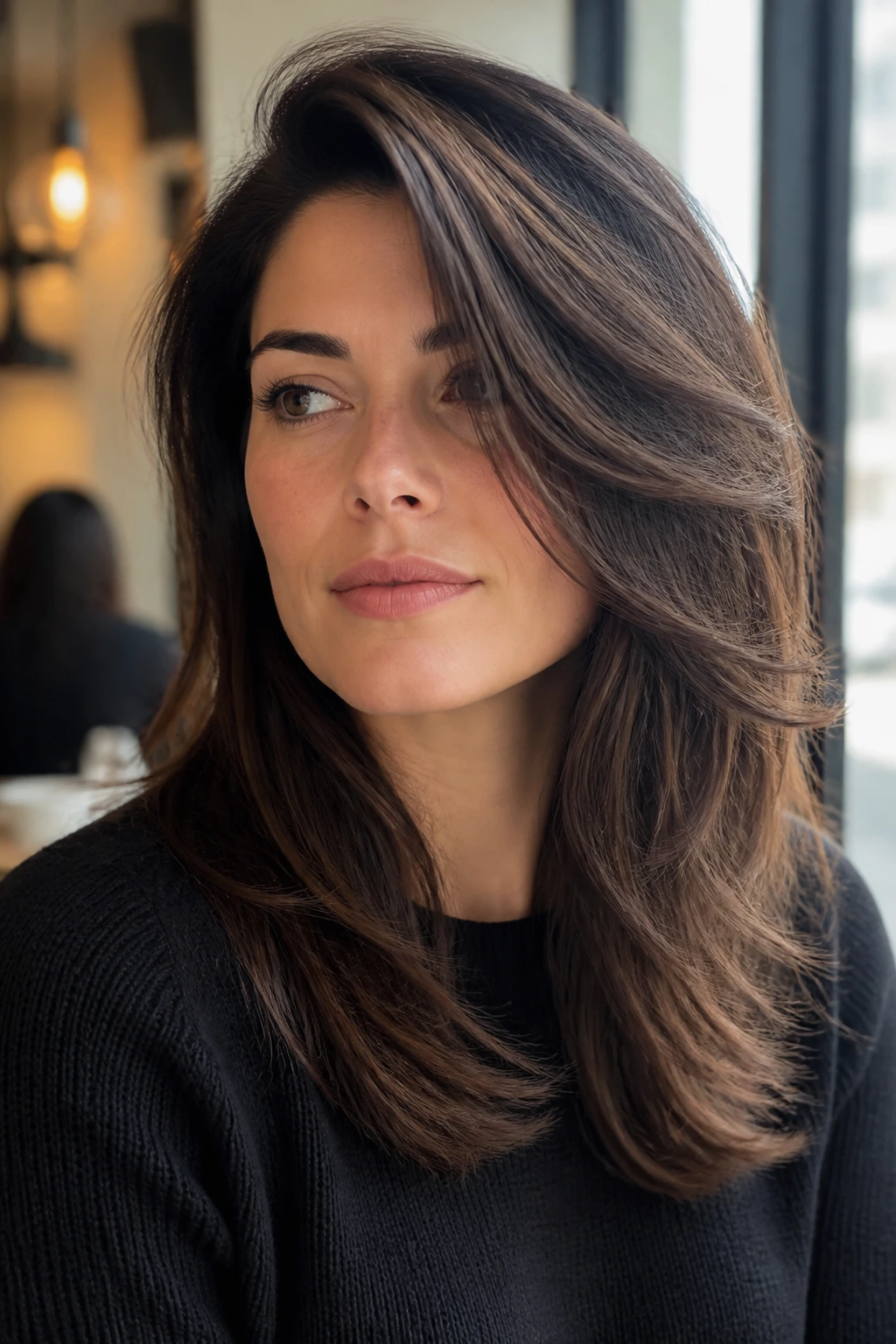
A deep side part sounds like a styling choice, but on thick hair and a square face, it can change the whole reading of the haircut. It adds a diagonal line across the forehead and shifts the weight away from the width of the face.
The layered cut underneath the part should be soft and mobile. If the layers are too symmetrical, the side part can feel like a trick instead of a shape. The best versions have longer front sections that sweep across one side of the face and tuck just below the cheekbone on the other.
This is one of the easiest ways to make a haircut feel more deliberate without cutting anything dramatic. If you already have layered hair that sits too square, changing the part can make it feel softer before you even pick up a blow dryer.
It’s also a smart move if one side of your face has a slightly stronger jaw angle than the other. The deep side part gives the face a bit of asymmetry, and that usually reads as more relaxed.
14. Rounded Layers with Long Side Bangs
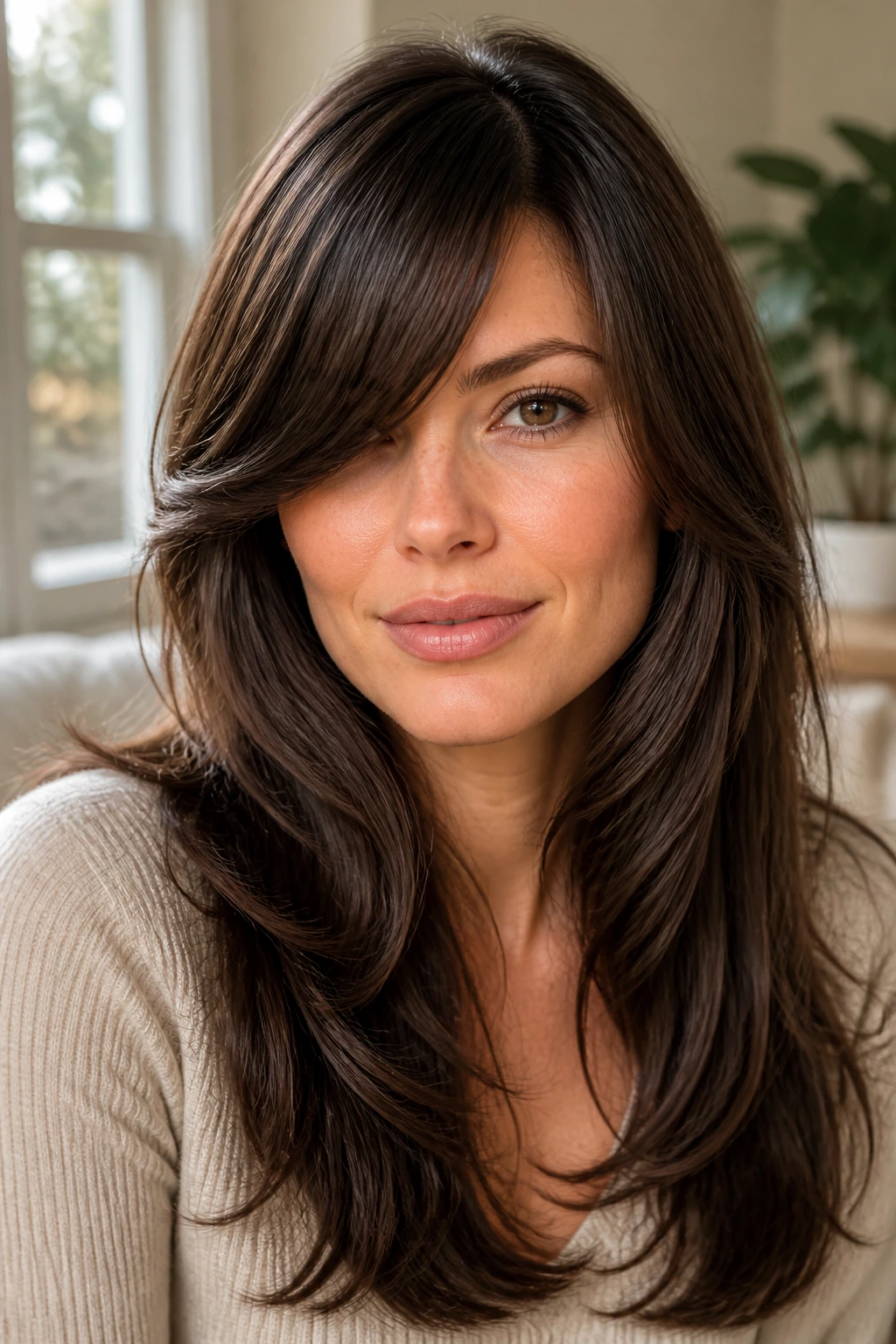
Why do rounded layers work so well here? Because square faces need curve more than they need more angles, and thick hair gives rounded layers the body to actually hold that curve.
Long side bangs matter because they cut across the forehead at an angle and land near the cheekbone, which is one of the most flattering stopping points for this face shape. The layers underneath should follow that same soft line, with no abrupt shelf at the jaw.
This cut is a good match for hair that likes to hold a blowout. A round brush, medium heat, and a little patience around the fringe area will give the haircut a polished bend. If you let the side bangs dry flat against the face, the shape loses its purpose.
The nice thing about rounded layers is that they look intentional even when they grow out. They don’t turn into a hard line right away. That buys you some breathing room between appointments, which I always appreciate.
15. Razor-Textured Lob
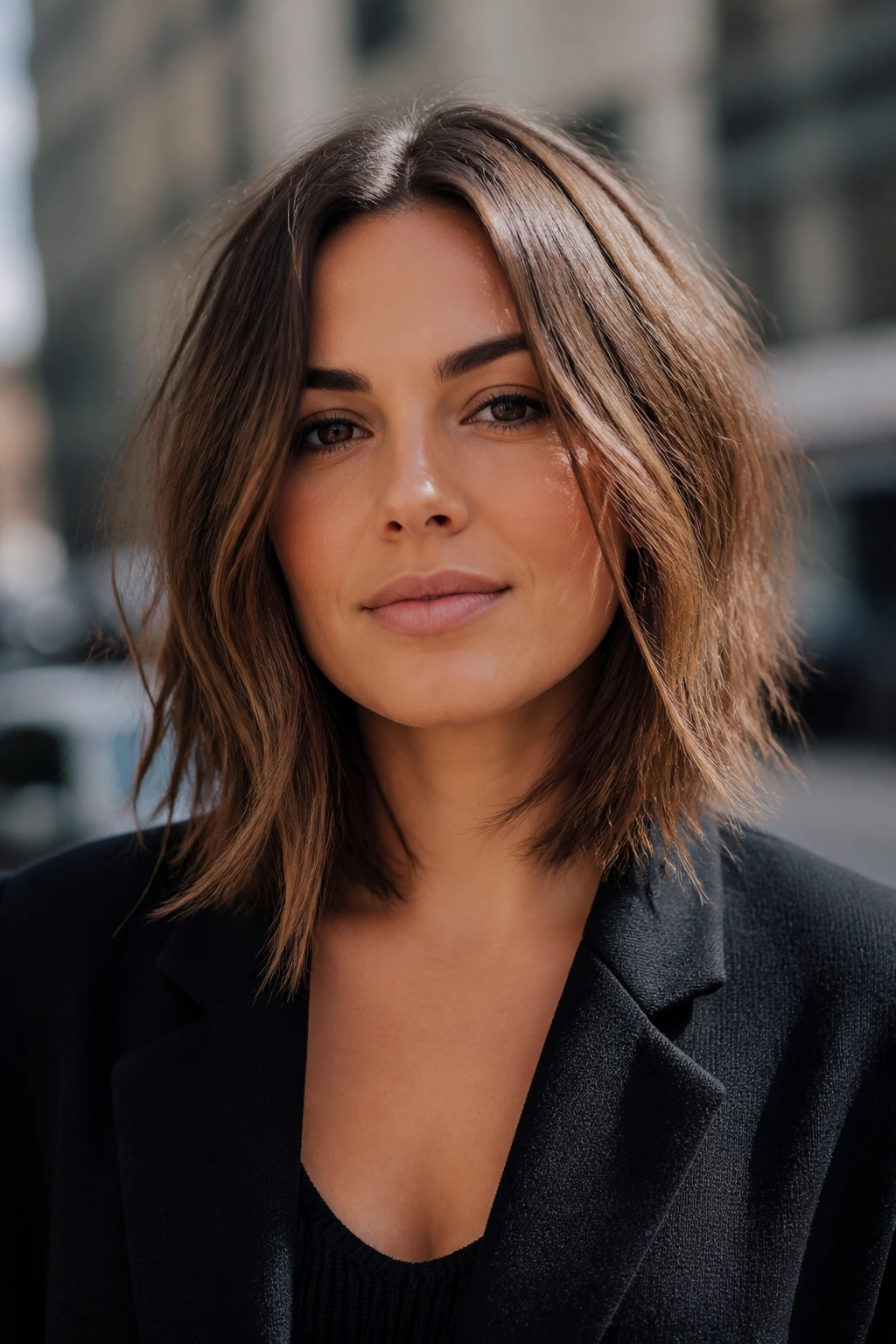
A razor-textured lob can be brilliant on thick hair, but only when it’s done by someone who knows how your hair behaves. Razor cutting removes bulk fast and creates airy ends, which is useful if your hair is dense and likes to poof at the bottom.
On a square face, the texture needs to live mostly through the lower lengths and face-framing sections, not right at the jaw. If the texture is concentrated too high, the cut can flare out where you least want it. Keep the line around the collarbone, and let the razor create movement, not holes.
This cut has a slightly cooler, less polished look than a blunt lob. I like that. It feels easier, especially on wavy hair. But if your hair is very coarse or frizzes in humidity, ask for a soft razor finish rather than an aggressive one.
The best razor-textured lob has ends that move when you turn your head. That’s the goal. Not wispy for the sake of it. Just enough separation to stop the cut from feeling heavy.
16. Curly or Coily Layered Shape
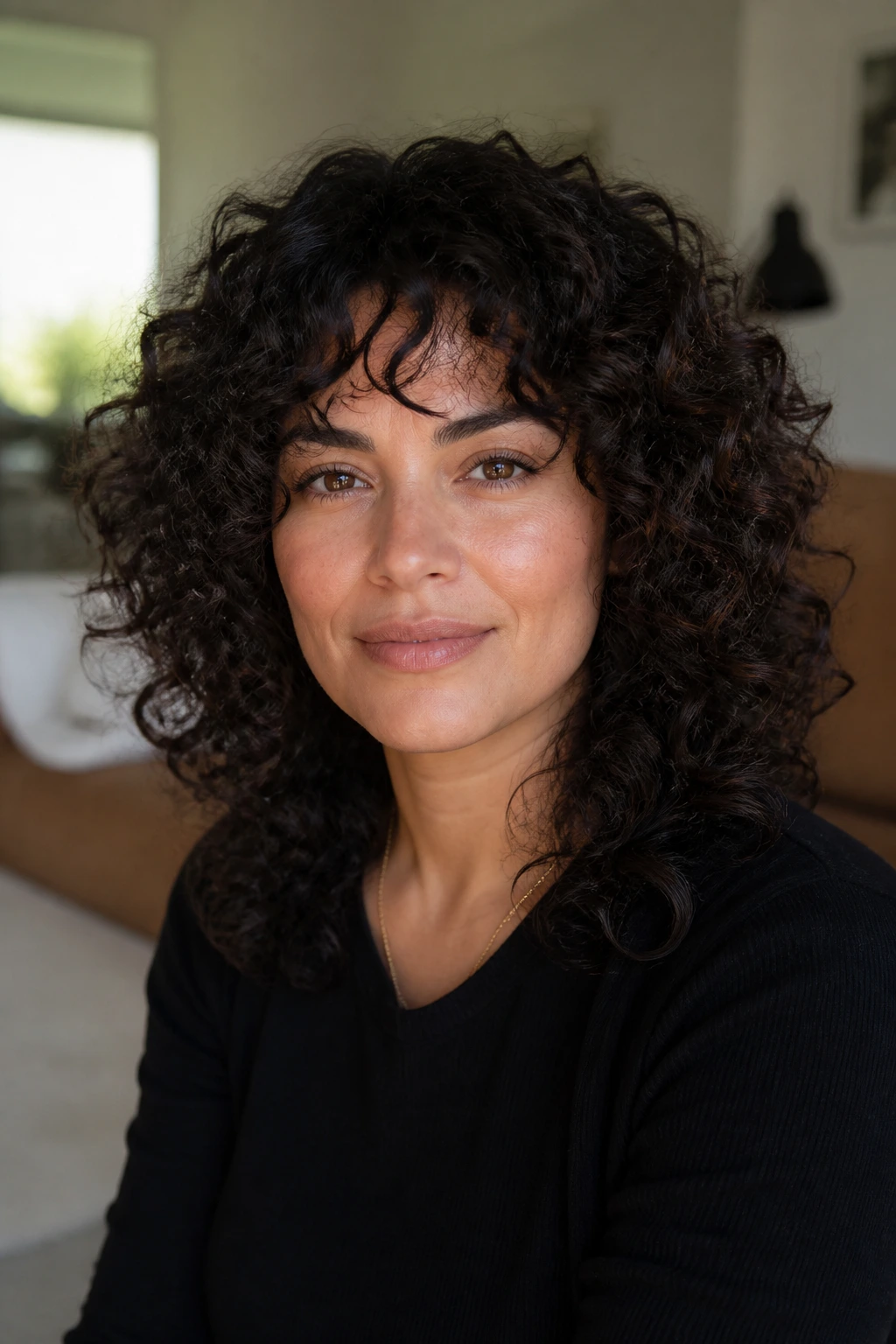
Thick curly and coily hair needs its own rules. Square faces still benefit from softness and length where it counts, but the haircut has to respect curl pattern first. A shape that looks good on straight hair can collapse or explode once curls shrink up.
A layered curly cut should build around the cheekbones and below, not create a shelf at the jaw. That matters even more with coils because shrinkage can pull the hair right back up to the widest part of the face if you’re not careful. A dry cut or a curl-by-curl shaping session is often worth it here.
The outline should feel rounded, not triangular. If your curls are thick and springy, a stylist can remove weight from the interior so the silhouette doesn’t balloon outward. The face frame can be longer in front, with pieces that slide past the jaw and land closer to the collarbone when dry.
This is one of those cuts where the shape is judged in motion. A good curl pattern will show you whether the layers are right. If the front pieces sit too short, the face can look boxier. If they’re placed well, the curls frame the face like they were meant to be there.
17. Long V-Cut with Cheekbone Layers
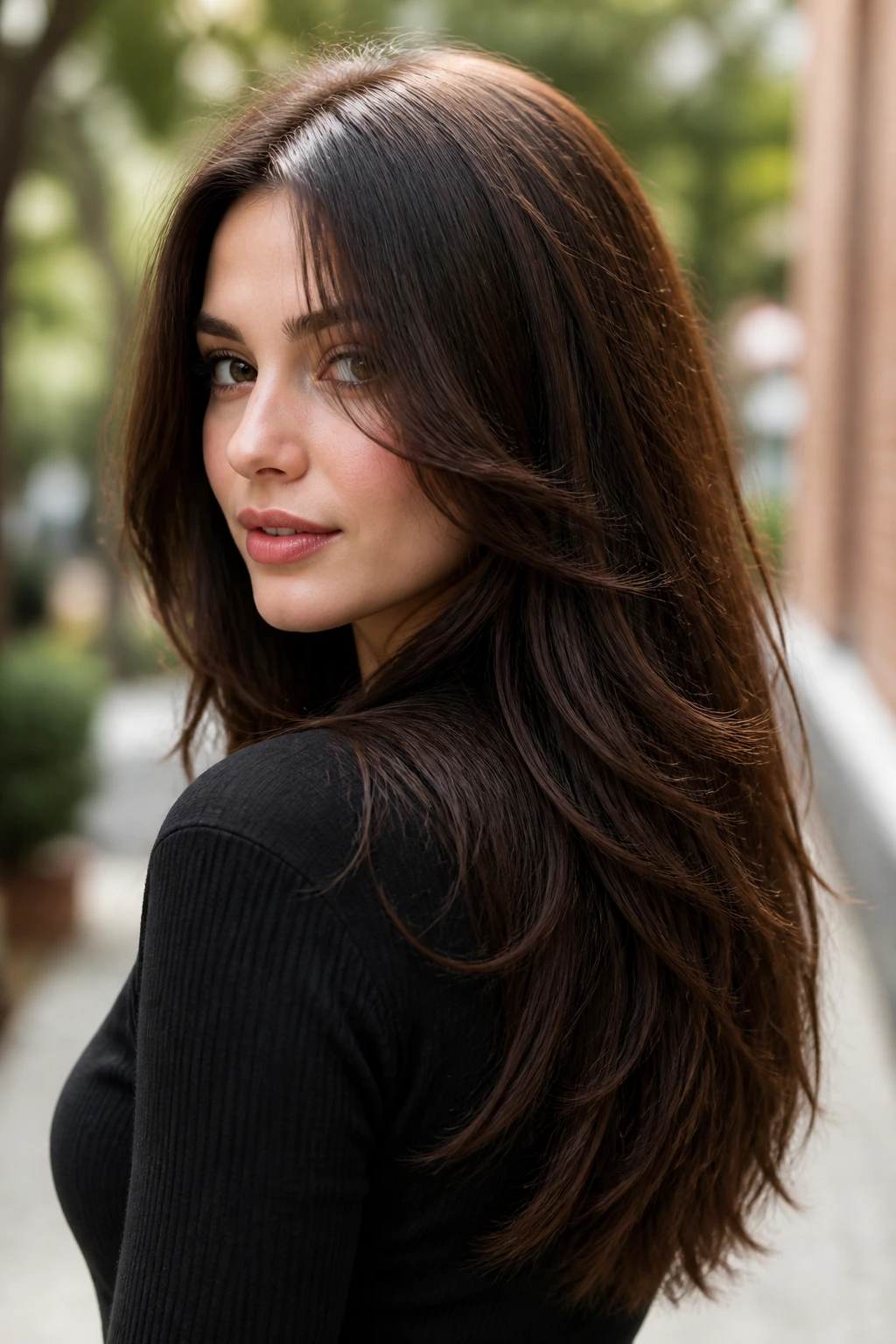
The V-cut keeps length in the center and lets the sides taper away, which is useful when thick hair wants to spread outward. On a square face, the shape helps pull the eye down the middle while the cheekbone layers soften the upper sides.
I like this cut for people who want long hair that still has some direction. The V at the back creates a point that elongates the silhouette. The front layers soften the frame around the face so the length doesn’t feel heavy or draped.
This cut works best when the point at the back is not too sharp. A severe V can look choppy if the hair is extremely dense. A gentler, elongated V usually sits better and grows out with less drama.
It’s also a useful shape if you like to wear your hair up often. The shorter front layers escape around the face instead of staying trapped in the ponytail, which keeps the style from looking severe.
18. Modern Pageboy with Rounded Corners
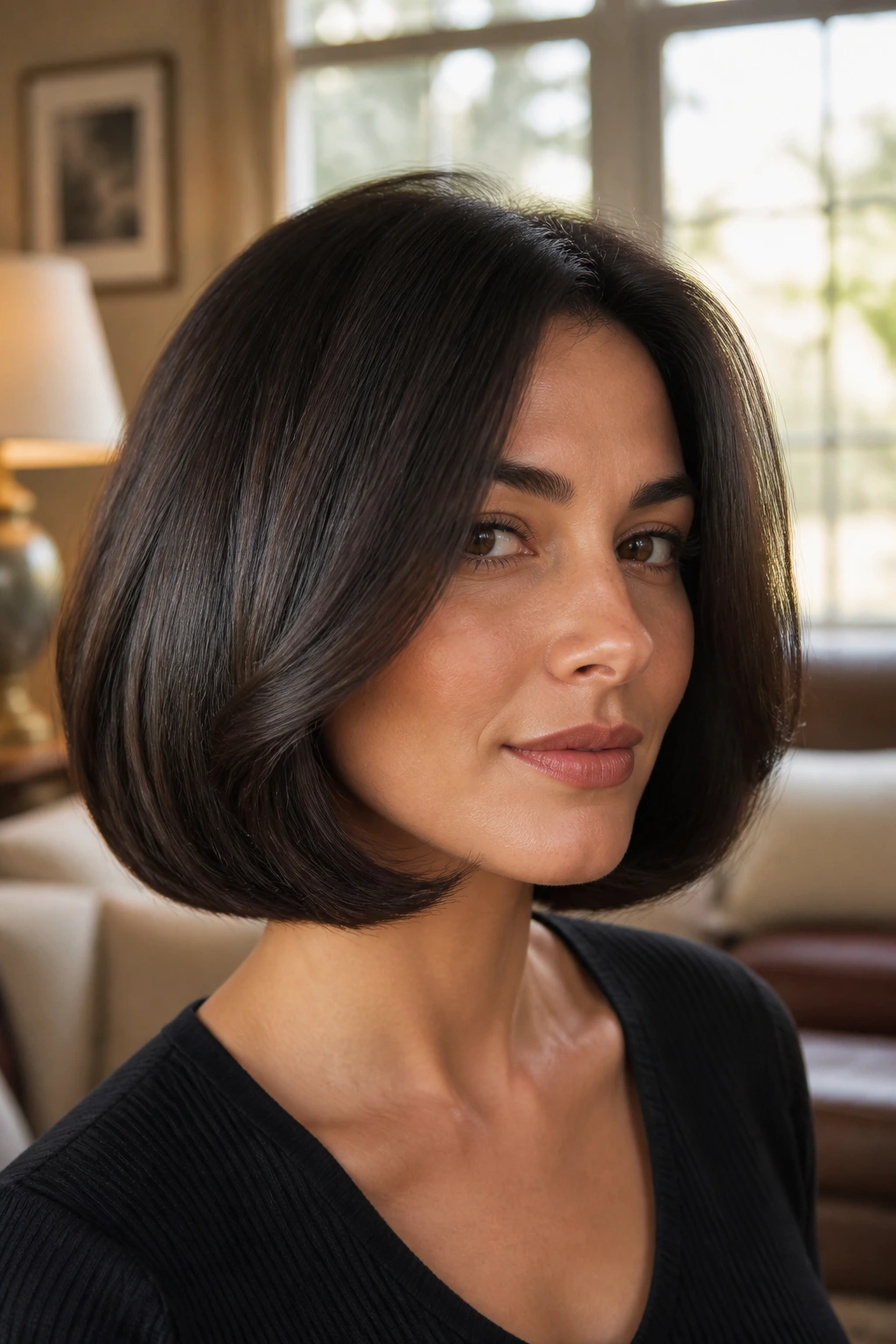
A pageboy sounds retro, maybe even a little boxy, which is exactly why the modern version can be interesting on square faces. If the corners are rounded and the cut is softened through the bottom edge, it can echo the shape of the jaw without copying it too hard.
Thick hair helps this cut hold its curve. The key is to avoid a dead-straight bottom line. Rounded corners and subtle internal layering keep the shape from becoming a helmet. A little movement at the front—especially if the pieces are tucked just behind the cheekbone—makes the whole thing feel modern instead of costume-y.
This is one of those cuts that really depends on the finish. Blow it under with a brush and the shape feels polished. Air-dry it with a small amount of cream, and it reads more casual. Either way, the outline stays tidy if the haircut itself is done properly.
If you like geometric shapes but don’t want your face to look harder, this is a smart compromise. The cut has structure, but the edges do not shout.
19. Mid-Length Cut with Swoopy Bangs
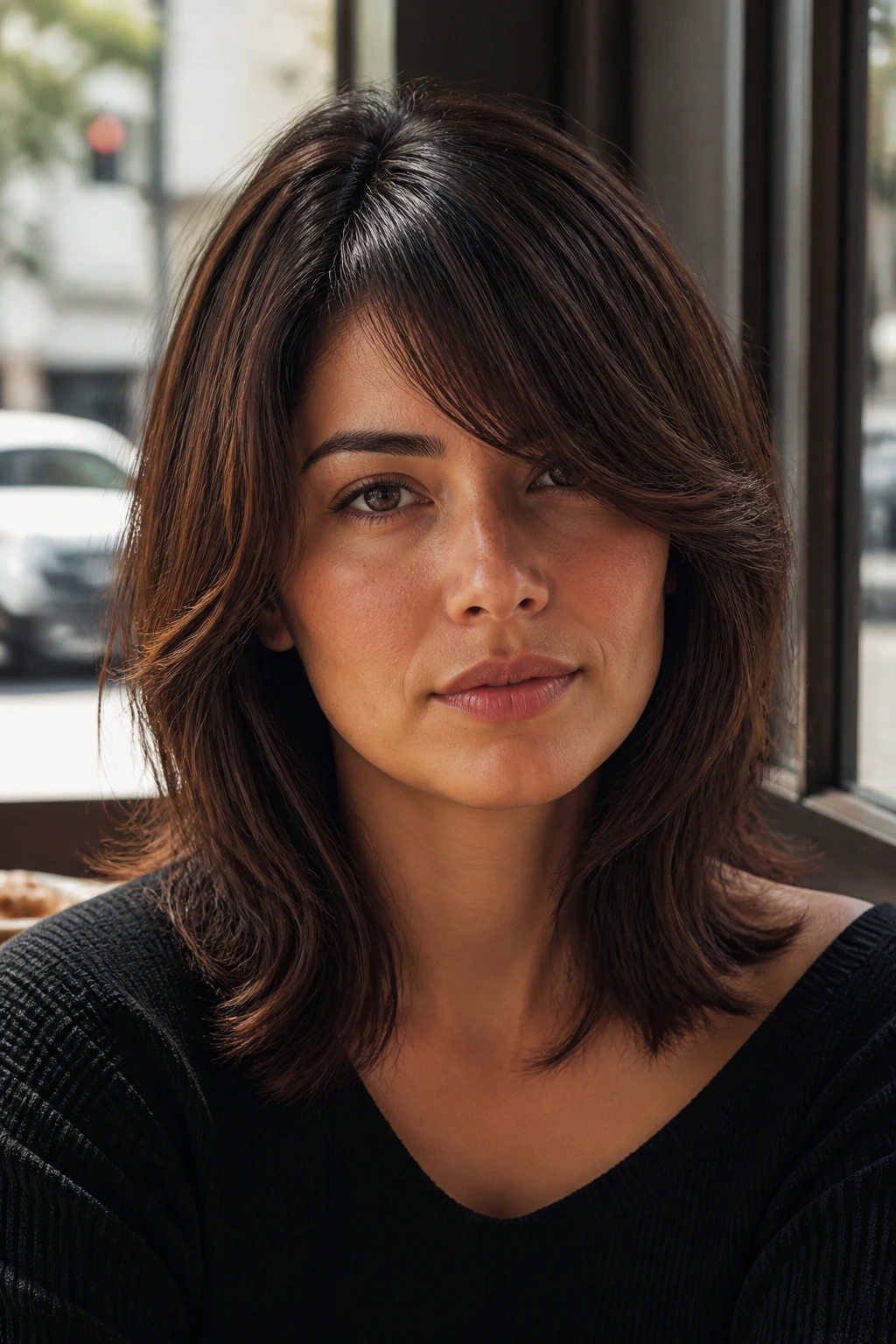
Mid-length hair is often the easy answer that people skip because it sounds too ordinary. For thick hair and square faces, that’s a mistake. A mid-length cut with swoopy bangs gives you enough weight to keep the shape rich, plus enough movement at the front to soften the forehead and jaw.
The bangs should sweep across the face rather than split in the middle. That diagonal line is what breaks up the square shape. The rest of the hair can hang around the shoulders, with layers that start around the cheekbone and taper down.
This cut is one of the easiest to live with if you’re not into constant styling. The bangs need a quick brush and maybe a little heat at the root. The rest can be worn straight, wavy, or tucked back. It’s practical without being boring, which is a rarer combination than people admit.
If your hair is thick enough to hold a bent fringe, this shape can be flattering from the first day to the eighth week after a trim. That’s a good spread.
20. Soft Mullet with Controlled Volume
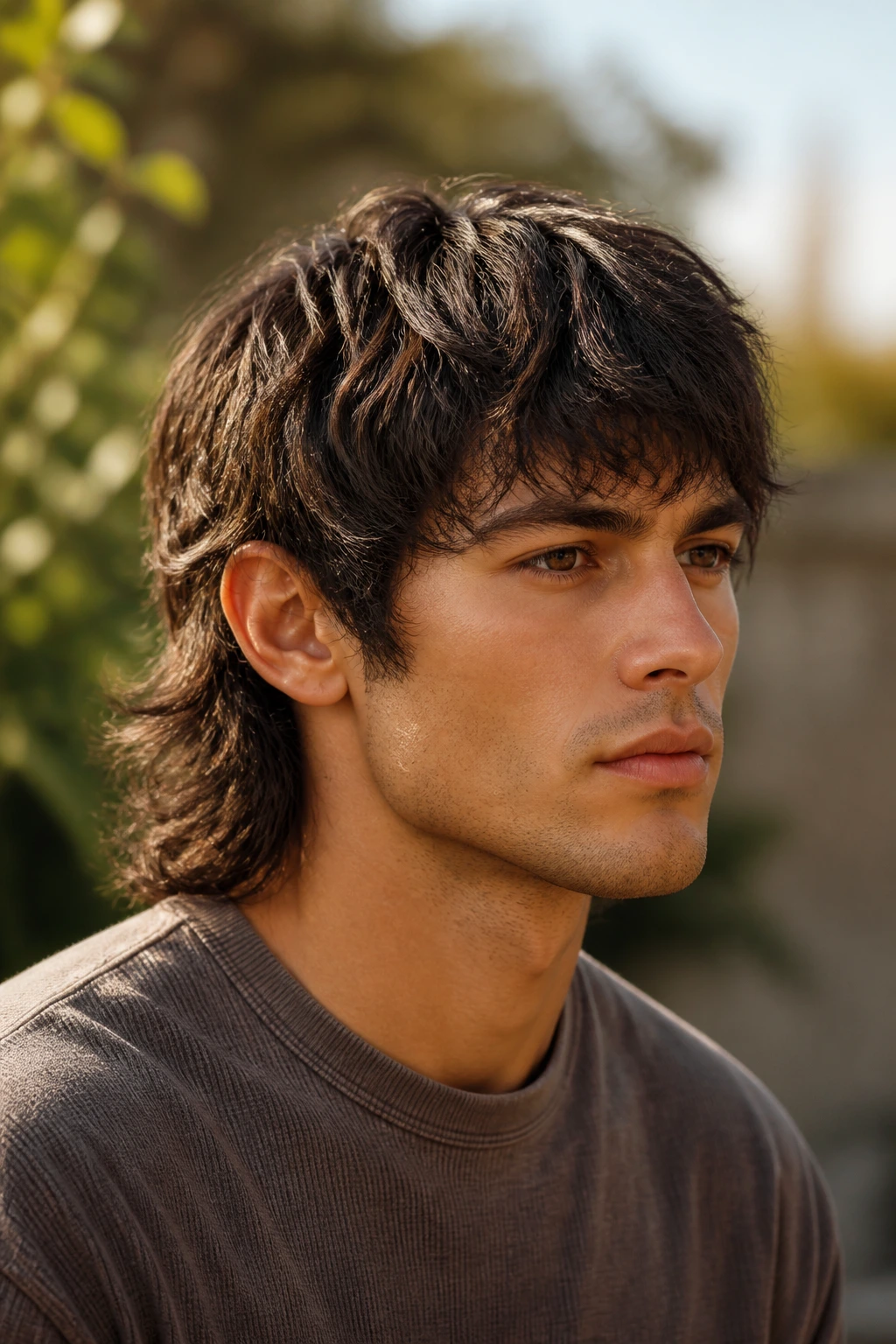
Not every square face needs a soft, polite haircut. Sometimes a little edge looks better. The soft mullet gives you that edge, but with enough control that thick hair doesn’t overwhelm the face.
The crown and top layers sit a bit shorter, the sides stay feathered, and the back keeps some length. On a square face, the longer nape creates vertical movement while the softer side sections stop the shape from widening the jaw. The trick is “soft.” Not punk archive. Not hockey. Soft.
This cut loves texture spray and a bit of scrunching. It does not need a perfect finish. In fact, the more polished it is, the less convincing it gets. If your hair has natural wave, you’re halfway there already.
It’s a bold cut, sure. But bold does not have to mean harsh. With the right balance, the soft mullet can make thick hair look lighter and make a square face feel less boxed in. That’s the whole point.
Why Layering Changes the Whole Game
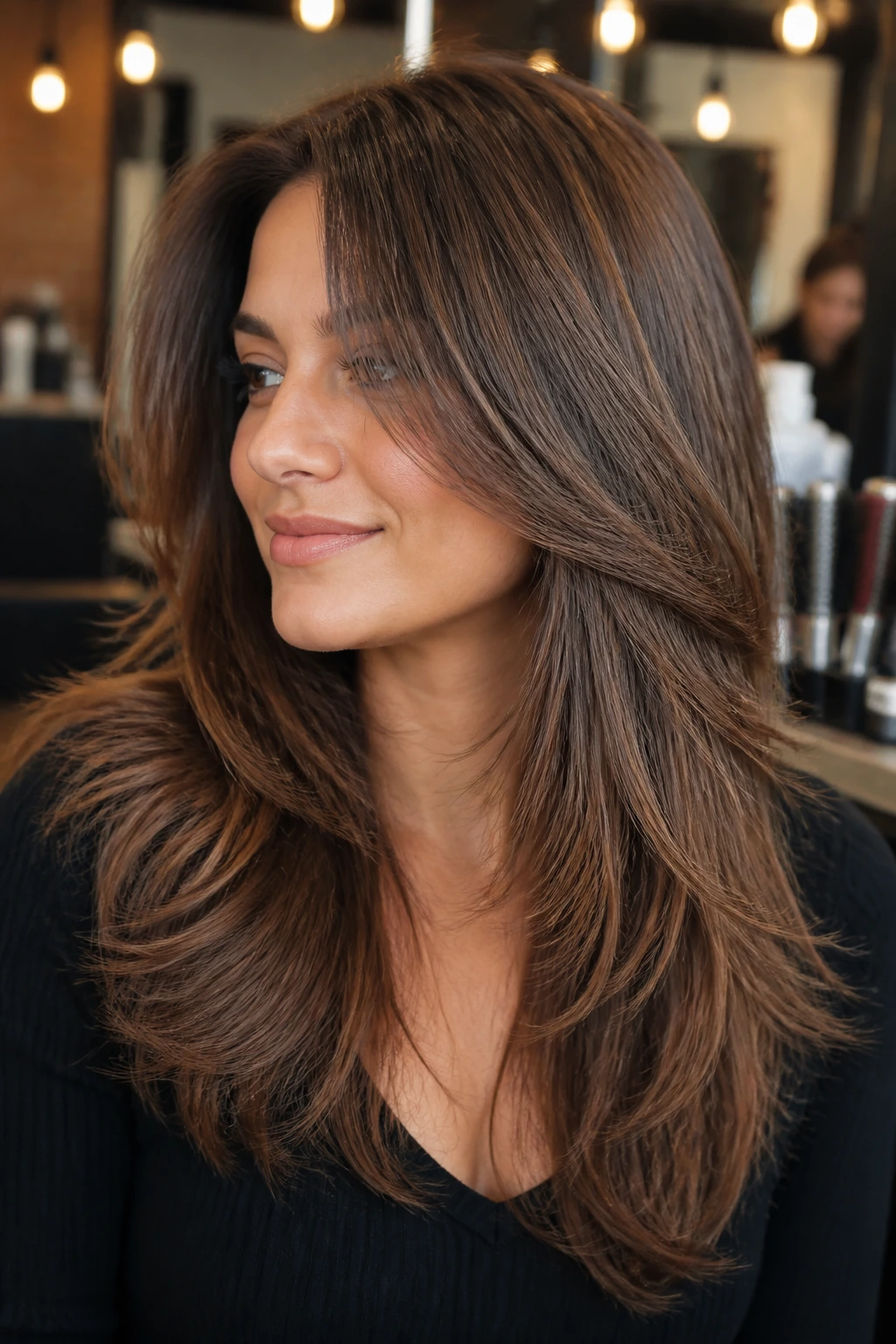
Thick hair has mass. That sounds obvious until you sit in the salon chair and realize how much of a haircut’s shape is controlled by where that mass sits. On a square face, the wrong bulk placement makes the jaw look broader. The right placement pulls the silhouette in and gives the face room to breathe.
The magic is not “more layers” in a lazy sense. It’s where the layers begin and how they’re removed. Layers starting at the cheekbone can soften the upper face. Layers starting at the jaw can widen it. That one detail changes the entire cut.
Thick hair also benefits from interior weight removal. That means taking bulk out from inside the haircut so the outside line still looks full. If you thin only the perimeter, the ends can go fuzzy and the shape turns wide anyway. I’d rather see a stylist remove weight strategically than attack the bottom with thinning shears and hope for the best.
Square faces usually look best when there’s some diagonal movement in the hair. Side parts, side-swept bangs, angled fronts, curved ends, and pieces that land near the cheekbone all help. Straight lines are not the enemy, but they need to be softened or offset. Otherwise the haircut and the face start competing instead of working together.
What to Tell Your Stylist Without Guesswork
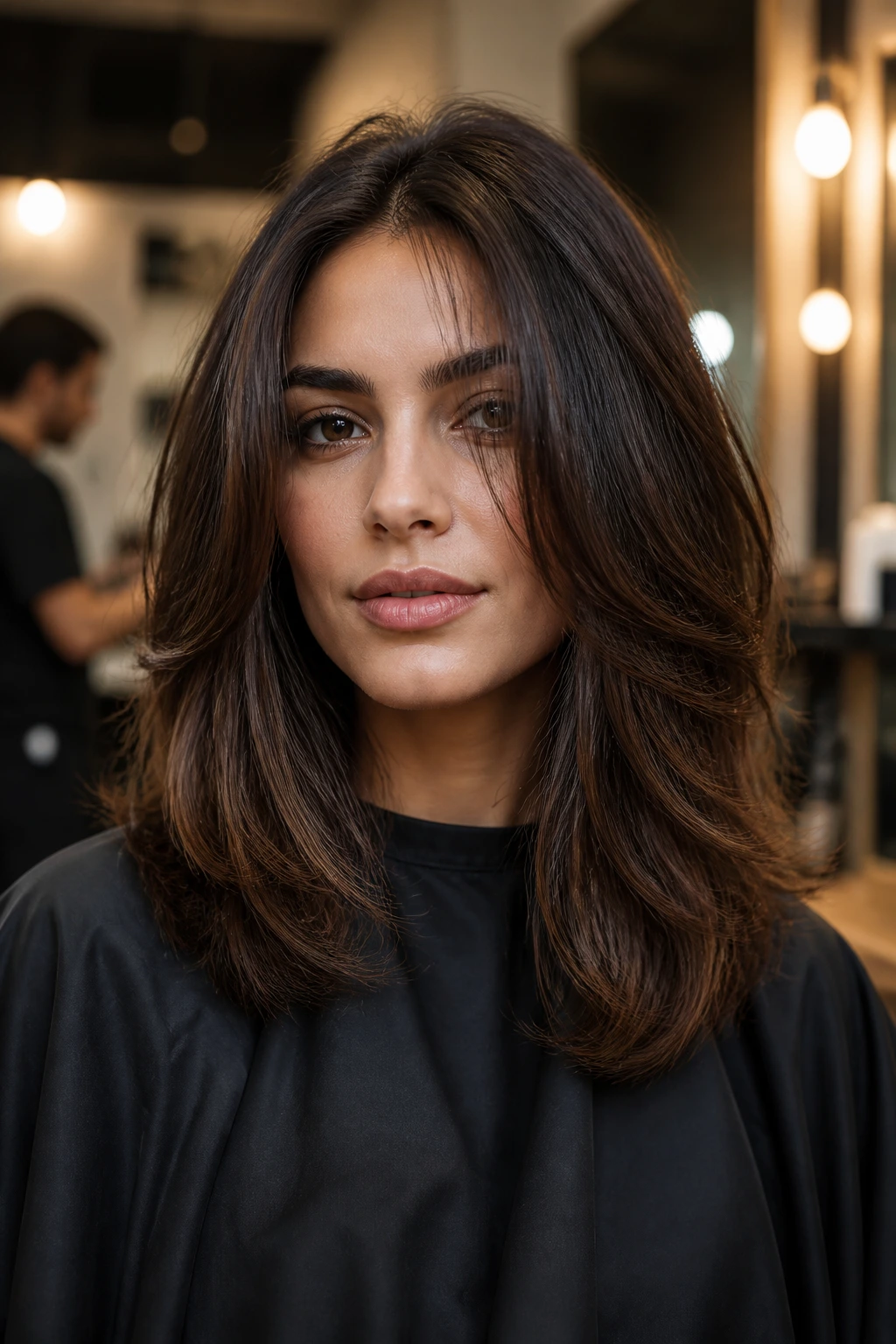
A good salon photo helps. Two or three are better. But the real win comes from saying what you want the cut to do, not just naming the haircut. Thick hair is forgiving in some ways and brutally literal in others. If you ask for the wrong thing, it will obey you.
Start with the face shape and the density. Tell your stylist that your hair is thick and your face is square, then say where you want the length to land. “I don’t want a blunt line at the jaw” is much more useful than “I want something soft.”
A few phrases do more work than a paragraph:
- “Keep the shortest face-framing pieces below the jaw or at the cheekbone.”
- “Remove bulk from the inside, not just the ends.”
- “I want movement, not a triangle shape.”
- “Please don’t over-thin the perimeter.”
- “Leave enough weight so the cut doesn’t puff out when it dries.”
If you wear your hair straight most of the time, say that. If you air-dry it, say that too. Thick hair behaves differently depending on how it’s finished, and a cut that looks tidy with a round brush can look completely different when it dries on its own.
Photos help, but they can also lie. A model with fine hair and a square jawline does not tell the full story. Ask your stylist how the cut will sit on dense hair after two weeks of growth. That’s where the truth lives.
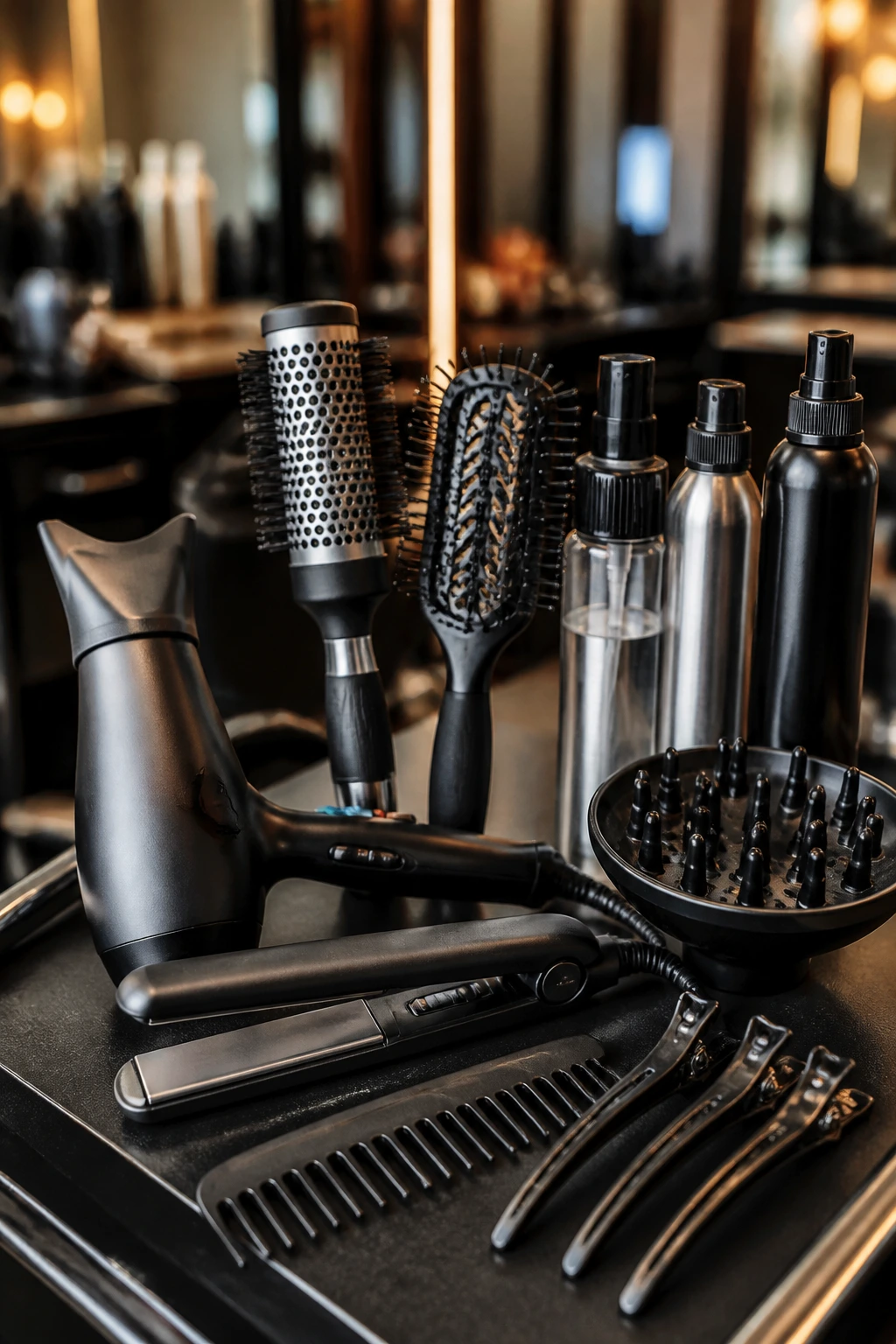
Essential Tools for Styling These Cuts
-
A blow dryer with a nozzle attachment — The nozzle keeps airflow focused so you can smooth thick hair without blasting it into a cloud.
-
A 1.25-inch round brush — This size gives enough bend for curtain bangs, lob ends, and face-framing layers without making the curl too tight.
-
A vent brush or paddle brush — Useful for rough-drying roots fast before you shape the ends.
-
Heat protectant spray or cream — Thick hair often needs more heat to move; protect it before you reach for a brush or iron.
-
A small flat iron — Handy for bending the front pieces away from the face or fixing a bang that dried in the wrong direction.
-
Texturizing spray — Best for shags, bixies, wolf cuts, and any cut that needs separation at the ends.
-
Root-lift mousse — Helps the crown stay off the head in layered cuts, especially if your hair collapses by noon.
-
A wide-tooth comb — Better than ripping through wet thick hair with a small brush.
-
Duckbill clips — Useful for sectioning heavy hair while you dry the bangs or the top layers.
-
A diffuser — Worth owning if your thick hair is wavy or curly and you want to keep the shape intact.
Picking the Right Products for Thick Hair
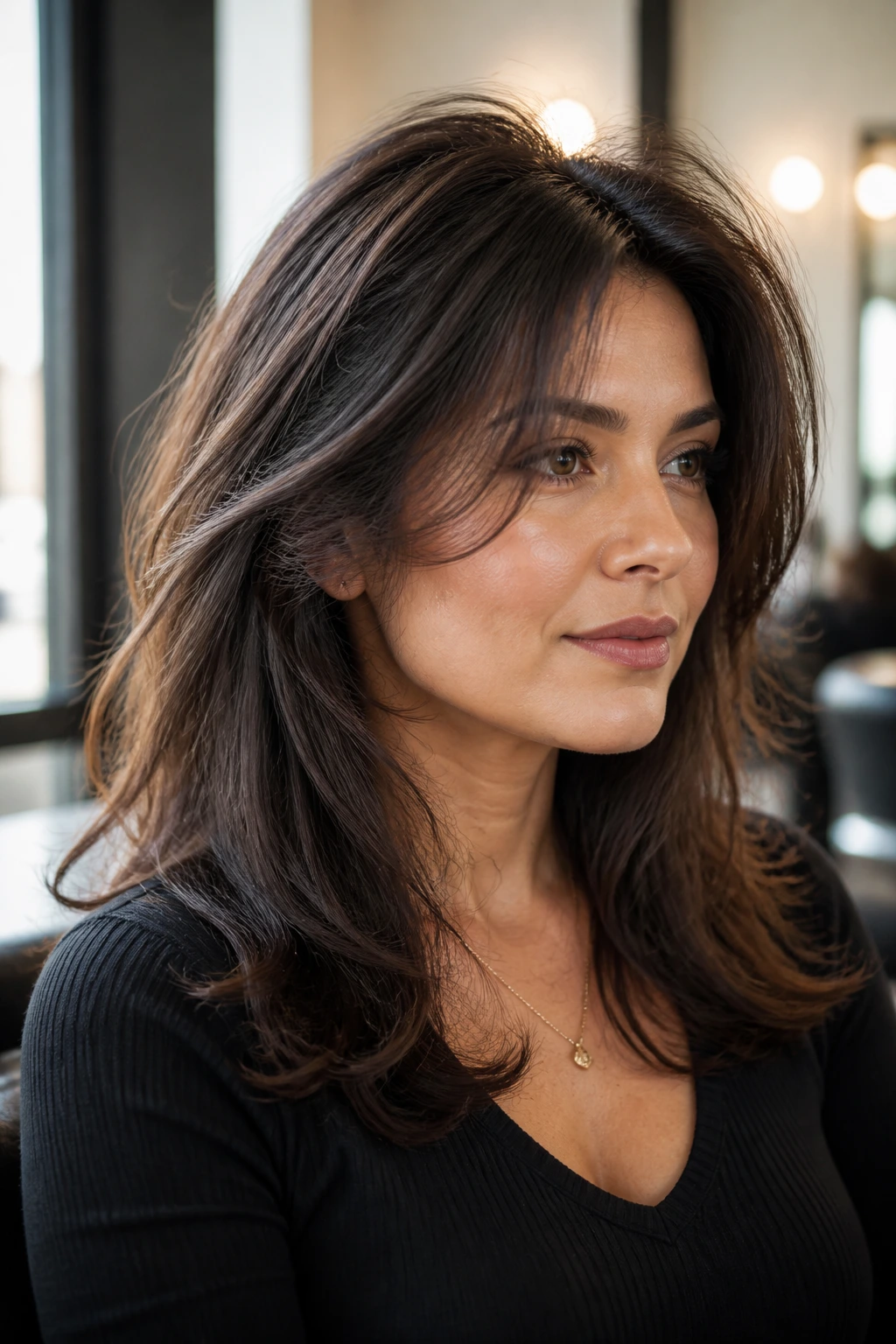
Thick hair does not need the heaviest product on the shelf. It needs the right balance of slip, hold, and control. If a product leaves a thick film on your hands, it may do the same thing on your hair.
For shampoo and conditioner, look for formulas that clean well but don’t strip. If your hair is coarse or color-treated, too much cleansing can make the cut feel dry and stubborn. On the styling side, a light mousse or root spray usually works better than a heavy cream at the roots. Cream belongs mostly from mid-length to ends.
Silicone gets a bad reputation in some circles, but on thick hair it can be useful. It smooths the cuticle, cuts down on frizz, and helps the style reflect light in a way that shows the cut’s shape. The catch is overuse. A tiny amount goes a long way, especially if your hair is fine in texture but dense in quantity.
If your hair is wavy, a lighter styling cream can help define movement without turning the cut greasy. Curly and coily hair often needs more moisture, but still not a heavy coating that collapses the shape. And if your hair is very dry, a weekly mask can keep the layers from looking ragged at the ends.
The product shelf is not the place to collect bottles. It’s the place to be picky. Thick hair rewards restraint.
How to Style These Cuts So They Keep Their Shape
The styling trick for thick hair is to shape the roots first and the ends second. If you try to force the ends while the crown is still flat, the cut can look bulky no matter what you do. Start with the top section and work down.
Rough-dry the hair to about 80 percent before you pick up a brush. That saves time and keeps the cut from getting frizzy from too much handling. Then use the brush only where the shape matters most: bangs, face-framing pieces, crown, and ends. You do not need to blow out every strand.
For layered cuts, bend the front pieces away from the face. That little motion opens the cheekbones and keeps thick hair from hanging straight against the jaw. For bobs and lobs, curve the ends slightly under or slightly outward depending on the cut. Either way, do not leave the edge flat and lifeless.
A little bit of product goes on after the shape is set. Root lift first, then texture or cream through the mids and ends. If you put too much product near the roots, thick hair collapses. If you load the ends, the cut loses movement. The middle ground is where the magic lives.
Sleeping on a silk or satin pillowcase helps these cuts hold their edge longer, especially bangs and shorter layers. If your hair is very dense, a loose clip at the crown before bed can also keep the part from setting in a weird place.
Common Mistakes That Make Thick Hair Look Wider
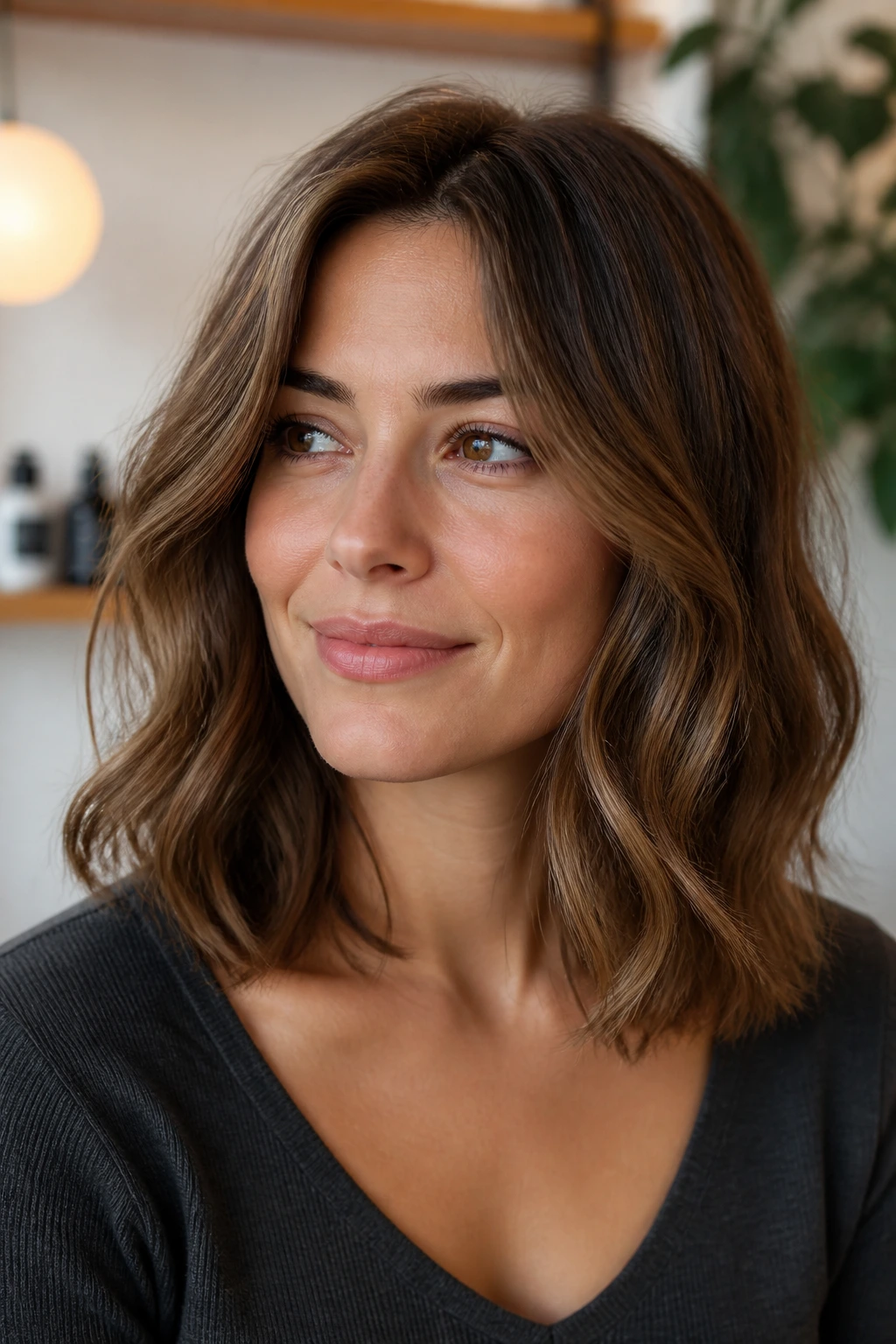
The first mistake is ending layers at the jaw. That’s the spot where a square face already has structure, so a thick layer landing there can make the whole face look broader. Move the shortest pieces up to the cheekbone or down to the collarbone instead.
The second mistake is over-thinning the perimeter. Hair that’s thinned too hard at the ends can puff, frizz, or look see-through around the outline. Ask for interior weight removal or point cutting, and leave the bottom edge with enough density to sit cleanly.
The third mistake is choosing a blunt, one-length cut and expecting styling products to fix it. Products can tame a lot, but they cannot change a boxy silhouette. If the haircut stops at the widest part of the face, it needs some curve or angle to soften it.
The fourth mistake is flattening thick hair to the scalp. That sounds sleek in theory and often looks severe in practice. A little root lift and a touch of bend around the face are usually kinder to a square face than poker-straight hair.
The fifth mistake is ignoring growth patterns. Thick hair grows fast enough that a good cut can shift shape in a few weeks. If the fringe hits the wrong spot after a month, the whole haircut can lose its balance. Plan trims before the shape goes stale.
Variations and Adaptations to Try

The Low-Maintenance Lob
If you want something you can air-dry and leave alone, keep the length at the collarbone and ask for soft internal layers. This version works well when your hair has a natural wave and you don’t want to spend 20 minutes with a brush every morning.
The Glasses-Friendly Fringe
If you wear frames, keep the bangs longer and lighter so they don’t sit on top of the glasses. Side-swept or curtain-style fringe usually works better than a blunt straight fringe because it leaves room for the frames and softens the upper face.
The Curl-First Shape
For wavy, curly, or coily hair, the haircut should follow the curl pattern, not fight it. Ask for layers that start below the cheekbone and a shape that gets checked dry, because shrinkage changes everything once the hair dries.
The Sharp But Soft Bob
If you like structure, keep a clean outline but soften the corners and ends. This is a good fit for straight or slightly wavy hair that needs a little polish but not a rigid block at the jaw.
The Grow-Out Pixie
If you’re starting short and want an easier transition, a bixie or side-swept pixie can be your bridge. It lets the top stay textured while the sides and back grow out into a bob-like shape instead of going fuzzy and awkward.
Maintenance, Trims, and Grow-Out Plans
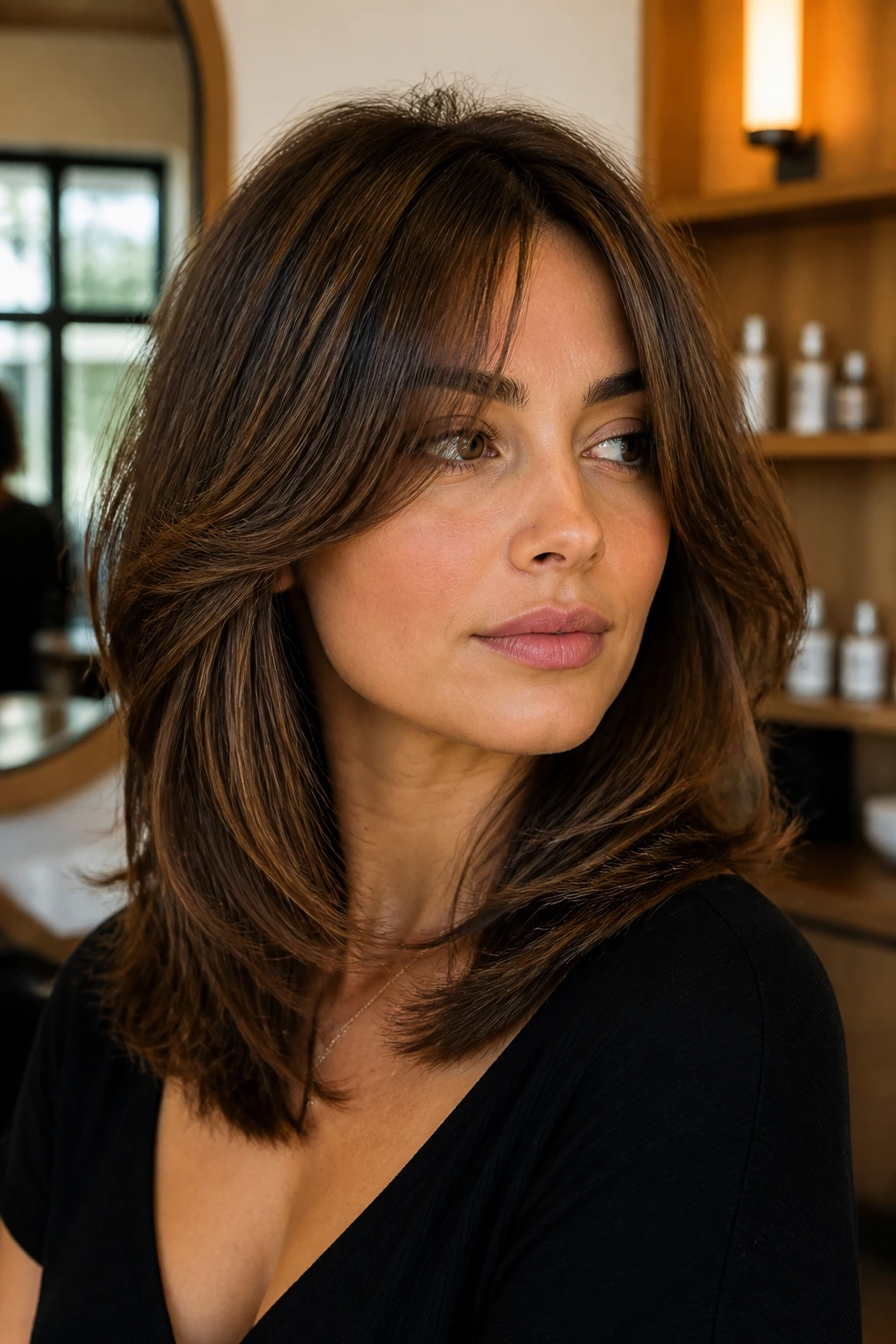
Thick hair needs trims on a schedule, not whenever the mirror starts bothering you. Most layered cuts keep their shape well for about 6 to 8 weeks. Shorter styles like pixies or bixies may need a cleanup every 4 to 6 weeks, especially around the ears and nape where the outline can get bulky fast.
If you have bangs, plan for more frequent fringe trims. Curtain bangs can often go a little longer because they blend into the rest of the cut, but blunt or side-swept bangs usually need attention sooner. Once they start sitting in your eyes or splitting in strange places, the face frame loses its job.
Between trims, a dry texture spray or a bit of root lift can revive a layered cut without a full wash. For longer styles, a quick bend on the front pieces with a flat iron usually does more than restyling the whole head. For short cuts, re-wetting just the top and front sections can bring the shape back without starting over.
If you’re growing out a cut, keep the perimeter clean even while you let the length increase. That means small trims, not zero trims. Thick hair can grow into a shape that looks intentional if you stay ahead of the bulk.
FAQ
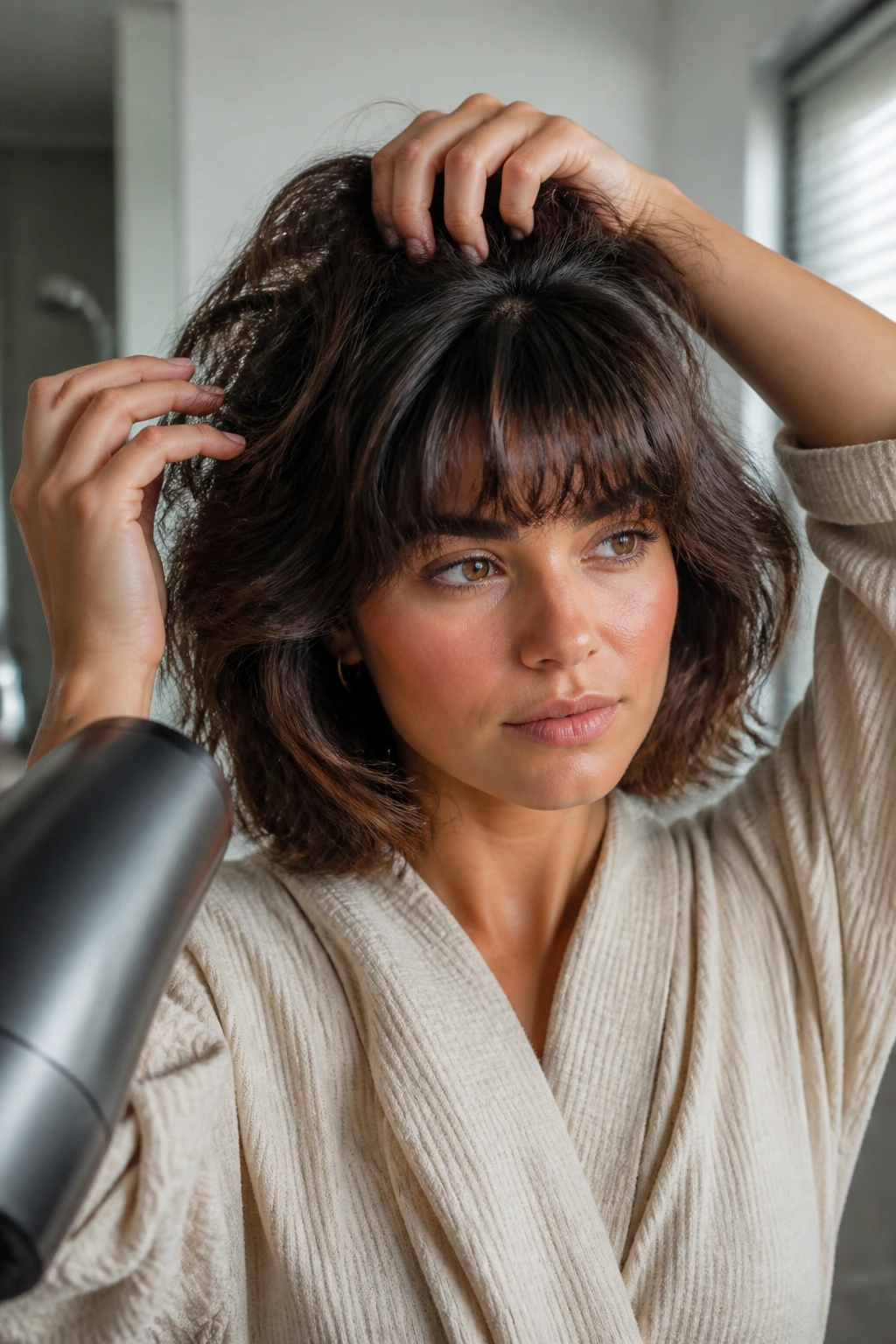
What haircut length is most flattering for thick hair and square faces?
There isn’t one magic length, but collarbone to shoulder length tends to be the safest zone. It gives thick hair enough room to move without sitting exactly at the jaw, which is where square faces can start to look wider.
Are bangs a good idea for a square face?
Yes, if they’re cut with softness. Curtain bangs, long side bangs, and cheekbone-skimming fringe usually flatter this face shape better than a blunt line that stops right across the forehead.
Should thick hair be layered or blunt?
Usually layered, but not aggressively thinned. Blunt cuts can work if they land below the jaw and have a rounded or angled finish, yet most thick hair looks better with internal layers that control bulk.
Can a bob work on a square face?
Absolutely. A bob just needs the right length and texture. If it ends at the jaw and has no softness, it can emphasize width. If it sits below the jaw or angles forward with movement, it usually looks far better.
What if my hair is thick and curly?
Ask for a dry cut or a curl-specific shape that respects shrinkage. Layers should support the curl pattern and avoid stacking bulk at the sides, because curls can spring outward and widen the face if the shape is placed badly.
How often should I trim these cuts?
Most medium and long layered cuts do well with trims every 6 to 8 weeks. Shorter styles and bangs need tighter timing, usually every 4 to 6 weeks, because the shape changes faster.
What should I avoid if I wear glasses?
Avoid bangs that are too short or too heavy at the temples. You want room for the frames and a little movement around the face so the hair and glasses don’t compete for the same space.
Why does my thick hair puff out after a fresh cut?
That usually means too much weight was removed from the ends or the layers began too high. Thick hair often looks best when the perimeter stays solid and the bulk is reduced from the inside.
The Shape That Keeps Working
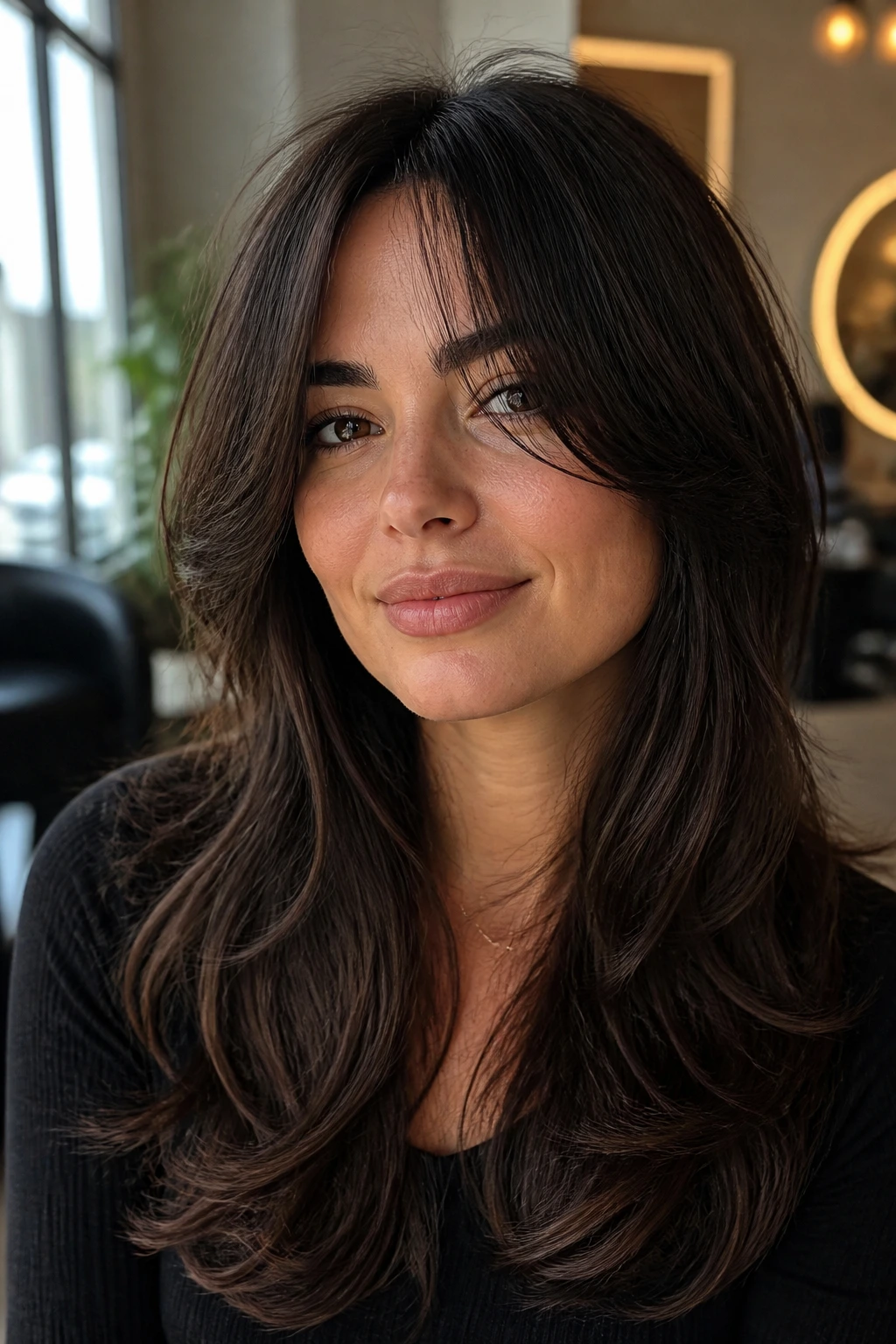
The best haircuts for thick hair and square faces do not hide the face or force the hair into a shape it hates. They give the jawline something softer to talk to. That can mean a curtain bang, an angle, a bend at the ends, or just the right amount of internal layering.
The funny thing is that the most flattering cuts often look calm, not dramatic. They sit well, they grow out well, and they do not need a gallon of product to make sense. If you keep the weight in the right places and avoid hard lines at the jaw, thick hair starts working with the face instead of against it.
Bring a few reference photos, be specific about where you want the shortest pieces to fall, and let the cut do some of the heavy lifting. That’s the part most people miss.