



Natural curls for medium hair and square faces have one big advantage: the cut can sit right in the sweet spot where the hair moves, bends, and softens without disappearing into a long curtain or puffing out into a box. That middle length gives curls room to fall past the jaw, and that matters more than most salon talk makes it sound.
A square face usually comes with a strong jaw, a broad forehead, or both. Fine. There is nothing wrong with that geometry. The trick is choosing shapes that interrupt the straight lines a little — side parts, cheekbone layers, collarbone lengths, soft fringe, a curve at the ends — so the eye keeps traveling instead of landing hard on the jawline.
I’m not fond of blunt, one-length curly cuts that stop exactly at the jaw on a square face. They tend to make the jaw look like the loudest part of the whole head shape. What works better is a little drift, a little angle, and enough curl length to create movement around the cheeks and neck without swallowing the face whole. That’s where these 25 looks earn their place.
Why These 25 Curls Earn Their Keep

- They soften angles without hiding your face: each style uses side movement, curved layers, or lift at the crown so the jaw doesn’t read as a hard line.
- They respect medium length: shoulder-to-collarbone curls have enough weight to hang properly, but not so much length that they drag the shape flat.
- They work with real curl patterns: loose waves, springy ringlets, and tighter coils all have a version here, not just one idealized texture.
- They’re not all high-maintenance: a few need a good cut, some only need a new part, and several can be done in five minutes with clips or pins.
- They grow out well: that matters. A style that looks good for three weeks and then turns into a triangle is not a style I trust.
- They keep options open: workday neat, weekend loose, dinner-out polished, humid-day survival mode — the list covers all of it.
1. Shoulder-Grazing Natural Curls with a Side Part
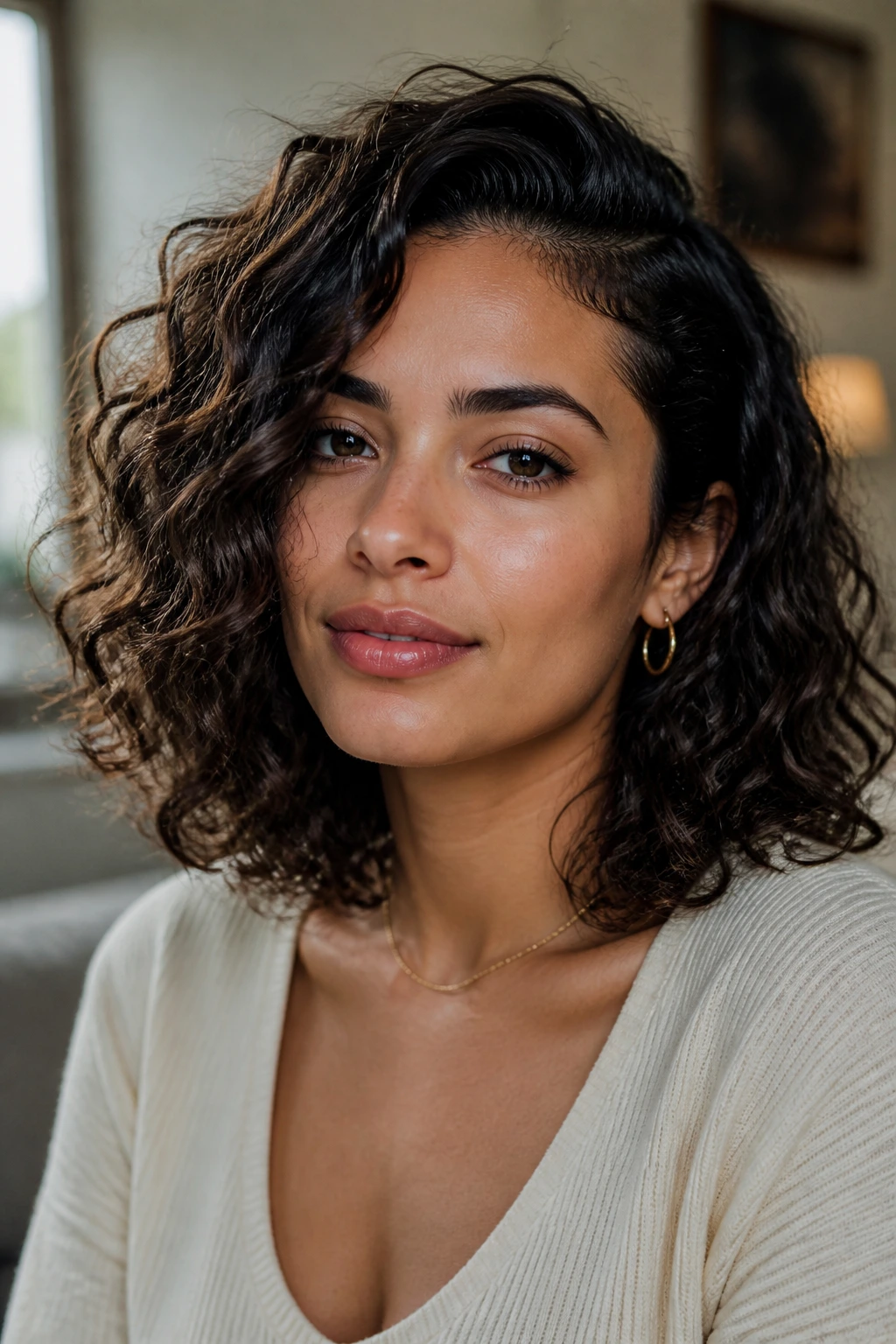
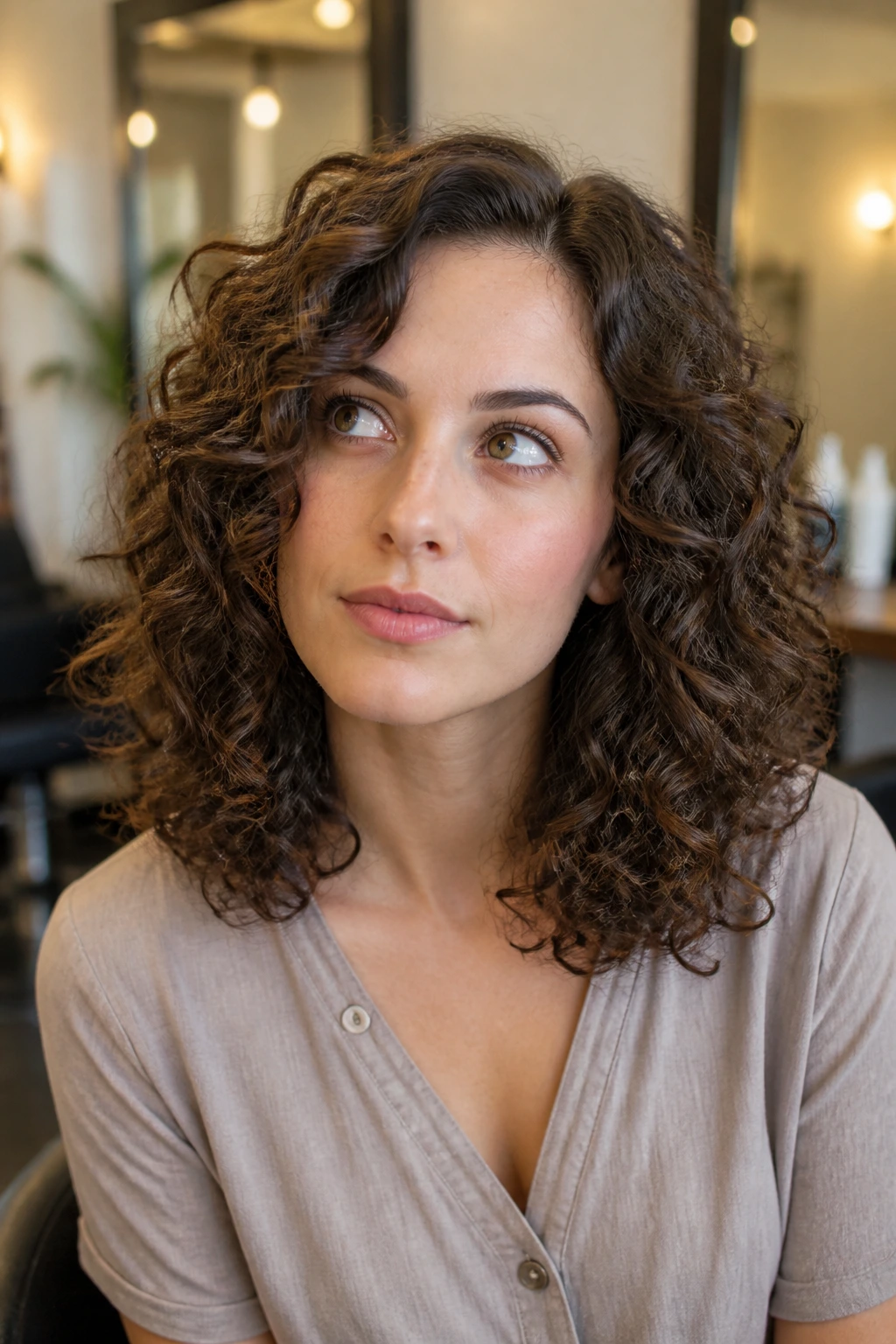
A shoulder-grazing shape is one of the safest bets for square faces because the curls fall past the jaw instead of stopping on it. The side part breaks up symmetry in a way that feels almost unfairly effective. One small shift, and the whole face reads softer.
Why It Works
Keep the front pieces a touch longer than the back if your curls shrink a lot. That little bit of extra length matters once the hair dries and springs up. If your pattern is loose, a light mousse at the roots and a dab of cream through the ends will keep the shape clean without turning it heavy.
- Best for 2B to 3B curls
- Looks especially good when the collarbone is the lowest point
- Helps medium-density hair keep movement
- Easy to pin one side back if you want more lift
Tiny rule: if the ends hit your jaw when wet, they will sit higher when dry.
2. A Curly Shag That Leaves the Cheekbones in Charge
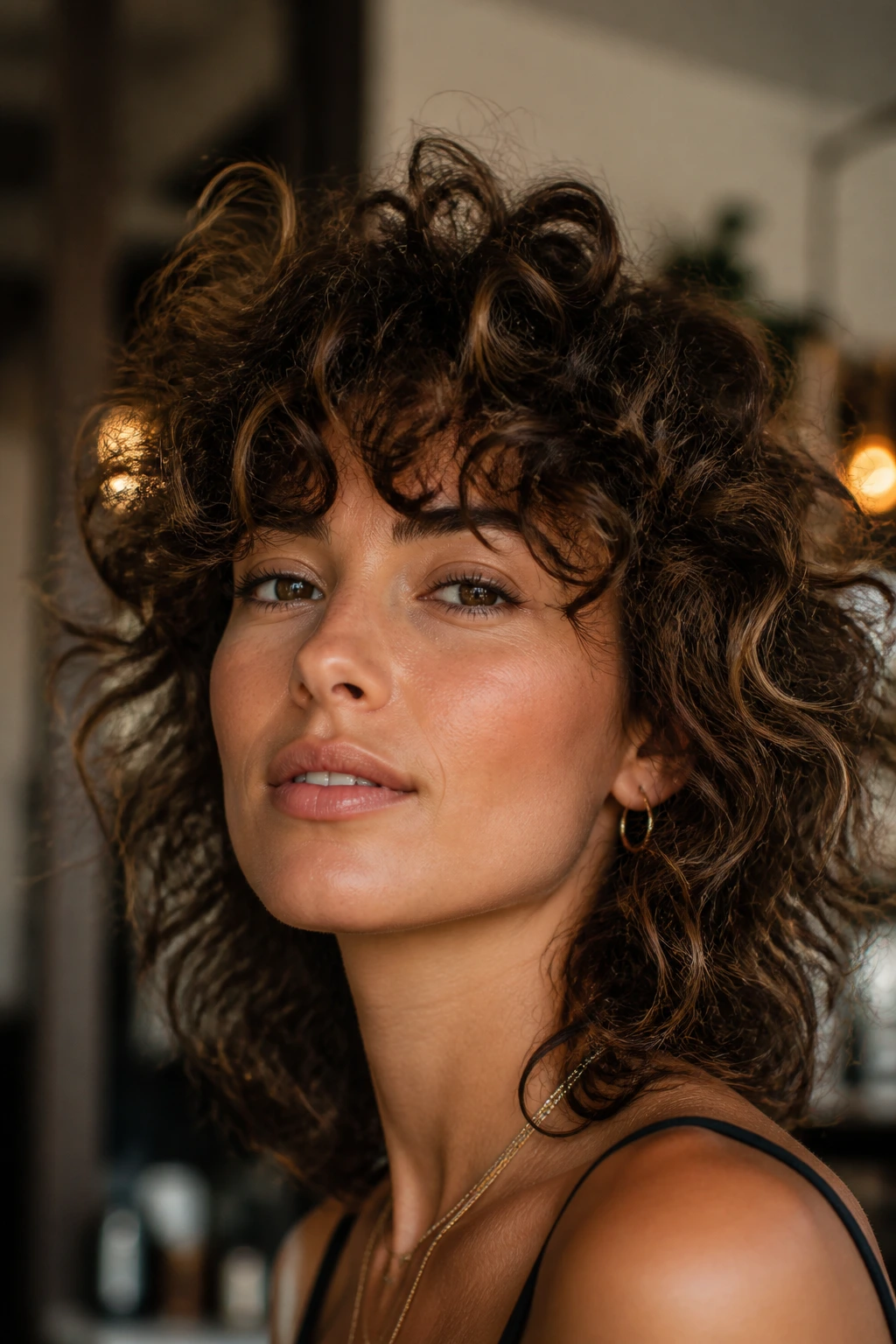
This is the cut I reach for when a square face needs motion, not more width. A curly shag throws the volume upward and inward, so the sides don’t bloom straight out at the jaw. That gives the cheekbones room to show up without the haircut feeling severe.
The shorter internal layers are the point. They let curls stack a little higher around the crown and upper sides, which creates that broken, lived-in shape curly hair does so well. If your stylist wants to cut it like a blunt lob and call it a shag, walk away. A real curly shag needs interior removal, not just a snip at the ends.
Where to Put the Layers
Ask for the shortest layers to start around the cheekbone or slightly above, never right at the jaw. That placement keeps the eye moving diagonally instead of horizontally. Use a diffuser on low heat and stop when the roots are 80% dry; if you keep blasting the top, the shape gets puffy in the wrong places.
3. Deep Side-Swept Ringlets
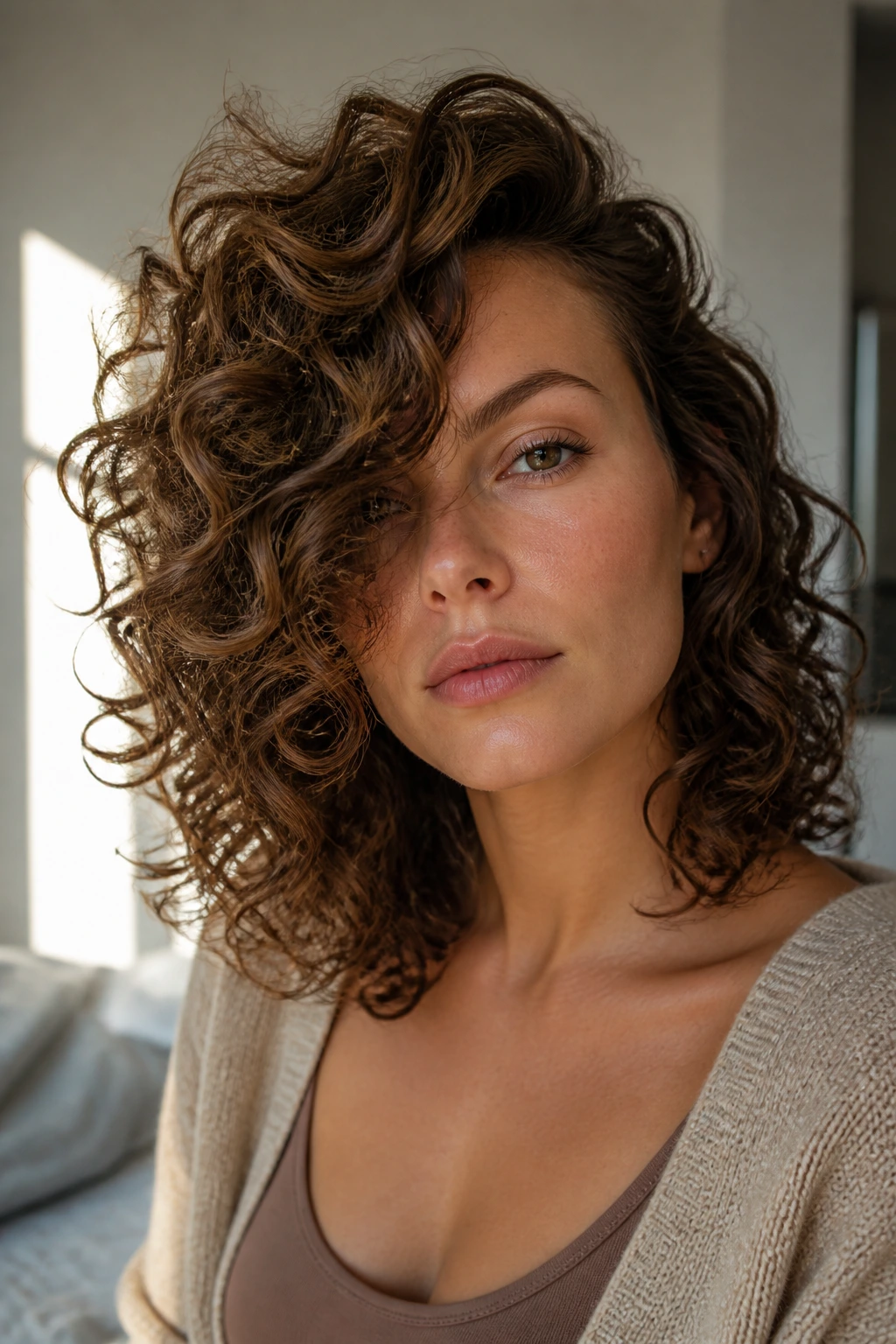
Can a side part really change a square face that much? Yes — if the ringlets are defined and the front section is long enough to sweep across the cheek.
A deep side-swept look creates a long diagonal line from forehead to chin, and diagonals are the old reliable move for softening a square frame. The trick is to leave enough length at the front so the curl can drape, not spring straight out from the temple. I prefer this style when the hair is medium density and the curl pattern has enough bounce to hold shape without teasing.
How to Wear It
- Push the heavier side over one eyebrow and let the rest fall forward
- Tuck the opposite side behind the ear for a sharper contrast
- Use gel on the front pieces so they keep their sweep
- Keep oils off the roots; the side part collapses fast when the scalp gets slick
It’s a good choice for dinners, photos, or any day you want your curls to look deliberately arranged instead of merely air-dried.
4. Collarbone Curls with Curtain Bangs
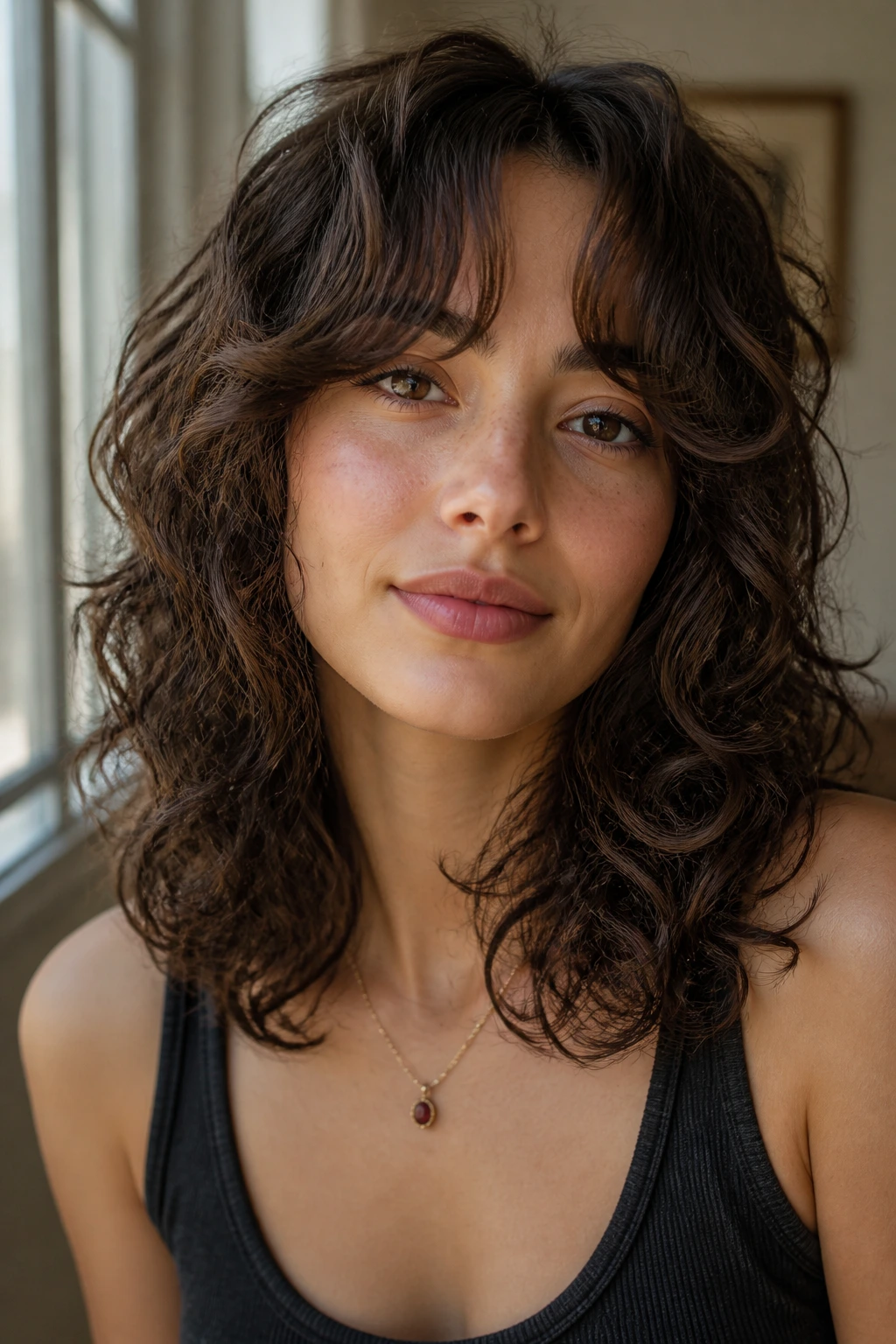
If your forehead feels broad and your jaw is clean-edged, curtain bangs can soften both without dragging the whole cut down. The key is length. Curtain bangs that stop too high on curly hair can look choppy in a way that has nothing to do with style and everything to do with regret.
The best version on a square face is longer at the outer corners than in the middle, with the shortest point usually hovering around the brow or just below it. That shape opens the center of the face and sends the eye outward in a soft arc. Medium curls are ideal here because they give the bangs enough body to sit with intention instead of floating like a fringe that got lost in the wind.
The Parting Trick
Train the bangs while they’re damp by separating them with your fingers, not a comb. Then clip the outer edges slightly away from the face for 10 to 15 minutes while they dry. The bend will stay softer, and the bangs won’t dive straight into the cheeks.
5. A Rounded Mid-Length Halo for Dense Coils
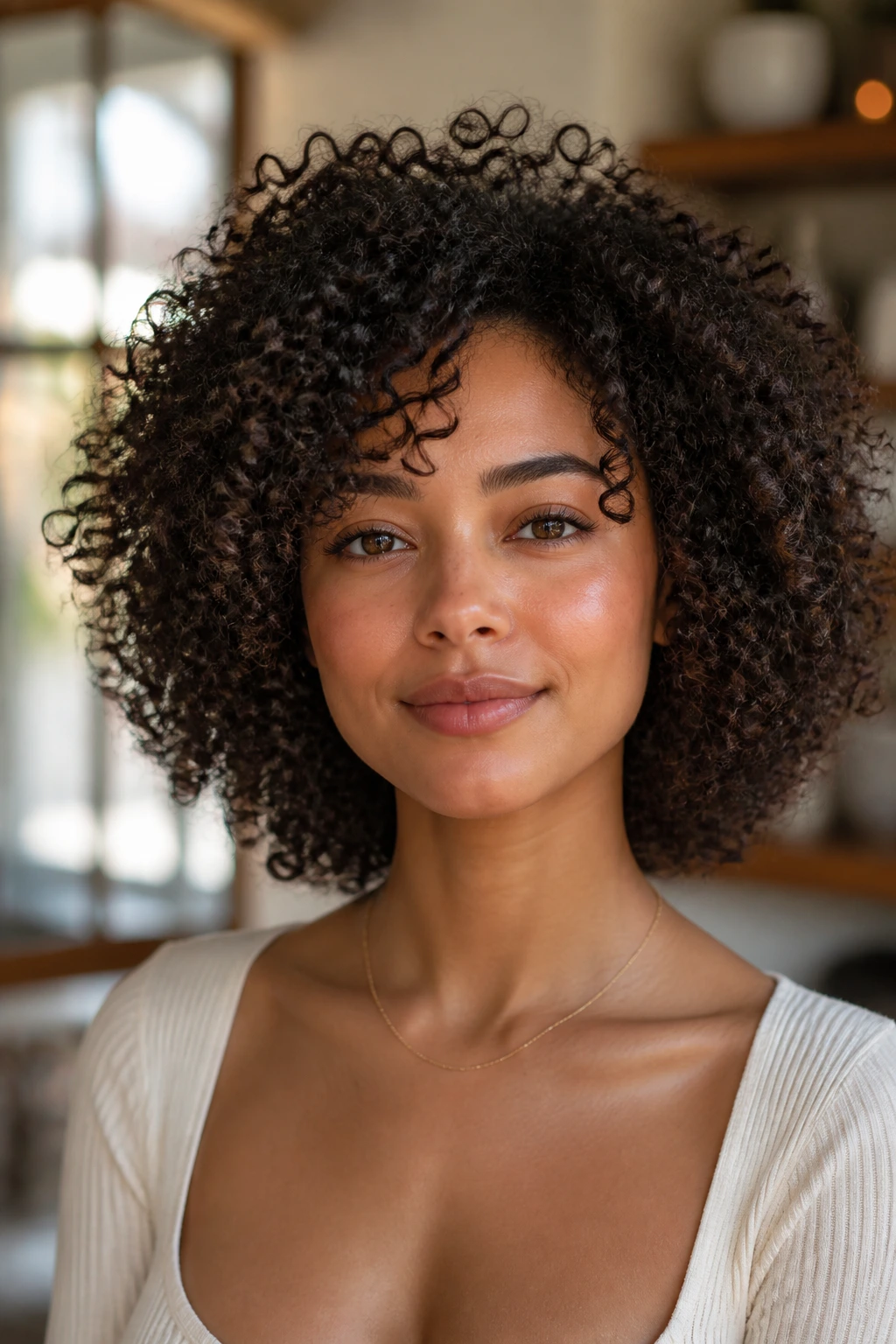
Rounded shapes are kind to square faces because they curve the silhouette instead of drawing a literal box around it. On dense coils, a halo shape can make the whole head look balanced without forcing the hair to sit flat. The sides stay full, but they don’t sit at the jaw like armor.
This works especially well if your curls are 3C, 4A, or a mix that shrinks upward once it dries. Ask for a rounded perimeter, not a squared-off one. That word matters. A rounded perimeter keeps the curve moving around the head, while a square perimeter can make the jaw and hairline fight each other.
If your coils are thick, a little crown lift helps the whole shape breathe. A few root clips during drying can keep the top from collapsing while the sides are still doing their soft curve thing. It looks more natural than a forced pouf, which is exactly the point.
6. The U-Cut with Long Interior Layers
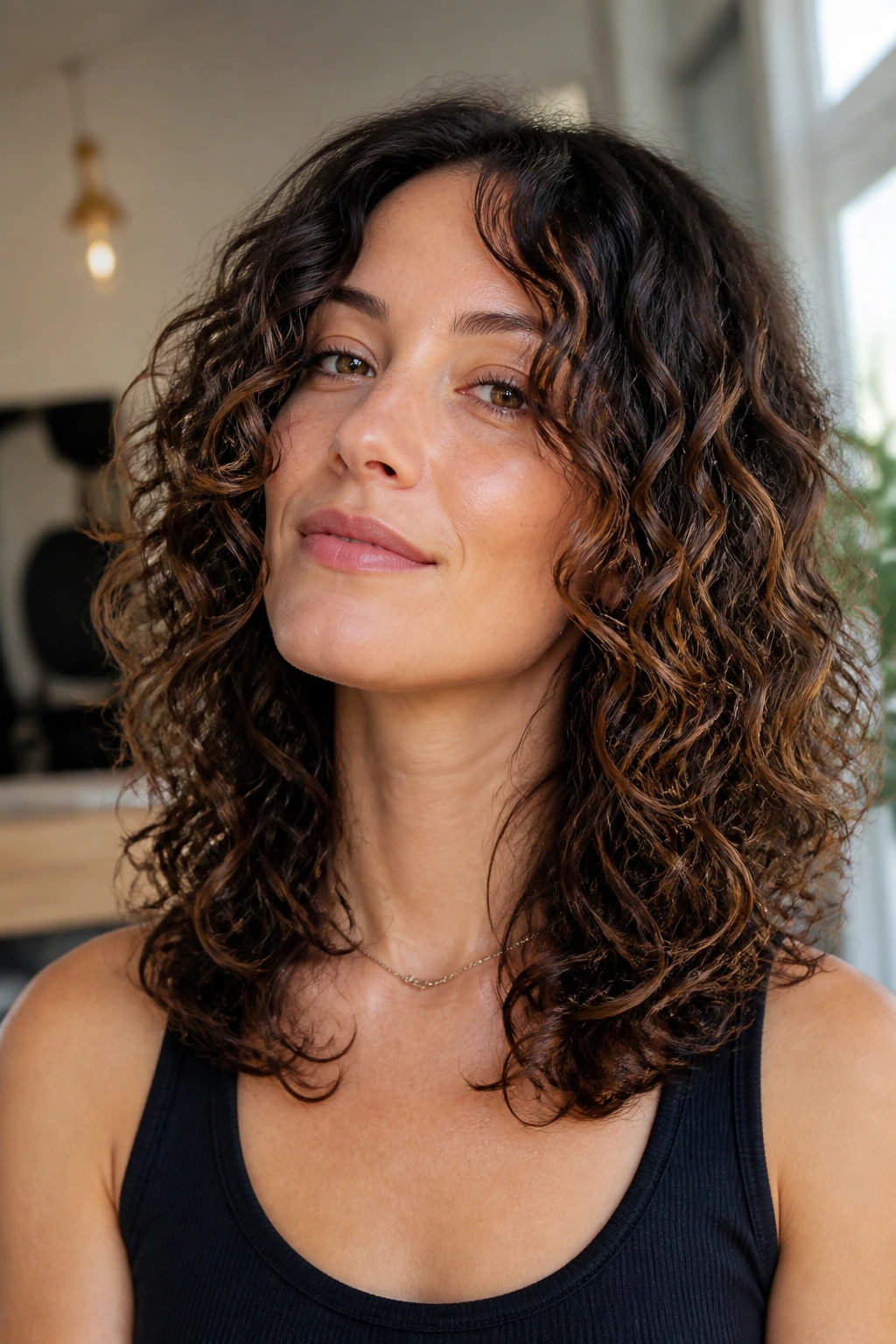
Unlike a blunt one-length cut, a U-shape lets the front pieces fall a little longer and kinder around a square jaw. The back keeps the body, the front gets the movement, and the whole head shape feels less rigid. That curve at the hemline does a lot of quiet work.
This is the cut I like for people who want length without a heavy curtain effect. Medium hair can sometimes get too broad when it’s all cut to one exact line. A U-cut avoids that by letting the outline dip gently in the back while the sides stay a little longer and more fluid.
Best For
- Thick curls that need weight removed from the middle
- Anyone growing out a blunt cut
- People who want a shape that still looks tidy on day three
- Square faces that need soft edges near the jaw
The whole point is movement that looks accidental, even when the haircut is very deliberate.
7. Half-Up Crown Twist
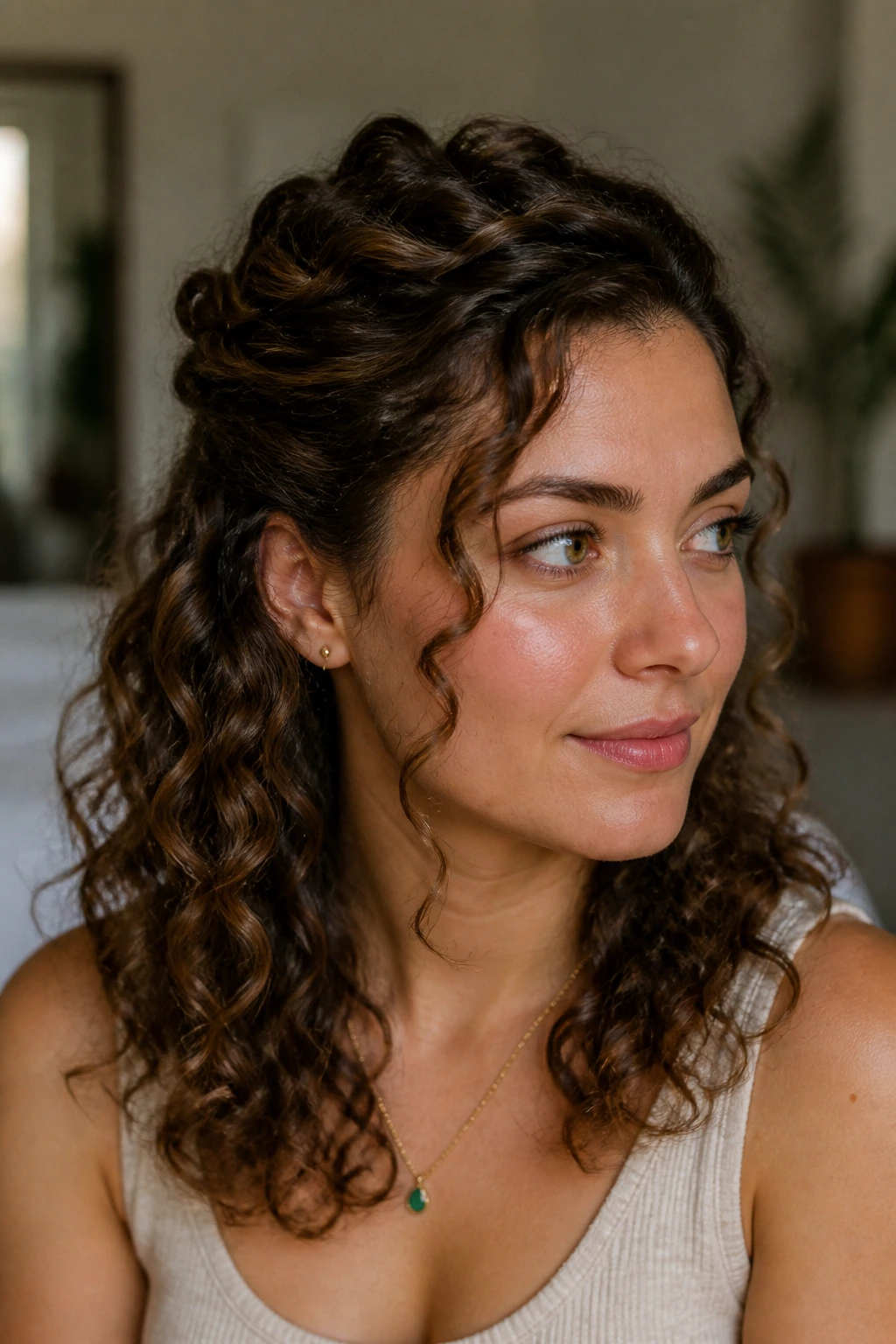
A small twist at the crown can change the whole balance of a square face. Pulling the top section up lifts the eye line, and leaving the lower half free keeps the curls from feeling overworked. It’s one of those styles that looks like effort, but not too much.
I like this on second-day hair because curls hold their shape better after they’ve settled a bit. Take the top section from temple to temple, twist it loosely, and pin it at the crown. Don’t cinch it tight. Tight half-up styles make the face look harder, which is the opposite of what you want here.
Leave two or three pieces around the temples and jawline. That little mess of tendrils softens the front without stealing the shape. A few bobby pins, placed in a crisscross, will hold better than one giant clip that keeps slipping.
8. Face-Framing Spiral Pieces
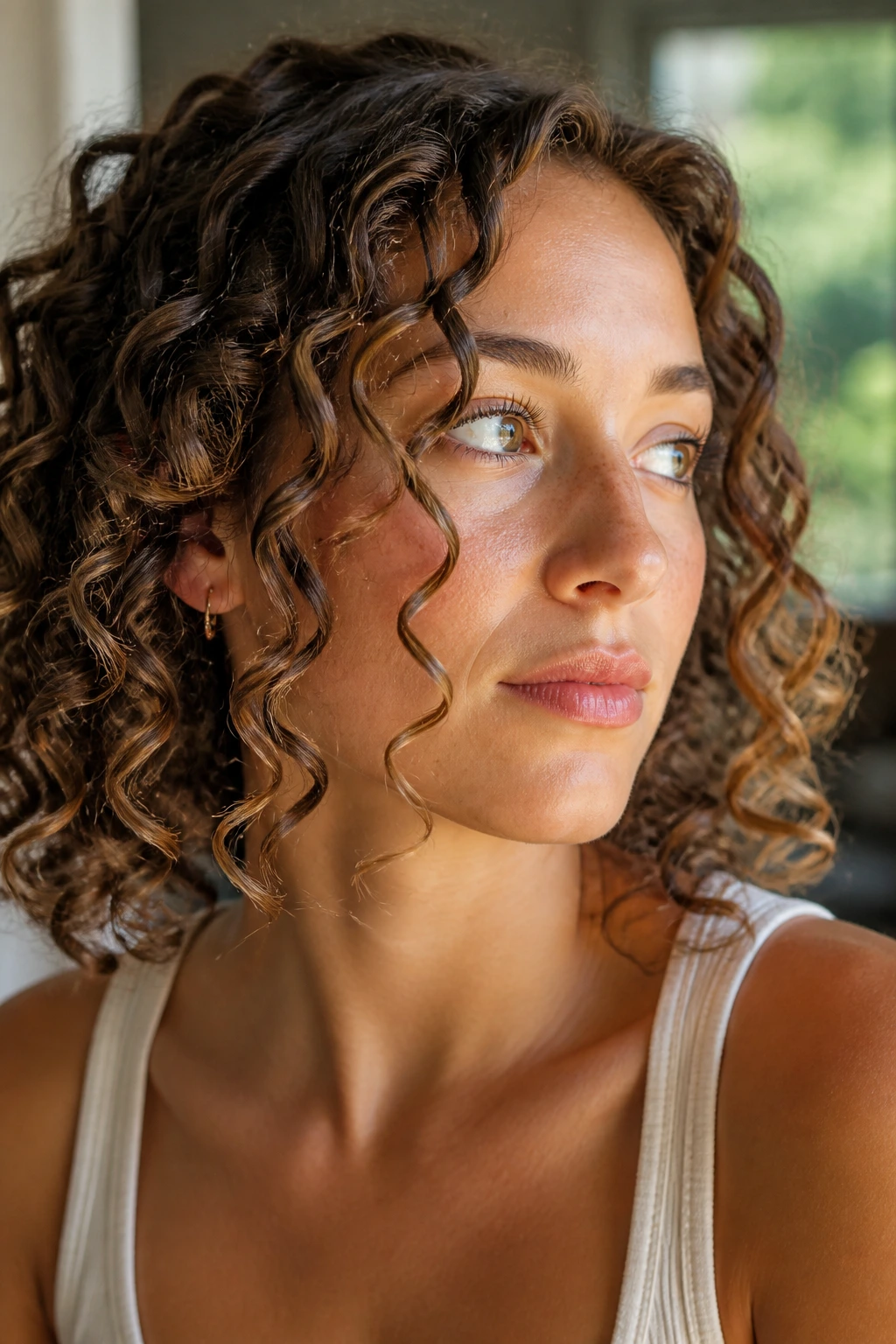
Sometimes the haircut is only half the story. Two or three good spirals placed in the right spot can do more for a square face than another inch of length. I’m serious about that.
The best face-framing pieces start around the cheekbone and fall below the jaw, not exactly into it. That placement bends the eye downward in a softer line. If your natural pattern doesn’t create those spirals on its own, finger-coil just the front sections while they’re wet and let the rest of the hair do its thing.
A few people overdo this and coil every curl into uniform little springs. Don’t. The point is contrast. Defined face-framing spirals against a looser perimeter make the style feel intentional, and they keep the jaw from becoming the loudest shape in the room.
9. Side-Tucked Volume That Stays Loose
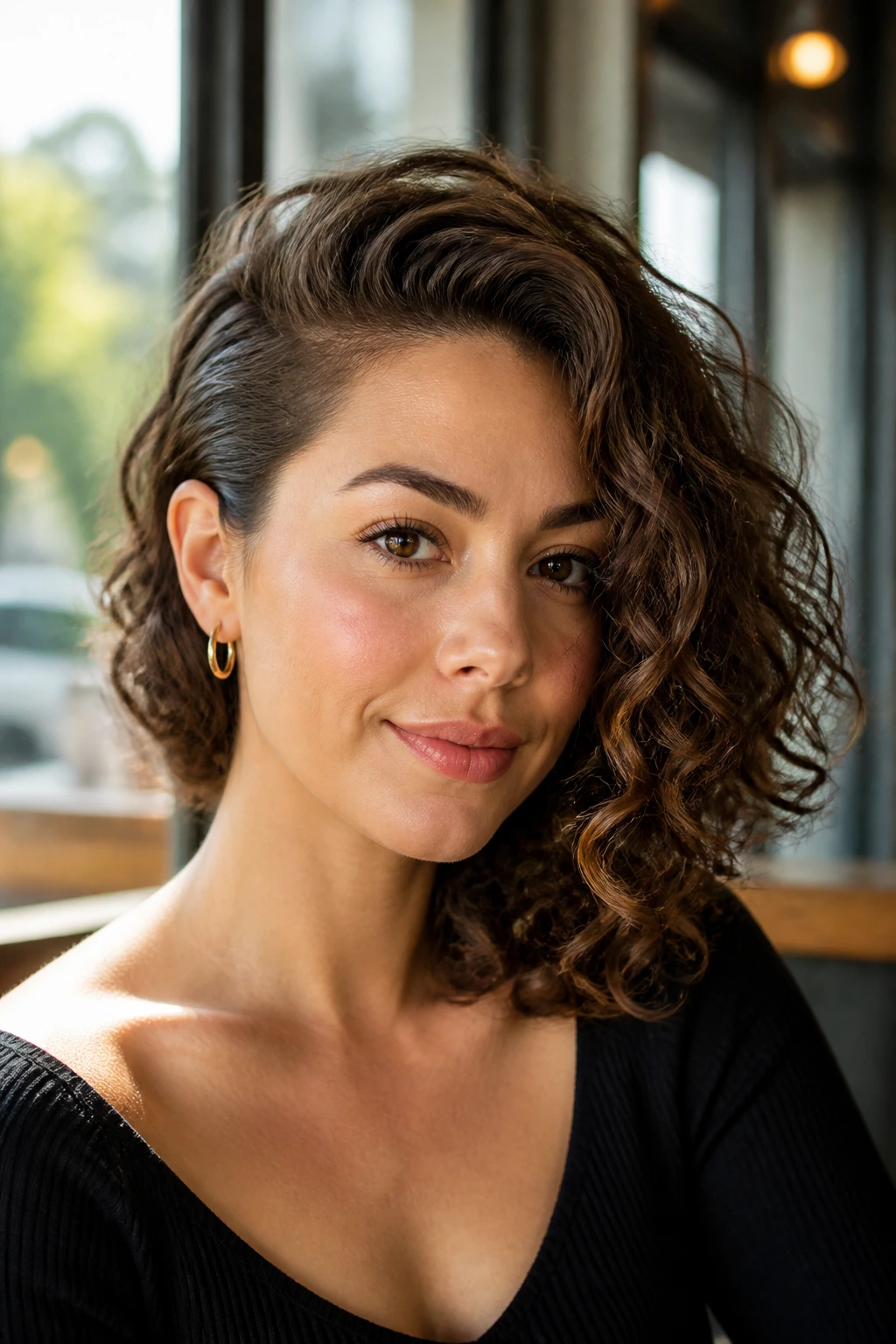
What if you want a cleaner outline without pinning half your hair to your scalp? Tuck one side behind the ear and keep the other side loose. That asymmetry softens the face and gives the curl pattern a place to fall.
This is especially nice on medium-length hair because the tucked side still has enough length to show texture. On a square face, that visible diagonal from the tucked ear to the loose front curl keeps the shape from feeling boxy. Add a small earring if you want, but honestly the haircut does the work on its own.
The Small Moves Matter
A light mist of styling spray on the tucked side will stop it from sliding back out. If your hair is fine, use a clip hidden behind the ear; if it’s coarse, a tuck alone usually holds. One side forward, one side back. Simple. Effective.
10. The Curly Wolf Cut
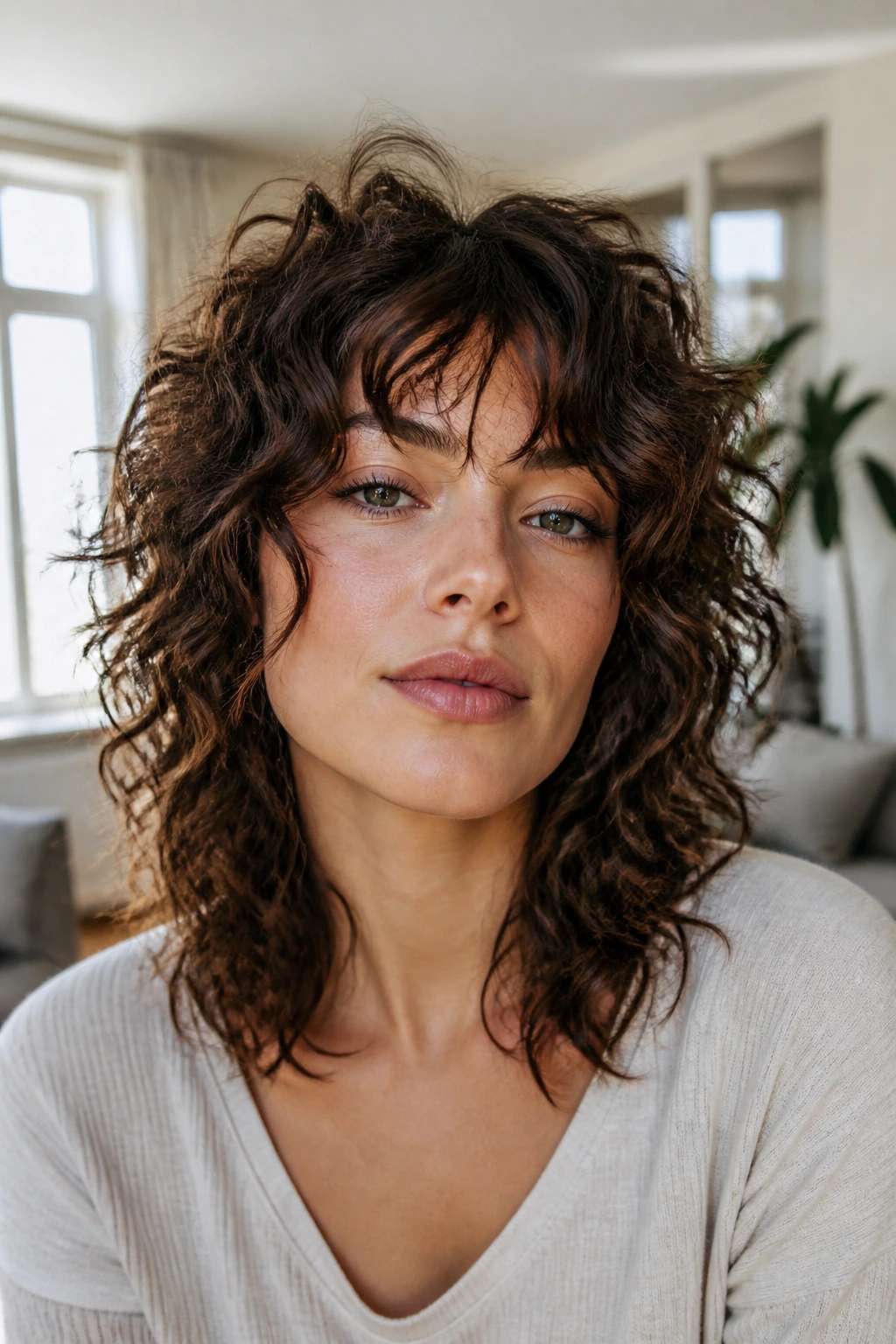
The wolf cut can look chaotic on straight hair, but curls make it behave. Choppy layers and a soft fringe break up the face in a way that square jaws tend to like. The whole style works because it never gives the eye a flat, uninterrupted line.
Ask for the shortest layers to start around the cheekbone or upper lip, depending on your curl pattern, and keep the bottom length hovering around the shoulders. That keeps the cut wild enough to feel modern without turning the lower half into a triangle. If your curls are thick, a wolf cut can be a lifesaver. It takes bulk out of the right spots.
The only real trap is over-layering the ends. If the bottom gets too thin, the style loses its body and starts looking stringy. Curls want enough weight to fall. Too little, and the whole thing frizzes outward like a bad umbrella.
11. A Low Curly Ponytail with Soft Tendrils
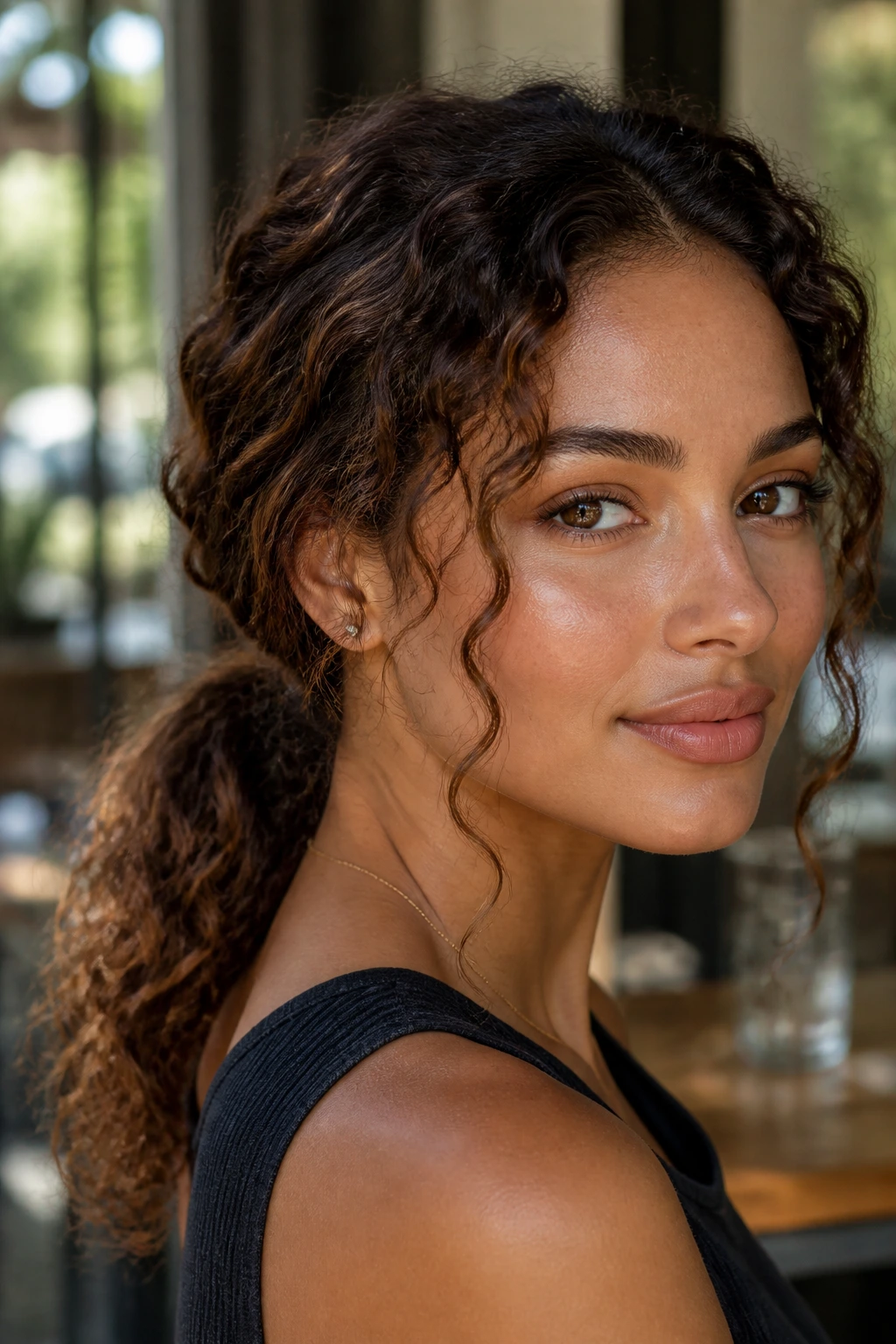
A low ponytail is not a fallback style. On a square face, it can be one of the prettiest ways to keep the jaw line from feeling boxed in, because the curls drop below it and keep moving. The trick is to keep the pony loose at the nape, not pulled tight like you’re training for a swim meet.
Leave out two front tendrils and maybe one piece near each temple. Those pieces should be long enough to curve along the cheek, not stop at the jawline. If the pony sits too high, the face gets all the attention and not in a good way. Low and soft is the whole deal.
Wrap a small curl around the elastic to hide it. It takes ten seconds and makes the style look finished instead of rushed. Use a satin scrunchie if your hair tangles easily; it holds better and leaves less of that ugly crease you spend the rest of the day trying to hide.
12. A Defined Wash-and-Go with a Center Part
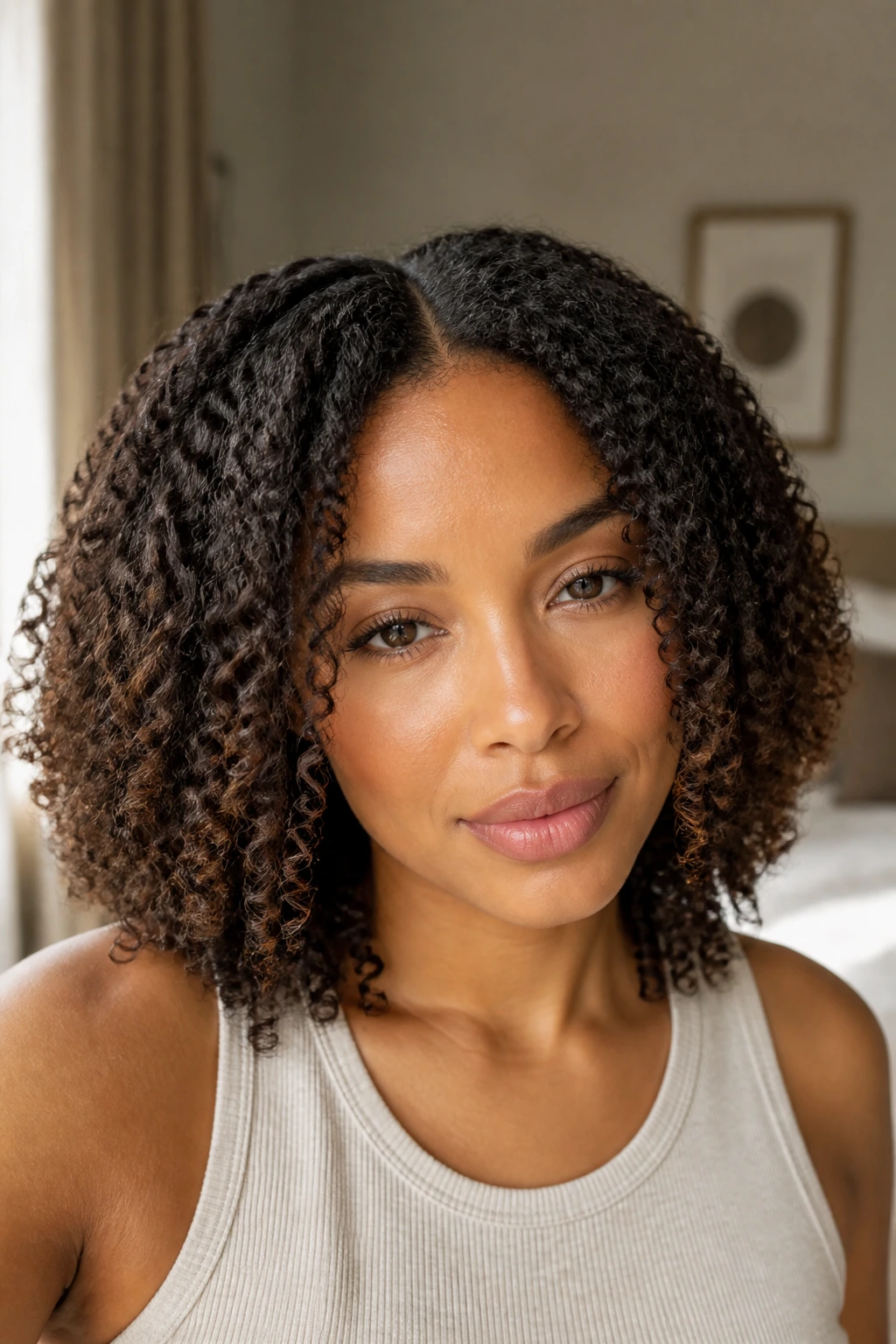
Center parts do not automatically make a square face look harsher. That’s lazy advice. A defined wash-and-go with the right cut can make the center part look clean and modern, especially when the front pieces are longer than the jaw and the crown has some lift.
The key is balance. If the sides puff wide at ear level, the square shape gets emphasized. If the curl clumps are neat and the top has height, the part becomes a straight line that your curls soften on the way down. I like this best on medium hair with loose curls or medium coils that can hold a cast from gel without getting crunchy and limp.
Use a denser cream only if your hair actually needs it. Heavy product on a center-part style can flatten the front and drag the whole shape down. That’s not refinement. That’s collapse.
13. Flipped Curly Ends That Curve Away from the Jaw
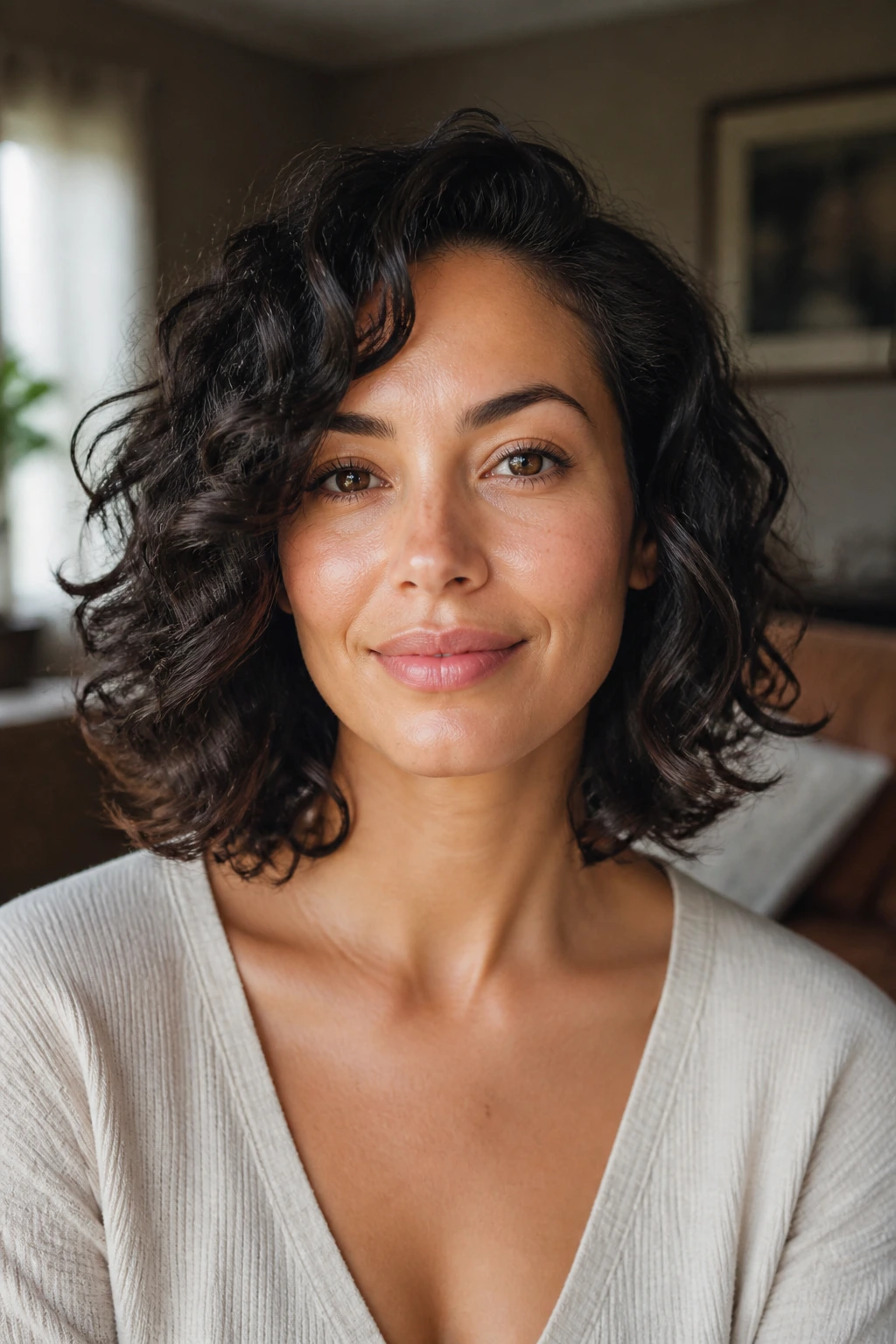
A small outward flip at the ends changes the geometry more than people expect. Instead of the hair stopping hard at the jaw or collarbone, the curl curves away from the face. That motion makes the whole silhouette feel lighter.
This works beautifully on medium hair because the length is just enough to catch the flip without looking exaggerated. You can get the bend by twisting the last two inches of a damp curl around your finger, or by diffusing with the ends angled away from the face. A little mousse helps the ends hold the direction without getting sticky.
Best Notes
- Good for loose curls that need a little shape at the hemline
- Helps a blunt cut look softer
- Useful when you want movement without layers everywhere
- Works especially well with a side part
I’d choose this if the rest of your hair is already in decent shape and you just want the outline to stop feeling heavy.
14. A Braided Crown with Loose Curls

For days when you want the face open but not bare, a braided crown does the job. The braid draws a soft curve across the head, which is nice for square faces because it breaks the hard perimeter near the temples. The loose curls underneath keep the style from feeling stiff.
This is a smart choice for weddings, humid weather, or any day when your roots are acting like they’ve had enough. A braid doesn’t need to be perfect. In fact, a slightly loose braid looks better with curls, because it lets the texture stay visible and keeps the face from getting too tightly framed.
If the front is short, make two mini braids at the temples and pin them back. Same idea, smaller scale. The point is to curve the hair away from the jaw while keeping enough movement around the shoulders to stop the look from getting severe.
15. An Air-Dried Side Flip
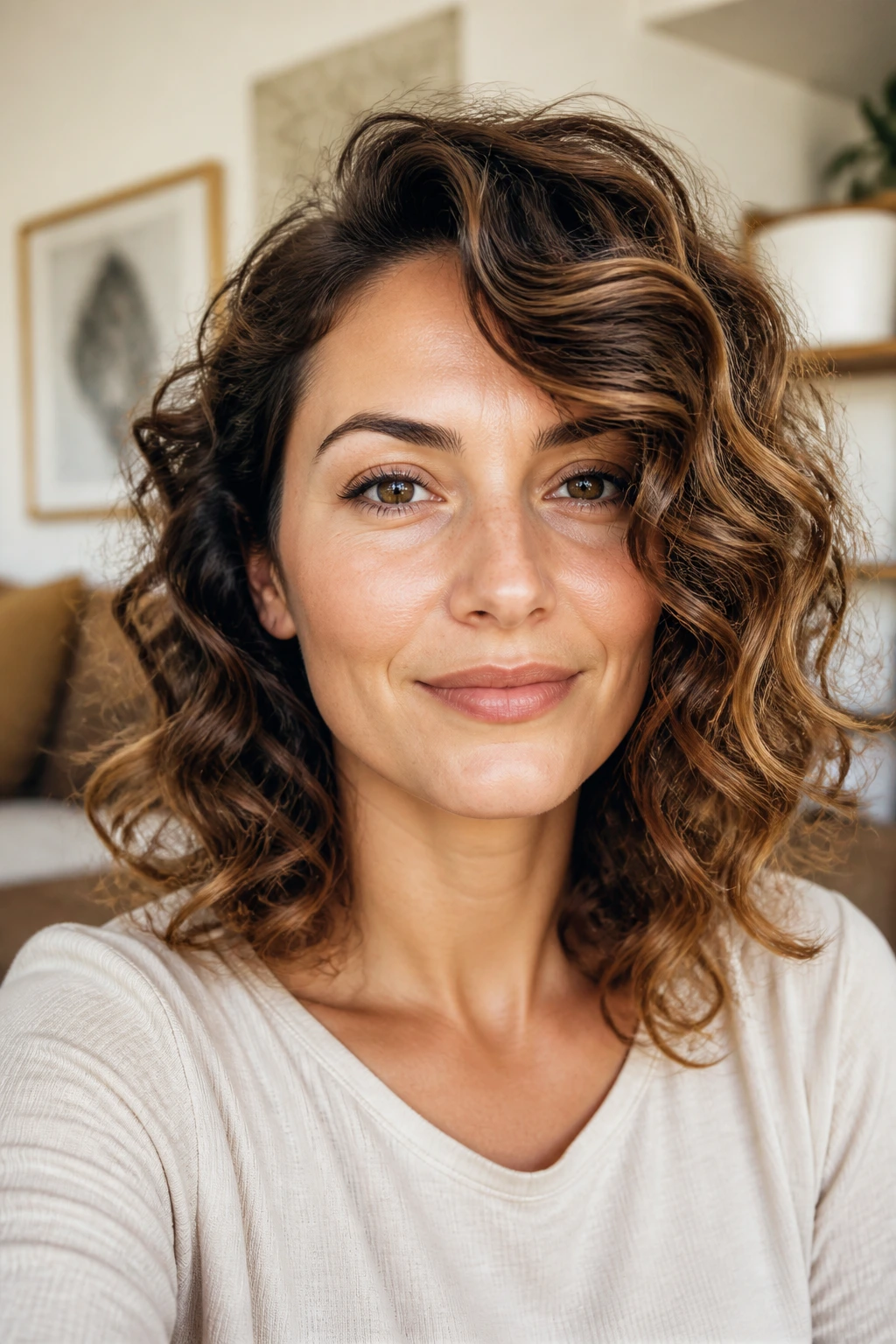
Can a part change the whole haircut? Absolutely. Especially when the curls dry with a little lift at the root and the front flips away from the face instead of hanging straight down.
The side flip is one of the easiest square-face fixes because it shifts volume off the center line. After applying product, part the hair slightly off-center, then clip the heavy side at the roots for a few minutes while it dries. Once it sets, flip the front pieces to the opposite side if that gives you better movement.
This is a lazy-day style, but in the best way. It looks lived in, not underdone. And if one side goes flat by the afternoon, a quick re-mist and a little finger lift at the root bring it back without restarting the whole routine.
16. Soft Tapered Layers for Thick Curls
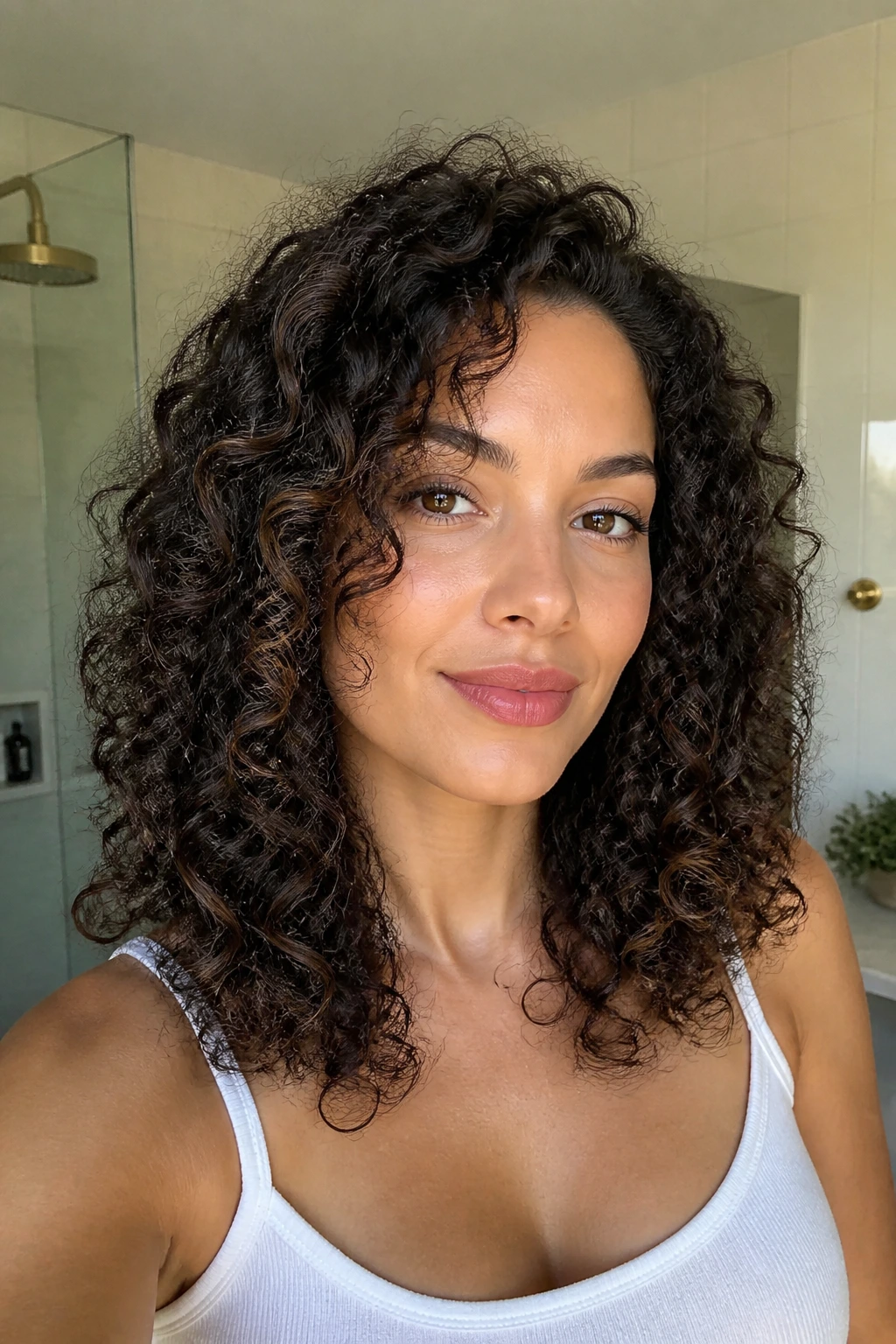
Thick curls need bulk removed, but not the kind that leaves the ends wispy and sad. Soft tapered layers keep the outline fuller at the bottom while lightening the interior, which is better for square faces than a straight-up triangle shape. You want volume that bends, not volume that sits like a shelf.
This style is especially useful if your hair widens at the ear line. Tapering the layers lets the curl stack up closer to the crown and upper cheek area while the lower length stays controlled. The result feels more oval than square, and that’s the whole point.
Ask For This, Not That
- Ask for internal weight removal, not aggressive thinning
- Keep the perimeter longer around the collarbone
- Avoid too much shortening near the jaw
- Show your stylist where the hair puffs widest when dry
That last part matters. Curly cuts should be planned around the way your hair actually dries, not how it looks in a wet ponytail.
17. A Twisted Half-Up Top Knot
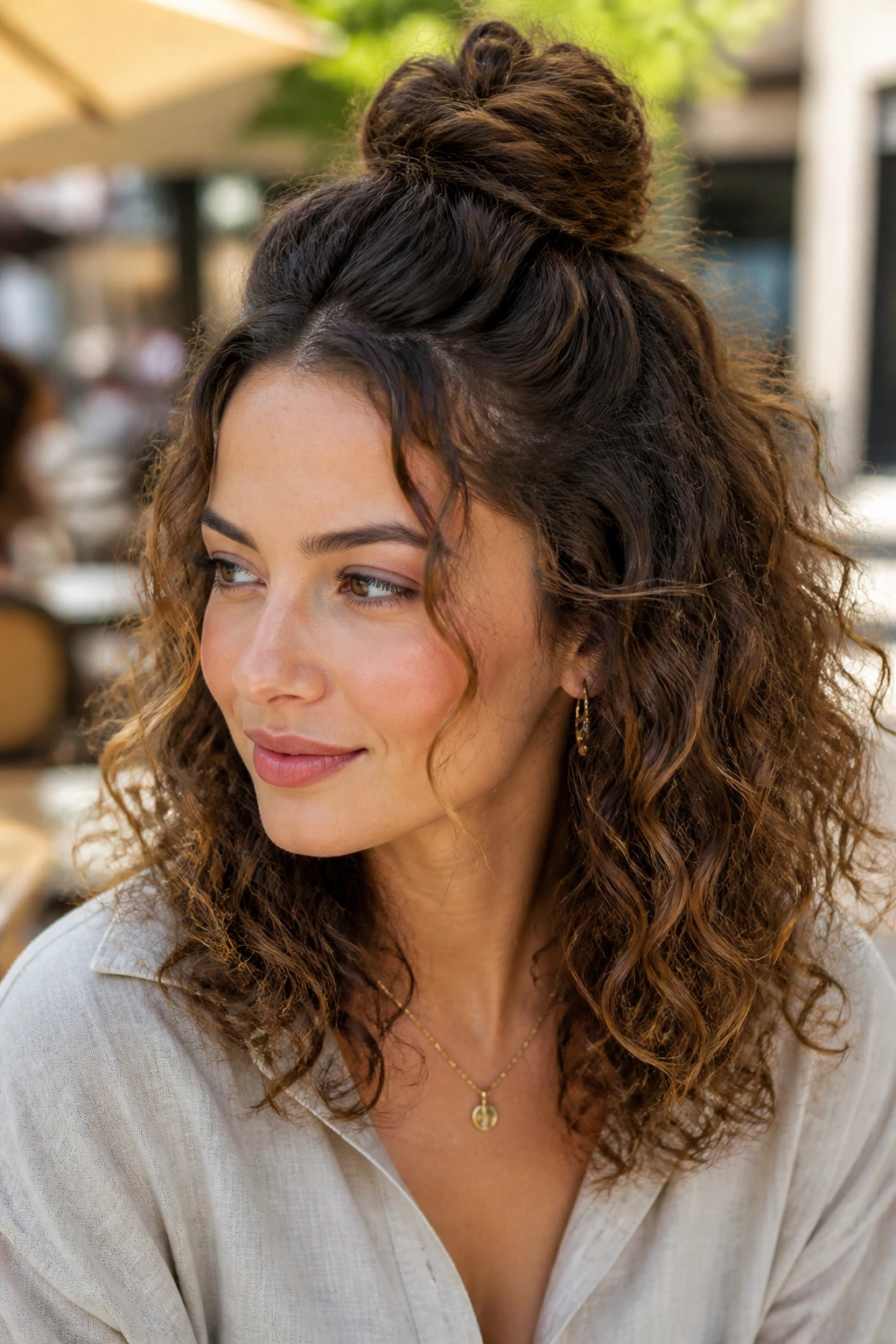
A half-up top knot gives you lift at the crown and keeps the front from crowding the face. On a square face, that height helps the eye travel upward instead of sitting at the jaw. The rest of the curls stay loose, which keeps the style from turning severe.
I like this when the roots are a little oily or the front needs a break from being in your eyes. Pull the top section into a loose twist, knot it once, and pin it instead of yanking it tight with an elastic. Tight top knots can flatten curls on the sides and make the jaw feel wider, which is a funny little styling trap that catches people all the time.
Leave the ends of the knot a little messy. Clean knots on curly hair can look too formal unless the rest of the style is equally polished. A soft knot, some shoulder curls, and a few loose tendrils around the temples keep it human.
18. Clipped-Back Temple Sweep
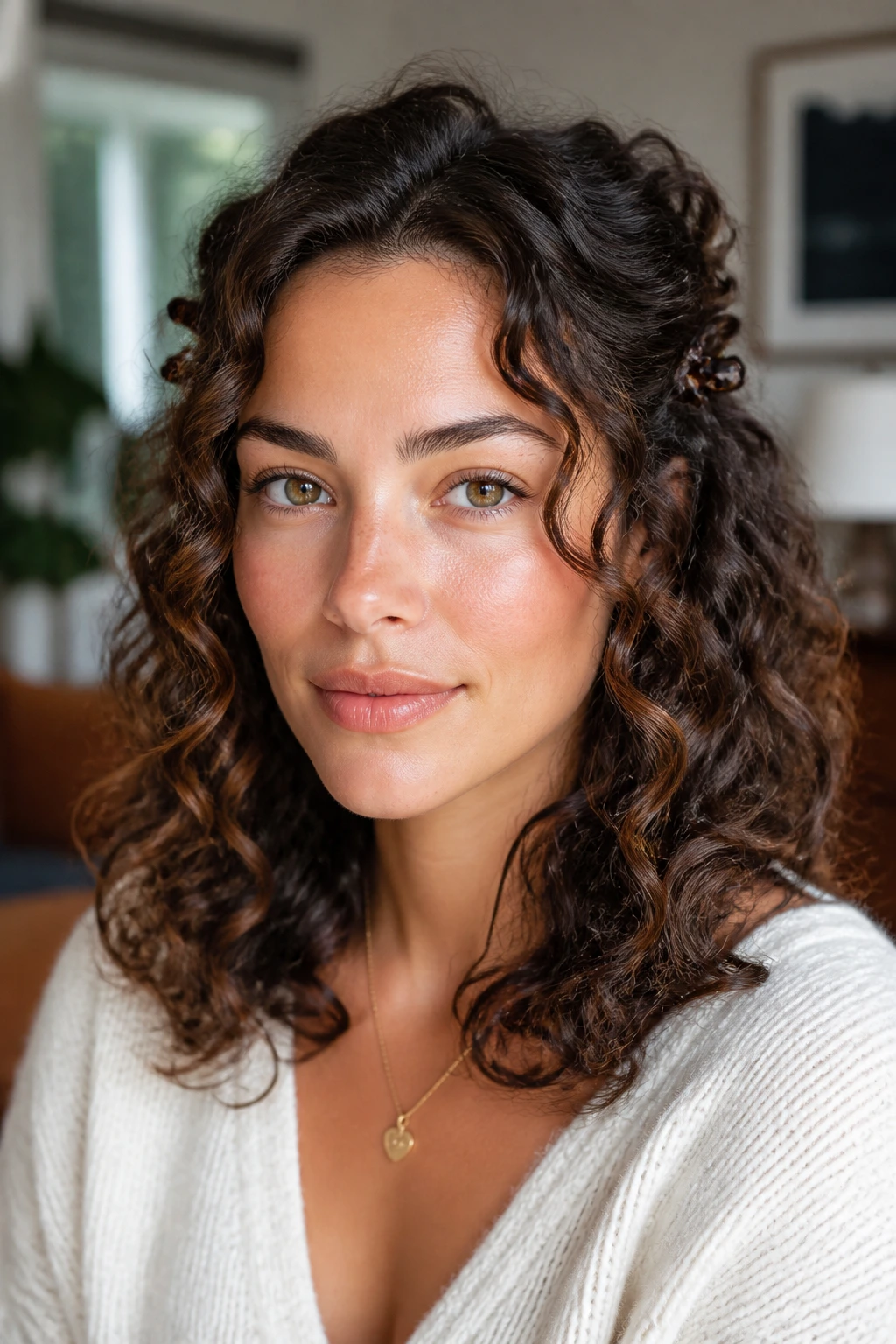
This is the move for people who like their curls visible but want the temples out of the way. Clip only the temple sections back, not the entire front. That keeps the face open without exposing every angle of the jaw.
A square face benefits from this because the front curls still fall in a curve. You’re not shaving off softness; you’re just redirecting it. Two small clips placed just behind the temples work better than one big barrette that drags the hair flat. If you want the style to stay put, mist the clipped pieces with a light spray first.
It’s neat, fast, and a little bit polished without trying hard. Which, honestly, is half the appeal.
19. Rounded Layers with Crown Lift
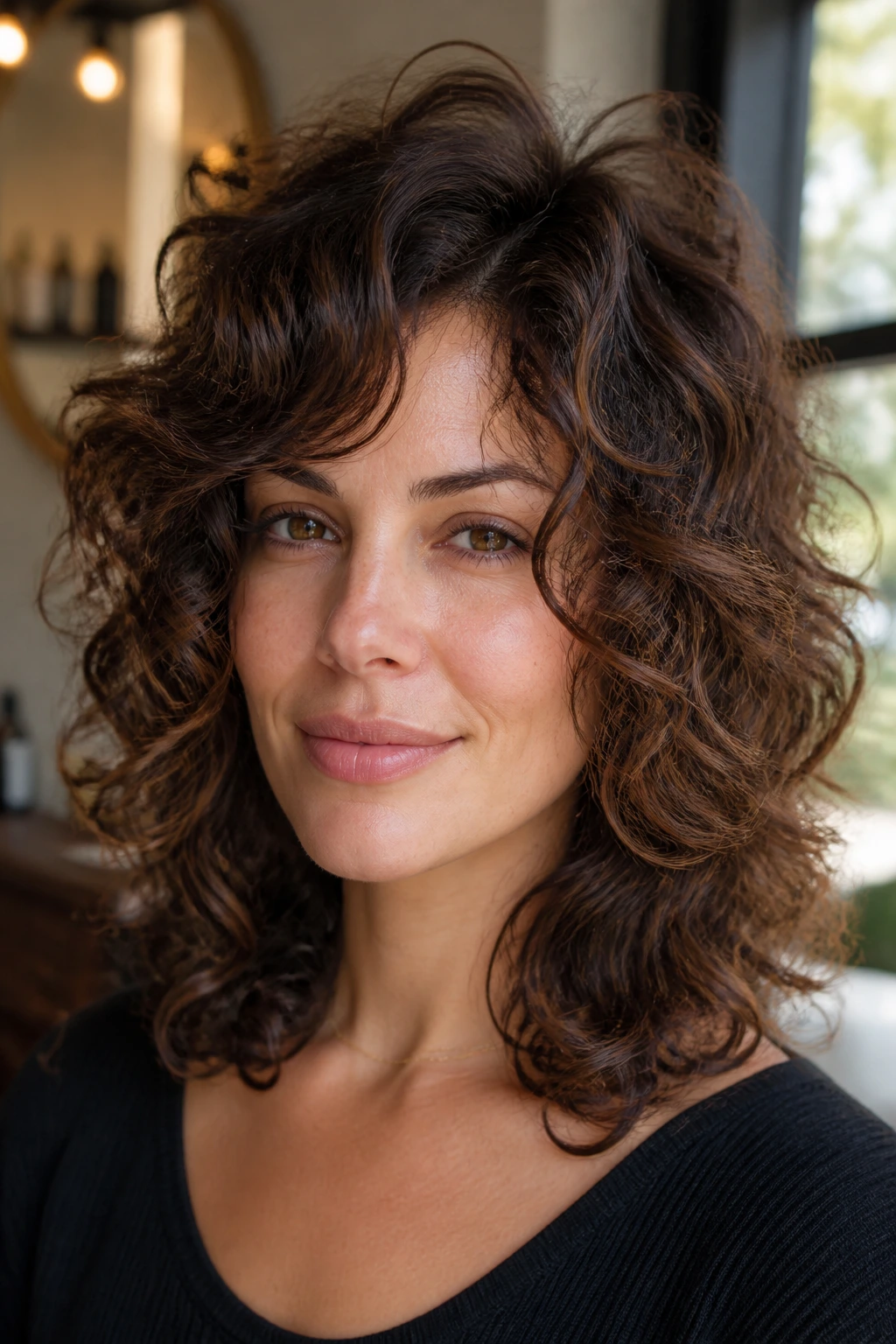
The goal here is not more volume everywhere. It’s volume in the right places. Rounded layers create a curved outline, and crown lift keeps the top from collapsing into the widest point of the face.
Ask your stylist for a soft round shape through the perimeter and a little extra height at the top. That gives square faces a gentler frame. If the sides are too full at ear level, the haircut starts reading like a box. If the crown has lift and the ends stay shaped, the whole thing feels balanced.
The Drying Trick
Use root clips at the top after applying gel or mousse, and leave them in for 10 to 15 minutes. Then diffuse until the roots are set but not fried. That tiny bit of lift changes how the whole cut sits. It’s one of those boring details that matters a lot.
20. A Scarf-Wrapped Curly Lob
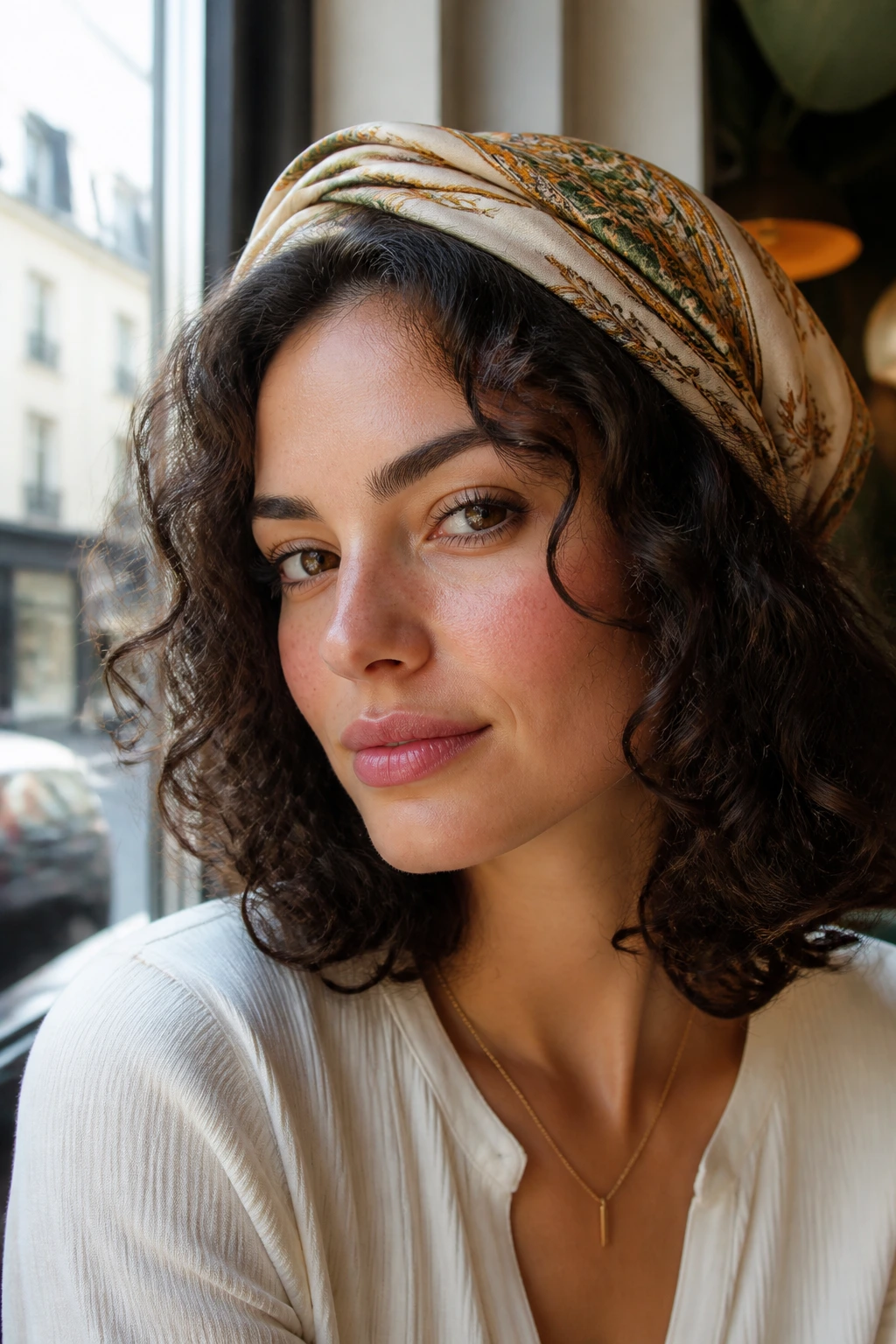
A scarf can do more for a curly lob than another styling cream ever will. Wrap one loosely around the crown and let the curls spill out underneath, and the face gets a soft frame without extra width at the sides. That’s useful on square faces, where the goal is usually to soften, not stack more shape onto the jawline.
I like this for windy days or second-day hair that needs a visual reset. A silk or satin scarf is gentler than cotton, and if you tie it just off-center, the style gets a little asymmetry for free. The curls under the scarf should still be visible at the temples and collarbone so the whole thing doesn’t look wrapped up in a hurry.
This is also a nice way to wear medium curls when you want the texture to stay the focus and the roots to stay calm.
21. A Messy Curly Bun with Face Pieces
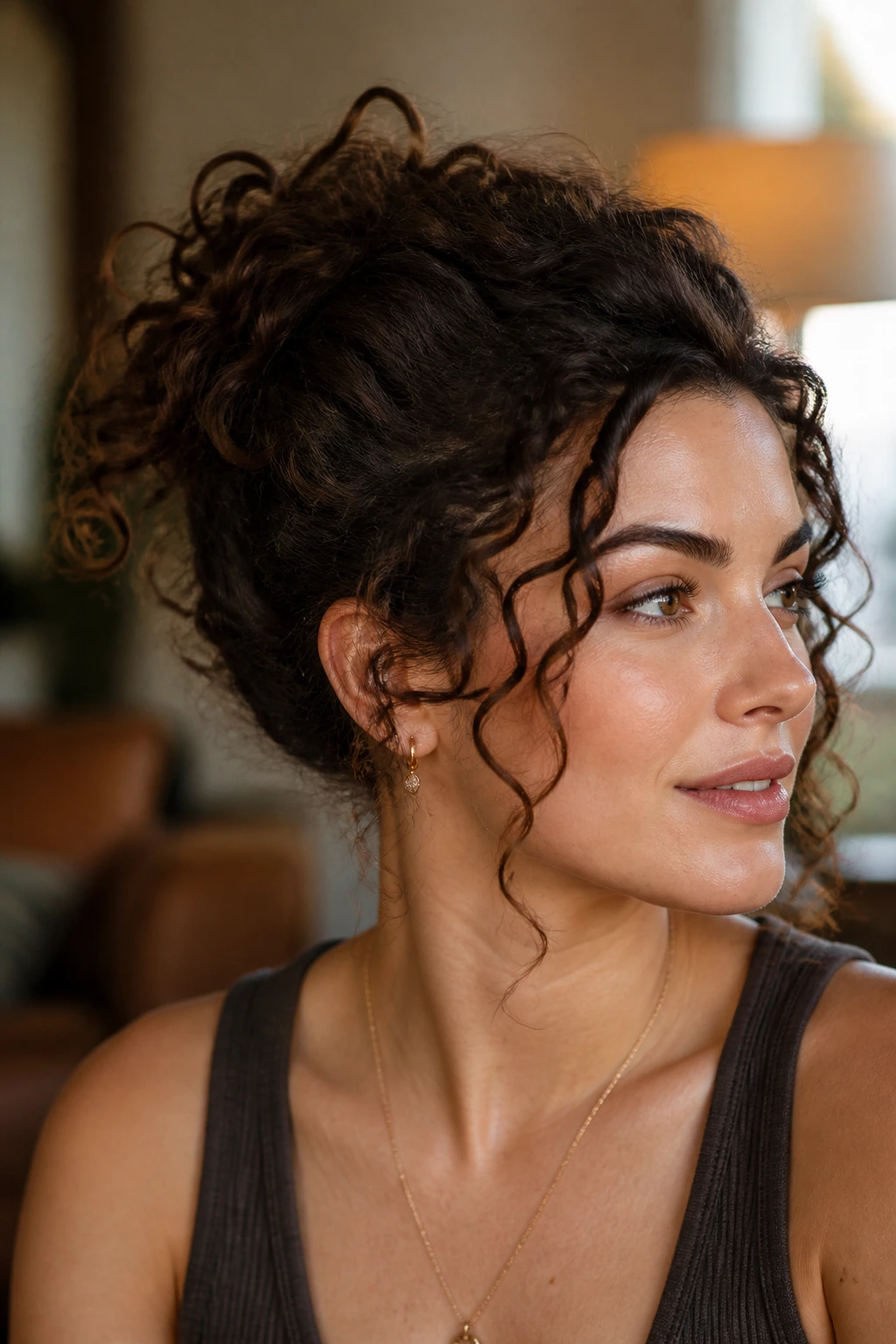
Need your hair off your neck but still want shape around the face? A messy bun with a few deliberate pieces solves that. Keep the bun low or mid-level so the style doesn’t stack all the weight at the crown, which can make a square face look more top-heavy.
The face pieces matter more than the bun itself. Let two curls fall near the jaw and one near the temple. That small arrangement softens the edge of the face while keeping the rest of the curls secure. If you have medium-length hair, the bun should still have enough body to look full. If it doesn’t, twist the lengths loosely before pinning them so the bun feels thicker.
This one’s good for gym runs, work days, and bad-hair mornings. It doesn’t pretend to be fussy. That’s part of why it works.
22. An Asymmetrical Part with a Sculpted Front Curl
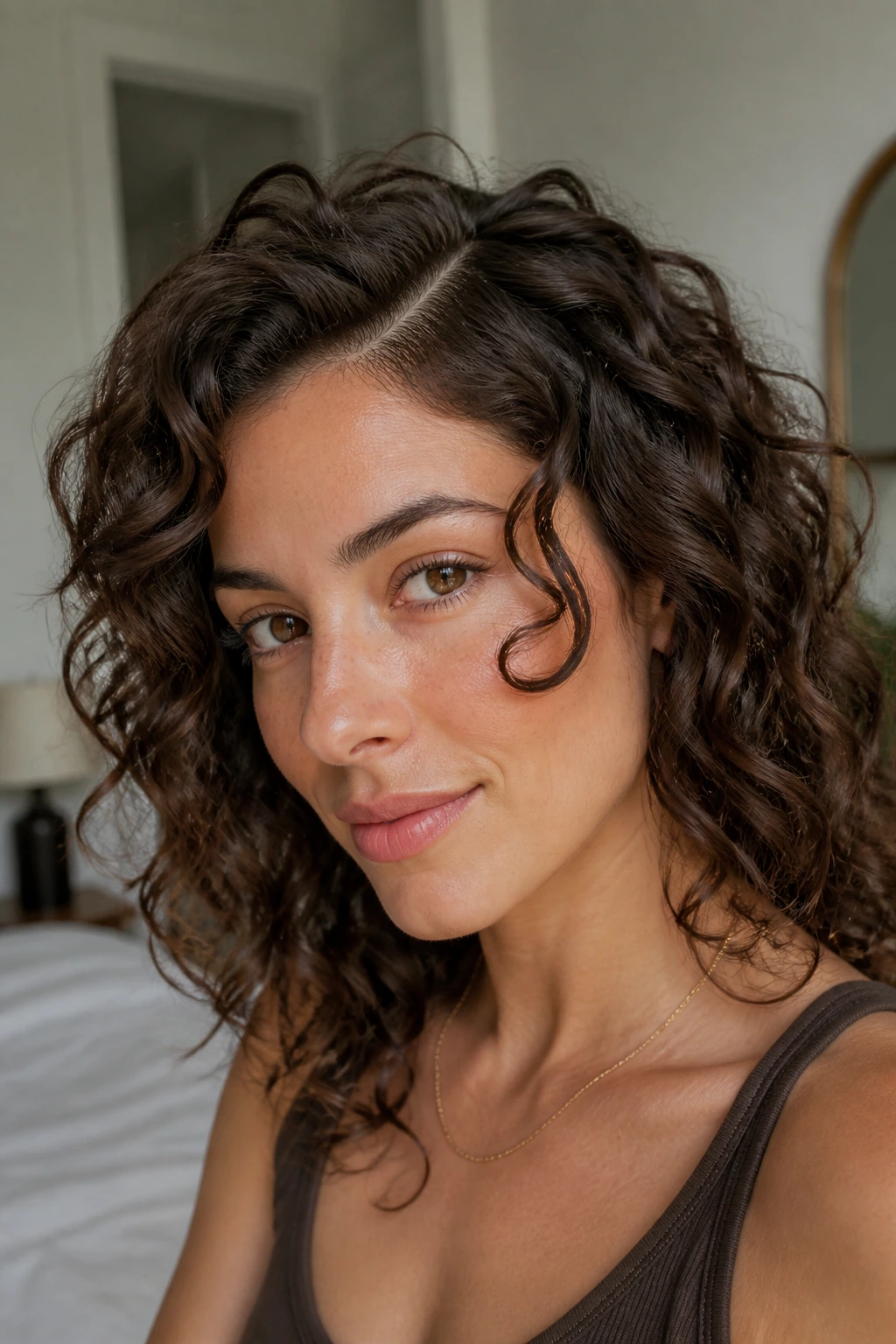
A square face looks less rigid when the part isn’t perfectly centered or perfectly straight. An asymmetrical part gives the curls a direction, and a sculpted front curl can soften the eye line near the cheek.
This is a good choice for photo days or times when you want one front piece to behave. Finger-coil the front curl while it’s damp, then pin it in place for a few minutes so it sets with a curve. The rest of the hair can stay loose and natural. That one shaped curl is enough to change the silhouette.
Quick Notes
- Works well with a side part that lands just off center
- Best when the sculpted curl starts above the cheekbone
- Keep the opposite side loose for contrast
- Use a small clip if the front keeps splitting apart
The effect is subtle. Which is exactly why it reads as polished instead of overdone.
23. A Loose Twist-Out with a Long Fringe
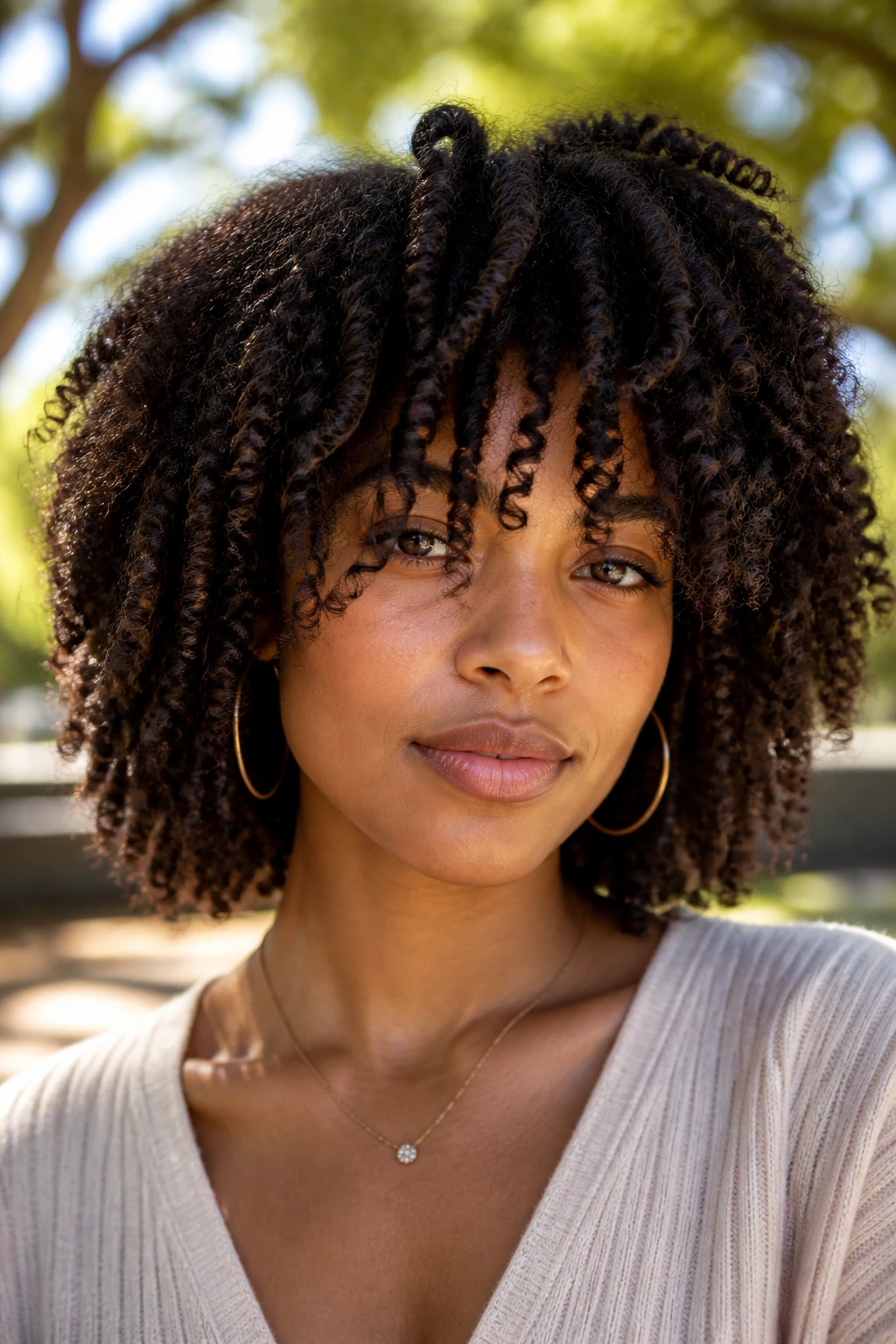
Twist-outs can look lush on medium hair when the front fringe is left a little longer and separated at the end. For square faces, that long fringe breaks up the forehead and gives the jaw less visual weight. It’s a nice way to get definition without heat.
The twist pattern also gives you control over where the curls land. If you twist the front away from the face, the finished shape curves inward softly instead of stopping in a straight line. Unravel only when the hair is dry. I mean dry-dry, not “mostly dry.” A twist-out that’s taken down too early frizzes into a puff and forgets its assignment.
Use a setting cream or lotion that has enough hold to keep the curl clump intact, then separate gently with oiled fingertips. Too much separation breaks the shape and makes the fringe look frayed.
24. Halo Volume with Defined Ends

Some styles are all about the perimeter. This one is about the crown and the ends at the same time. Let the top expand into a soft halo, but keep the ends defined so the hair doesn’t blur into fuzz around the jaw.
On square faces, that balance matters. The halo gives lift and softness up top, while the defined ends keep the lower half from getting puffy at the widest point of the face. Medium hair is ideal because it has enough length to hold the shape without dragging it down.
Use a lighter product at the roots and a stronger gel through the mids and ends. Heavy creams can flatten the halo before it has a chance to form. If your hair is dense, clip the roots while drying and keep your hands out of it until the cast sets. That patience pays off.
25. A Soft Side-Swept Bob-Lob Hybrid
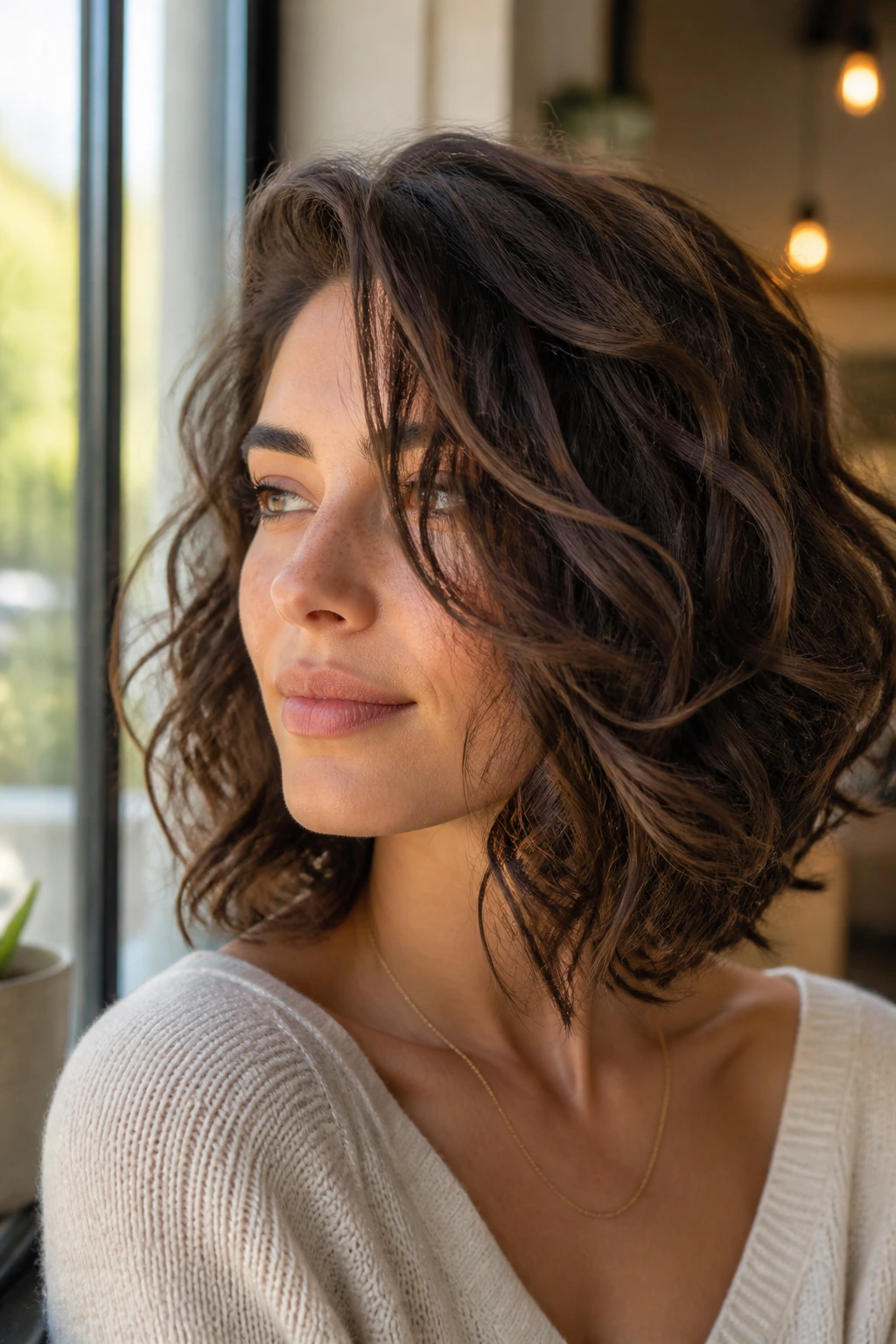
This is the style I’d pick if I wanted one curly cut that could do a lot of jobs without making a fuss. It sits between a bob and a lob, with one side a little longer and the front pieces sweeping across the cheek instead of stopping hard at the jaw. On a square face, that gentle asymmetry is doing real work.
The length should graze the collarbone or hover just above it, depending on how much shrinkage you get. Ask for the shortest front layer to stay below cheekbone level if possible. That keeps the curl from landing right where the jaw wants to look widest. It’s a strong everyday shape, but it also cleans up nicely with a clip or pin when you want something neater.
Why I’d Choose It First
- Grows out without looking awkward
- Handles both loose curls and springier ringlets
- Tucks easily behind one ear
- Keeps enough length for updos later
It’s the sort of cut that keeps paying rent for months.
Why Medium-Length Curls and Square Faces Work So Well Together
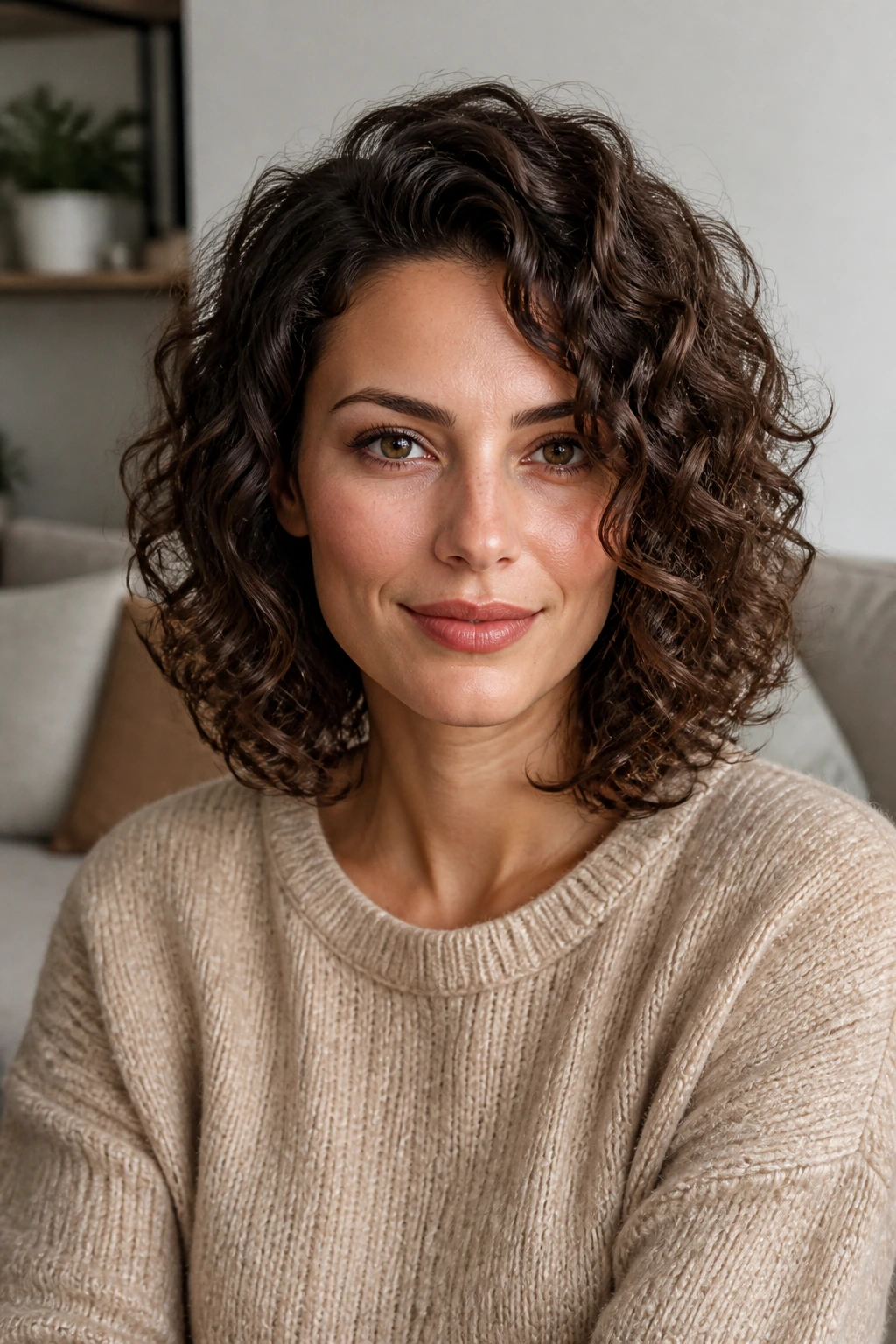
Medium length gives curls a job to do. Too short, and the hair tends to flare outward at the sides, which can make a square face look wider than it is. Too long, and curls can lose their spring under their own weight, especially if the pattern is loose or the hair is dense. The middle length lands in the useful zone where shape still matters.
Square faces also need direction more than they need concealment. A side part, a curved hemline, or a curl that falls below the jaw changes how the eye moves across the face. That’s the real trick. You are not trying to erase the jaw. You’re giving it some company.
Curl shrinkage complicates this a bit, and that’s why wet length is not the same thing as finished length. A cut that looks perfect soaked in the chair can rise an inch or three once it dries. If your hair has strong spring, the stylist needs to leave more length than feels comfortable at first glance. Strange, yes. Necessary, also yes.
And the best part? Medium curls give you room to switch between polished and casual without changing the whole haircut. That flexibility is half the appeal.
The Tools That Actually Help on Wash Day
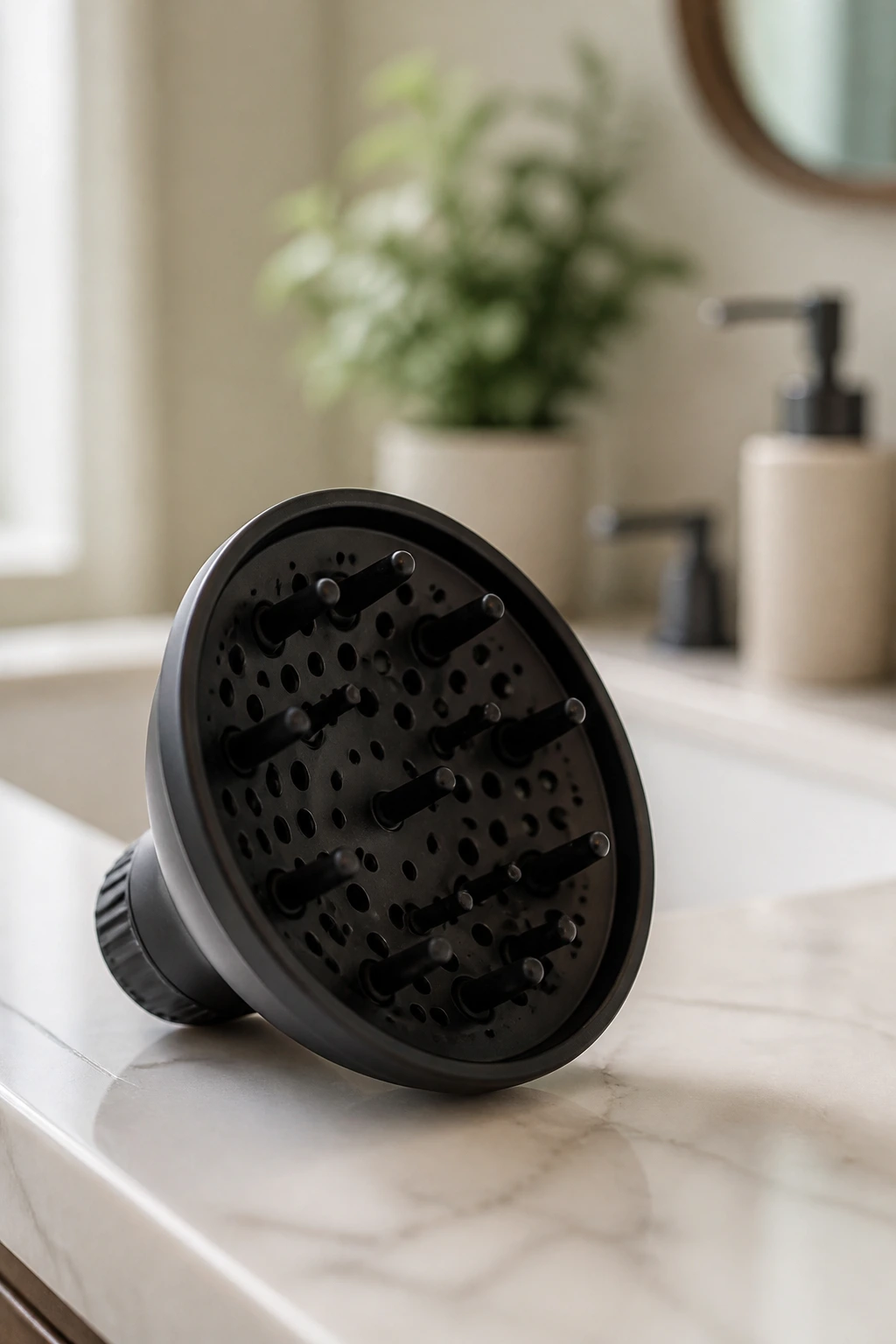
- Diffuser attachment: it lets you dry curls without blasting the pattern apart, and low speed keeps frizz from getting bossy.
- Microfiber towel or cotton T-shirt: these dry the hair without roughing up the cuticle the way a terry towel can.
- Wide-tooth comb: best for detangling when hair is soaked and covered in conditioner.
- Duckbill clips or root clips: useful for crown lift, side parts, and keeping bang sections from collapsing while they dry.
- Rattail comb: helpful if you want a crisp part or a controlled fringe.
- Leave-in conditioner: pick one with slip if your curls tangle, and keep it light if your hair is fine.
- Curl cream or mousse: cream for drier, coarser curls; mousse for finer patterns that need body.
- Gel with medium or firm hold: this is what keeps the face-framing curls from puffing outward by lunchtime.
- Satin bonnet or pillowcase: saves the part, saves the curl clumps, saves your patience.
- A few sturdy bobby pins: the unsung heroes of side-tucks, twists, and temple sweeps.
What to Ask for at the Salon and What to Buy
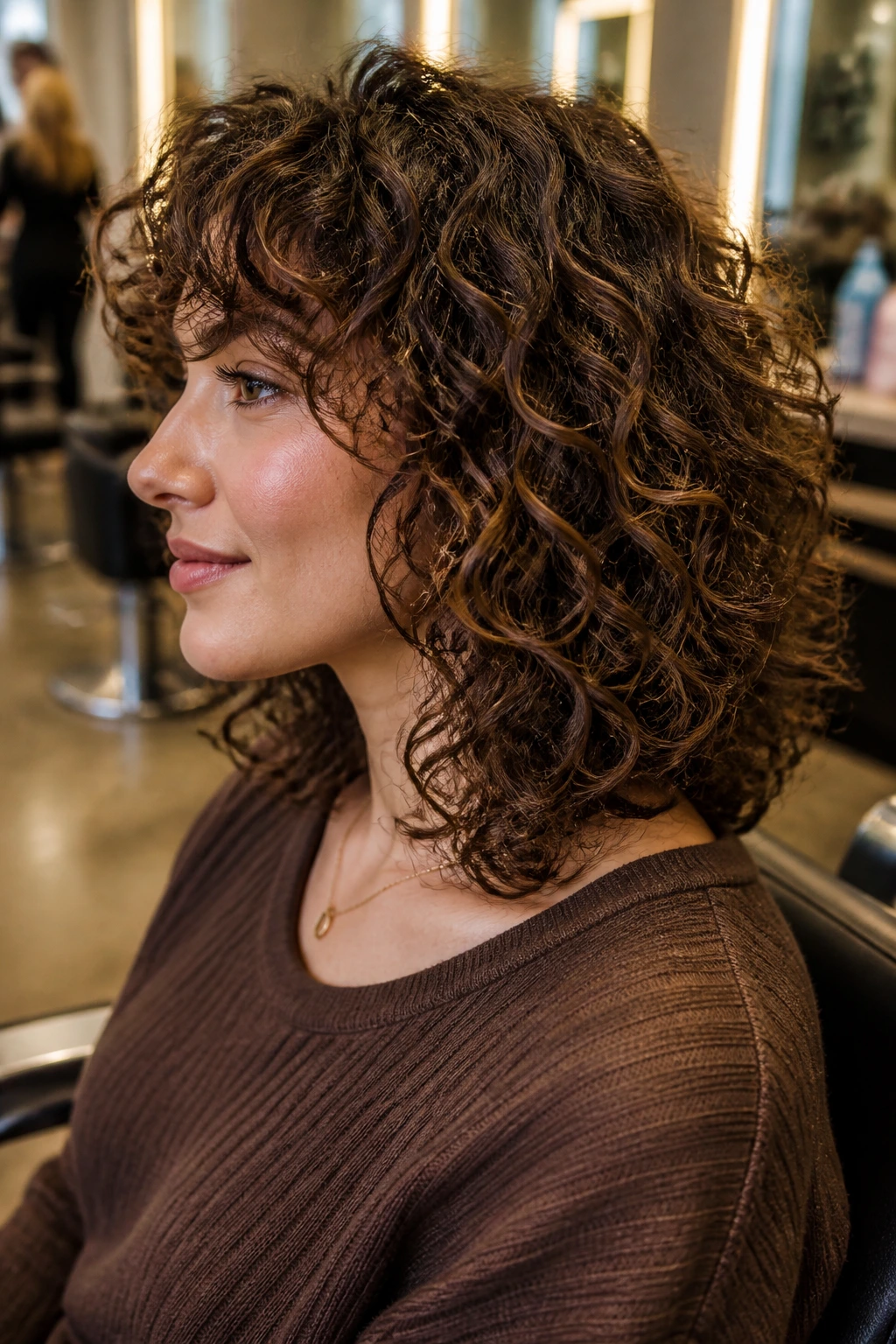
If you’re booking a cut, the shortest useful sentence is this: “I want softness around the jaw, movement at the crown, and no blunt line that lands right on the chin.” That tells a stylist more than “face-framing layers” ever will. Bring photos, yes, but also be ready to point to the exact place where you want the hair to fall — cheekbone, jaw, collarbone, shoulder.
For square faces, layer placement matters more than fancy jargon. Ask for layers that start around the cheekbone or slightly below the jaw, depending on how dense your curls are. If your hair is fine, too many short layers can make it look wispy. If it’s thick, not enough layers can make the sides balloon.
Product choice should follow curl behavior, not wishful thinking. Loose waves usually do better with mousse and a light gel. Springy ringlets like a cream-plus-gel combo. Coils often need a richer leave-in, but even then, the roots usually want less product than the ends. Heavy butter near the scalp is how a good curl cut gets dragged into a flat day.
How to Style These Curls Without Flattening the Shape
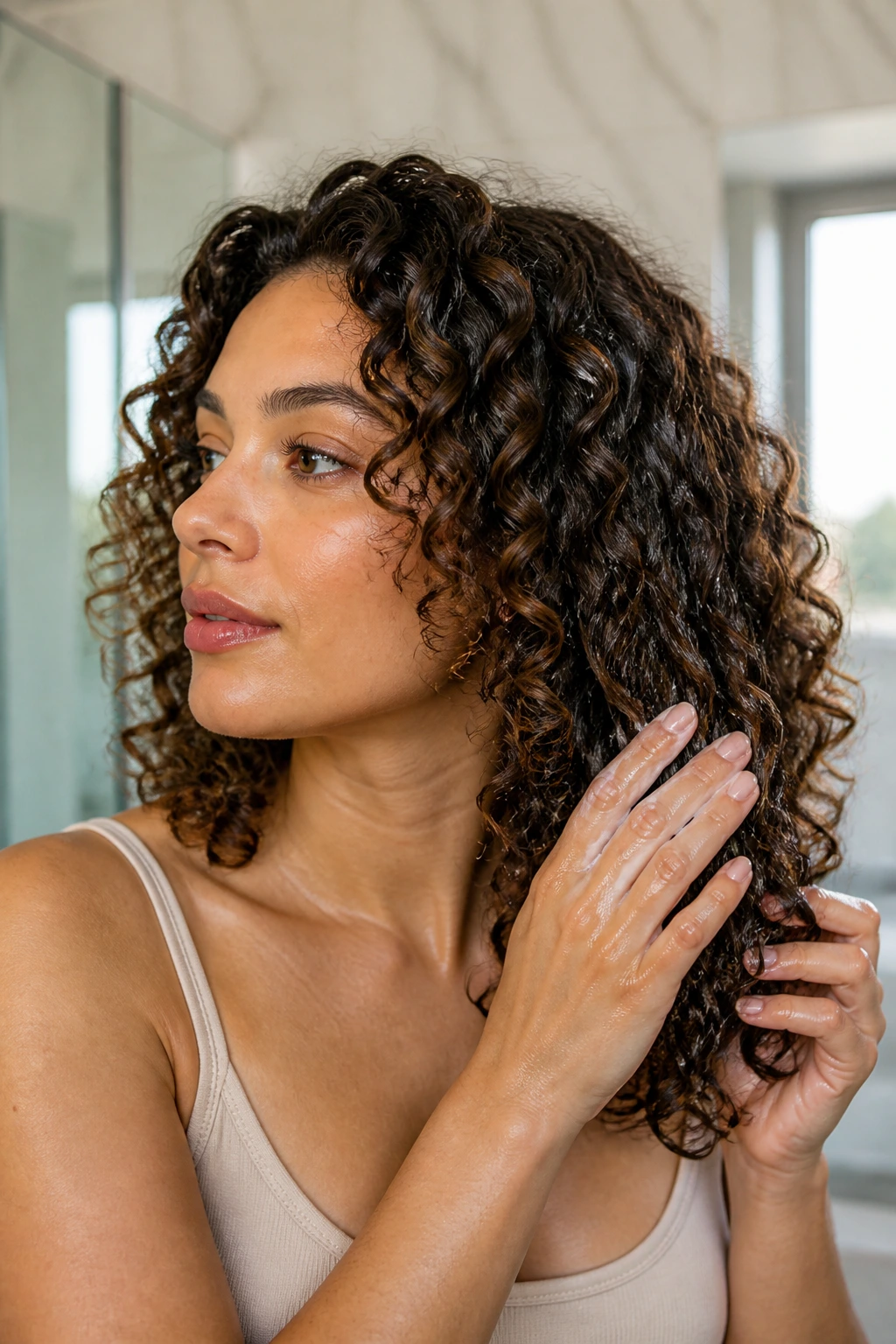
Parting: start by choosing the part before the hair dries. A side part adds movement fast, but a center part can work if the front pieces are longer than the jaw and the crown has lift.
Root lift: clip the crown for 10 to 15 minutes after styling, especially if your curls naturally lie flat at the top. That tiny lift makes the whole face look less wide.
Definition: smooth product through the mids and ends with your hands, then leave the curl clumps alone. The more you rake through them after drying starts, the more the silhouette turns fuzzy at the sides.
Refresh: on day two or three, mist the front pieces, twirl a few curls around your finger, and press them back into shape. You do not need to rewash every time the front goes sleepy.
Finish: if you use gel, wait until the cast forms before scrunching. Breaking it too early is how curl definition slips away and the sides puff out.
Mistakes That Make the Jaw Look Heavier
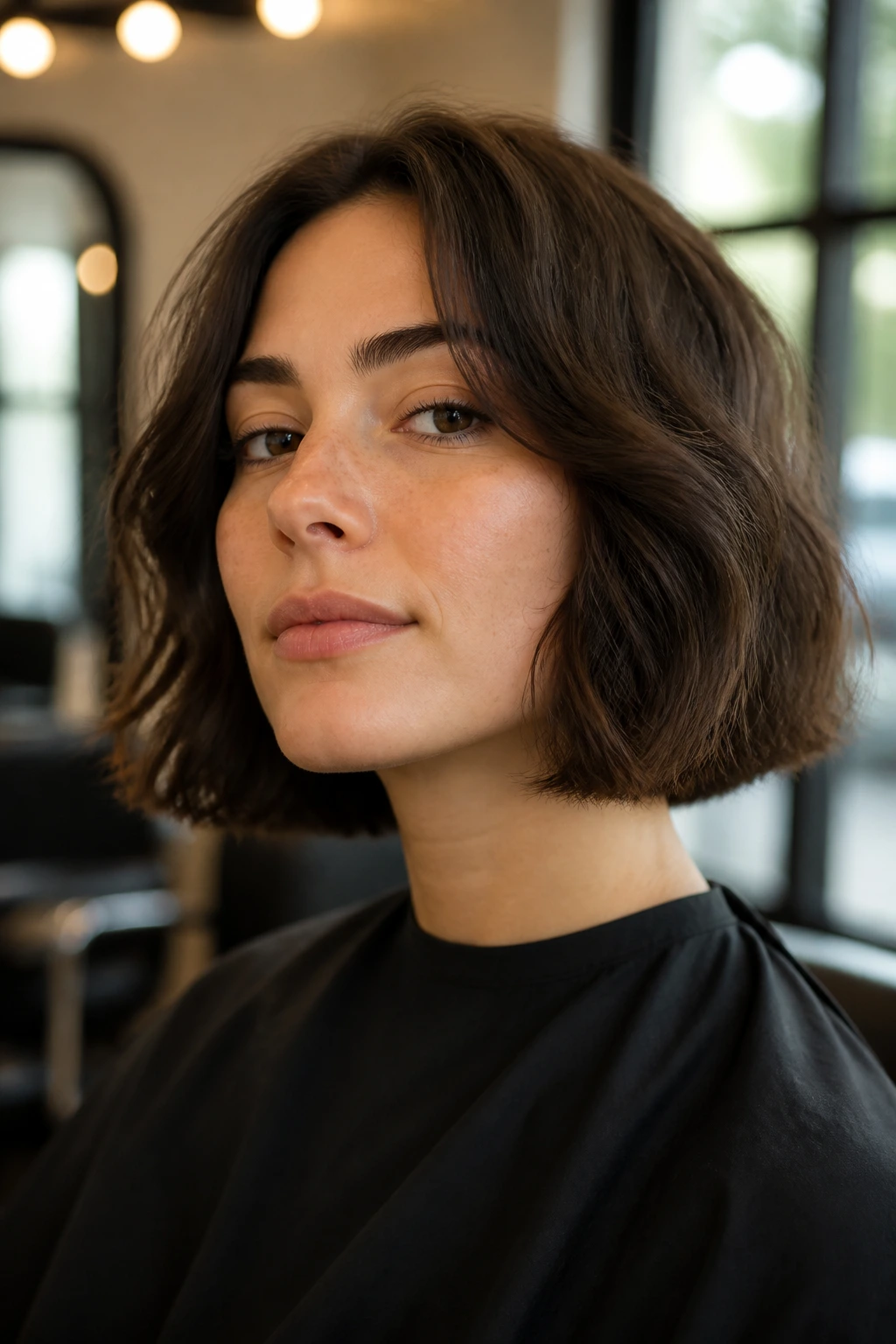
The first mistake is cutting the hair so it ends exactly at the jaw. On a square face, that creates a hard line right where the face is already strongest. The fix is simple: go longer, or add layers that move the eye away from that point.
Another one is widening the hair at ear level. When the fullest part of the curl sits at the widest part of the face, the whole shape feels boxier. Ask for lift at the crown or softness through the interior instead.
Brushing curls dry is another classic mess-up. It stretches the hair outward in every direction and erases the defined shape that helps a square face look softer. Detangle wet, with conditioner, and leave the dry brush for emergencies only.
Heavy oils at the root can ruin a good shape fast. They collapse the top, the sides spread out, and suddenly the haircut reads flat and broad. Use heavier products on the ends where they can actually do some good.
Finally, don’t chop the fringe too short. Curly bangs that land high on the forehead can look cute on round faces and unforgiving on square ones. Longer, softer, cheekbone-skimming fringe tends to sit better.
Best Variations for Different Curl Patterns and Routines
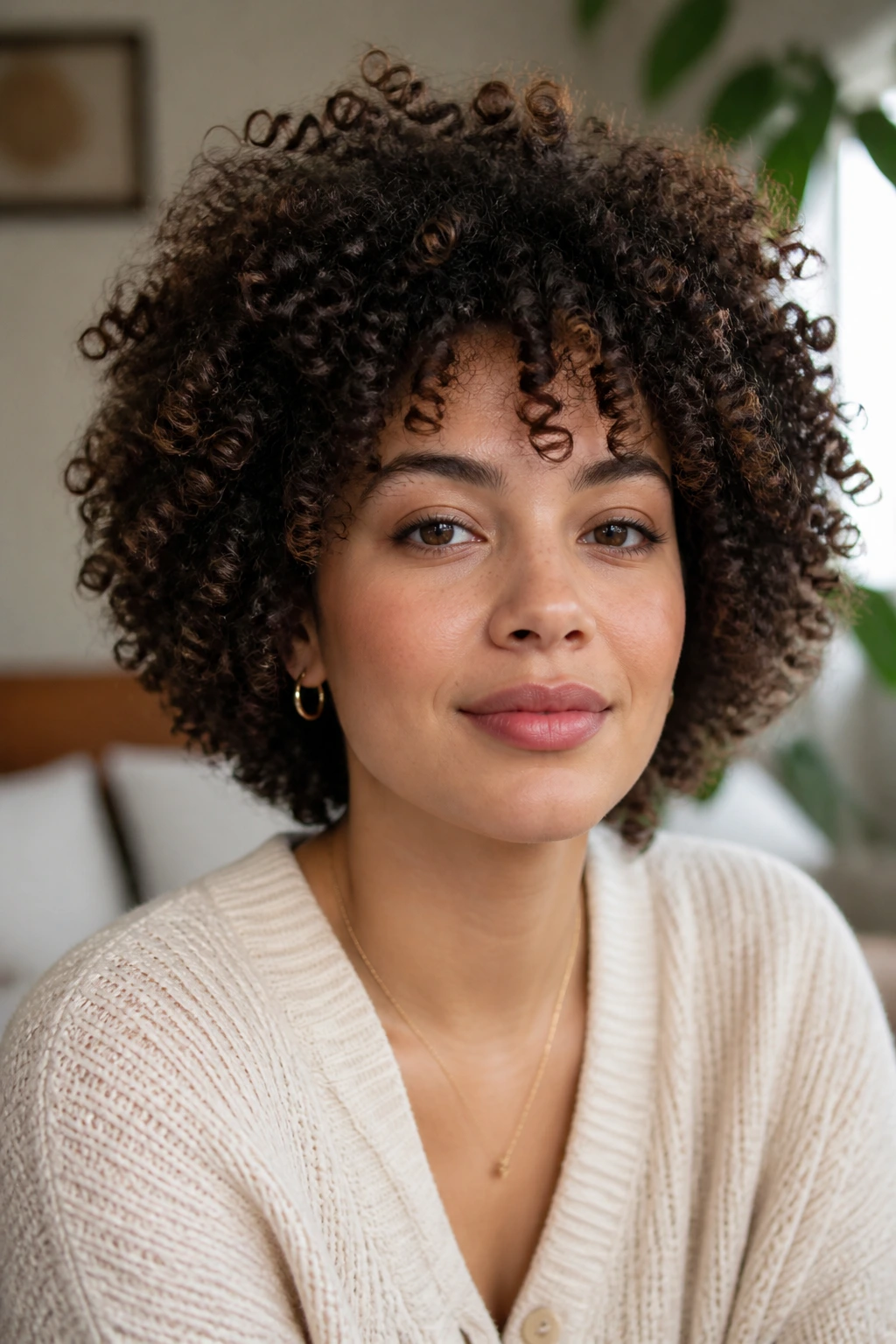
Soft Lift for Fine Curls: use mousse, a light leave-in, and fewer layers. Fine curls need body more than weight, so the goal is airy movement, not rich thickness.
Carved Shape for Thick Curls: ask for interior debulking and a rounded perimeter. Thick curls can handle bolder layers, but the ends should still keep enough length to curve below the jaw.
Coily Halo Balance: choose a round silhouette with crown lift and a carefully shaped edge. This keeps the hair from widening at the sides and gives square faces a cleaner outline.
Low-Manipulation Week: pick cuts that work with a side part, a twist-out, or a pineapple overnight set. If your routine needs to stay quick, the haircut should hold the shape even when you barely touch it.
Dress-Up Definition: finger-coil just the front pieces, then keep the rest loose. This works when you want the face-framing curls to read crisp while the body stays relaxed.
Keeping the Shape Fresh Between Washes

Medium curls tend to hold up better than very short or very long hair, but they still need a little care between wash days. Sleep on a satin pillowcase or wear a bonnet if you want the part and front pieces to stay in place. Cotton pillowcases rough up the curls and flatten the crown faster than people expect.
On day two, a light mist of water mixed with a little leave-in is usually enough. Focus on the front and the crown first. Those are the parts that change the face shape most. If the ends need help, scrunch them upward with damp hands and let them dry before you touch them again.
If your hair likes to tangle, keep the curls in a loose pineapple at the top of your head when you sleep. Not tight. Loose. Tight bands leave dents, and dents on curly hair are annoying in a way only curly people really understand.
Clarify every couple of weeks if styling products start making the curls dull or sticky. And trim the shape every 8 to 12 weeks if you want the layers to keep landing where they should. Once the front pieces creep up too high, the whole face-framing effect starts to drift.
Questions People Ask Before They Book the Cut
Are center parts bad for square faces?
Not automatically. A center part can work when the front pieces are long enough to move past the jaw and the crown has some lift. If the sides are flat and the ends stop at the jaw, though, the center line can make the face feel straighter.
Should square faces avoid blunt curly bangs?
Blunt bangs that sit high can be tricky, yes. Softer curtain bangs or longer curl-forward fringe usually sit better because they break up the forehead without drawing a hard line across it.
What length is safest if my curls shrink a lot?
Collarbone to shoulder length is the easiest zone to manage. You want enough dry length left after shrinkage that the curls still fall below the jaw.
How do I stop curls from puffing at the cheeks?
Keep the fullest layers above the cheekbones or below the jaw, not directly on the widest part of the face. A side part and a little root lift help too.
Can thick hair and square faces wear medium curls without looking huge?
Yes, but the haircut needs interior layers. Thick hair often needs shape removal inside the cut so the sides don’t balloon at the jawline.
Do these looks work on looser waves, or only tighter curls?
They work on both, but loose waves usually need lighter product and a bit more help from clips or parting tricks. Tighter curls carry the shape more naturally once the cut is right.
What if one side of my hair always falls flatter?
That’s common. Clip the flatter side at the root while drying, and don’t be afraid to part slightly off-center so the stronger side can carry a little more of the shape.
How often should I trim?
Every 8 to 12 weeks is a good range for keeping the layers where they belong. If the curl pattern is tight or the shape starts widening at the sides, trim a little sooner.
The Shape That Keeps Working

Square faces do not need to be hidden. They need lines that move a little. Medium-length curls are good at that when the cut, the part, and the finishing touch all pull in the same direction.
The best styles on this list are the ones that give the jaw some softness without making the hair feel weak or overworked. Side parts, collarbone length, cheekbone layers, and a bit of crown lift keep showing up for a reason. They change the silhouette in a way you can actually see.
Pick one shape that fits your curl pattern and your patience level, then wear it for a week or two before deciding what needs changing. Usually, the first adjustment is tiny: a deeper part, a longer front piece, a little less bulk near the jaw. That’s where the good stuff happens.