



Thin hair and a round face can make the usual hairstyle advice feel backwards. A lot of the loudest volume tricks — tease the crown, puff out the sides, pile on big curls — do the opposite of what you want. They make the face look wider and the hair look thinner at the same time. Not a great trade.
The better move is usually quieter. A clean side part, a blunt line at the jaw or collarbone, a tucked side, or a low knot that stays close to the head can do more for your face shape than a whole can of volumizing spray ever will. Flat hairstyles are not code for “lifeless.” They’re code for control. The line is tidy, the silhouette is narrow, and the eye goes where you want it to go.
That matters more with fine or low-density hair, because the cut has to do some of the work the hair itself cannot do. A good shape can make the ends look denser, keep the crown from ballooning, and stretch a round face in a way that feels natural instead of staged. Some of these styles are salon-friendly. Some are five-minute fixes on a morning when your hair has already voted against you. A few are blunt and polished, and a few lean soft and cheek-skimming. All of them play better with thin hair than the average “big hair” advice you see everywhere.
Why These Hairstyles Earn Their Keep
-
They stop the sides from widening your face: Styles that sit close to the temples and cheeks keep the widest part of the hair from lining up with the widest part of a round face.
-
They make thin hair look denser at the ends: A blunt bob, a tucked lob, or a low knot with a clean outline gives the eye a solid edge to read, which is half the battle with fine strands.
-
They use parts as shape tools: A deep side part creates a diagonal line. A center part creates a long vertical line. Either one can help, depending on where your face needs balance.
-
They keep the crown under control: Puff at the top can make a round face look rounder. A smooth crown, even if it takes a little serum or a clip to set, usually gives a cleaner result.
-
They work with thin hair instead of fighting it: You do not need a thick, bouncy blowout for every look. Some of the best styles on this list are flat on purpose, and that calm shape is what makes them flattering.
-
They still leave room for personality: A tucked ear, a sharp angle, a narrow fringe, or a scarf wrapped at the base can change the mood fast without adding bulk.
1. Deep Side-Part Sleek Bob
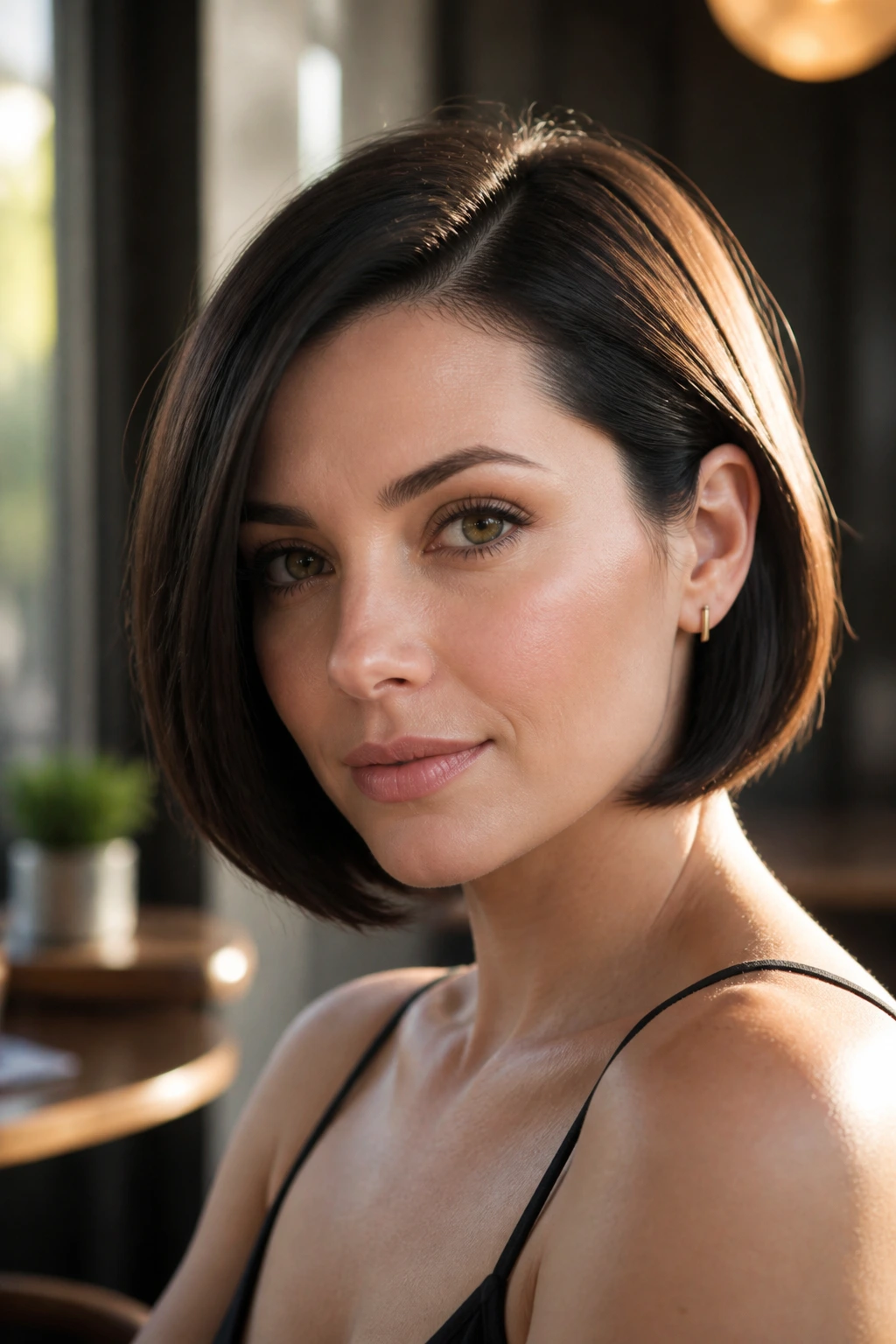
A deep side-part bob is one of those cuts that looks almost suspiciously simple until you see what it does to the face. The part throws the eye off center, which breaks up the roundness around the cheeks, and the bob itself gives thin hair a strong edge to hang on to. Keep it grazing the jaw or just below it, not right at the widest part of the face.
The trick is in the finish. Flat at the crown, smooth through the sides, and only a small bend under at the ends. If the ends flip out, the whole shape starts to feel bubbly. If they tuck in just a bit, the line gets cleaner and the hair reads thicker.
Why it works: A deep part creates a long diagonal, and diagonals are your friend here. They lengthen the face without screaming for attention. The bob also keeps hair from collapsing into stringy lengths that can make fine hair look scraggly by noon.
How to style it: Blow-dry with a nozzle pointed downward, then use a flat iron only on the last inch or two. Finish with a pea-sized amount of serum on the ends, not the roots. Too much product on the scalp will flatten the whole shape and make the part look greasy.
A small tuck behind the lighter side ear changes the whole line. That little move matters more than most people think.
2. Chin-Length Blunt Bob With Tucked Ends
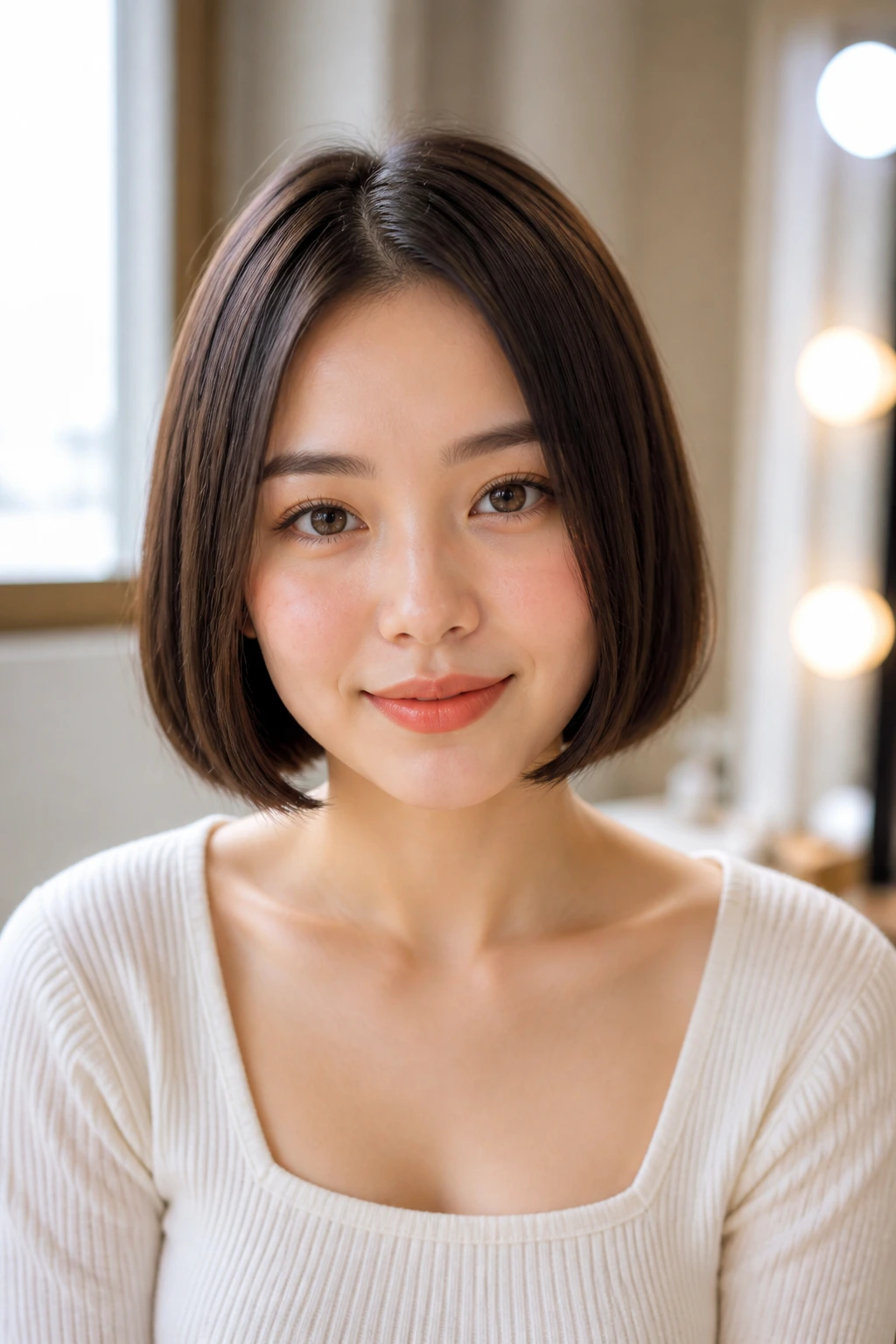
If your hair is fine and your face is round, a chin-length blunt bob is a strong choice when you want structure without puff. The blunt edge gives the ends a thicker look, which is gold for thin hair. And because the length sits right at the chin, the eye gets pulled down instead of sitting on the cheeks.
This cut does best when the ends are kept controlled. A tiny inward bend, nothing more. If the bob rounds too much at the bottom, it can start to echo the shape of the face, which is exactly what we do not want.
The clean-line version
Ask for a blunt perimeter with very light internal shaping only if your hair needs movement. That means the outside edge stays full, while the inside gets a little relief so it doesn’t poof out at the sides. On styling day, a round brush or flat iron can tuck the ends under just enough to keep the shape tidy.
Use a side part if your face feels widest through the cheeks. Use a center part if your jawline is softer and you want a longer look. Either one can work; the blunt edge is doing most of the heavy lifting.
3. Collarbone Lob With Invisible Layers
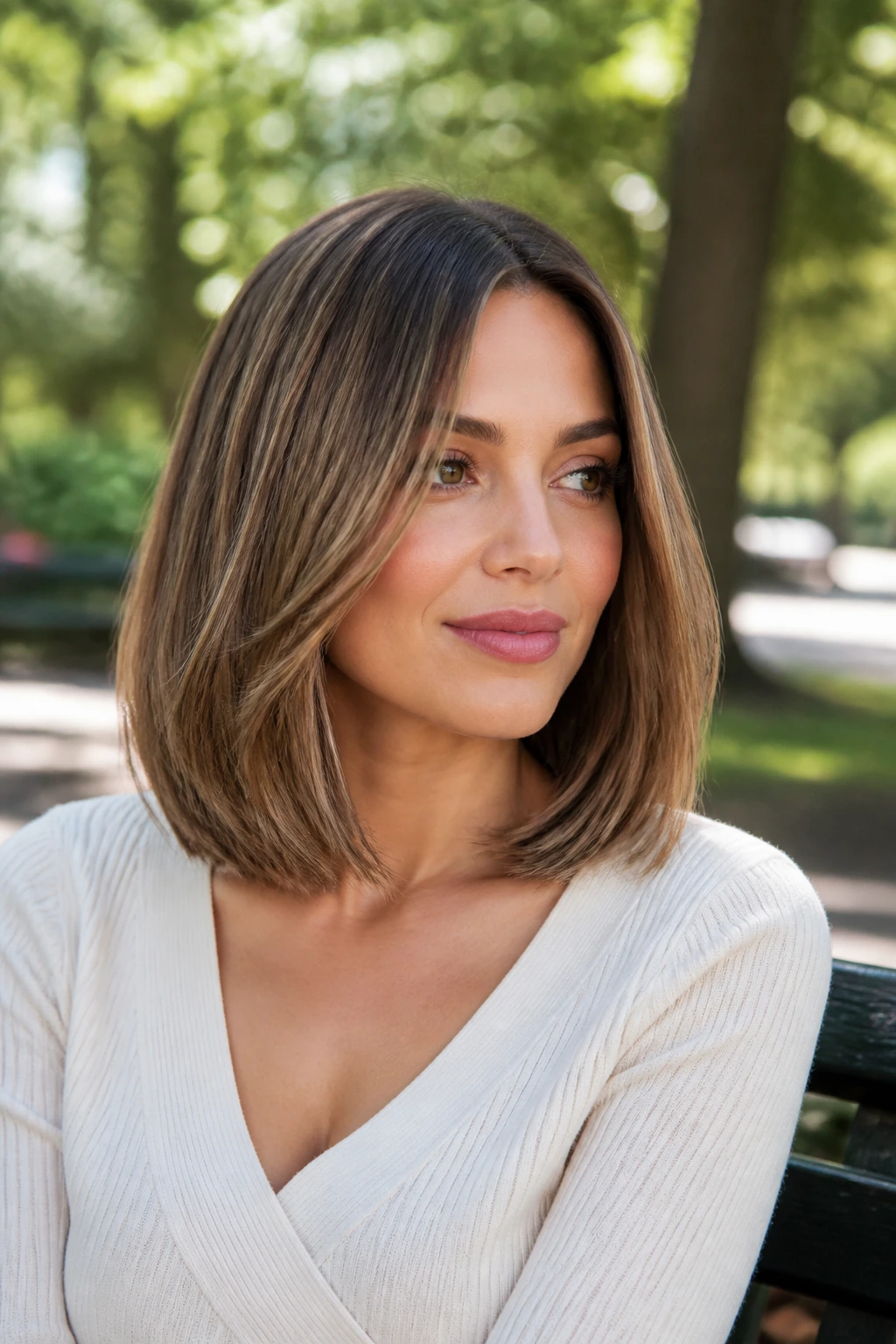
A collarbone lob is one of the safest bets for thin hair because it keeps enough length to feel feminine and enough weight to avoid that wispy, see-through tail at the ends. The collarbone is a useful stopping point. Hair at that length moves, but it doesn’t collapse the way longer fine hair often does.
Invisible layers matter here. Not chunky steps. Not shaggy bits flying every direction. Invisible layers are tucked inside the cut so the outside line still looks full. That keeps the hair from looking choppy while still giving it a little bend.
What to ask for: a lob that skims the collarbone, with very light internal layering and a soft face frame that starts below the cheekbone. If the shortest pieces hit the cheeks, the cut can widen the face. If they start lower, the eye keeps moving.
This style is a good one for people who want to air-dry more often. A light mousse at the roots and a smoothing cream through the mids can be enough. It’s not a fussy haircut. That’s the appeal.
4. Low Ponytail With a Clean Side Part

A low ponytail sounds plain until you make the part do some actual work. On a round face, a clean side part gives the ponytail a bit of direction. The hair moves across the forehead, then drops straight down the back of the neck, which gives you a longer line from front to back.
The low placement matters. High ponytails can lift the face, but they can also throw a lot of attention to the upper cheeks. A ponytail at the nape keeps the profile slim and lets thin hair keep its shape. If the tail looks sparse, wrap a small section of hair around the elastic. That tiny cover-up helps more than piling on more hair spray ever will.
A few face-framing pieces help too, but keep them narrow. Thick tendrils can add bulk at the sides. Skinny ones, cut softly around the cheekbone, soften the face without widening it.
A plain elastic. A tail comb. A little smoothing cream. That is usually enough.
5. Low Chignon With a Center Part
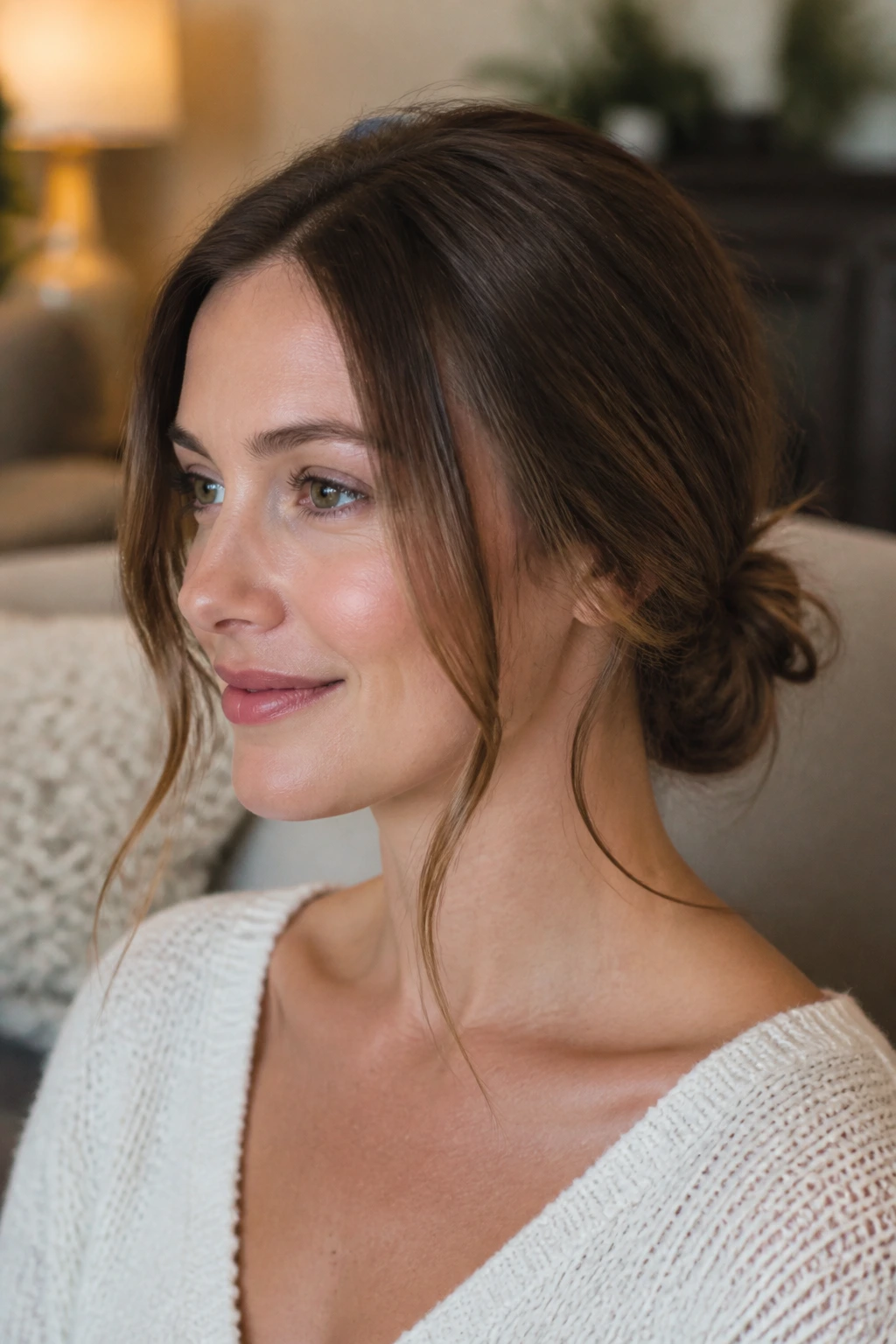
A low chignon can be a quiet little cheat for thin hair. It gathers the length into one compact shape at the nape, which keeps the sides flat and clean, and the center part draws a straight line up the face. That line helps round features look a touch longer.
The bun itself should not be oversized. Big buns look pretty in theory, then sag in real life on fine hair. A tighter, smaller chignon often looks richer because the hair is concentrated instead of spread thin. If you need more grip, prep the hair with dry shampoo or texturizing spray before twisting it up.
Keep the front pieces simple. A little bend at the temples is enough. Overworked curls at the front can make the face look busier than it needs to be.
This one shines for dinners, interviews, weddings, and any day when you want your hair to behave. It also survives humidity better than loose lengths. That alone earns it a place on the list.
6. Tucked-Behind-Ears Lob
Tucking the front of a lob behind the ears sounds almost too easy, but that move changes the whole frame around the face. It opens the cheeks, cuts down on width at the sides, and keeps the shape from puffing outward. On thin hair, it’s also practical. Less hair sitting forward means less chance of the style going flat in a bad way.
A lob that lands between the chin and collarbone works best here. Too short and the tuck can look severe. Too long and the front pieces start to hang instead of staying put. A little bevel at the ends helps them sit nicely against the neck and jaw.
Why this one works so well on round faces
The ear tuck creates a visual break. The eye sees a narrow top section, then the long line of the lob, then the neck. That sequence is doing the flattering work. It’s subtle, but it’s not accidental.
Use one side tucked and the other loose if you want a softer look. Or tuck both sides and leave a few pieces near the temples out. Both versions keep the shape slim without making the haircut look severe.
7. Curtain Bangs With Straight Lengths
Curtain bangs can work beautifully on a round face — if they are cut with restraint. The good version starts around the brow or slightly below it, then opens out toward the cheekbones. That soft split gives the face some shape without chopping the forehead in half.
The danger is making the bangs too thick. Heavy fringe eats up density on thin hair, and then the rest of the cut looks stringy. Better to keep them airy and let the sides do the framing. Straight lengths below the bangs make the whole style read cleaner.
Ask for bangs that blend into the front layers rather than a blunt shelf. That blend matters. You want a sweep, not a wall. If your hair is very fine, a small round brush at the roots of the bangs can give just enough bend to keep them from separating.
This style is good if you like a little softness around the face but do not want the whole haircut to balloon outward. It feels modern, but not shouty.
8. Asymmetrical Bob With One Longer Side
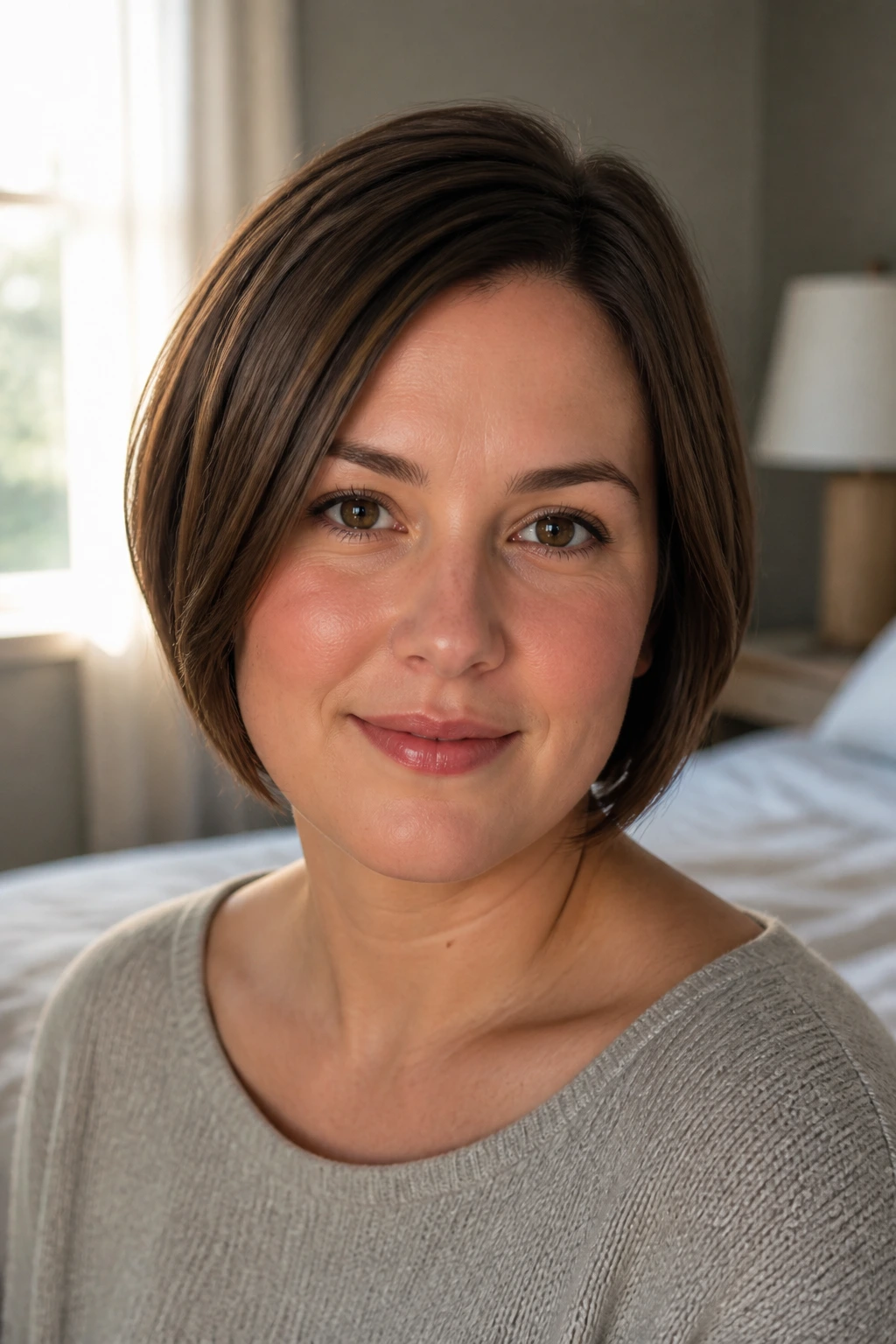
An asymmetrical bob is a smart move when a round face needs a little visual tension. One side is slightly longer than the other, and that uneven line keeps the eye moving. Round faces like movement. They do not love perfect circles sitting around them.
The cut works best when the shorter side still clears the cheek, while the longer side falls closer to the jaw or a touch below. Keep the edge smooth. If the finish gets too shaggy, the asymmetry loses its shape and the whole thing starts looking accidental.
A side part usually makes this cut sing. It pushes the longer side forward and turns the shorter side into a neat frame. On thin hair, the asymmetry also helps the ends look fuller because the cut is not asking every strand to do the same job.
This is one of those styles that can look sleek at work and a little edgy with a sharper outfit at night. Same haircut. Different attitude.
9. Glass Hair With a Middle Part
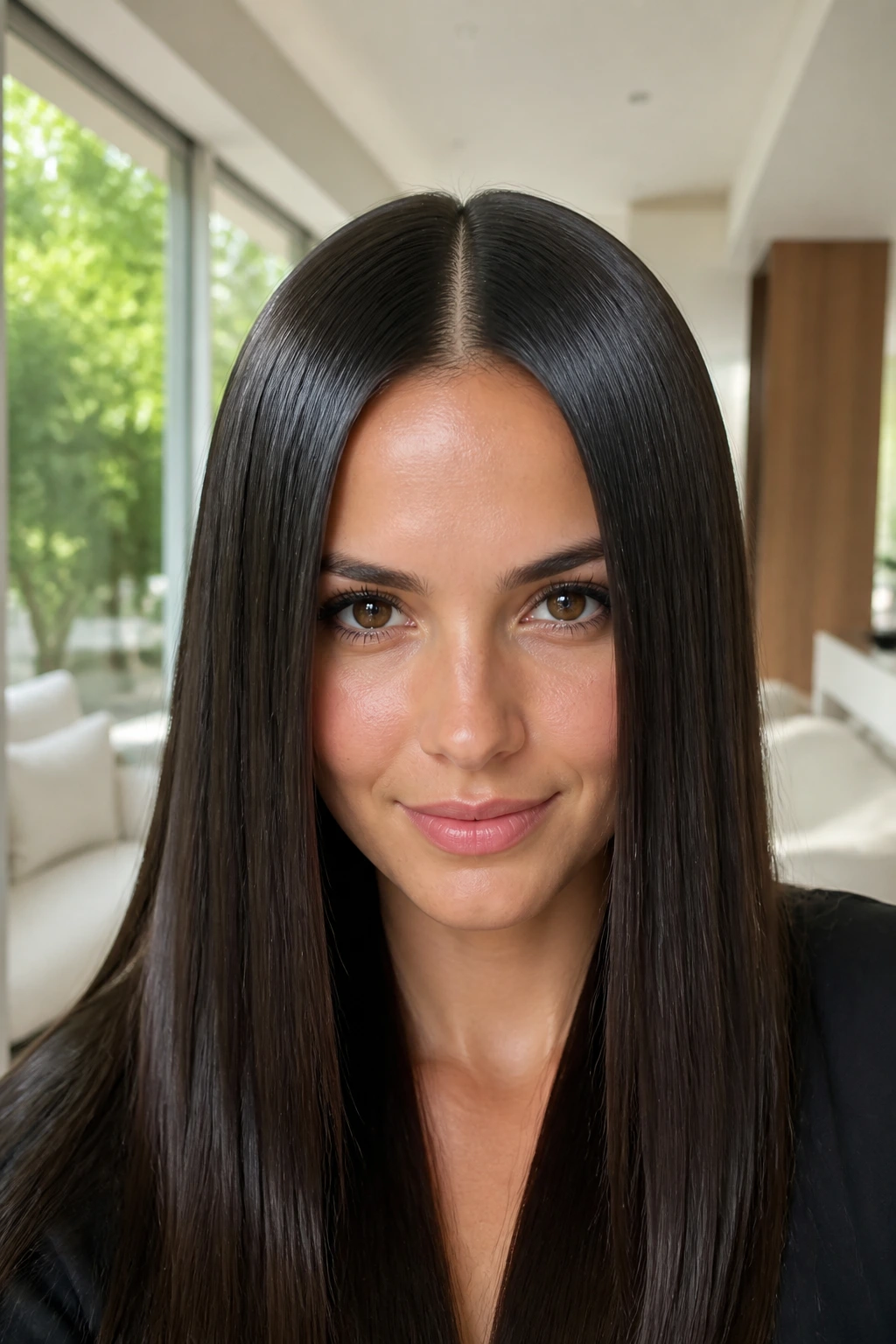
Glass hair is glossy, smooth, and a little severe in the best possible way. For thin hair and a round face, that severity can be useful. A middle part and a long, straight line down the head create vertical length, and the shine makes the hair look healthier and denser than it is.
The key is precision. Flyaways matter here. So does product choice. A light heat protectant, a flat iron used in slow passes, and a finishing serum on the lower half of the hair can produce that reflective surface without turning the roots greasy.
Do not pile on a heavy cream at the crown. That steals the shape fast. Keep the top clean and smooth, then add a little weight only where the hair needs it. If the ends are dry, clip them inward for a few minutes after straightening so they set neatly.
This style is not forgiving of rushed work. It rewards patience. But the payoff is a clean, long line that makes round faces look sharper and thin hair look deliberate.
10. Side-Swept Pixie With a Long Fringe
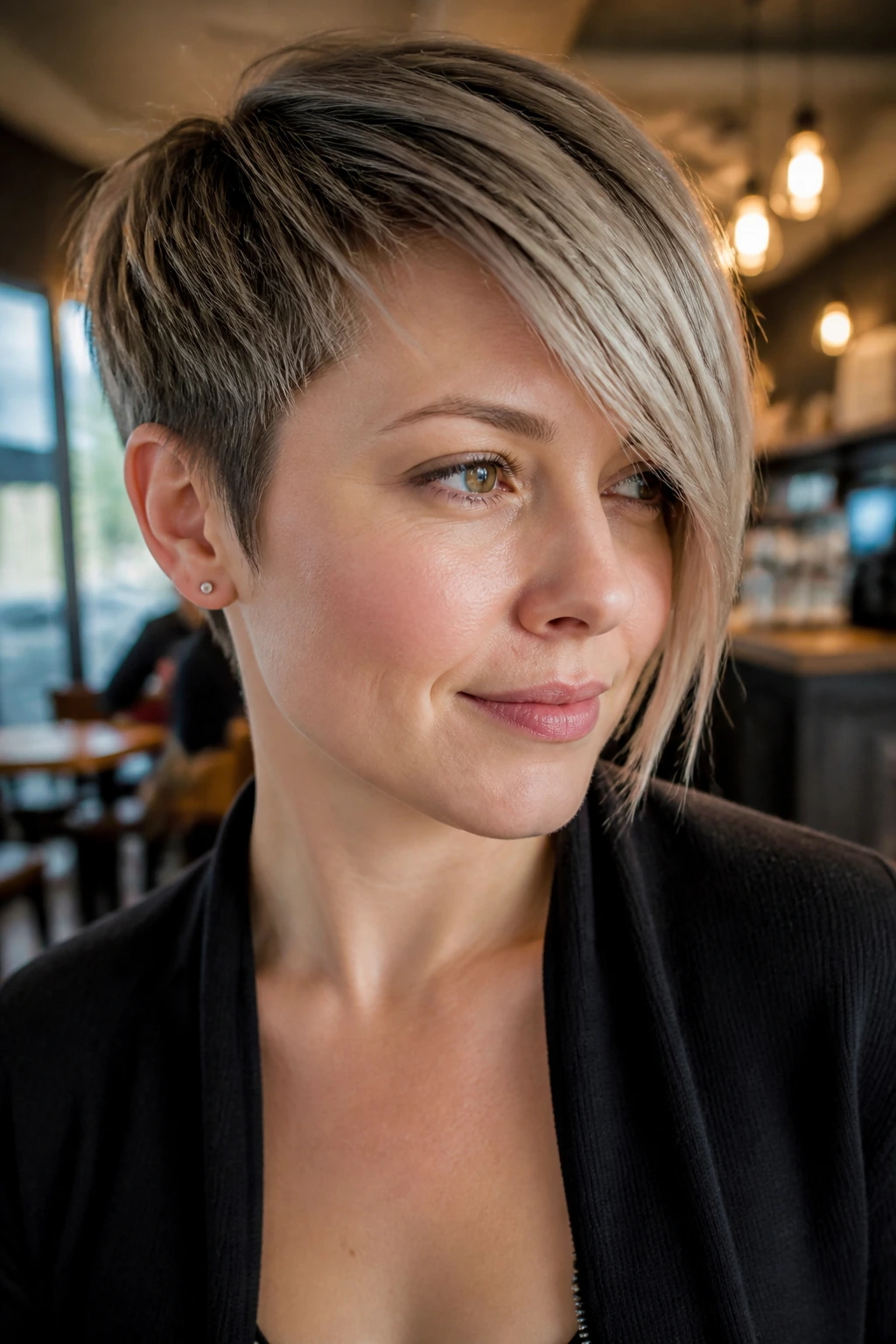
Short hair can be one of the best answers for thin strands, and the side-swept pixie proves it. The crop keeps the sides close to the head, which avoids widening the face, while the long fringe falls diagonally across the forehead and cheek. That diagonal is the whole story.
A good pixie for a round face is not a puffed-up cap of hair. It’s tighter at the back and sides, with enough length on top to sweep forward or sideways. The fringe should skim, not block. A heavy blunt bang at this length can make the forehead look shorter, which usually works against a round face.
Best styling move: blow-dry the fringe in the direction you want it to lie, then pin it for a minute while it cools. That helps the hair remember the shape. A tiny bit of paste through the ends gives separation without turning it crunchy.
This is a strong option if you want low styling time and a sharper outline. It’s also easier to keep looking fresh than many longer cuts on fine hair. That alone makes it worth considering.
11. Soft Shag With Flat Roots
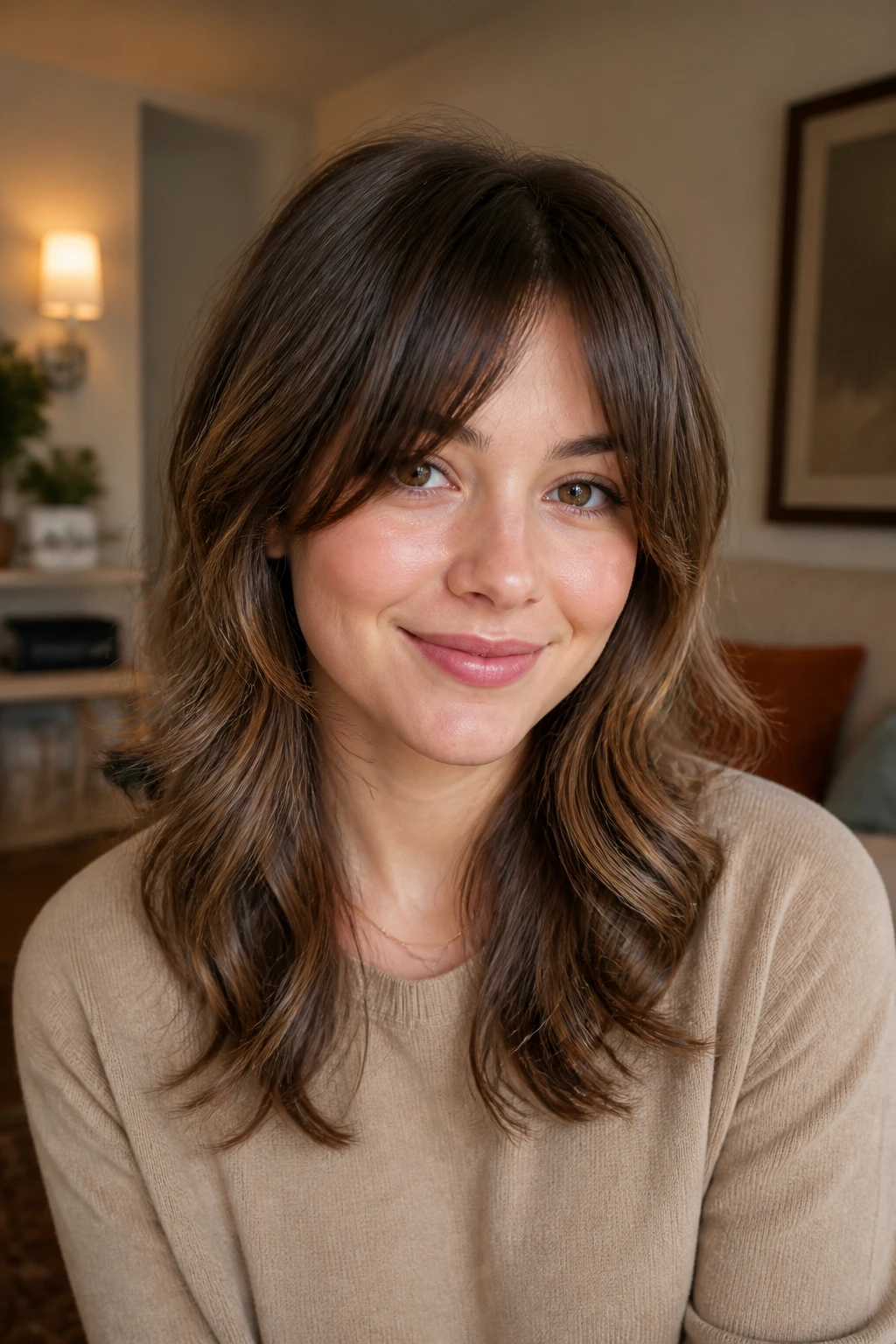
A shag can work on thin hair, but the wrong shag turns into a frizzy cloud fast. The useful version keeps the roots flat and the texture concentrated lower down, around the eyes, jaw, and ends. That way you get movement where it helps and control where it matters.
Round faces need the shag to be selective. The shortest pieces should not sit right at the cheeks, because that creates width. Instead, let the layers start a bit lower and travel downward. The shape should look more like a long frame than a halo.
How to keep it from puffing out
Use a lightweight mousse or spray on damp hair, then rough-dry the roots with your fingers while keeping the crown pressed down with the dryer nozzle. Once the hair is almost dry, twist a few sections around your fingers to create bend only in the lower lengths.
This is the shag for people who want a little texture without looking like they slept in a wind tunnel. That line between lived-in and messy is thin. Stay on the right side of it.
12. Long Layers That Start at the Collarbone
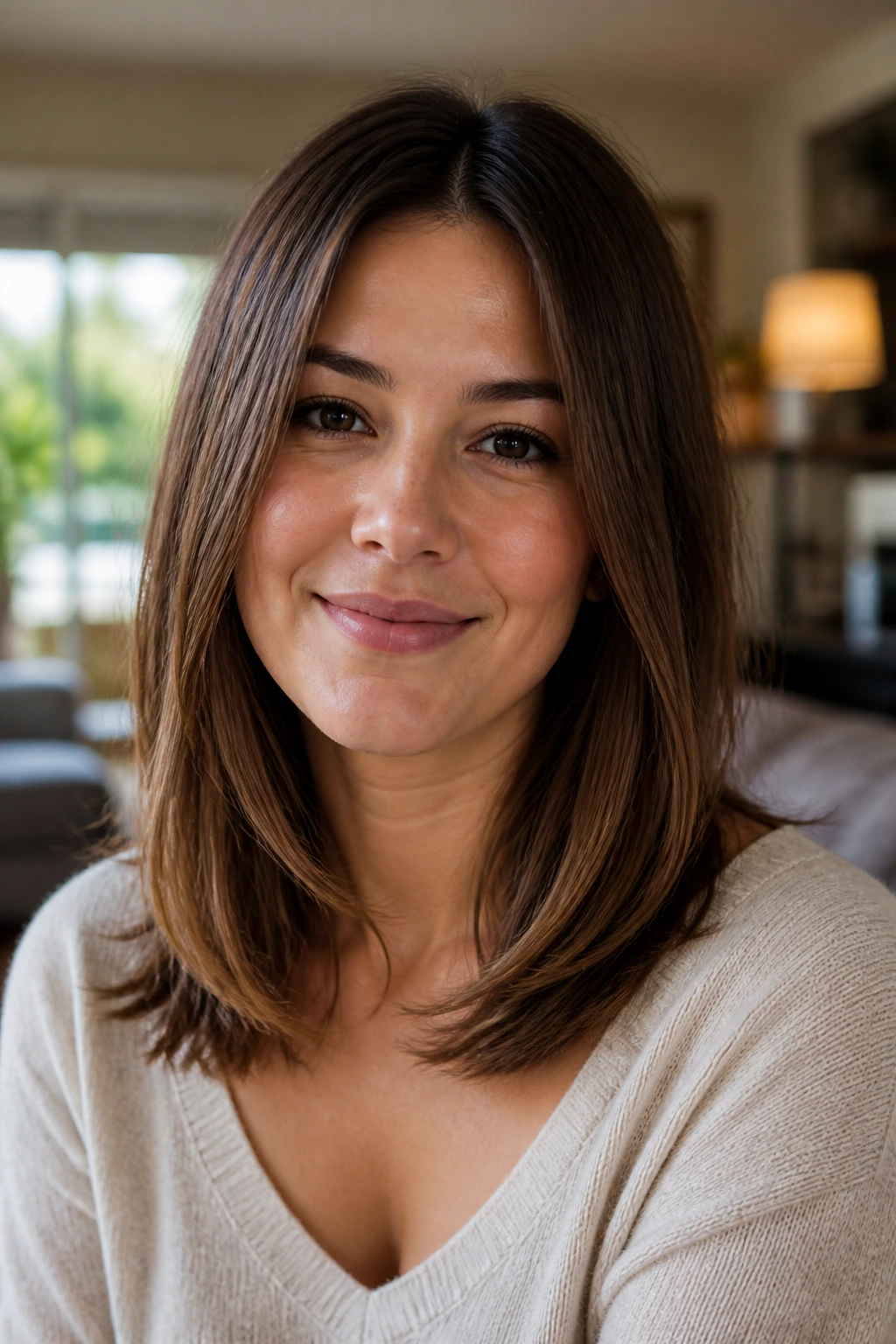
Long hair does not have to mean heavy hair. On thin strands, the trick is to keep the length but avoid layers that chop the ends into wisps. If the layers start at the collarbone or lower, the top can stay fuller while the lower pieces still move.
Round faces benefit from this because the eye keeps traveling down. That’s the whole point. Long vertical lines stretch the face in a way that side volume cannot. The ends can be beveled slightly, but they should stay blunt enough to read as a solid line.
This cut is not the place for aggressive feathering around the cheeks. A soft face frame is fine. A lot of short layers is not. If you love long hair but hate the way thin ends disappear into your shirt, this is the version to ask for.
It also plays nicely with half-up styles, low ponytails, and braids. The hair has enough length to be versatile, but the layers do not strip it bare.
13. Half-Up Knot With a Smooth Crown
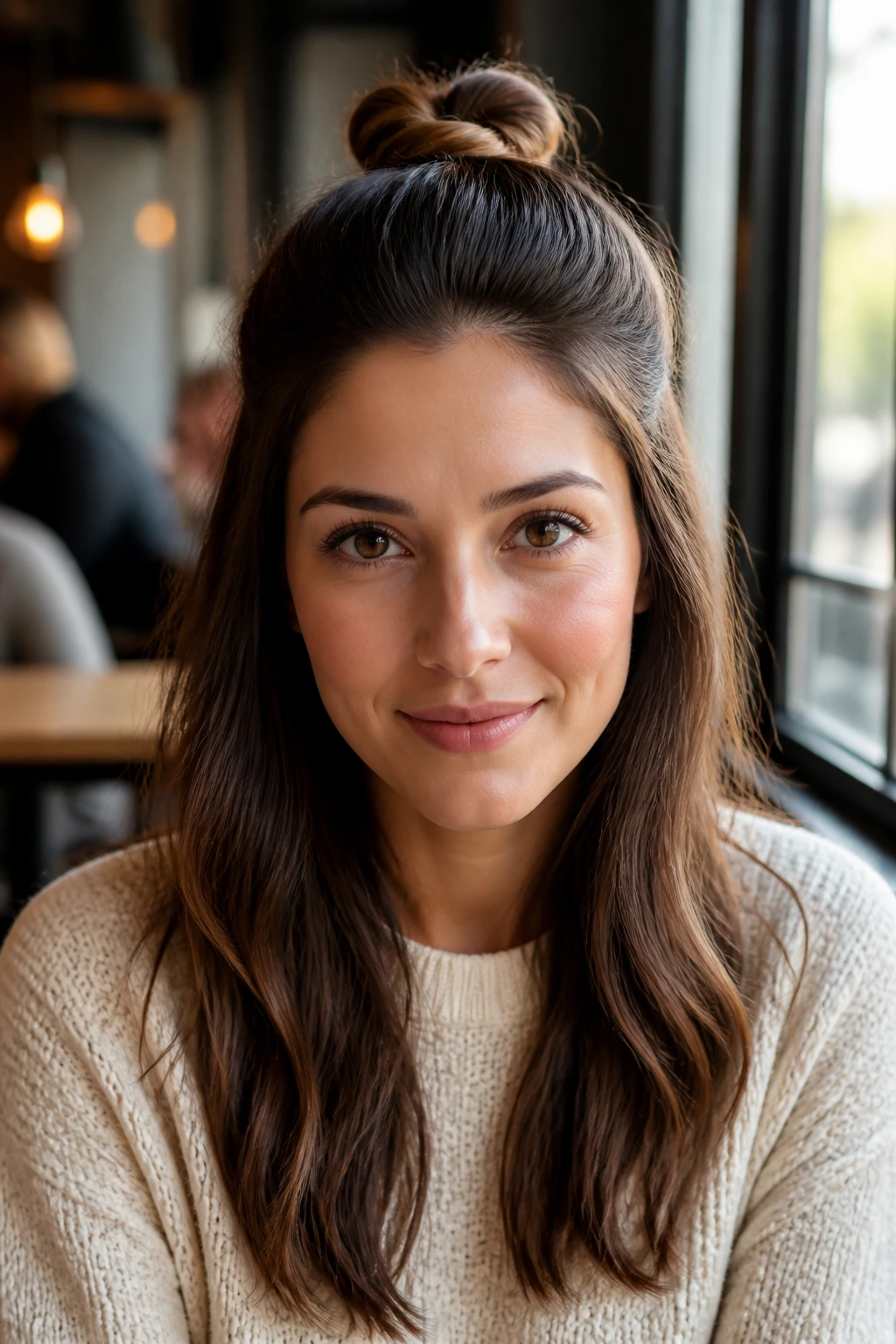
A half-up knot gives you a little lift without asking the face to carry more width. The top section is pulled back cleanly, usually from temple to temple, while the bottom half stays down and long. On a round face, that setup opens the forehead and keeps the sides from puffing out.
Thin hair often does better with a half-up knot than with a full topknot because there is less hair to gather. The knot sits smaller and neater, which looks intentional. If the crown is flat, that is not a flaw here. It’s the point.
A little root spray or dry shampoo helps the top section hold. Use your fingers to smooth the crown before you tie it back, then twist the half-up piece once or twice before pinning it. Do not build the knot too large. A bulky knot starts pulling attention sideways.
This is a good daytime style when you want your hair off your face but still want length around your shoulders. It’s especially useful on second-day hair that has lost some volume at the roots.
14. French Pin Twist at the Nape
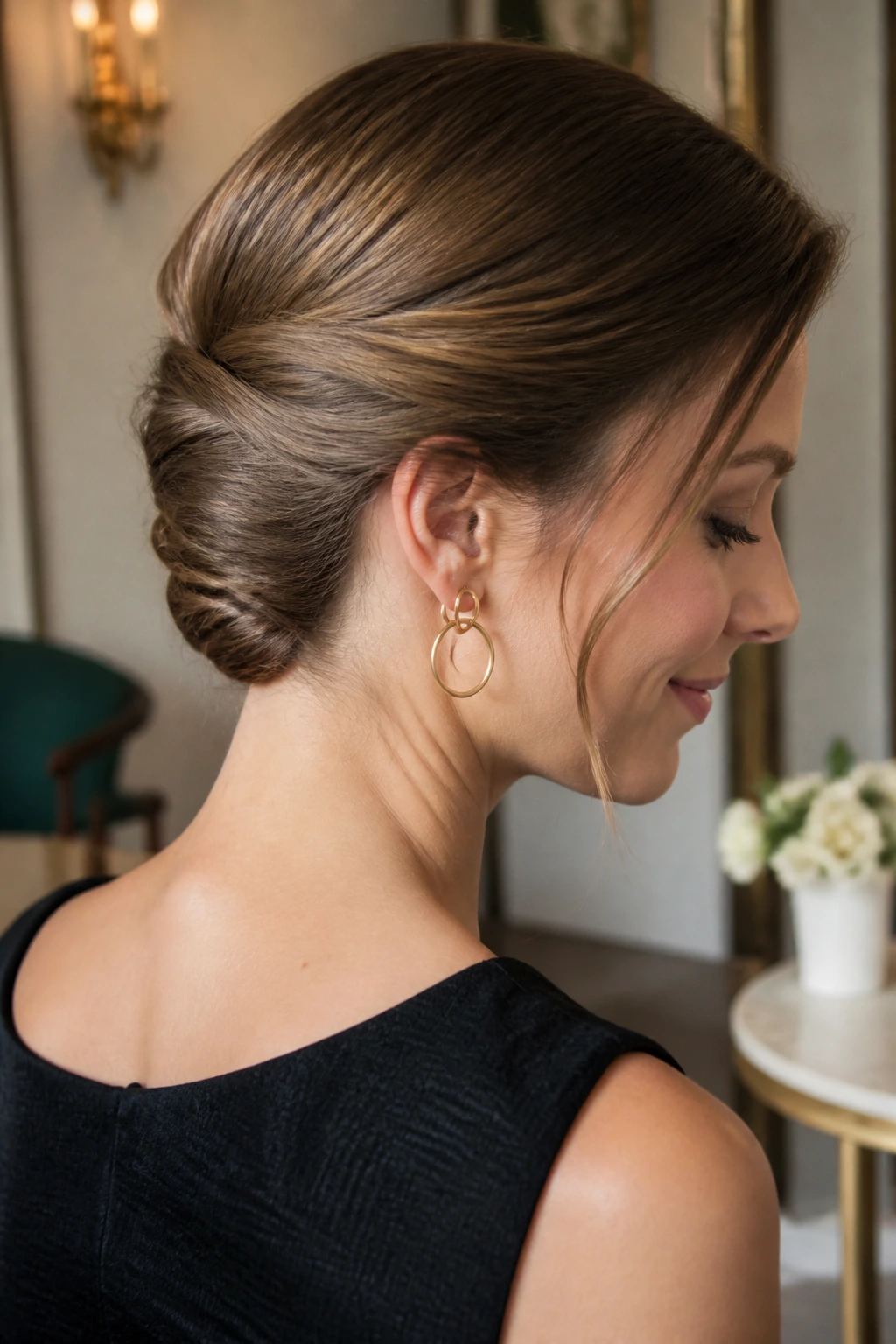
The French pin twist is one of those old-school styles that feels elegant without being fussy. For thin hair, the best part is that it stays close to the head and gathers the hair into one slim line at the nape. That keeps the profile neat, which suits a round face well.
The trick is not to make it too polished. A little softness around the ears keeps it from looking severe. Start with brushed hair, twist it upward, and secure it with a French pin or two strong bobby pins. If the hair is very fine, a mist of texture spray gives the twist something to grip.
The finished shape should sit low and narrow. Think clean seam, not big bun. A slight off-center twist can be flattering too, because it breaks the symmetry that sometimes makes round faces look wider.
This is the kind of style that looks better with neat clothes than with a lot of neck bulk. A boatneck or open collar suits it far more than a high, fussy neckline.
15. Braided Low Ponytail
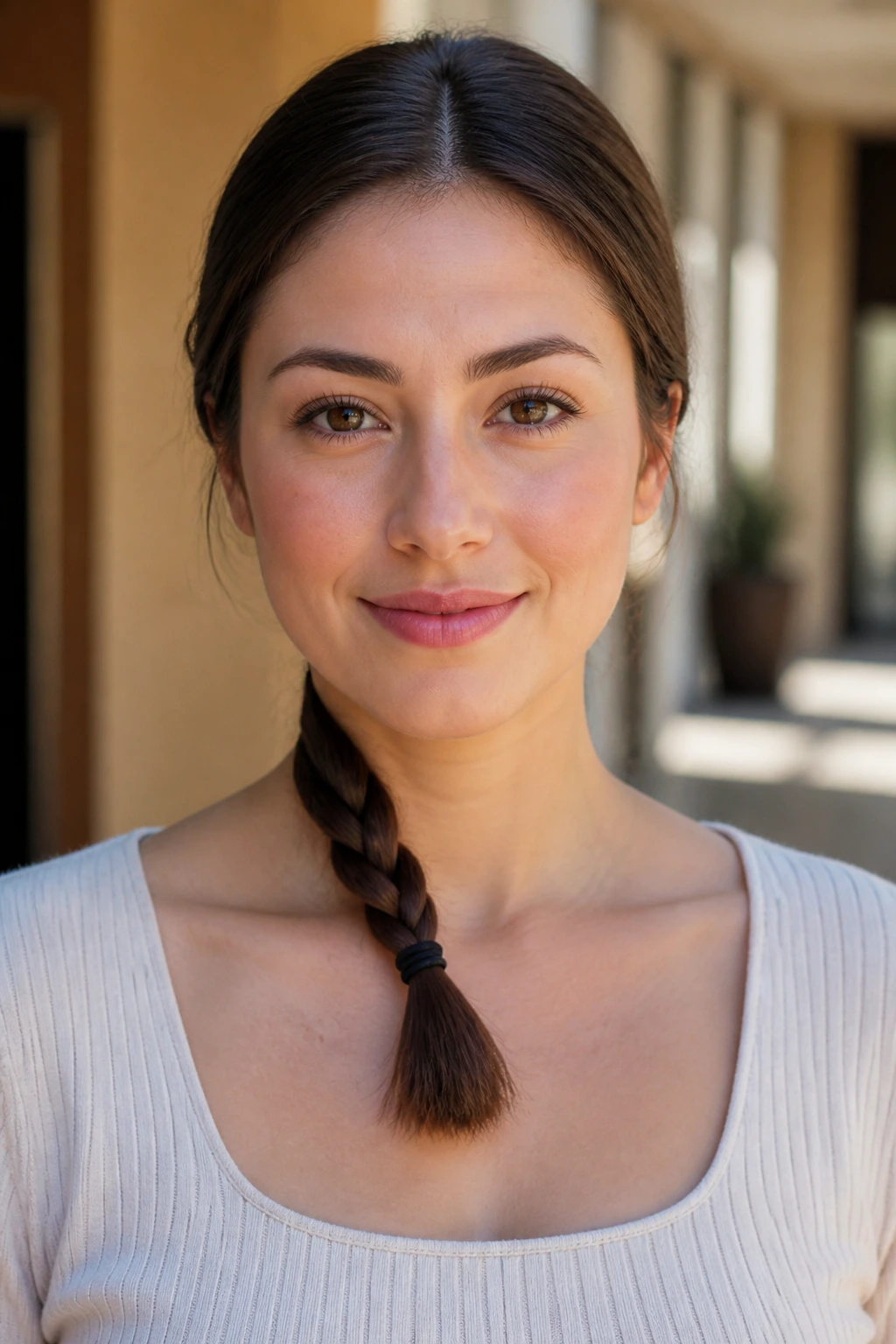
A low braid is a practical answer when thin hair needs to look gathered rather than blown apart by the day. The braid compresses the length into one vertical line, and the low placement keeps the style from widening the upper face. It’s tidy in a way that flatters round features fast.
You do not need an elaborate braid. A plain three-strand braid often looks better on thin hair than a thickened, pancaked one, because overpulling the braid can expose the scalp and make the tail look even smaller. Keep the braid snug at the base, then let the rest fall naturally.
A side part can help if you want the front to feel softer. A center part makes the whole style look longer and sharper. Either version works as long as the crown stays smooth.
This is one of the better options for windy days, commuting, or hair that refuses to hold a curl. It stays put and still looks finished.
16. Scarf-Wrapped Ponytail
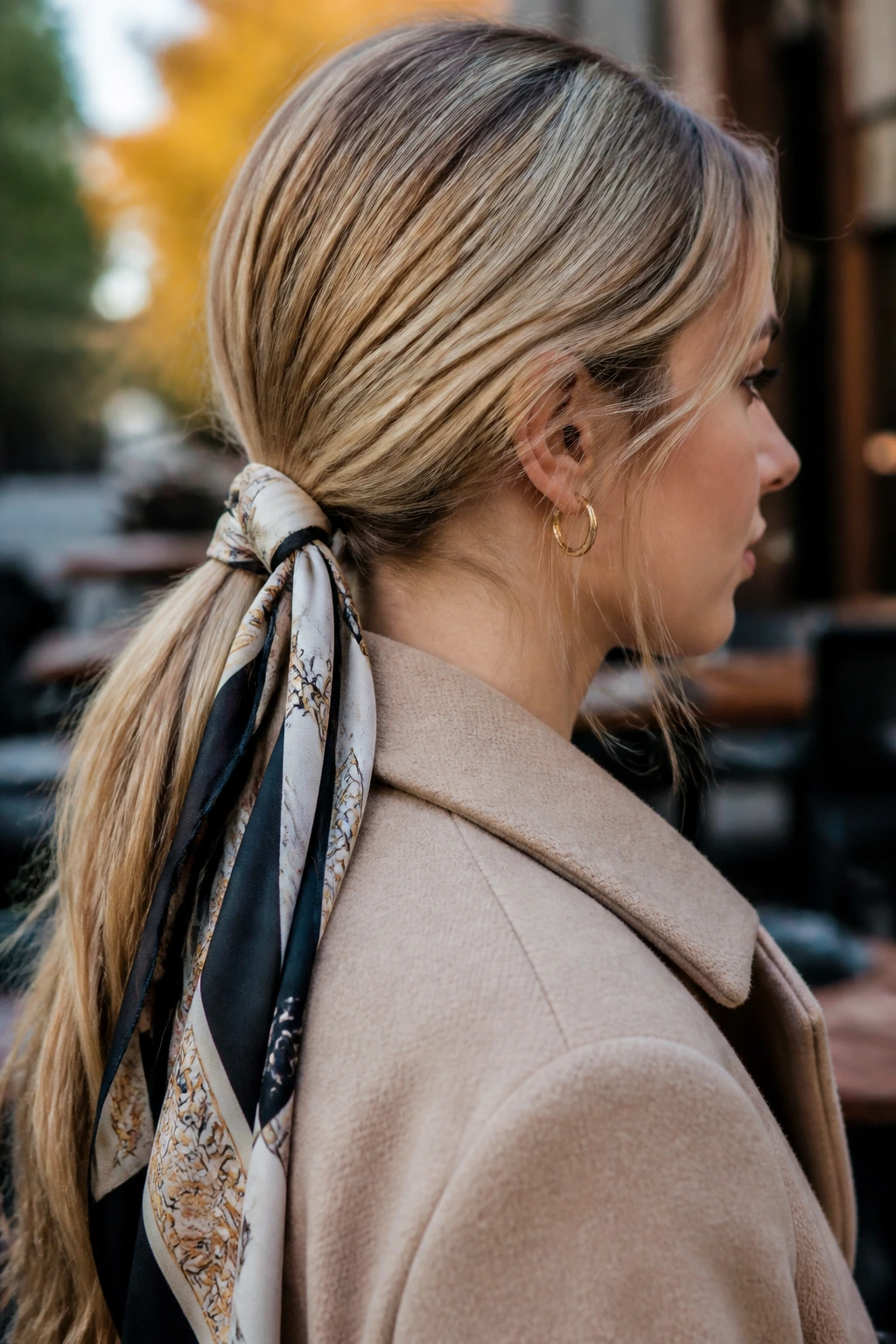
A scarf-wrapped ponytail is a sly little fix for thin hair. The scarf covers the elastic, hides a sparse tail, and gives the ponytail a stronger focal point at the back of the head. On a round face, keeping that focus centered and low helps the face stay visually longer.
Choose a narrow scarf or a medium silk one, not something huge and stiff. Wrap it once around the base of the ponytail, then tie it off so the tails hang straight down or slightly to one side. If the hair itself is thin, the scarf does the decorative work so the ponytail does not have to.
A smooth crown makes this style look clean. If there’s bumpiness at the top, the scarf can make the whole thing look accidental. Brush the hair back with a soft bristle brush and a small dab of cream before you tie it.
It’s a style that feels a little dressed up without needing much actual effort. That’s a rare and useful thing.
17. Angled Lob With Cheek-Grazing Front Pieces
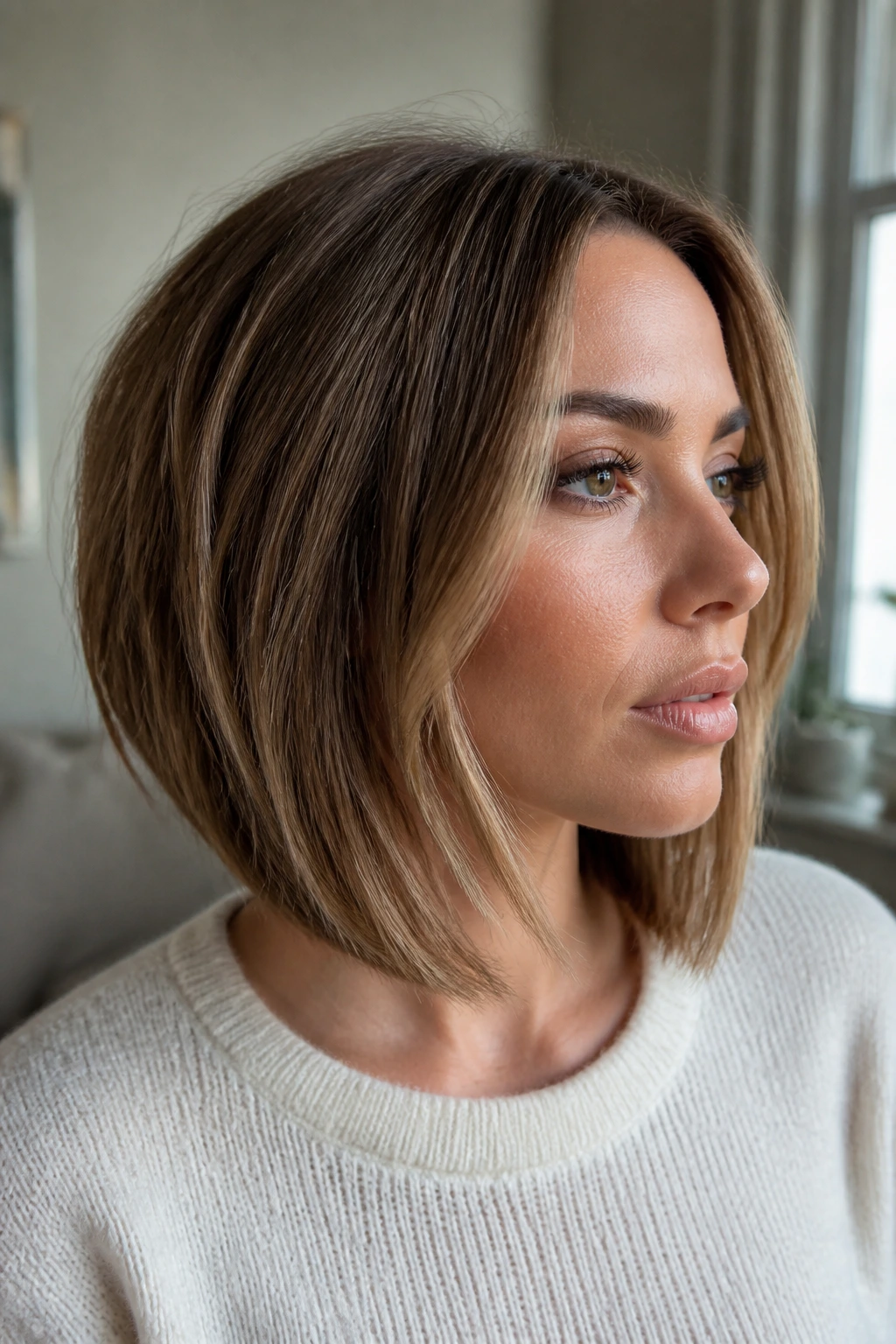
An angled lob can be a face-shaping machine when it’s cut right. The back sits a little shorter, the front comes forward, and that forward angle pulls the eye down and away from the widest part of the cheeks. Thin hair also likes the way the cut keeps the perimeter strong.
The front pieces are the whole game here. If they graze the cheekbones or jawline, they can carve out the face nicely. If they stop too high, they can make the roundness more obvious. Ask for the front to hit just below the cheekbone if you want the most lengthening effect.
Keep the styling smooth, not puffy. A soft bend at the ends is enough. Heavy waves can add width at the face, which fights the whole point of the cut.
This is a cut for people who want movement and shape but do not want to live in a full round brush blowout. It has enough edge to feel modern and enough softness to wear every day.
18. Low Rolled Bun With Side Sweep
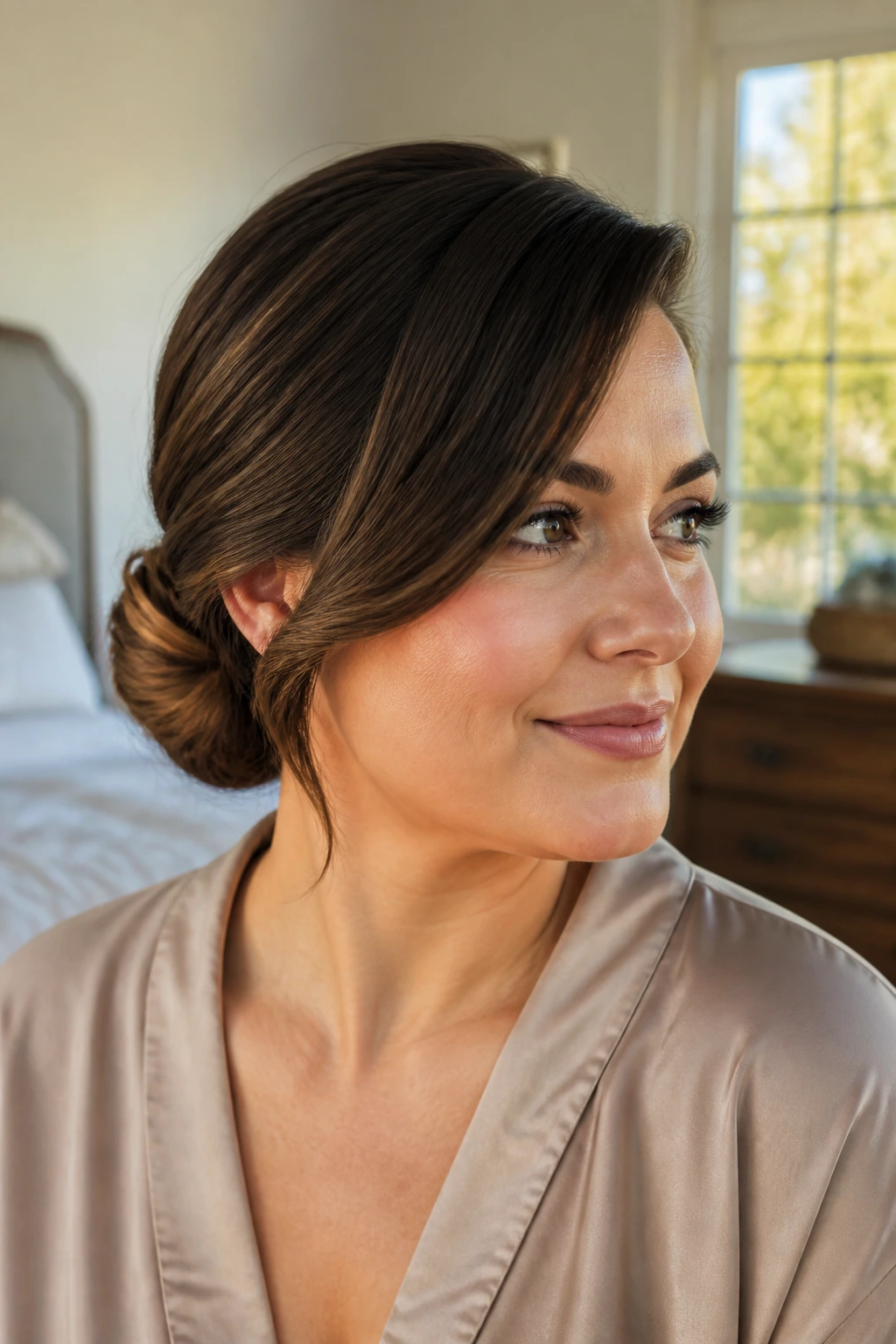
A low rolled bun gives you a neat outline without exposing every thin strand. The hair is smoothed back, rolled at the nape, and pinned into a compact shape that keeps the top flat. A side sweep in front takes care of the face shape and keeps the whole look from feeling severe.
This style is especially good when your hair has a little grit from day two or three. Fine hair can be too slippery when freshly washed, and a slightly lived-in texture makes the roll easier to pin. A few bobby pins hidden under the roll usually hold better than one big clip that threatens to slide out.
The side sweep matters because it breaks the symmetry. Round faces often look best with a little direction in the front, not a perfectly centered, perfectly round bun. The sweep gives you that diagonal line without adding bulk.
It’s a clean style. Almost spare. And that’s exactly why it works.
19. Bixie With a Feathered Fringe
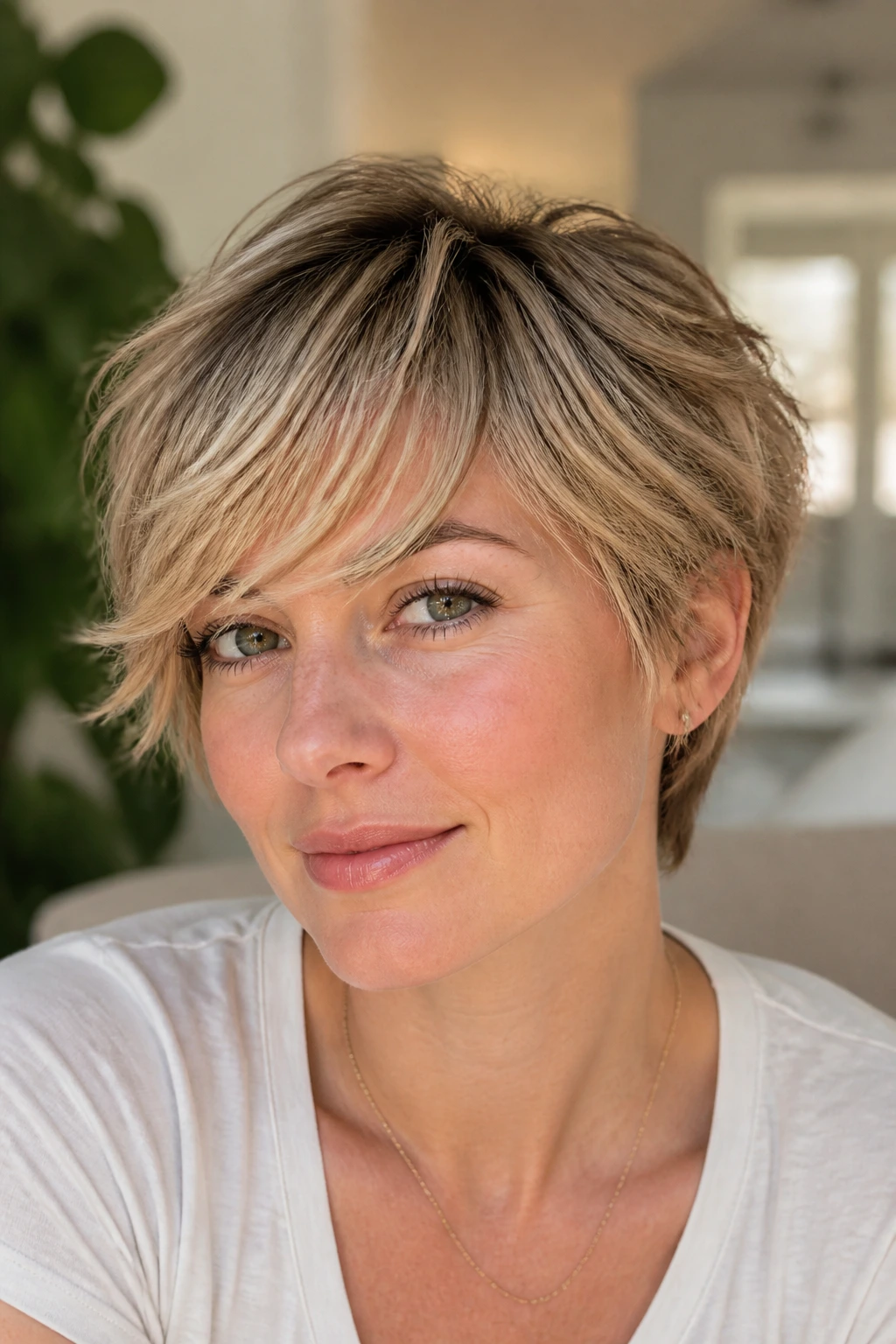
A bixie — that in-between cut between a bob and a pixie — can be a smart choice if you want short hair but not a severe crop. The feathered fringe keeps the front soft, while the back and sides stay close enough to the head to avoid widening a round face.
Thin hair often loves this kind of shape because the cut does not ask for huge density. It relies on outline. The fringe should be light and movable, not thick and shelf-like. If the front gets too heavy, it can drown the face instead of opening it.
A little piece-y styling cream works well here. Run it only through the ends and fringe, then use your fingers to separate the front into soft sections. That gives you shape without that crunchy, overdone finish some short cuts pick up when people try too hard.
This is a nice middle ground if a pixie feels too short and a bob feels too safe. It has attitude, but it’s not loud about it.
20. Sleek Straight Hair With a Micro Side Part
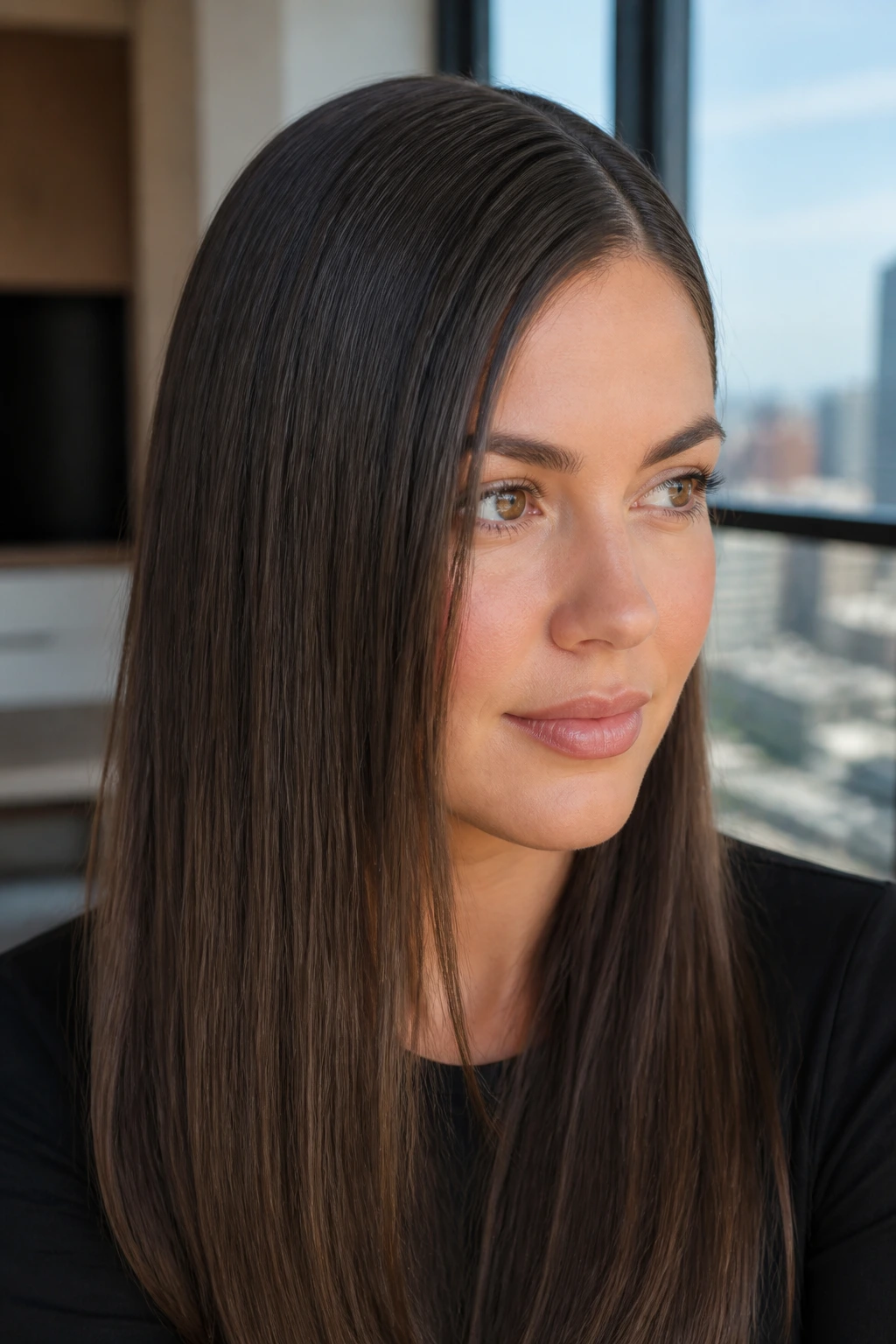
A micro side part is a tiny shift, but on a round face it changes the line enough to matter. It’s less dramatic than a deep side part, which makes it a good option when you want the face to look elongated without making the part the star. On thin hair, it also avoids exposing too much scalp in one hard line.
The rest of the hair should stay sleek. Straight lengths keep the silhouette long, and the small offset part prevents the style from feeling too rigid. If the hair tends to separate at the roots, a touch of root-lifting mousse before blow-drying can help the top sit flatter and cleaner.
This style works especially well when the ends are healthy. Split ends show fast in straight looks. A clean trim makes the whole thing look denser, which is half the reason to wear it this way.
It is understated in the best sense. Not plain. Just controlled.
21. Loose Knot With Two Face-Framing Strands
A loose knot is softer than a chignon and less fussy than a full updo, which makes it useful when you want the face open but not severe. The key on a round face is keeping the knot low and the face-framing strands narrow. Two skinny pieces are enough. Thick sections can make the cheeks feel wider.
This style works well when the hair has some texture or a little natural bend. If your hair is very straight and slippery, add a light spray before twisting. The knot should stay compact and sit close to the nape, not puff up like a little bun cloud.
The loose strands should fall around the jaw or just below it. That’s the sweet spot. Too short, and they sit at the cheeks. Too long, and they lose the shaping effect.
It’s a relaxed look, but not careless. There’s a difference.
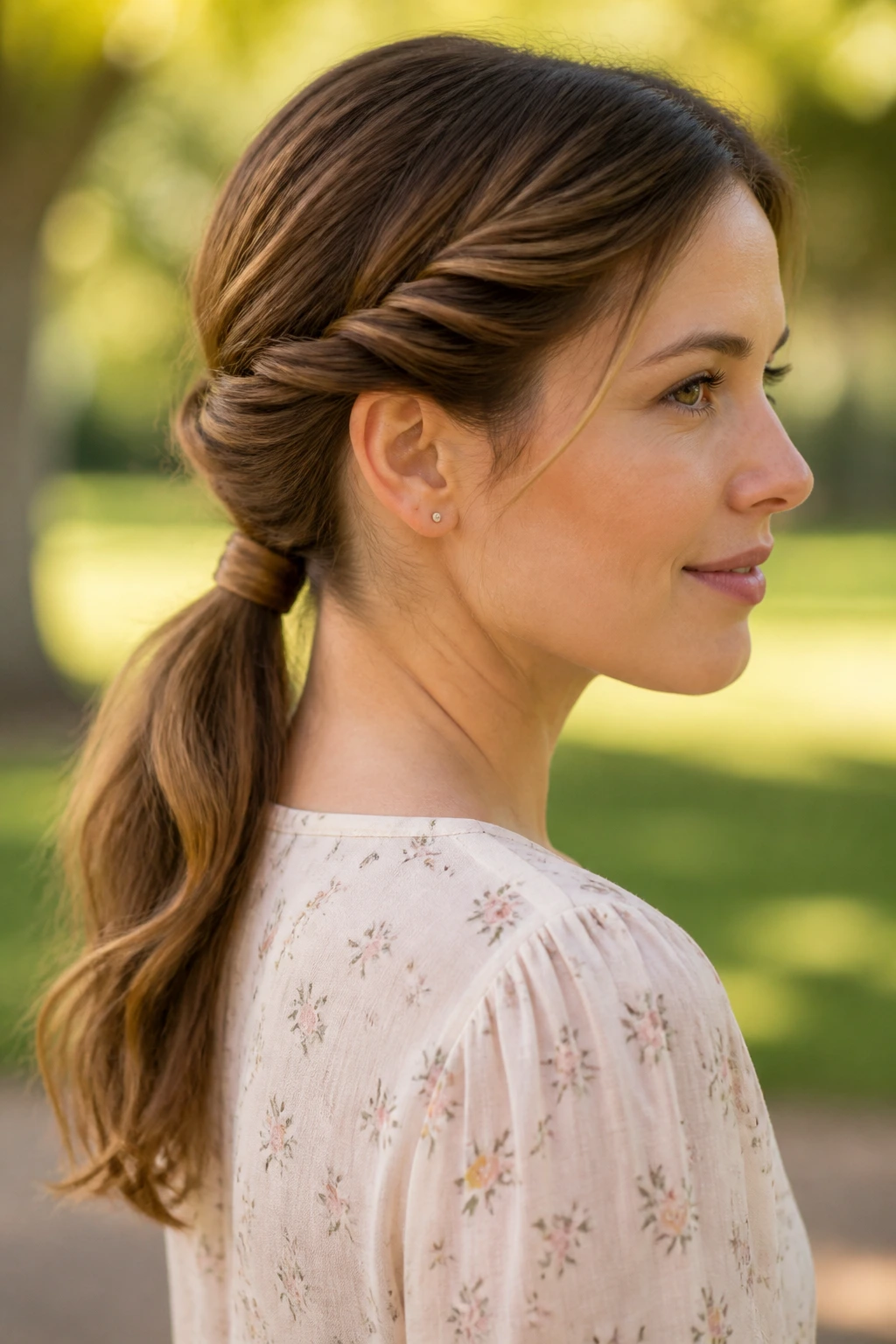
22. Twisted Ponytail With a Wrapped Base
A twisted ponytail gives thin hair a little more visual substance because the twist creates texture at the base and the wrapped section hides the elastic. On a round face, the low placement keeps the shape long and narrow instead of flared. The twist itself gives the ponytail enough detail that it does not need extra volume.
Start with a side or center part, gather the hair low, twist the sections before securing them, then wrap a small strand around the base. That wrap is more than decoration. It makes the tail look fuller because the eye reads one smooth unit instead of a plain tie-off.
If the hair is especially fine, a little dry shampoo or texture spray at the roots gives the twist something to hold. Do not overdo it. You want grip, not a chalky crown.
This is a good everyday style when you want the hair off your neck and out of the way, but still want the shape to feel deliberate. Clean, narrow, and just busy enough to look finished.
Why This Shape Logic Works on Fine Hair and Round Faces
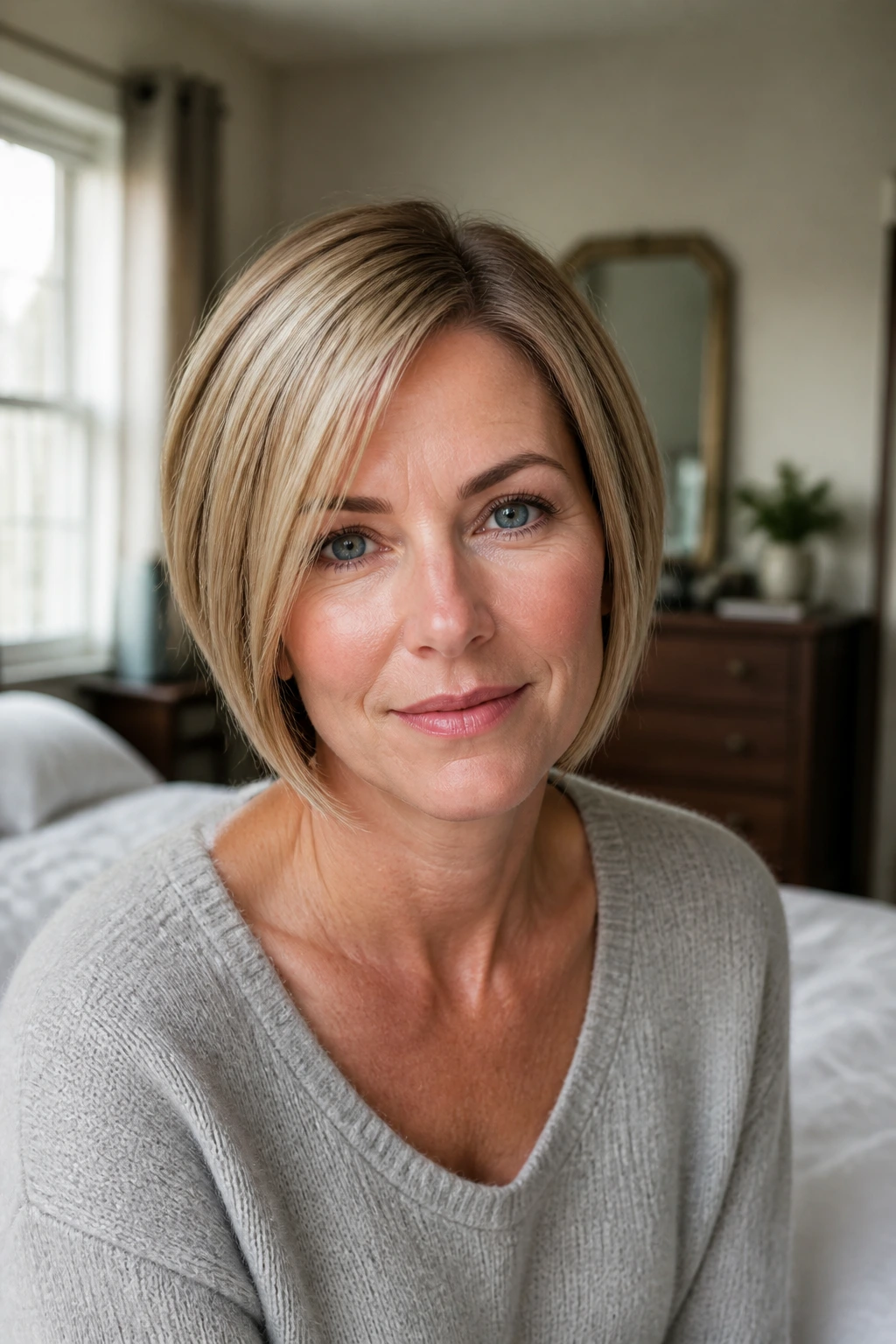
The styles above keep showing up for the same reason: line matters more than puff. Fine hair usually looks best when it has a strong outline, and round faces usually look best when the hair creates angles, length, or controlled vertical movement. Put those two needs together, and the winning styles are rarely the ones with the most volume.
That does not mean every cut has to be severe. Far from it. A soft fringe, a tucked side, a low knot, or a beveled bob can all feel feminine and gentle. The difference is that the shape stays intentional. You can see where the eye is being led. Up, down, across, diagonally — but not out to the sides.
The three shape rules I trust most
First: keep the widest part of the hair away from the widest part of the face.
Second: preserve density at the ends whenever possible.
Third: use parting, tuck, and angle before you reach for teasing.
That last one saves a lot of time. And frankly, a lot of disappointment.
Tools That Make These Styles Easier
- Tail comb: A clean part changes the whole shape, especially on round faces where every line counts.
- Blow dryer with a nozzle attachment: Direct airflow keeps the crown smooth and stops fine hair from fluffing in the wrong places.
- 1-inch flat iron: Small enough to bend ends under, smooth fringe, or sharpen a bob without creating giant ridges.
- Soft boar-bristle brush: Great for slicking the crown and gathering hair into low ponytails or buns without lots of static.
- Small clear elastics: Better for thin ponytails and braids than bulky bands that show through the hair.
- Long bobby pins: The narrow, sturdy ones hold low buns and twists more securely than short decorative pins.
- Lightweight mousse: Gives lift at the roots without that sticky helmet feeling.
- Dry shampoo: Useful not just for oil, but for grip. A little at the roots can make thin hair easier to shape.
- Smoothing cream or serum: Keep it light and put it on the mid-lengths and ends, not the scalp.
- Flexible-hold hairspray: Good when you want the style to stay put but still move a little.
Smart Cut and Product Choices
The biggest mistake with thin hair is asking the cut to do something the hair cannot support. Chopping in too many short layers can leave the ends flimsy, and that’s especially rough on round faces because the hair starts to sit wide instead of long. A blunt edge, an angled line, or layers that begin lower down usually serves better.
If you’re sitting in a chair at the salon, be specific. Say where you want the shortest pieces to land. Say whether you want the sides to stay slim. Say if you wear your hair center-parted or side-parted most of the time, because the haircut should be built around the part you actually use, not the one you think sounds fashionable.
Product choice matters too. Heavy oils, thick creams, and sticky volumizers can weigh fine hair down fast. A lightweight mousse at the roots, a heat protectant through the mids, and a drop or two of serum at the ends usually gives more control than a cocktail of seven products. Thin hair likes discipline more than generosity.
How to Wear These Styles Without Fighting Them
Presentation: Keep the outline narrow. Smooth the crown first, then decide whether the front wants a side part, center part, or tuck. The part should shape the face before you add anything decorative.
Accompaniments: Small hoops, narrow headbands, clipped-back sides, and open necklines all suit these styles. Heavy scarves and high collars can crowd the face and erase the length you just created.
Scale: Shorter bobs, pixies, and lobs usually look fuller on fine hair than long hair does. If your ends are sparse, that doesn’t mean you need to cut it all off. It means you need a shape that concentrates what you have.
Accessory Pairing: A single barrette, a silk scarf, or one clean hairpin often looks better than a cluster of accessories. Thin hair can get swallowed by too much decoration.
The quiet rule here is simple: let the hairline and the cut do the work. The rest is garnish.
Additional Styling Tricks That Lift the Whole Look
- Flavor Enhancement: A tiny bit of root spray at the part — let it dry before you touch it — can keep a deep side part from collapsing halfway through the day.
- Customization: If your hair bends easily, skip a pin-straight finish and leave the ends softly curved under. That keeps the style from looking too hard.
- Serving Suggestions: A tucked ear, a narrow fringe, or a slim clip at the temple can change the mood of the style without adding width.
- Make-It-Yours: If you wear glasses, favor styles that keep bulk away from the temples. If you love earrings, keep the sides slicker so the jewelry has room to show.
- Frizz Control: Use a toothbrush-sized edge brush or clean mascara spoolie with a speck of cream for baby hairs near the hairline. A little goes far. Too much makes the front heavy.
Common Mistakes That Make Thin Hair and Round Faces Harder to Style
-
Teasing the crown until it stands up: It can feel like volume is helping, but too much lift at the top makes the face wider and the hair frizzier. Smooth the crown and use angle instead.
-
Cutting layers too high around the cheeks: Short face-framing pieces at cheek level can create a halo effect that widens the face. Keep the shortest pieces lower, or keep them narrow and soft.
-
Choosing a heavy blunt bang: A thick, straight fringe can shorten the face and make fine hair look even thinner around the front. Curtain or side-swept bangs usually do better here.
-
Using too much product at the roots: Creams, oils, and rich serums near the scalp flatten the hair in a way that fine strands cannot recover from. Put the slip and shine on the ends.
-
Making every style too big: Huge buns, oversized curls, and fluffy ponytails often crowd a round face. A cleaner silhouette usually looks sharper and more modern.
-
Skipping the trim: Thin hair shows split ends fast. Once the ends start fraying, every sleek style looks tired, no matter how good the cut is.
Variations and Adaptations to Try
Heat-Free Waves: If you want texture without a flat iron, set damp hair in two loose twists overnight and brush them out lightly in the morning. Keep the crown smooth so the face still gets that lengthening line.
Ultra-Sleek Workday Version: Use a tail comb, a small amount of smoothing cream, and a low side part or center part. This version leans polished and keeps the shape tight all day.
Soft Fringe Swap: If full bangs feel too heavy, ask for a wispy curtain fringe or a side fringe that starts longer near the temple. It gives face frame without choking off density.
Short-and-Sharp Version: For pixie, bixie, or very short bob lengths, focus on a clean nape, narrow sides, and a longer top section you can sweep diagonally. The shape matters more than the length.
Low-Commitment Version: If you do not want a cut, mimic these ideas with styling only — tuck one side, change the part, bend the ends under, or gather the hair low and narrow. Small changes count.
Event-Ready Version: Add a slim barrette, a silk ribbon, or a pin at the nape. The accessory should support the line, not clutter it.
Keeping These Styles Fresh Through the Day
Fine hair tends to fall fast, and round faces show every shape change because the outline is so visible. If you want a style to last, set it smarter, not harder. A smooth crown, a small amount of dry shampoo, and a part that’s combed into place with the end of a tail comb will hold better than a cloud of extra hairspray.
Nighttime matters too. A low loose braid, a silk pillowcase, or two flat clips at the fringe can save you a full redo in the morning. If the style is a bob or lob, pin the ends inward loosely so they don’t flip into odd directions while you sleep. If it’s a ponytail or bun, take it down before bed; tight elastics left overnight can leave dents that fight the clean lines you want.
On day two, revive the roots first. Never attack the mids and ends first. A quick lift at the scalp, a touch of smoothing cream on the frizz, and a cold blast from the dryer usually bring the shape back faster than wetting the whole head down. That’s the difference between refreshing a style and starting over.
Questions People Ask All the Time
Should round faces avoid center parts?
Not at all. A center part can look very good on a round face if the lengths are straight, long, or tucked close to the head. It creates a vertical line, which often helps more than a wide, fluffy side style.
Are bangs a bad idea for thin hair?
Heavy bangs can be rough, but light curtain bangs or a soft side fringe usually work fine. The key is keeping the fringe airy enough that it doesn’t steal too much density from the rest of the cut.
What haircut makes thin hair look the fullest?
A blunt bob or a collarbone lob usually gives thin hair the strongest visual density because the ends line up cleanly. Layers can help, but too many of them will thin the outline fast.
Can I still wear my hair long?
Yes, but long hair needs shape. If the ends are see-through, ask for layers that begin lower down and keep the front pieces narrow so the face doesn’t look wider.
How do I keep a sleek style from looking oily?
Use product sparingly and keep it off the roots. A tiny bit of serum on the ends and a dry shampoo puff at the part is often enough.
Is teasing ever okay?
A little, yes. A lot, no. If you need lift, use root spray and blow-dry direction first, then tease only the smallest section at the crown if you still need it.
What if my hair falls flat an hour later?
That usually means the root product was too heavy or the part was not set firmly enough. Start with a lighter mousse, dry the roots fully, and let the hair cool in place before touching it.
Do these styles work with glasses?
Yes, and some work especially well. Tucked sides, soft fringe, and narrower outlines keep the hair from competing with the frames.
A Quiet Finish That Works
Thin hair and a round face do not need the same advice as thick, long, square-jawed hair. They need line, restraint, and a little bit of judgment about where the eye should go. Once you stop chasing bulk in the wrong places, the whole thing gets easier.
The best styles here do the same quiet work in different ways: they narrow the sides, lengthen the front, and keep the crown from puffing out. That’s why they hold up in real life, not just in a mirror five minutes after styling. Try the part first, the shape second, and the accessories last. That order tends to behave.