



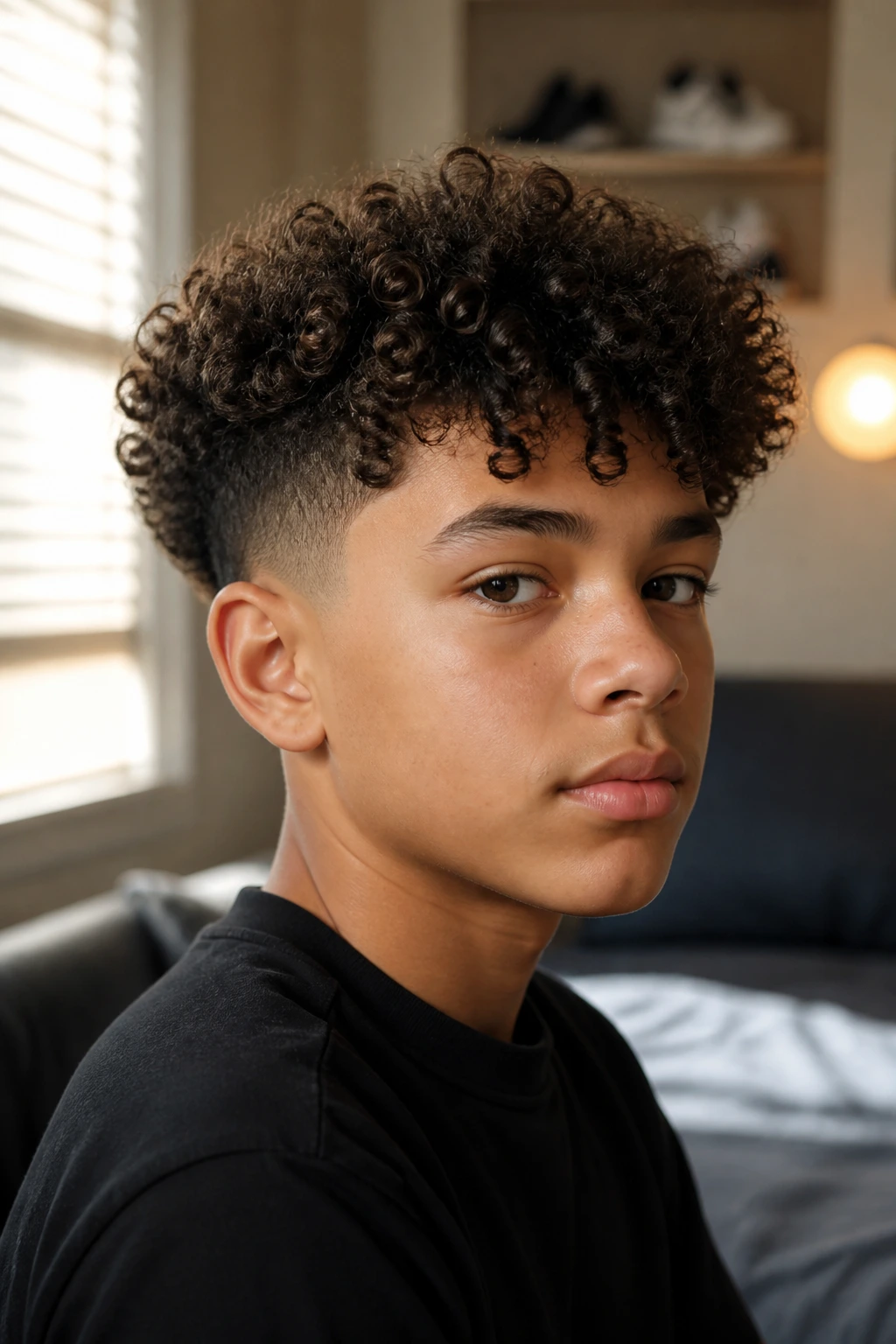
A good haircut for boys with curly hair does not start with the clippers. It starts with not fighting the curl.
That sounds obvious until you watch what happens when someone treats curly hair like straight hair with extra volume. The result usually looks fine for about ten minutes, then the shrinkage kicks in, the sides puff out, and the whole shape gets weird in a way that is hard to fix with water and hope. Boys with curly hair need a cut that respects the spring in the strand, the bulk at the sides, and the fact that a head of curls can change shape twice before lunch.
The best boys’ curly haircuts do three things at once: they clean up the edges, leave enough length to show the curl pattern, and keep the silhouette from turning into a box, a triangle, or a round mushroom cap. That balance is the whole game. Get it right and the haircut still works after recess, after sports, after a nap in the car, and after the first time he runs his hands through it. Get it wrong and you’re back in the barber chair before the trim even grows out.
Some of the cuts below lean neat and school-friendly. Some are louder. A few are the kind of shapes that make curly hair look bigger in the best possible way. All 18 are there for a reason, and the reason is never just “it looks trendy.” It’s about curl behavior, head shape, maintenance, and whether the kid wearing it will actually tolerate the styling routine.
Why These Curly Cuts Earn Their Keep
-
Curl Pattern First: Every style here works with shrinkage, density, and curl spring instead of flattening the hair into something it never wanted to be.
-
Neat Sides, Alive Top: The strongest curly haircuts keep the sides tidy while leaving the top with enough length to show texture, bounce, and shape.
-
Low-Fuss Options: Several of these cuts still look decent after a quick mist of water, a dab of curl cream, and a rough scrunch with the hands.
-
Barber-Friendly Language: Each style includes what to ask for in the chair, which saves a lot of guesswork and avoids that awkward “shorter, but not too short” conversation.
-
School-to-Weekend Flexibility: Some of these look sharp with a side part or a fresh lineup, then loosen up into a messier, cooler shape once the day gets going.
-
Different Curl Types Covered: Loose waves, springy ringlets, and tight coils all get their own lane here, because one haircut does not suit every curl head.
1. Curly Taper Fade
A curly taper fade is the safe bet that doesn’t feel boring. The neckline, sideburns, and edges around the ears get cleaned up, while the top stays long enough for the curls to bounce instead of collapse. It is the haircut I’d recommend when someone wants a neat shape without losing the whole point of having curly hair in the first place.
What to Tell the Barber
- Keep 2½ to 4 inches on top, depending on how much the curls shrink.
- Ask for a low taper around the temples, sideburns, and nape.
- Keep the top cut with scissors and texture, not just a fast clipper pass.
- If the curls are tight or uneven, ask for a dry check before the barber finishes the blend.
The taper makes the shape look intentional. Without it, curly hair often spreads out at the bottom and starts looking heavy, even when the top itself is not especially long. A low taper keeps that bulk under control without making the cut feel severe.
Best for: most curl types, especially boys who need a haircut that still looks decent three weeks after it was cut.
Tip: if the fade starts too high, the top can look like it’s sitting on a shelf. Low is usually safer.
2. Curly Fringe with Tapered Sides
Want curls that fall forward instead of sitting up and out? A curly fringe does exactly that, and it can be one of the easiest ways to make a boy’s haircut look relaxed without looking sloppy. The fringe gives the front some movement, which is useful if he has a bigger forehead, a long face, or curls that naturally want to drop toward the eyes.
The key is not to chop the front bluntly. A better fringe has soft, point-cut ends so the curls land in little pieces instead of one heavy curtain. The sides stay tapered and clean, which keeps the look from getting bulky around the ears.
How to Ask for It
- Leave the front slightly longer than the crown so the curls can fold forward.
- Ask for a soft fringe, not a heavy straight-across bang.
- Keep the sides low or mid tapered so the top gets all the attention.
- If he wears glasses, tell the barber to leave enough length so the fringe does not sit right on the frames.
This is one of those cuts that looks better when it moves. A little water, a little curl cream, and a finger scrunch are usually enough.
3. Textured Curly Crop
The textured curly crop is for boys who do not want to spend time arranging every curl. Short on the sides, choppy on top, and cropped just enough to keep the shape tight, it’s a no-fuss cut that still shows the curl pattern instead of flattening it into a buzzed blur.
It works especially well on dense curls because the crop removes some of the bulk up top without taking away the texture. If the hair is cut too bluntly, though, it can puff out like a helmet. That’s why point cutting matters here. The ends should look broken up and light, not chopped into one flat line.
Best for
- Thick curls that grow wide fast
- Boys who play sports and sweat a lot
- Hair that gets puffy when it’s left too long
What to Ask For
- A short textured top, usually around 1½ to 3 inches
- A low fade or tapered sides
- A light fringe in front if the forehead needs softening
- Point cutting at the crown to reduce bulk
The crop is a practical cut, but it does not have to look plain. A matte curl cream or a light paste can keep the top separated without making it crunchy.
4. Curly Undercut
The curly undercut is for boys who want contrast. The sides are cut short and kept clearly separate from the longer curls on top, so the whole shape feels sharper and more graphic. It is a bolder look than a taper fade, and that’s the point.
This cut makes sense when the curls on top have enough length to fall on their own. If the top is too short, the undercut loses its edge and just looks like a grown-out fade with an attitude problem. Around 3 to 5 inches on top usually gives the best result, though tighter curls may read shorter once dry.
Why It Works
The disconnect between short sides and long top gives the curls a stage. Instead of blending away into the sides, the curl pattern stays visible from the front and the profile. That makes this cut feel deliberate, even when the styling is minimal.
A boy who likes to push his curls back with his hands will probably like this shape. So will one who wants the top to look fuller without adding width at the temples.
Tip: ask the barber not to overthin the top. The undercut already brings contrast. Too much thinning and the curls get wispy.
5. Curly Quiff
A curly quiff has a little more swagger than most curly boys’ cuts, and I mean that in the good sense. The hair is kept longer in front and brushed up and back so the front lifts away from the forehead. On looser curls and waves, the result can look clean and polished. On tighter curls, it can get puffy fast if the top is too short or the product is too heavy.
This cut needs enough length to move. Think 3 to 5 inches on top, with the front a touch longer than the crown. The sides should be kept shorter, but not so tight that the head starts looking top-heavy.
How to Wear It
A light mousse or curl cream helps, but a blow-dryer with a diffuser is what gives the quiff its shape. Dry the front upward with your fingers, not a brush that rips through the curls. The goal is lift, not a stiff helmet.
Face Shape Note
This cut works well on round or heart-shaped faces because the extra height adds length. If the face is already long, too much lift can exaggerate it. In that case, keep the quiff lower and softer.
It’s a little more styling work than a taper fade. Still worth it. The shape is clean when it’s done well, and the curls keep it from looking too polished or adult.
6. Curly Mullet
The curly mullet sounds mischievous because, well, it is. Shorter on the sides and front, longer in the back, this cut has found its way back into school halls and playgrounds with a lot more confidence than anyone expected. On curly hair, it works because the curl gives the back texture instead of just length.
The danger is proportion. If the back is too long and the sides too short, it can look like two haircuts got into a fight. The better version keeps the front and sides controlled and lets the back stretch a bit more naturally, usually around the collar or just above it depending on curl shrinkage.
What Makes It Work
Curly hair softens the shape. A straight mullet can feel severe. Curly hair turns it into something a little looser and less costume-like.
That said, it is not a haircut for every boy or every family. If the school is strict, or if he hates attention, this may not be the one. If he likes expressive hair and doesn’t mind a few comments, it can be a lot of fun.
Tip: ask the barber to keep the transition from top to back gradual. A hard jump in length makes the cut look accidental.
7. Curly Frohawk
A curly frohawk keeps the action down the center of the head and tightens the sides so the curls read like one strong strip rather than a full halo. It has energy. A lot of it. That’s why boys who like bold cuts usually love it, and boys who want to disappear into the background usually do not.
The sides can be faded high, mid, or burst-style, depending on how dramatic you want the silhouette to be. The middle section should stay full enough to show the curl pattern all the way from front to crown. If the center strip gets chopped too short, the frohawk loses its shape and starts looking flat instead of fierce.
What to Ask For
- Keep a wide strip of curls through the center
- Tighten the sides with a mid to high fade
- Leave enough length on top for the curls to stand up naturally
- Clean up the neckline so the shape ends sharply
This haircut looks especially good when the curls have a little height and spring. A tiny amount of gel or curl custard can help the front stay up, but don’t drown it in product. Crunch is not the goal here.
One line I’d never skip: this is a cut that benefits from a barber who understands curl density. The wrong clipper pass can erase the shape in one visit.
8. High-Top Curls
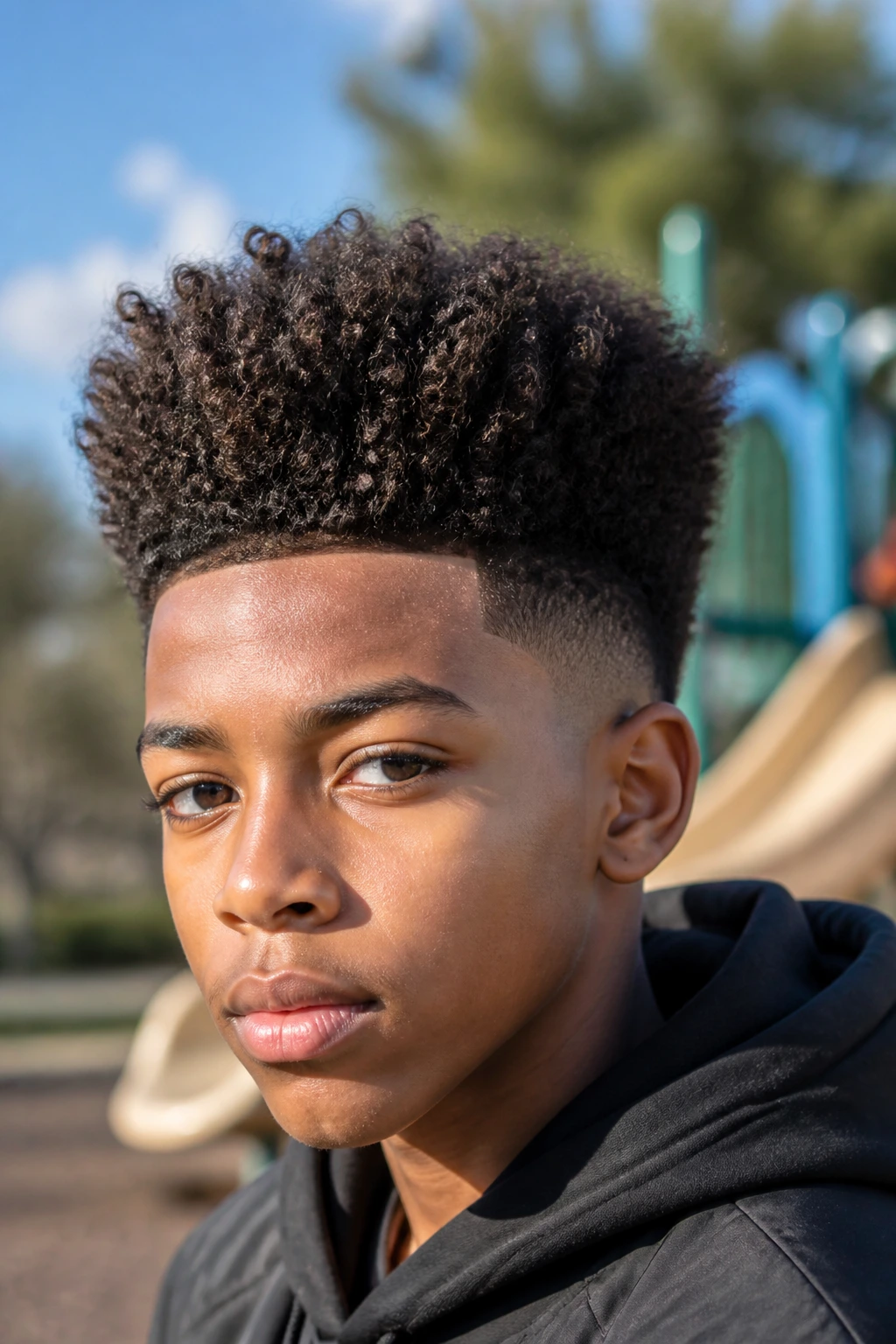
High-top curls are all about silhouette. The sides are trimmed down and the top is shaped upward, sometimes boxy and sometimes rounded, depending on the hairline and the curl pattern. On tight coils, this cut can look incredibly sharp because the shape stays readable even when the hair grows out a little.
This is not a casual “just trim the ends” haircut. The outline matters. A good high-top should be balanced, with the top sitting cleanly above the sides and the edges shaped to match the head instead of fighting it.
Why It Still Works
Coily hair has enough spring to hold a structure that would collapse on straighter textures. That means the high-top can keep its body without needing the kind of heavy product some other styles demand.
The upkeep is real, though. Shape-ups matter here. If the sides and line around the top are left too long, the whole look loses its clean geometry fast.
Best for: tighter curls and coily hair that holds shape well.
Tip: ask for the top to be checked from the front and the side. High-tops look simple until one angle goes crooked.
9. Burst Fade with Curly Top
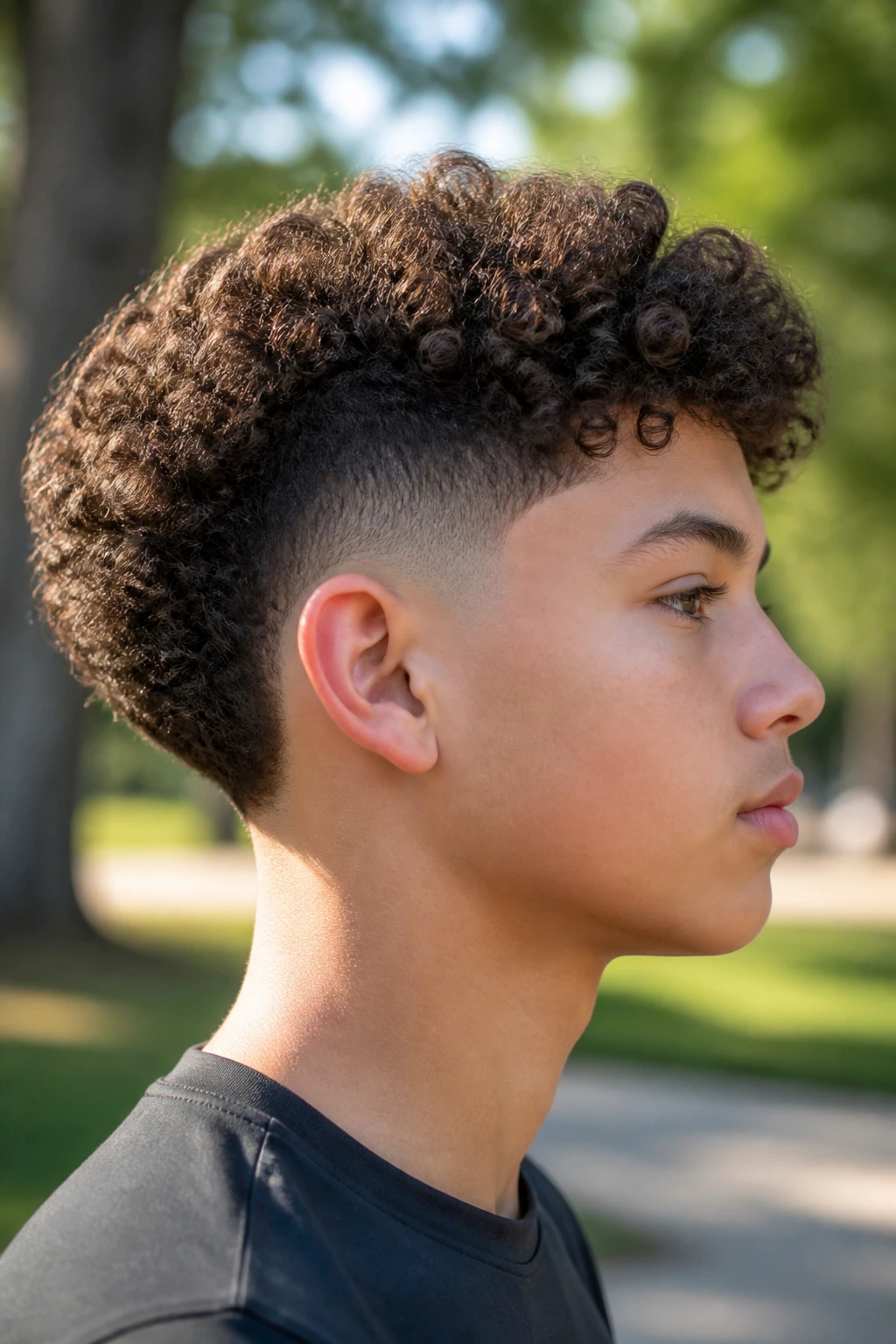
A burst fade curves around the ear like a little sunburst, which is a much better shape for curls than a straight, blunt side fade when the goal is a rounder profile. The top stays full, the fade drops low behind the ear, and the whole haircut feels smoother around the sides.
This style is a nice middle ground. It is neat enough to feel cleaned up, but it still leaves the curls in play. The curved fade line works especially well when the hair naturally grows wider around the temples or when the head shape needs a little softening.
What to Look For
- A fade that arcs around the ear, not straight across
- Enough curl length on top to show texture
- A clean nape so the back doesn’t get bulky
- A soft transition near the temple so the fade doesn’t look chopped
This cut is one of those that looks better from the side than people expect. That curved fade wraps the ear in a way that straight fades just don’t. It gives the haircut a little movement, even though the sides are short.
If the curls are dense, the barber may need to remove some weight from the crown so the top doesn’t balloon upward. Small detail. Big difference.
10. Temple Fade with Curls
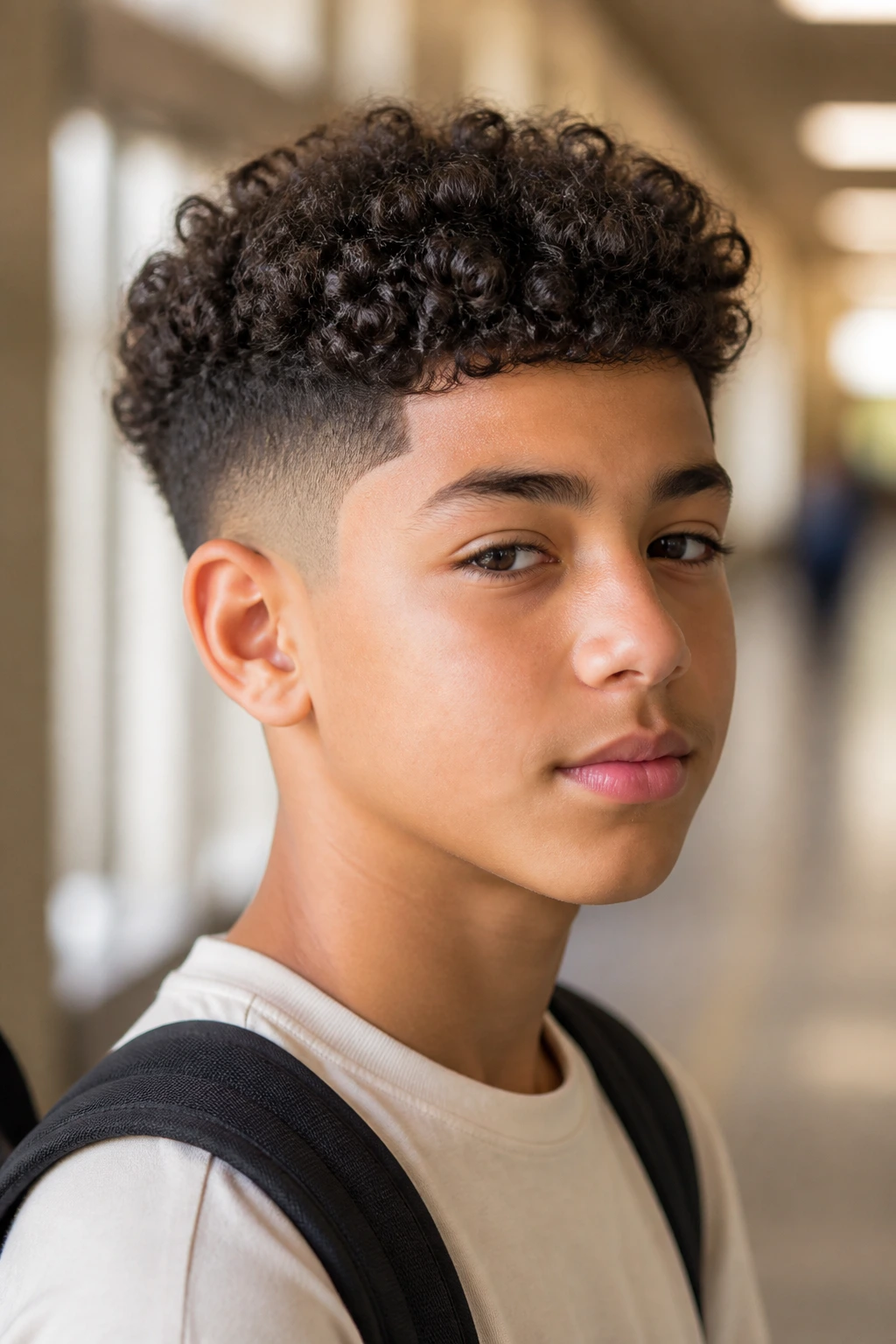
The temple fade is the quiet one in the room, which is exactly why so many parents like it. It cleans up the temples and edges without taking the haircut too far into fade territory. The curls stay visible, the outline looks fresh, and the whole thing still reads like hair, not a barber demo.
That subtlety matters. A temple fade works when the kid needs to look neat for school or family events but still wants his curls to have room. It can sit under a longer top, a fringe, or even a rounded shape without stealing the show.
Why It’s Useful
A strong temple fade creates the feeling of a tidy haircut even when the top is left natural. It also grows out well, which means the shape doesn’t fall apart the second the barber cape comes off.
Ask for this if: you want something cleaner than a scissor-only cut, but not as bold as a skin fade.
There’s one small caveat. If the barber brings the temple fade too high, it starts competing with the top. Keep it low and soft. That’s where the haircut looks best.
11. Curly Caesar
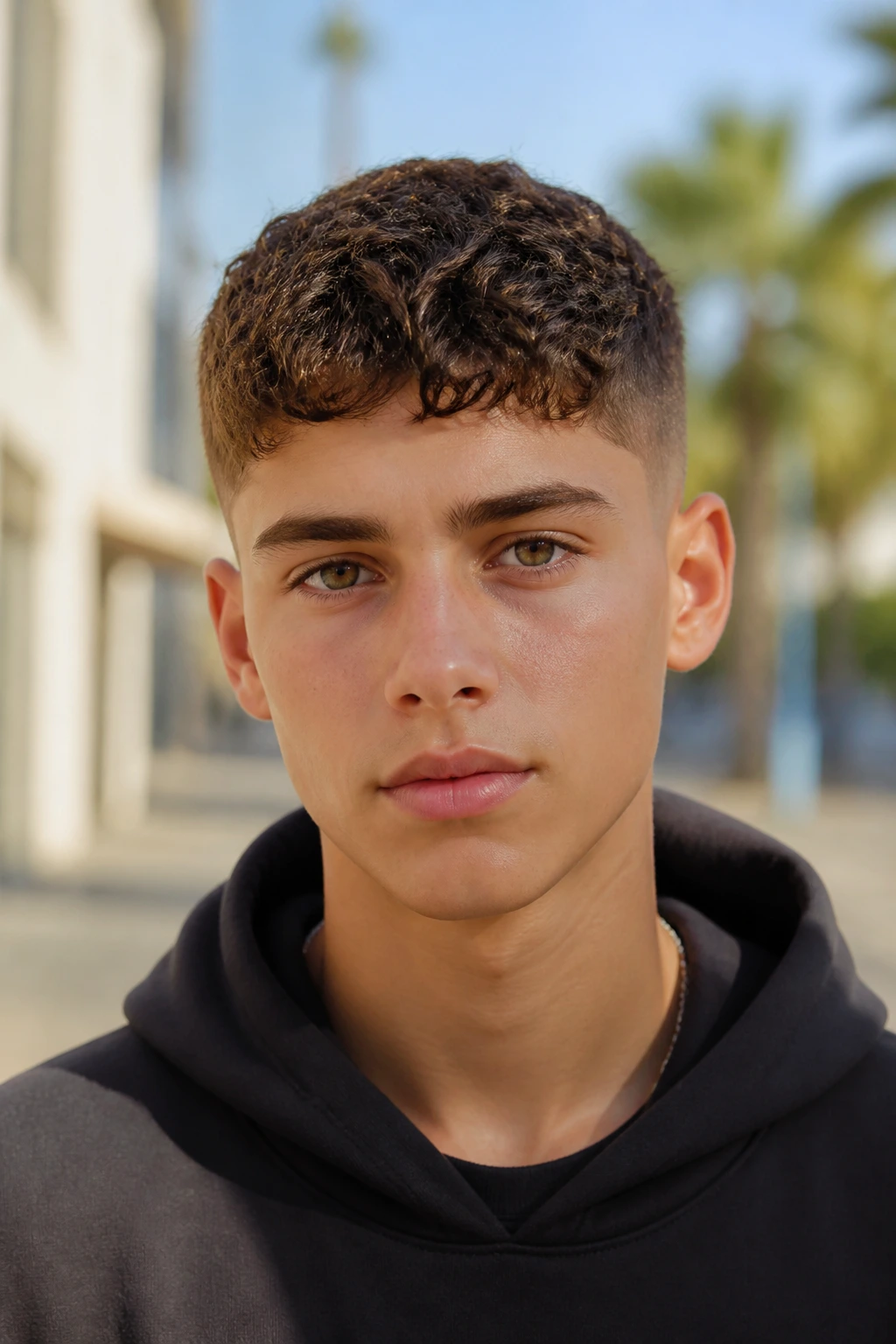
The curly Caesar keeps the top short, the fringe controlled, and the sides neat, which makes it one of the easiest curly cuts to live with day to day. It gets its shape from the short front line and the evenness of the top, but curly texture keeps it from looking flat.
This cut is especially good for tighter curls and coils because the shorter length reduces the amount of morning styling needed. It also helps if a boy wants hair out of his eyes without shaving everything off. The trick is to leave the front just a touch longer than the rest of the top so the curl pattern still shows.
How to Ask for It
- Keep the top short, around ¾ to 1½ inches
- Leave a soft, textured fringe
- Taper the sides and back
- Avoid a harsh blunt edge across the forehead
The Caesar is not flashy. It’s tidy, practical, and slightly old-school in a way that feels refreshed when the curls are cut right. For parents, that usually counts as a win. For boys, it’s one of the few short cuts that still lets the curl texture show through instead of disappearing.
12. Side-Parted Curly Cut
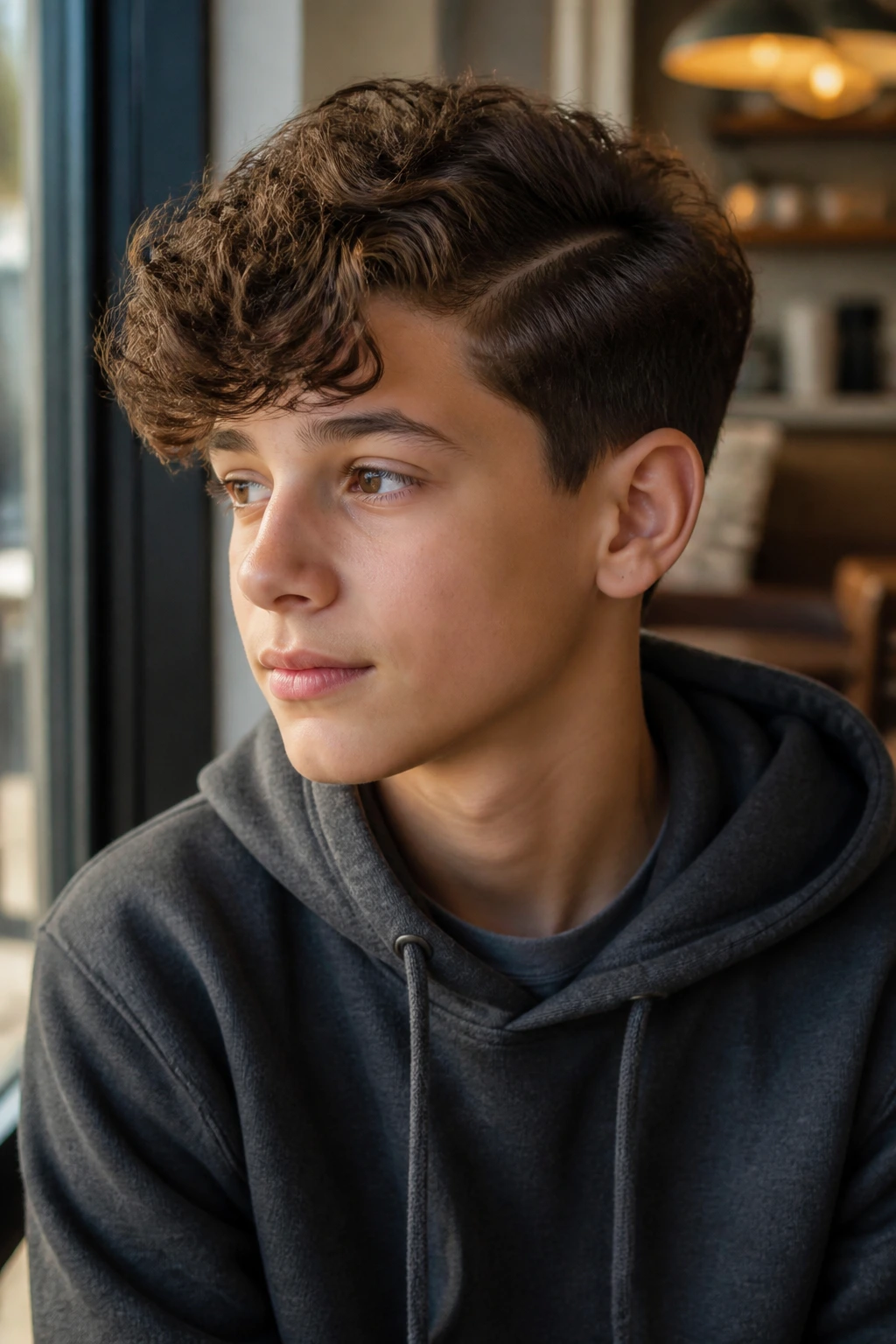
A side part on curly hair can look very polished, but only if the part is allowed to work with the hair instead of being forced into place. The best version has enough length on top for the curls to sweep naturally to one side, with the part sitting where the hair already wants to separate.
A razor-hard part can look sharp on straight hair. On curls, it often feels too stiff. A soft part is easier to wear and easier to grow out. That matters when the hair is still changing shape every few weeks.
What to Tell the Barber
- Leave enough top length for a side sweep, usually 3 to 5 inches
- Keep the part soft or implied, not shaved deep into the scalp
- Taper the sides so the part line stands out without shouting
- Layer the top lightly so the curls stack instead of flopping
This style suits boys with looser curls or waves best. It can work on tighter textures too, but the part becomes more of a styling cue than a hard line. Either way, the shape is classic for a reason.
It’s one of the cleaner-looking choices on this list, and one of the easiest to dress up for photos.
13. Long Layered Curls
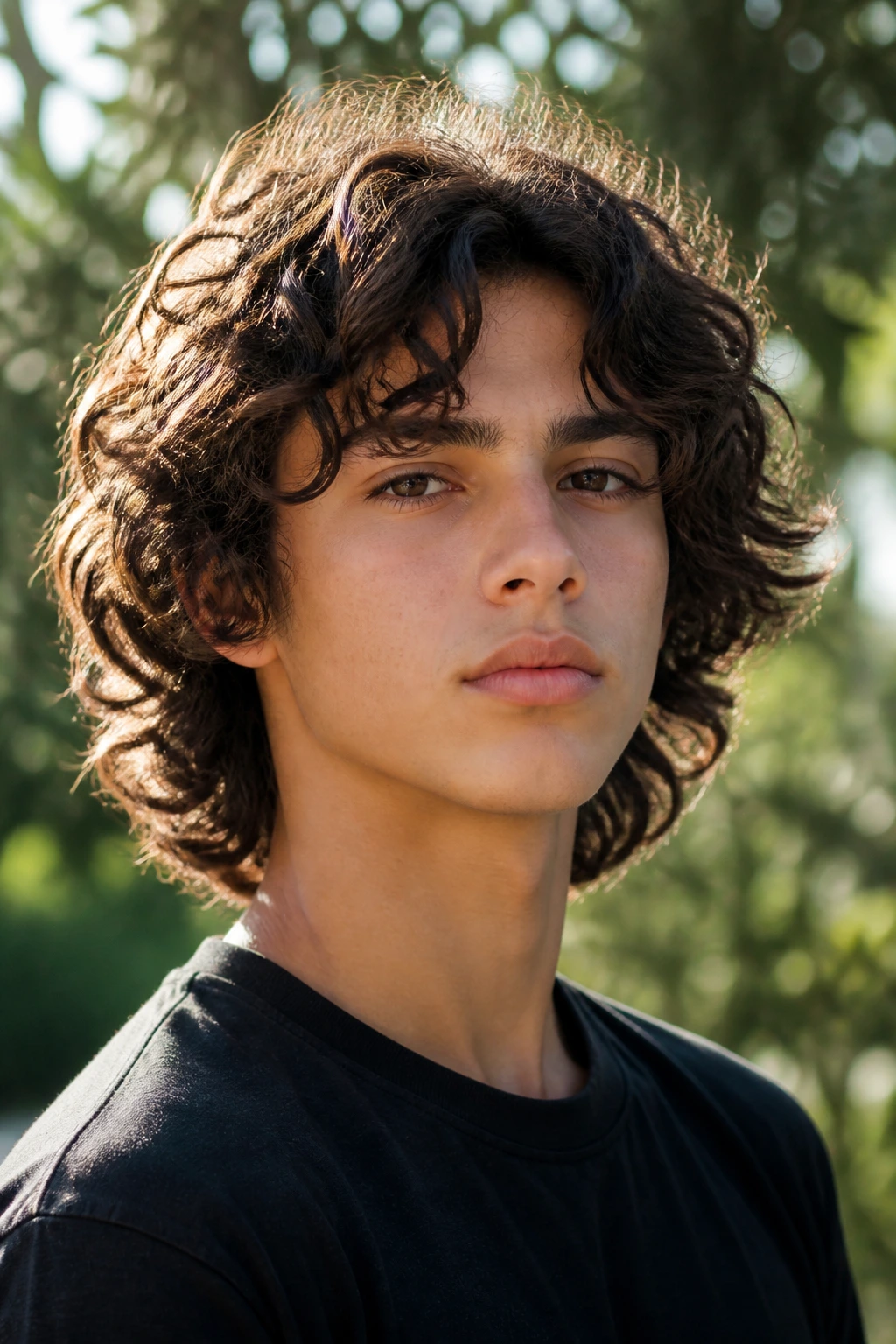
Long layered curls are for boys who want to keep length and actually make it look good. The problem with long curly hair is not length itself. It’s bulk. Without layers, curls can pile up into a triangle at the sides and drag the whole shape down. Layers fix that by removing weight in the right places.
This cut needs a barber or stylist who knows how curls sit when dry. A wet cut can hide too much shrinkage, and then the result comes back shorter and puffier than expected. If the curls are long enough to sit around the ears or neck, ask for soft layers that let the shape move.
Why It Works
Long curls look better when the ends are not all one blunt line. Layering helps the hair bend and stack, which keeps it from looking heavy near the bottom. It also makes it easier to refresh with leave-in conditioner or curl cream.
Best for: boys who like the feel of longer hair and don’t mind a bit more upkeep.
A small thing, but useful: a satin pillowcase or sleep cap can make the difference between a controlled shape and a tangled mess the next morning. Long curls love to snag.
14. Rounded Afro
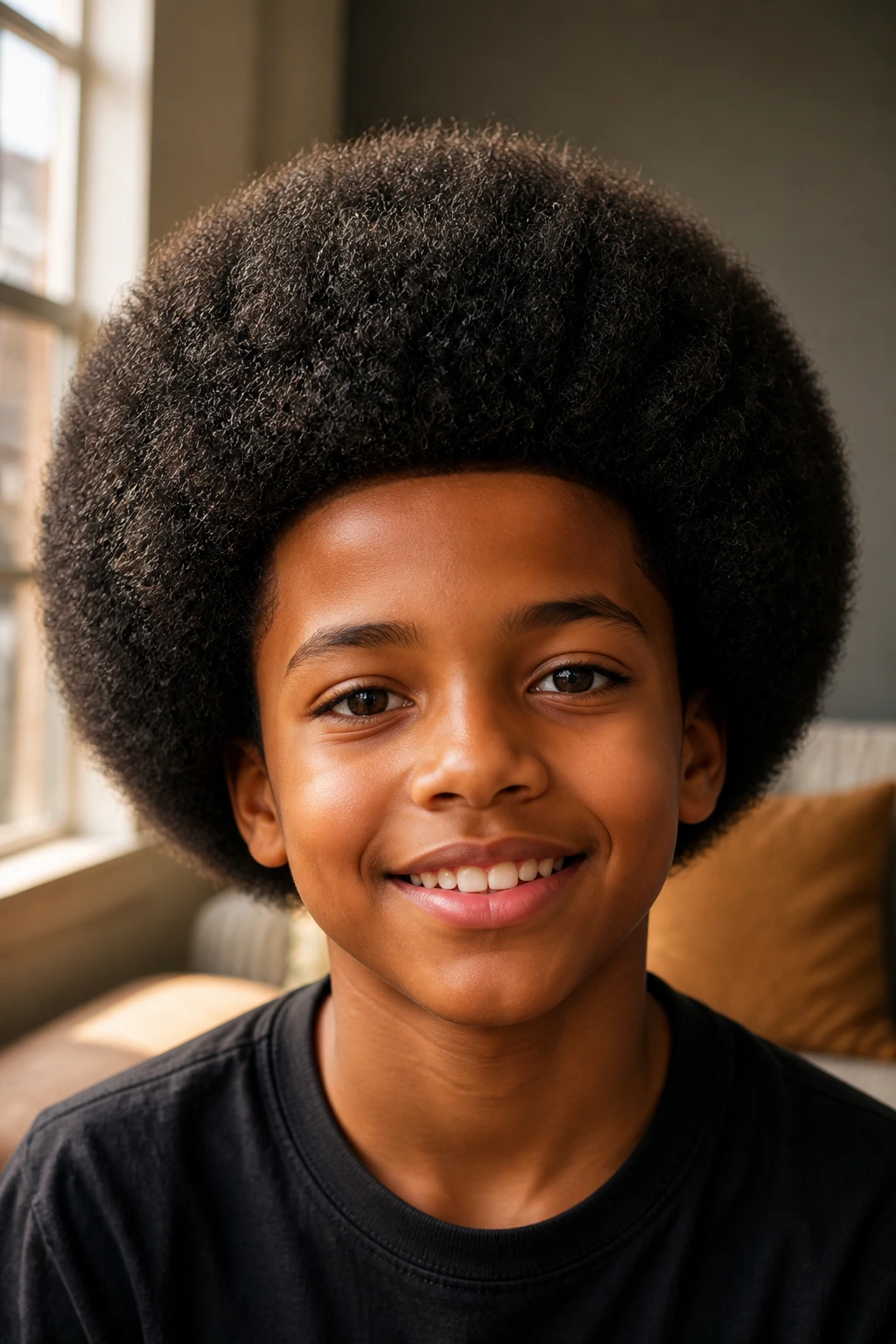
A rounded afro is pure shape. The goal is not to make the hair as short as possible. The goal is to make the outline balanced, soft, and even from every angle. On tight curls and coils, the round silhouette can look tidy, strong, and full without becoming blocky.
The shape needs regular upkeep. If the sides grow out too much, the round outline turns square. If the top gets left too long, it gets top-heavy. A shape-up every few weeks keeps the head looking deliberate instead of overgrown.
What Makes It Different
Unlike a high-top, which often has a more boxy edge, the rounded afro keeps the edges curved. That makes it feel softer and less rigid, even though the shape is still very intentional.
It works best when the barber trims by sight, not just by guard number. The curl pattern itself creates the volume, so the cut should respect that natural fullness instead of chasing it off the head.
Tip: a wide-tooth pick and leave-in conditioner are usually enough. Heavy gel can flatten the shape and make the curls clump in the wrong way.
15. Drop Fade with Curly Top
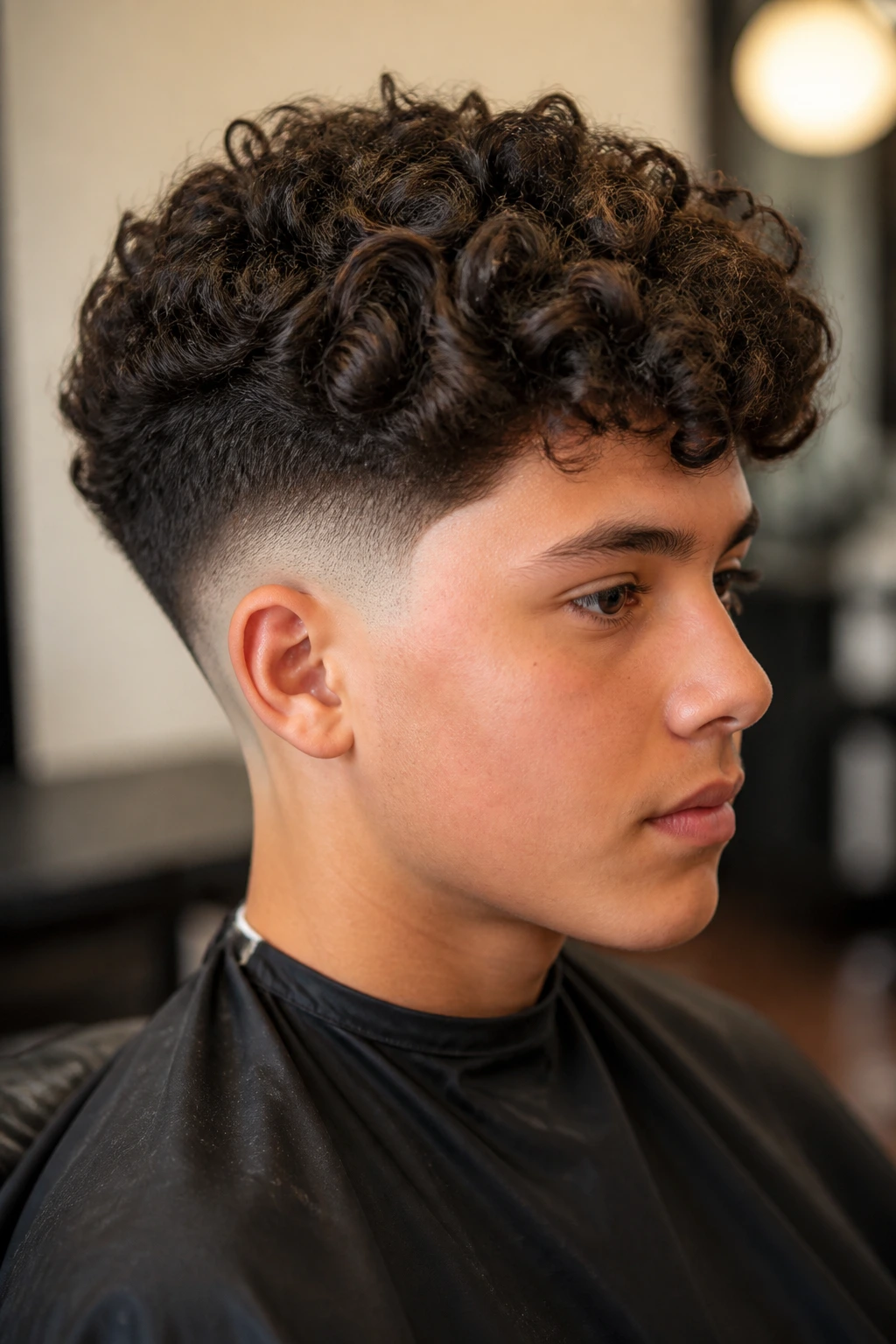
A drop fade dips lower behind the ear and at the back of the head, which gives curly hair a smoother, more sculpted outline than a straight fade line. The top remains full, but the sides curve downward so the whole haircut follows the shape of the head more naturally.
That lower dip matters. It makes the cut look a little more finished, especially when the curls on top are thick or the head shape is wide at the crown. The fade doesn’t just shave the sides down; it changes the profile.
Best for
- Medium to tight curls
- Boys who want a sharper silhouette without losing top length
- Hair that grows bulky around the back of the head
A drop fade also hides grow-out better than some harsher fades. The lower curve gives the cut a softer transition as it grows, which means it doesn’t lose shape all at once.
Ask for the drop to sit low enough to follow the natural head curve. If it climbs too high, the effect gets lost. Small difference, and the whole haircut depends on it.
16. Curly Shag
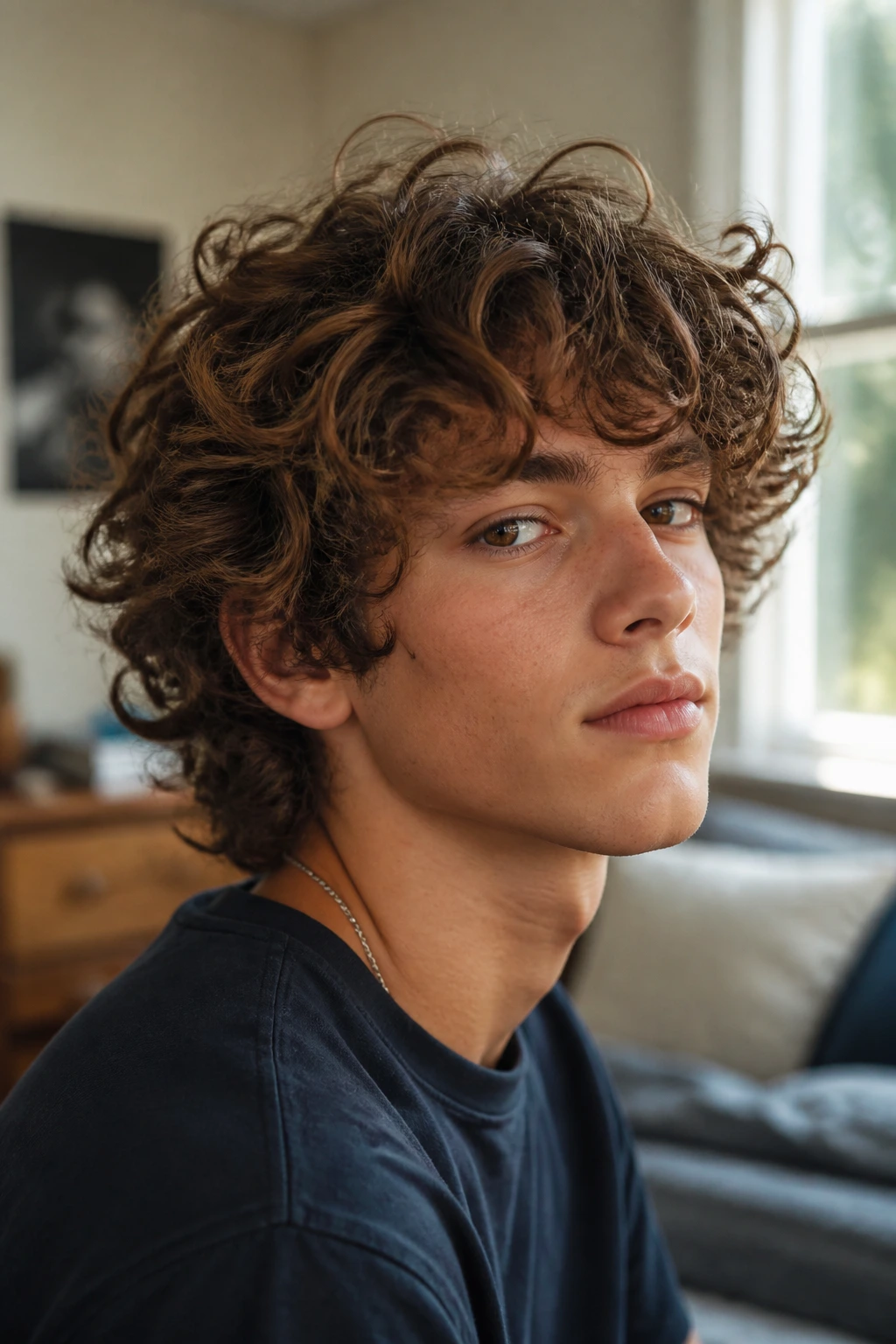
The curly shag has a messy reputation, but the good version is controlled chaos. It uses layers to create movement all over the head, which keeps the curls from stacking into one heavy shape. It is especially good for medium-length curly hair that needs air between the strands.
This cut works well when the goal is softness. The fringe, crown, and sides all have some texture, so the haircut feels relaxed rather than sculpted. It’s less “clean fade” and more “cool older-brother hair,” which is exactly why some boys love it.
Why It Works
The shag removes weight without collapsing the curl pattern. That lets the hair move when he walks, runs, or shakes his head, which is half the charm.
It suits loose to medium curls best, though tighter curls can wear it too if the layers are shaped carefully. The barber should avoid blunt ends and instead break up the perimeter with scissors.
Tip: a little curl cream scrunched into damp hair is enough. Too much product makes the shag clump and lose its airy shape.
17. Mid Fade with Curly Top
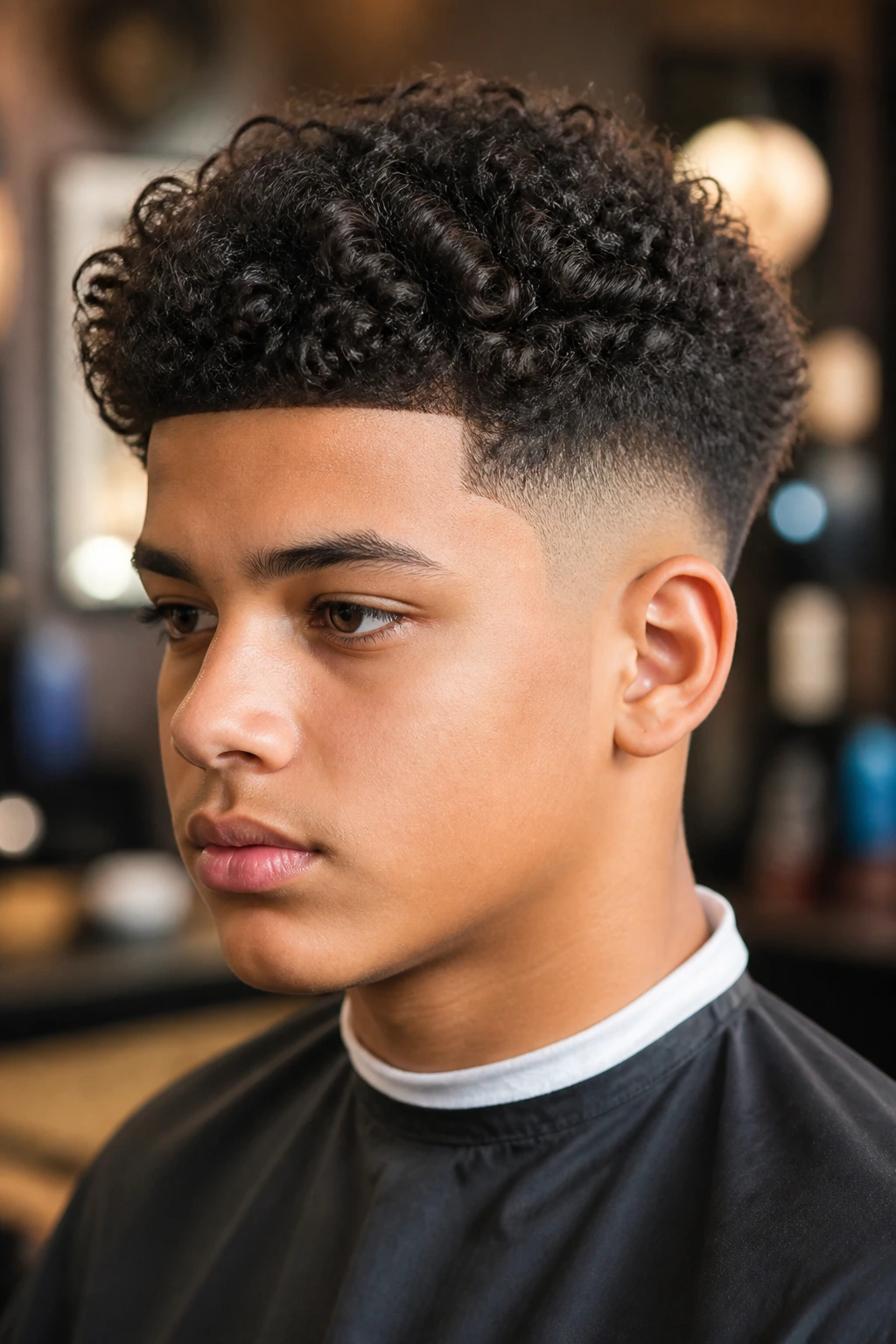
A mid fade sits in a sweet spot that gets overlooked. Low fades can feel soft. High fades can feel bold. The mid fade lands between the two, which is why it works on so many boys with curly hair. It gives a clean edge around the sides while still leaving enough body up top to keep the curls interesting.
The top can be short, medium, or fairly full, depending on curl type. What matters is balance. The mid fade already brings structure, so the top does not need to be overstyled or overcut. A little texture goes a long way.
What to Ask For
- A fade that starts around the temple area
- The top left curly and textured, usually 2½ to 4 inches
- A clean neckline, but not a super-high fade
- Soft blending near the crown so the head doesn’t look pinched
This is a good choice when you want something neat that still has enough personality to look modern. It’s also one of the easier cuts to grow out, which is a relief when you are not sure when the next barber trip will happen.
18. Curly Curtains with Tapered Ends
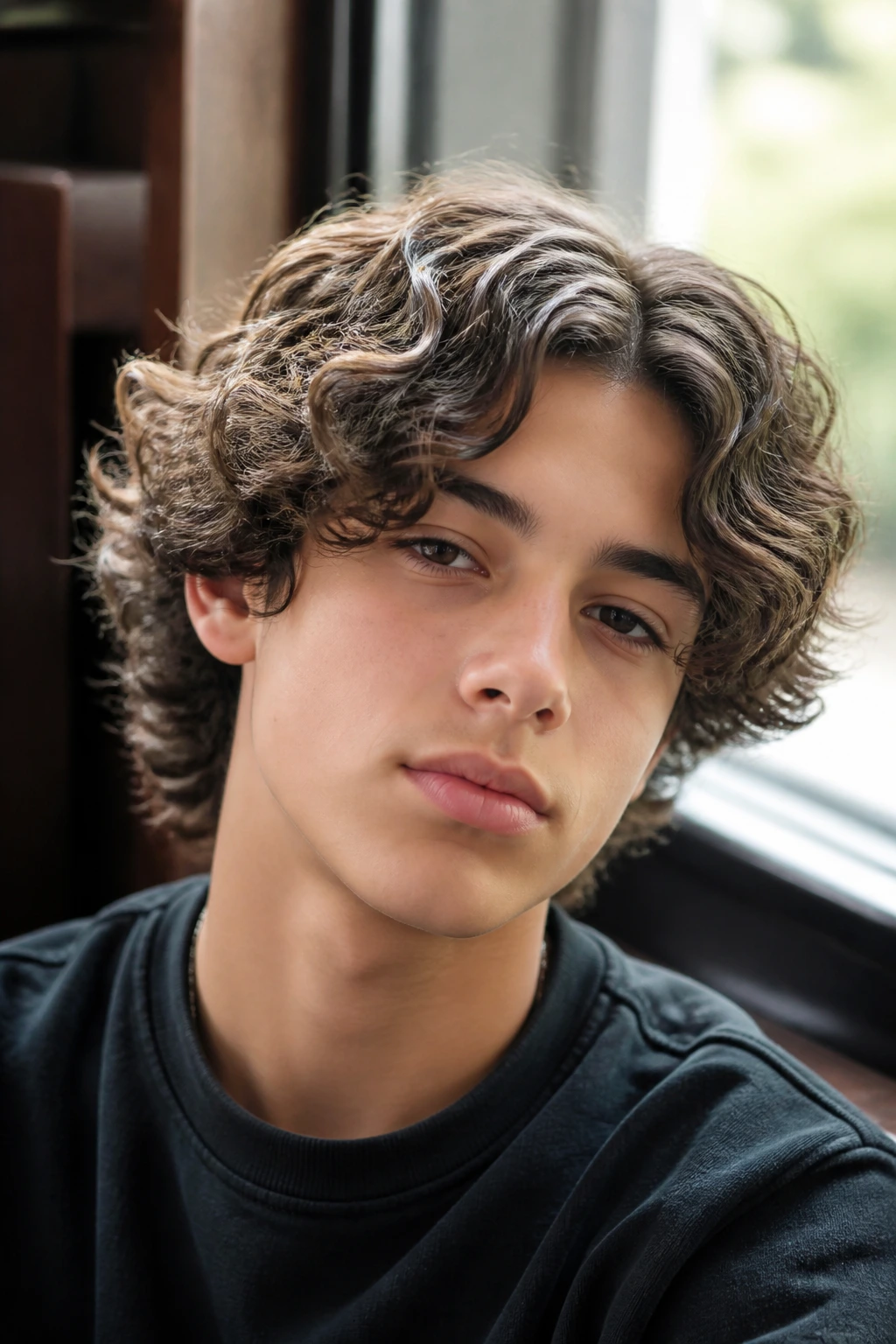
Curly curtains are the long-game haircut on this list. The hair is parted down the middle or slightly off-center, then allowed to fall to both sides so the curls frame the face instead of sitting on top of it. On looser curls and waves, this can look soft and very current. On tighter curls, it becomes more of a shape than a strict part, and that works too.
The ends need tapering or layering, or else the style turns heavy and starts pulling downward. That’s the difference between a curtain cut and a mop. The right layers let the curls open up around the cheeks and eyes, which gives the haircut movement and shape.
Why It’s Worth a Look
If he hates having hair in his eyes but doesn’t want a short cut, curtains are a strong middle ground. The front can be guided away from the face without being chopped short.
A middle part is not mandatory. A soft center split that follows the natural fall of the curls often looks better than a line carved with a comb. The hair should look like it belongs there.
Tip: this cut lives or dies by length at the front. If the fringe is too short, the curtain effect disappears fast.
Why Curly Hair Needs Shape, Not Just Shorter Sides
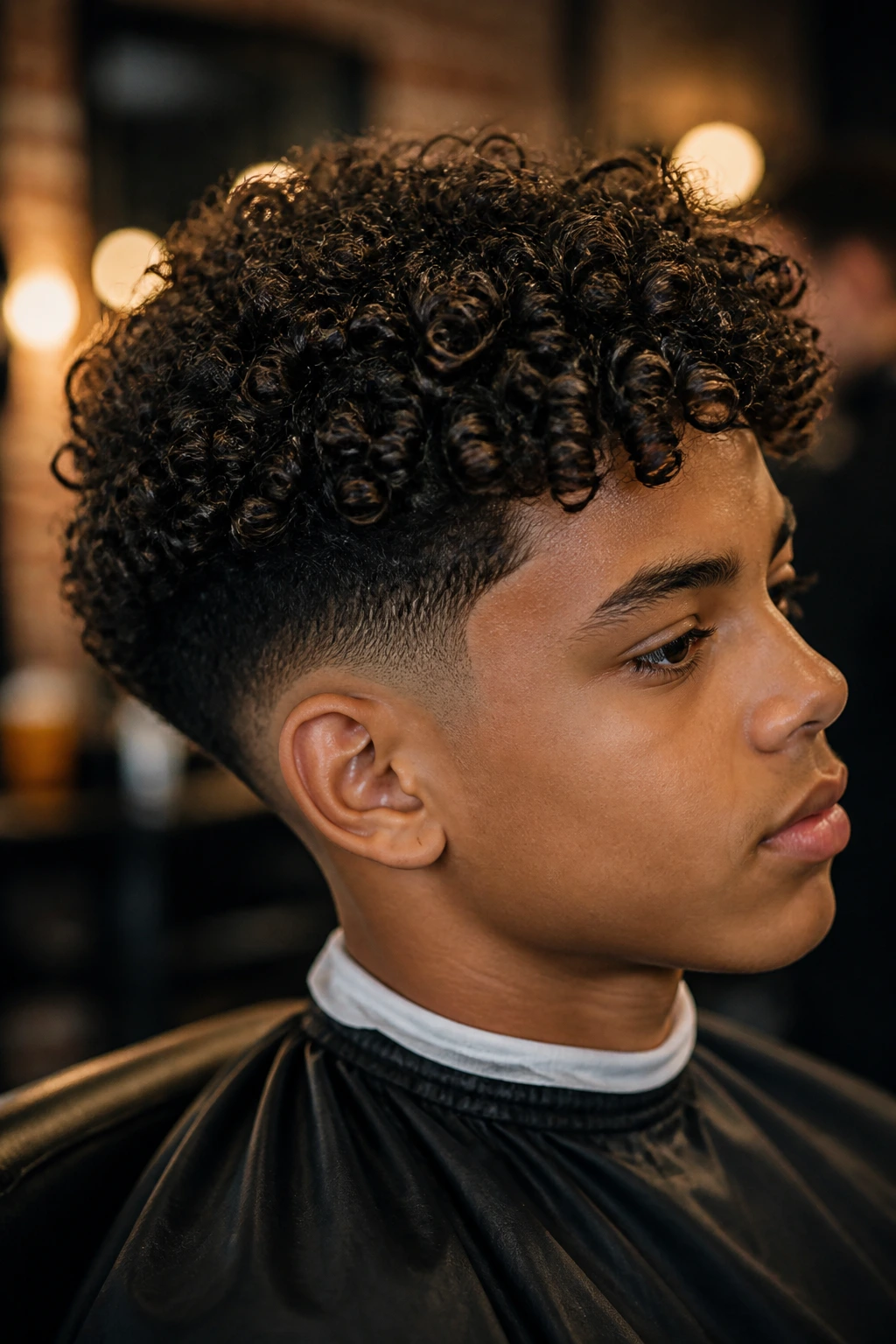
Curly hair has a way of lying to the eye. Wet, it looks shorter and slimmer. Dry, it rises, bends, and takes up space in directions that can make a haircut feel twice as wide. That is why a curly cut has to be planned around shrinkage, not just around the number of inches on the comb.
A lot of barbers already know this, but it is worth saying out loud because it changes everything. If the top is cut too short while wet, the curls can spring up and leave the head looking bare on top. If the sides are left too bulky, the whole shape can balloon out at the temples and back. The cut needs balance, not just length removal.
Shrinkage Is the Quiet Saboteur
A curl that hangs down 4 inches when wet may read as 2 inches once it dries. Tight coils can shrink even more. That means the barber’s eyes need to be on the final shape, not just the visible length in the chair.
Where the Weight Lives Matters
Curly hair often needs weight removed from the crown and lower sides, but not all at once. Point cutting, scissor-over-comb, and careful tapering help the curls sit where they should instead of puffing outward in a single layer.
One more thing: dry checks help. A quick look when the hair is mostly dry can save a haircut from turning too short or too round.
Essential Tools for These Haircuts
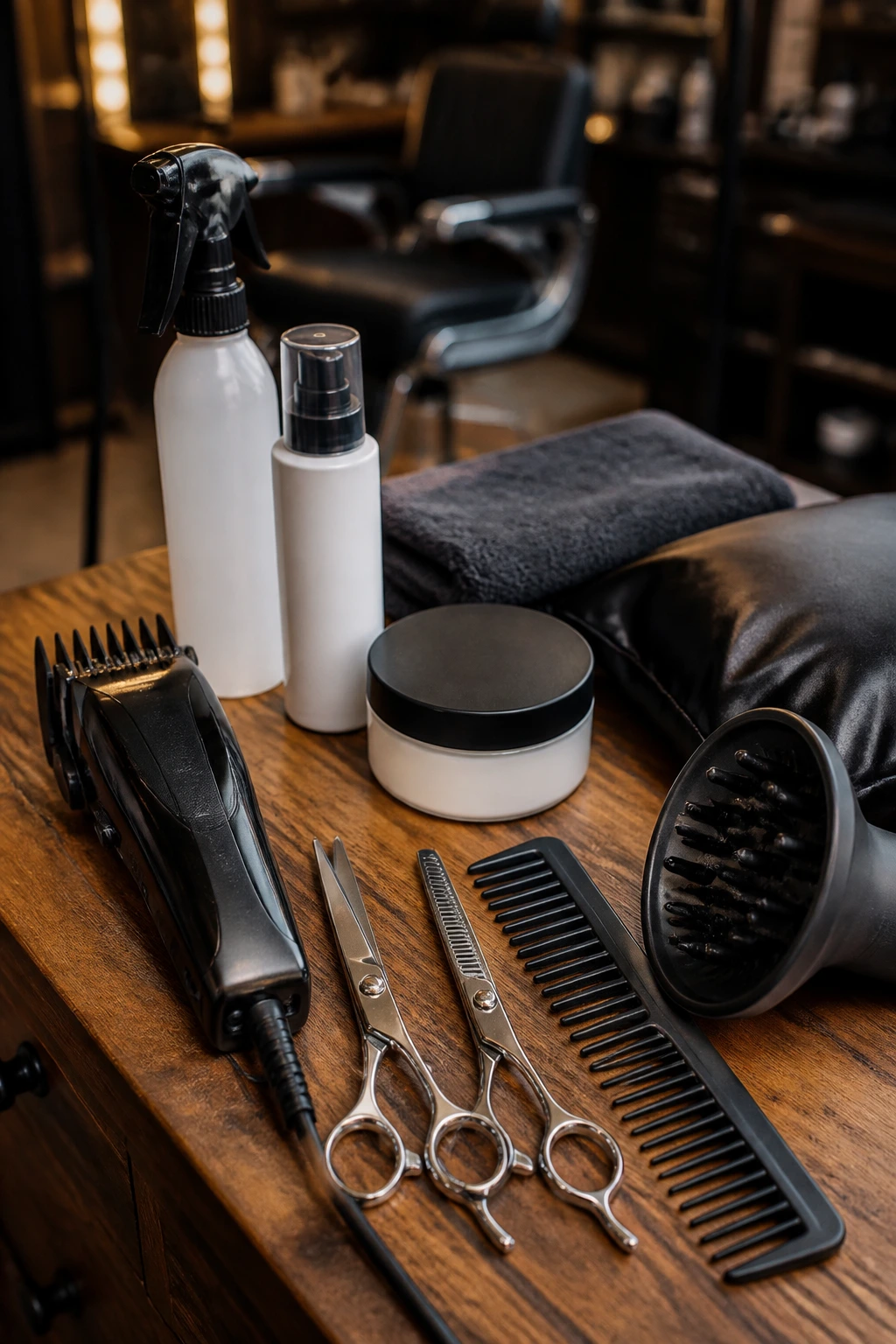
- Clippers with guards: Useful for fades, tapers, and cleaned-up sides; the guard number changes the look fast.
- Barber shears: Better for shaping curls on top than clippers alone, especially when the goal is movement.
- Texturizing shears: Handy in the right hands for removing bulk, though they should be used sparingly on curly hair.
- Wide-tooth comb: Safer than a fine comb for detangling without ripping through curl clumps.
- Spray bottle with water: Helps reset curls for styling and for checking how the hair falls after a cut.
- Leave-in conditioner: Softens curls and keeps the hair from feeling dry or crunchy.
- Curl cream or light mousse: Good for definition without the helmet effect heavy gel can create.
- Microfiber towel or cotton T-shirt: Cuts down frizz when drying; rough terry towels can puff the hair up.
- Diffuser attachment: Useful if you want more lift and less frizz when drying with heat.
- Satin pillowcase or sleep cap: Keeps curls from getting smashed flat overnight.
How to Match the Cut to Curl Pattern and Face Shape
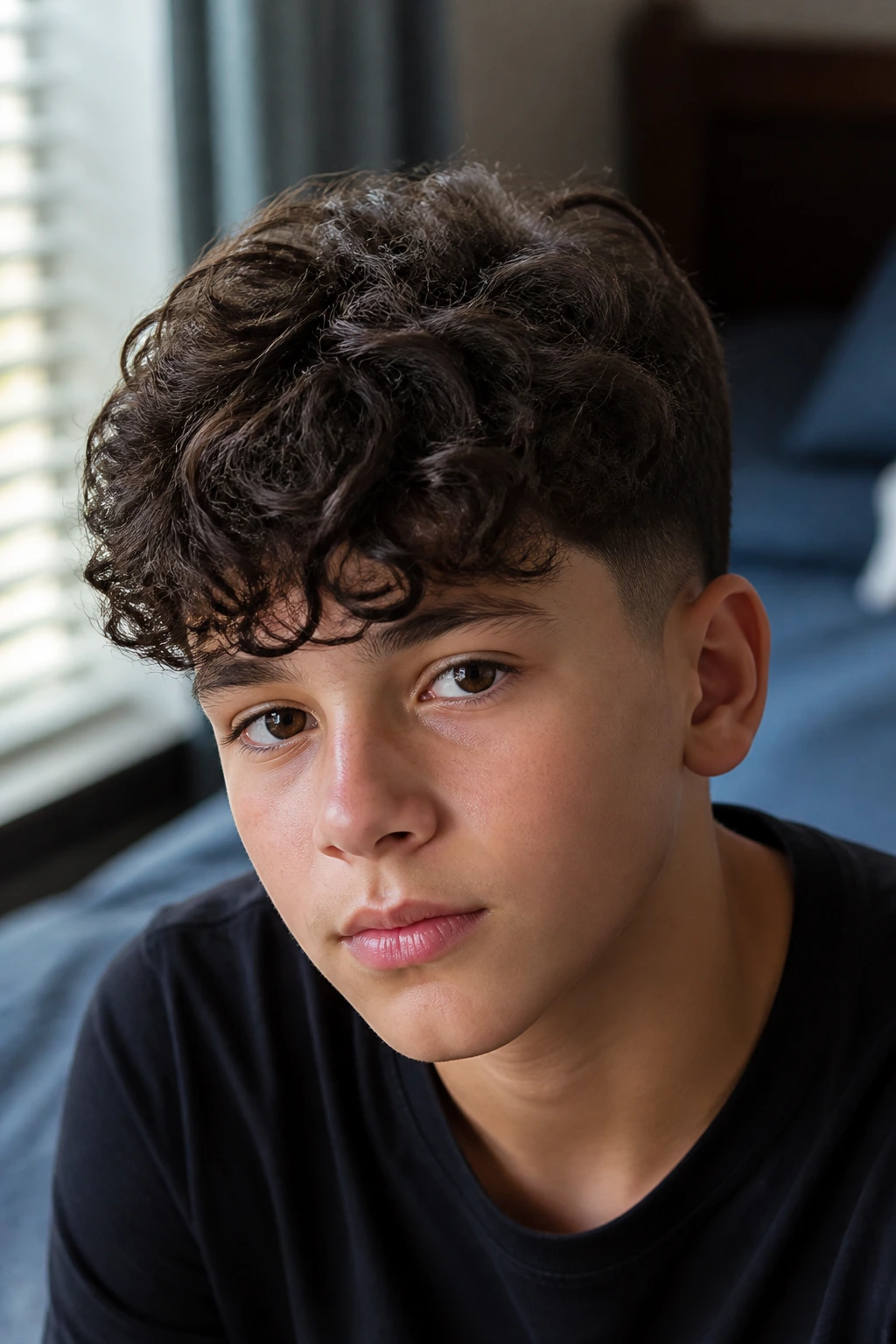
The best haircut for curly hair usually starts with two questions: how tight are the curls, and what shape is the face trying to make? Those two answers will tell you more than a trend photo ever will.
Loose waves and soft ringlets usually hold shape best in cuts with movement on top — fringe cuts, side parts, quiffs, and layered shags. Tight curls and coils often look sharper when the sides are managed with a fade or taper, because the volume can get wide fast if the haircut is left all one length. Dense hair often needs more weight removed than parents expect. Fine curly hair usually needs the opposite: less thinning, less chopping, more length left intact so it does not look see-through.
Round faces usually benefit from a little height or a little fringe control, not both at once. That means a curly quiff or a mid fade can help add length, while a heavy, wide crop can make the face look even rounder. Longer faces often do better with fringe, curls falling forward, or a rounded silhouette that softens the vertical lines.
Cowlicks deserve their own sentence. If the hair pushes up or splits at the front, do not fight it with a flat cut that sits against the grain. Work with the way the curls already move, or the style will spend all day trying to escape.
Styling Curly Hair Without Crusty Gel
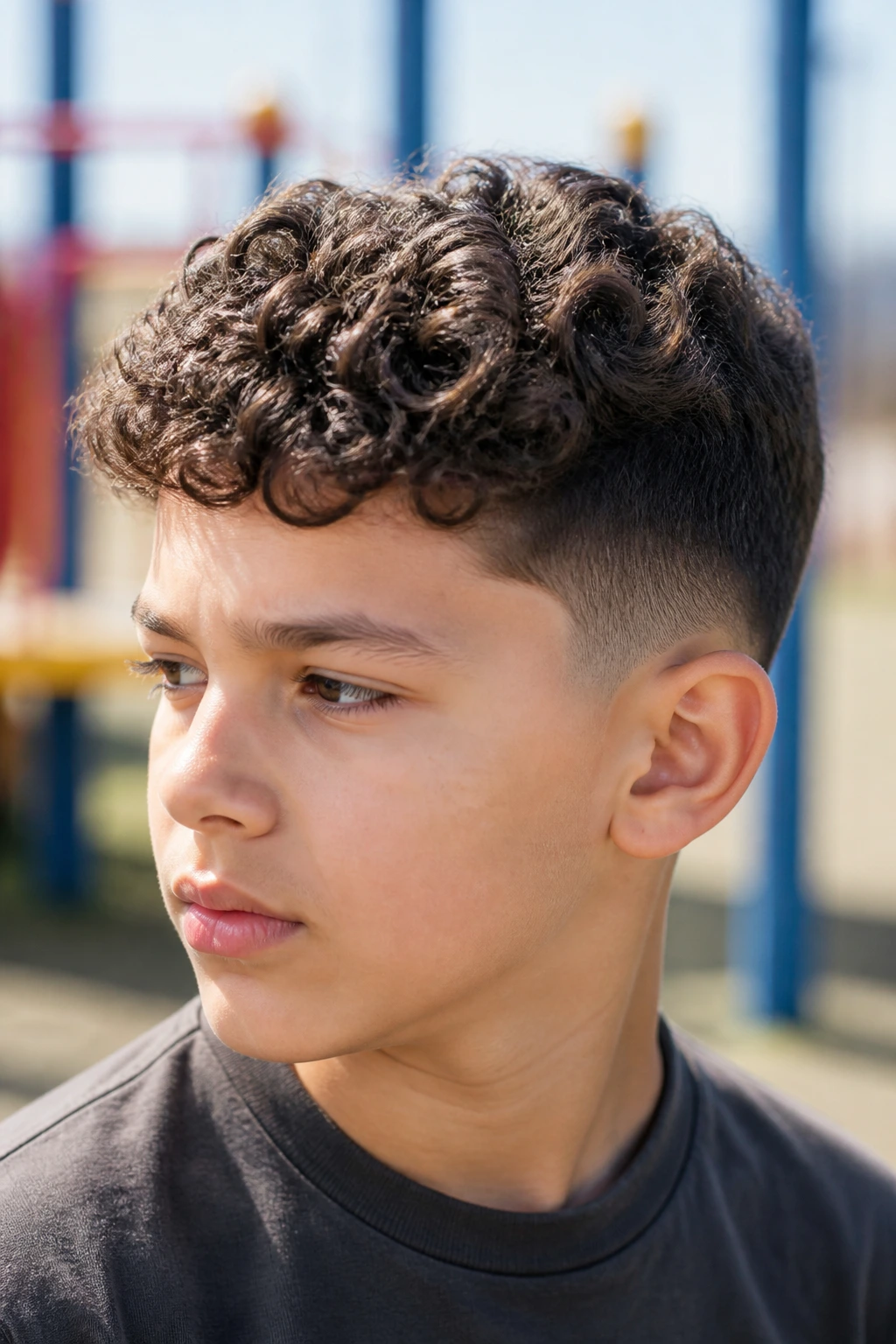
Crusty gel is a crime of convenience. It makes sense in the moment, then the curls dry into a shell and the hair feels more like a helmet than a haircut. A better routine starts with moisture, not stiffness.
Base: Use a small amount of leave-in conditioner on damp hair, especially if the curls feel dry after washing. That gives the strands some slip and keeps frizz from grabbing the whole head by noon.
Definition: Follow with a curl cream or light mousse, depending on how much hold the hair needs. Cream gives softness. Mousse gives lift. Heavy gel is only worth it if the curls are very loose and need help keeping shape.
Drying: Scrunch with a microfiber towel or T-shirt, then air dry or diffuse on low heat. High heat and rough towel drying both cause the same annoying result: puffier sides and less control.
Morning refresh: A spray bottle with water can wake the curls back up fast. Add a pea-sized amount of product if the ends look dry, then scrunch from the bottom up. That is usually enough.
One small opinion: less product is usually the smarter move with boys’ curly hair. If the hair is weighed down, the curls lose their shape and the whole cut looks flatter than it should.
The Curly-Hair Mistakes That Make a Good Cut Collapse
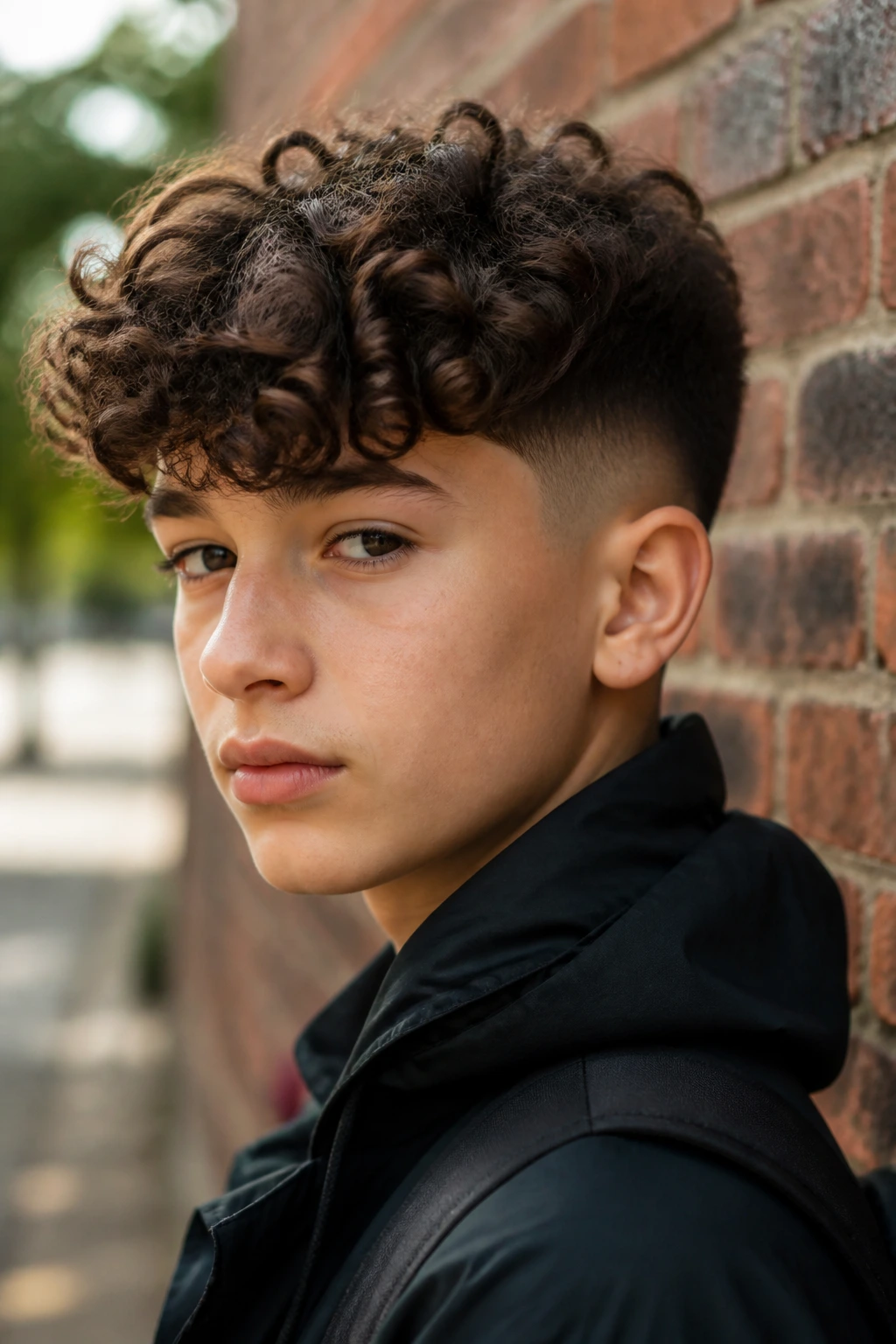
The first mistake is cutting too much length off while the hair is wet. Wet curls stretch, and if the barber trims to the stretched length without checking the dry shape, the finished cut can come back several inches shorter than anyone wanted. The fix is simple: leave more length than you think you need and, when possible, do a dry check.
The second mistake is thinning curly hair like it’s thick straight hair. Over-thinning can leave little see-through gaps and make the curls puff in weird patches. The symptom is a top that looks airy in the chair and patchy a week later. The fix is controlled weight removal, not aggressive texturizing.
The third mistake is leaving too much bulk at the sides and back. Curly hair spreads out. If the outline is not cleaned up, the head starts looking wider every day the haircut grows. A low taper, a mid fade, or a curved shape around the ear keeps the silhouette under control.
The fourth mistake is using too much heavy product. Thick gel or wax can drag curls down and create a sticky surface that catches lint and dirt. Light cream, mousse, or leave-in usually does the job better.
The fifth mistake is ignoring shrinkage when choosing a style. A cut that looks “medium length” in the chair may read as short once dry. That is how parents get surprised and boys get annoyed.
Easy Variations You Can Use on Almost Any of These Cuts
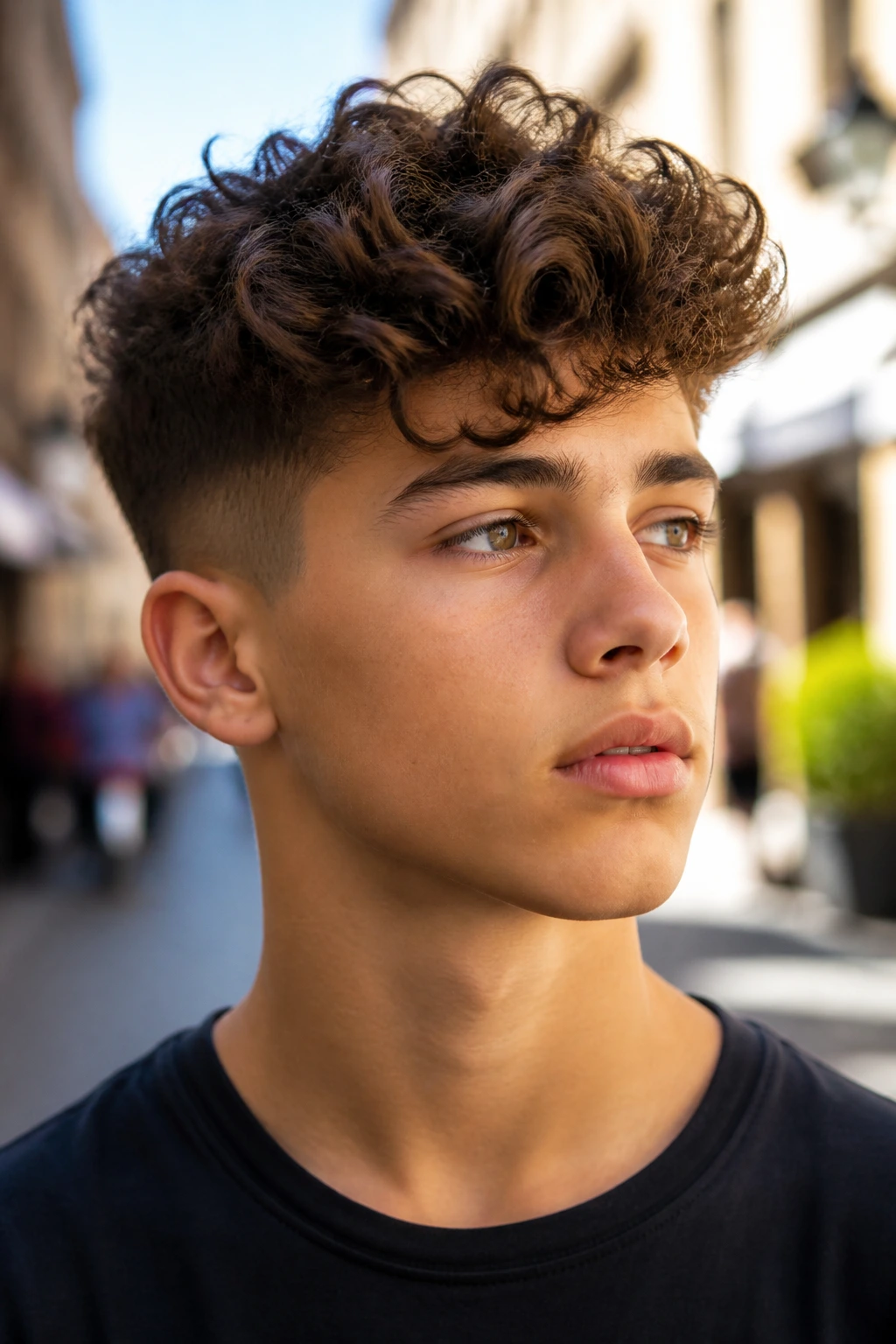
Soft School-Day Version: Keep the fade low, the top short to medium, and the edges tidy. This version works on most of the cuts above and stays neat without looking overly styled.
Bigger Weekend Shape: Leave an extra half inch on top and use a light diffuser to bring out more curl volume. It gives the haircut more personality without changing the base shape.
Coily Shape-Up: For tighter curls and coils, sharpen the outline at the temples and nape while keeping the top rounded or high. This keeps the silhouette clean even when the texture is dense.
Long Grow-Out Plan: If the goal is to keep length, ask for layering instead of a full chop and let the sides taper gradually. That way the shape grows out in stages instead of all at once.
Low-Fuss Sport Cut: Go shorter on the sides, keep the top textured but not too long, and choose a style that still looks fine after helmet hair, sweat, and a quick towel dry. The curly crop and taper fade are the easiest places to start.
Keeping the Shape Fresh Between Barber Visits
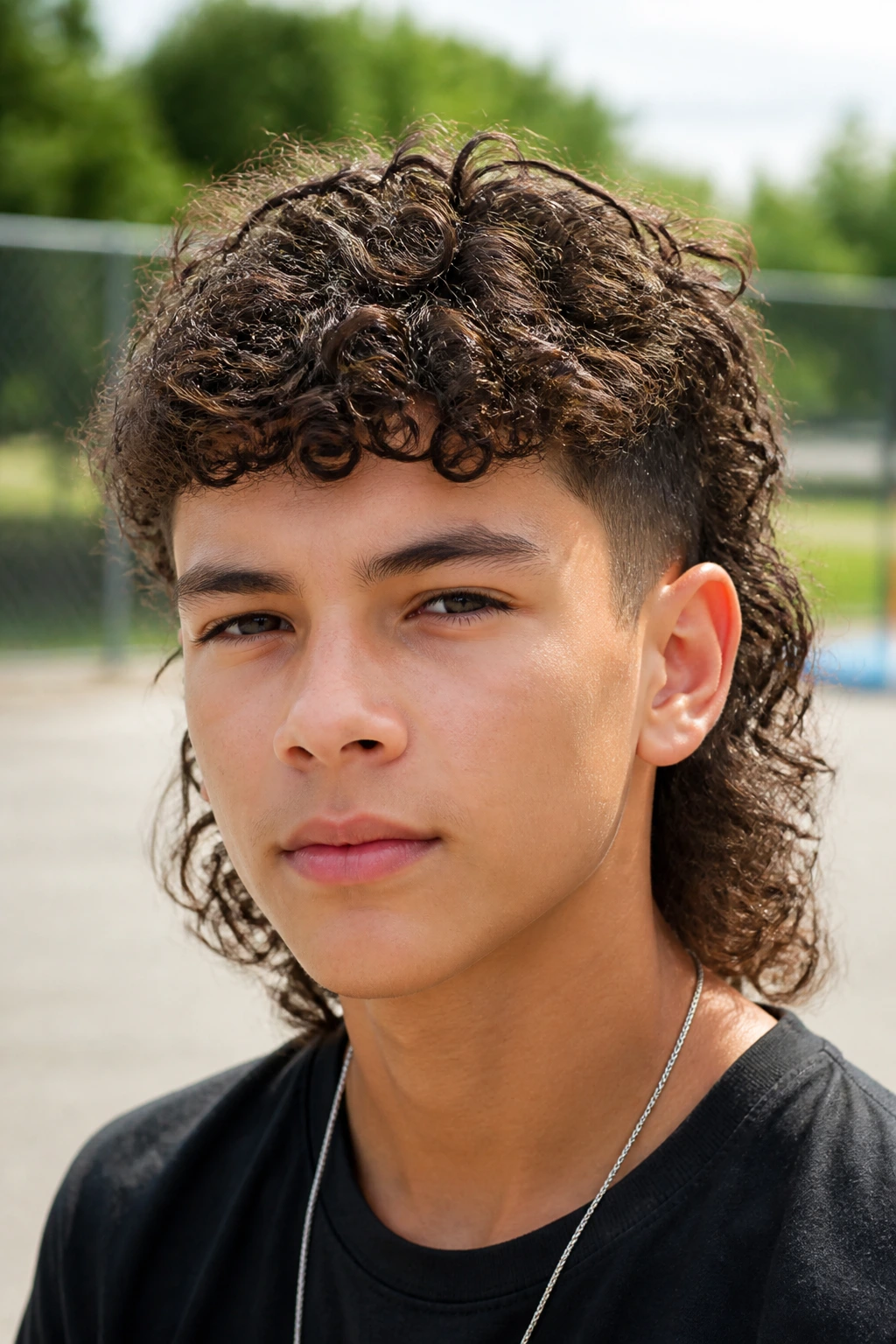
Curly hair grows out in its own way. That is good news and bad news. Good because the texture hides some grow-out. Bad because the shape can drift without warning, especially at the sides and crown.
A trim every 3 to 5 weeks keeps fades, tapers, and line-ups looking clean. Longer layered cuts can go a little farther, but they usually still need a shape check around the same window if you want them to keep the original outline. If the haircut depends on a fade, do not push it too long. The lower edge starts looking fuzzy before the top looks truly long.
Wash frequency matters too. Most curly heads do better with 2 to 3 washes a week, not daily shampooing, unless sweat or product buildup says otherwise. Between washes, a water mist and a little conditioner or curl cream can refresh the shape without stripping the hair. If the curls feel dry, a small amount of leave-in on the ends is usually enough.
Night care helps more than people think. A satin pillowcase, or even tucking the curls into a loose bonnet, can keep the shape from getting flattened into a lopsided puff. For boys who sleep hard and wake up with hair pointing in eight directions, this is not optional. It is the difference between a five-second refresh and a full morning repair job.
Questions Parents and Boys Ask Most
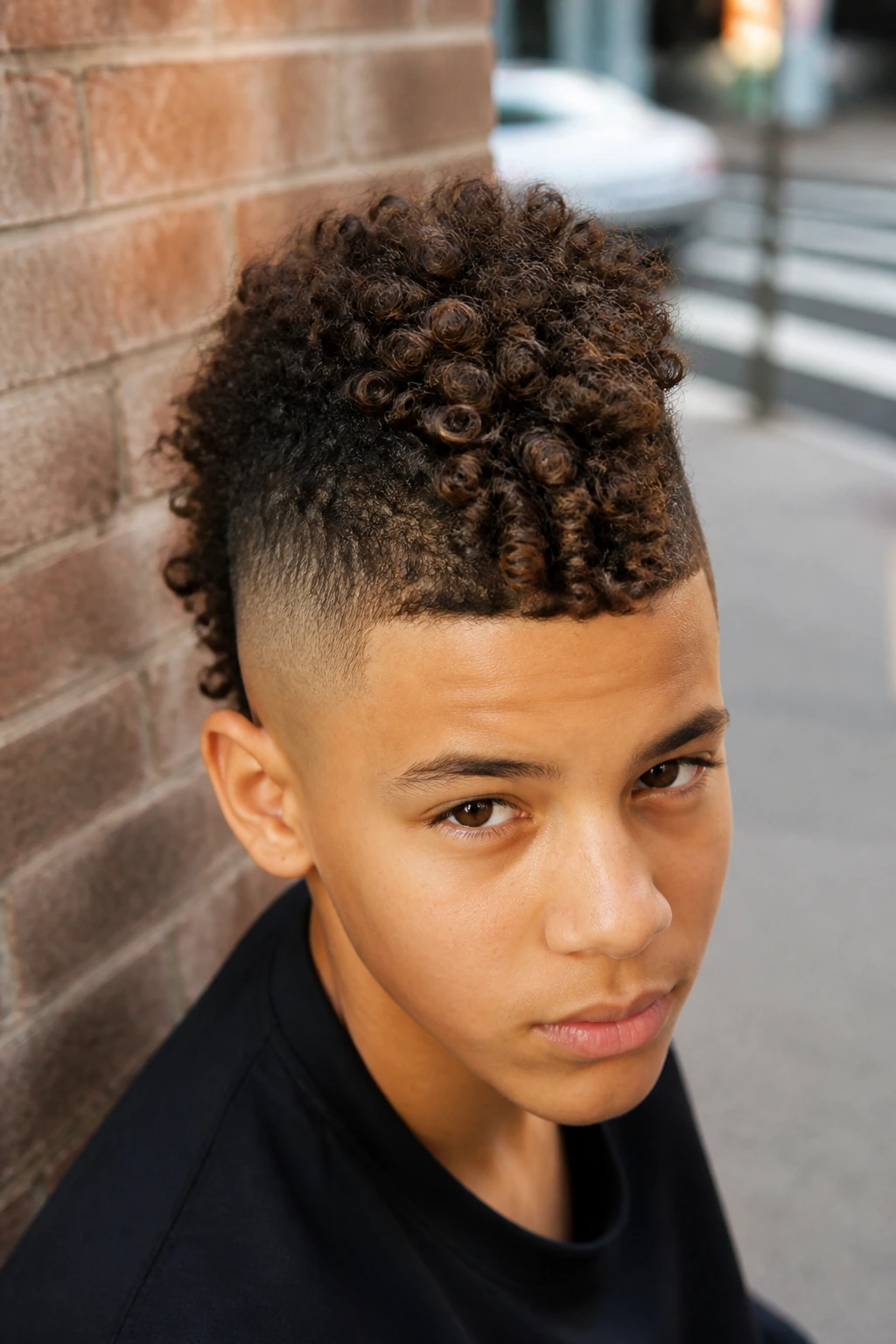
Can boys with curly hair get a fade without losing the curls on top?
Yes, and that is one of the best things to do with curly hair. The fade handles the bulk on the sides, while the top keeps enough length to show the curl pattern. A low taper or mid fade is usually the safest place to start if you want the cut to stay soft.
Should curly hair be cut wet or dry?
A lot of curly haircuts are better with at least part of the check done dry. Wet curls stretch out, so the barber can easily take off too much. A dry check helps judge the final shape and keeps shrinkage from surprising everyone later.
What haircut works best for tight curls or coils?
Rounded afros, high-tops, temple fades, and short curly crops all work well. Tight curls hold shape nicely, but they also create bulk quickly, so the outline matters more than people expect. Clean edges and careful layering keep the cut from ballooning.
Can a curly fringe work if he wears glasses?
It can, but the fringe length needs to be planned around the frames. The front should sit above the glasses or fall in a soft way that doesn’t keep brushing the lenses all day. A barber can leave a touch more length in the front and shape the sides so the glasses do not fight the haircut.
How do you stop curly hair from looking triangular?
Remove weight from the sides and crown, then add layers or taper the outline. Triangle hair usually happens when the bottom gets too wide and the top is too heavy. The fix is balance, not a shorter buzz.
Is the curly mullet hard to maintain?
Not especially, but it does need regular shape checks because the back and front grow at different speeds. If the back goes too long or the sides stay too full, the silhouette loses its point. Keep it trimmed every few weeks and it stays intentional.
What if his curls get frizzy right after the haircut?
That usually means the hair is dry, the cut removed too much weight in the wrong places, or the styling product is too heavy. Use a light leave-in on damp hair and avoid rough towel drying. If the frizz is mostly at the crown or fringe, the haircut may need softer layering the next time.
Can these cuts be done at home?
Some can, but curly hair is less forgiving than it looks. Simple cleanups around the neckline or sideburns are doable, yet the top shape and shrinkage are easy to misjudge without barber tools and experience. If the goal is a fade, a fringe, or anything that depends on balance, a barber is usually the better bet.
The Cut That Fits His Curls
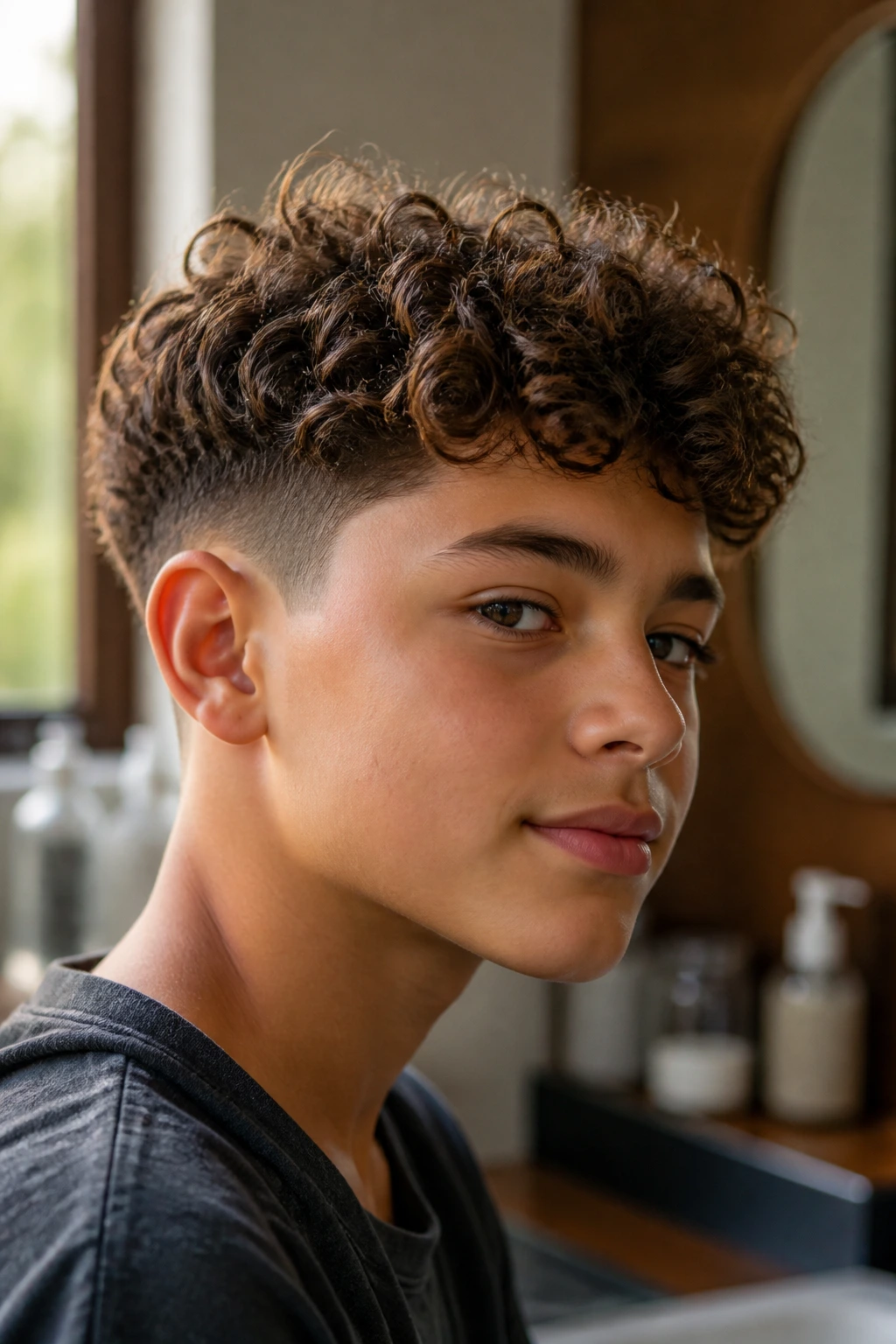
Curly hair looks best when the haircut lets the curl do some of the work. That is the thread running through every style above. Clean the sides, protect the shape, and leave enough length where the curls need it most. Do that, and the haircut will look like it belongs on his head instead of being forced there.
The smartest choice is usually the one he can wear without constant correction. If he likes running his hands through it, keep the top softer. If he needs something neat for school, lean toward a taper or temple fade. If he wants bigger shape and a little attitude, the frohawk, mullet, quiff, or curtain cut can carry that mood without turning the hair into a maintenance project.
A good boys’ curly haircut is not the one that looks perfect for five minutes. It’s the one that still looks like a haircut after a nap, a game, or a windy walk home. Choose the shape around the curls, and the curls will do the rest.