



Fine hairstyles for women over 60 with curtain bangs work best when they stop fighting fine hair and start shaping it. That’s the whole game. Fine strands do not need a giant wall of fringe or six layers hacked into them. They need a cut that leaves enough weight at the ends to look full, enough movement around the face to feel soft, and enough bang length to drape instead of stand up like a little shelf.
Curtain bangs are one of the few fringe styles that can make that happen. When they’re cut with a longer center, then eased outward toward the cheekbones, they frame the face without stealing density from the rest of the cut. The effect is subtle in a mirror and obvious in real life: the forehead looks shorter, the eyes look brighter, and the hair around the jaw doesn’t go limp and stringy. On fine hair, that’s worth a lot.
The catch is that the wrong version of curtain bangs can work against you fast. Too much texturizing, too-short bangs, or a layered shape that’s been thinned to death can leave the whole style looking wispy by noon. The cuts below stay on the right side of that line. They’re not trying to turn fine hair into coarse hair. They’re giving it shape, movement, and a little bit of backbone.
Why These Cuts Earn Their Keep
-
They keep weight where fine hair needs it: A blunt or softly blunt perimeter at the bob or lob line helps the hair look denser from the front, which is where most people judge fullness first.
-
Curtain bangs soften the forehead without boxing in the face: The middle split opens the face, while the longer sides skim the cheekbones instead of cutting a hard line across the brow.
-
The grow-out is forgiving: If your fringe grows a half-inch faster than you’d like, curtain bangs still blend into the side layers instead of turning into a sudden, awkward band.
-
They play nicely with glasses and gray hair: The right curtain shape can sit above or around frames, and silver strands often look brighter when there’s movement near the face.
-
They don’t need heroic styling: Most of these cuts can be revived with a round brush, a quick blast from the dryer, and a dab of lightweight mousse at the roots.
-
They keep the finish looking soft instead of stiff: Fine hair often looks brittle when it’s overworked. These styles lean into airiness, not shellacked perfection.
Why Curtain Bangs and Fine Hair Get Along Better Than You’d Expect
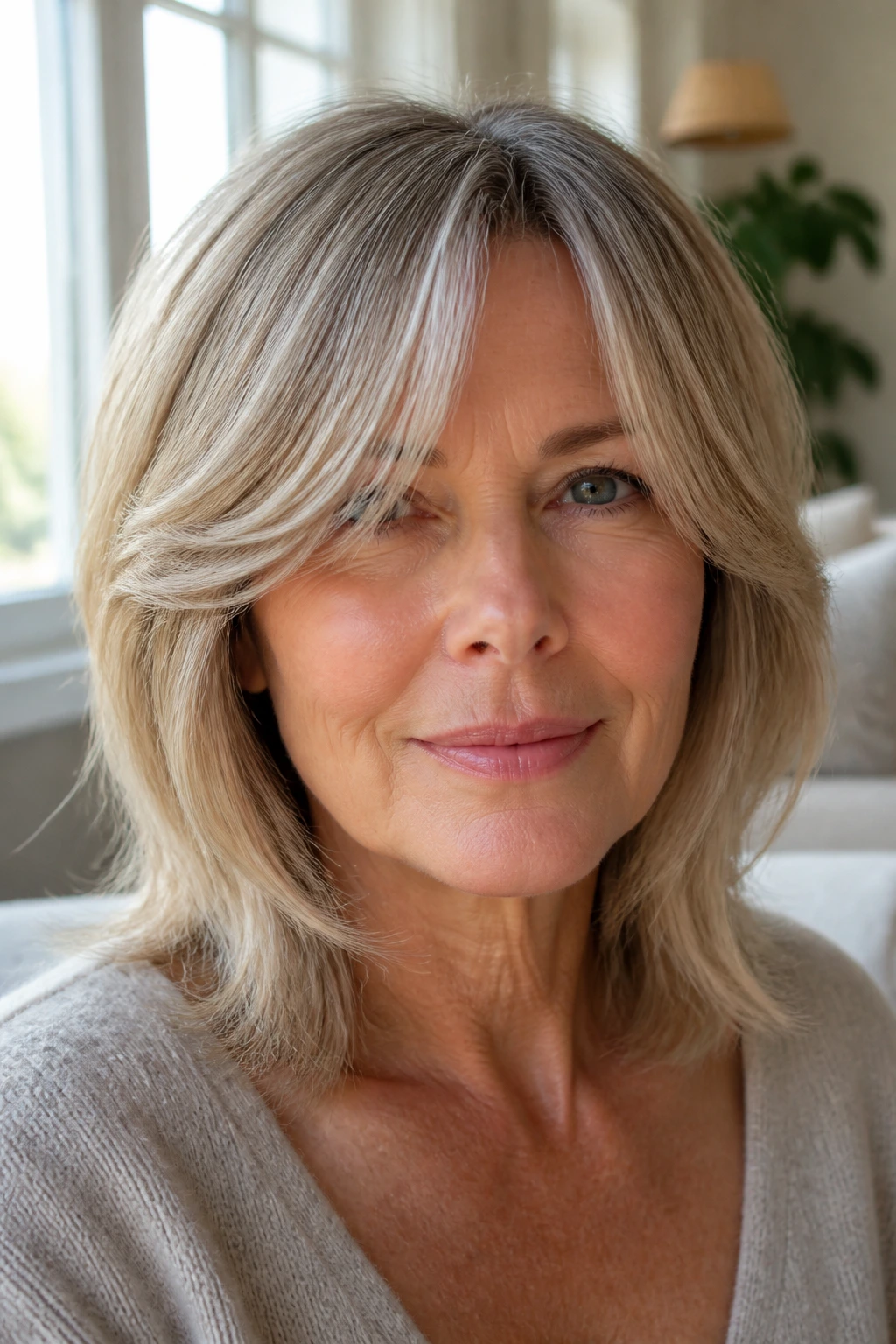
Curtain bangs are a smart match for fine hair because they do not ask the fringe to carry the whole haircut. That’s the mistake most people make. Heavy, thick bangs need density. Fine hair usually gives you softness, not mass, and that’s a different job entirely.
A good curtain fringe starts a little longer than people expect. The center can brush the bridge of the nose or even sit just below it, then the sides sweep down toward the cheekbones. That diagonal shape gives the eye a line to follow. It also makes the hair around the front look fuller because the fringe blends into the side lengths instead of ending in one blunt row.
The other quiet advantage is balance. Fine hair often goes flat at the crown and wispy at the ends. Curtain bangs pull attention to the front and upper face, where a little lift matters more than a lot of length. If your stylist keeps the ends blunt enough and avoids over-thinning the fringe, the result feels airy rather than sparse. That difference is everything.
A few details matter more than people think:
-
Start the bang length longer than your instinct says. Fine hair shrinks visually once it’s dry, and too-short fringe can fly apart.
-
Ask for soft point-cutting, not aggressive razor work. The goal is separation, not fraying.
-
Keep the perimeter honest. If the ends are too shattered, the whole style will read thin no matter how pretty the front is.
1. Chin-Length French Bob with Curtain Bangs
A chin-length French bob is one of the cleanest answers for fine hair because the line is short enough to look intentional and long enough to still feel elegant. Add curtain bangs that open at the cheekbones, and the whole cut suddenly has a little lift in the front instead of collapsing into one flat shape. It’s neat without being severe. That matters after 60, when a hairline can use a softer frame.
This version works best when the bob is cut with a blunt perimeter and only a whisper of internal layering. Fine hair loves a strong edge. The bangs should start around the nose bridge and taper longer toward the temples so they tuck into the bob instead of sitting on top of it like a separate piece.
Styling note
A 1.25-inch round brush is enough here. Dry the fringe forward first, then bend each side away from the face for about 10 seconds. If the ends flip under on their own, even better. That little curve keeps the cut looking polished, not helmet-like.
2. Feathered Pixie with Long Curtain Fringe
A short cut can be a mercy for fine hair, but only if it leaves enough softness near the forehead. That’s why this feathered pixie works. The top stays light and mobile, while the curtain fringe drops longer and splits around the face instead of ending in a sharp little line. It reads youthful in the best sense of the word: open, airy, and easy to move through the day.
The key is restraint. Too many short layers in the crown make fine hair look choppy and tired. Keep the sides neat, let the top sit with a bit of bend, and leave the fringe long enough to brush the brow or cheekbone. If you wear glasses, this cut is especially smart because the bangs can sit just above the frames instead of fighting them.
A tiny bit of lightweight paste at the ends is enough. No heavy wax. That only drags the hair down and turns the texture sticky.
3. Collarbone Lob with Soft Curtain Layers
The collarbone lob is the cut I reach for when someone wants movement without losing the feeling of having hair. On fine hair, length gives you a little more visual weight, and the collarbone is a good stopping point because the ends can still swing. Pair that with soft curtain layers around the front, and the face gets shape without the rest of the length going stringy.
This one has a nice side benefit: it’s forgiving on days when you do not style it perfectly. If the front bends a little too much or the wave falls out, the cut still looks deliberate because the length sits in a stable zone. Ask for the longest face-framing pieces to hit around the jawline and the shortest center point to land near the bridge of the nose when dry.
Loose bends with a flat iron or a medium curling iron give this shape life. Don’t curl the ends into ringlets. You want a soft S-shape, not a pageant wave.
4. Rounded Blunt Bob with Wispy Bangs
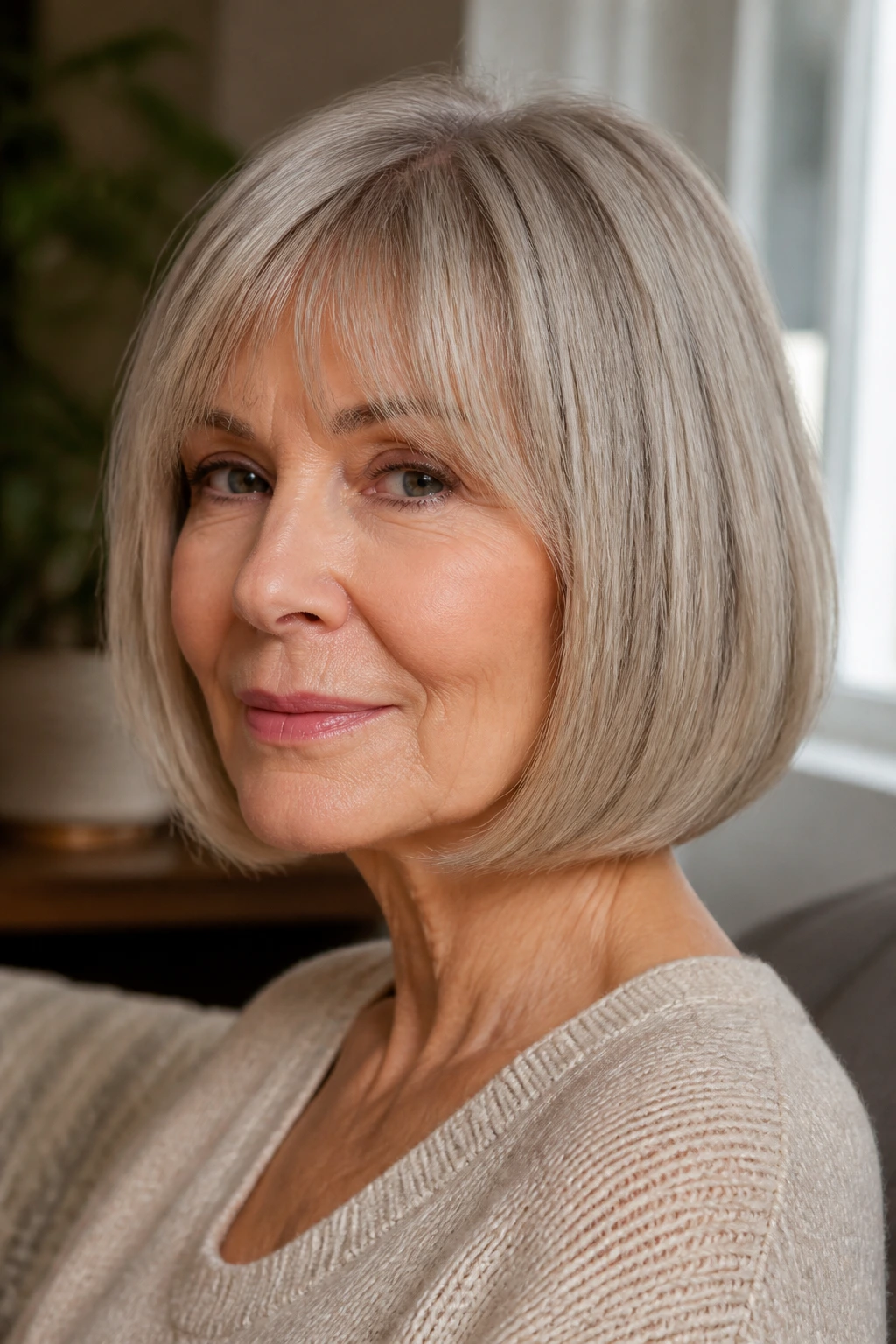
If fine hair looks thin at the ends, the blunt bob is your friend. A rounded version adds a gentle curve at the sides, which makes the silhouette look fuller from the front and in profile. The wispy curtain bangs keep it from feeling too boxy. They break up the forehead area, then melt into the cheek line instead of fighting the shape of the head.
What I like here is the contrast. The perimeter is solid. The fringe is light. That balance creates the illusion of density because the eye catches both a strong edge and a soft face frame in the same cut. It’s a cleaner look than a shag, and frankly, that suits a lot of women after 60 who want polish without fuss.
Keep the bangs airy, though. If they’re cut too thick, they’ll overpower the bob and steal the neatness that makes this style work.
5. Shag Lite with Airy Curtain Bangs
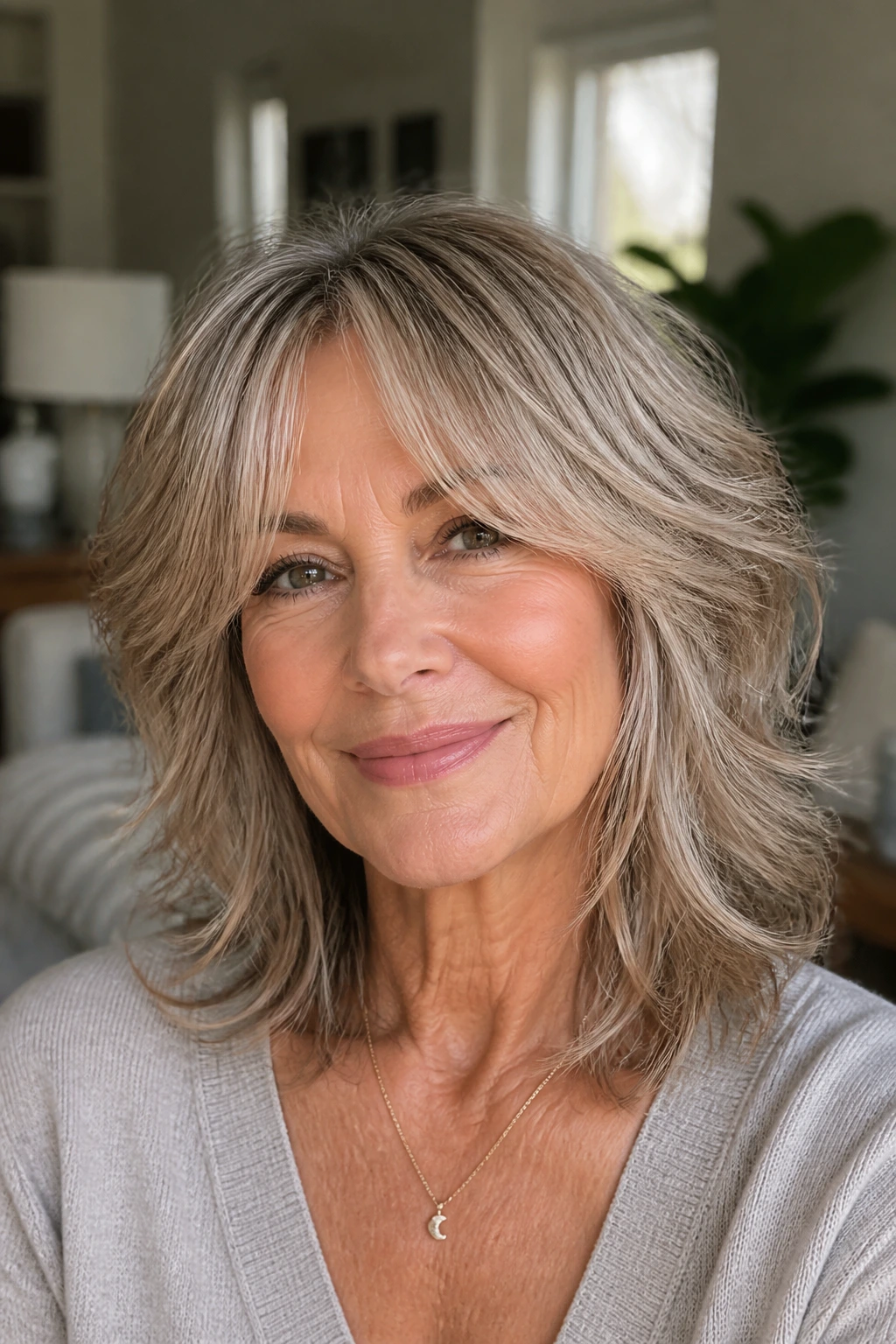
A full shag can be too much for fine hair if the layers are carved too aggressively. A shag lite gives you the movement without turning the ends to dust. Think of it as the safer, smarter cousin: there’s shape around the crown, feathering at the cheekbones, and enough lived-in texture to keep things from looking stiff.
The curtain bangs are a big part of the charm. They should be longer and slightly broken up, not short and blunt. On fine hair, the fringe should merge into the rest of the cut so you can wear it with a center part one day and a slight off-center part the next. That flexibility matters because fine hair changes its mood after a humid morning or one overzealous shampoo.
This cut usually looks best with a little bend from a diffuser or a large-barrel iron. Skip the heavy sea-salt spray if your strands are already fragile. It can make them feel papery fast.
6. Tapered Crop with Temple-Skimming Fringe
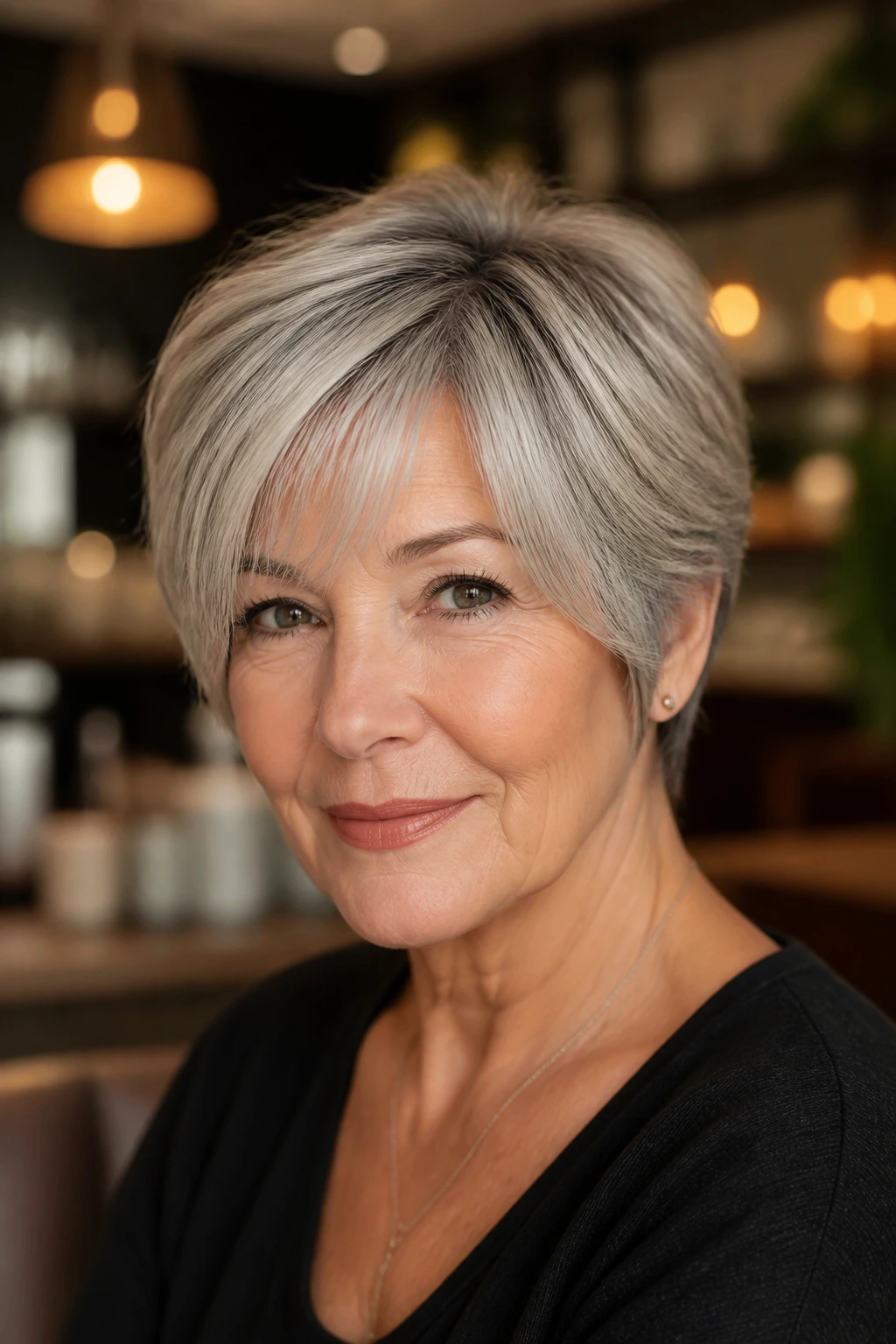
Here’s the short style that still feels soft. The tapered crop keeps the neck and sides neat, but the temple area carries enough length to let the curtain bangs drape into the face. That little bit of extra length at the temples is the whole trick. Without it, a crop can look severe or too boyish. With it, the cut opens the face and keeps the top from looking pinched.
This is a strong choice for women who are tired of fighting long hair that won’t hold volume. It’s also useful if your crown is fine but your hairline feels fuller at the temples, because the fringe can disguise the transition. Ask for a soft point-cut along the front, not a hard-edged bang.
Best for
-
Glasses wearers who want the fringe to sit around frames instead of right on them.
-
Hair that dries quickly and doesn’t need a lot of hot-tool work.
-
Anyone who wants a short cut that still reads feminine and soft.
7. Inverted Bob with Soft Face Frames
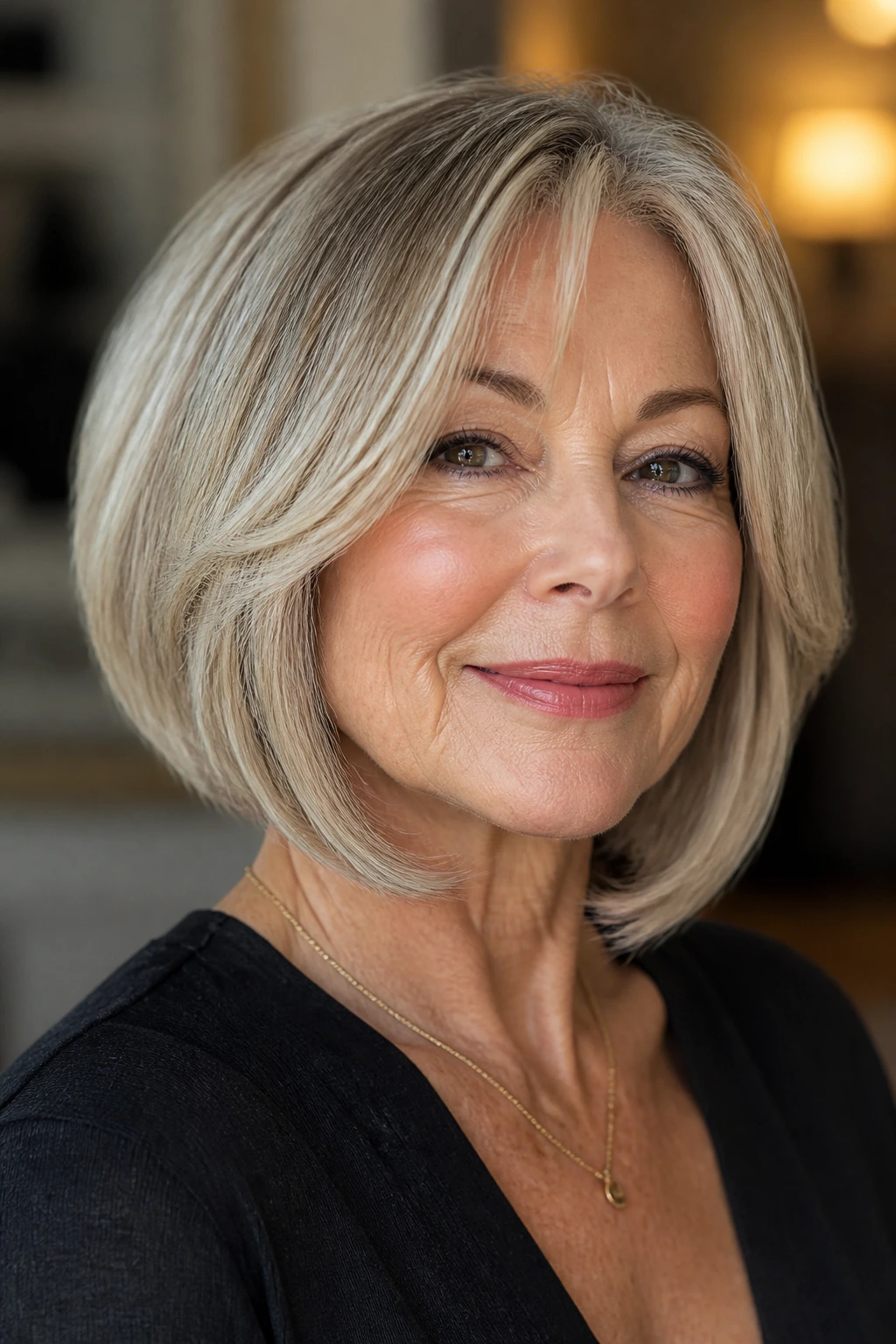
An inverted bob gives fine hair a built-in lift because the back sits a little shorter and the front gradually drops longer. That slope creates shape even before you touch a blow dryer. Add curtain bangs, and the face gets another layer of softness that keeps the line from feeling too architectural.
This cut has a useful side effect: it puts visual weight around the jaw and cheek area, which can make the hair look fuller than a one-length bob of the same overall length. The trick is to avoid over-layering the front. You want a gentle angle, not a razor-stacked wedge from the early haircut archives.
A round brush and a smoothing cream are enough most days. Flip the ends under just a touch, especially if your hair tends to flick out at the nape. That tiny bend keeps the silhouette tidy.
8. Wavy Lob with Invisible Layers
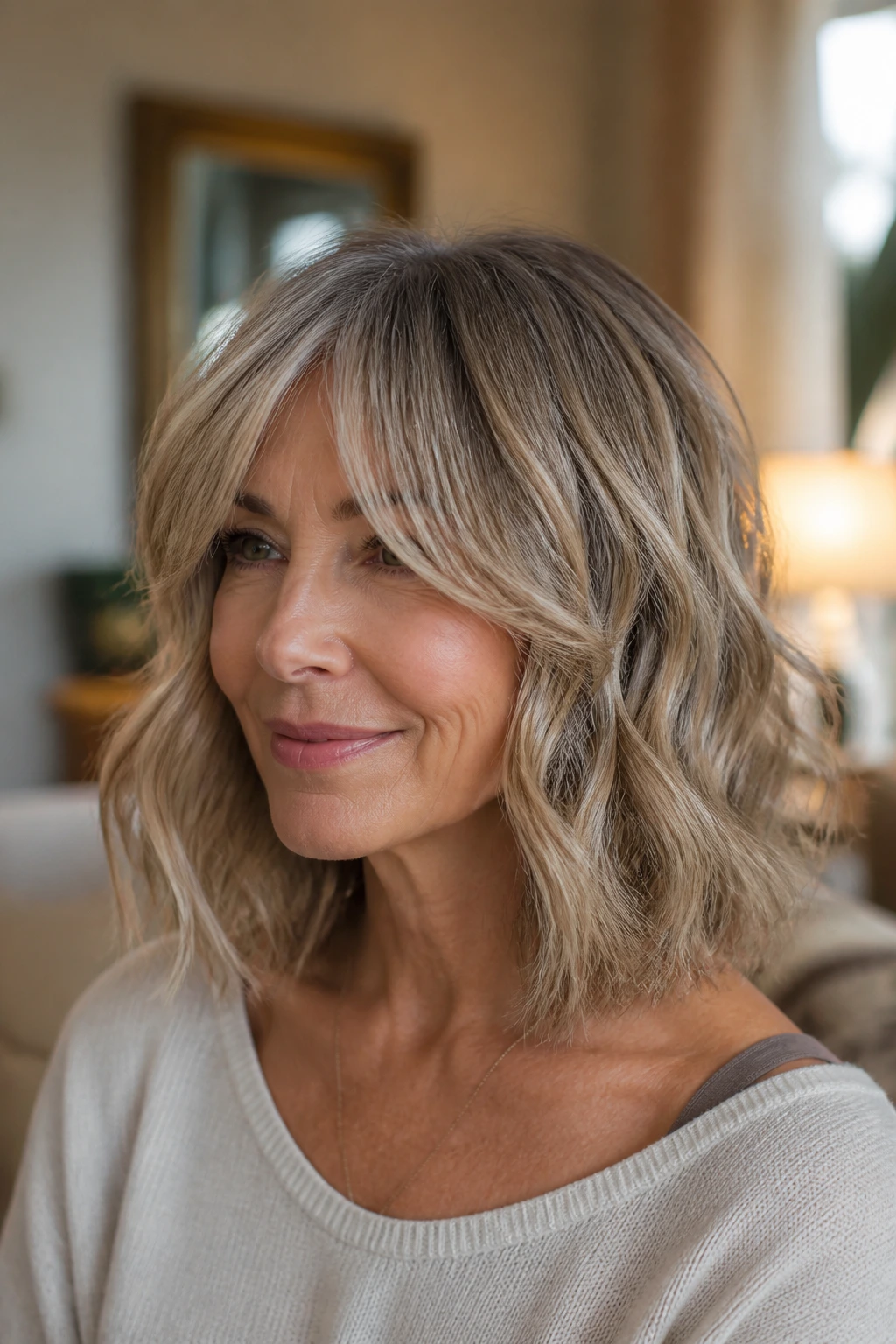
Fine hair with a natural wave has a gift, but only if the cut respects the pattern. This lob keeps the outline long enough for the wave to show up, while the invisible layers remove bulk in just the right places. The curtain bangs follow the same logic: they’re long, soft, and shaped to fall with the wave rather than fight it.
I like this style for women who air-dry more often than they blow-dry. It doesn’t demand perfect styling. In fact, it looks better with a little mess in it. The bangs can be bent with fingers and a diffuser, then left alone. If you overbrush this cut, it loses its charm and starts to look too thin at the edges.
What to watch for
-
Don’t ask for layers that start too high on the head.
-
Keep the front pieces longer so the wave doesn’t spring them up too much.
-
Use a light cream or mousse, not a heavy curl butter.
9. Shoulder-Length Cut with a Deep Center Part
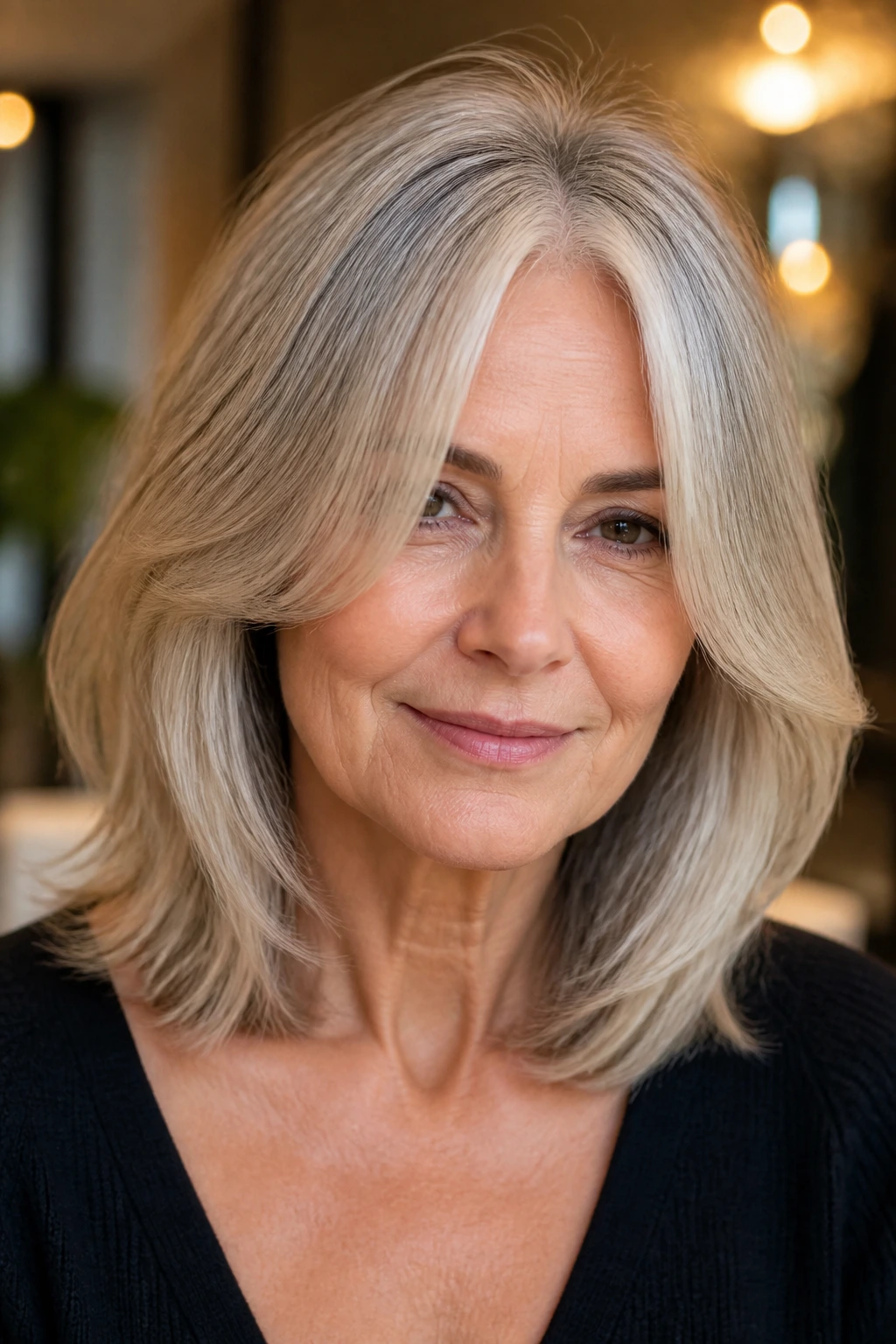
This one is a little more understated, and I like that. A shoulder-length cut with a deep center part and curtain bangs gives fine hair movement without turning it into a project. The extra length helps with weight, while the bangs provide the shape around the face that a plain shoulder cut often lacks.
The deep center part is doing quiet work here. It lets the bangs fall into two long panels, which creates a clean, vertical line down the face. That can be flattering on round and square faces because it stretches the silhouette a bit. The length should skim the shoulders, not hang past them unless your hair holds fullness well.
This cut benefits from a small root-lifting spray at the crown and a medium brush at the fringe. You do not need much. Too much product and the movement disappears.
10. Curved Pageboy with Curtain Bangs
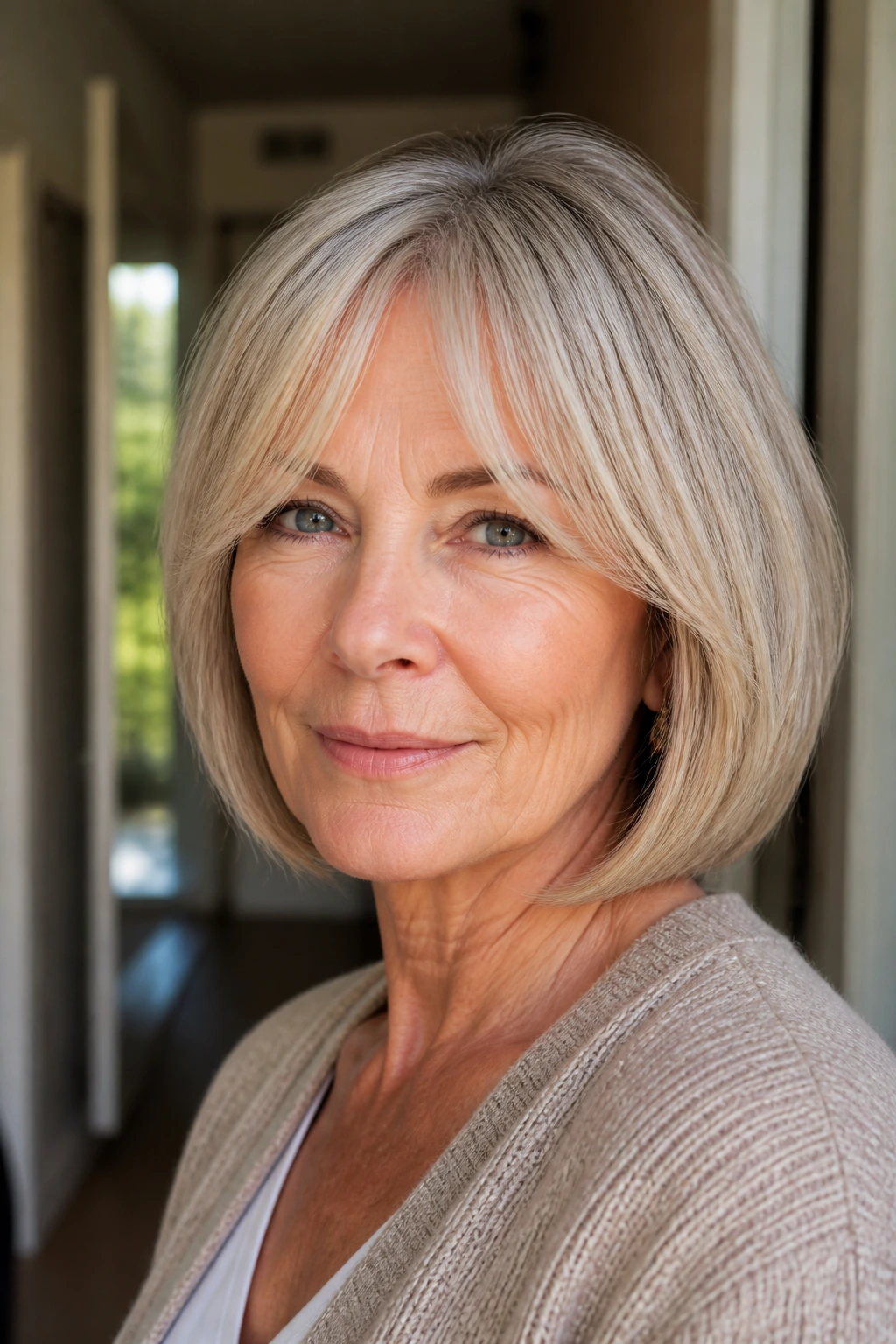
The pageboy is back in a softer, better-behaved form. The curved shape tucks under at the ends, which gives fine hair an almost built-in finish. Curtain bangs soften the brow area and keep the style from looking too closed in. It’s a very tidy haircut, but not a stiff one.
The shape works especially well if your hair falls straight and doesn’t want to hold curl. A pageboy outline gives that straightness a purpose. The curve around the jaw and neck keeps the cut from hanging flat, and the fringe breaks up the front just enough to make the whole thing feel current without chasing anything trendy.
Use a round brush or a hot brush to curve the ends inward. A single pass at the front is usually enough. If you keep the ends too flat, the cut loses the whole point.
11. Tousled Crop with Crown Lift
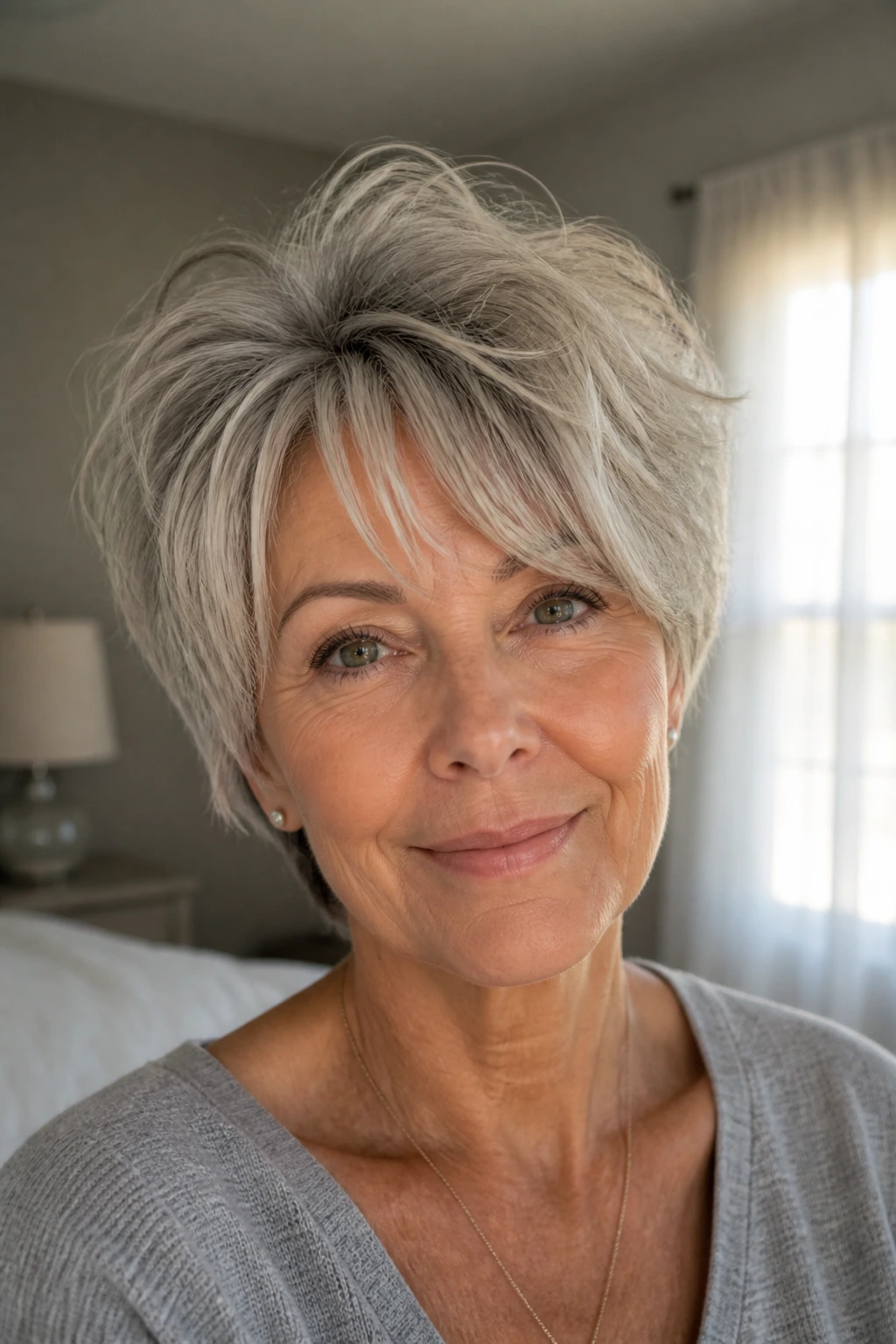
Some short cuts feel too small on fine hair. This isn’t one of them. A tousled crop with crown lift keeps the top airy and the fringe long enough to split softly at the center. The point is not spiky texture. The point is movement that starts at the crown and flows into the front so the haircut looks alive, not carved.
This style is a good answer if your hair tends to lie close to the scalp and refuses to hold volume. The crown lift gives you a little height where the eye needs it, and the curtain bangs soften that lift so it doesn’t read as old-fashioned. Ask for subtle layers at the top and a cleaner outline at the sides.
Dry the roots upward with your fingers, then switch to a round brush only at the fringe. That keeps the top from getting too polished. A polished crop can turn into a helmet. Nobody wants that.
12. Soft Wolf Cut with a Gentle Fringe
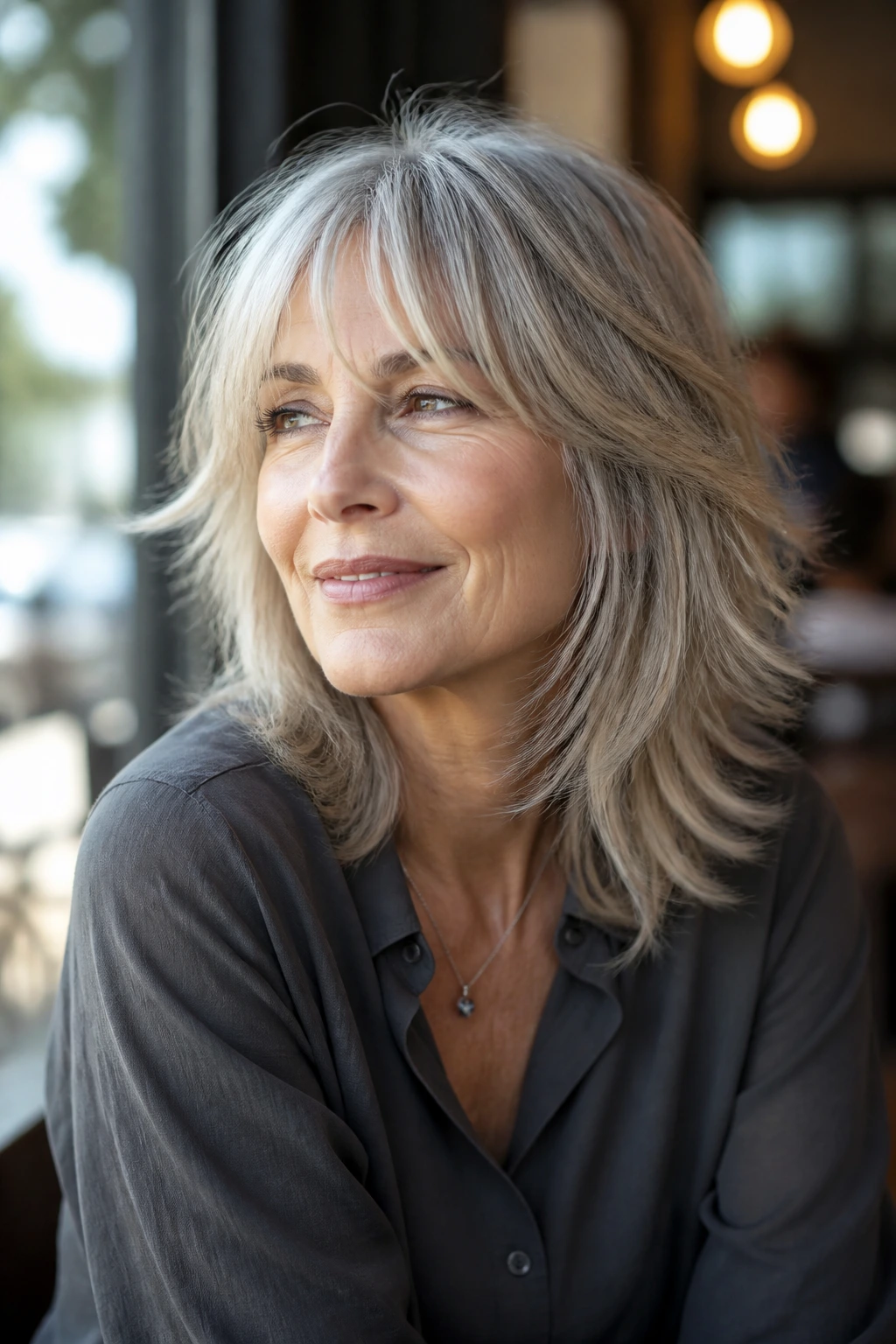
A wolf cut can go badly on fine hair if the layers are too chopped and the ends are thinned to nothing. The soft version is different. It keeps the shaggy energy around the crown and cheekbones, but the perimeter stays intact enough to preserve fullness. The curtain bangs are long, slightly broken up, and meant to blend into the front layers.
This one is for women who like a little edge but not a lot of maintenance. It feels relaxed, especially when the hair has a bend or wave. On straight fine hair, it needs more styling, so I’d only pick it if you’re willing to use a diffuser or a curling iron on a few sections. If you’re not, a cleaner lob will probably serve you better.
The biggest rule: don’t let the stylist carve too much out of the ends. The shape should look feathered, not shredded.
13. Straight Midi Cut with See-Through Bangs
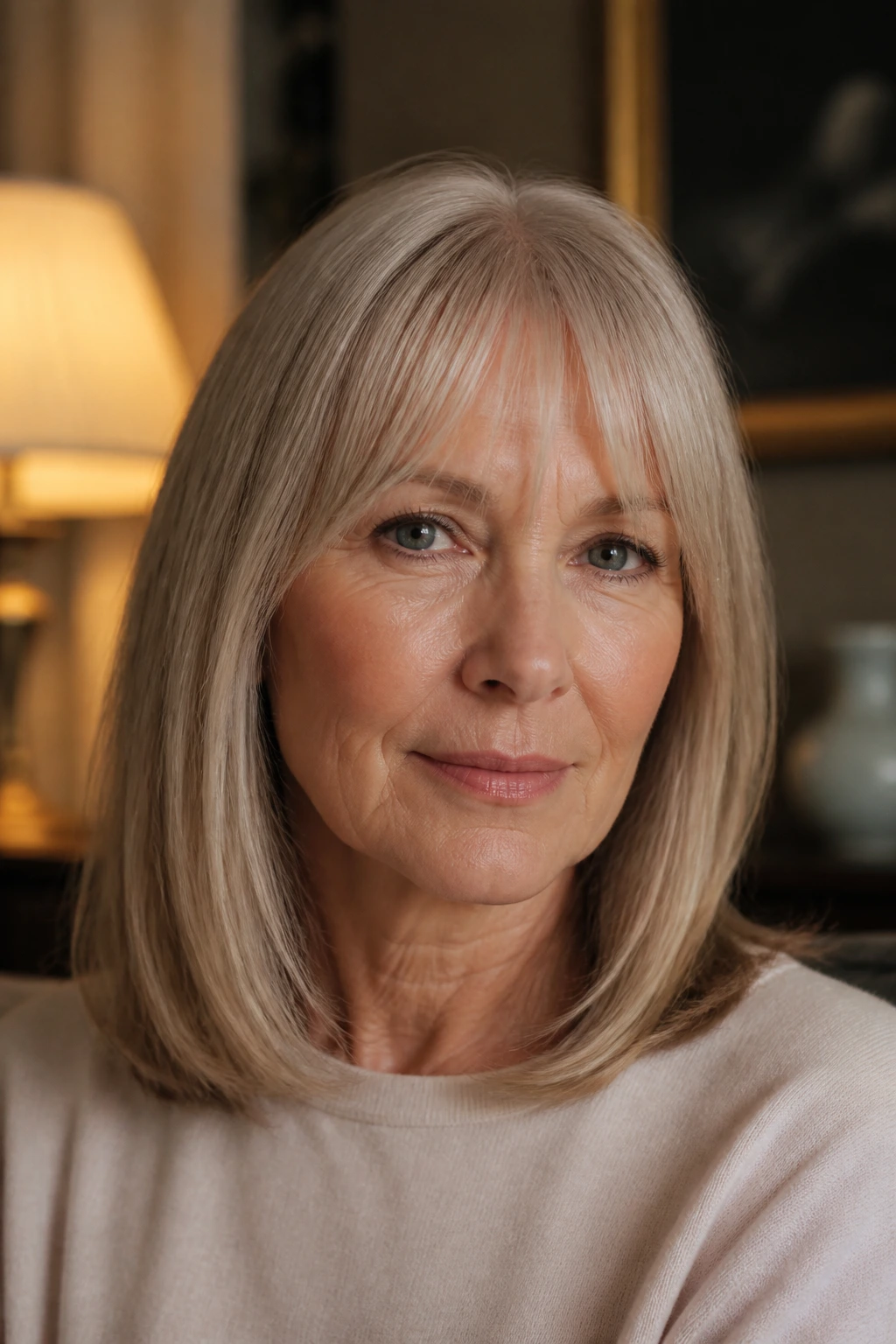
If your hair is fine and naturally straight, sometimes the smartest move is to stop asking it to be something else. A straight midi cut keeps the line long enough to carry weight, and the see-through curtain bangs add just enough face framing to keep the style from feeling flat. It’s neat, calm, and quietly flattering.
The beauty of this cut is its simplicity. The ends can be slightly blunt, the middle part can be soft, and the fringe can be kept light enough to part in the center without fighting the scalp. That last part matters. A thick bang on straight fine hair often looks heavy at first and then empty two hours later. A see-through fringe holds its shape better because it does not have to carry too much density.
A shine spray on the mid-lengths can help here. Not at the roots. Never at the roots.
14. Curled-Under Bob with Clean Edges
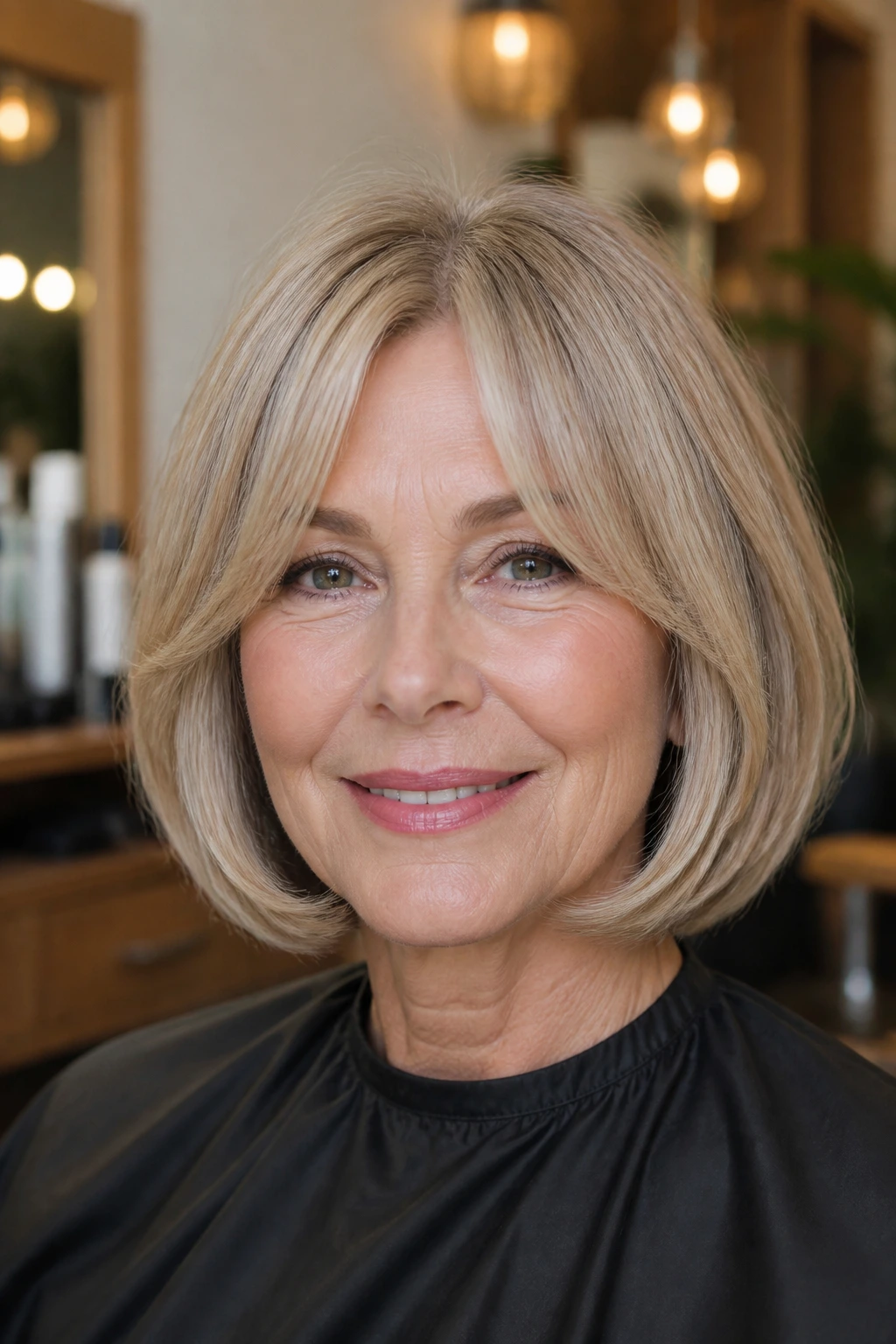
There’s something satisfying about a bob that curves under at the ends. It looks finished. It looks cared for. On fine hair, that tucked-under line gives the ends a sense of substance that a blunt straight bob sometimes loses if the hair is especially airy. Curtain bangs soften the front so the shape doesn’t feel too tidy.
This cut works well for women who like a salon-fresh look without a lot of teasing or backcombing. The round brush does the heavy lifting. Blow the ends under, keep the bangs long and slightly separated, and let the front pieces fall toward the cheekbones. If your hair has a natural cowlick at the front, this cut can still work, but the fringe needs to be cut a touch longer.
The result feels classic rather than fussy. That’s a good place to be.
15. Stacked Nape Bob with Long Front Pieces
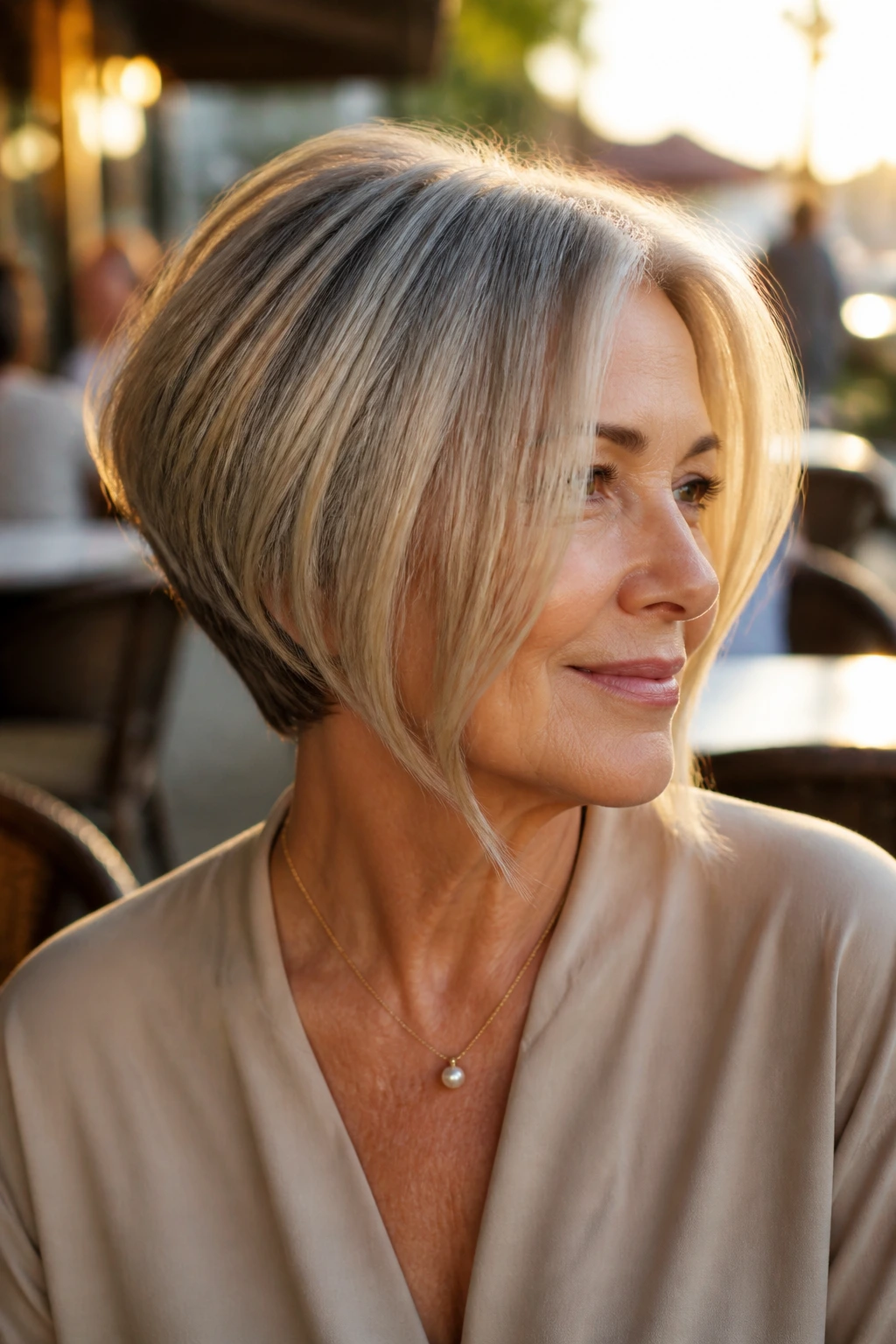
A stacked nape bob gives fine hair a little secret architecture. The short layers in back create lift where the head naturally curves, and the longer front pieces keep the cut from becoming top-heavy. Add curtain bangs, and the front opens like a soft frame instead of a hard edge.
This is a strong style if your hair is flat at the back of the head. The stack gives you shape from the side profile, which is often where fine hair needs help most. The front pieces should be long enough to hit below the cheekbones so they don’t fight the shorter back. That contrast is what makes the cut feel modern and balanced.
A lot of people overdo the stacking. Don’t. Fine hair only needs enough graduation to create lift, not a dramatic wedge. A gentle stack is elegant. A harsh one looks dated fast.
16. Mid-Length Layers with a Long Curtain Fringe
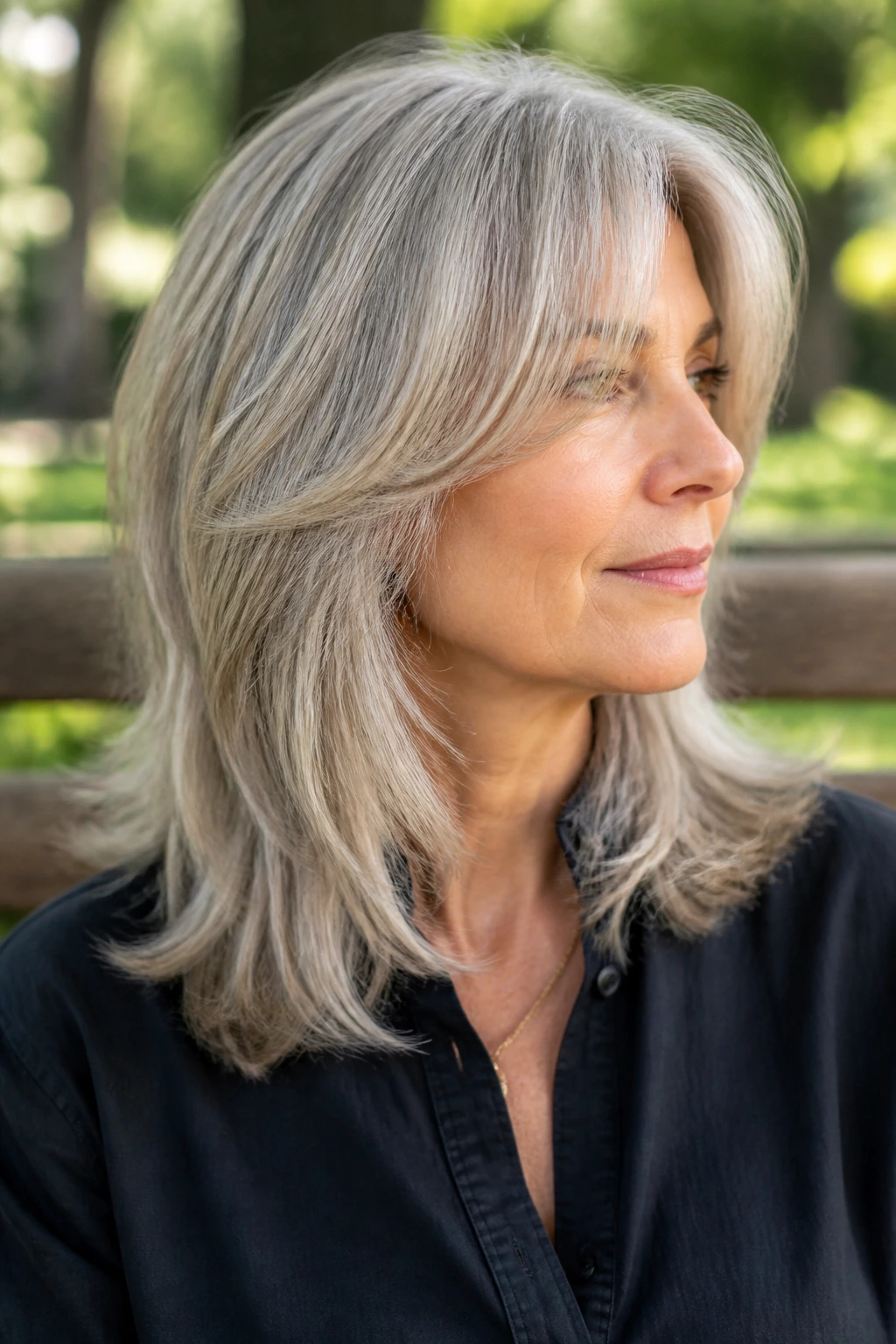
Mid-length hair can be a trap for fine strands if the cut is too flat. This version avoids that by using layers sparingly and keeping the fringe long. The curtain bangs start high enough to frame the eyes but long enough to slide into the sides. The rest of the hair stays around the collarbone and upper chest, where the weight still counts.
I like this shape for women who want to keep some movement without giving up the feeling of having hair they can tuck behind the ears. It’s one of the most flexible cuts in the group. You can wear it straight, bend the ends under, or let it air-dry with a little body cream.
The key is not to over-layer it. Fine hair does not forgive overcutting. If the layers are too obvious, the ends will vanish before the rest of the length gets to do its job.
17. Air-Dried Wave Bob with Light Internal Layers
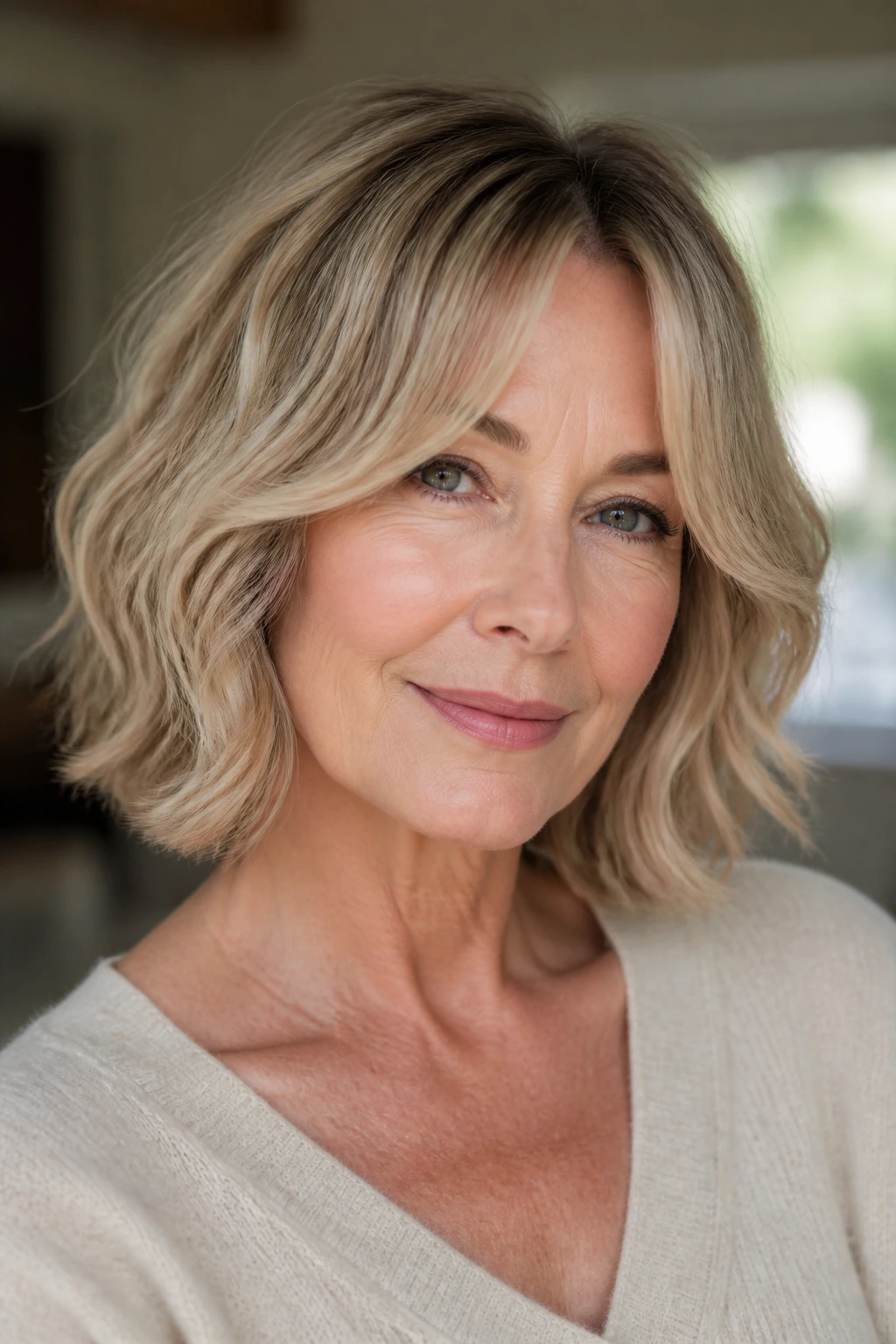
If your hair has even a little wave, a bob that’s meant to air-dry can save you time and preserve texture. Light internal layers remove just enough bulk for the wave to move, while the outline stays solid. Curtain bangs soften the front so the cut doesn’t rely on curls for personality.
This is one of the easiest styles to live with. A little leave-in cream, a gentle scrunch, and a center part can be enough. The bangs may need a quick finger twist while they’re damp so they split the right way. After that, hands off. The more you fuss, the more they separate in odd directions.
The bob length should sit somewhere between the jaw and collarbone. Shorter and the wave can spring up too much. Longer and the shape can drag.
18. Sliced Bob with Side-Balanced Curtain Bangs
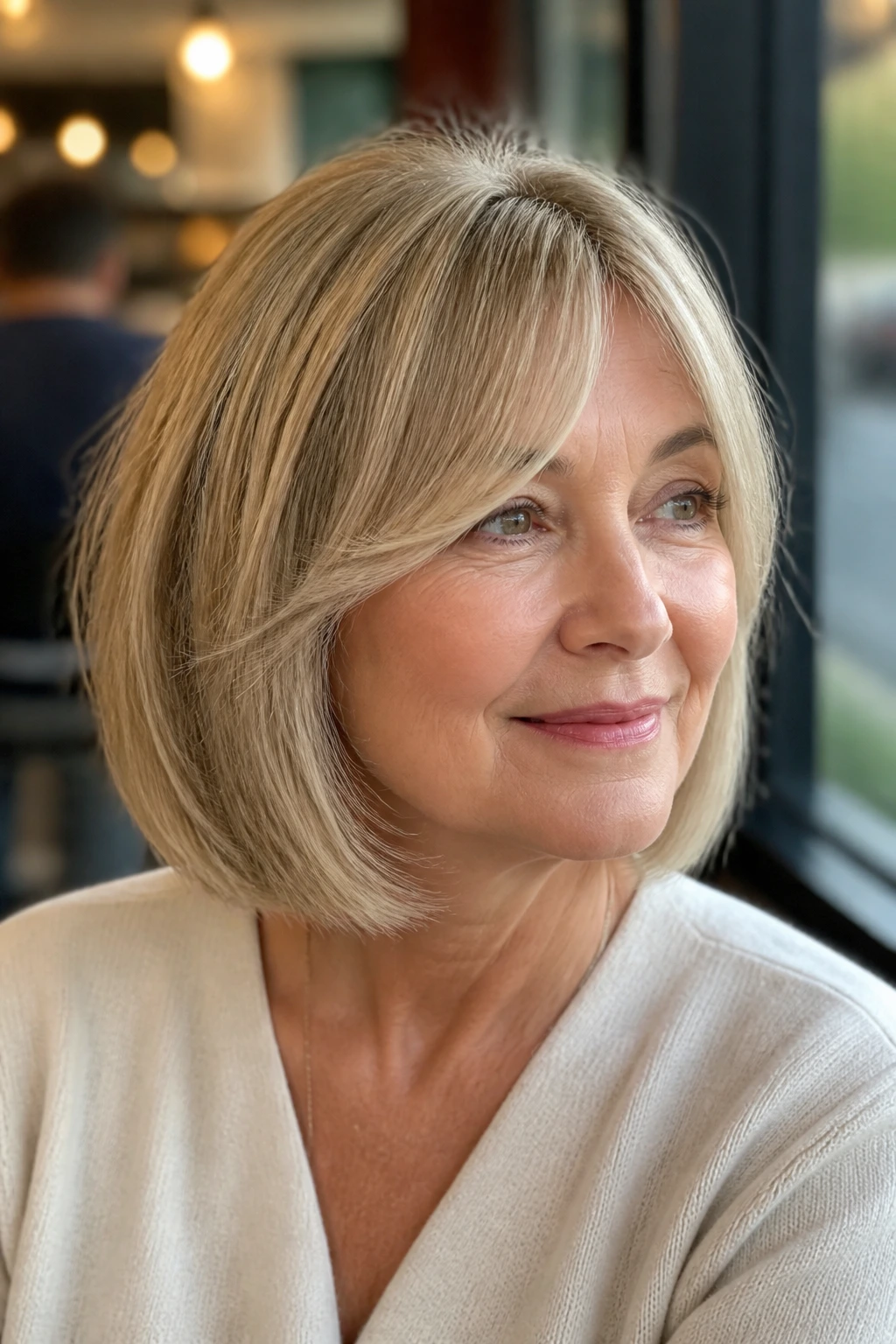
A sliced bob can sound aggressive, but in the right hands it’s a smart cut for fine hair because it removes bulk without destroying the outline. The ends are lightly sliced or point-cut, which gives movement. The curtain bangs are kept balanced, with one side not too much shorter than the other, so the front still feels calm and even.
This style is useful if your hair sticks straight out at the ends and needs a little release. It also works on faces that benefit from soft diagonal lines, especially if one side of the face feels stronger than the other. The bang shape is subtle enough to correct that without making the haircut look lopsided.
Do not let the slicing go too far. Fine hair can look airy in a good way, or ragged in a bad way. The difference is a few snips.
19. Flippy Razor Cut with Soft Movement
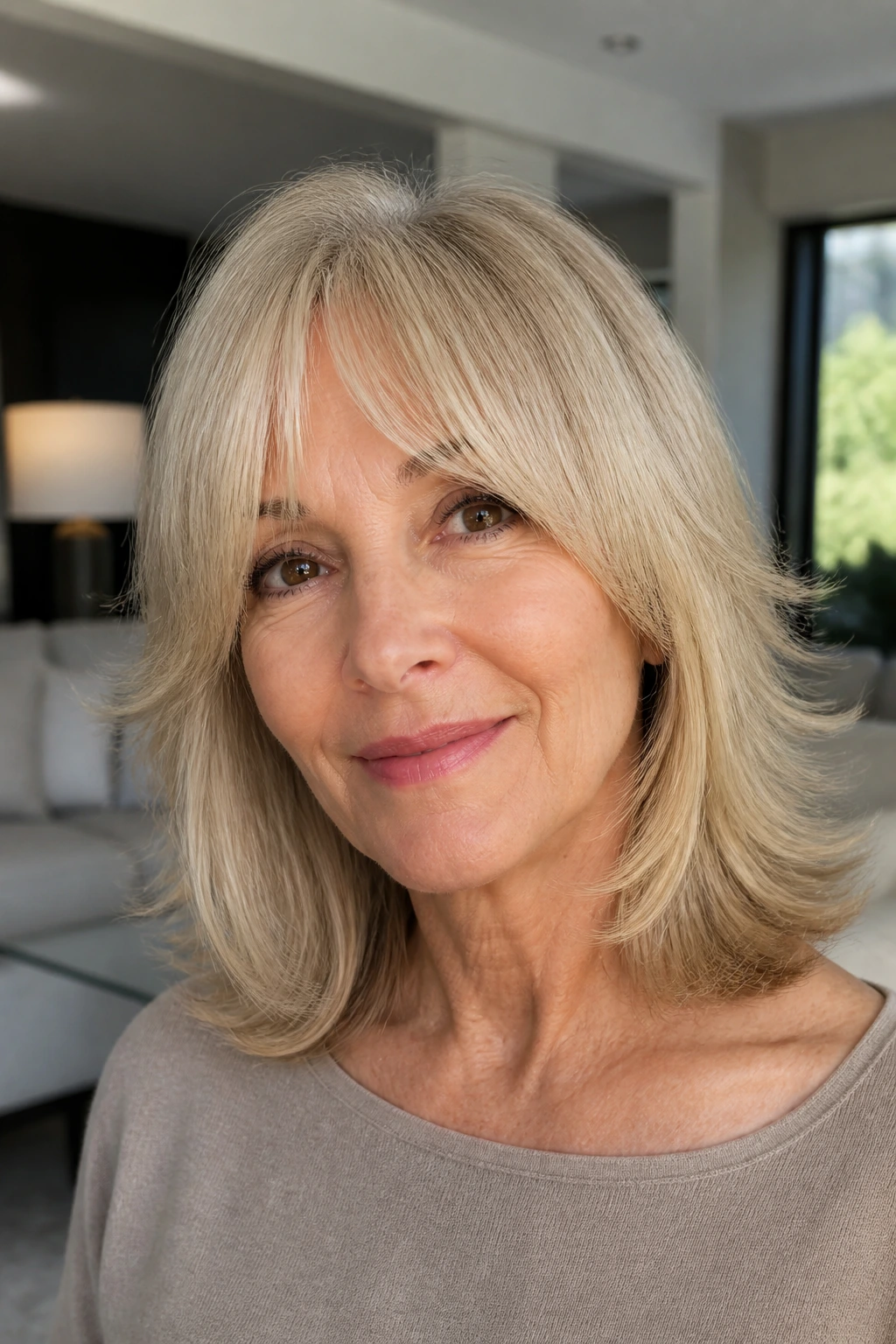
There’s a specific kind of flippy haircut that fine hair can wear beautifully, and this is it. The ends turn a little, the layers shift when you move, and the curtain bangs drop into the face with a soft bend. The trick is to use the razor carefully, not wildly. You want movement, not fray.
This cut suits women whose hair naturally flicks at the ends or who like a little personality in the silhouette. It can look lively with minimal styling, which is the point. A round brush at the front and a light smoothing cream on the mids can be enough to keep the flip from becoming chaotic.
If your hair is fragile or very dry, ask the stylist to use scissors for the perimeter and reserve the razor for tiny amounts of texture. That keeps the edges healthier.
20. Curly Bob with Open Curtain Bangs
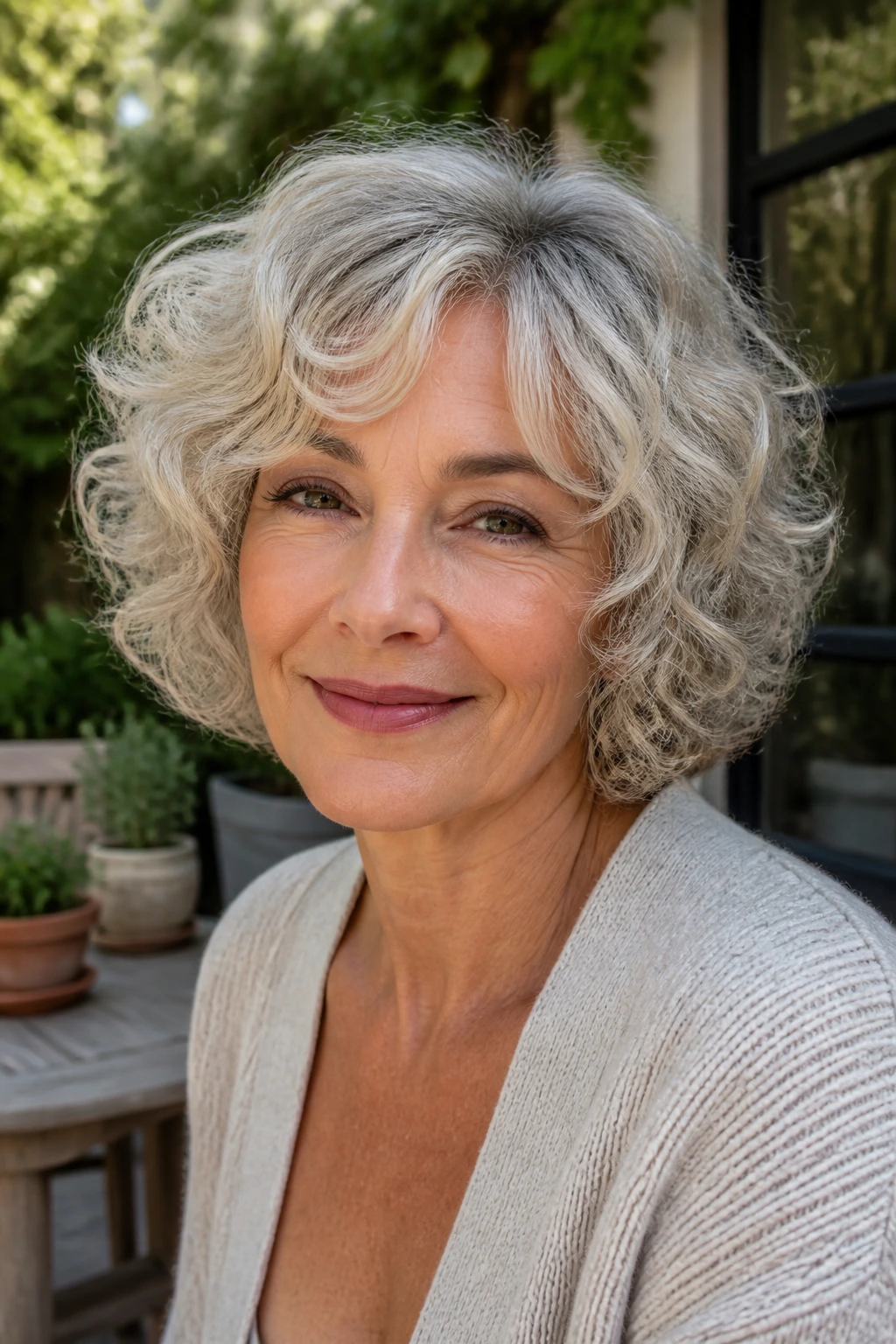
Curly fine hair needs a different hand. It wants room, not control. A curly bob with open curtain bangs gives the curls shape while leaving enough softness around the face to keep the fringe from shrinking too high. The bangs should be longer than you think, because curls lift as they dry.
This cut is lovely when the curls are loose to medium and not overly dense. The bob shape should follow the curl pattern instead of chopping across it. The curtain bang pieces can sit around the nose or cheekbone when wet, then dry into a flattering frame. That extra length keeps the front from turning into a little halo.
Use a diffuser on low heat and stop touching the hair once it starts setting. Fine curls collapse if they’re handled too much. They also frizz easier than people admit.
21. Long Pixie-Bob with Swept Temples
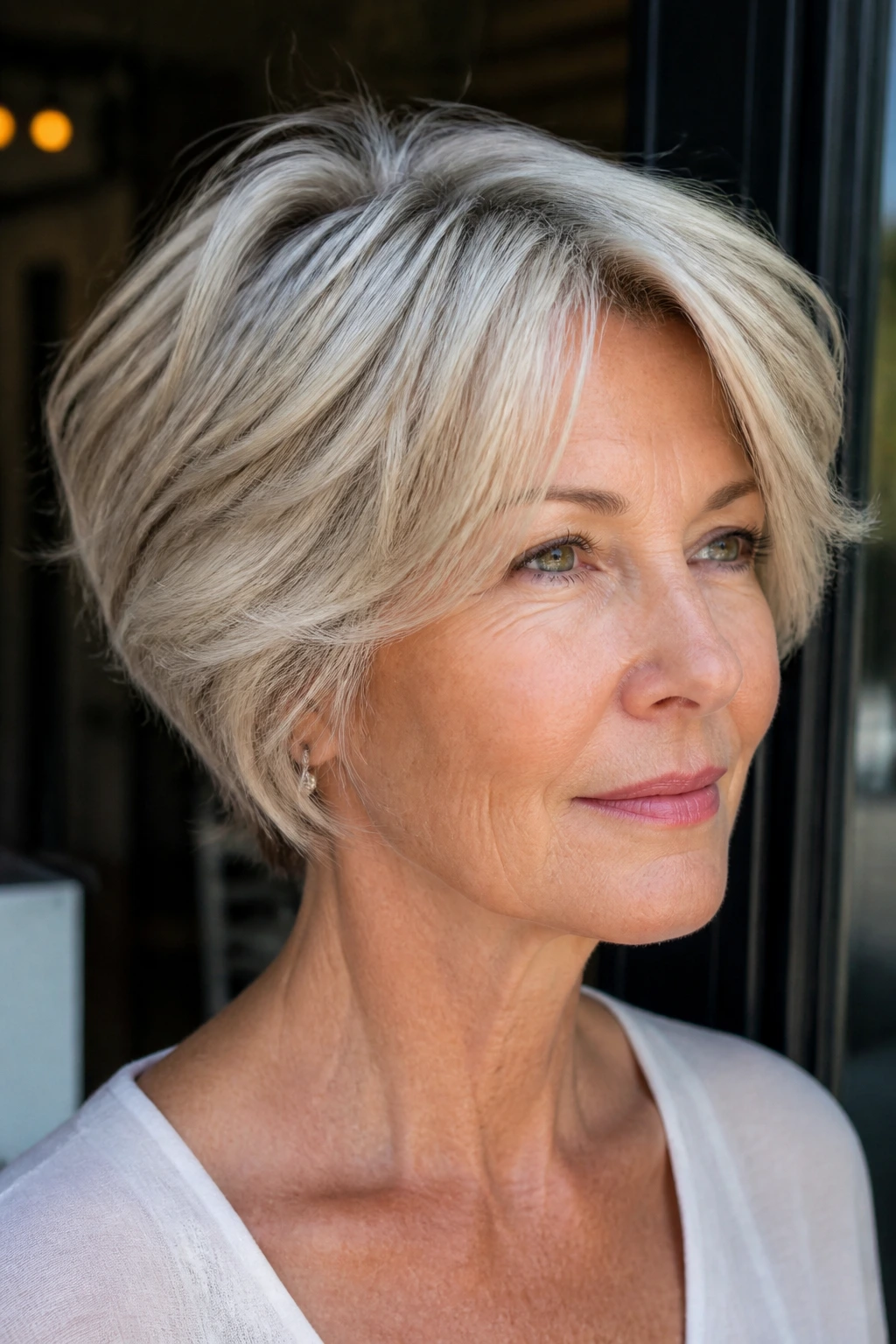
A pixie-bob gives you the best parts of both worlds: enough shortness to feel light, enough length to keep some swing. On fine hair, that matters because a cut that’s too short can expose the scalp, while a cut that’s too long can slump. The long pixie-bob sits right in the middle, with a swept temple area and curtain bangs that blend into the front.
This is a clean, smart style for women who want a tidy neckline and a soft face frame. It works especially well if the hair around the temples is a little thinner than the crown, because the longer front pieces disguise that shift. The crown can be lifted with a root spray and a quick blast from the dryer.
It’s not a high-maintenance cut. It just needs a little direction.
22. Collarbone Cut with Tucked Ends and Curtain Bangs
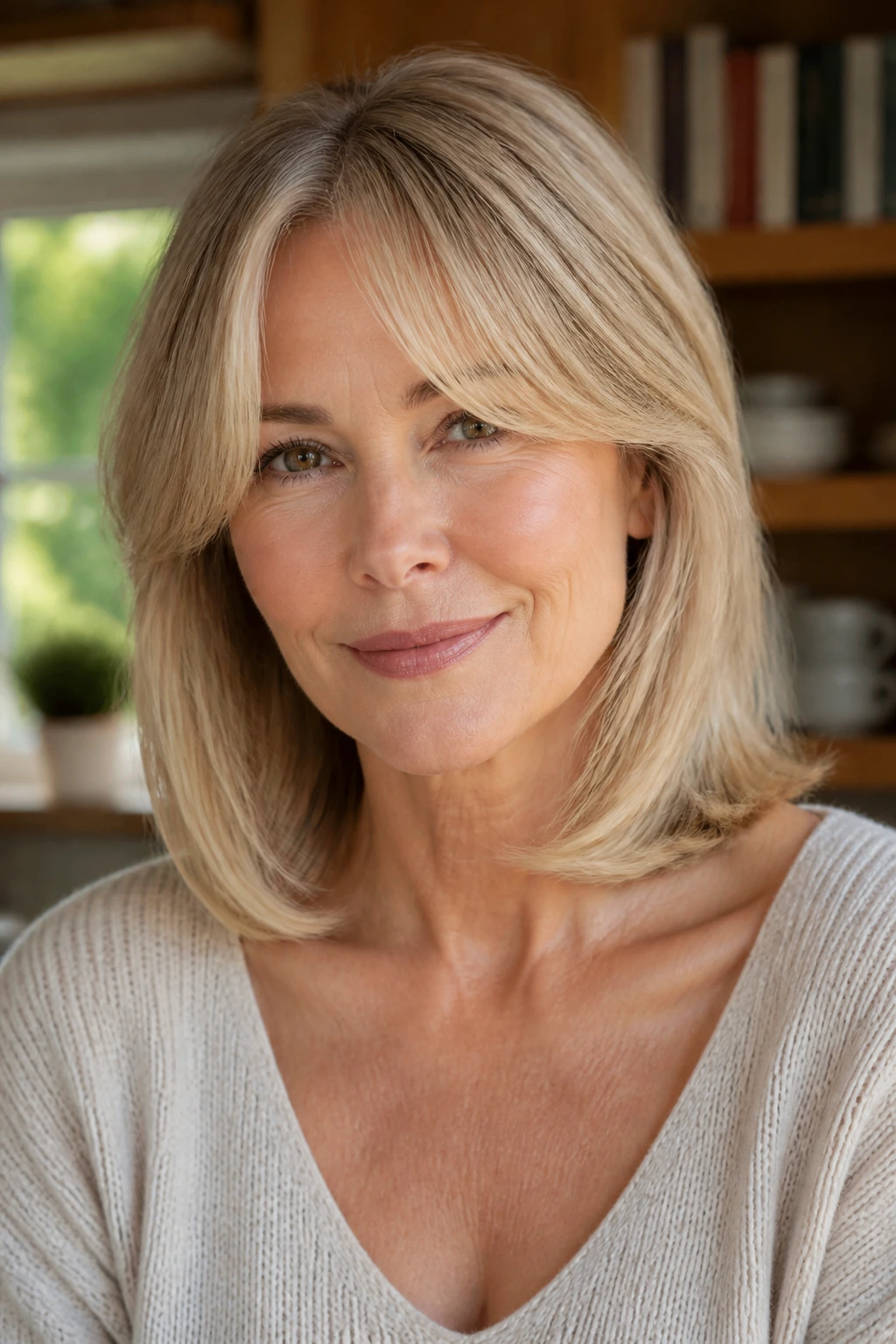
The collarbone cut is the reliable one. It doesn’t shout. It just works. On fine hair, that can be the best thing going. The length gives the strands enough weight to feel present, the tucked ends keep the outline neat, and the curtain bangs make the face feel open instead of hidden behind a straight line of hair.
This style is especially good if you like to tuck one side behind your ear or wear a necklace that would be buried by a shorter bob. The bangs can be blown away from the face first, then allowed to settle into a soft center split. If you’re growing out an older cut, this one often feels like a reset button without the shock of going short.
The finish should feel light but not empty. That balance is the whole point.
What Makes Curtain Bangs Look Full on Fine Hair
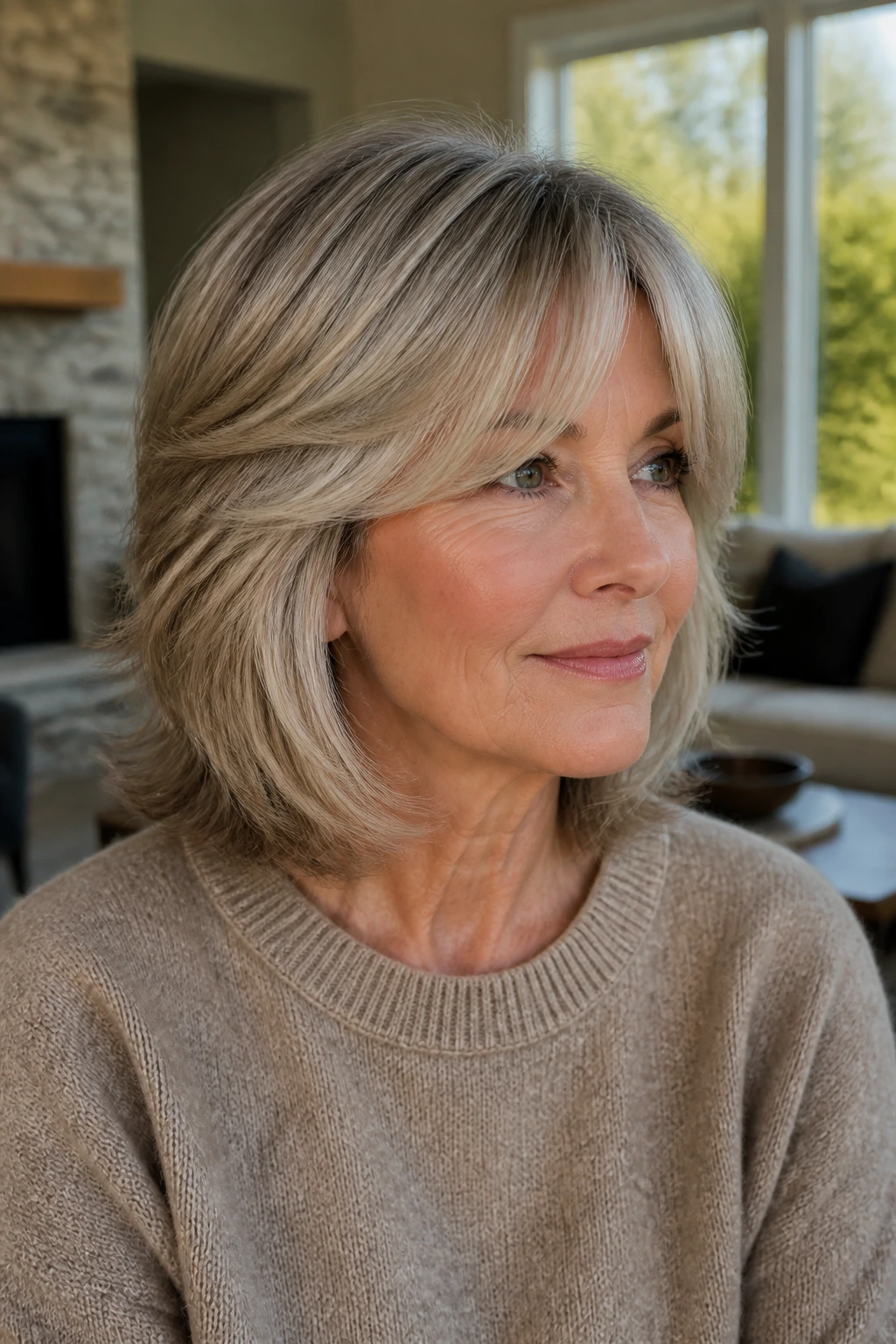
The biggest mistake with curtain bangs on fine hair is trying to make them behave like a thick fringe. They won’t. And they shouldn’t. A good curtain bang on lighter-density hair is built from shape, not bulk. That means the center is long enough to drape, the sides are tapered enough to frame, and the ends are cut softly enough to move.
One of the smartest things you can do is keep the bang area a little longer than you think you need. Fine hair dries flatter than it looks when wet, and bangs that seem perfect in the salon chair can shrink upward at home. The safest sweet spot is usually somewhere from the bridge of the nose to the top of the cheekbone, depending on the rest of the cut.
Texture matters too. If the hair is very fine and pin-straight, a soft bend from a round brush gives the fringe more presence. If it has a wave, you can let the curtain shape live a little looser. Either way, the fringe should feel like it belongs to the haircut, not like a separate piece pinned on the front.
What to Ask Your Stylist at the Salon
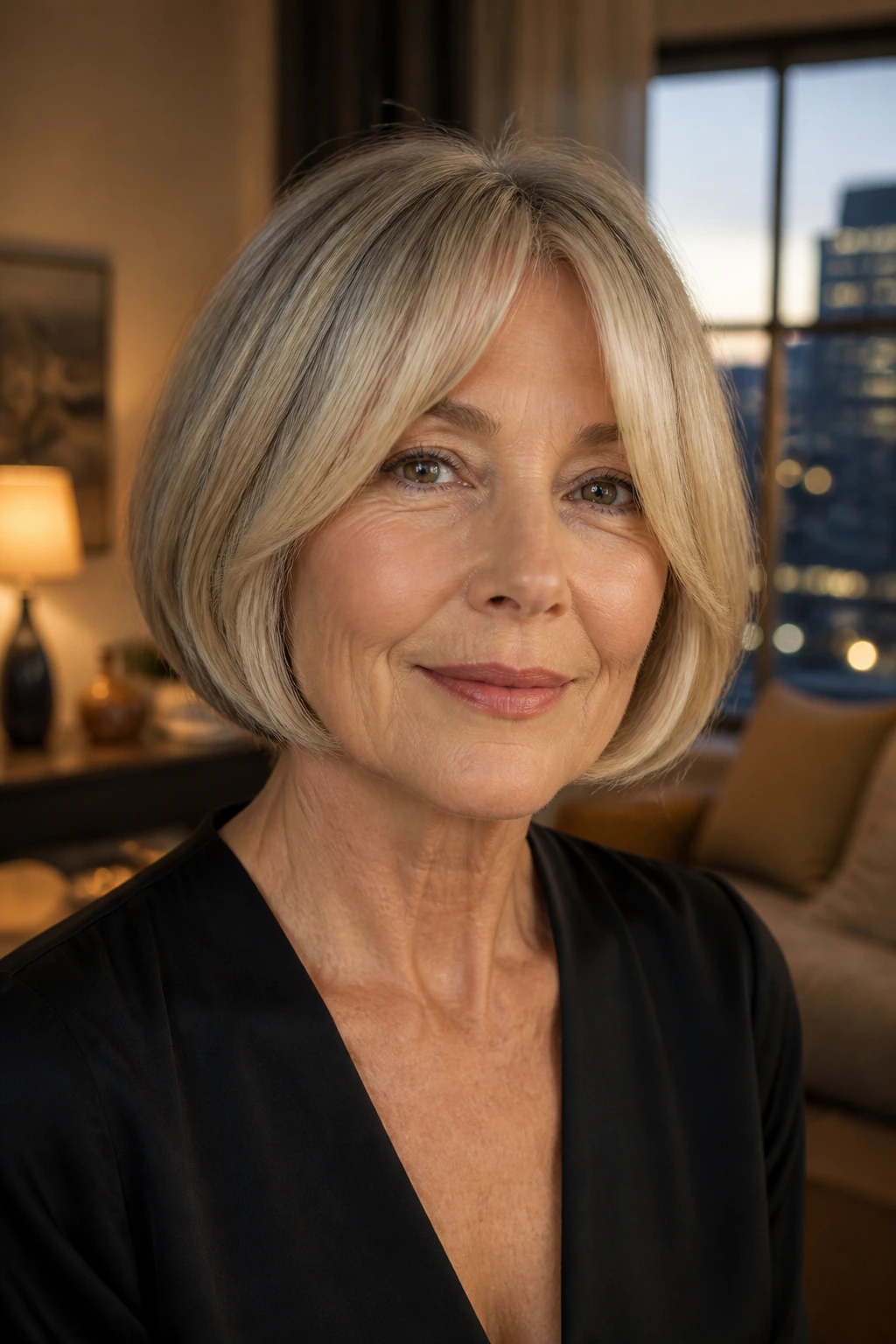
Say what the hair does, not only what you want it to look like. That saves everyone time. Fine hair behaves differently from thick hair, and the cut needs to match the way it dries, moves, and falls around your face. Bring a photo, then talk through the parts that matter: where the bangs should start, how much weight you want at the ends, and whether your hair collapses at the crown.
A good stylist will usually understand the shape you’re after if you describe it in plain terms. Tell them you want curtain bangs that can part cleanly in the middle, not a heavy brow-skimming fringe. Tell them whether you want the ends blunt, curled under, or softly textured. That part is not cosmetic fluff. It changes the whole haircut.
A few useful requests:
-
Keep the fringe longer in the center and softer at the sides.
-
Leave enough weight through the perimeter so fine ends don’t look see-through.
-
Use gentle point-cutting, not aggressive thinning.
-
Preserve crown volume by avoiding too many short layers at the top.
-
Cut the shape for how your hair dries, not only how it looks wet.
Tools and Products That Help Fine Hair Hold the Shape
-
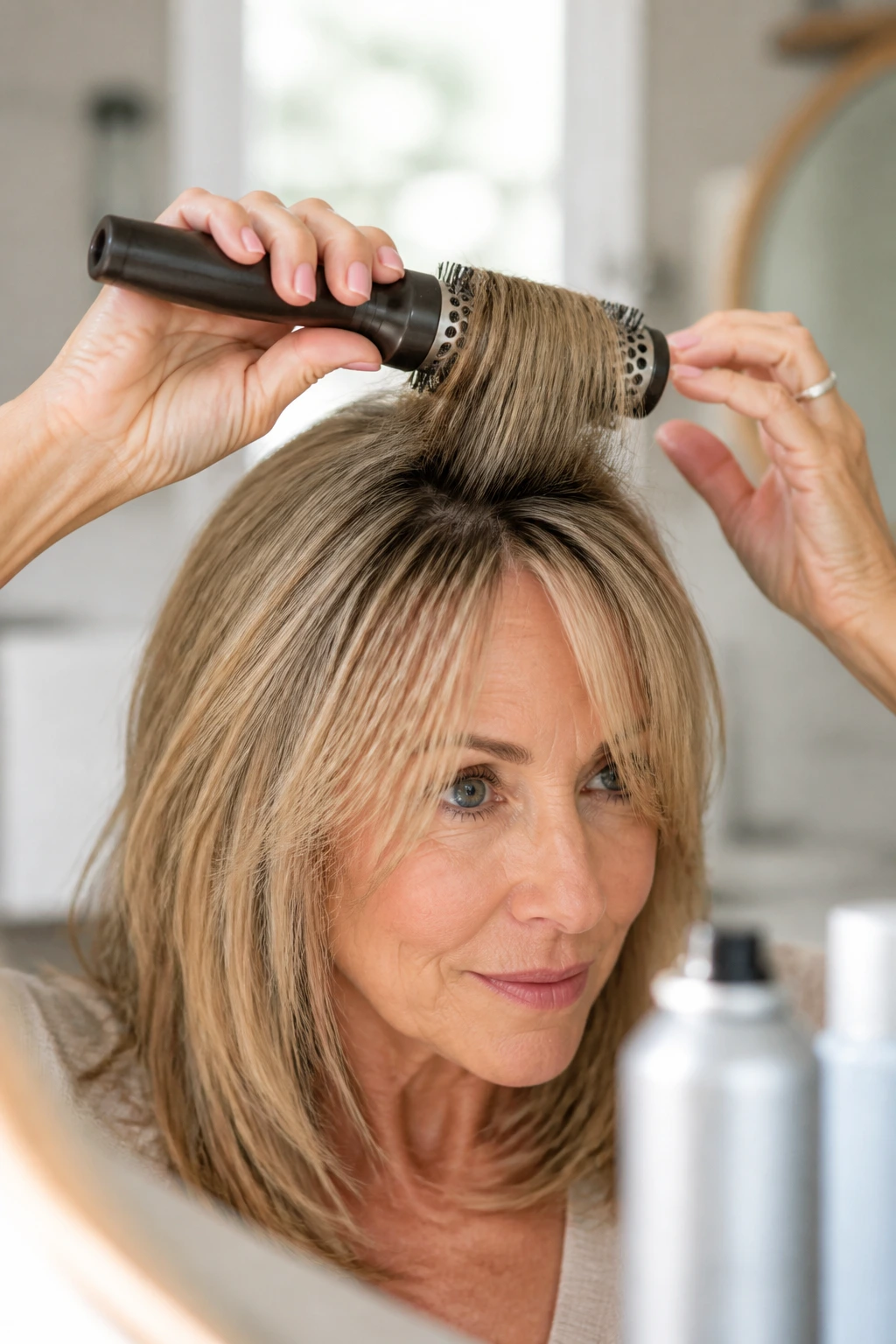
1.25-inch round brush: Big enough to create bend in curtain bangs without making the wave too loose.
-
Small vent brush: Good for faster drying at the crown and around the fringe.
-
Lightweight mousse: Adds a little grip at the roots without making fine strands sticky or stiff.
-
Root-lift spray: Best at the crown and part line, where fine hair goes flat first.
-
Heat protectant mist: Worth using every time you blow-dry or shape the fringe with a hot tool.
-
Blow dryer with a nozzle: The nozzle matters. It helps direct the airflow so the bangs don’t split everywhere.
-
Velcro rollers or clips: Useful if you want the fringe to hold a soft curve while it cools.
-
Light dry shampoo: Good on day two, especially near the roots and fringe.
-
Small flat iron: Handy for a slight bend at the curtain pieces if your hair resists a round brush.
-
Wide-tooth comb: Better than a brush for distributing product through damp fine hair without pulling the strands flat.
How to Style the Cut Without Crushing the Volume
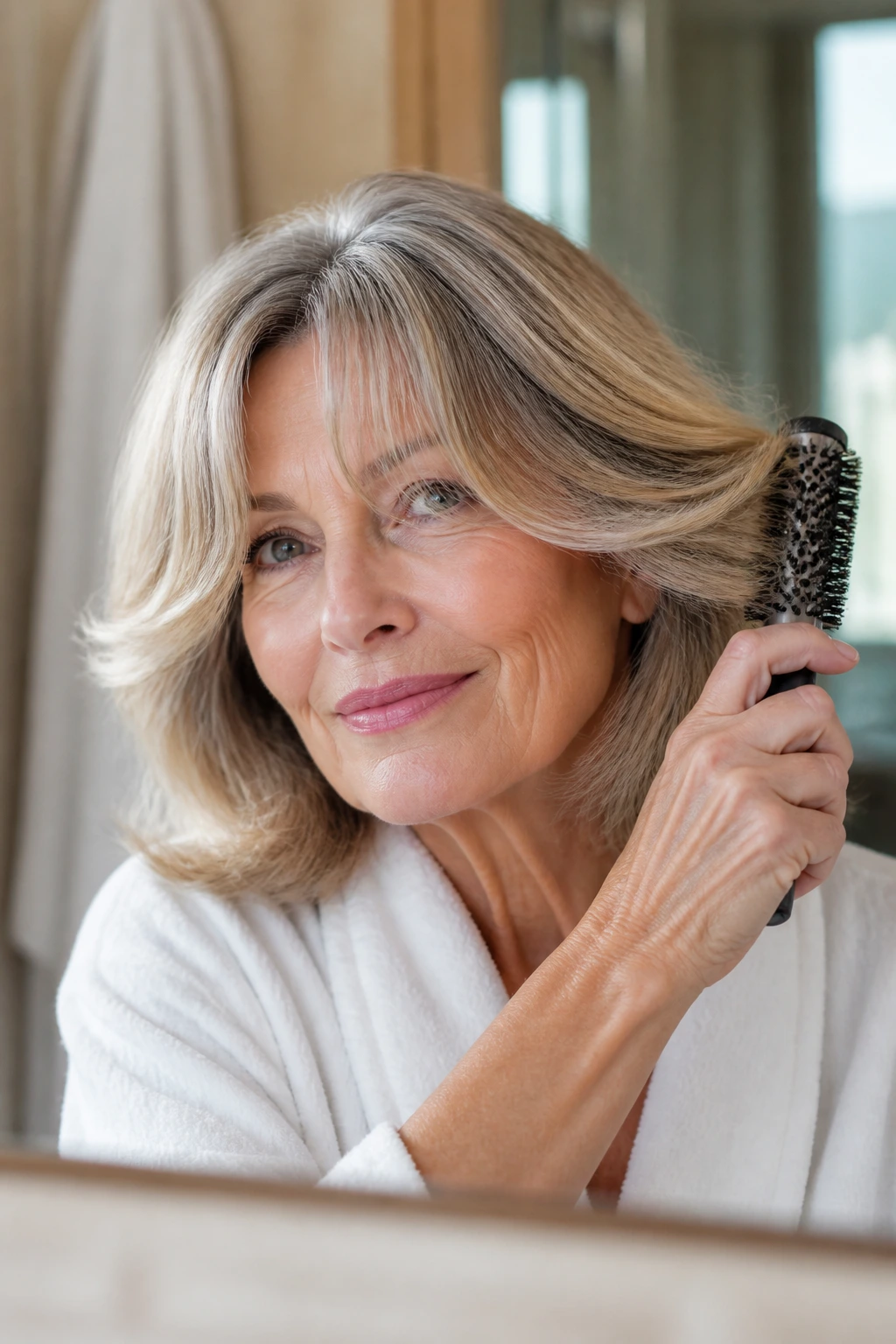
Fine hair usually loses its shape in two places: at the crown and through the bang area. So that’s where the work goes. Start with a small amount of mousse at the roots, not through the ends, unless your ends are slippery and need help holding shape. Then rough-dry until the hair is about 80 percent dry before you start shaping the fringe.
For curtain bangs, direct the hair forward first, then bend each side away from the face with a round brush or the edge of a flat iron. The point is to create a soft opening at the center and a curve near the cheekbones. If you pull the bangs too straight or too tight, they can look flat and separated.
A good rule: use less product than you think, but use more direction. Fine hair usually needs guidance more than weight.
Common Mistakes That Make Fine Hair Look Thinner
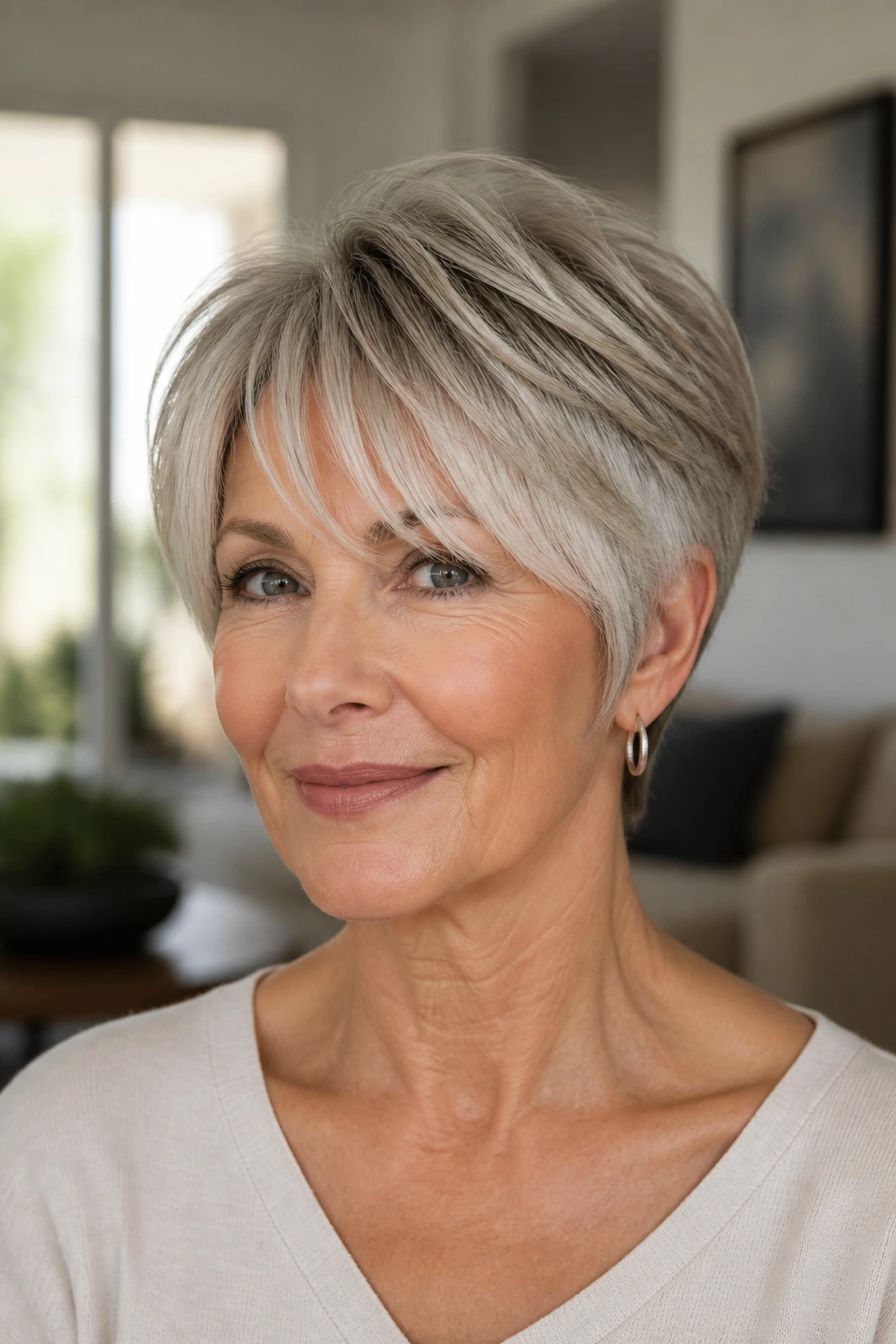
The first mistake is cutting the bangs too short. Short fringe can be cute on thicker hair, but on fine strands it often stands away from the forehead and exposes the density issue you were trying to hide. The fix is simple: leave the center longer and allow the sides to taper.
The second mistake is over-layering the whole head. If too much hair is removed from the perimeter, the ends go wispy and the style loses shape by lunchtime. Ask for internal movement only where it helps the cut, not everywhere.
The third mistake is piling on heavy styling cream. Fine hair does not need a big dollop of oil at the roots. That just flattens the crown and makes the fringe separate. Use lightweight mousse or a root spray instead, then save the cream for the very ends.
The fourth mistake is skipping the blow-dry direction. Curtain bangs need to be trained while they’re damp. If you let them air-dry in a random split, they’ll often stick there.
The fifth mistake is assuming every fine haircut needs texture. It doesn’t. Sometimes a blunt or softly blunt line is the thing that makes the hair look fuller.
Variations and Alternatives to Try
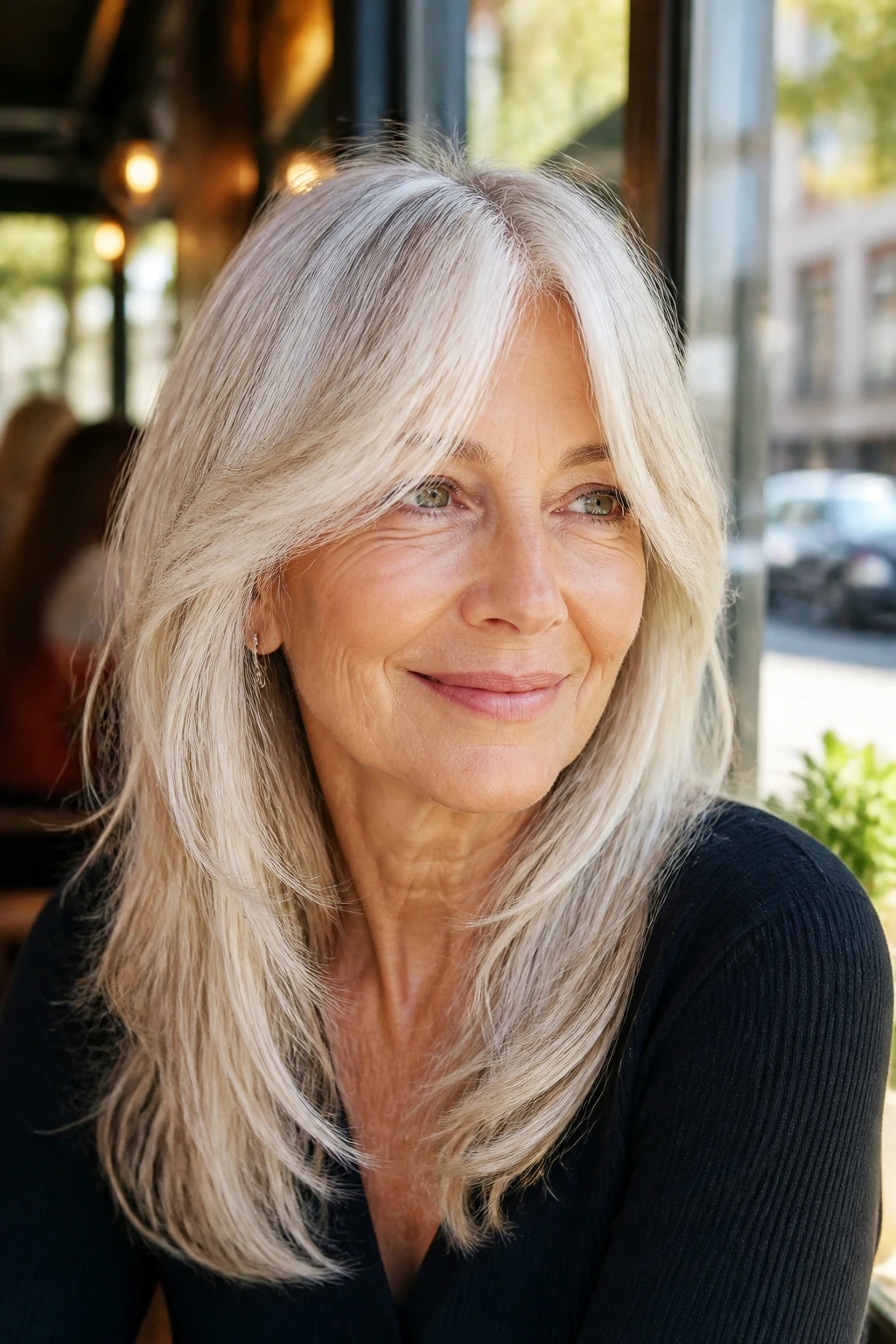
The Glasses-Friendly Sweep: Keep the curtain bangs slightly longer so they open above the frames and don’t fight the lenses. This is useful if your glasses sit high on the nose or if you want to show a little brow.
The Silver-Soft Version: On gray or silver hair, keep the layers clean and the bang shape airy. A little shine spray at the mid-lengths helps the color look crisp instead of dull.
The Air-Dry Wave Version: Ask for minimal internal layering and longer front pieces that can dry into a natural bend. This works when you’d rather not style with heat every day.
The Neat Blunt Version: Keep the perimeter tidy and the curtain fringe soft, but not too broken up. It’s a smart choice if you like a polished finish and don’t want a shaggy look.
The Curly-Fine Version: Leave the curtain bangs longer than you think and let them shrink into place. The shape should follow the curl, not fight it.
How to Keep the Cut Looking Fresh Between Salon Visits
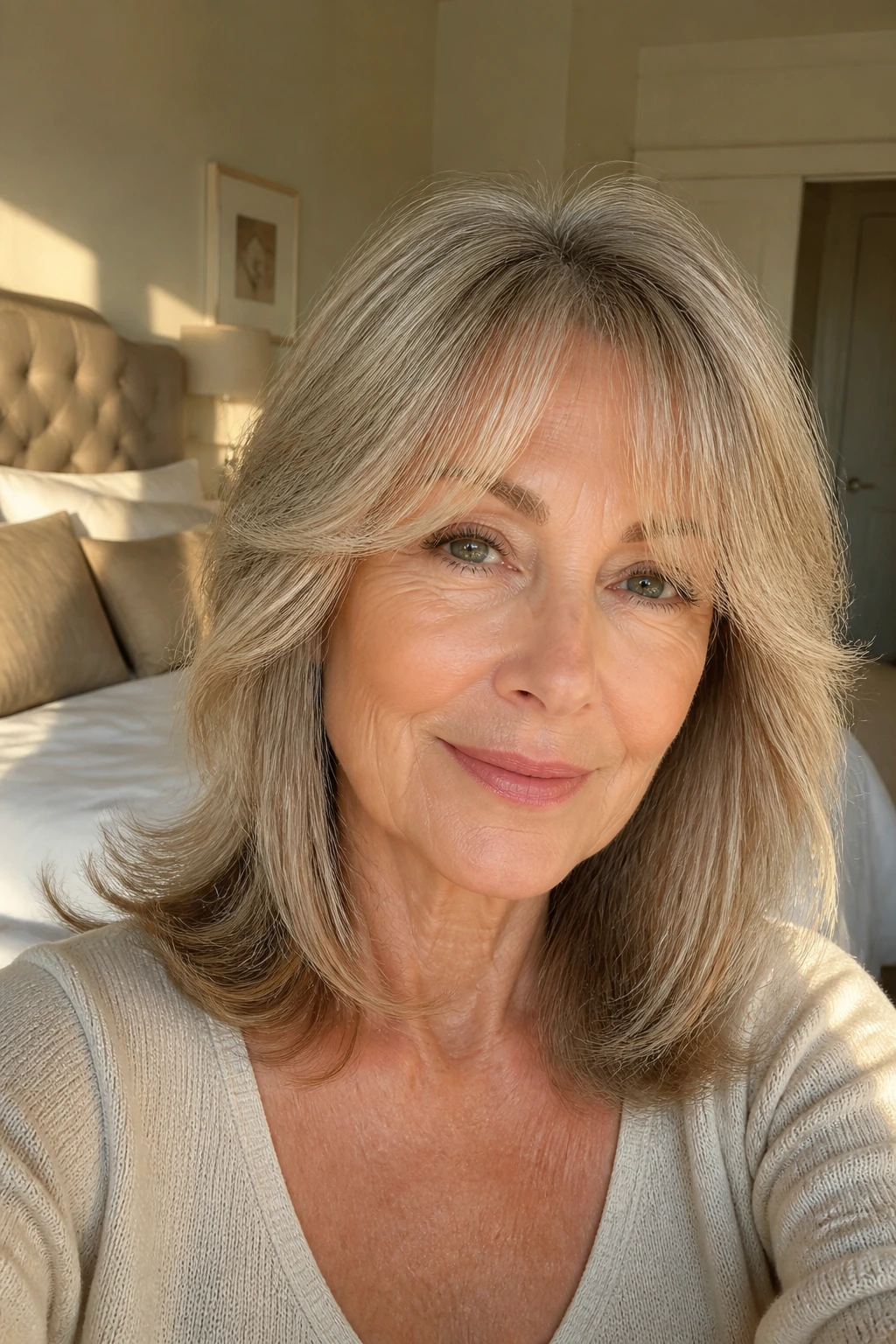
Curtain bangs on fine hair usually need a trim before the rest of the haircut does. That’s normal. A good rhythm is a fringe touch-up every 4 to 6 weeks, then a full shape refresh every 8 to 10 weeks for shorter cuts like bobs and pixies. Longer lobs can stretch a little farther if the ends stay blunt.
Between visits, the bangs often benefit from a quick wash at the front only. Fine hair picks up oil fast near the forehead, and greasy fringe can drag the whole haircut down. If the rest of the hair is fine but clean, a small bit of dry shampoo at the roots and a quick re-bend of the curtain pieces is usually enough.
If you color your hair, especially gray coverage or highlights, keep the fringe area in good shape by avoiding heavy product buildup. It dulls the movement first, then the brightness.
Frequently Asked Questions
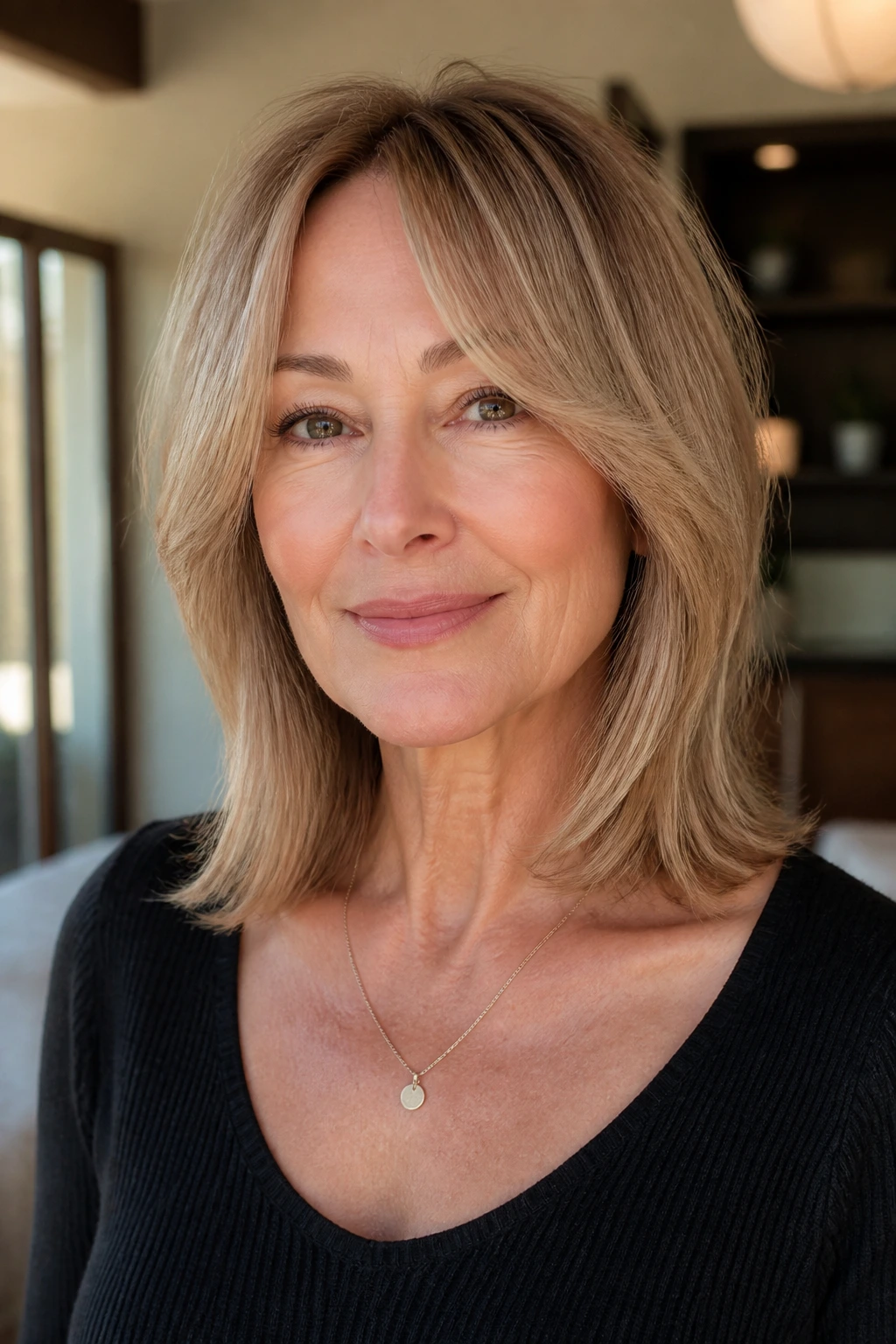
Do curtain bangs work on very fine hair after 60?
Yes, if they’re cut long and soft. The trick is to keep the center piece long enough to drape and avoid a dense, thick fringe that needs more hair than you have.
Which haircut makes fine hair look thickest?
A blunt bob or a softly blunt collarbone cut usually gives the strongest sense of fullness. The curtain bangs add shape at the front, but the real density boost comes from keeping the perimeter clean.
Can I wear curtain bangs if I have glasses?
Absolutely. In fact, they can work better than straight bangs because they can sit above the frames or sweep around them. Just keep the sides long enough that the bangs do not press into the lenses.
How often should curtain bangs be trimmed?
Most fine hair fringes need attention every 4 to 6 weeks. If you let them grow too long, they can start splitting in odd places and lose the soft center opening.
Are heavy layers bad for fine hair?
Heavy layers are usually a bad trade. They can make the hair move more at first, but they often leave the ends too thin. Softer internal layering tends to hold up better.
What if my bangs keep separating in the middle?
That usually means they’re too short or too dry at the front, or the part line is too sharp. Try drying them with a round brush, then mist a tiny bit of water and re-shape them while damp.
Can curtain bangs work with gray or white hair?
Yes, and they often look lovely because the movement around the face shows off the brightness of silver strands. Keep the cut clean and avoid over-thinning, since white hair can show sparse areas faster.
What if my fine hair has a cowlick?
Don’t fight it too hard. Ask the stylist to leave the fringe a little longer on the side that lifts and train it with a blow dryer while it’s still damp. A cowlick can be managed, but only if the bang is long enough to cooperate.
A Cut That Still Moves
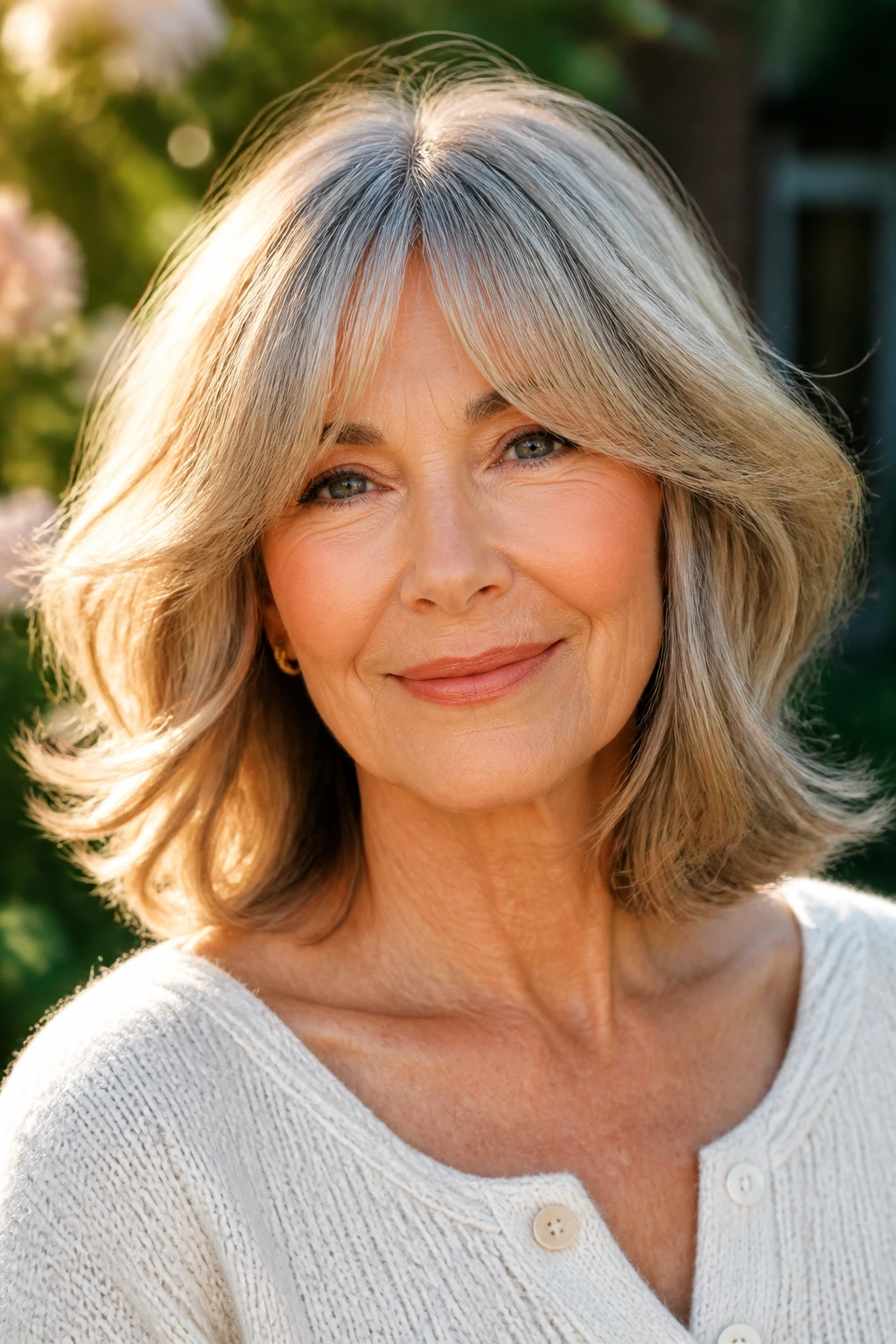
The best fine hairstyles for women over 60 with curtain bangs do one very practical thing: they make the hair look like it has a little more life in it than it actually does. Not fake life. Not theater. Just movement, shape, and a frame that keeps the front from going flat and forgettable.
That’s why these cuts work. They respect fine hair instead of bullying it. They keep some weight at the ends, leave enough softness around the face, and give the bangs room to bend instead of forcing them into a rigid line.
If you’re walking into a salon with fine hair and a photo in hand, start with the shape that matches your daily routine. The right cut is the one you can wear on a humid day, on a rushed morning, and on the day you simply do not feel like wrestling a round brush. That’s the haircut worth keeping.