



Round faces with curtain bangs can look soft, lifted, and a little bit sculpted when the haircut is doing the heavy lifting for you. The trick is not to hide the face. It’s to guide the eye upward and downward at the same time — a center part, a longer fringe, and movement that falls past the widest part of the cheeks instead of stopping right on them.
That’s why curtain bangs are such a smart move when you want a more traditionally feminine shape. They don’t carve a hard line across the forehead the way blunt bangs do, and they don’t swallow the face the way some heavy fringe can. When they’re cut with the right length and paired with the right layers, they create that soft frame around the eyes, cheekbones, and jaw that round faces wear so well.
I’ve always liked cuts that do a little bit of facial architecture without looking engineered. A good curtain bang should feel easy, but it is not accidental. The shortest point usually needs to sit somewhere around the brow or upper cheekbone zone, and the longer pieces need to keep moving so the whole style doesn’t go boxy. Get that balance wrong and the face reads wider. Get it right and the whole look opens up.
Why These 22 Styles Earn Their Keep
-
Face-lengthening structure: Every cut in this collection uses vertical movement, angled framing, or longer front pieces to keep a round face from looking wider than it is.
-
Curtain bangs that actually behave: These styles are built around fringe lengths that can split, bend, and soften instead of sitting like a flat shelf across the forehead.
-
Texture-friendly options: Straight hair, waves, curls, thick hair, fine hair — there’s something here that won’t fight the texture you were born with.
-
Softness without losing shape: The cuts keep the face open. You still see the eyes and cheekbones; you’re just not staring at one blunt line.
-
Low-drama grow-out: A good number of these styles still look intentional six weeks later, which matters more than people admit.
-
Salon-friendly and wearable: These aren’t fantasy haircuts that only work under ring lights. They’re styles you can actually live in, brush into place, and wear on a random Tuesday.
1. Collarbone Lob with Airy Curtain Bangs
The collarbone lob is one of those cuts that flatters a round face without making a fuss about it. The length lands right where the neck starts to do some visual work, which helps stretch the whole silhouette, and the curtain bangs keep the front from feeling heavy or boxed in.
Why It Works
The collarbone length gives you enough hair to swing and tuck, but not so much that the shape drags downward. On a round face, that extra length below the chin matters. It creates a cleaner vertical line, especially when the bangs are split softly at the center and feathered out toward the cheekbones.
Ask for the shortest bang point to skim the brow or upper cheekbone, then have the side pieces angle down to the jaw. That little slope changes everything. It keeps the cut from widening at the middle of the face.
Styling Note
A 1.25-inch round brush and a medium-hold mousse are enough here. Blow-dry the fringe away from the face first, then wrap only the ends under a touch so they sit softly, not curled into a ringlet. Leave the lob ends slightly bent, not pin-straight.
Best for: Medium-density hair that needs shape without too much layering.
2. Long U-Shaped Layers with Center-Swept Fringe
This is the cut I’d pick for someone who wants softness and length but doesn’t want hair that hangs there like a curtain in the literal, bad sense. The U-shape keeps the perimeter full, while the layers remove weight from the interior so the hair moves instead of sitting flat.
What Makes It Different
Long hair on a round face can be tricky if it’s all one length. It can exaggerate width around the cheeks. The U-shaped outline solves that by tapering the front slightly shorter and leaving the back longer, which gives the eye a path to follow.
The curtain fringe should start lower than people expect — usually around the brow level — and open into the longest front layers. That keeps the bangs from drawing a hard line across the top of the face. The result feels gentle, but not vague.
A center part works best if you want the face to read longer. If your hair tends to fall forward on its own, a little root spray at the crown keeps the front from collapsing.
3. Butterfly Cut with Cheekbone Bangs
Why does the butterfly cut keep showing up in round-face hair discussions? Because it does the exact thing those faces usually need: it creates big, airy movement around the crown and upper lengths, then lets the front pieces fall away in a soft diagonal.
The Shape That Matters
The magic is in the contrast. Shorter layers near the top give lift, while the longer layers underneath keep the shape feminine and flowing. The curtain bangs, when cut to sit right around the cheekbone, carve the face in a way that feels deliberate instead of severe.
How to Style It
Use a large round brush or a 1.5-inch curling brush on the front pieces only. The goal is not a full-blown blowout helmet. It’s bend. The bangs should curve away from the face first, then settle back in soft arcs. If your hair is thick, ask for internal layering rather than aggressive thinning.
This is one of the best options if you like movement around the face but still want to wear your hair down most days.
4. French Bob with Feathered Curtain Fringe
A French bob on a round face works best when it’s kept airy and a little imperfect. Too blunt, and it turns square in the wrong spots. Too fluffy, and it can widen the face. The sweet spot is a chin-to-jaw cut with feathered curtain bangs that break up the forehead without stealing the show.
This cut has attitude, but it’s not harsh. The fringe should split softly and land just past the outer brow, then taper into the cheek area. That little taper is what keeps the bob from looking helmet-like. I prefer it on straight to wavy hair, though a good curl pattern can make it feel even more romantic.
If your jaw is soft and you want a sharper edge, this is a smart compromise. You get structure near the face, but the curtain bang keeps the mood gentle. It’s one of those rare short cuts that still feels feminine without piling on length.
5. Textured Shag with Piecey Bangs
A shag can either flatter a round face or turn it into a puffball. The difference is restraint. Keep the layers light through the sides, let the curtain bangs stay long enough to split cleanly, and avoid over-thinning the crown.
Why It Works
The texture does the face-slimming work here. Piecey layers break up the width of a round face, while the fringe points inward and then falls away from the cheeks. If you want a softer, lived-in shape, this is one of the strongest options in the whole lineup.
The key is not to let the shag get too short around the ears or too fuzzy at the sides. Those details can make the face read wider. Instead, keep the longest layers brushing the collarbone or just above it, depending on your hair density.
Styling tip: A little dry texture spray at the roots and through the mid-lengths gives the cut separation. Don’t drown it in heavy cream; that just collapses the movement you paid for.
6. Shoulder-Length Blowout Layers
If you love a polished finish, shoulder-length blowout layers are hard to beat. The shape sits in that useful middle zone where you can wear it smooth, curled, pinned back, or half-up without losing the line of the cut.
The curtain bangs give it softness around the eyes, while the shoulder length keeps the overall silhouette from spreading sideways. On a round face, that shoulder contact matters. It creates a lower visual anchor, which helps the face seem longer and more balanced.
I like this cut for fine hair that needs body but can’t handle too much texturizing. Keep the layers broad, not chopped, and use a round brush to lift the root at the fringe. A quick cool shot at the end helps the bangs hold their split instead of drifting back together.
7. Soft Wolf Cut with Tapered Fringe
The wolf cut gets a bad reputation when it’s too aggressive. But softened up, it can be one of the most flattering shapes for a round face because it builds height on top and leaves movement around the jaw.
What to Watch For
The fringe should taper, not splinter. That means the curtain bangs stay long enough to blend into the front layers instead of looking separate from them. If the front is too short, the style starts to widen the face. If it’s too dense, it turns heavy fast.
This cut works best when the crown has lift and the ends aren’t too blunt. A little bend at the front pieces keeps the whole thing from feeling too punk. If you want feminine, not feral, that distinction matters.
A wolf cut with curtain bangs is especially good if your hair has natural wave. The texture gives the shape more life with less effort, and the fringe settles into those soft, broken lines that round faces tend to wear well.
8. C-Cut Layers with Long Curtain Bangs
A C-cut is one of the quieter tricks in hairdressing, and I think it deserves more attention. Instead of building a sharp angle, it curves the front layers inward and down, which gives the face a gentle frame without obvious stacking.
Picture the hair making a soft “C” from cheekbone to collarbone. That curve helps round faces by guiding the eye down the side of the face. Long curtain bangs reinforce the same motion, especially when they start near the brows and open at the jaw.
This shape is a nice choice if you don’t want a shag or a wolf cut but still want movement. It looks especially good on medium-thick hair that has some swing but not much natural volume. Keep the ends soft. Hard, choppy ends ruin the effect.
9. Sleek Mid-Length Cut with Barely-There Ends
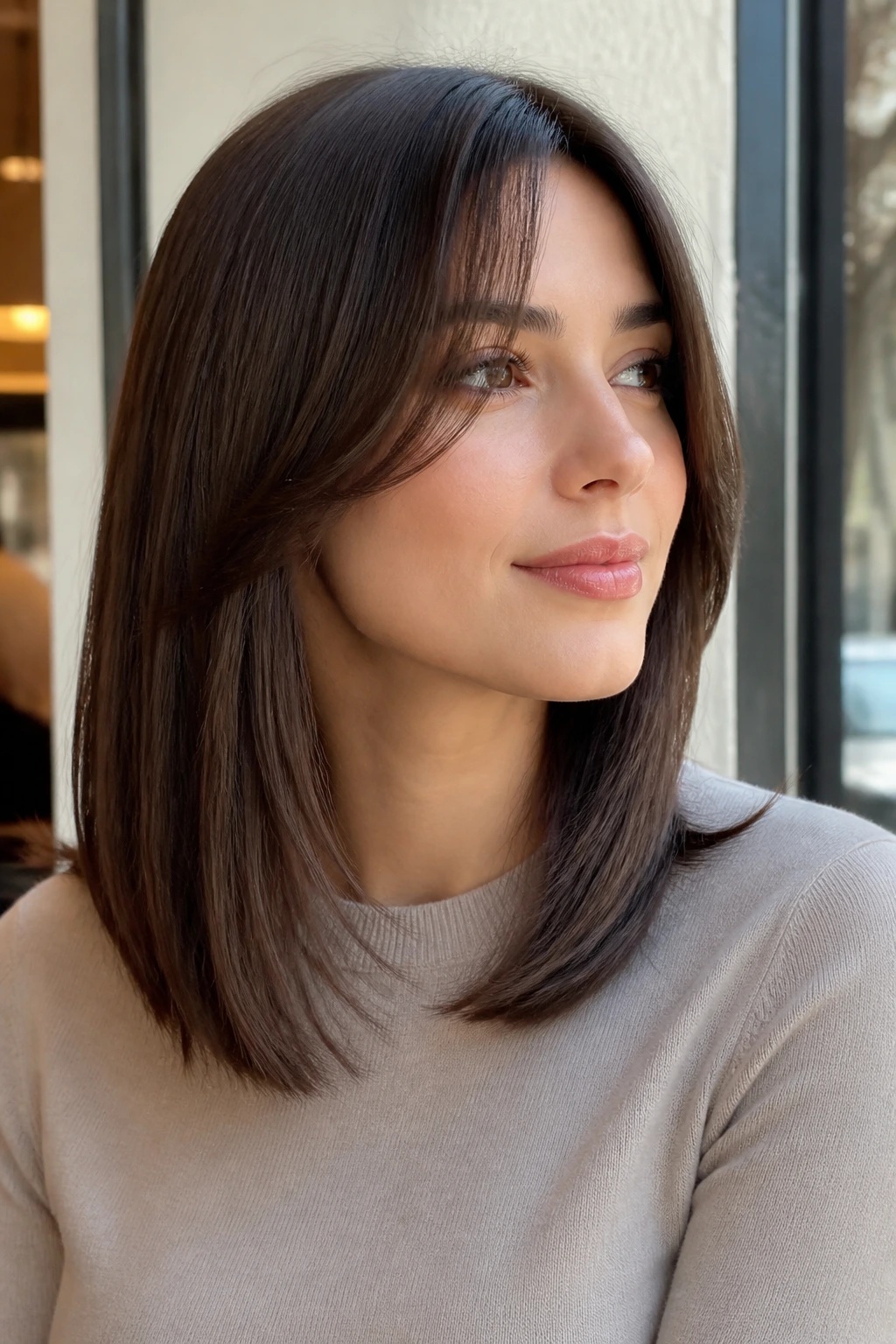
Contrary to what people assume, a sleek cut can flatter a round face very well — if the silhouette stays narrow and the fringe is doing enough work up front. The mistake is letting sleek turn into flat. Flat hair around a round face is unforgiving.
This mid-length version lands around the collarbone or just below it, with ends that are softly beveled rather than blunt. The curtain bangs are long and sheer enough to open the face without chopping it in half. That keeps the look clean and modern.
I like this one for straight hair or hair that’s easy to smooth. A center part gives the strongest lengthening effect, but a slightly off-center part works if your cowlick fights you. Use a smoothing cream sparingly — too much and the fringe separates into greasy-looking strings.
10. Pixie Bob with Mini Curtain Bangs
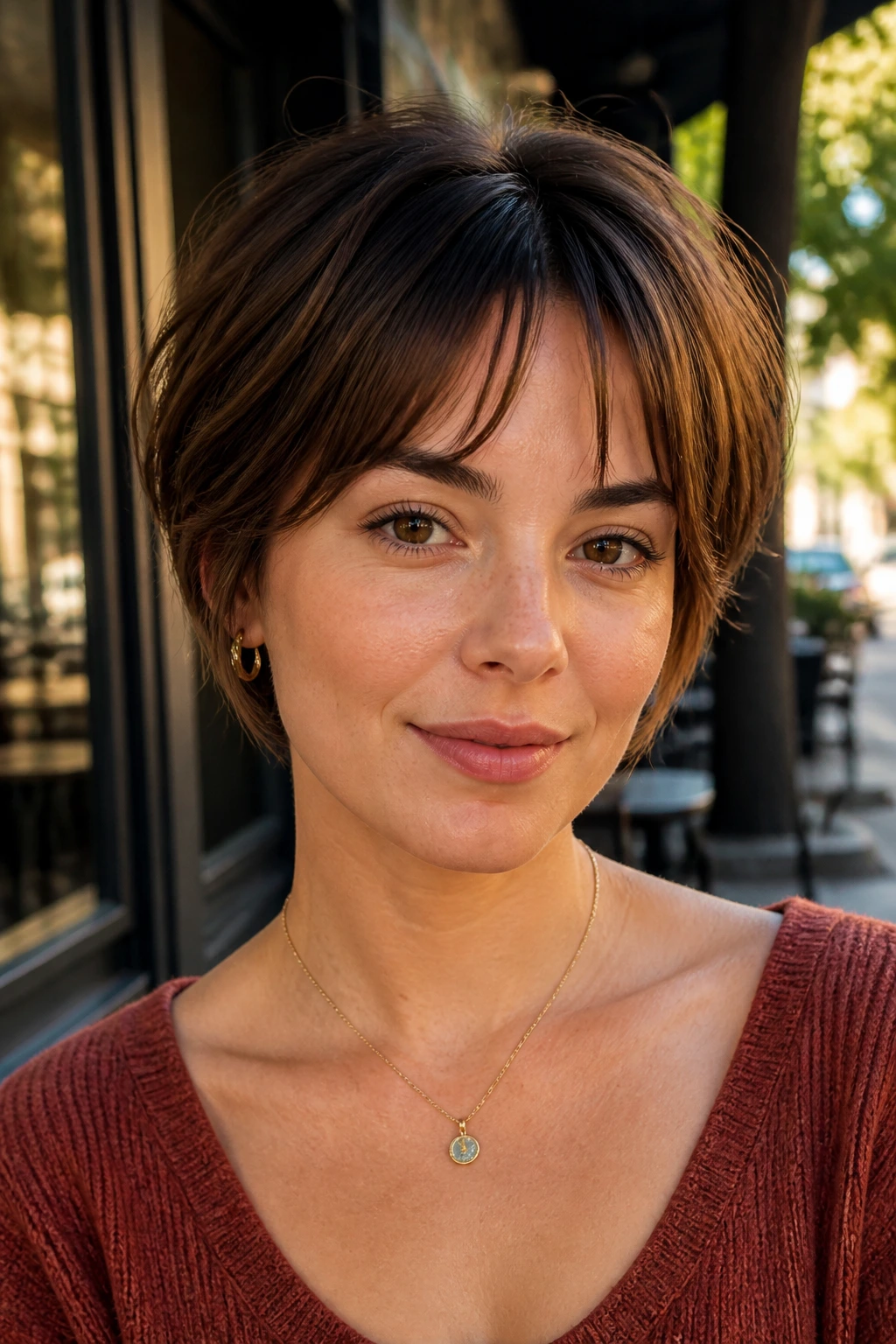
Short hair and round faces can be a tricky marriage, but a pixie bob with mini curtain bangs gets around the usual problems by keeping the top soft and the sides slim. The length sits between cheek and jaw, which gives the face definition without cutting it off.
The mini curtain fringe is the key. It should not be blunt across the forehead. It should split just enough to show skin in the middle and taper outward toward the temples. That tiny opening keeps the face from feeling boxed in.
Best For
- Fine hair that needs shape without weight.
- Anyone who wants short hair but still wants some softness around the face.
- Glasses wearers who need a fringe that won’t sit right on the frames.
This cut needs regular trims. If it grows out too much, the balance starts to go sideways fast.
11. Mermaid Layers with Long Face Framing
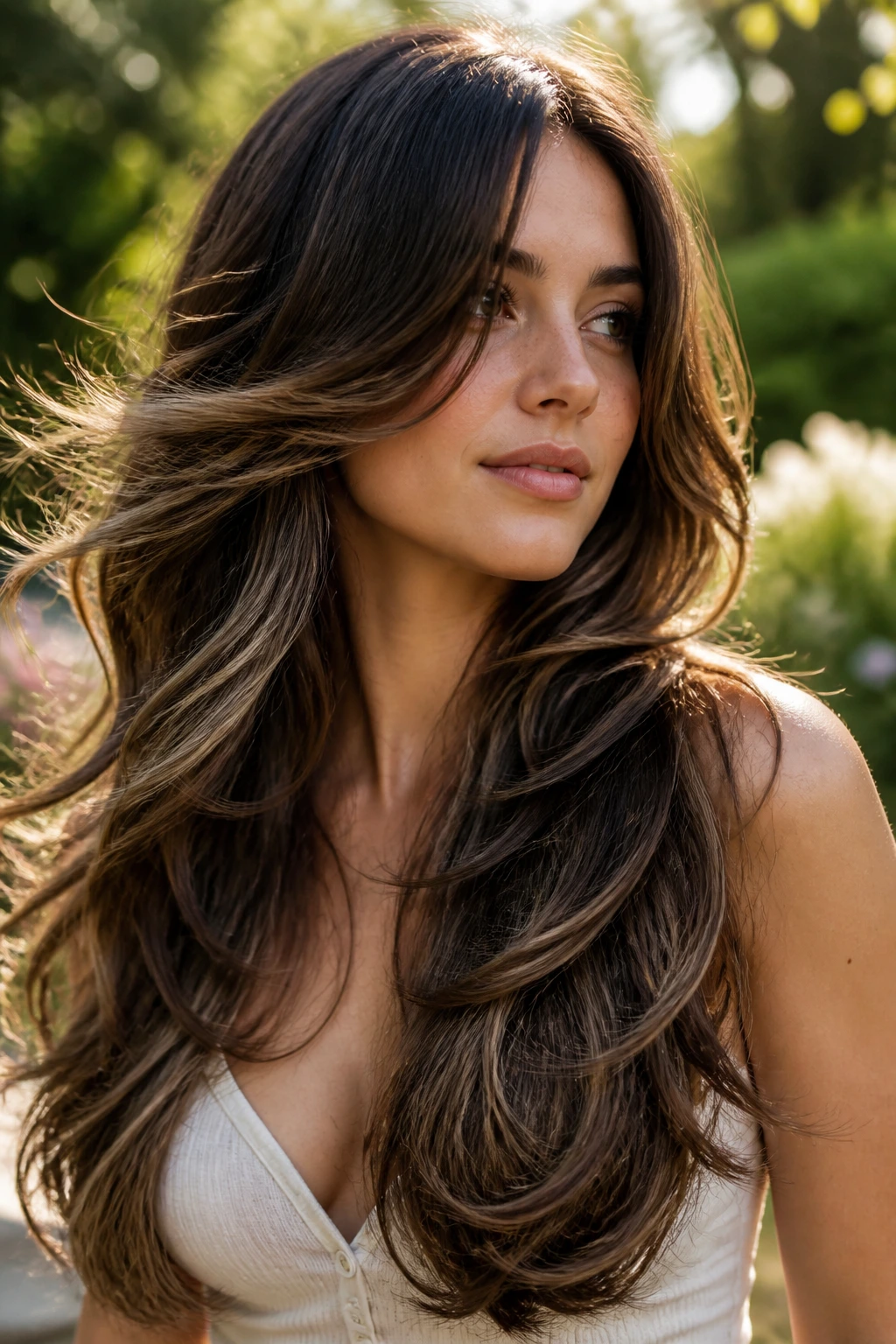
Long, flowing layers can absolutely work on a round face if the front pieces do enough of the visual shaping. That’s why I like mermaid layers with curtain bangs that stay long, loose, and a little dramatic.
The trick is spacing. The shortest layers should not start right at the cheeks. They need to begin a little lower or the face gets framed in the wrong place. Keep the face-framing pieces long enough to move past the jaw, and let the rest of the hair hang in soft waves or bends.
This is a good cut when you want romance without volume overload around the sides. Long hair can swallow a round face if it’s too uniform. These layers keep it from looking like one big curtain. They also make ponytails and half-up styles look more finished, which I always appreciate.
12. Wavy Midi Cut with Internal Layers
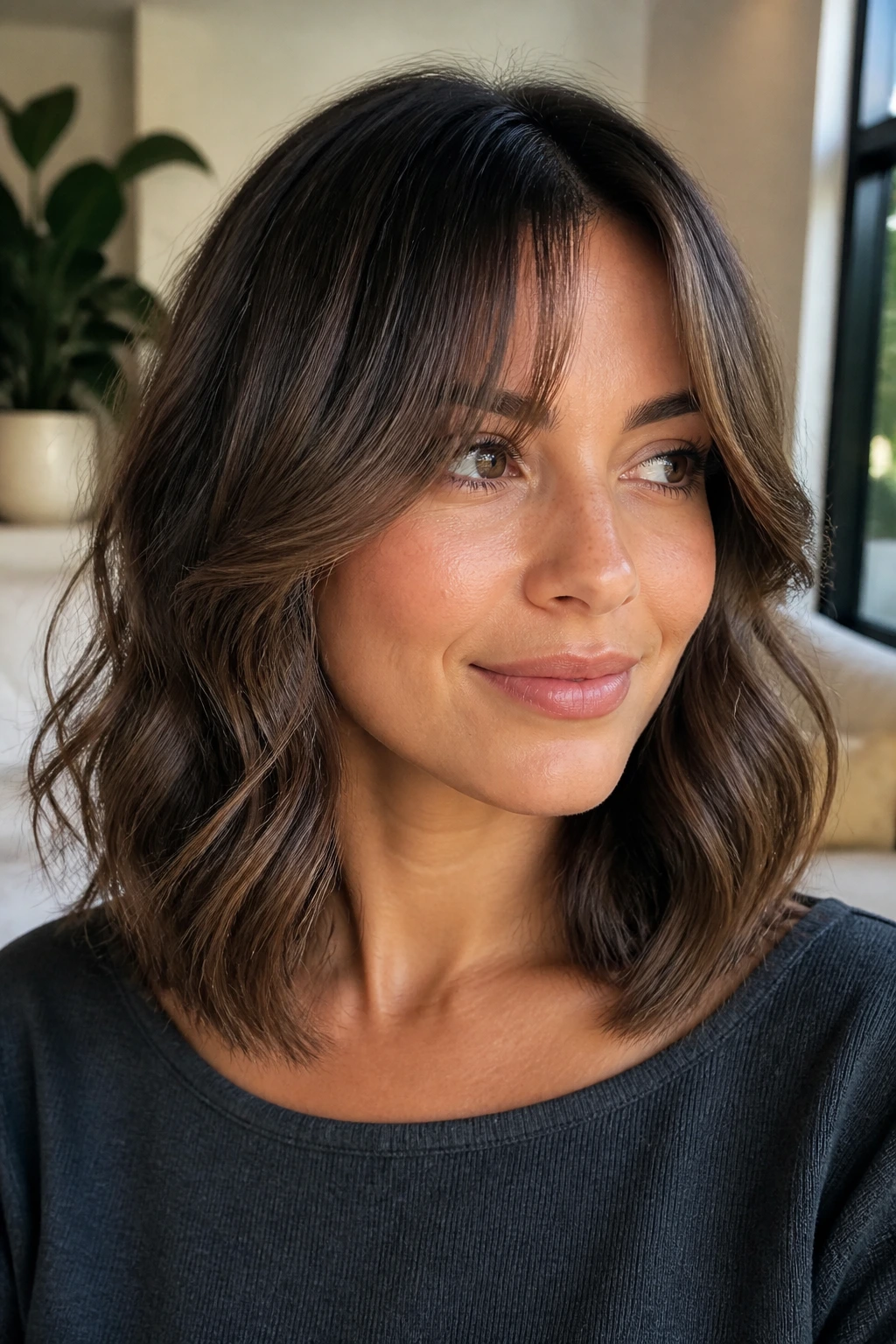
A midi cut with internal layers is one of my favorites for people who want movement but not obvious layer steps. The outer line stays clean, while the inside of the haircut has enough removal to keep waves loose and light.
The curtain bangs should connect with the front layers instead of living on their own. That connection matters. It makes the haircut feel cohesive, which is what keeps a round face from getting extra width at the cheeks.
This cut shines on natural waves. A diffuser gives it soft lift, and a little curl cream through the ends is usually enough. If your hair is thick, ask for the interior layers to be concentrated below the cheekbone, not above it. That keeps fullness lower and the face more open.
It’s practical, but not plain. That’s the whole appeal.
13. Long Romantic Layers with Curtain Bangs
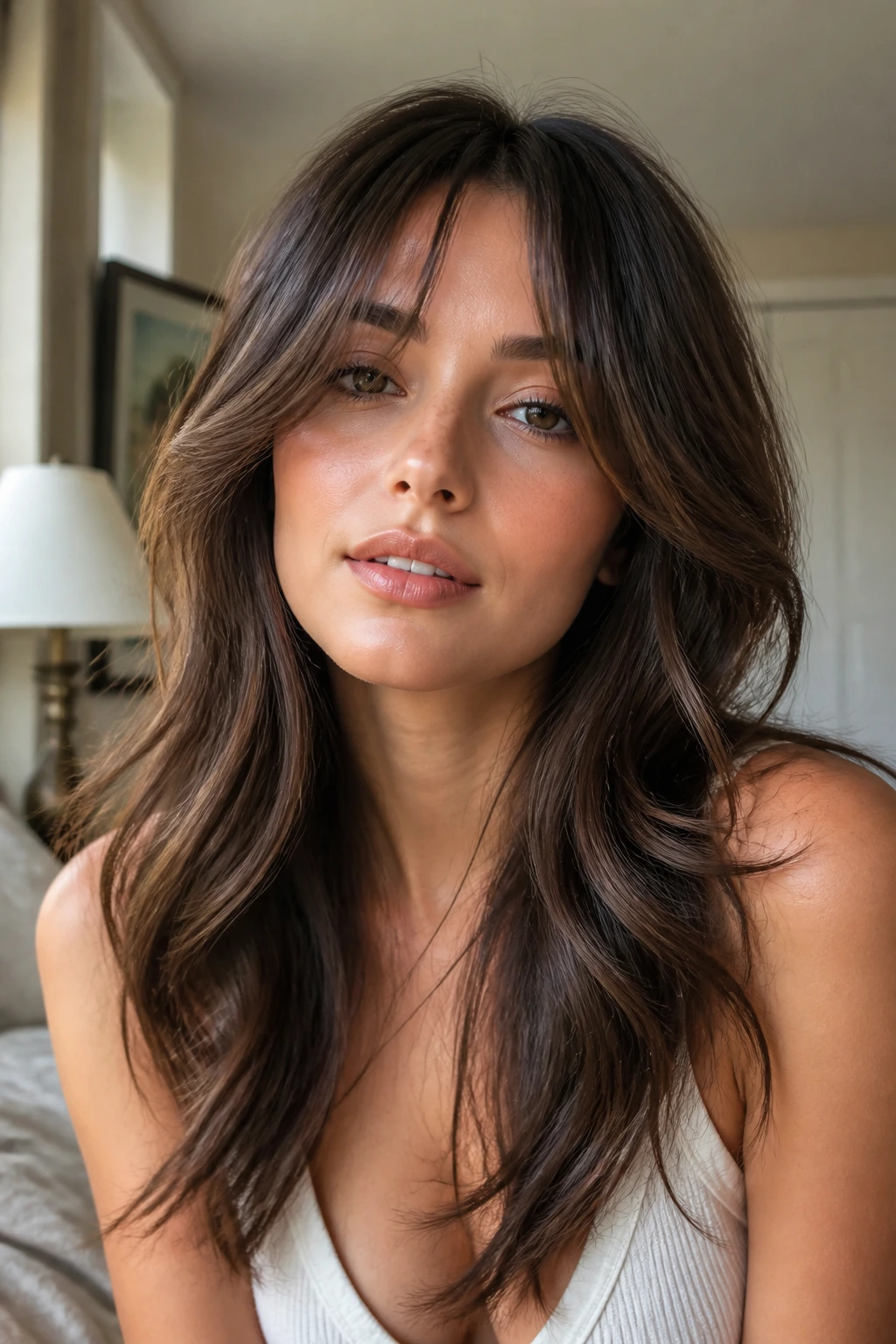
Some haircuts are built for structure. This one is built for softness. Long romantic layers with curtain bangs create movement around the face without changing the overall length too much, which is perfect if you like your hair long but want it to do more than hang there.
The round-face advantage comes from the way the front layers fall outside the widest part of the cheeks. They draw the eye down, then back inward toward the chin. That little back-and-forth motion is flattering in a way blunt long hair almost never is.
Use this cut if you want a feminine look that still has air around it. Too many long styles become heavy at the sides. This one avoids that by keeping the fringe and front layers separate enough to breathe. It looks especially good with loose waves or a soft bend from a 1.5-inch iron.
14. Rounded Bob with Tucked-Under Ends
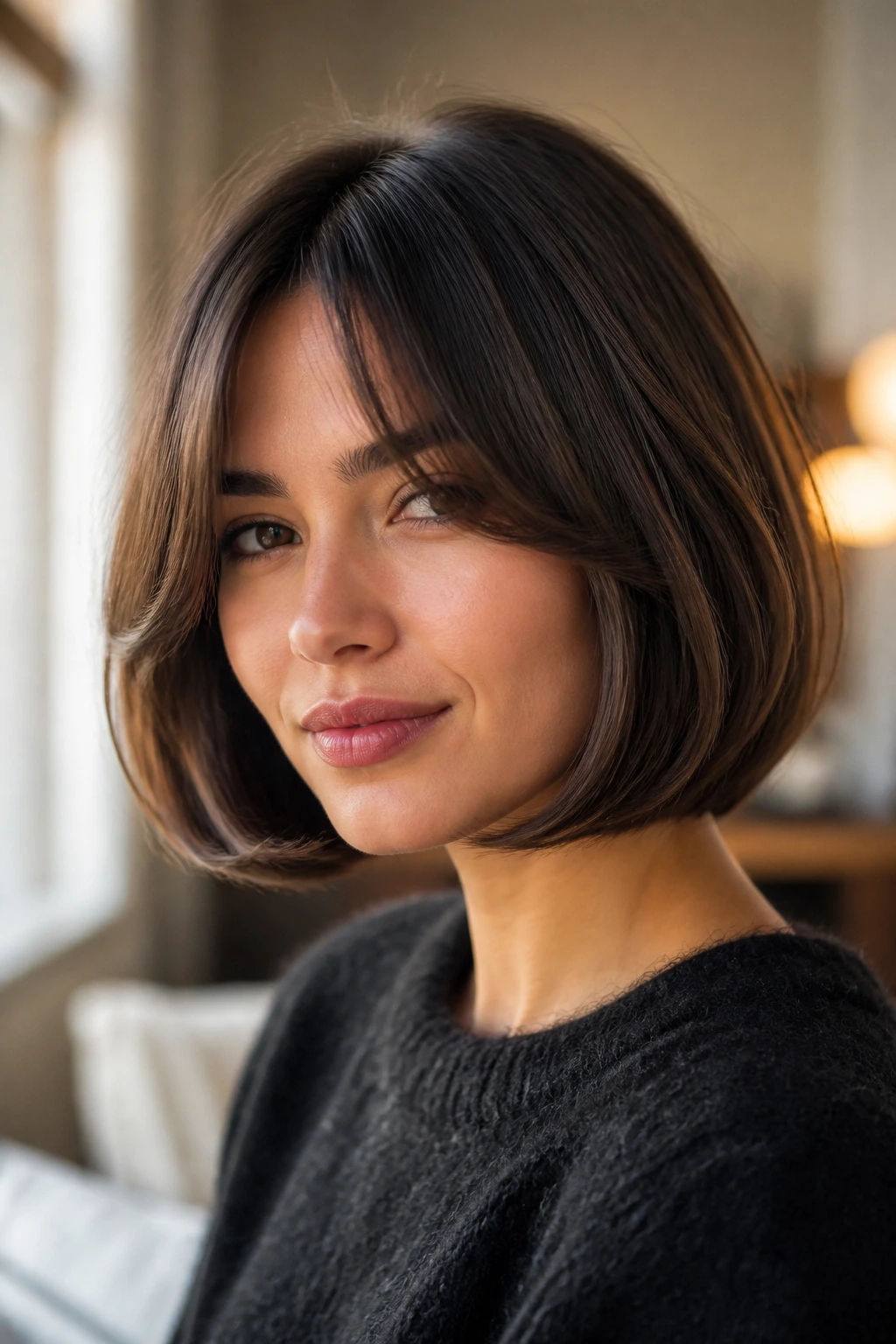
A rounded bob can sound risky for a round face, but the version I mean here is tucked under at the ends and balanced by long curtain bangs. The shape curves inward instead of flaring outward, which keeps the lower half of the face from feeling wider.
The bangs are doing a lot of the visual work. They should stay long and split enough to create a center opening. If they’re too short, the whole look can feel too circular. If they’re too thick, they fight the bob’s softness.
This is a good option if you like tidy hair with a little polish. The ends should brush the jaw or sit just below it, and the curve under should be subtle, not old-fashioned. A round brush and a cool finish set the line nicely.
15. Voluminous Blowout Layers
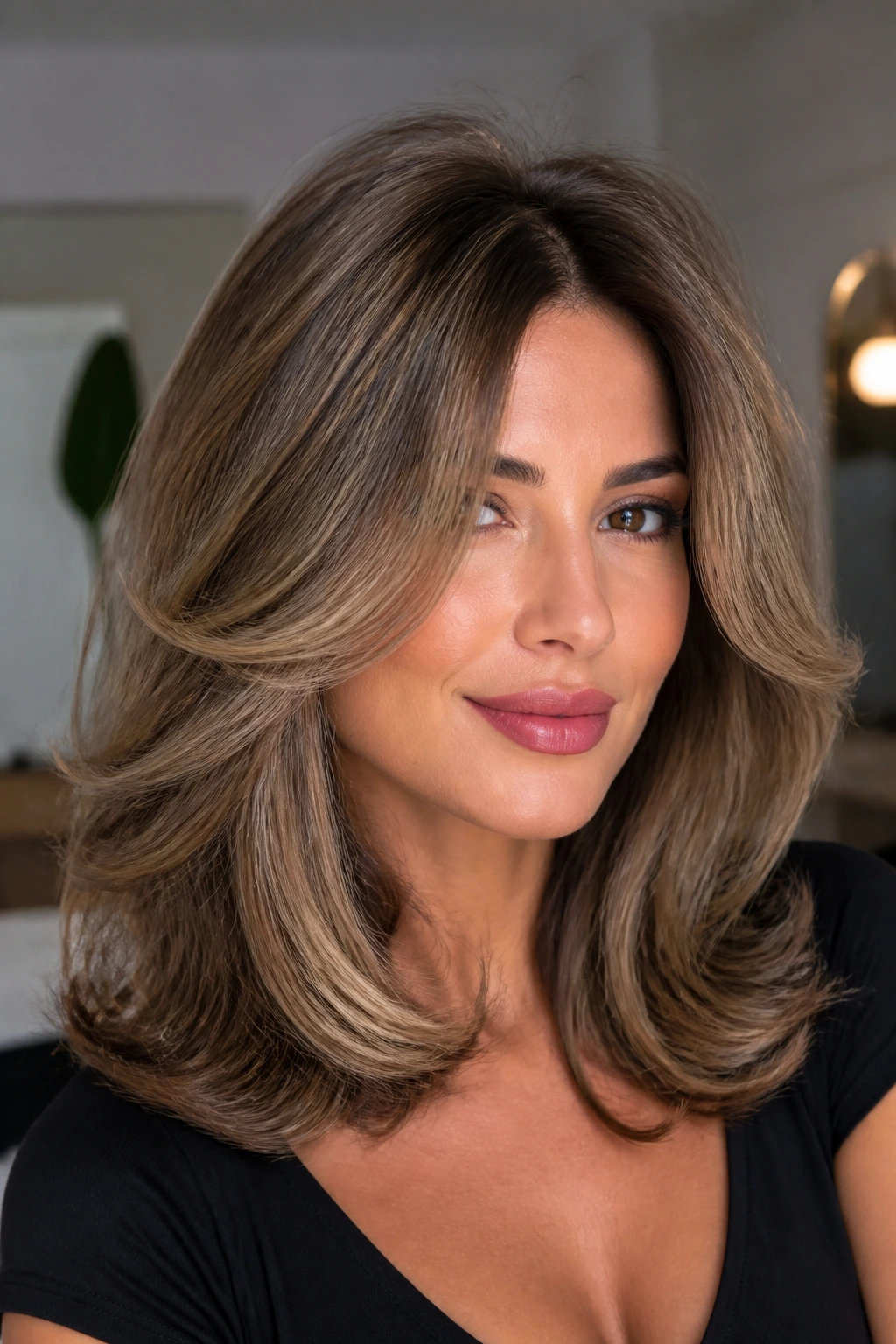
This one is for the people who want hair with bounce. Real bounce. The kind that makes the front pieces sweep away from the face and the crown sit a little higher, which is exactly what a round face tends to like.
Why I’d Pick It
Volume at the crown creates lift. Lift helps length. Simple. The curtain bangs stay long enough to split and curve, while the layers around the head create soft width higher up instead of at the cheeks, which is the useful part.
The look depends on direction. Blow-dry the bangs up and away first, then roll the front sections away from the face and let them cool. That cooling step matters more than people think. Warm hair bends; cool hair keeps shape.
This style is good if your face feels widest through the center and you want to shift that visual weight upward. It’s glamorous, but not stiff.
16. Center-Part Layered Cut with Face Framing
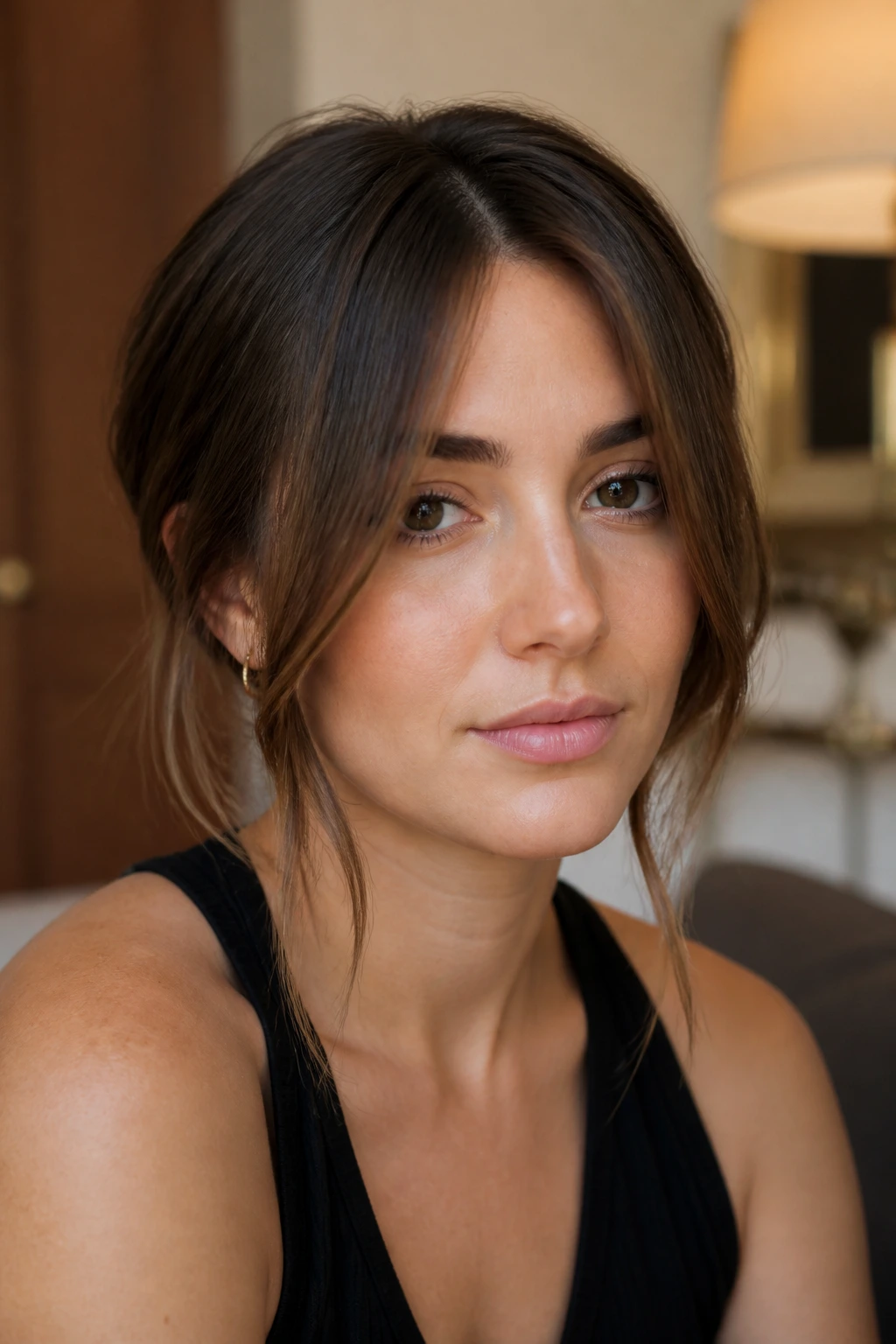
A center part can intimidate people with round faces, but it works when the layers are doing enough to break up the width. This cut relies on long face-framing pieces that start below the cheekbone and slide toward the collarbone.
The shape feels clean and balanced. Nothing is crowded at the forehead, and the curtain bangs create that open strip of skin in the middle that helps the face read longer. The front pieces should be soft enough to tuck behind the ears if needed, which gives you some flexibility on busy days.
I like this one for people who don’t want obvious styling. It behaves well air-dried with a little smoothing cream, and it looks even better with a loose bend from a flat iron on the front pieces only. The haircut does most of the work.
17. Curly Shag with Curtain Fringe
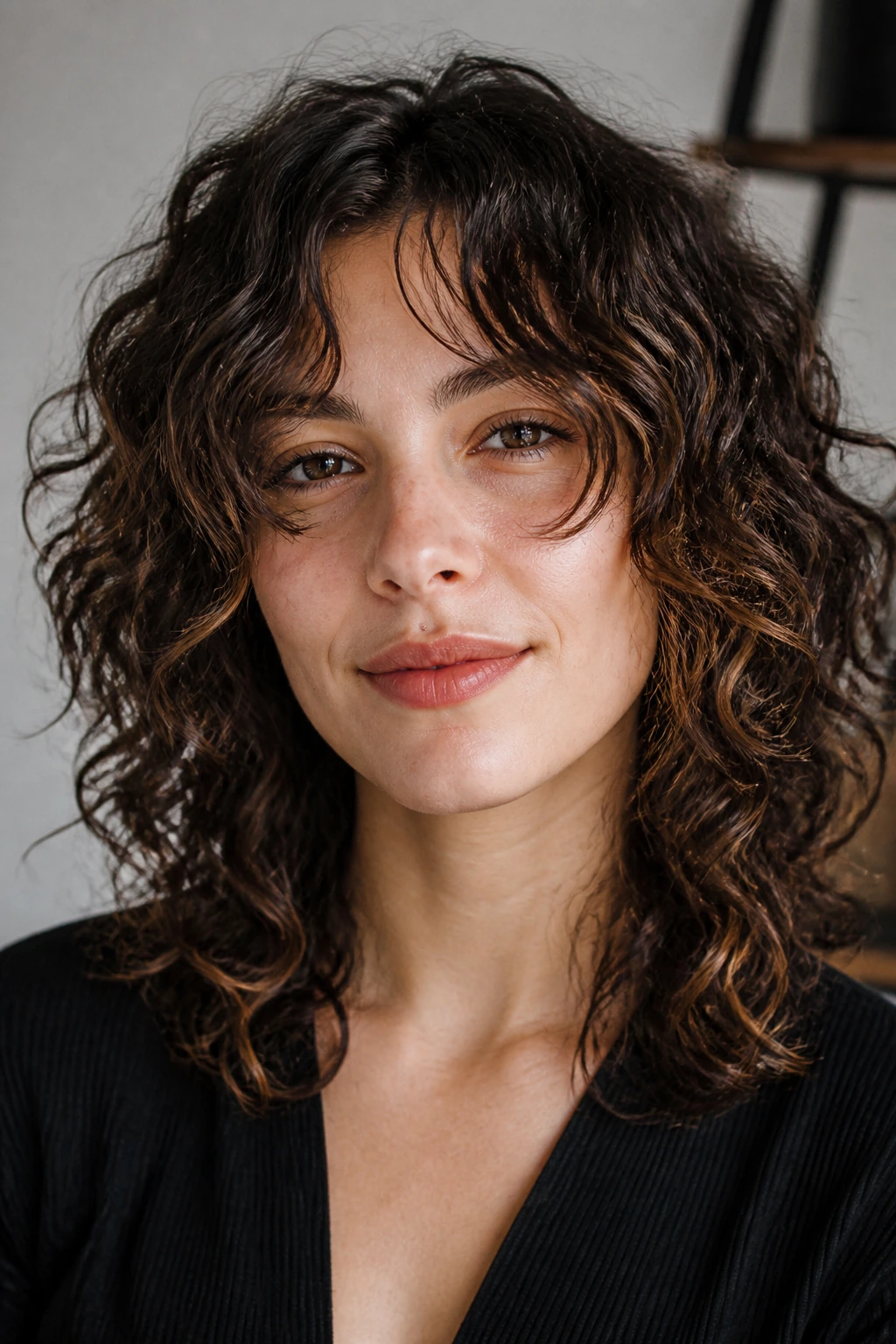
Curly hair and curtain bangs can be glorious together if the cut respects shrinkage. A curly shag gives the curls room to stack softly without turning the sides into a triangle, and the fringe opens the center of the face instead of hiding it.
What Makes It Work
The layers need to be cut with the curl pattern in mind. Too short, and the bangs spring up into a shelf. Too heavy, and they hang over the eyes. The best version usually keeps the shortest point longer than you’d expect and lets the curl settle naturally.
Use a curl cream that defines without coating. Then scrunch the fringe gently away from the face while it dries. If your curls are tighter, the longest front pieces may need to land around the cheekbone or slightly below to account for bounce.
This is one of the most forgiving feminizing shapes when it’s done well. The curls soften everything.
18. Asymmetrical Lob with Longer Front Pieces
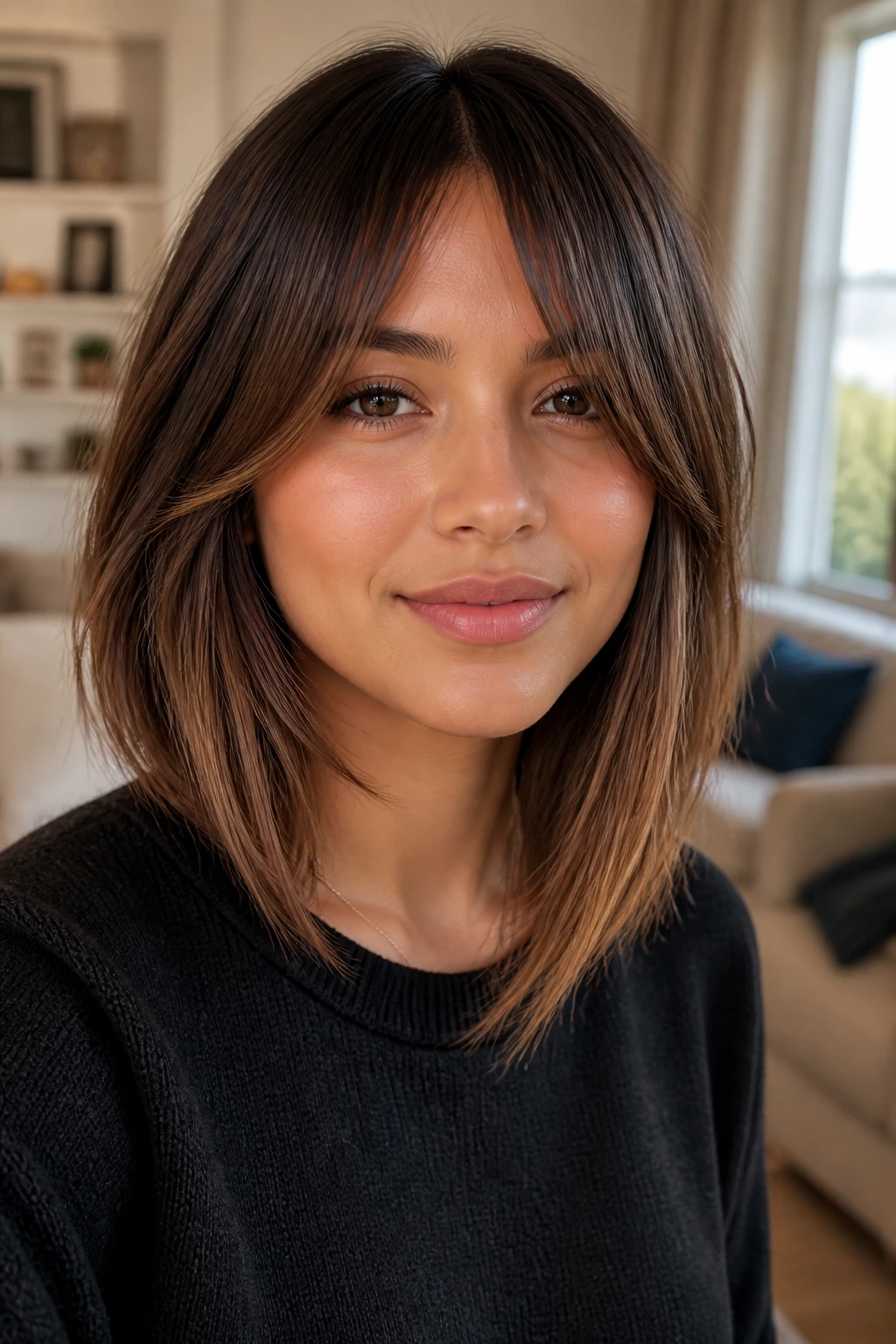
A tiny asymmetry can be a gift on a round face. Not a dramatic side shave or a sharp editorial angle — just a lob that’s a touch longer in front, with curtain bangs that fall slightly differently on each side.
The reason it works is simple: a round face benefits from interruption. A perfectly even shape can make the face look more circular. A subtle asymmetry breaks that loop and keeps the eye moving. The longer front pieces also stretch the line from cheek to shoulder, which helps a lot.
I’d choose this if you want something modern but not loud. It’s one of those cuts that looks intentional with a blowout and still decent on a second-day tuck-behind-the-ear situation. That’s a useful haircut, and I’m not ashamed to call it that.
19. Soft Mullet with Feminine Shape and Curtain Fringe

A soft mullet sounds scary until you see the right version. The sides stay light, the back keeps some length, and the curtain bangs create a soft opening through the center of the face. It’s edgy, but not hard.
The key for a round face is keeping the top from puffing too high and the sides from spreading too wide. The shape should narrow through the temple and cheek area, then fall longer in the back. That contrast gives the face more structure than you’d expect from such a relaxed cut.
If you like fashion hair but still want something wearable, this is a strong choice. It looks best with texture — a little wave, a little bend, a little separation. A perfectly smooth soft mullet loses its charm fast.
20. Sleek Straight Hair with Rounded Ends and Long Bangs
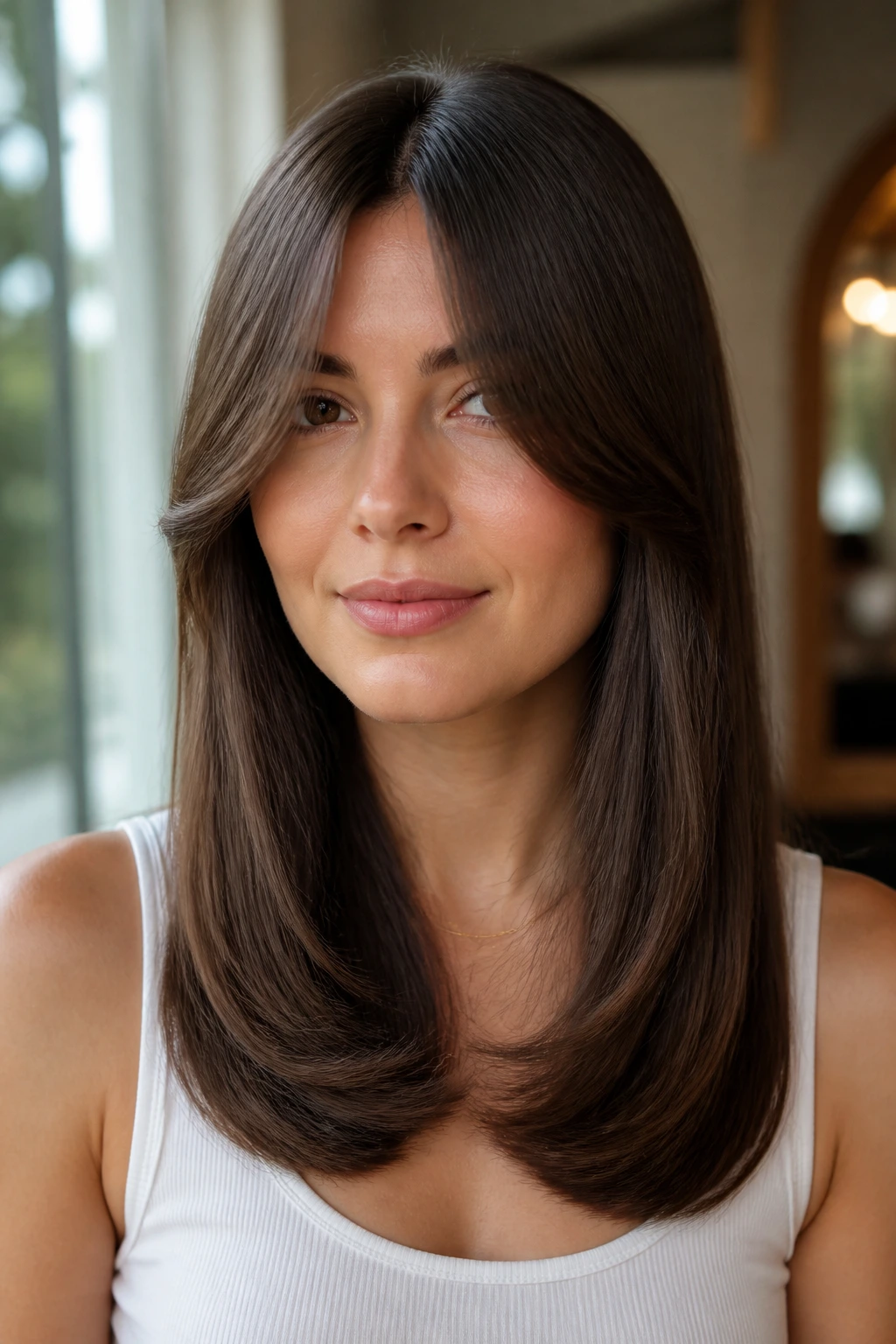
Straight hair can feel unforgiving on a round face if the perimeter is blunt. Rounded ends fix that. They keep the length from drawing a hard horizontal line, and the long curtain bangs stop the style from looking severe.
This is a clean, polished look, but it still has softness. The ends should curve inward just enough to keep the shape from flaring. The bangs need to be long enough to split around the center and fall past the brow toward the cheek. Anything shorter risks widening the face.
This is one of the best choices if you like low-frizz, high-shine hair. A flat iron can polish the front pieces, but I’d keep the bend subtle. Too much flip can look dated. A gentle curve is enough.
21. Feathered Medium Cut with Ribbon Waves
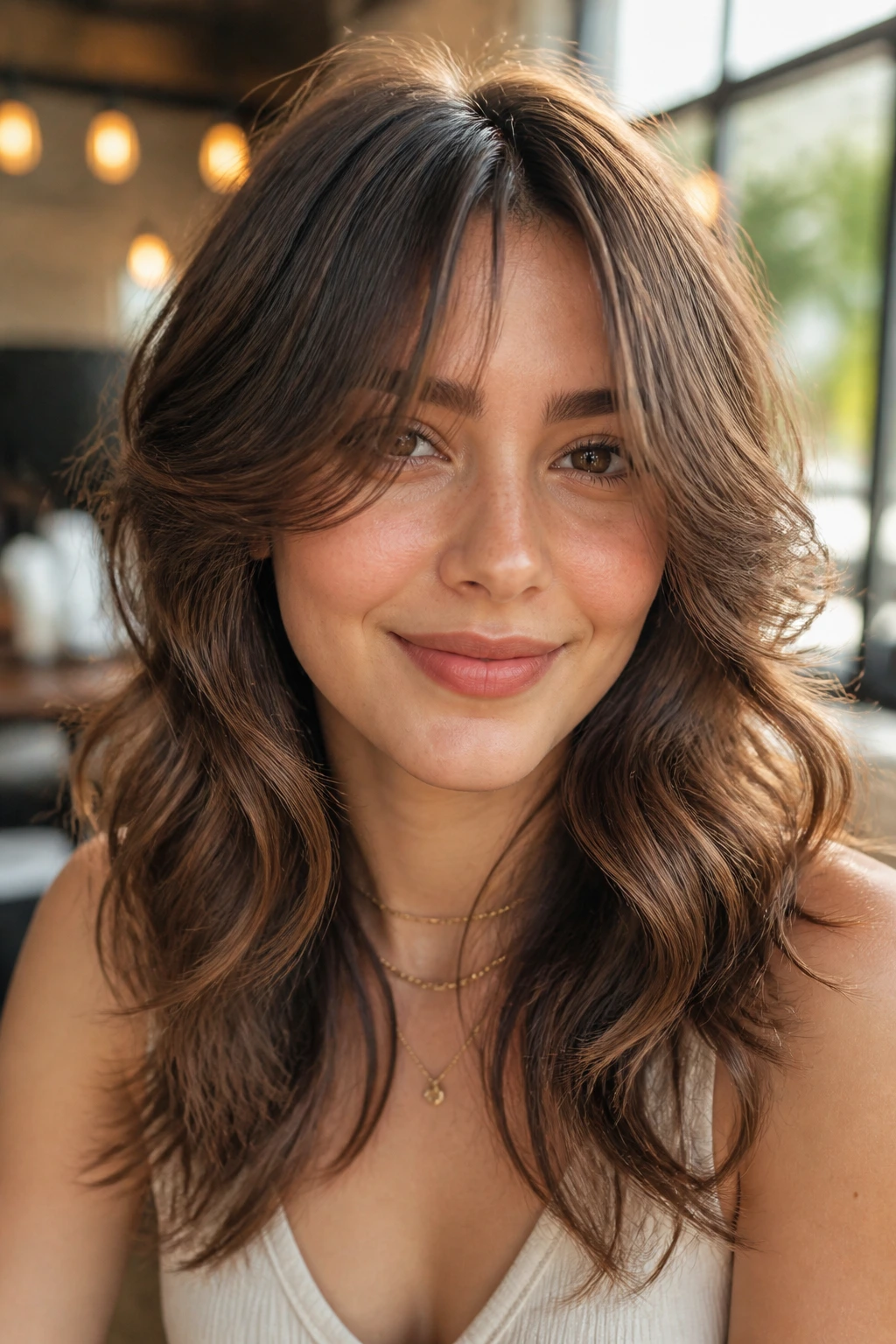
Ribbon waves and feathered layers make a nice pair on round faces because neither one sits too heavy at the sides. The feathering breaks up the outline, while the waves create a soft vertical flow that keeps the face looking open.
The curtain bangs should be long, loose, and slightly separated. You want them to frame the eyes, not cover them. When the bangs are feathered into the side layers, the whole cut feels lighter and more feminine.
How to Wear It
Wear it smooth for a more polished read, or add soft waves through the mid-lengths for a lived-in finish. Either way, keep the root area from going flat. A little lift there helps the face look longer.
This cut is a good middle ground if you can’t decide between sleek and textured.
22. Chin-Length Crop with Tapered Sides and Curtain Fringe
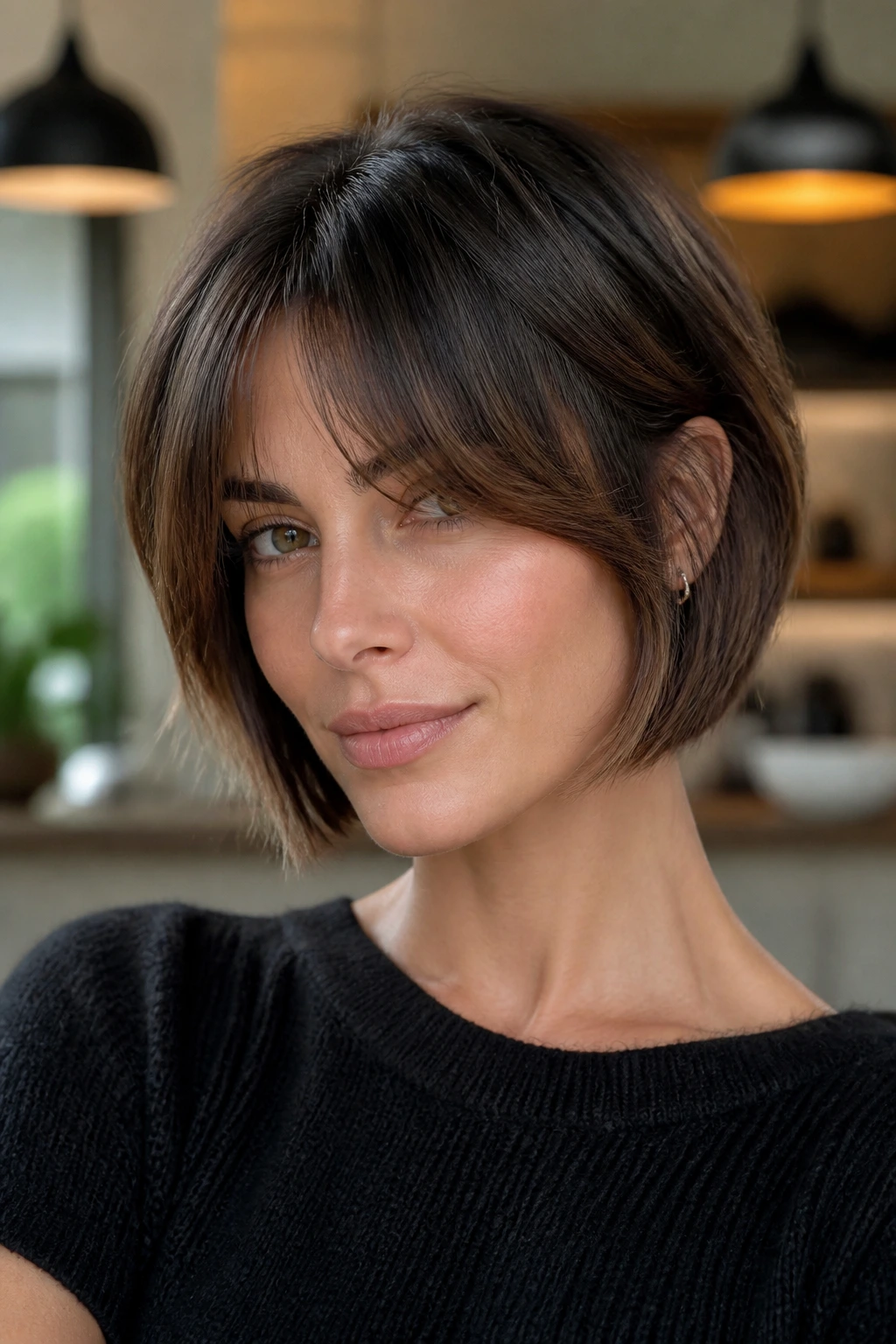
Short hair on a round face needs intention, and this chin-length crop has it. The tapered sides narrow the silhouette, the chin length gives the jaw some presence, and the curtain fringe keeps the forehead area from feeling closed in.
The shape is sharper than some of the longer looks here, but it still reads soft because of the fringe. I like this cut for anyone who wants to show off the neck, earrings, or a clean neckline. It feels fresh without depending on dramatic styling.
Ask for This
- The front pieces should be long enough to split at the center.
- The sides should taper, not puff out.
- The ends should be beveled or softly rounded, not blunt.
If you want a short cut that still flatters a round face and keeps a feminine edge, this is a strong one.
Why Curtain Bangs Work So Well on Round Faces
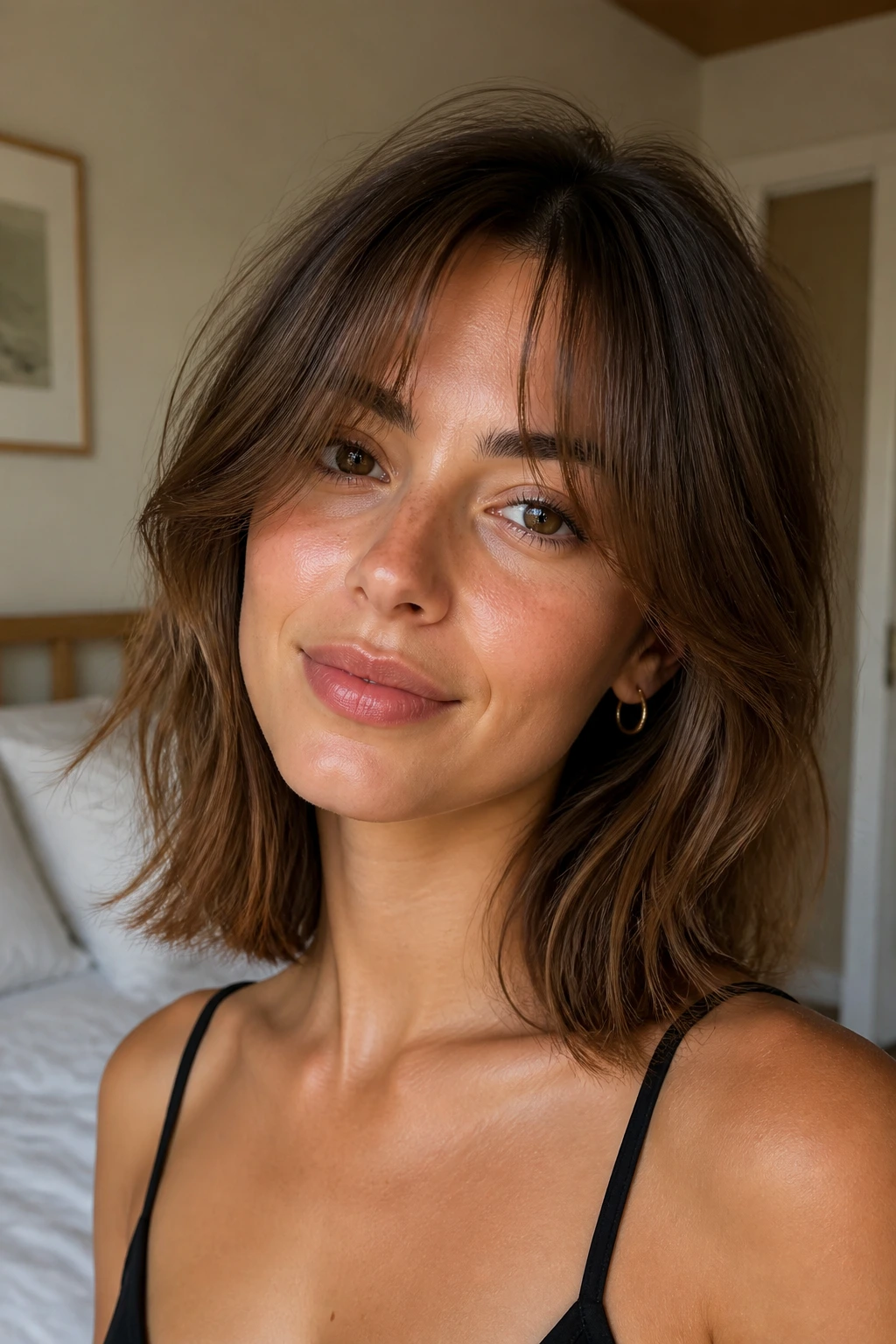
Round faces usually have soft cheek contours, a gentle jaw, and similar width and length. That doesn’t mean they need to be hidden. It means the haircut needs to create direction.
Curtain bangs are useful because they open the center of the face while letting the sides fall away at an angle. The middle part creates a vertical line. The longer outer pieces guide the eye toward the cheekbones and jaw instead of stopping right at the widest part of the face. That’s the whole game.
What I don’t like is heavy fringe cut too high. It can shorten the face and make the cheeks look even fuller. The better version is longer, softer, and a little bit irregular at the ends. That slight irregularity is what keeps it from looking stiff.
The measurements that matter
- The shortest point often lands around the brow or just below it.
- The outer corners should usually reach the cheekbone, jaw, or even the top of the lip, depending on the cut.
- The layers around the face should avoid hitting the cheek at their fullest point unless the goal is a very rounded shape.
A good stylist will look at your natural part, your cowlicks, and how much hair you actually want to style every morning. That part matters more than a Pinterest photo.
Tools and Products That Make These Styles Easier
-
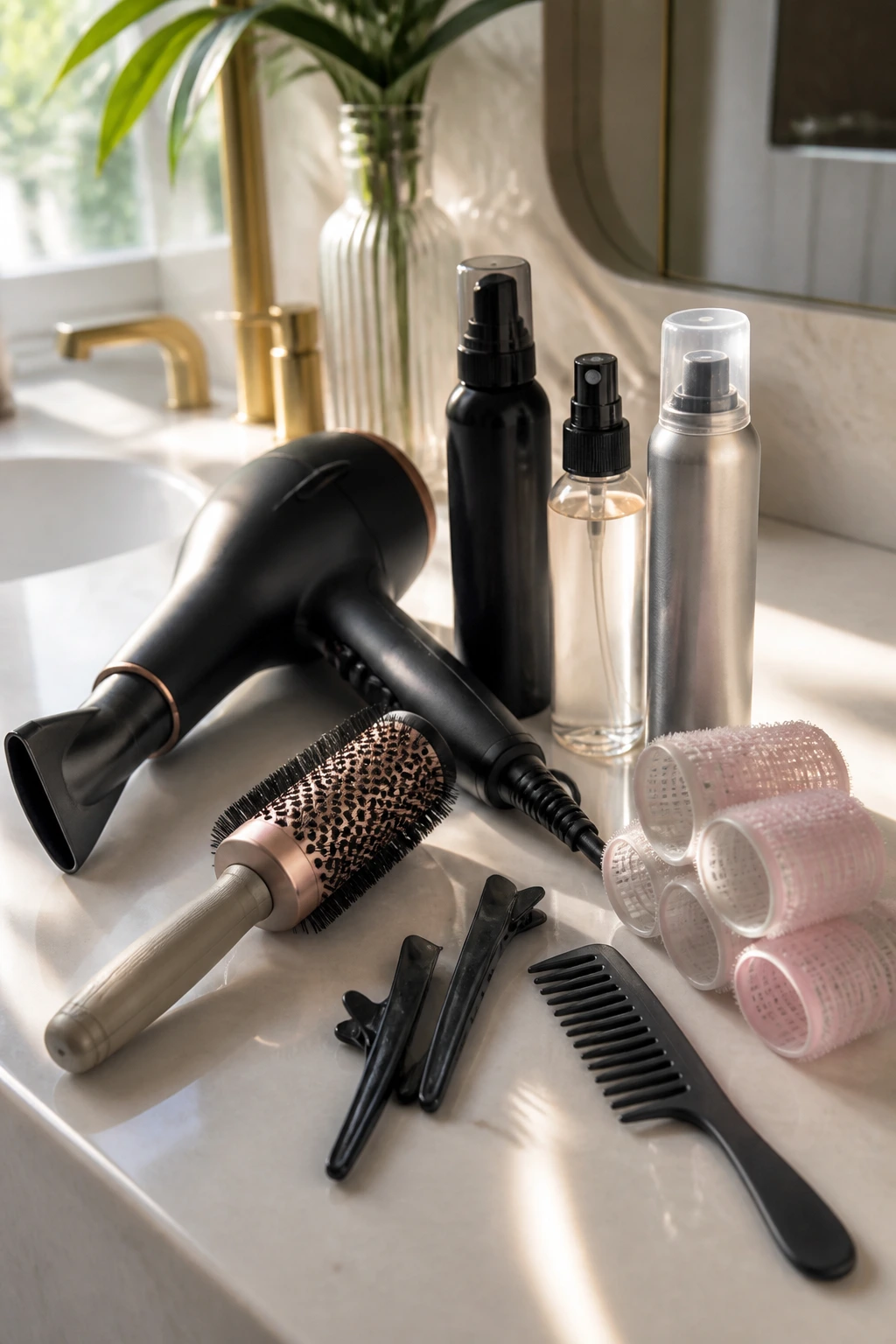
Blow dryer with a concentrator nozzle — It keeps airflow pointed at the bangs instead of blasting them into a halo.
-
1.25-inch or 1.5-inch round brush — Large enough to bend curtain bangs, not so small that you get a curled barbell effect.
-
Lightweight mousse or root-lift foam — Best for fine or flat hair that needs a little memory at the root.
-
Heat protectant spray — Non-negotiable if you’re using a dryer, iron, or hot brush near the front pieces.
-
Dry texture spray — Useful for shags, wolf cuts, and layered lobs that need piecey movement.
-
Duckbill clips or sectioning clips — Great for pinning the bang split in place while it cools.
-
Wide-tooth comb — Better than a brush for curls and waves, especially when the fringe is wet.
-
Velcro rollers — A quiet little cheat for lift at the front. Leave them in while you do makeup, then remove and finger-comb.
How to Choose the Right Version for Your Hair
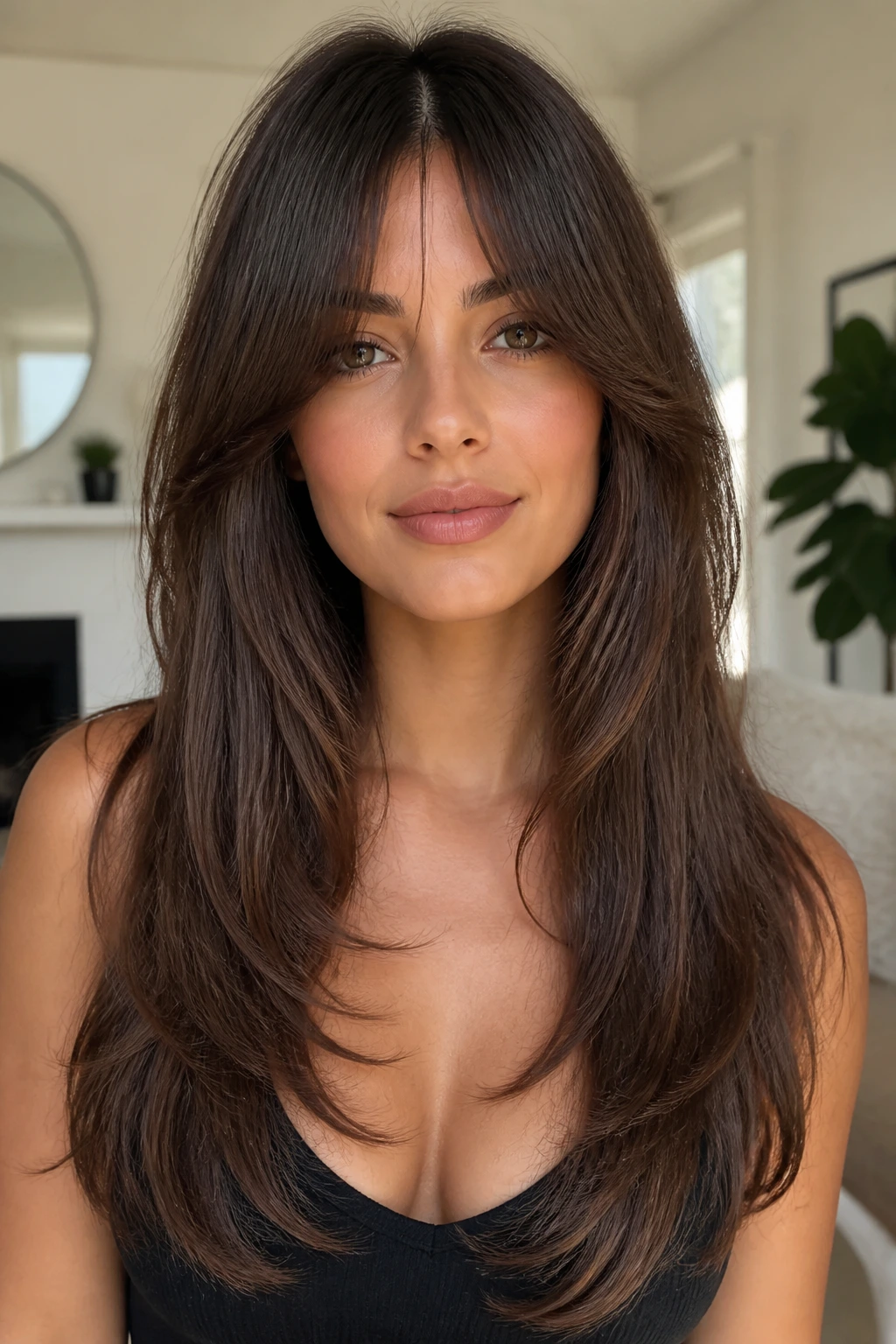
The same haircut can behave very differently depending on your density, texture, and how much time you’re willing to spend in the mirror. That’s not a flaw. It’s the reality.
If your hair is fine, lean toward cuts with fewer layers and more shape at the perimeter. Too much internal removal can make the style collapse. If your hair is thick, ask for weight to be removed underneath, not chopped away from the top where it creates frizz and puffiness. Curly hair needs the longest version of the bangs you think you want, because shrinkage is real and stubborn.
Straight hair often benefits from the cleanest silhouette, especially if you like a smoother finish. Wavy hair can handle more texture and looks especially good in shags, butterfly cuts, and layered lobs. If you wear glasses, keep the shortest bang point a touch longer so the fringe doesn’t bump into the frames all day. Tiny details. Big difference.
And if you have a strong cowlick at the front, tell the stylist before they lift the scissors. Seriously. A bang that fights your growth pattern will waste your patience before it even dries.
Small Styling Tweaks That Change the Whole Look
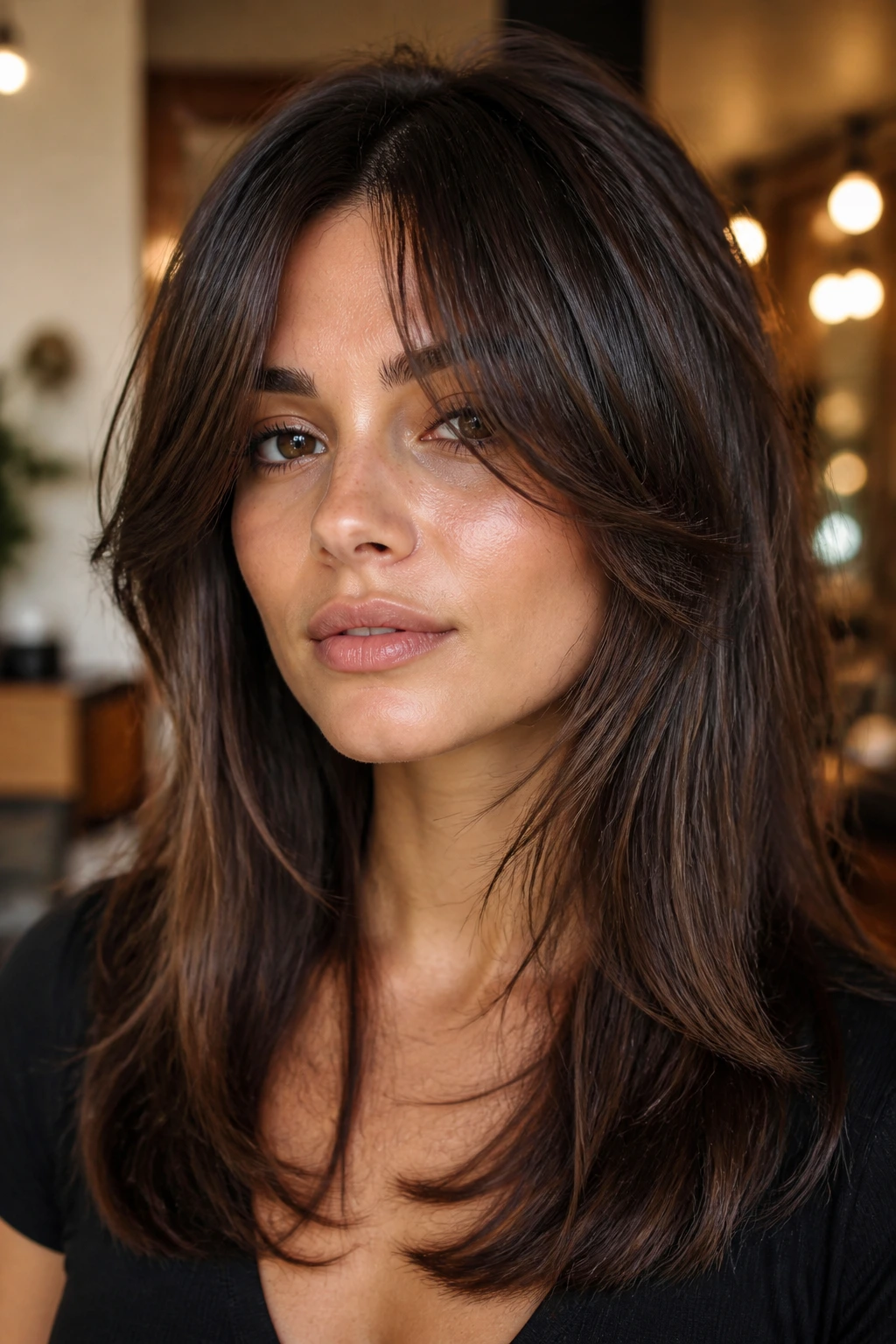
Root lift: Put the lift where the eye should travel — at the crown and the top of the curtain bangs, not puffed out at the sides.
Parting: A true center part suits many round faces, but a barely off-center part can be kinder if your hair falls unevenly or your forehead is short.
Bend, not curl: The front pieces should arc away from the face and then settle. You want shape, not ringlets, unless the rest of the cut is built for that.
Finish smart: A drop of serum on the ends helps long layers look polished. Put it nowhere near the bangs unless you want them greasy by lunch.
Accessory choice: Thin headbands, claw clips, and earrings that draw the eye downward can make these styles feel more finished. Big, chunky pieces near the temples can fight the shape.
Common Mistakes That Make a Round Face Look Wider
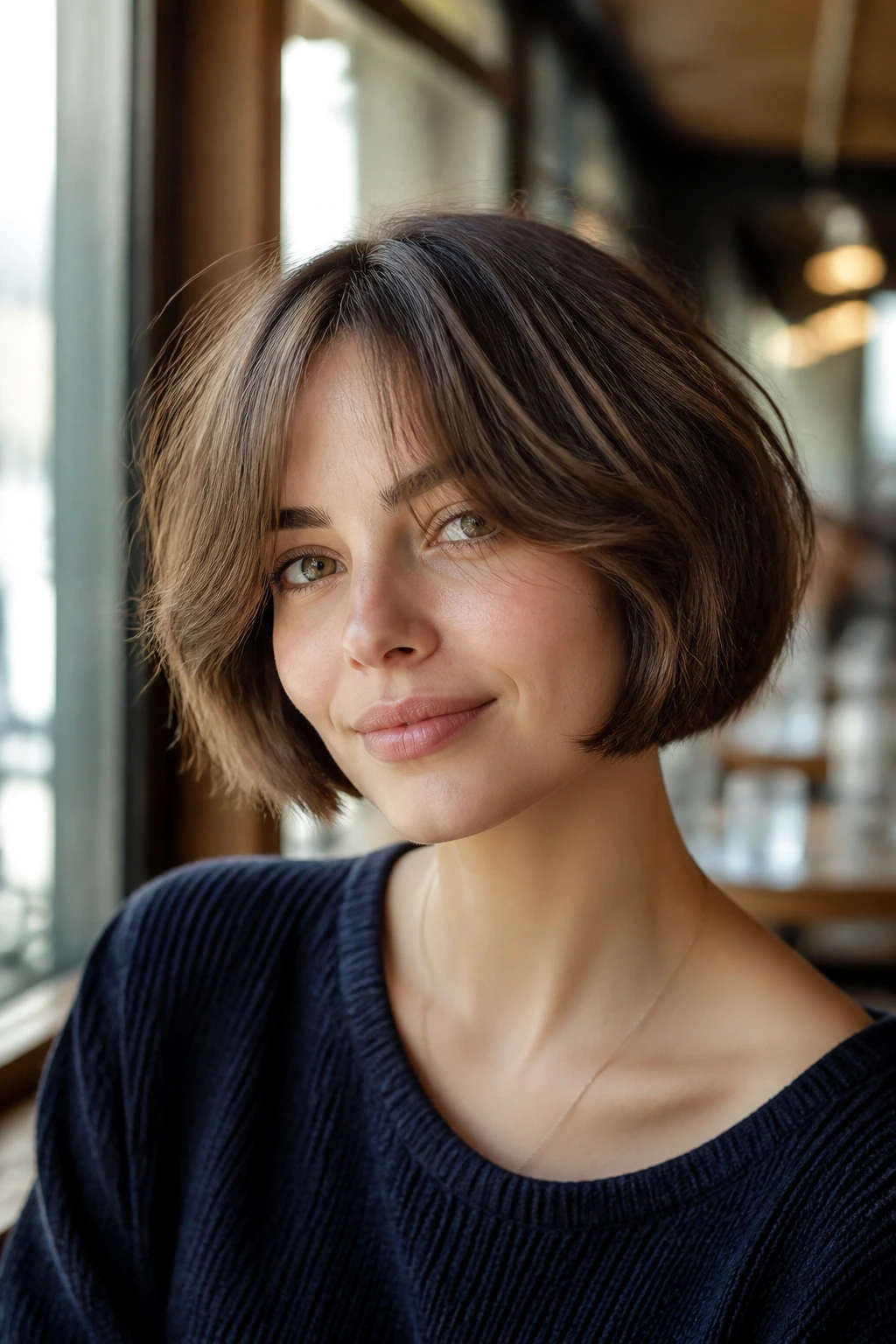
The most common error is cutting the bangs too short and too blunt. The face gets chopped in the wrong place, and instead of softening the cheeks, the fringe draws a hard line across them. The fix is simple: keep the shortest point lower and the outer corners longer.
Another mistake is adding too much width at the sides. This happens a lot with over-layered bobs and shags. If the hair balloons around the cheeks, the face loses its vertical line. Ask for movement below the cheekbone instead.
People also overstyle curtain bangs. A tight curl or a flipped-under bang can look cute in isolation, but if the goal is to slim and soften, you want a looser bend. Use less heat and let the fringe fall open.
A fourth problem is ignoring density. Fine hair needs restraint. Thick hair needs weight removed in the right places. If you cut both the same way, one of them will fight back.
Finally, don’t forget the crown. Flat roots make round faces look wider. A bit of lift there — even 20 seconds with a round brush — changes the whole cut.
Ways to Make the Cut Yours

Soft Off-Center Sweep: Shift the part slightly to one side if you want a little asymmetry without losing the curtain shape. It’s especially good when one side of your hair has a stronger growth pattern.
Curly-First Version: Keep the bangs longer and let the curl pattern do the shaping. This works better than forcing curly hair into a straight-hair curtain.
Fine-Hair Float: Ask for fewer layers and a lighter bang density if your hair is thin. Too much texturizing will leave the fringe wispy in the bad way.
Thick-Hair Softening: Request internal weight removal below the cheekbone so the sides don’t bulk up. Thick hair can carry a softer, more feminine shape if it isn’t overloaded up top.
Low-Effort Grow-Out: Choose a curtain bang length that can become face-framing layers when you’re between trims. This is the version I’d pick if you hate the salon schedule.
Keeping Curtain Bangs Looking Intentional Between Cuts
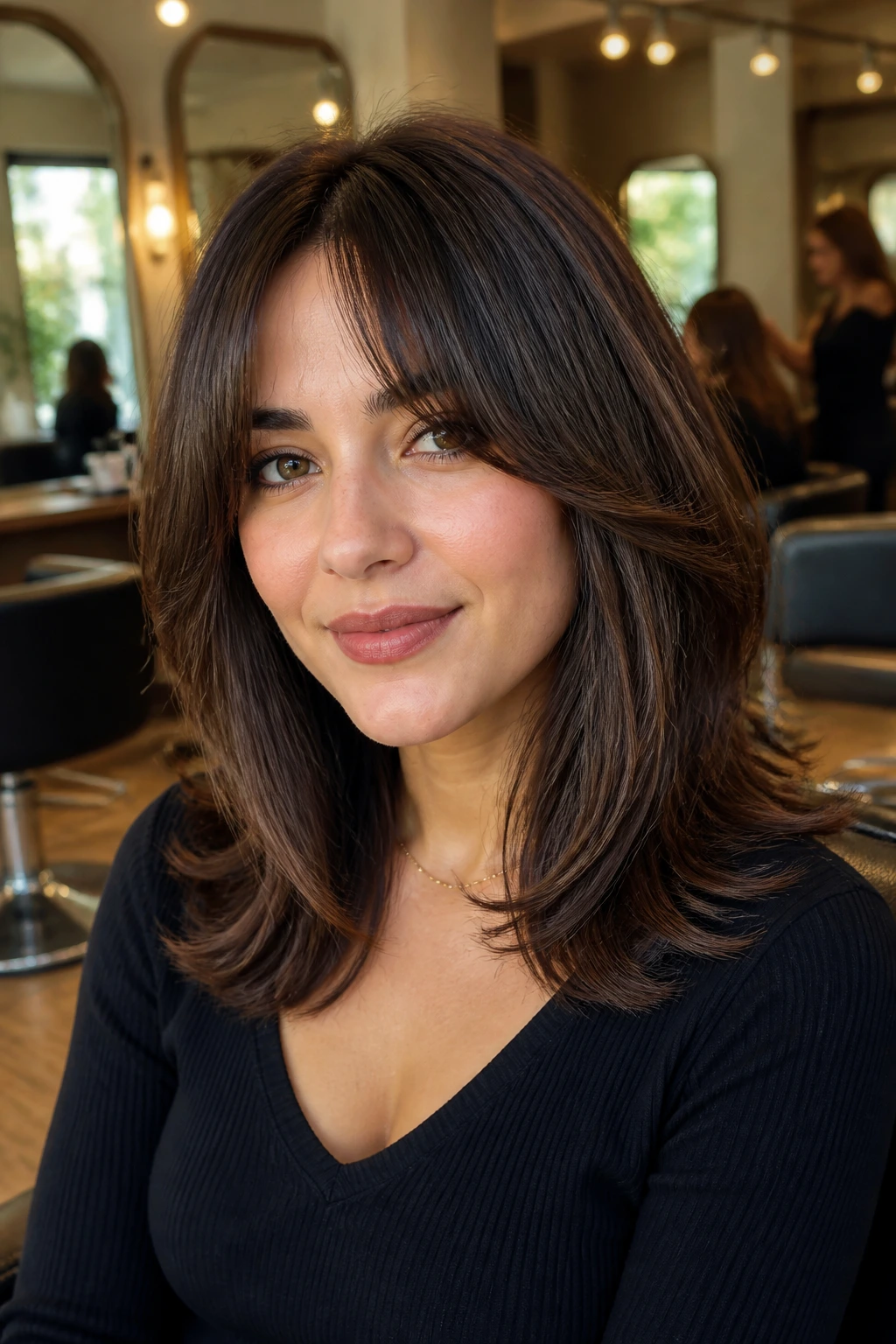
Curtain bangs age faster than the rest of the haircut. That’s not a flaw. They live right on the face, get sweaty, get touched, and get pushed around by glasses, hats, and sleep. So they need a little care.
The easiest habit is a quick refresh in the morning. Mist the fringe with water or a light styling spray, blast it for 15 to 20 seconds with the dryer, and reshape it with a round brush or your fingers. If the bangs are already cooperating, a small Velcro roller can save time. Put it in while you pick out earrings or do makeup, then remove it once the hair is cool.
Trims matter too. Most curtain bangs need attention every 4 to 8 weeks, depending on how fast your hair grows and how picky you are about the shape. If you want to stretch time between cuts, ask for a fringe that can grow into the front layers instead of one that lives or dies by a sharp line.
Dry shampoo belongs at the roots, not the mids. Heavy oil near the fringe will make the whole front section slump by noon. At night, a loose clip or a soft headband can keep the bang split from bending in weird directions while you sleep.
Frequently Asked Questions
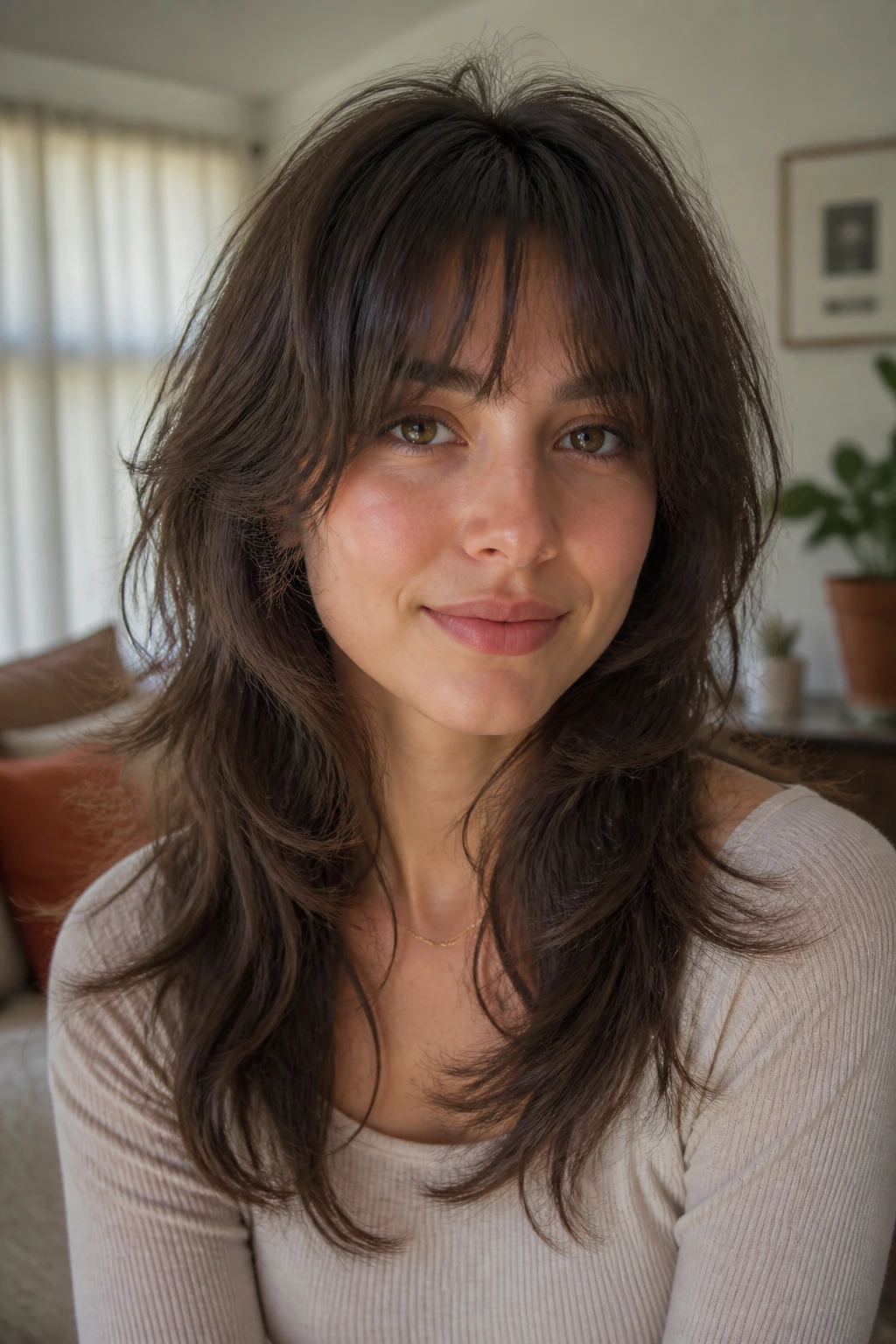
Do curtain bangs make a round face look wider?
Not when they’re cut well. The width problem usually comes from bangs that are too short, too thick, or too blunt across the forehead. Long, split curtain bangs tend to do the opposite: they create a vertical line in the center and soften the sides.
What bang length is best for a round face?
Most people do best with a fringe that starts around the brow and lengthens toward the cheekbone or jaw. That keeps the face open and gives the front pieces enough weight to move away from the cheeks instead of sitting on them.
Can I get curtain bangs if my hair is curly or wavy?
Yes, but the cut needs to respect shrinkage and bend. Curly hair usually needs longer curtain bangs than straight hair, and wavy hair often looks best when the fringe is cut with the wave pattern in mind rather than flattened into a straight shape.
What if I wear glasses?
Keep the shortest part of the bangs a touch longer so they don’t crash into the frames. A soft split that opens above the nose bridge and falls outside the glasses tends to work best.
Are curtain bangs high maintenance?
They need more attention than no bangs, but less than a blunt fringe that has to sit perfectly every day. A quick blow-dry, a bit of dry shampoo, and a trim every few weeks usually keep them in line.
Can I do curtain bangs without heat styling?
Sometimes, yes — especially if your hair naturally bends away from the face. If it grows straighter or puffier, a round brush or rollers will make the split look cleaner and keep the fringe from falling into your eyes.
Which hairstyles in this list are best for fine hair?
The collarbone lob, the sleek mid-length cut, and the center-part layered cut are all good starting points. They keep shape without stripping too much weight from the hair, which fine textures usually hate.
Which ones work best if I want a softer, more feminine shape?
The butterfly cut, the long romantic layers, the French bob, and the feathered medium cut all give you softness without making the face disappear. They frame the face instead of hiding it, which is the part I always come back to.
Softness With Structure
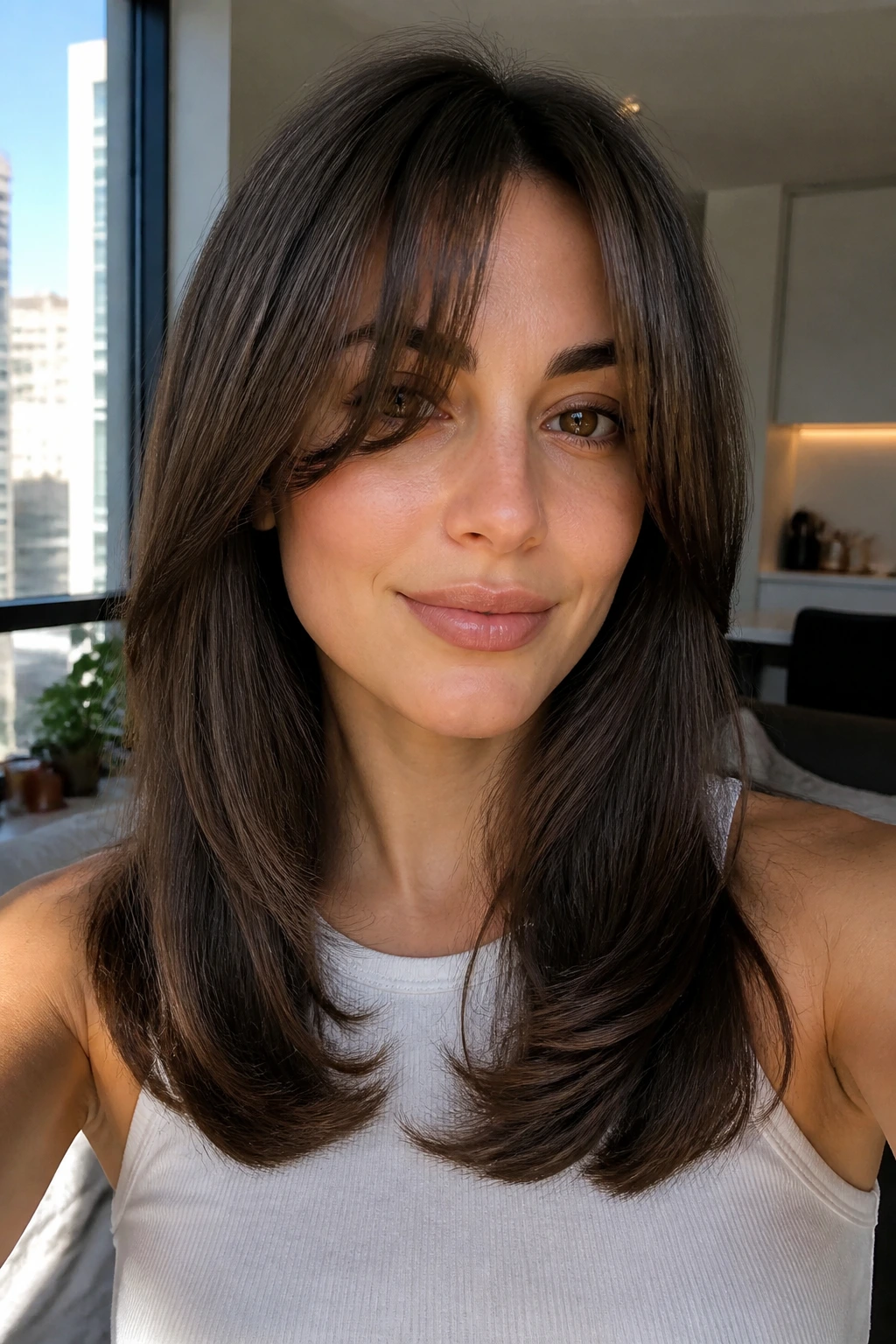
The best round-face cuts don’t fight the face shape. They work with it, using curtain bangs, length, and movement to build a line that feels softer and more refined. That can look polished, undone, short, long, wavy, sleek — the shape is the part that matters, not the category.
If you’re bringing one of these looks to a stylist, bring a photo and be specific about the pieces that matter: where the shortest part of the fringe lands, how much width you want at the sides, and how much daily styling you’re actually willing to do. Haircuts get easier when you stop asking them to be magic and start asking them to do one job well.
A good curtain bang grows with you for a while. That’s the real win.