



A curly pixie cut can do something shoulder-length hair often cannot: it lets the curl pattern speak first. On older women, that matters. Silver strands catch the light differently, finer hair behaves differently, and the old habit of dragging everything down with length just makes the texture look tired.
Feminine curly pixie cuts for older women work because they stop asking curls to behave like straight hair. They give the crown a little lift, clear room around the jawline, and soften the parts that tend to harden with age — the hairline, the temples, the neck. When the shape is right, the cut looks purposeful rather than merely short. That’s the difference between “I needed a haircut” and “this was chosen.”
The smart versions are not stiff. They’re soft around the edges, a little airy on top, and shaped where the hair actually wants to bend. A good curly pixie should move when you turn your head. It should still look like hair, not a helmet, not a buzzed compromise, not a desperate attempt to control texture. If you’ve been waiting for a short cut that still leaves room for femininity, the good news is that the best ones do exactly that.
Why These Curly Pixie Cuts Earn Their Keep
-
They remove weight where curls usually collapse. Shorter lengths let the curl spring back instead of hanging in a stretched-out bend near the shoulders.
-
They make gray and silver hair look intentional. In a pixie, salt-and-pepper color reads as texture and shine, not as patchiness hiding in the length.
-
They work with glasses instead of fighting them. Shorter side pieces and a soft fringe keep frames from getting lost under a curtain of hair.
-
They need less product than longer curls. A nickel-sized amount of mousse or curl cream can be enough, which matters when older hair gets dry and weighs down fast.
-
They can look polished without looking rigid. The best curly pixies have movement at the crown and softness at the temples, so the cut feels feminine even when the nape is tight.
-
They grow out with more grace than people expect. A well-shaped pixie can stretch a few extra weeks if the top is layered correctly and the sides are trimmed cleanly.
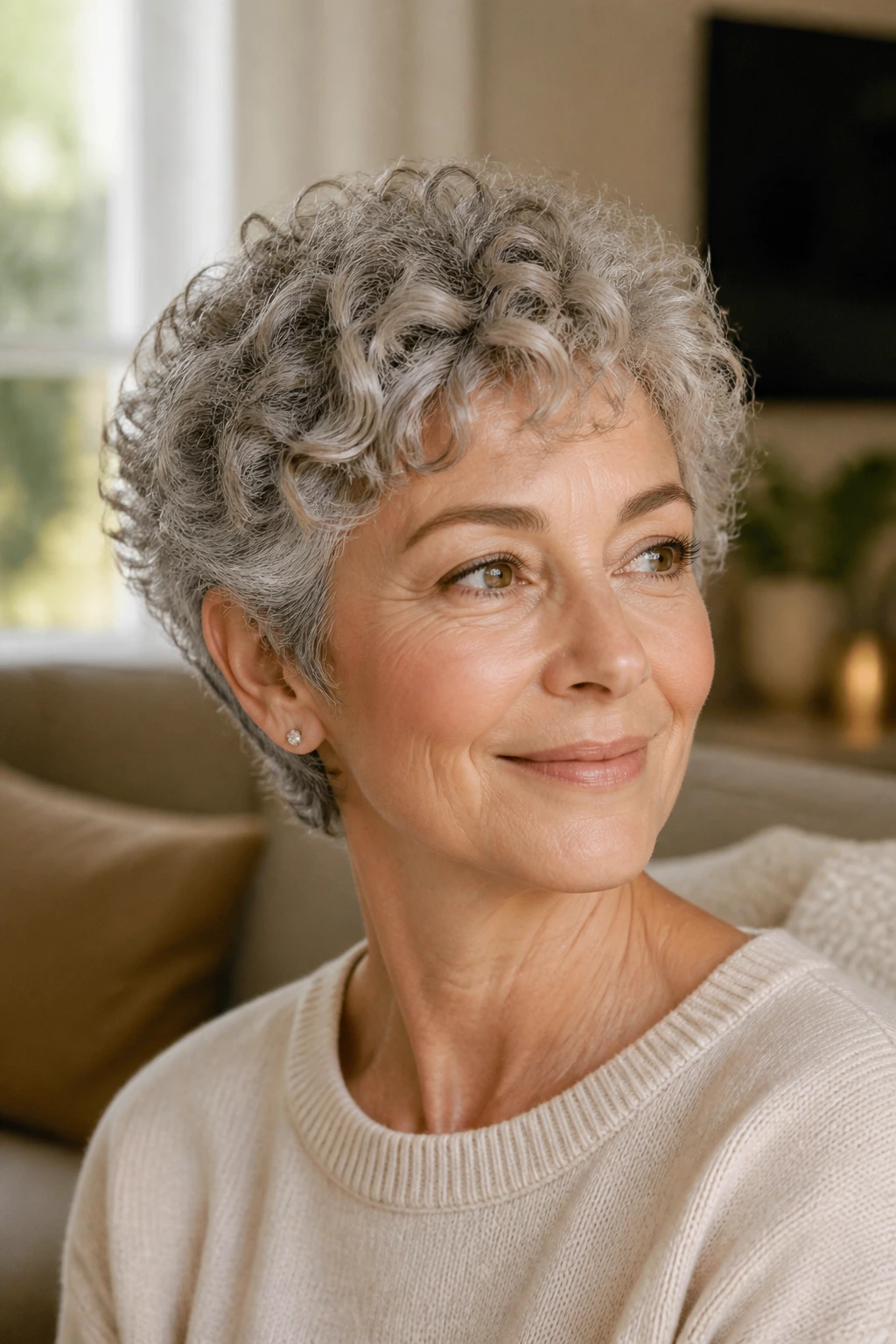
1. Soft Silver Curly Pixie with a Feathered Fringe
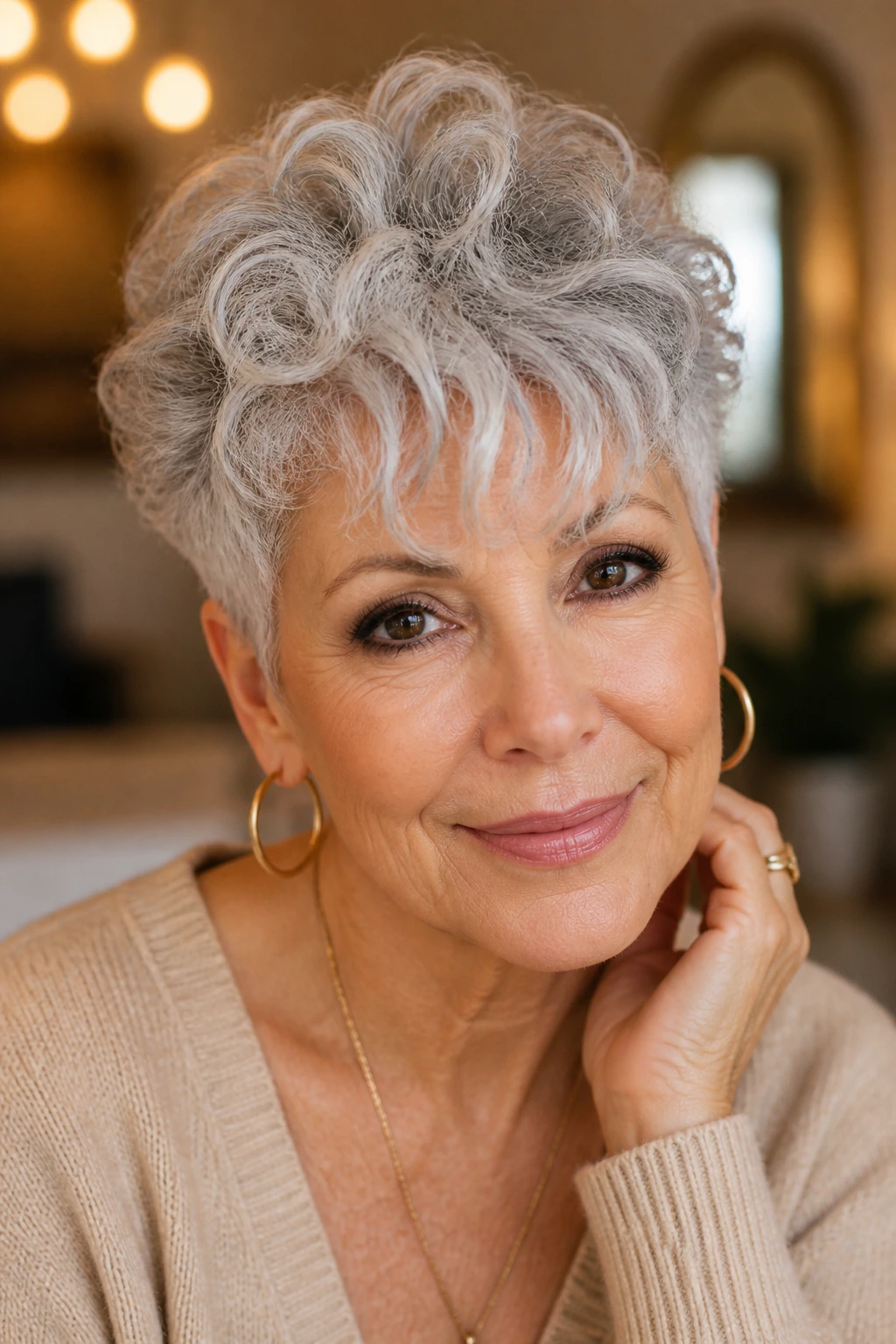
Silver curls look especially good when the front is left a touch airy. The feathered fringe keeps the forehead from feeling boxed in, and it softens the whole cut in a way that blunt bangs usually don’t. On a face that has a little more contour than it used to, that softness matters.
What I like about this version is the balance. The top still has enough length for your curl pattern to form, but the fringe takes away the hard line that can make a short cut feel severe. Keep the side pieces close to the cheekbones and the nape neat, and the cut reads light, not frayed.
Ask for a fringe that grazes the brows when dry and sits a hair longer than you think you need. Curly hair shrinks. Sometimes by a lot. A stylist who understands that will leave the fringe soft enough to move instead of chopping it into a little shelf.
Best for: loose curls, wavy curls, and silver hair that tends to look flat when it gets long.
Styling note: use a light mousse at the roots, then scrunch in a pea-size cream only through the ends. Too much cream turns the fringe stringy.
2. Tapered Curly Pixie with Lift at the Crown
Want height without the puff around the ears? This is the cut. The crown stays a little longer — usually around 2½ to 4 inches, depending on curl tightness — while the sides taper in cleanly. That extra height changes the whole profile, especially on round or broad faces.
A tapered curly pixie works because it puts the visual weight where you want it: up top, not outward. The top curls can stand and bend, which creates a lifted silhouette without needing a blowout every morning. Around the temple, the taper keeps the shape tidy, so you do not get that mushroom effect that short curly cuts can slip into.
Tell your stylist you want volume at the crown but a controlled perimeter. Those words matter. So does showing exactly how much side length you want left near the ears; a half-inch too much can change the whole line.
Why it flatters: the eye travels upward first, which is useful if your hairline has softened or your face has a little more width at the cheek.
Quick styling move: diffuse on low heat for 6 to 10 minutes, lifting the crown with your fingers, not a brush.
3. Rounded Coily Pixie with a Close Nape
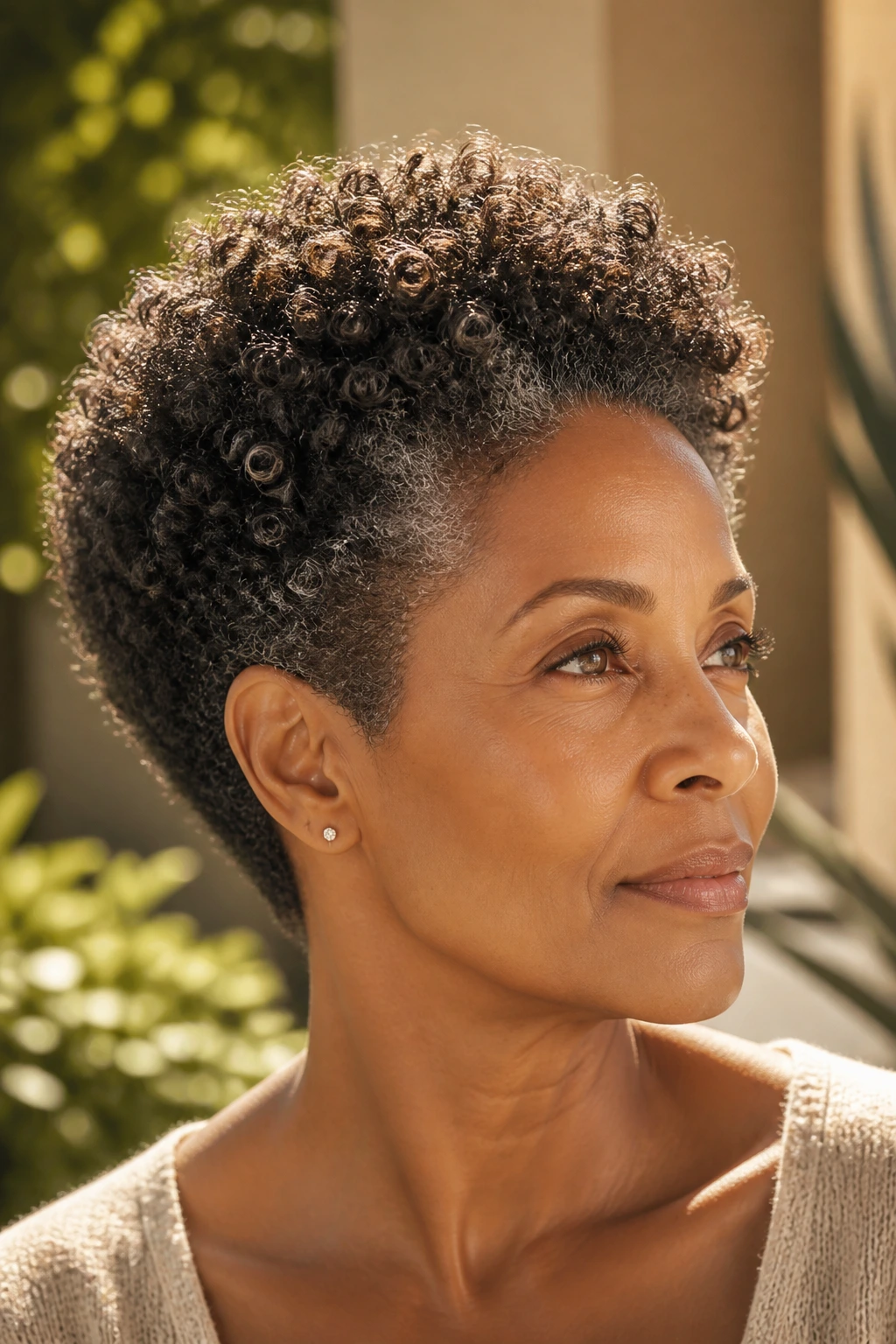
Coily hair likes shape. It does not love being over-managed. A rounded pixie gives tight curls room to form a halo, while a close nape keeps the cut from ballooning into the collar. The result feels sculpted, but not severe.
This is one of my favorite shapes for women with 3C to 4A curls who want their texture to look rich rather than bulky. The cut should follow the head shape, not fight it. If the curls are dense, the back can be cleaned up closely while the top keeps enough length to show the coil pattern. That contrast is what makes the shape read as intentional.
A good rounded pixie is especially kind to stronger cheekbones and softer jawlines. It frames the face without slicing into it. And when the curls are hydrated, the whole thing has a plush, almost velvety look that shorter straight hair can’t fake.
What to ask for
- Keep the crown long enough for the curls to stack naturally.
- Trim the nape close, but not so close that the hairline looks boxed in.
- Leave the sideburns soft and slightly curved.
Do not flatten this cut with heavy oils. A small amount of curl cream and a gel cast usually give better definition than anything greasy.
4. Salt-and-Pepper Shag Pixie with Choppy Layers
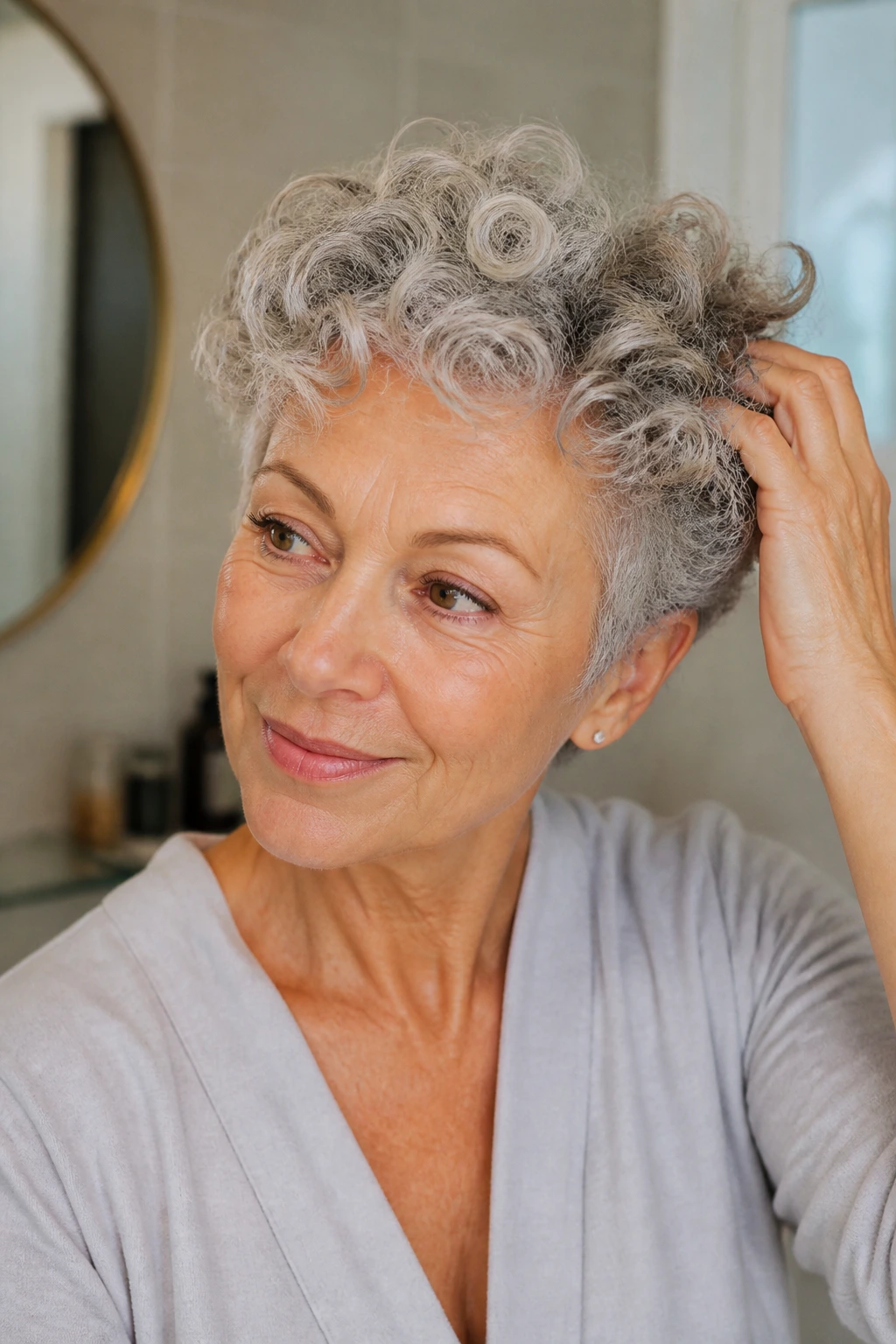
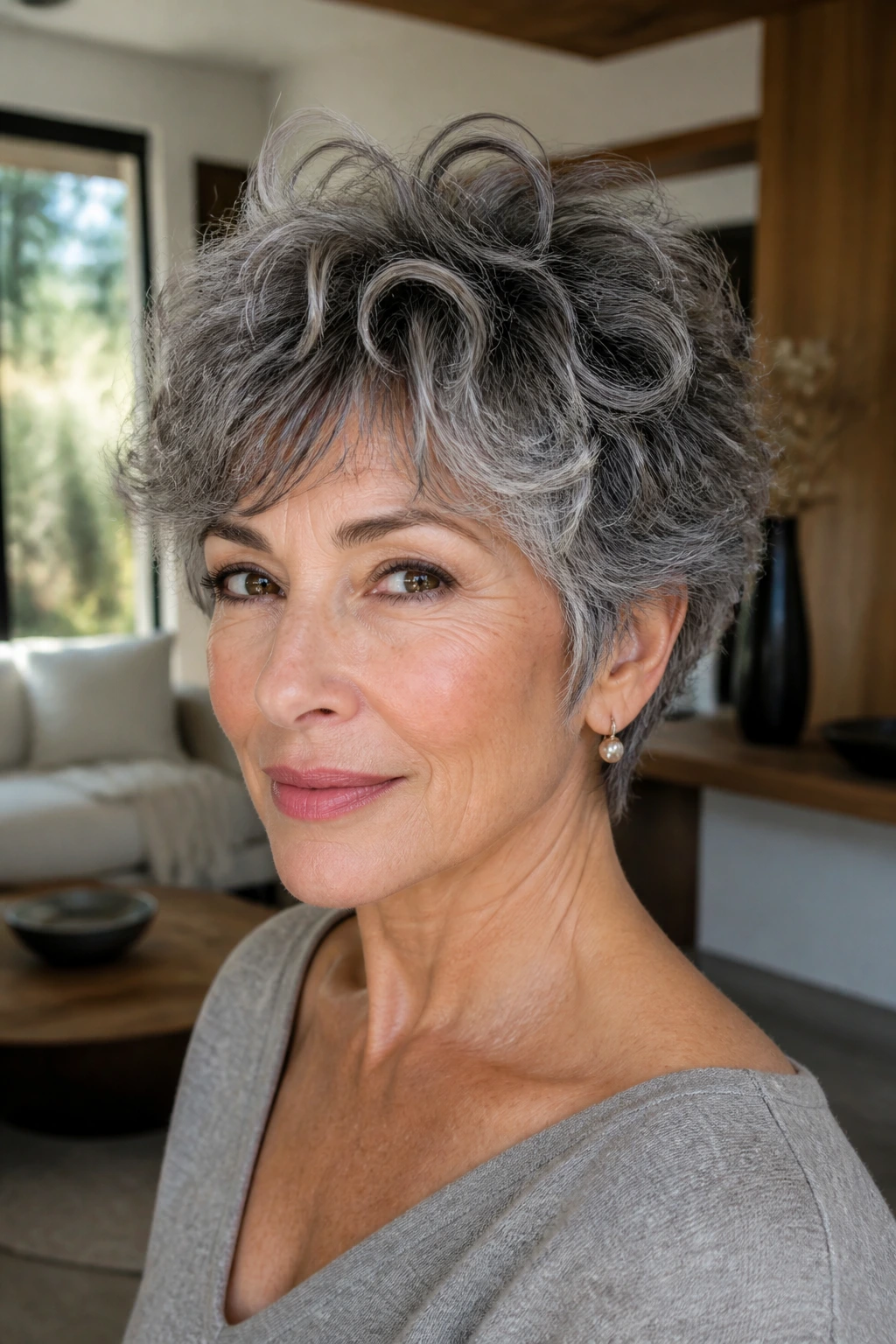
If your hair has mixed gray, darker strands, and maybe a few curls that behave differently from the rest, this cut has a lot of charm. The shaggy layer pattern breaks up the shape just enough to keep the curl mix from looking uneven. It also gives salt-and-pepper color a lot more life. The different tones show movement.
The choppiness is the point. Not choppy in a careless way — choppy in a “these pieces were placed on purpose” way. You want short internal layers that let some curls sit higher than others. That layered unevenness is what keeps the style from looking like one solid puff.
This shape is useful if your hair has gotten finer at the ends but still has a little body at the roots. A blunt pixie can make that difference obvious. A shag pixie hides it better because the eye sees texture before it sees density.
A small opinion: this is one of the few short cuts that looks better with a little mess in it. A few stray curls around the temple make it feel lived-in, not unfinished.
Use a tiny dab of matte pomade on the very ends after drying. Not near the roots. Just enough to separate the tips.
5. Asymmetrical Curly Pixie with a Longer Side
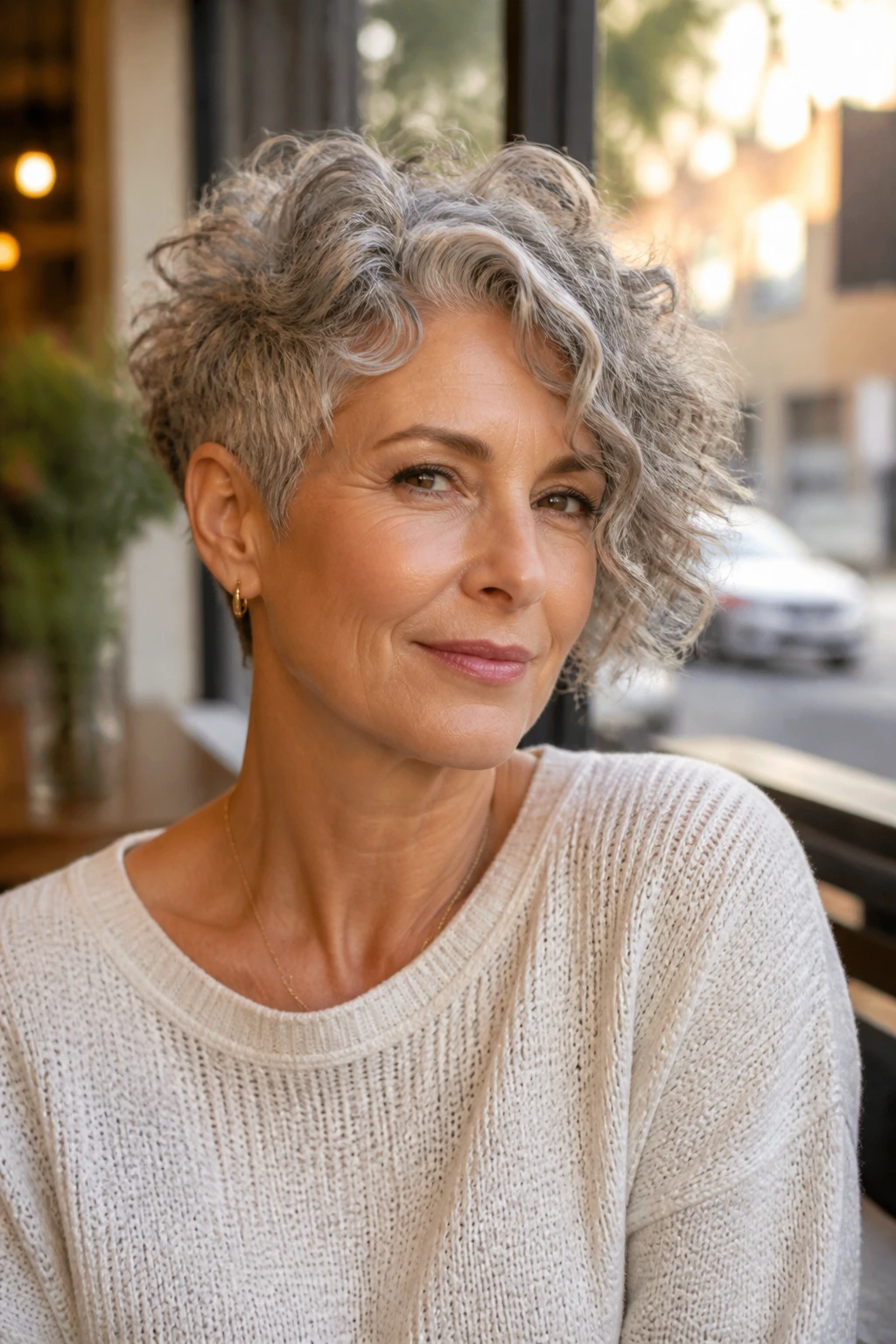
A slightly longer side can soften the whole face in one move. That’s why asymmetry works so well on mature curly hair. It creates a diagonal line, and diagonals are kinder than straight-across edges. They pull attention upward and away from areas you may not want spotlighted.
This cut is especially useful if one temple is thinner than the other, or if one side of your curl pattern has more bounce than the other. The longer side gives that difference a home instead of exposing it. On glasses wearers, it’s a nice trick too — the curve of the hair and the frame line can play off each other instead of competing.
The asymmetry does not have to scream. In fact, the best versions are subtle. One side might hit just below the cheekbone while the shorter side opens the ear. That’s enough. Too much angle and it starts feeling fashion-y in a way that can age badly. Mild asymmetry is the smarter bet.
Best for: oval, square, and heart-shaped faces that need a little softness on one side.
Styling note: direct most of the curl definition toward the longer side with your fingers while the hair is still wet. Don’t separate everything evenly or the angle disappears.
6. Ear-Grazing Curly Pixie with Wispy Bangs
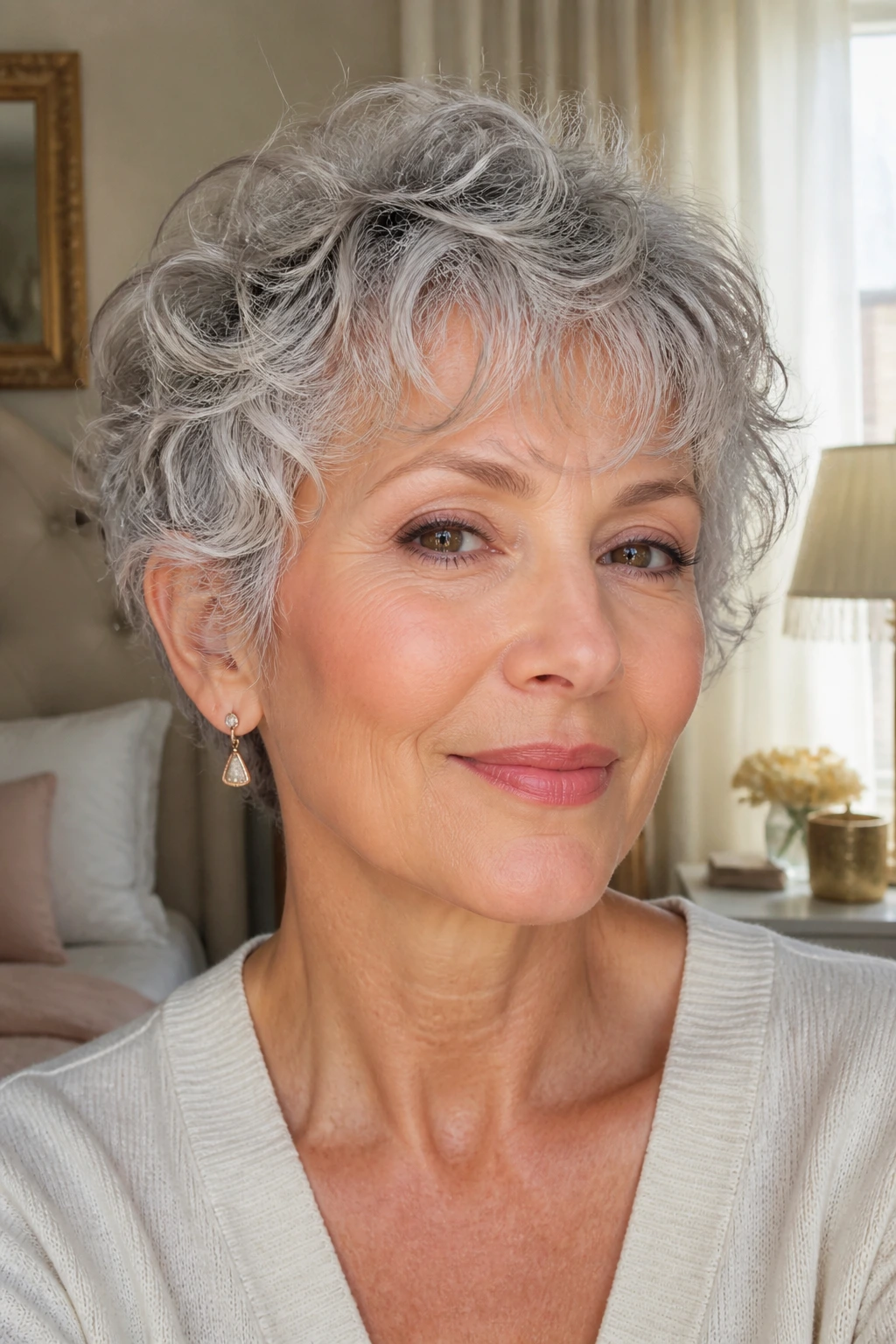
There’s a nice kind of softness in a cut that lets the curls skim the ears. The ears stay partly covered, partly visible, and that little bit of movement around the face does a lot. Wispy bangs bring the front into the picture without sealing off the forehead.
This style works because it gives you two softness zones at once: one at the front, one at the sides. The bangs should not be thick. They should be airy enough that you can see the curl clumps rather than a solid block of fringe. That matters on older women, especially if the forehead has a few lines you’d rather blur than emphasize.
I like this shape on round and square faces. The bangs shorten the forehead visually, while the ear-grazing sides keep the jawline from looking boxed. It’s a very human cut. Nothing about it feels rigid.
A few practical details
- Trim every 5 to 7 weeks, because wispy bangs lose their shape fast.
- Keep the fringe a little longer than brow level if your curl pattern is tight.
- Refresh with water first, product second. Wetting the bangs too much can make them cling in odd places.
The cut should look like it was meant to move. If it sits flat and stiff, something went wrong.
7. Low-Taper Curly Pixie for Dense Hair
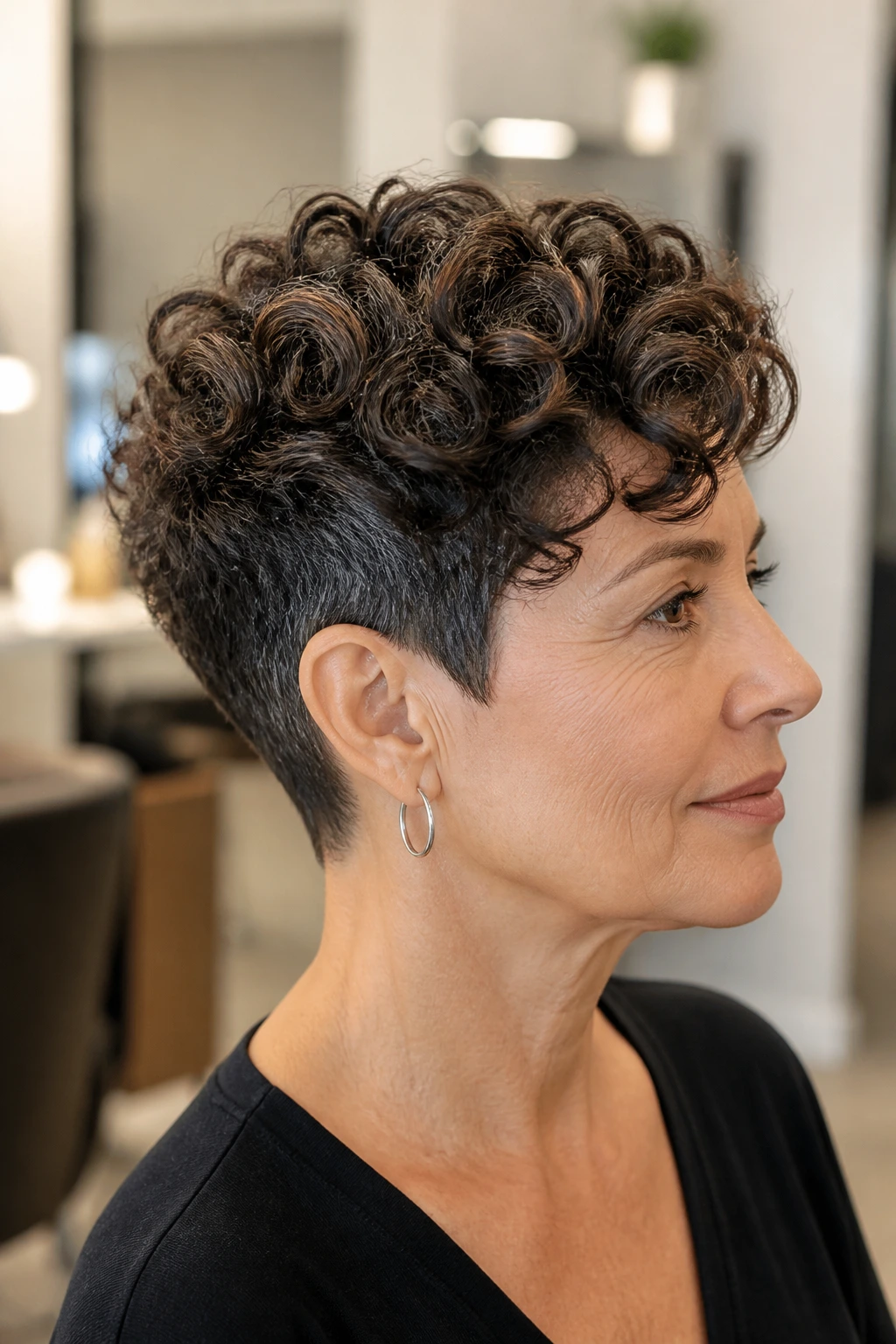
Dense curls need relief at the base. Without it, the cut puffs out around the ears and neck like a little cloud that has opinions of its own. A low taper clears out that bulk while leaving the top full enough to show the curl pattern.
This is the cut I’d point to for thick, springy hair that gets hot around the collar and hard to manage with long layers. The nape and sides are trimmed short, sometimes nearly to the skin at the very bottom, while the upper section keeps enough length to hold shape. That contrast gives the hair a cleaner outline and makes morning styling less of a battle.
What keeps this feminine is the softness of the top. Don’t let the taper turn severe. The crown can still be rounded, and the front can still fall in a gentle sweep. The short sides just keep the mass from taking over.
Ask for this if: your hair gets triangular by the end of the day, or if humidity turns your curls into a wider version of themselves.
Pro tip: use a diffuser only until the roots are about 80% dry, then stop. Over-drying dense curls can make them expand in a way that looks frizzy rather than full.
8. Grown-Out Curly Pixie with Face-Framing Ringlets
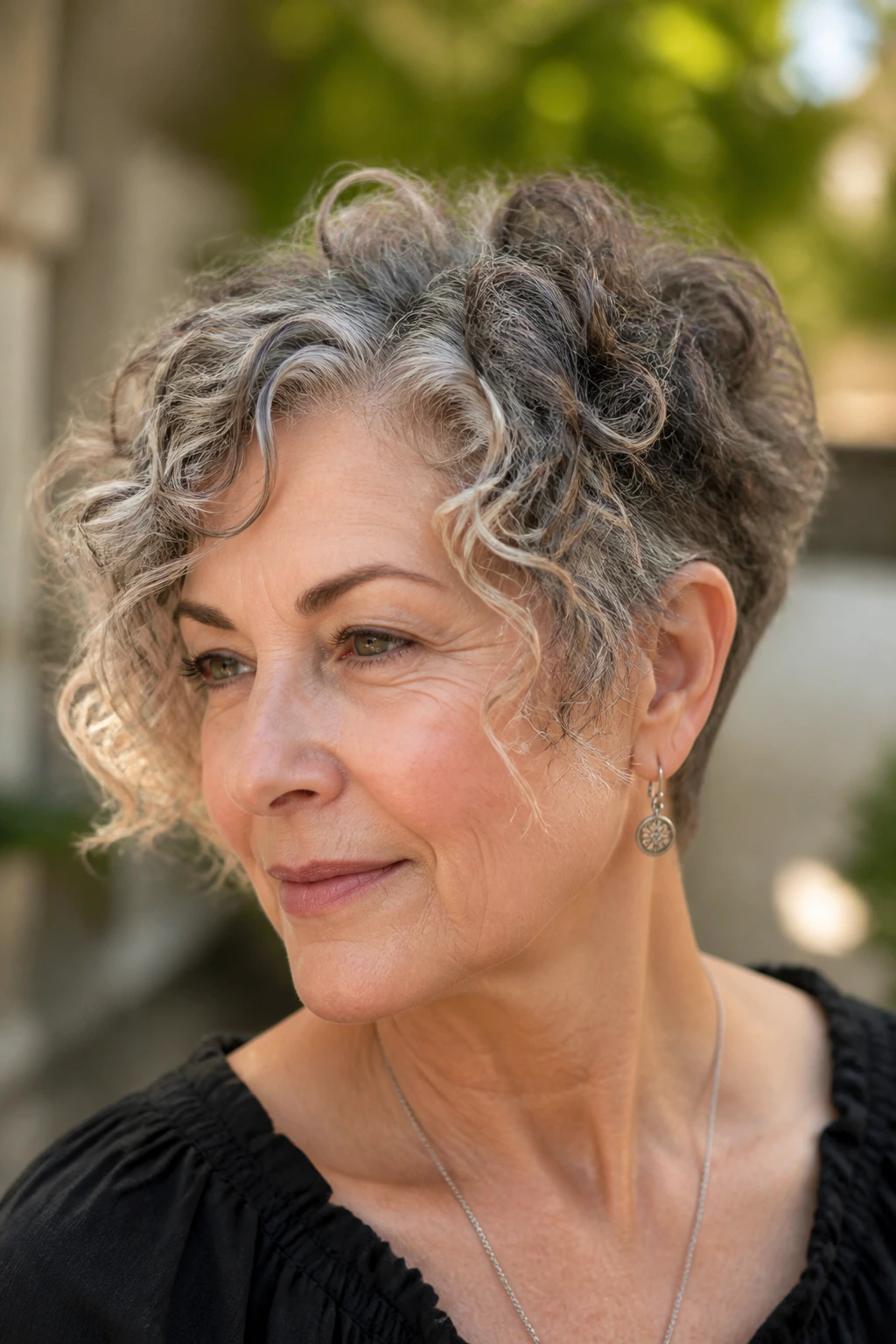
This is the pixie for people who do not want a hard line at the back and do not want to be back in the salon every four weeks. The top stays long enough — often 4 to 5 inches in the front — to create little ringlets around the face, while the sides stay cropped. It has a soft grow-out built into the shape.
The face-framing pieces do a lot of work here. They skim the cheekbones, soften the jaw, and give the style a little bounce when you move. On women who are moving out of a shorter crop or bob, this version is a useful bridge. It looks deliberate even when it’s in that in-between stage where many cuts start looking awkward.
I also like it for anyone who wants to tuck a side behind the ear without losing the whole shape. You get flexibility. If you want a little polish, tuck one side and leave the front loose. If you want casual, let the ringlets fall where they want.
Best for: oval faces, longer faces, and anyone who wants a pixie that can stretch a few extra weeks.
One thing to watch: if the front gets too long while the sides stay short, the shape can sag forward. Keep the front trimmed to keep the ringlets floating, not dragging.
9. Undercut Curly Pixie with Soft Top Length
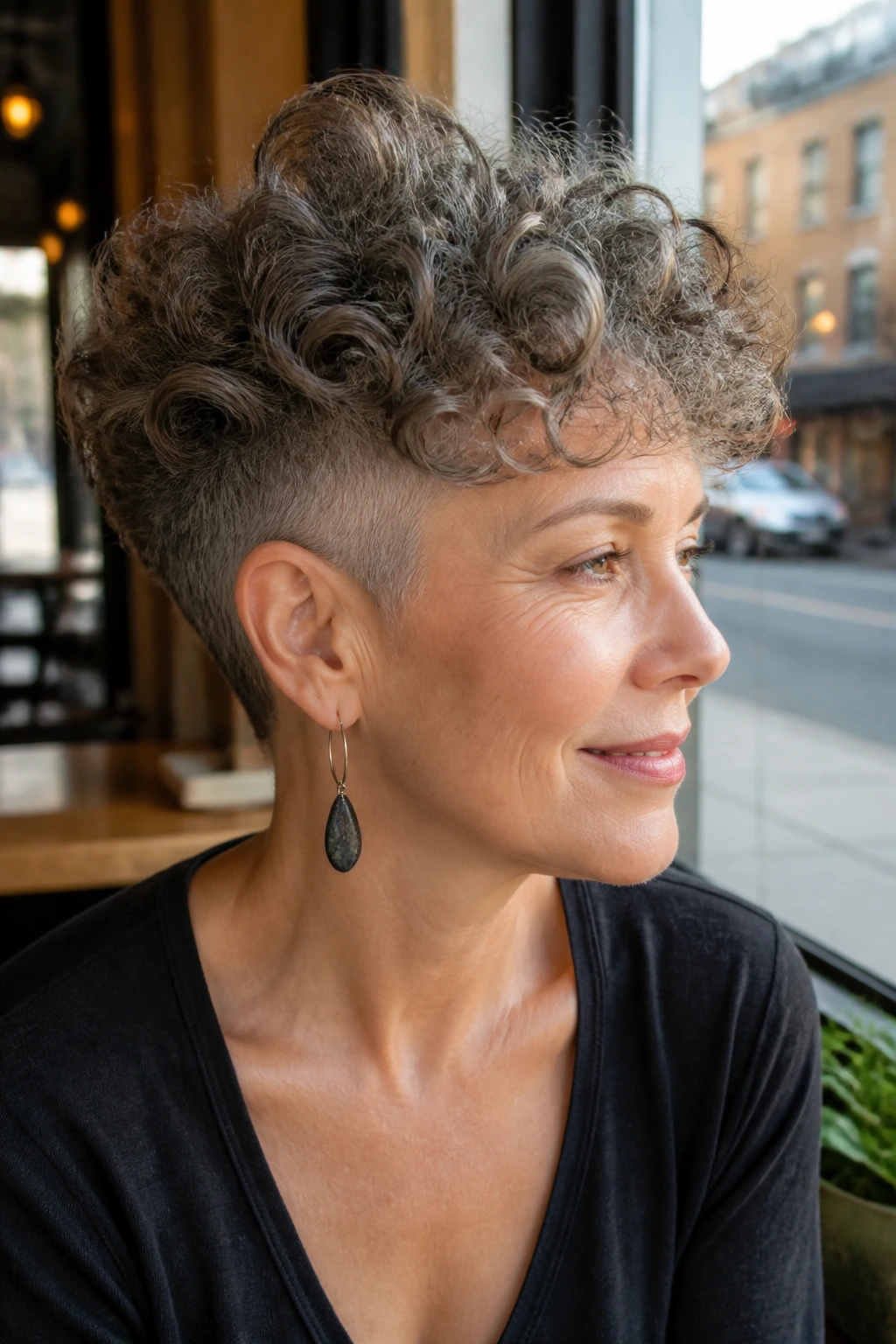
An undercut does not have to look edgy. On curly hair, it can look clean, smart, and surprisingly gentle if the top remains soft. The trick is keeping the top long enough for the curls to curve and pile a little, while the underneath layers are reduced so the shape sits close to the head.
This cut is especially useful for very thick hair. It removes the weight that sits at the nape and around the lower sides, which is usually where curly pixies start to feel bulky by midday. With the undercut hidden beneath the top section, you get easier drying time and a lighter feel at the neck.
If you wear scarves, higher collars, or structured jackets, this shape is a quiet win. The hair doesn’t bunch up underneath fabric. It sits better.
Best use case
- Hair that feels too wide at the sides.
- Curl patterns that create a lot of bulk even when short.
- Women who want shape without daily blow-drying.
A mild warning: don’t overdo the contrast. If the top is too long and the undercut too close, the cut can tip into a top-heavy silhouette. Keep the transition soft.
10. Layered Curly Pixie for Fine Hair
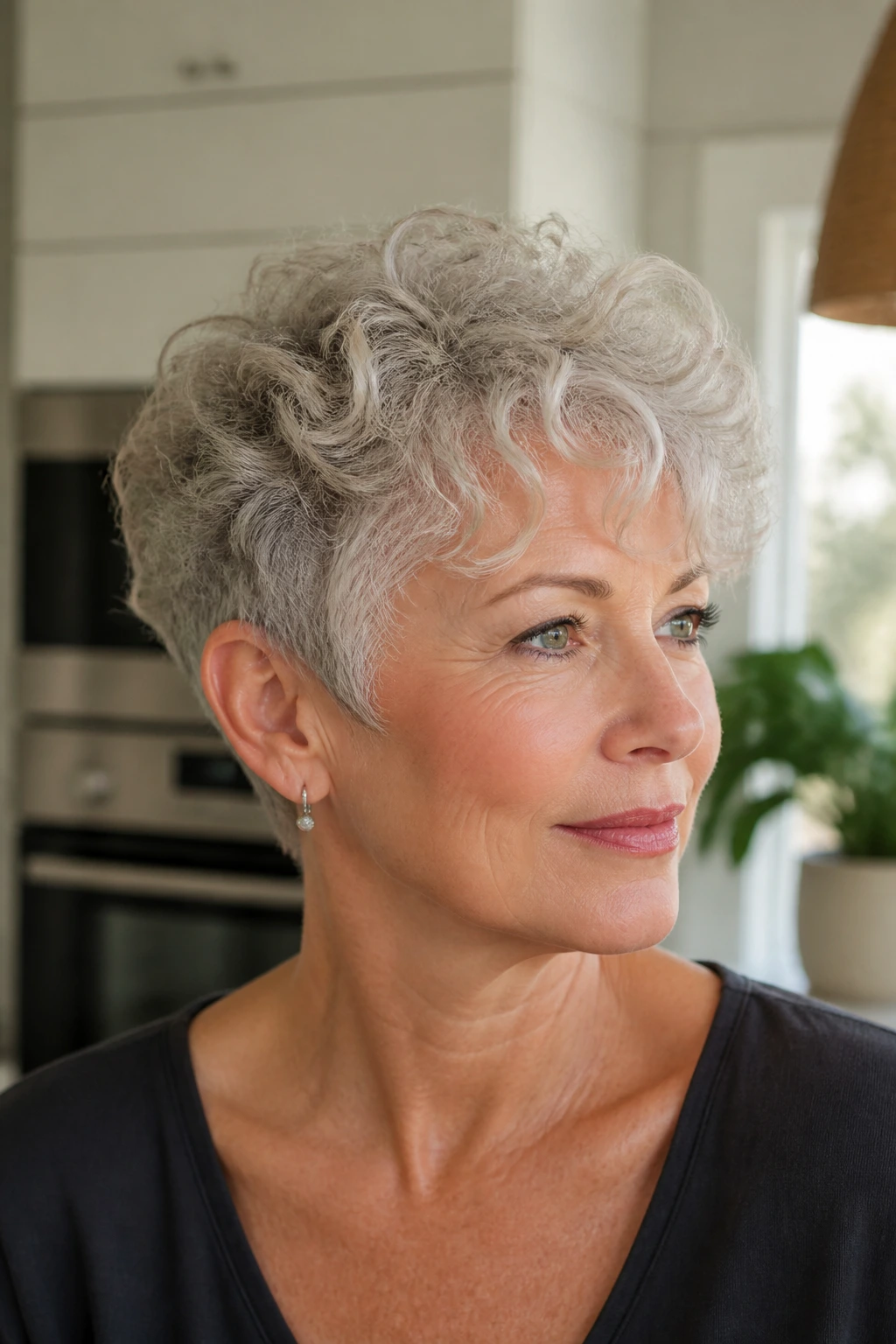
Fine curls need a different kind of respect. Too much thinning and the whole thing goes see-through at the ends. Too little layering and the top lies flat against the scalp. The right layered pixie finds the middle ground, building lift where the hair can actually hold it.
The best versions keep the crown slightly longer and avoid shredding the ends too aggressively. That gives the curls enough surface to form without looking stringy. On older women whose hair has gotten finer over time, this is often the smartest route. You want the illusion of density, not a bunch of wispy pieces that vanish once the humidity changes.
A layered pixie for fine hair also looks better when the front is left a little fuller than expected. A short, airy fringe can disappear into the scalp. A slightly fuller front creates a frame that gives the rest of the cut a place to land.
How to wear it
- Apply mousse to damp roots.
- Scrunch gently, then diffuse with your head upright.
- Use a small clip at the crown while the hair dries if you need extra lift.
Skip razor-thinning on fragile ends. It often makes fine curls frizz instead of fluff.
11. Side-Parted Curly Pixie with Sweeping Volume
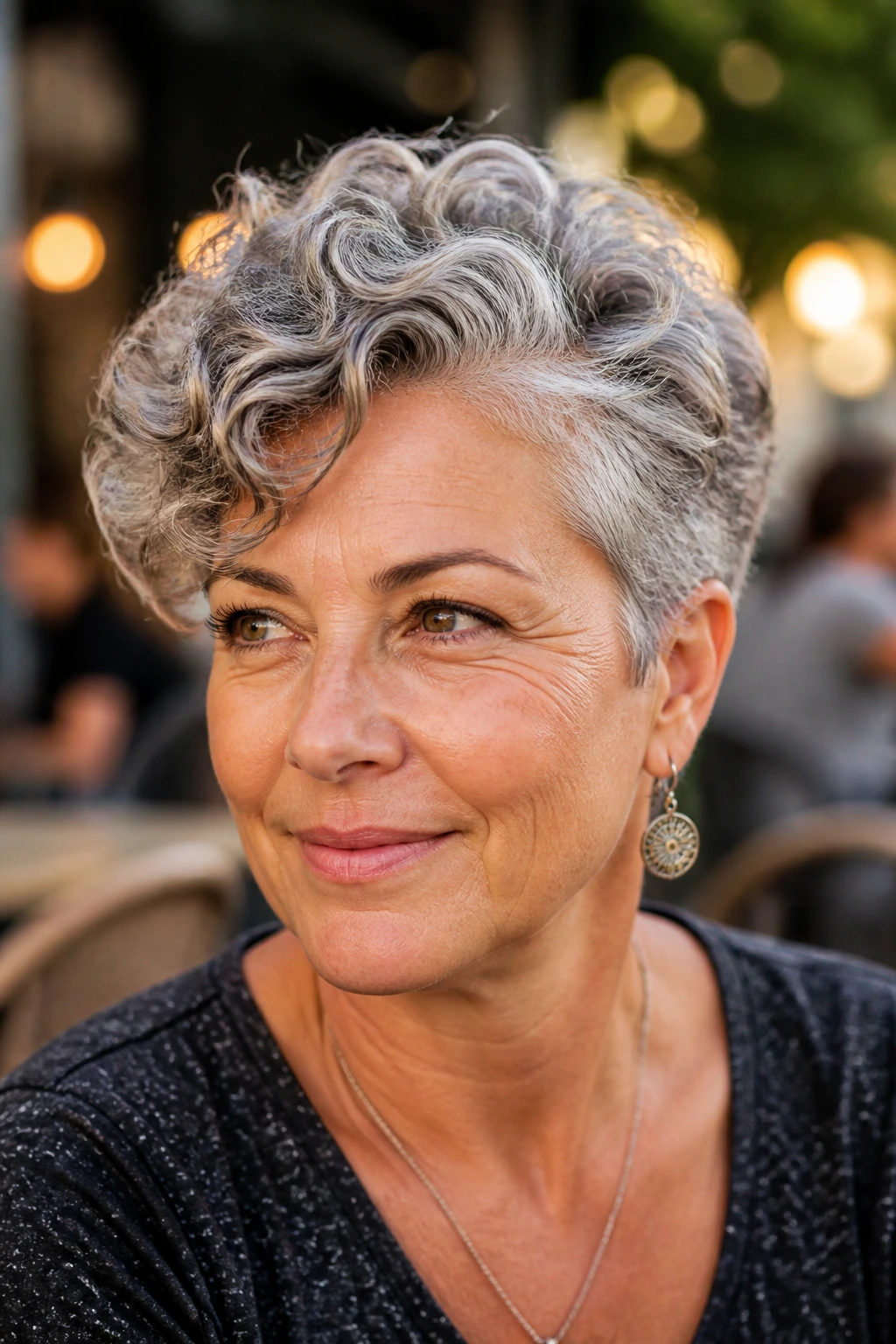
A side part can be a small change with a big result. It sends the hair diagonally across the forehead, which softens the face and gives the cut a little old-school glamour without making it fussy. On curly hair, it also helps guide the curl pattern instead of letting it sit straight up in the front.
This style is especially good if one side of your hair falls flatter than the other. Which happens. Hair has preferences. A side part works with that reality and turns it into shape. The swept volume can be soft and low, or a bit higher and more dramatic, depending on how much lift you want at the roots.
For glasses, this is a pleasant match. The part creates structure, and the curls stay above the frame line instead of dropping into it. If you have a strong brow or a forehead you like to soften, this shape does that without hiding your face.
Styling note: set the part while the hair is wet. Once the curl pattern dries in place, trying to shift it later usually ends in fluff and frustration.
12. Sculpted Coily Pixie with a Defined Front
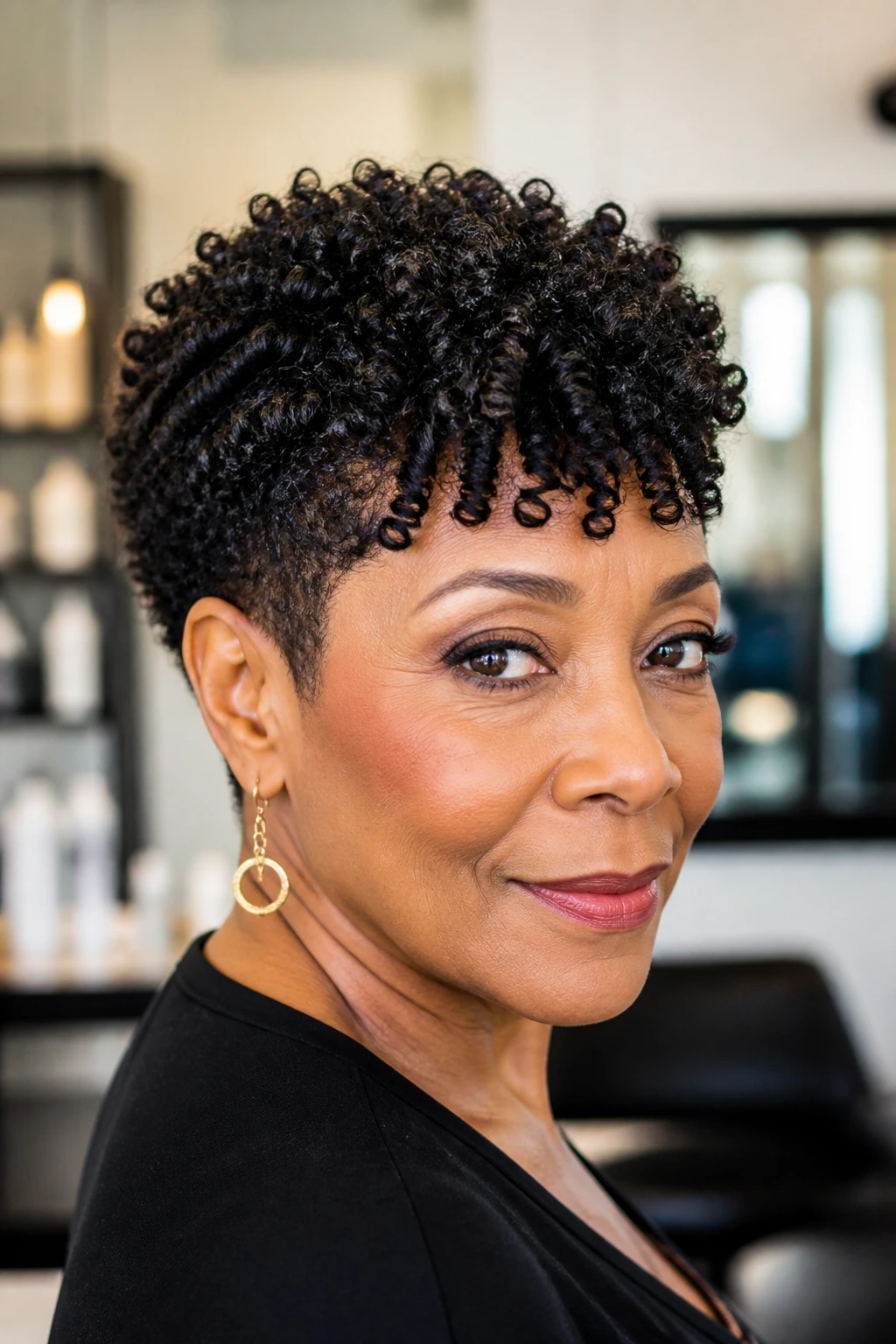
Tight coils can look elegant in a pixie when the front is given room to breathe. The cut should be tidy around the sides and nape, but the front needs just enough length to form a defined coil line or a small fringe of curls. That front piece changes the whole mood. It keeps the style from feeling too cropped.
This works beautifully on 4A and 4B textures that hold shape but shrink a lot. The trick is to respect the shrinkage instead of chasing a wet shape that disappears by morning. Ask for visible length in the front when dry, not when stretched. That distinction saves a lot of disappointment.
I like the sculpted look here because it plays up cheekbones and brows. A well-placed coil at the front can frame the eyes in a way that feels elegant without being severe. The cut is short, yes. Cold or boyish, no. There’s a big difference.
How to finish it: use a small amount of leave-in, then a gel or cream-gel combo on soaking-wet hair. Let the curls dry undisturbed before fluffing the roots with your fingers.
13. Warm Brunette Curly Pixie with Chunky Texture
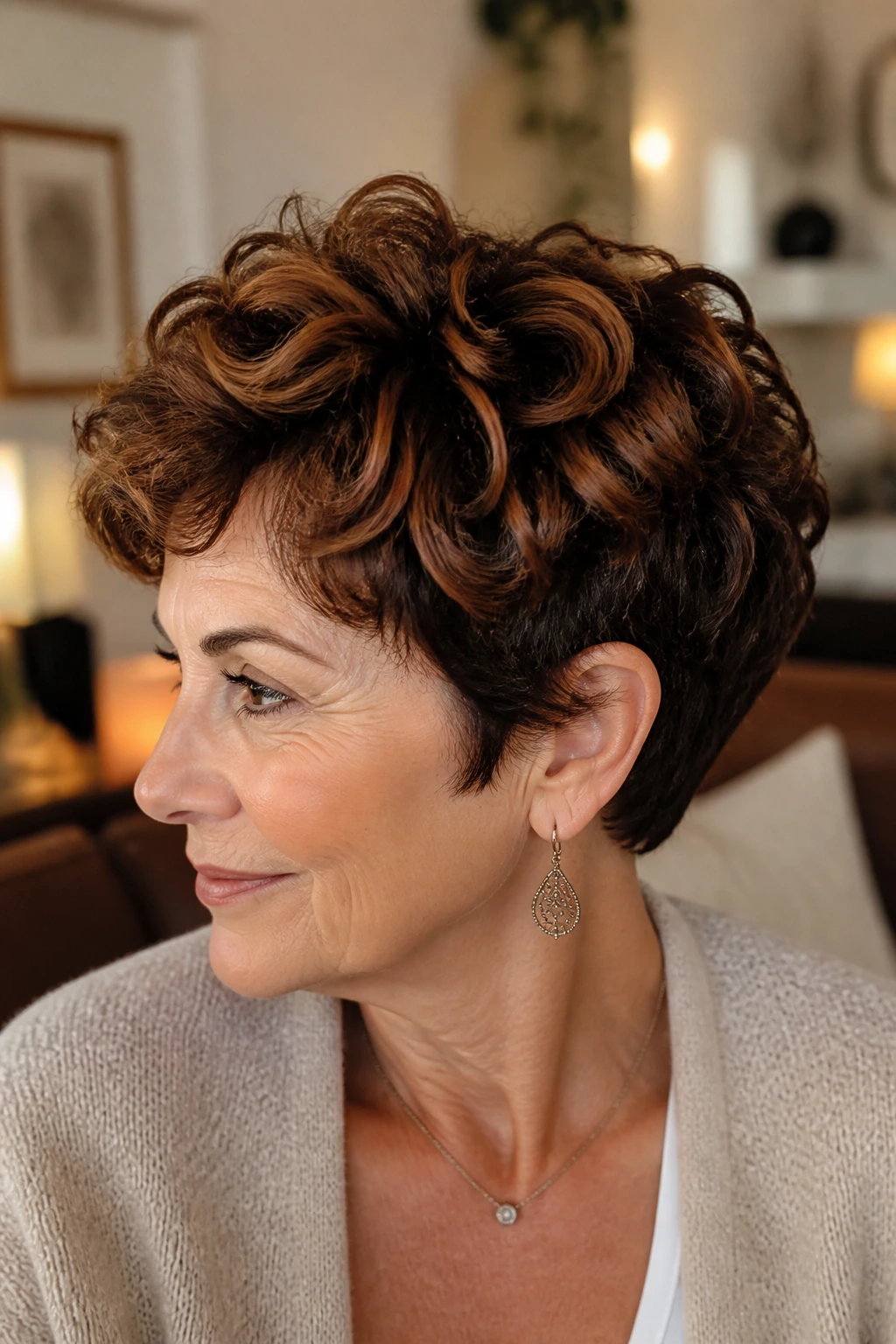
Color changes how a short curl reads. Warm brunette shades — chestnut, caramel-brown, soft cocoa — make chunky layers easier to see because the highlights and lowlights catch the bends in the hair. If your natural curl pattern is already doing the work, a warm tone adds another layer of depth without needing much styling help.
This cut is for women who want the hair itself to do the decorating. The texture should be visible. Not teased, not over-separated, just clearly shaped. Chunks of curl clump together in a way that looks richer when the color has warmth in it. Gray can do that too, but brunette versions have a different softness. They feel grounded.
Chunkier texture also hides a few imperfect pieces. That is useful. Short curly cuts are honest; they show whatever the hair is doing. A layered brunette pixie gives you a bit more forgiveness if one section is flatter than the other.
Personal preference: I’d rather see a few defined curl clumps than a lot of tiny, frizzy pieces. The defined clumps look more luxurious, and they last longer through the day.
Keep the finish light. Heavy cream can swallow the texture and dull the whole point of the cut.
14. Platinum Curly Pixie with Piecey Ends
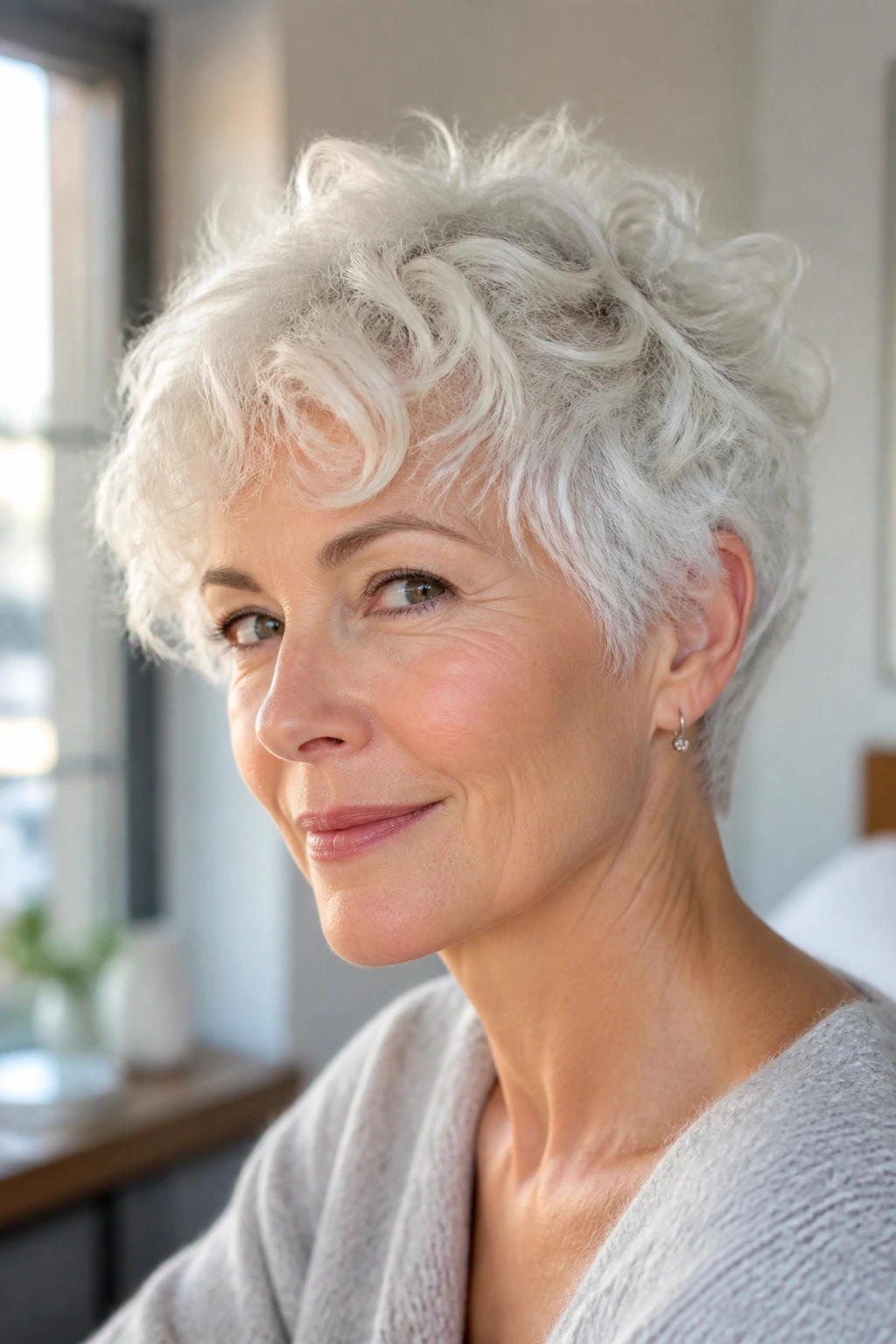
Platinum on curly hair can look brittle if the shape is wrong. The better version is soft, piecey, and lightly separated at the ends. That way the color feels bright without the cut turning hard. The curl pattern does most of the work; the color just sharpens it a little.
This style is for women who like a cleaner, more dramatic look but still want softness around the face. The piecey ends prevent the cut from reading like one solid block of pale hair. They also keep the top from looking puffed out, which happens fast with heavily lightened curls if the styling is too rich.
There’s a catch, though. Platinum hair needs more care. It tends to be drier and a bit less forgiving, so the cut has to carry the weight. Bond-building treatments, a light cream, and a small amount of gel are usually enough. Heavy oils can make the color look flat.
What to tell your stylist: keep the ends soft, not choppy to the point of fuzz. On light hair, every rough edge shows.
Best for: women who already keep up with moisture and don’t mind being a little strict about trims.
15. Long-Top Curly Pixie for the Easiest Grow-Out
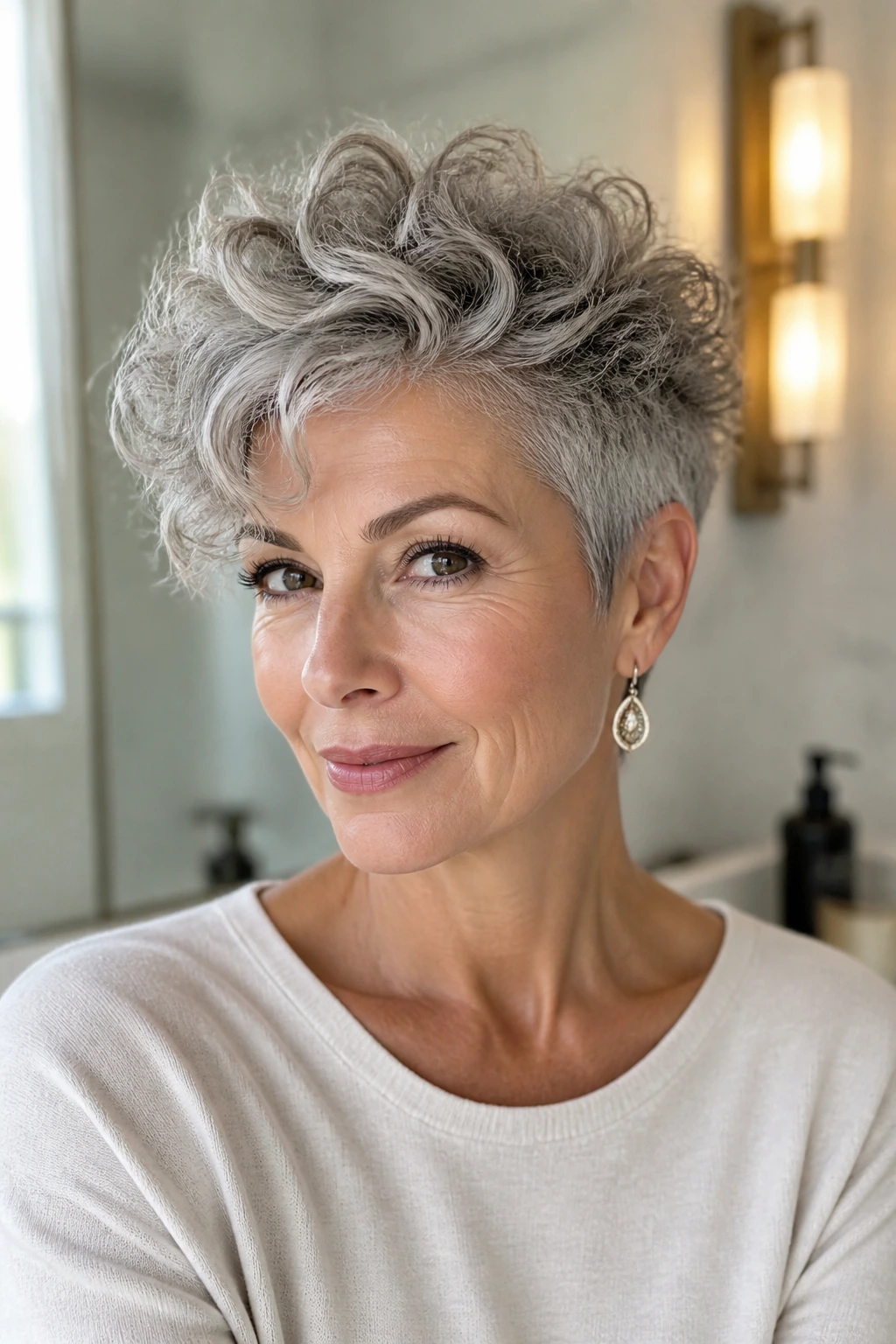
If you want the easiest transition out of a pixie, start with a long top and shorter sides. That is the shape that grows into a new look without making you feel trapped in an awkward phase. The top can be brushed, scrunched, pinned back, or tucked behind one ear. The sides stay neat enough that the style still looks deliberate.
This version gives you options. You can wear it close and cropped one day, then let the crown fluff a little the next. That flexibility matters when you are not sure how short you want to stay. It also helps if you like changing your part or if you want a cut that can move toward a short bob later without looking like it got lost on the way there.
For older women, this is a very practical choice. Not boring. Practical. There’s a difference. The shape keeps the face open while avoiding the hard maintenance of a fully sculpted crop.
Short version: if you like the idea of a pixie but dread the grow-out, make the top longer than the rest and keep the perimeter tidy.
Why Curly Pixie Cuts Work So Well on Mature Hair
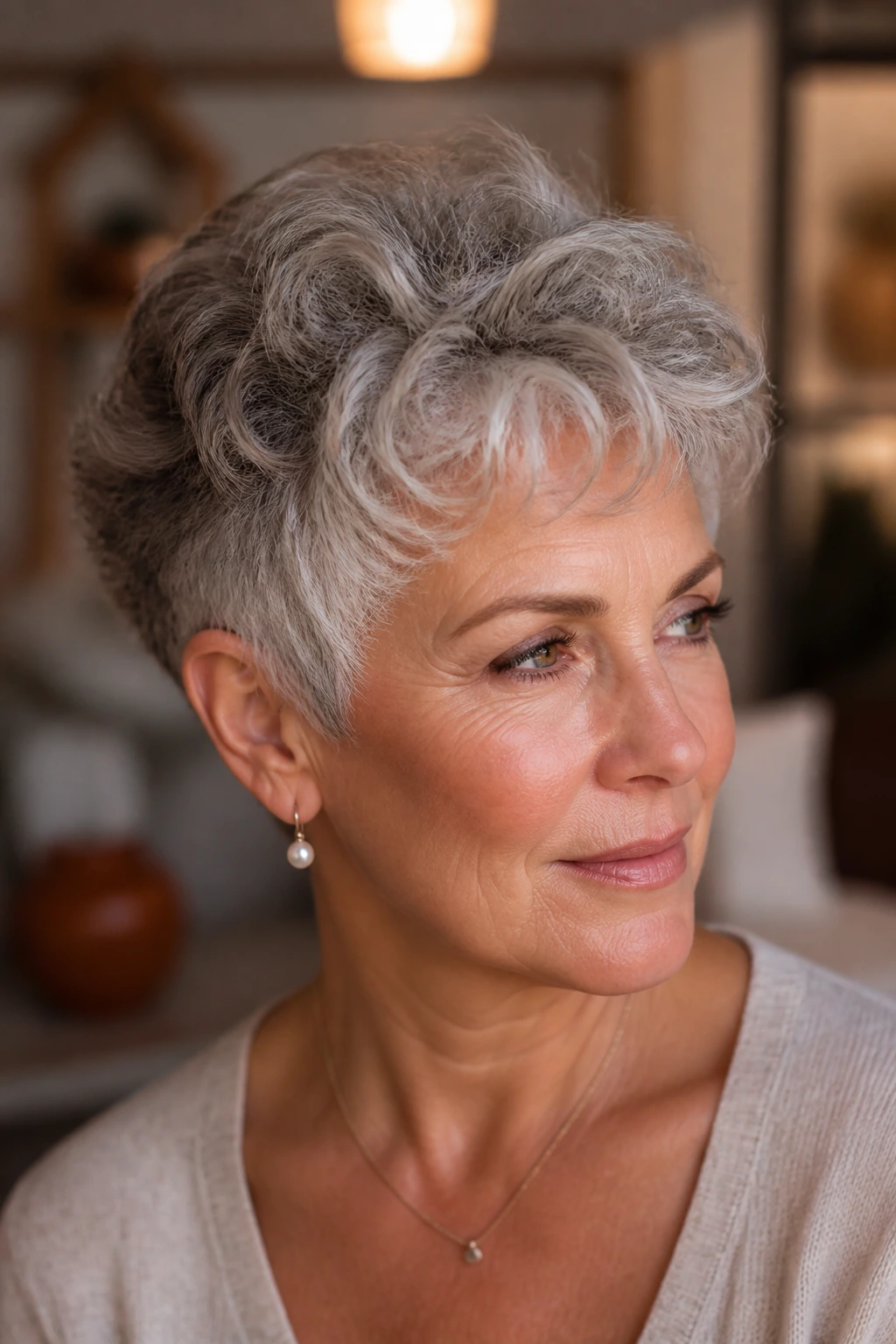
A lot of hair advice ignores the fact that mature hair behaves differently. It can be finer at the temples, drier at the ends, and a little more stubborn about holding a style. A curly pixie fits that reality better than a longer cut that keeps pulling itself flat.
Shorter hair loses dead weight. That’s the big one. Curls get to spring instead of droop, and the shape stays closer to the head rather than hanging in a stretched line. On hair that has lost some density, that extra lift can make the whole style look fuller.
Less drag, more shape
Hair that reaches the jaw or collar tends to stretch under its own weight, especially if the curl pattern is loose. A pixie removes that drag. The curl has less length to fight through, so it lands with more bounce and less fatigue.
Softness around the face
A good pixie is about edges, not just length. A feathered fringe, a side sweep, or a curved sideburn can blur the hard lines that make short cuts look severe. That softness matters more with age because the face itself has more texture. The cut should work with that, not against it.
Gray hair often looks better short
Silver and salt-and-pepper hair can look especially shiny in short shapes because light hits the strands from more angles. The color reads as deliberate, not accidental. And because short cuts expose the structure of the hair, even a little bit of natural wave gives the whole style a lively feel.
What to Ask for at the Salon
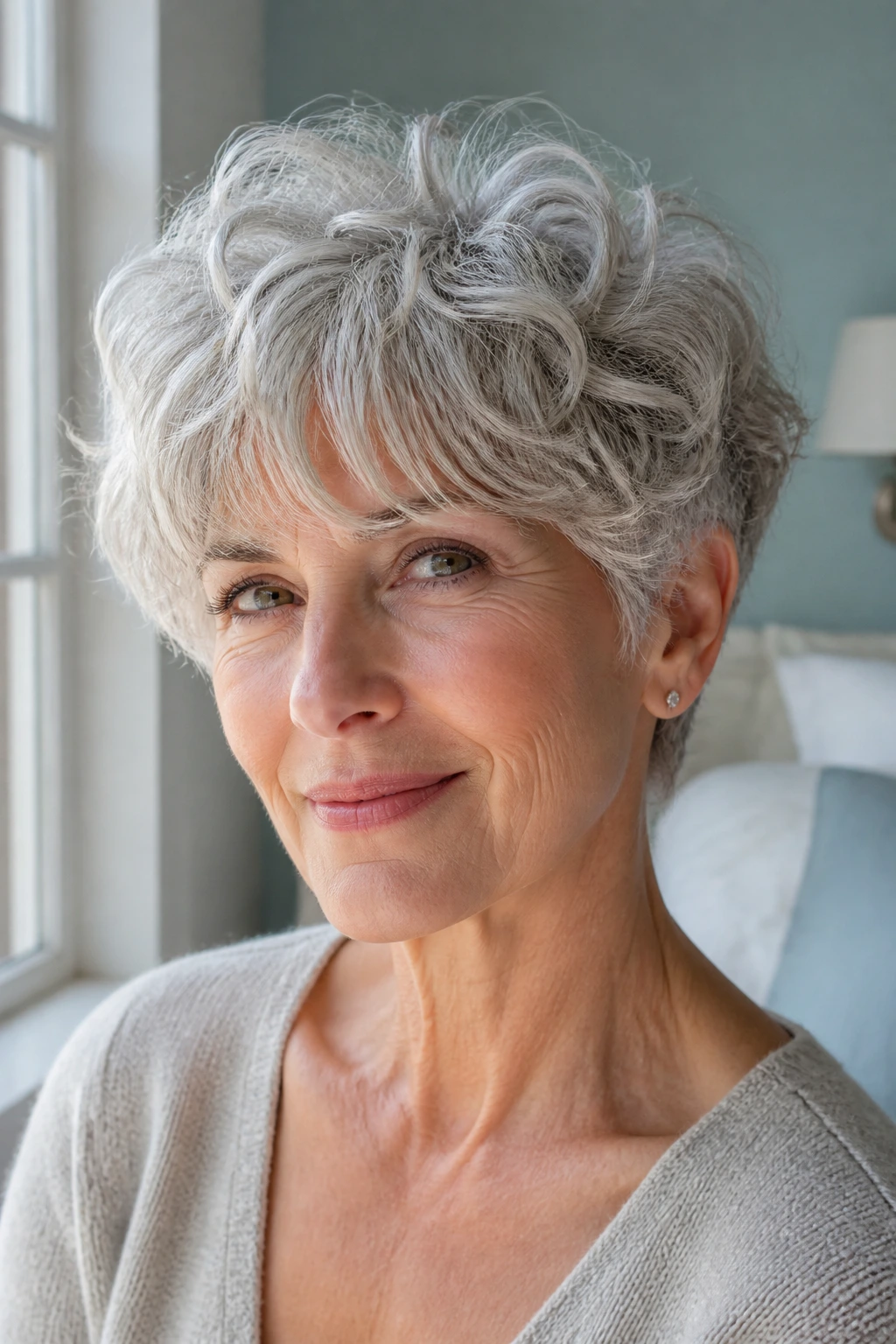
Bring photos. Not one photo. Three or four, and make sure they show a curl pattern close to yours. A loose curl pixie on someone with fine 2B hair will not behave like the same cut on dense 3C curls, and the difference matters more than most people expect.
Say where you want the length to live. Do you want height at the crown? More coverage at the forehead? A cleaner nape? Those are separate decisions, and your stylist needs to hear them separately. “Short pixie” is too vague. “Keep the crown around 3 inches, taper the sides, and leave the fringe soft at brow level” is useful.
Smart things to mention
- Whether your curls shrink a little or a lot when they dry.
- If you wear glasses every day.
- Where your hair tends to puff up first.
- How often you are willing to come back for trims.
If your stylist seems eager to cut it wet and ignore shrinkage, pause. Curly pixies live and die by dry behavior. Some stylists cut in stages — wet to establish the shape, then dry to refine the outline — and that usually gives better results.
The Tools and Products That Keep the Shape Soft
-
Diffuser attachment: Lets curls dry with lift instead of blasting them into frizz.
-
Microfiber towel or T-shirt: Cuts down roughing up the curl cuticle right after washing.
-
Wide-tooth comb: Useful only on wet hair with conditioner in it; dry combing turns curls into fluff.
-
Light mousse: Gives root lift without the heavy coat that can flatten short curls.
-
Curl cream: Good for smoother, looser curls, but use less than you would on long hair.
-
Light gel or gel-cream: Helps piecey ends hold their shape and keeps the front from blooming outward.
-
Small clips: Handy for holding a part or lifting the crown while it dries.
-
Satin pillowcase or bonnet: Reduces overnight frizz and keeps the nape from turning fuzzy by morning.
-
Hand mirror: Sounds ordinary. It isn’t. A pixie lives and dies by the back and sides, and you need to see both.
How to Style a Curly Pixie Without the Puff
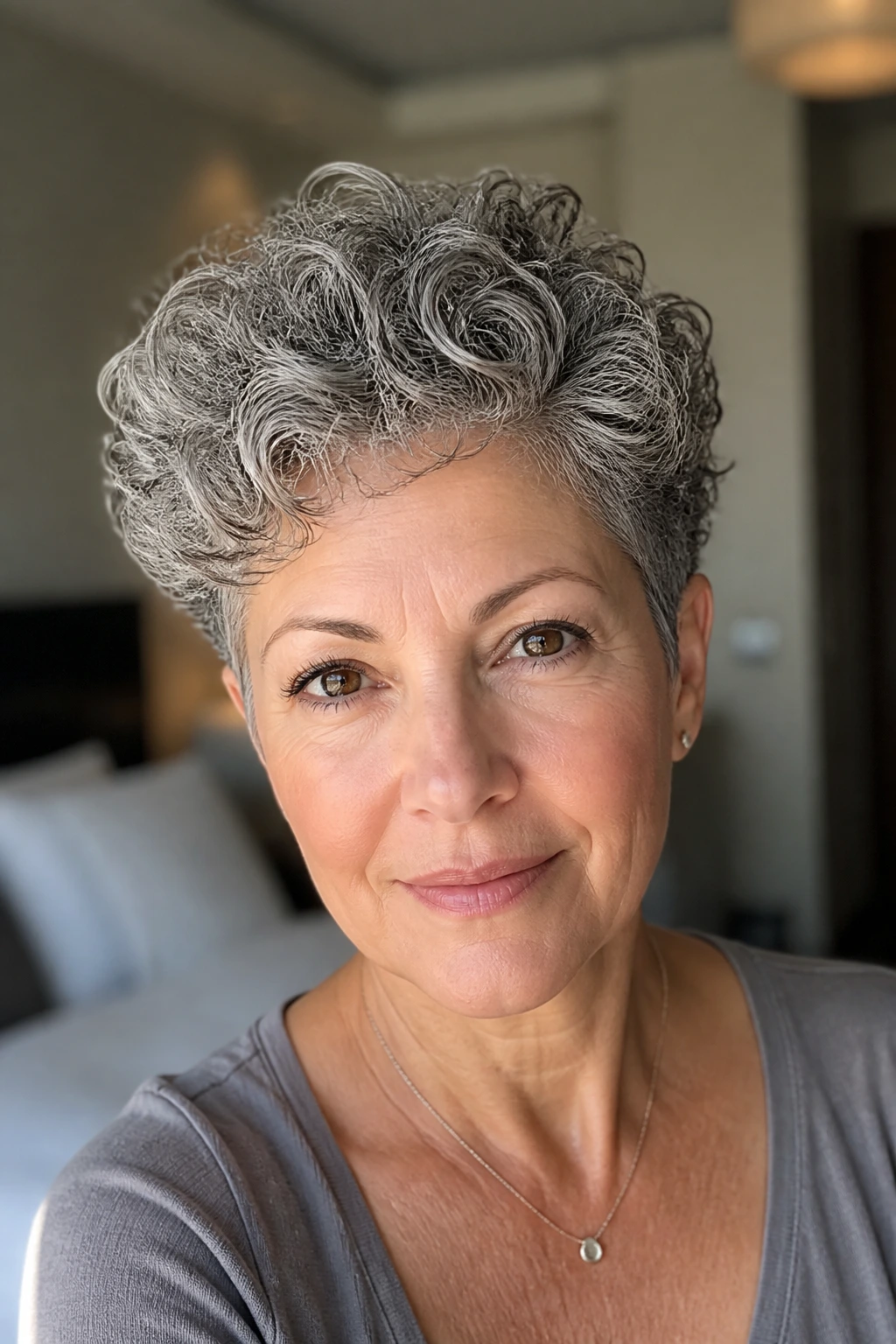
Wash day is where the shape gets decided. If the roots are flat or the curls are overloaded with product, the whole cut loses its line. Start with damp hair, not dripping hair, and work product through in sections so the crown and front get enough attention.
Wash day
Scrunch in mousse at the roots and a small amount of cream or gel through the mid-lengths. Then use your fingers to encourage the curls where you want them to land. Don’t rake through the top too aggressively. That creates frizz and breaks the curl clumps apart before they have time to form.
Drying
Diffuse on low heat. Low, not hot. A hot diffuser can puff the outer layer while the inside stays damp, which is a miserable combination if you’re short on time. Lift the crown gently with the diffuser bowl and stop touching the curls once they start to set.
Refresh day
Mist with water, then work a pea-sized bit of product back into the front and crown. A pixie does not usually need a full wash to come back to life. Most of the time it needs a little moisture and a better part. That’s it.
Common Mistakes That Make a Curly Pixie Look Harsh
-
Cutting the fringe too short. Curly bangs shrink more than you expect, and too-short bangs can look blunt or puffy. Keep them longer, then refine after drying.
-
Thinning the wrong areas. If the stylist removes too much bulk from already-fine ends, the shape goes wispy and weak. Thin dense sections, not fragile ones.
-
Using heavy creams like it’s a longer style. Short curls need less product. Too much cream drags the crown down and makes the sides look greasy.
-
Brushing dry curls. That breaks the clumps apart and creates a cloud of frizz around the head. Finger-shape instead, or refresh with water first.
-
Ignoring the nape. A fuzzy nape can make the whole cut look sloppy, even if the top is good. Clean it up regularly.
-
Letting the top and sides grow at different speeds without checking the balance. Pixies are small shapes. A quarter inch matters more here than it does on longer hair.
Variations and Adaptations to Try
For Fine Hair: The Lifted Crown Edit
Keep the crown a little longer and the layers shallow. The goal is lift, not airiness that disappears by noon. A small amount of mousse at the roots and a side part can make the hair look fuller without making it hard.
For Dense Curls: The Hidden Taper
Ask for a lower taper around the nape and behind the ears, but keep the surface soft. This reduces bulk where the head needs it most and keeps the top from turning into a round puff.
For Glasses Wearers: The Frame-Friendly Sweep
Let the fringe sweep to one side instead of hanging straight down. That keeps the frames visible and stops the hair from sitting on the lenses or temple arms.
For Round Faces: The Vertical Fringe
Add height at the crown and keep the sides close. The eye moves upward, and the face reads a little longer. Even a half-inch of extra top length can change the balance.
For Gray Hair: The Soft Silver Finish
Use lighter styling products and keep the edges feathered. Silver hair shines best when it can move. A hard, lacquered finish makes it look older than it is.
Keeping a Curly Pixie Fresh Between Cuts
Most curly pixies want trims every 5 to 8 weeks, but the exact timing depends on how fast your sides and nape grow. The nape usually shows first. Then the temples start to blur. Once that happens, the whole cut can feel less crisp even if the top still looks fine.
Between salon visits, focus on the outline. You don’t have to reset the whole style every morning. A quick mist, a little product on the ends, and a finger-combed part can bring the cut back into shape. Sleep matters too. Satin or silk keeps the back from turning fuzzy and helps the fringe keep its bend.
If you’re growing it out, do not let everything grow equally. Keep the top a little longer and let the sides follow. That way the cut moves toward a soft crop or a short bob instead of landing in a lumpy halfway stage.
Frequently Asked Questions
Will a curly pixie make my face look too exposed?
Not if the shape is right. A soft fringe, side sweep, or a little length at the temples gives the face enough framing to keep the cut from feeling bare.
Are curly pixie cuts good for thin hair?
Yes, if the layers are handled carefully. Thin hair usually looks better with a little lift at the crown and fewer harsh, over-thinned ends.
Should curly hair be cut wet or dry?
A lot of stylists do best with a mix of both. Wet cutting helps establish the shape, but dry refinement is where the final curl length and balance get corrected.
How often should a curly pixie be trimmed?
Most need a cleanup every 5 to 8 weeks. If the nape grows fast or you wear a very short shape, you may want closer to 5 or 6 weeks.
Can I wear a curly pixie with glasses?
Absolutely. A side-parted, ear-grazing, or softly fringed version usually works especially well because it stays above the frame line.
What if my curls are uneven from one side to the other?
A slight asymmetry can hide that nicely. Let the fuller side carry a little more length and shape the flatter side a touch closer to the head.
How do I stop a curly pixie from puffing out?
Use less product, dry on low heat, and keep the nape tapered. Puffiness usually comes from weight in the wrong place, not from curls being “bad.”
Can I grow a pixie into something else without it looking awkward?
Yes, if you start with a longer top and tidy sides. That gives you room to move toward a short bob or a softer crop without an ugly halfway stage.
The Softness Factor
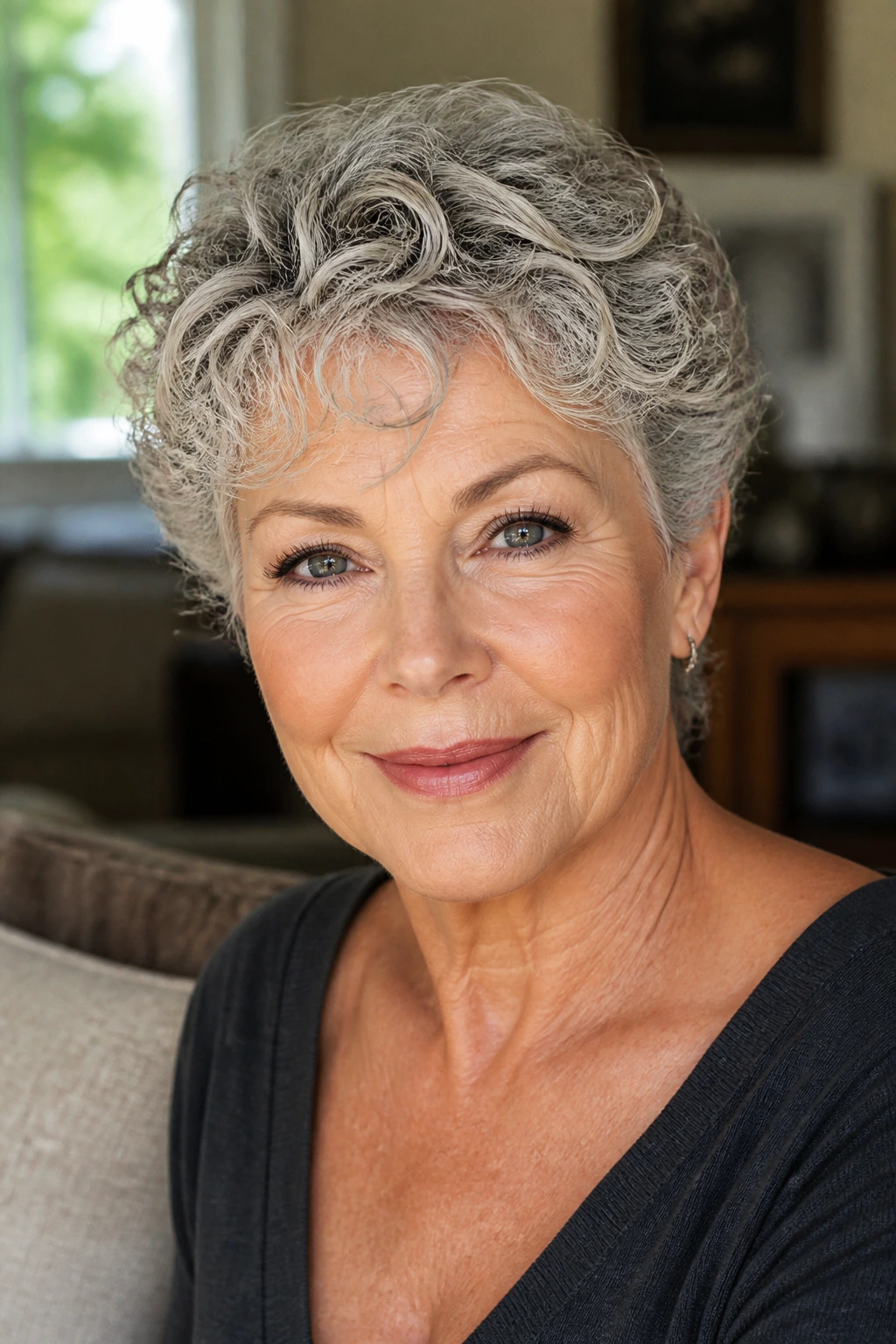
A good curly pixie doesn’t try to erase age, texture, or curl pattern. It works with all three. That’s why the best versions feel so wearable: they keep the face open, the shape light, and the styling honest.
If you pick one with the right crown length, a soft perimeter, and a fringe that respects shrinkage, the cut does more than save time. It gives your curls a cleaner voice. And that is the part people notice first.