



The best medium haircuts for thin hair and oval faces do one thing most salon photos never explain: they keep the ends honest. Not wispy. Not over-thinned. Honest enough to look like there’s actual hair there, while still leaving room for movement around the face.
That balance matters more than people think. Fine strands get flimsy fast when the perimeter is shredded, and oval faces can start to look longer than you want if everything hangs straight down without a bend, a part shift, or a little softness at the cheekbone. The fix usually isn’t more hair. It’s smarter shape.
I keep coming back to medium length because it has enough swing to look modern and enough weight to keep thin hair from disappearing at the bottom. A blunt edge can do more than ten tiny layers. A curtain fringe can change the whole read of the face. And a collarbone cut that’s trimmed with restraint will usually outlast the flashy cut that looked exciting in the chair and tired by lunch.
Why These Medium Cuts Make Thin Hair Look Fuller

Dense Ends: A strong perimeter keeps the eye from falling straight to the thinnest part of the hair, which is usually the last inch or two.
Oval-Face Friendly: Oval faces can handle middle parts, side parts, fringe, and soft angles, so the cut can focus on fullness instead of correction.
Less Product, More Shape: These cuts lean on line and placement first, which means you do not have to drown fine hair in spray to make it behave.
Better Grow-Out: A medium cut with a clear outline still looks intentional when it grows a little, which is a mercy if you hate constant trims.
Styling Flexibility: A quick round-brush bend, a rough dry, or a single-pass flat iron wave can all work here, depending on how much time you have.
1. The Blunt Collarbone Lob That Keeps the Ends Full
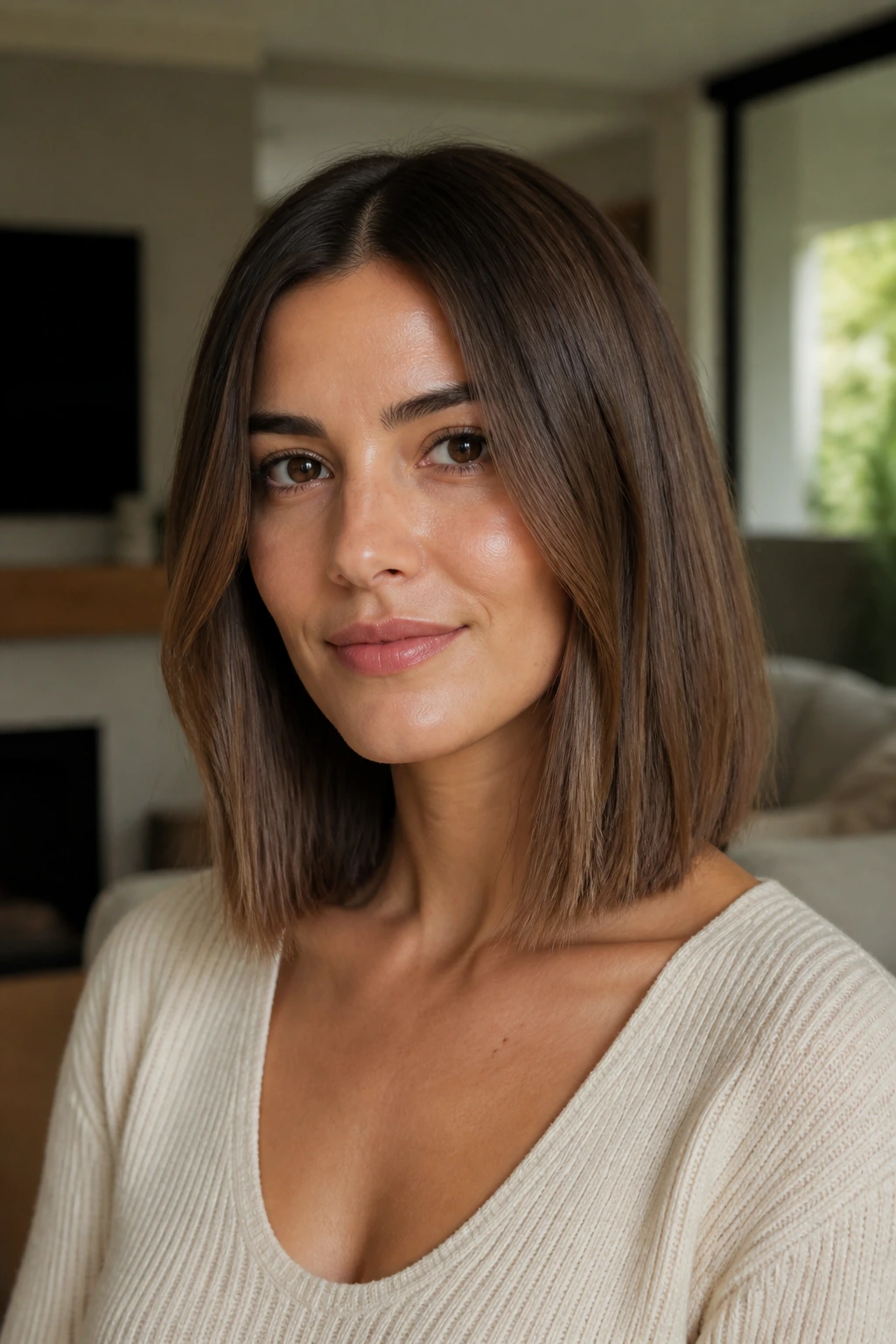
A blunt collarbone lob is the haircut I trust when thin hair needs to look thicker without looking overworked. The line hits at the collarbone, so it has enough length to move but not so much length that the ends drift into see-through territory. On an oval face, that clean edge opens the jaw and cheek area instead of swallowing them.
Why It Works on Fine Hair
A blunt perimeter creates the illusion of density because every strand stops in nearly the same place. That matters. When the bottom line is soft and broken up, thin hair shows its weak spots right away. A blunt lob hides that better, especially if you keep the front only a hair longer than the back.
A center part keeps it sleek. A slightly off-center part gives it a little lift at the crown. Both are good. I like this cut with a round brush that turns the ends under just enough to make the outline feel compact.
- Ask for a clean one-length line with the lightest point-cutting only at the very ends.
- Keep the length grazing the collarbone, not the top of the shoulder, where friction can make it flip odd.
- Use a pea-size smoothing cream only from mid-length to ends.
Small but useful detail: if your hair has a natural bend, keep it. That bend can give the cut a fuller look without adding layers you do not need.
2. The Soft Layered Clavicut That Moves Without Going Sparse
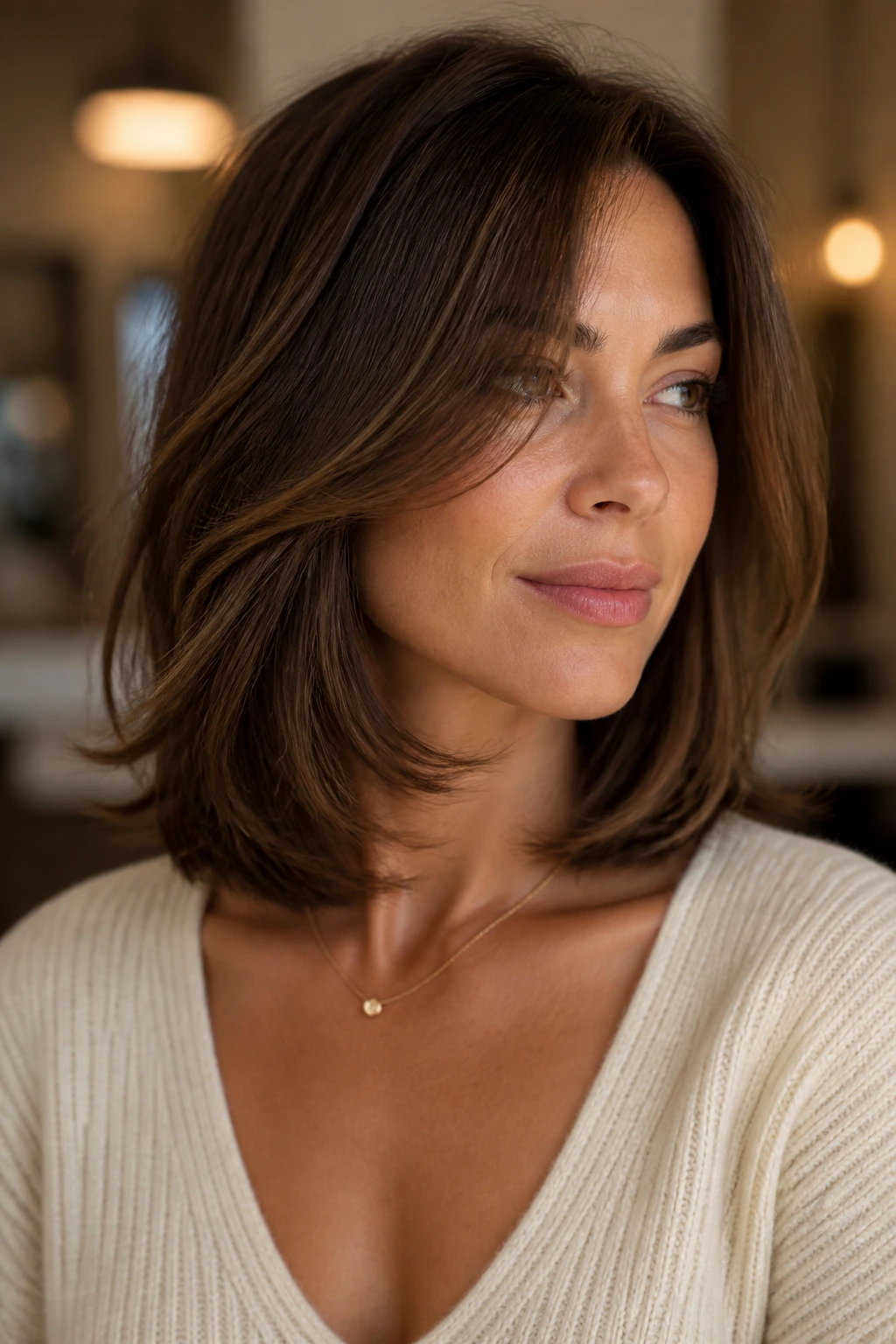
Thin hair does not need a lot of layers. It needs the right layers. This clavicut keeps the main line at the collarbone and slips in soft internal shaping so the hair moves instead of hanging like a sheet. On an oval face, the movement is enough; you do not need a dramatic frame to make the shape work.
The trick is where the layers begin. If they start too high, the crown puffs and the ends start to look hungry. If they sit lower, the hair still keeps weight at the bottom and gets that little bend that makes a haircut look finished. I prefer this cut on hair that likes a round brush but doesn’t want to be fussed over for twenty minutes every morning.
A light root spray, a medium round brush, and a few passes through the front pieces are usually enough. You’re aiming for a soft curve, not a pageant blowout. That difference matters.
3. The Shoulder-Length One-Length Cut That Makes Every Strand Count

Why does a plain shoulder-length cut often look fuller than a fancier layered one? Because the weight stays where thin hair needs it most. A one-length cut gives the ends a real edge, and that edge stops the hair from breaking apart into wisps. Oval faces can wear this shape easily because the face already has enough balance to handle a simple outline.
How to Style It Without Flattening the Crown
Dry the roots first, and do it with your head tipped a little to the side if your hair is flat at the top. That small bit of direction gives the roots a reason to lift. Then finish the ends with a round brush so they bend inward instead of kicking out.
- Best for straight to slightly wavy hair.
- Keep the cut at 1 to 2 inches below the shoulders.
- Trim every 6 to 8 weeks so the line stays crisp.
This is a cut with no drama baked in. That is the point. It looks thicker because it refuses to be overcomplicated.
4. The Curtain-Bang Lob That Opens the Face Without Stealing Density
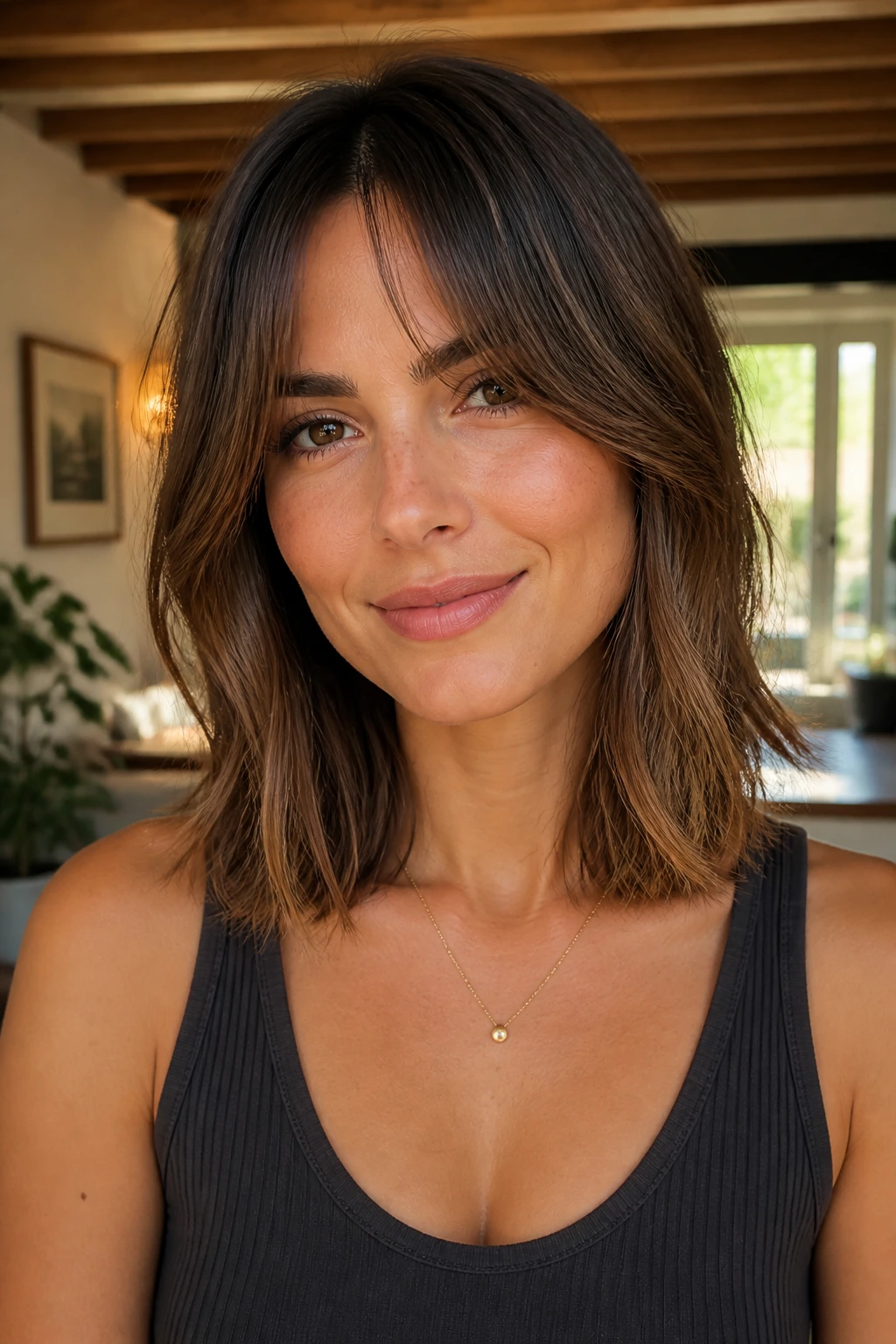
Picture a lob that lands just below the collarbone, then splits softly at the forehead and falls in two longer wings. That is the curtain-bang lob. It gives thin hair movement up front without carving away the perimeter, which is where density usually lives.
The length of the fringe makes or breaks this cut. Curtain bangs that stop around the cheekbone can add lift near the eyes, but if they’re chopped too short, they start to feel disconnected from the rest of the hair. I prefer a softer part and a blow-dry that sends the fringe away from the face first, then back in, so the bend feels natural instead of stiff.
- Keep the curtain fringe light, not shredded.
- Let the side pieces merge into the front sections.
- Use a Velcro roller on each fringe section while you do makeup or get dressed.
Watch the density: heavy curtain bangs can flatten fine hair fast, so the fringe should be airy and not thick. Thin hair likes room to breathe up front.
5. The Cheekbone-Layer Cut That Gives Fine Hair a Lift Right Where It Counts
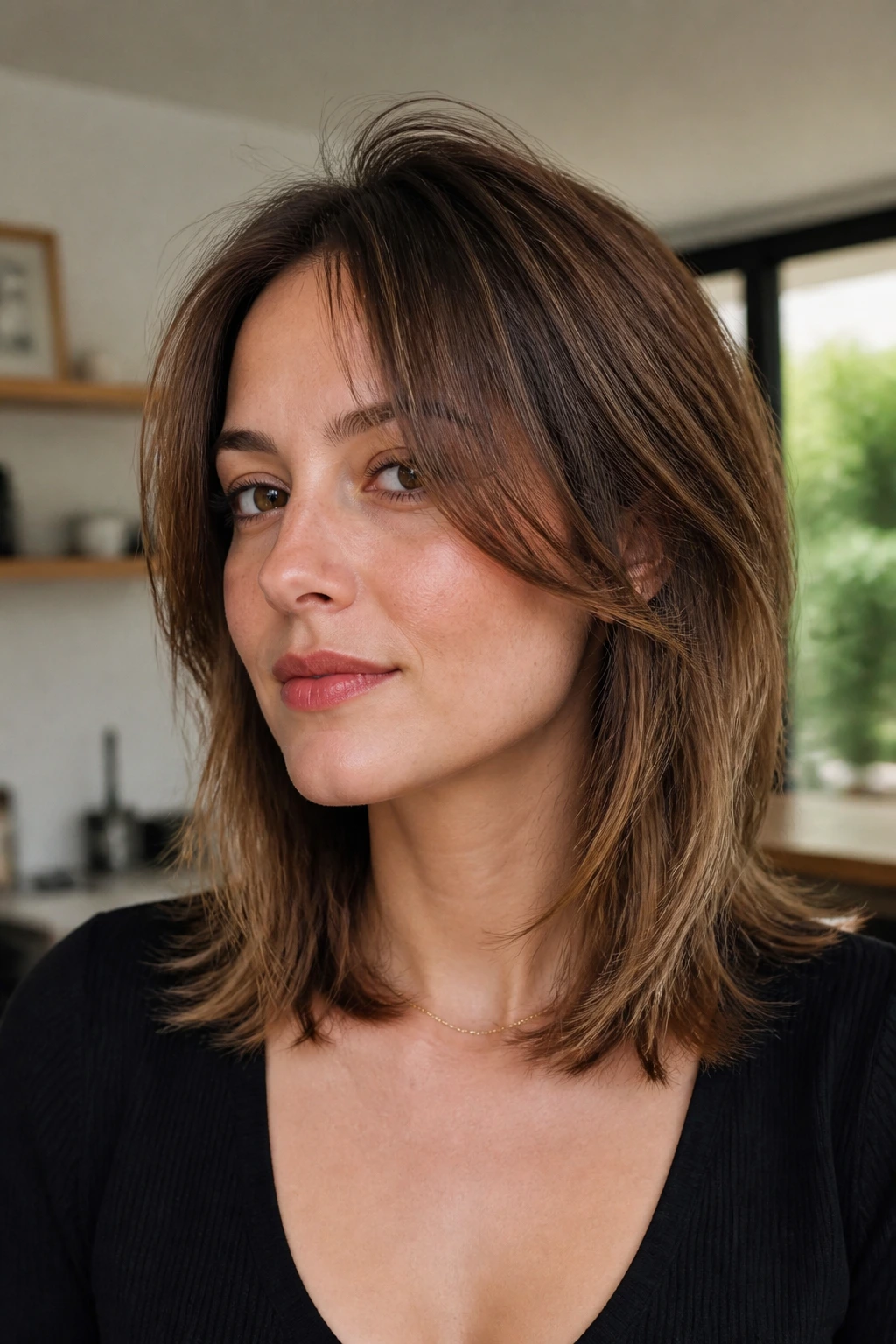
Layers work on thin hair only when they have a job. The cheekbone-layer cut gives them one: lift the eye line and keep the ends from looking like they were trimmed with no plan. The longest pieces still sit around the collarbone, so the shape keeps some weight. The shorter pieces start around the cheekbones, which is a smart place to add movement on an oval face.
I like this cut more than the old stair-step layer job people still ask for when they want “volume.” Too many short layers on fine hair can turn the crown fluffy and leave the bottom see-through. Cheekbone layers are quieter. They bend, they soften, and they let the hair swing when you turn your head.
A round brush and a little root mousse make this cut come alive. Work the mousse into damp roots, dry the front sections forward first and then back into place, and let the ends stay clean. That little bit of direction creates lift that lasts longer than random scrunching ever will.
6. The Butterfly Cut at Mid-Length, When You Want Volume Without Losing the Outline
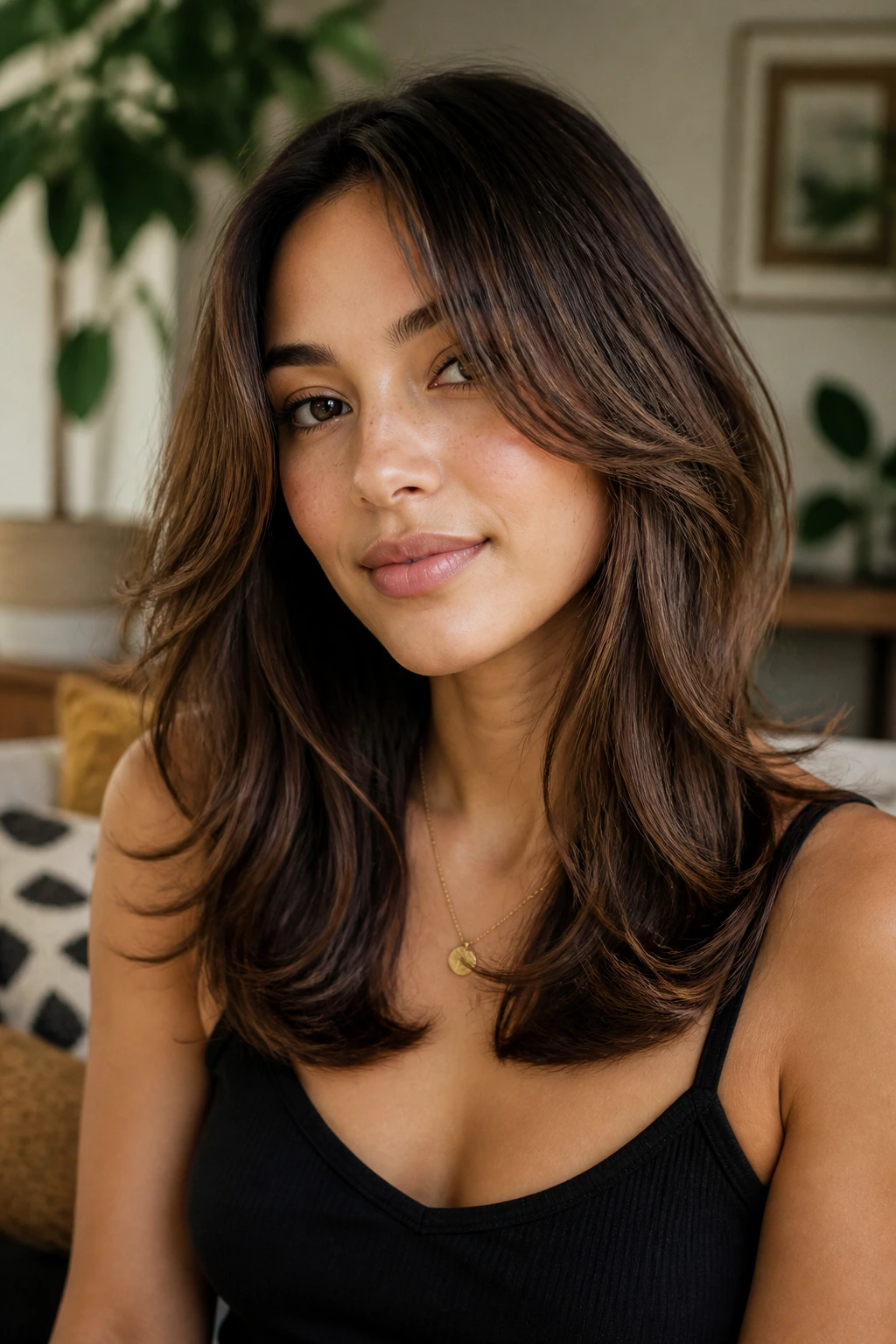
Compared with the full butterfly cut that runs long, the mid-length version is easier on thin hair. The top layers still float around the cheekbone and lip area, but the lower section stays around the collarbone, so the hair keeps a base. On an oval face, that upper movement adds interest without swallowing the face shape.
What changes here is the ratio. A full butterfly cut can take too much from the lower section if your hair is sparse to begin with. The mid-length version keeps the “wings” light and the bottom line blunt enough to look substantial. That is the difference between airy and stringy.
I’d recommend this cut if your hair holds a bend and you like a blowout finish. It takes a little work — usually a round brush, a clip at the crown, and a quick pass through the front pieces — but the payoff is a shape that looks fuller from the side, which is where thin hair usually gives itself away.
7. The U-Shaped Medium Cut for Hair That Needs Weight at the Back
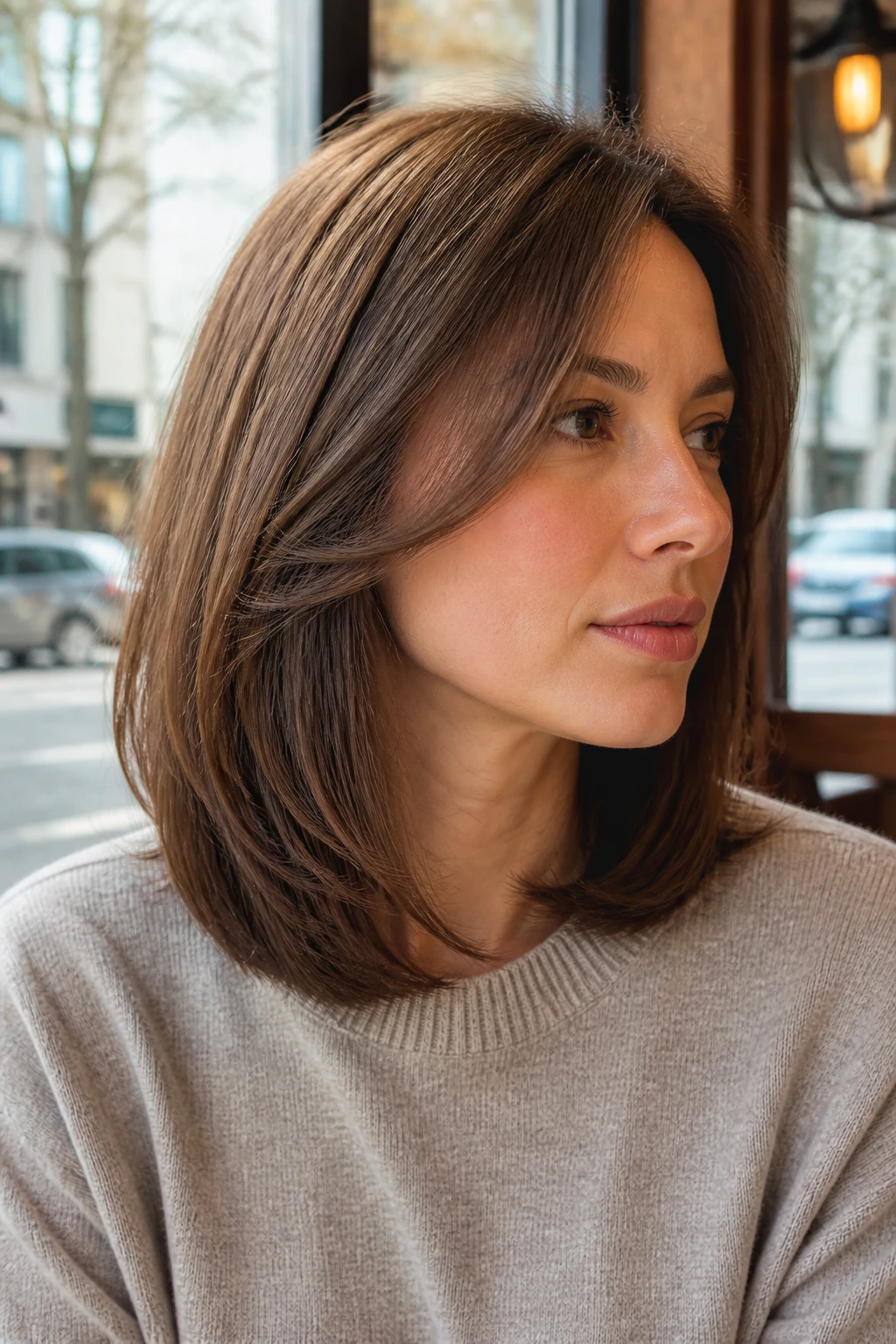
Some cuts look flatter from behind than from the front. The U-shape fixes that by keeping the back slightly shorter and the front a touch longer, so the ends fall in a soft curve instead of a hard shelf. Thin hair likes the extra weight near the center back; it gives the illusion of a fuller body line.
On an oval face, the U-shape is easy to wear because it doesn’t crowd the cheeks. The face stays open, and the longer front pieces bring attention downward in a soft way. I like it especially when hair tends to split at the back of the head, since the rounded perimeter disguises that split better than a straight cut does.
If your hair is very fine, ask for the curve to be subtle, not dramatic. You want a whisper of roundness, not a mermaid silhouette. Style it with a paddle brush on the top and a round brush only on the front corners.
8. The C-Cut Layer Shape That Curves Around the Face
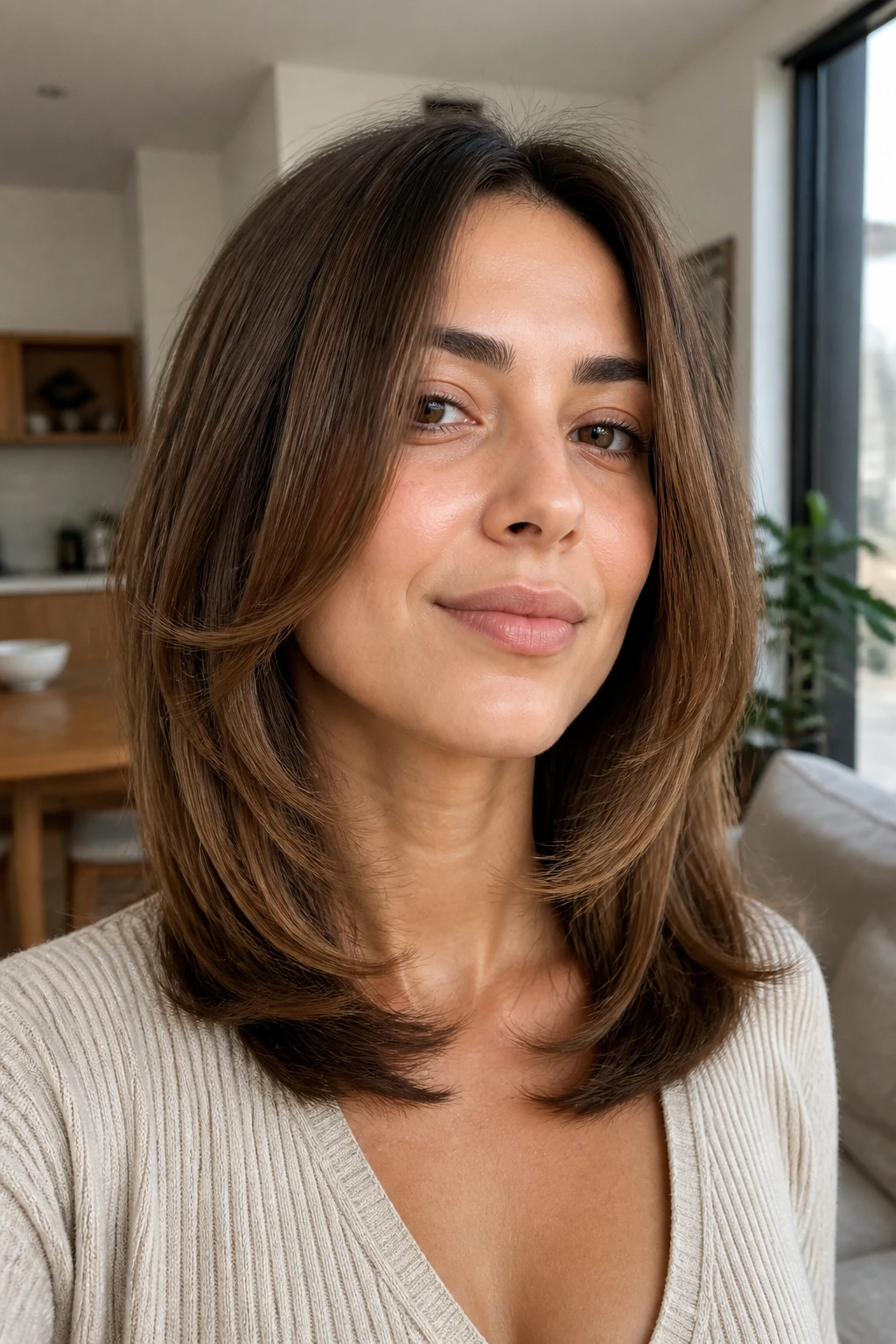
The C-cut has a clean, soft feel. The hair bends inward around the face, then slides down toward the collarbone in one continuous curve, almost like the side of a letter C drawn with a soft pencil. That curve gives thin hair shape without chopping it into obvious layers, and oval faces wear it well because the movement lands at the cheekbones and jaw.
A small amount of blow-dry cream and a round brush can set the front pieces, and the rest can air-dry with only a light bend. If your hair is a little wavy, the curve looks even better because the natural motion fills the shape. Straight hair can wear it too; it just needs the front corners to be shaped with intention.
I prefer this cut over razor-light layers when density is low. Razor work can look soft in photos and hungry in daylight. The C-cut keeps the edge readable. That clean outline is what keeps the whole thing from going limp.
9. The Side-Parted Lob That Gives Thin Hair a Quicker Lift
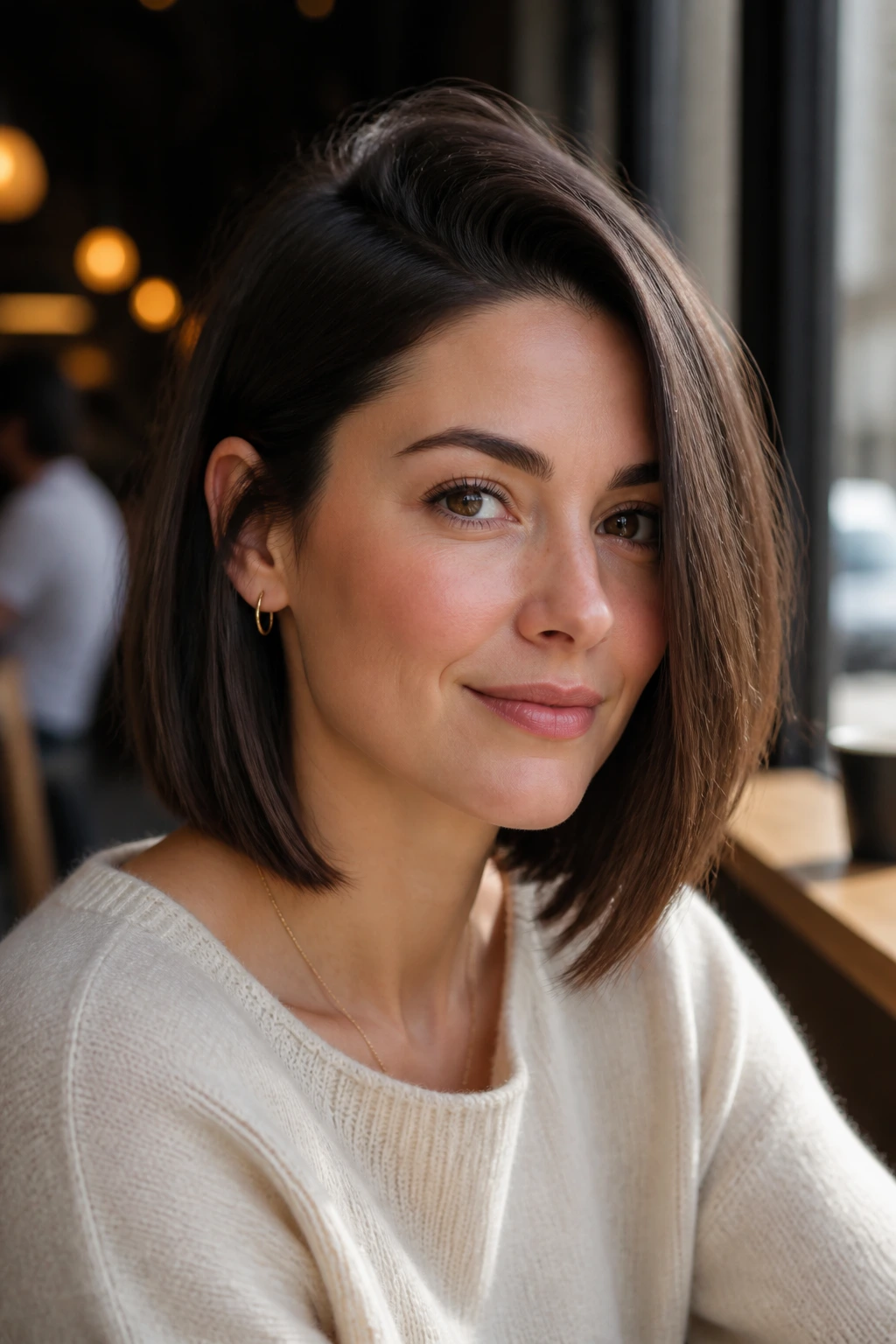
A side part changes the mood of a medium cut in about ten seconds. For thin hair, it shifts the root volume off-center, which makes the hair look less pressed into place and more like it has body. On an oval face, a side-parted lob still keeps the balance of the face visible, but it softens the straight-down effect that can flatten the features.
The cut itself works best when the perimeter stays blunt and the part sits deep enough to expose a little scalp at the crown. That little reveal gives the roots somewhere to rise. Add a mist of root spray on the heavier side, then blow-dry in the opposite direction first. The lift lasts longer because the roots learned where to stand.
This is the one I suggest when you want a visible change without cutting bangs. It does not ask for a new shape, only a smarter part. Cheap trick? Maybe. Useful? Absolutely.
10. The Gentle Angled Bob That Adds Shape Without Going Severe
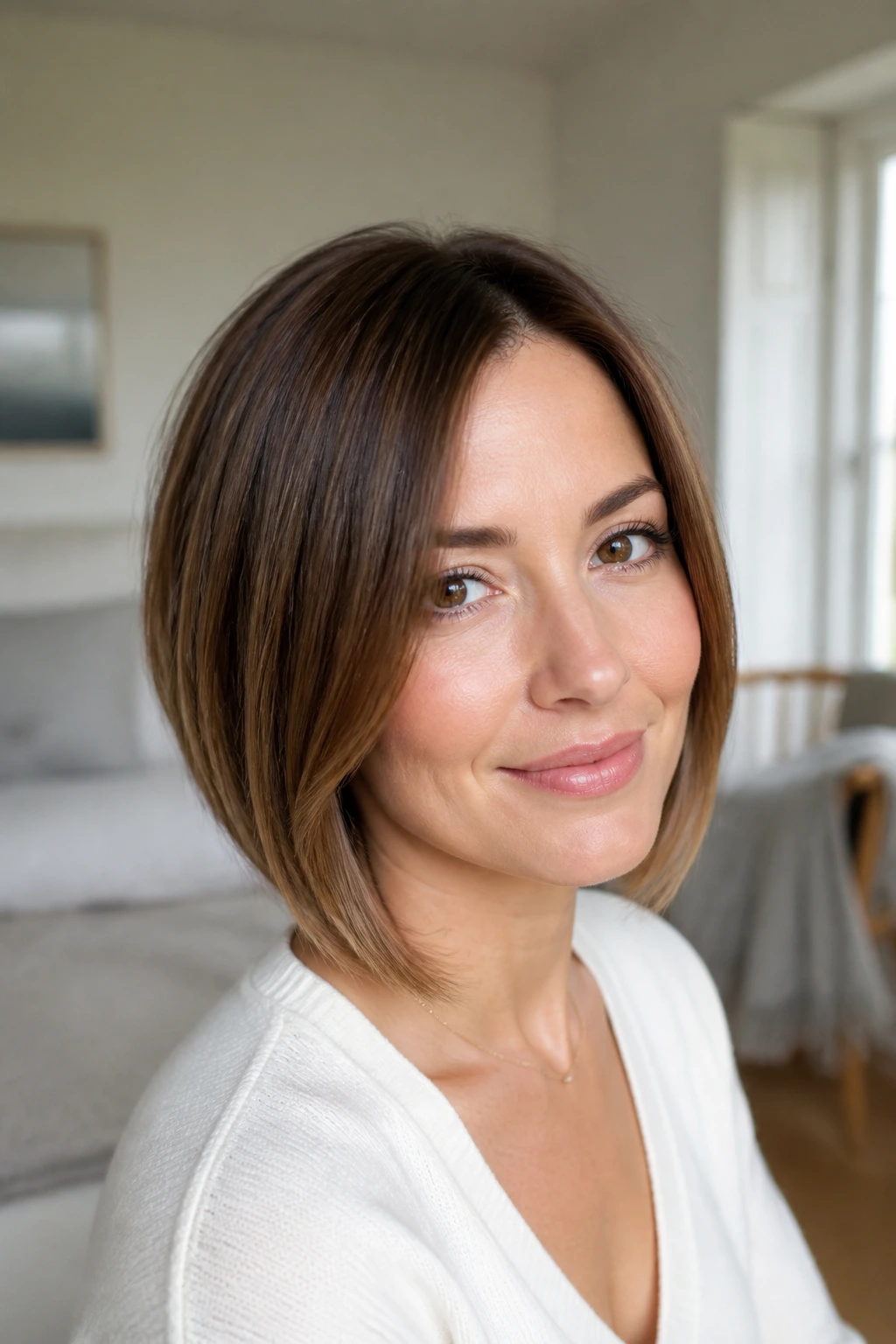
Can an angled bob still count as medium hair? If it lands between the jaw and collarbone, yes. On thin hair, a gentle angle can be a nice compromise. The front sits a little longer, the back a little shorter, and that slant keeps the hair from collapsing into one flat curtain.
What to Ask For
- Keep the angle soft, not stacked.
- Let the front pieces skim the collarbone.
- Skip aggressive graduation at the nape if your hair is sparse.
Oval faces can wear this cut without much adjustment because the line already frames the face in a clean way. I like it best on straight hair or hair that dries into a loose bend. Too much texture can erase the angle, and too much stacking can make the back look thin. A gentle angle says enough, then stops.
11. The Soft Shag for Fine Hair That Needs Movement More Than Bulk
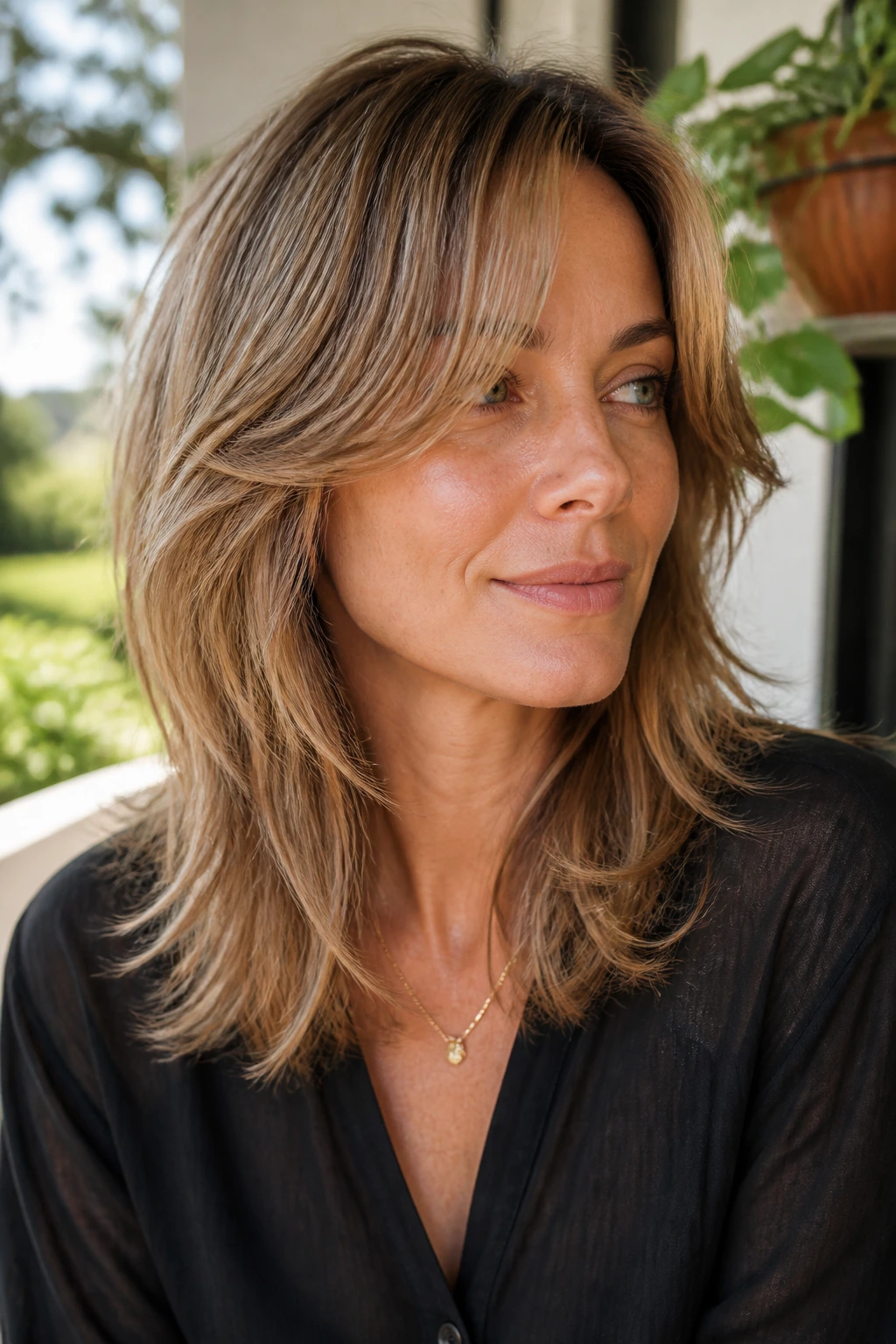
A shag on thin hair can be brilliant or awful, and the difference is usually the amount of removal at the ends. The soft shag keeps the outline medium-length, then uses longer, feathered pieces through the crown and around the face. Oval faces can wear the fringe and side pieces easily because the shape already has room for openness.
What you do not want is a shredded, over-textured mess that turns the bottom half of the head into string. The soft shag works because it leaves enough hair at the perimeter to keep the silhouette thick. I like it with a longer curtain bang instead of a short one; the face stays open, and the hair still feels light.
If you air-dry a lot, this cut can be a good fit. A dab of mousse, a scrunch, and a little finger-twisting near the face usually does the job. If you like a neater finish, one pass with a flat iron through the ends gives just enough bend to keep it from reading sloppy.
12. The Choppy Midi Bob That Looks Better With a Little Imperfection
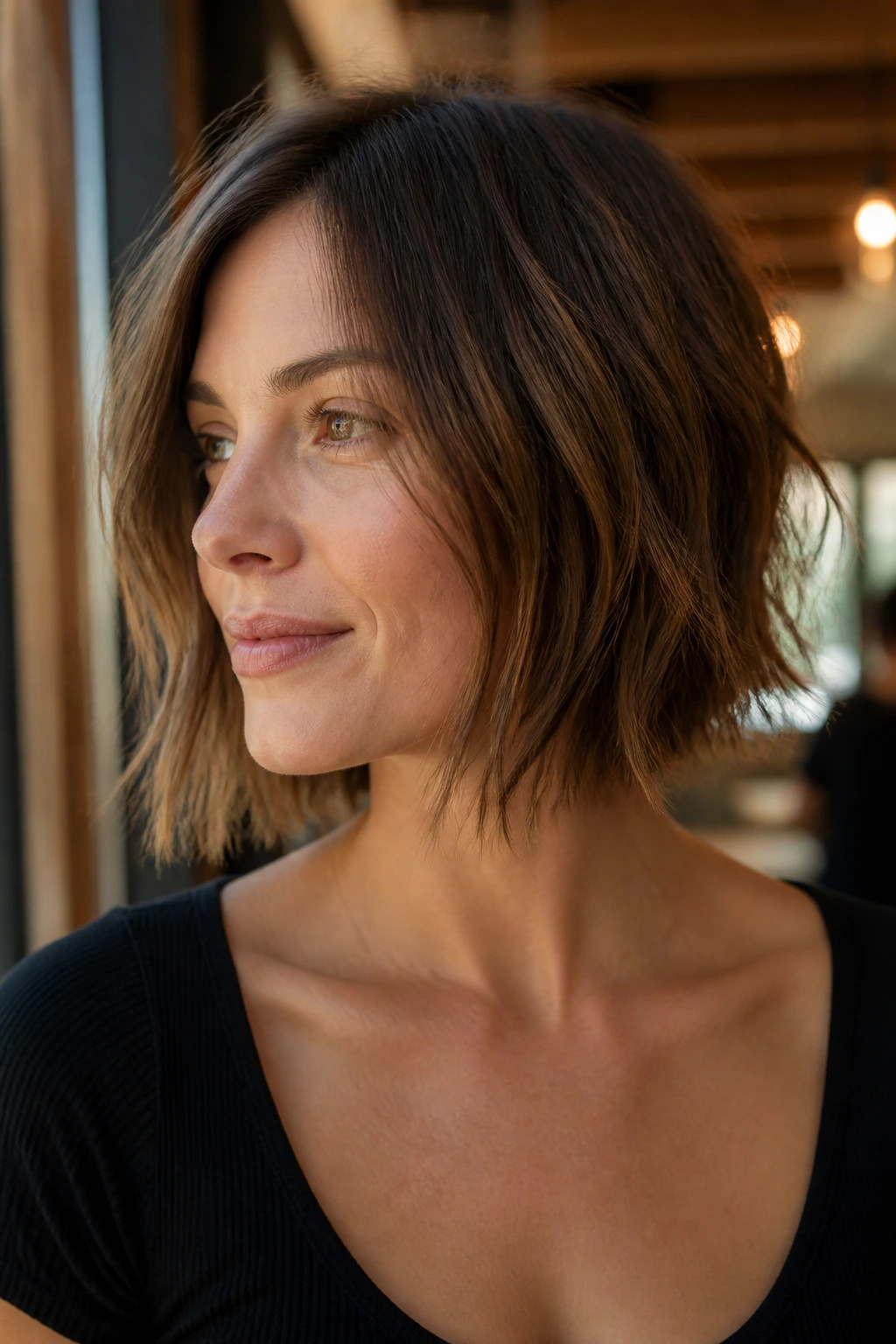
I like this cut for people who hate hair that sits too neatly. The choppy midi bob keeps the overall length around the chin-to-collarbone zone, but the ends are broken up enough to move when you turn your head. On thin hair, that movement matters because it keeps the hair from lying as one flat sheet.
The catch is restraint. If the texture is too aggressive, the cut can lose its body line and start to look broken up instead of full. Ask for point-cutting only through the very ends and a blunt base that still holds weight.
- Best with a deep side part or a soft middle part.
- Looks strongest when dried with a diffuser or rough-dried with fingers.
- A texture mist at the mid-lengths, not the roots, keeps it piecey.
This is a cut for people who want a little edge but do not want to babysit their hair all morning. It’s messy in the useful way, not the accidental one.
13. The Feathered Shoulder Cut That Feels Lighter Than It Looks
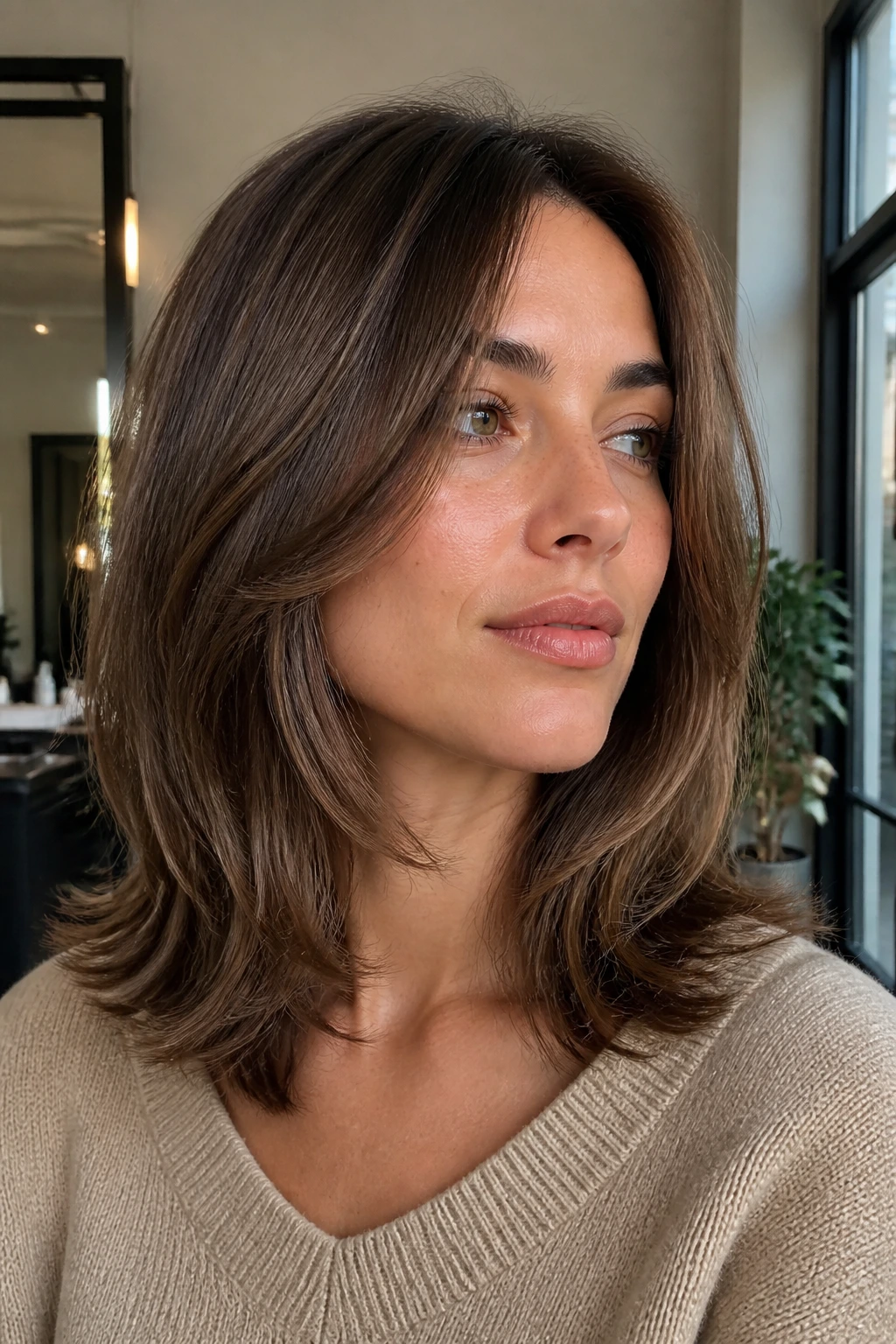
Compared with a shag, the feathered shoulder cut is calmer. The layers are longer, the outline is softer, and the hair still keeps a real perimeter at the shoulders. Thin hair likes that because the weight stays in place, but the ends do not feel blunt or stiff. Oval faces get a nice frame from the soft feathering near the cheek and jaw.
I prefer this cut when someone wants movement but hates obvious layers. The feathers are there, but they sit inside the shape instead of chopping through it. That means the hair can swing and still read as full, which is the whole point. If you blow it out with a medium brush and roll the front pieces away from the face, the shape opens up without needing a lot of product.
This cut also grows out politely. The layers blend instead of flashing hard lines every few weeks. That makes it a solid option if salon appointments slip past the ideal window.
14. The Bottleneck Fringe Lob That Softens the Forehead and Thickens the Front
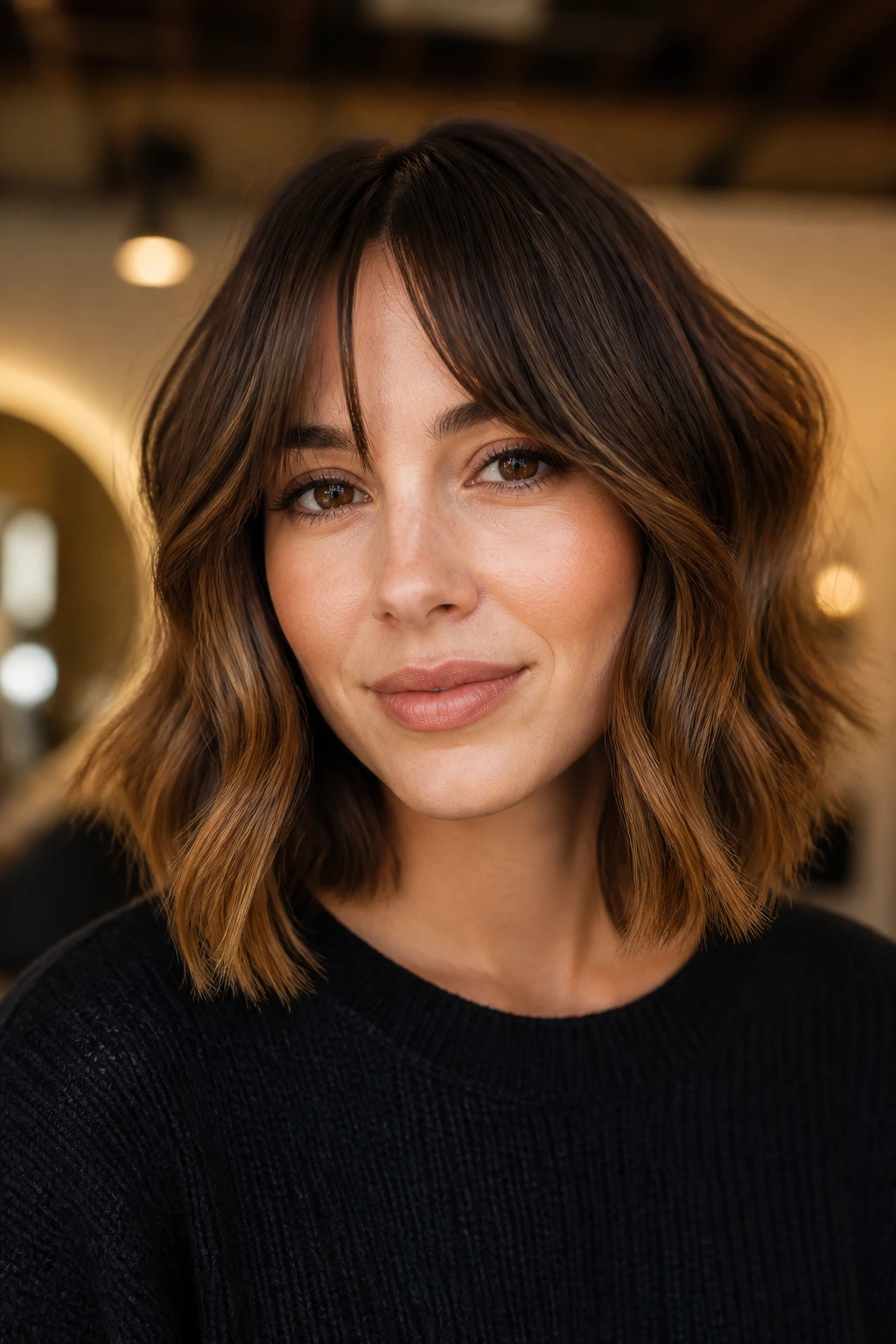
Why do bottleneck bangs work so well on oval faces with thin hair? Because they start narrow at the center, open a little around the eyes, then blend into the front pieces without stealing too much density from the rest of the cut. The fringe gives interest up front, but the medium length keeps the lower half from looking bare.
Ask for the shortest point to stay soft, usually around the center of the forehead, then let the sides graduate longer. That shape makes the front feel fuller without dragging the whole haircut into bang territory. I like this on straight or slightly wavy hair because the fringe can separate into clean pieces instead of puffing outward.
Style it with a round brush and a touch of lightweight cream only on the fringe ends. Too much product here weighs the bangs down fast. This one is all about a light hand.
15. The Hidden-Volume Layered Cut That Keeps the Surface Smooth
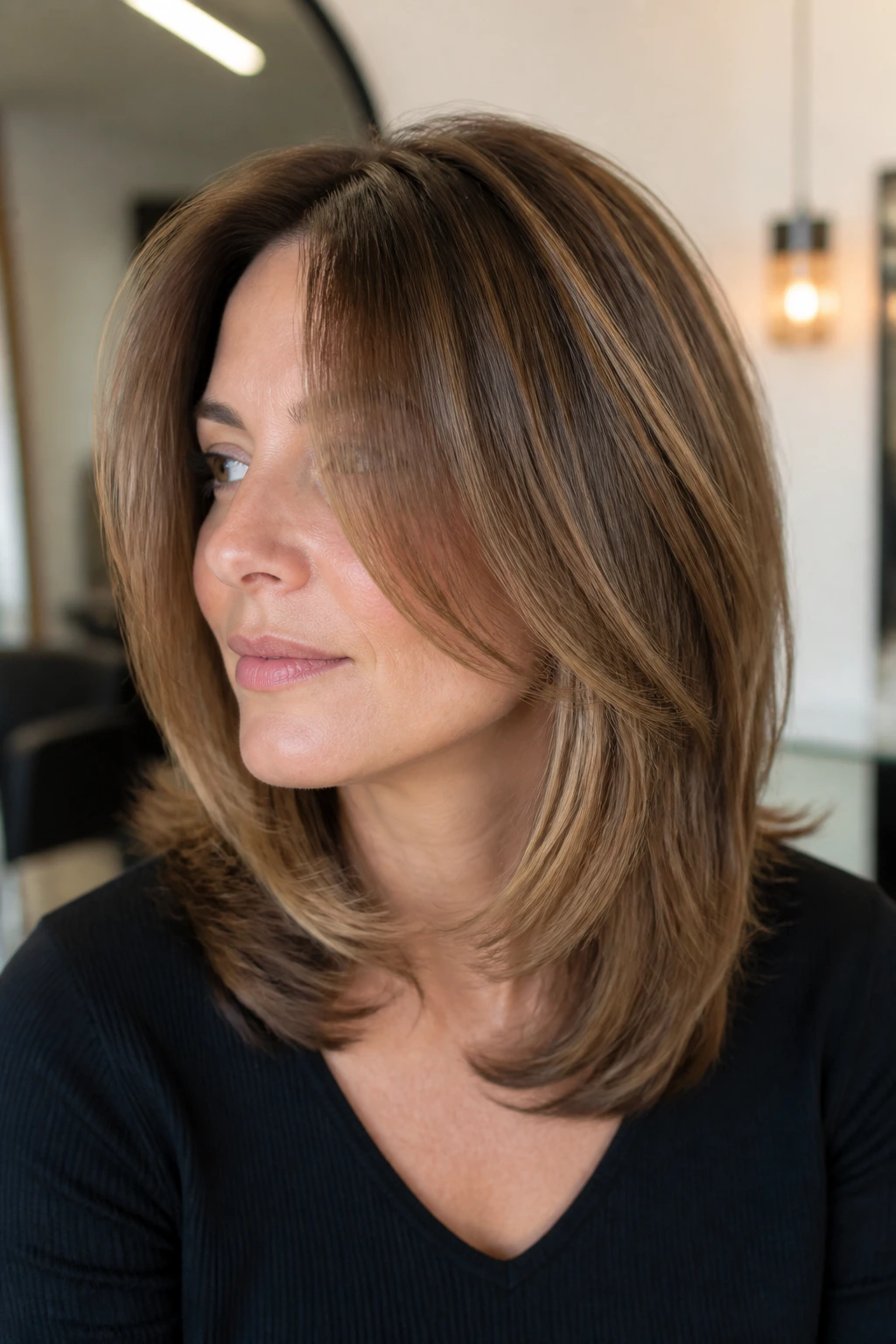
Not every layer has to announce itself. Hidden-volume layering keeps the top surface mostly clean and puts the shorter bits underneath where they can lift the hair without showing through. For thin hair, that is a smart trade. You get more body at the crown and through the mid-lengths, but the outside still looks smooth and full.
On oval faces, the neat surface helps the features stay the focus. The cut doesn’t add clutter around the cheeks or jaw. Instead, it lets the hair feel a little bigger when it moves. I think this is one of the more underrated choices for people who want volume but dislike obvious texture.
The key is communication. Ask your stylist to preserve a strong outer line and to keep the internal layers soft enough that they do not peek through when the hair is dry. Then finish with a root-lifting spray and a round brush only at the top half. The ends should stay calm. That calmness is the point.
16. The Rounded Lob That Gives Fine Hair a Fuller Outline
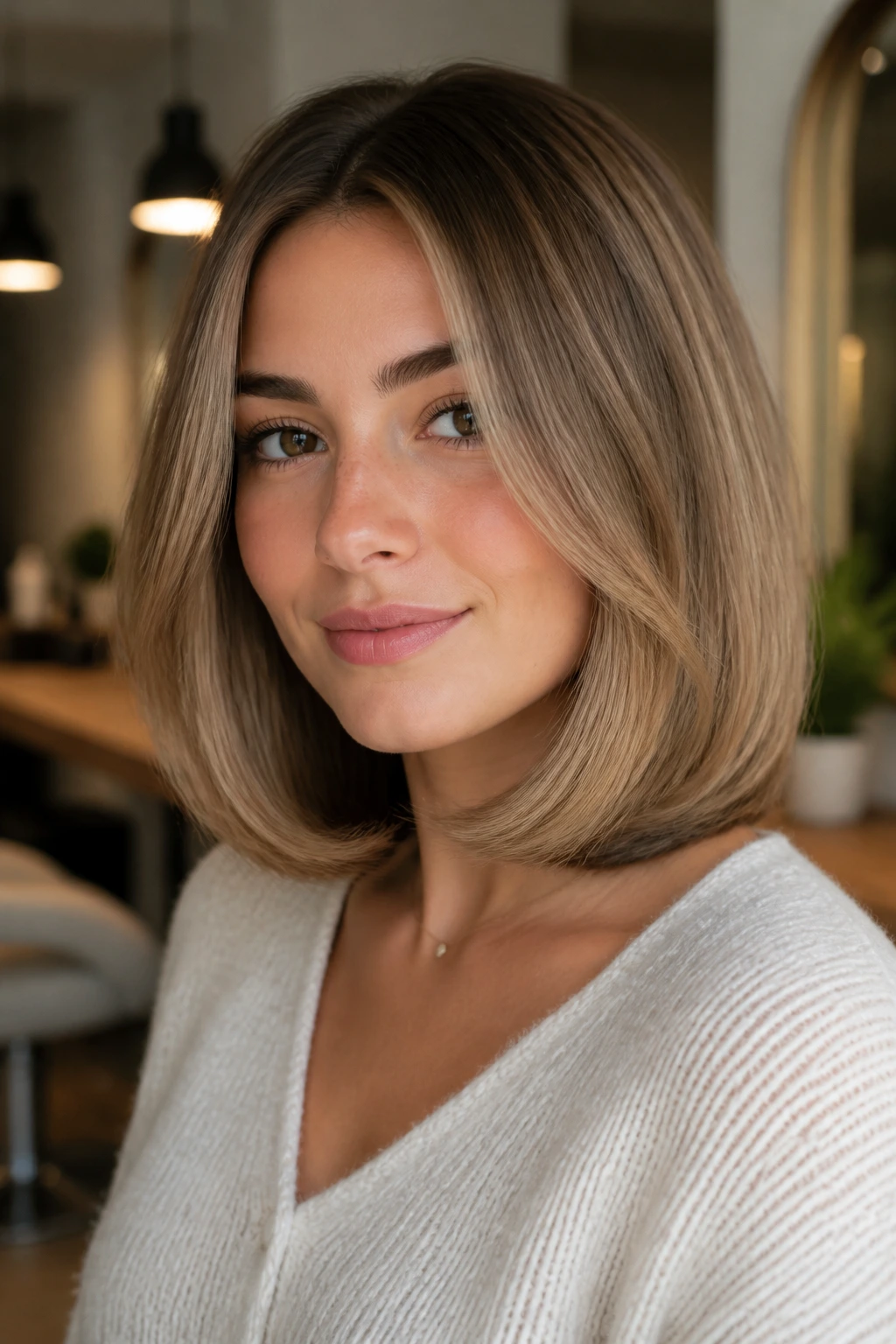
A rounded lob makes the silhouette do the work. The sides sit a touch shorter through the front, then curve inward at the ends so the whole shape feels controlled and thicker. Thin hair benefits because the eye reads the outline first, and the rounded edge suggests density even when the strand count is modest.
I reach for this when someone wants softness but hates stringy ends. Oval faces can wear the roundness easily; it doesn’t fight the natural balance of the face, and it avoids the hard square edge that can make fine hair look sparse. The finish is the deciding factor here. A smooth blow-dry with the brush turned under at the last inch keeps the line compact.
- Best for straight to slightly wavy hair.
- Keep the weight line just below the collarbone.
- Use a light serum only on the bottom third.
This is a quietly strong haircut. No drama. Just shape that lasts.
17. The Collarbone Cut With Flipped Ends When You Want a Little Lift at the Bottom
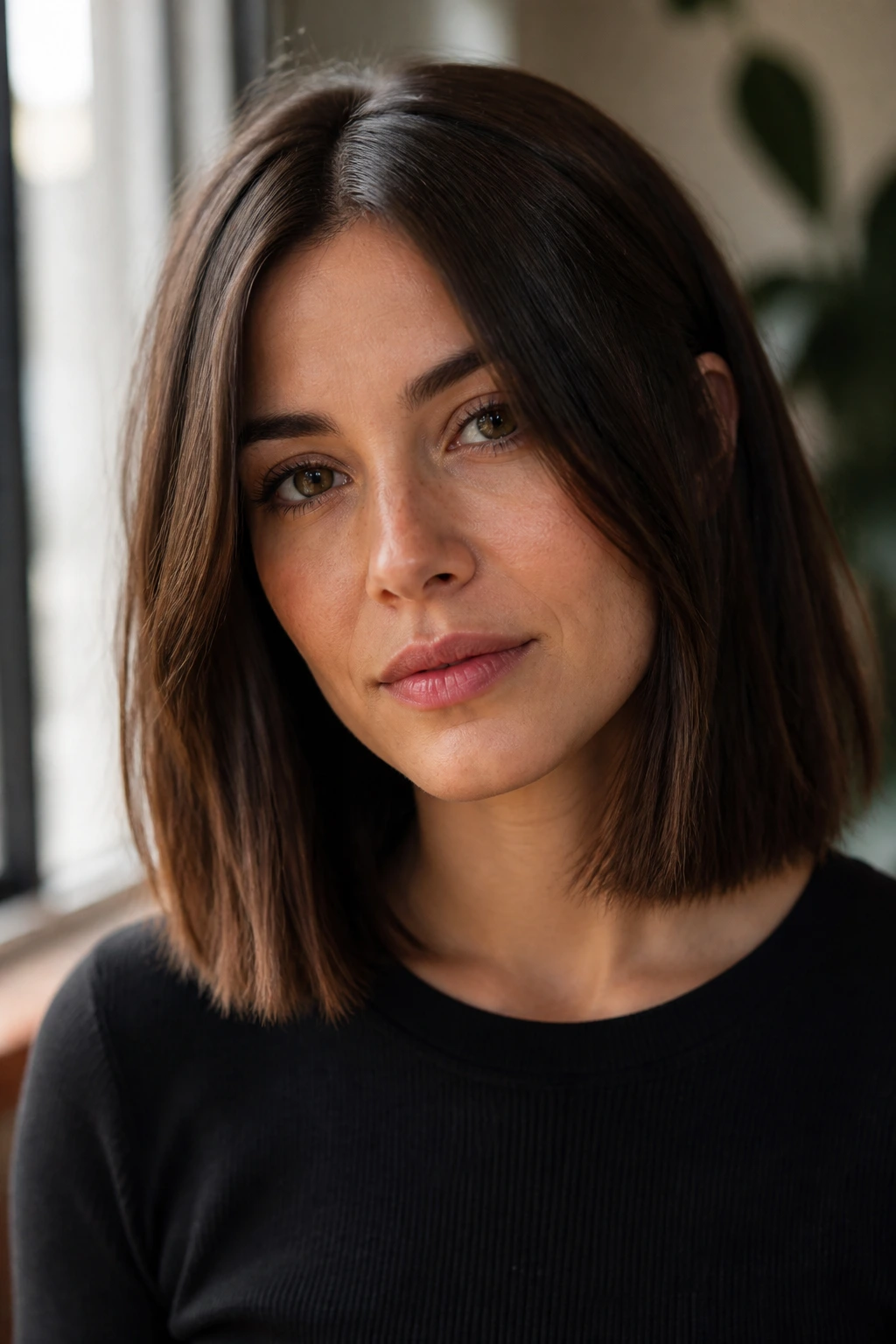
A tiny flip at the ends can do more than people expect. On thin hair, it keeps the perimeter from hanging dead straight, and that little movement makes the whole cut feel more alive. The collarbone length is still the anchor, so the hair holds enough weight to look substantial. Oval faces get softness near the jaw, which helps the cut feel finished.
The trick is not turning the ends into a full retro blowout. You want a bend, not a curl. A large round brush or a flat iron turned just at the last inch is enough. I like this when hair tends to stick to the neck or look too polished in a flat way. The flip gives it air.
If your hair is very fine, keep the crown smooth and let the ends do the talking. That contrast looks better than volume everywhere. It usually lasts longer too, which is a nice bonus when you do not want to restyle after lunch.
18. The Long Bob With a Deep Side Part That Cheats Extra Body
A deep side part is the quickest way to make thin hair look as if it has more root lift than it does. Put that part on a long bob, and the whole shape wakes up. The longer side gives drama, the shorter side creates height, and an oval face can carry the asymmetry without looking crowded.
I like this cut because it is almost too simple to be called a trick. There is no heavy layering, no complicated texture pattern, just length placed in the right spot and a part that gives the roots a reason to rise. If your hair is straight and fine, this can be one of the easiest wins in the whole group.
Use a root spray at the heavier side. Dry that side first with tension at the root, then switch the part once the hair is nearly dry and finish with a light bend through the mid-lengths. The swap creates lift that looks natural instead of teased. That matters. Teased roots on fine hair can go flat in two hours.
19. The Mid-Length Wolf Lite for People Who Want Texture Without the Fuzz
A full wolf cut can be too much for thin hair. The mid-length wolf lite keeps the attitude but trims the aggression. The crown gets some lift, the face-framing gets a little edge, and the ends stay long enough to preserve body. Oval faces usually handle the shape well because the fringe area can be opened or tucked depending on the day.
I prefer this version when someone wants movement and hates polished hair. The cut has texture, but it does not shred the perimeter into nothing. That line has to stay visible, or the whole thing turns ragged. Ask for softness around the top and restraint at the bottom. That one sentence usually saves the result.
Air-dried texture suits it, but so does a quick bend with a flat iron at the face frame. The style is supposed to look lived-in, not accidental. There is a difference, and it shows.
20. The Polished Midi With a Blunt Fringe That Keeps the Whole Look Crisp
A blunt fringe can work on oval faces because the shape already has room in the forehead and cheek area. Paired with a clean mid-length cut, it gives fine hair a sharper outline, which is one of the fastest ways to make it look denser. The medium length keeps the fringe from dominating, and the fringe keeps the rest of the hair from feeling too plain.
This cut is not for someone who wants to air-dry and walk away. It looks its best when the fringe gets a quick round-brush pass and the lengths stay smooth. But if you like a more deliberate finish, it has real presence. The line at the fringe draws the eye, and the strong perimeter below it keeps the style from looking thin at the bottom.
I would choose this when the goal is crispness. Not softness. Crispness. If the hair already has a little shine and a clean bend, the result looks deliberate in a way loose layers rarely do.
How a Stylist Can Keep Thin Hair From Losing Its Weight
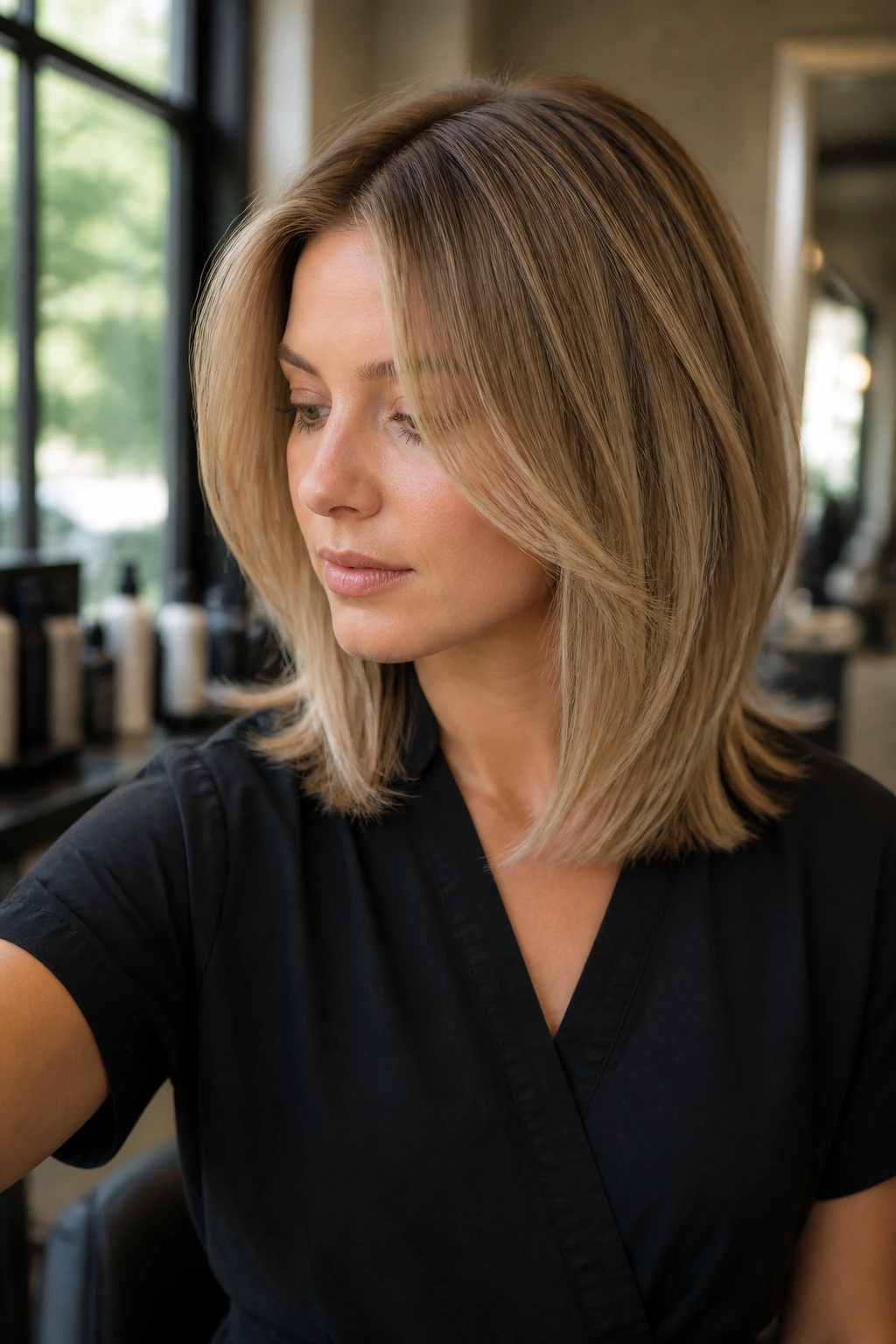
Thin hair gets into trouble when the haircut is built like thick hair. That usually means too many short layers, too much texturizing, and not enough attention to where the perimeter lands. If you want medium hair to look fuller, the cut has to preserve a weight line somewhere — usually at the collarbone, jaw, or just below it.
Oval faces make this easier because the face shape can handle almost any part or fringe without needing heavy correction. That frees the haircut to work on density instead of balance. A blunt line at the bottom, soft movement at the front, and a little lift at the crown will usually do more than a bag full of styling products.
I also think stylists sometimes overcomplicate fine hair because they’re chasing movement. Movement is fine. Missing ends are not. Ask for movement where it matters — cheekbone, jaw, crown — and leave the last inch alone unless the hair is truly thick enough to lose some weight.
Essential Tools for Styling These Cuts
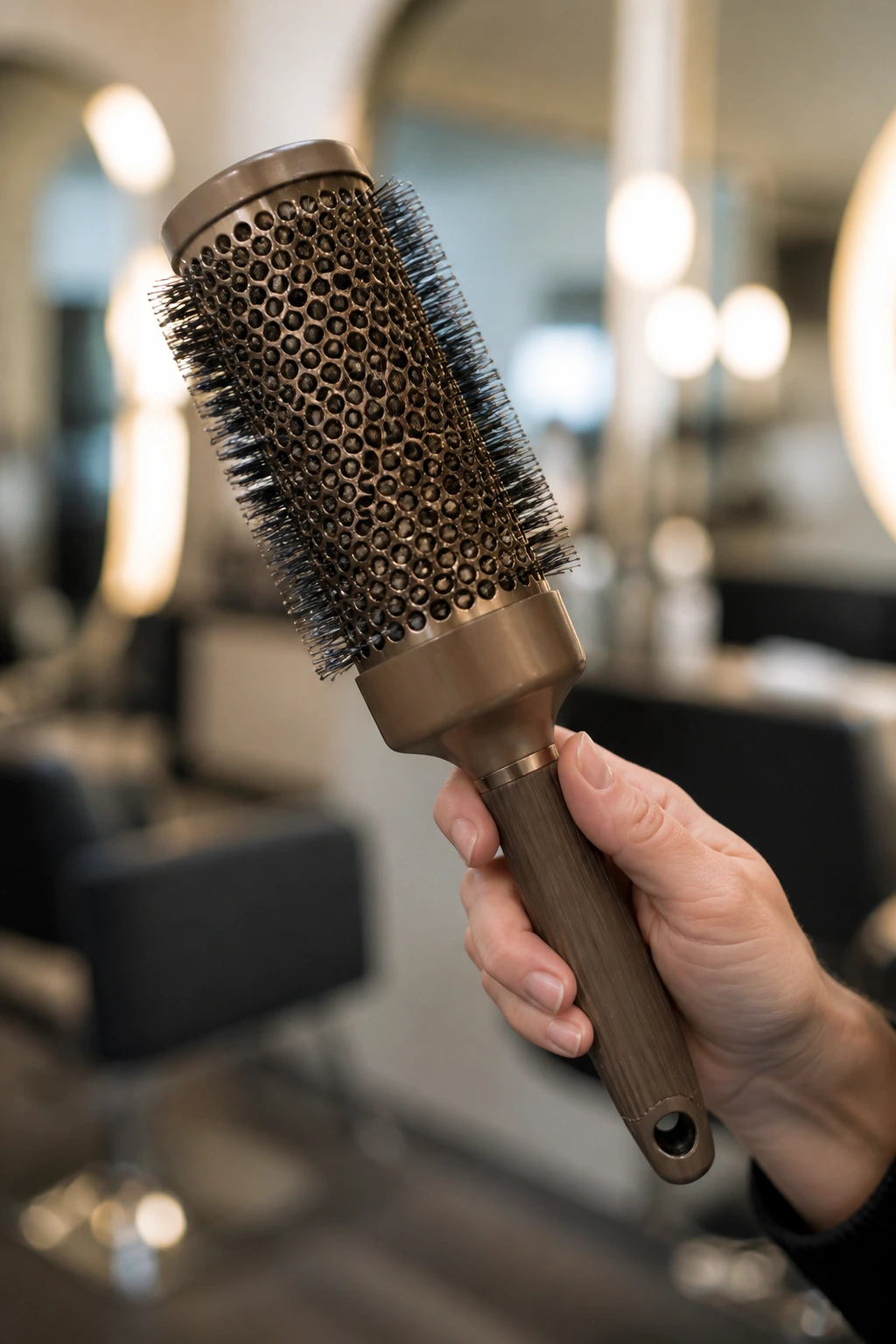
- Medium round brush, 1.5 to 2 inches: Good for bending the front pieces and turning the ends under without making the style look puffy.
- Blow dryer with a nozzle: Directs airflow so fine hair dries smoother at the roots and keeps the cut from frizzing.
- Lightweight root lift spray: Best at the crown and part line; too much anywhere else can make thin hair sticky.
- Velcro rollers: Useful for curtain bangs, face-framing pieces, and a fast crown boost while you get dressed.
- Heat protectant mist: Keeps repeated blow-drying or flat ironing from making fine ends feel dry and rough.
- 1-inch flat iron or curling iron: Handy for adding a soft bend to the front or flipping the ends without redoing the whole head.
- Dry shampoo: Good for day-two roots and for creating a little grip at the part.
- Microfiber towel or soft T-shirt: Reduces roughness after washing, which matters more on thin hair than people think.
- Tail comb: Helps make a clean part, and clean parts matter because messy sections make fine hair look thinner.
- Light mousse or foam: Gives the hair some memory at the crown without coating it the way heavy creams can.
How to Ask Your Stylist for the Right Shape
Say where you want the weight to stay. That is the first sentence, and it is the one that prevents a lot of disappointment. If you want thin hair to look fuller, ask for a strong perimeter, then explain whether you want that line at the collarbone, just below the jaw, or a little longer in front. A stylist can work with that. “More volume” by itself is too vague.
Be specific about layers
Tell them you want internal movement if you want softness, not lots of short face-framing slices. That phrase matters because internal layers lift the hair from underneath without destroying the outline. If you say you style with a blow dryer only twice a week, mention that too. A cut that depends on curling every morning is not a low-maintenance cut, no matter what the brochure says.
Mention your part and fringe habits
Oval faces can handle center parts, side parts, curtain bangs, bottleneck bangs, and soft fringe, but one of those might suit your habits more than the others. If you never move your part, say so. If you wear glasses, say that too. Fringe length changes once frames are in the picture. Also, if your hairline is sparse at the temples, your stylist should know before they carve in a heavy bang.
Bring photos, then describe what you like in them
Do not stop at “I want this cut.” Point out the parts you want: the blunt end, the face frame, the crown lift, the way the bangs sit. That is what saves the result when a photo looks good for reasons that are hard to name. A picture is helpful. A clear sentence is better.
Daily Styling Moves That Keep Fine Hair Looking Full
The fastest way to flatten thin medium hair is to overload it. Heavy conditioner at the roots, too much oil on the ends, too much brush-through after it’s dry — all of that drags the shape down. Start with less product than you think you need. Fine hair rarely asks for more.
Root Lift: Work a foam or root spray into damp roots, then dry the hair in sections with the nozzle pointed down the shaft. For extra lift, dry the roots in the opposite direction of your part first, then switch back once they’re almost dry. That flip gives the crown a little memory.
End Shape: Use a round brush or a flat iron only on the last inch or two of the hair. A slight inward bend keeps the perimeter compact, which is what makes the cut look denser. Straight, limp ends tend to show every bit of sparseness.
Part Control: Change your part once in a while, or at least dry it in the direction you want it to sit. Fine hair can get lazy at the part line. It learns the shape you repeat, and sometimes that shape is boring.
Second-Day Reset: Dry shampoo belongs at the roots before the hair gets greasy, not after it is already flat. A few sprays at the crown and under the top layer give the style grip, which helps the bend survive longer.
Common Mistakes That Make Thin Medium Hair Look Smaller
Over-layering the bottom: If the ends are sliced too hard, the cut loses its edge and starts looking threadbare. Fix it by asking for a blunt or softly rounded perimeter next time.
Cutting curtain bangs too short: Short fringe on fine hair can split awkwardly and expose too much forehead. Keep curtain bangs longer so they can blend into the front pieces instead of sitting like a separate shape.
Using heavy conditioner at the roots: This makes the crown collapse fast. Keep conditioner from mid-length to ends only, and use a lighter formula if your hair gets soft or limp after washing.
Texturizing too aggressively: A lot of razor work can make the style look airy in the chair and weak a week later. Ask for controlled texture, not aggressive thinning, especially around the ends.
Skipping trims for too long: Medium hair on thin strands loses its shape faster than thick hair. Once the perimeter starts splitting, the illusion of fullness goes with it. Trims every 6 to 8 weeks usually keep the line clean.
Leaving the part in one place forever: That part line can start to lie flat and expose the scalp more than you want. Switching the part or drying it in the opposite direction can make a tired cut look fresher without changing the length.
Variations and Alternatives to Try

The Blunt-First Version: Keep the perimeter strong and minimize layers almost completely. This fits if your hair is very fine and you want the thickest-looking outline with the least styling.
The Soft-Frame Version: Add longer face-framing pieces at the cheekbone and jaw, but leave the ends blunt. This works well when you want some softness around the face without losing the illusion of density.
The Blowout Version: Ask for layers that support a round-brush finish, especially through the crown and front corners. The cut should still hold up when air-dried, but it will really shine with a bouncy finish.
The Air-Dry Version: Keep the layers low and the perimeter clean, then rely on your natural bend. This is the one for people who don’t want to heat-style every time they wash.
The Fringe Version: Add curtain bangs, bottleneck bangs, or a soft side fringe. Oval faces can handle all three, and the fringe adds focus up front without stealing too much weight from the body of the hair.
Keeping the Cut Fresh Between Salon Visits
Thin medium hair usually needs a trim every 6 to 8 weeks if you want the outline to stay full. If you have bangs, especially curtain or bottleneck fringe, a little cleanup every 3 to 4 weeks keeps the front from sliding into your eyes or splitting open in the middle. That does not mean a full haircut every time. A tiny fringe trim can be enough.
Wash rhythm matters too. If your hair gets limp quickly, washing every other day or every third day can work better than trying to revive day-four roots with half a bottle of product. Dry shampoo works best on clean-ish hair, not greasy hair. That one detail changes everything.
At night, a loose clip at the crown or a silk pillowcase can keep the bend from getting crushed. If the ends flip weird, a quick pass with a 1-inch iron on just the last inch can reset the shape in under five minutes. I also like to use a small amount of lightweight serum only on the very bottom layer when the ends start to look dry. The goal is to keep the cut looking intentional, not freshly salon-finished every day.
Questions People Ask Before Cutting Thin Hair Medium
What medium length is most flattering for thin hair?
Usually somewhere between the collarbone and a little below the shoulders. That range keeps enough weight in the ends to look full without dragging the hair so long that it starts to separate.
Are layers bad for thin hair?
Not bad. Overdone, yes. Thin hair usually looks better with controlled layers placed higher up or hidden underneath, while the perimeter stays blunt or softly rounded.
Do curtain bangs work on oval faces?
They do, and oval faces can wear them easily. The main thing is keeping them long enough to blend into the front pieces, so the fringe adds shape instead of looking cut off.
Should I choose a middle part or a side part?
Pick the one your hair will hold with the least effort. A center part keeps the look calm and symmetrical, while a side part gives faster root lift and can make fine hair look fuller at the crown.
Can thin hair wear a shag?
Yes, if the shag is softened and the ends are not shredded. A mid-length or soft shag works better than a heavy, choppy version that removes too much density at the bottom.
How often should I trim medium thin hair?
Every 6 to 8 weeks is a good rhythm for most cuts. If the style includes fringe, you may want a quicker touch-up for the bangs so they do not split or hang into your eyes.
What if my hair is thin and wavy instead of straight?
That can help the cut, honestly. Wavy fine hair often gets a little natural bend at the ends, which makes blunt or rounded medium cuts look fuller with less effort.
How do I stop my haircut from falling flat by noon?
Start with less conditioner, dry the roots with tension, and use a small amount of root spray or mousse before styling. Fine hair usually needs shape at the root more than it needs extra product through the lengths.
The Shape That Lasts
Thin hair does not need to be bullied into volume. It needs a shape that respects where the density lives and protects the ends from getting chewed up by too much layering. Medium length gives you room to move, but it still keeps enough weight to look like hair, not a vapor trail.
Oval faces make that easier because the face shape can carry blunt edges, fringe, side parts, and soft angles without much fuss. That is a gift. Use it. Pick the cut that keeps the outline clean, then style it with a light hand and a little nerve.
If your last haircut looked airy for all the wrong reasons, the fix may be simpler than you think. A better line, a better part, and a better place to stop cutting can change everything.