



Long hair can go flat fast.
A little front-end texture fixes that better than most people expect. Choppy bangs break the long vertical line, put movement right where the eye lands first, and keep an oval face from feeling too stretched when the rest of the hair hangs straight or heavy. The cut doesn’t have to be dramatic to make a difference. Sometimes a half-inch of broken edge around the brow is enough.
I like choppy bangs because they don’t pretend to be precious. They can look polished in a blowout, messy in a good way when air-dried, and soft enough to grow out without looking like a haircut emergency. That matters with long hair, because nobody wants to lose length just to get a little shape up front. The trick is choosing the right kind of broken, the right amount of forehead, and the right place to let the pieces fall.
Oval faces have a lot of room to play. That’s the good news. The less useful news is that an oval face can also swallow a fringe that’s too thin, too blunt, or cut in a way that ignores the hair’s natural fall. The best versions in this roundup keep some movement near the eyes or cheekbones, then let the longer layers do the rest. Some are airy. Some are sharper. Some lean expensive-looking, some are a little rock-and-roll. All of them work with the fact that long hair needs a front section that earns its space.
Why This Collection Works So Well
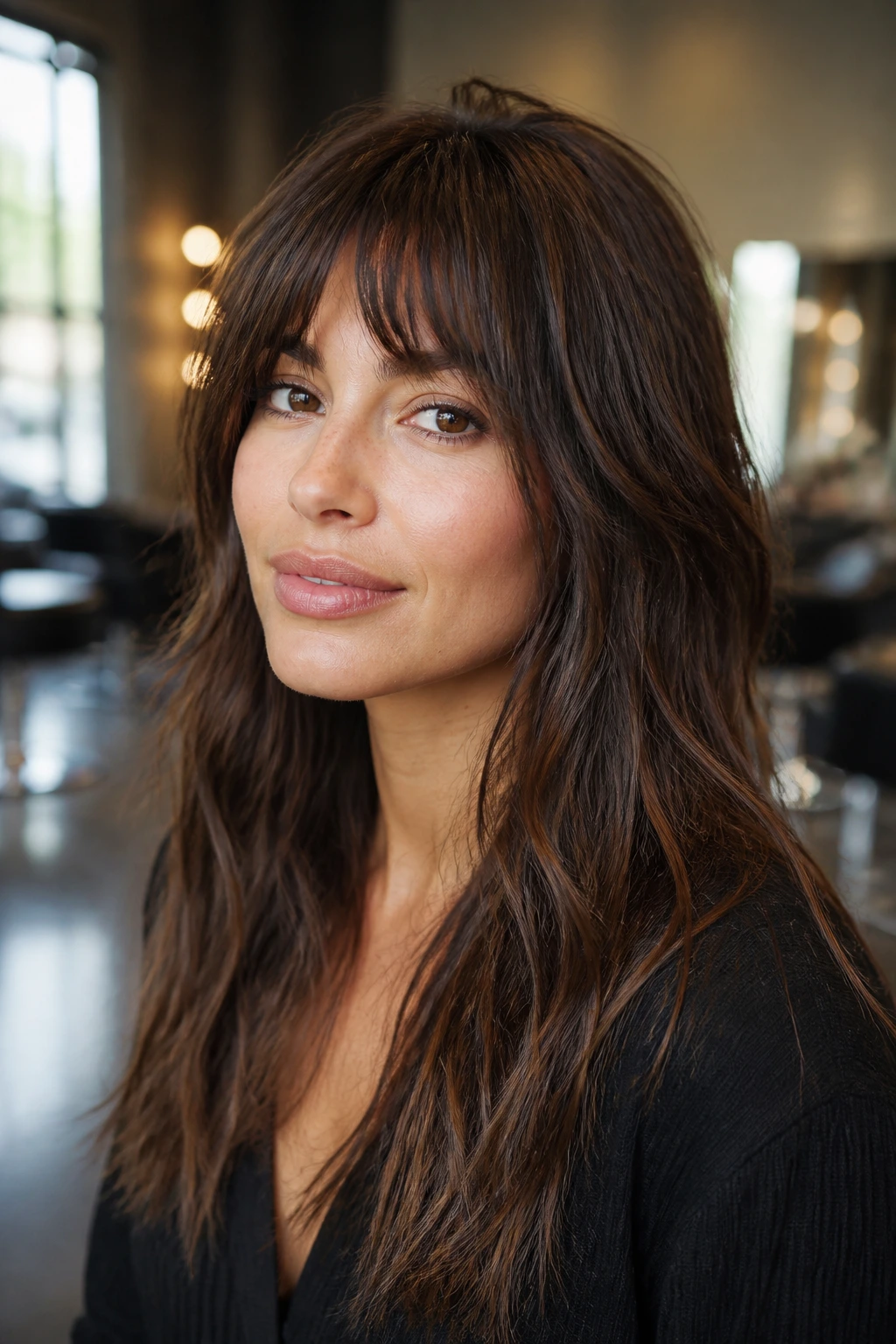
-
Long hair gets a front anchor. Choppy bangs stop the lengths from reading like one uninterrupted sheet, which makes the whole cut look more deliberate.
-
Oval faces can handle shape near the brow. A fringe can sit right on the face without fighting proportion, as long as the edges stay broken and not boxed in.
-
The grow-out is less brutal. Because the ends are already textured, these bangs melt into layers instead of turning into a blunt shelf.
-
They can be styled fast. A bend from a round brush, a touch of texture spray, or even a quick finger-dry can be enough for many versions.
-
They work with a lot of density levels. Fine hair can use airy separation, while thick hair can handle more weight and still move.
-
You can dial the mood up or down. The same basic fringe can look soft, edgy, polished, or lived-in depending on where the shortest pieces land.
1. Airy Curtain Chops That Split Cleanly at the Brow
A clean curtain fringe with choppy ends is the safest place to start if you want movement without drama. The center parts easily, the outer pieces skim the cheekbones, and the whole thing feels light instead of heavy. On long hair, that matters. You want the front to frame the face, not sit there like a separate haircut.
Why It Works
The center split keeps an oval face open, which is usually the right move when the rest of the hair is long. The choppiness stops the fringe from falling in one flat curtain. Ask for the shortest point around eyebrow level, then let the sides drift longer toward the top of the cheek. That shape gives the long lengths a place to land.
- Best for: medium to thick hair with a little natural bend.
- Styling cue: blow-dry away from the face with a round brush, then separate the ends with your fingers.
- Watch for: too much density at the center, which makes curtain bangs feel heavy and slow.
My favorite detail: leave the very front pieces slightly longer than your first instinct. Curtain bangs settle, and a half-inch can be the difference between “soft frame” and “I can’t see my eyebrows.”
2. Brow-Grazing Razor Fringe with Broken Ends
This one looks sharper on paper than it does in real life. The line sits close to the brows, but the razor-cut finish keeps it from turning severe. You get that crisp, modern edge without the hard shelf some blunt bangs create on long hair. It’s a good pick if your style leans clean, not fussy.
The reason it flatters oval faces is simple: it adds width right where the face can use a little structure, then breaks up before it gets boxy. If your hair is naturally straight or you’re willing to do a quick blow-dry, this fringe has a nice, glassy motion at the ends. I’d avoid over-thinning it. Razor fringe should look sliced, not shredded.
A little dry texture spray at the roots is enough to keep the pieces apart. Too much product and you lose the point. Too little and the ends stick together like wet thread.
3. Cheekbone-Skimming Piecey Bangs That Pull the Eye Outward
Can bangs make cheekbones do more work? Yes, and this is the version that proves it. The shortest pieces sit just above the cheekbone line, then the rest breaks into little tapered sections that fan outward instead of hanging straight down. On an oval face, that sideward movement is gold. It keeps the front from becoming too vertical.
How to Style It
Blow-dry the bangs forward first, then sweep them away from the face with a brush so the ends land in soft little bends. Don’t try to make every piece match. That’s the wrong goal. You want a little separation, like the fringe has been touched and moved, not shellacked into place.
Best For
This shape is especially good if the long hair has layers already. The bangs echo those layers and make the whole cut feel connected. If your hair is thick, ask for some interior weight removal so the front doesn’t puff.
The nicest thing about this style is the way it keeps changing during the day. It never sits still for long, and that’s the point.
4. Bottleneck Choppy Fringe That Narrows and Opens
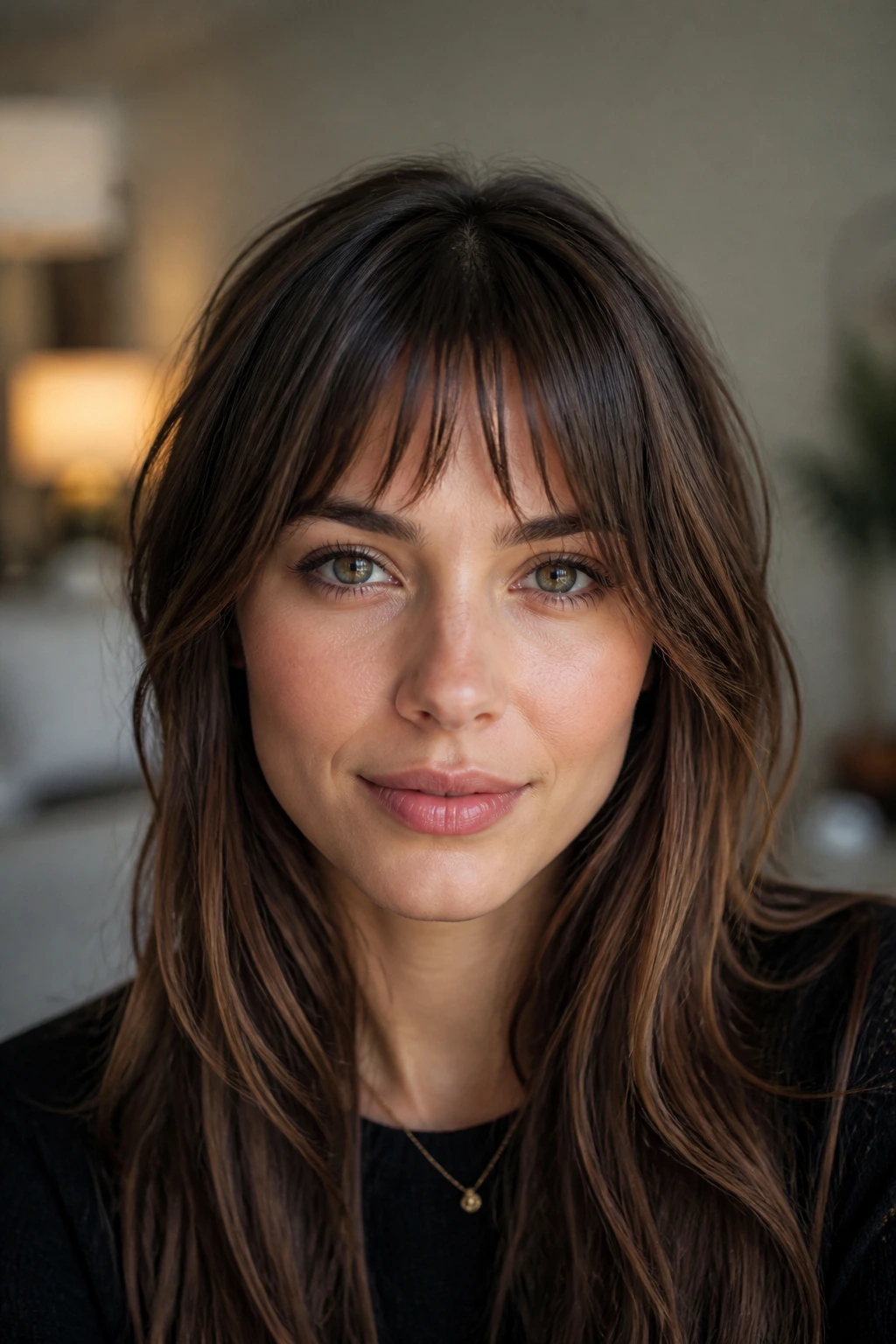
Bottleneck bangs have become popular for a reason: they create shape without trapping the face. The center is a touch shorter and denser, then the pieces flare wider near the temples and slide into the lengths. On long hair, that narrowing-to-widening pattern prevents the fringe from looking like a solid block.
The choppy version is better than the smooth one if you want a softer edge around an oval face. The broken ends keep the brow area open, which avoids that flat, curtain-like effect some bottleneck cuts can get when they’re too polished. I like this shape on medium-density hair because it has enough body to hold the curve.
If you wear your hair tucked behind the ears a lot, this fringe still works. The temple pieces do the framing for you. It’s one of the few bang shapes that can look intentional even when half the front is shoved aside with your sunglasses.
5. Side-Swept Choppy Fringe for Cowlicks and Off-Center Parts
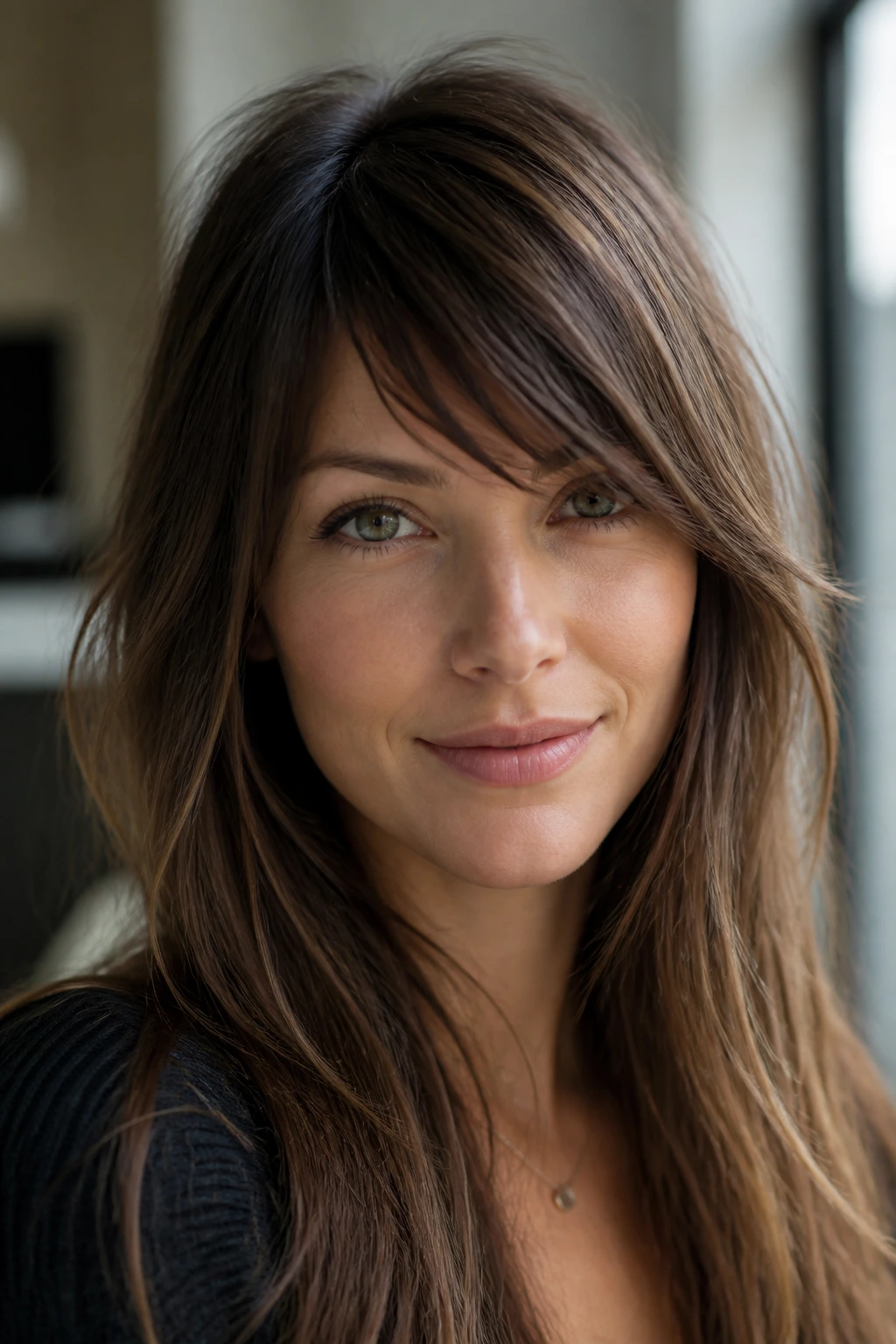
Not every fringe wants to live in the middle. Some hairlines push back hard against a center split, and a side-swept choppy fringe makes peace with that instead of fighting it. The pieces angle across the forehead, then break up as they travel toward the longer side of the face.
That diagonal line is flattering on an oval face because it creates movement without adding width in the wrong place. It also hides a stubborn cowlick more cleanly than a short straight fringe ever will. If you’ve spent years trying to train a center part into submission, this is the easier answer.
Ask your stylist to cut the fringe following your natural fall, not against it. That one detail saves you from a lot of morning wrestling. A round brush can polish the sweep, but even a quick finger dry usually gives this style enough shape.
6. Birkin-Inspired Choppy Fringe with a Fuller Top Line
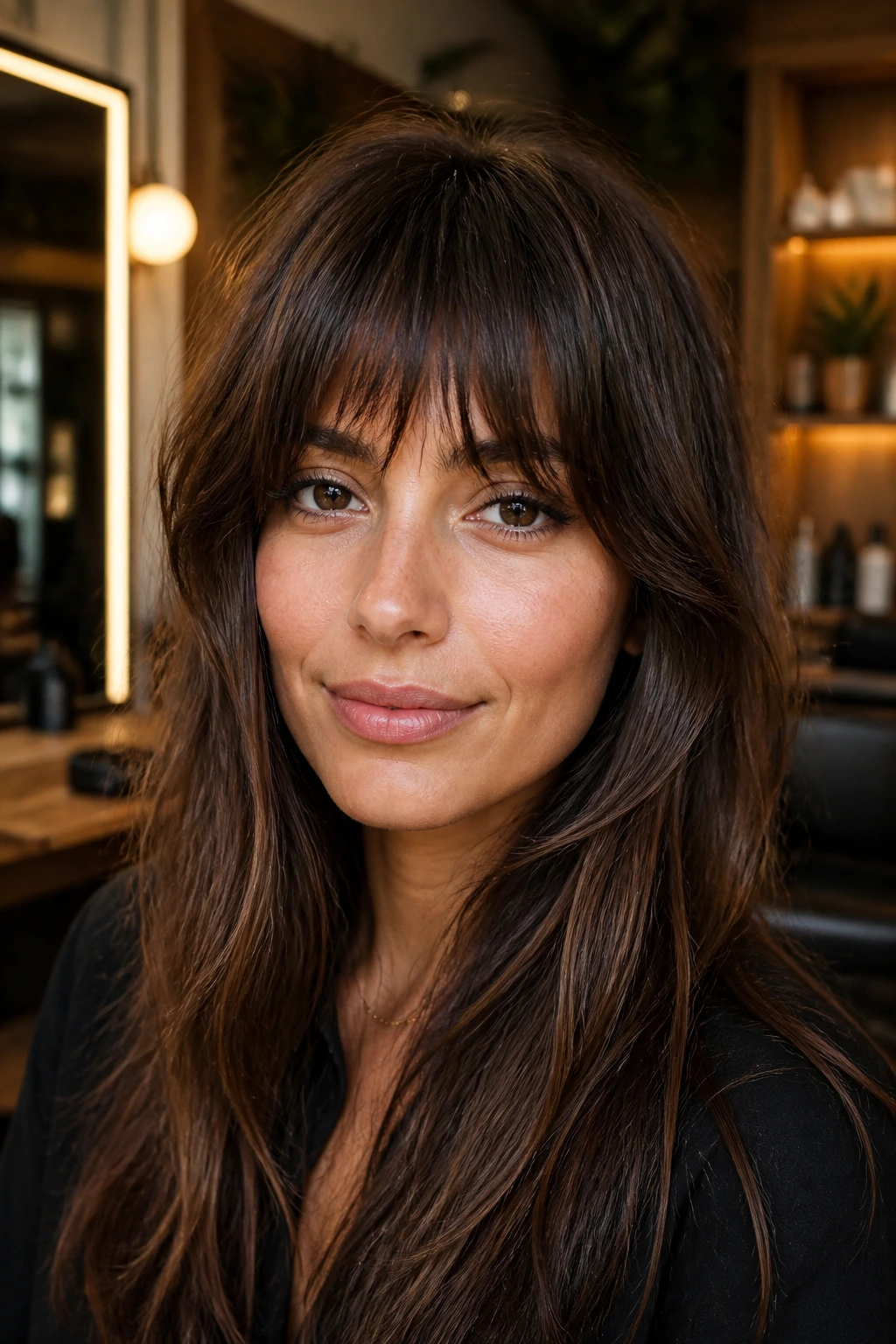
This is the version for people who like fringe that feels a little more substantial. The line starts fuller across the top, then the ends are chipped and softened so it doesn’t sit as one hard band. On long hair, that contrast is useful. You get presence in front without losing the airy finish.
The oval face benefit comes from the balance. A fuller fringe can make long features feel more grounded, but only if the ends stay broken. If the line is too neat, the whole thing can look costume-y. Keep the texture loose and slightly uneven, especially at the corners.
This cut loves a light pass with a flat iron, just enough to bend the ends under once. Not curled. Bent. That difference matters. A too-round fringe feels stiff. A soft bend feels lived-in.
7. Feathered Micro-Chops for Fine Hair That Needs Lift
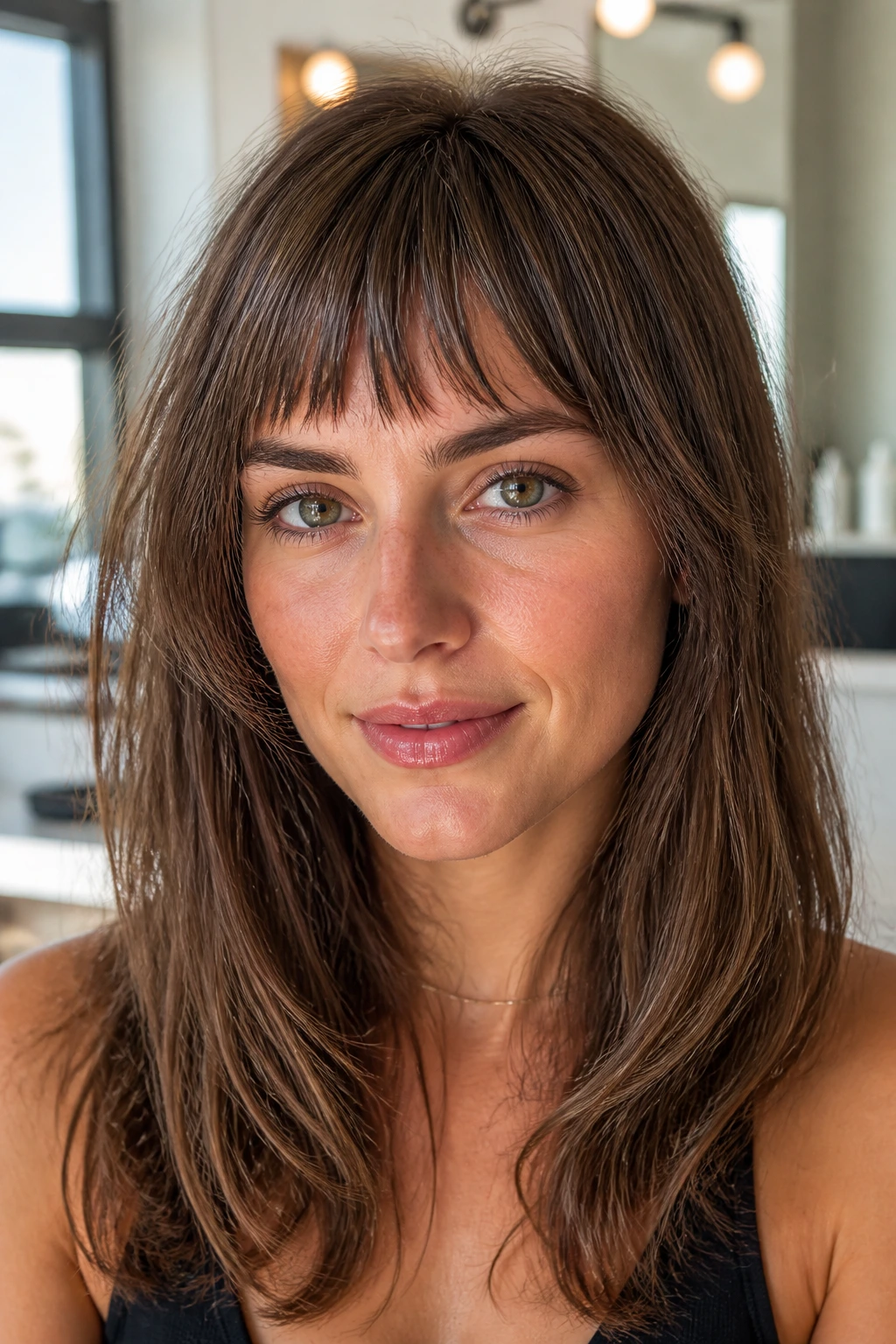
Fine hair needs a lighter hand. Always has. A feathered micro-chop keeps the fringe short enough to feel fresh, but the interior slicing makes it airy instead of stringy. The pieces sit close to the brows and feather outward, so the whole front section looks fuller than it is.
That’s the trick for oval faces with finer density: don’t overload the bang line. Use softness and separation instead. A blunt chunk at the front can look sparse by lunchtime. Feathering gives the illusion of more hair, especially if you’ve got long layers that already move easily.
This one is best cut dry or nearly dry, because fine hair can spring up in strange ways once it’s dry. Tiny adjustments matter more than big ones. If your stylist reaches for thinning shears, ask what they’re taking out. A little is fine. Too much, and the fringe disappears.
8. Jawline-Flip Bangs That End with a Little Kick
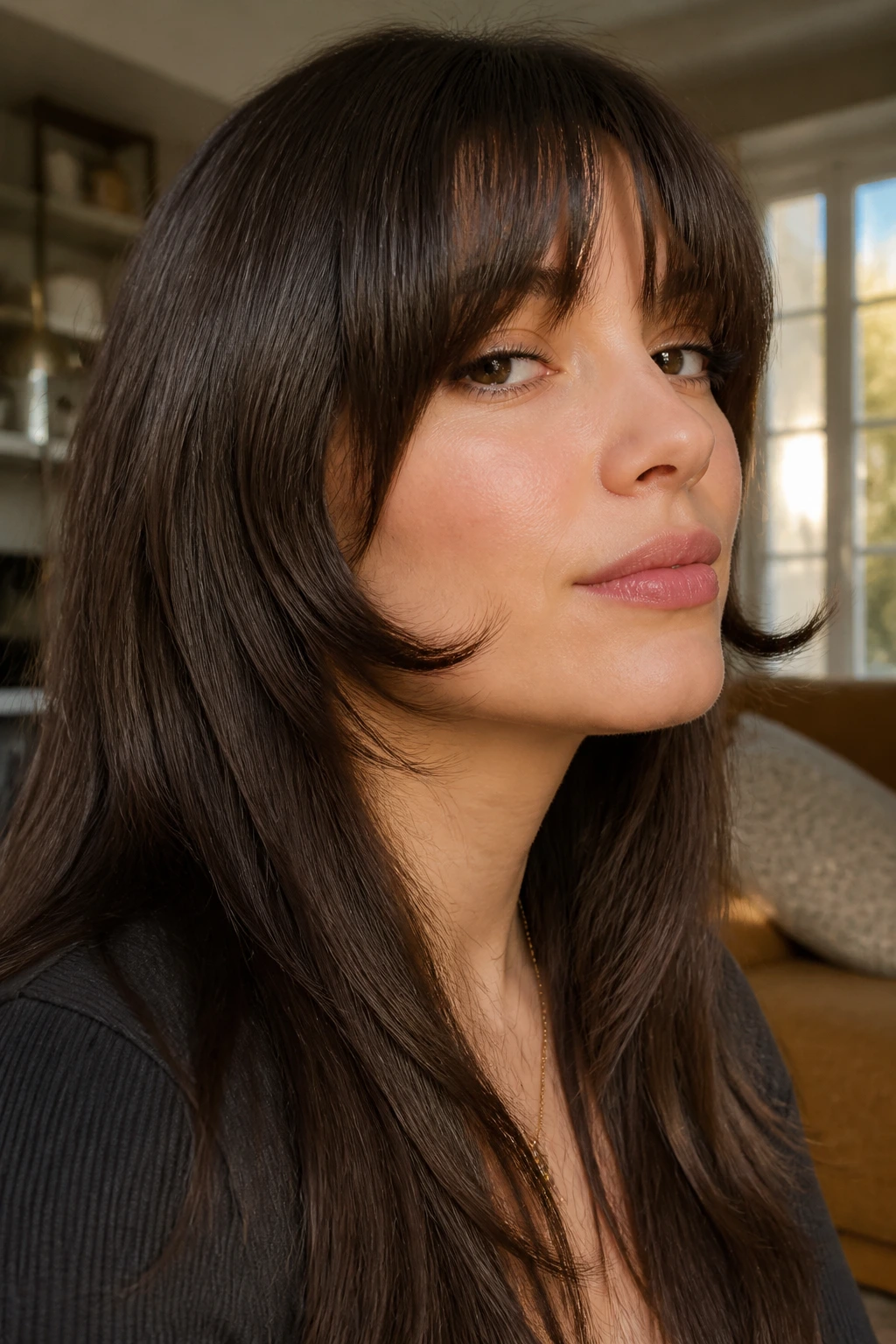
There’s something satisfying about a fringe that lands near the jaw and flicks outward at the ends. It feels deliberate without trying too hard. On long hair, this shape gives the front section a visible endpoint, which is useful if you want the bangs to connect to the rest of the cut instead of floating above it.
The jawline length is especially flattering on oval faces because it creates a second frame lower down. That gives the eye a place to rest. It also works well if you wear your hair in loose waves, since the flipped ends echo the movement already happening through the mid-lengths.
This style needs a little styling memory. A round brush or a quick pass with a medium flat iron can create the outward bend in under two minutes. Skip heavy cream at the roots; it makes the flip fall flat before you leave the house.
9. Arched Textured Fringe That Opens the Eyes
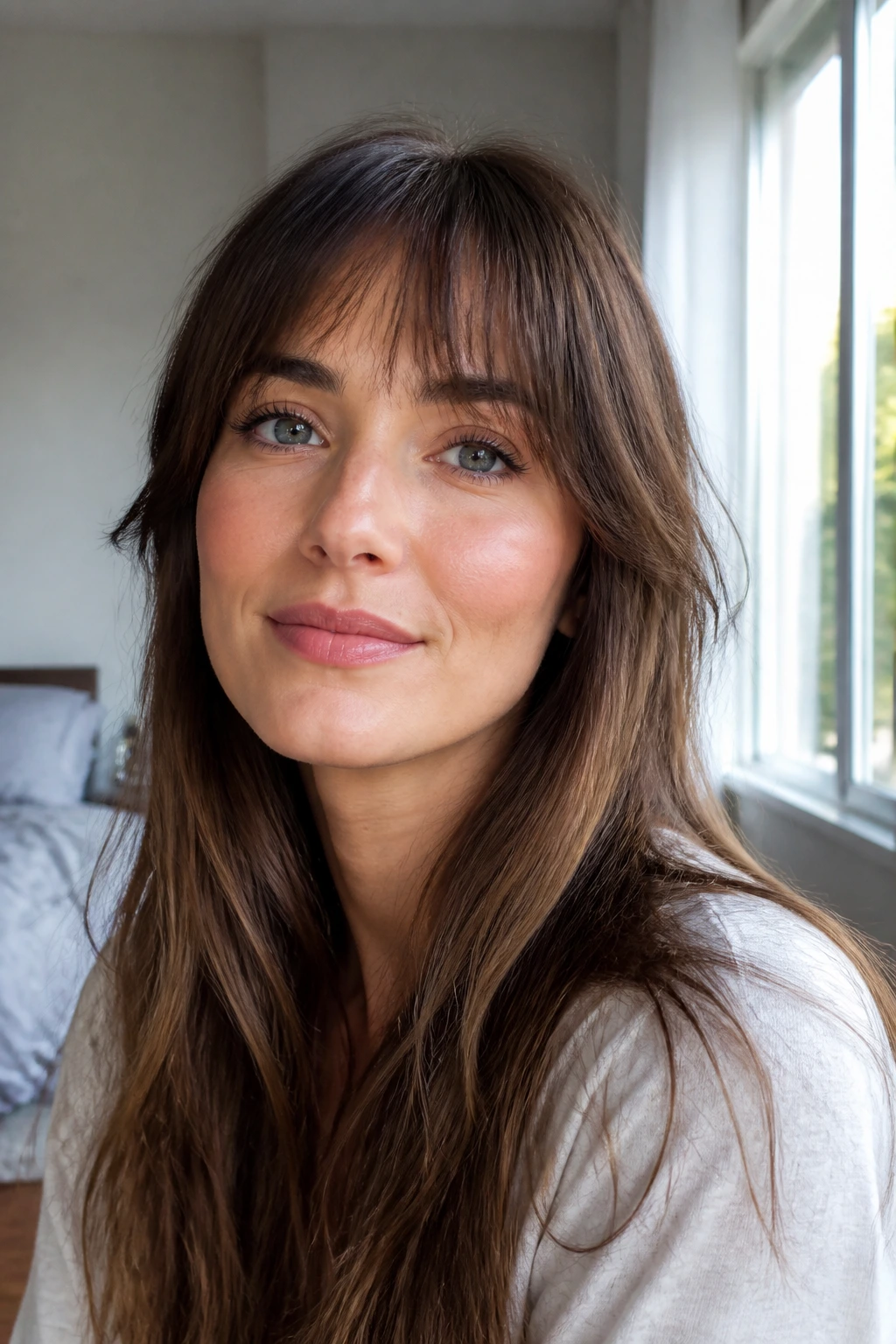
A softly arched fringe is one of those cuts that looks simple until you see how much it changes the face. The center sits a touch shorter, then the sides angle down in a gentle curve. Add choppy ends, and the curve stops reading as formal. It becomes relaxed, which is much nicer on long hair.
For oval faces, the arch opens the eye area without hiding the brow line. That’s a better look than a heavy wall of hair when the rest of the cut is already long and flowing. The fringe works well with blowouts because the shape is built into the cut. It also behaves if you air-dry with a side bend.
I’d choose this if you want something polished enough for work but not stiff enough to feel office-issued. It’s tidy. It just isn’t boring.
10. Wisped-Out Indie Bangs with Uneven Ends
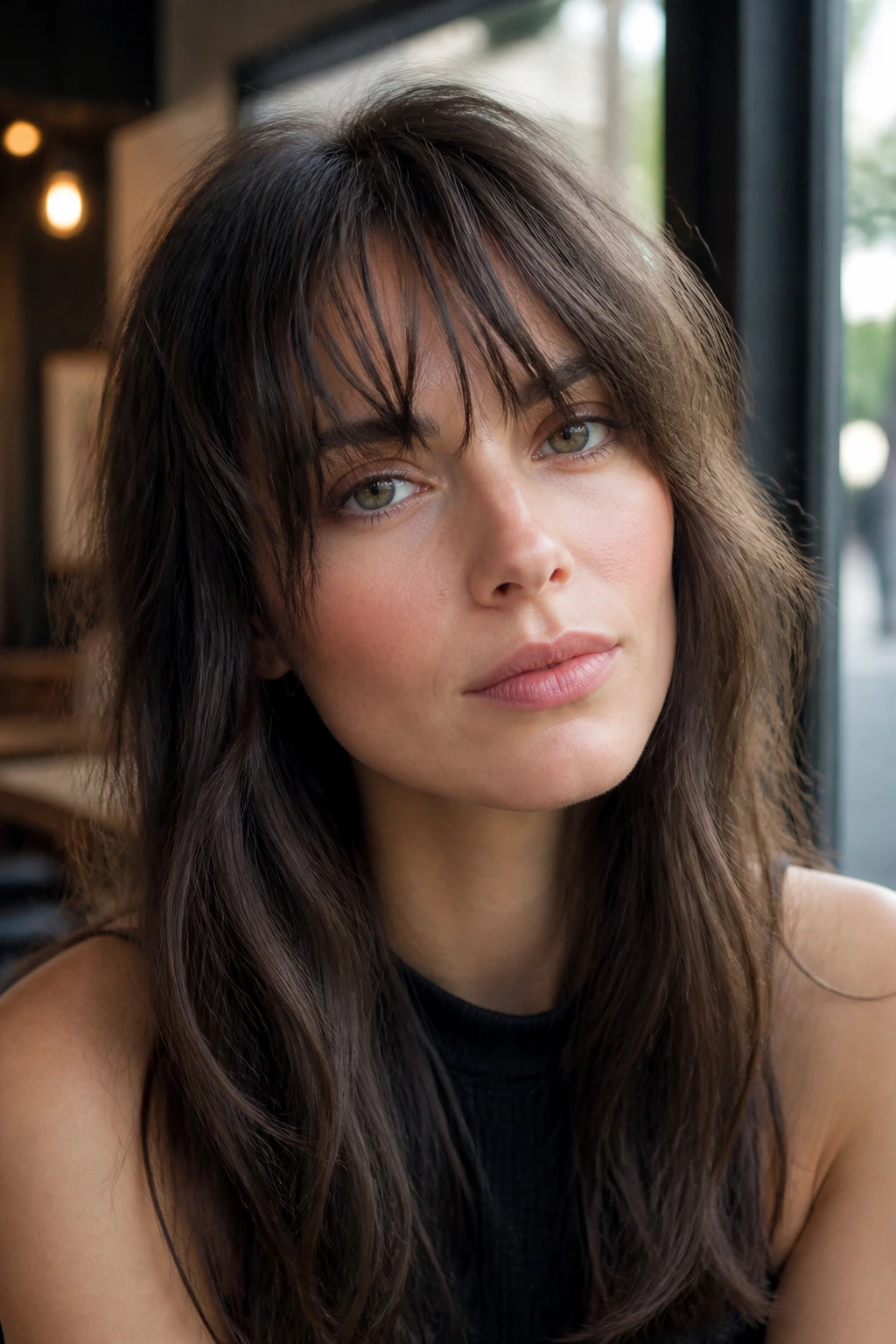
These are the bangs for people who like a little mess. The ends are intentionally irregular, the density is softer, and the overall shape feels more indie than styled. On an oval face, that looseness keeps the forehead from looking boxed in. On long hair, it adds a point of interest without stealing the whole show.
The important part is restraint. Wisped-out bangs should look broken up, not accidentally over-cut. If the ends are too thin, they lose their edge. If they’re too dense, they lose the airy feel that makes them work. There’s a narrow lane here, but it’s a good one.
These are best paired with hair that already has texture — natural wave, a tousled blow-dry, or soft layers through the lengths. Straight, razor-flat hair can make them look too sparse. A little dry shampoo at the roots helps hold the front apart and gives the fringe more life.
11. Long Shag Bangs That Blend Right Into the Layers
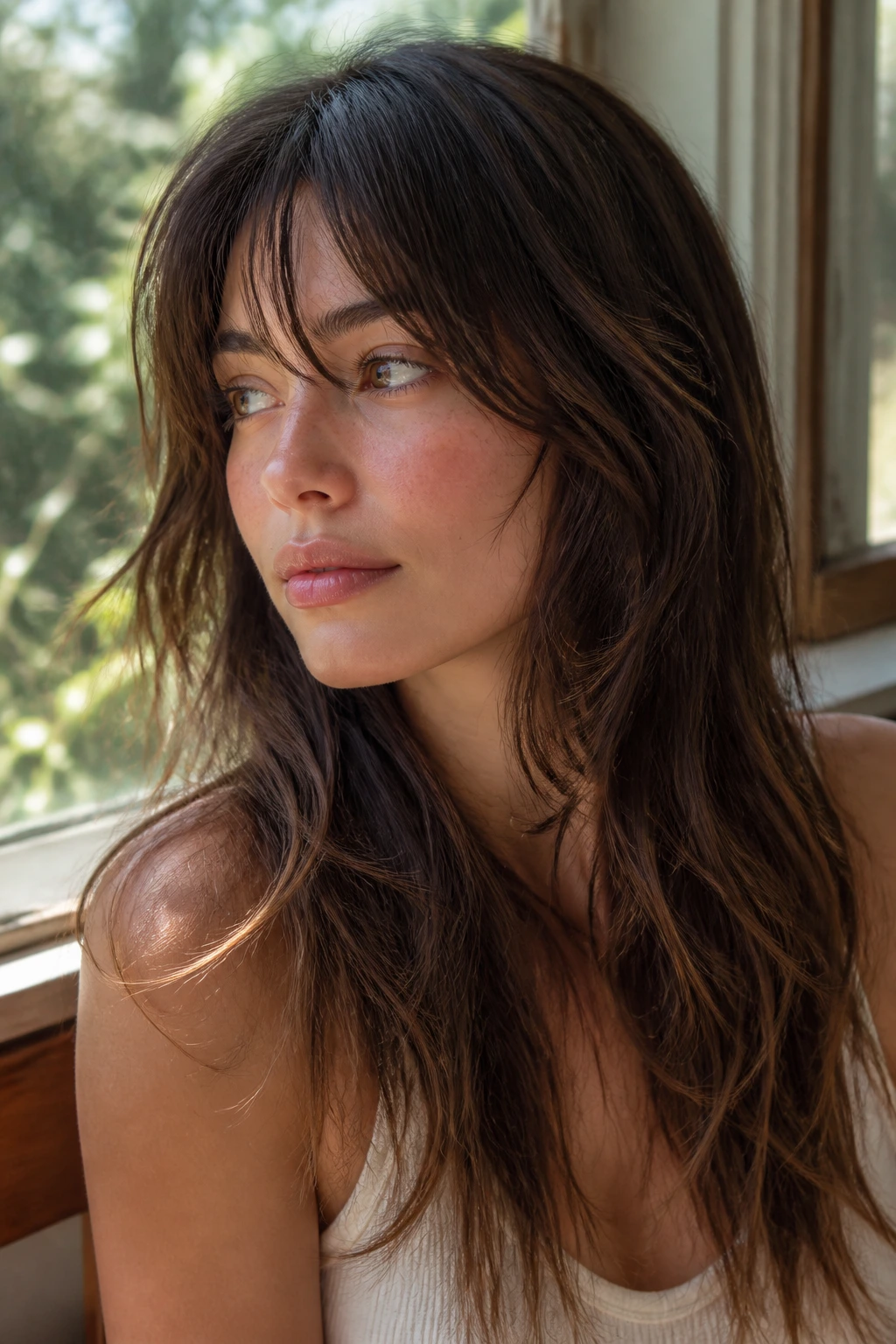
If you like bangs but hate the idea of obvious bangs, this is the move. The fringe starts as a shaggy, textured front section, then melts into the long layers around the face. Nothing feels isolated. Nothing feels too neat. It’s all one cut, which is why it works so well on long hair.
Oval faces can wear this shape easily because it doesn’t crowd the forehead or widen the cheeks too much. The broken edge keeps the focus soft. It also gives the hair a lot of motion when you walk, which sounds dramatic and is actually just the front pieces bouncing instead of staying fixed.
I prefer this on hair with some natural wave, but it can work on straight hair if you’re willing to rough-dry it a little. A salt-free texture spray is enough for many people. You’re aiming for movement, not grit.
12. French-Inspired Broken Fringe with a Soft Eye Line
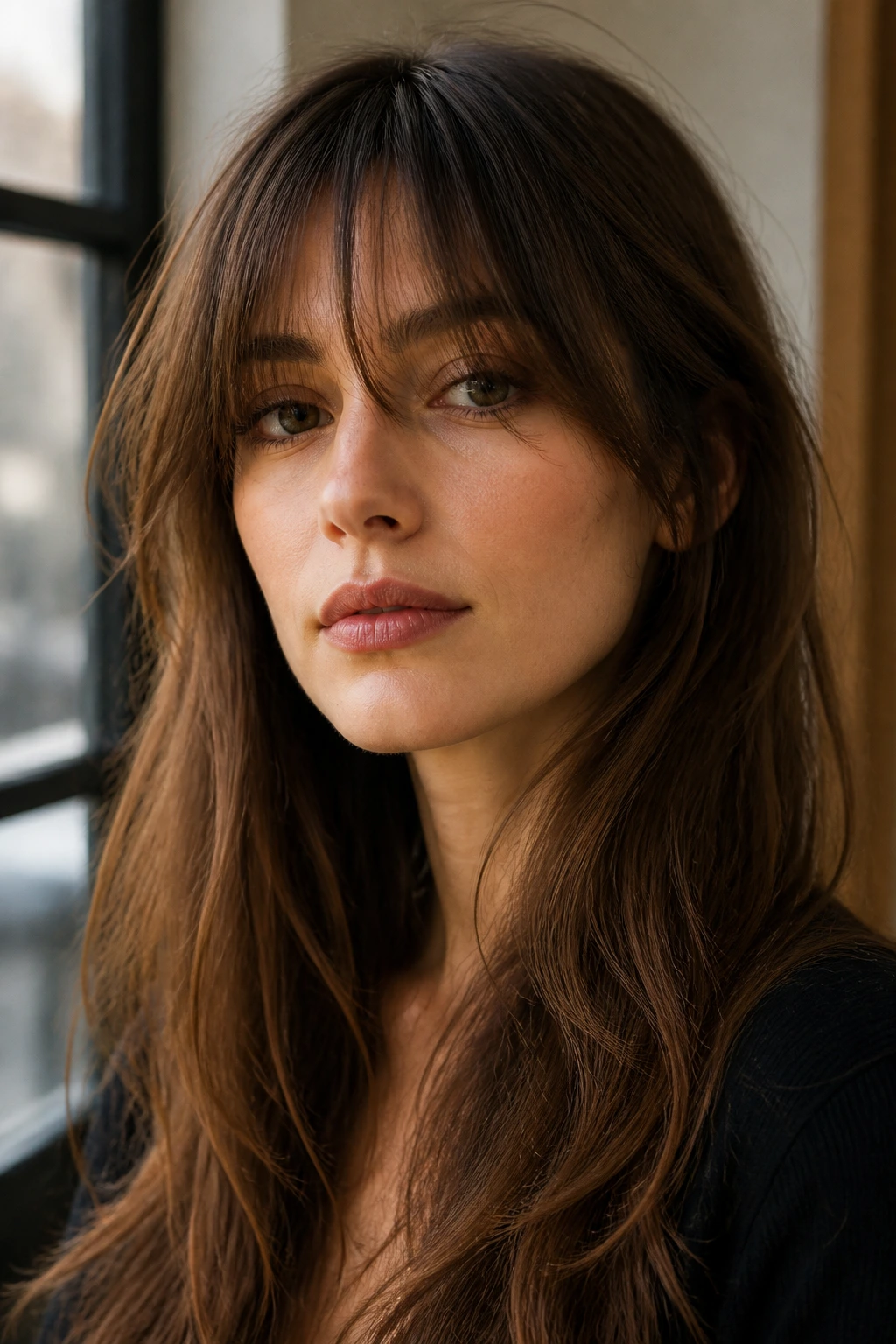
This version has a little more elegance in the line, but it still avoids stiffness. The fringe brushes the eyes, then breaks apart at the ends so it doesn’t sit like a straight bar. On long hair, that slight hush of hair near the lashes can look very intentional. Quiet, even. Not precious.
Why it suits oval faces: the face already has balanced proportions, so you can afford a fringe that draws attention to the eyes. The choppiness keeps the look from feeling too fixed or too symmetrical. If your hair is thick, ask for internal texturizing so the fringe doesn’t puff up and fight your forehead.
This cut is a good choice if you like a blowout. It holds a bend nicely and tends to look better the second day, when the ends have settled a bit.
13. Face-Framing Cascade Fringe That Starts High and Falls Low
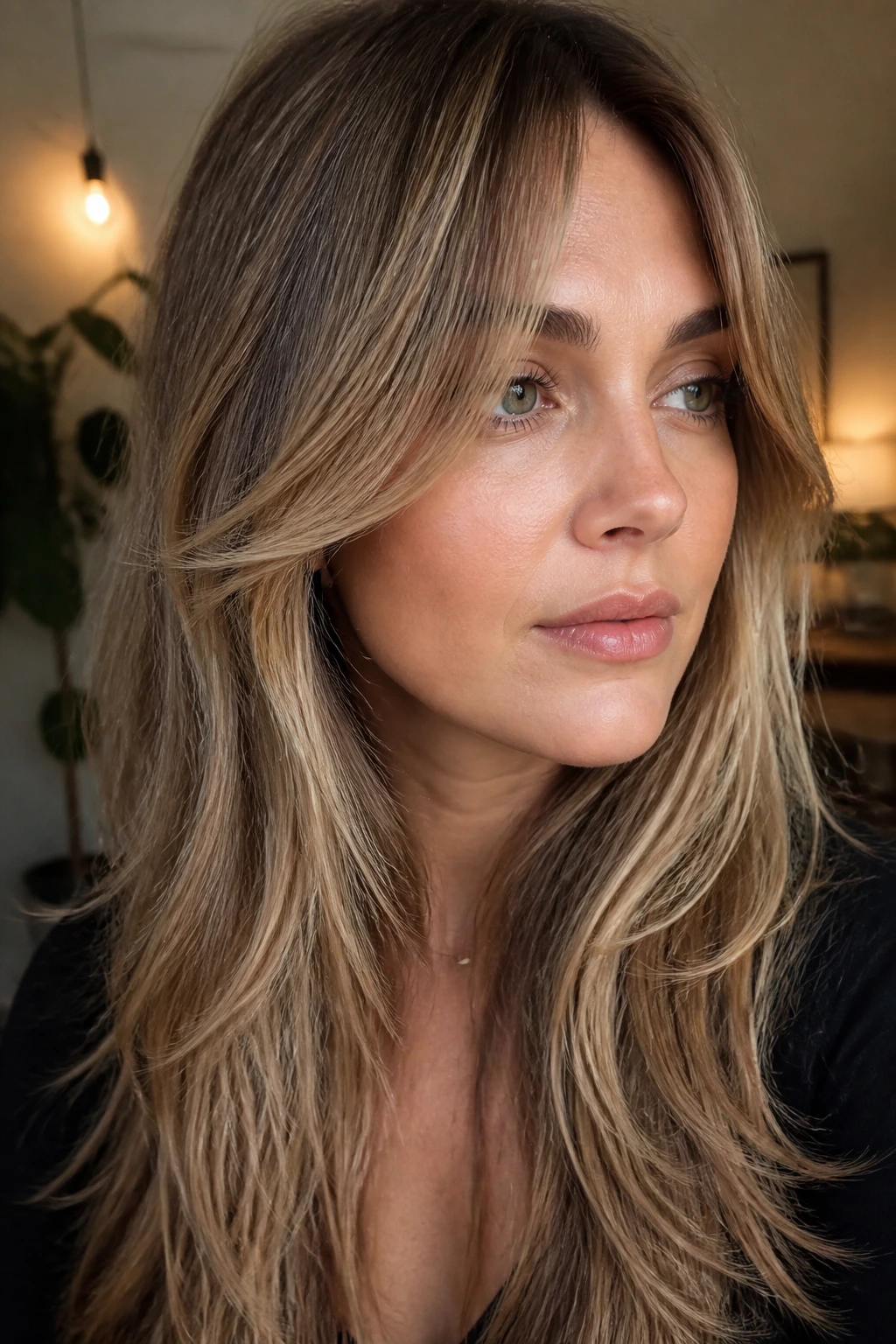
This one is more about the frame than the bangs alone. The shortest pieces begin near the temple, then cascade down in broken layers that land around the cheek and jaw. It’s a smart choice for long hair because it merges directly into the lengths. No hard separation. No awkward line.
Oval faces get a lot from this shape because it creates width where the face can use it, then drops away before the ends feel heavy. It’s especially good if you wear your hair over one shoulder or like to tuck one side behind the ear. The front pieces stay visible either way.
A lot of stylists call for this kind of cut when the client wants bangs but is scared of commitment. Fair enough. It’s less of a bang moment and more of a framing moment. That’s often the better answer.
14. Razor-Sliced Fringe for Thick Hair That Needs Control
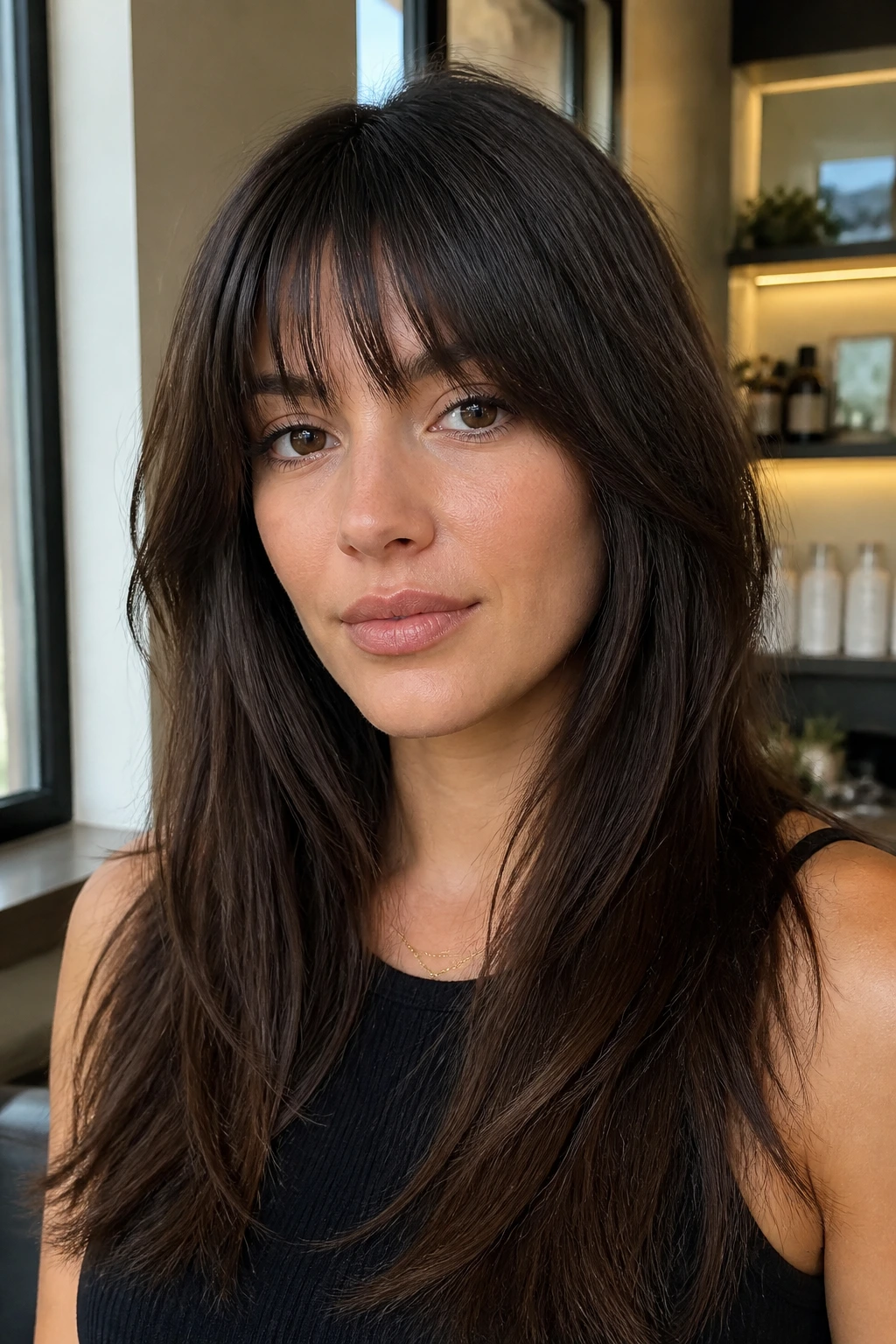
Thick hair can swallow a fringe whole if you let it. Razor-sliced bangs solve that by removing bulk while keeping a visible edge. The pieces come out lighter, the ends move, and the front doesn’t sit there in one heavy slab. On long hair, that controlled looseness keeps the whole style from feeling bottom-heavy.
Oval faces can wear a stronger fringe line as long as the texture breaks it up. Thick hair gives you room to do that. Ask for the center to sit around brow level and the sides to taper into the lengths. The taper matters more than most people think. It’s what keeps the front from taking over the face.
This is a fringe that rewards a quick restyle. A pass with a blow-dryer nozzle, a dab of lightweight paste on the ends, and you’re done. Heavy oils are the enemy here. They kill the slice.
15. Soft Rocker Fringe with a Little Edge in the Ends
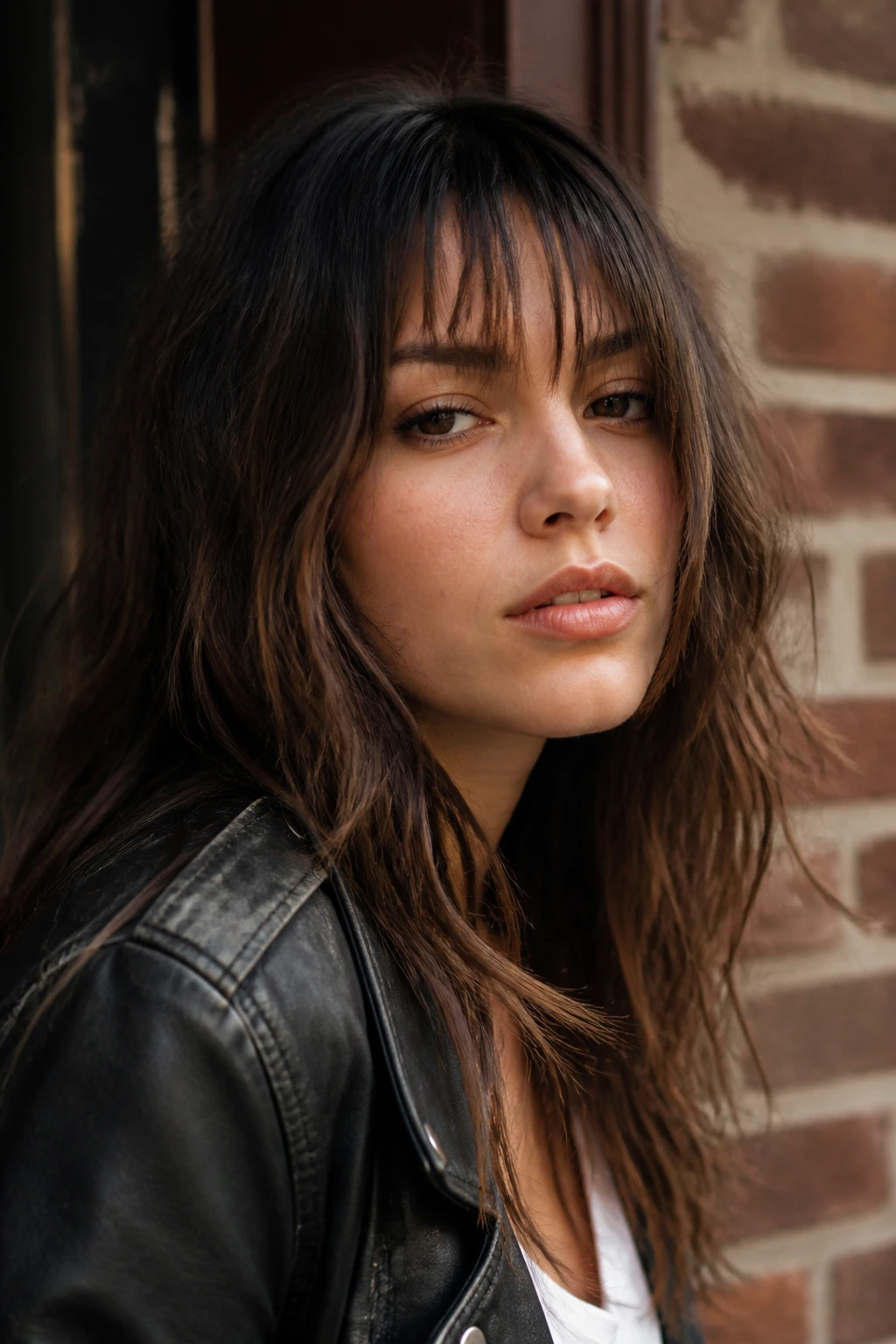
This cut has attitude, but not the loud kind. The ends are uneven enough to feel cool, the density sits in a comfortable middle ground, and the whole shape can be worn slightly messy without looking unkempt. Long hair gives the cut room to breathe, which is why it works so well here.
An oval face can carry this kind of fringe because the proportions are already friendly. You’re not trying to correct the face shape. You’re trying to add some grit to the front of the haircut. That grit comes from the broken ends and the slightly irregular parting, not from making the bangs short for shock value.
If your style leans toward leather jacket, boots, black tee — or, honestly, just a no-nonsense haircut — this is the one to save. It’s not fussy. It doesn’t beg for attention. It just looks good when the texture is right.
16. Brushed-Out Blowout Bangs That Keep Their Shape
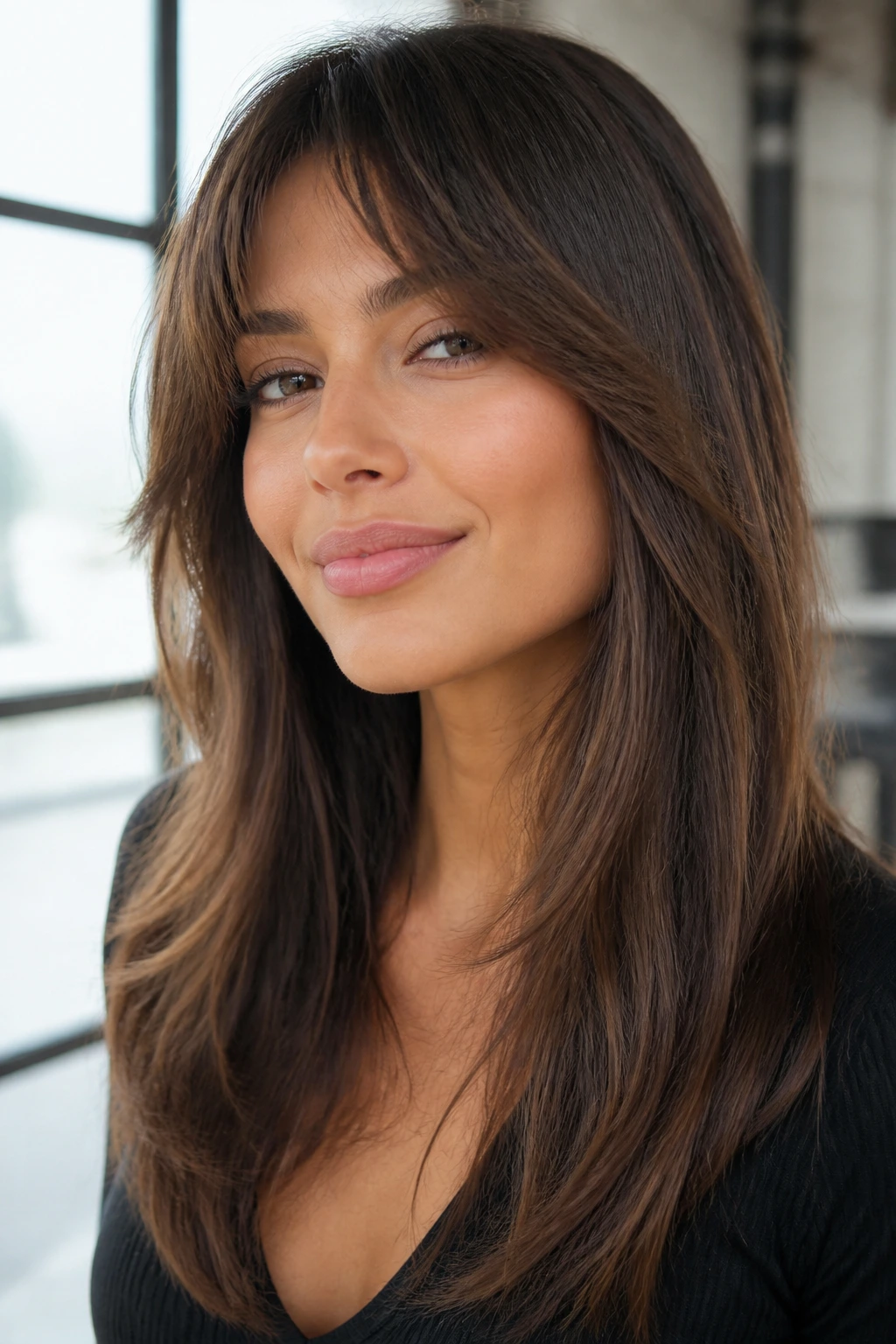
Some bangs are built to be worn sleek. This is one of them. The choppiness lives in the ends, but the overall shape is meant to be brushed smooth and lifted off the forehead. That gives long hair a salon-fresh finish without making the fringe feel stiff.
The oval-face advantage is in the openness. A blowout fringe lifts the eyes, keeps the forehead visible, and adds a bit of curve that balances long lengths. If your hair holds a bend well, this cut can look expensive with very little effort. If it doesn’t hold a bend well, you may want something less dependent on styling.
A medium round brush and a cool shot at the end make a big difference. So does letting the bangs cool in the direction you want them to sit. Rush that part, and they drop faster than you’d like.
17. Air-Dry Wave Fringe for Hair That Refuses to Behave

This is the low-maintenance answer that still looks considered. The pieces are cut to follow a natural wave pattern, so they can dry without fighting into a weird triangle. The choppiness helps the fringe break apart on its own, which is what you want if your hair gets frizzy the second a brush comes near it.
Oval faces work well with this style because it keeps the front soft and open. The fringe doesn’t need to be precise to be flattering. It just needs a decent shape. A curl cream or light styling milk on damp hair is usually enough. Then you leave it alone, which is half the battle.
If you hate standing over a mirror with a round brush, put this one near the top of your list. It won’t look identical every day. That’s fine. That’s the charm.
18. Two-Level Choppy Bangs That Break the Line on Purpose
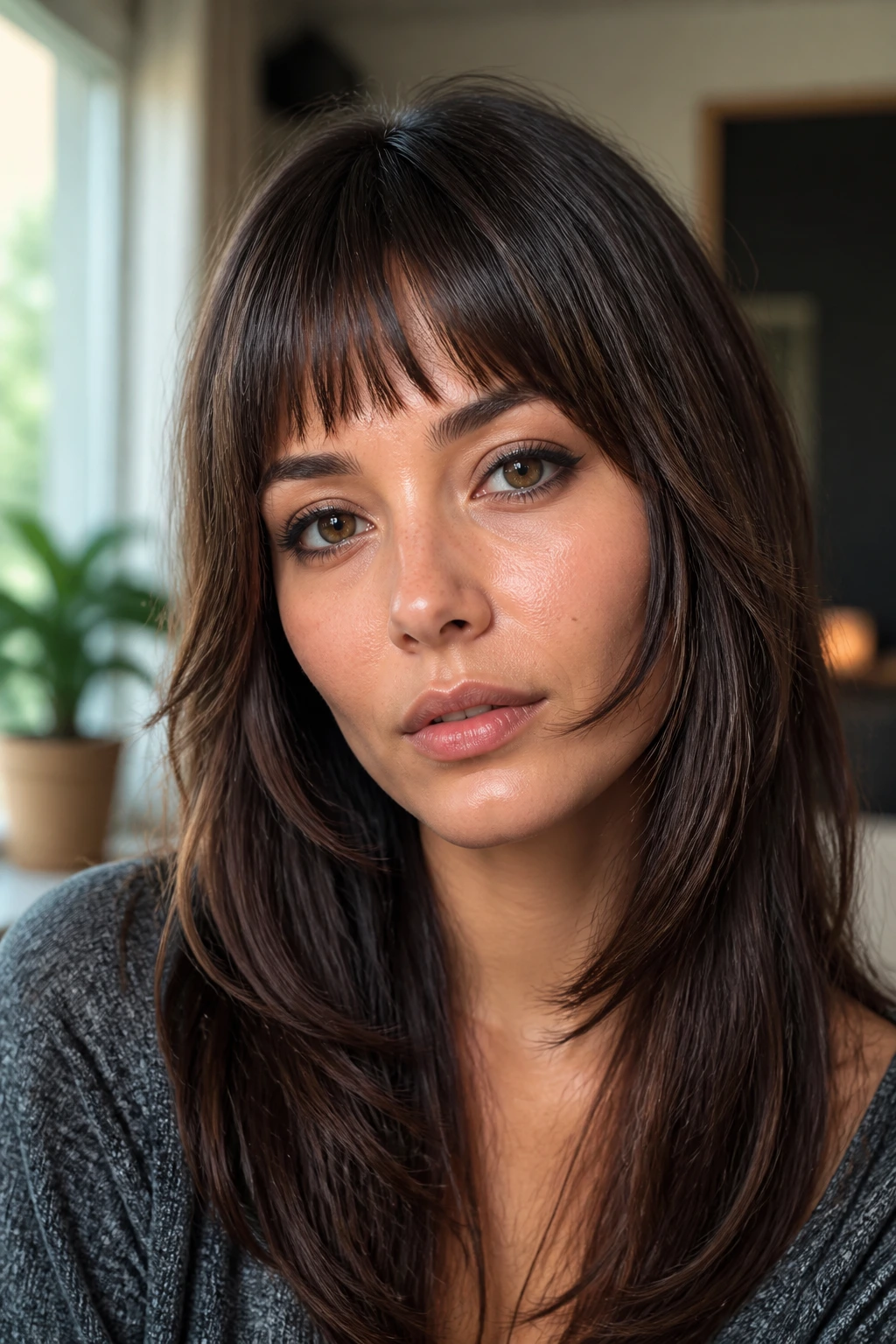
This cut uses two visible lengths in the front: a shorter layer near the brow and a longer layer that falls closer to the cheekbone. The difference is subtle, but you can see it. On long hair, that staggered shape gives the fringe more dimension than a straight-across line ever could.
Oval faces benefit from the slight offset because it keeps the frame interesting without making the forehead feel crowded. The top layer draws attention to the eyes; the longer layer softens the sides. If the cut is done well, it looks almost effortless. If it’s done badly, it looks like a mistake. So precision matters here.
I like this version on hair that needs visual fullness up front. The double length creates that feeling without having to add more bulk. It’s a smart trick, and one a lot of people overlook.
19. Heavy-Not-Heavy Fringe with Hidden Texture
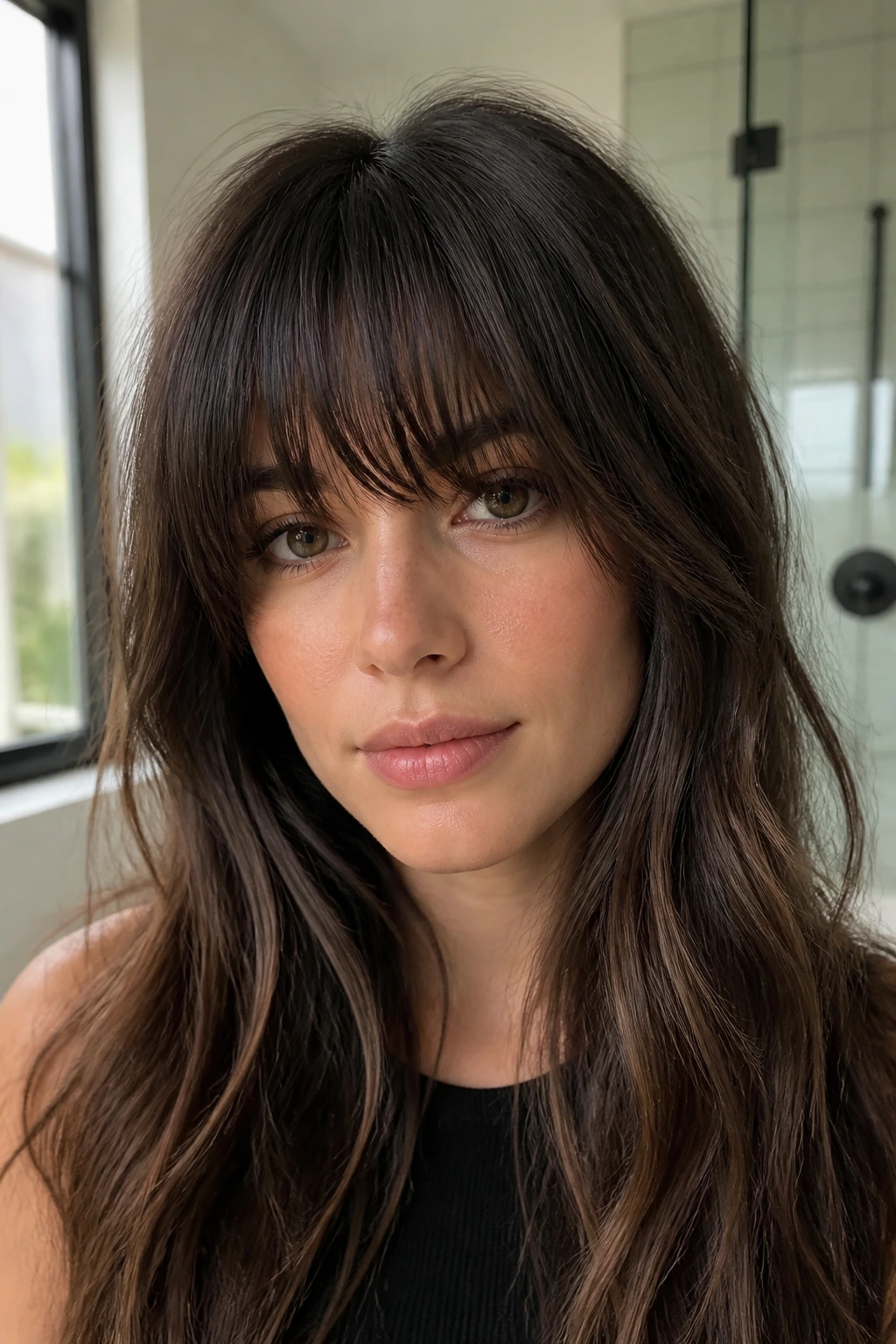
Sometimes you want the look of a fuller bang, but you do not want the maintenance of a blunt wall. This style gives you the visual weight, then sneaks in texture underneath so the line stays soft. It’s a good compromise for people with long hair who want the forehead partly covered but still want the fringe to move.
On an oval face, a little extra density can be useful, especially if the face is on the longer side of oval. The choppy finish prevents the heavier line from dominating the face. The cut should feel substantial at first glance, then loosen when it moves. That contrast is what makes it interesting.
This version likes a light styling cream more than a heavy hold spray. The cream keeps the ends together just enough to show the shape, but not so much that the bangs turn sticky or flat by noon.
20. Grow-Out Friendly Invisible Bangs That Melt Away Into the Sides
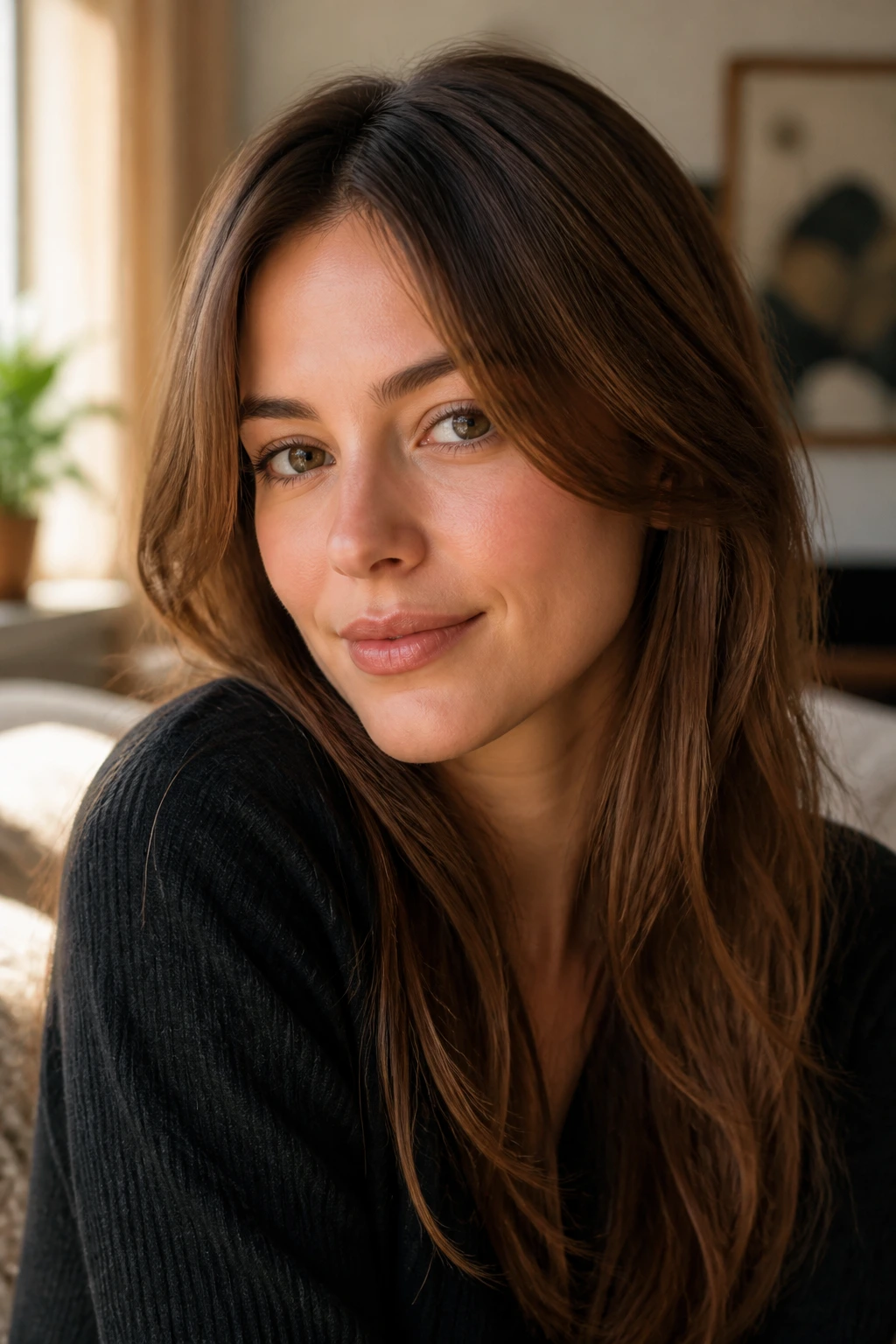
Not every fringe has to announce itself. Invisible bangs are longer in the center and blend so well into the front layers that they almost disappear when you tuck the hair back. The choppiness is there, but it’s soft enough that the line never feels hard.
That makes them a smart pick for oval faces that want movement without a full-on bang commitment. The face gets framing near the cheekbones and temples, while the forehead stays mostly open. Long hair carries this shape well because the length gives the front pieces somewhere to go. Nothing gets stranded.
These are the bangs you choose if you like changing your part. Wear them center-split one day, side-swept the next, pinned back on rushed mornings. They still work. That flexibility is half the appeal.
21. Curved Swoop Chops That Follow the Brow Line
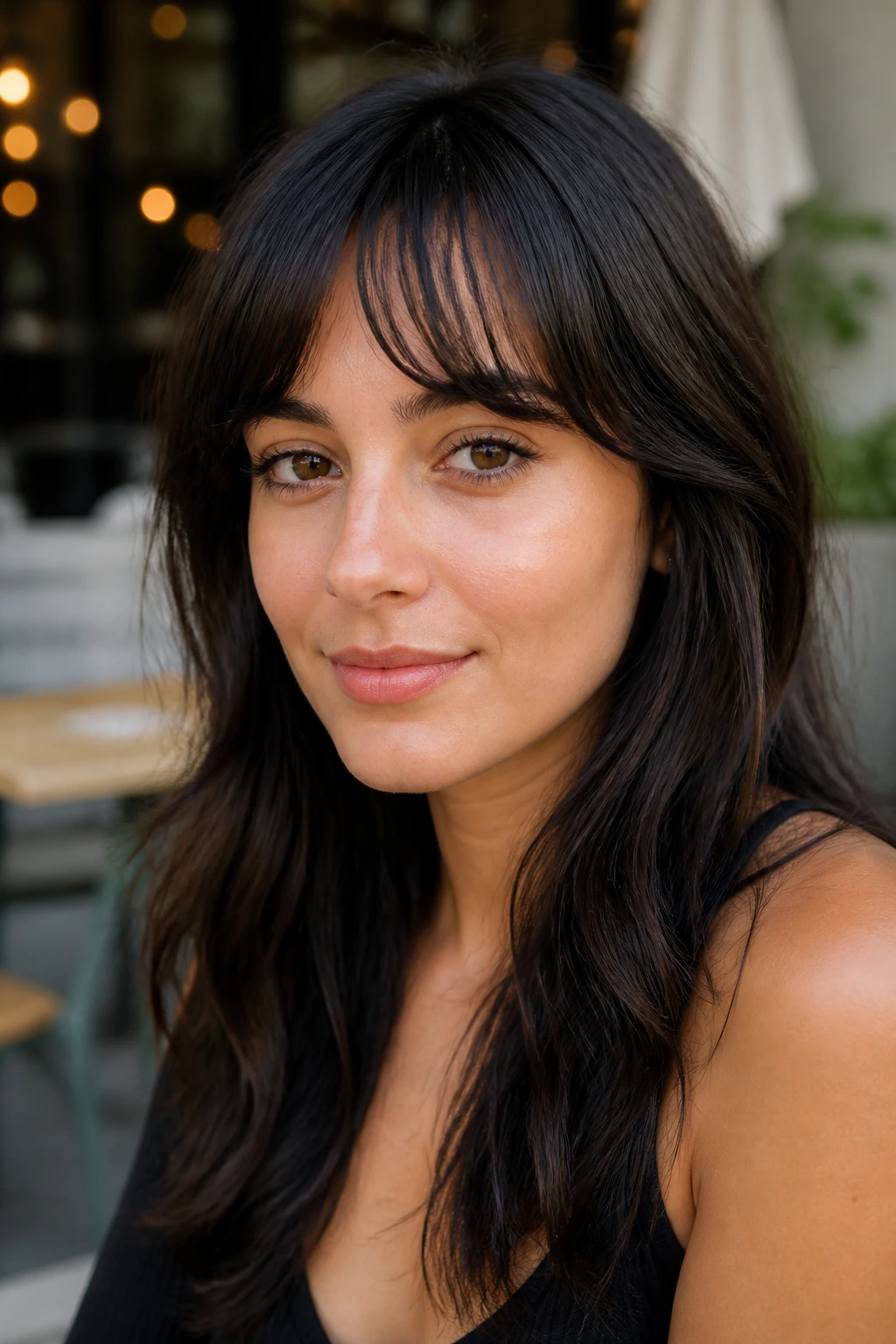
A curved swoop fringe has a little more polish than a shaggy bang, but the choppy ends keep it from turning rigid. The shape follows the brow line in a soft arc, then sweeps down at the sides. On long hair, the arc gives the front some architecture, which helps a lot if your lengths are very straight.
Oval faces do well with this because the curve adds softness without hiding the structure of the face. It’s a good middle ground for people who want bangs that look styled, not messy. If your hair is medium density, this one usually sits nicely without too much product.
A paddle brush can smooth the curve fast. Then you pinch the ends, separate a few pieces, and stop. Don’t keep fussing. The cut works best when it looks lightly touched.
22. Low-Maintenance Long Fringe That Barely Misses the Cheekbones
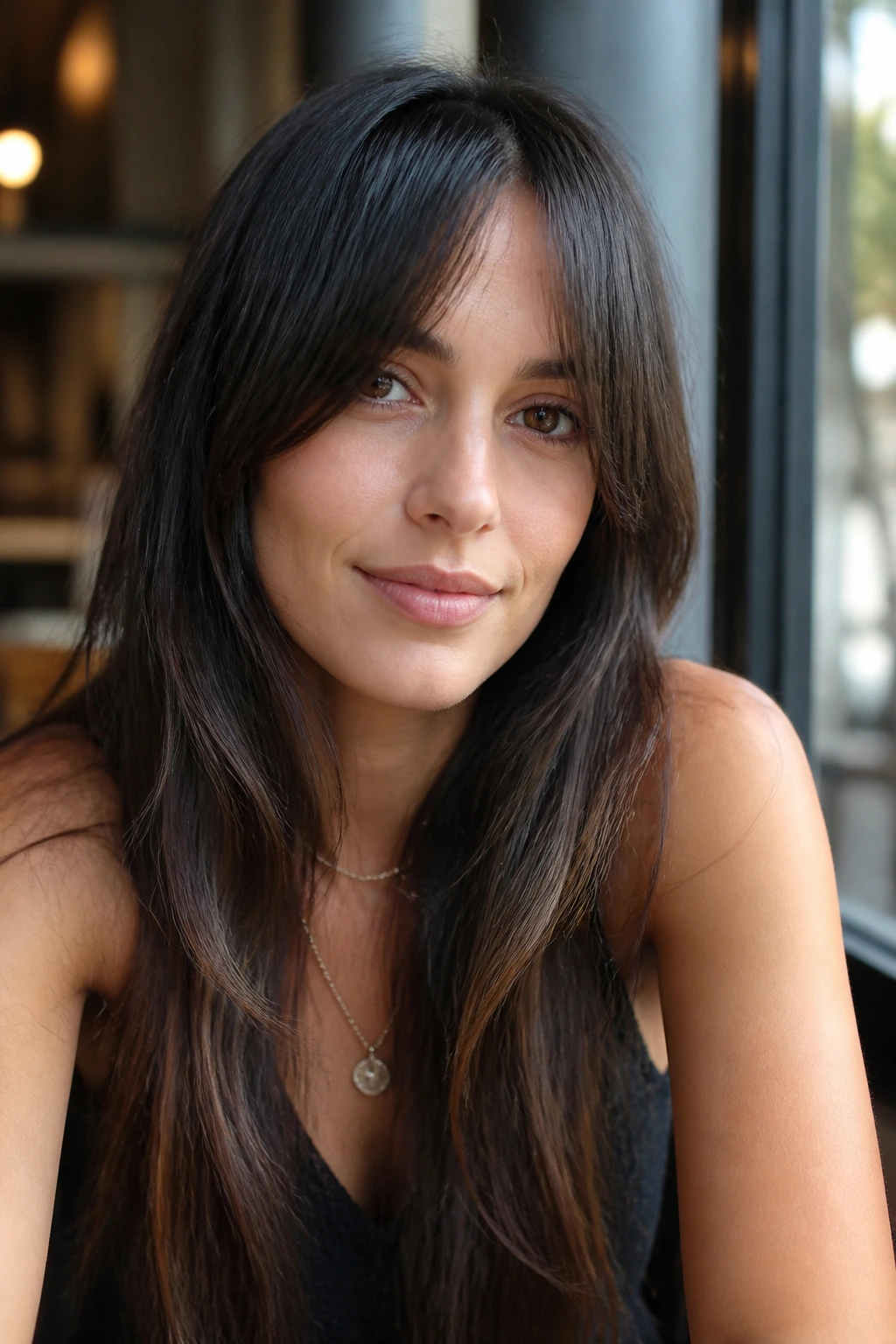
This is the easiest one to live with, and that matters. The fringe starts long enough to be tucked, pinned, or swept aside, but the ends are still choppy enough to create shape when worn down. It’s the version I’d suggest if you want bangs but hate the idea of coming back every three weeks.
For oval faces, the longer length keeps the balance soft. It doesn’t crowd the forehead or chop the face in half. For long hair, it’s a natural fit because the front sections can fall into the rest of the haircut without needing a hard reset every time you wash it.
If you’re nervous about bangs, start here. You can always take more off later. Taking less off first is the less glamorous answer, but it’s the one that saves people from regret.
Why Choppy Bangs Fit Long Hair and Oval Faces So Well
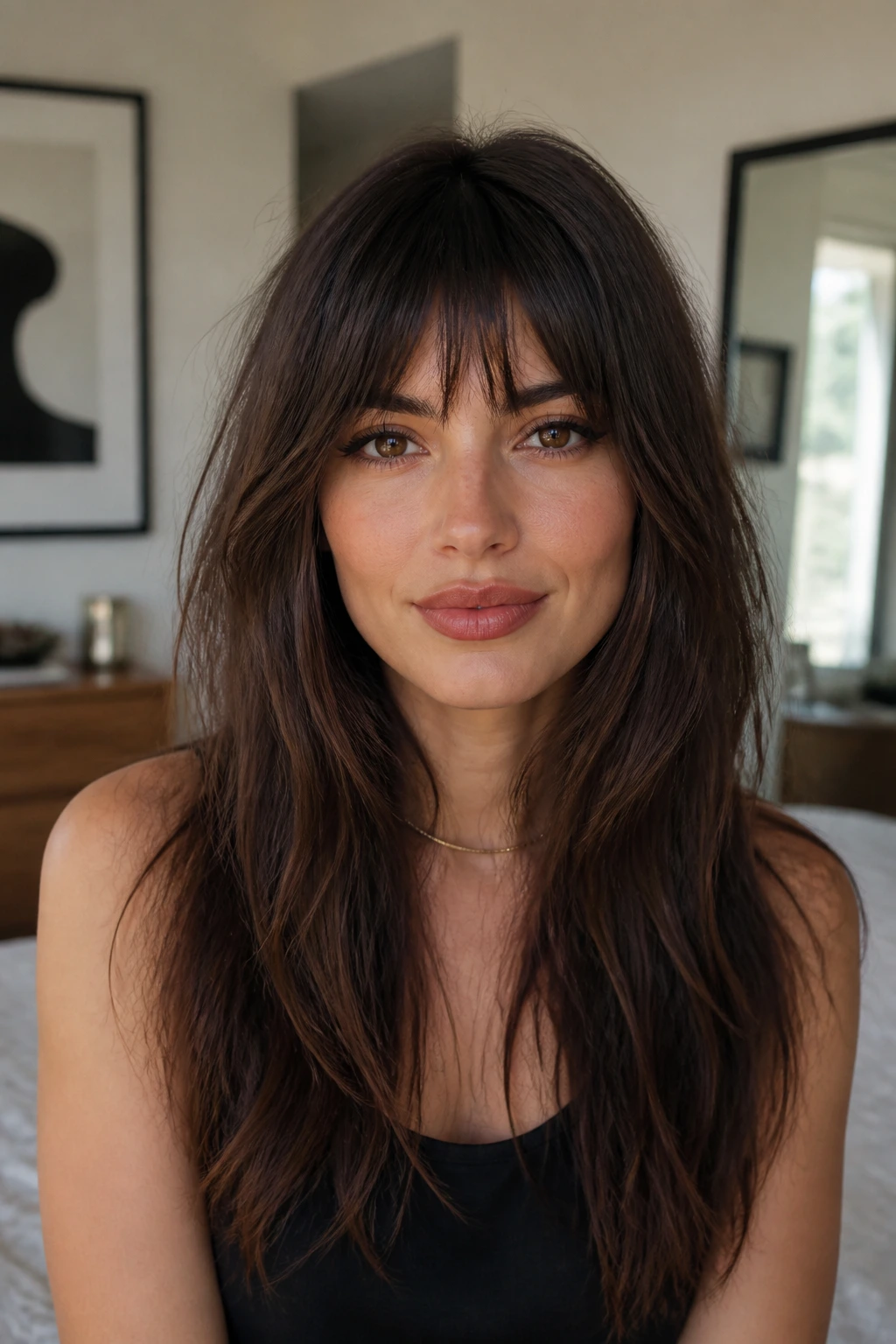
Long hair gives you length. Choppy bangs give you punctuation.
That’s the real appeal. Without a front break, long hair can slide into the same visual note from top to bottom, which is why even beautiful hair sometimes looks a little sleepy. Choppy fringe wakes it up. The broken ends create movement near the face, which is exactly where oval faces can take advantage of extra shape without needing correction.
Oval faces are lucky, but not invincible. A bang that is too dense can make the upper face feel crowded. One that is too thin can vanish against long layers. The sweet spot is usually some mix of soft line and visible separation, with the shortest point chosen based on how much forehead you want to show and how much styling you’re willing to do each morning. That part is practical. It’s also where a good stylist earns their money.
If you wear your hair mostly down, the fringe becomes part of the silhouette. If you wear it half-up, the fringe becomes the whole point. Choppy bangs do both jobs without needing a major cut every time you want a small change. That’s why they’ve stuck around. They give you a lot of visual payoff for a surprisingly small move.
What to Tell Your Stylist So the Fringe Lands in the Right Place
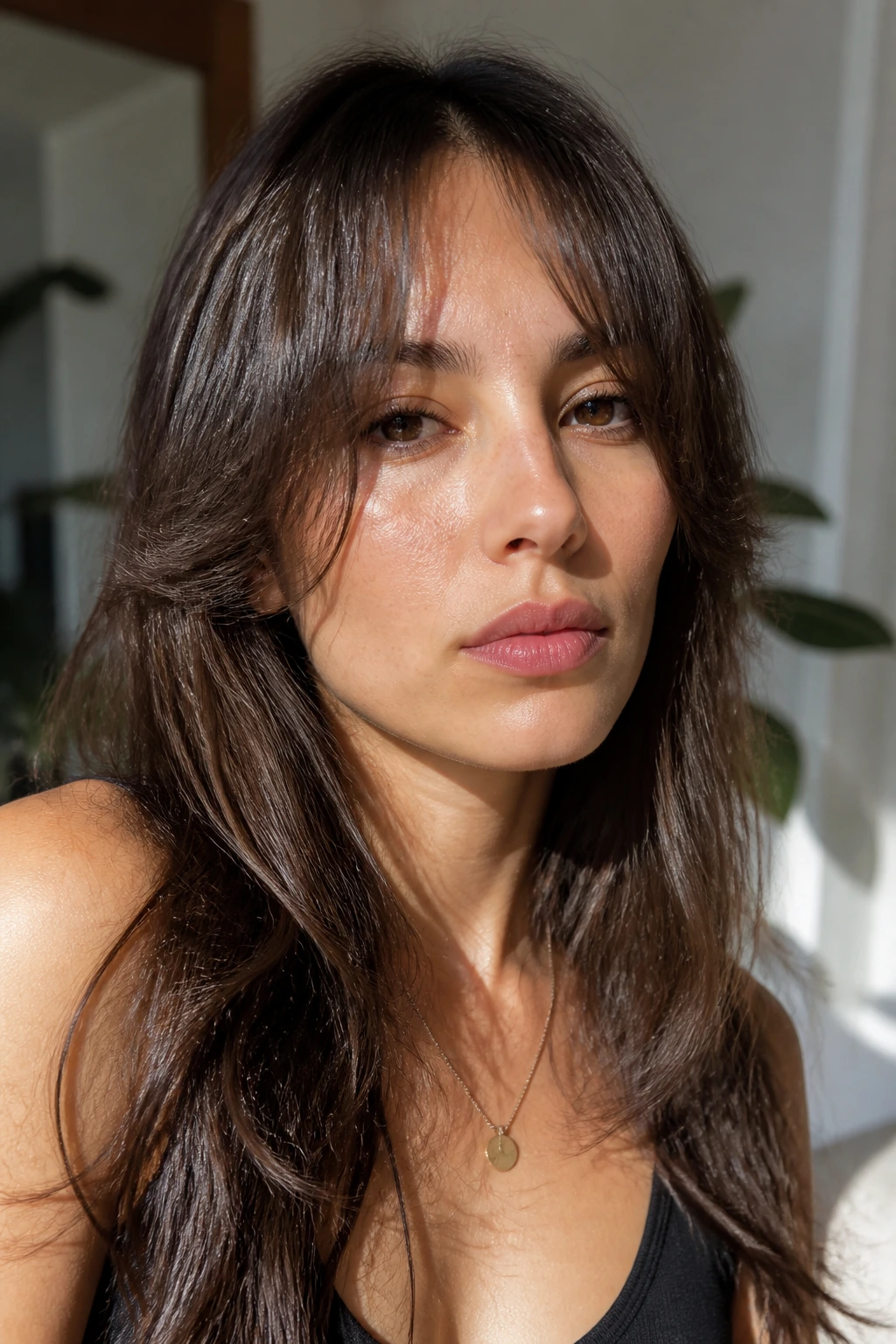
The salon chair is where a lot of bang disasters start, and usually it’s because the request is too vague. “I want something face-framing” can mean five different things. Bring photos, sure, but also say what you like about the photo. Is it the length near the brows? The amount of separation? The way it blends into the cheekbones?
Be specific about the line you want. If you want choppy bangs for long hair and oval faces that still feel soft, ask for point cutting or slide cutting at the ends rather than a blunt line. If your hair is wavy or curly, ask whether the fringe should be cut dry. That one question can save you from getting bangs that spring up too short once they settle.
A few phrases help:
- “I want the center a little shorter, but not heavy.”
- “Please keep the ends broken and piecey.”
- “I need this to blend into long layers.”
- “My hairline/cowlick pushes this way, so I don’t want the cut fighting that.”
If your stylist reaches for the thinning shears without explaining why, ask for a quick pause. Thinning is useful in thick hair. It can wreck fine hair. There’s a difference, and your fringe will show it first.
The Tools and Products That Keep the Pieces Moving
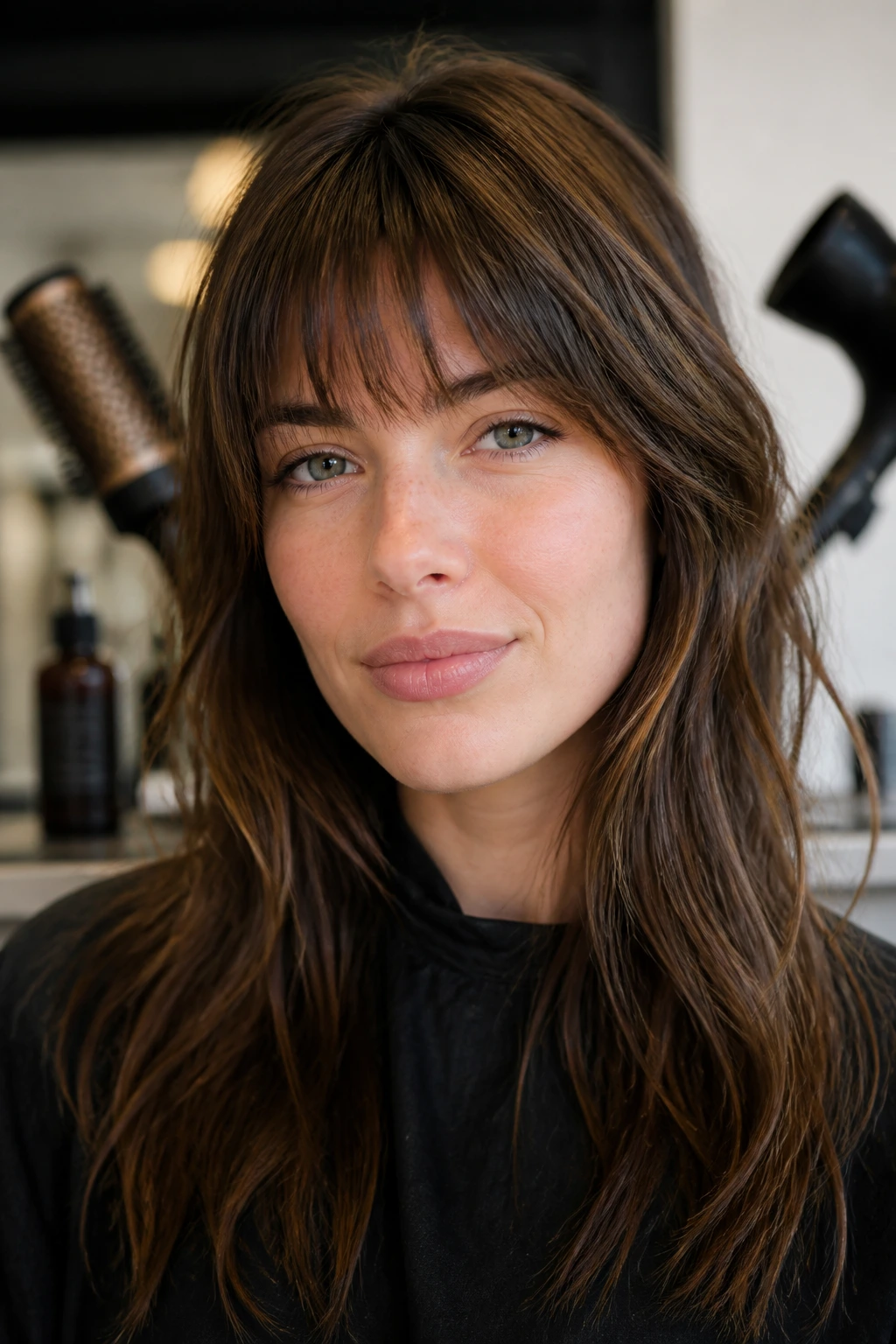
You do not need a bathroom cabinet full of products to keep choppy bangs in shape. You do need the right few things, and they matter more than people admit.
-
1 to 1.5-inch round brush: Best for bending the bangs away from the face without making them too curled. Smaller brushes create too much roll.
-
Blow dryer with a nozzle attachment: Directs airflow so the fringe doesn’t separate in random directions while it’s drying.
-
Light texture spray: Adds grip and separation after the bangs are dry. Use it at the ends, not the roots.
-
Dry shampoo: Helps if the fringe picks up forehead oil fast, which is common because bangs sit right on the skin.
-
Small flat iron: Useful for flicking the ends under or creating a gentle bend on straighter bang shapes.
-
Tail comb: Good for clean parting and for lifting the fringe at the roots without over-brushing it.
-
Lightweight styling cream or wax: A pea-sized amount on the tips can define piecey bangs. Too much turns them greasy fast.
-
Duckbill clips or sectioning clips: Keep the long hair out of the way while you dry the front section first.
If your bangs go flat by noon, the issue is usually product weight or heat direction, not the cut itself. Start lighter. Most fringe problems are over-correction problems.
How to Style Choppy Bangs on Straight, Wavy, and Curly Hair
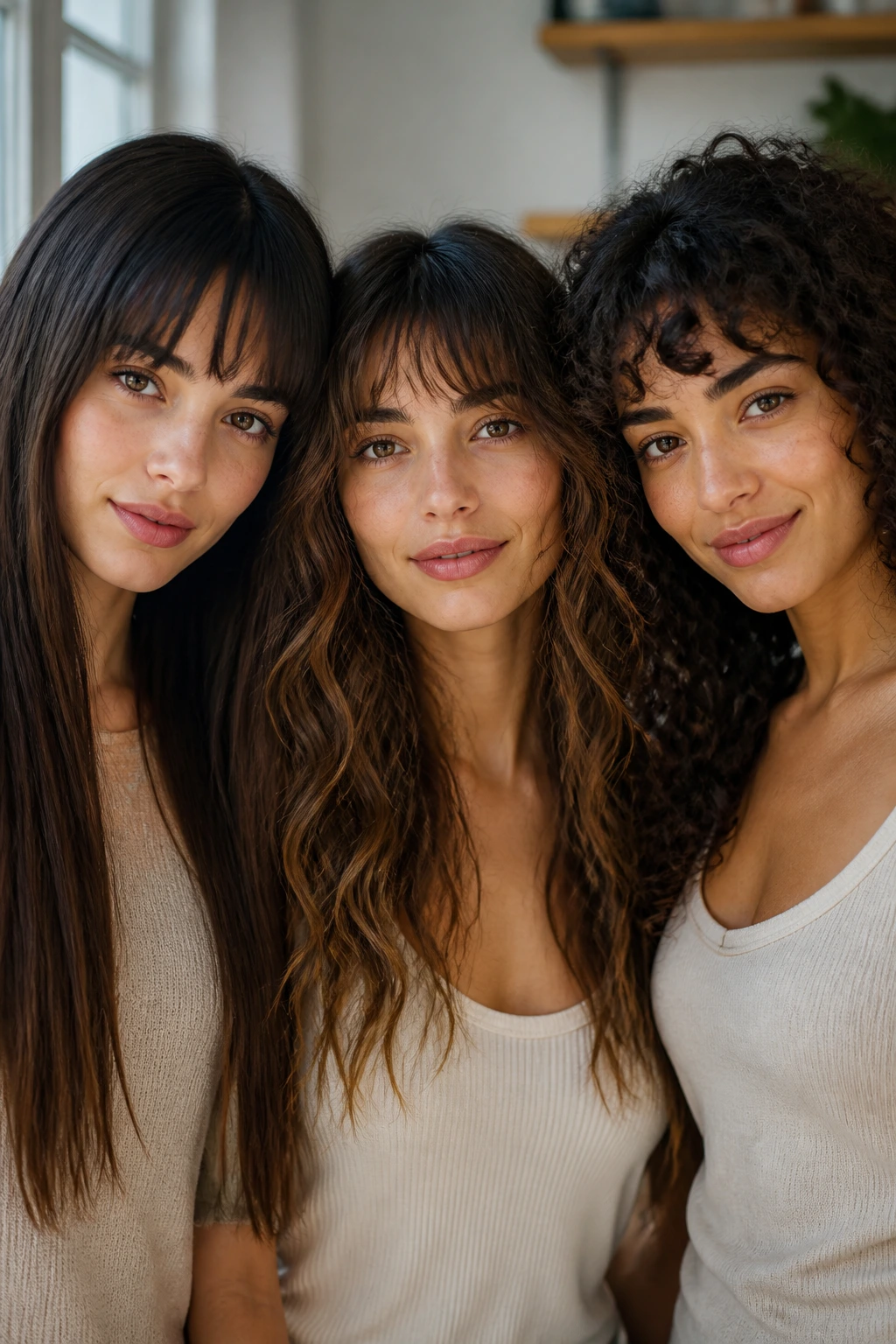
Straight hair usually needs the most help holding a bend, but it also gives the cleanest finish. Dry the fringe first, before the rest of the hair, using a round brush to sweep it side to side. That little side-to-side motion keeps the root from setting in one stiff direction. A quick cool shot at the end helps the shape stay put.
Wavy hair is easier in one sense and harder in another. It wants to move, which is good. It also wants to kink in odd places, which is not. Rough-dry the bangs to about 80 percent, then use the brush only for the front bend. Don’t overwork the wave. A bit of separation is the whole point of the cut.
Curly hair needs the most honesty. If the bangs are cut dry, they can keep their shape better because the stylist sees exactly how the curl sits. Styling should focus on definition, not flattening. A small amount of curl cream, then finger-coiling just the pieces that misbehave, usually beats trying to brush the curls into submission. That never ends well.
A final tip: separate the bangs only after they’ve cooled. Warm hair lies to you. It always looks more obedient before it settles.
Common Mistakes That Make Choppy Bangs Look Accidentally Bad
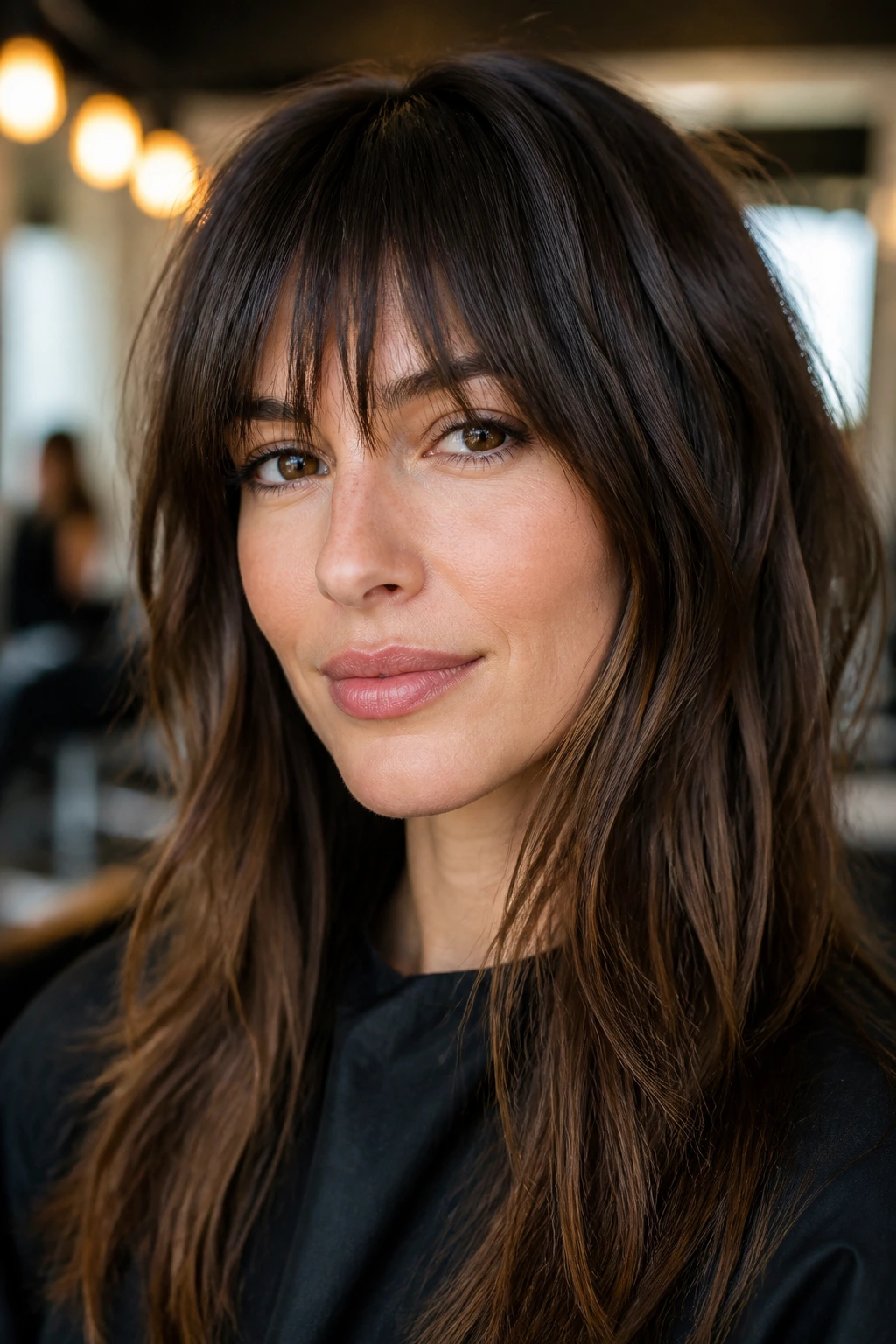
The first mistake is cutting them too short too early. People see the hair lifted by the dryer and think that’s the final position. It isn’t. Bangs drop. Some drop a little. Some drop a lot. If you cut for the mirror in the chair instead of the way the hair lives on your face, you end up with a fringe that feels harsh the second you step outside.
The second mistake is over-thinning fine hair. Choppy is not the same thing as sparse. If the front is too wispy, you lose the frame and gain frustration. Ask for texture at the ends, not wholesale removal through the middle.
Another common problem is ignoring the natural part or cowlick. If the hair wants to fall right, don’t force it left just because the inspiration photo looked centered. The best fringe works with the line your hair already wants.
And then there’s product overload. Heavy creams, oils, and thick serums can make bangs stringy within an hour. Use the smallest amount that keeps the ends from fuzzing up. Usually that means less than you think. Bangs are unforgiving like that.
Softer, Edgier, and Easier Variations to Ask For
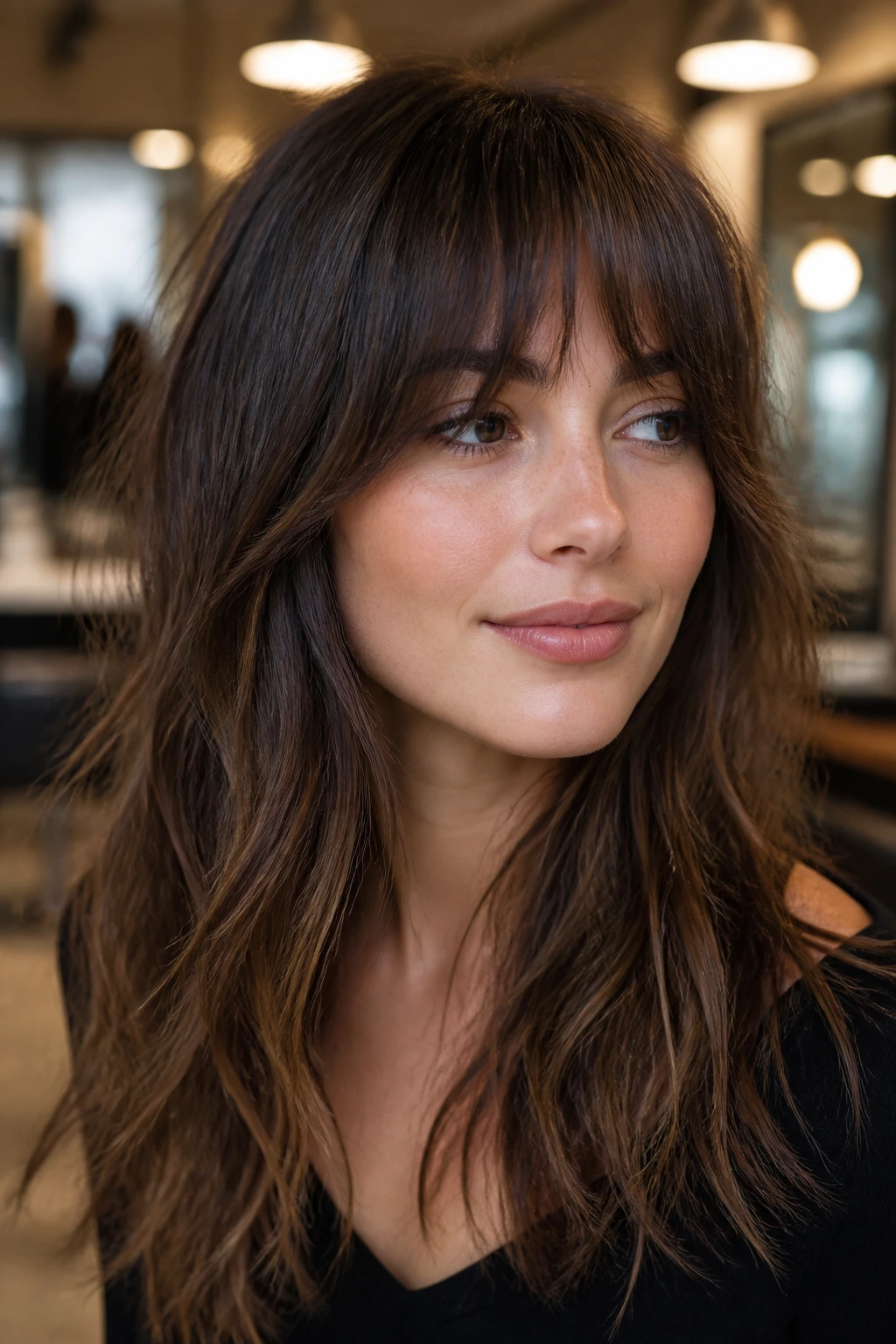
Soft-Split Curtain: Keep the center longer and the ends feathered. This version is ideal if you want the movement of curtain bangs but don’t want a dramatic center gap.
Edge-Razor Finish: Ask for a stronger razor-cut edge on thick hair. It removes weight fast and creates a more sliced look that sits well with blunt long lengths.
Air-Dry Wave Version: Have the fringe cut to follow your natural wave pattern. This is the smartest choice if you barely style your hair and don’t want to fight it every morning.
Blowout Polish: Keep the cut soft but ask for more uniform face-framing length around the eyes. This version behaves well with a round-brush blowout and looks neat without feeling stiff.
Grow-Out Glide: Leave the corners longer than usual so the fringe can tuck into the layers sooner. It’s the easiest path if you know you’ll want to grow the bangs out later.
Curly Halo Frame: Let the shortest pieces sit higher and the sides stay longer, then cut dry. That keeps curl shrinkage from stealing the fringe.
How to Keep the Shape Between Trims

Bangs need more maintenance than the rest of long hair. That’s the deal. But choppy bangs are easier than blunt ones because the broken edge buys you time. Most people can stretch trims to every 4 to 6 weeks, depending on growth rate and how short the shortest pieces are.
At home, wash the fringe more often than the rest of the hair if it gets oily fast. Even a sink rinse and quick blow-dry can reset the front without doing a full shampoo. Dry shampoo helps, but it’s a patch, not a cure. If the roots get coated too often, the fringe loses movement and starts feeling dusty.
Night care matters more than people think. If you sleep on a sweaty forehead or wear the bangs pinned back all day, the root pattern gets odd. A soft clip at night or a loose pin can keep the front from kinking in a bad direction. And if the bangs start sticking together in chunks, don’t keep adding product. Wash them. They’re probably telling you something.
Frequently Asked Questions About Choppy Bangs for Long Hair and Oval Faces
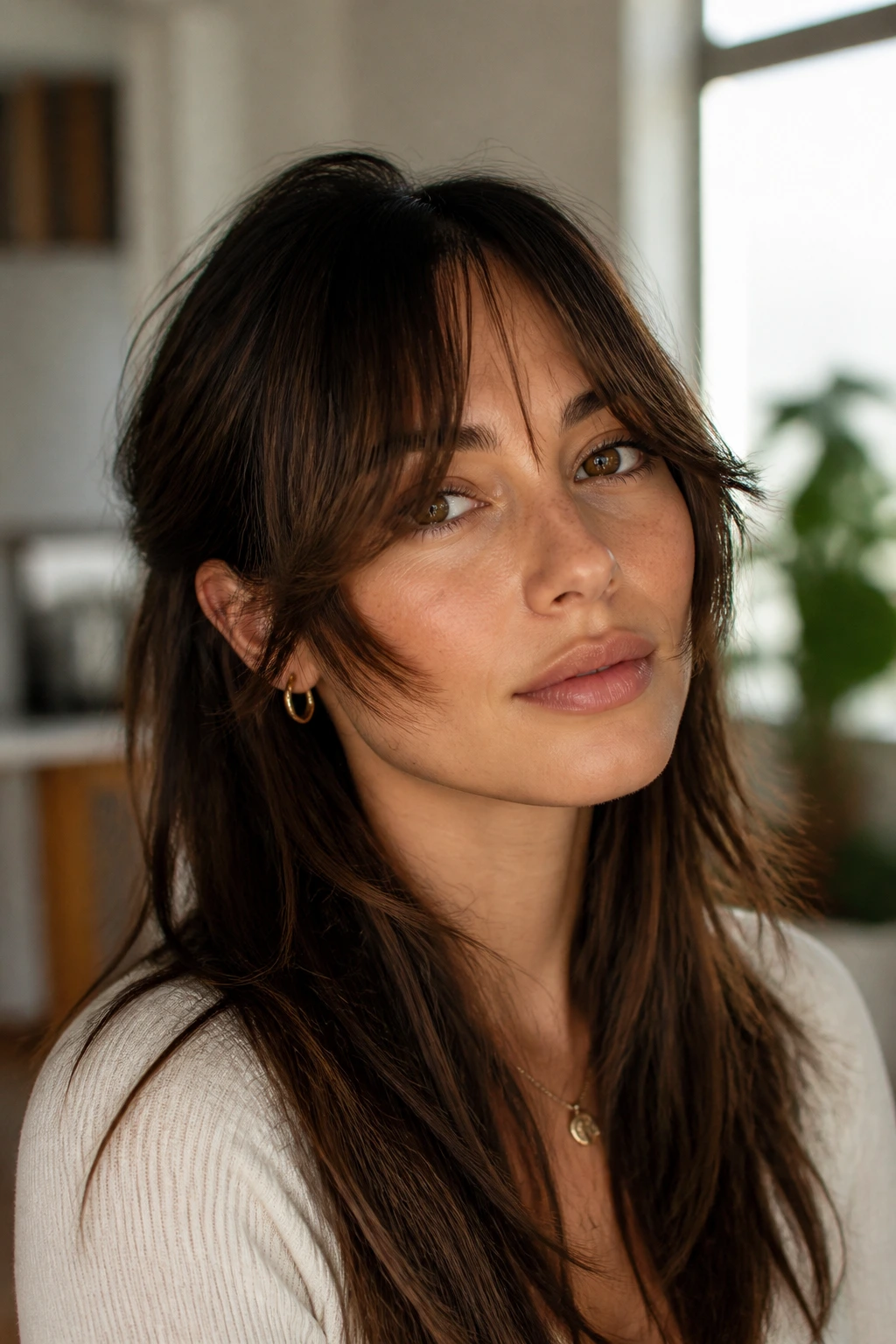
Will choppy bangs make an oval face look longer?
Not if the cut is balanced correctly. A little width at the temples or cheekbones keeps the face framed, and the broken ends stop the fringe from pulling the eye straight down.
Do choppy bangs work on fine hair?
Yes, but the texture has to be light. Fine hair usually looks better with airy separation and a softer edge rather than a heavy, chopped-up line that leaves the front looking thin.
Can I wear them if my hair is wavy or curly?
Absolutely, but the cut needs to respect shrinkage. Curly fringe is usually better cut dry, or nearly dry, so the stylist can see how the shape lands once the hair settles.
How often should I trim them?
Most choppy fringes need a trim every 4 to 6 weeks if you want them to sit at the original length. If you like a longer, grow-out-friendly look, you can stretch that a bit.
What if my cowlick splits the bangs apart?
Work with it, not against it. A side-swept or bottleneck shape usually behaves better than a hard center fringe, and a little root-directed blow-drying helps more than heavy product.
Can I cut choppy bangs at home?
You can, but I wouldn’t make that your first plan. The difference between soft texture and a hacked line is smaller than it looks, especially on long hair where the fringe has to blend into the rest of the cut.
Do they need more styling than regular bangs?
Not always. Some choppy styles are easier because they’re allowed to look piecey and imperfect. The polished versions need a bit more brush work, but the air-dried ones can be almost effortless.
Which version is easiest to grow out?
The longer curtain, invisible, and face-framing styles tend to grow out the cleanest because they already blend into the sides. Short micro-chops are the least forgiving if you change your mind fast.
A Fringe That Keeps Long Hair Awake

The best choppy bangs don’t fight long hair. They give it a front edge, a little movement, and a place for the eye to stop before the rest of the length takes over. On oval faces, that balance is especially useful because the face shape can carry either a soft frame or a sharper one, as long as the cut isn’t too stiff.
If you’re choosing between several options, start with the version that matches your real routine, not the version that looks most dramatic in a photo. A fringe that works on day three, in mediocre weather, after a lazy blow-dry, is the one you’ll keep liking. That’s the whole point.
If you want the least risky path, ask for a longer, piecey shape first and trim shorter later. Hair grows. Regret lingers longer than a few extra millimeters ever will.