



A short haircut should earn its keep before coffee. The best edgy short haircuts do that because they don’t ask for a full styling session, a round brush sermon, and three different products just to look awake. They lean on shape: a little lift at the crown, some soft layers through the sides, and a face-framing edge that makes the cut look deliberate even when you’ve had exactly six minutes to deal with it.
I’ve always liked short hair that looks a touch roughed up. Too polished, and it can start to feel stiff. Too messy, and you get that awkward “I gave up halfway through” look. The cuts in this lineup sit in the middle lane, which is the smart lane. They keep the perimeter clean, the movement soft, and the morning routine short enough that you can still make it to the door with your keys.
What makes soft layers such a good partner for an edgy haircut is simple: they take away bulk without stripping the cut of character. You still get the bite of a cropped nape, a blunt line, an asymmetrical front, or a choppy fringe. You just don’t get the heavy helmet effect that can make short hair feel fussy. That balance matters more than people think, especially when your hairstyle has to hold up on day two.
Why These Edgy Short Haircuts Work for Real Mornings
- Fast Styling: Most of these cuts can be shaped with a quick blow-dry, a bend from a flat iron, or nothing more than a dab of matte paste at the ends.
- Soft Layers, Not Softening the Edge: The layers remove bulk and add movement, but the outline still looks sharp enough to read as a real haircut.
- Face-Framing Built In: Cheekbone-grazing pieces, long sideburns, and airy fringe do a lot of the visual work, which means less daily effort from you.
- Better Grow-Out: A cut with soft internal layering usually grows out cleaner than a harsh, one-length crop, so you’re not stuck with a weird shelf after three weeks.
- Texture-Friendly: Straight, wavy, and curly hair all have a place here, as long as the layering is adjusted to the way your hair actually falls.
- Less Morning Negotiation: These shapes tend to fall back into place after sleep, a scarf, or a quick tuck behind the ear, which is half the battle on busy days.
1. Piecey Pixie With Long Top
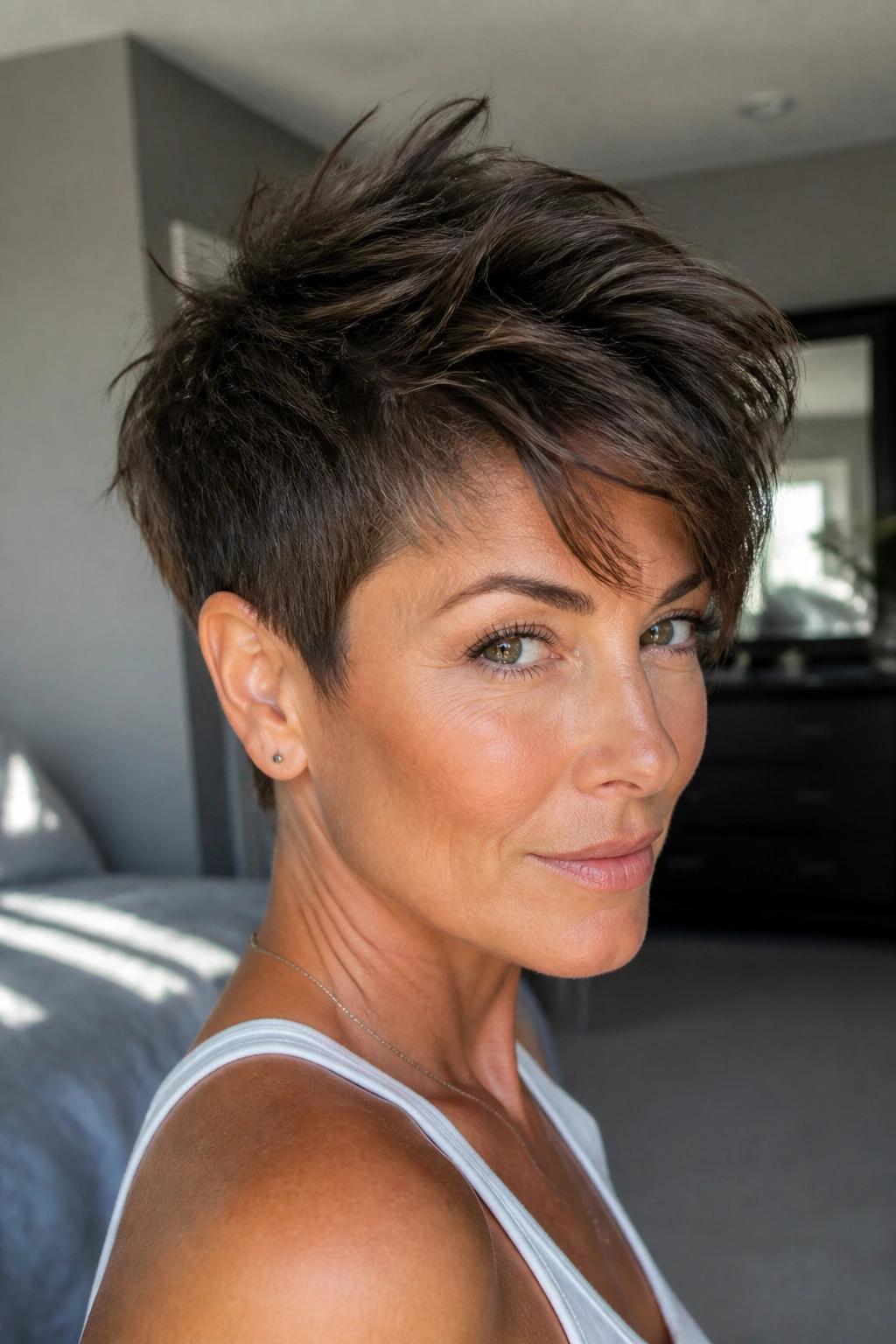
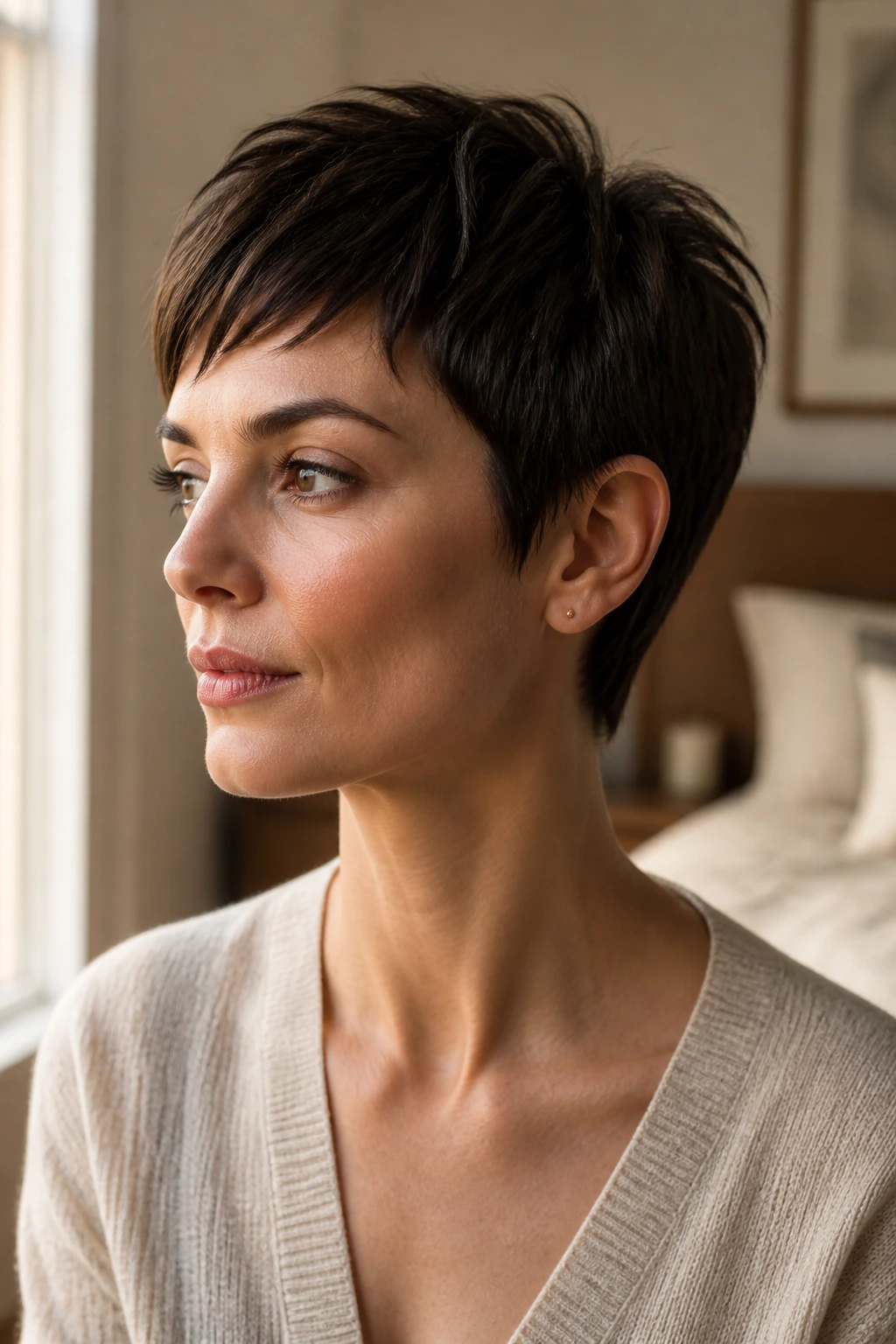
The sharpest version of a pixie is not the shortest one. It’s the one with enough top length to move, separate, and fall a little differently each day. A piecey pixie with a longer top keeps the sides tight and the nape neat, but leaves enough length on top to push forward, sweep over, or spike with your fingers and a pea-sized dab of paste. That tiny bit of top length changes the whole personality of the cut.
What Makes It Easy
The long top gives you options without giving you work. If you air-dry it, the layers break up naturally. If you blow-dry for 90 seconds with your fingers lifting at the roots, the shape gets more edge. Either way, you’re not fighting your hair into submission.
This cut is especially good if your hair grows fast around the ears or nape. The silhouette stays tidy even when the top softens. Ask your stylist for soft point-cutting on the ends rather than blunt chipping everywhere; the shape stays nimble instead of jagged in a bad way.
Best For
- Straight hair that falls flat by lunchtime
- Fine hair that needs a little crown lift
- Oval and heart-shaped faces
- Anyone who wants a short cut that still reads a little rebellious
A one-sentence truth: this is the pixie for people who want shape, not a helmet.
2. Bixie With Curtain Fringe
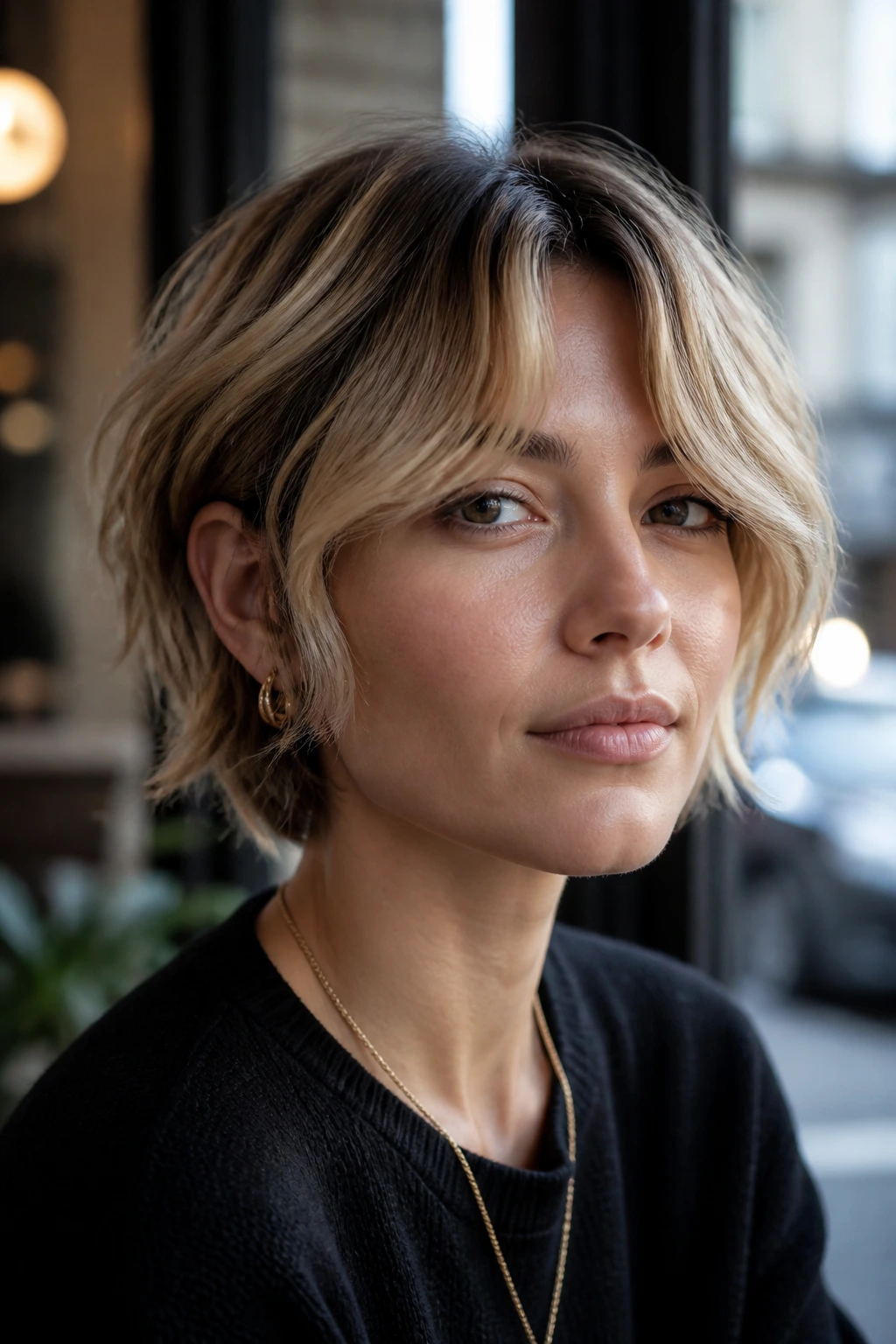
Can a cut be half bob, half pixie, and still feel polished? Yes, if the edges are softened the right way. The bixie sits in that sweet spot just above or right at the jaw, with a little more length through the front and a curtain fringe that splits softly off center. It’s got more attitude than a neat bob, but it won’t bully your morning routine.
A good bixie should move around the face, not sit like a cap. I like this version because the curtain fringe does the face-framing work that many short cuts forget. It narrows the forehead a touch, pulls attention to the eyes, and lets the sides fall in a way that feels relaxed instead of chopped.
Why It Wins on Busy Days
You can rough-dry the roots, tuck the fringe with your fingers, and stop there. The cut already has structure. If your hair is fine, the layers should be feather-light; if it’s thick, the interior can be thinned just enough to keep the ends from puffing out.
Quick Shape Notes
- Ask for the fringe to hit around the cheekbone, not much shorter.
- Keep the nape cleaner than the top.
- Avoid over-thinning the front pieces; they need enough weight to drape.
3. French Bob With Shattered Ends
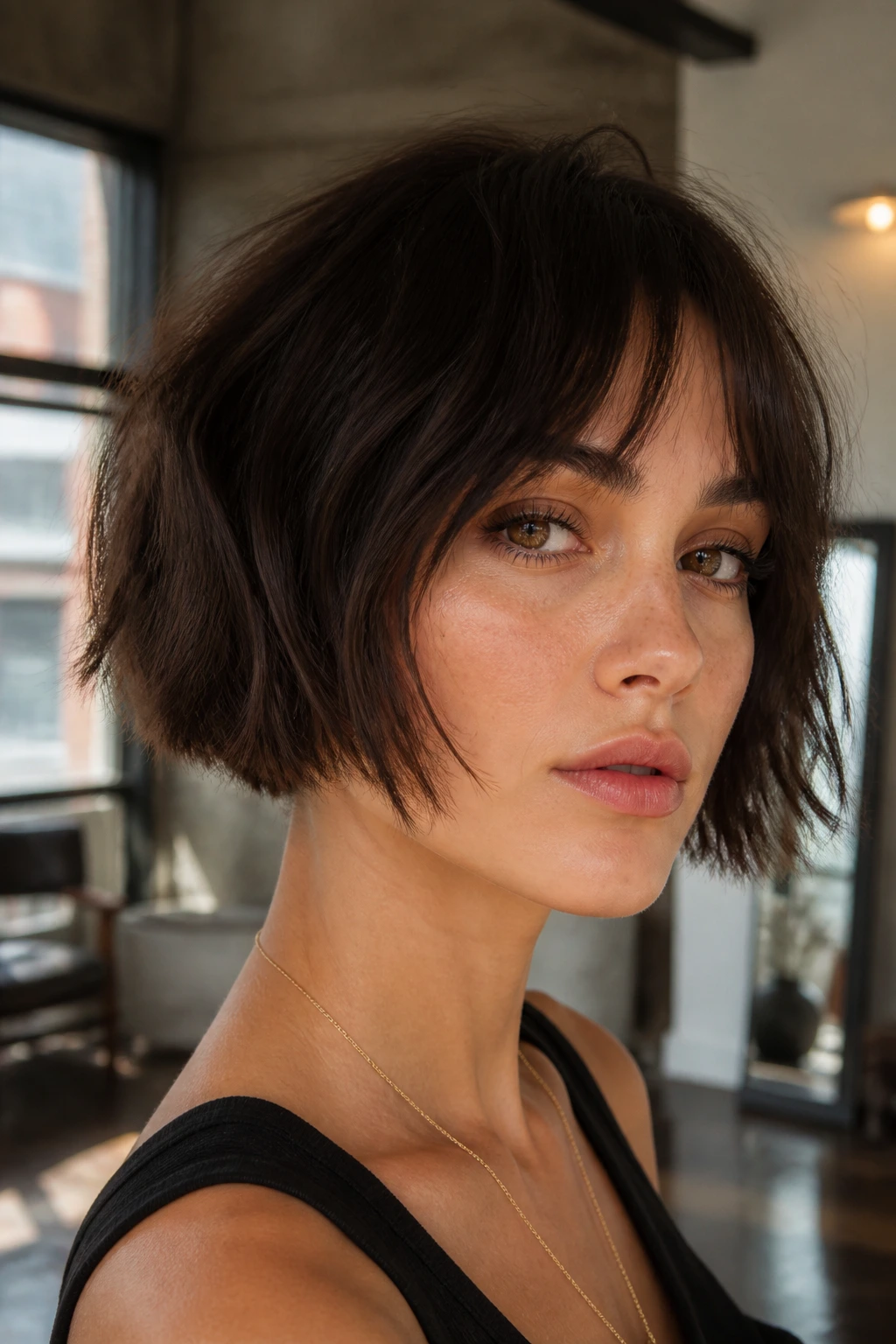
The French bob gets better when it’s a little imperfect. A clean, blunt bob can be chic, sure, but a French bob with shattered ends looks like it has breath in it. It usually sits between the cheekbone and the jaw, with a soft fringe or a side sweep, and the ends are point-cut so the line doesn’t feel too exact.
That shattered finish matters. It gives the cut a bit of looseness, which means you can sleep on it, finger-comb it, and still walk out looking like you meant to do something with your hair. If you like a black T-shirt, a sharp liner, and a haircut that seems to know it has opinions, this one fits.
The best versions keep the outline crisp around the perimeter and just soften the ends enough to avoid that blocky triangle shape. It’s not a cut that needs much product. A little bend through the front with a flat iron and a mist of flexible spray is usually enough.
4. Jaw-Length Shag Bob
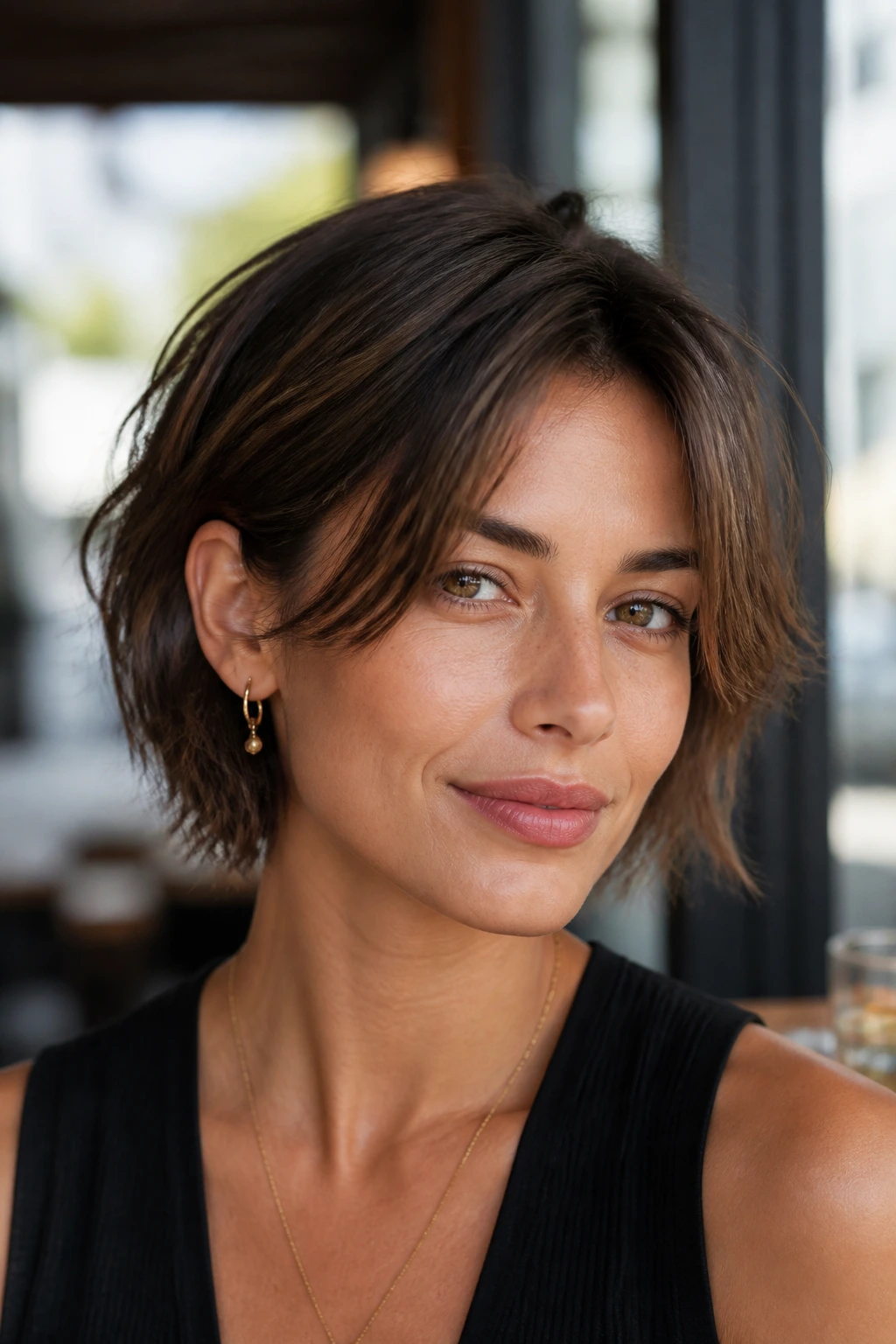
A jaw-length shag bob is where short hair starts having a little fun. It has enough layering to move, enough length to tuck behind the ear, and enough roughness around the ends to keep it from feeling precious. If you’ve ever wanted a cut that can look cool at 8 a.m. and still hold up after a long day, this is a strong contender.
Why It Behaves So Well
The shag structure helps the hair collapse in a flattering way instead of flaring out at the bottom. That’s useful if your hair has any puff at the crown or a stubborn wave that likes to go sideways. The longer top layers also mean you can create a bit of lift with your fingertips or a round brush, but you don’t have to.
How to Ask for It
Tell your stylist you want:
- A bob that lands around the jaw
- Soft, internal layers that remove bulk
- Choppy ends, not a blunt shelf
- Front pieces that brush the cheekbones
The cut has a little rocker energy without tipping into costume. That’s the charm.
5. Undercut Crop With Swept Fringe
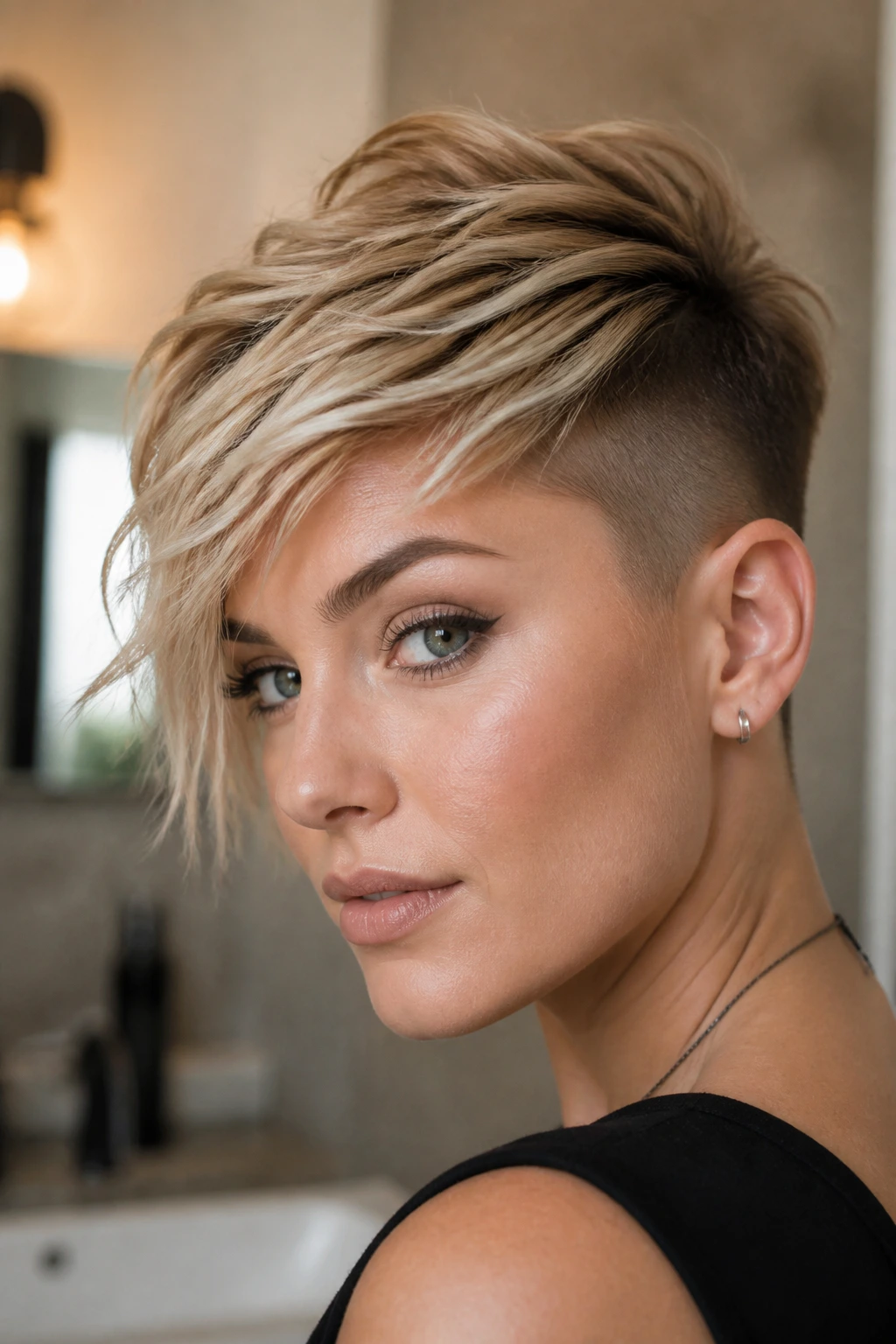
The undercut crop is for people who like contrast. Tight sides, a soft but purposeful fringe, and just enough top length to sweep across the forehead — it reads edgy fast. The undercut takes weight out of the lower half, which makes the top lay better and keeps the shape from ballooning out around the ears.
This is not the cut for someone who wants to do absolutely nothing. It does ask for a little finger work. But that work is tiny. You rough-dry the top, push the fringe where you want it, and let the undercut handle the rest. If your hair is thick, this can be a gift. If your hair is fine, keep the undercut subtle so the cut doesn’t lose too much visual mass.
The swept fringe is the part that softens the whole thing. It keeps the cut from looking severe, especially when it hits just above the brow or skims one eye.
6. Curly Tapered Pixie
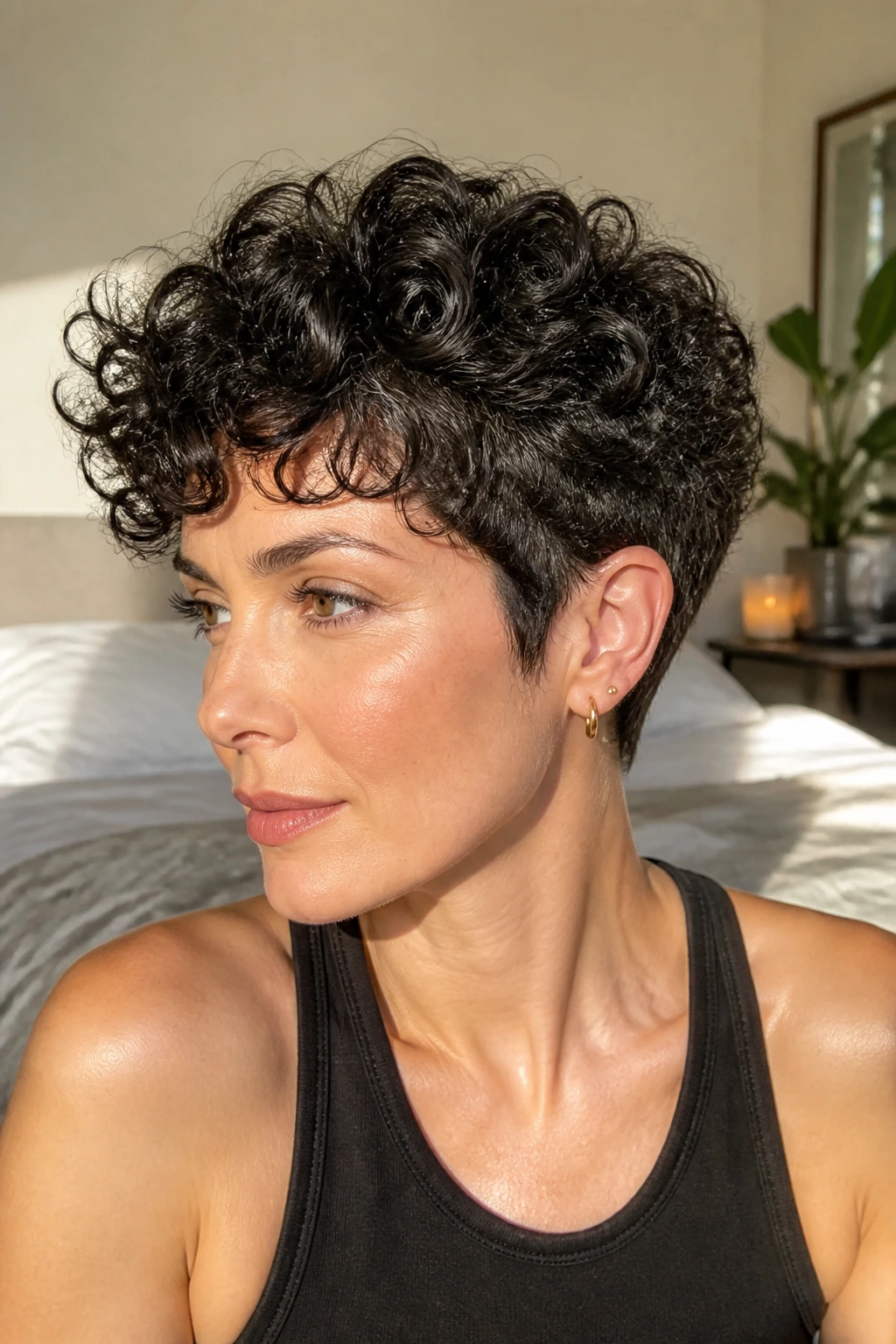
Curly hair loves a tapered pixie when the layering respects the curl pattern. A bad pixie on curls turns into a triangle. A good one becomes shape, lift, and a little halo of movement around the head. The taper at the nape and sides keeps the profile clean while the top retains enough length for the curls to spring.
I like this cut because the morning routine can be insultingly simple. A little leave-in, maybe a curl cream, and a diffuser for a few minutes if you care about definition. If you don’t, scrunch and go. Soft layers here are not decoration; they prevent bulk from stacking up in the wrong places.
One useful detail: the front should be cut with the curl’s shrinkage in mind. What looks like a cheekbone-length piece when wet can land much shorter once dry. That’s where too many pixies go wrong.
Good For
- Loose curls that need shaping
- Tight curls that lose their outline when left one-length
- Anyone who wants a short cut with actual movement
7. Asymmetrical Bob With Face Sweep

A slightly longer side changes the whole mood of a short bob. The asymmetrical bob with a face sweep gives you one side that skims the jaw and another that sits a touch longer, which creates a diagonal line across the face. That diagonal is the point. It feels sharper than a straight bob and softer than a severe crop.
You’ll notice the front first. The longer side sweep drifts across the cheek, which is useful if you like the look of face-framing layers without a full fringe. It’s a smart choice for rounder faces because the line pulls the eye downward. On straighter face shapes, it just adds edge.
Styling is barely a thing here. Tuck the shorter side behind the ear. Let the longer front pieces fall forward. If you want a little polish, bend the ends inward with a flat iron for five seconds each.
8. Soft Mullet Crop
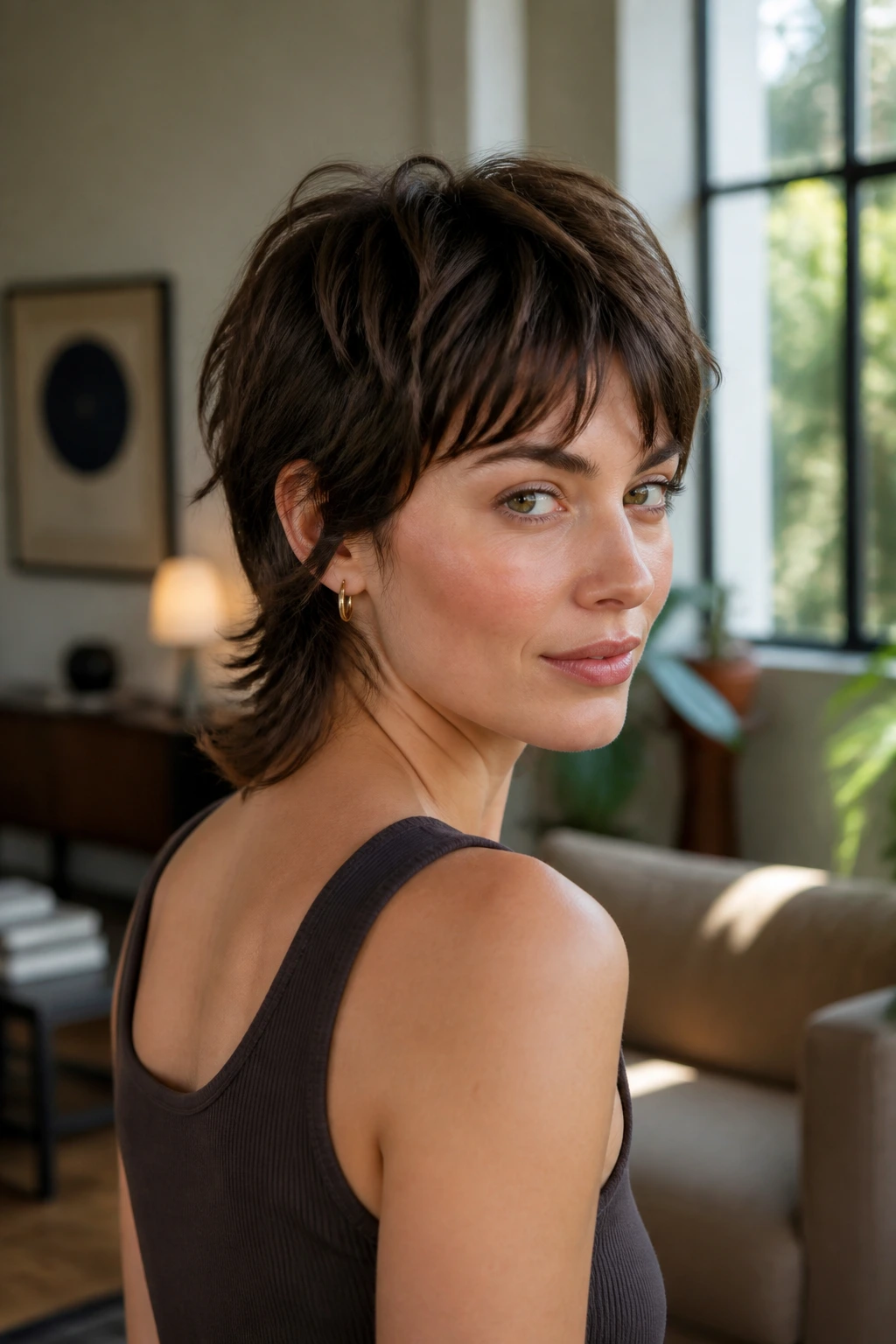
The mullet gets a bad reputation because people picture something overly hard-edged and heavy on the drama. A soft mullet crop fixes that. You still get the short front and sides, the slightly longer back, and the layered crown, but the transitions are gentler and the whole shape feels more wearable.
This version works because the cut doesn’t jump from one length to another like a cliff. The layers are blended enough that the back falls with movement instead of hanging like a tail. It’s edgy, yes, but it’s the kind of edgy that looks better once it’s been slept on a little.
It also suits people who don’t want to spend time perfecting symmetry. A soft mullet crop looks best when it’s a little undone. That is not a flaw here. It’s the whole point.
9. Chin-Length Razor Bob
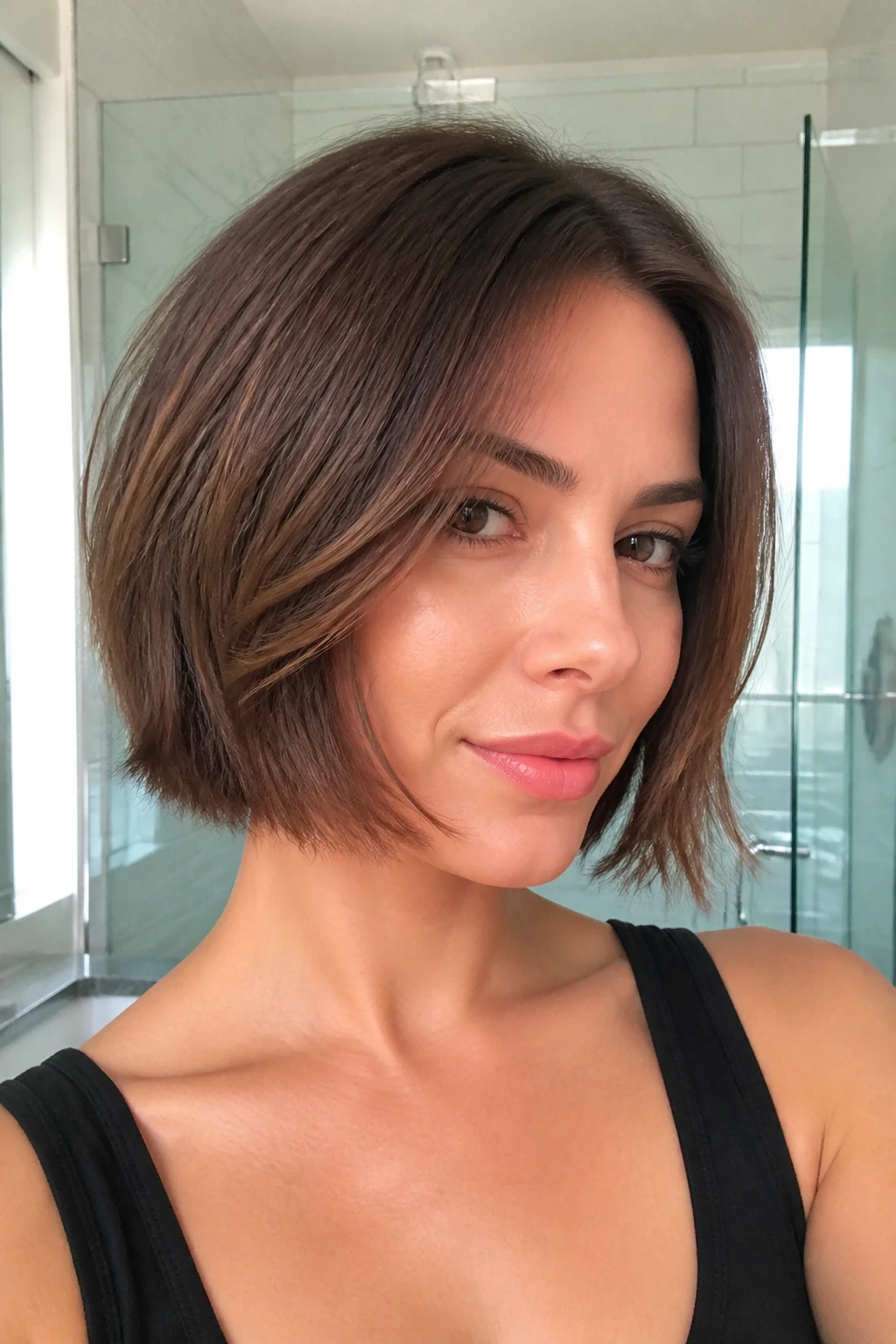
Razor cutting can be fabulous or disastrous. The difference is restraint. A chin-length razor bob with soft layers gives the ends a feathered finish, which helps thick hair move and keeps fine hair from looking like it was chewed by scissors. The razor should soften, not shred.
How to Style It Fast
- Rough-dry the roots until they’re about 80% dry.
- Use a small round brush or your fingers to bend the front away from the face.
- Put a tiny amount of cream or paste on the ends only.
- Finish with a light mist of spray if your hair is slippery.
The chin length is handy because it still feels short, but it gives you enough hair to tuck, twist, or flatten on a rushed morning. If you like a blunt outline with a bit of swing inside it, this is one of the cleaner ways to get there.
10. Micro Bob With Hidden Layers

A micro bob sounds severe until you see the hidden layering. Then it becomes a little more interesting. The length usually sits somewhere between the earlobe and the jaw, and the interior layers remove bulk from underneath so the surface stays tidy. From the outside, it reads as precise. Up close, it has movement.
This is a nice choice if you like a short haircut that looks composed with almost no styling. Hidden layers are the secret sauce here — they stop the bob from puffing out at the sides, especially if your hair is thick or has a blunt bend. You still get a clean line, but it doesn’t sit like a box.
If you wear glasses, this can be a particularly good shape. The clean edge works with frames instead of fighting them. Keep the front pieces soft and slightly longer around the temples, and the cut will frame the face without feeling crowded.
11. Feathered Pageboy

A pageboy can look a little retro in the wrong hands. Feather it properly, though, and it becomes a sharp little shape with real movement. The feathered version keeps the rounded outline near the jaw but softens the ends and gives the interior some lift so it doesn’t sit flat or helmet-like.
The trick is in the layering around the crown and the temples. If those sections are too heavy, the cut gets boxy. If they’re softened too much, you lose the pageboy silhouette entirely. The sweet spot is a curve at the bottom and a little air at the top.
I like this cut on straight or softly wavy hair because the lines show well. It’s also one of the better choices if you want a short haircut that still tucks neatly behind the ear. That tiny detail makes mornings easier than people expect.
12. Side-Parted Crop With Temple Layers
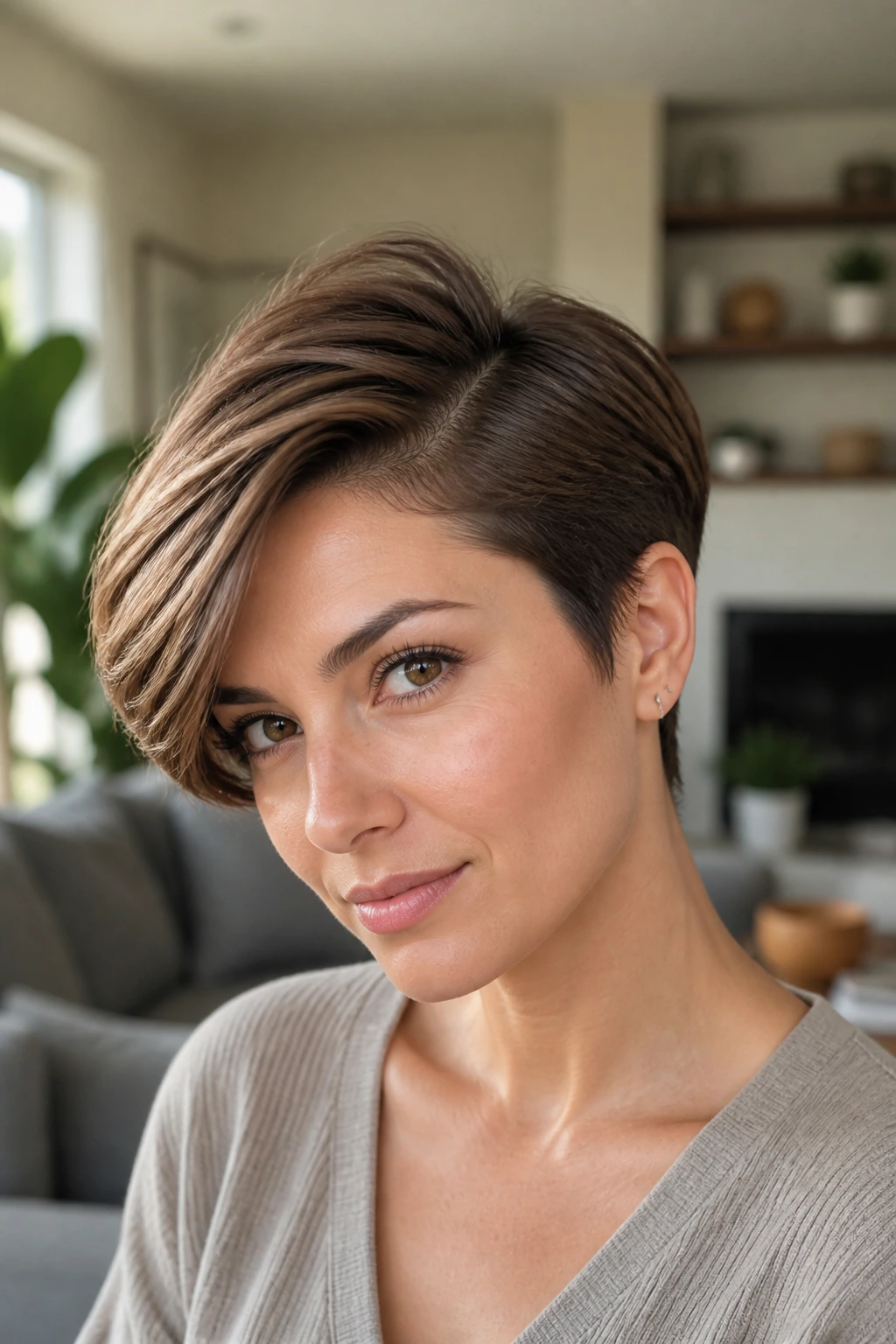
A side part can rescue a short haircut that feels too flat. The side-parted crop uses that asymmetry to build volume on one side and soften the temple area, which gives the face a cleaner frame. It’s a small change, but it changes where the eye goes.
Temple layers matter here. They stop the sides from looking blunt next to the cheek and make the cut sit more naturally around glasses, cheekbones, and jawlines. If your hair has a stubborn cowlick or a strong growth pattern, the side part can work with it instead of against it.
This cut is one of my favorites for people who want a little edge without shaving anything or going too short on top. The shape is quiet from the back and more interesting from the front. That’s a nice little trick.
13. Choppy Bowl Cut
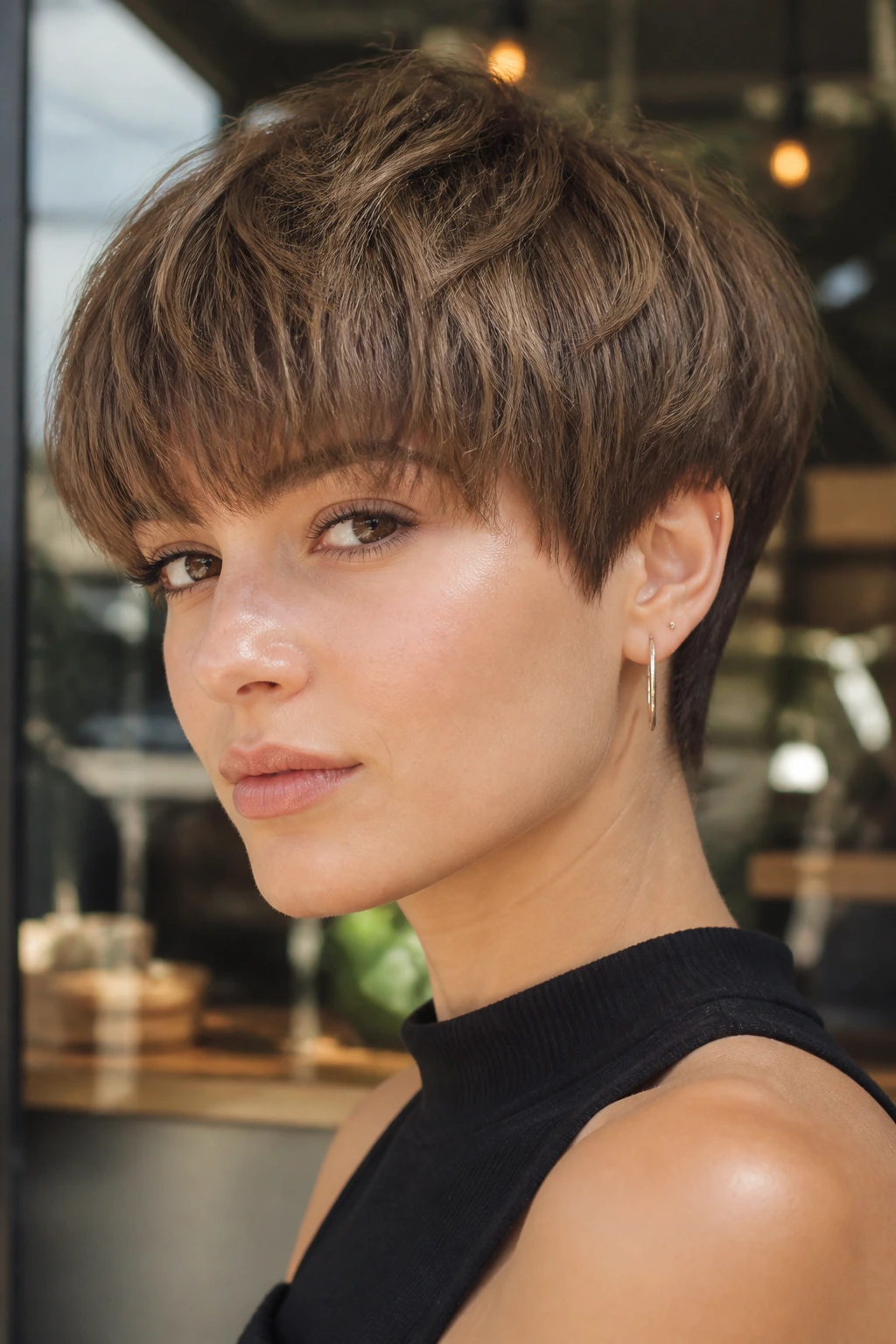
A choppy bowl cut sounds more daring than it is. The old bowl shape has been broken up with internal texture, piecey ends, and a softer fringe, so it no longer lands like a blunt cap. What you get instead is a strong silhouette with some air inside it.
The shape still carries that curved line around the head, which is why it feels edgy. But the choppy texture keeps it from looking too literal. The fringe can be micro, eyebrow-skimming, or swept off center. If you want the cut to feel less severe, ask for the nape and side layers to be point-cut rather than clipped blunt.
This is one of those styles that looks better with a bit of dry texture cream than with shiny, heavy products. Leave the ends separate. Let the curve read, but don’t glue it into place.
14. Tucked Ear-Length Bob
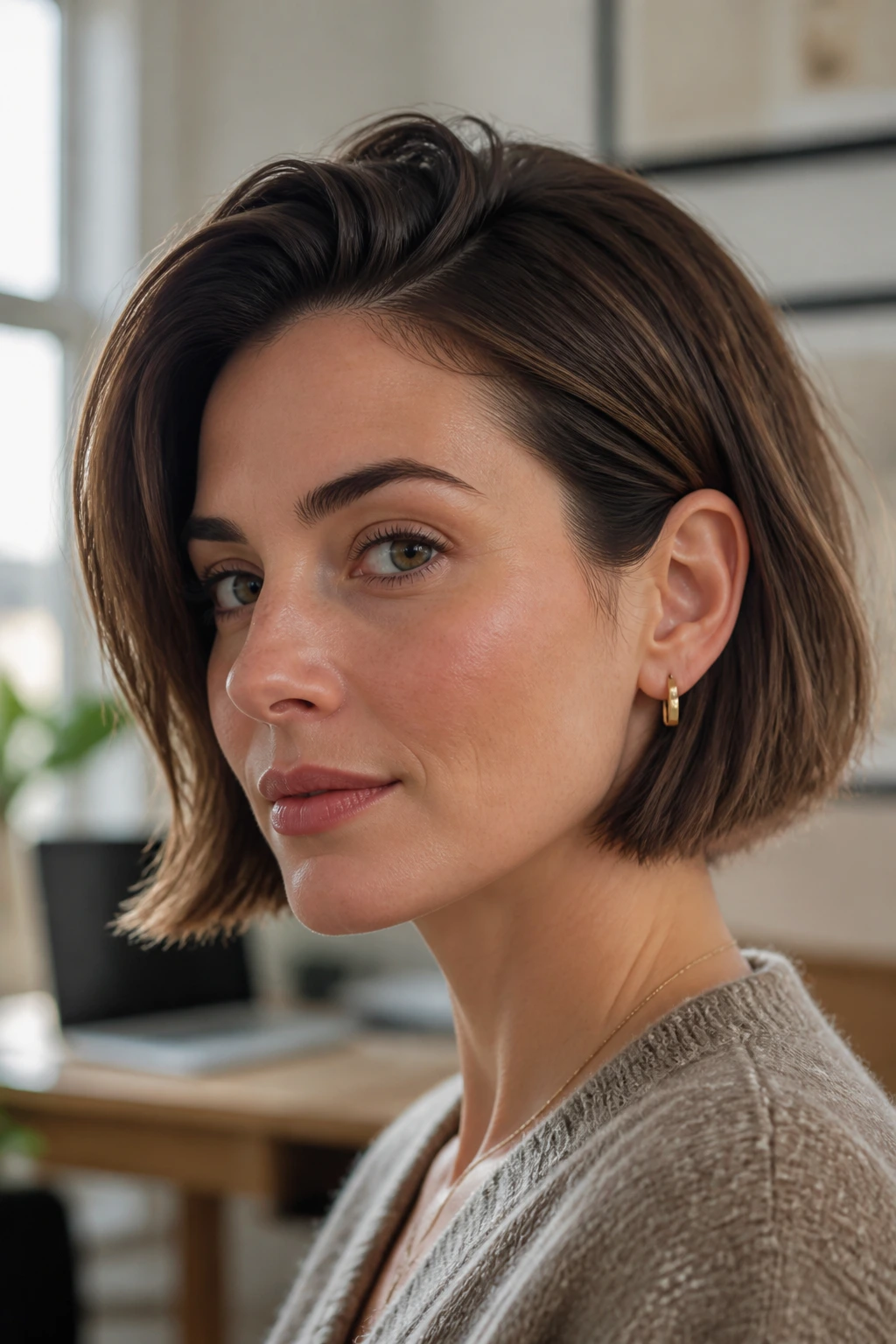
Ear-length sounds almost too short until you see how useful it is. A tucked ear-length bob leaves just enough length to hide a clip, show off an earring, or sweep behind the ear on one side while staying neat on the other. Soft layers make it workable, not stiff.
The appeal is in the small things. The ends skim the jaw, the front pieces touch the cheek, and the nape sits close enough to the neck that the silhouette looks clean even when you skip heat. If you like an edgy haircut that still feels office-safe, this is a good place to live.
The only catch is that it needs a decent cut. If the perimeter is uneven, the whole thing reads as accidental instead of intentional. Good ear-length bobs depend on clean sectioning and a soft finish at the ends.
15. Stack Bob With Wispy Nape
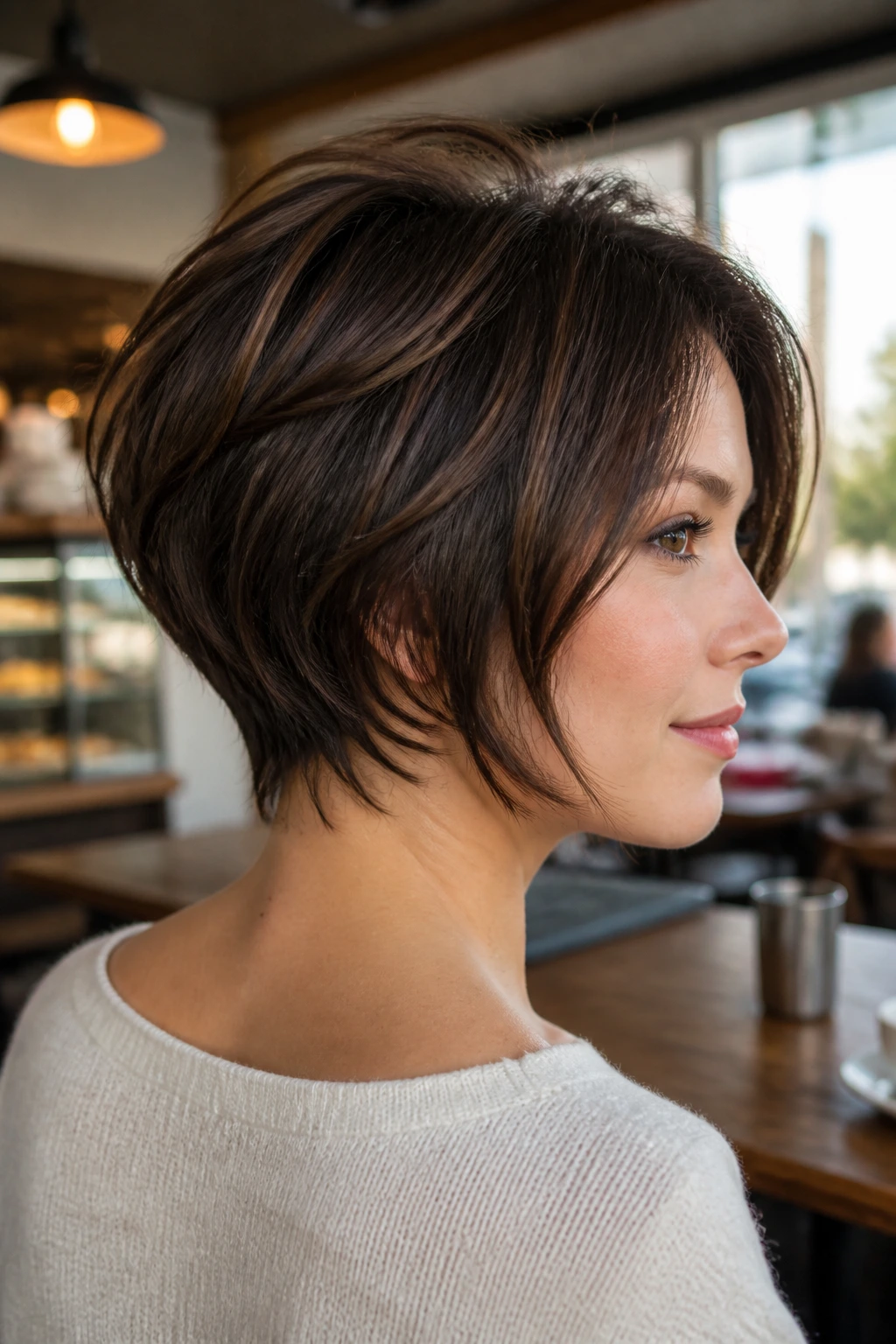
A stacked bob is about lift at the back, and the wispy nape keeps that lift from turning into a hard shelf. The shorter layers stack underneath the crown, which creates a little shape and support. Then the wispy taper at the neck softens the exit point so the haircut doesn’t feel too blunt.
This is a strong choice for straight or slightly wavy hair that likes to collapse at the roots. The back gets structure fast, which means less day-to-day drama. If you’re the kind of person who wants your hair to look styled after a rough dry and a brush-through, this cut behaves nicely.
The front can stay a little longer than the back so it still gives you face-framing movement. That longer front is what keeps the cut from feeling dated. Without it, stacked bobs can slide into a very specific, very old-school shape.
16. Curtain Fringe Pixie Bob
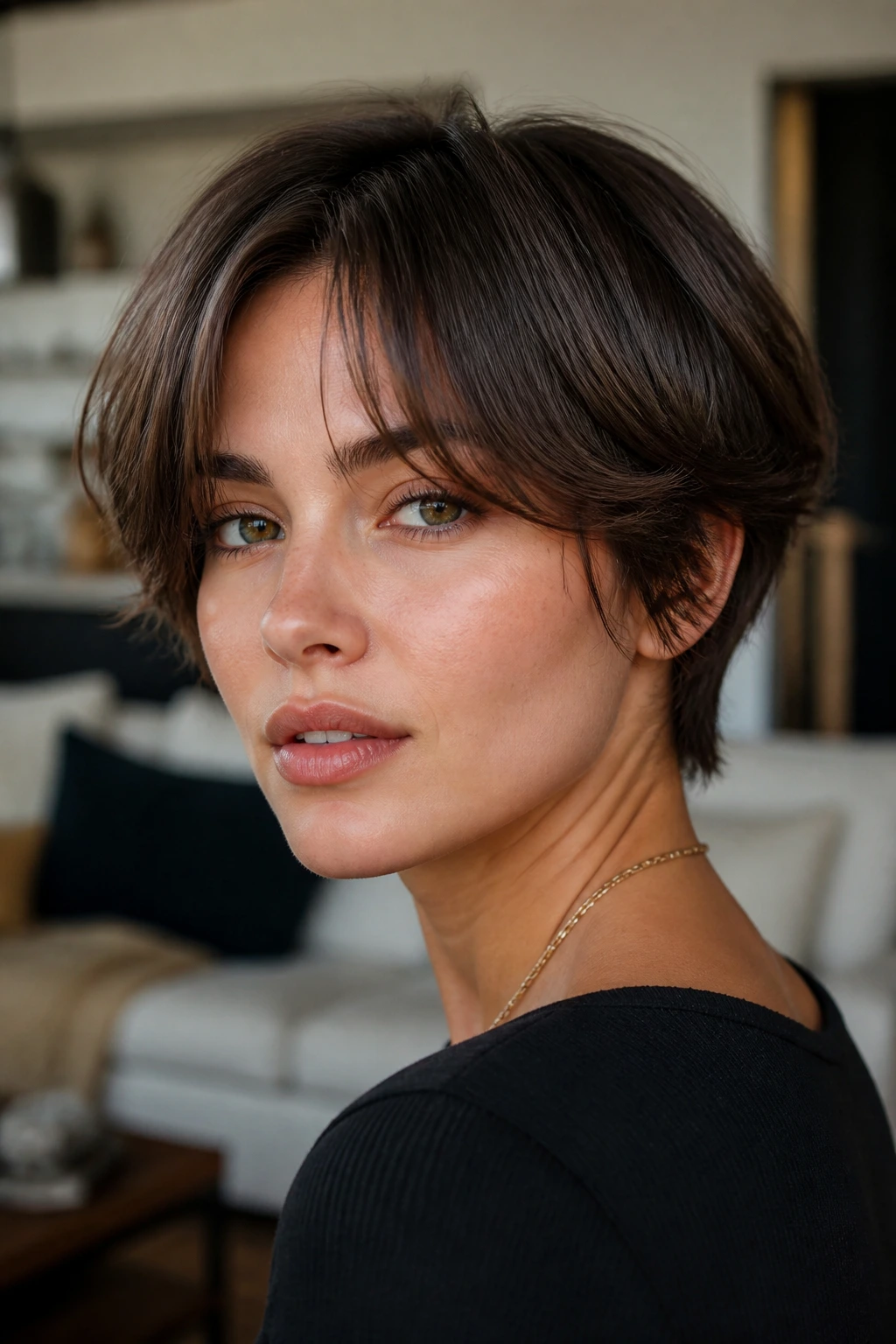
A curtain fringe changes the mood of a pixie bob instantly. It softens the forehead, opens the eyes, and gives the front of the cut a bit of drape, which is useful if you don’t want a blunt fringe sitting straight across your brow. The pixie-bob hybrid keeps enough length to tuck and sweep, but still feels cropped.
Who Should Ask for It
- People with round or square faces who want a little vertical line at the front
- Hair that sits between fine and medium, because the fringe needs a bit of body
- Anyone who wants a shorter cut without committing to a full pixie
The fringe should be cut to split naturally around the cheekbones. If it lands too short, the whole face gets exposed in a way that can feel harsh. Too long, and it falls into your eyes all day. The right length sits in that in-between zone that looks easy and still holds shape.
17. Soft Mohawk Pixie
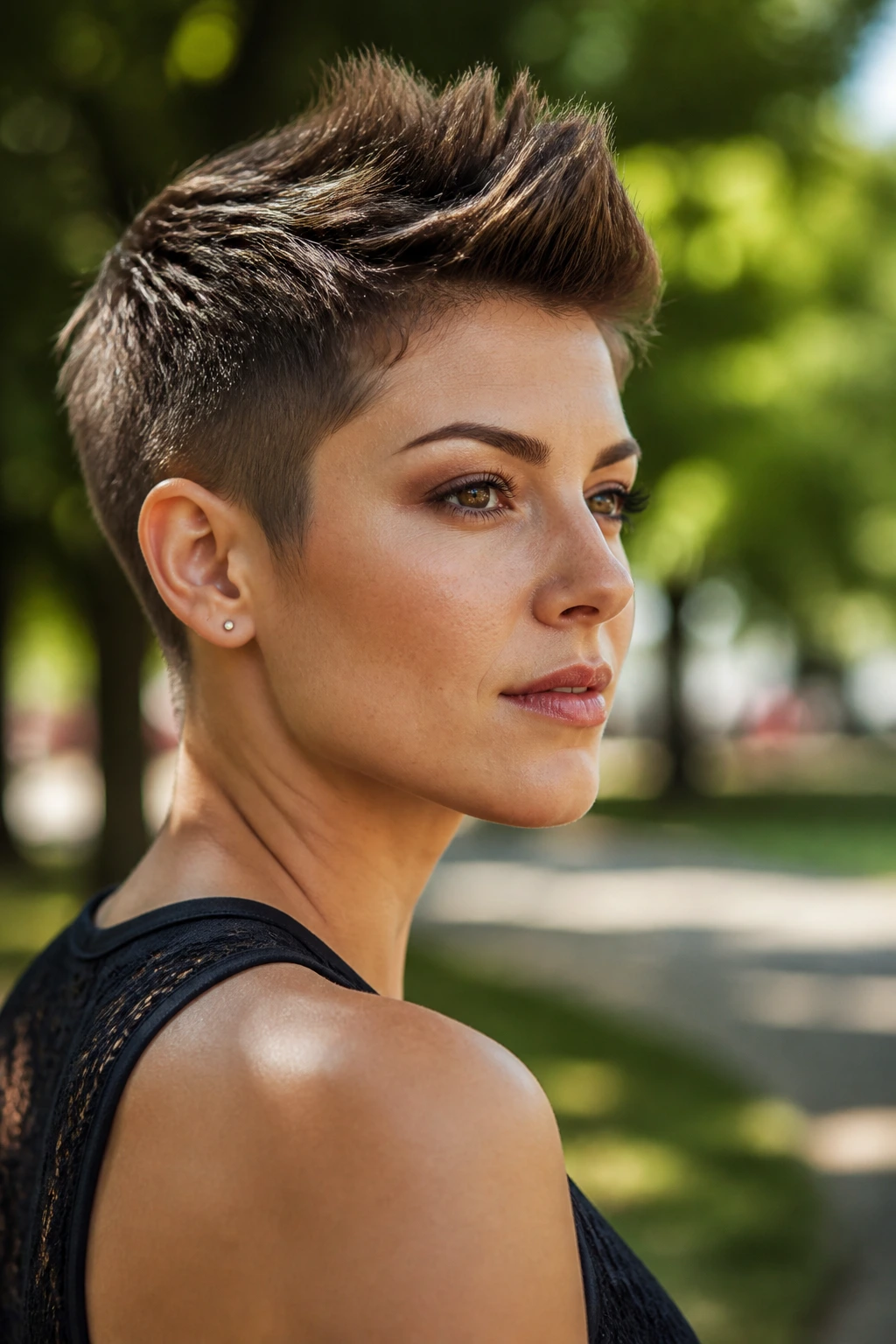
A mohawk shape can be subtle. It does not have to scream. A soft mohawk pixie keeps the sides closely cropped and leaves the center strip a little longer so it can stand up, sweep back, or fall forward depending on the day. The soft layers make the middle section less rigid and more wearable.
I like this cut because it gives real edge without much daily work. If your hair is thick, the center ridge holds shape well. If it’s fine, a touch of root spray at the crown and a quick blast of heat usually does enough. The side taper keeps the overall profile neat.
This is the kind of haircut that looks best with confidence and very little polishing. If you enjoy the feeling of short hair that has some backbone, it delivers that cleanly.
18. Shattered Fringe Bob
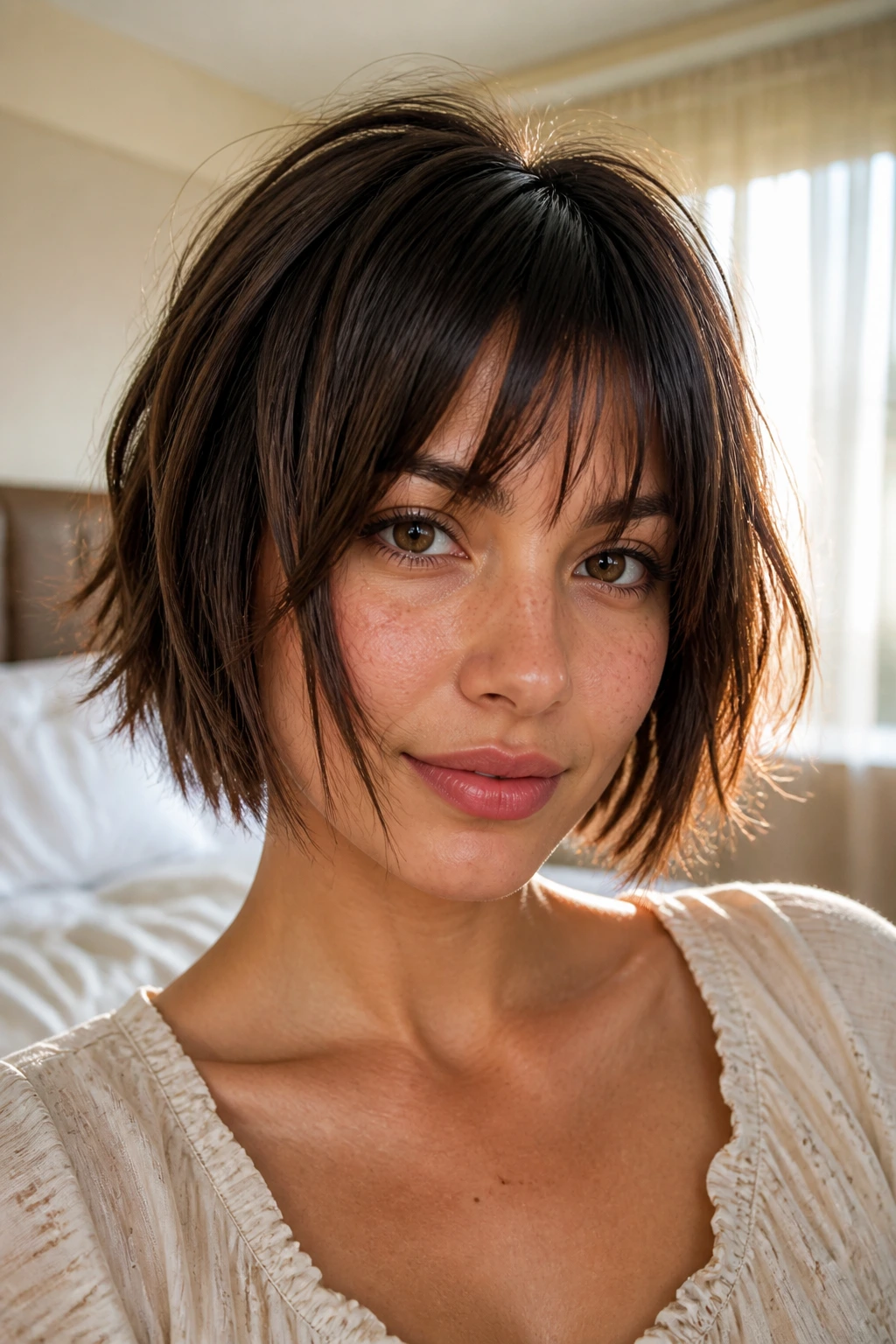
The fringe is the whole story here. A shattered fringe bob breaks up the front line so it doesn’t sit like a solid curtain across the face. The bob itself can be chin length or a little shorter, but the front pieces are sliced and softened so they fall in tiny, uneven sections.
That kind of fringe is a gift for busy mornings. It rarely needs a full styling pass. A quick finger-dry, a little bend at the sides, and the cut usually looks like it was planned that way. If your forehead feels too exposed in short hair, this fringe gives you coverage without heaviness.
It’s also a good cut for people who hate the look of a blunt fringe after day one. Once the ends soften a bit, the fringe gets more interesting, not less.
19. Wet-Look Crop With Layered Crown
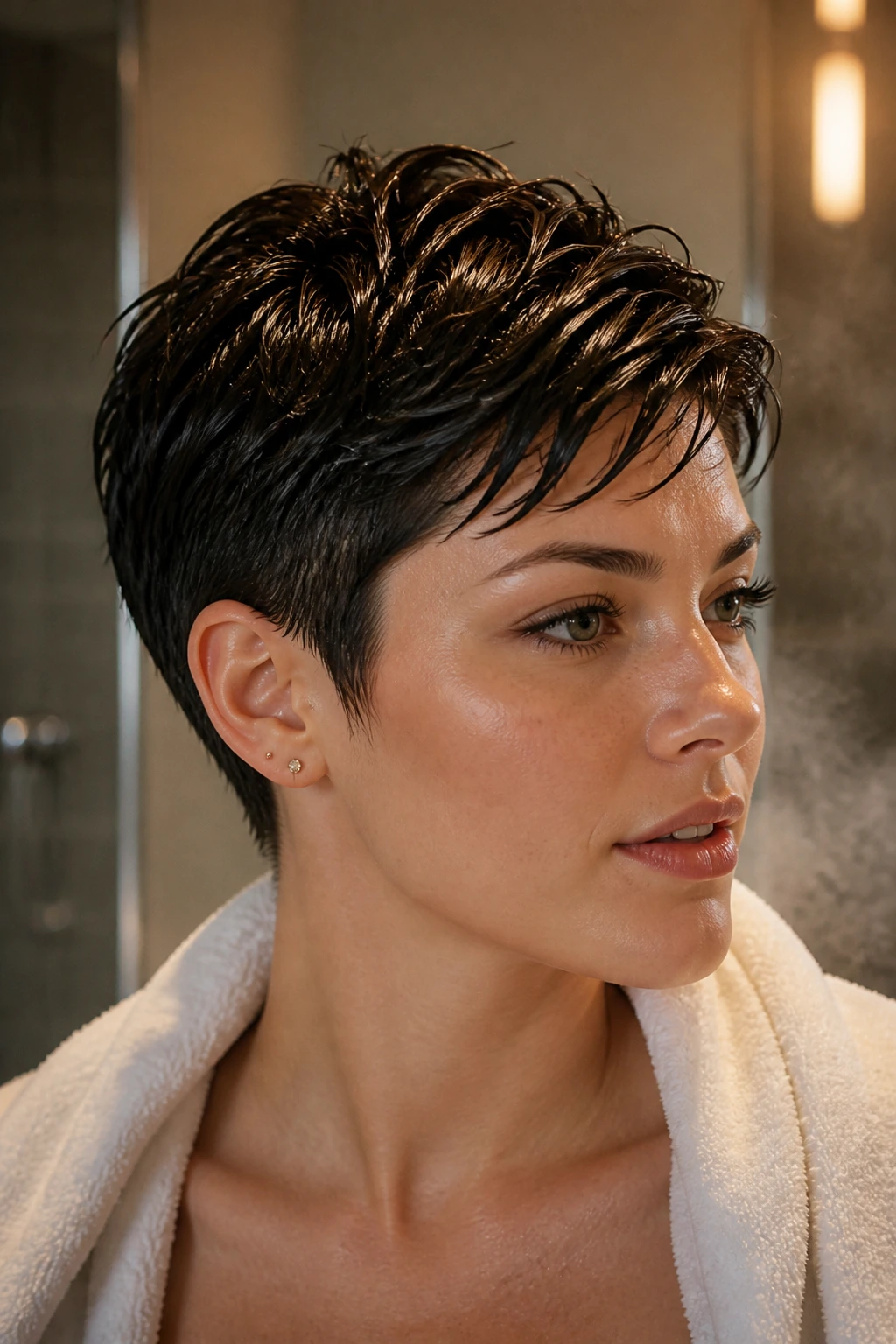
A wet-look crop can be sleek, but the layered crown keeps it from going flat and severe. That combination gives you shine on the surface and movement underneath. The crop itself stays short around the sides and nape, while the crown holds enough length to push back or to the side with product.
This is the cut for someone who wants a little drama without spending twenty minutes on styling. A gel or cream with hold at the roots does most of the work. The crown layers keep the top from sitting like a slick sheet, which is where many wet looks fail.
It’s especially good for evenings, humid weather, or hair that naturally clumps in a way you can actually use. The shape reads polished, but the layers stop it from looking stiff.
20. Grown-Out Pixie Bob
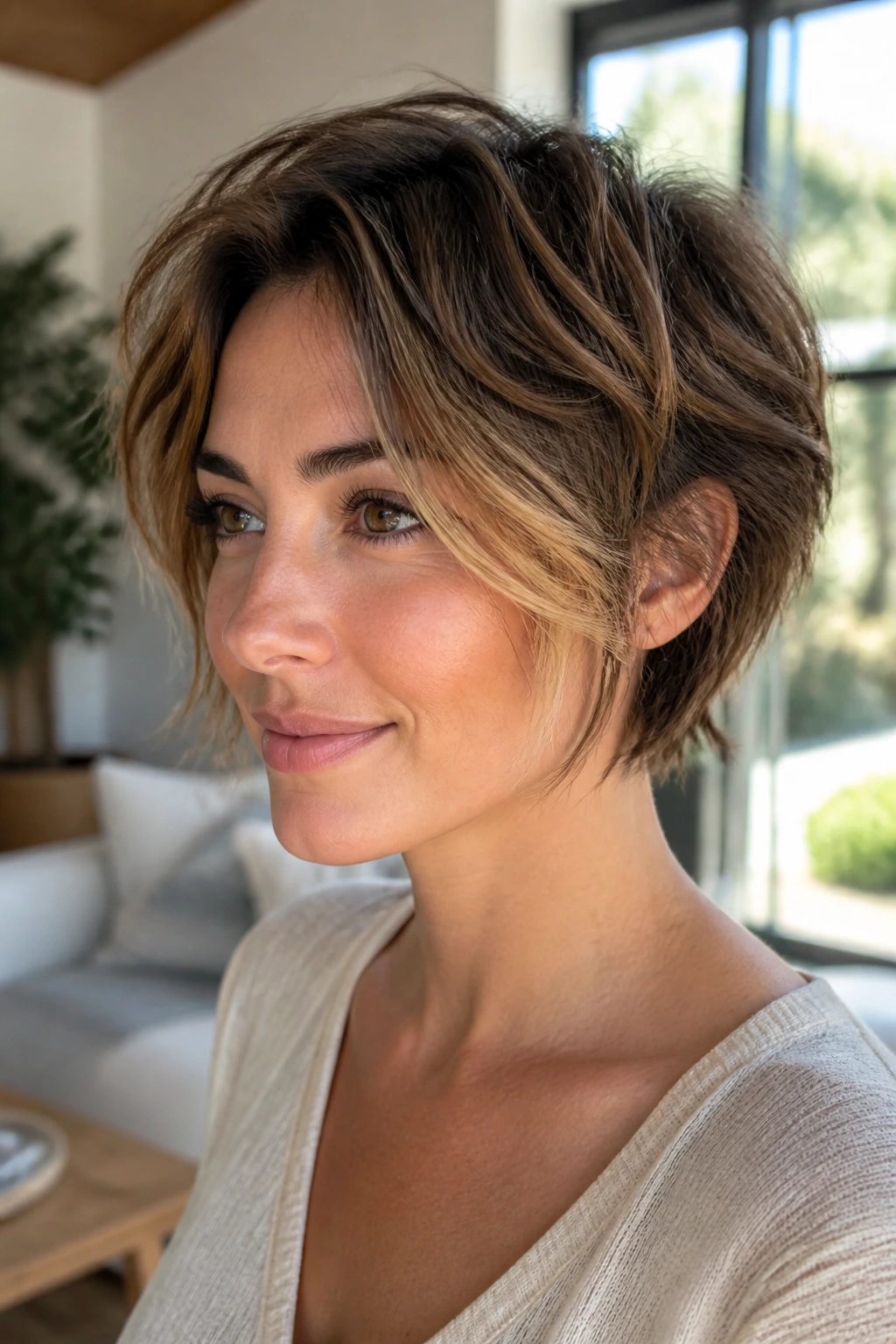
What happens when a pixie starts growing out and still looks good? You get the grown-out pixie bob, which is honestly one of the smartest short shapes on this list. It lands in that in-between zone where the sides have enough length to tuck and the top still has the loose texture of a pixie.
This is the cut for people who want flexibility. It can lean pixie with a little paste and lift, or bob with a side part and soft bend. The layered crown keeps the top from collapsing, and the longer front pieces help the transition feel deliberate rather than awkward.
If you’re nervous about going too short, this is a very sane place to start. It gives you edge without locking you into one rigid shape.
21. Razor Shag Bob
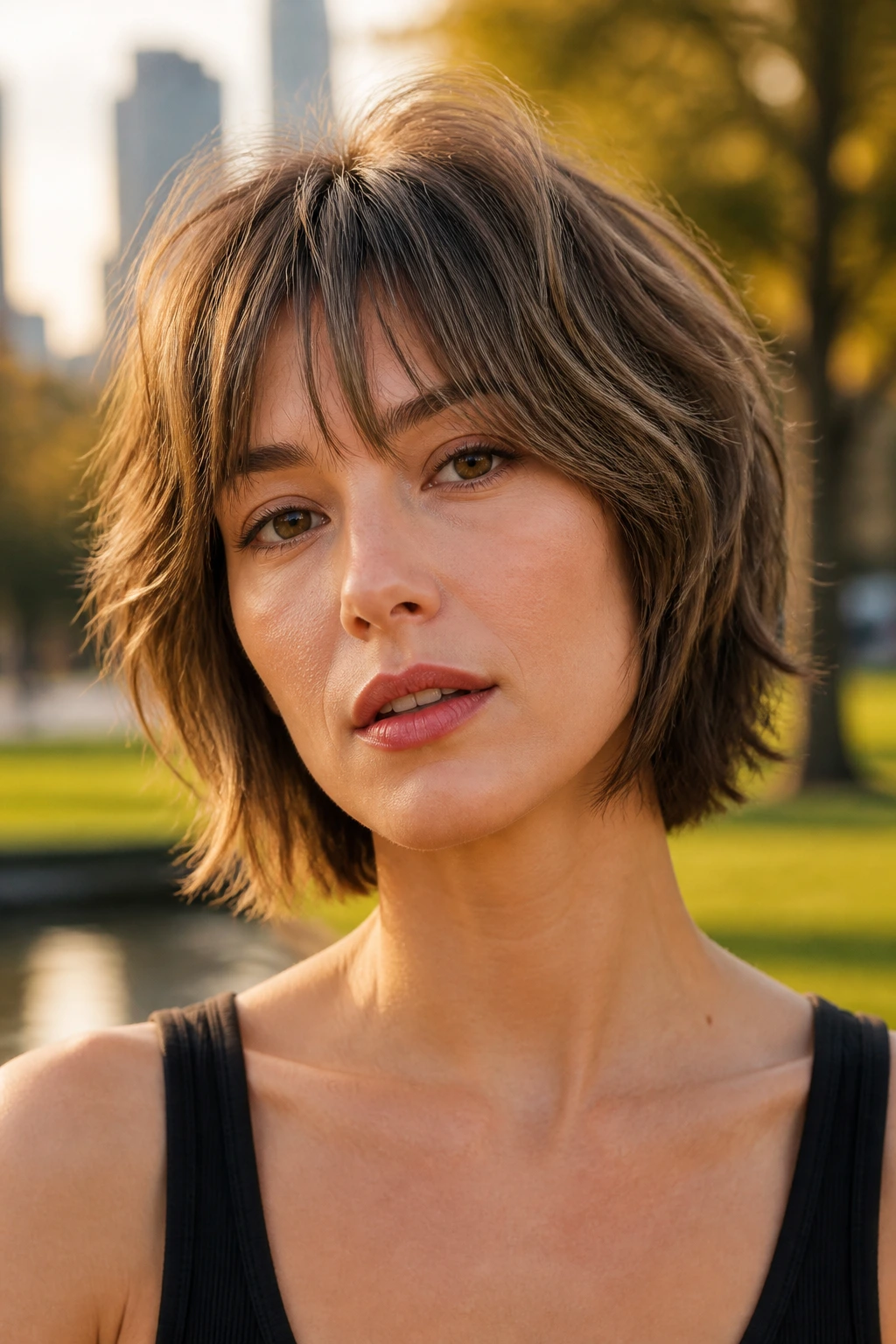
A razor shag bob is all about movement and a slightly broken-up edge. The razor work softens the ends, while the shag layering adds lift through the crown and side sections. The result is a bob that never looks too neat, which is exactly why it works.
This cut is especially good if your hair has a natural bend. The layers can follow the wave instead of fighting it. On straight hair, it takes texture spray and a quick scrunch or bend with a flat iron to wake it up, but the payoff is a haircut that looks less stiff than a blunt bob.
The important thing is restraint. Too much razor work and the ends start to fray. The best version keeps the perimeter readable and the interior textured.
22. Airy Jaw Crop With Long Sideburns
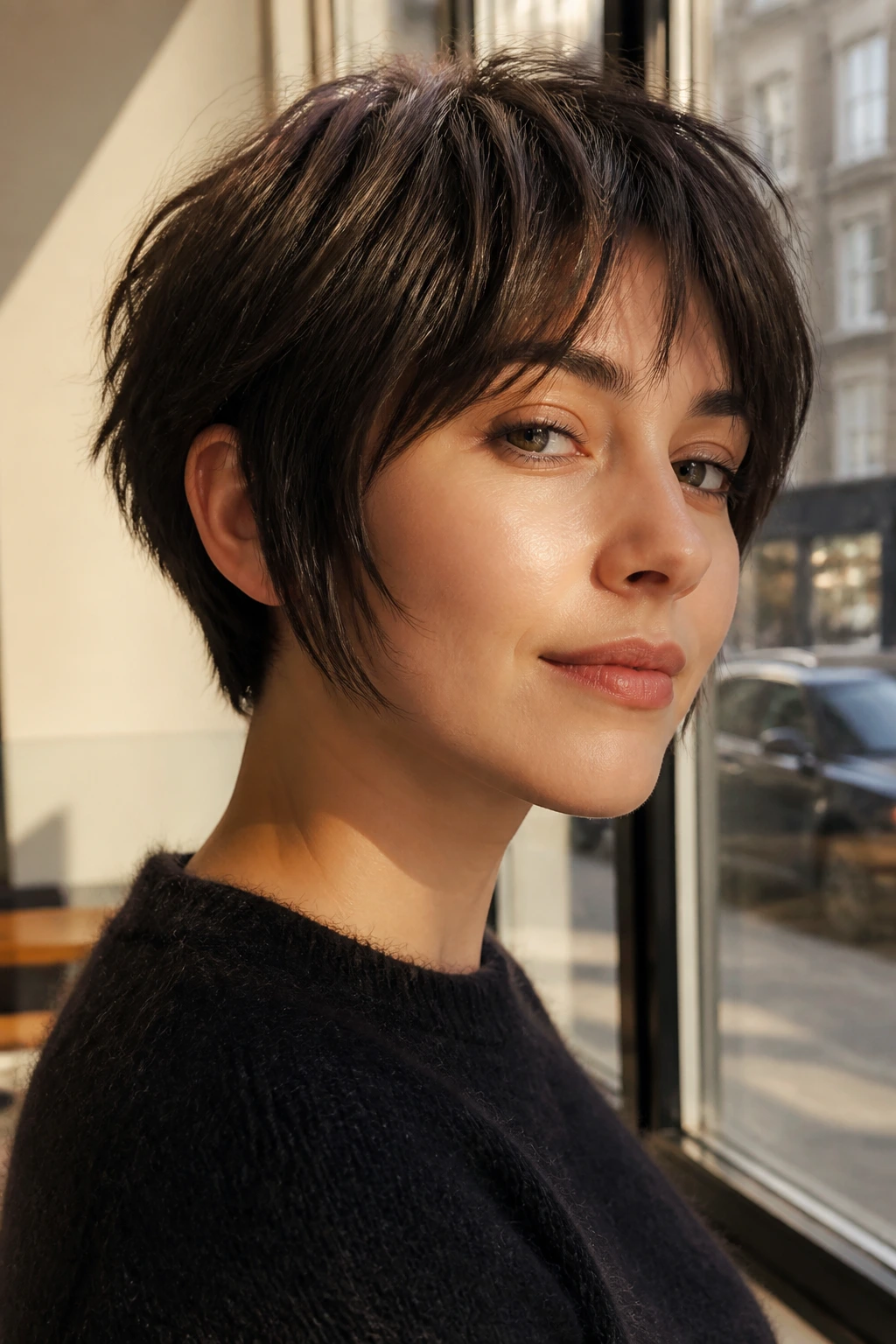
The long sideburns are the quiet hero here. An airy jaw crop uses a short perimeter at the jawline, but leaves the sideburn area slightly longer so the face gets a soft frame. That little strip of length changes the whole cut. It keeps the crop from feeling too abrupt.
This is a very useful shape if you wear glasses, if your jawline feels strong and you want some softness around it, or if you just like hair that tucks behind the ear without losing style. The interior layers should be light, not chopped to death. You want movement, not fuzz.
It’s the sort of haircut that looks expensive when it’s really just well balanced. Clean edges, a little air inside, and enough front length to make the face look finished. That’s the whole trick.
Why Soft Layers Make Short Hair Move Instead of Sit
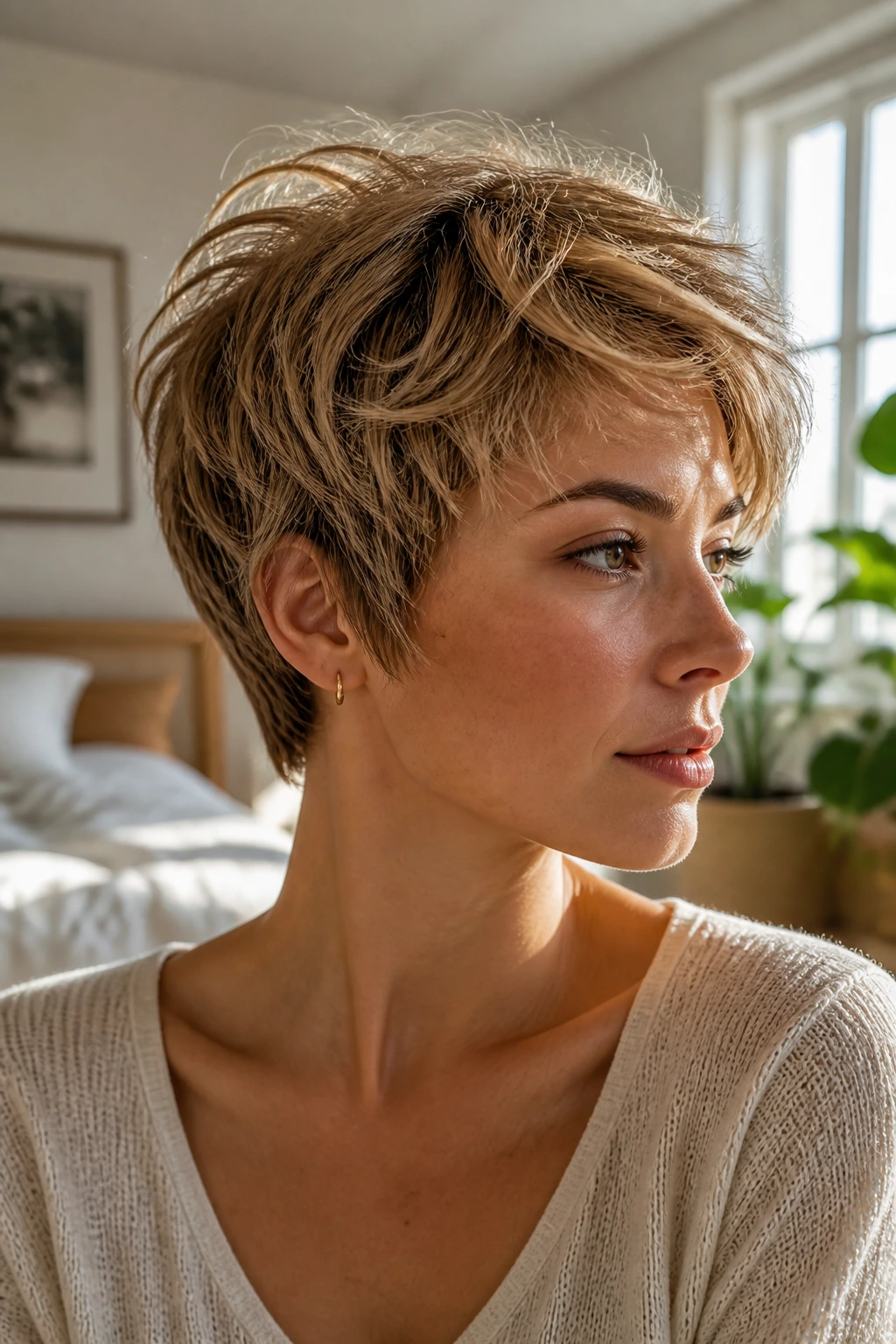
Short hair without layering can get stubborn fast. It falls in one direction, swells in the wrong place, or hangs straight down in a way that makes the whole haircut feel heavy. Soft layers fix that by removing weight from the inside of the shape while leaving the outline intact. That’s the part a lot of people miss. The cut still looks sharp from the outside, but the inside has room to breathe.
Point-cutting helps here. So does light graduation at the nape and around the crown. Those techniques keep the ends from stacking into a blunt block, and they let the face-framing pieces fall in a more natural way. On short hair, a few millimeters of difference can change how the whole shape sits after sleep, after rain, or after a half-hearted blow-dry.
Soft layers also make short hair friendlier to texture. Wavy hair gets less triangle. Fine hair gets more lift. Thick hair gets less bulk around the ears and jaw. Curly hair gets a shape that can keep its outline without turning into a puffball. That’s why I trust layered short cuts far more than one-length cuts when the goal is low-effort mornings.
The Tools That Make Short Haircuts Behave
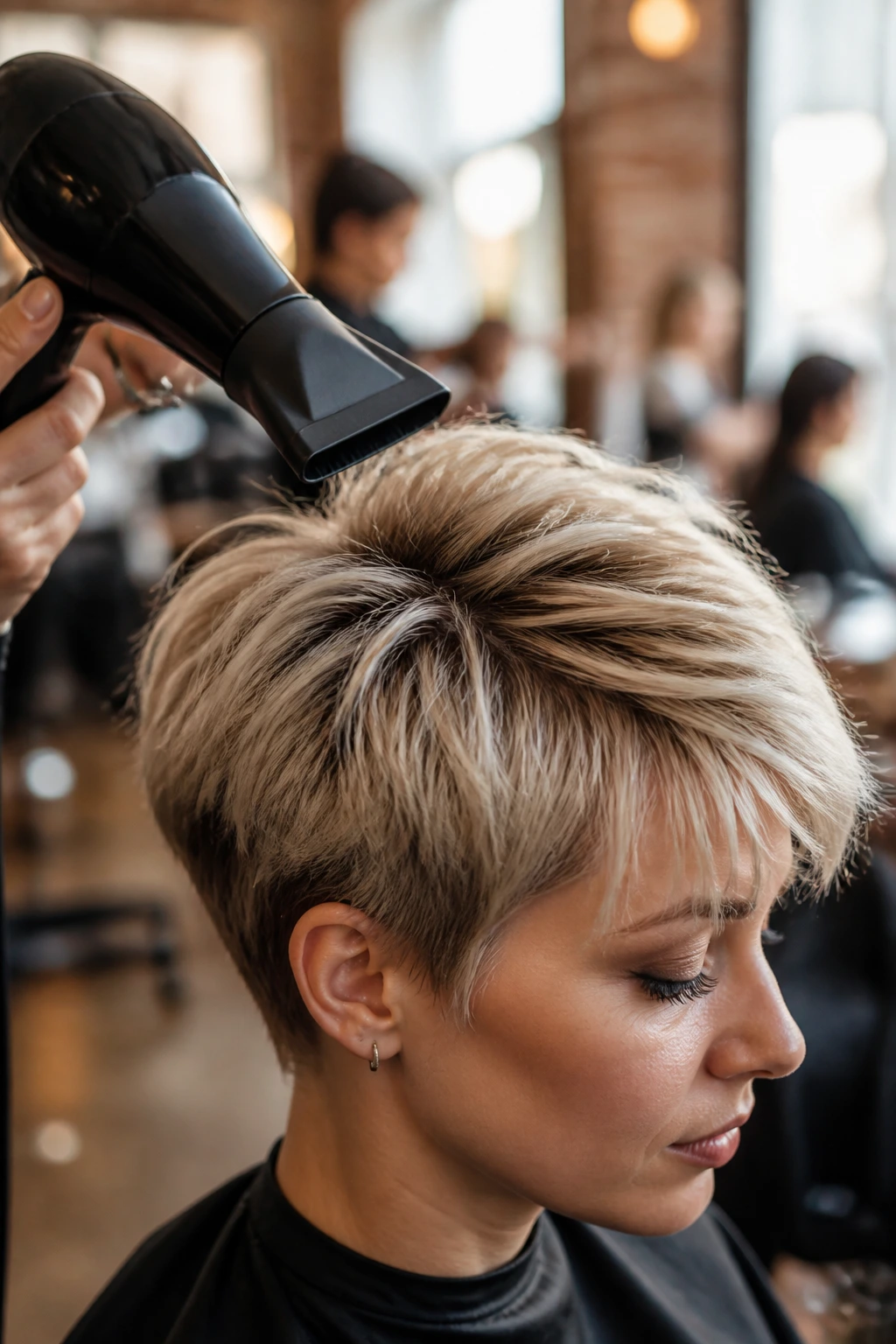
- Blow dryer with a nozzle: Directs airflow at the roots so you can lift the crown without blasting the whole cut into static.
- Small round brush, 1 to 1.5 inches: Handy for bending front pieces, flipping ends under, and smoothing a fringe without flattening the top.
- Flat iron with narrow plates: Better for short hair than a wide iron because it fits around fringe, corners, and temple pieces.
- Matte paste or texture cream: Gives separation at the ends and keeps pixies, crops, and shags from turning fuzzy.
- Lightweight mousse: Useful for fine hair that needs body at the root without sticky buildup.
- Dry shampoo: Helps day-two shape hold up and keeps the crown from going limp.
- Duckbill clips: Great for sectioning the top while you dry the sides, especially on bobs and bixies.
- Diffuser: Worth owning if your hair is wavy or curly and you want the layers to dry with shape instead of frizz.
How to Ask for the Right Short Cut at the Salon
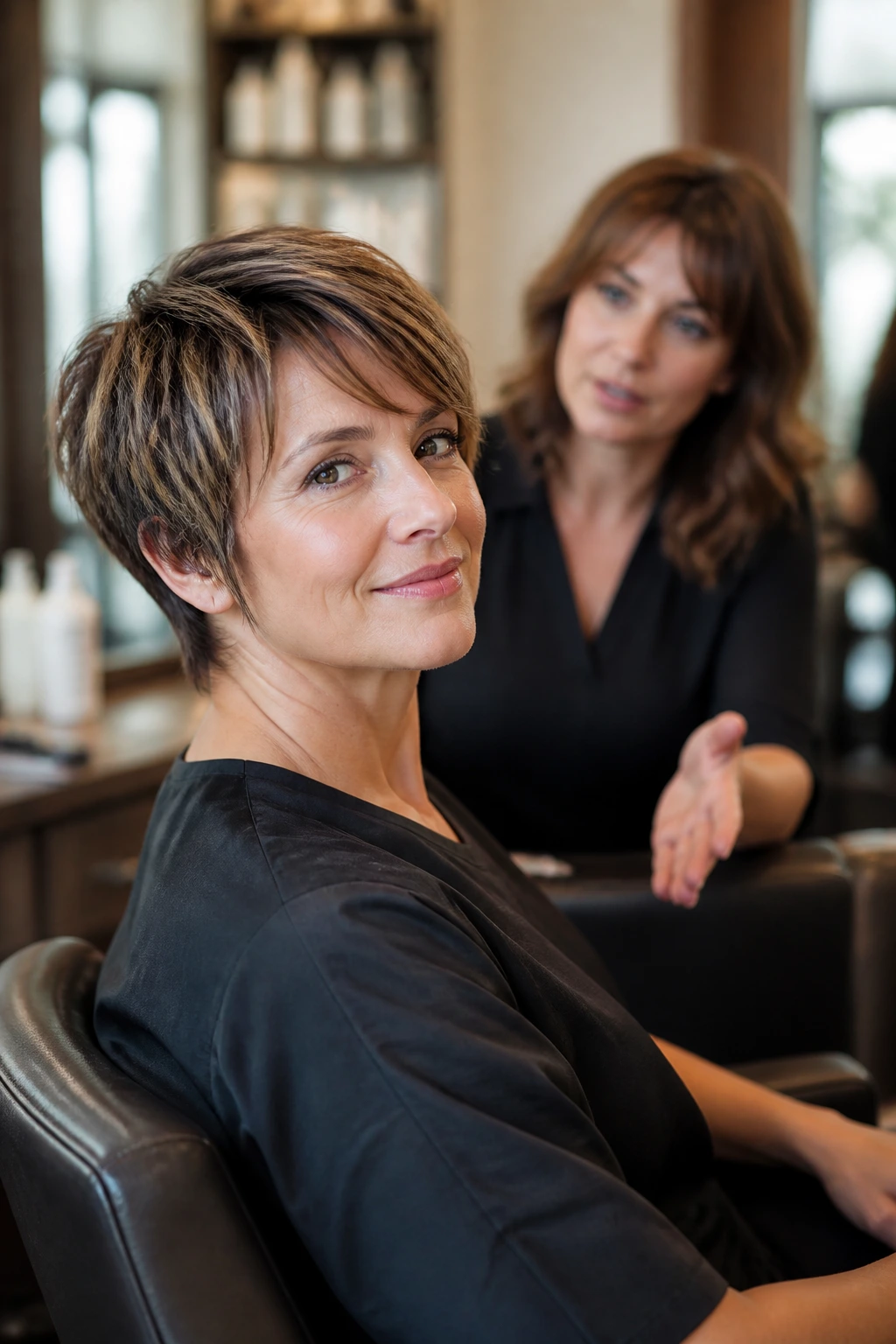
Bring photos, yes, but bring the right ones. A picture of a haircut from the front tells only half the story. You want one photo that shows the side, one that shows the back, and one that shows how the fringe sits when the hair is in motion. Short hair is all about proportion, and the back often decides whether the cut feels bold or just too short.
Say what you want the cut to do in the morning. That part matters more than naming the haircut. Do you want to tuck it behind your ears? Do you want the front to sweep across one eye? Do you want the crown to sit a little fuller so it doesn’t collapse by noon? Those details steer the cut in a way a vague “I want something edgy” never will.
Hair texture changes the math, too. Fine hair usually needs softer internal layers and a cleaner perimeter so it doesn’t go stringy. Thick hair usually needs more weight removal underneath, especially around the nape and behind the ear, or the shape swells into a triangle. Curly hair needs shrinkage accounted for from the start. If your stylist does not talk about how your hair lives when it is dry, keep asking.
Five-Minute Styling Routines That Actually Work
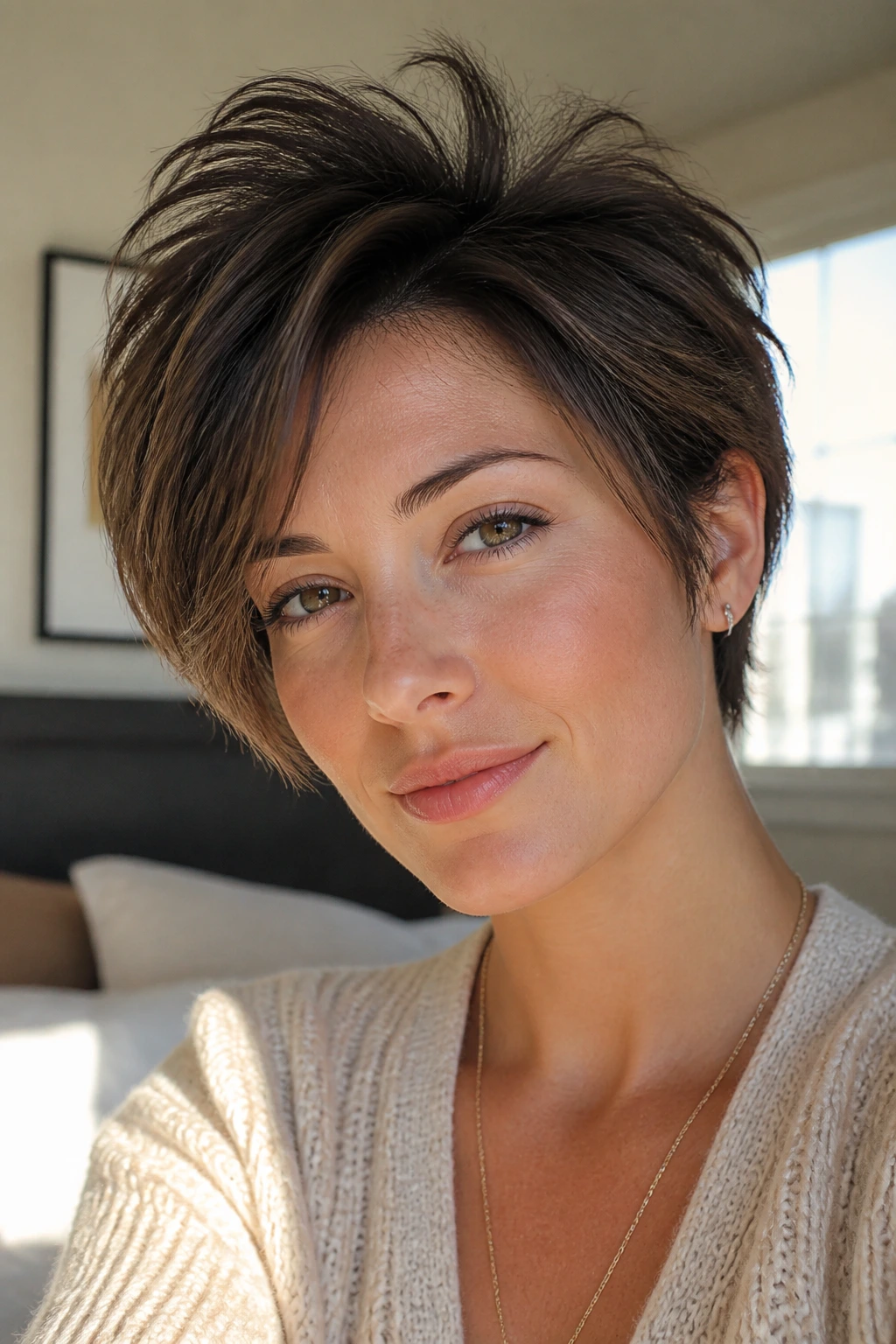
A great short cut should survive a rushed morning, not demand a ceremony. The easiest routine starts while the hair is still slightly damp. Flip the roots the way you want them to sit, blast them with a dryer for a minute or two, then stop before the whole thing gets too controlled. Short hair usually looks better with a little air in it.
For pixies and crops, rub a tiny bit of paste between your fingers and pinch the ends only. Don’t smear product all over the top unless you want the shape to go flat. The trick is to separate the front pieces and the crown, not glue everything into place. A tiny amount goes farther than people think.
Bobs and bixies often need only one bent section near the face. Curl the front away from the face on one side, tuck the other side behind the ear, and leave the back alone. That asymmetry gives the cut movement without a full styling pass. If your hair is wavy, you can even skip heat and work with the natural bend as long as the layers are cut properly.
Extra Tips for a Cleaner Shape and Less Fuss
Root Lift: Dry the crown in the opposite direction for the first 30 seconds, then flip it back. That little reset lifts short hair better than piling on product later.
Front Control: If your fringe or face frame gets unruly, clip it in place while it cools. Ten minutes with a duckbill clip can save you from re-styling the same section three times.
Texture Placement: Put paste or cream only from the mid-lengths down on piecey cuts. The root needs room to move; the ends need definition.
Humidity Plan: In damp weather, use a light spray with hold under the top layer, not a heavy shell over the whole head. Heavy spray can crush soft layers and make them look sticky.
One more thing: if your hair tends to puff at the sides, ask for the weight line to sit a touch lower. That tiny adjustment can stop a short haircut from flaring outward the second you step into air that feels even slightly humid.
Common Mistakes That Make Short Hair Harder Than It Needs to Be
- Cutting too much off the top on fine hair: The symptom is a flat crown and a scalp-forward look that feels harsher than you expected. The fix is a longer top with soft internal layering, not a very short crop all over.
- Over-thinning thick hair: The ends start to separate in weird gaps, and the haircut can puff up near the jaw. Ask for weight removal in the right places, not aggressive thinning through every section.
- Ignoring the cowlick: A cowlick at the fringe or crown can lift the hair into a little ridge that never lies down. A good stylist will cut around it, not pretend it isn’t there.
- Using too much product: Short hair goes from piecey to greasy in a blink. Start with less than you think you need; add more only after you see how the shape settles.
- Skipping trims too long: Short hair shows outgrowth fast, especially around the neckline and ears. The shape can lose its edge before you even notice why.
- Choosing a fringe that fights your eyebrows and glasses: A fringe that sits exactly where your frames sit will make mornings annoying. Leave some room between the brow line, the frame, and the fringe.
Variations and Adjustments to Try

Fine-Hair Lift Version
Ask for a clean perimeter with only light internal layers and a little extra length on top. Fine hair usually needs structure more than it needs texture, and too much layering makes the ends look sparse.
Curly-Coil Friendly Version
Keep the top longer and the sides tapered softly, then shape the fringe or front pieces in a way that respects shrinkage. The goal is a visible outline when dry, not a guessed-at shape when wet.
Glasses-Friendly Frame
Leave the temple pieces and sideburns slightly longer so they don’t tangle with the frames. This works especially well with bixies, crops, and jaw-length bobs.
Low-Heat Morning Version
Choose cuts with a little natural movement — shag bobs, soft mullets, and layered crops — so you can scrunch, air-dry, and leave. The layers do the work, which is the whole point.
Grow-Out Grace Version
Pick a pixie bob or a bob with soft face-framing layers if you know you may want to lengthen the cut later. These shapes often grow into each other more cleanly than a severe crop or a blunt fringe.
Keeping the Shape Sharp Between Salon Visits
Short hair asks for maintenance, but not the annoying kind. Pixies and crops usually need a trim every 4 to 6 weeks if you want the outline to stay crisp. Bobs and bixies can often stretch to 6 to 8 weeks, though the fringe may need a touch-up sooner if it sits right on the brow.
Night care matters more than people expect. A silk or satin pillowcase cuts down on friction, which helps the fringe and face-framing pieces keep their direction. If your hair bends easily, clip the front away from your face before bed so you don’t wake up with a crease across the bangs. For curly versions, a loose pineapple or a soft clip at the crown can preserve the layers without flattening them.
Dry shampoo has a place here, but use it before the hair gets oily enough to feel heavy. A light mist at the roots on day two or day three can keep the crown alive. If the ends need refreshment, mist them with water and a drop of leave-in rather than piling on more paste. Short hair looks best when it still moves.
Frequently Asked Questions
Which edgy short haircut needs the least styling?
A textured pixie, a grown-out pixie bob, or a micro bob with hidden layers usually asks for the least morning effort. They already have shape built into the cut, so a rough-dry and a little product at the ends can be enough.
Are soft layers good for fine hair?
Yes, but they need to be light and strategic. Fine hair usually looks best with soft layering around the top and face, not heavy thinning through the ends, which can make the cut look sparse.
What if my hair has a strong cowlick in the front?
Tell your stylist before the cut starts. A good fringe or front sweep can be built around the cowlick, but if the section is cut too short or too blunt, it will stick up and fight you every morning.
Can I wear one of these cuts if I have curly hair?
Absolutely, but the shape has to follow the curl pattern. Curly pixies, tapered bobs, and soft mullets usually work well when the stylist leaves room for shrinkage and avoids over-layering the crown.
Which cuts work best with glasses?
Bixies, ear-length bobs, curtain-fringe pixie bobs, and side-parted crops tend to work well because the front pieces can sit around the frames instead of colliding with them. Avoid a fringe that lands exactly where the glasses sit unless you want constant rearranging.
How do I keep a short haircut from looking too severe?
Keep the perimeter clean but ask for soft point-cutting through the top and front. That little texture keeps the haircut from feeling like a block, especially around the jaw and temple area.
Will a pixie grow out into an awkward shape?
It can, if the top is too short and the sides are too tight. A longer top pixie or a pixie bob usually grows more gracefully because the pieces around the face and crown keep some usable length.
What should I ask for if I want edgy, but not extreme?
Ask for a short cut with soft layers, a little texture at the ends, and face-framing pieces that still tuck behind the ear. That gives you attitude without shaving the sides or locking you into a high-maintenance shape.
The Cut That Keeps Up
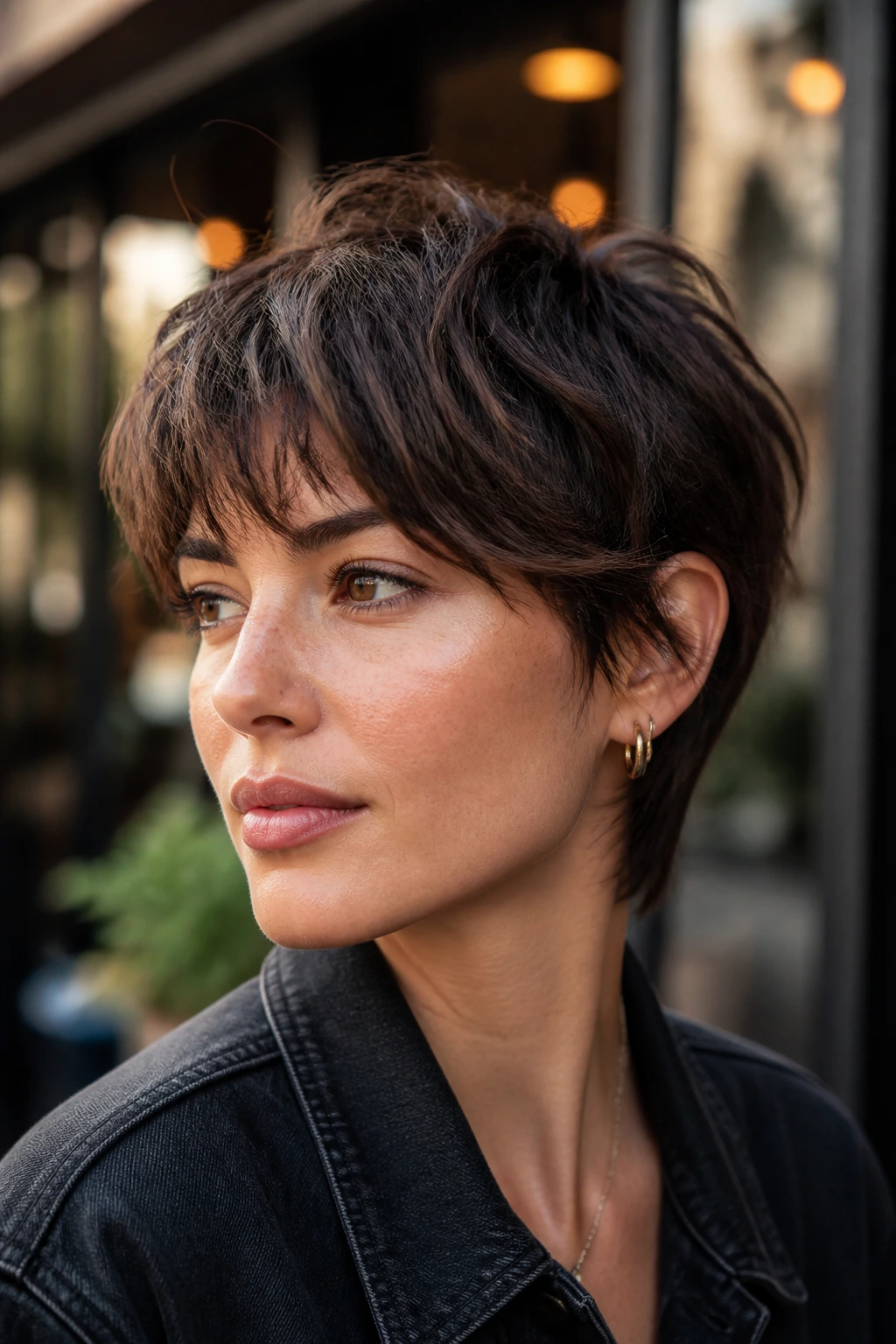
Short hair works best when it feels like a decision, not a dare. That’s the quiet strength of these cuts: they look sharp, but they don’t ask you to be precious about them. The soft layers keep them from turning stiff, the face-framing pieces make them easier to wear, and the edgy edges give them enough attitude to feel current without getting fussy.
Pick the shape that matches your texture, your routine, and how much you want to touch your hair before breakfast. That’s the part that saves time, not the haircut name itself. A good cut should hold its own when you’re late, half-awake, and reaching for the door, and these ones do that with less drama than most people expect.