



Short rocker rock chic hairstyles for thin hair work because they stop fighting the hair you actually have. Thin strands usually don’t need more length; they need a shape that keeps the perimeter looking solid while the crown gets a little lift and the ends get some bite. That’s the whole trick. Not more hair. Better architecture.
The wrong cut on thin hair tells on itself fast. The crown goes soft, the ends taper into wisps, and the whole style starts looking like it needs a nap by midday. A sharp crop with broken texture, on the other hand, can fake density in a way that heavy layers and flat ironing never quite manage. You get outline, movement, and attitude without dragging the hair down.
I’ve always liked rock-chic hair when it looks deliberate, not messy by accident. A good short cut should leave room for matte paste, rough-dried bends, a side-swept fringe, or a little lift at the front without swallowing the face. The best versions feel a bit rebellious, but they still hold their shape when you step outside and the wind does what it wants.
Why These Cuts Make Thin Hair Look Stronger
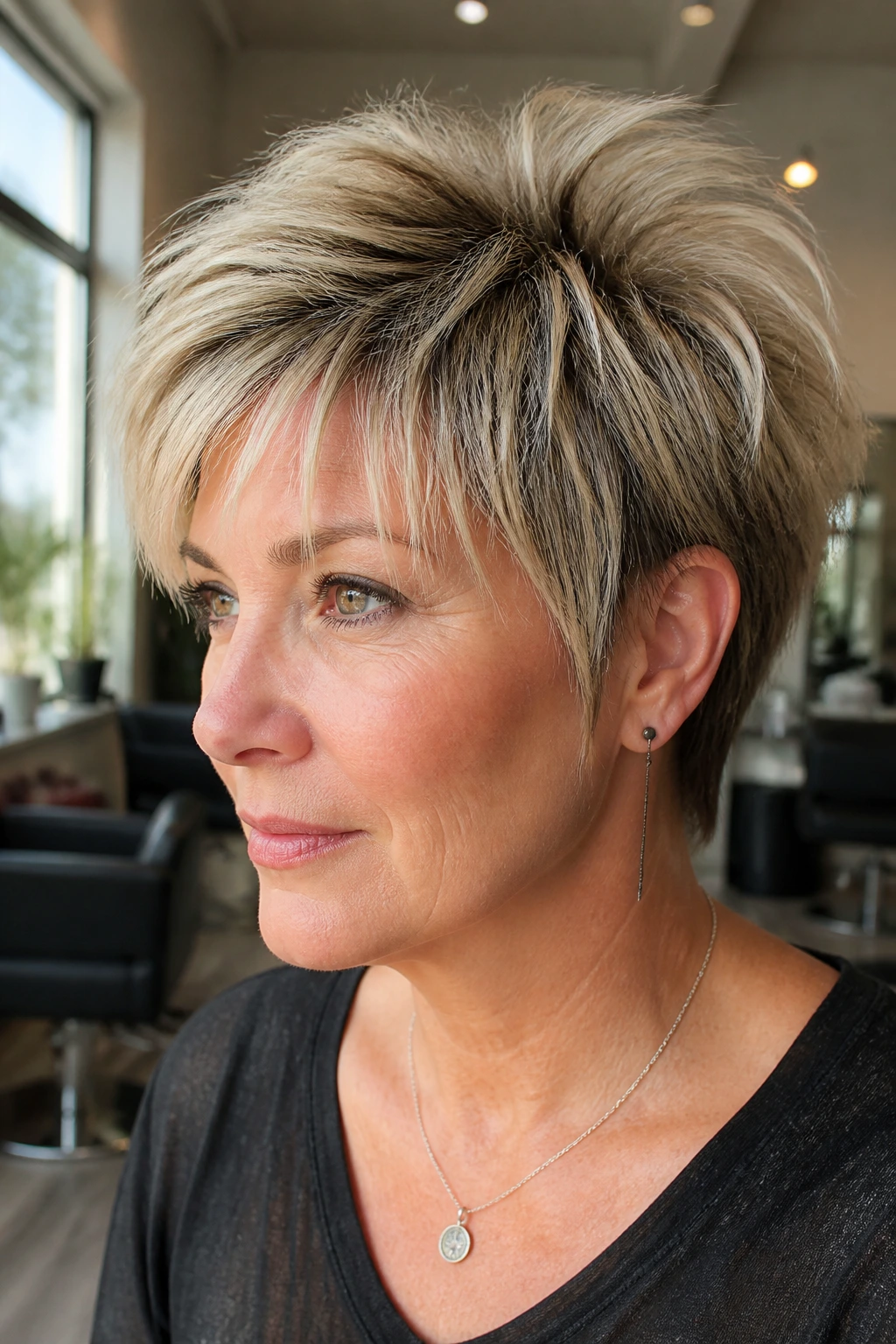
Built-in lift matters more than length.
- Crown height: keeping the top a little longer than the sides gives thin hair somewhere to stand up instead of lying flat against the head.
- A clean outline: a blunt edge around the bob, pixie, or crop makes the hair read fuller from across the room.
- Broken texture: point cutting, razor work, and piecey styling prevent the ends from looking see-through.
- Less weight, more shape: when you remove too much bulk from the wrong spots, the hair collapses; when you remove it from the right spots, the style looks sharper.
Rocker texture is not the same as frizz.
The looks in this collection rely on a controlled kind of messiness: tousled, separated, slightly roughed up, never puffed out. That difference matters on thin hair, because too much product or too much aggressive layering can make the head look bigger in the wrong way.
Shorter cuts keep the eye on the shape, not the lack of bulk.
Once the hair falls past the strongest part of the jaw or the cheekbone, thin ends can start to look sparse. A shorter rocker cut keeps the eye on the line, the fringe, the taper, and the movement at the crown.
Fine Hair vs Thin Hair: The Difference That Changes the Cut
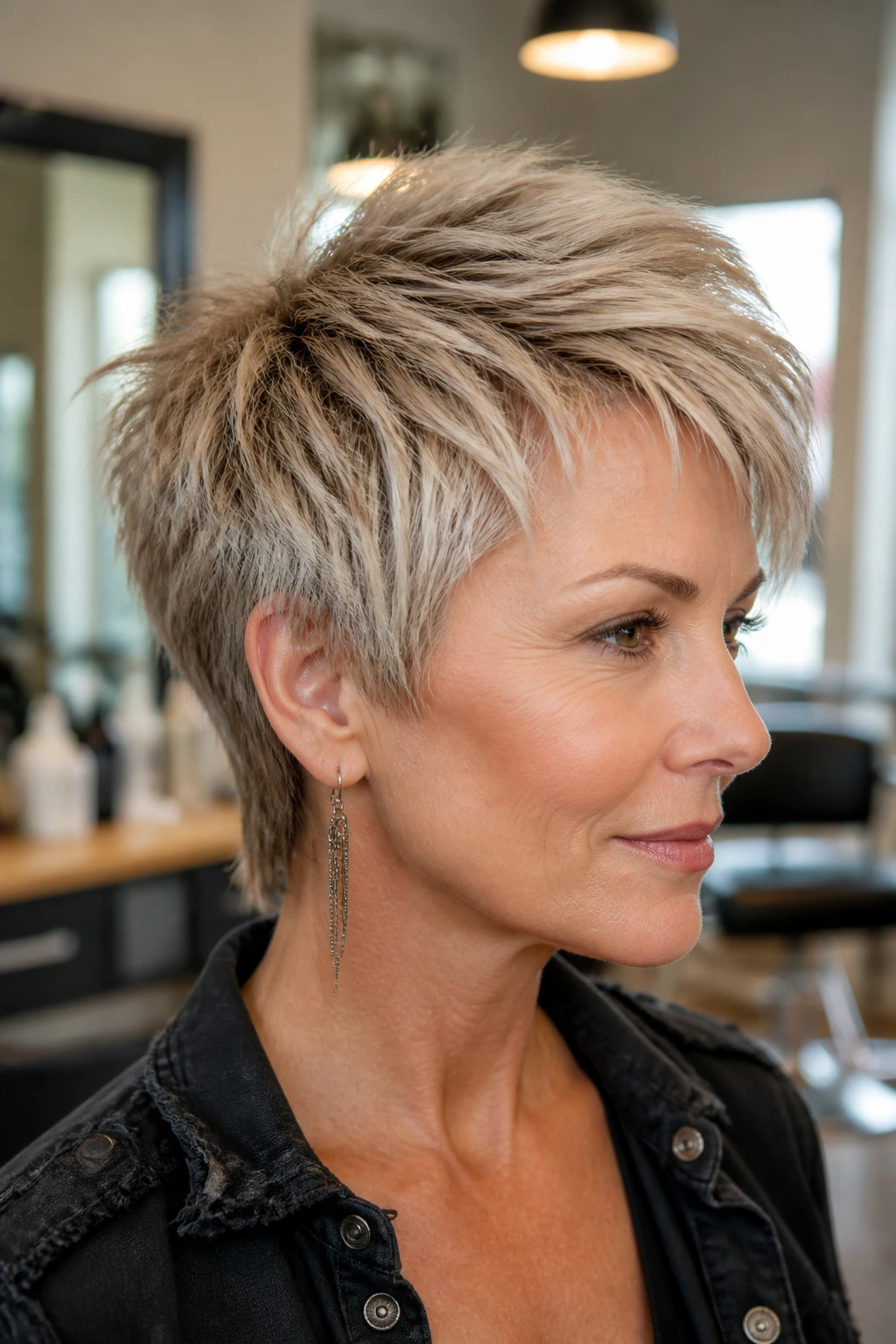
Fine hair and thin hair get mixed up all the time, and the haircut behaves differently depending on which one you have. Fine hair means the individual strands are smaller in diameter. Thin hair means there are fewer strands on the head. You can have one without the other, or both at once, and that changes how much texture, layering, and product your cut can handle.
Fine Strands Need a Lighter Hand
If your strands are fine, heavy creams and dense oils will drag them down fast. A cut with a strong outline and a little internal texture tends to work better than soft, shredded layers that break the shape apart. Fine hair usually likes lightweight mousse, root spray, and a dry finish.
Low Density Needs Smarter Perimeter Work
If your density is low, the perimeter matters a lot. A blunt bob line or a controlled pixie edge can make the whole cut look fuller because there’s less gap between the hairs. Too many wispy layers near the bottom can leave the ends looking scrappy instead of chic.
What to Tell Your Stylist
Ask for removable weight, not endless layers. That sentence does more work than a vague request for “volume.” If you want a rocker edge, say you want texture at the top and sides that stay clean, plus a fringe or nape that does not collapse into stringy pieces. Bring photos that show the silhouette you want, not just a vibe.
The Styling Kit That Saves Thin Hair From Going Flat
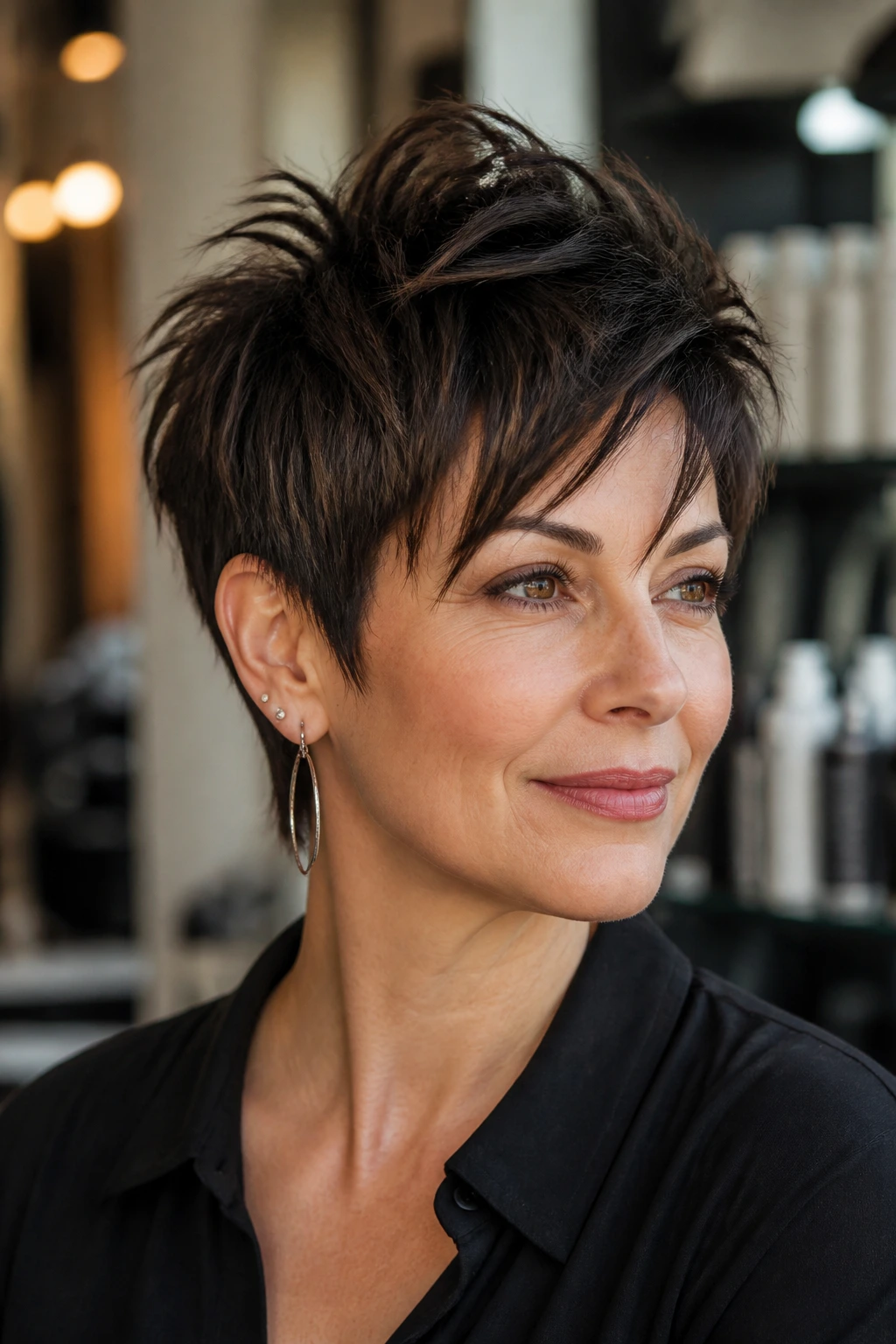
A short rocker cut can only do so much on its own. The product and tools matter, but not in a giant, overblown way. Thin hair hates being buried under too much of anything.
- Hair dryer with a narrow nozzle: directs airflow at the roots so you can lift the crown instead of roughing up the ends.
- Small round brush, about 1 to 1.5 inches: perfect for bending the fringe, cheek pieces, and crown into place.
- Flat iron with rounded edges: useful for flipping ends, bending a bob, or adding a tiny flick at the temple.
- Matte paste or cream wax: gives separation and edge without making the hair look wet and sparse.
- Root-lift spray or mousse: best applied to damp roots, especially if your hair goes limp within hours.
- Dry shampoo: not only for grease; it adds grip at the scalp and helps the style hold.
- Fine-tooth comb: good for clean side parts, slicked-back looks, and a neat nape.
- Microfiber towel: cuts down on rough towel friction, which matters when the hair is already delicate.
1. Choppy Razor Pixie with Crown Lift
This cut is a little bit of a cheat code. The razor work breaks up the top so thin hair doesn’t sit in one flat sheet, and the slightly longer crown gives the style something to push upward. Keep the sides snug and the back tight; that contrast is what makes the top look fuller.
A good version of this cut should feel airy at the ends, not shredded. Use a pea-sized amount of matte paste on dry hair, pinch the crown with your fingers, and leave the fringe piecey instead of polished. If you try to smooth every strand, you lose the whole point.
Best for: straight or slightly wavy hair that needs visible lift at the top.
Maintenance: every 4 to 6 weeks, because the shape goes soft fast once the crown grows out.
2. Tapered Pixie with a Long Side Fringe
Why does a side fringe help thin hair so much? Because it creates a diagonal line, and diagonal lines are forgiving. They pull attention across the face instead of straight down the scalp, which makes the hair read thicker around the front.
How to Wear It
Blow-dry the fringe over a small round brush toward the heavier side, then press just the tips with a flat iron if they kick out too far. The taper at the nape keeps the back neat, while the longer fringe softens the forehead and temples. It’s one of the more wearable rocker cuts if you want edge without looking severe.
A light cream or foam works better than wax here. Too much paste in the fringe will make it separate into little strings, and that’s not the same as texture.
3. Piecey Micro Bob with a Blunt Lip Line

A micro bob is one of my favorite answers to thin hair. The line sits around the jaw or just below it, where the ends still have enough density to look solid. The blunt perimeter does a lot of heavy lifting; the interior texture just keeps it from reading helmet-like.
If the bob is cut cleanly and then softened with a few internal snips, you get a shape that bends well around the face but still looks intentional when it’s air-dried. I’d keep the ends barely flipped in or out with a flat iron, not curled under too much. A tiny bend is enough.
Styling note: use a root spray at the crown, dry with the head slightly forward, then finish with a light texturizing spray at the ends.
Avoid: over-thinning the bottom edge. Thin hair needs a perimeter it can stand on.
4. Asymmetrical Cropped Bob
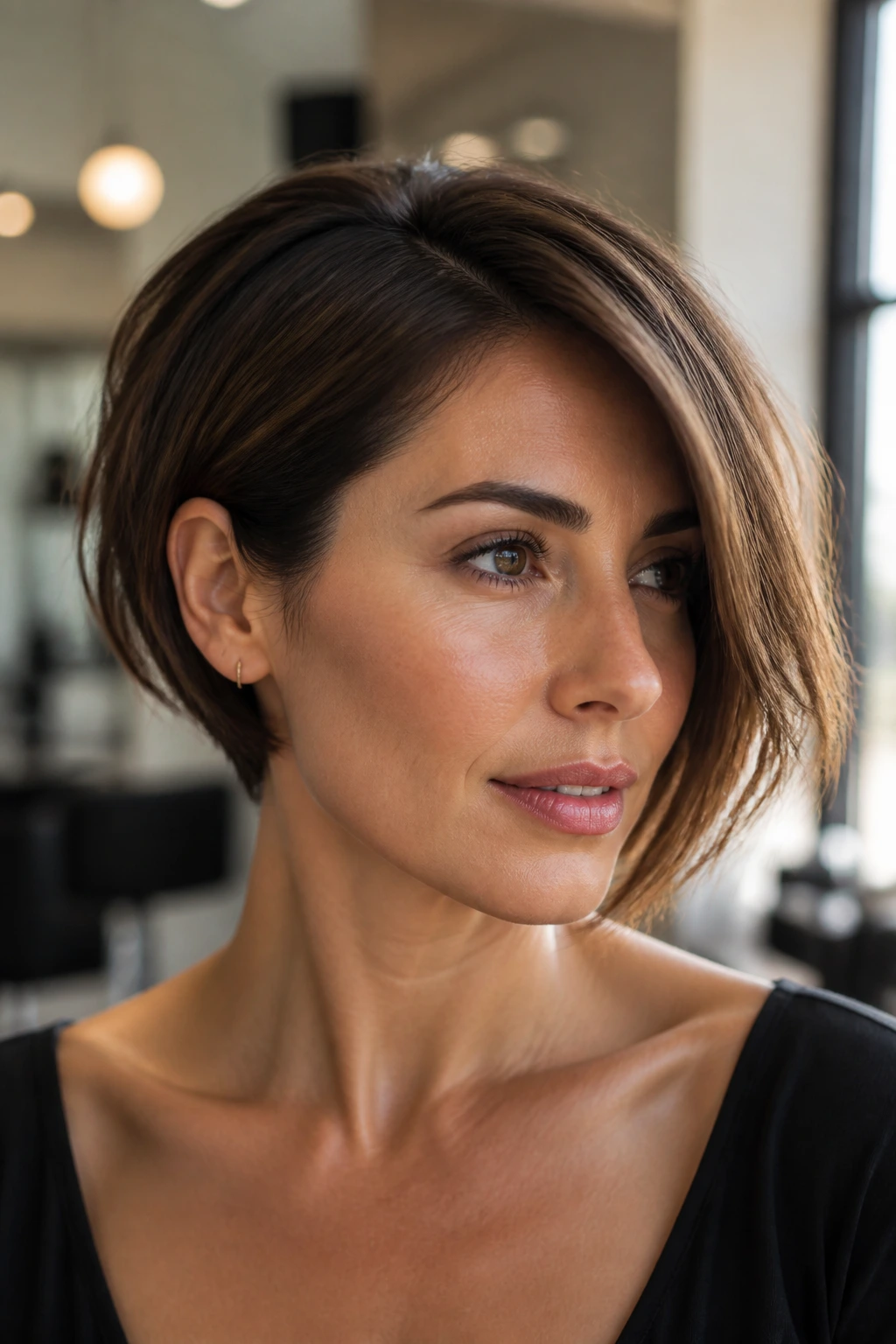
An asymmetrical bob gives thin hair a job to do. One side sits a touch longer, usually by about half an inch to 1.5 inches, and that off-balance shape creates the illusion of density because the eye keeps moving. Straight, even symmetry can be hard on thin hair. A little tilt helps.
This cut works especially well if your hair falls flat on one side anyway. Instead of fighting the natural fall, you use it. Tuck the shorter side behind the ear, keep the longer side soft around the cheekbone, and let the contrast do the talking.
A side part usually makes this bob look richer than a center part. The style feels sharper with a flat finish and a bit of dry texture on the longer side.
5. Shaggy Pixie Mullet
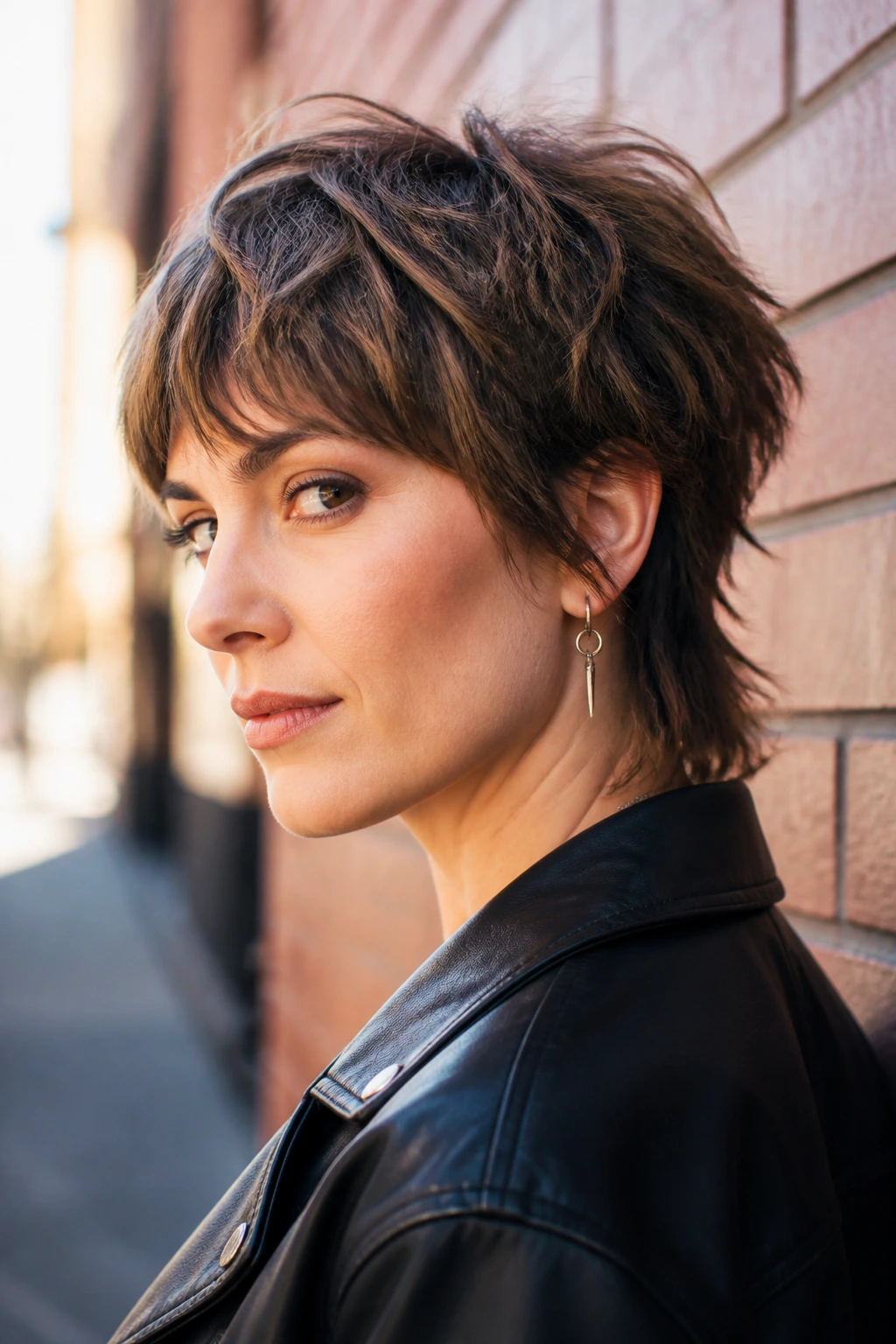
The shaggy pixie mullet sounds like a lot, but on thin hair it can be surprisingly smart. The nape stays short, the crown keeps movement, and the back gets a little extra length so the whole cut doesn’t vanish from the side. The result is rocker without costume.
The key is softness in the transition areas. If the layers are too abrupt, the cut looks choppy in a bad way. If they’re too blended, you lose the edge. You want that in-between zone where the texture looks lived-in but the shape still reads clearly.
How I style it: mousse on damp roots, diffuser on low heat, then a dab of paste just on the tips once it’s dry.
Who should choose it: anyone with a slight wave who wants a cut that looks better when it’s a little undone.
6. French Bob with Gritty Ends
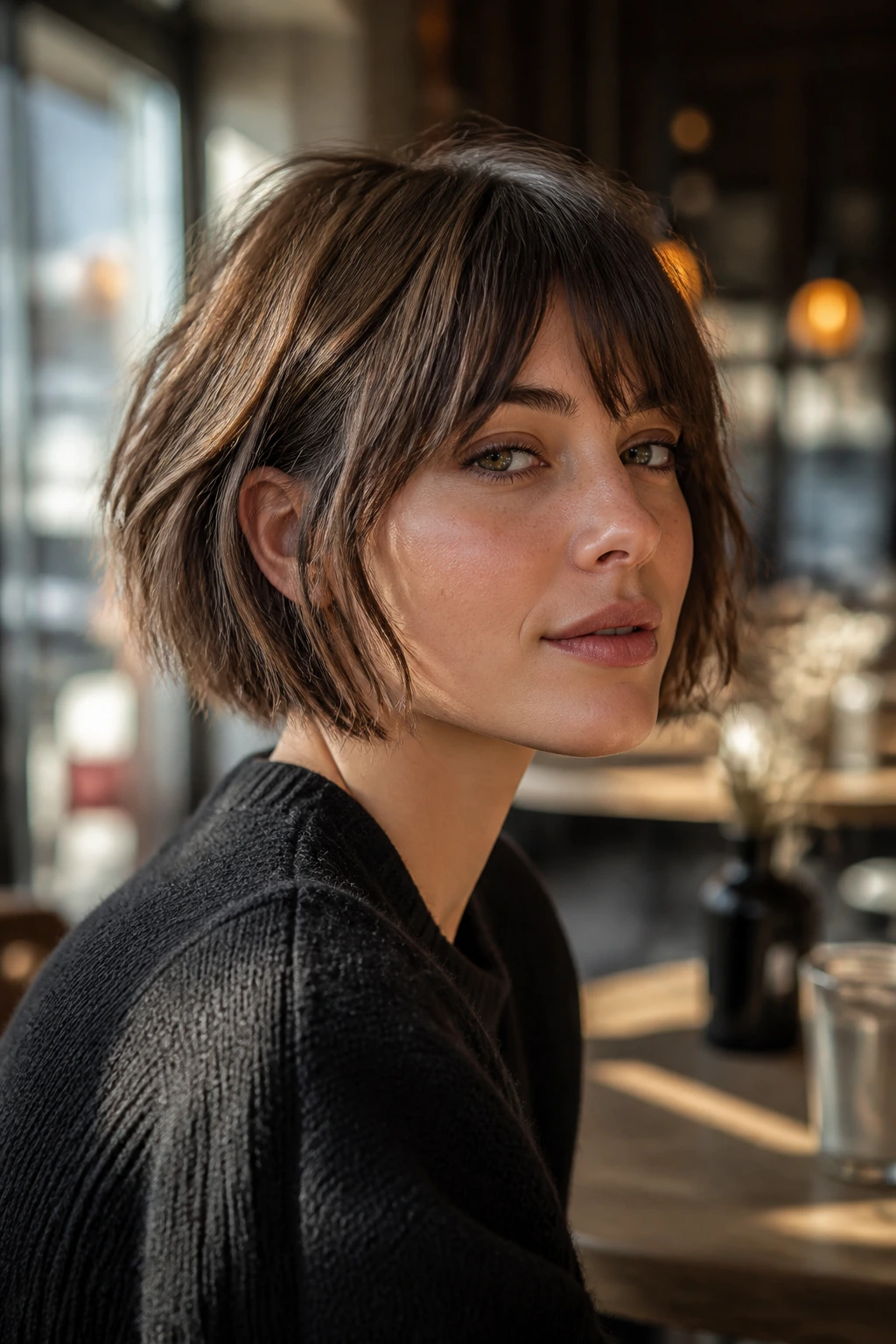
This one has a cleaner mood than a pixie, but it still belongs in the rocker camp. The French bob sits around the cheekbone or jaw, often with a small fringe or a side-swept bang. On thin hair, the magic is in the ends: they need to look broken up, not wispy.
The appeal is in that sharp little frame around the face. It reads polished at first glance, then a bit rebellious once you see the texture. If your hair is very straight, a tiny bend with a flat iron at the ends keeps it from looking too neat.
A touch of dry shampoo at the roots can keep the crown from falling while the fringe stays light. Don’t overload the front with oil. That kills the line.
7. Undercut Pixie with a Longer Top
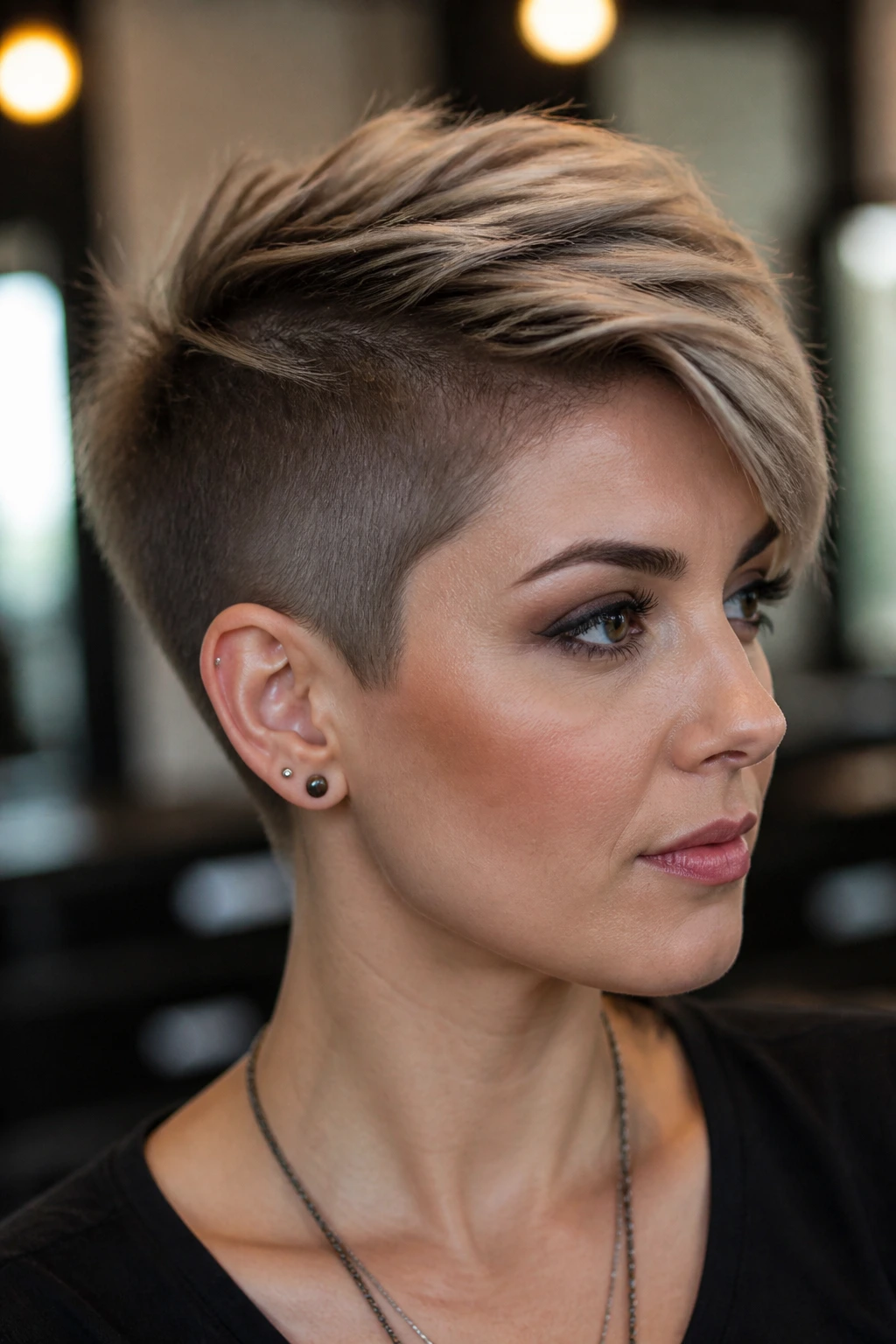
Why shave some of the hair away when the hair is already thin? Because the wrong kind of bulk can make thin hair lie flat in all the wrong places. An undercut removes weight from the sides or nape so the top can look like it has more presence.
The longer top gives you room for a sweep, a quiff, or a messy ridge through the crown. That’s the part people notice first. The cut has more punch if the sides stay close and the top is styled with lift rather than pushed forward.
A little root powder works well on this style. Tap it into the base with your fingertips, then rough the top backward with a matte paste. Skip shiny products unless you want a sleeker, tougher finish.
8. Soft Wolf-Cut Bob

The wolf cut can get overdone fast, but a soft bob version works beautifully on thin hair when the layers stay controlled. You get movement around the crown and cheekbones, while the base remains strong enough to avoid that thin, stringy look at the bottom.
This is a good option if your hair has a bend to it and you want the cut to look easy on air-dry days. The slight shag shape gives the style that rocker edge, but the overall length stays short enough to keep the ends from looking tired.
Use a salt spray lightly, not all over like you’re seasoning soup. Scrunch it into the mid-lengths, then let the crown fall into place. If you overdo texture spray on thin hair, it can look dusty.
9. Slicked-Back Short Crop
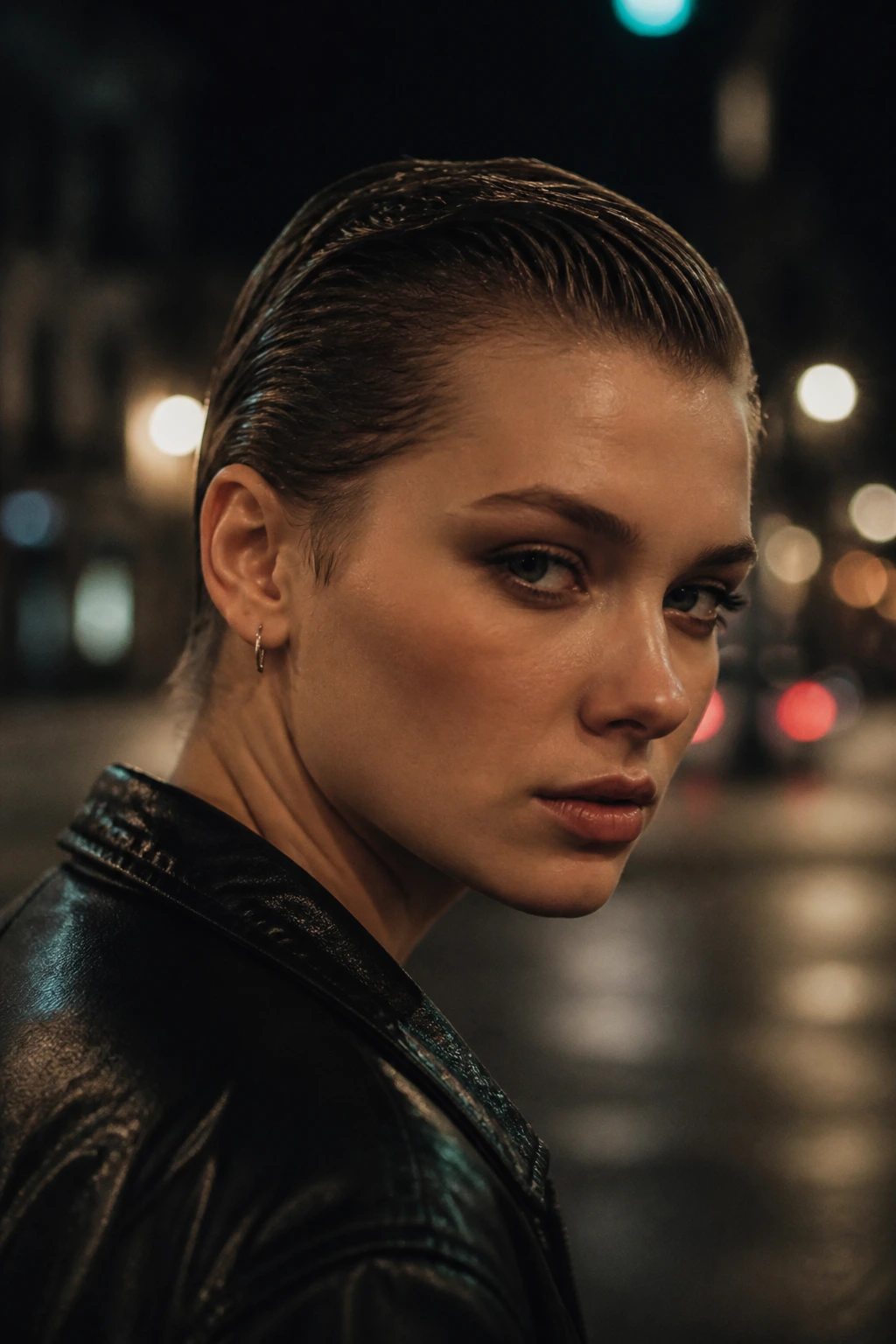
A slicked-back crop sounds dramatic, and that’s the point. Thin hair often looks stronger when it’s grouped together rather than shaken apart. A wet-look gel or styling cream can make the strands read as one clean shape instead of a few scattered wisps.
This style works best for nights out, short hair that needs a second-day reset, or anyone who likes a sharper, more modern rocker mood. The cut itself should be short at the sides with enough length on top to brush back smoothly.
One detail matters here: comb the product through while the hair is still damp, then let it set before touching it again. If you keep adjusting it, you break the line and lose the sleek effect.
10. Feathered Crop with Wispy Bangs
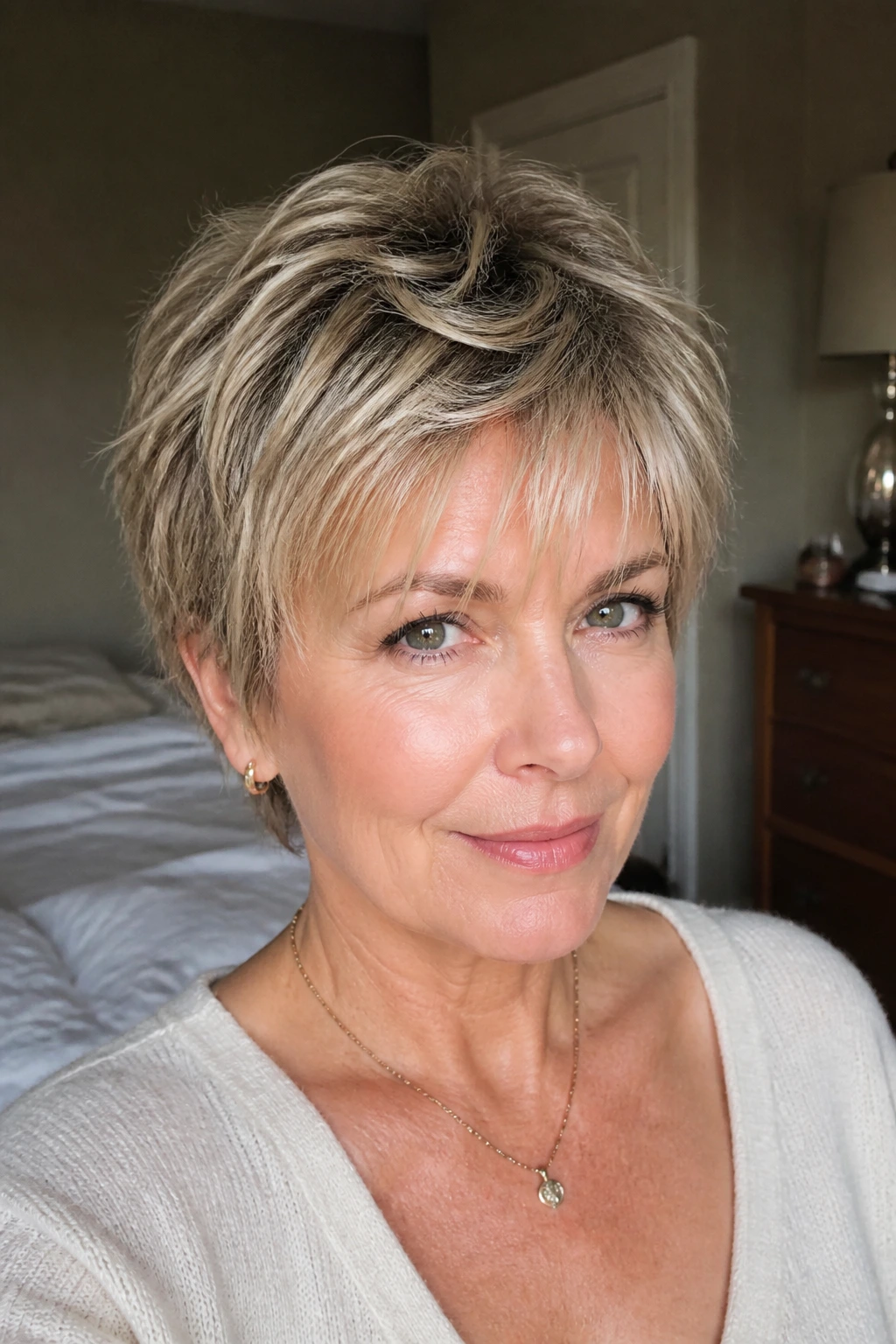
Feathering can be dangerous on thin hair if the layers go too soft, but a cropped version keeps things light around the face without collapsing the shape. The bangs should skim the brow, not hide the forehead entirely. That little bit of transparency keeps the cut feeling airy.
This is one of those styles that looks especially good when the hairline needs a bit of softening. The wispy fringe moves, the crown stays neat, and the overall effect is more effortless than fussy. That matters. Thin hair shows every bad decision.
A lightweight mousse at the root and a round brush at the fringe are enough. Keep the product off the ends unless they need a tiny touch of paste.
11. Curly Mini Shag

Curly hair and thin density need a careful hand, but a mini shag can work because the layers let curls stack without turning into a triangle. The trick is keeping enough length for the curls to clump while removing just enough bulk at the crown to stop the top from going flat.
If your curls are loose or soft, this cut gives them a rougher, more rock-chic edge. If your curls are tighter, the shape can stay playful and round. Either way, it benefits from a diffuse-dry and very little touch-up after.
How to Wear It
Use curl cream sparingly, then scrunch in a foam or light gel. Let the hair dry without fussing with it too much. Once it’s dry, separate only the pieces that feel stuck together. Thin curls need definition, but they do not need to be picked into fluff.
12. Wet-Look Side-Part Crop
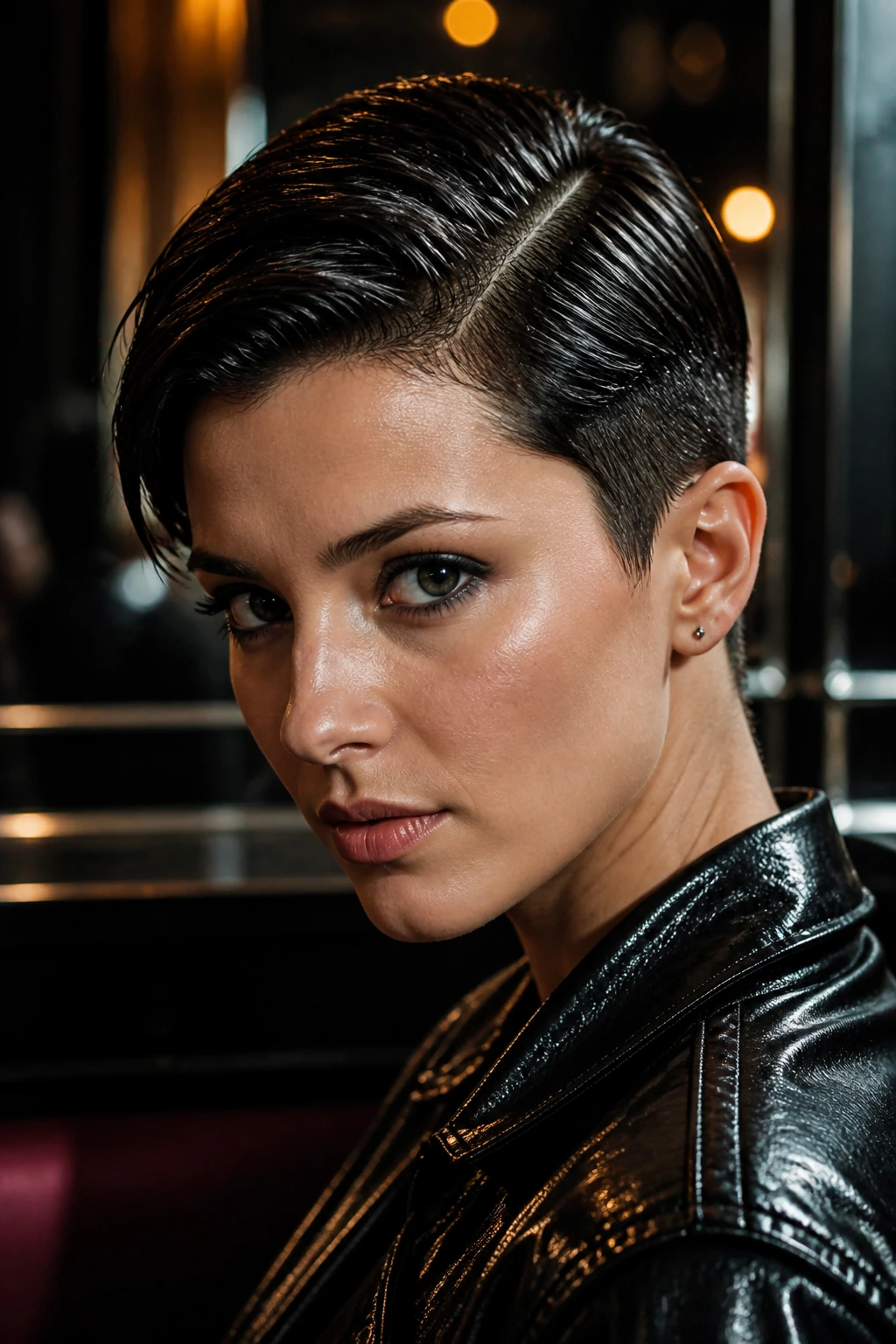
A wet-look side-part crop is a little severe in the best way. When thin hair is pushed into a controlled shine, it can look denser because the strands stay grouped instead of floating apart. The side part gives the face an angle, and the shine gives the style that club-ready rocker feel.
The cut underneath should be short and tidy so the gel doesn’t have too much hair to fight with. This style is cleaner on the scalp than a lot of textured looks, which makes it useful for very fine strands that go frizzy with too much handling.
Use a strong-hold gel or a glossy cream, then comb through once and stop. Over-combing creates separation you probably do not want.
13. Ear-Length Bob with Hidden Layers
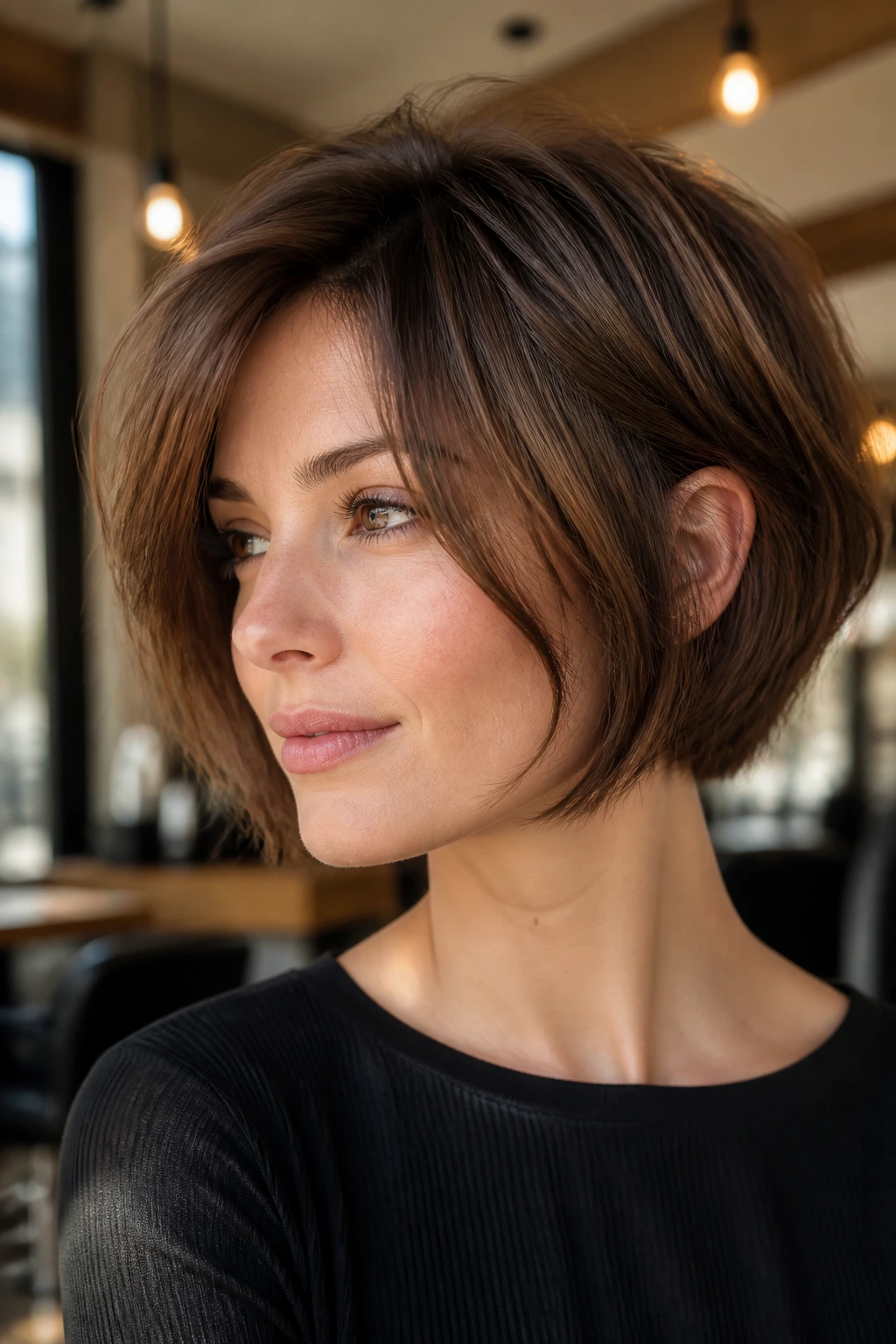
An ear-length bob is a tricky little thing. From the outside, it looks almost blunt and compact. Underneath, the internal layers are doing the work so thin hair can move without losing the outer line.
That hidden structure is what makes the style feel expensive instead of over-thinned. You still get a solid frame around the face, but the hair doesn’t sit like a brick. It’s a very good choice if you want polish during the week and a bit of edge after dark.
A tiny flip under the ends keeps it neat. If your ends are dry, a drop of lightweight serum only on the final inch is enough. Any more and the bob starts looking separated and limp.
14. The Rebooted Bowl Cut with Texture

The bowl cut only works in this category if it’s been rescued from its cartoonish past. A modern version uses texture at the ends, a softer fringe line, and a slightly airier crown so the shape feels sharp, not helmeted. Thin hair actually likes this when the cut is handled well.
The reason is simple: a rounded silhouette can make the head look fuller than a style that hangs in narrow strips. The key is stopping the edge from looking too perfect. Point cutting and light razor work keep it from becoming a hard cap.
If you want this cut, ask for a rounded shape with movement at the perimeter. That one phrase saves a lot of trouble.
15. Sideburn-Framed Pixie
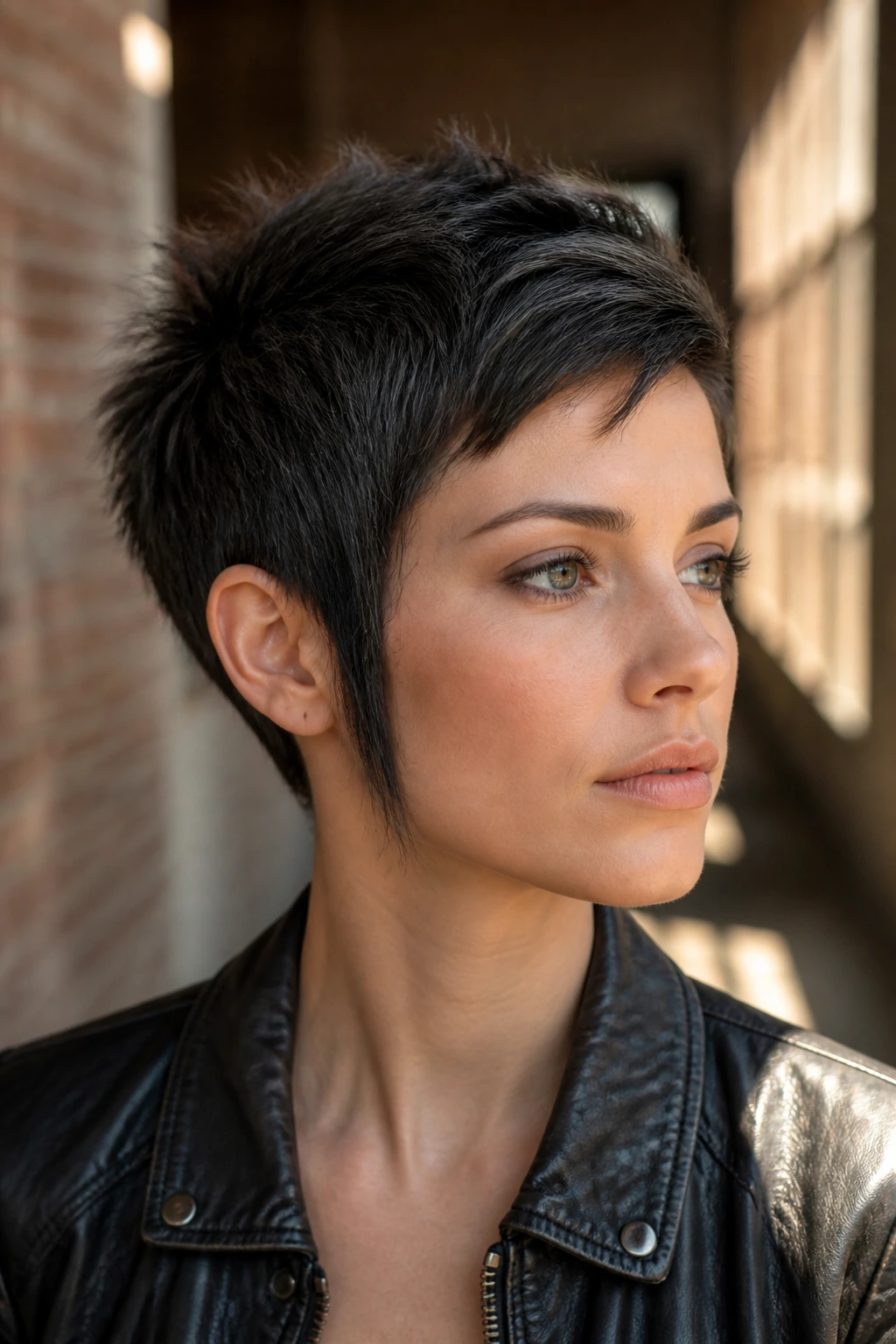
Sideburns are underrated. On thin hair, leaving the sideburn area a little longer creates a frame around the face and keeps the cut from looking too sparse around the ears. The style feels more finished, and a bit more rock-and-roll, because the line has somewhere to land.
This cut is especially good if your temples are thin or if you want to soften a strong jaw. The longer side pieces can be tucked, twirled, or left loose, while the crown stays short and lifted. It’s a nice balance of neat and cool.
I like this one with a small amount of wax rubbed between the fingers first, then pressed only where the sideburns and fringe need shape. If you smear product everywhere, you lose the contrast that makes the cut work.
16. Spiky Crown Crop
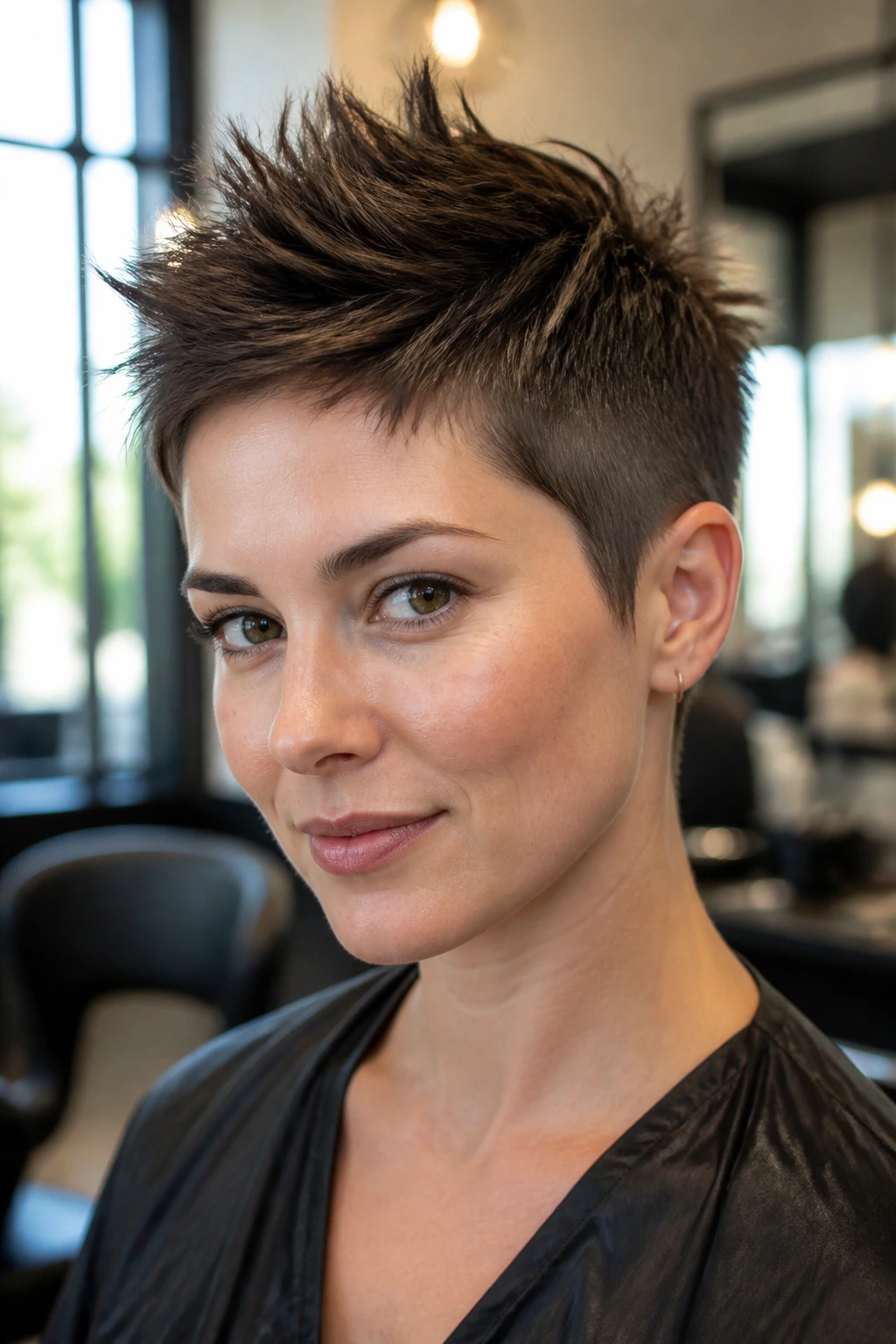
A spiky crown crop is not the same as 1990s gel hair gone wild. Done well, it gives thin hair a little vertical energy at the top while keeping the sides controlled and clean. The crown is the star here, and that’s exactly where thin hair often needs the most help.
This style is best when the top is cut to a length that can stand up with a little styling support—usually around 1.5 to 3 inches, depending on texture. Too short, and you get little stubs. Too long, and the spikes collapse.
A matte clay works better than gel if you want a modern finish. Warm it in your palms, push it into the roots, then pinch the tips upward only in a few places. Don’t spike everything. A few broken points look sharper.
17. Short Mullet with a Tapered Nape
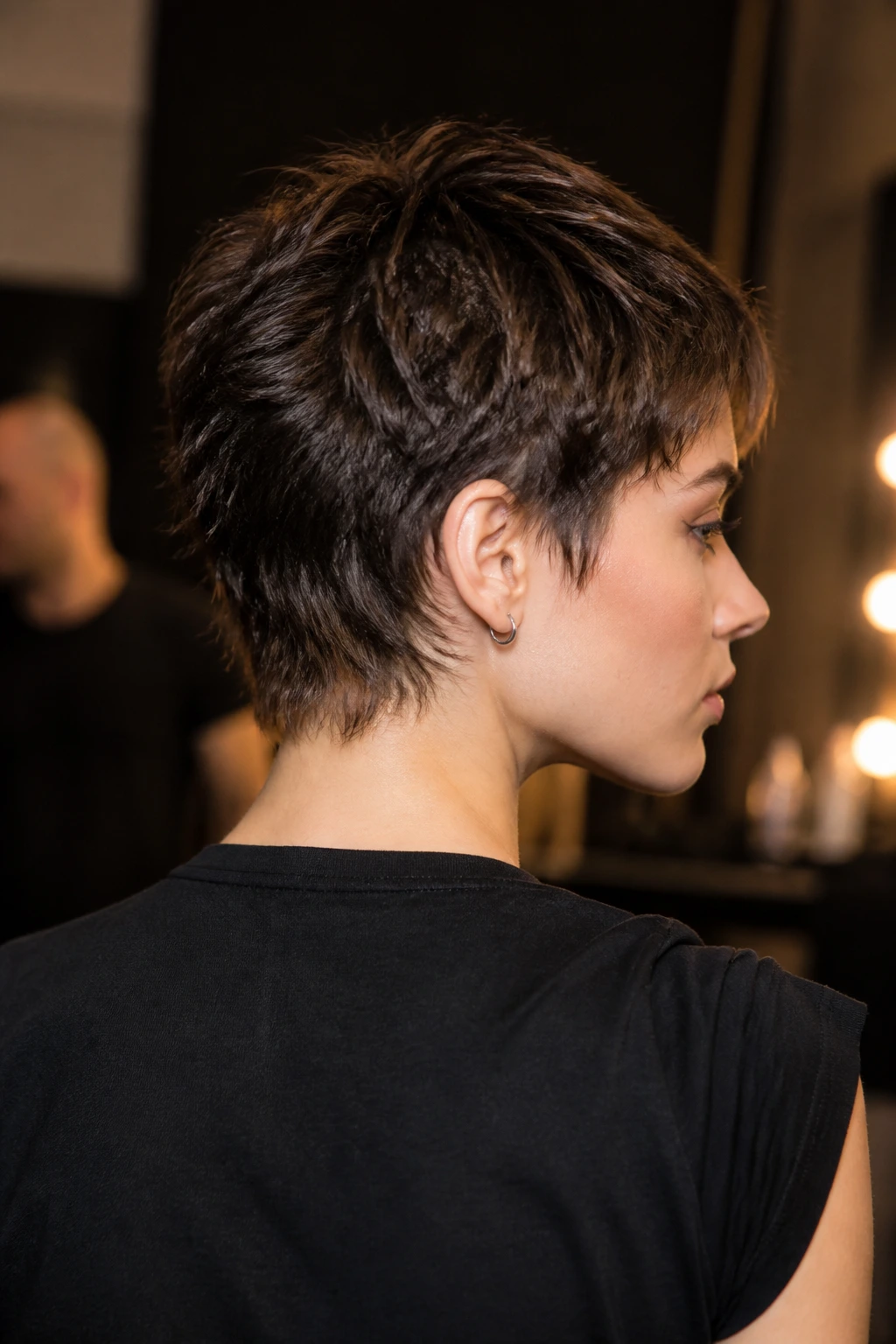
The short mullet is having a long, strange life, and I mean that affectionately. For thin hair, it can be one of the smartest rocker shapes because the back keeps enough length to show movement while the nape stays tapered so the whole cut doesn’t drag.
This is a cut for people who don’t want polite hair. It has edge, but it’s not bulky. If your hair has any bend at all, the soft rear length will catch it and make the style look more intentional.
What Makes It Work
The top needs texture, the sides need restraint, and the nape needs a clean finish. That combination keeps the silhouette from turning into a stray-bird mess. A diffuser helps if your hair waves. If it’s straight, a little bend with a flat iron through the back can keep the line lively.
18. Side-Parted Micro Shag

What if you want softness and edge at the same time? The side-parted micro shag answers that better than a lot of louder cuts. The side part breaks symmetry, the shag layers build movement, and the shorter length keeps thin hair from stretching into sad little strands.
The trick is keeping the layers small and the face frame controlled. You want the texture to live mostly around the crown and top sides, with enough perimeter left alone so the cut still has body. That’s the part many shags get wrong.
A mousse at the roots and a light spray at the crown are usually enough. If you use too much product, the texture stops looking airy and starts looking dusty. Thin hair is unforgiving that way.
19. Root-Shadow Pixie for Dimension
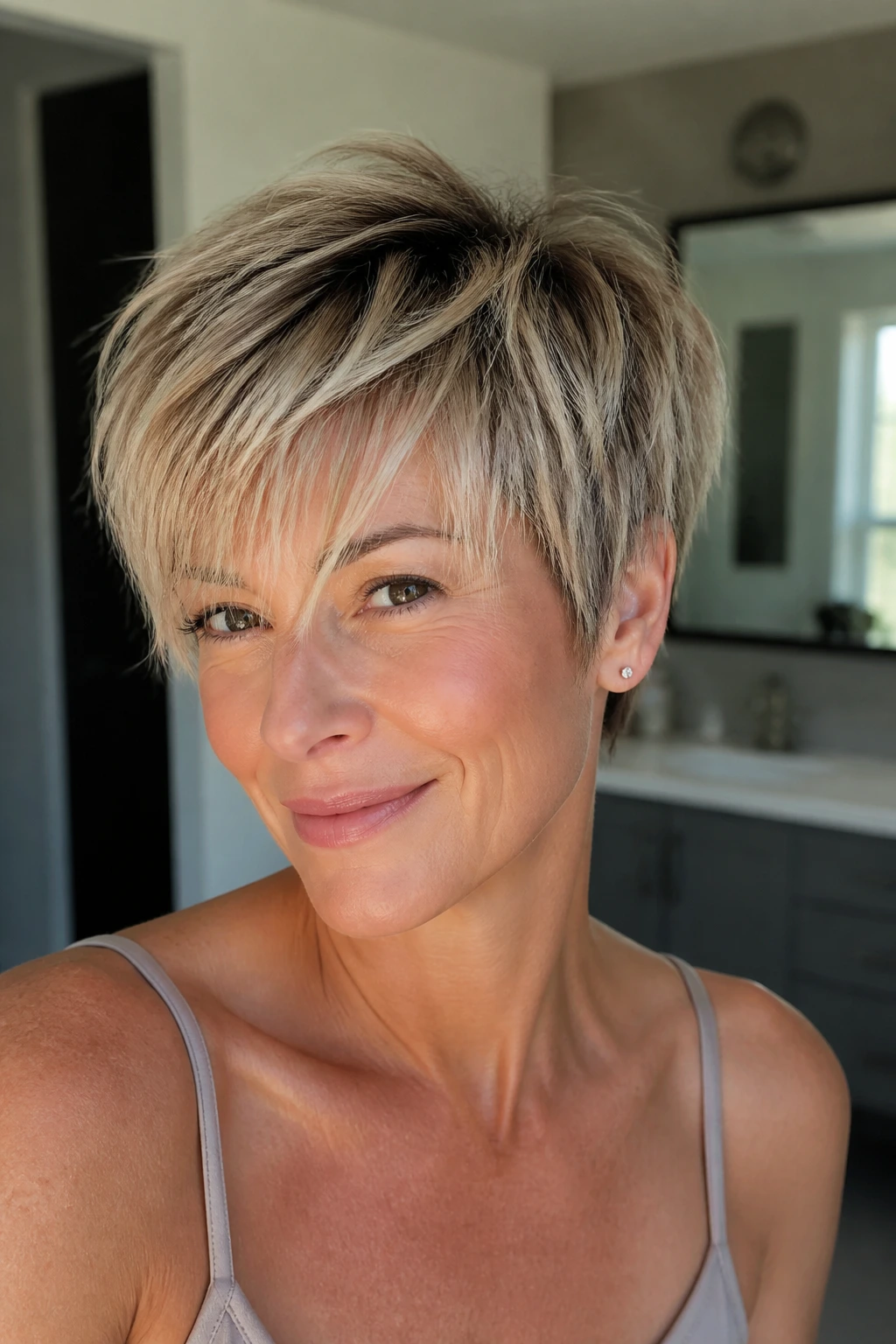
Color can do more for thin hair than another round of layering. A root shadow, where the base stays a touch darker than the rest, gives the eye a denser point of focus at the scalp. On a short pixie, that little shift reads as depth.
This works especially well with blondes, silver shades, or any light color that can make thin hair look even finer if it’s all one flat tone. The darker root buys you dimension, and the short cut lets the color look intentional rather than grown out.
How to Get the Most From It
Pair the color with a textured cut, not a sleek one. The contrast between shadowed root and broken ends is what creates the effect. A texture spray at the crown can help the color shifts show up more clearly in daylight.
20. Dark Gloss Crop with a Blunt Fringe
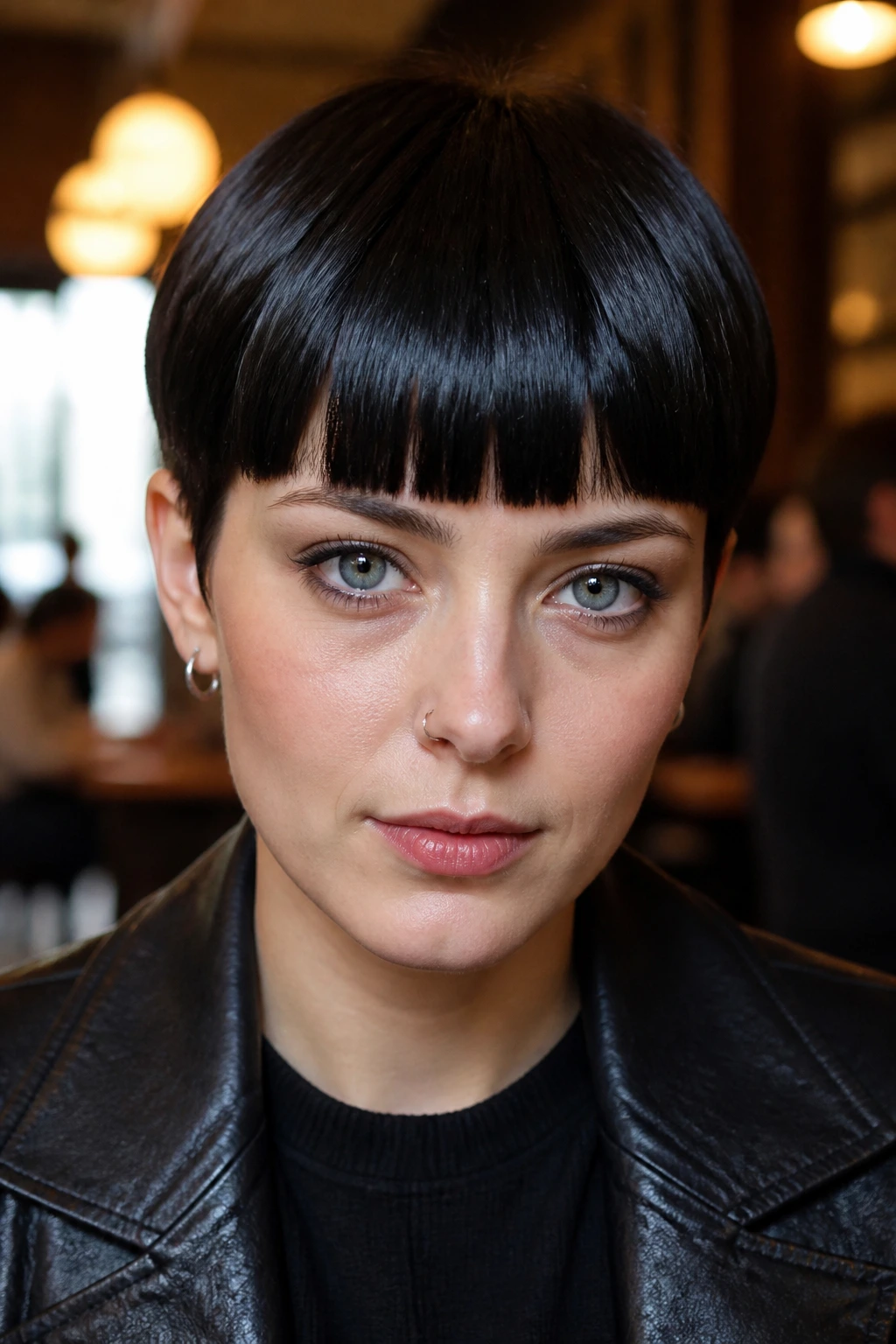
A dark gloss crop has a different energy from the airy styles above. The shine and depth of a darker color can make thin hair feel heavier in a good way, and a blunt fringe adds a strong line across the forehead. That line matters. It gives the cut a shape the eye can trust.
This is one of the boldest looks in the bunch, but it’s not high maintenance in a fussy way. The fringe should be thick enough to feel deliberate, and the ends should stay neat so the overall crop doesn’t slip into fuzziness.
Use a smoothing balm only from mid-length to ends. The fringe usually needs less product than you think. Too much, and it separates into little clumps that kill the clean edge.
21. Platinum Textured Buzz Pixie
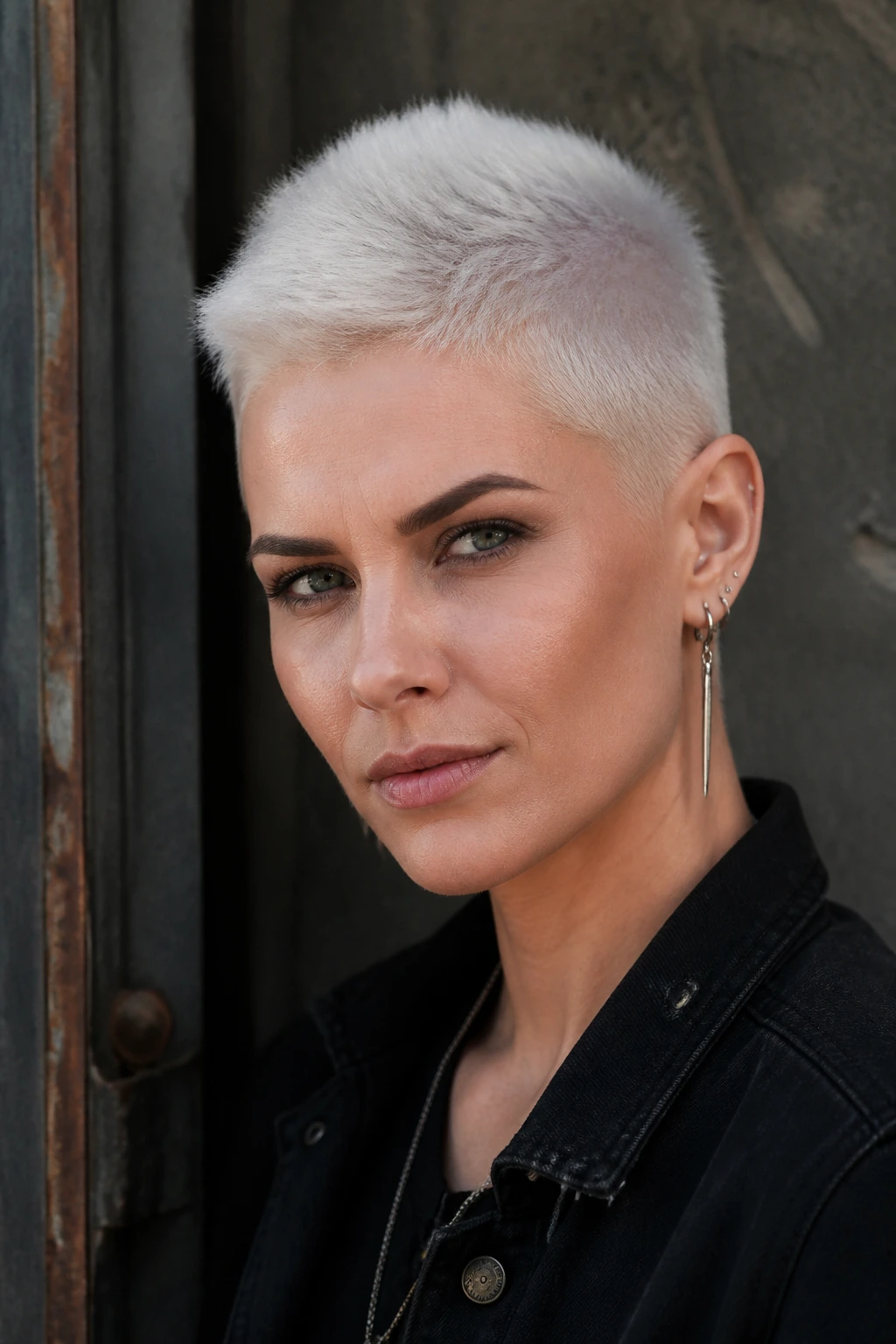
If you like your hair with a little bite, this one brings it. A platinum textured buzz pixie takes thin hair and turns the short length into an advantage, because the cropped shape makes the density read stronger than it would at shoulder length. The platinum tone adds another layer of attitude, though it does ask for more upkeep.
The top can sit a touch longer than the sides, enough to create a soft ridge rather than a flat shave. That small difference keeps the cut from looking too severe. With this length, even a tiny amount of texture makes a visible change.
Keep in mind that lightening hair this short still needs care. If the strands are fragile, a stronger blonde is not the first move I’d make. Shape comes first. Tone comes second.
22. Jaw-Length Choppy Bob with Flip Ends
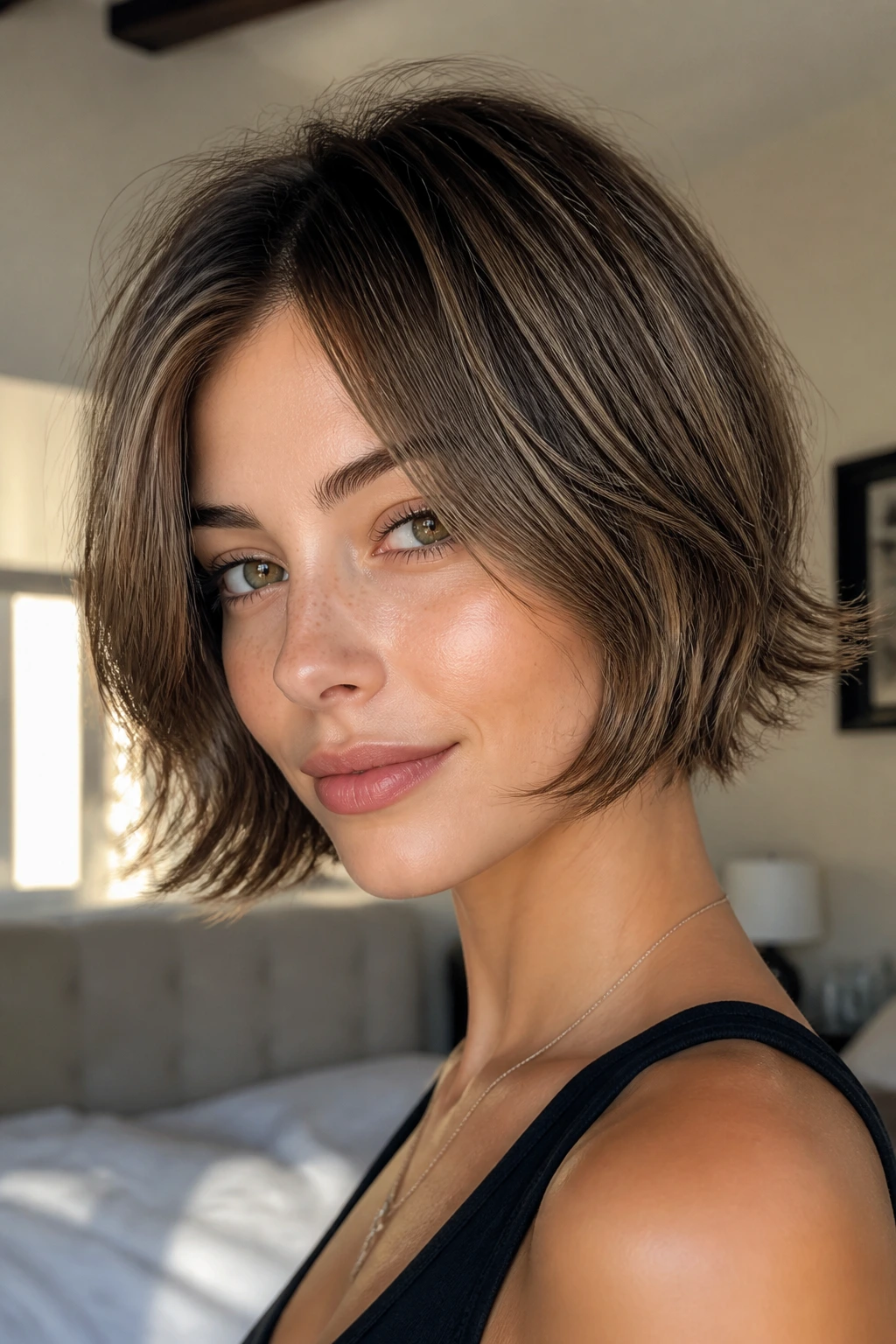
This bob lives right at the jaw, where thin hair still has enough structure to look full. The choppy layers are tucked inside the cut, so the outside line stays solid while the ends flip a little at the cheek and neck. That tiny movement makes the style feel fresh instead of stiff.
It’s a useful look if you want something shorter than a classic bob but less abrupt than a pixie. The flip at the ends gives a bit of punky energy without needing heavy styling. A flat iron set to a medium heat is enough to bend the bottom inch.
I like this cut with a center or off-center part, depending on your face shape. Either way, keep the ends clean. Once the bob gets too feathered at the bottom, thin hair loses its spine.
23. Tucked-Behind-Ear Crop
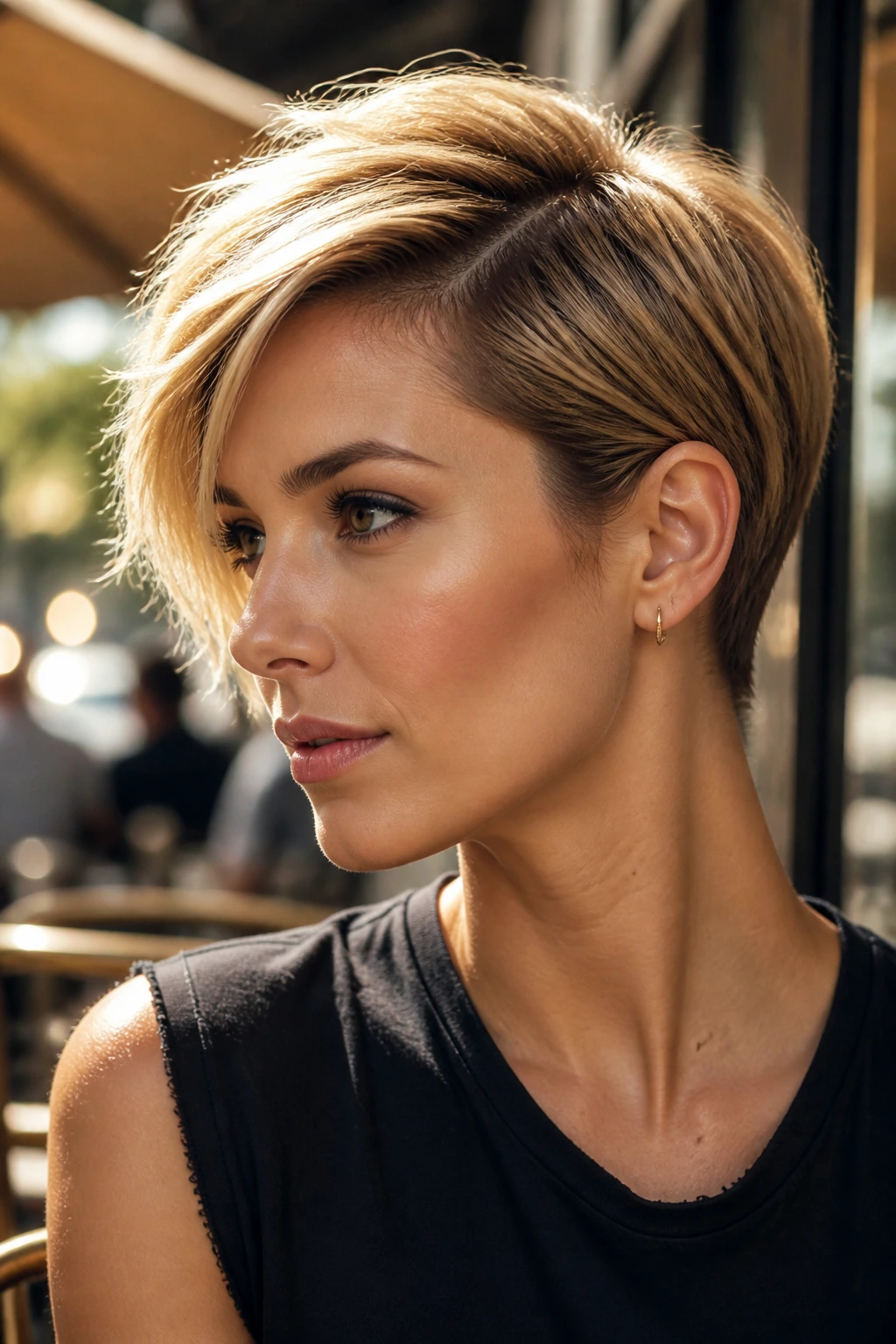
Sometimes the smartest rocker move is restraint. A tucked-behind-ear crop uses a clean side tuck, a little asymmetry, and a precise front section to create a shape that feels sharp without screaming for attention. Thin hair benefits because the ear tuck exposes the cheekbone and gives the front a role.
This is especially good for anyone who wants something that can go from daytime neat to nighttime cool with one move. Wear it parted deep on one side, tuck one side behind the ear, and leave the other side loose and slightly textured. That contrast does the work.
A smoothing cream at the front helps the tuck stay in place. If the hair slips, a tiny flat clip hidden behind the ear will save the style without making it look stiff.
24. Rockabilly Pompadour Pixie
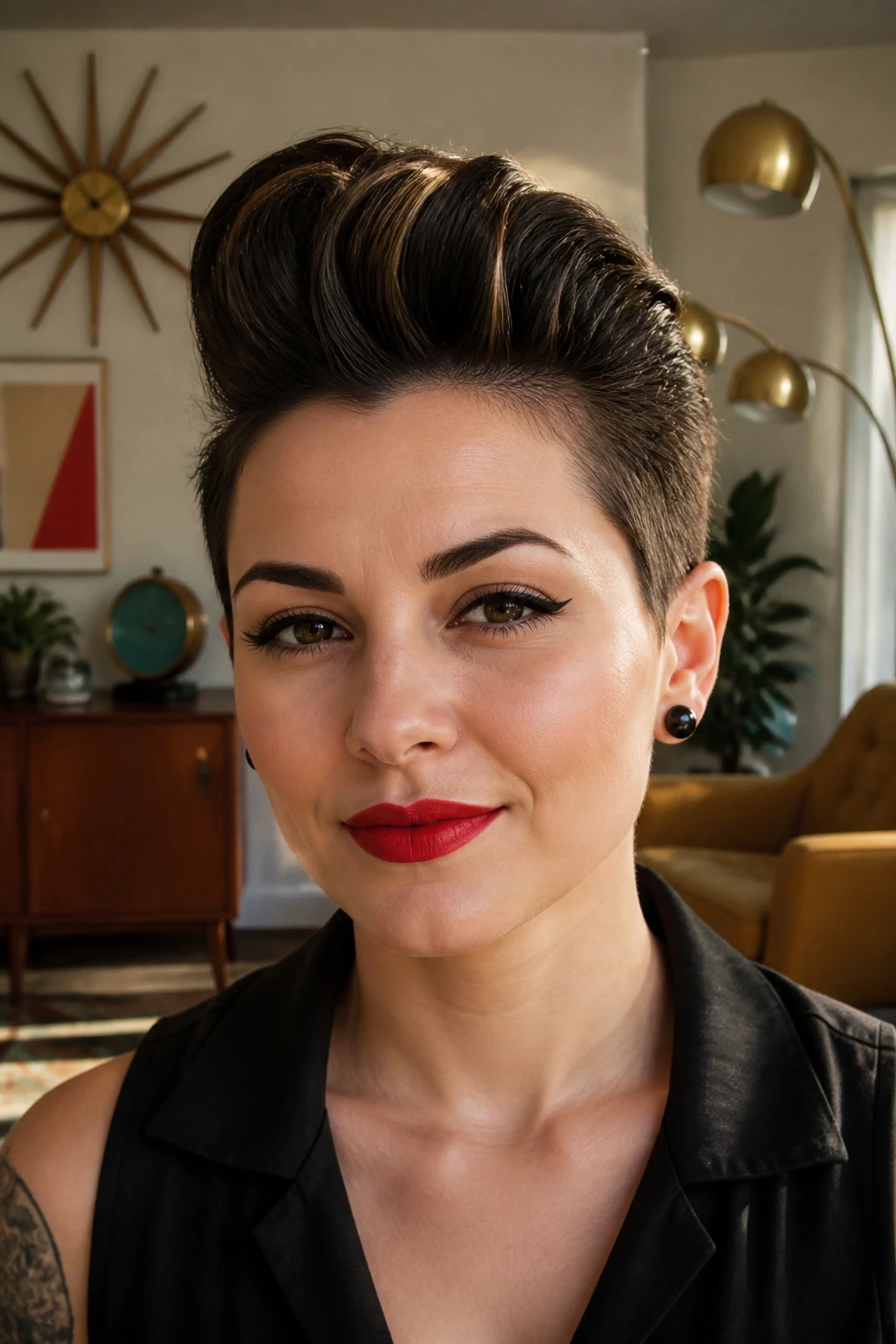
A pompadour sounds like a lot, but on thin hair it can be built with less volume than you’d think. The front gets lifted into a soft, compact quiff, the sides stay close, and the top rolls back just enough to create that rockabilly shape. The result is playful and polished at once.
This cut shines when the front is cut with enough length to push upward without flopping. It’s not about a giant wall of hair. It’s about a controlled sweep that lifts the eye and makes the crown look fuller. A blow dryer and round brush do more here than a dozen products.
Quick Styling Note
Blow the front up and back first, then pin it for 5 minutes while it cools. That cooling step matters. If you skip it, the front falls before you even leave the bathroom.
25. Soft Spiky Cropped Shag
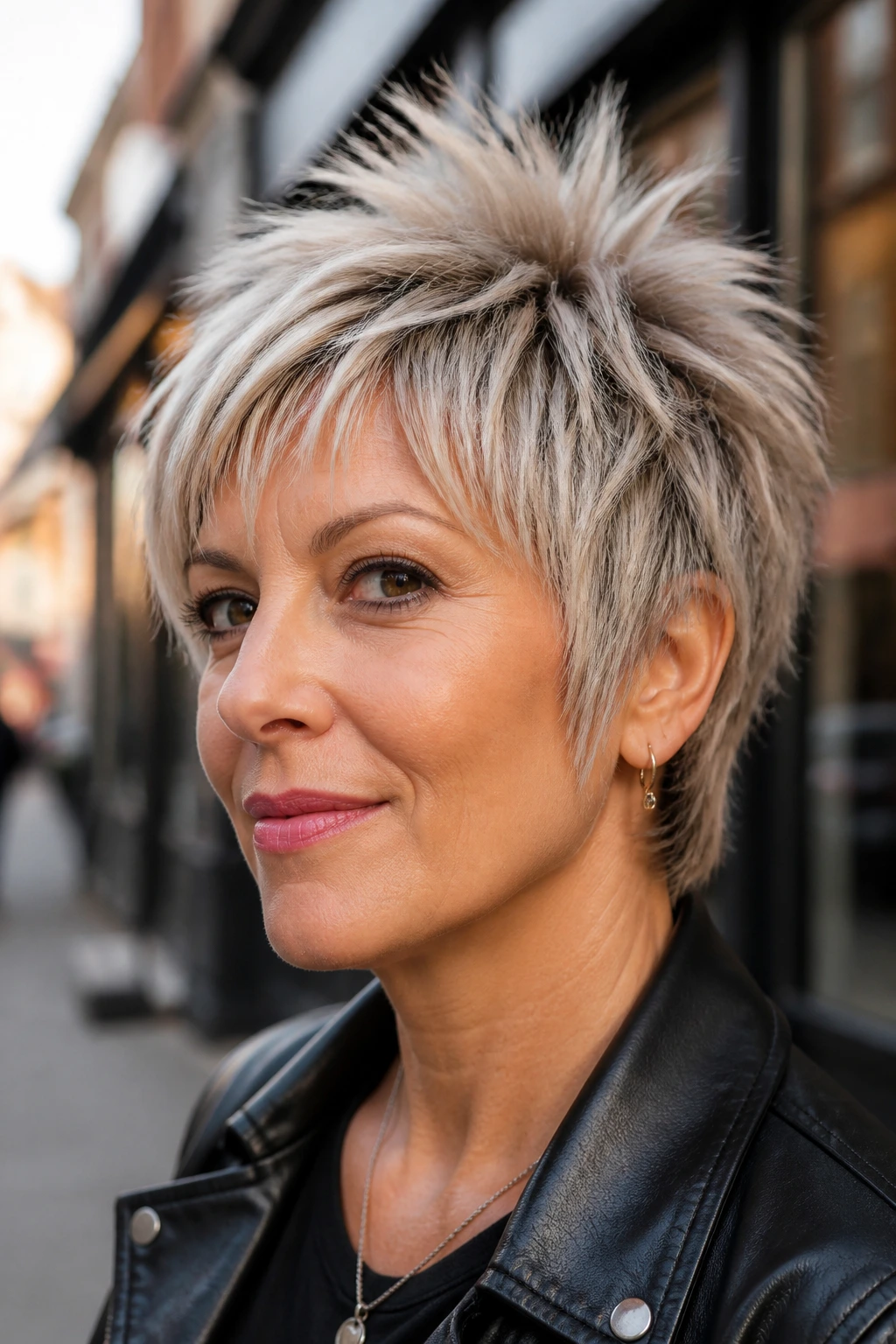
This is the most forgiving look in the set, and maybe the easiest to live with. The soft spiky cropped shag keeps the sides short, the crown piecey, and the fringe light enough to move. It has that rock-chic edge, but it doesn’t need a perfect blowout to look finished.
The style works because it leaves the hair a little irregular on purpose. Thin hair often looks better with a few broken points and a little unevenness than with a polished, over-styled finish. Use your fingers, not a brush, for the final shape.
A texturizing spray at the crown and a dab of paste at the tips are plenty. If you feel yourself reaching for more product, stop. Thin hair can go from cool to greasy in one extra pump.
How to Style These Cuts So They Hold Their Shape
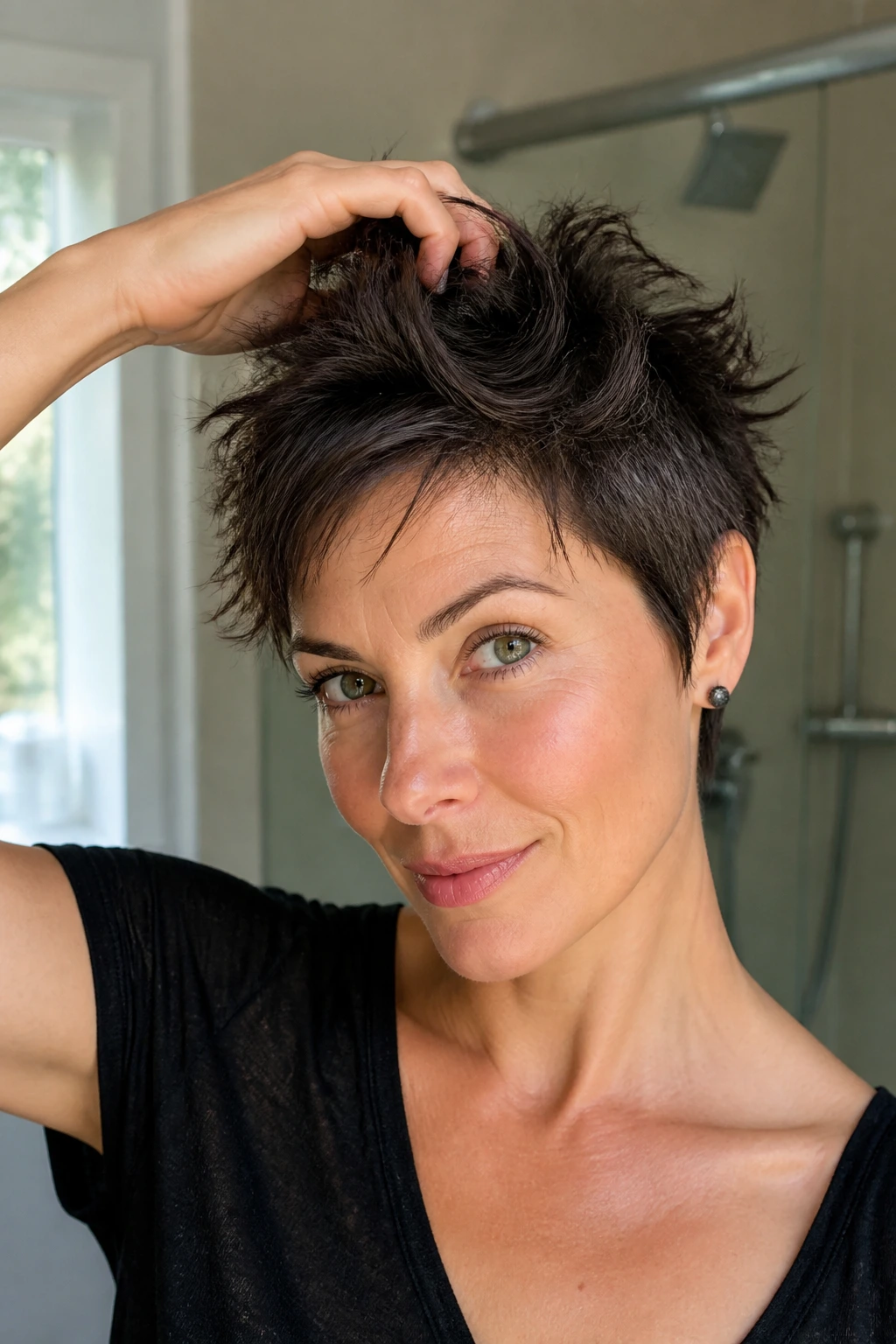
The easiest way to ruin a short rocker cut on thin hair is to load it with too much product too soon. Start lighter than you think you need, and build in small steps. A dime-sized amount of mousse at the roots, rough-dried with your head tipped forward, often does more than a palmful of styling cream.
Root lift first.
Dry the roots in the opposite direction of your part for the first few minutes. That alone changes the attitude of the style. Once the hair is dry, flip the part back and finish with cool air.
Keep the ends movable.
Thin hair usually looks best when the ends stay piecey, not packed together. Paste goes on the last inch or two only. If the product reaches the scalp, the cut goes flat fast.
Use heat where it counts.
A flat iron is best for tiny bends, not for polishing every strand into submission. A soft flip at the cheek, a bend at the fringe, or a bit of curve at the crown is enough. You’re trying to suggest shape, not sculpt a helmet.
Reset with dry shampoo, not another wash.
A little dry shampoo at the root buys you grip and lift. Shake it in, wait a minute, then massage the scalp with your fingertips. If your hair is fine, this is often better than adding more cream.
Common Mistakes That Flatten the Whole Look
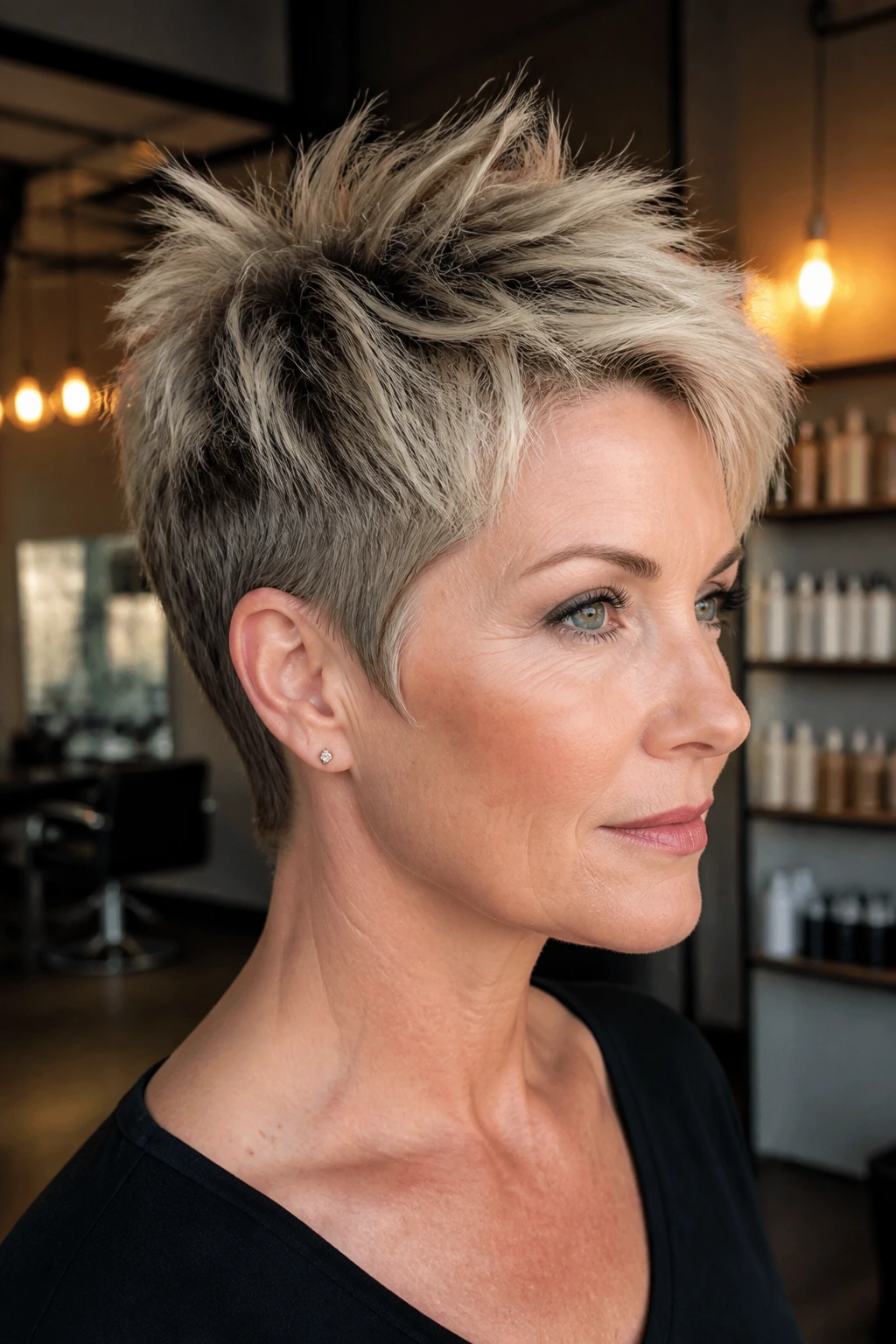
Too much layering at the wrong spot.
When the bottom gets thinned out too hard, the ends look see-through and the style loses its edge. Ask for texture through the top and around the face, not a shredded perimeter all the way around.
Heavy conditioner from roots to ends.
Thin hair does not need a full-length glaze of rich conditioner unless it’s extremely dry. Keep it from the ears down, rinse well, and use a lighter leave-in only if the ends need it. Slippery roots kill lift.
Trying to make every short cut look soft.
Rocker chic depends on contrast. If everything is rounded, feathered, and blended, the cut can drift into bland territory. Leave one sharp line somewhere—fringe, nape, side part, or perimeter.
Using too much shine.
Serums can be useful, but a glossy finish on thin hair often makes the gaps show. Matte or satin finishes usually look fuller. If you want shine, use it sparingly on the top layer only.
Skipping regular trims.
Short cuts lose their shape fast. A pixie or crop that looked sharp six weeks ago can look grown-out and sleepy if you let it slide. Thin hair shows the grow-out sooner than most people expect.
Variations and Adaptations to Try
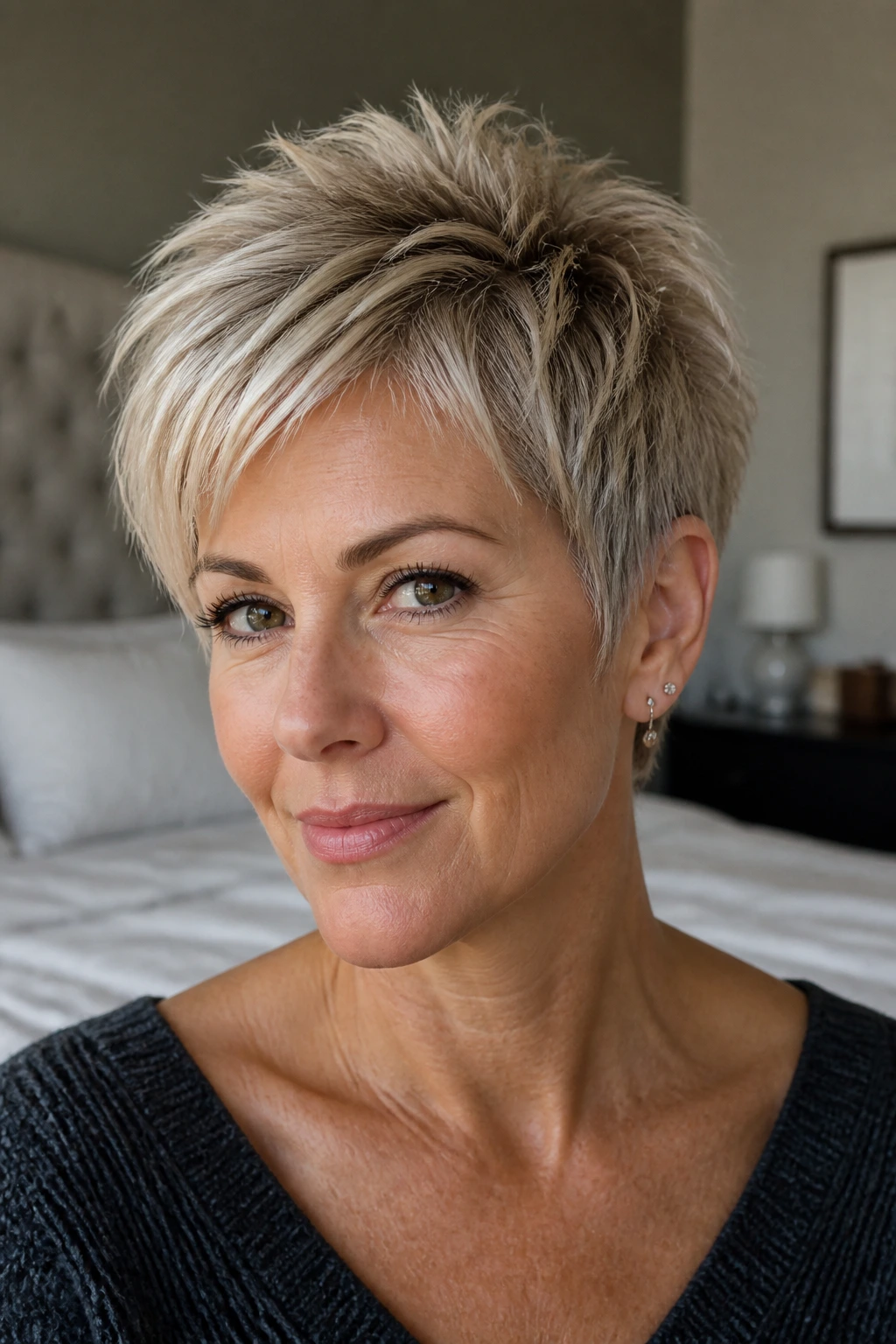
The Softer Rock Version
If you like the shape but not the full edge, keep the same cut and swap in a light cream instead of matte clay. The result is less spiky, more breezy, and easier for everyday wear. It works well for office settings or anyone who wants rocker energy in a quieter register.
The High-Contrast Color Version
Add a root shadow, chunky face frame, or a darker gloss at the base if you want the cut to look denser. Short hair shows color contrast fast, and that contrast can create depth even when the hair itself is fine. This is one of the easiest ways to fake fullness without changing the cut.
The Curly or Wavy Version
Keep the same general silhouette, but ask for slightly longer top layers so the wave has room to bend. This keeps the style from puffing out at the sides. A diffuser and a soft-hold gel are usually enough.
The Low-Maintenance Version
Choose a cut with a strong outline and minimal internal texture, then style it with dry shampoo and finger-combing only. This works best if you don’t want to spend much time with heat tools. A jaw-length bob or snug pixie usually fits this lane.
The Max-Edge Version
Take the nape shorter, the fringe more broken, and the top more piecey. This version asks for bolder styling and more frequent trims, but it gives the strongest rocker read. If you like a little grit, this is the lane to lean into.
Wash Days, Trim Schedules, and Product Reset
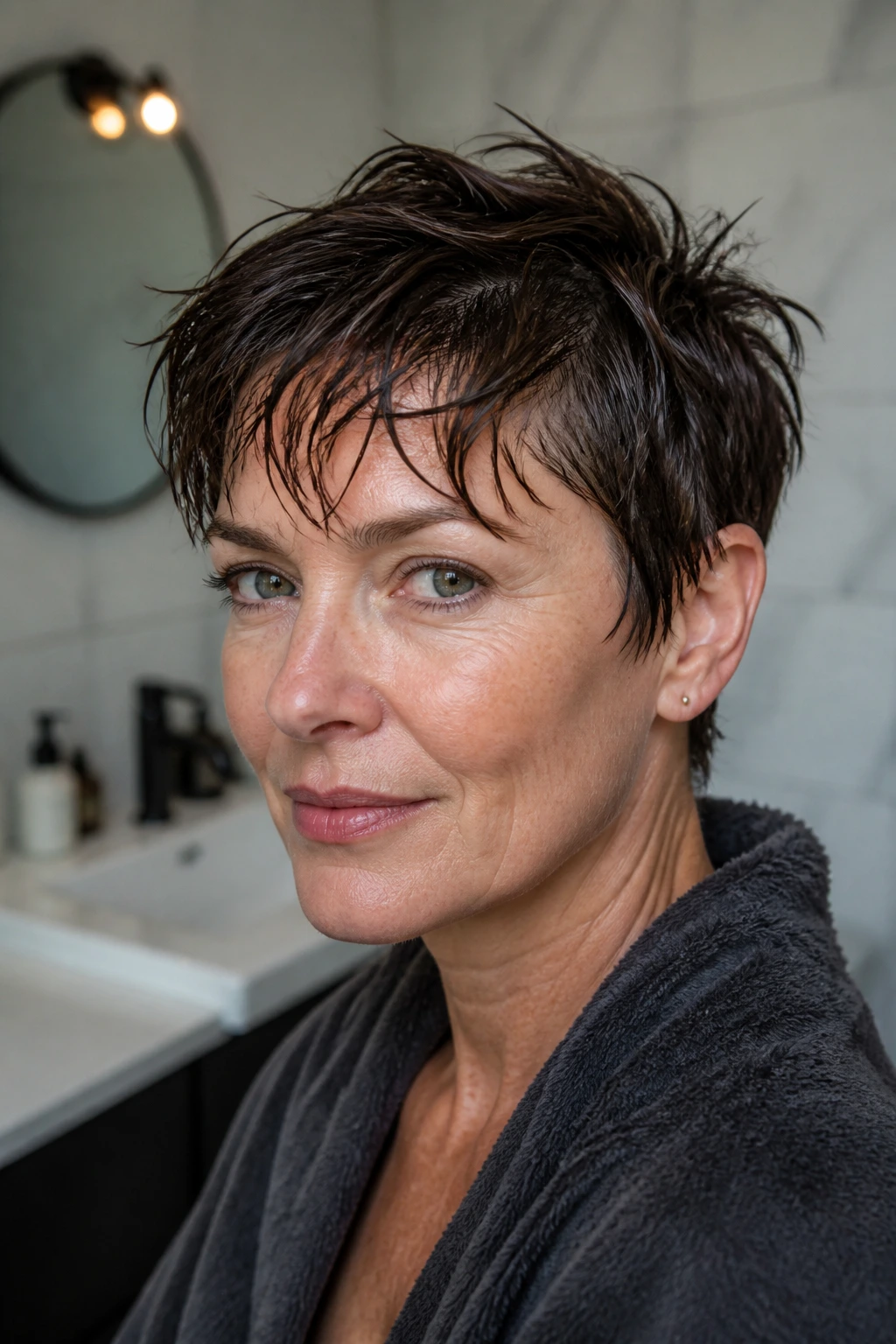
Short hair can fool people into thinking upkeep is low. The styling is fast. The maintenance is not nonexistent.
For most pixies and cropped rocker cuts, a trim every 4 to 6 weeks keeps the shape from blurring. Bobs can often stretch to 6 to 8 weeks, but only if the perimeter still sits clean and the fringe doesn’t lose its line. Once the ends start turning stringy, the cut stops reading as chic and starts reading as overdue.
Wash frequency depends on product load and scalp oil, but thin hair usually benefits from a scalp-focused shampoo routine. If you use paste, powder, or dry shampoo often, a clarifying wash every 2 to 4 weeks helps reset buildup. Don’t overdo clarifying, though; it can leave fine strands squeaky and fragile.
At night, a silk or satin pillowcase helps more than most people expect. It cuts down on friction, which matters on short hair because the shape can get bent in odd places. In the morning, a mist of water or leave-in spray can wake up the cut before you reach for more heat.
Color-treated rocker cuts need their own rhythm. Blonde and platinum versions usually need toning shampoo or gloss appointments to stay clean in tone, while dark glossy crops often need a shine spray or glossing serum at the ends after a wash. Keep those products light. Short hair gets overwhelmed fast.
Questions People Ask Before Going Short
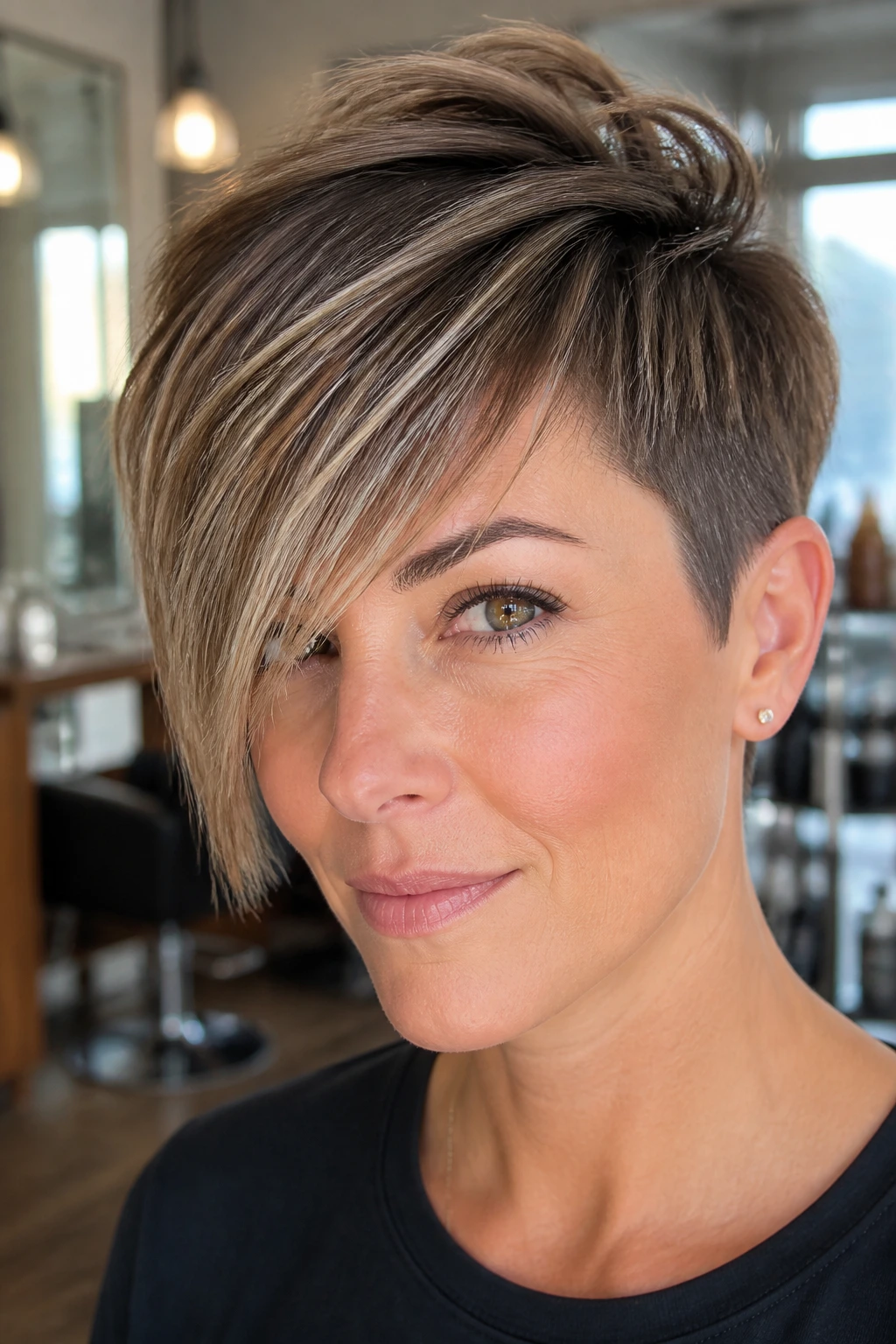
Can thin hair really pull off a pixie or short crop?
Yes, and often better than longer styles. Thin hair tends to look fuller when the cut gives it a strong outline and the top has a little lift. The mistake is usually not going short enough, or asking for too much feathering at the ends.
Are blunt ends better than layers for thin hair?
Usually, yes—at least around the perimeter. A blunt edge gives the eye a clear line, which makes the hair seem denser. A few internal layers can still help with movement, but too many soft layers can make the bottom look wispy.
Should I avoid bangs if my hair is thin?
Not automatically. A wispy or side-swept fringe can hide a high forehead or soften the face, but a heavy full fringe can be risky if the hairline is sparse. Ask for a fringe that matches your density, not a thick curtain just because it looks cute in photos.
Do rocker-chic cuts work on wavy or curly hair?
They do, but the layering has to respect the curl pattern. You want enough length for the curl to clump and enough shape at the crown to stop it from ballooning. A diffuse-dry finish usually looks better than forced straightening.
What’s the least fussy option if I don’t want to style every morning?
A piecey micro bob, soft shaggy pixie, or ear-length crop tends to be the easiest. These cuts look finished with a little dry shampoo and finger styling, which is exactly what many thin-hair heads need. Avoid anything that relies on elaborate round-brush work if you hate morning styling.
How do I keep the cut from looking flat by lunchtime?
Start with root lift at the blow-dry stage, then keep product off the scalp once the hair is dry. If it collapses later, use dry shampoo or a volumizing powder at the roots and rough the hair with your fingers. Don’t keep adding cream.
What if my temples are sparse?
Choose a cut with sideburns, a side fringe, or a deeper side part. Those details pull attention away from the temple area and give the face a stronger frame. A center part can make sparse temples look more obvious.
A Short Cut With More Attitude

Thin hair doesn’t need to be hidden under more length. It needs a shape that knows what it’s doing. Once you give it a firm outline, a little crown lift, and texture that looks deliberate instead of overworked, the whole head reads stronger.
That’s why short rocker chic haircuts keep coming back. They don’t ask thin hair to pretend. They give it a line, a mood, and a reason to hold up its head.
If you’re ready to go short, start with the silhouette that fits your hairline and your styling patience, not the loudest photo in the folder. The cut that looks effortless on the street is usually the one that was designed with a little precision first.