



Babylights can do a sneaky kind of work on hair after 50. They don’t shout the way chunky highlights do. They sit inside the cut, soften a hard line at the cheek, and make a bob or pixie look like it has air moving through it even on a flat day.
The haircut matters just as much as the color. A blunt bob with buttery ribbons reads one way; the same bob without shape reads like a helmet. And on mature hair — especially hair that has gone finer at the crown, drier through the ends, or more silver at the temples — the cut is what keeps those tiny highlights from looking streaky or overdone.
Some of the best shapes are short and sharp. Others keep enough length to swing at the collarbone, which is useful when you want a round brush to do half the work for you. The babylights here are chosen to work with the cut, not sit on top of it like decoration. That’s the whole trick.
Why These Cuts Look So Good Together
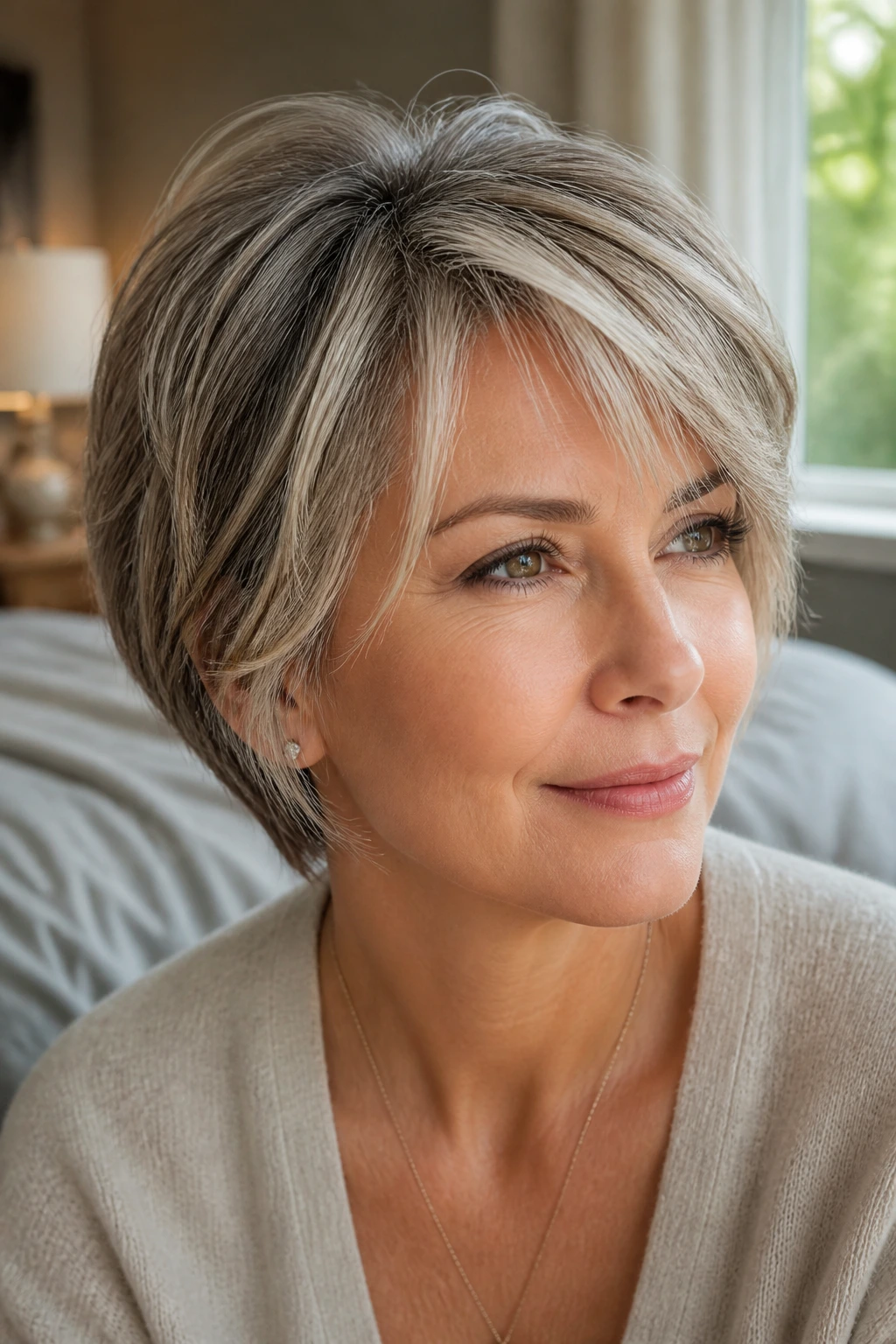
Soft contrast: Babylights are thin enough to blend into gray growth and soft regrowth lines, so the cut stays elegant longer between salon visits.
Face-first shape: Each style below puts brightness where it helps most — around the eyes, along the cheekbone, or at the collarbone — instead of scattering color everywhere.
Better movement: A good haircut gives babylights something to live in. Layers, bends, and rounded edges make the light catch in motion, not just in a mirror.
Fine-hair friendly options: Several of these cuts keep the perimeter clean while building lift at the crown, which matters when density changes a little over time.
Low-drama styling: Most of these shapes can be air-dried, rough-dried, or finished with a 5-minute brush pass. No one needs a 45-minute blowout just to go get coffee.
Photo-ready, but not fussy: The color reads polished, yet the cuts still look like real hair. That’s the part I like best.
1. Collarbone Lob with Champagne Babylights
A collarbone lob is one of those cuts that earns its keep fast. It hits right where hair still has swing, but not so long that it drags the face down. Add champagne babylights — pale beige with a soft warm edge — and the whole shape starts to look brighter without tipping into brass.
Why It Works
The collarbone length gives just enough weight to keep the ends from flaring out, which is useful if your hair has gotten a little finer. The babylights sit best around the front and through the top layers, where they catch light when you turn your head. It’s a quiet kind of lift. Not loud. Just better.
Best for
- Medium-density hair that needs movement
- Straight or softly wavy textures
- Anyone who wants to wear hair up half the week and down the other half
A center part keeps it modern; a soft side part adds lift at the front. I prefer this cut with a bend through the ends, not poker-straight. Hair that looks slightly touched by the brush usually looks more expensive than hair that looks ironed flat.
2. Rounded French Bob with Beige Babylights
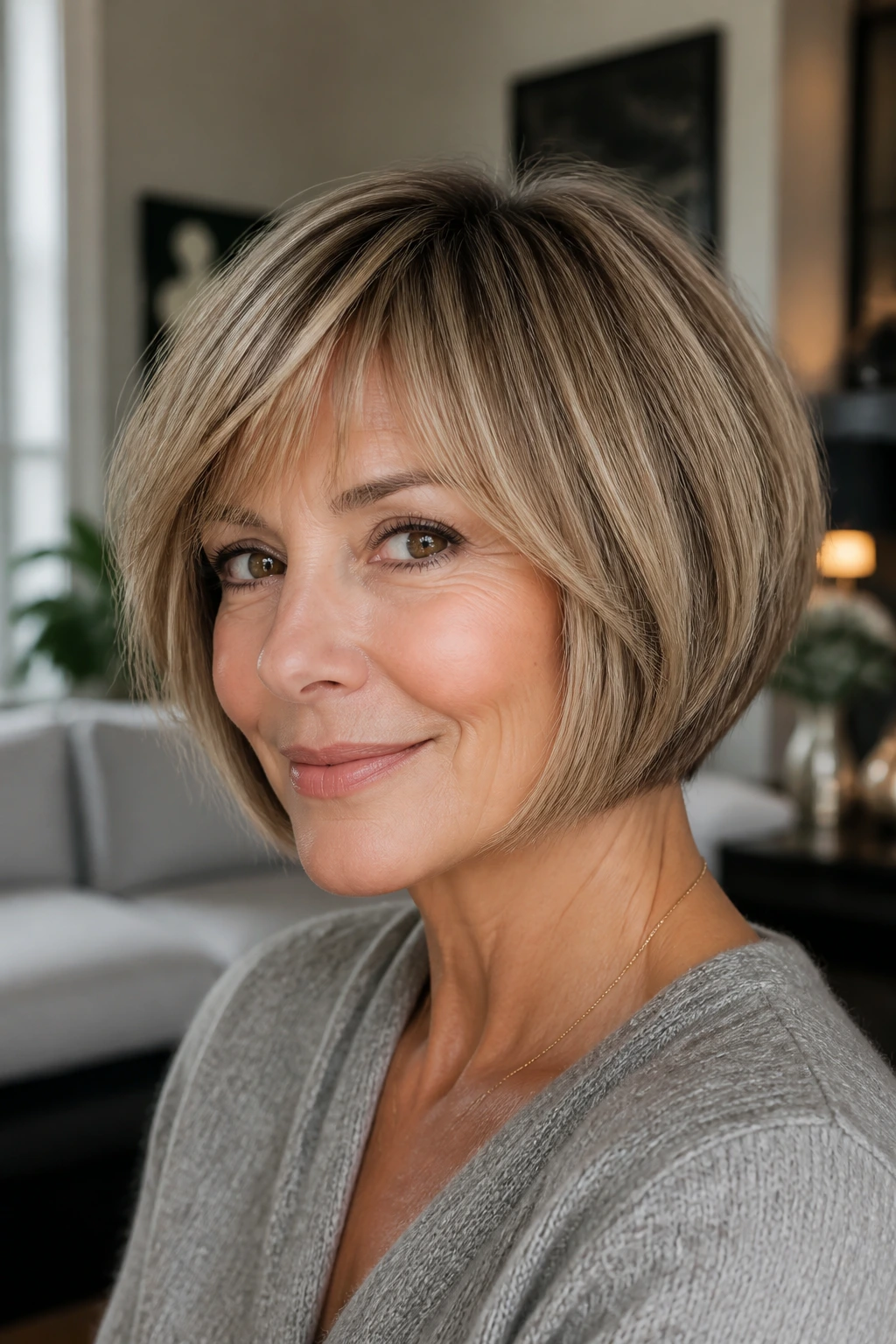
The rounded French bob is blunt enough to feel crisp, but the curve through the jaw keeps it from looking severe. Beige babylights stop the line from reading too dark or too helmet-like, especially if your base color is medium brown or dark blonde.
This cut makes a strong case for shape over length. If your hair loses body fast, a bob that hugs the cheek and lifts at the back can make you look like you have more hair than you actually do. That sounds like a small thing. It isn’t.
3. Feathered Pixie with Silver Babylights
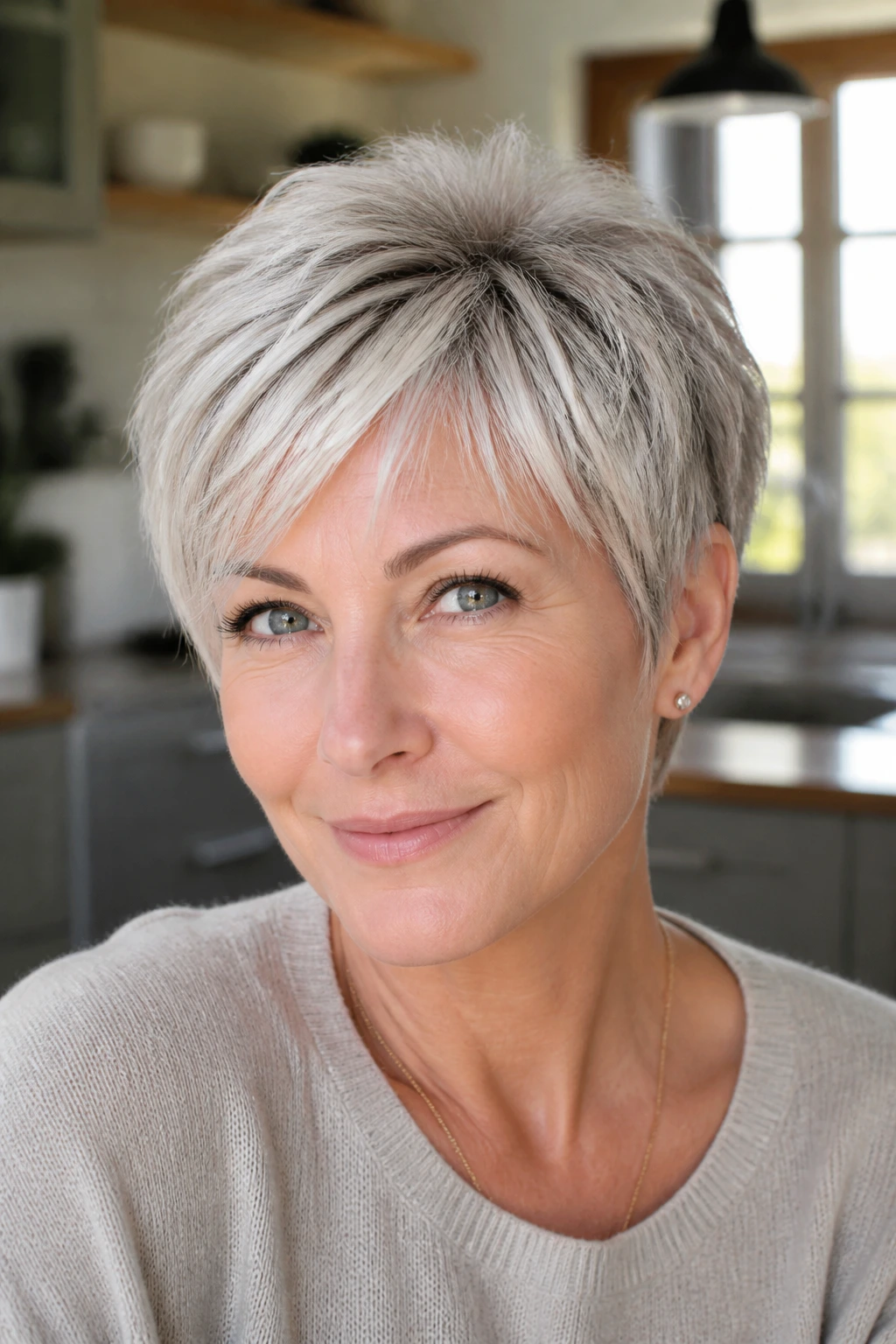
Why does a pixie work so well here? Because it doesn’t try to do too much. The feathered top gives you lift, the tapered sides keep the shape neat, and silver babylights along the fringe and crown echo natural gray instead of fighting it.
If your hair texture is fine, ask for soft texture rather than choppy razor cuts. Razor work can fray the ends and make babylights look fuzzier than they should. A good pixie should feel airy, not wispy in a sad way. There’s a difference.
4. Layered Shoulder Cut with Caramel Babylights
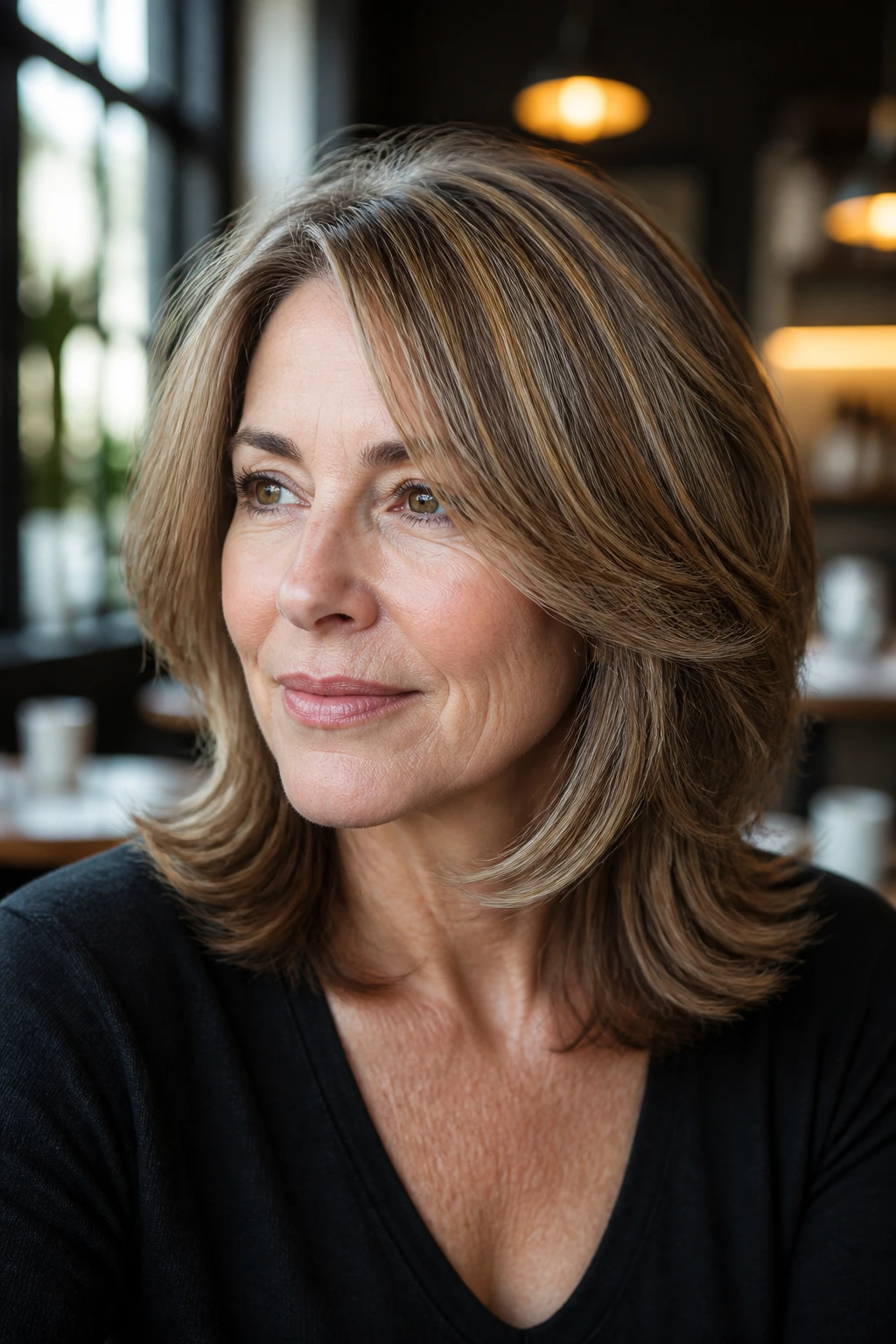
Picture this: you’ve got shoulder-length hair, a little bend at the ends, and warm caramel babylights that show up only when the light hits from the side. That’s the sweet spot for this cut. It doesn’t need a dramatic change to look fresh.
- The layers remove bulk without stripping density.
- Caramel babylights warm up cool complexions and soften strong jawlines.
- A blow-dry with a round brush makes the layers fall in clean ribbons instead of puffing outward.
This is a smart cut if you want room to clip hair back, wear it in a ponytail, or let it live down and loose without looking flat.
5. Blunt Chin-Length Bob with Face-Framing Lights
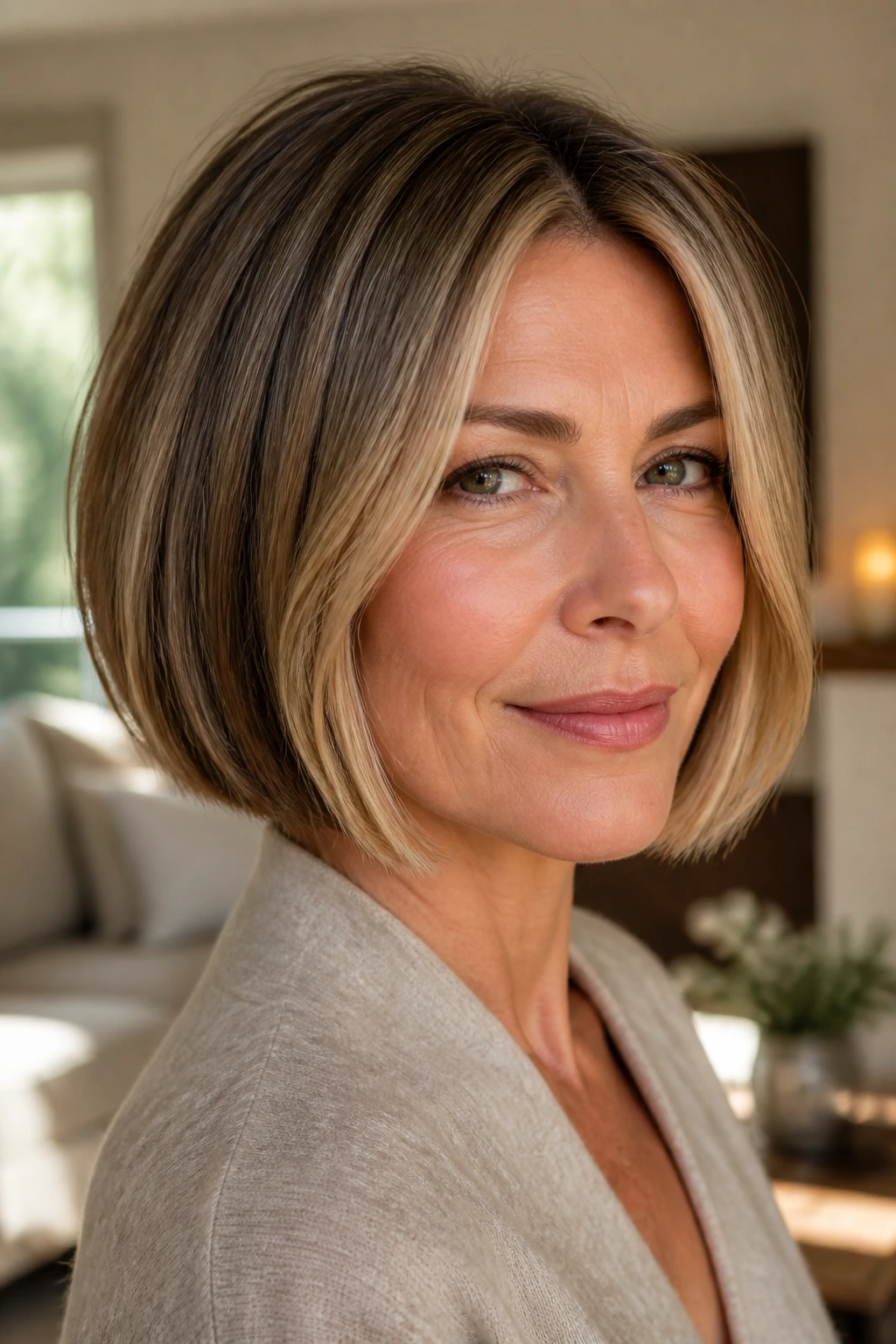
A chin-length bob is blunt for a reason: the clean edge makes the hair look thicker. Babylights around the face stop that edge from feeling too stark. The brightness lands where people actually look first — the eyes, the cheekbone, the mouth.
This shape is especially good if your hairline has thinned a little at the temples. Keep the front pieces just a touch longer than the nape, and the whole cut sits with more grace. I would not pile too many layers into this one. The bluntness is the point.
6. Soft Shag with Warm Honey Babylights
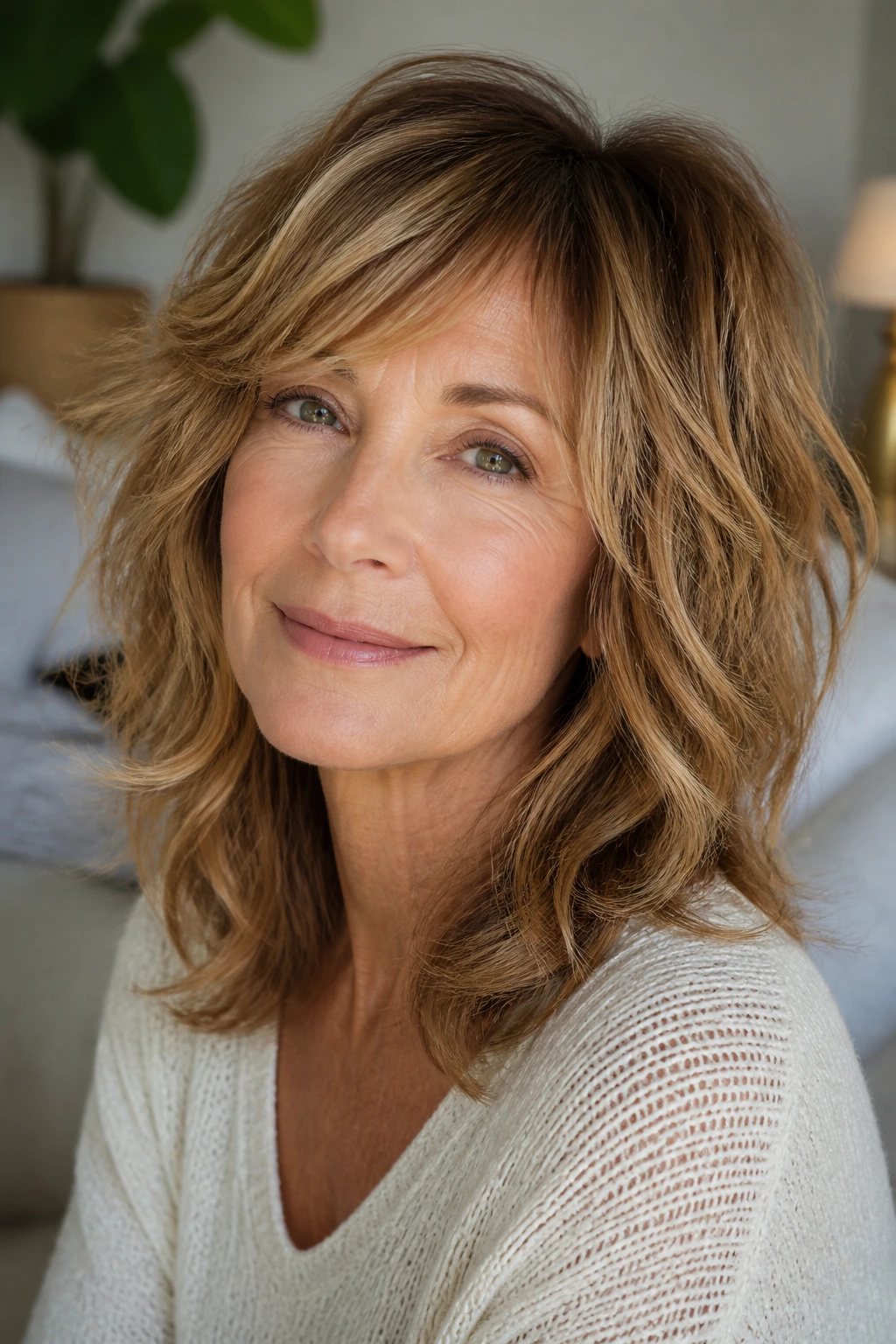
The soft shag is for anyone who wants movement without having to “style” hair in the formal sense. The layers build a little chaos, but the good kind. Honey babylights add warmth through the mid-lengths so the cut doesn’t look hollow at the ends.
Unlike a heavy one-length cut, a shag bends with you. It works with natural wave, bends from a diffuser, or a quick twist with a curling iron. If you hate the idea of spending time on your hair, this one can be a very fair compromise.
7. Tapered Crop with Pearl Babylights
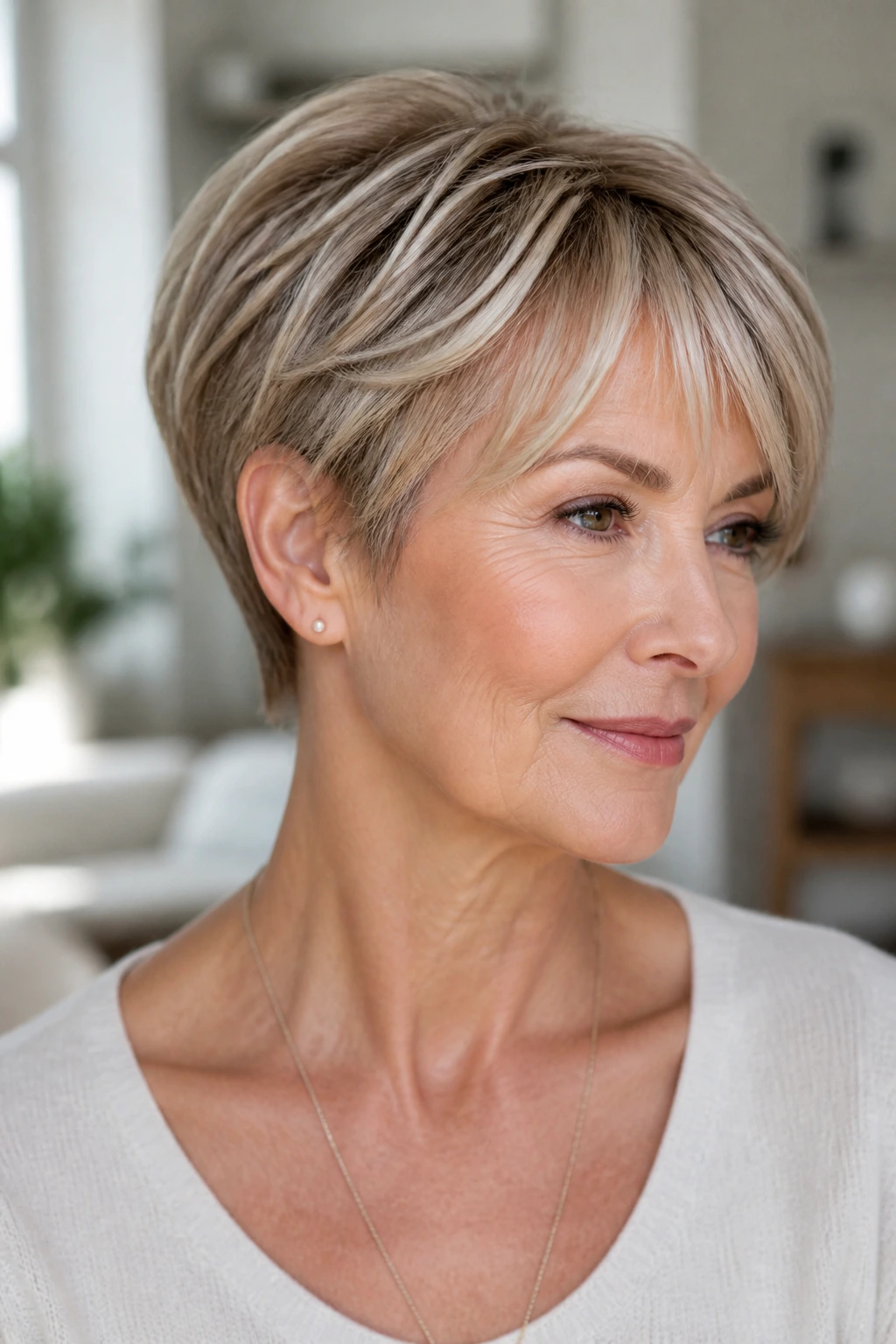
A tapered crop keeps the neckline clean and the crown lifted, which is a smart combination when hair has lost fullness. Pearl babylights — cool, soft, and very fine — keep the crop from reading harsh. They’re best placed at the top and the front fringe, not everywhere.
Why it stands out: the cut creates shape first, the color finishes the job second.
Where to be careful: if the babylights are too chunky, the crop can look busy. Tiny ribbons are the move here, and a light styling cream is enough. Heavy paste tends to crush the lift.
8. Long Layers with Dimensional Toffee Babylights
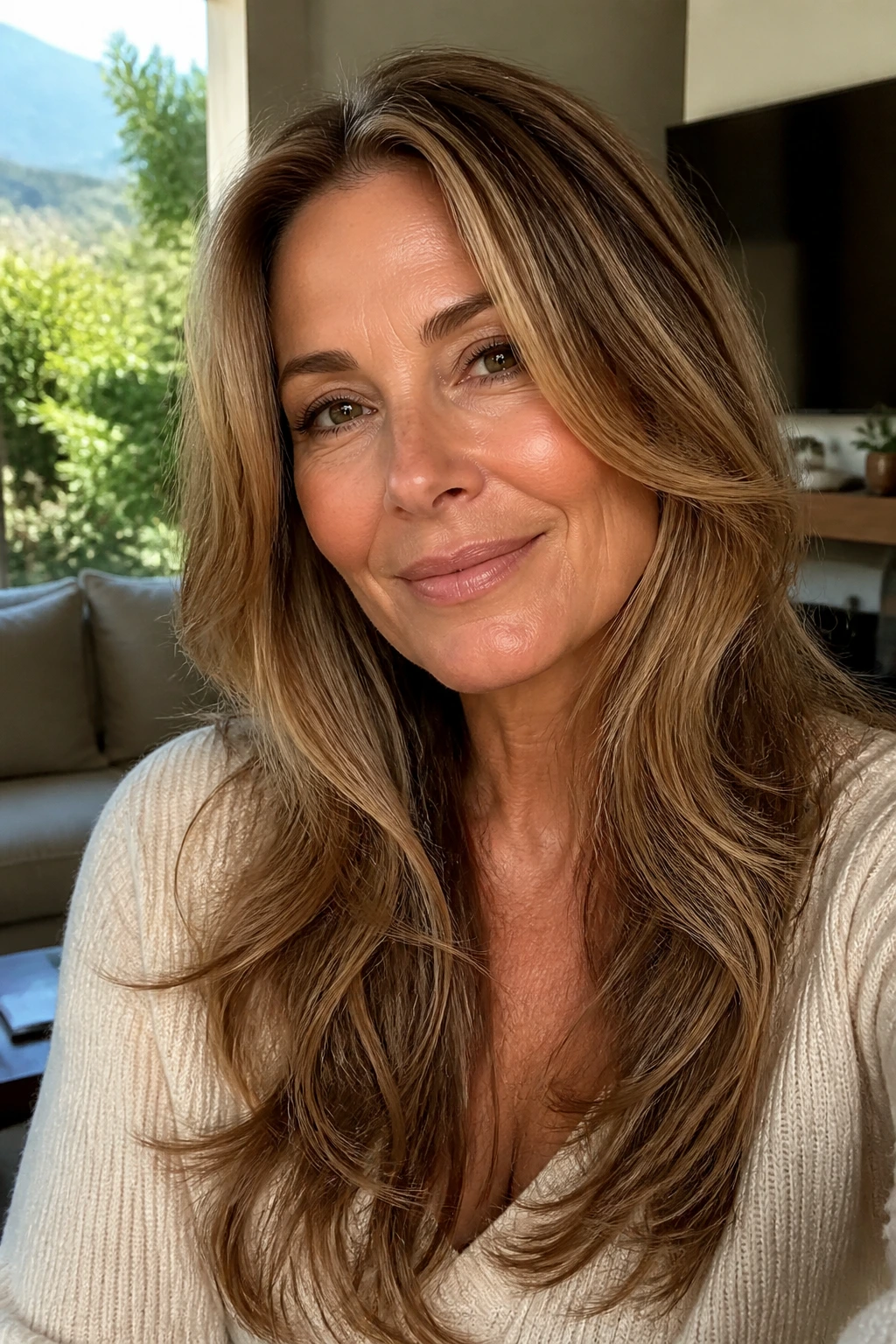
Can long hair still work after 50? Absolutely, if the ends stay healthy and the layers are doing real work. Long layers take weight out of the interior, which helps prevent that curtain-like look that can happen when length hangs all in one block.
Toffee babylights give depth through the mid-lengths and ends, where long hair can otherwise go dull. This cut likes movement. A soft wave from a 1.25-inch iron or a large roller set makes the layers separate in a way that flatters the face instead of swallowing it.
9. Wavy Midi Cut with Sunlit Babylights
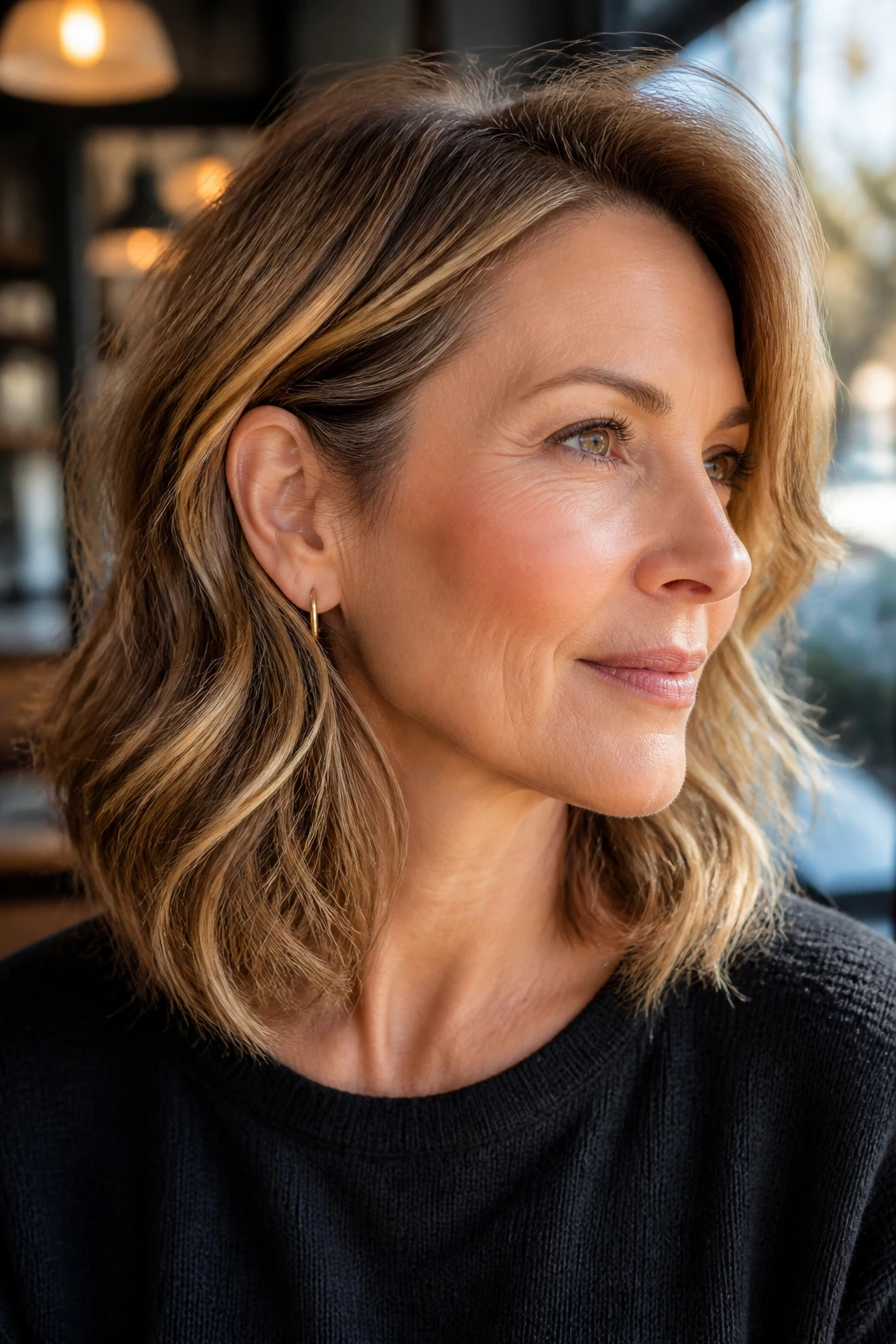
I keep coming back to the midi length because it solves a lot of hair problems without feeling precious. It’s long enough to tuck behind the ear, short enough to dry in a reasonable time, and flexible enough for wave, bend, or a loose blowout. Sunlit babylights make that middle ground feel intentional.
When the highlights are painted just under the surface layers, the cut looks richer, not lighter all over. That matters with wavy hair. You want depth near the roots and brightness where the bends hit the light.
10. Graduated Bob with Cool Blonde Ribbons
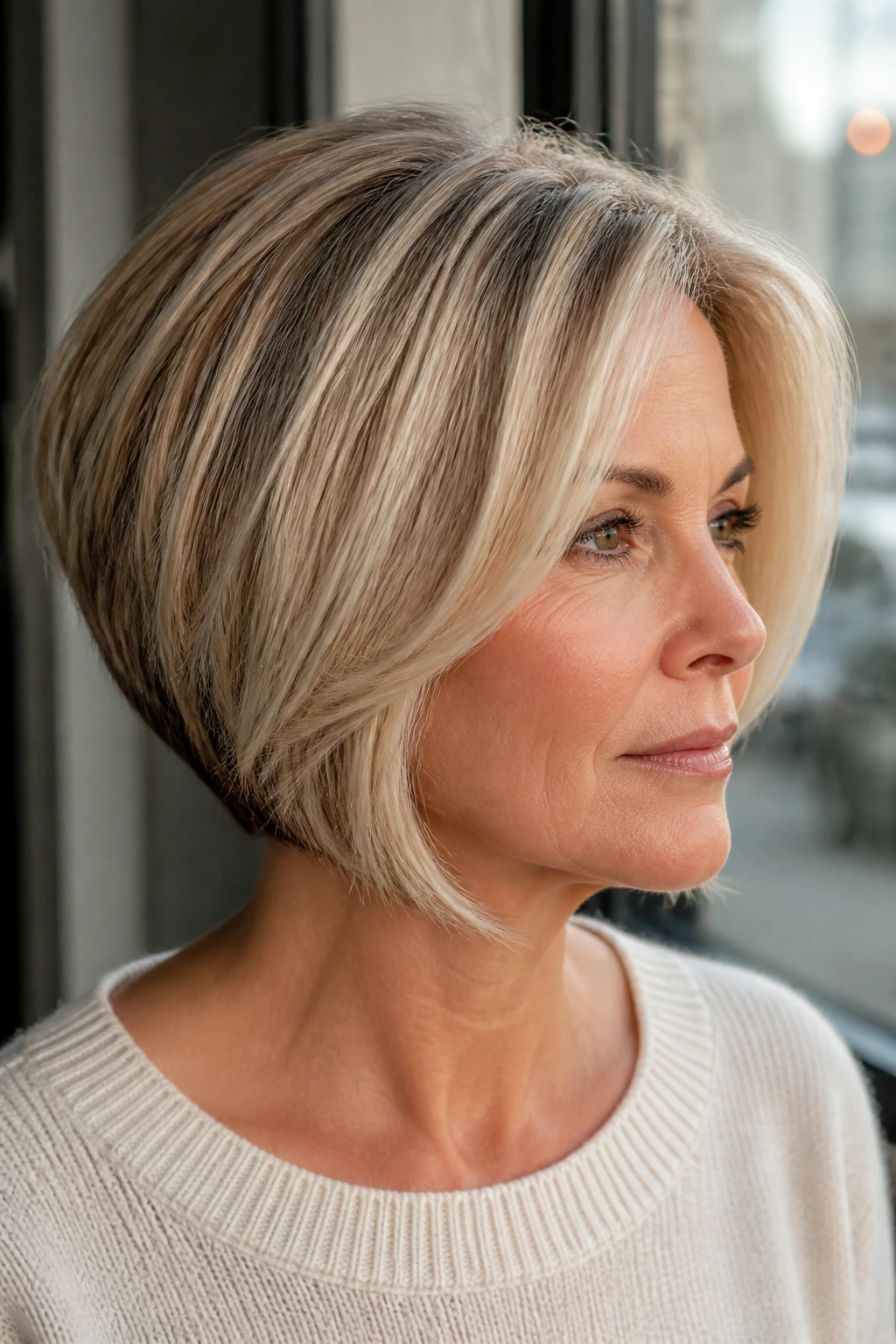
A graduated bob stacks a little more volume at the back and angles forward toward the jaw. That geometry does a lot for the face, especially if you want lift without teasing the crown. Cool blonde ribbons keep the shape from going too dense or too brown.
This is one of those cuts that looks crisp in motion. The back has the body, the front has the line, and the babylights keep both from feeling blocky. If you wear glasses, this shape plays nicely with frames because it clears the cheeks instead of crowding them.
11. Side-Swept Pixie with Soft Contrast
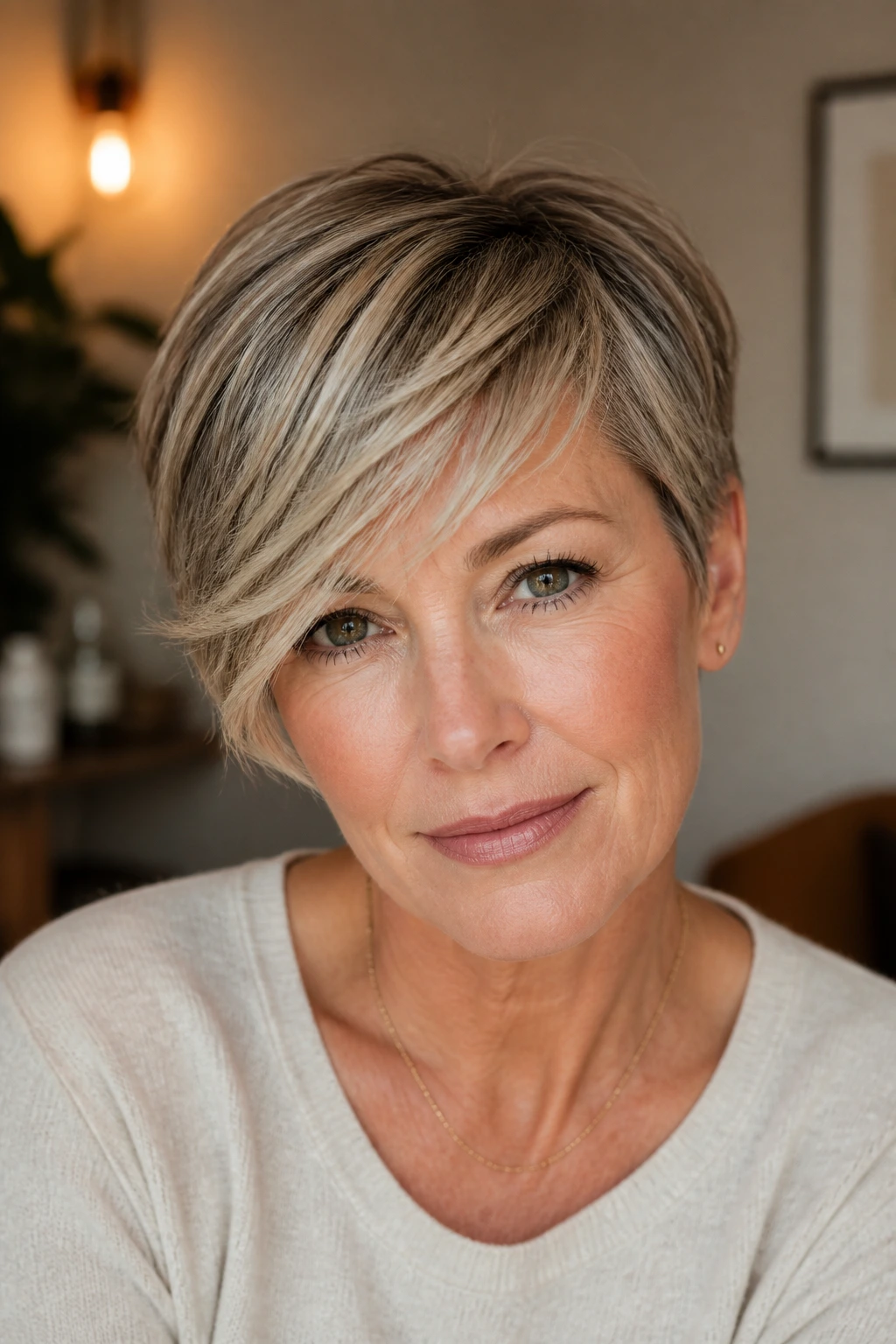
A side-swept pixie gives you a little drama without extra length. The sweep across the forehead softens lines, and babylights through the fringe make the style feel lighter around the eyes. It’s a strong choice if you want short hair but not a severe short haircut.
Compared with a cropped pixie, this version has more styling room. You can push it forward, tuck one side, or lift it at the root with a small round brush. That flexibility is worth a lot on busy mornings.
12. Curly Lob with Honeyed Babylights
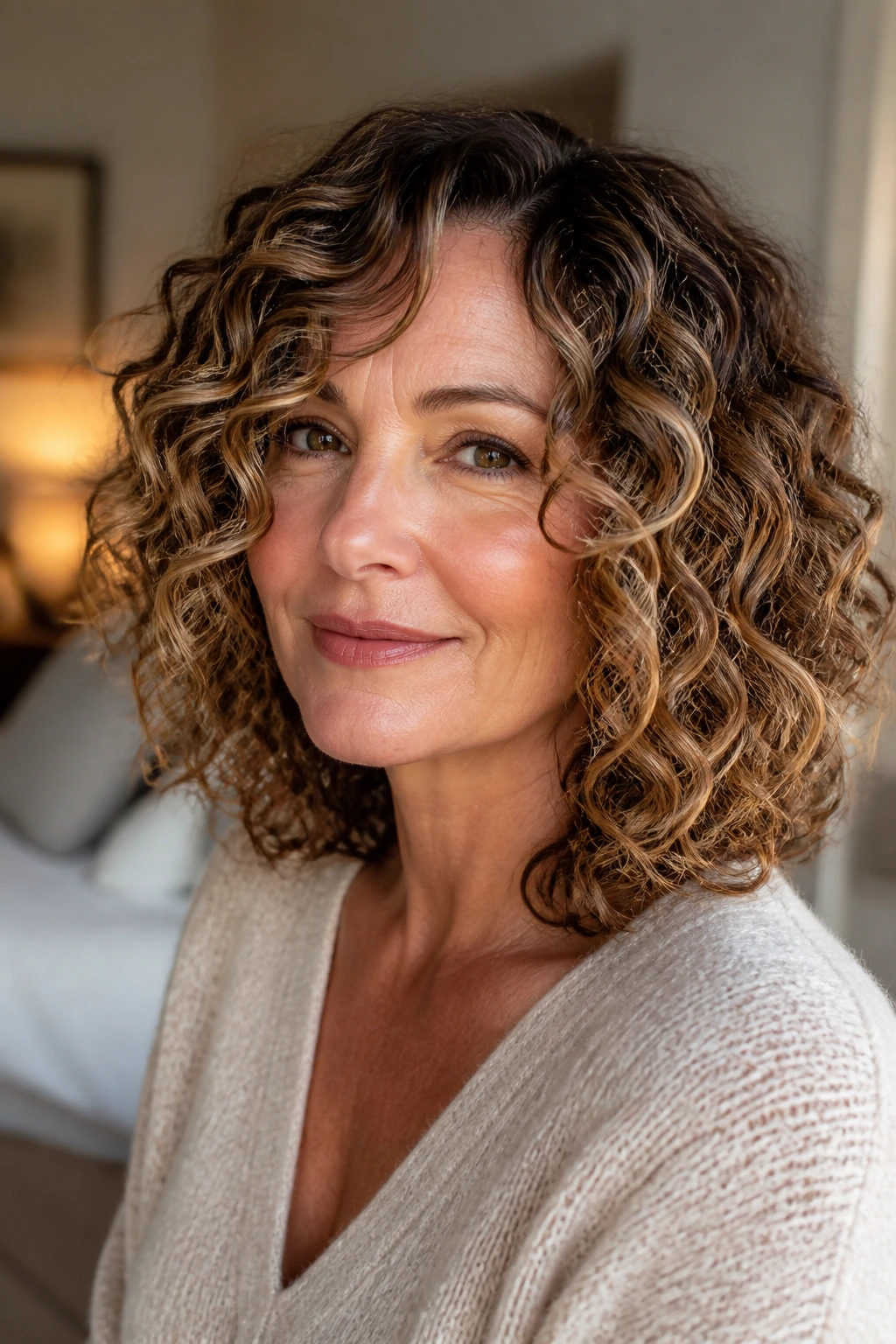
Curly hair and babylights can look gorgeous together when the color is placed with restraint. The curl pattern does half the design work; the babylights just need to follow the bend. Honeyed tones soften gray and give curls more definition without turning them into streaks.
- Place the brightest pieces around the front curls and the outer canopy.
- Keep the interior slightly deeper so the curl shape doesn’t flatten.
- Diffuse on low heat so the babylights stay crisp instead of frizzy.
This cut is especially kind to women who want softness around the face but don’t want to spend the morning rearranging every coil.
13. Angled Bob with Bright Money Pieces
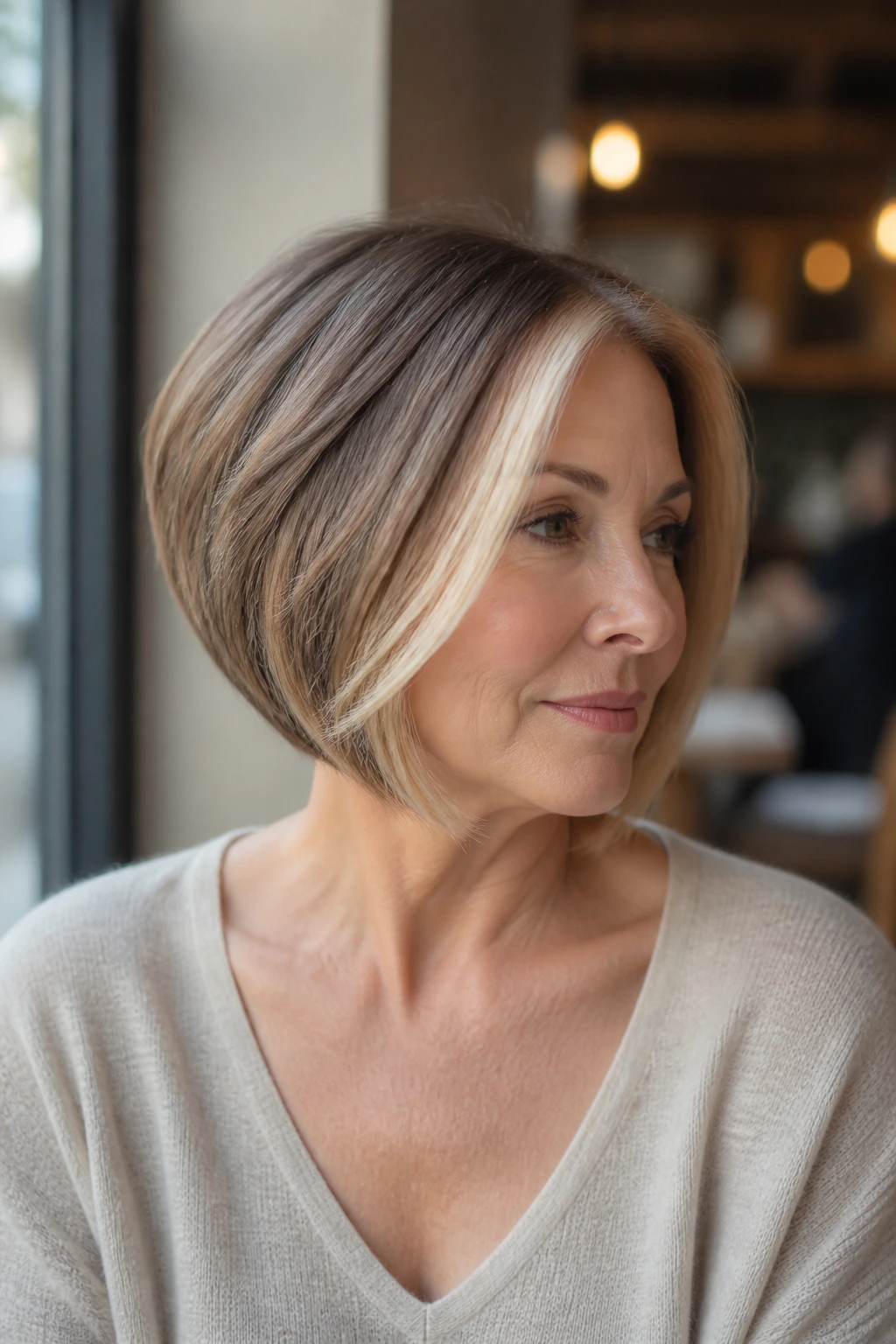
An angled bob gives you forward movement, and bright money pieces at the front push the eye upward. That combo can wake up the whole face in a way that a single all-over color job often cannot.
The front stays a little brighter than the back, which is smart. You want the strongest light near the cheekbone and temple, not buried at the nape where nobody sees it. Keep the angle clean, though. If the layers get too busy, the color loses its point.
14. Flipped Shoulder Cut with Copper-Tea Lights
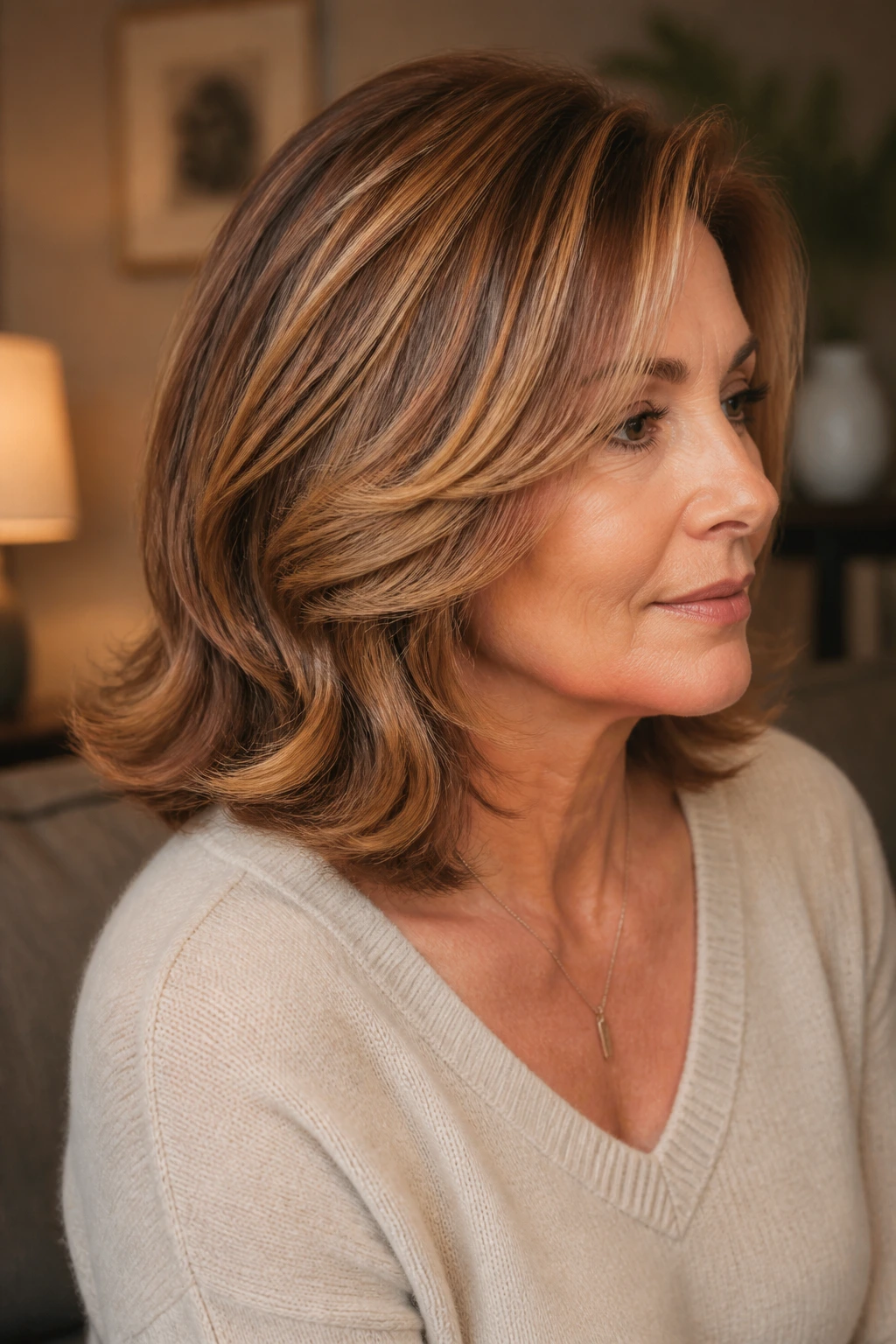
Do you want something with motion but not a full shag? A flipped shoulder cut can do that. The ends turn out or under, depending on your mood, and copper-tea lights add a soft warmth that looks good against cream sweaters, black tees, and most denim jackets.
This is a happy haircut. Not in a childish way. It just has bounce. It works especially well if your hair is straight-ish and needs help pretending it has a little attitude.
15. Bouncy Layered Bob with Micro-Babylights
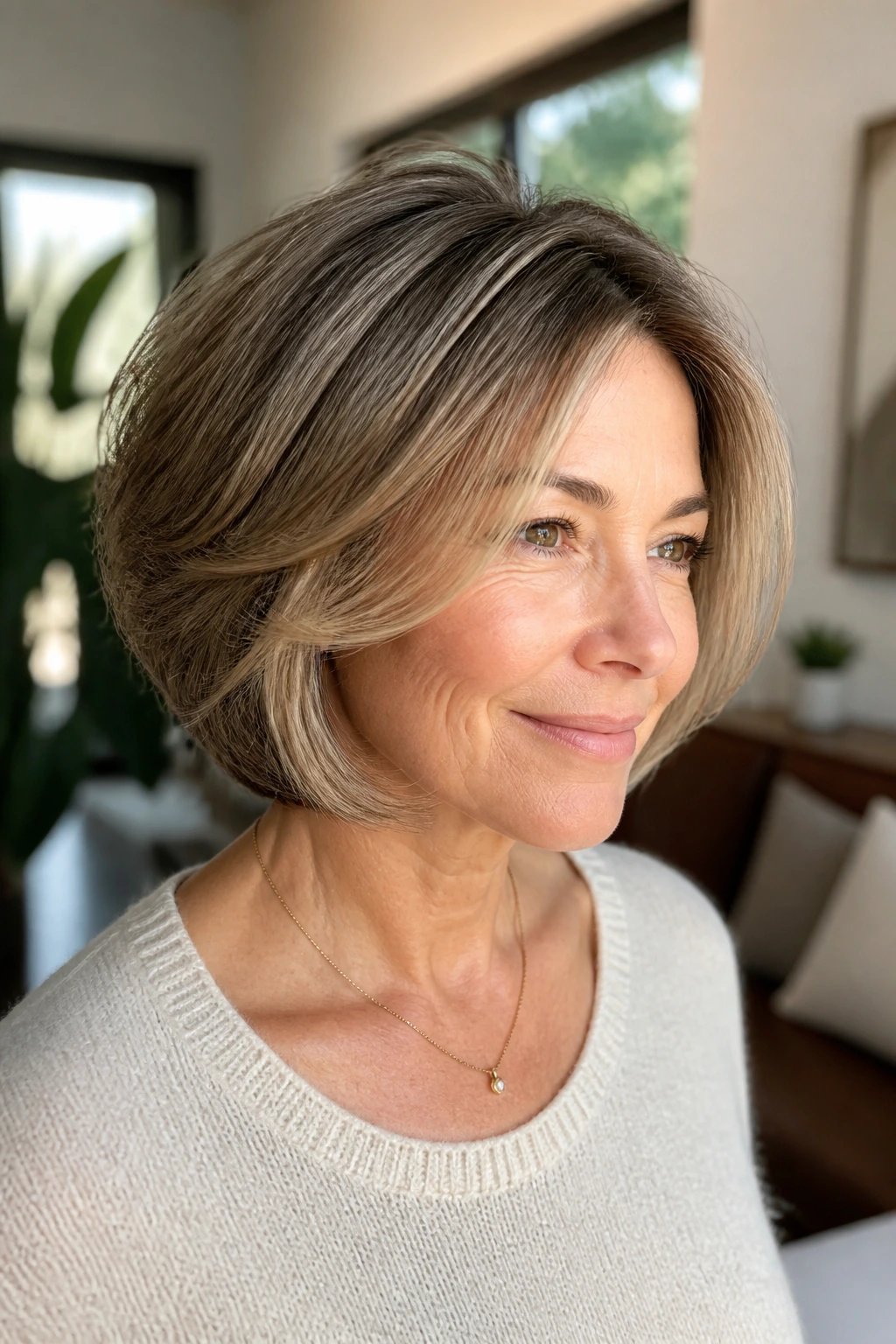
A bouncy layered bob is all about interior support. The layers are hidden enough to keep the edge full, but they give the haircut lift when you blow-dry with a round brush. Micro-babylights keep that lift looking soft and expensive rather than stripey.
The reason I like this one for women over 50 is simple: it doesn’t demand thick hair to look good. It builds the illusion of thickness with shape, then reinforces it with barely-there color. That’s a useful trick.
16. Soft Wolf Cut with Beige and Wheat Lights
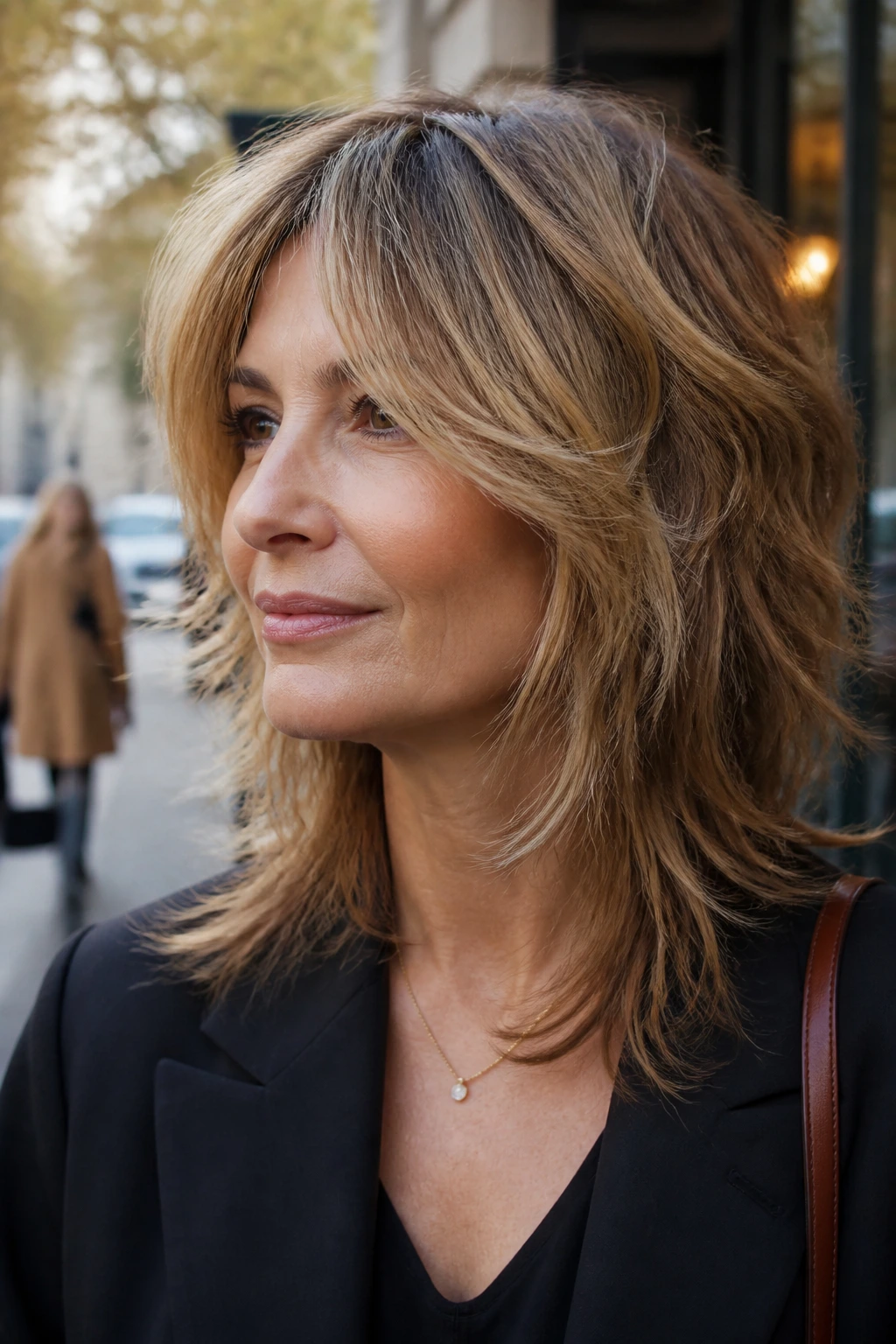
The soft wolf cut is the least polished style in the lineup, and that’s part of its charm. It’s got a little edge, a little roughness, and enough layering to stop the ends from sitting heavy. Beige and wheat babylights keep the cut from looking too dark through the crown.
Unlike a classic shag, the wolf cut can carry a bit more length in the back. That makes it easier to wear up or half-up without losing the point of the cut. If you want shape with some attitude, this is the one I’d point to first.
17. Sleek Long Bob with Shadow Root Babylights
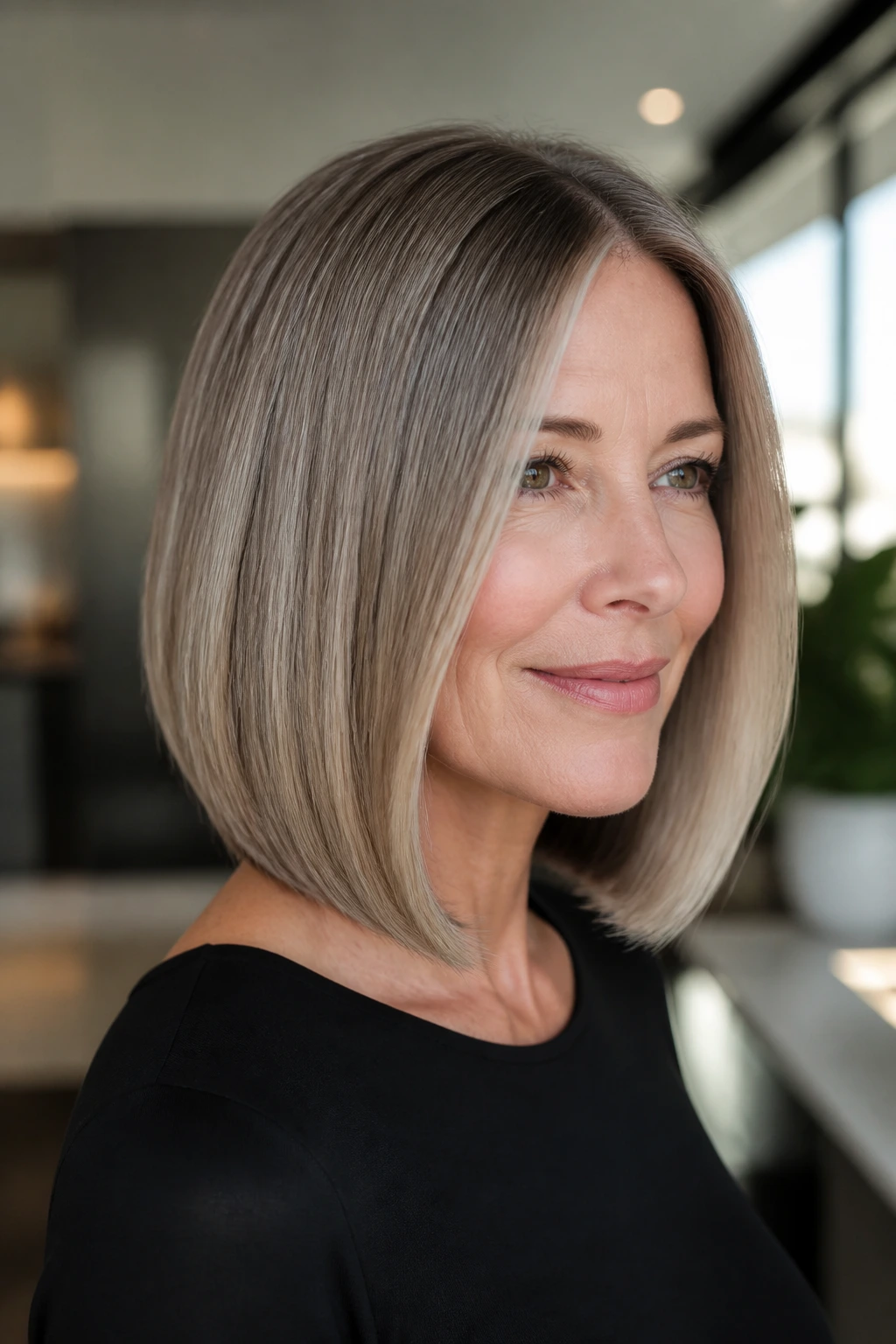
A sleek long bob, or lob, feels polished when the lines are clean and the surface is smooth. A shadow root under fine babylights keeps the grow-out softer, so you don’t get that harsh line at the scalp after a few weeks.
- Ask for babylights concentrated around the face and top crown.
- Keep the root one to two shades deeper than the brightest pieces.
- Finish with a light serum only on the last 2 inches.
The result is sleek, but not flat. That matters. Flat is unforgiving. Sleek can be gorgeous.
18. Chin-Grazing Crop with Airy Crown Layers
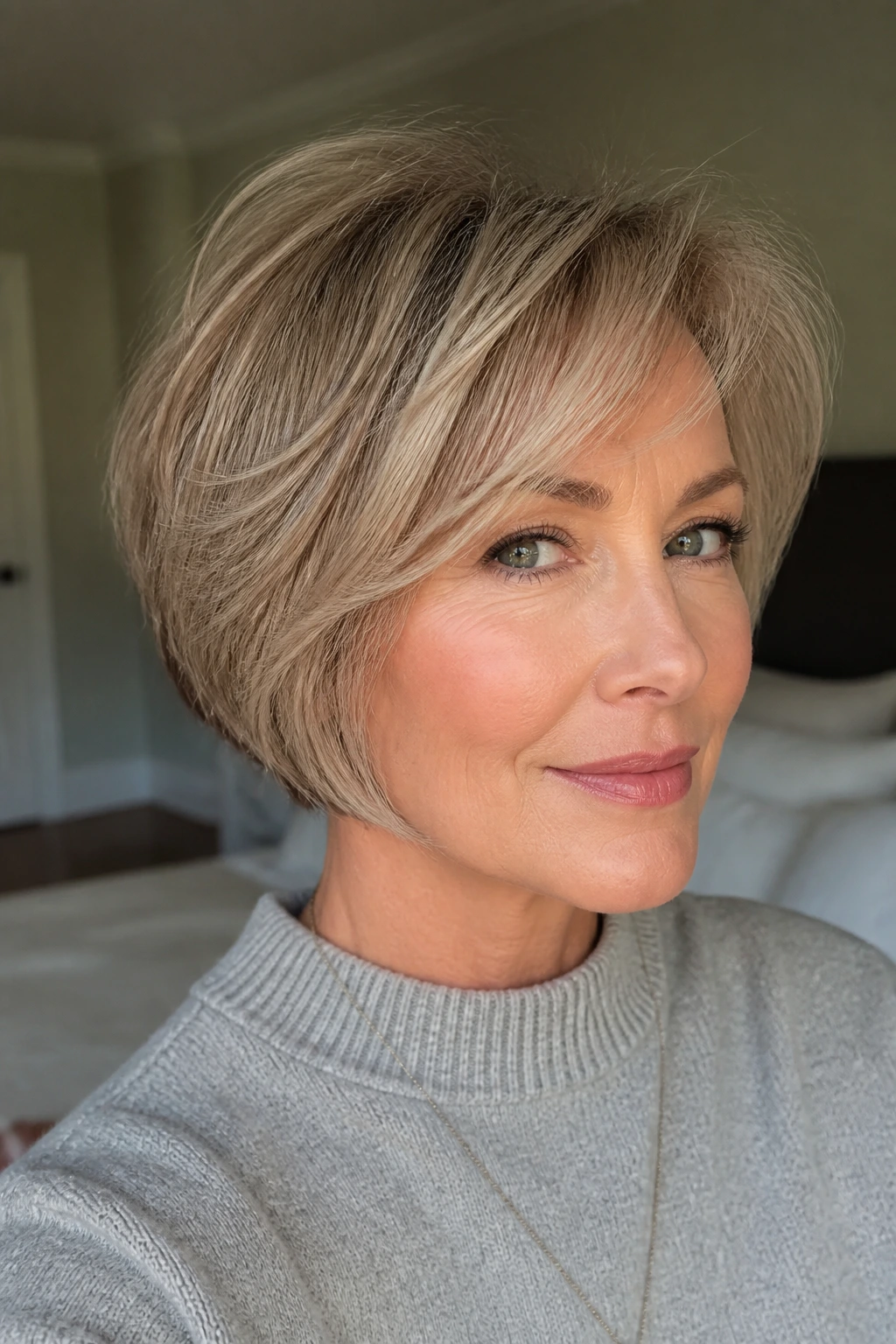
A chin-grazing crop is a little shorter than a bob, which makes it useful for hair that wants to collapse. Airy crown layers create lift without making the sides look sparse, and babylights keep the shape from going dense at the perimeter.
This cut works best when the ends are tucked cleanly under or left very slightly bevelled. If you let the bottom kick out too much, the whole profile looks wider. I’d keep the styling simple here: a root-lift spray, a round brush, done.
19. Curtain-Bang Lob with Caramel Glow
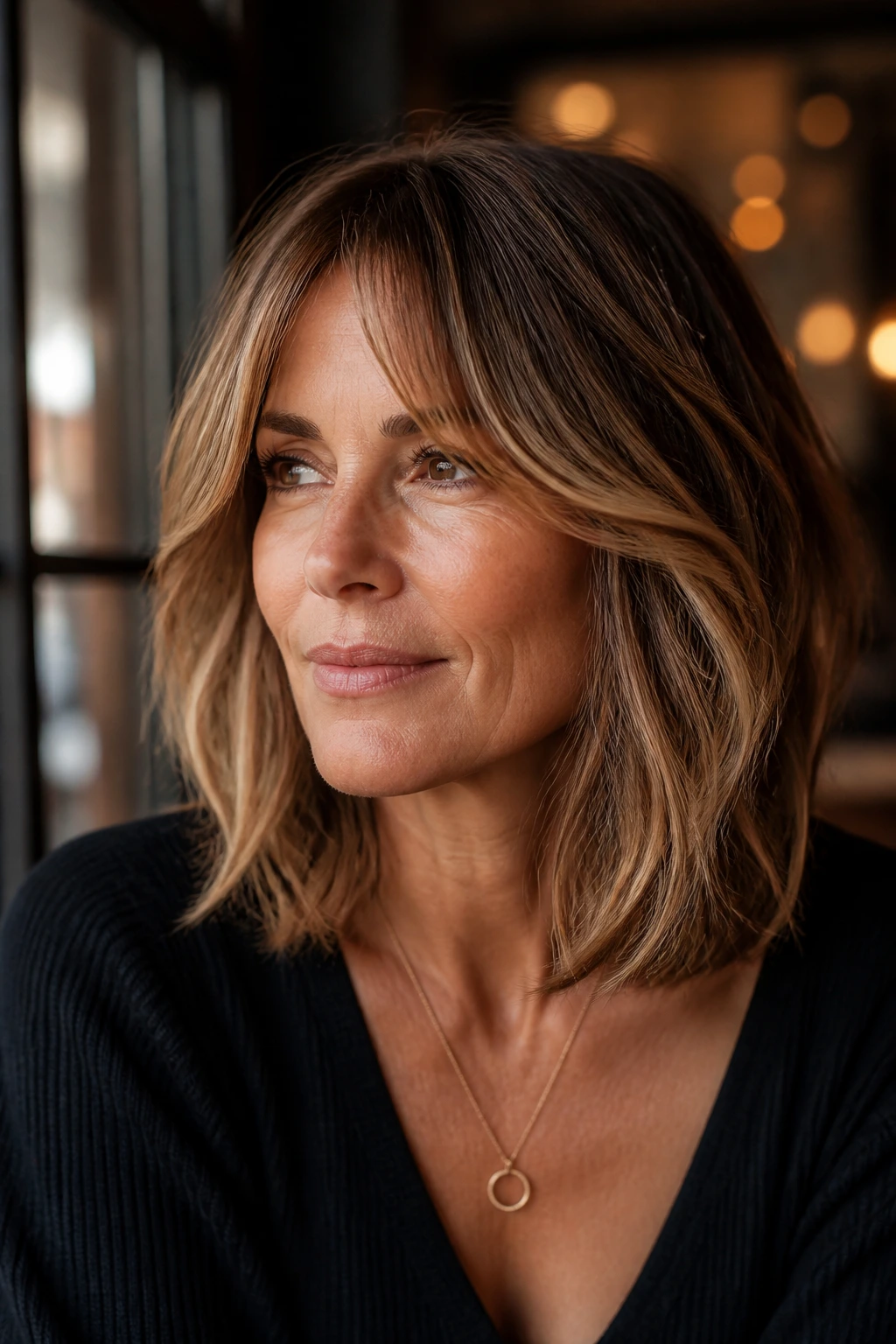
Curtain bangs change the whole face shape. They open at the center, sweep out softly, and give the cheekbones a little stage. Add caramel babylights through the front pieces and the bangs blend into the rest of the cut instead of looking pasted on.
The best thing about this style is how forgiving it is. You can wear it air-dried, brushed smooth, or curled at the ends. And when the bangs grow out, they slide into the sides instead of turning into an awkward shelf.
20. Grey-Blending Shag with Frosted Babylights
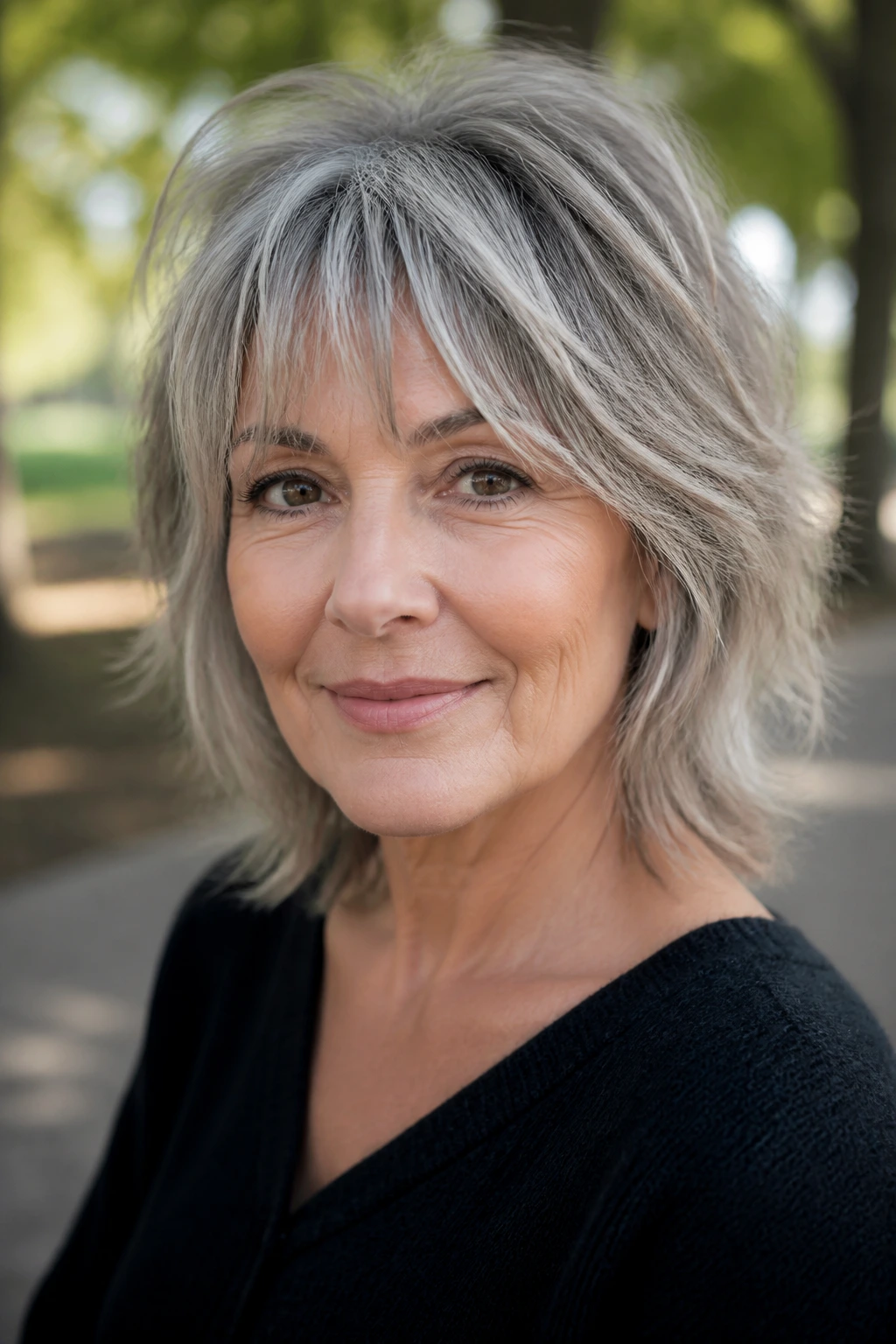
Gray-blending works best when the color doesn’t pretend the gray isn’t there. Frosted babylights help the silver threads read as part of the design. The shag structure adds movement, so the grow-out looks intentional instead of neglected.
This is a good choice if your natural color is salt-and-pepper or if your roots come in cool. The highlight tone should echo what’s already happening at the temples. That makes the regrowth far less annoying.
21. Face-Framing Midlength with Soft Swoop Layers
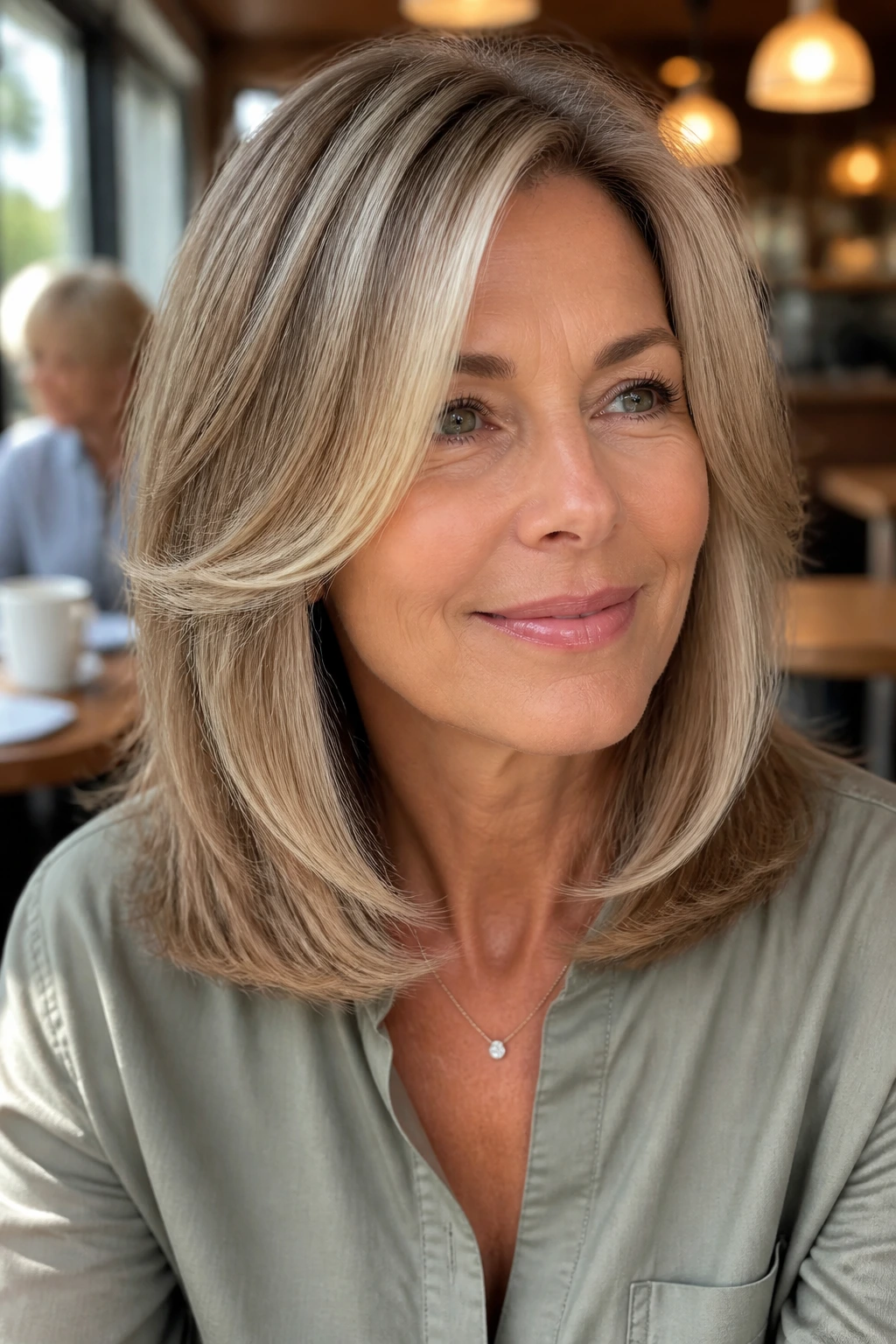
Face-framing layers are underrated. They put the emphasis where you want it, especially around the eyes and mouth, without stripping weight from the rest of the head. Babylights in those front swoops add brightness right where the cut opens.
Best use: if you like to wear your hair down but still want it to feel lifted.
Best trick: turn the front away from the face with a round brush, then tuck one side behind the ear. The babylights catch light and the layers don’t sit in a flat curtain. It’s a small move. It changes everything.
22. Polished Midback Layers with Thread-Thin Babylights
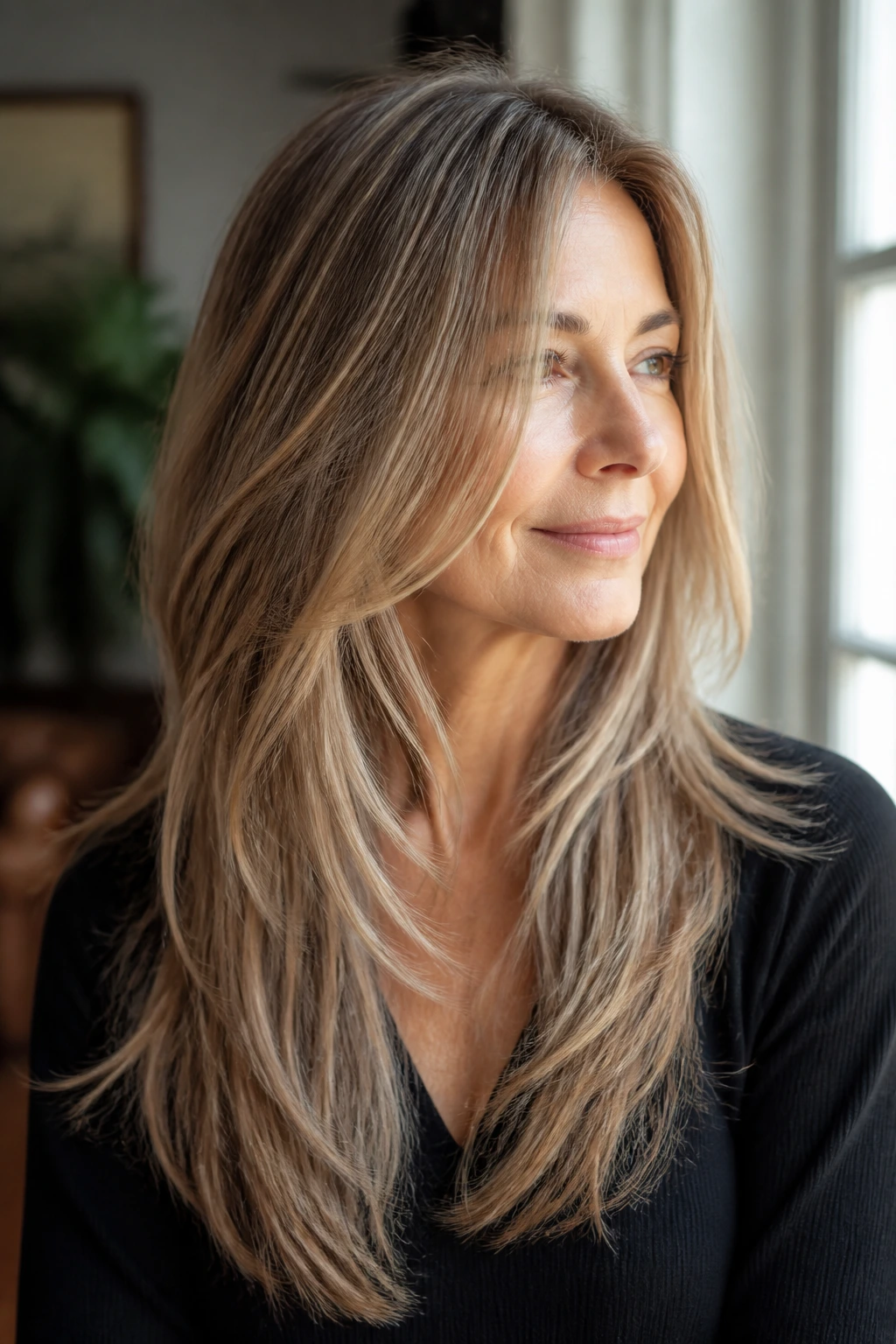
Not everyone wants to cut hair short after 50. Fine. Midback layers can look elegant when the ends are trimmed often and the color stays whisper-thin. Thread-thin babylights are the right kind of detail here — they soften the length and keep the finish from going dark at the bottom.
Compared with heavier highlights, this approach looks calmer and more grown-in. It suits women who like length but don’t want it to feel heavy, or those who like to wear hair in a low knot most days and down for dinners and events. The secret is restraint. A little brightness goes a long way.
Why Babylights Change the Shape of a Haircut
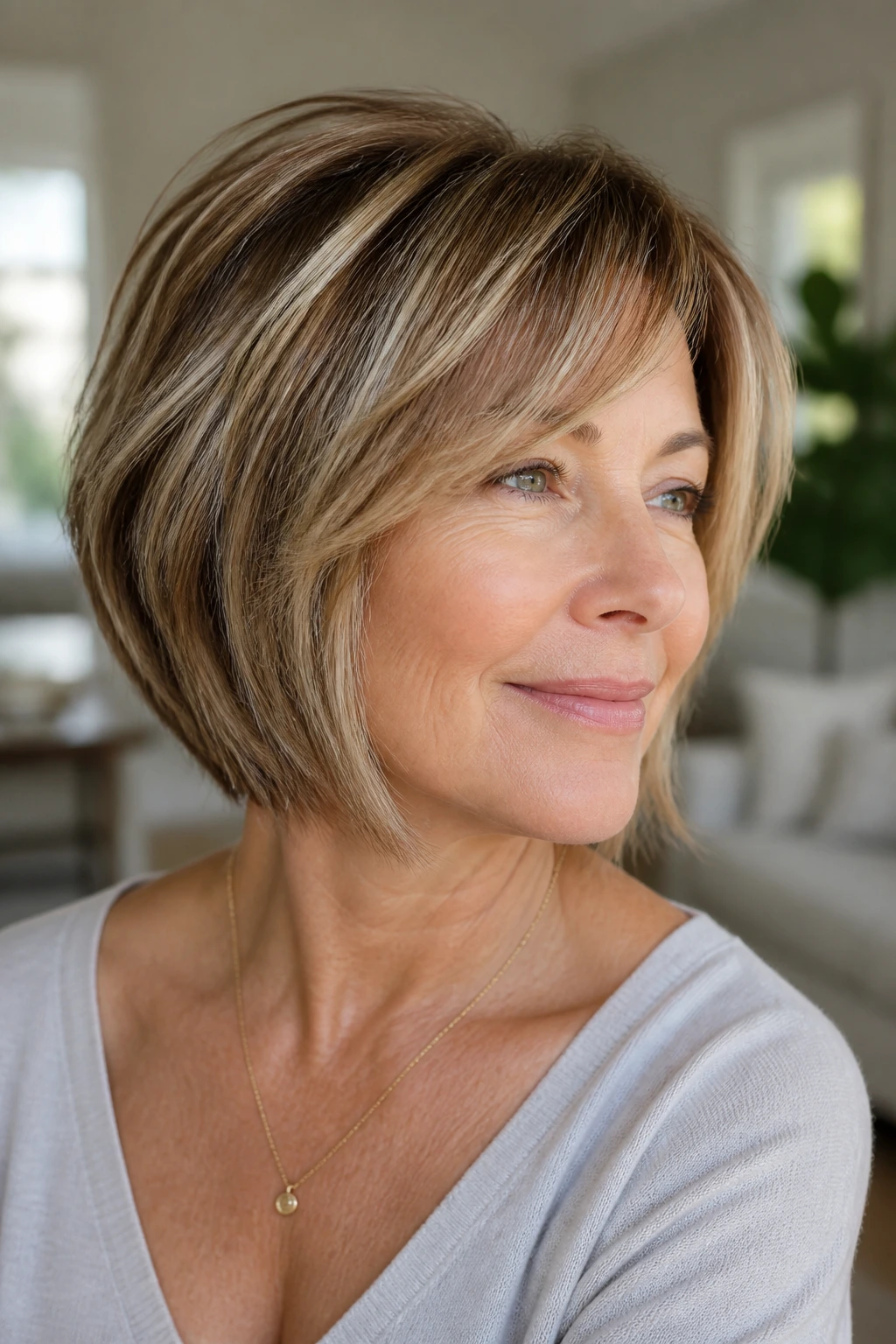
Babylights are tiny, but the visual effect is not tiny at all. Because the strands are so fine, they don’t sit on top of the haircut like a stripe. They move with it. That matters on mature hair, where density may shift at the crown, part line, or front hairline, and where a blunt highlight can look too hard fast.
The right placement can fake fullness in places where hair has thinned a little. Brightness around the face makes layers look more active. A softer root keeps regrowth from shouting at you six weeks later. And if you’ve got gray coming in, babylights give you a blending path instead of a full-cover battle every few weeks.
I also like babylights because they respect the haircut. They don’t ask the cut to carry a chunky color pattern. They let the shape do its job first. That’s why a plain bob can look flat while the same bob with thin ribbons suddenly feels alive.
Essential Tools for Keeping These Cuts in Shape
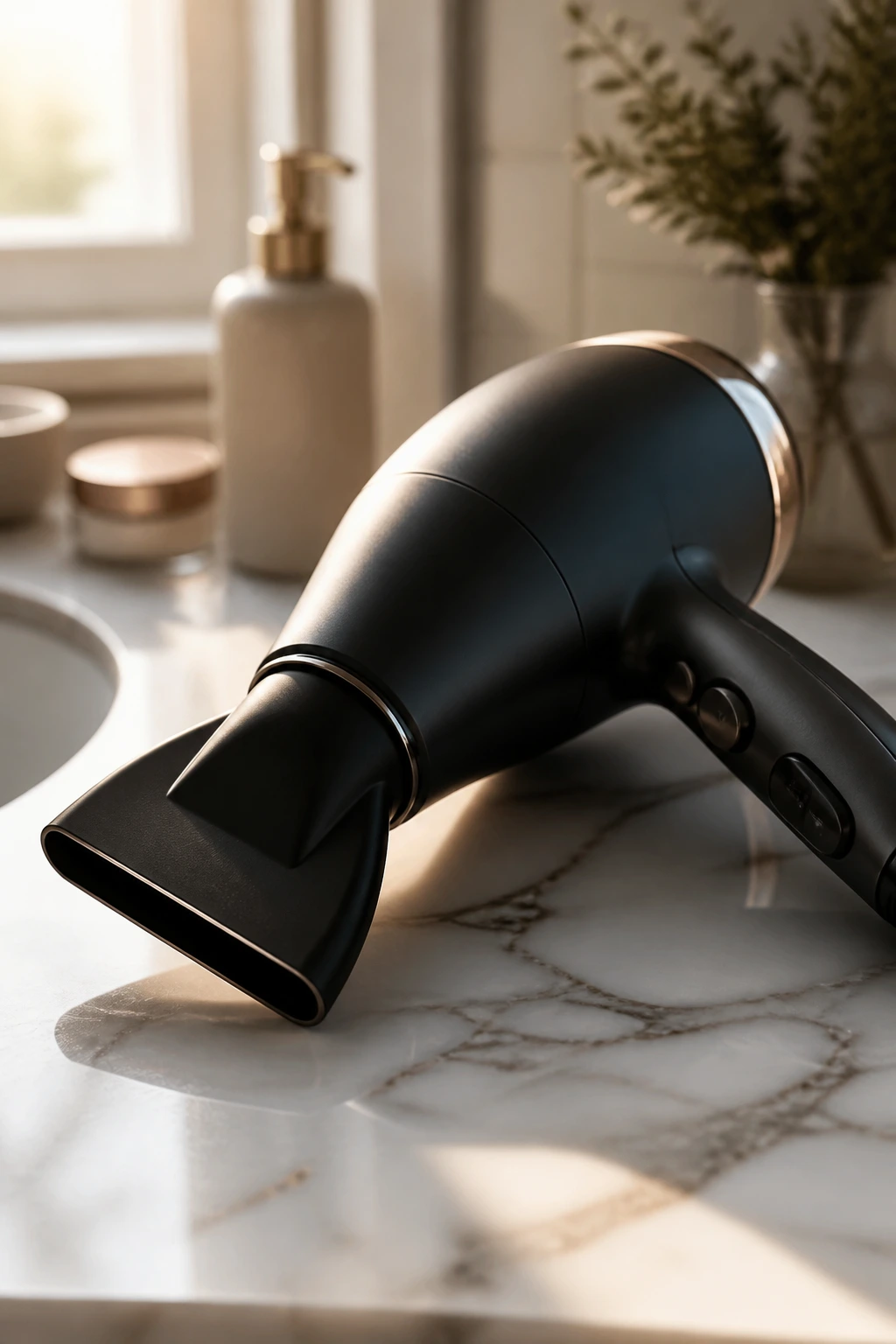
- Blow dryer with a nozzle: The nozzle gives direction, which matters for smooth roots and a polished bend through the ends.
- 1 to 1.25-inch round brush: Best for lobs, bobs, and shoulder-length cuts when you want a soft curve instead of a curl.
- Small flat iron: Handy for flipping ends, smoothing bangs, or sharpening a pixie without burning the whole head.
- Tail comb: Great for clean parts and for lifting small sections at the crown when you’re setting babylights off the scalp.
- Heat protectant spray: Non-negotiable if you use a dryer, iron, or wand more than once a week.
- Root-lift mousse or spray: A little at the crown goes a long way for fine or medium-fine hair.
- Light finishing oil or serum: Use a pea-sized amount on the last 2 inches only; too much will flatten babylights fast.
- Wide-tooth comb or vent brush: Useful for detangling curls or rough-drying without breaking the wave pattern.
- Purple or beige toning shampoo: Choose the tone that matches your color goal; use sparingly so the hair doesn’t go dull.
Smart Salon Notes and Color Choices
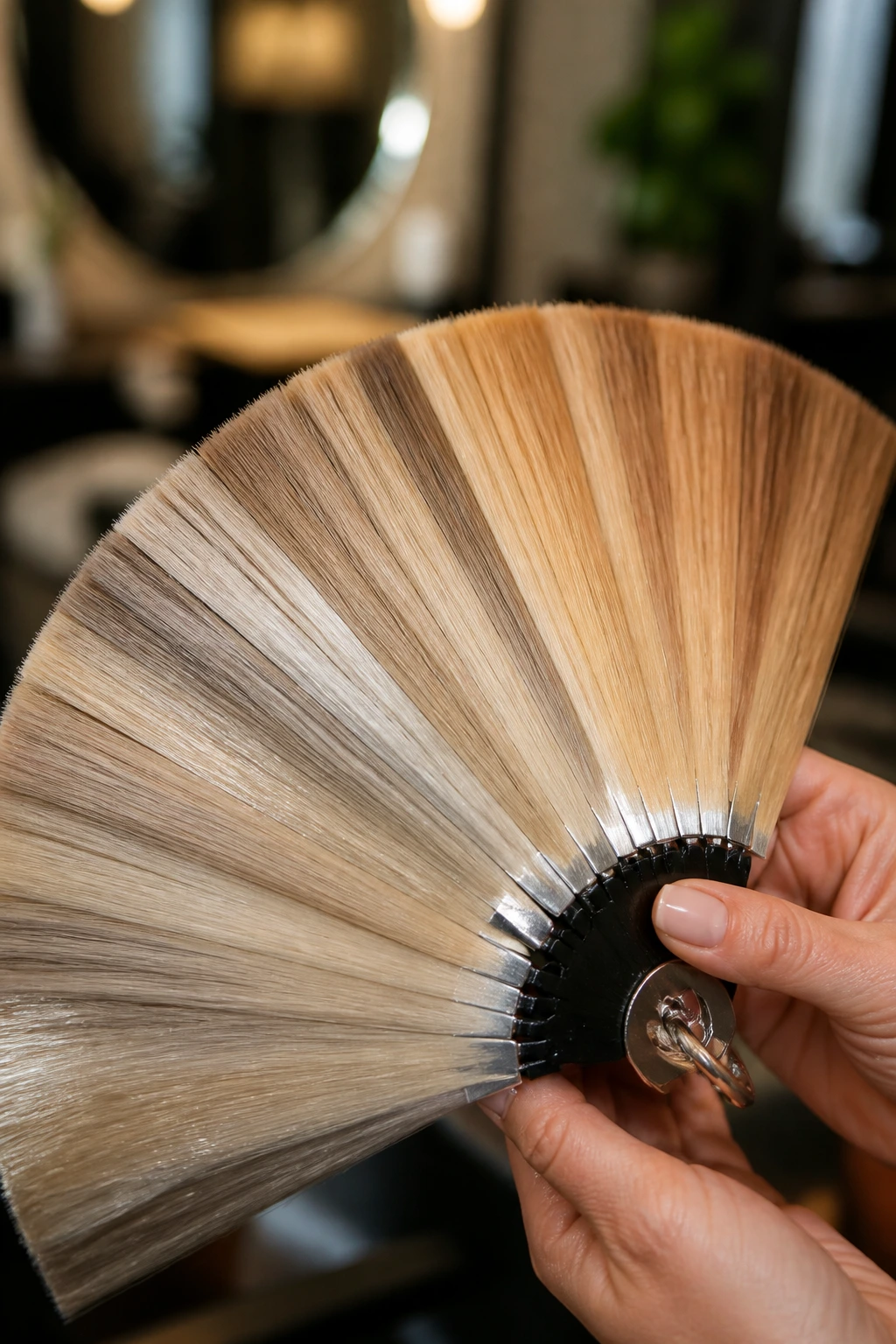
Bring pictures, yes, but bring words too. Say whether you want soft blending, bright framing, or a stronger contrast at the face. Those are not the same thing, and a good stylist will treat them differently. If you love how your hair looks two weeks after a salon visit but hate it on day one, ask for a softer root and fewer foils at the perimeter.
Tone matters. Warm babylights — honey, caramel, beige-gold — flatter some skin tones and make brown hair look rich. Cool babylights — pearl, beige ash, silver blonde — are better when brass shows up fast or when your natural color leans cool. There’s no prize for picking the blondest option in the room.
The cut has to match the color maintenance. A sharper bob can grow out better than a fussy layered cut if you only like salon visits every 8 to 10 weeks. A pixie needs more frequent tidy-ups, but the styling time is shorter. Think about which part of the process annoys you more: chair time or mirror time.
How to Style These Haircuts Day to Day
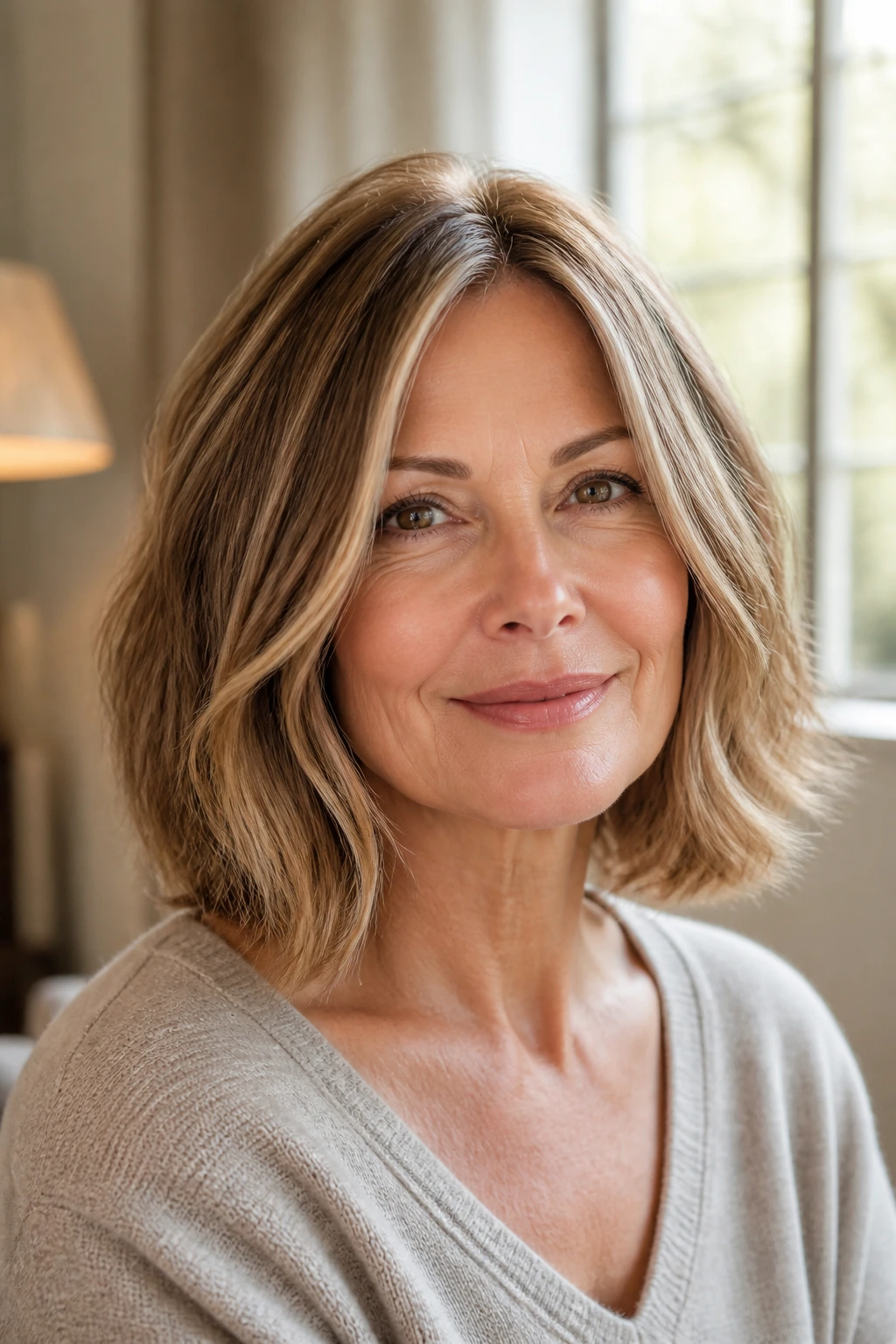
Presentation: Keep the strongest line where you want the eye to go — jaw, cheekbone, or collarbone — and let the babylights follow that line instead of fighting it. If the cut has a bang or face frame, make sure that front section stays the brightest and softest part.
Accompaniments: Glasses, earrings, and necklines matter more than people admit. A crisp bob likes a narrow neckline and a small hoop. A shag or wolf cut can handle chunkier earrings and a little more looseness in the clothes.
Portions: Short cuts need clean edges and enough length on top to avoid looking clipped too close. Medium cuts need the perimeter to stay full. Long cuts need regular trimming so the babylights don’t get lost in dry ends. In plain English: keep the shape balanced with the density you actually have.
Finish: Use a heat protectant first, then a root-lift product at the crown, then a light serum only where the hair touches itself. That means ends, not roots. Roots get weighed down fast; babylights don’t like that.
Extra Styling Ideas That Add Lift and Shine
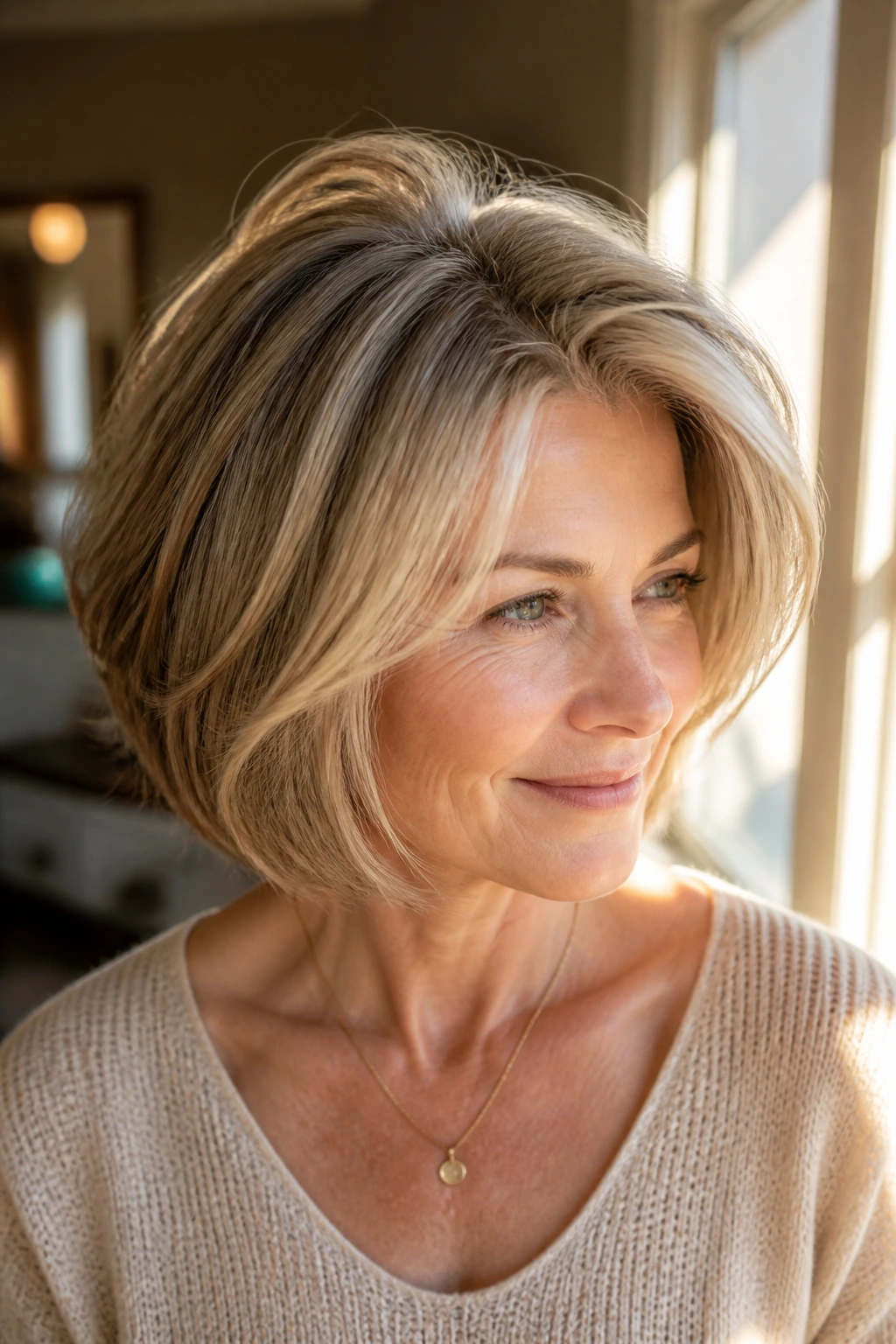
Dimension Boost: Add one lowlight shade deeper than your base if the babylights feel too pale. That extra shadow stops the cut from looking washed out, especially on very light or very fine hair.
Customization: Change the front detail before you change the whole haircut. A side-swept fringe, curtain bang, or a deeper side part can make the same cut feel softer, sharper, or more modern without a big commitment.
Serving Suggestions: Tuck one side behind the ear, curl just the front pieces away from the face, or flip the ends out with a flat iron for a little energy. Tiny styling choices are what make babylights show up.
Make-It-Yours: If your hair is curly, keep the color under the canopy and around the face. If it’s fine, shorten the length a little and keep the layers clean. If it’s thick, ask for internal weight removal so the babylights don’t get buried.
Maintenance, Toner, and Trim Timing
Short hair needs the most frequent trim schedule. Pixies and crops usually want a tidy-up every 4 to 6 weeks if you care about the shape staying sharp. Bobs and lobs can stretch to 6 to 8 weeks, sometimes a little longer if the grow-out is forgiving. Midlength and long layers often do fine at 8 to 12 weeks, but the ends should not be left to fray forever.
Toner or gloss matters when the color starts drifting warm, muddy, or too pale. A salon gloss every 4 to 8 weeks keeps babylights looking fresh without re-highlighting the whole head. If you use purple shampoo, don’t drench the hair with it every wash. Once a week is often enough, and sometimes less is better if your babylights lean beige or honey.
Heat protection is not optional with these cuts. Even a good bob looks tired when the ends dry out and the babylights fade to a dull stripy finish. Air-dry days are fine. So are rough-dry days. Just don’t skip a leave-in conditioner if your hair feels rough after washing.
Common Mistakes That Make Babylights Look Flat
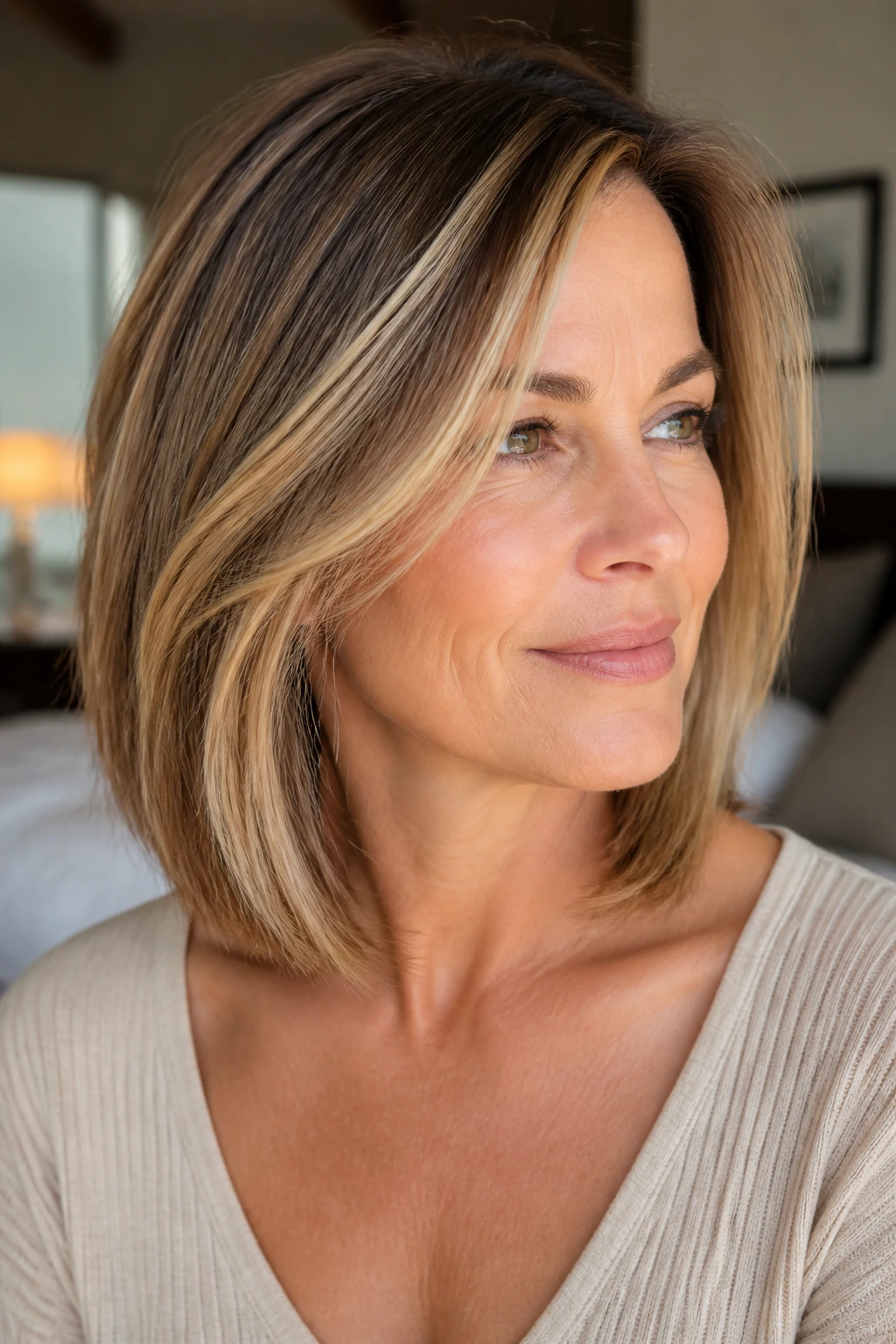
Too much contrast: If the highlights jump two or three levels lighter than the base, the result can look stripey instead of soft. The fix is to ask for finer sections and a closer tonal match.
Ignoring the haircut: Babylights without shape get swallowed by the hair, especially on longer lengths. If the ends are bulky or the crown is flat, the color won’t save it. The cut has to create movement first.
Over-toning the hair: A purple shampoo used too often can make blonde babylights look dusty and dry. That chalky cast is hard to hide. Use toning products carefully and rinse them out fast.
Letting the ends fray: Dry ends make babylights look brassy and uneven. Trim them before they split. That one move changes the whole haircut.
Putting product at the roots: Creams and oils near the scalp collapse lift fast. Keep the roots light, especially in fine hair, and put the heavier stuff only on the ends.
Questions Women Ask Before Making the Cut
Will babylights cover my gray hair?
Not fully, and that’s the point for many women. Babylights blend gray into the overall pattern so regrowth looks softer, not harsh. If you want full coverage, ask for a different color plan.
Which haircut is best for thinning hair?
A blunt bob, a rounded lob, or a crop with crown lift usually works well. They keep the perimeter stronger and create the look of density. Too many wispy layers can make thin hair look see-through.
Do babylights work on curly hair?
Yes, but placement matters. They should follow the curl pattern and sit where the light naturally hits, usually around the front and outer layer. Chunky sections can break up the curl shape in a bad way.
How often do babylights need refreshing?
It depends on the tone and how fast your hair grows, but many people refresh gloss or tone every 4 to 8 weeks and full babylights less often. Soft grow-out is one of the best parts of the look.
Can I keep my hair long and still do babylights?
Absolutely. Long layers with thread-thin highlights can look rich and calm, not flat. The trick is regular trims and careful placement near the face so the color doesn’t disappear into the length.
What if my hair is already dry?
Start with a cut that removes dead ends without taking too much weight. Then keep the babylights fine and ask for a gloss instead of repeated lightening. Dry hair needs softness, not another round of stress.
Should I choose warm or cool babylights?
Pick the tone that makes your skin look less tired in natural light. Warm tones suit some brunettes and redheads beautifully. Cool tones are better when brass is the enemy or when your natural color already leans ash.
Do bangs age the face?
Bad bangs can, sure. Good ones soften the forehead, frame the eyes, and make babylights around the front do more work. Curtain bangs and side-swept fringe are usually the easiest starting points.
Soft Shape, Bright Finish
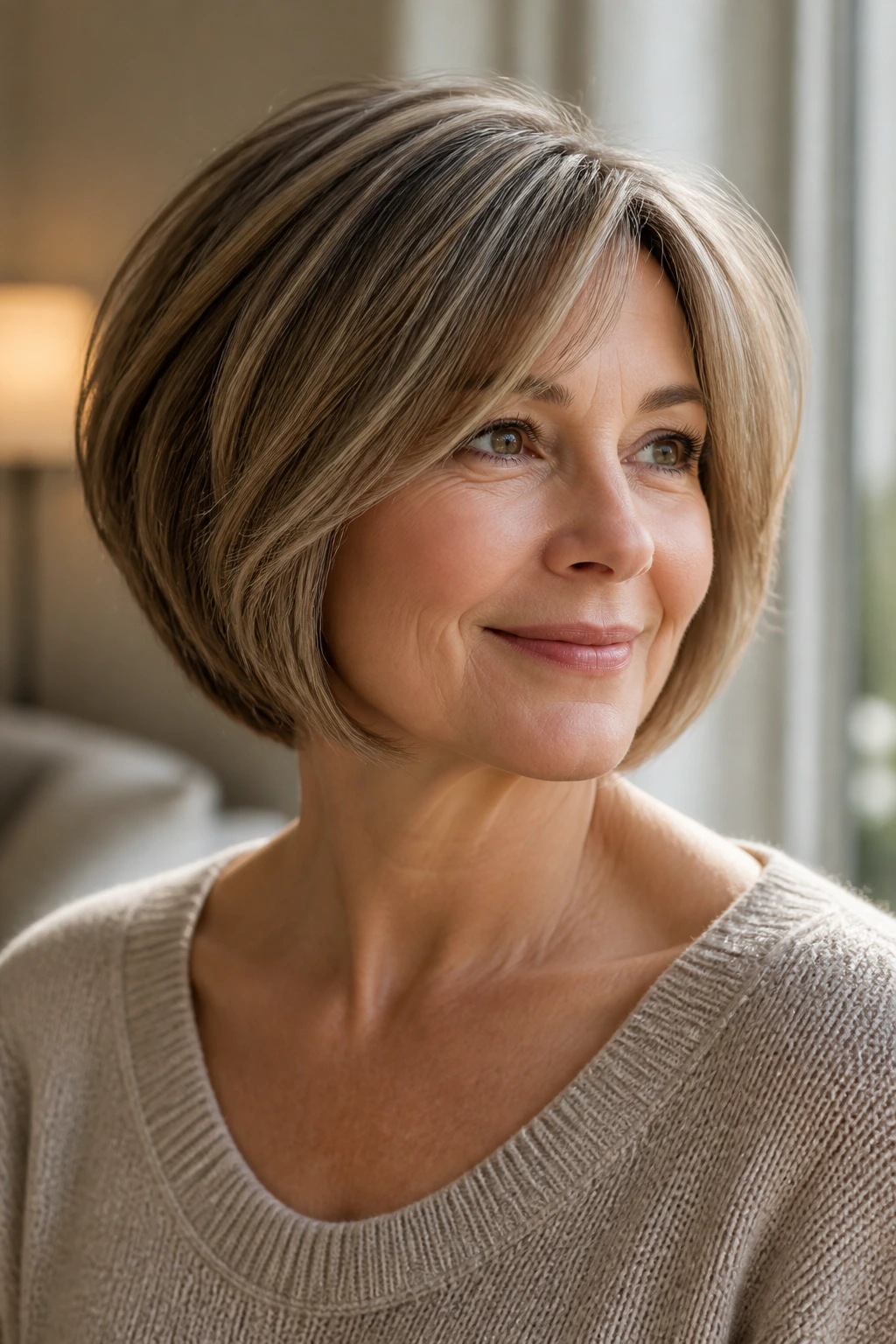
The best haircuts for women over 50 with babylights don’t try to hide age. They work with texture, gray, and changing density, then use shape and light to make the whole head look more awake. That’s a better goal anyway. More honest. More useful.
If you’re picking one place to start, start with the cut you can actually live with, then choose the babylight tone that feels like your hair on its best day. Bring a photo, yes, but also bring the truth about how much time you’ll give your hair on a weekday morning. That’s where the right shape shows itself.