



Fine hair can go flat by lunch if the style leans too heavy, too tight, or too precious. A lot of looks that photograph well on someone with thick strands collapse fast on real life hair — the kind that slips out of clips, shows product immediately, and loses lift the minute you put on a sweater. That’s why budget-friendly hairstyles for women with fine hair have to do one job especially well: create shape without asking your strands to carry more weight than they can handle.
The best part? You do not need a drawer full of expensive stylers to make that happen. A side part, a hidden pin, a small claw clip, or a little root lift can do more than a bottle of heavy cream that leaves the crown slick by noon. Fine hair is not the same thing as thin hair, either. Fine hair refers to strand thickness; thin hair usually means lower density. Same family of headaches, different fix.
I like hairstyles that survive a commute, a coffee run, and the moment you take off a coat. The useful tricks here are boring in the best way — dry shampoo at the crown, a wrapped elastic, a twist pinned where no one can see it, a braid made narrow on purpose. Once you learn the handful that suit your length, your mornings stop feeling like a negotiation.
Why These Styles Work for Fine Hair Without Much Money
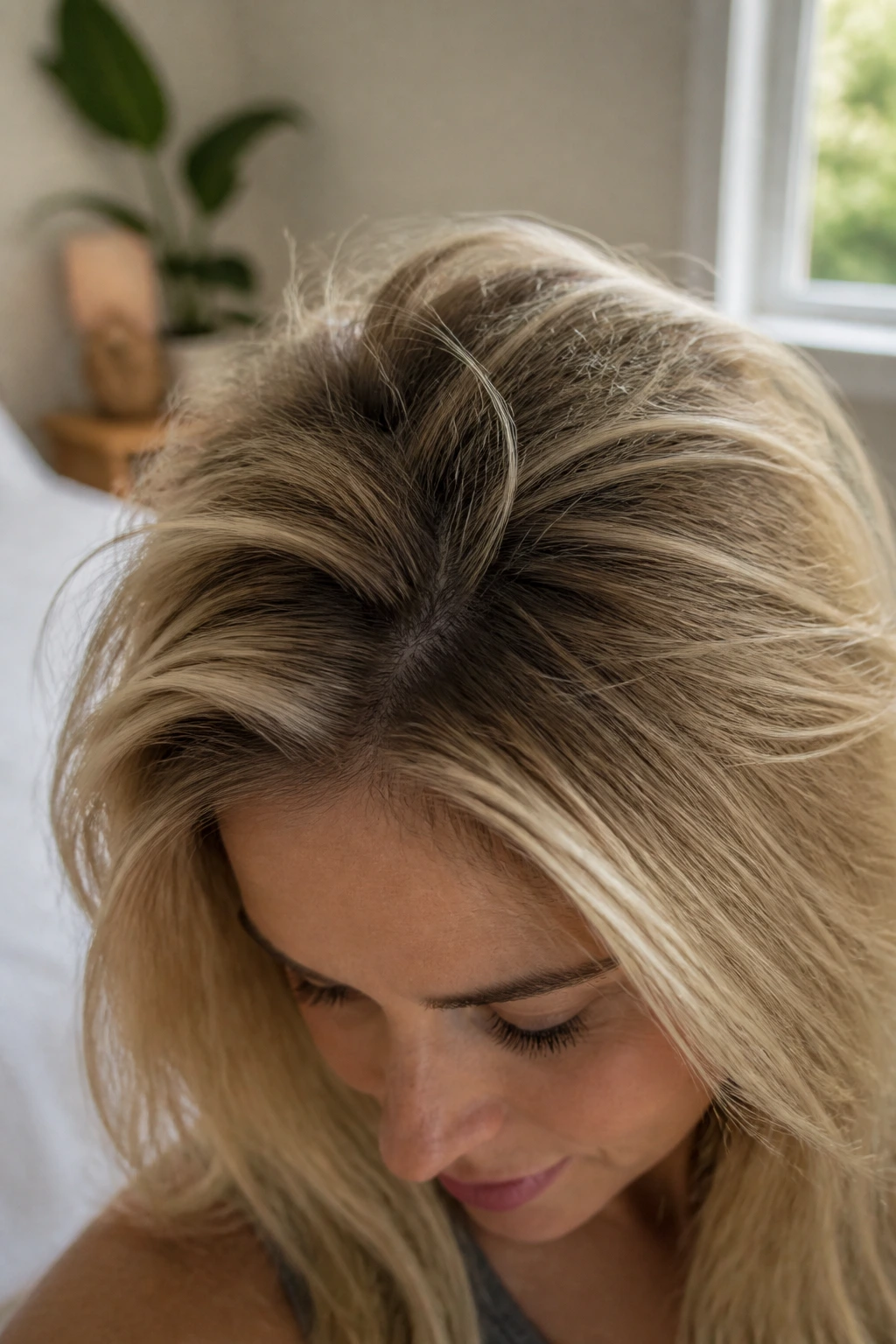
- Root lift does the heavy lifting: A deep part, a little backcombing, or a clipped crown gives fine hair the shape people usually chase with thicker products.
- Cheap tools go far: A tail comb, a dozen bobby pins, clear elastics, and one small claw clip can cover most of these looks.
- Light products behave better: Mousse, dry shampoo, and flexible-hold spray add grip without turning the roots into a greasy sheet.
- Heat is optional in a lot of cases: Several of these styles work on air-dried hair, second-day hair, or hair that’s been set while cooling.
- The silhouette matters more than the volume: A tucked end, a flipped bob, or a wrapped ponytail can make strands look denser because the eye sees a finished shape.
- They’re easy to repeat: That matters. A style you can do twice a week without cursing at your mirror is the one that earns a place in the routine.
1. Deep Side Part With Tucked Ends
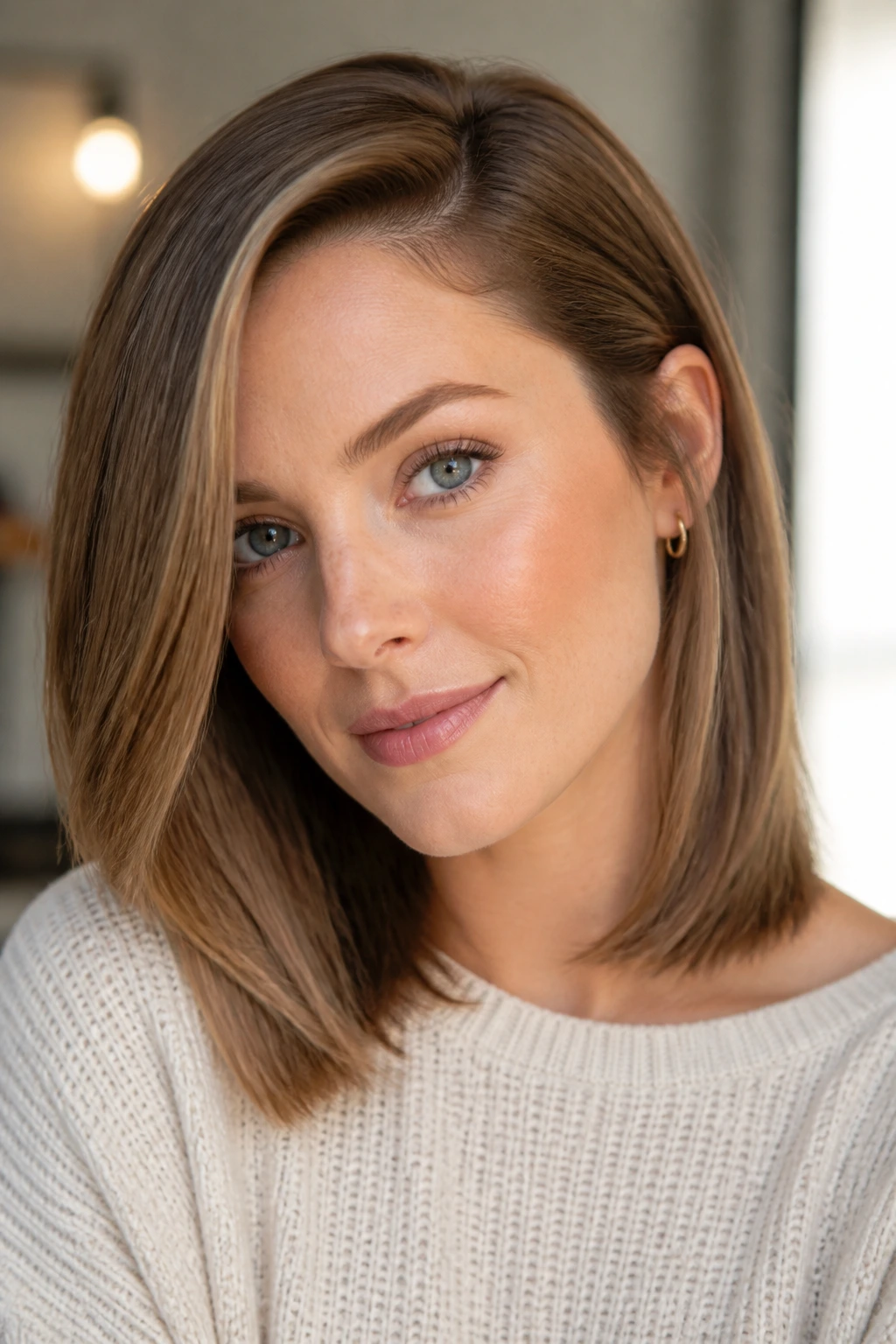
A deep side part does more for fine hair than most people expect. It shifts weight off the middle, builds a little lift at the crown, and makes the front line look fuller without needing extra product. Tuck one side behind the ear and let the other side fall forward with a soft bend. That small asymmetry gives the whole style more body.
Why the Side Part Carries So Much Weight
A center part on fine hair can be unforgiving. If the roots are a little flat, the part looks wider than it should. Move the part about 1 to 2 inches to one side, mist the roots with dry shampoo, and lift the hair at the base with your fingertips. A single bobby pin hidden under the top layer can keep the part from sliding back.
- Best for: Shoulder-length hair and longer.
- Tool cost: Nearly nothing if you already own a tail comb and pins.
- Fastest finish: A slight bend from a flat iron or round brush.
- Tip: Push the tucked side low and smooth. That contrast makes the front look thicker.
2. Sleek Low Ponytail With a Wrapped Base
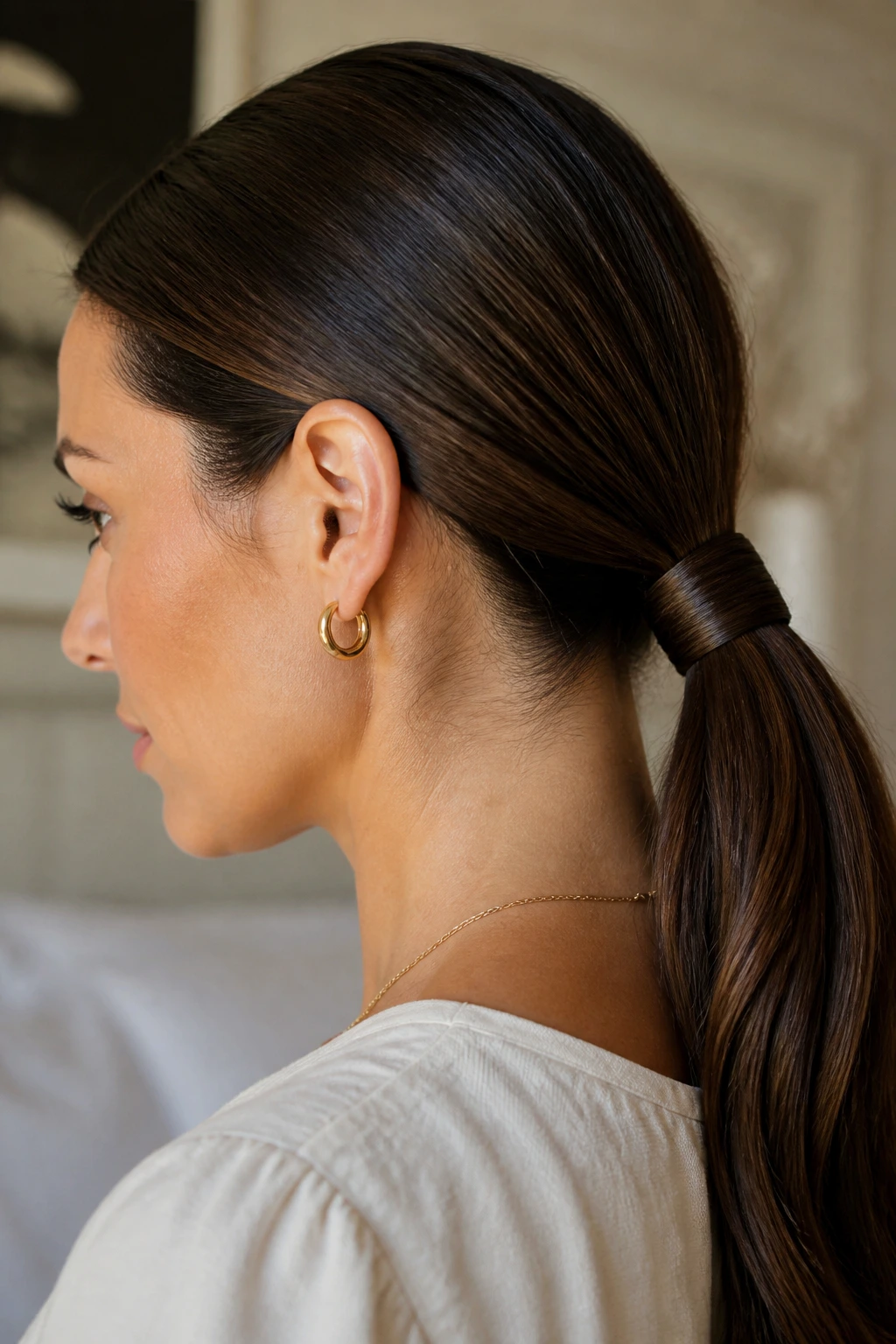
Why does a low ponytail look fuller when the crown stays smooth? Because the eye stops hunting for volume at the top and starts reading the clean line of the style instead. Fine hair often looks sparse when it’s pulled up too high and too hard. A low pony, wrapped with a strand of hair around the elastic, keeps things controlled and neat.
Keep the pony at the nape, not mid-neck. If you want a little more presence, pinch the hair just above the elastic and gently loosen it by a few millimeters. That tiny movement matters. It keeps the style from looking stapled to the head.
The wrapped base is the cheap trick here. Pull a small strand from underneath the ponytail, wrap it once or twice around the elastic, and secure it with a pin underneath. It hides the rubber band and gives the whole thing a finished look. Use a lightweight serum only on the ends. Roots need grip, not shine.
3. Mini Claw Clip French Twist
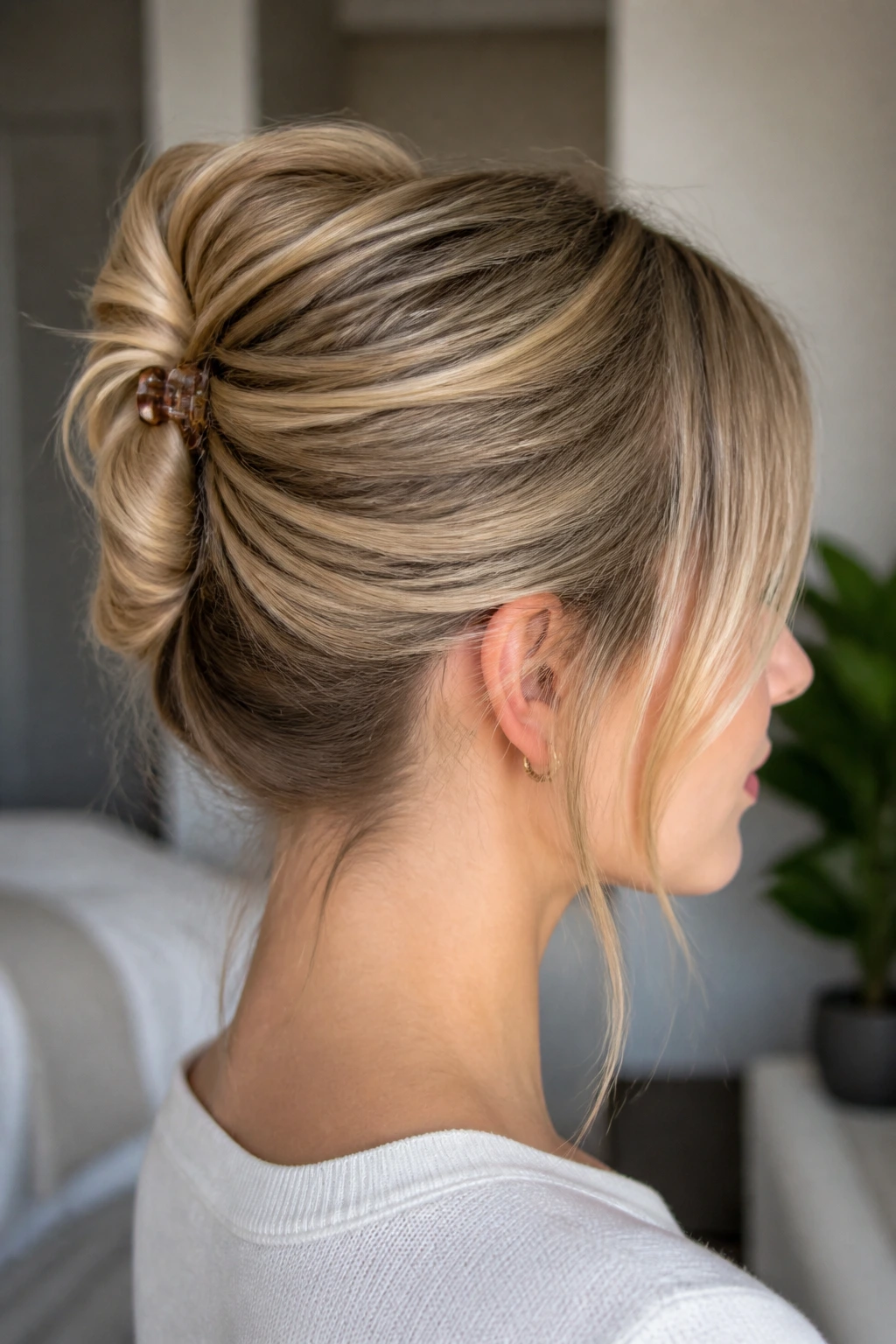
A tiny claw clip can do the job of a much fancier updo. Fine hair usually struggles when a style needs lots of thickness, but a French twist uses direction rather than density. Roll the hair upward, tuck the ends in, and let the clip grab the center. That’s enough.
This works especially well when your hair is clean but not slippery. If it’s freshly washed, add a little texturizing spray first so the clip has something to hold. A clip in the 1.5- to 2-inch range is often easier than a huge claw that overwhelms the shape and slides off the back of the head.
A few face-framing pieces soften the look. Don’t overdo them. Two slim sections near the temples are enough. The point is a tidy twist with a little movement, not a wedding updo trying too hard at 8 a.m.
4. Face-Framing Blowout With a Middle Part
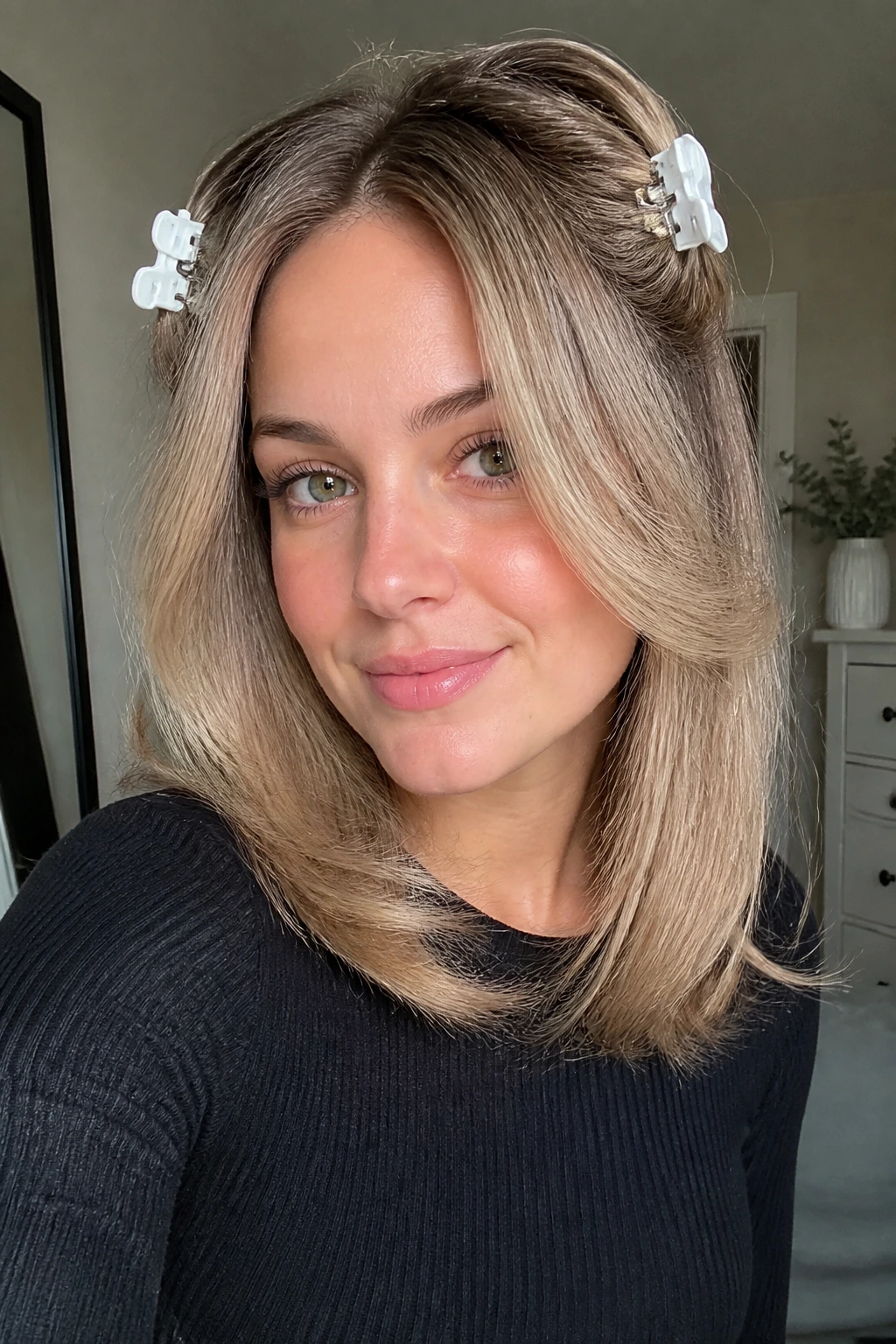
Why does a face-framing blowout make fine hair look fuller? Because the bend happens where people actually look first — around the face, jawline, and shoulders — instead of disappearing under the hair’s own weight. A middle part can work on fine hair when the front pieces are lifted and curved away from the cheeks.
Use a round brush or a 1.5-inch barrel, depending on your length. Direct the front sections away from the face, then set them with a clip while they cool. That cooling step is where the shape sticks. Skip it and the style falls flatter than it should.
How to get the bend
Start with a light mousse on damp hair. Blow-dry the roots upward with the nozzle aimed at the scalp, then work the front pieces with the brush. Once they’re warm and curved, clip them in place for 5 to 10 minutes. A quick brush-through at the end keeps the finish soft instead of helmet-like.
5. Half-Up Top Knot
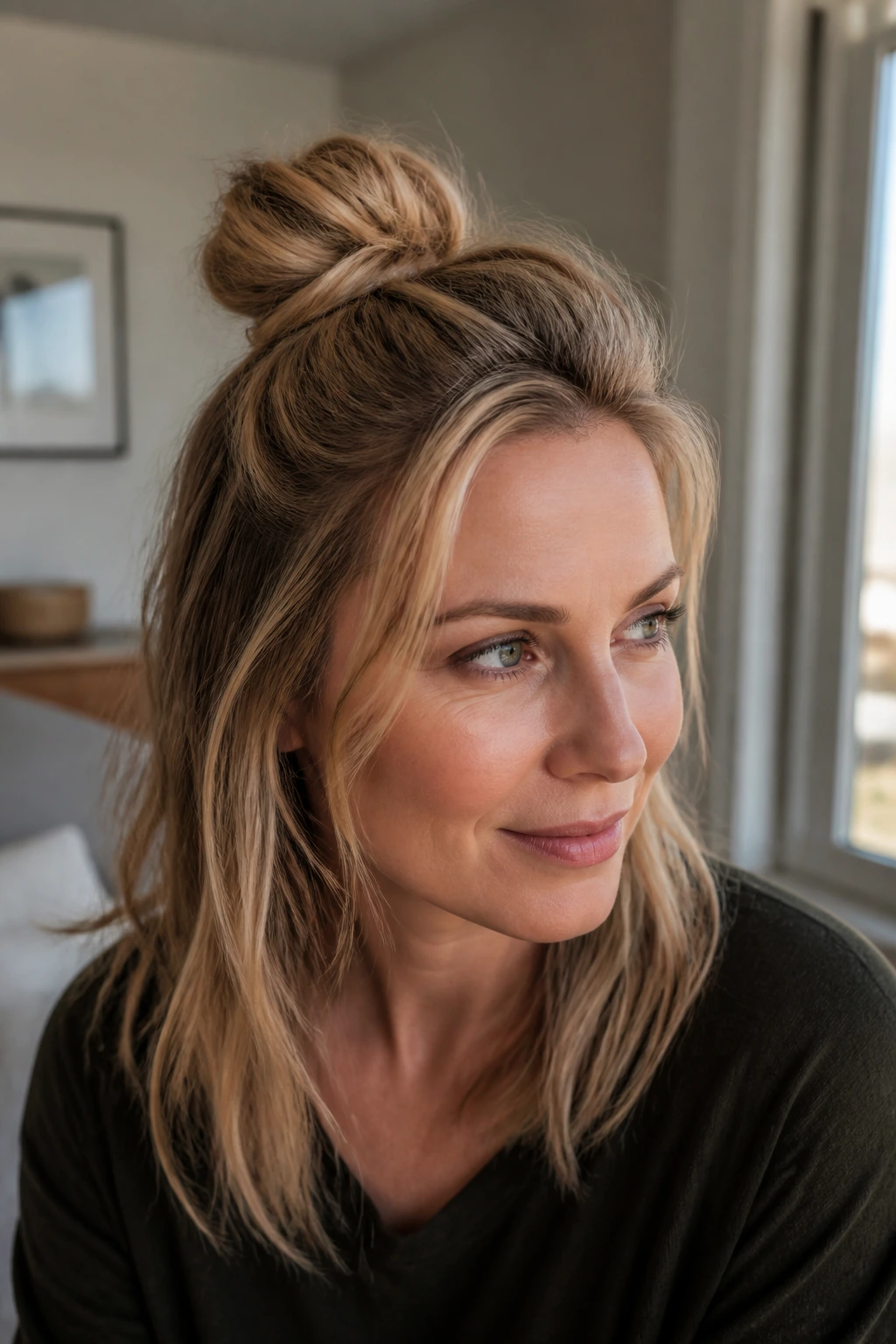
A half-up top knot works because it borrows thickness from the top section and leaves the rest alone. That is a smart move for fine hair. If you try to pull all of it up, the ends often look stringy and the bun looks smaller than you wanted. Half-up keeps the shape compact and flattering.
Take the top section from about temple to temple, twist it once, and coil it into a small knot. Secure it with a tiny elastic and two pins crossed underneath. The crown gets a little lift, the lengths still fall loose, and the whole thing reads casual instead of overbuilt.
This is a good one for second-day hair. In fact, it often looks better then. Clean hair can be too slippery for the knot to hold, while day-two texture gives the twist a bit of bite.
6. Bubble Ponytail With Clear Elastics
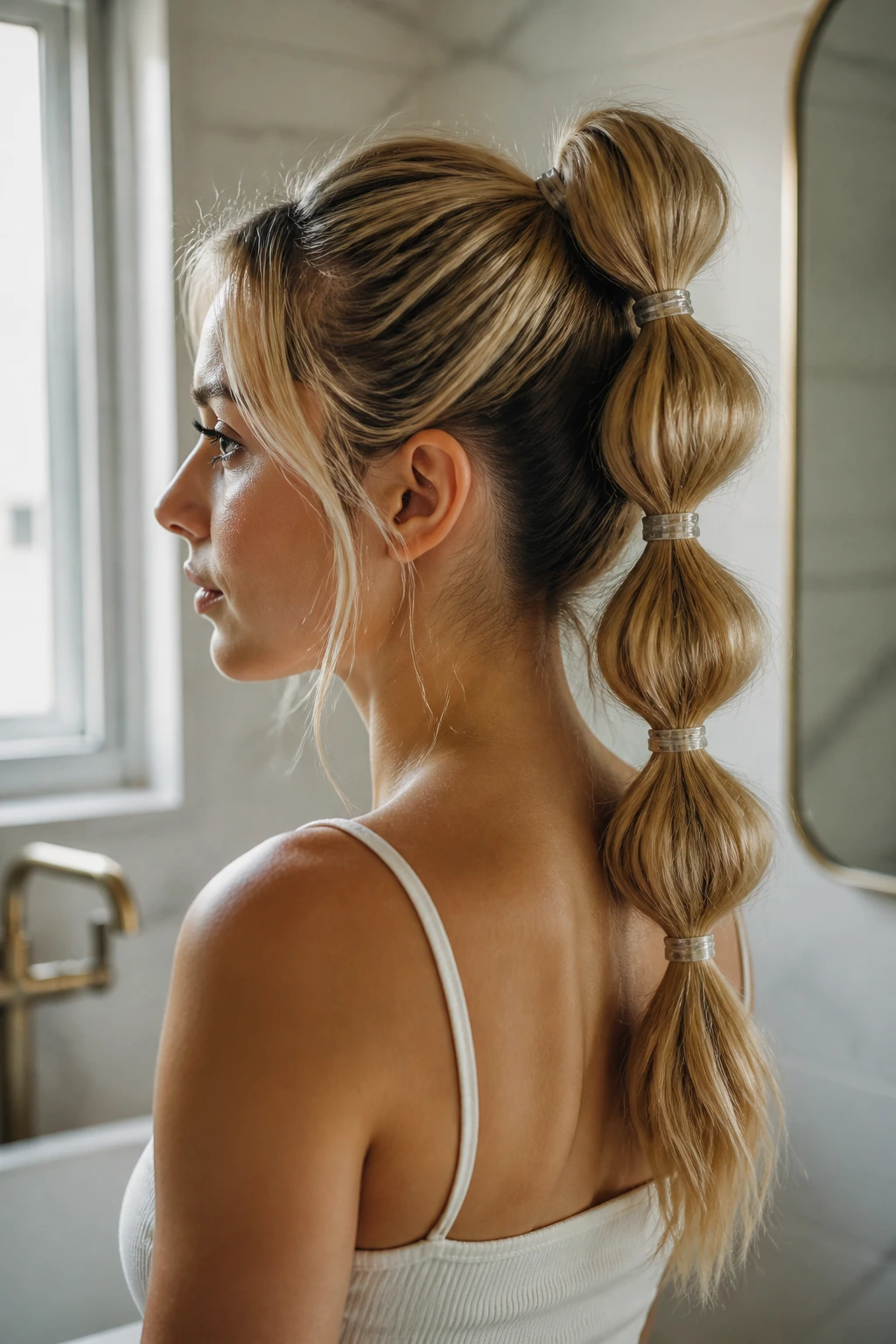
Bubble ponytails are one of the few styles that can make fine hair look fuller on purpose. Each bubble creates a little round shape, and the style turns length into structure instead of asking the ponytail to look thick all by itself. It’s a smart choice when your hair is long but not dense.
Start with a ponytail, then add clear elastics every 2 to 3 inches down the length. Gently tug each section outward to puff it into a bubble. Don’t yank. You want rounded sections, not a scattered mess. A few extra pins at the base can keep the top from sagging.
This one is cheap in the nicest way. Clear elastics cost almost nothing, and the result looks far more deliberate than a plain ponytail. If your hair is very fine, tease the crown first or add a root-lift spray before securing the first elastic.
7. Loose Waves With Root Clip-Lift
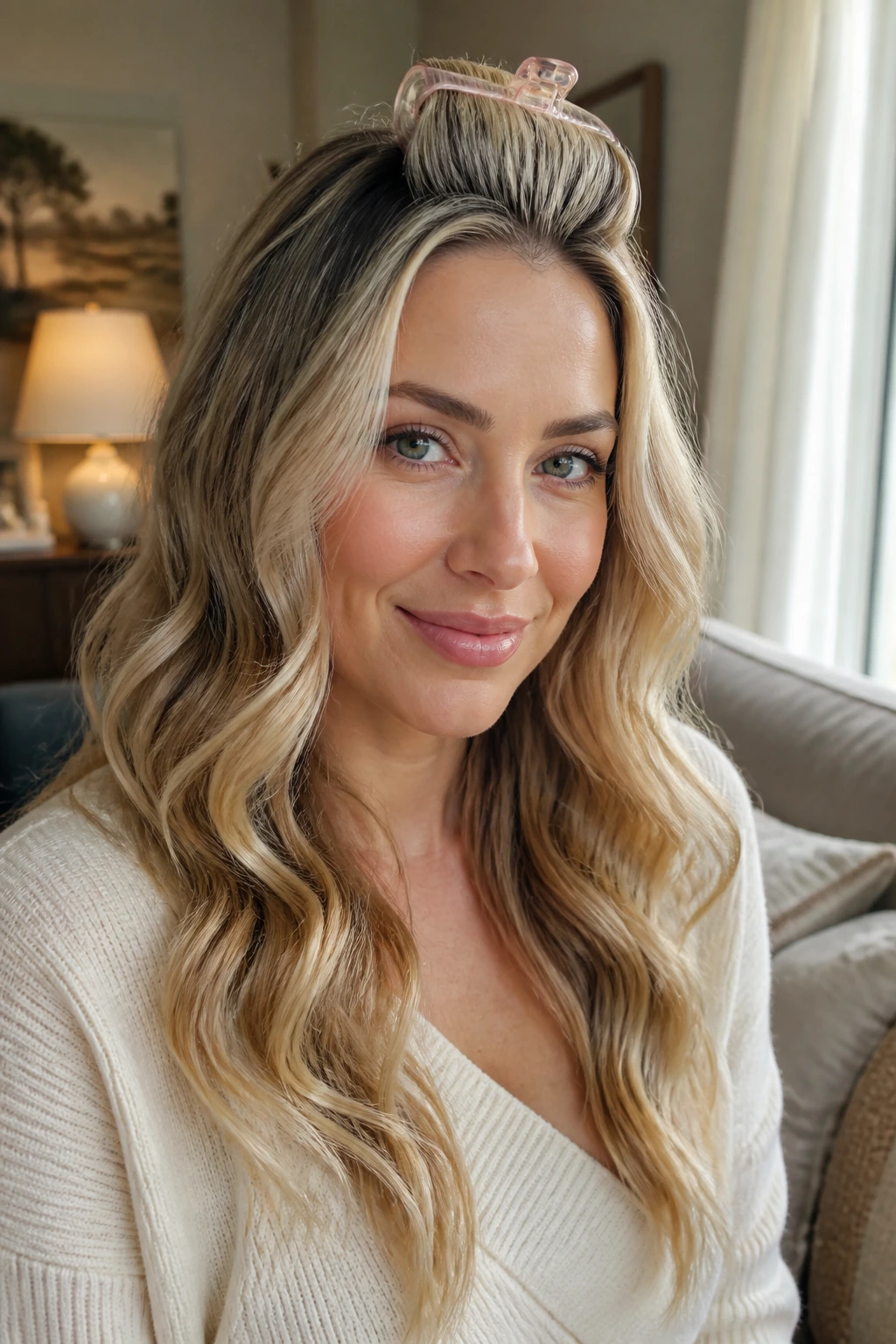
Loose waves can look expensive even when the tools cost next to nothing. The reason is simple: movement gives the hair more surface area, and the eye reads that as fullness. Fine hair that hangs pin-straight often shows every thin section; a soft wave breaks up the line and makes the whole head look busier.
Clip the roots at the crown while the hair cools after curling. That part matters. If you skip the clip, the wave can look nice on the ends and flat at the top, which is the exact opposite of what you want. Use a 1-inch curling iron or a flat iron bend, then let the curls cool before brushing them out.
A dry texture spray on the mid-lengths gives the waves some grit. Too much and they go crunchy. Too little and they collapse. The sweet spot is usually a light mist from about 8 inches away, then a quick finger comb through the ends.
8. Chin-Length Flip-Out Bob
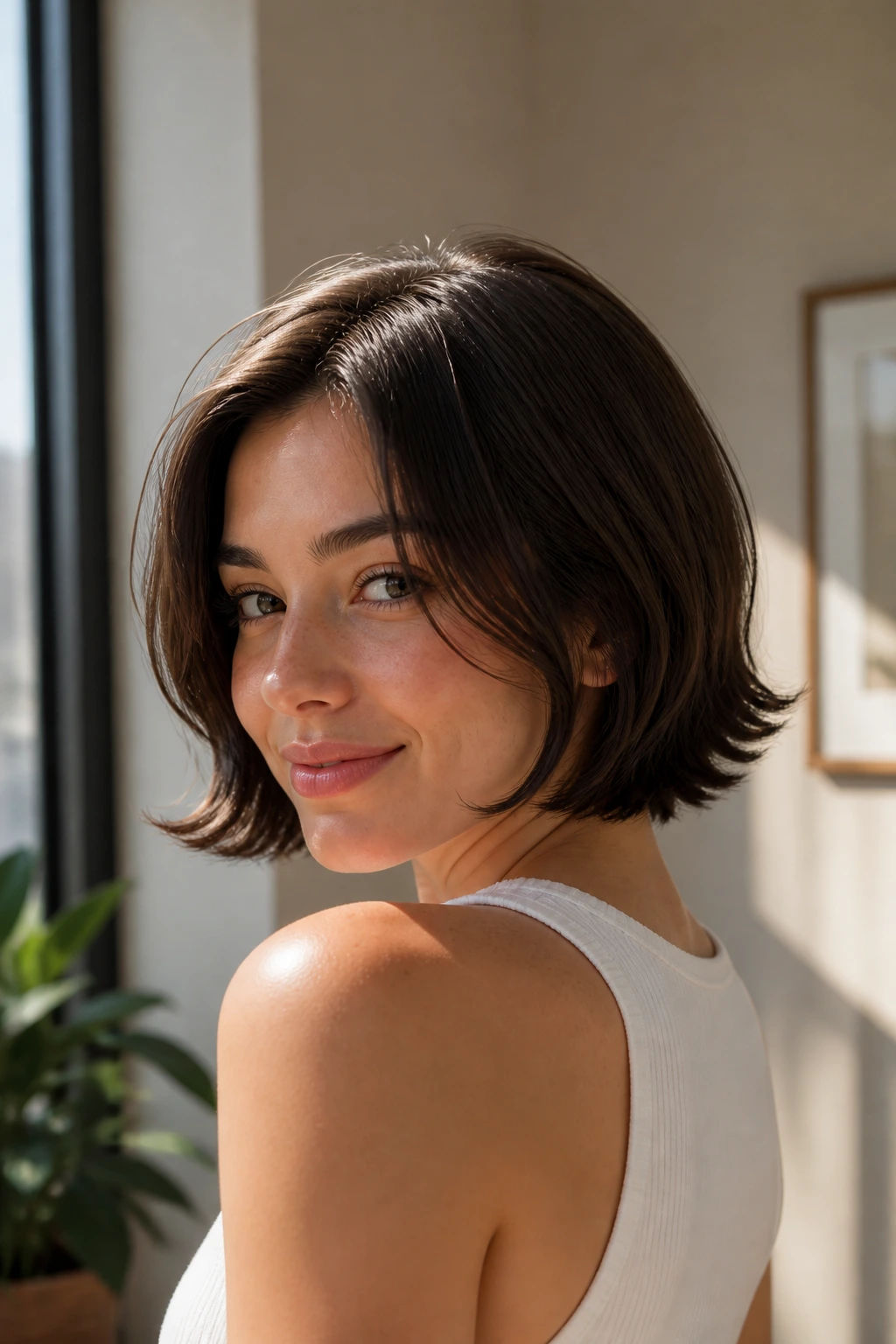
A chin-length bob with flipped ends has a stubborn little cheat built into it. The outward turn at the ends makes the hair look like it has more perimeter, which reads as thickness even when the strands are fine. It’s one of the few short styles that gains volume from shape alone.
Use a round brush or a flat iron to turn the last inch of the hair out away from the jaw. If the roots are flat, lift them with a blow-dryer and a side-to-side motion at the scalp. A soft side part can help too, but the real trick is the flipped edge. It keeps the line from looking too narrow.
This style works best when the cut already hits around the chin. If your bob is a little shorter or longer, the same idea still helps. The flip makes the whole shape look intentional, and that matters more than perfect symmetry.
9. Low Textured Bun
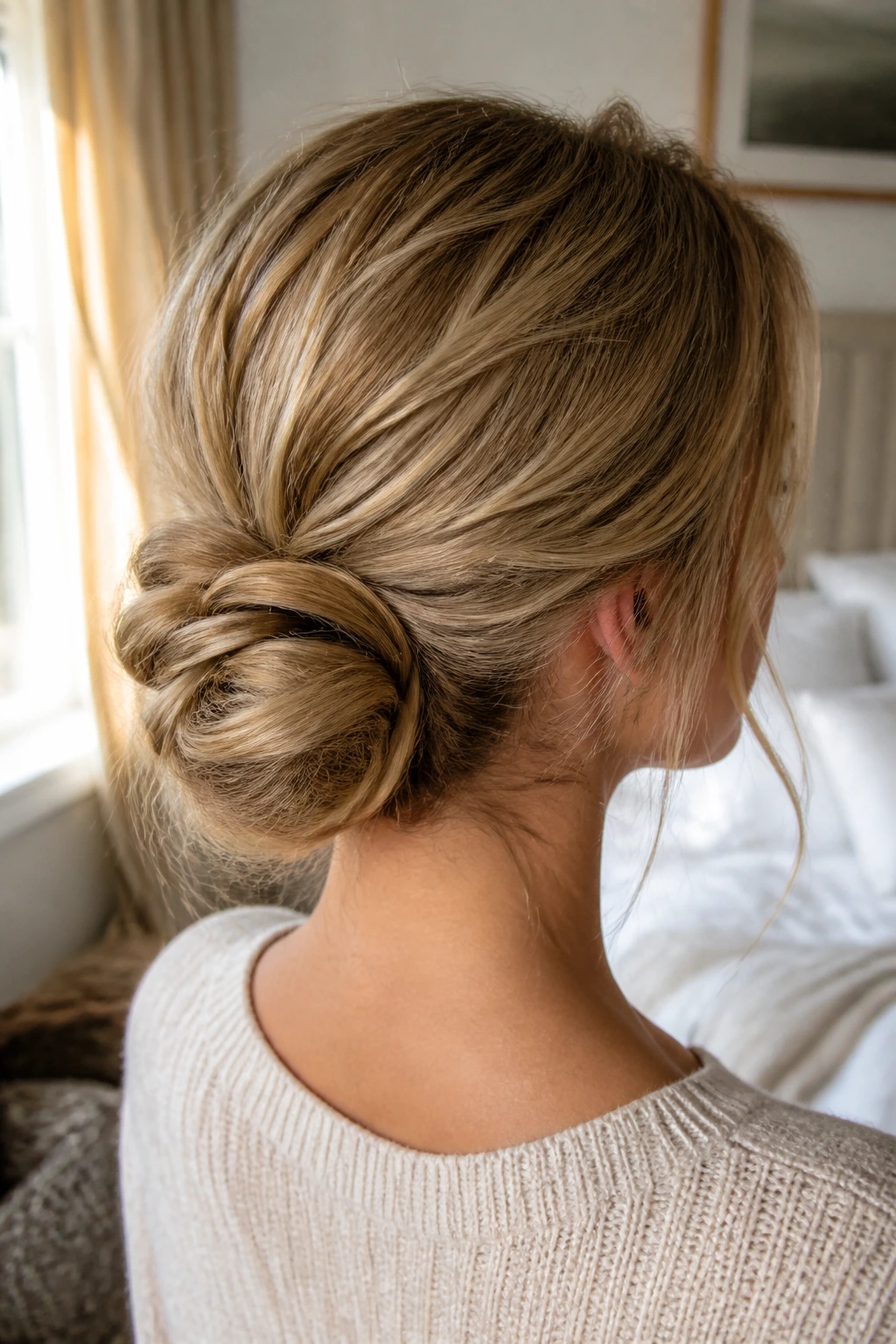
A low textured bun is the style I reach for when the ends are dry but the top still needs shape. It gives fine hair a cleaner finish without forcing it to fake density. The bun sits at the nape, where fine strands usually behave better, and a little looseness around the crown stops it from looking severe.
Gather the hair low, twist it loosely, and pin it with two or three bobby pins in an X pattern. If the bun feels too tiny, pull the loop apart a little before pinning it down. That small pull adds visual width without creating frizz. Leave one or two face pieces out if you want softness around the jaw.
Use this when you need a style that can survive a full day. It’s calm. It’s practical. And, honestly, it looks better on fine hair than a big top bun that slowly collapses by lunch.
10. Headband Tuck
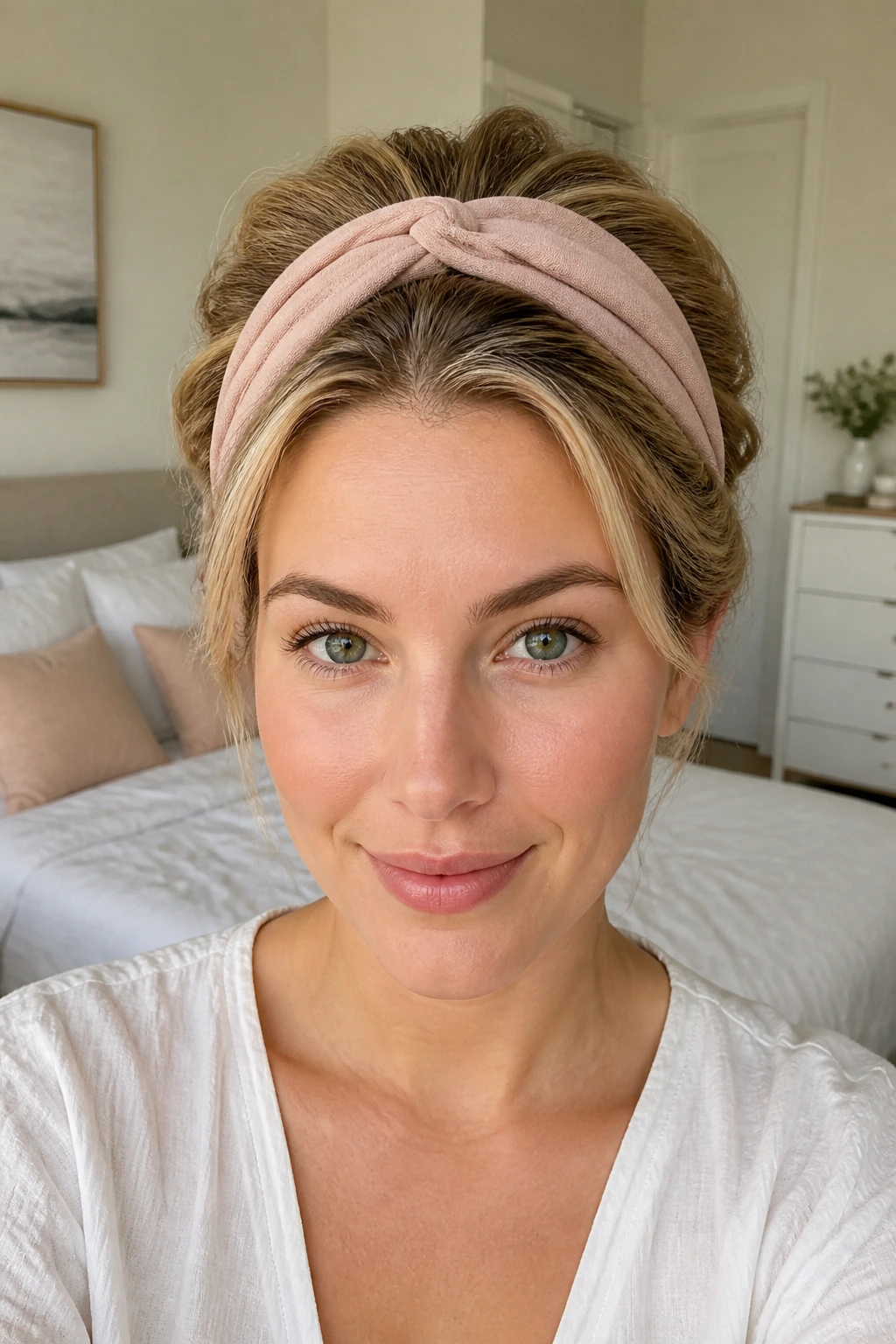
A headband tuck is one of those old tricks that keeps showing up because it works. The band gives the hair something to fold into, and fine strands tend to hold that fold better than they hold a bulky knot. It also hides greasy roots fast, which is never a bad thing.
Place a soft headband over the hair, then tuck the lengths up and under in sections. Use a couple of pins if the hair keeps slipping out. The final shape looks like a tucked roll or a faux bob, depending on how much length you leave out. A fabric headband is kinder than a stiff plastic one.
This is a good style for second-day hair, travel days, or any morning when the roots are doing their own thing. It asks for almost no heat, almost no product, and almost no patience. That last part counts.
11. Twin Mini Braids at the Hairline
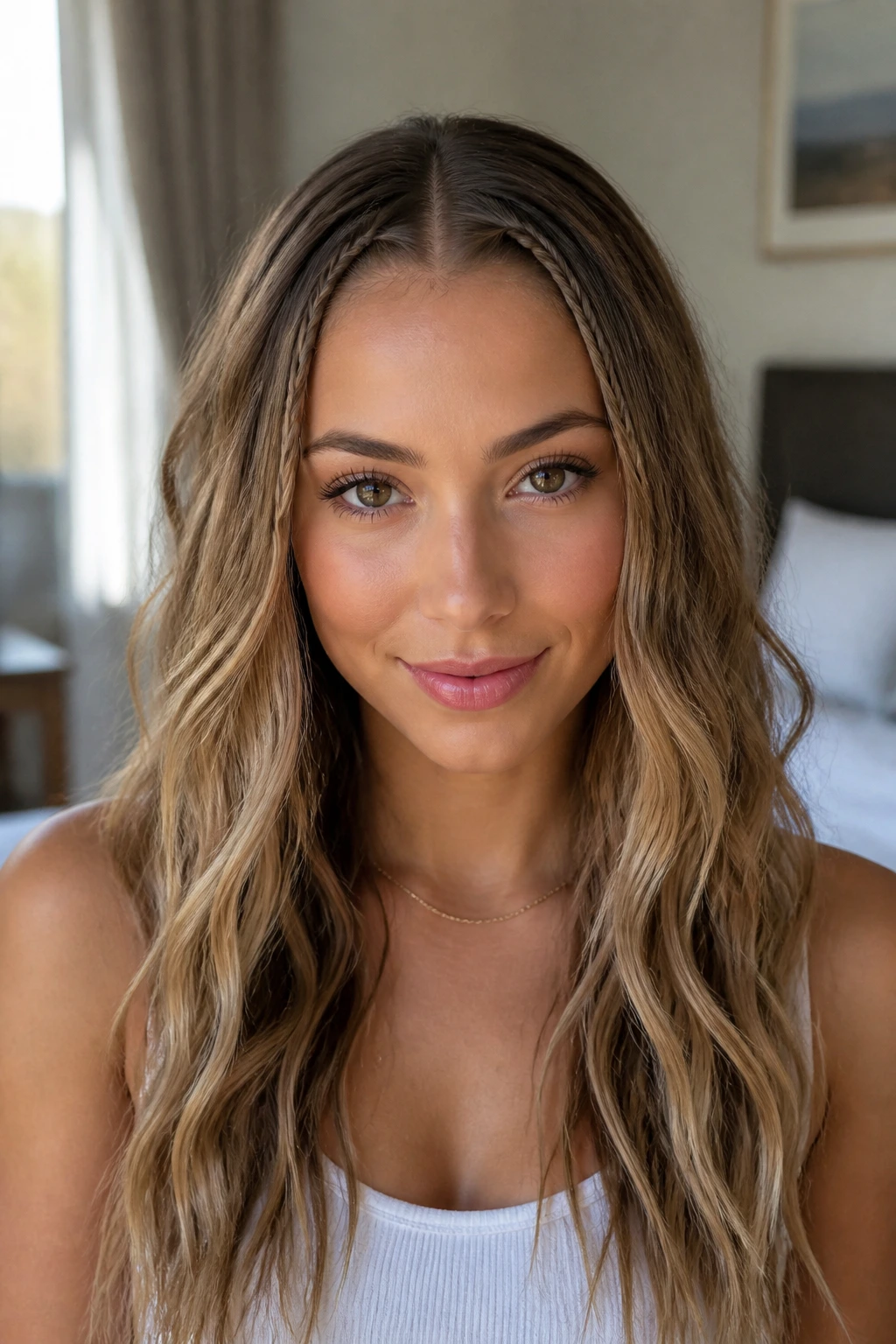
Two tiny braids near the hairline can fake structure where fine hair usually goes limp. They frame the face, break up flat roots, and give you a little detail without requiring much hair. If you try to make the braids too thick, they can swallow the style and look loose. Keep them narrow.
Pull a section from each temple and braid them toward the back, then pin or tie them together. Leave the rest of the hair down in a straight, waved, or softly bent finish. The braids should look like accents, not the whole hairstyle. That’s the sweet spot.
This works especially well when you want a bit of interest without a full updo. It’s a smart choice for fine hair that needs help staying off the face but doesn’t have enough bulk for a heavy crown braid.
12. High Ponytail With a Lifted Crown
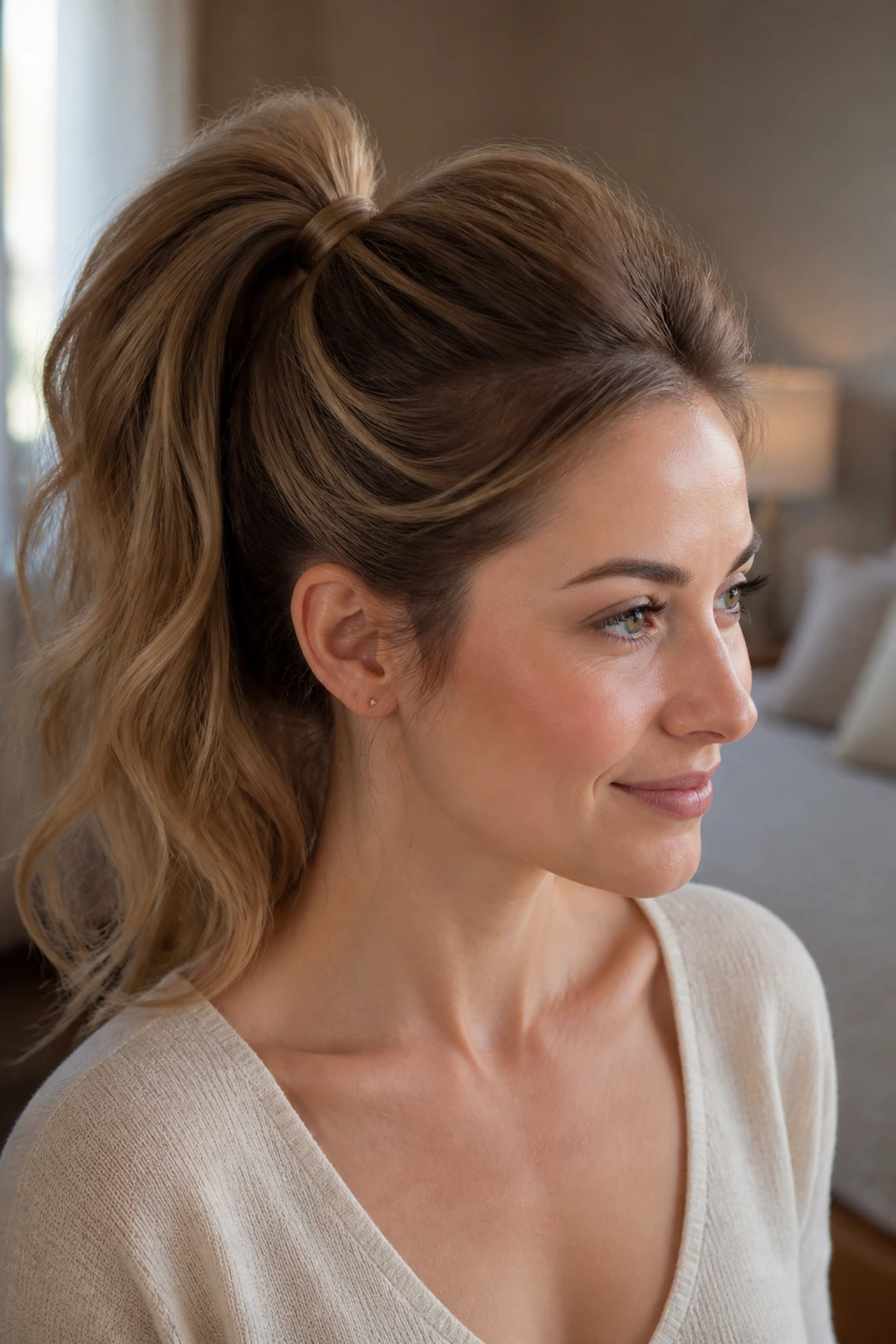
A high ponytail only works on fine hair when the crown gets a little height first. If you pull everything straight back with no prep, the style can look small and tight. A bit of lift at the top gives the ponytail more presence, even if the actual amount of hair is the same.
Tease a 1-inch section at the crown or clip the roots with a small lift clip while you finish makeup. Then secure the ponytail high and wrap the elastic with a strand of hair. That wrapped base helps hide the smallness of the pony and makes the style look cleaner. Use a soft brush to smooth the sides only once or twice. Too much brushing steals the volume you just made.
This is the ponytail I’d pick when you want a sharper profile. It looks strongest with a little makeup or earrings because the lifted crown draws the eye upward.
13. Scarf-Wrapped Ponytail
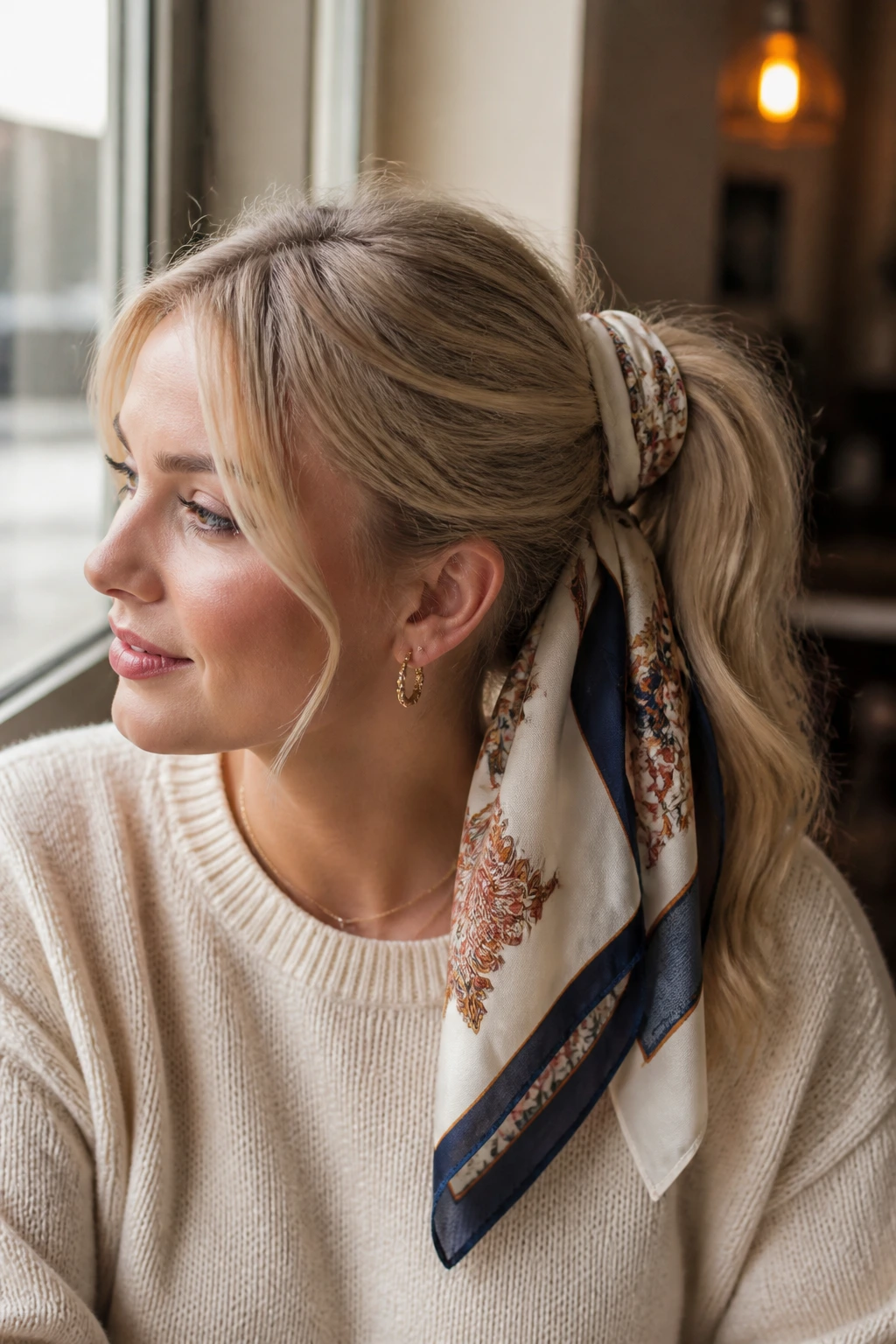
A scarf can do more than decorate a ponytail; it can hide the exact place where fine hair tends to give up. Wrap one around the base, and suddenly the pony looks fuller because the accessory fills in visual space. That is a simple trick, and I like it because it doesn’t pretend to be anything else.
Tie the hair back low or mid-height, then knot a lightweight scarf around the elastic. Let the ends fall over one shoulder or down the back. If the ponytail itself is sparse, the scarf creates enough width around the base that the whole style feels more deliberate. Satin or cotton both work, though satin slides less on smoother hair.
This is a good fix for days when the ponytail is already there and you don’t want to start over. It’s also cheap, which makes it an easy repeat.
14. Half-Up Twisted Crown
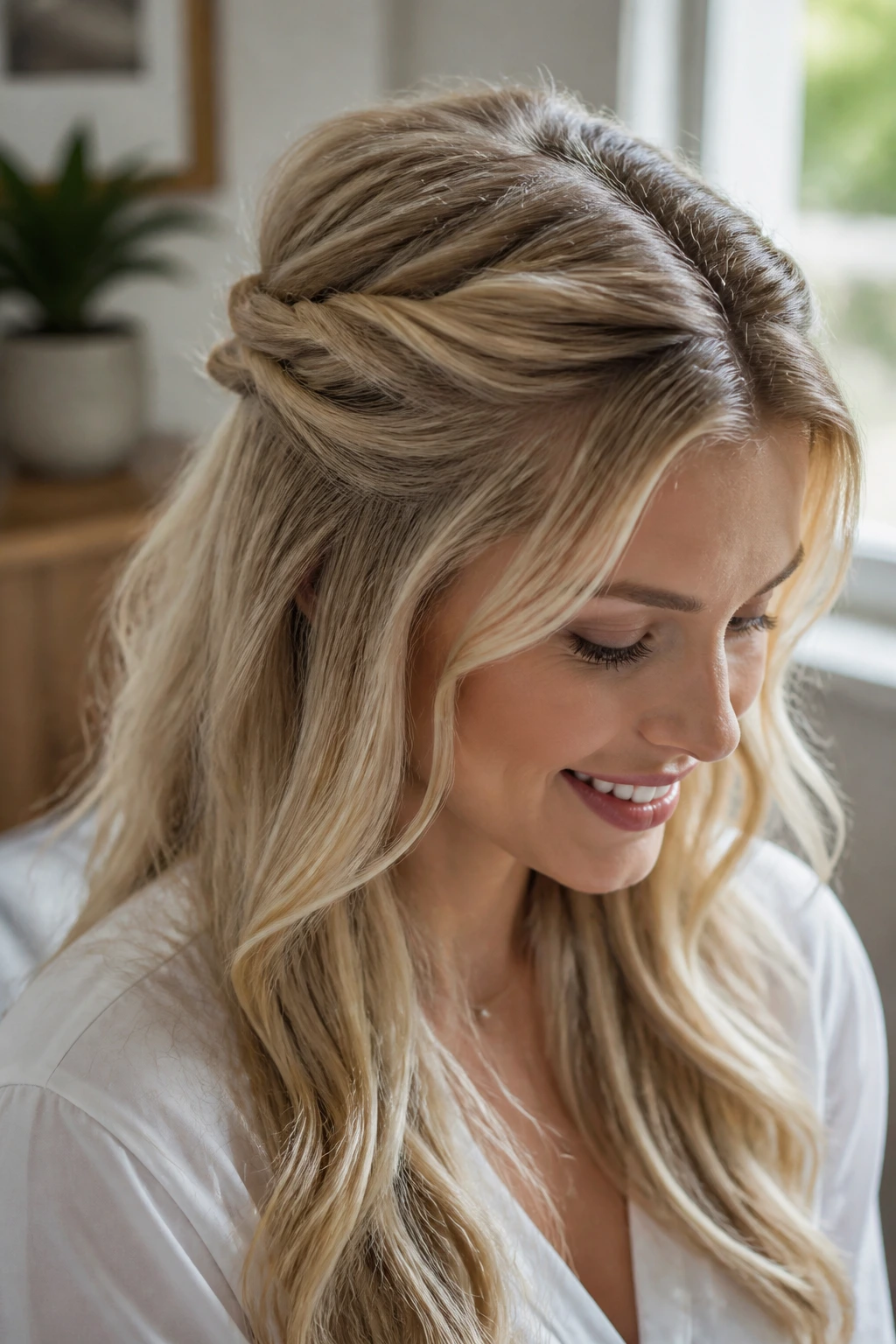
Half-up twists are the shortcut version of a braided crown. They use less hair, need fewer pins, and hold better on fine strands because twists create a little friction without needing fullness. Two front sections twisted back can give the illusion of a more complex style than it really is.
Take one section from each side, twist them away from the face, and pin them together at the back of the crown. Loosen each twist a touch with your fingers so it looks soft instead of rope-like. The lengths stay down, which is helpful if your hair is long but not dense. Fine hair often looks better when half of it is left alone.
This style is good for workdays, dinner plans, or any time you want something tidy without pulling everything up. It’s one of the easier styles to do quickly once your hands learn it.
15. Pin-Curled Shoulder-Length Set
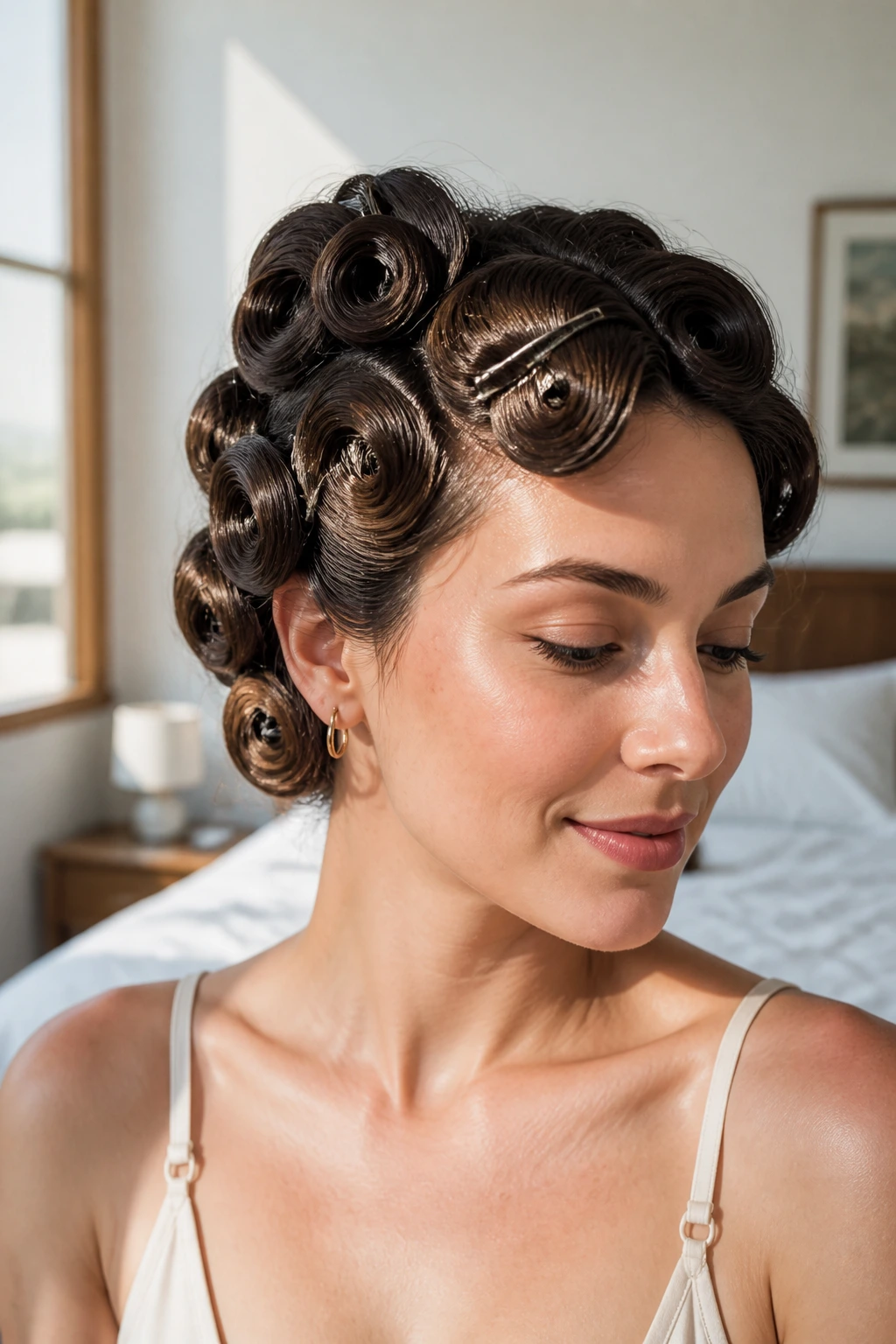
Pin curls look fussy in photos and practical in real life, which is why I keep them in the rotation. They give fine hair a shape that lasts longer than a simple curl because the set cools in place. If you want body without spending on a salon blowout, this is a solid answer.
Curl 1-inch sections, coil each curl flat against the head, and pin it while it cools for 10 to 15 minutes. Once you remove the pins, brush the curls out gently or separate them with your fingers. The result is soft volume that sits closer to the scalp than loose waves do, which helps fine hair look thicker.
How to make it work
Use a light mousse before drying and a flexible-hold spray after the pins come out. Heavy product makes the curls clump. Light product gives them something to hold onto.
16. Side-Swept Low Chignon
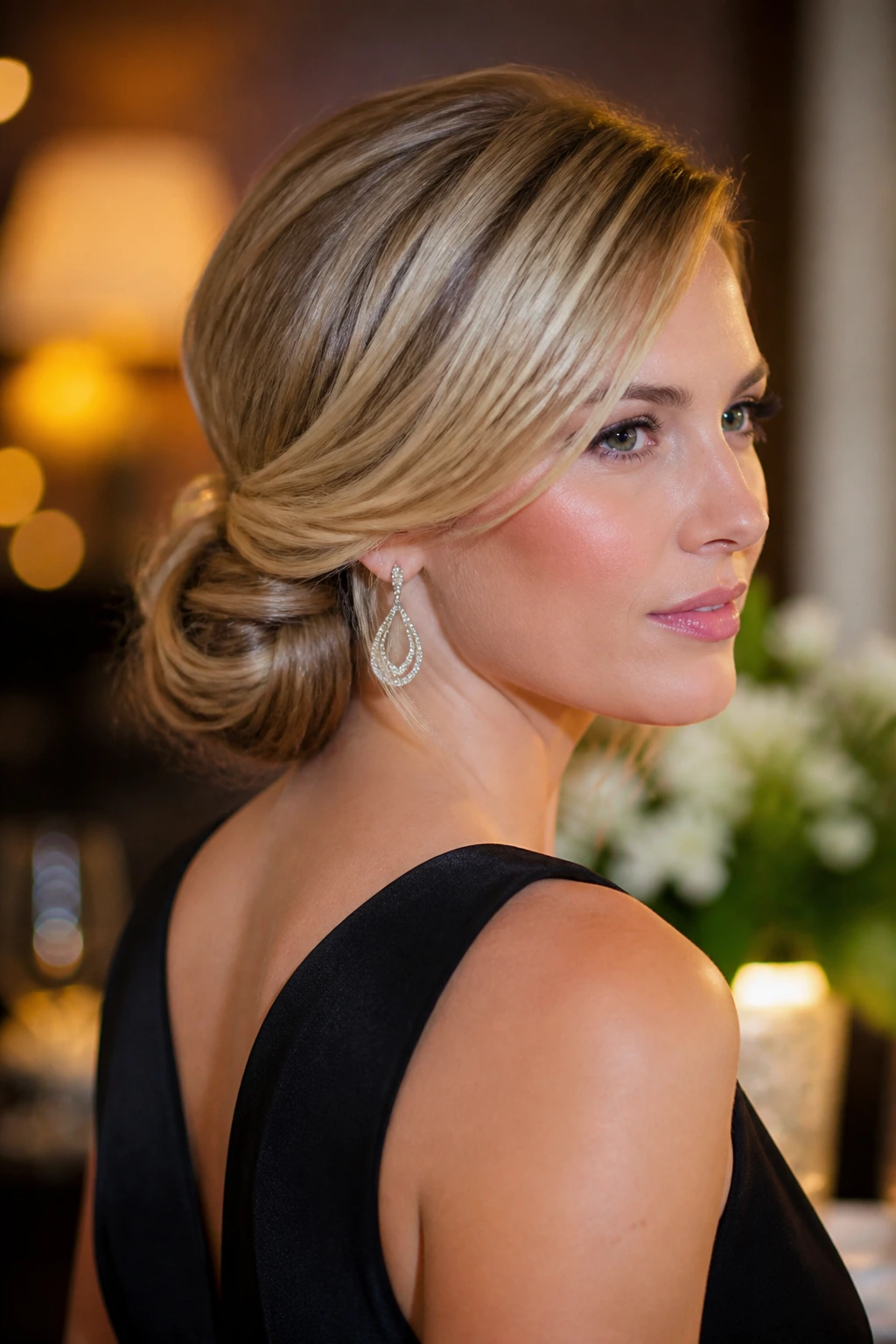
A side-swept low chignon softens fine hair instead of asking it to pretend it’s thick. That is why it works. A centered bun can expose every thin section, while a side placement gives the eye a clearer shape to follow. It also feels a little less formal than a strict low bun.
Why does the side version hold better? Because you’re working with direction, not just volume. Sweep the hair over one shoulder, twist it low at the nape, and pin the roll into a compact chignon. Leave the front a little softer, and do not flatten the crown too hard. A faint lift at the side part keeps the shape alive.
This one suits evenings, interviews, or days when you want something calm and tidy. If the hair slips, cross two pins where the twist meets the base. It usually fixes the problem without adding bulk.
17. Piecey Pixie With Matte Paste
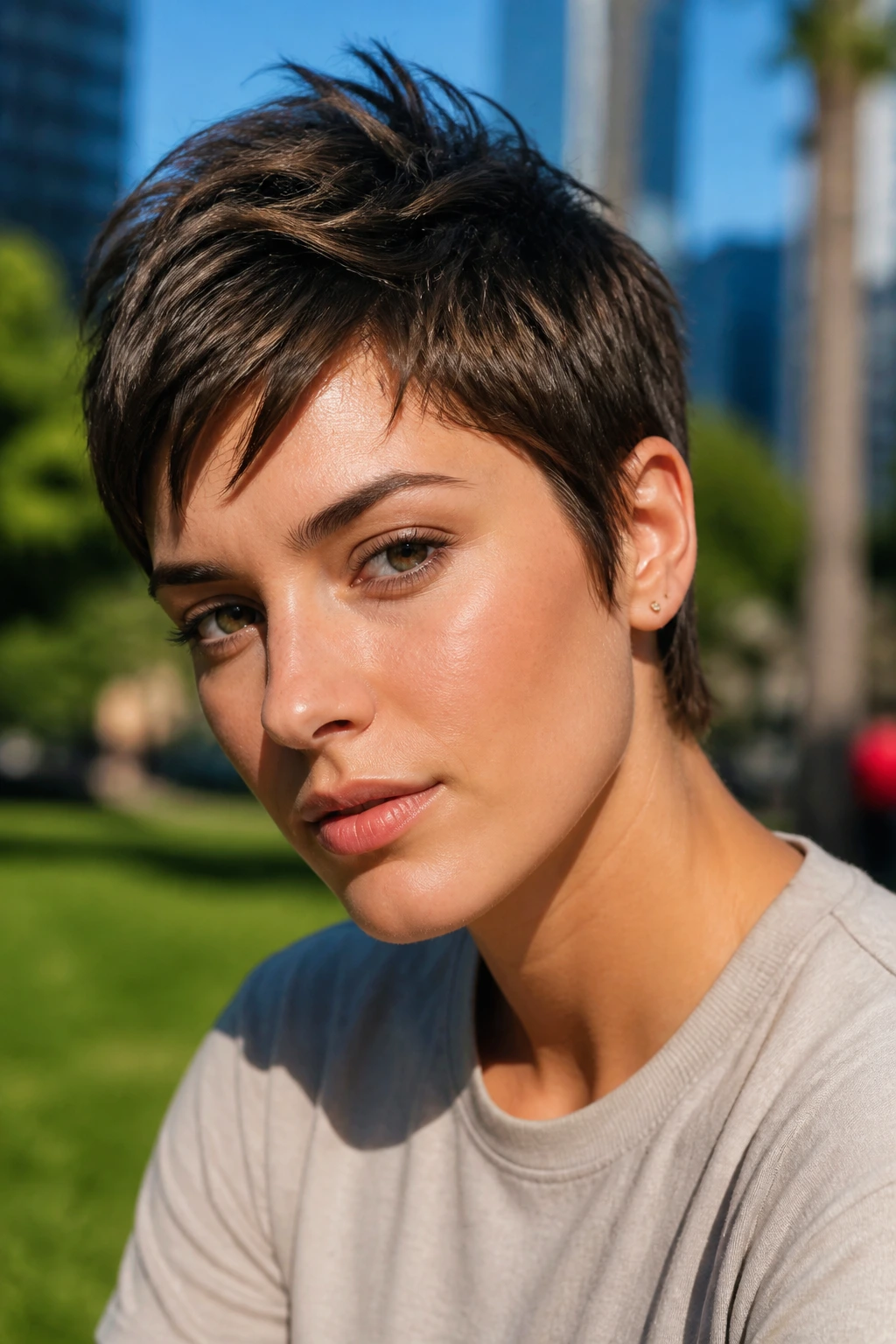
A pixie with piecey texture is the one cut-adjacent style on this list that asks for almost no hardware. Fine hair often looks best short when it’s separated into little pieces instead of blown into one smooth sheet. Matte paste gives that definition without making the roots greasy.
Warm a pea-size amount between your fingers, then pinch the top and fringe in small sections. Push some pieces forward and some slightly up. The goal is controlled mess, not a stiff shell. A touch of paste at the ends gives the cut more shape, but too much will flatten the whole head quickly.
This style is especially useful if your hair is short enough that clips and elastics feel more like punishment than help. A pixie can be budget-friendly in the nicest sense: one product, one minute, done.
18. Air-Dried Lob With a Soft Bend
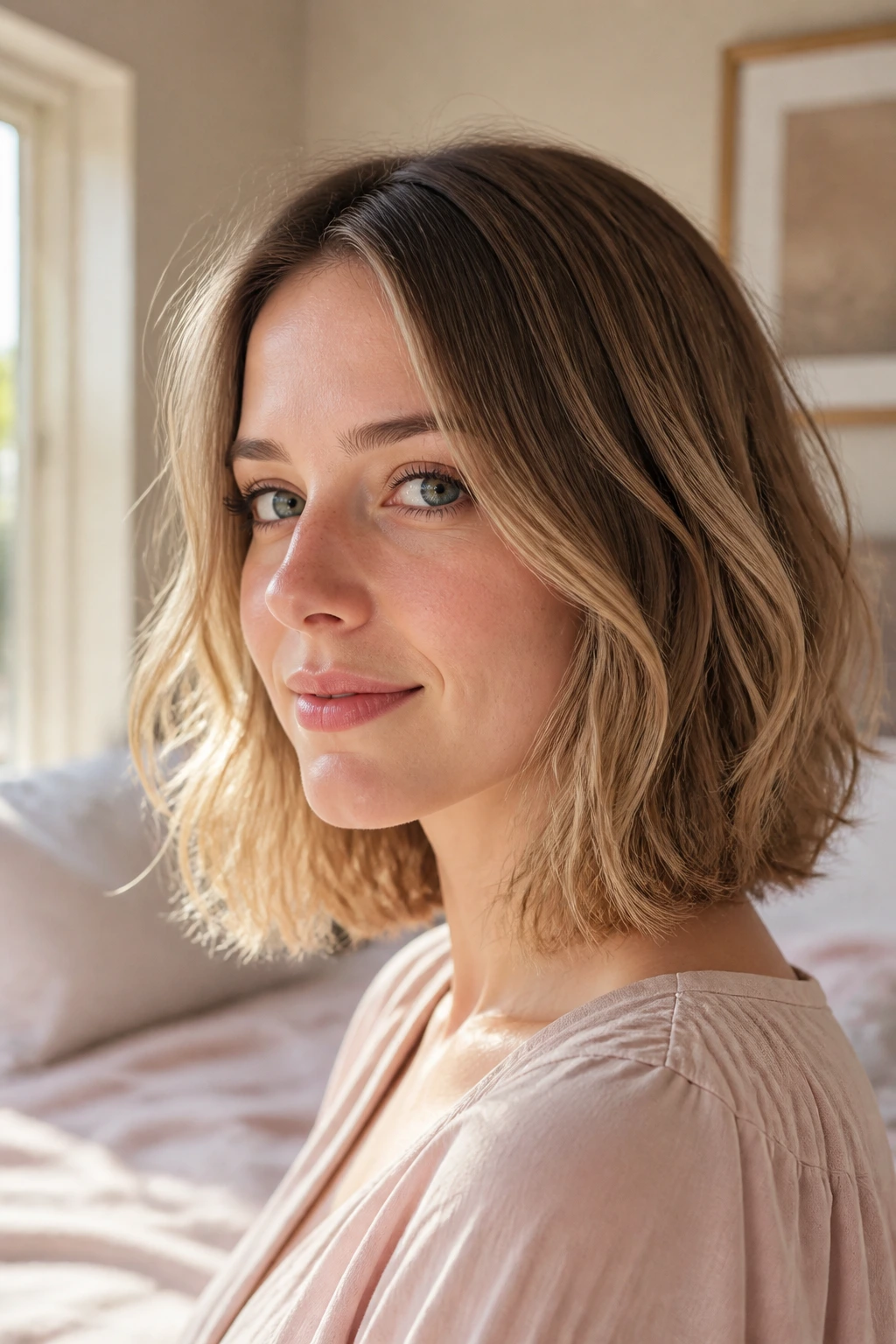
Air-dried lobs need a little guidance, not a full blowout. Straight air-dried fine hair can sit close to the head and show every thin section. A soft bend near the ends changes the shape enough to make the cut look fuller without bringing out the curling iron for a full session.
Work a light mousse through damp hair, twist the front pieces away from the face, and clip the crown for extra lift while it dries. If the hair settles too straight, touch just the bottom few inches with a flat iron or a large barrel for a loose bend. The idea is to keep the top light and the ends moving.
This is a nice fallback for mornings when heat feels like too much effort. It looks casual, not unfinished, which is a useful line to walk.
19. Rope-Braid Half-Up
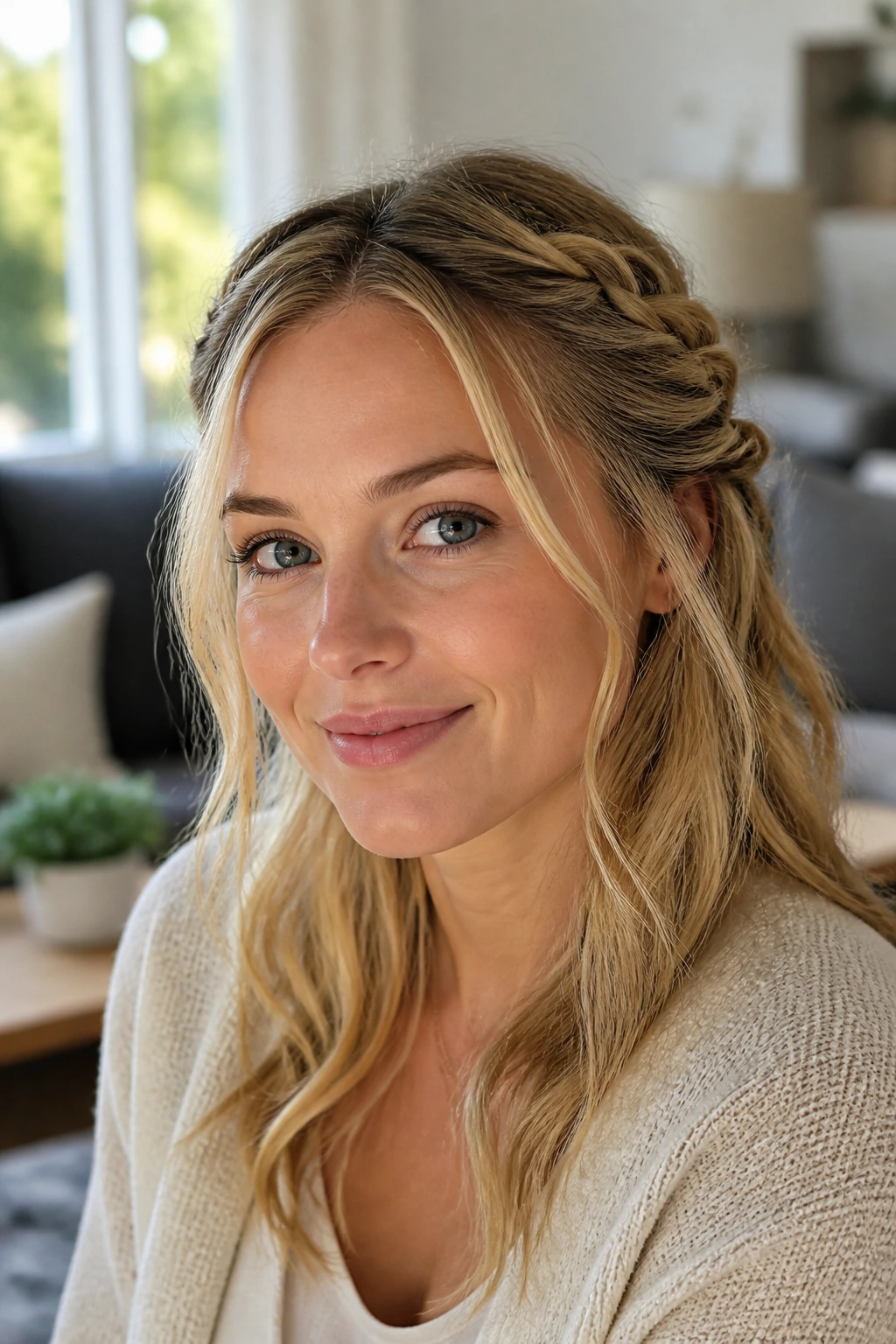
Rope braids grip fine hair more kindly than three-strand braids do. They need less hair to look complete, and the twist gives a little more shine at the surface. A half-up version keeps the style compact, so the thinner ends below do not compete with the braid.
Split a front section into two, twist each piece clockwise, then wrap them around each other counterclockwise. Pin the end at the back and repeat on the other side if you want a symmetrical look. Gently pull the twists apart to widen them a bit. The movement is enough; you do not need huge sections.
This is a good choice when you want detail but don’t want the braid to eat the whole head of hair. It works on clean hair and day-two hair, though day-two usually gives it better hold.
20. Wet-Look Slicked Back Bun
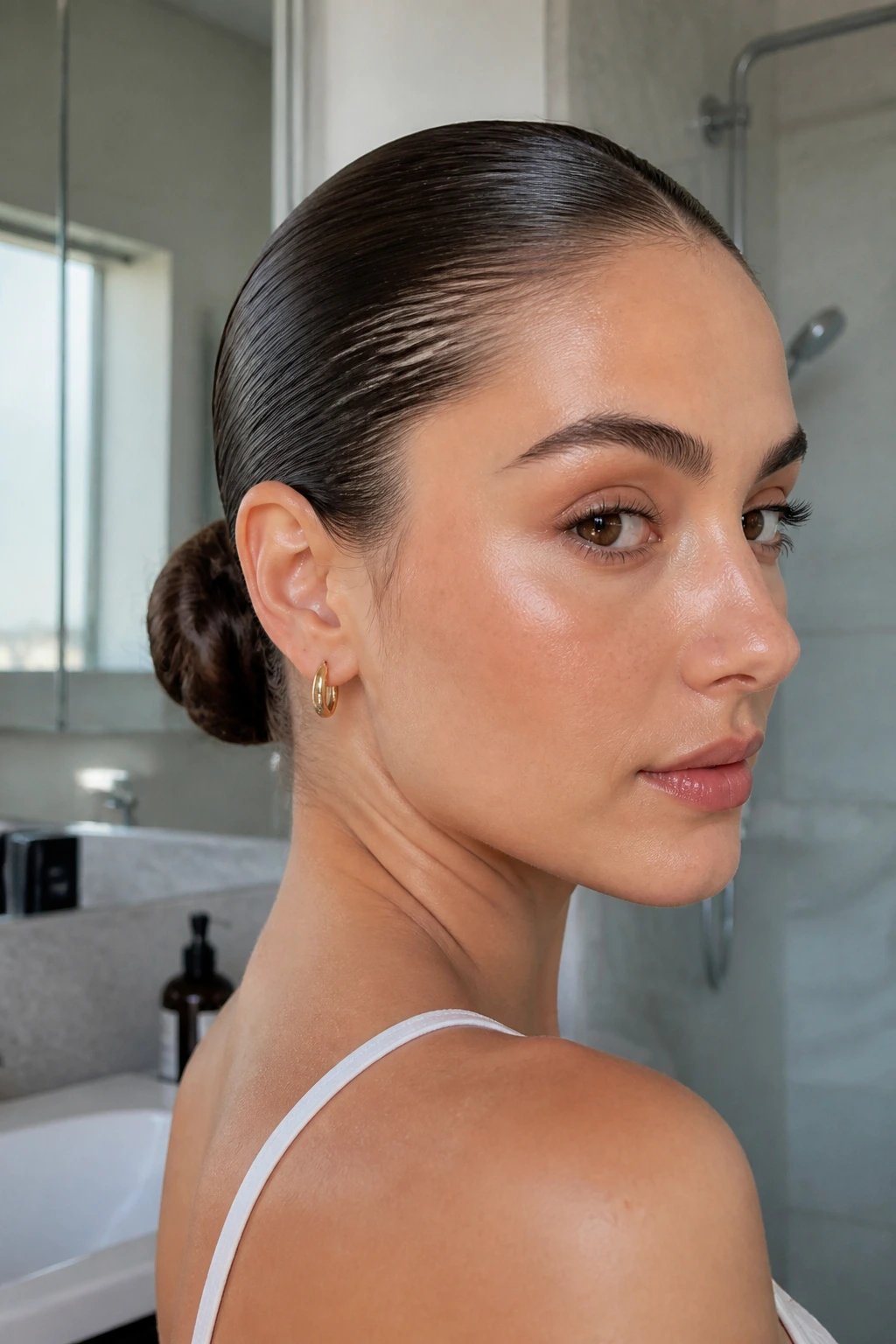
Slicked-back buns are not for every day, but they are unbeatable when you want clean lines and no fuss. Fine hair often does well here because the style does not ask the strands to look dense; it asks them to look smooth. If your roots are a little oily, this style can save the day.
Use gel on damp hair, brush it back tightly, and secure a low bun at the nape. Keep the surface smooth, but do not yank the hair so hard that the scalp looks shiny and strained. A toothbrush or small edge brush helps tame the hairline. If the bun ends up tiny, that is fine. Sleek is the point.
This one is useful for humid weather, gym-to-dinner days, or mornings when washing is not happening. A little shine reads deliberate here. Too much, and it starts looking wet in a bad way, so stop once the hair lies flat.
21. Velcro-Roller Volume Sweep
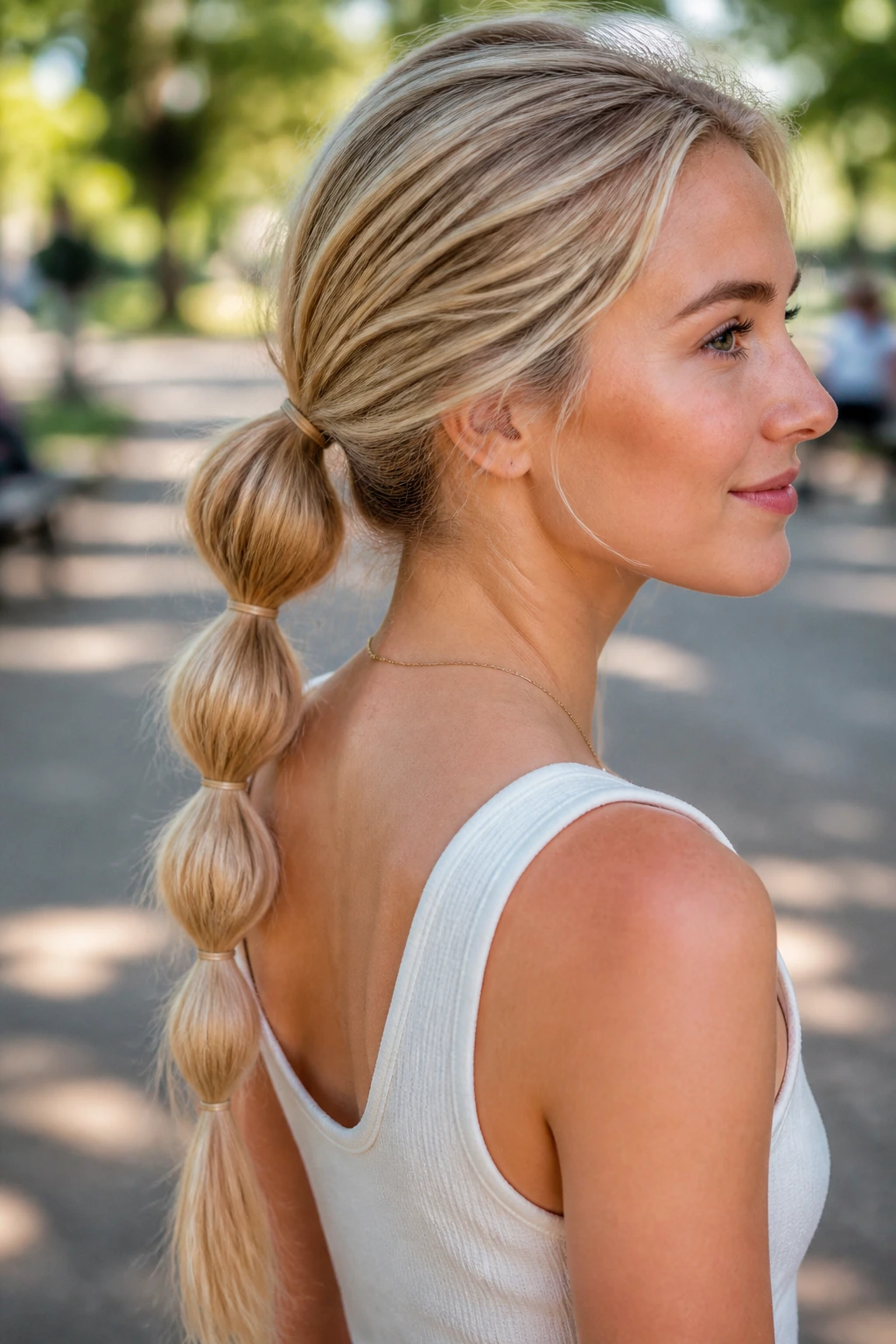
A pair of velcro rollers can fake a fresh blowout for almost no money. They lift the roots without adding heat damage, and fine hair often remembers the shape longer than it remembers a big curling session. The front sections are the place to focus. That’s where the height changes the whole look.
Roll the top and front pieces away from the face while the hair is just warm or slightly damp, then let them sit for 10 to 15 minutes. Take them out, brush once, and stop. If you keep brushing, you flatten the work you just did. A quick mist of flexible hairspray at the roots can help, but a heavy spray turns the lift stiff.
This is one of those old-school tricks that quietly outperforms newer, fancier tools. Cheap rollers. Big payoff.
22. French Pin Roll With Loose Ends
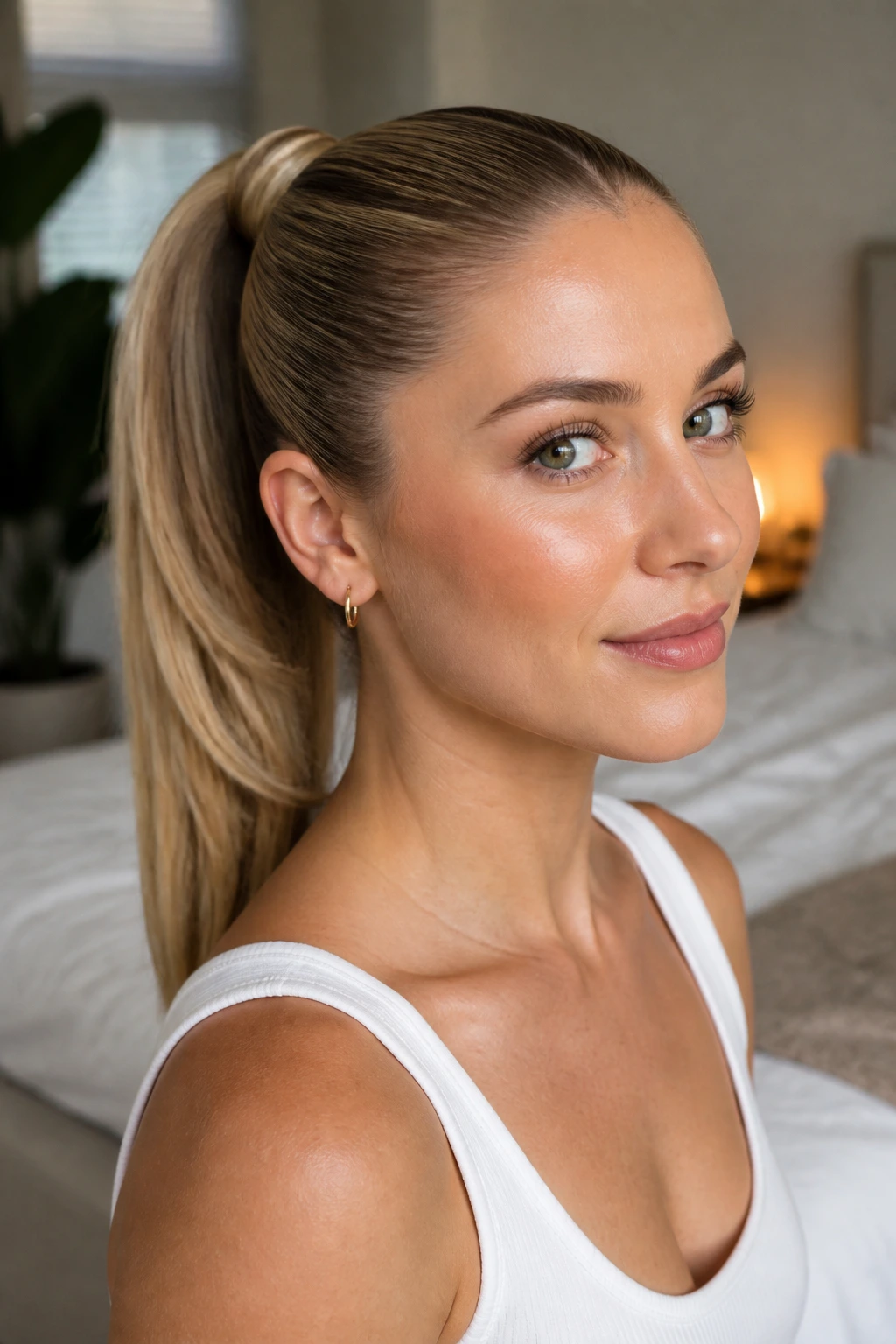
Why does a French pin roll work so well on fine hair? Because the pin does the holding and the twist does the shaping. You do not need a lot of density, and you do not need a giant clip. One good pin and a little structure are enough.
Gather the hair as if you’re making a low ponytail, twist it upward, and slide a French pin through the roll to anchor it. Leave the ends tucked or let a small tail soften the back. It works best on shoulder-length hair and longer, especially if the strands have a little dry shampoo or texture spray in them. If the hair is too silky, the roll can slide, so rough up the roots first.
This is the style I’d pick when I want something neat that does not look overdone. The pin itself does most of the visual work. That’s the charm.
Why Fine Hair Needs a Different Styling Plan
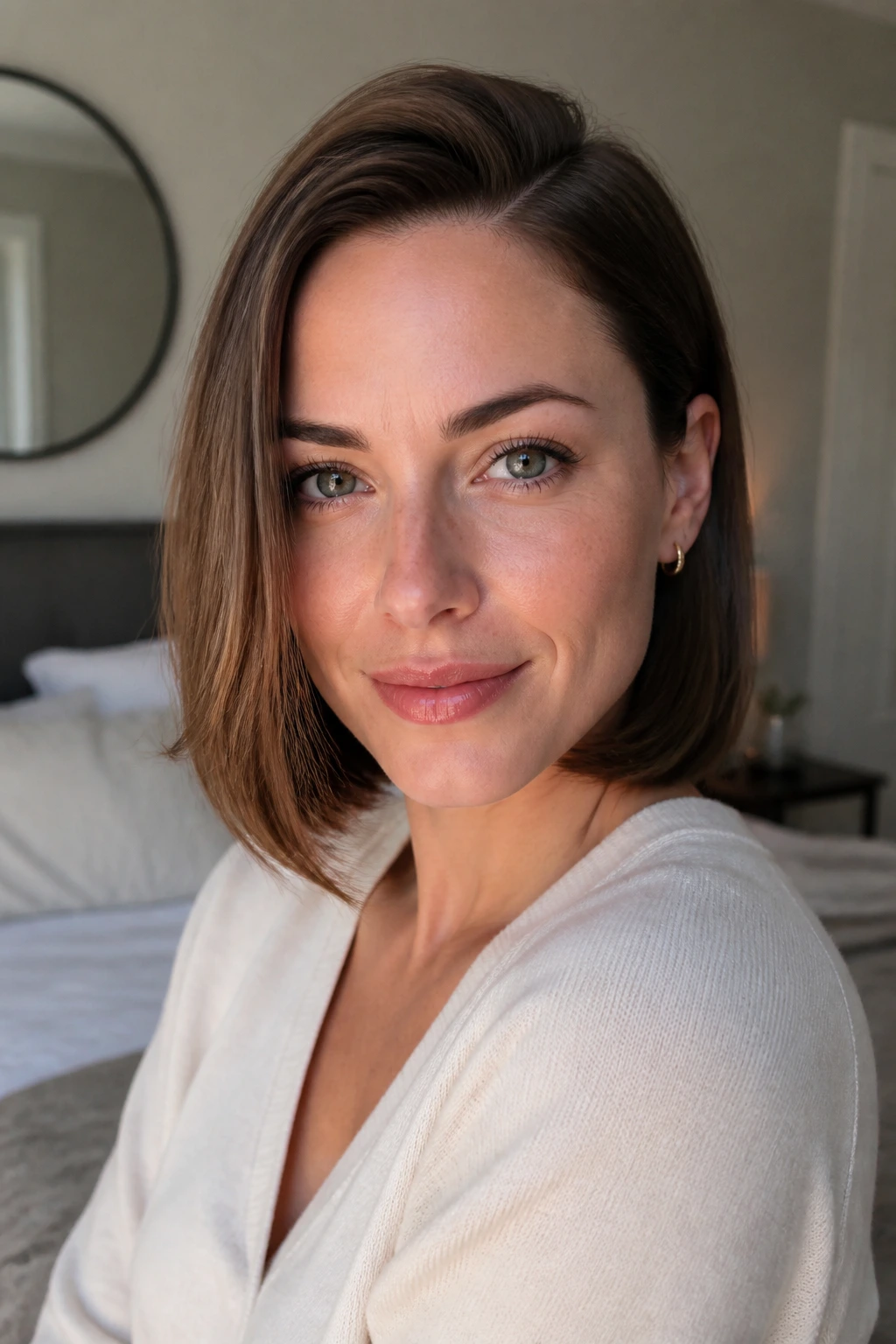
Fine hair gets mishandled because people treat it like it should behave the same way as thick hair. It doesn’t. The strand is smaller, the surface is smoother, and product can sit on it fast. That means a style that looks light and airy on one head can go limp or stringy on another in less than an hour.
Fine versus thin
Fine hair is about strand thickness. Thin hair is about density. You can have plenty of hairs on your head and still have fine strands that fall flat, and you can have low density with coarser strands that stand up better. The styling move changes depending on which one you have, but the root problem is similar: you need shape without bulk.
Why weight matters more than hold
Heavy creams, thick oils, and sticky serums can make fine hair look smaller because they coat the strand and make it separate. Light mousse, dry shampoo, and flexible spray create grip instead. That grip is what keeps a twist from unraveling or a ponytail from shrinking.
Where volume actually lives
The trick is not piling everything onto the ends. Volume usually starts at the root line, then moves into the top third of the hair. A little lift at the crown, a part that isn’t dead center, or a bend around the face often does more than 10 extra minutes of curling.
Essential Tools for These Looks
- Tail comb: Perfect for clean parts, crown lifting, and separating small sections without making a mess.
- Bobby pins in two sizes: Small pins hold twists and tucked ends; larger pins are better for heavier buns or rolls.
- Clear elastics: Cheap, discreet, and ideal for bubble ponytails, mini braids, and wrapped pony bases.
- Mini claw clip: Useful for French twists, half-up styles, and fast resets during the day.
- Dry shampoo: Adds grip at the roots and helps second-day hair behave.
- Lightweight mousse: Gives damp fine hair some memory before blow-drying or air-drying.
- Flexible-hold hairspray: Holds shape without turning the hair into a hard shell.
- 1-inch curling iron or flat iron: Enough to add bend without making the ends look overworked.
- Round brush: Handy for lift at the crown, flipped bobs, and face-framing blowouts.
- Velcro rollers: Cheap, old-school, and very useful for lift while the hair cools.
- Soft headband or scarf: Ideal for tucks, disguising a thin ponytail base, or rescuing roots.
- Matte paste or texture spray: Best for pixies, short layers, and styles that need a little friction.
Smart Product Picks Without the Salon Markup
The cheapest mistake people make with fine hair is buying the heaviest product they can find because it sounds nourishing. Nourishing is fine for ends. Roots need a lighter touch. Look for products that say volumizing, light hold, or flexible control instead of cream, butter, or oil-heavy formulas.
Dry shampoo is worth a spot on the shelf even if you wash often. It adds grit to clean hair and keeps fine strands from sliding apart. Spray it at the roots from about 8 inches away, wait a minute, then brush or finger-comb it through. If you spray too close, it can leave a pale patch that takes forever to disappear.
Mousse deserves more respect than it gets. A golf-ball sized amount on damp hair can give enough support for waves, blowouts, and lifted crowns without making the hair stiff. The important part is where you put it: mids and roots first, ends last, and never a glob all in one spot.
A flexible-hold hairspray beats the super-stiff kind almost every time for this topic. You want memory, not a shell. And if you’re shopping for accessories, buy more pins and elastics than you think you need. Fine hair often needs an extra pin in one place or one more elastic in a braid. That is not a flaw. It’s the job.
How to Wear These Styles in Real Life
Presentation: Pick one main shape and let it lead. A side part, a tucked side, a wrapped elastic, or a lifted crown is enough on its own. When fine hair tries to do too many things at once, it starts looking fussy. One clean idea usually looks better than three competing ones.
Pairings: Sleek ponytails sit nicely with sharper clothes — collars, blazers, hoops, anything with a strong line near the neck. Softer waves and half-up twists feel better with knits, tees, and simple necklaces because the hair already has motion. A scarf-wrapped ponytail can lean casual or polished depending on the fabric. Cotton reads easy; satin reads dressed up.
Scale: Short hair needs smaller clips and fewer pins. Long fine hair usually needs one extra anchor at the base so the weight doesn’t drag the style down. If your hair is shoulder length, half-up looks often do the most with the least effort because they lift the part line without asking the ends to pretend they’re thicker than they are.
Best Match: Office days, errands, dinner plans, and second-day hair all live here. The style that fails is the one that needs constant touching. If you can set it and leave it alone for three hours, you picked well.
Extra Lift and Texture Tricks That Cost Almost Nothing
Root Booster: Dry shampoo isn’t only for oily hair. Put a little at the roots on clean hair before styling, and the strands get a tiny bit of grip. That grip helps twists, buns, and clips stay where you put them.
Texture Trick: If your hair is too silky, rough up the mid-lengths with a light texture spray or even a pinch of mousse rubbed between your palms. Fine hair holds shape better when it has some friction. Too much, though, and it turns dusty or crunchy.
Accessory Swap: A matte bobby pin holds better than a shiny, slippery one. A small jaw clip often works better than a giant one because it matches the amount of hair you actually have. Bigger is not always better. Sometimes bigger just slides.
Shortcut: Blow-dry only the front and crown if you are short on time. Those are the sections that change the whole look. Let the back do whatever it’s going to do and fix the visible parts first.
Mistakes That Flatten Fine Hair Fast
- Loading conditioner too high: If conditioner touches the roots, the hair can go soft and slippery before you even style it. Keep it from the ears down and rinse the hairline well.
- Teasing the whole head: Backcombing every section turns fine hair into a frizzy cloud with no lasting shape. Tease only the crown or the top 1-inch section where the lift matters.
- Using heavy oil near the scalp: A shiny root might look nice for five minutes, then the hair separates and shrinks. Save oil for the ends and use a tiny amount.
- Choosing oversized clips: A big claw clip can pull fine hair straight down instead of holding it up. A smaller clip often grips better because it sits closer to the scalp.
- Styling before hair cools: Waves and curls drop fast if you brush them out while they’re still warm. Let the shape cool in place, even if that means waiting 10 minutes.
- Over-brushing after styling: A brush can flatten the very lift you just made. Use fingers for most of the work, then one light brush-through if the style needs smoothing.
Variations and Adaptations to Try
Heatless Weekday Set: Swap curling irons for pin curls, headband tucks, and overnight braids. Fine hair often holds the set well if you let it cool or dry fully before taking it down, and you save both time and heat.
Office-Sleek Version: Keep the look smooth with a low ponytail, French pin roll, or side-swept chignon. Use a light gel or finishing cream only on the top layer so the style stays neat without getting limp.
Humidity Shield: Choose buns, slicked-back looks, and scarf wraps when the weather turns damp. Fine hair can puff in the wrong places in humidity, so a controlled shape often looks better than loose volume.
Short-Hair Edit: Lean on the pixie texture, mini claw clip twist, and headband tuck. Small accessories usually fit better than oversized ones, and they hold short fine hair without swallowing it.
Long-Hair Edit: Go for bubble ponytails, rope braids, and wrapped low ponies. Longer fine hair benefits from structure along the length because it prevents the ends from looking sparse.
Maintenance, Refreshing, and Next-Day Wear
First-day wear
Sleek styles like the wrapped ponytail, slicked-back bun, and side-swept chignon usually look best on day one. They hold shape cleanly and don’t need much fixing. Waves, pin curls, and velcro-roller volume can also last the first day if you let them cool fully before touching them.
Second-day reset
Fine hair often behaves better on day two if you refresh the roots instead of redoing the whole head. A small burst of dry shampoo, a quick finger lift at the crown, and a touch of heat on the front pieces can bring back a style fast. If the ends look limp, twist them into a bun or tuck them into a headband rather than fighting them.
Sleep protection
A satin pillowcase or a loose satin scrunchie helps styles last overnight. Braids, headband tucks, and loose buns survive sleep better than open waves. If a style depends on root lift, keep the crown as undisturbed as possible and avoid sleeping with a tight elastic that leaves a deep crease.
Some of these styles are meant to be worn for one day only. That’s fine. Not every look needs to become a three-day project.
Frequently Asked Questions
What hairstyle makes fine hair look thicker fastest?
A deep side part with tucked ends or a high ponytail with a lifted crown usually gives the fastest payoff. Both styles change the silhouette right away, which matters more than piling on product.
Is teasing bad for fine hair?
Not if you keep it small and gentle. The problem is aggressive backcombing over the whole head, which tangles fine strands and makes them break faster when you brush them out.
Can I wear braids if my hair is fine?
Yes, but smaller or partial braids usually work better than huge ones. Tiny braids, rope braids, and half-up versions keep the style visible without asking for a lot of density.
Why does my ponytail always look tiny?
Usually the elastic is sitting too low or the crown is too flat. Lift the roots first, wrap the base with a strand of hair or a scarf, and keep the pony a little higher on the head if the shape needs more presence.
Do I need heat tools for volume?
No. Velcro rollers, pin curls, a side part, and a little root-lift spray can all give body without heat. Heat helps, but it is not the only route.
What if my hair is too slippery for pins to hold?
Add grip first. Dry shampoo, texture spray, or even a lightly roughened root area gives bobby pins something to catch. Cross two pins in an X if one alone keeps slipping.
Are claw clips good for fine hair?
Yes, if you pick the right size. Smaller clips often work better than huge ones because they match the amount of hair and grip closer to the scalp.
How do I keep fine hair from looking greasy after product?
Use less than you think, and keep rich product away from the roots. If the style needs shine, put it on the ends or the outer layer only. The scalp area should still feel light.
The Styles I’d Keep on Repeat
Fine hair gets easier once you stop forcing it into shapes that need more bulk than it has. The best looks in this list are the ones that use structure, part placement, and a little texture instead of relying on heavy product or oversized accessories. That is the difference between a style that lasts and one that collapses before lunch.
If I had to narrow it down, I’d keep the deep side part with tucked ends, the wrapped low ponytail, and the bubble ponytail in rotation first. They are cheap, quick, and forgiving when your hair isn’t behaving. Try one on the next morning when your roots are flat and see how little it actually takes to change the whole shape.