



Thick hair has a way of making a short cut look expensive—or like a helmet if the outline is wrong. Below ear haircuts for women with thick hair live in that narrow space where the line matters more than the length itself. Chin level, earlobe level, just below the jaw: those few inches decide whether the cut feels sharp, puffy, airy, or flat.
The trick is not to strip weight from every strand. It’s to put the weight where you want it: a tucked nape, a forward slope, a soft interior layer, a little room at the cheekbones. That changes dry time, neck comfort, and how much your hair fights you in humidity. Thick hair is generous. It just needs a shape.
I like this length because it gives dense hair a bit of discipline without taking away the part that makes it interesting. The wrong bob can balloon at the sides and sit on the neck like a wool scarf in July. The right one looks deliberate on day one and still behaves after a long, messy day, which is the real test.
Why These Below-Ear Cuts Earn Their Keep
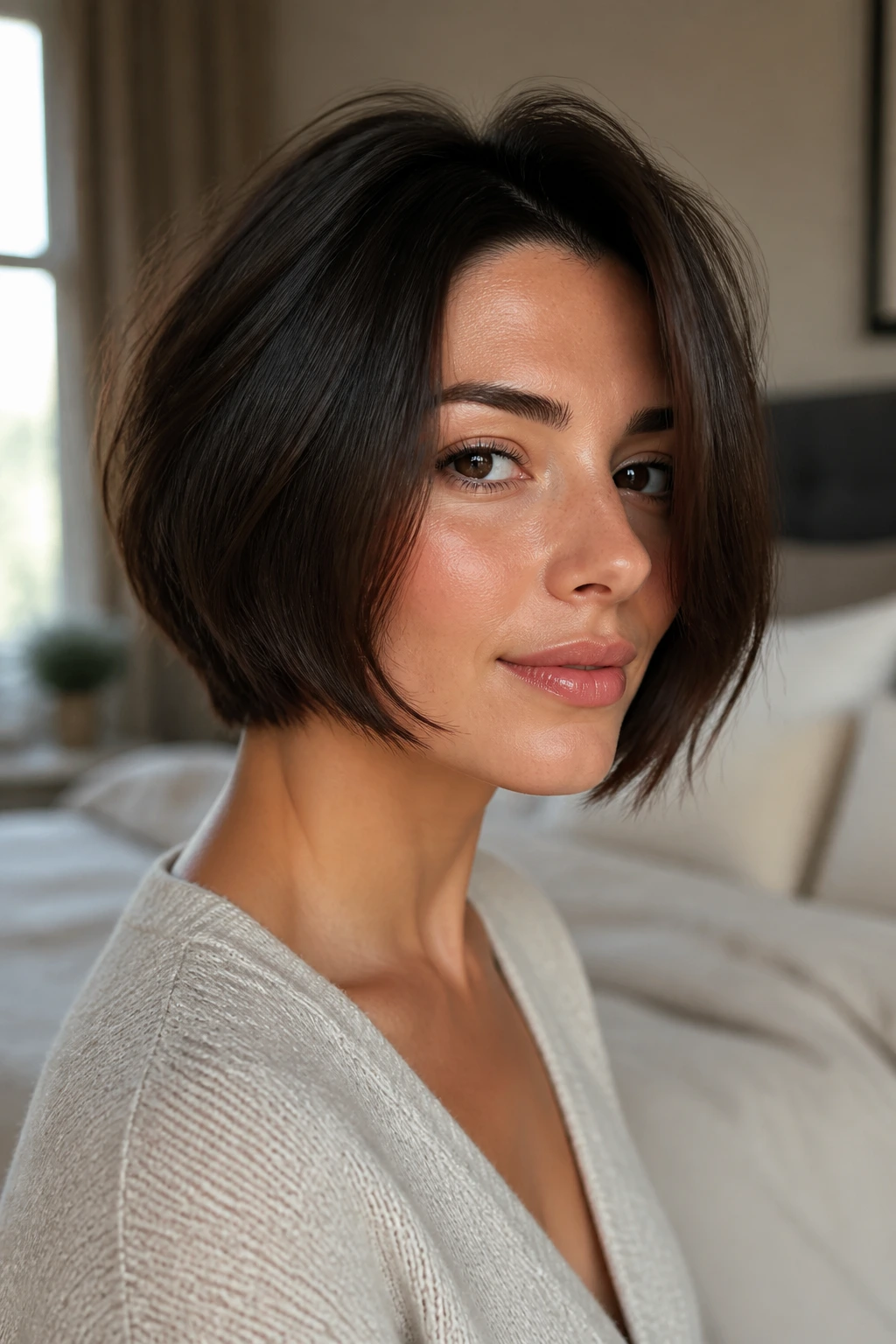
- They take the bulk out of the danger zone: Thick hair usually swells widest at the jaw and nape, and these cuts move the silhouette just enough to stop that boxy triangle.
- They still leave enough length for control: A cut that lands below the ear gives you room to tuck, wave, straighten, or pin back without dealing with the awkwardness of a true short crop.
- They grow out with less panic: A line that sits at the chin or collarbone can survive a few extra weeks before it starts looking like a missed appointment.
- They work with density instead of fighting it: The best versions use blunt edges, hidden layers, and careful graduation so thick hair looks full, not swollen.
- They play nicely with different textures: Straight, wavy, and curly hair all have a place here, as long as the shape matches the way your hair actually moves.
How to Match a Below-Ear Cut to Thick Hair Density
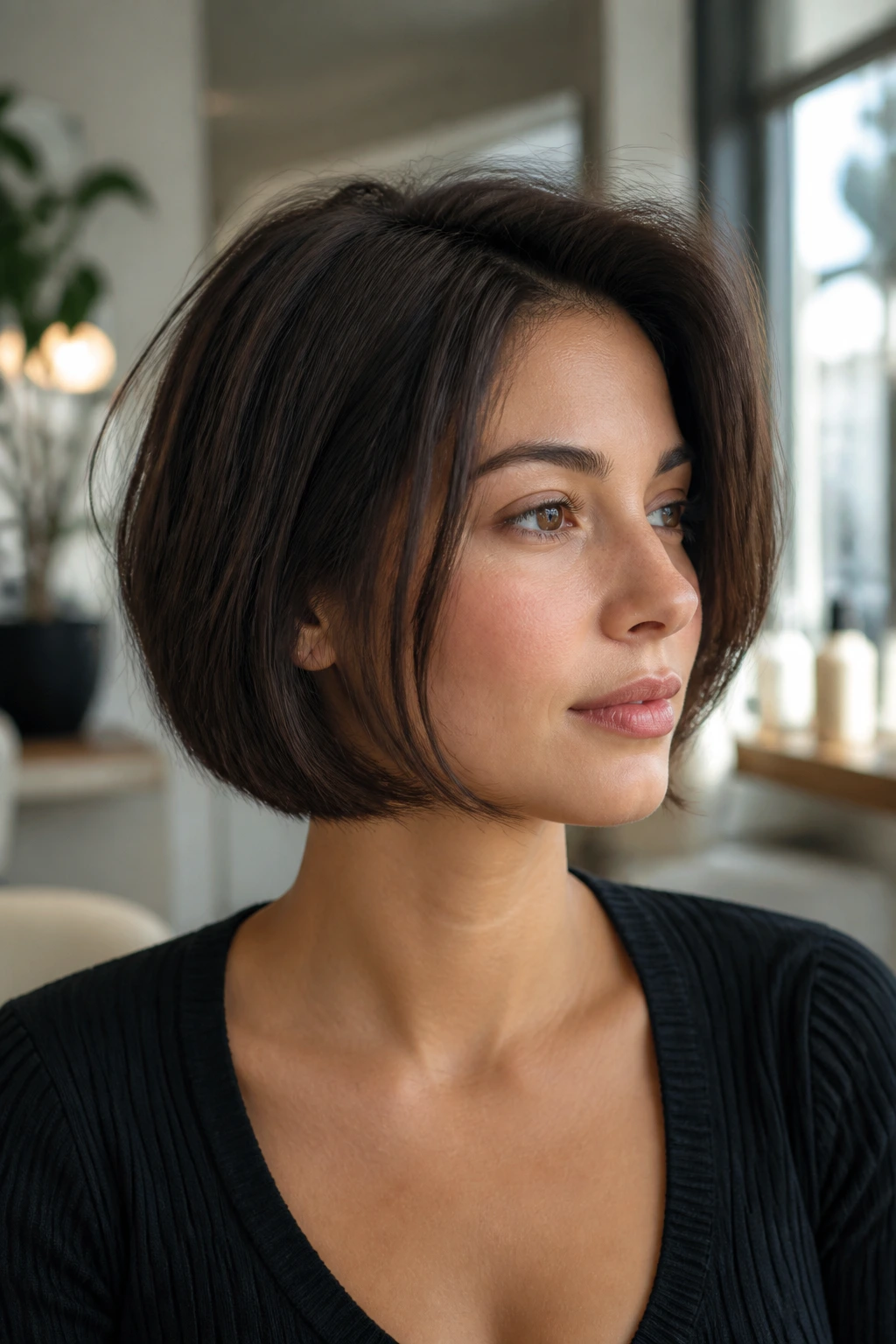
Dense hair and coarse hair are not the same thing, and this is where a lot of haircut advice goes off the rails. A woman can have a huge amount of hair that’s silky fine, or a medium amount that feels wire-y and stubborn. The cut should answer the real problem, not the label on the box.
Start with the weight line
If your hair poofs at the sides, ask for a perimeter that keeps its bottom edge clean. A blunt line near the chin or just below the earlobe gives thick hair a place to land. If your hair collapses flat on top and swells underneath, you need internal shaping more than a shorter length.
Then think about movement
Thick hair can hold a shape, which is a gift. It also means a bad shape stays visible longer. A little graduation, a few internal layers, or a side part that breaks up the width can change the whole read of the cut without making it look shredded.
And be honest about your styling habits
If you air-dry 80 percent of the time, the cut has to behave on its own. If you use a round brush every morning, you can wear something more structured. If you hate heat tools, choose a shape that looks intentional with a bit of bend and some frizz.
1. The Blunt Chin-Length Bob with Soft Ends
A blunt line can calm thick hair faster than almost anything else. When the cut lands right at the chin, the eye reads a clean edge instead of a puffed-out middle, and that matters more than people think. The trick is keeping the bottom line solid while softening the last quarter-inch so it does not look like a block.
Why it works on thick hair
The blunt perimeter gives dense hair a place to stop. Ask for subtle point-cutting only at the tips, not a heavy texturizing pass through the whole head. That keeps the silhouette heavy enough to look luxe, not choppy enough to fray at the ends.
If your hair naturally bends inward, this cut is a dream with a quick round-brush pass. If it kicks out, the answer is not more layers. It’s a slightly longer front edge and a smoothing cream through the mids.
What to ask for
- Length that sits at the chin or a touch below
- A blunt perimeter with softened ends
- Minimal layering through the body
- A side or center part based on your face shape
2. The French Bob with Brow-Grazing Fringe
Can thick hair pull off a short, cheeky bob without turning into a pyramid? Absolutely, if the fringe is handled with restraint. The French bob works because the bangs break up the density at the top, while the shorter line around the face gives the sides a place to taper.
The fringe should not be heavy from root to tip. Ask for brow-grazing length with some air at the center, so the bangs move instead of sitting like a curtain wall. On thick hair, that lighter center opening makes a huge difference.
This cut shines when the hair has a bit of natural bend. Air-dry it with a small dab of leave-in cream, tuck one side behind the ear, and let the fringe fall softly across the forehead. It looks casual in a way that takes real planning.
3. The Italian Bob with Interior Layers
This is the bob I reach for when thick hair needs polish, not fluff. The Italian bob keeps a full, rounded outline, but the weight is cleaned out from the inside so the hair swings instead of standing out from the head. That little bit of hidden shaping is doing a lot of work.
Why it feels expensive
The top layer stays glossy and heavy enough to reflect light in a single sheet. Underneath, the stylist removes bulk in a way you can barely see. The result is volume with manners.
If your hair is coarse, this cut gives you room to blow it smooth without flattening it into submission. Ask for interior layers that start below the cheekbone, not near the crown. Too many short layers on top can make the whole thing explode by lunch.
4. The A-Line Bob with a Tucked Nape
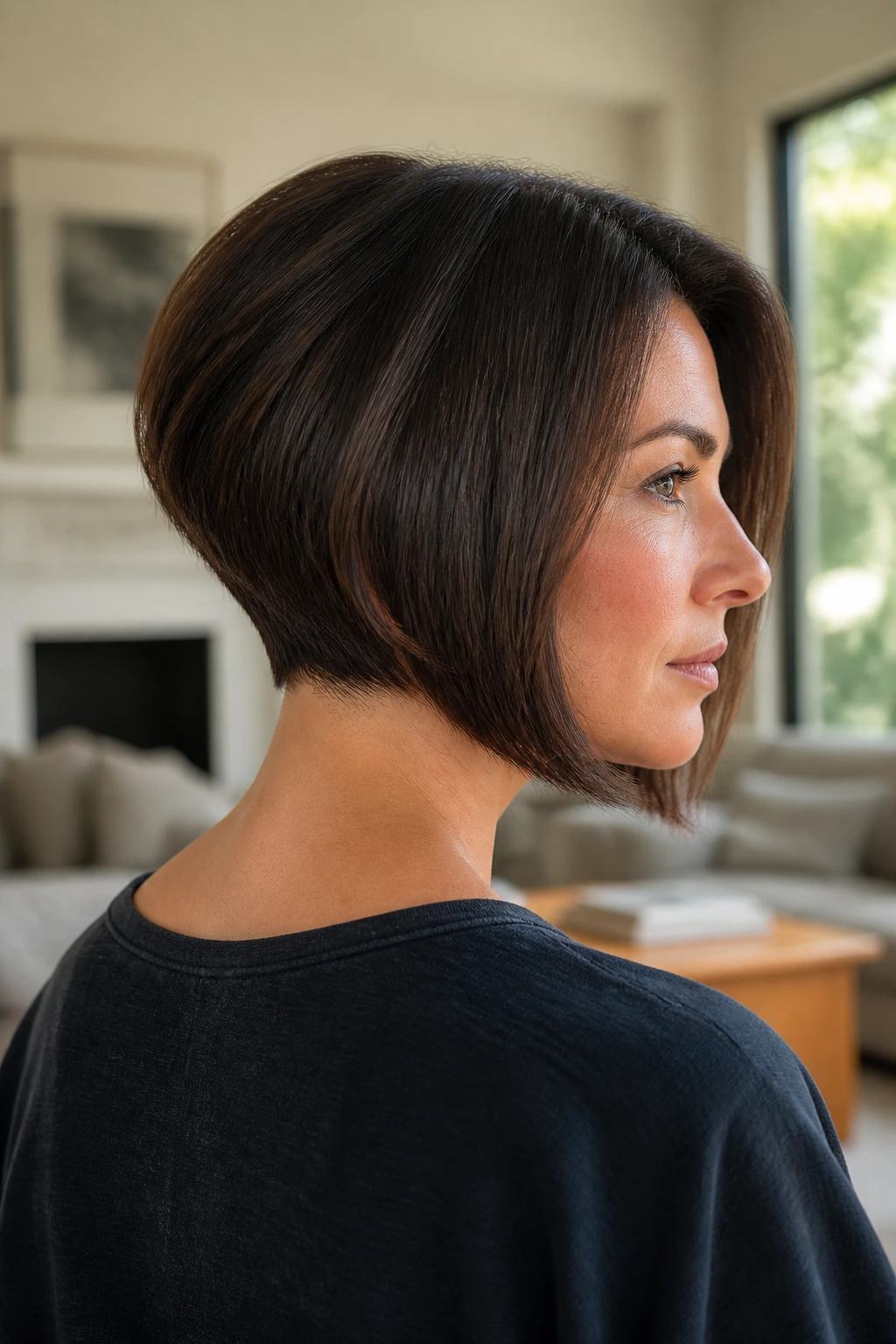
An A-line bob is a smart move when you want the back off the neck but still want the front to frame the face. The front pieces sit a little longer, often 1 to 2 inches past the nape, so the eye sees a clean slope rather than a blunt shelf. Thick hair loves that angle.
If you sweat easily or hate hair brushing your collar, this shape earns its keep. The shorter back creates a little air, and the longer front keeps the cut from feeling severe. It is one of those styles that looks more tailored the sharper the angle is, but there’s a limit. Push the difference too far and it starts reading costume instead of haircut.
I like this on straight or slightly wavy hair, especially when the sides tend to puff. The slope quietly solves that problem.
5. The Stacked Bob with a Clean Neckline
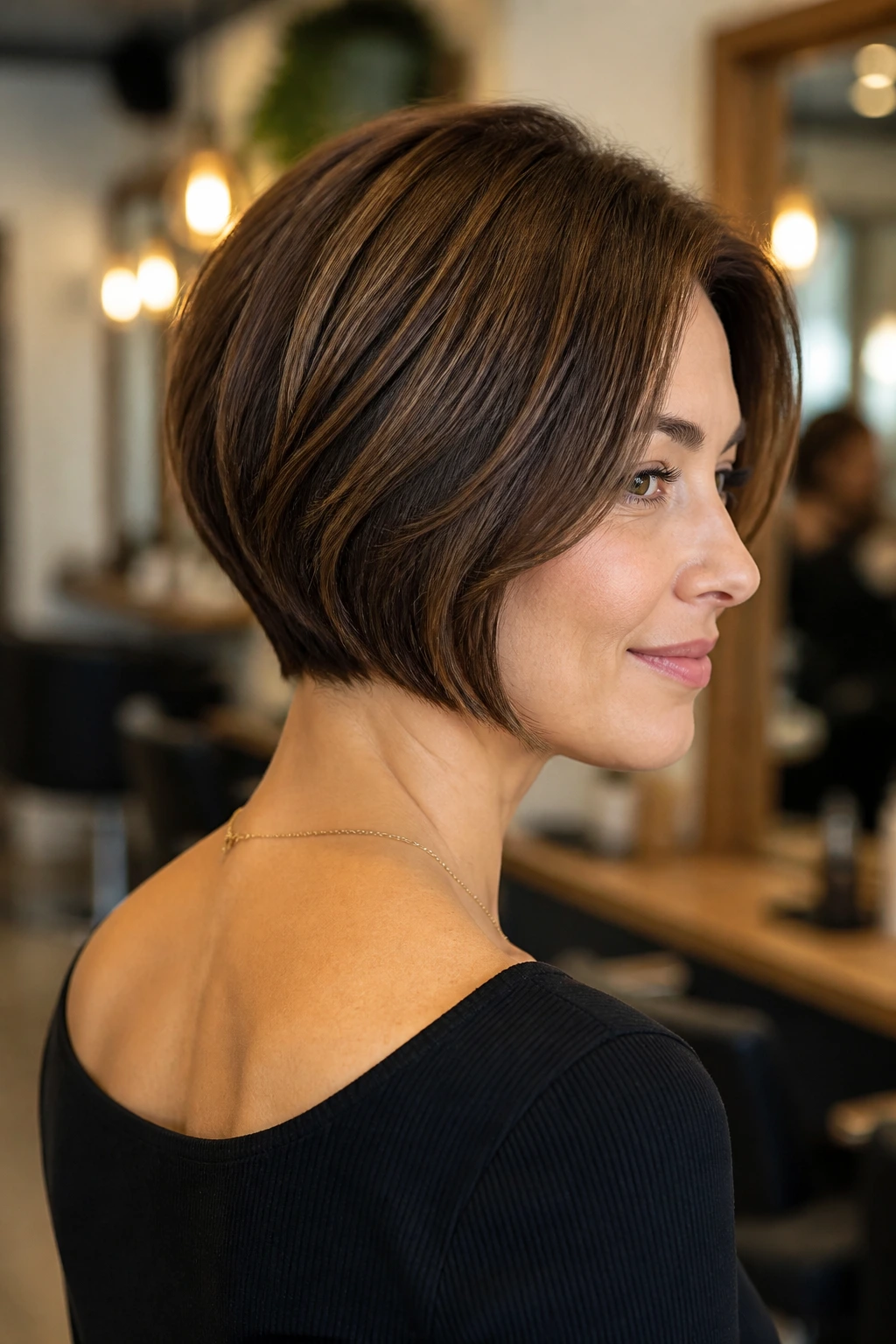
A stacked bob is for thick hair that needs lift at the crown without extra width at the cheeks. The stacking lives in the back, where short graduated layers build a little curve above the neckline. The sides stay controlled. That part matters.
Unlike a one-length bob, this cut creates a compact shape that doesn’t sit flat against the head. If your hair is heavy and straight, the stack helps the back move off the neck. If your hair is coarse, the graduation keeps the nape from looking bulky.
This is not the cut for a stylist who gets careless with a razor. The angle has to be precise, or the back can turn into a wedge you’ll spend months growing out. When it’s done well, though, it has a crisp, clean finish that makes thick hair look intentionally shaped.
6. The Collarbone Lob with Invisible Layers

Below ear does not have to mean short-short. A collarbone lob still belongs in this list because it sits in that useful zone where the ends fall below the ear, the neck feels open, and thick hair has enough length to settle down. It is one of the easiest cuts to wear if you are nervous about losing too much hair.
The layers here should be nearly invisible. That’s the whole point. You want movement through the mids without breaking the silhouette into pieces. Think of it as weight removal with a soft hand, not as a shag.
This cut is a strong choice if you air-dry half the week and blow it out the rest. It can go smooth, beachy, or tucked behind one ear, and thick hair usually keeps the shape longer than finer hair would.
7. The Shaggy Bob with Curtain Bangs

Want movement without the mop? This is the one. A shaggy bob with curtain bangs turns thick hair into something lighter around the face while keeping enough length at the ends to avoid the dreaded triangular puff.
The bangs matter here. Curtain bangs should open from the center and fall into the cheekbones, not slam straight across the forehead. On dense hair, that soft split gives the style room to breathe. It also buys you a little face framing without committing to a heavy fringe.
What to watch for
- Too much slicing at the ends can make thick hair look frayed.
- The bangs should start long enough to tuck behind the ears.
- Keep the shortest layers around cheek level, not up near the temples.
This cut works best when the hair has natural wave or when you’re willing to scrunch in a little texture cream and let it dry in pieces.
8. The Rounded Bob for Natural Volume
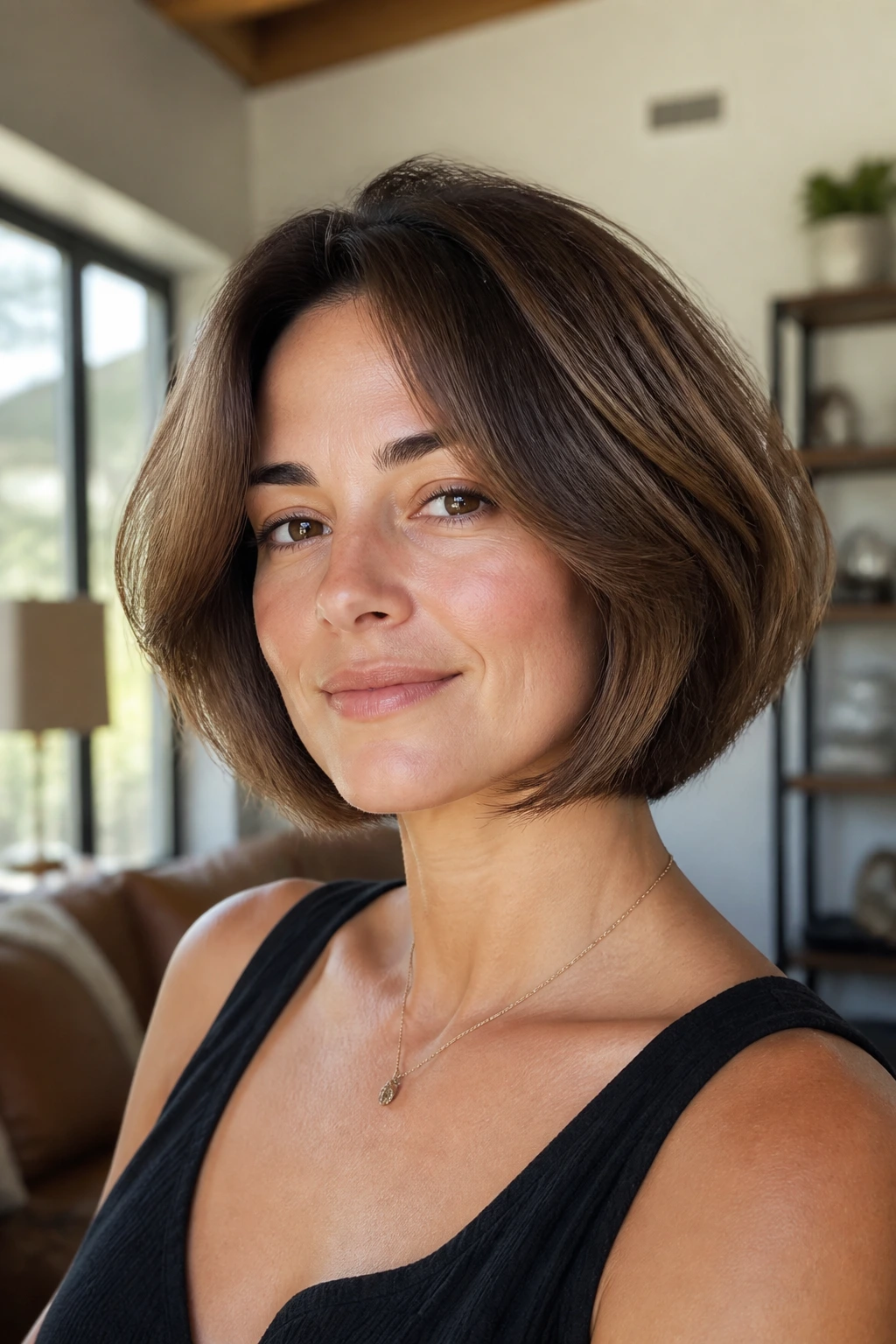
A rounded bob can be a blessing if your thick hair already has lift. Instead of fighting the fullness, it uses it. The cut follows the shape of the head, then curves in gently at the ends so the whole thing reads soft rather than boxy.
The danger here is obvious: too much roundness, and you get mushroom. Nobody wants that. The answer is keeping the crown controlled and leaving a little length through the front so the outline doesn’t look like a helmet with bangs. Slightly longer face-framing pieces fix a lot.
This is especially good for women who like volume but hate fuss. It looks finished with a blow dryer and a paddle brush, yet it can also hold its own with a little mousse and air-drying. That’s a rare combination.
9. The Asymmetrical Bob with a Side Sweep
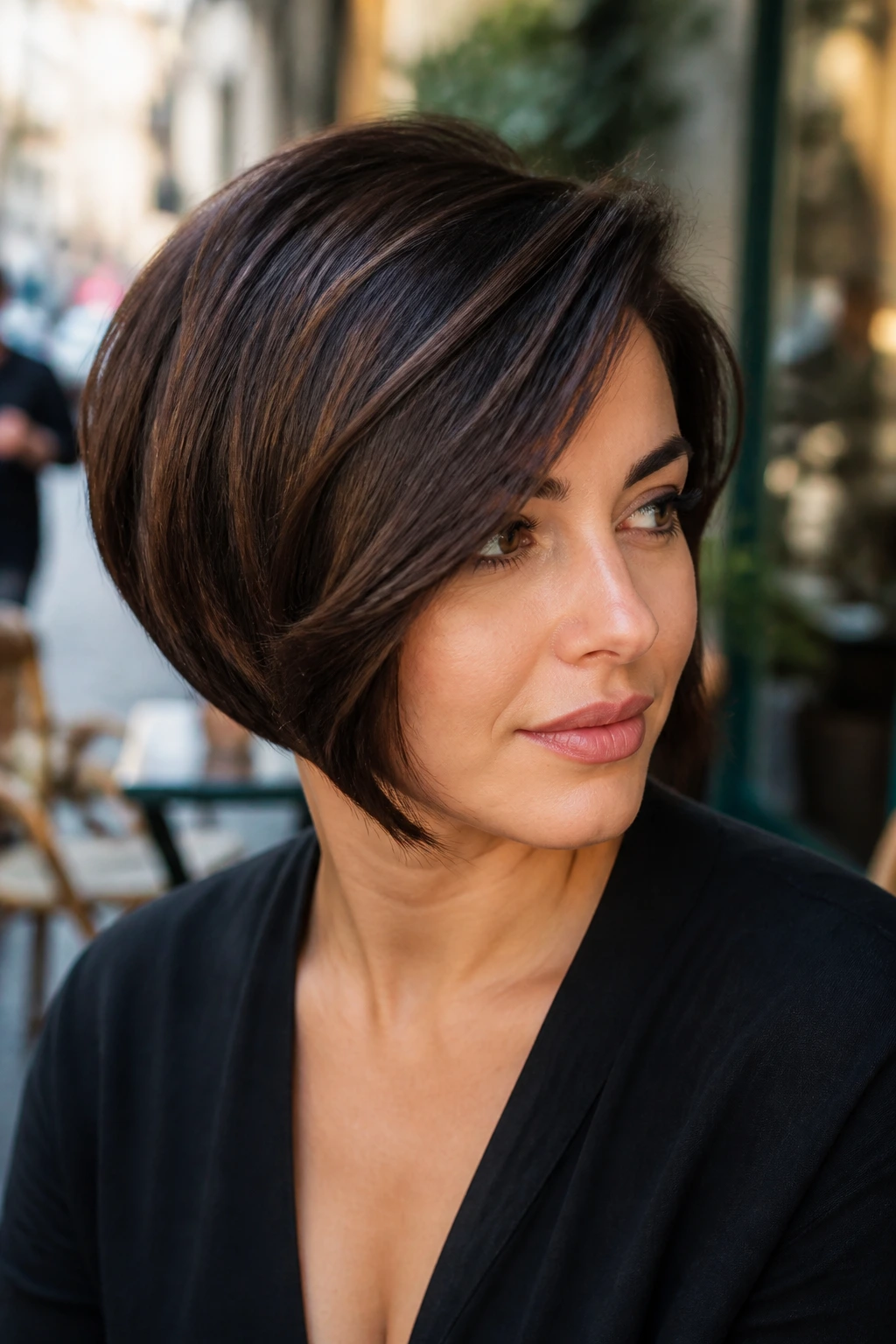
A small asymmetry can do more for thick hair than a whole bag of styling products. One side sits a little longer—often by 1 to 1½ inches—and the side sweep shifts the visual weight away from the widest part of the face. It’s a clean fix, and it does not need to be dramatic to work.
This shape is especially useful if your hair naturally parts to one side anyway. Instead of fighting the way the hair wants to fall, the cut leans into it and makes the part look deliberate. That kind of ease is worth something.
I like this best on straight to softly wavy hair. The line reads sharply when it’s smooth, but it still looks interesting when the ends bend a little. If you want something that feels less expected than a standard bob, this is a solid move.
10. The Razor-Cut Bob with Piecey Ends

There’s a reason razor cuts are divisive. On thick hair, they can create separation and air around the edges—but if the stylist gets greedy, the ends look fuzzy fast. The good version uses the razor on the last inch or two, not across the whole head.
The payoff is movement. Instead of one heavy wall of hair, you get soft, piecey ends that make the cut feel lighter without destroying the shape. That’s a useful trick if your hair is medium-coarse and resists blunt edges.
This cut is not my first pick for very frizzy hair. In humid weather, over-razored ends can lose the plot. But if your hair is dense, smooth, and a little stubborn in the flat-iron department, the piecey finish can make it easier to live with.
11. The Wavy Lob with Face-Framing Layers
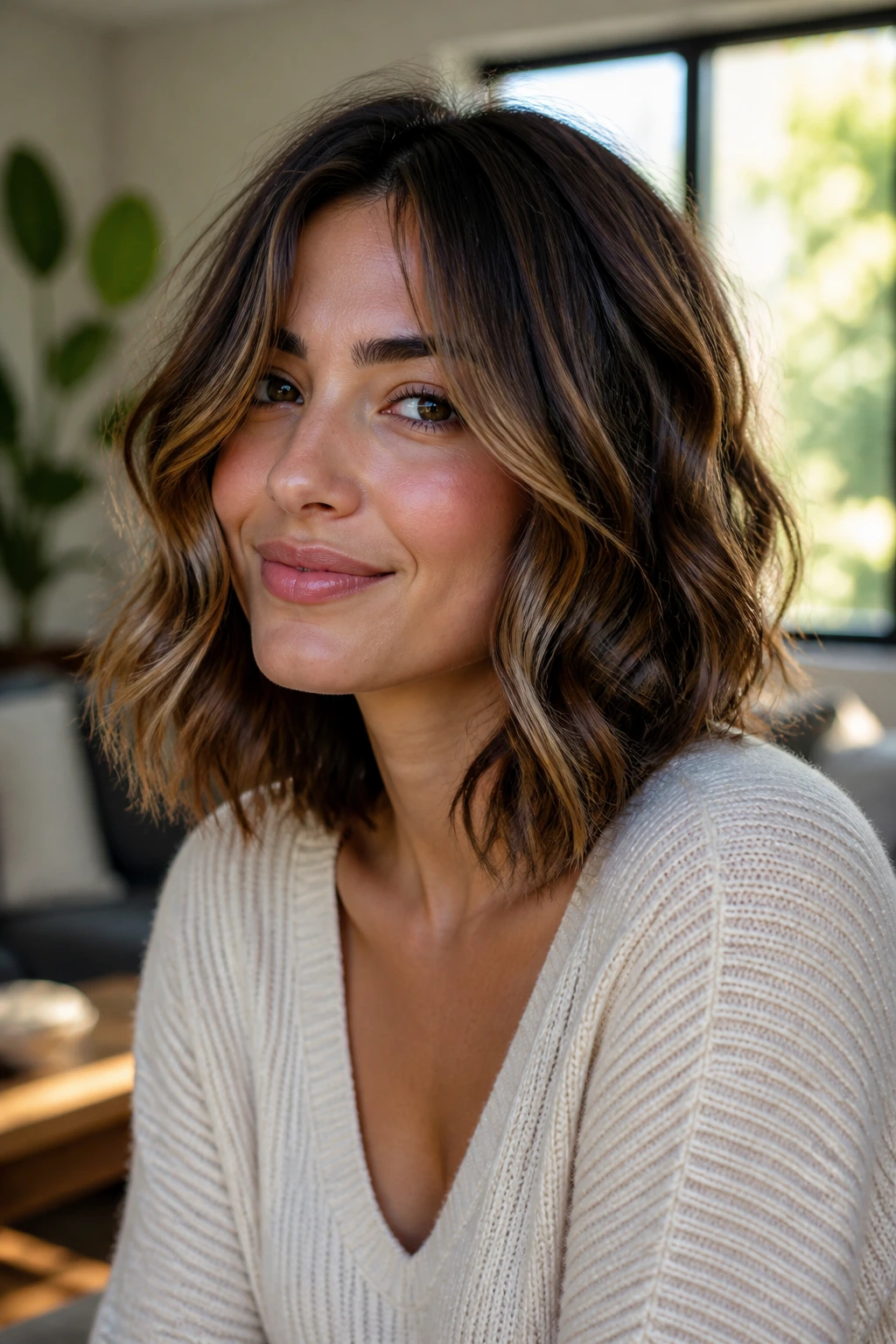
If your thick hair has natural wave, stop trying to make it behave like straight hair all the time. The wavy lob works because it gives the waves enough length to form, then removes a little weight around the face so the front pieces don’t hang there like wet towels.
What makes it different
The ends stay blunt enough to keep the outline strong. The layers begin around the cheekbone and feather forward from there, which gives the waves somewhere to sit. That’s the trick: shape without shredding.
I’d pair this with a diffuser on low heat or a quick air-dry routine and a tiny bit of curl cream, not a heavy butter. Thick waves can handle more product than fine hair, but they still go limp if you load the roots. Keep the moisture on the mids and ends, and let the front pieces do the framing.
12. The Curly Crop Bob with Halo Shape
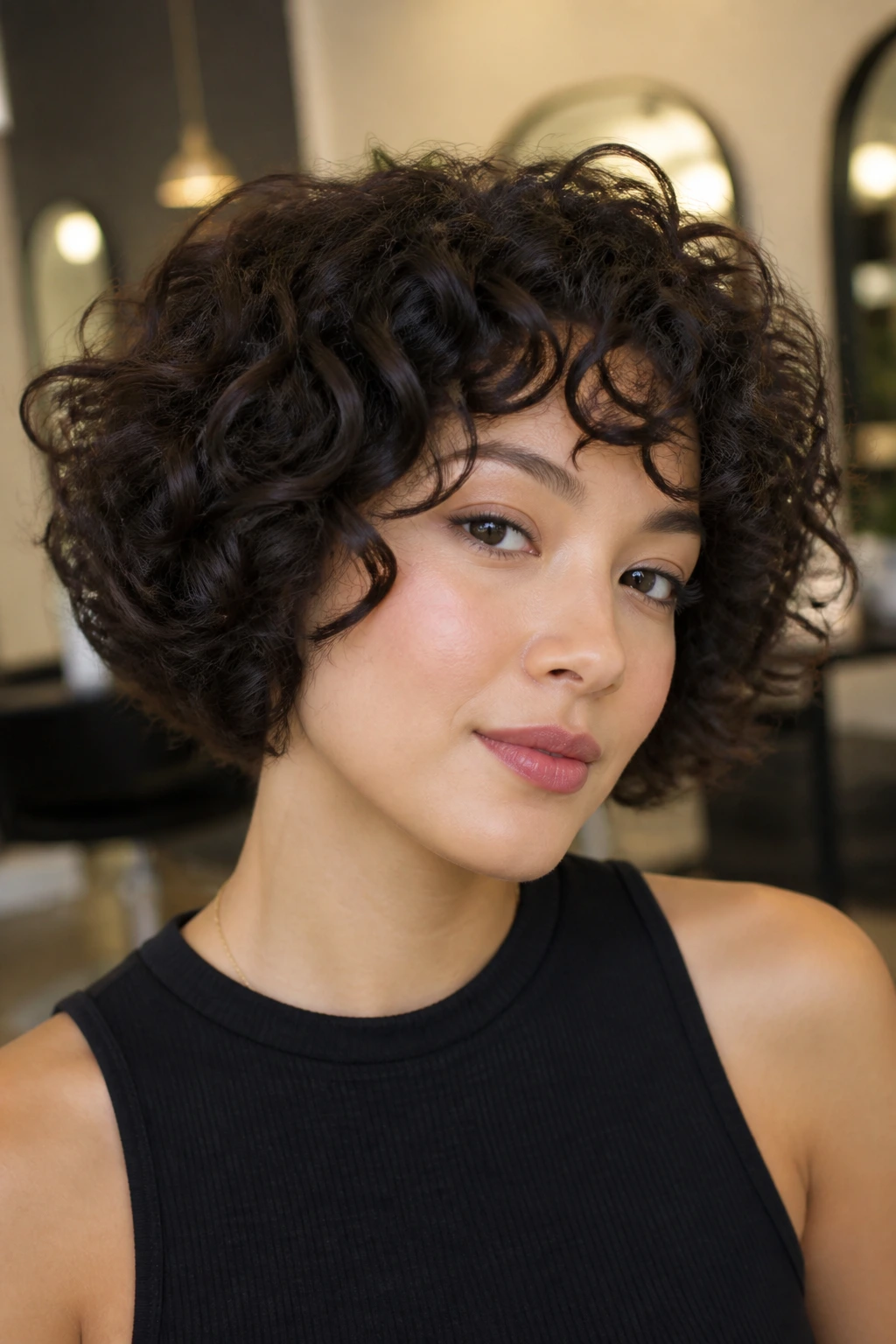
Curly hair at below-ear length needs a shape that respects shrinkage. A halo bob does that by keeping the outline rounded and balanced, so the curls sit around the head instead of stacking up into a pyramid. When it works, it looks almost sculpted.
Dry cutting matters here. Thick curls often spring up more than expected, and a wet cut can land too short once the water is gone. Ask for your stylist to check the shape as your hair dries so the final line lands where you want it.
This cut is happiest when the curls are left touchable, not frozen into a shell. Use a light gel or cream, scrunch gently, and resist the urge to keep touching it while it dries. Curly hair above the shoulders can swell quickly when it’s overhandled.
13. The Box Bob with a Center Part
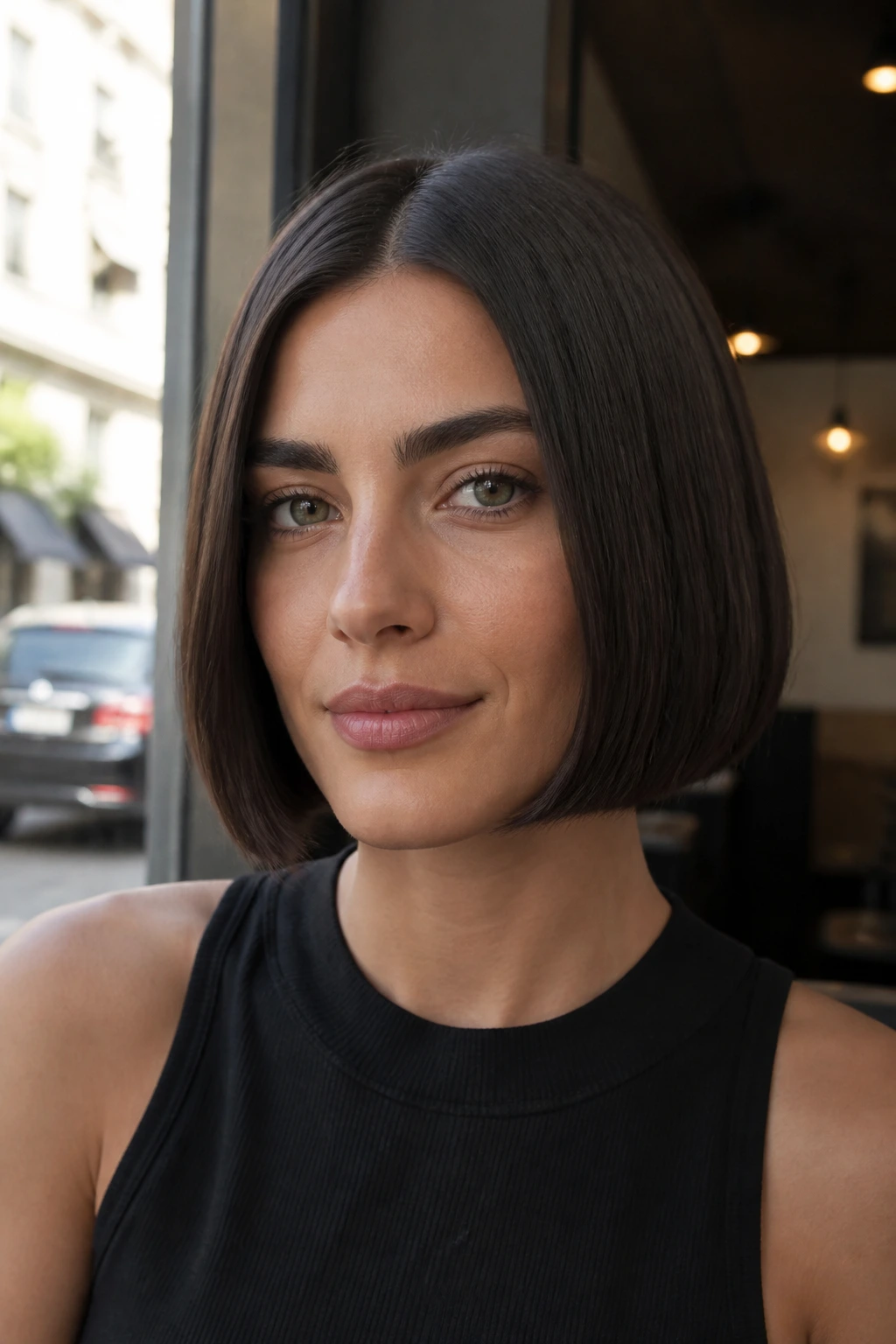
Can thick hair pull off a square bob without looking severe? Yes, if the line is clean and the density is managed from underneath. The box bob uses a straight, centered shape that sits just below the ear, and the symmetry gives heavy hair a crisp frame.
This cut is strongest when the hair is naturally straight or can be blown smooth with a paddle brush. A center part keeps the geometry honest. A side part can soften it later, but the centered version shows off the line at its best.
I like this for women who wear sharp collars, simple earrings, and minimal styling. It has a graphic quality that thick hair rarely gets to show off. The key is keeping the ends blunt and the underlayers trimmed so the bottom edge doesn’t balloon.
14. The Feathered Bob with Airy Ends
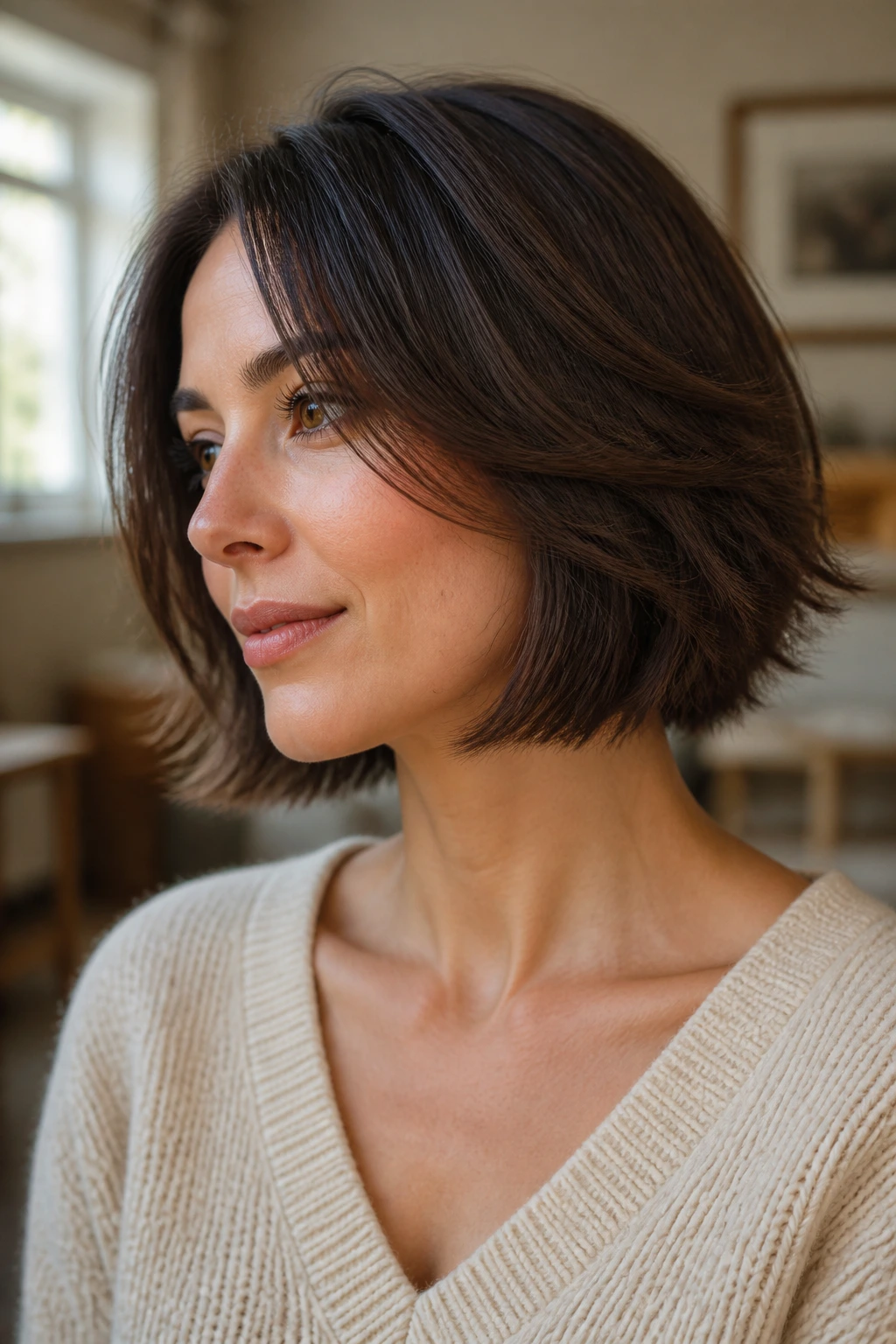
Feathering can be beautiful on thick hair, as long as it’s used with a light hand. A feathered bob breaks up the heavy outline with soft, brushed-out ends and a little movement around the face, which makes the whole cut feel less dense.
This is a strong choice if your hair tends to sit flat at the crown but gets bulky near the jaw. The feathering gives it lift through the ends without requiring a ton of teasing or product. That said, feathering and frizz are close cousins. If your hair is coarse and dry, keep the feathering subtle and finish with a smoothing serum on the tips.
It’s also one of the easiest ways to soften a thick bob that feels too blunt after a few weeks of growth. The shape just loosens a little. Nothing dramatic. That’s the point.
15. The Graduated Bob with Undercut Relief
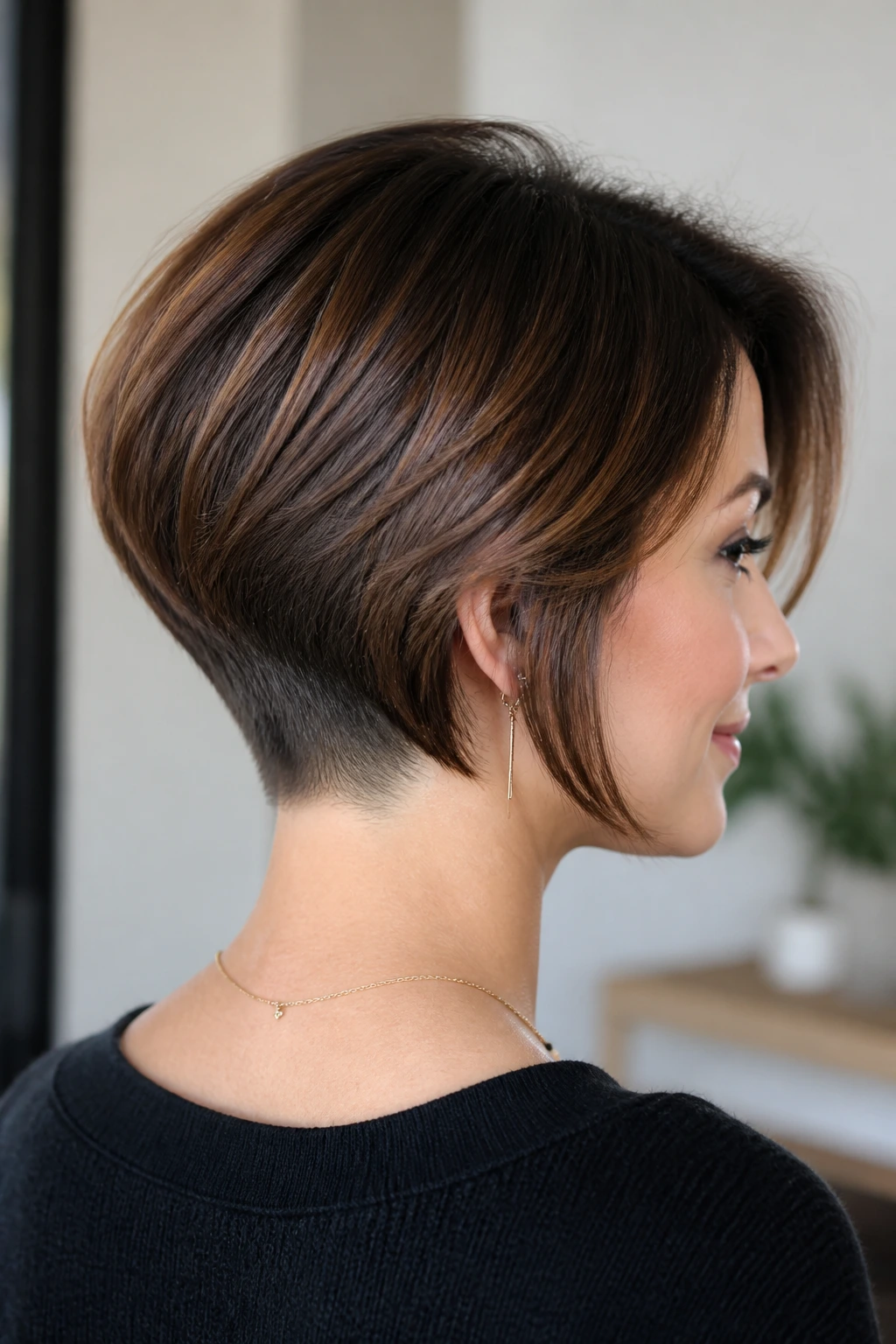
When thick hair feels hot, heavy, and slow to dry, a graduated bob with a hidden undercut can be a relief. The undercut removes bulk from the lower nape, often by half an inch to an inch, while the top layers keep enough length to cover it. It’s discreet, but it changes the whole feel of the cut.
The graduation gives the back lift, and the undercut takes pressure off the neck. That combination is useful for very dense hair, especially if your hair grows out into a solid block no matter what the stylist does. It is not subtle in the chair, but it can be subtle in daily life—which is what counts.
This is one of the more maintenance-heavy cuts on the list. You’ll need trims to keep the undercut from growing into the outline. Still, if you’re tired of hair sitting like a wool blanket at the nape, it’s worth the upkeep.
16. The Soft Pixie-Bob with a Longer Nape
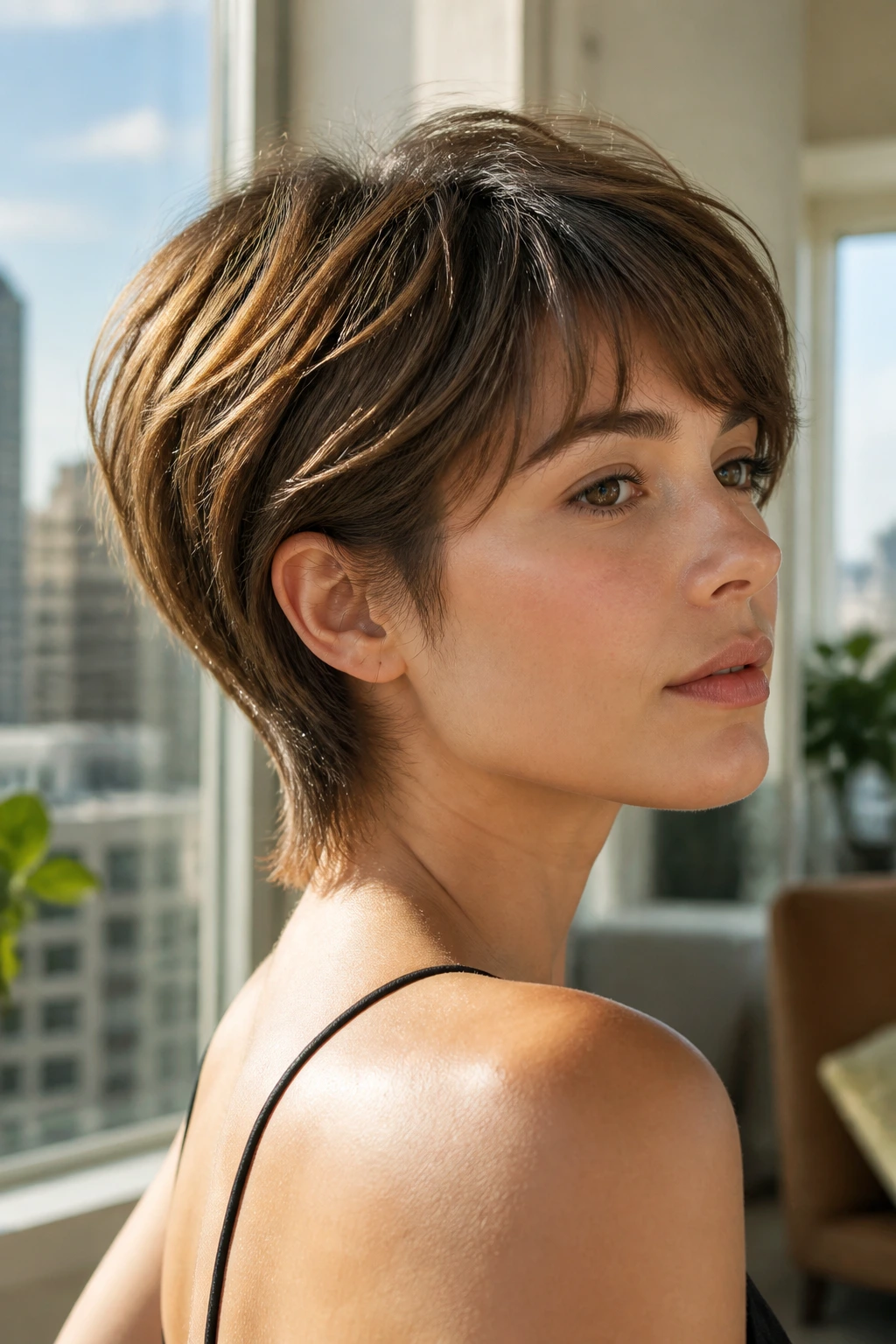
The soft pixie-bob is a good exit ramp for anyone who wants shorter hair without going all the way into pixie territory. The top stays below the ear or just grazing it, the nape tapers in neatly, and the front pieces keep enough length to tuck or sweep.
What makes it work on thick hair is the balance. Too much pixie energy and the top explodes. Too much bob length and the shape loses its point. This middle ground gives you lightness at the neck and a little body up top, which is where thick hair usually looks best.
I’d recommend this for women who wear earrings and want the neck clear. It looks sharp with a side part and a dab of pomade at the ends, but it also holds up with rough drying and finger styling. Easy hair, but not lazy hair.
17. The Choppy Lob with Bottleneck Bangs
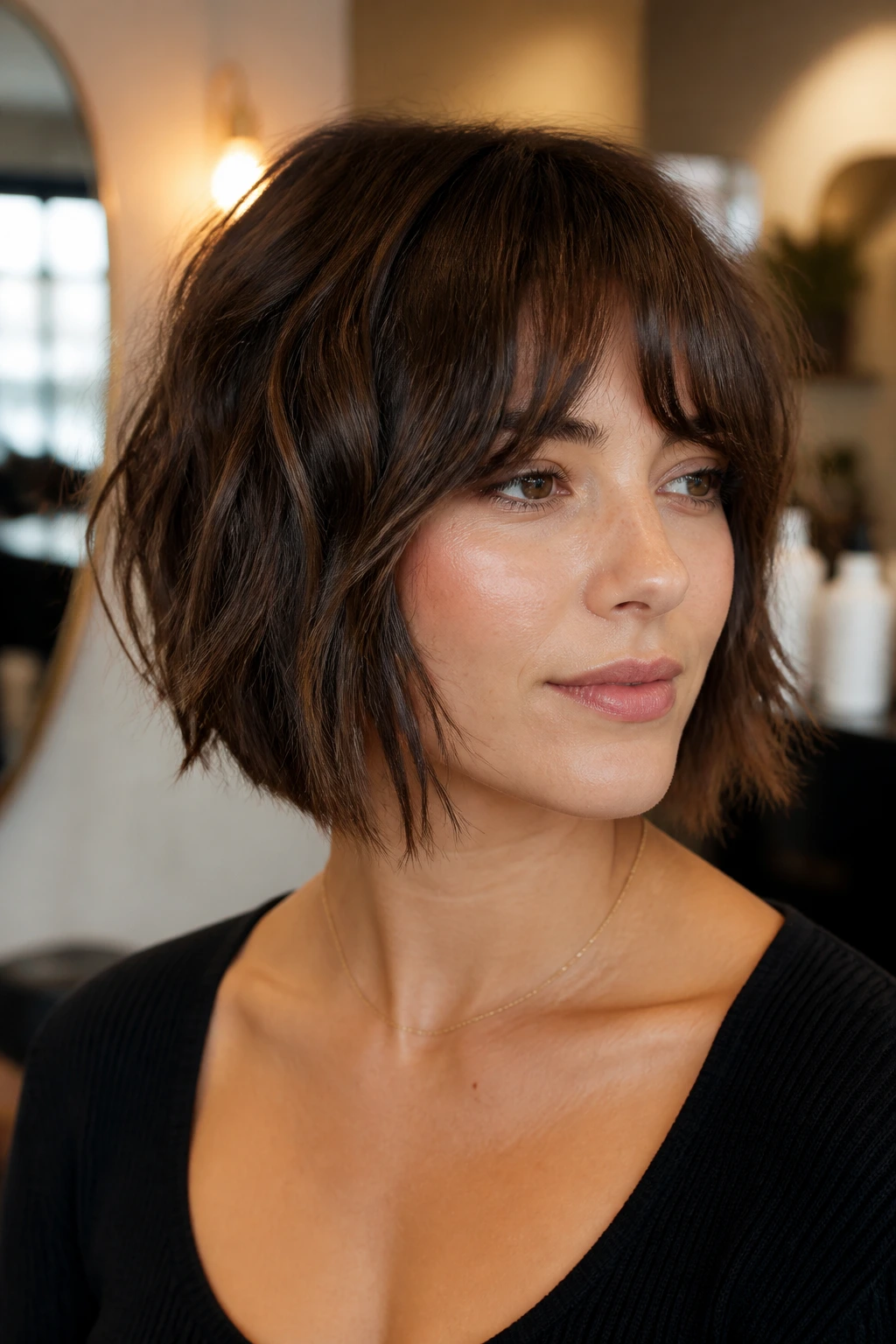
A choppy lob is a smart answer when thick hair feels too heavy to wear blunt and too puffy to wear heavily layered. The rougher texture breaks up the mass, and bottleneck bangs soften the forehead without crowding the eyes.
The bangs are the detail that makes this cut feel modern without trying too hard. They start narrower at the top, widen around the brow, then taper into the front layers. On thick hair, that shape keeps the fringe from turning into a solid wall.
This cut likes a bit of grit. A salt spray, a light mousse, or even a tiny bit of dry texture spray can help the ends separate enough to show the shape. If you like hair that looks a little undone but still planned, this one has range.
18. The U-Shaped Lob with Long Front Pieces
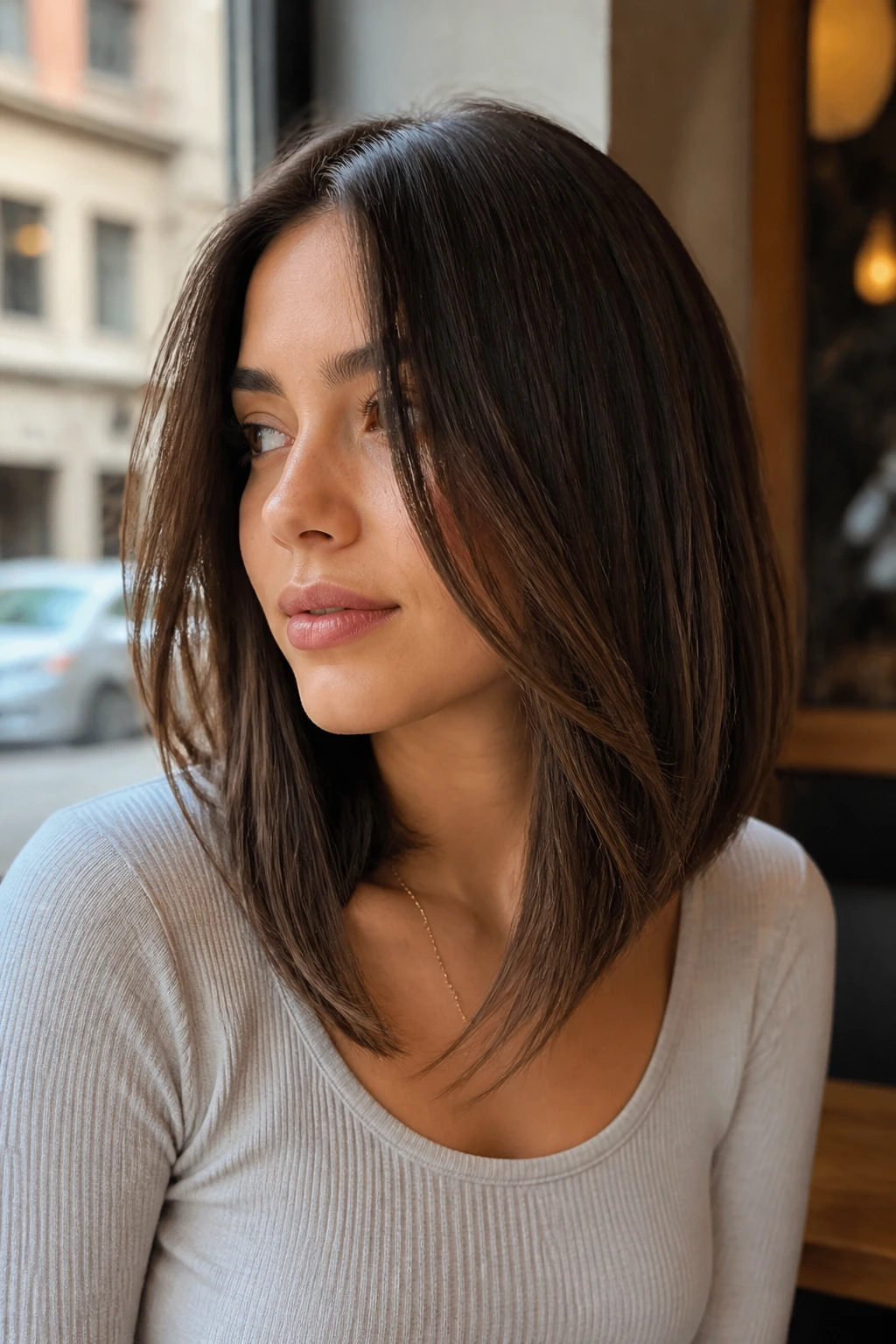
A U-shaped lob is a quiet solution, and I mean that as a compliment. Unlike a straight horizontal line, the U-shape leaves more length in the front and a softer curve through the back, which helps thick hair fall in a more controlled way.
The shape is especially good if you want to keep some swing. The front pieces can sit at the collarbone or slightly below, and that extra length keeps the hair from kicking out at the sides. Thick hair often behaves better when it has a little direction, and this cut gives it one.
It is also a forgiving grow-out. A couple of months after the cut, it still looks intentional because the front remains longer. That matters if you do not want to live in the salon every six weeks.
19. The Tapered Bob with a Soft Underlayer
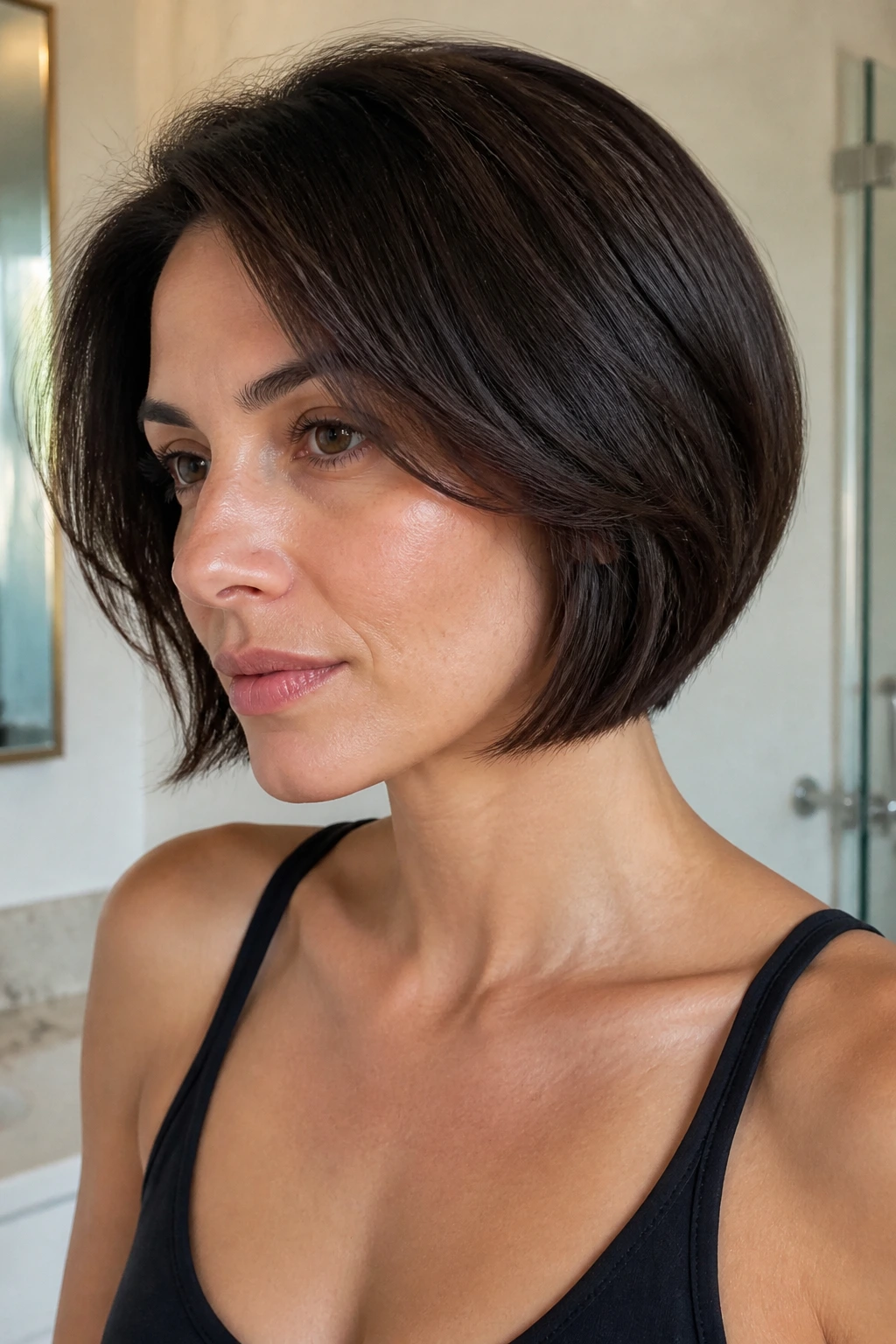
A tapered bob trims the density where you feel it most, usually through the lower half-inch to inch of the shape, while keeping the outer line clean. The result is lighter at the ends without looking thin or frayed. That balance is harder to get than it sounds.
The feel of it matters
When this cut is right, the ends move instead of sticking out. They feel lighter between your fingers, but the overall shape still looks full. That distinction is everything on thick hair.
This is a good choice for coarse textures that stay bulky even after a blow-dry. Ask for soft tapering, not aggressive thinning. Aggressive thinning can leave little see-through gaps that get worse the second day, especially if your hair has any wave.
20. The Side-Part Bob with a Sweeping Fringe
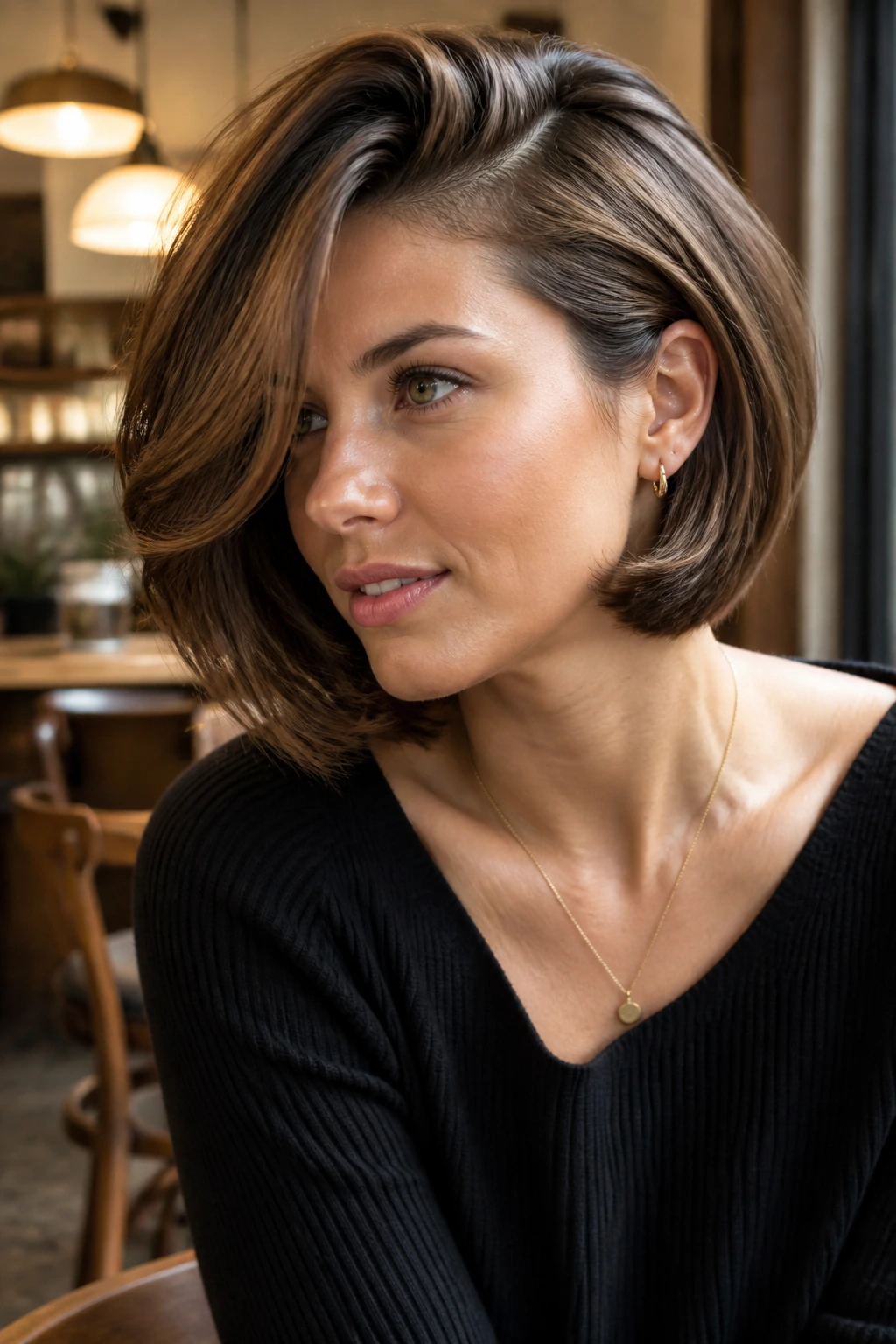
If your cowlick fights a center part, why keep arguing with it? A side-part bob uses that natural bend and turns it into part of the design. The sweeping fringe pulls weight off one side and gives thick hair an easier way to fall.
The fringe should be long enough to move—usually around the cheekbone or a little below—and light enough to flip back without a fight. This helps balance strong cheek lines and broad foreheads, but it also works simply because it makes thick hair look less rigid.
I like this shape when the cut feels a touch too formal with a center part. The side sweep loosens it up without needing layers everywhere. It’s a small change. It changes a lot.
21. The Textured Lob with Micro-Layers
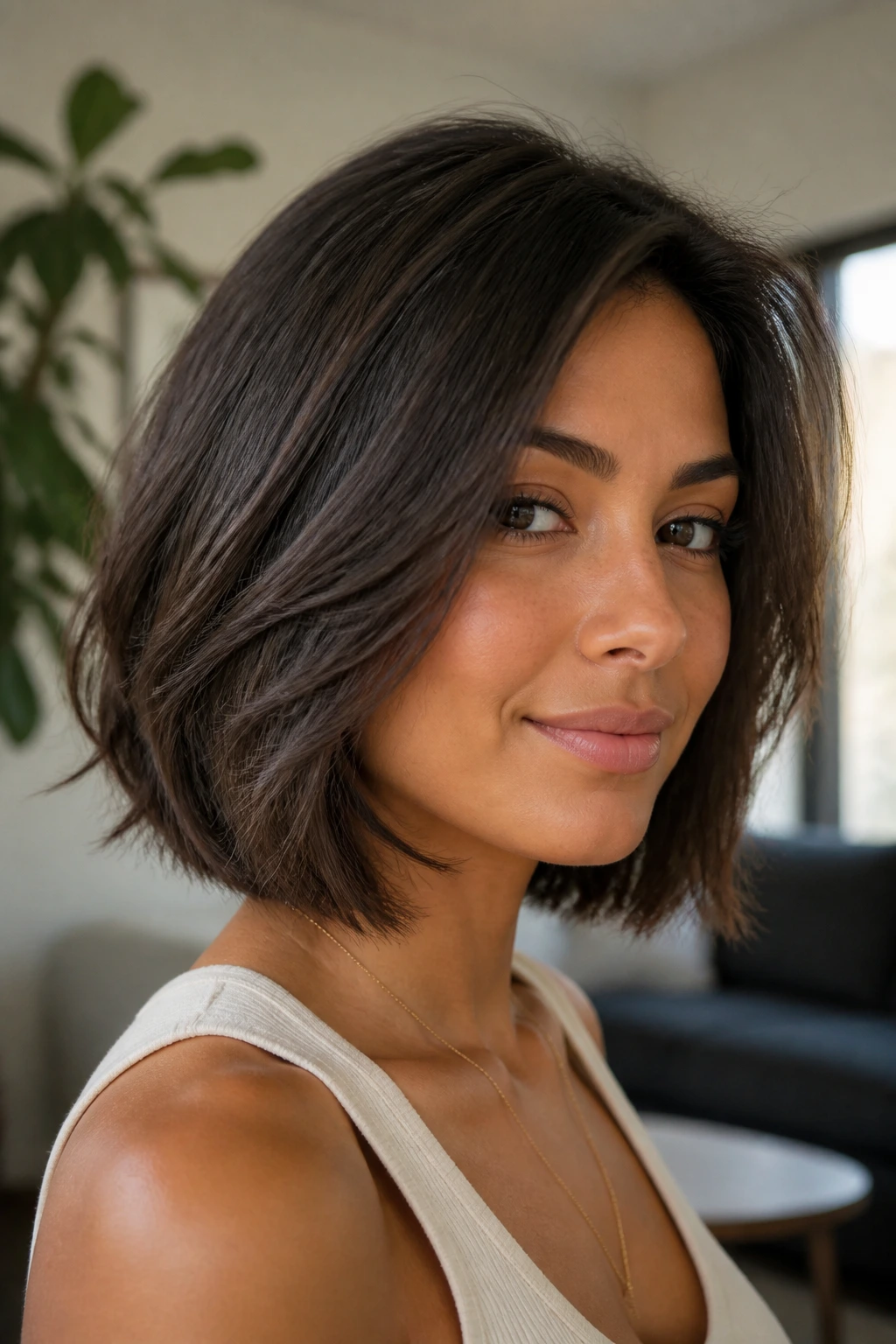
Dense hair that sits flat at the crown but bulked up at the ends needs a precise kind of texturing. Micro-layers solve that by removing just enough weight in the upper mids to let the hair swing, while keeping the outline of the lob solid and below the ear.
This is not the same as a shag. The layers are tiny, controlled, and hidden unless the hair moves. That makes the cut easier to wear at work and easier to style on a rushed morning. The shape looks relaxed, but it still has a spine.
If your hair is coarse, this can take a lot of pressure off the ends. The cut keeps the density from dragging everything down, which is why it often looks fresher than a straight one-length lob after a few weeks.
22. The Curved-Underline Bob with a Polished Finish

The curved-underline bob is the safest bet when you want thick hair to look crisp every day. The line sits just below the ear, the back curves in slightly, and the front follows the jaw in a soft arc. It’s tidy without feeling stiff.
This shape gives thick hair a natural bend, which means the ends want to fall under instead of kicking out. If you like a clean finish, this is the cut that rewards a quick blow-dry with a round brush or even a careful pass with a paddle brush and a flat iron on the last inch.
I think of it as the polished version of a classic bob. Nothing gimmicky. No tricks. Just a strong outline that thick hair can carry without effort showing all over the place.
What to Ask for at the Salon
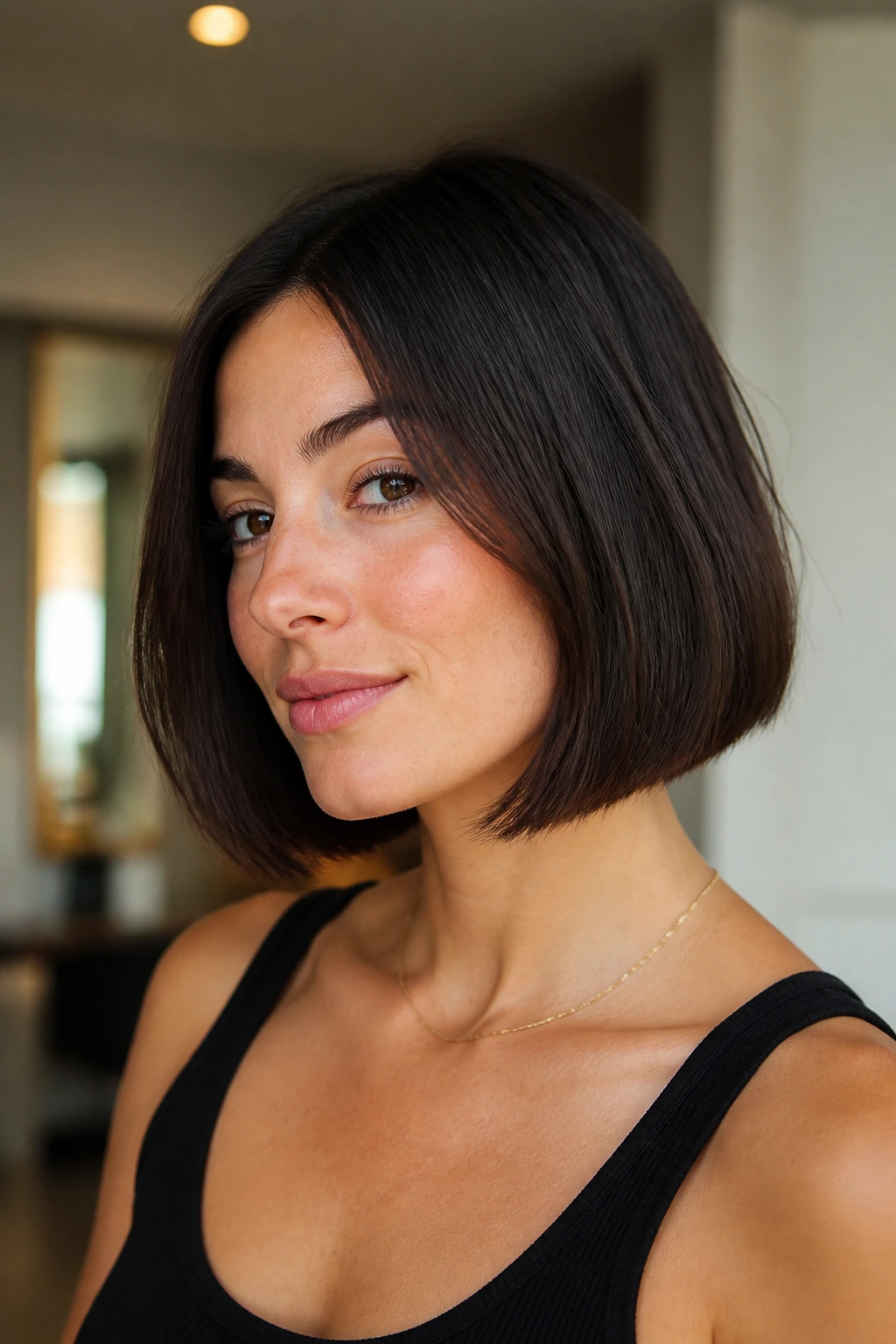
The best haircut conversations are annoyingly specific, and that’s the point. Say where you want the length to land in relation to your ear, chin, or collarbone. If you say “short but not too short,” you leave too much room for guesswork.
Bring one photo for the shape and one for the texture if you can. The stylist needs to know whether you want blunt, layered, stacked, or curved—but also whether you blow-dry, air-dry, or iron the ends straight. Those are not small details. They change the cut.
Give your stylist these details
- Your daily styling routine: say whether you heat-style, air-dry, or do both.
- Your growth pattern: mention cowlicks, cowlick-heavy napes, or a strong side part.
- Your bulk zone: tell them whether the sides, back, or ends feel too heavy.
- Your finish preference: blunt, soft, piecey, polished, or rounded.
The big mistake is asking for “thinning.” That word can mean five different things. Ask for interior weight removal, subtle point cutting, graduation, or undercutting instead. You’ll get a much better result.
Essential Tools for Styling and Maintenance
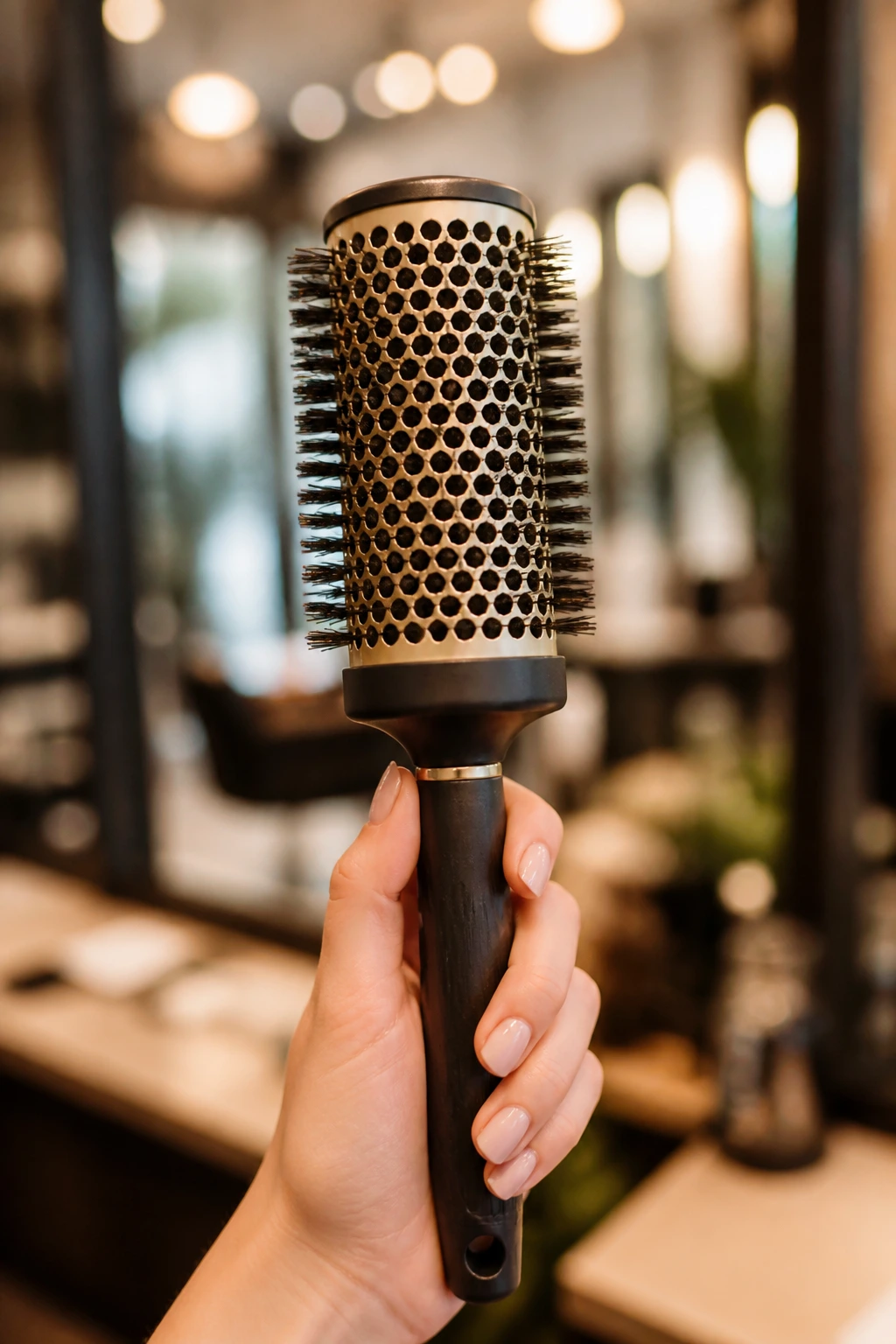
You do not need a dresser full of gadgets, but a few specific tools make below-ear haircuts behave much better.
- Blow dryer with a concentrator nozzle: Directs airflow so thick hair smooths faster instead of puffing around the room.
- 1- to 1.25-inch round brush: Good for bending the ends under and building a little root lift.
- Vent brush: Useful for rough drying dense hair without overworking the cuticle.
- Tail comb: Helps with clean parts, sectioning, and controlling the nape while blow-drying.
- Duckbill clips: Keep thick sections out of the way when you’re styling in layers.
- 1-inch flat iron: Best for the last inch of a bob or lob, especially if the ends flip out.
- Heat protectant spray: Non-negotiable if you use hot tools more than once a week.
- Light smoothing cream: Controls frizz without flattening the crown.
- Root-lifting mousse: Useful for thick hair that sits heavy at the top and needs a little bend.
- Texture spray or light wax: Good for piecey finishes and second-day touch-ups.
A diffuser is worth owning if your hair bends or curls on its own. It keeps the shape from collapsing into frizz while still letting the texture live.
How to Style It on Busy Mornings

Below-ear cuts for thick hair work best when the routine is short and honest. If your morning window is ten minutes, don’t start by pretending you’ll do a salon blowout before coffee. Pick the version of the cut that suits the time you actually have.
Air-Dry: Blot the hair with a microfiber towel, smooth in a small amount of leave-in, and scrunch the mids only if your texture wants movement. Clip the front pieces away from the face for the first 10 minutes so they don’t dry flat against the cheeks.
Quick Blowout: Rough-dry to about 80 percent, then use the round brush only on the perimeter and fringe. You don’t need to polish the entire head. The ends and front line matter most.
Second-Day Reset: Mist the hair lightly with water, warm a pea-sized amount of smoothing cream between your palms, and bend the ends under with your fingers or a flat iron. Thick hair usually revives well with less effort than people expect.
Humidity Plan: Keep a tiny amount of serum on the ends and avoid coating the roots. Heavy product near the scalp makes thick hair sink in a way that reads greasy, not sleek.
Common Mistakes That Make Thick Hair Misbehave

The first mistake is over-thinning the ends. Thick hair can handle some debulking, but if the last inch is shredded too hard, the cut loses its line and starts looking fuzzy by the second day. The fix is simple: ask for internal weight removal, not aggressive texturizing at the perimeter.
Another one: cutting too short at the ear without thinking about the side profile. Thick hair often springs out once it dries, which means a bob that looked neat in the chair can turn into a puffed shelf at home. Leaving a little length below the ear—plus a clean bevel—usually solves it.
Other problems to watch for
- Ignoring the natural part: A center part on a strong side-part head can make the cut fight itself all day.
- Using heavy creams on the roots: Thick hair collapses fast when the scalp gets coated.
- Skipping regular trims: Once the line softens too much, thick hair loses its shape and starts expanding outward.
The last mistake is asking for the same haircut photo regardless of texture. A picture helps, but your hair’s actual density and bend pattern matter more than the model’s jawline. A good stylist adjusts the cut to the hair in the chair, not the screen in your hand.
Variations and Alternatives to Try

The Air-Dry Lob: Keep the length closer to the collarbone and ask for barely visible internal layers. This version suits thick hair that bends naturally and doesn’t need much heat to look finished.
The Sleek Office Bob: Choose a blunt outline with a center or soft side part, then keep the ends curved under. It reads polished without needing a lot of styling time, which is handy if you prefer clean lines.
The Curl-Safe Shape: Ask for a rounded bob cut dry, with the shortest point landing below the ear when the curls shrink. This keeps the shape from going too short once the hair is dry.
The Grow-Out Friendly Version: Keep the front pieces a little longer than the back and avoid excessive layering. Thick hair grows out fast enough that a forgiving shape saves you a salon visit or two.
How to Keep the Shape Sharp Between Trims

Below-ear haircuts look best with a trim every 6 to 8 weeks if the line is blunt or stacked. If you have bangs, the fringe may need a touch-up around the 3- to 4-week mark. Thick hair can hide a lot, but it can also bury a bad outline fast.
Wash habits matter more than people expect. If you use smoothing products or texture spray often, a clarifying shampoo every 2 to 4 weeks keeps the hair from feeling coated. Follow that with a conditioner on the mids and ends only. Heavy conditioner near the scalp will flatten the shape.
At night, a loose clip or a silk pillowcase helps keep the ends from turning into a bendy mess. If you sleep with your hair tucked under your head, the shortest pieces around the nape and jaw get the worst of it. A quick morning pass with a brush or flat iron usually fixes the damage, but it’s nicer not to need the fix in the first place.
Frequently Asked Questions
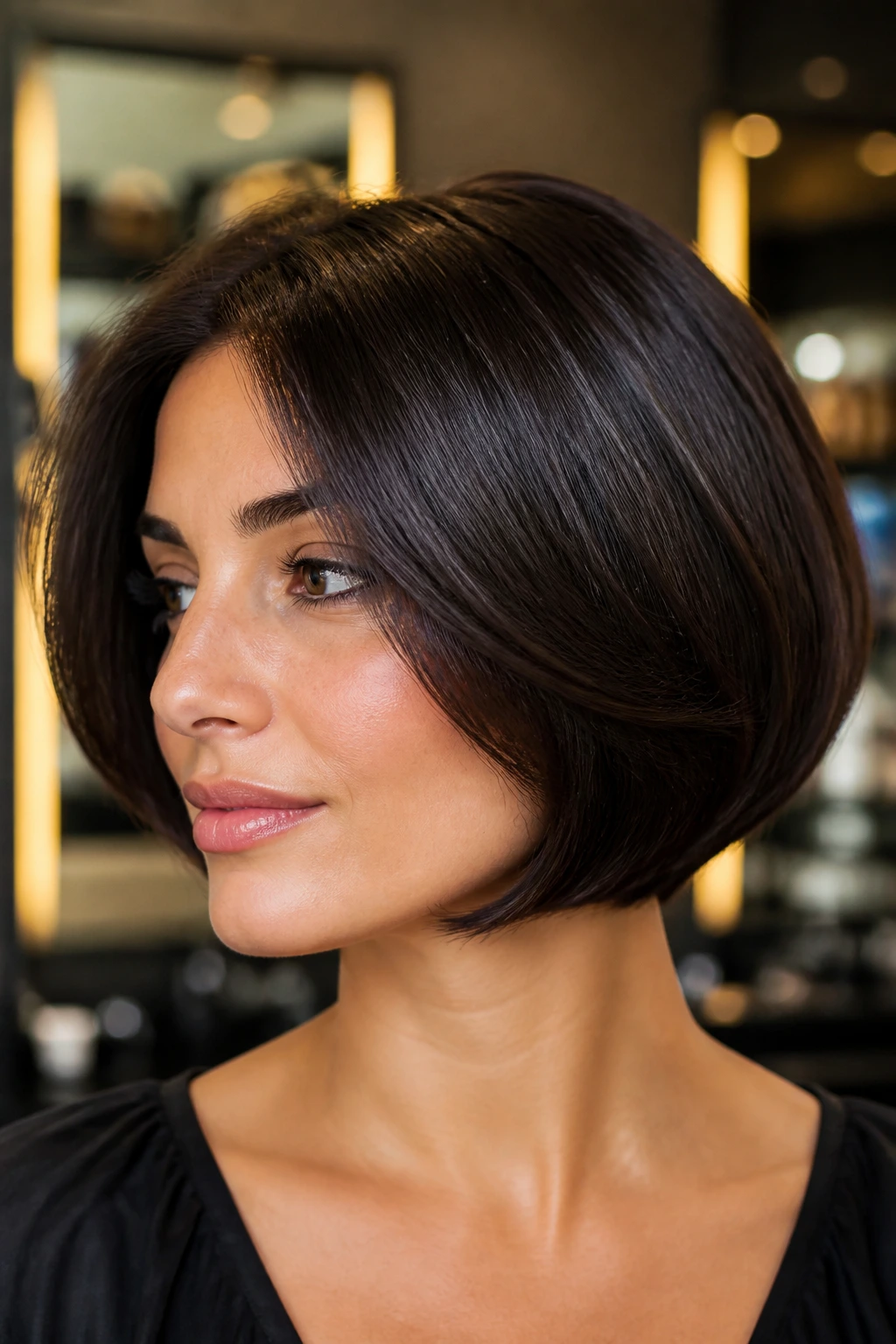
What counts as a below-ear haircut?
Usually, it means the shortest layers or perimeter sit at or below the earlobe, with the line reaching somewhere between the jaw and collarbone. The exact point matters less than the effect: the ear is covered enough that the cut feels like a bob or lob, not a pixie.
Is a blunt bob or layered bob better for thick hair?
A blunt bob is better when your hair is heavy but smooth, because it keeps the shape clean. A layered bob helps if your hair feels bulky, hot, or hard to move. The best answer usually sits between the two.
Can thick curly hair wear a below-ear bob without puffing up?
Yes, but the cut needs to respect shrinkage. A curly bob should be shaped dry or checked dry, with the shortest point longer than you think. Rounded edges and light, controlled layering usually work better than a blunt chop.
How often should I trim a below-ear cut?
Every 6 to 8 weeks is a good rhythm if you want the line to stay crisp. If your hair grows fast or you wear bangs, you may need a quicker cleanup. Let it go too long and thick hair starts spreading outward instead of sitting in shape.
Will this kind of haircut make my face look wider?
It can if the width lands exactly at the broadest part of your cheeks. That’s why front length, side part choice, and face-framing pieces matter so much. A slight angle or a longer front usually prevents that squaring-off effect.
How much thinning is too much?
If the ends start looking wispy, see-through, or frayed after one wash, the haircut was thinned too hard. Thick hair usually does better with internal removal and a strong perimeter. The edge should still feel like a line.
Can I air-dry these cuts and still look put together?
Yes, but pick a shape that works with your texture, not against it. Wavy and curly hair handle air-drying especially well, while straighter thick hair usually needs a little smoothing cream or a quick bend at the ends.
What if my hair flips out at the bottom no matter what I do?
That usually means the ends are too blunt for your growth pattern or the cut is landing at an awkward spot on the neck. A tiny bevel, a slight A-line, or a different weight line often fixes it. A flat iron on the last inch can help, but the cut should carry most of the work.
A Cut That Gives Thick Hair Structure
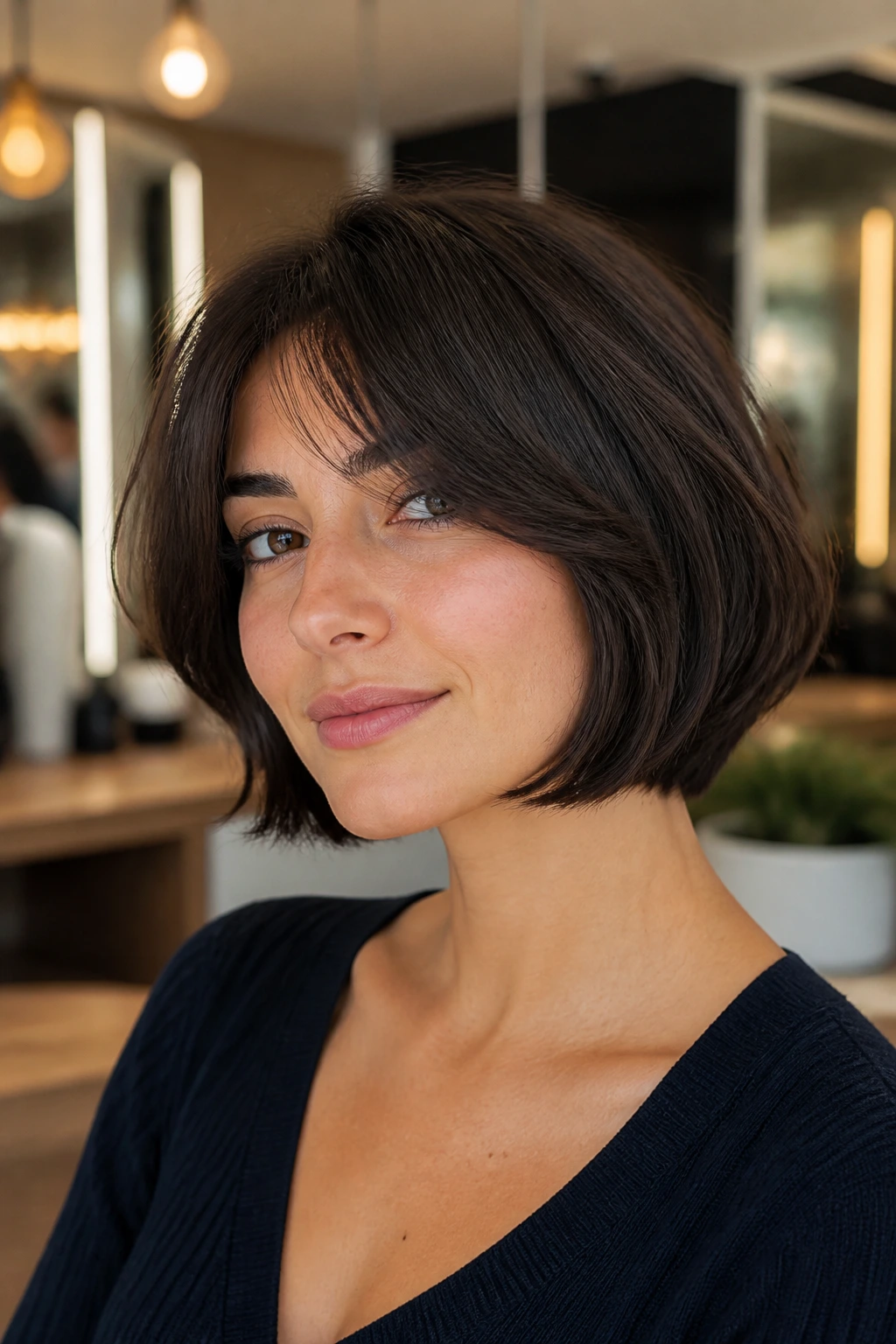
Below-ear haircuts can do something long hair often cannot: they put thick hair in a shape you can actually see. Not thinner. Not flatter. Shaped.
That’s the difference. A good bob or lob doesn’t fight density; it uses it. The ends sit where they should, the neck gets a break, and the whole cut looks intentional even when the styling is plain.
Pick the version that matches your habits more than your fantasy. If you blow-dry every day, a polished curve or stacked back will make sense. If you air-dry and move on, lean into a French bob, a lob, or a rounded shape that keeps its own balance. Thick hair rewards honesty, and it usually looks best when the cut stops trying to argue with it.