



Thick hair and a heart-shaped face can look striking together, but the wrong cut turns the whole outline into a triangle fast: fullness at the sides, a heavy line at the jaw, and too much attention sitting high on the forehead. The better shapes do something quieter. They break up the width where the face is broadest, keep the ends from flaring, and let the cheekbones do their job.
That’s where these fine hairstyles for thick hair and heart-shaped faces earn their keep. Curtain bangs, side parts, internal layers, beveled ends, soft twists — none of those are decoration here. They are the tools that decide whether your hair feels balanced and deliberate or like it has opinions you never asked for.
One of the biggest mistakes people make with thick hair is trying to make it smaller in every direction. That usually backfires. What thick hair needs is direction, not a punishment cut, and a heart-shaped face needs softness near the forehead or jaw so the widest part doesn’t read louder than everything else.
Why This Collection Works Better Than a One-Size-Fits-All Cut
-
Forehead balance: Curtain bangs, side sweeps, and loose face-framing pieces break up the width at the top without hiding the face.
-
Bulk control: Internal layers and beveled ends take weight out of thick hair before it balloons at the sides or turns boxy at the bottom.
-
Length options: The lineup runs from pixie-bob to long layers, so you do not have to give up your favorite length to get better shape.
-
Low-effort styling: Several of these looks still behave on day two, which matters when thick hair takes longer to wash, dry, and reset.
-
Face-first framing: The best styles in this group don’t just “add layers.” They place movement at the cheekbones, temple line, or collarbone, where a heart-shaped face usually wants it most.
-
Real-life wearability: There are polished shapes for work, loose shapes for air-drying, and pinned-up styles that survive humid mornings without turning into a puffball.
1. Long Layers with Curtain Bangs
Long layers and curtain bangs are the safest place to start if you want movement without losing the feeling of length. Thick hair can turn into a single heavy curtain when it’s cut bluntly; this shape breaks that mass into softer sections, and the fringe opens the forehead instead of boxing it in.
Why the Fringe Matters
Curtain bangs work here because they split the width at the top of the face and taper down toward the cheekbones. On a heart-shaped face, that diagonal line matters. It pulls the eye downward and outward in a way that makes the chin look less narrow and the forehead less dominant.
The layers should start around the cheekbone or upper lip, not too high. If they begin near the temples, the whole top can feel too airy and the bottom still feels heavy. That mismatch is what makes thick hair look choppy instead of balanced.
- Best when the front pieces graze the cheekbones and open toward the jaw
- Works with round-brush blowouts, loose waves, or a quick bend from a flat iron
- Feels polished even when the rest of the hair is a little rough
- Keep the fringe longer if your forehead is broad; shorter curtain bangs can get pushy fast
Styling note: blow the bangs forward first, then sweep them apart while they’re still warm. If you do the side-to-side part after they cool, they usually sit better.
2. Butterfly Cut with Soft Flip
If thick hair tends to feel heavy at the bottom, the butterfly cut is one of the cleanest fixes. It keeps the length but lifts the top layers so the shape feels lighter around the face and more floaty through the ends. There’s a reason it looks good on dense hair: it creates motion where the weight used to sit.
The short front pieces should hit around the cheekbone or just below it, not all the way up at the temples. That keeps the forehead from looking wider and gives the face a soft frame instead of a jagged one. The lower layers can stay long and full, which is useful if you still want ponytail length.
This cut works best with a bend at the ends. Straight and flat, it can lose the whole point. A quick wrap with a 1¼-inch curling iron or a large round brush gives the lower layer that easy outward swing that keeps thick hair from settling into a block.
Best for: people who want movement, length, and a style that still looks finished when it’s not perfect. That combination is harder to find than it should be.
3. Collarbone Lob with Internal Layers
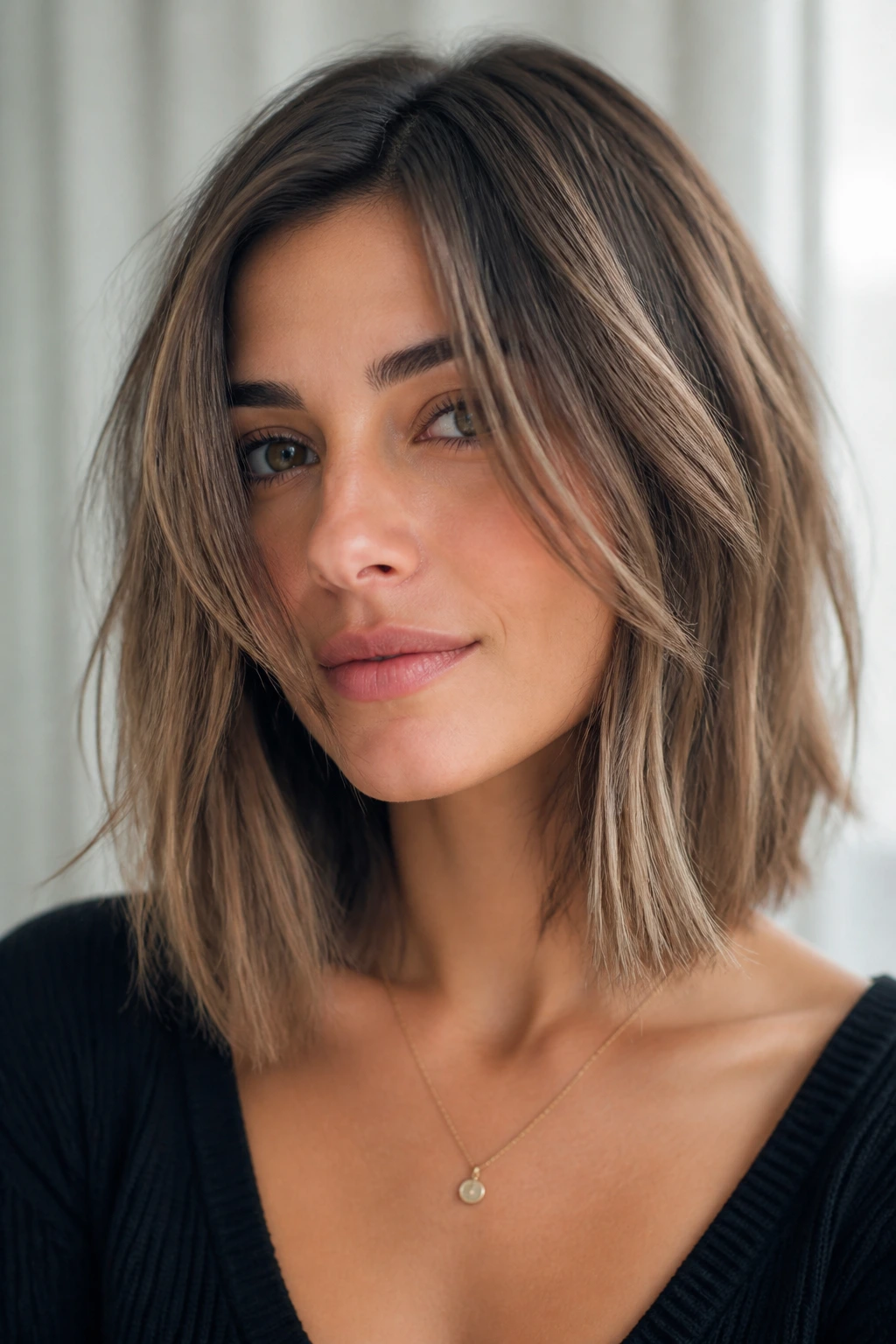
Why does a collarbone lob look so balanced on this face shape? Because it lands below the chin without dragging the eye straight across the jawline. That little bit of extra length matters. A lob that stops exactly at the chin can flare outward on thick hair, while a collarbone length settles more softly.
The real trick is the internal layers. They remove bulk from inside the cut, not just along the perimeter, so the hair moves without turning thin at the edges. That’s the difference between a lob that feels crisp and one that feels bulky in the chair and poofy by lunch.
How to Style It Fast
A center part can work if your forehead isn’t especially wide, but a slight off-center part often gives the face more balance. Blow-dry the roots up and away from the scalp, then curve the ends under with a brush or keep them slightly beveled for a clean line.
This is the kind of haircut that looks expensive even when it’s done with a quick brush and a bit of smoothing cream. It’s also one of the easiest styles to grow out, which is a nice little practical bonus.
4. Soft Shag with Cheekbone Pieces
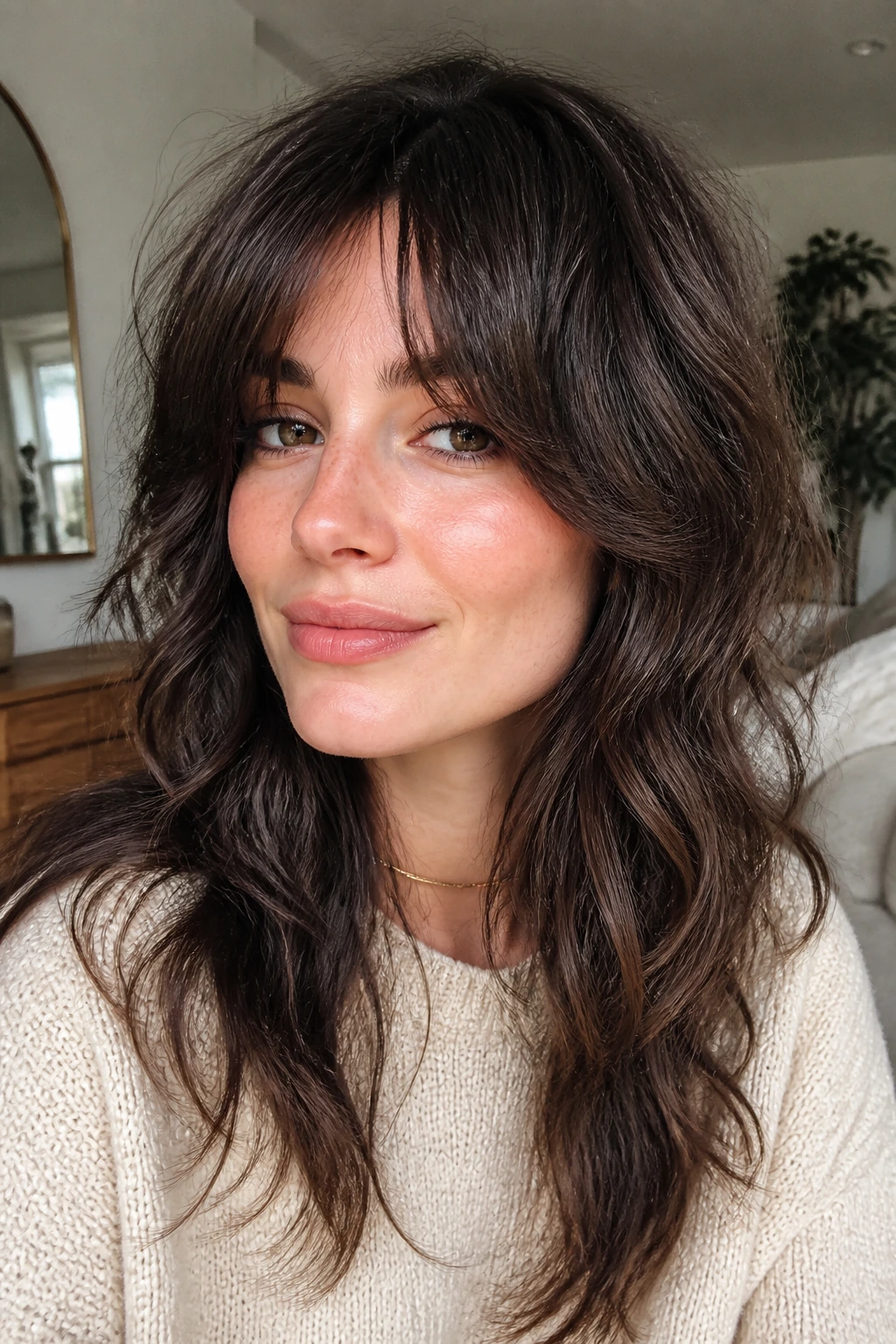
Picture thick hair that puffs out at the sides the minute the air gets damp. A soft shag is the answer when you want shape without that heavy, helmet-like outline. The broken-up layers let the hair move instead of expanding into a triangle.
The shag works well on heart-shaped faces because the best versions keep the shortest pieces around the cheekbones, not the temples. That puts texture where the face needs softness and leaves the top from getting too busy. If the layers are cut too high, the style can start looking top-heavy, which is the opposite of what you want.
- Ask for a soft shag, not a razor-heavy chop
- Keep the longest layer around collarbone length if you want the style to stay wearable
- Use a light mousse or curl cream, not a crunchy gel
- Let some ends stay uneven; that’s part of the shape, not a flaw
The shag is messy in a controlled way. It should look a little undone, but not like you forgot to finish your hair.
5. Deep Side-Part Waves
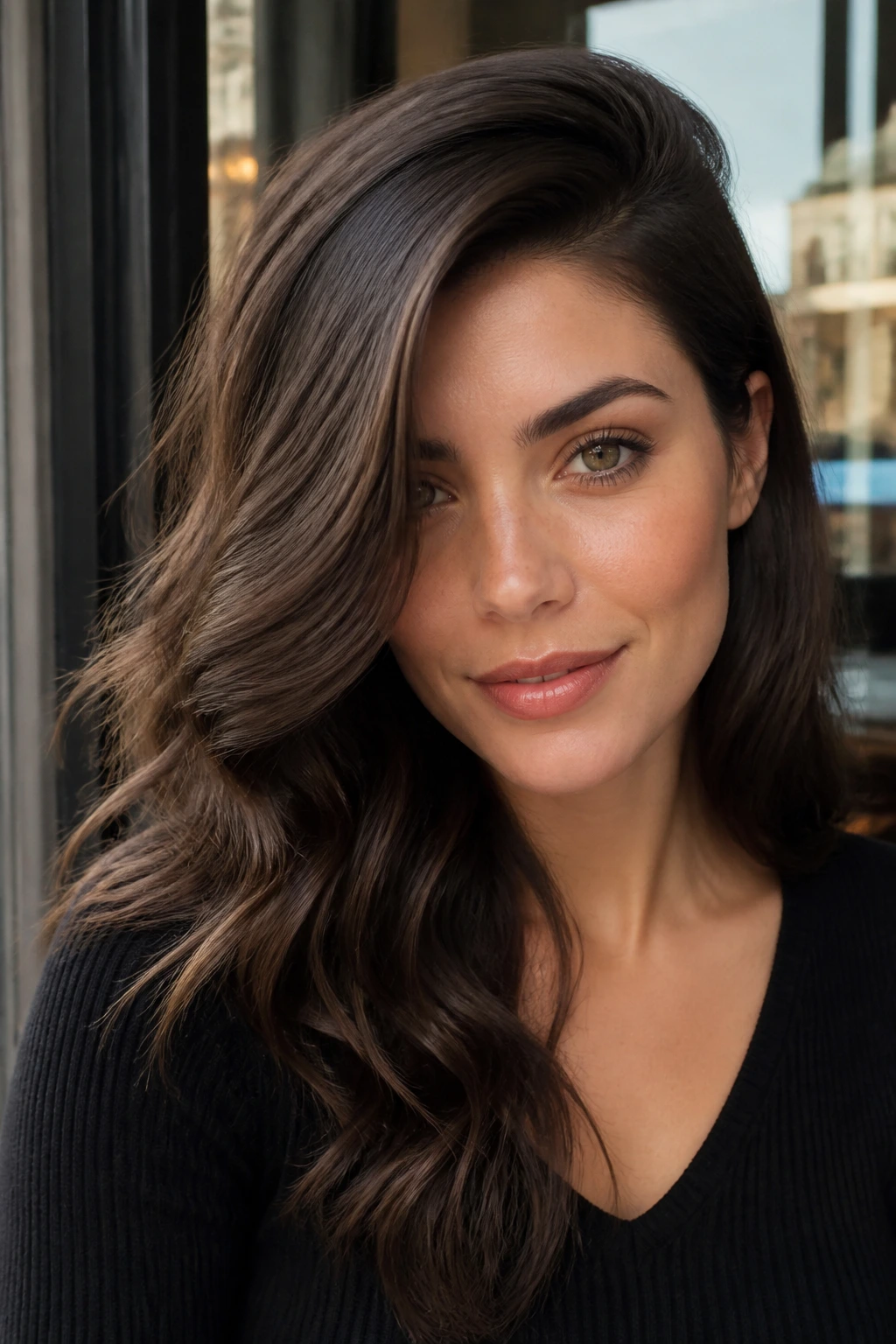
Deep side parts change more than the part itself. They move weight off the center of the forehead, create a diagonal line across the face, and make thick hair feel less symmetrical in a good way. On a heart-shaped face, that diagonal line is gold because it softens the broadest area up top without making the lower face look too narrow.
The wave pattern matters too. Soft, brushed-out waves sit better than tight curls here. Tight curls can widen the sides of the face, while loose waves slide around the cheekbones and jaw in a way that feels much calmer. Use a 1¼-inch iron, curl away from the face, and brush the pattern out once it cools.
A side part also gives you more room to tuck one side behind the ear, which is a small move but a strong one. It shows the cheekbones, keeps the style from swallowing the face, and makes thick hair feel less like a wall.
This one is a favorite when you want your hair to look intentional with almost no visible effort. The outline does the work.
6. Textured Blunt Bob with Beveled Ends
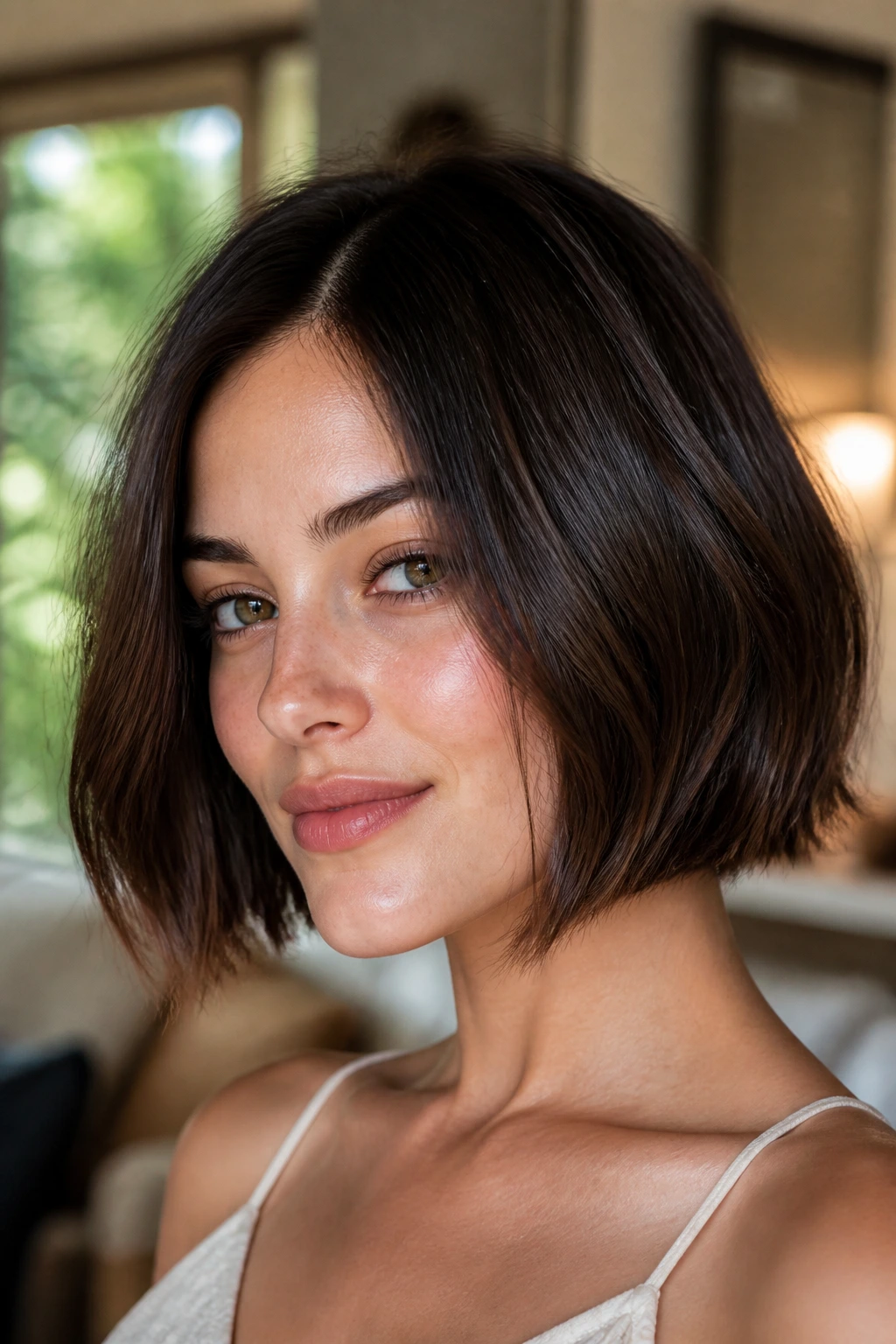
Compared with a crisp one-length bob, this version is kinder to thick hair. The blunt base gives the cut structure, but the beveled ends keep it from looking square or too wide at the jaw. That matters on a heart-shaped face, where a boxy line at chin level can make the lower face feel smaller than it already is.
The length should sit just below the chin or brush the upper neck, not stop exactly at the widest part of the jaw. That tiny adjustment changes the whole balance. If the cut lands too high, thick hair can flip outward and make the cheeks look wider than they are.
Ask for a little point cutting at the perimeter and a touch of internal weight removal through the mid-lengths. You do not want the hair thinned into wisps. You want the shape cleaned up so the ends tuck in instead of fanning out.
A bob like this feels modern, but not in a trendy way that dates quickly. It’s just clean geometry, and thick hair usually loves a clear line when the line is placed in the right spot.
7. U-Shaped Long Cut with Face-Framing Pieces
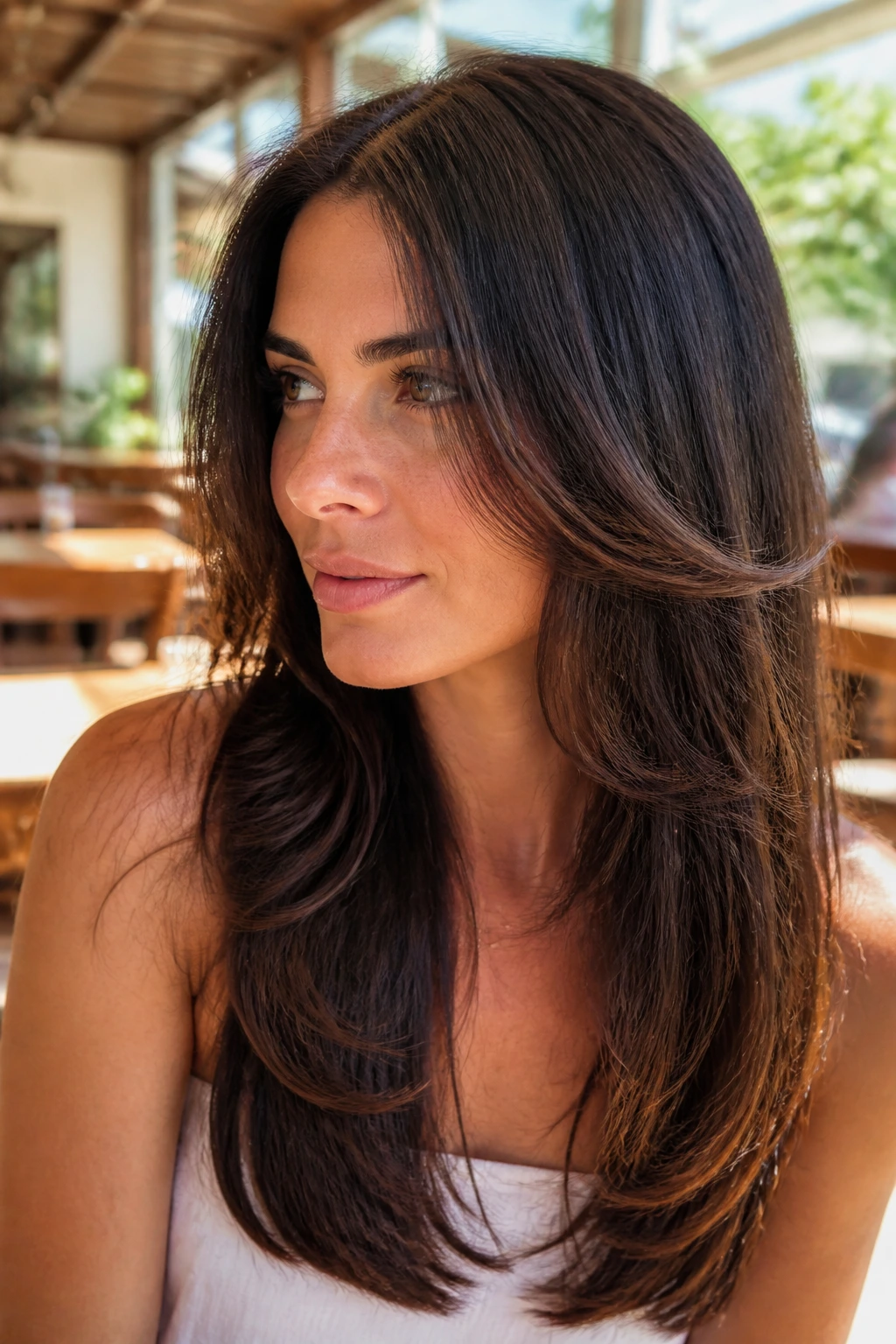
A U-shaped long cut keeps length without turning the bottom line into a curtain. The back stays slightly longer than the front, which gives the silhouette a softer curve and helps thick hair fall in a more flattering way. Straight across can be harsh. A U-shape moves.
The face-framing pieces should begin around the lip or cheekbone, not the chin. That gives the front section enough lift to soften a wider forehead and keeps the jawline from disappearing under too much hair. On a heart-shaped face, those front pieces do a lot of the visual balancing.
If your hair is very dense, ask for internal layers low in the shape, not a whole lot of slicing through the top. Too much removal up top can make the ends look thin while the roots stay bulky. That is the old triangle problem again, and it shows up fast.
This style is especially good if you want to keep your length but still feel like the cut has some movement when you walk. It swishes instead of sitting there like one heavy sheet.
8. Sleek Low Ponytail with Crown Lift
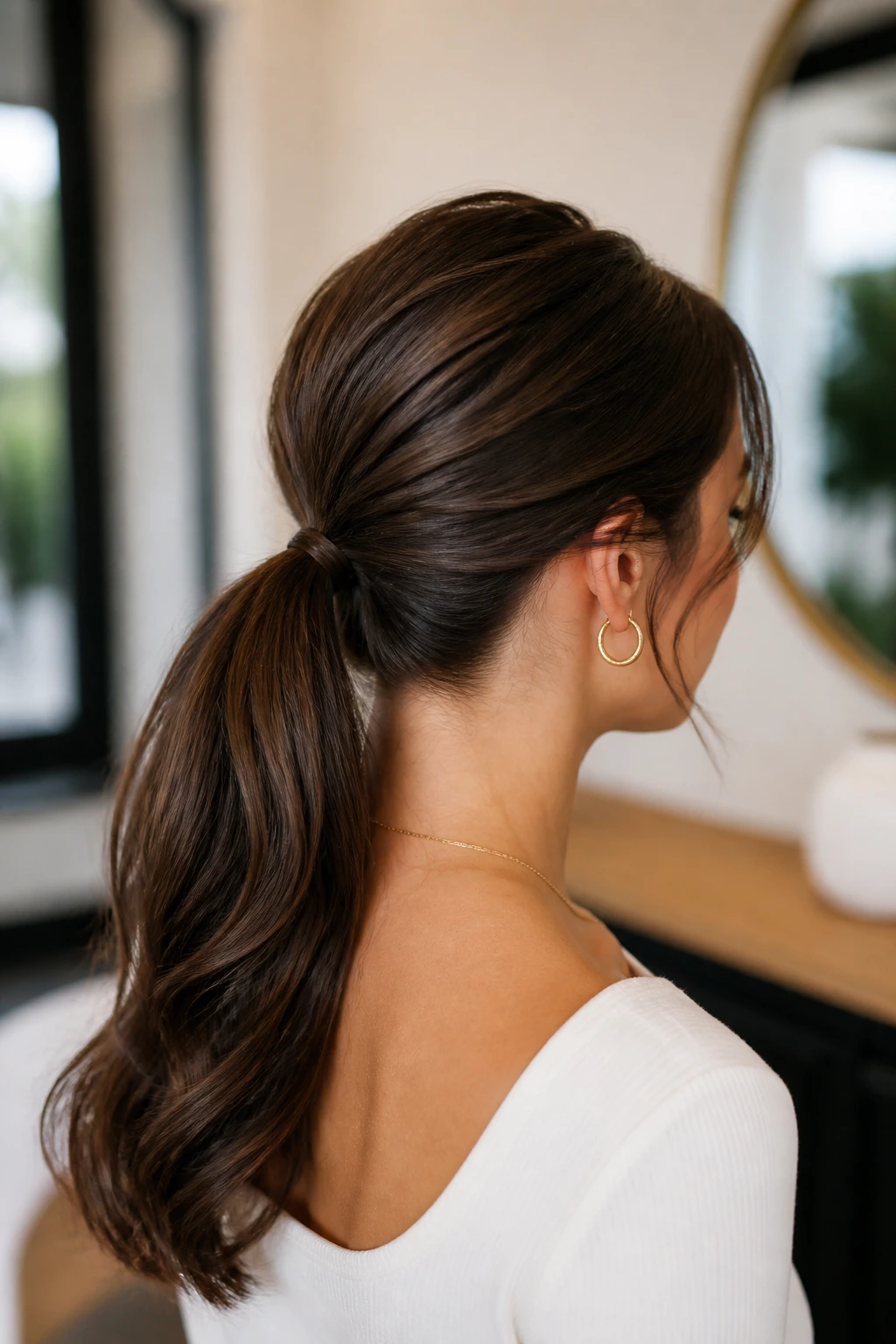
A low ponytail is not boring when the crown is handled correctly. Thick hair gives you a strong, full tail by default, which is nice, but a heart-shaped face still needs a bit of lift at the top so the style doesn’t drag everything downward. A small bump at the crown changes the proportion more than people think.
Leave a little softness around the temples and above the ears. If you slick every strand tight, the forehead can look wider and the chin narrower by comparison. A low pony with a touch of looseness feels cleaner on this face shape than one that is pulled to the skin.
Wrap a small section of hair around the elastic if you want the style to look finished. That tiny detail does more than a shiny clip ever could. It hides the tie and keeps the tail from looking like an afterthought.
This is a strong everyday style because it handles thick hair without pretending the density isn’t there. The hair becomes part of the look, not the problem you’re trying to hide.
9. Half-Up Twist with Loose Length
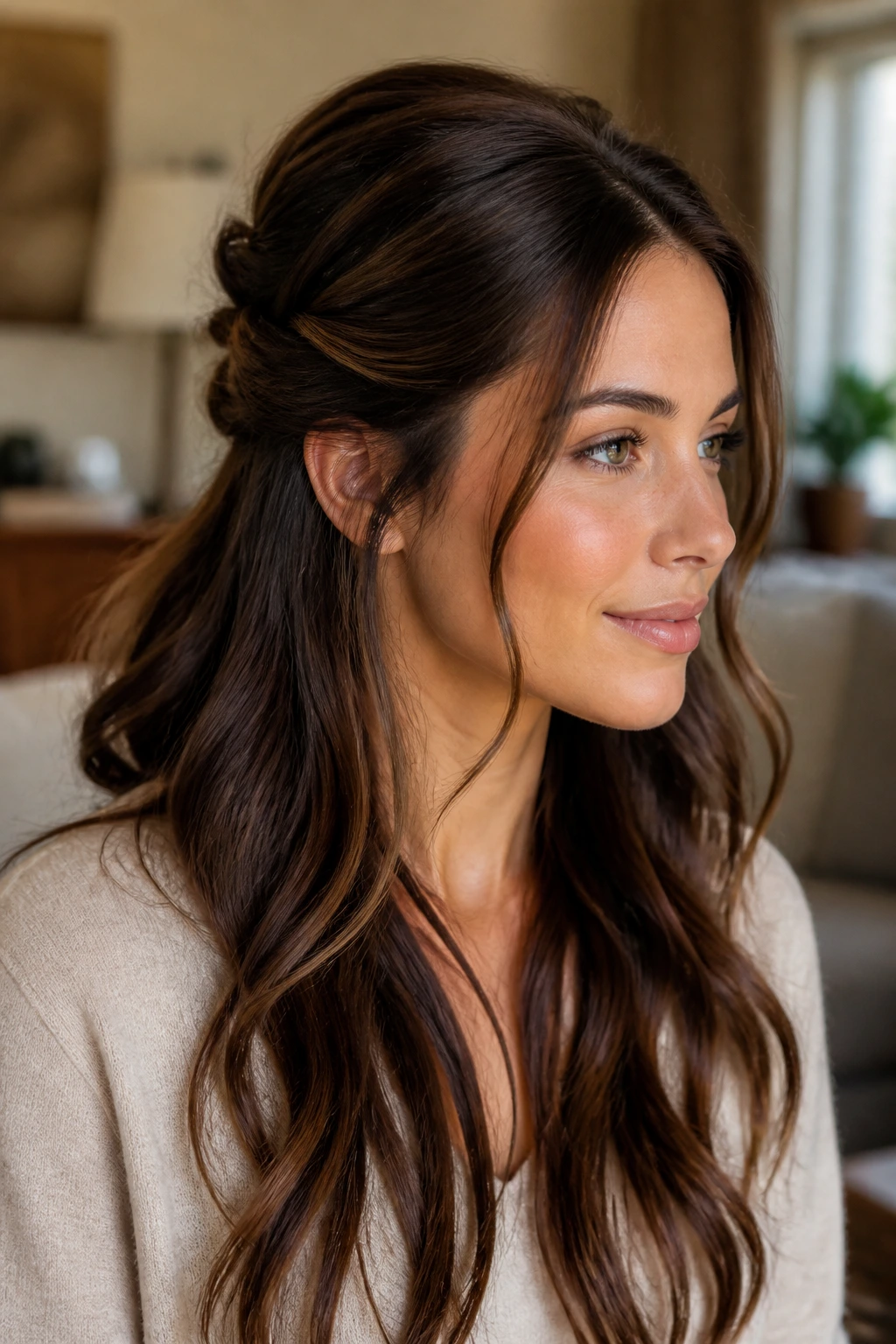
What happens when you only want half the hair out of the way? You get one of the best everyday answers for thick hair. The top half is pulled back, which lowers the visual weight around the forehead and temples, while the lower half still gives the face a soft frame.
The twist should sit just above the ear line, not all the way up at the crown. Too high, and the face can start to look taller on top. Too low, and the style loses the lift that makes it work in the first place. That middle zone is where the balance lives.
Where the Twist Should Sit
Aim for the twist to start where the cheekbones begin to matter visually. That placement keeps the style from feeling floaty at the top and heavy at the bottom. If your hair is very thick, loosely backcomb the top section once before twisting so the clip or pin has something to hold onto.
A half-up twist works especially well with loose bends in the lower half. Straight lengths can feel heavy; a little movement keeps the hair from reading like one solid block.
10. Side-Swept Pixie-Bob
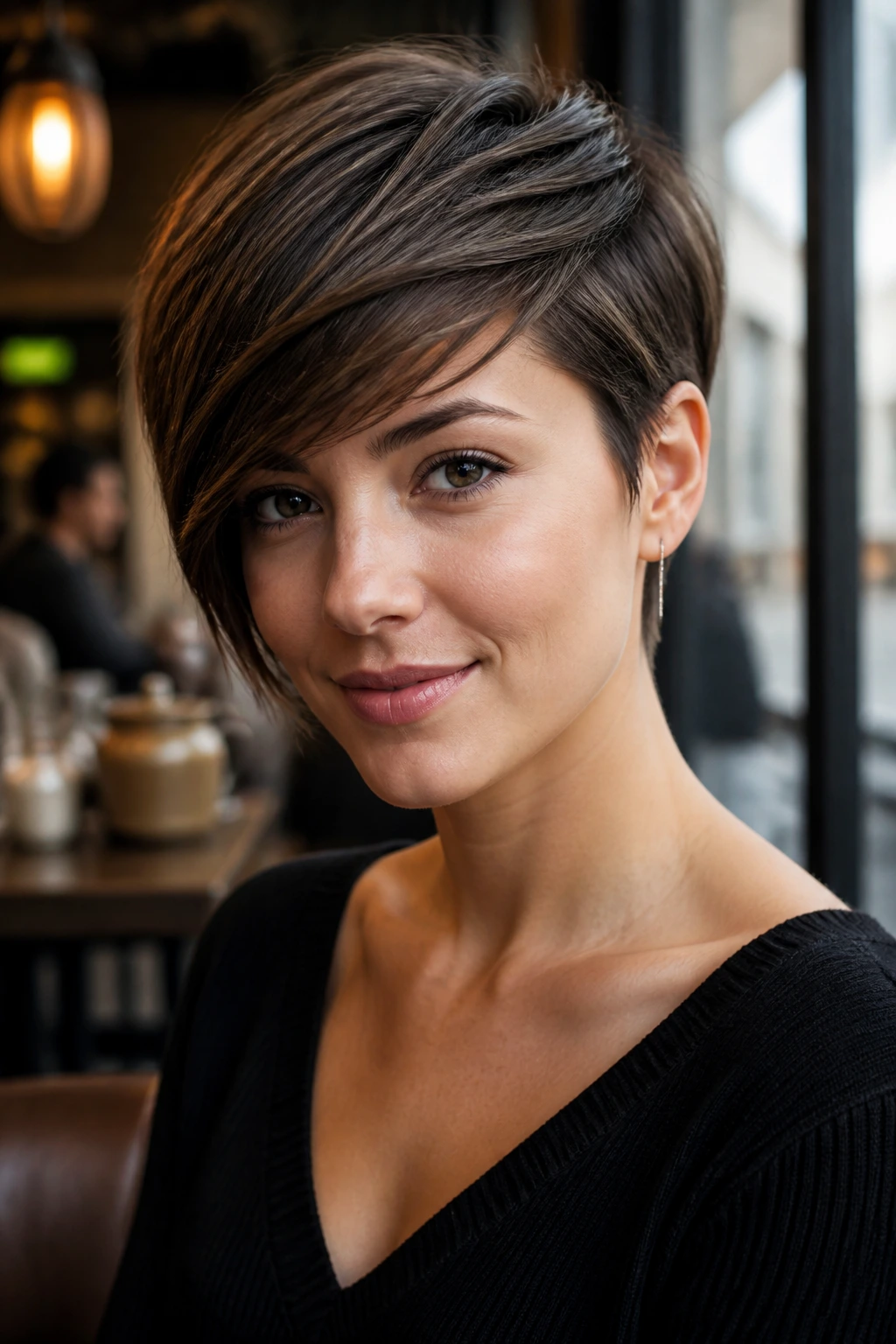
Short hair needs shape, not just courage. A side-swept pixie-bob gives thick hair a controlled outline while keeping enough length on top to soften a heart-shaped face. The longer fringe pushes diagonally across the forehead, which helps balance a wider upper face without making the cut feel severe.
The nape should be tapered enough to reduce bulk, but not shaved down so hard that the top balloons over it. That contrast is where the style can go wrong. If the sides are too stripped and the top too full, the silhouette ends up looking top-heavy again.
- Best when the fringe lands at the brow or just below it
- Works well with coarse or dense hair that holds a shape
- Ask for texture, not aggressive thinning
- Keep the side pieces long enough to tuck behind the ear
This cut is a smart move if you want something short that still feels soft. It’s not a helmet, and it’s not a pixie trying to prove a point. It’s just a neat shape with enough edge to stay interesting.
11. Asymmetrical Lob
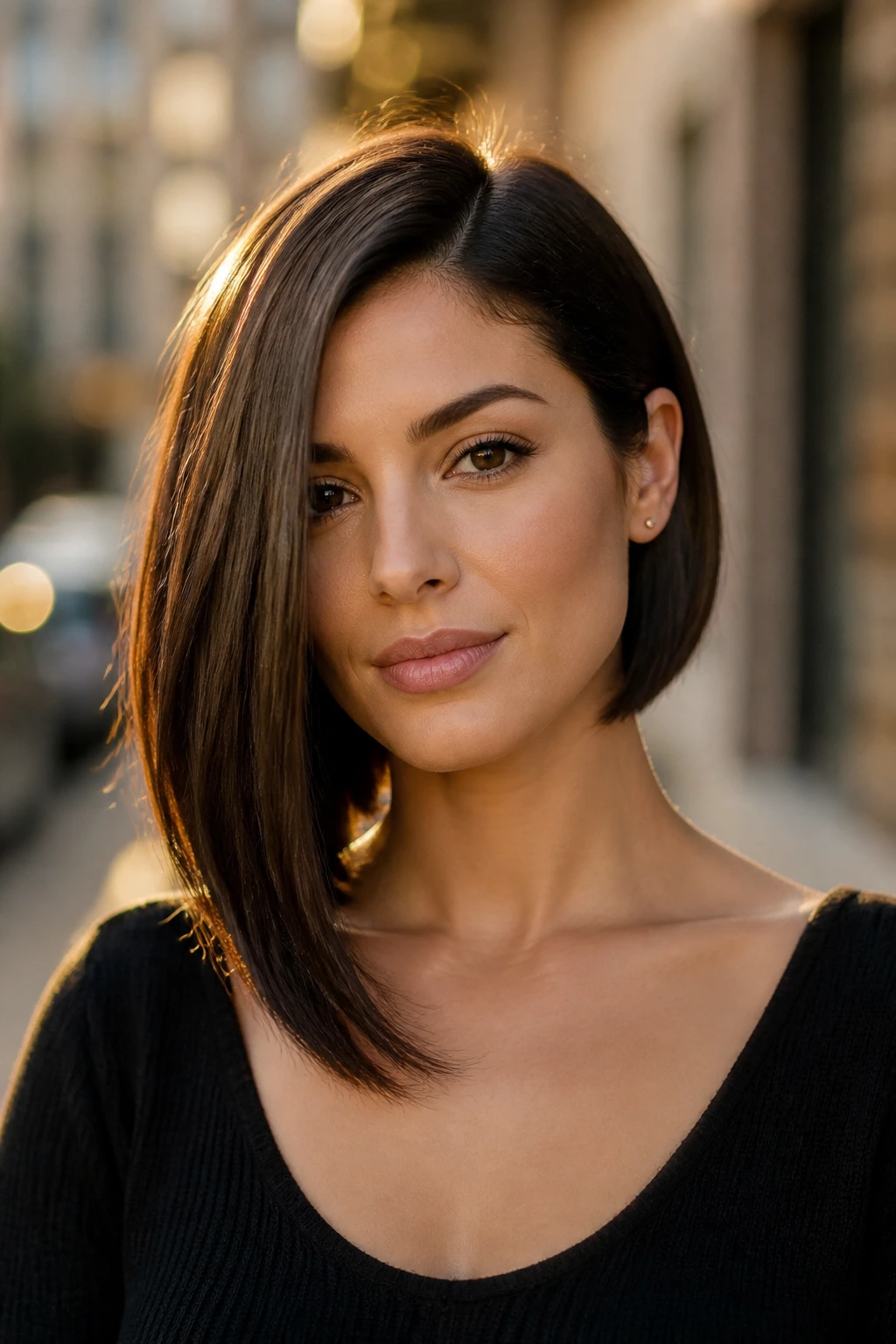
Asymmetry is one of the simplest ways to make thick hair look lighter. An asymmetrical lob gives you one side slightly longer than the other, which breaks up the visual width and keeps the outline from feeling too symmetrical or blocky. On a heart-shaped face, that uneven line can be a gift.
The longer side should not be dramatically longer unless you want a stronger fashion look. A subtle difference — maybe an inch or two — is usually enough. That small shift creates a vertical line that pulls the eye down instead of letting the width sit across the forehead and cheeks.
This cut also works well when you wear one side tucked behind the ear. The tucked side shows the cheekbone, and the longer side keeps the lower half of the face from feeling narrow. Thick hair gives the cut substance, so it never feels flimsy.
If you like shapes that feel intentional with minimal styling, this is a good one to keep in the rotation. It holds up on a straight day, a wavy day, and a day when you only had time to rough-dry it and leave.
12. Flipped-End Blowout
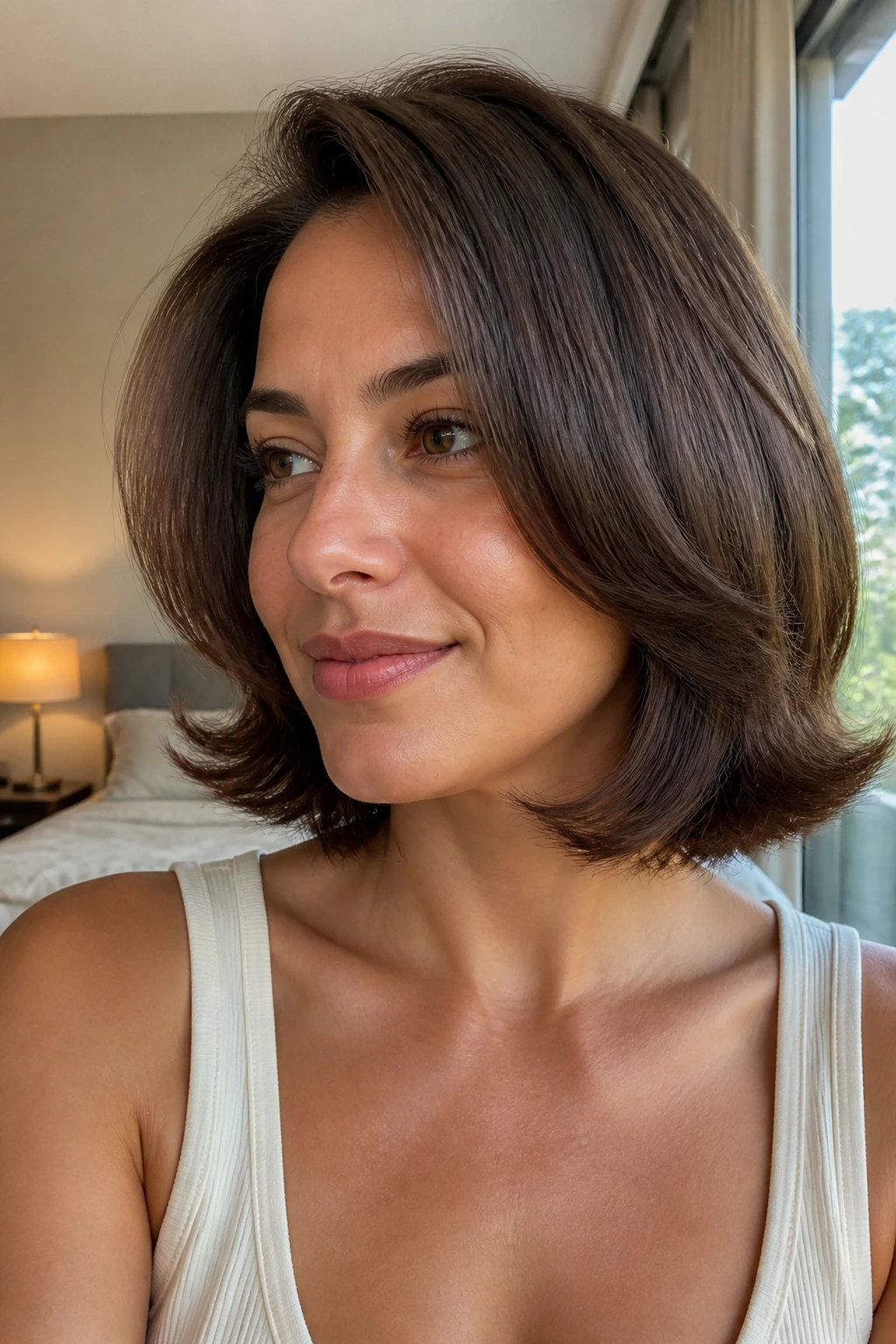
The flipped-end blowout has one job: keep the outline from feeling heavy. Thick hair tends to make the ends look dense and blunt, especially when it’s blown straight down. A soft flip at the bottom loosens that blocky line and gives the haircut a little air.
Compared with flat-ironed hair, this style is friendlier to a heart-shaped face because the curved ends don’t sit hard against the jaw. They skim it. That small difference keeps the lower face from disappearing under a wall of hair and makes the whole head shape feel more open.
Use a round brush, dry the roots first, and then bend the ends either slightly under or slightly out. Outward flips feel a little more lively; inward bends feel softer and cleaner. Both work, and both are better than letting thick hair hang straight like a heavy curtain.
It’s one of those styles that reads polished even when the rest of the day gets messy. The outline stays alive, which is the whole point.
13. Claw-Clip French Twist
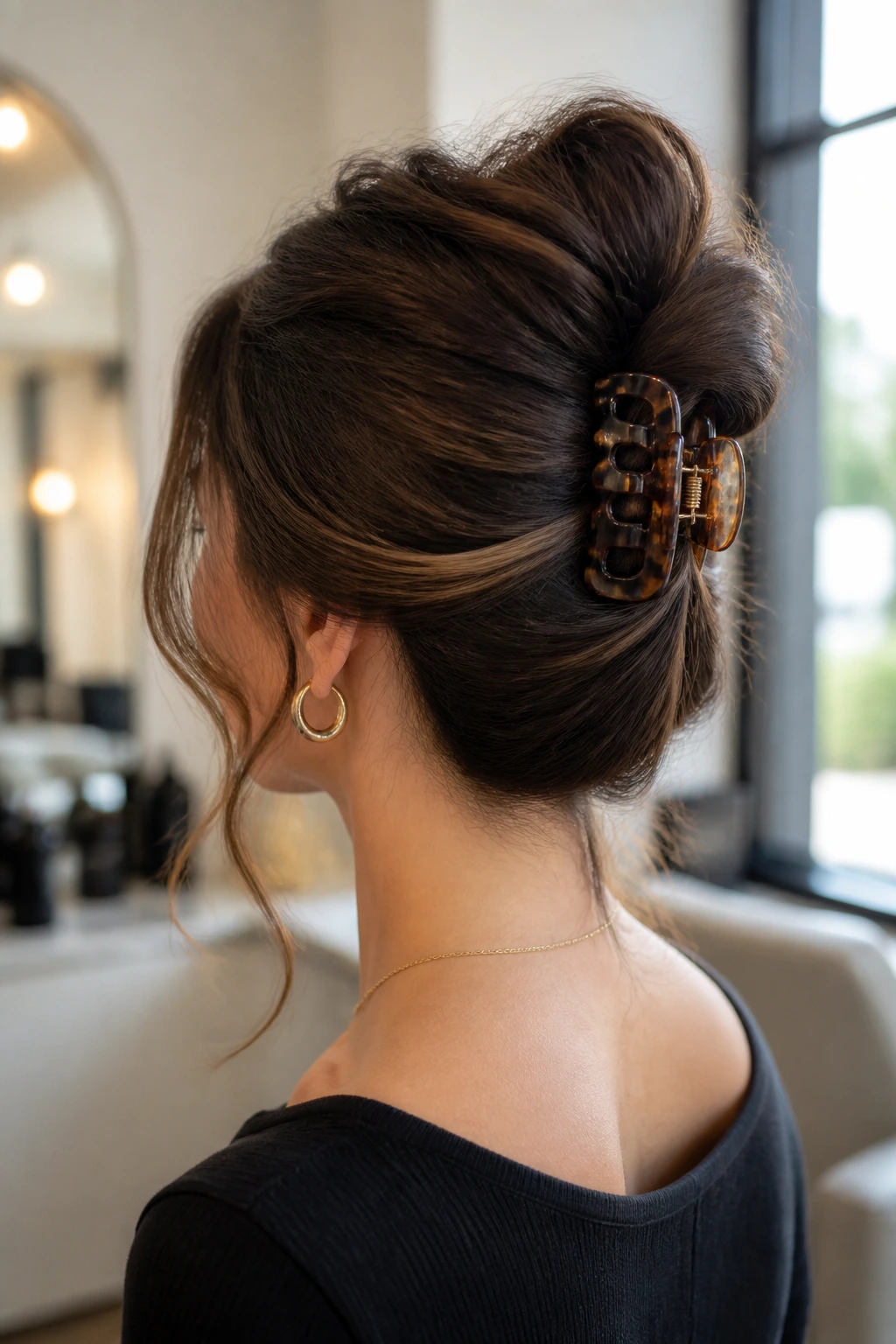
A claw clip can make thick hair feel civilized in under two minutes. The French twist version is better than a casual twist-up because it keeps the hair tucked along the back of the head instead of bulking up in one loose knot. That matters if you want a style that looks deliberate rather than thrown together.
Leave a few soft pieces at the temples and around the ears. Those little escapes matter more on a heart-shaped face than they would on a round one, because they soften the top of the face and stop the forehead from feeling too exposed. Thick hair gives the twist structure on its own, so you do not need to chase perfection.
Where the Clip Should Sit
Use a medium-to-large claw clip with teeth that grip, not a tiny one that slips out after ten minutes. Place it high enough to hold the twist, but low enough that the crown still has a little shape. If it sits too high, the head can look taller on top.
This is the style I would trust on a day when your hair is second-day, dry on the ends, and a little too honest about it. The clip hides the chaos.
14. Braided Crown into a Low Knot
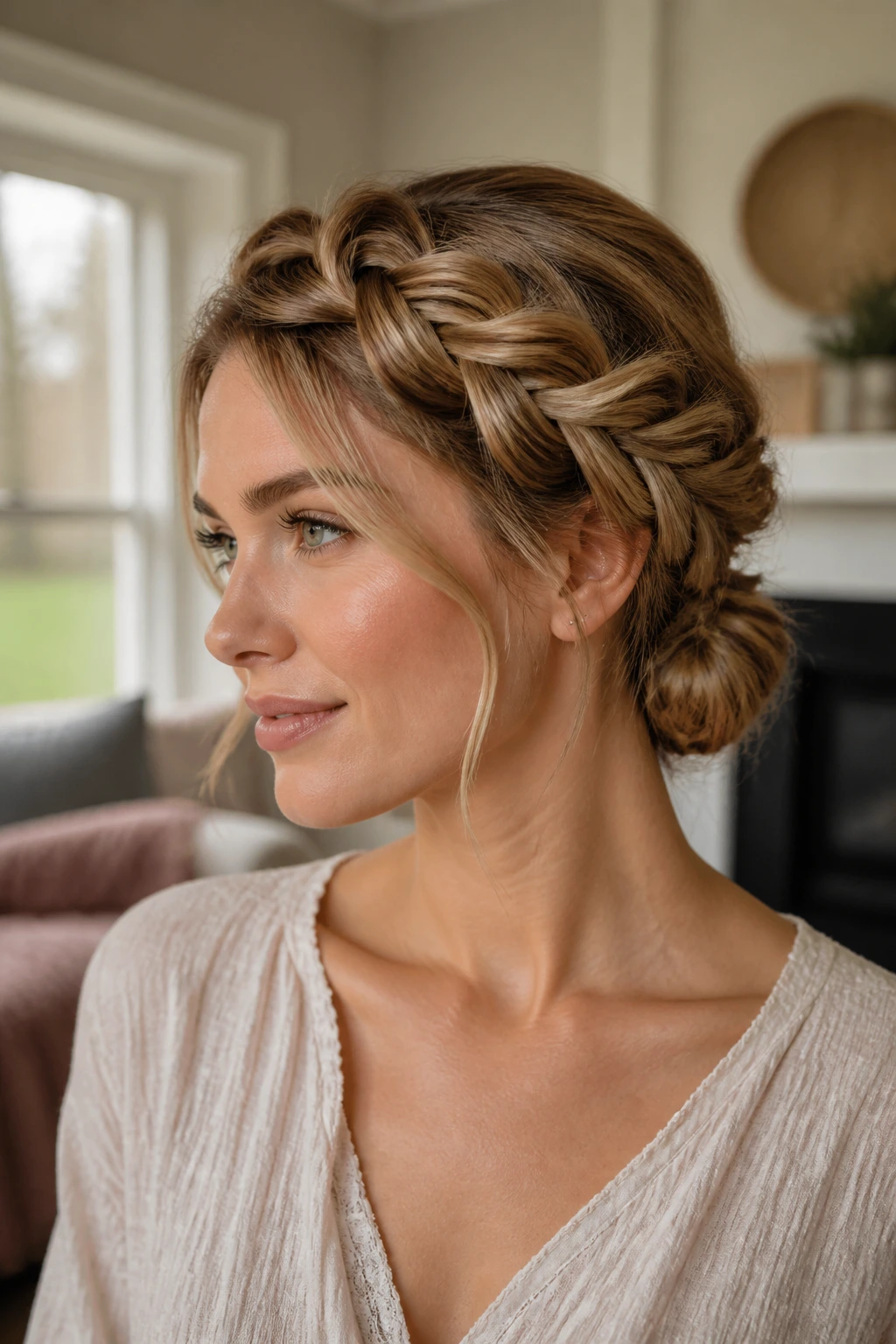
Braids are good at moving attention, not just holding hair. A braid that starts near the temple or a deep side part and sweeps around the hairline creates a soft frame at the top of the face, then disappears into a low knot at the nape. That keeps thick hair controlled without making it look rigid.
The braid should be loose enough to keep some thickness in it. Tight braids can sharpen the forehead and make a heart-shaped face look more angular than it needs to. A little puff in the braid is useful here. It gives the style texture and helps balance the narrow chin.
This one works especially well when you want a style that stays in place but still looks soft in profile. The low knot keeps the weight anchored, which is a relief if your hair tends to slide out of clips or lose shape halfway through the day.
If you have layers that keep escaping, pin them into the braid instead of fighting them. That’s usually the cleaner answer.
15. High Ponytail with Soft Tendrils
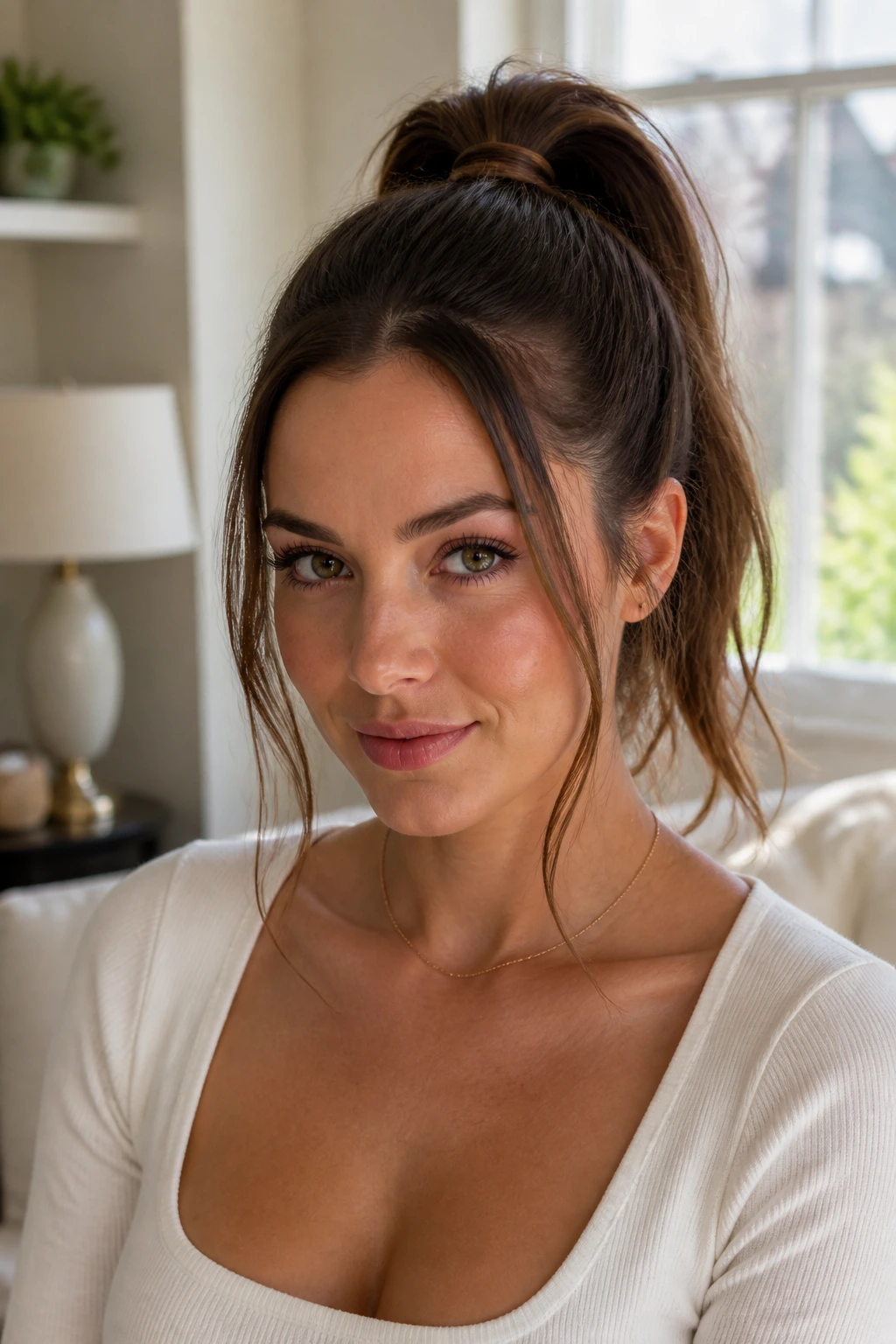
If you like a high ponytail, how do you keep it from making the forehead look taller? You refuse to slick every last strand back. Thick hair creates a strong tail naturally, so the real issue is placement and softness, not volume.
Leave a bit of lift at the crown, then pull out two thin tendrils at the temples or just in front of the ears. Those pieces soften the top of the face and keep the style from feeling too severe. On a heart-shaped face, that matters because the forehead already carries enough visual weight.
The Trick With the Crown
The base should sit snug, but not flattened. A touch of height keeps the ponytail from dragging the face downward. If your hair is very dense, use two elastics: one to set the ponytail, another a half-inch below it to support the weight. That helps the tail stay lifted instead of sliding through the day.
This look can be sporty, polished, or a bit glam depending on how neat you make the crown. It’s more flexible than people give it credit for.
16. Air-Dried Layered Waves
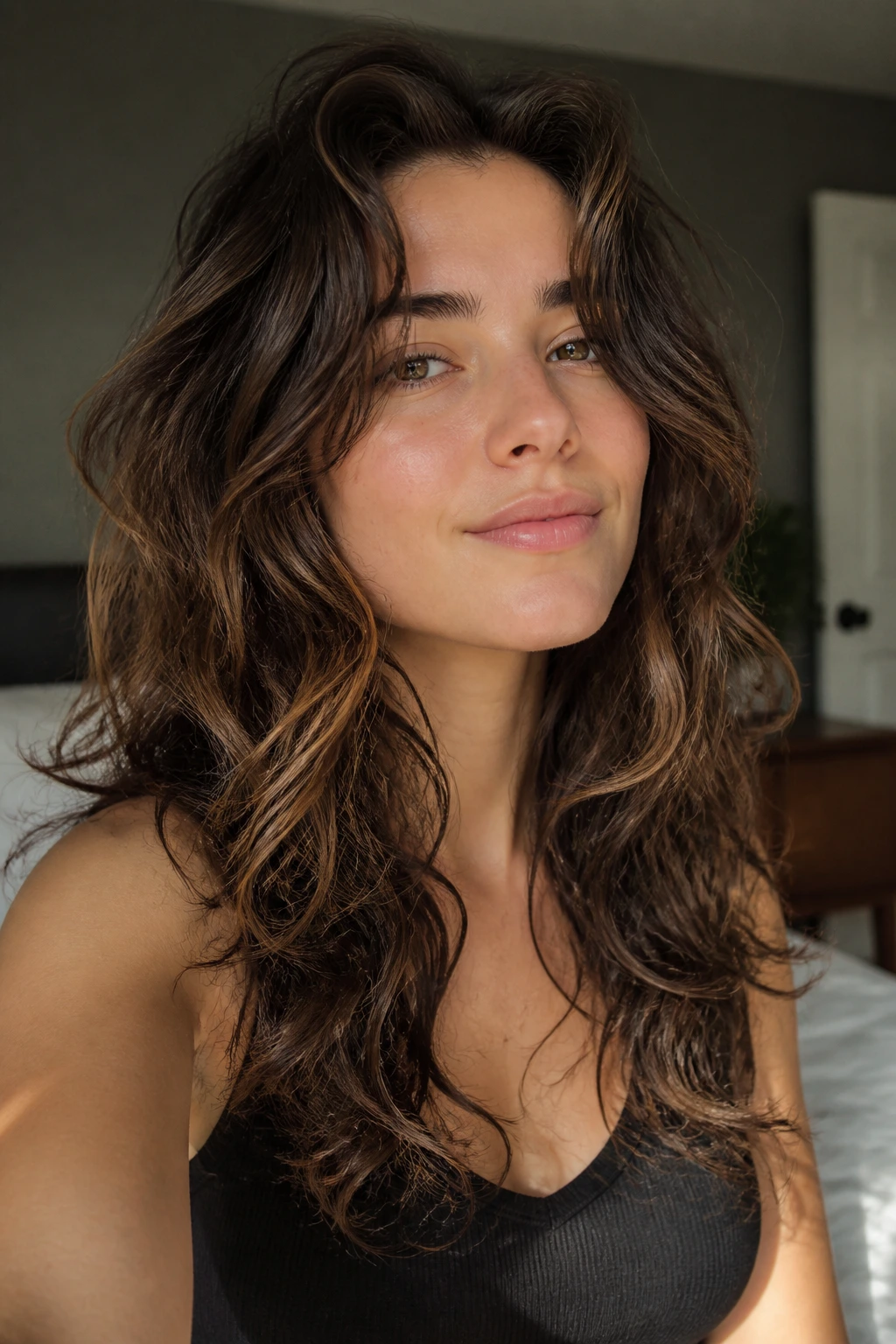
Air-drying thick hair can look polished or chaotic depending on where the layers sit. If the cut is right, the natural wave pattern clumps in soft sections instead of blooming outward at the sides. That’s the whole advantage here: the hair does some of the styling on its own.
Use a leave-in conditioner or light mousse on damp hair, scrunch the ends, and clip the roots for a little lift while the top dries. The clips stop the crown from lying flat, which helps a heart-shaped face keep a bit of balance up top without needing a full blowout. When the hair dries, shake it out with your fingers and leave the ends alone.
- Best when your hair already has a bend or wave
- Good for days when you want movement without heat
- Use a microfiber towel, not a rough bath towel
- Stop touching it once it starts to set; thick hair frizzes fast when overhandled
This style is honest about texture. It doesn’t try to pretend the hair is straight, and that’s exactly why it looks better than a forced blow-dry on a humid day.
17. Chin-Grazing Layered Bob with Side Fringe
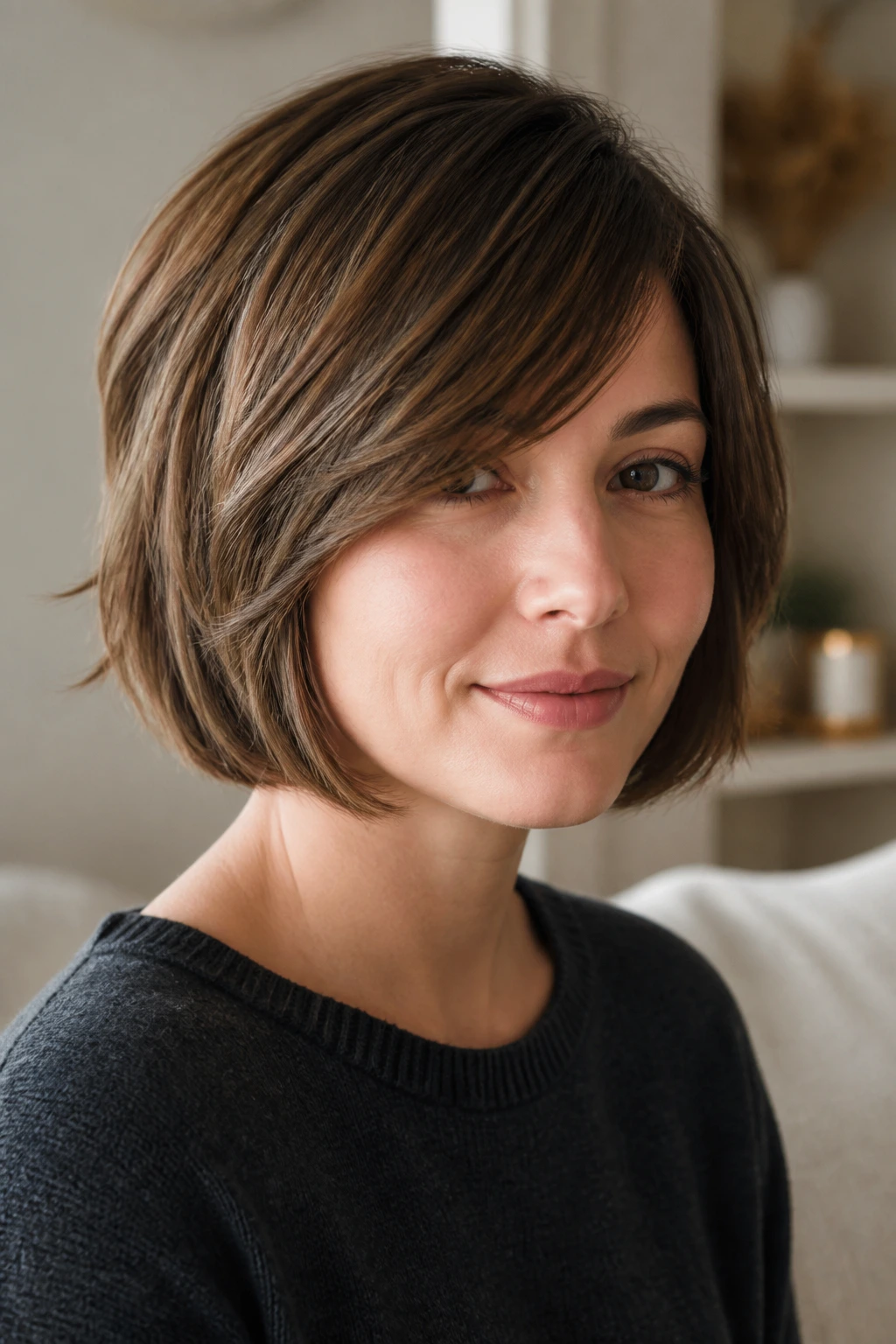
A chin-grazing bob is a risky cut on paper and a smart one in the chair when it’s layered correctly. The length should skim the chin or sit a touch below it, never stop right at the widest part of the jaw. Thick hair at that exact point can flare outward and make the lower face look boxy.
The side fringe saves the shape. It softens the forehead and gives the front of the cut a diagonal line, which works better than a blunt front on a heart-shaped face. That fringe also lets you tuck one side behind the ear without the whole style collapsing into a hard edge.
This is a good option if you want shorter hair but still want it to move. A little bevel at the ends and a touch of internal layering keep it from becoming a shelf. The effect should be light, not floofy.
It’s one of those cuts that looks simple and turns out to be doing quite a bit of work.
18. Loose Chignon with Sculpted Face Pieces
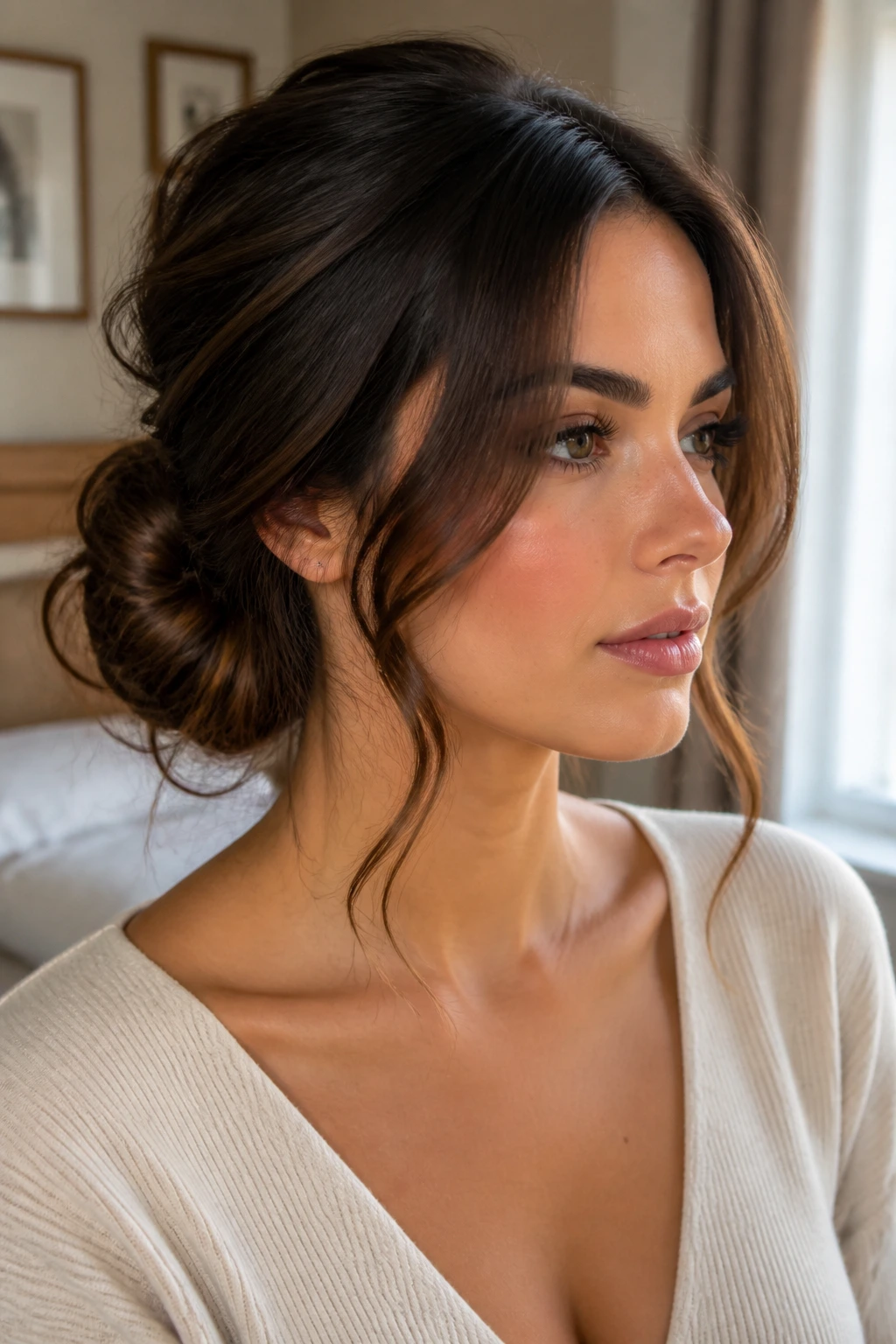
A loose chignon is the grown-up answer to thick hair that refuses to sit flat. The bun stays low and soft at the nape, which keeps the silhouette controlled, while the face pieces stay loose around the cheekbones and temples. That pairing matters on a heart-shaped face because it softens the top without adding width at the jaw.
Do not pull the bun so tight that it turns sharp. Let a little volume remain through the twist so the style keeps some softness. Thick hair gives the chignon enough body on its own, so the goal is shape, not compression.
The face pieces should be intentional, not accidental. Keep them around lip length or cheekbone length, and let them curve slightly rather than hanging straight down. That small bend makes the style feel finished and stops the front from looking severe.
This is one of the easiest ways to make thick hair look neat without sanding off all the personality. It works for dinner, office hours, or any day when you need your hair to cooperate with a little grace.
Why Thick Hair and Heart-Shaped Faces Need the Same Two Moves
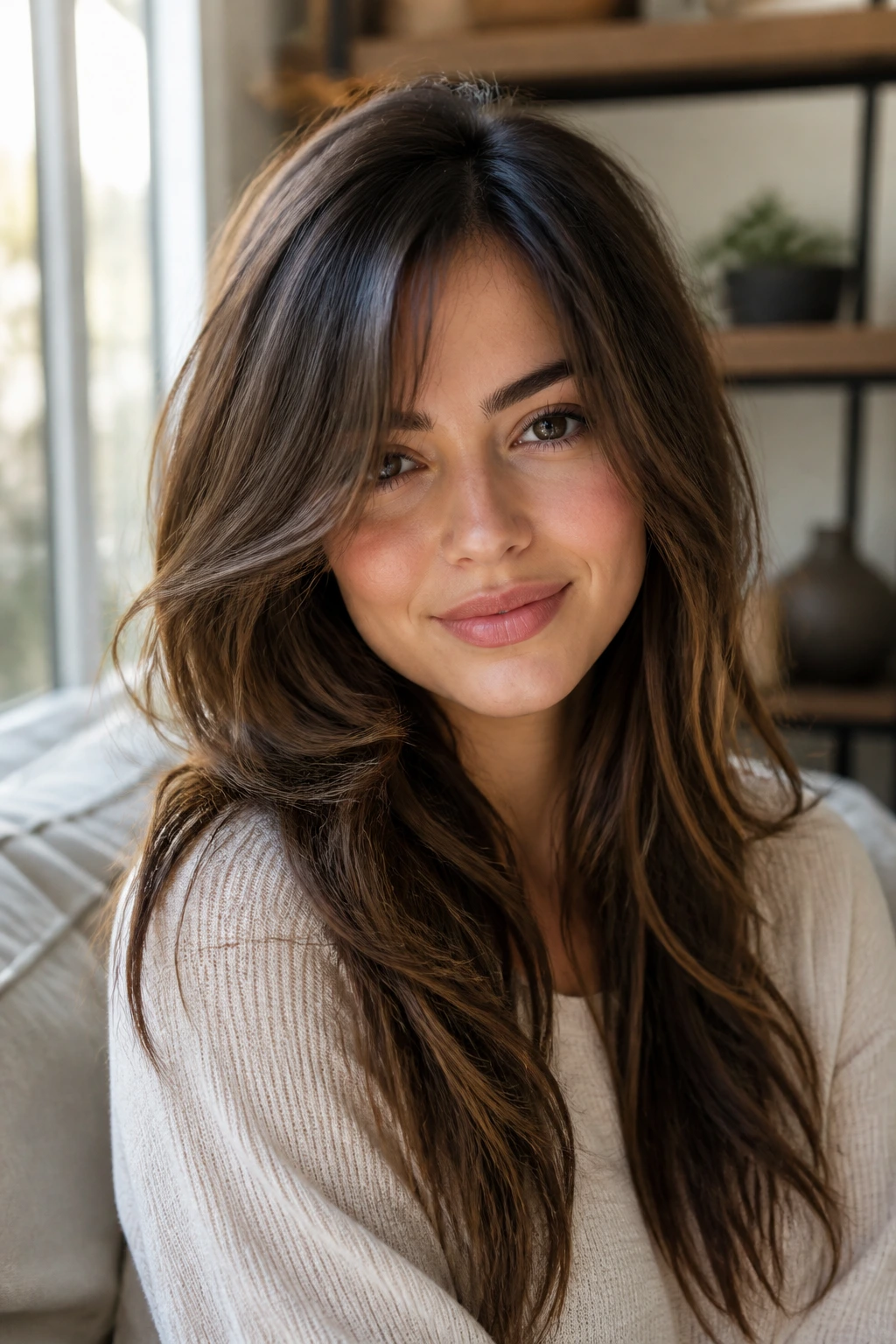
Thick hair and a heart-shaped face create the same problem from two directions. The hair brings width and density; the face brings a broader forehead and a narrower chin. If you add volume in the wrong place, the whole shape can feel lopsided before you’ve even styled it.
The best looks do two things at once. They soften the top of the face with bangs, side parts, or loose front pieces, and they control the bulk of the hair with layers, bevels, or smarter length placement. When those two moves show up together, the style starts looking intentional instead of accidental.
There is a quiet difference between “less hair” and “better shape.” Better shape wins. Every time.
Essential Tools for These Hairstyles
-
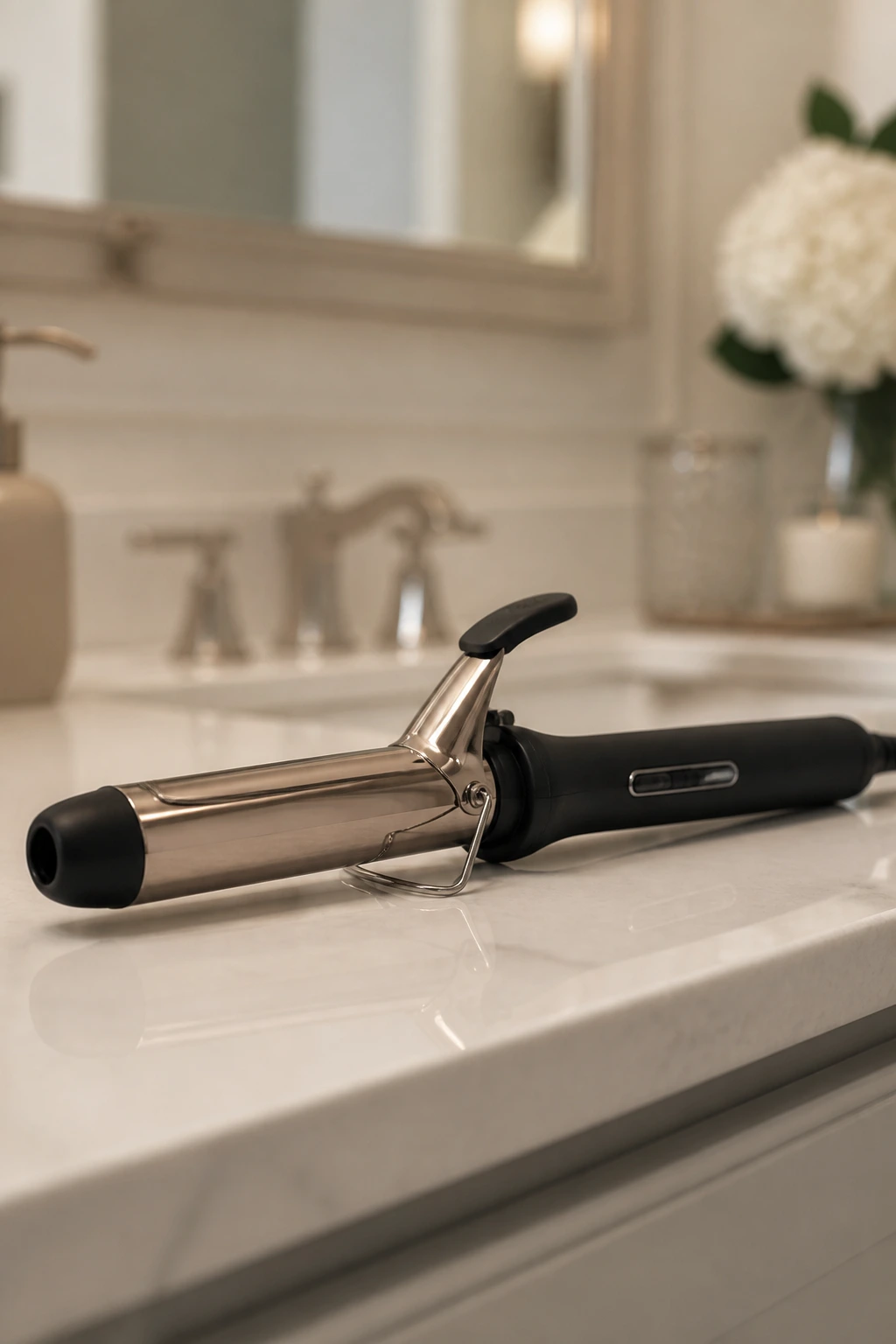
1¼-inch curling iron or wand: The most useful size for bending thick hair without making the curl too tight or too small.
-
Blow dryer with a concentrator nozzle: The nozzle helps push the air where you want it, which matters when the roots need lift and the ends need control.
-
Round brush, medium to large: A 1½- to 2-inch brush works well for lob length, bangs, and soft flips.
-
Bobby pins in two sizes: Small pins handle fringe and loose pieces; larger ones hold twists, buns, and half-ups better.
-
Claw clip with strong teeth: Thick hair needs a clip that actually grips the section instead of sliding out after ten minutes.
-
Lightweight mousse or root lift spray: This gives crown height without making the hair feel sticky or stiff.
-
Texturizing spray: Good for soft shag styles, air-dried waves, and any cut that needs a little separation at the ends.
-
Smoothing cream or serum: Use a small amount on the mids and ends to keep thick hair from puffing up after drying.
-
Wide-tooth comb: Safer than a fine comb for detangling thick strands without snapping them while wet.
-
Microfiber towel or old T-shirt: Helps cut down friction, which is where a lot of frizz starts.
Cutting and Styling Moves That Keep Thick Hair From Ballooning
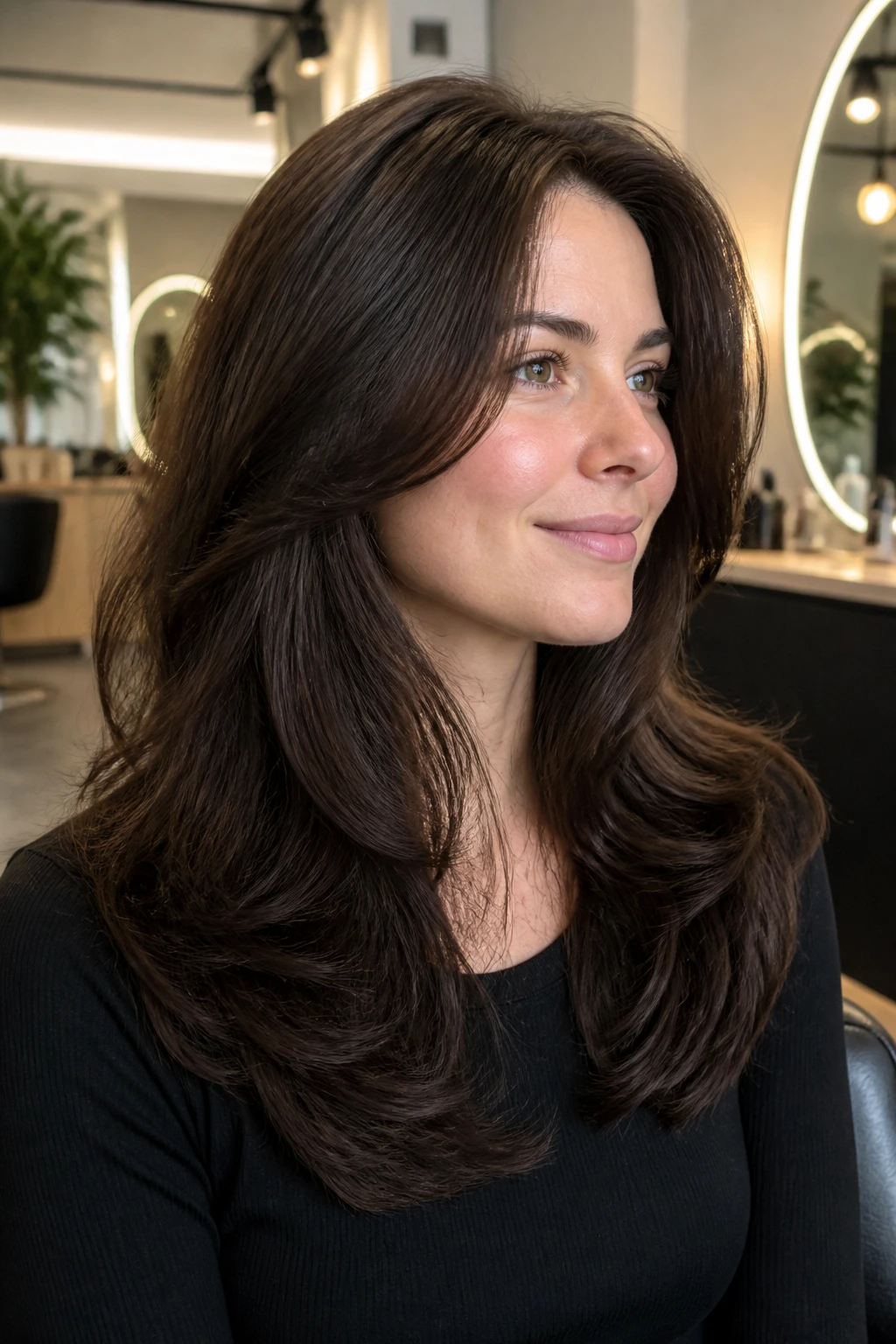
Ask for Internal Weight Removal, Not Just Thinning
Thick hair often needs weight removed from the inside of the cut, not hacked away at the ends. If the perimeter gets too wispy while the roots stay dense, the hair can still swell up — it just does it with worse shape. Internal layering keeps the silhouette cleaner and helps the hair move instead of puffing.
Dry the Roots Before You Chase the Ends
Root direction matters more than most people realize. If the crown dries flat, the style can sink on top and feel too wide at the sides. Rough-dry the roots first, then shape the mid-lengths and ends with a brush or diffuser. That order gives the cut structure.
Bend the Shape, Don’t Iron It Flat
A little bend at the ends usually looks better on thick hair than a perfectly straight line. Flat-ironed hair can make the ends feel heavy and abrupt. A soft curve, bevel, or flip keeps the outline from reading like one solid slab.
How to Make These Styles Work on Busy Mornings
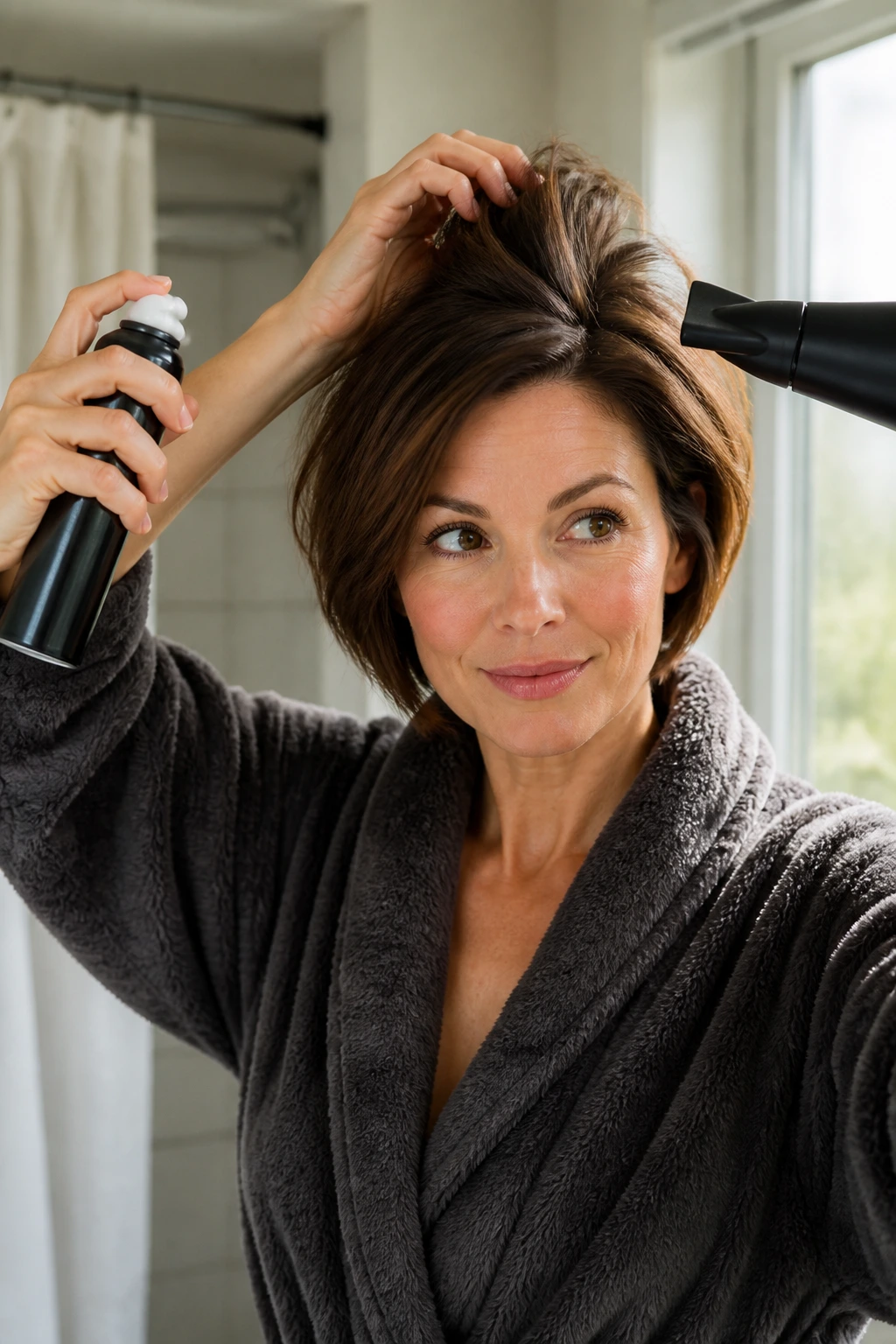
If your crown lies flat: prep the roots with a little mousse or lift spray, then blow-dry upward with your fingers before you reach for a brush. You want the base to have some air under it, especially on heart-shaped faces, where top balance matters.
If your ends puff out: ask for layers that start lower in the shape, and use a small amount of smoothing cream only on the last few inches. Thick hair often frizzes most at the bottom edge, and that’s the part people overwork first.
If you wear glasses: keep your fringe or side pieces long enough to sit above the frames, not fight them. Short bangs and glasses can crowd the top half of the face fast.
If you air-dry a lot: clip the roots for the first 20 minutes and then leave the hair alone. Touching it every five minutes usually breaks the clumps and gives you frizz instead of waves.
If your hair gets bigger in humidity: choose styles that are already a little loose — shag, braid, low knot, half-up twist. Fighting the weather with a flat iron is a losing game most of the time.
Common Mistakes That Throw Off the Shape
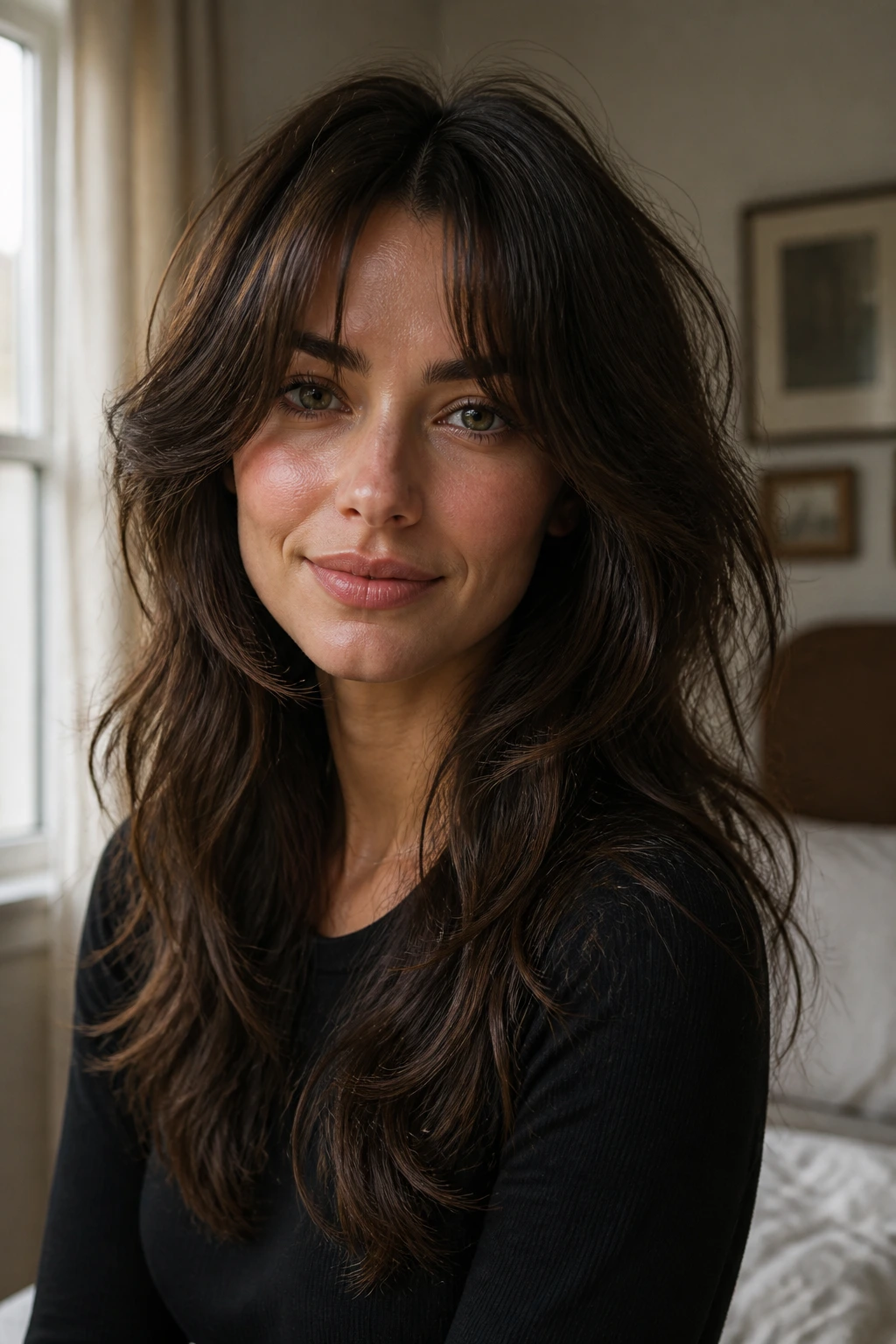
Cutting too much bulk from the ends: This is the classic mistake. The bottom goes stringy while the crown stays wide, and the whole head starts looking top-heavy. Ask for internal removal instead.
Placing a blunt line at the jaw: If a bob or lob lands exactly where the face is widest, thick hair can flare outward and make the jaw look boxier. Move the length slightly below that point or add beveling.
Going too short with bangs: Short, dense fringe can make a heart-shaped face look forehead-heavy. A softer curtain, side sweep, or longer fringe usually works better.
Flattening the crown too hard: A slicked-down top with thick hair can make the lower face seem even narrower. Leave a bit of lift or softness up there.
Ignoring the part line: A center part is not evil, but on some heart-shaped faces it makes the forehead feel wider. A slight side part often softens the balance in a better way.
Overloading the style with product: Thick hair needs control, not a helmet. Too much cream, spray, or pomade can make the cut collapse, then puff up again once it dries.
Variations and Simple Swaps
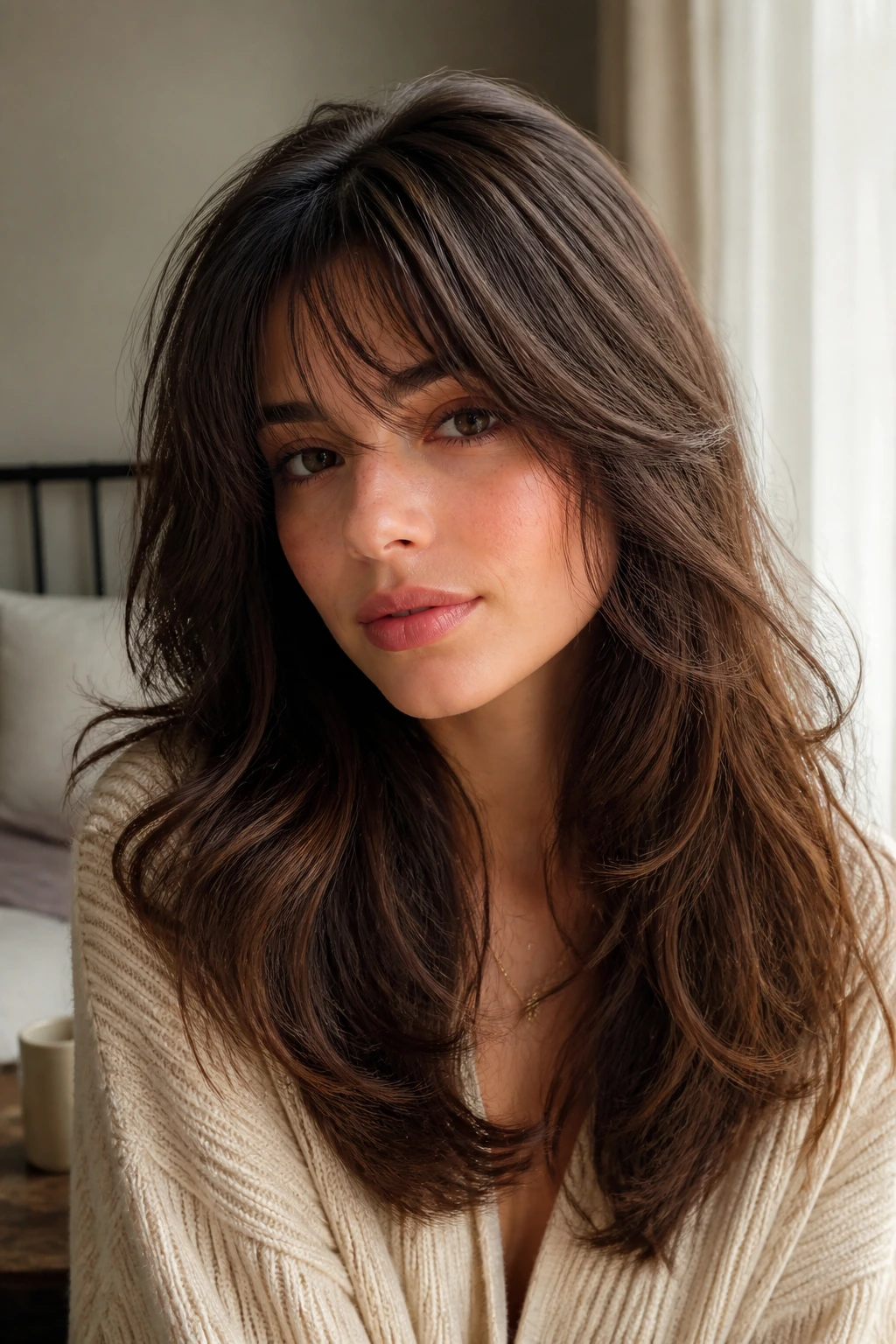
Softest Version: Keep the layers longer, the bangs lighter, and the edges beveled rather than choppy. This suits anyone who wants movement without a lot of obvious texture.
Low-Maintenance Air-Dry Version: Pick the shag, the layered waves, or the half-up twist. These styles work with your hair’s own bend and usually need less heat to look finished.
Polished Workday Version: Choose the collarbone lob, the deep side-part waves, or the loose chignon. These sit neatly, hold their shape well, and do not rely on a lot of touch-up.
Short-and-Snappy Version: Go with the side-swept pixie-bob, the chin-grazing bob, or the asymmetrical lob. They remove bulk and keep the face visible instead of buried under hair.
Humidity-Ready Version: Braids, low knots, claw-clip twists, and ponytails with soft tendrils are the safest bets when the air gets damp and your hair starts having ideas of its own.
Maintenance, Wash-Days, and Trim Timing
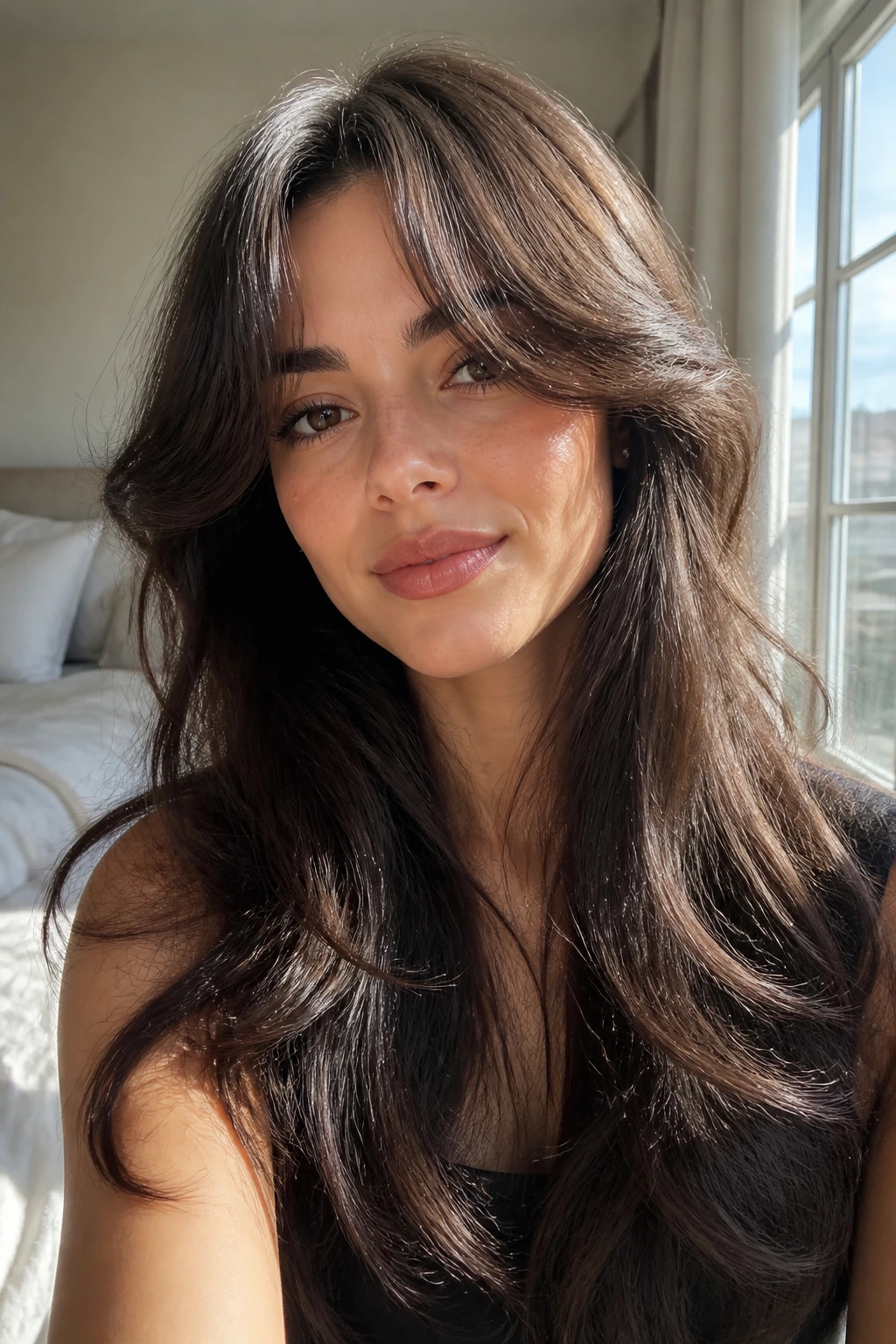
Thick hair usually does better with a slightly slower wash rhythm than fine hair, but the scalp still decides the schedule. Many people land somewhere between every 2 and 4 days. If your roots get oily fast, use a lighter shampoo on the scalp and keep conditioner away from the root zone so the crown does not flatten.
Day two is usually the sweet spot for dry shampoo or a little root lift spray. Day three often needs a quick refresh with a brush, a light mist of water, or a tiny bit of smoothing cream on the ends. By day four, a claw clip, braid, or low ponytail starts earning its place.
Trim timing depends on the cut. Lobs and bobs usually need a clean-up every 6 to 8 weeks if you want the shape to stay sharp. Long layered cuts can often go 8 to 12 weeks. Bangs are the exception; they usually need a small touch-up every 3 to 5 weeks because even a quarter inch changes how they sit on the face.
At night, a loose braid, silk scrunchie, or pillowcase cuts down on frizz and keeps the front pieces from folding weirdly. If you use a lot of dry shampoo or texturizing spray, clarify the scalp every few weeks so the roots don’t get coated and dull.
Frequently Asked Questions About Thick Hair and Heart-Shaped Faces
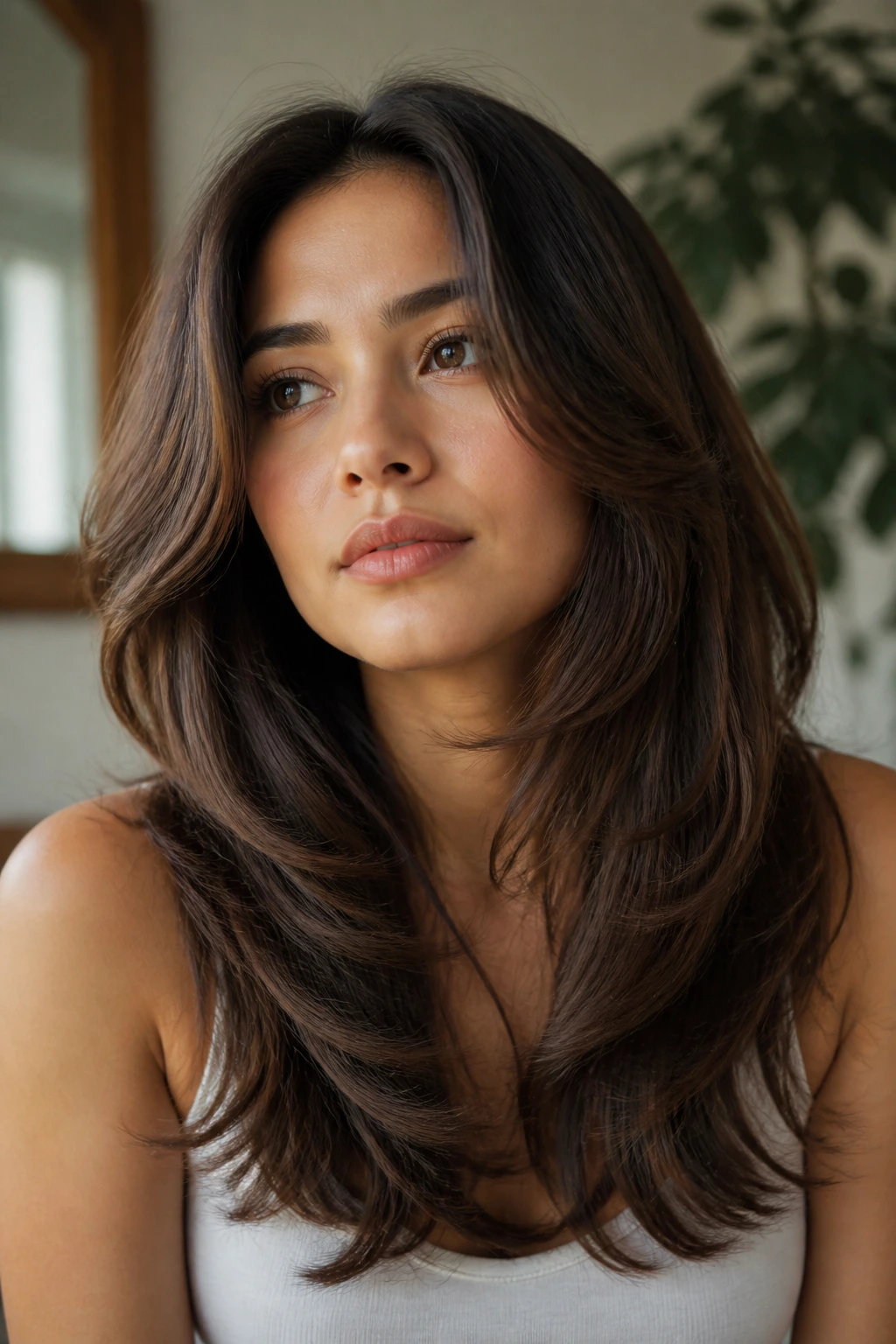
What length is most flattering if I have thick hair and a heart-shaped face?
Collarbone length is one of the easiest places to start because it gives thick hair enough room to move without sitting right at the jaw. Long layers work well too, especially if the face-framing pieces begin around the cheekbones instead of the temples.
Are curtain bangs good for a heart-shaped face?
Yes, and they’re one of the safest fringe choices here. They break up forehead width without making the top of the face look heavy, and they blend well with long layers, lobs, and butterfly cuts.
Should I avoid a blunt bob if my hair is thick?
Not at all, but the line has to be placed carefully. A blunt bob that stops at the widest part of the jaw can flare outward, while a beveled or slightly longer version sits much better.
What if my crown is flat but my ends are huge?
That usually means the shape is carrying too much weight at the bottom and not enough lift at the root. Ask for internal layers, then style the crown first with mousse or lift spray before you worry about the ends.
Is a center part bad for this face shape?
Not automatically. A center part can work if the bangs, layers, or cheekbone pieces soften the forehead. If the top half already feels wide, a slight side part often gives a gentler balance.
How do I make thick hair look less puffy without flattening it?
Use smoothing cream only on the mids and ends, and keep product off the roots. Then ask for a cut that removes bulk from the inside, not one that makes the perimeter too thin.
Can I wear my hair up often without making my face look too sharp?
Yes, as long as you leave some softness around the temples or cheekbones. A loose ponytail, chignon, or half-up twist usually looks kinder on a heart-shaped face than a fully slicked-back style.
What should I ask my stylist for if I want one of these looks?
Use plain language: say you want to keep thickness under control, soften the forehead area, and avoid a boxy line at the jaw. Then point to the exact style you want and ask where the shortest face-framing pieces should land.
The Shape That Does the Work
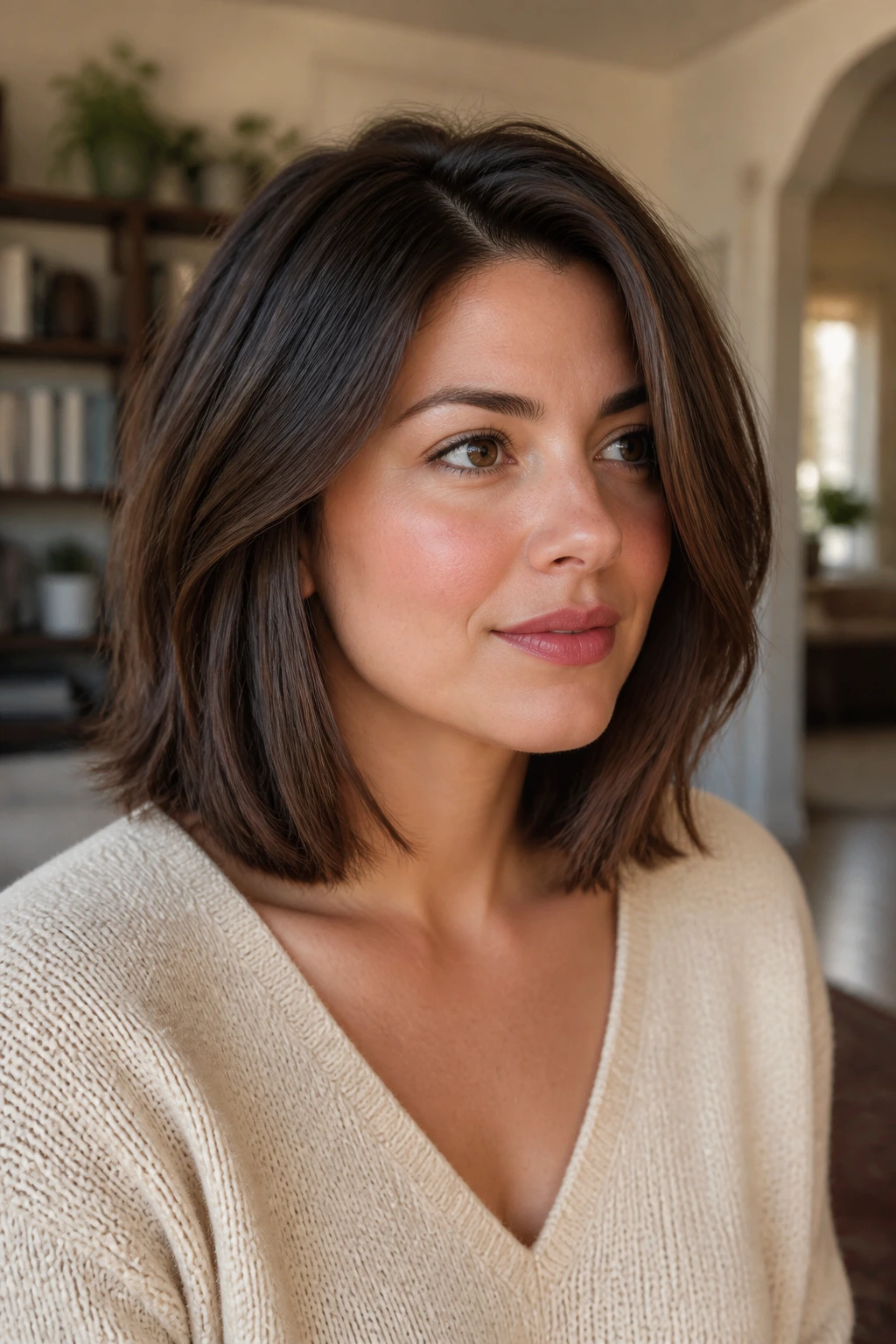
The best haircuts for thick hair and heart-shaped faces are not trying to outsmart either trait. They respect both. That means keeping enough weight for the hair to move well, while also placing softness where the face needs it most.
If one thing ties these styles together, it’s this: they all use line, not just length, to do the balancing. Some soften the forehead. Some keep the jaw from getting boxed in. Some just stop thick hair from turning into a wall.
Choose the shape that fits how you actually live, not the one that looks clever on a board. When the cut is right, the styling gets easier on the very next morning, and that’s the part people notice first.