



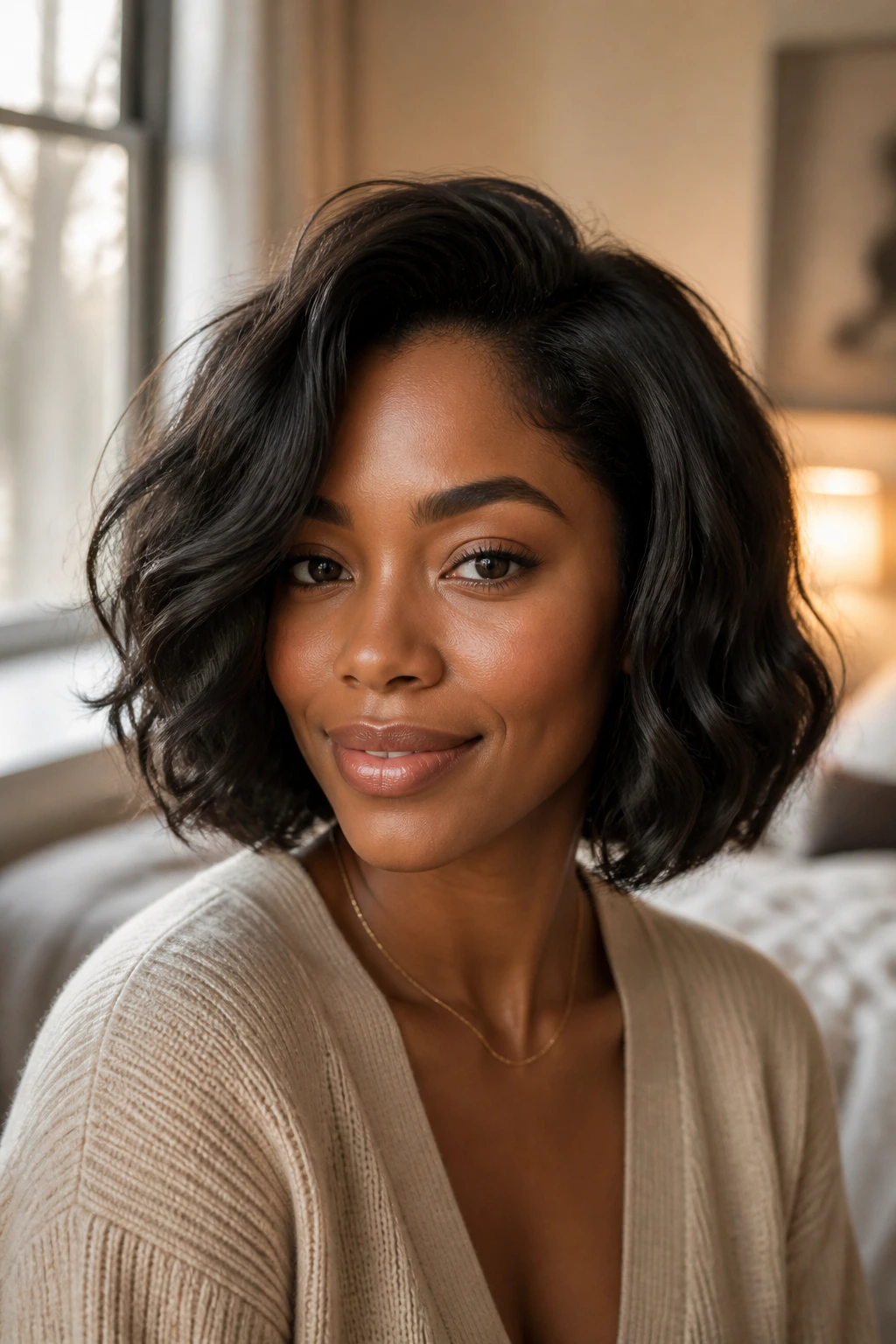
A good blowout bob on wavy Black hair should move when you turn your head.
Not bounce like a trampoline. Move. The ends should swing a little, the crown should sit smooth, and the whole shape should feel like it was cut on purpose instead of flattened into obedience.
That balance is why this haircut keeps coming back. Too straight, and the line can look hard around the jaw. Too airy, and the bob loses the clean edge that makes it feel expensive-looking without trying too hard. The sweet spot sits in the middle: brushed smooth, blown out with tension, then left with enough wave that the shape still feels alive.
There’s a practical reason people keep reaching for this look, too. Wavy Black hair can sit in all kinds of patterns—loose bends, denser S-waves, ends that flip one way in the salon and another way at home. A bob or lob built for that texture doesn’t fight it. It works with the bend, gives the hair a line to follow, and keeps you from spending half the week trying to rescue a puffed-up triangle at the sides.
Why You’ll Love This Collection
-
Soft but structured: These blowout bobs keep the outline clean at the ends while leaving enough movement through the middle so the style doesn’t feel stiff.
-
Easy to tailor: A chin-length cut, a jaw-grazer, and a collarbone lob all do different jobs on the face, which means you can pick shape before you even think about texture.
-
Wavy hair-friendly: The best versions of these cuts don’t erase your wave pattern; they smooth the root and let the bend live where it looks best.
-
Day-two friendly: A well-cut bob is one of the few styles that can still look intentional after sleep, a scarf line, and a quick root refresh.
-
Works with density: Layers, bevels, and angles can keep thick hair from ballooning while giving finer hair a little lift where it needs it.
-
Dressy or casual: The same bob that looks sharp with a blazer can loosen up with a side tuck, a gold hoop, and a little piecey texture.
Why These Blowout Bobs Work on Wavy Black Hair
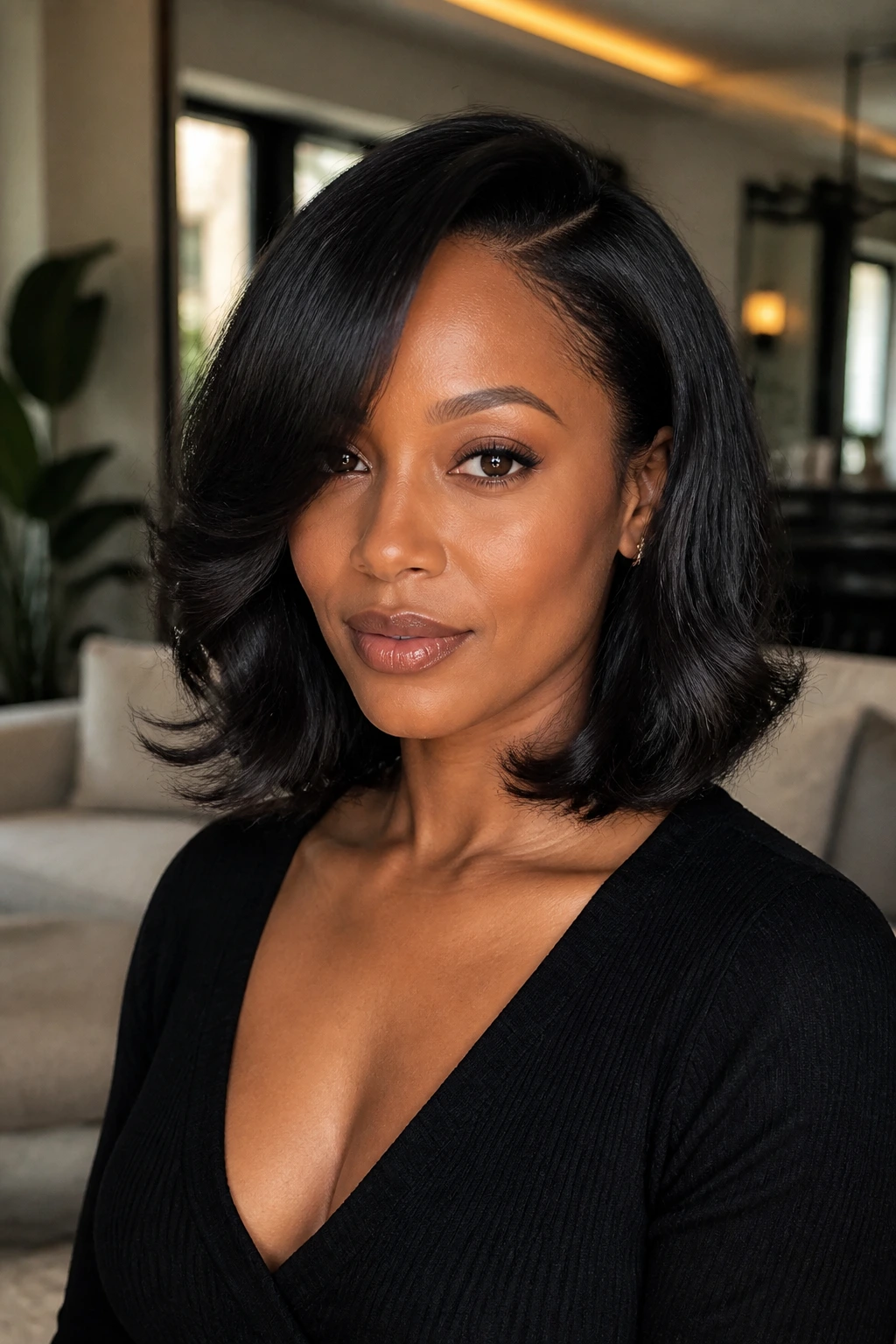
A blowout bob only looks good when the cut and the styling are pulling in the same direction. On wavy Black hair, that usually means the root gets smoothed enough to show the shape, while the mid-lengths and ends keep a little bend so the haircut doesn’t feel pasted to the head.
That bend matters more than people think. A blunt line with no movement can make dense hair look boxy, especially if the widest part of the cut lands right at the cheek or chin. A little bevel under the ends, or a soft flip out, changes the whole read of the haircut. Suddenly it frames the face instead of sitting on it.
There’s also the question of weight. Longer bob lengths—especially lobs that hit the collarbone—give wavy hair somewhere to fall. Shorter cuts can look sharper, but they ask for more precision in the blow-dry and more frequent trims. If your hair tends to swell at the sides when humidity shows up, the right length can calm that down more than a stronger spray ever will.
And one thing I’ve always liked about this family of cuts: it leaves room for personality. You can make a blowout bob glossy and sleek, or soft and broken-up, or a little retro with flipped ends. Same haircut. Different mood.
1. Center-Part Blunt Bob with a Soft Bend
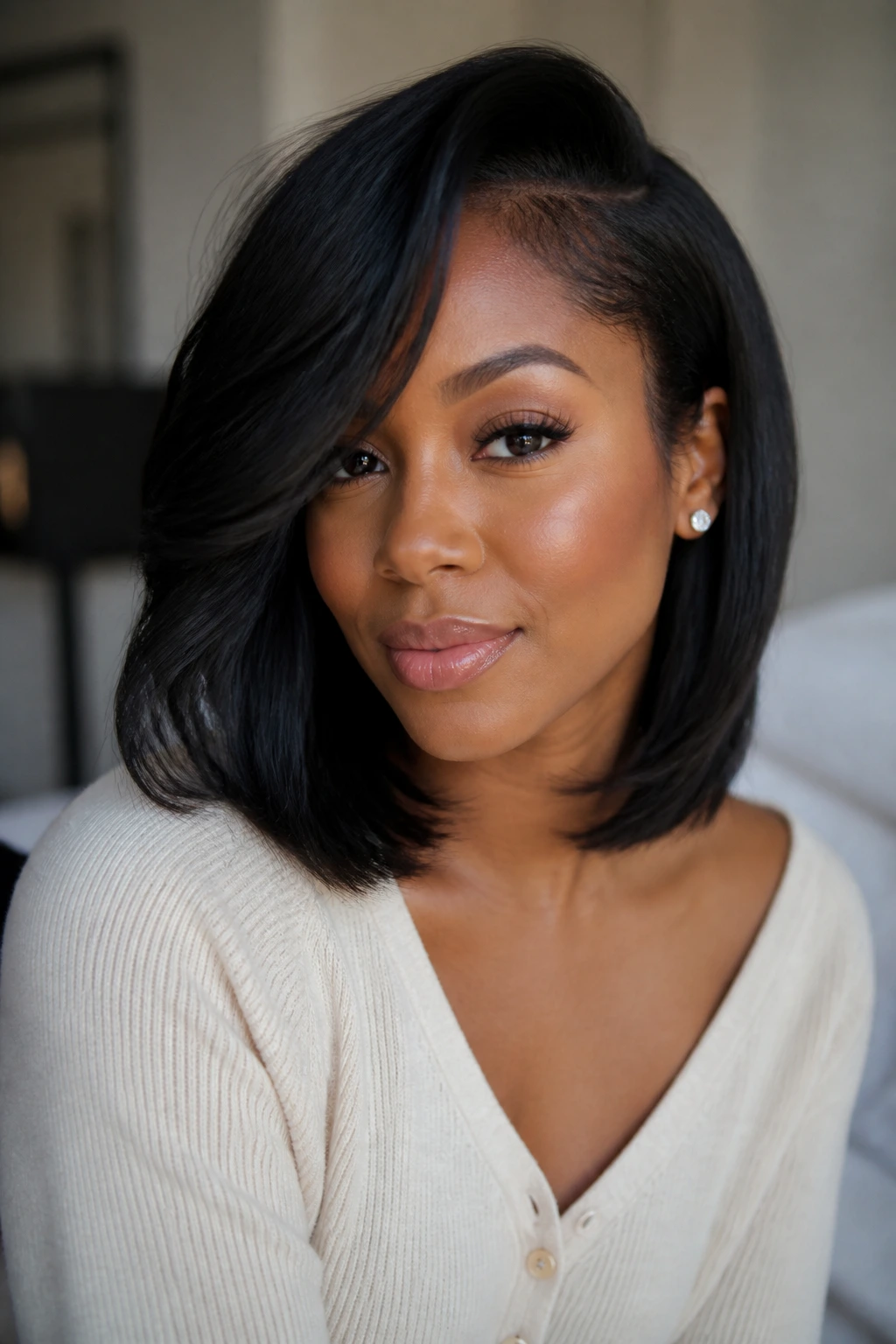
A center part doesn’t have to make the cut feel severe. On wavy Black hair, a blunt bob that lands at the jaw or just below it can look sharp in the best way when the ends keep a tiny curve instead of a frozen straight line.
The trick is balance. Keep the perimeter clean, but do not iron the life out of it. A round brush with a 1.5- to 2-inch barrel, plus a single pass just through the surface, usually gives enough polish without turning the style flat. This one is especially good if you like symmetry and you want the haircut itself to do the heavy lifting.
It reads crisp on oval and heart-shaped faces, but the soft bend keeps it from feeling severe on softer features. One little detail I love: if the ends tuck under slightly at the nape, the whole cut looks more expensive. Not louder. Just cleaner.
2. Side-Swept Lob with a Soft Bend
Want a bob that looks polished at 8 a.m. and still feels easy by dinner? A side-swept lob is the move. The longer front piece skims the collarbone, and the side part gives the top half of the haircut some lift without making you fight for volume at the crown.
This shape is especially kind to wavy hair that collapses in the middle and puffs at the sides. The diagonal line pulls the eye down, which makes the face look a touch longer and the hair look more controlled. If one side of your hair is naturally flatter, clip that root while it cools and the bend usually holds better.
I like this one for people who keep one ear tucked most of the day. It still looks intentional when a hoop earring shows through the hair.
3. Angled Bob with Longer Front Pieces
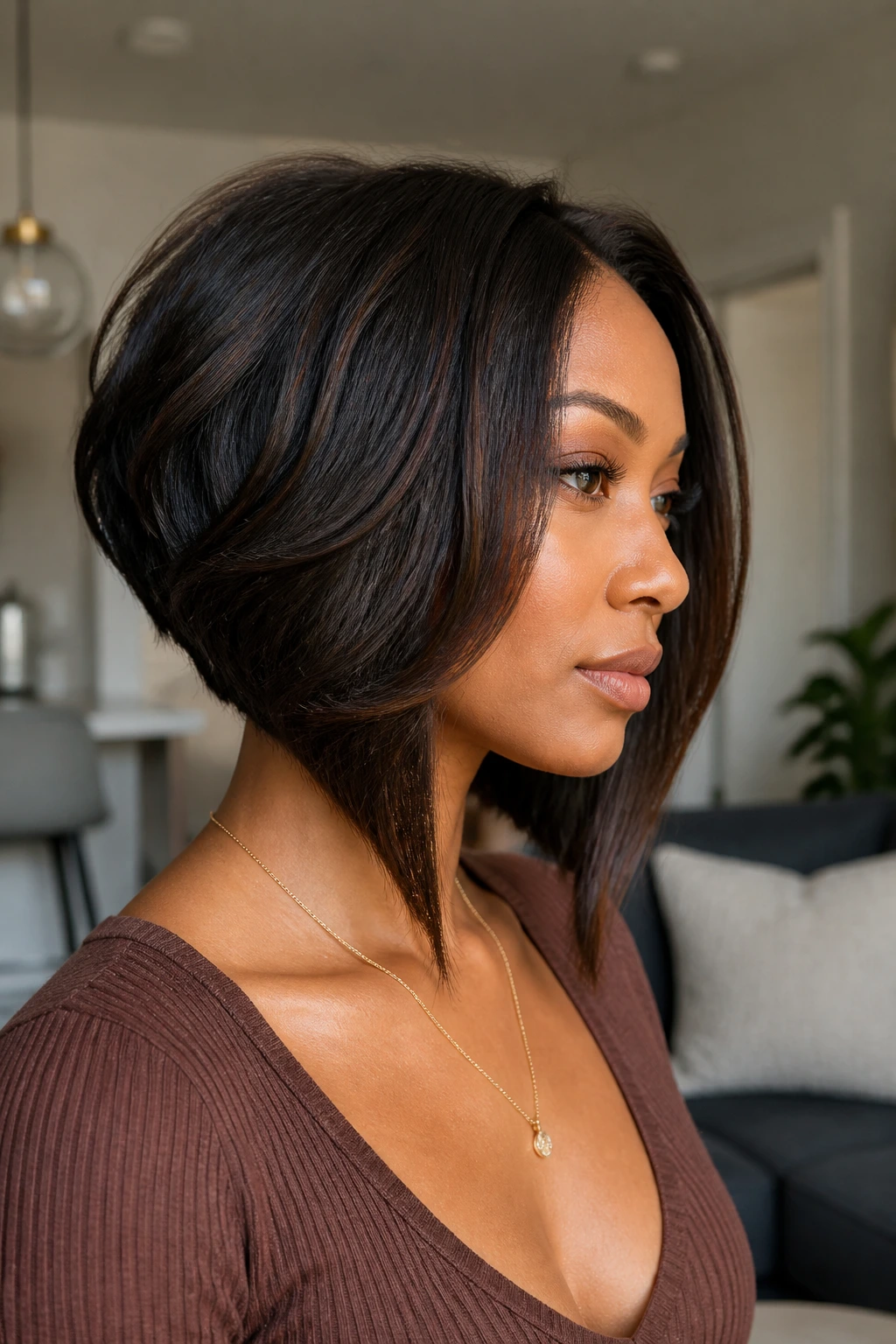
An angled bob gives you the neatest kind of drama. The back sits shorter and cleaner at the nape, while the front pieces sweep forward and graze the jaw or collarbone, which makes the neck look longer without needing any tricks.
This shape plays especially well with thick wavy hair because the angle removes bulk where it tends to stack up. If your hair has a habit of swelling at the back after a few hours, an angled line helps the cut stay visible instead of puffing into one soft block. Ask for a gentle angle rather than a steep one unless you want a very obvious shape.
One-sentence truth: this cut needs a good trim schedule.
The front can lose its crispness fast if you wait too long, so I’d keep it on a six- to eight-week rhythm.
4. Feathered Flip-Out Bob
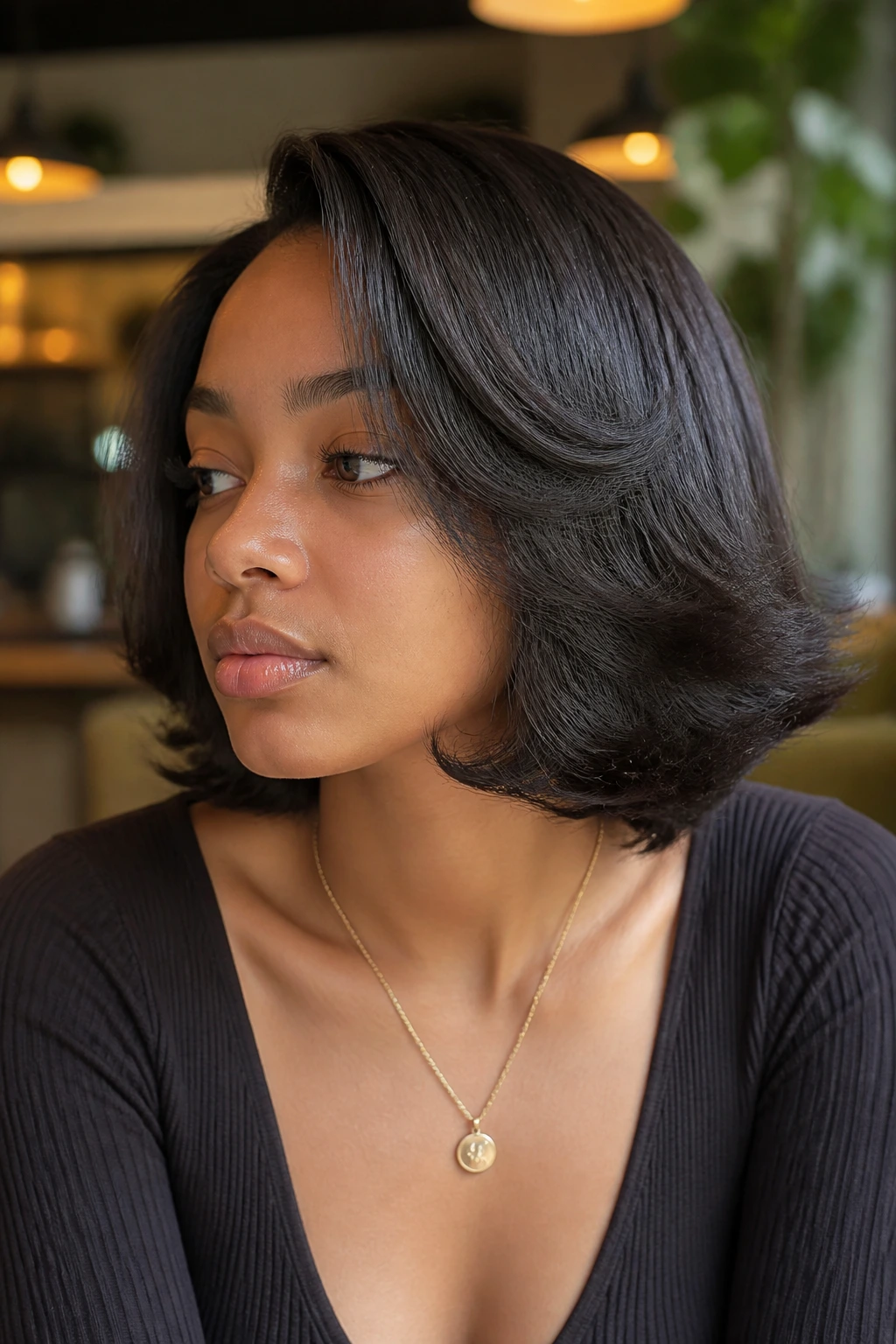
If you want movement without full curls, flipped-out ends are your friend. A feathered blowout bob takes the bluntness of a bob and loosens it just enough at the bottom so the hair looks airy instead of rigid.
The style works because the eye sees motion first. A medium round brush or a large-barrel curling iron on just the last inch or two can make the ends sweep away from the neck, which looks especially nice on denser hair that needs a little release at the bottom. Use a lightweight mist of heat protectant, then finish with a touch of flexible hold spray so the flip stays soft, not crunchy.
This is the bob I’d pick for a person who likes hair that looks touched, not shellacked. It has a little personality built in.
5. Curtain-Bang Lob with Face Framing
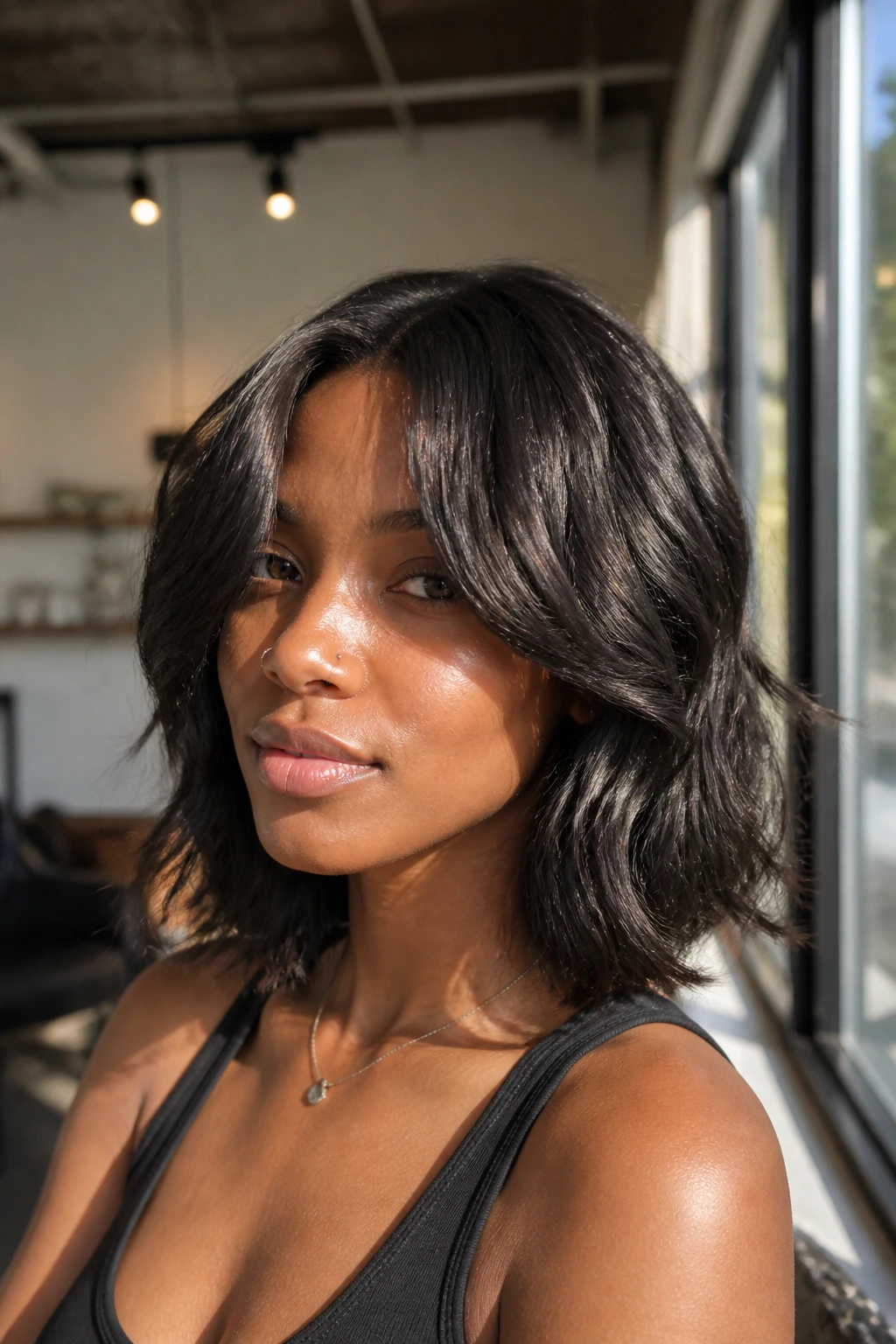
Curtain bangs can change the whole feel of a lob. Instead of a hard line around the forehead, the fringe parts in the middle and falls softly to either side, blending into the front of the haircut like it was meant to live there.
On wavy Black hair, this works best when the bangs are cut a touch longer and styled with a round brush or velcro rollers while they cool. Short curtain bangs can spring up too much, especially if your hair has a strong wave pattern. Longer ones sit better and give you room to push them away from the face or tuck them in depending on the day.
If you want a lob that feels less serious and more lived-in, this is one of the easiest ways to get there. It softens a strong jaw, takes some weight off a rounder face, and looks good even when the rest of the hair is a little imperfect.
6. Jaw-Length Blunt Bob with a Smooth Edge
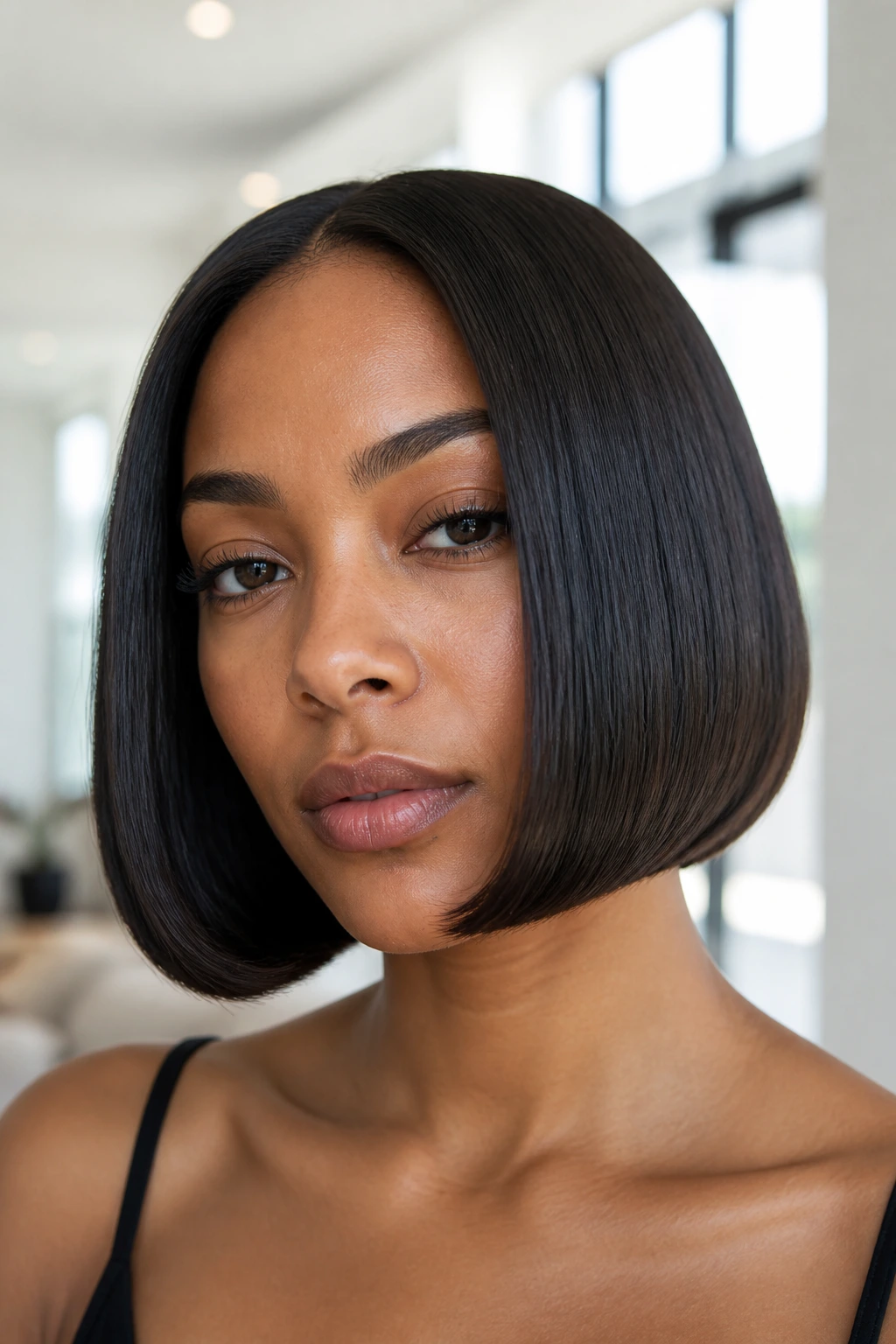
A jaw-length bob is not shy. It sits right where people notice the line of the face, which is why it can look fantastic on wavy hair when the finish is neat and the perimeter is exact.
The danger, of course, is boxiness. If the ends are too puffed or the roots are too flat, the shape can go square fast. The fix is a controlled blowout: smooth the root with tension, then bend the ends under just enough that the line feels polished rather than hard. A touch of lightweight serum on the mid-lengths helps the surface stay calm.
I like this cut on faces with strong cheekbones or a defined jaw, because it makes that structure stand out instead of hiding it under extra length. It’s a strong shape. That’s the point.
7. Layered Bob for Dense Hair
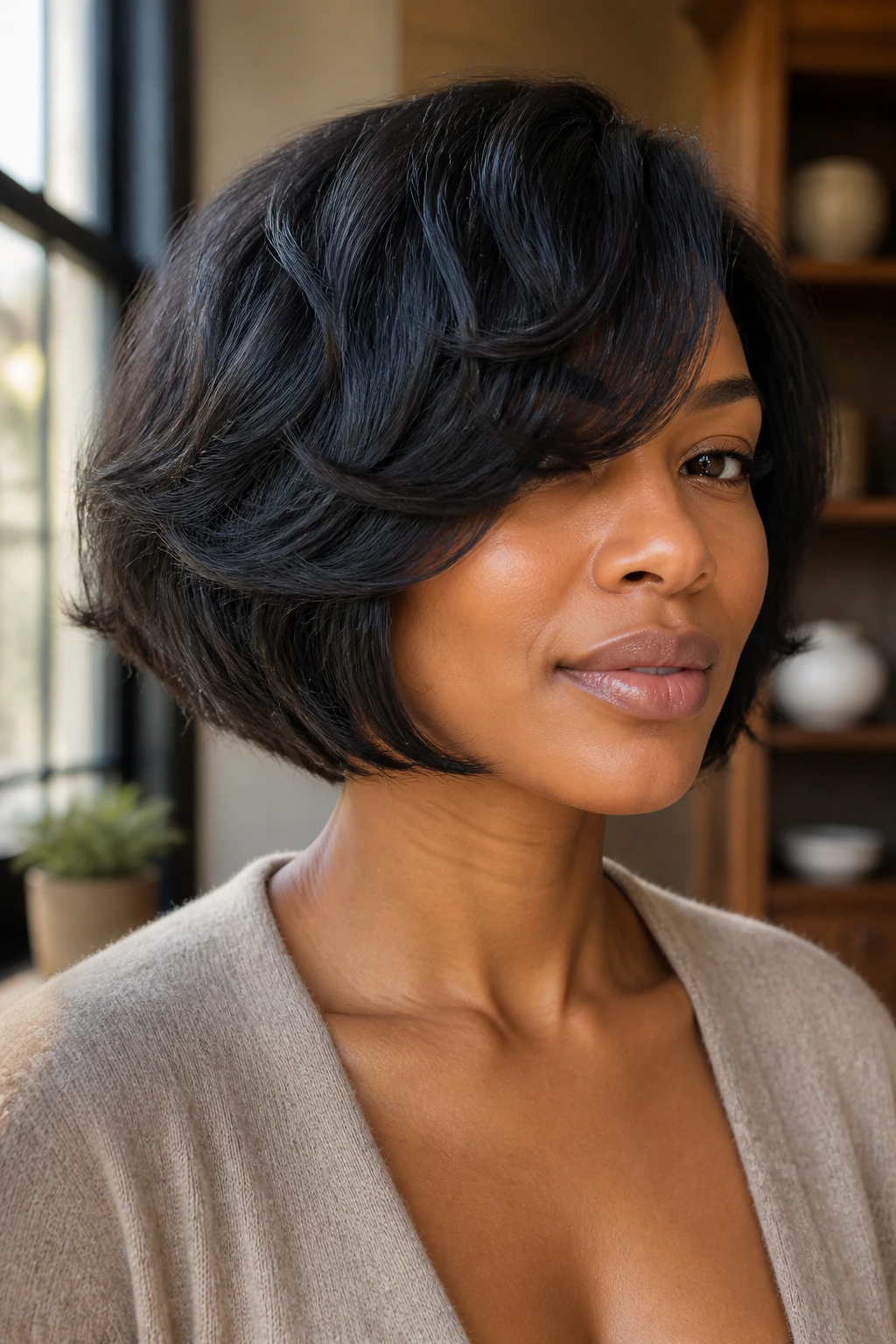
Dense hair needs room to breathe, and layered bobs give it exactly that. Instead of stacking all the bulk at the bottom, internal layers take some weight out of the middle so the silhouette sits flatter at the sides and doesn’t turn into a triangle by noon.
The best version keeps the outer line clean. You want movement inside the haircut, not choppy pieces sticking out all over the place. Ask for layers that start low enough to keep the bob’s shape intact, especially if your natural wave gets puffier when the weather shifts.
This is the kind of cut that looks better once it’s been worn a few times. After the hair settles, the shape gets softer in a way that still feels deliberate.
8. Deep Side-Part Glam Bob
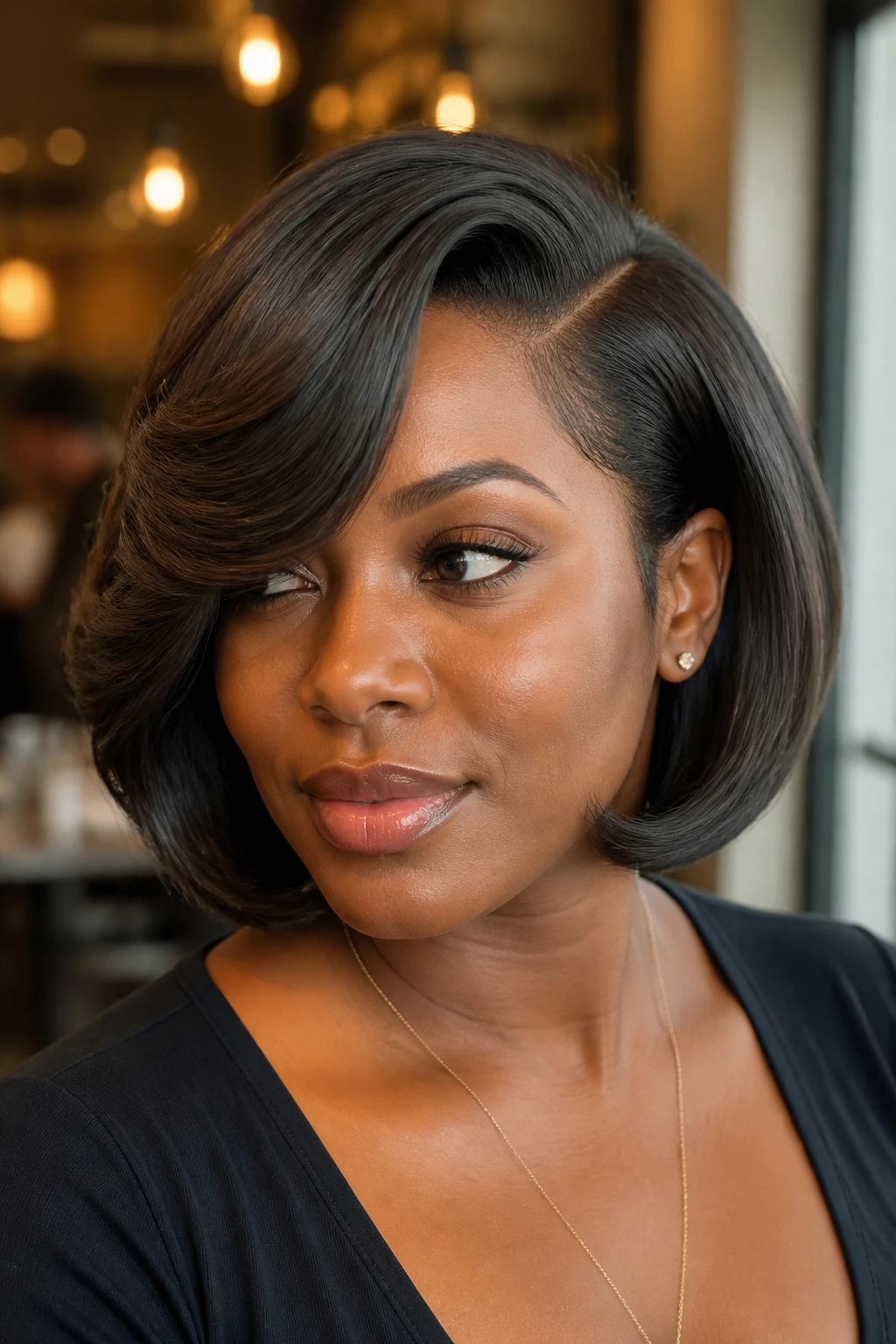
A deep side part changes the whole balance of a bob. It gives one side a little lift, drapes the other side across the forehead, and makes the style feel more dramatic without adding length or a pile of styling steps.
The best thing about this look is how well it handles wavy texture at the crown. A root clip while the hair cools can buy you a little height where you need it, and a large brush through the front keeps the sweep broad instead of stringy. Finish with a shine spray, not a heavy oil, because too much weight at the part will make the whole shape fall.
This one is the easiest way to make a simple bob feel dressed up fast. Put on earrings, set the part, and you’re done.
9. Rounded Bob with Tucked-Under Ends
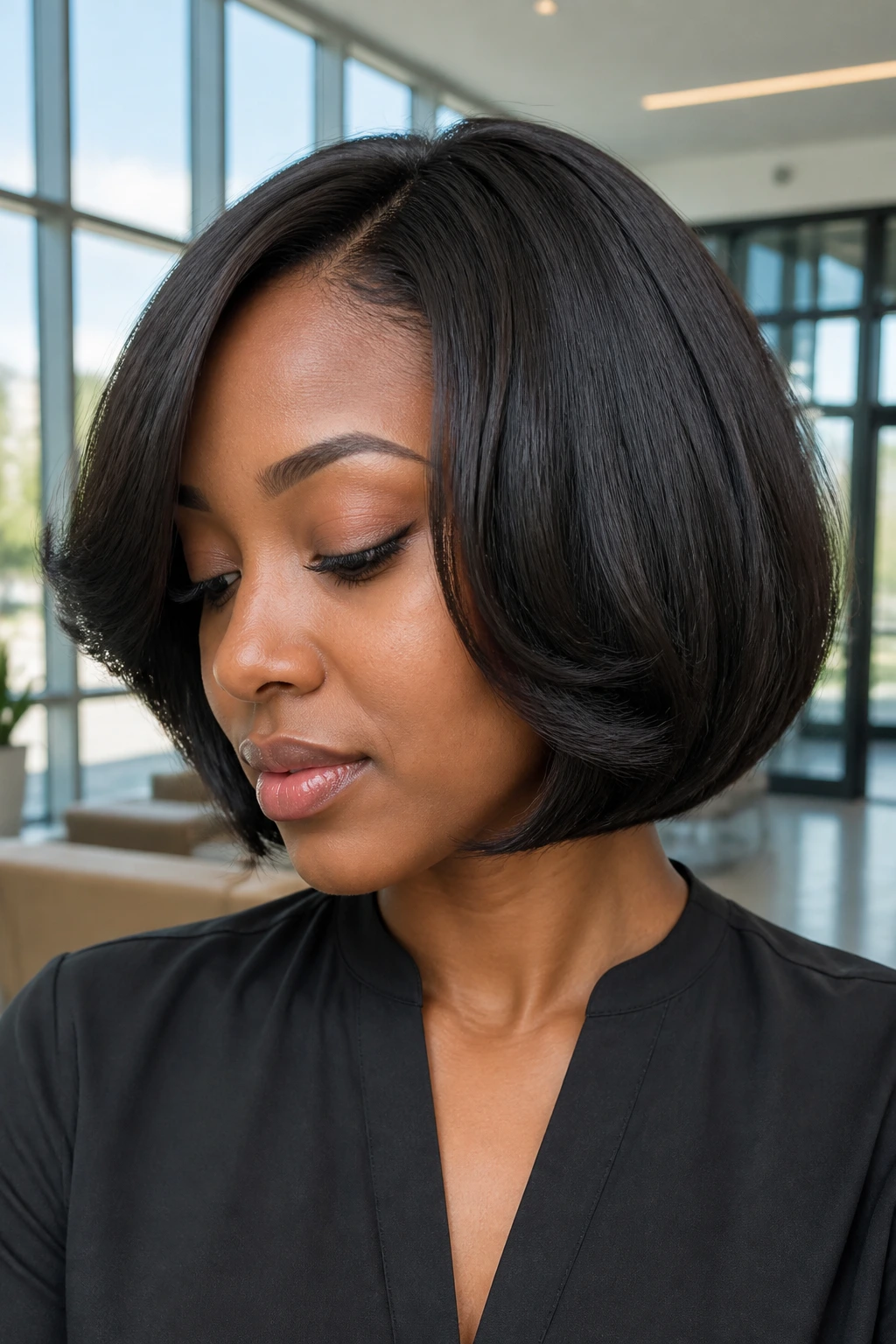
There’s something satisfying about a rounded bob done well. The ends tuck under just a bit, the sides curve softly toward the jaw, and the whole shape feels neat in a way that works for office days, dinners, and everything in between.
This cut is especially good when your hair tends to stick out at the ends after a blow-dry. A paddle brush first, then a round brush just on the last pass, usually gives that tucked finish without making the style too stiff. If you want it to stay smooth, keep the product light at the root and save most of your serum for the ends.
It’s not the loudest bob in the room. It might be the most dependable.
10. Piecey Textured Bob

Not every blowout bob needs to look perfectly smooth from root to tip. A piecey textured bob keeps some sections soft and separated, which gives wavy hair a little more personality and keeps the finish from reading too formal.
This is the one I’d point to if you like a bob that feels a little undone on purpose. Use a mousse or wrap foam before blow-drying, then pick out a few sections with your fingers instead of brushing everything into the same place. A small curling iron on random front pieces can help, but don’t overdo it. The charm is in the variation.
It works well on younger looks, sure, but it also looks smart on grown-up hair because it doesn’t pretend the texture isn’t there.
11. Asymmetrical Bob with One Strong Side
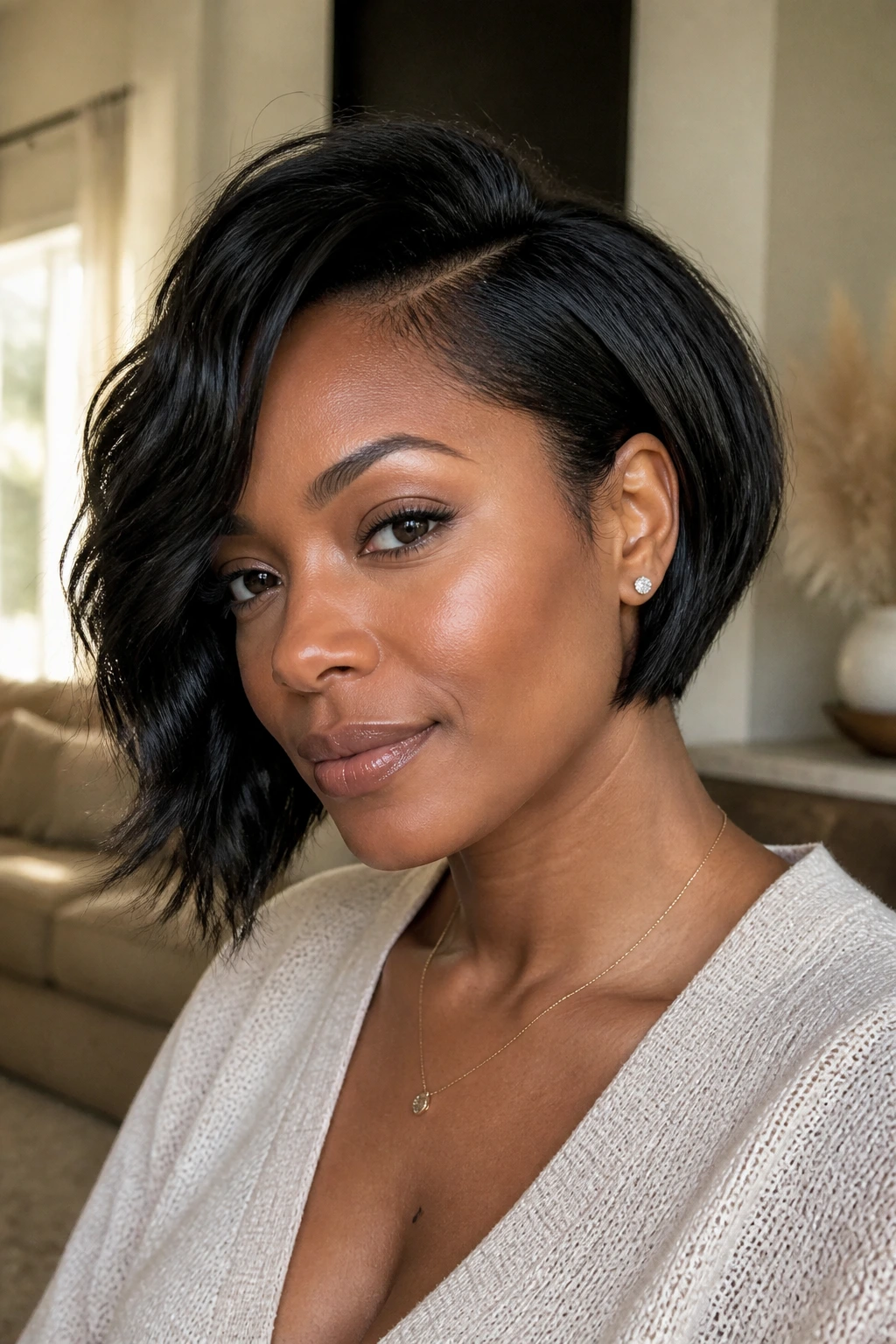
An asymmetrical bob gives you shape without forcing drama everywhere. One side sits a touch longer, which pulls the eye diagonally and makes the haircut feel modern even when the styling is simple.
This is a nice option if one side of your face feels softer than the other, or if you want a little length near the cheekbone without committing to a full lob. Keep the difference modest—usually half an inch to an inch and a half is enough. Too much slope and the bob starts to fight itself.
The hair looks especially good when one side is tucked behind the ear and the longer side falls forward. That little asymmetry makes the whole cut feel intentional.
12. Bubble Bob with a Rounded Shape
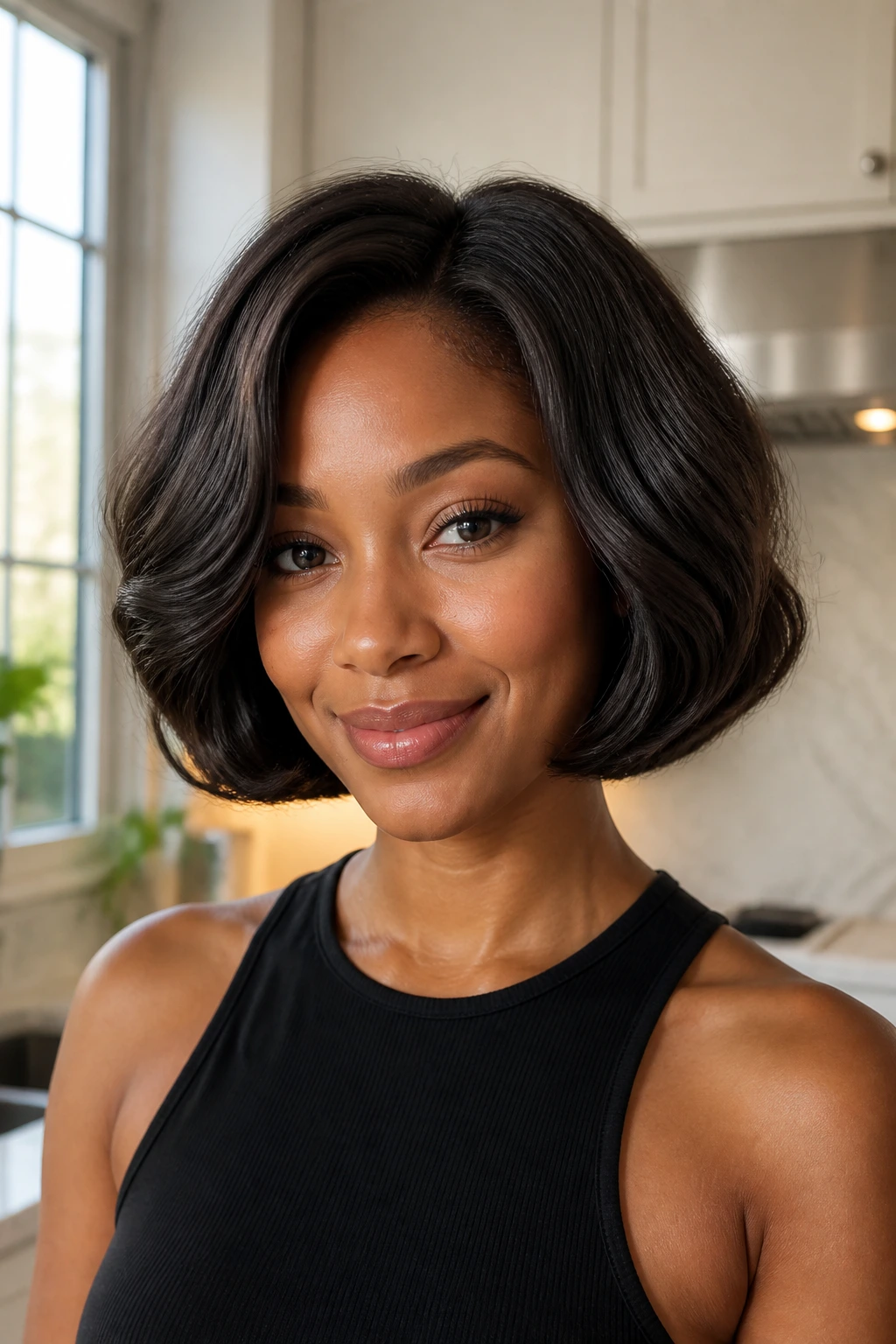
A bubble bob sits rounder through the middle and curves inward at the ends, which gives the haircut a soft, full silhouette. On thick wavy hair, it can look polished and plush instead of bulky, as long as the ends are controlled.
The key is where the volume lives. You want the fullness to sit in the body of the haircut, not at the widest point of the face. A smooth blowout with a large round brush, then a tucked-under finish at the bottom, gives the shape that rounded outline without making it feel old-fashioned in a bad way.
This cut has a bit of retro charm. Done well, it feels like a choice, not a throwback.
13. Shoulder-Skimming S-Wave Lob
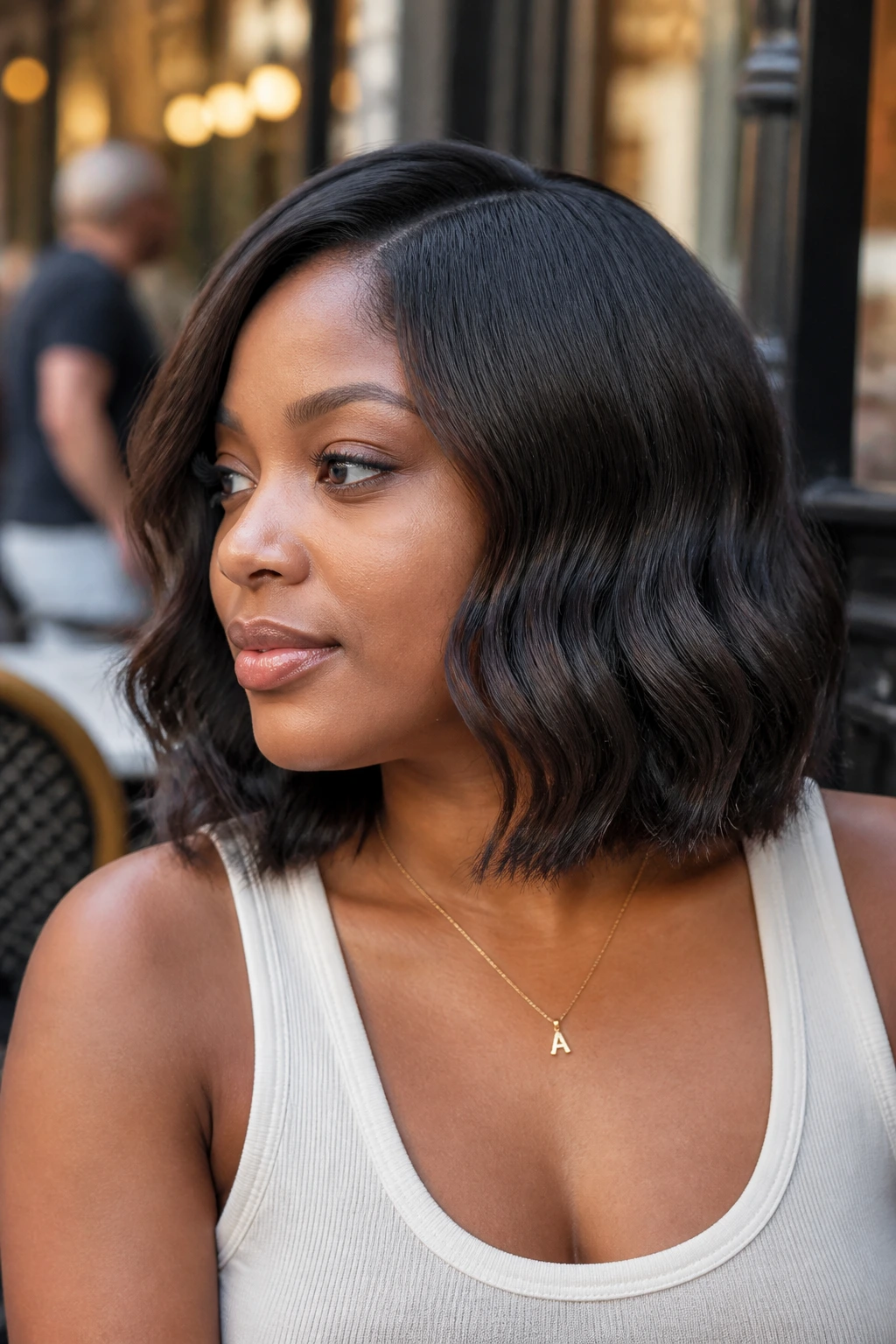
A shoulder-skimming lob is one of the easiest lengths to live with. It gives wavy Black hair room to move, brushes out well after sleep, and won’t cling to the neck the way a shorter cut can when humidity starts acting up.
The S-wave pattern is what makes this length sing. You do not need tight curls or poker-straight strands; you just need a smooth root and a soft bend through the mids. That makes this lob friendly for transition hair, grown-out cuts, and anyone who wants movement without chasing perfection every day.
One reason I like it: it doesn’t get bossy. The cut sits, swings, and leaves you alone.
14. Invisible-Layer Bob for Fine Hair
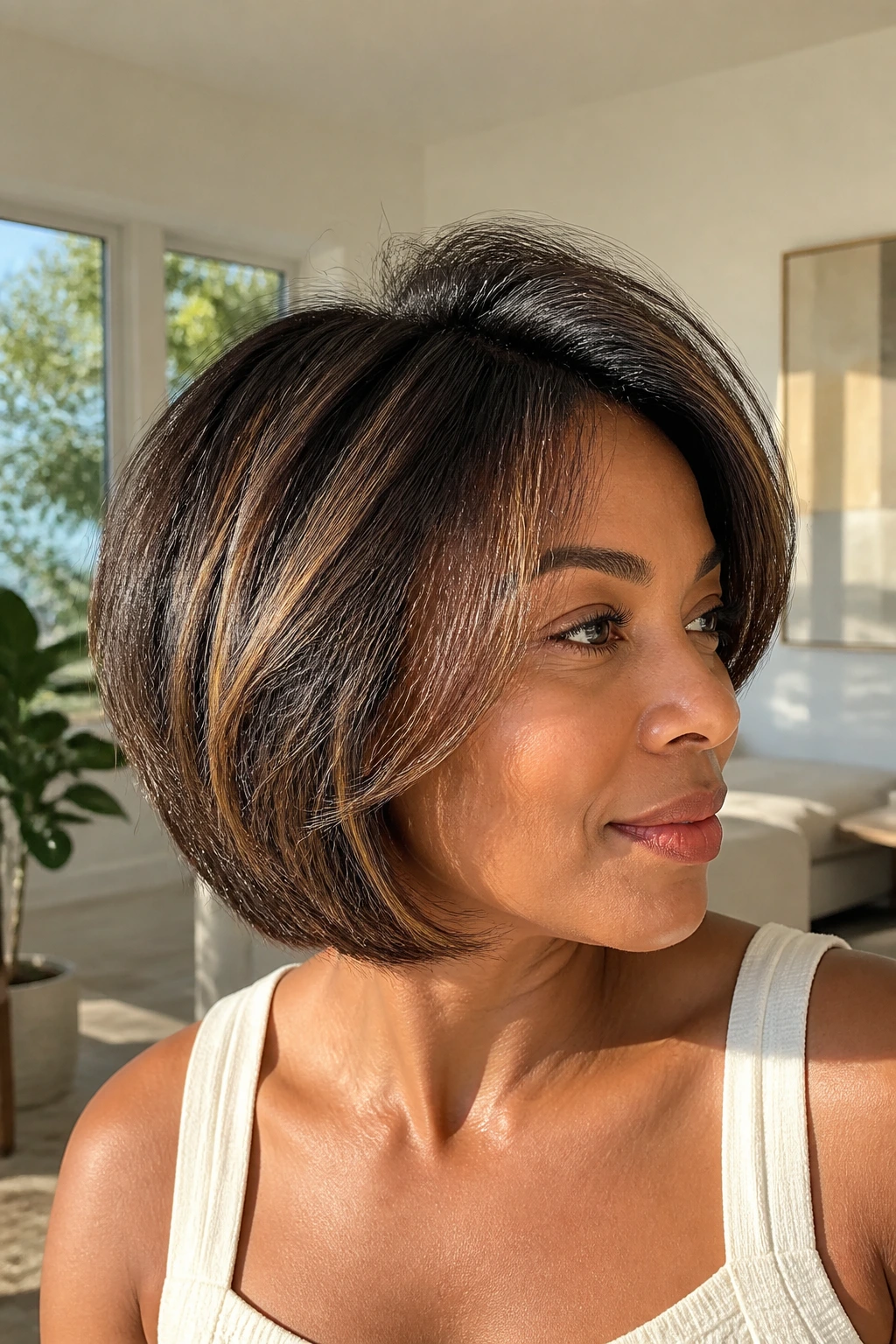
Fine hair needs lift without losing the outline, and invisible layers are the quiet answer. They create movement underneath the top section so the bob looks fuller at the crown and lighter at the ends, where over-thinning would leave it stringy.
This works well if your hair goes flat fast after a blowout. Use a lightweight mousse at the roots, blow-dry with the nozzle pointed downward, and avoid loading the hair with creamy products before the shape is set. The goal is body, not weight.
If the hair falls close to the head but still needs some swing, this cut can make it look twice as alive. Not bigger. Just more present.
15. Cheekbone-Skimming Bob with Long Bangs
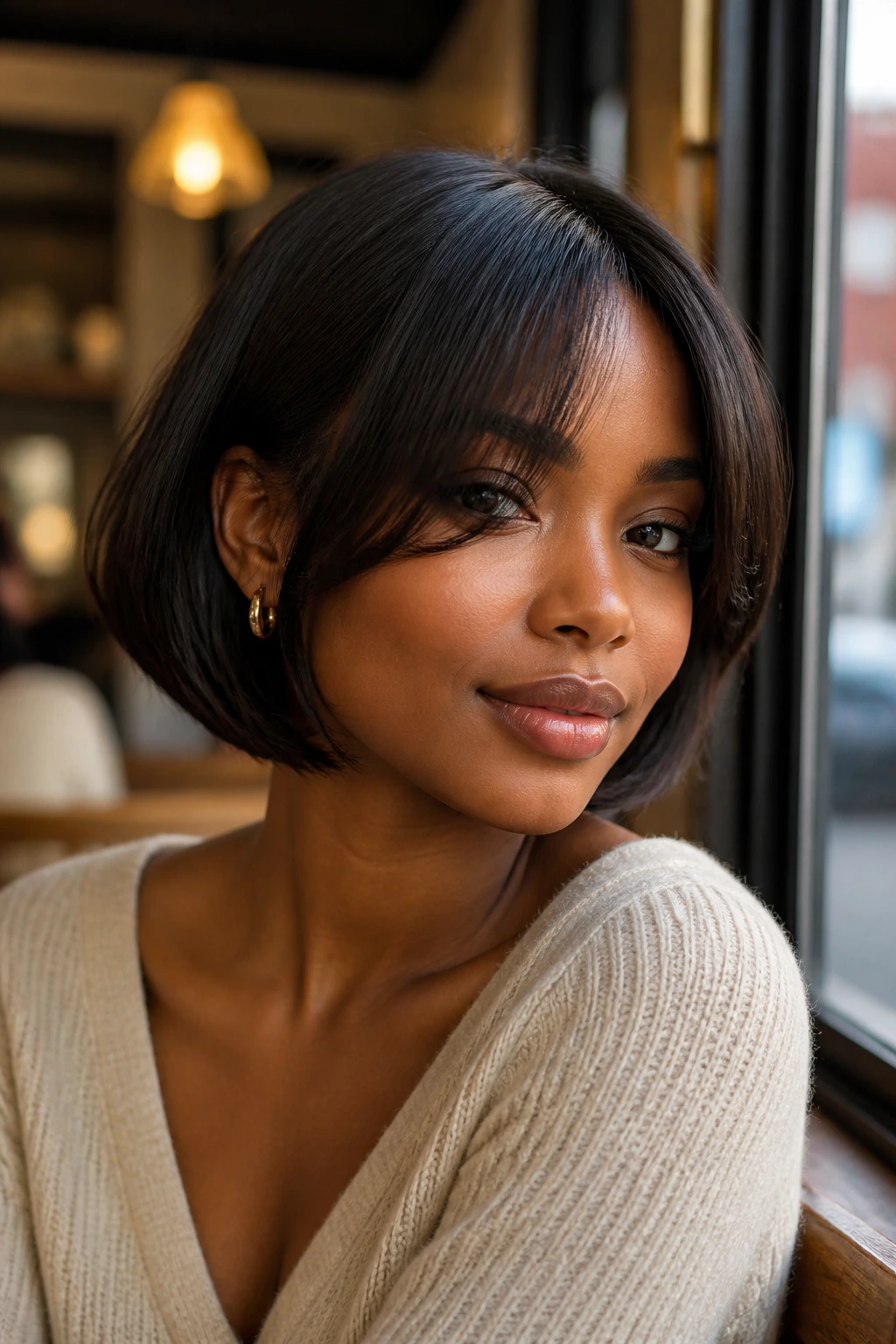
Long bangs that brush the cheekbone change the whole frame of the face. They draw attention upward, soften a strong jaw, and make a bob feel more layered even when the perimeter stays fairly clean.
This is a smart choice if you like the idea of bangs but do not want a heavy forehead curtain. The fringe can be pushed aside, separated a little, or curled softly back into the side pieces. Dry-cutting the bangs when the hair is mostly dry helps because wavy texture always shrinks in ways that look harmless until it’s too late.
The effect is elegant without trying to be formal. That’s a nice place to live.
16. Ribbon-Highlight Bob
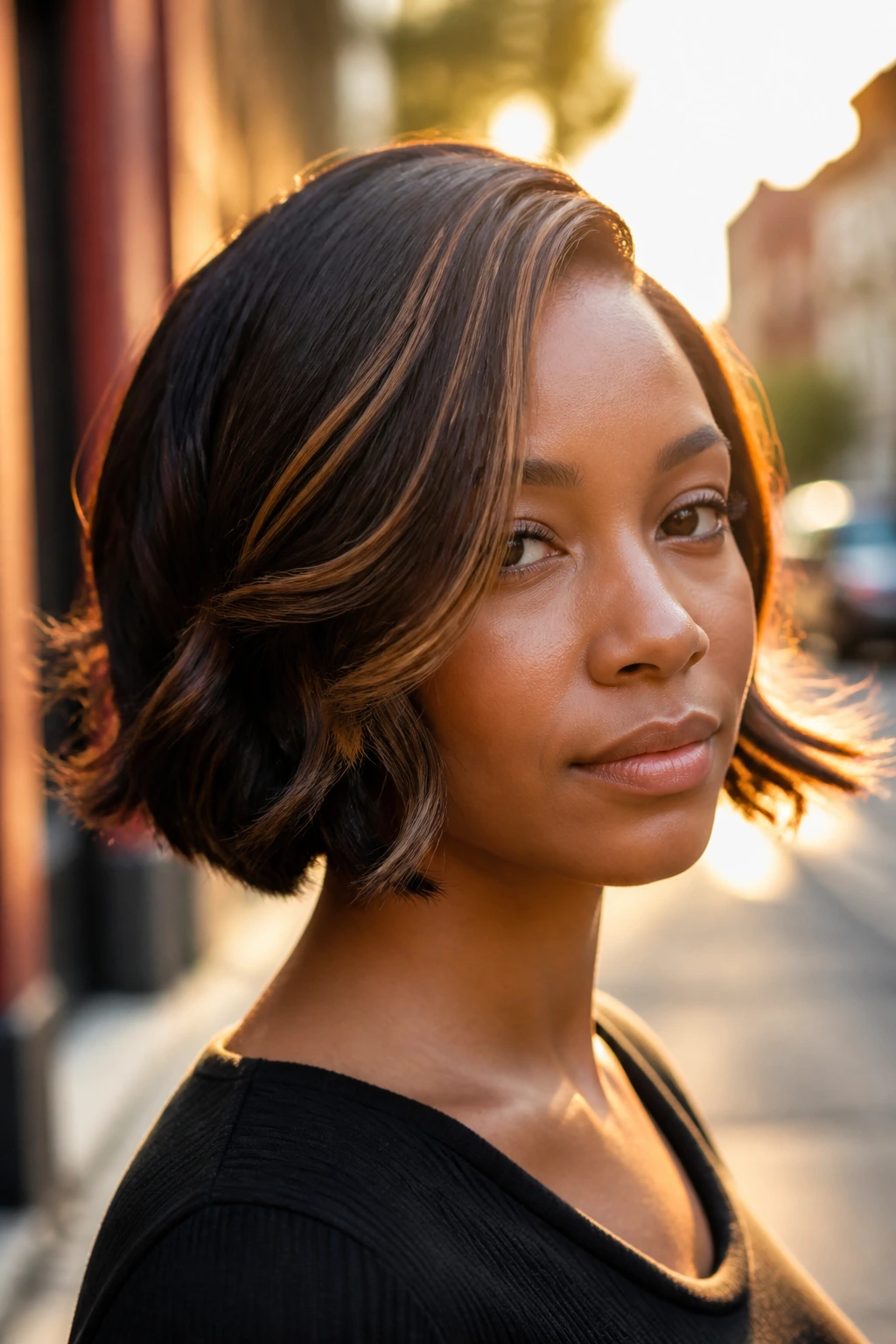
Color can change the shape of a bob as much as a scissors line can. Ribbon highlights—thin, warm streaks placed around the front pieces and through the surface—catch the wave pattern and make the bends easier to read.
I prefer this over chunky color blocks for wavy Black hair because it moves with the haircut instead of sitting on top of it. Caramel, honey, copper, and soft chestnut tones can all work, depending on your base color and how much contrast you want. Keep the placement concentrated around the face and ends if you want the bob to look dimensional, not striped.
One caveat: color needs care. Use color-safe shampoo, and keep heat a little lower if you don’t want the tone to fade fast.
17. Straight-Root, Wavy-Ends Bob
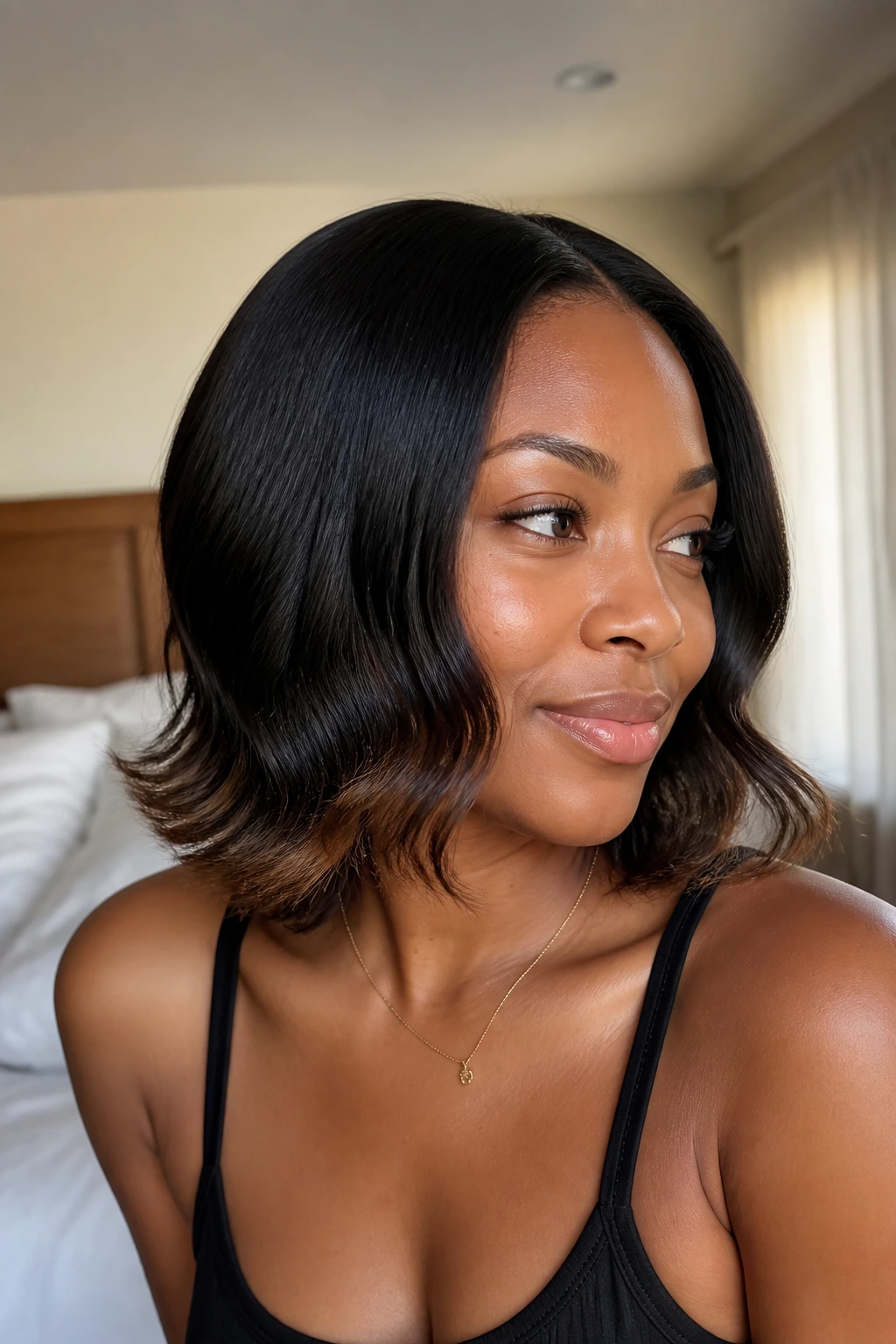
This is a very useful compromise. The root and upper third stay smooth and clean, while the bottom half keeps a relaxed wave that stops the haircut from looking overly flat.
It’s a good look for people who like polish but don’t want to spend forever with a flat iron. Blow the roots with a paddle brush, then use a round brush or a quick bend from a curling iron only on the last couple of inches. The result is neat near the scalp and softer at the edge, which tends to be the part people actually notice in motion.
I’d call this one quietly practical. It looks styled, but not like you fought with it.
18. A-Line Lob with Beveled Ends
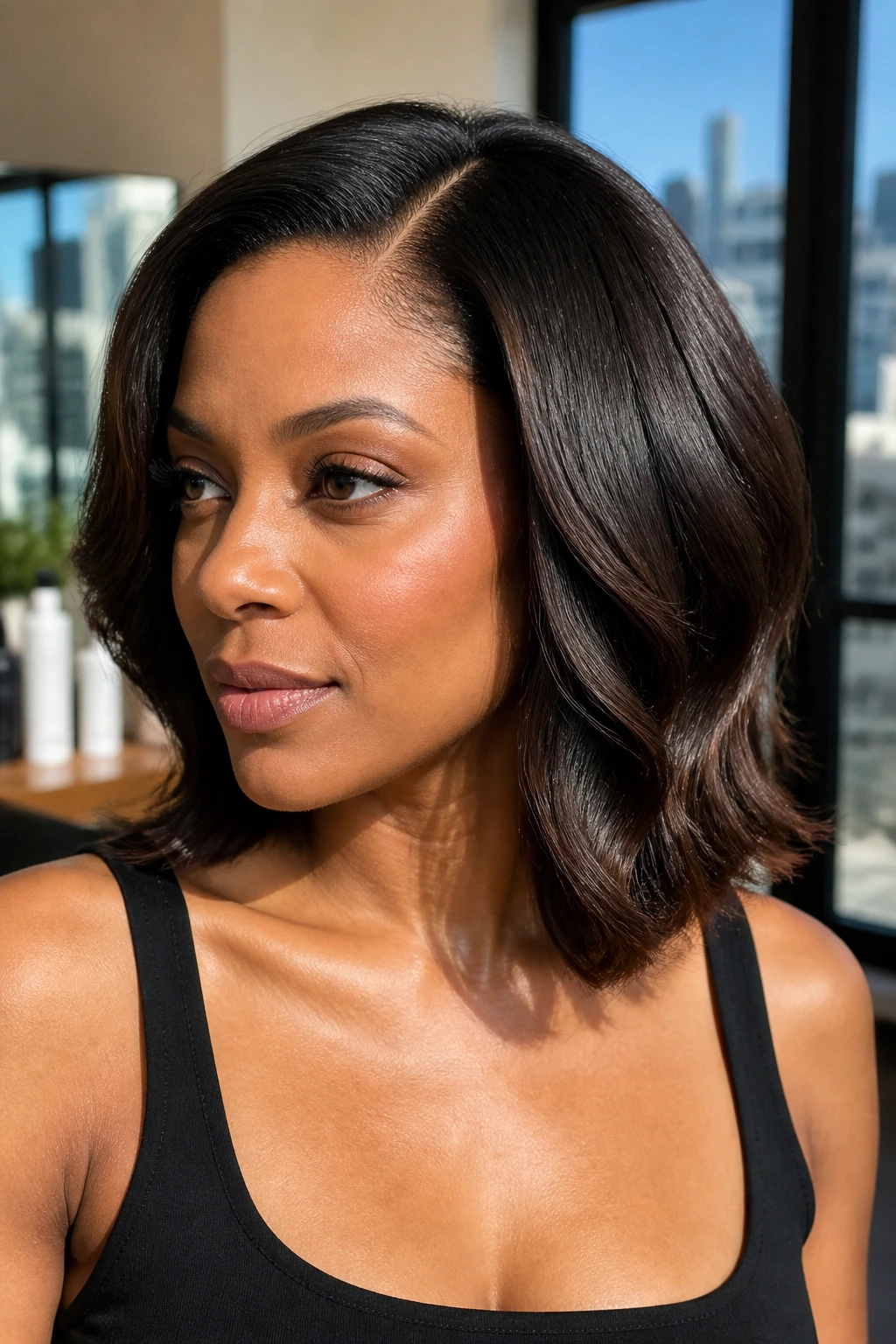
An A-line lob gives you a gentle angle from back to front, and the beveled ends make the outline feel finished instead of heavy. It’s a good shape when you want the collarbone length of a lob but still want the back to sit tidy.
Wavy hair likes this cut because the angle helps the ends fall forward instead of stacking up at the back. That means less puff, less weird flipping, and fewer mornings spent reworking the same sections over and over. Ask for the bevel to stay soft; a harsh angle can look dated fast.
This is one of those cuts that quietly does a lot. No drama, just balance.
19. Soft Bob with Face-Framing Layers
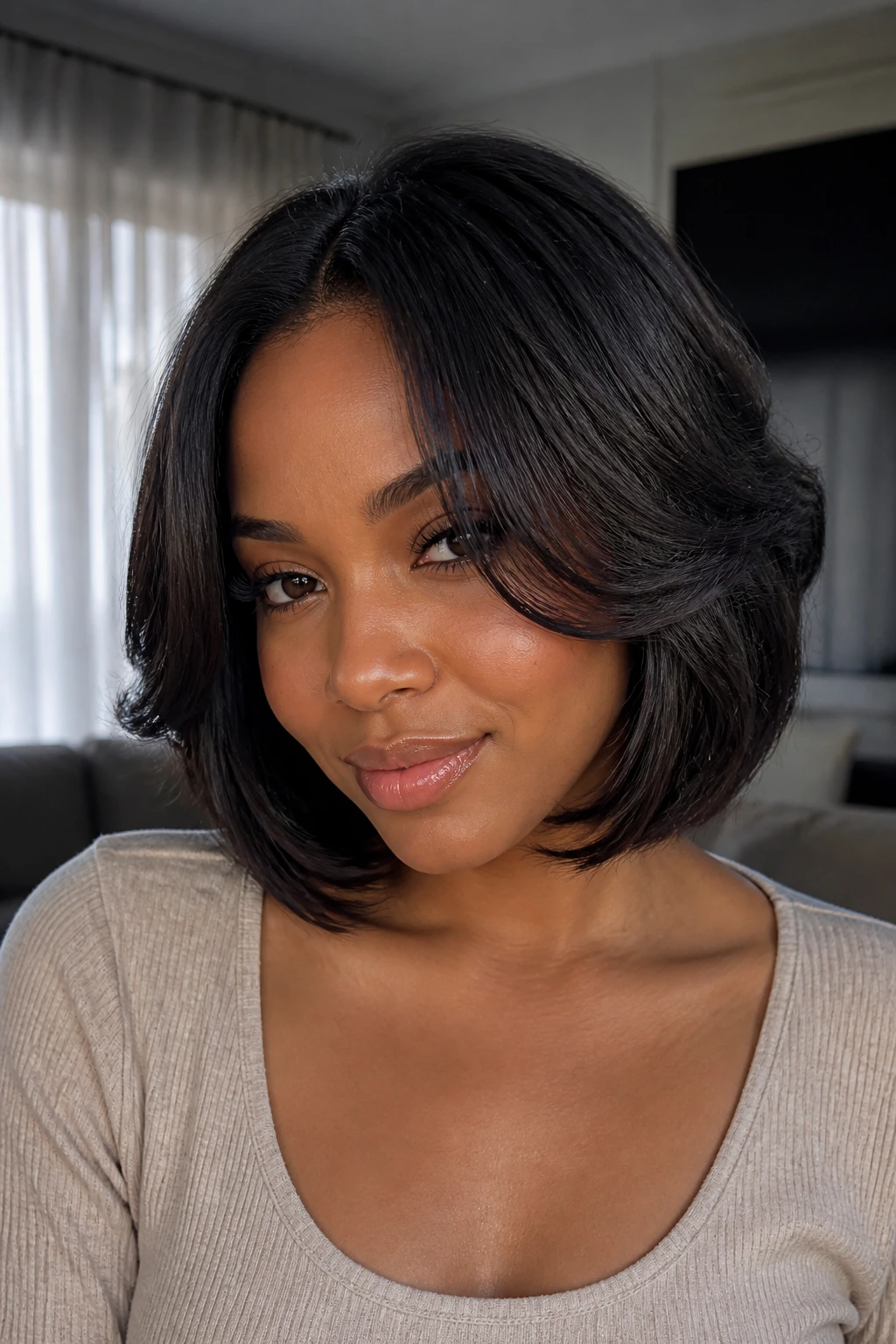
Face-framing layers are the difference between “nice bob” and “that suits her so well.” Around wavy Black hair, those front layers can take weight off the cheeks and jaw while leaving the back strong enough to keep the bob’s shape.
The important thing is restraint. Too many layers and the cut loses its backbone. Keep the perimeter solid, then soften only the front section so the waves can fall around the face without sticking out at odd angles. A stylist who understands dry shape usually does this better than someone chasing a lot of movement.
This is the bob for someone who wants motion near the face and structure everywhere else. Clean at the back. Softer where it counts.
20. Bob with Full Fringe
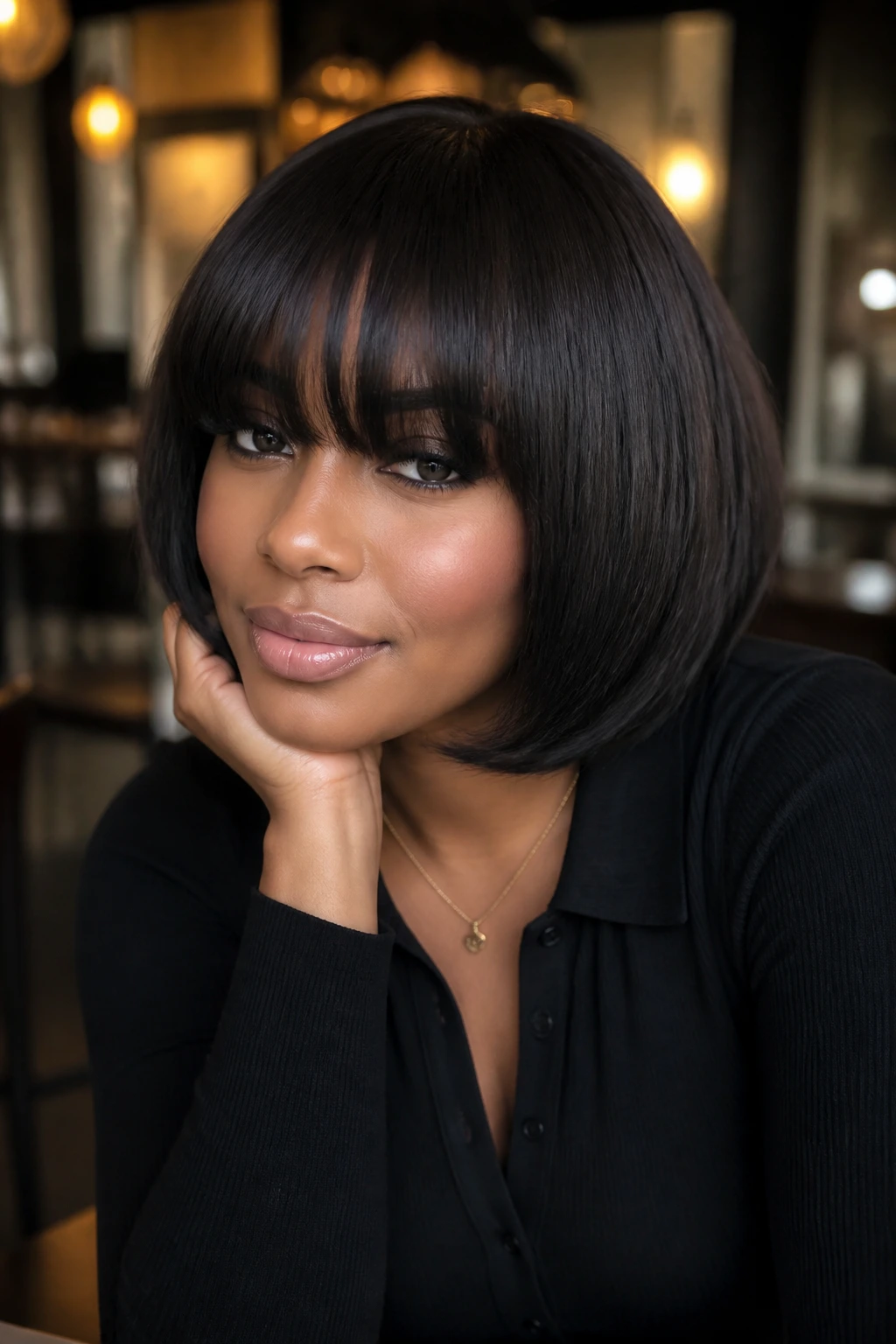
A full fringe changes the whole attitude of a bob. It gives the haircut a little edge, a little mystery, and a lot more upkeep than people expect.
On wavy hair, the fringe should usually be cut longer than you think and worn with some bend rather than forced perfectly straight. That keeps it from shrinking into a short shelf across the forehead. The rest of the bob can stay smooth and glossy, which helps the bangs feel like part of the same style instead of a separate event.
If you like strong makeup, hoops, or a clean neckline, this one hits. It has presence.
21. Half-Blown Natural-Texture Bob
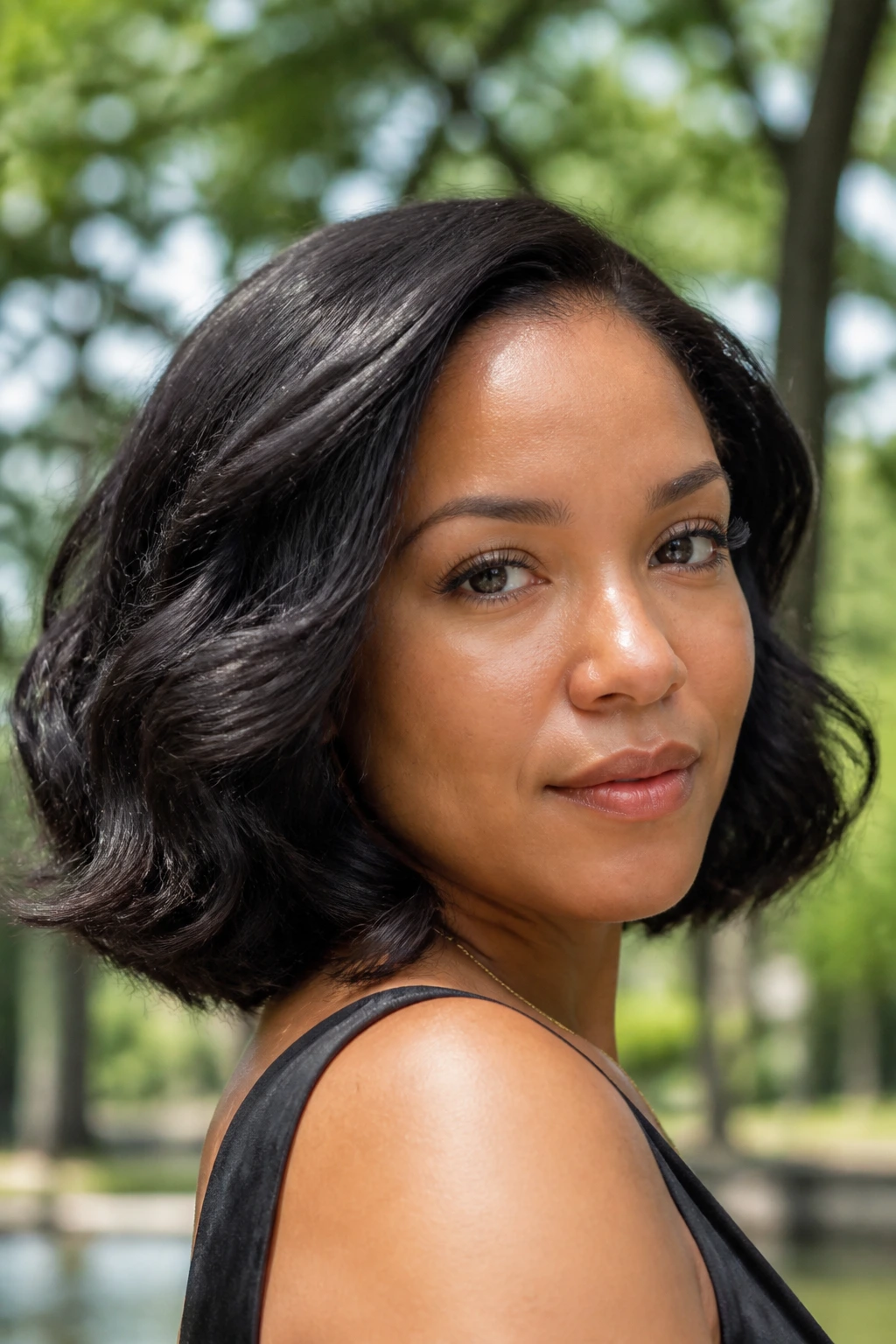
This is the bob for days when you want the shape but don’t want every strand to behave the same way. Smooth the roots and crown, then leave some wave through the mids so the haircut keeps its natural movement.
It’s a smart approach for humidity, busy mornings, and hair that gets cranky when over-handled. The trick is to stop styling before the hair gets too polished. A little cream on the ends, a soft brush through the top, and a clean part usually do enough.
I like this style because it feels honest. The cut is still there. The texture is still there. Nothing gets scrubbed out of the picture.
22. Old-Hollywood Wave Bob
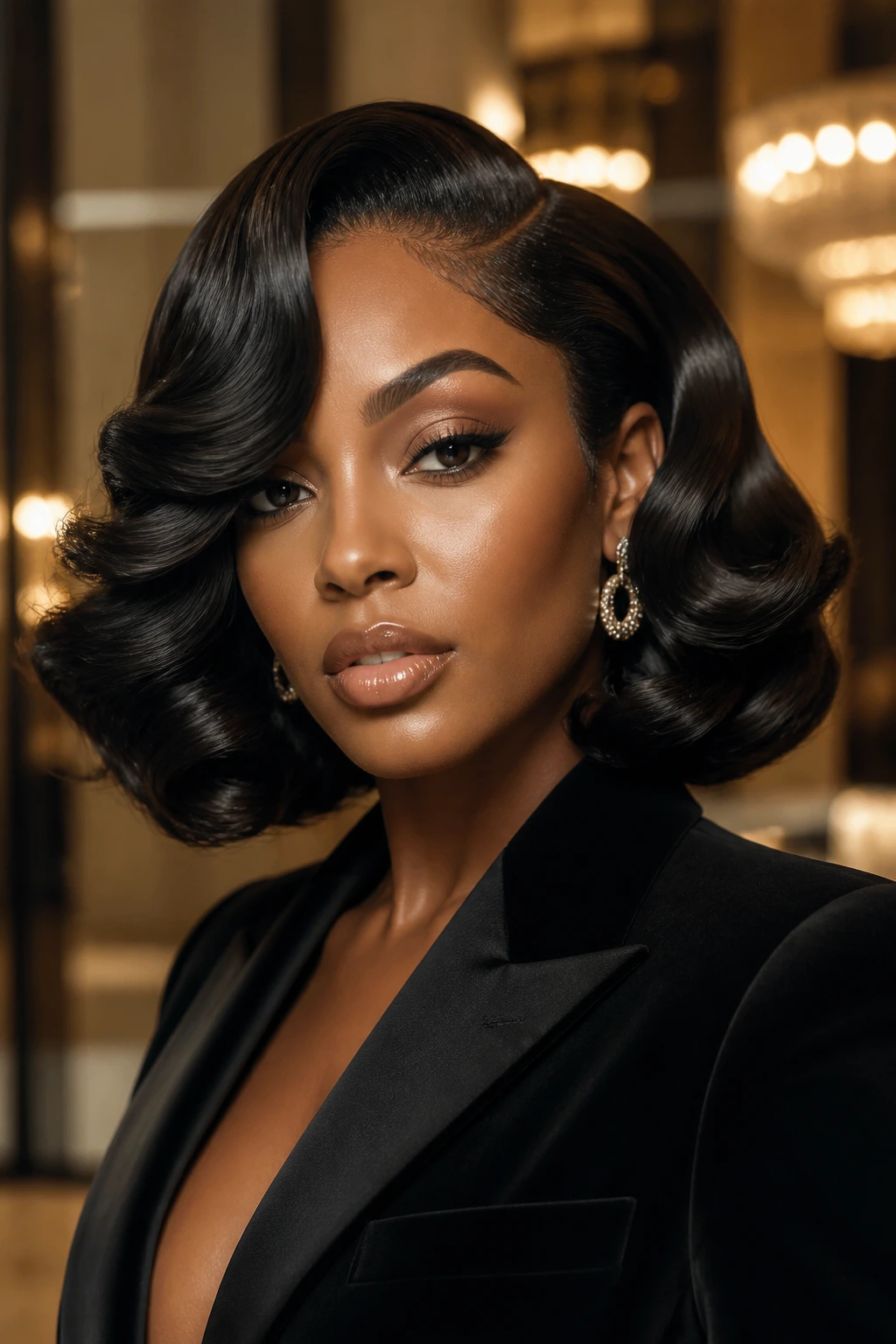
The old-Hollywood wave bob is the dressiest version in the bunch. A deep side part, broad S-waves, and a glossy finish turn a simple bob into something that looks ready for a night out without needing an updo.
The pattern matters here. Set the waves with clips while they cool, brush them out gently, and keep the front section smooth so the style doesn’t collapse into frizz. This works best on lobs or bob lengths that still have enough length to hold that sculpted bend.
It’s glamorous, yes, but it’s also controlled. That’s why it works.
How to Choose the Right Length Before You Sit in the Chair
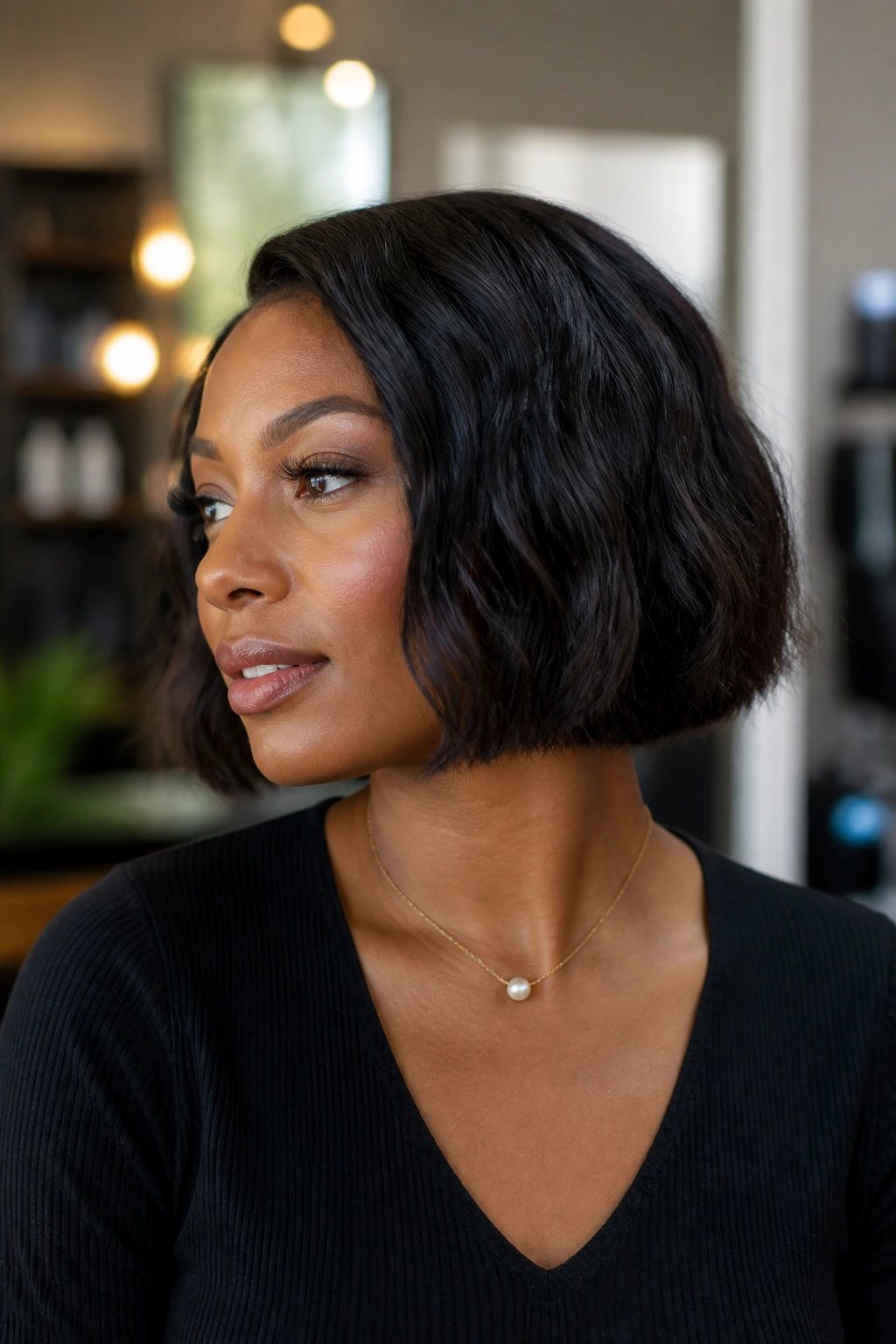
The easiest way to choose between chin-length, jaw-length, and lob territory is to look at where your hair naturally wants to sit when it’s blown out. If your waves spring up a lot, a cut that looks “just below the jaw” in the chair may end up hitting higher once it dries. That’s not a mistake; that’s texture doing its job.
Chin-length cuts give the sharpest line and the most obvious shape, but they also ask for precision in styling. Jaw-length bobs are a little easier to wear, though they can widen the face if they’re too blunt and too round at the sides. Lobs are the least fussy. They skim the collarbone, tuck behind the ear without fighting, and give you room to wear the style straight, bent, or slightly undone.
Neck length matters more than people admit. A shorter neck often looks better with a lob or a softly angled bob, because a super-short chin cut can crowd the area under the jaw. A longer neck can carry a sharper bob without the shape feeling boxed in. If you wear earrings a lot, keep that in mind too, because a bob that sits right on the earlobe can hide your favorite hoops in the worst way.
Essential Tools for a Smooth, Bouncy Finish
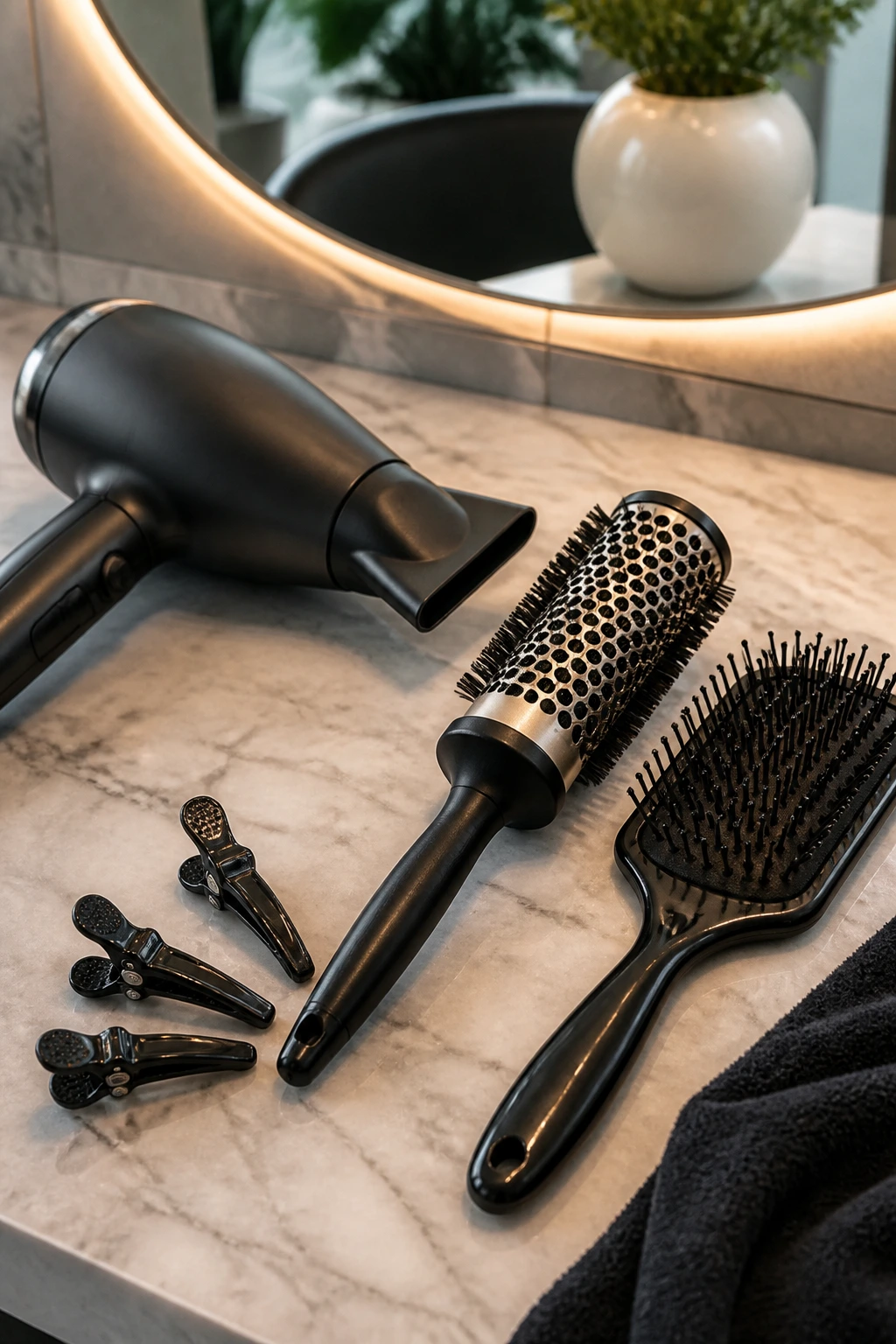
-
Blow dryer with a concentrator nozzle: The nozzle helps direct heat and keeps the air from scattering the hair before the shape sets.
-
Round brush, 1.5 to 2.5 inches: A smaller brush gives more bend; a larger brush gives a softer, smoother finish.
-
Paddle brush: Good for rough-drying the roots and stretching the hair before you go in section by section.
-
Sectioning clips: They keep the crown, sides, and nape organized so you don’t overwork one area.
-
Heat protectant spray or cream: Use it before any hot tool touches the hair; skip the heavy stuff near the roots.
-
Light mousse or wrap foam: Helpful if you want the bob to hold its shape instead of collapsing into softness too soon.
-
Flat iron, optional: Not every style needs one, but it helps on stubborn front pieces or a wavy fringe.
-
Large-barrel curling iron or hot brush, optional: Useful for flip-outs, soft bends, or polished waves at the ends.
-
Silk or satin scarf: Nighttime shape insurance. Plain and boring. Also essential.
-
Light serum or shine drops: A small amount at the ends can calm frizz without making the whole bob greasy.
Smart Product Picks That Keep the Shape Soft
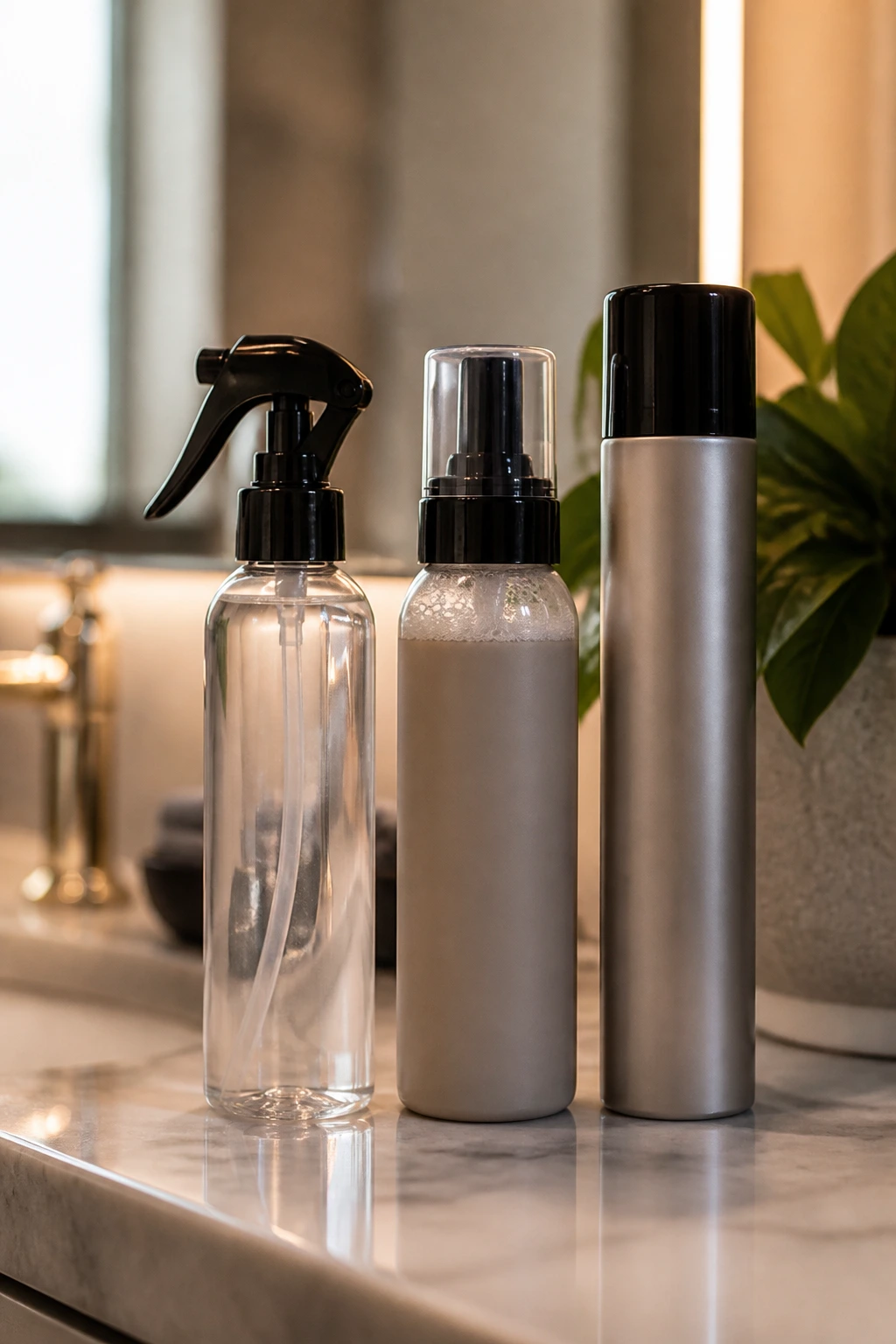
For blowout bobs on wavy hair, the product shelf should stay lighter than people think. Heavy creams can make the bob sit too low, and thick oils can flatten the root before the style has a chance to hold. A lightweight heat protectant, a mousse or root-lift foam, and a flexible finishing spray usually cover most of what you need.
If your hair swells when air meets it, look for smoothing products that say anti-humidity or frizz control, but do not reach for the heaviest one in the aisle. The goal is not to coat the hair until it behaves. The goal is to keep the cuticle calm enough that the wave settles where you want it. A pea-size amount of serum on the ends can help, but I would keep it away from the crown unless your hair is extremely dry.
Clarifying shampoo matters more than many people expect. A bob that has buildup at the roots loses lift faster, especially if you use mousse, oil, or heat spray often. A gentle clarifying wash every couple of weeks can make the blowout sit cleaner and last longer.
How to Wear These Cuts Without Fighting the Hair
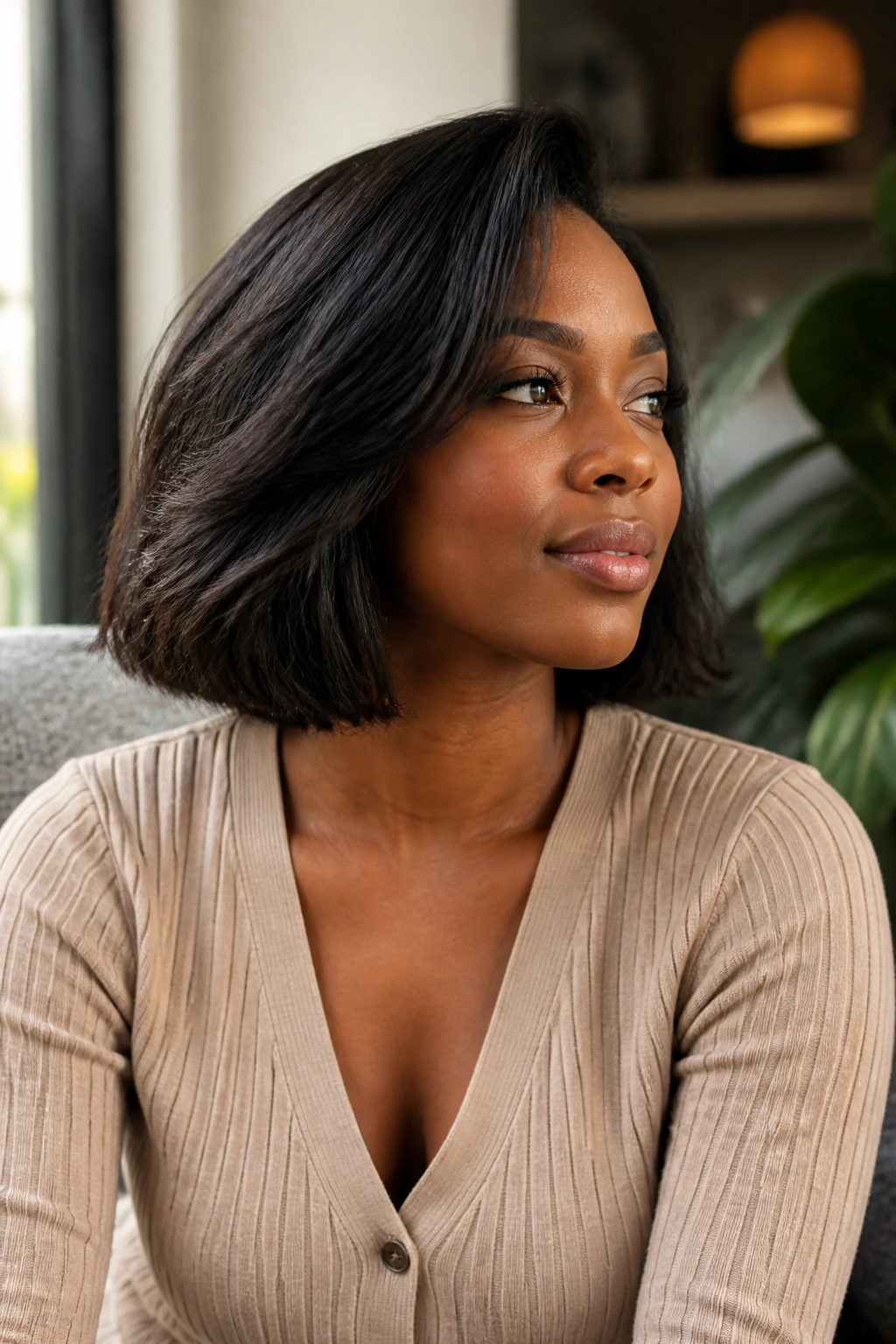
Presentation: Keep the part clean and the perimeter crisp if you want the haircut to look intentional. A tucked side, a beveled end, or a soft flip at the bottom is usually enough; you do not need every strand perfectly matched.
Outfits: Strong necklines work well with a bob. Crew necks, boat necks, open collars, and strapless tops all let the cut show. Heavy turtlenecks can hide a shorter bob, so a longer lob tends to work better there.
Accessories: Gold hoops, slim headbands, satin scarves, and a single clip on one side all fit this family of cuts. If your bob is blunt and sharp, a clean hoop or a tiny barrette keeps the look from feeling too severe.
Occasions: For everyday wear, leave the ends soft and a little broken up. For dinner, an event, or photos, smooth the front pieces and add a little bend to the sides so the shape reads glossy instead of flat.
Additional Tips and Finishing Moves
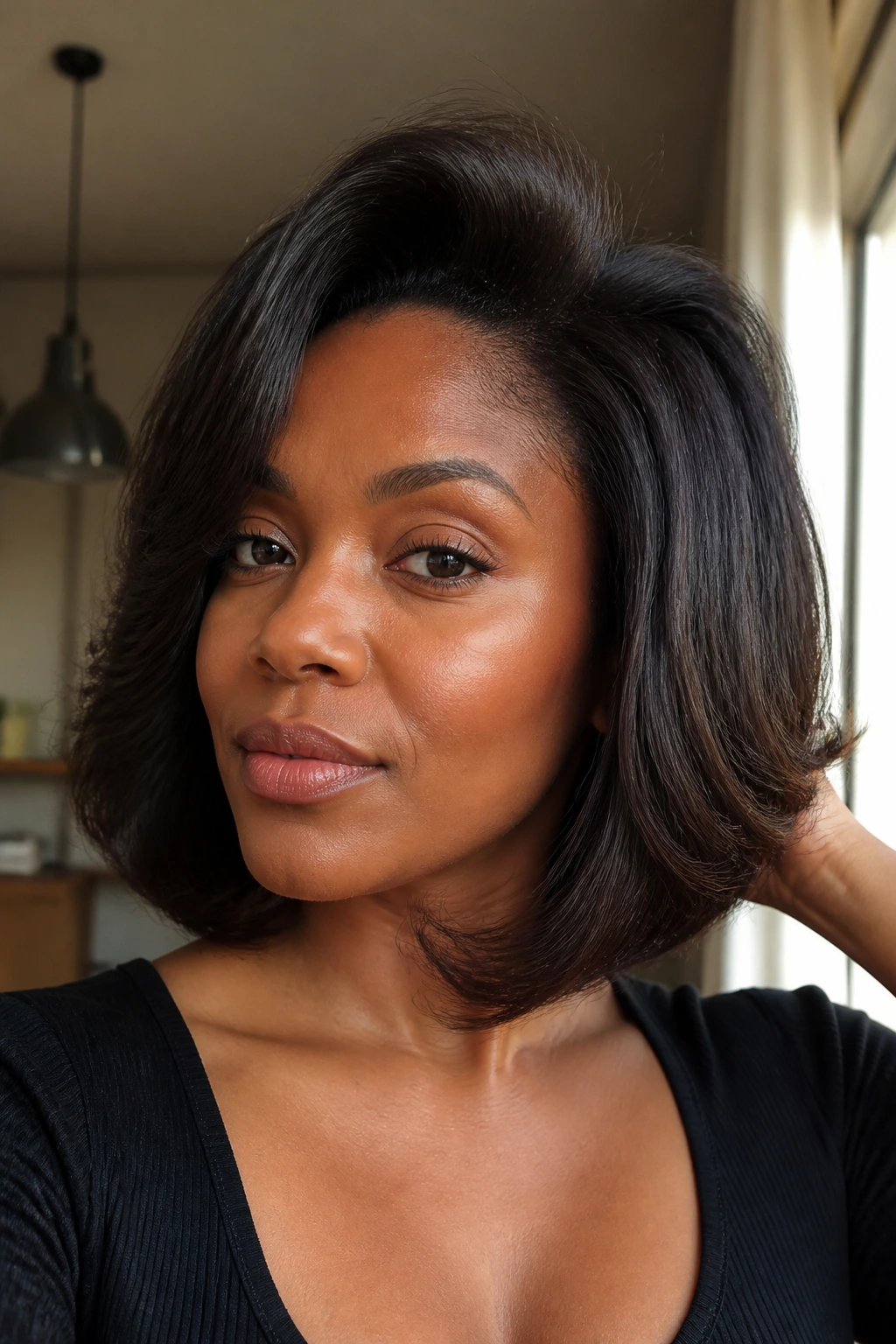
Root Lift: Clip the crown up while it cools after blow-drying. That tiny bit of extra lift at the scalp changes how the whole bob sits, especially if your hair likes to collapse at the top.
Control the Ends: Decide early whether you want the ends tucked under, flipped out, or left softly bent. Mixing all three on one head usually looks accidental. Pick one finish and commit.
Keep Serum Off the Scalp: A drop or two on the ends is enough for most blowout bobs. Too much product near the root robs the haircut of body by the next morning.
Trim Strategy: If you like a clean line, book trims every six to eight weeks. If you prefer a softer lob, you can stretch that a little longer, but the shape will lose its edge faster than most people realize.
Humidity Backup: Keep a small brush and a travel-size anti-frizz spray near the door. A one-minute rescue beats redoing the whole style.
Common Mistakes That Flatten the Shape
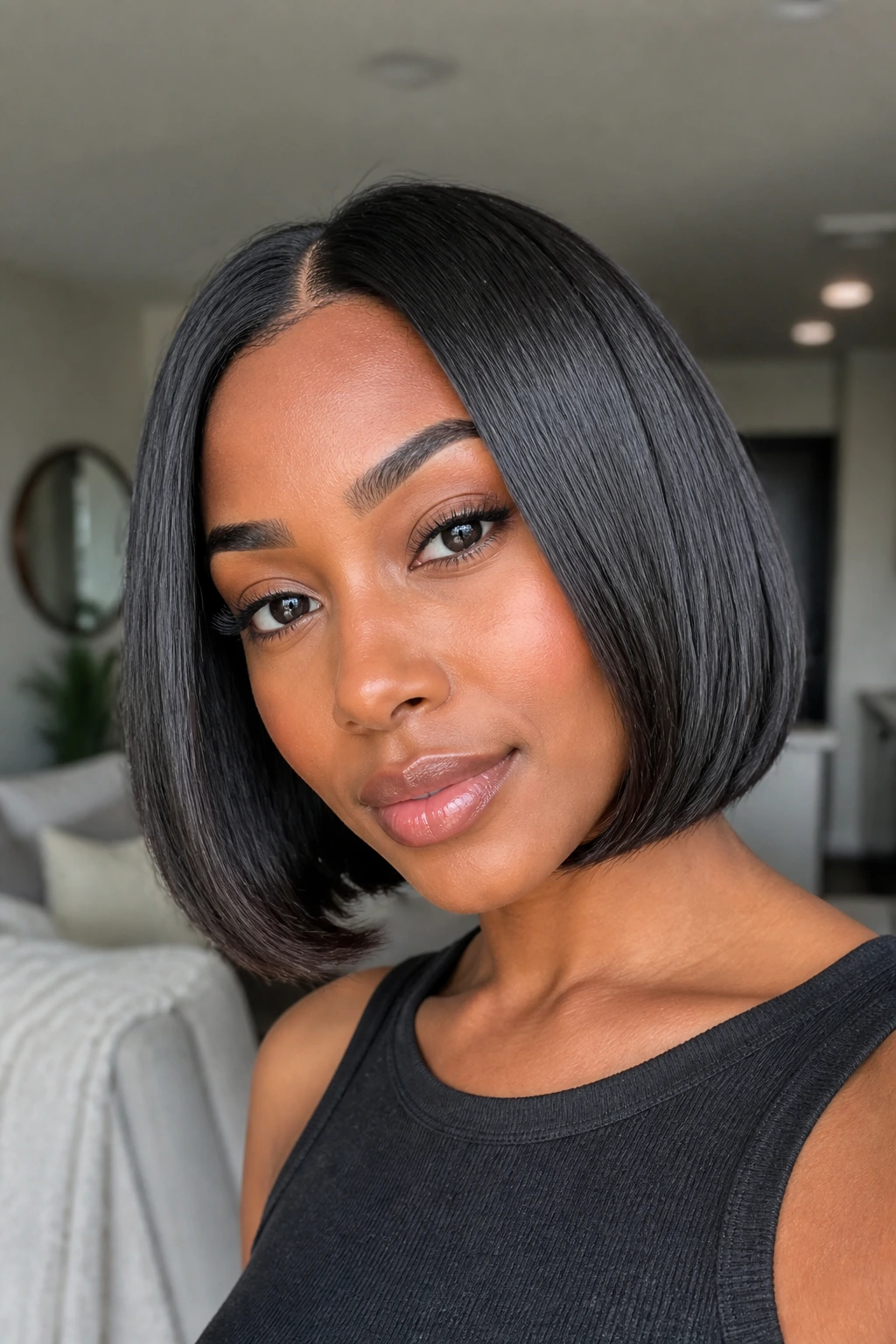
The biggest mistake is cutting the bob too short at the widest part of the face. When the line lands right where the cheeks or jaw already have width, the hair can look heavier than you expected. A slightly longer bob usually solves that without losing the sharp outline.
Another one: over-smoothing the hair until it loses all movement. The style starts to look stiff, and stiff hair tends to show every bend that the night creates. Keep enough softness in the ends so the bob still moves when you do.
A third problem is using too much oil or cream before the style has set. The hair feels nice for ten minutes, then the root goes limp and the bob slides down the head. Use light product first, then add a tiny bit more only if the ends need it.
And then there’s the layer issue. Too many short layers can turn a neat bob into a frizzy halo. If you want shape, ask for controlled layers or internal weight removal, not a chopped-up finish that grows out badly in three weeks.
Variations and Adaptations to Try
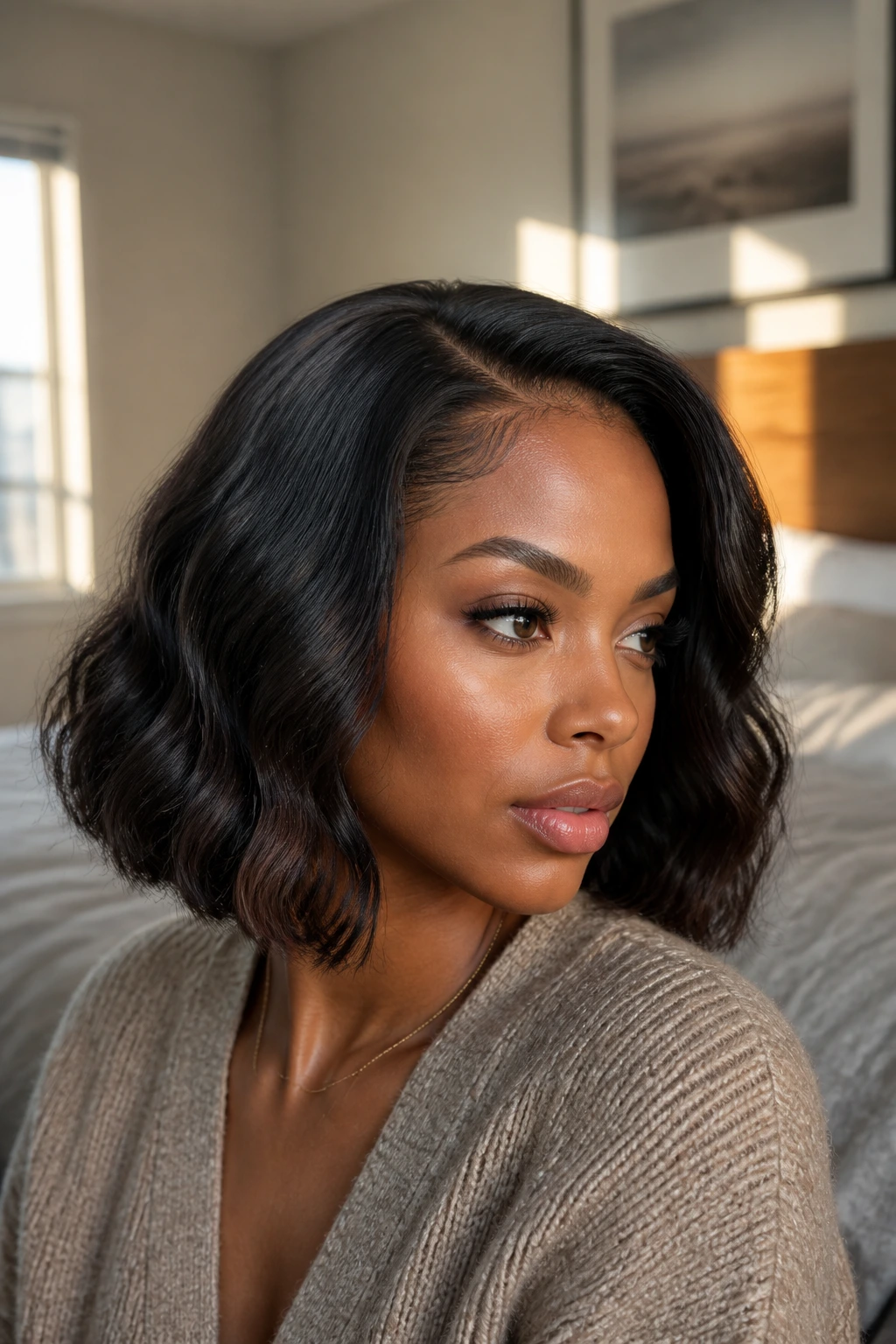
Heat-Light Weekend Bob: Smooth only the root, crown, and front pieces, then leave more wave through the mids. This is a good middle ground if you want the blowout look without taking a hot tool over the whole head.
Silk-Pressed Sharp Bob: If you like a sleeker finish, push the smoothing a little further and keep the bend subtle at the ends. It works best on shorter bob lengths with a strong perimeter.
Layer-Lite Lob: For anyone with medium or fine hair, skip the heavier layers and ask for a blunt base with only a small bit of internal movement. That keeps the lob from looking thin at the bottom.
High-Volume Glam Bob: Build more body at the crown and sides, then finish with a rounded brush for a fuller silhouette. This suits dressy looks and thicker hair that can hold a shape.
Color-First Bob: Add ribbons of caramel, honey, or copper around the face and surface layers. The color makes the wave pattern easier to see and gives the bob more depth without changing the cut itself.
Keeping the Shape Fresh Between Wash Days
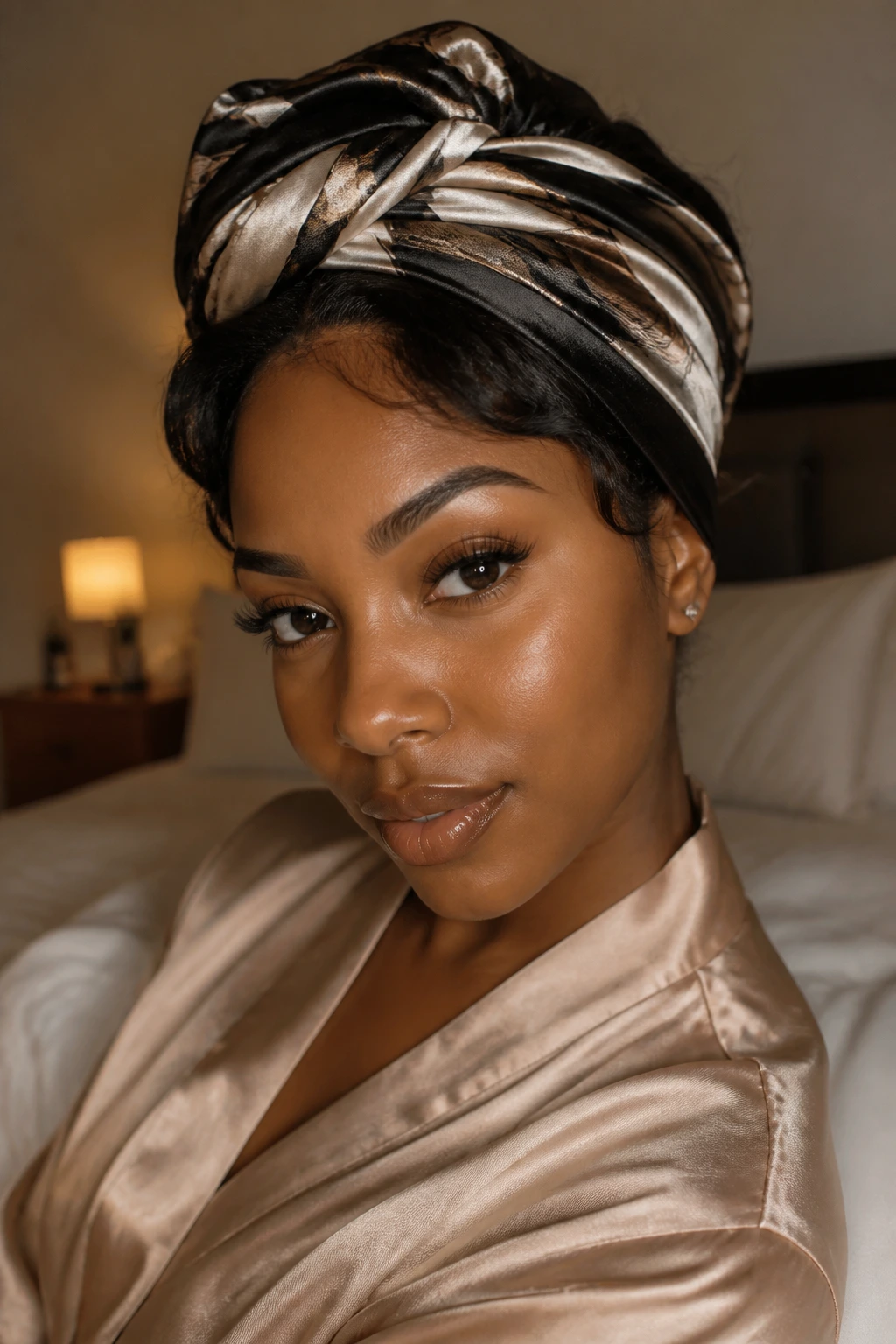
A blowout bob usually stays on its feet longer than longer hair, but it still needs a little maintenance. At night, wrap the hair with a silk scarf or bonnet so the root does not get crushed flat under cotton pillowcases. If the length is long enough, a loose wrap around the head works better than piling it up.
On the morning after, start with the part and the crown. That’s where the style usually loses shape first. A quick pass with a warm blow dryer on the top layer, using a brush to redirect the front pieces, often restores most of the bob in five to eight minutes. Do not soak the whole head unless you want to start over.
If the ends begin to fray before wash day, use the tiniest amount of serum and re-bend just the bottom half-inch with a round brush or curling iron. A full restyle is usually overkill. For most people, trims every six to eight weeks keep the outline honest, while a deeper wash and reset every one to two weeks keeps buildup from stealing the lift.
Frequently Asked Questions
What’s the difference between a blowout bob and a silk press bob?
A blowout bob keeps a little more body and bend, especially through the ends, while a silk press bob is usually straighter and sleeker all over. If you want the hair to move and keep some softness, the blowout version is the better fit.
Which length is easiest to maintain on wavy Black hair?
A collarbone-grazing lob is usually the least fussy. It gives the wave room to sit without puffing up at the sides, and it’s forgiving if the styling isn’t perfect on day two.
Can I wear a bob like this if my hair is very dense?
Yes, but the cut needs weight control. Internal layers, a soft angle, or a beveled perimeter keep the shape from widening too much. A blunt bob on very dense hair can work too, but it usually needs more heat and more frequent trims.
Do layers help or hurt a blowout bob?
They help when they’re placed carefully and hurt when they’re too high or too choppy. The goal is movement inside the haircut, not short pieces sticking out around the edges.
How do I stop the ends from flipping the wrong way?
Set the ends in the direction you want while they’re still warm, then let them cool before you touch them. A round brush, a little tension, and a cool shot from the dryer usually keep the bend where it belongs.
Can I get this look without daily heat?
You can, especially with a lob or a softer bob. Use a stretch blow-dry, setting foam, or a large roller set, then keep the shape wrapped at night. It will not look identical to a hot-tool finish, but it can still look clean and polished.
Is bangs with a bob hard to maintain on wavy hair?
It can be, if the fringe is cut too short. Longer bangs, curtain bangs, or a soft side fringe are usually easier because they leave room for the wave to sit instead of springing up too high.
How often should I trim a blowout bob?
Every six to eight weeks is a good rhythm if you want the line to stay crisp. If you’re wearing a longer lob and don’t mind a softer edge, you can stretch a little longer, but the shape will stop looking sharp.
The Shape That Keeps Its Swing
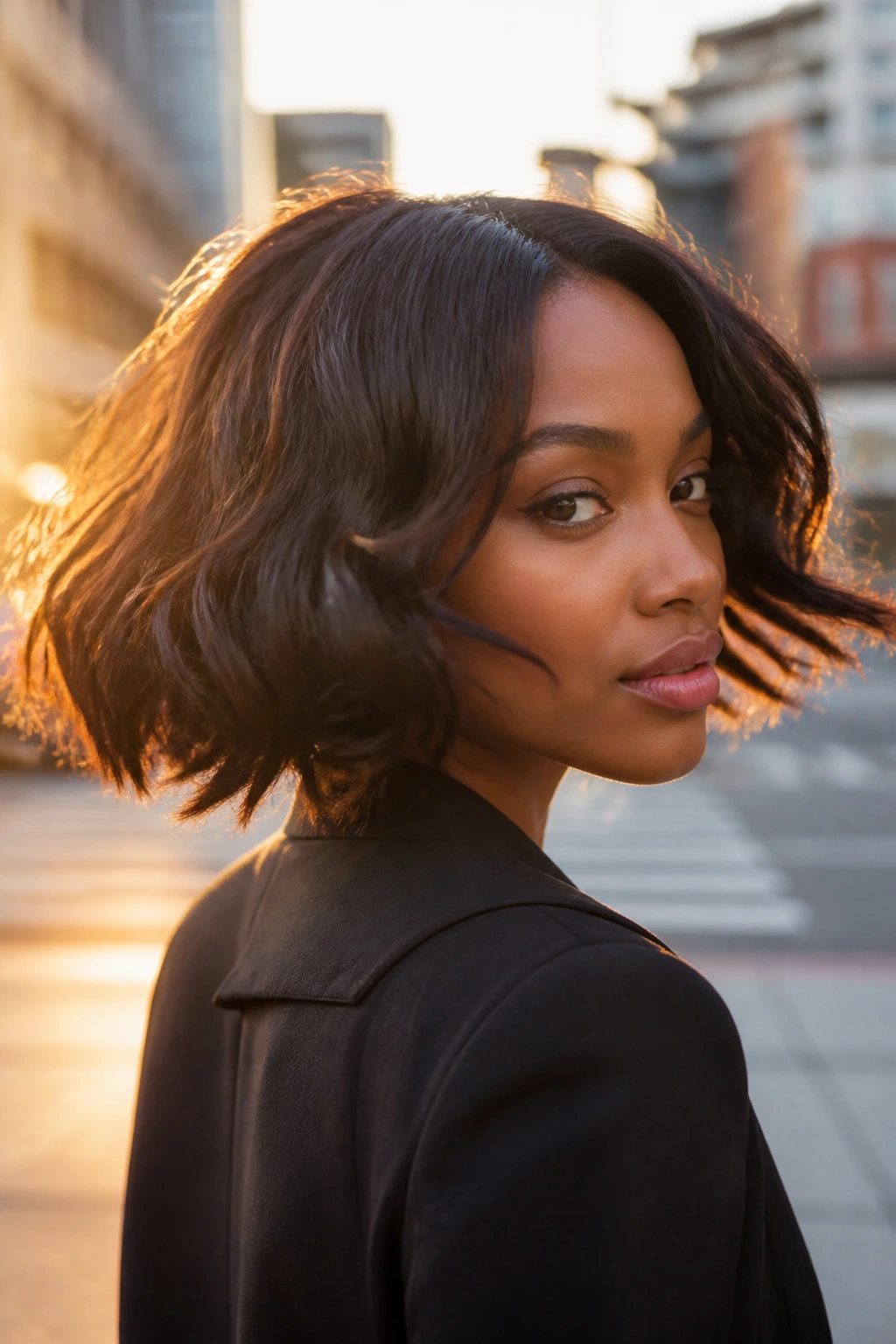
The best blowout bobs for Black women with wavy hair do one thing well: they respect movement. They let the wave stay visible, keep the line of the cut clean, and leave enough softness at the end that the style still feels like hair, not architecture.
That’s why the whole range works so well. You can go blunt, angled, layered, rounded, piecey, or glossy and still land in the same family. Pick the length that fits your daily life, pick the finish that matches your mood, and let the haircut carry some of the work for once.
A bob that swings a little when you walk always looks more expensive than one that sits there doing nothing.