



A good short haircut after 50 does not try to hide the face; it sharpens it. The right length around the ears, jaw, and crown can bring back structure that long, heavy hair sometimes buries. And if you have ever watched a blunt bob swing cleanly at the jaw while a soft fringe skims one brow, you already know how much difference two inches can make.
Short hair after 50 works best when it respects what the hair is doing now, not what it did years ago. Maybe the crown lies flatter. Maybe the ends feel coarser. Maybe a silver strand stands up like it has opinions. A cut that plans for those changes looks intentional; one that ignores them starts looking like it lost a fight with a bathroom mirror.
That is why the strongest short styles here lean on line, lift, and movement in different combinations. Some sit close to the head and clean up the neckline. Others keep enough length to tuck behind an ear or soften a jawline. A few rely on texture because texture is honest; it shows off hair instead of forcing it into a shape it resists. And once you see the differences, the options stop feeling interchangeable.
Why These Short Cuts Keep Making Sense
-
They put the weight where it belongs: A clean nape and a little crown lift stop the shape from sliding flat by lunchtime.
-
They work with gray hair instead of fighting it: Silver strands show line and texture better when the perimeter is deliberate, not wispy.
-
They can make fine hair look fuller: A blunt edge at the jaw reads thicker than long, see-through ends.
-
They keep thick hair from swelling into a triangle: Strategic internal removal takes out bulk without turning the ends ragged.
-
They shorten the styling routine: A cut that air-dries into a believable shape is worth more than one that needs a 20-minute rescue every morning.
1. Soft Pixie with Side-Swept Fringe
A soft pixie with a side-swept fringe is the cut I reach for when someone wants short hair without the hard edges that can make a face feel boxed in. The fringe drifts from temple to cheekbone, so it softens the eye area, and the nape stays neat enough that the whole shape looks finished even on a day when you only used your fingers and a dab of cream.
Ask for a little more length on top than you think you need — around 3 to 4 inches — because that extra inch gives you room to sweep, lift, or flatten depending on the mood. The sides can be snug, but not shaved close unless you enjoy frequent trims and a much sharper read. This is one of those cuts that looks calm from the front and tidy from the back. That balance matters.
Pro tip: Keep the fringe long enough to tuck behind the brow; if it sits too high, you lose the softness that makes this pixie work so well.
2. Ear-Grazing French Bob
If you want short hair that still feels a little dressed up, the ear-grazing French bob has real staying power. It sits close enough to the head to show off earrings and necklines, but the blunt perimeter keeps the body of the hair from disappearing. There’s no fluffing it into submission. It works because the line is clean.
What makes it read French instead of stiff
- The length lands at the ear or just under the jaw, not halfway down the neck.
- The ends are blunt enough to hold shape, but the interior can be lightly softened.
- A slight bend at the front keeps it from looking helmet-like.
- A side part or off-center part usually gives it more life than a dead-straight middle split.
If your hair is fine, this one is a gift. If your hair is thick, it needs the weight removed under the surface, not hacked away from the bottom. A quick bend with a flat iron or a round brush is usually enough; the point is to make it look like hair, not a cap.
3. Choppy Bixie
Can a short cut feel playful without looking messy? Yes. The bixie — that in-between shape sitting between a bob and a pixie — is built for that sweet spot. It gives you enough length to move the hair around, but it still exposes the neck and the cheekbones, so the whole thing feels lighter than a classic bob.
Why it works
- The longer top keeps it from reading too severe.
- Choppy ends break up bulk and let the hair sit with a little separation.
- Wavy hair loves this shape because the texture becomes part of the design.
- It grows out in a forgiving way, which is not a small thing.
I like this cut for people who dislike a lot of blow-drying. A pea-size amount of paste or cream, rubbed between the hands and pressed into the ends, is often enough. If the hair has a bend to it, let it do the work. If it’s straight, rough-dry the roots first, then point the dryer downward for the last minute so the outline still looks intentional.
4. Tapered Crop with Crown Lift
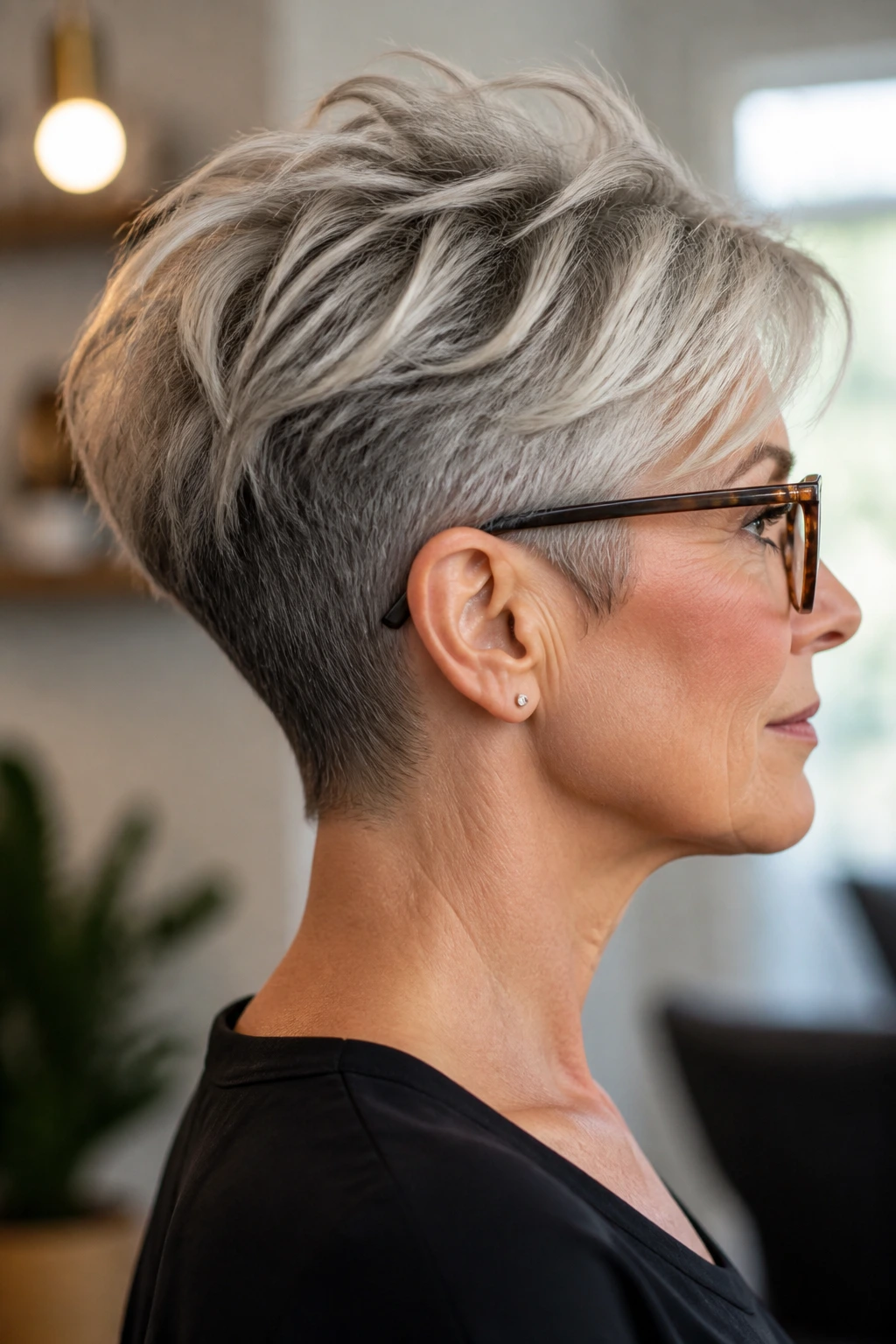
A tapered crop with crown lift is what happens when the haircut stops pretending the crown behaves like it did ten years ago. The back is clipped in close and clean, the shape rises gently through the crown, and the front keeps just enough length to avoid that too-short, too-sharp feeling. It’s neat. It’s compact. It has backbone.
This cut is especially useful if your hair lies flat at the top but puffs at the sides. The taper at the nape keeps the neck area crisp, while the crown lift creates the illusion of fullness where you want it most. Ask the stylist to watch the growth pattern around your cowlicks; if the crown wants to split, a little extra length there will save you from constant re-flattening.
It also plays well with glasses. The short back keeps the frame from fighting the hair, and the lifted top keeps the whole shape from disappearing into your temples.
5. Feathered Bob with Airy Ends
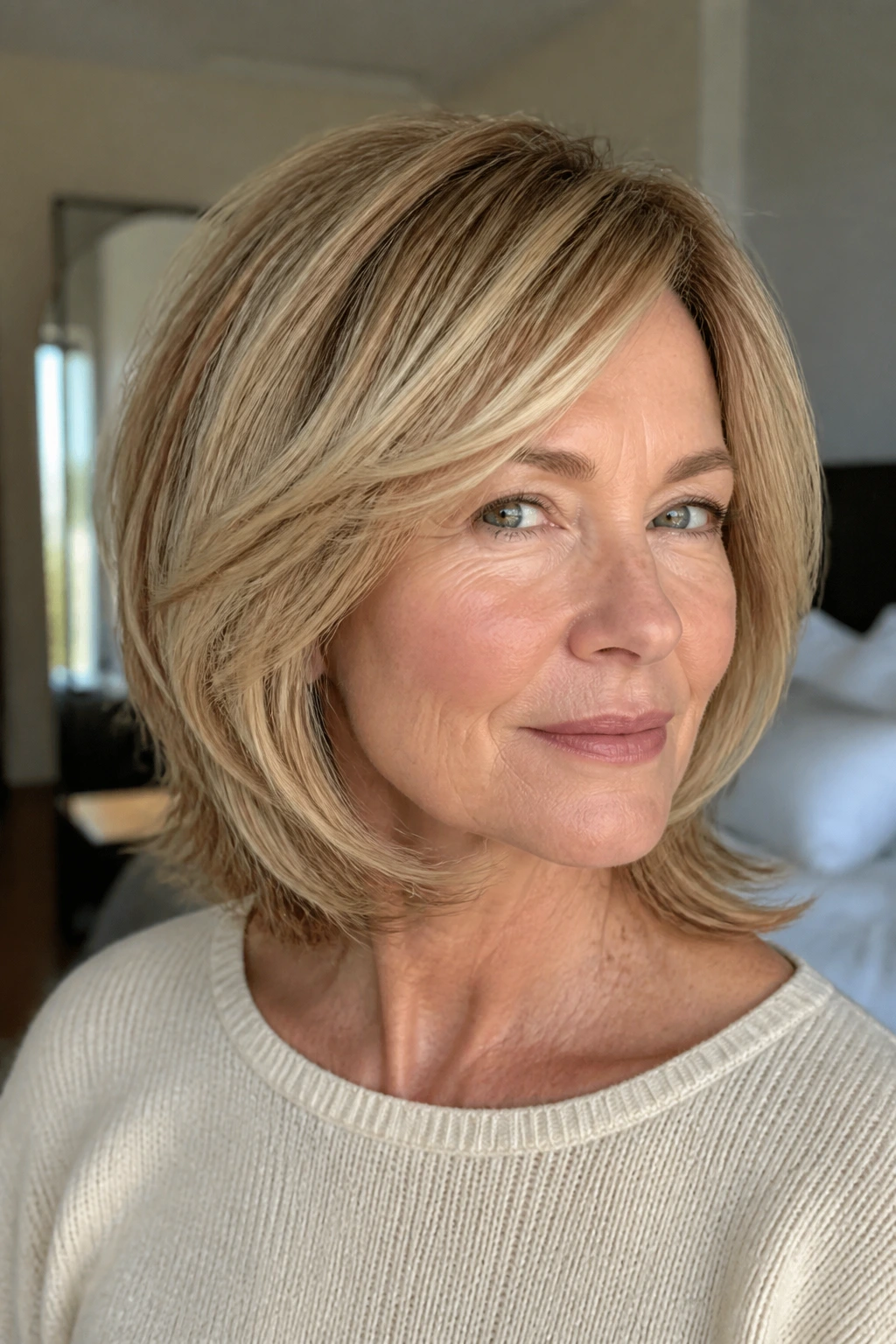
The feathered bob is what I call the cut for someone who wants softness without surrendering shape. The ends are feathered enough to move, but the outline still holds together. That’s the trick. Too much feathering and you get wisps with no body. Too little, and the bob starts looking blocky.
The best version brushes the collarbone or lands just above it, then turns in slightly toward the face. Around the cheekbones, the layers should feel light, not shredded. You want lift, not holes. A round brush can give you that little bend at the ends, but air-drying works too if your hair already has a bit of wave.
This is a good cut if your hair gets heavy through the front. It removes enough weight to stop the sides from drooping, but it doesn’t strip away the fullness at the bottom edge. That edge is the part that makes a bob look expensive, even when the rest of your morning was pure chaos.
6. Curly Rounded Crop
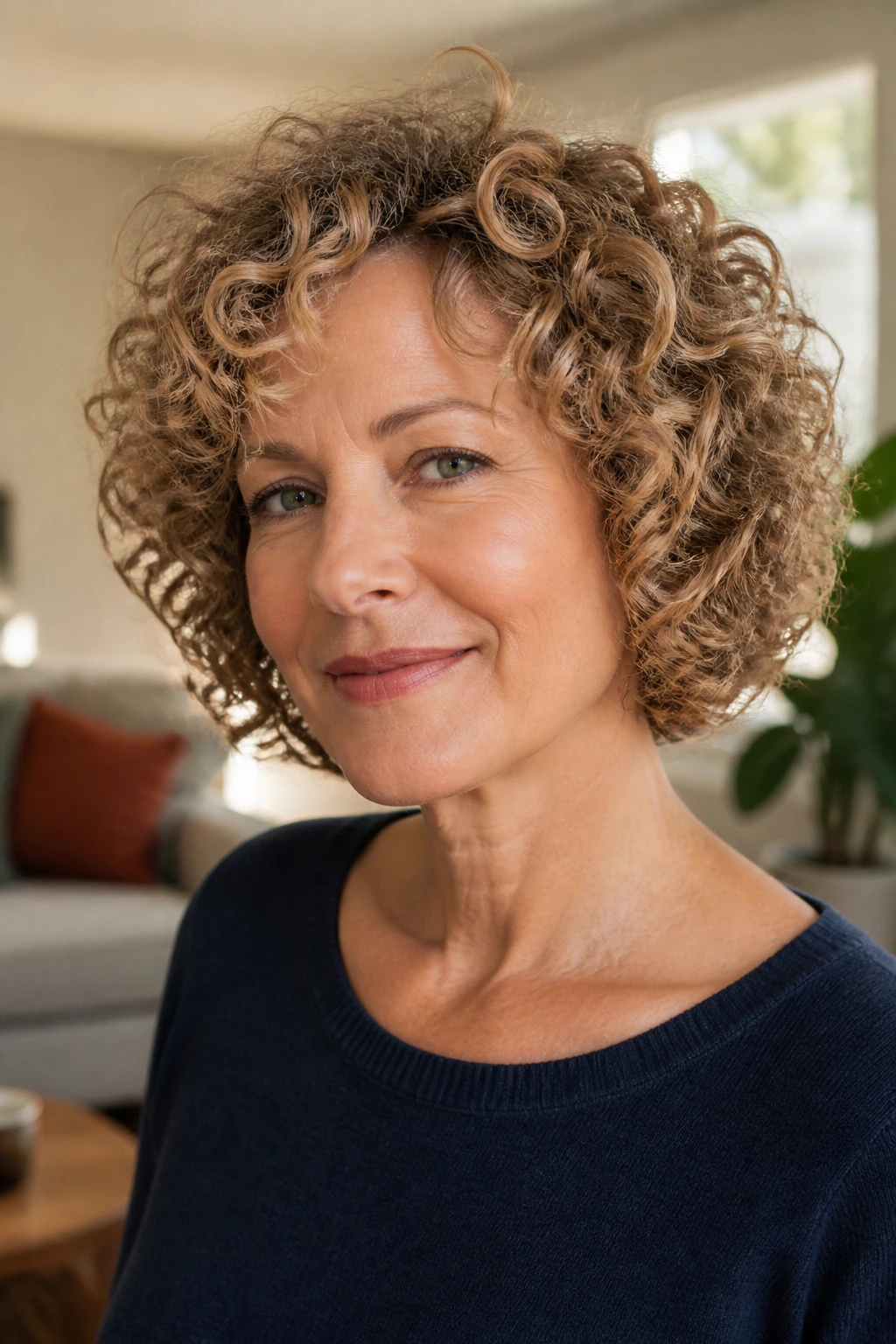
Curly hair does not need length to look soft. It needs shape. A rounded crop lets the curls follow the head instead of exploding sideways, which is a useful distinction if your hair has ever gone wide at the temples and called it a day. The outline should be rounded, not pyramid-shaped, with enough length on top for the curls to spring without being crushed.
Best way to cut it
- Cut it dry, or at least mostly dry, so shrinkage does not surprise everyone in the chair.
- Leave the top a touch longer than the sides.
- Keep the perimeter rounded near the jaw and ears.
- Avoid over-thinning the interior, which can make curls frizzy instead of airy.
A curl cream and a diffuser are usually enough here. Seriously. If your curls are well behaved, let them be. If they are not, a little gel at the ends and a gentle scrunch at the crown can bring the shape back without making it crunchy. The result should look lively, not over-managed.
7. Angled Bob with Longer Front Pieces
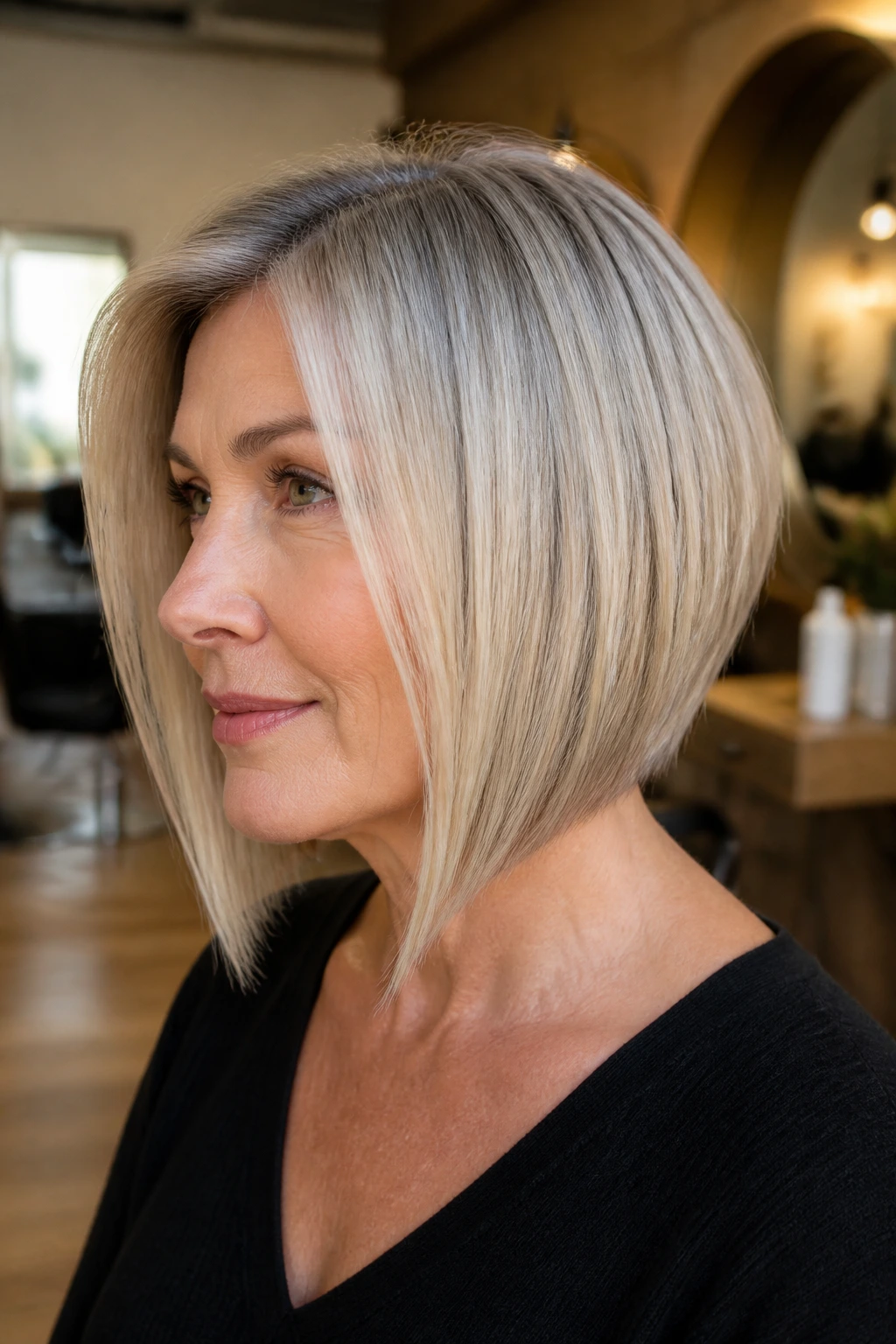
An angled bob earns its keep by changing the line of the face without screaming for attention. Shorter in the back, longer in the front, it creates a diagonal that draws the eye downward and forward. That angle can do a surprising amount of work on a jawline that feels too round, too square, or just a little tired.
What to ask for
- Keep the nape tidy and slightly shorter.
- Let the front hang 1 to 2 inches longer than the back.
- Soften the angle if you want movement; sharpen it if you want a cleaner read.
- Make sure the front pieces graze the chin or just below it, not halfway down the neck.
The best angled bobs don’t look aggressive. They look precise. And that’s the whole appeal. You can wear it straight for a sharper profile, or bend the front pieces inward with a round brush if you want a calmer finish. Either way, the cut keeps its shape longer than a shaggy style because the geometry does the heavy lifting.
8. Stacked Nape Bob
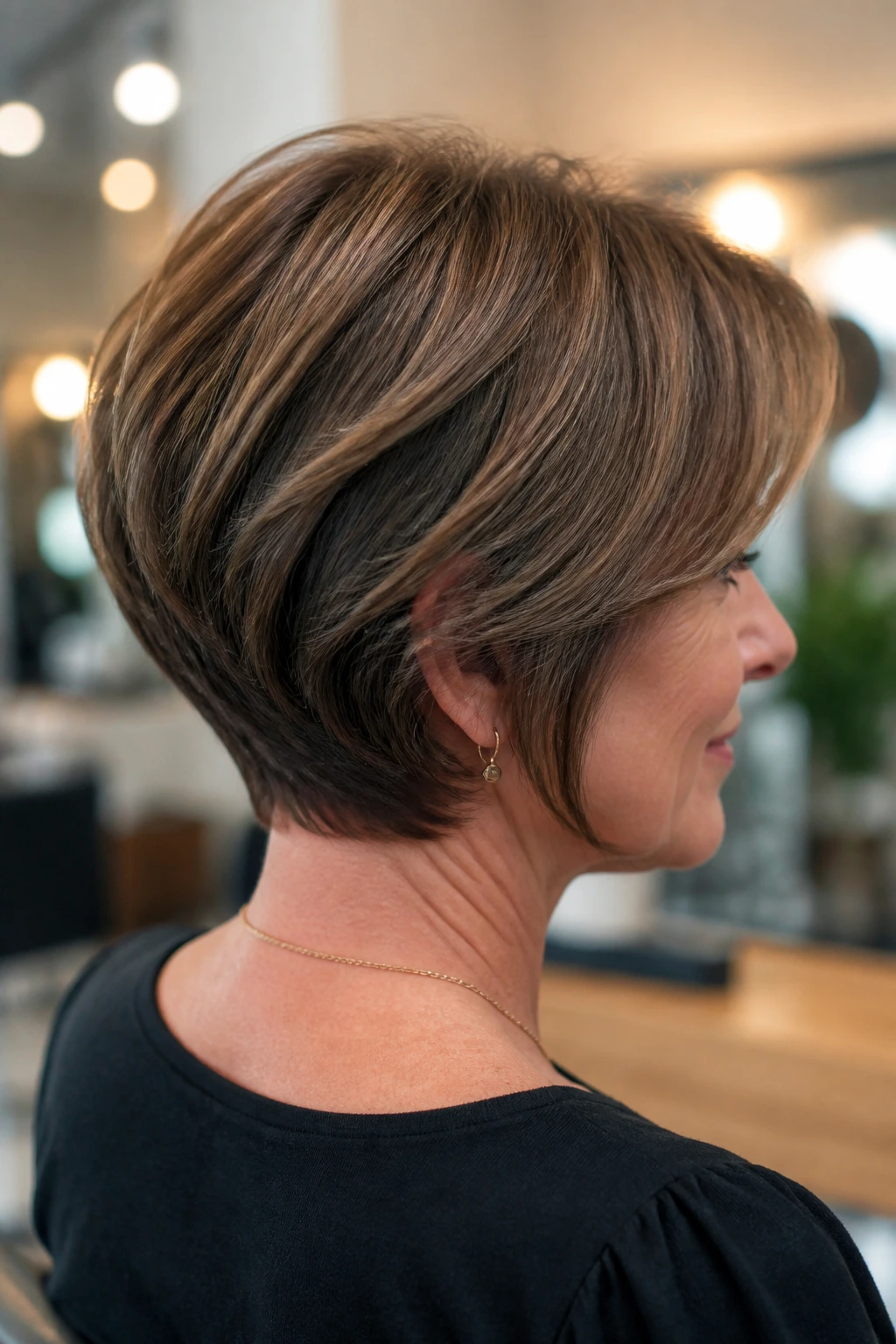
There’s a reason the stacked nape bob keeps showing up in good salons: from the side, it looks awake. The back is built up in soft layers so the crown has a little lift, while the nape stays close and clean. That stacked shape gives fine hair more body and gives thicker hair somewhere to settle instead of puffing outward at the ends.
The danger is overdoing it. Too much stacking and the back turns into a hard shelf. Too little and the bob loses the whole point of being stacked. A good cut should curve, not spike. If your stylist knows how to point-cut the upper layers rather than carving them bluntly, the finish will feel smoother and less dated.
This one needs regular shaping. Not obsessive maintenance. Just enough to keep the nape from blurring and the back from collapsing into a single block.
9. Shaggy Crop with Curtain Bangs
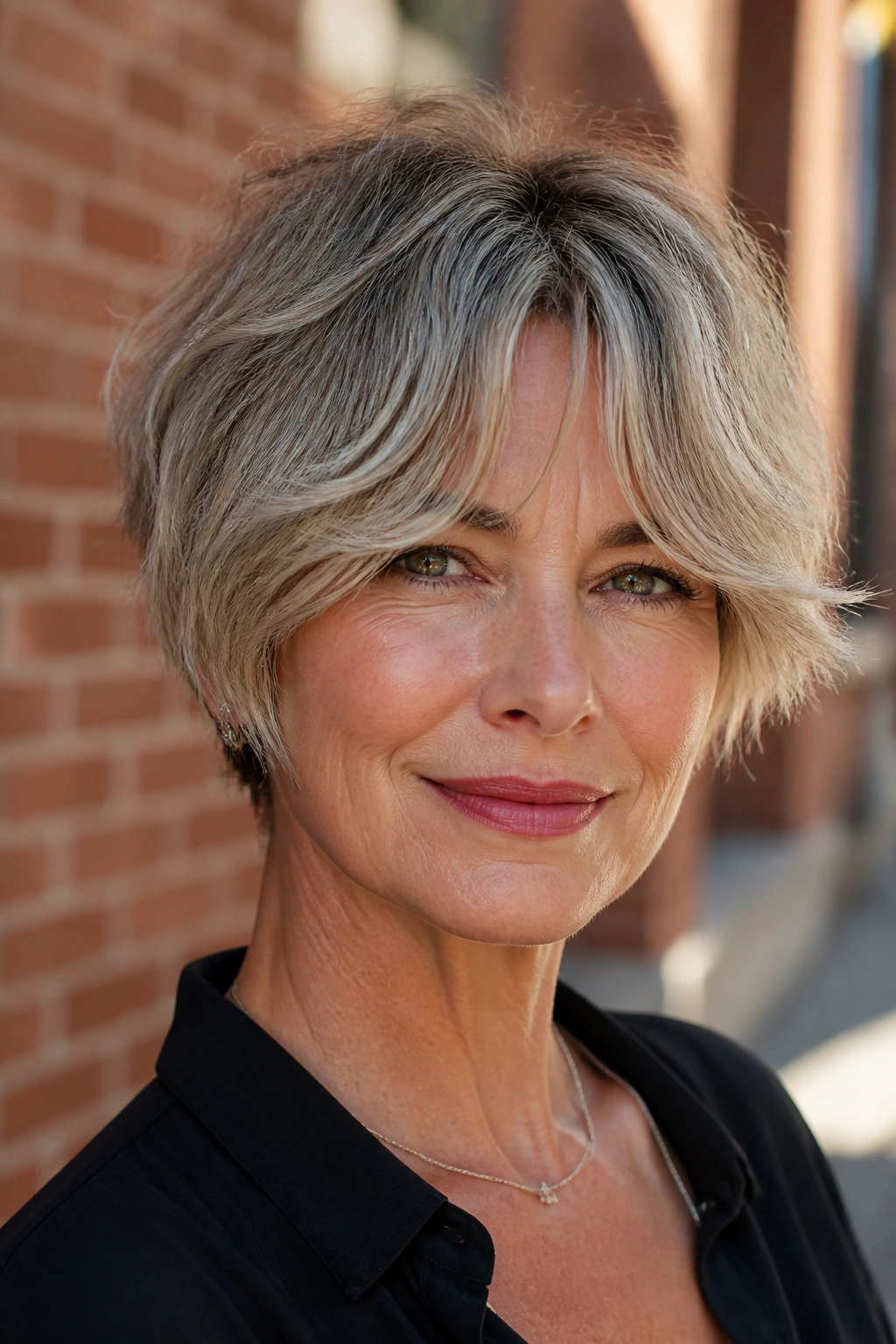
A shaggy crop with curtain bangs is for people who like a little movement in the cut and a little looseness in the face framing. The curtain bangs split around the forehead, then sweep into the sides, which softens the eyes and breaks up a heavy front. The crop itself stays short enough to feel fresh, but the shag texture keeps it from looking severe.
The nice part is that this cut handles air-drying with less drama than a sleek bob. Let the roots get about 80 percent dry, twist a few pieces around your fingers, and stop before you turn the whole thing into a puffball. A light texture spray can help, but too much salt spray on gray or dry hair can make the ends feel rough. That part gets ignored in a lot of salon talk. It shouldn’t.
This is one of the best choices if your hair already has a bend. The cut does not fight that bend. It uses it.
10. Sleek Jaw-Length Blunt Bob

If you like clarity, this is the one. A sleek jaw-length blunt bob creates a strong line right where the jaw ends, which gives the face a deliberate frame and makes fine hair look denser than it is. There’s nothing fussy about it. The ends are clean, the shape is direct, and the result depends on precision more than texture.
Compared with shaggy short cuts, this one asks for more polish. A blow-dry with a concentrator nozzle, a paddle brush, and one smooth pass with a flat iron at the ends can be enough. You do not need to iron the life out of it. Just tame the perimeter. If the hair is naturally straight, even better. If it’s wavy, the cut still works, but you’ll need a little more discipline on humid days.
This is a blunt bob for someone who likes a line they can see from across the room.
11. Textured Pixie with Long Top
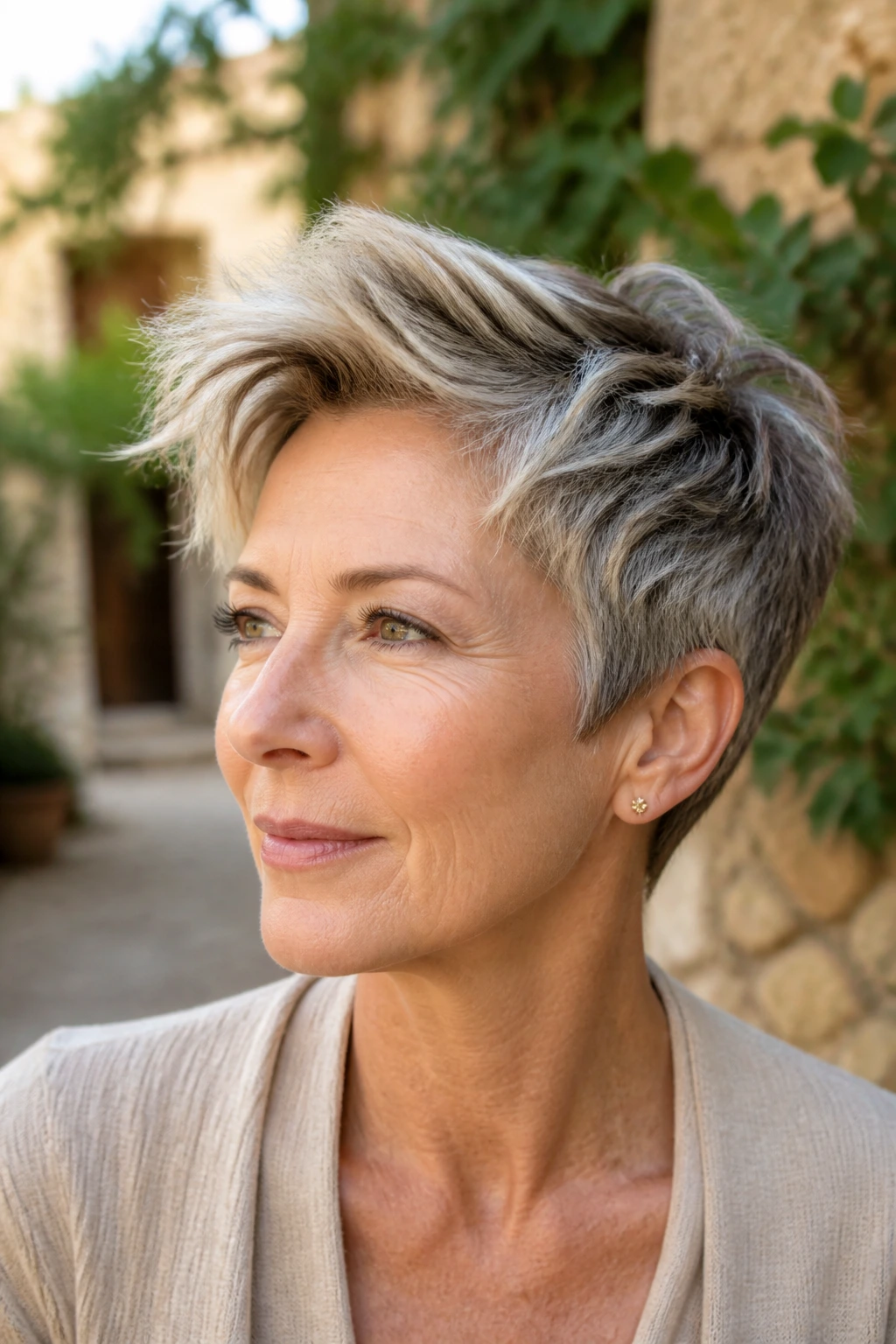
The long top is what keeps a textured pixie from feeling too tiny. Without it, the cut can read practical but not especially interesting. With it, you get options. You can sweep it up, brush it forward, or push it to the side and let the texture do the talking.
Three easy ways to wear it
- Swept up: dry the roots first, then lift the top with a round brush for extra height.
- Brushed forward: use a matte paste and separate the pieces with your fingertips.
- Side-swept: angle the top across the forehead for a softer, more relaxed line.
The styling product matters here. Choose a paste or lightweight wax rather than a soft cream, because you want separation, not slip. The best textured pixies feel touchable but not greasy. That small difference changes the whole mood of the cut.
12. Piecey Crop with Wispy Bangs
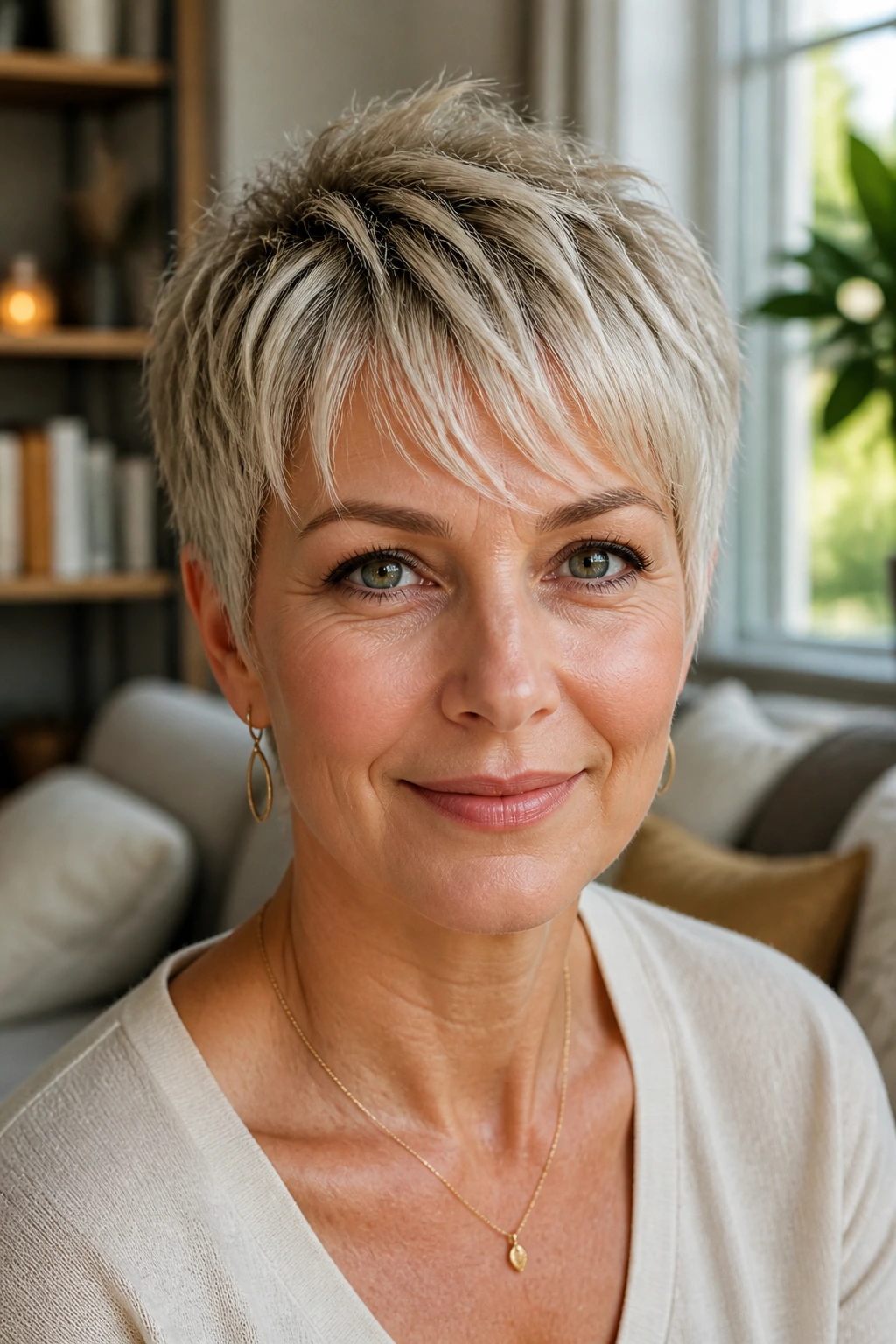
If you want fringe without the weight of full bangs, the piecey crop with wispy bangs is the smart middle ground. The bangs land lightly across the forehead, but they are not sparse to the point of looking accidental. They frame the eyes, break up a broad forehead, and give the cut a little movement right where people tend to notice first.
The crop itself should stay compact, with little separated sections rather than one solid block of hair. That separation helps if your hair is fine, because a chunky crop can flatten fast. A dab of molding cream on the ends is usually enough. Work it through with dry fingers, not a brush, or you’ll lose the piecey effect.
This cut is especially useful if you want to soften lines around the eyes without covering the whole face. It reads fresh, not heavy. That matters.
13. Soft Asymmetrical Bob
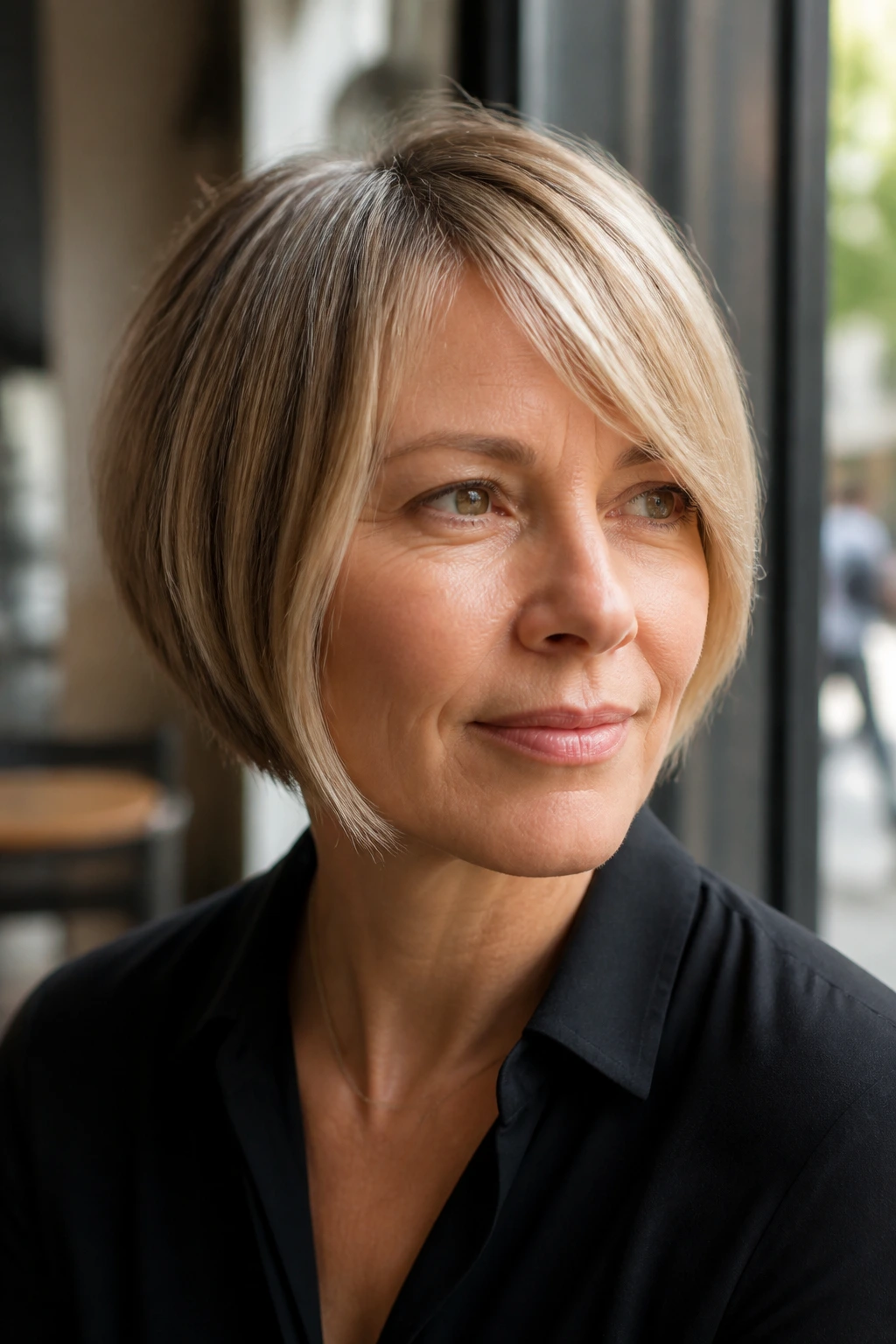
A soft asymmetrical bob gives you shape without looking as though you tried too hard to make a statement. One side is just a little longer than the other — often by half an inch to an inch — so the difference is noticeable but not theatrical. That tiny shift creates movement along the cheek and jaw.
What I like here is the restraint. A heavy asymmetrical cut can feel dated fast if the difference is too sharp. This version stays wearable. The longer side can graze the jaw while the shorter side opens the neckline, which gives the whole haircut a cleaner side profile. If you wear one side tucked behind the ear, the shape becomes even more interesting.
It is a good choice if you want a bob but hate the feeling of having a perfect helmet line all the way around.
14. Tucked-Behind-the-Ear Crop
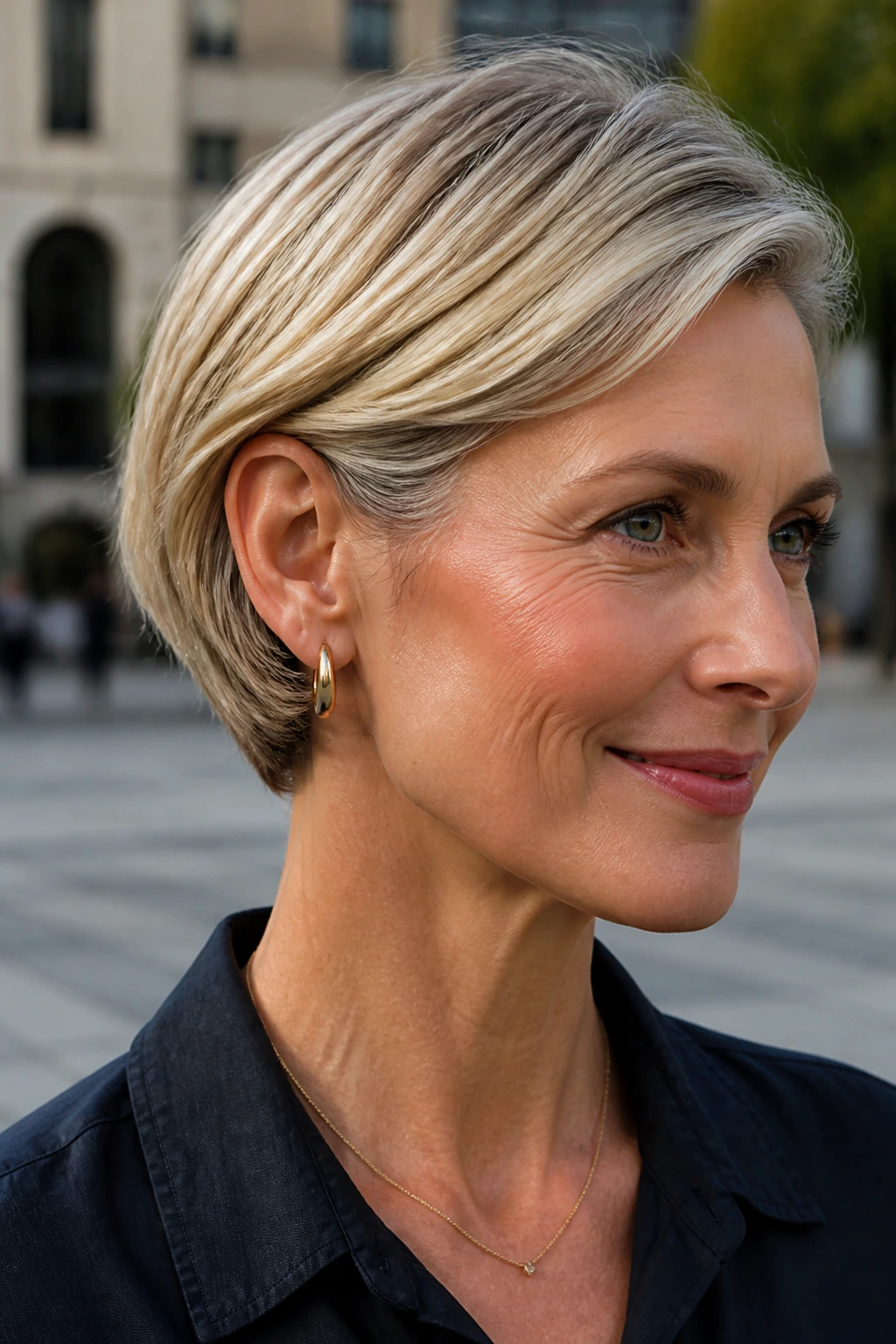
A tucked-behind-the-ear crop works because it gives you control at the sides without forcing the whole cut to stay rigid. The length near the temples is just long enough to tuck, and that small move changes the face instantly. It shows off earrings, clears the cheekbone, and makes the neckline look sharper.
This is the haircut for someone who likes a little casualness in the front and a clean finish at the back. Keep the nape neat, let the side panels graze the ear, and make sure the front can still fall forward if you want it to. The trick is flexibility. If the hair is cut too short at the side, the tuck becomes impossible and the style loses the whole point.
A little smoothing balm at the temple can help the tucked side stay flat without looking slick. Useful. Not fussy.
15. Razor Bob for Silver Hair
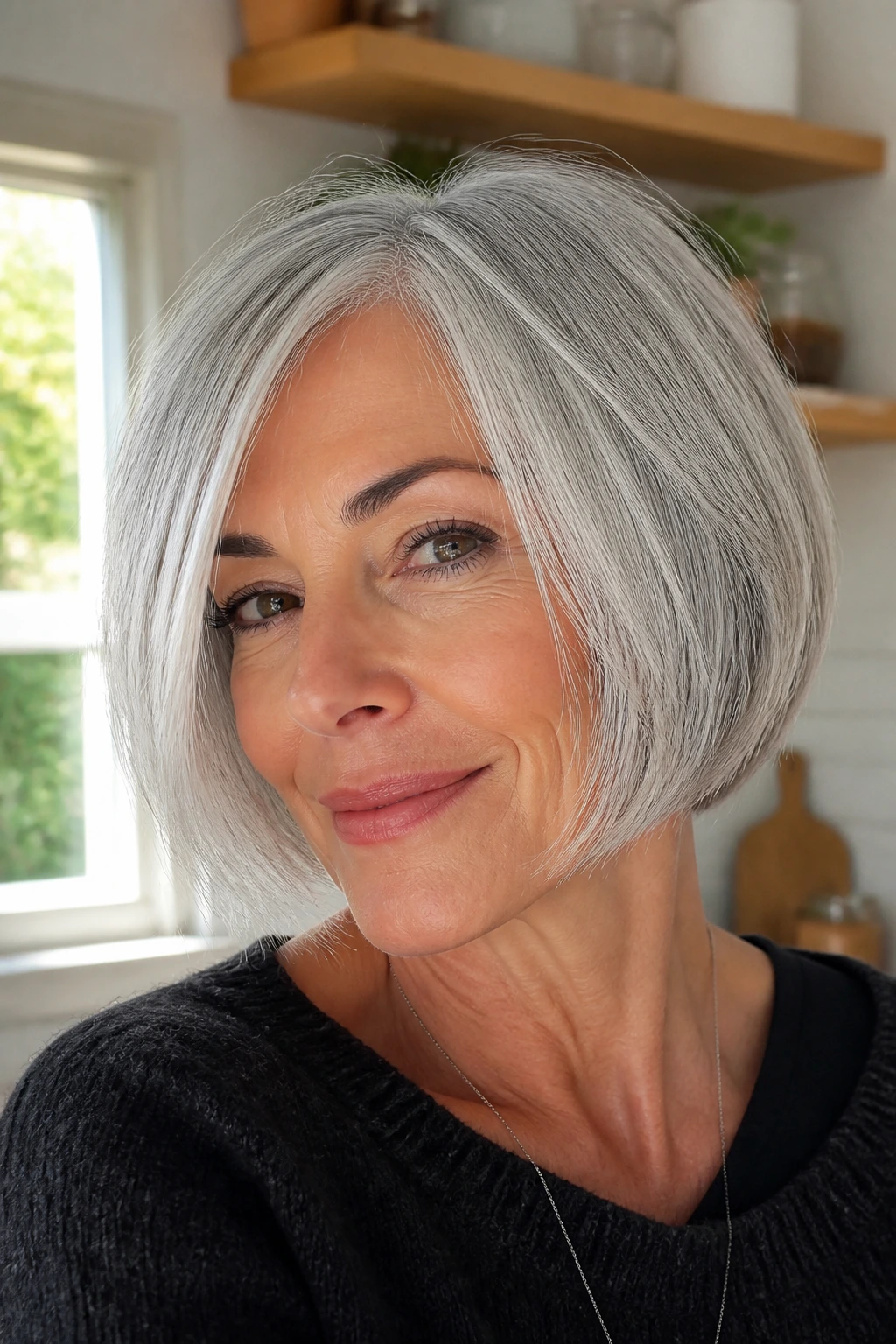
Silver hair can handle a cleaner line than people think. A razor bob, or a carefully slide-cut bob, can keep coarse silver strands from feeling too bulky while still letting the hair move. The point is not to shred the ends. It’s to soften them just enough that the hair bends instead of sitting in a stiff block.
When it helps most
- The hair is dense and tends to puff out at the bottom.
- The silver strands are strong, not fragile.
- You want movement without giving up the bob shape.
- You can commit to regular trims, because a razor cut shows its age faster if it grows wild.
I would not use this on hair that is already fragile from heavy coloring or breakage. That is where the ends start looking ragged, and ragged is not the same thing as airy. If your hair is in good shape, though, this cut gives silver a lot of life. It lets the color show the shape instead of hiding it.
16. Layered Mini Lob
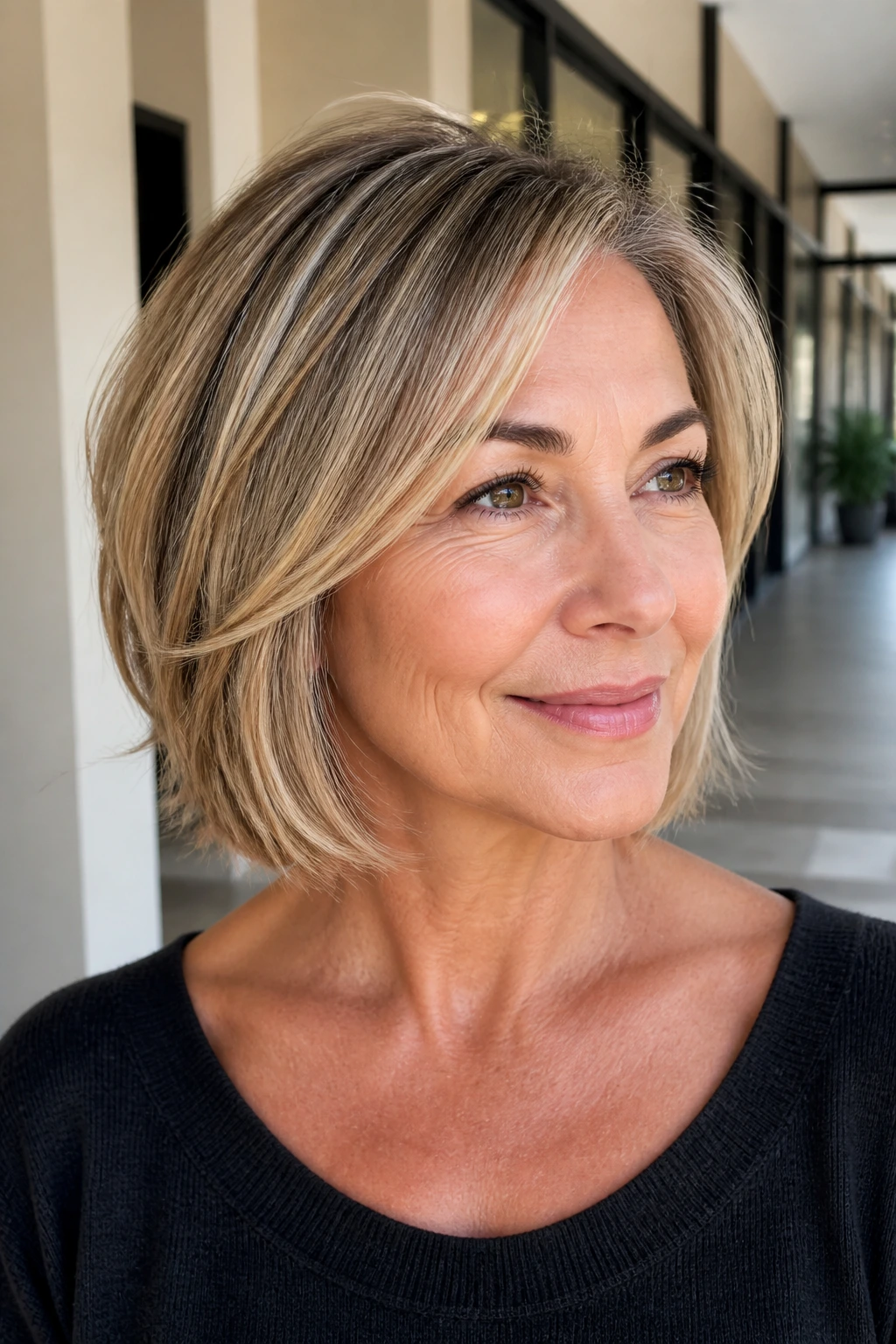
Not everyone wants to jump straight into a very short cut. The layered mini lob sits just below the jaw and just above the collarbone, so it still feels short but leaves enough length to tuck, bend, or clip back. It is a nice bridge if you are moving from longer hair and do not want the shock of seeing your neck all at once.
The layers should be soft and placed where the hair needs movement, not scattered everywhere like confetti. A mini lob can turn bulky fast if the layers start too high. What you want is a shape that lightens the ends and gives the front a little swing. It is the kind of cut that looks useful on day one and still looks sane on day eight.
If you are unsure about going shorter, this is the safest place to land. Not timid. Practical.
17. Tousled Crop with Side Part
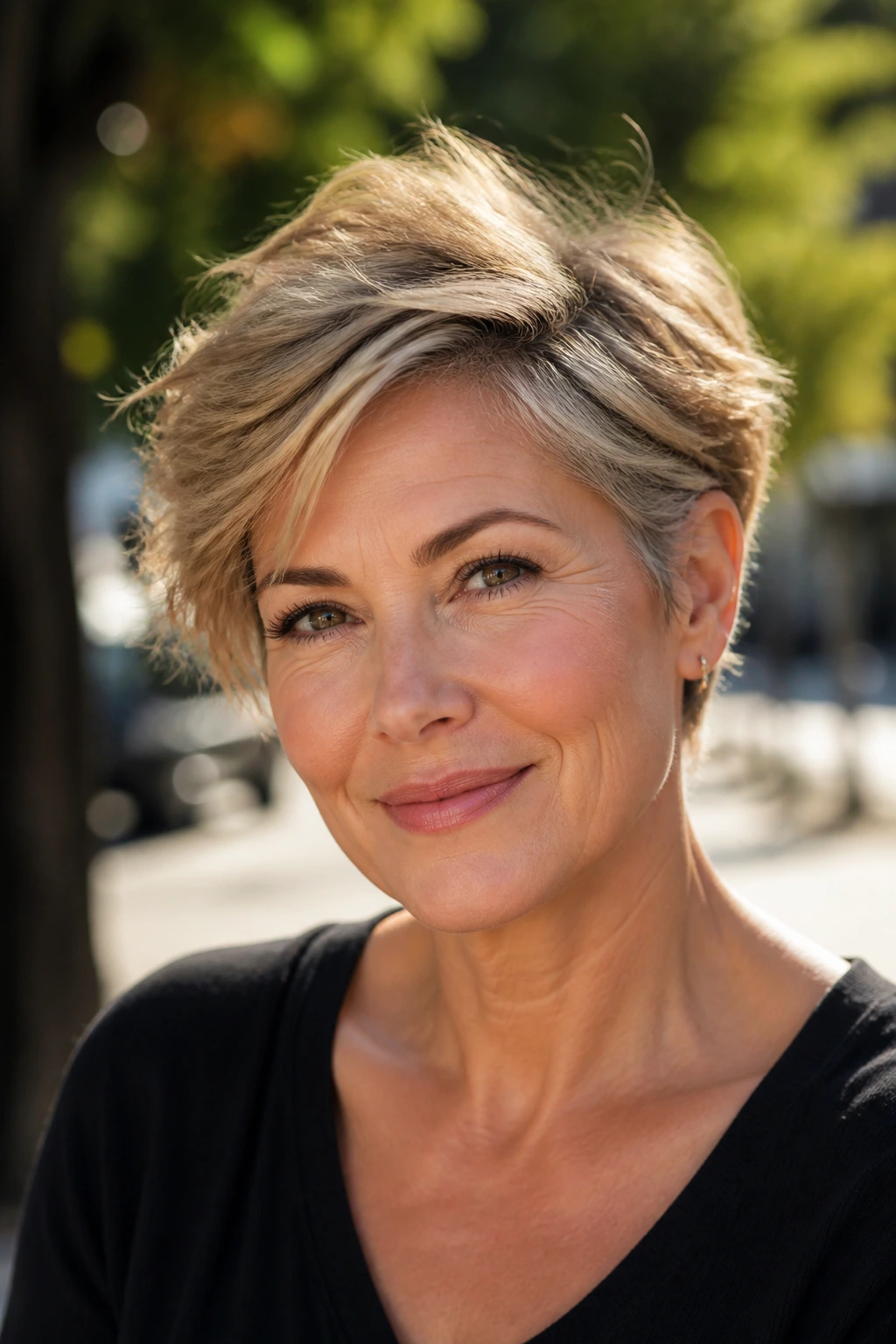
A side part changes more than people expect. On a tousled crop, it creates lift at the roots and keeps the whole shape from feeling too symmetrical. That tiny break in the line gives the hair a more relaxed read, especially if your natural growth pattern already wants to drift one way.
The crop itself should be short enough to feel light, but long enough on top that the part can move. A little root spray at the crown, followed by rough-drying with your fingers, is usually enough to wake it up. You do not need the whole thing to look styled. You just need the roots to stop lying flat against the scalp.
This cut is good for people who hate a strict part line. It feels easy, but not lazy. That difference shows.
18. Grown-Out Pixie with Sweep-Back Styling
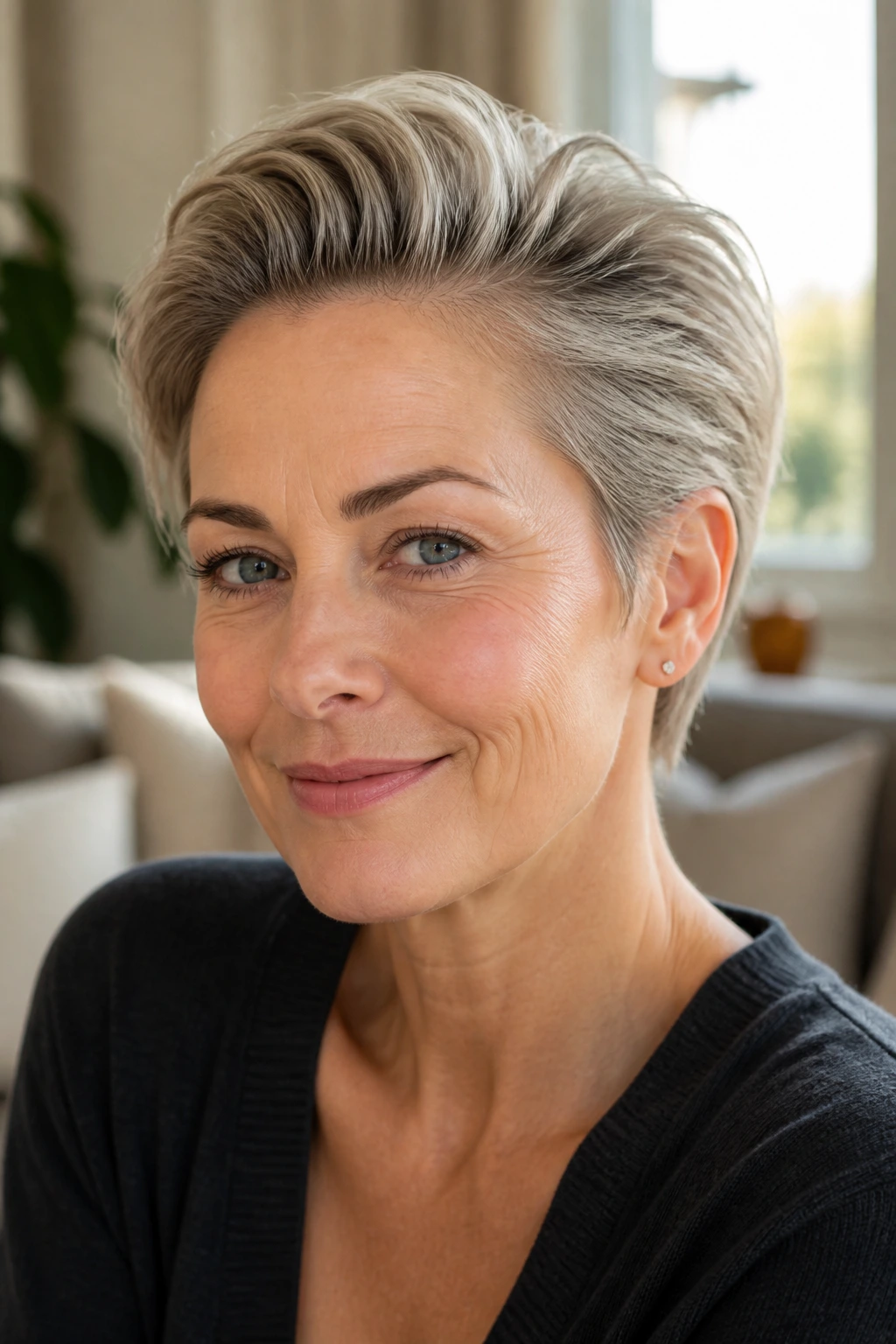
A grown-out pixie is often more flattering than a freshly chopped one. That sounds backwards until you see the shape: the top stays long enough to sweep back or to the side, the sides stay blended, and the back keeps a neat taper so the whole cut looks deliberate instead of in-between. It is a good place to live if you like short hair but do not want a hard maintenance schedule.
Sweep the top back with a light cream or airy mousse, then break it up with your fingers so it doesn’t stick to the head in one flat sheet. The ears can stay partly exposed, which keeps the style open and modern. If you are growing out a pixie, this shape is a lifesaver because it already points toward the next stage without looking unfinished.
It is casual. It is also strategic. That combination is harder to find than it should be.
19. Chin-Length Flip Bob
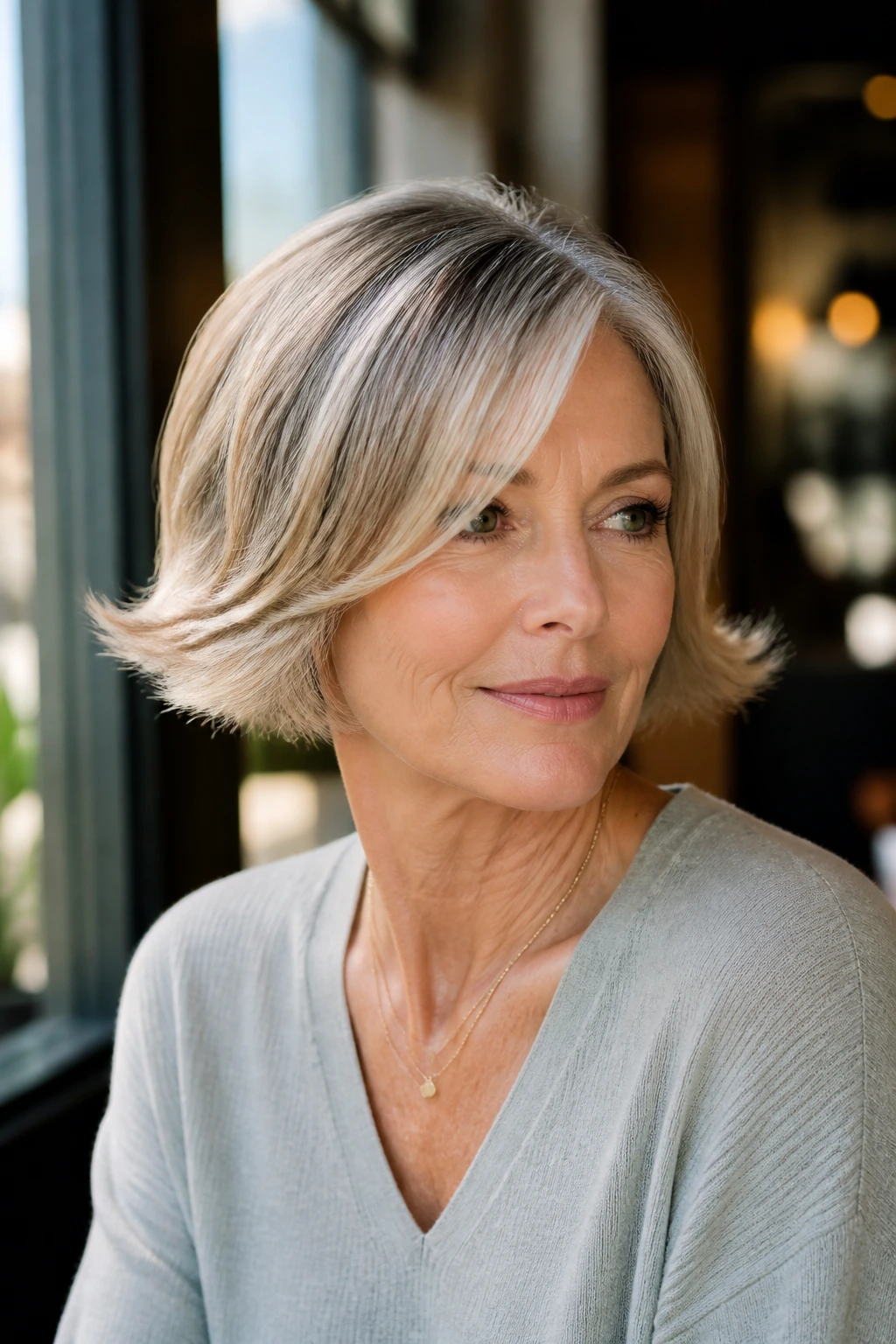
The chin-length flip bob has energy that a straight-down bob does not. The ends can flip under for polish or flick outward for a little motion, which gives the cut a lighter feel around the jaw. If your face tends to look fuller at the lower cheeks, that movement helps keep the line from feeling heavy.
Compared with a blunt bob, this one is more forgiving on mornings when your brush technique is a little loose. A round brush, a medium heat setting, and a quick bend at the ends is usually enough. If your hair is naturally straight, the flip holds well. If it is wavy, you may need a touch more heat and a little patience at the front pieces.
I like this shape because it feels friendly. Sharp bobs can be lovely, but they can also get bossy. This one does not.
20. Airy Layered Crop for Fine Hair
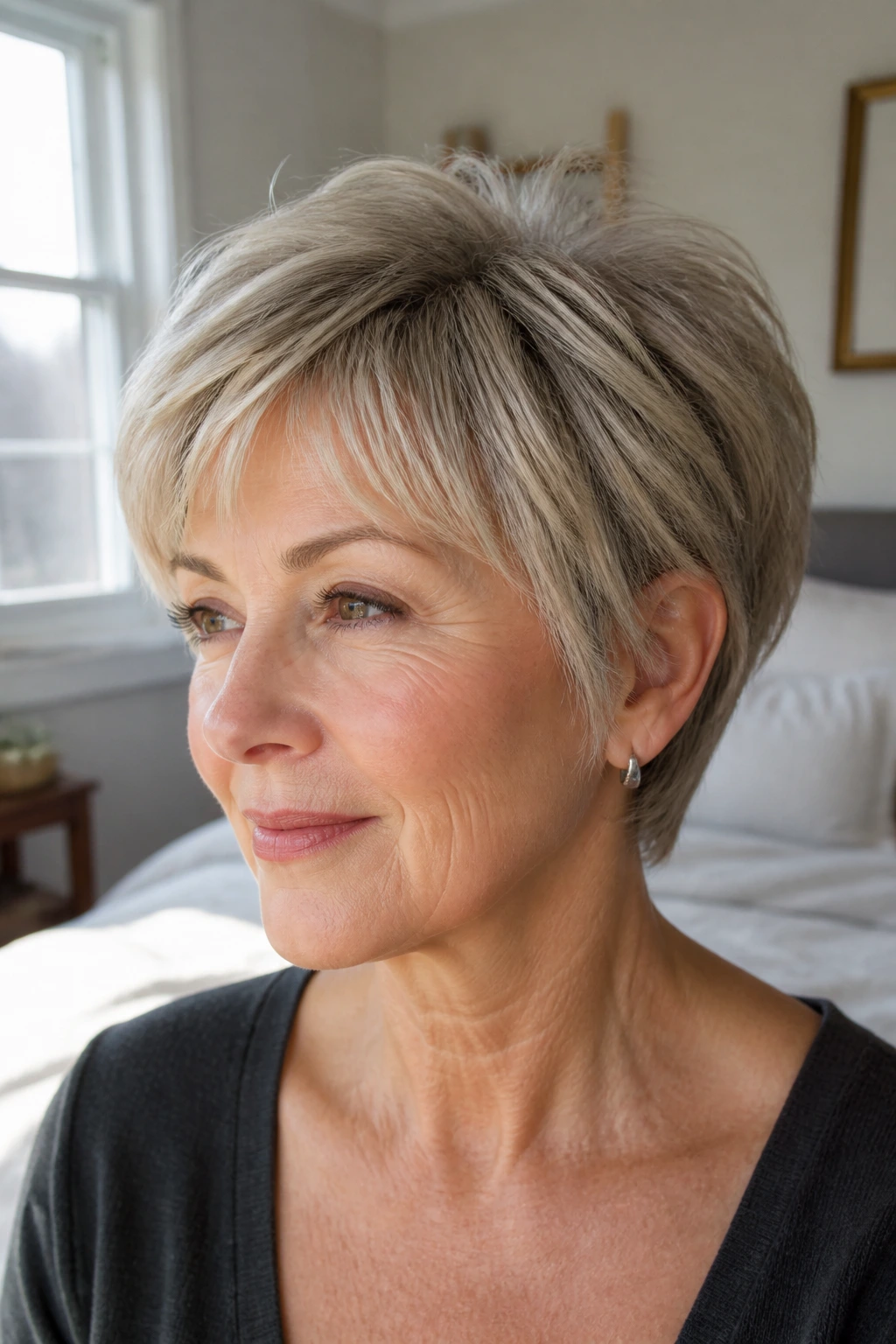
Fine hair needs air, not random thinning. That is the whole idea behind an airy layered crop. The layers are placed to keep the roots from collapsing while preserving enough perimeter to make the hair look fuller at the ends. If you remove too much from the bottom, the whole shape starts to look see-through.
What the layers should do
- Lift the crown just enough to prevent a flat top.
- Keep the outline full around the ears and jaw.
- Break up separation so the hair does not sit in one sheet.
- Leave enough length for the ends to look solid rather than feathery in the wrong way.
This crop is excellent if your hair feels light but not in a flattering way. The difference between airy and thin is mostly about where the weight is removed. A careful cut keeps the body where you want it and frees the roots to move.
21. Tapered Bob for Thick Hair
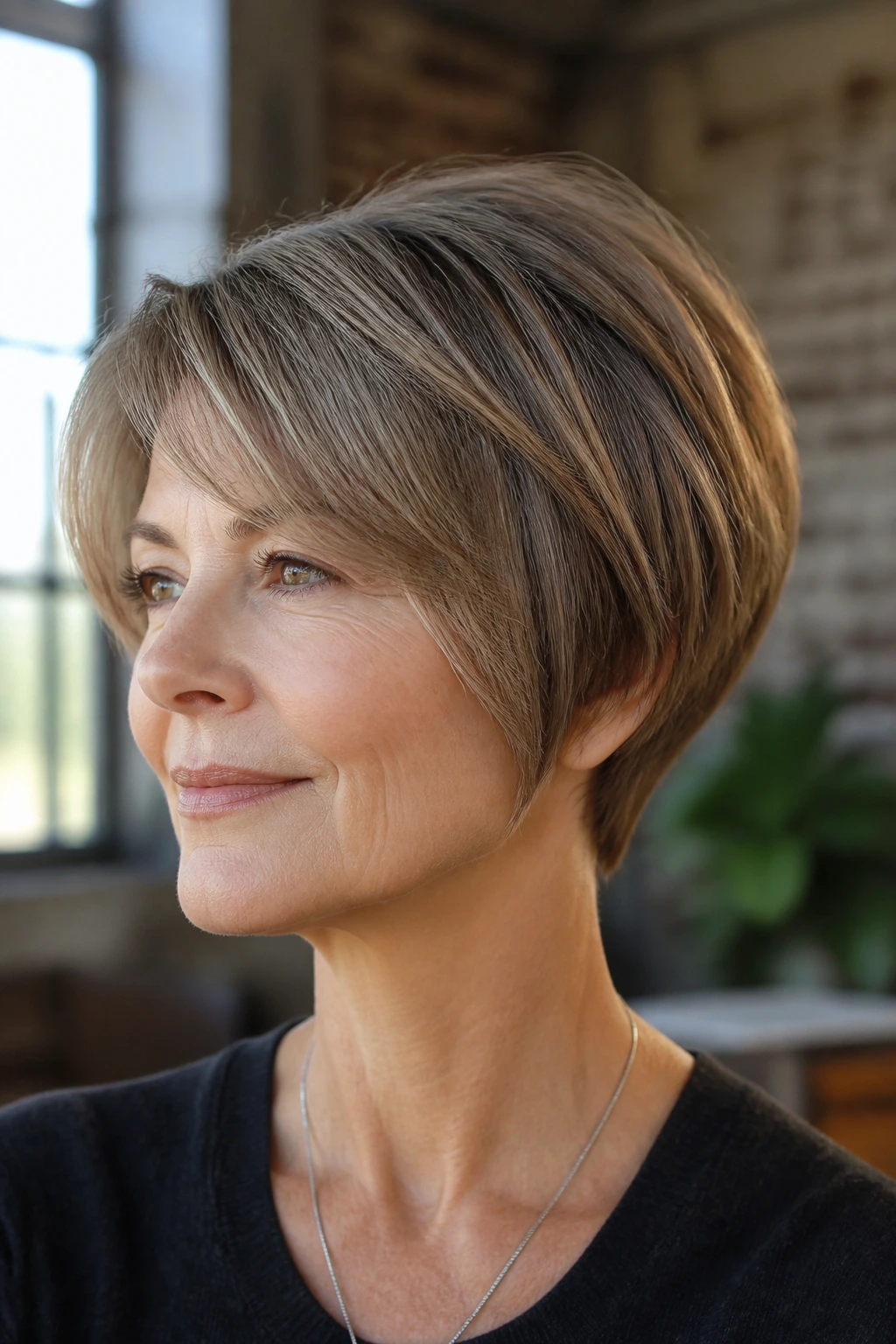
Thick hair behaves best when it is given boundaries. A tapered bob does exactly that. The nape is controlled, the interior weight is reduced, and the outer line stays smooth enough that the hair does not balloon at the bottom. If your hair has ever turned into a triangle by midafternoon, this is the shape that starts fixing that problem.
The best version keeps the top long enough to show movement while tapering the back and sides in a way that removes bulk without making the ends wispy. Thinning shears alone are not the answer. They can make thick hair feel fuzzy and uneven. What works better is careful shaping through the interior and a perimeter that still has substance.
This is a good cut for people who want short hair but not a narrow, close-cropped outline. It has presence. It just does not overstay its welcome.
22. Wash-and-Go Curly Crop
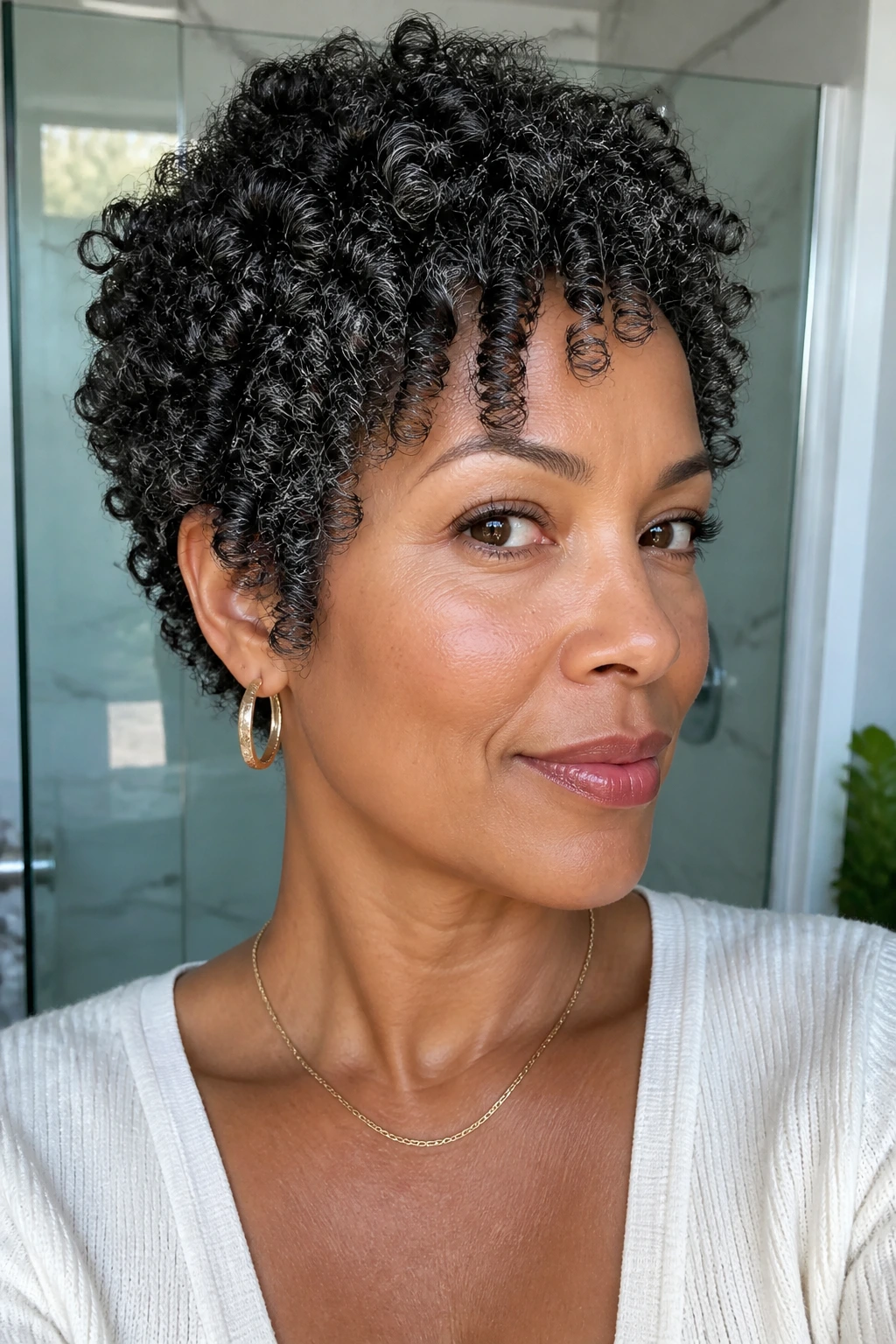
A wash-and-go curly crop should be cut for the curl pattern, not the fantasy of straight hair. That means the shape should respect shrinkage, the layers should encourage curl formation, and the overall outline should look balanced when dry, not only when wet. If your curls behave differently from one section to the next, the cut has to account for that.
Use a curl cream or light gel on soaking-wet hair, scrunch gently, then diffuse until the hair is about 80 percent dry before leaving the rest alone. The temptation is to keep touching it. Don’t. Curly crops get frizzy when they are handled too much during drying. If the ends feel dry, add a drop of leave-in to the palms and glaze the outer layer only.
This is the rare short cut that can look better on day two than day one. That alone makes it worth a look.
How Short Hair Behaves When It Matches Your Texture
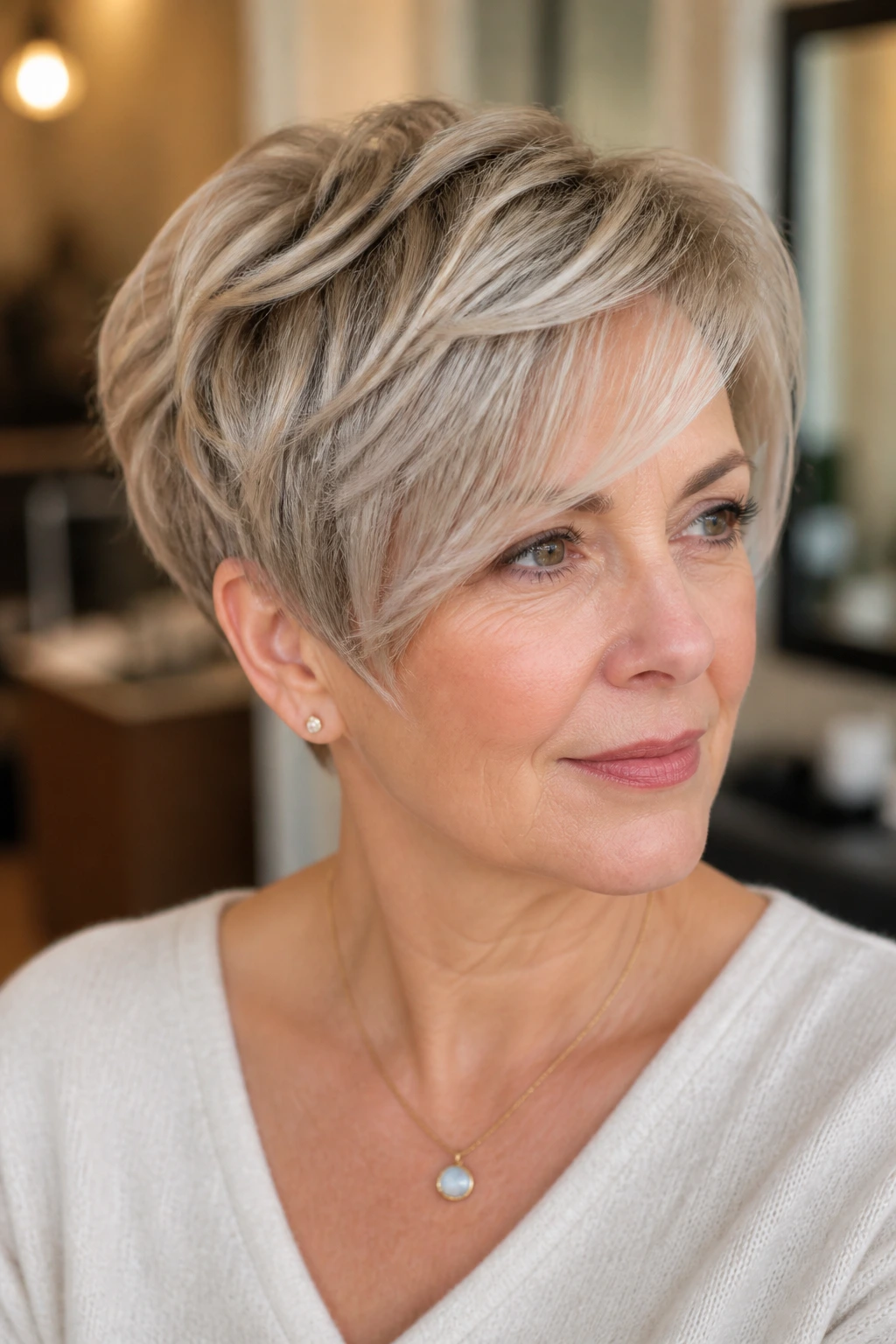
Short hair is not a one-size decision. It sits on the head differently depending on density, wave pattern, cowlicks, and even how much time you’re willing to spend with a blow-dryer on a Tuesday morning. The best cuts on this list work because they respect those details instead of bulldozing through them.
Fine hair usually benefits from a blunt edge, a stacked nape, or a crop with a little crown lift. Those shapes keep the outline solid. Too much slicing into the ends makes fine hair look smaller, not lighter.
Thick hair needs weight removed with care. A tapered bob, angled bob, or razor-softened silver bob can take out bulk without turning the ends fuzzy. If your hair is dense, ask the stylist to show you where the internal weight is coming out. Don’t guess.
Wavy hair likes a shape it can bend into. The choppy bixie, shaggy crop, and tousled side-part crop all work because they let the wave do part of the styling. If a wave pattern is being forced into a pin-straight bob every day, it will usually rebel by noon.
Curly hair does better with a dry-cut approach or at least a cut that respects shrinkage. The rounded crop and wash-and-go curly crop are strong picks because they keep the silhouette balanced after the curls dry and tighten.
Face shape matters too, but I’d rather say this plainly than turn it into a geometry lecture. If your face is round, angles and side-swept pieces help. If it’s long, bangs or width at the temples can bring balance back. If your jaw is strong, softer ends at the cheekbone usually feel kinder than a blunt line that stops right there.
What to Tell the Stylist in the Chair
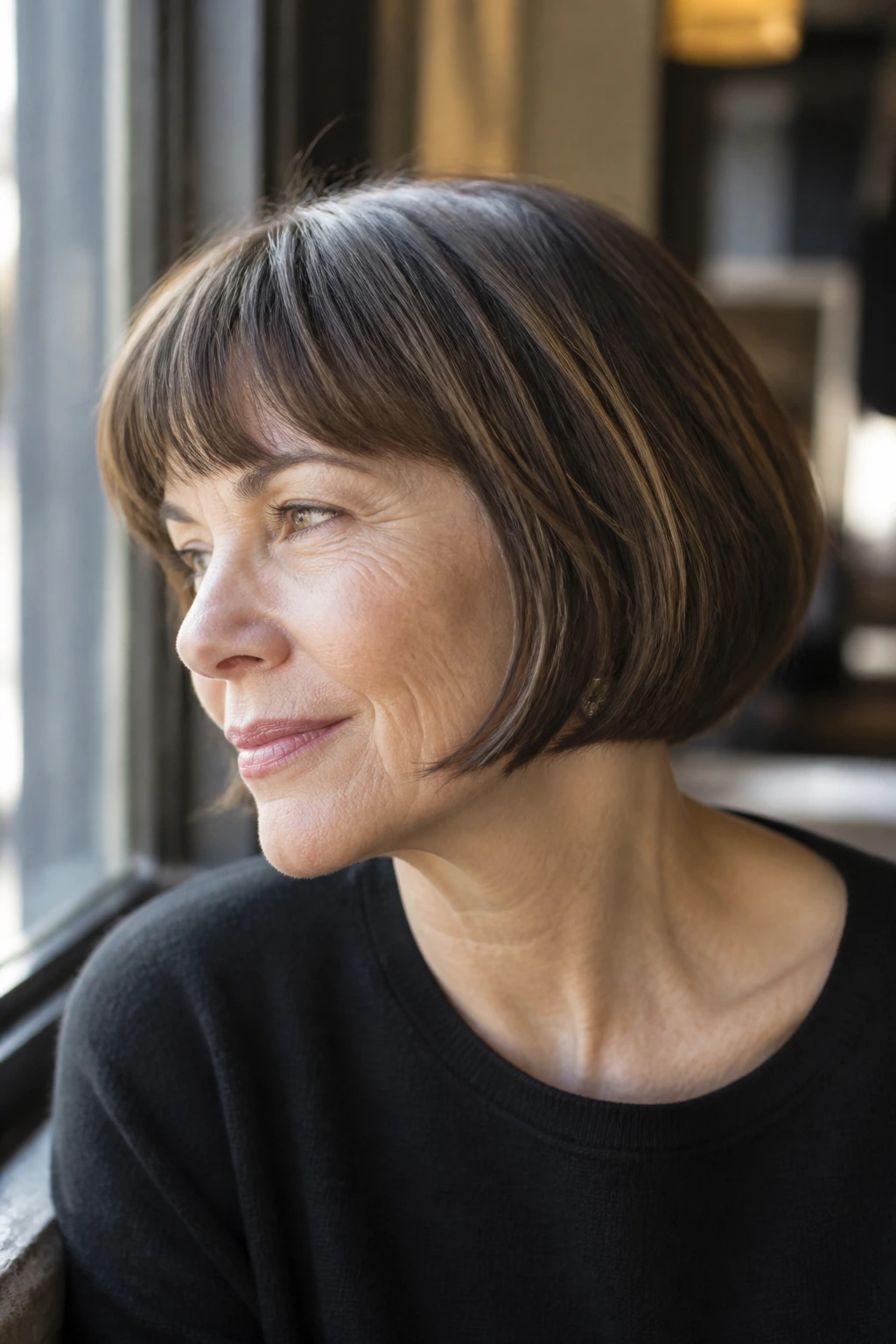
A good short cut starts before the scissors move. Bring one photo from the front and one from the side. That’s enough. Ten inspiration photos usually just confuse the issue, because one has the fringe you want, another has the texture you don’t have, and a third was taken with lighting that does half the work.
Name the problem, not only the style. If your crown goes flat, say that. If your hair kicks out at the nape, mention it. If you wear glasses every day, say where the frames sit on your cheek. Those details matter more than saying you want something “fresh,” which means almost nothing in a salon chair.
Tell the truth about styling. If you only blow-dry twice a week, the cut needs to survive air-drying. If you own a round brush but hate using it, do not pretend otherwise. A haircut that depends on a tool you’ll never touch is a haircut you’ll resent by the second week.
Ask about the grow-out shape. This is the part many people skip. Ask what the haircut will look like after four, six, and eight weeks. If the stylist can’t answer that clearly, keep asking until they can. You want a shape that still makes sense when the trim window gets a little late.
Daily Styling Moves That Keep Short Hair Looking Intentional
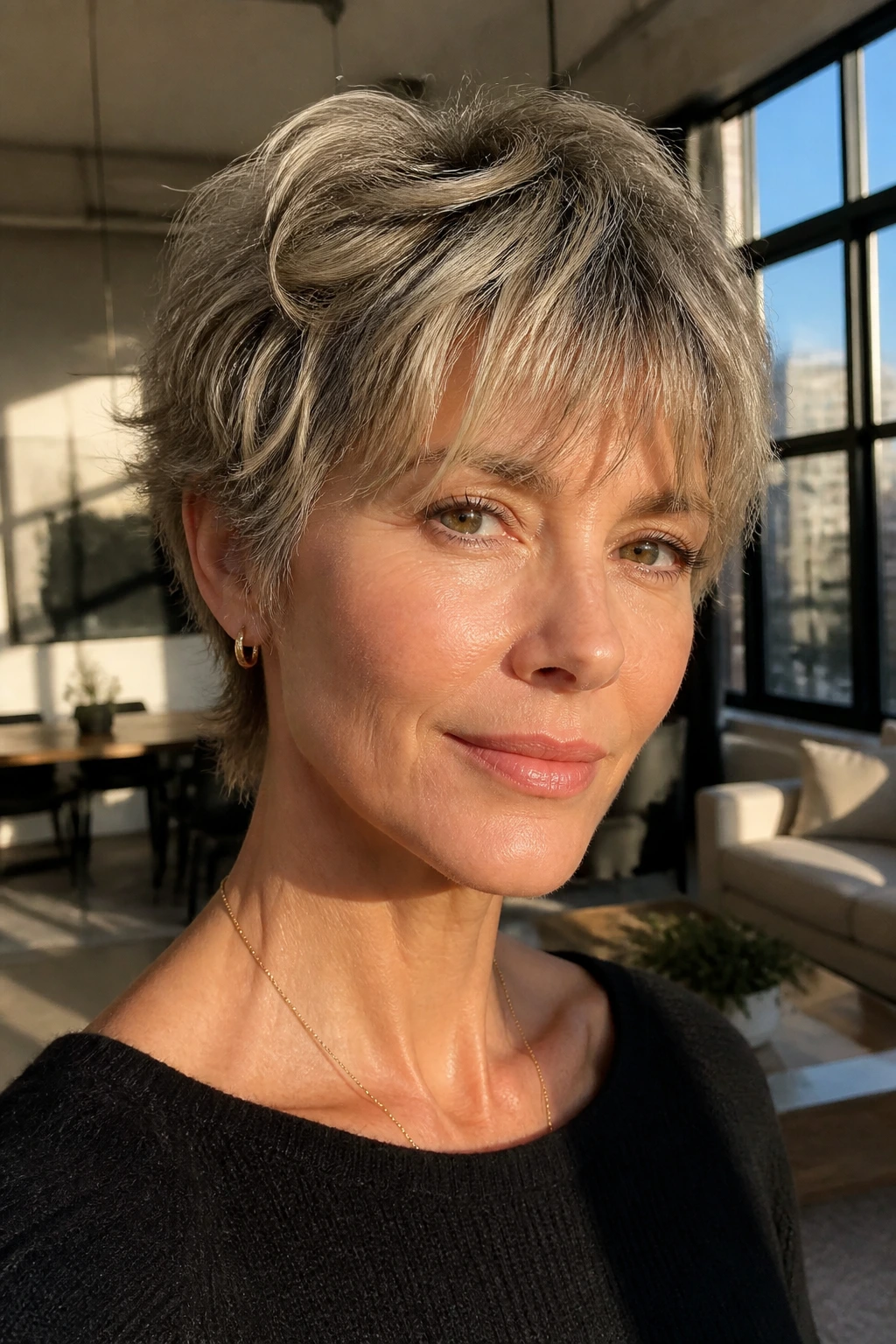
Short hair gets more honest on ordinary mornings. That can be good. It can also mean every bend, puff, and flat spot shows up without warning. A few simple moves keep the shape on your side.
Smooth and polished: Aim the dryer downward with a concentrator nozzle, brush the top away from the crown first, then smooth the ends with one or two passes. Stop before the hair gets too flat. Flat is not the goal; shape is.
Piecey and casual: Work a small amount of mousse or texture cream through damp hair, then twist a few sections around your fingers while it dries. You only need enough separation to show the layers. More product than that will make the hair feel sticky.
Lifted at the crown: Blow-dry the roots in the opposite direction of your part for the first minute, then switch back once they’ve set. That quick burst of lift changes the whole silhouette.
Second-day rescue: Mist the top with water, warm a pea-size amount of cream between your hands, and rework only the pieces that matter. Usually the crown and the front are the only spots that need help. Leave the rest alone.
Mistakes That Make Short Hair Look Older Than It Is
The wrong cut can age the face faster than gray hair ever will. Usually the problem is not the length. It’s the shape.
-
Cutting the nape too short: If the back is clipped too close, the head can look wider and the haircut can feel severe. Leave enough length to show a clean line, not a buzzed outline unless that is the look you want.
-
Over-layering fine hair: When fine hair loses too much weight, the ends turn wispy and the whole cut starts to look thinner. Keep at least one solid perimeter line.
-
Ignoring the growth pattern: Cowlicks at the crown or temple can split bangs and kick the sides out. A good stylist cuts with the growth pattern, not against it.
-
Using heavy cream at the roots: This flattens the crown in a hurry. Keep richer products near the ends, where the hair can actually use them.
-
Waiting too long between trims: Short hair loses shape faster than shoulder-length hair. Once the neck fuzz grows out and the back loses its line, the whole cut starts looking tired.
Variations and Adaptations Worth Trying
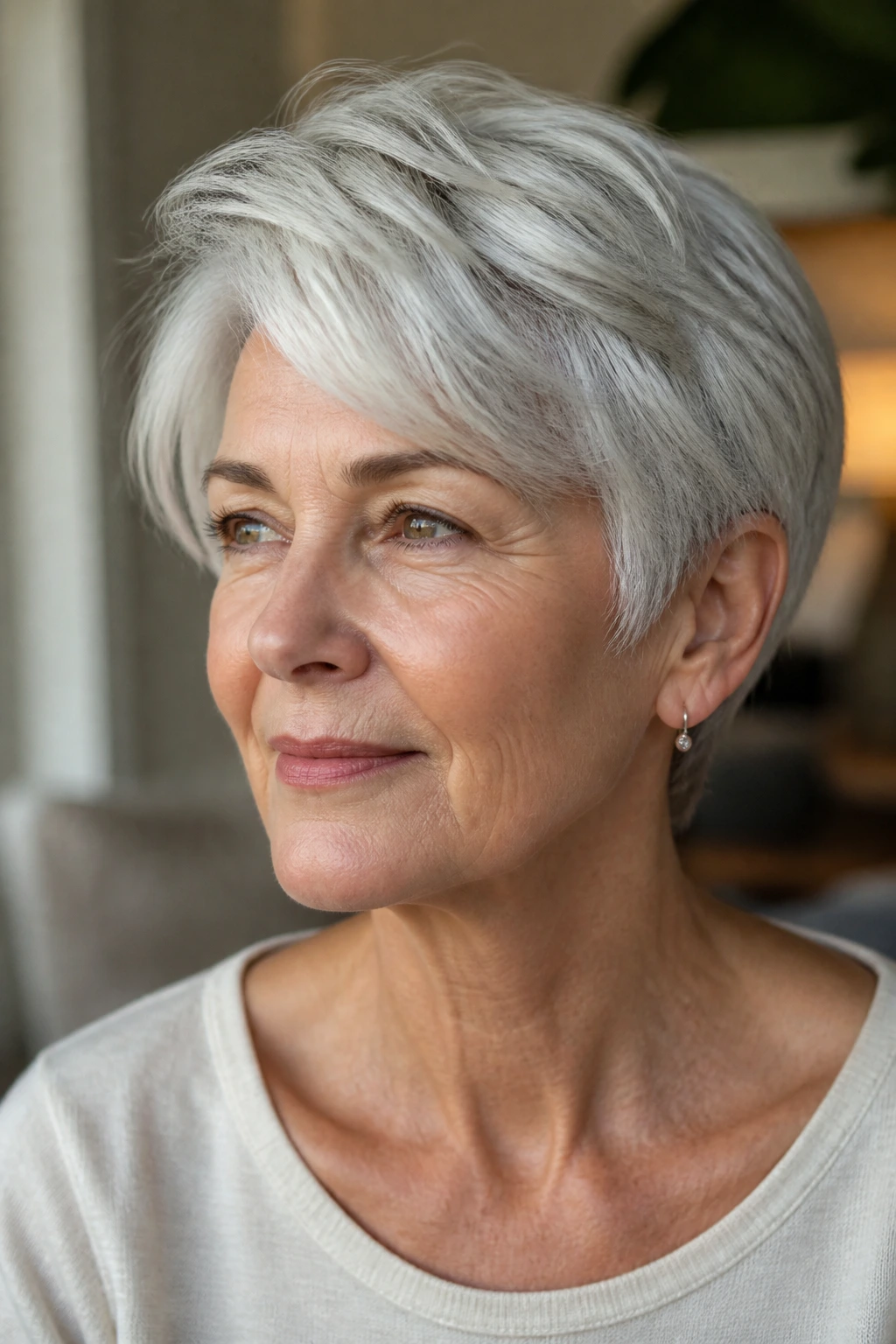
Soft Silver Sweep: If your hair is gray or white, ask for a gentle gloss and a little softness around the front. The silver shows line beautifully, but it can also go puffier when it gets too blunt, so a touch of movement near the cheek helps.
Curl-First Shape: For curlier textures, commit to a cut that’s made dry or with the curl pattern visible. This keeps the final shape from shrinking into something shorter than anyone expected.
Glasses-Friendly Frame: If you wear glasses every day, choose a cut with side pieces that either stop just above the frame or graze just below it. Anything that lands directly on the arms of the glasses gets annoying fast.
Longer Grow-Out Line: If you hate constant appointments, pick cuts like the grown-out pixie, mini lob, or angled bob. They keep their outline longer and don’t scream for a trim after four weeks.
Sharper Edge, Less Fuss: If you like structure, go for the blunt bob or the French bob and keep the layering minimal. The line does the work. You won’t need much else.
Keeping the Shape Between Trims
Short hair needs a maintenance rhythm, not a panic schedule. Pixies usually want a trim every 4 to 6 weeks if you want the outline to stay crisp. Bobs can often stretch to 6 to 8 weeks, especially if the ends are blunt and the layers are soft. Curly crops can go a little longer, but the edges and neckline still need attention before the shape turns fuzzy.
A quick neckline clean-up can make a haircut look fresher than a full restyle. If the nape starts growing out first — and it usually does — a small tidy-up around week three or four can buy you time. That matters if you keep your hair very short in the back.
Product buildup sneaks up on short hair because the strands are so much shorter, which means a tiny amount of cream can coat more of the cut than you think. A clarifying shampoo every 2 to 4 weeks keeps the crown from going dull. If your hair is silver and feels coarse, follow with a richer conditioner on the mid-lengths, not the scalp.
Sleep helps too. A satin pillowcase or bonnet keeps the top from getting roughed up overnight. Not glamorous. Very useful.
Frequently Asked Questions
Which short haircut is best for fine hair over 50?
A blunt bob, stacked nape bob, or airy layered crop usually gives fine hair the most believable fullness. The key is keeping a strong perimeter so the hair does not look see-through at the ends.
Are bangs a bad idea if I’m over 50?
Not at all, but they need to match your hairline and styling habits. Side-swept fringe, curtain bangs, and wispy bangs can soften the face without demanding a perfect blow-dry every morning.
How short is too short for a first cut?
If you’re nervous, don’t start with a very tight pixie. A French bob, mini lob, or grown-out pixie gives you short hair without making the change feel abrupt.
Will a short haircut make my face look wider?
Only if the cut ends at the widest part of the face and has no lift or angle. A shape with height at the crown or a front that skims below the jaw usually keeps the proportions balanced.
Can curly hair really go short?
Yes, and often beautifully. The haircut just has to be shaped for curl shrinkage, which means cutting with the curl pattern in mind instead of forcing a straight-line geometry onto it.
How often should I trim a pixie or short bob?
Pixies usually need attention every 4 to 6 weeks. Short bobs can often go 6 to 8 weeks before the line starts losing its shape.
What if my hair gets flat at the crown?
Choose cuts with crown lift: a tapered crop, stacked bob, or textured pixie with a longer top. During styling, blow-dry the roots in the opposite direction for the first minute, then switch back.
Can I grow out a short haircut without going through a bad stage?
You can make the grow-out much smoother by keeping the back neat and leaving the top slightly longer. The grown-out pixie and layered mini lob are both good bridge shapes.
The Shape That Fits Your Life
The best short haircut is not the shortest one, and it is not the most dramatic one either. It is the shape that still looks like itself when you wake up late, skip a wash, or decide not to fuss with a brush. That is the real standard. If a cut can keep its line through ordinary life, it has done its job.
Start with the haircut that matches your texture, your routine, and the parts of your face you want to bring forward. Then keep the shape honest with regular trims and a light hand on the products. Short hair can feel crisp, soft, lifted, or relaxed — but it should never feel accidental.