



Thick hair can feel like a gift and a dare in the same morning. The minute you cut it shorter, it wakes up, gets wider, and starts telling the truth about every awkward layer you’ve ever had. On a heart-shaped face, that matters even more. Too much height at the temples makes the forehead look broader. Too much width at the jaw can make the chin disappear.
That’s why the best big chop styles for thick hair and heart-shaped faces are never just about “going short.” They’re about where the weight lands, where the movement starts, and where the eye is guided first. A smart chop softens the upper face, adds some life around the jawline, and keeps the hair from ballooning into a triangle by noon.
I’m picky about these cuts. I like shape, not fuss. I like hair that still looks intentional when you tuck one side behind your ear, throw on sunglasses, and leave the house with one hand still on the coffee cup. The cuts below are the ones that do real work: they calm dense hair, flatter a narrower chin, and hold together after the salon shine wears off.
Why These Cuts Earn Their Keep
- Shape Placement: Thick hair needs bulk removed in the right places, not everywhere, or you end up with a puffy halo and flat ends.
- Face Balance: Heart-shaped faces usually look best when the cut adds some softness around the jaw and keeps the top from getting too tall.
- Grow-Out Grace: The better chops here still look decent at week six, which matters if your hair grows fast or your schedule is packed.
- Texture-Friendly: Straight, wavy, curly, and coily hair all show up in this list, because one cut does not suit every bend pattern.
- Low-Drama Styling: Several of these styles air-dry well or need only a quick pass with a brush and dryer, which is a relief when thick hair already asks for enough.
- Salon-Friendly Requests: You can actually explain these shapes to a stylist without waving your hands around for ten minutes.
Reading the Shape Before the Shears
A heart-shaped face has a wider forehead, strong cheekbones, and a narrower chin. That means the cut has to do a little balancing act. If all the volume sits at the crown, the forehead gets louder. If all the fullness clings to the jaw, the bottom half can look heavy and narrow at the same time.
Thick hair complicates the picture because density pushes outward once it’s shorter. A blunt one-length cut can look gorgeous, but only if the line is placed with care. Too much layering can make the ends scatter. Too much thinning can leave frizz hanging out like a bad houseguest.
The sweet spot is usually this: keep some weight at the perimeter, remove bulk inside the shape, and let the front pieces do the face-softening. That’s the game. Shorter doesn’t mean harsher. Shorter just means the architecture has to be better.
Where volume helps most
Around the jaw. Near the cheekbones. Sometimes a little at the nape, if the cut is supposed to curve inward instead of puff out. That’s the zone that makes a heart-shaped face look balanced, not top-heavy.
Where volume usually causes trouble
At the temples, at the top of the crown, and at the very widest part of the forehead. Hair there can make a face shape feel more top-loaded than it already is. A good cut keeps those zones soft, not bulky.
1. Chin-Length French Bob with Soft Side Bangs
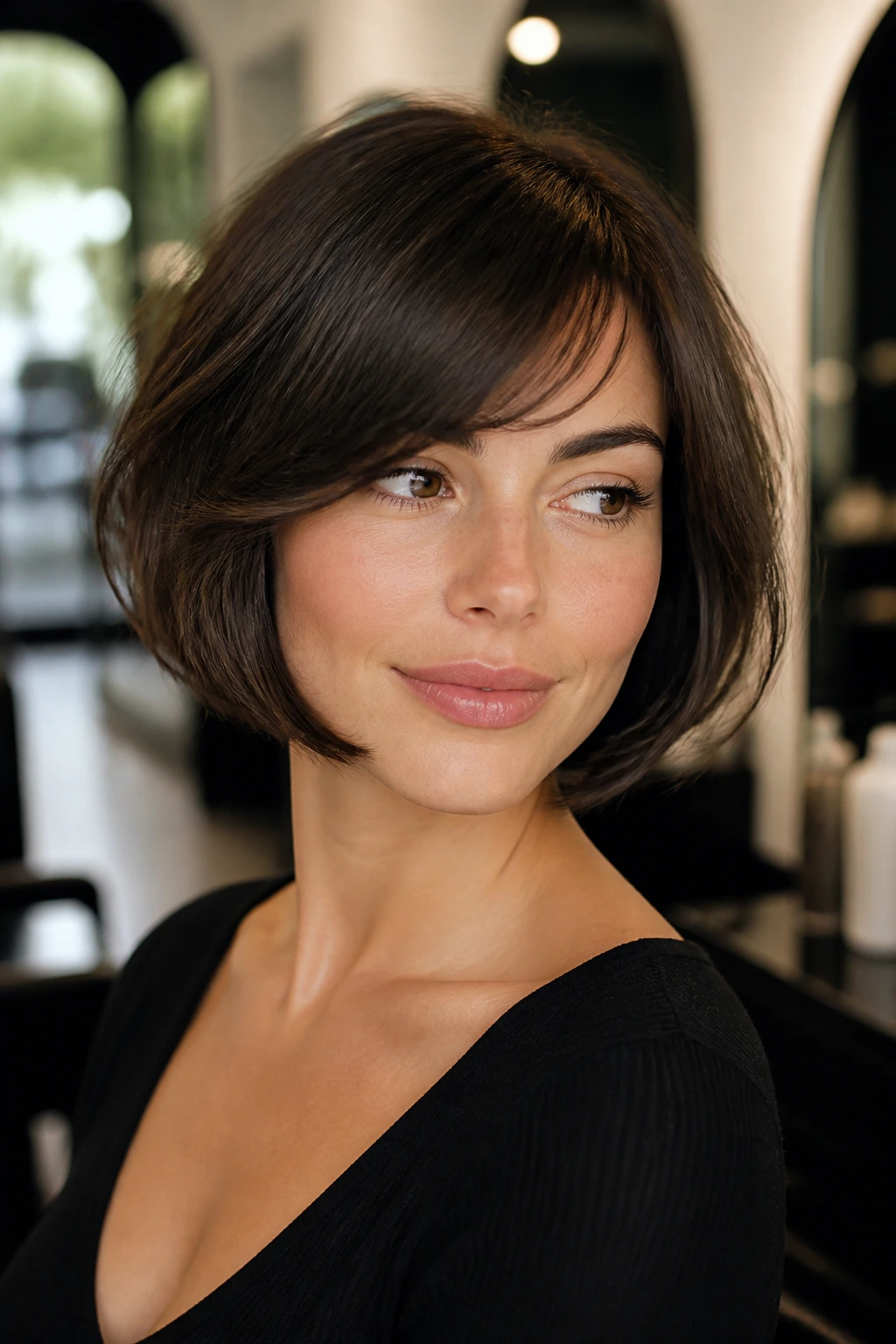
A chin-length French bob on thick hair has real presence. It sits right where the jaw needs a little help, and the shape gives the face a clean frame instead of letting the hair sit like a heavy curtain. The trick is keeping the line a touch softer than a strict blunt box, because thick hair can turn that look severe fast.
What makes it work
The chin-level length brings visual weight lower on the face, which helps a heart shape feel more even. Side bangs soften the forehead without chopping the face in half, and they usually behave better than a full heavy fringe on dense hair.
Ask for a perimeter that kisses the chin, not the neck. A slight undercurve through the ends keeps the bob from kicking outward at the sides. If your hair is very dense, a stylist can remove internal weight in small sections so the shape drops instead of puffing.
Best for: straight to softly wavy hair, especially if you want a polished cut that still has a little French attitude.
Quick tip: Blow-dry the front pieces toward the face first, then sweep them away with your fingers. That small bend does more than a flat, stiff finish ever will.
2. Collarbone Lob with Invisible Layers
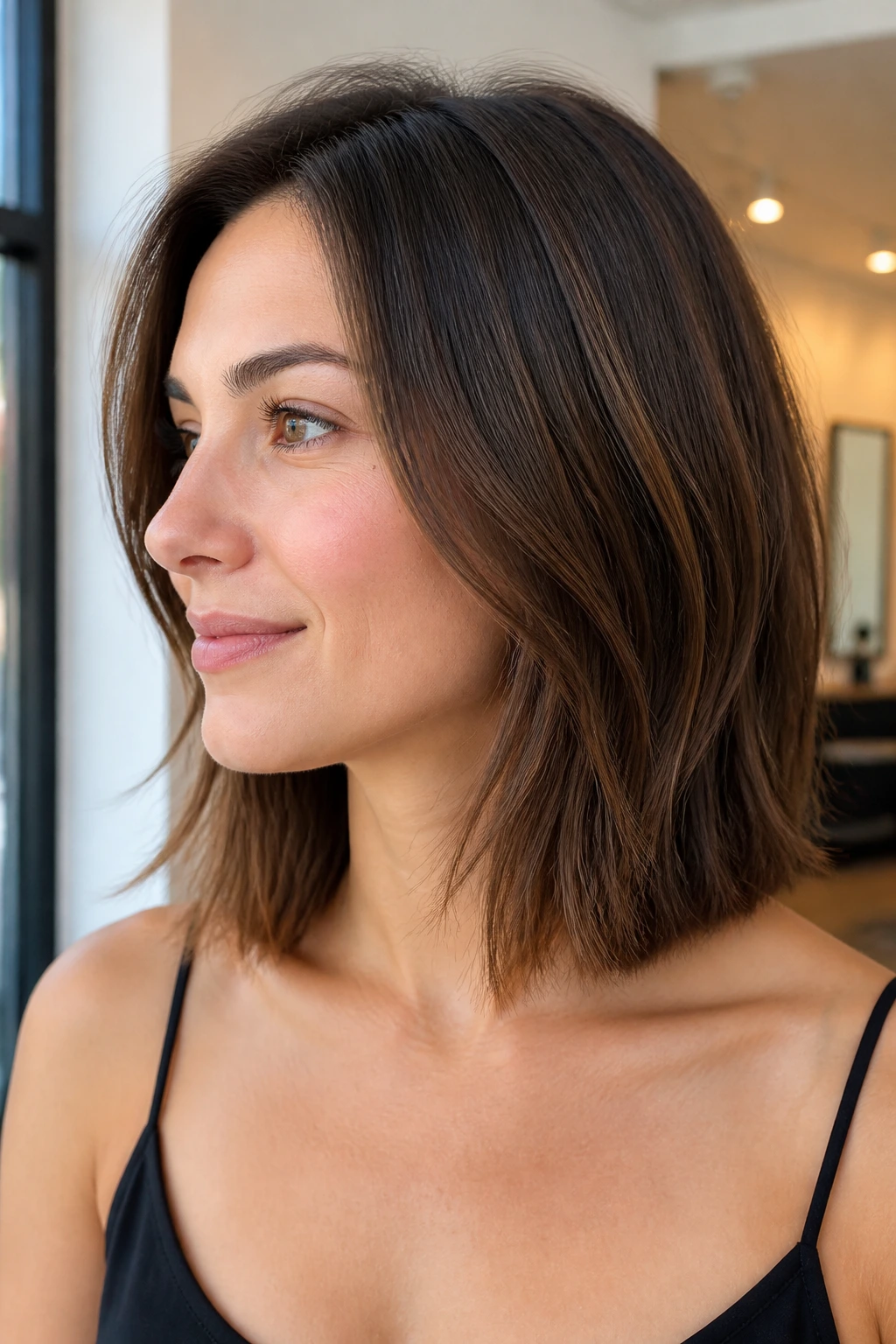
The collarbone lob is the cut I recommend when someone says, “I want it shorter, but I’m not ready for a real shock.” Thick hair loves this length because it still has enough weight to hang nicely, yet it’s short enough to feel lighter on the neck and shoulders.
The best version uses invisible layers. You do not want choppy stripes through the surface. You want internal removal that takes the bulk out from underneath while leaving the top line smooth. That’s especially useful on heart-shaped faces, because the front can be softened with a slight angle that lands near the collarbone and guides the eye down.
This cut also grows out without looking sloppy. That matters. A lot. Thick hair can turn a “just trim it” situation into a bulky triangle if the shape gets ignored for too long.
If you wear your hair straight, the lob looks sleek and clean. If you wave it or scrunch it, those same hidden layers keep it from turning into a box. It’s one of the few cuts that behaves both ways without a fight.
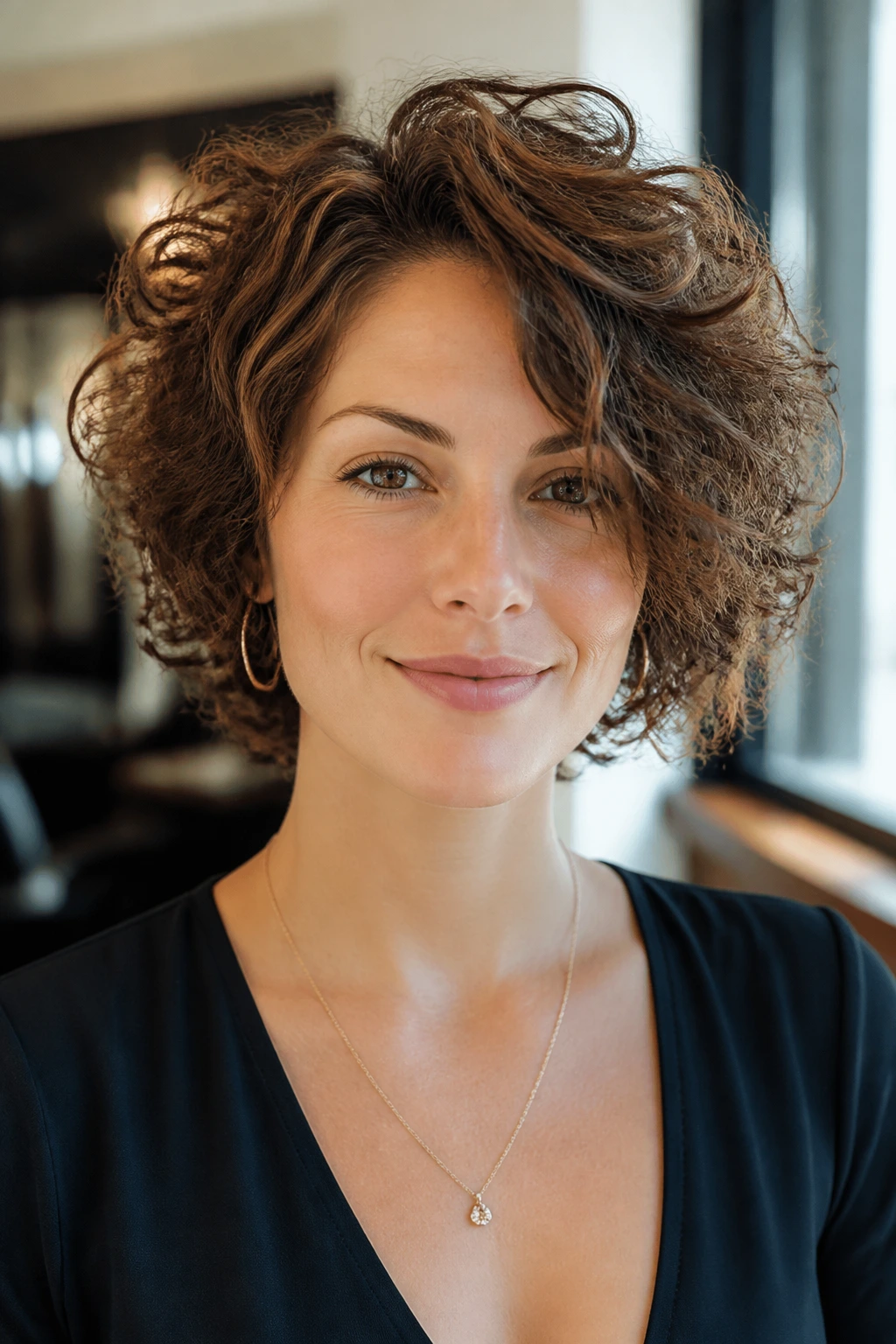
3. Curly Shag with a Long Curtain Fringe
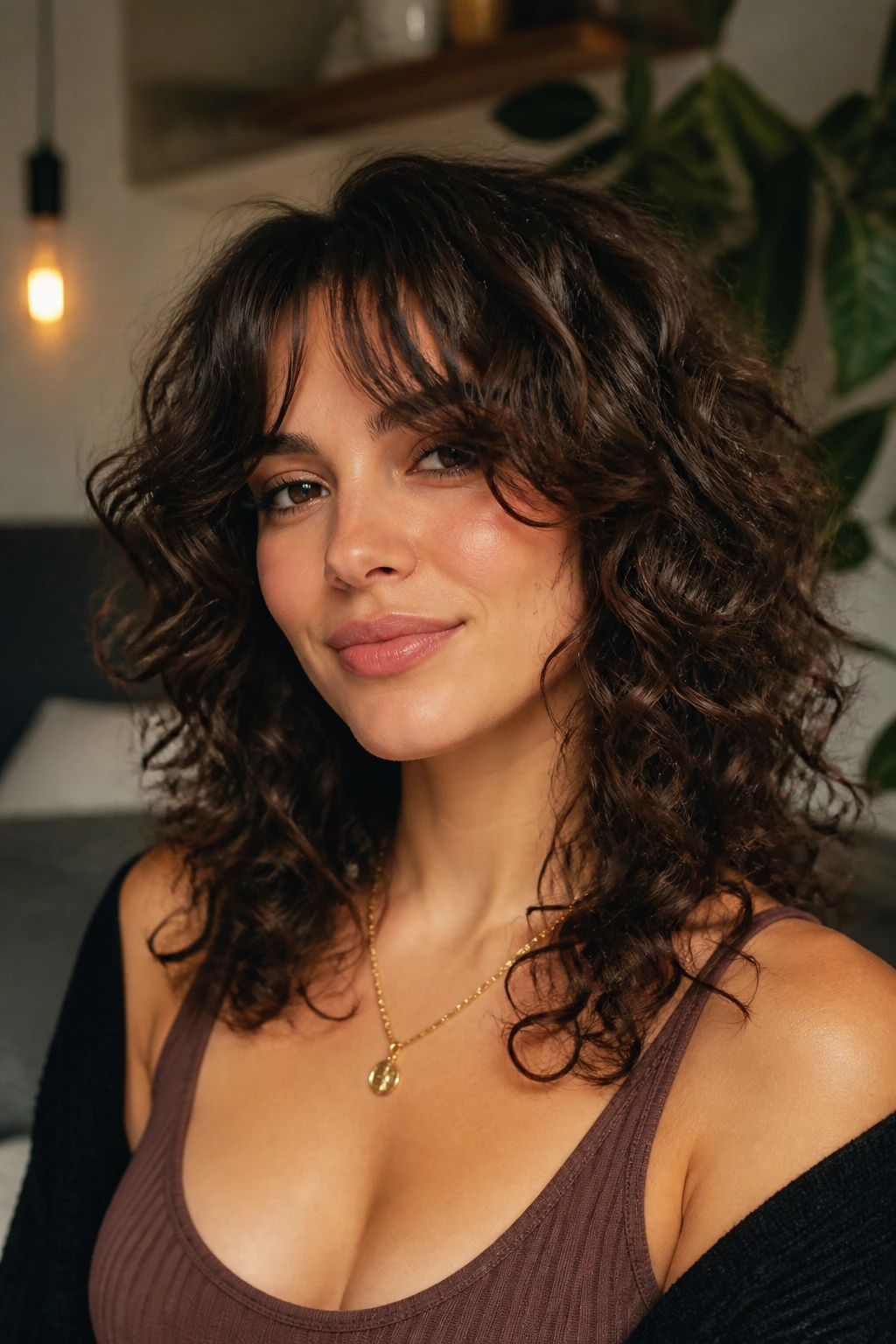
Why does the curly shag work so well on thick hair? Because it stops all that density from sitting in one heavy block. Curls need room to spring, and a shag gives them that without forcing the shape into a pyramid.
The long curtain fringe is the move here. It opens the face at the center and spreads softly toward the cheekbones, which helps a heart-shaped face feel less forehead-heavy. Keep the shortest pieces at the brow or just below it if your curls shrink a lot. Anything shorter can jump too high.
How to use the shape
Cut this one dry, or at least partly dry. Curly hair lies to you when it’s wet. A curl-by-curl approach lets the stylist place the layers where your actual curl pattern lives, not where it pretends to live in the sink.
Use a cream plus gel combo, then diffuse on low heat. Scrunching too hard can collapse the curtain fringe, and over-drying can make the top frizz. The goal is roundness with air in it, not a helmet of curls.
This is the cut for people who want movement and a little edge. Not messy. Just alive.
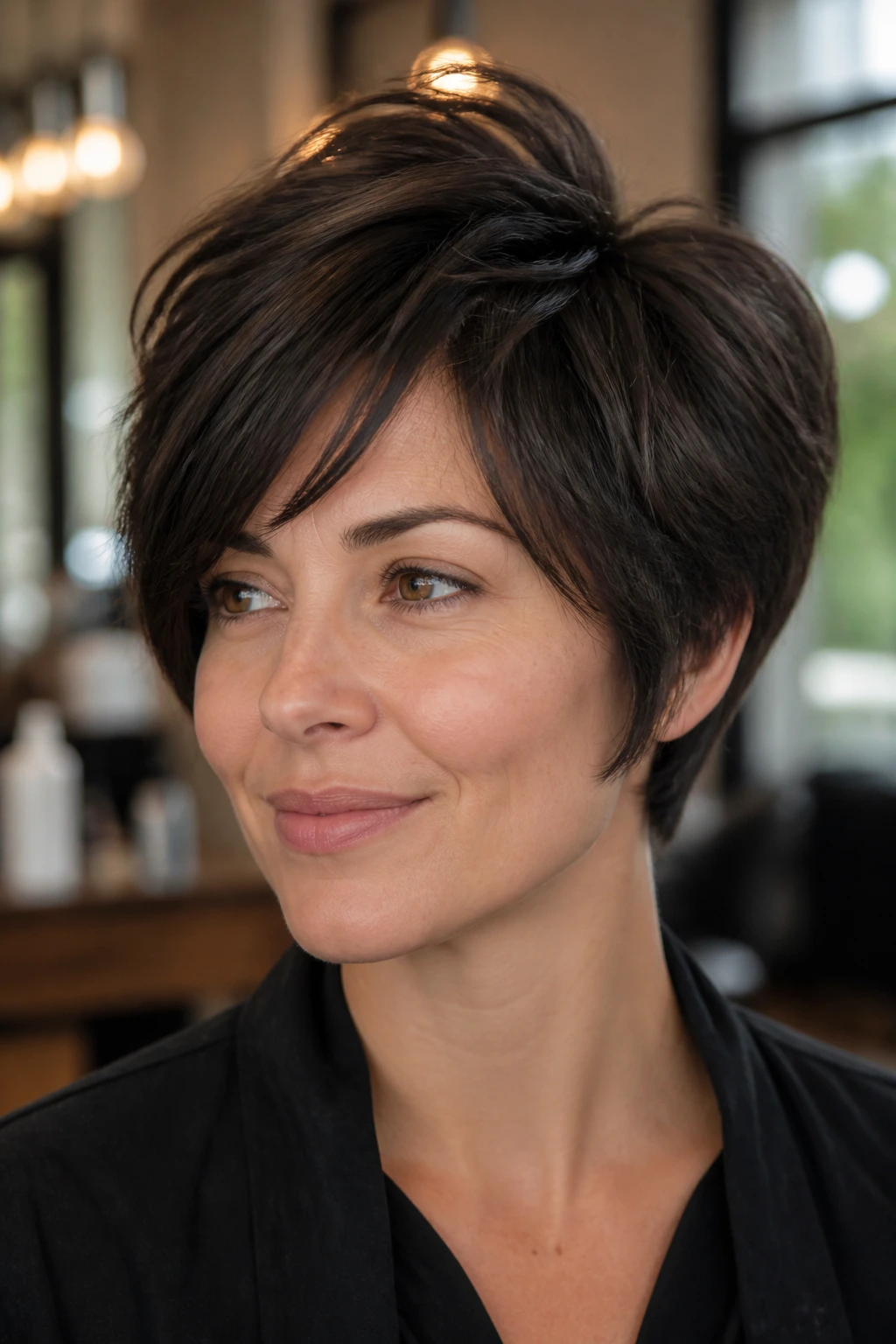
4. Rounded Pixie with a Longer Top
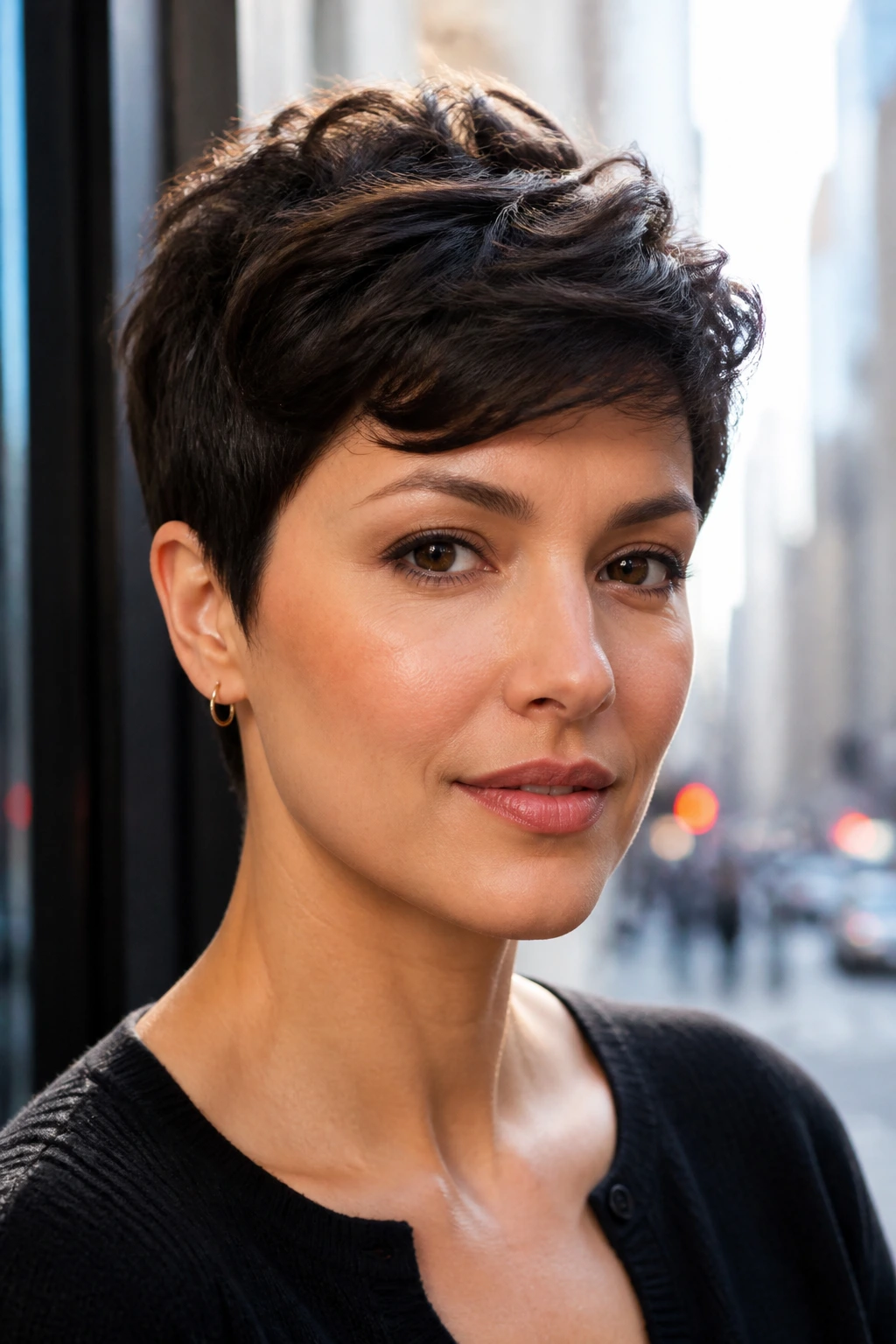
A pixie for thick hair can go wrong in two seconds if the top is too short. You get a mushroom shape, then spend every morning trying to flatten it. A rounded pixie with a longer top solves that by keeping some length up top and tapering the sides in a gentle way.
For a heart-shaped face, the longer fringe or side sweep matters. It breaks up the forehead width and softens the transition into the cheekbones. The nape can be neat and close, but the crown should not be carved into a sharp spike. That kind of height makes the face look taller, which is usually the wrong direction here.
This cut is bold, yes, but not harsh. It still needs softness around the temples. If you ask for a textured top around 2.5 to 4 inches, depending on your density, you get styling room without the helmet effect.
One good morning with wax or paste and a blow-dryer nozzle is often enough. The shape does the heavy lifting. You just nudge it.
5. A-Line Bob with Cheekbone-Length Front Pieces
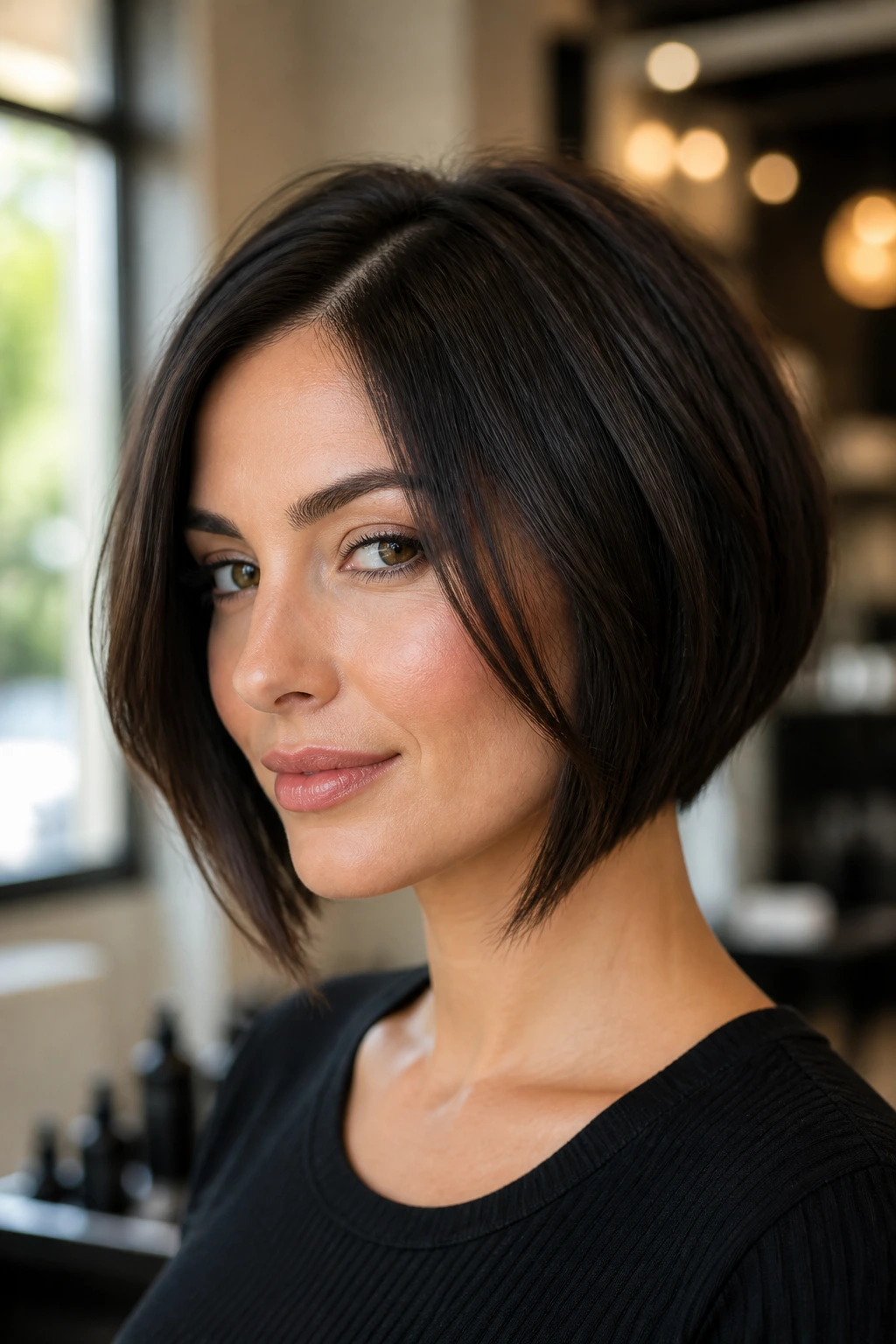
The A-line bob has a built-in trick: it gives you length in front while keeping the back compact. On thick hair, that matters because the back can stay controlled and the front can frame the face without flaring out like a triangle.
For a heart-shaped face, cheekbone-length front pieces are money. They soften that upper width and create a diagonal line that flatters the jaw. A slight A-line angle also gives the neck more visible length, which is never a bad thing when the chin is narrow.
Ask your stylist not to make the front too dramatic. A steep angle can look dated or overly sharp. A gentle slope is better, especially if your hair has natural body. The cut should feel shaped, not engineered.
This one works beautifully with a round brush and a quick inward bend at the ends. If you like a tucked-behind-the-ear moment, the front still holds enough interest on its own. Clean. Sharp. Not fussy.
6. Box Bob with a Center Part and Hidden Layers
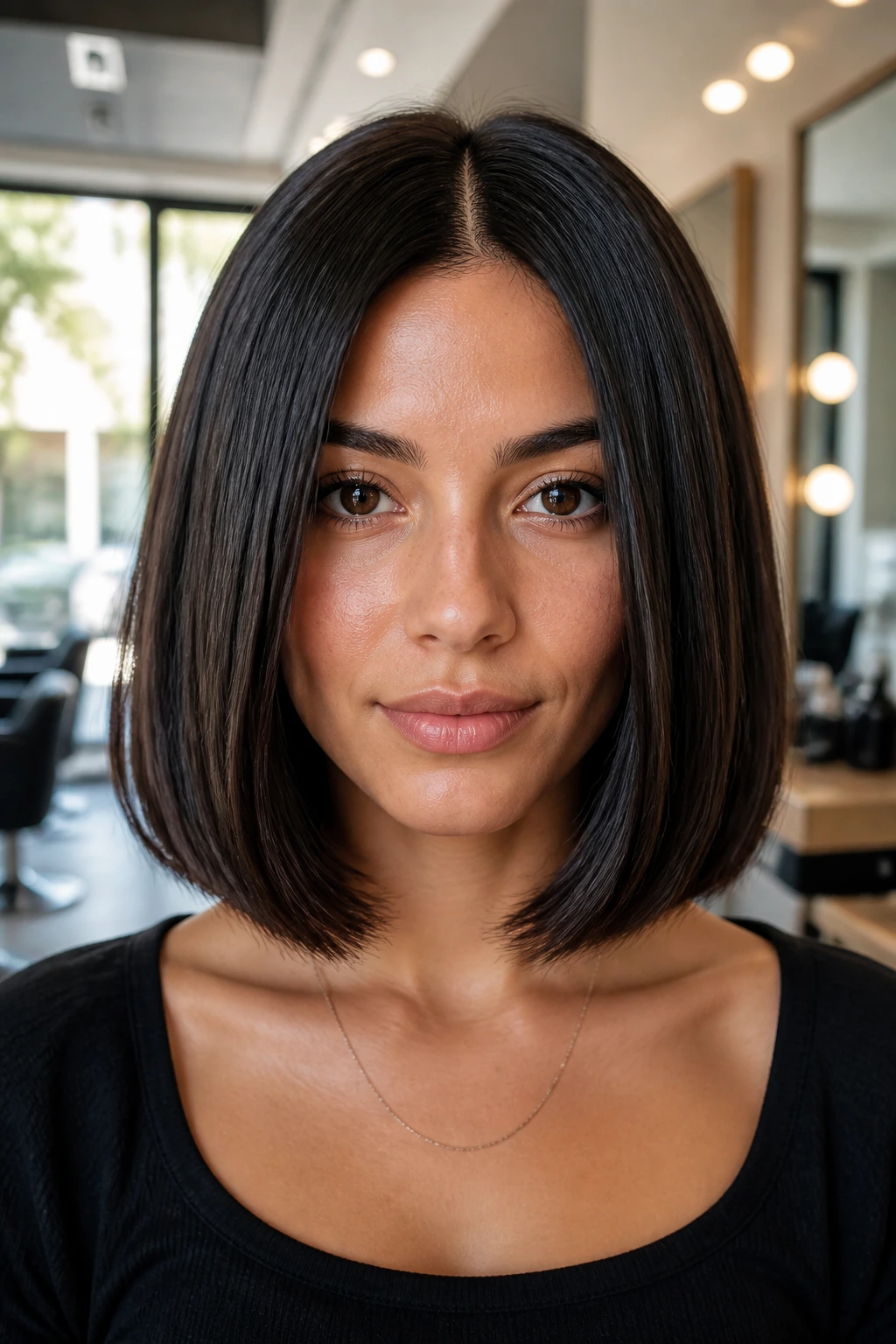
A box bob is a strong shape. On thick straight hair, that strength is the point. The line sits fuller, the silhouette stays crisp, and the hair looks dense in a way that reads polished rather than bulky.
The center part can work on a heart-shaped face if you keep the front pieces soft enough to break up the width at the forehead. Hidden layers inside the cut stop the bob from looking like a single heavy slab. That inside movement matters more than visible choppiness here.
If your hair tends to puff at the ends, ask for point-cutting only on the perimeter. That keeps the line intact while knocking the edge down a bit. A razor-heavy box bob can go frizzy fast on dense hair, and I would skip that unless your texture is very fine within the density.
It’s a sharp look. Not severe, if it’s cut well. The shape says you meant it.
7. Wolf Cut Lite with Curtain Fringe

A full wolf cut on thick hair can go feral in the wrong hands. The lite version is smarter. It keeps the shaggy spirit, the movement, the curtain fringe, but trims the drama so the layers do not explode out sideways.
That makes it useful for heart-shaped faces. The curtain fringe softens the forehead, and the longer face-framing layers bring attention down toward the jaw. The trick is keeping the top layer modest. Too much crown lift can make the face look wider up top, and thick hair already comes with enough volume.
This cut loves natural bend. If your hair waves or curls a bit, half your styling job is already done. A little mousse at the roots and a diffuser can shape the top without flattening the fringe. If your hair is straight, a quick bend with a flat iron through the front pieces keeps the whole thing from looking flat.
My take: the wolf cut works best when it looks like a haircut, not a costume. Keep it softer than the internet usually does.
8. Shoulder-Length Cut with Face-Framing Slices
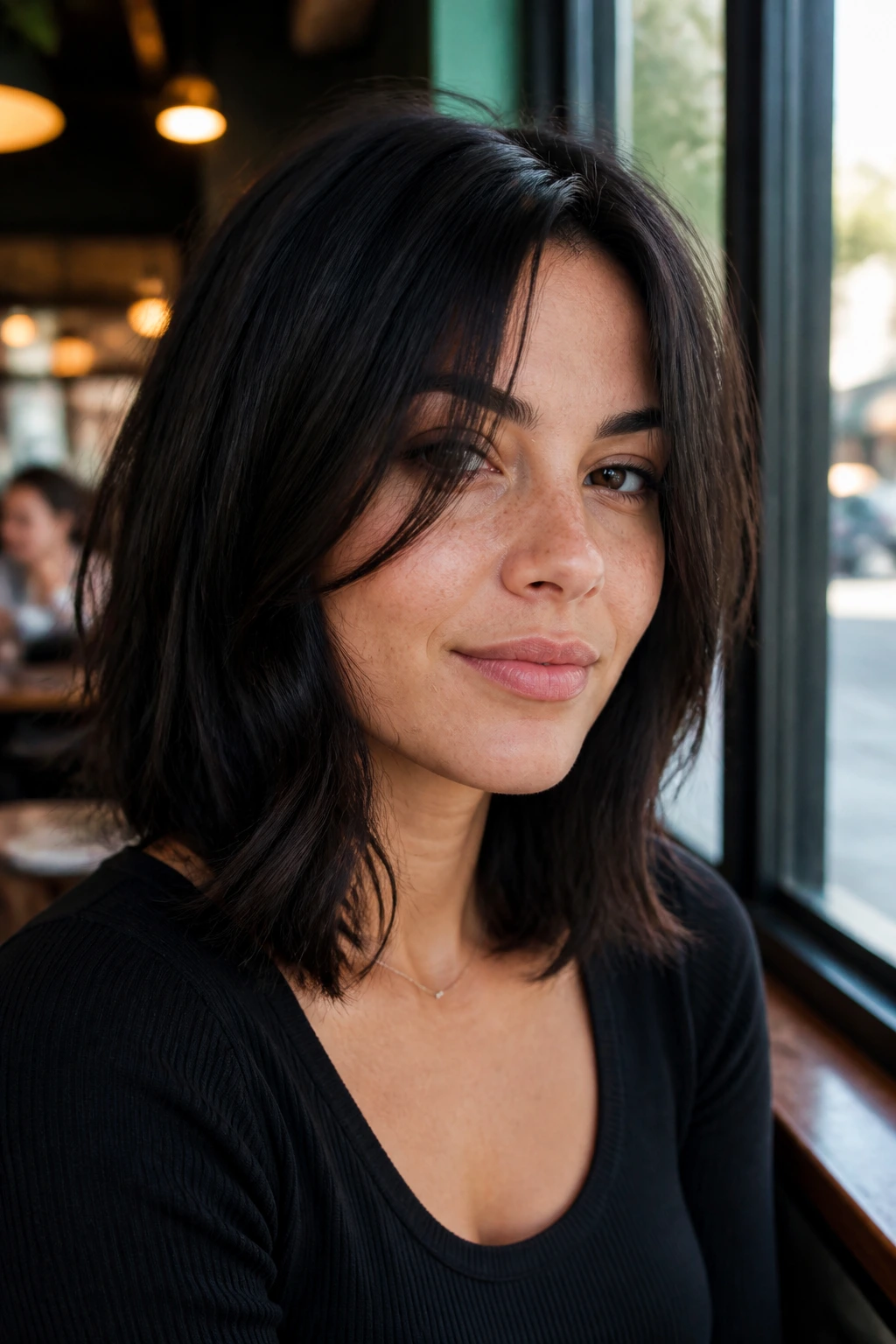
Not everyone wants to go short-short. Fine. The shoulder-length cut can still count as a big chop when it sheds enough weight to change the way your hair behaves. On thick hair, shoulder length is a sweet spot because it gives the hair room to move without letting the bulk drag everything down.
The face-framing slices should start around the chin or just below the cheekbone. That placement matters for heart-shaped faces because it redirects attention away from the upper forehead and toward the lower half of the face. Too-high framing can widen the top even more. Too-low framing can do nothing useful at all.
This is a good cut if you wear your hair up half the time. It looks good down, and it still pulls into a knot or clip without leaving you with a giant lump at the crown. A layered shoulder cut also survives air-drying better than a blunt shoulder cut when the hair is dense.
If you’re nervous about losing length, this is the safest kind of bold. You feel the difference without losing your old habits overnight.
9. Tapered Crop with a Sweeping Fringe
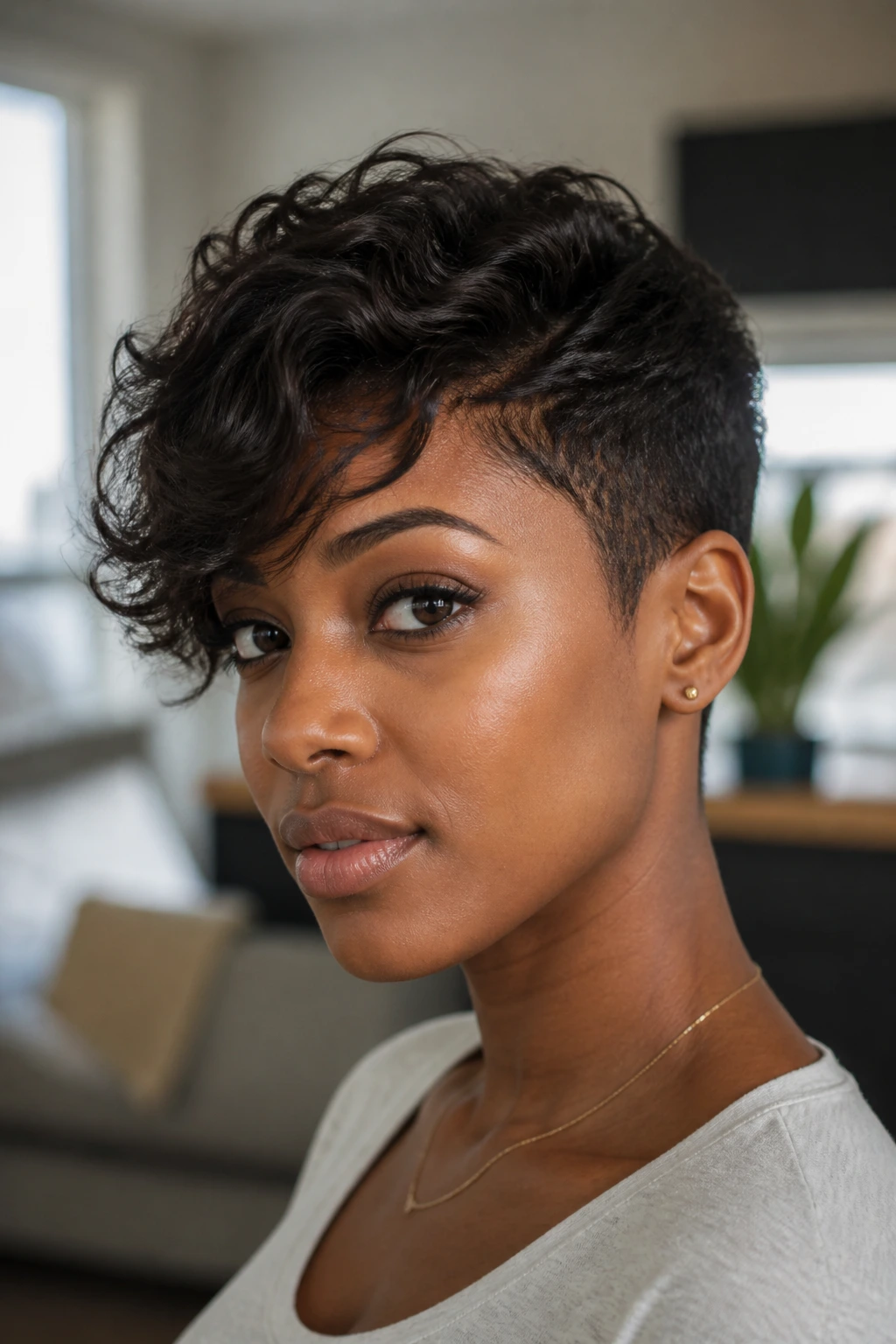
A tapered crop can be a brilliant move for thick curls, coils, or strong waves. The sides and nape stay close enough to keep the shape controlled, while the top carries enough length to sweep forward or to the side. That balance is what makes it work on a heart-shaped face.
The sweeping fringe softens the forehead and keeps the cut from feeling too severe. If the top is too short, the face can look top-heavy. If the top is too long, the whole thing loses the clean crop feel. Somewhere in the middle is the sweet spot.
This cut benefits from dry cutting, especially on curly or coily textures. Shrinkage changes everything. A half-inch at the salon can turn into a much shorter look once the hair dries and tightens up. That is not a surprise. It’s the haircut doing its job.
I like this style for people who want a true big chop and do not want to spend twenty minutes every morning coaxing a shape into place. A little cream, a little gel, and a palmful of patience. That’s enough.
10. Jaw-Length C-Shaped Bob

The C-shaped bob curves inward just enough to hug the jaw and cheekbones. On thick hair, that curve keeps the ends from jutting straight out. On a heart-shaped face, the shape helps the lower face feel a little wider and more intentional.
What you want here is softness in the bend, not a hard bubble. A round brush or a medium barrel brush can help create that inward swoop when you blow-dry. If the bob is cut too bluntly, the curve may not happen on its own, especially with dense hair that resists collapse.
This cut is smart if your face tends to look sharper at the chin. The bob lands right where the face needs a little visual support. Keep the front pieces a touch longer than the nape so the line stays elegant rather than childlike.
One practical note: if your hair has a lot of natural volume, the interior should be cleaned up in tiny sections. Big chunks of removal can leave holes. Small, careful cuts give you a smoother curve.
11. Mid-Length Layered Curls with a Side Part
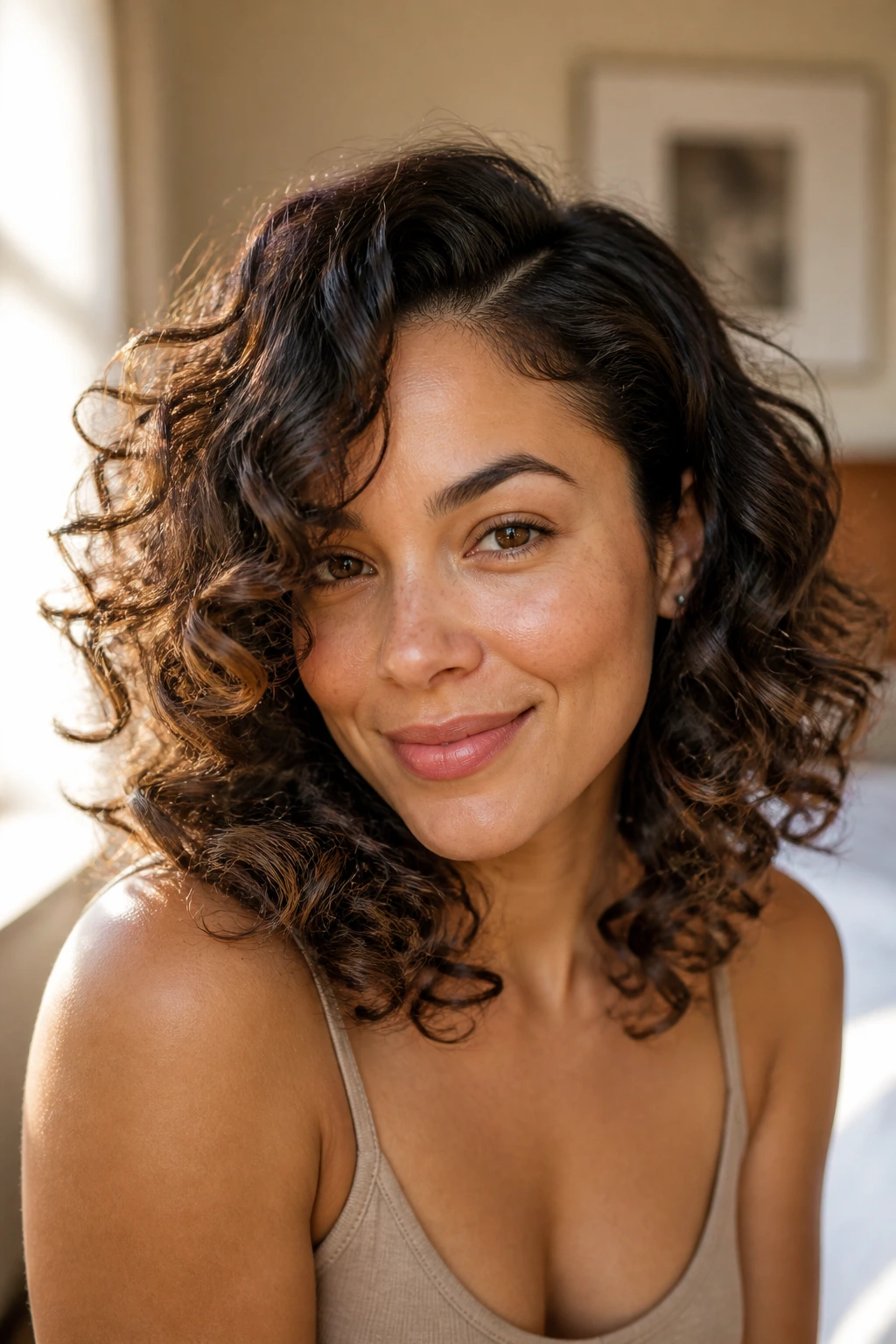
A side part can do a lot of quiet work on a heart-shaped face. It breaks up the width at the forehead and lets the hair fall diagonally instead of straight down. Add layered curls, and the whole shape gets lighter without losing the good bulk that thick texture gives you.
This is not the same as a shag. The layers here should be softer and longer, aimed at creating movement rather than obvious steps. Thick curls need room to stack, but they also need enough weight at the bottom to keep the silhouette from puffing out like a cotton ball.
A deep side part can be dramatic. A softer side part can be more wearable. Either way, the line across the top is doing part of the balancing for you. That’s why this cut feels easier than a center-part curly shape on some heart faces.
Use a curl cream on damp hair, then a gel if you want more hold. Let the part dry where you place it. If you keep flipping sides every day, the roots will fight you and the part will get fuzzy.
12. Long Pixie with a Nape Taper
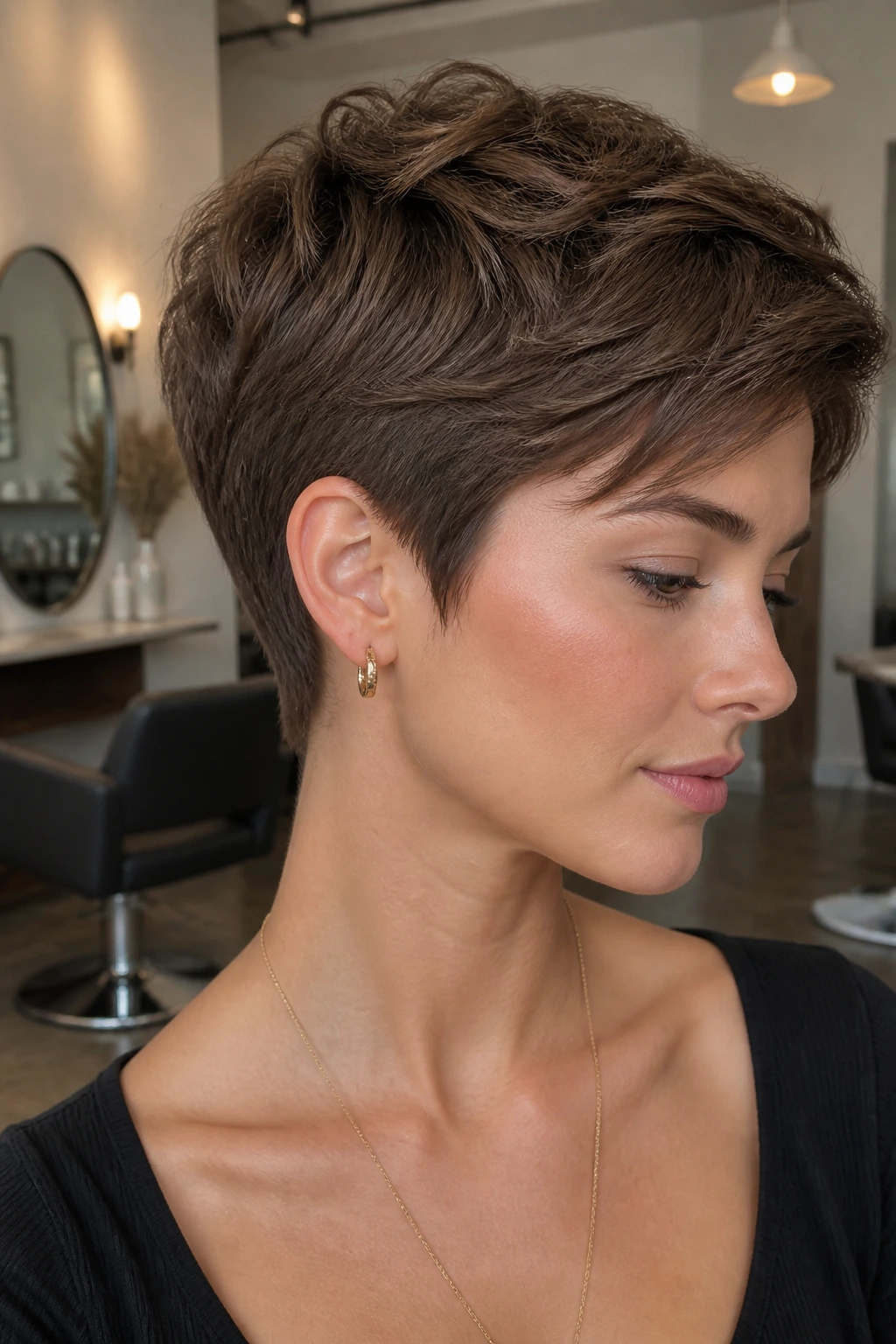
A long pixie gives you the shortness of a crop without the full commitment of a buzzed back or a severe undercut. On thick hair, the nape taper keeps the back from ballooning. On a heart-shaped face, the longer top and side fringe give the forehead some softness.
The key is proportion. If the top is too short, the face reads wide at the top. If the fringe is too sparse, it can look choppy in a way that fights thick texture. A longer pixie should still have enough body to move, especially around the brow and temple area.
This cut looks best when the top is left slightly piecey, not over-thinned. A paste or cream can separate the sections without making them stiff. The nape can be neat, but not shaved so tight that regrowth turns into a hard line in two weeks.
This is a haircut for people who like their hair off the face but still want styling options. Tuck it. Sweep it. Mess it up on purpose. It can take it.
13. Blunt Lob with Softened Ends
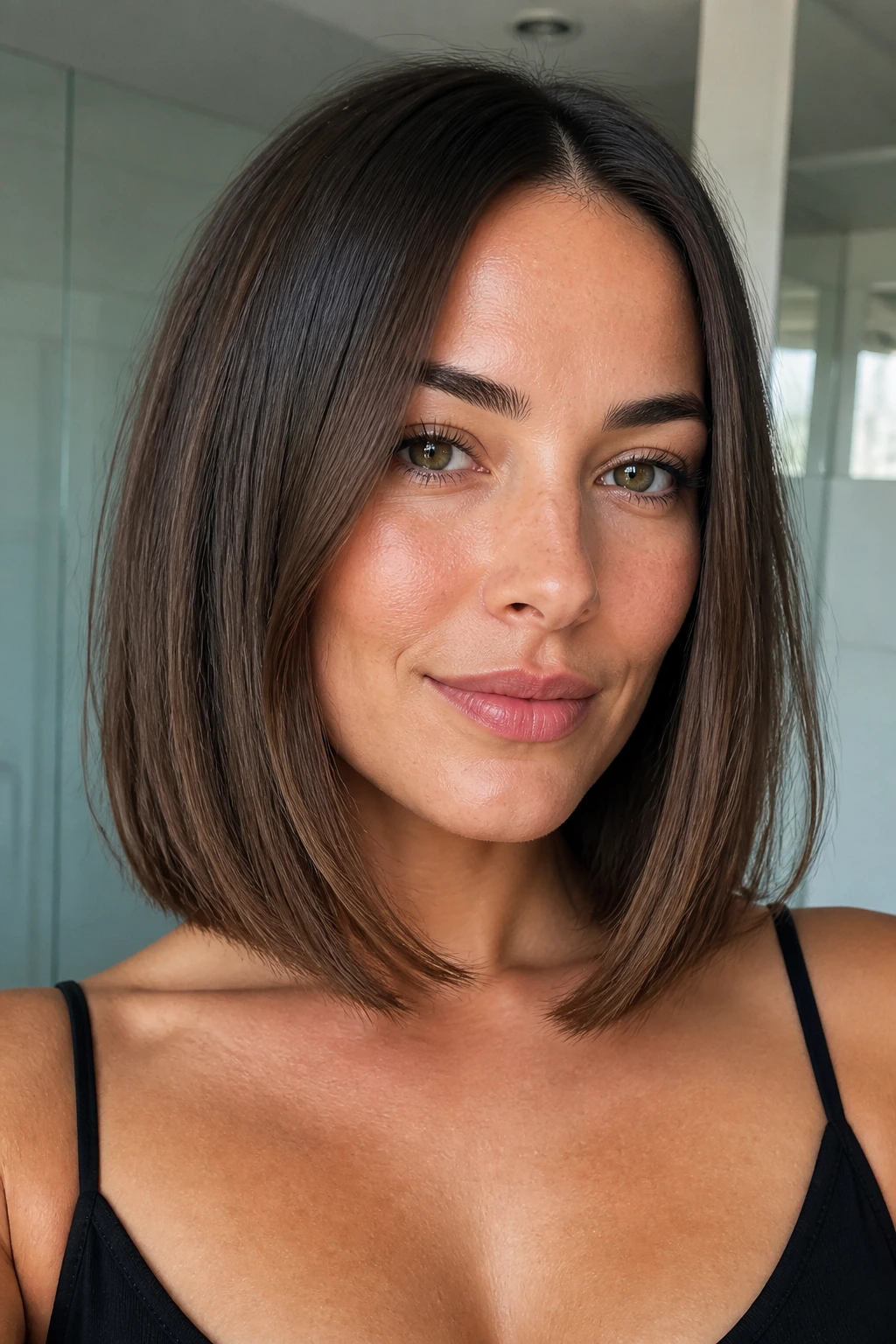
A blunt lob on thick hair looks expensive when it’s cut well. The density gives the line a thick, glossy look that finer hair can’t fake. But the ends need softening. Not thinning. Softening. There’s a difference.
For a heart-shaped face, a blunt lob works because it creates a clear visual base near the collarbone or just above it. That helps the chin feel less narrow. If the front is slightly longer than the back, the cut also guides the eye downward instead of leaving all the interest up by the forehead.
I prefer this cut when the hair is naturally straight or easily smoothed. If the texture is very wavy and prone to puffing, the blunt line can widen too much. A tiny bit of face-framing around the cheekbone can keep the cut from feeling boxy.
This is one of those styles that looks simple and is not. The line has to be precise. The ends have to be clean. The payoff is strong, though. It’s the haircut equivalent of a good white shirt.
14. Side-Parted Rounded Bob with Tucked Under Ends
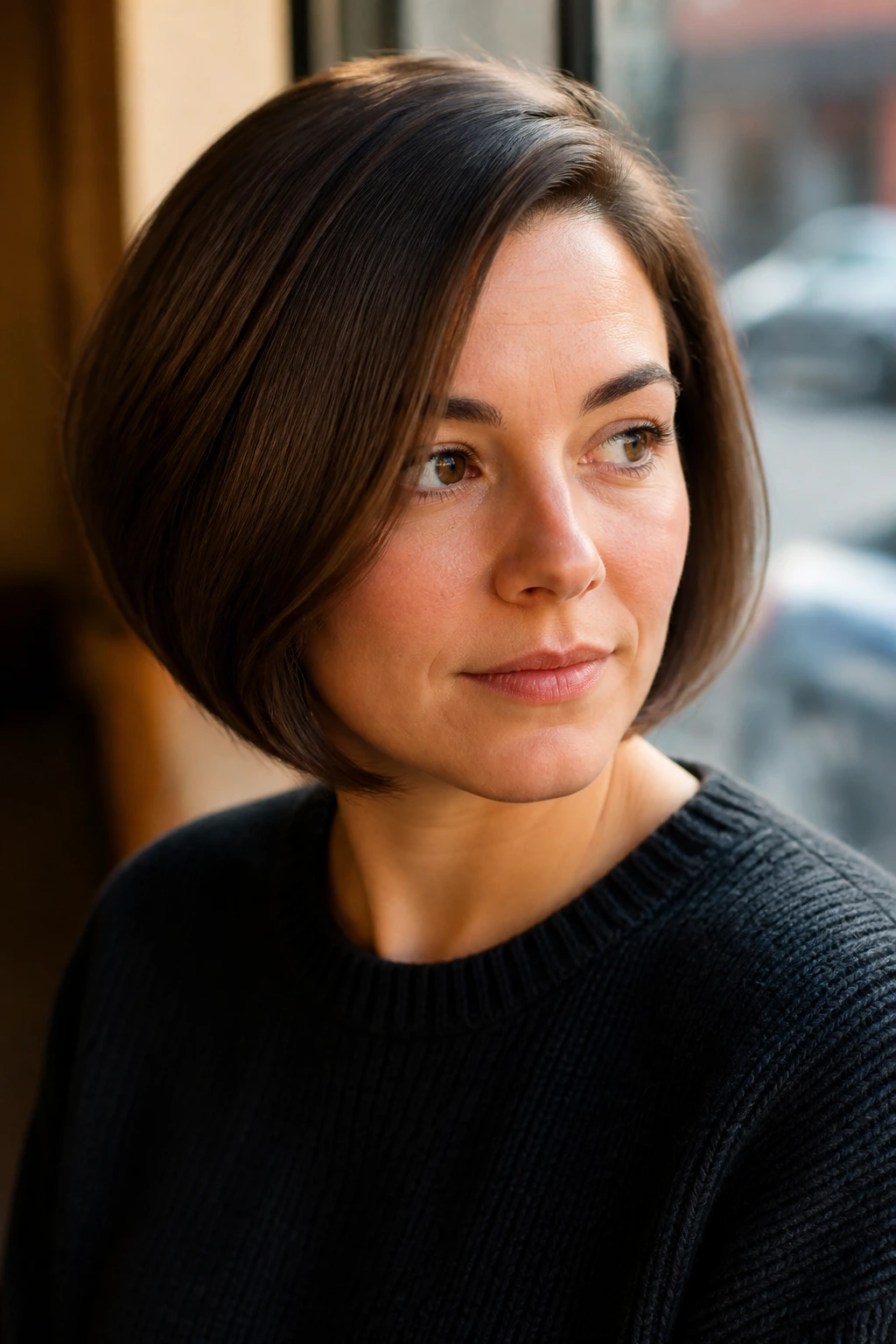
A side-parted rounded bob feels softer than a center-parted version. That side angle is kind to a heart-shaped face because it breaks up the upper width and gives the front more movement. The rounded ends tuck inward, which keeps thick hair from building outward at the bottom edge.
This cut is a favorite for people who wear glasses. The shape sits nicely with frames and doesn’t fight them. It also plays well with a blowout, which helps the ends curve in instead of flaring out at the jaw.
The bob should be full enough to feel plush, but not so full that it swallows the face. Internal weight removal is useful here, yet only in careful, measured amounts. A little too much and the roundness disappears. A little too little and you have a mushroom.
You can wear this cut sleek or with a bend. Either way, the side part and the inward line do the flattering work.
15. Choppy Midi with Bottleneck Bangs

Bottleneck bangs are one of the smartest fringe choices for a heart-shaped face. They start narrower near the center, then open outward near the brow or cheekbone area, so the forehead isn’t boxed in. Put them with a choppy midi cut on thick hair, and the result feels light, layered, and not at all precious.
The choppiness here should be controlled. I am not talking about random ends or shredded layers. I mean pieces that break up the density enough to create movement. Thick hair often needs that relief in the middle of the shape, or the ends just sit like one heavy mass.
This style suits someone who likes a little edge and does not mind a bit of styling. The bangs may need a quick blow-dry or a round brush touch-up. The rest can air-dry with texture cream if your bend pattern is decent.
One good thing about bottleneck bangs: they grow out better than blunt straight-across fringe. That matters if you’re not interested in bang trims every few weeks.
16. Deva-Inspired Shape with Stack-Free Layers
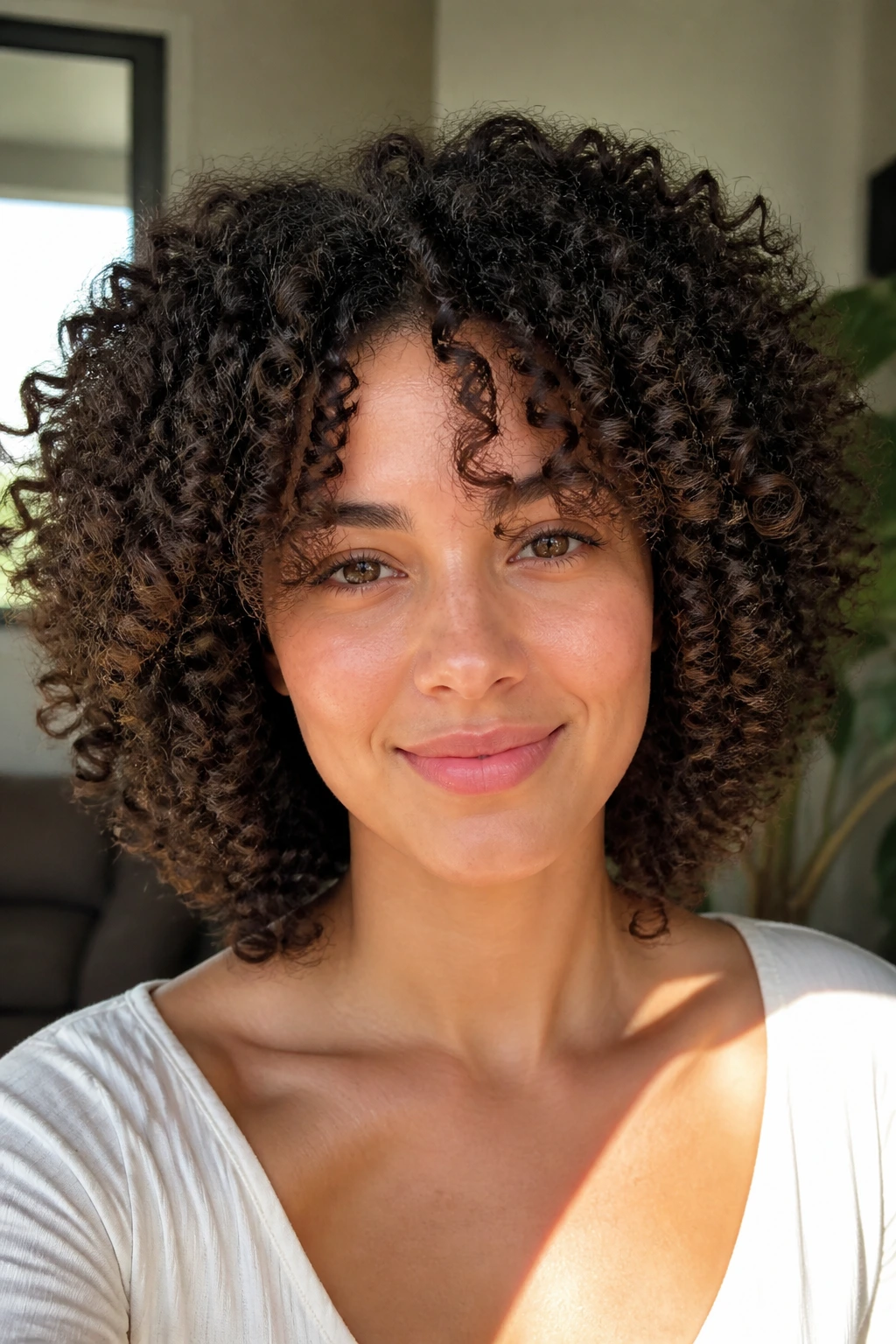
Curly hair gets mangled by the wrong layers more often than people admit. A Deva-inspired shape keeps the layers following the curl pattern instead of stacking them in a way that builds a shelf at the back. On thick curls, that matters even more because the shape can go boxy very quickly.
Heart-shaped faces need the front to ease the forehead and the sides to land gently around the cheekbones or jaw. Stack-free layers do that without creating an obvious hump at the back of the head. The silhouette stays rounded, not stacked.
This cut is usually best done dry or nearly dry. Your curl pattern needs to be seen where it lives. If your hair shrinks two inches once dry, the cut has to respect that or the fringe and crown will land in the wrong place.
A diffuser, a curl cream, and maybe a light gel are enough for most days. The haircut should support the texture instead of trying to sculpt it into something it isn’t.
17. Curved Shag Bob
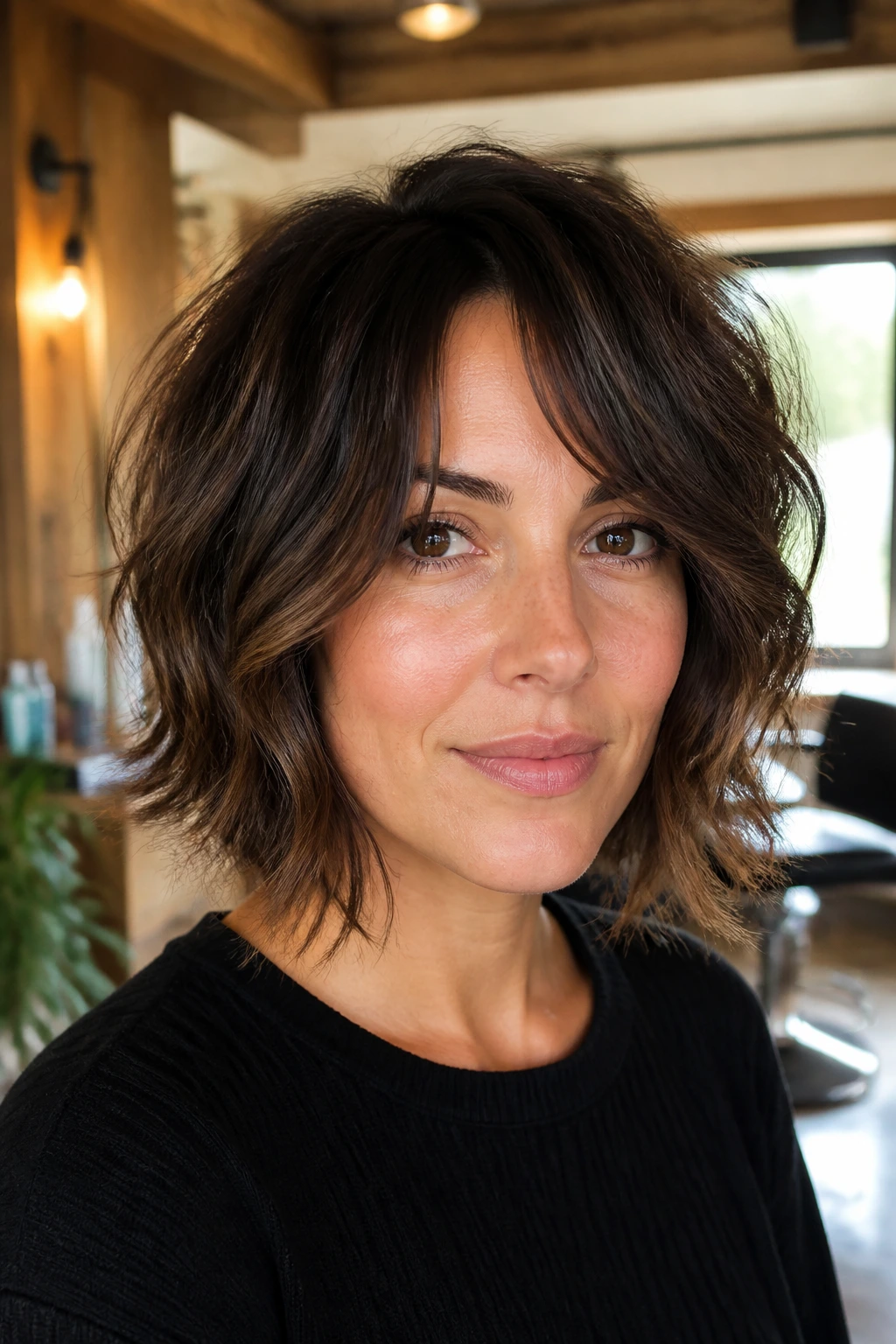
A curved shag bob sits between the neatness of a bob and the movement of a shag. That’s a useful middle ground for thick hair, because you get shape without too much bulk. The curve around the front softens the heart-shaped face, while the shag layers keep the cut from becoming one solid mass.
I like this one for hair that has a little wave but not enough to act like a full curly cut. The front pieces can skim the cheekbones, and the back can stay neat enough to avoid looking messy from behind. That balance is harder to get than it sounds.
The thing to avoid is over-texturizing the ends. Thick hair does not need to be thinned into frizz. It needs thoughtful shaping. If the cut is too aggressive, the shag element will look ragged instead of modern.
This is a good salon photo to bring if you want movement but do not want to commit to a dramatic mullet or a super-short bob. It says, “I want texture, not chaos.”
18. Graduated Bob with Nape Lift
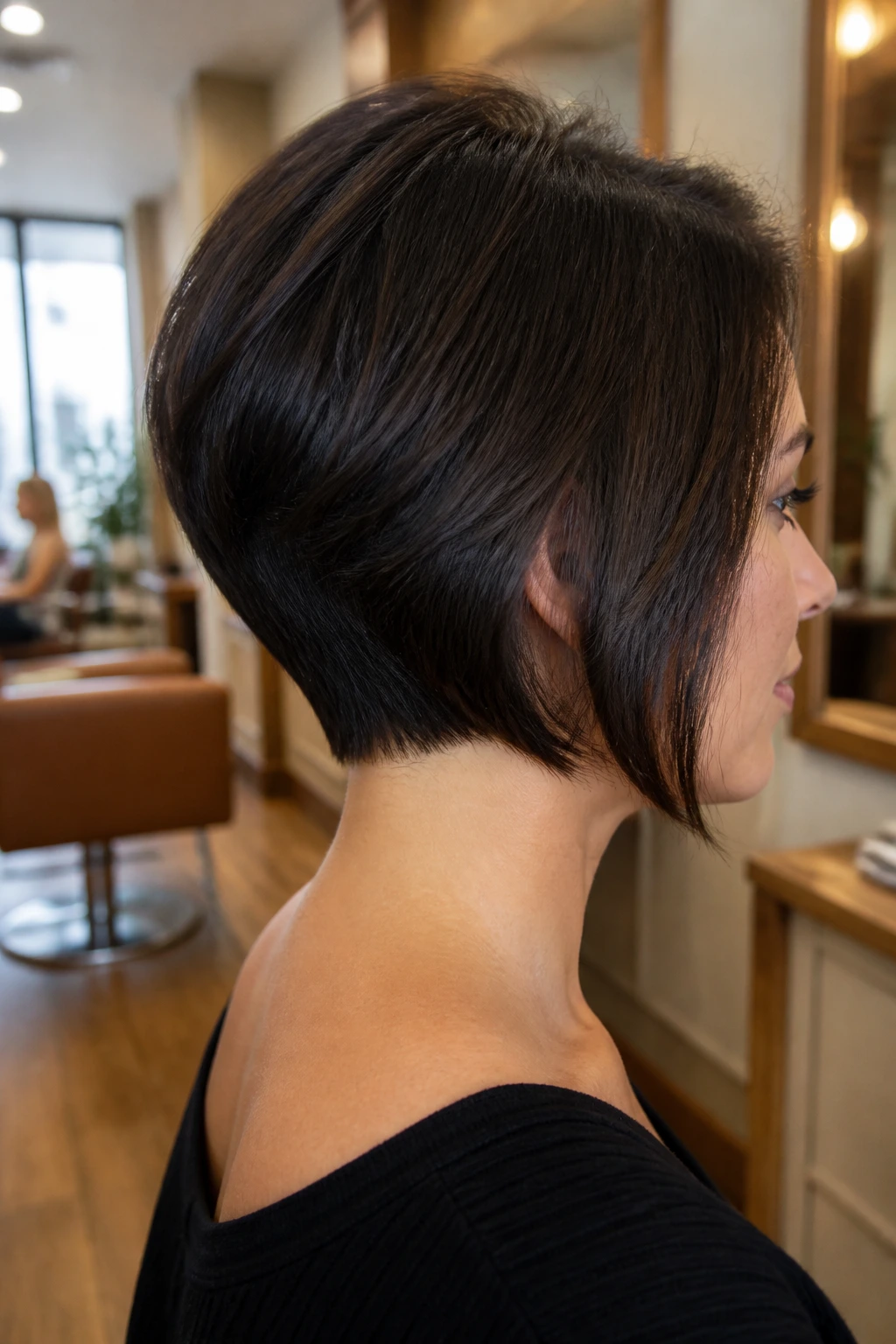
A graduated bob can be a lifesaver when thick hair insists on sitting heavy at the back. The nape stays tight and lifted, while the front opens out enough to flatter the face. On a heart-shaped face, that front motion helps bring attention away from the forehead and toward the jawline.
The graduation should be controlled. Too much stacking in the back and you get a helmet. Too little and the cut loses the lift that makes it special. The best version curves gently from the nape into the front, with the fullness placed where the head actually needs it.
This cut shines with straight or slightly wavy hair. If your hair has a lot of body, the shape can hold on its own. If it is very coarse, the stylist may need to reduce bulk underneath so the back does not stand away from the neck.
This is not the softest bob in the room. It is the most structured. If you like a clean line and do not mind a little shape in the back, it has real staying power.
19. Soft Mullet with Curtain Fringe
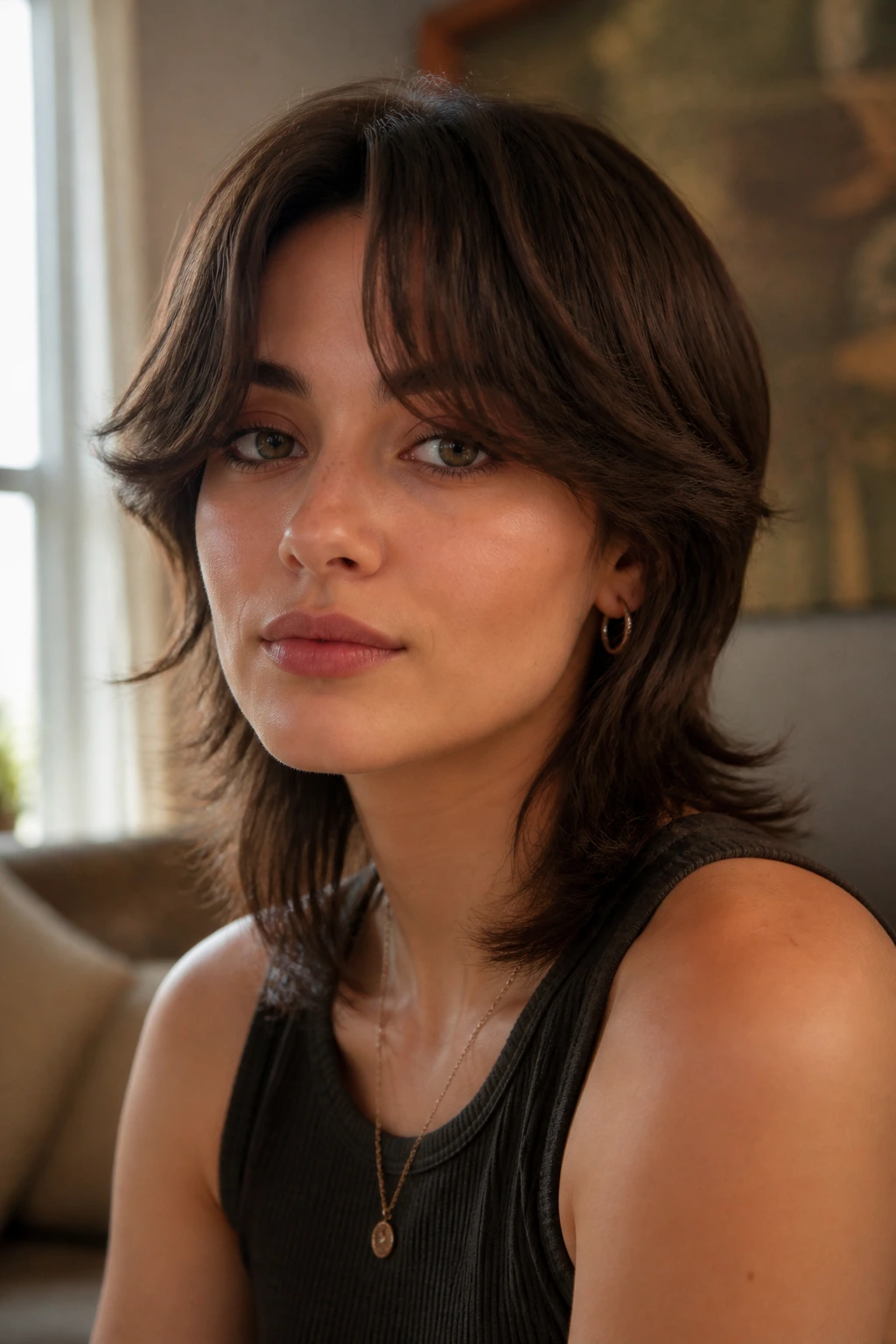
A soft mullet is not the theatrical mess people imagine when they hear the word. Done well, it’s a layered cut with a little length in the back, a soft front, and enough movement to keep thick hair from sitting flat and boxy. On a heart-shaped face, the curtain fringe and longer sides can be very flattering.
The trick is softness. The back should feel like a continuation of the shape, not a separate idea. The sides need to blend. Thick hair can make a mullet look severe if the disconnect is too sharp, so I prefer the gentler, more wearable version.
This cut is good for air-drying and for people who like hair that looks a little lived-in. A bit of mousse and a scrunch can bring the shape out fast. If you like a polished finish, a round brush through the curtain fringe is enough.
It’s a personality cut, yes, but it still has practical bones. That is why it works.
20. Half-Up-Friendly Layered Lob
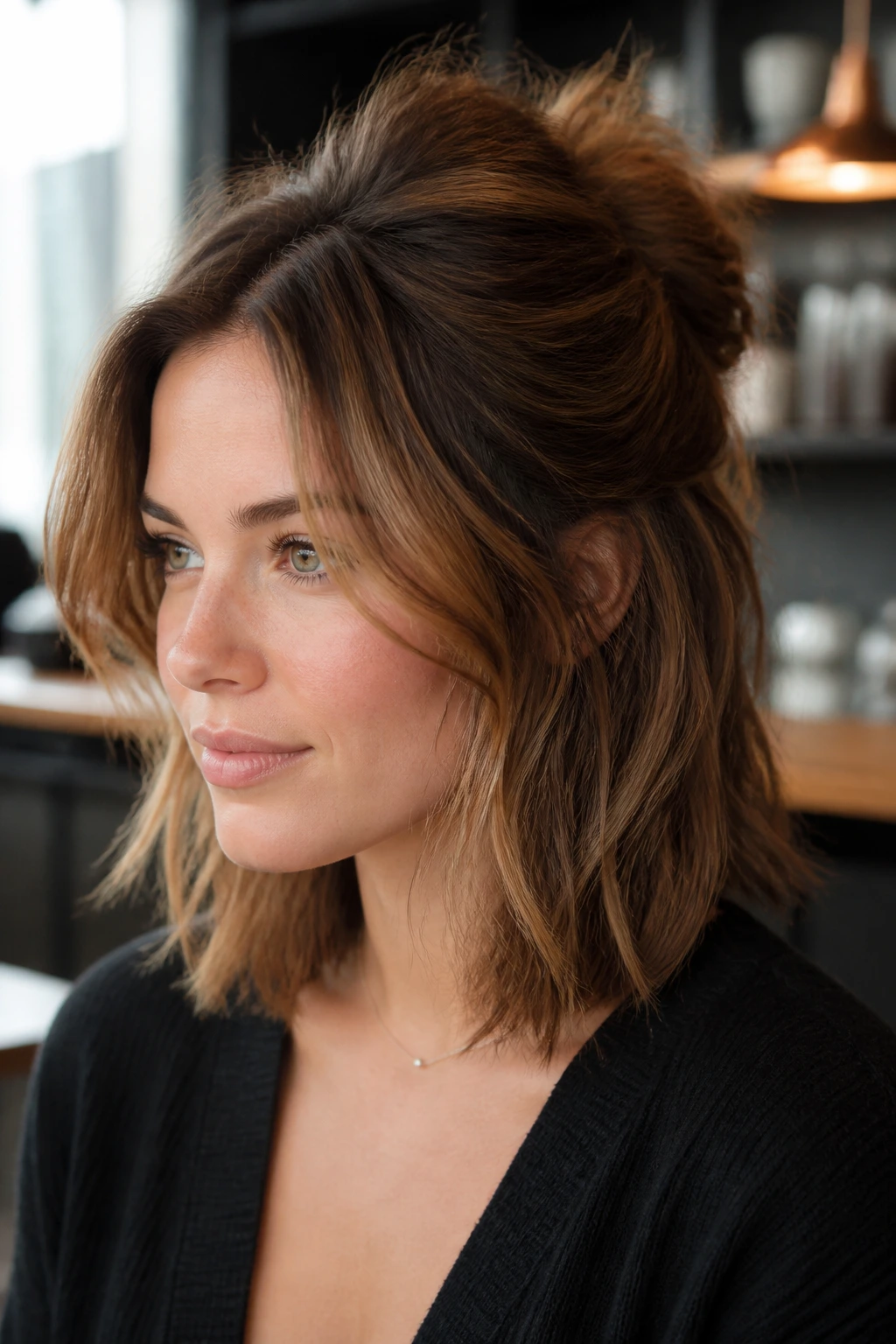
Some cuts look good down and make a mess when you clip them up. Thick hair loves to do that. A layered lob built for half-up styling solves the problem by keeping the weight spread out instead of forming one heavy lump at the crown.
On a heart-shaped face, face-framing layers near the cheekbones or chin keep the top from looking too broad. The half-up style itself can actually be flattering because it exposes the face while the lower layers still add softness. That is a nice balance when you want the hair off your neck without losing shape.
This is a useful cut if your life involves clips, claws, and fast mornings. The layers let the hair fold into itself instead of sticking out like a stack of blankets. Even better, it grows out in a way that still works with ponytails.
If you spend half your week in a hurry, this is one of the smartest choices on the list. It behaves. That is underrated.
21. Tapered Afro with Temple Length
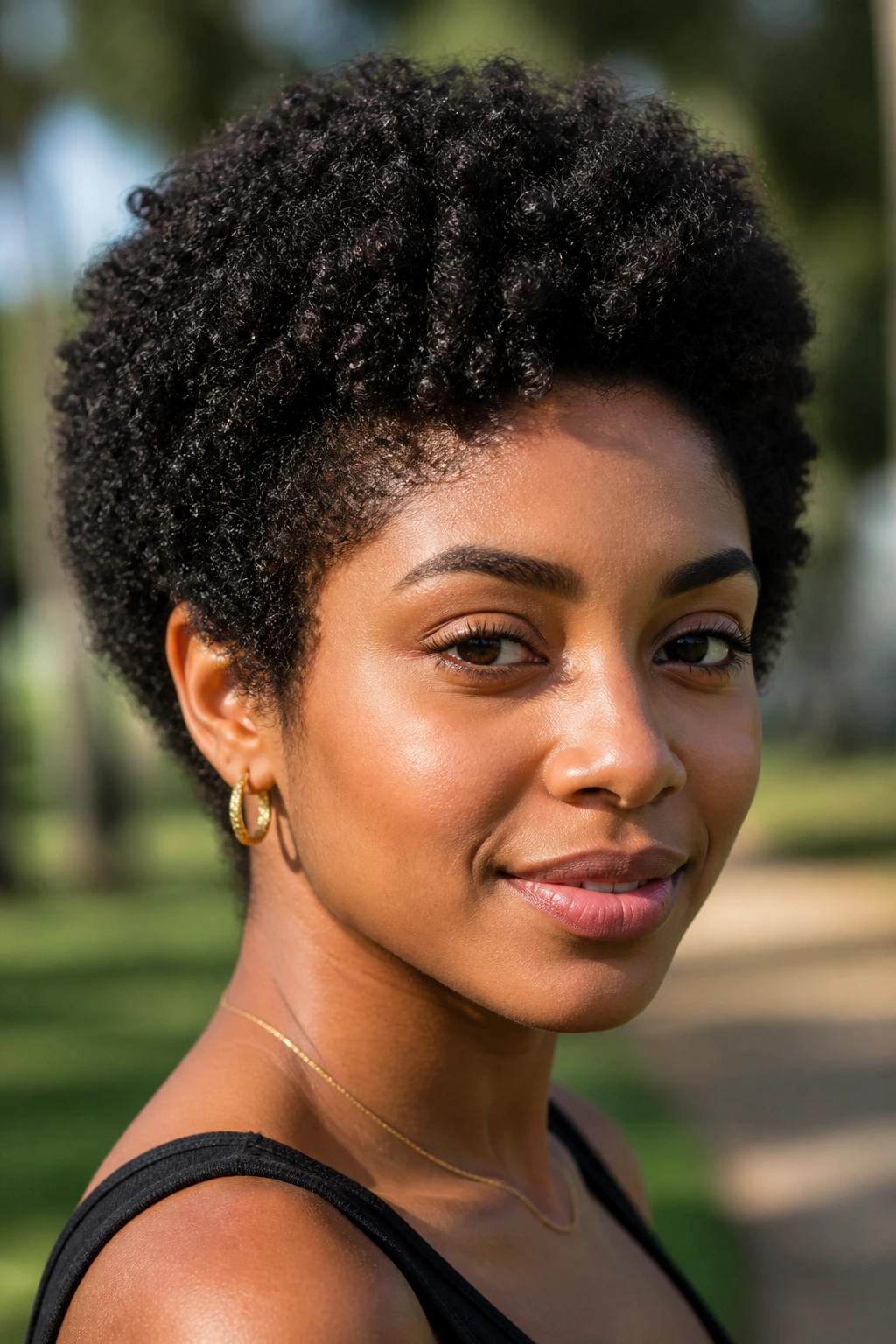
For coily thick hair, a tapered afro can be one of the most flattering big chops out there. The taper removes bulk where the hair can get widest, while the temple length keeps enough softness around the face to balance a heart shape. The result is round and sculpted, not boxy.
This cut should respect shrinkage and the natural halo of the texture. That means shaping should happen with the hair in its natural state, or close to it. Dry cutting is often the better choice here, because the curl pattern and density show their full hand only when the hair is dry.
The temple area matters more than people think. Leaving just enough length there stops the forehead from feeling too dominant. The nape taper helps the silhouette stay clean from the side and back, which is often where dense coily hair starts to look bulky first.
Moisture, hold, and refresh spray are the daily tools. The haircut is the architecture. The styling products just keep it visible.
22. Straight Midi with Invisible Layers and a Side Fringe
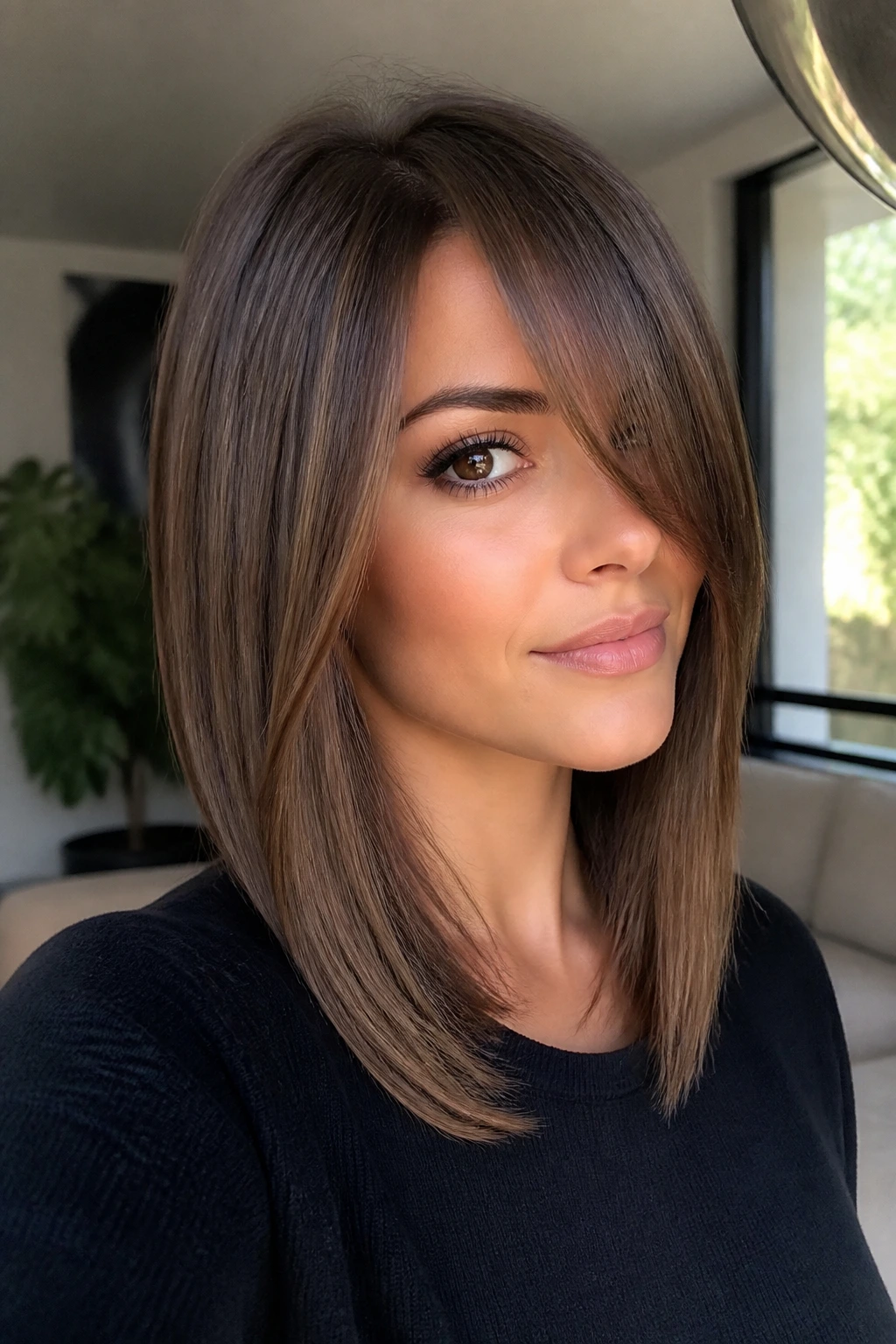
A straight midi cut can look plain in photos and gorgeous in person. Thick hair gives it weight, shine, and movement when the layers are hidden well. Add a side fringe, and the heart-shaped face gets that little break at the forehead that changes the whole balance.
Invisible layers are the key. They remove enough bulk to keep the cut from feeling like a block, but they do not break the surface line into obvious steps. If your hair is coarse, this approach keeps the ends tidy. If your hair is dense and straight, it stops the midi from flaring at the sides.
The side fringe does quiet work here. It softens the top half of the face and blends into the length instead of ending in a hard line. I prefer this option for people who want the haircut to look expensive without shouting for attention.
It is one of the easiest cuts to wear with a polished blowout, a low bun, or a claw clip. Quiet, but not boring.
How Thick Hair Behaves When the Cut Has the Right Shape
Thick hair does not want to be “managed.” It wants to be directed. That is a different thing. A good big chop sends the weight down the line you choose, so the hair falls with some memory instead of fighting the head all day.
A strong shape also changes the way styling products behave. Creams sit better on a layered bob than on a one-length triangle. Mousse lifts curls more cleanly when the shape already removes the bulk from the sides. Even a little root spray can go farther when the haircut isn’t swallowing itself.
The main lesson is simple. Shorter hair is not the whole answer. Geometry is the answer. If the ends are too wide, the jaw disappears. If the crown is too high, the forehead gets louder. Place the weight with intention and the rest gets easier.
Essential Tools for These Cuts
- Good hair scissors, not kitchen scissors: If you trim your own fringe or ends, sharp hair shears matter.
- A blow dryer with a nozzle: The nozzle helps push thick hair in the direction you want instead of blasting it into a cloud.
- Round brush, medium size: A 1.25- to 1.75-inch brush works well for bobs and lobs; larger brushes are better for longer shapes.
- Wide-tooth comb: Useful for detangling thick, curly, or coily hair without shredding the pattern.
- Sectioning clips: Thick hair needs real sections, not guesswork.
- Diffuser attachment: Worth it for curls, waves, and any cut that should air-dry with shape.
- Smoothing cream or curl cream: Pick one based on texture; you do not need a shelf full of products.
- Light texturizing spray or paste: Good for piecing out the front, especially on pixies and shags.
- Hand mirror: Helpful for checking the nape and back shape at home.
- Satin or silk pillowcase: It keeps shorter thick hair from kinking and frizzing overnight.
Smart Product and Stylist Notes for Thick Hair
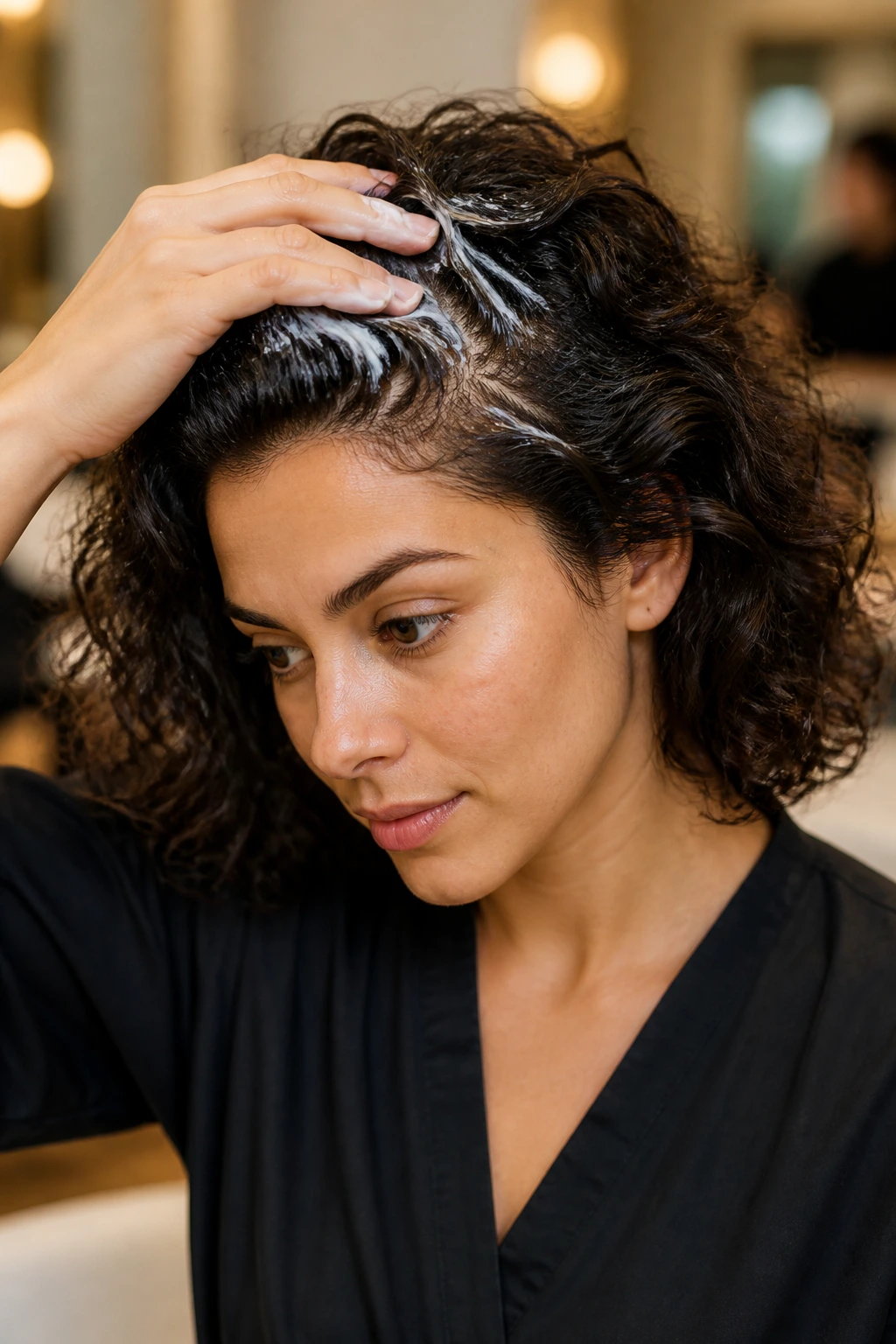
A thick-hair haircut lives or dies by how the stylist handles bulk. The wrong haircut takes weight out in big chunks and leaves the ends looking dry, scattered, or wide. The right one removes density in small, controlled sections and keeps the outer line clean. If you hear the word “thinning” too early in the conversation, ask more questions.
Bring photos, but bring the right kind of photos. Show the front, side, and back if you can find them. One cute square bob from the front tells you almost nothing about whether the nape stacks too high or whether the front pieces actually hit the cheekbone where you need them. Context matters here.
Products should match the shape. Dense straight hair usually needs a smoothing cream or light serum before blow-drying. Wavy hair usually wants mousse and a flexible hold product. Curly and coily hair often need a cream plus gel pairing so the shape stays round instead of fluffy. Too much product is its own problem, though. Thick hair can hold more, but it does not need more.
If your hair grows fast, ask about the grow-out line before the cut starts. A shape that looks good only on day one is a waste of your time. I like cuts that still read well with a half-inch of new growth sitting at the roots.
How to Wear These Cuts in Real Life
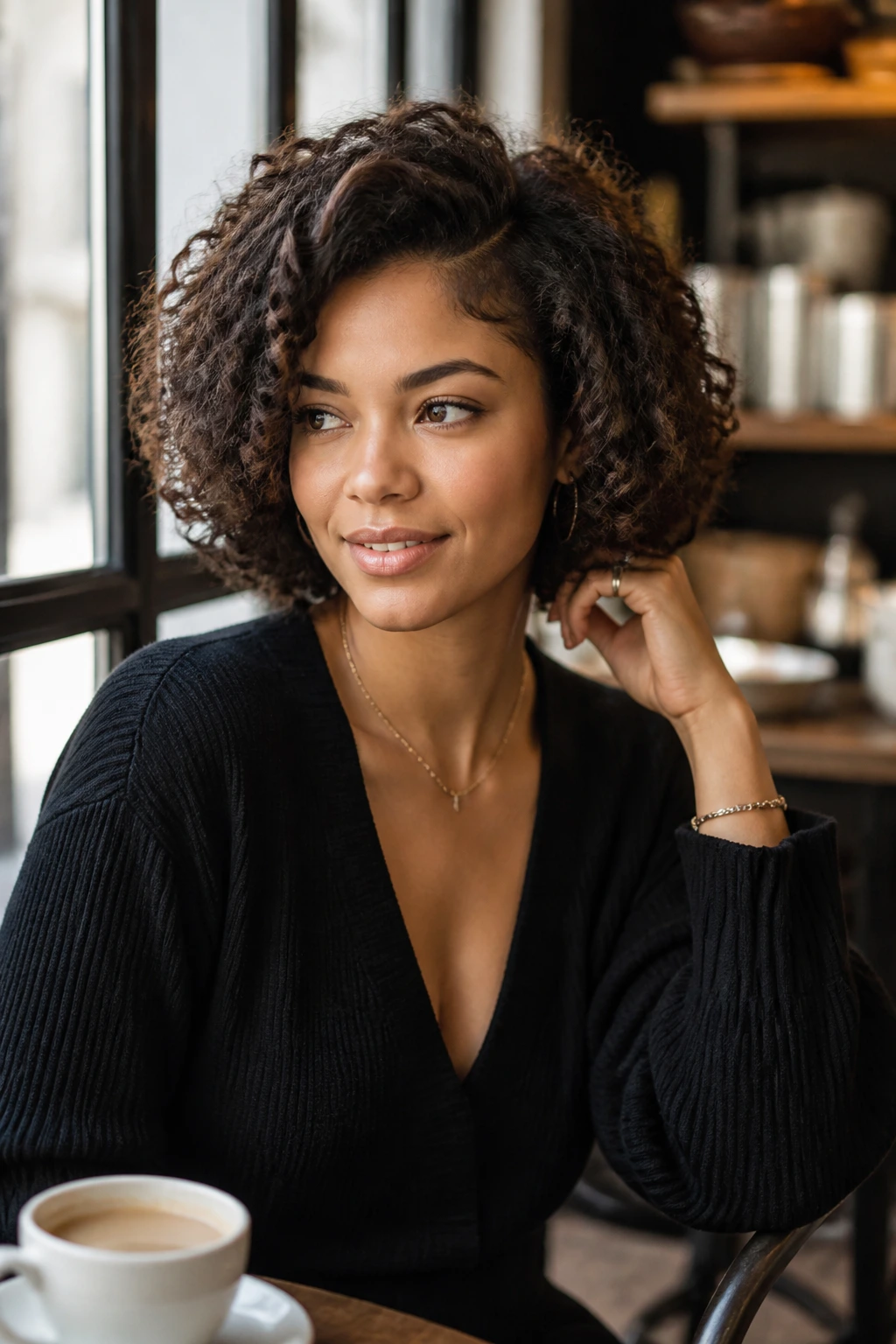
Parting: A side part softens a heart-shaped face fast, especially with bobs, lobs, and curls. A center part can work too, but it usually needs face-framing pieces or curtain bangs to keep the forehead from feeling too wide.
Finish: Sleek cuts look best with a controlled bend at the ends, not pin-straight stiffness. Textured cuts need a little separation so the layers show instead of collapsing into one puff.
Accessories: Small hoops, curved earrings, and simple clips tend to sit well with these shapes. Heavy headbands can push thick hair outward near the temples, which is exactly what you do not want with a heart shape.
Day plan: If you need a fast routine, choose a cut that looks good with either air-drying or a 10-minute blow-dry. If you like to style, you can go bolder with bobs, fringes, and shags.
Additional Tips and Shape Boosters
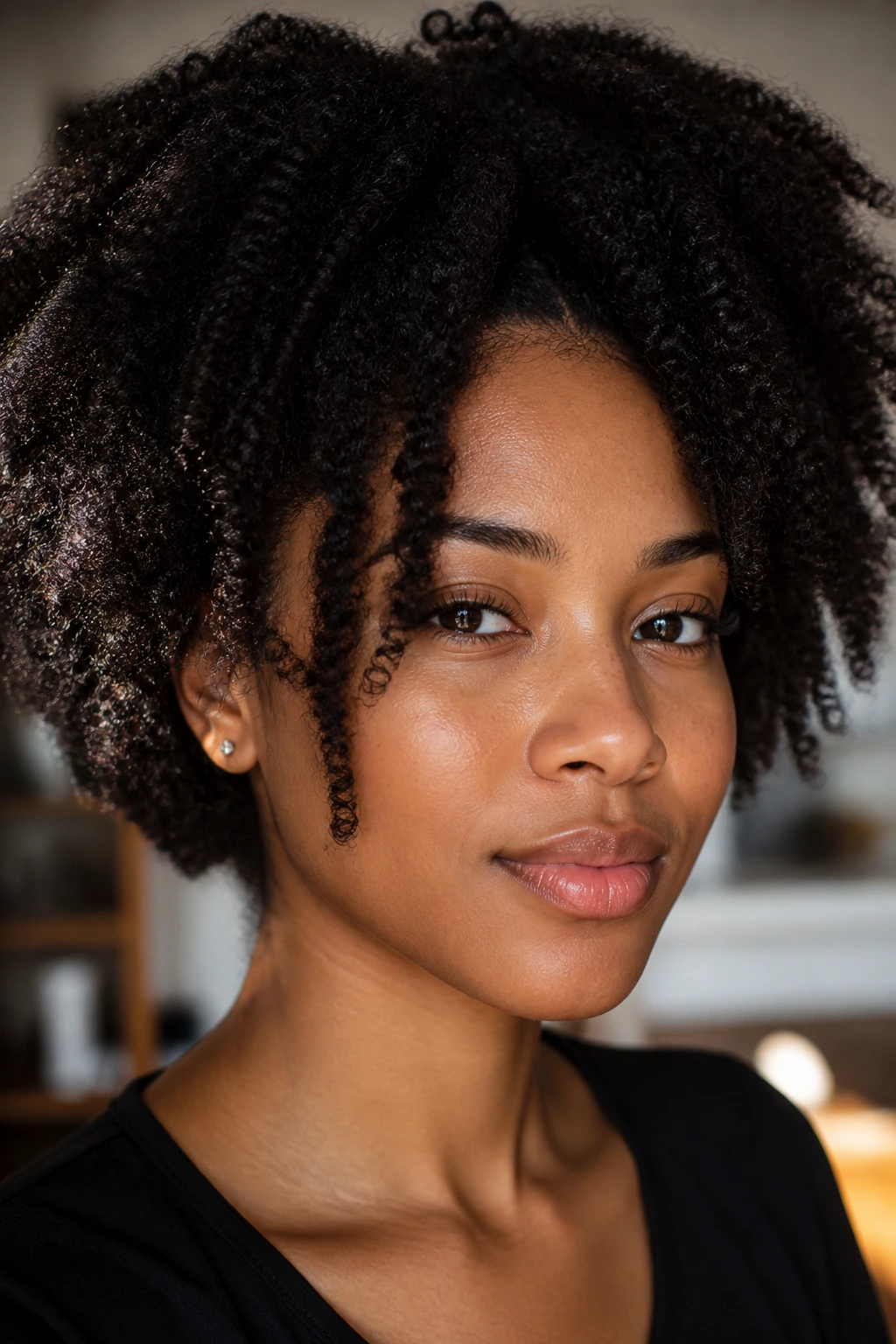
Shape Enhancement: Ask for the shortest face-framing pieces to land around the cheekbone or chin, not the forehead. That small shift can change the whole read of a heart-shaped face.
Texture Control: On thick hair, remove bulk from inside the cut before you go after the perimeter. The outside line is what people see first; if you destroy it, the haircut gets fuzzy fast.
Fringe Choice: Curtain bangs, side bangs, and bottleneck bangs usually behave better than heavy blunt fringe when the forehead is the widest part of the face. Blunt bangs can work, but they need careful density control.
Make-It-Yours: If you love polish, choose the blunt lob, box bob, or straight midi. If you want movement, lean toward the shag, wolf cut lite, or layered curl shapes. If you want low-maintenance, pick a cut that still looks fine with a simple air-dry and a little cream.
Common Mistakes That Make Thick Hair Pooch Out
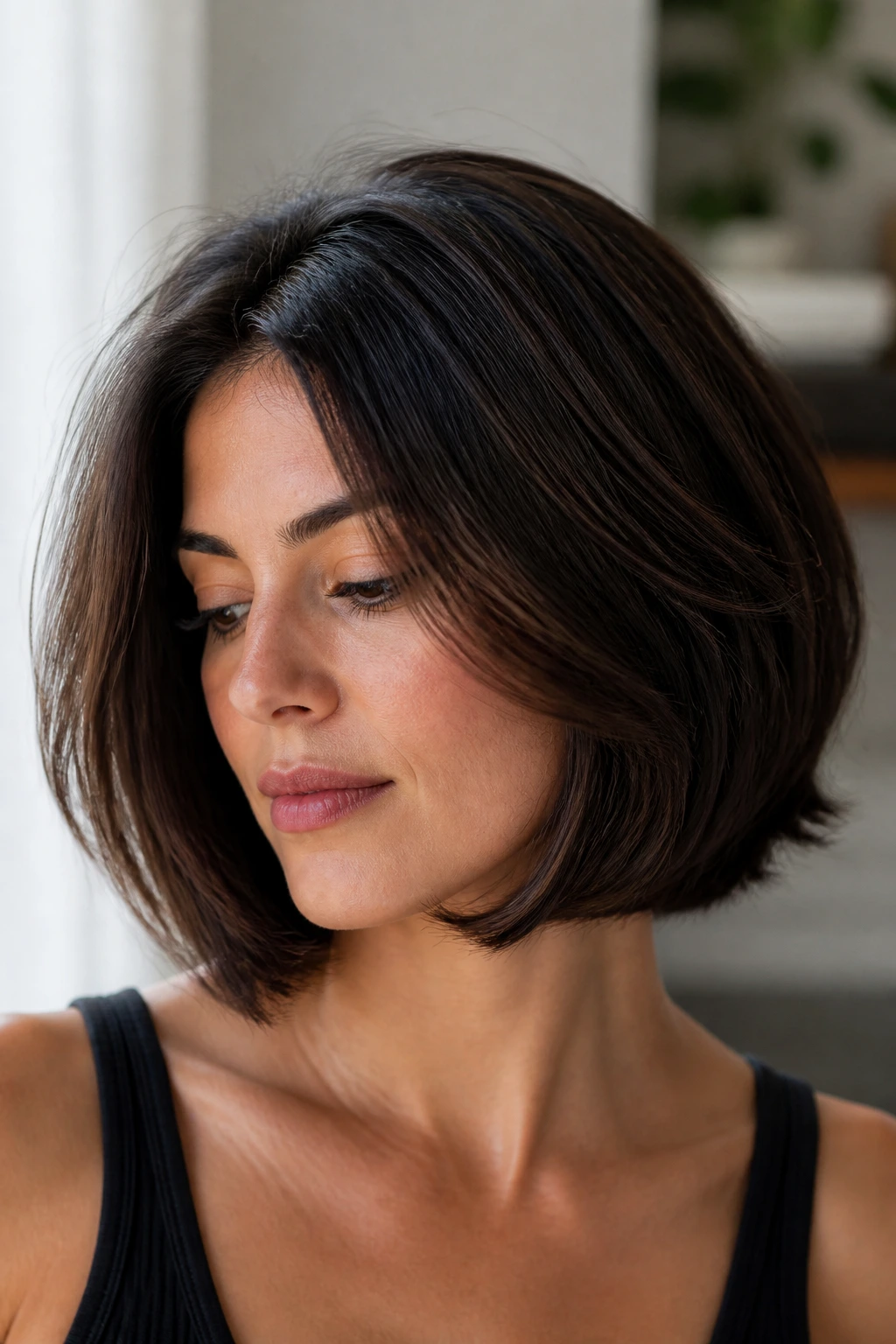
- Cutting too much volume off the top: Thick hair can get top-heavy fast. If the crown is over-thinned, the sides flare and the head starts to look triangular. Keep the top soft, not chopped away.
- Using the wrong fringe shape: A blunt fringe on a heart-shaped face can crowd the forehead if it’s too heavy. If you love bangs, ask for side-swept, bottleneck, or curtain shapes that open near the cheekbones.
- Removing bulk with a heavy hand: Razor cuts and aggressive thinning can leave thick hair frizzy at the ends. The fix is controlled internal shaping, not ripping the density apart.
- Ignoring shrinkage and bend: Curly and coily hair often looks longer when wet than it will dry. If the cut is planned without shrinkage in mind, the fringe or top layers can land far shorter than expected.
- Choosing a shape that needs daily heat: If you do not want to blow-dry every morning, do not pick a cut that only looks right under tension and a round brush. Air-dry honesty matters.
- Letting the front pieces get too short: Heart-shaped faces usually need some length near the cheeks or jaw. If the front stops too high, the cut can make the forehead look wider than it is.
Variations and Adaptations to Try

The Air-Dry Version: Keep the layers longer and the edges softer if you want a cut that dries with less work. This works especially well on wavy hair, where the shape can come alive without a brush.
The Blowout Version: Choose blunt lobs, box bobs, or C-shaped cuts if you like a polished finish. These hold a round-brush bend and look crisp when the ends are tucked inward.
The Curl-First Version: Go for shags, Deva-inspired shapes, or tapered crops if your curls or coils need room to move. The styling is lighter, but the haircut has to respect shrinkage and density.
The Grow-Out-Friendly Version: Collarbone lobs, shoulder-length layers, and layered midis are the safest choices if you want a haircut that can survive three months without looking abandoned.
The Bold Fringe Version: Curtain bangs, bottleneck bangs, or a side fringe can change the face shape without changing the whole cut. This is the easiest way to make the look feel fresh without going drastically short.
Keeping the Cut in Shape Between Visits
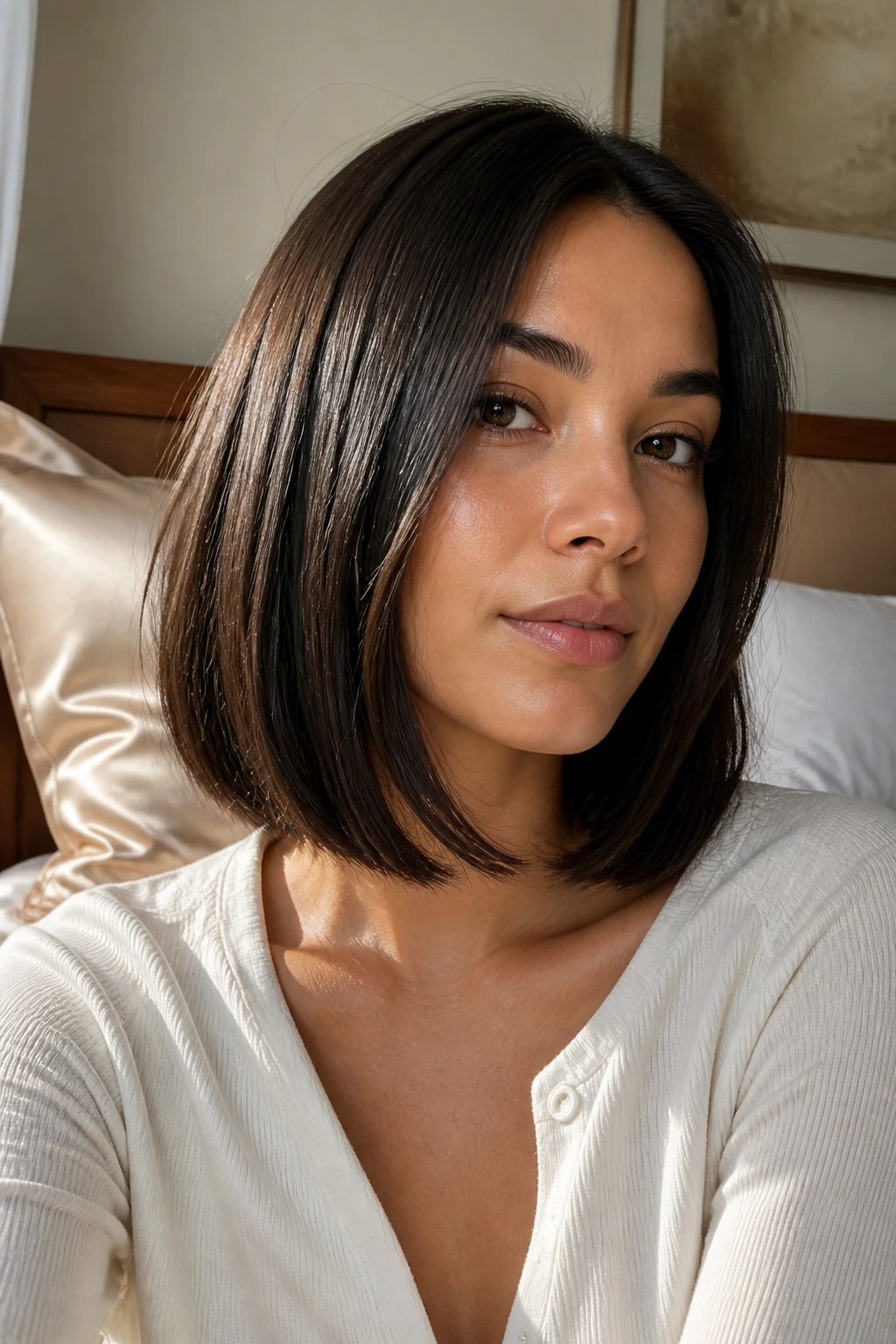
Thick hair forgives a little regrowth, but not forever. Bobs and pixies usually need a trim every 4 to 8 weeks if you want the outline to stay clean. Lobs and midi cuts can often go 8 to 12 weeks, depending on how fast your hair grows and how precise the shape is.
Bangs are the first thing to fall apart. Side bangs and curtain fringe often need a light trim or a salon touch-up every 3 to 4 weeks if you want them to sit where they started. If you are trimming at home, take off less than you think. Tiny cuts. Tiny. Thick hair hides a mistake until it dries, and then the mistake gets loud.
At night, use a satin or silk pillowcase if your hair frizzes easily. If the cut is curly or coily, a loose pineapple or a clip-up at the crown can keep the shape from getting flattened. In the morning, a mist of water and a small amount of cream or leave-in usually resets the front pieces faster than starting from scratch.
Dry shampoo helps at the roots, but it is not a replacement for shaping. If the cut is losing its form, that is a trim problem, not a styling problem.
Frequently Asked Questions
Which big chop works best if I’m scared of going too short?
Start with a collarbone lob or a shoulder-length layered cut. Both take weight off thick hair without forcing you into a short silhouette, and they still flatter a heart-shaped face when the front pieces land near the chin or cheekbone.
Do heart-shaped faces need bangs?
No. They need balance. Bangs can help, especially curtain or bottleneck bangs, but a side part with face-framing layers can do the same job without committing you to a fringe.
Will a blunt bob make my thick hair look too wide?
It can, if the cut is too square or the ends are left heavy. A blunt bob works best when the interior weight is controlled and the front is softened a little around the jaw or cheekbone.
Are layers bad for thick hair?
Only if they’re done badly. Thick hair often needs internal layers or careful shaping so it can move. What you want to avoid is random short layers that stick out and create a frizzy pyramid.
What if my curls shrink more than I expect?
Tell the stylist your hair shrinks a lot, and ask for the shortest layer to be placed lower than you think you need. Dry or stretch your curls before deciding on final length, because wet hair is a liar here.
How often should I trim a big chop?
Pixies and short bobs usually need shaping every 4 to 8 weeks. Lobs and midi cuts can stretch longer, but once the front stops framing the face and starts flaring outward, it’s time.
Can I still wear my hair up with these cuts?
Yes, if you choose a lob, layered midi, or half-up-friendly shape. Very short crops can still clip back a little, but the longer styles give you more options on lazy or busy days.
Should I thin thick hair with thinning shears?
Not as a default move. Thinning shears can create frizz and uneven ends on dense hair. Careful internal shaping is usually cleaner and easier to live with.
What if the haircut turns out too puffy?
That usually means the bulk was taken from the wrong place or the perimeter was left too wide. A good stylist can tighten the shape with targeted interior cleanup, but do not wait months; thick hair expands as it grows.
A Cut That Still Behaves on Day Three
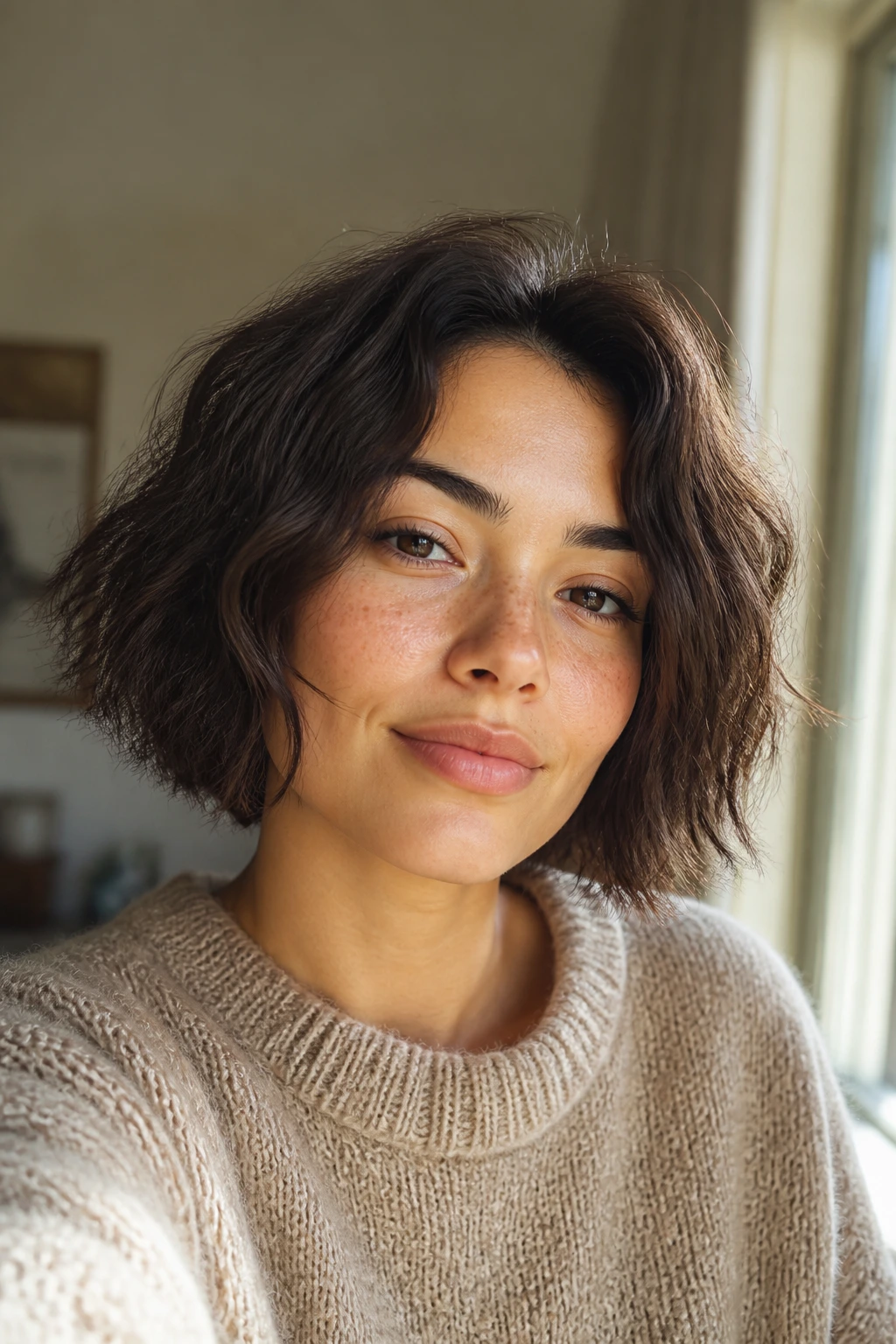
The best big chop does not just look good when you walk out of the salon. It keeps working when the roots lift a little, the front bends differently, and the day gets in the way. That matters with thick hair, because hair this dense can either hold a shape beautifully or swallow it alive.
Heart-shaped faces do best when the cut softens the forehead, gives the jaw some support, and keeps the top from stealing the whole show. Once you start paying attention to that balance, the whole list gets easier to read. You stop asking, “What looks trendy?” and start asking, “Where should the weight sit?” That is the better question.
Pick the style that fits your texture, your patience, and your morning routine. The right one will feel lighter without feeling flimsy, and that’s the point worth chasing.