



Fine hair has a way of telling the truth. The second you lean into the wrong cut, it goes limp at the crown, strings out at the ends, and behaves like it skipped breakfast. That’s why Korean hairstyles for women with fine hair are such a smart lane to stay in: they’re built around shape, movement, and face-framing details that create the feeling of fullness without asking your hair to become something it isn’t.
The best Korean looks do not fight fine hair. They work with it. Soft layers, see-through bangs, inward bends at the ends, airy ponytails, and clipped-up half styles all create the illusion of body where fine hair usually falls flat. The trick is that they rely on line and placement more than bulk, which is exactly what makes them look polished instead of puffy. A good Korean-inspired cut can make a shoulder-length shape look denser, a bob look cleaner, and long hair look more alive by lunch.
And that’s the part people miss. Fine hair rarely needs more stuff. It needs smarter structure, cleaner parting, and styling that respects how quickly it loses lift at the roots. A blunt, heavy shape can sit like a wet towel on fine strands; a cut with a little air around the face can make the whole head look lighter and fuller. Keep that thought close. It explains almost every style below.
Why These Styles Keep Fine Hair from Falling Flat
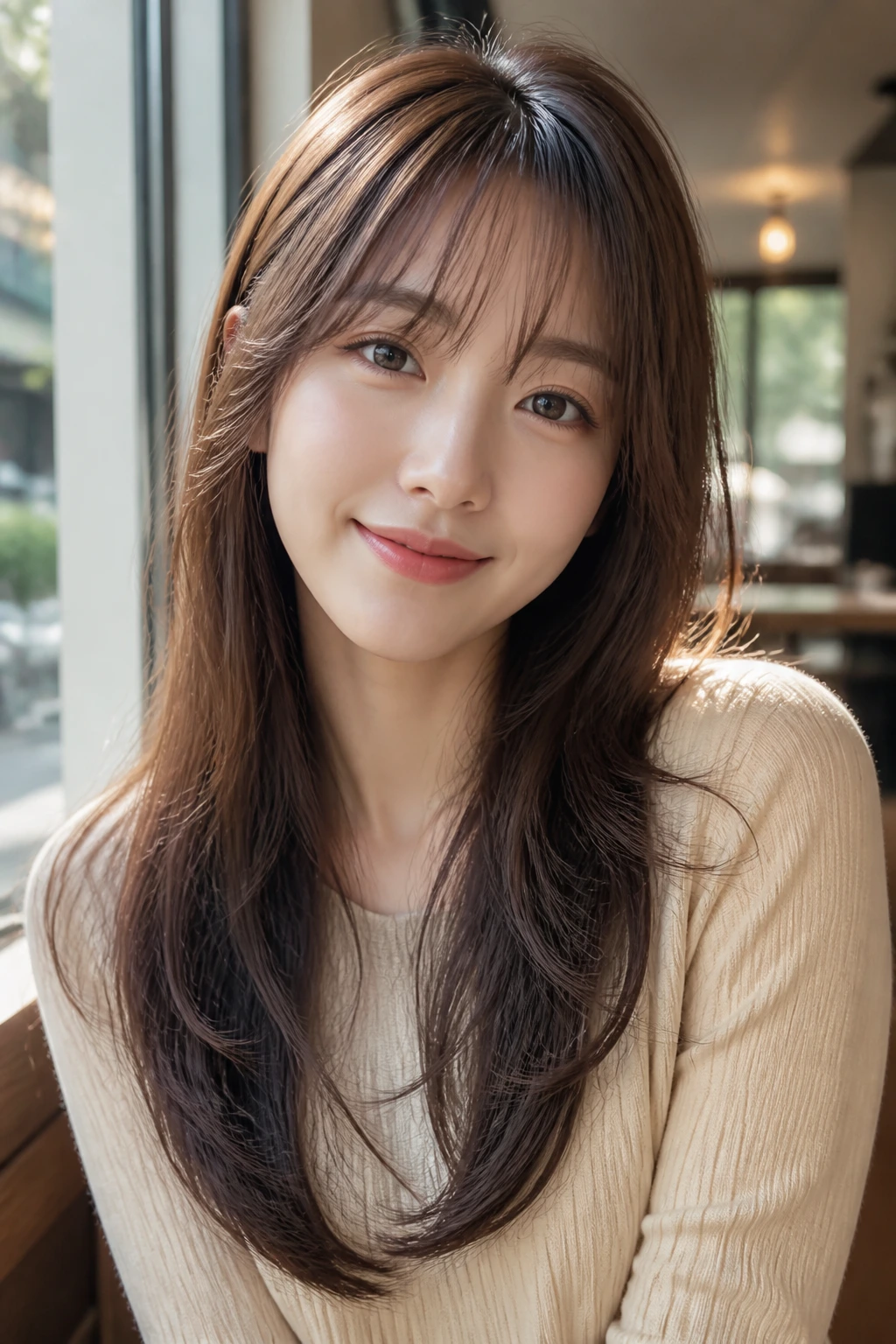
- Soft shape, not heavy length: Fine hair usually looks better when the outline is clean and the ends are deliberate, because too much length can drag everything downward.
- Root lift is built in: These styles lean on crown volume, side parts, or lifted bangs, which helps the hair look fuller before you even touch a styling spray.
- Movement hides sparseness: A bend at the ends, a loose wave, or a face-framing curve breaks up the see-through look that fine hair can get under bright light.
- Low-stress styling: Most of these looks work with lightweight products, a blow-dryer, or a small iron, so you are not piling on cream after cream until the hair droops.
- Easy to dress up or down: The same cut can look tidy at the office and a little more romantic with a ribbon, clip, or soft wave on the weekend.
- K-style framing helps the face first: Korean haircuts often put the action around the cheekbones, jaw, and fringe, which makes fine hair look intentional instead of thin.
1. See-Through Bangs with Long, Soft Layers
See-through bangs are one of those rare fringe choices that can make fine hair look lighter and fuller at the same time. The bangs are wispy enough that they do not sit like a heavy curtain, but they still give the front of the hair some shape and presence. Paired with long, soft layers, they create a gentle frame that keeps the hair from looking like one flat sheet.
Why It Flatters Fine Hair
The biggest win here is balance. Fine hair often loses shape at the front first, so a little fringe gives the eye somewhere to land. The layers should start around the chin or collarbone, not too high, or the ends can turn stringy fast.
A tiny round brush and a quick cool shot are enough to make the bangs sit with a little lift. That matters. See-through bangs look best when they bend, not when they lie perfectly still.
- Keep the fringe light and narrow.
- Ask for soft, blended layers, not chunky ones.
- Use a pea-sized amount of mousse at the roots only.
- Blow-dry the bangs forward, then split them slightly with your fingers.
Best for: softening a long face, lifting a flat hairline, and making everyday hair look more put-together without much work.
2. The Korean Hush Cut
The hush cut is one of the best-looking tricks fine hair can borrow from Korean styling. It has that airy, almost whispered shape around the face, with layers that move instead of sit in one blunt block. On fine hair, that movement is the whole point. It stops the style from feeling heavy at the bottom and gives the hair a little swing when you turn your head.
What Makes It Different
Unlike a choppy shag, the hush cut keeps its edges soft. Unlike a blunt one-length cut, it does not rely on thickness to look full. That makes it especially useful if your hair is fine but not sparse — you can keep enough length to feel feminine, while still getting lift where it counts.
Ask for face-framing pieces that start around the cheekbone and taper toward the collarbone. If your stylist makes the top too short, the cut can collapse fast. You want air, not holes.
A flat iron set to a low-to-medium heat and turned just slightly inward at the ends gives this cut its signature bend. No stiffness. No crunchy texture. Just a controlled, feathered shape that looks good even when the day gets long.
3. Chin-Length Rounded Bob
A chin-length rounded bob can be a miracle on fine hair, provided the silhouette is handled with care. The ends curve inward, the crown gets a little lift, and the whole cut sits close enough to the head to look dense. It has that neat, Korean salon feel that makes the hair look expensive without asking for much volume from the strands themselves.
How to Style It
The mistake people make with fine hair bobs is leaving them too blunt and too long. That can turn the ends into thin little tails. A chin-length version keeps the perimeter strong, especially if the back is tucked under just a touch.
A round brush or a small-barrel blow-dryer brush can shape the ends in under 10 minutes. Focus on the roots first. If the crown is flat, the bob loses its point.
A few smart details:
- Keep the length grazing the chin or a hair above it.
- Add a slight side part if your hairline sits low.
- Finish with a light mist of flexible spray, not firm lacquer.
- Tuck one side behind the ear for a cleaner line.
This is a cut I like for people who want polish without fuss. It is tidy, modern, and a little sharp in the best way.
4. Collarbone Lob with C-Curl Ends
The collarbone lob is one of the safest bets for fine hair because it gives you enough length to feel versatile without going so long that the ends look thin. Add a soft C-curl at the ends, and the whole cut gets that familiar Korean bend that makes the hair look cared for. Not stiff. Just shaped.
Why It Works
The collarbone is a smart stopping point because the hair can rest on your shoulders without disappearing into them. If it falls much lower, fine hair can begin to look stringy from the midpoint down.
The C-curl keeps the perimeter from flaring out or hanging dead. I prefer inward curls for this length because they make the ends look thicker than beach waves do on the same hair type. Beach waves can be pretty, sure, but on very fine hair they sometimes separate too much.
A medium round brush, a 1-inch curling iron, or a straightener used with a soft bend will all do the job. The curl should begin near the last two inches of hair, not halfway up the shaft. That keeps the style light and clean.
5. Soft Wolf Cut with Airy Ends
The wolf cut sounds loud. On fine hair, though, the soft version is a lot gentler than the name suggests. Think of it as a layered cut that keeps texture around the crown and face while letting the ends stay breezy. It can make fine hair look fuller because the layers create shadow and movement, not bulk.
A hard wolf cut can eat fine hair alive. Too many short pieces, and suddenly the ends feel thin. The softer Korean-inspired version is more controlled. It gives lift without turning the head into a triangle.
What to Watch For
If your hair is very fine and not especially dense, ask for the layers to stay long enough to overlap. That overlap matters. It keeps the cut from looking separated or wispy in a bad way.
A little texturizing spray at the mid-lengths helps, but go easy. Fine hair can go from airy to dusty-looking in one spray too many. I prefer to rough-dry the roots, bend the ends with a flat iron, and leave the rest alone.
This is the cut for someone who wants edge, movement, and a bit of personality. It is not tidy in the bob sense. It has a little attitude.
6. Low Ponytail with Crown Lift
A low ponytail can look plain, or it can look very Korean and very deliberate. On fine hair, the difference is usually the crown. If you give the top a small lift — not a bump, not a teased nest, just a little air — the ponytail suddenly looks more elegant and less like a backup plan.
The best version sits at the nape and keeps the base snug, while a few front pieces stay loose to soften the face. A ribbon, a slim scrunchie, or even a wrapped strand of hair can make the style look finished.
How to Get the Lift
Start with dry hair. Mist the roots lightly with dry shampoo or a volumizing spray, then blow-dry the crown in the opposite direction for 20 to 30 seconds. That odd little step makes a real difference.
Then gather the hair low and secure it without pulling every strand tight. If you flatten the crown with your hands, the style loses its point. Leave a little air at the top. That is where the shape lives.
- Best on shoulder-length to long fine hair.
- Keeps the ends together instead of stringing them out.
- Works with straight, bent, or softly waved texture.
- Looks especially clean with a center part.
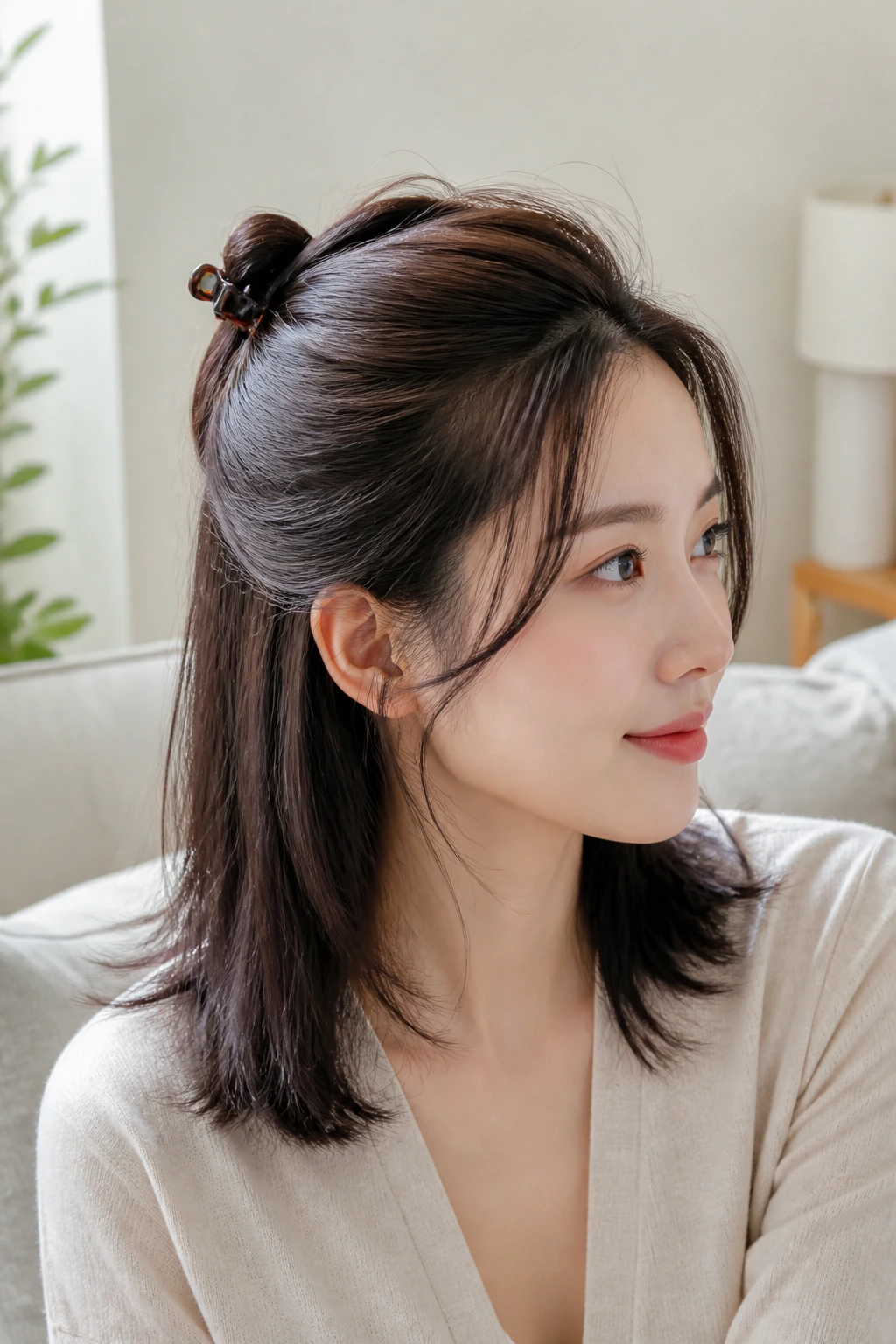
7. Half-Up Claw Clip Twist
The half-up claw clip twist is one of my favorite lazy-glam moves for fine hair because it gives the illusion of volume where you need it most. By lifting only the top section, you keep the lower length visible while creating a little architecture at the crown. It is easy, but not sloppy if you place the clip well.
Why It’s Better Than a Tight Clip
A tiny claw clip works better than a heavy one on fine hair. Big clips can weigh the top section down, and then the whole thing slides. A medium clip that grips without pinching holds more securely.
Leave the front pieces a little loose around the temples. If you pull them all back, the face can look stripped bare, which is not the point here. Fine hair benefits from a few soft edges.
This style is especially good on day-old hair because it has a little grip. Clean, glassy hair is harder to hold in place. If the top feels too silky, dust the roots with dry shampoo first. Quick. Simple. Done.
8. Long S-Waves with a Center Part
Long S-waves give fine hair movement without making it look overworked. The bend is looser than a classic curl and cleaner than beach waves, which is part of why it reads so Korean. The center part helps the waves fall evenly on both sides and keeps the overall look calm rather than messy.
Here’s the thing: the S-shape adds visual body while the hair still hangs in a smooth line. That is useful on fine hair because too much curl can separate the strands and expose the thinness between them. A gentle wave holds together better.
How to Style the Wave
Use a 1-inch curling iron or a flat iron, but leave the last inch out at the ends. Alternate direction in wide sections, then brush the curls out once they cool. That turns tight bends into a soft S.
A light glossing serum on the ends helps the hair look smooth without flattening the roots. Do not put it near the part. That is a fast way to lose the lift you just built.
This style looks best when the waves are loose enough to move. If you can see the pattern from across the room, the iron stayed on too long.
9. Hime Cut with Wispy Fringe
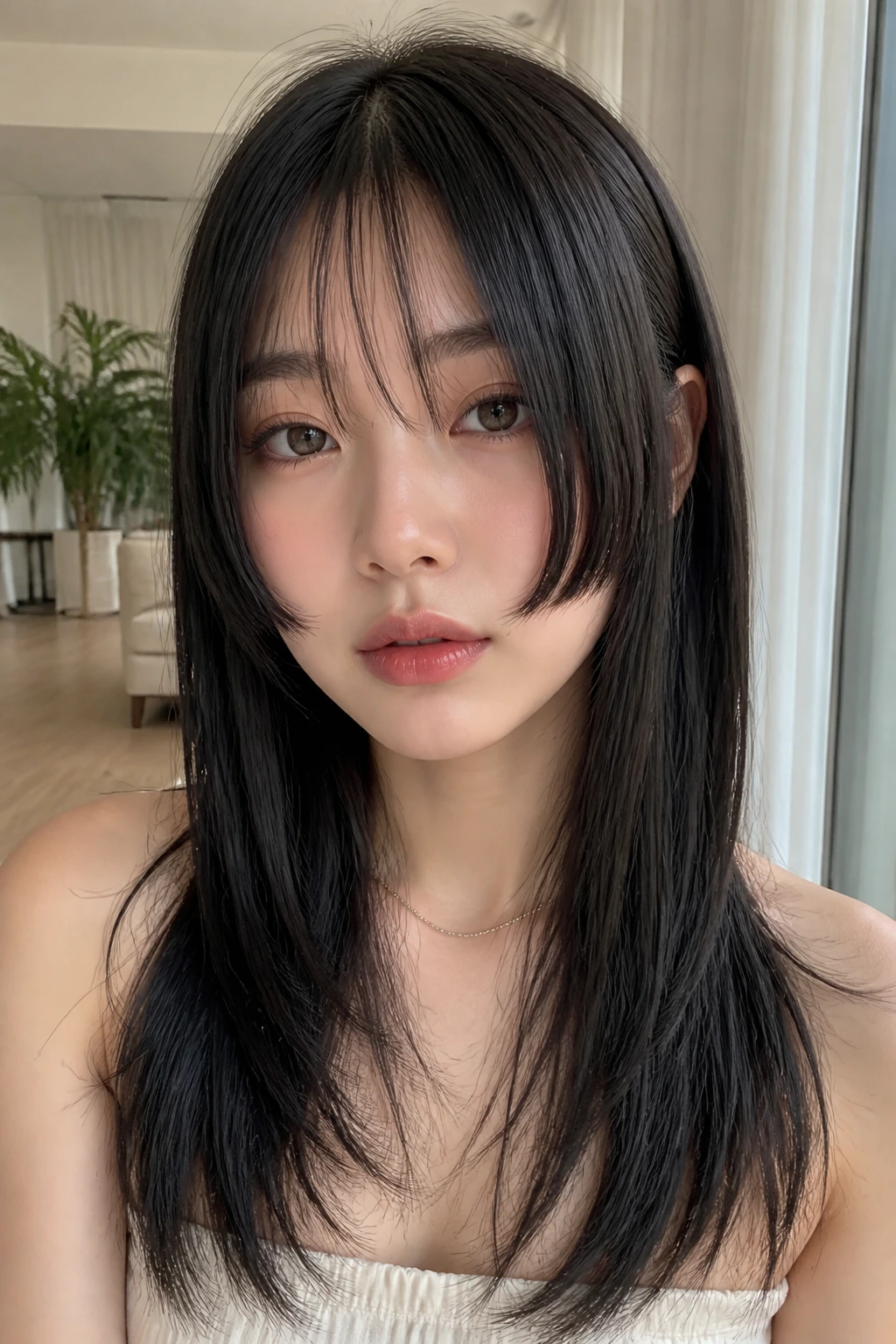
The hime cut is not for everyone, and that is exactly why it’s interesting. On fine hair, the Korean version can look sleek and graphic without needing a ton of density. The structure does the work: shorter face-framing side pieces, a fringe or soft bangs, and longer lengths that drop past the shoulders.
It sounds bold because it is bold. But with fine hair, the precision can be a gift. A blunt cut line can make the hair appear thicker at the edges, especially around the cheekbones.
What Makes It Work on Fine Hair
The key is to keep the side sections soft enough that they do not look chopped off. You want a gradual transition from the front pieces into the rest of the hair. If the contrast is too sharp, the style can feel costume-like.
This cut is especially strong on straight or slightly bent hair. It does not need a lot of volume. It needs clean shape and a glossy finish.
If you are nervous, ask for a softer interpretation first. Keep the front pieces longer and let the stylist dry-cut the perimeter so the line sits cleanly. You can always go sharper later.
10. Sleek Tucked-Behind-Ears Bob
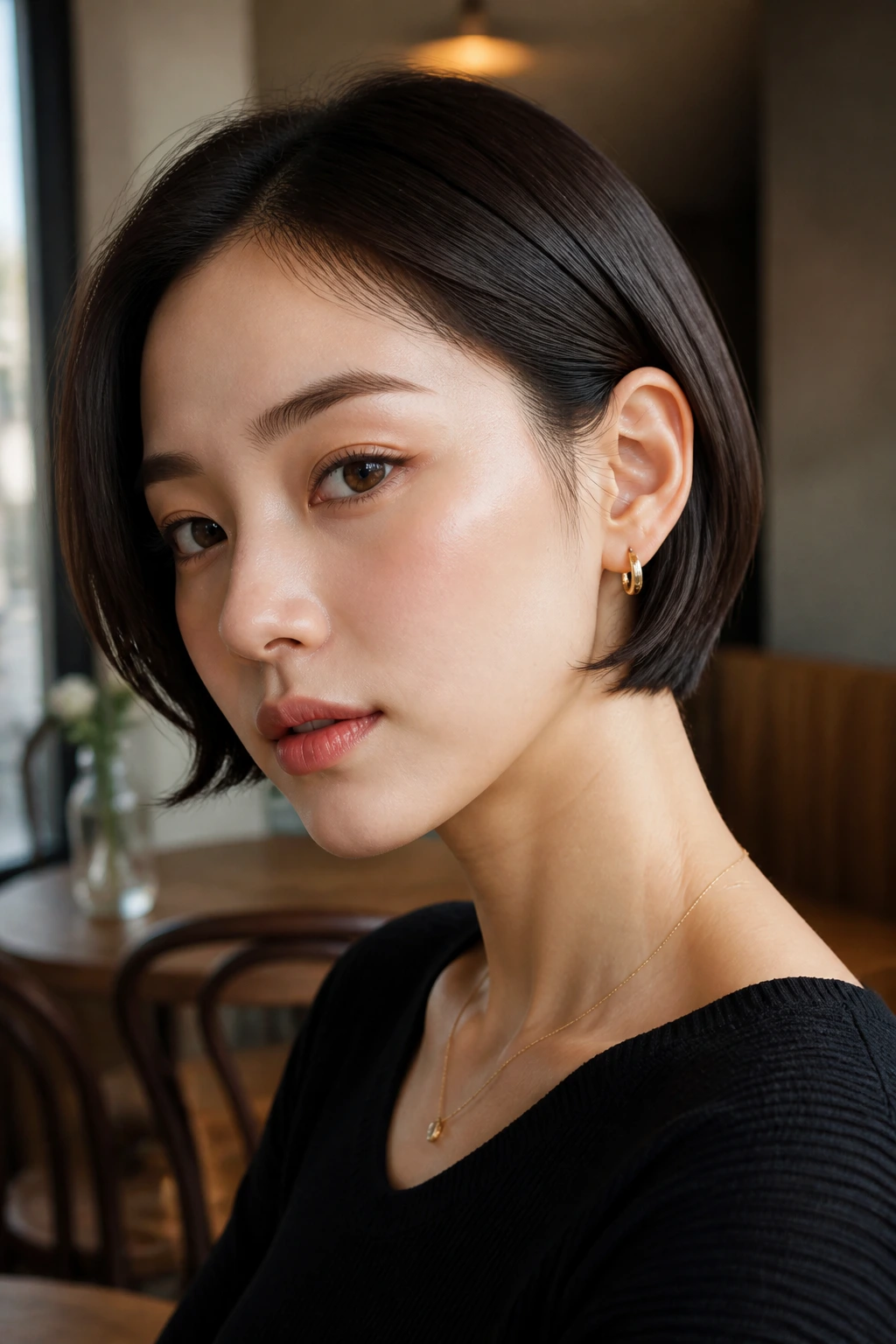
A tucked-behind-ears bob is a little bit severe, a little bit neat, and very good at making fine hair look intentional. The trick is that the shape reads clean and compact, which gives the illusion of density. No fluff. No wandering ends. Just a crisp line that skims the jaw.
The style is especially useful if your hair tends to puff at the ends but stays flat at the root. Tucking the front pieces behind the ears creates a smooth frame, and the exposed cheekbones give the haircut some breathing room.
Tiny Details That Matter
A side part often helps this bob more than a dead center part does. The slight imbalance gives the top some lift. If you want extra polish, tuck one side and leave the other just loose enough to brush the jaw.
A flat iron pass at the ends can sharpen the silhouette, but keep the tool moving. Fine hair burns fast and shows damage fast. The finish should look smooth, not ironed dry.
This is a good choice for someone who likes a neat neck line and does not want to fuss with waves every morning.
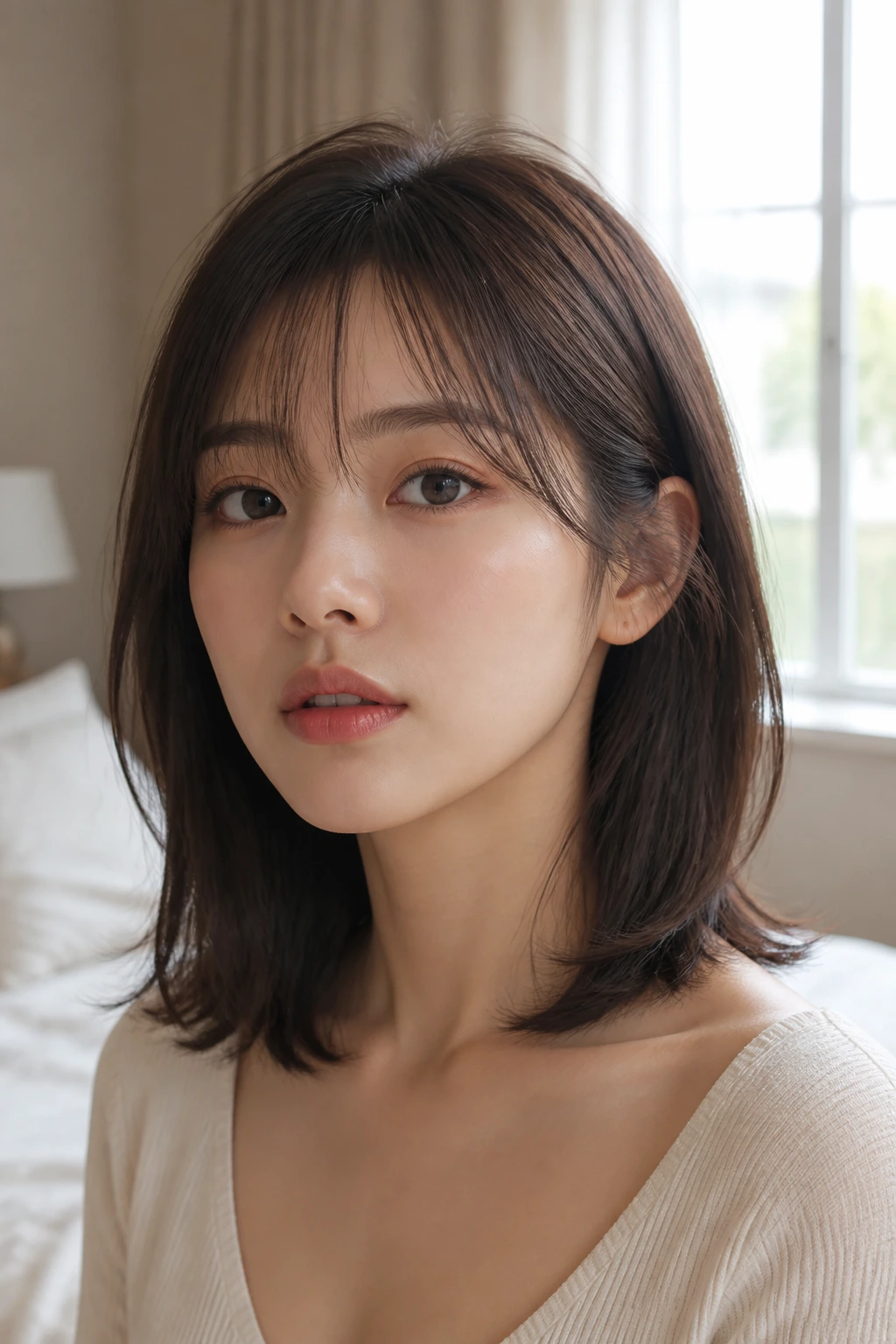
11. Shoulder-Length Cut with Side-Swept Bangs
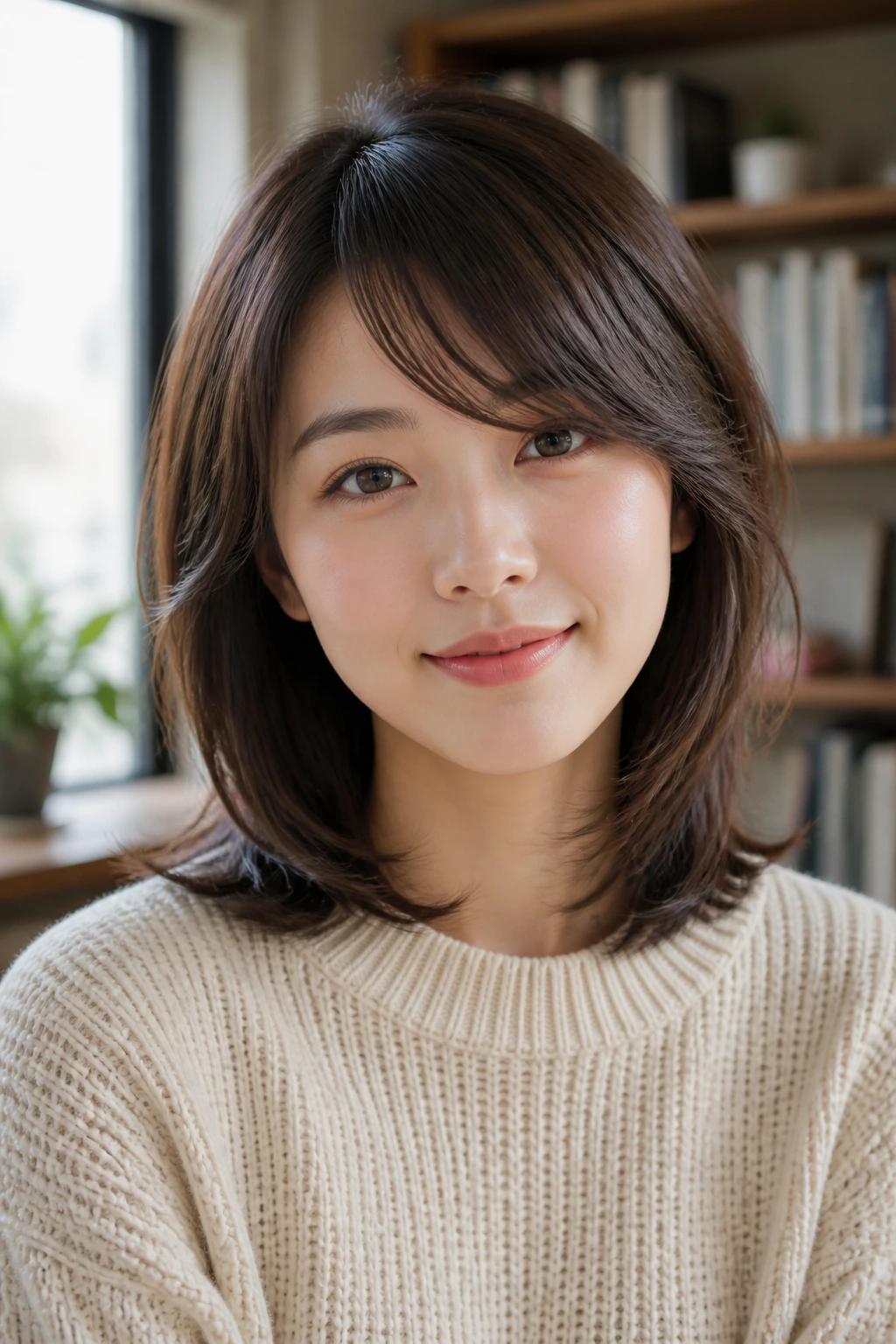
Shoulder-length hair can be tricky on fine strands. It often hits the exact spot where the weight starts to win. Side-swept bangs solve part of that problem by bringing motion to the front, where the eye naturally looks first. The rest of the cut can stay clean and slightly layered to keep the ends from looking thin.
A Better Way to Add Volume
Side-swept bangs work because they break up the straight line across the forehead. That soft diagonal creates movement, and movement reads as body. On fine hair, that matters more than trying to create massive volume at the roots.
The layers should be subtle. If you go too short in the crown, the top can separate and look piecey. Ask for a long, sweeping fringe that blends into the sides around the cheekbone.
A round brush and a quick side-blow-dry are enough to make this style behave. It does not need a lot of product. It needs direction. Keep the bangs away from the face for a few seconds while they cool, and they’ll hold the shape better.
12. Bubble Ponytail with Mini Elastics
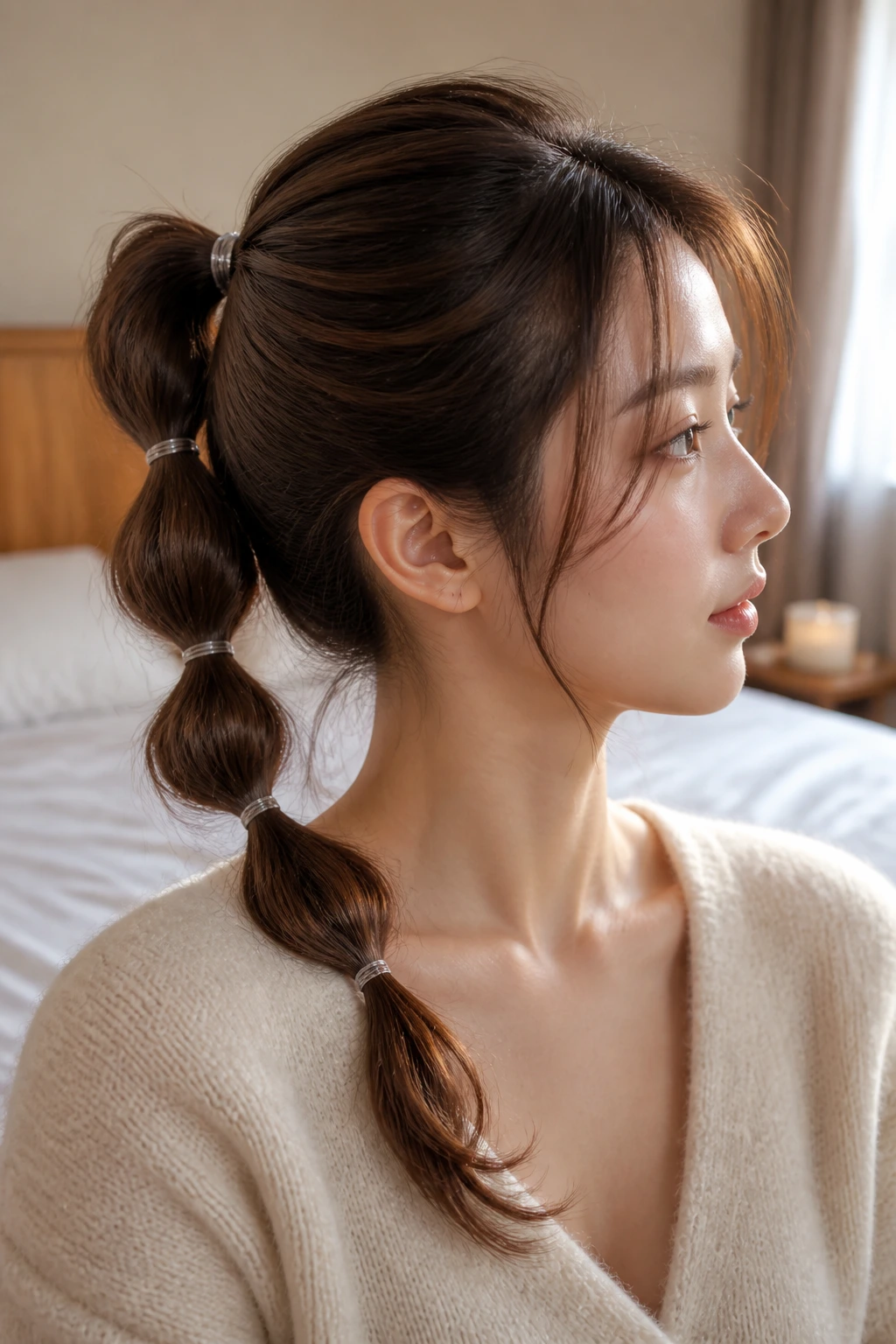
The bubble ponytail has a playful energy, but on fine hair it does something practical too: it creates sections that make the ponytail look thicker than it really is. Each little bubble gives the eye a place to stop, so the overall style feels fuller and more deliberate.
Use mini clear elastics or slim satin ties spaced a few inches apart down the length of the ponytail. Gently pull each section outward to round it out. Not too much. If you tug the hair hard, the bubbles can collapse or start to look uneven.
When It’s Worth Wearing
This is a good style for long fine hair that needs a change but not a haircut. It also works when your ponytail keeps slipping because the sections create more grip.
A tiny bit of dry texture spray before you tie it off helps. Clean hair can be too silky for the bubbles to stay put. If the hair is freshly washed, a light mist at the roots and mid-lengths gives it a little hold.
It’s youthful, yes, but it’s also practical. And practical hair that still looks fun is always worth keeping around.
13. Airy Pixie with Side-Swept Bangs
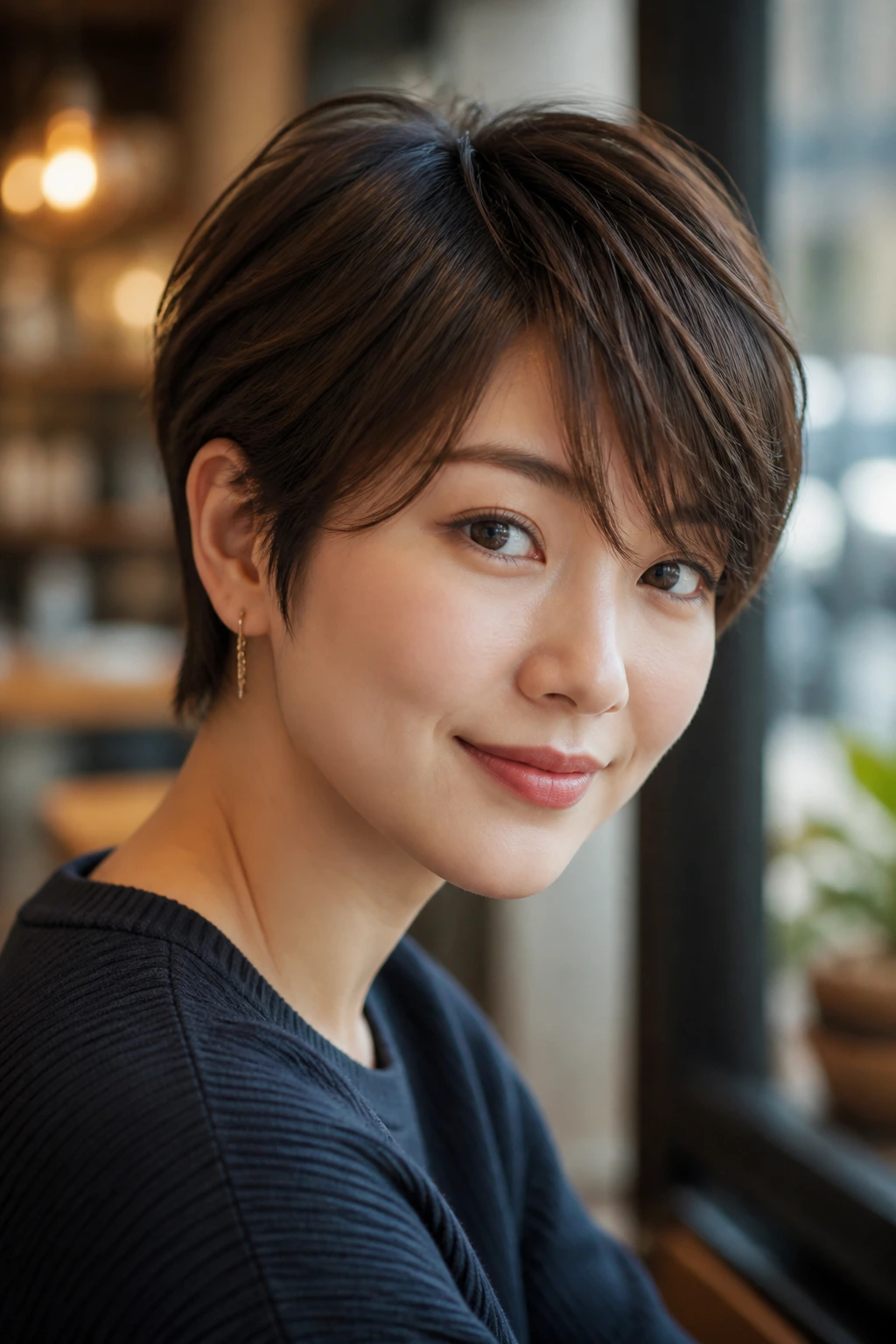
A pixie cut can be one of the best things that ever happens to fine hair, if the cut has enough softness. Korean-inspired pixies tend to keep the top light and the bangs sweepy, which means the haircut does not depend on density to make an impact. It depends on shape.
The side-swept fringe is the part that keeps the style flattering. It softens the forehead, builds height where the hair wants to lie flat, and stops the cut from feeling too severe. Short hair shows every decision. That’s the fun part and the annoying part.
Who Should Try It
If your fine hair gets oily fast and collapses by noon, a pixie can be easier than trying to rescue long lengths. It also works well if you like showing off earrings, collars, or a sharper makeup look.
A little paste at the ends is enough. Do not smother short fine hair in wax; it will separate into sticky chunks. Use your fingertips, not a comb, to push the bangs where you want them.
This is the sort of cut that looks best when it’s a bit imperfect. A tiny piece that falls across the brow can make it look alive.
14. Voluminous Top Knot with Loose Tendrils
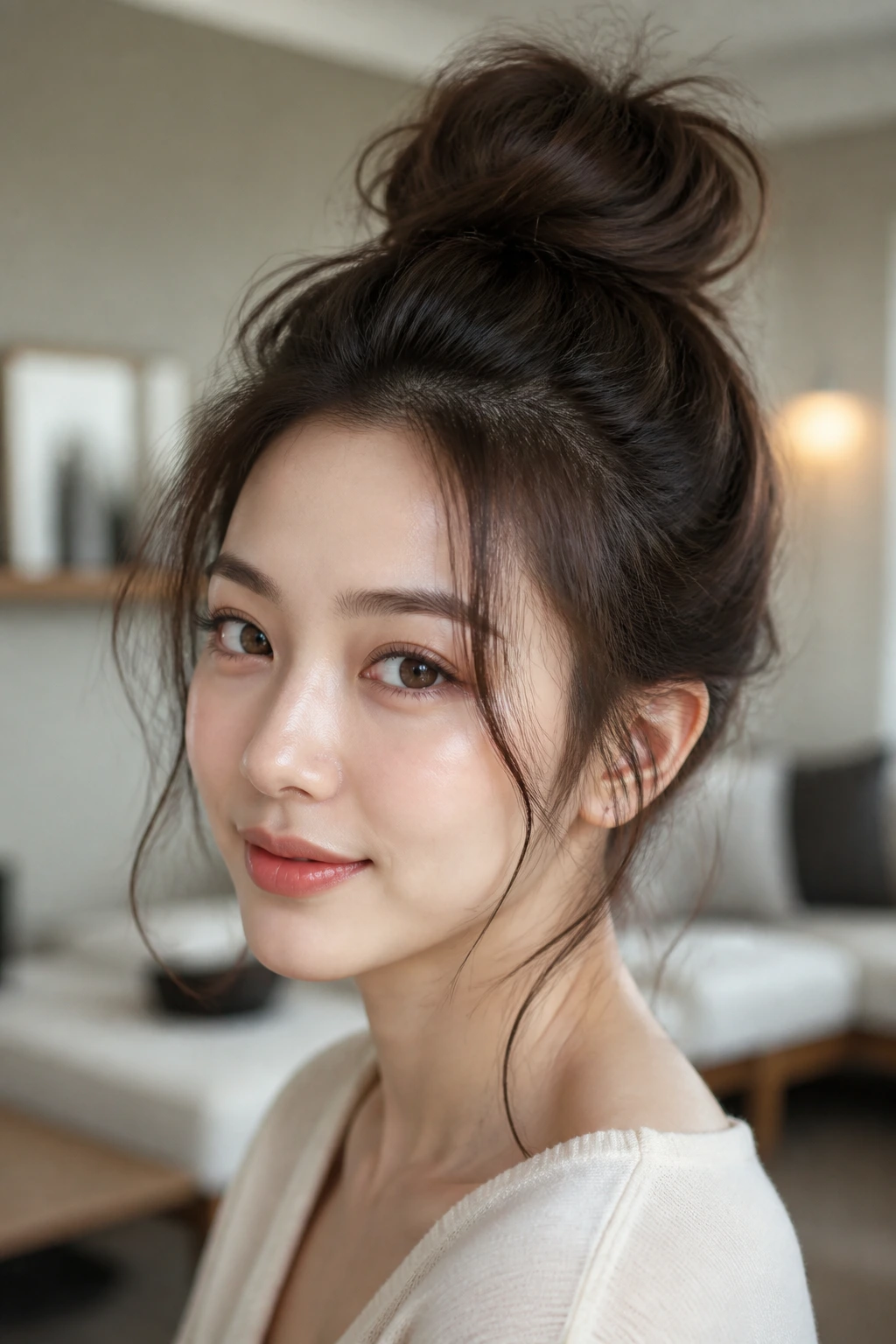
The voluminous top knot is a cheat code for fine hair, and I mean that in the nicest possible way. You can gather the hair high, pinch a little lift at the crown, and let a few loose tendrils frame the face. Suddenly the hair looks styled instead of just tied up.
The important thing is not to yank the whole head tight. Fine hair can look even flatter if the bun is plastered down. Leave some softness at the sides and top, then twist the knot loosely and pin it instead of pulling it into a tiny hard lump.
- Best on second-day hair.
- Works well with a small claw clip hidden under the bun.
- Keep the tendrils around the cheekbone, not the jawline.
- A light mist of hairspray on the crown helps it stay airy.
I like this style when the day calls for something quick but not sloppy. It has a little height, a little softness, and enough looseness to keep fine hair from looking boxed in.
15. Loose Perm Waves with Gloss Finish
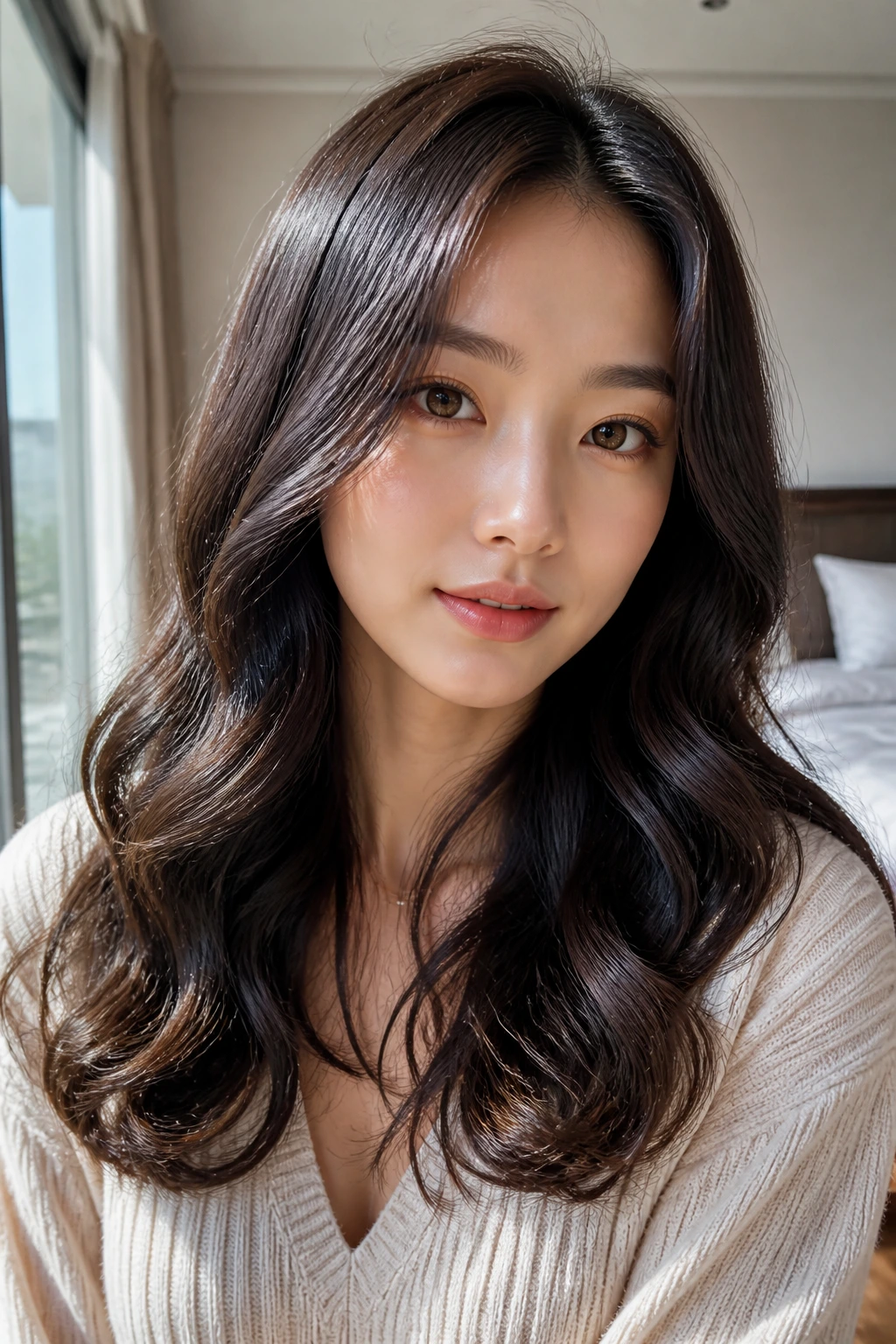
Loose perm waves are a classic Korean salon move for fine hair because they give the strands a memory they do not naturally have. The goal is not springy curls. It’s a soft, relaxed bend that stays visible after the hair dries. Fine hair loves that kind of lasting shape.
A good loose perm should look almost too calm when it’s freshly done. Then it settles into a lived-in wave that keeps the hair from hanging straight and thin. The gloss finish matters here too, because fine hair can look dull when the texture gets rough.
What to Ask For
Ask for waves that begin below the cheekbones and relax toward the ends. If the curl starts too high, the hair can balloon. If it starts too low, the shape disappears.
This is one of the more maintenance-heavy choices on the list, but it pays off if you want movement with less daily styling. A sulfate-free shampoo and a light conditioner are enough to keep the wave from getting fuzzy.
I would not choose this if your hair is already fragile from bleaching or heavy heat. Healthy fine hair handles it better.
16. Braided Crown with Textured Ends
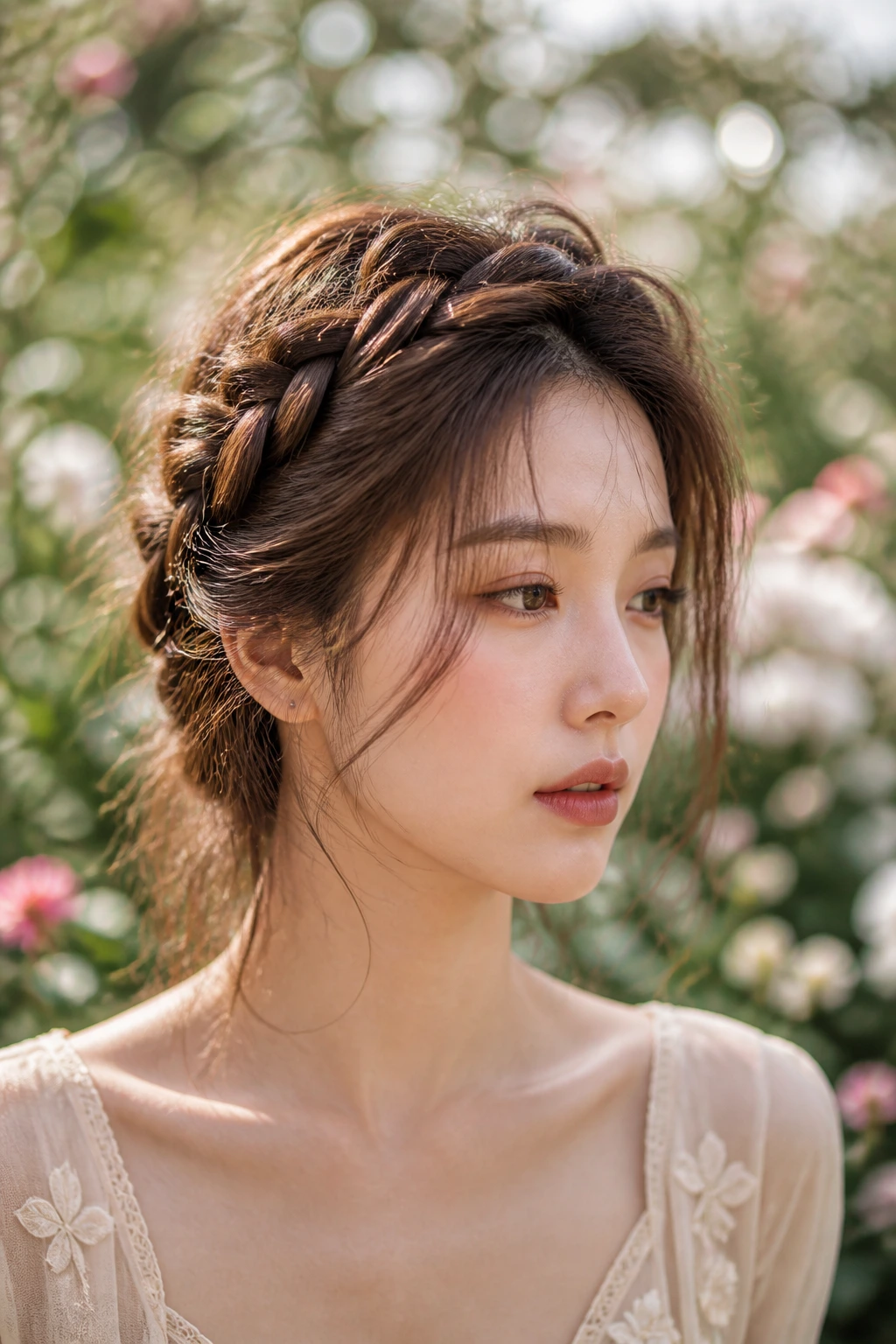
A braided crown gives fine hair structure right where it usually needs it: around the top and sides of the head. The braid lifts the front sections off the face, and the textured ends keep the whole look from falling flat. It feels romantic without tipping into costume territory.
What makes it work is the looseness. Tight braids can expose the scalp and make fine hair look even thinner. A slightly looser braid, gently pulled apart with your fingertips, creates a fuller line.
A Small Trick That Helps
Start with a little dry shampoo or texturizing spray. Fine hair needs grip to hold a braid cleanly. If the strands are too slippery, the braid slips into a narrow rope and loses its shape.
Let the ends stay a bit imperfect. That unfinished finish is part of the charm. A polished braid on fine hair often looks smaller than you want; a textured one looks fuller.
This is especially nice for events, weddings, or any day when you want the hair off your face but still want softness around the edges.
17. High Half Pony with Face-Framing Strands
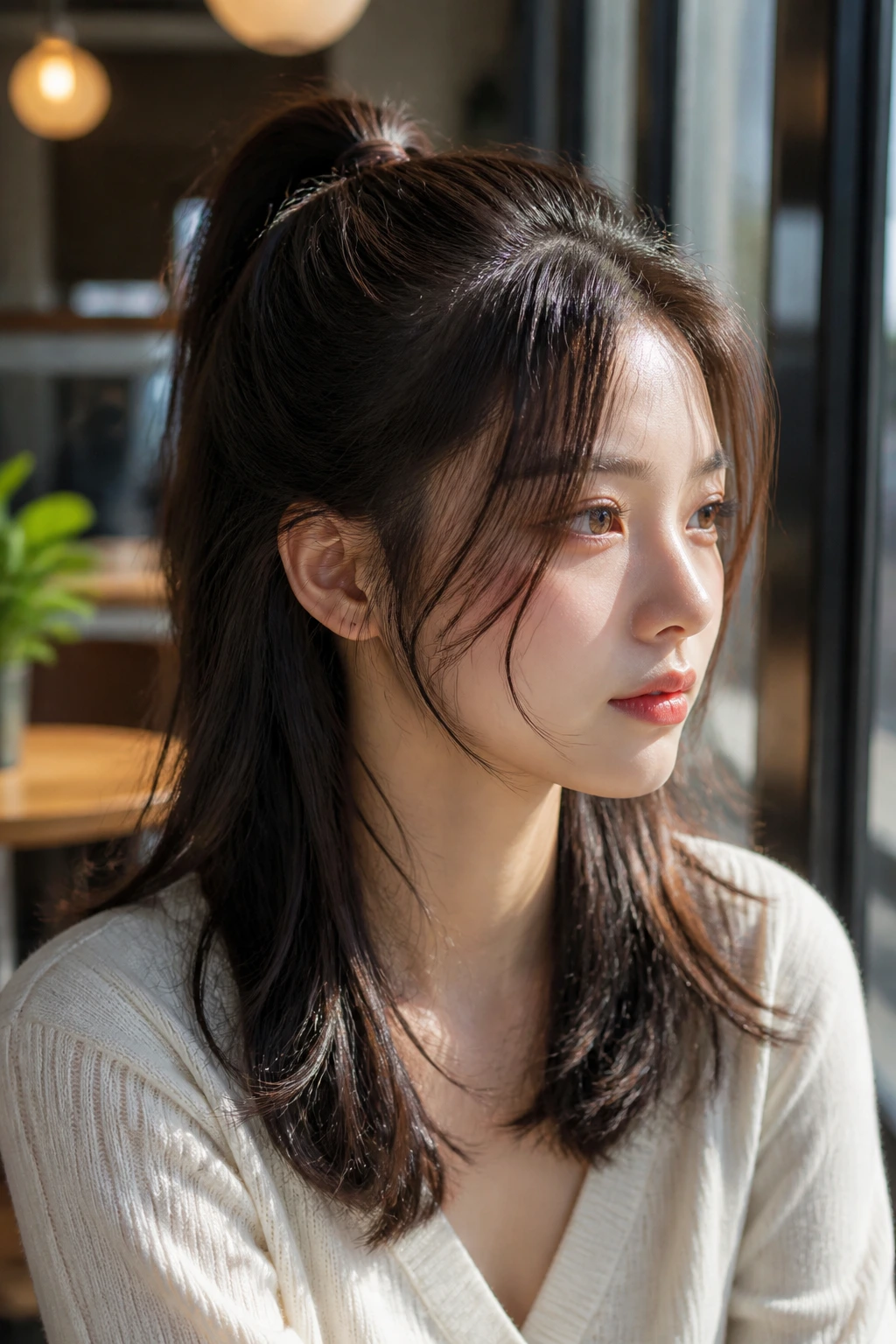
The high half pony has real personality on fine hair. By lifting only the top section, you create height at the crown and leave the bottom length to provide visual weight. The result is playful and airy, which is exactly the kind of contrast that fine hair needs.
Face-framing strands are non-negotiable here. Without them, the style can look too pulled back and too bare. Keep the front pieces around the cheekbone or just below it, and let them bend slightly inward.
What Makes It Hold
Teasing is not required, but a little root spray helps. Blow-dry the crown upward for a few seconds before tying it off, then secure the top section with a slim elastic. If you over-tighten, the lift disappears.
This is one of those styles that works better when the hair is not freshly washed. A little natural texture gives the half pony grip. If your hair is too clean, the top section may slide by lunchtime.
It is cute, yes. But more than that, it keeps the crown from looking limp.
18. Inverted Lob with Bent Under Ends
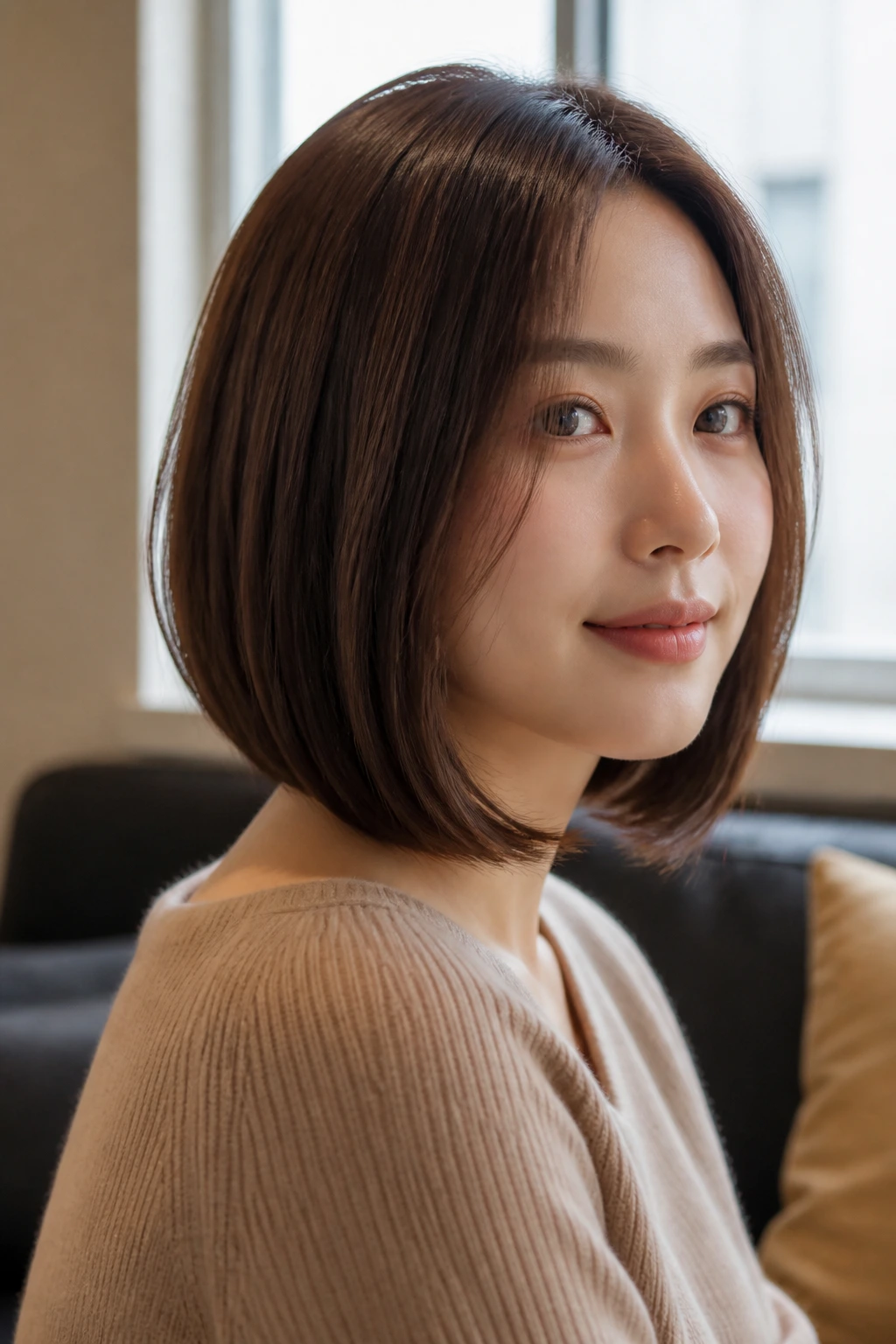
The inverted lob has a slightly longer front and a shorter back, and that angle can be kind to fine hair because it removes weight without making the ends look ragged. Add a gentle bend under at the ends, and the cut gets that sleek Korean finish that feels clean rather than hard.
The slant helps the hair fall forward in a flattering way. Fine hair often looks better when there is a clear outline at the jaw and collarbone. A straight, one-length lob can be fine too, but the inverted shape gives a little more motion.
Best Styling Habit
Blow-dry the back first, then work the front sections away from the face. That keeps the style from collapsing under the weight of the sides. A round brush or flat brush can both work, depending on how smooth you want the finish.
I like this cut on people who wear glasses or who want the sides to sit neatly around the frame of the face. It doesn’t fight the features. It supports them.
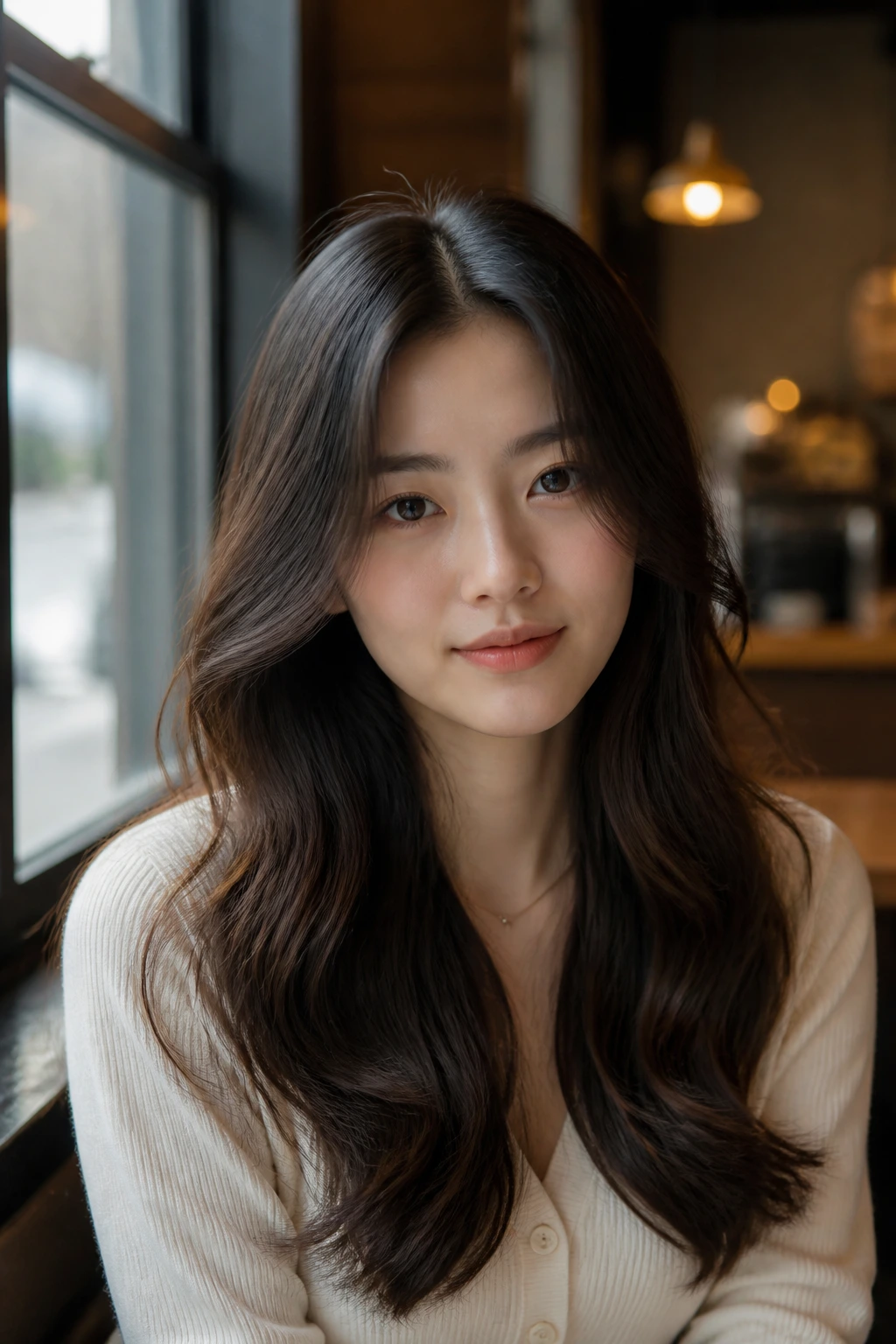
19. Curtain Bangs with Long Flowing Layers
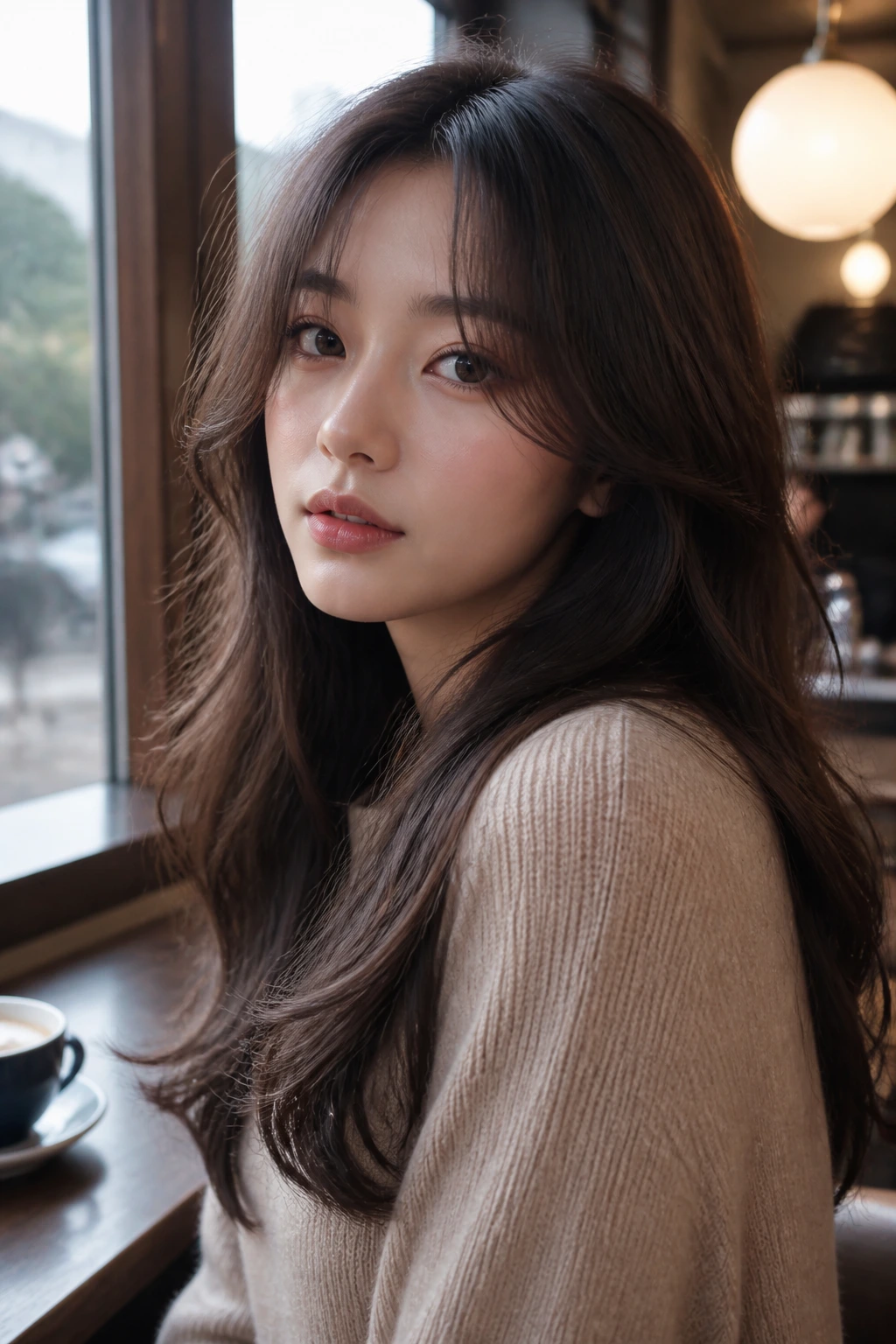
Curtain bangs are still one of the easiest ways to give fine hair a sense of movement around the face. The part opens in the middle, the bangs fall away on both sides, and the rest of the hair can stay long and softly layered. It has that gentle Korean softness people keep coming back to.
The real win is that curtain bangs make the front look fuller without asking the whole head to be big. That is a smart trade on fine hair. You get lift where people look first, and the long layers keep the ends from feeling chopped.
How to Keep Them from Splitting
Dry them with a round brush, pulling each side away from the face for just a few seconds. Then let them cool before touching them. If you keep fiddling with them while they’re warm, they can separate too much.
A light mist of flexible hairspray on the fringe is enough. Nothing heavy. Curtain bangs can go greasy fast if you coat them in product.
This style is especially nice if you want face framing without a full fringe. It grows out more gracefully than blunt bangs too, which is a practical bonus.
20. Clipped Side Part with Root Lift
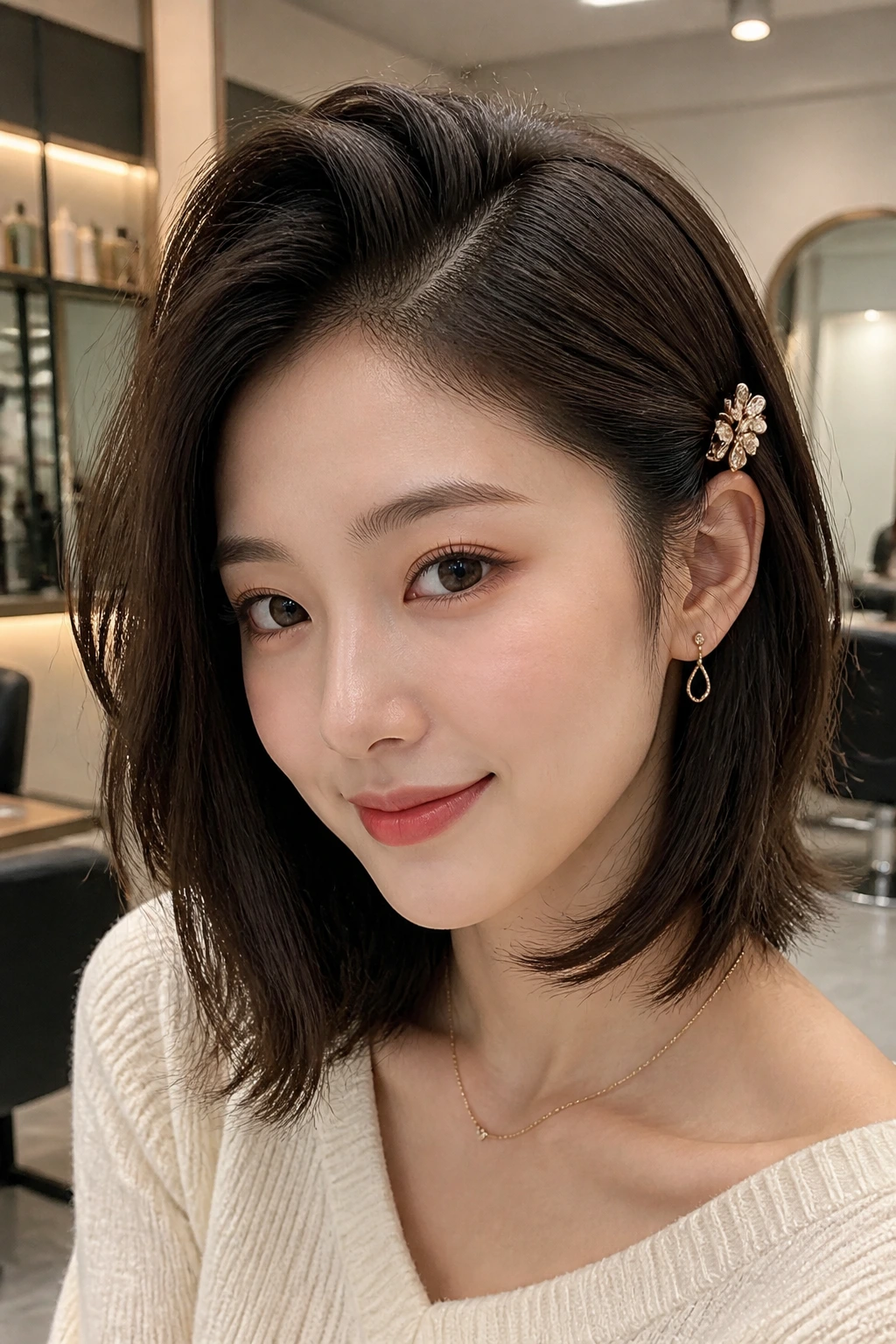
A clipped side part is one of the simplest Korean-inspired tricks for fine hair, and it works because it changes the direction of the hair at the roots. A deep side part gives the crown a little push upward, and a small decorative clip pins one side back so the style looks finished. Clean. Quick. Effective.
The clip matters more than people think. A tiny metal barrette, pearl pin, or matte claw clip can hold the shape without flattening it. If you use something too heavy, the side collapses and the lift disappears.
Why It’s Worth Keeping in Rotation
This is the look you reach for when your hair has lost its mood by midweek. It does not require heat, and it does not demand a fresh wash. A little dry shampoo at the roots, a side part, and one neat clip are enough.
I like this style because it turns a bad hair day into a deliberate one. That matters. Fine hair often needs a style that can recover quickly without a full reset.
If you want a little extra polish, tuck the opposite side behind the ear and let the clip sit slightly above the temple. It changes the balance of the whole face.
Why Korean Layers Work So Well on Fine Hair
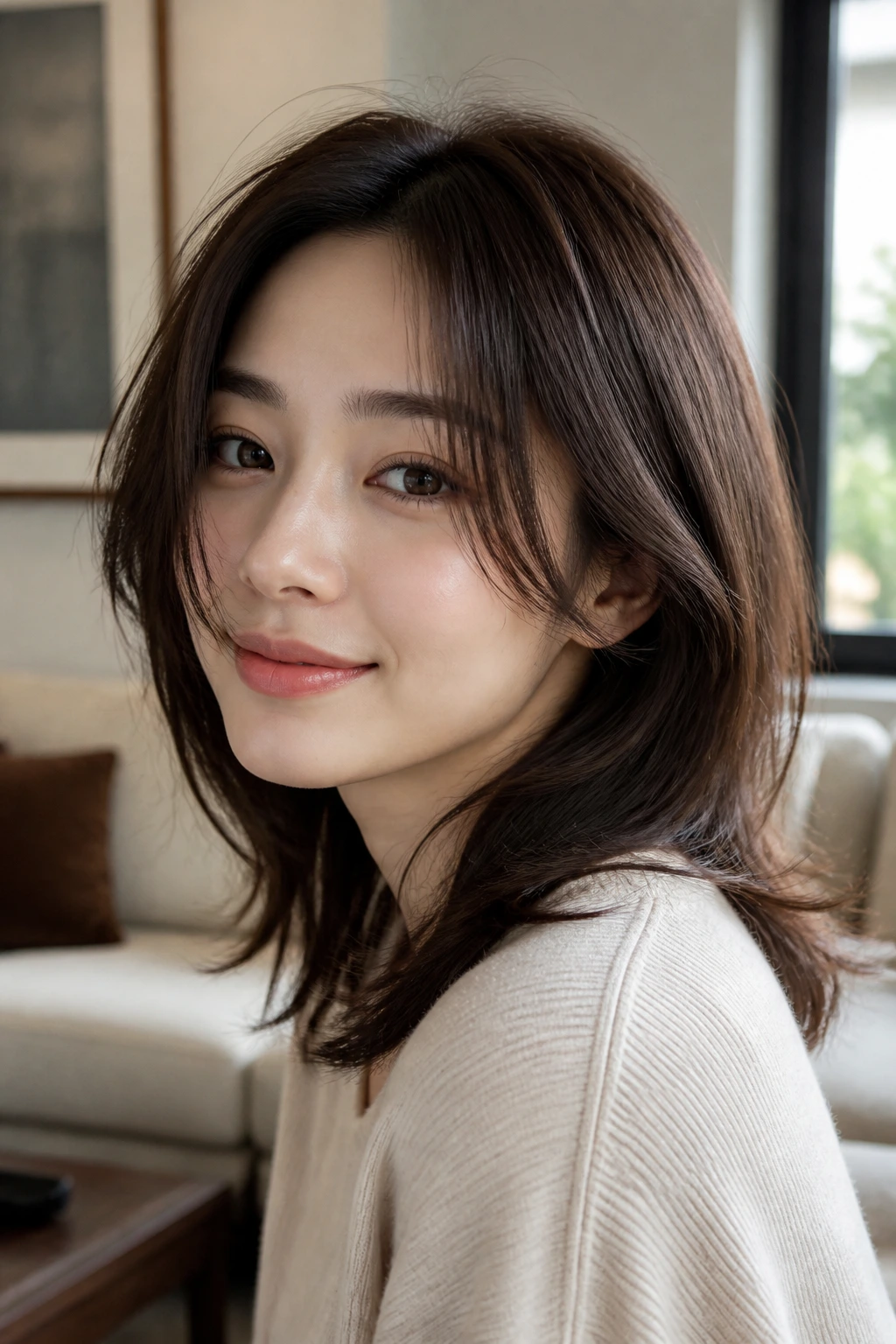
Fine hair behaves differently from thick hair, and the sooner you stop expecting the same results, the better your mirror will look. Korean layers work because they are usually placed to create shape around the face, lift at the crown, and movement through the mid-lengths without shredding the ends into nothing. That is a very specific kind of balance.
A lot of heavy layering fails on fine hair because it removes density where the hair can least afford to lose it. Korean-inspired cuts tend to avoid that trap. They leave enough perimeter to keep the outline strong, then add softness where the eye wants it — at the bangs, cheekbones, jaw, and collarbone.
The result is hair that looks styled even when it is not loaded up with mousse and spray. That is the appeal. Not perfection. Not giant volume that falls apart after one subway ride. Just better shape, better movement, and a little more life around the face.
Essential Tools for These Looks
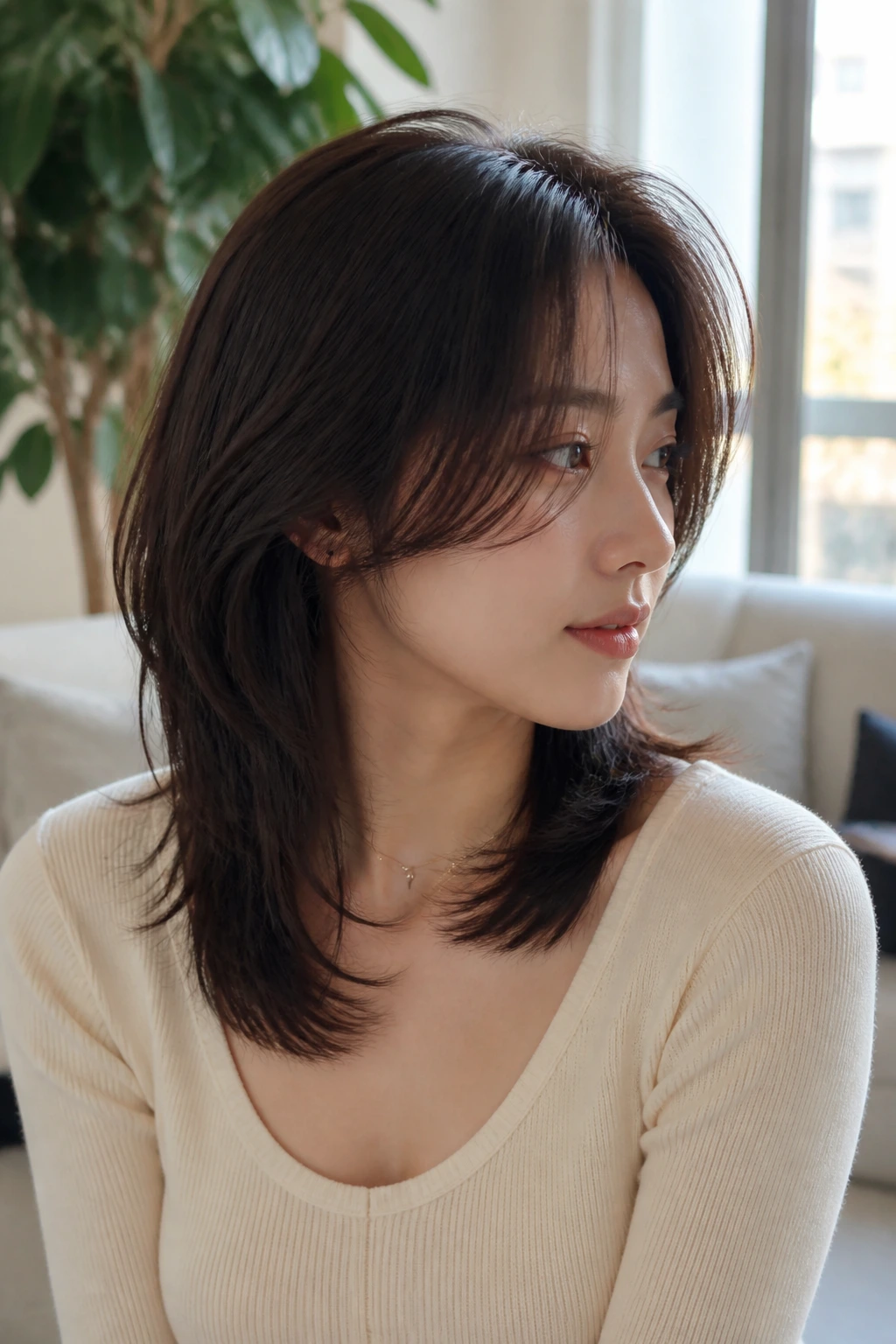
- Blow dryer with a concentrator nozzle: Directs airflow at the roots so fine hair dries with more lift.
- Small round brush: Useful for bangs, C-curls, and beveling the ends of bobs and lobs.
- 1-inch curling iron or wand: Best for loose waves, inward bends, and soft S-shapes without too much bulk.
- Flat iron with adjustable heat: Handy for bending the ends under or shaping curtain bangs.
- Volumizing mousse or root spray: Gives the crown grip without coating the whole head.
- Dry shampoo: Helps day-old hair hold clips, ponytails, and braids better.
- Light hairspray: Flexible hold keeps movement in place without turning the style stiff.
- Duckbill clips: Good for setting bangs, lifts, and pinned sections while they cool.
- Mini elastics: Essential for bubble ponytails and small half-up styles.
- Claw clip or slim barrette: Works well for half-up twists, side parts, and low-effort updos.
- Satin scrunchie or ribbon: Better than a tight elastic when you want to avoid breakage on fine strands.
- Tail comb: Makes cleaner parts and more controlled sectioning than fingers do.
Smart Product and Cut Tips for Fine Hair
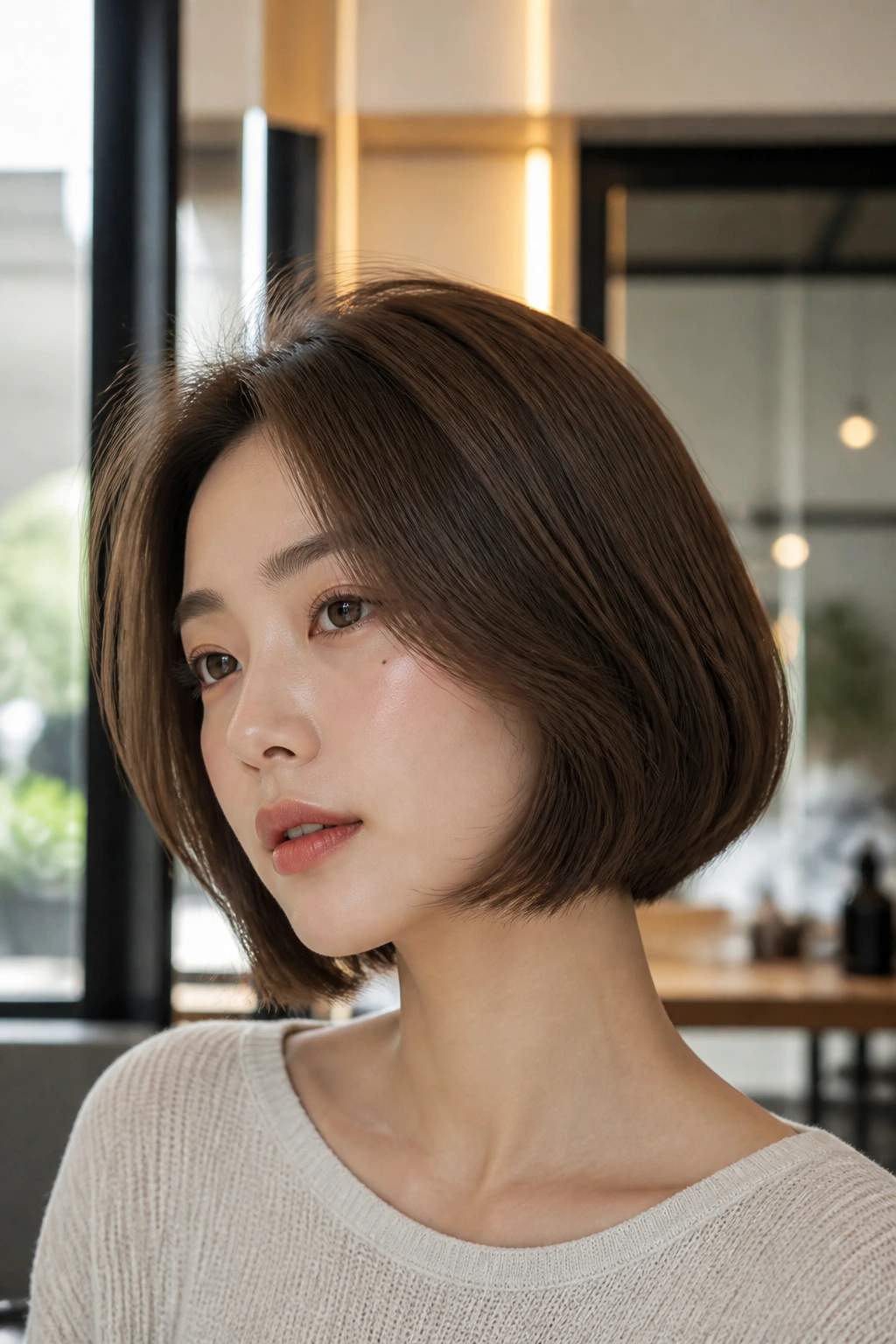
Fine hair is picky about weight. That is not a flaw; it is a clue. Heavy creams, rich oils, and thick smoothing balms can sink the style before it leaves the bathroom. Look for lightweight mousse, foam, and sprays that give structure without coating every strand in slip.
When you are choosing a cut, ask for visible shape at the front and controlled fullness at the ends. A stylist who understands fine hair will usually keep the layers longer than you expect, because removing too much length from the perimeter makes the hair look sparse. If the cut promises “lots of movement” but no mention of weight balance, be careful.
Color also matters. Very dark, solid color can make fine hair’s separation more obvious, while soft dimension — barely there highlights, gloss, or a shade with depth — can make the strands look fuller. You do not need dramatic contrast. You need enough variation that the hair catches light in more than one place.
And yes, tools matter more than hype. A decent blow dryer with a nozzle does more for fine hair than a cabinet full of thick creams. One good brush. One light spray. That’s usually enough.
How to Wear These Looks in Real Life
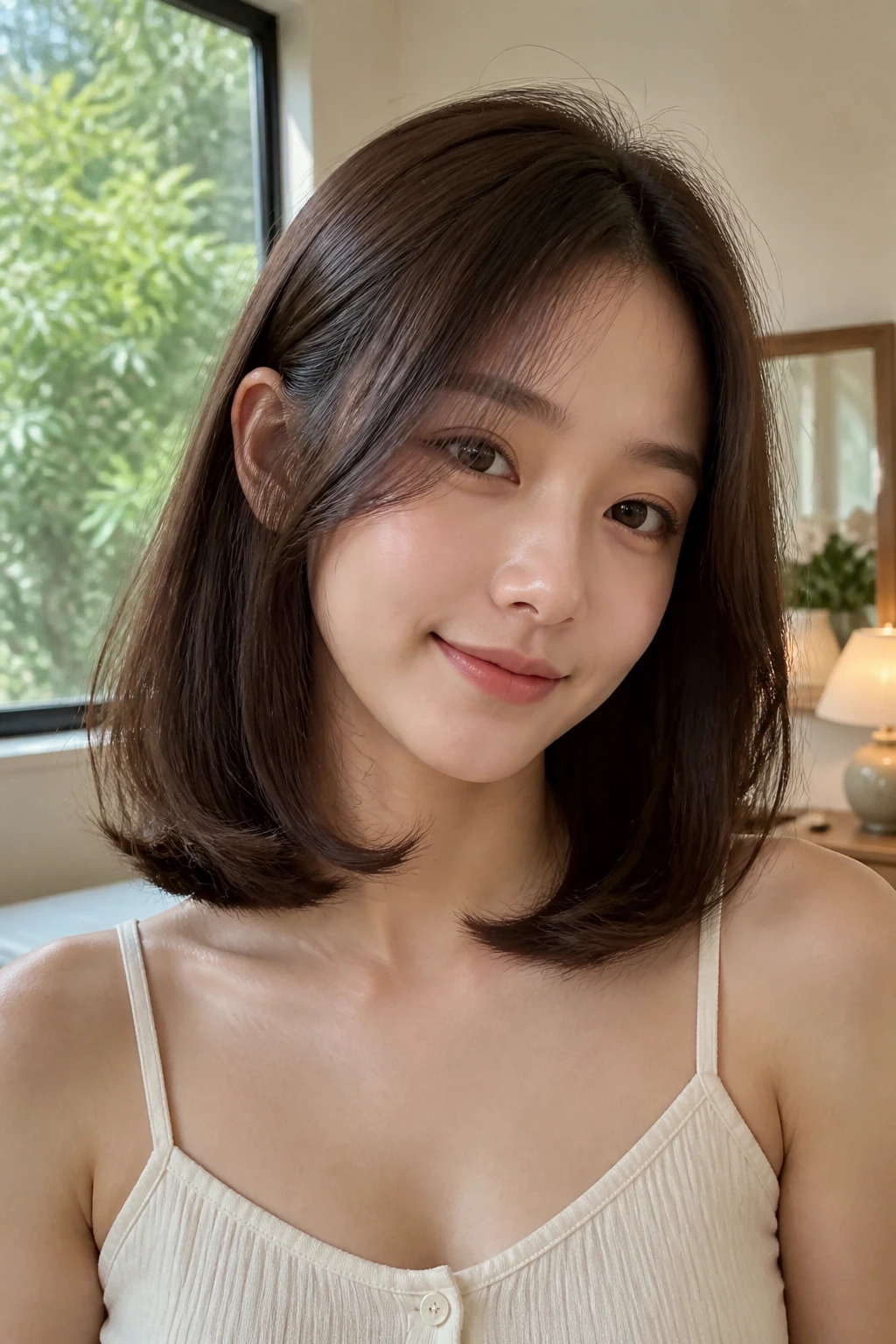
Presentation: Keep the silhouette airy at the crown and deliberate at the ends. Fine hair looks best when the top has a little lift and the perimeter still feels clean.
Pairings: These styles work especially well with earrings that show, collarbones that aren’t buried under a high neckline, and accessories like ribbons, pearl pins, and slim clips. The hair should frame the face, not hide it.
Length and Volume: If your hair is very fine, collarbone length or shorter is often easier to manage than extra-long hair. If you have more density but fine strands, you can go longer and still keep shape with waves, bends, or a low-up style.
Day-to-Night Shift: A 30-second root lift, a quick pass of dry shampoo, and one accessory change can take a style from plain to finished without rebuilding it from scratch.
Additional Styling Tips and Lift Boosters
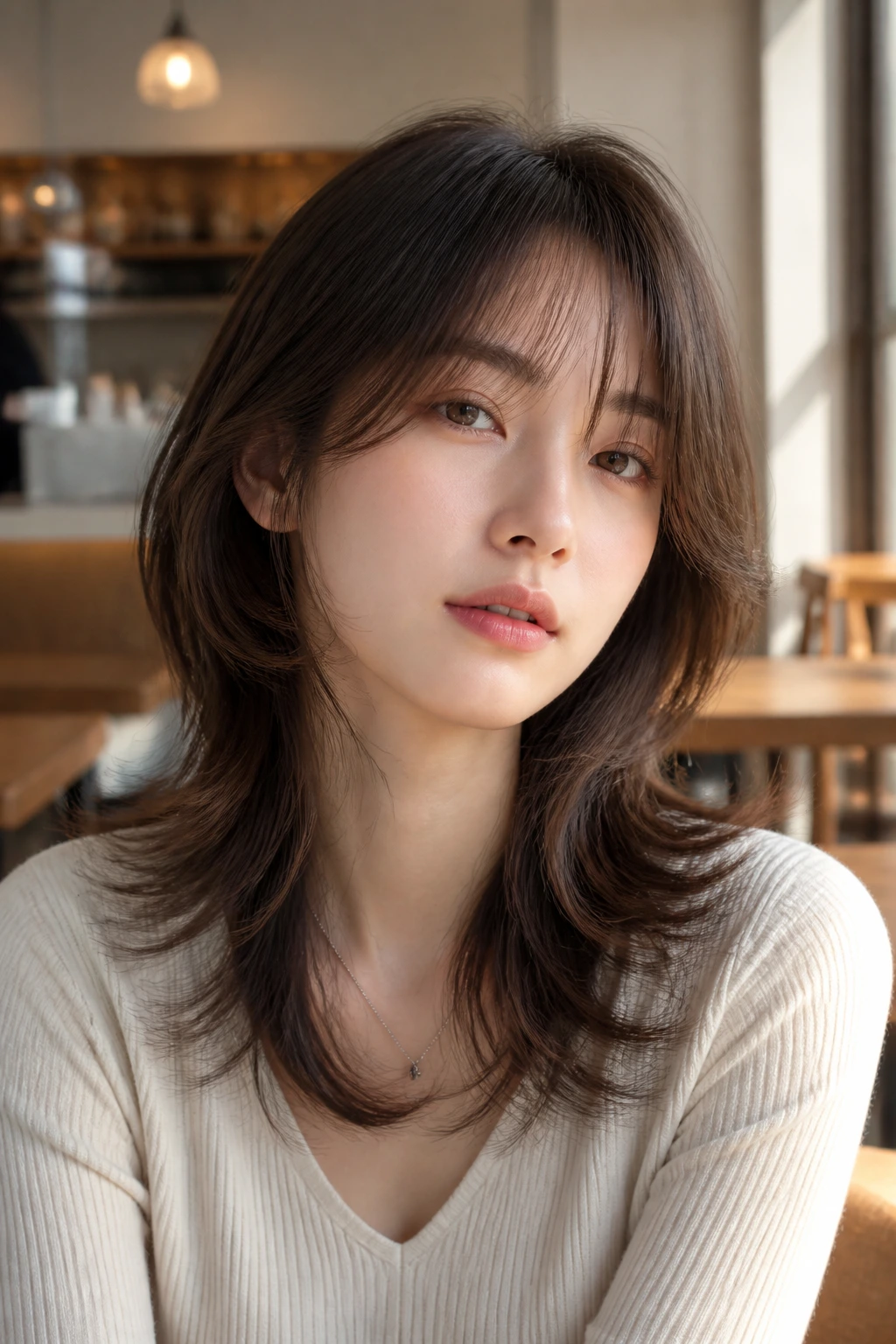
Root Lift: Blow-dry the roots in the opposite direction from your part for 15 to 20 seconds, then flip them back. That tiny reset gives the crown more staying power than tugging at the ends ever will.
Texture: Use texture spray only where the hair needs grip — usually the mid-lengths and lower crown. Fine hair turns dusty fast if you spray the whole head like a cloud.
Face Framing: If your hairline recedes a little or your forehead feels wide, keep the shortest pieces near the cheekbone instead of the eyebrow. That creates softness without cutting the face in half.
Customization: If your hair gets oily, lean into bobs, lobs, and half-up styles. If it is dry and fragile, choose cuts with softer ends and use heat only on the front sections.
Finishing Touch: A drop of lightweight serum rubbed between your palms and tapped onto the last inch of hair can smooth frizz without killing movement. That last inch matters more than people think.
Common Mistakes That Make Fine Hair Look Flatter
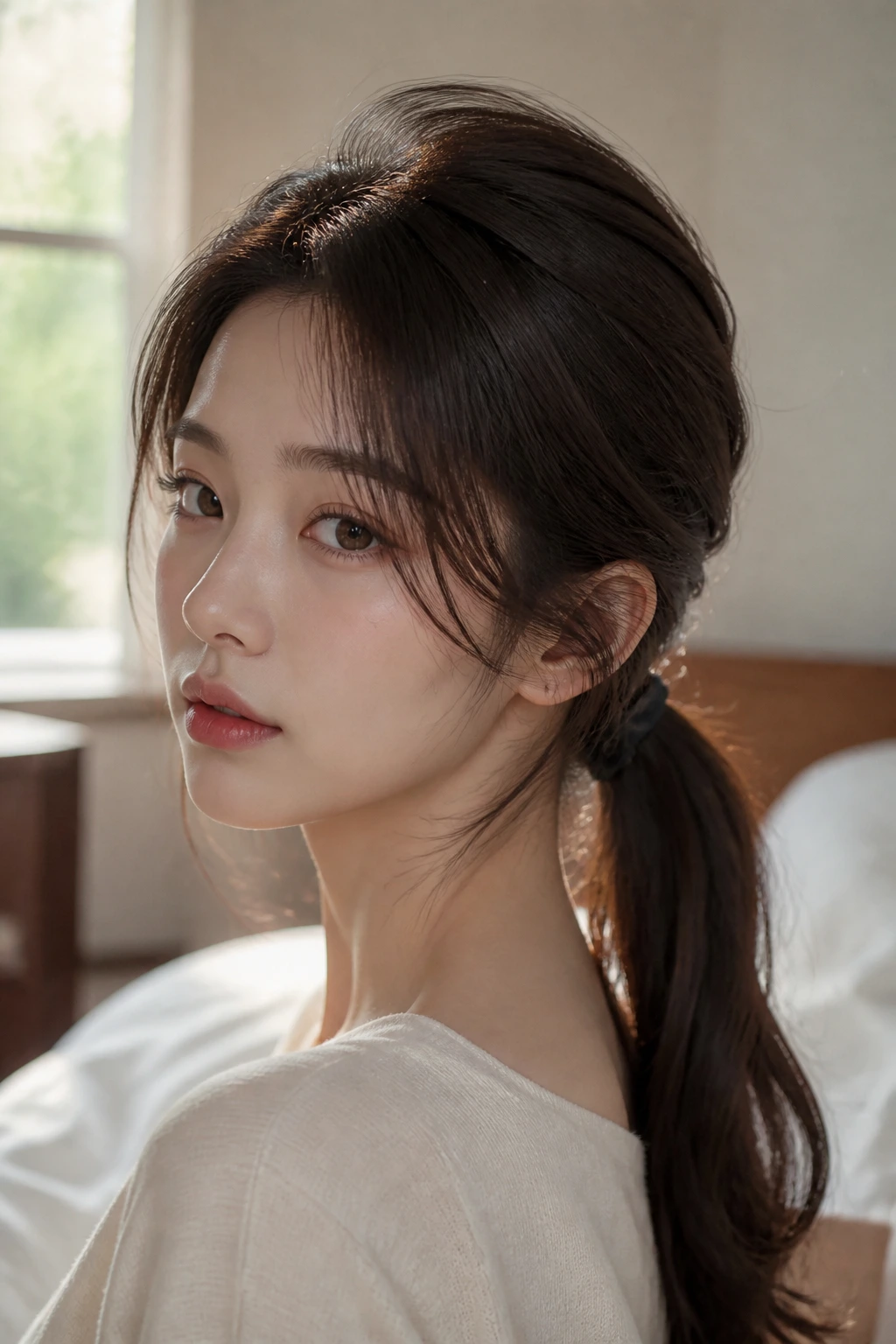
- Cutting too much weight from the ends: Fine hair needs a strong outline. If the perimeter gets shredded into thin wisps, the style loses body fast.
- Using heavy cream on the roots: The crown will drop within an hour, and the hair can start to look oily even if it was clean ten minutes earlier.
- Pulling ponytails too tight: Tight elastics flatten the top and can leave the hair looking smaller than it is. Leave a little air at the crown.
- Overcurling every section: Tight curls on fine hair often separate and go limp. Loose bends hold their shape longer and look more natural.
- Skipping the cool-down step: Hot hair is moldable hair. If you touch it too soon, the shape slips before it sets.
- Choosing bangs that are too thick: Heavy fringe can overwhelm fine hair and make the rest of the head look sparse by comparison. Wispy bangs usually do more with less.
Variations and Adaptations to Try
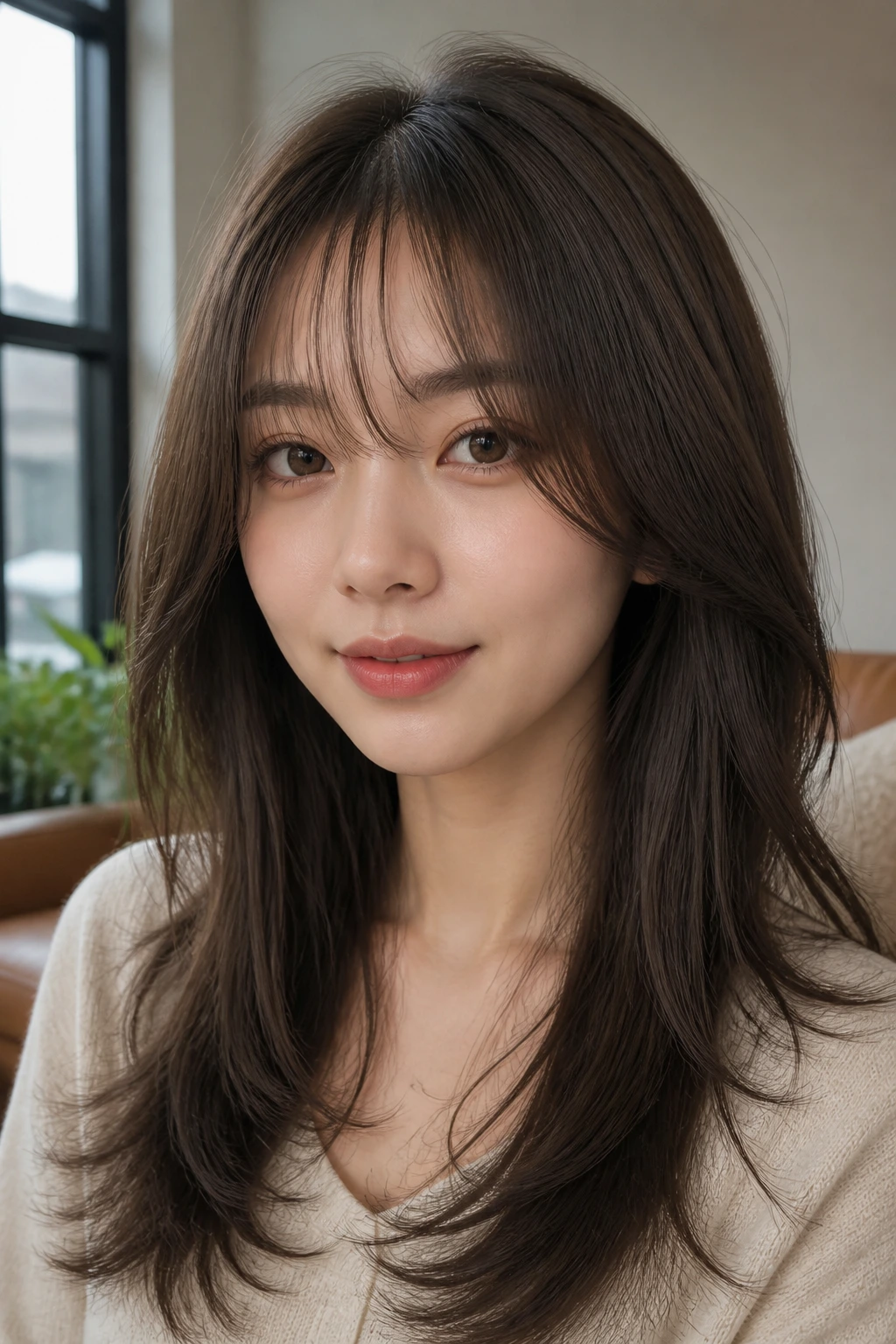
The Ultra-Light Fringe Edit
If your hair is very fine, ask for bangs that are almost transparent at the center and slightly fuller at the temples. That keeps the forehead soft without taking too much density from the front. It’s a small change, but it makes a big difference when the hairline is naturally sparse.
The Oily-Root Rescue Version
Swap creamy leave-ins for root spray, dry shampoo, and a light mist of flexible hairspray. This version works best on bobs, lobs, and clipped styles because they can handle a little grip. Clean, fluffy roots are the whole game here.
The Heatless Korean Wave
Use soft braids, ribbon wraps, or large foam rollers overnight, then break up the wave with your fingers in the morning. The result is looser than a curling iron look and gentler on fragile fine hair. It is not as fast, but it is kinder.
The Short Hair Polish Cut
For pixies and bobs, lean on clean edges, side parts, and tiny bends at the front instead of trying to create big volume. Fine short hair looks best when it is tidy and lifted, not teased into a cloud. A little structure goes a long way.
The Glassy Event Finish
If you want a more formal look, smooth the top with a tiny amount of serum and keep the movement only through the ends. This version works beautifully with half-up twists, low ponytails, and tucked bobs. It reads sleek without looking stiff.
How to Keep These Styles Fresh Between Washes
Fine hair often loses its shape faster than thicker hair, so the refresh plan matters almost as much as the cut. Most of these styles hold best for 1 to 2 days with a quick touch-up, and some — especially bobs, lobs, and clipped styles — can make it to 3 days if you use dry shampoo and protect the crown overnight.
If you wear bangs, clip them up loosely before bed so they don’t flatten against your forehead. A silk or satin pillowcase helps, but a plain clean pillowcase plus a loose clip still beats sleeping with the fringe smashed flat. For waves and bends, twist the lengths into a soft bun or a loose braid and leave the ends slightly loose so they don’t crease hard.
Reheating the style is usually simple. A 30-second blast with a blow dryer at the roots, one quick pass of a round brush on bangs, and a fingertip of water mist on the ends often does the job. If the hair is too flat, do not drench it. Too much water resets everything and you end up starting over.
Clips, ribbons, and elastics deserve a little care too. Don’t leave tight elastics in for days. Fine hair can crease and break at the same spot over and over. Rotate placement, and if a style has been worn hard for two days, give the roots a proper brush-out before styling again.
Questions People Ask Before Trying These Looks
Will Korean hairstyles work if my fine hair is also sparse?
Yes, but the cut has to be more careful. Shorter bobs, hush cuts, and airy bangs usually work better than long, heavily layered styles because they keep the perimeter stronger.
Can fine hair hold curls at all?
It can, but the curl has to be loose and set with cool air before you touch it. Fine hair often loses tight curls fast, while soft bends and S-waves tend to last longer.
Are bangs a bad idea for thin hair?
Not if they’re wispy. See-through bangs and curtain bangs usually work better than thick blunt bangs because they leave enough hair in the rest of the style to maintain balance.
What if my hair goes flat by noon?
That usually means the roots are carrying too much product or the cut is too long and heavy. Use less cream, more root spray, and consider a cleaner shape like a bob, lob, or face-framing cut.
Do these styles work without heat?
Several of them do. Half-up clips, ponytails, braids, and overnight waves all give fine hair shape without a curling iron. They just need a little more planning the night before.
Which style is best for a round face?
Curtain bangs, side-swept fringe, and collarbone-length layers usually work well because they create vertical movement. A chin-length bob can still work, but the front pieces should not stop too high on the face.
How often should a fine-hair cut be trimmed?
Every 6 to 8 weeks is a safe rhythm if you want to keep the outline clean. Fine hair shows split ends and thinning edges faster than coarse hair does.
Can I wear these looks if I have naturally wavy hair?
Yes, but you may want to lean into the wave rather than fight it. A hush cut, wolf cut, or long layers with curtain bangs often work especially well because they let the texture move instead of forcing it flat.
The Shape That Makes Fine Hair Easier to Wear
Fine hair looks best when the cut stops apologizing for itself. That is really the heart of these Korean-inspired styles: they build shape in the places that matter, keep the ends honest, and leave room for movement around the face. No giant products. No desperate teasing. Just cleaner lines and smarter placement.
If your hair tends to lie down by lunch, start with one small change instead of four. A better fringe. A shorter collarbone cut. A deeper side part. One of those tweaks can change how the whole head reads in the mirror, and you do not need to redo your entire routine to feel it.
The nicest part is how wearable these styles are. They look polished without being fussy, which is probably why they keep showing up again and again in salons and on real women who need their hair to behave in daylight, not just in photos. Pick one that fits your length, then give it a week of honest testing. That is where the good ones earn their place.