



Easy hairstyles for women with thick hair are a different species from the little two-minute looks that float around on fine-hair tutorials. Thick hair has weight. It has grip. It also has a mildly rebellious streak, which means a flimsy elastic and a vague idea are usually not enough.
That’s not a complaint, by the way. It’s the whole advantage. Thick hair can hold shape, stay full, and make even a basic braid look like you actually planned your day. The catch is that the style has to work with density instead of pretending it isn’t there. Once you stop asking thick hair to behave like thin hair, everything gets easier.
The styles that matter here are the ones that take five to ten minutes, survive a commute, and still look deliberate when you catch your reflection later. Some use a claw clip that can actually grab a real section of hair. Some need a braid, but not a perfect one. A few depend on the simple fact that thick hair makes a bun look bigger without padding or filler.
Why These Thick-Hair Styles Earn Their Keep
-
They use weight as a feature: Thick hair naturally helps braids, buns, and ponytails hold their shape instead of falling flat halfway through the day.
-
They avoid tiny, useless hardware: Small elastics and baby clips get swallowed by dense hair; these styles rely on pieces that can actually clamp, grip, and stay put.
-
They work with second-day hair: A little texture makes thick hair easier to gather, which means several of these looks get better after a day away from the shampoo bowl.
-
They do not need salon-perfect parting: Clean lines help, but a few loose strands will not ruin the style. Thick hair hides small mistakes better than people think.
-
They scale up fast: The same braid, bun, or twist can be adjusted for shoulder-length hair, waist-length hair, or anything in between by changing section size and pin placement.
-
They survive real life: Heat, humidity, a hood, a car ride, a long lunch, a busy desk day — these are styles that have to hold up past the first mirror check.
1. The Low Braided Ponytail That Keeps Heavy Lengths in Line
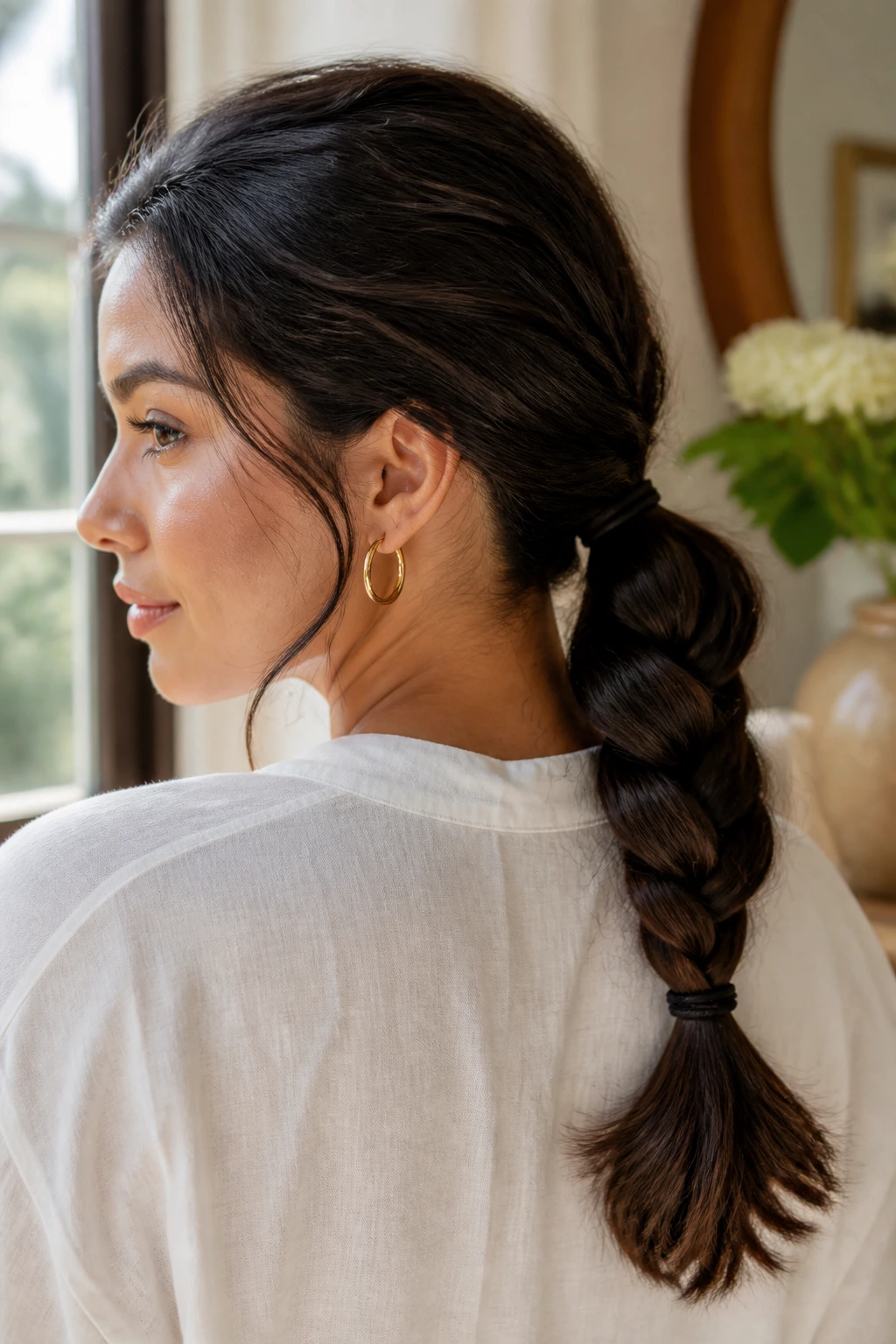
A low braided ponytail is the nearest thing thick hair has to a reset button. You pull everything down to the nape, secure it with a no-slip elastic, and let the braid do the work of keeping the length neat instead of loose and sprawling.
It’s one of the rare styles that looks better with a little fullness. If the braid is too tight, it can turn ropey and severe. Give it a gentle pinch after you braid it, and the whole thing softens up. That puffed-out shape is part of the appeal.
Why It Works
The ponytail base takes the weight off your face and crown, which is where thick hair tends to feel most tiring. The braid keeps the tail from tangling against jackets, scarves, and chair backs.
A tiny detail matters here: secure the base first, then braid the tail all the way to the ends before adding a second small elastic. If your hair is freshly washed and a bit slippery, mist the mid-lengths with texturizing spray before you start.
Quick Details
- Best for long thick hair that needs control, not volume reduction.
- Looks strongest when the braid sits just below the nape.
- Holds up well on day-two hair.
- Works with straight, wavy, or curly texture.
Pro tip: Wrap a thin strand of hair around the base elastic and pin it underneath. It makes the whole style look finished, even if the braid itself is loose in a few spots.
2. The Claw-Clip French Twist That Doesn’t Fight Your Hair
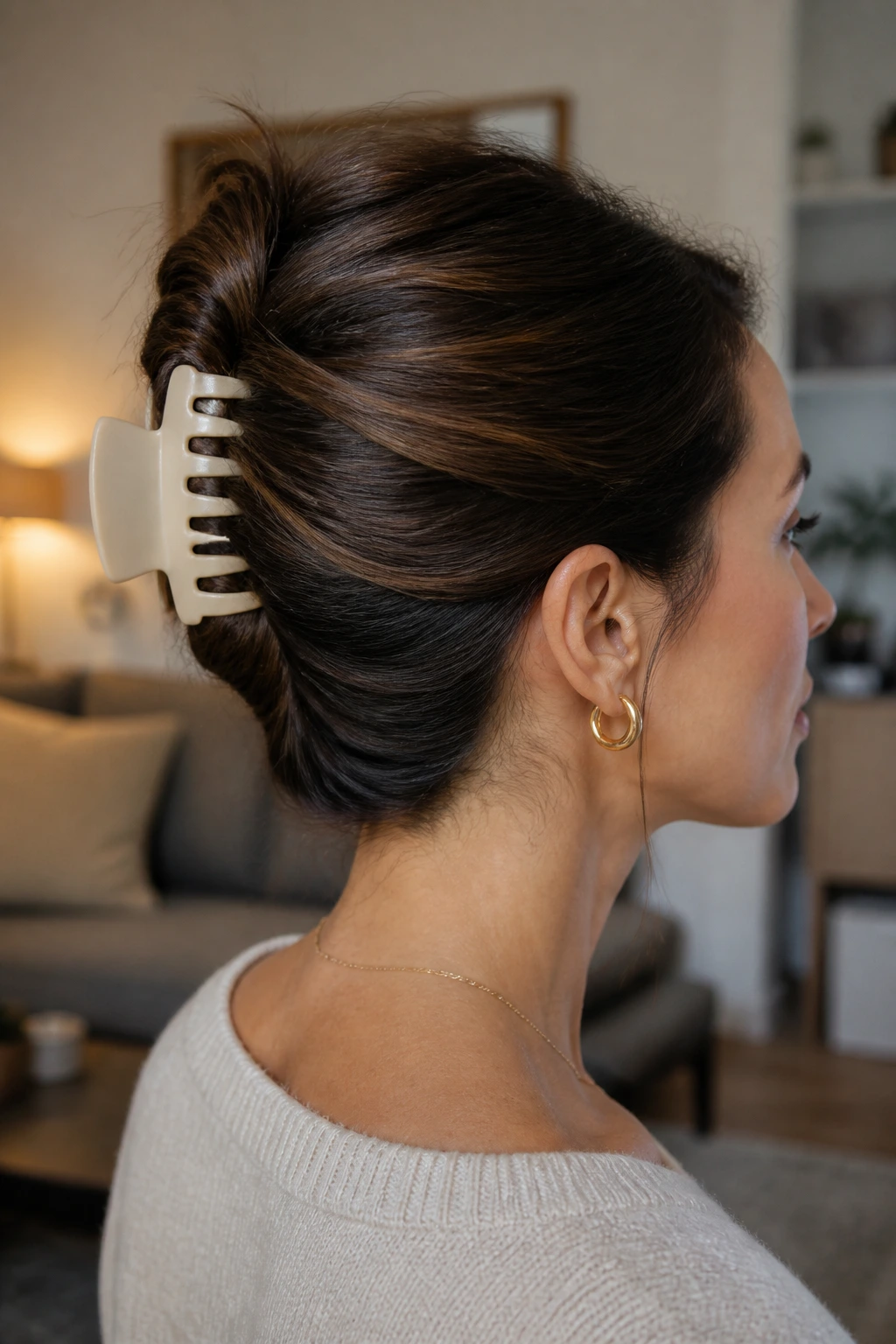
If a style can survive a head turn and a coat hood, it’s earned its place. The claw-clip French twist does exactly that when the clip is big enough and the twist is anchored flat against the back of the head.
Thick hair gives this style more structure than you’d get from finer hair. You get a fuller twist, a softer shape, and less of that sad, half-empty clip effect. Use a large clip — the kind with real teeth — and twist the hair upward before folding the ends under.
Why It Works
The trick is not to pile the hair high too early. Gather it first, twist it once or twice, and then tuck the length inward before clipping. That keeps the weight centered and stops the clip from sliding down after twenty minutes.
If your hair is extra dense, a second smaller clip at the base can help. Not glamorous. Very practical. I prefer practical.
3. The Half-Up Top Knot That Keeps Your Face Clear
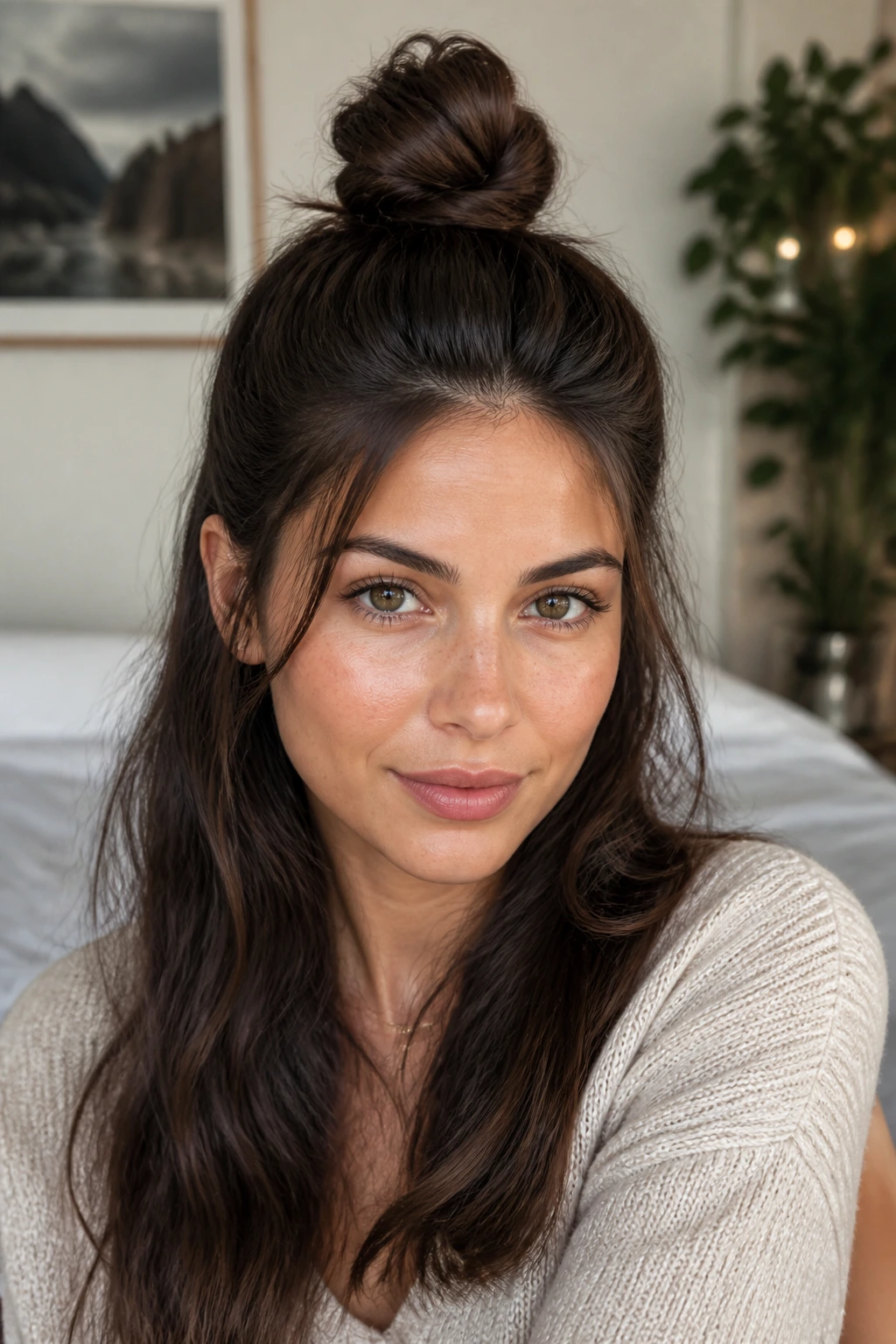
Need your hair out of your eyes by minute three? This one. A half-up top knot takes the heavy part of thick hair — the crown, the front, the pieces that wander into your face — and lifts just enough of it away without asking you to commit to a full updo.
It works especially well when your ends are nice but your roots are doing that “I need a break” thing. Leave the length down and let the knot sit small and tidy. Or make it a little messier if your hair has some wave. Both versions work.
How to Make It Hold
Take a section from temple to temple, gather it at the crown, and twist it into a tight mini bun or knot. Secure it with one elastic and two bobby pins crossed at the base.
If the top section keeps slipping, backcomb the underside of that crown section once or twice. Not a huge tease. Just enough roughness to give the elastic something to grab.
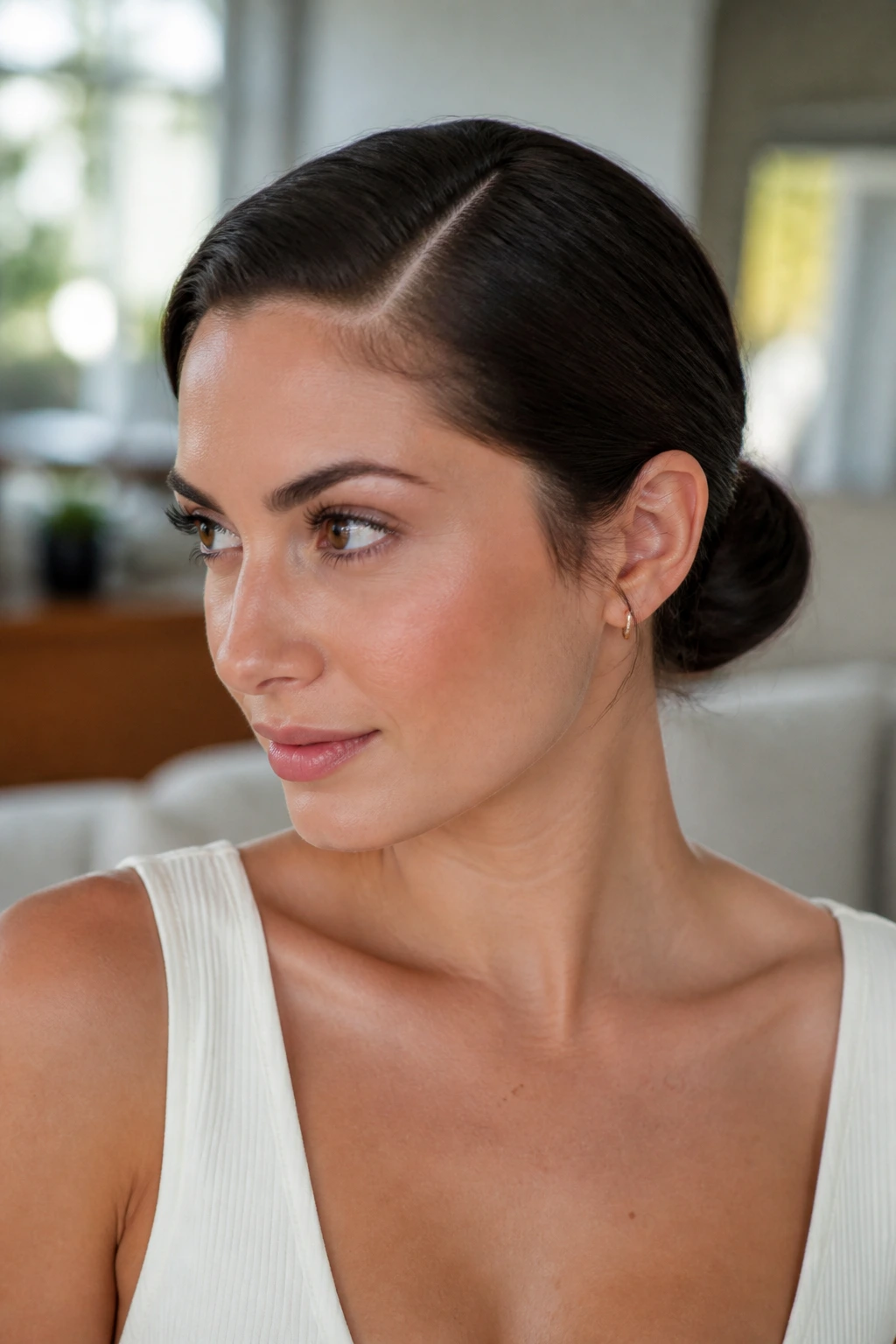
4. The Sleek Low Bun With a Side Part That Looks Clean Without Trying Too Hard
A sleek low bun on thick hair works better when you stop chasing perfect smoothness. Seriously. Thick hair has enough body that a tiny bit of texture near the ears looks better than a shellacked finish that cracks the second you move.
Start with a sharp side part, brush the hair back with smoothing cream or a pea-size gel, and gather it low at the nape. Coil the length into a bun, tuck the ends under, and pin around the edges so the weight is spread out instead of sitting in one heavy lump.
What Makes It Different
The side part gives the style shape before the bun even goes in. On thick hair, that matters. Otherwise the style can look like a round mass instead of a deliberate silhouette.
If your ends are dry, put a drop of hair oil on your palms first and smooth only the outer layer. Too much oil near the roots turns the whole thing limp.
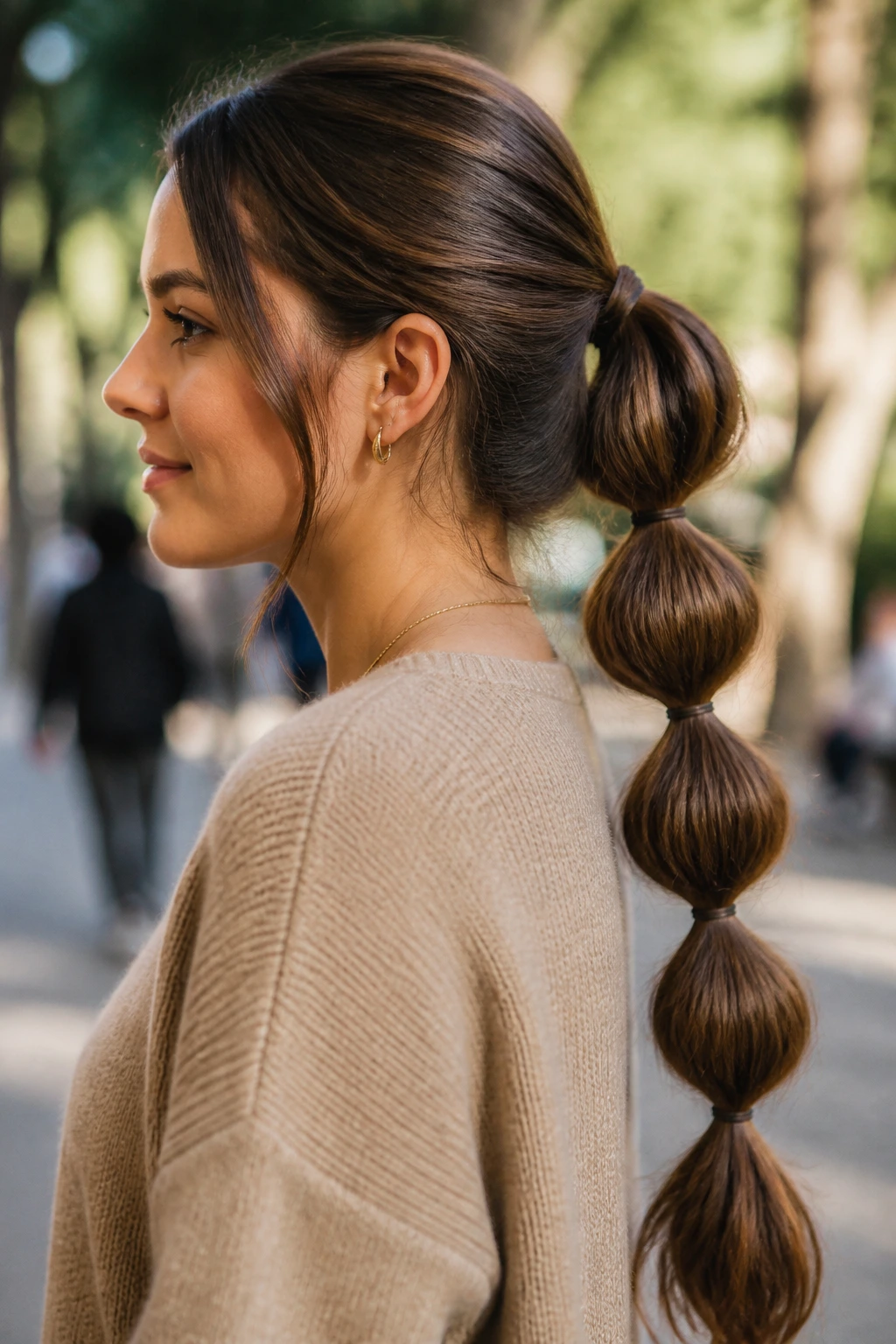
5. The Bubble Ponytail That Makes Thick Hair Look Intentional
Bubble ponytails are one of those styles that look fussy in theory and surprisingly easy in practice. Thick hair is perfect for them because each section fills out on its own, so the bubbles look full instead of pinched.
Tie the hair into a low or mid ponytail, then add elastics every 2 to 3 inches down the length. Gently pull at each section between the elastics until it rounds out. Don’t yank. Just widen.
Why It Works So Well on Dense Hair
The thickness does half the styling for you. Fine hair needs help to create visible bubbles. Thick hair gives you shape automatically, which is why this style looks richer and less forced on dense lengths.
Use clear elastics or slim black ones if you want the focus on the shape. If you want a softer finish, wrap a tiny strand of hair around the first elastic at the base.
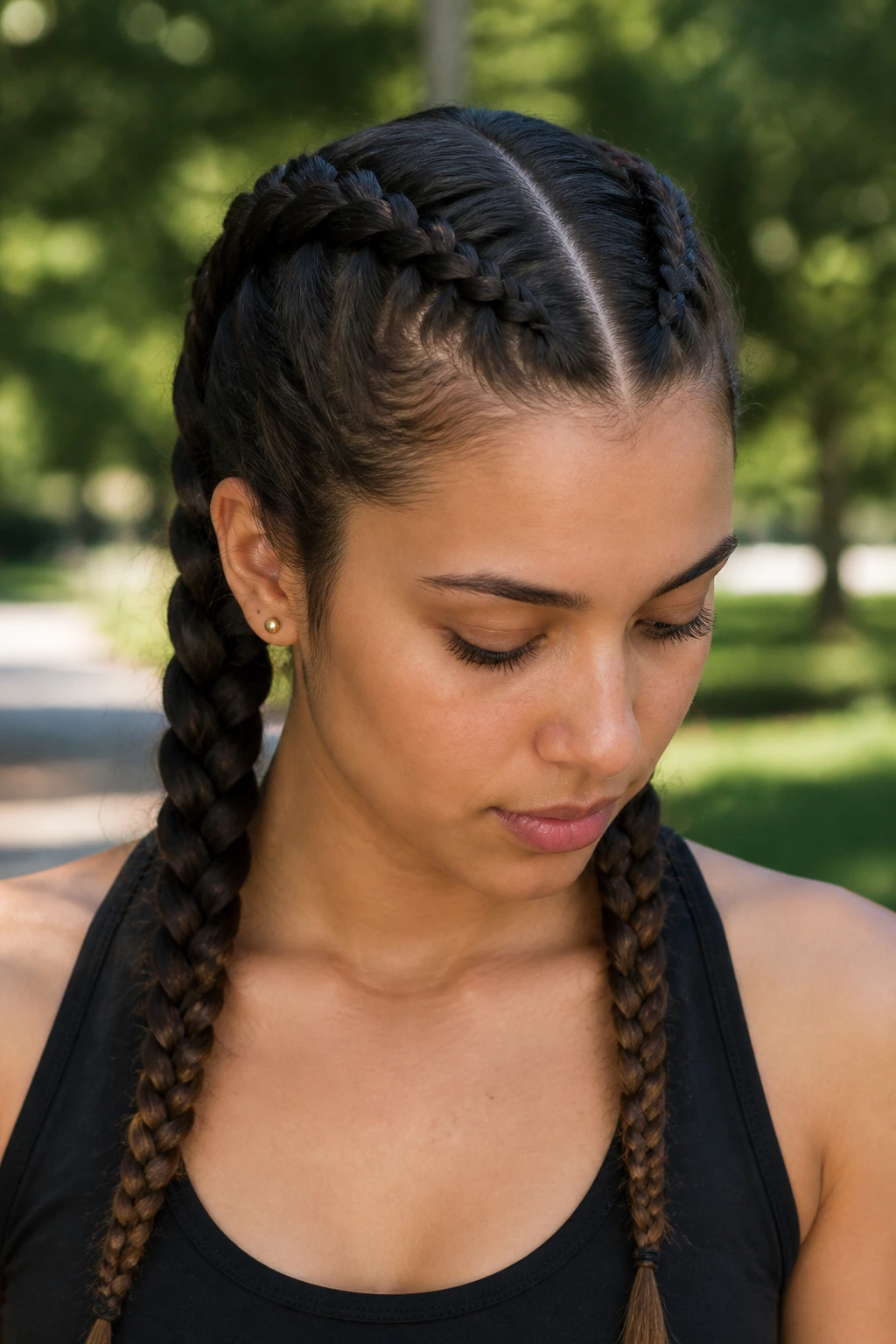
6. The Double Dutch Braids That Stay Put Through Real Life
These are the old workhorse of thick hair. Two Dutch braids can survive errands, a gym session, a windy walk, and the kind of day where you take your hair down only because your scalp wants a small vacation.
The key is clean parting and firm tension at the scalp. Start with a center part, divide each side into three sections, and braid under rather than over so the braid sits on top of the hair. Thick hair makes them look bold even when your hands are not being especially precise.
A Small but Important Note
Keep the front sections tight and the braid a little looser after the first few inches. That gives you control at the roots without making the ends feel stiff or cramped.
If your hair is layered, a little spritz of water on the shorter front pieces before you start helps them join the braid instead of escaping from it.
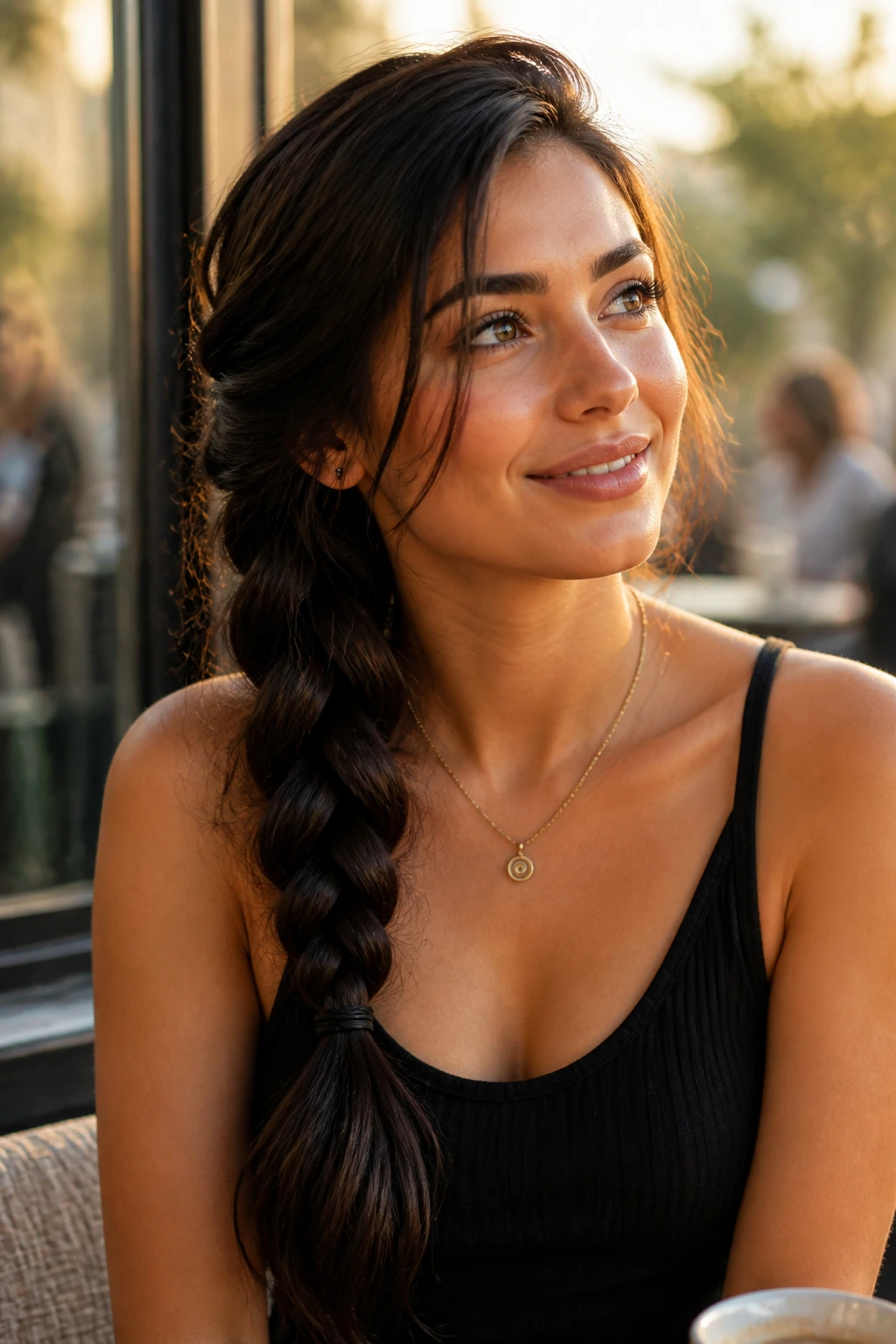
7. The Side Braid Over One Shoulder That Softens Thick Lengths
Why does a side braid feel easier than it looks? Because thick hair already gives it shape. You’re not trying to manufacture volume here. You’re just moving it into one place and letting the braid read as full instead of flat.
Pull the hair over one shoulder, braid it loosely or tightly depending on the mood, and stop a few inches from the end if you want a softer finish. A side braid with gently pulled-out edges looks fuller and a little less severe, which is usually the point.
Best Use Case
This is the style I’d reach for when the hair is past day one and starting to feel heavy at the crown. A side braid gives your neck a break and keeps the length from rubbing against your coat, seatbelt, or sweater collar.
A texturizing spray at the mid-lengths before braiding makes the braid easier to handle and keeps fine flyaways from sliding out immediately.
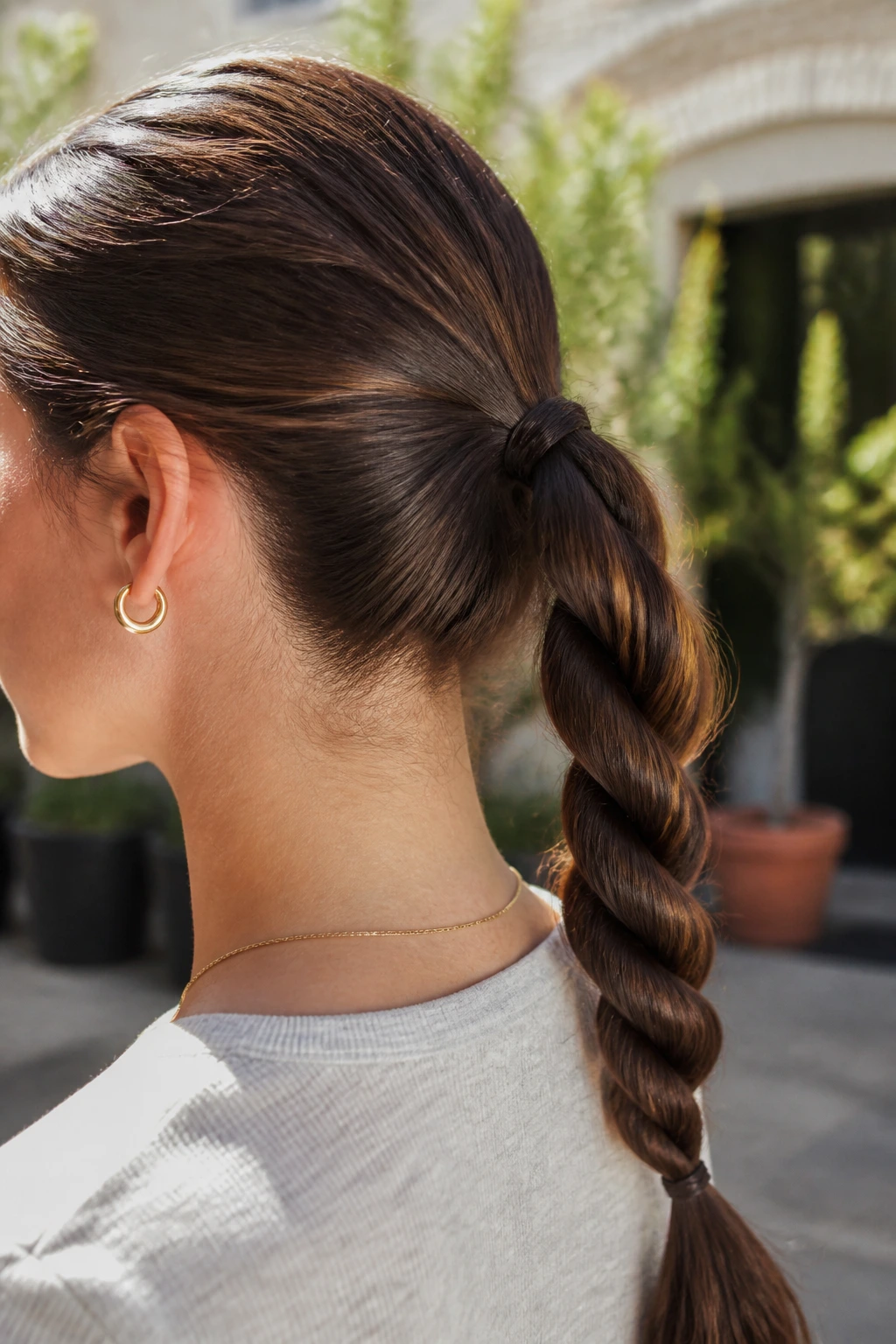
8. The Rope-Braid Ponytail That Takes Half the Time of a Three-Strand Braid
A rope braid is a nice cheat code for thick hair because it looks more intricate than it is. You split the ponytail into two sections, twist each one in the same direction, then wrap them around each other in the opposite direction. That’s the whole trick.
It’s especially good when your arms are tired or your hair is slippery. The twist structure tends to hold better than a loose three-strand braid on very heavy hair, and the finished result looks neat without needing perfect hand work.
What to Watch For
The two sections need to be twisted evenly before you wrap them together. If one side is looser than the other, the braid starts to wobble and unravel at the bottom.
Use a strong elastic at the base, because the style depends on that anchor point. If the ponytail slips, the whole rope braid slides with it.
9. The Messy High Bun That Thick Hair Makes Look Full on Purpose
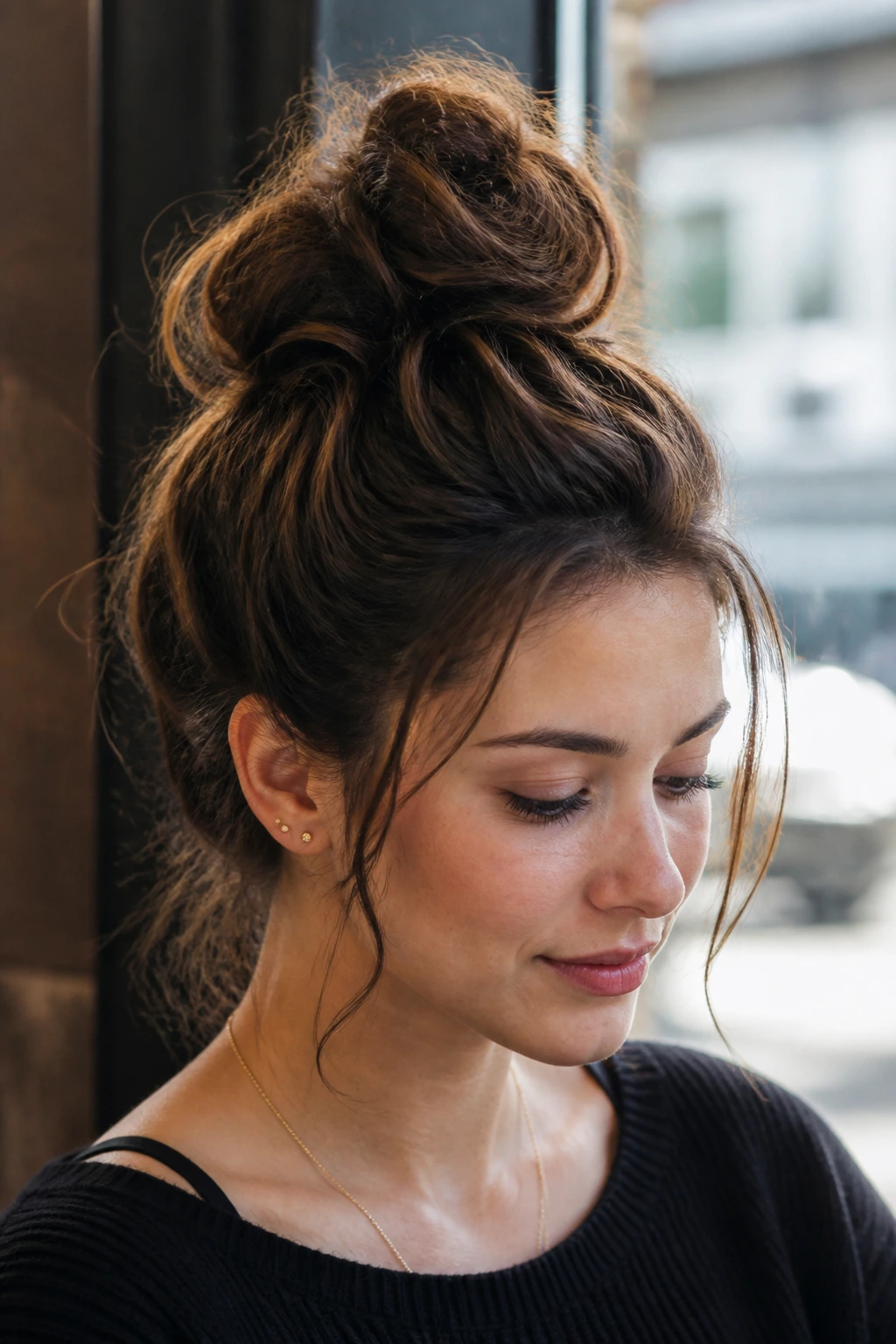
A messy high bun on thick hair is less “I gave up” and more “I know what I’m doing.” The bun has enough weight to look round and substantial even when you leave a few ends out on purpose.
Gather the hair high, secure it into a ponytail, then twist the length around the base and pin as you go. Don’t try to smooth every tiny bump. Leave a few pieces loose near the ears or nape if you want a softer face shape.
Why It’s Better on Thick Hair
Dense hair gives the bun body without needing a padding donut. That means the style feels less artificial and holds its shape longer because the bun itself has enough mass to stay rounded.
Use large bobby pins or U-pins for this one. Tiny pins sink into thick hair and disappear without doing much.
10. The Half-Up Claw-Clip Twist That Saves a Morning Fast
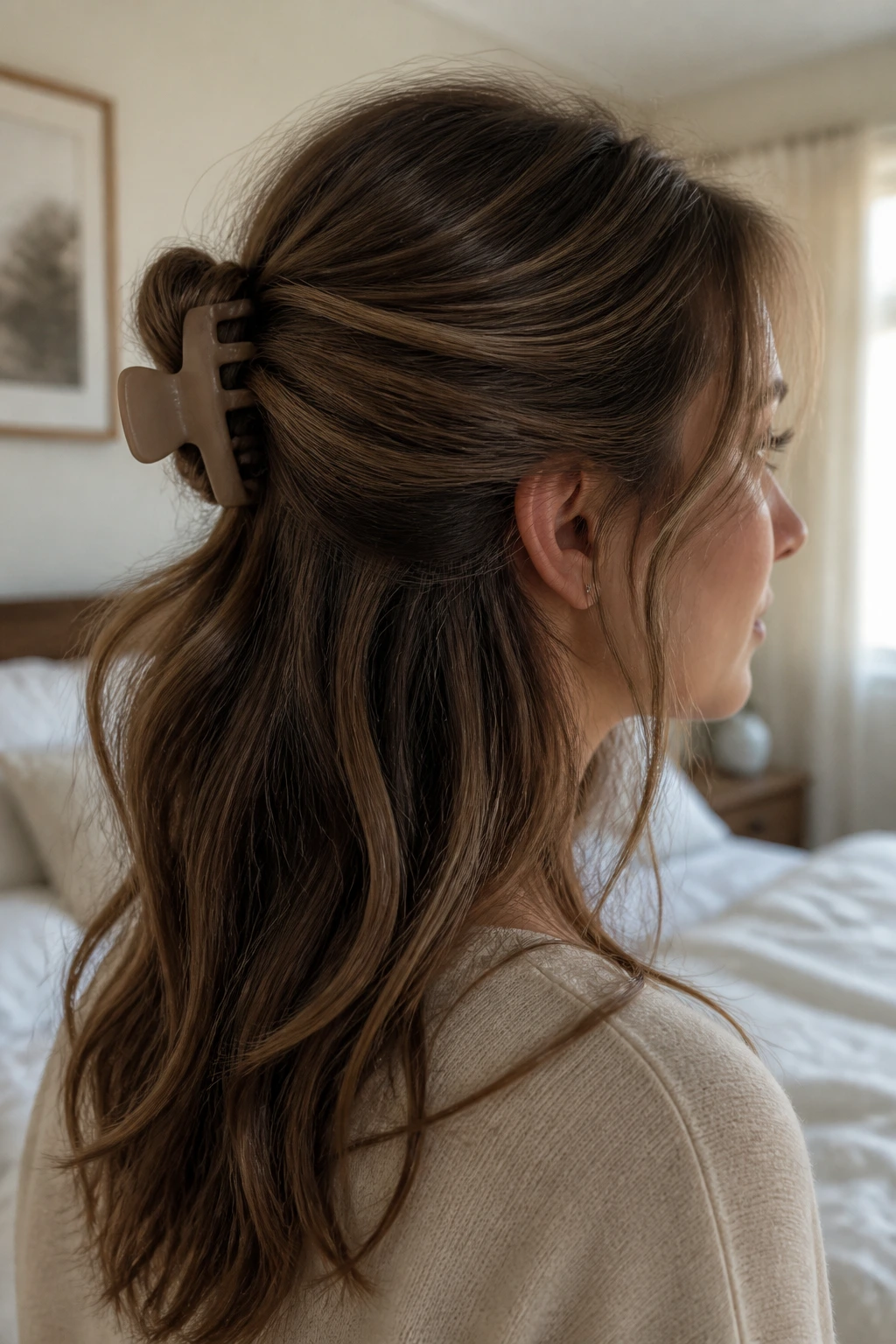
Some mornings, you need your hair off your neck and you need it there five minutes ago. The half-up claw-clip twist does that with almost no ceremony.
Section the top half of the hair, twist it once or twice, and clip it at the back so the ends spill loosely over the clip. Thick hair makes this style look fuller and more expensive than it has any right to, especially if the clip is matte or tortoiseshell instead of shiny plastic.
Why It Works
You’re only lifting the top layer, which means less bulk in the clip and less pulling at the scalp. That matters if you’ve got a lot of hair and do not want a headache by lunchtime.
If the twist feels too bulky for one clip, split the top section into two smaller twists and stack the clips slightly apart. It’s a small adjustment, but it changes the whole feel of the style.
11. The Scarf-Wrapped Low Ponytail That Hides the Ends You Don’t Want to Deal With
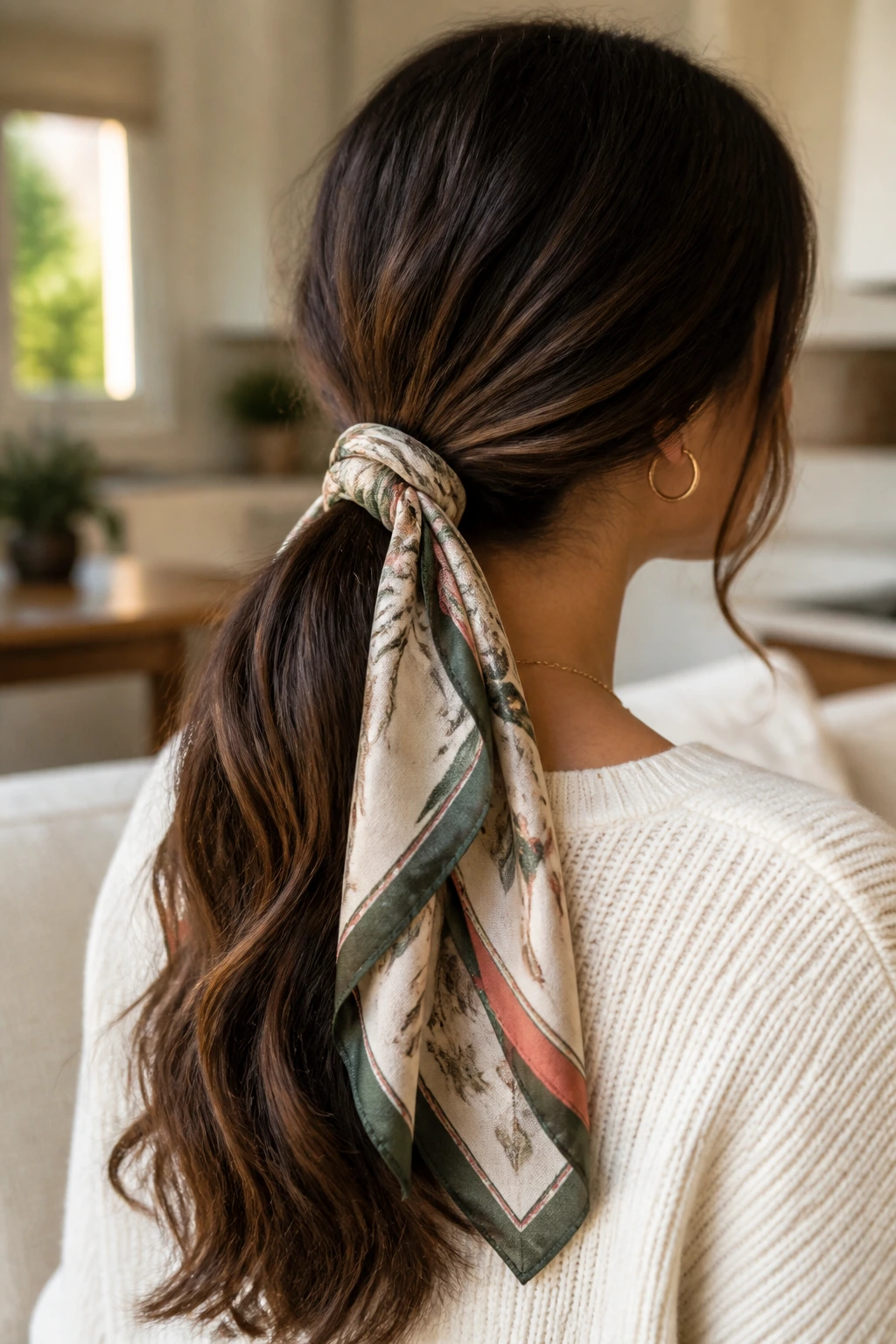
A scarf wrapped around a low ponytail is one of my favorite ways to make thick hair behave when the ends are dry, uneven, or in that weird stage where they flip out in different directions. The scarf covers the base and gives the whole look some polish without demanding a lot.
Tie the ponytail low, smooth a silk or satin scarf around the elastic, and let the tails drape or knot them beneath the pony. The scarf also keeps the elastic from digging into the hair, which is a nice bonus if your hair is heavy and you wear styles for long stretches.
The Little Advantage
This style is useful when your hair has layers that refuse to stay neat. The scarf disguises the difference between sections and makes the whole ponytail look deliberate.
Choose a scarf that’s wide enough to hold its knot. Thin fashion scarves can slip, which is annoying in the exact way thick hair does not need.
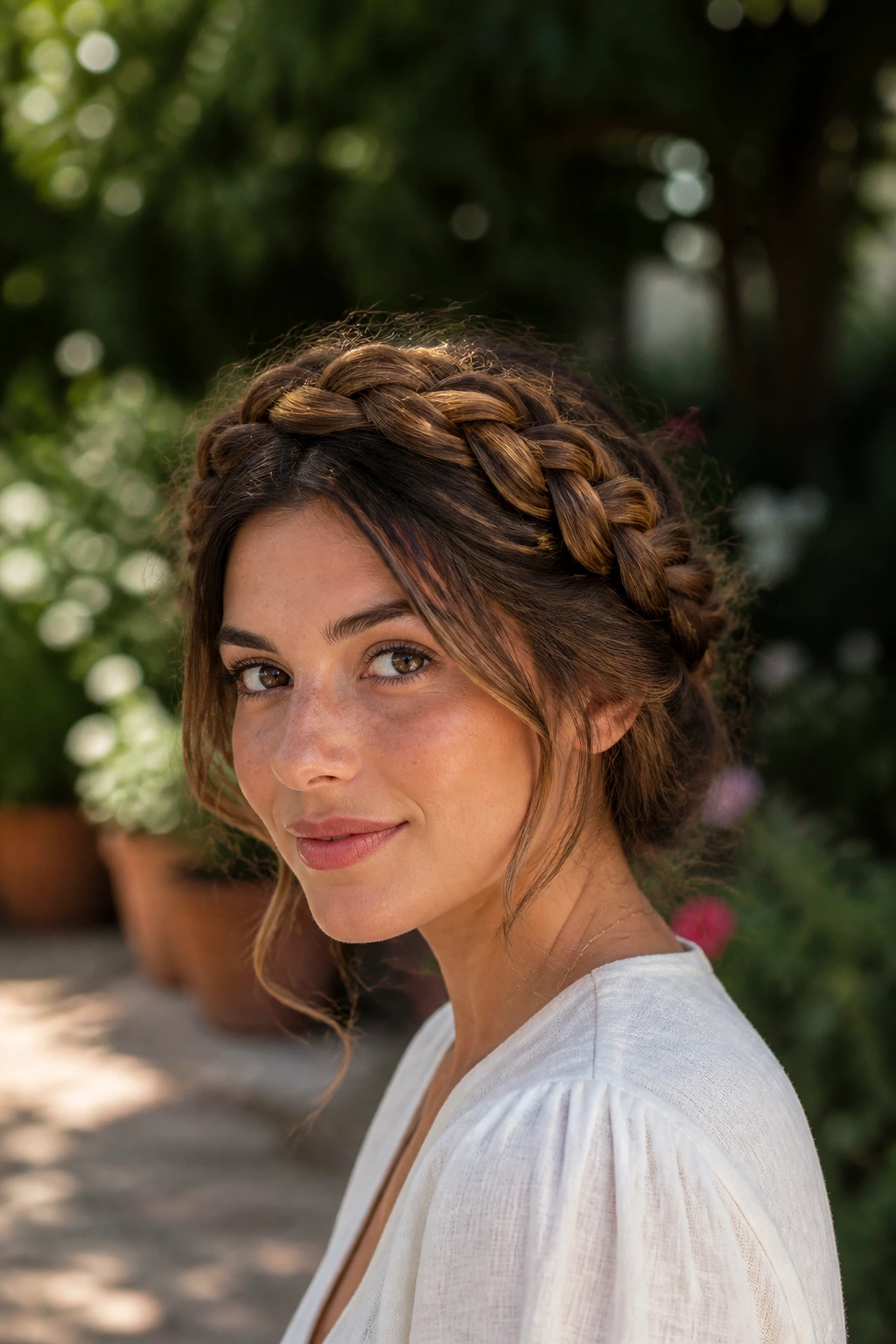
12. The Crown Braid Halo That Uses Fullness Instead of Fighting It
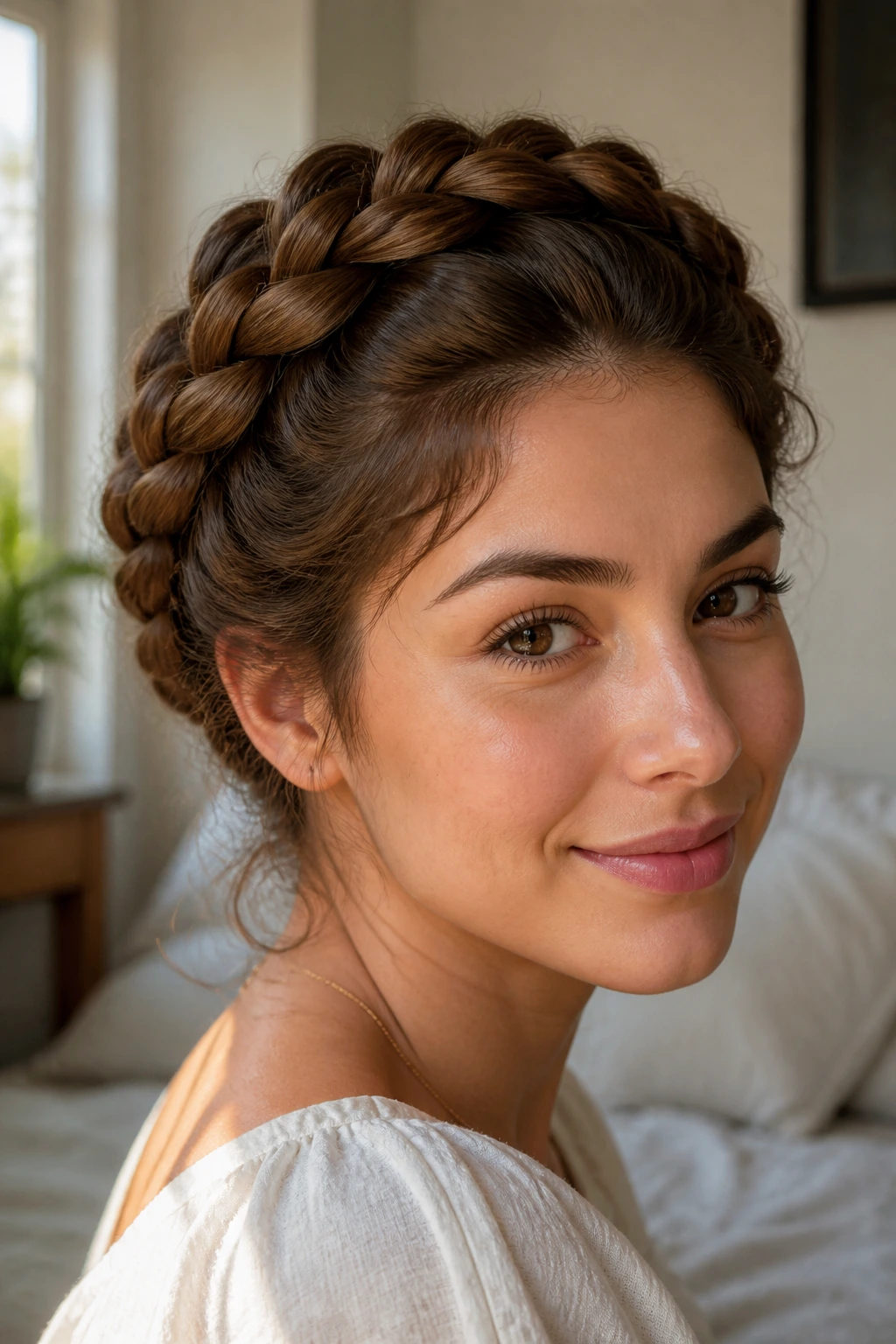
Want the kind of style that keeps hair off the neck without using heat or a ton of pins? A crown braid halo is the answer. Thick hair is actually helpful here because the braid looks lush and rounded rather than wispy.
Braid from behind one ear, follow the hairline around the head, and pin the tail under the opposite side. The trick is keeping the braid close to the scalp while not pulling so hard that the whole thing feels tight and bony.
How to Make It Less Fussy
If your hair is long, stop the braid once you’ve reached the back of the head and hide the remaining length under the finished braid. You do not need to braid every last inch to get the effect.
A little texture spray at the roots helps the braid grip. On very silky hair, the halo can slide unless you give it some roughness first.
13. The Folded-In Low Ponytail That Takes a Minute and Looks Surprisingly Intentional
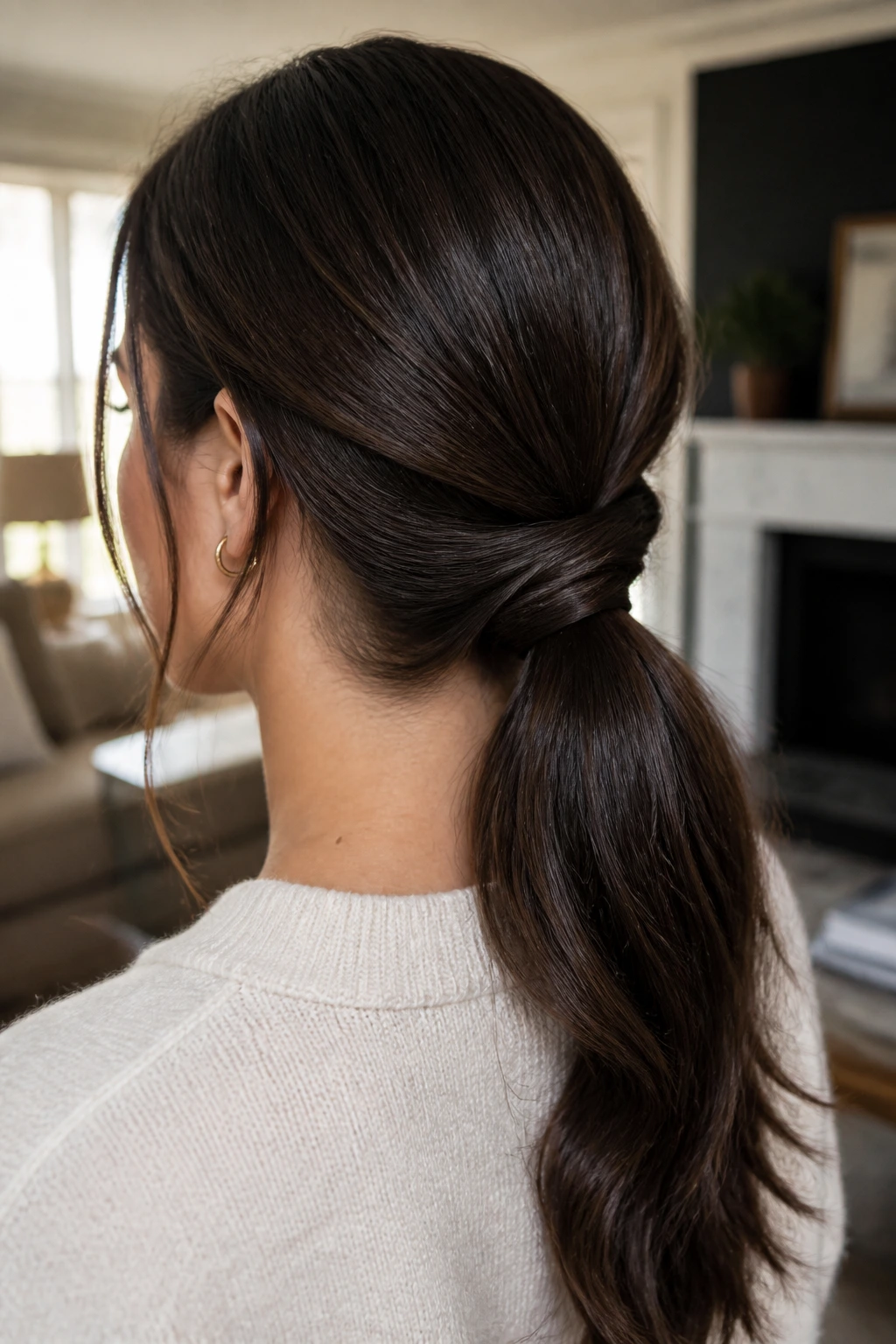
This is the style for the day you want to look put together without acting like you spent the morning negotiating with a curling iron. Gather your hair into a low ponytail, then on the final wrap of the elastic, pull the length only halfway through so it folds back on itself.
The result is a soft loop that reads as a knot or tucked ponytail. Thick hair makes the loop substantial enough to stay visible, which is half the charm.
Why It’s So Good for Dense Hair
The folded shape keeps the weight centered instead of hanging straight down. That means less tugging on the elastic and less droop as the day goes on.
If the fold feels too wide, twist the tail once before looping it through. That narrows the shape and gives the style a bit more polish.
14. The Double Mini Buns That Break Up Heavy Hair Without a Lot of Work
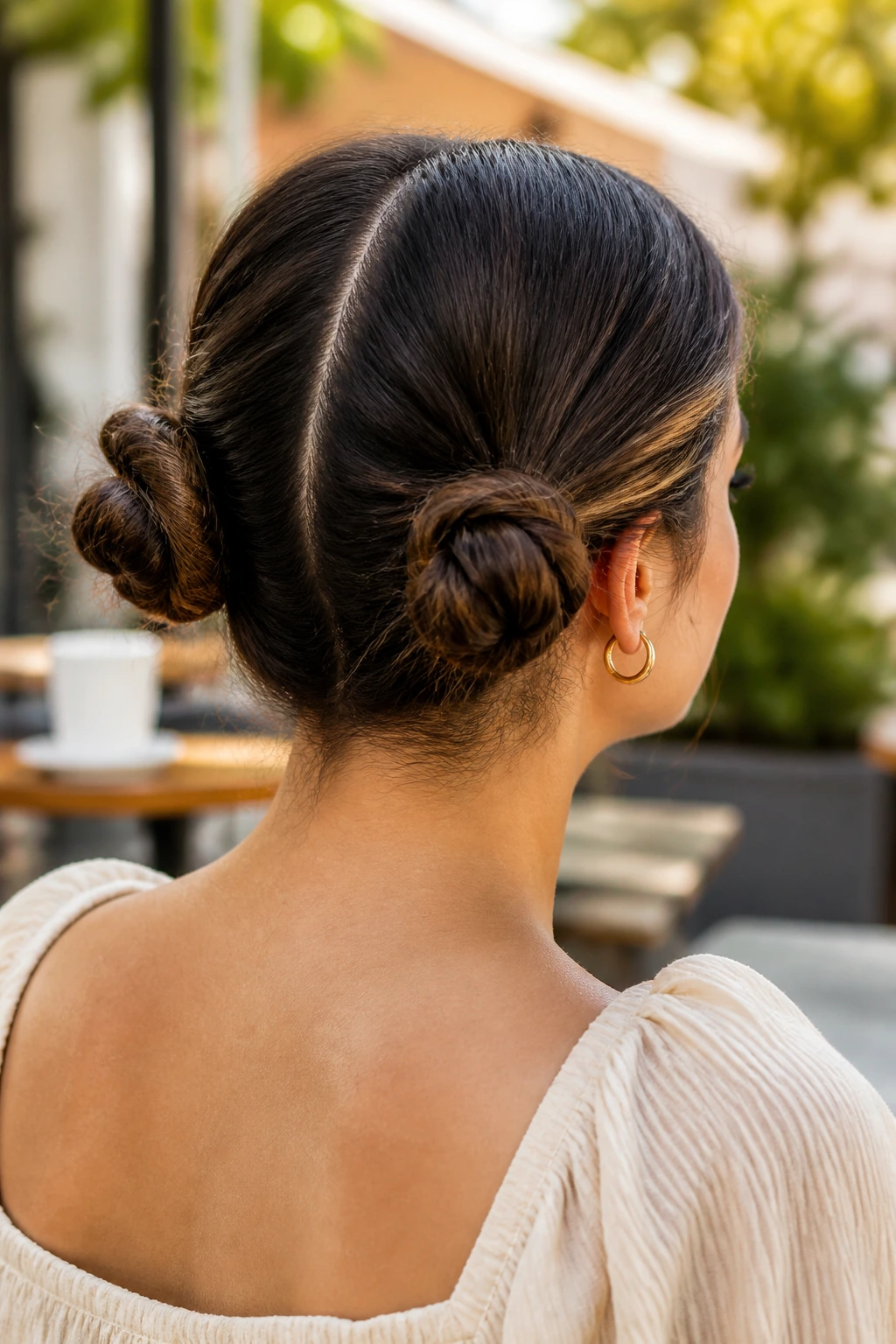
Two buns beat one giant knot when your hair is very dense. Split the hair down the middle, make two low ponytails or high pigtails, then twist each one into a small bun and pin the ends under.
This is a playful style, but not childish if you keep the buns neat and the part clean. Thick hair gives each bun enough mass to look full instead of sad and skimpy.
When to Reach for It
This is a good warm-weather style, a weekend style, and a style for days when your hair feels too heavy to wear all down. The symmetry also helps if your hair has a lot of movement and tends to puff out on one side more than the other.
A center part usually looks the cleanest here, though a deep side part can make the style feel softer and less exact.
15. The Pull-Through Braid Ponytail That Looks Fancy Without Real Braiding Skill
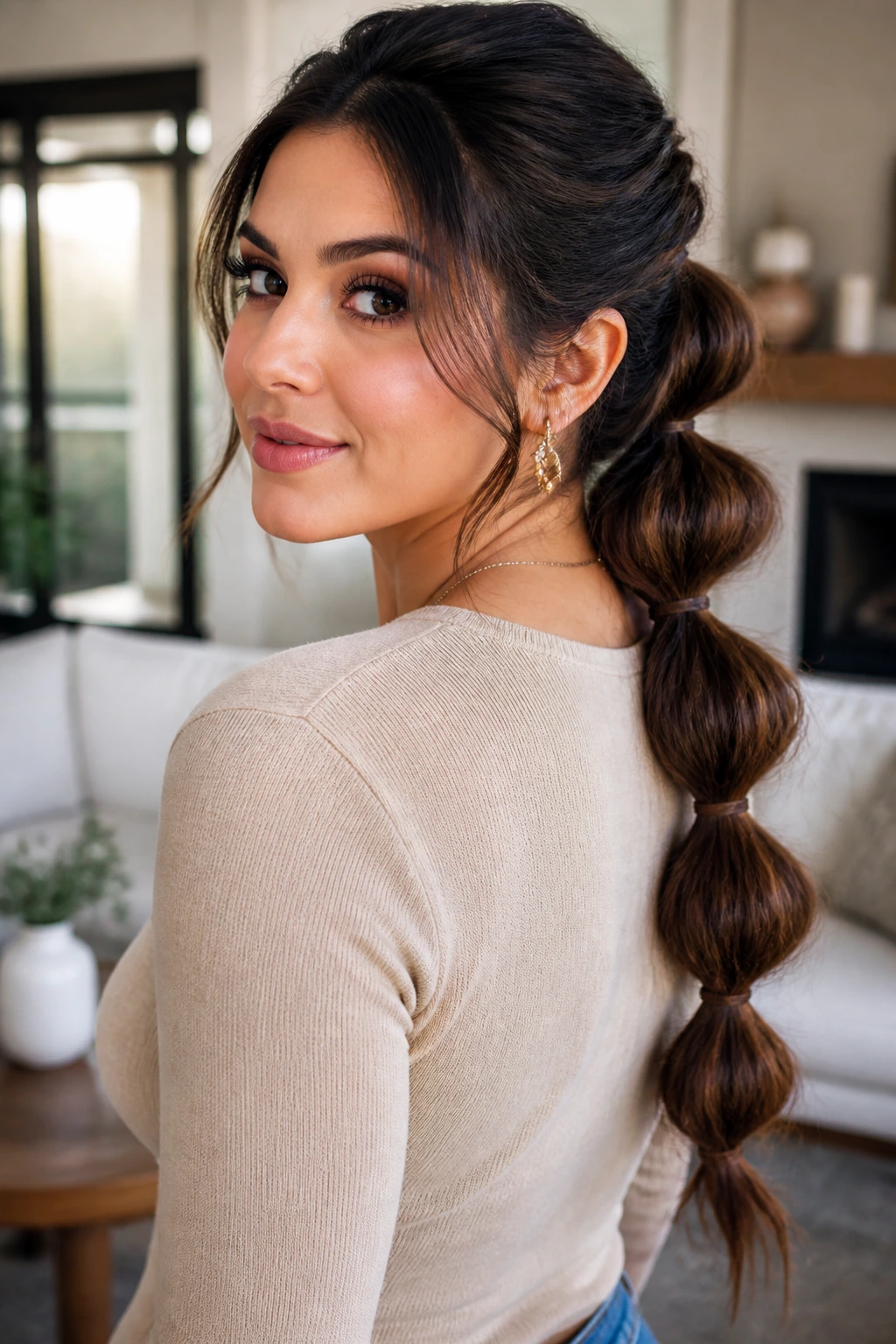
A pull-through braid is a solid trick if you love the look of a big braid but don’t want to wrestle with three sections all the way down your back. For thick hair, it can look almost theatrical in the best way, because every loop gets extra body.
Start with a ponytail, split it in half, and use small elastics to build stacked sections that get pulled through one another. You’re basically building a braid shape with ponytails instead of weaving strands. A bit of patience at the start pays off fast.
The Payoff
Thick hair fills out each segment, so the finished braid has volume without teasing or padding. That’s what makes it worth the extra elastic or two.
If you want it smoother, brush each section before looping it through. If you want a more casual version, tug the edges of each bubble after it’s set and let a few pieces fall loose around the face.
16. The Jaw-Clip Half-Up Twist That Feels Lighter Than a Claw Clip
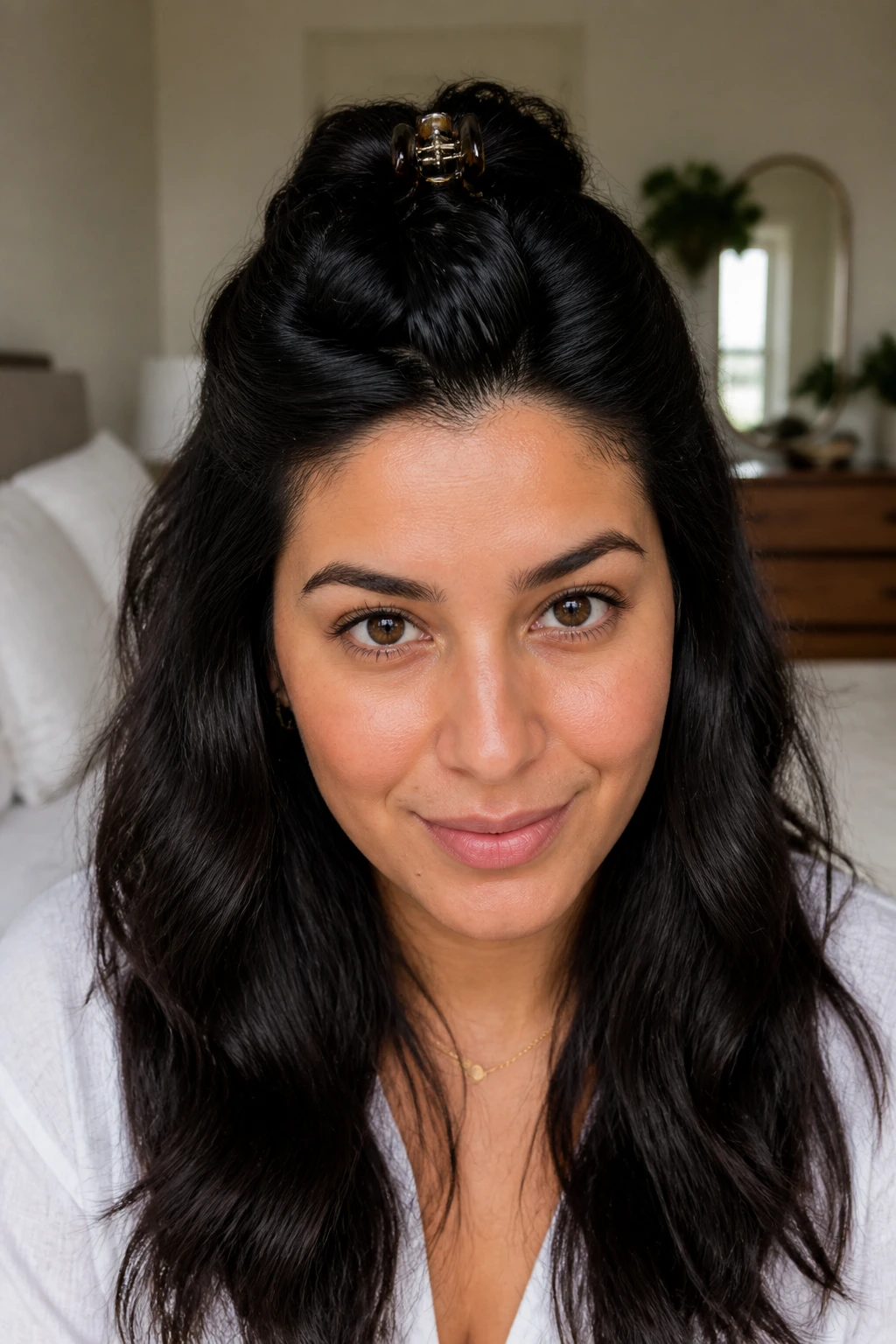
A smaller jaw clip can still work on thick hair if the twist is narrow and anchored flat. This is the version I like when I want the top half away from my face but don’t want the bigger claw clip sitting there like hardware.
Take a slimmer crown section, twist it upward, and secure it with a jaw clip so the teeth catch the twist and the base underneath. The rest of the hair stays down, which makes the whole look feel relaxed.
What Makes It Different
The jaw clip creates less bulk than a large claw clip, which helps if you have shoulder-length thick hair or layers that keep escaping from larger clips.
Do not overstuff the clip. That’s the fastest way to make it slide. If the clip feels strained when you close it, reduce the amount of hair in the twist and add one or two bobby pins beneath it.
17. The Looped Low Bun With a Scrunchie That Keeps Tension Gentle
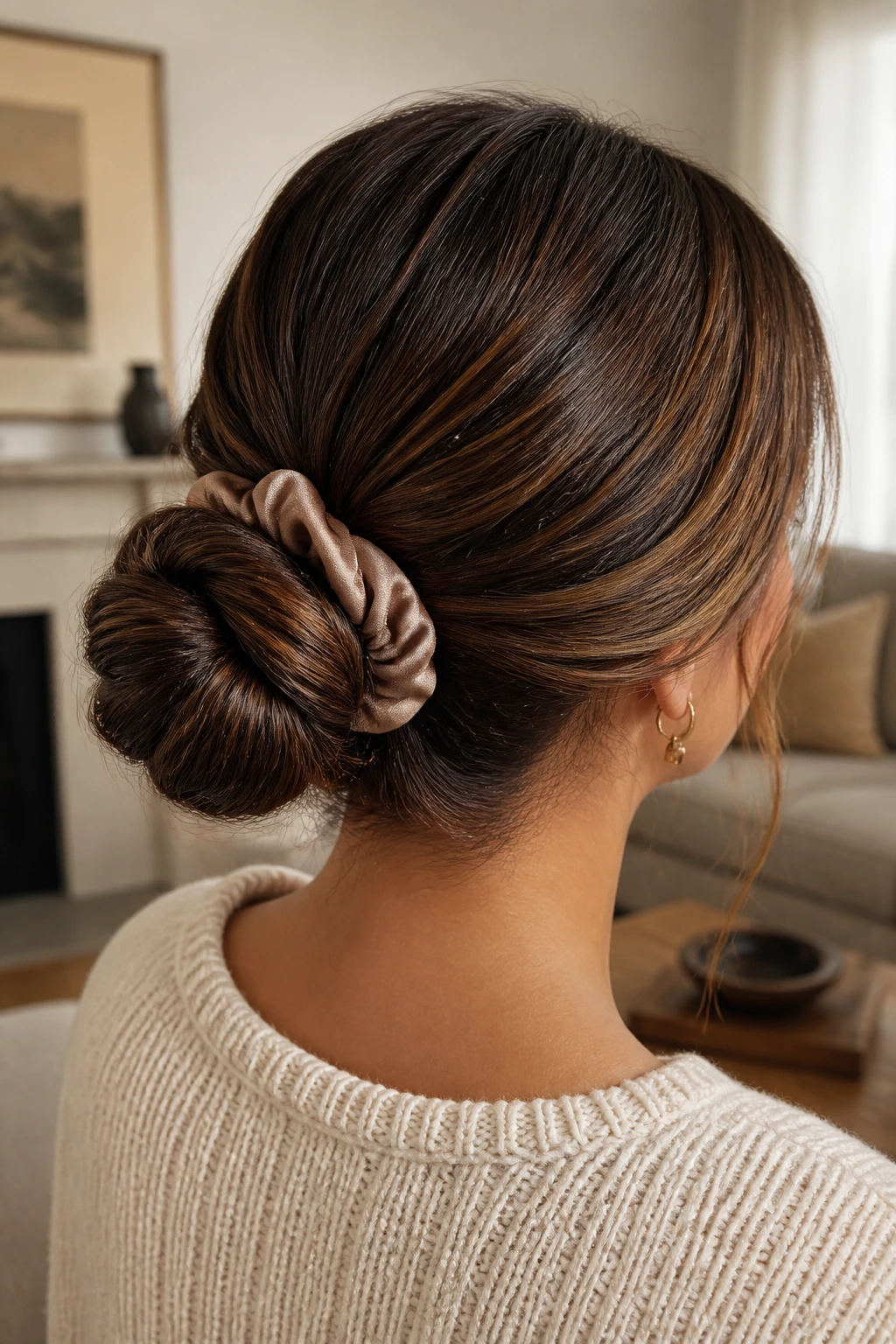
A looped bun with a scrunchie is a nice break from tighter styles. The scrunchie gives the base a little cushion, and thick hair fills the loop enough that the bun still looks intentional.
Gather the hair low, secure it once with the scrunchie, and on the last wrap, pull the length only halfway through. Let the ends fold under or fan out slightly. It’s soft, easy, and kinder to hair that’s been in braids or clips all week.
Why I Keep Coming Back to It
Some styles on thick hair feel like a tug of war. This one doesn’t. It holds without squeezing hard, and the scrunchie spreads the pressure across a wider band instead of concentrating it in one spot.
Choose a satin or silk scrunchie if your hair tangles easily. Cotton is fine, but it creates more friction.
18. The Slicked-Back Braided Bun That Handles Humidity Without Complaining
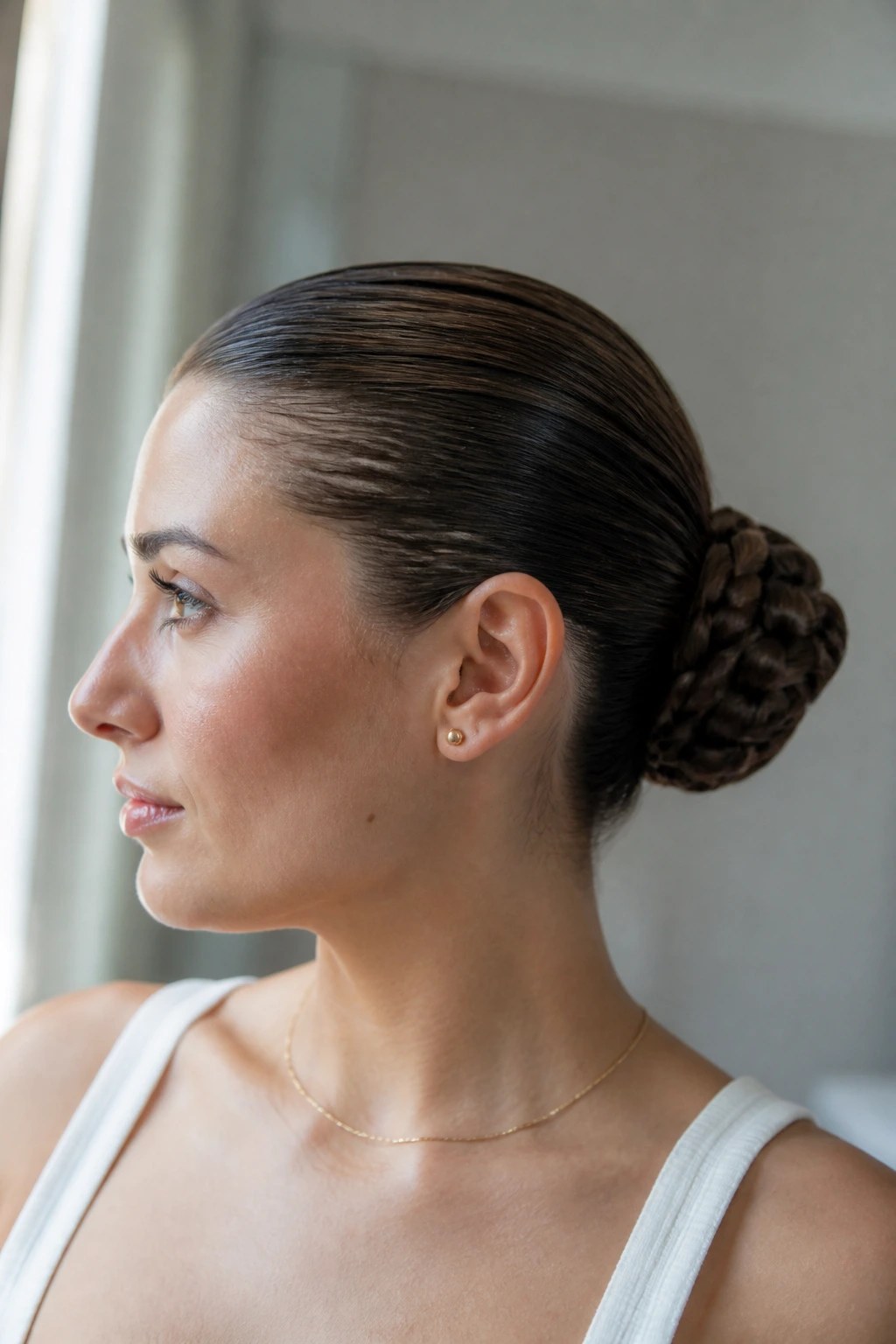
Humidity makes hair tell on you. A slicked-back braided bun gives that mess nowhere to go. Brush the hair back with gel or styling cream, make a low ponytail, braid the length, and wrap the braid into a bun at the nape.
The braid helps the bun stay locked in place, and the sleek front keeps the style looking crisp even if the air is doing what it wants. Thick hair is useful here because it makes the bun look substantial instead of tiny and overworked.
Small Warning
Do not overload the roots with product. Too much gel gives you greasy-looking shine at the hairline and dries into flakes later. Use just enough to smooth the front and the part, then stop.
19. The Wide Headband Tucked Waves That Fix Frizzy Lengths Fast
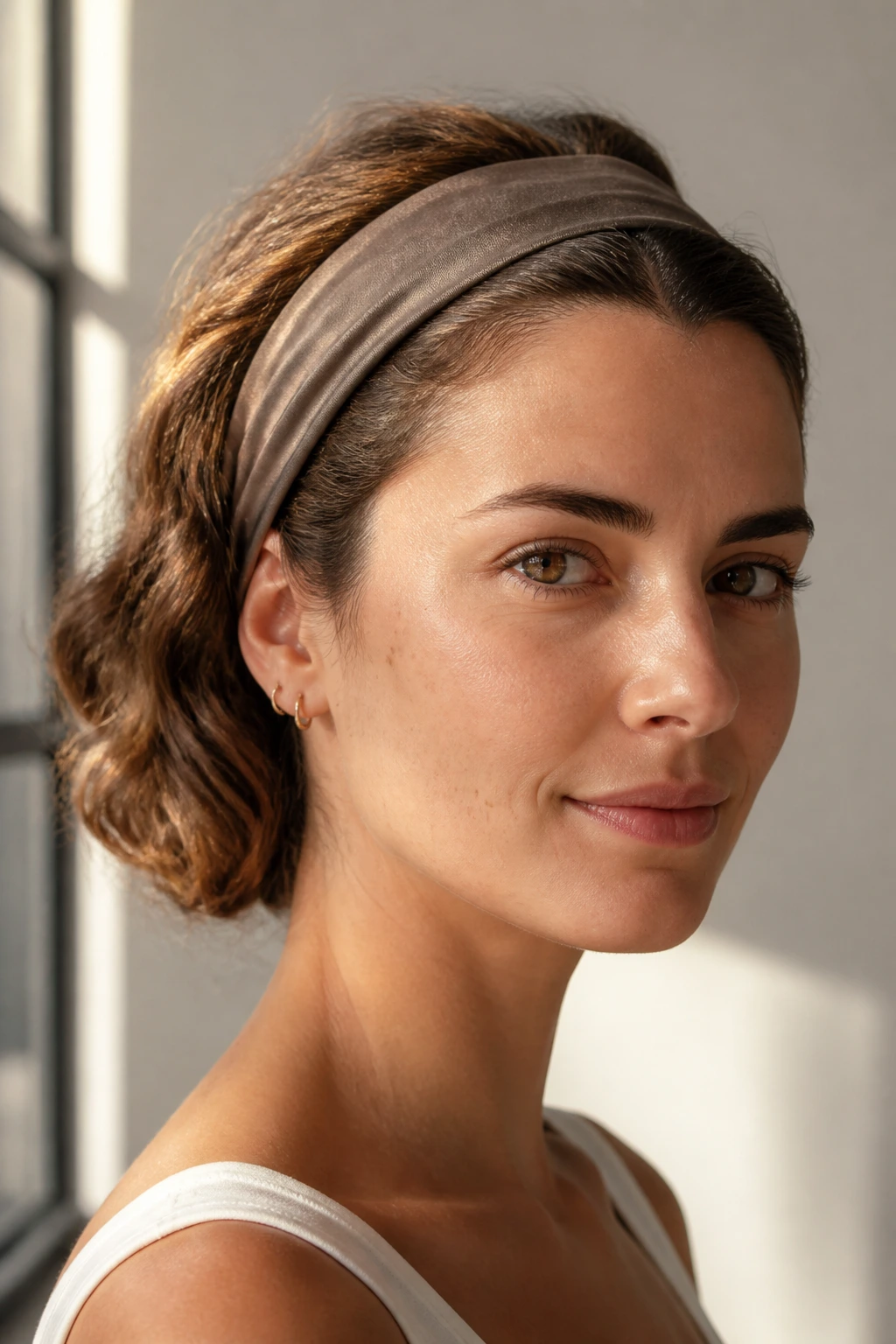
A wide headband can save a rough hair day in less time than it takes to heat a straightener. Slide the band on, tuck the lengths up and around it, and let the hair nest under the band so the ends disappear into the shape.
This works best with thick hair that already has some wave or bend. The band holds the front away from the face while the tucked length makes a soft rolled shape at the back.
Why It’s Handy
When thick hair puffs at the crown or flips at the ends, the headband gives you a clean border. That border matters more than perfection. Once the line is neat, the rest can stay a little loose.
A stretchy, wide band grips better than a narrow one that slides upward. Narrow bands tend to look cute for a minute and then disappear into the hair.
20. The Pinned Side Chignon That Looks More Complicated Than It Is
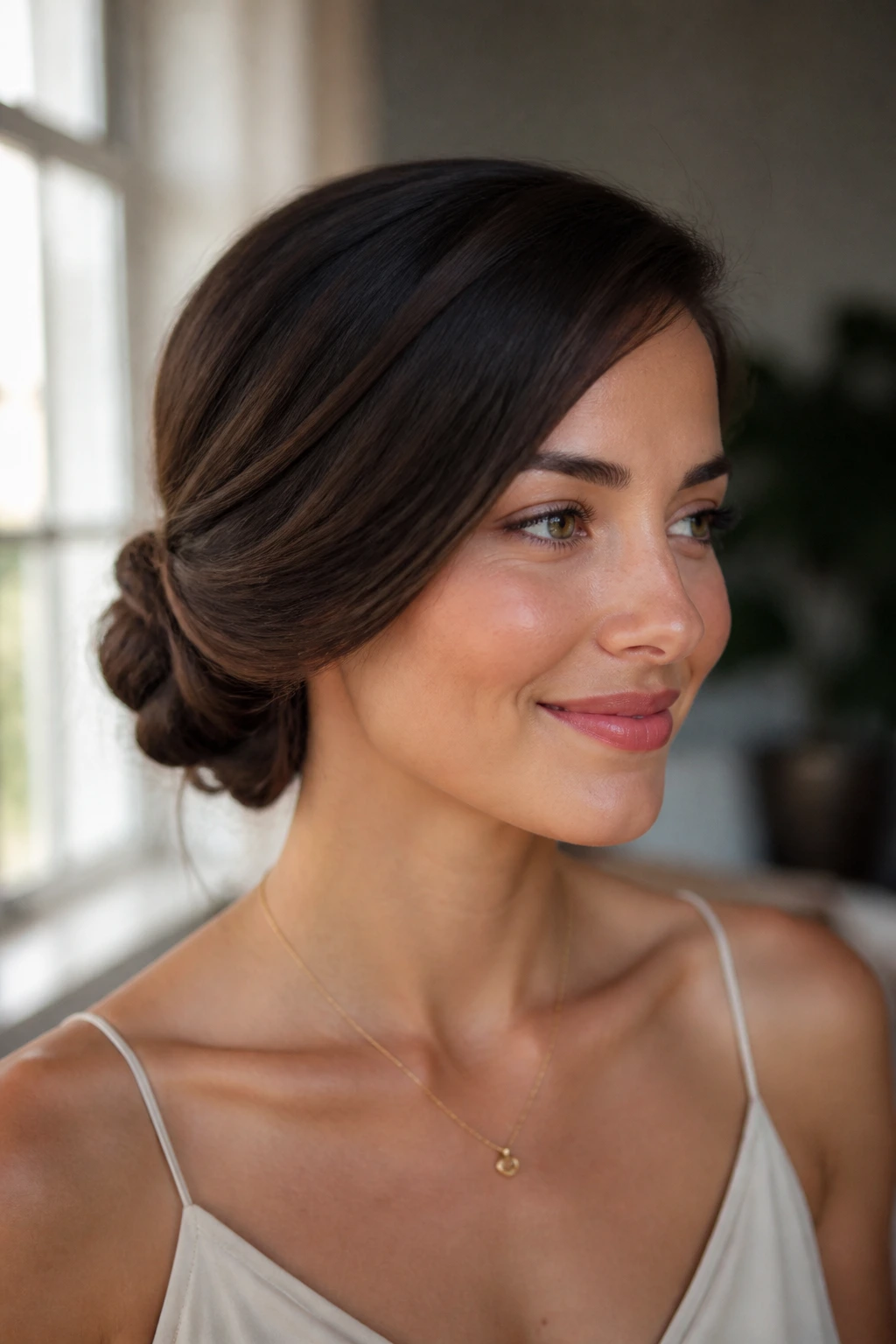
When you want one clean finish and five minutes of patience, a pinned side chignon is hard to beat. Sweep the hair to one side at the nape, twist it under itself, and pin the roll flat against the head. Thick hair gives the chignon a nice, full shape without needing stuffing or extra padding.
The slight asymmetry keeps it from looking stiff. It feels softer than a centered bun and a little more interesting than a plain ponytail, which is why I like it for dinners, events, and the days when you want your hair to stop being the main character.
Quick Tip
If your hair is very long, coil the ends inward before you pin. That keeps the chignon compact and stops the tail from sticking out on the far side.
What Thick Hair Needs Before You Start
Thick hair styles last longer when the hair is prepped for the job instead of tossed into a clip and hoped for the best. Start by detangling from the ends upward with a paddle brush or wide-tooth comb. If you rip through the roots first, you’ll create fluff where you wanted smoothness.
Texture matters too. Freshly washed hair can be slippery, especially if it’s straight and fine within the thickness. Day-two hair usually grips better, but if you’re working with clean hair, a little dry shampoo at the roots or texturizing spray through the mid-lengths gives elastics something to hold.
Section size changes everything. Thick hair doesn’t want tiny sections unless you’re braiding. For ponytails and buns, larger sections work faster and break less. For braids, use smaller, even sections so the finished style doesn’t swell in random places.
And one more thing: don’t treat the crown like an afterthought. The crown is where thick hair shows its volume first. If you smooth and control that area before you gather the rest, the whole style looks cleaner. If you ignore it, you spend the rest of the day patting flyaways down with your hand.
The Tools and Products Worth Keeping in the Drawer
-
No-slip elastics: These grip thick hair better than loose fabric bands and won’t snap as quickly under weight.
-
Clear mini elastics: Best for bubble ponytails, small braids, and styles where you want the structure to disappear.
-
Large claw clips: Look for clips with a wide opening and strong teeth; small clips get buried in dense hair.
-
Bobby pins in two sizes: Standard pins for general hold, extra-long pins for buns and twists that need deeper anchoring.
-
Paddle brush: Useful for smoothing the crown and gathering heavy hair without dragging too hard.
-
Tail comb: Handy for clean parts, sectioning, and lifting little pieces before pinning.
-
Texturizing spray or dry shampoo: Adds grip and helps styles stay put, especially on clean or silky hair.
-
Smoothing cream or light gel: Keeps the front neat on sleek buns, ponytails, and half-up styles.
-
Silk scarf or satin scrunchie: Both reduce friction and help styles feel less rigid.
-
A mirror that shows the back of your head: A hand mirror or three-way mirror saves you from discovering a lopsided bun after you’ve already left.
How to Choose the Right Style for Your Day
Presentation: If you want the style to look neat from every angle, start with the sleek low bun, side chignon, or braided ponytail. These read clean in photos and in person, and they do not rely on a lot of loose pieces behaving themselves.
Accompaniments: For a casual day, pair the half-up top knot, folded-in ponytail, or claw-clip twist with simple earrings and a collared shirt. For a more polished look, the slicked-back braided bun or crown braid works better with a structured jacket, a crewneck, or a dress that needs the hair out of the way.
Portions: If your hair is extra long, favor styles that split the weight into sections — bubble ponytails, double braids, crown braids, low buns with pins. If your hair is shorter but still thick, half-up styles and jaw clips usually hold better than full buns that try to swallow the whole head.
Weather note: In humidity, reach for braids, slick buns, and anything with a strong base. In dry weather, you can get away with softer twists and scarf styles because the hair frizzes less and the shape stays visible longer.
Quick Tricks for More Hold and Less Puff
Anchor before you decorate. A style lasts longer when the base is secure before you start shaping the ends. Put the first elastic or pin in firmly, then worry about the pretty part.
Use your hair’s weight instead of fighting it. Low styles almost always hold better on thick hair than high ones because gravity helps instead of drags. A high bun can work, but it needs more pins than people expect.
Stop brushing once the surface is smooth. Overbrushing thick hair creates a halo of flyaways and can make the outer layer frizzier than the inside. Smooth it, then leave it alone.
Pin against the pull. If hair is trying to slide left, pin from the right side toward the center. Crossing pins in an X gives them a better grip than dropping them parallel.
Finish with your hands, not a brush. A tiny bit of serum or cream on the palms tames the edges without flattening the whole style. A brush can overdo it in one pass.
The Mistakes That Make Thick Hair Rebel
The first mistake is using elastics that are too small or too weak. You’ll know this has happened when the ponytail starts sagging within an hour, or the elastic snaps when you stretch it over the final loop. Switch to thicker no-slip bands and stop asking office bands to do a job they were never built for.
Another common one is making braids too loose at the scalp and too tight at the ends. The braid bulges in one place, then turns skinny and sharp at the bottom. Keep the first few crossings firm, then relax the tension slightly as you move down.
People also overdo product at the roots. A little smoothing cream helps; a thick layer of gel at the hairline leaves the style greasy and can create flakes once it dries. Use a pea-size amount first. Add more only if the hair still won’t stay flat.
Then there’s the overstuffed clip problem. If the claw clip can barely close, it will not stay closed. That doesn’t mean your hair is impossible. It means the clip is too small or the section is too thick for that particular style.
And one I see all the time: skipping the back. Thick hair can look tidy from the front and chaotic from behind. A hand mirror takes ten seconds. Use it. Fix the nape. Save yourself the surprise later.
Variations and Adaptations to Try
Humidity Shield: Swap soft finishing cream for a light gel at the hairline and use firmer styles like double Dutch braids, braided buns, or sleek low ponytails. Finish with a scarf or a few extra pins if the air is sticky.
No-Heat Morning Rush: Keep the folded-in ponytail, jaw-clip twist, and claw-clip French twist in heavy rotation. They take almost no prep and work best on second-day hair with a little natural texture.
Layer-Friendly Edit: If your layers escape everything, choose half-up styles, scarf-wrapped ponytails, and side braids. These let the shorter pieces live a little instead of trying to force them into a perfect bun.
Gym-to-Dinner Switch: Start with double braids or a bubble ponytail during the day, then twist the length into a low bun and add one accessory before you go out. Thick hair makes the transition easy because the style still has enough body after you change it.
Soft and Romantic Version: Go with a crown braid halo, side chignon, or low braided ponytail with a few face-framing pieces left out. This keeps the style from feeling severe and works especially well if your hair has a natural bend.
Shorter-Length Thick Hair Fix: Use jaw clips, mini buns, and half-up top knots. When hair is thick but not especially long, too much wrapping creates bulk too fast, so smaller sections usually sit better.
How to Keep Your Style Fresh Overnight
Braids and buns hold up better than loose styles, but they still need a little care if you want them to last into the next day. A low braid can usually survive one night with only a light finger-comb in the morning. A sleek bun or French twist may need a quick re-pin at the nape before you head out.
Sleep on a silk or satin pillowcase if you can. It cuts down on friction, which means fewer flyaways and less frizz around the crown. A braid or twist worn loosely under a bonnet works too, especially if your hair is long enough to press against the pillow and loosen overnight.
If you want to refresh a ponytail or bun, mist the outer layer with a touch of water or leave-in spray, then smooth it with your hands. Don’t soak the whole style. Thick hair takes longer to dry than people think, and damp roots under a bun feel weird by noon.
For bubble ponytails and pull-through braids, remove the top elastics carefully before bed if they’re pulling. Rebuild the style in the morning if needed. It takes less time than trying to resurrect a stretched-out version that’s lost its shape.
Questions People Ask About Easy Hairstyles for Thick Hair
How do I keep thick hair from puffing at the crown?
Start with the crown. Smooth it first with a brush and a little cream or dry shampoo, then gather the rest of the hair. If the top is already puffy when you secure it, the style will keep that shape all day.
Are claw clips strong enough for thick hair?
Yes, if the clip is large enough and the twist is compact. A tiny clip will fail fast, but a wide claw clip with deep teeth can hold a surprising amount of hair when the section is folded correctly.
What style lasts the longest on thick hair?
Braids usually win. Double Dutch braids, low braided ponytails, and pull-through braids tend to stay neat longer than loose buns or half-up twists, especially if you’re moving around a lot.
Can I do these styles on curly thick hair?
Absolutely. In fact, curly thick hair often gives these styles more shape. Use your fingers more than a brush, choose styles that don’t demand glassy smoothness, and leave a few face-framing curls out if that feels right.
What if my hair is layered and pieces keep falling out?
Choose styles that use multiple anchor points, like half-up twists, braids, and scarf-wrapped ponytails. One giant elastic at the base usually isn’t enough when the cut has shorter pieces around the face and crown.
How do I make a bun look bigger without a hair donut?
Braid or twist the ponytail first, then coil it loosely instead of winding it tight. Thick hair already gives you plenty of mass; the goal is to spread it out rather than crush it into a knot.
Do these styles work on freshly washed hair?
Some do, but the hair may be slippery. If it’s very clean, add a little dry shampoo or texture spray first. Braids and slick buns usually stay cleaner-looking longer than loose clip styles on freshly washed hair.
What should I do if my style starts slipping by noon?
Don’t just add one more pin and hope. Tighten the base, remove one layer if the style is overloaded, and use pins that cross each other. The fix is usually in the anchor, not the ends.
The Styles I’d Keep on Repeat
Thick hair does not need to be tamed into submission. It needs a style with enough structure to carry its own weight. That’s the real lesson here, and it changes everything. Once you start choosing styles that respect density — braids that fill out, buns that hold, clips that actually grip — the whole routine gets faster.
The nicest part is that none of these looks require a long mirror session or a drawer full of expensive tools. A good elastic, a sturdy clip, a few pins, and a bit of practice will cover more ground than most people expect. Some mornings you’ll want polished. Some mornings you’ll want fast. Thick hair can do both.
Pick three or four of these and rotate them until they become muscle memory. That’s when the good stuff starts happening: less fuss, fewer failed attempts, and a lot less time spent staring at a clip that is plainly too small for the job.