



Medium long haircuts for busy mornings with curly hair have one job: make your shape look intentional before your coffee gets cold. If a cut only behaves after twenty minutes of diffusing, a prayer, and three rounds of scrunching, that cut is asking too much of a weekday.
Curly hair is honest. It shows you exactly where the weight sits, where the crown goes flat, where the ends puff out, and where a bad layer cut turns into a triangle by lunch. Medium length sits in a sweet spot because it leaves enough weight to calm the shape, but not so much length that the curls drag themselves flat at the roots.
The best medium curly cuts don’t fight the curl pattern. They work with shrinkage, density, and the way your hair actually behaves after it dries. Some cuts bring movement to the front, some remove bulk from the wrong places, and some simply make second-day hair less annoying. That’s the useful part. And that’s where the good ones start to stand apart.
Why These Cuts Make Curly Mornings Shorter

Shrinkage-friendly shapes: These cuts leave enough length for curls to spring up without ending three inches shorter than you expected, which means fewer panic trims and fewer awkward in-between stages.
Less morning negotiation: A good medium curly haircut does the heavy lifting in the shape itself, so you’re not rebuilding the whole silhouette with a brush and six products before work.
Better day-two hair: These cuts are designed to look like a style even after you’ve slept on them, not like a collapse that needs a rescue mission.
Room for density: Some cuts remove bulk where curls pile up. Others keep weight where the hair needs it. The point is control, not feather-light layers everywhere.
Face-framing without drama: Bangs, curtain pieces, side parts, and cheekbone layers can all shorten your styling time if they’re cut with curl movement in mind instead of straight-hair rules.
Flexible enough to grow out: Busy people do not need a haircut that looks strange at week four. These shapes keep their outline long enough to stretch the trim schedule a little.
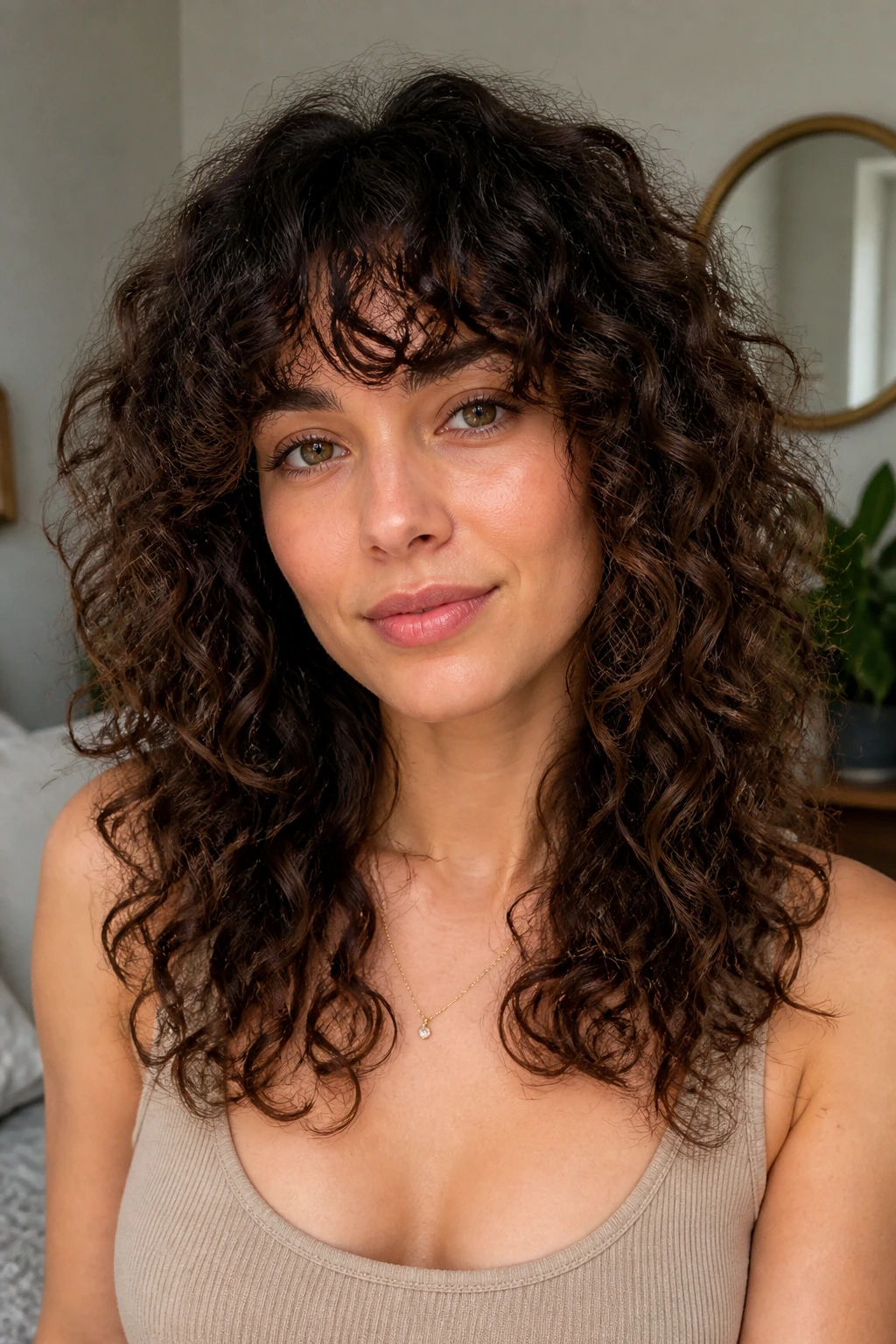
1. Curly Shag with Soft Curtain Bangs
A curly shag is one of those cuts that earns its keep fast. The layers break up the bulk, the curtain bangs soften the front, and the whole shape lands with movement instead of a heavy triangle at the bottom. If your curls tend to gather around the jaw or shoulders and start acting bulky there, this is the cut that clears some room.
What I like here is the way it behaves on a rushed morning. A little leave-in, a light gel, a quick scrunch, and the shag already looks deliberate because the layers are doing the work. The bangs help too. They fall in a forgiving split, so you do not need a perfect center part for the style to make sense.
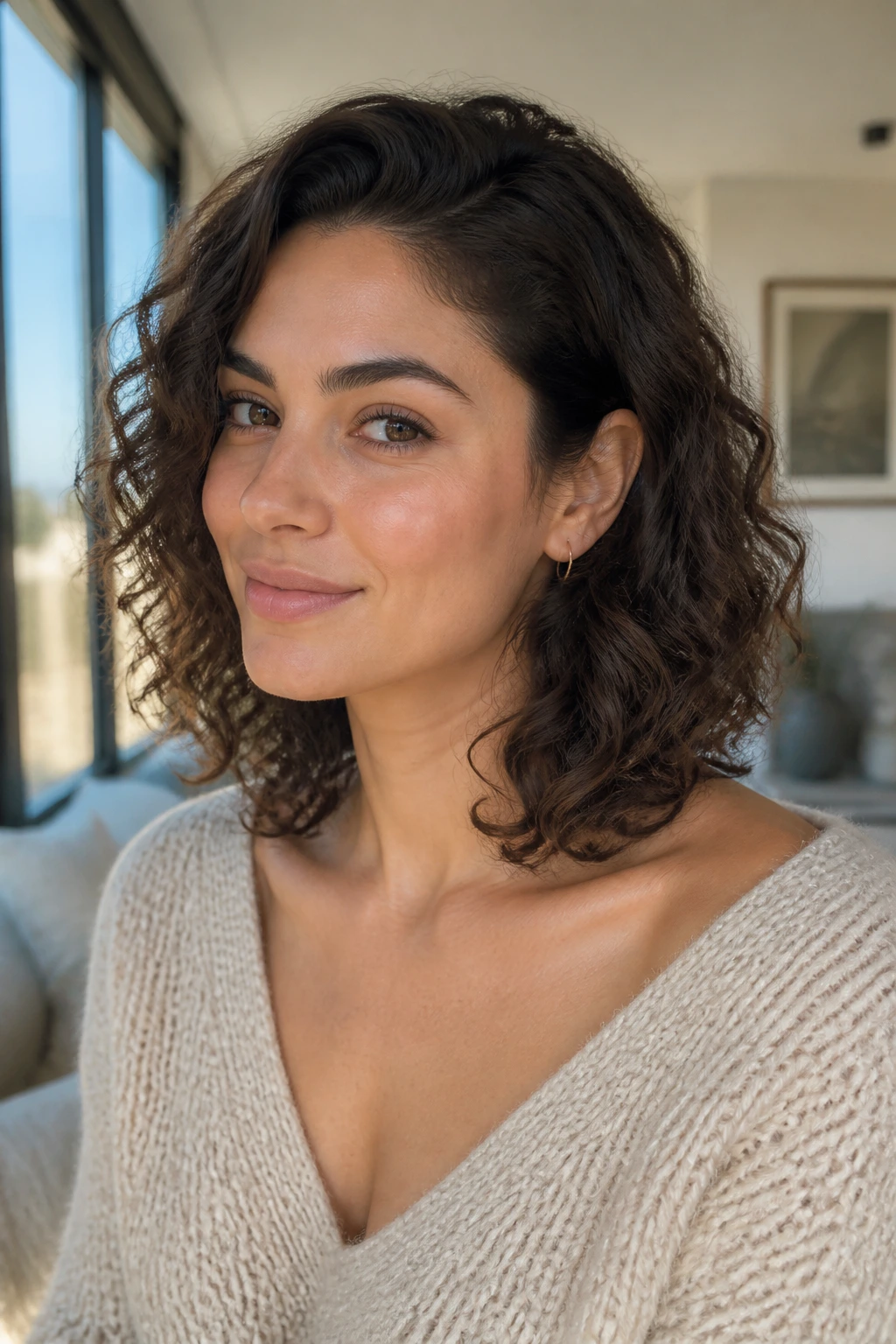
2. Collarbone Lob with Invisible Layers
This cut is the sleeper pick of the whole bunch. On paper it sounds simple, almost too simple, but collarbone length is where a lot of curls stop flaring out and start hanging in a cleaner line. The invisible layers keep the body inside the haircut, not hanging off the ends like a frayed curtain.
It’s a good choice if you like a shape that can be tucked behind the ears, clipped back, or left alone without the haircut looking unfinished. The best part is how little you have to do when you are late. If the front pieces are clumping nicely, you can let the rest air-dry and still walk out with a shape that reads as tidy instead of lazy.
3. Rounded Mid-Length Cut
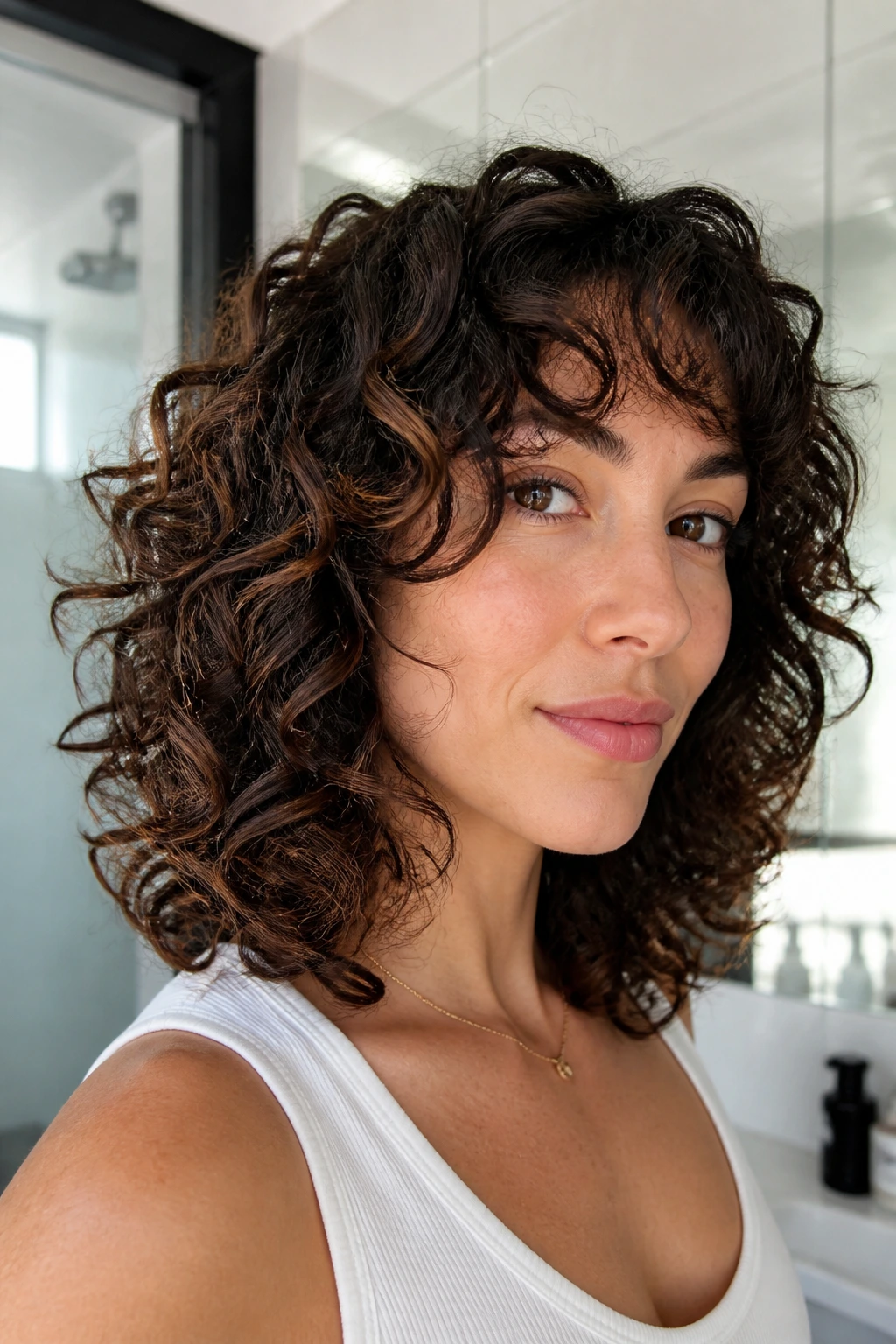
A rounded cut keeps the silhouette soft and balanced, which matters more with curls than people think. Straight hair can cheat with texture. Curly hair has to live with the outline it’s given. A rounded shape stops the sides from sticking out in odd places and keeps the overall look from going boxy.
This is one of the easiest shapes to maintain if you want your hair to feel full without looking wide. The crown keeps some lift, the sides don’t balloon, and the ends settle in a way that makes day-two hair less annoying. It’s especially useful for anyone who hates having to choose between volume and control. With this cut, you get both, just in a quieter way.
4. Long Layered Cut with Face-Framing Pieces
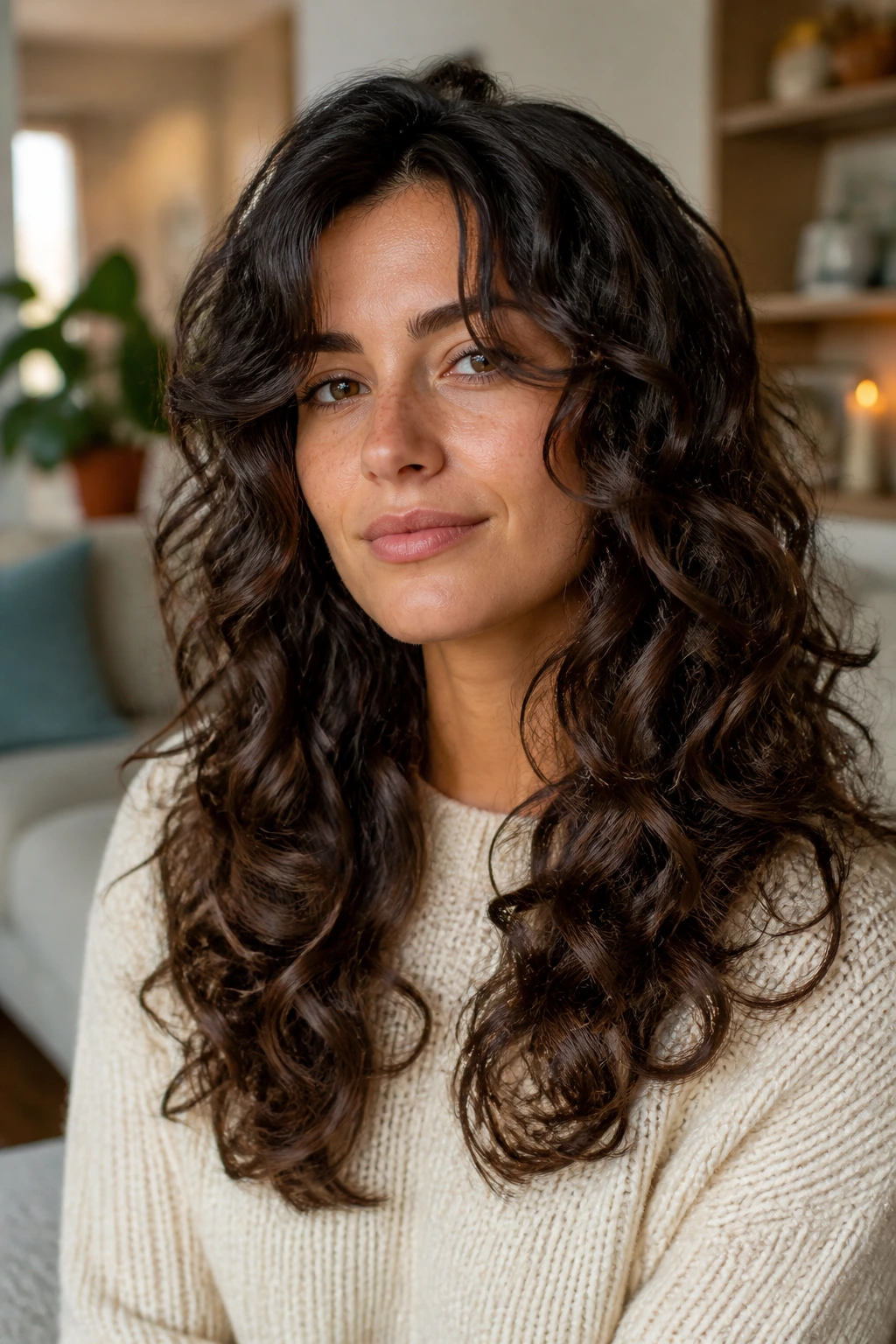
If your mornings involve a mirror, a hair tie, and not much else, long layers around the face are worth a close look. The front pieces keep the haircut from hanging straight down the sides, and the longer overall length still gives you room for a clip, bun, or half-up twist when life gets messy.
This cut works because the face-framing pieces do not need perfect styling to make a difference. Even a little bend at the cheekbone changes the whole feel of the haircut. That matters when you are not trying to spend half your morning with a diffuser pointed at your head. The rest can stay loose, a little imperfect, and still look on purpose.
5. Curly Wolf Cut

The curly wolf cut is not shy, and that is part of its charm. It uses heavy texture on top and a lighter, more tapered body underneath, which gives curls room to move without building into a dense block. If your hair has a little attitude and a lot of texture, this shape can handle it.
What saves time here is the cut’s built-in messiness. You do not need to smooth every curl into place because the shape already expects some separation and lift. On busy mornings, that means a fast refresh can be enough: dampen the top, add a small amount of cream, and let the layers fall where they want. They usually land better than a more rigid style anyway.
6. Shoulder-Skimming U-Shape Cut
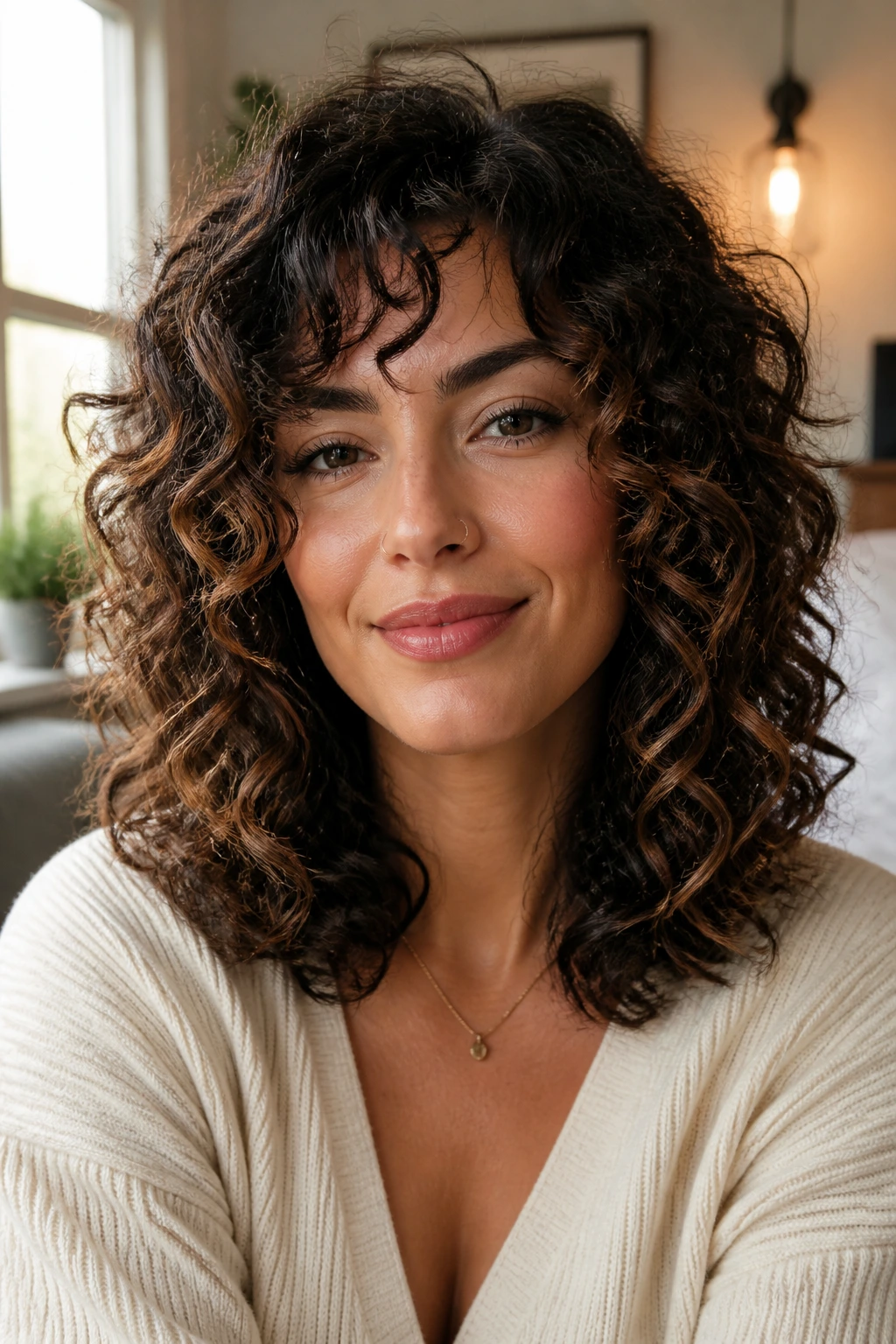
A U-shape is underrated because it keeps the longest point in the middle and softens the edges around it. On curly hair, that creates a nice visual drop without the harsh corners that can make a medium cut look choppy. It is especially helpful if your hair feels heavy at the sides but you do not want to lose length.
This is the kind of cut that grows out politely. A trim does not have to be urgent, and the line keeps its shape for a while if you maintain the ends. That matters when your calendar is already full. The U-shape gives you one less thing to babysit.
7. Medium Cut with Micro-Layers
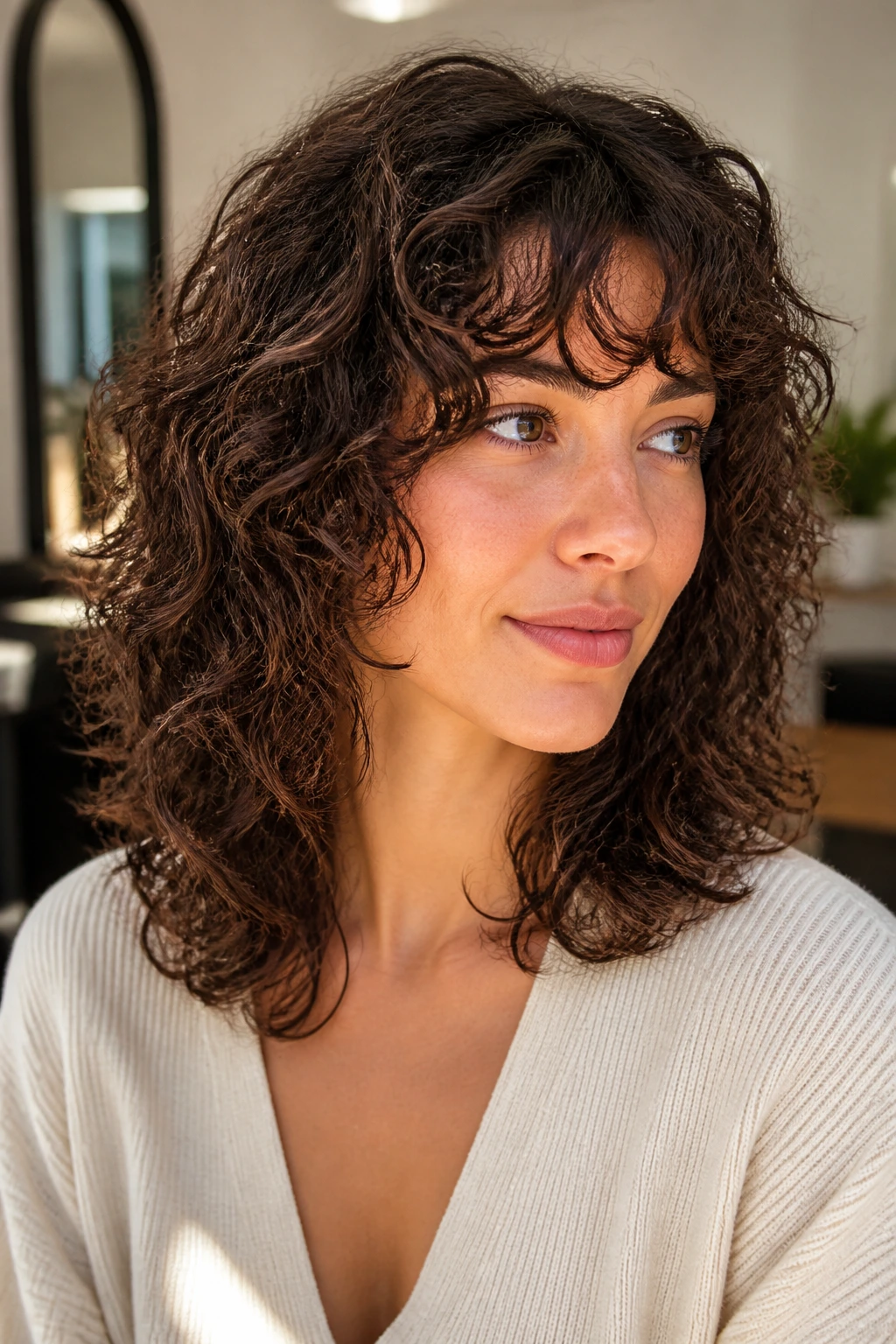
Micro-layers are for people who want movement without turning the haircut into a frizz festival. Instead of big obvious steps, the layers are small and controlled, so the curl pattern can lift a little without every piece flying in a different direction. It’s a neat trick on thick or dense hair.
The shape is especially useful if your curls collapse under weight at the crown. Small internal changes can keep the top from going flat while the perimeter stays full. That means less product, less fluffing, and less time trying to coax volume back into place after a long night of sleeping on it.
8. Curly Lob with a Tucked-Behind-Ear Shape

A curly lob that sits just above or right at the collarbone can be incredibly practical if you like hair that stays out of your face without needing a clip every day. The tucked-behind-ear shape is not about forcing the curl pattern into obedience. It is about giving the front pieces enough length to settle cleanly.
This cut is good for office days, errands, and any morning when you want to look put together with almost no effort. One side tucked, one side loose, and the haircut already has a bit of asymmetry working in your favor. That little imbalance makes curls look intentional, not accidental.
9. Side-Parted Layered Cut

A deep side part can do more for curl lift than a shelf full of products. It shifts the root direction, gives the top more height, and keeps the whole shape from sitting too flat against the scalp. If your curls tend to lose volume quickly, this is a simple fix with real payoff.
The layered cut underneath supports that side part by keeping the hair from sinking into one heavy line. It’s not loud, but it changes how the whole head reads. On mornings when you barely have time to dry your roots, flipping the part can be enough to make the haircut look awake.
10. Deva-Inspired Dry Cut with Long Layers
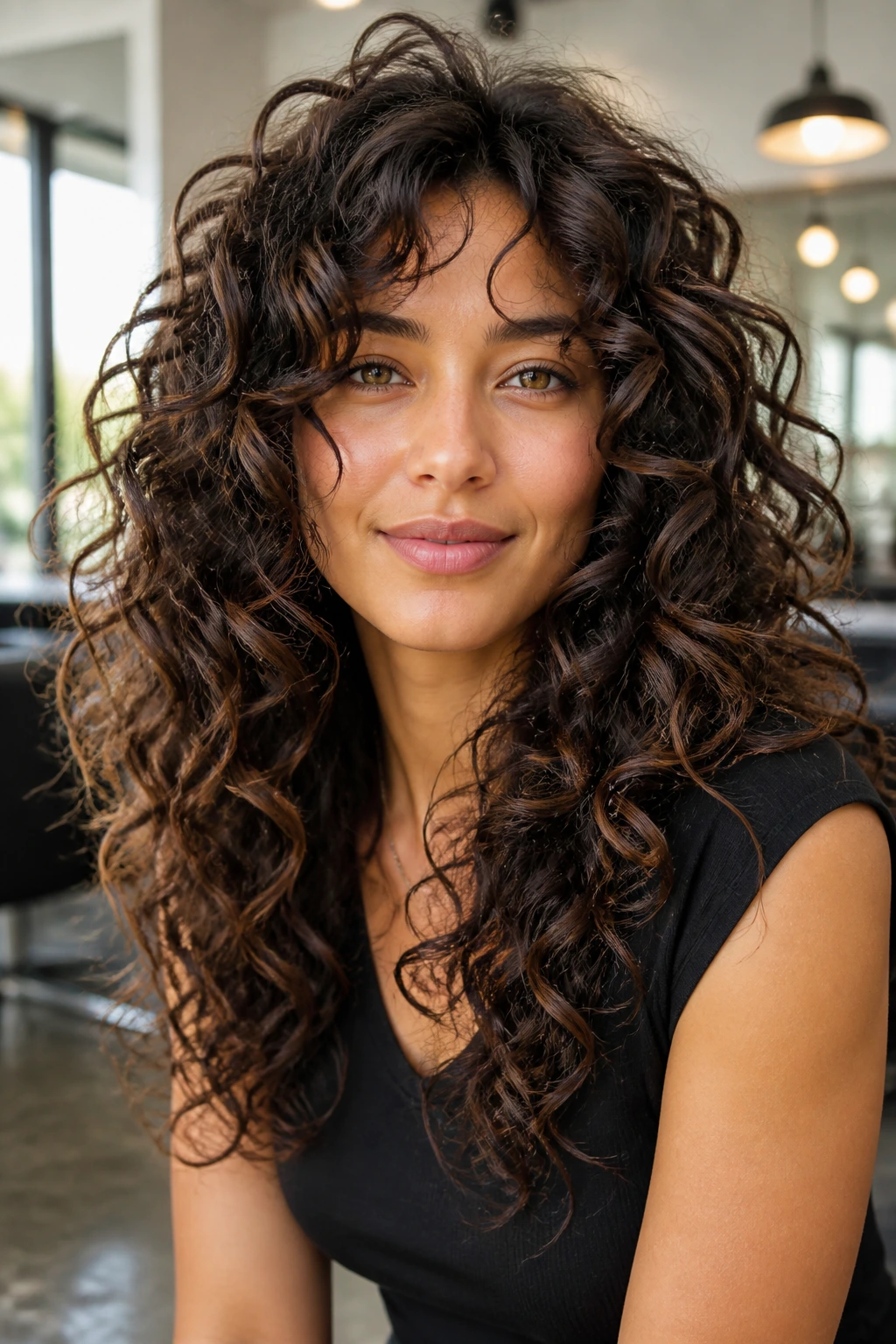
A dry cut makes sense for curls because curls do not behave the same wet and dry. Cut them while they are dry or mostly dry, and the stylist can see where each curl wants to sit, which is a lot more useful than guessing. Long layers keep the shape from getting too thin while still allowing movement.
This kind of cut is especially kind to people with uneven curl patterns. One side can be a little tighter, one side a little looser, and the stylist can actually respond to that instead of flattening everything into the same plan. If you want a style that feels personalized and still easy to live with, this is a strong choice.
11. Butterfly Layers for Curly Hair
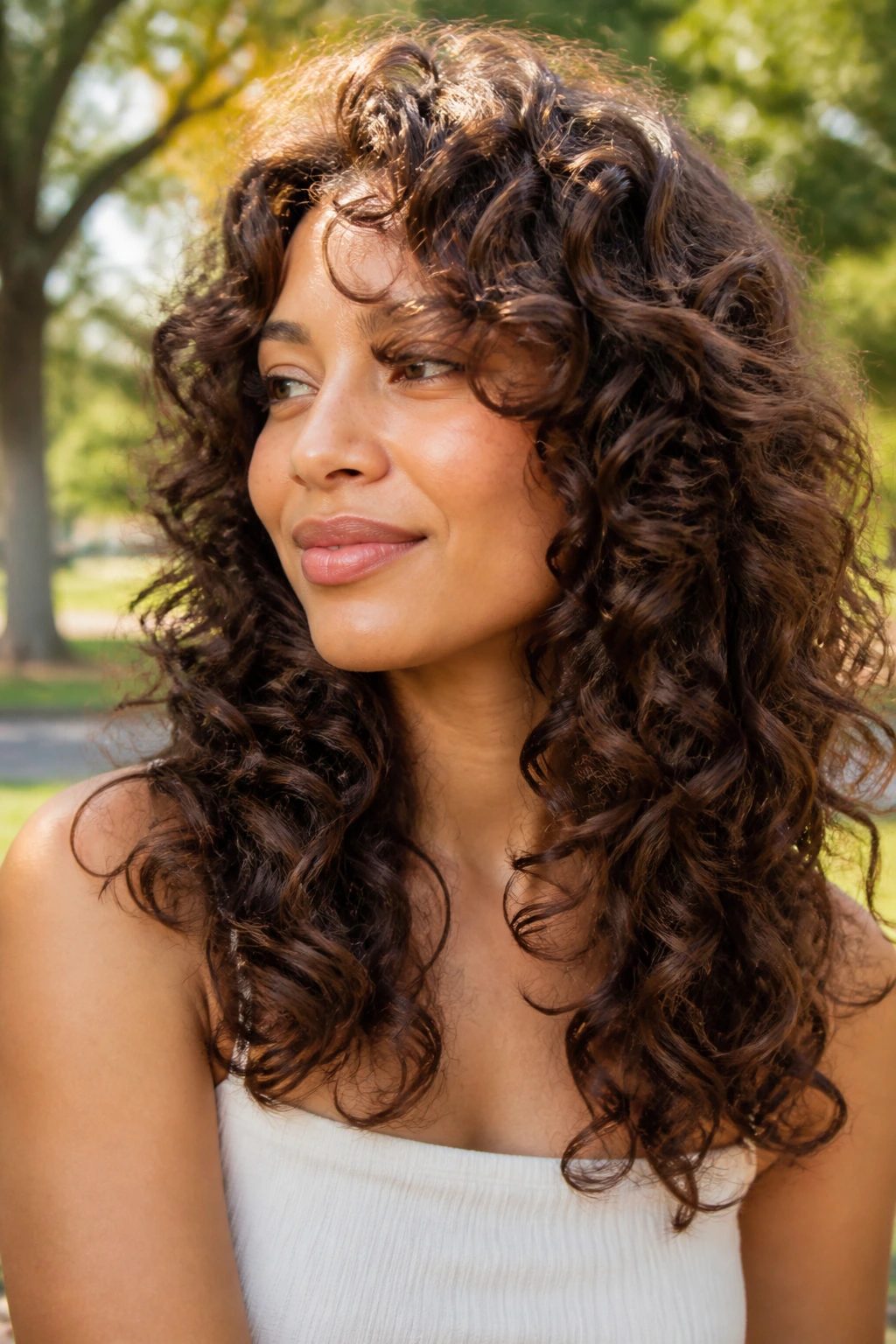
Butterfly layers separate the top from the bottom in a way that gives you lift where you want it and length where you still want it. On curls, that means the crown can breathe a little while the ends keep some weight and swing. It’s a nice middle ground for people who are tired of either flat roots or over-layered ends.
The styling advantage is obvious on rushed mornings. If the top looks decent, the layers underneath help the whole shape carry itself. You are not trying to turn every section into a perfect ringlet set. You’re just letting the haircut create enough structure that the curls can do the rest.
12. Curly Mullet Lite

The curly mullet gets a bad rap from people who only know the cartoon version. The lighter, softer version is actually practical: shorter layers around the crown and face, with more length left in the back. That means lift on top without sacrificing the part you can still pull back.
It’s a good cut for curls that get wide fast. The shape narrows the sides and lets the back keep some drama. And yes, drama can be useful. When the cut already has personality, you do not need to spend much time styling it into one. A little product and a shake are often enough.
13. Blunt Mid-Length Cut with Internal Debulking
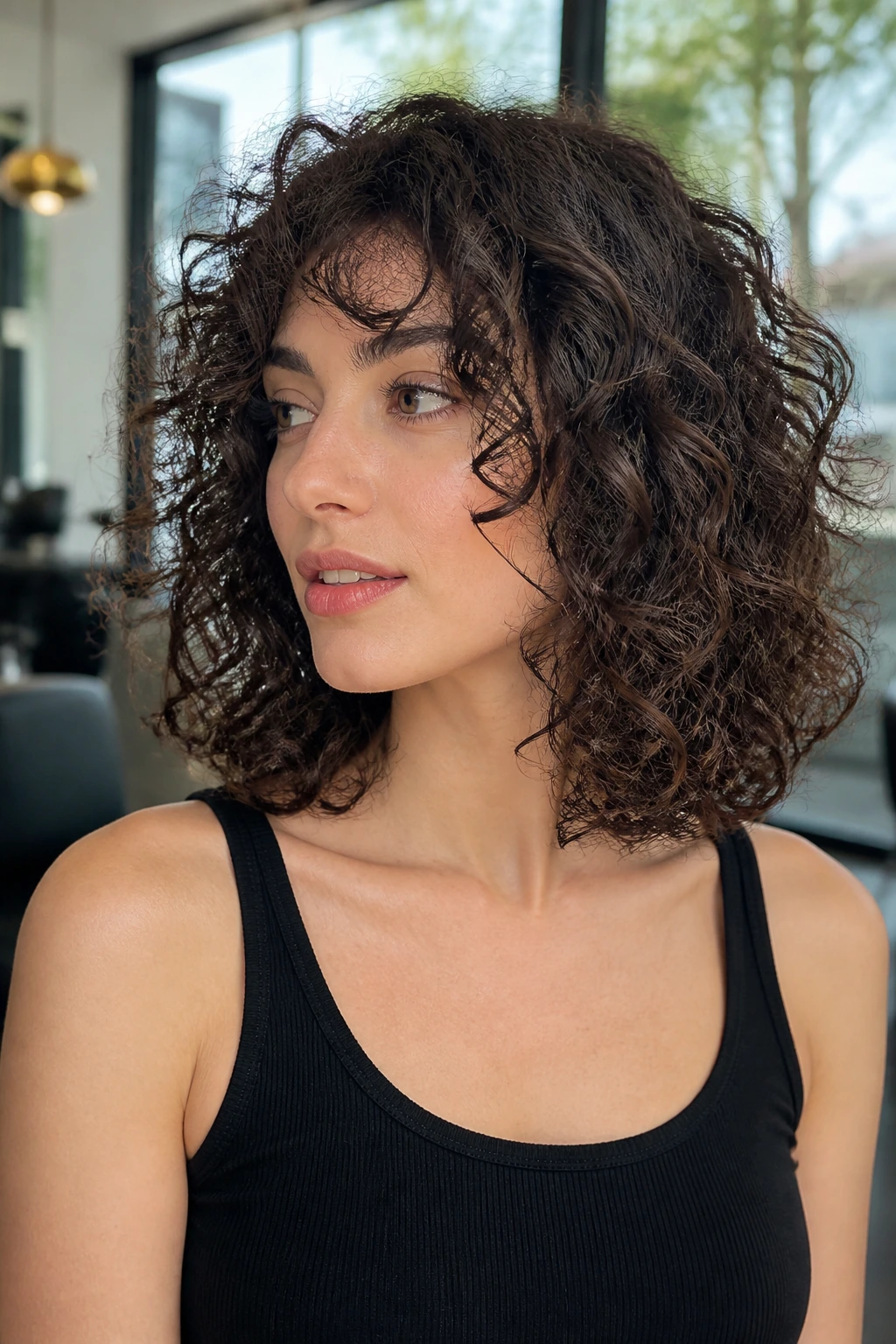
A blunt edge sounds like a strange choice for curly hair until you see what happens when the inside is carefully thinned out without wrecking the outline. The perimeter stays clean and solid, while the hidden bulk comes out from underneath. That gives you polish without the heaviness.
I like this one for curls that look better when they have a strong edge. It’s especially useful if your hair feels thick in the middle but still frizzes at the ends. The blunt line keeps things tidy. The internal work keeps it wearable.
14. Triangle-Resistant Layered Shape
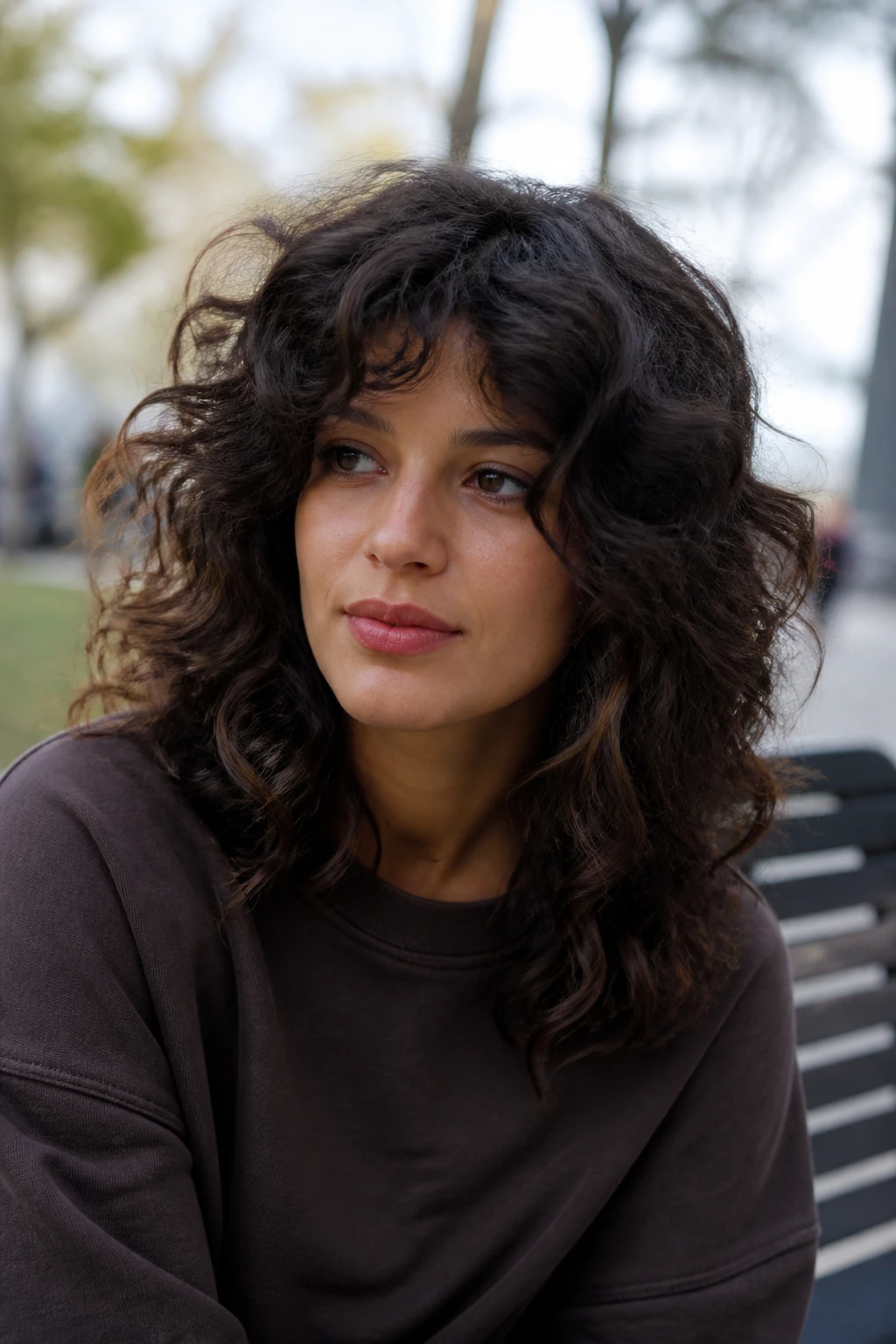
If your curls love to widen at the bottom and flatten at the top, this is the shape to ask about. Triangle-heavy hair usually needs weight removed in the right places and preserved in the wrong ones. That sounds backwards until you’ve lived with a cut that turns into a broom after air-drying.
A triangle-resistant shape keeps the crown supported and the lower sides from exploding outward. It’s one of the more technical cuts on this list, but it pays off every morning. You get a haircut that already understands its own problem. That’s a nice thing to have working for you.
15. Flip-Out Collarbone Cut

Some curls naturally kick outward at the ends, and pretending they won’t is a waste of time. The flip-out collarbone cut leans into that behavior. It sits at a length where the ends can bend, flip, or curl outward without looking half-done.
The shape feels airy, which is useful if your hair gets weighed down by heavier layers. It also keeps morning styling simple because the cut itself looks lively even when you do almost nothing to it. A quick root lift and a small amount of cream at the ends is usually enough. The haircut handles the rest of the motion.
16. Deep Side-Part Glam Layers
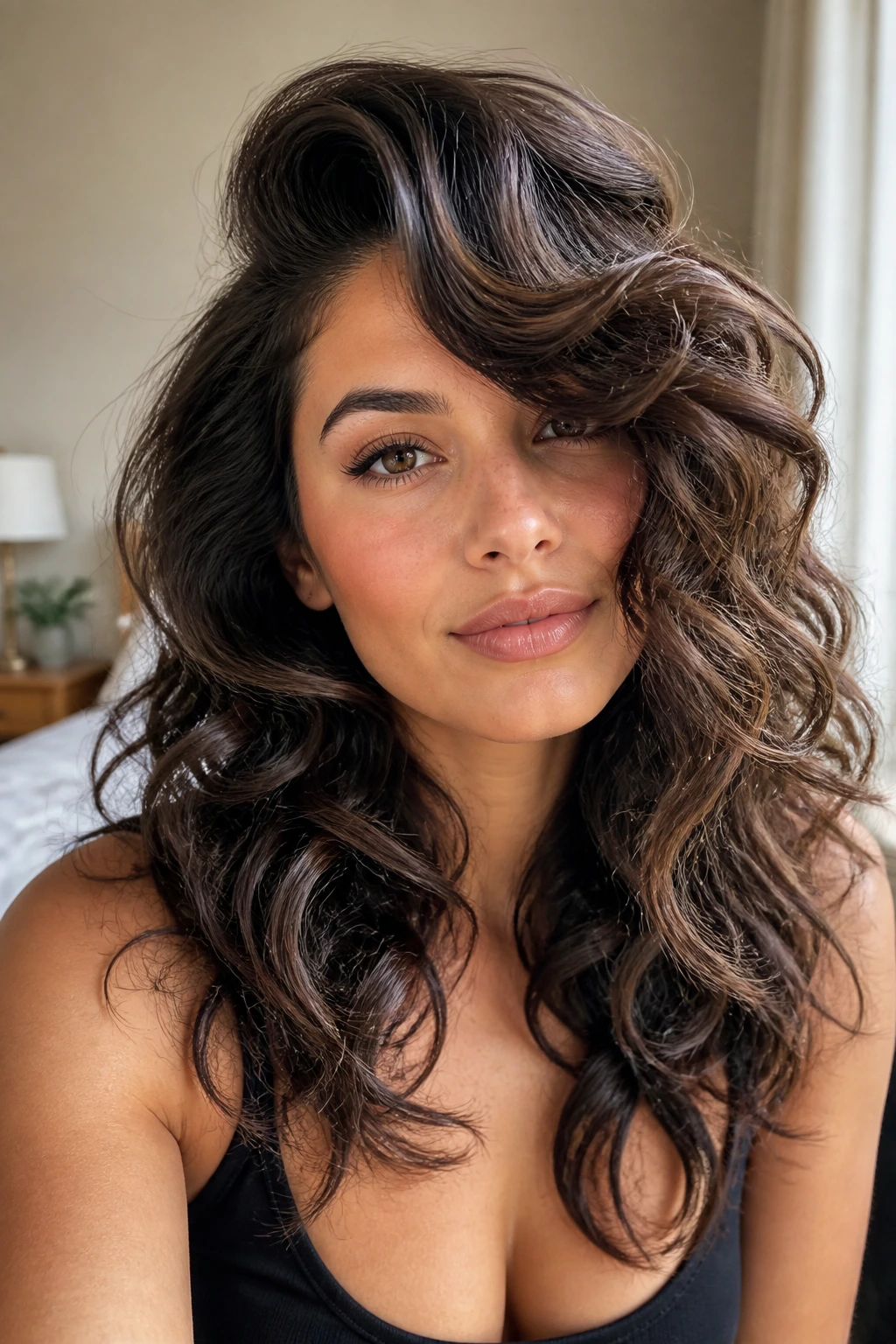
This is the cut for days when you want your curls to look a little more dramatic without doing a full styling routine. The deep side part brings immediate lift, and the layered body keeps the curls from settling into one flat sheet. It has a little old-school polish, which I happen to like.
It’s also practical in a sneaky way. A strong part can rescue a shape that feels tired, and the layers stop the weight from pulling everything down. If you’ve got five minutes and a spray bottle, you can wake this cut up fast.
17. Medium Cut with Soft Fringe and Tapered Ends

Fringe on curly hair can be a blessing or a headache. Soft fringe works because it is longer, more blended, and less likely to shrink into a surprise eyebrow curtain. Tapered ends finish the shape so the haircut feels light, not chopped off.
This cut suits people who want something interesting at the front without committing to a full bang routine. It also gives you a bit of framing around the eyes, which does a lot of work on mornings when your face still belongs to the pillow. Keep the fringe long enough to move. That’s the whole trick.
18. Cascading V-Cut
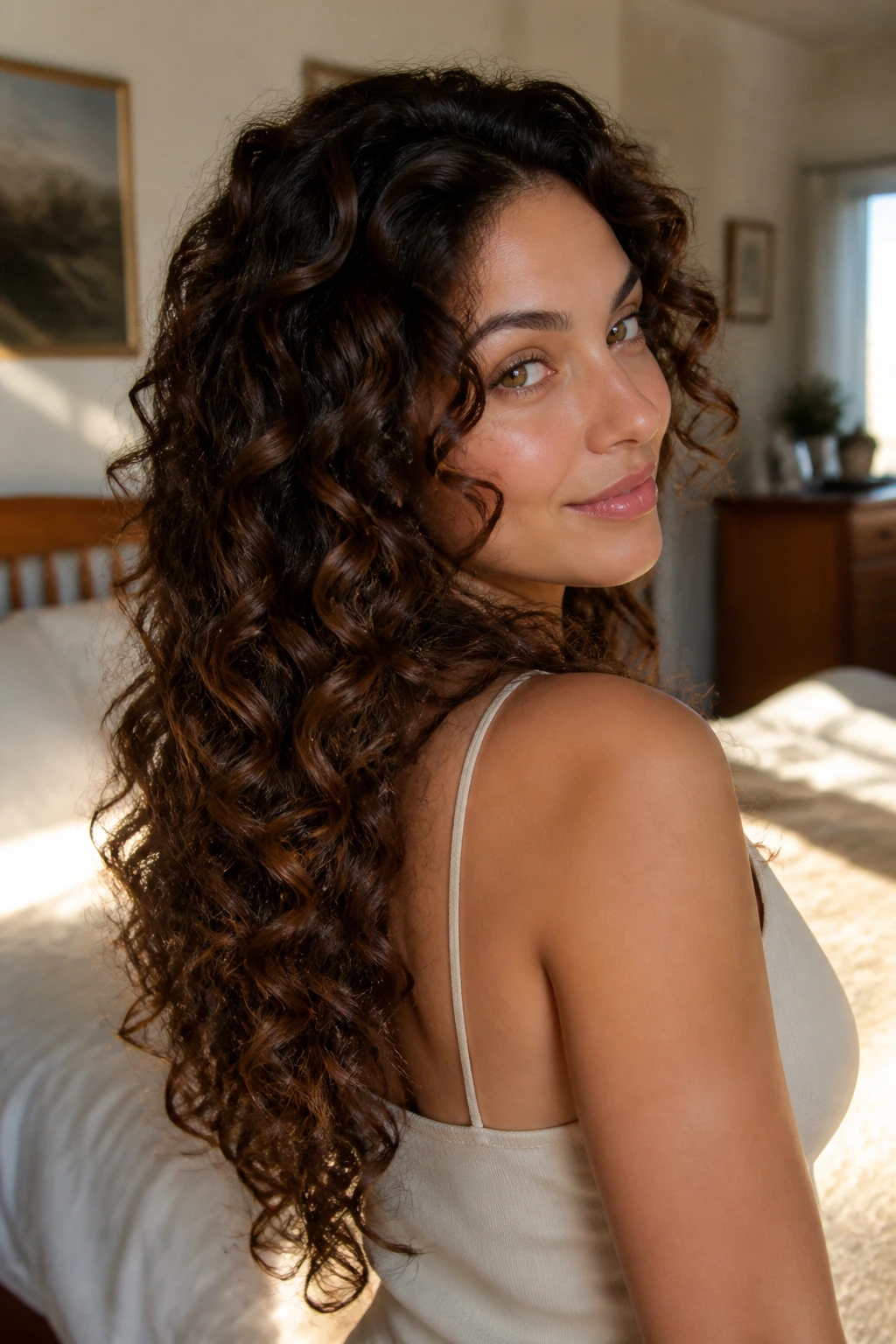
A V-cut keeps length in the back and lets the sides taper into it, which can look beautiful on curls that like a little drama. The point is not to make the shape severe. It is to give the bottom a cascade instead of a blunt wall.
For busy mornings, the V-cut helps because it gives the eyes a path to follow. The shape feels longer and more fluid, even if you only spend a minute refreshing it. If your curls tend to pool into one heavy block, the V shape can pull that weight apart in a way that still looks soft.
19. Curly Cut with Hidden Undercut
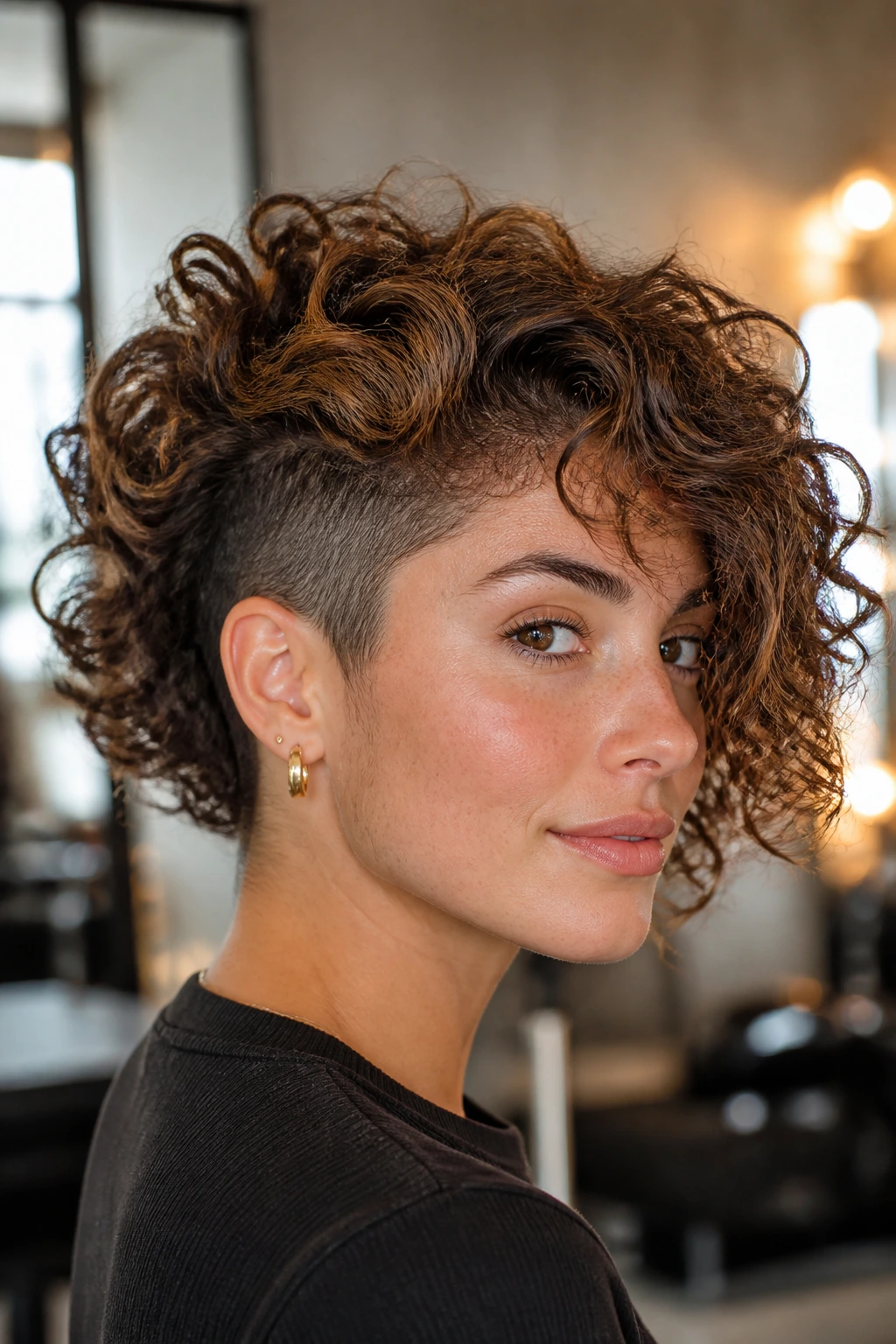
An undercut is not only for people who want a bold visual statement. Hidden undercuts remove bulk underneath the surface, which can make a huge difference for dense curls that dry slowly and puff up at the sides. The top layer still looks full. The underneath stops doing the excess work.
That means less time with the diffuser and fewer mornings where the hair feels too big for its own head. The cut also keeps heat styling from being necessary just to make the outline reasonable. If your hair feels like a lot, physically and visually, this can take some of the pressure off.
20. Halo Layers with Soft Perimeter
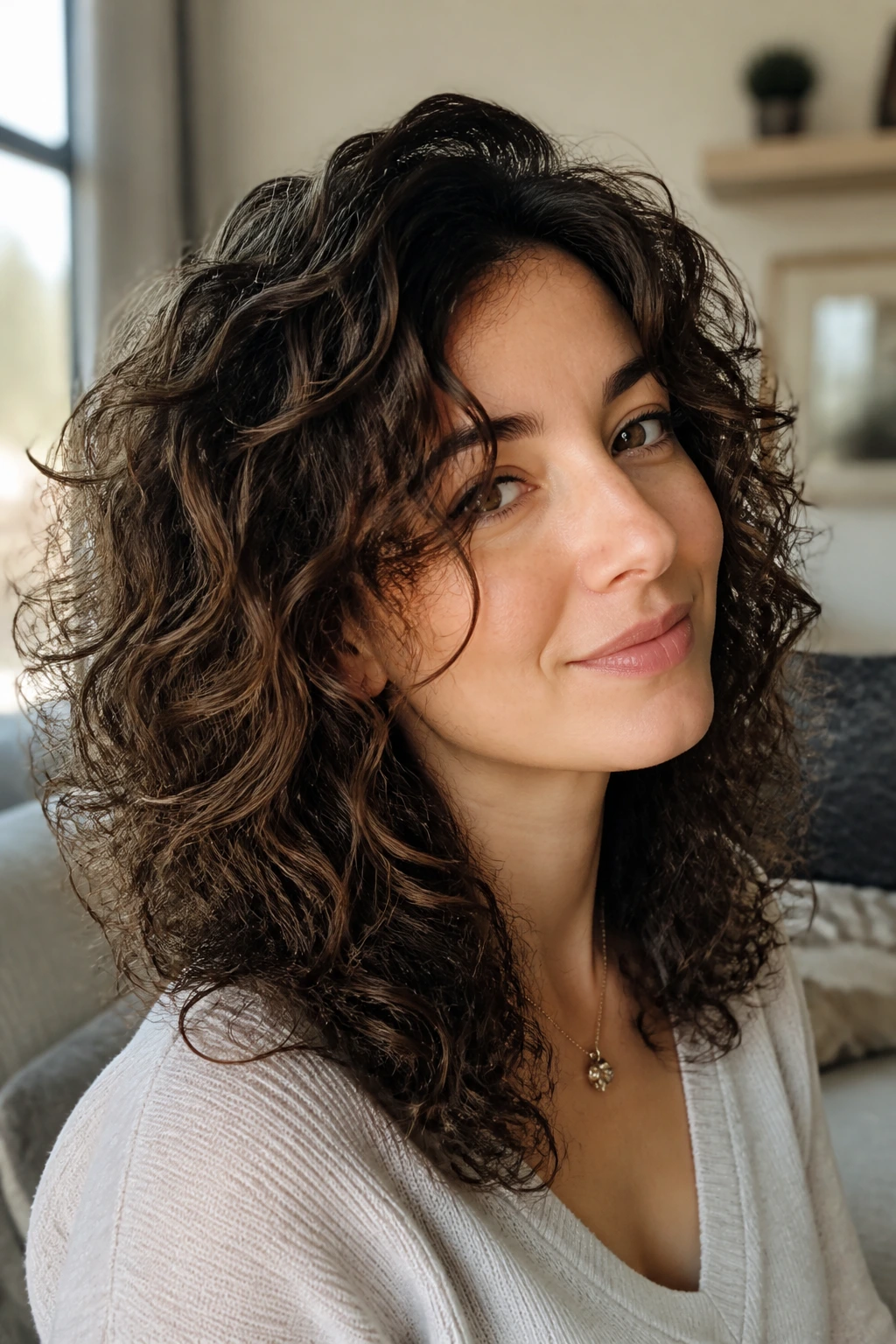
Halo layers create lift around the crown and upper sides, which is useful when the top of your head goes flat but the rest of your curls still have life. The soft perimeter keeps the ends from getting too piecey, so the silhouette stays wearable and not too airy.
I like this shape for people who want volume without chaos. It gives the haircut a rounded, lifted frame that still reads as calm. On a weekday, that means you can scrunch the roots a little, leave the ends alone, and still end up with a style that looks thought through.
21. Face-Framing Lob for Growing-Out Curls
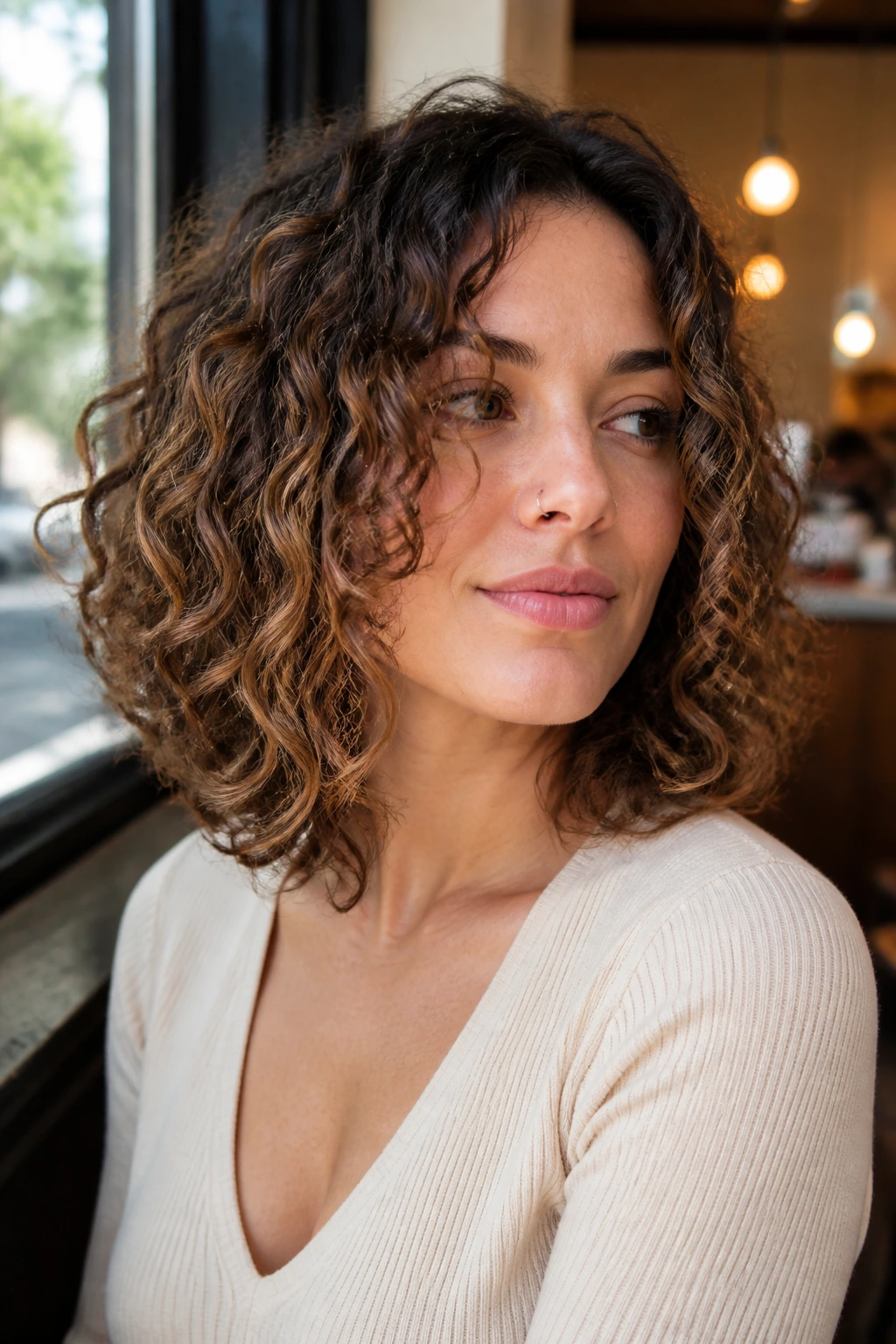
Growing out curly hair can feel like managing a small weather system. A face-framing lob gives you a shape that can survive in between lengths without looking like a compromise. The front pieces keep the haircut purposeful while the back stays long enough to tuck, clip, or leave loose.
This is one of the best options if you are trying to get from one length to another without a weird six-month stretch. It keeps the front from collapsing into your face and gives you enough perimeter to work with. That makes it a smarter grow-out cut than people give it credit for.
22. Medium Curly Cut with Long Curtain Fringe

A long curtain fringe gives curls a soft front edge without the daily commitment of a full bang. Because it’s split and longer, it can be pushed aside, tucked back, or left to fall naturally. That flexibility matters when you are not in the mood to manage every strand.
The medium length underneath keeps the rest of the haircut stable. You get face framing, but you do not sacrifice the ability to throw the whole thing into a clip later. This is one of those cuts that looks like it took more effort than it did.
23. Wash-and-Go Midi with Long Internal Layers
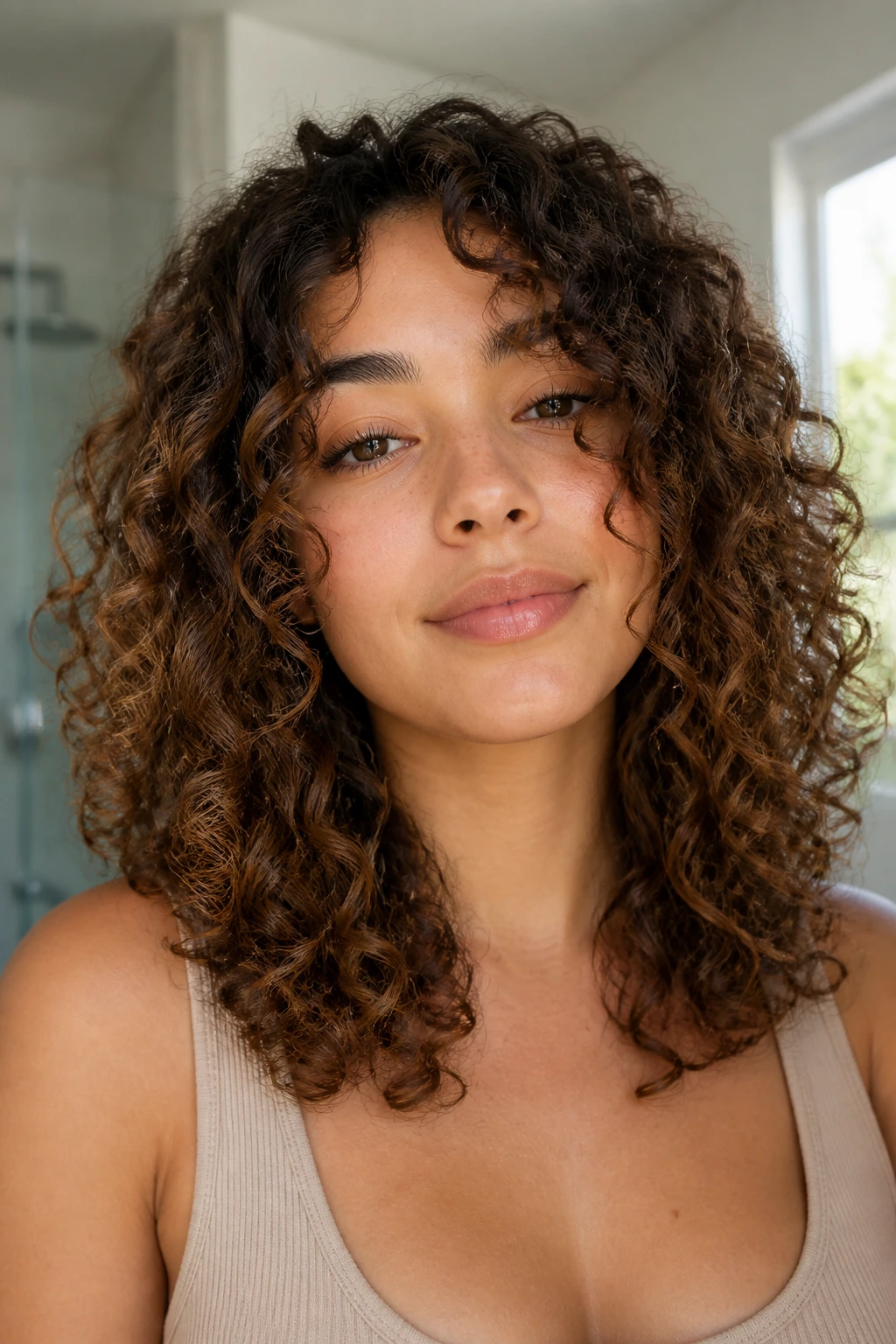
This cut is for people who want a real wash-and-go, not a fantasy one. The internal layers create movement inside the shape, but the outer line stays long enough to keep the curls together. That balance makes the haircut look finished even when air-dried.
The key is restraint. Too many layers and the cut gets fluffy. Too few and the hair looks heavy. This one sits in the middle and tends to behave nicely if your curls naturally clump and you do not overwork them in the shower.
24. Tapered Shape for Dense Curls
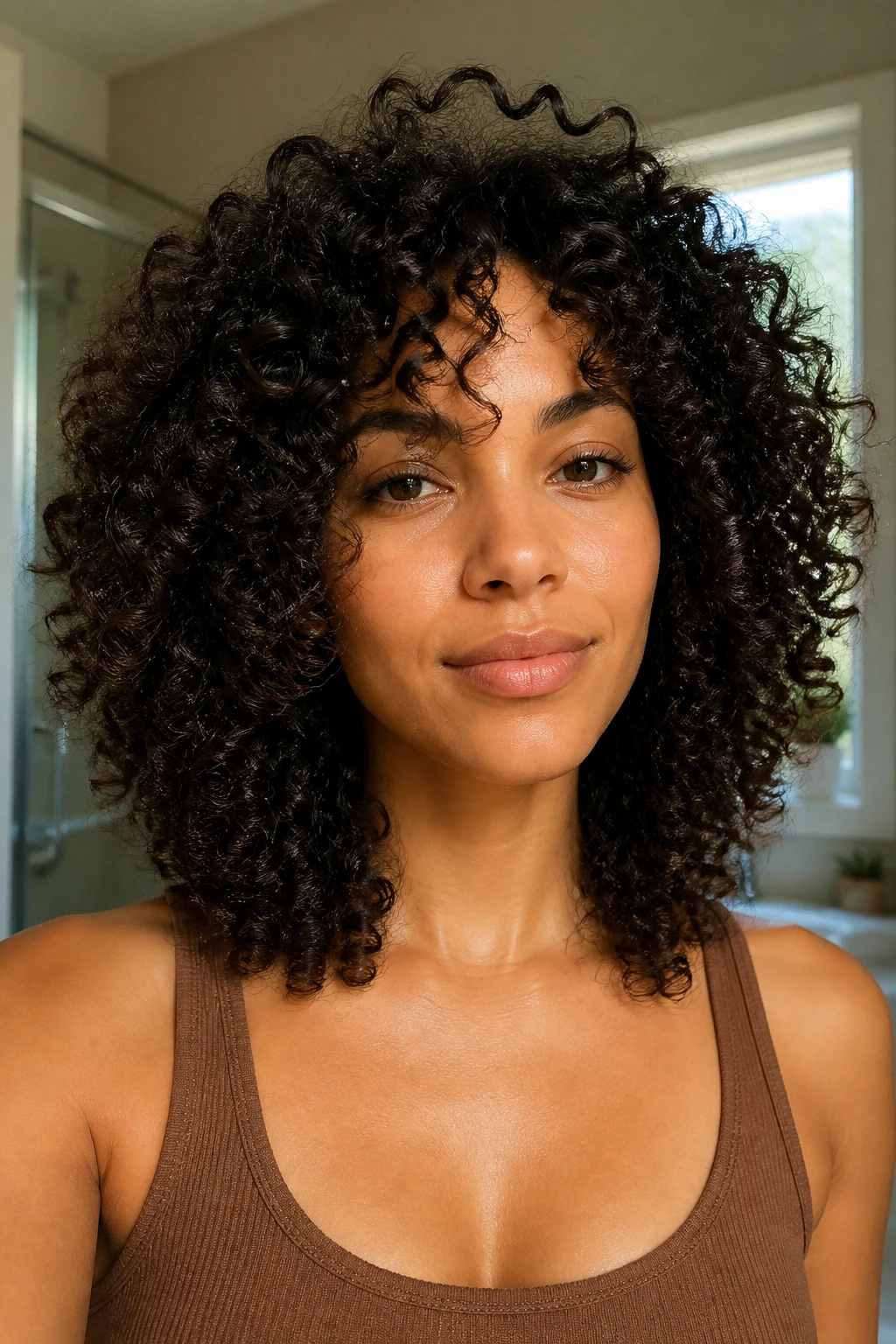
Dense curls need room to move, and tapering gives them that room without turning the haircut into a puff ball. The lower part of the shape can be slightly narrower, which keeps the silhouette from spreading out too much at the bottom. It’s practical, not fussy.
This is a very good choice if your hair takes forever to dry. Removing bulk in the right place means less water trapped in the hair and less time waiting around with a towel on your head. That alone can make a morning feel easier.
25. Cloud Layers with a Soft Perimeter
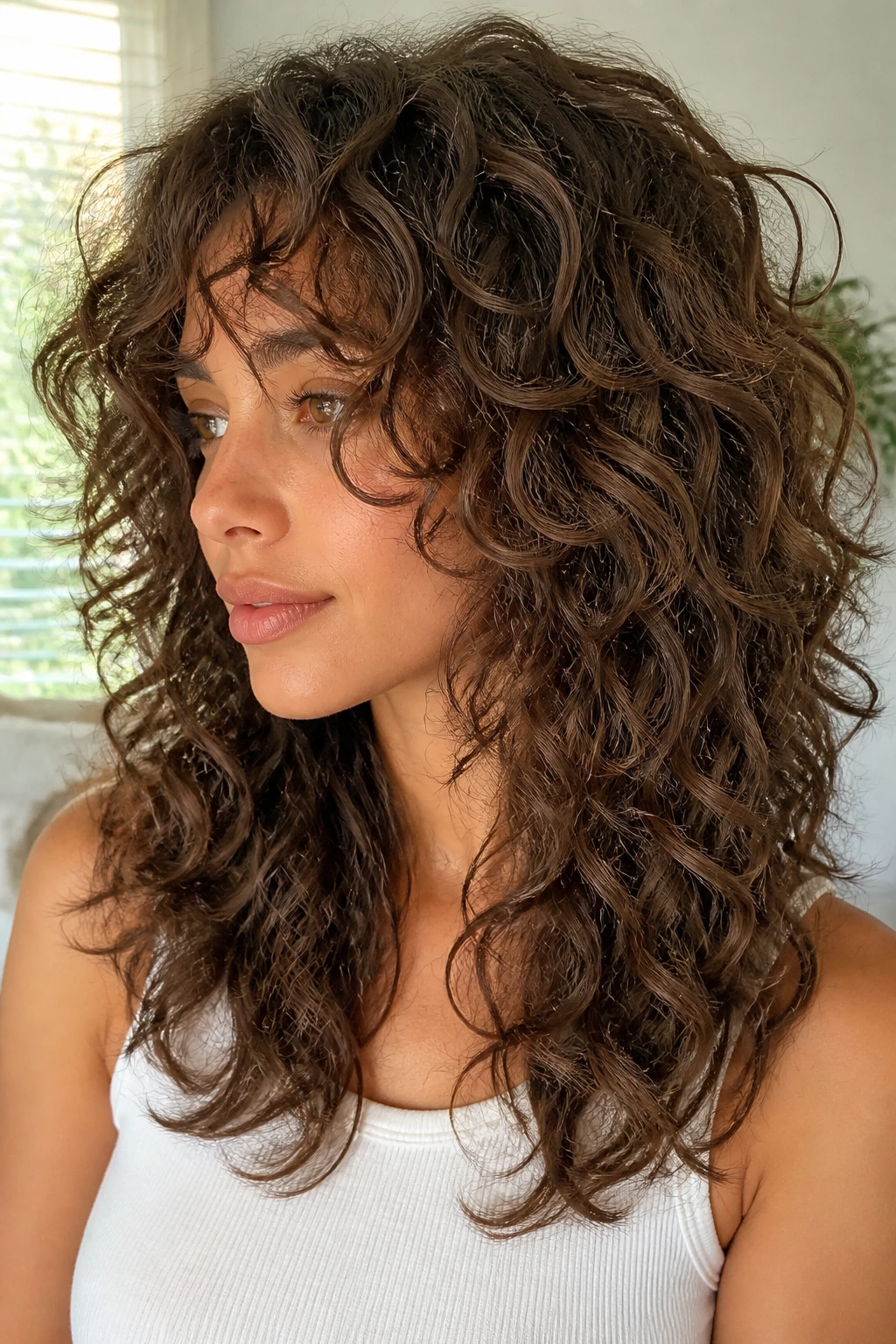
Cloud layers are for curls that need lightness and softness, but not at the cost of shape. The layers are airy enough to let the curls separate naturally, while the perimeter stays smooth enough to stop the whole cut from looking undone. It has movement, but not chaos.
This is the kind of haircut that benefits from minimal intervention. A bit of leave-in, a little scrunching, and a patient air-dry can get you most of the way there. If your curls already have a nice pattern and you just want the haircut to stop getting in the way, this is a strong finish to the list.
What Makes Medium Long Curly Haircuts Feel Easier on Busy Mornings
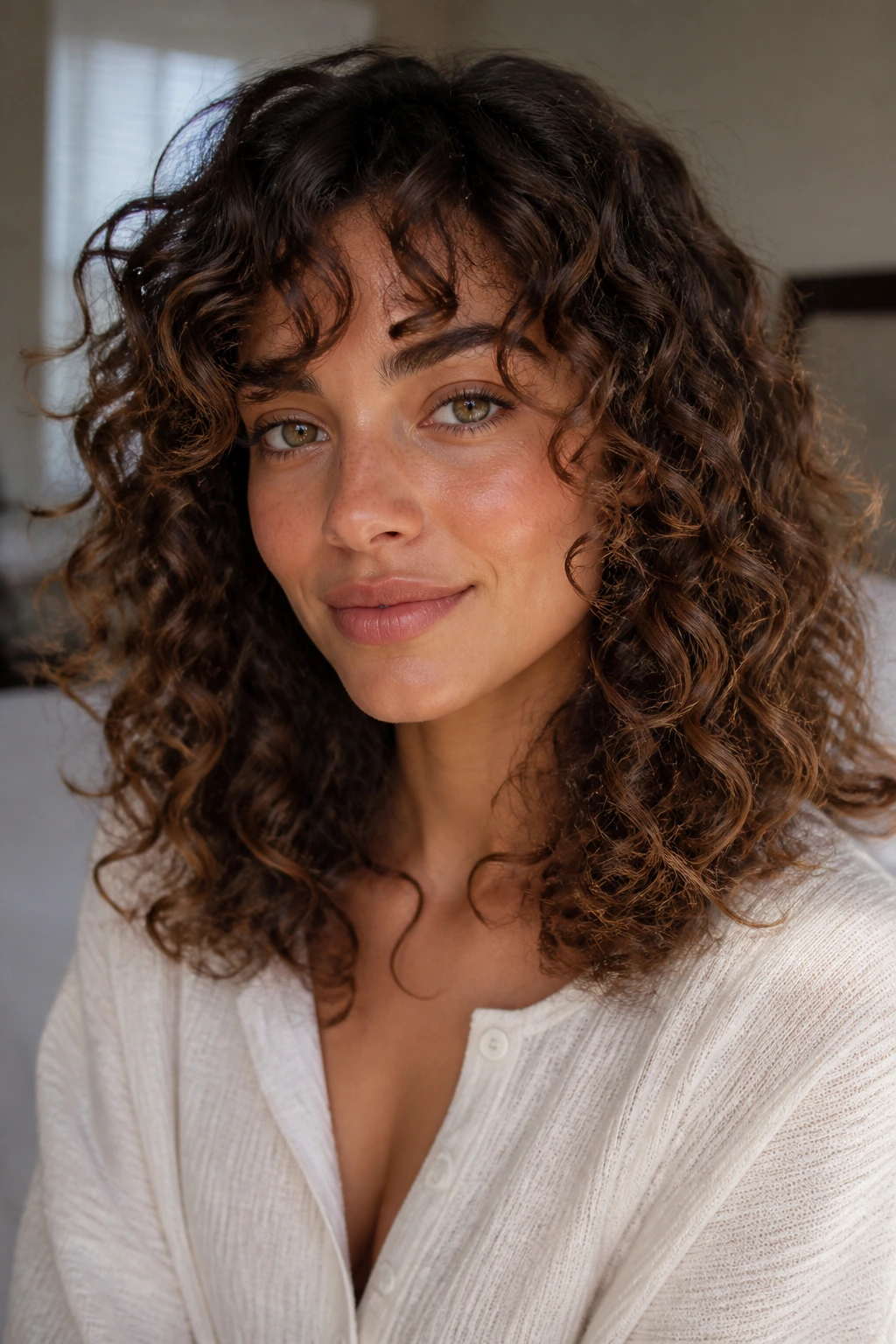
The middle lengths win because they solve two problems at once. Hair that is too short can spring up in all the wrong places and demand constant reshaping. Hair that is too long can go flat at the roots, drag at the crown, and need a full styling session just to look awake.
Medium length gives curl patterns a place to sit. There is enough weight to keep the outline from puffing out like a balloon, but enough bounce to keep the shape from looking heavy. That balance matters more than people think, especially when you are trying to get out the door with only a few minutes to spare.
It also helps that these cuts are not all built the same way. Some rely on long layers, some on rounding, some on internal removal, and some on a fringe that does part of the visual work for you. The common thread is simple: they make the curl pattern part of the haircut, not an afterthought.
Essential Tools for Styling Curly Hair at Home

- Spray bottle with a fine mist: Good for refreshing day-two curls without soaking the whole head.
- Microfiber towel or cotton T-shirt: Cuts down on rough friction while you squeeze water out of the curls.
- Wide-tooth comb or detangling brush: Use it while the hair is wet and coated with conditioner, not on dry curls.
- Leave-in conditioner: Adds slip so you can separate tangles without tearing apart the clumps.
- Curl cream or mousse: Pick one based on how much hold your hair needs; finer curls usually like less weight.
- Gel with medium or firm hold: Helps the shape stay together once the hair dries.
- Diffuser attachment: Useful if you need root lift or faster dry time, especially on dense hair.
- Duckbill or small clips: Helpful for root clipping at the crown or for pinning bangs while they set.
- Satin bonnet or pillowcase: Keeps the shape from getting flattened overnight.
- Regular trim shears used by a pro: Not for home DIY shaping, but worth remembering if you do your own dust trims.
How to Ask for Medium Long Haircuts for Curly Hair
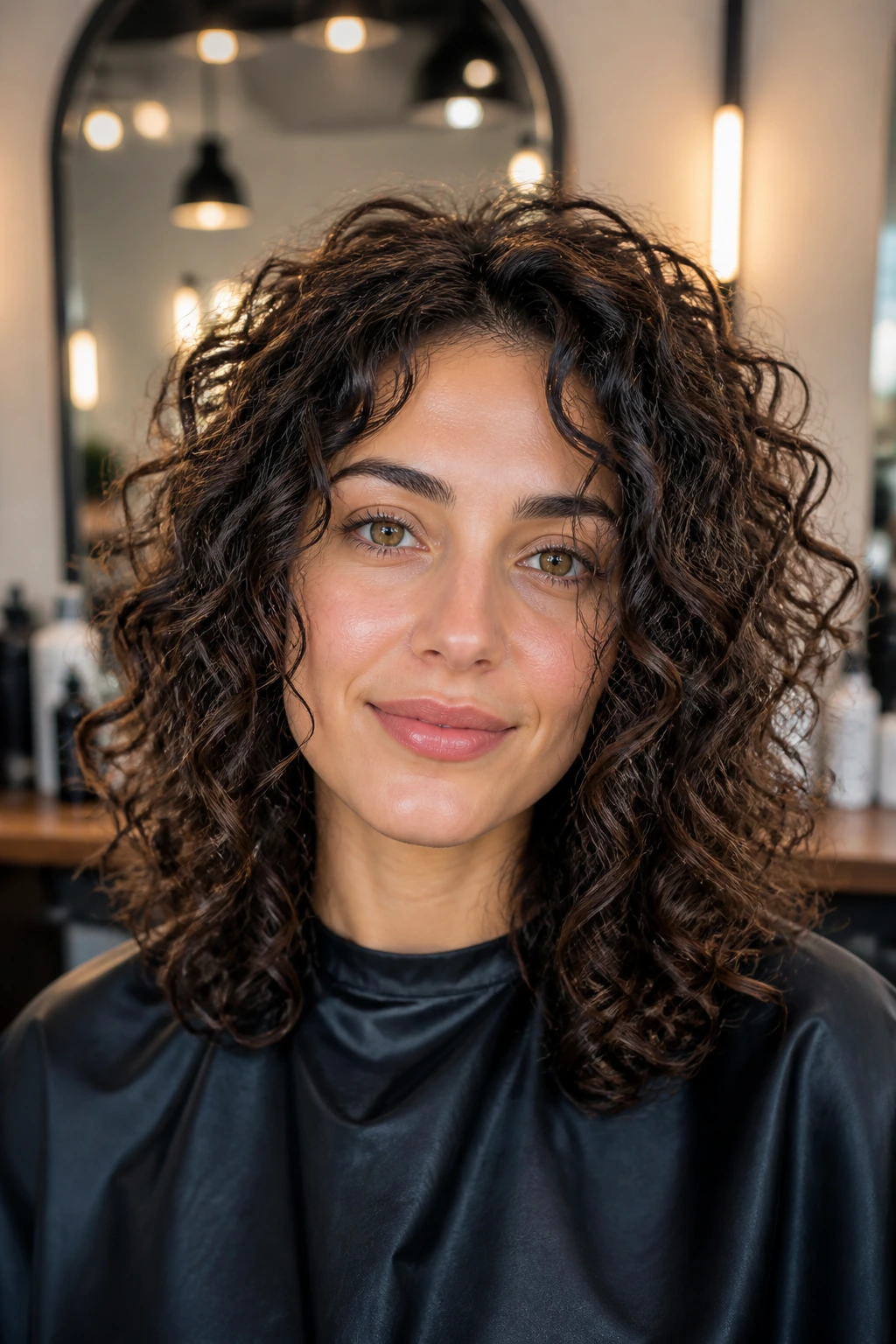
Bring photos, but bring the right kind. A picture of a celebrity with loose waves and your own tighter, denser curls is not useful. Find examples with a similar curl pattern, similar density, and a similar amount of shrinkage. That gives the stylist a real target instead of a fantasy.
Say where you want the dry length to land. That matters more than the wet length, because curls can spring up a surprising amount. If your hair shrinks two inches or more, say so. Better yet, point to a spot on your face or collarbone and say, “I want the curls to sit here when they’re dry.” That removes guesswork.
Ask how the stylist handles curl shape. Some work dry, some do a hybrid cut, and some use wet cutting with dry refinement. I prefer a stylist who can explain why they’re making each layer rather than just thinning things until the hair feels lighter. Light is not always better. Sometimes it is just thinner and more frizzy.
How to Style These Cuts in Less Than Fifteen Minutes

Wash-Day Styling: Start with soaking wet hair. Work in leave-in first, then add curl cream or mousse, and finish with gel if your hair needs hold. Scrunch upward with a microfiber towel or T-shirt, but do not rough it up so much that you break the curl clumps apart.
Diffuser Strategy: If you diffuse, keep the dryer on low or medium heat and low speed. Hover for a few minutes to set the roots, then cup the curls in sections until they feel about 80 percent dry. That usually gives enough structure without cooking the cut into a frizzy cloud.
Fast Air-Dry Plan: Clip the roots at the crown if your hair goes flat there, then leave the curls alone. Touching them too early is usually the mistake that makes them go messy. If you must check them, do it with your eyes, not your fingers.
Quick Refresh: On the next morning, mist the hair lightly, smooth a tiny amount of gel or cream over the frizzy sections, and scrunch just the outer layer. Focus on the front pieces and the crown. Those are the parts most people actually see.
Finish Line: If the ends look dry, use one drop of oil or serum and press it onto the very tips. That is enough. More than that and the curls can start to slump.
Extra Tips That Make the Shape Easier to Live With
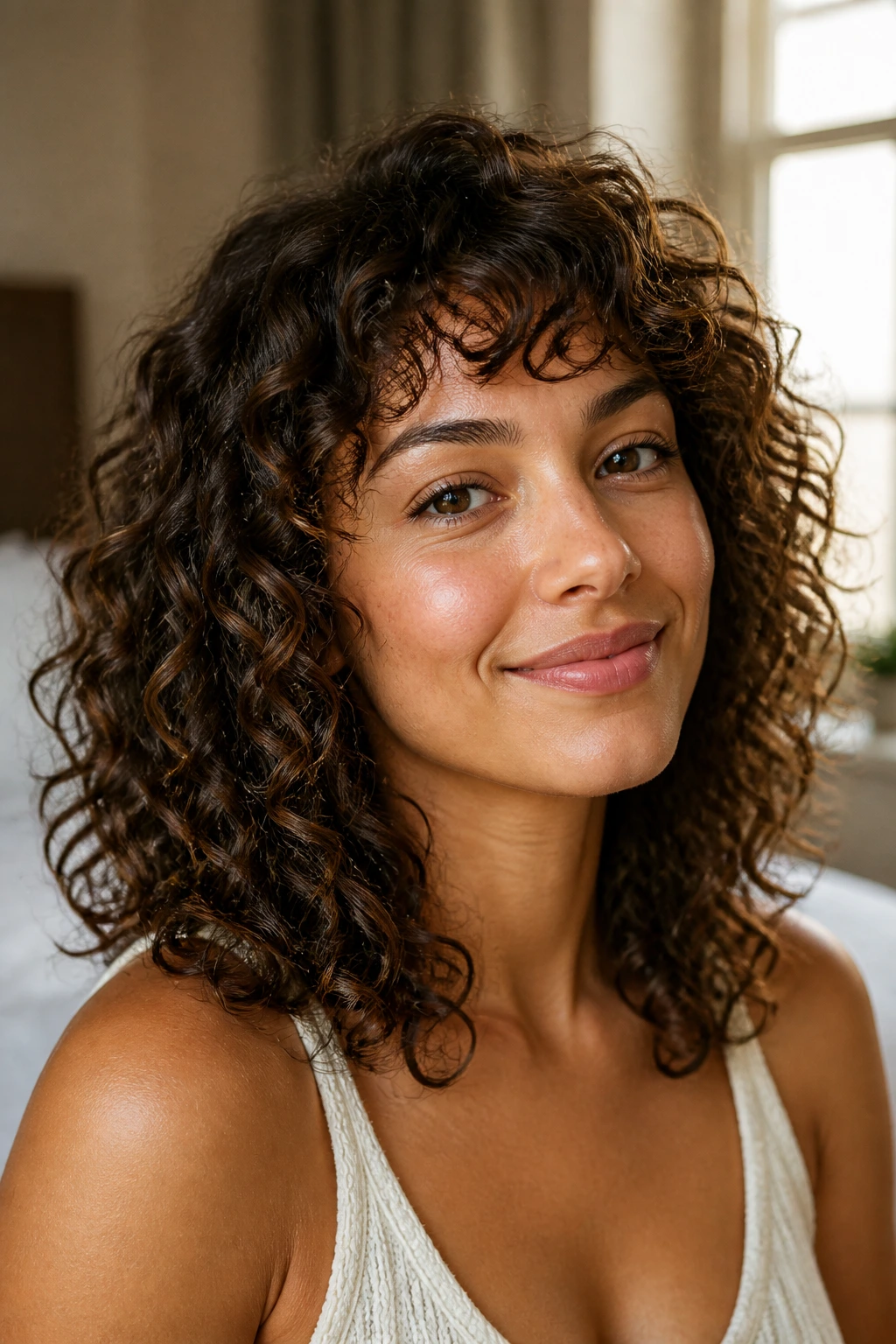
Shape Enhancement: Ask for the perimeter to stay a touch longer than you think you need. Curly hair shrinks, and a slightly longer base keeps the haircut from ballooning.
Time-Saver: Style in sections that match your natural curl clumps. If your hair forms bigger groups, do not separate it into tiny pieces just because a tutorial told you to. You’ll spend more time and usually get more frizz.
Pro Move: Clip the crown while the hair is drying if your roots are stubborn. Five minutes of clipping can save ten minutes of root fluffing later.
Cost-Saver: Stay on a trim rhythm. Tiny cleanups every 8 to 12 weeks are easier on the haircut than waiting until the ends split and the whole shape goes soft.
Humidity Plan: Use a little more hold on the outer layer when the air feels sticky. The frizz usually starts there first, and a light gel pass over the surface can keep the style from puffing outward.
Common Mistakes That Make Curly Cuts Harder to Wear
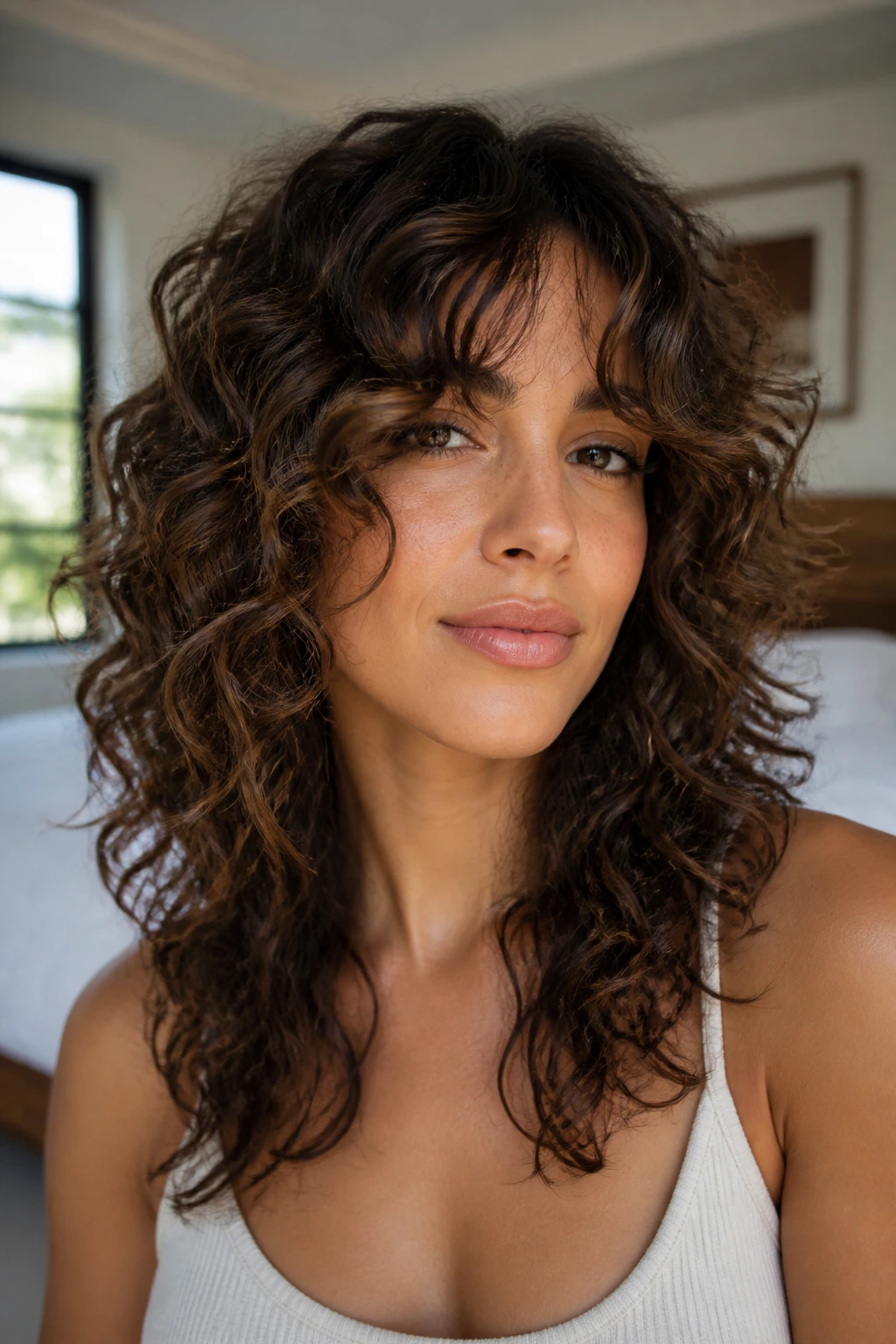
- Cutting the hair to its wet length: Wet curls lie to you. They stretch, then spring up. If the cut is built only on wet hair, the finished shape can end up too short or strangely uneven.
- Using too many short layers: Short layers near the crown can turn the top into a halo of frizz while leaving the ends stringy. Ask for layers with a reason, not just layers for the sake of “movement.”
- Choosing products that are too heavy: Thick butters and oily creams can flatten a medium cut fast. If your curls are fine or loose, lighter products usually keep the shape awake longer.
- Ignoring sleep friction: Cotton pillowcases rough up the cut and flatten the back. A satin bonnet or pillowcase is not glamorous, but it protects the shape.
- Waiting too long between trims: Once the ends split and the layers lose their line, the cut starts asking for more styling to look finished. That’s when a low-maintenance haircut becomes work.
- Asking for a celebrity copy instead of a curl match: Texture, density, and shrinkage matter more than face shape alone. The same haircut can behave wildly differently on two heads of hair.
Variations and Adaptations to Try
The Fine-Curl Edit: Keep the layers longer and the perimeter stronger. Fine curls usually need a little weight to avoid looking wispy, and light products help the shape hold without collapse.
The Dense-Curl Release: Ask for more internal bulk removal and a clearer outline. Thick curls often need hidden reduction underneath so the outer shape can stay calm instead of expanding outward.
The Wave-Friendly Lob: For looser wave patterns, the collarbone lob and side-parted styles usually need the least coaxing. They air-dry quickly and do not require a ton of product to look finished.
The Coil-Safe Shape: Tighter coils usually do better with dry cutting, longer shrinkage allowance, and face-framing that respects spring. Short layers can be useful, but they should be placed with restraint.
The Fringe-Optional Version: If bangs feel like too much of a commitment, ask for curtain pieces that can be tucked away. You still get front interest without being locked into a full fringe routine.
The Grow-Out Version: If you are between lengths, choose a face-framing lob or soft U-shape. Those two shapes keep the haircut readable while you wait for the rest of the length to catch up.
Keeping Medium Long Curly Haircuts in Shape Between Washes

A good curly cut should not demand a full reset every morning. The trick is preserving the shape overnight so the curl pattern doesn’t need to start from zero. A satin pillowcase helps, but a loose pineapple on top of the head can be even better if your hair is long enough to gather without a tight band.
Morning refreshes work best when they are small. Mist the front, smooth the ends, and leave the rest alone unless it truly needs help. If you soak the whole head every day, you usually end up back in the shower sooner than you wanted. Fine or loose curls often need a wash sooner, around day two or three. Denser curls can often go a little longer if the scalp still feels clean.
If the back gets flattened, flip the hair the opposite way while it dries for a few minutes. That tiny change can restore lift at the roots without a full re-style. And if your shape starts to feel off before the trim appointment, do not wait until it turns into a triangle. A small dusting trim is easier to live with than a rescue cut.
Frequently Asked Questions
How often should medium curly hair be trimmed?
Most medium curly cuts hold their shape well for 8 to 12 weeks. If your ends split early or your curls start losing definition at the bottom, trim sooner rather than waiting for the whole outline to go soft.
Is a dry cut better than a wet cut for curly hair?
Dry cutting is often better for seeing the true curl fall, especially with shrinkage or uneven patterns. That said, some stylists use a hybrid approach and get excellent results; the key is that they understand how the curls behave once they dry.
What medium cut works best for fine curly hair?
A collarbone lob, blunt mid-length cut, or long layered cut with very subtle layers usually works well. Fine curls can look stringy if the haircut gets over-layered, so keep the shape clean and the products light.
What if my curls shrink much shorter than I want?
Tell the stylist where you want the dry length to land, not the wet length. Bring your hair’s shrinkage pattern into the conversation early, because “just below the shoulders” can mean very different things on curly hair.
Can these cuts still work if I air-dry most days?
Yes, and several of them are built for that. Shags, lobs, U-shapes, and soft layered cuts tend to air-dry well as long as the curl clumps are preserved in the shower and not over-brushed apart.
Do curtain bangs make curly mornings harder?
They can, if they’re cut too short or too blunt. Longer curtain bangs are much easier because they can split, tuck, or grow out without looking awkward by lunch.
How do I keep thick curly hair from getting too wide?
Ask for internal bulk removal, a stronger perimeter, or a shape that narrows the lower sides. Dense curls usually need the inside cleaned up so the outside can stay smooth and controlled.
What should I do if my haircut looks triangular?
That usually means the weight sits too low and the crown lacks support. A stylist can remove bulk in the right places and add shape near the top, but a fresh trim is usually the fix, not more product.
A Shape That Fits the Alarm Clock
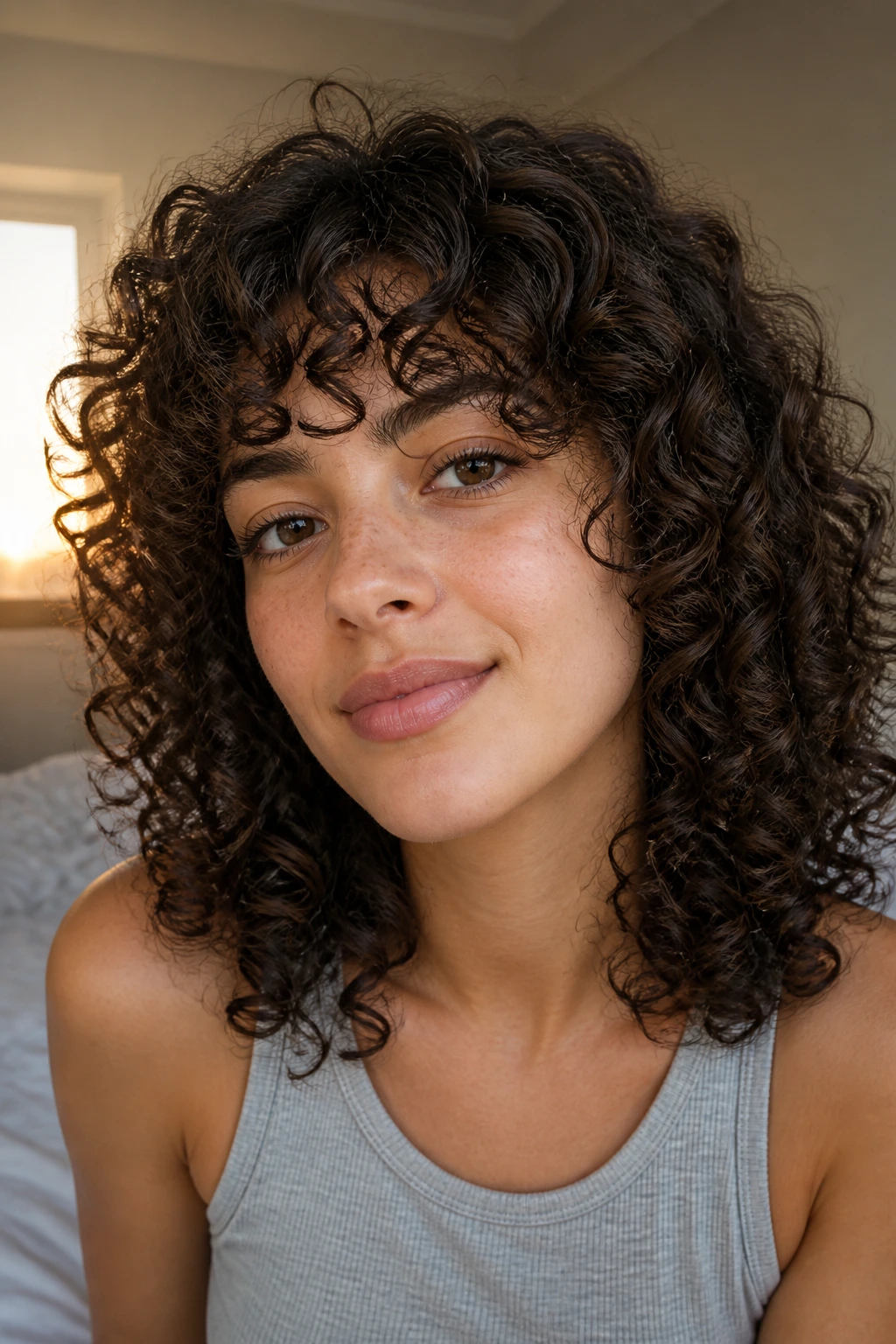
Curly hair does not need to be tamed into something straight-looking to feel easy. It needs a cut that respects how it moves, where it swells, where it shrinks, and how little time most mornings actually give you. That is why the best medium long curly haircuts are the ones that do more of the organizing for you.
If you pick a shape that matches your curl pattern and your patience level, your morning routine gets shorter in a real way. Less coaxing. Less fuss. More hair that looks like it belongs on your head the first time you see it in the mirror.
Bring one or two reference photos, talk honestly about shrinkage, and ask where the shape should sit when the curls are dry. That one conversation can save you weeks of irritation.