



Fine hair does not need to be bullied into volume. On Black women, the smartest layered bob keeps enough weight at the perimeter to look full, then sneaks movement into the crown, the jawline, or the front corners where the eye wants lift.
That distinction matters. Fine strands can be soft, shiny, and flexible, but they also collapse fast when the cut is too airy or the layers start too high. And if your hair is textured as well as fine, a bob that looks neat on straight hair can go fuzzy at the ends, hollow in the middle, or boxy at the back once it meets humidity, sweat, and a rushed weekday morning.
The best layered bobs for Black women with fine hair do not rely on one trick. Some use a deep side part. Some keep the nape tight and the top softly stacked. Some stay blunt around the edge and build movement inside the shape so the cut still looks thick when it’s tucked behind one ear. A few work best on a silk press, a few on curls, and a few on that in-between texture that sits somewhere between stretched and soft. The shape has to earn its keep, and these 25 do.
Why These Layered Bobs Work So Well on Fine Hair
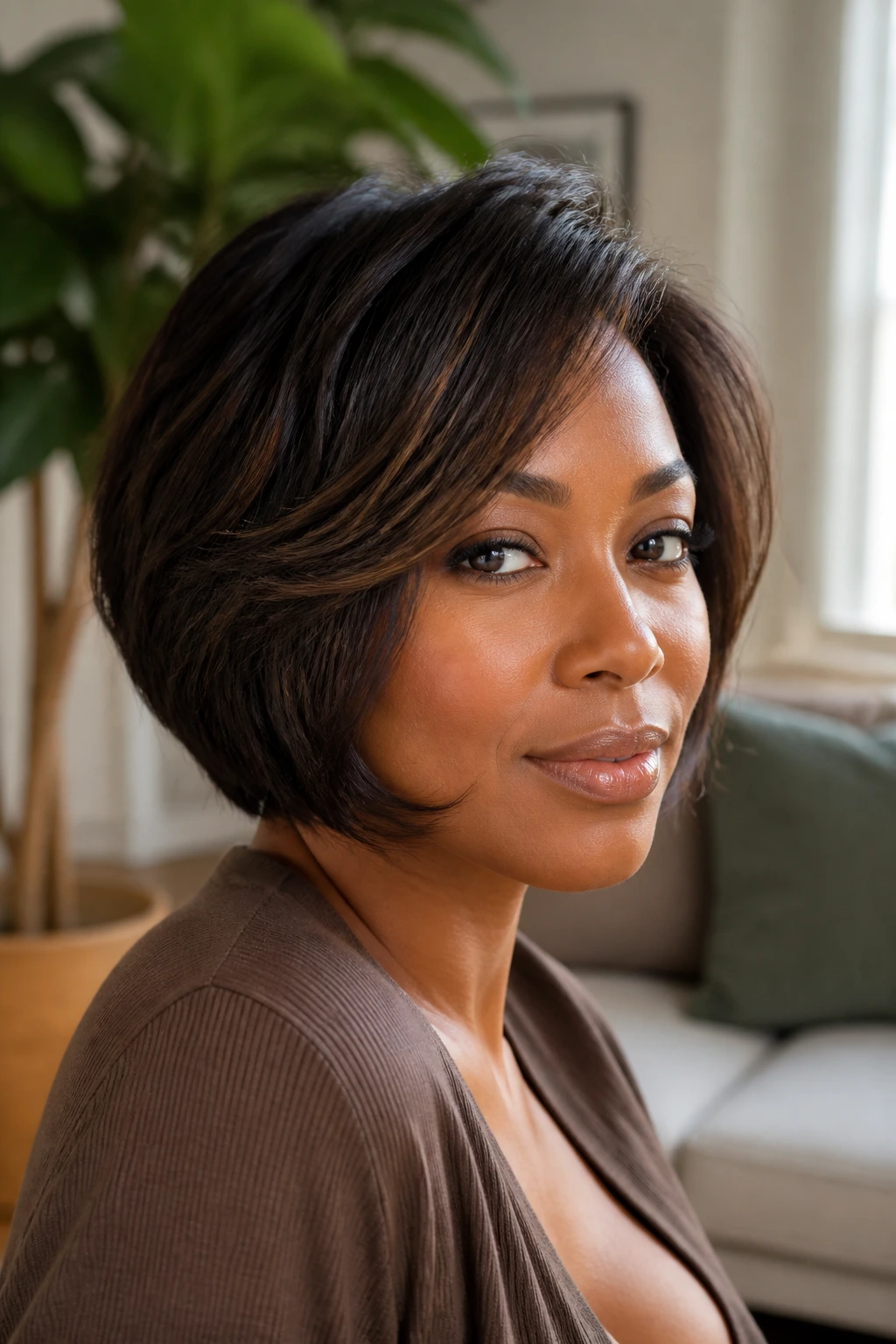
- The outline stays full: Fine hair looks thinner when the ends are chewed up too much, so the best bob shapes keep a clean perimeter and use layers in the right places.
- Lift shows up where you want it: A little graduation at the crown or nape gives the cut a stronger silhouette, which matters more than piling on product.
- They play nice with texture: Whether you wear your hair straight, stretched, curled, or blown out, the right layers help the style move instead of hanging flat.
- They grow out better than blunt cuts alone: When the layering is subtle, the bob still looks intentional four to six weeks later, not like it has given up.
- They work with face shape, not against it: Longer front corners, side parts, and cheekbone-level face framing can make the whole cut feel lighter without making it look sparse.
1. The Rounded Chin Bob
A rounded chin-length bob is one of the safest bets when fine hair needs to look thicker without looking stiff. The curve matters. It keeps the eye moving instead of stopping at a hard line, and that soft arc makes the whole cut feel fuller than a straight, flat bob of the same length.
Why it flatters fine hair
I like this shape when the shortest layers stay tucked inside the cut rather than floating up at the top. That way, the bob keeps its body at the edge, where fine hair usually needs help the most. On Black women, it also plays nicely with natural texture because the curve can follow the cheek and jaw instead of fighting them.
If your hair tends to puff out at the sides, ask for a rounded shape that hugs in a little under the ear. Not tight. Just enough.
Best for: women who want a clean, polished line that still feels soft.
Styling note: a small round brush or wrapped set gives the ends that gentle bend without making the top look puffy.
2. The Angled Bob with Longer Front Corners
If you want the haircut to look sharper right away, go angled. A longer front corner gives the illusion of length, while the shorter back brings the weight up where fine hair can actually hold it. It’s one of those cuts that looks like it took more effort than it did.
The angle also keeps the face from getting swallowed by too much width at the sides. That matters on fine hair, because the wrong bob can spread outward and still look thin. This version pulls the shape forward. It feels deliberate.
I’d ask for the front to land somewhere between the jaw and collarbone, depending on how much neck you want to show. The back can sit higher, but not so high that it turns into a wedge you can see from across the room.
3. The Stacked Nape Bob
A stacked nape bob is what I reach for when the back of the head needs a little architecture. The shorter layers at the nape build lift under the crown, and that tiny bit of graduation keeps fine hair from lying like a sheet.
What makes the stack work
The stack should be subtle, not crunchy. You want softness at the crown and a clean curve at the neckline, not a helmet. If the layers are cut too aggressively, fine hair can start to look wispy fast, especially once you move around in it all day.
This cut is strongest when the back is neat and the top has just enough room to move. It’s the bob that still looks shaped after you turn your head.
- Keeps the crown from collapsing
- Helps the back sit close to the neck
- Works well with blow-dried or silk-pressed hair
- Looks even better when the nape is trimmed clean every few weeks
4. The Deep Side-Part Bob
Why does a side part make a fine-hair bob look fuller so fast? Because it changes the line the eye follows. A deep part gives one side more lift, one side more swing, and the whole cut stops reading like a flat block.
The best version of this bob uses layers around the part and cheekbone, not all over the head. That way, you keep enough weight at the bottom to avoid see-through ends. The part becomes the styling move, not the haircut’s only trick.
If your roots flatten easily, this is a good one to keep in your back pocket. A little mousse at the root, a quick wrap, and a side sweep can do more than three layers of heavy styling cream ever will.
How to wear it
Brush the hair into the part while it’s still warm from the dryer or iron, then let the front fall across the forehead naturally. The bend at the front should look soft, not forced.
5. The Collarbone Bob with Interior Layers
A collarbone bob is for the woman who likes the idea of a bob but doesn’t want to commit to a sharp jaw-length cut. The extra length gives fine hair a bit more swing, and the hidden layers inside the shape keep it from looking heavy at the ends.
That interior layering is the quiet hero here. You don’t see it on first glance, but you feel it when the hair moves. The cut falls better, bends easier, and doesn’t cling to the neck in that dull, sleepy way longer fine hair can.
This is a smart choice if you wear your hair straight some weeks and curly or stretched on others. It gives you flexibility without looking like a compromise.
6. The Silk-Press Bob with Curved Ends
A silk-press bob with curved ends has a crispness that fine hair loves. Clean lines, a neat part, and ends that tuck under or flick outward just a touch. Not too much. Enough to keep the shape from falling flat.
The trick is restraint. Fine hair does not need a lot of product to look finished; it needs clean sectioning, even heat, and a bend at the ends that doesn’t puff out by noon. A one-inch iron or a round brush can create that curve without making the body feel stiff.
I like this cut for evenings, work, and any day when you want the shape to hold its outline. Wrap it at night, smooth the perimeter in the morning, and it behaves better than people expect.
7. The Tapered Natural Bob
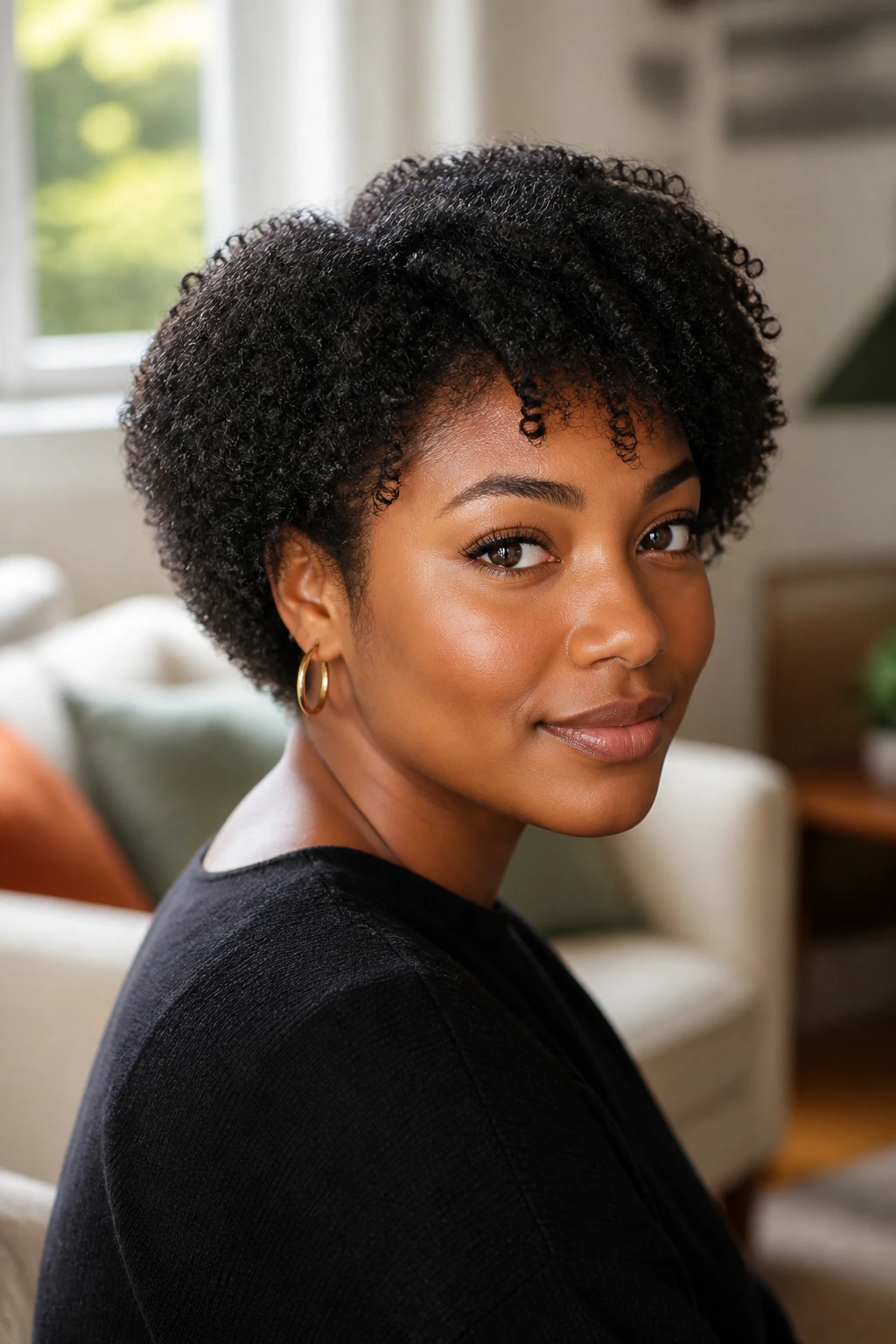
A tapered bob is one of the easiest ways to keep natural texture looking shaped instead of chopped. The neckline is shorter, the sides stay soft, and the top keeps enough room to show off curl pattern without ballooning into a triangle.
What to ask for
- A gentle taper at the nape, not a hard fade
- Layering that starts lower than the cheekbone if your strands are very fine
- A shape that follows your shrinkage pattern when dry
- Soft rounding at the corners so the silhouette feels finished
This cut is especially useful if your hair shrinks a lot when it dries. The wrong bob can look two inches shorter than intended. This one gives the curls a place to land.
8. The Blunt Bob with Hidden Layers
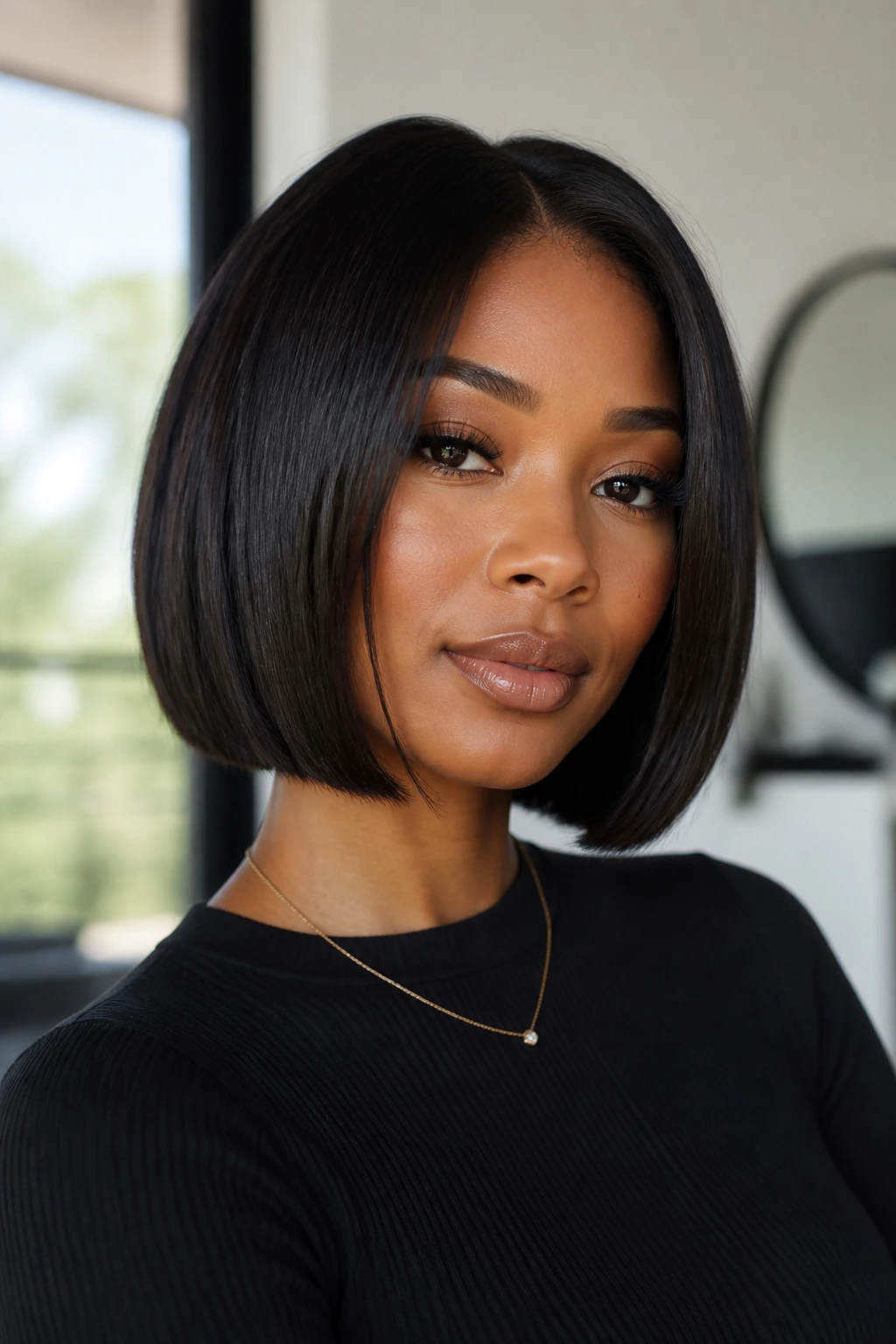
People hear “layered” and assume they need obvious steps cut into the hair. On fine hair, that is often the wrong instinct. A blunt bob with hidden layers keeps the bottom line solid while adding movement inside the shape, which is where the fullness really lives.
The outer edge stays strong. The interior is what gets lightened. That means you get swing and bend without the ends looking feathered out to nothing.
I think this is one of the smartest options for Black women with fine hair who like a clean, expensive-looking line. It’s especially good if your hair already has enough texture on its own and only needs a little shape correction.
9. The Curly Bob with Face-Framing Pieces
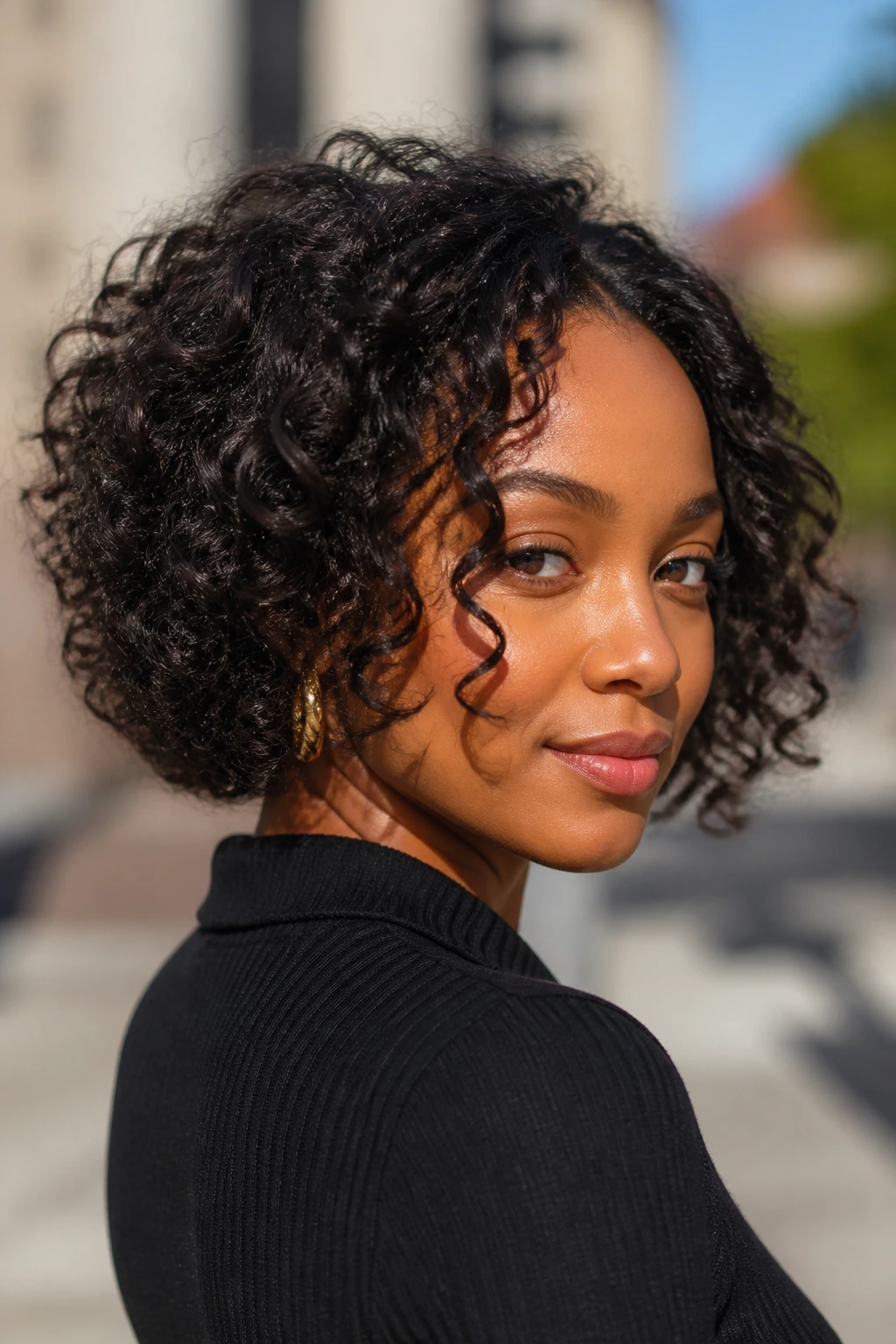
A curly bob can look lush on fine hair when the face-framing pieces are cut with some thought. The front should guide the curls, not chop them all at the same level. That little difference keeps the shape from turning into a puffball.
On stretched curls or a twist-out, the layers should start low enough to respect shrinkage. High layers on fine curls tend to expose the scalp line faster than most people expect. And once that happens, the cut can start looking thinner than it really is.
The best versions leave the front a touch longer around the cheekbones and jaw. That gives you movement where it flatters, instead of volume in random places.
10. The Feathered Bob with Side Bangs
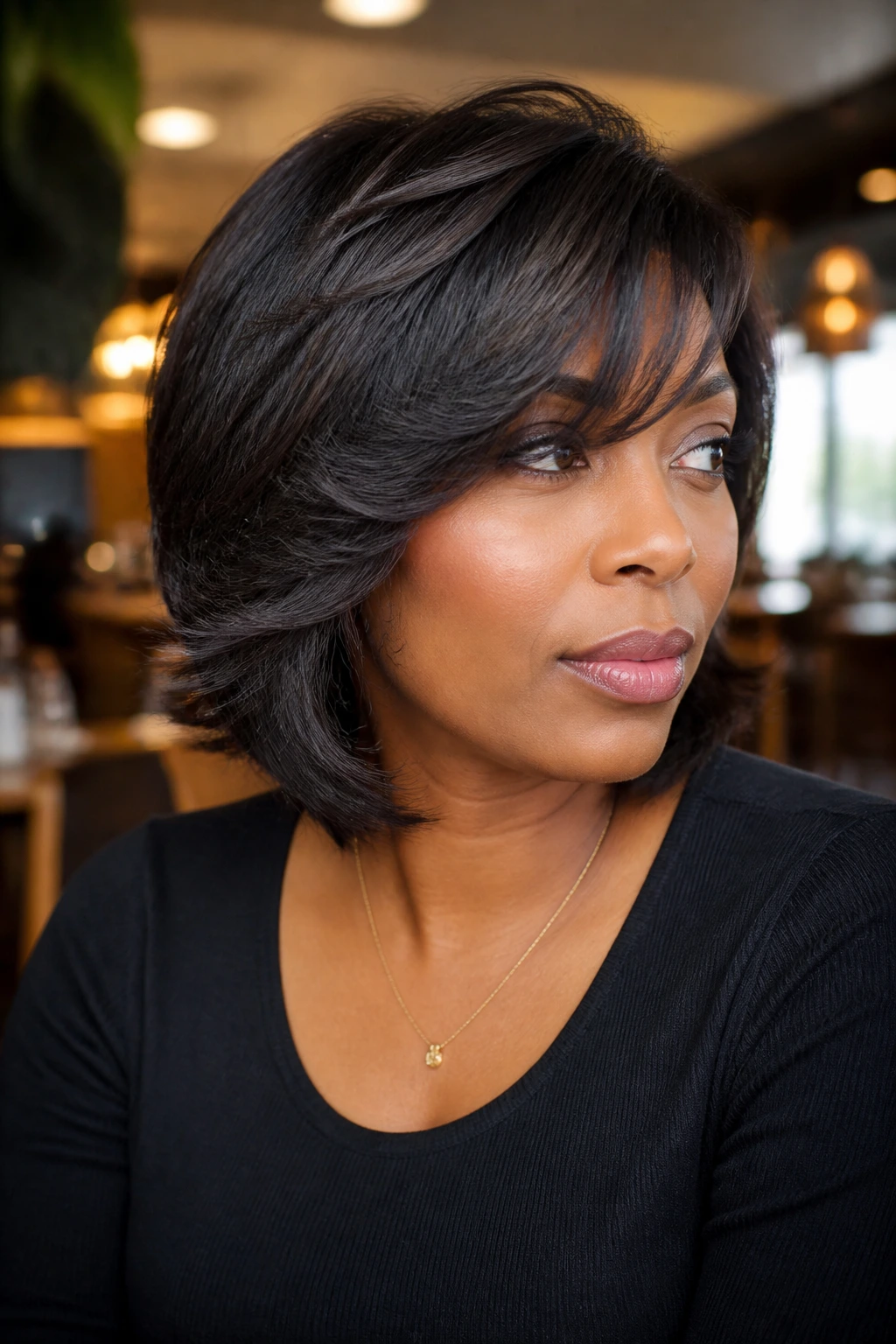
Feathering can be a mess on fine hair if it’s done too hard. But when it’s soft, it gives the bob a light, airy movement that keeps the cut from feeling heavy at the sides. Side bangs help too, especially if your temples are a little sparse or you want the front to feel fuller.
This is a nice choice if you like a bit of softness around the face. The bangs should sweep, not sit like a helmet. And the layers should blend into the bob, not shout over it.
A little root lift at the part and a round brush at the fringe are usually enough. Anything more starts to look fussy.
11. The Asymmetrical Bob with a Long Front Sweep
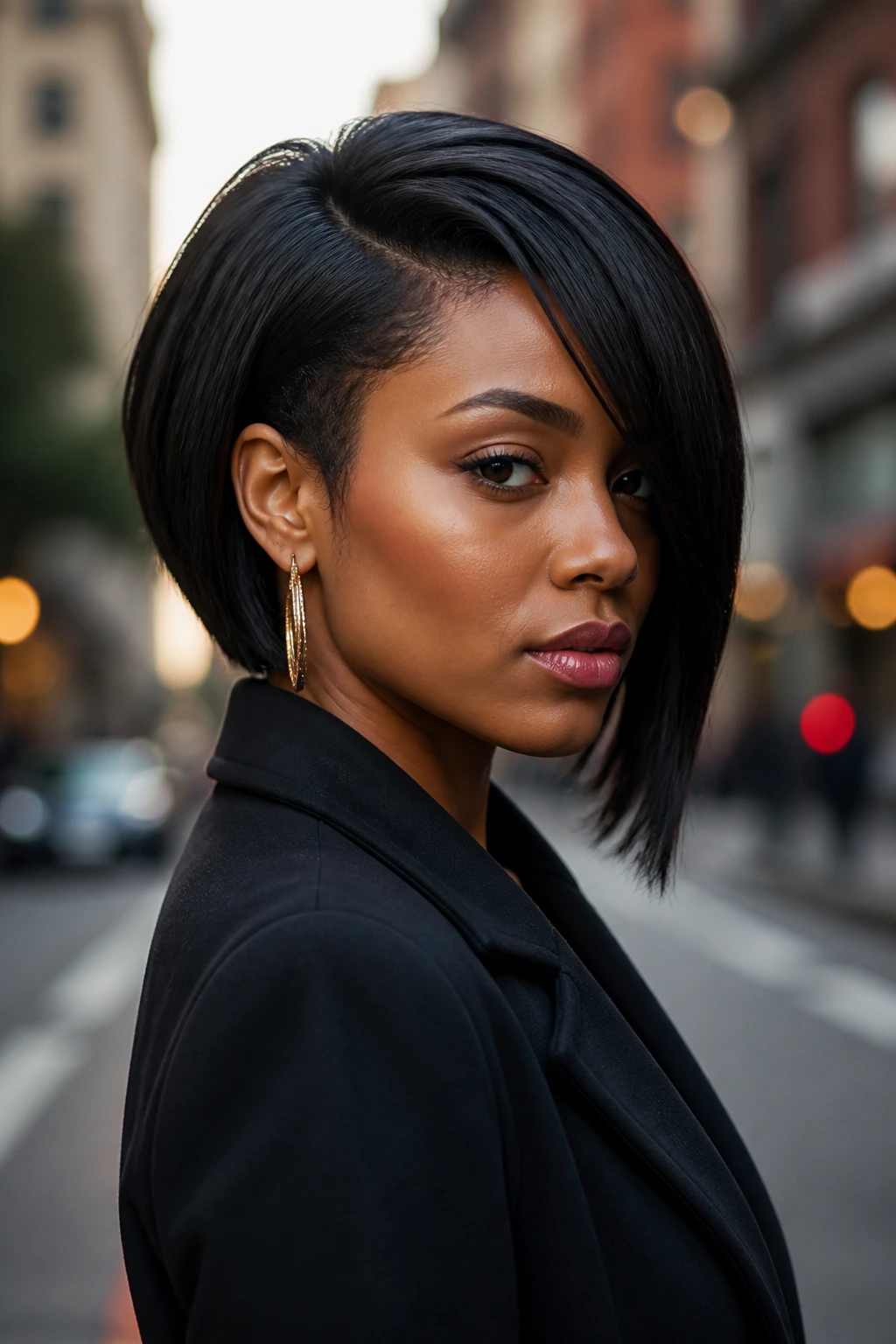
An asymmetrical bob is one of the few dramatic cuts that can still work beautifully on fine hair. The long front sweep gives you visual length, while the shorter side adds shape and lift where the head needs it.
It’s especially flattering if you like a side part and want the cut to feel a little more styled without needing much daily effort. The longer side can skim the collarbone or jaw, depending on how bold you want it. The shorter side should not be so short that the shape loses its balance.
This cut has attitude. It also hides flatness well, which is not a bad deal.
12. The Soft Wedge Bob
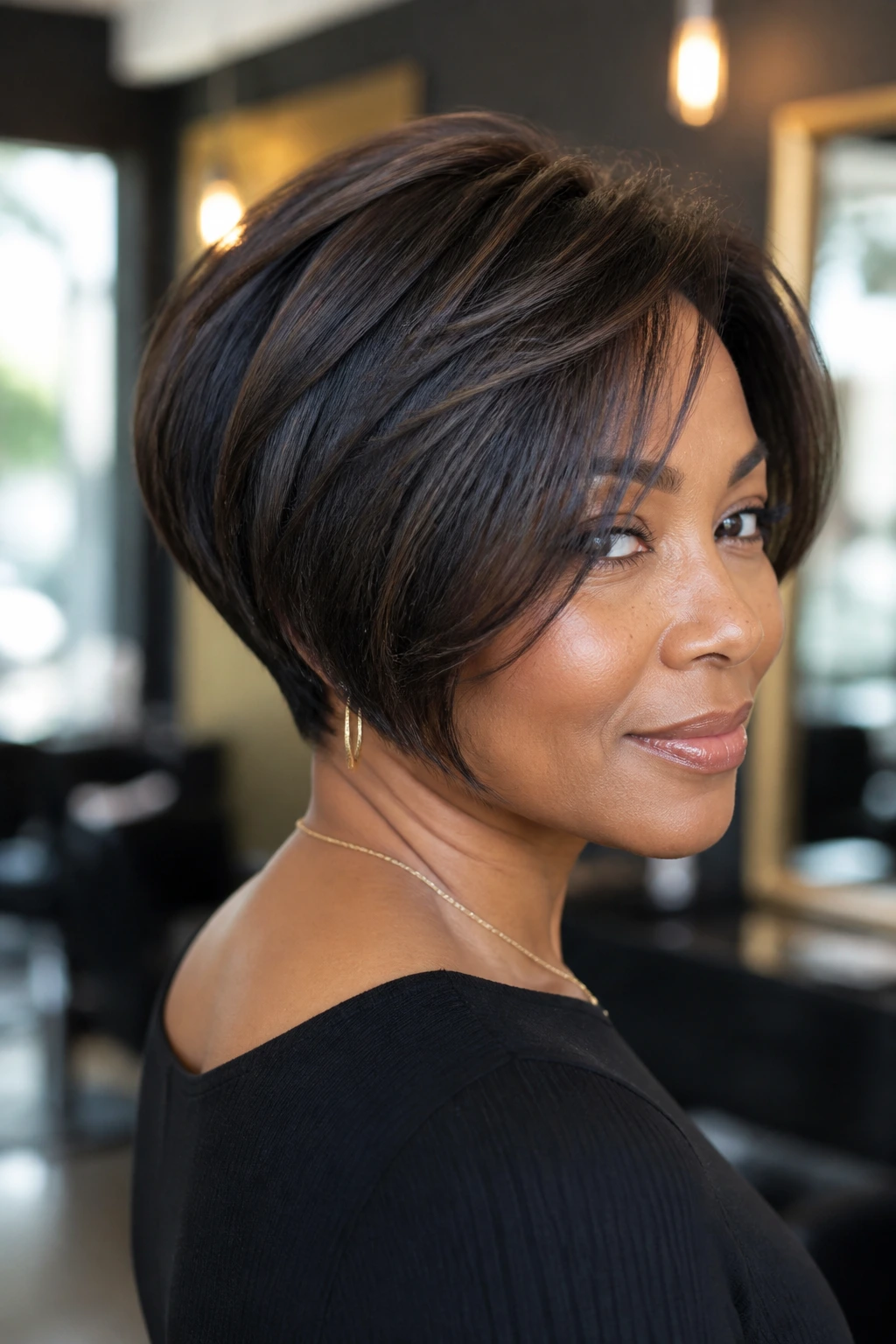
A soft wedge bob takes the old-school wedge idea and tones it down enough for real life. The nape sits shorter, the crown lifts gently, and the edges stay soft instead of hard. Fine hair often needs that structure, because without it the shape can drop by noon.
What I like here is the control. You get a back that feels neat and a top that still moves. The cut can look polished on straight hair and rounded on stretched texture, which makes it useful if you switch styling methods from week to week.
If your hair tends to sit flat at the back of the head, this is a strong option. Keep the angles gentle. That keeps it modern.
13. The French Bob with a Wispy Fringe
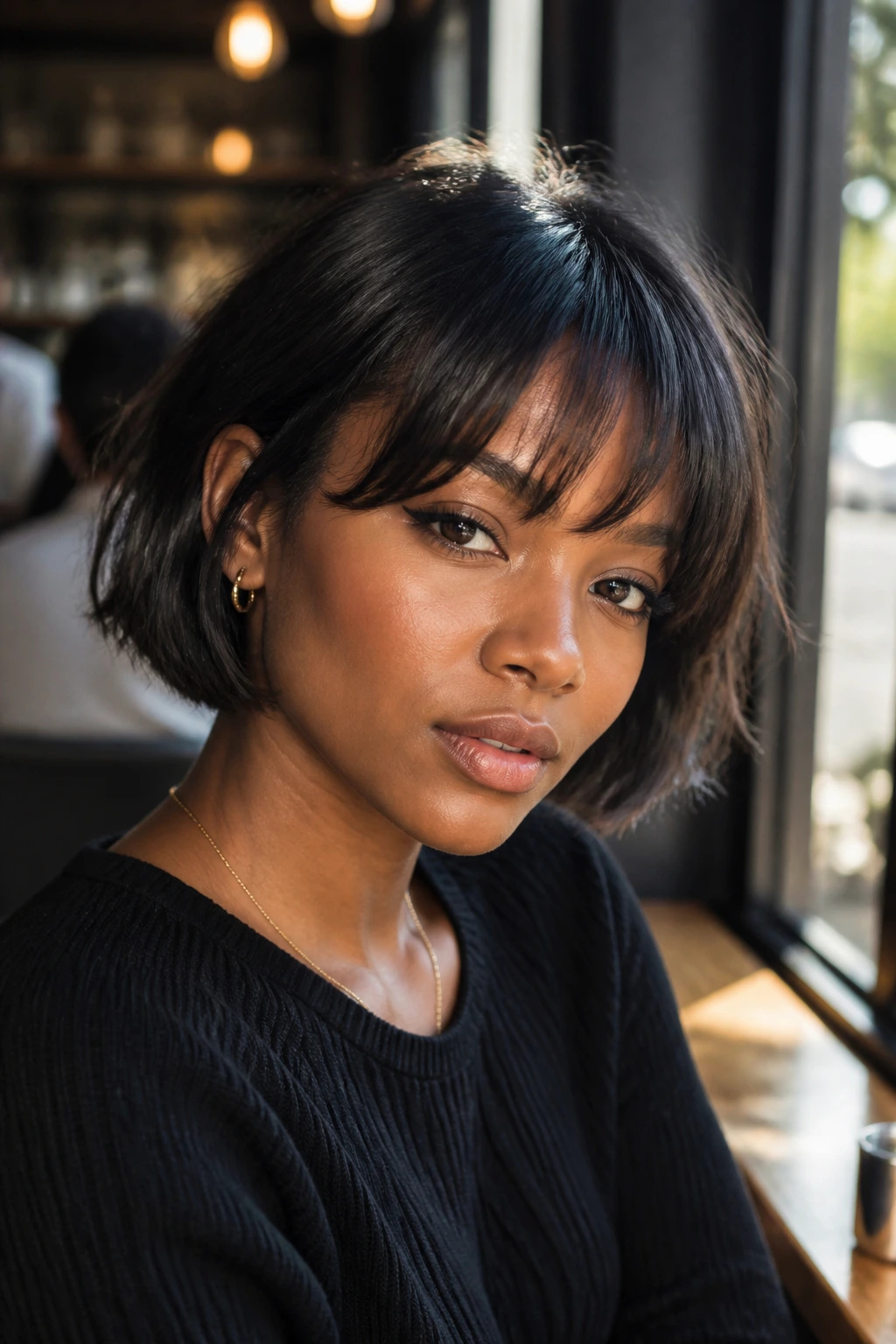
A French bob sounds cute, and on fine hair it can be, but only if the fringe stays wispy enough to breathe. Too much bang and the face gets buried. Too little and the cut loses its charm.
The length usually sits near the cheekbone or just below it, which works well when you want the bob to feel chic without a lot of styling. Fine hair benefits from that shorter length because the ends stay close together instead of spreading thin.
I would not push this cut too short if your hairline is delicate. Leave enough softness around the face so the fringe looks intentional, not like a rescue mission.
14. The Shaggy Lob
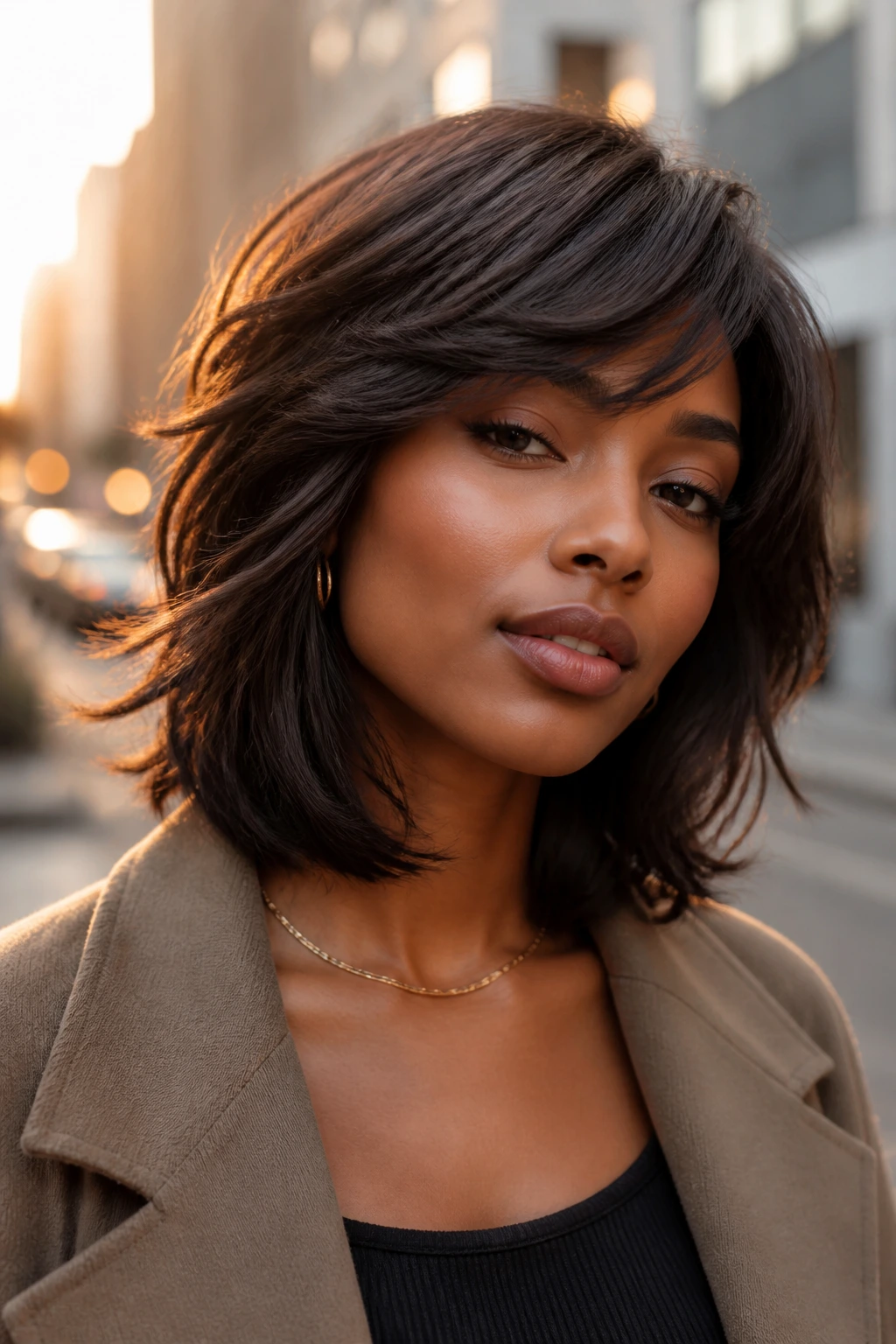
A shaggy lob is for the days when you want movement more than precision. The layers live lower and softer, which is a blessing for fine hair because the cut gains texture without losing all its weight.
This is not the bob for someone who wants a rigid outline. It is better for people who like a bit of swing, a little bend, and a style that still looks fine after a long day in motion. It also works well if your hair is fine but not sparse, because the longer length keeps the shape from going thin at the ends.
The best shaggy lob on Black women with fine hair is controlled. Loose, yes. Messy, no.
15. The Rounded Bob with Crown Lift
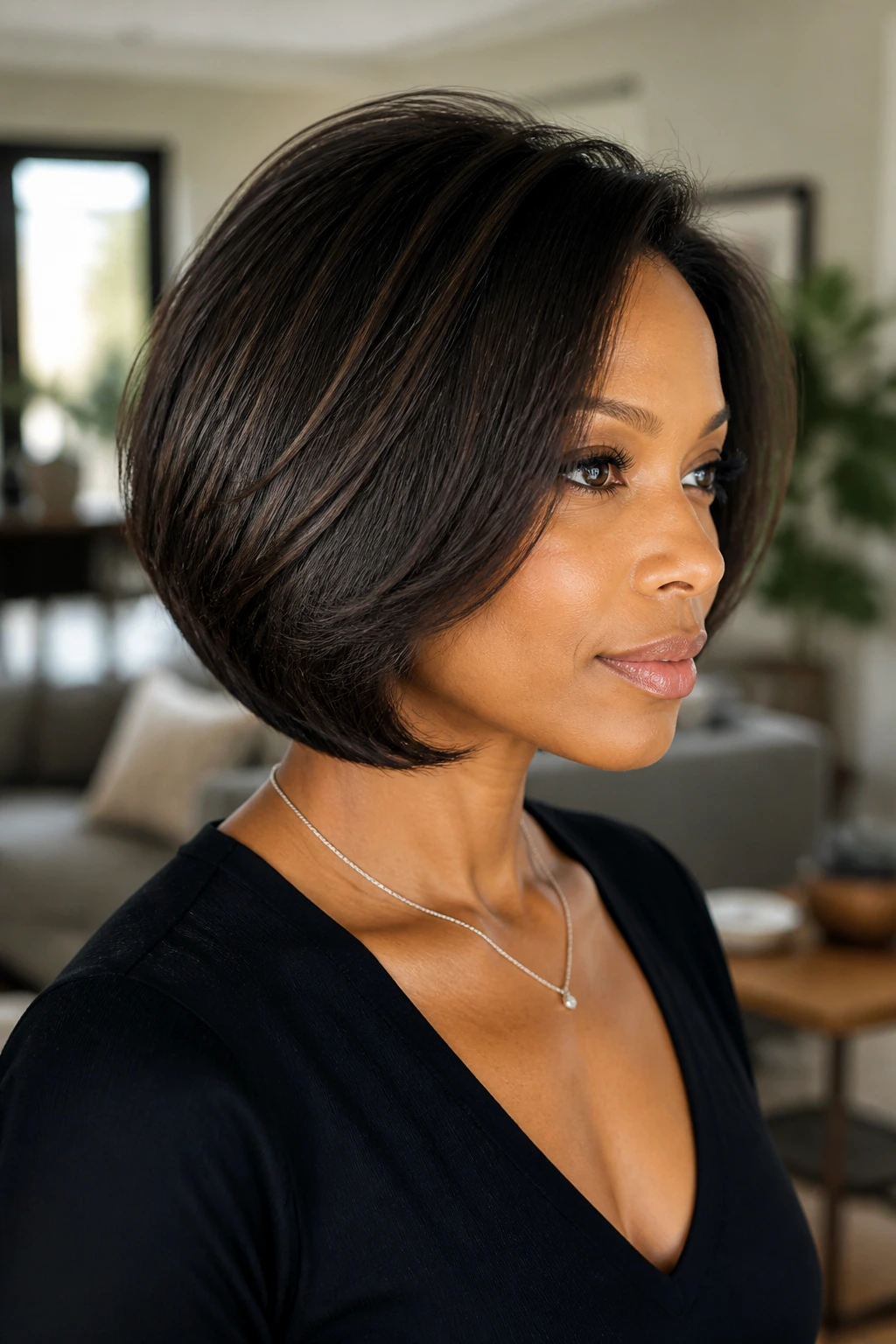
A rounded bob with crown lift is one of those cuts that looks simple until you notice how well it sits. The crown has a touch of elevation, the sides curve softly, and the outline stays smooth enough to read as full.
Why this shape helps
The lift at the crown matters more than most people realize. Fine hair often fails in two places: the top goes flat and the bottom gets scraggly. This cut deals with both by keeping the top softly supported and the ends together.
It is a good pick if you like a bob that feels grown-up and tidy without being severe. With a side part, it gets even better.
My take: if you only try one shape on this list, make it one that respects the crown. That’s where flatness shows first.
16. The Tucked-Nape Bob
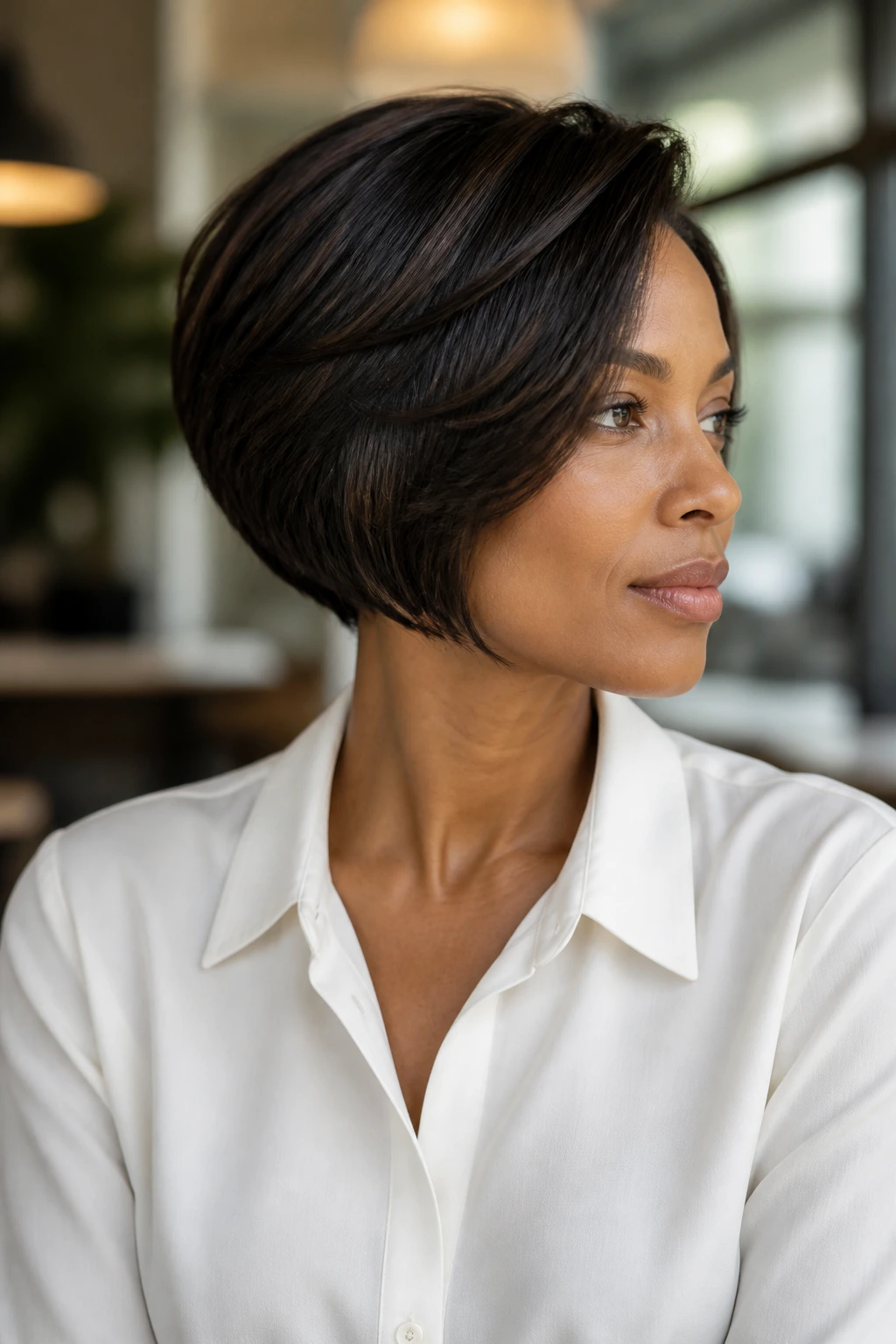
A tucked-nape bob is clean in the best way. The neckline is tight, the sides stay full, and the shape looks as if it was combed into place with intention. On fine hair, that kind of order is useful because it keeps the cut from floating away from the head.
It’s especially good if you want the back to stay neat under scarves, collars, or jackets. The nape doesn’t have to be tiny, just tidy. The longer sides preserve enough substance that the bob still feels like a bob and not a cropped shape that lost its courage.
I like this one when the weather is humid or the week is busy. It survives motion.
17. The Dimension Bob with Honey-Brown Highlights
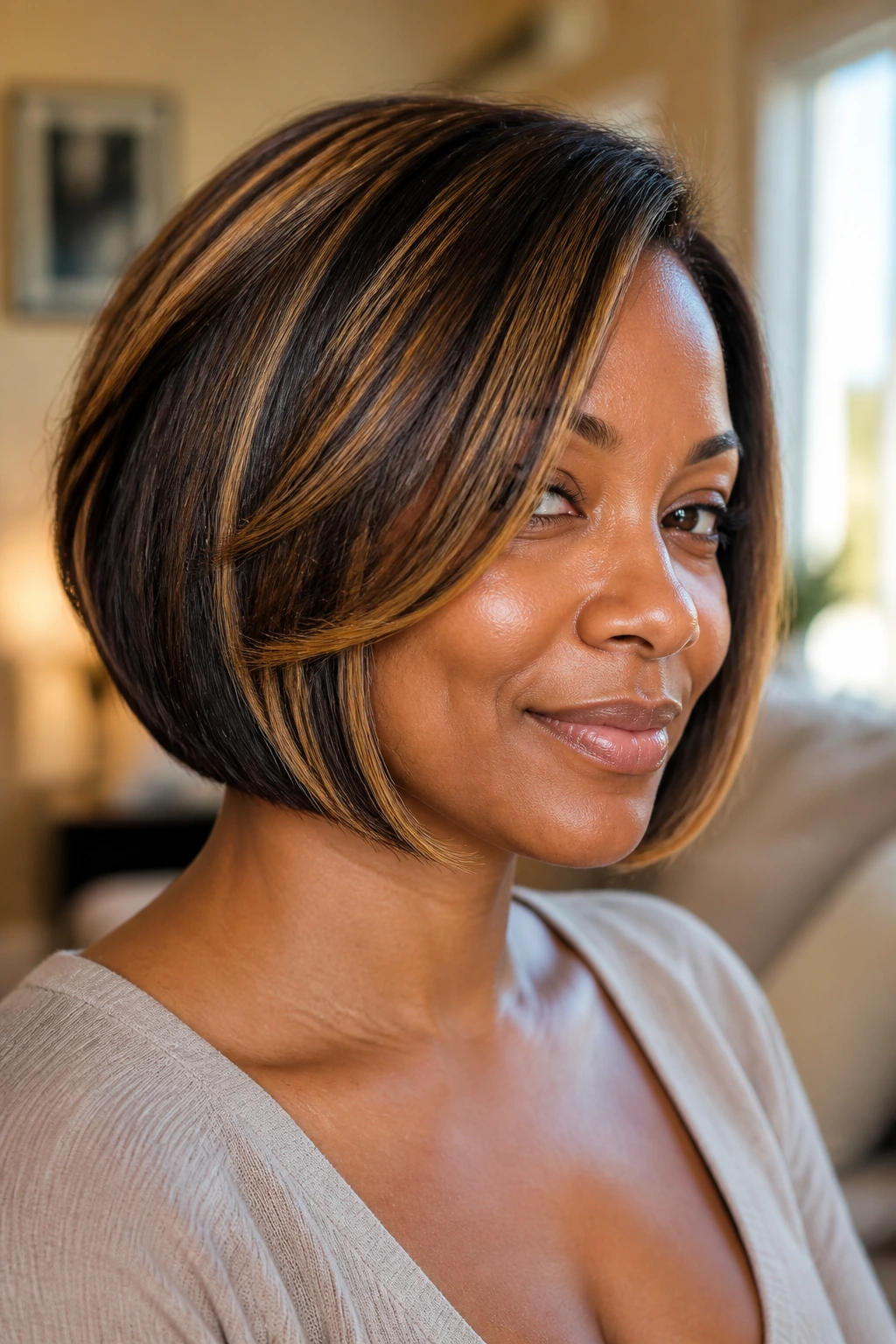
Color can help fine hair cheat a little, and I mean that in the nicest way. A bob with honey-brown highlights or a warm brown gloss gives the eye places to land, so the cut looks thicker and more layered even before you touch the styling tools.
The trick is to keep the color soft and woven, not stripey. Fine hair tends to show harsh contrast fast, and that can make the ends look thinner than they are. A dimensional brown, caramel, or honey-toned placement can brighten the cut without eating the shape.
This works best on layered bobs that already have a clean outline. Color should support the cut, not try to save it.
18. The Razor-Softened Bob
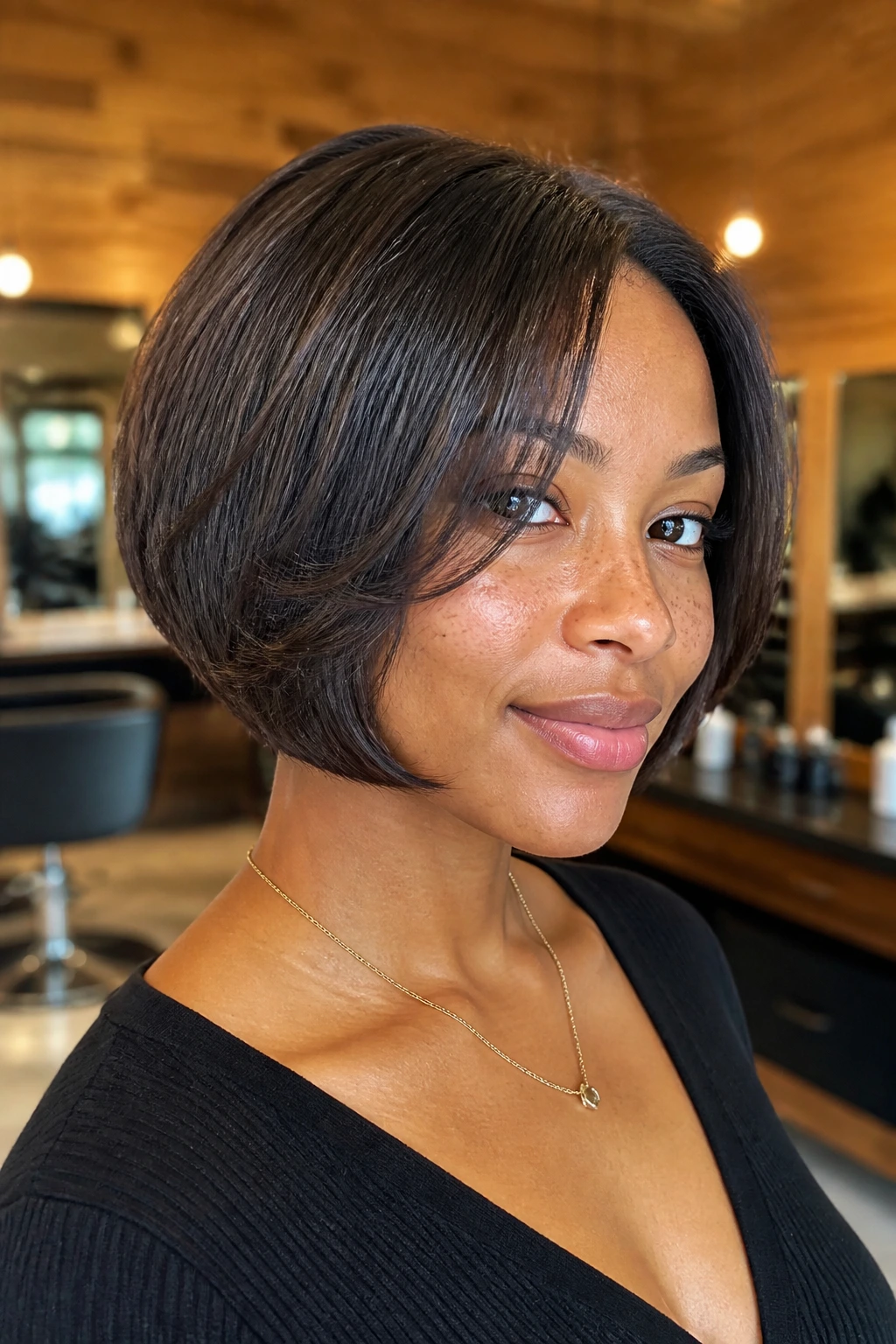
Razor cutting and fine hair can be a bad match if the hand is heavy. But a razor-softened bob, where only the very ends are lightly softened, can keep a blunt cut from feeling too blocky.
The key is not to overdo it. Fine strands fray fast when they’re thinned too much, and a bob can start looking dusty at the bottom in a matter of days. I would use this finish sparingly, mostly on hair that already has enough density to handle a little texture.
If your hair is naturally silky and refuses to hold shape, this can help the ends sit with a gentler curve. If your hair is already delicate, skip aggressive texturizing. You will not miss it later.
19. The Curly Lob with Long Internal Layers
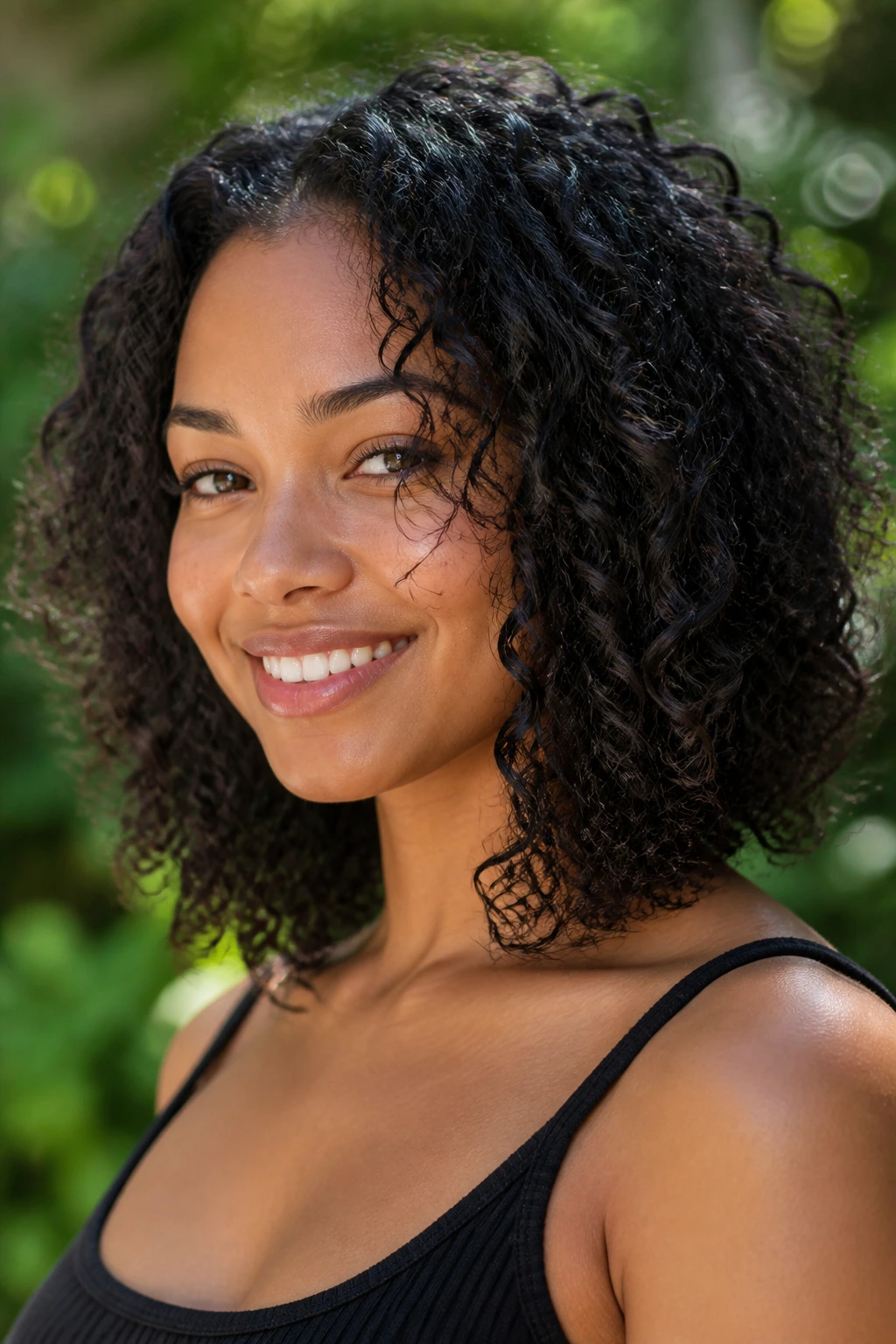
A curly lob with long internal layers gives fine curls room to spring up without turning triangular. The length stays below the chin or near the collarbone, which is useful because fine curly hair needs weight somewhere to anchor the shape.
The layers should live inside the cut, not all over the outer rim. That keeps the bob from opening up too much at the bottom. When the curls dry, they should stack into a soft shape instead of exploding outward in every direction.
This is a strong choice if you wear your hair in twist-outs, rod sets, or stretched curls. The length gives you flexibility, and the internal layers keep the volume where it belongs.
20. The Swooped Side-Sweep Bob
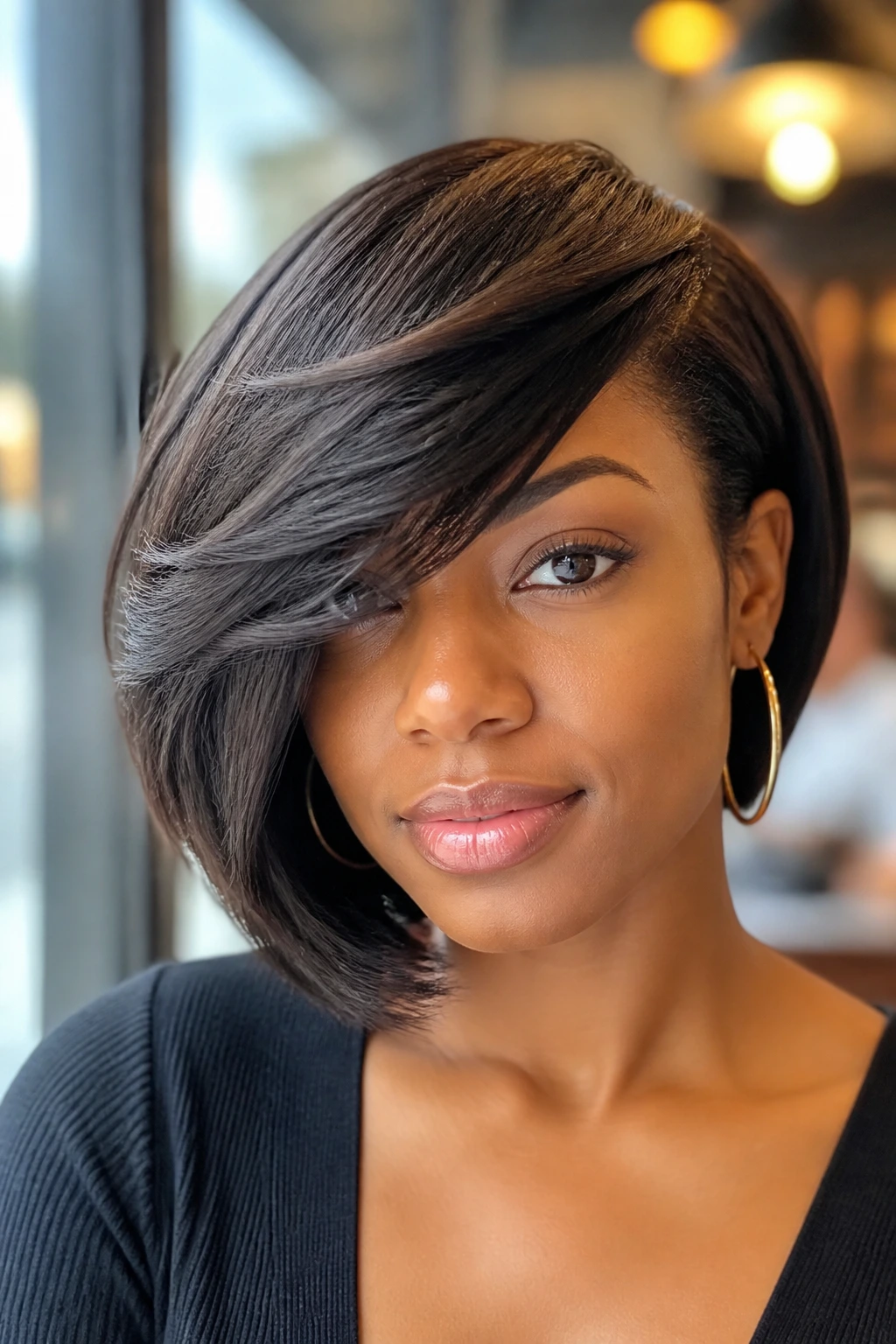
A swooped side-sweep bob can make fine hair look styled with very little fuss. The front is swept over one side, the layers guide the movement, and the whole shape gets a little drama without asking for extra length.
What I like most is the way it softens the forehead and cheekline. That matters if your fine hair sits close to the scalp at the temples. The sweep fills that space in a way that feels natural, not pasted on.
You can wear this version straight, curled under, or with a slight bend at the ends. The part does a lot of the work, which is always nice on a cut that should not need constant rescue.
21. The Graduated Bob with a Strong Weight Line
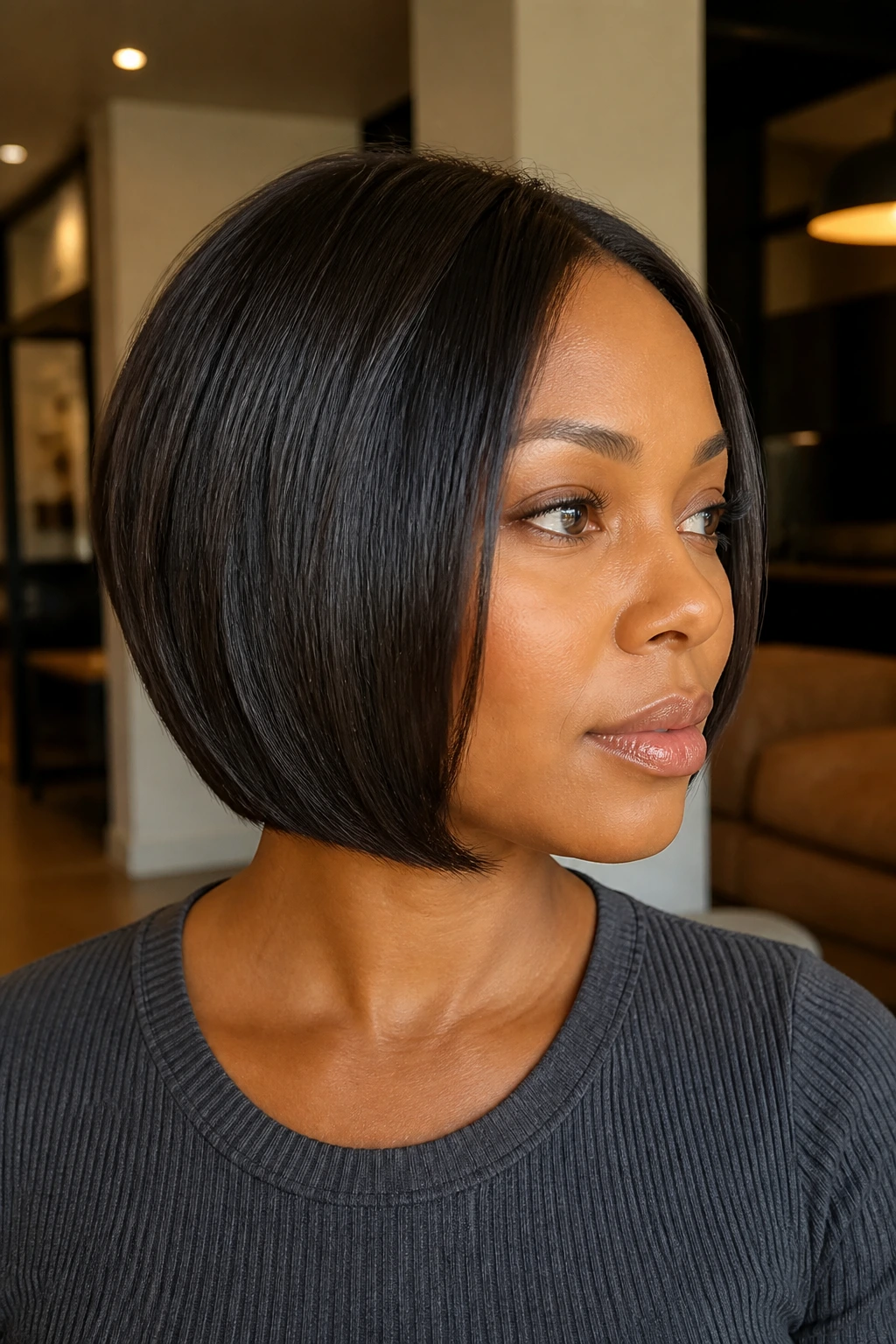
A graduated bob keeps more weight at the bottom, and for fine hair that can be a gift. The line is strong, the back lifts just enough, and the cut feels denser than a softer, more feathered version would.
This is the bob for someone who likes structure. It does not rely on airy texture or undone styling. Instead, it uses shape and balance to make the hair seem fuller. On Black women with fine hair, that can be a smarter route than trying to create fake volume with a mountain of product.
The weight line should stay visible. That’s the whole point.
22. The Boxy Bob with Soft Edges
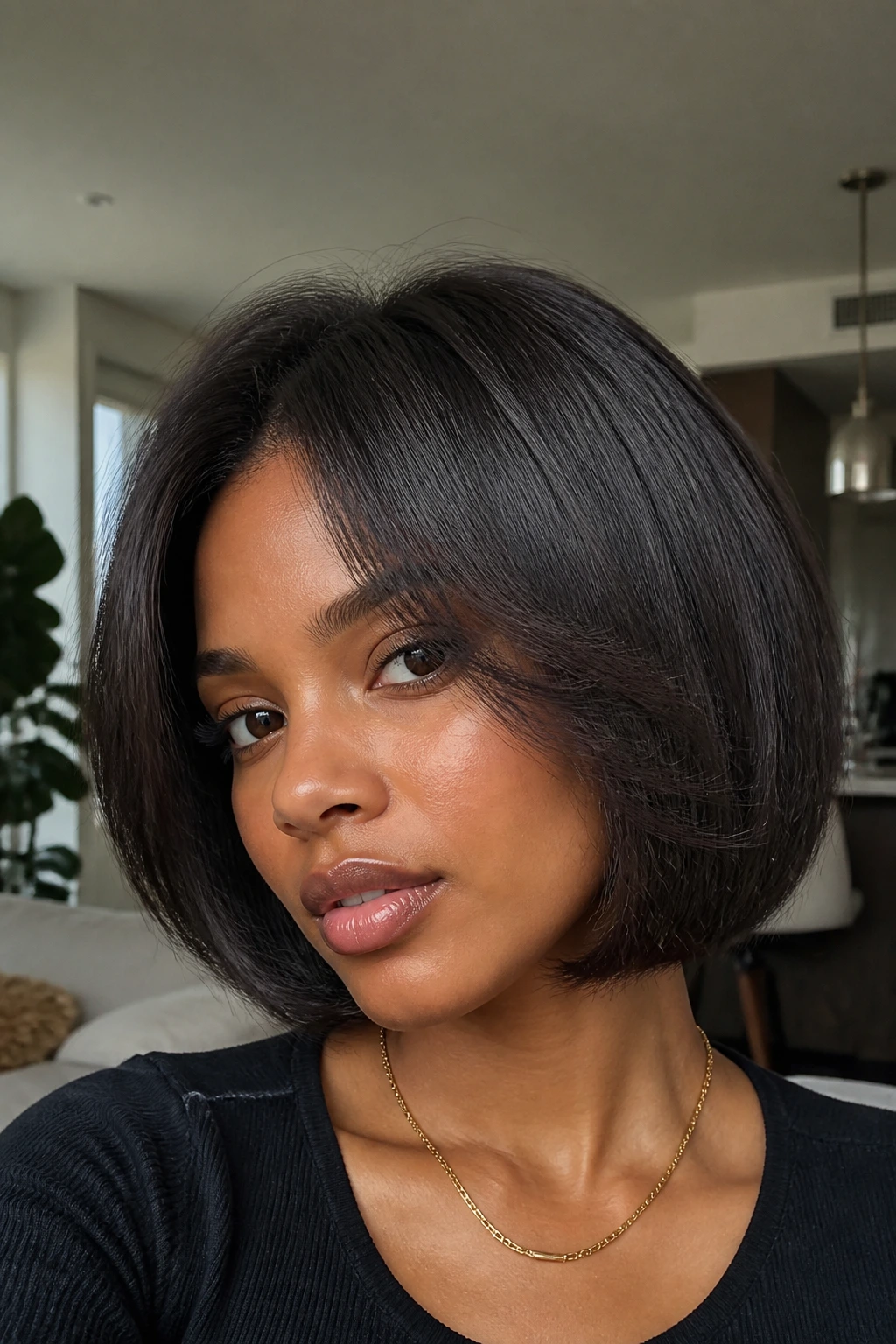
A boxy bob sounds harsh, but with soft edges it turns into a very modern shape. The sides hold a little width, the bottom stays full, and the layers are used sparingly to stop the cut from looking rigid.
This is a good option if your face shape likes a bit of geometry. Fine hair can sometimes look too sweet or too flat in softer curves, so a boxier outline gives it some personality. Keep the edges soft, though. Sharp corners on fine hair can start to look thin faster than a rounded line.
If you wear your hair straight, this cut has presence. If you curl it, the shape gets a little looser, which is fine too.
23. The Flexi-Rod Bob
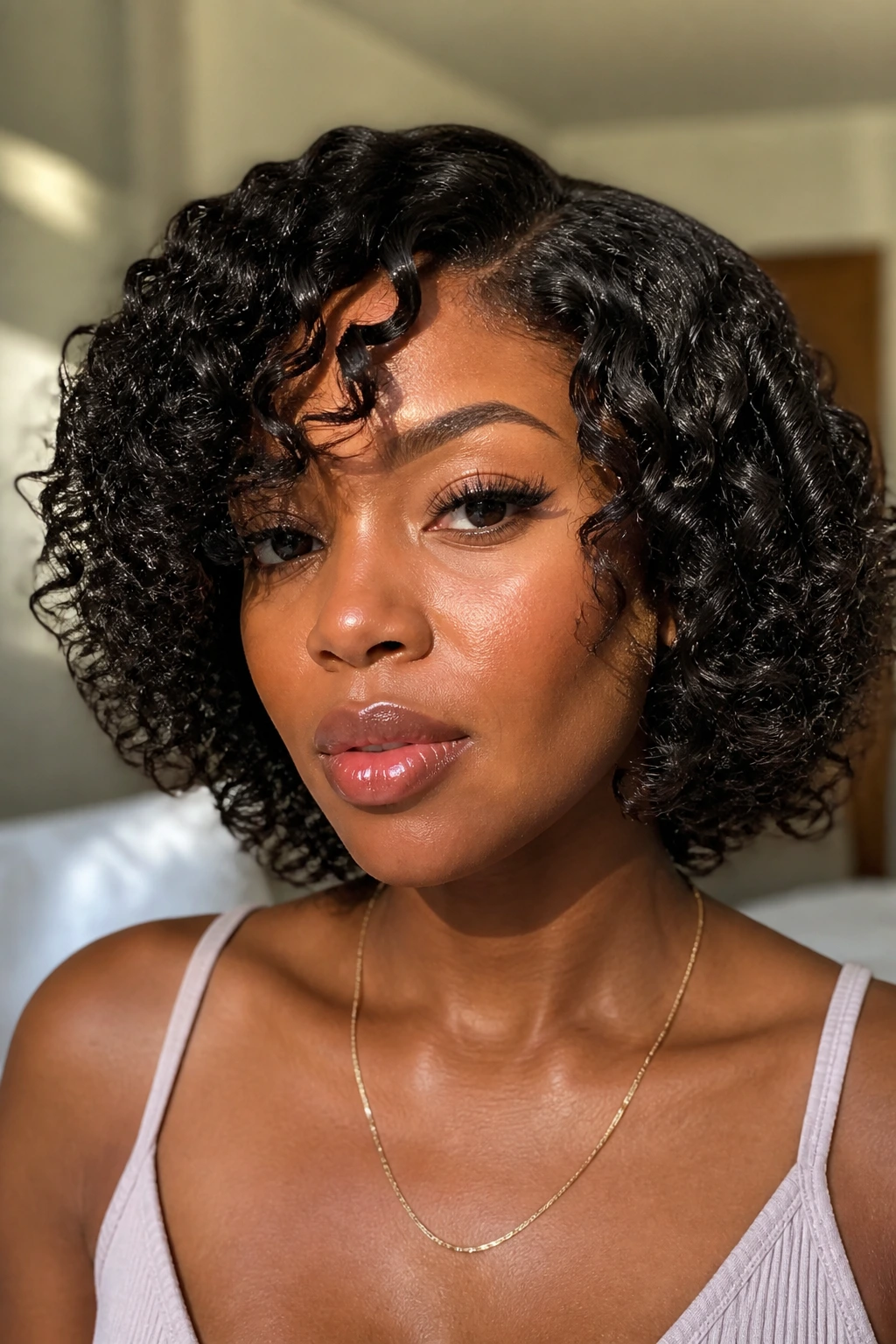
A flexi-rod bob is less about the cut alone and more about the shape the set creates. The rods add uniform curl, the bob length keeps the curls close together, and the whole style can look denser than loose styling ever will.
Why it works on fine hair
The curls sit on top of each other more tightly at bob length, which gives the illusion of fullness. Fine hair that looks sparse when blown out can look much richer when it is set and separated with a light hand.
- Use rods that match the curl size you want, usually medium or large
- Set on damp, not dripping, hair so the curls dry with less frizz
- Separate only once the curls are fully cool
- Keep a little serum at the ends so they do not look dry
This is a strong choice for events, photos, or any day when you want body with a bit of bounce.
24. The Invisible-Part Bob
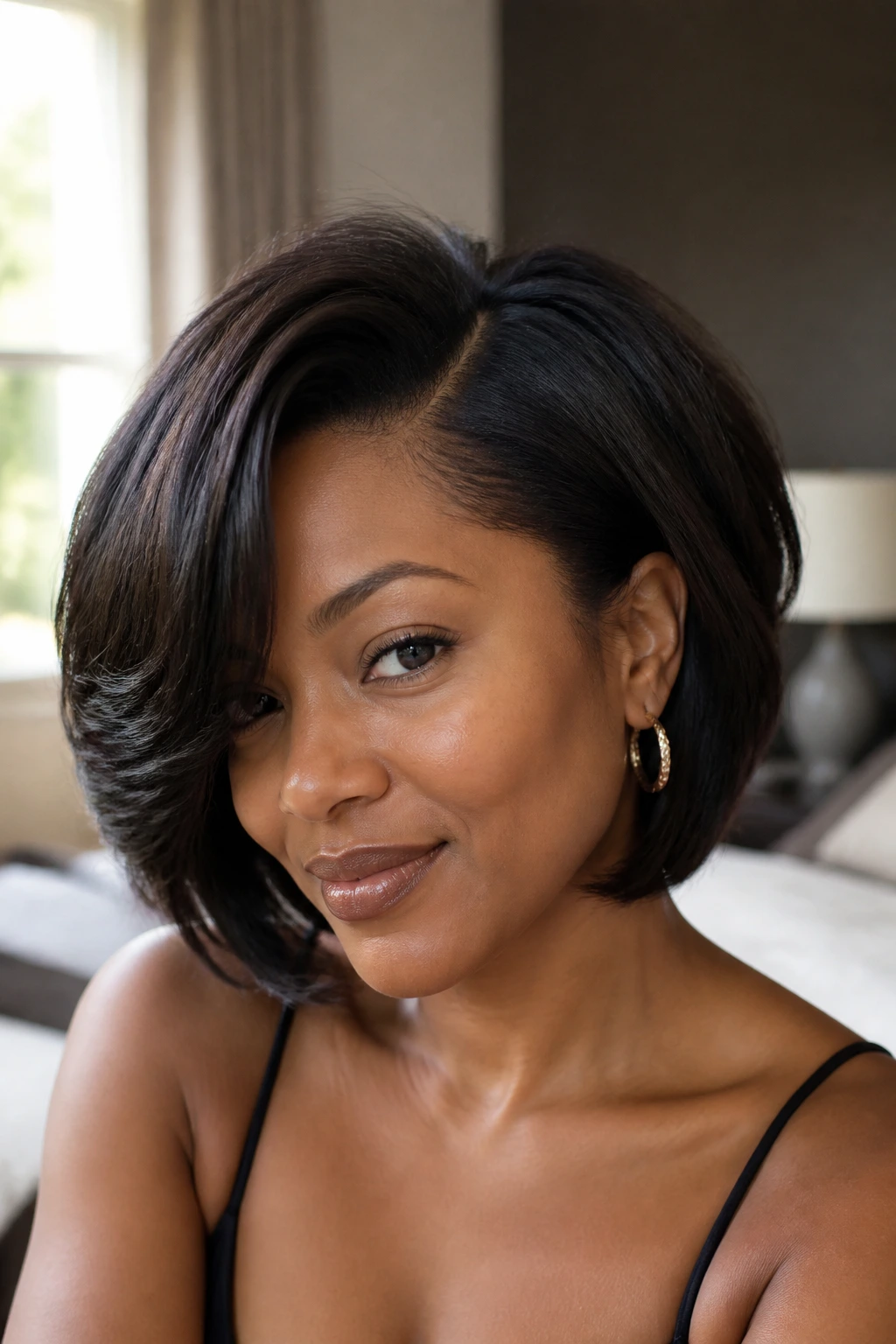
An invisible-part bob is one of my favorite little cheats for fine hair. The part is there, of course, but it’s softened and hidden enough that the scalp line doesn’t dominate the style. That gives the top more visual fullness and lets the cut feel lighter.
This works especially well with layered ends and a side sweep around the front. The hair looks like it naturally falls where it wants, which is useful if your crown tends to go flat in a straight center part. I would use a soft brush and a light mousse, not a heavy cream, so the top still has air.
If your hairline is delicate or you do not want a visible scalp line to take over the look, this is a smart one.
25. The Long Lob with Face-Framing Layers
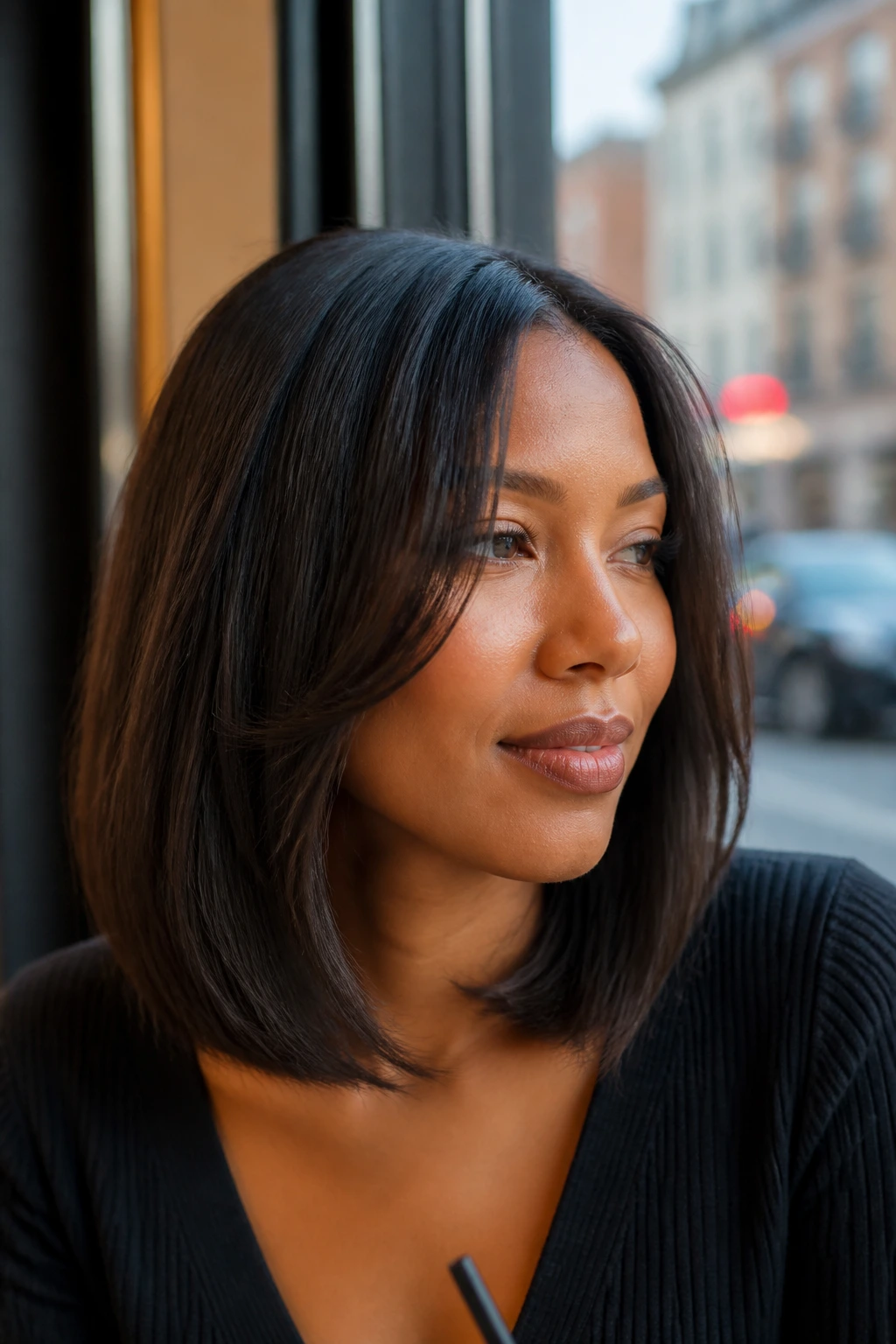
A long lob with face-framing layers is the easiest style to live with if you want to test the bob family without going too short. It sits close to the collarbone, keeps enough weight at the ends to look full, and uses the front pieces to lighten the face.
This is the version I recommend to people who say they want a bob but are nervous about regret. Fair. A lob gives you wiggle room. The layers can start around the cheekbone or lower, which helps fine hair keep its shape instead of splitting into thin pieces.
It also grows out kindly. That matters more than most people admit.
Why Layer Placement Matters More Than the Word “Layered”
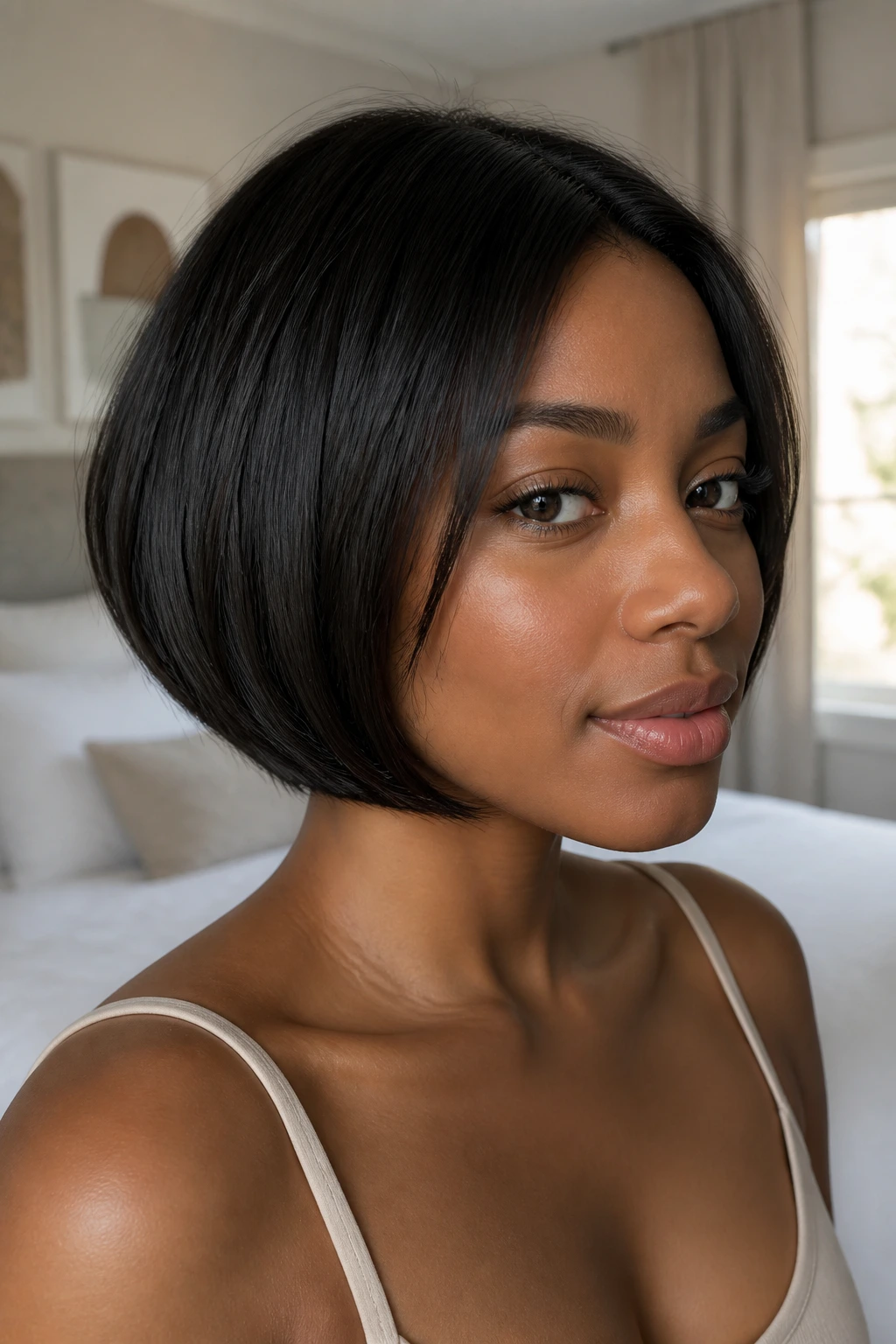
The phrase “layered bob” sounds simple, but the placement is the whole story. On fine hair, layers cut too high can steal density from the exact places that need it most. That is how a bob starts looking airy in a bad way — hollow at the ends, flat at the crown, and wider at the sides than you wanted.
The better approach is controlled movement. Put the shortest layers where the head naturally needs lift: around the crown, just below the occipital bone, or in the face frame. Keep the outer line strong enough that the cut still reads as full from across the room. That outer line is what saves the style when the day gets long.
Keep the outer line thick
Fine hair needs a perimeter that looks deliberate. A blunt or softly curved edge does more for fullness than heavy thinning ever will.
Put movement inside the shape
Interior layers can lighten the cut without advertising themselves. That’s the sweet spot.
Let the part do some work
A side part, off-center part, or invisible part can create lift without adding more hair. Sometimes that’s all the cut needs.
Tools and Products That Keep These Bobs Easy to Wear
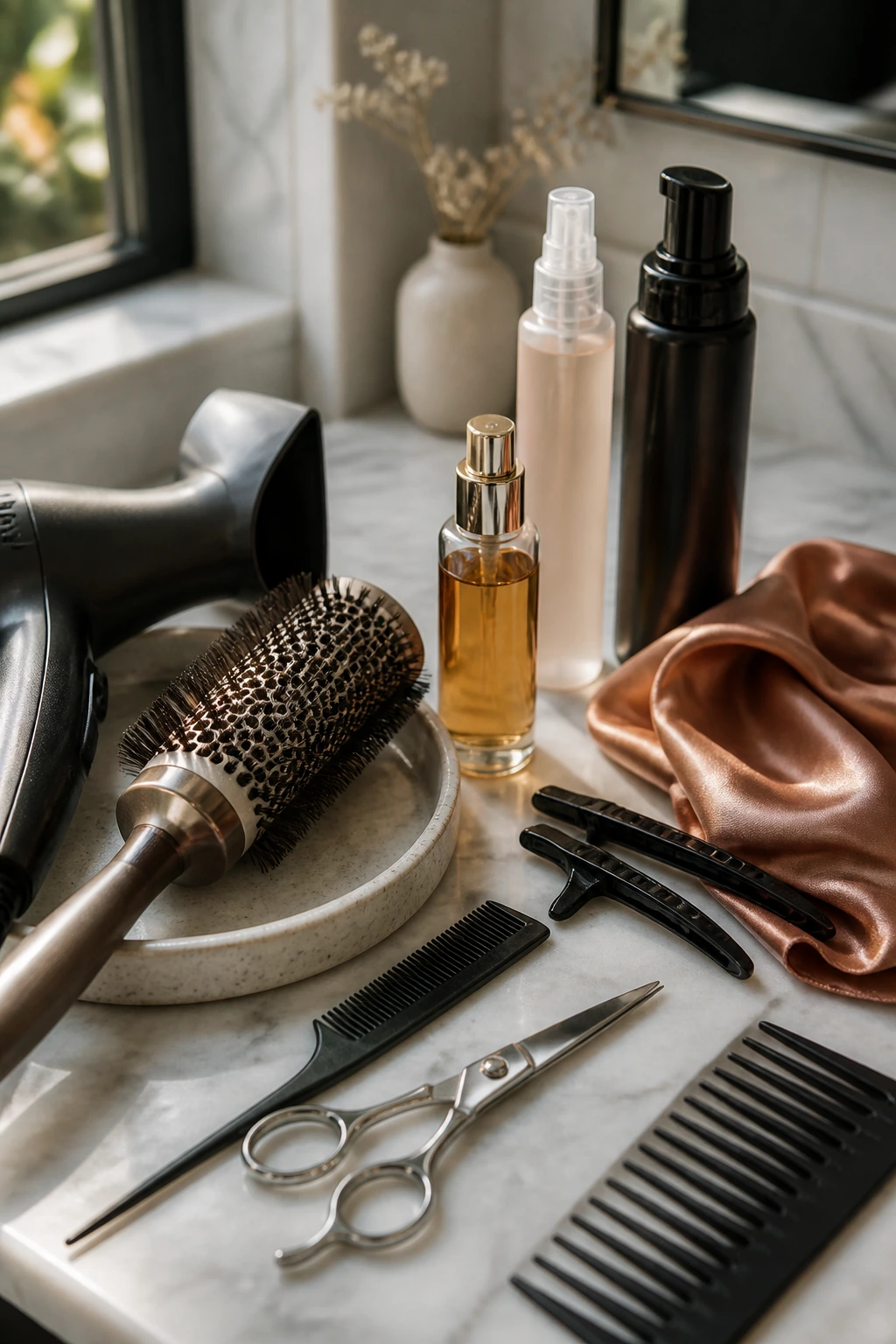
- Sharp haircutting shears: A clean cut matters more on fine hair because ragged ends show fast.
- Tail comb: Useful for precise parts and for keeping sectioning neat at the crown.
- 1-inch to 1.5-inch round brush: Helps bend the ends under without puffing out the roots.
- Blow dryer with a nozzle attachment: Directs airflow so the cut dries smooth instead of fuzzy.
- Heat protectant spray: Keeps silk presses, blowouts, and curled ends from drying out.
- Light mousse or wrap foam: Adds hold at the root without the heaviness of thick creams.
- Finishing serum or drop of oil: Best used on the ends, not the scalp.
- Duckbill clips: Handy for setting the crown while you work the rest of the hair.
- Satin bonnet or scarf: Keeps the bob from losing its curve overnight.
- Wide-tooth comb: Better than a tiny comb for detangling curls, stretched texture, or rod-set hair.
How to Wear These Bobs Without Flattening Them
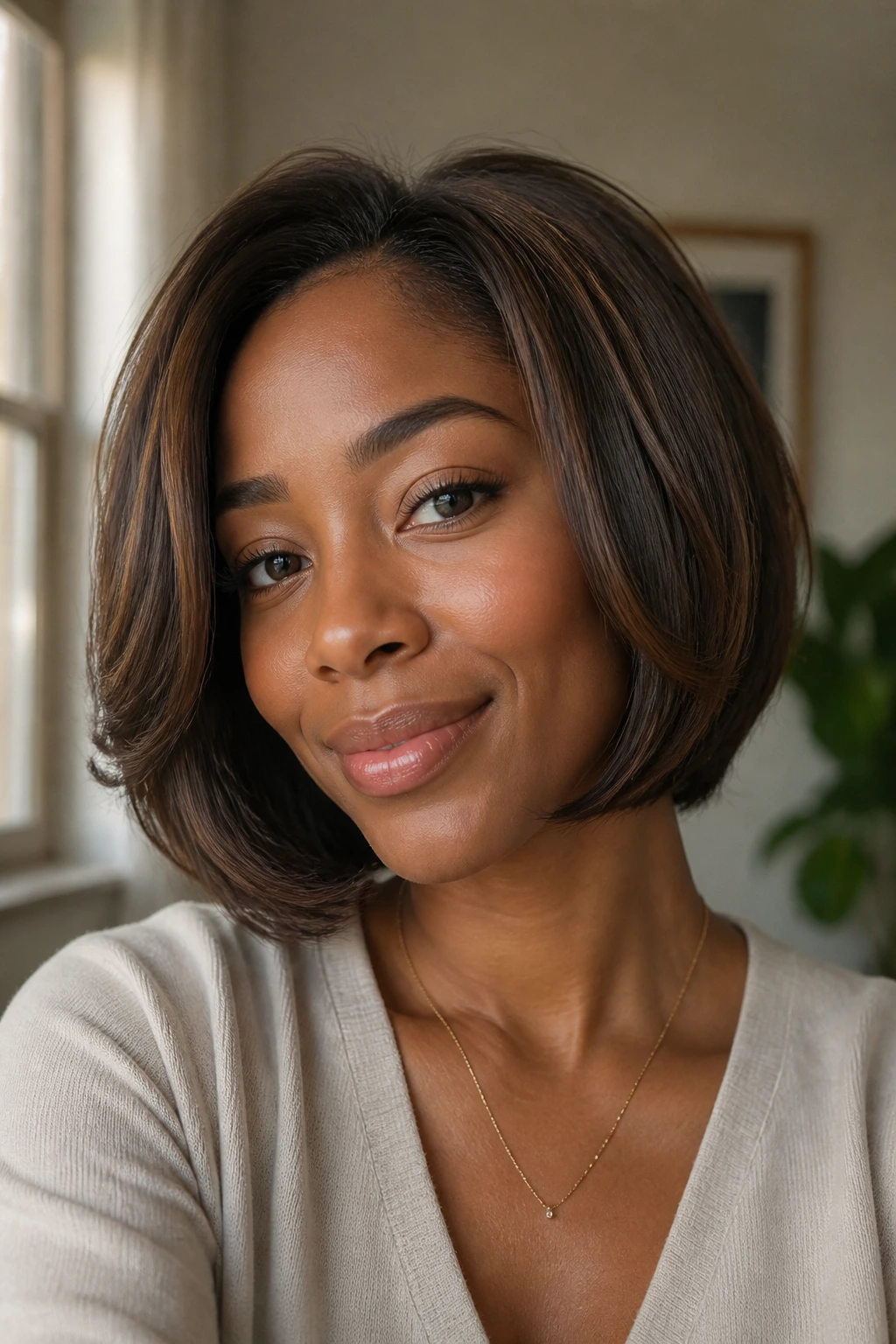
Sleek finish: If you wear your bob straight, wrap the hair or set it with a round brush and low tension. The goal is a smooth bend, not stick-straight hair that hugs the head and loses shape by lunch. Keep product light at the roots and save your serum for the ends.
Soft bend: A loose wave through the mid-lengths can keep the bob from feeling too rigid. One pass with a curling iron or a roller-set refresh at the front is enough. Do not curl every strand; that is how fine hair starts looking busy instead of full.
Natural texture: For curls, coils, or stretched hair, the best move is often shape first, fluff second. Let the hair dry fully before separating it. Pulling at it early makes the ends frizzy and shrinks the bob faster than you planned.
Night care: Satin scarf, bonnet, or both. If the ends flip the wrong way overnight, pin them lightly before bed. It saves time in the morning and keeps the cut from losing its curve.
What to Tell Your Stylist Before the First Snip
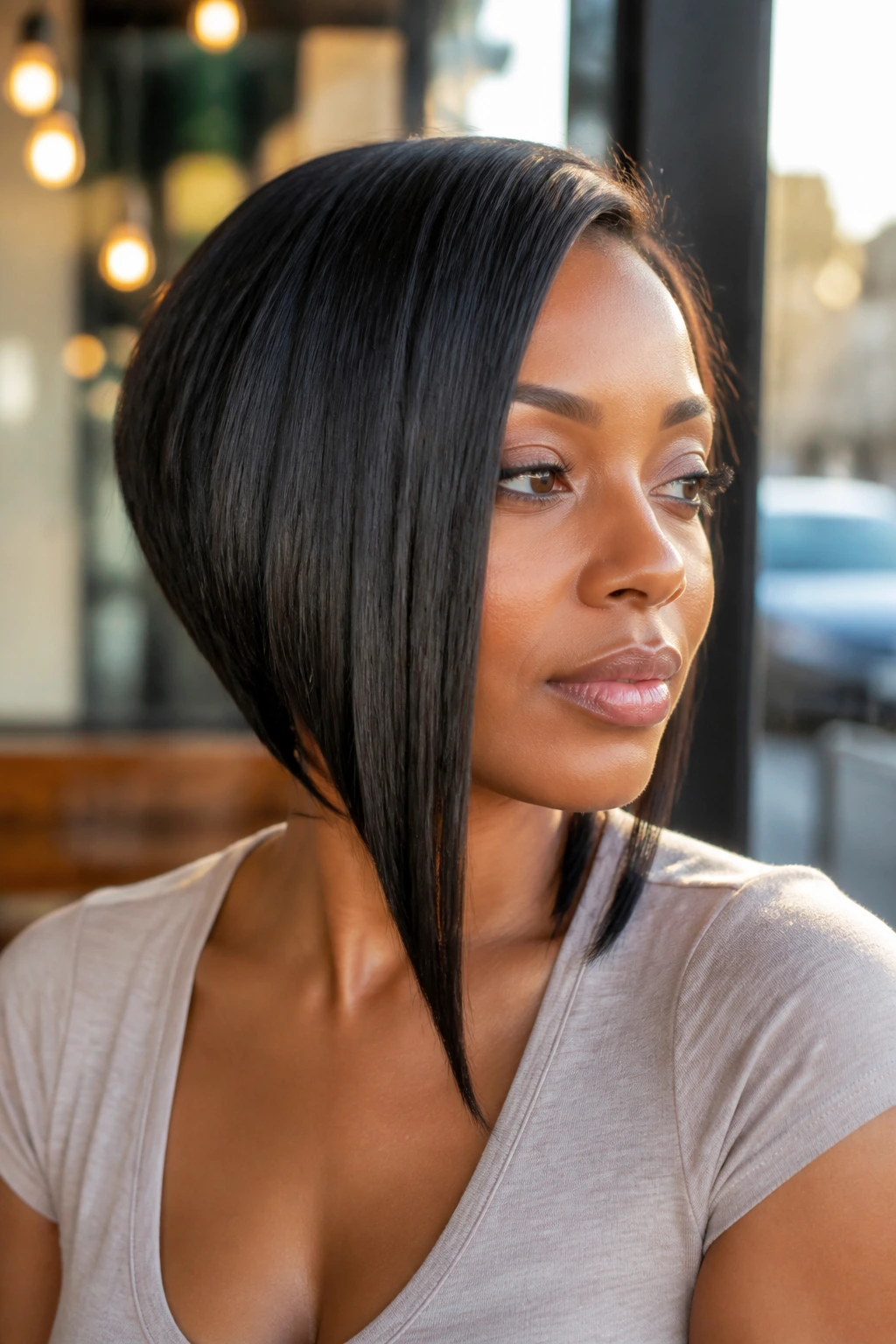
Bring pictures, but bring the right pictures. One photo should show the outline you want — front, side, and back if possible. The other should show the texture finish you like, because a bob can look completely different on a silk press than on a twist-out.
Tell your stylist where you part your hair most of the time. That sounds small. It is not. A cut built around the wrong part can sit lopsided the minute you get home.
Ask where the shortest layer will start. On fine hair, I usually want that answer to be specific: around the crown, just below the occipital bone, or lower if the density is sparse. If you use heat often, say that out loud too. Heat changes how much softness the cut can tolerate.
Mistakes That Make Fine Hair Look Thinner Than It Is
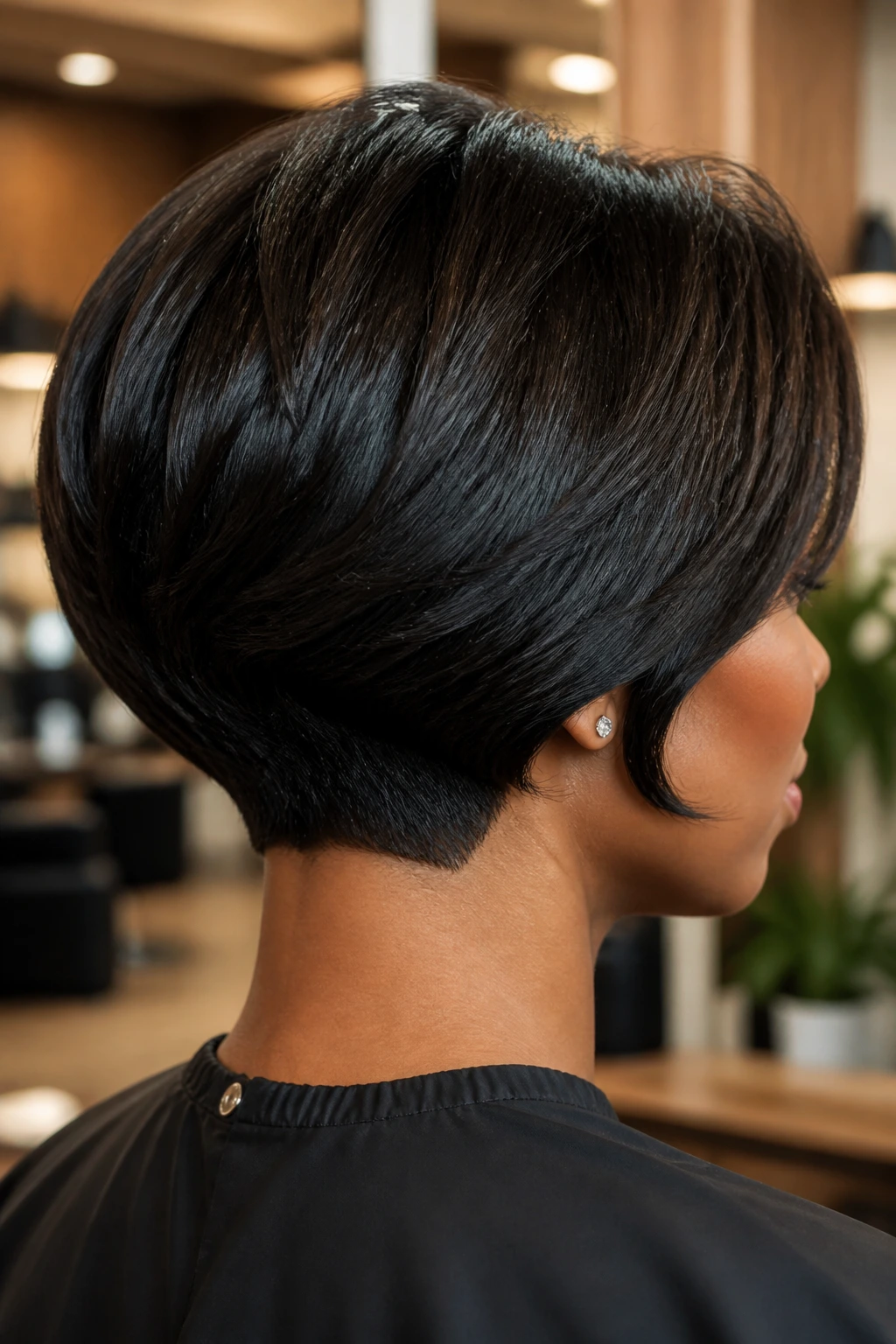
- Over-layering the ends: The bob starts looking shredded instead of full. Fix it by keeping the perimeter blunt or softly curved and asking for interior layers only.
- Starting the shortest layers too high: The crown gets airy and the ends go see-through. Ask for layers that begin lower, especially if your density is light.
- Using heavy creams at the root: The style collapses before noon. Switch to foam, light mousse, or a small amount of serum only on the ends.
- Cutting without deciding the part first: The shape can fall flat or swing the wrong way. Pick your everyday part before the first cut.
- Thinning fine hair with a razor too aggressively: The ends fray and separate. Soft point-cutting is usually safer.
The symptom is easy to spot. The bob looks a little tired on day one. If that happens, the cut did not need more “movement”; it needed better weight control.
Variations When You Want a Different Finish
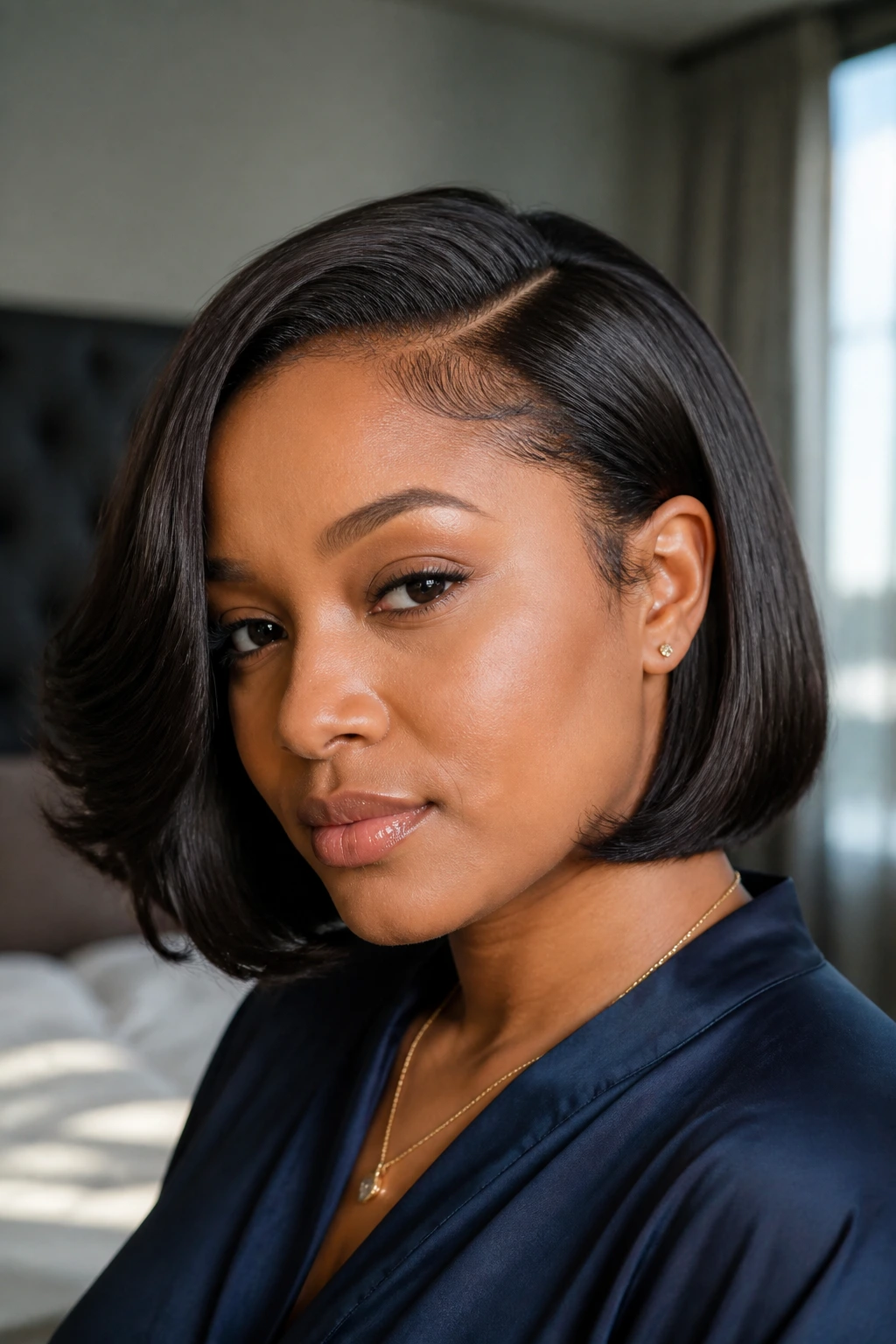
Silk-Press Switch-Up: Keep the same bob shape, but finish it with a polished press and a soft bend under the ends. This works when you want neat edges and a cleaner silhouette for work or dressier days.
Natural Coil Set: Set the bob on flexi-rods, perm rods, or a twist-out pattern, then separate the curls just once. The shape reads fuller because the curls stack closer together.
Side-Sweep Drama: Take the deepest side part you can wear comfortably and sweep the front across the forehead. This is the fastest way to add shape without changing the cut.
Long Grow-Out Lob: Let the bob land closer to the collarbone and keep the layers soft. Good if you want a longer in-between stage that still looks intentional.
Fringe Edit: Add wispy bangs or a side fringe if the front feels too open. Fine hair often benefits from the little bit of softness bangs bring around the eyes and temples.
Maintenance, Night Care, and Trim Timing
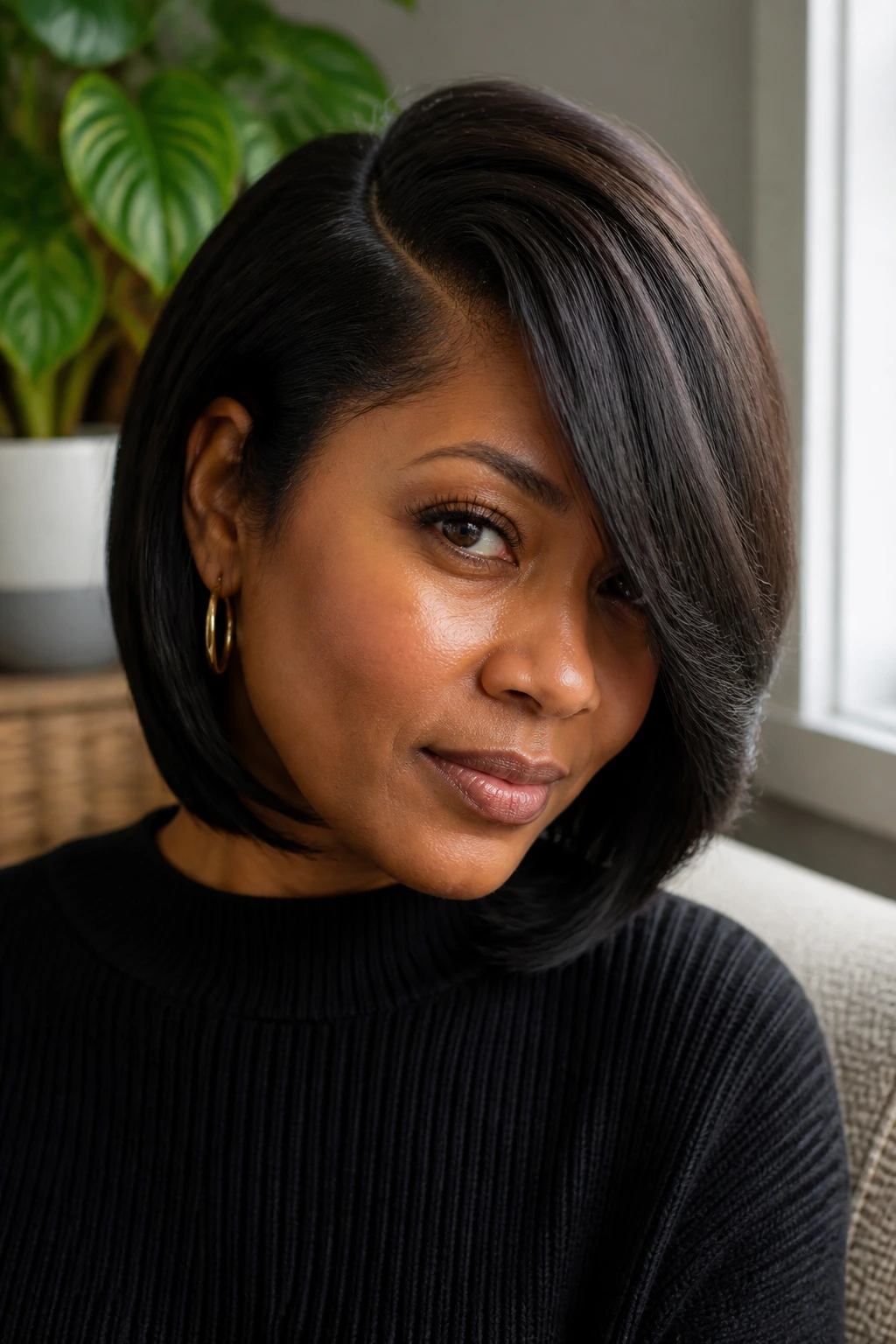
Fine hair bobs look best when they stay tidy at the edge, so trims matter more than people want to admit. For most of these cuts, a trim every 6 to 8 weeks keeps the line crisp. If you wear a longer lob, you can usually stretch that closer to 8 or 10 weeks before the ends start looking fuzzy.
At night, use a satin bonnet or scarf and keep the bob wrapped in the direction it was styled. If you sleep on one side hard, pin the flatter side lightly or tuck the ends so they do not bend into a weird angle by morning. For curly versions, dry hair fully before bed; sleeping on damp curls is how you wake up with a flattened crown and a lopsided fringe.
Wash-day refresh is simple. Use a lightweight shampoo or co-wash, follow with conditioner only where the hair needs slip, then dry the roots well. For silk presses and blowouts, a small round brush and a cool shot from the dryer can revive the shape. For curls, a light mist of water plus a tiny bit of leave-in is enough. More than that often weighs the cut down.
Frequently Asked Questions About Layered Bobs for Black Women with Fine Hair
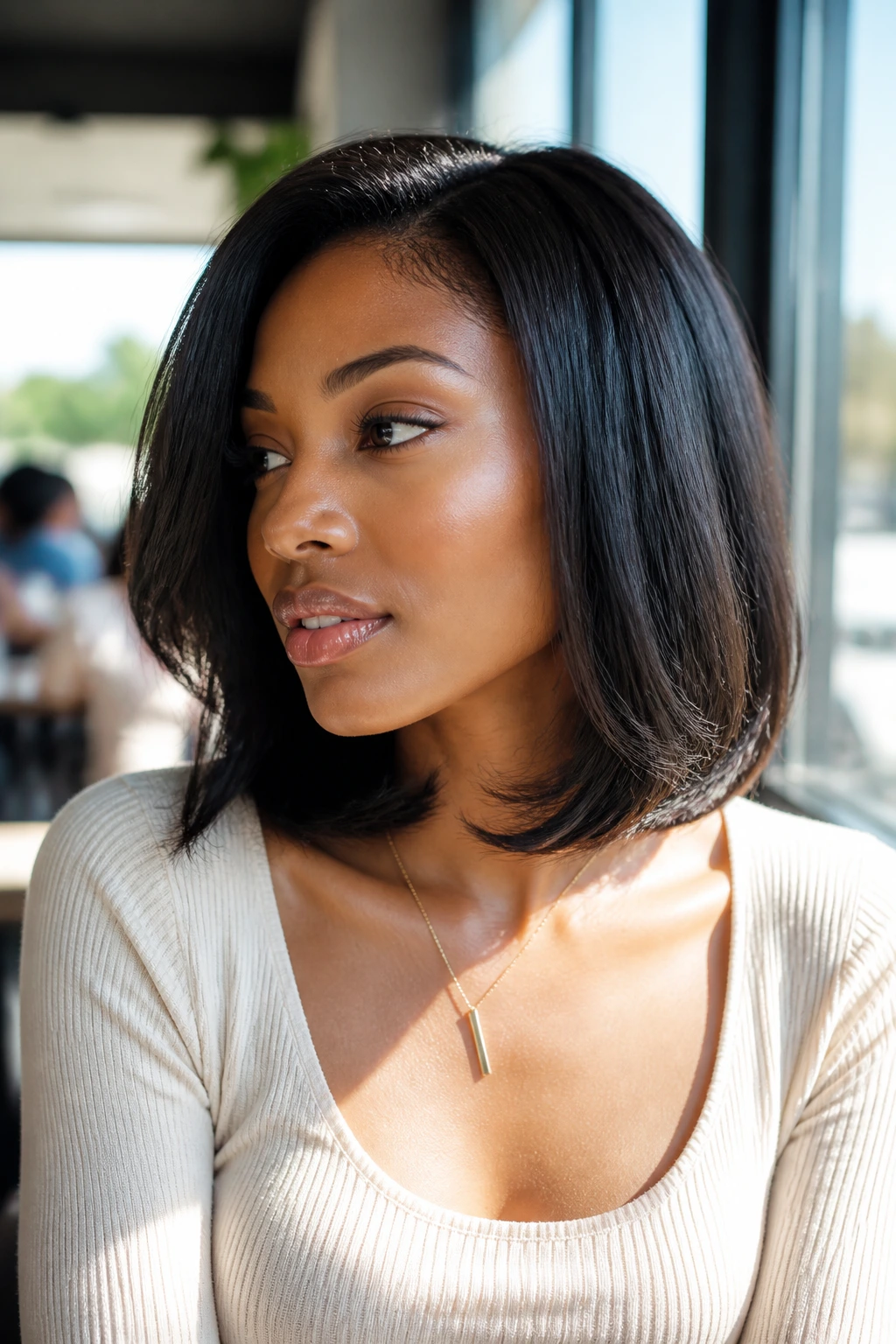
Which layered bob makes fine hair look fullest?
A rounded bob, a stacked nape bob, or a blunt bob with hidden layers usually gives the most fullness. They keep the perimeter strong, which matters more than loading the whole cut with visible layers.
Will layers make my hair look thinner?
They can, if the layers start too high or the ends are thinned too much. The safer move is interior layering, where the outside line stays full and the movement lives inside the shape.
Can I wear a layered bob on natural hair with shrinkage?
Yes, but the cut has to respect shrinkage. Ask for the shape to be cut with your dry texture in mind, or at least with enough length left at the front and nape that the bob still reads as a bob after it dries.
Should I choose a side part or a middle part?
A side part usually gives fine hair more lift at the root, while a center part can look sleeker and more balanced. If your crown goes flat fast, I’d lean side part or off-center part.
How short is too short for fine hair?
There is no fixed number, but very short cuts can expose sparse areas at the temples or hairline more quickly. A jaw-length or chin-length bob usually gives more room to work with than a cropped cut.
What should I ask for if I want volume without choppiness?
Ask for a blunt perimeter, soft interior layers, and a little crown lift. That combination gives movement without turning the bob wispy.
Do bangs work with fine hair?
They do, if the fringe is light. Heavy bangs can eat up density at the front, while wispy or side bangs can soften the face and make the bob feel fuller.
How do I stop my bob from flipping out at the ends?
Wrap the ends under with a round brush, a quick pass of a flat iron, or a roller set at the bottom. If the flip keeps happening, the cut may need a cleaner weight line.
Can I keep this style if I barely use heat?
Yes. A layered bob can work on curls, rod sets, twist-outs, and blow-dried texture. The shape matters more than the tool, as long as the layers are placed with your texture in mind.
The Shape That Holds Its Own
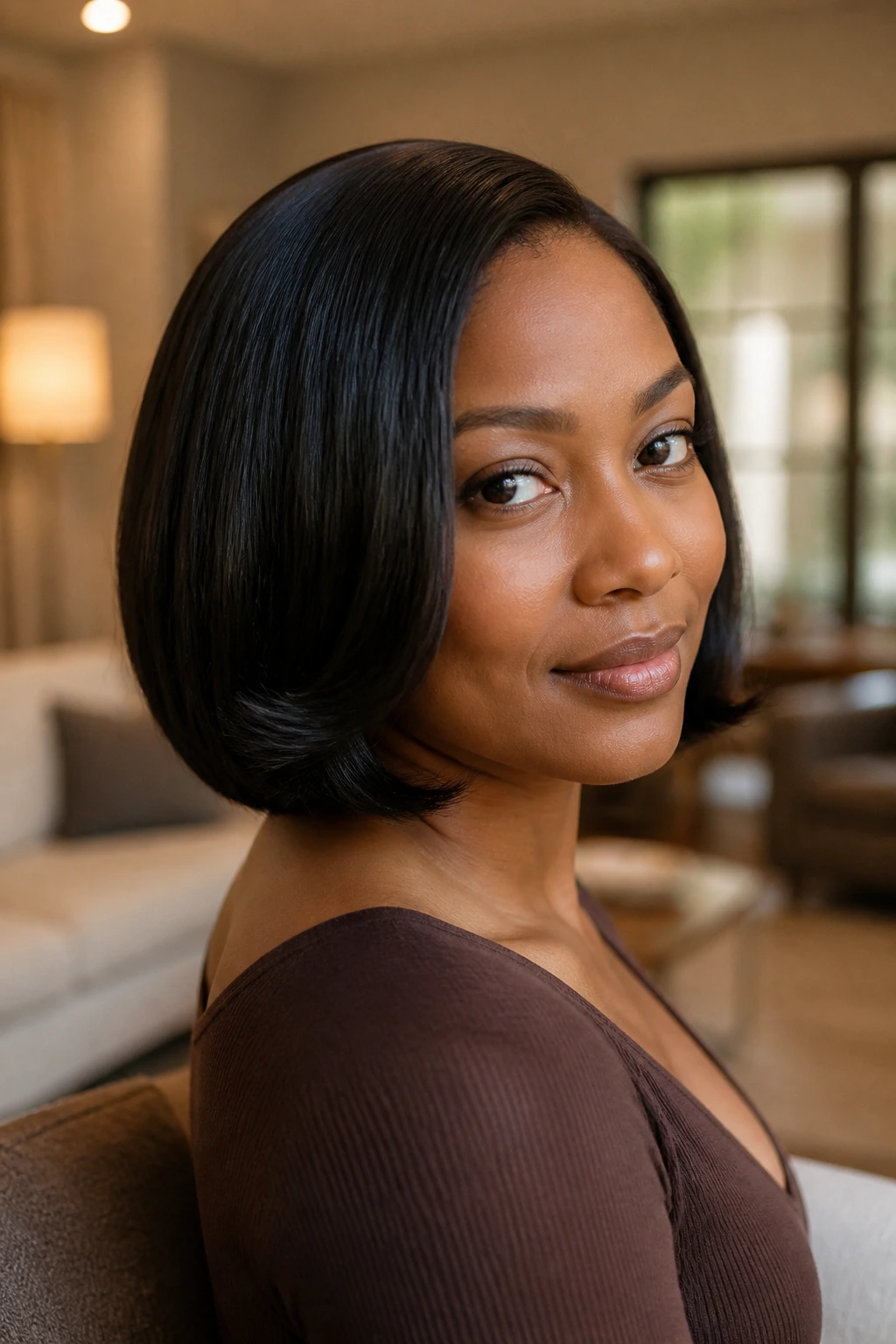
A good layered bob on Black women with fine hair does not try to fake thickness. It gives fine strands a structure that survives a real day: a little lift, a clean edge, and enough weight where it counts.
That’s the part I keep coming back to. The best cuts on this list are not the loudest ones. They are the ones that still look like hair, not styling foam, when the wind hits, the room warms up, or you tuck one side behind your ear and keep moving.
Pick the silhouette that fits your texture and your habits, not the one that only looks good in a salon chair. Bring a photo, name the part you actually wear, and ask for the weight line to stay clean.