



A-line bobs with bangs for round faces work because they redraw the outline of the face, not because they hide it. That’s the part most haircut advice gets backward. The cut doesn’t need to make your face disappear. It needs to give it a cleaner line to travel along.
The A-line shape does that with a simple trick: shorter at the back, longer in the front, so the eye keeps moving downward instead of landing and parking at the widest part of the cheeks. Add the right bangs, and you get a second diagonal — or a soft break in the forehead line — that keeps the whole look from feeling too horizontal. When the length hits the jaw in the wrong place, a bob can look stubby. When the front falls below the jaw and the fringe is chosen with some care, the same cut suddenly looks deliberate.
Round faces can wear bobs. Round faces can wear bangs. The catch is the balance. Too much width at the cheeks, too-short fringe, too much puff at the sides — that’s when the shape starts working against you. The good versions lean forward, sharpen the profile, and keep the face open where it needs space.
Why These 22 Cuts Earn Their Keep
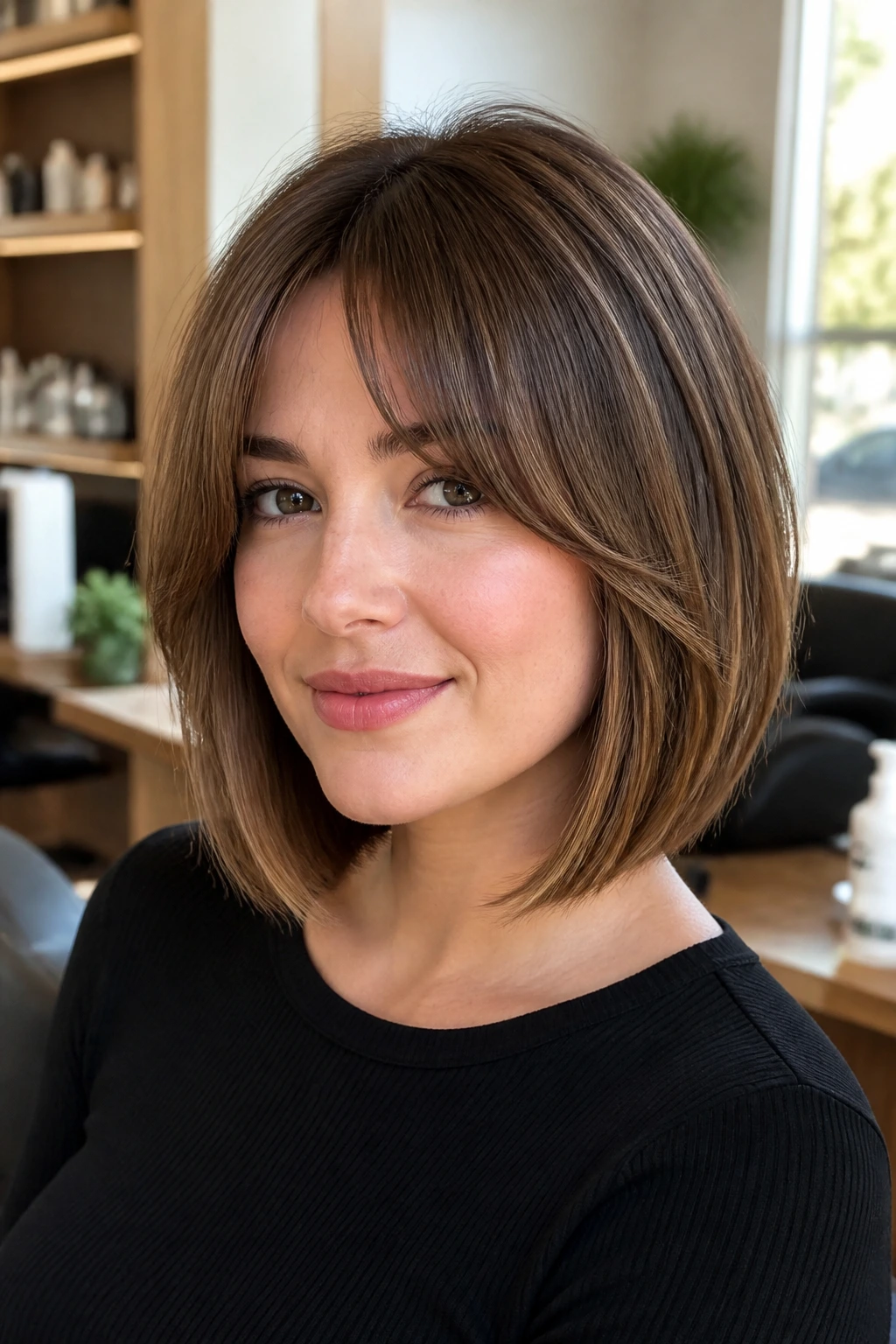
-
The front length does real work: the longer front pieces pull the eye down and forward, which softens the width of a round face without making the cut feel heavy.
-
The bangs are not just decoration: curtain, side-swept, bottleneck, and wispy fringes break up the forehead line in different ways, so you can choose how much softness or structure you want.
-
Texture changes the mood fast: the same A-line bob can look sleek, breezy, or slightly edgy depending on whether the ends are beveled, blunt, or shattered.
-
Grow-out is more forgiving than people think: a front that sits a little longer than the chin still looks intentional even after a few weeks of growth.
-
There’s a version for almost every hair type: fine hair, thick hair, curls, and waves all need different weight removal and fringe placement, but the basic shape still holds.
-
The cut works with real life: you can air-dry some versions, blow-dry others in ten minutes, and still keep the line visible. That matters.
1. Collarbone-Angle A-Line Bob With Curtain Bangs
This is the cut I reach for when someone wants softness without losing the point of the A-line. The front pieces drift toward the collarbone, the back stays tighter at the nape, and the curtain bangs split the forehead in the middle so the face doesn’t feel boxed in. It’s a very controlled shape, but it doesn’t read stiff.
Why it works: curtain bangs are one of the easiest fringe choices for a round face because they open the center and skim the cheekbones instead of cutting straight across them. The longer front line also gives your jaw more room to show. If the hair is slightly wavy, the whole thing looks even better with a loose bend at the ends.
Best for:
- medium to thick hair that can hold a bend
- anyone who likes a soft, grown-in feel
- people who want fringe without a heavy forehead line
Styling note: Blow-dry the bangs away from the face first, then wrap the front pieces under just once with a 1.25-inch round brush. Do not curl them tight. You want a fold, not a loop.
2. Chin-Length A-Line Bob With Side-Swept Fringe
Can a chin-length bob work on a round face? Yes — if it angles forward and the fringe moves off to one side. That side-swept shape keeps the eye from stopping at the widest part of the cheeks, and the diagonal line through the bangs gives the cut some motion.
The key is restraint. The front should land at or just below the chin, not right on top of it, because chin-level fullness can make the face look broader. A longer side fringe — the kind that grazes the brow and then drifts toward the cheek — gives you the best of both worlds: shape at the front, length where it matters.
What makes it different
This is the bob for anyone who wants a little edge without going blunt. It feels neater than a shag, sharper than a layered lob, and easier to style than people assume. The shape is doing the heavy lifting.
3. Soft Stacked A-Line Bob With Wispy Bangs
A softly stacked back can be a lifesaver for fine or medium hair, especially when the crown tends to collapse by lunchtime. A little stacking at the nape gives the bob lift, and wispy bangs keep the front from looking too dense or too severe. The result is light, airy, and surprisingly balanced on a round face.
The wispy fringe matters here because a thick bang line would fight the airy back. You want the front to look touched, not chopped. If the bangs are point-cut and separated with the fingers, they soften the forehead without adding width.
Best for hair that:
- needs volume at the crown
- gets flat at the back
- does better with light fringe than a blunt one
Styling tip: Dry the roots at the crown first, lifting them up and back with your fingers. If you do the bangs first, they usually lose their shape while you work on the rest.
4. Sleek Blunt A-Line Bob With Full Bangs
This one has opinions. It is not shy. The blunt bang line and the polished front corners can look incredibly clean on a round face, but only if the bob keeps its forward angle and the bangs sit just below the brow or touch it lightly. When the lengths are placed well, the cut feels graphic instead of boxy.
The mistake people make is making every line the same. Don’t do that. A round face does not need a square haircut. It needs contrast: a strong fringe up top, a diagonal slope through the sides, and enough front length to stretch the shape vertically.
A sleek finish helps here. Flat iron the ends only if your hair already has a smooth base; otherwise, a blow-dry with a nozzle and paddle brush gives a cleaner line with less effort. This cut looks expensive when it’s smooth. It looks accidental when it’s puffy.
5. Tousled A-Line Bob With Piecey Bangs
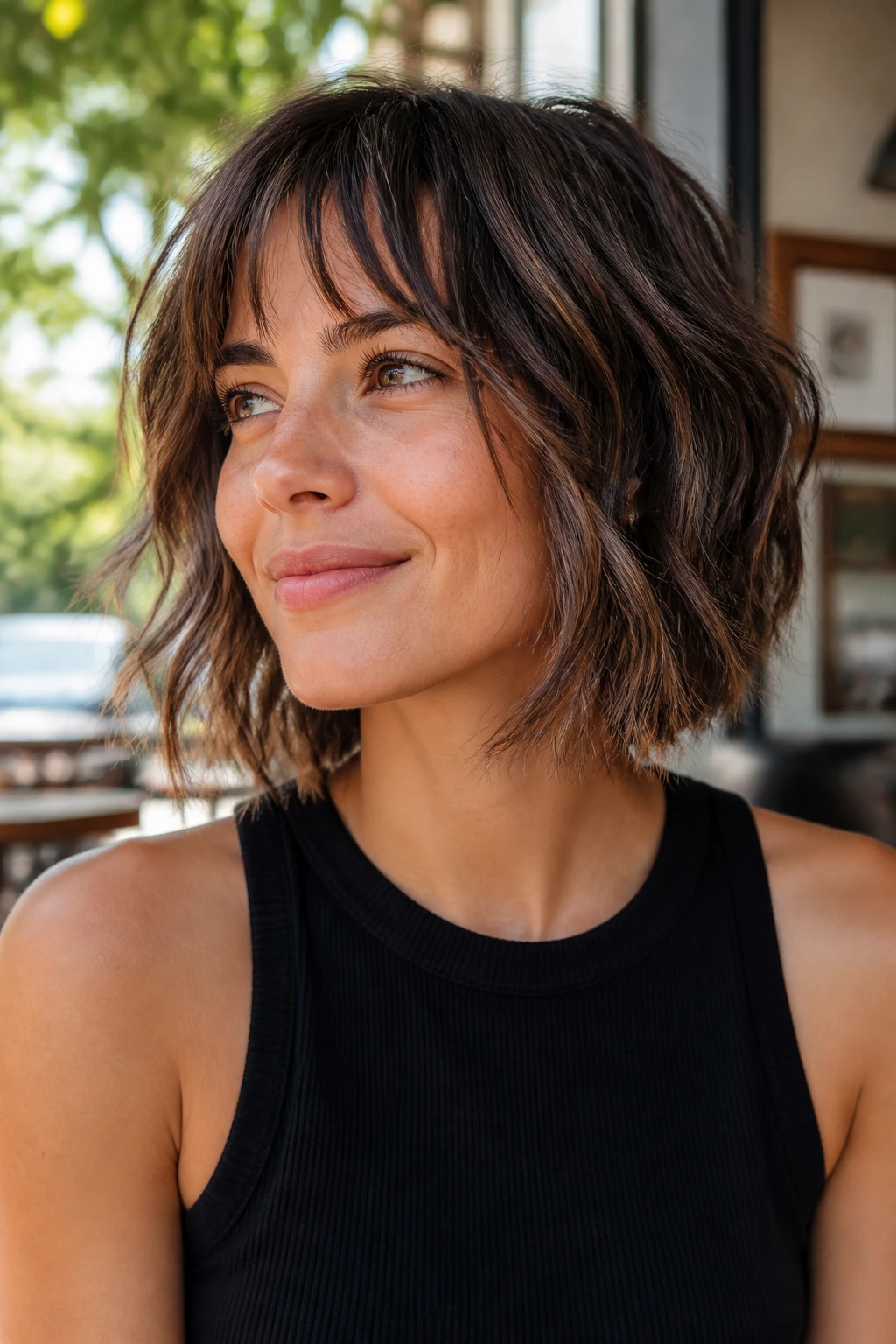
If you like hair that looks a little less buttoned-up, this is the move. The piecey bangs break into small sections instead of one solid wall, and the tousled A-line keeps the ends from feeling too precious. It works especially well if your hair has a natural wave that bends at the mid-lengths.
The reason it flatters a round face is simple: the texture keeps the edges irregular, so the eye doesn’t lock onto one broad curve. A little separation in the bangs also keeps the forehead open. You still get face framing, but it feels light rather than heavy.
Good pairings:
- sea-salt spray at the mids, not the roots
- a small amount of pomade on the ends
- a side part shifted half an inch off center
Watch this: too much texturizing can make fine hair look see-through. You want separation, not frizz.
6. French-Inspired A-Line Bob With Brow-Skimming Fringe

This cut has that neat, slightly insouciant feeling people chase when they want something that looks considered but not overworked. The bob sits close to the head, the front swings forward in a clean line, and the bangs hover just at the brows. On a round face, that brow-skimming length helps create a little vertical space above the eyes.
The trick is keeping the bangs light enough to move. If they get too blunt or too dense, the whole look closes in. But if they are cut with a soft edge and styled with a slight bend, they frame the eyes and make the cheeks look less dominant.
It’s a good choice if you wear glasses, too. The fringe and frames can share the same visual space without fighting, as long as the bang line isn’t too heavy.
7. Deep Side-Part A-Line Bob With Long Cheekbone Bangs
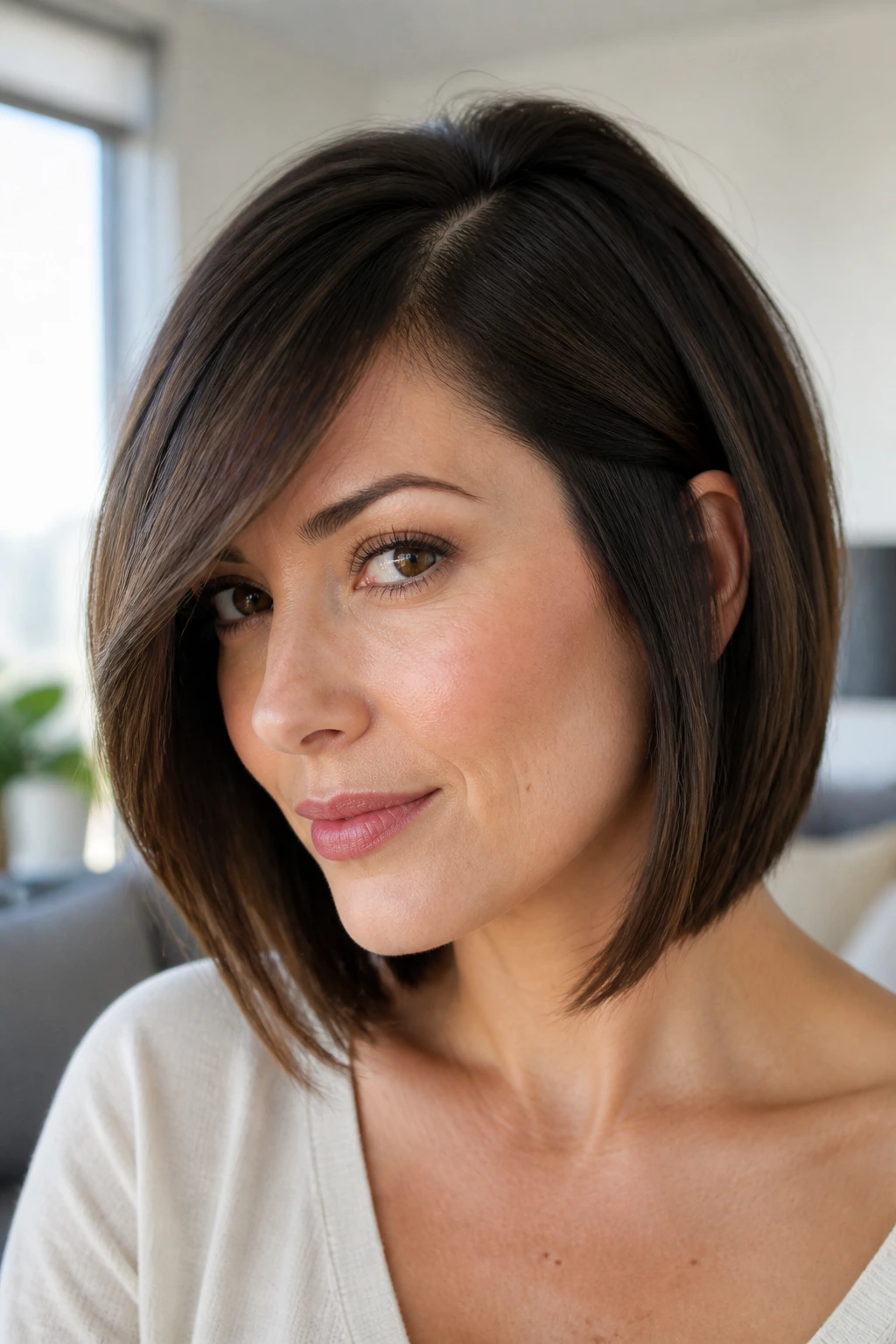
A deep side part changes more than people expect. It immediately shifts weight away from the center of the face, and on a round face that is often enough to make the whole cut feel longer. Add long cheekbone-grazing bangs, and you get a line that cuts diagonally across the face instead of horizontally.
This is one of the easiest styles to wear if you are not ready for full fringe maintenance. The bangs can grow a little and still look deliberate. They can also be tucked behind the ear on one side, which gives the face a cleaner opening and lets the front length show.
Best for:
- second-day hair
- medium to thick textures
- anyone who wants a face-framing effect without full bangs
Pro move: blow-dry the part first, then direct the bangs across the forehead with the nozzle. Once the root direction is set, the whole style holds better.
8. Wavy A-Line Bob With Split Bangs

Waves and a split fringe make a very flattering combination on round faces because both pieces of the cut add motion without bulk. The bangs part in the center and slide to either side, while the bob itself bends forward in a soft diagonal. Nothing is rigid. That’s the charm.
This version looks best when the wave starts below the cheekbone, not right at it. If the wave blooms too high on the sides, it can widen the face instead of lengthening it. Keep the texture a little lower, and the style stays relaxed but controlled.
How to style it
Use a 1-inch iron or overnight bend, then break the wave with your fingers. Leave the ends a little undone. If the fringe is too perfect, the rest of the style can feel dated fast.
9. Micro-Fringe A-Line Bob With Long Front Pieces

Micro bangs on a round face can work, but only when the rest of the bob gives them room. That means long front pieces, a clear A-line, and enough length near the jaw to keep the cut from feeling cropped into a box. The tiny fringe adds edge; the long front restores balance.
This is not the most forgiving version on the list. It has a sharper personality. Still, it can look excellent on round faces because the short bang line opens up the forehead and keeps the center of the face visible. The face doesn’t look wider. It looks more defined.
If your hair is very fluffy or your hairline is strong, ask for the fringe to be cut with a tiny bit of texture. A blunt micro bang can work, but it needs precision. Every millimeter matters here.
10. Bottleneck Bang A-Line Bob

Bottleneck bangs are one of the most useful fringe shapes for round faces because they start a little narrower at the center and widen softly toward the cheekbones. That shape creates a gentle frame without drawing a hard line across the forehead. It’s a small detail, but it changes the whole read of the haircut.
The A-line bob underneath should stay clean and angled, not overloaded with layers. If the top is too busy, the bottleneck fringe loses its shape. If the bob is too blunt at the front, the bangs don’t get to do their job.
I like this version on medium-density hair best. It has enough body to hold the fringe without puffing out, and the length can be adjusted to sit between the brow and the lashes depending on how much face you want to show.
11. Feathered A-Line Bob With Airy Fringe

Feathering is one of those things people either underdo or overdo. Done well, it lightens the perimeter of the bob and keeps the whole style from feeling like one solid block of hair. The airy fringe matches that mood by letting the forehead peek through.
This is a smart choice if your hair is thick or if your face tends to look fuller when the bob is cut too blunt. The feathered edges remove weight without destroying the outline. The cut still has shape, but it moves a little when you turn your head.
Best use case
If you spend your mornings with a blow dryer and a round brush, this cut pays you back. It doesn’t need a lot of product — a light mousse at the roots and a small bit of cream on the ends are usually enough. Skip heavy oils. They collapse the lift.
12. Asymmetrical A-Line Bob With Sweeping Fringe
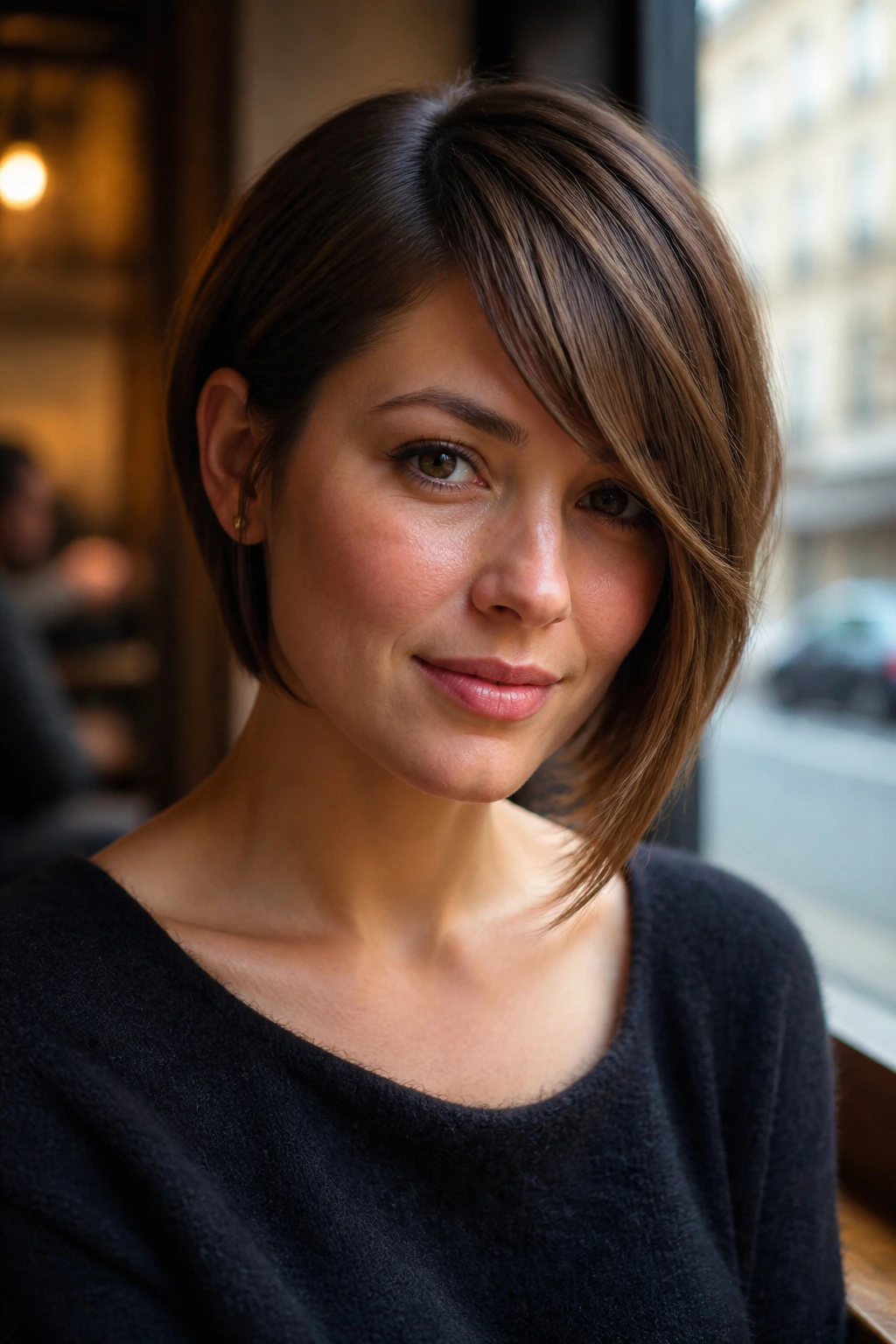
An asymmetrical bob brings its own drama, so the fringe should lean into that rather than compete with it. One side can sit slightly longer, and the sweeping fringe can follow that line so the face feels stretched diagonally. On a round face, that asymmetry pulls attention away from width and toward movement.
The cut works because it refuses to sit still. A perfectly even bob can sometimes emphasize the roundness of the cheeks if the length is too short. Asymmetry interrupts that. It gives the eye somewhere else to land.
This style looks especially good when one side gets tucked behind the ear and the other falls forward. Small gesture. Big change. That’s the kind of haircut trick that keeps showing up because it works.
13. Curly A-Line Bob With Curved Bangs
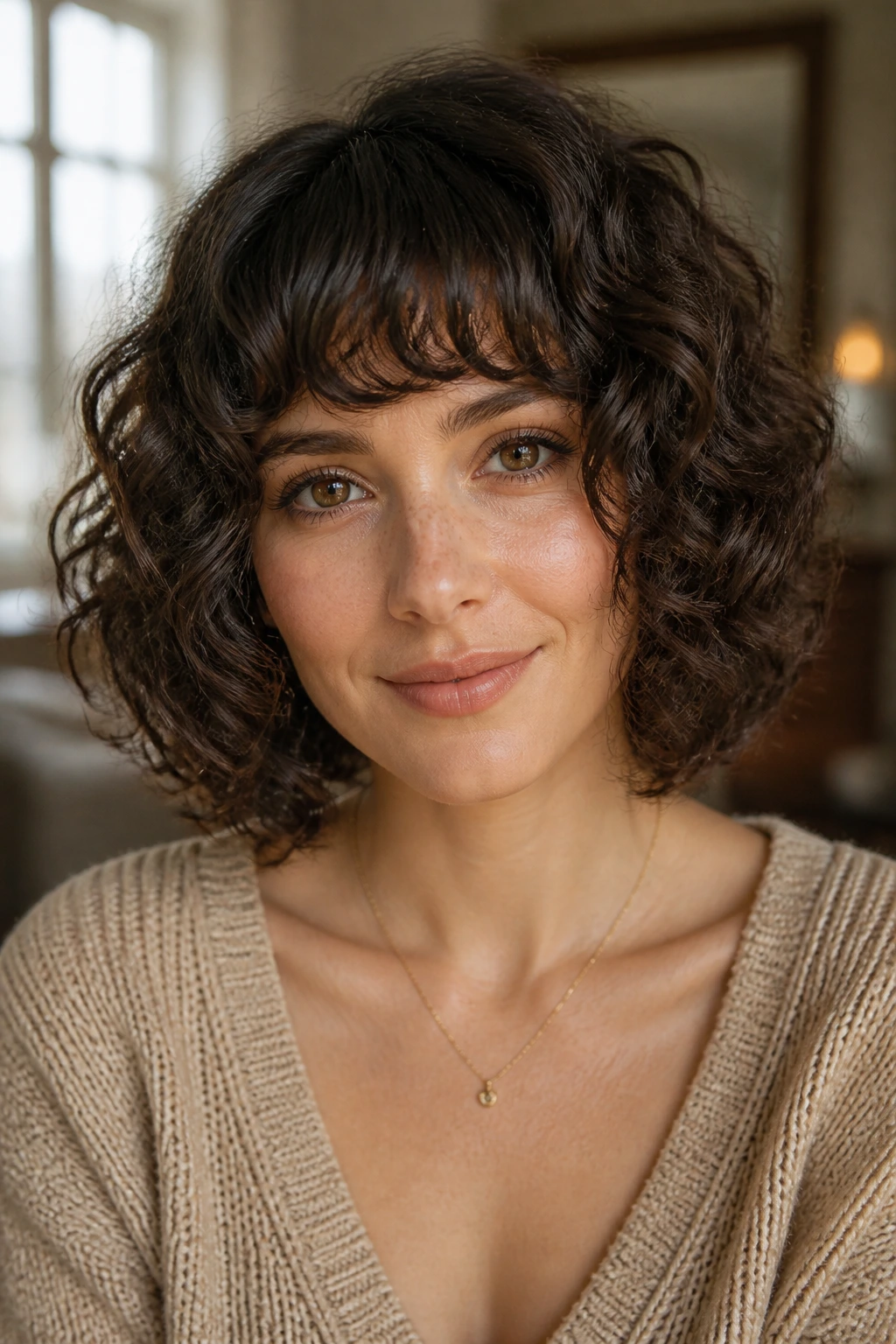
Curly hair can wear bangs. It just needs a cut that respects shrinkage and shape. A curly A-line bob with curved bangs gives the face a soft frame while keeping the back neat and the front longer. The bangs should be cut curl by curl, usually a little longer than you think, because they spring up after drying.
The reason this flatters a round face is the bend itself. Curved bangs create a soft arch rather than a hard horizontal wall, and the front pieces help elongate the profile. If the curls are tight, the angle in the bob should be a touch more generous so the shape still reads.
Styling note: diffuse on low heat or air-dry with clips at the roots if you need lift. Don’t stretch the curls too much around the face. That can flatten the shape and make the fringe behave badly.
14. Razor-Cut A-Line Bob With Shattered Bangs

Razor cutting gives this bob a broken, slightly edgy finish that can be a real advantage on a round face. Instead of a solid edge, the front pieces separate into soft shards, and the bangs do the same. That creates movement right where a round face needs it most.
The cut is especially good if your hair has a little natural texture. On pin-straight hair, razor ends can sometimes get wispy in a way that feels too thin. But on medium-density hair, the shattered edge keeps the bob from turning into a helmet.
- Best when: you want movement without obvious layers
- Avoid if: your ends already split easily
- Ask for: a soft razor finish, not aggressive thinning
A little polish at the roots keeps this from looking too wild. The texture belongs at the perimeter, not all over the crown.
15. Graduated A-Line Bob With Soft Bevel Bangs
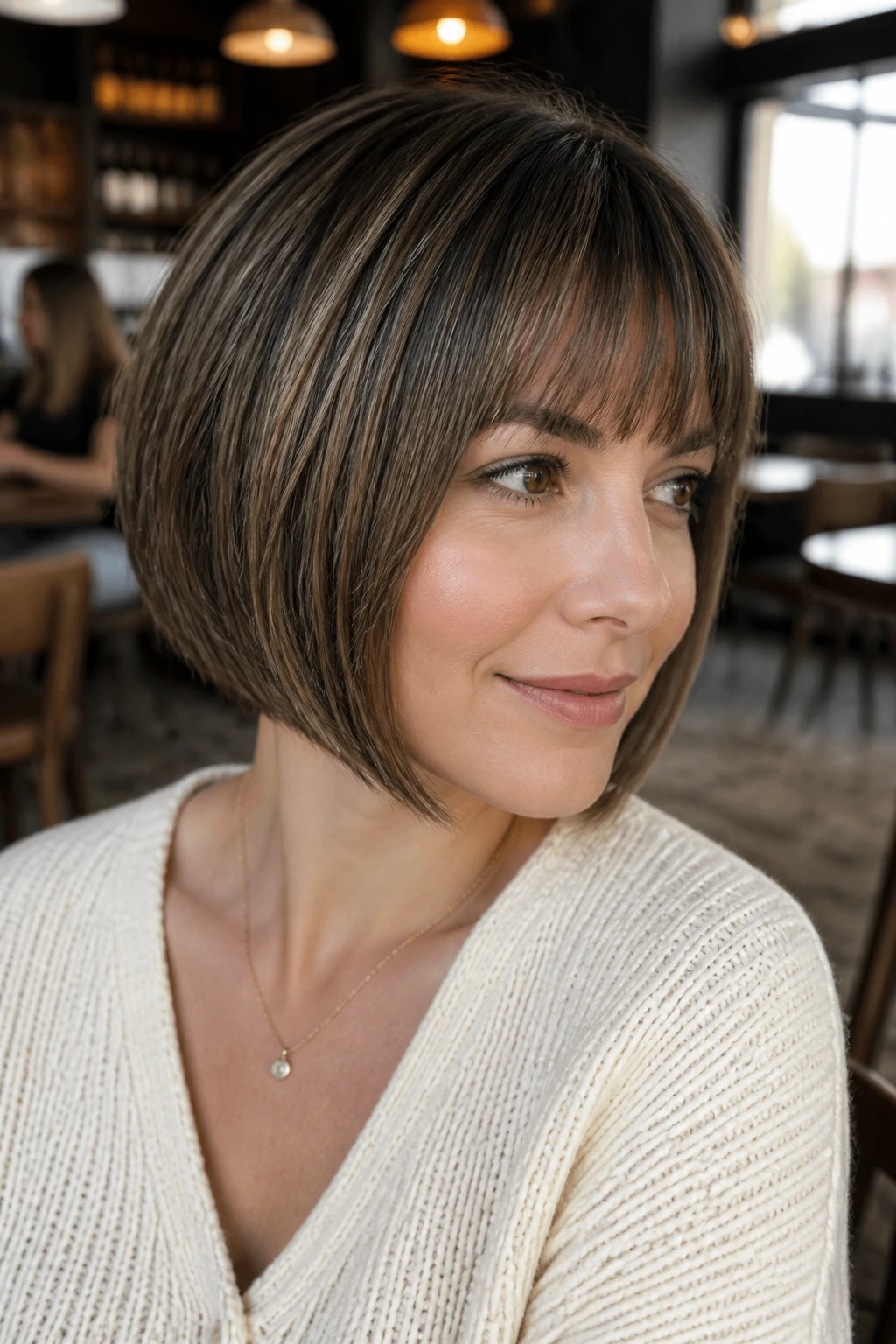
This is the quiet achiever of the group. The back has a gentle graduation that builds shape, the front slips forward in a smooth slope, and the bevel on the bangs softens the forehead line without making the fringe look choppy. It’s tidy, but not severe.
Round faces benefit from the clean vertical line this cut creates. The eye moves from the bangs to the front corners and then down along the angled sides. The whole haircut feels engineered to lengthen without shouting about it.
I like this one for anyone who needs a cut that behaves in a meeting, on a school run, and at dinner without much drama. It does not need a lot of styling theatrics. A quick blow-dry and a small bend at the ends usually do it.
16. Invisible-Layer A-Line Bob With Barely-There Bangs
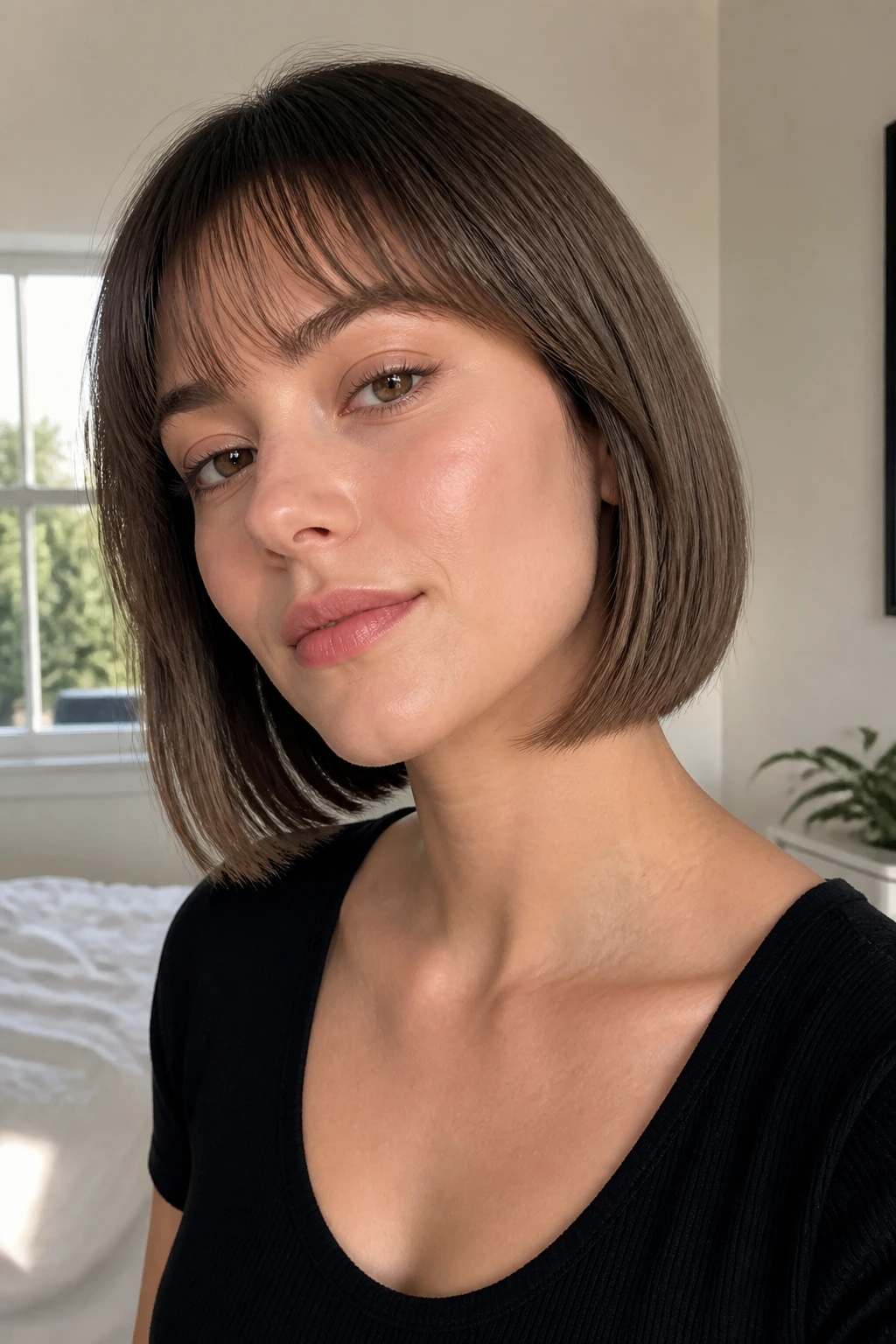
Some bobs are about obvious shape. This one is about the shape you feel more than you see. The layers are tucked inside the haircut, so the outline stays clean, and the bangs are so soft they almost disappear into the front pieces. On a round face, that keeps the cut from adding extra bulk where you do not want it.
This version is useful for fine hair that gets frayed when too much texturizing is done. The hidden layers create just enough movement to stop the bob from falling flat, but the surface stays smooth. The fringe barely interrupts the forehead line, which makes the face feel open.
It’s a good reminder that not every bang has to announce itself. Sometimes the smartest choice is the one that quietly fixes the proportions and gets out of the way.
17. Long-Line A-Line Bob With Arched Bangs

Long-line bobs are the sweet spot for a lot of round faces. The front pieces reach toward the collarbone, which builds a long diagonal, and the arched bangs curve up slightly in the center so the forehead doesn’t get flattened by a straight line. It’s polished without feeling severe.
The arch in the fringe matters more than people think. A slight lift in the middle can make the eyes look more open, and it breaks the horizontal pull that can make a face seem wider. The bob underneath stays sleek and long enough to keep the shape elegant.
If you want a cut that can move from blowout to air-dry with relatively little drama, this is one of the better bets. The length gives you options. Shorter bobs are lovely, but long-line versions tend to be kinder on rushed mornings.
18. Heavy Side-Bang A-Line Bob
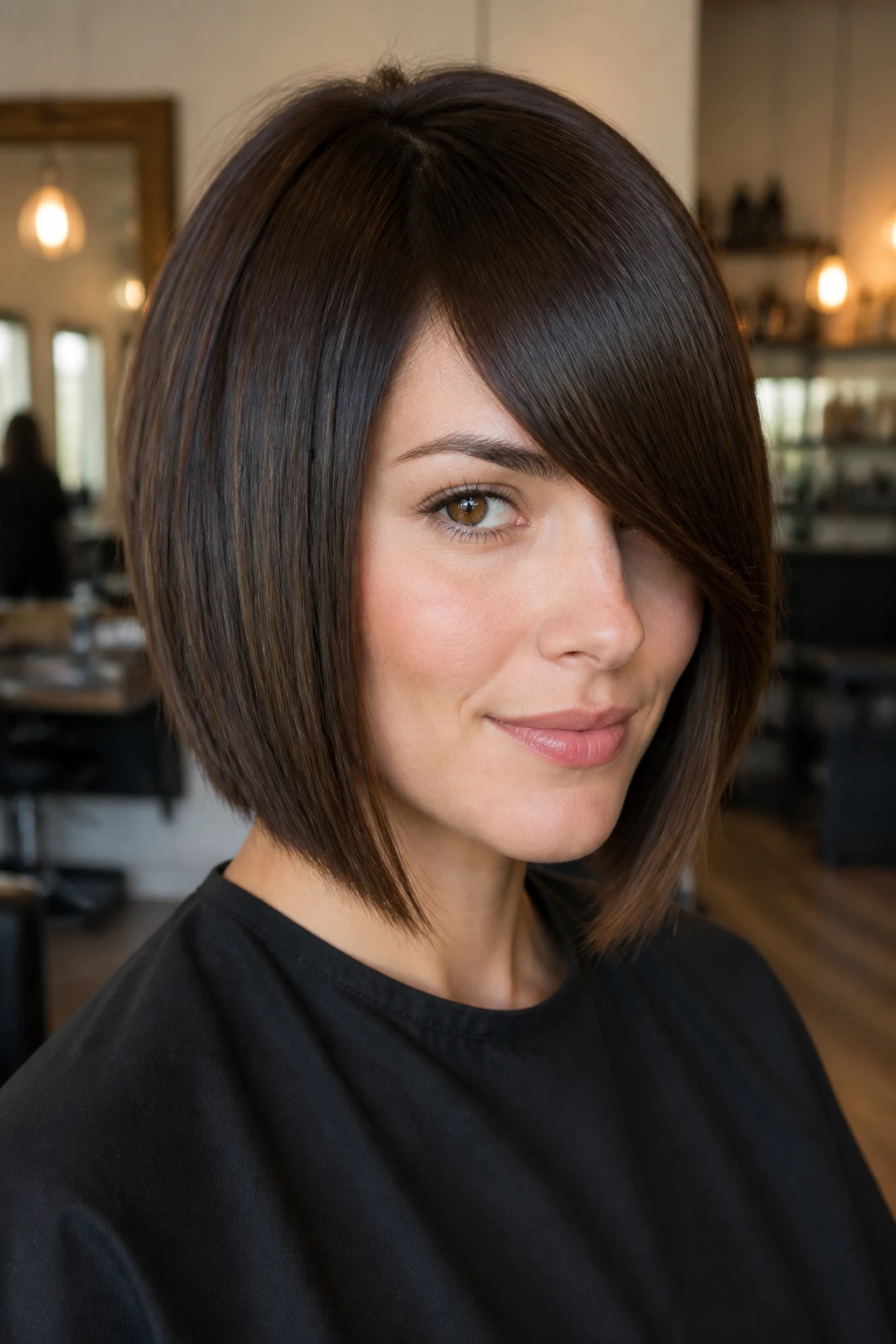
Heavy side bangs can be excellent on a round face when the rest of the cut is light and angled. The bangs create a strong diagonal that slices across the forehead, while the A-line front keeps the silhouette from feeling too soft. It’s a bold contrast. That contrast is the point.
The danger here is overloading the sides. If the bob is too thick near the cheeks, the bangs and the body of the cut start competing. Keep the bulk lower and the crown controlled, and the style becomes a strong frame instead of a wide frame.
Best for
- medium or thick hair
- anyone who likes a more dramatic front line
- people who are happy to blow-dry the fringe each morning
This is one of those cuts that looks best when the bangs are moved decisively. Halfway side-swept is usually not enough. Commit to the line.
19. Tapered A-Line Bob With Chin-Grazing Fringe
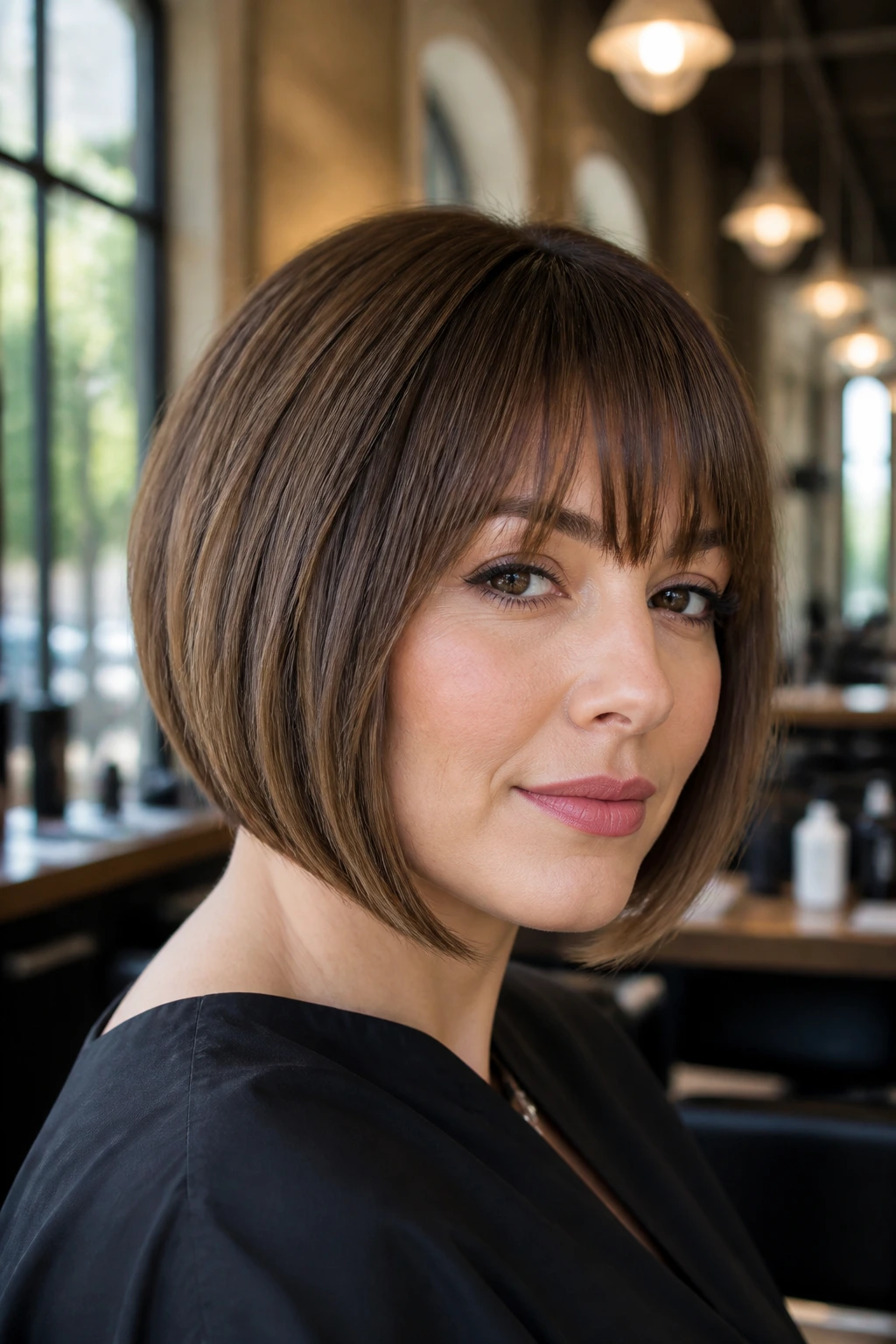
A tapered A-line gives the jaw a neat outline, and chin-grazing fringe keeps the face open while still adding a little softness. The bangs should sit just at the edge of the chin or skim above it, so they frame rather than swallow the face.
This version is especially good if your round face also has a shorter forehead. A longer fringe line can balance that proportion without crowding the eyes. The taper in the bob keeps the back compact, which helps the front do the visual lengthening.
Pro tip: ask for the fringe to be dry-cut if your hair swells when it dries. A damp cut can shrink too much and land a full half-inch shorter than you wanted. That’s a headache you do not need.
20. Glassy A-Line Bob With Long Curtain Fringe
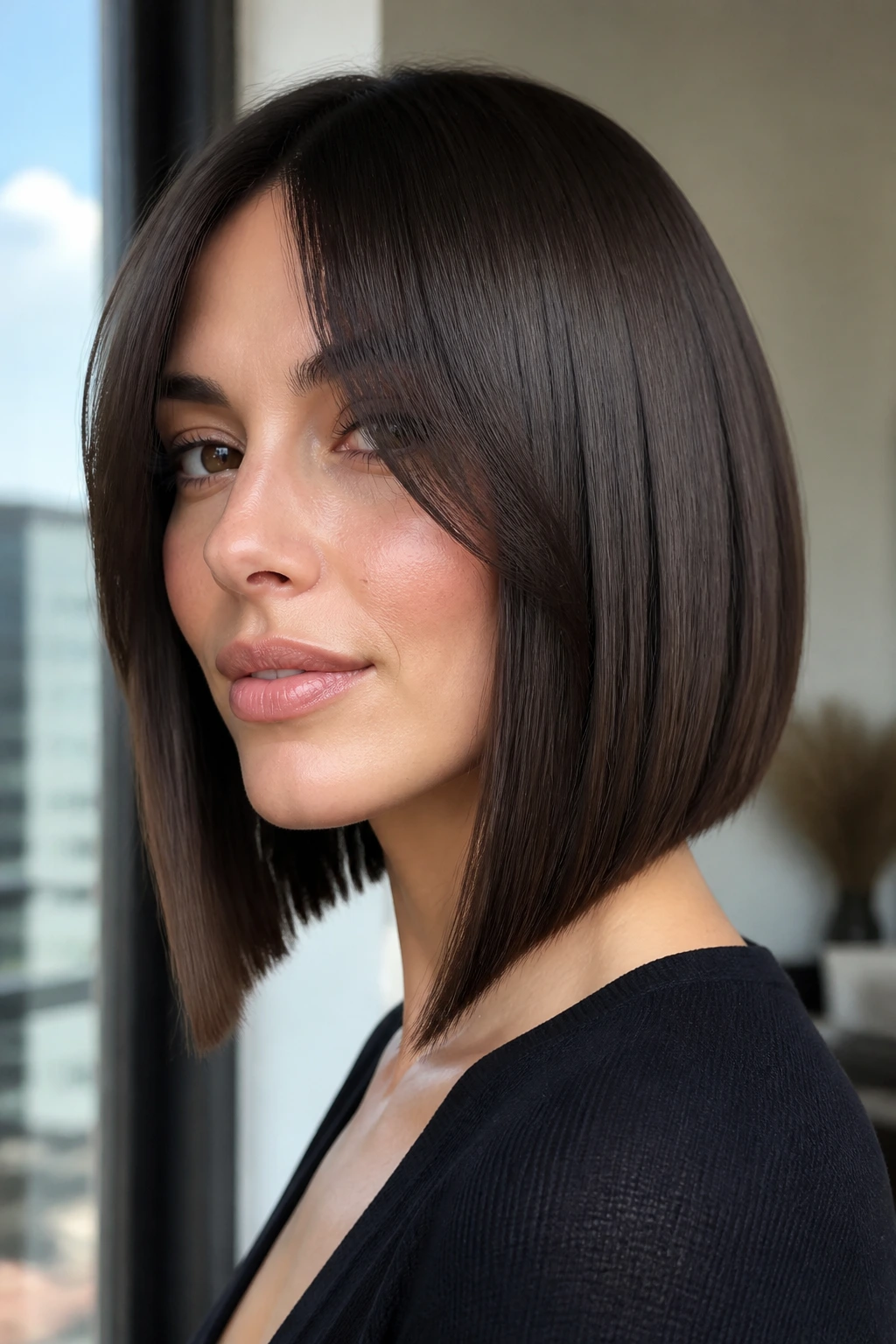
A glassy finish makes the angles in this cut look crisp, almost architectural. The long curtain fringe splits and falls cleanly at the sides, and the front pieces reflect light in a way that emphasizes the diagonal line. On a round face, the smoothness keeps the shape from puffing outward.
This cut is one of the strongest choices if you like a polished look. It needs regular heat styling or a very cooperative texture, though. If your hair frizzes easily, you’ll want a light serum and a decent blow-dry nozzle to keep the line intact.
The payoff is worth it. The face looks longer because the fringe opens the middle, and the front angle stays visible all day instead of collapsing into a curve.
21. Shaggy A-Line Bob With Choppy Bangs

A little shag in a bob can be a good thing, provided the layers are kept under control. The choppy bangs keep the fringe from turning heavy, and the A-line base still gives the cut its overall shape. This is a nice middle ground for people who want texture but not a full shag.
On a round face, the broken edge around the forehead and ends keeps the eye moving. The trick is not to let the layers start too high. If they creep up toward the crown, the cut can mushroom. Keep the texture lower, and it works.
I like this one on hair that already has bend. Straight hair can wear it, too, but it needs a little more help from a flat iron or a wave wand so the choppiness looks intentional rather than random.
22. Undercut A-Line Bob With Draped Long Bangs
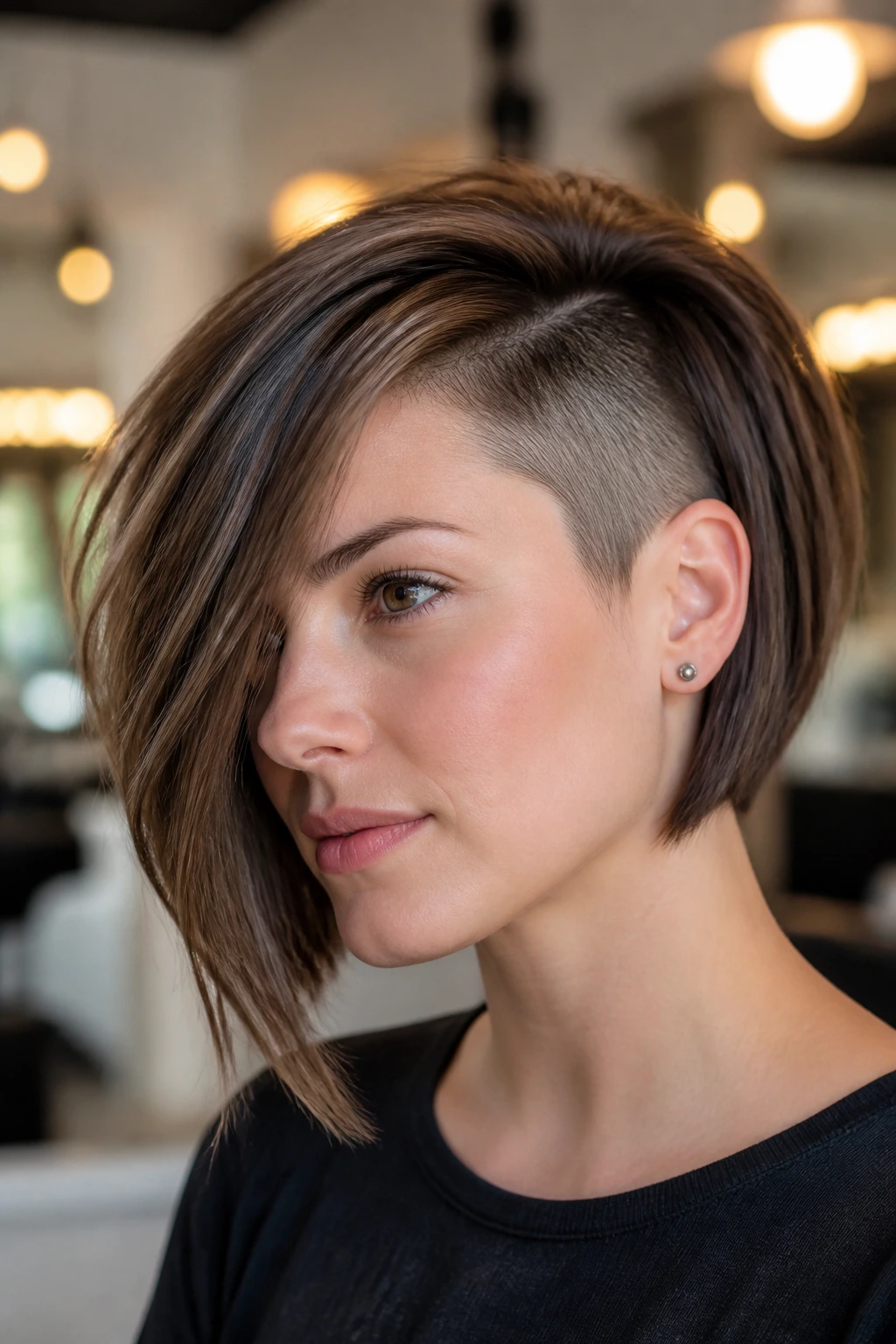
This is the most dramatic version in the group, and it earns that drama honestly. The undercut removes bulk from underneath, which lets the top layer sit cleanly, while the long draped bangs sweep across the face in a soft curtain. The result is light at the bottom and controlled through the front.
Round faces often do well with this because the undercut keeps the sides from ballooning out. That alone can change the whole shape. The long bangs then give the face a diagonal line to follow, which keeps the look sleek instead of wide.
It’s a cut for someone who wants sharpness without stiffness. The undercut can be hidden, which is useful if you need the haircut to look polished in more conservative settings. Or you can show a little of it and let the shape feel more modern.
Why the A-Line Shape Pulls the Eye Downward
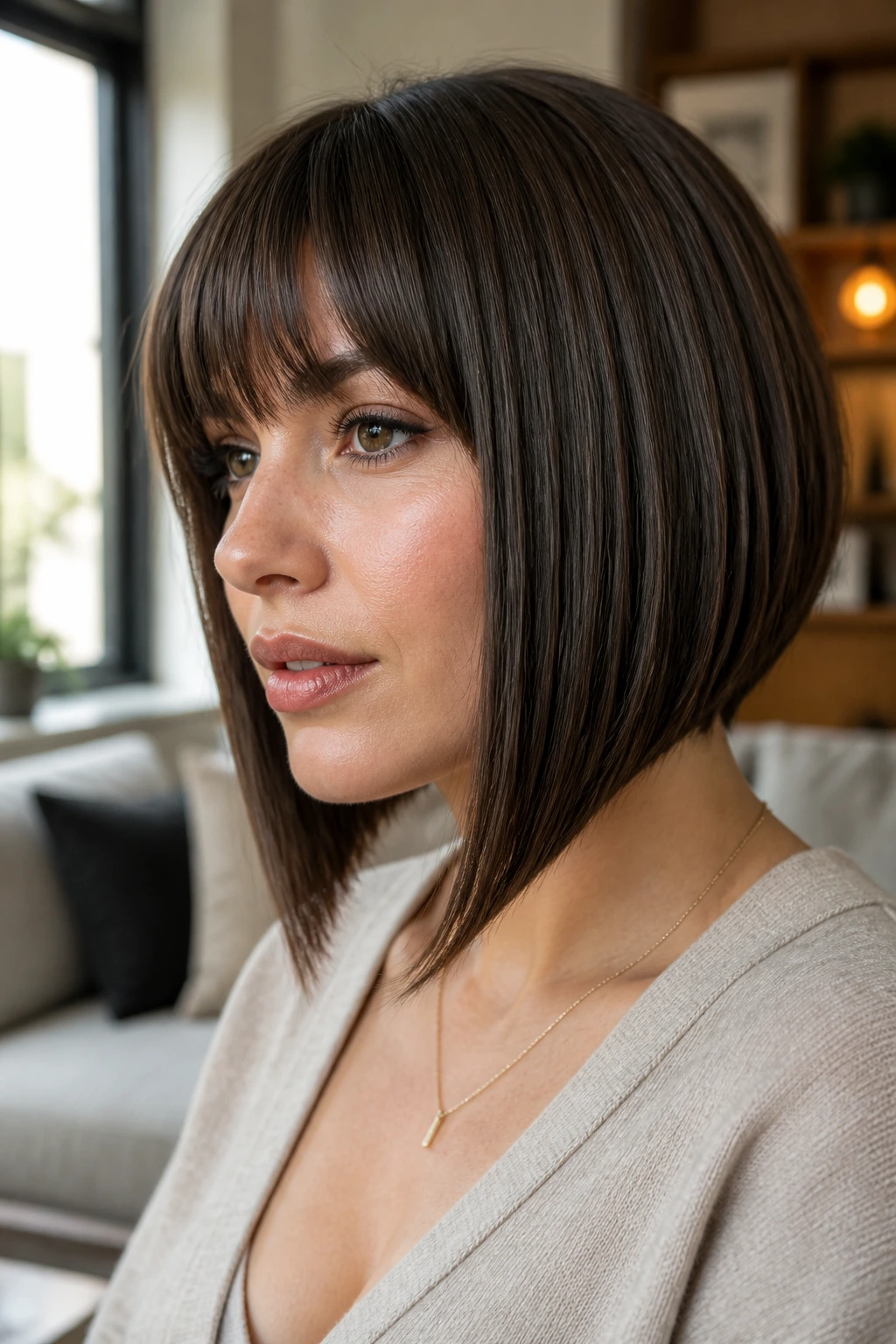
The reason this haircut keeps showing up in flattering round-face styles is not magic. It’s geometry. The front corners of an A-line bob create a diagonal path that the eye follows naturally, and diagonals are your friend when you want to stretch a round silhouette.
A good A-line usually keeps a little more length in front than in back — sometimes only an inch or two, sometimes more if the hair is thick and needs weight. That extra length near the face changes the proportions immediately. The jaw gets a frame. The cheeks stop being the only thing anyone sees.
Bang placement matters just as much. A fringe that sits too short and too blunt can pull the face into a box. A fringe that opens in the center, sweeps off to one side, or breaks up softly at the brow keeps the forehead from becoming one heavy line. That is why curtain bangs, bottleneck bangs, side-swept fringe, and feathered bangs come up so often in good round-face bob cuts. They do different jobs, but they all break up width.
What to Ask for Before Cutting A-Line Bobs With Bangs for Round Faces
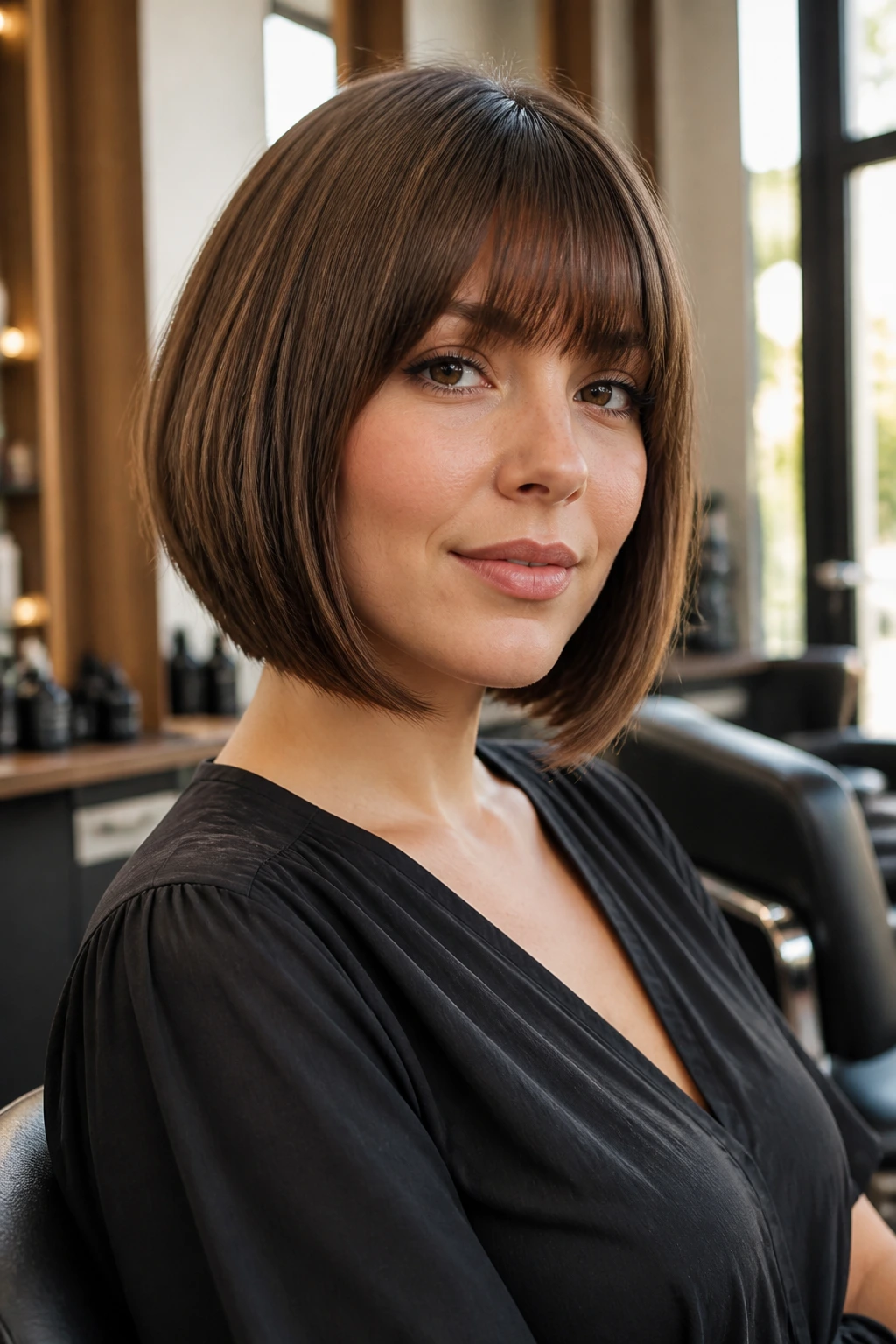
A salon chair is no place for vague instructions. “Something shorter” is how people end up with a bob that sits exactly on the widest part of the face. Be specific. Ask for the front to fall below the jawline if your face is very round, and tell your stylist whether you want the back gently stacked or kept soft and low.
Bring a reference photo that shows the side view. Front-only photos hide the most important part of an A-line bob, which is the slope. If the photo has bangs, say what you like about them: the length, the amount of separation, the parting, or the softness at the ends. Stylist language helps, but visuals help more.
A few useful phrases:
- “Keep the front longer than the jaw.”
- “I want the bangs to open the forehead, not cover it heavily.”
- “Please keep the sides slim so the shape doesn’t get wide at the cheeks.”
- “My hair falls flat at the crown, so I need a little lift there.”
If your hair is curly, wavy, or cowlick-prone, say that out loud. The best haircut on paper can fail if it ignores how your hair actually behaves.
Tools and Products That Make the Shape Behave
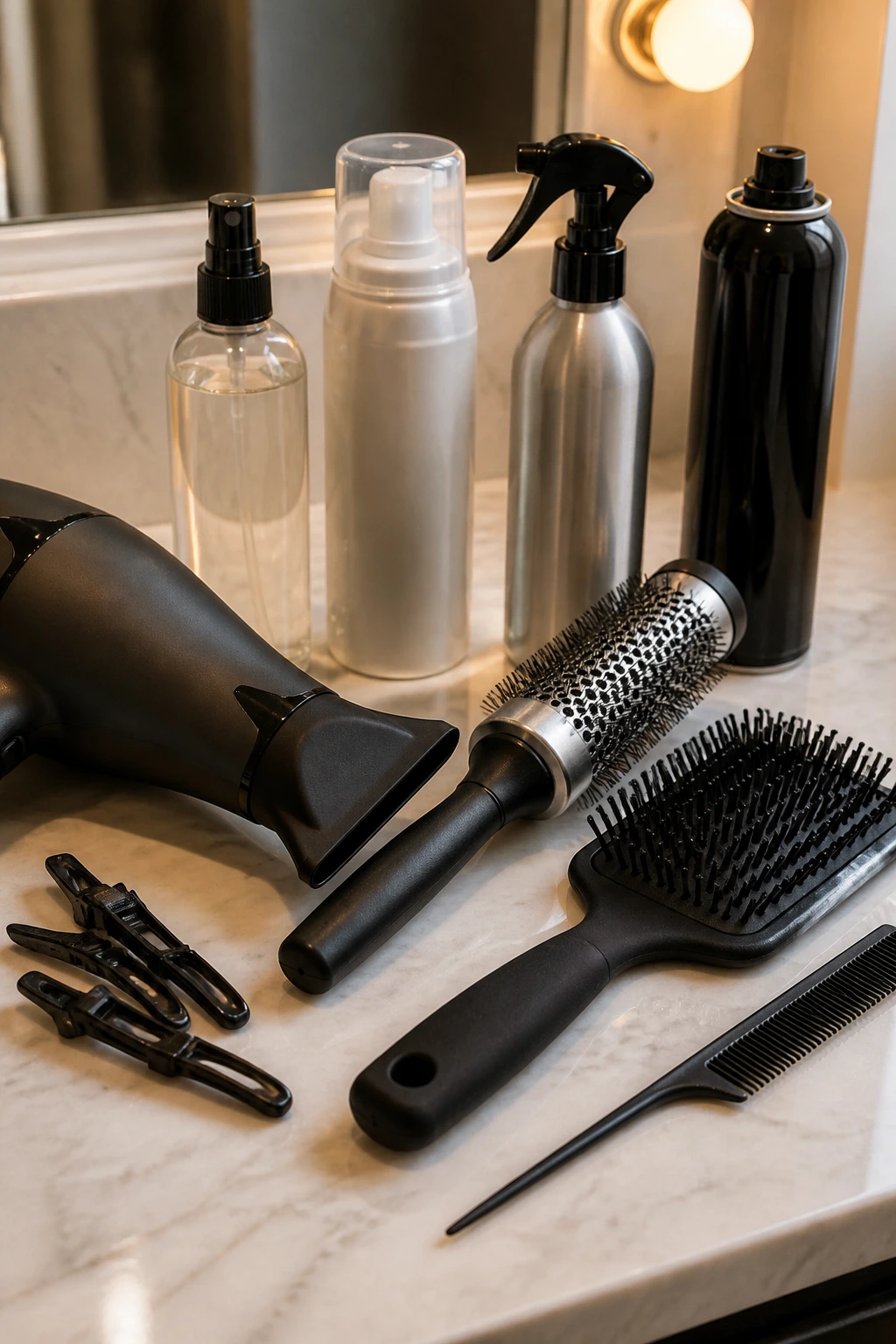
You do not need a bathroom full of gear. You need the right few things, and you need to use them with some restraint.
- Blow dryer with a nozzle: directs the air so the bangs and front pieces don’t puff out in every direction.
- 1-inch or 1.25-inch round brush: gives the front a clean bend without making it curl too much.
- Paddle brush: good for sleek A-lines and glassy finishes when you want less volume.
- Tail comb: useful for clean parting and bang sectioning.
- Heat protectant spray: not optional if you use hot tools more than once a week.
- Light mousse: helps fine or flat hair keep lift at the roots without feeling crunchy.
- Texture spray: useful for piecey or tousled versions, especially on the ends.
- Dry shampoo: keeps bangs from clumping and buys you an extra day or two between washes.
- Small clips: help you dry the fringe and front pieces in sections so they set correctly.
A cheap but good heat protectant does more for this haircut than a fancy oil ever will. Oils can shine, yes, but they can also flatten the angled ends right when you want them to stay sharp.
How to Style A-Line Bobs With Bangs for Round Faces at Home
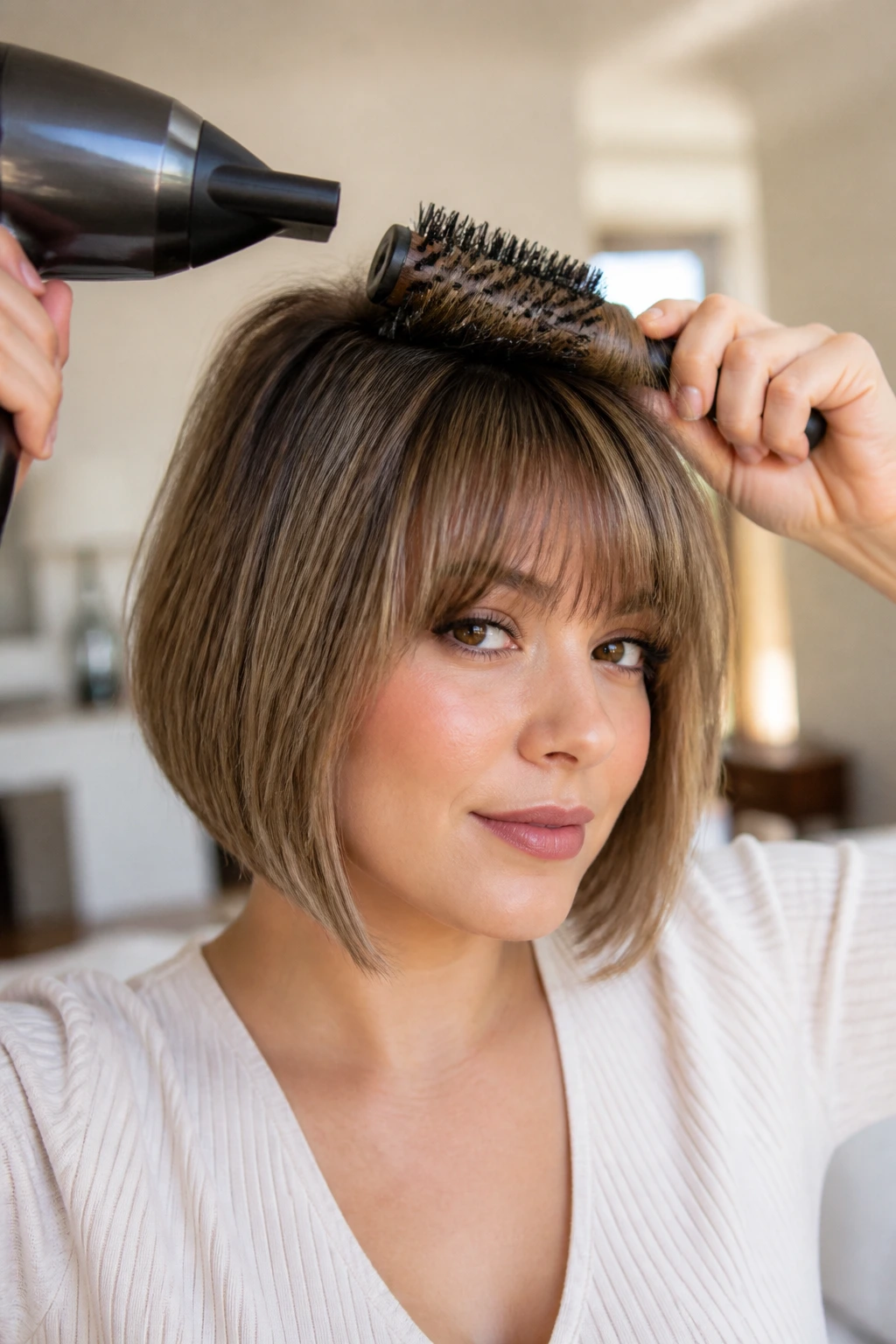
A smooth version starts with roots, not ends. Blow-dry the crown first, lifting the hair up and slightly back so the top doesn’t collapse toward the cheeks. Then work the front pieces in the direction you want them to sit. If the cut is meant to bend under, stop the round brush as soon as the last inch of hair starts to tuck.
A wavy version needs less precision and more patience. Rough-dry the hair until it’s about 80 percent dry, then use a small iron or wand on the front pieces and bangs only. Leave the mid-lengths a little loose so the shape does not become stiff. The point is movement, not a curl pattern that looks stitched on.
Curly hair needs a different attitude. Don’t stretch the curls too much around the face. That usually causes the fringe to bounce up in odd places. Diffuse on low heat, scrunching lightly at the ends, and stop touching it once it starts to set. If the bangs are too tight after drying, mist them lightly and re-set them with your fingers.
Small Styling Moves That Change the Whole Finish
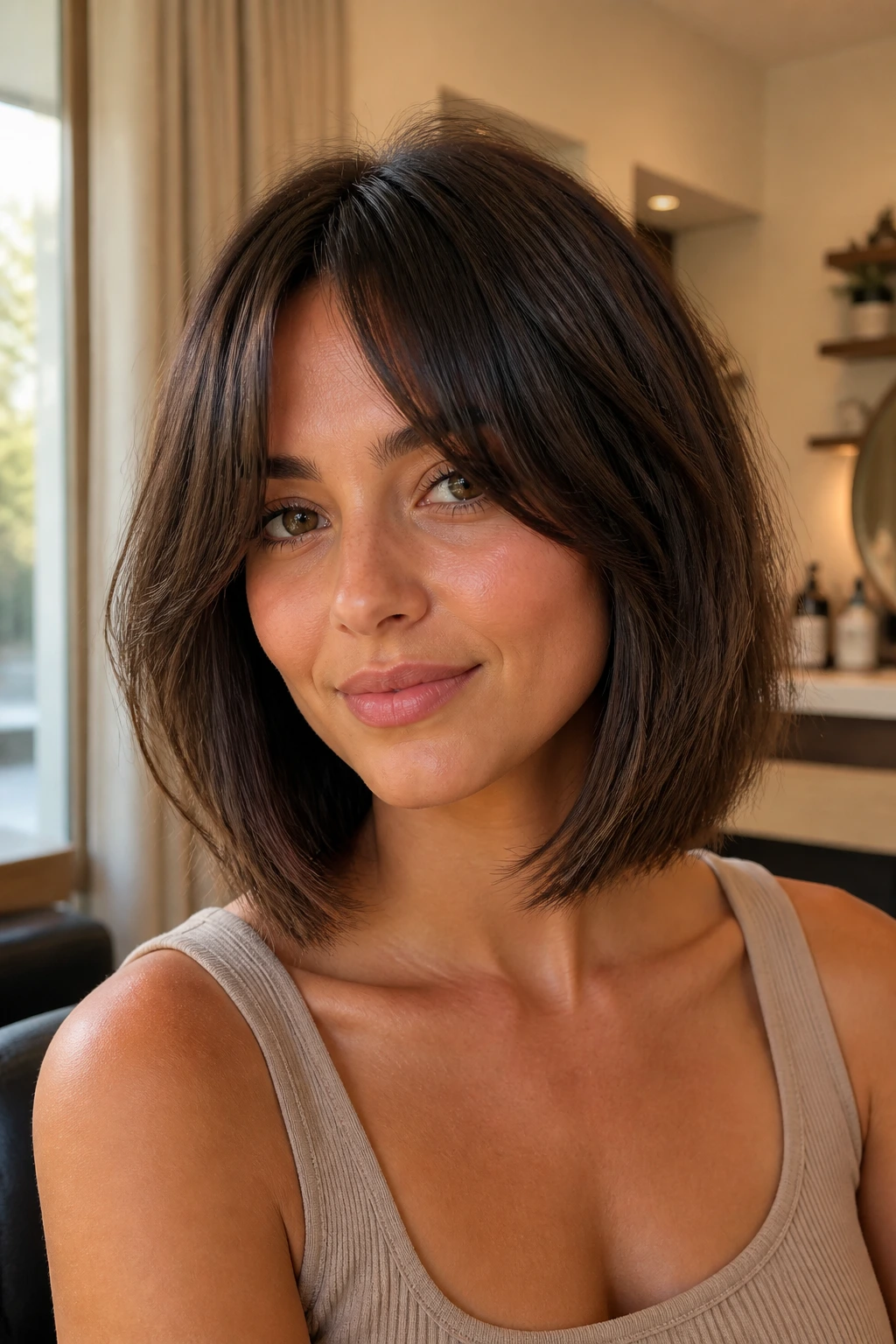
Shift the part by half an inch. That tiny move can change the entire angle of the cut. A slightly off-center part often makes a round face look longer without calling attention to itself.
Keep the root lift at the crown, not the cheeks. A little volume up top is useful. Side puff near the cheeks is not. Dry the crown first and direct the sides downward.
Let one side tuck behind the ear. The gesture sounds small, but it creates an opening next to the cheek and lets the front angle show. Don’t tuck both sides unless you want the face to look more open and less sculpted.
Bend the ends, don’t flip them. A soft inward bend keeps the line neat. A big flip-out can widen the bottom of the cut and throw off the balance.
Refresh bangs on their own. You don’t always need to restyle the whole head. A quick mist of water, a round brush, and two minutes of blow-dry on the fringe can reset the haircut.
Keeping the Cut Sharp Between Trims
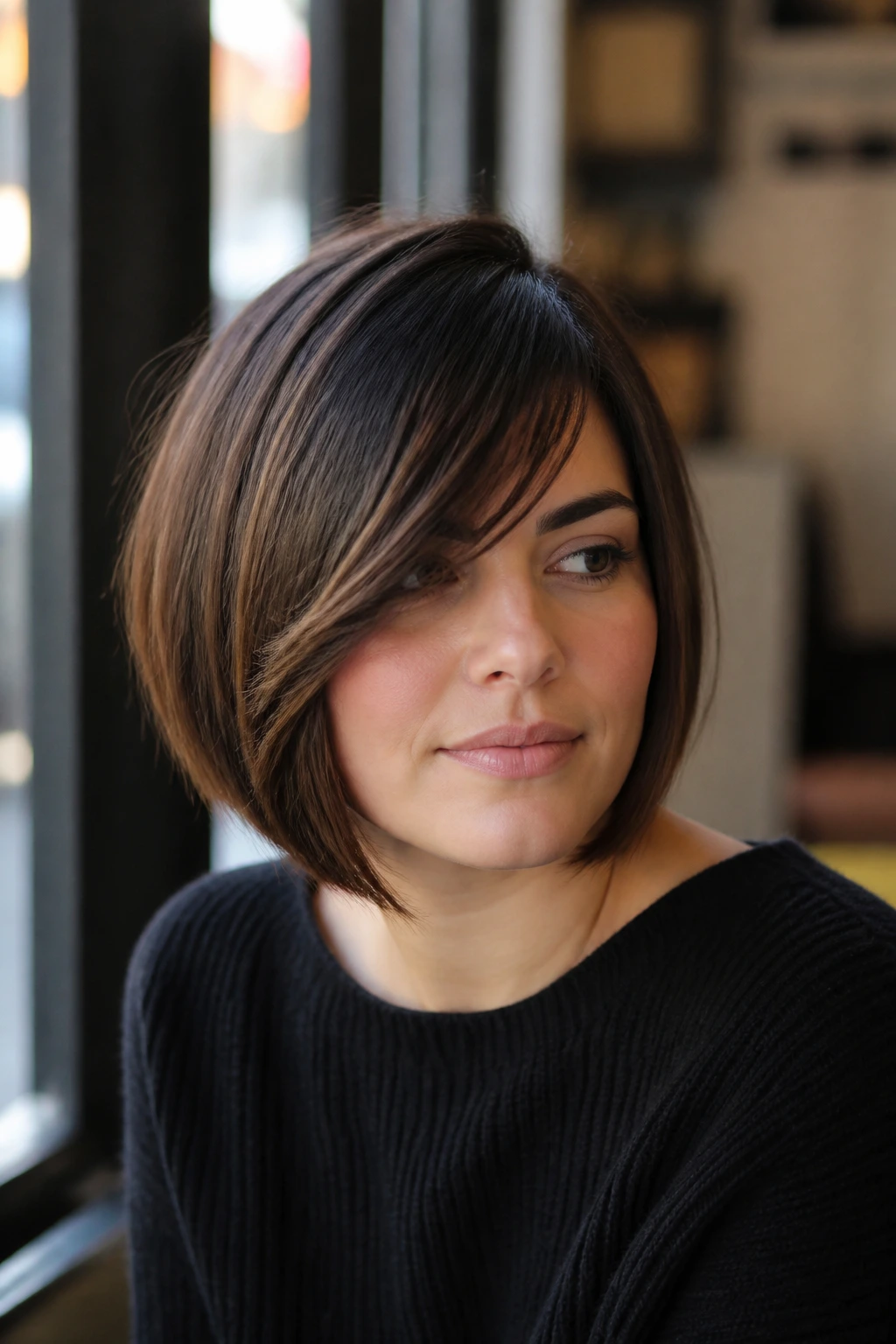
The front line is what gives an A-line bob its shape, so that’s the part to watch first. On most hair types, bangs need a touch-up every 2 to 4 weeks if you want them sitting neatly. The full bob usually benefits from a trim every 5 to 8 weeks, depending on how fast your hair grows and how precise you like the angle.
Straight hair tends to show grow-out faster because the line is clean. Wavy hair buys you a little more time, since a soft bend blurs the edge. Curly hair can go longer between trims, but the bang length still needs attention because curl shrinkage changes the face frame fast.
Sleeping on the cut matters too. If the front pieces flip up overnight, a silk or satin pillowcase helps. If the fringe is the problem area, pinning it loosely or setting it in a large Velcro roller for a few minutes in the morning can save you from a full wash.
Variations and Adaptations to Try
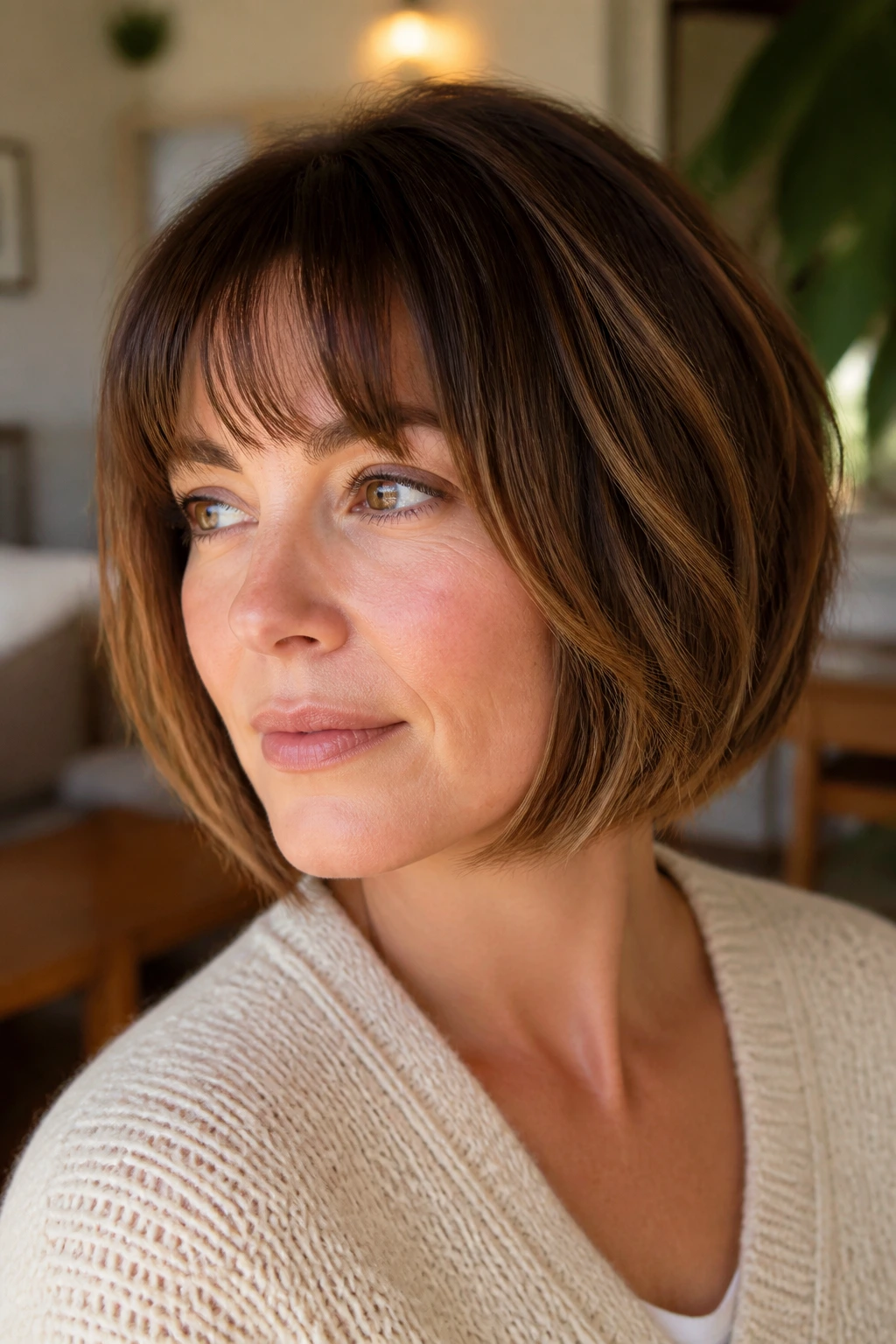
The Fine-Hair Lift: Keep the graduation soft, the front just below the chin, and the bangs wispy. This version adds shape without stripping away too much density.
The Thick-Hair Tamer: Ask for internal weight removal and a cleaner bevel at the front. The goal is movement without a triangle shape at the bottom.
The Curly Coil Version: Cut the bangs longer than expected and shape the front pieces dry. This keeps shrinkage from stealing the angle.
The Low-Maintenance Grow-Out Cut: Choose curtain bangs and a front length closer to the collarbone. It stays wearable longer and looks less awkward between trims.
The Statement Fringe Edition: Go for micro bangs or a strong side fringe with a sleek A-line base. This is the bolder choice, and it works best when the rest of the haircut stays precise.
The Office-Friendly Soft Angle: Keep the line gentle, the bangs feathered, and the finish smooth. Nothing gets too sharp, which makes the style easier to wear every day.
Common Mistakes That Make a Round Face Look Wider
-
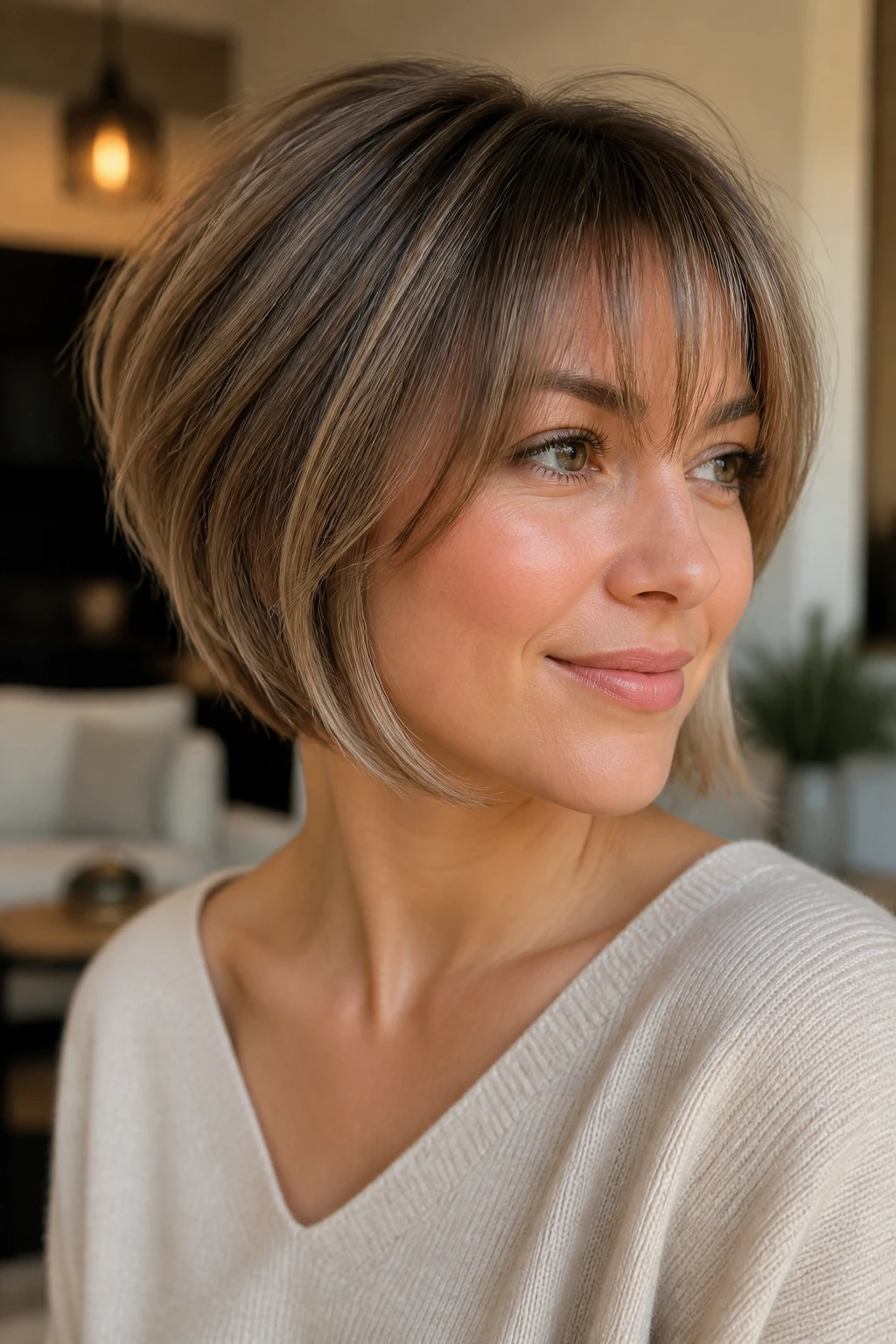
Cutting the bangs too short and too full: the symptom is a heavy band across the forehead that makes the face feel shorter and wider. The fix is a softer edge, or a longer bang that opens in the center.
-
Letting the front end at the widest part of the cheek: the symptom is a bob that seems to stop the face instead of lengthen it. The fix is to extend the front slightly below the jaw.
-
Over-stacking the back: the symptom is a mushroom shape that adds bulk at the sides. The fix is a gentler graduation, especially if your hair is dense.
-
Over-thinning fine hair: the symptom is frayed ends and a see-through fringe. The fix is to keep the perimeter clean and remove weight only where the hair is truly bulky.
-
Ignoring the natural part or cowlicks: the symptom is bangs that split, swing the wrong way, or puff at the root. The fix is to cut and style with the growth pattern, not against it.
-
Styling only the surface: the symptom is a pretty top layer with a wide, puffy underside. The fix is to set the root direction and the ends; both matter.
Frequently Asked Questions
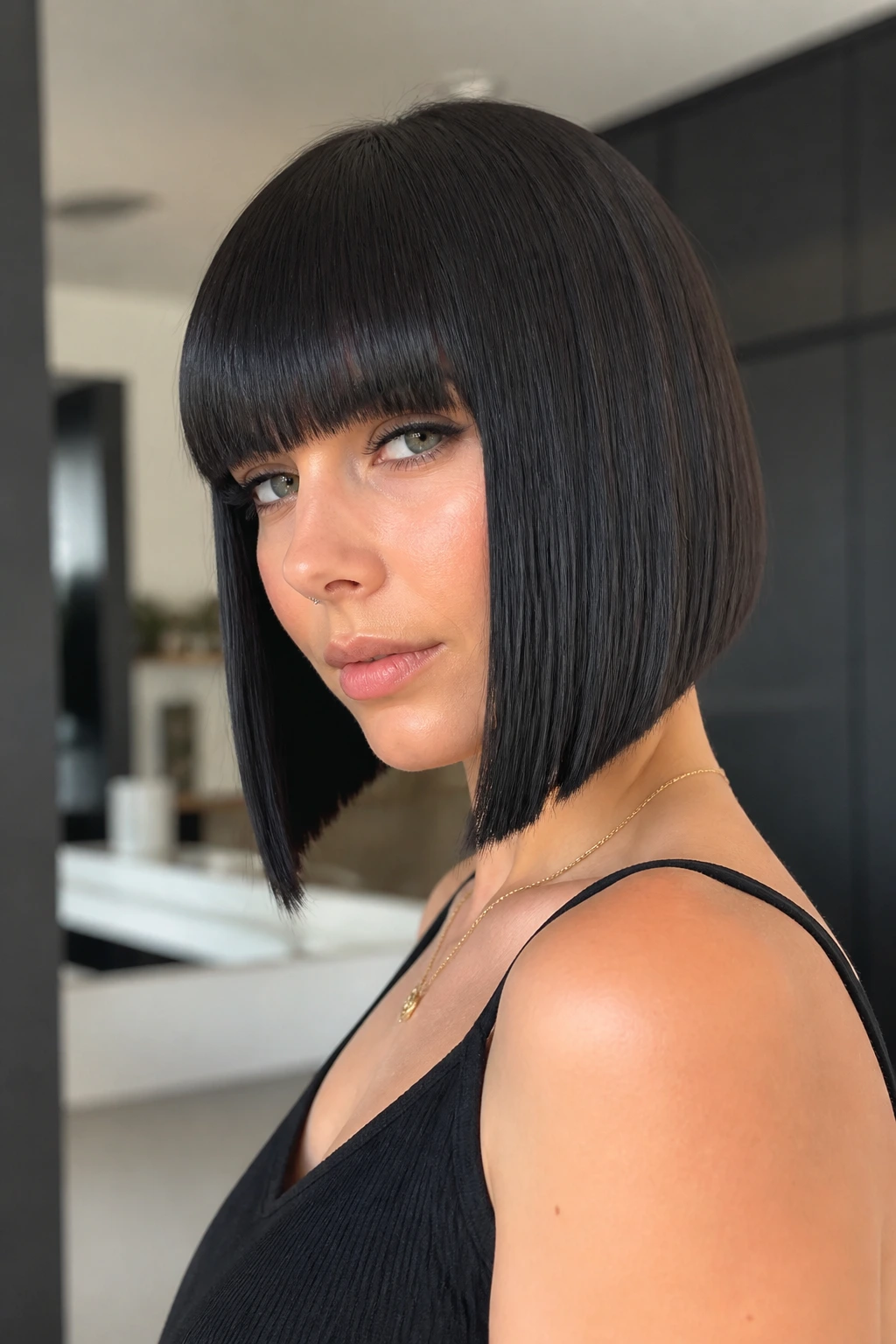
Do A-line bobs with bangs make round faces look wider?
They can, if the front stops at the cheeks and the fringe is too blunt. A well-placed A-line bob with longer front pieces and a softer bang line usually does the opposite — it stretches the face and keeps the width from being the first thing you notice.
Which bangs are safest for a round face?
Curtain bangs, bottleneck bangs, side-swept fringe, and airy wispy bangs are the easiest places to start. They break up the forehead without creating one hard horizontal line across the top of the face.
Can curly hair wear this cut?
Yes, and it can look excellent. The important part is to cut for shrinkage and let the front sit a little longer than you think it should. Curly bangs need room to bounce.
How short can the bob go on a round face?
Chin length can work, but it needs to angle forward and avoid ending right on the cheek line. If you want a shorter bob, keep the front a touch longer so the cut still has that lengthening diagonal.
Does a center part work with a round face?
It can, especially with curtain bangs or split bangs. A hard center part with a blunt fringe is a tougher combination. If the part is center and the face is round, the front pieces usually need some soft movement.
How often should bangs be trimmed?
Usually every 2 to 4 weeks, depending on how fast your hair grows and how precise the fringe is. Micro bangs need attention sooner; curtain bangs and long side fringe can go a little longer.
What if my bangs keep splitting?
That usually means the cowlick or natural part is stronger than the cut. Try a longer fringe, a side-swept shape, or a blow-dry that sets the hair in the opposite direction for a minute or two while it cools.
Can I wear an A-line bob if my hair is fine and flat?
Absolutely, but keep the layers controlled. A tiny bit of stacking at the back and a light fringe usually gives fine hair enough lift without making the ends look thin.
A Shape That Keeps Moving

The best A-line bobs with bangs for round faces do not try to hide the face. They frame it, lengthen it, and give it a cleaner edge. That’s a better goal anyway. Hair that understands your face shape looks more natural than hair that tries to fight it.
What makes this cut so useful is the mix of control and softness. The bob brings structure. The bangs decide how quiet or sharp the finish feels. Pick the version that matches your texture and your patience level, and the shape does the rest.
Bring a good photo, say exactly where you want the front to land, and don’t let anyone cut the angle out of the style. That line is the whole point.