



A layered wavy bob on Black hair has a particular kind of swing. The cut sits close enough to the head to look deliberate, then the waves kick out at the ends and keep it from turning boxy. That balance is the whole point. Too blunt, and the shape can feel heavy. Too many short layers, and the silhouette starts to puff instead of move.
That matters even more on denser textures. Black hair can hold a gorgeous amount of body, but a bob that ignores shrinkage, curl pattern, or the way the perimeter behaves will fight you all day. The best wavy bobs with layers for Black women don’t treat volume like a problem to erase. They place it on purpose, so the cut reads polished from the front and still has life when you turn your head.
And yes, the details change everything. A half-inch difference at the nape can make the whole back sit cleaner. A side part can pull the face in one direction and soften the jaw. A long face-framing layer can keep the cut from looking square when the waves fall flat at 3 p.m. That’s the fun of this length: it looks simple until you actually start measuring where the weight falls.
Why These Layered Waves Keep Working
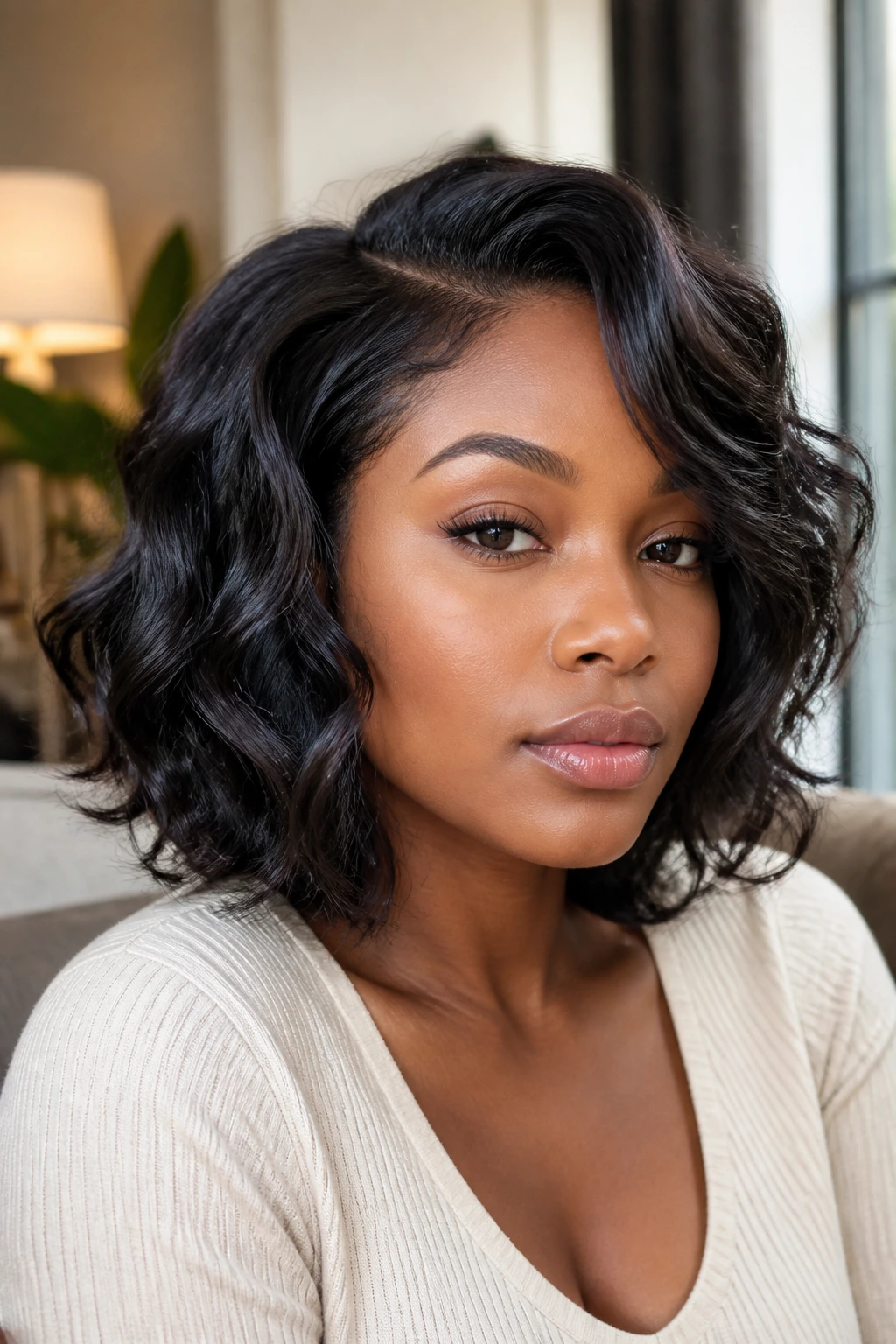
- Face shape changes fast: A chin-length bob with longer front pieces can sharpen a rounder face, while a collarbone-length version softens a stronger jawline without hiding it.
- Density stays under control: Long internal layers take bulk out of thick hair so the sides don’t flare like a bell by midday.
- Styling stays flexible: The same cut can be worn with a flat-iron bend, a wand wave, a flexi-rod set, or a blown-out finish with movement at the ends.
- It fits more than one texture: Relaxed hair, silk-pressed hair, stretched natural hair, and human-hair installs can all wear the shape differently and still look right.
- The cut does half the work: When the layers are placed well, you don’t need perfect curls. A rough bend and a clean part are often enough.
- It keeps length without the drag: You get that bob feel without losing all the length around the collarbone or jaw.
1. Chin-Grazing Soft Wave Bob
This is the cleanest place to start if you want a bob that frames the mouth and jaw without crowding the neck. The length lands right around the chin, then the waves bend just enough to keep the edges from looking severe. On Black hair, that matters. A straight chin-length cut can feel rigid fast; with a soft wave and a few long layers, it starts to move instead of sit there.
Why It Works
The magic is in restraint. You’re not building a big curl pattern here, just a loose bend from mid-shaft to ends, which keeps the face open and the neckline visible. On thicker hair, that chin line can be a little dangerous if it’s cut blunt all the way across, so ask for longer internal layers instead of choppy ones. You want air, not holes.
What to Ask For
- Keep the perimeter at chin level.
- Start layers around the cheekbone.
- Leave the front pieces a touch longer so the cut doesn’t feel too square.
- Style with a 1-inch curling wand or a flat iron bend, then brush the waves out lightly.
A little side part helps this one a lot. It gives the bob a soft diagonal line and keeps the shape from feeling too symmetrical.
2. Deep Side-Part Layered Bob
A deep side part changes the whole attitude of a bob. It gives you instant lift at the crown, and on Black hair that lift can be the difference between “nice cut” and “that cut is working.” The waves fall heavier on one side, so the style gets a little drama without needing extra length.
If your hair tends to lie flat at the roots, this is one of the easiest ways to fake more volume in the front. The longer side can skim the cheek, while the shorter side keeps the neck visible and stops the shape from widening out too much.
I like this style best when the waves are brushed into loose S-shapes, not perfect ringlets. Perfect curls can look too formal on this cut. Soft, slightly broken-up waves give the bob a more expensive, lived-in feel.
Tell your stylist to keep the layering concentrated around the front and crown. The back should still hold enough weight to keep the nape neat. Too many layers through the back and the whole thing starts to fluff.
3. Angled Lob with Face-Framing Layers
Why does this one keep coming back? Because it flatters so many faces without screaming for attention. The front sits longer, usually brushing the collarbone, while the back is shortened just enough to create that gentle angle. Add face-framing layers, and the whole cut starts pulling upward instead of hanging straight down.
What Makes It Different
The angle gives you swing. That’s the real appeal. When you turn your head, the front pieces move first, which makes the cut feel lighter even if your hair is dense. On Black hair, this shape also helps keep the ends from stacking too much width around the shoulders.
How to Wear It
- Use a middle part for a sharper, balanced look.
- Use a side part if you want the front to fall more softly across the cheek.
- Curl only the mid-lengths and ends for a relaxed finish.
- Keep the front layers long enough to tuck behind the ear without sticking out awkwardly.
This is a smart choice if you like change but do not want a short bob that feels too committed. It has room. It can look grown-up with smooth waves or a little more playful when the ends are flipped out.
4. Curly-Wavy Bob with Flipped Ends
This one has personality. The waves start soft, then the ends flick outward just enough to catch the eye. It gives the bob a little retro energy, but not in a costume way. On Black women, especially with relaxed or pressed hair, that flipped finish can keep the style from looking too plain.
The trick is not to curl the whole head into identical loops. That’s where a lot of bob styles go wrong. The better version bends the front away from the face and lets the back turn just slightly. Think movement, not pageant curls.
If you have thick hair, ask for the layers to stay long through the perimeter so the flip at the ends doesn’t create too much puff. And if your hair is finer, the flip helps the bob look fuller without loading it down with product.
A mousse on damp hair or a lightweight setting lotion on pressed hair works well here. Heavy cream will drag the ends down, and then the whole effect disappears.
5. Feathered Collarbone Bob
Feathered ends make a huge difference on a collarbone-length bob. Instead of one blunt line sitting across your shoulders, the hair breaks into soft pieces that move when you walk. It’s one of the easiest ways to take weight out of a cut without making it look over-layered.
The collarbone length is useful too. It gives enough room for the waves to bend, which means the style can look full without collapsing into the neck. On thicker Black hair, that length is often more flattering than a shorter bob because it allows the layers to stack in a controlled way.
This is a good cut if you wear your hair both straight and wavy. Straight, it reads smooth and clean. Wavy, it gets a little air and texture. The same shape carries both moods without asking for a different haircut every time.
I’d keep the layering soft around the face and lighter through the mids. If the stylist takes too much out of the interior, the feathering gets frizzy instead of airy. That’s a bad trade.
6. Blunt Bob with Soft Undone Waves
A blunt bob can still be soft. That’s the part people miss. The perimeter stays clean and even, which gives the style structure, but the waves are loose enough to break up the straight line. On Black hair, that contrast is useful because it keeps the cut from feeling heavy or helmet-like.
This is the version I reach for when a client wants polish without losing movement. The blunt edge says “I meant this,” and the waves keep it from looking severe. It’s a very good balance if your hair is medium-density and you like strong lines around the jaw.
The main thing to watch is the wave size. Too tight, and the cut loses its blunt shape. Too loose, and it can fall flat. A 1¼-inch iron or a flat iron bend usually hits the middle ground. Brush it out only a little so the ends stay intentional.
If you want this one to hold shape, ask for a lightweight layer under the top section only. That keeps the outline crisp while letting the surface move.
7. Layered Bob with Curtain Bangs
Curtain bangs can change a bob faster than almost anything else. They open the face, break up the forehead, and draw the eye straight into the layers that frame the cheeks. On Black women, this pairing works especially well when the bangs are blended instead of cut too short or too thin.
The real benefit is the transition. A bob with curtain bangs doesn’t stop at the jaw; it flows into the face. That flow softens stronger features and gives the cut a little romance. It’s also forgiving on days when the roots are not cooperating. The bangs can be swept, pinned, or brushed apart.
Best Details to Ask For
- Keep the bangs long enough to hit the cheekbones when parted.
- Blend them into the front layers, not into a hard fringe.
- Keep the bob at jaw or collarbone length so the bangs have room to breathe.
- Style with a round brush or large rollers for a curved bend.
This one looks best when the bangs are not too dense. A heavy curtain fringe can swallow the face. Light, soft, and slightly piecey is the better move.
8. Inverted Bob with Crown Volume
Here’s the thing about an inverted bob: the back does a lot of visual work. The cut rises a little higher at the nape, then drops longer toward the front, which creates lift around the crown and a cleaner neck line. On thick or dense Black hair, that back graduation can be a lifesaver.
The shape is sharp without being stiff. That matters. You want the front to still wave and move, but the back needs enough structure to keep the style from turning round in a way that feels dated. The crown volume also helps balance wider cheeks and fuller jawlines.
This version works especially well with a deep side part, because the asymmetry adds even more height where you want it. If you wear your hair straight one day and waved the next, this cut still holds its identity.
Do not let anyone over-thin the back. A little graduation is enough. If the nape gets carved too aggressively, the style can expose too much scalp or end up spiky at the ends.
9. Asymmetrical Wavy Bob
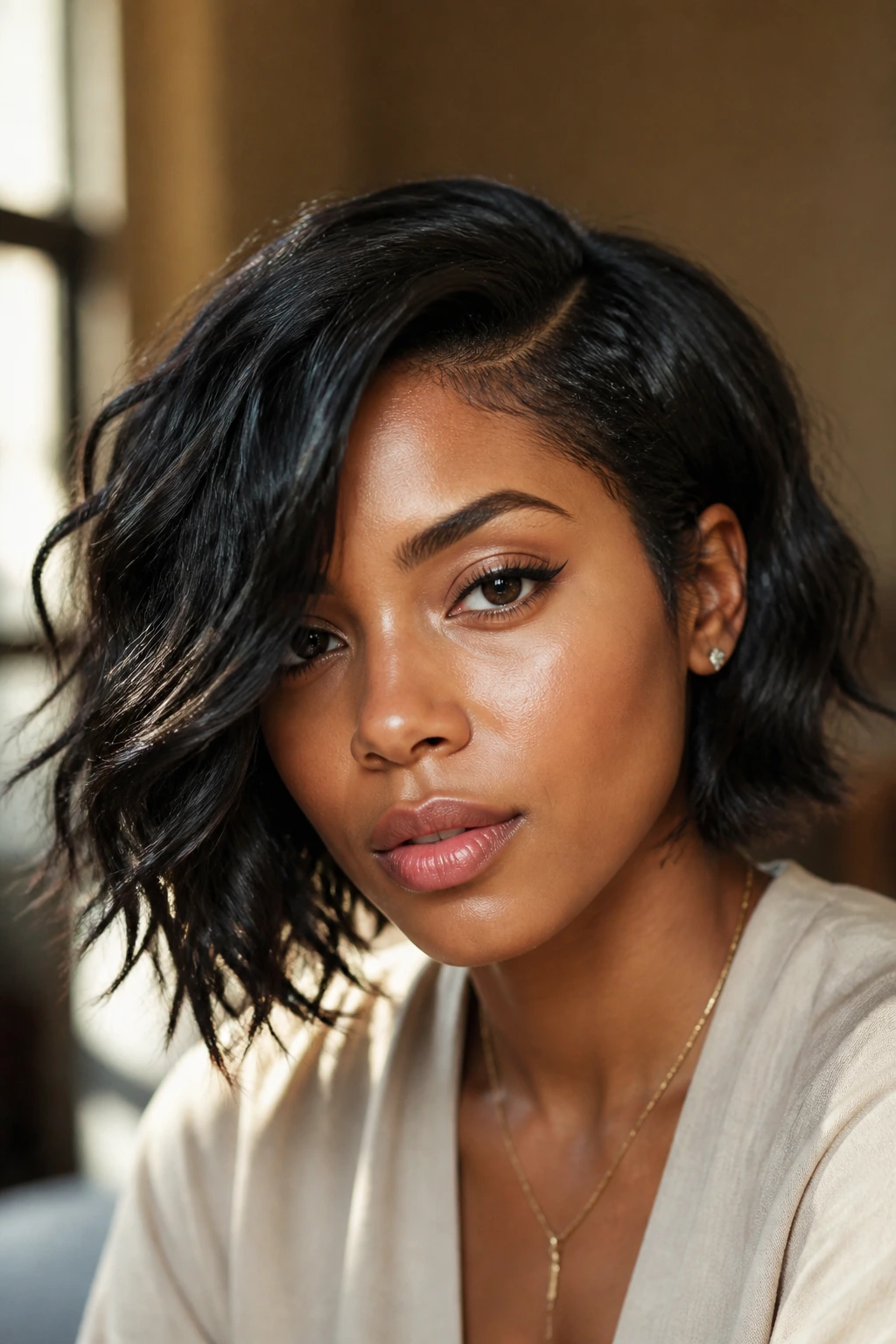
An asymmetrical bob is one of those cuts that looks more daring than it actually is. One side is longer, the other side shorter, and the wave pattern helps soften the difference so it doesn’t look harsh. On Black hair, that softness matters because dense textures can make sharp angles feel even sharper if the layers aren’t handled well.
The appeal is mostly visual movement. Your eye keeps traveling across the line of the cut. That gives the style energy even when the waves are calm and loose. If you like earrings, especially hoops or sculptural studs, this is a lovely cut because it leaves one side of the neck more open.
The best asymmetrical bobs are not extreme. You do not need one side dramatically longer than the other. Even a subtle one-inch difference creates enough asymmetry once the waves and layers start moving.
I’d keep the shorter side tucked closer to the jaw and let the longer side skim the collarbone. That gives the cut a clean body, not a gimmick.
10. Layered Bob with a Tapered Nape
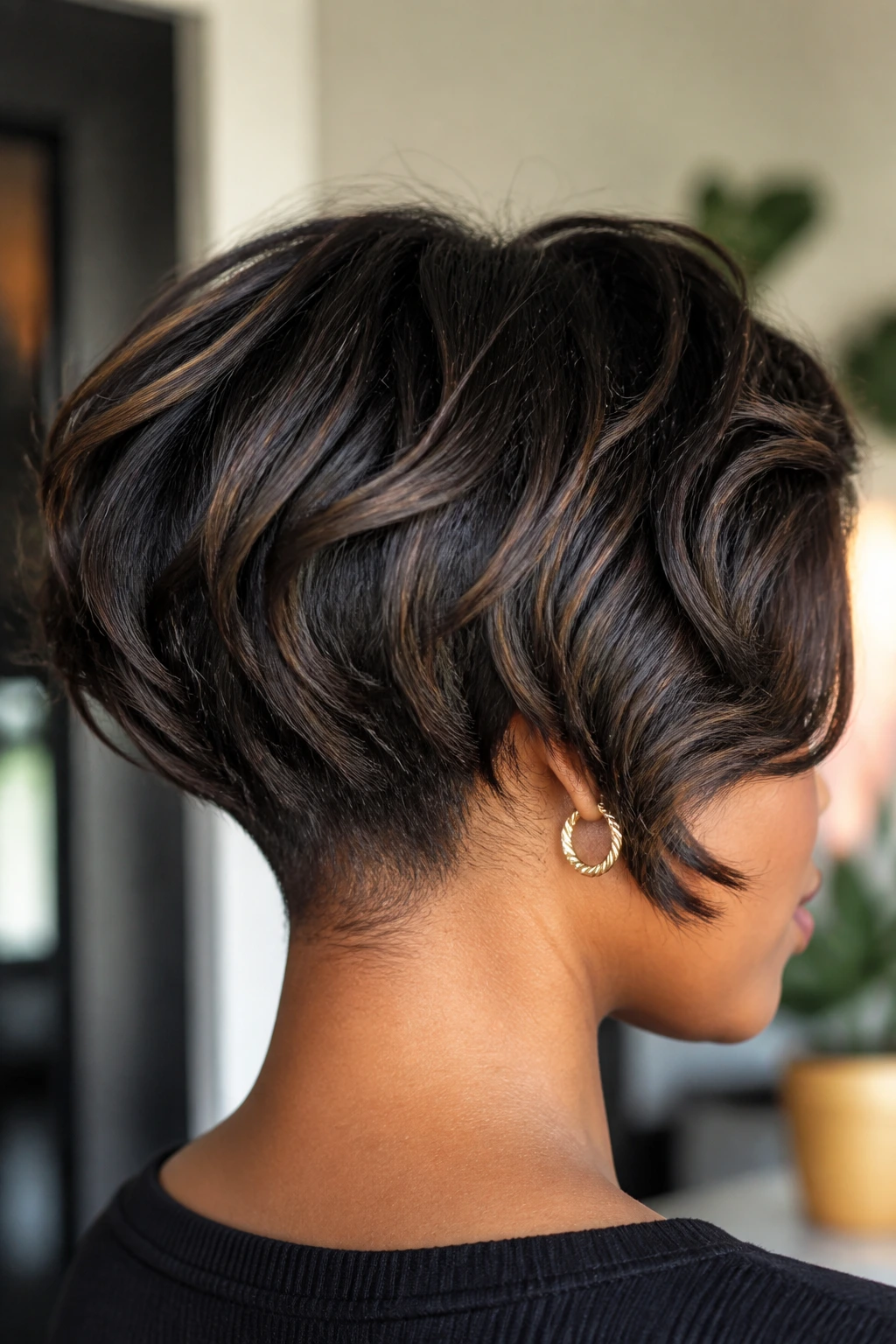
This is the kind of bob that looks tailored from the back. The nape is tapered in close, then the layers build out gradually as they rise toward the crown and sides. It’s neat, but not severe. On Black women with dense hair, that taper helps the back lay flat instead of forming a bulky shelf.
The shape works especially well if you hate hair brushing your collar. Clean neck. Clean line. The rest of the bob can still carry wave and softness, which keeps it from feeling overly strict.
A Small Styling Note
The waves should start higher on the head than you might expect. If you curl only the ends, the tapered nape can look disconnected from the top. A bit of motion through the mid-lengths ties the whole shape together.
A tapered nape also pairs well with a side part, since the part gives the front a little more height while the back stays tucked and precise. If you wear ponytails or clipped-up looks between installs or wash days, this cut is also easy to live with.
It is not the best pick if you want all your length in the back. It is the best pick if you want the bob to look clean every single time you pass a mirror.
11. Shaggy Bob with Choppy Ends
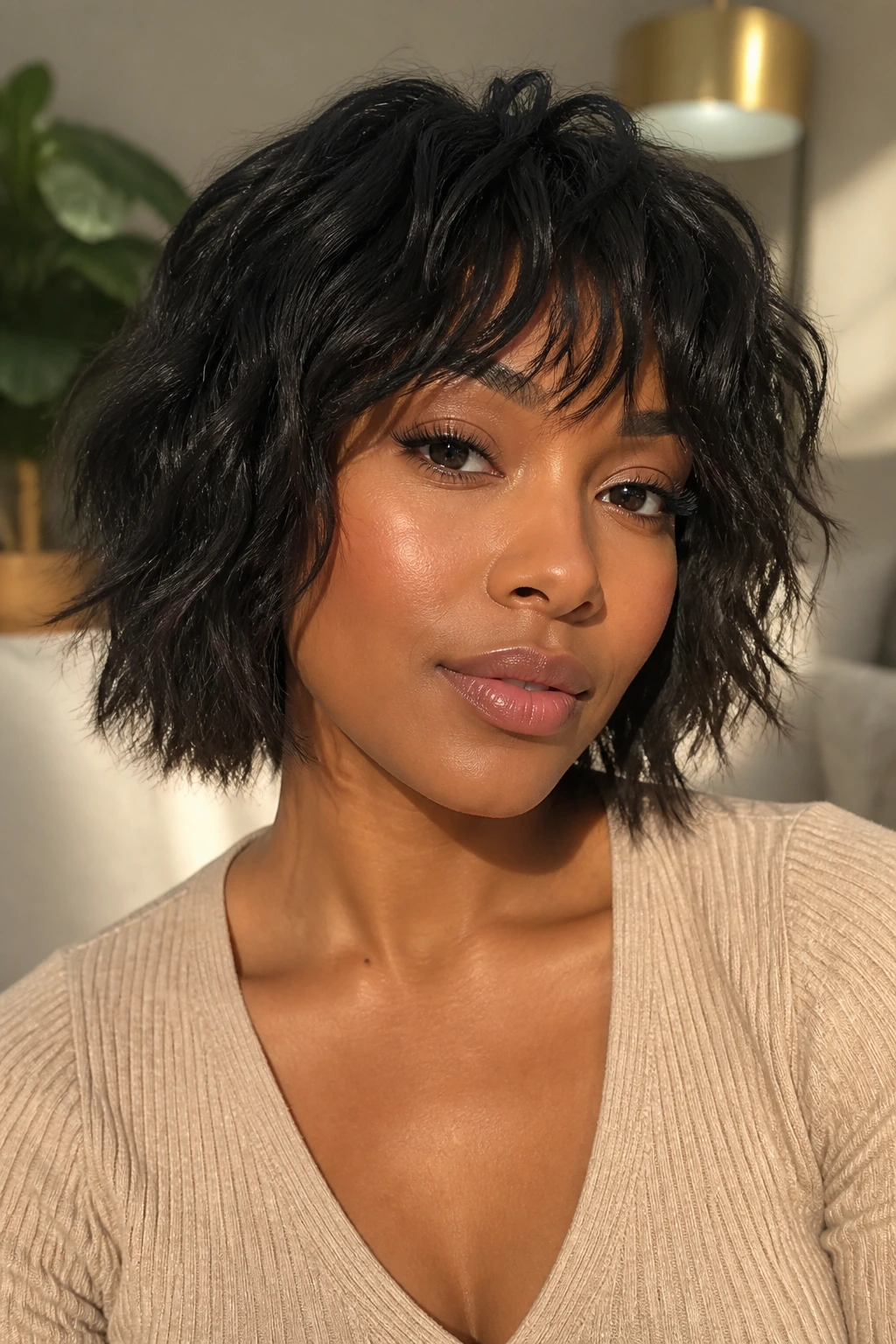
This is the messier cousin in the lineup, and I mean that as a compliment. The choppy ends make the wave pattern look more relaxed, and the layers can be pushed a little uneven on purpose so the style has texture. On Black hair, that texture keeps the cut from looking overworked.
A shaggy bob is a good answer when you want a little edge but you do not want to go full shag. The layers are still controlled. They just land in a more broken-up way. That helps the hair move around the face rather than sit in one tidy shape.
I’d keep this one a little longer than chin length if your hair is thick. Otherwise, the layers can spring up too much and the cut loses its outline. A shoulder-skimming version tends to hold the balance better.
If your natural texture is wavy to begin with, this cut can be air-dried with mousse and finger-twisted in sections. If your texture is tighter, a stretched blowout or soft wand wave gives the layers the best chance to show.
12. Side-Swept Bob with Long Layers
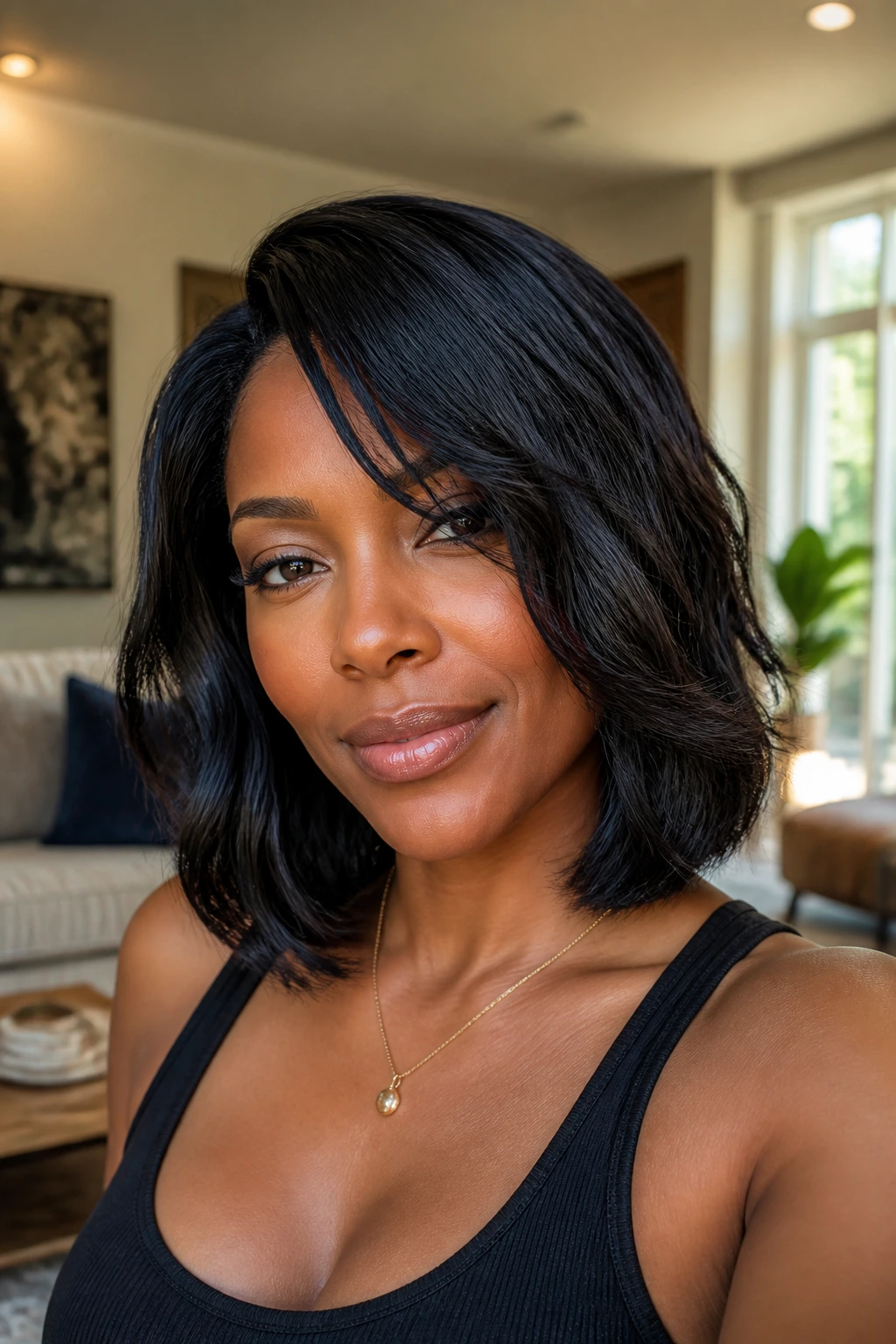
Some bobs are loud. This one isn’t. It’s a softer shape with long layers that sweep across the face and keep the outline smooth. The side sweep gives a little mystery without asking for a dramatic cut, which is probably why this style sits in the sweet spot for so many women.
The length usually lands between the jaw and collarbone, and that matters. Too short, and the side sweep can look abrupt. Too long, and you lose the bob feel. Somewhere in the middle, the layers have room to slide instead of stack.
This cut is friendly to fuller faces because the wave line crosses the face diagonally. That diagonal line is doing real work. It breaks up width and keeps the bob from reading too round. If you have strong cheekbones, the style can show them off without making the cut harsh.
I like this version with a soft finish around the ends and a little lift at the roots. Flat roots make the side sweep collapse. A round brush or hot rollers can help, but a simple clip-set while the hair cools works too.
13. Middle-Part Lob with Beach Waves
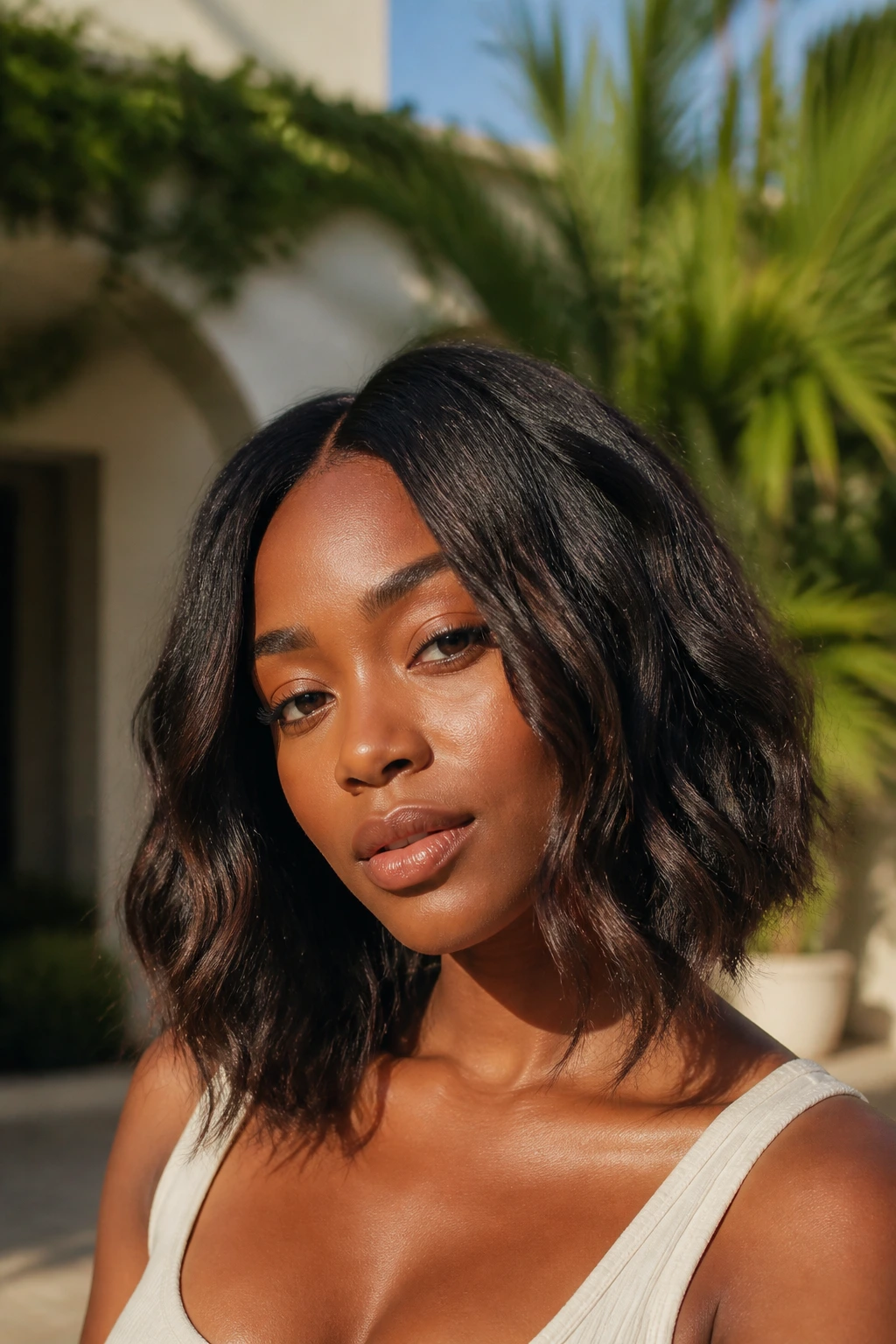
A middle-part lob can be surprisingly elegant on Black women, especially when the wave pattern is soft and a little undone. The middle part keeps the look balanced, and the collarbone length gives the waves enough room to fall without crowding the face. It’s a clean, easy shape, but not boring.
Beach waves can sound lazy, and sometimes they are. Here, they work because the layers are doing the organizing underneath. The hair can bend lightly in different directions, yet the cut still holds its shape. That makes it good for someone who wants movement more than drama.
This is also one of the best choices if you rotate between a silk press and a blowout. The middle part feels polished on smooth hair, then casual when the wave gets brushed out. There’s not much this cut can’t handle.
A small note: if your face is narrower, ask for a little extra fullness around the temples and cheeks. Otherwise, the middle part can make the shape feel too long and skinny. A few face-framing bends fix that fast.
14. Rounded Bob with Internal Layers
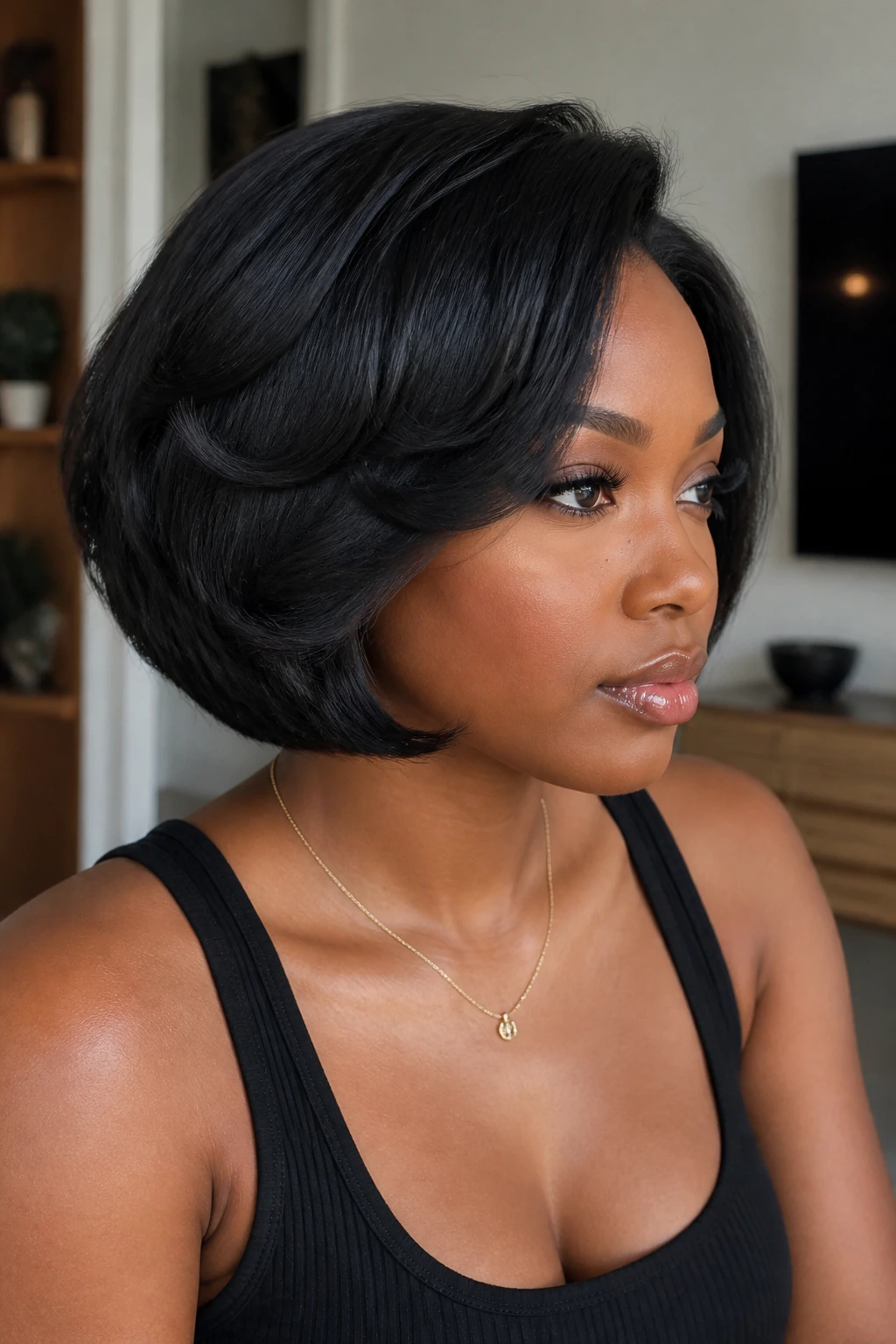
A rounded bob sounds simple, but the interior work is where it earns its keep. The outer shape stays soft and curved, while the internal layers remove weight so the bob doesn’t mushroom. That’s a common issue on thick Black hair, and it’s one reason this cut deserves more love than it gets.
The roundness keeps the silhouette smooth around the head. No hard corners. No sudden jutting pieces. Instead, the waves sit within that curved outline and give the cut a quieter kind of movement. It reads refined in a way that a choppier bob does not.
This works best when the layers are hidden a bit. You want to feel them in the way the hair moves, not necessarily see every slice of the cut. That hidden structure is what stops the style from looking bulky at the sides.
If you like a polished finish, this is one of the easiest bobs to maintain. A paddle brush, a little serum on the ends, and a light wrap at night go a long way.
15. Golden-Brown Wavy Bob with Caramel Highlights
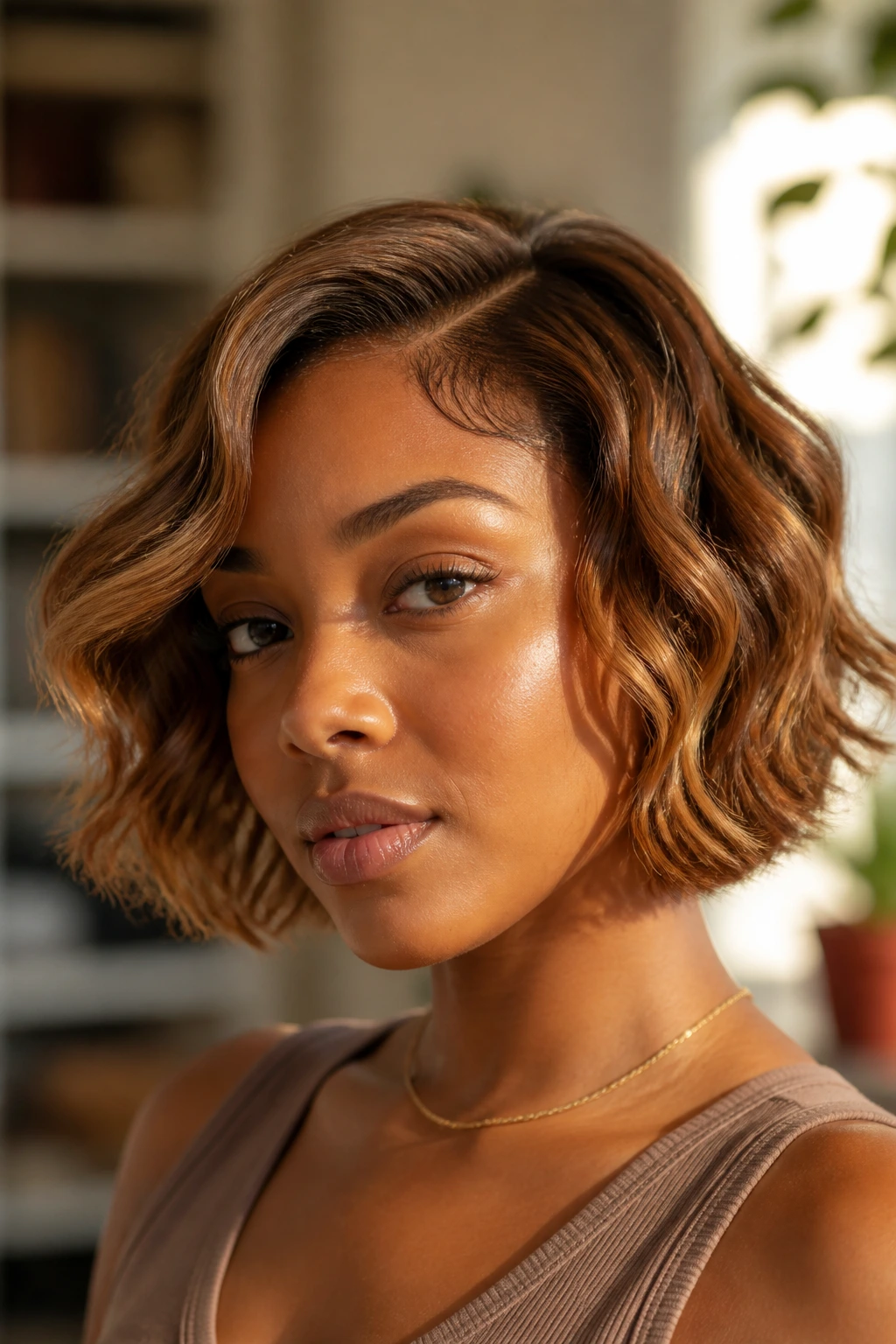
Color changes a bob fast. Add caramel ribbons to a golden-brown base, and suddenly the layers start showing themselves from every angle. On Black women, those warm highlights can make the wave pattern read more clearly, especially when the hair moves under indoor light or sunlight.
The smartest part of this style is that the color doesn’t have to be loud. A few well-placed ribbons around the face and through the top layers can do more than a full head of contrast. That keeps the cut from looking stripy, which is an easy mistake with layered bobs.
The waves matter here too. Caramel highlights look best when the bend is soft and irregular, because the color catches across the movement rather than sitting in one flat band. A uniform curl pattern can make highlights look too staged.
If your hair is naturally dark and you want dimension without a full color commitment, this is a very good middle ground. Keep the roots darker, place the lighter pieces toward the front, and let the layers carry the rest.
16. Jet Black Glossy Bob with S-Curves
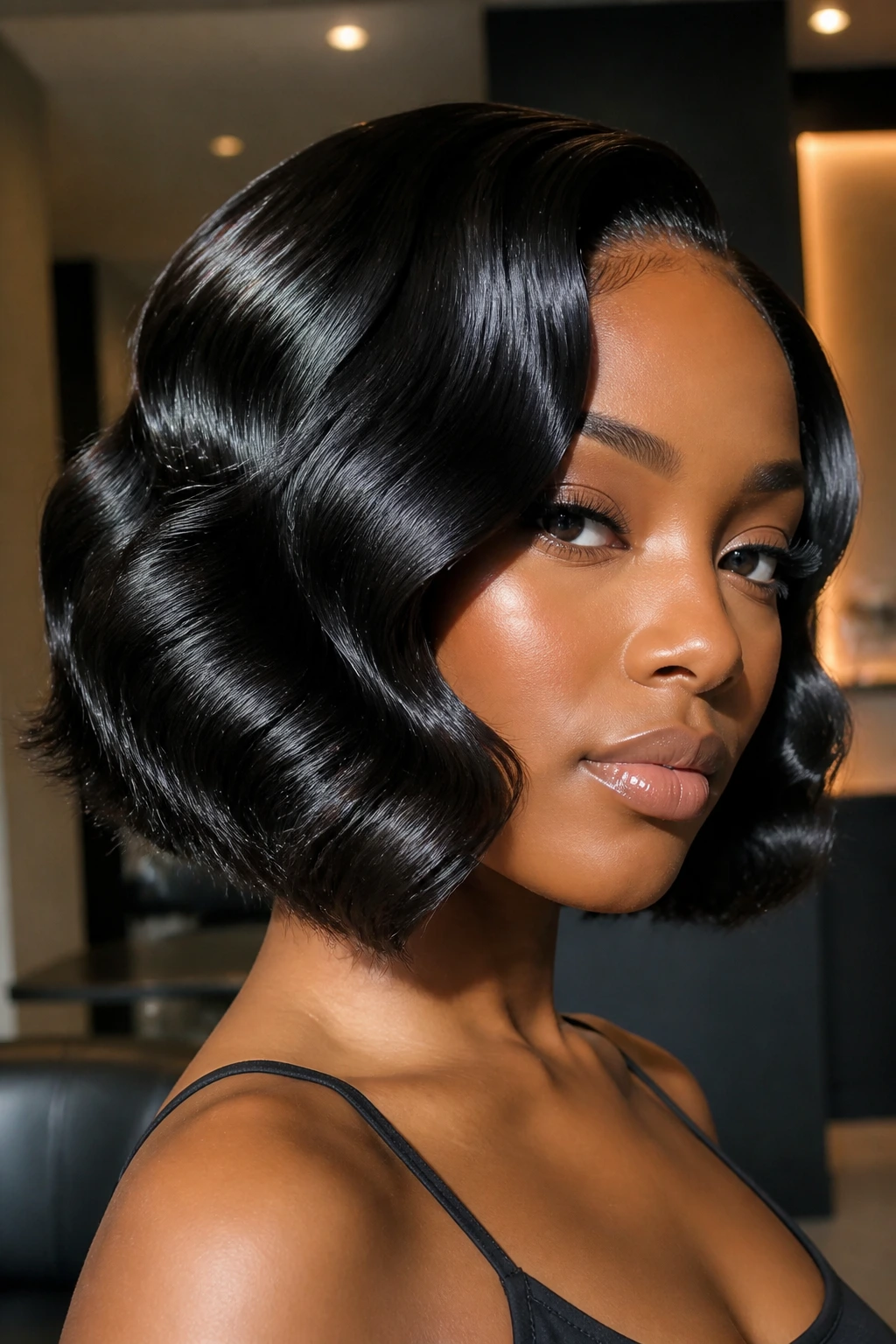
A glossy black bob can look almost liquid when the wave pattern is done right. The S-curve gives the hair that smooth back-and-forth bend that feels elegant without trying too hard. On Black hair, the shine can be striking because the dark color makes every curve and contour more visible.
This style leans sleek, not fluffy. The layers are there, but they stay hidden enough to preserve the outline. That means the cut should be precise. If the ends are ragged or overly thinned, the whole effect falls apart.
What Makes It Pop
- Use a lightweight heat protectant before any hot tool.
- Keep the waves large and shallow.
- Brush the style once after it cools so the curves blend.
- Finish with a small amount of gloss serum on the ends only.
This cut looks especially strong with a side part and a tucked-behind-ear finish on one side. It gives the bob a little tension, which helps the shine stand out instead of disappearing into a flat shape. Quiet, but not plain.
17. Auburn Layered Bob with a Soft Bend
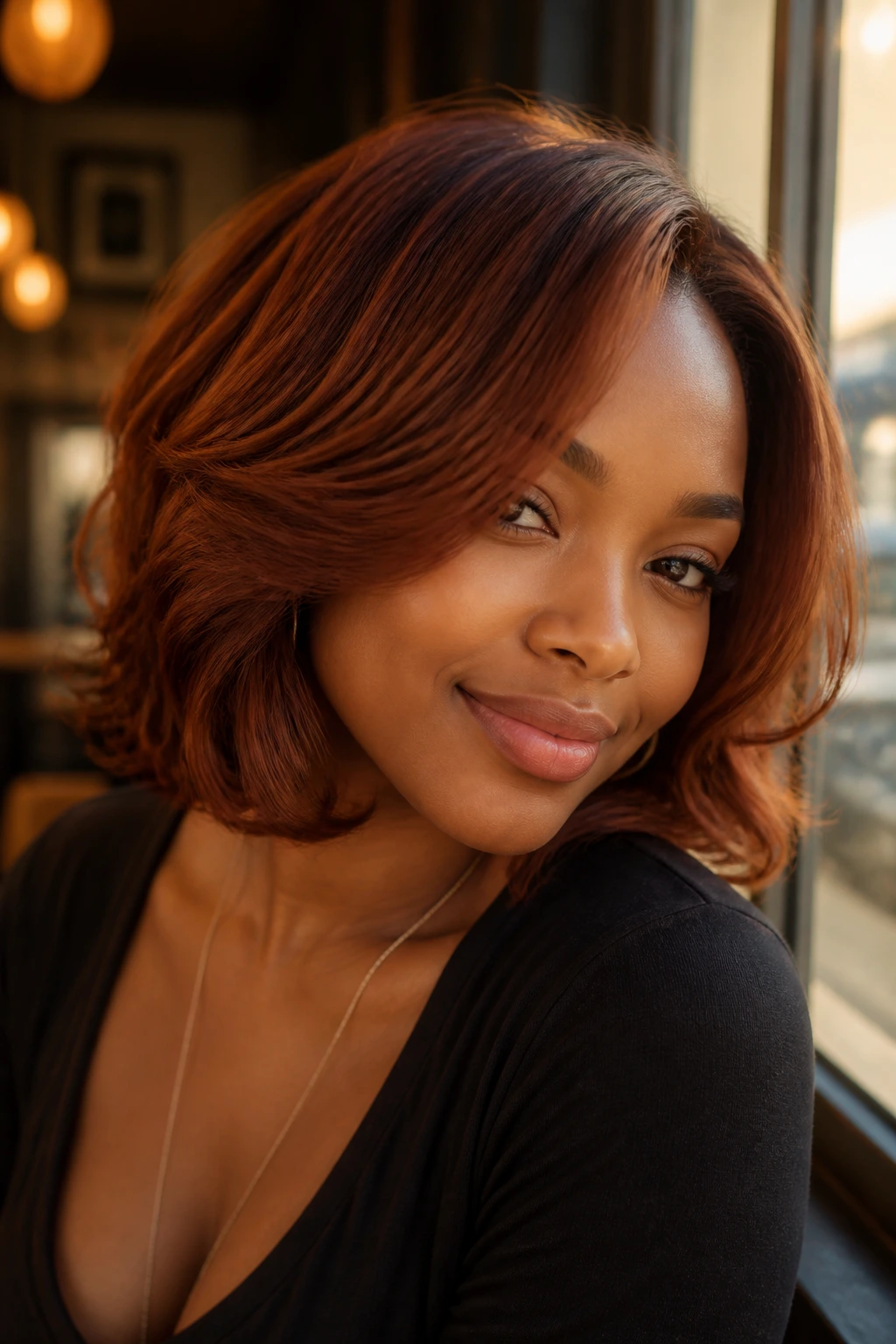
Auburn hair and layered waves have a warm, easy chemistry. The soft bend keeps the color from looking one-note, and the layers let the tone shift between copper, brown, and red depending on the light. That movement matters more than people think.
This style is a smart choice if you want color without a bright block of dye. Auburn already carries a little richness, so the bob can stay wearable while still feeling distinct. The layers make the finish feel a little lighter around the face, which keeps the color from overwhelming the cut.
I’d keep the wave pattern relaxed here. Tight curl would compete with the color and make the bob feel busy. A loose bend shows off the layers and the color together. That’s the cleaner move.
If your skin tone runs warm, this style tends to glow nicely. If your undertones are cooler, ask for a deeper auburn with brown at the root so the shade doesn’t go too orange. Small tweak. Big difference.
18. Two-Tone Bob with Money-Piece Layers
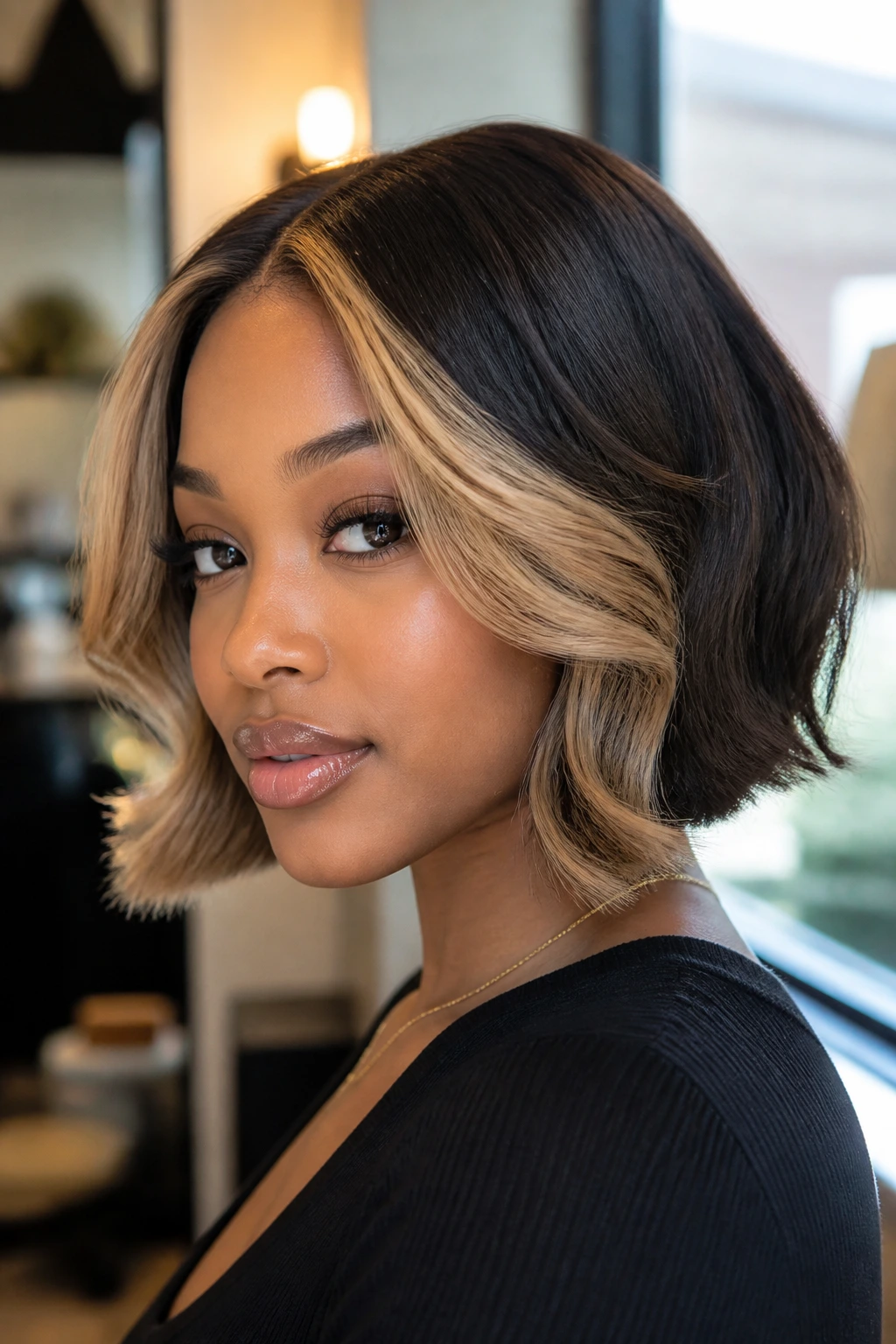
A two-tone bob can sound dramatic, but it doesn’t need to be. The money-piece layers around the front are what give this style its shape. They brighten the face, separate the layers from the rest of the cut, and make the bob look more intentional from every angle.
The best version keeps the contrast controlled. You want the front pieces lighter than the back, not a loud stripe that sits on top of everything. On Black women, that contrast can be gorgeous when the layers are cut to drop just under the cheekbones and skim the jaw.
This cut is especially useful if you like your bob to show up in photos. Front light pieces catch the eye, and the layered wave pattern gives those pieces something to sit on. It’s a simple trick, but it works.
If you’re nervous about full color, start with a softer honey or caramel money piece. You can always go bolder later. What you do not want is a contrast so sharp that the layers stop blending and start shouting.
19. Tucked-Behind-Ear Sleek Wavy Bob
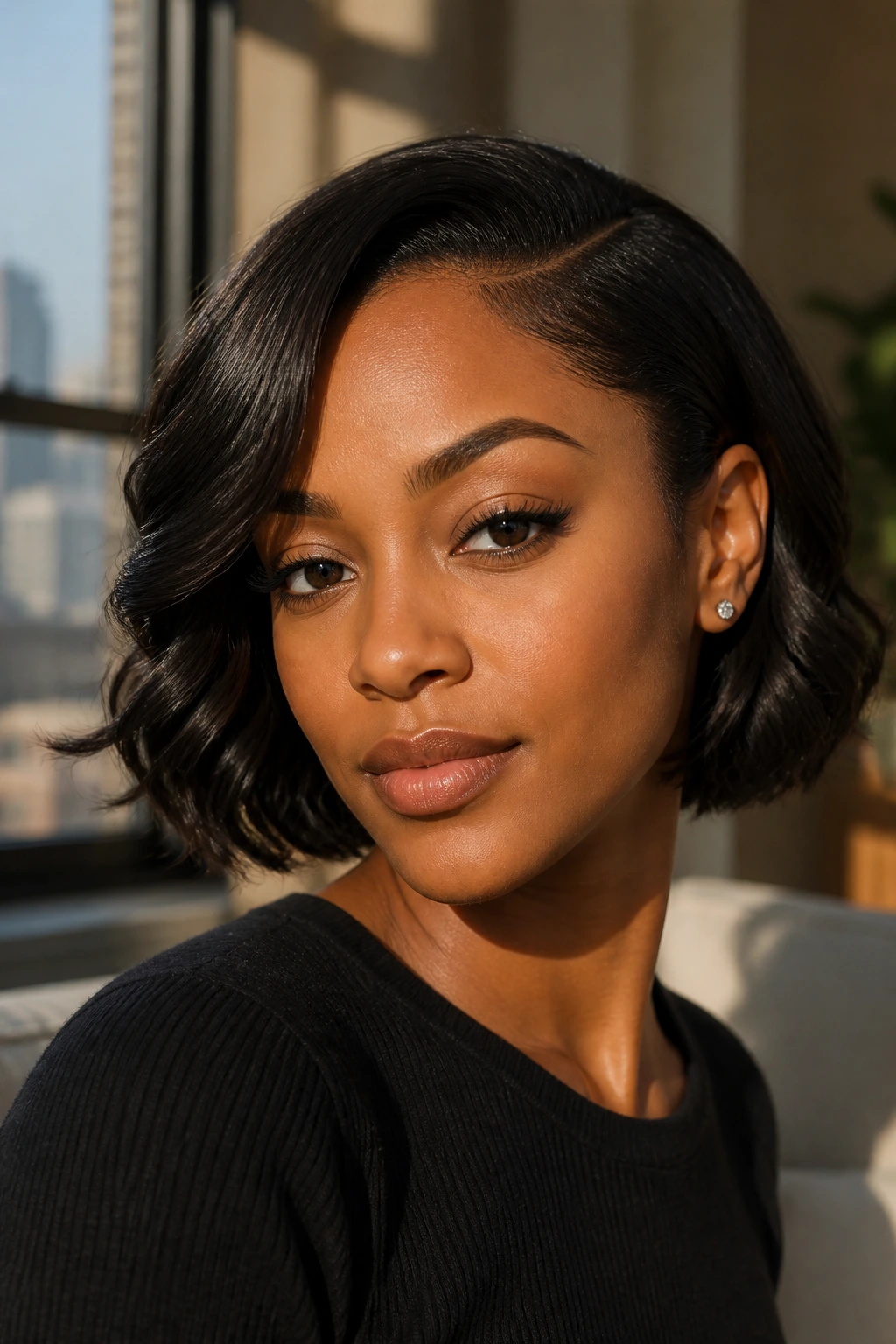
This one has a quiet confidence to it. One side is tucked neatly behind the ear, which exposes the jawline and the earring, while the rest of the bob falls in soft waves. On Black women, that tucked detail can make the whole haircut feel cleaner and more editorial without actually being hard to wear.
The trick is keeping the layers long enough to tuck without bunching up. If the front pieces are cut too short, they’ll pop right back out and fight the shape. The longer front allows the hair to stay close to the head where you want it.
I like this style for workdays and evenings because it changes mood so easily. Wear both sides loose and it’s soft. Tuck one side and it instantly looks sharper. Same haircut. Different attitude.
A little smoothing cream on the tucked side helps, but do not overdo it. Too much product flattens the wave and makes the style greasy around the ear. A dab is enough.
20. Big-Volume Bob with Deep Layers
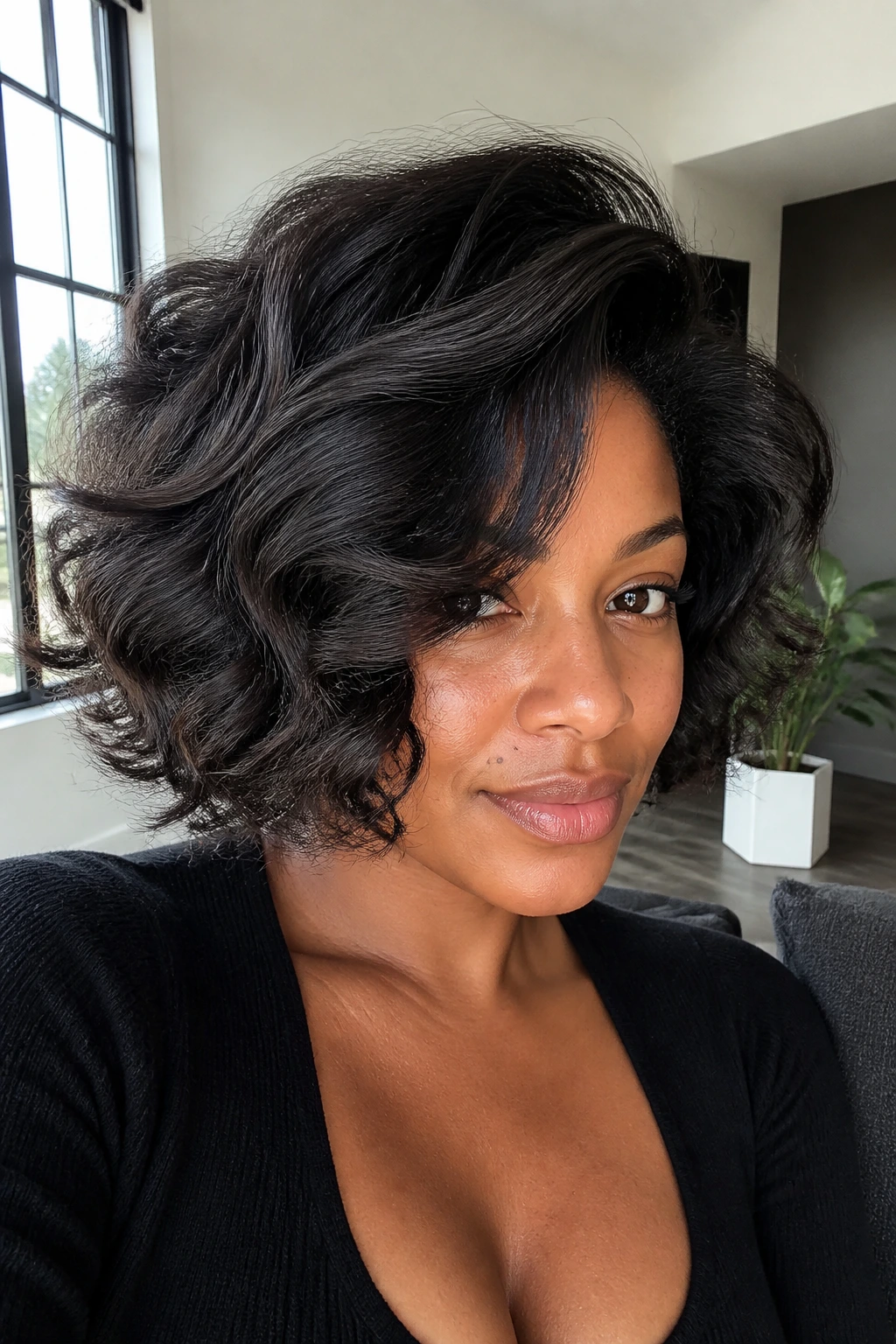
If your hair is thick and you want the bob to feel full instead of controlled, this is the lane. Deep layers take out enough bulk to keep the cut from swelling into a triangle, but the overall shape still reads big and lively. That balance is hard to get, and when it lands, it lands hard.
The wave pattern should be loose and slightly separated. You want room between the pieces. That space helps the layers show up instead of disappearing into one mass of hair. Think body, not puff.
This style is especially nice on blown-out natural hair or on a weave with a lot of density. A little root lift at the crown makes the whole cut feel lighter, and the ends can flare just a touch for movement.
Do not let a stylist carve the layers too high. Big volume needs long layers. Short layers make the cut jump outward in the wrong places, which is how you end up with a shape that looks wide in the cheeks and too thin at the ends.
21. Jawline Bob with Piecey Texture
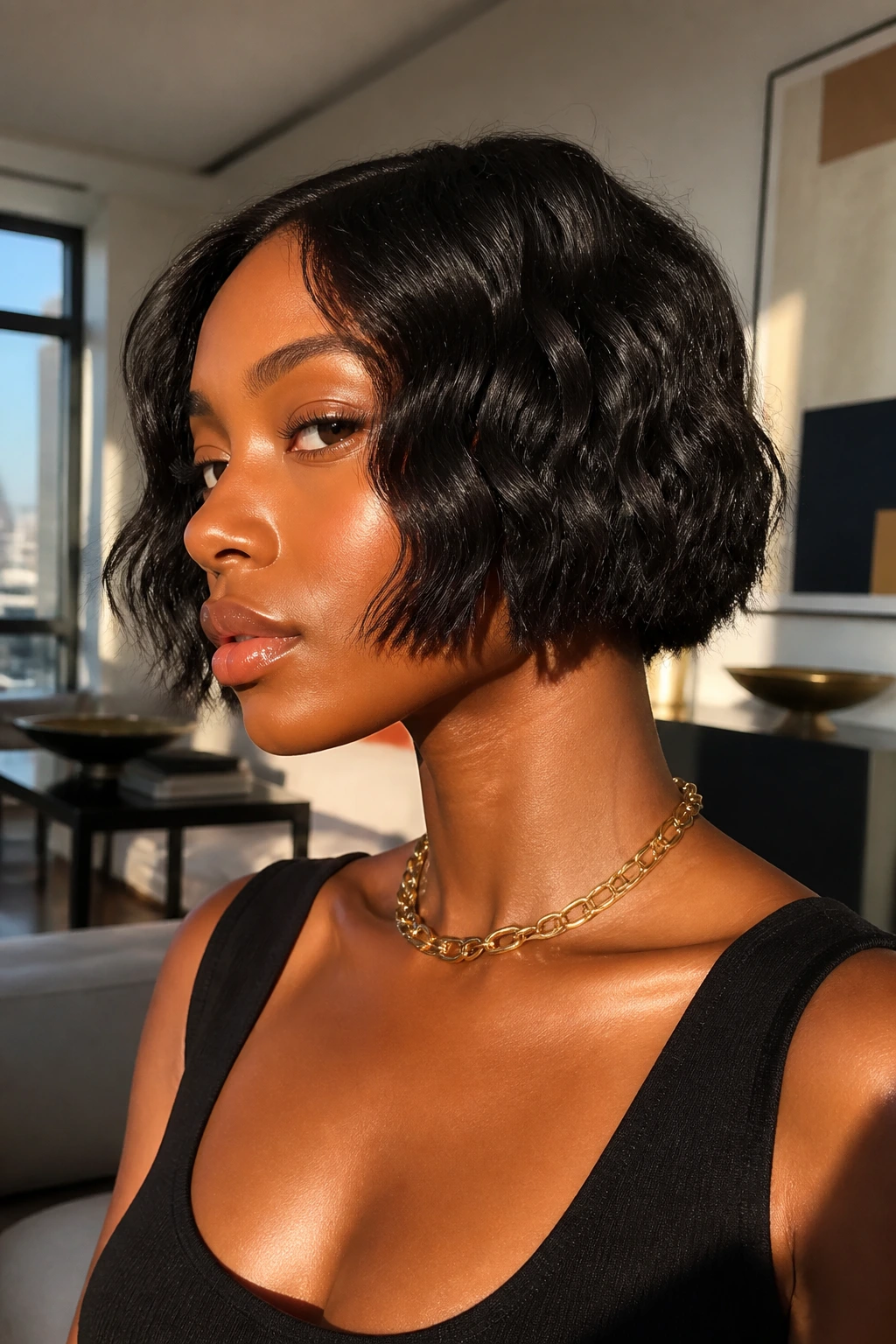
A jawline bob with piecey texture is sharp in the best way. The cut sits right where the jaw begins to define the face, and the separated layers keep it from turning into one solid block. On Black women, that piecey finish can bring out bone structure that gets lost under heavier styles.
The biggest advantage is that it works with imperfect waves. You do not need uniform styling here. In fact, a little irregularity is part of the appeal. Some pieces can bend inward, some outward, and the texture still looks on purpose.
This is one of the easiest bobs to wear with a strong lip or dramatic earrings because the hair stays close and does not compete. It also works well if you don’t like a ton of hair brushing your shoulders all day. Clean, fitted, and very direct.
For styling, a small curling iron or flat iron works better than a large barrel. You want short, defined bends, not loose beach waves. That’s what gives the cut its sharp edge.
22. Shoulder-Skimming Layered Bob for Natural Curls
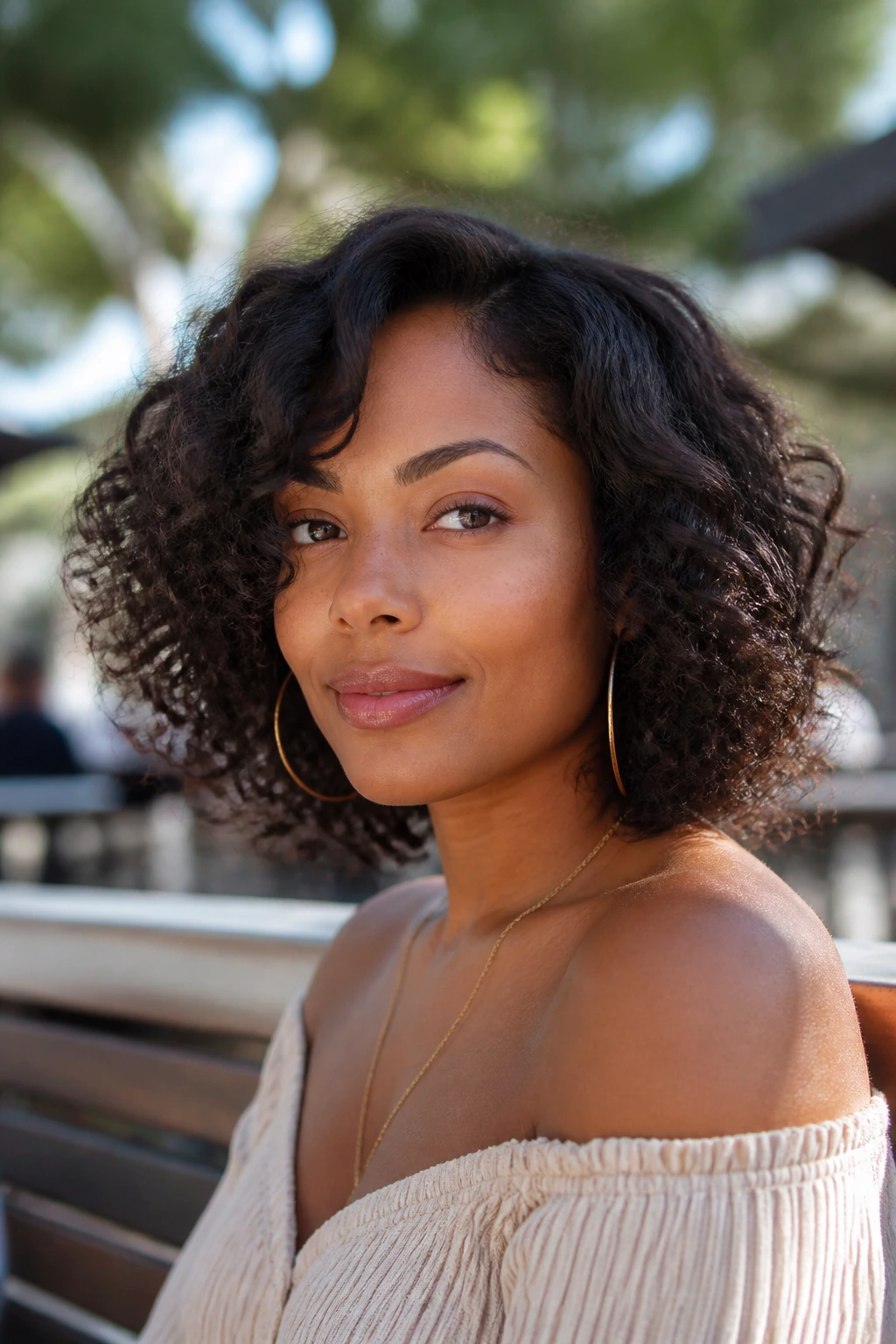
For natural curls, this length is a sweet spot. It gives the hair enough room to shrink and still read as a bob or lob, and the layers keep the shape from becoming a triangle. If your curl pattern is 3B through 4C, this can be one of the easiest layered cuts to live with.
The goal is balance. You want the layers to encourage movement without taking away so much weight that the ends frizz out. Cutting the hair dry, or at least stretched, helps the stylist see where the curl falls instead of guessing and hoping.
This version also handles wash-and-go styling well, which is a big deal if you do not want to heat style every week. A little foam, a definition gel, and some finger-coiling around the face can be enough to keep the shape visible.
It is not the neatest bob in the group, and that’s fine. Natural texture brings its own kind of polish when the cut respects the shrinkage. The payoff is a style that looks good both on day one and on day four, which is more than a lot of smooth bobs can say.
23. Protective Silk-Press Bob with Wand Waves
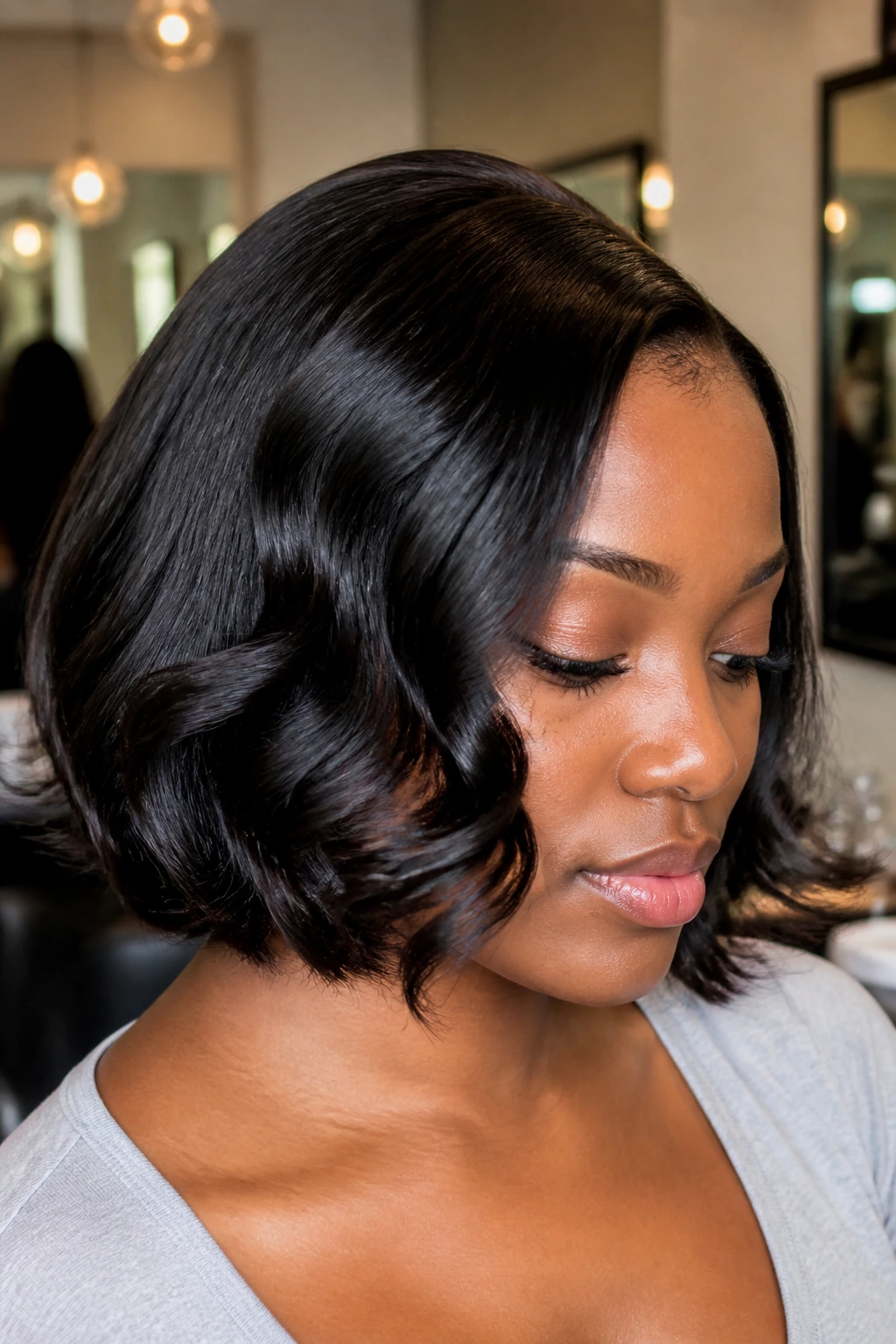
This is for the women who love a polished finish but want to keep the hair sleek between major styling sessions. A silk press gives the bob its smooth base, then the wand waves break it up just enough to feel soft instead of flat. The layers keep the shape moving, which matters a lot when the hair has been pressed straight.
The best thing about this version is that it can look very finished without much effort each morning. The waves can be brushed out lightly, pinned, or left a little defined depending on how formal you want the look to be. It works especially well on medium to thick textures that hold a press well.
If you’re wearing the style as a protective look, keep heat passes to a minimum. One clean pass with a heat protectant is better than chasing the same strand five times. That’s how the press loses its shine and starts getting fuzzy.
This bob looks strongest when the ends stay blunt enough to show the cut. Too much curl at the ends and the style starts drifting into “old Hollywood” territory. If that’s your thing, fine. If not, keep the bend loose.
24. Braided-Front Bob with Loose Wavy Ends
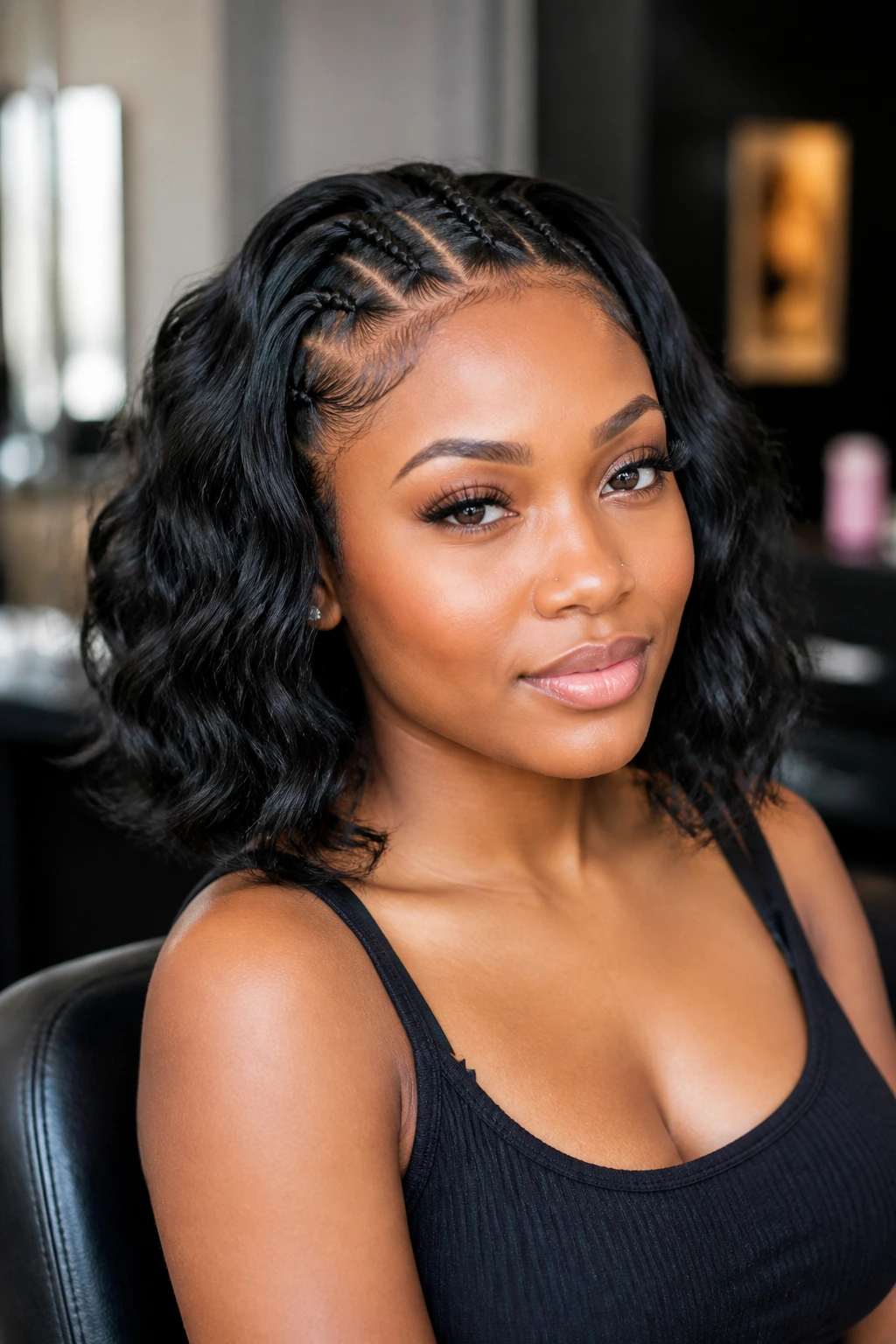
This one has a little edge and a lot of practicality. Small braids or cornrowed front sections pull the hair away from the face, while the wavy bob falls loose in the back and sides. It’s a smart mix if you want a style that looks layered and styled without demanding constant heat.
The contrast is what makes it interesting. The braids create a clean line at the hairline, and the waves soften everything below it. On Black women, especially those who like protective details, this cut gives shape without asking the whole head to do the same thing.
I’d keep the braided section narrow enough that it doesn’t swallow the front of the style. Two to four slim braids are usually enough. More than that and the bob can start reading more like a braided style with loose ends rather than a layered bob.
This is also a good bridge style between installs or during a growing-out phase. It keeps the face framed and lets the loose waves do the softer work underneath. Practical, but not plain.
25. Textured Bob with Side Bangs
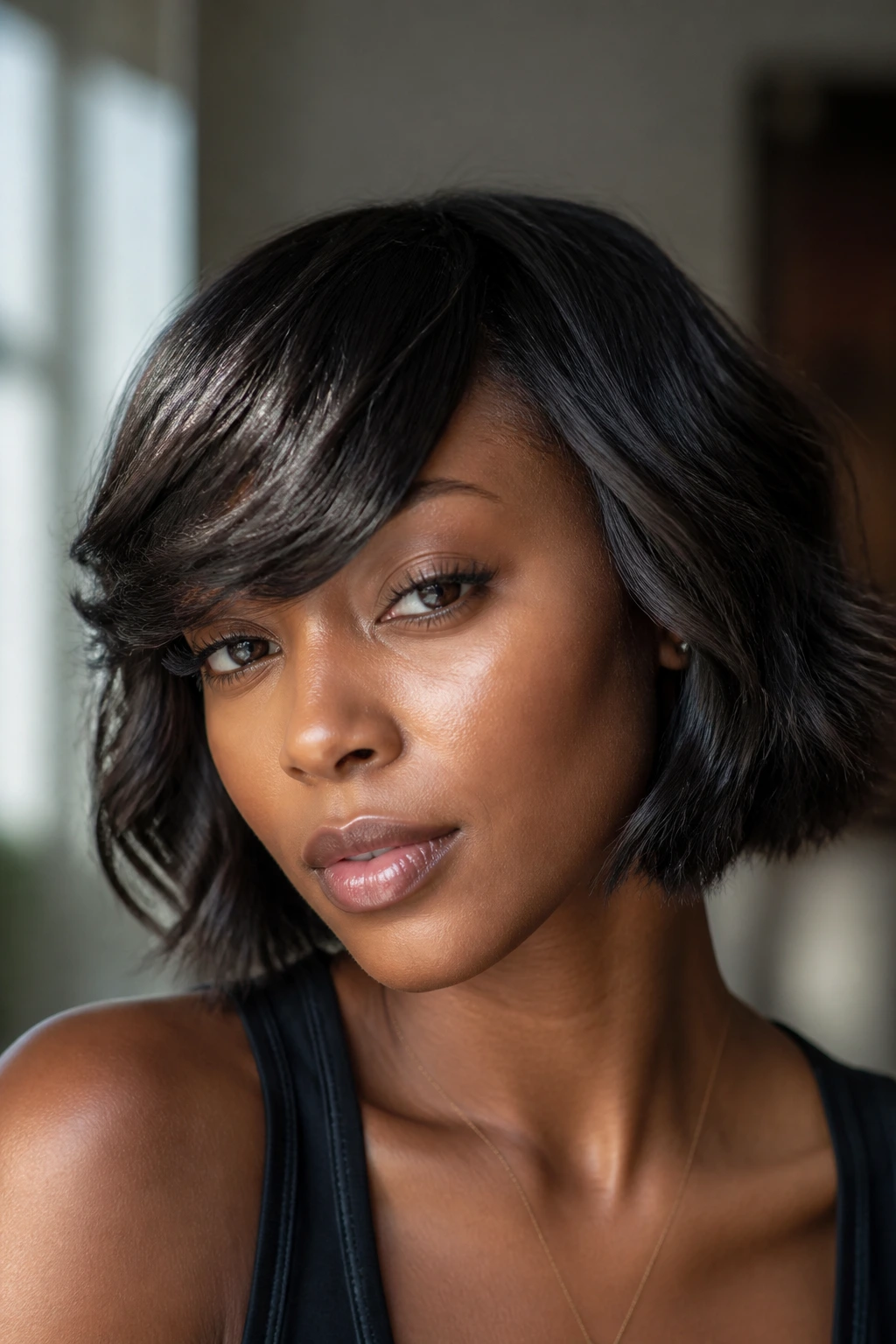
A textured bob with side bangs is a strong finish to the list because it gives you movement in three places at once: the fringe, the sides, and the ends. Side bangs are less fussy than straight-across bangs, and on Black hair they’re usually easier to blend into the rest of the cut.
The cut works best when the bangs are long enough to graze the cheek and move with the layers instead of sitting on top of them. That keeps the style from looking chopped up. The waves then run through the rest of the bob in a soft, broken pattern that feels casual but controlled.
If you like to switch up your part, this one gives you options. Sweep the bangs farther over for a glam finish, or let them fall lightly for something a little softer. The bob keeps its shape either way.
One Detail That Matters
Do not let the bangs get too dense. Heavy side bangs can drag the whole front section downward and make the layers look muddy. Light, piecey, and blended is the smarter choice.
Why Layering Changes the Shape So Much
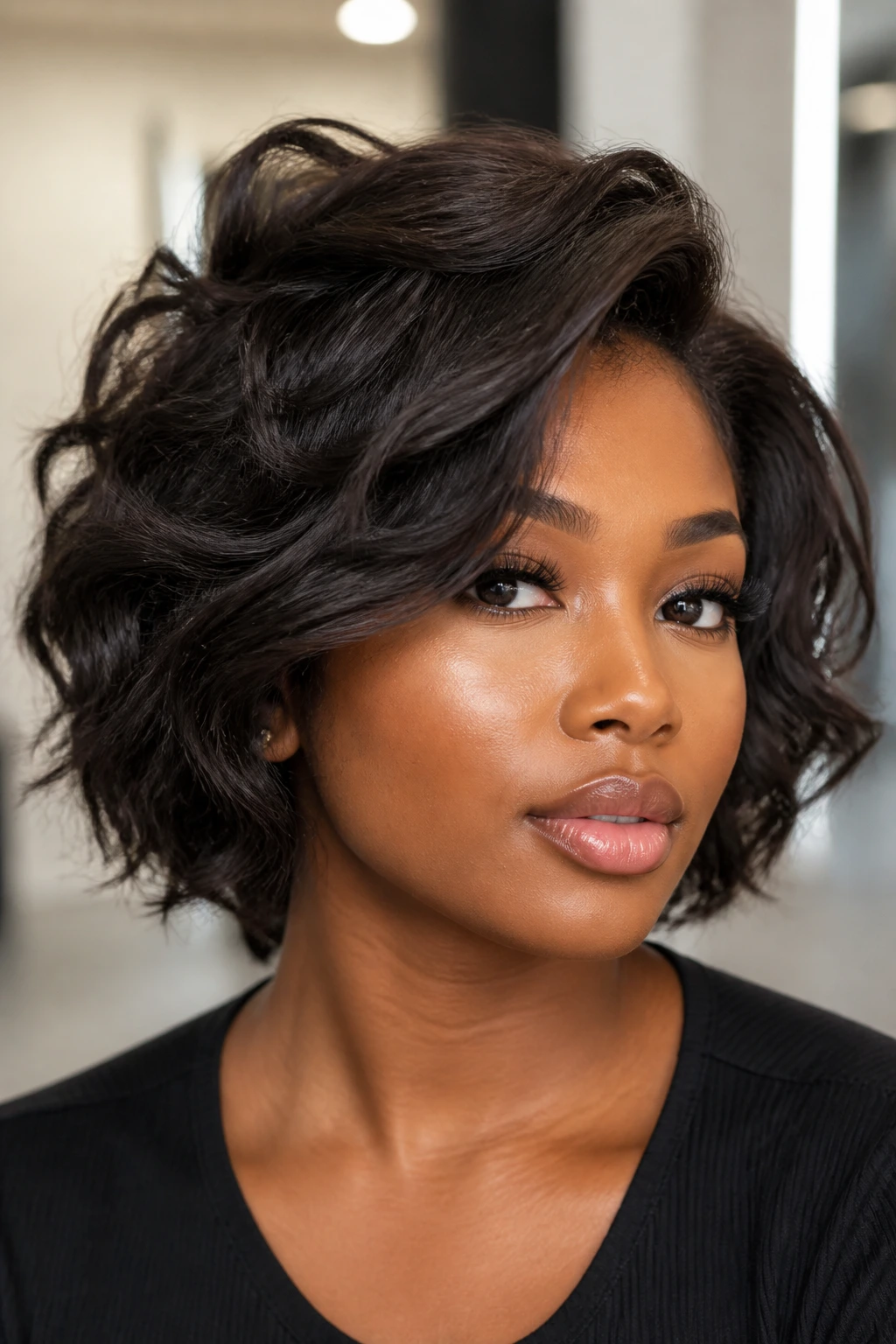
Layers are not decoration here. They change where the hair sits, where it bends, and how much width the bob carries around the sides. On Black hair, that matters even more because density and shrinkage can make the same cut look radically different from one head to another.
A blunt bob can be gorgeous, but once the hair starts to swell at the sides or sit heavy at the nape, the shape goes off track. Long internal layers let the hair fold into itself instead of pushing outward. That is why a good layered bob can look cleaner on day three than a badly cut one does on day one.
Dry cutting, or cutting on stretched hair, often gives the best read on how the final shape will behave. Wet curls and coils lie. They lie a lot. If your stylist cuts without accounting for shrinkage, the bob can end up shorter and wider than you expected.
The best layered bobs respect the outline first and the texture second. That sounds backward, maybe, but it is the honest order of operations. Build the shape. Then let the waves do their part.
The Tools That Make These Looks Easier
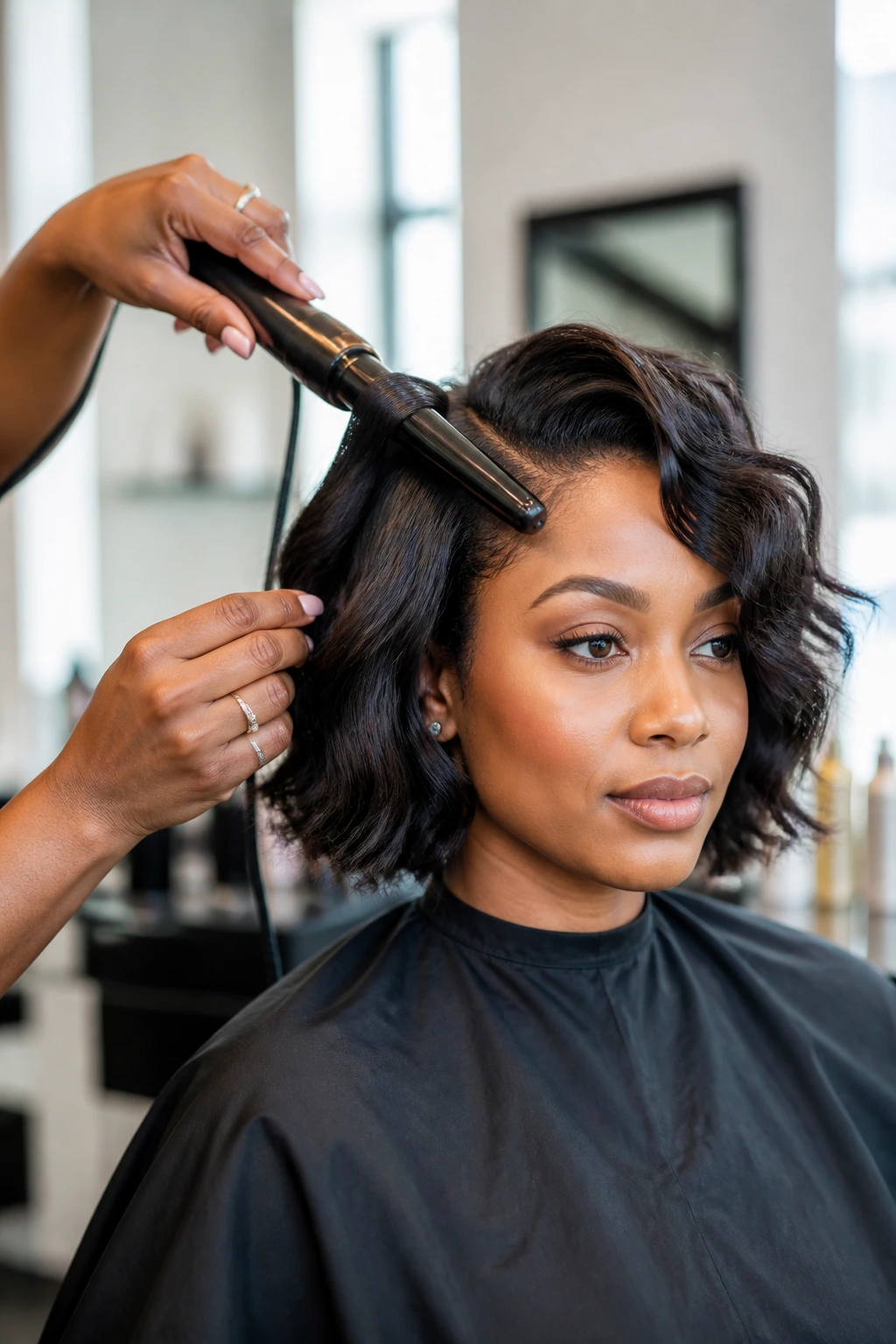
- 1-inch curling wand: Best for soft bends, piecey texture, and shoulder-length bob waves.
- Flat iron with rounded edges: Useful for S-curves, flipped ends, and a smooth press before waving.
- Heat protectant spray: Keeps hot-tool styling from frying the ends, especially on silk-pressed hair.
- Mousse or foam wrap lotion: Good for setting waves on damp or stretched hair without a sticky finish.
- Round brush: Helps build lift at the crown and curve the ends under or away from the face.
- Paddle brush or soft boar-bristle brush: Useful for smoothing waves into a softer, more polished finish.
- Sectioning clips: Small but important; they keep dense hair from turning into one big tangle while you work.
- Rat-tail comb: Handy for clean parts, especially deep side parts and middle parts.
- Silk scarf or bonnet: Protects the shape overnight and keeps the ends from getting rough.
- Light serum or gloss oil: Use sparingly on the ends, not the roots, or the bob can fall flat fast.
- Edge brush: Optional, but nice if you want to smooth the hairline without crushing the style.
- Diffuser attachment: Good for curly or heatless versions that need gentle drying and less frizz.
Smart Hair Shopping and Product Tips
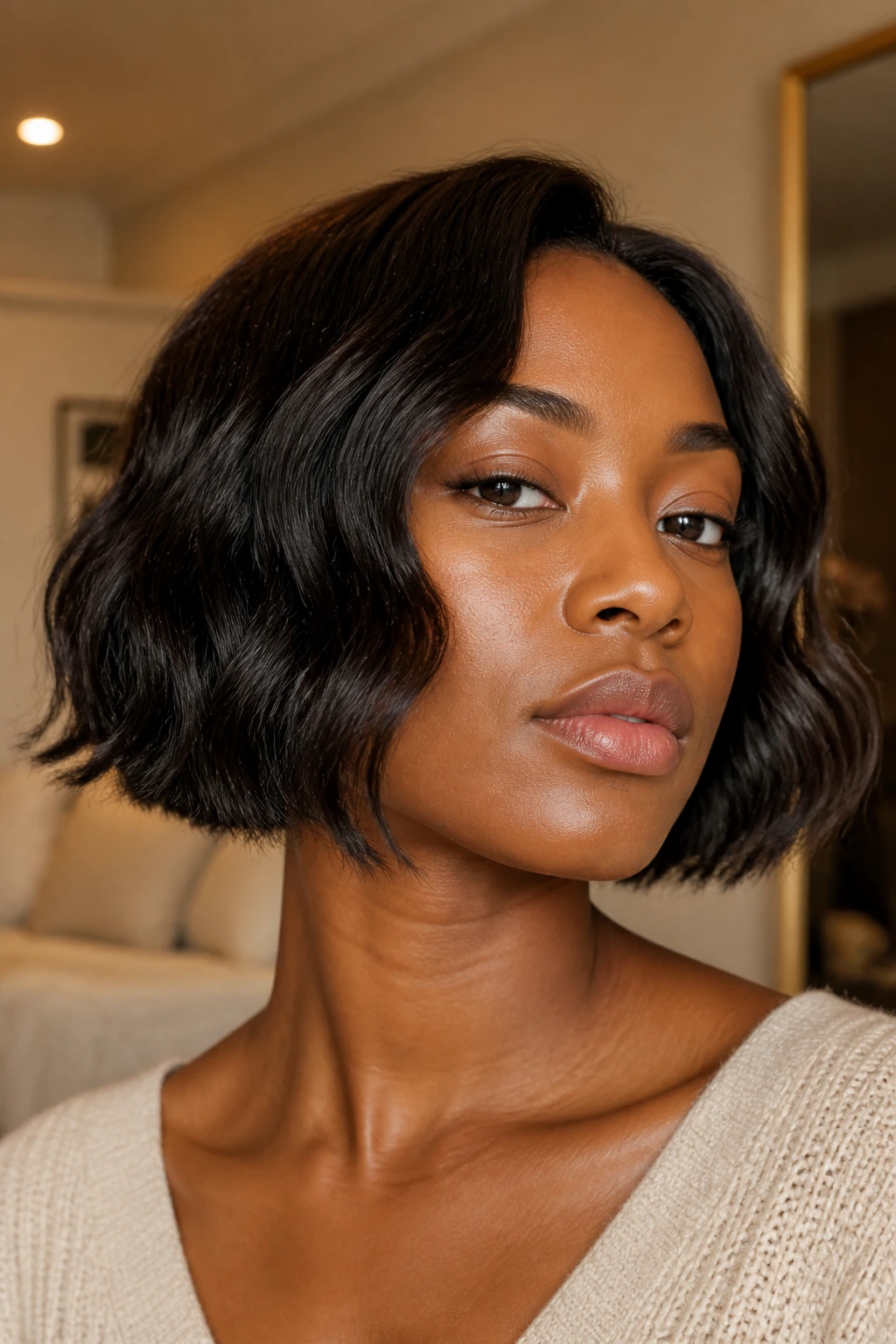
If you are buying extensions, wigs, or bundles for one of these looks, texture matters more than shine. Loose wave, body wave, and light yaki textures usually behave better for layered bobs than very straight hair that refuses to hold a bend. The goal is hair that can move, not hair that snaps back to pin-straight the second you brush it.
Density is another thing people guess at and then regret. For a bob, too much hair can make the cut puffy at the sides, especially on fuller faces. In many cases, 130 to 150 density is enough for a sleek bob, while 150 to 180 density makes sense if you want fuller volume or if your natural hair is already thick and you’re blending over it.
For styling products, keep the formulas light. A mousse, foam, or flexible-hold spray usually helps the wave stay visible without turning crunchy. Heavy creams and thick butters can be useful on very dry natural hair, but on a bob they often weigh down the ends and blur the layers. That is not the look.
If you are going heat-free, shop for setting tools that match your texture. Flexi rods, perm rods, satin ribbons, and large foam rollers create different kinds of bend, and the wrong size can make the bob too tight or too loose. A 1-inch to 1¼-inch tool is a safe middle ground for most of these shapes.
How to Wear These Bobs in Real Life
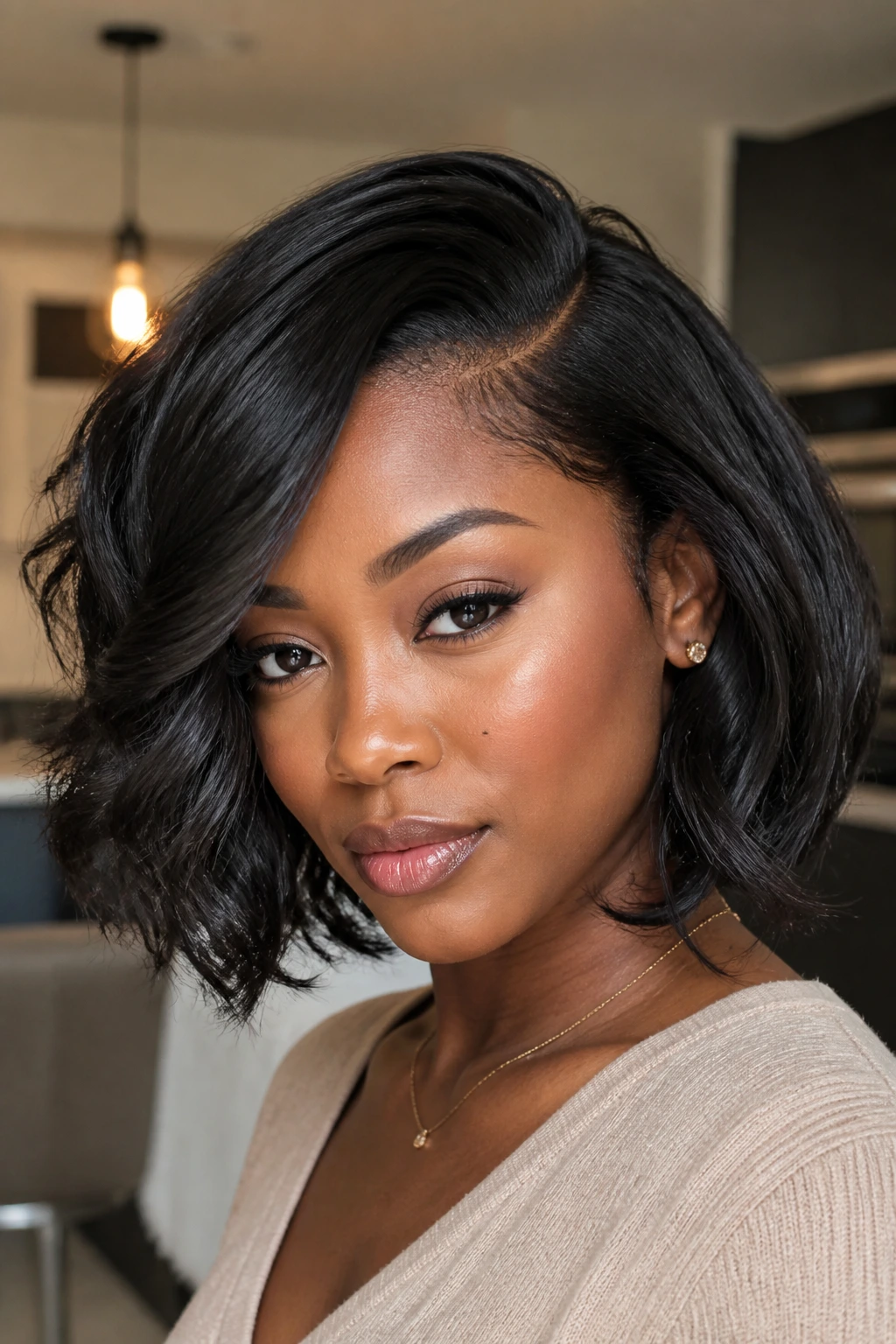
Face Shape: Rounder faces usually do well with side parts, angled fronts, or longer layers that skim the cheek. More angular faces can take a chin-length cut or a blunt edge without losing softness.
Outfit Balance: Clean necklines, hoop earrings, square-collar tops, and structured jackets tend to play nicely with a layered bob. Big turtlenecks can swallow the cut, while open collars let the shape breathe.
Length Check: If you want a lighter feel around the jaw, keep the bob above the collarbone. If you want movement and a little more versatility, a lob that hits right at the collarbone gives you room to tuck, flip, or pin.
Accessory Pairing: Hair clips, slim headbands, and statement earrings are enough. Don’t overload the style. The cut already does the work, and too many extras can crowd the face.
Styling Upgrades and Personal Touches
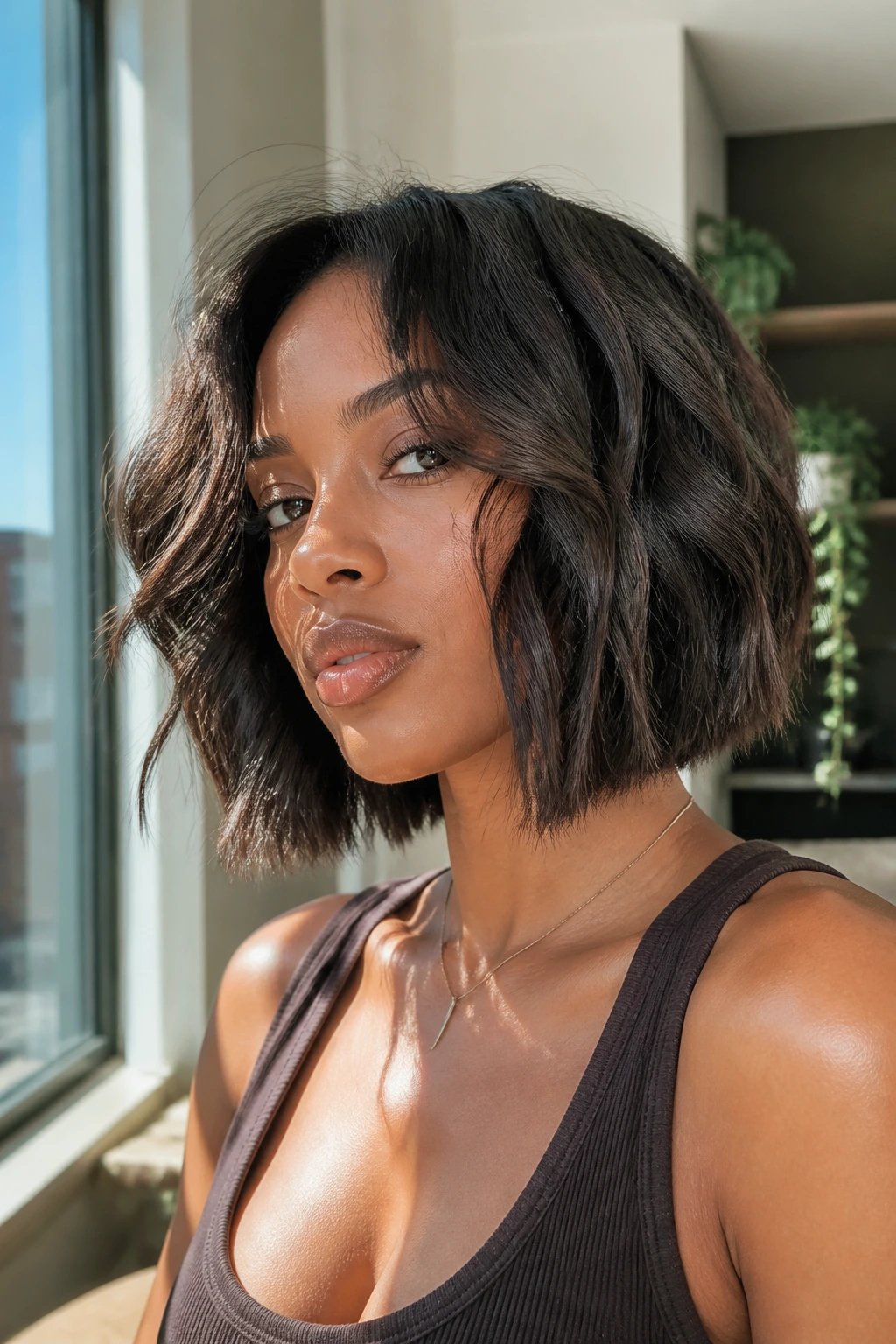
Texture Boost: If your waves look too neat, separate a few pieces with your fingers and mist the ends with a light texturizer spray. That gives the bob a little grit and keeps it from looking too set.
Color Accent: Caramel ribbons, auburn ends, or a honey money piece can make the layers easier to see. Keep contrast where the cut needs it most — around the front and crown — instead of scattering highlights everywhere.
Parting Shift: A middle part gives symmetry. A deep side part gives height. A slight off-center part is the quiet middle ground and probably the easiest to live with if you change your mood a lot.
Edge Detail: Brushed edges and a smooth hairline sharpen the cut. A softer, brushed-back hairline gives the style a more relaxed finish. Pick one and stay consistent, or the look starts to fight itself.
Heatless Swap: If you are tired of hot tools, set the bob on flexi rods overnight or use large rollers on damp, stretched hair. The wave will be rounder and softer, and your ends will thank you.
Common Mistakes That Flatten the Shape
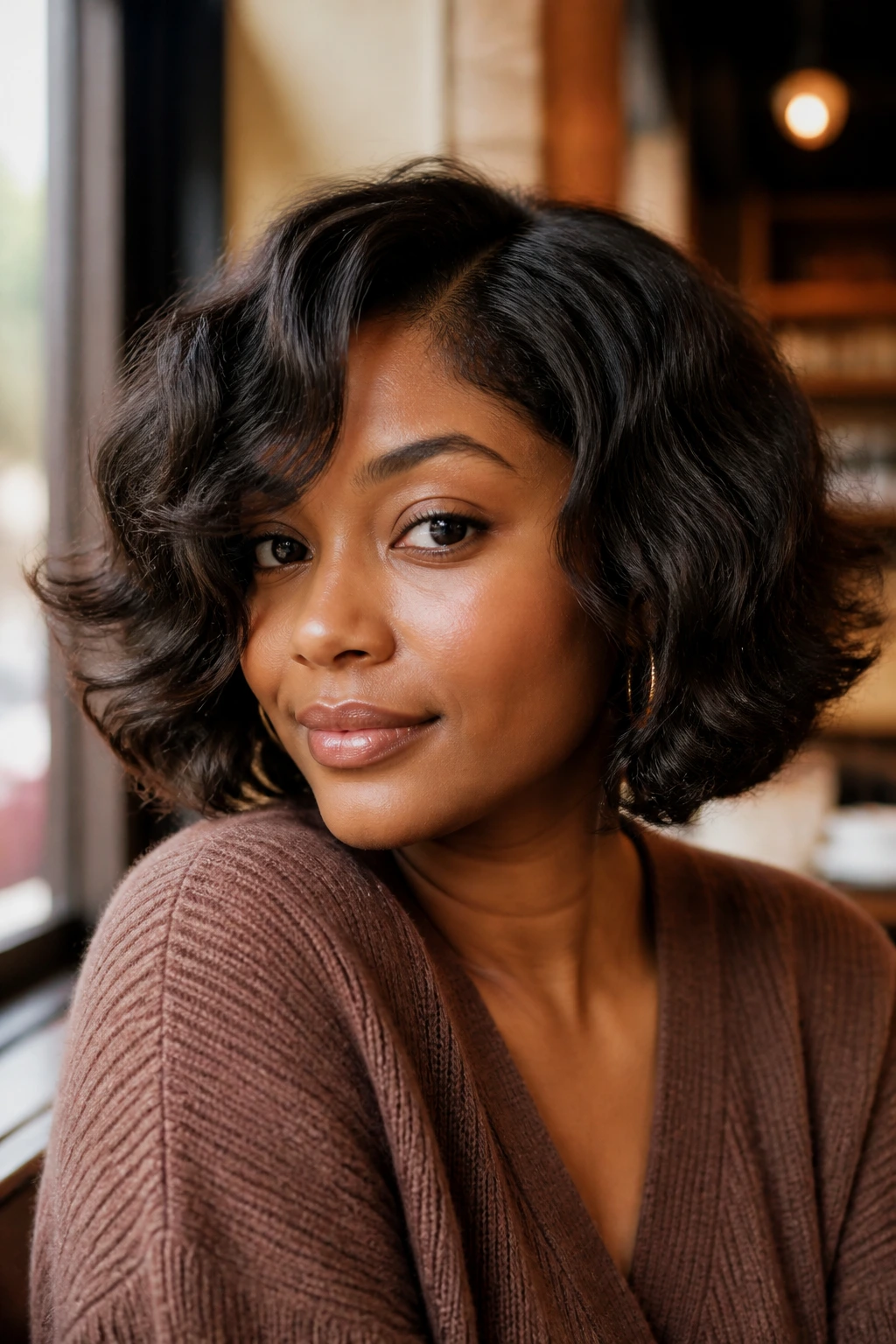
- Over-layering the crown: If the top is cut too short, the bob can puff up before lunch. Keep the crown layers long enough to lie with the rest of the shape.
- Going too blunt on dense hair: A hard edge can look sharp at first and bulky by the afternoon. Soft internal layers usually solve that without killing the line.
- Using heavy products at the roots: Creams and oils near the scalp drag the bob down and make the waves collapse. Keep heavier products on the ends only.
- Curling every piece the same direction: Uniform waves make the style look stiff. Alternate the direction on a few sections so the texture feels lived in.
- Ignoring shrinkage: Natural hair shrinks after styling. If the cut is not planned with that in mind, the bob can end up shorter and wider than intended.
- Skipping the nighttime wrap: One cotton pillowcase can rough up the layers faster than you’d expect. Satin or silk is not a luxury here; it keeps the cut cleaner.
Variations and Adaptations to Try
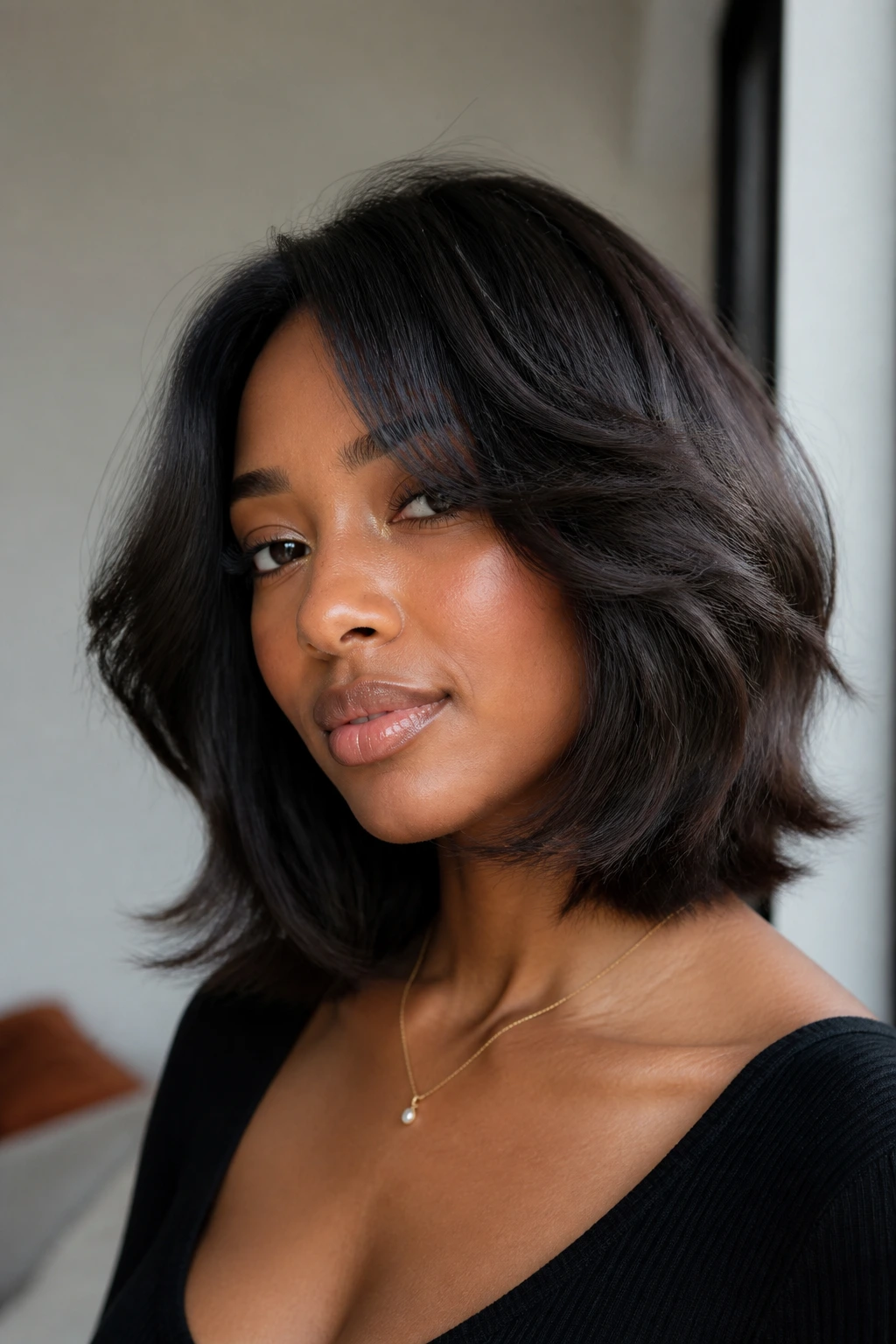
Heatless Weekend Bob: Set the hair on large flexi rods or foam rollers and let it dry fully before taking it down. The result is softer and rounder than wand waves, and it works well if you want less heat on your strands.
Silk-Press Sleek Bob: Keep the layers long and the wave pattern shallow. This version is best for women who want a polished shape with just a little bend at the ends and no extra fluff at the roots.
Natural Coil Bob: Cut the bob on stretched curls and let the texture spring back into a layered silhouette. This keeps the length honest and gives 3B to 4C hair a shape that still feels bob-like after shrinkage.
Protective Install Bob: Use a sew-in, wig, or quick weave with layered bundles and leave the front pieces slightly longer. That gives you the bob shape with less daily manipulation, which is useful if your real hair needs a break.
Color-First Bob: Add a subtle money piece, caramel ribbons, or auburn tones to the front layers. The cut becomes easier to read, and the waves show up more clearly in photos and in motion.
Keeping the Shape Between Salon Visits
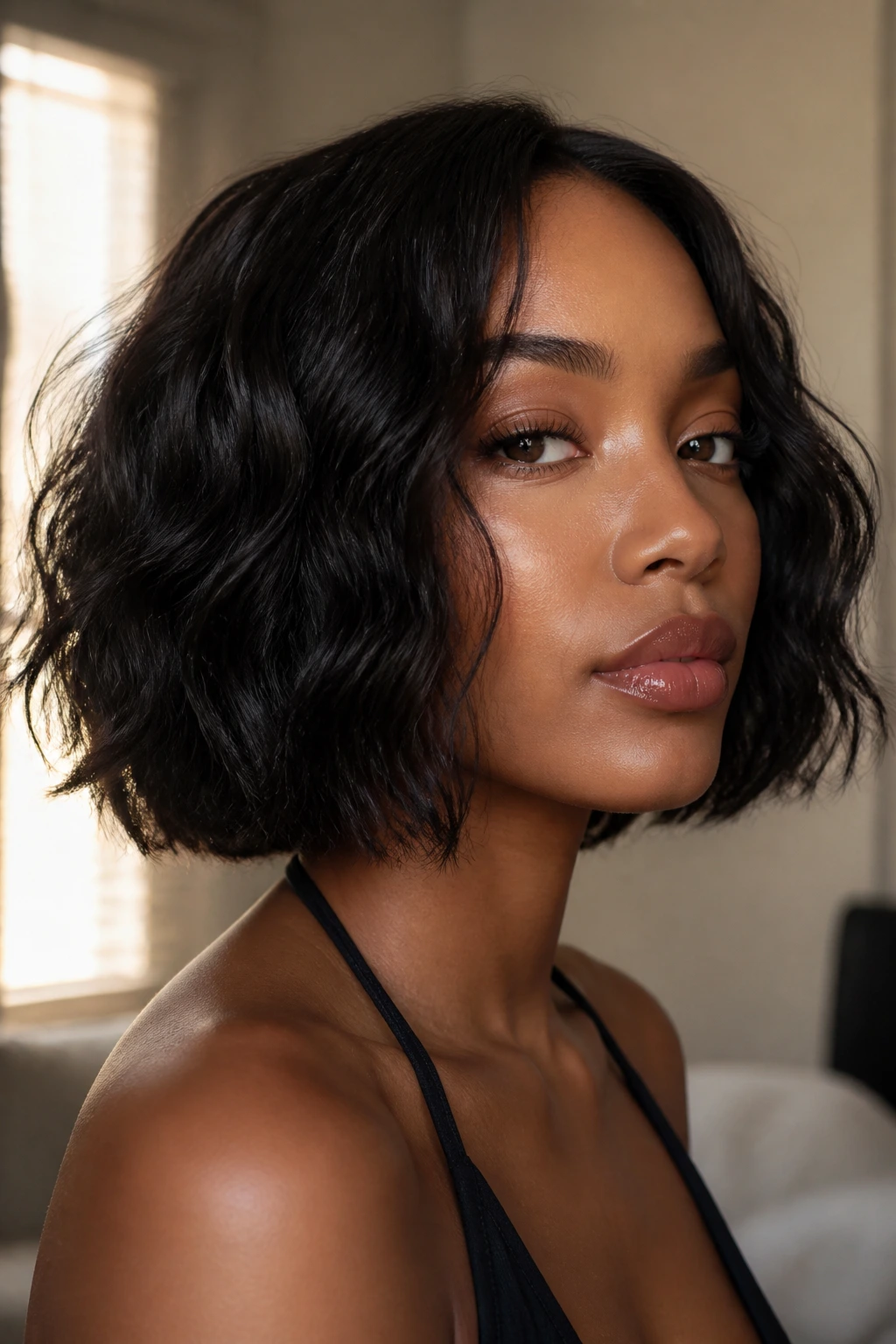
A wavy bob stays nicest when you treat the night routine like part of the haircut. Wrap the hair with a silk scarf or bonnet, or pin-curl the waves if you want the bend to last longer. If you sleep on cotton, the ends rough up faster, and the layers start looking fuzzy around the face.
Refresh the shape every two or three days with a light mist of water or setting spray, then work in a small amount of mousse or foam. Use your fingers first. Brush only if the style has gotten too separated or too puffy. A dense bob can go from chic to triangular fast if you drag a paddle brush through it too aggressively.
For natural hair, trims every 6 to 8 weeks usually keep the perimeter clean and the layers from splitting. For silk-pressed or relaxed styles, you can often stretch that to 8 to 10 weeks, but watch the ends. Once they start looking wispy or frayed, the silhouette stops looking crisp.
If you’re wearing a wig or sew-in, cleanse the scalp, parting, or lace area on a regular cycle so buildup doesn’t flatten the front. Use a light oil only where the hair feels dry. Too much product around the base will break the shape faster than a humid day ever could.
Frequently Asked Questions
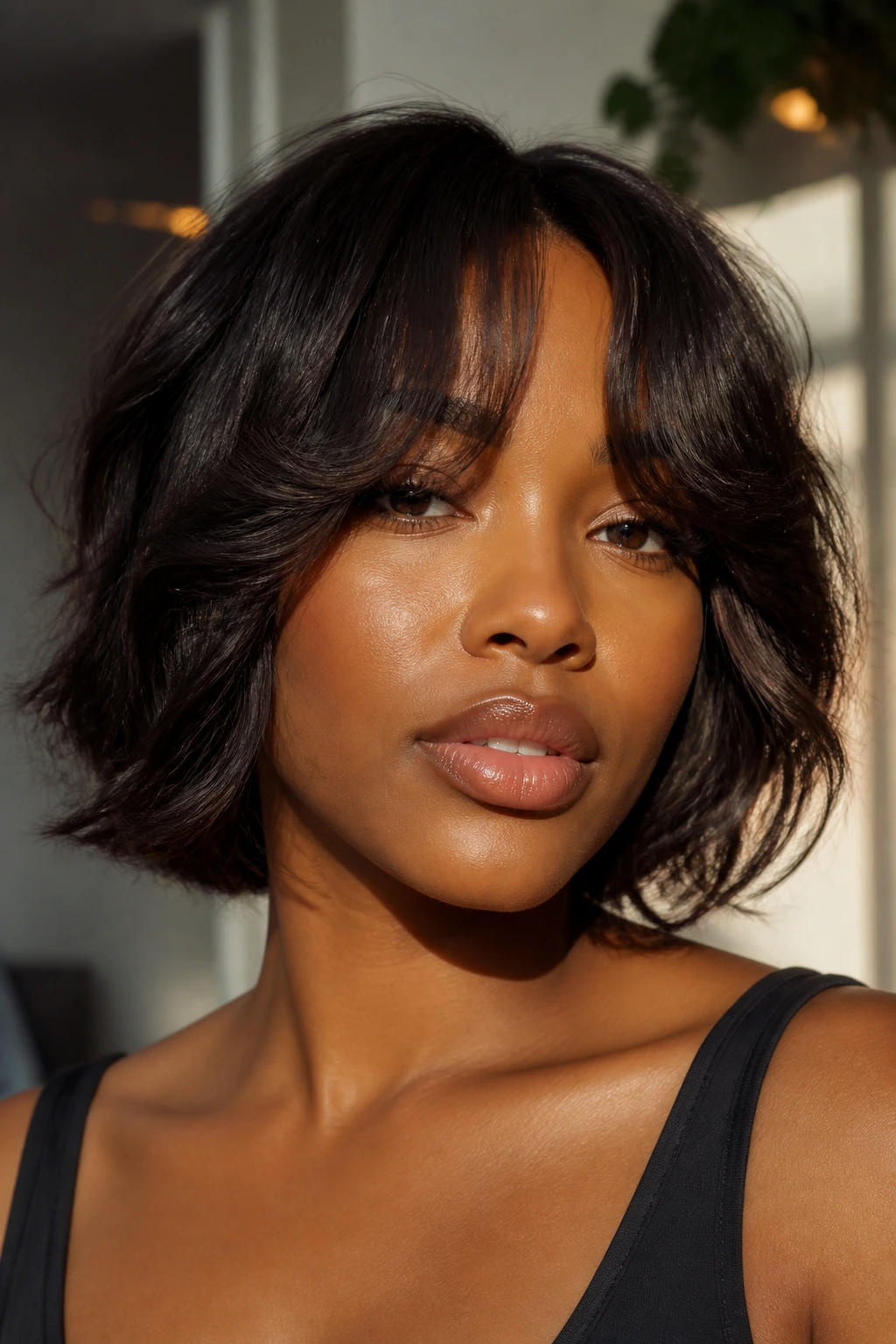
Which layered bob shape is easiest to wear every day?
The shoulder-skimming lob with soft waves is probably the least fussy. It gives you enough length to tuck, pin, or refresh without rebuilding the whole style every morning.
Can 4C hair wear a wavy bob with layers?
Absolutely, but the cut needs to respect shrinkage and density. Cutting on stretched hair or dry hair helps the stylist see where the bob will actually land after your texture springs back.
Should the layers be cut wet or dry?
For curly and coily textures, dry or stretched cutting usually gives a better result because the final shape is easier to judge. Wet cutting can work for relaxed or pressed hair, but the shrinkage issue disappears only if the hair stays straight after styling.
How do I keep the bob from getting puffy at the sides?
Ask for long internal layers instead of a lot of short ones, and keep heavy products off the roots. A soft wrap at night and a light mousse refresh in the morning also help the sides stay controlled.
What if my waves fall flat by midday?
That usually means the hair was weighed down with too much cream or the layer placement is too blunt. Try a lighter setting product, and use a smaller amount of texturizer or dry spray on the mids and ends only.
Can I wear this style with a wig or sew-in?
Yes, and layered bobs are often easier to wear in installs because the density can be controlled more precisely. The key is choosing bundles or units with enough movement at the ends so the cut does not look like one solid block.
Which part looks best with a layered bob?
A deep side part gives the most lift and drama, while a middle part creates a balanced, softer feel. A slightly off-center part is the most forgiving if you want volume without committing to one side.
How often should I trim a natural layered bob?
Every 6 to 8 weeks is a good range for most natural styles. If the ends are still sharp and the shape is holding, you can stretch that a little, but once the bob starts widening at the bottom, it is time.
Why This Length Stays in Rotation
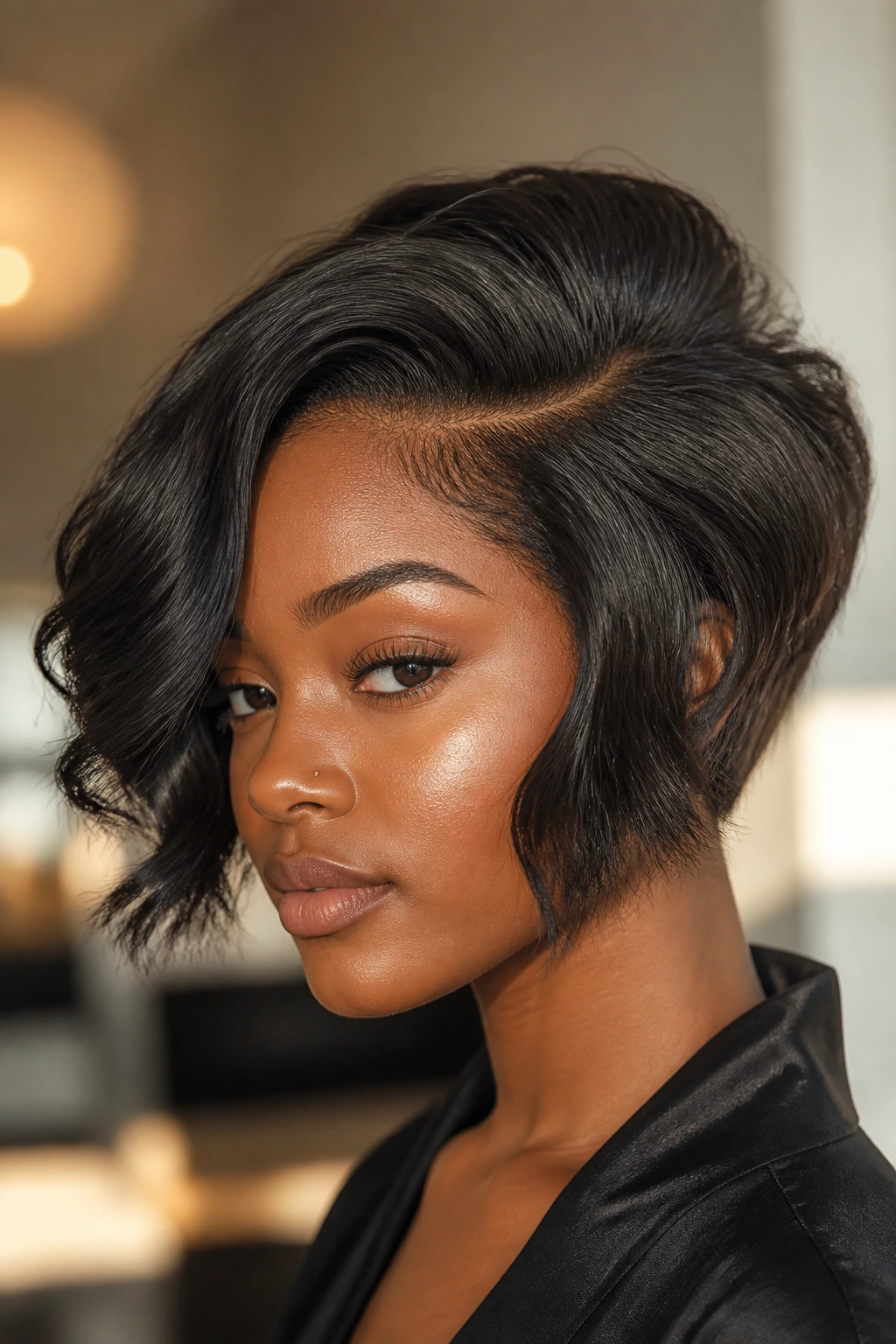
A layered wavy bob survives because it solves a real problem: how to keep shape without making the hair feel boxed in. On Black women, that balance matters more than the trend itself. The cut has to respect density, texture, shrinkage, and the way your hair behaves when it leaves the chair and meets real life.
That is why the best versions feel tailored, not generic. A chin-length bob with a soft bend says something different from a collarbone lob with curtain bangs or a side-parted version with highlighted layers. Same family. Different mood. And if the layering is done well, the hair still looks like itself.
Bring a clear photo, but also bring honesty about how much heat, time, and upkeep you want to live with. That is where the right bob gets made — not in the picture, but in the details that decide whether it still looks good on day four.