



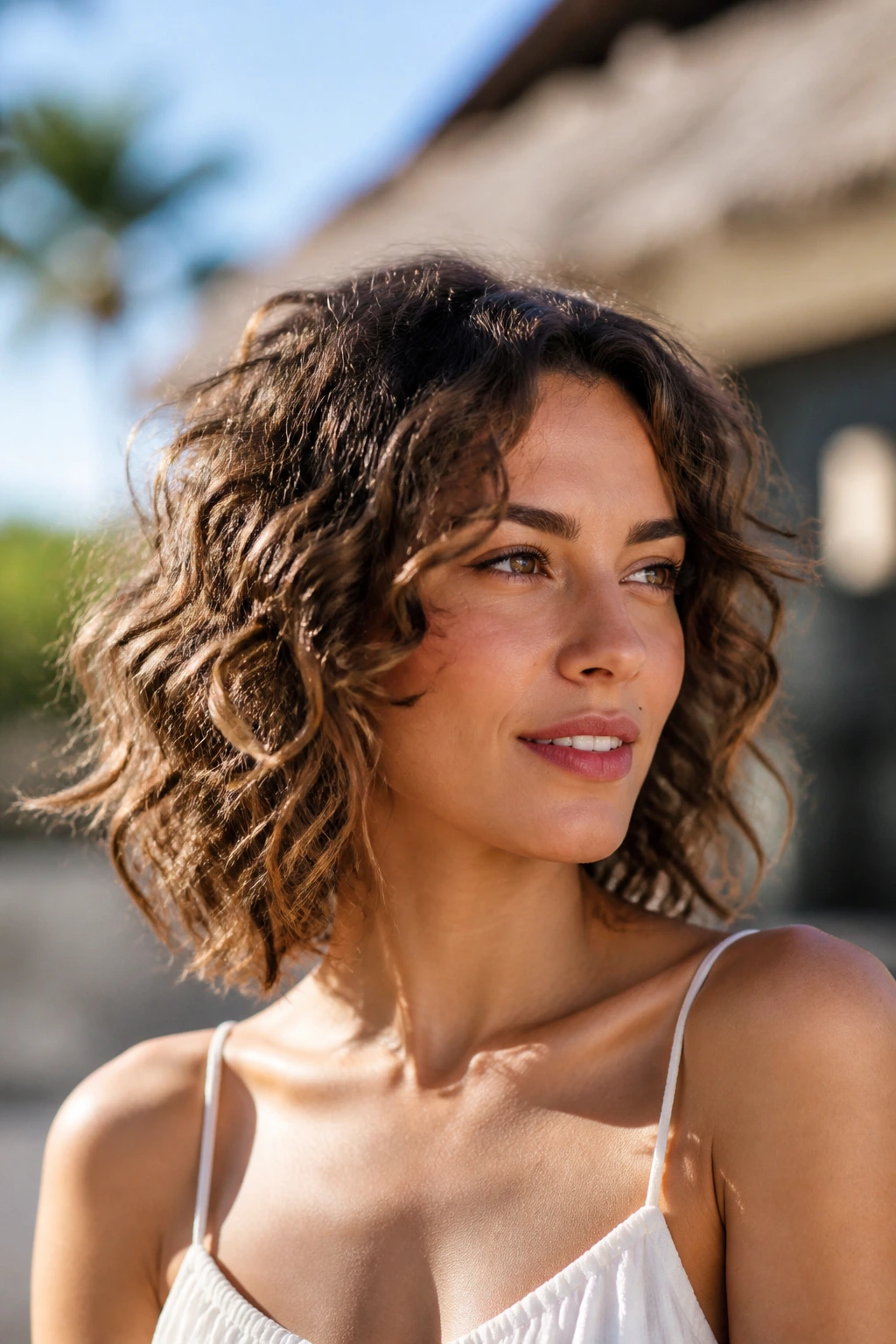
Summer is rude to curly hair. It steals definition at the crown, swells the ends, and leaves the back of your neck damp before lunch. A good bob changes the math. On curly hair and oval faces, the right cut can cool things down without flattening the shape you actually want to keep.
The sweet spot is not one exact length. It’s the way the cut meets the curl pattern. A chin-grazing bob behaves one way on loose waves and another on springy ringlets; a collarbone lob can look sleek or cloudlike depending on how much weight the stylist removes from the inside. Oval faces make the whole thing easier, because they can carry width at the cheeks, softness at the jaw, or a little extra length without the face looking crowded.
A lot of bad bob advice comes from straight-hair logic. Curly hair needs room to shrink, and summer hair needs an outline that still makes sense when humidity gets involved. The best summer bobs for curly hair and oval faces do two jobs at once: they keep the neck cooler and let the curls do the decorating, which is much better than trying to force them into obedience.
Why These Curly Bobs Earn Their Keep in the Heat
-
Oval faces get a wide lane: Your proportions already sit in a balanced range, so a chin length, jaw length, or collarbone length can all work if the curl shape is handled well.
-
Shrinkage is built into the math: These cuts leave room for curls to spring upward after drying, which keeps the final shape from landing awkwardly short.
-
The nape gets air: Shorter backs and lighter interiors keep hair off the neck, and on a hot day that matters more than any salon buzzword ever will.
-
The styling routine stays sane: Most of these looks work with a cream, a mousse, a diffuser, or a clean air-dry instead of a blowout marathon.
-
There’s a version for nearly every curl pattern: Loose waves, springy ringlets, and dense coils can all live inside bob and lob shapes if the cut respects density.
-
You can change the mood with an inch or two: A small length tweak changes everything — sharper, softer, beachier, or more polished — without starting over.
1. Chin-Grazing French Bob With Soft Curl Memory
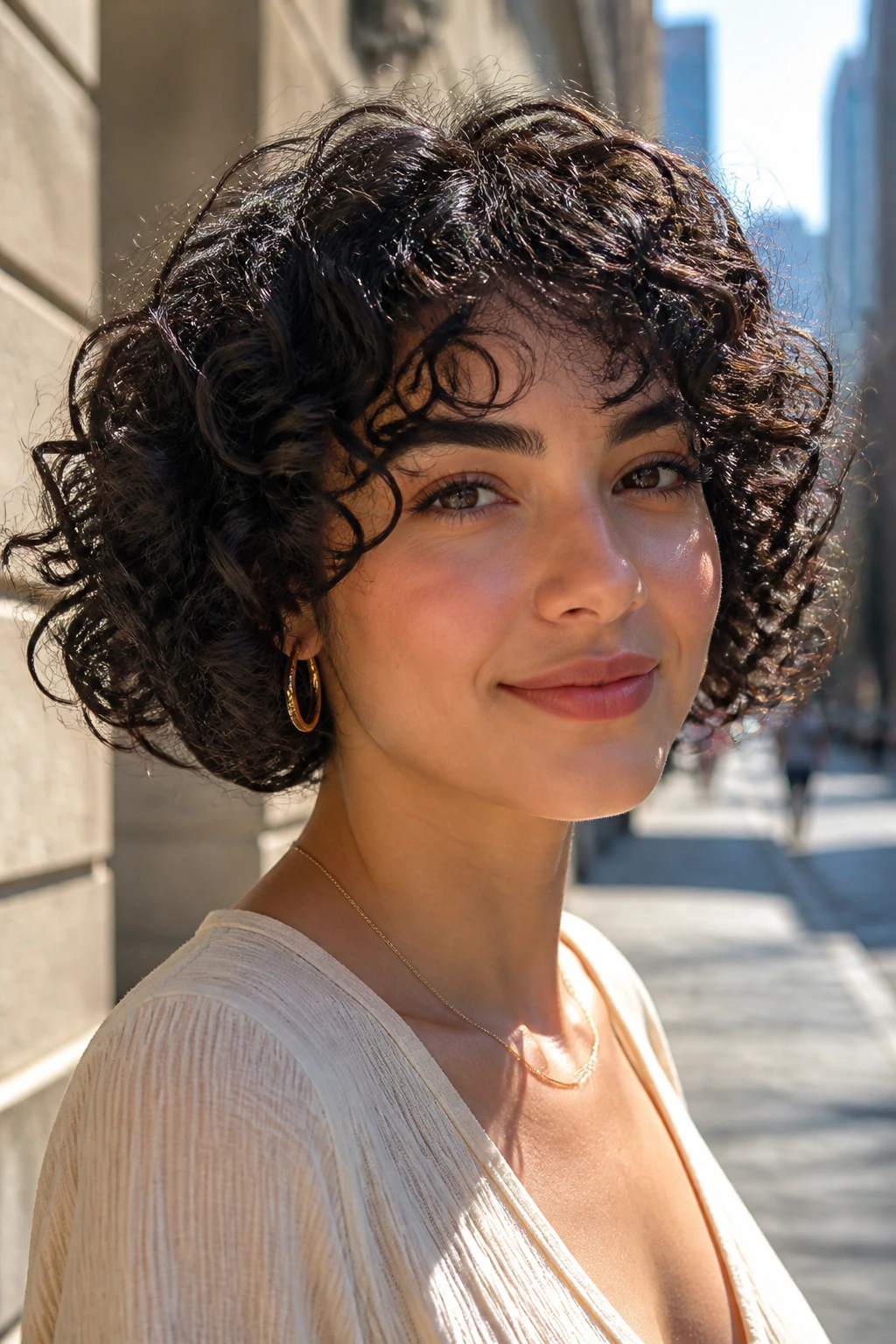
This is the cut that makes curls look deliberate instead of merely short. A chin-grazing French bob sits right where your face starts to open up, so the curls bounce near the jaw instead of hiding under it. On an oval face, that placement feels clean, not severe.
Why It Works on Curly Hair
The magic is in the dry shape. If a stylist cuts this bob while your curls are fully stretched, it can land too short and puff too high later. A dry or curl-by-curl cut keeps the final line honest, which matters when your curls spring an inch or two after drying.
- Best for 2C to 3B curls that want shape more than length.
- Ask for slightly longer front corners so the bob doesn’t balloon around the cheeks.
- Keep the interior light, not carved to death.
- A middle part gives it a crisp feel; an off-center part softens it fast.
Tiny tip: If your curls flare wide at the sides, ask for the perimeter to skim the jaw, not sit directly on it.
2. Collarbone Curly Lob With Airy Ends
The collarbone lob is the least temperamental cut on this list, and that’s why it shows up so often. It still feels like a bob, but the extra length gives your curls room to move without turning into a puffed-up triangle by noon. It also plays nicely with summer dresses, tank tops, and anything that leaves your shoulders bare.
What I like about this shape is the way it behaves on days when you want a little more coverage. Curly hair at collarbone length can be pulled back, pinned half up, or left loose with almost no drama. Oval faces get a nice vertical line here, and the curls keep the look from going flat or stiff.
If your hair density sits in the middle, this is a smart starting point. If your curls are thick, it still works, but the stylist should remove bulk from inside the shape rather than shaving away the perimeter. The ends should feel light, not wispy.
3. Rounded Curly Bob With Halo Volume
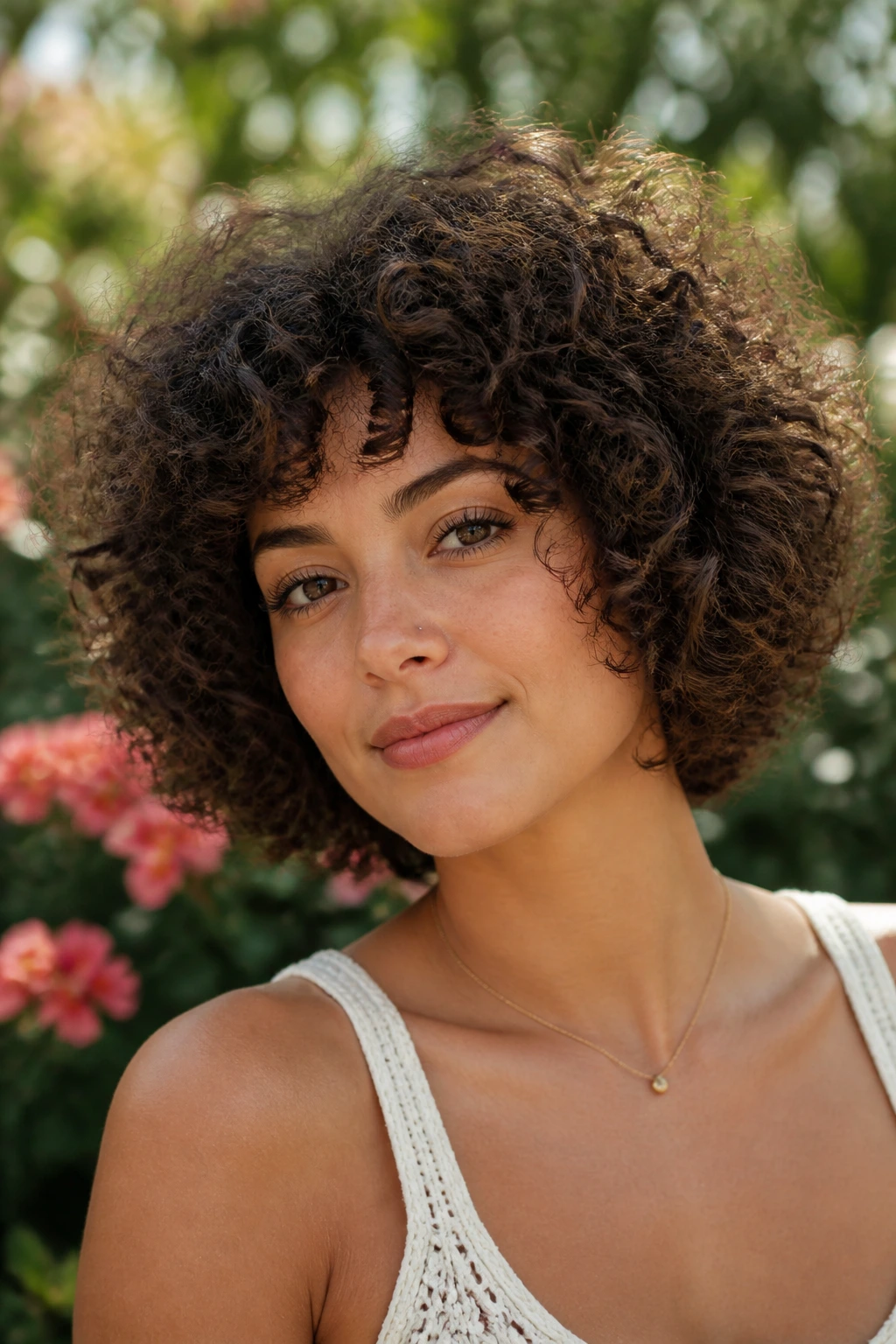
Want volume without the triangle? Start here. A rounded curly bob follows the curve of the head, so the silhouette rises at the crown and tapers toward the jaw instead of kicking out at the sides. On an oval face, that rounded halo can look soft and expensive without trying too hard.
How to Wear It
The trick is not to flatten the top with too much cream. Use a light mousse at the roots, then scrunch the mid-lengths so the crown keeps a little lift. If you air-dry, clip the roots for the first 10 to 15 minutes so the shape doesn’t collapse while the hair is still wet.
This cut loves curls that already have some spring. It’s especially good if your hair gets wider the longer it grows, because the rounded outline keeps the bulk where it belongs. I’d skip this if you want a hard line; this one is about curve, not edge.
4. Soft A-Line Bob That Tucks Behind the Ear
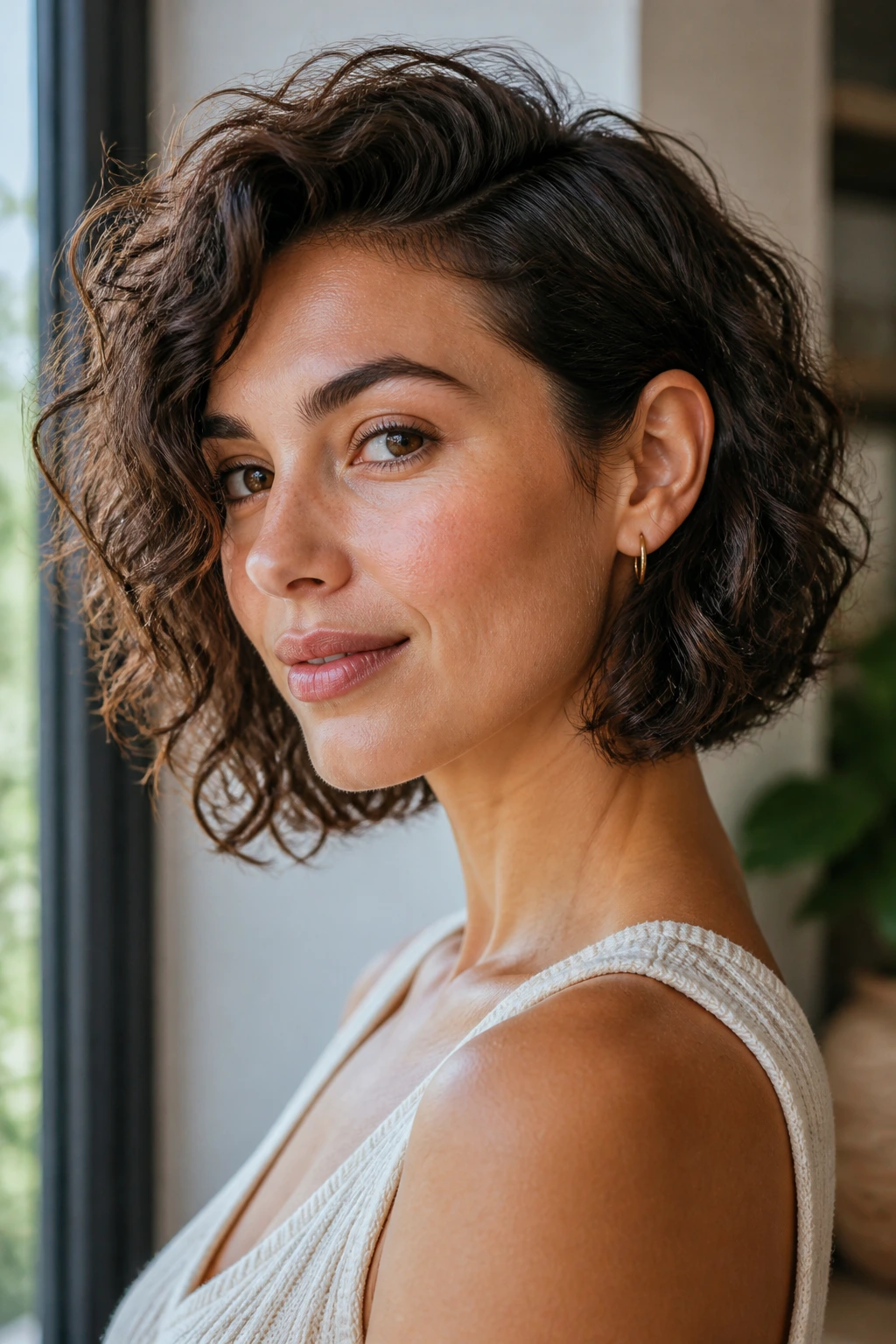
A slight A-line solves a very specific problem: the bob that feels too blunt at the jaw. By keeping the front a touch longer than the back, the cut eases the face open instead of boxing it in. On an oval face, that diagonal line gives the curls a little motion even when you tuck one side behind the ear.
This shape has a nice side effect in summer. The back stays lighter, so your neck gets some breathing room, but the front still gives you enough length to play with earrings or a collarbone-skimming neckline. If you like tossing one side back on purpose, this is the one that cooperates.
Best Details to Ask For
- A front length that lands around the jaw or just below it.
- A back that sits slightly shorter at the nape.
- Soft internal layers, not chunky steps.
- A finish that keeps the front corners clean when the curls dry.
The best version of this cut looks neat, not severe. That difference matters.
5. Shaggy Bob With Feathered Crown Layers

A shaggy curly bob is what happens when somebody stops pretending curls should all sit on the same plane. The crown gets a little height, the mid-lengths move, and the ends stop hanging there like an afterthought. It feels easy in summer because it never looks overworked. That’s the point.
This is the cut for dense curls that build weight fast. Feathered layers take some of the pressure off the top, which keeps the silhouette from getting bottom-heavy. Oval faces can handle the extra movement around the cheeks, especially when the layers are placed with a light hand.
The warning is simple: don’t let the stylist shred the ends into lace. Too much slicing makes curly hair fray, and then the bob loses shape when it dries. You want lifted, not shredded.
6. Blunt Bob With Controlled Frizz
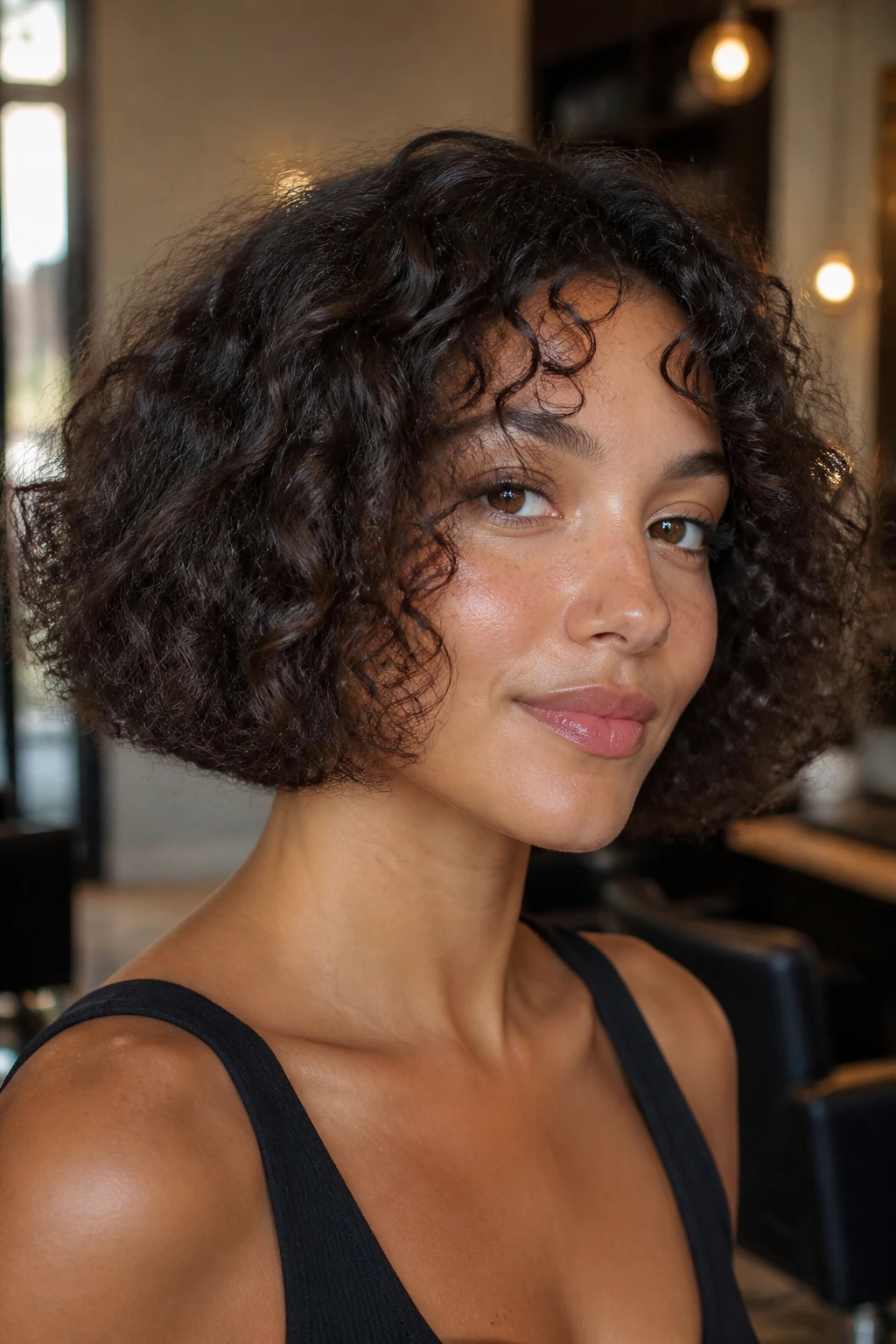
A blunt bob sounds strict, but on curly hair it can look sharp in the best way. The clean perimeter gives the curls a place to land, and that line is especially nice if you want the cut to read polished rather than beachy. Oval faces usually handle the blunt edge well because the shape doesn’t need a lot of correction.
The best blunt curly bob is not actually one-note. There should still be movement inside the shape, just not so much layering that the outline collapses. Think of it as a clean frame with lively texture inside it. That contrast is what keeps it from looking helmet-like.
This cut suits tighter curls and waves that clump well on their own. If your hair frizzes aggressively at the ends, a blunt finish can make the hair look thicker and healthier. The catch is maintenance. You’ll want trims on a steady schedule, because a blunt line goes fuzzy faster than a layered one.
7. Side-Part Curly Bob With Deep Sweep
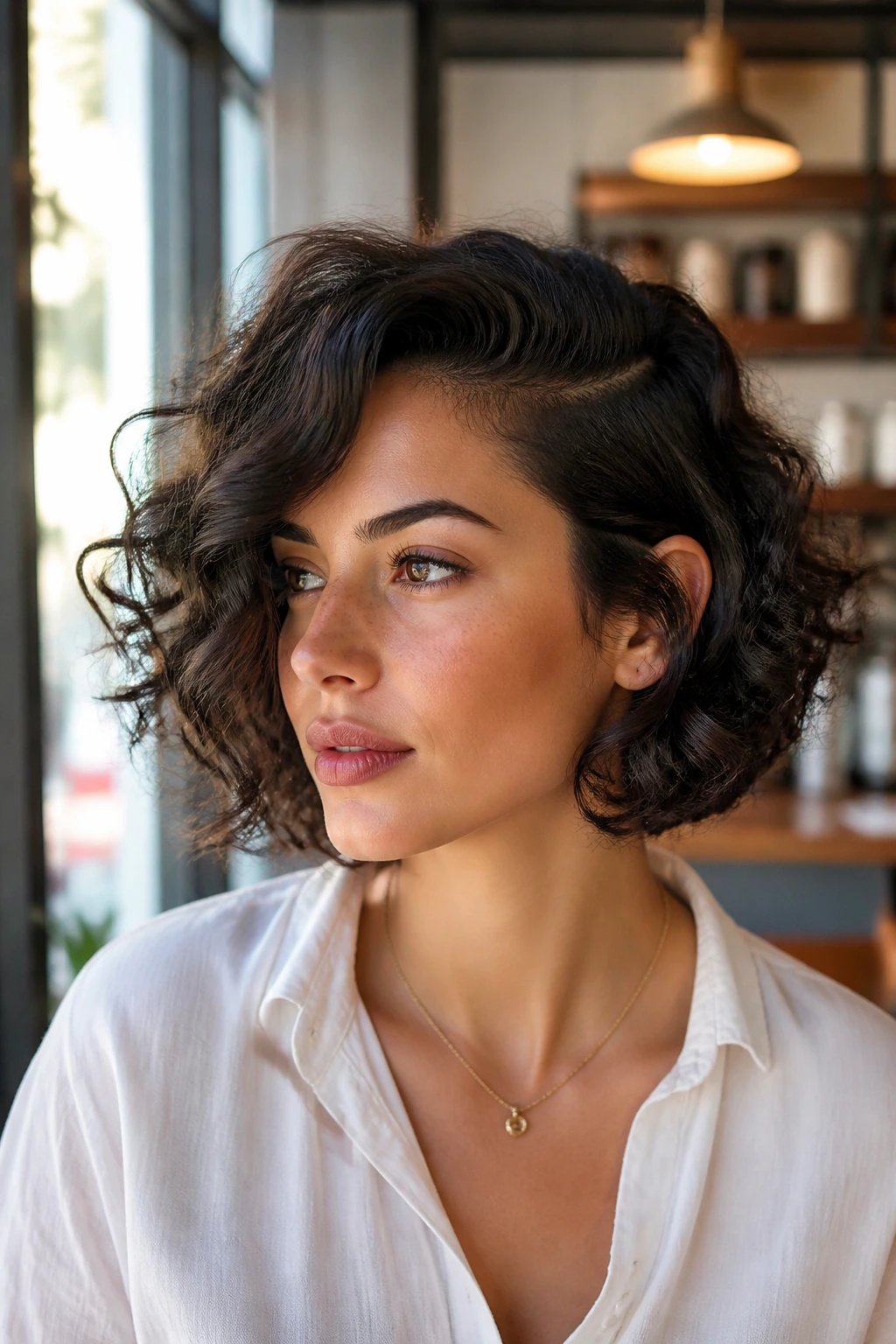
A deep side part changes the whole silhouette. It lifts one side, drops the other, and gives the bob a little drama without adding actual length. On an oval face, that asymmetry is a nice way to keep the look from feeling too centered or too sweet.
The side part also helps when one side of your hair insists on lying flatter than the other. Curl patterns are rarely twins. They’re cousins at best. A deep sweep can hide that mismatch and make the crown look fuller, which is useful if your roots collapse when the air gets sticky.
When to Choose It
- You want a little height without teasing your roots.
- Your curls part naturally on one side anyway.
- Your face shape can handle a stronger diagonal line.
- You like a bob that looks different after a quick re-diffuse.
A side part is not a fix for bad cutting, but it can rescue a shape that feels too plain.
8. Curly Bob With Curtain Bangs
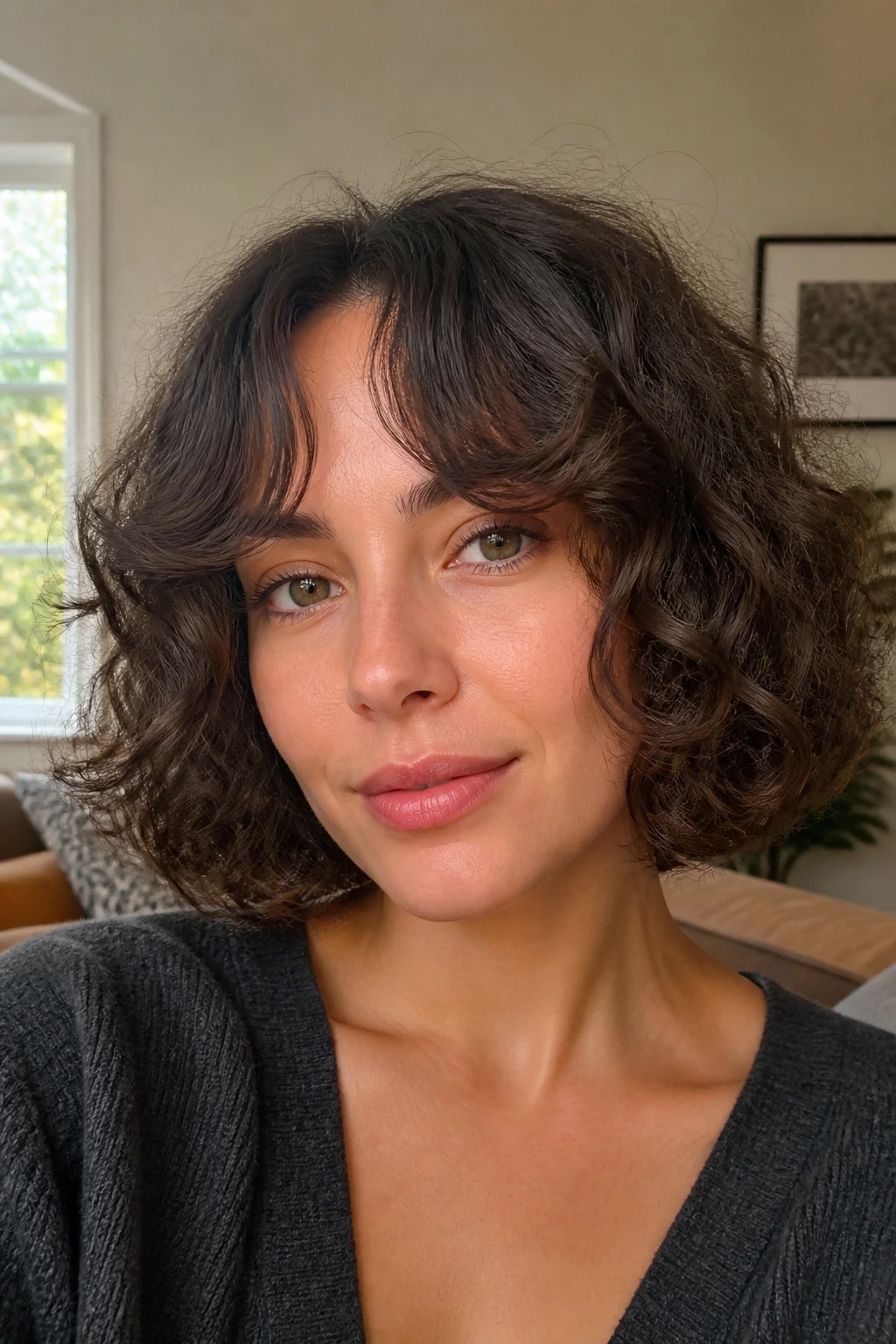
Yes, bangs can survive summer. They just need to be cut with some humility. Curtain bangs on curly hair open around the center and sit softly near the cheekbones, which suits oval faces because the face already has balanced proportions. You’re not trying to reshape the face; you’re just giving the curls a frame.
The best version keeps the fringe long enough to split and fall back if you change your mind. That means thinking about where the curls land when dry, not where they sit wet on the forehead. If you like the idea of bangs but hate feeling trapped by them, curtain bangs are the least dramatic way in.
A curly bob with curtain bangs looks especially good when the fringe blends into the sides rather than sitting as a separate little curtain. That blend keeps the shape from feeling busy. And in humidity, busy hair is where the trouble begins.
9. Jaw-Length Bob With Spiral Face Frame
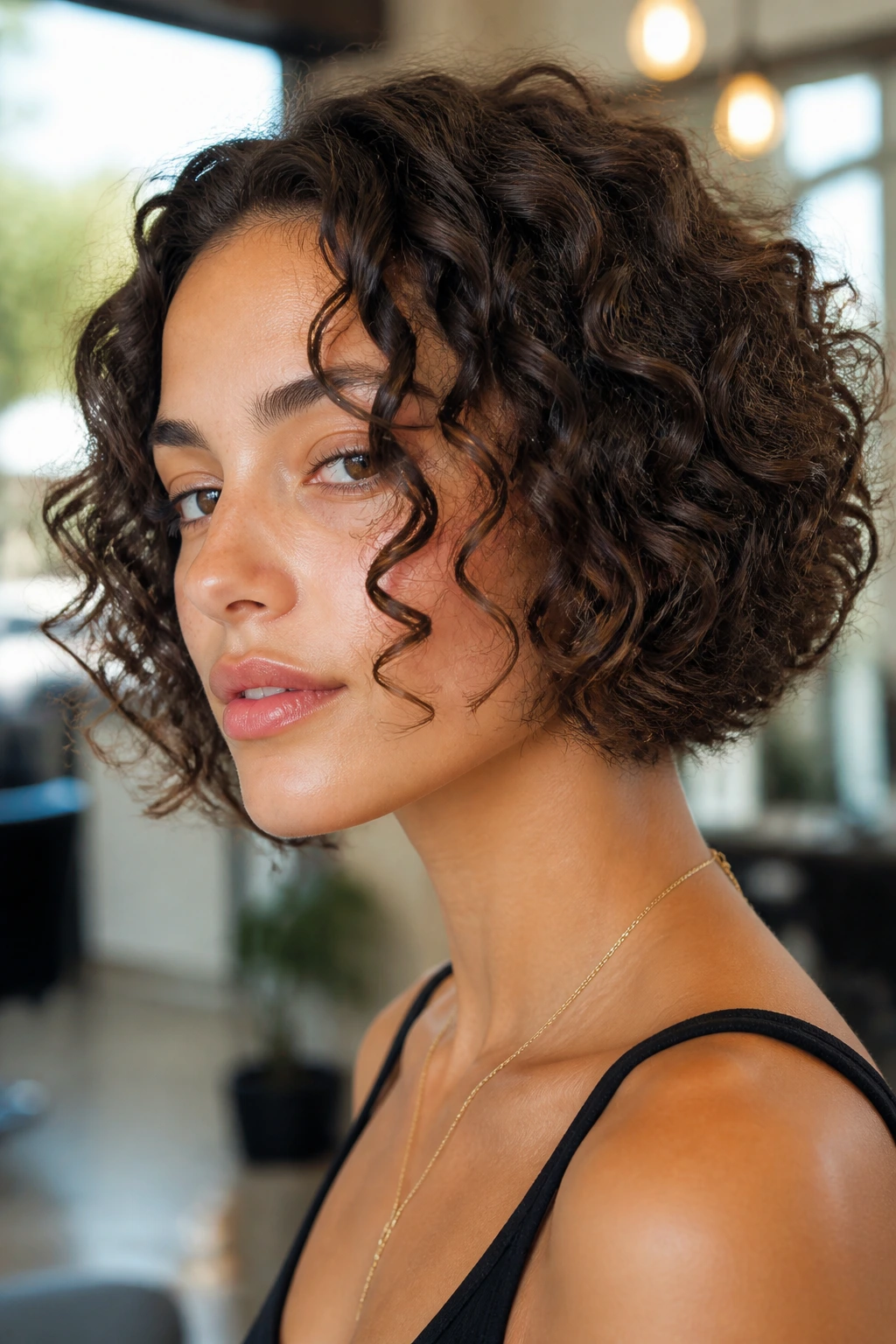
If you want the curls near your face to do the flirting, this is the cut. A jaw-length bob puts the perimeter right where the jaw turns into the neck, and that gives each spiral a chance to show off instead of disappearing under the chin. On an oval face, the length feels tidy without being severe.
The face frame matters here. A couple of spiral pieces cut to graze the cheekbone can soften the front and make the whole cut look custom rather than generic. I prefer this shape when the curl pattern forms clear ringlets, because those ringlets make the front pieces look intentional even on a low-effort day.
The cut works best when the stylist avoids making the front too hollow. If the sides get over-layered, the bob can puff away from the face and lose that neat jawline effect. Keep the structure compact. Let the curls supply the movement.
10. Hidden-Undercut Lob
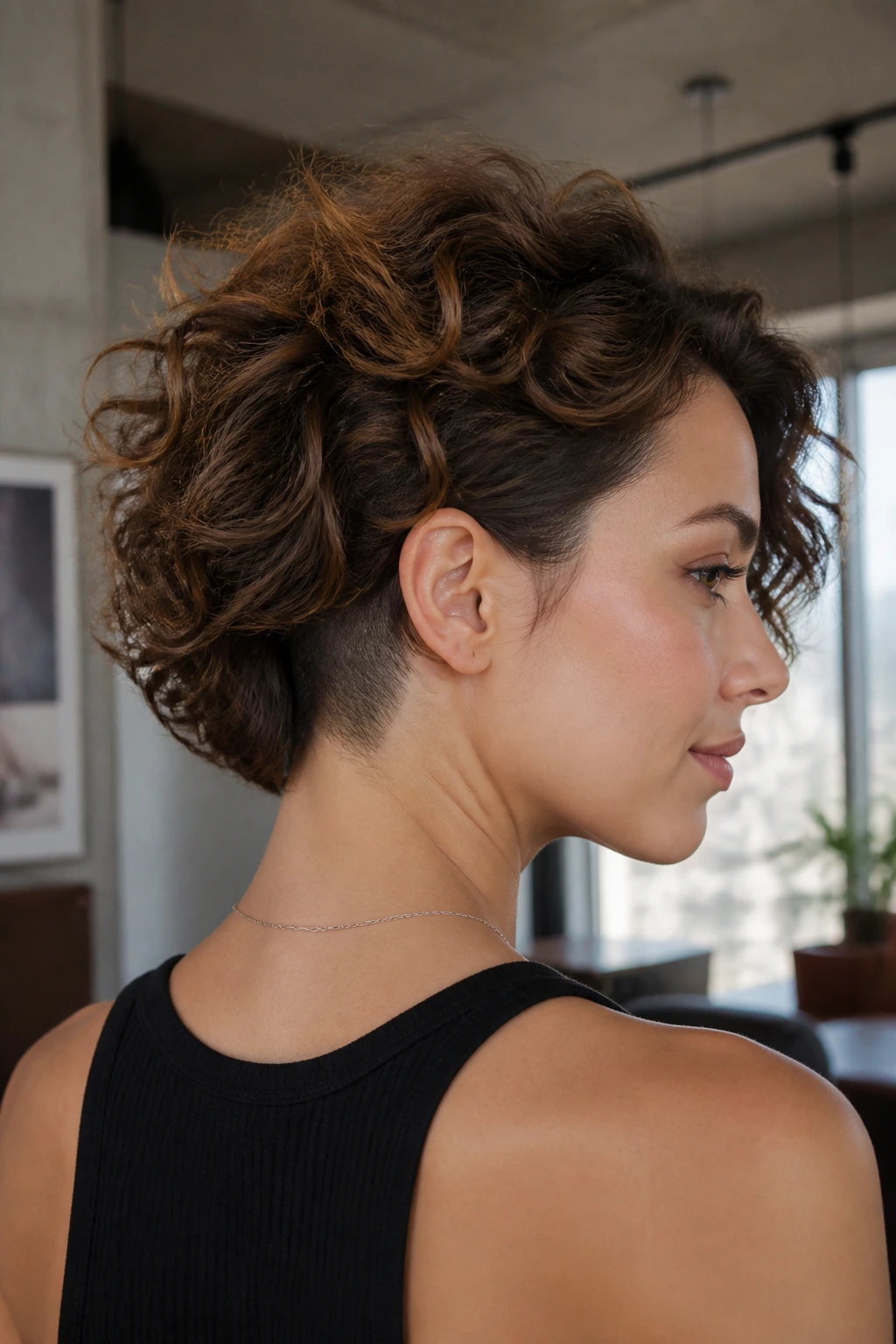
This is the cut I reach for when thick curls feel heavy by noon. A hidden undercut removes some of the bulk underneath the top layer, so the visible shape stays full while the head itself feels lighter. The trick is that nobody needs to see the shortcuts unless you want them to.
Oval faces can wear this well because the top layer still frames the face normally. You get the cool neck feeling of a shorter cut with the visual length of a lob. It’s a smart answer for curls that dry slowly, especially if your hair takes forever to release water from the middle.
The undercut does not have to be dramatic. Sometimes a narrow strip at the nape is enough to stop the whole shape from blooming outward. That small move can change the daily experience more than a longer salon conversation ever will.
11. Stacked Inverted Bob
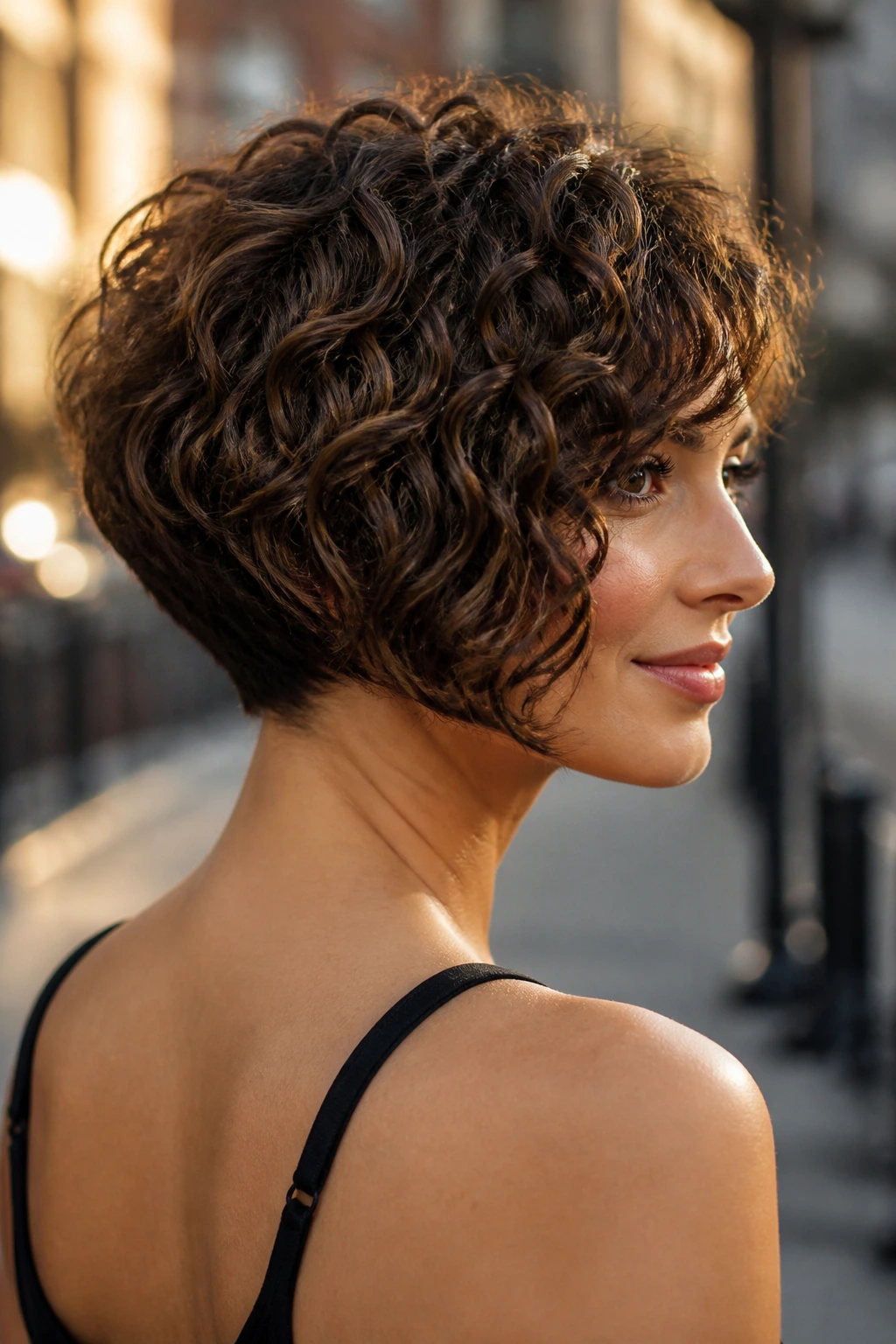
A stacked inverted bob is for curls that lose lift at the back and then gather weight around the shoulders. The shorter nape creates a little rise, while the longer front keeps the shape graceful. On an oval face, the diagonal line gives the cut structure without looking stiff.
What makes this shape useful is the way it holds its outline after a day of wear. The stacking at the back gives the curls a shelf to sit on, so the bob doesn’t melt into the neck as quickly. If your curls flatten at the crown, this cut can help the whole head look more awake.
It does need careful cutting. Too much stacking and the back starts to feel dated fast; too little and you lose the lift that makes the cut work. Ask for a soft inversion, not a dramatic wedge.
12. Wet-Look Gel Bob

Some days call for shine, not fluff. A wet-look gel bob is built from soaking-wet curls, a strong hold gel, and enough patience to let the cast form before you touch it. The result is glossy, defined, and a little bit daring, which makes it a good summer option when you want your bob to look intentional under hard light.
Oval faces can take this style because the clean finish keeps the face open. There’s no fighting with flyaways, and the smooth top lets the curl clumps read as shape instead of chaos. It works especially well for evening plans, rooftop dinners, or any day when humidity is already winning.
The key is restraint. Use enough product to hold the curl pattern, not so much that the bob looks crunchy and sticky. Once the cast is set, scrunch it out lightly with clean hands or a tiny bit of oil. Leave too much gel in place and the hair starts looking wet in the wrong way.
13. Micro-Bob With Airy Crown
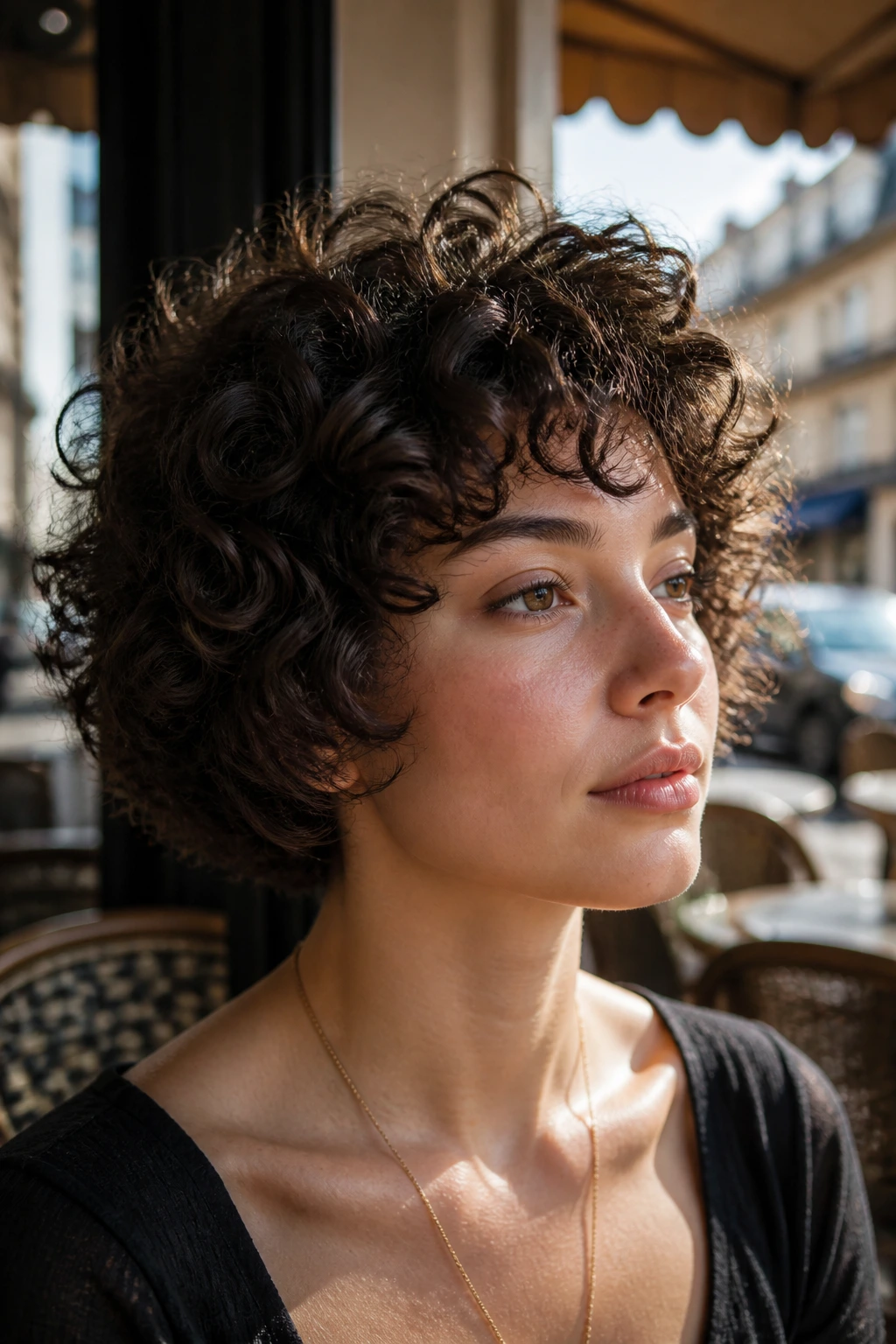
Short enough to feel cool, long enough to keep a shape. That’s the appeal of the micro-bob. It lands somewhere between ear and chin, depending on curl shrinkage, and it can look sharp on an oval face when the crown has enough lift to keep the silhouette from collapsing.
This is not the cut to wing. Curls can spring upward in a way that surprises even seasoned stylists, so the length needs to account for the fact that the finished shape may sit much shorter than it looks when wet. The upside is obvious: almost no hair on the neck, and a crisp outline that works well with statement earrings.
I like this cut on people who enjoy visible structure. If you want softness around the face, keep a little more length at the front corners. If you want a cleaner, bolder outline, let the line sit straighter and rely on the curl texture to keep it from feeling harsh.
14. Deep Side-Part Lob With Swooped Fringe
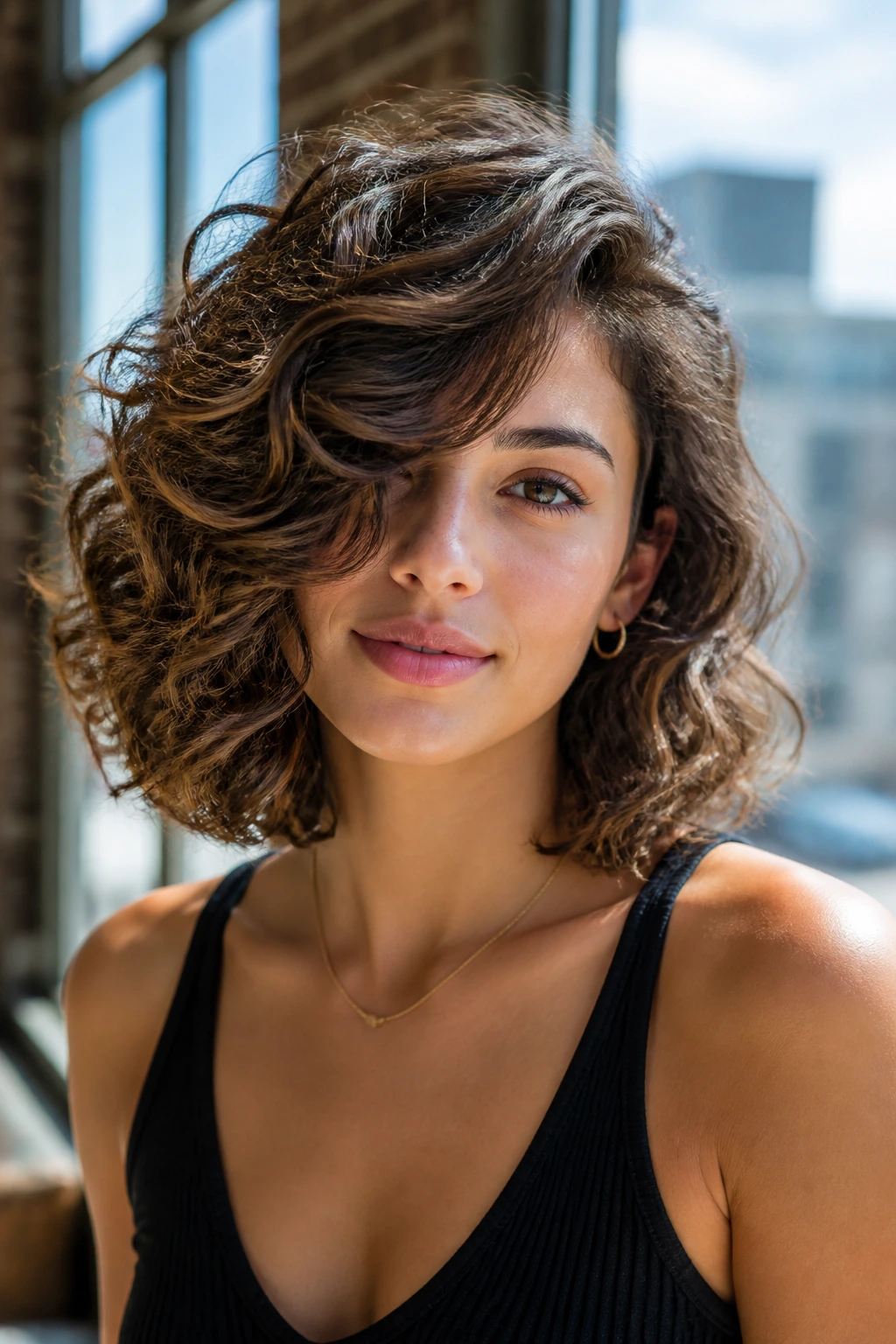
A deep side-part lob gives you the polish of a longer bob with just enough drama to keep it from reading plain. The swooped fringe drapes across one side and creates a longer diagonal through the face, which is a nice match for oval proportions. It’s the kind of cut that looks put together after twenty seconds of finger styling.
The shape is useful when your curls have a strong side bias. Some people’s hair just wants to fall left or right, and pretending otherwise is a waste of time. A deep part works with that natural bend instead of wrestling it flat, which usually means less frizz and less rewetting in the morning.
The best version keeps the fringe long enough to tuck back if needed. That flexibility matters. Hair should make your day easier, not box you into one mood.
15. Piecey Bob With Internal Layers
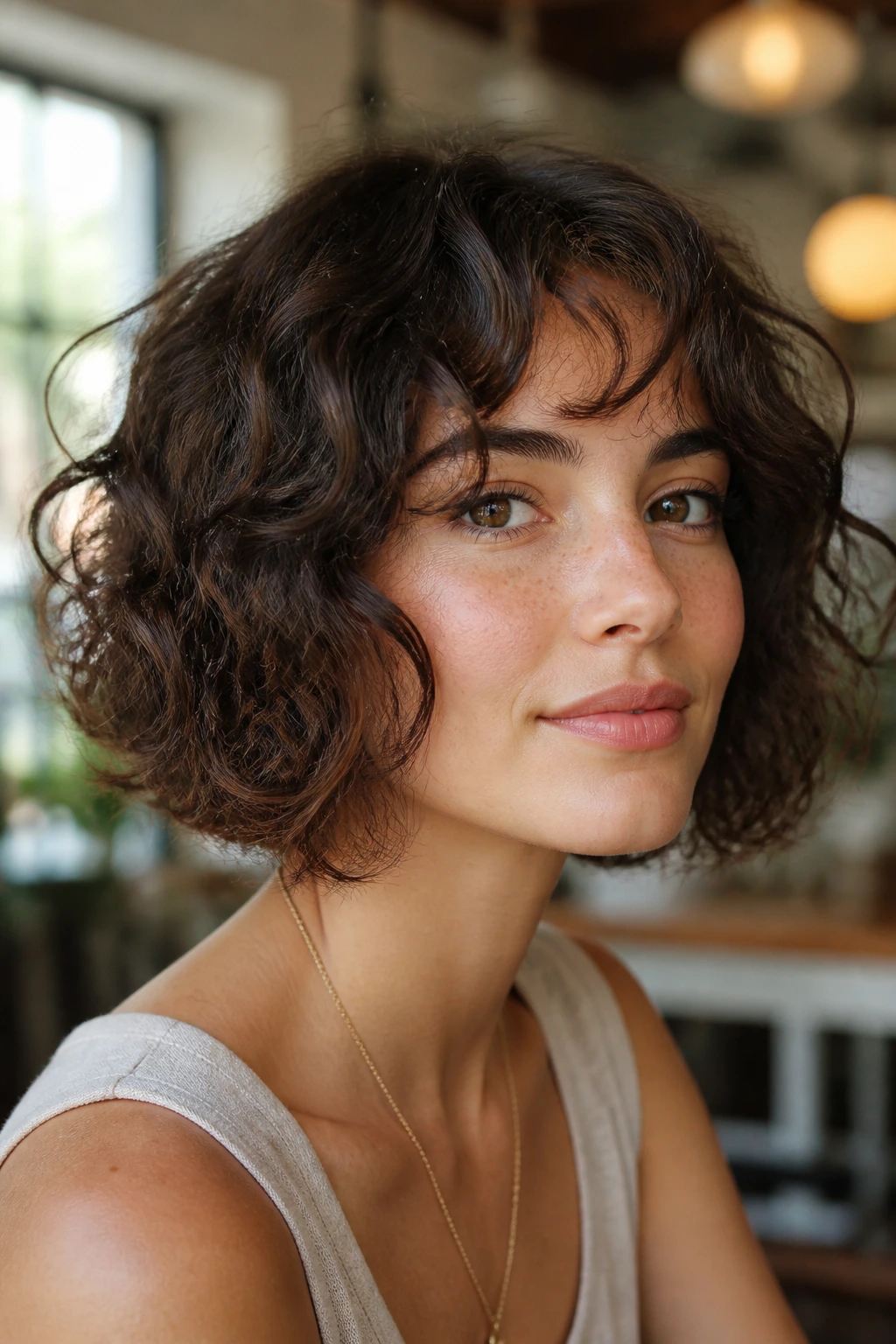
This is the quiet one in the group, and I mean that as a compliment. Internal layers remove weight from inside the bob so the outer edge stays cleaner, while the surface keeps those separated, piecey curls that move instead of clumping into a wall. It’s a smart cut for fine curls or waves that need body without bulk.
Oval faces do well with this because the face framing stays soft. You get visible texture near the cheeks and jaw, but not so much width that the cut starts looking puffy. The whole thing feels light, which is exactly what you want when the weather turns sticky and your hair wants to stick to itself.
This cut responds nicely to a modest amount of mousse and a diffuser set on low. Overload it with heavy cream and the piecey texture gets lost. Keep the product light and let the layers do the work.
16. Tapered Bob That Slims the Nape
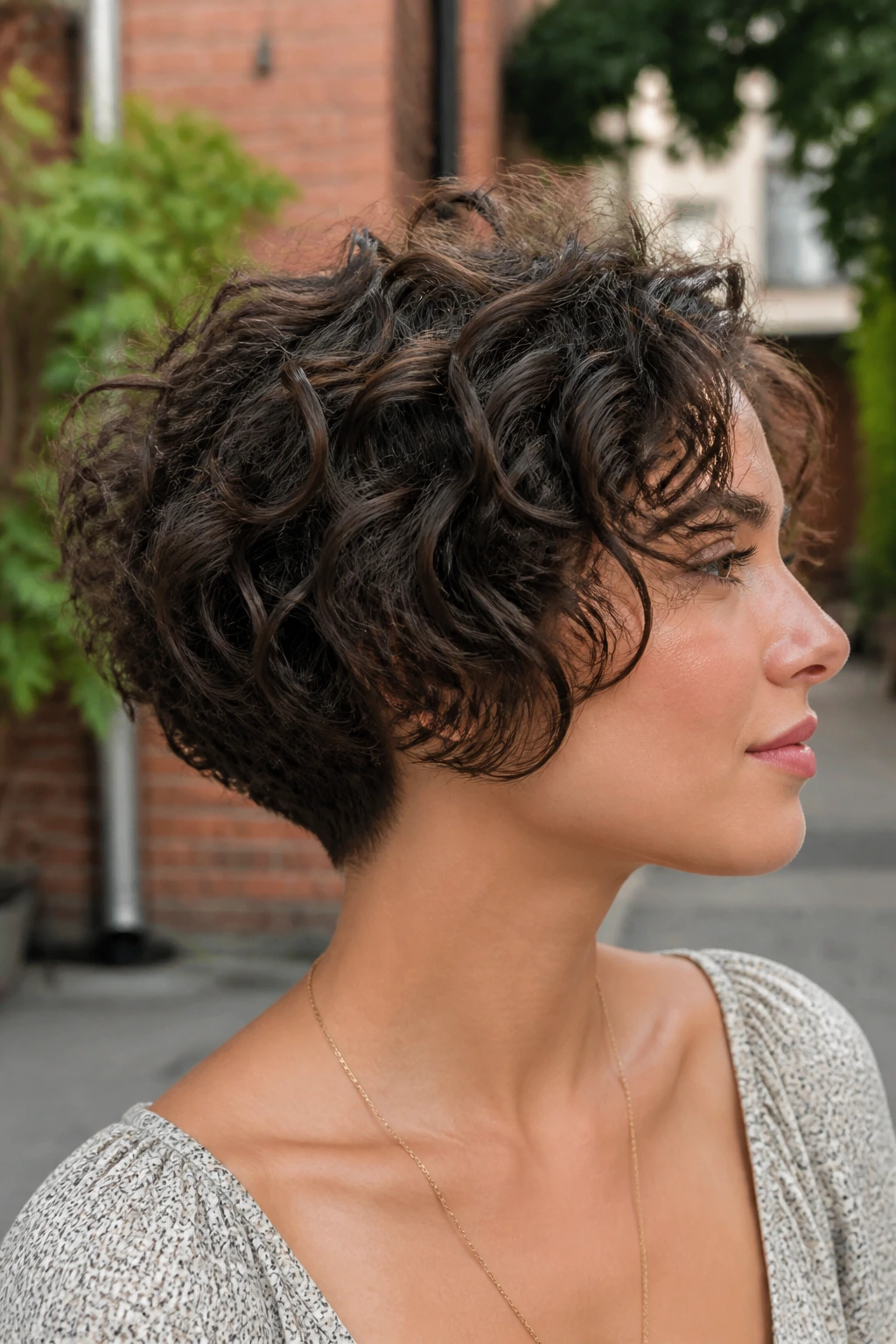
A tapered bob gets the heat out of the neck without chopping the whole silhouette down too far. The nape sits shorter and neater, while the upper sections keep enough length to show off the curl pattern. On an oval face, the taper can look tailored rather than severe.
Best for Dense Curls
Dense curls benefit the most here because the taper removes the heavy feeling at the base of the head. The cut stays cool on the skin and reduces that “hair blanket” effect some bob lengths create in summer. If your curls stack up fast behind the ears, this is a cut worth asking about.
The danger is over-tapering. If the nape gets too tight, the top starts looking like it’s floating above the back of the head, and that’s not a good look on anyone. Keep the taper soft and let the curl texture blur the transition.
17. Retro Flipped Bob for Thick Curls

This one has a little attitude. The ends curve outward or sit with a soft flip, which gives the bob a playful edge that doesn’t feel fussy. On thick curly hair, the flip keeps the line from looking too serious, and oval faces can wear that extra width near the mouth and jaw without trouble.
The trick is shape memory. You want the ends encouraged in a direction, not locked there like a pageant helmet. A diffuser with a little directional scrunching can help, and so can a round-brush pass on the fringe if your curls sit looser at the front.
I like this cut for people who want their bob to have personality without giving up curl texture. It feels a little retro, a little cheeky, and more wearable than straight-hair versions of the same idea.
18. Air-Dry Lob With Long Curly Fringe
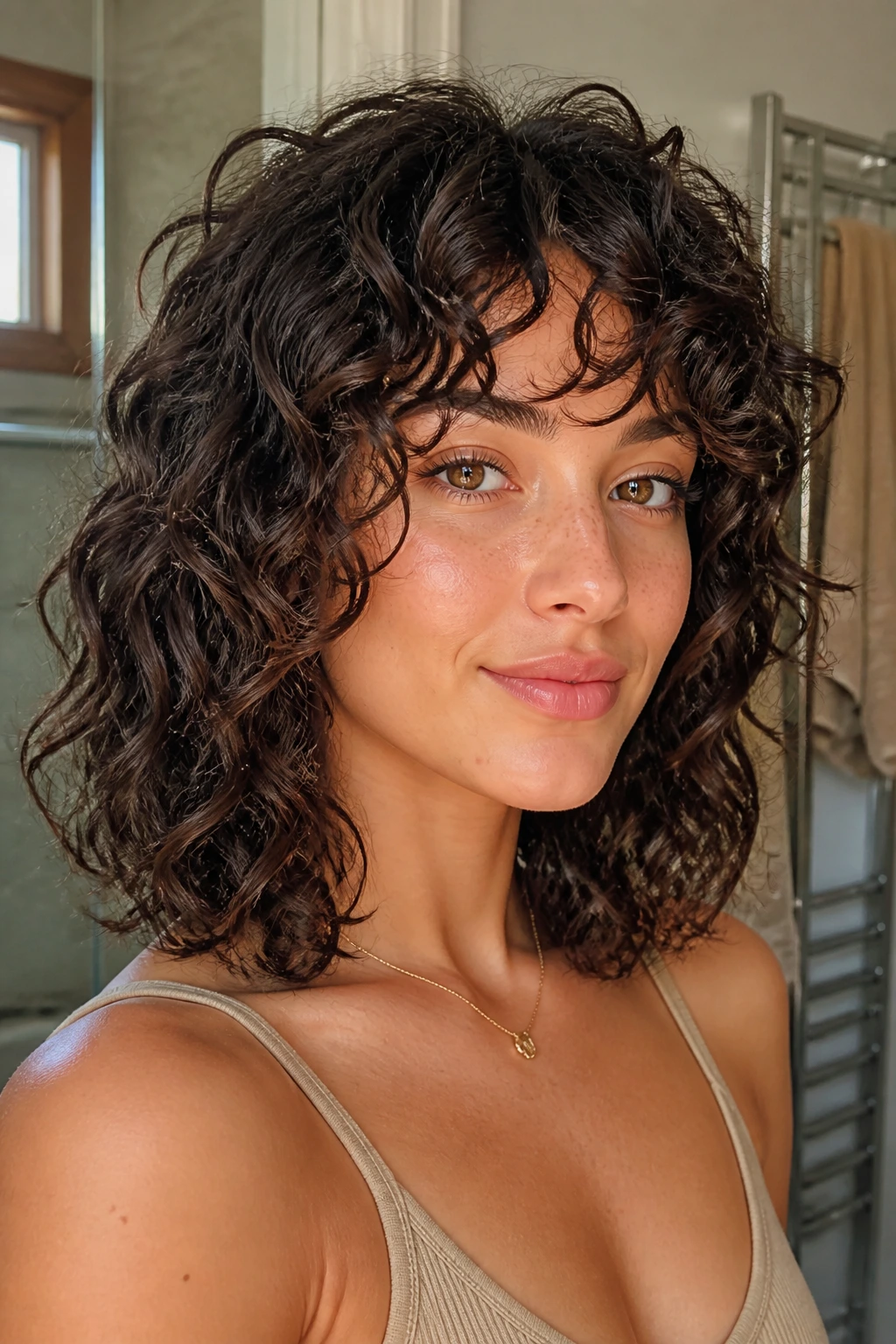
If you’re not interested in fighting your hair every morning, this is your answer. The air-dry lob keeps enough length to stop the curl pattern from exploding, and the long fringe gives the front a shape that still looks finished even when you skip the diffuser. It’s relaxed, but not lazy.
Oval faces can wear this well because the fringe and front pieces can be placed where they do the most work — cheekbone, lip line, or just under the jaw. The longer length also gives you room to clip the front back on messy days or tuck one side behind the ear when the humidity gets stupid.
This is the cut I’d suggest for someone growing out a shorter bob or someone who wants the easiest possible day-two routine. A little water, a little leave-in, and a few scrunches are usually enough to wake it back up.
Why Curly Bobs and Oval Faces Get Along So Well in Summer

Oval faces have a useful advantage: they don’t need a bob to fix the geometry of the face. That means the cut can focus on curl behavior, neck comfort, and density instead of trying to force balance where it already exists. A chin-length bob, a jaw-skimming line, or a collarbone lob can all work because the face shape is already flexible.
Curly hair adds its own logic. It expands, contracts, and changes its mind with humidity, shampoo, and sleep. A summer bob works best when it respects that movement instead of pretending the hair will sit exactly where you left it. The cut should leave room for shrinkage, but not so much room that the shape gets wide and boxy.
The other thing people underestimate is heat. A few extra inches off the back can make a bigger difference than any light serum ever will. When the neck can breathe, the whole style feels less fussy. That’s why these cuts keep coming back: they solve a practical problem and still look like you meant to wear them.
How to Ask for a Curly Bob That Respects Shrinkage
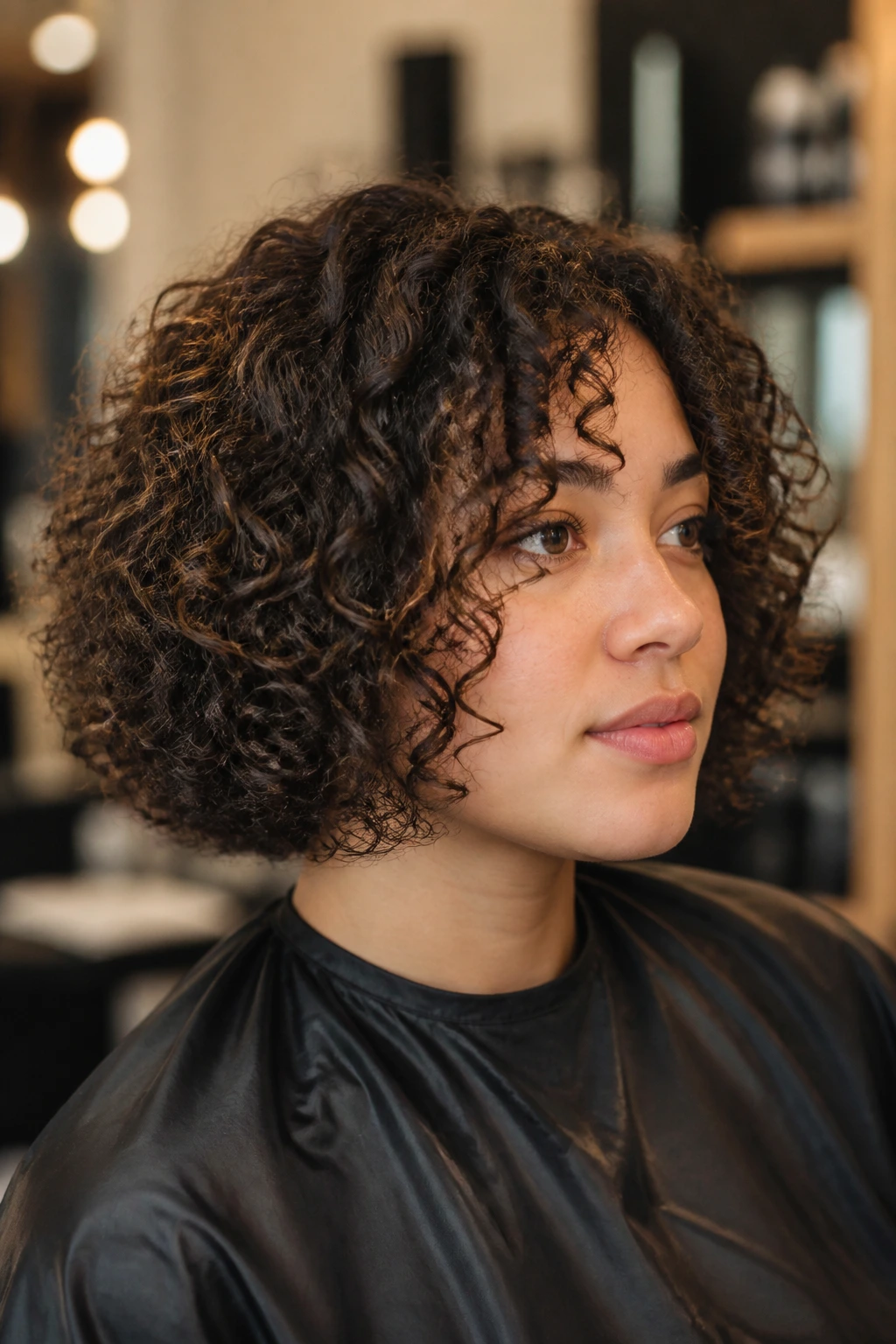
Bring your hair to the appointment the way you actually wear it. If you usually air-dry, arrive with air-dried curls. If you diffuse, do that. A stylist can guess, but a guess is not the same as seeing your real pattern.
Name the length in relation to your face and shoulders, not just by style name. Say chin, jaw, collarbone, or nape and point to where you want the finished line to land. Curly hair can spring up more than expected, so “just above the chin” can become a very different result once it dries.
Ask whether the cut will be checked dry. That question matters. Curl-by-curl trimming is useful, but a dry check catches the little places where one side wants to kick out more than the other. If you wear a middle part every day, say that. If you tuck one side, say that too. Those habits change how the bob sits.
A few phrases that help
- “I want room for shrinkage.”
- “Please keep the front a touch longer.”
- “Can we shape it for how it dries naturally?”
- “My curls get wider at the sides, so please keep the outline from ballooning.”
The more honest you are at the chair, the better the cut behaves at home.
The Styling Kit That Keeps the Shape Clean
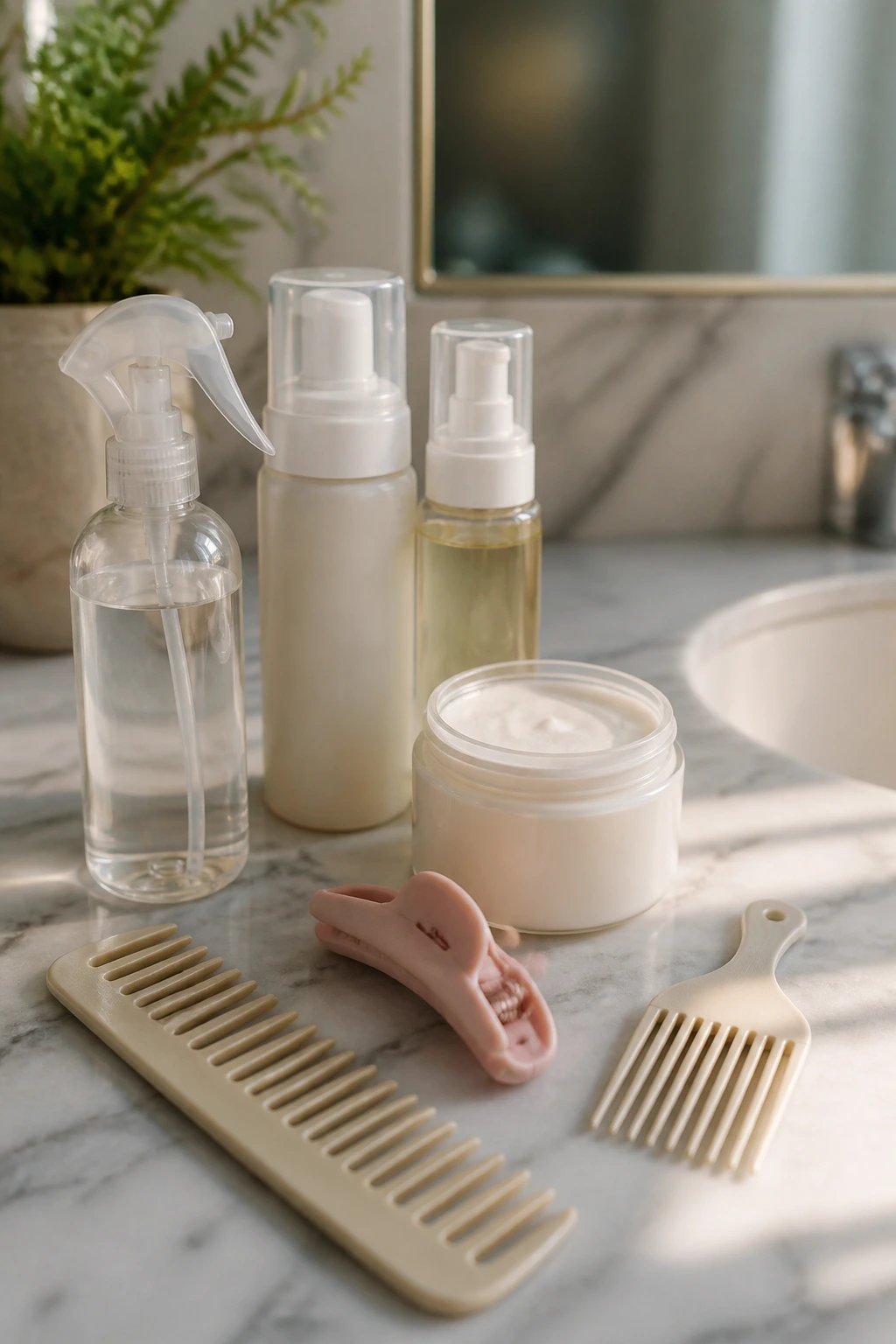
- Wide-tooth comb: Good for detangling in the shower without dragging curls apart.
- Microfiber towel or soft T-shirt: Helps blot water without roughing up the cuticle.
- Spray bottle: Useful for rewetting the top layer or refreshing a flat front section.
- Light curl cream: Smooths the mids and ends without weighing down a bob.
- Mousse or foam: Gives the roots lift and helps the shape hold when the air gets damp.
- Strong-hold gel: Handy for days when you want definition and a firmer cast.
- Diffuser attachment: Lets you dry the curls without blasting the pattern apart.
- Duckbill clips: Great for root clipping while the hair sets.
- Pick: Useful if you want a little crown lift without disturbing the curl clumps.
- Silk pillowcase or bonnet: Keeps the outline from getting flattened overnight.
You do not need every product on the shelf. You need a small, believable kit that matches your curl density and how much time you want to spend.
Small Styling Tweaks That Make the Shape Easier

A good bob can be dragged down by a bad routine, and the fix is usually small. Root Lift: clip the crown for 10 minutes while the hair dries, then remove the clips before the hair sets stiff. Product Weight: use mousse at the roots and a lighter cream through the mids if your curls collapse under heavy stylers. Edge Control: if the front puffs too wide, finger-coil only the first two pieces on each side and leave the rest alone. That keeps the cut from looking over-controlled.
Accessory Pairing: short bobs and lobs look sharp with hoops, small gold studs, square sunglasses, and open necklines. Thick scarves can swallow the line, so if you love neckwear, pick one that doesn’t mash the sides flat. Day-Two Reset: mist the top layer, smooth in a pea-sized amount of gel, and scrunch only where the shape has gone soft. That’s usually enough.
If you hate diffuser noise, air-dry the bob halfway and finish the crown with clips. If you hate product buildup, use less cream and more water. The bob does not care about your habits. It only cares whether those habits help the shape stay visible.
Mistakes That Turn a Good Bob Into a Box
-
Cutting too short based on wet hair: Curly hair shrinks, and a chin-length cut can land above the jaw once it dries. Fix it by asking for the cut to be checked dry before the final line is locked in.
-
Adding too many short layers: That’s how you get a puffy triangle with no clear outline. Keep the interior layers long enough to support the perimeter instead of breaking the shape into pieces.
-
Using too much heavy cream: The curl clumps go soft, the roots fall, and the bob starts looking tired by noon. Use lighter products first, then add more only where the hair actually needs it.
-
Ignoring the nape: A thick, fuzzy nape can make the whole cut feel hot and sloppy. A soft taper or a neat back shape fixes that without changing the front.
-
Forcing a part your hair hates: If the roots fight the center part, the bob will split awkwardly and collapse on one side. Work with the natural part and adjust the front pieces instead.
-
Expecting every curl to sit the same way: They won’t. A good curly bob leaves room for a little asymmetry, because that’s how curly hair behaves when it’s living its life.
Ways to Adjust These Cuts for Different Curl Types

The Fine-Curl Soft Line: If your hair is fine, keep the perimeter cleaner and the layers minimal. Fine curls need shape, not too much removal from the inside, or the bob starts looking sparse at the ends.
The Thick-Curl Weight Relief Cut: Dense curls usually need hidden bulk removal, a softer taper at the nape, or a slightly longer lob length. Too much perimeter taken off the bottom makes thick curls flare outward.
The Wavy-Summer Version: Loose waves do well with blunt edges, collarbone length, and a little face-framing movement. They can look stringy if the layers are too aggressive, so keep the shape simple.
The Coily, Shrinkage-Smart Version: Tighter coils need a stylist who respects shrinkage and shape memory. A dry cut with careful length checks helps the bob land where you intended, not four inches higher.
The Fringe Swap: If bangs feel like too much maintenance, use longer face-framing pieces instead. You still get movement near the face, but you lose the daily negotiation with your forehead.
Each version keeps the same idea: the bob should fit the curl pattern first, then flatter the oval face second. That order matters.
How to Keep the Shape Fresh Between Trims

A curly bob starts to lose its edge the moment it grows too far past its intended line. For most curl patterns, a trim every 8 to 10 weeks keeps the outline neat. Fringe pieces usually need attention sooner, sometimes every 3 to 5 weeks, because they show growth faster than the rest of the cut.
Refresh day-two hair with a light mist of water, then scrunch in a small amount of mousse or gel. Don’t soak the whole head again unless the bob has gone flat all the way through. Usually the top and front are the only areas that need help. The back often wakes up with a little steam from the shower and no extra effort.
Sleep matters more than people admit. A loose pineapple, a satin bonnet, or a silk pillowcase keeps the bob from getting crushed on one side. If you wake up with one side flattened, don’t panic and start piling on product. Wet that section lightly, smooth it with your hands, and let it dry before judging the result.
If the shape starts to widen at the sides, you may not need a full haircut right away. Sometimes a light reshaping at the front corners and nape brings the whole line back into focus. Small corrections beat waiting until the cut has wandered off on its own.
Curly Bob Questions People Ask a Stylist

Will a bob make my curls look bigger?
Often, yes. Removing length takes away some of the downward weight, so the curls spring out with more shape and less drag. The trick is controlling where that volume sits so it reads as style, not puff.
Can oval faces wear a chin-length curly bob?
Absolutely. Oval faces can carry a lot of different lengths, which gives you room to choose based on curl behavior and comfort. The real question is whether your curl pattern likes the chin area or flares too wide there.
Is a blunt bob or layered bob better for curly hair?
A blunt bob gives you a cleaner outline, while layers give you movement and less bulk. Thick curls often like some internal layering; finer curls usually look better with less slicing and a tidier edge.
What if my curls shrink more than I expected after the cut?
That’s a sign the cut was planned on wet hair alone. Ask for a dry check next time and be specific about final length, especially around the chin and jaw.
Can I get bangs with a curly bob?
Yes, but the fringe needs to be cut for its dry shape, not for how it sits wet. Curtain bangs or longer pieces near the cheekbones are easier to live with than a short, blunt fringe.
How do I stop the bob from turning triangular?
Keep the sides from carrying too much bulk and preserve some lift at the crown. Heavy creams, over-layering, and a bad cut line are the usual culprits.
Do I have to diffuse every time?
No. Air-drying works fine if your curls hold shape on their own. Diffusing just gives you more control over root lift and can speed things up when you’re in a hurry.
What if one side curls tighter than the other?
That’s normal. A good curly bob can be cut with a little asymmetry in mind so the tighter side doesn’t sit visibly shorter. Don’t force both sides to behave the same way; they won’t.
The Bob That Makes the Heat Easier

A curly bob only fails when it’s cut like straight hair in disguise. Once the cut respects shrinkage, density, and the way curls actually move, the whole thing becomes much easier to live with. The neck gets a break. The face gets a clean frame. And the style stops asking for constant repairs.
Oval faces have the kind of proportions that let you choose the mood — sharp, soft, playful, or low-key — without having to fight the shape of the cut. That’s why these summer bobs keep working: they’re practical first, pretty second, and far less fussy than most people expect.
If you’re ready to shorten the season’s bad hair days, start with the length that fits your curl pattern and let the rest of the shape follow.